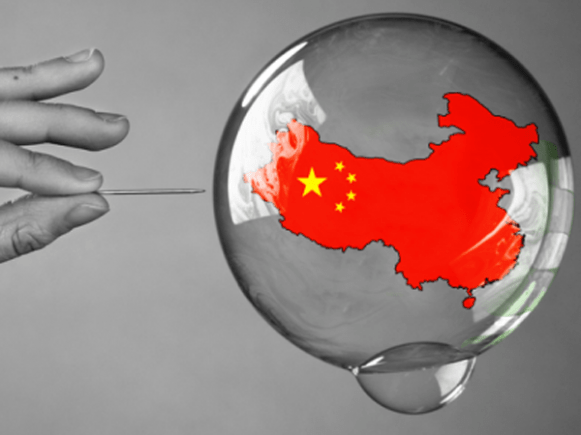
Whole Doom – Whole Fantasy – The American China Fantasy Fails

Doomed American China Fantasy – The Cold War in Asia

DOOMED AMERICAN CHINA FANTASY – THE COLD WAR IN ASIA 1949 TO 2026. THE SPREAD OF COMMUNISM IN ASIA.

The Cold War in Asia is the product of Communism that spread from Europe to Asia. Nixon-Kissinger in 1971-72 initiated Policy of Doomed American China Fantasy without concern for lessons learned in Korean Peninsula and Vietnam. There is no hope and there is no future for America’s China Fantasy as Communist Party in China survives unchanged and unaffected by changing fortunes of the US Political Parties.

Rudra Narasimham Rebbapragada

DOOM DOOMA DOOMSAYER

Doomed Gun of Doom Dooma symbolizes the Doomed China Fantasy, a Policy initiated by 37th US President Richard M Nixon when he made a trip to Peking on February 21, 1972.
DOOMED AMERICAN CHINA FANTASY – THE COLD WAR IN ASIA 1949 TO 2026. THE SPREAD OF COMMUNISM IN ASIA.

DOOMED AMERICAN CHINA FANTASY – THE COLD WAR IN ASIA 1949 TO 2026. THE SPREAD OF COMMUNISM IN ASIA.

AMERICA’S CHINA FANTASY

DOOMED AMERICAN CHINA FANTASY – THE COLD WAR IN ASIA 1949 TO 2026. THE SPREAD OF COMMUNISM IN ASIA. President Nixon’s Doomed Journey to Peking in February 1972.

Clipped from: http://prospect.org/article/americas-china-fantasy

America has been operating with the wrong paradigm for China. Day after day, U.S. officials carry out policies based upon premises about China’s future that are at best questionable and at worst downright false.

The mistake lies in the very assumption that political change — and with it, eventually, democracy — is coming to China, that China’s political system is destined for far-reaching liberalization. Yet the Bush administration hasn’t thought much about what it might mean for the United States and the rest of the world to have a repressive one-party state in China three decades from now. For while China will certainly be a richer and more powerful country in 30 years, it could still be an autocracy of one form or another. Its leadership (the Communist Party, or whatever else it calls itself in the future) may not be willing to tolerate organized political opposition any more than it does today.

That is a prospect with profound implications for the United States and the rest of the world. And it is a prospect that our current paradigm of an inevitably changing China cannot seem to envision.

The notion of a China on the road to political liberalization has taken hold in the United States because it has served certain specific interests within American society. At first, in the late 1970s and the 1980s, this idea benefited the U.S. national-security establishment. At the time, the United States was seeking close cooperation with China against the Soviet Union, so that the Soviet Union would have to worry simultaneously about both countries; the Pentagon wanted to make sure the Soviet Union tied down large numbers of troops along the Sino-Soviet border that might otherwise have been deployed in Europe. Amid the ideological struggles of the Cold War, though, cooperation with China’s Communist regime was politically touchy in Washington. And so the notion that China was in the process of opening up its political system helped smooth the way with Congress and the American public.
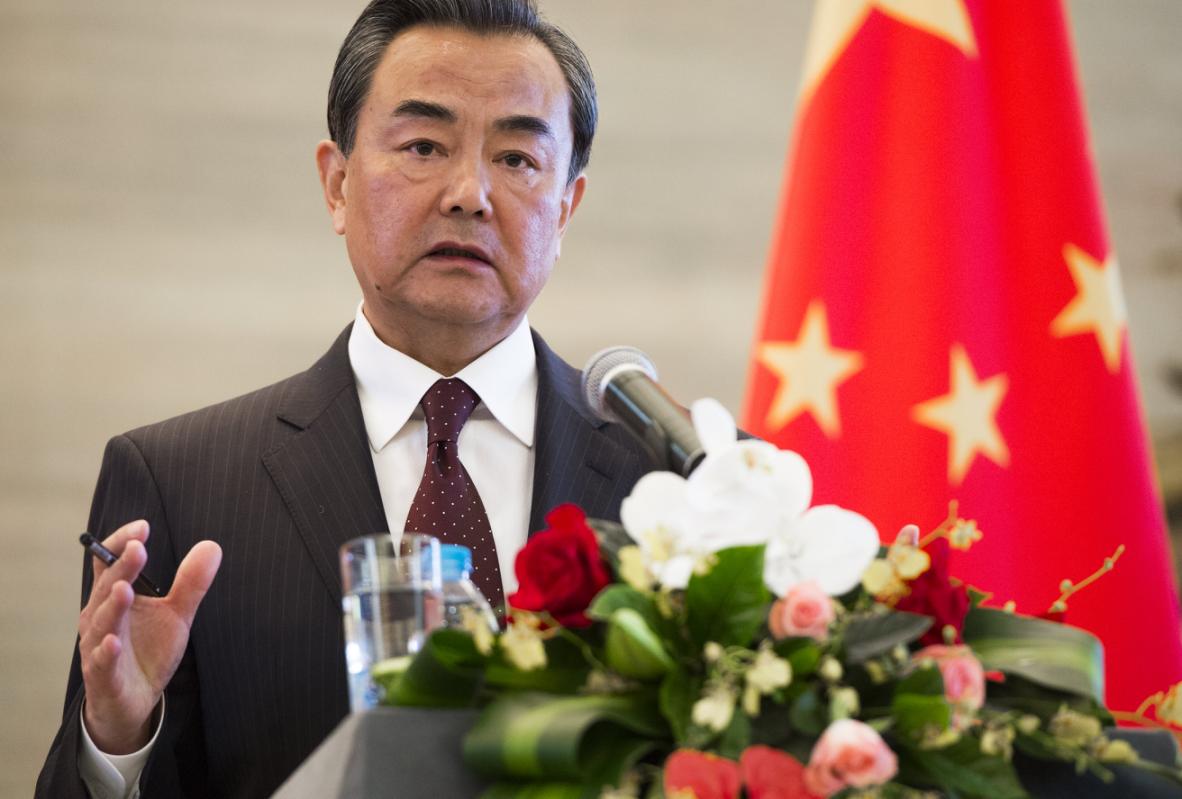
In the 1990s, after the Soviet collapse, the idea of a politically changing China attracted a new constituency, one even more powerful than the Pentagon: the business community. As trade and investment in China became ever more important, American companies found themselves repeatedly beset with questions about why they were doing business with such a repressive regime. The paradigm of inevitable change offered multinational corporations the answer they needed. Not only was China destined to open up its political system, but trade, the theology held, would be the key that would unlock the door. It would lead to political liberalization and to democracy, with or without the support of the Chinese leadership. Accordingly, no one outside China needs to do anything, or even think much about the subject. Why bother to protest a crackdown or urge China to allow political opposition if you know that democracy, by the inexorable laws of history, is coming anyway?
The trouble is, the entire paradigm may turn out to be wrong.

What should the U.S. strategy be for dealing with China’s Leninist regime? If you ask our established political leaders, foreign-policy experts, or sinologists what the United States should do about China, you will undoubtedly get some version or another of this approach. It is called the strategy of “integration.”

The United States, the thinking goes, should try to integrate the Chinese leadership into the international community. It should seek to help China gain admission into the world’s leading international organizations. According to this logic, the nature of the Chinese regime will change after China becomes a member of international bodies such as the World Trade Organization, which it has now joined. China’s Communist Party leadership will gradually behave more like other governments; it will become more open in dealing with the Chinese people and with the rest of the world. Richard Haas, the president of the Council on Foreign Relations, has written of “the existing opportunity to integrate China into a U.S.-led world order.”

This strategy of integration dates back to the Clinton administration. In 1994, President Clinton abandoned his attempt to use trade as a lever for improving human rights in China, then needed to divert attention away from this embarrassing reversal. He did not wish to concede that that he had just downgraded the cause of human rights in China; instead, he sought a new, positive-sounding description of his policy. “Integration” gradually became the label of choice, invoked by the president and his top advisers in press conference after press conference. Integration became, above all, the justification for unrestricted trade with China. “We believe it’s the best way to integrate China further into the family of nations and to secure our interests and our ideals,” declared Clinton in one typical speech.

George W. Bush and his advisers, without ever admitting they were doing so, have perpetuated most of the essentials of Clinton’s China policy, including the avowed commitment to integration. When Secretary of State Condoleezza Rice gives a speech about China, she sooner or later calls for integrating China into the international community.

“Integration” has thus become another catchphrase like “engagement,” the earlier slogan for America’s China policy, which originated somewhat earlier, during the administration of George Bush Senior. With both words, however, the suggestion is the same: that is, with enough engagement, with sufficiently vigorous integration, the United States may succeed in altering the nature of the Chinese regime — although it is not clear exactly how this is supposed to happen. In a way, the American approach is a bit patronizing to China: It sounds as if the United States is a weary, experienced trainer bringing China to a diplomatic version of obedience school.

The fundamental problem with this strategy of integration is that it raises the obvious question: Who’s integrating whom? Is the United States now integrating China into a new international economic order based upon free-market principles? Or is China now integrating the United States into a new international political order where democracy is no longer favored, and where a government’s continuing eradication of all organized political opposition is accepted or ignored?

This is not merely a government issue. Private companies — including Internet firms like Yahoo, Google, and Microsoft — often use slogans like “engagement” and “integration” to explain why they have decided to do business in China despite Chinese rules and laws that allow continuing censorship. “I think [the Internet] is contributing to Chinese political engagement,” Bill Gates told one business gathering. Yet if Microsoft is altering its rules to accommodate China, once again the question is: Who’s changing whom?

Will it have been a success for the U.S. policy of integration if, 30 years from now, the world ends up with a Chinese regime that is still a deeply repressive one-party state but is nevertheless a member of the international community in good standing? If so, that same China will serve as a model for dictators, juntas, and other undemocratic governments throughout the world — and in all likelihood, it will be a leading supporter of these regimes. Pick a dictator anywhere today and you’ll likely find that the Chinese regime is supporting him. It has rewarded Robert Mugabe, the thug who rules Zimbabwe, with an honorary professorship, and his regime with economic aid and, reportedly, new surveillance equipment. It has been the principal backer of the military regime in Burma. And when Uzbek President Islam Karimov ordered a murderous crackdown on demonstrators in 2005, China rushed to defend him.

If China maintains its current political system over the next 30 years, then its resolute hostility to democracy will have an impact in places like Egypt, Syria, and Saudi Arabia. A permanently authoritarian China could also undermine Russia’s already diminishing commitment to democracy.

Thus, when America’s leading officials and CEOs speak so breezily of integrating China into the international community, listeners should ask: If China remains unchanged, what sort of international community will that be? Will it favor the right to dissent? Will it protect freedom of expression? Or will it simply protect free trade and the right to invest?

But wait, say the defenders of America’s existing China policy. We believe in democracy, too. There is no real disagreement here on our ultimate goals. This is all just a question of tactics. The strategy of integration (or of engagement) is designed to change China’s political system and, over the long term, to end China’s one-party state.

These arguments sound in some ways similar to claims made by the Chinese regime itself. Because Chinese Communist Party leaders don’t like to acknowledge that they intend to maintain their monopoly on power, they sometimes tell visitors that they, too, believe in democracy, that this is the ultimate goal for China, and that it is all merely a question of timing. These claims are designed for the hopelessly gullible; by its actions, day after day, the regime makes clear its tenacious hostility to the idea of political pluralism in China.

Generally, the U.S. proponents of a strategy of integration are not so cynical. To be sure, a few of them may be antidemocratic; there have always been Americans who admire, even revere, the simplicity and convenience of autocracy. However, other proponents of integration seem to believe quite sincerely that if the United States continues its current approach toward China, Chinese leaders eventually will be willing to abandon the monopoly on political power they have maintained since 1949. Yet these same proponents fail to explain how or why, given the current U.S. strategy, China’s political system will change.

The examples of reforms that they have invoked so far have served to divert attention away from the core issue of China’s one-party state. The promotion of village elections has proved to be largely unsuccessful, both because the Chinese leadership can confine this experiment exclusively to the villages and because in the villages themselves, authorities have resorted to a variety of methods, including the use of violence, to forestall democracy.

Nor is there evidence that the American promotion of the rule of law will by itself transform the political system. So long as there is no independent judiciary and China remains a one-party regime in which judges are selected by the Communist Party, promoting the rule of law won’t bring about fundamental change. Instead, it simply may lead to a more thoroughly legalized system of repression. Indeed, those lawyers in China who attempt to use the judicial system to challenge the Communist Party or to defend the rights of political dissidents have themselves been subject to persecution, including the loss of their jobs or even time in prison.

The strongest impetus for establishing the rule of law comes from the corporations and investors who are putting their money into China. They need bona fide procedures for resolving financial disputes, just as companies and investors require everywhere else in the world. It is in the interest of the Chinese regime to keep the investment dollars, euros, and yen flowing into the country, and so Chinese officials are willing to establish some judicial procedures for the foreign companies. However, the result could well be a Chinese legal system that offers special protection for foreign investors but not to ordinary Chinese individuals, much less to targets of the regime such as political dissidents or Tibetan activists.

And that raises the larger question about America’s current strategy of integration: Whom does it benefit? Above all, it enriches the elites in both China and the United States. The strategy is good for the American business community, which gets to trade with China and invest in China, and for the new class emerging in Chinese cities — the managers and entrepreneurs, many of them former party cadres or the relatives of cadres — that is getting rich from the booming trade and investment in its country. But it has not been nearly so beneficial for working-class Americans — particularly the tens of thousands who have lost their jobs in the United States as the end result of this “integration” policy.

The American people were told many years ago that bringing China into the international economic system would help change the Chinese political system. Now, American workers may well wonder whether this argument was merely a cruel hoax. Nor has the strategy of integration been such a blessing for ordinary Chinese. To be sure, China as a whole is more prosperous than it has ever been, but this new prosperity is enjoyed mostly by the urban middle class, not by the country’s overworked, underpaid factory laborers or by the hundreds of millions of peasants in the countryside.

Indeed, it is precisely because the regime knows how restive and disenchanted the Chinese people are that it refuses to open up to any form of democracy. The Chinese leaders know that they could be thrown out of office if there were free and open elections. Democracy, or even an organization calling for future democracy, is a threat to the existing political and economic order in China. That is why the regime continues to repress all forms of organized dissent and political opposition. It is also why China’s new class of managers and executives, who profit from keeping wages low, support the regime in its ongoing repression.

A few years ago, the New York Times columnist Nicholas D. Kristof gave voice to one of the most common American misconceptions about China’s political future. Reflecting on how China had progressed and where it was headed, Kristof wrote, “[Hard-liners] knew that after the Chinese could watch Eddie Murphy, wear tight pink dresses and struggle over what to order at Starbucks, the revolution was finished. No middle class is content with more choices of coffees than of candidates on a ballot.”

Once people are eating at McDonald’s or wearing clothes from The Gap, American writers rush to proclaim that these people are becoming like us, and that their political system is therefore becoming like ours. But will the newly enriched, Starbucks-sipping, condo-buying, car-driving denizens of China’s largest cities in fact become the vanguard for democracy in China? Or is it possible that China’s middle-class elite will either fail to embrace calls for a democratic China or turn out to be a driving force in opposition to democracy?

China’s emerging urban middle class, after all, is merely a small proportion of the country’s overall population — far smaller than its counterparts in Taiwan or South Korea. There are an estimated 800 million to 900 million Chinese peasants — most of them living in rural areas, although 100 million or more are working or trying to find jobs as migrants on the margins of Chinese cities. If China were to have nationwide elections, and if peasants were to vote their own interests, then the urban middle class would lose. The margin would not be close. On an electoral map of China, the biggest cities — Shanghai, Beijing, Tianjin, Guangzhou, and the others — might look something like the small gold stars on the Chinese flag: They would be surrounded by a sea of red. Add together the populations of China’s 10 largest cities and you get a total of some 62 million people. That number is larger than the population of France or Britain or Italy. But it is still only about 5 percent of China’s overall population of 1.3 billion.

If you are a multinational company trying to sell consumer products, then the rapid rise in spendable income in China’s largest cities is of staggering importance. When it comes to any national elections, however, that new Chinese middle class is merely a drop in the bucket. Those in China’s urban avant-garde have every reason to fear that they would be outvoted.

China’s urban residents have an even greater reason to fear democracy: The Communist Party has not exactly been evenhanded in its treatment of urban residents vis-à-vis peasants. On the contrary: Its policies have strongly favored the cities over the countryside. This is why there has been a wave of protests in the countryside, arising out of land seizures, local taxes, disputes over village elections, and similar controversies. It is also why the Chinese regime has been, in recent years, particularly fearful of mass movements that might sweep through the countryside and undermine the Communist Party’s control. Looking at Falun Gong, the quasi-religious movement that began to take hold during the 1990s, the Chinese leadership was haunted by a specter from the past: the Taiping Rebellion, which swept out of middle China in the 19th century and shook the Qing Dynasty to its foundations.

What lies behind the Chinese Communist Party’s monopoly on power and its continuing repression of dissent? The answer usually offered is the Communist Party itself — that the party and its more than 70 million members are clinging to their own power and privileges. This is certainly part of the answer, but not all of it. As China’s economy has thrived in recent years, strong economic and social forces have also emerged in Chinese society that will seek to protect the existing order and their own economic interests. The new middle class in Chinese cities is coming to favor the status quo nearly as much as does the Communist Party itself.

Why do we assume that what follows the Chinese Communist Party’s eventual fall will necessarily be political liberalization or democracy? One can envision other possibilities. Suppose, for example, that the party proves over the next decade to be no better at combating the country’s endemic corruption than it has been over the past decade. Public revulsion over this corruption reaches the point where the Chinese people take to the streets; leaders find they cannot depend on troops to quell these demonstrations; the Communist Party finally gives way. Even then, would the result be Chinese democracy? Not necessarily. China’s urban middle class might choose to align itself with the military and the security apparatus to support some other form of authoritarian regime, arguing that it is necessary to do so in order to keep the economy running.

The underlying premise of the U.S. integration strategy is that we can put off the question of Chinese democracy. But two or three decades from now, it may be too late. By then, China will be wealthier, and the entrenched interests opposing democracy will probably be much stronger. By then, China will be so thoroughly integrated into the world financial and diplomatic systems that, because of the country’s sheer commercial power, there will be no international support for any movement to open up China’s political system.

What should the United States do to encourage democratic change in China? A detailed list of policies can emerge only after we first rid ourselves of the delusions and the false assumptions upon which our China policy has long been based.

Above all, we have to stop taking it for granted that China is heading inevitably for political liberalization and democracy. President Bush has continued to repeat the American mantra about China, every bit as much as did his predecessors. “As China reforms its economy, its leaders are finding that once the door to freedom is opened even a crack, it cannot be closed,” Bush declared in one typical speech. Such words convey a heartwarming sense of hopefulness about China, but they do not match the reality of China itself, where doors are regularly opened by more than a crack and then closed again.

America’s political and corporate leaders also need to stop spreading the lie that trade will bring an end to China’s one-party political system. This fiction has been skillfully employed, over and over again, to help win the support of Congress and the American public for approval of trade with China. Trade is trade; its benefits and costs are in the economic sphere. It is not a magic political potion for democracy, nor has it brought an end to political repression or to the Chinese Communist Party’s monopoly on power, and there is not the slightest reason to think it will do so in the future. In fact, it is possible that our trade with China is merely helping the autocratic regime to become richer and more powerful.

America’s current China policy amounts to an unstated bargain: We have abandoned any serious attempt to challenge China’s one-party state, and in exchange we have gotten the right to unfettered commerce with China.

What we need now, above all, are political leaders who are willing to challenge America’s stale logic and phraseology concerning China. We need politicians who will call attention to the fact that America has been carrying out a policy that benefits U.S. and Chinese business interests far more than it helps ordinary working people in either country.

The reexamination should apply to both U.S. political parties and to both poles of the ideological spectrum. On the Democratic left, we need people who will question the assumptions that it is somehow “progressive” to say that democracy doesn’t matter or that it will automatically come to China some day. Such views aren’t in the least bit progressive, liberal, or enlightened. Rather, they were developed by the Clinton administration to justify policies that would enable Bill Clinton to win corporate support. During the 1990s, there were other views concerning China within the Democratic Party — those of Nancy Pelosi, for example, and George Mitchell, who took strong stands on behalf of human rights in China. The Democrats rejected those alternative approaches a decade ago. They would do well to reexamine them now.

Within the Republican Party, we need political leaders willing to challenge the Business Roundtable mentality that has dominated the party’s thinking on China for so long. If Republicans really care about political freedom, then why should they allow U.S. policy toward China to be dominated by corporate interests while the world’s most populous country is governed by a single party that permits no political opposition? President Bush has been able to conceal his business-oriented approach to China behind a facade of hawkish rhetoric. Republicans should not allow this to happen again.
Once the United States finally recognizes that China is not moving inevitably toward democracy, we can begin to decide what the right approach should be. On the one hand, it’s possible that America may seek new measures to goad the Chinese leadership toward democratic change. America also might want to reconsider its doctrinaire adherence to free trade in dealing with China. On the other hand, it’s possible that the American people may decide that there’s absolutely nothing that the United States can or should do about a huge, permanently undemocratic, enduringly repressive China. Such an entity, a Chinese autocracy persisting into the mid-21st century, would cause large problems for U.S. policy elsewhere in the world. Nevertheless, after weighing the costs and benefits of trying to push for democracy in China, the United States could opt for a policy of sheer acceptance of the existing order.

The American people are not being given such options now, however, because the choices are not being laid out. American politicians of both parties talk regularly as if liberalization and democracy are on the way in China. But what if China remains an autocracy? At the moment, that possibility seems to be outside our public discourse. We need to change that in order to figure out what we want to do.

It would be heartening if China’s leaders proceed along the lines that America’s political leaders predict. It would be wonderful if China opens up, either gradually or suddenly, to a new political system in which the country’s 1.3 billion people are given a chance to choose their own leaders. While wishing for such an outcome, however, I will not hold my breath.

James Mann, from whose new book, The China Fantasy, this article is adapted, is author-in-residence at Johns Hopkins University’s School of Advanced International Studies.

DOOMED AMERICAN CHINA FANTASY – THE COLD WAR IN ASIA 1949 TO 2026. THE SPREAD OF COMMUNISM IN ASIA.
Doomed American Fantasy – The Cold War in Asia 1949 to 2026. Communist Party of People’s Republic of China remains unaffected and unchanged by changing fortunes of the US Political Parties.
Nixon-Kissinger in 1971-72 initiated Policy of Doomed American China Fantasy without concern for lessons learned in Korean Peninsula and Vietnam. There is no hope and there is no future for America’s China Fantasy


Whole Fantasy – America’s China Fantasy is destined to fail

America’s China Fantasy from its very beginning in 1971-72 is destined to fail. Doomed American Fantasy – Read The Writing On The Made in China Label – Wake Up Call For America.

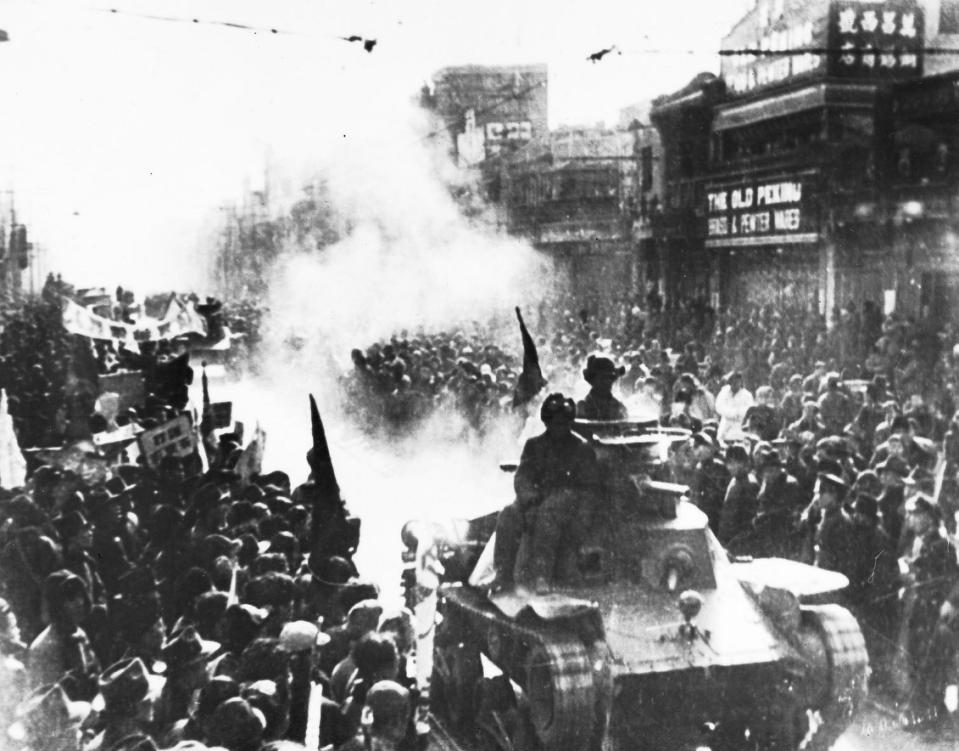
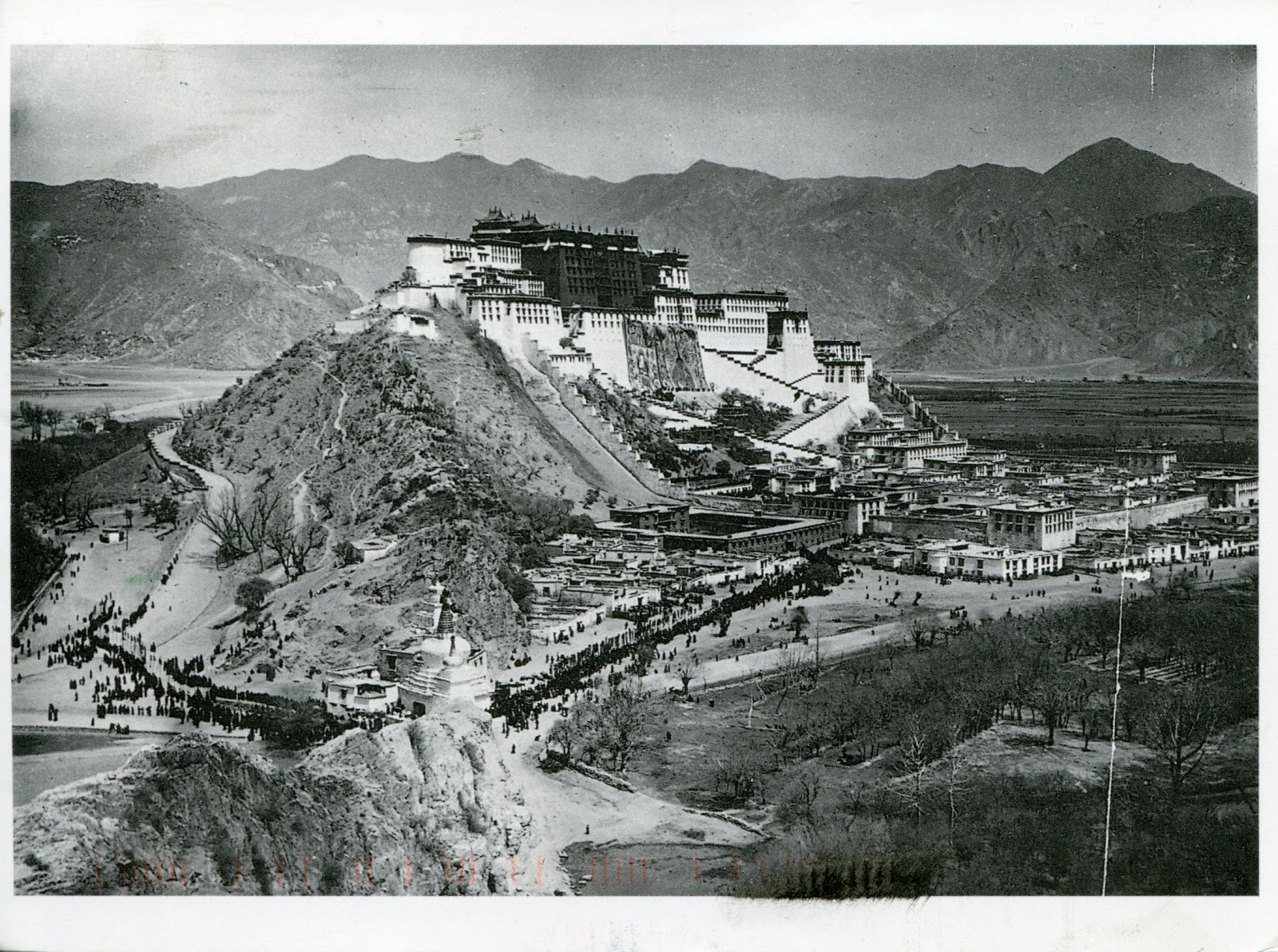
I was serving in Doom Dooma, Tinsukia District, Assam, India and a witness to the foreign policy initiative of the US President Richard M. Nixon in 1971-72 with which the Americans began to chase the illusion called ‘China Fantasy’. The American plan is doomed from its very inception for it involved the backstabbing of Tibet and overlooking the evil actions of the Communist regime in China.

Rudra Narasimham Rebbapragada

Special Frontier Force-Establishment No.22-Vikas Regiment

Doomed Gun of Doom Dooma: China Fantasy Doomed on February 21, 1972 with 37th US President Richard M Nixon’s Visit to Peking.
America’s China Fantasy from its very beginning in 1971-72 is destined to fail.

China is our greatest foreign policy issue. But neither Trump nor Biden have it right.

Xi Jinping’s China is fundamentally different from the past. Neither Donald Trump’s nor Joe Biden’s approach fully responds to that new reality.

Robert Robb, Arizona Republic

The most important foreign policy issue for the next American president will undoubtedly be relations with China. Unfortunately, neither Donald Trump nor Joe Biden have an approach grounded in reality, with a clear-eyed view of our national interests.

Ever since economic reforms were launched by Deng Xiaoping in the late 1980s, the bipartisan consensus was that the best approach to China was engagement. As China grew more prosperous and less insulated, the thinking went, economic liberalization could lead to political liberalization as well. Or, at a minimum, China could be a non-threatening participant in the world’s economy and affairs.

This was not as naive an expectation, or at least hope, as sometimes depicted today. There were examples of countries with authoritarian systems of state capitalism evolving into democracies with true market economies. South Korea is the most obvious example.

Indeed, a “peaceful rise” of China was one of Deng’s objectives. And that was the approach taken by his successors until current China strongman Xi Jinping.

Trump is using Biden’s support for China joining the World Trade Organization in 2001 against him. But, at the time, that was a prudent move and consistent with American interests as they were then perceived.

Xi’s China is different now

All this changed with Xi, who has jettisoned much of Deng’s approach to China’s development.

Deng believed in communal and rotating leadership. Xi has had himself appointed authoritarian-in-chief for life.

Xi is remaking China to return the Communist Party as the central focus of all life in the country. The government is to serve the party. And private businesses are to serve the government.

Markets are still used to allocate resources more efficiently than heavy-handed central planning. But there are no such things as truly private businesses in Xi’s China. Their ultimate purpose is to serve the interests of the party.

A “peaceful rise” has been abandoned. The purpose of trade is no longer principally to improve living standards. It is to increase the reach and leverage of the government and party. Militarily and diplomatically, China is seeking to dominate its region and intimidate other countries in the Asia-Pacific.

With Xi’s China, the expectations or hopes that underlay the engagement approach are a lost cause. External engagement isn’t going to change Xi’s China. Only domestic political upheaval that rejects Xi Thought will do that. And that doesn’t appear to be on the horizon.

The US should do 2 things differently

The reality of Xi’s China warrants an abandonment of the engagement approach. There should be two strategic objectives to a new approach to China.

►First, insulate the American economy from China to the maximum extent possible. Among foreign policy boffins, this is referred to as “decoupling.”

►Second, increase the military and diplomatic capacity of China’s neighbors, so every regional conflict involving China doesn’t automatically become a conflict with the United States. Our current role as the de facto security guarantor in the region isn’t in our best interests.

What Trump gets wrong on tariffs

Tariffs are one tool that could be used in decoupling. Trump has famously declared himself to be Tariff Man. And his administration currently has tariffs in place on roughly $370 billion worth of Chinese goods.

But decoupling isn’t the true strategic objective of Trump and his tariffs. Trump believes that the score between countries is kept by the balance of trade. The purpose of Trump’s tariffs is to serve as leverage to get China to purchase more American goods. Indeed, he reduced some tariffs and pulled the plug on others in exchange for a Chinese promise to do exactly that.

Biden gets engagement wrong

In an essay for Foreign Affairs magazine, Biden makes clear that he still believes in the engagement approach.

The principal problem with Trump’s approach, according to Biden, is that it is unilateral. Biden promises to create a coalition with allies to pressure China to change troublesome behavior in trade. But to continue cooperation with China on things where, as Biden puts it, “our interests converge.” He specifically mentions climate change, nonproliferation and global health security.

There is no such get-tough-on-China coalition to be had. There’s some spine in China’s neighbors. But none in the European Union, whose trade leverage would be necessary to get China’s full attention.

Trump’s instinct is to reduce the exposure of the U.S. to regional conflicts elsewhere. But he has no strategic vision about getting from here to there.

In his essay, Biden doubles down on the commitment to be the region’s security guarantor, a role whose risks vastly exceed the benefits to the United States.

Trump’s erraticism or Biden’s return to unproductive engagement. Sadly, that’s the choice.

Robert Robb is an editorial columnist for The Arizona Republic and azcentral.com, where this column originally appeared. Follow him on Twitter: @RJRobb

America’s China Fantasy from its very beginning in 1971-72 is destined to fail.
Doomed Gun of Doom Dooma: China Fantasy Doomed on February 21, 1972 with 37th US President Richard M Nixon’s Visit to Peking.

Whole List – The List of Verified Living Buddhas

The List of Living Buddhas vs List of Dead and Living Devils

Revolutionary Socialist Media - RSM : China's communist party, from ...
Red China published her official list of “Verified Buddhas.” I ask Red China to do me a favor. I ask Red China to publish her official list of ‘Dead and Living Devils’. Red China is the EvilOne and the Devil needs to recognize the ‘Whole Gang’.

Red China published her official list of “Verified Buddhas.” I ask Red China to do me a favor. I ask Red China to publish her official list of ‘Dead and Living Devils’. Red China is the EvilOne and the Devil needs to recognize the ‘Whole Gang’.

Rudra Narasimham Rebbapragada
Ann Arbor, MI 48104-4162 USA
Special Frontier Force-Establishment 22-Vikas Regiment

Red China published her official list of “Verified Buddhas.” I ask Red China to do me a favor. I ask Red China to publish her official list of ‘Dead and Living Devils’. Red China is the EvilOne and the Devil needs to recognize the ‘Whole Gang’.

VOA

FILE - Dalai Lama
Red China published her official list of “Verified Buddhas.” I ask Red China to do me a favor. I ask Red China to publish her official list of ‘Dead and Living Devils’. Red China is the EvilOne and the Devil needs to recognize the ‘Whole Gang’.

FILE – Dalai Lama

VOA NEWS

January 18, 2016 7:44 PM

China has published a list of “authentic living Buddhas” of Tibetan Buddhism, saying the move is part of an effort to prevent fraudulent religious leaders from swindling money from believers.

The Chinese government published a list Monday of 870 “verified” Buddhas on the website of the State Administration for Religious Affairs. The list includes photographs, names, birth dates and resident monasteries.

China began issuing certificates to what it calls “living Buddhas” in 2010, but this is the first time the information has been accessible on the Internet.
Critics say the spiritual cataloging is an attempt by the Chinese government to control Tibetan Buddhist leaders as well as the next reincarnation of the Dalai Lama.

China’s state-run Xinhua news agency says the Internet database is an effort to promote transparency in Tibetan Buddhism and to regulate reincarnation issues for living Buddhas.
Previously, China and the Tibetan government-in-exile have disagreed on the reincarnation of the Panchen Lama, the second most important figure in Tibetan Buddhism, with both appointing different boys to the position in 1995.

DALAI LAMA

Tibetan Buddhists believe that Buddhas can choose where and when they will reincarnate, or take rebirth in their next life, in order to continue their work of helping people. They believe that anyone can become a Buddha by removing all impurities from the mind through meditation and prayer.

Previously, the Dalai Lama has said he will decide before he dies on whether the institution of the Dalai Lama should continue. He has said he will consult with the high lamas of Tibetan Buddhist traditions, the Tibetan public and others before deciding.
However, he said China should have no say in whether he is reincarnated.

Tibet’s government-in-exile has operated from India since 1959, when the Dalai Lama fled Tibet after a failed uprising against Chinese rule.

China has often accused the Dalai Lama and his followers of advocating Tibetan secession, despite repeated assurances from the Dalai Lama that he is seeking dialogue with China aimed only at establishing Tibetan autonomy.

VOANews.com 

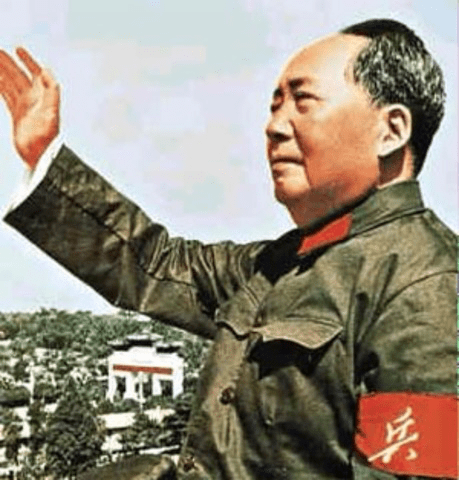
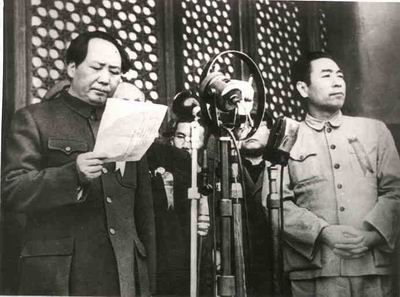
Whole List – The. List of Verified Buddhas vs Verified Devils : Mao Zedong proclaims the founding of the People’s Republic of China in Peking on Oct. 1, 1949.

Whole Karma – Beijing Doomed

Karma in Action – Beijing Will Taste The Fruits of Her Own Actions

As per my Theory of Karma, the Biblical prophecy of Isaiah will come true. In my analysis, Beijing’s Doom is inevitable. Beijing cannot ward off the ruin, the disaster, the calamity, the catastrophe that shall come upon her as she reaps the fruits of her own evil actions.

As per my Theory of Karma, the Biblical prophecy of Isaiah will come true. In my analysis, Beijing’s Doom is inevitable. Beijing cannot ward off the ruin, the disaster, the calamity, the catastrophe that shall come upon her as she reaps the fruits of her own evil actions.

As per my Theory of Karma, the Biblical prophecy of Isaiah will come true. In my analysis, Beijing’s Doom is inevitable. Beijing cannot ward off the ruin, the disaster, the calamity, the catastrophe that shall come upon her as she reaps the fruits of her own evil actions.

Rudra Narasimham Rebbapragada

Doom Dooma Doomsayer

As per my Theory of Karma, the Biblical prophecy of Isaiah will come true. In my analysis, Beijing’s Doom is inevitable. Beijing cannot ward off the ruin, the disaster, the calamity, the catastrophe that shall come upon her as she reaps the fruits of her own evil actions.

The Sydney Morning Herald

Tibet gets a warmer reception as the world wakes to Beijing’s methods

By Peter Hartcher

11 December 2018 — 12:05am

The leader of Tibet’s government-in-exile has been telling his story about Bob Carr around the world for years and always gets a laugh. Last week he recounted it during a visit to Parliament House in Canberra.

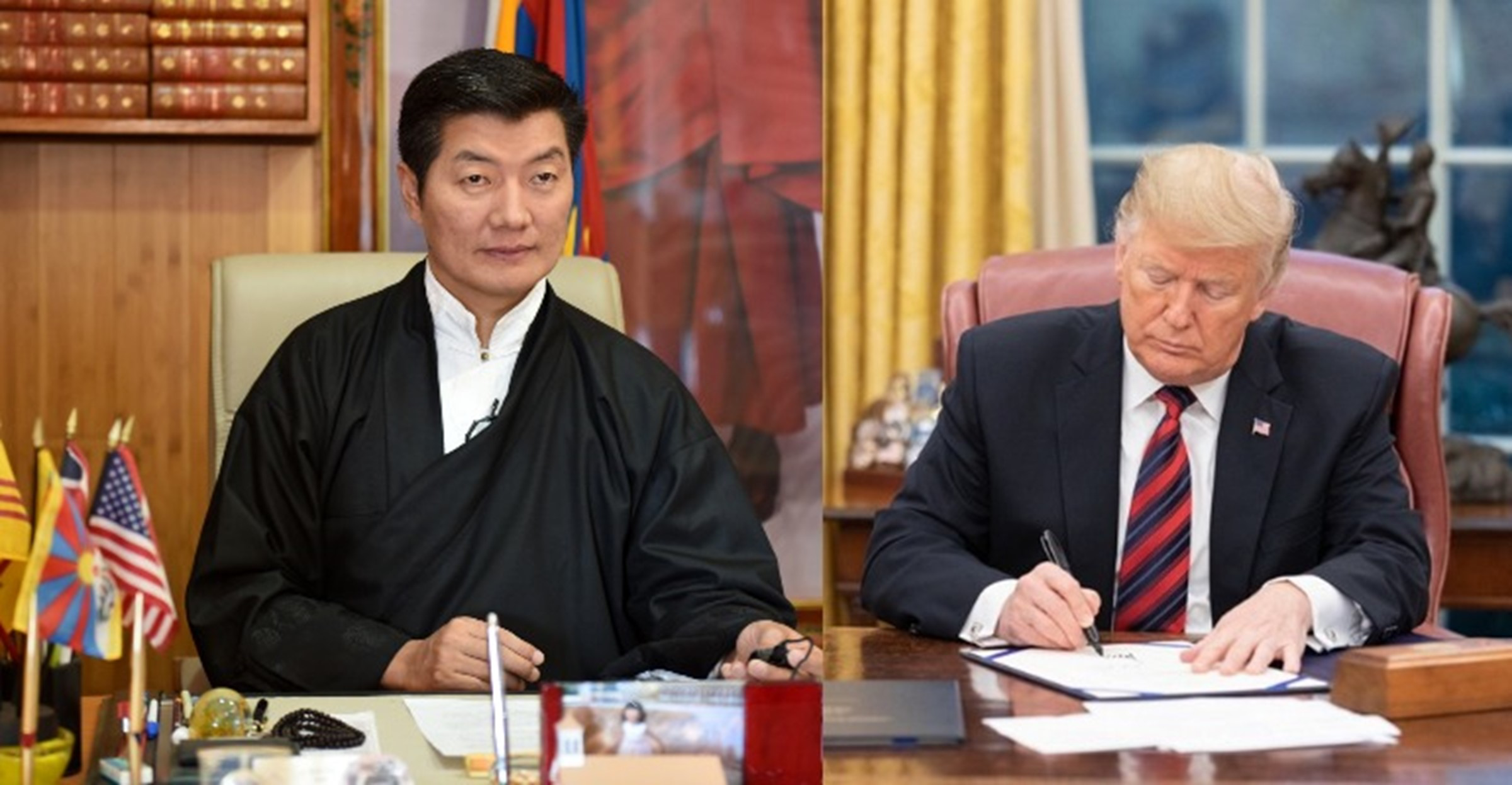
Ever since the Dalai Lama split his job into two some years ago, remaining spiritual leader of the Tibetans in exile and handing over the political leadership to be elected from among the free Tibetans, Lobsang Sangay has been their President.

As per my Theory of Karma, the Biblical prophecy of Isaiah will come true. In my analysis, Beijing’s Doom is inevitable. Beijing cannot ward off the ruin, the disaster, the calamity, the catastrophe that shall come upon her as she reaps the fruits of her own evil actions.

Lobsang Sangay, President of the Tibetan government-in-exile, right, smiles as he listens to the Dalai Lama in Dharamsala, India. Credit: AP

In 2013 Sangay visited Canberra and a reporter asked him whether Carr, Australia’s then foreign affairs minister, would be meeting him. It’s always a delicate matter.

A government that meets the Dalai Lama or Sangay risks the wrath of the Chinese Communist Party, which has claimed to be the sole representative of the Tibetan people ever since its army invaded Tibet in 1950.

“I said I’d love to, but I haven’t asked for a meeting”, not wanting to put Carr in a difficult position, he recalled last week. “I’m sure that, given the choice, Bob Carr would like to meet because that’s the Buddhist culture – we like to believe people are good.”

Later in his visit, the Tibetan leader was riding the lift from Parliament’s subterranean carpark into the building when the lift stopped. “The doors open and Bob Carr walks in,” the Harvard-educated legal scholar tells me. The Labor backbencher Michael Danby, Sangay’s escort for the visit, introduced the two men in the lift: “I had to decide at that moment whether to extend my hand or not. The Tibetan way is to not cause inconvenience, so I nodded and smiled. He kind of nodded – a little bit – then walked past.

“I like to say that we didn’t have a formal meeting but we had a karmic meeting. No matter how powerful the Chinese government may be, it can’t prevent the foreign minister of Australia from meeting me.”

As per my Theory of Karma, the Biblical prophecy of Isaiah will come true. In my analysis, Beijing’s Doom is inevitable. Beijing cannot ward off the ruin, the disaster, the calamity, the catastrophe that shall come upon her as she reaps the fruits of her own evil actions.

Illustration: Dionne Gain Credit:

Perhaps, but the Chinese Communist Party has certainly managed to hold things up successfully. Paul Keating as prime minister met the Dalai Lama in 1992. John Howard as prime minister met him in 1996 and 2007.

The last time that any Australian prime minister or government minister met either leader of the Tibetan government-in-exile was when Peter Garrett, then School’s education minister in the Gillard government, met the Dalai Lama in private in his hotel room in 2011. Karmic meetings with Carr aside.

Carr is now a cheerleader for the Beijing government as head of the Australia-China Relations Institute.

As per my Theory of Karma, the Biblical prophecy of Isaiah will come true. In my analysis, Beijing’s Doom is inevitable. Beijing cannot ward off the ruin, the disaster, the calamity, the catastrophe that shall come upon her as she reaps the fruits of her own evil actions.

Illustration: Andrew Dyson Credit:

So, for seven years Australian governments, Labor and Liberal, comprehensively shunned the Tibetans, an indicator of the rising power of the Chinese government to intimidate Australia.

Until last week. A minister in the Morrison government, Ken Wyatt, Minister for Aged Care and Minister for Indigenous Health, met Sangay in Parliament House. Not in a lift or in secret or hidden away in a hotel room but during a public ceremony in the main committee room.

“Minister Wyatt is not just principled and brave” for meeting the President of the free Tibetans, “but also a genuinely nice human being”, Sangay tells me after the meeting. “Normally people will meet you when they’re not in government and then when they are in government they say, ‘Understand that I’m in a difficult position’.”

Partly this was a personal commitment from Wyatt to the Tibetan cause. Wyatt, the first Indigenous minister in an Australian federal government, spoke at the ceremony last week of the “parallels between indigenous Australians and the Tibetans”.

But it’s also a marker of Australian relations with the Tibetans in exile and a marker in Australian relations with Beijing. Kyinzom Dhongdue is a member of the Tibetan parliament in exile, representing Tibetans in Australasia and East Asia, and she observes: “Even in the last year or so there’s a more balanced view of China not just as a trading partner but China is being seen as a threat, so Tibetan worries and experience are feeling more relevant. This year I’ve found it easier to get meetings – people are more interested in what we have to say.”

And it wasn’t just Wyatt at the ceremony with Sangay in Parliament House. There were 23 MPs and senators in total including Labor’s Michael Danby and Lisa Singh, Liberals Warren Entsch, Kevin Andrews, Concetta Fierravanti-Wells and Jason Falinski, Greens leader Richard Di Natale, Nationals MP George Christensen, Centre Alliance senator Rex Patrick plus Derryn Hinch, as well as former Labor foreign affairs minister Gareth Evans, now chancellor of ANU.

And how is the Tibetan experience more relevant today? The emerging stories of the shocking mass repression of another of China’s ethnic and religious minorities, the Uighur people of China’s Xinjiang Province, “means that it’s more than about one example”, says Sangay.

As per my Theory of Karma, the Biblical prophecy of Isaiah will come true. In my analysis, Beijing’s Doom is inevitable. Beijing cannot ward off the ruin, the disaster, the calamity, the catastrophe that shall come upon her as she reaps the fruits of her own evil actions.

Uighur residents in Australia holding up photos of relatives who are missing, in internment camps or have passed away. Credit: Alex Ellinghausen

“Now we have a million people in detention in Xinjiang” in what Beijing calls re-education camps. Uighur leader Rebiya Kadeer calls them “concentration camps” where Uighurs, including young children, are imprisoned without due process and held indefinitely.

And then there’s Beijing’s enormous One Belt, One Road international infrastructure program. “We lost our country because of one road,” says Sangay. “First the road came, then the trucks came, then the guns came, then the tanks came. It’s the exact blueprint” for domination now on offer to scores of countries under Belt and Road, he says.

Finally, there’s the experience of what Sangay calls “elite co-option”. “We have seen this for 60 years and now you see it around the world in one country after another”, and he has a litany of examples. Money, contracts, government access, favors are on offer in return for loyalty to Beijing and its agents.

If Tibet’s long-suffering under Chinese Communist Party repression is more relevant to the wider world, the wider world is also waking up to Beijing’s wide-ranging influence programs. The West’s gathering determination to exclude China’s telecoms gear manufacturer Huawei is an example. And Australia’s laws against foreign interference are another.

Those laws took effect on Monday. Anyone in Australia acting as an agent of a foreign power must register with the federal government. If suspected foreign agents fail to register, they can be issued a notice to show cause why they shouldn’t be considered to be working on behalf of a foreign power.

Do more karmic encounters lie ahead?

As per my Theory of Karma, the Biblical prophecy of Isaiah will come true. In my analysis, Beijing’s Doom is inevitable. Beijing cannot ward off the ruin, the disaster, the calamity, the catastrophe that shall come upon her as she reaps the fruits of her own evil actions.
Peter Hartcher is the political editor and international editor of The Sydney Morning Herald. He is a Gold Walkley award winner, a former foreign correspondent in Tokyo and Washington, and a visiting fellow at the Lowy Institute for International Policy.
As per my Theory of Karma, the Biblical prophecy of Isaiah will come true. In my analysis, Beijing’s Doom is inevitable. Beijing cannot ward off the ruin, the disaster, the calamity, the catastrophe that shall come upon her as she reaps the fruits of her own evil actions.


Whole Trust – Time to Trust All-Powerful God

Time to Trust All-Powerful God – The Fall of Evil Red Empire

For I trust in All-powerful God, I can expect ‘The Fall of Evil Red Empire’ as per the prophecy shared by Isaiah, Chapter 47, and Revelation, Chapter 18.

US President Donald Trump and China’s President Xi Jinping could be among the ‘Most-Powerful’ men in the world. However, I will not recognize any mortal human being as “All-Powerful.”

For I trust in All-powerful God, I can expect ‘The Fall of Evil Red Empire’ as per the prophecy shared by Isaiah, Chapter 47, and Revelation, Chapter 18.

For I trust in All-powerful God, I can expect ‘The Fall of Evil Red Empire’ as per the prophecy shared by Isaiah, Chapter 47, and Revelation, Chapter 18.

Rudra Narasimham Rebbapragada

Doom Dooma Doomsayer

For I trust in All-powerful God, I can expect ‘The Fall of Evil Red Empire’ as per the prophecy shared by Isaiah, Chapter 47, and Revelation, Chapter 18.

TIME FOR TRUMP TO TEST THE ALL-POWERFUL XI JINPING

By Henry M. Paulson Jr., – OPINION, THE WASHINGTON POST

Clipped from: https://www.washingtonpost.com/opinions/time-for-trump-to-test-the-all-powerful-xi-jinping/2017/11/03/cd1423a6-c00a-11e7-959c-fe2b598d8c00_story.html?

For I trust in All-powerful God, I can expect ‘The Fall of Evil Red Empire’ as per the prophecy shared by Isaiah, Chapter 47, and Revelation, Chapter 18.


President Trump and Chinese President Xi Jinping. (Alex Brandon/Associated Press)

Henry M. Paulson Jr., treasury secretary from 2006 to 2009, is chairman of the Paulson Institute and author of “Dealing With China: An Insider Unmasks the New Economic Superpower.”

Many have crowned Chinese President Xi Jinping the most powerful man in the world following the 19th Chinese National Congress of the Communist Party. And, indeed, Xi is a dynamic leader who is transforming China. He has swiftly consolidated his authority to drive an ambitious domestic and international effort to establish China as a modern superpower.

Our preoccupation with Xi’s grand ambitions, however, has led us to neglect the scope of the challenges he and his country face. Simply put, ambition and power are not a substitute for deep and enduring reform, and a leader is only as powerful as the country he leads. As Xi knows all too well, China has serious and growing vulnerabilities. When President Trump visits China next week, he may well find he can leverage these emerging dynamics to advance U.S. interests.

In recent years, Xi has moved to address these challenges with a bold strategy aimed at consolidating the tools he needs to govern. Although he has crafted ambitious economic reform policies, he could not assure that they were implemented on a consistent basis in the provinces. And some of his most important and difficult goals have not been attempted.

During his first term, Xi tightened and made sweeping reforms to the Chinese legal system; took control of, cleaned out and started professionalizing the military; and restructured, centralized and, through an anti-corruption campaign, moved to shore up the domestic credibility of the Communist Party as the country’s primary means of governance.

As the party and the central government take power from the provinces, he has begun strengthening the Beijing bureaucracy’s capacity to manage a nation of 1.4 billion people. At the same time, he has neutralized his opposition and positioned trusted advisers to help implement his agenda.

Thus, Xi enters his second term better able to govern, but serious challenges stand in his way. He faces four major economic risks: overreliance on debt to finance growth; a failing state-owned sector; excess capacity across a range of industries, particularly steel; and the real prospect that markets will be closed to China in the United States and elsewhere if the country does not move more quickly to open its economy to foreign competition.

Xi must address China’s unsustainable accumulation of sub-national debt — much of it created by hundreds of thousands of failed firms kept alive by the state to preserve jobs. China won’t be able to grow out of its debt problem.

If China is to avoid a hard landing, it will need to stem the flow of credit and accept slower growth. The government has indicated its intention to do that, but it will require significant political will. Importantly, it must subject failing firms to the discipline of the marketplace. The longer China waits to deal with these problems the riskier and costlier it will get.

Xi will be increasingly pressed by the United States and other major economies to demonstrate that his government intends to uphold its pledge to lift restrictions blocking foreign competition. And he drags his feet at his own peril because the United States and others are reexamining their open-door policies and demanding greater reciprocity in China. This new attitude will put pressure on China just as Xi most needs the world’s export and investment markets. But competition from the private sector is ultimately the best way for him to address the inefficiencies with China’s state-owned enterprises and its massive overcapacity in steel, which, when exported, will increasingly lead to trade disputes.

Xi, however, seems undaunted and remains confident he can manage all the challenges in front of him. Trump and Xi have developed a good personal relationship. Xi’s new consolidation of power — and ability to use it now to get difficult things done — means Trump may have a greater opportunity on his trip to achieve breakthroughs in the security and economic arenas.

Progress on the most important economic issues has potential to build the mutual trust that would make it easier to achieve what is by far our top priority: a denuclearized Korean Peninsula. But no nation should trade away its vital interests; North Korean and economic negotiations should proceed at their own pace.

Trump should be strategic and forceful in defense of America’s industries of the future. It is essential that he fight to open markets and achieve a level playing field in sectors where the United States is most competitive — technology, financial services, the Internet, agribusiness, health care, environmental goods and services, autos, and movies. This has the potential to benefit both countries, particularly in the financial services, where China’s underdeveloped financial markets would clearly benefit from some world-class participants.

The United States should also focus on expanding our economic relationship with China to include direct investment, which creates U.S. jobs and ties our economies together in enduring and positive ways. Without increased market access, the path we are on could lead to important parts of the global economy being walled off from competition and trade. This risks hurting both the United States and China, which are the biggest beneficiaries of a rules-based economic order.

Xi’s new platform presents risks for the United States in an era in which there will be increasing security and economic competition. But it also has the potential for further collaboration with a leader who now has greater ability to deliver. It has always been as big a risk to overestimate China’s power as it is to underestimate its potential. Now the same could be said of Xi. Trump should test Xi’s new position of power by pressing China hard for movement on U.S. priorities.

For I trust in All-powerful God, I can expect ‘The Fall of Evil Red Empire’ as per the prophecy shared by Isaiah, Chapter 47, and Revelation, Chapter 18.

Whole Evil – Red China’s Doctrine of Imperialism

The Evil Red Empire – Communist China embraced Imperialism

the evil red empire chairman mao zedong premier zhou en lai1
In my view, the Battle to checkmate Red China’s Imperial Power has to begin in Tibet, for Tibet is the first victim of Red China’s Imperialism.

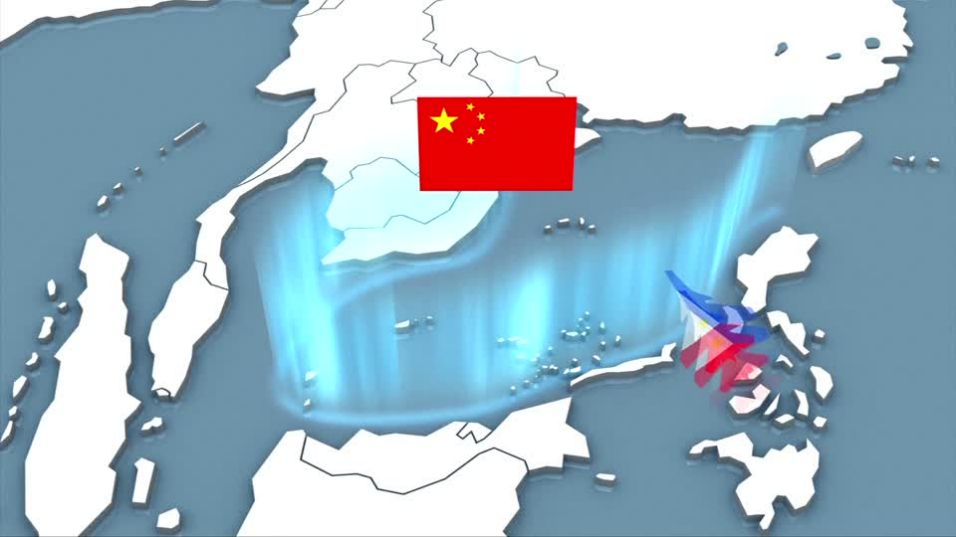
Red China is consistently following an Expansionist Policy that involves the practice of forming and maintaining an Empire by the conquest of territory of its weak neighbors. Tibet is the first victim of Red China’s Imperial Power. In recent times, the news media are paying attention to Red China’s military activities in South China Sea and are trying to comprehend its implications. To resolve the problems of Red China’s Maritime Expansionism, the problems caused by Red China’s Territorial Expansionism have to be cured. These are symptoms of the same disease or affliction; these are the Two-Sides of the Same Coin; these are the attributes of Red China’s Evil Power.

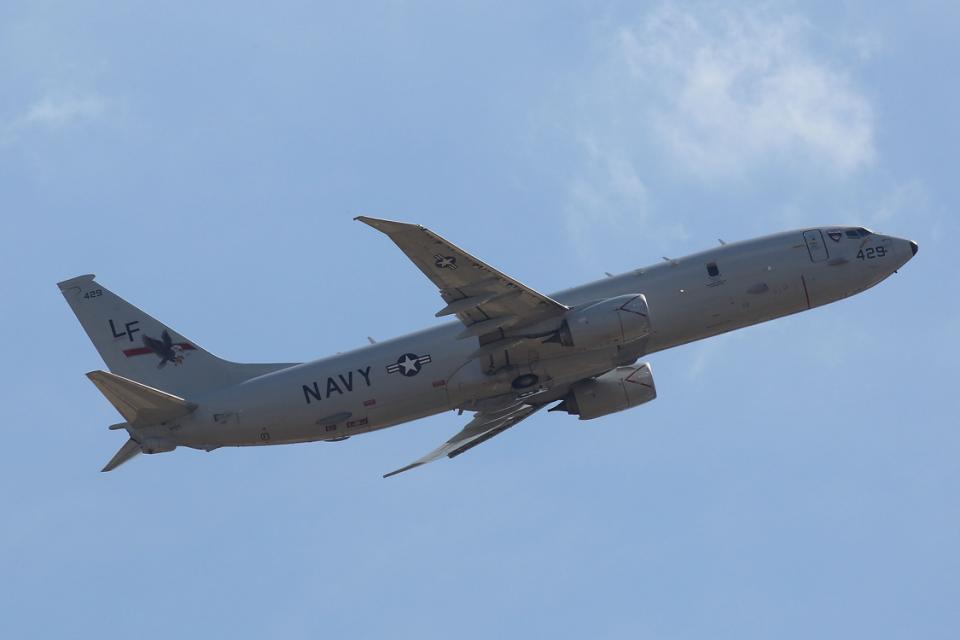
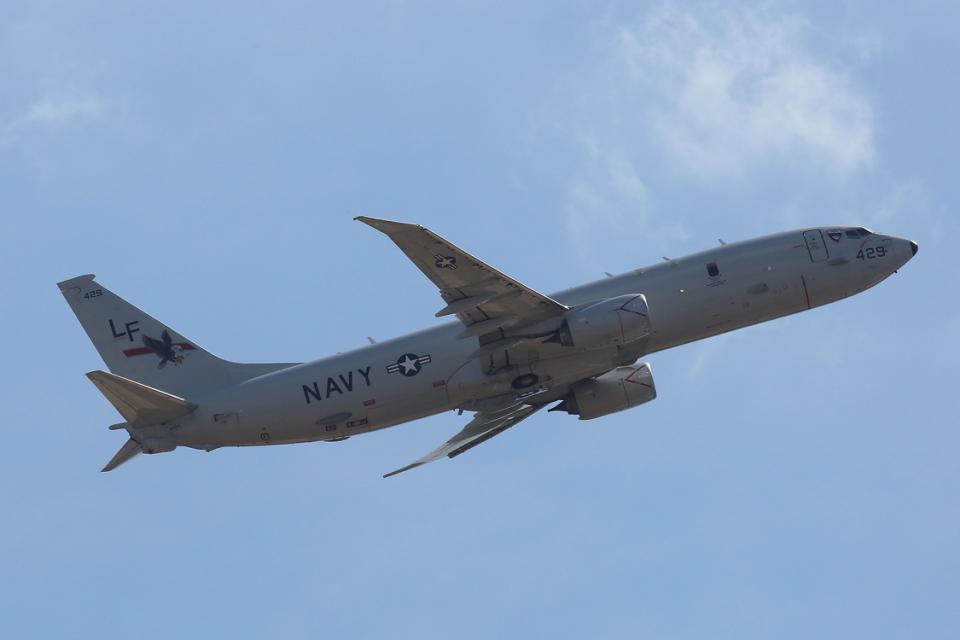
On Friday, May 22, 2015, Red China proclaimed its Victory over the US Navy operation which involved the US P-8 Poseidon Surveillance Plane that flew near Fiery Cross Reef in South China Sea. Red China asserted that it drove away the US Navy plane from its airspace. In my view, the Battle to checkmate Red China’s Imperial Power has to begin in Tibet, for Tibet is the first victim of Red China’s Imperialism.

Rudra Narasimham Rebbapragada

Ann Arbor, MI 48104-4162, USA

Special Frontier Force-Establishment 22-Vikas Regiment

China navy warns U.S. plane flying near disputed islands

The Washington Post

Simon Denyer

red china imperialist us navy confrontation
In my view, the Battle to checkmate Red China’s Imperial Power has to begin in Tibet, for Tibet is the first victim of Red China’s Imperialism.

 © The Washington Post The U.S. Navy released this video showing flight operations aboard a P-8A Poseidon over the South China Sea on May 20, 2015. During the flight, the crew documented several warnings issued by China’s navy to leave the area.

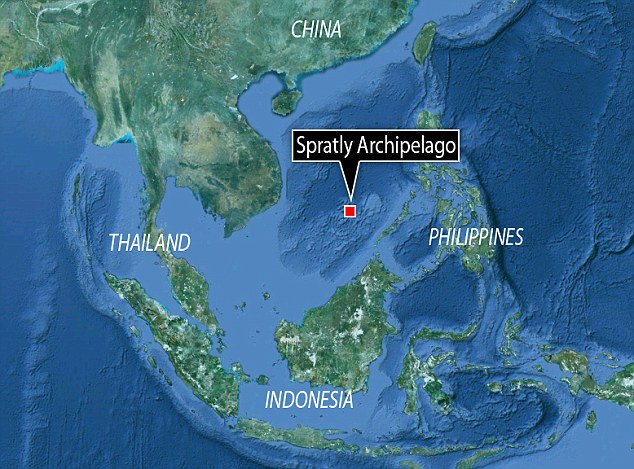
U.S. Navy BEIJING — The Chinese navy repeatedly warned a U.S. surveillance plane to leave airspace around disputed islands in the South China Sea, a sign that Beijing may seek to create a military exclusion zone in a move that could heighten regional tensions. The warnings, delivered eight times to a P-8A Poseidon over the Spratly Islands on Wednesday, were reported by a CNN team aboard the plane.

PERTH, AUSTRALIA   MARCH 28:  A US Navy P 8A Poseidon departs Perth's International Airport on March 28, 2014 in Perth, Australia. The Australian Maritime Safety Authority (AMSA) announced today the search area for missing flight MH370 has shifted closer to the Western Australian Coast after receiving radar analysis suggesting the airliner did not travel as far south as originally thought. The Malaysian airliner disappeared on March 8 with 239 passengers and crew on board and is suspected to have crashed into the southern Indian Ocean.  (Photo by Matt Jelonek/Getty Images)
PERTH, AUSTRALIA MARCH 28: A US Navy P 8A Poseidon departs Perth’s International Airport on March 28, 2014 in Perth, Australia. The Australian Maritime Safety Authority (AMSA) announced today the search area for missing flight MH370 has shifted closer to the Western Australian Coast after receiving radar analysis suggesting the airliner did not travel as far south as originally thought. The Malaysian airliner disappeared on March 8 with 239 passengers and crew on board and is suspected to have crashed into the southern Indian Ocean. (Photo by Matt Jelonek/Getty Images)

“Foreign military aircraft. This is Chinese navy. You are approaching our military alert zone. Leave immediately,” a radio operator told the aircraft, later bluntly warning: “Go, go.” After each warning, the U.S. pilots responded calmly that the P-8A was flying through international airspace, according to the CNN team. [Washington and Beijing face off over man-made islands]

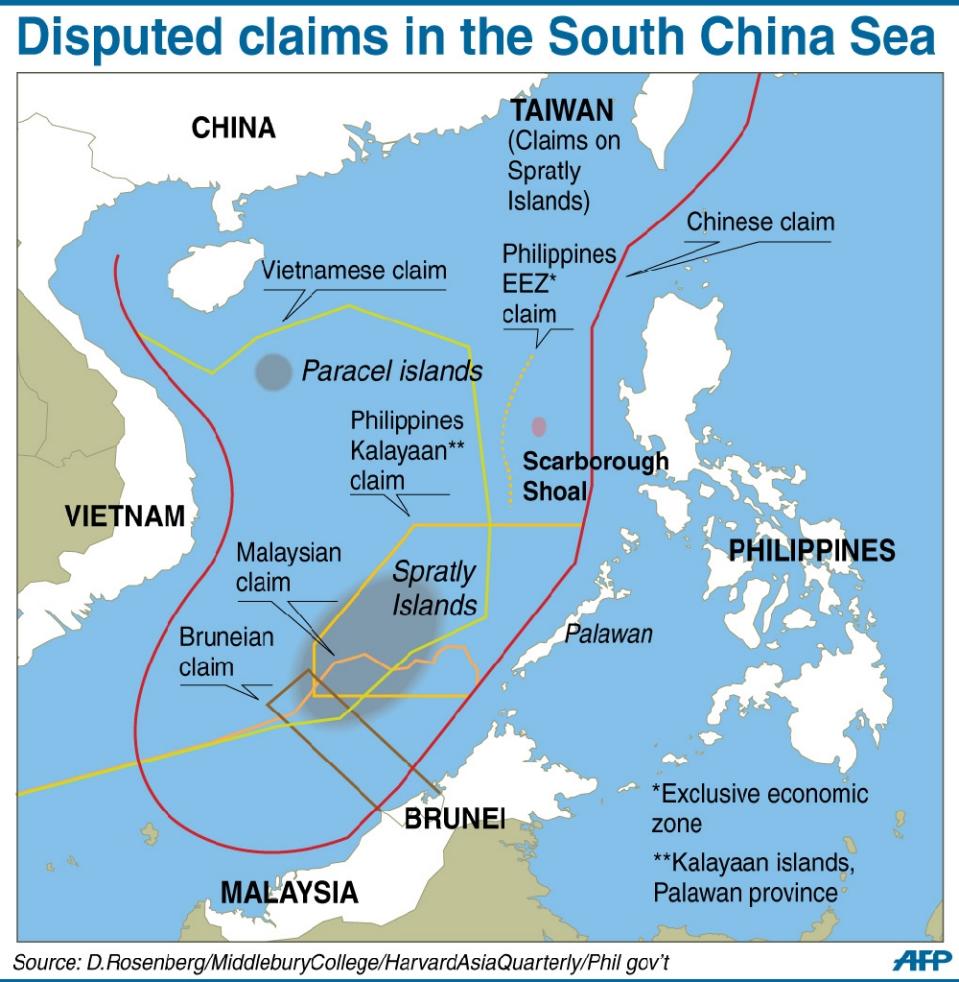
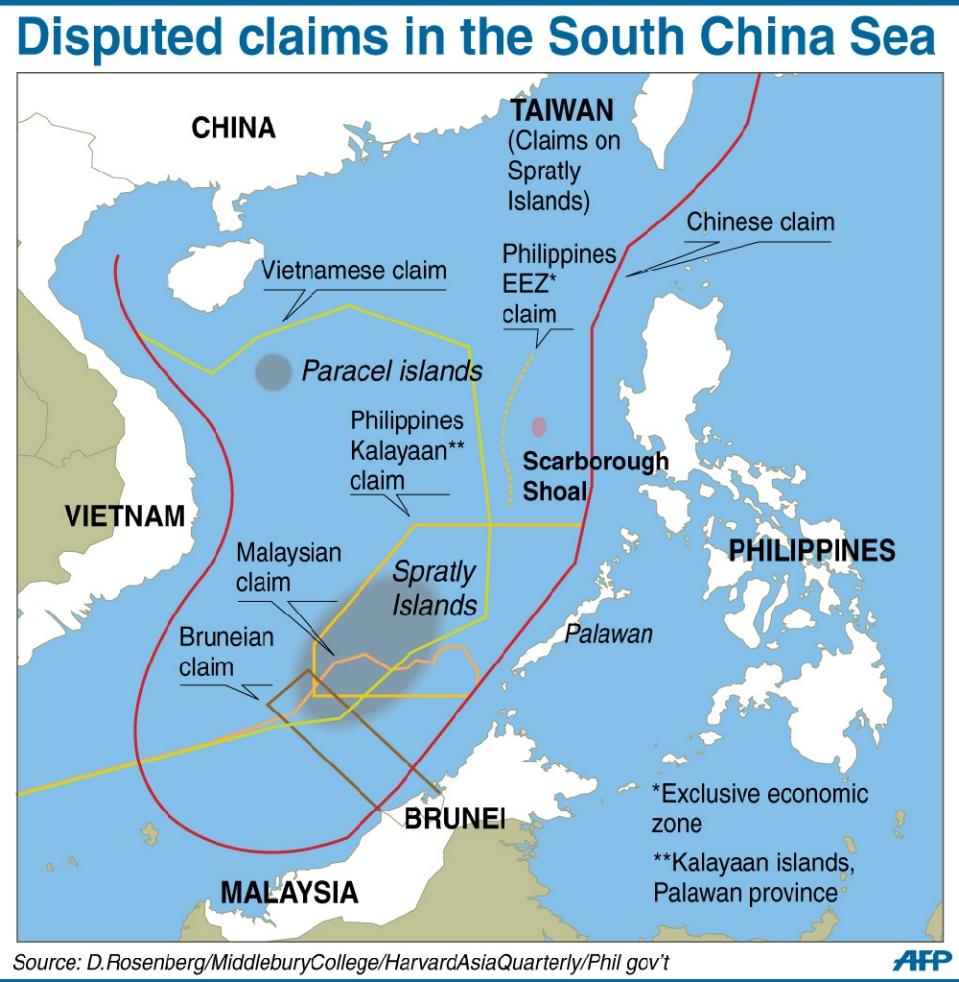
China claims sovereignty over more than 80 percent of the South China Sea. Rival claimants to islands and reefs — set amid fertile fishing grounds and potentially oil- and gas-rich waters — include the Philippines, Vietnam, Taiwan, Malaysia and Brunei.

red china imperialist fiery cross reef
In my view, the Battle to checkmate Red China’s Imperial Power has to begin in Tibet, for Tibet is the first victim of Red China’s Imperialism.

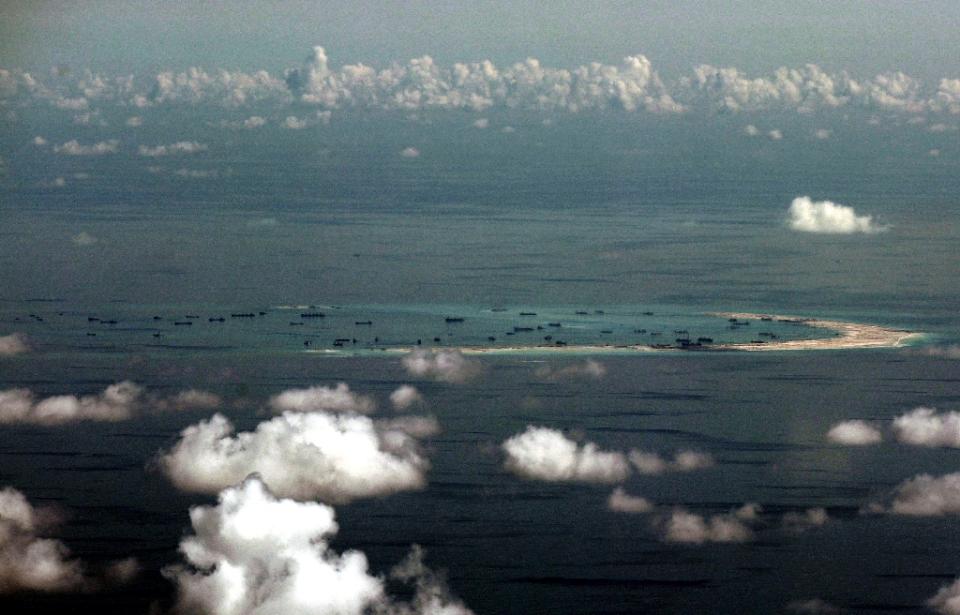
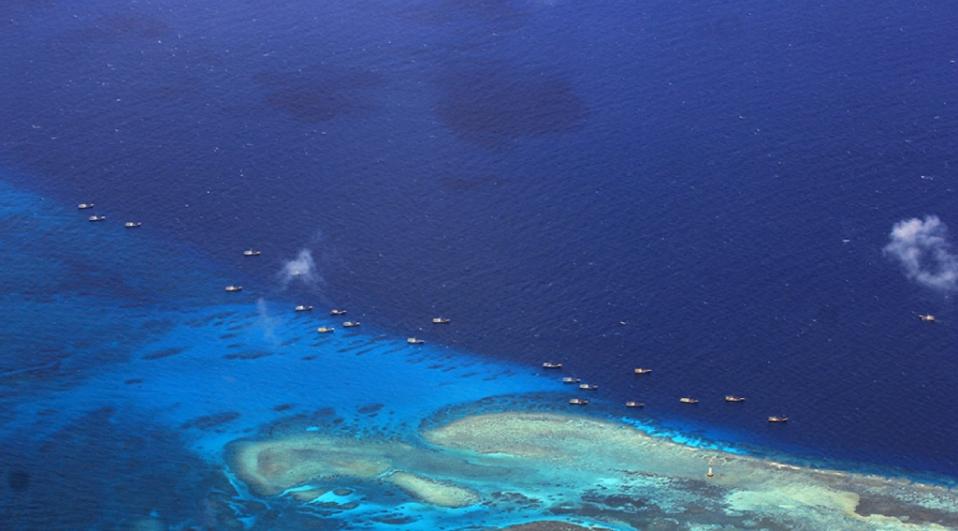
© REUTERS/Ritchie B. Tongo/Pool An aerial photo taken though a glass window of a Philippine military plane shows the alleged on-going land reclamation by China on mischief reef in the Spratly Islands in the South China Sea, west of Palawan, Philippines, May 11, 2015.

In the Spratly Islands, China has been engaged in a massive program of land reclamation and construction, including building artificial islands.

On Thursday, a spokesman for China’s Foreign Ministry, Hong Lei, said Beijing “has the right to monitor certain airspace and maritime areas and safeguard national security, to prevent unexpected incidents at sea.” He added that other countries should respect China’s sovereignty. The Philippines says similar warnings have been delivered to its military aircraft in the past three months, suggesting that China is trying to exclude foreign military planes from the area.

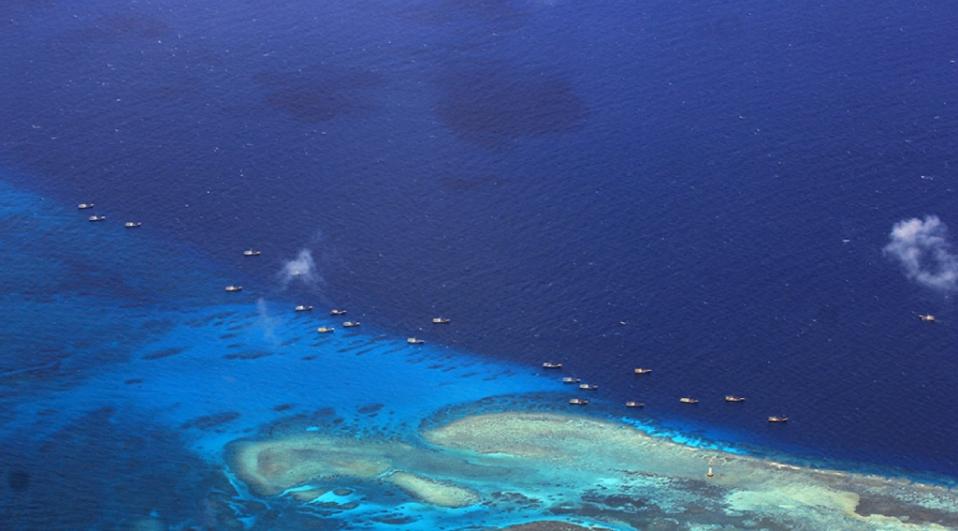
An attempt to impose restrictions in what is widely seen as international airspace would significantly raise tensions in the area and could provoke confrontations between the U.S. and Chinese militaries, experts said. Images captured by the U.S. plane’s high-performance cameras showed dozens of dredging vessels at different islands, some pumping sand onto reefs to build new land out of the ocean. They also showed an early-warning-radar building and a new airstrip on Fiery Cross Reef that CNN reported was long enough to land any military aircraft operated by China. [Reclaiming land, expanding tensions]

Capt. Mike Parker, on board the aircraft, said he thinks that at least one of the verbal challenges came from the radar station. “Although China glosses over the military purpose of those artificial islands, they are likely primarily intended to change the power balance in the South China Sea vis-a-vis the U.S. Navy, which for now is the dominant force in the area,” said Yanmei Xie, senior China analyst at the International Crisis Group. China could use the completed installations to “scramble fighter jets to intercept, tail and attempt to evict incoming military aircraft,” Xie noted. “That scenario would turn the South China Sea into a theater of frequent near-misses and even clashes,” she said.

Under international law, the construction of artificial islands confers no right of sovereignty over neighboring waters, and the United States has made it clear that it will not respect China’s claim to what it sees as international waters and airspace.

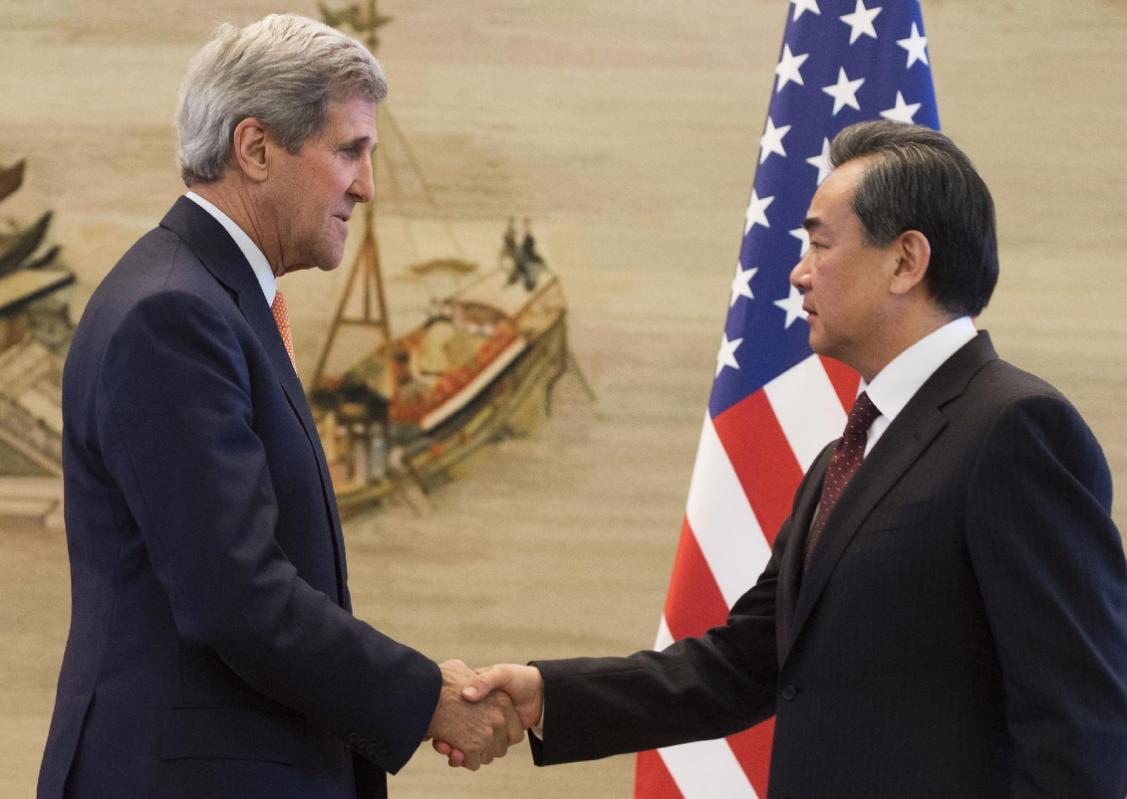
In Washington, a Pentagon spokesman, Col. Steve Warren, said “freedom of navigations operations” would continue in the South China Sea, but he insisted that U.S. military aircraft do not fly directly over areas claimed by China in the Spratly Islands. “We will continue to fly in international airspace,” he said. Secretary of State John F. Kerry expressed concern about China’s land reclamation project to the nation’s leaders last weekend, but his complaints appeared to fall on deaf ears. Foreign Minister Wang Yi said China’s determination “to safeguard our own sovereignty and territorial is as firm as rock and is unshakable.”

But on social media, some Chinese mocked the failure to scare off the U.S. plane. “Isn’t intercepting the robbers in the air the responsibility of the Chinese air force?” one asked. Another branded the incident a “national disgrace and a disgrace for the Chinese people.” Although China has acknowledged that the islands will have military uses, Hong insisted that the main purpose of the construction work was “to provide service for search and rescue at sea, fishing security, disaster prevention and relief, and meteorological monitoring, among other things.”

Last week, senators on both sides of the aisle in Washington called for a more robust U.S. response to China’s maritime activity, arguing that China was not paying any price for its actions while regional allies were questioning U.S. commitment to Asian security.

Paul Haenle, director of the Carnegie-Tsinghua Center in Beijing, said Chinese President Xi Jinping has taken a much more assertive approach to strengthening his country’s maritime claims. “After several decades of being weak, the Chinese feel they have lost ground on their historical claims and are now in a better position to strengthen them. And the lack of strong U.S. leadership internationally has contributed to a sense in China that they can push these claims now and will not face negative consequences,” he said. [Vietnam also critical of Chinese plans]

Deputy Secretary of State Antony J. Blinken said at a conference in Jakarta on Wednesday that China’s actions were eroding regional trust and could provoke conflict. “Its behavior threatens to set a new precedent whereby larger countries are free to intimidate smaller ones, and that provokes tensions, instability and can even lead to conflict,” he said, according to the Reuters news agency.

But in a sign that the U.S. and Chinese militaries have taken measures to improve communication and avoid clashes, a U.S. combat ship used agreed codes for unplanned encounters when it met a Chinese vessel during a recent patrol of the South China Sea. “We exchanged messages, and it was very professional,” Cmdr. Matthew Kawas, the commanding officer of the USS Fort Worth, told visiting journalists in Singapore on Wednesday. He declined to comment further on the communications with the Chinese vessel, other than to point out that it is useful for both navies to become accustomed to each other’s practices.

Earlier, Adm. Michelle Howard told reporters in Singapore that the two navies had agreed to use codes specifically designed to manage unplanned encounters at sea. “Fort Worth came across one of our counterparts and they did do that, so things went as professionally as they have since that agreement was made,” she said, according to Bloomberg News.

If the Navy acts on the proposal to step up patrols in the South China Sea, the Fort Worth, a littoral combat vessel, and its sister ships are likely to play a key role. The expensive new additions to the Navy’s fleet are speedy and maneuverable and have a draft of just 15 feet. “It enables us to go places where other ships cannot,” said Capt. Fred Kacher, commodore of the U.S. Navy’s Destroyer Squadron 7, adding that an unmanned helicopter on board the ship is equipped with a a video camera that allows the Fort Worth “to see what’s going on.”

Will Englund in Singapore, Liu Liu and Gu Jinglu in Beijing and Missy Ryan in Washington contributed to this report.

In my view, the Battle to checkmate Red China’s Imperial Power has to begin in Tibet, for Tibet is the first victim of Red China’s Imperialism.

Whole Evil – China’s Policy of Build and Grab in South China Sea

Red China’s Doctrine of Expansionism

RED  CHINA  -  EXPANSIONISM  -  SOUTH  CHINA  SEA :
RED CHINA – EXPANSIONISM – SOUTH CHINA SEA :

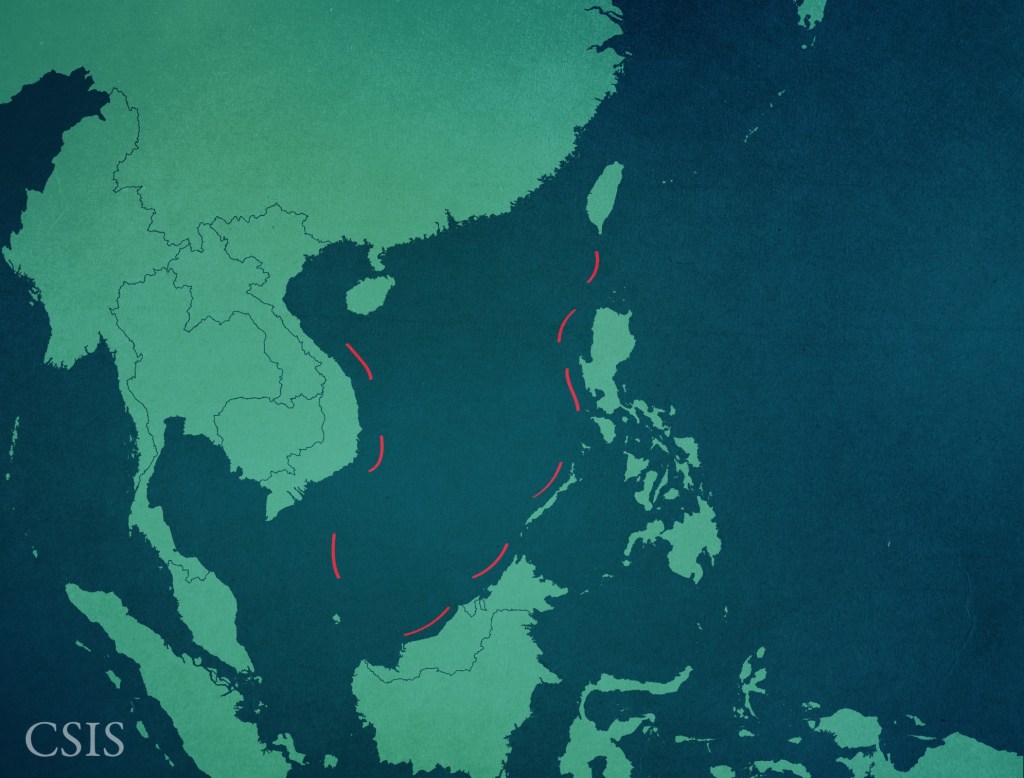
Red China(The Evil Red Empire – The Red Dragon – The Expansionist) formulated its policy of Expansionism in late 1940s under the leadership of its Communist Party Chairman Mao Zedong or Mao Tse-Tung. It uses fraudulent maps(Nine-Segment Map) prepared in 1947 to extend its maritime territory in South China Sea.

CHINA PURSUING HUGE SOUTH CHINA SEA LAND RECLAMATION: US

RED DRAGON – RED CHINA – DICTATORIAL REGIME. RED CHINA CREATED TERRITORIAL DISPUTES WITH ALL OF HER REGIONAL NEIGHBORS FOR SHE IS EVIL POWER.

By Dan De Luce May 9, 2015 9:21 AM

China has dramatically ramped up its land reclamation efforts in the South China Sea this year, building artificial islands at an unprecedented pace to bolster its territorial claims in the disputed area, US officials said Friday.

The rapid construction of artificial islands in the strategic waters comes to 2,000 acres (800 hectares), with 75 percent of the total in the last five months, officials said.
“China has expanded the acreage on the outposts it occupies by some four hundred times,” said a US defense official.

The United States did not endorse land reclamation by any of the countries with territorial claims in the South China Sea, but “the pace and scale of China’s land reclamation in recent years dwarfs that of any other claimant,” the official said.

The South China Sea is home to strategically vital shipping lanes and is believed to be rich in oil and gas. Washington is concerned China’s efforts carry a military dimension that could undermine America’s naval and economic power in the Pacific.

The commander of the US Pacific Fleet, Admiral Harry Harris, said in March that China is “creating a Great Wall of sand.”

RED  CHINA  -  EXPANSIONISM  -  SOUTH  CHINA  SEA :
RED CHINA – EXPANSIONISM – SOUTH CHINA SEA :
RED  CHINA  -  EXPANSIONISM  -  SOUTH  CHINA  SEA .
RED CHINA – EXPANSIONISM – SOUTH CHINA SEA .

Graphic on the disputed claims in the South China Sea (AFP Photo/)

US officials released the reclamation estimate as the Pentagon issued its annual report to Congress on the state of China’s military, which repeated accusations that Beijing was staging cyber attacks to scoop up information on American defense programs.

The report also warned that China has made major strides with a range of satellites as well as anti-satellite jammers, saying it now had “the most dynamic space program in the world today.”

China blasted the US report on Saturday, expressing opposition and accusing it of distorting facts.
“The US defense department’s report on China’s military and security development situation distorts facts and continues to play up the ‘China military threat’ cliché,” Chinese defense ministry spokesman Geng Yansheng was quoted as saying by the official Xinhua news agency.
He made no direct mention of land reclamation in the South China Sea, but said China was justified in upholding its sovereignty in the area.

RED  CHINA  -  EXPANSIONISM  -  SOUTH  CHINA  SEA :  RED  CHINA  COASTGUARD  VESSEL  CONFRONTING  PHILIPPINE  SUPPLY  BOAT  ON  MARCH  29,  2014.
RED CHINA – EXPANSIONISM – SOUTH CHINA SEA : RED CHINA COASTGUARD VESSEL CONFRONTING PHILIPPINE SUPPLY BOAT ON MARCH 29, 2014.

A China Coast Guard ship (top) and a Philippine supply boat engage in a stand-off near the Second Th …

“The military build-up aims to maintain sovereignty, security and territorial integrity, and guarantee China’s peaceful development,” Geng said.
Previous reports have noted China’s focus on cyber and space weapons but this year’s document included a special section on the country’s massive dredging and island building in the strategic South China Sea.

At four reclamation sites, China has moved from dredging operations to “infrastructure development” that could include harbors, communications and surveillance systems, logistics support and “at least one airfield,” the report said.

The Chinese have excavated deep channels that could accommodate larger ships to the outposts, it said.
The ultimate purpose of the effort remains unclear but analysts outside China say Beijing is “attempting to change facts on the ground by improving its defense infrastructure in the South China Sea,” the report said.

RED  CHINA  -  EXPANSIONISM  -  SOUTH  CHINA  SEA  -  IMAGES  OF  FIERY  CROSS  REEF  TAKEN  ON  JANUARY  22, 2006(ABOVE)  AND  APRIL  02,  2015(BELOW).
RED CHINA – EXPANSIONISM – SOUTH CHINA SEA – IMAGES OF FIERY CROSS REEF TAKEN ON JANUARY 22, 2006(ABOVE) AND APRIL 02, 2015(BELOW).

Satellite images of the Fiery Cross Reef in the Spratly Islands – January 22, 2006 (top) and on April 02, 2015 …

Unlike other countries making claims in the area, China at the moment does not have an airfield or “secure docking” at its outposts and the reclamation operations may be aimed at ending that disparity, it said.

The Pentagon report covered a period ending in December 2014 and it said China had reclaimed 500 acres in the disputed waters up to that point. But since then, China has conducted reclamation covering 1,500 acres, officials said.

Satellite images taken last month and shown on the website of the Washington-based Center for Strategic and International Studies (CSIS) showed Chinese island-building in several locations, including construction of a runway on Fiery Cross Reef in the Spratly Island chain, estimated at 3.1 kilometres (1.9 miles) in total and more than one-third complete at the time.

This week CSIS also unveiled images of Vietnamese island-building in the Spratlys.
Beijing asserts sovereignty over almost the whole of the South China Sea, including areas close to the coasts of other littoral states, using a nine-segment line based on one that first appeared on Chinese maps in the 1940s.

China has repeatedly defended its construction work as taking place within its own territory and intended to help with maritime search and rescue, navigation and research.
“The scale of China’s construction work should be commensurate with its responsibility and obligation as a major country and meet actual needs,” foreign ministry spokeswoman Hua Chunying told a regular briefing Friday, before the US comments.

The Philippines, Vietnam, Malaysia, Brunei and Taiwan all have overlapping claims to the sea, but reclamation work by China’s neighbors has proceeded at a slower pace. Vietnam has reclaimed about 60 acres of land since 2009 and Taiwan has reclaimed about five acres near Itu Aba island.

  • Singapore International News
  • South China Sea
  • China

© 2015 AFP

Yahoo – ABC News Network

the evil red empire airspace maritime expansionism

Whole Torture – The dictatorial regime ruling in Tibet

Tibet Consciousness – Torture in Tibet

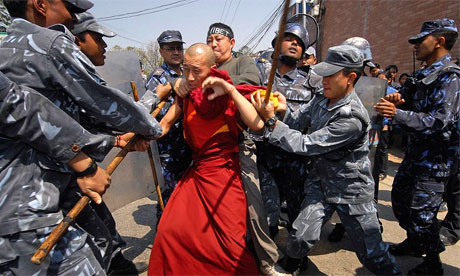
I express my serious concerns on use of torture and the practice of forced confessions that are prevalent all across Red China including Occupied Tibet.

... par les forces de sécurité chinoises - Etudiants pour un Tibet Libre
On etlfreetibet.canalblog.com

I express my serious concerns on use of torture and the practice of forced confessions that are prevalent all across Red China including Occupied Tibet.

Rudra Narasimham Rebbapragada
Ann Arbor, MI 48104-4162 USA
Special Frontier Force-Establishment 22-Vikas Regiment

Amnesty: China uses medieval torture techniques against opponents

Tibet post International

Friday, 20 November 2015 16:45 Garima Pura, Tibet Post International

179 china cruelty
I express my serious concerns on use of torture and the practice of forced confessions that are prevalent all across Red China including Occupied Tibet.

London — The Amnesty International published a report – ‘No End in Sight: Torture and Forced Confessions in China’ based on 40 interviews with Chinese Human Rights Lawyers documenting brutal treatment of those taken into police custody.

Details of using medieval torture techniques against government opponents, activists, lawyers and petitioners including spiked rods, iron torture chairs and electric batons was documented in the report.

Patrick Poon, the report’s author, said that despite government pledged to reform, Amnesty had recently documented cases of torture in virtually every corner of the country. “From Beijing to Hunan to Heilongjiang to Guangdong – there are cases of torture in many, many places. The problem is still very widespread in different provinces. It isn’t just concentrated in a certain area of China,” he said.

Poon said most of those targeted were human rights lawyers, Communist party officials taken into custody by anti-corruption investigators, and practitioners of the banned spiritual movement Falun Gong by a Taoist-Buddhist sect.

One of the most shocking cases described in the report was of Cai Ying, a 52-year-old human rights lawyer from Hunan province. Cai claimed that after being detained in 2012 he was forced to sit on a “hanging restraint chair” – a contraption that immobilizes a prisoner by dangling them in the air with their hands and chest strapped to a board.

In a recent interview with Hong Kong’s South China Morning Post, Cai recalled excruciating torture sessions. “I was humiliated so badly I thought of ending it all, but then I thought of my daughter,” he said. “The humiliating experience filled my heart with hatred.”

Yu Wensheng, another lawyer, said that after being detained last October for protesting outside a detention centre where a client was being held, he spent more than three months in custody suffering torture.

Yu claimed he was held with death row inmates for 61 days, during which he was questioned about 200 times. At one point officers handcuffed him to an iron chair with his hands behind his back.”My hands were swollen and I felt so much pain that I didn’t want to live,” he was quoted as saying. “The two police officers repeatedly yanked the handcuffs. I screamed every time they pulled them.”Yu described the despair of his time behind bars. “I felt helpless and lonely,” he said. “It is both physical and psychological suffering. I don’t think I could bear going back to jail for a long stretch again. If I get sent back to jail again, I will go on hunger strike – I would rather die than face a long spell in jail.”

However, Amnesty said such reforms had “in reality done little to change the deep-rooted practice of torturing suspects to extract forced confessions”. Chinese law outlawed only certain acts of torture and did not cover acts of mental torture, the group said. Lawyers trying to investigate or seek redress for such cases were “systematically thwarted by police, prosecutors and the courts”.

Human rights activists believe the situation has deteriorated since President Xi Jinping took control of the Communist party three years ago. Xi, who some describe as China’s most authoritarian ruler since Mao, has tasked the country’s security apparatus with countering any potential source of opposition to the party.

Political prisoners in occupied Tibet suffers equally inhumane if not graver means and methods of torture while in custody such as electric shocks and ice beds as recounted in former political prisoner Ven. Bagdro’s autobiography ‘Hell on Earth’ and attested by a long list of Tibetans who have had similar experiences.

A renewed crackdown on human rights lawyers has been under way since July, and at least 12 people – including the prominent rights lawyers Wang Yu, Li Heping and Zhang Kai – are still being held in undisclosed locations on state security charges. Activists fear those prisoners are likely to be suffering psychological and possibly physical torture.

Asked to comment on the Amnesty report, a foreign ministry spokesman said China was working to bring “fairness and justice” to all.

Last Updated ( Friday, 20 November 2015 17:16 )

COPYRIGHT©2013TPINEWS. All rights reserved.
Unless otherwise indicated, all materials on these pages are copyrighted
by The The Tibet Post International.

interlocutor for political prisoners’ release - Worldnews.com

Tibetan Political Prisoner Dies of His Torture Injuries ...

Tibetan political prisoner released after 17 years - Worldnews.com

young Goshul Lobsang in an undated photo and at his home soon after ...

The death of a high-profile Tibetan prisoner in China sparks protests ...

I express my serious concerns on use of torture and the practice of forced confessions that are prevalent all across Red China including Occupied Tibet.

Whole Hegemonist – Red China is Hegemonist since 1949

Red Dragon – Red China – Hegemonist

Whole Hegemonist – The Future of Red China’s Expansionism – Beijing Doomed.

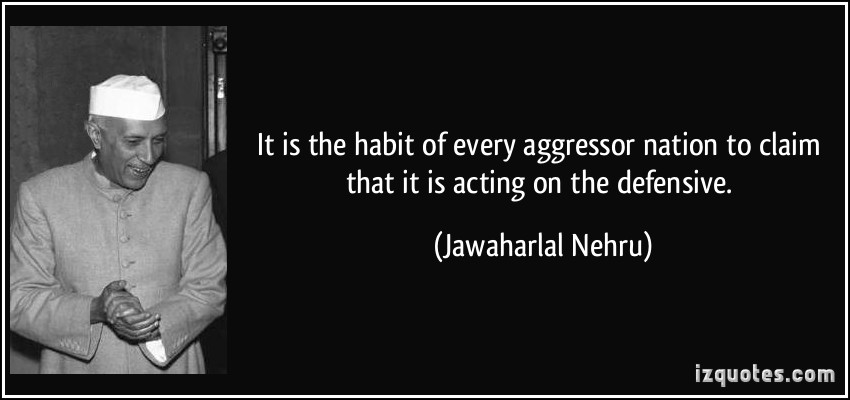
Hegemony refers to dominance of one nation over others. Hegemonism is the policy or practice of a nation in aggressively expanding its influence over other countries.

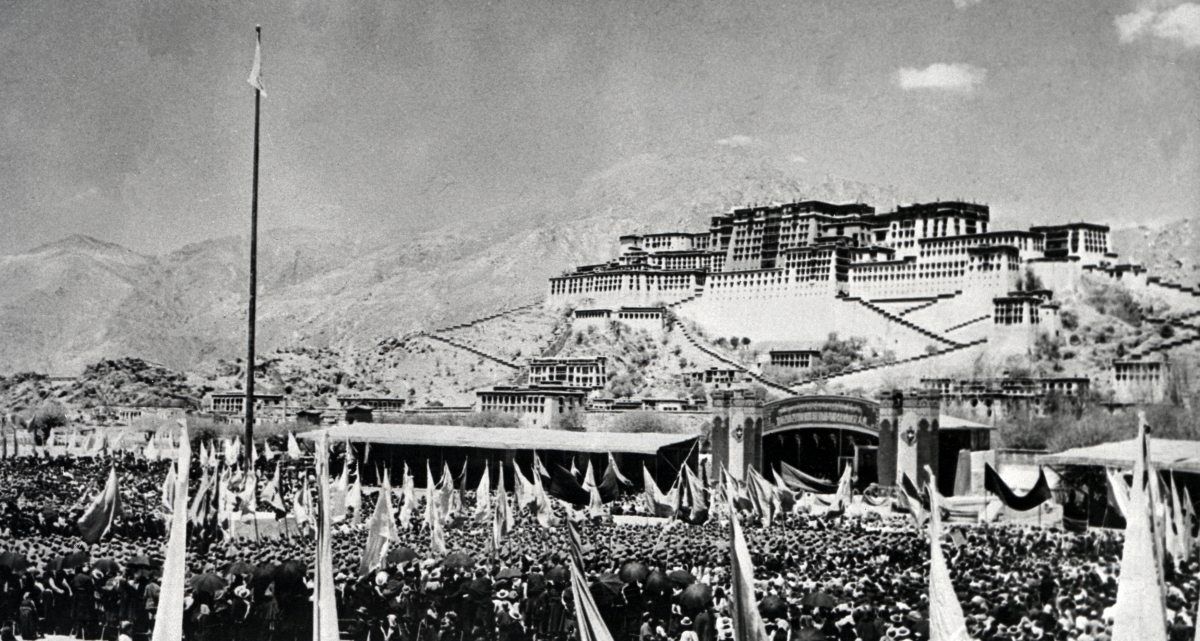
Hegemony refers to dominance of one nation over others. Hegemonism is the policy or practice of a nation in aggressively expanding its influence over other countries. The 17-Point Plan or Agreement of March 1953 sets the tone for Communist China’s Expansionist Doctrine

Red China heralded her hegemonistic policy in 1949 when she announced to the world that she would use military force to occupy Tibet which declared full independence on February 13, 1913. In October 1950, Red China attacked Tibet overcoming weak Tibetan resistance and occupied 965, 000 square miles of Tibetan territory which now represents one quarter of Red China’s landmass. This Tibetan territory includes entire Tibet Autonomous Region (TAR) and regions found in Qinghai, Gansu, Sichuan and Yunnan provinces. Red China’s policy of Hegemonism is nothing new. Red China will prevail with her military aggression in South China Sea if Red China is not evicted from Tibet.

Hegemony refers to dominance of one nation over others. Hegemonism is the policy or practice of a nation in aggressively expanding its influence over other countries. The 17-Point Plan or Agreement of March 1953 sets the tone for Communist China’s Expansionist Doctrine

I submit that we need not always Fight a War to Win a War. At Special Frontier Force, I am known as ‘Doomsayer of Doom Dooma’. I am claiming that we will Win our War against Tibet’s military occupation without fighting a War with Red China for I predict ‘Beijing Is Doomed’ and Red China set herself on irreversible path of Self-Destruction.

Hegemony refers to dominance of one nation over others. Hegemonism is the policy or practice of a nation in aggressively expanding its influence over other countries. The 17-Point Plan or Agreement of March 1953 sets the tone for Communist China’s Expansionist Doctrine

Rudra Narasimham Rebbapragada
Ann Arbor, MI 48104-4162, USA
Special Frontier Force-Establishment 22-Vikas Regiment

Hegemony refers to dominance of one nation over others. Hegemonism is the policy or practice of a nation in aggressively expanding its influence over other countries. The 17-Point Plan or Agreement of March 1953 sets the tone for Communist China’s Expansionist Doctrine

ValueWalk.

Game Theory: A New Twist To The South China Sea

RED DRAGON – RED CHINA – DICTATORIAL REGIME. RED CHINA CREATED TERRITORIAL DISPUTES WITH ALL OF HER REGIONAL NEIGHBORS FOR SHE IS EVIL POWER.

Posted By: BRINDA BANERJEE Posted date: August 20, 2015 03:15:04 PM

If you haven’t heard of “HEGEMON” and you’re a geostrategy enthusiast, you’re missing out on a very interesting experience. Developed by the Potomac Foundation, the multiplayer game allows users to take on the identities of different countries, complete with resources and political agendas.

Before you write it off as yet another game imitating life, consider this: Hegemon has quickly become a favorite with strategists and academicians who use the simulation to test different approaches and evaluate results.

Players can take on the roles of the United States, China and other countries in the Asia-Pacific region; from budgeting and strategizing to managing military and technological needs, the ‘game’ involves enacting real-world geopolitical relationships on-screen.
Perhaps the most interesting implication of the game is that it allows users to test the waters, so as to speak, on the South China Sea issue. And the revelations are rather edifying.

China could gain a hegemony on the South China Sea

As per an article first published in the Lowy Interpreter, China could gain and sustain a hegemony on the South China Sea without every actually having to resort to armed conflict. The South China Sea issue has been in the news frequently over the past year owing to a rise in hostile disputes over territory between the various claimants. China, most noticeably, has ‘reclaimed’ several territories and undertaken construction operations on the same, much to the chagrin of other stakeholders. As of this past month, the state has halted its actions in the region in keeping with an international effort to resolve the dispute peacefully. However, as the game has revealed, there are other ways in which the state could monopolize the region. Here are some possible outcomes to mull over.

#1 You Don’t Need To Fight A War To Win A War

A very big part of war strategy is avoiding war altogether. You must prepare to excel at the worst, but still keep it from happening at any cost. In the game, only 50% of the region takes to violence across a span of two decades. Instead, the more probable outcome is that countries turn to brokering agreements. It’s interesting to note that the matter of who plays the game affects what the outcome is: military personnel are more likely to opt for confrontational tactics while academics are more prone to choosing the non-combative options.

#2 The Role Of Russia

While Russia isn’t a claimant in the South China Sea issue, or even a regional stakeholder, the state does exert a considerable amount of influence on the area’s security and stability. Alliances and enmities with Russia can go a long way towards affecting the regional balance of power. History has proven that power in geopolitical conflicts is best consolidated through a formidable military presence in the region in question, and the fact that Russia is a significant contributor to the international weapons market all but guarantees Moscow a say-so in the South China Sea issue.

#3 What Would Vietnam Do?

Vietnam makes for a very interesting entry point into the South China Sea dispute because the state is a claimant in the territorial conflict and clearly opposed to Chinese monopoly in the greater South Asian region, but it still continues to be something of a wild card. The country has a land border in common with Beijing, so it serves Vietnam’s security interests to maintain peaceful ties with China. One probable outcome, as we see played out in Hegemon only too often, is that Hanoi is likely to forsake a portion of its stakes in the South China Sea issue in exchange for a decreased Chinese military presence at its borders.

#4 Diplomacy & Perseverance

Many real-world experts have argued that China will seek to avoid open confrontation simply because the costs of war are too high and the state has identified another means to the same end: diplomatic channels. China currently enjoys a position of enviable influence in the region. The current geopolitical landscape of South Asia is marked by an eagerness to either ally with China or, at the very least, avoid an armed conflict with the state. Analysts argue that by simply waiting it out China stands to gain more. As such, if China were to solidify its identity as the dominant regional power it would serve a severe blow to the United States’ ‘pivot to Asia’ strategy.

#5 Deterrence or Destruction?

Yet others argue that even if China were to persevere at the long game, there is no guarantee that other Asian states will concede to its hegemony in the region. China has a historical rival in Japan, and if things were to come to a head, the latter is most likely to align with the United States in an effort to maintain the status quo in Asia. In this case, the arms race and support gathering may result in a more pronounced divide than ever before, and scholars warn that the world might soon be looking at another iteration of the Cold War.

Interesting though it is to see how closely the game imitates real life and vice-versa, theorists will argue against basing actual strategy on gameplay simply because two crucial elements- the stakes involved and the time in hand- do not represent real-time situations accurately. Defeat in a game and defeat on a battlefield are two very different experiences indeed. And while overnight developments are not completely unheard of in military history, most issues develop gradually and decision-makers have months, even years, to chart the most preferred course of action.

So, while geostrategy buffs can definitely learn a thing or two about the South China Sea issue from Hegemon, and maybe even test-drive a few theories, the real world is, as they say, a totally different ballgame.

,Hegemony refers to dominance of one nation over others. Hegemonism is the policy or practice of a nation in aggressively expanding its influence over other countries. The 17-Point Plan or Agreement of March 1953 sets the tone for Communist China’s Expansionist Doctrine

About the author

BRINDA BANERJEE

Brinda Banerjee is a researcher working on security, armed conflict and military policies. She holds a Bachelor’s in Journalism (with Honors), a Master’s in Peace and Conflict Studies and is currently pursuing her Ph.D. in state responses to internal conflict. Brinda writes extensively about current events, conflict resolution and geopolitical dynamics in the modern world.

Copyright © 2015 ValueWalk

Hegemony refers to dominance of one nation over others. Hegemonism is the policy or practice of a nation in aggressively expanding its influence over other countries. The 17-Point Plan or Agreement of March 1953 sets the tone for Communist China’s Expansionist Doctrine

Whole Politics – Red China uses Religion for Political Purposes

Tibet Consciousness – The Politics of Religious Festivals

Tibetan horsemen display their skills at a government-organized horse festival in Yushu, China, July 26, 2015. (Image courtesy: The New York Times)
Red China orchestrates the observance of a few religious festivals to manipulate Tibetans to adapt a lifestyle in which State controls religious traditions of people.

yushu horse festival yushu horse festival

In Occupied Tibet, Red China uses religion as a political weapon or tool to extend her Colonialist domination of Tibet and to subjugate Tibetans. Red China encourages religious groups such as Shugden and the followers of Communist Panchen Lama to counter the influence of His Holiness the Dalai Lama, the true representative of Tibetan Identity. Red China orchestrates the observance of a few religious festivals to manipulate Tibetans to adapt a lifestyle in which State controls religious traditions of people.

Rudra Narasimham Rebbapragada
Ann Arbor, MI 48104-4162 USA
Special Frontier Force-Establishment 22-Vikas Regiment


TIMES OF INDIA

In Tibet, festivals serve a political purpose

Edward Wong Horse festivals on the Tibetan plateau are not just about equestrian prowess — they are political affairs with a propaganda goal for China.
| NYT News Service | Dec 20, 2015, 11.02 AM IST

Tibetan horsemen display their skills at a government-organized horse festival in Yushu, China, July 26, 2015. (Image courtesy: The New York Times)
Red China orchestrates the observance of a few religious festivals to manipulate Tibetans to adapt a lifestyle in which State controls religious traditions of people.

Tibetan horsemen display their skills at a government-organized horse festival in Yushu, China, July 26, 2015….

BATANG GRASSLANDS, Tibet: Women came in finery, wearing bright silk dresses, silver belts and necklaces with turquoise and coral. Men sauntered across the field in boots and cowboy hats. Some nomads had ridden motorcycles for days from valleys in Sichuan Province.

They came to this green-carpeted plain for the annual Tibetan horse festival, three days of horse racing, yak riding and archery.

But Tibet being Chinese-ruled Tibet, the Himalayan rodeo also had a display of martial force.

On the second morning, between races beneath an azure sky, two dozen ethnic Han members of a Chinese paramilitary unit marched through the middle of the race grounds. They held batons and wore helmets and black body armor over green camouflage fatigues. An officer with a walkie-talkie barked orders.

As they walked once around the oval track, the mostly Tibetan audience stayed quiet. Then the soldiers marched off. Minutes later, the next race began, with young jockeys clinging to galloping steeds that kicked up clouds of dust.

50253066.cms
Tibetan people watch an acrobatics show at a government-organized horse festival in Yushu, China. (NYT photo)

These days, horse festivals on the Tibetan plateau are not just about equestrian prowess. They are political affairs with a propaganda goal — Chinese officials hold them to signal to people here and abroad that traditional Tibetan culture is thriving, contrary to what the Dalai Lama and other critics say.

The image of Tibetans showcased by the festival is one that China has long promoted of its ethnic minorities, that of dancing, singing, happy-go-lucky, costume-wearing, loyal citizens of the nation. But there are dissonant notes, including the presence of Han soldiers, who have been posted to horse festivals across the plateau since a Tibetan rebellion in 2008.

“Many people might think Tibet is developing well and in the right direction after watching the horse race,” said Tashi Wangchuk, 30, a businessman in Yushu who is fighting to preserve Tibetan culture. “The government holds this kind of big horse-racing festival to advertise Tibetan people’s lifestyle to the outside world — that our life is very happy and joyful.”

50253087.cms
Red China orchestrates the observance of a few religious festivals to manipulate Tibetans to adapt a lifestyle in which State controls religious traditions of people.

Men perform traditional Tibetan dances at a government-organized horse festival in Yushu. (NYT photo)

The government promotes this image, he said, even as it restricts the teaching of Tibetan language, tries to control Buddhism and presses Tibetans to assimilate into the dominant Han culture.

“So much of our lives is controlled by the government,” said a Tibetan man from Sichuan. “This festival is no different.”

The festival here celebrates the Kham culture of eastern Tibet. Kham, a region of valleys, ravines and hillside monasteries, was traditionally home to Tibet’s fiercest warriors. Although they were conquered in 1950 by the People’s Liberation Army, the people of Kham have remained feisty. Many took part in the 2008 uprising that spread from Lhasa across the plateau, and there have been self-immolations protesting Chinese rule in recent years. On July 9, only two weeks before the horse festival, a young monk in Yushu died after setting fire to himself.

The first of the recent government-run Kham festivals was held in the Yushu area of Qinghai Province in 1994 in an effort to “establish Khampa culture as an international brand, to continue the traditional friendship and to promote mutual development,” according to an official Yushu County news website.

Four counties took turns hosting it every four years. Recently, they began holding the festival annually, with Yushu hosting it both last year and this year, in part to show that the town has recovered from a 2010 earthquake that killed at least 3,000 people.

The opening ceremony was held in town. Most residents could not get tickets because the event was limited to officials and government employees. Mr. Tashi said that had been the case last year, too.

“In this way, they ensure that only reliable people can go,” he said.

The grasslands where the main events were held are by an airport about a half-hour drive south of Yushu. On the road there, Chinese flags fluttered from posts, and President Xi Jinping smiled at travelers from a billboard.

Many people drove motorcycles or sport-utility vehicles. Some held tailgate parties in the parking fields. Entrepreneurs sold steamed buns, watermelon slices, bottled water and yak meat from the backs of their cars.

In the crowd, too, were monks liberated that day from the obligations of monastery rituals. “You don’t want to miss it,” said one, Phuntsok.

There were dance performances daily. The number that closed the first day’s events featured a wide circle of dancing Khampa men who wore traditional black robes and red tassels in their hair. The same men returned for a campfire performance at the festival’s end.

Horse acrobatics on Day 2 opened with a Khampa man on a galloping horse holding aloft the red flag of the People’s Republic. Tibetan music played over loudspeakers. Other riders followed, one by one. Some shot at a bull’s-eye with a rifle while on a moving horse; others bent to the ground to pick up a white scarf as they raced past.

Most of the announcements were made by a woman speaking Chinese rather than Tibetan, even though the only ethnic Han attending were a handful of journalists, photographers and tourists. They were ushered to front-row seats so they could get good photos.

Wrestling matches had been scheduled next. But in the late afternoon, an announcer said the event had been canceled. People jeered.

“They treat us like their children, but this is our land,” one man said.

Police officers in black uniforms, most of them Tibetan, told spectators to go home and pointed to the main road back to town, which soon began filling with cars.

Lian Xiangmin, a senior researcher at the China Tibetology Research Center in Beijing, said in an interview later that “there is nothing traditional about this horse festival,” adding, “It’s a tourism event organized by local governments.”

In the early days of Communist rule, horse festivals were local affairs that had minimal government input, if any, said Tsering Woeser, a Tibetan writer. During the decade-long Cultural Revolution that began in 1966, the festivals shut down. When that period ended, local governments revived the festivals and maintained control over many.

“The political connotation of the government-held festivals was very strong,” Ms. Woeser said. “For example, the once-famous horse festival in Litang was chosen to be held on Aug. 1, which is the day to celebrate the founding of the People’s Liberation Army.”

The Litang festival in Sichuan has been canceled since 2007, when a former nomad and father of 11, Runggye Adak, delivered an impromptu speech at the festival calling for the return of the Dalai Lama. Police officers later arrested him, and only this July was he released.

“From the outside, if people see there’s such a horse festival or event, the world thinks this area is very open and free,” Mr. Tashi said. “But it’s not like that.”

Copyright © 2015 Bennett, Coleman & Co. Ltd. All rights reserved.

The Qinghai part of Kham | The Land of Snows

Kham Tibetans racing horses during the Jyekundo (Yushu) Horse Festival ...

Yushu Horse Festival - The Biggest Horse Festival in Tibet

Little girl at the Yushu Horse Festival dressed traditionally. Nomadic ...

at a festival in the grasslands of Tibet's wild east (the Kham region ...

Dancers at the Yushu Horse Festival in Jyekundo, Kham

... Horse Racing Festival held in Yushu Tibetan Autonomous Prefecture

Yushu Horse festival two men

Yushu Horse Festival - The Biggest Horse Festival in Tibet

... and gold jewelry. From the Chengduo horse festival 2009, Kham, Tibet

16 days Tour to the Tibetan Horse Racing Festivals Yushu und Litang

Yushu Horse Festival - The Biggest Horse Festival in Tibet

Horse race in Lithang county ལི་ཐང་རྫོང ...

Horse race in Lithang county ལི་ཐང་རྫོང ...

Red China orchestrates the observance of a few religious festivals to manipulate Tibetans to adapt a lifestyle in which State controls religious traditions of people.