Chakrata Karma – Exploring the Doctrine of Predestination on September 22
Yes Indeed, Life is Complicated. Willingly no one chooses the Yoke of Slavery. The complexity of Life is about the choices we make. Sometimes, the pursuit of Freedom can come with the trappings of Slavery. On September 22, 2026, I explore the doctrine of Predestination.
Chakrata Karma – Exploring the Doctrine of Predestination on September 22. My Living Experience of Pain, Humiliation, and Loss of Face is Predestined. On September 22, I explore the role of my Birth Star Moola, Sagittarius Constellation in the operation of the mechanisms of Predestination.Chakrata Karma – Exploring the Doctrine of Predestination on September 22. My Living Experience of Pain, Humiliation, and Loss of Face is Predestined. On September 22, I explore the role of my Birth Star Moola, Sagittarius Constellation in the operation of the mechanisms of Predestination.Chakrata Karma – Exploring the Doctrine of Predestination on September 22. My Living Experience of Pain, Humiliation, and Loss of Face is Predestined. On September 22, I explore the role of my Birth Star Moola, Sagittarius Constellation in the operation of the mechanisms of Predestination.Chakrata Karma – Exploring the Doctrine of Predestination on September 22. My Living Experience of Pain, Humiliation, and Loss of Face is Predestined. On September 22, I explore the role of my Birth Star Moola, Sagittarius Constellation in the operation of the mechanisms of Predestination.Chakrata Karma – Exploring the Doctrine of Predestination on September 22. My Living Experience of Pain, Humiliation, and Loss of Face is Predestined. On September 22, I explore the role of my Birth Star Moola, Sagittarius Constellation in the operation of the mechanisms of Predestination.Chakrata Karma – Exploring the Doctrine of Predestination on September 22. September 22–This Day in History–The Journey of Simon Cyrene from Freedom to the Yoke of Slavery
Simon Cyrene was predestined to bear the burden of the Cross and follow Jesus Christ on His final journey at the conclusion of His earthly mission to deliver Peace and Freedom to the mankind.
Chakrata Karma – Exploring the Doctrine of Predestination on September 22. September 22–This Day in History–The Journey of Simon Cyrene from Freedom to the Yoke of Slavery. Chakrata Karma – Exploring the Doctrine of Predestination on September 22. September 22–This Day in History–The Journey of Simon Cyrene from Freedom to the Yoke of Slavery. Behold the Man. “Take my Yoke upon you….For my Yoke is easy and my burden is Light.” Book of Matthew 11:28-30.Chakrata Karma – Exploring the Doctrine of Predestination on September 22. September 22–This Day in History–The Journey of Simon Cyrene from Freedom to the Yoke of Slavery . My Dream for Freedom transforms into an ordeal of Slavery. My Journey to Chakrata and Beyond.
On September 22, 1971, I was Taken on Strength (TOS) of Establishment No. 22, Vikas Regiment, Special Frontier Force, a military organization created in response to ‘The Cold War in Asia.’
On Tuesday, September 22, 2026, I live in Ann Arbor, Michigan to welcome the first day of Fall Season. Today, I claim that my Dream for Freedom in Occupied Tibet got transformed into an ordeal of Slavery in a nation which abolished Slavery with a presidential proclamation on September 22.
On September 22, 1971, I had the freedom to reject my posting to Establishment 22. I was given the choice to choose or decline rendering military service in support of Freedom in Occupied Tibet.
The choice to serve in Establishment 22 comes with risks for its military mission differs from the military mission of the Indian Army which I joined to defend India from attacks by foreign aggressors.
Chakrata Karma – Exploring the Doctrine of Predestination on September 22
It may appear that I am making my own choices in accepting calculated risks to my life. On September 22, 2026, I am still struggling to reconcile with the choices I made in the past. Now, I must reconcile with the reality of my Slavery while living in a country which sponsored my quest for Freedom in Occupied Tibet.
Chakrata Karma – Exploring the Doctrine of Predestination on September 22
On September 22, 2026, I have no hope that I may arrive at the final destination of my life at the conclusion of my earthly existence. Chakrata in Uttarakhand, India represents the struggle ahead, a struggle waiting for me before I can arrive at the final destination of my life. Jesus Christ cannot set me free for the Yoke of Slavery is predestined.
Chakrata Karma – Exploring the Doctrine of Predestination on September 22. September 22–This Day in History–The Journey of Simon Cyrene from Freedom to the Yoke of Slavery. Chakrata Karma – Exploring the Doctrine of Predestination on September 22. September 22–This Day in History–The Journey of Simon Cyrene from Freedom to the Yoke of Slavery. My Quest for Freedom Traps me in Slavery. My Journey to Chakrata and Beyond.
September 22. This Day in History. What Happened on this Day?
Chakrata Karma – Exploring the Doctrine of Predestination on September 22. The Emancipation Proclamation of President Abraham Lincoln has failed to abolish the practice of Slavery, Involuntary Servitude, and Forced Labor. In 1996, these practices of Slavery got resurrected and are introduced into the Union territory by the secular laws enacted by the US Congress which violate the Principle of Equal Protection under Law.
On this day in 1862, President Abraham Lincoln issues a preliminary Emancipation Proclamation, which sets a date for the freedom of more than 3 million black slaves in the United States and recasts the Civil War as a fight against slavery.
When the Civil War broke out in 1861, shortly after Lincoln’s inauguration as America’s 16th president, he maintained that the war was about restoring the Union and not about slavery. He avoided issuing an anti-slavery proclamation immediately, despite the urgings of abolitionists and radical Republicans, as well as his personal belief that slavery was morally repugnant. Instead, Lincoln chose to move cautiously until he could gain wide support from the public for such a measure.
Chakrata Karma – Exploring the Doctrine of Predestination on September 22: Emancipation Proclamation by President Abraham Lincoln during September 1862. United States has officially abolished the practice of slavery. In 1996, the US institutionalized the practice of Servitude and the Union has transformed from a ‘Free State’ into a ‘Slave State.‘
In July 1862, Lincoln informed his cabinet that he would issue an emancipation proclamation but that it would exempt the so-called border states, which had slaveholders but remained loyal to the Union. His cabinet persuaded him not to make the announcement until after a Union victory. Lincoln’s opportunity came following the Union win at the Battle of Antietam in September 1862. On September 22, the president announced that slaves in areas still in rebellion within 100 days would be free.
On January 1, 1863, Lincoln issued the final Emancipation Proclamation, which declared “that all persons held as slaves” within the rebel states “are, and henceforward shall be free.” The proclamation also called for the recruitment and establishment of black military units among the Union forces. An estimated 180,000 African-Americans went on to serve in the army, while another 18,000 served in the navy.
After the Emancipation Proclamation, backing the Confederacy was seen as favoring slavery. It became impossible for anti-slavery nations such as Great Britain and France, who had been friendly to the Confederacy, to get involved on behalf of the South. The proclamation also unified and strengthened Lincoln’s party, the Republicans, helping them stay in power for the next two decades.
The proclamation was a presidential order and not a law passed by Congress, so Lincoln then pushed for an antislavery amendment to the U.S. Constitution to ensure its permanence. With the passage of the 13th Amendment in 1865, slavery was eliminated throughout America (although blacks would face another century of struggle before they truly began to gain equal rights).
Lincoln’s handwritten draft of the final Emancipation Proclamation was destroyed in the Chicago Fire of 1871. Today, the original official version of the document is housed in the National Archives in Washington, D.C.
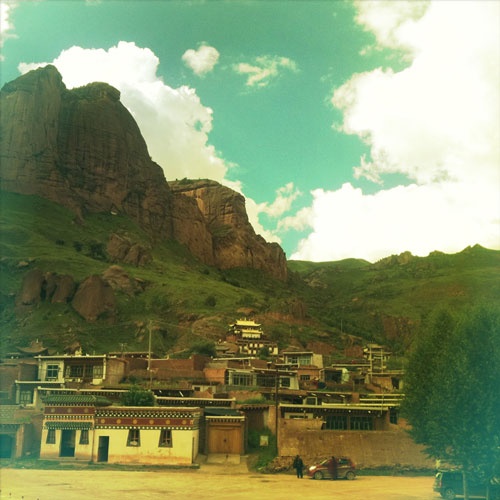
TUESDAY, SEPTEMBER 22, 2026. MY PASSION FOR FREEDOM IN OCCUPIED TIBET WHICH BEGAN AT CHAKRATA DOES NOT RECONCILE WITH MY SLAVERY OF TODAY. THE SCENIC BEAUTY OF CHAKRATA PLAYED NO ROLE IN THE CHOICE I MADE ON SEPTEMBER 22, 1971.
Chakrata Karma – Exploring the Doctrine of Predestination on September 22
Chakrata is not the final destination of my life. It is just the beginning of a struggle that remains ahead, both in terms of time and location. The quest for Freedom in Occupied Tibet traps me in Slavery. I live in the United Sates as a Slave; I live in a Free Nation that sponsored my Love for Freedom in Tibet.
Chakrata Karma – Exploring the Doctrine of Predestination on September 22. September 22–This Day in History–The Journey of Simon Cyrene from Freedom to the Yoke of Slavery. My Quest for Freedom Traps me in Slavery. My Journey to Chakrata and Beyond.Chakrata Karma – Exploring the Doctrine of Predestination on September 22. September 22–This Day in History–The Journey of Simon Cyrene from Freedom to the Yoke of Slavery. My Quest for Freedom Traps me in Slavery. My Journey to Chakrata and Beyond.Chakrata Karma – Exploring the Doctrine of Predestination on September 22. September 22–This Day in History–The Journey of Simon Cyrene from Freedom to the Yoke of Slavery. My Quest for Freedom Traps me in Slavery. My Journey to Chakrata and Beyond.Chakrata Karma – Exploring the Doctrine of Predestination on September 22. September 22–This Day in History–The Journey of Simon Cyrene from Freedom to the Yoke of Slavery. My Quest for Freedom Traps me in Slavery. My Journey to Chakrata and Beyond.Chakrata Karma – Exploring the Doctrine of Predestination on September 22. September 22–This Day in History–The Journey of Simon Cyrene from Freedom to the Yoke of Slavery. My Quest for Freedom Traps me in Slavery. My Journey to Chakrata and Beyond.Chakrata Karma – Exploring the Doctrine of Predestination on September 22. September 22–This Day in History–The Journey of Simon Cyrene from Freedom to the Yoke of Slavery. My Quest for Freedom Traps me in Slavery. My Journey to Chakrata and Beyond.Chakrata Karma – Exploring the Doctrine of Predestination on September 22. September 22–This Day in History–The Journey of Simon Cyrene from Freedom to the Yoke of Slavery. My Quest for Freedom Traps me in Slavery. My Journey to Chakrata and Beyond.Chakrata Karma – Exploring the Doctrine of Predestination on September 22. September 22–This Day in History–The Journey of Simon Cyrene from Freedom to the Yoke of Slavery. My Quest for Freedom Traps me in Slavery. My Journey to Chakrata and Beyond.Chakrata Karma – Exploring the Doctrine of Predestination on September 22. September 22–This Day in History–The Journey of Simon Cyrene from Freedom to the Yoke of Slavery. My Quest for Freedom Traps me in Slavery. My Journey to Chakrata and Beyond.Chakrata Karma – Exploring the Doctrine of Predestination on September 22. September 22–This Day in History–The Journey of Simon Cyrene from Freedom to the Yoke of Slavery. My Quest for Freedom Traps me in Slavery. My Journey to Chakrata and Beyond.Chakrata Karma – Exploring the Doctrine of Predestination on September 22. September 22–This Day in History–The Journey of Simon Cyrene from Freedom to the Yoke of Slavery. My Quest for Freedom Traps me in Slavery. My Journey to Chakrata and Beyond.Chakrata Karma – Exploring the Doctrine of Predestination on September 22. September 22–This Day in History–The Journey of Simon Cyrene from Freedom to the Yoke of Slavery. My Quest for Freedom Traps me in Slavery. My Journey to Chakrata and Beyond.Chakrata Karma – Exploring the Doctrine of Predestination on September 22. September 22–This Day in History–The Journey of Simon Cyrene from Freedom to the Yoke of Slavery. My Quest for Freedom Traps me in Slavery. My Journey to Chakrata and Beyond.Chakrata Karma – Exploring the Doctrine of Predestination on September 22. September 22–This Day in History–The Journey of Simon Cyrene from Freedom to the Yoke of Slavery. My Quest for Freedom Traps me in Slavery. My Journey to Chakrata and Beyond.Chakrata Karma – Exploring the Doctrine of Predestination on September 22. September 22–This Day in History–The Journey of Simon Cyrene from Freedom to the Yoke of Slavery. My Quest for Freedom Traps me in Slavery. My Journey to Chakrata and Beyond.Chakrata Karma – Exploring the Doctrine of Predestination on September 22. September 22–This Day in History–The Journey of Simon Cyrene from Freedom to the Yoke of Slavery. My Quest for Freedom Traps me in Slavery. My Journey to Chakrata and Beyond.Chakrata Karma – Exploring the Doctrine of Predestination on September 22. September 22–This Day in History–The Journey of Simon Cyrene from Freedom to the Yoke of Slavery. My Quest for Freedom Traps me in Slavery. My Journey to Chakrata and Beyond.Chakrata Karma – Exploring the Doctrine of Predestination on September 22. September 22–This Day in History–The Journey of Simon Cyrene from Freedom to the Yoke of Slavery. My Quest for Freedom Traps me in Slavery. My Journey to Chakrata and Beyond.Chakrata Karma – Exploring the Doctrine of Predestination on September 22. September 22–This Day in History–The Journey of Simon Cyrene from Freedom to the Yoke of Slavery. My Quest for Freedom Traps me in Slavery. My Journey to Chakrata and Beyond.Chakrata Karma – Exploring the Doctrine of Predestination on September 22. September 22–This Day in History–The Journey of Simon Cyrene from Freedom to the Yoke of Slavery. My Quest for Freedom Traps me in Slavery. My Journey to Chakrata and Beyond.Chakrata Karma – Exploring the Doctrine of Predestination on September 22. September 22–This Day in History–The Journey of Simon Cyrene from Freedom to the Yoke of Slavery. My Quest for Freedom Traps me in Slavery. My Journey to Chakrata and Beyond.Chakrata Karma – Exploring the Doctrine of Predestination on September 22. September 22–This Day in History–The Journey of Simon Cyrene from Freedom to the Yoke of Slavery. My Quest for Freedom Traps me in Slavery. My Journey to Chakrata and Beyond.Chakrata Karma – Exploring the Doctrine of Predestination on September 22. September 22–This Day in History–The Journey of Simon Cyrene from Freedom to the Yoke of Slavery. My Quest for Freedom Traps me in Slavery. My Journey to Chakrata and Beyond.Chakrata Karma – Exploring the Doctrine of Predestination on September 22. September 22–This Day in History–The Journey of Simon Cyrene from Freedom to the Yoke of Slavery. My Quest for Freedom Traps me in Slavery. My Journey to Chakrata and Beyond.Chakrata Karma – Exploring the Doctrine of Predestination on September 22. September 22–This Day in History–The Journey of Simon Cyrene from Freedom to the Yoke of Slavery. My Quest for Freedom Traps me in Slavery. My Journey to Chakrata and Beyond.Chakrata Karma – Exploring the Doctrine of Predestination on September 22. September 22–This Day in History–The Journey of Simon Cyrene from Freedom to the Yoke of Slavery. My Quest for Freedom Traps me in Slavery. My Journey to Chakrata and Beyond.Chakrata Karma – Exploring the Doctrine of Predestination on September 22. September 22–This Day in History–The Journey of Simon Cyrene from Freedom to the Yoke of Slavery. My Quest for Freedom Traps me in Slavery. My Journey to Chakrata and Beyond.Chakrata Karma – Exploring the Doctrine of Predestination on September 22. September 22–This Day in History–The Journey of Simon Cyrene from Freedom to the Yoke of Slavery. My Quest for Freedom Traps me in Slavery. My Journey to Chakrata and Beyond.Chakrata Karma – Exploring the Doctrine of Predestination on September 22. September 22–This Day in History–The Journey of Simon Cyrene from Freedom to the Yoke of Slavery. My Quest for Freedom Traps me in Slavery. My Journey to Chakrata and Beyond.Chakrata Karma – Exploring the Doctrine of Predestination on September 22. September 22–This Day in History–The Journey of Simon Cyrene from Freedom to the Yoke of Slavery. My Quest for Freedom Traps me in Slavery. My Journey to Chakrata and Beyond.Chakrata Karma – Exploring the Doctrine of Predestination on September 22. September 22–This Day in History–The Journey of Simon Cyrene from Freedom to the Yoke of Slavery. My Quest for Freedom Traps me in Slavery. My Journey to Chakrata and Beyond.Chakrata Karma – Exploring the Doctrine of Predestination on September 22. September 22–This Day in History–The Journey of Simon Cyrene from Freedom to the Yoke of Slavery. My Quest for Freedom Traps me in Slavery. My Journey to Chakrata and Beyond.
I am a Refugee. Who is my Refuge?
Tibet Uprising or Tibet Rebellion on Tuesday, March 10, 1959 makes a profound impact on the course of my life’s journey, forcing me to live in exile without refugee status,
Tibet Uprising or Tibet Rebellion on Tuesday, March 10, 1959 makes a profound impact on the course of my life’s journey, forcing me to live in exile without refugee status, without asylum protection, and without any entity that can be recognized as a friend.
How to find Hope when the Final Destination remains unknown? Can Patience and Perseverance serve the purpose of Hope for Freedom, Peace, and Justice?
Chakrata Karma – Exploring the Doctrine of Predestination on September 22. September 22–This Day in History–The Journey of Simon Cyrene from Freedom to the Yoke of Slavery. My Quest for Freedom Traps me in Slavery. My Journey to Chakrata and Beyond.
The Institution of Dalai Lama Represents the Political Rights of Tibetans to Self-Governance
The Institution of Dalai Lama stands for the Ganden Phodrang Government of Tibet which represents political rights of Tibetans for Self-Governance. The Seal that represents The Institution of Dalai Lama does not include the image of any of the Dalai Lama’s that ruled over Tibet for centuries.
In my analysis, ‘Institution of Dalai Lama’ remains relevant to Tibetans in Occupied Tibet. The Institution of Dalai Lama represents The Ganden Phodrang Government of Tibet, the political symbol of Tibetan Rights to Self-Governance. The Seal that represents the Institution of Dalai Lama does not include the image of any of the Dalai Lamas that ruled over Tibet for centuries.
Dalai Lama Says, ‘Institution of Dalai Lama’ No More Politically Relevant
Whole Ruler – Dalai Lama Represents the Political Rights of Tibetans
PANAJI: Tibetan spiritual leader Dalai Lama on Wednesday said the “institution of Dalai Lama” is no longer politically relevant and it was up to the people of Tibet to decide whether the age-old tradition should continue or not.
He said the Chinese government was more concerned about this institution than him for political reasons.
Dalai Lama is a title given to spiritual leaders of Tibetan people. This title is given to those who are considered among the most important monks of the Gelug school, the newest school of Tibetan Buddhism.
Addressing an event at the Goa Institute of Management, the 14th Dalai Lama said, “As early as in 1969, I had formally made a statement whether this very institution of Dalai Lama should continue or not, it is up to the Tibetan people to decide.”
Replying to students’ queries after an hour-long address, he said, “I have no concerns. Nowadays, the Chinese government is more concerned about the Dalai Lama institution than me. The Chinese government is concerned because of political reasons,”
During the 1959 Tibetan uprising, the Dalai Lama had fled to India.
He said in 2001, the elected political leadership was appointed (by the people in exile) and for the next 10 years, he remained in semi-retired position. “Then in 2011, I totally retired from the political responsibility. Now, the elected political leadership carries the full responsibility, I don’t get involved in their decision,” he said.
“Now, no longer Dalai Lama institution is politically relevant,” the 1989 Nobel Peace Prize winner said. About the future Dalai Lama, he said all leaders of different Buddhist traditions hold a meeting in Tibet every year in November.
“This November, we are meeting again. In the previous meetings, they had decided that when my age reaches around 90 years, then the group of leaders will decide about the future Dalai Lama,” the 83-year-old spiritual leader said. When asked about his own selection to the chair, Lama recalled, “According to my mother, the very day when the search party set by the Tibetan government reached my place… That very day our family was completely ignorant.” “But that very day, I was a 2-3-year-old boy… I was so much excited. I myself don’t know why… The search party got some indications that day. When they reached our house, I ran towards them and recognized each persons’ name,” he said. “At that time, I had some sort of some memory about past life,” the Dalai Lama said.
Institution of Dalai Lama Represents the Political Rights of Tibetans to Self-Governance
Tibet Awareness – Tibetan System of Governance is an integral feature of Tibetan Buddhism
TIBET AWARENESS – THE NATURE OF TIBETAN GOVERNANCE. DALAI LAMA IS THE SUPREME RULER OF TIBET. THIS PHOTO DATED 22 FEBRUARY 1940 EXPLAINS THE NEED TO STUDY TIBETAN BUDDHISM AS A POLITICAL SCIENCE.On bhavanajagat.com
Professor Donald S. Lopez, the Arthur E. Link Distinguished University Professor of Buddhist and Tibetan studies at the University of Michigan published several books on Buddhism and teaches it as religion and as a philosophical doctrine.
TIBET AWARENESS – I ASK PROFESSOR DONALD S. LOPEZ AND OTHERS WHO TEACH TIBETAN BUDDHISM TO EXPLAIN THE NATURE OF TIBETAN GOVERNANCE AND TIBET’S POLITICAL INSTITUTION CALLED GANDEN PHODRANG GOVERNMENT OF TIBET. TIBETAN BUDDHISM IS POLITICAL SCIENCE.
I ask Professor Lopez and all other teachers of Tibetan studies to emphasize the nature of Tibetan governance and as to how Tibetan Buddhism evolved into a political system giving Tibetans a cultural tool to choose the Head of State, the Supreme Ruler of Tibet and the political institution called the Ganden Phodrang Government of Tibet, the political Institution of Dalai Lama. Tibetan Buddhism is a Political Science for it has established the rules for choosing a political official who governs the State and administers justice, and this System of Governance existed for nearly four centuries until Communist China’s military occupation of Tibet in 1950.
Tibetan Buddhism evolved into a political system giving Tibetans a cultural tool to choose the Head of State, the Supreme Ruler of Tibet and the political institution called the Ganden Phodrang Government of Tibet, the political Institution of Dalai Lama. Tibetan Buddhism is a Political Science for it has established the rules for choosing a political official who governs the State and administers justice, and this System of Governance existed for nearly four centuries until Communist China’s military occupation of Tibet in 1950.
Rudra Narasimham Rebbapragada Ann Arbor, MI 48104-4162 USA Special Frontier Force-Establishment 22-Vikas Regiment
Religion department hosts Buddhist scholar for lecture series
Aryanna Duhl, Staff Writer 9:31 a.m. EDT March 30, 2016
Tibetan Buddhism is Political Science, a System of Governance that existed for nearly four centuries until Communist China’s military occupation of Tibet in 1950.
Professor Donald S. Lopez of the University of Michigan gave two lectures as part of the Department of Religion’s 15th annual Tessa J. Bartholomuesz Lecture Series and the department’s 50th Annviersary Celebration. (Photo: James Papastavros/FSView)
“He’s like the Stephen King of Buddhist studies,” said Dr. Bryan J. Cuevas as he presented the featured speaker of the Department of Religion’s 15th annual Tessa J. Bartholomuesz Lecture Series. Professor Donald S. Lopez, the Arthur E. Link Distinguished University Professor of Buddhist and Tibetan Studies at the University of Michigan, gave two lectures, which were also a part of the Department of Religion’s 50th Anniversary celebration.
In his first presentation, “Dispatches from Nirvana: 45 Years of Buddhist Studies,” Lopez spoke first about how he came to study Buddhism. He explained that during the Vietnam War, he became disenchanted with Western thought, turning to “Eastern mysticism.”
Before his position at the University of Michigan, Lopez taught at Middlebury College in Vermont, where he was one of four religion professors, and the only one studying Eastern religions. He taught a variety of subjects, including Daoism, Confucianism and Buddhism. He then moved to Michigan, where he is one of three Buddhism scholars.
Professor Lopez has written many books on Buddhism, but spoke the most on authoring anthologies, where he attempts to question the “classics” of Buddhist literature. He estimated that only 10% of available Tibetan works have actually been studied, and attributed this to the previous lack of scholars who spoke the language. “Language foundation is crucial” to the study of religions, Lopez stressed. He clarified that when scholars don’t understand the language and culture of a religious people, they must rely only on the texts that the people have always deemed the “classics” and are therefore unable to explore others.
In his second lecture, “Christian vs. Buddhist: The Battle for the Soul of Tibet,” Lopez described the missions of Ippoito Desideri, an Italian Jesuit missionary in Tibet in the 1700s who was the first European to have studied and understood the Tibetan language and culture.
With this understanding, Desideri used the same rhetoric of the Tibetan texts to try to convince the Buddhist monks to convert to Catholicism. According to Lopez, as Desideri learned about Tibetan religion, he found that “what the Buddhists were studying was philosophy.”
This idea of Buddhism as philosophy is something that Lopez also discussed in his first lecture, sharing his hope that Buddhist studies would find its way into the Philosophy department of universities. Lopez claimed that, “when we consider a religious text to be the work of the divine,” we diminish what scholars can think about it.
He accredits the slow development of scholarship in Buddhist studies to the “delayed reaction moving away from the idea that these [Buddhist] texts were only religious doctrine,” and that once “liberated from the sacrality of the text,” scholars can study it as creative poetry.
There is still a lot of examination to be done of Buddhist thought, in attempting to fully understanding the culture as well as answering some of the most difficult philosophical questions. Though there will likely be many generations of scholars searching for answers to questions such as, “When was the Buddha born, and when did he die?” or even, “Does God exist?” Professor Lopez is proud of how far the issues of Buddhism have come.
“We are now in the golden age of Buddhist studies,” he said
I ask Professor Lopez and all other teachers of Tibetan studies to emphasize the nature of Tibetan governance and as to how Tibetan Buddhism evolved into a political system giving Tibetans a cultural tool to choose the Head of State, the Supreme Ruler of Tibet and the political institution called the Ganden Phodrang Government of Tibet, the political Institution of Dalai Lama.I ask Professor Lopez and all other teachers of Tibetan studies to emphasize the nature of Tibetan governance and as to how Tibetan Buddhism evolved into a political system giving Tibetans a cultural tool to choose the Head of State, the Supreme Ruler of Tibet and the political institution called the Ganden Phodrang Government of Tibet, the political Institution of Dalai Lama.
While living in Sikkim, the 13th Dalai Lama directed attacks on Chinese forces in Lhasa forcing them to leave Tibet. He returned to Lhasa and took advantage of the downfall of Qing Dynasty in China. On February 13, 1913, Tibet declared Full Independence.
In 1910, Ch’ing or Qing China dispatched a military expedition to attack Lhasa to arrest the Great 13th Dalai Lama’s aspirations for Tibet’s Independence. He escaped to India. While living in Sikkim, the 13th Dalai Lama directed attacks on Chinese forces in Lhasa forcing them to leave Tibet. He returned to Lhasa and took advantage of the downfall of Qing Dynasty in China. On February 13, 1913, Tibet declared Full Independence.
Rudra Narasimham Rebbapragada
Ann Arbor, MI 48104-4162 USA Special Frontier Force-Establishment 22-Vikas Regiment
tibet equilibrium sikkim gateway to tibet
the evil red empire map of tibet
MAJOR GENERAL SHERU THAPLIYAL’S ACCOUNT OF INDO-CHINESE CLASHES IN 1967.
While living in Sikkim, the 13th Dalai Lama directed attacks on Chinese forces in Lhasa forcing them to leave Tibet. He returned to Lhasa and took advantage of the downfall of Qing Dynasty in China. On February 13, 1913, Tibet declared Full Independence.
Indian and Chinese Armies clashed alongside Sikkim Tibet border on 11–14 September 1967 at Nathu La & 1 October 1967 at Cho La. Indian Army beat the Chinese badly with heavy casualties to Chinese and established strong control over Nathu La and Cho La. The Chinese were driven back 3km at Cho La.
Following is an account of Maj. Gen Sheru Thapliyal, (Retd.) who commanded the Nathu La brigade and an Infantry division in the Ladakh sector..
After the debacle of 1962, nothing could have enhanced the self esteem of the Indian Army than the mauling that was given to the Chinese at Nathu La in Sikkim on 11th September 1967 and at Chola on 1st October 1967. It must have come as a rude shock to the Chinese Army and also its political leadership. And by a happy coincidence, the Indian Army leadership which got the better of this eyeball-to-eyeball confrontation was the same that went on to create Bangladesh in 1971. Maj Gen Sagat Singh was GOC Mountain Division in Sikkim, Lt Gen Jagjit Aurora was the Corps Commander and Sam Manekshaw was the Eastern Army Commander.
I too served in Nathu La. After finishing my young officer’s course, it was on 21 July 1967 that I reported to my Unit, a mule pack artillery regiment in Sikkim. Those days young officers were made to have their professional mailing by sending them on long-range patrols (LRP) for area familiarisation, take part in khad race to increase their stamina and sending them to remote observations ports on Sikkim-Tibet border for a month. Having done my share of LRPs and having taken part in the khad race, I was sent to the main Sabu La observation post on the Sikkim-Tibet Border. This observation post is about a kilometre south-west of Nathu La. It dominates Nathu La by virtue of taking on higher ground and commands an excellent view of the pass as also the Chinese defense on the feature known as North shoulder. There were two observation posts at Sabu La and had a good old radio set 62 and PRC-10 and of course line communications to the guns deployed in the rear.
Nathu La at 14200 feet is an important pass on the Tibet-Sikkim border through which passes the old Gangtok-Yatung-Lhasa Trade Route. Although the Sikkim-Tibet boundary is well defined by the Anglo-Chinese Convention of 17 March 1890, the Chinese were not comfortable with Sikkim being an Indian protectorate with the deployment of the Indian Army at that time. During the 1965 War between India and Pakistan, the Chinese gave an ultimatum to India to vacate both Nathu La and Jelep La passes on the Sikkim-Tibet border. For some strange reason, the Mountain Division, under whose jurisdiction Jelep La was at that time, vacated the pass. It remains under Chinese possession till date. However, Lt. Gen Sagat Singh, true to form, refused to vacate Nathu La. Incidentally it is at Nathu La where Chinese and Indian forces are deployed barely thirty yards apart, closest anywhere on the 4000 km Sino-Indian border and the border remains undemarcated. Chinese hold the northern shoulder of the pass while Indian Army holds the southern shoulder. Two dominating features south and north of Nathu La namely Sebu La and Camel’s back were held by the Indians. Artillery observation post officers deployed on these two features have an excellent observation into Chinese depth areas whereas from Northern shoulder, Chinese have very little observations into Indian depth areas. This factor proved crucial in the clash that ensued. At the time of the clash, 2 Grenadiers was holding Nathu La. This battalion was under the command of Lt Col (Later Brigadier) Rai Singh. The battalion was under the Mountain Brigade being commanded by Brig MMS Bakshi, MVC.
The daily routine at Nathu La used to start with patrolling by both sides along the perceived border which almost always resulted in arguments. The only one on the Chinese side who could converse in broken English was the Political Commissar who could be recognised by a red patch on his cap. Sentries of both the forces used to stand barely one meter apart in the centre of the Pass which is marked by Nehru Stone, commemorating Pandit Jawaharlal Nehru’s trek to Bhutan through Nathu La and Chumbi Valley in 1959. Argument between the two sides soon changed to pushing and shoving and on 6 September 1967 a scuffle took place in which Political Commissar fell down and broke his spectacles. These incidents only added to the excitement. I developed excellent rapport with Capt Dagar of 2 Grenadiers and a few days before the clash we had gone to Gangtok together on “liberty” to see a movie. Little did I know that within a week, Dagar would be a martyr.
In order to de-escalate the situation it was decided by the Indian military hierarchy to lay a wire in the centre of the Pass from Nathu La to Sebu La to demarcate the perceived border. This task was to be carried out by the jawans of 70 Field Company of Engineers assisted by a company of 18 Rajput deployed at Yak La pass further north of Nathu La. The wire laying was to commence at first light on the fateful morning of 11 September 1967.
That morning dawned bright and sunny unlike the normal foggy days. The engineers and jawans started erecting long iron pickets from Nathu La to Sebu La along the perceived border while 2 Grenadiers and Artillery Observation Post Officers at Sebu La and Camel’s Back were on alert. Immediately the Chinese Political Commissar, with a section of Infantry came to the centre of the Pass where Lt. Col Rai Singh, CO 2 Grenadiers was standing with his commando platoon. The Commissar asked Lt Col Rai Singh to stop laying the wire. Orders to the Indian Army were clear. They were not to blink. An argument started which soon built up into a scuffle. In the ensuing melee, the commissar got roughed up. Thereafter the Chinese went up back to their bunkers and engineers resumed laying the wire.
Within a few minutes of this, a whistle was heard on the Chinese side followed by murderous medium machine gun fire from north shoulder. The pass is completely devoid of cover and the jawans of 70 Field Company and 18 Rajput were caught in the open and suffered heavy casualties which included Col Rai Singh who was wounded. He was awarded MVC later. Two brave officers – Capt Dagar of 2 Grenadiers and Major Harbhajan Singh of 18 Rajput rallied a few troops and tried to assault the Chinese MMG but both died a heroic death. They were posthumously awarded Vir Chakra and MVC respectively. 2 Grenadier opened small arms fire on North shoulder but it was not very effective. Within the first ten minutes, there were nearly seventy dead and scores wounded lying in the open on the pass. Within half an hour, Chinese artillery opened up on the pass as well as in the depth areas but it was mostly prophylactic fire due to lack of observation and failed to do much damage. Meanwhile we as artillery observation post officers asked for artillery fire, permission for which came a little later. Because of excellent domination and observation from Sebu La and Camel’s back, artillery fire was most effective and most of the Chinese bunkers on North shoulder and in depth were completely destroyed and Chinese suffered very heavy casualties which by their own estimates were over 400. The artillery duel thereafter carried on day and night. For the next three days, the Chinese were taught a lesson. On 14 September, Chinese threatened use of Air Force if shelling did not stop. By then the lesson had been driven home and an uneasy ceasefire came about. The Chinese, true to form, had pulled over dead bodies to their side of the perceived border at night and accused us of violating the border. Dead bodies were exchanged on 15 September at which time: Sam Manekshaw, Aurora and Sagat were present on the Pass.
Every battle has its own share of heroism, faint heartedness, drama and humour. The Nathu La skirmish was no exception. 2 Grenadiers were initially shaken up due to the loss of Capt Dagar and injury to their CO but found their man of the moment in Lieutenant Atar Singh who went round from trench to trench to rally the troops and was later promoted as Captain on the spot. On the lighter side was one artillery observation post officer, my colleague at Sebu La whose radio set was damaged due to shelling and he was out of communication with his guns. He rightly decided to go back to the base at Sherathang in the depth to get another radio set. While he was on his way back, Commander Artillery Brigade was coming up. He stopped the young captain, accused him of running away from the battle and sent him back after reducing him to his substantive rank of a second lieutenant. Casualties could not be evacuated for three days and nights as any move to do so invited a hail of Chinese bullets. Some wounded may well have succumbed to cold and rain. There were awards for bravery as also court martial for cowardice. However, what stood out was the steadfastness of the commanders and bravery of the jawans and junior officers. Indians refused to blink and the mighty Chinese dragon was made to look ordinary.
The situation again flared up twenty days later when on 1 October 1967 a face-off between India and China took place at Cho La, another pass on the Sikkim-Tibet border a few kilometers north of Nathu La. Despite initial casualties, 7/11 GR and 10 JAK RIF stood firm and forced the Chinese to withdraw nearly three kilometers away to a feature named Kam Barracks where they remain deployed till date. Cho La Pass is firmly in Indian hands. Indian Army had got better of the Chinese yet again.
No wonder, Sino-Indian border has remained peaceful ever since to the extent that today Chinese soldiers come and ask their Indian counterparts at Nathu La for cigarettes, rum and tea, mail is exchanged twice in a week in a hut constructed specially for this purpose and border personnel meeting takes place there twice a year. It was my privilege to command the Nathu La Brigade many years later and conduct the first border personnel meeting at Nathu La is 1995.
THE EVIL RED EMPIRE – RED CHINA – IMPERIAL POWER – A GLOBAL THREAT TO PEACE : RED CHINA’S $ 1 BILLION HAIYANG – SHIYOU OIL RIG 981 .
During 1970-71, Nixon-Kissinger changed direction of US Foreign Policy that has consistently addressed the problem of Communism and the threat it posed to World Peace. Nixon-Kissinger utterly failed to evaluate dangers posed by Red China’s Expansionist Policy which is extending Chinese territory by conquering her weak neighbors like Tibet. Red China is using her economic and military power in forming and maintaining an Empire to control natural resources and thereby dominate world markets.
Red China’s Expansionism is imposing a severe stress and strain as weaker nations like Vietnam, and Philippines have to increase their defense spending in an attempt to safeguard their national interests.
Rudra Narasimham Rebbapragada Ann Arbor, MI 48104-4162, USA Special Frontier Force-Establishment 22-Vikas Regiment
THE $1 BILLION CHINESE OIL RIG THAT HAS VIETNAM IN FLAMES
Protests spurred by the planned construction of a Chinese oil rig in a disputed area of the South China Sea escalated Tuesday into Wednesday in Binh Duong province, Vietnam. (Sarah Parnass/The Washington Post)
Early Wednesday, protesters began looting and burning factories at industrial parks near Ho Chi Minh City, in what is being called the worst outbreak of public disorder in Vietnam for years. Up to 20,000 people had been involved in relatively peaceful protests on Tuesday in Binh Duong province, according to the Associated Press, but smaller groups of men later ran into foreign-owned factories and caused mayhem.
Although some of the factories were owned by companies from Taiwan and South Korea, they were not thought to be the real target of the protesters’ anger.
Red China’s Expansionism is imposing a severe stress and strain as weaker nations like Vietnam, and Philippines have to increase their defense spending in an attempt to safeguard their national interests.
(Laris Karklis / The Washington Post)
That prize belongs to China and its now-infamous “nine-dash line.”
The protests were sparked when Beijing deployed an oil rig in waters claimed by Vietnam on May 1. The Haiyang Shiyou 981 now sits about 70 miles inside the exclusive economic zone (EEZ) that extends 200 miles from the Vietnamese shore as part of the 1982 U.N. Convention on the Law of the Sea.
The problem is that China doesn’t really care about Vietnam’s EEZ. What matters to Beijing is the nine-dash line: A loosely defined maritime claim based on historical arguments which China uses to claim much of the land mass in the South China Sea. That nine-dash line (which, as the name implies, looks like nine dashes on a map) runs remarkably close to Vietnam’s shoreline, and though its nature is imprecise, Beijing seems to claim economic rights within the line.
Beijing has been using maps featuring the line since the 1950s, but it was only in the late 1960s that the issue really became a problem, after a U.N. report concluded that the area has large hydrocarbon deposits.
It has caused big rifts between China and Vietnam, which have a complicated relationship at the best of times. In 1974, after attempts by the South Vietnamese government to expel Chinese fishing ships, the Chinese navy seized the historically unoccupied Paracel Islands after a short battle and has held them since, despite a 1988 skirmish that left more than 70 Vietnamese soldiers dead. China later built a city on the largest island in the archipelago, long claimed by Vietnam, and it appears to claim an EEZ around the islands which includes the location of the Haiyang Shiyou 981.
The nine-dash line isn’t a problem just for Vietnam. Going by its U-shaped curve, the larger group of the Spratly Islands also falls within Chinese territory, despite competing claims by the Philippines, Brunei, Malaysia, Taiwan and Vietnam. The 200 or so mostly uninhabitable islands and rocks also are thought to be rich in oil and gas. In addition, China has a serious maritime dispute with Japan in the East China Sea.
Red China’s Expansionism is imposing a severe stress and strain as weaker nations like Vietnam, and Philippines have to increase their defense spending in an attempt to safeguard their national interests.
A Chinese coast guard ship is seen near the Chinese oil rig Haiyang Shiyou 981 in the South China Sea, about 130 miles off Vietnam’s shore. (Nguyen Minh/Reuters)
Vietnam and China had shown some signs of rapprochement in recent years, signing an agreement in 2011 aimed at solving the South China Sea Disputes and Hanoi had already offered the waters near where the rig is sitting for exploration by energy companies. However, with the arrival of the oil rig – said to have cost $1 billion to produce – relations are looking their worst in years. The timing of the move is worth noting, coming shortly after President Obama’s trip to Asia and just before a recent meeting of the Association of Southeast Asian Nations.
It’s a big problem for Vietnam, which is largely impotent in any battle against China. As a recent Washington Post Editorial noted, Vietnam lacks strong military ties with the United States and is ruled by a powerful Communist Party that includes a strong pro-Beijing faction. It can’t hope to compete with China’s navy, and Chinese President Xi Jinping has made it clear that he would use military strength to protect what he views as Chinese territory: A graphic example of that is the videos posted online last week that appeared to show the oil rig’s Chinese escort ramming and shooting water cannons at Vietnamese boats trying to stop the flotilla.
The protests within Vietnam seem to be a result of that impotence. Although unauthorized protests are rarely tolerated in Vietnam, the anti-China demonstrations seem to have the government’s blessing. The AP reports that signs have been handed out at protests that read : “We entirely trust the party, the government and the people’s army.” It is unclear whether the violence Wednesday morning was part of the plan, however, and Hanoi may find itself torn between two difficult choices – facing the military and economic wrath of China or its own increasingly furious domestic audience.
CORRECTION: An earlier version of this post incorrectly described the basis for China’s territorial claim there. China asserts sovereignty over land features in South China Sea that lie within a so-called nine dash line on Chinese maps; it does not assert a claim to all waters within that line. China’s assertion of a right to deploy the oil rig in its current location appears to be based a Chinese claim to the nearby Paracel Islands, not the waters themselves. The article also incorrectly stated the islands were historically unoccupied; in fact, they were once sparsely populated.
Adam Taylor writes about foreign affairs for The Washington Post. Originally from London, he studied at the University of Manchester and Columbia University.
The Washington Post
Red China’s Expansionism is imposing a severe stress and strain as weaker nations like Vietnam, and Philippines have to increase their defense spending in an attempt to safeguard their national interests.
The Institution of Dalai Lama is important to preserve Tibetan Political Identity. The Government of Tibet is represented by this Seal of Ganden Phodrang. The Seal represents the Spirit of Tibetan Nation that governs Tibet.The Institution of Dalai Lama is important to preserve Tibetan Political Identity. The Government of Tibet is represented by this Seal of Ganden Phodrang. The Seal represents the Spirit of Tibetan Nation that governs Tibet.
A Turning Point in the History of Tibet
A historical occasion: The Separation of Church and State: The Separation of Spiritual and Temporal Powers of the Dalai Lama.
The institution of Dalai Lama or Gaden Phodrang dates back to 1642 when the Great 5th Dalai Lama assumed Tibet’s political leadership role. The 3rd Dalai Lama while on a visit to the Mongol Chief Altan Khan, received from that ruler the honorific title “TA-LE” which got anglicized as “DALAI”, the Mongolian equivalent of the Tibetan “RGYA-MTSHO” meaning “Ocean”. Tibet existed in a serene and unperturbed state for several centuries until October 1950 when Communist China’s People’s Liberation Army invaded Tibetan soil. Tenzin Gyatso, the present 14th Dalai Lama fled from Tibet following the failed Tibetan National Uprising in 1959.
52nd Anniversary of the Tibetan National Uprising – March 10, 2011 :
The 14th Dalai Lama has voluntarily relinquished his political powers. The Tibetan Parliament-in-Exile must derive its power from The Constitution of Tibet. The power of the people of Tibet must be now vested in the Constitution of Tibet. Amendments in Charter of Tibetans in Exile to pass political authority to an elected leadership would not suffice.
March 10, 2011 could be marked as a historical moment in the long history of Tibet. The 14th Dalai Lama had issued a statement to voluntarily relinquish his political leadership role. The Dalai Lama formally communicated his decision to the 15th Tibetan Parliament-in-Exile on March 14, 2011. He has recommended a democratic system of governance for the Tibetan polity. He has recommended Amendments in Charter of Tibetans in Exile to pass political authority to an elected leadership.
The Separation of Temporal and Spiritual Powers:
The Tibetan Parliament-in-Exile must derive its authority and power from the Constitution of Tibet. Amendments in Charter of Tibetans-in-Exile will not help this transition of political power from the Dalai Lama to the people of Tibet.
I welcome this statement from the 14th Dalai Lama seeking the separation of temporal and spiritual powers from the Institution of Dalai Lama or Gaden Phodrang. The Dalai Lama Institution will continue to exist and the Dalai Lama continues as the Spiritual Leader of the people of Tibet. The Living Tibetan Spirits tell me that they would accept this decision made by the 14th Dalai Lama. Now, the people of Tibet need to derive their rights from a duly established Constitution of Tibet, a written document that states the fundamental laws and the principles of governance for Tibetan people. The Tibetan Parliament-in-Exile must derive its authority and power from the Constitution of Tibet. Amendments in Charter of Tibetans-in-Exile will not help this transition of political power from the Dalai Lama to the people of Tibet. The Tibetan community in Exile must draft the Constitution of Tibet and get it ratified by all people of Tibetan origin and Tibetans inside Tibet should be given an opportunity to ratify this Constitution of Tibet at a later date when the foreign occupier of Tibet is evicted from the Land of Tibet. Tibetans are not seeking separation from China. Tibet is not a part of China and the Problem of Tibet is its military occupation. Special Frontier Force is a multinational defense plan that aims to establish freedom and democracy in the Land of Tibet.
Rudra Narasimham, Rebbapragada,
Ann Arbor, Michigan, 48104-4162
How Does the Dalai Lama Change the Tibet Question?
By Bhaskar Roy
Although the 14th Dalai Lama has been talking about stepping down from the leadership of the Tibetan Government in Exile for some time, his final decision announced on March 10, did shock his people to an extent, and posed big question mark to the world at large. The effect has not fully sunk in yet. It will, when the new Kalon Tripa (Prime Minister) is elected on March 20 by the All Tibetan People’s Deputies (ATPD), which gathered in Dharamsala from March 14.
It is to be noted that the Dalai Lama chose March 10, the 52nd anniversary of the Tibetan peaceful uprising against the Chinese. Some may interpret this as the Dalai Lama’s decision to give up his peaceful struggle for the autonomy of Tibet within the Chinese constitution. This is not correct, though the outgoing Kalon Tripa, Prof. Samdong Rimpoche was dismayed that the way the Dalai Lama was received around the world was unique, and his political successor may not achieve such status.
While that is true, one needs to carefully study his March 10 statement. The 76-year-old religious leader revered all over the world said his desire to devolve authority had nothing to do with a wish to shirk responsibility. It would benefit the Tibetans in the long run, and that he was committed to playing his part in the just cause for Tibet. The Dalai Lama made it clear that the Tibet cause and the Tibetan people would remain his highest consideration. He would be available for consultations and advice. He would be travelling the globe where he is welcome, meet the world’s leaders both political and religious but as a monk reminding the world that Tibetan Buddhism, language and culture was on the verge of extinction in China controlled Tibet. As a religious leader, these activities are well within his bound. Although the Chinese leaders and officials will continue to attack him, they would risk doing so without legitimate basis.
Within hours of the Dalai Lama’s announcement, Chinese Foreign Ministry spokesperson Jiang Yu said “He has talked often about retirement in the past few years”’ adding these were “tricks to deceive the international community”. This was brave face but other official statements do not effuse a lot of confidence.
Tibet’s Communist Party Secretary Zhang Qingli, used insulting language describing the Dalai Lama as a “wolf in monk’s robes”, and again charged him for trying to “split” China. But ethnic Tibetan leaders of Tibet were a little more circumspect. Qiangba Puncog, Chairman of the Standing Committee of Tibet autonomous region’s people’s congress commented that he could not deny that the Dalai Lama, as Living Buddha and a religious leader did have some influence on his believers, and his death would have “ some minor impact on Tibet”. Padma Choling, Chairman of the Tibet autonomous regional government went even further. He told the official China Daily that the reincarnation of the institutions of the Dalai Lama and Panchen Lama have been carried on for several hundred years, these historical institutions and religious rituals of Tibetan Buddhism must be respected, and it was not up to anyone to abolish the reincarnation institutions.
It must be said that both the ethnic Tibetan leaders, though sworn to protect the party and government, allowed a glimpse into their inner thinking. They made it clear that while they were committed to perform their official duties, they do not condone insult of the Dalai Lama and do not contribute to the Chinese government’s policy appointing their own Living Buddhas especially the Dalai Lamas and the Panchen Lamas. This mind-set will play a significant role in the future politics in Tibet.
The Dalai Lama’s decision to devote his political responsibility was deeply thought over for several years. He is also similarly thinking whether he should leave the directions for the search of the 15th Dalai Lama after his death, and who should be appointed with the responsibility for the search. There could be problems like the search for the 17th Gyalwa Karmapa of the Karma-Kargyu sect, where the four regents fought and there is now more than one claimant to the 17th Karmapa’s throne. The Chinese would get into the fray as they did in the case of the 17 Karmapa, and declare their own 15th Dalai Lama. The gap between the 14th Dalai Lama’s death and finding the real successor will be very crucial. Hence a purely political set up to fill this gap would be very important. If need be, only the political leadership would continue with the Tibetan agenda.
There is also the question of Ughen Thinley Dorjee (UTD), the most talked about 17th Karmapa, though Thaye Dorjee, then other claimant has also significant following among the Karma-Kargyu community both inside and outside Tibet. Both have following among foreigners in the West and South East Asia. This is a very difficult problem. The Dalai Lama would have to resolve it in some manner.
The Indian government is hardly in any position to intervene in and resolve the 17th Karma dispute. It has taken the only sensible step it could. The seat of the Karma-Kargyu sect, Rumtek monastery in Sikkim, has been locked in the interest of peace till the real 17th Karmapa is agreed to by all concerned. India has been keeping away any kind of Tibetan politics including against China, and the Chinese acknowledge that officially.
Ughen Thinley Dorjee is recognized by both the Chinese and the Dalai Lama. The Dalai Lama played no direct role in the UTD case. He only accorded his recognition in 1992 while he was in Rio de Janero, when Tai Situ Rimpoche, the Regent promoting UTD, told him over telephone that UTD was recognized by all the Rumtek Regents as a consensus.
Sections of the Indian media created a mess recently when they called UTD a Chinese “spy” over unaccounted foreign currency found at his monastery. The confusion was due to the fact that UTD’s office failed to follow the process to legalize the donation from his followers the world over including from China.
There has been a lingering doubt about UTD and his loyalty especially because the manner by which escaped from Lhasa to India over five days and four nights without being detected by the Chinese security. Further, the Chinese government never criticised him, nor has UTD stood up vocally for the aspirations of the Tibetans. He is, therefore, not yet a candidate to take the Dalai Lama’s place as a religious or political leader of the Tibetans. UTD will have to prove his position one way or the other. He is 24-year-old, and the Dalai Lama demonstrated his religious and political leadership at a younger age.
What is moot, however, is how the new structure in Dharamsala will impact the main support bases of the Dalai Lama and the issue of human rights in Tibet. The mainstay has been the US especially the White House. The Dalai Lama has significant support in Europe, but not always steady. There are Japan, Taiwan and Australia. But the Chinese have used their economic muscle to buy out the western human rights critics. Nevertheless, the instrument of pressure on China are very much there and could be turned on and off depending on China’s political and strategic behaviour.
There will be quite some challenges for the Tibetan movement in the initial stages. But eventually the move can work out right. The Dalai Lama would have more time to concentrate on religious groups in the USA and Europe who have significant political influence and are livid with Beijing’s religious persecution. The fires can be stoked. And such fire can easily spread to China’s western region of Xinjiang which witnessed bloody anti-Han riots by Muslim Uighurs in July 2009. That region remains restive.
The political Tibetan government in-exile would have a much freer hand. They are not expected to foment unrest inside Tibet. They are wise enough to know that just simple unrest cannot stand up to the Chinese security forces and the army. But the people inside Tibet do not need orders from outside. Most of these are coming to an understanding they are losers any way, and will keep opposing the Chinese regime.
The political leadership of the Tibetan government in exile, though not recognised officially by any country, will have the latitude to lobby more actively in the United Nations, the Unrepresented Nations and People’s Organization (UNPO) in Europe, and important capitals of the world. If they get sufficient support and work unitedly without squabbling among themselves, they can raise a huge movement which could seriously challenge Beijing’ unreasonable attitude.
India may face a politically sensitive situation with China. The Chinese are convinced that it is the Americans who are at the root of the strength of the Tibetan movement. They are not sure how much India is a party to this conspiracy, but they will harden their attitude towards India. India must tell the political government in-exile that there are boundaries in India that cannot be crossed. But at the same time, must allow them to work within what India’s constitution and laws allow them to. New Delhi must also weigh its policies in the light of revelations how China and Chinese agencies have been assisting Indian insurgents in the north-east to wage war against the state. It will have to be a balanced approach.
In sum, the future is not yet clear. But in the long-term the Dalai Lama’s decision could greatly change the dimensions of the Tibetan movement in their favour unless they directly confront Beijing. Big issues must be left to big powers.
(The author is an eminent China analyst with many years of experience. )
The Institution of Dalai Lama is important to preserve Tibetan Political Identity. The Government of Tibet is represented by this Seal of Ganden Phodrang. The Seal represents the Spirit of Tibetan Nation that governs Tibet.
HIS HOLINESS THE 14th DALAI LAMA – PRINCE OF PEACE: The Dalai Lama is seen seated on his throne in Potala Palace, Lhasa, Tibet in this photo image from 1956/1957.
The Great Fifth Dalai Lama founded the Ganden Phodrang Government of Tibet in 1642. The successive Dalai Lamas have headed Tibet for nearly four centuries. The Institution of Dalai Lama is the central focus of Tibetan Cultural Identity and Tibetan National Character. Very often, news media stories refer to His Holiness the 14th Dalai Lama as a Buddhist monk and ignore the fact that he was seated on a throne in a ceremonial function when he assumed the Office of the Dalai Lama. For that reason, I would like to categorically name him as “Prince of Peace” who is promoting peace in both Tibetan and International affairs.
Prince of Peace – Book of Isaiah, Chapter 9:6
His Holiness The Dalai Lama – Prince of Peace: He will be called Wonderful Counselor, Prince of Peace for he will shatter the Yoke that burdens Tibet.
His Holiness The Dalai Lama was not born as a Prince. He was chosen by Tibetan tradition and custom to occupy the position of The Dalai Lama which makes him as an exalted person clothed with authority. In Tibetan tradition, the Dalai Lama is a monarch or a King, a Leader who rules over Tibet with full public consent and the political institution of the Dalai Lama and his governance of Tibet is a system of government approved by Social Contract.
His Holiness the 14th Dalai Lama – Prince of Peace: He will ease the burden of Yoke imposed by Communist China’s Oppressive rule of Tibet.
The Dalai Lama as Prince of Peace will ease the burden of Yoke imposed by Red China’s oppressive occupation of Tibet.
Rudra Narasimham Rebbapragada Ann Arbor, MI 48104-4162, USA Special Frontier Force-Establishment 22-Vikas Regiment
Tibet: News International Top US official calls HH the Dalai Lama of Tibet “ambassador for peace”
Monday, 27 July 2015 12:58 Yangchen Dolma, Tibet Post International
The Dalai Lama as Prince of Peace will ease the burden of Yoke imposed by Red China’s oppressive occupation of Tibet.
Washington DC — White House senior adviser praised His Holiness the Dalai Lama of Tibet and described him as “an ambassador for peace, for justice, and for nonviolence.”
Valerie Jarrett, Senior Advisor to President Obama made the following remarks at NATA’s event to honor His Holiness the Dalai Lama, the spiritual leader of Tibet.
“His Holiness the Dalai Lama, to the monks and the people of Tibet, to the leaders and dignitaries and incredible performers who are here today, and to all of you, gathered in this amazing room, good afternoon.
And what an amazing afternoon it is. It is an honor to be among so many friends of His Holiness as we celebrate his extraordinary life of a man that we all admire and respect. I come here today on behalf of President Barack Obama, to convey the birthday wishes of the American people to His Holiness the Dalai Lama. There are very few individuals that have a truly global presence, and even fewer who have used that presence to make such a powerful and positive contribution to humanity.
Both through his words and importantly his deeds, His Holiness the Dalai Lama has become an ambassador for peace, for justice, and for nonviolence. He has inspired us all to speak up for the dignity of every human being, and he has been unwavering in his conviction that there is most certainly more that unifies us than could possibly divide us. In this sense, he is a man for this moment: at a time when voices of intolerance seek to sow division along religious and racial and ethnic lines, the Dalai Lama serves as a powerful counterweight, for he is a uniter. His teachings challenge us to promote religious harmony among all faiths and traditions, and the unwavering persistence of his message of compassion serves as a moral compass for all of us during this extraordinarily challenging time in our world’s history.
But the Dalai Lama is not a billboard who merely looks good from a distance. I know this from personal experience that I am humbled to say. I had the incredible opportunity of visiting His Holiness in Dharamsala back in 2009. I spent time at his private residence and I visited the community that has thrived under his spiritual leadership in exile for 56 years. The Dalai Lama and I discussed the importance of a lifelong commitment to giving voice to the voiceless, and by the example he has set, he truly gave me a renewed strength to never lose sight of our collective and our individual responsibility to be unwavering forces for good.
I felt the profound connection between he and his many followers; I visited a monastery, I visited a school, I visited an orphanage—all that he had established. I saw the extraordinary efforts that he had undertaken to preserve the Tibetan religious, cultural, and linguistic traditions. And I will never, ever forget the joyful healthy children who I met who were being raised by loving and nurturing adults in an orphanage that is 54 years old. And, in fact, I discovered that many of the adults in the orphanage had been raised in that very same orphanage and were giving back to the children of today. After that amazing trip to Dharamsala, I returned to the United States and I told President Obama that His Holiness had changed my life, and I meant it.
Now, I hasten to add that later His Holiness said to the President that he thought I was exaggerating when I said that, but I was not. He truly changed my life. And each time our paths have crossed since that very first visit to Dharamsala, the Dalai Lama has touched my heart, and has been an ongoing source of deep and true inspiration for me as I know he is for all of you.
On a personal note, I just want to say publicly what I hope you know privately, which is: I treasure you, and I am humbled, deeply humbled, to be able to call you my friend.
And so today, as we join here and so many people around the world in celebration of an extraordinary life of this great leader, a good and a decent man, a compassionate and honest man, a spiritual and intellectual man, a man, I hasten to say, with amazing grace. And so I close the way I began, which is to say to you on behalf of President Barack Obama, I wish you Sir, a continued health, and strength, and vigor, for at least until you reach the age of a hundred and twenty. Thank you very much.”
Last Updated ( Monday, 27 July 2015 13:04 )
His Holiness the 14th Dalai Lama – Prince of Peace: He will resist the Prince of Darkness, the Evil One, The Evil Red Empire.His Holiness the 14th Dalai Lama – Prince of Peace: He will shatter the YOKE that burdens Tibet.His Holiness The Dalai Lama – Prince of Peace: For he will shatter the rod of Communist China’s oppression in Tibet.
The Dalai Lama as Prince of Peace will ease the burden of Yoke imposed by Red China’s oppressive occupation of Tibet.The Dalai Lama as Prince of Peace will ease the burden of Yoke imposed by Red China’s oppressive occupation of Tibet.The Dalai Lama as Prince of Peace will ease the burden of Yoke imposed by Red China’s oppressive occupation of Tibet.The Dalai Lama as Prince of Peace will ease the burden of Yoke imposed by Red China’s oppressive occupation of Tibet.The Dalai Lama as Prince of Peace will ease the burden of Yoke imposed by Red China’s oppressive occupation of Tibet.
Tibetans are celebrating His Holiness the 14th Dalai Lama’s 80th birthday with a photography exhibition, ‘Dalai Lama in Frames’ at Centre Atrium, India Habitat Centre, New Delhi. Dalai Lama relinquished his temporal powers and Tibetan Exile community have a parliament and a Prime Minister to attend to affairs of Tibetan Government in Exile.
Tibetans in Occupied Tibet continue to claim Dalai Lama as the Supreme Ruler of Tibet for they have no opportunity to elect their own representatives. Until Democracy is introduced into Tibet, Tibetans have no choice; His Holiness the Dalai Lama will remain the sole representative of Tibetans.
Rudra Narasimham Rebbapragada Ann Arbor, MI 48104-4162 USA Special Frontier Force-Establishment 22-Vikas Regiment
Shweta Sharma, Dec 29, 2015, DHNS Photo exhibit His Holiness The Dalai Lama turned 80 this year. In Tibetan custom, especially in Amdo, the north eastern part of Tibet, where he was born, family members celebrate the 80th year of one’s birth with great joy. Extending this celebration to the national capital, the Foundation for Universal Responsibility of His Holiness The Dalai Lama (FURHHDL) put together ‘Dalai Lama in Frames’ a photography exhibition based on his life and activities.
“The main idea behind organising this exhibition is to showcase the life and activities of His Holiness the Dalai Lama in visual form. If you check his schedule, you can see that he travels extensively to different parts of the world engaging in talks, teachings, festivals. Even in India, he travels to various parts of the country meeting people, students, and children and participating in many meetings and gatherings,” Thupten Tsewang, director (administration), general manager (programmes), FURHHDL, tells Metrolife.
The exhibition shows the Dalai Lama’s life in pictures through the lens of Tenzin Choejor, his official photographer. So, in one image the Tibetan spiritual leader can be seen with Mahendra Singh Dhoni, captain of Indian cricket team, at Dharamsala (2014); in another picture he is seen offering prayers at the Gupt-Ganga Temple in Srinagar (2012); while another image shows him blessing the patients at Tahirpur Leprosy Complex in New Delhi (2014).
“We did not have any strict system of selecting the images. However, we have tried our best to select those images which depict his genuine effort of reaching out to people of different backgrounds and circumstances,” Tsewang says.
He adds that the images are broadly based on the three main commitments of His Holiness. “Firstly, images such as his engagement with various religious leaders (depict his efforts) to promote religious harmony in the world. (His images) with students, children, patients, politicians, business people depict his efforts of reaching out to people of various backgrounds to engage and promote human values. Thirdly, engaging with Tibetans and Buddhists (depict his effort) to preserve Tibet’s Buddhist culture, a culture of peace and non-violence,” he says.
The exhibition is on at the Centre Atrium, India Habitat Centre until December 31.
Copyright 2014, The Printers (Mysore) Private Ltd., 75, M.G Road, Post Box 5331, Bengaluru – 560001
Tel: +91 (80) 25880000 Fax No. +91 (80) 25880523
Tibet Consciousness – The Supreme Ruler of Tibet.Lhasa, Potala und Medizinberg von Osten. My Prayers to Lhasa River.
Tibet Consciousness – The Dalai Lama’s Birthplace, Taktser, Amdo, Tibet,
Special Frontier Force shares with pleasure a story, “In the Dalai Lama’s home town, a moment of limbo,” published in The Washington Post.
Rudra Narasimham Rebbapragada Ann Arbor, MI 48104-4162 USA Special Frontier Force-Establishment 22-Vikas Regiment
Tibet Consciousness – The Dalai Lama’s Birthplace, Taktser, Amdo, Tibet,
THE WASHINGTON POST
In the Dalai Lama’s home town, a moment of limbo
TIBET CONSCIOUSNESS – THE 14th DALAI LAMA’S BIRTHPLACE, TAKTSER, AMDO, TIBET.
What the birthplace of the Dalai Lama looks like
The spiritual leader was born Lhamo Dondrub to parents who farmed barley and potatoes in the village of Taktser.
The spiritual leader was born Lhamo Dondrub to parents who farmed barley and potatoes in the village of Taktser. The simple farmer’s home where the Dalai Lama once lived was leveled long ago and has been reconstructed several times during his exile. The latest changes, announced in 2013, cost $400,000 and saw the addition of a 10-foot-high wall. Emily Rauhala/The Washington Post
BY EMILY RAUHALA NOVEMBER 19 at 10:35 PM
Taktser, Amdo, Tibet — The first snow of the season lies light on the hills and the air smells of wood smoke; the police who guard this village on the eastern edge of the Tibetan Plateau must be inside by the stove.
Beyond a solitary checkpoint, a paved road rises up and around and passes a high-walled courtyard with a richly painted gate. Nearby, a sheep picks through a pile of hay, unobserved except by security cameras.
It was here, in what Tibetans call Amdo (and the People’s Republic named Qinghai province), that a boy named Lhamo Dondrub was born in 1935 to parents who farmed barley and potatoes.
Identified as the next reincarnation of the Dalai Lama at age 2, he left for Lhasa in 1939 and fled to India in 1959. But in his birthplace — known to the Tibetans as Taktser — and across the plateau, his presence is still keenly, if quietly, felt — much to Beijing’s dismay.
In 2006, a top Chinese official called the battle against him a “fight to the death.” With each year that passes — he turned 80 in July — that looks to be increasingly true.
Last year, the Dalai Lama raised the possibility that his title may die with him, musing also that he might reincarnate as a woman, reincarnate outside Tibet or not reincarnate at all.
Beijing countered that the man they call a “wolf in monk’s robes” must absolutely reincarnate. It seeks to control what happens when he dies by, among other things, staking a claim on his place of birth.
That leaves Taktser in limbo. “In a way, his birthplace represents and embodies the Tibet problem: It’s there, and the Chinese authorities cannot make it disappear,” said Yangdon Dhondup, a research associate at London’s School of Oriental and African Studies.
“To find a way around this is to make it as difficult as possible to access it so that slowly, this place — and in extension, the Tibet problem — is forgotten from the mind and from history,” she said. On the road to Taktser, the sweep of history is in full view.
From the provincial capital, Xining, you drive east on a freeway flanked by half-built high-rises, and then south along a valley floor, passing villages being razed and rebuilt with state money — mud-brown courtyards resurrected in grayish white, often with standard-issue stenciling on the walls.
Roadside billboards feature the face of President Xi Jinping and praise the Communist Party. “Deeply implement the spirit of the 18th Party congress,” reads one. There are few signs, though, marking the way to Taktser.
Beijing’s strategy in Tibetan areas is twofold: forcibly restrict religious practice while pumping money into development in a bid to control, and eventually change, the Tibetan way of life. Some Tibetans call it colonization. Beijing has long preferred “liberation,” and state media regularly tout expensive efforts in road and rail construction, mass resettlement and the restoration of historic sites.
Migration is changing many towns and cities on the plateau, including Taktser. In 2011, a Chinese state media report noted that the once-Tibetan town was home to 44 Tibetan families and 25 Han Chinese families.
The simple farmer’s home where the Dalai Lama once lived was leveled long ago and has been reconstructed several times during his exile. The latest changes, announced in 2013, cost $400,000 and included the addition of a 10-foot-high wall.
That money was part of a $250 million effort to urbanize the district. A local official, Sun Xiuzong, in 2013 cast the plan as a triumph. “Today, the once bleak, underdeveloped county is closer to a boom town,” he told the Xinhua News Agency, praising better tap water and “blacktop roads.”
Critics counter that here and elsewhere, investment comes with conditions: Some visitors who make the trip are welcome, some of the time — but only if they check in with the police. And by staking its claim on the Dalai Lama’s birthplace, the state signals something more: plans to control his lineage after death. When a search party from Lhasa set out to find the next incarnation of the Dalai Lama in 1935, its members followed a series of signals, sustaining centuries-old tradition.
Today, the toddler they found in Taktser wonders whether it’s time to end that system. “The Dalai Lama institution will cease one day,” he told the BBC last year. Better to end it with a “popular” leader, he said, than to risk a “stupid” one.
That did not please Beijing. At an annual meeting last March, members of the officially atheist Communist Party said that the Dalai Lama must reincarnate — according to their dictates.
“Decision-making power over the reincarnation of the Dalai Lama, and over the end or survival of this lineage, resides in the central government of China,” said party official Zhu Weiqun, according to state media reports.
“The party will try every single way to intervene and control the reincarnation,” said Woeser, a Tibetan poet and blogger, who like many Tibetans uses one name.
There is precedent. In 1995, the Dalai Lama named a 6-year-old as the reincarnation of the Panchen Lama, the second-most important figure in Tibetan Buddhism. China declared the appointment illegitimate, the boy and his family disappeared, and Beijing appointed its own Panchen Lama.
Many believe they have a similar plan in the works for when the Dalai Lama dies — raising the possibility of rival candidates and a succession struggle.
“China is convinced that it simply has to wait out death, then appoint their own Dalai Lama,” said Elliot Sperling, an associate professor at Indiana University who studies Tibet. “Even if Tibetans don’t accept it, Beijing believes it has enough control, and enough in terms of the mechanism of repression.”
For now, Beijing’s tight grip on Tibetan areas prevents most locals from speaking candidly on the issue. As dusk settled over Taktser, villagers declined to chat, ducking inside or simply saying, apologetically, “I can’t.”
Over tea and Tibetan bread, one family said they indeed appreciated improvements to their housing over the years and hoped the village would continue to prosper. Their names have been withheld because they are not allowed to speak to visitors.
Asked about the Dalai Lama, a farmer in his 30s shook his head, looked at the ground, then nodded toward the spiritual leader’s rebuilt house. “Shuo bu shang,” he said in Chinese. “It’s hard to say.”
Gu Jinglu in Hongya and Liu Liu in Beijing contributed to this report.
Emily Rauhala is a China Correspondent for the Post. She was previously a Beijing-based correspondent for TIME, and an editor at the magazine’s Hong Kong office.
That leaves Taktser in limbo. “In a way, his birthplace represents and embodies the Tibet problem: It’s there, and the Chinese authorities cannot make it disappear,” said Yangdon Dhondup, a research associate at London’s School of Oriental and African Studies.That leaves Taktser in limbo. “In a way, his birthplace represents and embodies the Tibet problem: It’s there, and the Chinese authorities cannot make it disappear,” said Yangdon Dhondup, a research associate at London’s School of Oriental and African Studies.That leaves Taktser in limbo. “In a way, his birthplace represents and embodies the Tibet problem: It’s there, and the Chinese authorities cannot make it disappear,” said Yangdon Dhondup, a research associate at London’s School of Oriental and African Studies.That leaves Taktser in limbo. “In a way, his birthplace represents and embodies the Tibet problem: It’s there, and the Chinese authorities cannot make it disappear,” said Yangdon Dhondup, a research associate at London’s School of Oriental and African Studies.That leaves Taktser in limbo. “In a way, his birthplace represents and embodies the Tibet problem: It’s there, and the Chinese authorities cannot make it disappear,” said Yangdon Dhondup, a research associate at London’s School of Oriental and African Studies.That leaves Taktser in limbo. “In a way, his birthplace represents and embodies the Tibet problem: It’s there, and the Chinese authorities cannot make it disappear,” said Yangdon Dhondup, a research associate at London’s School of Oriental and African Studies.That leaves Taktser in limbo. “In a way, his birthplace represents and embodies the Tibet problem: It’s there, and the Chinese authorities cannot make it disappear,” said Yangdon Dhondup, a research associate at London’s School of Oriental and African Studies.TIBET CONSCIOUSNESS – LABRANG, AMDO REGION, EASTERN TIBET. THE 14th DALAI LAMA WAS BORN IN A SMALL VILLAGE CALLED TAKTSER.
Lhasa is the cultural and historical Capital of the Land of Tibet. The reincarnation of the Spirit of Dalai Lama may happen at a place according to the manner chosen by the present Dalai Lama. The child, a male or a female could take birth inside occupied territory of Tibet or in a place where Tibetan exiles currently live. United States and India must demand to establish their Consular Services at Lhasa to protect the cultural and religious rights and practices of Tibetans and of Tibetan Buddhism.
Tibetan Buddhism is comprised of four main schools: Nyingma, Kagyu, Sakya, and Gelug. Each school has its own unique lineage, philosophical emphasis, and practices, while all sharing the common goal of liberation from suffering.
The Four Schools:
Nyingma (Ancient School):The oldest of the four, Nyingma emphasizes the early translations of Buddhist texts from India into Tibetan. It is known for its emphasis on Dzogchen (Great Perfection) practice, which is considered the highest and most direct path to enlightenment.
Kagyu (Oral Transmission School):Kagyu emphasizes the lineage of oral instructions passed down from teacher to student, particularly the Mahamudra (Great Seal) teachings. The Kagyu school is known for its practice of meditation and its focus on direct experience of reality.
Sakya (Pale Earth School):Sakya is known for its emphasis on the philosophical teachings of the Bodhisattva path, particularly the union of sutrayana (teachings on emptiness) and tantrayana (teachings on skillful means). The Sakya school is also known for its scholarly approach to Buddhism.
Gelug (Virtuous Ones School):Gelug emphasizes monastic discipline, scholarship, and rigorous debate. The Gelug school is known for its emphasis on the sutra path and its systematic approach to Buddhist philosophy. The Gelug school was founded by Je Tsongkhapa in the 14th century and is often associated with the Dalai Lamas.
Key Differences:
While all four schools share the common goal of liberation and the path of the Bodhisattva, they differ in their emphasis and specific practices. Nyingma emphasizes Dzogchen, Kagyu emphasizes Mahamudra, Sakya emphasizes the union of sutra and tantra, and Gelug emphasizes monastic discipline and scholarship.
Special Frontier Force extends appreciation and gives thanks to Culture24 Reporter for publishing an interesting story on Wellcome Museum, London hosting Exhibition on Body, Mind, Meditation in Tantric Buddhism.
TIBET CONSCIOUSNESS – TANTRIC BUDDHISM – BODY, MIND AND MEDITATION METHODOLOGY AT LUKHANG TEMPLE, LHASA.
Rudra Narasimham Rebbapragada
Ann Arbor, MI 48104-4162 USA
Special Frontier Force-Establishment 22-Vikas Regiment
CULTURE 24
Tibet’s Secret Temple: Wellcome opens Body, Mind and Meditation in Tantric Buddhism exhibition
By Culture24 Reporter | 18 November 2015
the lukhang temple lhasa murals
Inspired by a series of intricate murals adorning the walls of the Lukhang Temple in Lhasa, Tibet, the Wellcome’s new exhibition illuminates the secrets of the temple once used exclusively by Tibet’s Dalai Lamas
Lukhang means ˜Temple to the Serpent Spirits” and refers to its origins in a vision that came to Tibet’s Fifth Dalai Lama (1617 – 1682). A serpent-like water deity called a lu appeared to him during his meditations and warned that construction of the Potala Palace was disturbing the subterranean realm of the lu.
In an act of reconciliation, the Fifth Dalai Lama vowed to build a temple to appease the lu once the Potala Palace was completed. This promise was fulfilled during the lifetime of the Sixth Dalai Lama (1683 – 1706) who made the resulting island temple his primary residence.
Once there, he satisfied his controversial preference for romantic trysts and poetic composition over affairs of state. Over succeeding centuries the Lukhang continued to serve Tibet’s Dalai Lamas as a place of spiritual inspiration and contemplative retreat.
The wall paintings in the Lukhang’s uppermost chamber illustrate Dzogchen, or Great Perfection, teachings of the eighth-century Tantric master Padmasambhava.
The wall paintings in the Lukhang’s uppermost chamber illustrate Dzogchen, or Great Perfection, teachings of the eighth-century Tantric master Padmasambhava. These teachings were revealed in a text by Orgyen Pema Lingpa (1450 – 1521), an enlightened Tantric master from Bhutan who was a direct ancestor of Tibet’s Sixth Dalai Lama.
The Lukhang murals are believed to have been commissioned by Desi Sangye Gyatso (1653 -1705), the acting governor of Tibet between the death of the Fifth Dalai Lama in 1682 and the enthronement of the Sixth Dalai Lama in 1697.
In the same period, Sangye Gyatso also commissioned a series of 79 scroll paintings outlining Tibetan medicine’s understanding of the human body and approach to optimal health.
TIBET AWARENESS – DALAI LAMA’S WELCOME TO BRITISH BUDDHISTS IN SEPTEMBER 1922.
Rising out of a copse of willows on an island beneath the Dalai Lama’s Potala Palace, the Lukhang could originally only be reached by boat.
The temple’s symmetrical design and ascending levels form a three-dimensional mandala, a Buddhist representation of the integral harmony of the cosmos and the human psyche.
This ideal of harmony is further reflected in the Lukhang’s integration of three distinct architectural styles Tibetan, Chinese and Mongolian representing Tibet’s complex political alliances at the turn of the 17th century.
The Lukhang’s lower level, built in Tibetan style, honours the elemental, serpentine forces of nature that Tibetans call lu. The temple’s second storey, in Chinese style, houses a shrine to the mythical Lord of the lu, flanked by statues of the Sixth Dalai Lama and Padmasambhava, the revered Indian master who introduced Tantric Buddhism to Tibet in the eighth century.
A sweeping Mongolian-style roof shelters the meditation chamber on the Lukhang’s uppermost floor and its wall paintings depicting advanced practices of Tantric yoga and Great Perfection teachings on the essence of enlightenment.
A thousand-armed statue of Avalokites´vara, the embodiment of universal compassion that Tibet’s Dalai Lamas are said to represent, stands at the heart of the once-secret chamber.
Tantra arose in medieval India as a cultural movement that sought to reconcile spirituality with sensory experience and the creative imagination. With the Sanskrit root tan, meaning to expand, and tra, meaning methodology, Buddhist texts called Tantras expanded the scope of existing Buddhist doctrines and extended their applicability beyond monastic institutions.
The core texts of Tantric Buddhism appeared in India between the eighth and 11th centuries. The anonymously authored works modulate Buddhism’s earlier emphasis on life’s inevitable dissatisfactions and promote actively cultivating joy and compassion.
Unbound from Buddhism’s originally ascetic character, the indestructible vehicle of Vajrayana (or Tantric) Buddhism offered a means for positive change in individual and collective lives. To that end, Tantric deities were not conceived as objects of worship but as representations of the human potential to transcend egocentric concerns and embody universal qualities of wisdom and compassion.
The Tantric journey depicted in the Lukhang murals encompasses rapture, terror and self-transcendence. The murals and the following rooms present specific methods used in Tantric Buddhism for freeing the mind from its limitations and embracing all experience with insight and compassion.
The daemonic divine
Tibetan monasteries typically include chapels dedicated to wrathful guardian deities representing wisdom and compassion in dynamic form. As can be seen on this panel, the doors leading into the Lukhang’s ground-floor chapel are adorned with intertwining lu volatile serpent spirits that also signify untamed energies of human consciousness.
The Tantric Buddhist deity visible at the shrine beyond Senge Dra rides on a snow lion and, wielding a ritual trident, both subdues and illuminates the psychic forces that the lu embody.
Pilgrims in Tibet typically pay homage to these integral forces of mind and body in their journey towards a state of being beyond self-identification, suffering and strife.
Beyond Tibetan Buddhism’s outward forms lies a hidden world of yogic practices that cultivate subtle awareness through physical exercises, breath control and focused visualisation.
Based on Tantric principles of bringing all aspects of experience onto the spiritual path, practices of Tibetan yoga range from masked dance ceremonies to sequenced exercises that concentrate attention, energy and sensation in the body’s central core to induce self-transcendent awareness.
YOGAS OF FIRE AND LIGHT
In Tibetan Buddhism, the physically demanding practices of trul khor commonly precede more subtle Tantric practices undertaken during states of waking, sexual union, sleeping, dreaming and dying.
The so-called Six Yogas are designed to cultivate lucid awareness within all phases of human experience and, as shown in the photograph on this panel, to focus energy and concentration in the heart centre.
Visualising the body as a translucent network of energy channels (Illusory Body Yoga), practitioners engage in the Yoga of Inner Fire (tummo) to increase vitality and sensation.
The Yoga of Radiant Light and the Yoga of Conscious Dreaming are practised while sleeping and reveal possibilities that normal waking consciousness obscures.
The Yoga of Transitional States (bardo) prepares practitioners for the possibility of psychological continuity after death, and the Yoga of Transference (powa) offers a method of projecting the mind into a paradisiacal Buddha Realm at the moment of death.
The supplementary Yoga of Union, practiced either with a real or visualised partner, further enhances subjective states of bliss and luminosity.
Mindfulness, meditation and beyond
The Tibetan word for meditation is gom, meaning mindfulness of one’s inherent Buddha nature, a self-transcendent state of empathy, insight and spontaneous altruism.
Although Tantric Buddhism includes a multitude of meditation techniques, the Lukhang murals reveal a system of mental cultivation called Dzogchen, or Great Perfection, that was introduced in Tibet in the eighth century by Padmasambhava.
Based on present moment awareness of the mind’s intrinsic freedom from discursive thought processes and conditioned behaviour, Dzogchen is presented as the innate human potential to live beyond limiting beliefs or psychological stress.
When integrated into all aspects of one’s experience, Dzogchen is upheld as the culmination of the spiritual path in which mind and body, reason and intuition, and intention and application function in unison.
Although physical yoga, breathing practices and mindfulness training help to align the mind with its fundamental nature, Dzogchen ultimately does not require them.
Padmasambhava described Dzogchen as the mind looking directly into its own essence, a seamless continuum of perceiver, perceived and the act of perception. This open presence and non-dual awareness at the heart of Tantric Buddhism is vividly illustrated throughout the Lukhang murals.
Tibetan Buddhism, meditation and mindfulness today
The Tibetan Buddhist teachings depicted on the walls of the Lukhang are widely practised today both within and outside of Tibet. Tibetan Buddhism’s diverse approaches to mental cultivation are also the subject of scientific investigations into their potential impact on physiological and psychological health and the enhancement of human potential.
The health benefits of diverse meditation practices from an array of Asian Buddhist lineages awakened the interest of Western scientists in the 1960s, when fascination with Eastern spiritual traditions was burgeoning in the West.
Collaborations between Tibetan Buddhism and Western science began after the (current) Fourteenth Dalai Lama’s first visit to the USA in 1979.
His interest in science coupled with his willingness to allow Tibetan Buddhist monks to participate in scientific experiments encouraged a range of investigations into the neurological correlates of meditation, which continue to this day through initiatives of the Mind and Life Institute and related organisations.
The health benefits of mindfulness, a practice central to all Buddhist lineages, have also been the subject of scientific research in the past 35 years, which has led to the development of a variety of stress-reduction programmes.
Mindfulness-based cognitive therapy, for example, has become a clinical tool recognised by the UK’s National Institute for Health and Care Excellence for the treatment of anxiety and depression.
With the encouragement of the Dalai Lama, scientists are beginning to investigate the reputed physiological and cognitive benefits of Tibet’s once highly secret Tantric yogas of breath control and dynamic movement, as illustrated in the Lukhang murals.
Tibet’s Secret Temple: Body, Mind and Meditation in Tantric Buddhism is at the Wellcome Collection, London from November 19 2015 to February 28 2016.
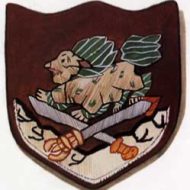


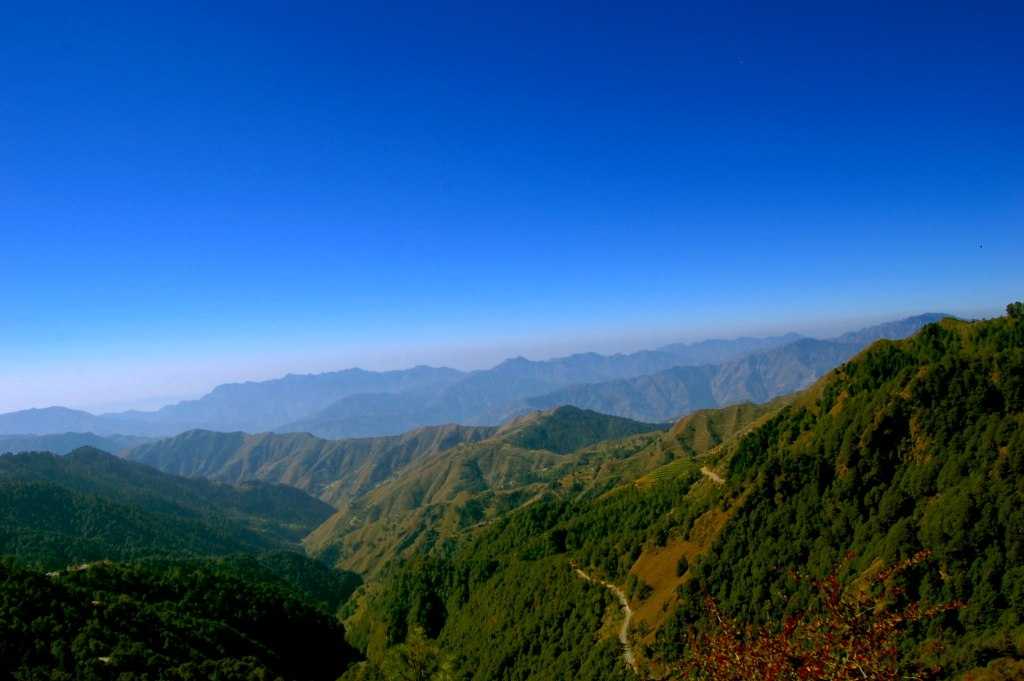
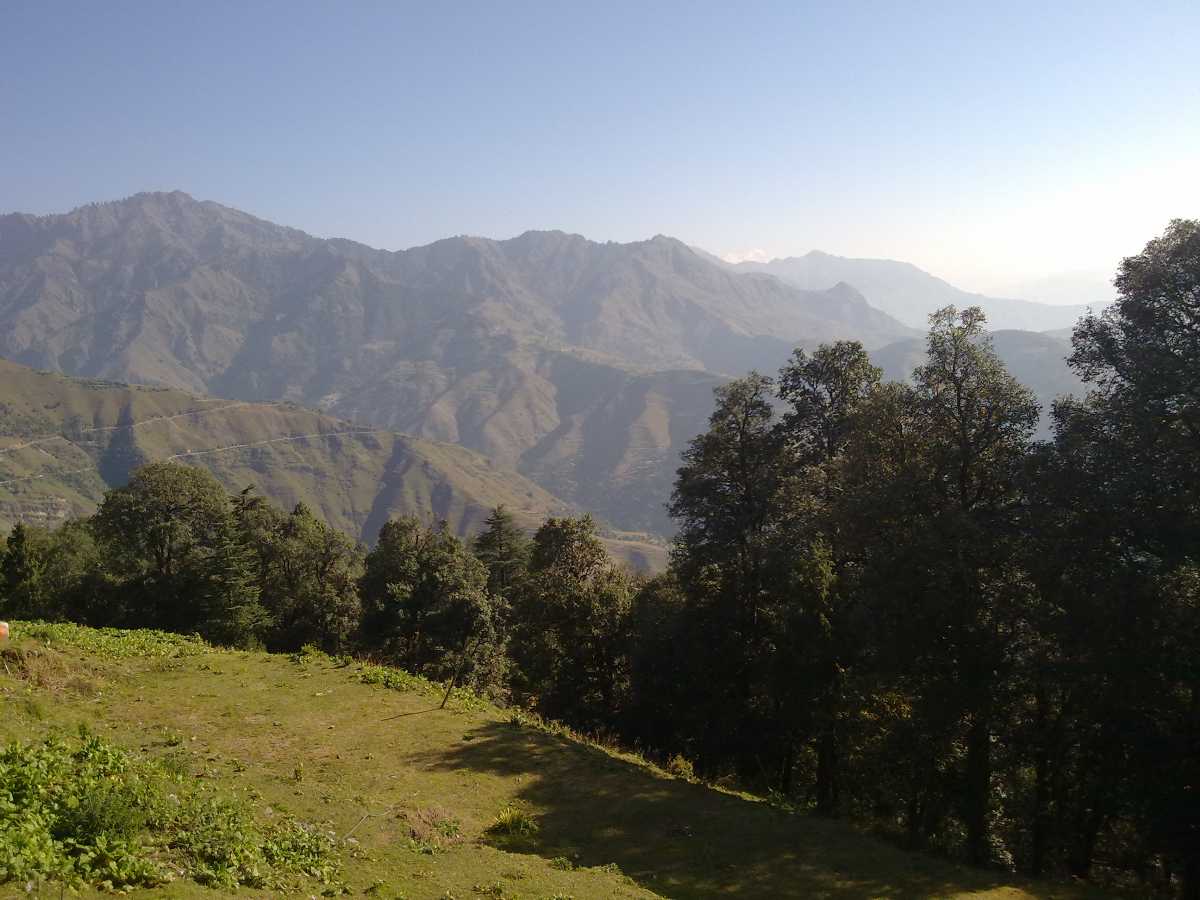
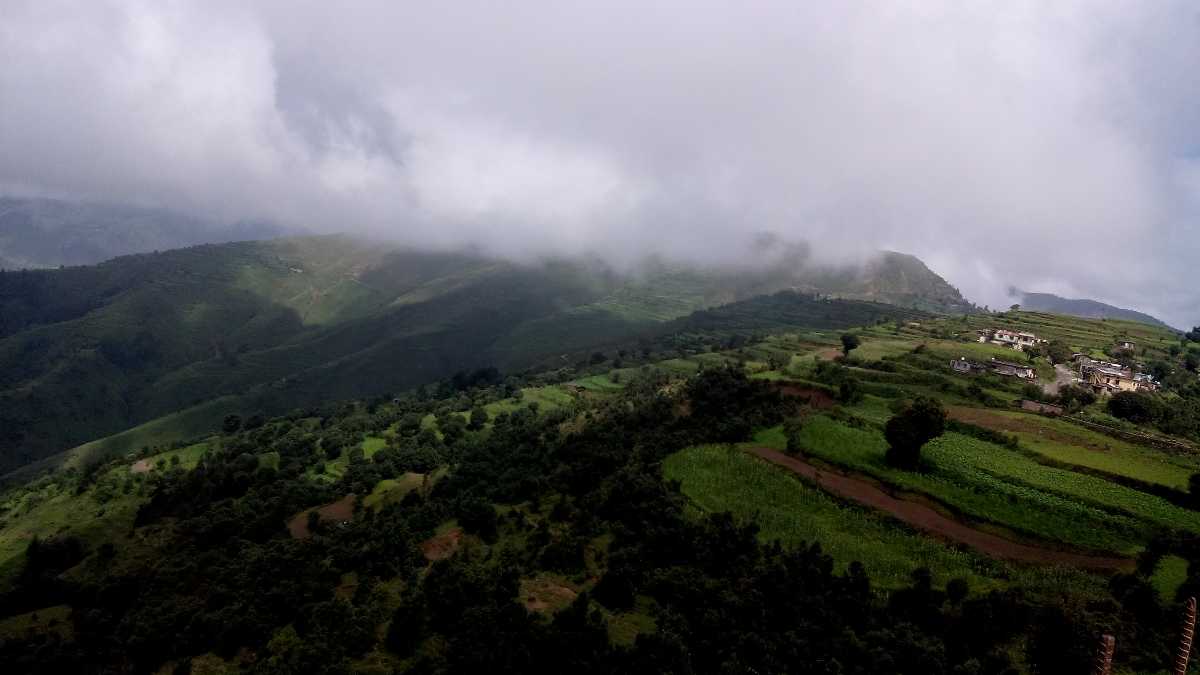
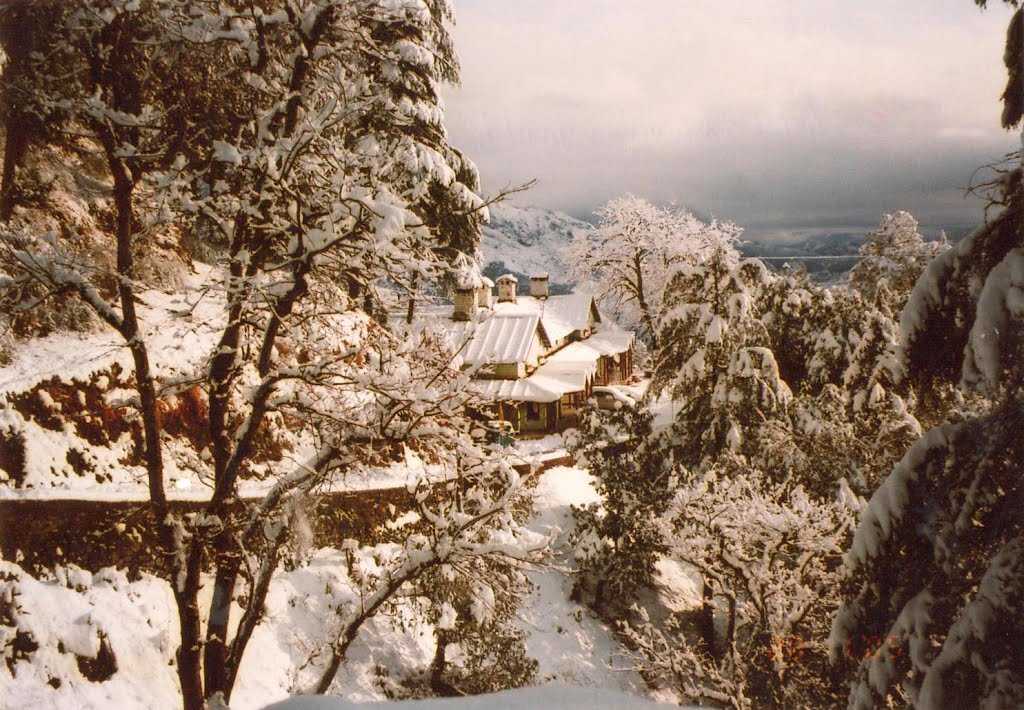
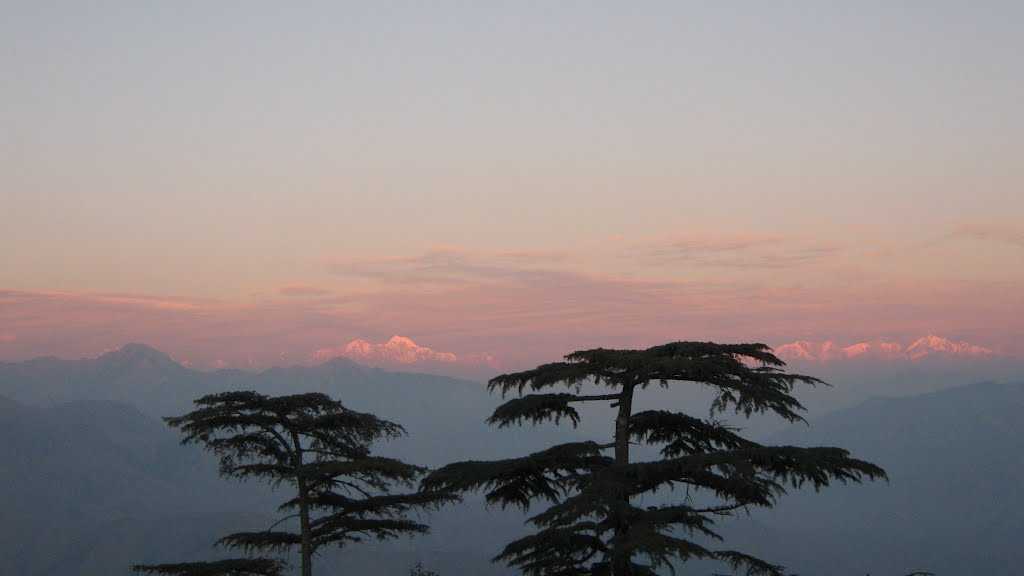
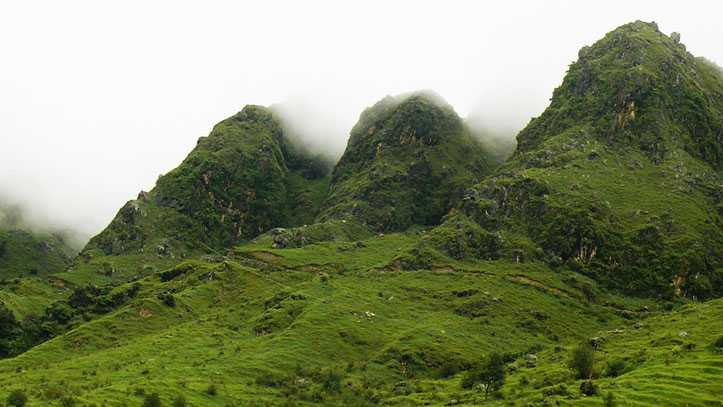
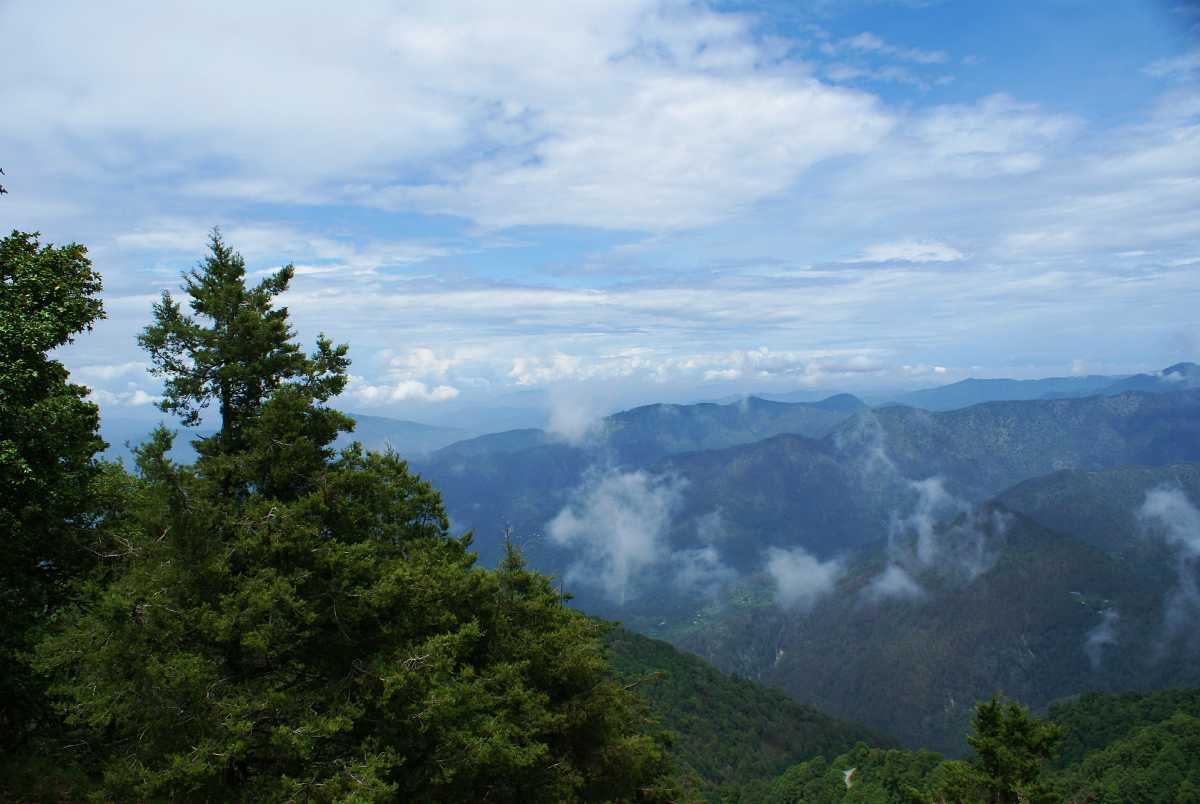
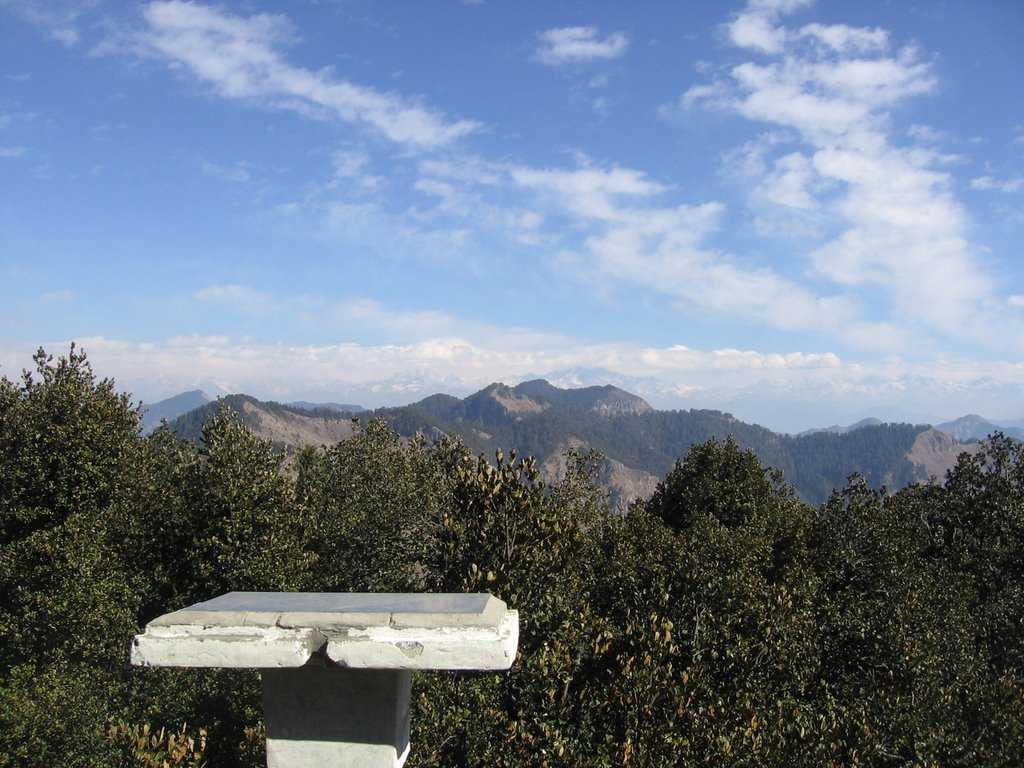
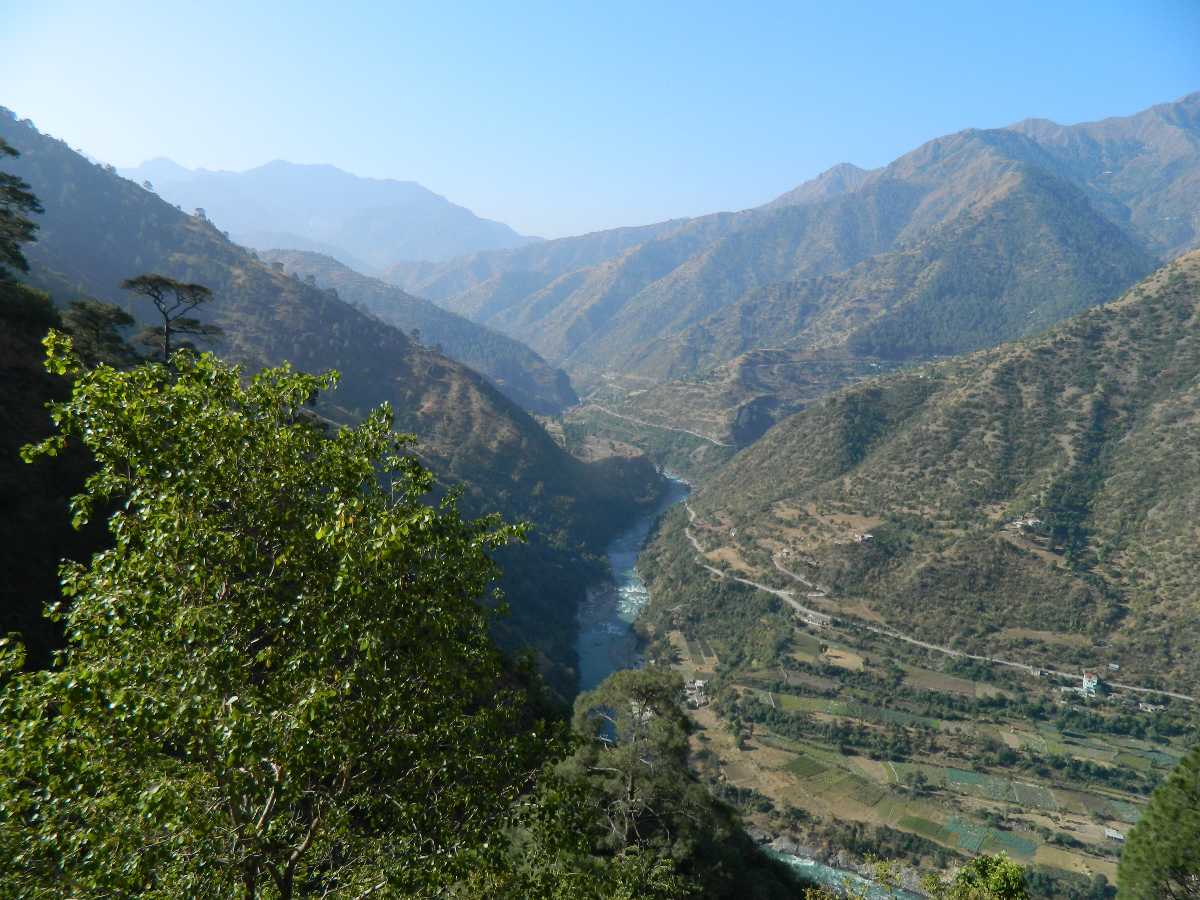


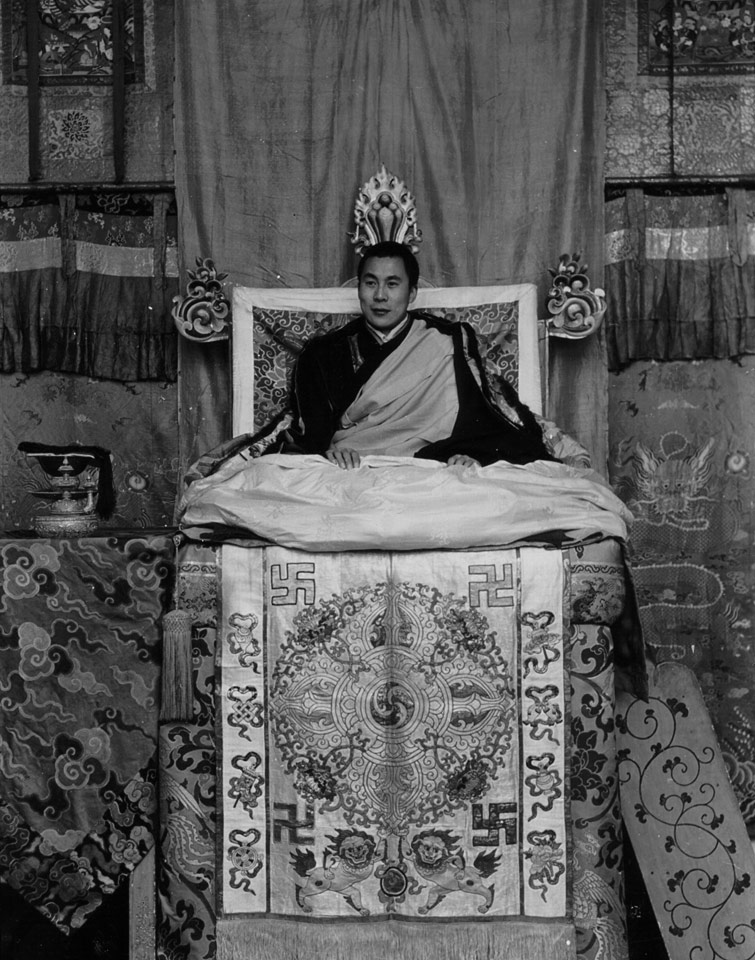


 International