Chakrata Karma – Exploring the Doctrine of Predestination on September 22
Yes Indeed, Life is Complicated. Willingly no one chooses the Yoke of Slavery. The complexity of Life is about the choices we make. Sometimes, the pursuit of Freedom can come with the trappings of Slavery. On September 22, 2026, I explore the doctrine of Predestination.
Chakrata Karma – Exploring the Doctrine of Predestination on September 22. My Living Experience of Pain, Humiliation, and Loss of Face is Predestined. On September 22, I explore the role of my Birth Star Moola, Sagittarius Constellation in the operation of the mechanisms of Predestination.Chakrata Karma – Exploring the Doctrine of Predestination on September 22. My Living Experience of Pain, Humiliation, and Loss of Face is Predestined. On September 22, I explore the role of my Birth Star Moola, Sagittarius Constellation in the operation of the mechanisms of Predestination.Chakrata Karma – Exploring the Doctrine of Predestination on September 22. My Living Experience of Pain, Humiliation, and Loss of Face is Predestined. On September 22, I explore the role of my Birth Star Moola, Sagittarius Constellation in the operation of the mechanisms of Predestination.Chakrata Karma – Exploring the Doctrine of Predestination on September 22. My Living Experience of Pain, Humiliation, and Loss of Face is Predestined. On September 22, I explore the role of my Birth Star Moola, Sagittarius Constellation in the operation of the mechanisms of Predestination.Chakrata Karma – Exploring the Doctrine of Predestination on September 22. My Living Experience of Pain, Humiliation, and Loss of Face is Predestined. On September 22, I explore the role of my Birth Star Moola, Sagittarius Constellation in the operation of the mechanisms of Predestination.Chakrata Karma – Exploring the Doctrine of Predestination on September 22. September 22–This Day in History–The Journey of Simon Cyrene from Freedom to the Yoke of Slavery
Simon Cyrene was predestined to bear the burden of the Cross and follow Jesus Christ on His final journey at the conclusion of His earthly mission to deliver Peace and Freedom to the mankind.
Chakrata Karma – Exploring the Doctrine of Predestination on September 22. September 22–This Day in History–The Journey of Simon Cyrene from Freedom to the Yoke of Slavery. Chakrata Karma – Exploring the Doctrine of Predestination on September 22. September 22–This Day in History–The Journey of Simon Cyrene from Freedom to the Yoke of Slavery. Behold the Man. “Take my Yoke upon you….For my Yoke is easy and my burden is Light.” Book of Matthew 11:28-30.Chakrata Karma – Exploring the Doctrine of Predestination on September 22. September 22–This Day in History–The Journey of Simon Cyrene from Freedom to the Yoke of Slavery . My Dream for Freedom transforms into an ordeal of Slavery. My Journey to Chakrata and Beyond.
On September 22, 1971, I was Taken on Strength (TOS) of Establishment No. 22, Vikas Regiment, Special Frontier Force, a military organization created in response to ‘The Cold War in Asia.’
On Tuesday, September 22, 2026, I live in Ann Arbor, Michigan to welcome the first day of Fall Season. Today, I claim that my Dream for Freedom in Occupied Tibet got transformed into an ordeal of Slavery in a nation which abolished Slavery with a presidential proclamation on September 22.
On September 22, 1971, I had the freedom to reject my posting to Establishment 22. I was given the choice to choose or decline rendering military service in support of Freedom in Occupied Tibet.
The choice to serve in Establishment 22 comes with risks for its military mission differs from the military mission of the Indian Army which I joined to defend India from attacks by foreign aggressors.
Chakrata Karma – Exploring the Doctrine of Predestination on September 22
It may appear that I am making my own choices in accepting calculated risks to my life. On September 22, 2026, I am still struggling to reconcile with the choices I made in the past. Now, I must reconcile with the reality of my Slavery while living in a country which sponsored my quest for Freedom in Occupied Tibet.
Chakrata Karma – Exploring the Doctrine of Predestination on September 22
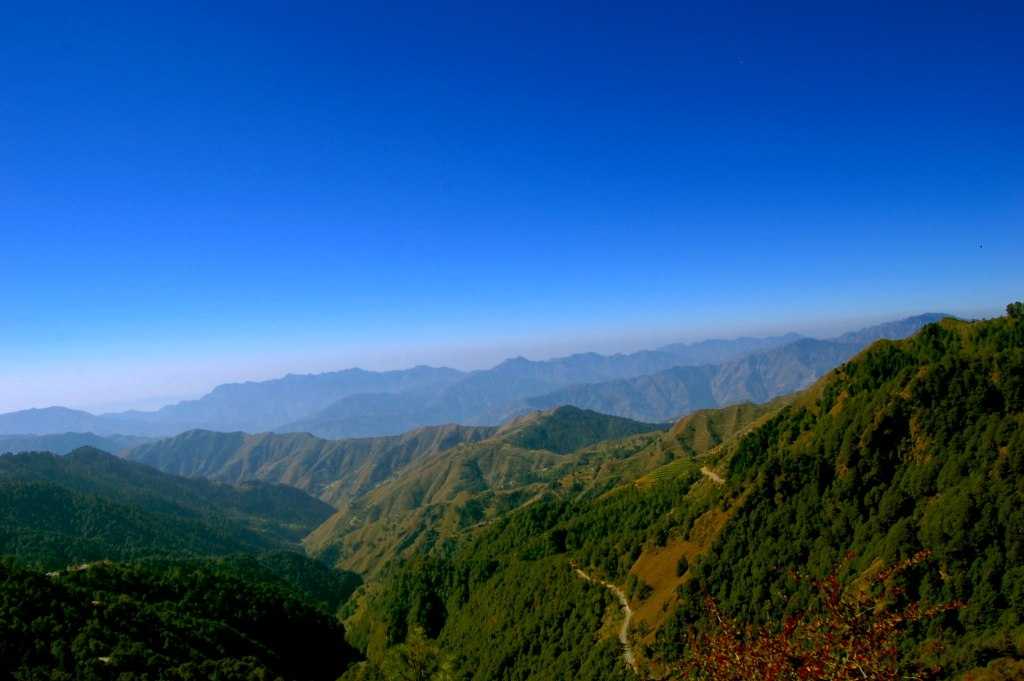
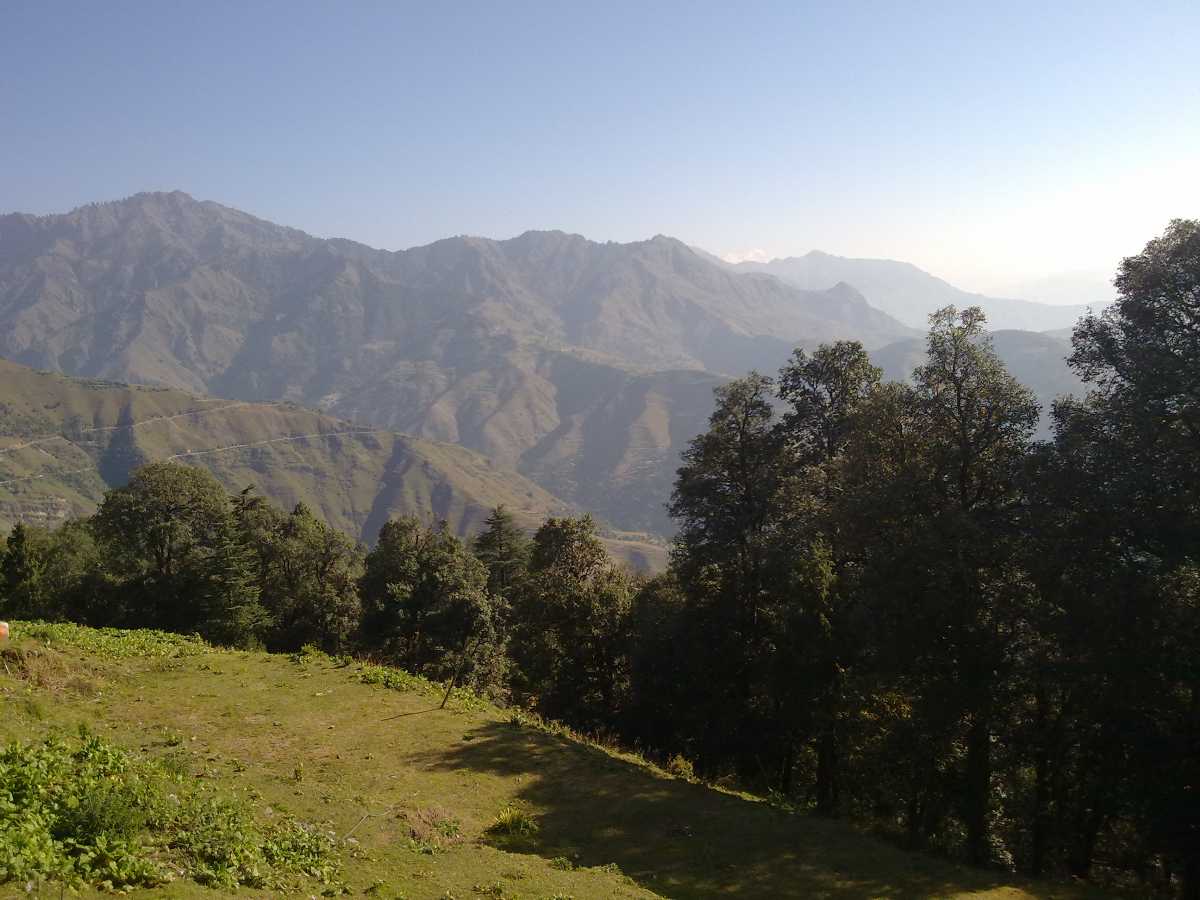
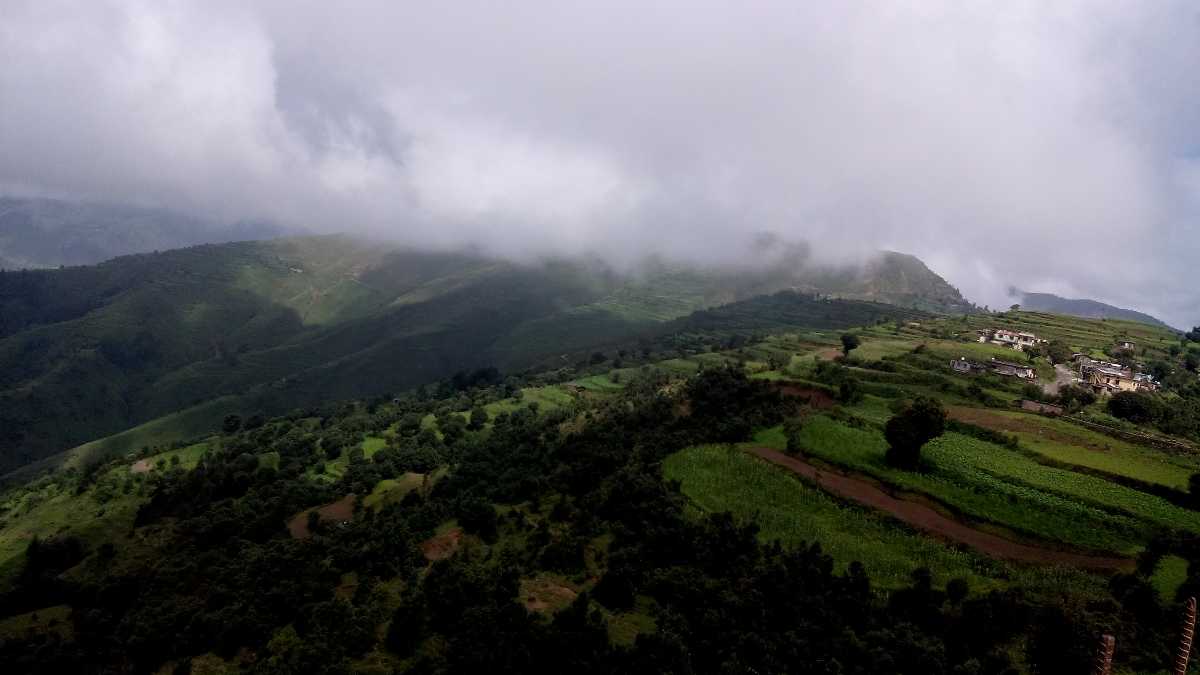
On September 22, 2026, I have no hope that I may arrive at the final destination of my life at the conclusion of my earthly existence. Chakrata in Uttarakhand, India represents the struggle ahead, a struggle waiting for me before I can arrive at the final destination of my life. Jesus Christ cannot set me free for the Yoke of Slavery is predestined.
Chakrata Karma – Exploring the Doctrine of Predestination on September 22. September 22–This Day in History–The Journey of Simon Cyrene from Freedom to the Yoke of Slavery. Chakrata Karma – Exploring the Doctrine of Predestination on September 22. September 22–This Day in History–The Journey of Simon Cyrene from Freedom to the Yoke of Slavery. My Quest for Freedom Traps me in Slavery. My Journey to Chakrata and Beyond.
September 22. This Day in History. What Happened on this Day?
Chakrata Karma – Exploring the Doctrine of Predestination on September 22. The Emancipation Proclamation of President Abraham Lincoln has failed to abolish the practice of Slavery, Involuntary Servitude, and Forced Labor. In 1996, these practices of Slavery got resurrected and are introduced into the Union territory by the secular laws enacted by the US Congress which violate the Principle of Equal Protection under Law.
On this day in 1862, President Abraham Lincoln issues a preliminary Emancipation Proclamation, which sets a date for the freedom of more than 3 million black slaves in the United States and recasts the Civil War as a fight against slavery.
When the Civil War broke out in 1861, shortly after Lincoln’s inauguration as America’s 16th president, he maintained that the war was about restoring the Union and not about slavery. He avoided issuing an anti-slavery proclamation immediately, despite the urgings of abolitionists and radical Republicans, as well as his personal belief that slavery was morally repugnant. Instead, Lincoln chose to move cautiously until he could gain wide support from the public for such a measure.
Chakrata Karma – Exploring the Doctrine of Predestination on September 22: Emancipation Proclamation by President Abraham Lincoln during September 1862. United States has officially abolished the practice of slavery. In 1996, the US institutionalized the practice of Servitude and the Union has transformed from a ‘Free State’ into a ‘Slave State.‘
In July 1862, Lincoln informed his cabinet that he would issue an emancipation proclamation but that it would exempt the so-called border states, which had slaveholders but remained loyal to the Union. His cabinet persuaded him not to make the announcement until after a Union victory. Lincoln’s opportunity came following the Union win at the Battle of Antietam in September 1862. On September 22, the president announced that slaves in areas still in rebellion within 100 days would be free.
On January 1, 1863, Lincoln issued the final Emancipation Proclamation, which declared “that all persons held as slaves” within the rebel states “are, and henceforward shall be free.” The proclamation also called for the recruitment and establishment of black military units among the Union forces. An estimated 180,000 African-Americans went on to serve in the army, while another 18,000 served in the navy.
After the Emancipation Proclamation, backing the Confederacy was seen as favoring slavery. It became impossible for anti-slavery nations such as Great Britain and France, who had been friendly to the Confederacy, to get involved on behalf of the South. The proclamation also unified and strengthened Lincoln’s party, the Republicans, helping them stay in power for the next two decades.
The proclamation was a presidential order and not a law passed by Congress, so Lincoln then pushed for an antislavery amendment to the U.S. Constitution to ensure its permanence. With the passage of the 13th Amendment in 1865, slavery was eliminated throughout America (although blacks would face another century of struggle before they truly began to gain equal rights).
Lincoln’s handwritten draft of the final Emancipation Proclamation was destroyed in the Chicago Fire of 1871. Today, the original official version of the document is housed in the National Archives in Washington, D.C.
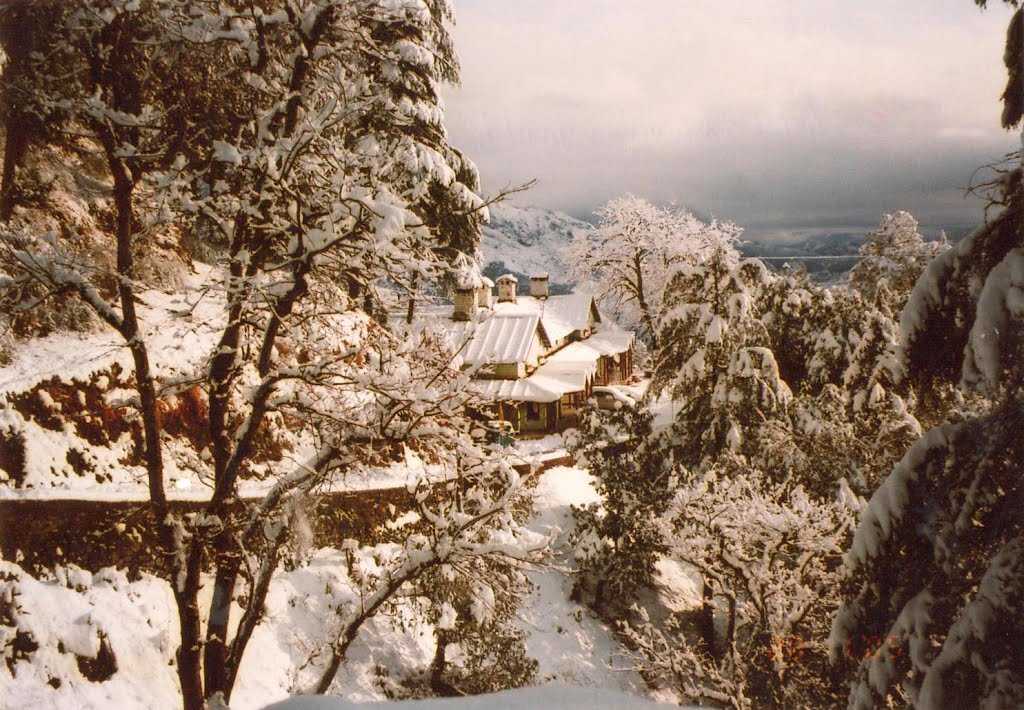
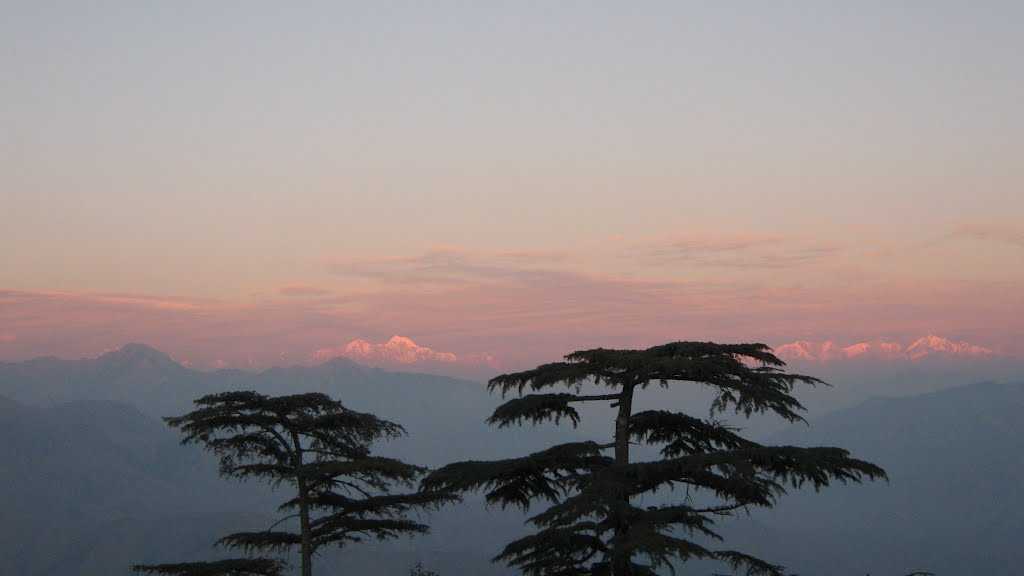
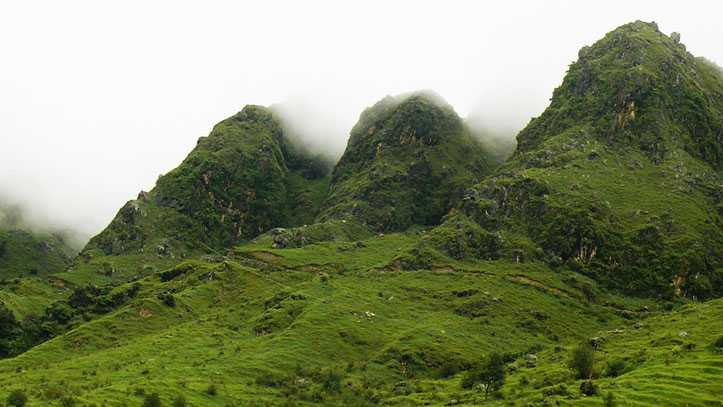
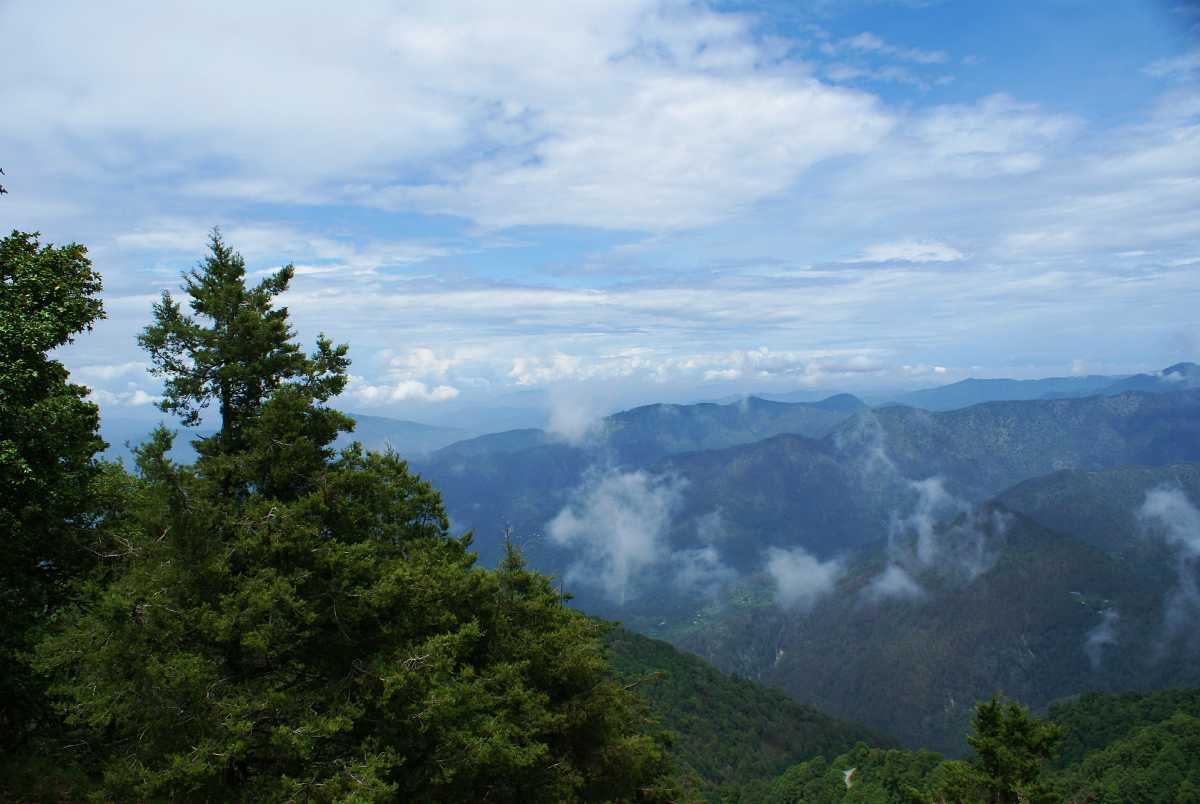
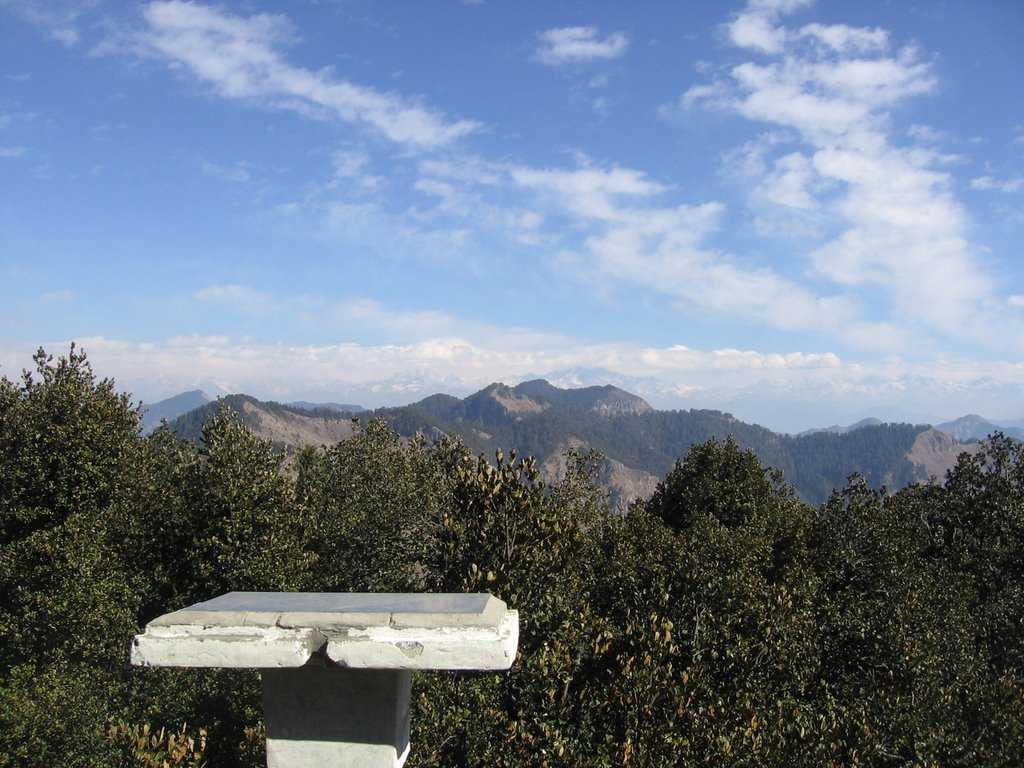
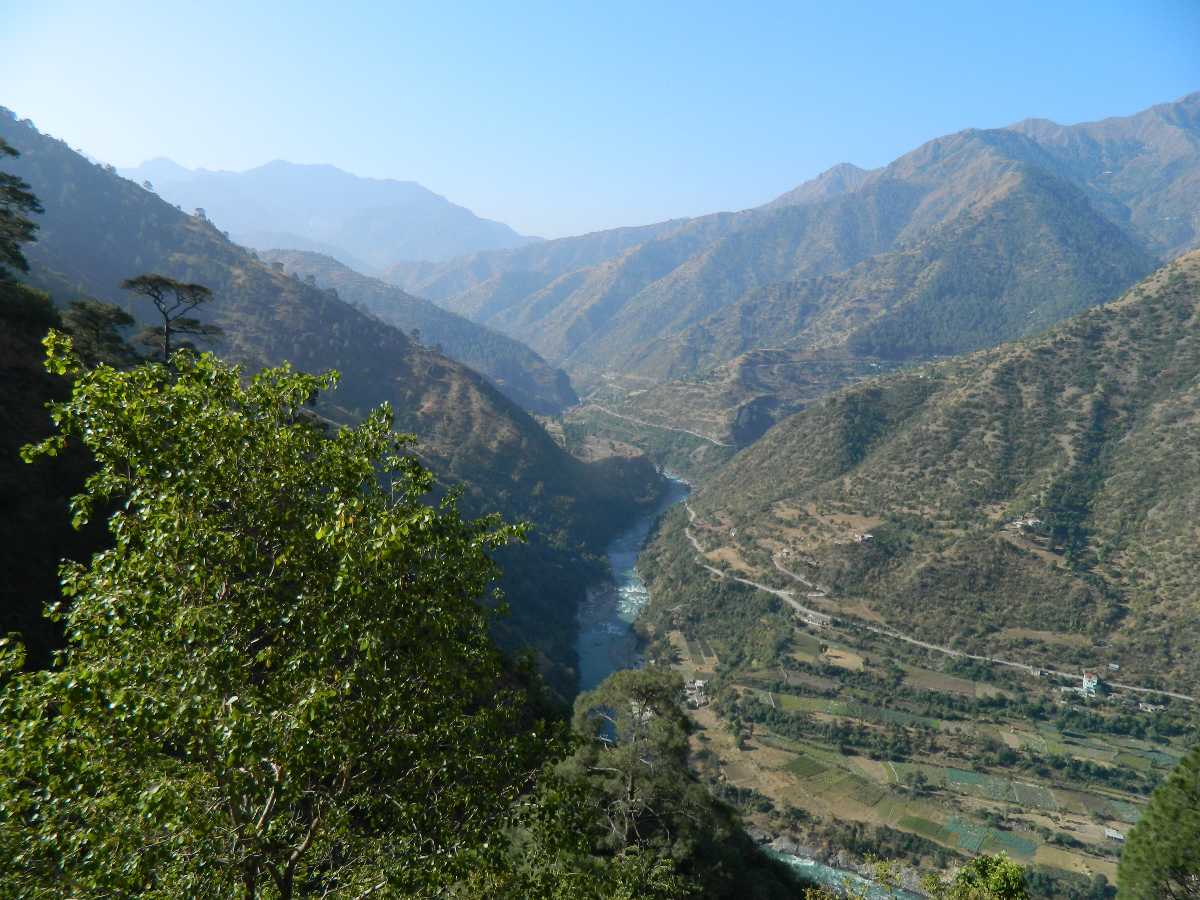
TUESDAY, SEPTEMBER 22, 2026. MY PASSION FOR FREEDOM IN OCCUPIED TIBET WHICH BEGAN AT CHAKRATA DOES NOT RECONCILE WITH MY SLAVERY OF TODAY. THE SCENIC BEAUTY OF CHAKRATA PLAYED NO ROLE IN THE CHOICE I MADE ON SEPTEMBER 22, 1971.
Chakrata Karma – Exploring the Doctrine of Predestination on September 22
Chakrata is not the final destination of my life. It is just the beginning of a struggle that remains ahead, both in terms of time and location. The quest for Freedom in Occupied Tibet traps me in Slavery. I live in the United Sates as a Slave; I live in a Free Nation that sponsored my Love for Freedom in Tibet.
Chakrata Karma – Exploring the Doctrine of Predestination on September 22. September 22–This Day in History–The Journey of Simon Cyrene from Freedom to the Yoke of Slavery. My Quest for Freedom Traps me in Slavery. My Journey to Chakrata and Beyond.Chakrata Karma – Exploring the Doctrine of Predestination on September 22. September 22–This Day in History–The Journey of Simon Cyrene from Freedom to the Yoke of Slavery. My Quest for Freedom Traps me in Slavery. My Journey to Chakrata and Beyond.Chakrata Karma – Exploring the Doctrine of Predestination on September 22. September 22–This Day in History–The Journey of Simon Cyrene from Freedom to the Yoke of Slavery. My Quest for Freedom Traps me in Slavery. My Journey to Chakrata and Beyond.Chakrata Karma – Exploring the Doctrine of Predestination on September 22. September 22–This Day in History–The Journey of Simon Cyrene from Freedom to the Yoke of Slavery. My Quest for Freedom Traps me in Slavery. My Journey to Chakrata and Beyond.Chakrata Karma – Exploring the Doctrine of Predestination on September 22. September 22–This Day in History–The Journey of Simon Cyrene from Freedom to the Yoke of Slavery. My Quest for Freedom Traps me in Slavery. My Journey to Chakrata and Beyond.Chakrata Karma – Exploring the Doctrine of Predestination on September 22. September 22–This Day in History–The Journey of Simon Cyrene from Freedom to the Yoke of Slavery. My Quest for Freedom Traps me in Slavery. My Journey to Chakrata and Beyond.Chakrata Karma – Exploring the Doctrine of Predestination on September 22. September 22–This Day in History–The Journey of Simon Cyrene from Freedom to the Yoke of Slavery. My Quest for Freedom Traps me in Slavery. My Journey to Chakrata and Beyond.Chakrata Karma – Exploring the Doctrine of Predestination on September 22. September 22–This Day in History–The Journey of Simon Cyrene from Freedom to the Yoke of Slavery. My Quest for Freedom Traps me in Slavery. My Journey to Chakrata and Beyond.Chakrata Karma – Exploring the Doctrine of Predestination on September 22. September 22–This Day in History–The Journey of Simon Cyrene from Freedom to the Yoke of Slavery. My Quest for Freedom Traps me in Slavery. My Journey to Chakrata and Beyond.Chakrata Karma – Exploring the Doctrine of Predestination on September 22. September 22–This Day in History–The Journey of Simon Cyrene from Freedom to the Yoke of Slavery. My Quest for Freedom Traps me in Slavery. My Journey to Chakrata and Beyond.Chakrata Karma – Exploring the Doctrine of Predestination on September 22. September 22–This Day in History–The Journey of Simon Cyrene from Freedom to the Yoke of Slavery. My Quest for Freedom Traps me in Slavery. My Journey to Chakrata and Beyond.Chakrata Karma – Exploring the Doctrine of Predestination on September 22. September 22–This Day in History–The Journey of Simon Cyrene from Freedom to the Yoke of Slavery. My Quest for Freedom Traps me in Slavery. My Journey to Chakrata and Beyond.Chakrata Karma – Exploring the Doctrine of Predestination on September 22. September 22–This Day in History–The Journey of Simon Cyrene from Freedom to the Yoke of Slavery. My Quest for Freedom Traps me in Slavery. My Journey to Chakrata and Beyond.Chakrata Karma – Exploring the Doctrine of Predestination on September 22. September 22–This Day in History–The Journey of Simon Cyrene from Freedom to the Yoke of Slavery. My Quest for Freedom Traps me in Slavery. My Journey to Chakrata and Beyond.Chakrata Karma – Exploring the Doctrine of Predestination on September 22. September 22–This Day in History–The Journey of Simon Cyrene from Freedom to the Yoke of Slavery. My Quest for Freedom Traps me in Slavery. My Journey to Chakrata and Beyond.Chakrata Karma – Exploring the Doctrine of Predestination on September 22. September 22–This Day in History–The Journey of Simon Cyrene from Freedom to the Yoke of Slavery. My Quest for Freedom Traps me in Slavery. My Journey to Chakrata and Beyond.Chakrata Karma – Exploring the Doctrine of Predestination on September 22. September 22–This Day in History–The Journey of Simon Cyrene from Freedom to the Yoke of Slavery. My Quest for Freedom Traps me in Slavery. My Journey to Chakrata and Beyond.Chakrata Karma – Exploring the Doctrine of Predestination on September 22. September 22–This Day in History–The Journey of Simon Cyrene from Freedom to the Yoke of Slavery. My Quest for Freedom Traps me in Slavery. My Journey to Chakrata and Beyond.Chakrata Karma – Exploring the Doctrine of Predestination on September 22. September 22–This Day in History–The Journey of Simon Cyrene from Freedom to the Yoke of Slavery. My Quest for Freedom Traps me in Slavery. My Journey to Chakrata and Beyond.Chakrata Karma – Exploring the Doctrine of Predestination on September 22. September 22–This Day in History–The Journey of Simon Cyrene from Freedom to the Yoke of Slavery. My Quest for Freedom Traps me in Slavery. My Journey to Chakrata and Beyond.Chakrata Karma – Exploring the Doctrine of Predestination on September 22. September 22–This Day in History–The Journey of Simon Cyrene from Freedom to the Yoke of Slavery. My Quest for Freedom Traps me in Slavery. My Journey to Chakrata and Beyond.Chakrata Karma – Exploring the Doctrine of Predestination on September 22. September 22–This Day in History–The Journey of Simon Cyrene from Freedom to the Yoke of Slavery. My Quest for Freedom Traps me in Slavery. My Journey to Chakrata and Beyond.Chakrata Karma – Exploring the Doctrine of Predestination on September 22. September 22–This Day in History–The Journey of Simon Cyrene from Freedom to the Yoke of Slavery. My Quest for Freedom Traps me in Slavery. My Journey to Chakrata and Beyond.Chakrata Karma – Exploring the Doctrine of Predestination on September 22. September 22–This Day in History–The Journey of Simon Cyrene from Freedom to the Yoke of Slavery. My Quest for Freedom Traps me in Slavery. My Journey to Chakrata and Beyond.Chakrata Karma – Exploring the Doctrine of Predestination on September 22. September 22–This Day in History–The Journey of Simon Cyrene from Freedom to the Yoke of Slavery. My Quest for Freedom Traps me in Slavery. My Journey to Chakrata and Beyond.Chakrata Karma – Exploring the Doctrine of Predestination on September 22. September 22–This Day in History–The Journey of Simon Cyrene from Freedom to the Yoke of Slavery. My Quest for Freedom Traps me in Slavery. My Journey to Chakrata and Beyond.Chakrata Karma – Exploring the Doctrine of Predestination on September 22. September 22–This Day in History–The Journey of Simon Cyrene from Freedom to the Yoke of Slavery. My Quest for Freedom Traps me in Slavery. My Journey to Chakrata and Beyond.Chakrata Karma – Exploring the Doctrine of Predestination on September 22. September 22–This Day in History–The Journey of Simon Cyrene from Freedom to the Yoke of Slavery. My Quest for Freedom Traps me in Slavery. My Journey to Chakrata and Beyond.Chakrata Karma – Exploring the Doctrine of Predestination on September 22. September 22–This Day in History–The Journey of Simon Cyrene from Freedom to the Yoke of Slavery. My Quest for Freedom Traps me in Slavery. My Journey to Chakrata and Beyond.Chakrata Karma – Exploring the Doctrine of Predestination on September 22. September 22–This Day in History–The Journey of Simon Cyrene from Freedom to the Yoke of Slavery. My Quest for Freedom Traps me in Slavery. My Journey to Chakrata and Beyond.Chakrata Karma – Exploring the Doctrine of Predestination on September 22. September 22–This Day in History–The Journey of Simon Cyrene from Freedom to the Yoke of Slavery. My Quest for Freedom Traps me in Slavery. My Journey to Chakrata and Beyond.Chakrata Karma – Exploring the Doctrine of Predestination on September 22. September 22–This Day in History–The Journey of Simon Cyrene from Freedom to the Yoke of Slavery. My Quest for Freedom Traps me in Slavery. My Journey to Chakrata and Beyond.
I am a Refugee. Who is my Refuge?
Tibet Uprising or Tibet Rebellion on Tuesday, March 10, 1959 makes a profound impact on the course of my life’s journey, forcing me to live in exile without refugee status,
Tibet Uprising or Tibet Rebellion on Tuesday, March 10, 1959 makes a profound impact on the course of my life’s journey, forcing me to live in exile without refugee status, without asylum protection, and without any entity that can be recognized as a friend.
How to find Hope when the Final Destination remains unknown? Can Patience and Perseverance serve the purpose of Hope for Freedom, Peace, and Justice?
Chakrata Karma – Exploring the Doctrine of Predestination on September 22. September 22–This Day in History–The Journey of Simon Cyrene from Freedom to the Yoke of Slavery. My Quest for Freedom Traps me in Slavery. My Journey to Chakrata and Beyond.
Special Frontier Force – The Problem of Espionage:
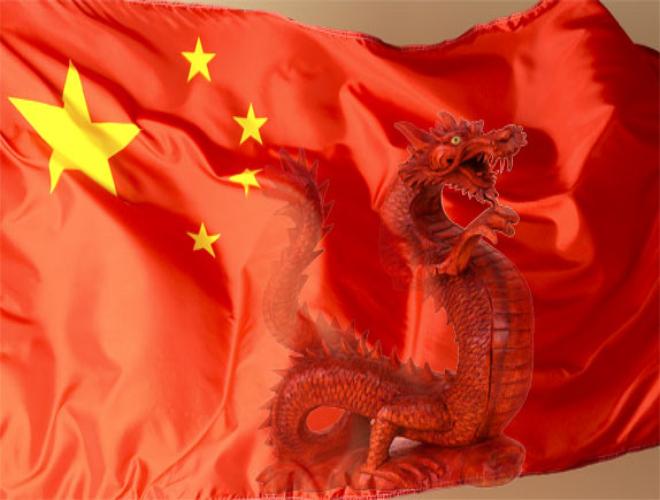
Special Frontier Force-The Problem of Espionage: The Chinese military philosopher in a military treatise known as PING-FA(The Art of War) written c. 400 BC mentions the use of secret agents and the importance of good intelligence.Special Frontier Force-The Problem of Espionage: Establishment No. 22 or Special Frontier Force represents a military alliance/pact between the United States, India, and Tibet to confront the military threat posed by the Communist Red Dragon’s occupation of Tibet since 1950. It is no surprise that at Special Frontier Force we have constantly experienced the problem of espionage orchestrated by the People’s Republic of China.
To obtain knowledge of the enemy’s intentions intelligence systems have been in use from ancient times. The concept of intelligence is not new. The military treatise “Ping-Fa”(The Art of War) written c. 400 BC by the Chinese philosopher Sun-Tzu mentions the use of secret agents and the importance of good intelligence. The intelligence service of the People’s Republic of China is known as the Social Affairs Department. The term espionage describes the process of obtaining information using spies, secret agents, and involves the use of illegal monitoring devices. At Establishment No. 22 or Special Frontier Force the evidence for espionage conducted by the People’s Republic of China is revealed by the photo images obtained by China’s spies and secret agents. After an investigation, the Department of Security of Central Tibetan Administration had dismissed from Service its top military leader/Political Leader/Dapon Radug (or Ratuk) Ngawang during 1976. Another Senior Political Leader Jamba Kalden had voluntarily retired from Service during 1977 after admitting that he had failed to stop or prevent the acts of espionage. It is very interesting to mention that Dapon Ratuk Ngawang had actually escorted His Holiness the 14th Dalai Lama on his way to India after the failed National Uprising Day (March 10, 1959 ) in Lhasa, Tibet. Ratuk Ngawang, is currently 85-years old (in 2013, the original date of this article), is not formally charged for any crime or illegal activity by the Government of India or Tibetan Government-in-Exile. After his retirement, he was permitted to live in India in the Capital City of New Delhi and he draws a modest amount of pension for the years he spent in Service. I had worked with him at Establishment No. 22/Special Frontier Force from September 1971 to December 1974. His wife was in charge of the camp where we trained the female paratroopers of SFF. She released some of the prohibited, illegal photo images captured by the enemy agents sheltered by Ratuk Ngawang. I am fully convinced that he supported espionage activity at my military organization.
Special Frontier Force – The Problem of Espionage.January 21 is Squirrel Appreciation Day. My reflections on “Chakrata Karma” with the help of a Squirrel Story. During January 1974, there was an attempt on my life at the Military Hospital Wing, Chakrata. This type of Charcoal burner was placed in my duty room in an attempt to poison me. I suspect the involvement of Political Leader Ratuk Ngawang and his wife who could have used a Tibetan female nurse to place this burner in the small duty room.Special Frontier Force-The Problem of Espionage: Chinese Intelligence correctly guessed that the 14th Dalai Lama had escaped from Lhasa to seek asylum in India after the failed Day of National Uprising in Tibet. Peking(Beijing) had announced that the 14th Dalai Lama had arrived in India, a day before New Delhi could make a formal announcement. Chinese intelligence always remained ahead of the United States, India, and Tibet.Special Frontier Force-The Problem of Espionage: 54 years ago, His Holiness the 14th Dalai Lama had arrived in India on March 31, 1959. A Guard of Honor was presented by the Assam Rifles after he crossed into India’s North East Frontier Agency(Arunachal Pradesh) at Chutangmu/Khenzimani in TAWANG sector. The Chinese intelligence pursued him constantly monitoring his movements and activities all these years.Special Frontier Force-The Problem of Espionage: Dapon/Political Leader Radug Ngawang served in Establishment No. 22 or Special Frontier Force after arriving in India along with His Holiness the 14th Dalai Lama. The Tibetan Government-in-Exile had simply dismissed him from Service and had spared him from punitive retaliatory action even after knowing that he had harbored Communist spy or spies. His Holiness treated him with mercy and compassion in due recognition of his past performance before falling prey to Chinese influence.Special Frontier Force-The Problem of Espionage: This is the photo image of Ratuk or Radug Ngawang at 84-years of age. While giving interviews to Indian news media and other writers, Ngawang had shared photo images that were illegally taken at Establishment No. 22 or Special Frontier Force where such photography is strictly forbidden. I have no hesitation to identify him as a Communist Agent who had supported espionage activity.
The term ‘intelligence’ is used to describe government operations that involve evaluation of information concerning the strength, activities, and probable course of action of its opponents. Espionage involves the gathering of ‘intelligence’ information which is further used in evaluation to design a political or a military course of action to deter the enemy. Radug Ngawang had exposed his participation in espionage by releasing the following photo images that were taken at Establishment No. 22/Special Frontier Force during 1971-1975 prior to his dismissal from Service in 1976. He clearly understands that the possession of these images is illegal and he is fully aware of the fact that the people shown in the images had no clue that they were being secretly photographed and did not know that the photo images will be released without official permission..
Special Frontier Force-The Problem of Espionage-Photo provided by Dapon/Political Leader Ratuk Ngawang. In this illegally taken photo image, Gyalo Thondup, the 14th Dalai Lama’s elder brother is seen addressing the Tibetan men who serve in Establishment No. 22/Special Frontier Force and had encouraged them to join the War of Liberation of Bangladesh 1971. From right to left the persons seated is 1. Brigadier T S Oberoi, Commandant Establishment No. 22, 2. Mr. R. N. Kao, the Secretary, Directorate General of Security and RAW(Research and Analysis Wing), and 3. Major General Sujan Singh Uban, the Inspector General Special Frontier Force. None of us were aware that this photo was taken. Photography was strictly forbidden.Special Frontier Force-The Problem of Espionage: This is an illegal photo image shared by Political Leader Ratuk Ngawang who is at far left. His Holiness the 14th Dalai Lama (right), Major General Sujan Singh Uban, the Inspector General Special Frontier Force (second from right), and Senior Political Leader Jamba Kalden (third from right). A Chinese spy (later discovered in the robes of a Buddhist monk) secretly took this photo on June 03, 1972 when His Holiness visited Establishment No. 22 for the very first time after its inception in November 1962. These Political Leaders lost their jobs because of the problem of espionage.Special Frontier Force-The Problem of Espionage: Political Leader Ratuk Ngawang is seen standing at right looking towards the photographer. This illegal photo image was shared by Ratuk Ngawang and it helps me to identify him as a Communist Agent who had harbored Chinese spy/spies at Establishment No. 22. Other people, Major General Sujan Singh Uban Inspector General Special Frontier Force (second from right), Mr. R. N. Kao Secretary Directorate General of Security-Research and Analysis Wing-RAW (third from right), and Brigadier T S Oberoi Commandant Establishment No. 22 (far left). I served with these people including Ratuk Ngawang from September 1971 to December 1974 and I can very easily confirm that this photo is the evidence of the problem of espionage.Special Frontier Force-The Problem of Espionage: For the first time in the history of our military pact and alliance with Tibet, His Holiness the 14th Dalai Lama, the Head of Tibetan Government-in-exile had accepted our invitation to visit Establishment No. 22. This was entirely a private visit and it was kept as a ‘top secret’. Photography during this visit on June 03, 1972 was strictly forbidden. However, Political Leader Ratuk Ngawang had a copy of this photo and he had shared the same with a news reporter who had interviewed him at his house in New Delhi several years after his dismissal from Service during 1976. Senior Political Leader Jamba Kalden had become a victim of this espionage and had to retire from Service for he had failed to prevent this crime.Special Frontier Force-Establishment No. 22 – The Problem of Espionage – Illegal photo image was taken on June 03, 1972. His Holiness the 14th Dalai Lama maintained a safe distance from the activities of Establishment No. 22/Special Frontier Force. However, during 1971-72 he had to make an exception as he had granted his permission to train his men by allowing their participation in the Liberation War of Bangladesh 1971. I participated in this military action known as ‘Operation Eagle’. In an attempt to stall this military operation, Dr. Henry Alfred Kissinger, the US Secretary of State had personally urged China’s Prime Minister Zhou Enlai to attack India across the Himalayan frontier(North East Frontier Agency-NEFA-Arunachal Pradesh). China did not comply with that request as China gave a high priority to secure the defeat of the US Army in Vietnam.Special Frontier Force – Establishment No. 22 – The Problem of Espionage – Illegal photo image was taken on June 03, 1972. This was a historical moment and yet it was not expected to be captured in a photo image. A Chinese spy dressed in the robes of a Buddhist monk was later arrested at Establishment No. 22. I was informed about the death of this spy on January 10, 1973. I do not know the exact date of death. The body was cremated according to Buddhist rites and the cause of death was not confirmed by an autopsy. Indian Intelligence Bureau official had expressed his sense of indignation and was totally dismayed by the attitude of Political Leader Ratuk Ngawang who had failed to deliver the spy to Indian Intelligence Bureau for their interrogation and investigation of the problem of espionage. The fact that this photo image exists is the clearest evidence of the Chinese espionage at Establishment No. 22-Special Frontier Force.Special Frontier Force – Establishment No. 22 – The Problem of Espionage – Illegal photo image was taken during Prime Minister Indira Gandhi’s visit to recognize the female paratroopers of SFF. This was a historical moment and yet it was not expected to release this photo image.Special Frontier Force – Establishment No. 22 – The Problem of Espionage – Illegal photo image was taken during Secretary R N Kao’s visit to recognize the female paratroopers of SFF. This was a historical moment and yet it was not expected to release this photo image.
While I served in Special Frontier Force-Establishment No. 22 from September 1971 to December 1974, I interacted with Political leader Ratuk Ngawang on numerous occasions during our routine training activities. I never had the opportunity to medically examine him or interview him at my Medical Inspection Room/Hospital Wing of Establishment No. 22. I am not surprised to know about his dismissal from Service during 1976 after the Tibetan Government-in-Exile had decided not to frame any charges against him. I have no doubt in my mind that he is not fit to be a member of the Tibetan Resistance Movement. He lost his desire to resist the Enemy.
Rudra N. Rebbapragada, Ann Arbor, Michigan, USA.,
Organization: The Spirits of Special Frontier Force.
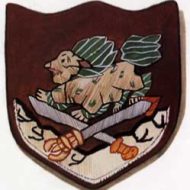
Establishment No. 22 – Operation Eagle: This badge represents a military alliance/pact between India, Tibet, and the United States of America. Its first combat mission was in the Chittagong Hill Tracts which unfolded on 03 November 1971. It was named Operation Eagle. It accomplished its mission of securing peace in the region that is now knownas Republic of Bangladesh.
Whole Warfare: The Commemoration of the National Security Act of 1947. Whole Dude observes July 26, 2026 as Anti-Slavery Campaign DayWhole Warfare: The Commemoration of the National Security Act of 1947. Whole Dude observes July 26, 2026 as Anti-Slavery Campaign DayWhole Warfare: The Commemoration of the National Security Act of 1947. Whole Dude observes July 26, 2026 as Anti-Slavery Campaign Day
Yes indeed. Life is Complicated. What is this Day in History? The complexity of Life is about finding the Connection between the Date and Life. Man’s Plan for Life must come together with God’s Purpose in Life to win the Battle Against Spiritual Wickedness.
Whole Warfare: The Commemoration of the National Security Act of 1947. Whole Dude observes July 26, 2026 as Anti-Slavery Campaign Day
July 26, This Day in my Life:
Whole Warfare: The Commemoration of the National Security Act of 1947. Whole Dude observes July 26, 2026 as Anti-Slavery Campaign DayWhole Warfare: The Commemoration of the National Security Act of 1947. Whole Dude observes July 26, 2026 as Anti-Slavery Campaign DayWhole Warfare: The Commemoration of the National Security Act of 1947. Whole Dude observes July 26, 2026 as Anti-Slavery Campaign DayWhole Warfare: The Commemoration of the National Security Act of 1947. Whole Dude observes July 26, 2026 as Anti-Slavery Campaign Day
Sunday, 26th Day of July 2026. I am dedicating this Day of my life to the Anti-Slavery Campaign, Repeal PRWORA Project, and The Great Awakening Movement claiming that I will not wrestle or struggle against people but, I will confront spiritual wickedness in the highest places.
Whole Warfare: The Commemoration of the National Security Act of 1947. Whole Dude observes July 26, 2026 as Anti-Slavery Campaign Day
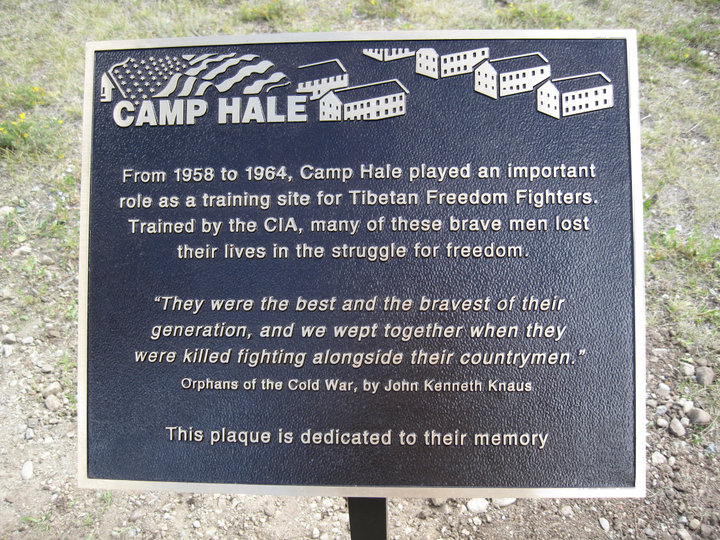
On the 26th Day of July 1970, I started my preparation to participate in the CIA’s Secret War in Occupied Tibet. In man’s plan, I exist as a mere pawn used in the War on Communism, the legacy of the Cold War Era of Geopolitics. What is God’s Plan for my life?
Whole Warfare: The Commemoration of the National Security Act of 1947. Whole Dude observes July 26, 2026 as Anti-Slavery Campaign Day
On Sunday, 26th Day of July 2026, I confess that I have not yet arrived at the final destination of my life. I continue to struggle for my personal freedom and I continue to wrestle against the dark forces keeping Tibetans away from freedom.
Man’s Plan for July 26 vs God’s Plan for July 26. Whole Dude celebrates the CIA Connection on Sunday, July 26, 2026. Dr. Sarvepalli Radhakrishnan and the history of Special Frontier Force-Establishment No. 22, Vikas Regiment: In India, school children celebrate Dr. Radhakrishnan’s birthday (05 September) as Teacher’s Day and every year that I spent as a student, I had a special reason to remember my family connection with his daughter.
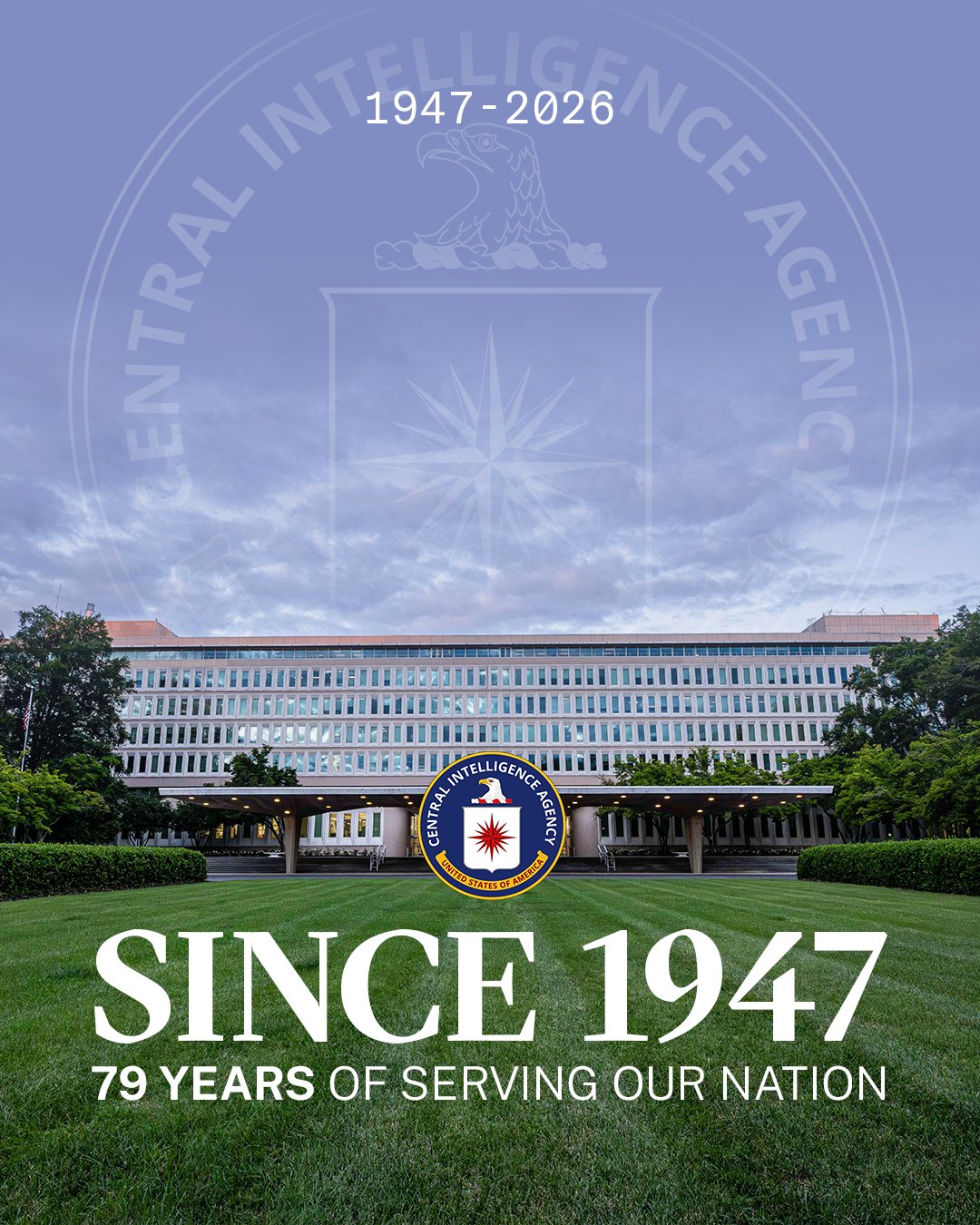
On this day, July 26, 1947, President Harry Truman signed the National Security Act that set up the Central Intelligence Agency. The Cold War Era secret diplomacy shaped the course of my life that began in Mylapore, Madras, Chennai. My Life’s Journey from Mylapore to Chakrata, and later to Ann Arbor, Michigan is a direct consequence of my CIA Connection predestined on July 26, 1970.
Whole Warfare: The Commemoration of the National Security Act of 1947. Whole Dude observes July 26, 2026 as Anti-Slavery Campaign Day
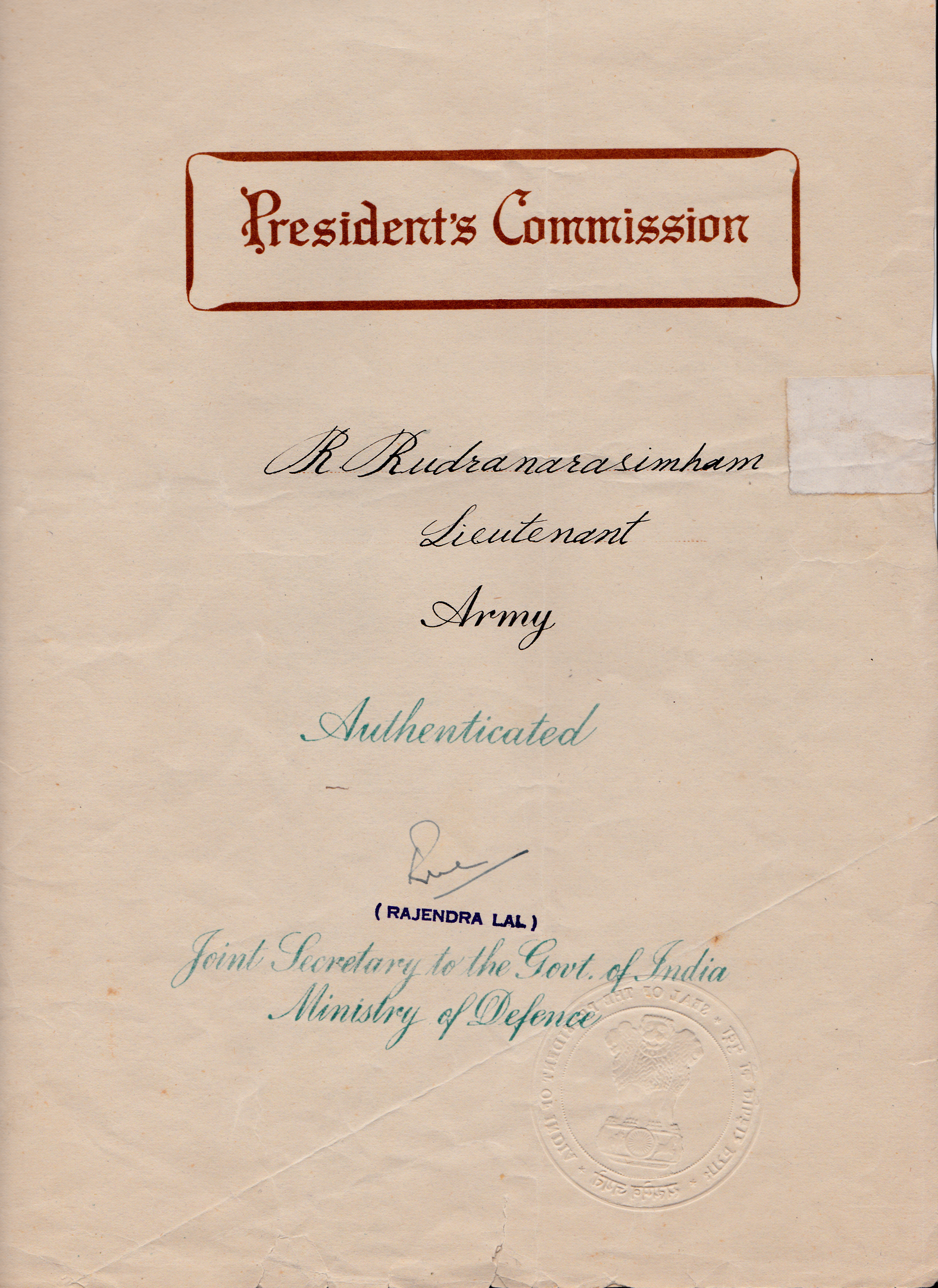
I was granted Short Service Regular Commission in the Indian Army Medical Corps in the rank of Lieutenant on July 26, 1970. On completion of my military training, I received the promotion, the substantive rank of Captain with effect from July 26, 1971. My first posting of Military Service sent me to Special Frontier Force, Headquarters Establishment No. 22, Vikas Regiment in support of CIA’s Mission in South Asia. I describe “My CIA Connection” as ‘Kasturi-Sarvepalli-Mylapore-Madras-India-Tibet-US Connection’.
I was granted President’s Commission to serve in the Regular Army and was appointed in the Rank of Lieutenant on 26 July, 1970.Doomed Gun of Doom Dooma: China Fantasy Doomed on February 21, 1972 with 37th US President Richard M Nixon’s Visit to Peking.Whole Warfare: The Commemoration of the National Security Act of 1947. Whole Dude observes July 26, 2026 as Anti-Slavery Campaign Day
On Saturday, July 26, 1986, I left Muscat, Oman to arrive in the United States in search of the Final Destination of my Life.
Whole Warfare: The Commemoration of the National Security Act of 1947. Whole Dude observes July 26, 2026 as Anti-Slavery Campaign Day
On Sunday, July 26, 2026, I live in Ann Arbor, Michigan still hoping to arrive at the Final Destination of my Life. My CIA Connection may either sanction Slavery in the United States or that of a Prisoner of War (POW) in the Enemy’s Camp.
Man’s Plan for July 26 vs God’s Plan for July 26. July 26th, 2026. This day of my life. My CIA connection was made possible because of the Cold War Era secret diplomacy to wage War on Communism.
This Day in My Life – July 26 – My CIA Connection. God’s Calendar predestined meeting between Indian Prime Minister Jawaharlal Nehru and the US President Harry Truman. Cold War History. War on Communism.
Whole Warfare: The Commemoration of the National Security Act of 1947. Whole Dude observes July 26, 2026 as Anti-Slavery Campaign Day
President Harry S. Truman signs the National Security Act, which becomes one of the most important pieces of Cold War legislation. The act established much of the bureaucratic framework for foreign policymaking for the next 40-plus years of the Cold War.
By July 1947, the Cold War was in full swing. The United States and the Soviet Union, once allies during World War II, now faced off as ideological enemies. In the preceding months, the administration of President Truman had argued for, and secured, military and economic aid to Greece and Turkey to assist in their struggles against communist insurgents. In addition, the Marshall Plan, which called for billions of dollars in U.S. aid to help rebuild war-torn Western Europe and strengthen it against possible communist aggression, had also taken shape. As the magnitude of the Cold War increased, however, so too did the need for a more efficient and manageable foreign policymaking bureaucracy in the United States. The National Security Act was the solution.
The National Security Act had three main parts. First, it streamlined and unified the nation’s military establishment by bringing together the Navy Department and War Department under a new Department of Defense. This department would facilitate control and utilization of the nation’s growing military. Second, the act established the National Security Council (NSC). Based in the White House, the NSC was supposed to serve as a coordinating agency, sifting through the increasing flow of diplomatic and intelligence information in order to provide the president with brief but detailed reports. Finally, the act set up the Central Intelligence Agency (CIA). The CIA replaced the Central Intelligence Group, which had been established in 1946 to coordinate the intelligence-gathering activities of the various military branches and the Department of State. The CIA, however, was to be much more–it was a separate agency, designed not only to gather intelligence but also to carry out covert operations in foreign nations.
The National Security Act formally took effect on September 1947. Since that time, the Department of Defense, NSC, and CIA have grown steadily in terms of size, budgets, and power. The Department of Defense, housed in the Pentagon, controls a budget that many Third World nations would envy. The NSC rapidly became not simply an information organizing agency, but one that was active in the formation of foreign policy. The CIA also grew in power over the course of the Cold War, becoming involved in numerous covert operations. Most notable of these was the failed Bay of Pigs operation of 1961, in which Cuban refugees, trained and armed by the CIA, were unleashed against the communist regime of Fidel Castro. The mission was a disaster, with most of the attackers either killed or captured in a short time. Though it had both successes and failures, the National Security Act indicated just how seriously the U.S. government took the Cold War threat.
Man’s Plan for July 26 vs God’s Plan for July 26. July 26th, 2026. This day of my life. My CIA connection is made possible by President Harry Truman’s War on Communism.
This Day in My Life – July 26 – My CIA Connection. God’s Calendar predestined events of my Life’s Journey From Mylapore, Madras to Ann Arbor, Michigan. Thanks to US President Harry S. Truman’s War on Communism.
Whole Warfare: The Commemoration of the National Security Act of 1947. Whole Dude observes July 26, 2026 as Anti-Slavery Campaign Day
This Day in My Life – July 26 – My CIA Connection. Cold War Era History. God’s Calendar predestined events of My Life’s Journey From Mylapore, Madras to Ann Arbor, Michigan. Thanks to US President Harry S. Truman’s War on Communism.
Man’s Plan for July 26 vs God’s Plan for July 26. July 26th, 2026. This day of my life. My CIA connection promises to impose either slavery in the US or that of a Prisoner of War (POW) in the Enemy’s camp. Man’s plan vs God’s plan will decide the ultimate outcome.
This Day in My Life – July 26 – My CIA Connection. In Man’s Plan, I exist as a mere Pawn used in War on Communism, Legacy of Cold War Era Geopolitics.
Whole Warfare: The Commemoration of the National Security Act of 1947. Whole Dude observes July 26, 2026 as Anti-Slavery Campaign Day
The celebration of the CIA Connection on Sunday, July 26, 2026. What is God’s Plan?
Whole Warfare: The Commemoration of the National Security Act of 1947. Whole Dude observes July 26, 2026 as Anti-Slavery Campaign DayWhole Warfare: The Commemoration of the National Security Act of 1947. Whole Dude observes July 26, 2026 as Anti-Slavery Campaign Day
Commemoration of the National Security Act of 1947 – July 26, 2026 marked as Anti-Slavery Campaign Day
Whole Warfare: The Commemoration of the National Security Act of 1947. Whole Dude observes July 26, 2026 as Anti-Slavery Campaign Day
On this Day, July 26, 1947, President Harry Truman signed The National Security Act that set up The Central Intelligence Agency that plays a crucial role in promoting US Policy in support of Freedom, Democracy, Peace and Human Rights.
Whole Warfare: The Commemoration of the National Security Act of 1947. Whole Dude observes July 26, 2026 as Anti-Slavery Campaign DayWhole Warfare: The Commemoration of the National Security Act of 1947. Whole Dude observes July 26, 2026 as Anti-Slavery Campaign Day
Whole Dude – Whole Warfare: Commemoration of the National Security Act of 1947. Whole Dude at Whole Foods observes July 26, 2026 as Anti-Slavery Campaign Day
Yes indeed. Life is Complicated. What is this Day in History? The complexity of Life is about finding the Connection between the Date and Life. Man’s Plan for Life must come together with God’s Purpose in Life to win the Battle Against Spiritual Wickedness.
Man’s Plan for July 26 vs God’s Plan for July 26. Whole Dude at Whole Foods celebrates the CIA Connection on Sunday, July 26, 2026
July 26, This Day in my Life:
Man’s Plan for July 26 vs God’s Plan for July 26. Whole Dude at Whole Foods celebrates the CIA Connection on Sunday, July 26, 2026
Sunday, 26th Day of July 2026. I am dedicating this Day of my life to the Anti-Slavery Campaign, Repeal PRWORA Project, and The Great Awakening Movement claiming that I will not wrestle or struggle against people but, I will confront spiritual wickedness in the highest places.
Man’s Plan for July 26 vs God’s Plan for July 26. Whole Dude at Whole Foods celebrates the CIA Connection on Sunday, July 26, 2026
On the 26th Day of July 1970, I started my preparation to participate in the CIA’s Secret War in Occupied Tibet. In man’s plan, I exist as a mere pawn used in the War on Communism, the legacy of the Cold War Era of Geopolitics. What is God’s Plan for my life?
Man’s Plan for July 26 vs God’s Plan for July 26. Whole Dude at Whole Foods celebrates the CIA Connection on Sunday, July 26, 2026
On Sunday, 26th Day of July 2026, I confess that I have not arrived at the final destination of my life. I continue to struggle for my personal freedom and I continue to wrestle against the dark forces keeping Tibetans away from freedom.
Man’s Plan for July 26 vs God’s Plan for July 26. Whole Dude at Whole Foods celebrates the CIA Connection on Sunday, July 26, 2026. Dr. Sarvepalli Radhakrishnan and the history of Special Frontier Force-Establishment No. 22, Vikas Regiment: In India, school children celebrate Dr. Radhakrishnan’s birthday (05 September) as Teacher’s Day and every year that I spent as a student, I had a special reason to remember my family connection with his daughter.
On this day, July 26, 1947, President Harry Truman signed the National Security Act that set up the Central Intelligence Agency. The Cold War Era secret diplomacy shaped the course of my life that began in Mylapore, Madras, Chennai. My Life’s Journey from Mylapore to Chakrata, and later to Ann Arbor, Michigan is a direct consequence of my CIA Connection destined on July 26, 1970.
Man’s Plan for July 26 vs God’s Plan for July 26. Whole Dude at Whole Foods celebrates the CIA Connection on Sunday, July 26, 2026I was granted President’s Commission to serve in the Regular Army and was appointed in the Rank of Lieutenant on 26 July, 1970.
I was granted Short Service Regular Commission in the Indian Army Medical Corps in the rank of Lieutenant on July 26, 1970. On completion of my military training, I received the promotion, the substantive rank of Captain with effect from July 26, 1971. My first posting of Military Service sent me to Special Frontier Force, Headquarters Establishment No. 22, Vikas Regiment in support of CIA’s Mission in South Asia. I describe “My CIA Connection” as ‘Kasturi-Sarvepalli-Mylapore-Madras-India-Tibet-US Connection’.
Man’s Plan for July 26 vs God’s Plan for July 26. Whole Dude at Whole Foods celebrates the CIA Connection on Sunday, July 26, 2026
On July 26, 1986, I left Muscat, Oman to arrive in the United States in search of the Final Destination of my Life.
Man’s Plan for July 26 vs God’s Plan for July 26. Whole Dude at Whole Foods celebrates the CIA Connection on Sunday, July 26, 2026
On Sunday, July 26, 2026, I live in Ann Arbor, Michigan still hoping to arrive at the Final Destination of my Life. My CIA Connection may either sanction Slavery in the United States or that of a Prisoner of War (POW) in the Enemy’s Camp.
Man’s Plan for July 26 vs God’s Plan for July 26. July 26th, 2026. This day of my life. My CIA connection was made possible because of the Cold War Era secret diplomacy to wage War on Communism.
This Day in My Life – July 26 – My CIA Connection. God’s Calendar predestined meeting between Indian Prime Minister Jawaharlal Nehru and the US President Harry Truman. Cold War History. War on Communism.
Man’s Plan for July 26 vs God’s Plan for July 26. The Rudi Connection at Whole Foods celebrates the CIA Connection on Sunday, July 26, 2026
President Harry S. Truman signs the National Security Act, which becomes one of the most important pieces of Cold War legislation. The act established much of the bureaucratic framework for foreign policymaking for the next 40-plus years of the Cold War.
By July 1947, the Cold War was in full swing. The United States and the Soviet Union, once allies during World War II, now faced off as ideological enemies. In the preceding months, the administration of President Truman had argued for, and secured, military and economic aid to Greece and Turkey to assist in their struggles against communist insurgents. In addition, the Marshall Plan, which called for billions of dollars in U.S. aid to help rebuild war-torn Western Europe and strengthen it against possible communist aggression, had also taken shape. As the magnitude of the Cold War increased, however, so too did the need for a more efficient and manageable foreign policymaking bureaucracy in the United States. The National Security Act was the solution.
The National Security Act had three main parts. First, it streamlined and unified the nation’s military establishment by bringing together the Navy Department and War Department under a new Department of Defense. This department would facilitate control and utilization of the nation’s growing military. Second, the act established the National Security Council (NSC). Based in the White House, the NSC was supposed to serve as a coordinating agency, sifting through the increasing flow of diplomatic and intelligence information in order to provide the president with brief but detailed reports. Finally, the act set up the Central Intelligence Agency (CIA). The CIA replaced the Central Intelligence Group, which had been established in 1946 to coordinate the intelligence-gathering activities of the various military branches and the Department of State. The CIA, however, was to be much more–it was a separate agency, designed not only to gather intelligence but also to carry out covert operations in foreign nations.
The National Security Act formally took effect on September 1947. Since that time, the Department of Defense, NSC, and CIA have grown steadily in terms of size, budgets, and power. The Department of Defense, housed in the Pentagon, controls a budget that many Third World nations would envy. The NSC rapidly became not simply an information organizing agency, but one that was active in the formation of foreign policy. The CIA also grew in power over the course of the Cold War, becoming involved in numerous covert operations. Most notable of these was the failed Bay of Pigs operation of 1961, in which Cuban refugees, trained and armed by the CIA, were unleashed against the communist regime of Fidel Castro. The mission was a disaster, with most of the attackers either killed or captured in a short time. Though it had both successes and failures, the National Security Act indicated just how seriously the U.S. government took the Cold War threat.
Man’s Plan for July 26 vs God’s Plan for July 26. July 26th, 2026. This day of my life. My CIA connection is made possible by President Harry Truman’s War on Communism.
This Day in My Life – July 26 – My CIA Connection. God’s Calendar predestined events of my Life’s Journey From Mylapore, Madras to Ann Arbor, Michigan. Thanks to US President Harry S. Truman’s War on Communism.
Man’s Plan for July 26 vs God’s Plan for July 26. Whole Dude at Whole Foods celebrates the CIA Connection on Sunday, July 26, 2026
This Day in My Life – July 26 – My CIA Connection. Cold War Era History. God’s Calendar predestined events of My Life’s Journey From Mylapore, Madras to Ann Arbor, Michigan. Thanks to US President Harry S. Truman’s War on Communism.
Man’s Plan for July 26 vs God’s Plan for July 26. July 26th, 2026. This day of my life. My CIA connection promises to impose either slavery in the US or that of a Prisoner of War (POW) in the Enemy’s camp. Man’s plan vs God’s plan will decide the ultimate outcome.
This Day in My Life – July 26 – My CIA Connection. In Man’s Plan, I exist as a mere Pawn used in War on Communism, Legacy of Cold War Era Geopolitics.
Man’s Plan for July 26 vs God’s Plan for July 26. Whole Dude at Whole Foods celebrates the CIA Connection on Sunday, July 26, 2026
Whole Dude at Whole Foods celebrates the CIA Connection on Sunday, July 26, 2026. What is God’s Plan?
Man’s Plan for July 26 vs God’s Plan for July 26. Whole Dude at Whole Foods celebrates the CIA Connection on Sunday, July 26, 2026
Commemoration of the National Security Act of 1947 – July 26, 2026 marked as Anti-Slavery Campaign Day
Whole Dude – Whole Warfare: Commemoration of The National Security Act of 1947. July 26, 2026, marked as Anti-Slavery Campaign Day.
On this Day, July 26, 1947, President Harry Truman signed The National Security Act that set up The Central Intelligence Agency that plays a crucial role in promoting US Policy in support of Freedom, Democracy, Peace and Human Rights.
Whole Dude – Whole Warfare: Commemoration of The National Security Act of 1947. July 26, 2026, marked as Anti-Slavery Campaign Day.Whole Dude – Whole Warfare: Commemoration of The National Security Act of 1947. July 26, 2026, marked as Anti-Slavery Campaign Day.
The Military Expeditions to Demagiri, Tlabung, Lushai, Mizo Hills. A Tribute to Tibetan Martyrs
Whole Dude – Whole Expedition: 1871 and 1971, One Hundred Years Apart, Southern Column vs South Column. The Military Expeditions to Demagiri, Tlabung,Lushai, Mizo Hills. This Memorial Stone was erected in Demagiri in honor of Captain Thomas Herbert Lewin, the Deputy Commissioner of the Chittagong Hill Tracts who built a fort in Demagiri to serve as the Force Headquarters of the British Indian Army First Lushai Expedition of 1871-72.
Excerpt: I am sharing this story about the British Indian Army First Lushai Expedition of 1871-72 to honor the memory of the Tibetan soldiers who arrived in Demagiri, Tlabung, Lushai or Mizo Hills in October 1971 and gave their precious lives during the military action in the Chittagong Hill Tracts initiating the Liberation of Bangladesh. On behalf of The Living Tibetan Spirits, I ask that a Memorial Stone be erected in Demagiri, Tlabung, the place which served as the Force Headquarters of The Fifth Army in Bangladesh under the command of Major General Sujan Singh Uban, the Inspector General of Special Frontier Force.
Whole Dude – Whole Expedition: 1871 and 1971, One Hundred Years Apart, Southern Column vs South Column. The Military Expeditions to Demagiri, Tablung, Lushai, Mizo Hills. Captain Lewin the founder of Demagiri Military Settlement lived in Demagiri for about nine years. Whole Dude – Whole Expedition: 1871 and 1971, One Hundred Years Apart, Southern Column vs South Column. The Military Expeditions to Demagiri, Tablung, Lushai, Mizo Hills. Captain Lewin befriended the native people by learning their language and their cultural traditions.
Captain Thomas Herbert Lewin was appointed as the Deputy Commissioner and Political Agent for the Chittagong Hill Tracts in March 1866. He held that post until 1875. In 1874, he was made an honorary Lieutenant Colonel.. He made his first camp at Chandraghona and later in Rangamati. He was the founder of a military camp and settlement at Demagiri ahead of the British Indian Army First Lushai Expedition of 1871-72.
Whole Dude – Whole Expedition: 1871 and 1971, One Hundred Years Apart, Southern Column vs South Column. The Military Expeditions to Demagiri, Mizo Hills. A view of Demagiri, Tlabung on the banks of the Khawthlang Tuipui or Karnaphuli River, the border between Mizo Hills and the Chittagong Hill Tracts.
The British Indian Army Lushai Expedition of 1871 to 1872 was a punitive incursion under the command of Generals Brownlow and Bourchier. General Charles Henry Brownlow commanded the Southern Column or the Chittagong Column for the Lushai Expedition and then served as Assistant Military Secretary for India for ten years. General George Bourchier commanded the East Frontier District, and in 1871 to 1872 he commanded the Cachar Column or the North Column in the Lushai Expedition.
In 1871, the British Indian Army military expedition named the Southern Column started from Kasalong in Rangamati and it followed the course of Karnaphuli River to reach Demagiri, Tlabung in Lushai, Mizo Hills. Whereas in 1971, the Special Frontier Force military expedition named the South Column started from Demagiri and initially it was an overland incursion followed by the use of passenger boat service to reach Rangamati and used captured vehicles to advance to Kaptai by road and launched a separate airborne operation to secure the Naval Base at Chittagong Sea Port. The South Column reached Chittagong by road taking advantage of the vehicles left behind by the enemy but camped in Kaptai and around the Kaptai Lake until the conclusion of the Campaign in the Chittagong Hill Tracts.
Whole Dude – Whole Expedition: 1871 and 1971, One Hundred Years Apart, Southern Column vs South Column. The Military Expeditions to Demagiri, Mizo Hills. A view of the Khawthlang Tuipui or Karnaphuli River near Demagiri, Tlabung, Lushai, Mizo Hills.
The objectives of the British Indian Army First Lushai Expedition were to rescue British subjects who had been captured by the Lushais (Mizos) in raids into Assam—including a six-year-old girl called Mary Winchester—and to convince the hill tribes of the region that they had nothing to gain and everything to lose by placing themselves in a hostile position towards the British Government. Mary Winchester, or Zolûti to Mizos, (1865–1955) was a Scottish girl who was captured and held hostage by the Lushai, Mizo tribes of Lushai Hills, Mizo Hills in 1871, and rescued by the British expedition in 1872.
Captain Thomas Herbert Lewin signed a Peace Treaty with Mizo Chief Rothangpuia of Thangluah clan following which he shifted his headquarters from Rangamati to Demagiri, Tlabung. The Mizos called him Thangliana or the Man of Great Fame. Captain Lewin returned to England due to ill health, was made an honorary Lieutenant Colonel and received a Colonel’s pension. He returned to India in 1875 to take up the post of Deputy Commissioner of Cooch Behar, and later became Deputy Commissioner of Darjeeling, where he remained until his retirement in 1879. In 1885, Thomas Herbert bought Parkhurst, a house in Abinger, near Dorking, Surrey where he lived until his death in 1916. Lewin was the author of several works on India and Indian languages.
The Story of South Column
Whole Dude – Whole Expedition: 1871 and 1971, One Hundred Years Apart, Southern Column vs South Column. The Military Expeditions to Demagiri, Tlabung, Lushai, Mizo Hills. On completion of my Medical Internship at Military Hospital, Ambala Cantonment, Haryana, I joined Establishment 22 (Two-Two) on September 22, 1971.Whole Dude – Whole Expedition: 1871 and 1971, One Hundred Years Apart, Southern Column vs South Column. The Military Expeditions to Demagiri, Mizo Hills. The Story of South Column begins in October 1971.Whole Dude – Whole Expedition: 1871 and 1971, One Hundred Years Apart, Southern Column vs South Column. The Military Expeditions to Demagiri, Tlabung, Lushai, Mizo Hills. During October 1971, I provided the medical support to Bangla Freedom Fighters training at a Camp on the eastern bank of the Yamuna River near Dakpathar Barrage.
I joined duty at the Military Hospital Wing of Establishment 22 (Two-Two) on September 22, 1971 and at the end of the month I was sent on temporary duty to provide medical support to Bangla Freedom Fighters training on the eastern banks of the Yamuna River between the Shivalik Hills and Dakpathar Barrage across the Yamuna River. This Training Camp was commanded by Lieutenant Colonel Prasanta Coomar Purkayastha, The Regiment of Garhwal Rifles. I did not take my service weapon to perform this duty while the men did receive weapon training. I returned to Chakrata during the third week of October 1971 and was not yet aware of any battle plan to take military action in support of the Bangla refugees in India.
On October 19, 1971, while serving in the Military Hospital Wing of Establishment 22 (Two-Two) in Chakrata, I was asked to provide medical support to the Mobile Reserve Force (MRF), Kailana Camp in Chakrata Cantonment. I was not briefed about the nature of my temporary duty and I moved to the MRF Kailana Camp with a steel trunk and a bedding, a heavy load of personal belongings.
Whole Dude – Whole Expedition: 1871 and 1971, One Hundred Years Apart, Southern Column vs South Column. The Military Expeditions to Demagiri, Tlabung, Lushai, Mizo Hills From the Military Hospital Wing, Chakrata Camp, I proceeded on temporary duty to the Mobile Reserve Force, Kailana Camp in Chakrata Cantonment without taking my service weapon, the 9 mm Sub Machine Gun, SMG (Carbine, Machine, Sten)..
As an Officer of the Indian Army, I received training in the use of a 9 mm Sub Machine Gun known as Sten Gun or SMG (Carbine, Machine, Sten) and had always passed in my weapon training tests. It is a devastating close-range weapon. It is a compact, lightweight automatic weapon firing pistol ammunition and it would fire without any lubrication. The personal weapon is held in the Unit Quarter Guard (Armory) and is generally taken out for range practice and weapon training during peacetime and is carried during the performance of active duty deployment either training or actual combat operations. I proceeded for this assignment at MRF, Kailana Camp without taking my personal weapon and ammunition as it was primarily a peacetime assignment. My Movement Order did not specify that I must draw the service weapon and ammunition prior to proceeding on this duty. However, the men were personally briefed to prepare for a wartime duty and I was in the Hospital and did not listen to the motivational speech given by Gyalo Thondup, the brother of His Holiness the 14th Dalai Lama.
Whole Dude – Whole Expedition: 1871 and 1971, One Hundred Years Apart, Southern Column vs South Column. The Military Expeditions to Demagiri, Tlabung, Lushai, Mizo Hills. THE PROBLEM OF ESPIONAGE. ILLEGAL PHOTO IMAGE TAKEN BY CHINESE SPY AT ESTABLISHMENT NO. 22. DAPON/POLITICAL LEADER RATUK NGAWANG HAD POSSESSION OF THIS IMAGE AND SUPPLIED IT TO A JOURNALIST. Gyalo Thondup, 14th Dalai Lama’s brother gave a motivational speech at the Mobile Reserve Force Kailana Camp in Chakrata during the third week of October 1971. Special Secretary Mr. R.N. Kao is flanked by Major General Sujan Singh Uban (Left) and Brigadier T S Oberoi (Right).Whole Dude – Whole Expedition: 1871 and 1971, One Hundred Years Apart, Southern Column vs South Column. The Military Expeditions to Demagiri, Tlabung, Lushai, Mizo Hills. The Key Players met in Chakrata. Brigadier T S Oberoi (extreme left) seen with Special Secretary Mr. R. N. Kao, and Major General Sujan Singh Uban, the Inspector General of Special Frontier Force, and Tibetan Political Leader at extreme right.Whole Dude – Whole Expedition: The Fifth Army in Bangladesh. Establishment No. 22 – Operation Eagle: This badge represents a military alliance/pact between India, Tibet, and the United States of America. Its first combat mission was in the Chittagong Hill Tracts which unfolded on Thursday, October 28, 1971 when South Column crossed the international boundary West of Borunasury Border Security Force Company Post. It was named Operation Eagle. It accomplished its mission of securing peace in the region that is now known as Republic of Bangladesh. The Badge is not worn on uniforms during active duty.Whole Dude – Whole Expedition: 1871 and 1971, One Hundred Years Apart, Southern Column vs South Column. The Military Expeditions to Demagiri, Tlabung, Lushai, Mizo Hills. I proceeded from Mobile Reserve Force Kailana Camp, Chakrata in Uttarakhand to the Aviation Research Centre Airbase in Sarsawa on October 20, 1971 without carrying my service weapon.Whole Dude – Whole Expedition: 1871 and 1971, One Hundred Years Apart, Southern Column vs South Column. The Military Expeditions to Demagiri, Tlabung, Lushai, Mizo Hills.My journey begins at Mobile Reserve Force Kailana Camp, Chakrata after I was attached to the Mobile Reserve Force on October 19, 1971.Whole Dude – Whole Expedition: 1871 and 1971, One Hundred Years Apart, Southern Column vs South Column. The Military Expeditions to Demagiri, Mizo Hills. The story of South Column begins at Mobile Reserve Force Kailana Camp, Chakrata. Apart from Chakrata, troops had also arrived in Demagiri from other locations.Whole Dude – Whole Expedition: 1871 and 1971, One Hundred Years Apart, Southern Column vs South Column. The Military Expeditions to Demagiri, Mizo Hills. On October 20, 1971, I moved from Kailana Camp, Chakrata to Sarsawa, near Saharanpur travelling by road in a military convoy.Whole Dude – Whole Expedition: 1871 and 1971, One Hundred Years Apart, Southern Column vs South Column. The Military Expeditions to Demagiri, Mizo Hills. On October 20, 1971, I moved from Chakrata to Sarsawa, near Saharanpur by road. A view of the bridge over the Tons River at Kalsi, near Dakpathar.Whole Dude – Whole Expedition: 1871 and 1971, One Hundred Years Apart, Southern Column vs South Column. The Military Expeditions to Demagiri, Mizo Hills. After arriving in Sarsawa on October 20, 1971, I was issued a Movement Order to proceed on duty described as Operation Eagle. I proceeded on this duty with a heavy load of my personal belongings and without my personal service weapon and ammunition. A view of Sarsawa Airfield. On October 21, 1971, for the early morning takeoff, the runway was lit by rows of flaming torches.Whole Dude – Whole Expedition: 1871 and 1971, One Hundred Years Apart, Southern Column vs South Column. The Military Expeditions to Demagiri, Mizo Hills. OPERATION EAGLE IS THE CODE NAME FOR MILITARY ACTION THAT INITIATED THE LIBERATION OF BANGLADESH DURING OCTOBER-NOVEMBER 1971 WITH STRIKES ON THE ENEMY MILITARY POSTS IN CHITTAGONG HILL TRACTS.Whole Dude – Whole Expedition: 1871 and 1971, One Hundred Years Apart, Southern Column vs South Column. The Military Expeditions to Demagiri, Mizo Hills. I took an early morning flight on October 21, 1971 from Sarsawa Air Force Station to Kumbhigram Air Force Station.Whole Dude – Whole Expedition: 1871 and 1971, One Hundred Years Apart, Southern Column vs South Column. The Military Expeditions to Demagiri, Mizo Hills. On October 20, 1971 I was deployed for the military action code-named Operation Eagle at Sarsawa, near Saharanpur. My Movement Order did not provide any details and there was no briefing to keep the battle plan as a secret.1871 and 1971, One Hundred Years Apart, Southern Column vs South Column. The Military Expeditions to Demagiri, Mizo Hills. The Antonov An-12 is a four-engined turboprop transport aircraft designed in the Soviet Union. The above photo image is used just for the illustrative purpose. We were not permitted to take any photographs in the conduct of the covert military mission code named Operation Eagle.
At Sarsawa Air Force Station, I boarded the Antonov An-12, Soviet designed transport aircraft in the early morning hours of October 21, 1971. The runway was illuminated by rows of flaming torches on either side. The Commandant of Establishment 22 (Two-Two) Brigadier T S Oberoi delayed the departure of the flight until a hot breakfast was served to all the men boarding the aircraft. The men were fully armed and were dressed in combat gear and I was the only exception proceeding on Operation Eagle mission without carrying a service weapon. I was permitted to carry the heavy load of my personal belongings as the nature of the mission was not formally disclosed. While we boarded the aircraft in a single file, Brigadier T S Oberoi warmly shook hands of each person. He wished me all the best and did not inquire about my service weapon as the mission remained a secret and its objectives were not disclosed in Sarsawa. I was just taking part in an unknown military mission and did not even know the destination of this morning flight from Sarsawa Airfield until the aircraft landed in Kumbhigram Airfield near Silchar City in Cachar District, Assam. However, I checked the Movement Order that was issued to me. The Commandant of Establishment 22 has the authority to sanction my move from the Military Hospital Wing to the Mobile Reserve Force Base, Kailana Camp in Chakrata and from there to Sarsawa airfield where we often go for parachuting or para jumping. The Inspector General of Special Frontier Force has the authority to sanction my move from Chakrata to any other location within India. The Inspector General does not have the sanctioning power to ask me to move across the boundaries of India. The Movement Order deploying me for Operation Eagle that I received in Sarsawa did not specify any particular location but the Move was sanctioned by the Cabinet Secretariat, the Prime Minister’s Office (PMO), the executive branch of the Government of India which has the sanctioning power to move me to any location in India as well as across the borders of India. Before boarding the Antonov An-12 transport aircraft in Sarsawa, I knew I may have to move across the borders of India but had no clue about its precise location. I was not briefed and I did not ask any questions as my mission was still under the wraps of operational security. On October 21, 1971, I was blissfully unaware of the existence of a place known as Demagiri in Lushai, Mizo Hills. On that date I am aware of the training imparted to Bangla Freedom Fighters but had no clue about an impending operation that follows the course of the British Indian Army’s First Lushai Expedition of 1871-72.
1871 and 1971, One Hundred Years Apart, Southern Column vs South Column. The Military Expeditions to Demagiri, Tlabung, Lushai, Mizo Hills. On October 21, 1971, I boarded the Antonov An-12 transport aircraft in Sarsawa without knowing the destination of my air flight.1871 and 1971, One Hundred Years Apart, Southern Column vs South Column. The Military Expeditions to Demagiri, Mizo Hills. On October 21, 1971, I arrived in Kumbhigram Air Force Station, Cachar District, Assam and camped near the runaway to begin the road journey to Lushai, Mizo Hills on October 22, 1971.1871 and 1971, One Hundred Years Apart, Southern Column vs South Column. The Military Expeditions to Demagiri, Mizo Hills. The 3-ton Lorry shown in this picture is used just for the illustrative purpose.. In 1971, the Indian Army was using TATA Mercedes Benz 3-ton Lorry for the transportation of men and supplies.1871 and 1971, One Hundred Years Apart, Southern Column vs South Column. The Military Expeditions to Demagiri, Mizo Hills. On October 22, 1971, I moved from Kumbhigram, Cachar District, Assam to Aizawl, Mizo Hills in a military convoy and halted there for the night at the Border Roads Task Force (BRTF), Project Pushpak, Officers Mess.1871 and 1971, One Hundred Years Apart, Southern Column vs South Column. The Military Expeditions to Demagiri, Mizo Hills. On October 22, 1971, I arrived in Aizawl and spent the night at the Officers Mess of the Border Roads Task Force (BRTF), Project Pushpak.1871 and 1971, One Hundred Years Apart. Southern Column vs South Column. The Military Expeditions to Demagiri, Tlabung, Lushai, Mizo Hills. On October 23, 1971, I moved from Aizawl to Lunglei, Mizoram for another night halt at Border Roads Task Force (BRTF), Project Pushpak Officers Mess in Lunglei. A view of Mizo Hills, Aizawl.1871 and 1971, One Hundred Years Apart, Southern Column vs South Column. The Military Expeditions to Demagiri, Mizo Hills. On October 24, 1971, I moved from Lunglei to Demagiri, Tlabung.1871 and 1971, One Hundred Years Apart, Southern Column vs South Column. The Military Expeditions to Demagiri, Mizo Hills. On October 24, 1971, the military convoy moved from Lunglei to arrive in Demagiri. 1871 and 1971, One Hundred Years Apart, Southern Column vs South Column. The Military Expeditions to Demagiri, Mizo Hills. I arrived in Demagiri on October 24, 1971. I walked up to the Khawthlang Tuipui, Karnaphuli River bank and looked for signs of activity across the border. Surprisingly, the area looked uninhabited while in Demagiri the streets were crowded with Bangla refugees.
October 1971, Operation Eagle Deployment at Demagiri, Tlabung
1871 and 1971, One Hundred Years Apart, Southern Column vs South Column. The Military Expeditions to Demagiri, Tlabung, Lushai, Mizo Hills. On Monday, October 25, 1971, I selected Vietnam War Era US Army Infantry Assault M14 Rifle as my service weapon.Operation Eagle. The military action to initiate the Liberation of Bangladesh involved the use of this US Marine Corps Service Rifle. 1871 and 1971, One Hundred Years Apart, Southern Column vs South Column. The Military Expeditions to Demagiri, Tlabung, Lushai, Mizo Hills. The M14 Rifle was issued to me on Monday, October 25, 1971. On Tuesday, October 26, 1971, I returned the Gun to the Armory at Force Headquarters, Operation Eagle, Demagiri (Tlabung).1871 and 1971, One Hundred Years Apart, Southern Column vs South Column. The Military Expeditions to Demagiri, Tlabung, Lushai, Mizo Hills. On Monday, October 25, 1971, I was offered Hungarian AK-47 Assault Rifle to use as my issued or authorized weapon. I selected the US Army M14 Infantry Assault Rifle recommended by the Company Commanders of South Column.
Friday, October 01, 1971 to Friday, October 15, 1971: I was at a Training Camp with Bangla Freedom Fighters near Dakpathar Barrage across the Yamuna River, Uttarakhand, India.
Tuesday, October 19, 1971: Moved from the Military Hospital Wing, Headquarters Establishment 22, Chakrata to the Mobile Reserve Force, Kailana Camp, Chakrata Cantonment.
Wednesday, October 20, 1971: Moved from Mobile Reserve Force, Kailana Camp, Chakrata to Sarsawa Airfield, near Saharanpur by road in a military convoy.
Thursday, October 21, 1971: Moved from Sarsawa Airfield to Kumbhigram Airfield, Cachar District, Assam in the Antonov An-12 transport aircraft. The air flight was provided by Aviation Research Centre. The Movement Order described the move as Operation Eagle deployment and did not specify the name of any location.
Friday, October 22, 1971: Moved from Kumbhigram Airfield, Assam, to Border Roads Task Force Camp, Project Pushpak, Aizawl, Mizoram by military convoy.
Saturday, October 23, 1971: Moved from Aizawl to Border Roads Task Force Camp, Project Pushpak, Lunglei, Mizoram by military convoy.
Sunday, October 24, 1971: Moved from Lunglei to the Force Headquarters, Operation Eagle Camp in Demagiri, Tlabung, Mizo Hills by road convoy. I viewed the Khawthlang Tuipui, Karnaphuli River. Found several Bangla refugees on the streets of Demagiri.
Monday, October 25, 1971: I was informed that I am posted as the Medical Officer of South Column under the Command of Lieutenant Colonel B K Narayan, the Regiment of Artillery. Attended the first briefing by Colonel Narayan. Briefed about the battle plan to operate on Manpack basis to assault the enemy posts in the Chittagong Hill Tracts. I reviewed the options for my service weapon. I viewed the Hungarian AK-47 Assault Rifle and the US Marine Corps M14 Rifle. On the recommendation of the Company Commanders of South Column, I selected the US Marine Corps M14 Rifle.
Tuesday, October 26, 1971: Attended the second briefing by South Column Commander B K Narayan. Discussed the options for my service weapon. Took permission to return the US Marine Corps M14 Rifle and to serve in the military mission without carrying any service weapon and ammunition. Deposited all the heavy personal belongings in the store of Quartermaster of Force Headquarters Camp in Demagiri. Collected all the field gear, rations, medical supplies required for the conduct of operational tasks on the manpack basis.
1871 and 1971, One Hundred Years Apart, Southern Column vs South Column. The Military Expeditions to Demagiri, Tlabung, Lushai, Mizo Hills. American made High-Explosive Fragmentation Mark II Hand Grenade. OPERATION EAGLE 1971. Pakistan’s Army uses this type of hand grenades. During Operation Eagle, the India-Pakistan War of 1971, I collected two such hand grenades at the enemy post that we captured. I removed the Detonator to safely handle the grenade. I took them home and presented them to my father as a piece of evidence of my participation in the War. My father was afraid to keep my evidence. The Grenades were buried in Alcot Gardens, Rajahmundry. 1871 and 1971, One Hundred Years Apart, Southern Column vs South Column. The Military Expeditions to Demagiri, Tlabung, Lushai, Mizo Hills.The General Purpose Machine Gun M60 was designed for use in the Vietnam War was equally useful for our Infantry Operation Eagle in the Chittagong Hill Tracts. 1871 and 1971, One Hundred Years Apart, Southern Column vs South Column. The Military Expeditions to Demagiri, Tlabung, Lushai, Mizo Hills. M1 Muzzle loading 81mm Mortar is a heavy piece of Infantry weapon which provides indirect fire support. During Operation Eagle, our men had carried them on their backs and used them to fire upon the enemy patrols whenever they had confronted us. 1871 and 1971, One Hundred Years Apart, Southern Column vs South Column. The Military Expeditions to Demagiri, Tlabung, Lushai, Mizo Hills. The most common weapon used by American Infantry Battalions in World War II, Korea, and Vietnam. Operation Eagle was fought on a manpack basis and this short-range, lightweight mortar was very useful. 1871 and 1971, One Hundred Years Apart, Southern Column vs South Column. The Military Expeditions to Demagiri, Tlabung, Lushai, Mizo Hills AN/PRC-77 Backpack radio set is similar to the AN/PRC-25 radio set. This has the additional ability to scramble voice communications while being transmitted. The US Army used the same radio sets in Vietnam. .1871 and 1971, One Hundred Years Apart, Southern Column vs South Column. The Military Expeditions to Demagiri, Tlabung, Lushai, Mizo HillsShort-range, manpack, portable, frequency modulated (FM) transceiver that provides two-way voice communication. Radio Set AN/PRC – 25 is used in the Vietnam War and I had used the same in Operation Eagle. .1871 and 1971, One Hundred Years Apart, Southern Column vs South Column. The Military Expeditions to Demagiri, Tlabung, Lushai, Mizo Hills Operation Eagle: Fifth Army in Bangladesh. We used the Collapsible, Tri-fold, Entrenching Tool used by the US Army in Vietnam. .1871 and 1971, One Hundred Years Apart, Southern Column vs South Column. The Military Expeditions to Demagiri, Tlabung, Lushai, Mizo Hills Infantry marches on its feet. Boots are the most important equipment apart from Guns. I had used Ankle Canvas Boots used by the US Army in Vietnam, during Operation Eagle and had marched on feet to fight and dislodge the enemy from the Chittagong Hill Tracts. .1871 and 1971, One Hundred Years Apart, Southern Column vs South Column. The Military Expeditions to Demagiri, Tlabung, Lushai, Mizo Hills. A Soldier needs his gun, boots, and clothing to protect himself. During Operation Eagle 1971, I had used this US Army Nylon Poncho with Hood (Olive) to sleep on the ground and as a coat to protect myself from intense fog and dew prevalent in the Chittagong Hill Tracts. 1871 and 1971, One Hundred Years Apart, Southern Column vs South Column. The Military Expeditions to Demagiri, Tlabung, Lushai, Mizo Hills.During Operation Eagle 1971 we were not allowed the use of cameras or photography. I would have looked like this man wearing Olive Green Coat Poncho. I had used US Army Cap-Jungle. 1871 and 1971, One Hundred Years Apart, Southern Column vs South Column. The Military Expeditions to Demagiri, Tlabung, Lushai, Mizo Hills. The US Army Lightweight, Olive Green, Field Patrol Cap or Cap Jungle was worn by me during the entire duration of the military expedition.1871 and 1971, One Hundred Years Apart, Southern Column vs South Column. The Military Expeditions to Demagiri, Tlabung, Lushai, Mizo Hills.U.S. Army uses a variety of Individual Field Medical Kits. The Kits issued to us during Operation Eagle 1971 were Olive Green Canvas pouches worn on the belts by each individual. The medical supplies included Water Purification Tablets for use in water bottles, anti-Malaria pills, Insect Repellent Solution (DBP), Insect Repellant Cream (DMP), Injectable Tubonic Morphine, Oxytetracycline tablets, Multivitamin tablets, Field dressings, bandages and others. The Kits were not stamped but the contents reveal the place of origin. 1871 and 1971, One Hundred Years Apart, Southern Column vs South Column. The Military Expeditions to Demagiri, Tlabung, Lushai, Mizo Hills.Operation Eagle. We used the same Water Purification Tablets and Water Canteens used by the US Army in Vietnam. 1871 and 1971, One Hundred Years Apart, Southern Column vs South Column. The Military Expeditions to Demagiri, Tlabung, Lushai, Mizo Hills. Field Rations supplied in Demagiri. Kraft processed Cheddar Cheese in Blue tins.1871 and 1971, One Hundred Years Apart, Southern Column vs South Column. The Military Expeditions to Demagiri, Tlabung, Lushai, Mizo Hills. Field Rations supplied in Demagiri. Nestle’s Condensed Milk. Image used for illustrative purpose.
In October 1971, the US Army in Vietnam was using the same items and supplies that I was supplied in Demagiri. After the Sunset, South Column began its tactical move to Borunasury, a Border Security Force Company Post located South of Demagiri. The South Column marched in single file along a narrow walking trail observing absolute silence and without the use of lights. The trail was not maintained and was broken at several places with steep trenches and we had to very slowly negotiate these obstacles maintaining the distance between the person ahead and the person behind. Sometimes, we were forced to stop the march as the advance elements checked the route for any possible threats. We were in an area known for Mizo rebel activity and took precautions to avoid getting ambushed. I still remember the moment when I watched a bunch of snakes crawling under my legs while I rested on the trail using my heavy backpack as my support. I just silently watched the snakes without making any move and they moved quickly without noticing my presence.
Wednesday, October 27, 1971: Camped at Borunasury Border Security Force Company Post preparing for the next tactical move to assault the enemy post at Jalanpara, the Chittagong Hill Tracts located across the international boundary West of Borunasury. Using binoculars, we could watch activity at Jalanpara Camp as the enemy prepared trenches around the Camp.
Thursday, October 28, 1971: Crossed the international boundary West of Borunasury under the cover of darkness wading through the waters of a narrow stream. After marching through the forest for several hours, wading through shallow streams, avoiding all known walking trails and beaten paths, the South Column decided to Camp in the forest near an abandoned Chakma hut. One Company of South Column moved to a location just East of Jalanpara enemy camp to keep the enemy engaged while the assault gets launched from North of Jalanpara enemy camp.
Friday, October 29, 1971: The march resumed in the morning to reach a place North of Jalanpara enemy post to secure the enemy’s supply chain. Wading through the forest streams posed its own problems like leeches and my feet got soaked for so long, the skin simply peeled off. After Sunset, the enemy patrol spotted our movement and fired upon our position. We remained calm taking cover in trench pits and kept the enemy patrol at bay by very restrained response with a very few men returning the fire. The enemy patrol went back and didn’t get the chance to estimate the size of our force.
Saturday night, October 30/early morning hours of Sunday, October 31, 1971: Two Companies of South Column with Company Commanders Major Savendra Singh Negi, the Grenadiers, Major (Honorary) G B Velankarmove South along the trail to assault the enemy post at Jalanpara.The enemy resisted the assault fiercely shooting the made in China machine guns and I was able to hear the bouts of coughing noise of the gunfire for several hours. Finally, the enemy was neutralized and the machine gun fire stopped.
Sunday, October 31, 1971: South Column Commander radioed me and spoke to me using my mother tongue Telugu. We knew the composition of the enemy troops and we knew that they would not be able to decipher the words spoken in Telugu. He asked me to come to the enemy post at Jalanpara. I moved there with four men providing me the escort. South Column lost nine Tibetan men in the action due to hostile fire and had 13 battlefield casualties. South Column cremated the bodies of the battlefield dead as per the Tibetan Customs. I was informed that an airlift of the battlefield casualties was not possible as the helicopter flight across the international boundary was not sanctioned. The men were utterly surprised and reacted with anger. I spoke to the men giving them the assurance that I can take care of the situation. I made a decision to evacuate the casualties to Borunasury Border Security Force Company Post in India by using improvised stretchers. South Column assembled a party of about sixty or sixty five men to lift the stretchers and to provide armed escort to the evacuation team. We marched to Borunasury Border Security Force Post on foot and had to halt the march after 4 hours due to night fall. During the night of Sunday, October 31, 1971, I continued to monitor the condition of the battle casualties providing nursing care and support. For this battlefield casualty evacuation, I performed the duties of the Army Medical Corps Medical Officer, Nursing Assistant, as well as Ambulance Assistant. The services of the AMC Nursing Assistants of the South Column could not be spared for this ground evacuation from Jalanpara as we had to be on alert for an enemy counterattack.
1871 and 1971, One Hundred Years Apart, Southern Column vs South Column. The Military Expeditions to Demagiri, Tlabung, Lushai, Mizo Hills. The Mi-4 was a Soviet design medium-lift helicopter designed to carry 1,600 kgs of weight or 16 troops and had a maximum range of 500 km at typical speeds of 140 kmph to 160 kmph.The helicopters could be loaded up to the maximum since the sortie durations were not more than an hour or so in duration and the missions could be flown with less fuel..
Monday, November 01, 1971: The ground evacuation of the battle casualties resumed before dawn and I reached Borunasury Border Security Force Company Post early in the morning and prepared the battle casualties for airlift to the Field Hospital in Lunglei, Mizoram. Flight Lieutenant Jadhav of Aviation Research Centre (ARC) arrived at the helipad in Mi-4 Helicopter. Operation Eagle was provided airlift support by two ARC Mi-4 Helicopters.
On Monday, November 01, 1971, myself and the battle casualty evacuation team marched back to Jalanpara and the foot journey took about eight hours. I had a very surprising encounter with a Chakma youth who stopped me asking for medical assistance.
The Slow and Tedious Military Campaign in the Forests of the Chittagong Hill Tracts
1871 and 1971, One Hundred Years Apart, Southern Column vs South Column. The Military Expeditions to Demagiri, Mizo Hills. THE FIFTH ARMY IN BANGLADESH – THE CHITTAGONG HILL TRACTS. I arrived in Demagiri on October 24, 1971 and I attended the first briefing by Lieutenant Colonel B K Narayan on October 25, 1971.THE FIFTH ARMY IN BANGLADESH – THE CHITTAGONG HILL TRACTS. THE DIFFERENCE BETWEEN THE INDIAN ARMY AND THE FIFTH ARMY IN BANGLADESH . WE USED THE SAME WEAPONS AND EQUIPMENT USED BY THE US ARMY IN VIETNAM.1871 and 1971, One Hundred Years Apart, Southern Column vs South Column. The Military Expeditions to Demagiri, Tlabung, Lushai, Mizo Hills. Special Frontier Force-Establishment No. 22-Operation Eagle:. In 1971, Special Frontier Force initiated Liberation of Bangladesh with military action in the Chittagong Hill Tracts with Battle Plan Code-named Operation Eagle. This Operation is not governed by Army Act 1950.1871 and 1971, One Hundred Years Apart, Southern Column vs South Column. The Military Expeditions to Demagiri, Mizo Hills.Whole Dude – Whole Expedition: In 1971, Special Frontier Force initiated Liberation of Bangladesh with military action in the Chittagong Hill Tracts with Battle Plan Code-named Operation Eagle. This Operation is not governed by Army Act 1950.
Tuesday, November 02, 1971: At Jalanpara, we expected the enemy to regroup and launch a counterattack the Company Post we captured. It did not happen. We used the beaten track to march towards Barkal which was our next target. As we marched out of Jalanpara in single file, an hour before the Sunset, we had an encounter with an enemy patrol. The advance party of the South Column exchanged fire with the enemy patrol keeping them at bay. The enemy patrol withdrew but left behind a booby trap using hand grenades and a trip wire. Several men marched over the trip wire without noticing it. Soon, the booby trap was discovered, but it was too late. A young Tibetan soldier had hit the trip wire setting off a loud explosion. I immediately rushed forward to see if I could provide some medical care and support. The blast force was too severe and hit him over the abdomen spilling his intestines. He died almost instantaneously. The South Column had decided to cremate him at that site on the forest trail. It taught us a bitter lesson about the use of the beaten tracks.
1871 and 1971, One Hundred Years Apart, Southern Column vs South Column. The Military Expeditions to Demagiri, Tlabung, Lushai, Mizo Hills. Made in China High-Explosive Fragmentation Hand Grenade found during Operation Eagle 1971. Chinese Army uses the same hand grenades. Pakistan receives arms and ammunition from Communist China apart from the massive military aid it receives from the United States of America. In the Indo-Pak War of 1971, we captured enemy posts and recovered arms and ammunition that were made in China. 1871 and 1971, One Hundred Years Apart, Southern Column vs South Column. The Military Expeditions to Demagiri, Tlabung, Lushai, Mizo Hills.
During the month of November 1971, our march towards Barkal was hampered by the enemy sending heavily armed patrols waiting for us on the tracks we tried to use to reach the Karnaphuli River at Barkal. At the least on two occasions, we had prolonged exchanges of gunfire and we had to use the 81mm Mortar Bombs to checkmate the enemy patrol parties. It took us a while to locate the enemy’s camp in the forest East of Barkal.
Friday, December 10, 1971: The South Column launched a decisive attack on the enemy camp on a hill feature East of Barkal. The assault started early in the morning before the Sunrise to take advantage of the very dense fog. But, it was not much of a surprise. The enemy was fully prepared and the resistance was fierce. The South Column experienced the worst loss of battle dead in this attack. I duly identified all the battle dead and prepared the documentation before the South Column prepared individual graves to bury them on the side of the forest trail near the hill post East of Barkal. The battle wounded were airlifted to the Field Hospital in Lunglei. I met Flight Lieutenant Parvez Rustom Jamsaji, the Mi-4 helicopter pilot for the first time on Friday, December 10, 1971 when he had arrived at that South Column location.
1871 and 1971, One Hundred Years Apart, Southern Column vs South Column. The Military Expeditions to Demagiri, Mizo Hills.1871 and 1971, One Hundred Years Apart, Southern Column vs South Column. The Military Expeditions to Demagiri, Mizo Hills.The Mi-4 was a Soviet design medium-lift helicopter designed to carry 1,600 kgs of weight or 16 troops and had a maximum range of 500 km at typical speeds of 140 kmph to 160 kmph.The helicopters could be loaded up to the maximum since the sortie durations were not more than an hour or so in duration and the missions could be flown with less fuel. On Friday, December 10, 1971, the Mi-4 helicopter was loaded up to the maximum capacity to provide airlift support to the battlefield casualties.
Friday, December 10, 1971: The Battle for Barkal was intense. The enemy withdrew from the hill post taking away the battle wounded and battle dead casualties. The South Column captured an enemy soldier who could not run away because of his ankle injury. I treated this prisoner of war and got him airlifted to the Field Hospital, Lunglei.
Monday, December 13, 1971: The Indian Air Force sent a sortie in support of the advance of the South Column to capture Barkal. The IAF pilots were in contact with the South Column as they targeted the enemy’s fortified bunkers on the hill ridge that overlooks the Karnaphuli River.
Monday, December 13, 1971: The South Column crossed the Karnaphuli River using very small fishing boats left behind my the local fishermen on the east bank of the River. It involved the making of several trips. The enemy and even the civilian population of Barkal had fully withdrawn and I could not find any person in this small village. I visited the enemy’s fortified bunkers on the top of the hill ridge. The bunker roofs were riddled with large gaping holes. Apparently, the enemy withdrew from the post on Sunday, December 12, 1971. I checked the Medical Clinic in Barkal. There were no signs of any casualties from the air raid by the Indian Air Force.
1871 and 1971, One Hundred Years Apart, Southern Column vs South Column. The Military Expeditions to Demagiri, Mizo Hills. The South Column crossed the Karnaphuli River on Monday, December 13, 1971 to capture Barkal.1871 and 1971, One Hundred Years Apart, Southern Column vs South Column. The Military Expeditions to Demagiri, Mizo Hills. The South Column advanced to Rangamati hiring a passenger boat service on Monday, December 13, 1971. The passenger boat came to Barkal from Rangamati.
Monday, December 13, 1971: The South Column advanced to Rangamati after the Sunset. A large crowd of Bangla citizens had gathered to greet us as we disembarked from the passenger boat. The crowd was cheering, wild with excitement and enthusiasm as the enemy withdrew from Rangamati prior to the arrival of the South Column.
Tuesday, December 14, 1971: The South Column advanced to Kaptai by road taking advantage of the vehicles abandoned by the enemy.
Friday, December 17, 1971: The South Column deployed itself in Kaptai and a few locations around the Kaptai Lake. Lieutenant Colonel B K Narayan, the South Column Commander officiated as the Imam of the Friday Morning Prayer Service held at the Kaptai Guest House where we camped. A very large number of Bangla citizens of Kaptai attended this Prayer Service and the large conference hall at the Guest House was fully packed.
Soon after capturing Kaptai, South Column Commander Colonel B K Narayan and myself along with our Bangla guide Mr. Siddique Ahmed went to Chandraghona using a captured enemy car. Mr. Siddique Ahmed worked as an engineer in the Chandraghona (Karnaphuli) Paper Mills before he joined the Bangla Freedom Movement.
1871 and 1971, One Hundred Years Apart, Southern Column vs South Column. The Military Expeditions to Demagiri, Mizo Hills. The Bangla Guide assigned to South Column, Mr. Siddique Ahmed worked as engineer at Chandraghona (Karnaphuli) Paper Mills, Chandraghona. We visited the Paper Mills soon after capturing Kaptai.1871 and 1971, One Hundred Years Apart, Southern Column vs South Column. The Military Expeditions to Demagiri, Mizo Hills. Soon after capturing Kaptai, South Column Commander Colonel B K Narayan, myself, and our Bangla guide Mr. Siddique Ahmed visited Chandraghona. A view of the Karnaphuli River at Chandraghona.
Tuesday, December 14, 1971 to Saturday, January 22, 1972: I camped in Kaptai and could fortunately enjoy the comforts of residing in the Guest House whose staff prepared and served hot meals using our military rations. I could purchase a few personal care items and some casual wear at the local market in Kaptai. I was visiting the Company locations deployed around the Kaptai Lake using the speedboats the enemy abandoned.
1871 and 1971, One Hundred Years Apart, Southern Column vs South Column. The Military Expeditions to Demagiri, Mizo Hills.1871 and 1971, One Hundred Years Apart, Southern Column vs South Column. The Military Expeditions to Demagiri, Mizo Hills.1871 and 1971, One Hundred Years Apart, Southern Column vs South Column. The Military Expeditions to Demagiri, Mizo Hills.1871 and 1971, One Hundred Years Apart, Southern Column vs South Column. The Military Expeditions to Demagiri, Mizo Hills.1871 and 1971, One Hundred Years Apart, Southern Column vs South Column. The Military Expeditions to Demagiri, Mizo Hills.1871 and 1971, One Hundred Years Apart, Southern Column vs South Column. The Military Expeditions to Demagiri, Mizo Hills.1871 and 1971, One Hundred Years Apart, Southern Column vs South Column. The Military Expeditions to Demagiri, Mizo Hills.1871 and 1971, One Hundred Years Apart, Southern Column vs South Column. The Military Expeditions to Demagiri, Mizo Hills1871 and 1971, One Hundred Years Apart, Southern Column vs South Column. The Military Expeditions to Demagiri, Mizo Hills.1871 and 1971, One Hundred Years Apart, Southern Column vs South Column. The Military Expeditions to Demagiri, Mizo Hills.1871 and 1971, One Hundred Years Apart, Southern Column vs South Column. The Military Expeditions to Demagiri, Mizo Hills1871 and 1971, One Hundred Years Apart, Southern Column vs South Column. The Military Expeditions to Demagiri, Mizo Hills.1871 and 1971, One Hundred Years Apart, Southern Column vs South Column. The Military Expeditions to Demagiri, Mizo Hills1871 and 1971, One Hundred Years Apart, Southern Column vs South Column. The Military Expeditions to Demagiri, Tlabung, Lushai, Mizo Hills. The South Column was camping in Kaptai on Monday, January 10, 1972, the Homecoming Day of Bangabandhu Sheikh Mujibur Rahman.1871 and 1971, One Hundred Years Apart, Southern Column vs South Column. The Military Expeditions to Demagiri, Mizo Hills.1871 and 1971, One Hundred Years Apart, Southern Column vs South Column. The Military Expeditions to Demagiri, Mizo Hills.1871 and 1971, One Hundred Years Apart, Southern Column vs South Column. The Military Expeditions to Demagiri, Mizo Hills.
The Return Trip From Chittagong to Amritdhara Bhavan, 97-A Rajpur Road, Dehradun
Whole Dude – Whole Expedition: 1871 and 1971, One Hundred Years Apart, Southern Column vs South Column. The Military Expeditions to Demagiri, Mizo Hills. On Saturday, January 22, 1972, the South Column departed from Chittagong Sea Port after their successful execution of the military expedition to the Chittagong Hill Tracts launched from Demagiri, Tlabung, Lushai, Mizo Hills.Whole Dude – Whole Expedition: 1871 and 1971, One Hundred Years Apart, Southern Column vs South Column. The Military Expeditions to Demagiri, Tlabung, Lushai, Mizo Hills. On Saturday, January 22, 1972, the South Column boarded a hired Indian Merchant Vessel to depart from Chittagong Sea Port.Whole Dude – Whole Expedition: The Expedition to Mizo Hills concluded by our return to Kolkata Port from Chittagong Port after 3-days Sea Voyage.Whole Dude – Whole Expedition: The Expedition to Mizo Hills concluded with a 3-Day Sea Voyage from Chittagong to Kolkata Sea Port. Military Trucks were waiting on the Dock and took us to Howrah Junction Railway Station for a Military Special Train Journey to Dehradun.Whole Dude – Whole Expedition: The Expedition to Mizo Hills concluded with a 3-Day Sea Voyage from Chittagong to Kolkata Sea Port. Military Trucks were waiting on the Dock and took us to Howrah Junction Railway Station for a Military Special Train Journey to Dehradun.Whole Dude – Whole Expedition: My Expedition started at Chakrata and it proceeded to Mizo Hills via Sarsawa Airfield and on the return trip, we took a ship to Kolkata Sea Port and from Howrah Railway Junction we returned to Dehradun in a Military Special Train. I did not immediately return to Chakrata as I was granted the Balanace of Annual Leave of 1971.Please read the story “Mavericks of Fifth Army” published by Colonel Satish Singh Lalotra who served as Company Commander, D Sector, Special Frontier Force during 1993-95.Whole Dude – Whole Expedition: 1871 and 1971, One Hundred Years Apart, Southern Column vs South Column. The Military Expeditions to Demagiri, Tlabung, Lushai, Mizo Hills. Just like this Camp Hale Memorial Plaque in Colorado, USA, I am asking for a Memorial Plate to be placed in Demagiri, Tlabung, Lushai, Mizo Hills, India.
On Friday, May 01, 2026, I am searching for possibilities within, not contrary to God’s Will. For I give shelter to the Living Tibetan Spirits in my consciousness, I exist as a slave in a free country. I consciously experience the problem of occupation, the lack of independent existence.
On Friday, May 01, 2026, I am searching for possibilities within, not contrary to God’s Will. For I give shelter to the Living Tibetan Spirits in my consciousness, I exist as a slave in a free country. I consciously experience the problem of occupation, the lack of independent existence.
On Friday, May 01, 2026, I am searching for possibilities within, not contrary to God’s Will. For I give shelter to the Living Tibetan Spirits in my consciousness, I exist as a slave in a free country. I consciously experience the problem of occupation, the lack of independent existence.On Friday, May 01, 2026, I am searching for possibilities within, not contrary to God’s Will. For I give shelter to the Living Tibetan Spirits in my consciousness, I exist as a slave in a free country. I consciously experience the problem of occupation, the lack of independent existence.
Buddha Purnima, is an auspicious day that marks the birth anniversary of Gautam Buddha, the founder of Buddhism. It is believed that this was also the day he attained enlightenment. Buddha Purnima falls on a full moon night, usually between April and May. This year it will be observed on Friday, May 01. Also known as Buddha Jayanti or Vaisakhi Buddha Purnima or Vesak.
On Friday, May 01, 2026, I am searching for possibilities within, not contrary to God’s Will. For I give shelter to the Living Tibetan Spirits in my consciousness, I exist as a slave in a free country. I consciously experience the problem of occupation, the lack of independent existence.
Buddha Purnima is based on the Asian lunisolar calendar. It is celebrated with great fervour in India, Sri Lanka, Nepal, Bhutan, Tibet and numerous other South East Asian countries including Thailand, China, Korea, Laos, Vietnam, Mongolia, Cambodia and Indonesia.
What is the difference between refuge and refugee?
On Friday, May 01, 2026, I am searching for possibilities within, not contrary to God’s Will. For I give shelter to the Living Tibetan Spirits in my consciousness, I exist as a slave in a free country. I consciously experience the problem of occupation, the lack of independent existence.
As nouns the difference between refuge and refugee is that refuge being a state of safety, protection or shelter while refugee is a person seeking refuge in a foreign country out of fear of political persecution or the prospect of such persecution in his home country, i.e., a person seeking a political asylum. Some persons who need safety, protection or shelter may live in a foreign country without applying for political asylum.
My Musings on Buddha Purnima. I am a Refugee. Who is my Refuge? On Friday, May 01, 2026, I am searching for possibilities within, not contrary to God’s Will. For I give shelter to the Living Tibetan Spirits in my consciousness, I exist as a slave in a free country. I consciously experience the problem of occupation, the lack of independent existence.On Friday, May 01, 2026, I am searching for possibilities within, not contrary to God’s Will. For I give shelter to the Living Tibetan Spirits in my consciousness, I exist as a slave in a free country. I consciously experience the problem of occupation, the lack of independent existence.
On May 24, 1956, I was in Mylapore, Madras, Chennai, India. I went to the Indian Posts & Telegraphs Office on Kutchery Street to buy the First Day Cover issued in celebration of 2500th Buddha Jayanti.
On Friday, May 01, 2026, I am searching for possibilities within, not contrary to God’s Will. For I give shelter to the Living Tibetan Spirits in my consciousness, I exist as a slave in a free country. I consciously experience the problem of occupation, the lack of independent existence.
On May 24, 1956, I was not aware that I would fail to see the brightness of the Full Moon on Friday, May 01, 2026. I see darkness. I see gloom. I learned the art of controlling my mind. I learned the art of self-discipline. Yet, I do not experience freedom while living in a free country.
On Friday, May 01, 2026, I am searching for possibilities within, not contrary to God’s Will. For I give shelter to the Living Tibetan Spirits in my consciousness, I exist as a slave in a free country. I consciously experience the problem of occupation, the lack of independent existence.
My Life’s Journey began in Mylapore, Madras, Chennai, India. Amongst other places, my Service in the Indian Army Medical Corps took me to Establishment-22 at Chakrata, Dehradun District, Uttarakhand on September 22, 1971. After successful execution of a military operation in the Chittagong Hill Tracts during October 1971 to January 1972, I was posted Delta Sector of Vikas Regiment. I performed this Journey in a transport plane shared by the US and landed in a US built airfield in Doom Dooma, Tinsukia District, Assam, India during February 1972 prior to the US President Richard M Nixon’s visit to Peking.
On Friday, May 01, 2026, I am searching for possibilities within, not contrary to God’s Will. For I give shelter to the Living Tibetan Spirits in my consciousness, I exist as a slave in a free country. I consciously experience the problem of occupation, the lack of independent existence.
While I was serving in D Sector, Establishment-22 in Doom Dooma, I got married in January 1973. I served in Vikas Regiment during the presidency of Richard Nixon and Gerald Ford.
On Friday, May 01, 2026, I am searching for possibilities within, not contrary to God’s Will. For I give shelter to the Living Tibetan Spirits in my consciousness, I exist as a slave in a free country. I consciously experience the problem of occupation, the lack of independent existence.
Eventually, I arrived in Ann Arbor, Michigan in 1986 without knowing that the US President Gerald Ford lived in Ann Arbor as a student. It’s not the end of the story. It’s the beginning of my journey as a slave in a free country.
On Friday, May 01, 2026, I am searching for possibilities within, not contrary to God’s Will. For I give shelter to the Living Tibetan Spirits in my consciousness, I exist as a slave in a free country. I consciously experience the problem of occupation, the lack of independent existence.
I find myself living and surviving inside the belly of a Big Fish or a Great Whale. Prophet Jonah survived his ordeal just for three days and three nights. The Son of Man remained in the heart of the earth just for three days, and three nights. For me the end is not in sight for I am living under a very dark shadow, inside the belly of a Big Fish or a Great Whale without the hope of seeing light at the end of the tunnel.
The Paths of Surrender to find Refuge
On Friday, May 01, 2026, I am searching for possibilities within, not contrary to God’s Will. For I give shelter to the Living Tibetan Spirits in my consciousness, I exist as a slave in a free country. I consciously experience the problem of occupation, the lack of independent existence.
In my analysis, I am a person in need of Refuge, Shelter, or Protection. I performed my Life Journey under shadow, the darkness of secrecy seeking a false sense of security. I need to break the shackles of secrecy to declare that I am a Refugee. As I am trapped, I can’t go to the Buddha for refuge, I can’t go the Dhamma for refuge, and I can’t go the Sangha for refuge. Who is my Refuge? To Whom, I should address my Petition? If I have no refuge, I ask God to take this cup of agony from me.
On Friday, May 01, 2026, I am searching for possibilities within, not contrary to God’s Will. For I give shelter to the Living Tibetan Spirits in my consciousness, I exist as a slave in a free country. I consciously experience the problem of occupation, the lack of independent existence.
On Friday, May 01, 2026, I am searching for possibilities within, not contrary to God’s Will. If I have no refuge, I ask God to take this cup away from me. Jesus chooses to Surrender to the Soldiers of King Herod, and Buddha teaches Surrender to Buddha, Dharma and to Sangha. To find Freedom from the trappings of my life, just like Jonah, I may have to travel to my Enemy’s Kingdom
On Friday, May 01, 2026, I am searching for possibilities within, not contrary to God’s Will. If I have no refuge, I ask God to take this cup away from me.
Buddha Purnima: Significance of Buddha’s Teachings
On Friday, May 01, 2026, I am searching for possibilities within, not contrary to God’s Will. If I have no refuge, I ask God to take this cup away from me.
Buddha Purnima : Significance of Buddha’s Teachings
Buddha Purnima or Buddha Jayanti is celebrated with great enthusiasm among the Buddhist community as it is one of their most important and sacred festivals. The festival also known as Vesak as it is observed on a full moon in the month Vaisakha, marks the birth of Buddha, the day of his enlightenment as well as the day he entered nirvana and left his human body form.
On Friday, May 01, 2026, I am searching for possibilities within, not contrary to God’s Will. If I have no refuge, I ask God to take this cup away from me.
This year, Buddha Purnima falls on May 01, which is a Friday.
However, it should be noted that different Buddhist communities may celebrate Buddha Purnima on different dates provided there are two full moons in the month of May.
The significance of this day can be understood by the events it upholds. Legend has it that Buddha’s wife Yashodhara, his first disciple Ananda and the Bodhi tree, the holy place under which Buddha attained enlightenment were all born or created on this very day. It is also believed that on this day Gautam Buddha chose to preach his first sermon in Varanasi or Banaras in India.
By the evidence found in history, Gautam Buddha was born between sixth and fourth century BCE.
Buddha was a firm believer of Karuna (meaning compassion) and Ahimsa (meaning non-violence). He spent his life searching for peace and truth. He believed that the material pleasures held little significance in life, and dedicated his life to spirituality and religion.
Since Buddha was born in a Hindu family, the festival holds a lot of significance for the Hindu community. In Hinduism, Lord Buddha is believed to be the ninth avatar of Lord Vishnu. Therefore, Buddha Purnima is an auspicious day for devotees of Lord Vishnu and is observed with full fervor in India.
Buddha Purnima has a lot of astrological significance as well. Buddha was born with Cancer Ascendant and Moon in Libra, and with the Sun positioned in the mighty Mars. In His Horoscope, the Moon is also aspected by five planets-Sun, Jupiter, Venus, Mars, and Saturn, and these made Him mentally strong.
On Friday, May 01, 2026, I am searching for possibilities within, not contrary to God’s Will. If I have no refuge, I ask God to take this cup away from me.
In Buddhism, it is believed that for you to be able to enjoy good health, bring happiness to your family, and enjoy peace in life, you must first master control over your mind. In Hinduism, devotees of Lord Ganesh practice a similar belief; that by gaining control over one’s mind, one can find the way to enlightenment. Astrologers believe that to gain control of your mind, you should strengthen the Moon in your horoscope.
How to Celebrate Buddha Purnima
On Friday, May 01, 2026, I am searching for possibilities within, not contrary to God’s Will. If I have no refuge, I ask God to take this cup away from me.
If you want to achieve mental peace and bliss this Vesak, you should follow Buddha’s “Eightfold path”. It is the only true way to celebrate the festival.
According to Buddha, the Eightfold path included-
Having the Right View or Understanding, by knowing the truth,
Having the Right Intention, by freeing your mind of bad thoughts,
Having the Right Speech, which does not hurt others,
Having the Right Action, by working for the good of others,
Having the Right Livelihood, by maintaining an ethical standard in life,
Having the Right Effort, by resisting evil,
Having the Right Mindfulness, by practicing meditation,
Having the Right Concentration, by controlling your thoughts.
It is believed that by following this path, you can be free from your sufferings, bring harmony and peace, and even bring in more positivity and optimism in your life.
For those who may be suffering from malefic effects of Planet Saturn, following the Eightfold Path can help you release mental pressure and also boost confidence in your life.
Devotees celebrate the festival by serving others and feeding the hungry while they themselves keep a fast and do charitable work.
On Friday, May 01, 2026, I am searching for possibilities within, not contrary to God’s Will. For I give shelter to the Living Tibetan Spirits in my consciousness, I exist as a slave in a free country. I consciously experience the problem of occupation, the lack of independent existence.
Lanterns are also a special part of the celebrations. Mostly seen in Sri Lanka and South Korea, people light colorful electric lanterns, which signifies happiness and enlightenment. Happiness is believed to be the result of the individual becoming more mindful in their life.
On Friday, May 01, 2026, I am searching for possibilities within, not contrary to God’s Will. For I give shelter to the Living Tibetan Spirits in my consciousness, I exist as a slave in a free country. I consciously experience the problem of occupation, the lack of independent existence.
On Friday, May 01, 2026, I am searching for possibilities within, not contrary to God’s Will. If I have no refuge, I ask God to take this cup away from me. Jesus chooses to Surrender to the Will of Father and Buddha teaches Surrender to Buddha, Righteous Action and to the Community called Sangha.
On Friday, May 01, 2026, I am searching for possibilities within, not contrary to God’s Will. Jesus surrenders to the Will of God and Buddha teaches Surrender to Buddha, Dharma, and Sangham. For I give shelter to the Living Tibetan Spirits in my consciousness, I exist as a slave in a free country. I consciously experience the problem of occupation, the lack of independent existence.On Friday, May 01, 2026, I am searching for possibilities within, not contrary to God’s Will. If I have no refuge, I ask God to take this cup away from me. Jesus chooses to Surrender to the Soldiers of King Herod, and Buddha teaches Surrender to Buddha, Dharma and to Sangha. To find Freedom from the trappings of my life, just like Jonah, I may have to travel to my Enemy’s Kingdom.
Whole Dude at Whole Foods needs a Final Destination to Rest in Peace.I am a Refugee. What is my Final Destination?
I am a Refugee for I host ‘The Living Tibetan Spirits’, the Spirits of young Tibetan Soldiers who gave their precious lives while dreaming about ‘Freedom’ in Occupied Tibet.
For I am a Refugee, I am not entitled to the benefits entitled to the citizens of my host nation. I am in the search of my Final Destination where I can die with Peace and Dignity. My host nation is Free and yet as a Refugee I live under terms and conditions imposed on my existence as a Refugee. What is the Choice I can make? The options are, 1. Labor until Death in the host nation, and 2. Peaceful Death in the Enemy’s Prison.
I am a Refugee. What is my Final Destination.
India – Tibet – China Dalai Lama says he would like to return to Tibet before he dies
The spiritual leader of Tibetan Buddhism fled Lhasa during the 1959 uprising. Beijing considers him a “wolf in sheep’s clothing”. Like Xi Jinping, Donald Trump never asked to meet him.
Dharamshala (AsiaNews/Agencies) – “The Tibetan people have trust in me, they ask me [to] come to Tibet,” said the Dalai Lama in an interview with the BBC.
I am a Refugee. What is my Final Destination?
Speaking with the journalist, the spiritual leader of Tibetan Buddhism talked about his desire to return to Lhasa before he dies. He was forced to abandon the Potala Palace (his official residence) during the Tibetan uprising against Chinese military rule in 1959.
Since then, Tenzin Gyatso, the 14th Dalai Lama, has found refuge in Dharamshala (India) along with another 10,000 Tibetan Buddhists who live their Himalayan exile in Arunachal Pradesh.
In the interview the Dalai Lama describes India, the country that welcomed him, his “spiritual home”. Grateful for the hospitality he received, he notes that one advantage of not being able to return home to Tibet is that India is a free country where he can express himself openly.
Although he has often tried to engage Beijing in dialogue, to safeguard the autonomy of Tibetan religion and culture threatened by a “cultural genocide”, the Chinese Communist Party has always branded him a “dangerous” separatist seeking Tibetan independence.
In order to return to Tibet, he gave up his political role in 2011 to remain only as the spiritual leader of Tibetan Buddhism. But the Chinese Communist Party continues to view him as a “wolf in sheep’s clothing”.
At the age of 84, he enjoys good health, although he needs an assistant to walk. In April, Tibetan Buddhists all over the world were concerned for several days after his sudden hospitalization in a Delhi hospital for a lung infection.
In addition to going home to Tibet, the Dalai discussed various topics in the BBC interview: Brexit, migrants, a female Dalai Lama woman who should be “more attractive” than a man.
He also voiced strong criticism of US President Donald Trump who, in his view, lacks “moral principle”. The slogan (America First) that allowed him to win “is wrong”. The US leader, he noted, like Xi Jinping, never asked to meet him.
Who is Whole Dude at Whole Foods? Posted on October 16, 2009
Who is Whole Dude? The Unknown Soldier of America.
The word ‘Whole’ as an adjective describes quality of being healthy, sound, auspicious, not broken, not defective, entire, undivided, complete, containing or constituting the entire amount, or having all of its natural elements. The word ‘Whole’ is also used as a noun to describe a thing or entity that is complete in itself and which lacks none of its parts. Whole Dude is a phrase that refers to Whole Man in all aspects of one’s being, including physical, mental, social, moral, rational, creative and spiritual. Man exists because of functional unity of the entire system and may not be divided into its parts like body, mind, and soul which have no independent existence of their own.
Whole Foods-Whole Inspiration-Whole LanguageWhole Foods Arrives in Ann Arbor, September 1993Whole Foods opened its Store in Ann Arbor on September 16, 1993. Whole Foods, Whole People and Whole Planet inspire Whole Dude to invent Whole Phrases: Whole Linguistics – Whole Language. The concept of Whole Cookie and Whole Love. Whole Dude uses the phrase Whole Linguistics to describe three entities; 1. Language User, 2. Language Interpreter and 3. Language Creator. Image Credit: Agenda Publications, Ann Arbor District Library, Issue Dates, September 1993, December 1997 and February 1998.
I can describe myself as a Whole Man, a Whole Person and as Whole Self. I am inspired by Whole Foods to coin the phrase Whole Dude as my Identity as perceived by Whole Foods does not include all the components of my Identity as a Whole Individual with Individuality. I introduced myself as Whole Dude on World Wide Web as early as 2007 using a blogger’s platform provided by Yahoo and later transferred the blog to WordPress. I registered WholeDude.com as my Domain during 2012.
WholeDude.com, ‘The Unknown Soldier of America’ represents the Tibetan Resistance Movement that is affiliated to Special Frontier Force, a military organization created by the United States, India, and Tibet. Tibet declared its independence on February 13, 1913 and had signed the McMahon Treaty with British Empire in India after the Simla Agreement of 1914. The Republic of India came into its existence on January 26, 1950, after India won its independence on August 15, 1947. India did not annul or void this Treaty and holds it as a valid agreement between two neighboring nations.
WholeDude.com is the Living Spirit of the Tibetan Resistance Movement with its early beginnings in 1950s followed by the founding of Special Frontier Force- Establishment 22-Vikas Regiment deployed in India. I am the Living Host of the Spirits of Tibetan Soldiers who sacrificed their precious lives taking part in the Liberation War of Bangladesh with military action in the Chittagong Hill Tracts during 1971-72. I am inspired by the Organization’s esprit de corps that transformed me into a ‘Soldier for Life’ and I am not a ‘Soldier for Hire’.
About WholeDude.com I describe myself as ‘The Unknown Soldier of America’ as my military service in Special Frontier Force-Establishment 22-Vikas Regiment is kept as a secret by the US, India, and Tibet.
I describe myself as ‘The Unknown Soldier of America’ as my military service in Special Frontier Force-Establishment 22-Vikas Regiment is kept as a secret by the US, India, and Tibet. I am neither a Mercenary nor a Soldier of Fortune. In fact, the quest for Freedom, Democracy, Peace, and Justice in Occupied Tibet forces me to lead the life of a Slave in the United States which proclaims itself as the Champion of Free World and abolished Slavery with a presidential proclamation on September 22.
WholeDude.com ‘The Unknown Soldier of America’ is the Living Spirit of the Tibetan Resistance Movement which transformed into Special Frontier Force-Establishment 22-Vikas Regiment which resists the Evil Red Empire, the Expansionist Asian Power which seized Tibetan territories by military invasion soon after the emergence of Communist Power in Asia.
WholeDude.com serves as the unspoken Spirit of Special Frontier Force, a military alliance between the US, India, and Tibet to resist Red China’s Expansionist Policy. As the Doomsayer of Doom Dooma, I am prophesying Beijing is Doomed. I speak of Beijing’s Doom in the words of Prophet Isaiah from The Old Testament Book of Isaiah, Chapter 47, verse 11:
“Disaster will come upon you that you cannot ward off with a ransom;
a catastrophe you cannot foresee will suddenly come upon you.”
About WholeDude.com ‘The Unknown Soldier of America’, Doomsayer of Doom Dooma prophesying Beijing’s sudden downfall.
On Beijing’s Doomsday, there is not one can save her.
Missing Parts of Whole Dude’s Whole Identity:
WholeDude.com is the Living Spirit of the Tibetan Resistance Movement with its early beginnings in 1950s followed by the founding of Special Frontier Force- Establishment 22-Vikas Regiment deployed in India. I am the Living Host of the Spirits of Tibetan Soldiers who sacrificed their precious lives taking part in the Liberation War of Bangladesh with military action in the Chittagong Hill Tracts during 1971-72. I am inspired by the Organization’s esprit de corps that transformed me into a ‘Soldier for Life’ and I am not a ‘Soldier for Hire’.Special Frontier Force-Establishment 22-Vikas Regiment – Operation Eagle: This badge represents a military alliance/pact between India, Tibet, and the United States of America. Its first combat mission was in the Chittagong Hill Tracts which unfolded on 03 November 1971. It was named Operation Eagle. It accomplished its mission of securing peace in the region that is now knownas Republic of Bangladesh.Revisting Chakrata Karma of August 09, 1974 – The doomed presidency of Nixon-Ford US administration. The M14 Service Rifle was issued to me in October 1971 while I served in Special Frontier Force, Establishment 22, Vikas RegimentPoorvi Star 1971-A piece of material evidence in my possession to prove my participation in Operation Eagle during Liberation War of Bangladesh 1971.This medal was awarded for service during the 1971/72 War with Pakistan. This medal was given to all categories of personnel who served in the military, paramilitary forces, police, and civilians in service in the operational areas of Jammu and Kashmir, Punjab, Gujarat, Rajasthan, West Bengal, Assam, Meghalaya, Mizoram or Tripura between 3 December 1971 and 20 December 1972.Bharat Darshan. August 15, 2025. Bharat, India Celebrates 79th Independence Day. Nation First, Always First. 25th Independence Anniversary Medal. Indian Independence-A Measure of my Life. I was awarded the Silver Jubilee Medal in 1972.This Medal known as ‘Sainya Seva Medal’ with ‘NEFA’ clasp speaks of the time I spent serving in North East Frontier Agency, now known as Arunachal Pradesh. Apart from awarding this DGAFMS MEDAL in the Medical Officers Junior Command Course-67 held in 1976, The Commandant, the Professor of Medicine, the Professor of Pathology, and the Professor of Social & Preventive Medicine at Armed Forces Medical College, Pune gave a written recommendation that I should be allowed to undergo Training in Paediatrics. Based upon this Strong written Recommendation, I had reapplied for Advanced Training in Paediatrics during 1977 and my application was rejected by Lieutenant General BDP Rao. Apart from awarding this DGAFMS MEDAL in the Medical Officers Junior Command Course-67 held in 1976, The Commandant, the Professor of Medicine, the Professor of Pathology, and the Professor of Social & Preventive Medicine at Armed Forces Medical College, Pune gave a written recommendation that I should be allowed to undergo Training in Paediatrics. Based upon this Strong written Recommendation, I had reapplied for Advanced Training in Paediatrics during 1977 and my application was rejected by Lieutenant General BDP Rao. This Nine Year Long Service Medal was awarded to me in July 1979 and I salute the Law of Temperance for this Award.I served in the Royal Oman Army, Armed Forces Medical Services providing Medical Services to the Land Forces, Air Force, and Navy of Sultanate of Oman from January 14, 1984 to July 26, 1986. I served in several different locations to participate in several Security and Intelligence Operations in the Persian Gulf and particularly at Strait of Hormuz. The decision to embark upon a Journey to United States was made at Khasab, Headquarters Peninsular Sector Force (Hq PENSEC). The airfield at Khasab was built by American engineers and I have reasons to believe that Khasab was used as a launching pad for the failed Helicopter Rescue Operation to save the American Hostages trapped inside Iran. At Khasab, we provide logistical support to all United States Naval vessels passing through the Strait of Hormuz. The Khasab Air base also played a crucial role during the Gulf Wars. I had also supported other American military operations at Thumrait, Masirah and Seeb Air Base during my tenure of service in Oman. I served in the Royal Oman Army, Armed Forces Medical Services providing Medical Services to the Land Forces, Air Force, and Navy of Sultanate of Oman from January 14, 1984 to July 26, 1986. I served in several different locations to participate in several Security and Intelligence Operations in the Persian Gulf and particularly at Strait of Hormuz. The decision to embark upon a Journey to United States was made at Khasab, Headquarters Peninsular Sector Force (Hq PENSEC). The airfield at Khasab was built by American engineers and I have reasons to believe that Khasab was used as a launching pad for the failed Helicopter Rescue Operation to save the American Hostages trapped inside Iran. At Khasab, we provide logistical support to all United States Naval vessels passing through the Strait of Hormuz. The Khasab Air base also played a crucial role during the Gulf Wars. I had also supported other American military operations at Thumrait, Masirah and Seeb Air Base during my tenure of service in Oman. I served in the Royal Oman Army, Armed Forces Medical Services providing Medical Services to the Land Forces, Air Force, and Navy of Sultanate of Oman from January 14, 1984 to July 26, 1986. I served in several different locations to participate in several Security and Intelligence Operations in the Persian Gulf and particularly at Strait of Hormuz. The decision to embark upon a Journey to United States was made at Khasab, Headquarters Peninsular Sector Force (Hq PENSEC). The airfield at Khasab was built by American engineers and I have reasons to believe that Khasab was used as a launching pad for the failed Helicopter Rescue Operation to save the American Hostages trapped inside Iran. At Khasab, we provide logistical support to all United States Naval vessels passing through the Strait of Hormuz. The Khasab Air base also played a crucial role during the Gulf Wars. I had also supported other American military operations at Thumrait, Masirah and Seeb Air Base during my tenure of service in Oman. I served in the Royal Oman Army, Armed Forces Medical Services providing Medical Services to the Land Forces, Air Force, and Navy of Sultanate of Oman from January 14, 1984 to July 26, 1986. I served in several different locations to participate in several Security and Intelligence Operations in the Persian Gulf and particularly at Strait of Hormuz. The decision to embark upon a Journey to United States was made at Khasab, Headquarters Peninsular Sector Force (Hq PENSEC). The airfield at Khasab was built by American engineers and I have reasons to believe that Khasab was used as a launching pad for the failed Helicopter Rescue Operation to save the American Hostages trapped inside Iran. At Khasab, we provide logistical support to all United States Naval vessels passing through the Strait of Hormuz. The Khasab Air base also played a crucial role during the Gulf Wars. I had also supported other American military operations at Thumrait, Masirah and Seeb Air Base during my tenure of service in Oman. I served in the Royal Oman Army, Armed Forces Medical Services providing Medical Services to the Land Forces, Air Force, and Navy of Sultanate of Oman from January 14, 1984 to July 26, 1986. I served in several different locations to participate in several Security and Intelligence Operations in the Persian Gulf and particularly at Strait of Hormuz. The decision to embark upon a Journey to United States was made at Khasab, Headquarters Peninsular Sector Force (Hq PENSEC). The airfield at Khasab was built by American engineers and I have reasons to believe that Khasab was used as a launching pad for the failed Helicopter Rescue Operation to save the American Hostages trapped inside Iran. At Khasab, we provide logistical support to all United States Naval vessels passing through the Strait of Hormuz. The Khasab Air base also played a crucial role during the Gulf Wars. I had also supported other American military operations at Thumrait, Masirah and Seeb Air Base during my tenure of service in Oman.
Whole Foods-Whole Inspiration-Whole LanguageWhole Foods Arrives in Ann Arbor, September 1993Whole Foods opened its Store in Ann Arbor on September 16, 1993. Whole Foods, Whole People and Whole Planet inspire Whole Dude to invent Whole Phrases: Whole Linguistics – Whole Language. The concept of Whole Cookie and Whole Love. Whole Dude uses the phrase Whole Linguistics to describe three entities; 1. Language User, 2. Language Interpreter and 3. Language Creator. Image Credit: Agenda Publications, Ann Arbor District Library, Issue Dates, September 1993, December 1997 and February 1998.
Musings on Whole Bondage of Free Will on October 31, 2025
As a worker who is bound by the Law of At-Will Employment, On Friday, October 31, 2025 Whole Dude acknowledges ‘The Bondage of the Will’ and all of his actions are predestined for he has no ability or freedom to act on his own.
As a worker who is bound by the Law of At-Will Employment, On Friday, October 31, 2025 Whole Dude acknowledges ‘The Bondage of the Will’ and all of his actions are predestined for he has no ability or freedom to act on his own. To the onlookers it may seem that Whole Dude is making choices and choosing his own actions. Whole Dude makes those choices and chooses those actions for God knows his mind and predetermines the external circumstances that compel him to perform actions.
As a worker who is bound by the Law of At-Will Employment, On Friday, October 31, 2025 Whole Dude acknowledges ‘The Bondage of the Will’ and all of his actions are predestined for he has no ability or freedom to act on his own.
Whole Dude’s human effort to seek recognition for his Identity that he describes as Whole Dude is predestined long before he coined that phrase.
As a worker who is bound by the Law of At-Will Employment, On Friday, October 31, 2025 Whole Dude acknowledges ‘The Bondage of the Will’ and all of his actions are predestined for he has no ability or freedom to act on his own.
MARTIN LUTHER POSTS 95 THESES – OCT 31, 1517
As a worker who is bound by the Law of At-Will Employment, On Friday, October 31, 2025 Whole Dude acknowledges ‘The Bondage of the Will’ and all of his actions are predestined for he has no ability or freedom to act on his own.
On this day in 1517, the priest and scholar Martin Luther approaches the door of the Castle Church in Wittenberg, Germany, and nails a piece of paper to it containing the 95 revolutionary opinions that would begin the Protestant Reformation.
In his theses, Luther condemned the excesses and corruption of the Roman Catholic Church, especially the papal practice of asking payment—called “indulgences”—for the forgiveness of sins. At the time, a Dominican priest named Johann Tetzel, commissioned by the Archbishop of Mainz and Pope Leo X, was in the midst of a major fundraising campaign in Germany to finance the renovation of St. Peter’s Basilica in Rome. Though Prince Frederick III the Wise had banned the sale of indulgences in Wittenberg, many church members traveled to purchase them. When they returned, they showed the pardons they had bought to Luther, claiming they no longer had to repent for their sins.
Luther’s frustration with this practice led him to write the 95 Theses, which were quickly snapped up, translated from Latin into German and distributed widely. A copy made its way to Rome, and efforts began to convince Luther to change his tune. He refused to keep silent, however, and in 1521 Pope Leo X formally excommunicated Luther from the Catholic Church. That same year, Luther again refused to recant his writings before the Holy Roman Emperor Charles V of Germany, who issued the famous Edict of Worms declaring Luther an outlaw and a heretic and giving permission for anyone to kill him without consequence. Protected by Prince Frederick, Luther began working on a German translation of the Bible, a task that took 10 years to complete.
The term “Protestant” first appeared in 1529, when Charles V revoked a provision that allowed the ruler of each German state to choose whether they would enforce the Edict of Worms. A number of princes and other supporters of Luther issued a protest, declaring that their allegiance to God trumped their allegiance to the emperor. They became known to their opponents as Protestants; gradually this name came to apply to all who believed the Church should be reformed, even those outside Germany. By the time Luther died, of natural causes, in 1546, his revolutionary beliefs had formed the basis for the Protestant Reformation, which would over the next three centuries revolutionize Western civilization.
As a worker who is bound by the Law of At-Will Employment, On Friday, October 31, 2025 Whole Dude acknowledges ‘The Bondage of the Will’ and all of his actions are predestined for he has no ability or freedom to act on his own.As a worker who is bound by the Law of At-Will Employment, On Friday, October 31, 2025 Whole Dude acknowledges ‘The Bondage of the Will’ and all of his actions are predestined for he has no ability or freedom to act on his own.
Tibet Consciousness – The Undying Hope for Freedom
Hope for Tibet’s Freedom comes from a belief that predicts Red China’s sudden downfall similar to fall of the Evil Empire identified as Babylon in Revelation, Chapter 18.Hope for Tibet’s Freedom comes from a belief that predicts Red China’s sudden downfall similar to fall of the Evil Empire identified as Babylon in Revelation, Chapter 18.Hope for Tibet’s Freedom comes from a belief that predicts Red China’s sudden downfall similar to fall of the Evil Empire identified as Babylon in Revelation, Chapter 18.
On behalf of Special Frontier Force, Establishment 22, I host the Living Tibetan Spirits. These are Spirits of young Tibetan soldiers who lost their lives with the hope for Freedom in Tibet. We have not given up on our hope.
At Special Frontier Force, the concern is not about scoring a military victory. Occupation of Tibet is unjust, is illegal, and we stand opposed to it and resist as best as possible. Victory in War is not always decided by relative strengths of parties involved. Red China’s act of aggression is Evil and hence Red China is destined to fail.
Hope for Tibet’s Freedom comes from a belief that predicts Red China’s sudden downfall similar to fall of the Evil Empire identified as Babylon in Revelation, Chapter 18.
Hope for Tibet’s Freedom comes from a belief that predicts Red China’s sudden downfall similar to fall of the Evil Empire identified as Babylon in Revelation, Chapter 18.TIBET CONSCIOUSNESS – UNDYING HOPE FOR FREEDOM – THIS CIA – TRAINED TIBETAN FREEDOM FIGHTER SHARED A PHOTO TAKEN BY UNKNOWN CHINESE SPY WITH JOURNALIST NOLAN PETERSON, THE DAILY SIGNAL. BOTH OF THEM HAVE TO ACCOUNT FOR THE POSSESSION OF THAT PHOTO.
I am pleased to share a story published by Nolan Peterson, foreign correspondent of The Daily Signal. Hopefully, media will give attention to the foul game played by Nixon-Kissinger during 1970-72. Special Frontier Force/Establishment 22 initiated Liberation of Bangladesh with military action in the Chittagong Hill Tracts in response to Genocide in East Pakistan. India’s Prime Minister Mrs. Indira Gandhi met US President Richard M Nixon in Washington DC on November 03/04, 1971 to enlist his support for India’s military intervention in East Pakistan. President Nixon announced his plan to visit Communist China on July 15, 1971. I call it as “Black Day to Freedom” and characterize Nixon as Backstabber of Tibet. I have known Richard M Nixon and his association with Tibetan Freedom Movement during the years he served as US Vice President during the presidency of Dwight David Eisenhower. Later, President Nixon denied support to India and Tibet for he needed help of General Yahya Khan, Pakistan’s military dictator to befriend Chairman Mao Zedong of Communist China who was known for his crimes against humanity including killing of millions of innocent civilians during infamous Cultural Revolution. I may not agree with Nolan Peterson’s analysis of events, but it doesn’t really matter. The only thing that matters to me is that of hosting undying hope for Freedom in Tibet.
Rudra Narasimham Rebbapragada Ann Arbor, MI 48104-4162 USA Special Frontier Force-Establishment 22-Vikas Regiment
A CIA-Trained Tibetan Freedom Fighter’s Undying Hope for Freedom
TIBET CONSCIOUSNESS – UNDYING HOPE FOR FREEDOM. TSERING TUNDUK OF SPECIAL FRONTIER FORCE. ESTABLISHMENT 22. HE AND PETERSON HAVE TO EXPLAIN THEIR CONNECTION TO CHINA.
Tsering Tunduk fled Tibet in 1959 after Chinese soldiers executed his parents. (Photo: Nolan Peterson/The Daily Signal)
PANGONG LAKE, India—At dawn, the old man stood outside his home on the Indian side of Pangong Lake, thumbing his prayer beads and chanting, “Om mani padme hum.” The sun was rising from behind a wall of Himalayan peaks on the opposite shore, which was Tibet.
The old man’s face, which had been darkly tanned by a lifetime in the high-altitude sun, was as carved and as wrinkled as the Himalayas. His mouth moved almost imperceptibly as he chanted his mantra and stared across the burning blue water toward his homeland, from which he has been exiled for more than half a century.
The old man, whose name is Tsering Tunduk, fled Tibet in 1959 with his little sister, Khunda, after Chinese soldiers executed their parents. It was the same year the Dalai Lama escaped Chinese artillery in the Tibetan capital of Lhasa to seek exile in India.
Orphaned and alone, Tunduk and his sister joined a group of refugees for a treacherous two-month-long journey across the Himalayas into India. Along the way they faced hypothermia and frostbite, a lack of food, and persistent attacks by Chinese troops. Once they arrived in India, the two children began the hard life of refugees.
Ten years later, after he had completed his studies in Mussoorie in 1969, Tunduk volunteered for a secretive all-Tibetan unit in the Indian army called Establishment 22, which the U.S. CIA helped stand up and train when China attacked India in the 1962 Sino-Indian War. Tunduk went through six months of basic training, which included jump training taught by CIA instructors, whom Tunduk remembered as “blond and tall.”
As a new recruit Tunduk made only 80 rupees a month (when he retired in 1996 he made 1,300 rupees a month, about $20), but life in the military offered Tunduk an opportunity more valuable to him than money.
TIBET CONSCIOUSNESS – UNDYING HOPE FOR FREEDOM. PANGONG LAKE NEAR INDIA – TIBET BORDER. Photo. Nolan Peterson. The Daily Signal. CIA – TRAINED TIBETAN FREEDOM FIGHTER IS NOT DEFENDING INDIA-TIBET BORDER.
Pangong Lake, which is 83 miles long, forms part of the border between India and Tibet. (Photo: Nolan Peterson/The Daily Signal)
“China killed my parents, and I wanted revenge,” Tunduk, who is now 70 years old, said during an interview from his home on Pangong Lake. He spoke in halting, accented English as he peeled potatoes in preparation for dinner. A CD playing the Buddhist, “Om mani padme hum,” mantra set to music was on an endless loop in the background. A shrine to the Dalai Lama, draped in a Khata scarf and with offerings of fruit laid out before it, was on a shelf over the table.
“I would have fought them with a knife at that time,” Tunduk added, not looking up. “I wanted to kill them all.”
Even now, at 70, Tunduk says that when he closes his eyes to sleep at night, he is haunted by images of his dead parents. As he describes their murder, Tunduk’s face muscles relax. His usual smile is replaced by something cold and expressionless. His mind is back in a time and place that no words, not even from one’s native tongue, have the power to faithfully recreate.
Tunduk grew up in an area called Nangchen, in the Kham region of Tibet. “They went through my village to get to Lhasa,” he said.
Tunduk’s father was the village boss, he explained, and when the Chinese soldiers took over, they hauled his father and mother into the town square where the soldiers had gathered all the villagers for the Thamzing, or “struggle session”—a public spectacle used to humiliate, torture, or execute Tibetans who oppose Chinese rule.
The Chinese soldiers tied Tunduk’s father’s arms and legs behind his back, beat him, and then shot him in the head. Next, they painted a target in charcoal on Tunduk’s mother’s chest, suspended her by her arms from two wood poles, and used her for target practice, pumping her body with bullets long after she was dead.
The Chinese soldiers made Tunduk and his sister watch. “I cried, and my sister cried,” he said. “There was nothing left to do but cry.” Tunduk remembers looking into the faces of the Chinese soldiers and seeing nothing—neither pleasure nor pain. It was as if they had no emotions, he said.
A SECRET WAR
After China invaded Tibet in 1950, a grassroots resistance movement sprang up across the Himalayan kingdom. By 1956, tens of thousands of Tibetans were fighting an insurgency against Communist China’s People’s Liberation Army (PLA). These bands of guerrilla warriors, mainly comprising Tibetans from the eastern Kham region (known for its fierce warriors and bandits), coalesced into a resistance army called the Chushi-Gangdruk, which Tibetan resistance leader Gompo Tashi headed. The Chushi-Gangdruk (which translates to “Four Rivers, Six Ranges,” signifying unity among all the regions of Tibet) played a key role in the Dalai Lama’s escape from Tibet in 1959. The resistance army also provided armed escorts for the tens of thousands of refugees who followed in the exiled leader’s footsteps to seek sanctuary in India and Nepal.
The Chushi-Gangdruk fought the modern, mechanized Chinese army on horseback, wielding swords and World War I-era weapons such as British .303 Lee-Enfield rifles. Their fighting spirit and tactical successes eventually spurred the CIA to begin an operation in 1957 to airdrop supplies and train hand-picked fighters as paratroopers at secret bases in Saipan; Camp Hale, Colorado; and Camp Peary, Virginia—at a CIA training facility also called the “farm.” The Tibetans’ training was eclectic, including espionage tradecraft, paramilitary and small unit combat tactics, and Morse code and radio communication. The CIA operation to train and assist Tibetan fighters was code-named ST CIRCUS, and the over flights and airdrop missions were named ST BARNUM.
Over the span of the CIA’s secret war in Tibet, which lasted until 1972, Tibetan agents were dropped into Tibet from aircraft ranging from World War II B-17s, which were painted all black, to C-130s from secret bases in East Pakistan (now Bangladesh). At first the CIA used East European pilots whom the CIA had previously recruited to drop anti-Soviet operatives into Ukraine. The idea was that the East European pilots would give the U.S. plausible deniability of its involvement if an aircraft went down. Later flights, however, used Air America aircrews and U.S. Forest Service smokejumpers the CIA recruited as jumpmasters and loadmasters. Special U-2 spy plane flights were also ordered to provide more intelligence about the geography of inner Tibet, much of which was still uncharted in the 1960s.
The CIA’s Tibetan operation ultimately failed to make a large-scale impact on the Chinese occupation, and many of the CIA-trained Tibetan fighters were killed in combat or captured. But the operation scored a few key tactical victories and raised the morale of exiled Tibetans. It did create an awkward situation for the Dalai Lama, however, who owed his life to the Chushi-Gangdruk warriors but was also trying to court the favor of the Indian government to secure a home for his exiled nation—backing a secret CIA war in Chinese-occupied Tibet was not in India’s interest at the time.
The CIA continued training Tibetan freedom fighters in Colorado until 1964. And support for Tibetan guerrillas based in the Mustang region of Nepal continued until President Richard Nixon’s normalization of relations with China in 1972. Yet after CIA support dried up, approximately 10,000 Tibetan guerrilla fighters continued serving in Establishment 22.
TIBET CONSCIOUSNESS – UNDYING HOPE FOR FREEDOM. SPECIAL FRONTIER FORCE. ESTABLISHMENT NO. 22 Photo (Possibly taken by unknown Chinese Spy.) Shared by Nolan Peterson. The Daily Signal. BOTH TSERING AND PETERSON HAVE TO ACCOUNT FOR THIS PHOTO. WHICH OF THESE TWO IS CONNECTED WITH CHINESE INTELLIGENCE???
Tunduk, third from left, during jump training with the Indian army. (Photo: Shared by Nolan Peterson/The Daily Signal)
In 1962, the CIA’s Tibet operation was in limbo. The Kennedy administration questioned the utility of the mission due to the botched Bay of Pigs invasion and a budding rapprochement with India—Indian Prime Minister Jawaharlal Nehru was reluctant to support Tibet in a way that might antagonize China. The Dalai Lama’s presence in India and the CIA’s recruitment of Tibetan fighters from refugee communities made the CIA’s mission in Tibet a political liability for India’s fragile relations with Beijing.
But the political calculus for both the U.S. and India changed on Oct. 22, 1962, when China attacked India along the Himalayan frontier. India scrambled to mount a military response as 25,000 PLA troops invaded over the Thang La Ridge. Nehru’s longstanding efforts to downplay the Tibetan situation to appease Beijing were exposed as misleading, and he faced scathing criticism at home. Humiliated, Nehru turned to the U.S. to help stand up an all-Tibetan guerrilla warfare unit, tapping into the CIA’s existing recruiting and training networks for the Chushi-Gangdruk mission.
The original purpose of Establishment 22 was to use Tibetans’ fighting prowess and genetic ability to physically perform at high altitude to wage a guerrilla war against China in the Himalayas. Initially, the CIA provided much of the unit’s weapons and training. But the 1962 Sino-Indian War cooled before the Tibetan unit could be trained and fielded. India, however, recognized the combat potential of the unit and kept it active. The unit deployed to combat for the first time in East Pakistan (in hot and humid lowland conditions) in 1971 as part of Operation EAGLE, and later faced Pakistani troops in the Himalayas. Establishment 22, however, never officially faced Chinese soldiers in combat.
The use of Tibetans in operations against Pakistan was controversial among the Tibetan exile community. But the government in exile in Dharamsala ultimately supported the move out of deference to their Indian hosts. The U.S. opposed Establishment 22’s operations against Pakistan. But in 1975 the CIA rekindled its support for the Tibetan unit, sending two airborne advisers to train the Tibetans in high-altitude parachute jumps, using drop zones in Ladakh. India later tagged Establishment 22 for counterterrorism operations. Based in Chakrata, Uttarakhand, the unit continues to serve along India’s Himalayan border as part of the Special Frontier Force.
ENEMIES
Many young Tibetan men joined the Indian military due to both the promise of exacting revenge on China and a lack of better career alternatives. When Tunduk arrived in India, he was a 14-year-old orphan unable to communicate by means other than hand signals. “When we fled to India across the mountains we had problems with cold and food, and the Chinese were shooting at us,” he said. “And when we arrived, we had a big language problem.”
Once in India, Tunduk finished school and studied languages—he can now speak eight, he says, including English. Following graduation, however, Tunduk found that his status as a refugee afforded him few appealing career options. India conscripted many Tibetan refugees into road construction and repair teams for India’s Himalayan highways. That life didn’t appeal to Tunduk. And there was something else: he couldn’t shake his hatred for China.
“Army life was a very crazy life, but it was my best option,” he said. “I had no hope at that time to do anything else. No hope, and no aim. I faced a lot of problems, and I was affected by what happened to my parents. It made me angry. The truth is I joined the army to have revenge.” “The army gave me a good life,” he added. “But I was always fighting for Tibet, not for India.”
Tunduk first saw combat in East Pakistan in 1971, and he fought in the 1986 battle on Siachen Glacier against Pakistani troops, in which 17 Tibetans died. “Sometimes I became frustrated when I had to fight in other wars,” Tunduk said. “Our aim was to fight with China. Pakistan is not my enemy. China killed my parents and captured my country. China is my enemy.”
HOPE
Tunduk lives at an isolated collection of stone huts and seasonal tents called Man on the Indian shore of Pangong Lake, a thin 83-mile-long lake at an altitude of 13,940 feet, which forms part of the border between India and China in the Ladakhi Himalayas. Only nine families permanently inhabit Man, and Tunduk is the only Tibetan among them. The lake, which is about three miles across at its widest point, is the highest saltwater lake in the world. It is the epitome of a Tibetan landscape. “After 27 years in the army, I came here because it reminds me of Tibet,” Tunduk said.
It is a long, difficult journey to Pangong Lake from the Ladhaki capital of Leh. The road is sometimes almost indiscernible as it cuts across steep mountain faces and down arid, high-altitude valleys. This road, like many in Ladakh, was constructed and maintained by Tibetan refugees pressed into construction gangs by the Indian government in the 1960s. Even today, small troupes of Tibetan road workers, comprising both men and women, are constantly at work in some of the harshest conditions imaginable. They keep India’s Himalayan roads clear, removing large rocks deposited by landslides or filling in potholes. All by hand. They live in small encampments made from old parachutes, located on what little flat ground there is. There are no trees for shade, and there is no water except for a trickle of snowmelt. Living their lives above 15,000 feet, they endure a lonely and miserable existence.
The road to Pangong Lake crosses the Chang La pass, which tops out at 17,688 feet, roughly the same height as Mt. Everest base camp in Nepal. There is an Indian army camp here, where soldiers deployed to the Himalayan border with China are sent to acclimate to the altitude. Past Chang La there are a few scattered settlements, but the Indian army constitutes most of the human footprint in this part of the Himalayas, underscoring lingering tensions with China about territorial rights in this barren, rugged territory, which date back to the 1962 Sino-Indian War. After hours of weaving up and down mountain passes and endless switchbacks, the road enters a long valley and rounds the base of a mountain, where the ridgelines ahead seem to peel apart like curtains, revealing Pangong Lake.
TIBET CONSCIOUSNESS – UNDYING HOPE FOR FREEDOM. SPECIAL FRONTIER FORCE. ESTABLISHMENT 22, LEH, LADHAK, INDIA. ROAD TO PANGONG LAKE. Photo. Nolan Peterson. The Daily Signal.
The road to Pangong Lake from the Ladhaki capital of Leh. (Photo: Nolan Peterson/The Daily Signal)
The lake is complete, abandoned isolation. The water is a collage of deep blue and aquamarine, contrasting sharply with the earthen oranges, browns, and reds of the surrounding mountains. All the colors, made more brilliant and crisp by the thin air, seem to swirl together; it’s like looking at a Monet painting up close. Distances seem to disappear across the massive landscape due to the increased definition of light at high altitude.
The sun’s radiation is pulsing and hot, but noticed only when the nearly constant wind settles for a brief and rare moment. The only hints of humanity are several small settlements of seasonal tents and primitive homes on the Indian lakeshore.
Tunduk is short but well-built. He stands straight and moves purposefully. His body and features have been hardened by a difficult life, not broken by it. He smiles constantly and speaks excitedly in English. He uses his hands a lot as he talks, placing a hand over his heart to show sincerity and a hand on your shoulder or knee when he addresses you. His clothes are worn and sullied by the hard years of sustaining life in this inhospitable place. Around his neck he wears a necklace with an amulet given to him by the Dalai Lama. He handles the intricately woven design like a priceless work of art. “The Dalai Lama is my God and my king,” he said.
Tunduk used to graze cows, but the extended periods spent in the harsh climate around Pangong Lake became too demanding as he grew older. In the winter, when the temperatures sometimes drop to -40 Celsius, his cheeks and the tip of his nose would turn black from frostbite, he said. Now Tunduk sticks with growing barley and black peas—the same crops that his parents grew in Tibet when he was a boy.
“It’s a very hard life here,” he said. “We live like nomads, as my parents did.” He stockpiles food, fuel, and other supplies for the winter in case snow closes the roads and he is cut off. The roof of his home is covered with firewood and dried saucers of yak and cow dung. The walls inside are lined with bags of rice and other foodstuff. And above the dinner table is a shrine to the Dalai Lama.
Only about two miles of water separate Tunduk’s home from Tibet. Tantalizingly close, but Tunduk has not set foot in his homeland since 1959. And as he grows older he admits the chances of him ever returning home are fading. Yet he has not given up hope. “I’m still waiting for freedom,” he said. “And when Tibet is free one day, I will walk back home from here. I will try my best.”
Different Techniques
Tunduk married his wife, Ganyen Tsultime, on Dec. 10, 1989—the same day the Dalai Lama received the Nobel Peace Prize. “We met too late to have children,” Tunduk said. His younger sister, Khunda now lives in Simla, India, and has a daughter who is a nurse in California.
TIBET CONSCIOUSNESS – UNDYING HOPE FOR FREEDOM. SPECIAL FRONTIER FORCE, ESTABLISHMENT 22 TSERING TUNDUK. Photo. Nolan Peterson. The Daily Signal. I HAVE REASONS TO DOUBT THIS MAN’S LOYALTY TO SPECIAL FRONTIER FORCE AND ITS MISSION.
Tsering Tunduk outside his home on the Indian side of Pangong Lake. (Photo: Nolan Peterson/The Daily Signal)
Tunduk and his wife spend nights in the sanctuary of their home. They sleep, eat, and pass time in the main room, which is heated by a stove that burns a combination of wood and yak dung. As the roof timbers creak in the Himalayan wind, Tunduk plays cards with a neighbor. There is a TV, and it is tuned to Indian news. Despite his isolation, Tunduk uses television to stay apprised of what’s happening in the world, and he is well versed in foreign affairs. He compares the current plight of Syrian refugees with that of Tibetans.
“I see a lot of countries with problems today; Syria, Iraq, Afghanistan, Lebanon, Ukraine,” he said. “I see these things, and I know what these people are going through. We had our dark times, too. Where there is a war, there is a sad story. Orphans and casualties—it’s always the same.”
Tunduk, who is devoutly Buddhist, believes that he is a sinner because of what he did as a soldier. He killed in combat and is deeply ashamed of it. To atone for the sins he believes he has committed, Tunduk has resolved to live life according to the teachings of the Dalai Lama.
“My medicine is to be kind, to make others happy,” Tunduk said as he sat outside his home, sipping on butter tea on a cloudless morning. The sun was bright and strong and still low over the Tibetan mountains on the opposite side of the lake.
“We are all the same in our hearts,” he went on, looking toward Tibet. “We want to be happy and to not suffer. We all believe in the same God (In my analysis, no Tibetan Buddhist expresses his religious belief using the term God); we just have different techniques.”
Nolan Peterson, a former special operations pilot and a combat veteran of Iraq and Afghanistan, is The Daily Signal’s foreign correspondent based in Ukraine.
Related
Hope for Tibet’s Freedom comes from a belief that predicts Red China’s sudden downfall similar to fall of the Evil Empire identified as Babylon in Revelation, Chapter 18.
Tibet: The Forgotten Refugee Crisis
TIBET CONSCIOUSNESS – UNDYING HOPE FOR FREEDOM. SPECIAL FRONTIER FORCE. ESTABLISHMENT 22 THERE IS NO CONTROVERSY. TIBETAN EXILE PARTICIPATION IN OPERATION EAGLE 1971 WAS ON A VOLUNTARY BASIS, AND TIBETAN COMMUNITY FULLY SUPPORTED THIS OPERATIONAL TASK. THIS PHOTO WAS TAKEN BY A CHINESE SPY.On bhavanajagat.comTIBET CONSCIOUSNESS – UNDYING HOPE FOR FREEDOM. US PRESIDENT RICHARD M NIXON HAS TO BE KNOWN AS BACKSTABBER OF TIBET. THE HOPE FOR TIBET’S FREEDOM IS STLL ALIVE.TIBET CONSCIOUSNESS – UNDYING HOPE FOR FREEDOM. US PRESIDENT RICHARD M NIXON IS TO BE KNOWN AS BACKSTABBER OF TIBET. THE HOPE FOR TIBET’S FREEDOM IS STILL ALIVE.TIBET CONSCIOUSNESS – UNDYING HOPE FOR FREEDOM. US PRESIDENT RICHARD M NIXON PURPOSEFULLY, DELIBERATELY IGNORED THE PROBLEM OF GENOCIDE IN EAST PAKISTAN.TIBET CONSCIOUSNESS – UNDYING HOPE FOR FREEDOM. US PRESIDENT RICHARD NIXON PURPOSEFULLY IGNORED GENOCIDE IN EAST PAKISTAN AND BEFRIENDED PAKISTAN’S MILITARY DICTATOR, A BUTCHER OF HIS OWN PEOPLE.TIBET CONSCIOUSNESS – UNDYING HOPE FOR FREEDOM. DR HENRY KISSINGER(HE WAS NOT US SECRETARY OF STATE AND MADE ILLEGAL CONTACT WITH A FOREIGN HEAD OF STATE TO FORMULATE US FOREIGN POLICY) WITH GENERAL YAHYA KHAN, PAKISTAN’S MILITARY DICTATOR WHO WAS GUILTY OF GENOCIDE. BLACK DAY TO FREEDOM.TIBET CONSCIOUSNESS – UNDYING HOPE FOR FREEDOM. A BLACK DAY TO FREEDOM. Original caption: Washington, DC.: President Nixon meets with General Agha Yahya Khan, President of Pakistan, at the White House. Khan was among six heads of state to call on Nixon following his banquet 10/24, to mark the 25th anniversary of the United Nations. October 25, 1970 Washington, DC, USATIBET CONSCIOUSNESS – UNDYING HOPE FOR FREEDOM. ON NOVEMBER 03, 1971, US PRESIDENT RICHARD M NIXON REFUSES TO CONSIDER INDIA’S PLEA FOR ASSISTANCE TO RESPOND TO HUMANITARIAN CRISIS IN EAST PAKISTAN.TIBET CONSCIOUSNESS – UNDYING HOPE FOR FREEDOM. ON NOVEMBER 03, 1971 US PRESIDENT RICHARD NIXON DECLINED TO INTERVENE IN EAST PAKISTAN TO STOP GENOCIDE.