Tibet Awareness – The Third Pole of Earth is vanishing – A Recipe for Disaster
Whole Awareness – Less Snow and Less Freedom in Tibet – A Recipe for Disaster
A report published in Climate Dynamics suggests that less snow in Tibet means more heatwaves in Europe. How about less Freedom in Tibet? What repercussions it would have on rest of the world? As Doomsayer of Doom Dooma, I predict that less ‘Freedom’ in Tibet is a recipe for a great disaster. A calamity, a catastrophe, and a disaster will strike Red China forcing her out of Tibet.
As Doomsayer of Doom Dooma, I predict that less ‘Freedom’ in Tibet is a recipe for a great disaster. A calamity, a catastrophe, and a disaster will strike Red China forcing her out of Tibet.As Doomsayer of Doom Dooma, I predict that less ‘Freedom’ in Tibet is a recipe for a great disaster. A calamity, a catastrophe, and a disaster will strike Red China forcing her out of Tibet.
Rudra Narasimham Rebbapragada Ann Arbor, MI 48104-4162, USA Special Frontier Force. Establishment 22. Vikas Regiment
Less snow in Tibet means more heatwaves in Europe
Worsening heatwaves in Europe and north-east Asia are to thinner snow cover on the Tibetan Plateau, highlighting its key role in global weather systems, a study by Chinese scientists finds
TIBET AWARENESS – GLOBAL WARMING – CLIMATE ACTION. RED CHINA REFUSES TO ACCEPT THE CAUSE OF GLOBAL WARMING. RED CHINA IS USING DECEPTION AND PROPAGANDA INSTEAD OF ADDRESSING CORE ISSUES.
Chinese scientists found that reduced snow cover on the Tibetan Plateau triggers high pressure over southern Europe and northeast Asia, reducing cloud formation and pushing up temperatures.
Wednesday 7 October 2015
Recent summer heatwaves in Europe and northeast Asia have caused massive water shortages and a large number of deaths. But the mechanism behind these extreme weather events is not fully understood.
Scientists at China’s Nanjing University of Information Science and Technology now say that decreasing snow cover in the Tibetan Plateau could be playing an important role. Professor Wu Zhiwei and her team used monthly snow cover and air temperature data from the past fifty years to build a global circulation model.
Their findings show that reduced snow cover on the Tibetan Plateau triggers high pressure over southern Europe and northeast Asia, reducing cloud formation and pushing up temperatures. Warmer and drier conditions in turn further inhibit cloud formation, intensifying local heat waves, says their paper, published recently in Climate Dynamics. With further snow loss projected in the future, “Tibetan Plateau snow cover may play an increasingly significant role in shaping the Eurasian heat waves in the next decades,” the Chinese scientists conclude.
Summer snow cover on the Tibetan plateau has already decreased significantly over the past 50 years with rising levels of global greenhouse gases. The region is warming at almost three times the global average.
Global climate connections
As climate models grow more sophisticated and complex, scientists have identified a set of long-distance atmospheric connections – or “teleconnections” – linking climate and weather in regions that are far apart.
These teleconnections also explain why rising sea temperatures in the Pacific Ocean affect summer rainfall in North America and why there are major global climate anomalies when an EL NINO occurs.
The findings are significant for southern Europe and north-east Asia, where heatwaves have become more frequent and more severe over the past decades. In 2003 Europe was caught off guard as sweltering temperatures brought the hottest summer since records began, leading to 70,000 deaths. In July – August 2010, another heat wave caused an estimated 56,000 deaths in western Russia.
In northern China heatwaves have led to major drinking water shortages for over half a billion people.
Tibet – the weather maker
Scientists agree that as the largest and highest plateau in the world, Tibet plays a key role in the global climate system. But many of the details remain a mystery. The authors of the paper acknowledge their findings contain a number of caveats – including the lack of high quality and long-term climate data for the Tibetan Plateau. The plateau and the Hindu Kush Himalayas are together often called the third pole because they hold the world’s largest stock of ice outside the poles. The plateau’s remoteness, high altitude and harsh conditions mean that even basic weather stations are few. Satellite data only exists from the 1970s and is plagued by errors because of the lack of calibration from ground observations.
Earlier studies have shown how heavy snowfall over the Tibetan Plateau can both weaken and prolong the duration of the summer monsoon system in the region. Another study linked greater winter snow cover in Tibet with warmer winters in Canada.
The Nanjing study adds fresh insights: “The findings in this paper are very important for understanding the causes to the increased frequency of heatwaves in Eurasia,” said Wen Zhou from the Guy Carpenter Asia-Pacific Climate Impact Centre, City University of Hong Kong. She is leading a separate team to study the influence of high summer temperatures in southeast China on the Asian monsoons.
Plugging the gap
China is trying to fill this data gap. Last year, government institutions launched a US $49-million initiative to wire up the plateau with sensors in an unprecedented attempt to understand its influence on climate — especially the Asian monsoons.
The Chinese effort could help to predict extreme weather — both in Asia and as far afield as North America — and give scientists a steer on how climate change affects these events.
The China Meteorological Administration and the National Natural Science Foundation of China has set up sensors on high towers and in the soil to monitor temperature and moisture and cloud formation, as well as deploying sensors mounted on weather balloons and unmanned aerial vehicles.
Whole Awareness – Less Snow and Less Freedom in Tibet – A Recipe for DisasterWhole Awareness – Less Snow and Less Freedom in Tibet – A Recipe for DisasterWhole Awareness – Less Snow and Less Freedom in Tibet – A Recipe for DisasterTIBET AWARENESS – LESS SNOW AND LESS FREEDOM IN TIBET – A RECIPE FOR DISASTER. MELTING GLACIERS OF TIBET.TIBET AWARENESS – LESS SNOW AND LESS FREEDOM IN TIBET – A RECIPE FOR DISASTER. GLACIERS IN TIBET MELTING. CONSEQUENCE OF COLONIALISTIC EXPLOITATION BY RED CHINA.TIBET AWARENESS – LESS SNOW AND LESS FREEDOM IN TIBET – A RECIPE FOR DISASTER. EFFECTS OF POLLUTION, GLOBAL WARMING IN TIBET.TIBET AWARENESS – LESS SNOW AND LESS FREEDOM IN TIBET – A RECIPE FOR DISASTER. CLIMATE CHANGE IS SYMPTOM OF TIBET’S MILITARY OCCUPATION.TIBET AWARENESS – LESS SNOW AND LESS FREEDOM IN TIBET – A RECIPE FOR DISASTER. TIBETAN PLATEAU GLACIERS MELTING RAPIDLY AFTER THE LOSS OF FREEDOM.TIBET AWARENESS – LESS SNOW AND LESS FREEDOM IN TIBET – A RECIPE FOR DISASTER. GLACIERS IN TIBET MELTING.Whole Awareness – Less Snow and Less Freedom in Tibet – A Recipe for DisasterWhole Awareness – Less Snow and Less Freedom in Tibet – A Recipe for DisasterWhole Awareness – Less Snow and Less Freedom in Tibet – A Recipe for DisasterWhole Awareness – Less Snow and Less Freedom in Tibet – A Recipe for DisasterWhole Awareness – Less Snow and Less Freedom in Tibet – A Recipe for DisasterWhole Awareness – Less Snow and Less Freedom in Tibet – A Recipe for Disaster
The Evil Red Empire – Consumerism and Economic Expansionism
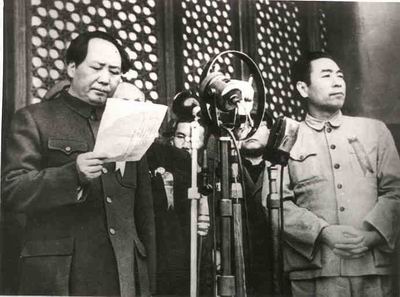
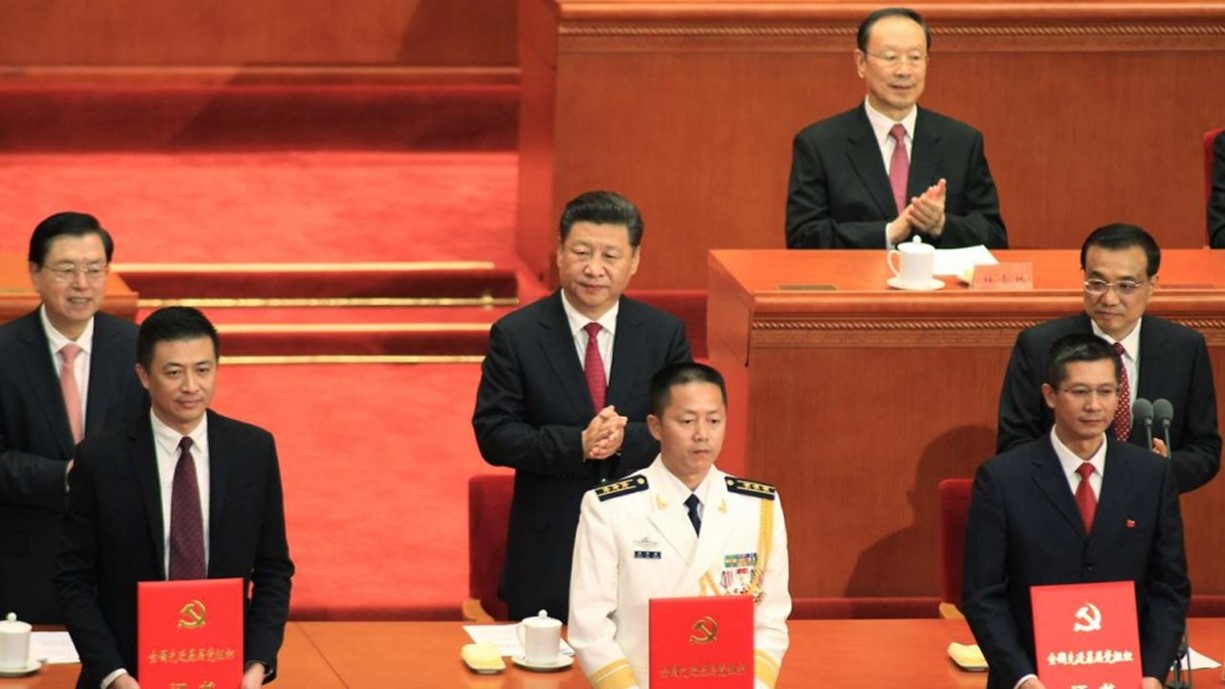
Mao Zedong proclaims the founding of the People’s Republic of China in Peking on Oct. 1, 1949.
Consumerism is a theory that claims continual increase in consumption of material goods is sound economically. Red China buried her dreams of Proletarian Revolution to embrace this theory of ‘Consumerism’ as a means to accomplish her goal of Economic Expansionism. The Evil of Consumerism is far more dangerous than the Evil of Communism. The Spread of Communism to Asia is the leading contributor to Social and Economic Injustice all over the World. The Economic Plan of Red China is fundamentally flawed for it encourages Self-Indulgence and Mass Consumption that will lead to Self-Destruction.
People all over the world have recognized dangers posed by the practice of Consumerism. What we clearly need is Consumer Protection, not only laws to safeguard interests of the buying public, but also to protect rights of workers, communities, environment, and ecological systems that sustain delicate natural equilibrium. The lives, health, and well-being of both workers and consumers is compromised by hazardous products and planet Earth is facing a major challenge to the very existence of Life. Red China’s Economic Expansionism is not sustainable and her economic collapse is simply inevitable. Red China’s Economic Meltdown is indeed a Blessing to all of us.
Rudranarasimham Rebbapragada Ann Arbor, MI 48104-4162 USA Special Frontier Force-Establishment 22-Vikas Regiment
The Evil Red Empire. The Evil of Consumerism is far more dangerous than the Evil of Communism.The Evil Red Empire – Consumerism – Economic Expansionism. Red China’s Shift to Consumerism is the Driving Force causing Income Inequality.The Evil Red Empire – Consumerism – Economic Expansionism.Red China is forcing a Culture of Consumption chasing a Mirage of Economic Prosperity.The Evil Red Empire – Consumerism – Economic Expansionism. Self-Indulgence leads to Self-Destruction.
The Evil Red Empire – Consumerism – Economic Expansionism Plan is Fundamentally Flawed.
THE US NEWS & WORLD REPORT
IS CHINA COOKING THE BOOKS ON ECONOMIC EXPANSION?
Analysts aren’t terribly confident in the Chinese government’s economic growth data.
China’s government expects its economy to grow 6.5 percent each year between 2016 and 2020.
By ANDREW SOERGEL Nov. 2, 2015 | 1:10 p.m. EST
One of China’s most senior government officials over the weekend said his country’s economy should expect to see “at least 6.5 percent” gross domestic product growth each year between 2016 and 2020, despite a growing pool of evidence suggesting China is in the midst of a historic economic slowdown.
But whether Chinese GDP numbers actually paint a clear economic picture is another question entirely.
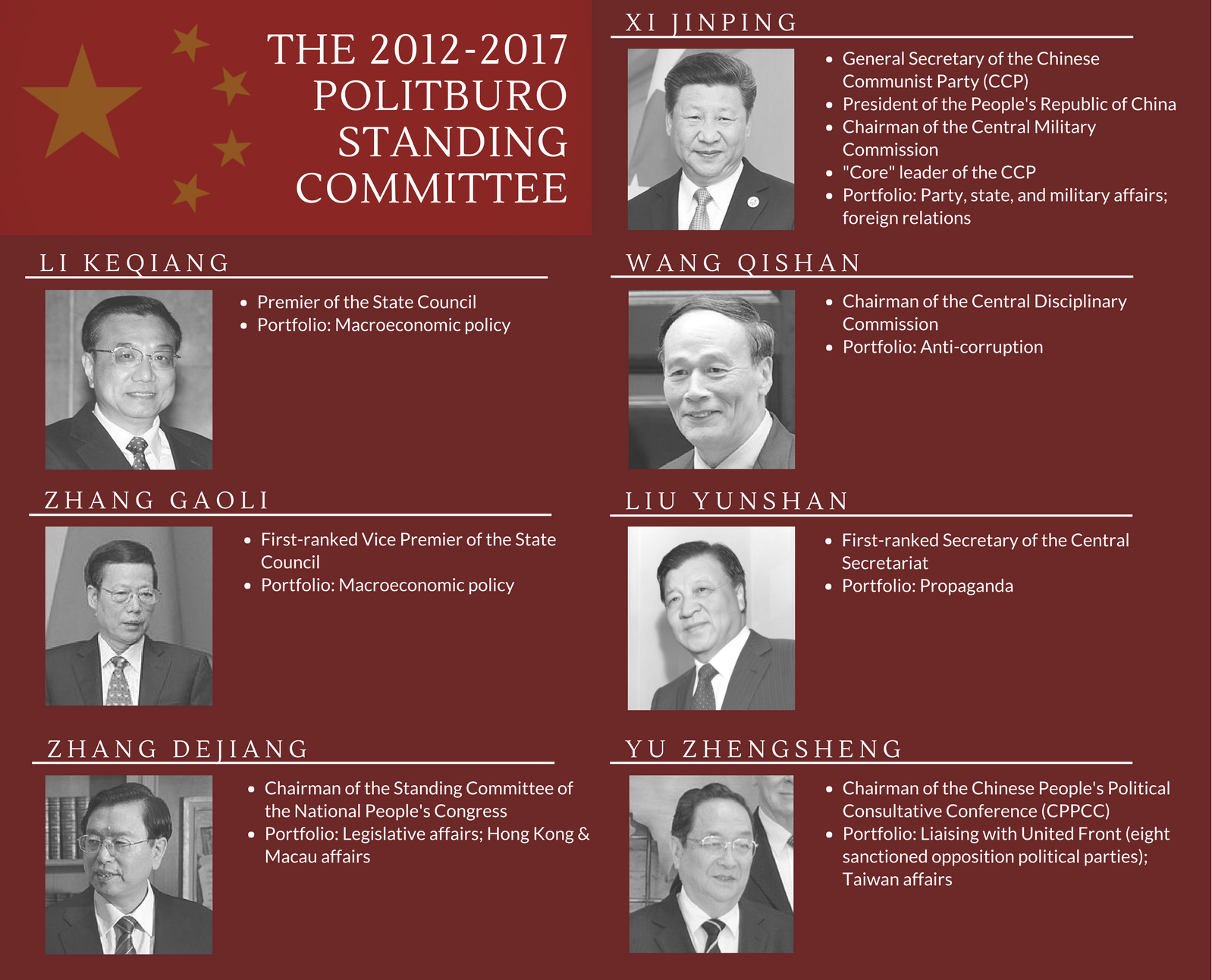
“We propose to achieve the goal of creating a ‘moderately prosperous society’ by 2020, which requires annual economic growth of at least 6.5 percent over the next five years,” Chinese Premier Li Keqiang said Sunday during a speech in Seoul, according to The Associated Press. He said the economy is operating within a “reasonable range” and that the government has “the confidence and ability” to hit its growth target of “about 7 percent” this year.
Rumors had floated around in the days and weeks leading up to Sunday’s announcement that the government would eventually lower its expansion goals for the next several years following a slew of recently underwhelming economic indicators suggesting Asia’s financial giant was beginning to cool. Exports and imports have plummeted in recent months, and the Chinese government announced in October that GDP expanded by only 6.9 percent in the third quarter – which represents the worst three-month period for the Chinese economy since the world was just emerging from the global financial crisis in 2009. But even that 6.9 percent growth – the worst China had posted in more than half a decade – sounded too good to be true. “We don’t have total confidence in the numbers, and we are surprised by the acceleration in services output given the collapse in the equity market,” a team of Bloomberg economists wrote in a research note at the time.
China’s stock market has recently strengthened, thanks in no small part to extraordinary governmental intervention. The heavy-handed Chinese government has thrown out safety net after safety net in an attempt to prevent a hard economic landing. Only a few weeks ago, China slashed its interest rates for the sixth time in less than a year.
“We continue to expect China to pull out all the stops to kick-start its economy in the coming weeks and months,” Burt White, chief investment officer at LPL Financial, wrote in a research note last week. “The [People’s Bank of China] interest rate cuts, along with selected fiscal and legislative actions in China, should further help to calm fears of a hard landing.”
Are China and Russia Trying to Undermine the U.S. Dollar?
But some analysts have speculated that the Chinese government’s intervention could extend to the country’s economic news releases as well. A recent Wall Street Journal survey of 64 select economists found that 96 percent of respondents think China’s GDP estimates don’t “accurately reflect the state of the Chinese economy.” They likely “overstate GDP by about 2 to 3 percentage points,” said one respondent.
“A government wielding such a heavy hand in markets is surely influencing/manipulating official statistics.” said another.
Ironically, China’s own premier has previously said he’s far from confident in the country’s GDP estimates, calling them “man-made” and unreliable, according to a leaked document from 2007 obtained by WikiLeaks. He said government data releases, especially the GDP numbers, should be used “for reference only.”
“Quite frankly, we don’t believe them at all. It’s not only that they come in suspiciously close to the target, which is pre-set. They’re produced remarkably quickly and rarely revised,” Danny Gabay, director at Fathom Financial Consulting, said last month in a radio interview with the BBC.
Gabay said he recalculated economic growth “based on Premier Li’s advice, which is that the GDP data are untrustworthy and we should use alternative measures to gauge the level of activity in China like electricity use, credit growth and other domestic indicators.” He said the actual growth number is “closer to 3 percent. Not 7.3 percent.”
But even if the 6.5 percent growth target between now and 2020 seems a little optimistic, it’s a clear recognition from the Chinese government that economic expansion now is not what it once was. China enjoyed double-digit annual growth between 2003 and 2007, and 2014’s 7.4 percent jump was still significantly higher than the global average, even though it was China’s worst year in more than two and a half decades.
For comparison’s sake, the U.S. economy hasn’t grown by 7.4 percent or more in a single year since 1951. And double-digit annual growth hasn’t been seen in America since 1943.
Part of the problem is that once an economy gets to a certain size, it’s just harder to keep up the momentum, which is likely at least partially responsible for China’s gradual slowdown. It would be unreasonable to expect the Chinese economy to plug along at a double-digit pace, just as it would be unreasonable to expect the U.S. economy to suddenly grow by 10 or 12 percent for a prolonged period of time.
But China’s government is able to influence market activity in a way America’s is not, which could artificially prolong China’s still respectable levels of economic growth beyond what would happen naturally. Most expect to continue to see relatively positive GDP numbers out of China for some time, even if such releases could be filled with a little bit of hot air.
“As an economy closely linked to international markets, China cannot stay immune to the lackluster performance of the global economy,” Chinese President Xi Jinping told Reuters in an interview last month. “We do have concerns about the Chinese economy, and we are working hard to address them.”
Andrew Soergel is an Economy Reporter at U.S. News.
Red China’s Economic Expansionism is not sustainable and her economic collapse is simply inevitable. Red China’s Economic Meltdown is indeed a Blessing to all of us.
Tibet Equilibrium – The Future of the Evil Power in Occupied Tibet
THE FUTURE OF RED CHINA’S EVIL POWER IN OCCUPIED TIBET – I SHARE THE PROPHECY OF BEIJING’S DOOM.TIBET EQUILIBRIUM – BALANCE OF POWER – THE FUTURE OF RED CHINA’S EVIL POWER. DOOMSAYER OF DOOM DOOMA SHARES PROPHECY OF ISAIAH 47:10 & 11.
Red China wants to sustain her military occupation of Tibet by controlling and manipulating Tibetan cultural practices that play a role in the selection of the next Dalai Lama. In my analysis, the future of Red China’s Evil Power is already decided by prophecy shared by Prophet Isaiah in The Old Testament Book, Isaiah, Chapter 47, verses 10 and 11:
“You have trusted in your wickedness and have said, ‘No one sees me.’ Your wisdom and knowledge mislead you when you say to yourself, ‘I am, and there is none beside me.’
Disaster will come upon you, and you will not know how to conjure it away. A calamity will fall upon you that you cannot ward off with a ransom; a catastrophe you cannot foresee will suddenly come upon you.”
At Special Frontier Force, I am known as ‘Doomsayer of Doom Dooma’ for I predict Beijing’s Doom. There is no one to save Red China when this catastrophe suddenly comes upon her.
Rudra Narasimham Rebbapragada Ann Arbor, MI 48104-4162 USA
BROWN POLITICAL REVIEW
RULE BY REINCARNATION : CHINA AND THE NEXT DALAI LAMA
BY MILI MITRA, NOVEMBER 1, 2015
TIBET EQUILIBRIUM – BALANCE OF POWER – FUTURE OF RED CHINA’S EVIL POWER. RED CHINA WANTS TO PERPETUATE HER RULE OVER TIBET BY CONTROLLING AND MANIPULATION REINCARNATION OF DALAI LAMA. BEIJING IS DOOMED FOR HER INTENTIONS ARE EVIL.
In the last decade, China has become a juggernaut in international politics. It is undoubtedly the dominant force in Asia and faces scant challenge from other regional powers. However, Beijing still faces internal opposition from dissidents, especially in Xinjiang Province and Tibet. The autonomous region of Tibet in particular is known for its robust and lasting resistance to Chinese rule. The Chinese Communist Party (CCP) has attempted to control the region since 1951. Now, China’s most recent efforts have taken an unexpected form: They are relying on the reincarnation of the Dalai Lama. Beijing seems to subscribe to the belief that a more cooperative Dalai Lama would help undercut Tibetan opposition and gain hegemony over the region. Needless to say, this plan is as unrealistic as it is absurd.
Beijing’s historical relationship with Tibet is conflicted and troubled. Tibet was incorporated into CCP-led China in 1951. CCP leader Mao Zedong wished to unite China after a turbulent century of weak Qing emperors, feuding warlords and the Japanese invasion. In October 1950, the Chinese army crossed into Tibet and defeated its Tibetan counterparts. Tenzin Gyatso, the current Dalai Lama, sent representatives to Beijing to negotiate, leading to the signing of the 17-Point Agreement for the Peaceful Liberation of Tibet. The pact made Tibet a part of China but gave it a measure of autonomy. There was some oversight from the national government, but the Tibetan government had more power than any other provincial government.
The Tibetan aristocracy and government were funded in part by China. The CCP also funded the development of infrastructure and organized land reforms. It seemed to be a mutually beneficial treaty, but many of these advantages failed to materialize for Tibet due to Chinese duplicity. Despite these promises, the CCP remained uncomfortable with Tibet’s partial autonomy and unique cultural heritage. Chinese leaders feared that Tibetan spirituality — and indeed, loyalty to the Dalai Lama — would undermine their own power. They endeavored to dilute the local culture, a process now known as the “Sinicization of Tibet.” Rituals and traditions are integral to Tibetan society, but the Chinese government worked to suppress local festivals and religious customs.
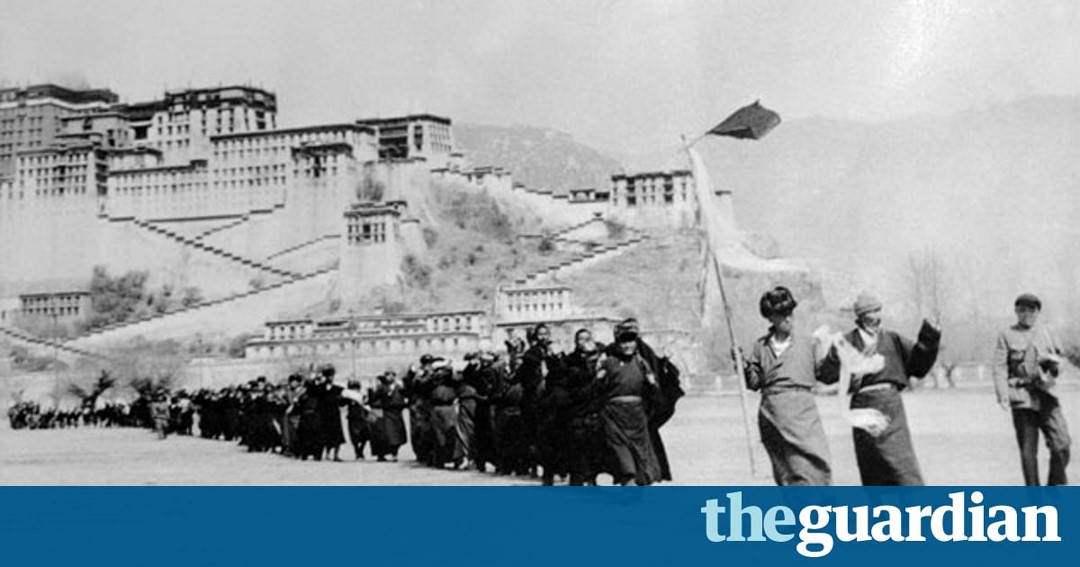
To counter the dominance of Tibetan Buddhists in the region, Beijing also sent thousands of Han Chinese, the largest ethnic group in the country, to intermarry with Tibetans. As one would expect, these decisions only exacerbated cultural tensions. Overall, the CCP’s overbearing attempts to control Tibet won them few supporters and antagonized the majority of the local population. Ultimately, the Tibetan people tired of these oppressive tactics and launched the 1959 Tibetan Uprising. The rebellion failed, resulting in at least 10,000 deaths and the exile of the Dalai Lama to northern India.
Ever since, China’s rule in Tibet has been fraught with instability and local opposition. The Chinese government has tried a variety of tactics to win Tibetan support but has finally come to the conclusion that it needs the support of the Dalai Lama. And since it can’t win the approval of the current Dalai Lama, it wants to collaborate with his next incarnation. This plan may sound far-fetched, but China’s schemes are based on a shrewd — if misguided — premise. Beijing has long realized that the Dalai Lama holds an unparalleled sway over the Tibetan people, even in exile. His influence as a spiritual and political leader cannot be overstated. The current Dalai Lama would never agree to cooperate with Beijing; he has long demanded Tibetan independence and is a figurehead for dissidents in the region. Even in exile, the Dalai Lama is an omnipresent figure in the Tibetan cultural and political consciousness. But as he ages, the Chinese government believes his successor might be more compliant.
Since China can’t win the approval of this Dalai Lama, they want to collaborate with his next incarnation.
In fact, China is reluctant to leave this to chance. The boy selected to be the next Dalai Lama will be reared in Tibetan Buddhist traditions and will likely feel the same way as the present Dalai Lama. To ensure that the next spiritual leader will align with its goals, Beijing wishes to oversee the selection process; in other words, it wants to select a Dalai Lama more sympathetic to its goals. In a morbid twist, it sees the Dalai Lama’s passing as an opportunity to instate a puppet leader, a figurehead who would be raised in Beijing and taught to adhere to the party line.
The process to identify the next Dalai Lama is complex and intriguing. A group of senior monks, called High Lamas of the Gelugpa tradition, and the Tibetan government are responsible for identifying their next spiritual leader. The search begins with the High Lamas interpreting their dreams or visions. If the previous Dalai Lama was cremated, as is generally the case, the smoke from his cremation might indicate the direction in which they should look. They then use these signals to find boys born around the time of death of the previous leader. The boys are then asked to identify objects that belonged to the former Dalai Lama. If several boys are found who satisfy the conditions, as is typically the case, they consult the servants of the former Dalai Lama. In the rare case when there are still multiple boys that pass all these tests, they place the names in an urn and hold a public draw.
The Dalai Lama — along with the majority of Tibetans — believes that Beijing’s involvement in the selection process would undermine the sanctity of the religion and lead to further conflict. This is substantiated by a similar case in 1995: the selection of the Panchen Lama. The Panchen Lama is the second highest ranking in Tibetan Buddhism and is “found” in much the same way as the Dalai Lama. The committee of high monks had selected a candidate, Gedhun Choekyi Nyima, and the Dalai Lama endorsed their decision. However, the Chinese government insisted on holding a draw after which Gyaincain Norbu was chosen as the 11th Panchen Lama. Gedhun Choekyi Nyima was immediately taken away by Chinese officials and has been missing ever since. Tibetans were horrified by the Chinese ploy and have refused to accept Gyaincain Norbu as the Panchen Lama. There are still calls from the international community to free Gedhun Choekyi Nyima, but China has disregarded these requests. As a result of Chinese intervention, Tibet’s “true” Panchen Lama has not been seen in over 20 years.
Perhaps with an eye on the past, the current Dalai Lama once again chose to defy the Chinese government. He has announced that he will consider whether he will reincarnate and continue the tradition in 2024. As he told the BBC, he would rather have no Dalai Lama than a “stupid” one. He went on to explain that it might be better to dissolve the influential position rather than to wait for a future Dalai Lama who could “disgrace” himself. His comments imply that he is aware of the prospect of Chinese intervention in selecting his successor and is reluctant to leave his legacy in such hands. He also acknowledged that his role might become less relevant in time. In response, Beijing has hit out at his statements, claiming his attitude was “frivolous.” Not one to shy away from a war of words, the Dalai Lama pointed out, “Chinese officials [seem] more concerned with the future Dalai Lama than me.” The Chinese government’s fixation with the next Dalai Lama is certainly questionable, but it is wrong to assume that the Dalai Lama has not given the matter much thought. He is a shrewd political player and knows how to bring out the worst in the Communist Party. There are several possible motivations behind the Dalai Lama weighing whether or not to reincarnate. Some see it as a means of ensuring the position’s prestige and spiritual authority is not tainted by dirty politics. Others, including Jia Xiudong of the China Institute of International Studies in Beijing, believe he is “playing a political game.” They see his announcement as a way to put pressure on China and ensure that it respects Tibetan traditions and autonomy.
Nonetheless, the Chinese government has emerged from this episode looking ridiculous — a common outcome in their dealings with the Dalai Lama. Regardless of whether the Dalai Lama decides to reincarnate or not, it will be interesting to see how the Free Tibet movement — and indeed, Tibet-China relations — progresses without the Dalai Lama leading the international conversation. Despite his apparent humility, he has shaped Tibetan identity over the last half-century and has become virtually synonymous with the Free Tibet movement. His passing would leave a power vacuum in Tibetan politics for at least a decade, simultaneously making the region more vulnerable to Chinese influence and more volatile to shocks and triggers.
If Beijing wants to maintain regional peace, it should tread very carefully in its positions with the current and future Dalai Lama. A senior Obama Administration official predicted that this process of transition would be reminiscent of the Avignon Papacy, a period of conflict between different Catholic authorities that almost destabilized all of Europe in the fourteenth century. If Beijing intervenes and selects its own candidate, it will likely cause widespread dissent and conflict in Tibet. The Tibetan people are wary of Chinese involvement and will distrust any decision in which Beijing has the upper hand. The Communist Party might believe that they would reduce hostility by choosing a cooperative Dalai Lama, but their intrusion could quite well incite outright rebellion. Either way, the selection of the next Dalai Lama, if it takes place at all, will undoubtedly be a dramatic turning point in Tibetan history. All we can do is wait and watch as the spectacle unfolds.
Copyright 2015 Brown Political Review
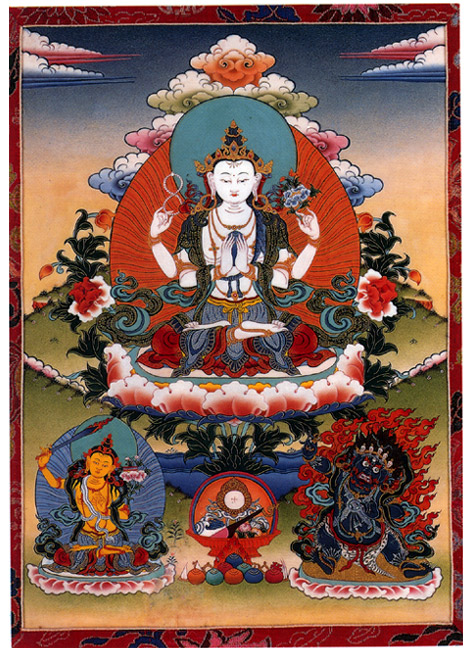
TIBET EQUILIBRIUM – BALANCE OF POWER – FUTURE OF RED CHINA’S EVIL POWER. BEIJING IS DOOMED. NO ONE INCLUDING THE NEXT DALAI LAMA CAN SAVE RED CHINA.TIBET EQUILIBRIUM – BALANCE OF POWER – FUTURE OF RED CHINA’S EVIL POWER. BEIJING IS DOOMED. BODHISATTVA AVALOKITESVARA IS UNWILLING TO SAVE RED CHINA FOR SHE IS EVIL.Tibet Consciousness – Red China Slays Tibet with the Sword – Red China Must be Killed with the Sword. No Exceptions to the Golden Rule – The Book of Revelation 13:10THE FUTURE OF RED CHINA’S EVIL POWER IN OCCUPIED TIBET – I SHARE THE PROPHECY OF BEIJING’S DOOM.THE FUTURE OF RED CHINA’S EVIL POWER IN OCCUPIED TIBET – I SHARE THE PROPHECY OF BEIJING’S DOOM.THE FUTURE OF RED CHINA’S EVIL POWER IN OCCUPIED TIBET – I SHARE THE PROPHECY OF BEIJING’S DOOM.THE FUTURE OF RED CHINA’S EVIL POWER IN OCCUPIED TIBET – I SHARE THE PROPHECY OF BEIJING’S DOOM.
Asia Reassurance Initiative Act Symbolizes Cold War in Asia
The Asia Reassurance Initiative Act Symbolizes the Democracy vs Communism Rift that characterizes the US-China Relations since 1949.
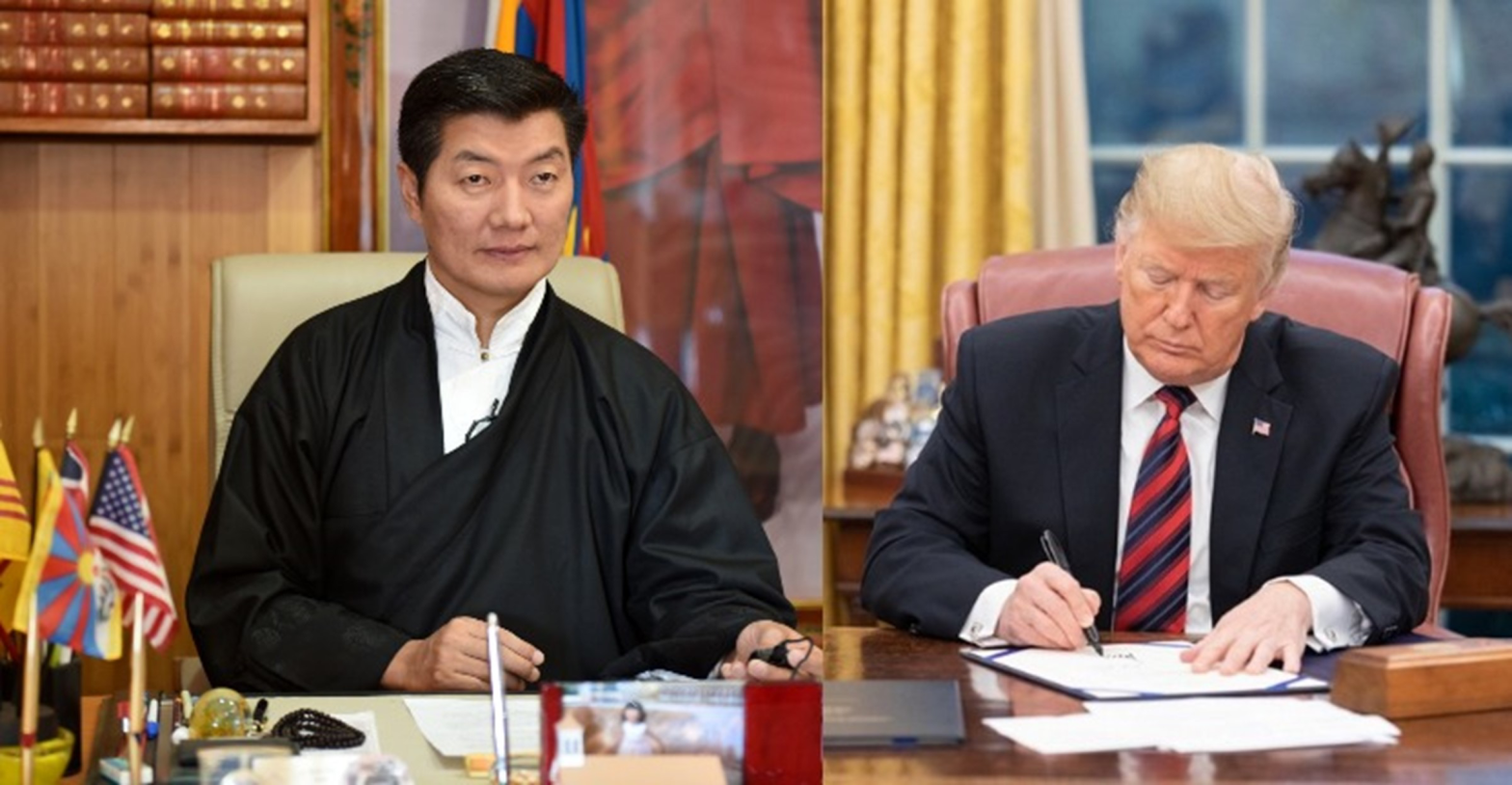
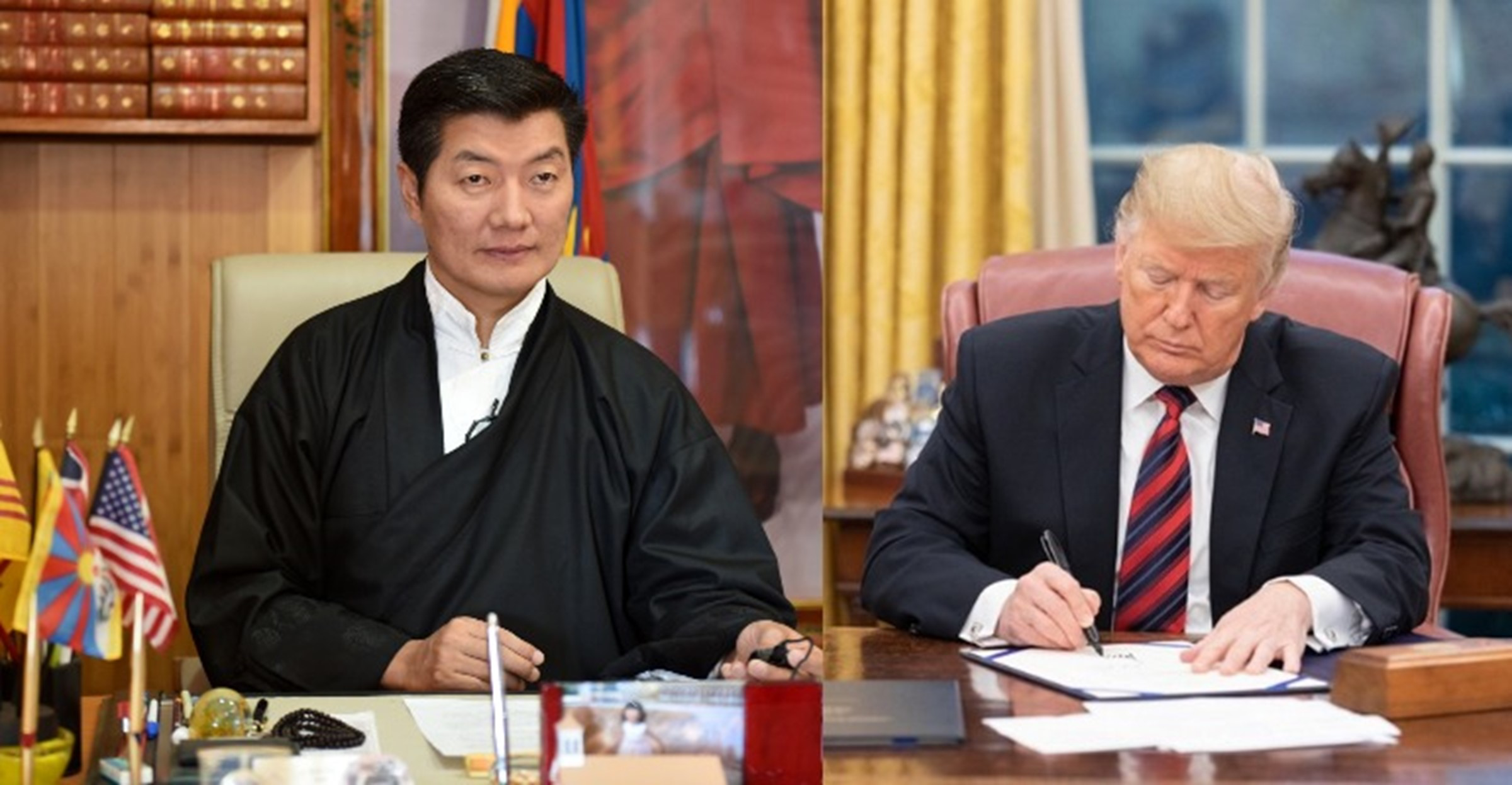
In my analysis, the Asia Reassurance Initiative Act symbolizes the reality of ‘Cold War in Asia’. President of Tibet and the President of the United States have acknowledged the threat posed by the Enemy’s presence in Tibet.
Democracy vs Communism Rift has characterized the US-China Relations since 1949
Rudra Narasimham Rebbapragada
Special Frontier Force-Establishment 22-Vikas Regiment
The Asia Reassurance Initiative Act Symbolizes the Democracy vs Communism Rift that characterizes the US-China Relations since 1949.
CTA President hails the Asia Reassurance Initiative Act.
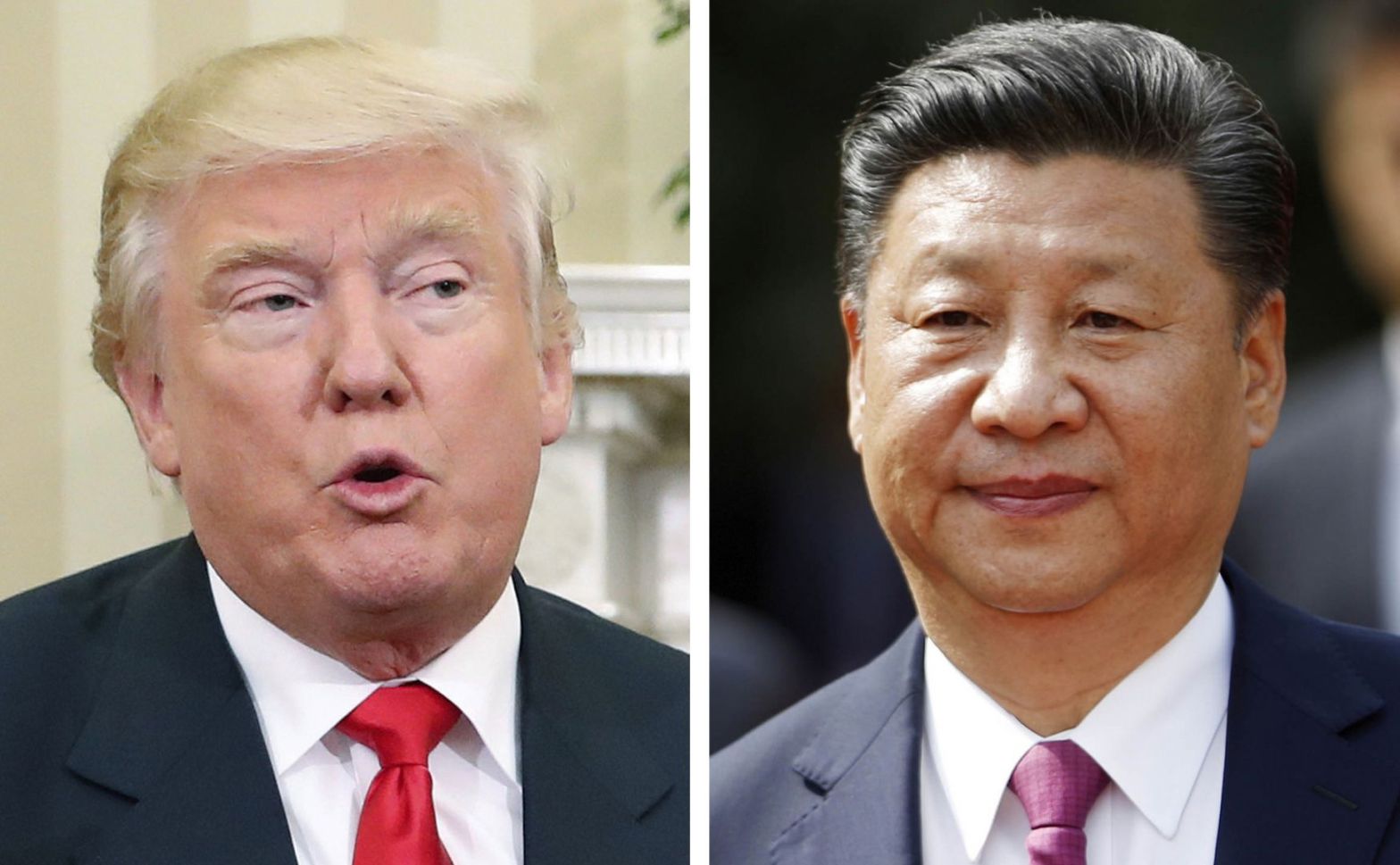
Dharamshala: President Dr Lobsang Sangay of Central Tibetan Administration hailed the enactment of the Asia Reassurance Initiative Act (ARIA) on Tuesday, saying that the passage is a much-welcomed move. US President Donald Trump signed the ARIA Act into law on 31 December 2018, having passed the Senate and the House on 4 and 12 December respectively.
President Dr Sangay thanked the US Congress for passing the Asia Reassurance Initiative Act, which references Tibet in terms of supporting “activities preserving cultural traditions and promoting sustainable development, education, and environmental conservation in Tibetan communities in the Tibet Autonomous Region and in other Tibetan communities in China, India, and Nepal.”
CTA President, in recent years, has made multiple visits to the United States and held high-level meetings in the Senate as well as the House of Representatives. During those meetings, he has relentlessly tabled the issue of prioritizing Tibet at the core of US policy. The Office of Tibet in Washington DC has also made tremendous efforts towards this.
“ARIA ensures that the US will continue to support Tibet by authorizing funds for Tibet-related programs and by highlighting Chinese human rights abuses against the Tibetan people,” said Senators Cory Gardner (R-Colo.) and Ed Markey (D-Mass.), the lead sponsors of the Act.
Matteo Mecacci, president of the International Campaign for Tibet said: “This Act rightly places the issue of Tibet within the parameters of US security interests. Tibet occupies an Asian fault zone of clashing cultures and big-power politics.”
The Act, known as ARIA, aims at enhancing American leadership in the Indo-Pacific region and strengthening cooperation with regional partners, including India and Taiwan. It says, “The United States has a fundamental interest in defending human rights and promoting the rule of law in the Indo-Pacific region.”
Following is the reference to Tibet in the Act. SEC. 409. AUTHORIZATION OF APPROPRIATIONS.
(a) Promotion of Democracy in the Indo-Pacific Region.– (1) In general.–There is authorized to be appropriated $210,000,000, for each of the fiscal years 2019 through 2023, to promote democracy, strengthen civil society, human rights, rule of law, transparency, and accountability in the Indo- Pacific region, including for universities, civil society, and multilateral institutions that are focusing on education awareness, training, and capacity building.
(2) Democracy in China. –Amounts appropriated pursuant to paragraph (1) shall be made available for United States Government efforts, led by the Assistant Secretary of State for Democracy, Human Rights, and Labor, to promote democracy, the rule of law, and human rights in the People’s Republic of China.
(3) Tibet. –Amounts appropriated pursuant to paragraph (1) shall be made available for nongovernmental organizations to support activities preserving cultural traditions and promoting sustainable development, education, and environmental conservation in Tibetan communities in the Tibet Autonomous Region and in other Tibetan communities in China, India, and Nepal.
The Act also recognizes India as a major Defense partner, the vital role of the strategic partnership between the United States and India in promoting peace and security in the Indo-Pacific region. Section 204 of the Act calls for strengthening and broadening of diplomatic, economic, and security ties between the two countries.
The Indo-Pacific is a biogeographic region, comprising the Indian Ocean and the western and central Pacific Ocean, including the South China Sea.
The Asia Reassurance Initiative Act Symbolizes the Democracy vs Communism Rift that characterizes the US-China Relations since 1949.
Whole Doom – Doomsayer of Doom DoomaWhole Dude – Whole Doom: Predicting the Sudden Downfall of The Evil Red Empire.
Excerpt: President Reagan suggests that the answers for all the problems men face are found within the covers of The Bible. The problems of man do not always need human interventions like insurrection, rebellion, warfare, and other forms of physical force that man uses to resolve conflicts. President Reagan shares a hope that human struggle for Freedom, Fairness, and Justice could be resolved without using bombs, rockets, armies, or military might. In the last book of The New Testament called ‘Revelation’ I discovered a hidden prophecy that graphically describes the downfall of The Evil Red Empire.
Doom Dooma Doomsayer predicts heavenly strike by asteroid – Beijing is doomedDoom Dooma Doomsayer predicts heavenly strike by asteroid – Beijing is doomed
At Establishment 22, Special Frontier Force, I am known as ‘Doom Dooma Doomsayer’ for I predict Evil Red Empire’s Downfall because of a cataclysmic event which she cannot ward off by paying a ransom.
Doom Dooma Doomsayer predicts heavenly strike by asteroid – Beijing is doomed
My predisposition is inherited at a place known as Doom Dooma, Assam, in Northeast India. I am not a prophet and I am not claiming that I am making a new prophetic revelation.
Doom Dooma Doomsayer predicts heavenly strike by asteroid – Beijing is doomed
By divine guidance, I received the opportunity to read the Book of Isaiah, and the Book of Revelation to learn that the term Evil is always associated with Calamity, Disaster, Downfall, Catastrophe, Cataclysm, Trouble, and Woe for evil action always brings its own punishment as a consequence. Evildoer is judged, condemned, and is punished. Evil moves towards its own end of self-destruction.
Doom Dooma Doomsayer predicts heavenly strike by asteroid – Beijing is doomed
The term ‘apocalypse’ means unveiling or revelation; it depicts destruction of ‘Evil’ and triumph of Good. Apocalypse often refers to a striking disclosure of something not previously realized.
Doom Dooma Doomsayer predicts heavenly strike by asteroid – Beijing is doomed
The term ‘prophecy’ means declaration or prediction of something under the influence of divine guidance. In Bible, the term ‘Prophet’ describes person who speaks for God as though under divine guidance, and Prophet often predicts future events.
Doom Dooma Doomsayer predicts heavenly strike by asteroid – Beijing is doomed
The term ‘Doom’ means ‘what is laid down’,decree, judgment, sentence of condemnation, destiny, tragic fate, ruin, and to ordain as penalty. I am named ‘Doomsayer’ for I am predisposed to predicting catastrophe or disaster, calamity, or ‘The Deluge’.
Doom Dooma Doomsayer predicts heavenly strike by asteroid – Beijing is doomed
Evil Red Empire, Red Dragon, Red China embraced self-destruction for her evil actions. Hence, with no further doubt, I pronounce, “Beijing Doomed.”
Doom Dooma Doomsayer predicts heavenly strike by asteroid – Beijing is doomed
I am not predicting a random, spontaneous, purposeless strike or impact by an asteroid. I am predicting Heavenly Strike that is Precise, Selective, Guided, Goal-Oriented and Purposeful for it delivers Justice while destroying Evil.
Doom Dooma Doomsayer predicts heavenly strike by asteroid – Beijing is doomed
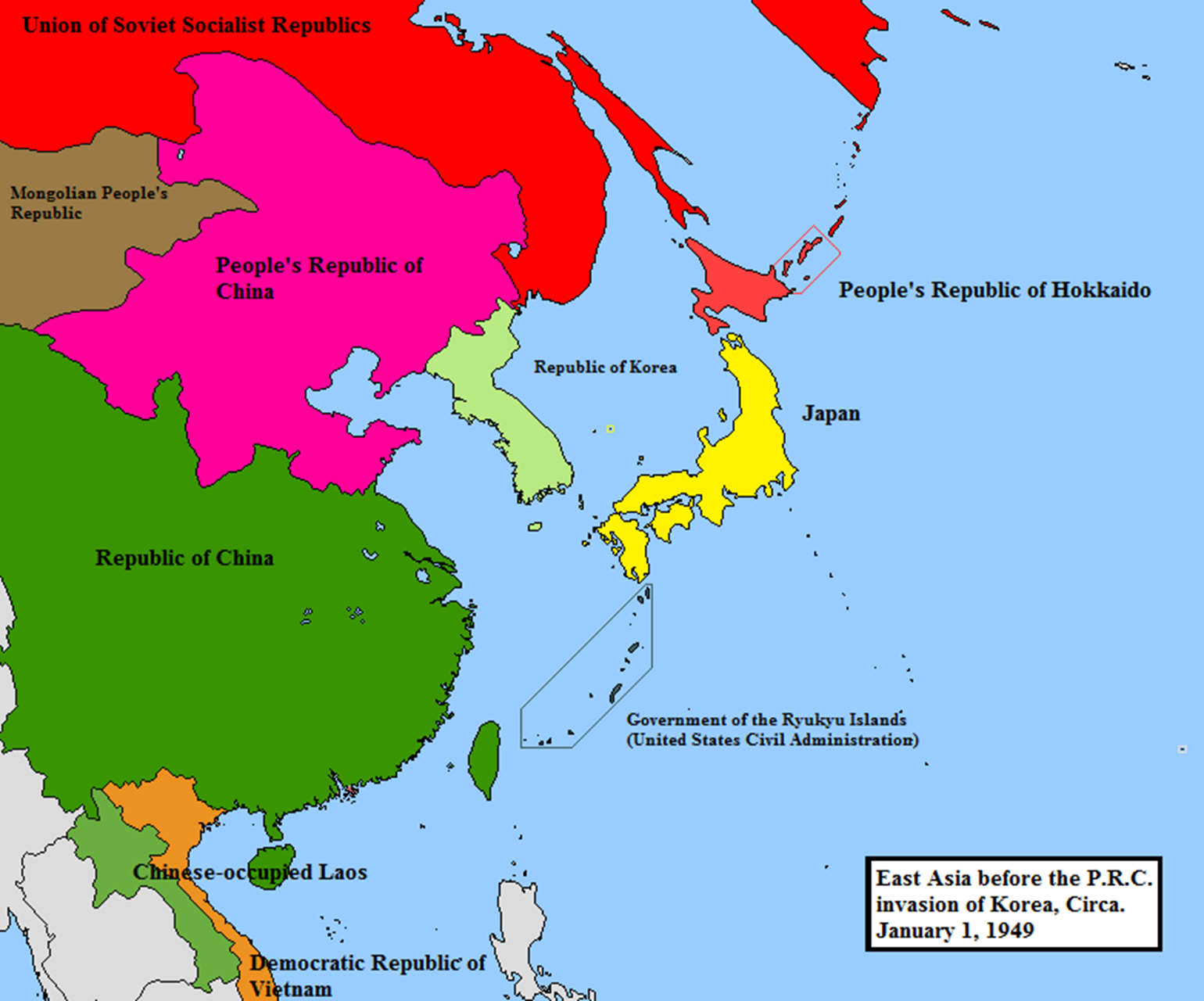
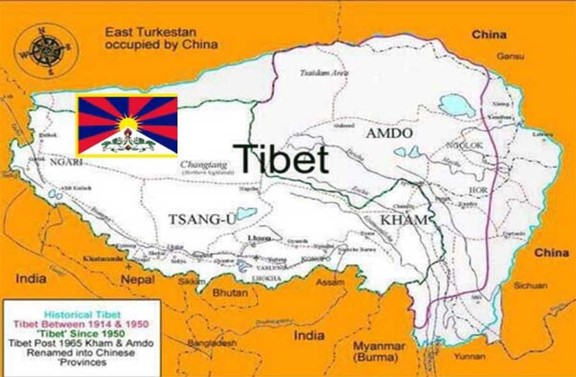
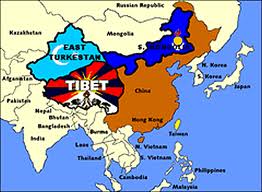
The spread of Communism to mainland China in 1949 makes ‘Tibet Equilibrium’ core policy issue of all other countries. In terms of size, and geographical location, Tibet occupies unique position as ‘Balancer’ to maintain regional stability.
The spread of Communism to mainland China in 1949 makes ‘Tibet Equilibrium’ core policy issue of all other countries. In terms of size, and geographical location, Tibet occupies unique position as ‘Balancer’ to maintain regional stability.
THE EVIL RED EMPIRE – RED CHINA – NEOCOLONIALIST.
Rudra Narasimham Rebbapragada
Special Frontier Force-Establishment 22-Vikas Regiment
TIBET AWARENESS – RED CHINA ON A SLIPPERY SLOPE: RED CHINA TRIED EVERY TRICK AND NOW HAS NO CHANCE TO SAVE HERSELF FROM DOWNFALL.
MAKE TIBET CORE ISSUE OF YOUR POLICY TIBETAN GOVERNMENT-IN-EXILE PRESIDENT TO INDIA
President of the Tibetan government-in-exile Lobsang Sangay
NEW DELHI: President of the Tibetan government-in-exile Lobsang Sangay today appealed to India to make Tibet a “core” issue of its policy.
Inaugurating a year-long ‘Thank You India’ campaign marking 60 years of Chinese “occupation” of Tibet and the Dalai Lama coming to India, the president of the Central Tibetan Administration (CTA) said the security of India “partly depended” on the “situation” in Tibet.
“We thank India for its support in past six decades to our cause and also appeal to it to support us politically and make Tibet its core issue,” he said.
Asserting that the Tibetans are in India because of the support of Indian government and people, Sangay said, “We are a success story and it has been a great journey, thanks to India and its people.”
The security and stability in China as well as India depends on the safety and stability in Tibet, he said.
Advocating good relations between India and China, Sangay, however, suggested his host country to be “cautions” of China’s expansionist policy.
“Sixty years back, we lost our country to Chinese occupation. We do not want other countries to face the same consequences,” he said.
Replying to a question on Doklam, the CTA president said that going to the United Nations could be one option for Bhutan who lays claim on the region where Chinese and Indian armies have faced a stand-off.
Sangay said that the ‘Thank You India’ campaign symbolizes gratitude of the Tibetan people towards their host country and it will begin with a interfaith meeting, which will be attended by the Dalai Lama at Rajghat on March 31 followed by a public event at Thyagraj stadium on April 1.
The year-long campaign will include events in more than 20 cities, including Bengaluru and Shimla, and will have initiatives like ‘Little Tibet festival’, ‘Green India’, ‘Healthy India’, ‘Feed the Hungry’ and ‘Clean India’.
The spread of Communism to mainland China in 1949 makes ‘Tibet Equilibrium’ core policy issue of all other countries. In terms of size, and geographical location, Tibet occupies unique position as ‘Balancer’ to maintain regional stability.
Doomed American China Fantasy – The Cold War in Asia
DOOMED AMERICAN CHINA FANTASY – THE COLD WAR IN ASIA 1949 TO 2026. THE SPREAD OF COMMUNISM IN ASIA.
The Cold War in Asia is the product of Communism that spread from Europe to Asia. Nixon-Kissinger in 1971-72 initiated Policy of Doomed American China Fantasy without concern for lessons learned in Korean Peninsula and Vietnam. There is no hope and there is no future for America’s China Fantasy as Communist Party in China survives unchanged and unaffected by changing fortunes of the US Political Parties.
Rudra Narasimham Rebbapragada
DOOM DOOMA DOOMSAYER
Doomed Gun of Doom Dooma symbolizes the Doomed China Fantasy, a Policy initiated by 37th US President Richard M Nixon when he made a trip to Peking on February 21, 1972. DOOMED AMERICAN CHINA FANTASY – THE COLD WAR IN ASIA 1949 TO 2026. THE SPREAD OF COMMUNISM IN ASIA.DOOMED AMERICAN CHINA FANTASY – THE COLD WAR IN ASIA 1949 TO 2026. THE SPREAD OF COMMUNISM IN ASIA. DOOMED AMERICAN CHINA FANTASY – THE COLD WAR IN ASIA 1949 TO 2026. THE SPREAD OF COMMUNISM IN ASIA.
AMERICA’S CHINA FANTASY
DOOMED AMERICAN CHINA FANTASY – THE COLD WAR IN ASIA 1949 TO 2026. THE SPREAD OF COMMUNISM IN ASIA. President Nixon’s Doomed Journey to Peking in February 1972.
America has been operating with the wrong paradigm for China. Day after day, U.S. officials carry out policies based on premises about China’s future that are at best questionable and at worst downright false.
The mistake lies in the very assumption that political change — and with it, eventually, democracy — is coming to China, that China’s political system is destined for far-reaching liberalization. Yet the Bush administration hasn’t thought much about what it might mean for the United States and the rest of the world to have a repressive one-party state in China three decades from now. For while China will certainly be a richer and more powerful country in 30 years, it could still be an autocracy of one form or another. Its leadership (the Communist Party, or whatever else it calls itself in the future) may not be willing to tolerate organized political opposition any more than it does today.
That is a prospect with profound implications for the United States and the rest of the world. And it is a prospect that our current paradigm of an inevitably changing China cannot seem to envision.
The notion of a China on the road to political liberalization has taken hold in the United States because it has served certain specific interests within American society. At first, in the late 1970s and the 1980s, this idea benefited the U.S. national-security establishment. At the time, the United States was seeking close cooperation with China against the Soviet Union, so that the Soviet Union would have to worry simultaneously about both countries; the Pentagon wanted to make sure the Soviet Union tied down large numbers of troops along the Sino-Soviet border that might otherwise have been deployed in Europe. Amid the ideological struggles of the Cold War, though, cooperation with China’s Communist regime was politically touchy in Washington. And so the notion that China was in the process of opening up its political system helped smooth the way with Congress and the American public.
In the 1990s, after the Soviet collapse, the idea of a politically changing China attracted a new constituency, one even more powerful than the Pentagon: the business community. As trade and investment in China became ever more important, American companies found themselves repeatedly beset with questions about why they were doing business with such a repressive regime. The paradigm of inevitable change offered multinational corporations the answer they needed. Not only was China destined to open up its political system, but trade, the theology held, would be the key that would unlock the door. It would lead to political liberalization and to democracy, with or without the support of the Chinese leadership. Accordingly, no one outside China needs to do anything, or even think much about the subject. Why bother to protest a crackdown or urge China to allow political opposition if you know that democracy, by the inexorable laws of history, is coming anyway?
The trouble is, the entire paradigm may turn out to be wrong.
What should the U.S. strategy be for dealing with China’s Leninist regime? If you ask our established political leaders, foreign-policy experts, or sinologists what the United States should do about China, you will undoubtedly get some version or another of this approach. It is called the strategy of “integration.”
The United States, the thinking goes, should try to integrate the Chinese leadership into the international community. It should seek to help China gain admission into the world’s leading international organizations. According to this logic, the nature of the Chinese regime will change after China becomes a member of international bodies such as the World Trade Organization, which it has now joined. China’s Communist Party leadership will gradually behave more like other governments; it will become more open in dealing with the Chinese people and with the rest of the world. Richard Haas, the president of the Council on Foreign Relations, has written of “the existing opportunity to integrate China into a U.S.-led world order.”
This strategy of integration dates back to the Clinton administration. In 1994, President Clinton abandoned his attempt to use trade as a lever for improving human rights in China, then needed to divert attention away from this embarrassing reversal. He did not wish to concede that that he had just downgraded the cause of human rights in China; instead, he sought a new, positive-sounding description of his policy. “Integration” gradually became the label of choice, invoked by the president and his top advisers in press conference after press conference. Integration became, above all, the justification for unrestricted trade with China. “We believe it’s the best way to integrate China further into the family of nations and to secure our interests and our ideals,” declared Clinton in one typical speech.
George W. Bush and his advisers, without ever admitting they were doing so, have perpetuated most of the essentials of Clinton’s China policy, including the avowed commitment to integration. When Secretary of State Condoleezza Rice gives a speech about China, she sooner or later calls for integrating China into the international community.
“Integration” has thus become another catchphrase like “engagement,” the earlier slogan for America’s China policy, which originated somewhat earlier, during the administration of George Bush Senior. With both words, however, the suggestion is the same: that is, with enough engagement, with sufficiently vigorous integration, the United States may succeed in altering the nature of the Chinese regime — although it is not clear exactly how this is supposed to happen. In a way, the American approach is a bit patronizing to China: It sounds as if the United States is a weary, experienced trainer bringing China to a diplomatic version of obedience school.
The fundamental problem with this strategy of integration is that it raises the obvious question: Who’s integrating whom? Is the United States now integrating China into a new international economic order based upon free-market principles? Or is China now integrating the United States into a new international political order where democracy is no longer favored, and where a government’s continuing eradication of all organized political opposition is accepted or ignored?
This is not merely a government issue. Private companies — including Internet firms like Yahoo, Google, and Microsoft — often use slogans like “engagement” and “integration” to explain why they have decided to do business in China despite Chinese rules and laws that allow continuing censorship. “I think [the Internet] is contributing to Chinese political engagement,” Bill Gates told one business gathering. Yet if Microsoft is altering its rules to accommodate China, once again the question is: Who’s changing whom?
Will it have been a success for the U.S. policy of integration if, 30 years from now, the world ends up with a Chinese regime that is still a deeply repressive one-party state but is nevertheless a member of the international community in good standing? If so, that same China will serve as a model for dictators, juntas, and other undemocratic governments throughout the world — and in all likelihood, it will be a leading supporter of these regimes. Pick a dictator anywhere today and you’ll likely find that the Chinese regime is supporting him. It has rewarded Robert Mugabe, the thug who rules Zimbabwe, with an honorary professorship, and his regime with economic aid and, reportedly, new surveillance equipment. It has been the principal backer of the military regime in Burma. And when Uzbek President Islam Karimov ordered a murderous crackdown on demonstrators in 2005, China rushed to defend him.
If China maintains its current political system over the next 30 years, then its resolute hostility to democracy will have an impact in places like Egypt, Syria, and Saudi Arabia. A permanently authoritarian China could also undermine Russia’s already diminishing commitment to democracy.
Thus, when America’s leading officials and CEOs speak so breezily of integrating China into the international community, listeners should ask: If China remains unchanged, what sort of international community will that be? Will it favor the right to dissent? Will it protect freedom of expression? Or will it simply protect free trade and the right to invest?
But wait, say the defenders of America’s existing China policy. We believe in democracy, too. There is no real disagreement here on our ultimate goals. This is all just a question of tactics. The strategy of integration (or of engagement) is designed to change China’s political system and, over the long term, to end China’s one-party state.
These arguments sound in some ways similar to claims made by the Chinese regime itself. Because Chinese Communist Party leaders don’t like to acknowledge that they intend to maintain their monopoly on power, they sometimes tell visitors that they, too, believe in democracy, that this is the ultimate goal for China, and that it is all merely a question of timing. These claims are designed for the hopelessly gullible; by its actions, day after day, the regime makes clear its tenacious hostility to the idea of political pluralism in China.
Generally, the U.S. proponents of a strategy of integration are not so cynical. To be sure, a few of them may be antidemocratic; there have always been Americans who admire, even revere, the simplicity and convenience of autocracy. However, other proponents of integration seem to believe quite sincerely that if the United States continues its current approach toward China, Chinese leaders eventually will be willing to abandon the monopoly on political power they have maintained since 1949. Yet these same proponents fail to explain how or why, given the current U.S. strategy, China’s political system will change.
The examples of reforms that they have invoked so far have served to divert attention away from the core issue of China’s one-party state. The promotion of village elections has proved to be largely unsuccessful, both because the Chinese leadership can confine this experiment exclusively to the villages and because in the villages themselves, authorities have resorted to a variety of methods, including the use of violence, to forestall democracy.
Nor is there evidence that the American promotion of the rule of law will by itself transform the political system. So long as there is no independent judiciary and China remains a one-party regime in which judges are selected by the Communist Party, promoting the rule of law won’t bring about fundamental change. Instead, it simply may lead to a more thoroughly legalized system of repression. Indeed, those lawyers in China who attempt to use the judicial system to challenge the Communist Party or to defend the rights of political dissidents have themselves been subject to persecution, including the loss of their jobs or even time in prison.
The strongest impetus for establishing the rule of law comes from the corporations and investors who are putting their money into China. They need bona fide procedures for resolving financial disputes, just as companies and investors require everywhere else in the world. It is in the interest of the Chinese regime to keep the investment dollars, euros, and yen flowing into the country, and so Chinese officials are willing to establish some judicial procedures for the foreign companies. However, the result could well be a Chinese legal system that offers special protection for foreign investors but not to ordinary Chinese individuals, much less to targets of the regime such as political dissidents or Tibetan activists.
And that raises the larger question about America’s current strategy of integration: Whom does it benefit? Above all, it enriches the elites in both China and the United States. The strategy is good for the American business community, which gets to trade with China and invest in China, and for the new class emerging in Chinese cities — the managers and entrepreneurs, many of them former party cadres or the relatives of cadres — that is getting rich from the booming trade and investment in its country. But it has not been nearly so beneficial for working-class Americans — particularly the tens of thousands who have lost their jobs in the United States as the end result of this “integration” policy.
The American people were told many years ago that bringing China into the international economic system would help change the Chinese political system. Now, American workers may well wonder whether this argument was merely a cruel hoax. Nor has the strategy of integration been such a blessing for ordinary Chinese. To be sure, China as a whole is more prosperous than it has ever been, but this new prosperity is enjoyed mostly by the urban middle class, not by the country’s overworked, underpaid factory laborers or by the hundreds of millions of peasants in the countryside.
Indeed, it is precisely because the regime knows how restive and disenchanted the Chinese people are that it refuses to open up to any form of democracy. The Chinese leaders know that they could be thrown out of office if there were free and open elections. Democracy, or even an organization calling for future democracy, is a threat to the existing political and economic order in China. That is why the regime continues to repress all forms of organized dissent and political opposition. It is also why China’s new class of managers and executives, who profit from keeping wages low, support the regime in its ongoing repression.
A few years ago, the New York Times columnist Nicholas D. Kristof gave voice to one of the most common American misconceptions about China’s political future. Reflecting on how China had progressed and where it was headed, Kristof wrote, “[Hard-liners] knew that after the Chinese could watch Eddie Murphy, wear tight pink dresses and struggle over what to order at Starbucks, the revolution was finished. No middle class is content with more choices of coffees than of candidates on a ballot.”
Once people are eating at McDonald’s or wearing clothes from The Gap, American writers rush to proclaim that these people are becoming like us, and that their political system is therefore becoming like ours. But will the newly enriched, Starbucks-sipping, condo-buying, car-driving denizens of China’s largest cities in fact become the vanguard for democracy in China? Or is it possible that China’s middle-class elite will either fail to embrace calls for a democratic China or turn out to be a driving force in opposition to democracy?
China’s emerging urban middle class, after all, is merely a small proportion of the country’s overall population — far smaller than its counterparts in Taiwan or South Korea. There are an estimated 800 million to 900 million Chinese peasants — most of them living in rural areas, although 100 million or more are working or trying to find jobs as migrants on the margins of Chinese cities. If China were to have nationwide elections, and if peasants were to vote their own interests, then the urban middle class would lose. The margin would not be close. On an electoral map of China, the biggest cities — Shanghai, Beijing, Tianjin, Guangzhou, and the others — might look something like the small gold stars on the Chinese flag: They would be surrounded by a sea of red. Add together the populations of China’s 10 largest cities and you get a total of some 62 million people. That number is larger than the population of France or Britain or Italy. But it is still only about 5 percent of China’s overall population of 1.3 billion.
If you are a multinational company trying to sell consumer products, then the rapid rise in spendable income in China’s largest cities is of staggering importance. When it comes to any national elections, however, that new Chinese middle class is merely a drop in the bucket. Those in China’s urban avant-garde have every reason to fear that they would be outvoted.
China’s urban residents have an even greater reason to fear democracy: The Communist Party has not exactly been evenhanded in its treatment of urban residents vis-à-vis peasants. On the contrary: Its policies have strongly favored the cities over the countryside. This is why there has been a wave of protests in the countryside, arising out of land seizures, local taxes, disputes over village elections, and similar controversies. It is also why the Chinese regime has been, in recent years, particularly fearful of mass movements that might sweep through the countryside and undermine the Communist Party’s control. Looking at Falun Gong, the quasi-religious movement that began to take hold during the 1990s, the Chinese leadership was haunted by a specter from the past: the Taiping Rebellion, which swept out of middle China in the 19th century and shook the Qing Dynasty to its foundations.
What lies behind the Chinese Communist Party’s monopoly on power and its continuing repression of dissent? The answer usually offered is the Communist Party itself — that the party and its more than 70 million members are clinging to their own power and privileges. This is certainly part of the answer, but not all of it. As China’s economy has thrived in recent years, strong economic and social forces have also emerged in Chinese society that will seek to protect the existing order and their own economic interests. The new middle class in Chinese cities is coming to favor the status quo nearly as much as does the Communist Party itself.
Why do we assume that what follows the Chinese Communist Party’s eventual fall will necessarily be political liberalization or democracy? One can envision other possibilities. Suppose, for example, that the party proves over the next decade to be no better at combating the country’s endemic corruption than it has been over the past decade. Public revulsion over this corruption reaches the point where the Chinese people take to the streets; leaders find they cannot depend on troops to quell these demonstrations; the Communist Party finally gives way. Even then, would the result be Chinese democracy? Not necessarily. China’s urban middle class might choose to align itself with the military and the security apparatus to support some other form of authoritarian regime, arguing that it is necessary to do so in order to keep the economy running.
The underlying premise of the U.S. integration strategy is that we can put off the question of Chinese democracy. But two or three decades from now, it may be too late. By then, China will be wealthier, and the entrenched interests opposing democracy will probably be much stronger. By then, China will be so thoroughly integrated into the world financial and diplomatic systems that, because of the country’s sheer commercial power, there will be no international support for any movement to open up China’s political system.
What should the United States do to encourage democratic change in China? A detailed list of policies can emerge only after we first rid ourselves of the delusions and the false assumptions upon which our China policy has long been based.
Above all, we have to stop taking it for granted that China is heading inevitably for political liberalization and democracy. President Bush has continued to repeat the American mantra about China, every bit as much as did his predecessors. “As China reforms its economy, its leaders are finding that once the door to freedom is opened even a crack, it cannot be closed,” Bush declared in one typical speech. Such words convey a heartwarming sense of hopefulness about China, but they do not match the reality of China itself, where doors are regularly opened by more than a crack and then closed again.
America’s political and corporate leaders also need to stop spreading the lie that trade will bring an end to China’s one-party political system. This fiction has been skillfully employed, over and over again, to help win the support of Congress and the American public for approval of trade with China. Trade is trade; its benefits and costs are in the economic sphere. It is not a magic political potion for democracy, nor has it brought an end to political repression or to the Chinese Communist Party’s monopoly on power, and there is not the slightest reason to think it will do so in the future. In fact, it is possible that our trade with China is merely helping the autocratic regime to become richer and more powerful.
America’s current China policy amounts to an unstated bargain: We have abandoned any serious attempt to challenge China’s one-party state, and in exchange we have gotten the right to unfettered commerce with China.
What we need now, above all, are political leaders who are willing to challenge America’s stale logic and phraseology concerning China. We need politicians who will call attention to the fact that America has been carrying out a policy that benefits U.S. and Chinese business interests far more than it helps ordinary working people in either country.
The reexamination should apply to both U.S. political parties and to both poles of the ideological spectrum. On the Democratic left, we need people who will question the assumptions that it is somehow “progressive” to say that democracy doesn’t matter or that it will automatically come to China some day. Such views aren’t in the least bit progressive, liberal, or enlightened. Rather, they were developed by the Clinton administration to justify policies that would enable Bill Clinton to win corporate support. During the 1990s, there were other views concerning China within the Democratic Party — those of Nancy Pelosi, for example, and George Mitchell, who took strong stands on behalf of human rights in China. The Democrats rejected those alternative approaches a decade ago. They would do well to reexamine them now.
Within the Republican Party, we need political leaders willing to challenge the Business Roundtable mentality that has dominated the party’s thinking on China for so long. If Republicans really care about political freedom, then why should they allow U.S. policy toward China to be dominated by corporate interests while the world’s most populous country is governed by a single party that permits no political opposition? President Bush has been able to conceal his business-oriented approach to China behind a facade of hawkish rhetoric. Republicans should not allow this to happen again.
Once the United States finally recognizes that China is not moving inevitably toward democracy, we can begin to decide what the right approach should be. On the one hand, it’s possible that America may seek new measures to goad the Chinese leadership toward democratic change. America also might want to reconsider its doctrinaire adherence to free trade in dealing with China. On the other hand, it’s possible that the American people may decide that there’s absolutely nothing that the United States can or should do about a huge, permanently undemocratic, enduringly repressive China. Such an entity, a Chinese autocracy persisting into the mid-21st century, would cause large problems for U.S. policy elsewhere in the world. Nevertheless, after weighing the costs and benefits of trying to push for democracy in China, the United States could opt for a policy of sheer acceptance of the existing order.
The American people are not being given such options now, however, because the choices are not being laid out. American politicians of both parties talk regularly as if liberalization and democracy are on the way in China. But what if China remains an autocracy? At the moment, that possibility seems to be outside our public discourse. We need to change that in order to figure out what we want to do.
It would be heartening if China’s leaders proceed along the lines that America’s political leaders predict. It would be wonderful if China opens up, either gradually or suddenly, to a new political system in which the country’s 1.3 billion people are given a chance to choose their own leaders. While wishing for such an outcome, however, I will not hold my breath.
James Mann, from whose new book, The China Fantasy, this article is adapted, is author-in-residence at Johns Hopkins University’s School of Advanced International Studies.
DOOMED AMERICAN CHINA FANTASY – THE COLD WAR IN ASIA 1949 TO 2026. THE SPREAD OF COMMUNISM IN ASIA.US – CHINA RELATIONS DEMAND TIBET EQUILIBRIUM.Nixon-Kissinger in 1971-72 initiated Policy of Doomed American China Fantasy without concern for lessons learned in Korean Peninsula and Vietnam. There is no hope and there is no future for America’s China Fantasy
Communist Expansionism in Asia – Unfinished Korea-Vietnam War
Communist Expansionism in Asia – Unfinished Korea-Vietnam War
Democracy, Freedom, Peace, and Justice in Asia are threatened by Communist Expansionism in Asia. United States tried hard to prevent the spread of Communism to mainland China. Having failed to do so, the United States fought battles in Korea and Vietnam but again failed for Korea and Vietnam are not real enemies posing the threat. The United States has yet to fight a War to evict Communist China from Tibet, the very first victim of the spread of Communism to mainland China. I coined the phrase Unfinished Korea-Vietnam War as the real purpose of this War is to contain Communist Expansionism in Asia.
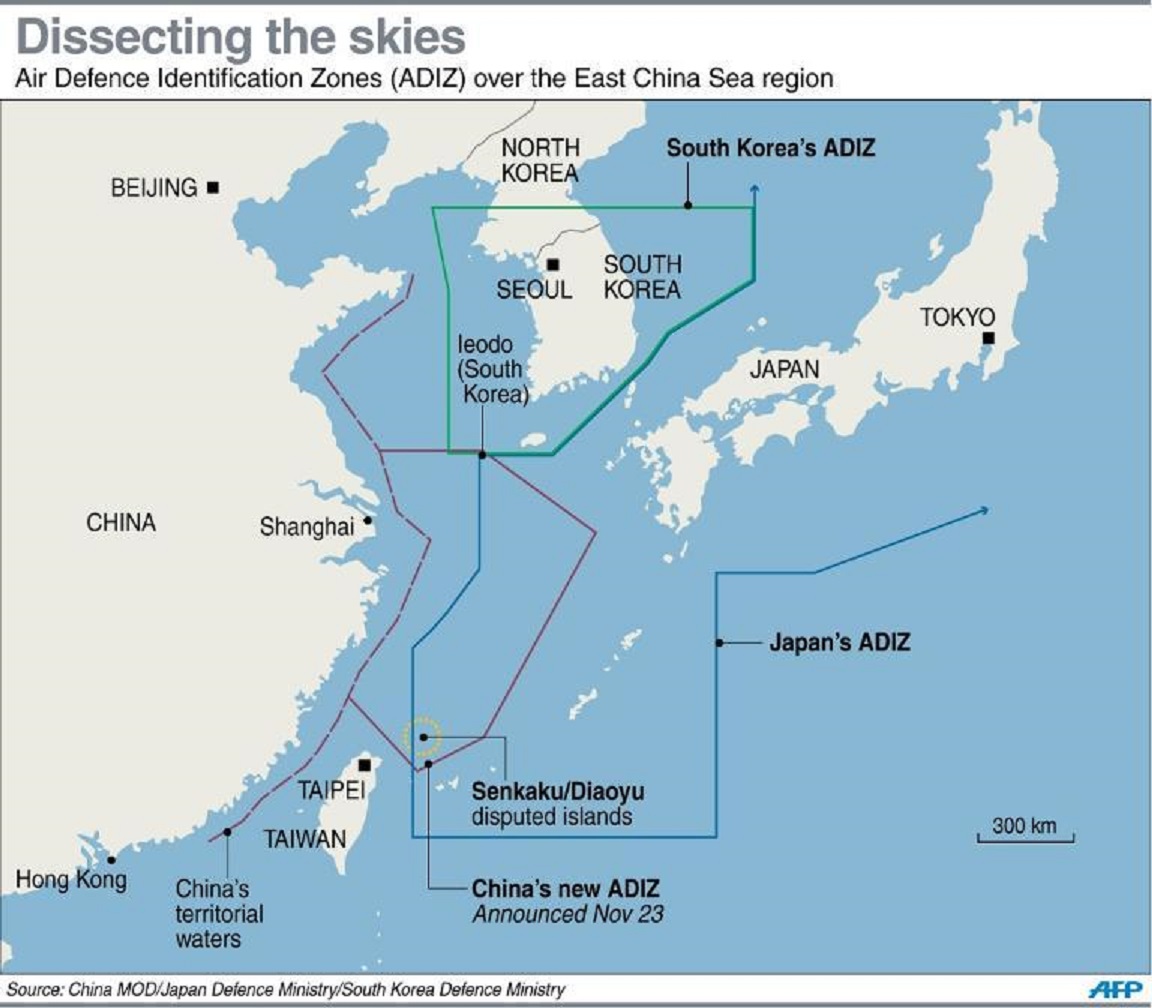
The problem threatening Peace in Asia cannot be resolved by imposing UN sanctions on North Korea. Communist China’s Expansionism in all directions, including Tibet, and South China Sea must be challenged and contained simultaneously. US cannot win this battle without Knowing the Enemy.
Communist Expansionism in Asia – Unfinished Korea-Vietnam War
Rudra Narasimham Rebbapragada
Doom Dooma Doomsayer
Communist Expansionism in Asia – Unfinished Korea-Vietnam War
TO STOP KIM JONG-UN, CHINA NEEDS A BIG PRIZE: THE SOUTH CHINA SEA
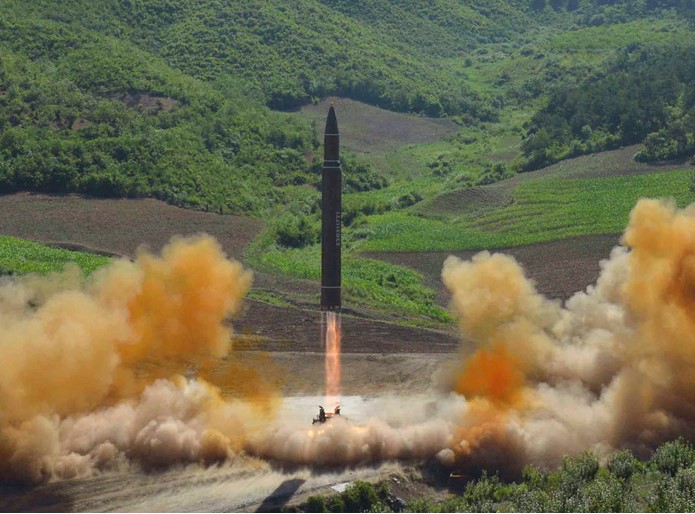
Without any doubt, China can stop Kim Jong-Un’s missile tests. Once and for all, and save a lot of trouble for America and its allies—and for Asian market investors.
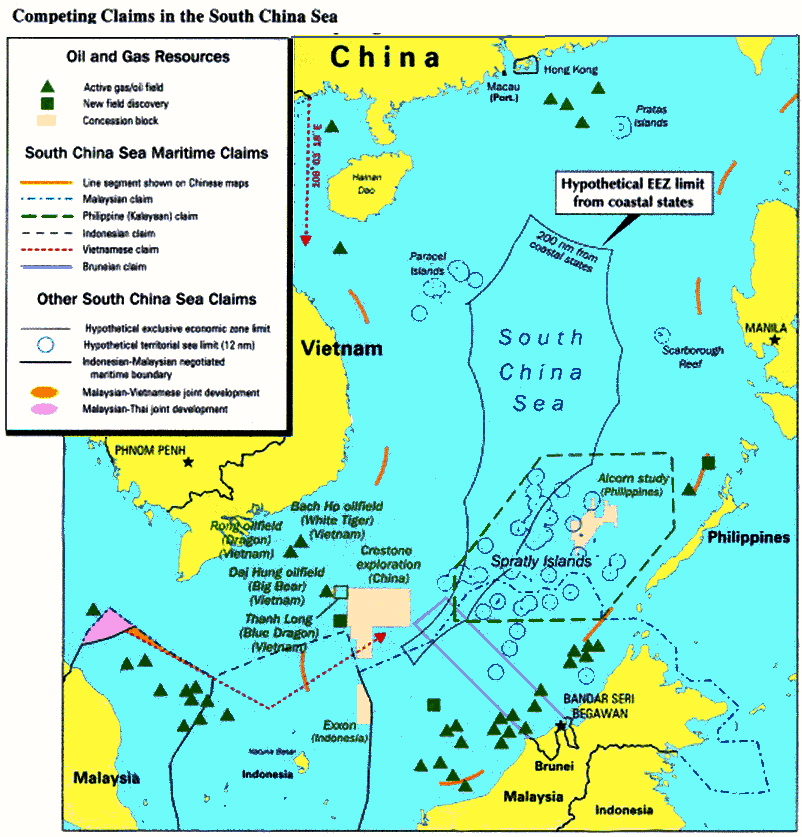
But to do that, China needs a big prize, the South China Sea. All of it, so Beijing can write its own navigation rules, exploit all the riches that are hidden beneath, and satisfy the nationalistic sentiment it has nurtured.
Communist Expansionism in Asia – Unfinished Korea-Vietnam War Communist Expansionism in Asia – Unfinished Korea-Vietnam War
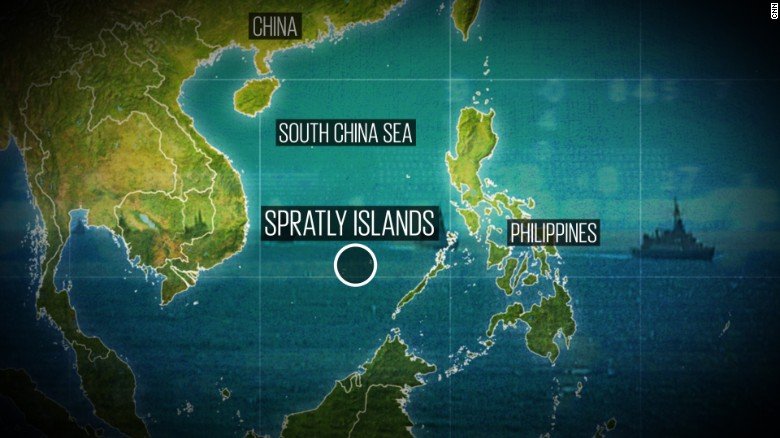
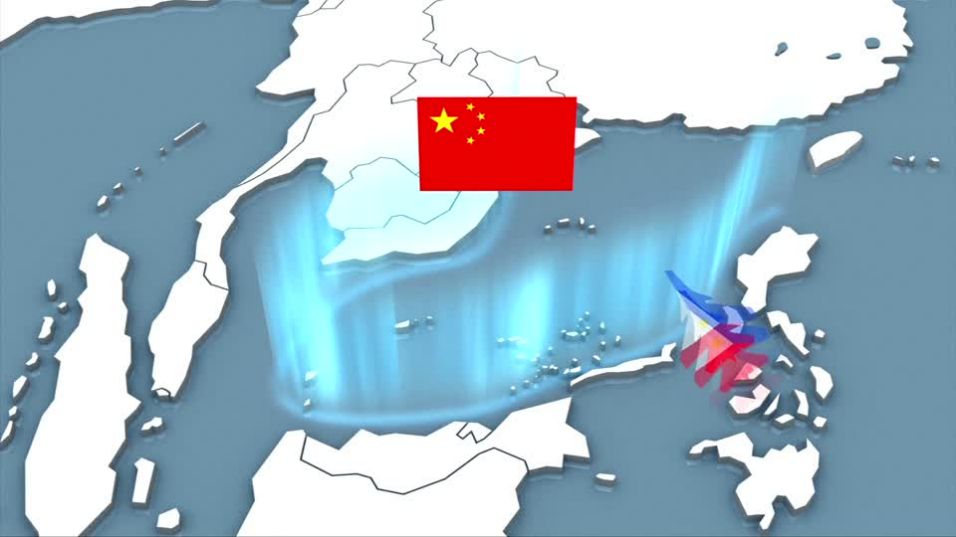
The Korean Peninsula is far away from the South China Sea. But the on-going crisis in the Korean Peninsula isn’t independent from what’s going on in the South China Sea, as there is a key player behind each conflict: China.
In fact, Kim Jong-Un has emerged as China’s decoy in South China Sea disputes. As the world is fixated on Kim’s nuclear tests and missiles launches, China continues the building of artificial islands in the South China Sea, bullying every neighboring country that dares to challenge its ambitions to dominate the vast waterway. Like threatening the Philippines with all-out war should it enforce an international arbitration ruling, which confirmed that China has no historic title over the waters of the South China Sea.
China also told Vietnam and India to stop searching for oil in the region, or else risk an attack on the oil and gas bases. And it has demanded that Indonesia rescind its decision to rename its maritime region in the southwest part of the South China Sea as the “North Natuna Sea,” asserting its own sovereignty in the area.
But it hasn’t stopped there. It further demanded that America’s close Asian ally, Japan, stay away from its “own” South China Sea.
Meanwhile, bilateral trade between China and North Korea has increased by nearly 20% last year, as Apostolos Pittas, adjunct professor of economics at Long Island University Post notes.
So far, Asian markets have been responding more to the Korean Peninsula crisis, losing a couple of percentage points any time Kim fires a missile and less on China’s South China Sea bullying.
That’s why China has no real intention of taming Kim’s ambitions — unless America and its allies are prepared to let Beijing take control over the entire South China Sea, and step up its bullying tactics.
Are they prepared to pay this big a price?
Red China Expansionism South China SeaCommunist Expansionism in Asia – Unfinished Korea-Vietnam War THE EVIL RED EMPIRE – NUCLEAR EXPANSIONISM – NUCLEAR STRATEGY .Communist Expansionism in Asia – Unfinished Korea-Vietnam War Communist Expansionism in Asia – Unfinished Korea-Vietnam War Communist Expansionism in Asia – Unfinished Korea-Vietnam War red china red alert economic espionageCommunist Expansionism in Asia – Unfinished Korea-Vietnam War People’s Republic of China wants to legalize its military occupation of Tibet and other territories taking full advantage of its military and economic strength.
From September 21, 1949 to September 24, 2026, The System of One-Party Governance in Peking remains as a Security Threat
From September 21, 1949 to September 24, 2026, The System of One-Party Governance in Peking remains as a Security Threat
On September 21, 1949 Mao Zedong revealed plan for One-Party Governance of mainland China establishing Single-Party System or Party-State. On September 24, 2026, the Communist Party of China continues to pose threat to Democracy, Freedom, Peace, and Justice in Asia.
On September 21, 1949, Communist Party Chairman Mao Zedong revealed Plan for One-Party Governance of mainland China establishing Single-Party System or Party-State. On September 24, 2026, the Communist Party of China continues to pose threat to Democracy, Peace, and Justice in Asia.
Mao Zedong outlines the New Chinese Government – September 21, 1949
At the opening of the Chinese People’s Political Consultative Conference in Peking, Mao Zedong announces that the new Chinese government will be “under the leadership of the Communist Party of China.”
The September 1949 conference in Peking was both a celebration of the communist victory in the long civil war against Nationalist Chinese forces and the unveiling of the communist regime that would henceforth rule over China. Mao and his communist supporters had been fighting against what they claimed was a corrupt and decadent Nationalist government in China since the 1920s. Despite massive U.S. support for the Nationalist regime, Mao’s forces were victorious in 1949 and drove the Nationalist government onto the island of Taiwan. In September, with cannons firing salutes and ceremonial flags waving, Mao announced the victory of communism in China and vowed to establish the constitutional and governmental framework to protect the “people’s revolution.”
In outlining the various committees and agencies to be established under the new regime, Mao announced that “Our state system of the People’s Democratic Dictatorship is a powerful weapon for safeguarding the fruits of victory of the people’s revolution and for opposing plots of foreign and domestic enemies to stage a comeback. We must firmly grasp this weapon.” He denounced those who opposed the communist government as “imperialistic and domestic reactionaries.” In the future, China would seek the friendship of “the Soviet Union and the new democratic countries.” Mao also claimed that communism would help end reputation as a lesser-developed country. “The era in which the Chinese were regarded as uncivilized is now over. We will emerge in the world as a highly civilized nation.” On October 1, 1949, the People’s Republic of China was formally announced, with Mao Zedong as its leader. He would remain in charge of the nation until his death in 1976.
On September 21, 1949, Communist Party Chairman Mao Zedong revealed Plan for One-Party Governance of mainland China establishing Single-Party System or Party-State. On September 24, 2026, the Communist Party of China continues to pose threat to Democracy, Peace, and Justice in Asia.On September 21, 1949, Communist Party Chairman Mao Zedong revealed Plan for One-Party Governance of mainland China establishing Single-Party System or Party-State. On September 24, 2026, the Communist Party of China continues to pose threat to Democracy, Peace, and Justice in Asia.On September 21, 1949, Communist Party Chairman Mao Zedong revealed Plan for One-Party Governance of mainland China establishing Single-Party System or Party-State. On September 24, 2026, the Communist Party of China continues to pose threat to Democracy, Peace, and Justice in Asia.
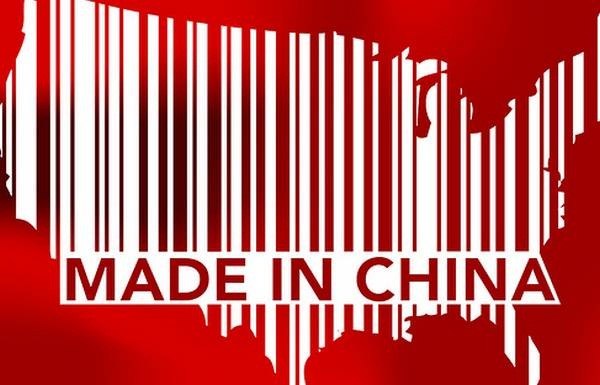
America’s China Fantasy from its very beginning in 1971-72 is destined to fail. Doomed American Fantasy – Read The Writing On The Made in China Label – Wake Up Call For America.
I was serving in Doom Dooma, Tinsukia District, Assam, India and a witness to the foreign policy initiative of the US President Richard M. Nixon in 1971-72 with which the Americans began to chase the illusion called ‘China Fantasy’. The American plan is doomed from its very inception for it involved the backstabbing of Tibet and overlooking the evil actions of the Communist regime in China.
Doomed Gun of Doom Dooma: China Fantasy Doomed on February 21, 1972 with 37th US President Richard M Nixon’s Visit to Peking.America’s China Fantasy from its very beginning in 1971-72 is destined to fail.
China is our greatest foreign policy issue. But neither Trump nor Biden have it right.
Xi Jinping’s China is fundamentally different from the past. Neither Donald Trump’s nor Joe Biden’s approach fully responds to that new reality.
Robert Robb, Arizona Republic
The most important foreign policy issue for the next American president will undoubtedly be relations with China. Unfortunately, neither Donald Trump nor Joe Biden have an approach grounded in reality, with a clear-eyed view of our national interests.
Ever since economic reforms were launched by Deng Xiaoping in the late 1980s, the bipartisan consensus was that the best approach to China was engagement. As China grew more prosperous and less insulated, the thinking went, economic liberalization could lead to political liberalization as well. Or, at a minimum, China could be a non-threatening participant in the world’s economy and affairs.
This was not as naive an expectation, or at least hope, as sometimes depicted today. There were examples of countries with authoritarian systems of state capitalism evolving into democracies with true market economies. South Korea is the most obvious example.
Indeed, a “peaceful rise” of China was one of Deng’s objectives. And that was the approach taken by his successors until current China strongman Xi Jinping.
Trump is using Biden’s support for China joining the World Trade Organization in 2001 against him. But, at the time, that was a prudent move and consistent with American interests as they were then perceived.
Xi’s China is different now
All this changed with Xi, who has jettisoned much of Deng’s approach to China’s development.
Deng believed in communal and rotating leadership. Xi has had himself appointed authoritarian-in-chief for life.
Xi is remaking China to return the Communist Party as the central focus of all life in the country. The government is to serve the party. And private businesses are to serve the government.
Markets are still used to allocate resources more efficiently than heavy-handed central planning. But there are no such things as truly private businesses in Xi’s China. Their ultimate purpose is to serve the interests of the party.
A “peaceful rise” has been abandoned. The purpose of trade is no longer principally to improve living standards. It is to increase the reach and leverage of the government and party. Militarily and diplomatically, China is seeking to dominate its region and intimidate other countries in the Asia-Pacific.
With Xi’s China, the expectations or hopes that underlay the engagement approach are a lost cause. External engagement isn’t going to change Xi’s China. Only domestic political upheaval that rejects Xi Thought will do that. And that doesn’t appear to be on the horizon.
The US should do 2 things differently
The reality of Xi’s China warrants an abandonment of the engagement approach. There should be two strategic objectives to a new approach to China.
►First, insulate the American economy from China to the maximum extent possible. Among foreign policy boffins, this is referred to as “decoupling.”
►Second, increase the military and diplomatic capacity of China’s neighbors, so every regional conflict involving China doesn’t automatically become a conflict with the United States. Our current role as the de facto security guarantor in the region isn’t in our best interests.
What Trump gets wrong on tariffs
Tariffs are one tool that could be used in decoupling. Trump has famously declared himself to be Tariff Man. And his administration currently has tariffs in place on roughly $370 billion worth of Chinese goods.
But decoupling isn’t the true strategic objective of Trump and his tariffs. Trump believes that the score between countries is kept by the balance of trade. The purpose of Trump’s tariffs is to serve as leverage to get China to purchase more American goods. Indeed, he reduced some tariffs and pulled the plug on others in exchange for a Chinese promise to do exactly that.
Biden gets engagement wrong
In an essay for Foreign Affairs magazine, Biden makes clear that he still believes in the engagement approach.
The principal problem with Trump’s approach, according to Biden, is that it is unilateral. Biden promises to create a coalition with allies to pressure China to change troublesome behavior in trade. But to continue cooperation with China on things where, as Biden puts it, “our interests converge.” He specifically mentions climate change, nonproliferation and global health security.
There is no such get-tough-on-China coalition to be had. There’s some spine in China’s neighbors. But none in the European Union, whose trade leverage would be necessary to get China’s full attention.
Trump’s instinct is to reduce the exposure of the U.S. to regional conflicts elsewhere. But he has no strategic vision about getting from here to there.
In his essay, Biden doubles down on the commitment to be the region’s security guarantor, a role whose risks vastly exceed the benefits to the United States.
Trump’s erraticism or Biden’s return to unproductive engagement. Sadly, that’s the choice.
Robert Robb is an editorial columnist for The Arizona Republic and azcentral.com, where this column originally appeared. Follow him on Twitter: @RJRobb
America’s China Fantasy from its very beginning in 1971-72 is destined to fail.Doomed Gun of Doom Dooma: China Fantasy Doomed on February 21, 1972 with 37th US President Richard M Nixon’s Visit to Peking.