Whole Future – The Problem of finding Peace, Harmony and Tranquility in Occupied Tibet

The Future of Tibet – Can Red China Save herself from the consequences of Evil plans?

The Future of Tibet – Can Red China Save herself from the consequences of Evil plans?

Doom Dooma Doomsayer understands the problems faced by Tibetans; the Great Trouble in Tibet following Tibet’s military conquest. I am not a monk, a priest, or a member of clergy. I am not a prophet. However, my rational analysis of events leads me to announce Beijing’s Doom. Without recourse to any kind of human intervention, Red China faces Eviction From Occupied Tibet.

Rudra Narasimham Rebbapragada
Ann Arbor, Michigan, U.S.A. 48104 – 4162.
Doom Dooma Doomsayer

The Future of Tibet – Can Red China Save herself from the consequences of Evil plans?

TIBET – THE PLATEAU, UNPACIFIED

Tibetans’ culture is changing, by their own will as well as by force

Sep 17th 2016 | YUSHU

Doom Dooma Doomsayer understands the problems faced by Tibetans; the Great Trouble in Tibet following Tibet’s military conquest. I am not a monk, a priest, or a member of clergy. I am not a prophet. However, my rational analysis of events leads me to announce Beijing’s Doom. Without recourse to any kind of human intervention, Red China faces Eviction From Occupied Tibet.

An elderly woman with long, grey plaits, wearing a traditional Tibetan apron of wool in colorful stripes, has spent her day weaving thread outside her home near the southern end of Qinghai Lake, high on the Tibetan plateau. She is among hundreds of thousands of Tibetan nomads who have been forced by the government in recent years to settle in newly built villages. She now lives in one of them with her extended family and two goats. Every few months one of her sons, a red-robed monk, visits from his monastery, a place so cut off from the world that he has never heard of Donald Trump. Her grandson, a 23-year-old with slick hair and a turquoise rain jacket, is more clued in. He is training to be a motorcycle mechanic in a nearby town. Theirs is a disorienting world of social transformation, sometimes resented, sometimes welcome.

Chinese and foreigners alike have long been fascinated by Tibet, romanticizing its impoverished vastness as a haven of spirituality and tranquility. Its brand of Buddhism is alluring to many Chinese—even, it is rumored, to Peng Liyuan, the wife of China’s president, Xi Jinping. Many Tibetans, however, see their world differently. It has been shattered by China’s campaign to crush separatism and eradicate support for the Dalai Lama, their spiritual leader who fled to India after an uprising in 1959. The economic transformation of the rest of China and its cities’ brash modernity are seductive, but frustratingly elusive.

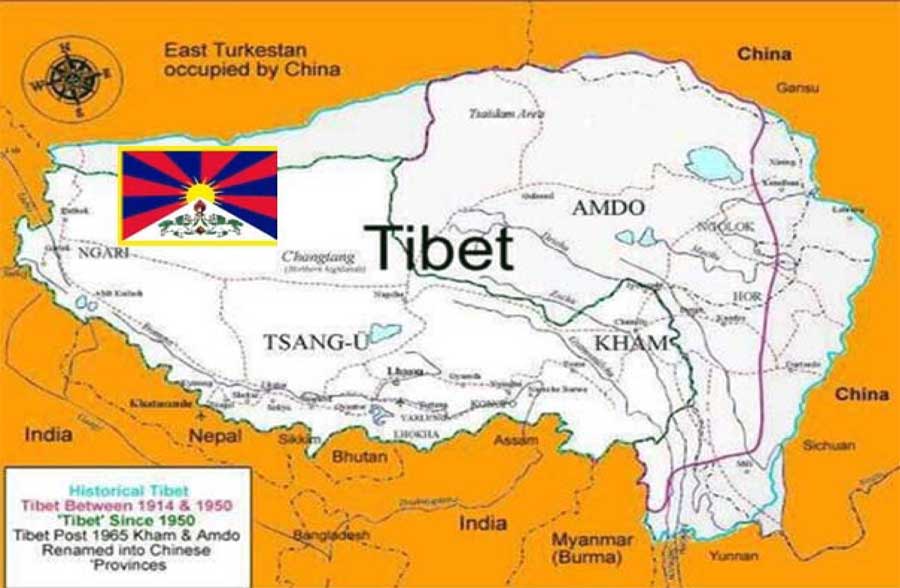
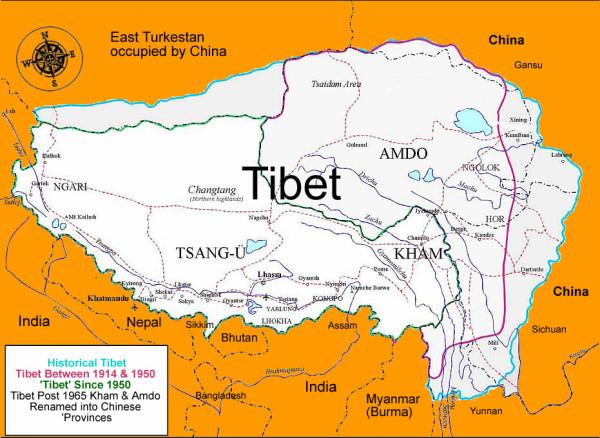
The story of political repression in Tibet is a familiar one. The Dalai Lama accuses China’s government of “cultural genocide”, a fear echoed by a tour guide in Qinghai, one of five provinces across which most of the country’s 6m Tibetans are scattered (the others are Gansu, Sichuan, Yunnan and the Tibet Autonomous Region, or TAR—see map). “We know what happened to the Jews,” he says. “We are fighting for our existence.” Less commonly told is the despair felt by many young Tibetans who feel shut out of China’s boom. They are victims of Tibet’s remote and forbidding topography as well as of racial prejudice and the party’s anti-separatist zeal. They often cannot migrate to coastal factories, and few factories will come to them. Even fluent Mandarin speakers rarely find jobs outside their region.

Doom Dooma Doomsayer understands the problems faced by Tibetans; the Great Trouble in Tibet following Tibet’s military conquest. I am not a monk, a priest, or a member of clergy. I am not a prophet. However, my rational analysis of events leads me to announce Beijing’s Doom. Without recourse to any kind of human intervention, Red China faces Eviction From Occupied Tibet.

Yet Tibetans are not cut off from the rapidly evolving culture of the rest of China, where more than 90% of the population is ethnic Han. Mayong Gasong Qiuding, a 26-year-old hotel worker in Yushu in southern Qinghai, listens to Mandarin, Tibetan and Western pop music in tandem. He can rattle off official slogans but can recite only short Tibetan prayers. His greatest wish, he says, is to go to the Maldives to see the sea. Tibetan women in Qinghai use skin-whitening products, following a widespread fashion among their Han counterparts; a teenager roller-skates anticlockwise around a Buddhist stupa, ignoring a cultural taboo. Young nomads frustrate their elders by forsaking locally-made black, yak-hair tents for cheaper, lighter canvas ones produced in far-off factories.

Han migration, encouraged by a splurge of spending on infrastructure, is hastening such change. Although Tibetans still make up 90% of the permanent population of the TAR, its capital Lhasa is now 22% Han, compared with 17% in 2000. Many Tibetans resent the influx. Yet they are far more likely to marry Han Chinese than are members of some of China’s other ethnic groups. Around 10% of Tibetan households have at least one member who is non-Tibetan, according to a census in 2010. That compares with 1% of households among Uighurs, another ethnic minority whose members often chafe at rule by a Han-dominated government.

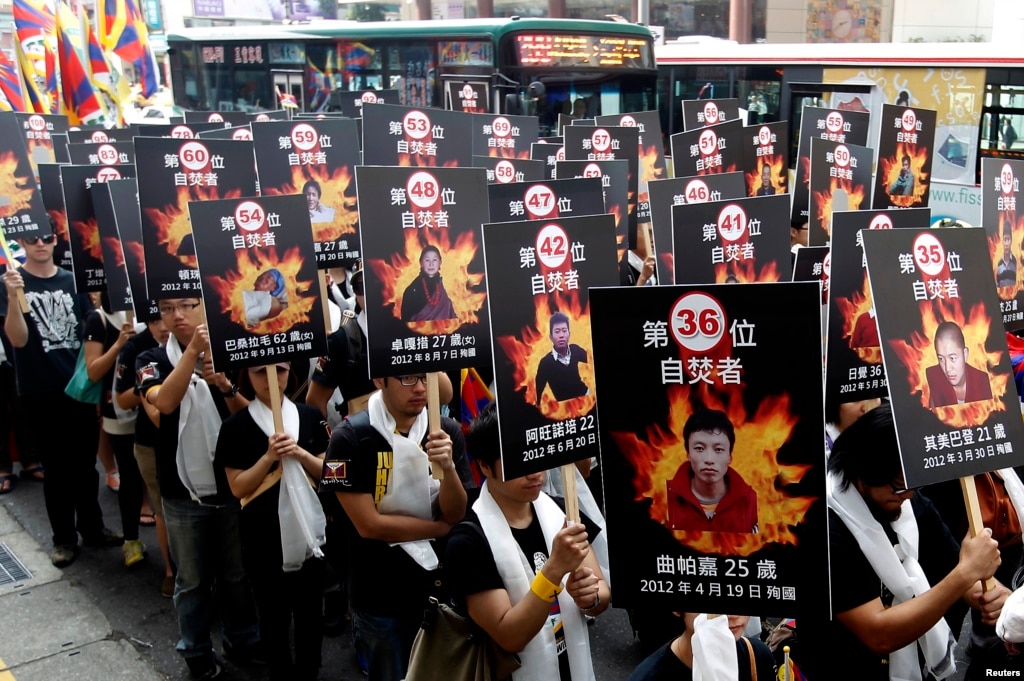
Core features of Tibetan culture are in flux. Monasteries, which long ago played a central role in Tibetan society, are losing whatever influence China has allowed them to retain. In recent years, some have been shut or ordered to reduce their populations (monks and nuns have often been at the forefront of separatist unrest). In July buildings at Larung Gar in Sichuan, a sprawling center of Tibetan Buddhist learning, were destroyed and thousands of monks and nuns evicted. Three nuns have reportedly committed suicide since. Of the more than 140 Tibetans who have set fire to themselves since 2011 in protest against Chinese rule, many were spurred to do so by repressive measures at their own monastery or nunnery.

Cloistered life is threatened by social change, too. Families often used to send their second son to a monastery, a good source of schooling. Now all children receive nine years of free education. “The young think there are better things to do,” says a monk at Rongwo monastery in Tongren, a town in Qinghai, who spends his days “praying, teaching [and] cleaning”. New recruits often come from poorly educated rural families.

Mind your language

In the TAR (which is closed to foreign journalists most of the time), the Tibetan language is under particular threat. Even nursery schools often teach entirely in Mandarin. A generation is now graduating from universities there who barely speak Tibetan. Some people have been arrested for continuing to teach in the language. In April last year Gonpo Tenzin, a singer, was sentenced to three-and-a-half years in prison for his album, “No New Year for Tibet”, encouraging Tibetans to preserve their language and culture.

In some areas outside the TAR, however, the government is less hostile to Tibetan. Since the early 2000s, in much of Qinghai, the number of secondary schools that teach in Tibetan has risen, according to research there by Adrian Zenz of the European School of Culture and Theology at Korntal, Germany. The range of degrees taught in Tibetan has expanded too. Unlike elsewhere, someone who has studied mainly in Tibetan can still get a good job in Qinghai. A third of all government roles advertised there between 2011 and 2015 required the language. Despite this, many parents and students chose to be taught in Mandarin anyway, Mr. Zenz found. They thought it would improve job prospects.

Doom Dooma Doomsayer understands the problems faced by Tibetans; the Great Trouble in Tibet following Tibet’s military conquest. I am not a monk, a priest, or a member of clergy. I am not a prophet. However, my rational analysis of events leads me to announce Beijing’s Doom. Without recourse to any kind of human intervention, Red China faces Eviction From Occupied Tibet.

But work can be difficult to get, despite years of huge government aid that has helped to boost growth. Government subsidies for the TAR amounted to 111% of GDP in 2014 (see chart), according to Andrew Fischer of Erasmus University Rotterdam. Eleven airports serve Qinghai and the TAR—they will have three more by 2020. A 156-mile train line from Lhasa (population 560,000) to Shigatse (population 120,000), which was completed in 2014, cost 13.3 billion yuan ($2.16 billion). A second track to Lhasa is being laid from Sichuan, priced at 105 billion yuan.

Better infrastructure has fueled a tourism boom—domestic visitors to the TAR increased fivefold between 2007 and 2015—but most income flows to travel agents elsewhere. Tourists stay in Han-run hotels and largely eat in non-Tibetan restaurants (KFC opened its first Lhasa branch in March). Tibetan resentment at exclusion from tourism- and construction-related jobs was a big cause of rioting in Lhasa in 2008 that sparked plateau-wide protests. Other big money-spinners—hydropower and the extraction of minerals and timber—are controlled by state-owned firms that employ relatively few Tibetans. The Chinese name for Tibet, Xizang, means “western treasure house”. But Tibetans have little share in its spoils. The rehousing of nomads has helped provide some with building jobs, but has also brought suffering: those relocated sometimes find it harder to make a living from herding.

In most other parts of China, villages have been rapidly emptying as people flock to work in cities. In the country as a whole, the agricultural population dropped from 65% to 48% as a share of the total between 2000 and 2010. On the plateau it fell only slightly, from 87% to 83%. It is hard for Tibetans to migrate to places where there are more opportunities. Police and employers treat them as potential troublemakers. In 2010 only about 1% of Tibetans had settled outside the plateau, says Ma Rong of Peking University. They cannot move abroad either. In 2012 Tibetans in the TAR had to surrender their passports (to prevent them joining the Dalai Lama); in parts of Qinghai officials went house-to-house confiscating them.

Doom Dooma Doomsayer understands the problems faced by Tibetans; the Great Trouble in Tibet following Tibet’s military conquest. I am not a monk, a priest, or a member of clergy. I am not a prophet. However, my rational analysis of events leads me to announce Beijing’s Doom. Without recourse to any kind of human intervention, Red China faces Eviction From Occupied Tibet.

For university graduates, the prospects are somewhat better. There are few prospects for secure work in private firms on the plateau. But to help them, the government has been on a hiring spree since 2011. Almost all educated Tibetans now work for the state. A government job is a pretty good one: salaries have been rising fast. Few Tibetans see such work as traitorous to their cause or culture. But the government may not be able to keep providing enough jobs for graduates, especially if a slowdown in China’s economy, which is crimping demand for commodities, has a knock-on effect on the plateau.

Many of the problems faced by Tibetans are common in traditional pastoral cultures as they modernize. But those of Tibetans are compounded by repression. They are only likely to increase when the Dalai Lama, now 81, dies. The central government will try to rig the selection of his successor, and no doubt persecute Tibetans who publicly object.

In private, officials say they are playing a waiting game: they expect the “Tibetan problem” to be more easily solved when he is gone. They are deluding themselves. They ignore his impact as a voice of moderation: he does not demand outright independence and he condemns violence. Tibetan culture may be under duress, but adoration of the Dalai Lama shows no sign of diminishing. Poverty, alienation and the loss of a beloved figurehead may prove an incendiary cocktail.

Inserted from <http://www.economist.com/news/china/21707220-tibetans-culture-changing-their-own-will-well-force-plateau-unpacified>

Doom Dooma Doomsayer understands the problems faced by Tibetans; the Great Trouble in Tibet following Tibet’s military conquest. I am not a monk, a priest, or a member of clergy. I am not a prophet. However, my rational analysis of events leads me to announce Beijing’s Doom. Without recourse to any kind of human intervention, Red China faces Eviction From Occupied Tibet.

Whole Misery – Death and Misery in Occupied Tibet

Death and Misery in Occupied Tibet

DEATH AND MISERY IN OCCUPIED TIBET. EXTRAJUDICIAL KILLING OF TIBETAN WOMAN NEAR CHALONG TOWNSHIP.
DEATH AND MISERY IN OCCUPIED TIBET. EXTRAJUDICIAL KILLING OF TIBETAN WOMAN NEAR CHALONG TOWNSHIP. What happened on the grasslands near Chalong in Garze prefecture fits a disturbing pattern. More than six decades after Chinese troops first moved into Tibet, dissent continues to roil the plateau and, if anything, is being suppressed ever more savagely.
DEATH AND MISERY IN OCCUPIED TIBET.
Death and Misery in Occupied Tibet: Tsering Tso’s grandmother, Lhadhey, 83, and mother Adhey, 49, pose for a photograph in Jiqie No. 2 Village on the grasslands outside Chalong township in China’s western Sichuan province. (Xu Yangjingjing/The Washington Post)

A woman’s gruesome death by hanging portrays the reality of Death and Misery in Occupied Tibet. What happened on the grasslands near Chalong in Garze prefecture fits a disturbing pattern. More than six decades after Chinese troops first moved into Tibet, dissent continues to roil the plateau and, if anything, is being suppressed ever more savagely.

Rudra Narasimham Rebbapragada
Ann Arbor, MI 48104-4162 USA
Special Frontier Force-Establishment 22-Vikas Regiment

Tibet Awareness – History of Tibet’s Unrest. Map of Peaceful Protests 2008. Most of the self-immolations and the worst cases of historical repression are in the same spots in the Tibetan provinces near China.
The Washington Post

A woman’s gruesome hanging shocked Tibet — but police have silenced all questions

By SIMON DENYER August 26, 2016

Death and Misery in Occupied Tibet: Tsering Tso’s grandmother, Lhadhey, 83, and mother Adhey, 49, pose for a photograph in Jiqie No. 2 Village on the grasslands outside Chalong township in China’s western Sichuan province. (Xu Yangjingjing/The Washington Post)

JIQIE NO. 2 VILLAGE, Raghya, Tibet — She was 27, a kind, hard-working woman who supported her family by herding yaks and harvesting caterpillar fungus, a prized health cure, on the high grasslands of Tibet. Last October, Tsering Tso was found hanged from a bridge in a small town near her home.

Her family and local villagers gathered outside the police station in Chalong township to demand answers: She had last been seen in the company of a local Buddhist priest and two policemen.

The authorities insisted it was suicide. Family and friends suspected foul play and demanded an investigation. That night and the following morning, an angry crowd stormed the gates of the police station, smashing windows, according to local police.

The authorities’ response was brutal, revealing much about the crackdown taking place in Tibetan parts of China and showing how unrest and unhappiness is increasingly viewed as dangerously subversive.

On Oct. 10, five days after Tsering Tso’s body was found, hundreds of armed soldiers arrived in the town and descended on her funeral ceremony in the remote hamlet known as Jiqie No. 2 Village in Chinese and Raghya in Tibetan, in China’s western Sichuan province.

Witnesses said that more than 40 people were tied up, beaten with metal clubs, piled into a truck “like corpses” and placed in detention.

So much blood was shed that “stray dogs could not finish lapping it up,” according to a remarkable and rare open letter sent by the community to President Xi Jinping asking for justice.
Most of those detained were gradually released in the weeks and months that followed, and although no one died, many went straight to the hospital.

But on May 20, five relatives and family friends were sentenced to 2  1/2 years in prison. Acquaintances say they were jailed for refusing to sign a statement absolving the police of blame for Tsering Tso’s death.

In a statement issued on its social-media account, the Garze county Public Security Bureau contested that version of events. It said some of the protesters had carried knives, iron pipes or stones and had caused nearly $10,000 worth of damage. The bureau ran photographs of several men climbing over a gate, but only two broken windows were shown. The jailed men, the statement said, had either carried weapons or organized the protest and had been found guilty of “assembling a crowd to attack state organs.”

But relatives who spoke to The Washington Post outside the family’s tent on the remote grasslands said they were not convinced that any investigation had been carried out.

No one denied that a few stones had been thrown during the protest, hitting a police car and office building. But they said that as a result, their entire community had been accused of “splittism” — a serious crime implying support for the Dalai Lama, the exiled religious leader, or for Tibet’s independence from China.

Internet connections have been cut off in Chalong township since the incident, and relatives of Tsering Tso have been threatened with further punishment if they talk to outsiders. The village — a scattering of tents and yaks in a scenic, sweeping grassland valley — has been told it will not get government subsidies for roads or houses for three years because of its “bad character.”

The family insisted that its demands were not political or ethnic in nature: The priest and policemen last seen with Tsering Tso were local Tibetans, and the family said it had no beef with the central government.

All the family wants, it said, is a proper investigation, justice for Tsering Tso and freedom for the five men in jail.

“My daughter was healthy and happy. She wouldn’t commit suicide,” her 49-year-old mother Adhey said, fighting back tears as she sat on the grass with her 83-year-old mother and two young sons.
“My beloved daughter was murdered without any justice being given by the government. Instead, they simply arrested more innocent people and sent them to jail.”

What happened on the grasslands near Chalong in Garze prefecture fits a disturbing pattern. More than six decades after Chinese troops first moved into Tibet, dissent continues to roil the plateau and, if anything, is being suppressed ever more savagely.

Control and surveillance have been dramatically tightened since riots and demonstrations broke out in Tibet in 2008, and then expanded further under Xi, with tens of thousands of party cadres sent to monitor villages and monasteries, according to a January report by the International Campaign for Tibet.

In a May report, Human Rights Watch catalogued nearly 500 arrests across Tibetan parts of China between 2013 and 2015. It concluded that dissent had spread from urban to rural areas. Whereas the vast majority of arrests in the 1980s and 1990s had been of monks and nuns, most of those detained more recently were ordinary people.

Many “had merely exercised their rights to expression and assembly without advocating separatism” — criticizing local officials, for example, or opposing a mining development, the report said.

Yet even relatively mild protests about poor governance are increasingly seen through a political lens and labeled as “criminal acts,” rights groups say. Punishment can be severe.
The incident in Chalong “reflects the unrest and instability in Tibetan society,” said Golog Jigme, a filmmaker and former political prisoner who now lives in exile in Switzerland. “It’s not outsiders or the Dalai Lama stirring things up, it’s social issues.”

On the evening of Oct. 4, 2015, Tsering Tso had received a phone call from her boyfriend, a lama at the Gertse Dralak monastery in Chalong. He said he was ill and wanted to see her.
Her father gave her a lift, only to find the lama drinking with two policemen. He left her there. The following morning, Tsering Tso’s body was found hanging from a small bridge in the town.
Although police say an autopsy listed the cause of death as suicide, residents are deeply skeptical. Some reported seeing bruises on her body and said that a doctor’s report had noted a wound on her head as well as a broken neck. They also said her clothes looked as though they had been put on after her death. The lama, who had a reputation as a womanizer, has since disappeared.

In its statement, the Public Security Bureau said the two policemen were on duty at the time of her death and could not have been involved. But villagers insist that the two men were seen drinking with the lama that night and suspect a coverup. Instead of investigating, they say, the police just called in the army.

As they rounded up suspects, security forces raided and ransacked relatives’ homes, “smashing everything and stabbing knives into sacks of rice and butter,” one relative said. “We’ve only seen that kind of brutality before in TV dramas about Japanese invaders.”

The raiders confiscated photos of Tsering Tso — even checking mobile phones. A family member showed scars on his head from a beating that he said left his body drenched in blood. Released weeks later, he was warned by officials not to talk to anyone, but he refuses to be silenced.

He said another relative walks with a limp after being beaten on his legs; a third, a Buddhist monk, was beaten so badly on the head that he bled from one ear and today cannot walk at all. Family members who work for the government lost their jobs.

The police statement merely said that 44 people had been subpoenaed.

Many Tibetans are too scared to speak out publicly against injustice, but the communities around Chalong appear to have gathered to write a remarkable open letter about the incident. The letter, first obtained by Golog Jigme, claims to have been written in the name of 700 residents across 13 communities in the area.

“These days the Chinese Communists are claiming and announcing how they are building a perfect Tibet and how free and happy Tibetans are in China, but now we have no option but to show the world an actual example of the real suffering endured by the people of the three regions of Tibet under Chinese oppression,” the letter begins.

Local officials, the letter continued, had “conspired to use force to bully the common people,” ending with an appeal to President Xi to “investigate and rectify.”

The International Campaign for Tibet said the incident reveals the extent of the impunity of officials and police in Tibet, and the fact that it took so long to reach the outside world shows how tightly information flows are restricted. The organization Free Tibet said it “clearly exemplifies not just the brutality of life under the Chinese occupation but also how arbitrary and illogical it can be.”

Xu Yangjingjing contributed to this report.

simon-denyer-e1402066299474.jpg&w=180&h=180

Simon Denyer is The Post’s bureau chief in China. He served previously as bureau chief in India and as a Reuters bureau chief in Washington, India and Pakistan.

© 1996-2016 The Washington Post

Whole Unrest – The History of Trouble in Tibet

Tibet Awareness – The History of Tibet’s Unrest

TIBET AWARENESS – THE HISTORY OF UNREST IN TIBET. Most of the self-immolations and the worst cases of historical repression are in the same spots in the Tibetan provinces near China.

From 1947, both Tibet and India anticipated Trouble in Tibet while the Communists came into Power in mainland China forcing Chiang Kai-shek’s Nationalists to retreat to Formosa or Taiwan. During 1945 to 1949, Tibet was unwilling to fully embrace the offer of the US Friendship hoping Red China will respect Tibet’s Policy of Isolationism or Neutralism. Trouble in Tibet speaks of the lack of Intelligence capabilities; Tibet’s Trouble describes Tibet’s Intelligence failure; Tibet failed to know the Enemy’s Mind and it was a total Intelligence Disaster. For Tibet failed to provide the necessary Intelligence, the response of India and the United States was inadequate from the beginning of Tibet’s Trouble.

Rudra Narasimham Rebbapragada
Ann Arbor, MI 48104-4162 USA
Special Frontier Force-Establishment 22-Vikas Regiment

The beginning of the Cold War in Asia in 1949 with the Communist takeover of mainland China.

THE NEW YORK TIMES

A WRITER’S QUEST TO UNEARTH THE ROOTS OF TIBET’S UNREST

SINOSPHERE

By LUO SILING AUG. 14, 2016

Tibet Awareness – The History of Tibet’s Unrest

On March 10, 1959, several thousand Tibetans, fearing that the Chinese might abduct the Dalai Lama, gathered at the Norbulingka summer palace to protect the Tibetan spiritual leader. Credit The Office of Tibet, Washington, D.C.

Generations of Chinese have been taught that the Tibetan people are grateful to China for having liberated them from feudalism and serfdom, and yet Tibetan protests, including self-immolations, continue to erupt against Chinese rule. In ‘TIBET IN AGONY: LHASA 1959’,to be published in October by Harvard University Press, the Chinese-born writer Jianglin Li explores the roots of Tibetan unrest in China’s occupation of Tibet in the 1950s, culminating in March 1959 with the Peoples Liberation Army’s shelling of Lhasa and the Dalai Lama’s flight to India. In an interview, she shared her findings.

You’ve drawn parallels between the killings in Lhasa in 1959 and the 1989 military crackdown on pro-democracy protests in Beijing.

China was better able to cover up its actions in Lhasa in 1959, before the advent of instantaneous global media coverage, but the two have much in common. In both, the Chinese Communists used military might to crush popular uprisings, and both involved egregious massacres of civilians. But for Tibetans, what sets the Lhasa massacre apart is their bitter sense of China as a foreign occupying power. The Tibetans were subjugated by force, and they are still protesting today.

What happened in 1959?

The crisis began on the morning of March 10, when thousands of Tibetans rallied around the Dalai Lama’s Norbulingka palace to prevent him from leaving. He had accepted an invitation to a theatrical performance at the People’s Liberation Army headquarters, but rumors that the Chinese were planning to abduct him set off general panic. Even after he canceled his excursion to mollify the demonstrators, they refused to leave and insisted on staying to guard his palace. The demonstrations included a strong outcry against Chinese rule, and China promptly labeled them an armed insurrection, warranting military action. About a week after the turmoil began, the Dalai Lama secretly escaped, and on March 20, Chinese troops began a concerted assault on Lhasa. After taking over the city in a matter of days, inflicting heavy casualties and damaging heritage sites, they moved quickly to consolidate control over all Tibet.

Why did the Dalai Lama flee to India?

Mainly he hoped to prevent a massacre. He thought the crowds around his palace would disperse once he left, robbing the Chinese of a pretext to attack. In fact, not even his departure could have prevented the blood bath that ensued, because Mao Zedong had already mobilized his troops for a final showdown in Tibet.


Jianglin Li Credit Ding Yifu

When the Dalai Lama left, he didn’t plan to go as far as India. He hoped to return to Lhasa after negotiating peace with the Chinese from the safety of the Tibetan hinterlands. But once he heard about the destruction in Lhasa several days into his journey he realized that plan was no longer feasible.

Why were the Tibetans afraid the Chinese would abduct the Dalai Lama?

For Tibetans, he is a sacred being, to be protected at all costs. He had traveled to Beijing to meet Mao in 1954 without setting off mass protests. By 1959, however, tensions had risen, and Tibetans had reason to fear the Chinese theater invitation might be a trap.

The trouble actually started in the Tibetan regions of nearby Chinese provinces Yunnan, Sichuan, Qinghai and Gansu, home to about 60 percent of the Tibetan population. When the Chinese Communists forced collectivization on these Tibetan nomads and farmers in the latter half of the 1950s, the results were catastrophic. Riots and rebellions spread like wildfire. The Communists responded with military force, and there were terrible massacres. Refugees streamed into Tibet, bringing their horror stories into Lhasa.

Some of the most frightening reports had to do with the disappearances of Tibetan leaders in Sichuan and Qinghai. It was party policy to try to pre-empt Tibetan rebellion by luring prominent Tibetans from their communities with invitations to banquets, shows or study classes from which many never returned. People in Lhasa thought the Dalai Lama could be next.

You’ve documented the massacres of Tibetans in the Chinese provinces in the late 1950s.

In 2012, I drove across Qinghai to a remote place an elderly Tibetan refugee in India had told me about: a ravine where a flood one year brought down a torrent of skeletons, clogging the Yellow River. From his description, I identified the location as Drongthil Gully, in the mountains of Tsolho Tibetan Autonomous Prefecture. I had read in Chinese sources about major campaigns against Tibetans in that area in 1958 and 1959. About 10,000 Tibetans, entire families with their livestock had fled to the hills there to escape the Chinese. At Drongthil Gully, the Chinese deployed six ground regiments, including infantry, cavalry and artillery, and something the Tibetans had never heard of: aircraft with 100-kilogram bombs. The few Tibetans who were armed, the head of a nomad household normally carried a gun to protect his herds shot back, but they were no match for the Chinese, who recorded that more than 8,000 rebel bandits were annihilated, killed, wounded or captured in these campaigns.

I wondered about the skeletons until I saw the place for myself, and then it seemed entirely plausible. The river at the bottom of the ravine there flows into a relatively narrow section of the Yellow River. In desolate areas like this, Chinese troops were known to withdraw after a victory, leaving the ground littered with corpses.

Tibet Awareness – The History of Tibet’s Unrest.Credit Harvard University Press

The Tibetans in Sichuan, Yunnan, Gansu and Qinghai were already under nominal Chinese administration when the Communists took over in 1949. How was Tibet annexed?

It was Mao’s goal from the moment he came to power. Tibet is strategically located, he said in January 1950, and we must occupy it and transform it into a people’s democracy.

He started by sending troops to invade Tibet at Chamdo in October 1950, forcing the Tibetans to sign the 17-Point Agreement for the Peaceful Liberation of Tibet, which ceded Tibetan sovereignty to China. Next, the People’s Liberation Army marched into Lhasa in 1951, at the same time in disregard of the Chinese promise in the agreement to leave the Tibetan sociopolitical system intact smuggling an underground Communist Party cell into the city to build a party presence in Tibet.

Meanwhile, Mao was preparing his military and awaiting the right moment to strike. Our time has come, he declared in March 1959, seizing on the demonstrations in Lhasa. After conquering the city, China dissolved the Tibetan government and under the slogan of simultaneous battle and reform imposed the full Communist program throughout Tibet, culminating in the establishment of the Tibet Autonomous Region in 1965.

How did Mao prepare his military for Tibet?

Mao welcomed the campaigns to suppress minority uprisings within China’s borders as practice for war in Tibet. There were new weapons for his troops to master, to say nothing of the unfamiliar challenges of battle on the Qinghai-Tibetan Plateau.

The new weapons included 10 Tupolev TU-4 bombers, which Stalin gave Mao in 1953. Mao tested them in airstrikes at three Tibetan monasteries in Sichuan, starting with Jamchen Choekhor Ling, in Lithang. On March 29, 1956, while thousands of Chinese troops fought Tibetans at the monastery, two of the new planes were deployed. The Tibetans saw giant birds approach and drop some strange objects, but they had no word for airplane, or for bomb. According to Chinese records, more than 2,000 Tibetans were annihilated in the battle, including civilians who had sought refuge in the monastery.

Tibet Awareness – The History of Tibet’s Unrest. His Holiness the 14th Dalai Lama met with Chairman Mao Zedong in 1954. Tibet failed to Know its Enemy. Intelligence Disaster.

The Dalai Lama meeting with Mao Zedong in Peking on Oct. 13, 1954. Credit Associated Press

Mao used his most seasoned troops in Tibet. Gen. Ding Sheng and his 54th Army, veterans of the Korean War, had gained experience suppressing minority uprisings in Qinghai and Gansu in 1958 before heading to Tibet in 1959.

How often was the Chinese military used against Tibetans, and how many Tibetan casualties were there?

We don’t have an exact tally of military encounters, since many went unrecorded. My best estimate based on official Chinese materials, public and classified, is about 15,000 in all Tibetan regions between 1956 and 1962.

Precise casualty figures are hard to come by, but according to a classified Chinese military document I found in a Hong Kong library, more than 456,000 Tibetans were annihilated from 1956 to 1962.

How does this history relate to recent Tibetan self-immolations?

I think they are a direct consequence. I’ve compared a map of the self-immolations with my map of Chinese crackdowns on Tibetans between 1956 and 1962, and there’s a striking correlation. Most of the self-immolations and the worst cases of historical repression are in the same spots in the Tibetan provinces near China.

How did you get interested in this?

Like everyone in China, I was raised on the party line. I never thought to question it until I came to the U.S. for graduate study in 1988 and discovered how differently people here think of Tibet.

Since 2007, I’ve been making annual research trips to Asia, where I have recorded interviews with hundreds of Tibetan refugees in India and Nepal, including the Dalai Lama and his brother. In 2012, I explored Tibetan historical sites in Sichuan, Qinghai, Gansu and Yunnan and interviewed people there. I crosscheck what I learn in the field with written data: official annals of the Tibetan regions, Chinese documents, and Tibetan and Chinese memoirs.

How has the Chinese government responded to your work?

The only official response to my books has been to ban them, but I’ve been denied a visa since my trip to sensitive Tibetan regions in 2012. This has been painful because my 84-year-old mother still lives in China.

Follow Luo Siling on Twitter @luosiling.

SINOSPHERE

Insight, analysis and conversation about Chinese culture, media and politics.

FILE - In this May 2, 1949 file photo, a column of Chinese Communist light tanks enter the streets of Peking, which are filled with people watching the conquerors pass. In 1949, Chiang Kai-shek’s Nationalists lost the Chinese civil war to Mao Zedong’s Communists and retreat from the Chinese mainland to the island of Taiwan. The Republic of China, however, retained China’s Security Council seat with the key backing of the U.S. in order to restrain Mao’s ally, the Soviet Union, as the Cold War unfolds. (AP Photo, File)
FILE – In this May 2, 1949 file photo, a column of Chinese Communist light tanks enter the streets of Peking, which are filled with people watching the conquerors pass. In 1949, Chiang Kai-shek’s Nationalists lost the Chinese civil war to Mao Zedong’s Communists and retreat from the Chinese mainland to the island of Taiwan. The Republic of China, however, retained China’s Security Council seat with the key backing of the U.S. in order to restrain Mao’s ally, the Soviet Union, as the Cold War unfolds. (AP Photo, File)
TIBET AWARENESS - HISTORY OF TIBET'S UNREST.
TIBET AWARENESS – THE HISTORY OF TIBET’S UNREST. LHASA, MARCH 10, 1959.
TIBET AWARENESS - HISTORY OF TIBET'S UNREST. POTALA PALACE, LHASA, TIBET.
TIBET AWARENESS – THE HISTORY OF TIBET’S UNREST. POTALA PALACE, LHASA, TIBET.
TIBET AWARENESS - HISTORY OF TIBET'S UNREST - TIBETAN NATIONAL UPRISING DAY, MARCH 10, 1959.
TIBET AWARENESS – HISTORY OF TIBET’S UNREST – TIBETAN NATIONAL UPRISING DAY, MARCH 10, 1959.
TIBET AWARENESS - HISTORY OF TIBET'S UNREST.
Most of the self-immolations and the worst cases of historical repression are in the same spots in the Tibetan provinces near China.
Tibet Awareness - History of Tibet's Unrest.
Tibet Awareness – History of Tibet’s Unrest. Most of the self-immolations and the worst cases of historical repression are in the same spots in the Tibetan provinces near China.
Most of the self-immolations and the worst cases of historical repression are in the same spots in the Tibetan provinces near China.

Whole Future – The Future of Tibet Hangs in the Balance

The Future of Tibet Hangs in the Balance


TIBET EQUILIBRIUM – BALANCE OF POWER IN OCCUPIED TIBET. THE GREAT TIBET PROBLEM WILL EXIST UNTIL BALANCE OF POWER IS RESTORED IN OCCUPIED TIBET.

Trouble in Tibet as Future of Tibet Hangs in the Balance. Tibetans enjoyed natural sense of Independence for several centuries which includes extended periods of foreign conquests by Mongol China and Manchu China. As Dalai Lama admits the need for ‘Skepticism’, Tibetans have become highly skeptical as Future of Tibet got intertwined with the vexing problem of Red China’s oppressive regime. I predict the sudden, catastrophic downfall of the mighty Chinese Empire any time before or after the Dalai Lama.

Whole Future – The Future of Tibet hangs in the balance. I predict the sudden, catastrophic downfall of the mighty Chinese Empire any time before or after the Dalai Lama.

Rudra Narasimham Rebbapragada
Ann Arbor, MI 48104-4162 USA
Special Frontier Force-Establishment 22-Vikas Regiment

TIBET EQUILIBRIUM – BALANCE OF POWER IN OCCUPIED TIBET. THE GREAT TIBET PROBLEM WILL EXIST UNTIL BALANCE OF POWER IS RESTORED IN OCCUPIED TIBET.


WWW.SLTRIB.COM
JUN 24, 2016

More from the Dalai Lama on the afterlife, science, China and Tibet’s future

Peggy Fletcher Stack
First Published Jun 22 2016 09:51AM • Last Updated Jun 22 2016 12:14 pm

THE FUTURE OF RED CHINA WITHOUT DALAI LAMA. I PREDICT SUDDEN CATASTROPHIC DOWNFALL OF THE EVIL RED EMPIRE AFTER DALAI LAMA WITH OR WITHOUT HIS REINCARNATION.

(The Dalai Lama waves goodbye to the crowd after speaking at the Huntsman Center at the University of Utah in Salt Lake City, Tuesday, June 21, 2016. (Chris Detrick/The Salt Lake Tribune) via AP) 

The Dalai Lama captivated thousands of Utahns this week with his speech Tuesday at the Huntsman Center, emphasizing the power of individuals in bringing about change and pointing out that actions, more than prayer, can lead to global peace.

But the Tibetan Buddhist leader touched on many more topics — from the afterlife to Chinese relations and the value of science — during a question-and-answer session. Here are some of his responses:

What does he say about the afterlife to a man whose father committed suicide?

“That is sufficient reason to feel sad, but then think that sadness will not bring your father back,” he said. “Now you should work hard and make an effort to fulfill your late father’s wish, and somehow he will know of your condition.”

• What happens after death?


That, he said, is “a more complicated question.” In some Indian traditions, including Hinduism and Buddhism, there is no central authority as creator, “just self-creation,” he said. “Actions bring positive or negative results or karma. … Basically the life continues, no beginning or end until people reach nirvana,” akin to enlightenment, and escape from the cycle.

• What is the most effective approach to climate change?

“I don’t know,” he said. “Ask some specialist.”

• What role does scientific education play in universal responsibility?

“I especially like scientific research that involves the brain,” he said. ” … Such research is now showing interest in the nature of compassion — love — based on the oneness of the individual … and how anger and fear destroy the mind and the physical health.”

The Dalai Lama said he has had many discussions with scientists who are “neutral and unbiased — so that’s a true scientist — that mental attitude is very necessary to further research or knowledge. … There is no progress without investigation. Your mind must be open. It is also necessary to have skepticism. That brings questions and questions bring an effort to find any answer. … If you are contented, if you feel ‘I know everything,’ then no further progress.” ” … I am nearly 81, but I consider myself still a student,” said the Nobel Peace Prize laureate.

• Will he ever return to Tibet?


Nine years after the Chinese took over Tibet in 1950, the Dalai Lama fled to India with a small party of his associates. He has lived in exile for more than five decades, he said Tuesday, and most of the people with his group are either dead or too old to travel. “I don’t know if they will see Tibet or not,” he said, “but most of us feel that one day will come when we meet back home.”

China, of course, sees Tibet as part of its sovereign territory and has opposed any move toward independence, which the Dalai Lama also has given up. But the Tibetan leader hopes China will allow the Tibetans to continue their traditions and culture. “I feel for their own [Chinese] future and for society,” he said, “if they don’t change.”

Younger Chinese who travel, study, tour or do business outside the country are more open, he said. “If you have an opportunity to meet them, tell them the reality.” He was, he said, “optimistic.”

Peggy Fletcher Stack

Copyright @ 2016, The Salt Lake Tribune

THE FUTURE OF RED CHINA’S EXPANSIONISM – BEIJING DOOMED.


Whole Expansionism -The Cold War in Asia

Communist Expansionism in Asia – Unfinished Korea-Vietnam War

Communist Expansionism in Asia – Unfinished Korea-Vietnam War

Democracy, Freedom, Peace, and Justice in Asia are threatened by Communist Expansionism in Asia. United States tried hard to prevent the spread of Communism to mainland China. Having failed to do so, the United States fought battles in Korea and Vietnam but again failed for Korea and Vietnam are not real enemies posing the threat. The United States has yet to fight a War to evict Communist China from Tibet, the very first victim of the spread of Communism to mainland China. I coined the phrase Unfinished Korea-Vietnam War as the real purpose of this War is to contain Communist Expansionism in Asia.

The problem threatening Peace in Asia cannot be resolved by imposing UN sanctions on North Korea. Communist China’s Expansionism in all directions, including Tibet, and South China Sea must be challenged and contained simultaneously. US cannot win this battle without Knowing the Enemy.

Communist Expansionism in Asia – Unfinished Korea-Vietnam War

Rudra Narasimham Rebbapragada

Doom Dooma Doomsayer

Communist Expansionism in Asia – Unfinished Korea-Vietnam War

TO STOP KIM JONG-UN, CHINA NEEDS A BIG PRIZE: THE SOUTH CHINA SEA

Clipped from: https://www.forbes.com/sites/panosmourdoukoutas/2017/09/07/to-stop-kim-jong-un-china-needs-a-big-prize-the-south-china-sea/#143f9f926df1

Without any doubt, China can stop Kim Jong-Un’s missile tests. Once and for all, and save a lot of trouble for America and its allies—and for Asian market investors.

But to do that, China needs a big prize, the South China Sea. All of it, so Beijing can write its own navigation rules, exploit all the riches that are hidden beneath, and satisfy the nationalistic sentiment it has nurtured.

Communist Expansionism in Asia – Unfinished Korea-Vietnam War

The Korean Peninsula is far away from the South China Sea. But the on-going crisis in the Korean Peninsula isn’t independent from what’s going on in the South China Sea, as there is a key player behind each conflict: China.

In fact, Kim Jong-Un has emerged as China’s decoy in South China Sea disputes. As the world is fixated on Kim’s nuclear tests and missiles launches, China continues the building of artificial islands in the South China Sea, bullying every neighboring country that dares to challenge its ambitions to dominate the vast waterway. Like threatening the Philippines with all-out war should it enforce an international arbitration ruling, which confirmed that China has no historic title over the waters of the South China Sea.

China also told Vietnam and India to stop searching for oil in the region, or else risk an attack on the oil and gas bases. And it has demanded that Indonesia rescind its decision to rename its maritime region in the southwest part of the South China Sea as the “North Natuna Sea,” asserting its own sovereignty in the area.

But it hasn’t stopped there. It further demanded that America’s close Asian ally, Japan, stay away from its “own” South China Sea.

Meanwhile, bilateral trade between China and North Korea has increased by nearly 20% last year, as Apostolos Pittas, adjunct professor of economics at Long Island University Post notes.

So far, Asian markets have been responding more to the Korean Peninsula crisis, losing a couple of percentage points any time Kim fires a missile and less on China’s South China Sea bullying.

That’s why China has no real intention of taming Kim’s ambitions — unless America and its allies are prepared to let Beijing take control over the entire South China Sea, and step up its bullying tactics.

Are they prepared to pay this big a price?

Red China Expansionism South China Sea
Communist Expansionism in Asia – Unfinished Korea-Vietnam War
THE EVIL RED EMPIRE – NUCLEAR EXPANSIONISM – NUCLEAR STRATEGY .
Communist Expansionism in Asia – Unfinished Korea-Vietnam War
red china red alert economic espionage
Communist Expansionism in Asia – Unfinished Korea-Vietnam War
People’s Republic of China wants to legalize its military occupation of Tibet and other territories taking full advantage of its military and economic strength.

Whole Boost – Boosting Happiness in Occupied Tibet

Boosting Happiness – Is there Happiness in Occupied Tibet?

Boosting Happiness – Is there Happiness in Occupied Tibet? This question must be answered while standing on Tibetan soil while witnessing the reality of occupied Tibet.

In my opinion, happiness cannot be discovered by mind training. The mental experience of happiness demands correspondence with an external reality. The reality of Tibet is described by Occupation, Subjugation, Suppression, Oppression, and Tyranny. No amount of mind training will change that reality. To find happiness in Tibet, we need to free the mind from burdens imposed by foreign conquest. The path to happiness brings me to the problem of military occupation of Tibet. If it is possible, I shall choose selfless love to evict the military occupier of Tibet.

Rudra Narasimham Rebbapragada
Ann Arbor, MI 48104-4162 USA
Special Frontier Force-Establishment 22-Vikas Regiment

Boosting Happiness – Is there Happiness in Occupied Tibet? This question must be answered while standing on Tibetan soil while witnessing the reality of occupied Tibet.

DAILY MAIL

HAPPINESS: DALAI LAMA’S RIGHT-HAND MAN REVEALS THE KEY TO CONTENTMENT
Meet the happiest man in the world: The Dalai Lama’s right-hand
man reveals the key to contentment

Tibet Consciousness. Is there happiness in Occupied Tibet? This question has to be answered while standing on Tibetan soil witnessing an external reality. Matthieu Ricard on happiness.

By Jane Mulkerrins

Published: 19:03 EST, 28 November 2015 | Updated: 00:21 EST, 29 November 2015.

He has written bestselling books, led world finance leaders in meditation and been dubbed the most contented person on the planet.

But as geneticist-turned-Buddhist monk MATTHIEU RICARD tells Jane Mulkerrins, the secret to true happiness goes deeper than worldly successHappiness, Buddhist monk Matthieu Ricard insists, is something we can all achieve to a greater degree with ‘mind-training’While I may not have empirical evidence to back this up, I’d wager that New York City is one of the most selfish places on earth. Dominated by the buzz of Wall Street dollars, fuelled by the froth of the fashion industry, it’s a city obsessed with the twin pillars of power and wealth, and populated largely by ambitious individualists. There’s a strong history of philanthropy among the one per cent, but naming a library after oneself is hardly an act of selfless charity.

And yet, on a Monday evening in an elegant Manhattan museum, a well-heeled crowd of New Yorkers is giving a rock-star reception to a Tibetan Buddhist monk, who is here to preach on the transformative
value of altruism.

Brought up in Paris, Matthieu Ricard, 69, has been named ‘the happiest man in the world’, and is best known for his two bestselling
books The Art of Meditation and Happiness: A Guide to Developing Life’s Most Important Skill (Matthieu’s share of the proceeds goes to funding hospitals and schools in Tibet). In the latter, Matthieu presents the notion that our concept of happiness is flawed: true happiness is not a feeling of elation or euphoria; rather, it is ‘a deep sense of flourishing that arises from an exceptionally healthy mind – contentment rather than the collection of good times’.

TIBET CONSCIOUSNESS - IS THERE HAPPINESS IN OCCUPIED TIBET? CAN THIS FORMULA BOOST HAPPINESS OF TIBETANS FACING REALITY OF OCCUPATION IN DAILY LIVES? Matthieu Ricard on  Boosting Happiness.
Matthieu Ricard on Boosting Happiness. Boosting Happiness – Is there Happiness in Occupied Tibet? This question must be answered while standing on Tibetan soil while witnessing the reality of occupied Tibet.

In both books, he offers ways to train one’s brain, suggesting that
happiness – like meditation – can be learned. ‘Meditation is not a mere
relaxation method but a long-term cultivation of human qualities,’ he
says.In spite of spending much of his time sequestered in a Himalayan
hermitage, Matthieu – a former high-flying molecular geneticist and the son of a prominent French philosopher – has become an enormously influential figure internationally and a regular fixture at the World Economic Forum in Davos, where he leads masters of the financial universe in morning meditation.

TIBET CONSCIOUSNESS - IS THERE HAPPINESS IN OCCUPIED TIBET? THIS QUESTION HAS TO BE ANSWERED WHILE STANDING ON TIBETAN SOIL FACING REALITY OF RED CHINA'S OCCUPATION.Matthieu Ricard with Jane Mulkerrins.
Boosting Happiness – Is there Happiness in Occupied Tibet? This question must be answered while standing on Tibetan soil while witnessing the reality of occupied Tibet. Matthieu Ricard with Jane Mulkerrins.

‘I sometimes feel sad when sadness is the appropriate response,
for a disaster in Nepal… But sadness is not mutually exclusive with a
genuine sense of flourishing,’ said Matthieu (pictured with Jane
Mulkerrins)

He is the right-hand man of the Dalai Lama and one of his two TED
talks, on the habits of happiness, has been watched by more than five and a half million people.His writings on happiness and meditation have also led to his weighty new tome Altruism, described in a review by The Wall Street Journal as ‘a careful, detailed, hard-nosed assessment of what is needed both for individual happiness and for the welfare of the planet’.In an era defined by image, introspection and the selfie – which neatly sums up what Matthieu refers to as the ‘narcissistic epidemic’ – the notion of altruism might appear to have been abandoned by modern society. But running to more than 850 pages, and bringing together economics, evolution and environmental
challenges, as well as medicine and neuroscience, Matthieu’s Altruism: The Power of Compassion to Change Yourself and The World is a positive, polemical call to arms. ‘It is so rich, so diverse, and yes, so long, that it is best kept as an inspiring resource to be consulted over many years,’ advises the WSJ.

On stage this evening, dressed in his red robes, Matthieu admits that he never intended to produce such a hefty read. And he certainly never planned to write a book about the environment. ‘But in the end, it is
simply a matter of altruism versus selfishness,’ he says. ‘If a rhinoceros ran into the room now, you would all run away,’ he notes to the hugely attentive audience. ‘But if I say that a rhinoceros might be coming in 30 years, no one will do anything.’

Tibet Consciousness – Is there Happiness in Occupied Tibet? This question has to be answered while standing on Tibetan soil while Red Army is watching you. Matthieu Ricard on Happiness.

A few days after his talk, I meet Matthieu at the exclusive Manhattan townhouse where he is staying during his week-long visit to the city, a four-floored brownstone belonging to Andrea Soros Colombel, the philanthropist daughter of billionaire investor George, who has a charity that has supported Tibetan culture and people for more
than 20 years. It feels incongruous to be meeting in a place of such wealth. A little later, when we leave the house together to take some photographs, Matthieu comments, with a chuckle, that the entrance vestibule is the size of his hermitage.As he sinks into a large grey armchair in the top-floor lounge, I ask how he copes with the frenetic pace of his speaking schedule. This week alone, he has given scores of presentations and talks to NGOs, at corporations including Google and alongside numerous luminaries such as Richard Gere and Arianna Huffington. ‘It’s temporary,’ he smiles beatifically and shrugs. ‘If it were a full-time job, I would quit.’

Later today, however, he will be making a diversion en route
back to Nepal, flying to his native France for three weeks to visit his
92-year-old mother, herself now a Buddhist nun who lives in the Dordogne.The Ricard family, it seems, are an impressive lot. Matthieu’s elder sister spent her career working with mute children, but at 42 years old was diagnosed with Parkinson’s. ‘She’s incredibly courageous, never complains, but she’s had a lot of suffering,’ says Matthieu.

Tibet Consciousness. is there Happiness in Occupied Tibet? This question has to be answered while living under occupation on Tibetan soil. Matthieu Ricard on Happiness.

At the Shechen Tennyi Dargyeling Monastery in Nepal, by contrast, he rises at 4am and meditates until daybreak. ‘Then I take tea on the balcony, watching the birds on the mountains,’ he says. After another meditation, he eats lunch and in the afternoon studies Tibetan texts. ‘Or, in the past few years, I’ve worked on my books.’ He meditates again until sunset, says prayers, and goes to bed early.

Tibet Consciousness – Is there happiness in Occupied Tibet? This question has to be answered while facing Red Army on Tibetan soil. Matthieu Ricard on Happiness.

‘I love children. But the idea that I need to be their father? I don’t see the need for that,’ said Matthieu

For his part, Matthieu is witty and quick to laugh; the word twinkly
feels belittling to apply to one so spiritually enlightened, but he exudes calm, composed but playful charisma.Growing up in lofty circles in Paris – Matthieu’s father Jean-François Revel was a prominent philosopher and journalist and a former member of the French Resistance, while his mother Yahne le Toumelin was a painter – he was surrounded by artists and intellectuals. He first had lunch with the Russian composer Stravinsky aged just 16.

Was it, I ask, a completely secular upbringing? ‘Not completely,’
says Matthieu. ‘No religious practice, but from when I was about 14 my mother got into studying the Christian mystics. ‘Buddhism didn’t have much to offer at the time because there were not many good translations.’Matthieu is clearly fearsomely bright – though he wears it lightly – and speaks French, English and Tibetan fluently. ‘I learned Greek, Latin and German, which I forgot. And I used to speak fluent Spanish when I was a kid, which I also forgot,’ he says ruefully. ‘I was printing books in Delhi, so I know everything about printing in Hindi, but I could not have a conversation in it,’ he adds.

He is also an accomplished photographer, praised by the legendary Henri Cartier-Bresson, who said of his work, ‘Matthieu’s spiritual
life and his camera are one, from which spring these images, fleeting and eternal.’When Matthieu was 18, his parents separated (his father left his mother for the journalist Claude Sarraute), and Matthieu started studying to become a molecular biologist. But he felt that something was missing. ‘I didn’t know what. But it was some sort of aspiration. I could sense a potential, but I didn’t know where to look,’ he recalls, removing his round-rimmed glasses and cleaning them with a cloth he produces from the folds of his robes.Inspired by films about Tibetan monks made by his friend Arnaud Desjardins, Matthieu decided the place to look was India, and in 1972, aged 26, he left Paris for Darjeeling to study under Kangyur Rinpoche, a Tibetan master in the Nyingma tradition, the most ancient school of Buddhism. He remained in Darjeeling for seven years, during four of which he
never left his hermitage – a small hut on stilts, facing the mountains, with no electricity or running water. ‘It was the most peaceful, satisfying time of my life; I felt totally content,’ he sighs.

His father, while not impressed by his son’s decision to abandon his successful career for Buddhism, did not stand in his way. His mother, meanwhile, took a three-year retreat and followed her son into the faith.Matthieu still sees himself more as a scientist than a philosopher and believes that from a Buddhist perspective the contemplative or meditative tradition is a science of the mind.

Neuroscientist Richard Davidson at the University of Wisconsin-Madison conducted experiments on experienced meditators, each of whom had completed up to 50,000 hours of meditation, first when their brains were in a neutral state and then while meditating on generating a state of ‘unconditional loving kindness and compassion’. The results showed huge changes in brain activity between the two states, with Matthieu’s results showing the greatest difference they had ever measured, leading to him to being dubbed the ‘happiest man in the world’.

He, however, bats the title away. ‘There is no scientific basis to it; there is no happiness centre in the brain,’ he insists. ‘What we did at Madison was testing the effects of compassion and meditation. ‘It is true that it was of unprecedented magnitude,’ he concedes. ‘But what do they know about seven billion people? They have not all been measured.‘It’s not a terrible title,’ he admits, ‘but it sort of stuck like a piece of Scotch tape that you can’t get rid of.’But happiness,
he insists, is something we can all achieve to a greater degree with
‘mind-training. ‘Not everyone will play the piano like Rachmaninoff, but if you spend three years practising for half an hour a day, you will definitely enjoy playing the piano,’ he asserts.‘You may not be like Federer when you play tennis, but if you practise, you may fully enjoy playing tennis. Why not the same thing with human qualities? If you can become good at chess or music, why not at altruism and compassion?’ Just two weeks of practising compassion meditation increases pro-social behavior (showing kindness, volunteering, donating or cooperating) and reduces activity in the area of the brain associated with fear, he says.

Tibet Consciousness. Is there Happiness in Occupied Tibet? I am seeking Power of Compassion to uplift Red Army from Tibetan territory without giving them experience of pain and misery. Matthieu Ricard on Happiness.

In studies conducted with children, who took part in mindfulness and cooperation exercises three times a week, their pro-social behavior increased exponentially. Such findings, Matthieu believes, prove the enormous potential meditation has to reduce discrimination and exclusion.And, as the book’s bold title claims, Matthieu also believes that greater altruism and compassion can improve our world beyond the individual level, too – at a cultural and societal level.‘Aristotle was a great philosopher, but he was in favor of slavery,’ he points out.‘Nobody is in favor of slavery any more. Did human beings change? No. Institutions changed.‘Culture is cumulative,’ he believes. ‘We don’t have to re-examine every generation. ‘Whether slavery is wrong and we should abolish it, or whether women should have the right to vote – that is acquired in our culture.’Matthieu likens it to ‘two knives sharpening. Individuals change culture, culture changes the individuals – and the next generation will change it again,’ he says.

Matthieu’s is a powerfully positive and inspirational message; does he ever feel unhappy, I wonder? ‘No, I don’t feel fundamentally unhappy,’ he says. ‘I sometimes feel sad when sadness is the appropriate response, for a disaster in Nepal or a massacre – how can you not feel sad? ‘But sadness is not mutually exclusive with a genuine sense of flourishing, because it gives rise to compassion; it gives rise to the
determination to do something,’ he asserts. Contrary though it may sound, ‘happiness shouldn’t always be pleasant,’ he says.

What about regrets, I ask.
Does he harbour any of those? ‘Regret?’ he cries, motioning around the expensively decorated mansion. ‘Every time I look at these things, I feel, wow, imagine the responsibility of taking care of this place.‘My teacher used to say if you have a horse, you have the suffering of having a horse. If you have a house, you have the suffering of having a house. So much trouble to fix the tap, the electricity…’ he chuckles.Has he ever regretted not having a family of his own?‘Absolutely no regret,’ he says firmly. ‘We have so many children in the monastery, and we have so many children in the school there. ‘I love children. But the idea that I need to be their father? I don’t see the need for that.’

Published by Associated Newspapers Ltd. Part of the Daily Mail, The Mail on Sunday & Metro Media Group© Associated Newspapers Ltd

Tibet Consciousness. is there Happiness in Occupied Tibet? This question has to be answered while living under occupation on Tibetan soil. Matthieu Ricard on Happiness.
TIBET CONSCIOUSNESS. IS THERE HAPPINESS IN OCCUPIED TIBET? WITH SELFLESS LOVE, I WOULD LOVE TO EVICT MILITARY OCCUPIER OF TIBET. MATTHIEU RICARD ON HAPPINESS.
TIBET CONSCIOUSNESS – IS THERE HAPPINESS IN OCCUPIED TIBET? MATTHIEU RICARD. PHOTO. PARO TAKTSANG.
TIBET CONSCIOUSNESS. IS THERE HAPPINESS IN OCCUPIED TIBET? MATTHIEU RICARD ON HAPPINESS.
Tibet Consciousness. Is there Happiness in Occupied Tibet? The Path to Happiness brings me to the problem of evicting the Military Occupier from Tibet. Matthieu Ricard on Happiness.

Whole Memory – Old Flames Never Die – Seeing Tibet With Eyes Closed

Old Flames Never Die – The Moments Slip Away Laid into Account

Old Flames Never Die. The Moments Slip Away Laid into Account – The Living Tibetan Spirits

The Living Tibetan Spirits inhabit my consciousness. The Moments Slip Away Laid into Account. For my Memory lives, I claim, “Old Flames Never Die.”

Rudra Narasimham Rebbapragada

Special Frontier Force – Establishment 22 – Vikas Regiment

September 22. This Day in History. My Quest for Freedom traps me in Slavery. My Journey to Chakrata and Beyond.

‘Tibet with My Eyes Closed’ captures the stories of a region that is at the risk of being forgotten
TNN

Old Flames Never Die. The Moments Slip Away Laid into Account.

In the past century, Tibet has been damaged irreparably. Ever since China took over Tibet and began instating their harsh rule on the Tibetan people, many escaped to India seeking refuge. Though they have settled, they often still remember and long for their motherland. “Unfortunately, they can only see a free Tibet in their mind and memories. And it was this sentiment that inspired me to write the book because many Tibetans can only see Tibet with their eyes closed,” said author Madhu Gurung during the launch of her book Tibet with My Eyes Closed in Delhi on July 25.

The book is a compilation of vivid and deeply emotional short stories on Tibetan people. Inspired by the colors of the vibrant Tibetan prayer flag, the author divided the stories into five colors and the elements they represent. The book was launched amidst an eye-opening discussion. The chief guest for the evening was Ven Geshe Dorji Damdul, the director of Tibet House, the Cultural Centre for His Holiness the Dalai Lama. After the ceremonious release of the book, the renowned guest graced the event by explaining the historical importance of the Indo-Tibetan relationship.

“Tibet was more like a barren place, and if not too presumptuous, barbaric. With the advent of Indian culture and philosophy, a beautiful culture of compassion grounded in wisdom started to take root in Tibet, and then it became such a beautiful nation,” said Ven Geshe Dorji Damdul. He has a PhD in Buddhist Philosophy and has even learned Tantric Studies, which is probably why he understands the connection between the cultural philosophies of both the countries so well.

Praising the book, he said, “Reading it, I felt it so close to my heart. And all the readers will also relate to the feelings and thoughts of the Tibetan people. I was so affected by this book. I really congratulate Madhu Gurung Ji and am very grateful for giving me the honor of coming here and speaking.”

The author Madhu Gurung started writing as a freelance journalist. She has worked for BBC World Service Trust, Oxfam, Bill and Melinda Gates Foundation and was the Media Adviser for the National AIDS Control Organization. She has written a book previously. Titled The Keeper of Memories, the book is on Gorkhas and was shortlisted for the Shakti Bhat First Book Award.

She explained how she came to interact with the Tibetans while writing an article on them. Some of their stories stayed with her. So, when she was done with her first book and the article was published, she was inspired to write this book.

“When I started meeting people, there was this underlying thread, this deep yearning. It was like a wound that they carried of losing a homeland, of trying to start a new life. The wound heals over a period but a scab forms over it. And at the slightest remembrance of home, it bleeds and there is nothing that can stop it,” she said.

Her passion for the plight of the Tibetans was evident throughout the talk. Dates of politically significant events and small details of people’s lives rolled off her tongue as if she was talking of her own past when she answered questions.

Madhu Gurung was in conversation with author Preeti Gill, who is best known for her work in documentaries like Rambuai: Mizoram’s ‘Trouble’ Years. She had read Tibet with My Eyes Closed and praised the book saying, ” I think it’s a really unusual collection of stories and right from the time when I read the first story, I was completely enamored”

Preeti Gill grew up in Mussorie, and the school that she attended had Tibetan students too. So, she is familiar with the issues Tibetans are facing and their stories, and she was happy to see it highlighted.

A lot of details on the lives of Tibetans was revealed in their fascinating exchange. The author was careful to avoid spoilers but while describing her favorite stories, she gave context and background of the tales. Most stories are true and are taken from someone she has spoken to. “But when people talk about their lives, they never talk the way you want to write them. They just tell you; they compress the years of their lives into few sentences and everything that you get is like the tip of a mountain. The rest of the mountain is down and so what I did was that I started doing a lot of research. I started reading about Tibet and I was fascinated by the 2100-year-old Tibetan history, it’s myths, culture and the way that life was. And all of that is interwoven into the stories and I have used my imagination to create conversations and situations. Yes, it is true.”

The stories she told were so fascinating that the pile of books at the event emptied quickly and had to be hurriedly restocked to meet the demand. Everyone left the event a little more in awe of the perseverance of the Tibetan spirit.

The Living Tibetan Spirits inhabit my consciousness. The Moments Slip Away Laid into Account. For my Memory lives, I claim, “Old Flames Never Die.”

Whole Lesson – How to Live with the Problem of China?

A Lesson for Life – How to keep China Away?

A LESSON FOR LIFE – HOW TO KEEP CHINA AWAY? CHINA’S OCCUPATION IS NOT PERMANENT.

Tibetans need lessons in patience and perseverance to keep their lives while the World struggles to find ways to keep China away. What can’t be cured must endured. China’s Occupation is not permanent. I am hopeful that a cure can be discovered to treat the sickness called ‘Trouble in Tibet’ caused by ‘China in Tibet’. The following are some of the lessons taught by the Supreme Ruler of Tibet:

  1. Nothing is Permanent
  2. Keep Smiling
  3. Love and Compassion will restore Peace
  4. Judge your Success by what you give up to regain your Freedom
  5. Start your Struggle now without expecting that you may win.
  6. What you can’t get by your Struggle may come as a Stroke of Luck
  7. Keep your Peace and be Kind to your Family and Friends
  8. Keep your Unity and do not let disputes weaken your Community
  9. Keep control on your Mind to defeat the Enemy who controls your Body
  10. You and the Enemy have the same human potential, you just need the Will Power to change things
  11. Money and Power are not sufficient, you need a Heart to win the Struggle
  12. You have to show Compassion to uplift yourself and Struggle to uplift others from their Misery
  13. The Selfish Desire to seek Freedom from Enemy is indeed Wise
  14. Remember that Mighty Empires have Fallen because of the bites of tiny Mosquito
  15. In your Struggle against your Enemy, the Enemy is your Best Teacher.
  16. When you Struggle, Look at the Positive side. Your Enemy will not live forever.

Rudra Narasimham Rebbapragada
Ann Arbor, MI 48104-4162 USA
Special Frontier Force – Establishment 22 – Vikas Regiment

TIMELESS LIFE LESSONS FROM THE DALAI LAMA

A LESSON FOR LIFE – HOW TO KEEP CHINA AWAY? CHINA’S OCCUPATION IS NOT PERMANENT.

The Dalai Lama is a monk of the Gelug or “Yellow Hat” School of Tibetan Buddhism, the newest of the Schools of Tibetan Buddhism founded by Je Tsongkhapa. The 14th and current Dalai Lama is Tenzin Gyatso.

A LESSON FOR LIFE – HOW TO KEEP CHINA AWAY? CHINA’S OCCUPATION IS NOT PERMANENT. KEEP SMILING.
A LESSON FOR LIFE – HOW TO KEEP CHINA AWAY? CHINA’S OCCUPATION IS NOT PERMANENT.. LOVE AND COMPASSION WILL EVICT CHINA FROM TIBET TO RESTORE WORLD PEACE.
A LESSON FOR LIFE – HOW TO KEEP CHINA AWAY? CHINA’S OCCUPATION IS NOT PERMANENT. FREEDOM DEMANDS STRUGGLE AND SACRIFICE.
A LESSON FOR LIFE – HOW TO KEEP CHINA AWAY? CHINA’S OCCUPATION IS NOT PERMANENT. START YOUR FIGHT NOW EVEN IF YOU CAN’T WIN THE BATTLE DURING YOUR LIFETIME.
A LESSON FOR LIFE – HOW TO KEEP CHINA AWAY? KEEP PRAYING. MIRACLES WILL HAPPEN.
A LESSON FOR LIFE – HOW TO KEEP CHINA AWAY? CHINA’S OCCUPATION IS NOT PERMANENT. KEEP PRAYING, MIRACLES WILL HAPPEN.
A LESSON FOR LIFE – HOW TO KEEP CHINA AWAY? CHINA’S OCCUPATION IS NOT PERMANENT.
A LESSON FOR LIFE – HOW TO KEEP CHINA AWAY? FIRST SECURE FREEDOM OF YOUR OWN MIND TO FIGHT ENEMY WHO OCCUPIES YOUR MIND.
A LESSON FOR LIFE – HOW TO KEEP CHINA AWAY? TIBETANS HAVE SAME HUMAN POTENTIAL LIKE ALL OTHERS. HAVE WILL POWER TO DEFEAT YOUR ENEMY.
A LESSON FOR LIFE – HOW TO KEEP CHINA AWAY? CHINA’S OCCUPATION IS NOT PERMANENT. LOVE YOURSELF TO LOVE OTHER TIBETANS SUFFERING UNDER OCCUPATION.
A LESSON FOR LIFE – HOW TO KEEP CHINA AWAY? CHINA’S OCCUPATION IS NOT PERMANENT. IT IS NOT SELFISH TO DEMAND FREEDOM FROM OCCUPATION.
A LESSON FOR LIFE – HOW TO KEEP CHINA AWAY? APART FROM MONEY AND PHYSICAL POWER, YOU NEED A STRONG HEART TO CURE THE TROUBLE IN TIBET.
A LESSON FOR LIFE – HOW TO KEEP CHINA AWAY? CHINA’S OCCUPATION IS NOT PERMANENT. MIGHTY ARMIES OF ANCIENT ROME WERE VANQUISHED BY TINY MOSQUITO BITES.
A LESSON FOR LIFE – HOW TO KEEP CHINA AWAY? LEARN FROM YOUR ENEMY THE ART OF WARFARE. KNOW ENEMY’S MIND.
A LESSON FOR LIFE – HOW TO KEEP CHINA AWAY? MAKE THE EFFORT TO WIN BACK YOUR FREEDOM. NO ENEMY WILL LAST FOREVER.


Whole Deception – The deceptive plan for peaceful Liberation of Tibet

Red China’s Colonial War in Tibet

Red China’s Colonial War in Tibet: Red China’s Fate is Sealed. Beijing Doomed. Red China will fall into the grave she prepared to bury Tibetan Identity.
TIBET AWARENESS - VICTORY THROUGH PATIENCE: RED CHINA'S COLONIAL WAR AGAINST TIBET IS DOOMED TO FAIL.
Red China’s Colonial War in Tibet: Red China’s Fate is Sealed. Beijing Doomed. Red China will fall into the grave she prepared to bury Tibetan Identity.

Red China’s Colonial War against Tibet is doomed to fail and Tibet will declare ‘Victory Through Patience’. Tibetans have demonstrated the quality of endurance under trials. Their patience gives them freedom from cowardice or despondency. Patience is mainly an attitude of mind with respect to external events. Longsuffering imparts patience by changing attitude with respect to people. Patience best develops under trials or trying times. Tibetans are waiting calmly for something they deeply cherish. They are bearing suffering and trouble with self-control, steadiness and fortitude. Tibetans are showing restraint under great provocation and are refraining from retaliation, tolerating repressive measures used by Red China. Tibetan endurance of suffering without flinching will ensure their victory over Red China’s Colonial War.

TIBET AWARENESS - VICTORY THROUGH PATIENCE: RED CHINA'S COLONIAL WAR AGAINST TIBET IS DOOMED TO FAIL. RED CHINA WILL FALL INTO THE GRAVE SHE PREPARED TO BURY TIBETAN IDENTITY.
Red China’s Colonial War in Tibet: Red China’s Fate is Sealed. Beijing Doomed. Red China will fall into the grave she prepared to bury Tibetan Identity.

Red China with her passionate desire to colonize Tibet, started preparing graves to bury Tibetan Culture, Tibetan Religion, and Tibetan Identity. As the saying goes, people who dig graves for others are at risk of falling into the pits they prepare. Red China is digging her own grave and has set herself on a path of Self-Destruction.

TIBET AWARENESS - VICTORY THROUGH PATIENCE: RED CHINA'S COLONIAL WAR AGAINST TIBET IS DOOMED TO FAIL FOR RED CHINA IS SURE TO FALL INTO THE PIT SHE PREPARED FOR TIBETAN FREEDOM.
Red China’s Colonial War in Tibet: Red China’s Fate is Sealed. Beijing Doomed. Red China will fall into the grave she prepared to bury Tibetan Identity.

Rudra Narasimham Rebbapragada
Ann Arbor, MI 48104-4162, USA
Special Frontier Force-Establishment 22-Vikas Regiment

XI’S TIBET POLICY IS NOTHING NEW, BUT AN OLD COLONIAL WAR AGAINST TIBET – CNN iREPORT

By SHAMBALA Posted August 28, 2015. McLeod Ganj, India

TIBET AWARENESS - VICTORY THROUGH PATIENCE: RED CHINA'S COLONIAL WAR AGAINST TIBET AND HER ABUSE OF TIBETANS IS DOOMED TO FAIL.
Red China’s Colonial War in Tibet: Red China’s Fate is Sealed. Beijing Doomed. Red China will fall into the grave she prepared to bury Tibetan Identity.

More from Shambala

World must pressure China on human rights violations in Tibet
Genocide in the 20th Century: Massacres in Tibet: 1966-76
Is China wittingly replacing temples in Tibet with propaganda centers?
Tibet and the global economy: is today’s China poisoning the West?
Tibetans and Chinese in Tibet: Who are the real terrorist?

CNN PRODUCER NOTE

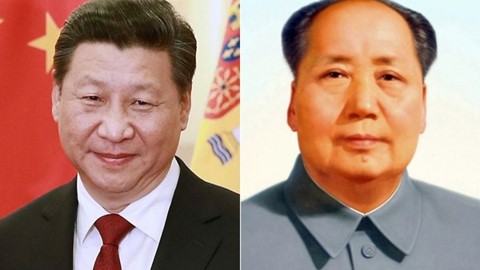
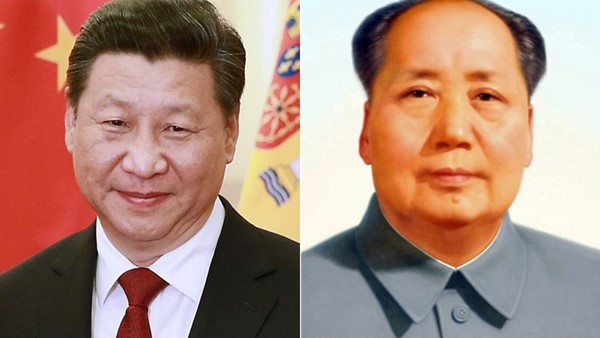
Dharamshala — The Chinese President Xi Jinping’s commitment to “Ethnic Unity”, “Economy Development” and “Social Stability” in Tibet under the banner of “Peaceful Liberation”, which nether seeks a peaceful solution nor a signal for a new reform of more openness. But it clearly shows China is further strengthening an integral element of another “cultural revolution” project in Tibet. One must say Xi is revealing the true nature of a Communist regime in Tibet, a similar sense of strategic inviolability characterized the 20th century’s greatest mass murderer, Mao Zedong.

Invaded by China in 1949, the independent country of Tibet was forced to face the direct loss of 1.2 million lives that comes from military invasion and, soon after, the loss of universal freedoms that stemmed from Communist ideology and its programs such as the Cultural Revolution (1966-76).
However, it is erroneous to believe that the worst has passed. The fate of Tibet’s unique national, cultural and religious identity is seriously threatened and manipulated by the Chinese authorities in the past six decades.

Chinese government’s policy of occupation and oppression has resulted in no more or less than the destruction of Tibet’s national independence, culture and religion, environment and the universal human rights of its people. Time and time again, the infliction of this destruction sees China break international laws with impunity, while attempting to transform Tibet’s 2.5 million square kilometers into complete China.

On the 50th anniversary of the so-called “peaceful liberation”, Chinese
President Xi Jinping called more the government’s efforts in “Promoting Economic,” “Ethnic Unity” and “Social Development” in Tibet, shows no different claims, revealing the unpredictable nature of a regime bent on maintaining stability even through terror, exposing the depth of China’s present illness.

Xi’s concepts of repressive policies reflect the deep uncertainty that
aiming at the core of the another “Cultural Revolution” strategy in further colonizing Tibet, showing the whole world once again the real terror nature of the Communist regime.

Ever since its colonial project was set in motion, the “Cultural Revolution” has insisted that it seeks to colonize Tibet “peacefully”, indeed that its colonization of the country will not only not harm the Tibetan population, but that it was successful to be of benefit to millions of illegal Chinese settlers.

The main reasons behind the dirty politics of why Xi is “calling for more educational campaigns to promote ethnic unity and a sense of belonging to the same Chinese nationality,” is that Tibetans would become real Chinese and must speak Mandarin, allowing coexistence with the Chinese settlers who would be happy and grateful for being colonized and civilized by the communist regime; and a secret, logistical and practical strategy to vanquish the Tibetan population from Tibet, which threatens the very existence of Tibetan culture, religion and national identity.

The impacts of mass immigration of Ethnic Chinese into Tibet was and is a barbaric act with aim to destroy Tibet completely— a target for the worst excesses of the Chinese regime. Tibetan exiles claim 7.5 million Chinese now live in Tibet overwhelming the six million Tibetans. These figures are unconfirmed, but recent Chinese figures suggest this trend is accurate.

Mass murder Mao Zedong killed an estimated 49-78 million people during China’s Cultural Revolution between 1966 and 1976. From Mao to Hu Jintao, one after another, the Chinese dictators have taken full control over the lives of their citizens. The similarities shared with previous dictators from Mao to Hu, Xi’s approach of declaring peaceful intentions for “Ethnic Unity and “Economy Development” behind which he sought to hide Mao’s “Marxism” inherited from “Sovietism”, a violent strategy of conquering and terrorizing the land of Tibet into pieces, adopting wholesale thenceforward, which continues to be the cornerstone of the repressive policy to the present.

Chinese hard-line policies in creating a new socialist paradise, seeking
hearts and minds with Tibetan people will never fulfill its dreams. Indeed, within the framework of the 17 Point Agreement between China and Tibet, the PLA troops marching into Tibet shall abide by all the above-mentioned policies and shall also be fair in all buying and selling and shall not arbitrarily take a single needle or thread from the people. However, in the past six decades, Tibetans are denied of the basic rights of expression, speech, movement, and religion under the hard-line policies, including political repression, economic marginalization, environmental destruction, cultural assimilation and denial of religious freedom.

As China became the 3rd of the top ten militaries in the world, according to “Global Firepower”, why China’s strategists have increasingly acknowledged that the stability in Tibet is central to China’s national interest, and particularly as present as the early 1980s. The term “Economy Development” and “Stability” has nothing to do with Tibetan people. But the Tibetan plateau, dubbed the “Third Pole”, holds the third largest store of water-ice in the world and is the source of many of Asia’s rivers. The glaciers, snow peaks, rivers, lakes, forest and wetlands of Tibet provide major environmental services to Asia, from Pakistan to Vietnam to northern China.The climate in Tibet generates and regulates monsoon rains over Asia.
An estimated 70% of water in China is heavily polluted from uncontrolled dumping of chemicals. Instead of dealing with this the Chinese regime is diverting water from Tibet to north and west China to supply over 300 million Chinese people. It is also damming rivers to generate hydroelectricity which is in turn used to power industrial developments in China. Dams on rivers and their major tributaries cause massive interruptions to wild mountain rivers and the ecosystems dependent on them.
They also give China strategic power over neighboring countries.

Chinese state-owned mining companies are quickening their extraction of copper, gold and silver in Tibet. These mines are usually based close to rivers. Tibet is also rich in other resources including lead, zinc, molybdenum, asbestos, uranium, chromium, lithium and much more. Tibet is China’s only source of chromium and most of its accessible lithium is in Tibet. These raw materials are used in manufacturing of household goods, computers and smart phones, among much else.

China is the world’s largest producer of copper and the world’s second
biggest consumer of gold. The World Gold Council predicts that the
consumption in China will double within a decade. Tibet’s reserves of copper and gold are worth nearly one trillion dollars. Chinese companies have traditionally mined on a small-scale but now large-scale extractions are taking place, mainly by large companies, owned by or with close links to the State.

More importantly, in connection with the size of Tibet it needs to be pointed out that the so-called ‘Tibet Autonomous Region’ – which is what the some parts of world mistakenly see as ‘Tibet’ – is only the truncated half of Tibet. The North-Eastern Province of Amdo; has been separated from the rest of Tibet and renamed ‘Qinghai.’ Also; large parts of Eastern Tibet; the traditional Kham Province; have been incorporated into neighboring Chinese Provinces.

Economic growth mostly benefits The Chinese settlers and businesses and workers, as most workers in Tibet mines are Chinese and the extraction takes place without regard to the local environment and areas of religious significance. Most of Tibet is vulnerable to earthquakes and highly volatile. Threats posed by this instability are exacerbated by mining and damming projects. In 2013 a landslide in the Gyama Valley is a great example, which highlighted the fatal destruction of Tibet’s environment. In almost all areas in Tibet, Tibetans have frequently protested against Chinese government, where there are mining projects in Tibet, particularly in recent years. China has recently drilled a 7 km bore hole, to reach and explore Tibet’s oil and natural gas resources. China National Petroleum
Corporation estimates the basin’s oil reserves at 10 billion tons.

As well as global climate change, industrial projects such as mining,
damming and deforestation are leading to the Tibetan glacier melting at a faster rate, contributing in turn to further global warming. Before the Chinese occupation there was almost no Tibetan industrialization, damming, draining of wetlands, fishing and hunting of wildlife. Tibet remained unfenced, its grasslands intact, its cold climate able to hold enormous amounts of organic carbon in the soil.

China has now moved millions of Tibetan nomads from their traditional grasslands to urban settlements, opening their land for the extraction of resources and ending traditional agricultural practices which have sustained and protected the Tibetan environment for centuries.

The mining companies also benefit from state financing of railways, power stations and many other infrastructure projects. Much of China’s significant transport infrastructure developments in Tibet have been intended to facilitate the movement of military forces into the country and the removal of natural resources from it. companies also benefit from finance at concessional rates to corporate borrowers, tax holidays, minimal environmental standards and costs, no requirement to compensate local communities and subsidized rail freight rates to get concentrates to smelters or metal to markets.These above valid reasons for saying Tibetans inside Tibet will never sense happier life in a so-called “Maoist socialist
paradise.” Instead, we have, and always had the fears and sense of the
totalitarian nature of Chinese regime.

However, the authoritarians in Beijing always have popularised the
expression of Tibet as a “Peaceful Liberation” since the occupation in 1949— the totalitarianism understood well that its colonial strategy depended on a deliberate and insistent confusion of the binary terms “Liberation” and “Unity”, so that each of them hides behind the other as one and the same strategy: “Unity” will always be the public name of a colonial war, and “Liberation”, once it became necessary and public in the form of total invasions, would be articulated as the principal means to achieve the sought after “ethnic unity”.

Why Xi said the country should “firmly take the initiative” in the fight
against separatism, vowing to crack down on all activities seeking to
separate the country and destroy social stability. Waging colonial war under banner of “Unity” is so central to totalitarianism and Chinese propaganda that China’s 1949 invasion of Tibet, which killed 1.2 million Tibetans and destroyed over six thousand monasteries and temples and historical structures looted and all beyond repair, was termed the “Peaceful Liberation of Tibet”. “Liberation” and “Ethnic Unity”, therefore, are the same means whose only and ultimate strategic goal is Chinese colonization of Tibet and the subjugation and expulsion of Tibetan population.

To bring about the expulsion of the Tibetans and the establishment of the Chinese settler colony, the CCP sought the patronage of the powers that controlled the fate of Tibet. Mao to Xi whereas their assiduous efforts to court the Mao’s old leadership and persuade to grant them a charter failed, however the soviet style leadership after Mao adopted the same strategy under various banners and successfully secured the patronage of world, and became the master of Tibet.

Tibet remained largely isolated from the rest of the world’s civilizations.
After 1949, the CCP successfully secured support for their colonial project.
After more than 40 years the world recognize that Mao was responsible for genocide of millions of Chinese, Tibetans, Mongolians and Uyghurs. Even Deng Xiaoping actually believed that Mao was about 80% wrong, prove not only that mass massacre happened from 1959-61 but also that these were mainly the result of policy errors that the current regime continues to draw from.

None of these, however, meant morally justifiable and acceptable, but a true nature that the deadly ideology of communism while abandoned their public claims that their “peaceful liberation” colonization of Tibet would not be harmful to the Tibetan people while employing, at the same time, the most violent means to evict the Tibetans off their land.

The totalitarian leader, Mao, following Stalin’s strategy of securing the patronage of major world powers articulated the Soviet position thus. Soviet type colonization must either stop, or else proceed regardless of the native population. Which means that it can proceed and develop only under the protection of a power that is independent of the native population -behind an iron wall, which the native population cannot breach. That is repressive policy; not what it should be, but what it actually is, whether we admit it or not. We clearly understand why Xi is calling for more “patriotic education campaigns” to promote “ethnic unity” and a sense of belonging to the same “Chinese nationality”.

Despite officially introducing more environment-friendly policies in recent years, China continues to flood Tibet with potentially destructive mega development projects such as railway routes, oil and gas pipelines, petrochemical complexes, hydro dams, construction of airports, highways, military bases and new cities for migrants from Mainland China. Is this for a sense of belonging to the same “Chinese nationality”?

What need we have, otherwise, of the Peaceful Liberation? Or of the Mandate? Their value to us is that outside Power has undertaken to create in the country such conditions of administration and security that if the native population should desire to hinder our work, they will find it impossible. It was, in fact, this regime’s commitment to “peaceful liberation” with the Tibetans, whose land they sought to total control, that provoked the ire of terror group that gradually transformed the CCP. The CCP leaders’ assumption that the Tibetans were bribe-able, that they could be bought, and that they would accept Chinese domination in exchange for nominal economic benefits
was challenged by Mao. He once stated that the communist army’s “only foreign debt” was that incurred to the Tibet and its people while on the Long March in 1930s.

As the idea of peaceful liberation of Tibet as a means to establish more
colonial conquests continued to be entrenched in Maoist considerations, it would be pursued alongside invisible war even after 1949, as evidenced by the multiple invasions of Tibet in the 1950s, and in the new century. These wars would be waged explicitly as part of China’s pursuit of “peaceful liberation” to achieve its colonial aims, and Nor-eastern Tibet capitulated completely to Chinese colonialism, while continuing the war against those Tibetans who continued to resist Maoist colonial logic.

Human rights monitoring and protection has become an unusual challenge to the de facto impunity of the government system. Acquiring accurate information from the so-called ethnic minority regions of Tibet had become extremely difficult due to the secretive nature of operations and so-called lack of transparency. Tibetans in their own home country have become victims of deep-seated prejudice. A carefully chiseled policy has led to a cultural genocide in Tibet due to denial of basic fundamental rights, freedoms and justice over a period of 60 years. The Human Rights situation has not improved in Tibet.

The ongoing suppression of the Tibetan people has been openly carried out whether intentionally or unintentionally. The Chinese government continues to accelerate the political, economic, social and geographical integration of Tibet into China. There is no let-up on many unpopular measures of control imposed by China on the Tibet region such as the “Patriotic re-education Campaign” under policy of “Unity and Peace,” despite how-many-ever protests from Tibetans. This Chinese policy with the active support of the military presence in Tibet, at least a quarter of a million strong, strictly governs the territory, after all China still claims a “peaceful liberation” of Tibet and President Xi Jinping vowed to follow same old way. Is this what China really wanted the whole world to witness in an occupied Tibet in the 21st century?

The Chinese President Xi Jinping’s commitment to “Ethnic Unity”, “Economy Development” and “Social Stability” in Tibet under the banner of “Peaceful Liberation”, which nether seeks a peaceful solution nor a signal for a new reform of more openness. But it clearly shows China is further strengthening an integral element of another “cultural revolution” project in Tibet. One must say Xi is revealing the true nature of a Communist regime in Tibet, a similar sense of strategic inviolability characterized the 20th century’s greatest mass murderer, Mao Zedong.

Photo caption: China’s aggressive Violence Against Tibetan People in their homeland, in 2012. Photo: file

© 2013 Cable News Network. Turner Broadcasting System, Inc. All Rights Reserved.
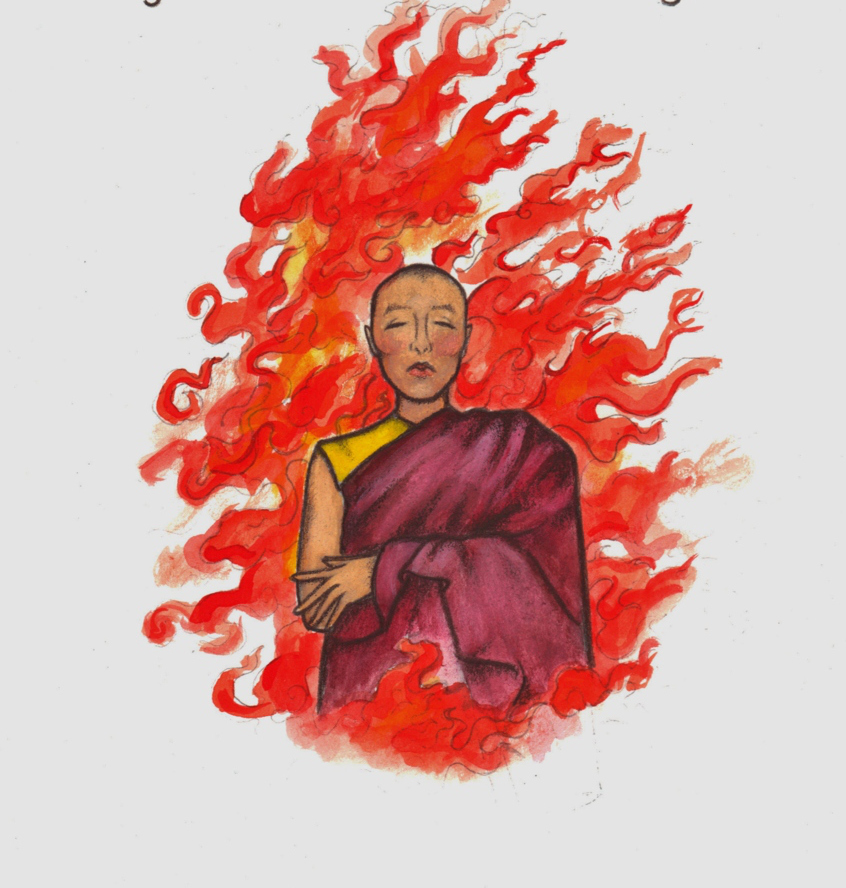
The Chinese President Xi Jinping’s commitment to “Ethnic Unity”, “Economy Development” and “Social Stability” in Tibet under the banner of “Peaceful Liberation”, which nether seeks a peaceful solution nor a signal for a new reform of more openness. But it clearly shows China is further strengthening an integral element of another “cultural revolution” project in Tibet. One must say Xi is revealing the true nature of a Communist regime in Tibet, a similar sense of strategic inviolability characterized the 20th century’s greatest mass murderer, Mao Zedong.

Whole Deception – The Deception of Panchsheel Agreement of 1954

Sino-Indian Relations must be reformulated after resolving Tibet-China Border Dispute

SPECIAL FRONTIER FORCE - PANCHSHEEL AGREEMENT: 60 YEARS AGO, INDIA AND CHINA SIGNED AN AGREEMENT THAT EXCLUDED TIBET. THIS AGREEMENT IS NULL AND VOID WITHOUT THE PARTICIPATION OF TIBET.
Sino-Indian Relations must be reformulated after resolving Tibet-China Border Dispute
SPECIAL FRONTIER FORCE - PANCHSHEEL AGREEMENT: ACHARYA J B KRIPALANI, GANDHIAN THINKER, FREEDOM FIGHTER, SOCIAL WORKER, AND EMINENT INTELLECTUAL OF INDIA IS SEEN IN THIS PHOTO(LEFT) ALONG WITH SARDAR PATEL(MIDDLE) AND SIR SEN(RIGHT). ACCORDING TO ACHARYA KRIPALANI THE PANCHSHEEL AGREEMENT IS BORN IN SIN. I MET THIS NATIONALIST LEADER DURING JUNE 1967 IN NEW DELHI.
Sino-Indian Relations must be reformulated after resolving Tibet-China Border Dispute: ACHARYA J B KRIPALANI, GANDHIAN THINKER, FREEDOM FIGHTER, SOCIAL WORKER, AND EMINENT INTELLECTUAL OF INDIA IS SEEN IN THIS PHOTO (LEFT) ALONG WITH SARDAR PATEL (MIDDLE) AND SIR SEN (RIGHT). ACCORDING TO ACHARYA KRIPALANI THE PANCHSHEEL AGREEMENT IS BORN IN SIN. I MET THIS NATIONALIST LEADER, MEMBER OF INDIAN PARLIAMENT DURING JUNE 1967 IN NEW DELHI.

Seventy years ago, India and Peoples’ Republic of China had signed the Panchsheel Agreement without coming to a proper understanding about the status of Tibet. At that time, both India and Tibet had earnestly believed that China would not oppress Tibet with its military conquest. India and Tibet were hoping that China would respect the traditional governance of Tibet by the Institution called The Dalai Lama or the Ganden Phodrang Government which ruled over Tibet for four centuries since 1642.

SPECIAL FRONTIER FORCE - THE DECEPTION OF PANCHSHEEL AGREEMENT: IN MY OPINION, THIS PHOTO IMAGE PROVIDES THE EVIDENCE FOR THE DECEPTION OF PANCHSHEEL AGREEMENT OF JUNE 1954. CHINA'S PRIME MINISTER CHOU EN-LAI HAD ARRIVED IN NEW DELHI ON AN OFFICIAL VISIT ACCOMPANIED BY THE 14th DALAI LAMA WHO IS RECOGNIZED BY INDIA AS THE HEAD OF THE TIBETAN GOVERNMENT. AT THAT TIME CHINA HAD DELIBERATELY DISTORTED THE TRUTH ABOUT THE PURPOSE OF ITS MILITARY CONQUEST OF TIBET.
Sino-Indian Relations must be reformulated after resolving Tibet-China Border Dispute :IN MY OPINION, THIS PHOTO IMAGE PROVIDES THE EVIDENCE FOR THE DECEPTION OF PANCHSHEEL AGREEMENT OF JUNE 1954. CHINA’S PRIME MINISTER CHOU EN-LAI HAD ARRIVED IN NEW DELHI ON AN OFFICIAL VISIT ACCOMPANIED BY THE 14th DALAI LAMA WHO IS RECOGNIZED BY INDIA AS THE HEAD OF THE TIBETAN GOVERNMENT. AT THAT TIME CHINA HAD DELIBERATELY DISTORTED THE TRUTH ABOUT THE PURPOSE OF ITS MILITARY CONQUEST OF TIBET.
SPECIAL FRONTIER FORCE - THE DECEPTION OF PANCHSHEEL AGREEMENT OF JUNE 1954: AFTER SIGNING THE PANCHSHEEL AGREEMENT, INDIA TRIED ITS BEST TO LOOSEN CHINA'S MILITARY GRIP OVER TIBET. BOTH INDIA, AND TIBET HOPED THAT DIPLOMACY WOULD PREVAIL AND THAT TIBET WOULD ENJOY FULL AUTONOMY DESPITE CHINA'S MILITARY CONQUEST OF TIBET DURING 1950. THIS PHOTO IMAGE OF CHOU EN-LAI'S VISIT TO NEW DELHI ALONG WITH THE 14th DALAI LAMA GAVE HOPE TO BOTH INDIA AND TIBET.
Sino-Indian Relations must be reformulated after resolving Tibet-China Border Dispute: AFTER SIGNING THE PANCHSHEEL AGREEMENT, INDIA TRIED ITS BEST TO LOOSEN CHINA’S MILITARY GRIP OVER TIBET. BOTH INDIA, AND TIBET HOPED THAT DIPLOMACY WOULD PREVAIL AND THAT TIBET WOULD ENJOY FULL AUTONOMY DESPITE CHINA’S MILITARY CONQUEST OF TIBET DURING 1950. THIS PHOTO IMAGE OF CHOU EN-LAI’S VISIT TO NEW DELHI ALONG WITH THE 14th DALAI LAMA GAVE HOPE TO BOTH INDIA AND TIBET.
SPECIAL FRONTIER FORCE - THE DECEPTION OF PANCHSHEEL AGREEMENT OF 1954: CHINA'S PRIME MINISTER CHOU EN-LAI HAD VISITED INDIA DURING 1956, ABOUT TWO YEARS AFTER THE SIGNING OF THE PANCHSHEEL AGREEMENT. THIS PHOTO IMAGE IS THE EVIDENCE FOR CHINA'S DECEPTION. CHINA GAVE THE IMPRESSION THAT IT WOULD RESPECT THE POLITICAL INSTITUTION OF THE DALAI LAMA THAT RULED OVER TIBET FOR FOUR CENTURIES.
Sino-Indian Relations must be reformulated after resolving Tibet-China Border Dispute: THE DECEPTION OF PANCHSHEEL AGREEMENT OF 1954: CHINA’S PRIME MINISTER CHOU EN-LAI HAD VISITED INDIA DURING 1956, ABOUT TWO YEARS AFTER THE SIGNING OF THE PANCHSHEEL AGREEMENT. THIS PHOTO IMAGE IS THE EVIDENCE FOR CHINA’S DECEPTION. CHINA GAVE THE IMPRESSION THAT IT WOULD RESPECT THE POLITICAL INSTITUTION OF THE DALAI LAMA THAT RULED OVER TIBET FOR FOUR CENTURIES.

While India’s Prime Minister Nehru and Tibet’s ruler, His Holiness the 14th Dalai Lama had hoped for a peaceful relationship with China, many Indians were not optimistic and had suspected that China had annexed Tibet with its military invasion of 1950. This Panchsheel Agreement, in the words of Acharya Kripalani, is “Born in Sin.” I had expressed a similar view while commenting on the US-China trade relations that were initiated by President Richard Nixon and Dr. Henry Kissinger and described it as an act of “Original Sin” or “Whole Sin.”

SPECIAL FRONTIER FORCE - THE DECEPTION OF PANCHSHEEL AGREEMENT OF 1954: INDIA'S VICE-PRESIDENT DR. S. RADHAKRISHNAN VISITED PEKING DURING SEPTEMBER 1957 AND MET WITH THE LEADERS OF COMMUNIST CHINA WITH AN EARNEST DESIRE TO SAVE TIBET FROM CHINA'S MILITARY OPPRESSION. THE TRUE INTENTIONS OF CHINA GOT EXPOSED AND THE DECEPTION OF PANCHSHEEL AGREEMENT BECAME FULLY EVIDENT.
Sino-Indian Relations must be reformulated after resolving Tibet-China Border Dispute: THE DECEPTION OF PANCHSHEEL AGREEMENT OF 1954: INDIA’S VICE-PRESIDENT DR. S. RADHAKRISHNAN VISITED PEKING DURING SEPTEMBER 1957 AND MET WITH THE LEADERS OF COMMUNIST CHINA WITH AN EARNEST DESIRE TO SAVE TIBET FROM CHINA’S MILITARY OPPRESSION. THE TRUE INTENTIONS OF CHINA GOT EXPOSED AND THE DECEPTION OF PANCHSHEEL AGREEMENT BECAME FULLY EVIDENT.
SPECIAL FRONTIER FORCE - THE DECEPTION OF PANCHSHEEL AGREEMENT OF 1954:  TOWARDS THE END OF 1957, BOTH INDIA AND TIBET HAD FULLY RECOGNIZED THE DECEPTION OF THE PANCHSHEEL AGREEMENT THAT WAS INITIATED BY CHINA AFTER ITS MILITARY INVASION OF TIBET IN 1950. A TIBETAN RESISTANCE MOVEMENT TOOK ITS BIRTH TO FACE THE CHALLENGE POSED BY CHINA'S MILITARY OCCUPATION OF TIBET.
Sino-Indian Relations must be reformulated after resolving Tibet-China Border Dispute: THE DECEPTION OF PANCHSHEEL AGREEMENT OF 1954: TOWARDS THE END OF 1957, BOTH INDIA AND TIBET HAD FULLY RECOGNIZED THE DECEPTION OF THE PANCHSHEEL AGREEMENT THAT WAS INITIATED BY CHINA AFTER ITS MILITARY INVASION OF TIBET IN 1950. A TIBETAN RESISTANCE MOVEMENT TOOK ITS BIRTH TO FACE THE CHALLENGE POSED BY CHINA’S MILITARY OCCUPATION OF TIBET.

In my opinion, any agreement between China and India would have no validity if it involves the Land of Tibet. The Panchsheel Agreement is void as Tibet has not signed this agreement. India and China do not share a common border and the concern about peaceful coexistence must include the concern for the true aspirations of Tibetan people and their natural rights to their territory and to their right to Freedom from military occupation.To begin with, I ask for resolution of Tibet-China Border Dispute.

Rudra Narasimham Rebbapragada
Ann Arbor, MI 48104-4162, USA
Special Frontier Force-Establishment 22-Vikas Regiment

MOVING BEYOND THE PANCHSHEEL DECEPTION

Ram Madhav | INDIAN EXPRESS, Saturday, June 28, 2014 12:51 am

SPECIAL FRONTIER FORCE - PANCHSHEEL AGREEMENT: Mr. Ram Madhav in his opinion had correctly stated that the Panchsheel Agreement between India and China does not include the Land of Tibet. Without the participation of Tibet, the Agreement has no worth and it will not achieve any purpose.
THE DECEPTION OF PANCHSHEEL AGREEMENT: Mr. Ram Madhav in his opinion had correctly stated that the Panchsheel Agreement between India and China does not include the Land of Tibet. Without the participation of Tibet, the Agreement has no worth and it will not achieve any purpose.

India and China can cooperate with each other on the principles of sovereign equality and mutual sensitivity.

Summary

India and China must develop a new framework for bilateral relations, unshackled by empty rituals and symbols.

Ram Madhav

The biggest problem in Sino-Indian relations is the utter lack of ingenuity and innovativeness. Six decades after the formal engagement through Panchsheel and five decades after the bloody disengagement due to the 1962 War, leaders of both the countries struggle to come up with new and out-of-the-box answers to the problems plaguing their relationship.

When there are no new ideas, one resorts to symbolism and rituals. These are projected as the great new ideas to kickstart a new relationship. However, there is nothing great or new about them. They are the very same worn out and tried-tested-and-failed actions of the last several decades.

The Panchsheel itself is one ritual that successive Indian governments have unfailingly performed. Vice President Hamid Ansari will be visiting Beijing today to uphold India’s commitment to the ritual. The occasion is the 60th anniversary of the signing of the Panchsheel Agreement.
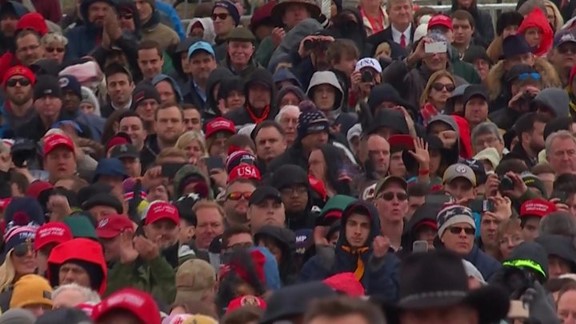
It was exactly six decades ago, on June 28, 1954, roughly two months after the formal signing of the Panchsheel, that Chinese Premier Zhou Enlai visited India. He and then-prime minister Jawaharlal Nehru had issued a historic statement, reaffirming their commitment to the five principles enshrined in the Panchsheel to “lessen the tensions that exist in the world today and help in creating a climate of peace”.

Contrary to public perception or propaganda, Panchsheel was actually an agreement between the “Tibetan region of China and India” on “trade and intercourse.” It did include five principles, like mutual respect, mutual non-aggression, mutual benefit, peaceful coexistence, etc, but the very title of the agreement was a defeat for India.

The British had, at least from the Simla Accord of 1912 until they left India, not conceded that Tibet was a part of China. Unfortunately, one of the first foreign policy deviations of the Nehru government was the signing of the Panchsheel, wherein India had formally called the Tibetan region as “of China”. Thus the Panchsheel was signed as a treaty of peaceful coexistence over the obituary of Tibetan independence. That was why parliamentarian Acharya Kripalani called the agreement as “born in sin”.

The Panchsheel met its end just three months after its signing, when the Chinese were found violating Indian borders in Ladakh in late-1954. A formal death note was written by Mao Zedong a few months before the 1962 war, when he told Zhou that what India and China should practice is not “peaceful coexistence” but “armed coexistence”. The war followed and ended in humiliation and loss of territory for India. It left behind a massive border dispute that continues to haunt both the countries.

However, this didn’t seem to deter the Indian and, to some extent, the Chinese leadership in continuing with the deception of the Panchsheel. The history of Sino-Indian relations in the last five decades is replete with instances of violations of sovereignty, mutual animosity, attempts to upstage each other and general ill-will.
Mostly the Chinese have been on the wrong side of the so-called Five Principles of Peaceful Coexistence.

Yet, the ritual continued through the decades and changing governments in India. Nehru to P.V. Narasimha Rao to
Atal Bihari Vajpayee continued paying lip service to the Panchsheel during bilateral visits.

“Only with coexistence can there be any existence,” declared Indira Gandhi in 1983. The next prime minister, Rajiv Gandhi, expressed confidence in 1988 that “the five principles of peaceful coexistence provide the best way to handle relations between nations”. Rao as prime minister declared in 1993 that “these principles remain as valid today as they were when they were drafted”. While Vajpayee too was forced to continue this ritual, he made a significant departure by refusing to falsely credit China for following the Panchsheel. He put extra emphasis on “mutual sensitivity to the concerns of each other” and “respect for equality.”

At a time when Beijing is celebrating six decades of the Panchsheel, it is important to look at a new framework for Sino-Indian relations beyond Panchsheel. Vajpayee laid the foundation for a renewed outlook by emphasising on sensitivity and equality. That can form the basis for the new framework.

The Chinese have a clever way of promoting their superiority and exclusivism. Sinologists describe it as the Middle Kingdom syndrome. While Nehru wanted to take credit for the Panchsheel, Zhou told Richard Nixon in 1973 that “actually, the five principles were put forward by us, and Nehru agreed. But later on he didn’t implement them”.

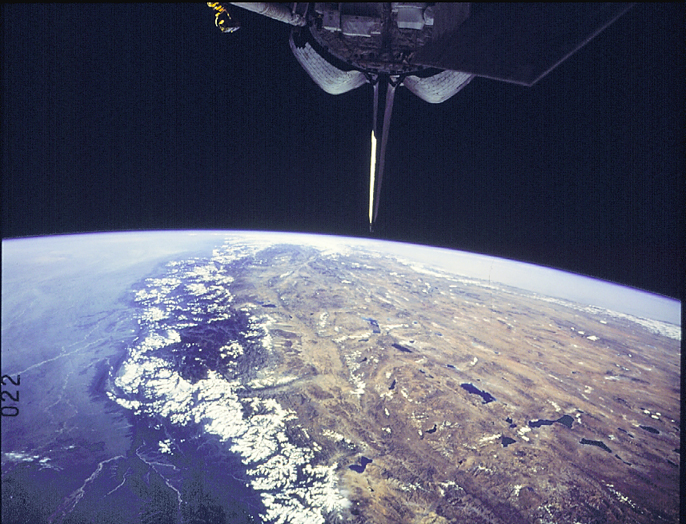
The Chinese also entered into a similar agreement with Myanmar (then Burma) in 1954, thus ensuring that the Panchsheel wasn’t exclusive to their relationship with India.

For the Beijing event, the Chinese government has invited the president of India as well as the president of Myanmar, General Thein Sein, who will be present. Ansari will lead the Indian delegation. Without any malice towards Ansari, one would notice the downgrading of India’s participation in the Beijing event. Beijing was keen on having the president or prime minister at the event. But for once, the South Block mandarins seem to have done their homework, advising the Indian government against sending either of them. Foreign Minister Sushma Swaraj too decided to skip the event and chose to visit Dhaka around the same time, sending a rather strong signal.

If Prime Minister Narendra Modi and Chinese President Xi Jinping, who is expected to visit India in September, decide to depart from the Panchsheel framework and embark on a new relationship, both countries will benefit.
Both leaders have that ability. Both enjoy the trust and confidence of their countries. Most importantly, both are seen to be out-of-the-box leaders.

India and China can cooperate with each other on the principles of sovereign equality and mutual sensitivity.
China has emerged as an economic superpower, but is exposed to serious internal and external threats. It is facing problems with almost all of its 13 neighbours. The fact that China spends more money on internal security than on external security speaks volumes about its internal vulnerability. So, while India is not as big economically as China, its security apparatus is better-placed.

Modi and Xi can chart a new course in Sino-Indian relations if they are prepared to unshackle themselves from ritualism and symbolism. Both have the ability and the support to do it.

Madhav is a member of the Central Executive, RSS, and
the author of ‘Uneasy Neighbours: India and China after Fifty Years of the War’

SPECIAL FRONTIER FORCE - THE DECEPTION OF PANCHSHEEL AGREEMENT OF 1954: INDIA AND TIBET RECOGNIZED THE DECEPTION OF COMMUNIST CHINA AND WERE LEFT WITH NO OPTION. THE TIBETAN RESISTANCE MOVEMENT TOOK ITS BIRTH IN 1957-1958 AND IT SYMBOLIZES THE FAILURE OF THE PANCHSHEEL AGREEMENT. TO CONFIRM THE FACT OF THIS FAILURE, CHINA HAD VICIOUSLY ATTACKED INDIA DURING OCTOBER 1962.
Sino-Indian Relations must be reformulated after resolving Tibet-China Border Dispute: THE DECEPTION OF PANCHSHEEL AGREEMENT OF 1954: INDIA AND TIBET RECOGNIZED THE DECEPTION OF COMMUNIST CHINA AND WERE LEFT WITH NO OPTION. THE TIBETAN RESISTANCE MOVEMENT TOOK ITS BIRTH IN 1957-1958 AND IT SYMBOLIZES THE FAILURE OF THE PANCHSHEEL AGREEMENT. TO CONFIRM THE FACT OF THIS FAILURE, CHINA HAD VICIOUSLY ATTACKED INDIA DURING OCTOBER 1962.