


Whole Problem – India-Tibet-US Relations complicated by Pakistan’s invasion of Kashmir
In my analysis, India-China Standoff across the Himalayan Frontier involves the territory of Tibet, an independent nation under military occupation. Any kind of dispute across the Himalayan Frontier involves Tibet as the Natural Force that created Tibet is still at work forcing the Indian Landmass to collide with the Asian Landmass. The reality of Tibet cannot be ignored as Mother Nature nurtures the Tibetan Identity.
Rudra Narasimham Rebbapragada
Special Frontier Force-Establishment No.22-Vikas Regiment
India-Tibet-US Relations Complicated by Pakistan’s Invasion of Kashmir on 22 October 1947

In my analysis, India-Tibet relations from the very beginning were impacted by Pakistan’s invasion of Kashmir in October 1947. The United States was willing to check Communist China’s expansionist policy, but, unfortunately, India could not take advantage of the US policy for the US simultaneously supports Pakistan’s occupation of Kashmir.
The Kashmir issue poses a great danger severely undermining India’s ability to exercise full freedom to formulate an independent Tibet Policy. India needs the support of the United States to counter China’s military superiority and at the same time, India has to balance the US involvement in Kashmir in support of Pakistan’s aggression.
India waving SFF and Tibet cards won’t scare China. Can’t pull levers you don’t have
Bending foreign policy to serve domestic politics is proving to be costly for India. Hyping the use of the Tibetan-majority SFF against China is one such example.
Shyam Saran, September 14, 2020.
The Tibet issue played a major role in precipitating the India-China war of 1962. There were localized skirmishes along the border, but these began to be seen in a more ominous light by China in the wake of the Tibetan revolt of 1959 followed by the exile of His Holiness the Dalai Lama to India. The setting up of Indian posts and increased patrolling on our borders were seen as part of a sinister Indian design to subvert Chinese rule in Tibet. The status of the Dalai Lama and the Tibetan issue have remained a shadow over India-China relations even though New Delhi has recognized Chinese sovereignty over Tibet and has under-played official relations with the Dalai Lama.
The Tibet government-in-exile is allowed to function at Dharamsala but is not recognized by the Indian government. For China, Tibet is a “core issue” just as Taiwan and Xinjiang are.
A changing relationship
During the tenure of the Narendra Modi government, there have been instances of open courtship of the Tibetan government-in-exile.
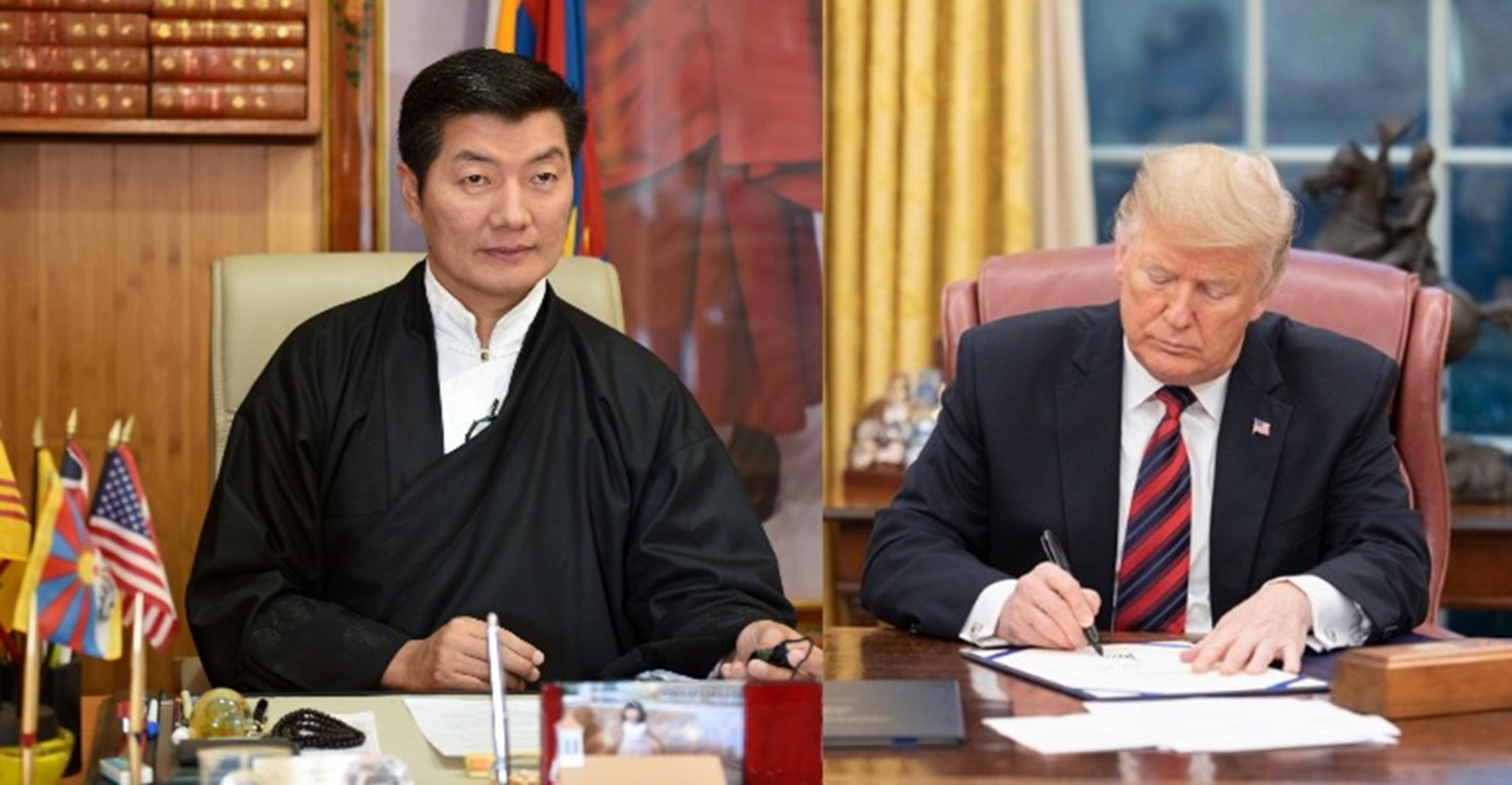
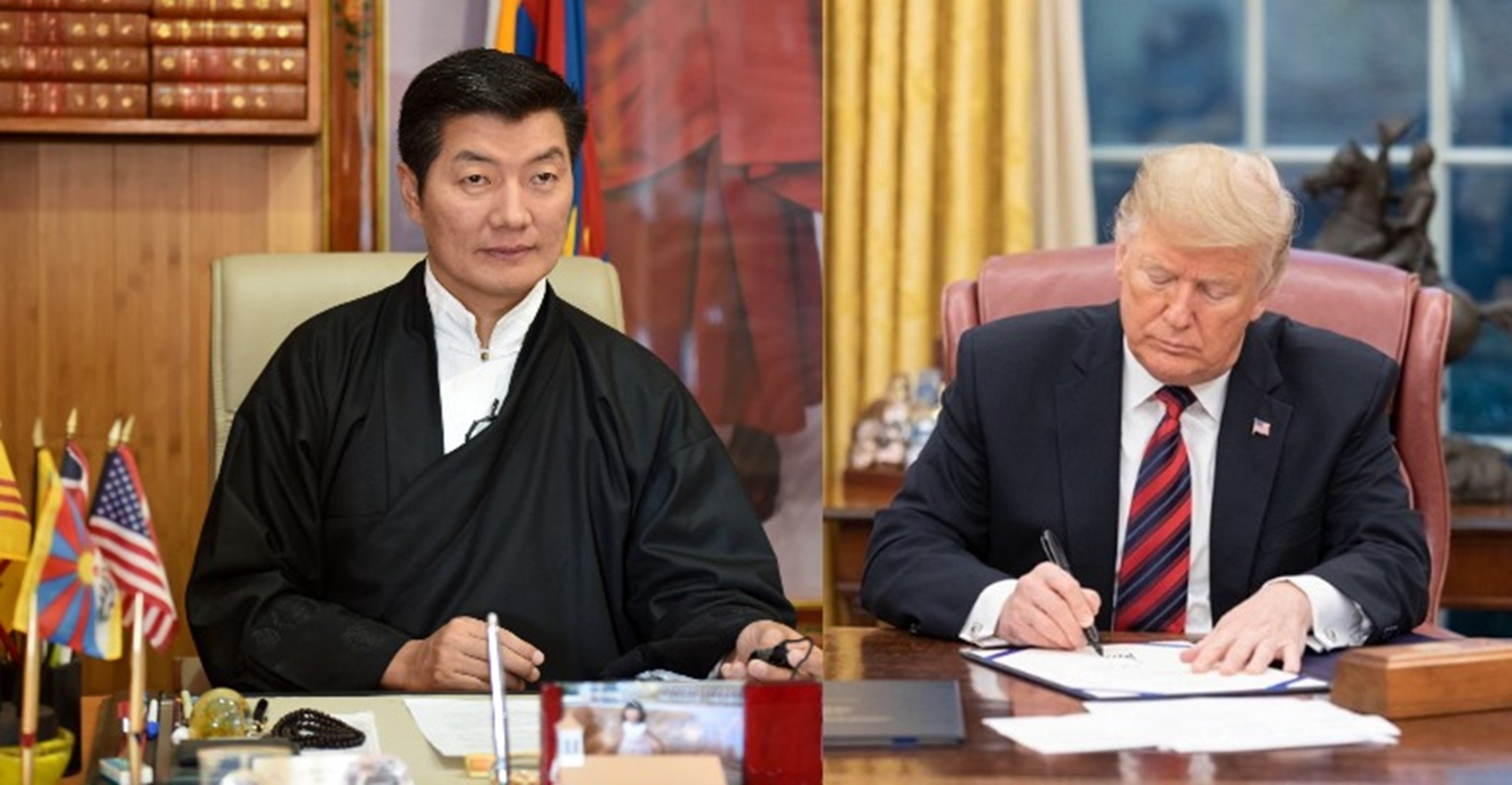
Its ‘Prime Minister’ Lobsang Sangay was an invitee to the swearing-in ceremony of Prime Minister Modi in 2014. The Chief Minister of Arunachal Pradesh, Pema Khandu, declared that his state had a border with Tibet and not with China, in 2017.
But after the Modi-Xi Jinping summit in Wuhan in April 2018, there appeared a rethink on the Tibet issue with the Ministry of External Affairs reissuing instructions to government functionaries to avoid public association with the Dalai Lama and Tibetan representatives of the government-in-exile. An international Buddhist conference, which the Dalai Lama had been encouraged to convene, was cancelled. The Tibetans were advised that the 60th anniversary, in 2019, of the Dalai Lama’s entry into India, should be a low-key affair.
The second Modi-Xi summit in Mamallapuram in October 2019 reinforced this trend. The Modi government was signalling that it was prepared to put the Tibet issue in cold storage while advancing bilateral relations with China.
The wrong card
During the recent clashes between the Indian and Chinese armed forces on the border in eastern Ladakh, the Tibet issue has resurfaced and will add to mutual distrust and suspicion. A deliberately leaked report to the media revealed that the secretive Special Frontier Force (SFF), recruited mainly from the Tibetan community in India, was used in the operations in southern Pangong Tso. One of its soldiers, Tenzin Nyima, died in a mine blast and at his funeral, independent Tibet’s flags were displayed. BJP leader Ram Madhav attended the funeral and tweeted about it. He subsequently took it down, presumably at the behest of the Ministry of External Affairs.
Several commentators were quick to welcome the report on the SFF, no longer secret, as a reminder to China that India still held the “Tibet card” and would be ready to use it to bring it to heel. Like much of the bizarre fantasizing that seems to have taken hold in India, this, too, may only heighten mistrust and hostility in Beijing without inflicting any real pain. In any negotiations with an adversary, one should never provoke a confrontation over an issue where the other side has greater equity and stake than oneself. This is clearly the case here. It is also intriguing that this story was highlighted on the eve of External Affairs Minister S. Jaishankar’s meeting with his Chinese counterpart Wang Yi in Moscow. At the very least, it would have made his interaction more challenging.
The SFF has been in existence for several years. Its efficacy lies in its rigorous training, high morale and professionalism. It should not have become yet another pawn in a political game to convince public opinion that India has more levers of influence than it actually has. In doing so, the potential efficacy of the SFF has been undermined and Chinese suspicions over India’s intentions regarding Tibet would have been aroused to a new intensity.
A crisis of credibility
The tactical use of the Tibetan issue and of the Dalai Lama is both cynical and counter-productive. Ever since his arrival in India, he has enjoyed respect and reverence across the Indian political spectrum as a religious leader. We have consistently maintained the position that he is our welcome guest as a high religious personage and that we do not endorse political activities engaged in by him or the Tibetan community. This has helped manage Tibet as an issue in India-China relations, reducing its salience as an irritant. Unfortunately, this consistent and longstanding position has been severely compromised.
In any India-China border settlement, an understanding over Tibet will need to be arrived at. The best-case scenario for India would be a reconciliation between the Dalai Lama and the Chinese regime, and this seemed possible during the first few years of Xi Jinping’s rule. In our informal conversations with Chinese counterparts, we have conveyed that their assumption of the Tibetan issue being permanently resolved once the Dalai Lama was no longer in the scene was misplaced. In fact, we pointed out, the situation may become even more fraught once the restraining hand of the Dalai Lama was no longer available. The Tibetan community in India, particularly the youth, could become more radicalized.
In Tibet, reconciliation between its people and the Chinese state would be more likely with the blessings of the Dalai Lama rather than in his absence. Both countries, we conveyed, need to have an early and quiet dialogue on this issue and not allow it to become a festering problem for the future. There was receptivity on the Chinese side to these views. However, this waving of the Tibet card, which serves only to irritate and annoy, puts paid to any such engagement on a sensitive issue, with serious implications for the future. It undermines the immense goodwill and gratitude that New Delhi has all along enjoyed with the Dalai Lama and the Tibetan community in India and abroad. The community is disturbed by the manner in which the Indian government plays hot and cold towards it and has become anxious about its future.
The bending of foreign policy issues to serve domestic political ends is proving to be costly for India. The most valuable asset a country and its political leadership possess is credibility with both friends and adversaries alike. When image-making gets unlatched from reality, credibility is the first casualty. And India indeed faces a crisis of credibility.

The author is a former Foreign Secretary, and a Senior Fellow at CPR.


The deeper question is not whether India possesses a “Tibet card,” but whether it can convert the political, geographic, and human dimensions of Tibet into sustainable strategic leverage without creating costs that outweigh the benefits.
From a field-informed strategic perspective, the existence of an instrument does not establish its value as leverage. Its value depends on the objective it serves, the opponent’s stake in the issue, the credibility of the threat, the available alternatives, and the consequences of the opponent’s response. An instrument that provokes a stronger reaction than the pressure it can impose may become a liability rather than an advantage.
This is the central dilemma for India. Tibet carries historical, cultural, political, and military significance, while the Himalayan frontier imposes geographic constraints on both sides. Yet China’s stake in Tibet is considerably greater than India’s ability to alter the status quo through symbolic gestures alone. Publicly invoking the Tibetan issue may therefore increase Chinese suspicion without necessarily improving India’s bargaining position.
The Special Frontier Force illustrates the distinction between operational capability and strategic effect. A unit may possess specialised skills, terrain knowledge, and high operational value. But its tactical effectiveness does not automatically translate into political leverage. That requires a credible connection between the operation, the intended political objective, the adversary’s calculations, and the outcome India seeks to secure.
There is also a question of strategic credibility. If a government alternates between publicly signalling support for Tibetan aspirations and quietly limiting political engagement to preserve relations with Beijing, it risks creating uncertainty among both its adversary and the Tibetan community. Such ambiguity can sometimes preserve diplomatic flexibility, but when it is driven by short-term domestic political considerations rather than a coherent long-term policy, it can undermine trust without producing compensating advantages.
The same logic applies to geography. The Himalayas are not merely a physical barrier; they shape logistics, mobility, military exposure, and the costs of sustaining power. But geography does not determine the outcome by itself. Terrain interacts with time, technology, intelligence, political objectives, and the capacity to absorb costs. Any serious assessment of India’s options must therefore examine not only what can be done in the mountains, but what can be sustained and what strategic result can realistically follow.
The question I would put to the debate is this: Does invoking the Tibet issue expand India’s freedom of action, improve its negotiating position, and preserve future options—or does it encourage escalation in a domain where China has greater stakes and India has fewer reliable means of controlling the outcome?
Strategic leverage is not measured by the visibility of a card, but by the ability to shape the other side’s choices while retaining control over one’s own. That is the difference between signalling power and converting power into a durable strategic outcome.
LikeLiked by 1 person
Hi Noorzai,
Thanks for visiting my blog post and thanks for sharing your comments. India has consistently followed a policy that indeed reflects its concerns about India’s objectives vs the challenges posed by Red China’s invasion of Tibet. From the beginning, the Indian Army faced the challenge imposed by Pakistan’s invasion of Kashmir in October 1947 and informed the Indian Prime Minister Nehru that Indian Army was not prepared for offensive Ops to stop or oppose the military conquest of Tibet by about two divisions of PLA with some air support and field guns for added fire power. At no point, India is ready to ignore the Western Front. Special Frontier Force is a military alliance and it has naturally additional resources to fight its battles if the alliance partners are fully willing to join the effort. You may have seen the same scenario in the US War on Iran. The NATO partners are unwilling to join the US effort to secure the Freedom of Navigation at Strait of Hormuz. The US is a superpower put is pushed by practical constraints to fight its War on Iran. But, my final concern is not about Military Strategy, Military Planning and Military Resources. I include God as His Plan invites Disaster, Calamity, Catastrophe, Apocalypse and Cataclysm when He chooses to Defeat The Evil One.
“You felt secure in your wickedness,
you said, “No one sees me”; your wisdom and your knowledge led you astray, and you said in your heart,
“I am, and there is no one besides me.
But evil shall come upon you, which you will not know how to charm away;
disaster shall fall upon you, for which you will not be able to atone;
and ruin shall come upon you suddenly, of which you know nothing.”
Book of Isaiah, Chapter 47: Verses 10 & 11
Whole Dude (Doomsayer of Doom Dooma at Special Frontier Force
LikeLike
Thank you for this thoughtful response. Your account highlights a fundamental constraint in Indian strategic planning: the challenge of confronting pressure on one frontier without exposing vulnerabilities on another. However, I believe the deeper strategic question extends beyond whether India possessed sufficient military resources to intervene in Tibet.
The real issue is how geography, competing threats, political choices, and military preparedness interact to determine a state’s freedom of action. A state may possess significant military capabilities yet remain strategically constrained when commitments across multiple fronts compete for the same resources, time, and political attention.
India’s dilemma was therefore not simply a question of whether it could open another front, but whether any intervention could produce a sustainable strategic advantage without creating greater vulnerabilities elsewhere. This distinction matters because tactical capability does not automatically translate into strategic leverage, and military action does not necessarily produce a favourable political outcome.
I also see an important distinction between military planning and the question of ultimate belief. Faith may shape how individuals interpret history and human destiny, but strategic analysis must independently examine the decisions, constraints, and consequences that can be established through evidence.
Ultimately, the most revealing question is this: Did India’s strategic limitations arise primarily from insufficient military capacity, or from the difficulty of converting its geographical position and available resources into lasting strategic options? That distinction remains relevant to India’s choices today, as it seeks to manage its continental borders while preserving its wider regional and international freedom of action.
LikeLiked by 1 person
Hi Noorzai,
I hope you have been following a long time track record of India’s policy. Most of the issues that you raise have been fully answered. The choices made by India since October 1947 are practically very well known. When Pakistan invaded Kashmir in October 1947, India repulsed the attack and driven back the enemy who was set to capture Srinagar. But, India refrained to liberate the rest of Kashmir and it remains under military occupation of Pakistan. The problem is not that of defeating Pakistan. The issue is that of confronting the military might of the US, Great Britain and their allies. In 1947, India was dependent on Great Britain for weapons and ammunition and even other basic supplies needed to wage a War. Great Britain threatened to block shipment of weapons and ammunition. India relented and took the issue to the United Nations and managed the Western Front forging a relationship with the Soviet Union and that relationship still survives today. In 1949, Communism spread to Asia and Tibet was the very first victim of Communist expansionism. India fully understood the security challenges imposed by the military occupation of Tibet and yet was unwilling to deploy Indian Army to engage the PLA in Tibet. We could have at the most deployed an Infantry Brigade and it would not achieved any purpose. India chose diplomacy and tried to help Tibet to make their own plan. Tibet failed to come up with a good plan and their modest attempt to confront China resulted in a massive retaliation by the PLA and by all accounts over 86,000 Tibetans perished. As India slowly started investing its meager economic resources to gain self-reliance in the defense sector, Communist China befriended the US and took the world by its relentless economic expansionism. Fighting a ground battle against China is not that difficult but countries have other concerns due to the complex issues of global economy. But, history tells us as to how mighty empires have fallen. I am not simply waiting for some divine intervention. China is digging its own grave and the writing is on the wall. Without firing a bullet, the PLA will retreat from Tibet in their own national interest.
Whole Dude
LikeLike
Thank you for sharing this historical perspective. Your account raises important questions about India’s strategic choices, its dependence on external powers, and the constraints it faced during the early years of its independence.I agree that military capability cannot be assessed in isolation from economic dependencies, international relationships, geography, and the wider balance of power. However, I would make an important distinction: the limitation of military capacity is not the same as the limitation of strategic freedom of action.A state may possess significant military resources and still lack the political, logistical, economic, or diplomatic conditions necessary to convert those resources into a sustainable strategic outcome. Equally, a state with limited military capacity may preserve or expand its strategic options through diplomacy, partnerships, economic development, and careful management of competing commitments.This is why I believe India’s choices regarding Tibet should be examined not only in terms of how many troops it could deploy, but also in terms of what intervention could realistically achieve, what vulnerabilities it might create elsewhere, and whether its consequences would strengthen or weaken India’s long-term position.I would also distinguish between historical evidence and predictions about future developments. The possibility of China eventually withdrawing from Tibet is an interesting proposition, but it requires an examination of the political, economic, and strategic conditions that might make such a development possible.My approach to strategic analysis begins with the field: geography, time, available resources, actors, and their interactions. From there, we move through observation, experience, analysis, principles, doctrine, strategy, practice, outcomes, and feedback.Ultimately, the central question is not simply whether a state can win a military confrontation, but whether it can shape the conditions that follow and preserve its freedom of action over time.I appreciate your contribution to this discussion. It is precisely through examining different historical interpretations and strategic perspectives that we can deepen our understanding.Wahidullah Noorzai
LikeLiked by 1 person
Thanks again for your reply and the theory of your analysis. You can make it more understandable if you play it to interpret modern history of Afghanistan. It came under military occupation of the Soviet Union which withdrew without the need of a conventional war. Then, it came under the US military influence and the US made a very hasty retreat leaving behind significant amounts of its hardware. And now, Afghanistan faces unfriendly military actions of Pakistan and Iran remains a dominant military power while the Northern border looks fairly stable. What are your plans for your own home?
You may have seen the fall of Soviet Empire and the break up of the Soviet Union while the Americans had taste of their military defeat in a small nation like Vietnam and Korean Peninsula. I coined the phrase “Unfinished Korea-Vietnam War.” Koreans and the Vietnamese people are not the real enemy. The idea is that of opposing or containing the spread of Communism to Asia. Communism has spread to Tibet and Tibetans have lost their autonomy. No war was fought over Tibetan Plateau unlike Afghanistan which witnessed a very prolonged period of intermittent warfare. Just like Afghanistan, Tibet can also reap a benefit or two if it resists military occupation with meaningful external support. I compare the Tibetan Uprising of 1959 with the April 1961 Bay of Pigs invasion of Cuba and in both of these instances, the CIA had grossly underestimated enemy’s capabilities. It does not mean that the issue is settled. China has truly expanded its military power and has vast military resources like tanks, field guns, planes, missiles and infrastructure to overcome the geographical constraints. What about the man who has to fight the battle? Is he not a mortal being? Historians claim that the mighty Roman Empire collapsed due to the devastation caused by a tiny mosquito. Do you think that the PLA is invincible? What would happen if China’s most populous city like Shanghai gets hit by a stray asteroid, an attack from space similar to the attack that caused the extinction of Dinosaurs? When I claim, “Beijing Doomed” I speak of the human vulnerability in spite of possession of weapons of mass destruction.
Whole Dude – Whole Doom.
LikeLike
I appreciate your historical perspective. However, I believe there is another historical experience that deserves consideration, particularly when we discuss foreign intervention, strategic freedom, and the long-term consequences of military power.When Afghanistan pursued its own political and national path, much of the world was still living under colonial rule or foreign domination. Afghanistan, despite repeated invasions, occupations, and external interventions, never became a formally established colony. Its people endured more than five decades of devastating conflict, yet the country repeatedly resisted attempts to determine its future entirely from outside.There is an important distinction here. Foreign powers may enter a country with military superiority, political objectives, and enormous resources, but that does not mean they can permanently control its people, society, or historical direction. Afghanistan’s experience demonstrates the difference between military intervention and the ability to establish lasting political control.Unfortunately, when foreign powers were compelled to withdraw from the region, the consequences did not simply disappear. Afghanistan continued to bear the cost of competing geopolitical interests, external interference, and prolonged conflict. The people who had endured decades of war were left to face further destruction and instability.This is also why I believe strategic analysis must look beyond the battlefield and beyond the moment of withdrawal. We must examine what follows: who shapes the political order, who controls the resources, whose interests are served, and whether the people of that country finally gain the freedom to determine their own future.My point is not to compare Afghanistan and Tibet as identical historical cases. Their geography, political conditions, and historical circumstances are different. Rather, the broader lesson is that military superiority does not automatically produce legitimate authority, durable stability, or lasting strategic control.A country may be defeated in a particular battle, occupied for a period, or subjected to immense external pressure without surrendering its historical identity or its determination to shape its own future.That distinction deserves a central place in any serious discussion of power, intervention, and strategic outcomes.Wahidullah Noorzai
LikeLike
Thank You Noorzai. I am particularly mindful of India’s Afghanistan Connection. After the invasion of India by Alexander the Great, the real conquest of India began from the lands of Afghanistan and continued for centuries until the Europeans arrived by the sea route. You will be amused to read the letter sent by Gandhi to the King of Afghanistan inviting him to reconquer India and replace our Colonial Master. Nothing in my military planning and strategy will change the mindset of people who had the opportunity to rule over India for centuries. Nothing is going to stop them in their pursuit of their dreams to regain control of India and recreate the conquests that began with Ghazni. The motivation is just the same. Pakistan which enjoys financial support from the West is able to easily recruit warriors who are willing to regain control of India using warfare. In Kashmir alone, there are thousands of such armed encounters with foreign invaders. India’s Western Front is still vulnerable apart from all other threats. The November attack on Mumbai revealed India’s weak coastline defense. Fortunately, all the Prime Ministers of India recognize India’s vulnerabilities to military attacks and have been very cautious in taking up the issue of Freedom in occupied Tibet.
The most recent trend of Drone Warfare poses unique threats to India. Russia with all its military resources is finding it extremely difficult to avoid attacks by drones. Indian borders are not secure. Cross border infiltration is a daily threat and drones immensely increase the chances of attack if not of regaining the political power at New Delhi.
Sooner or later, India may have to choose the example of Israel and take the battle to where it belongs. India cannot hope to defend Kashmir defending the Line of Control in Kashmir. It must go to the homes from where the attackers arrive.
Whole Dude
LikeLike
Thank you for sharing your historical perspective. I agree that India’s strategic choices after 1947 cannot be understood without considering its limited resources, external dependencies, and the pressures imposed by competing powers.However, I would distinguish between explaining historical constraints and predicting future outcomes. The fact that powerful states have eventually declined does not, by itself, establish that China will withdraw from Tibet. Such a prediction requires an explanation of the political, economic, institutional, and strategic mechanisms that could bring about that outcome.China’s growing economic and military power may create long-term vulnerabilities, but it also provides the state with substantial instruments for maintaining control. Strategic analysis must consider both realities rather than treating the decline of a powerful state as inevitable.I would also emphasise that Tibet should not be viewed merely as a strategic instrument in the competition between India and China. The political aspirations, identity, and dignity of the Tibetan people deserve independent consideration.Ultimately, the important question is not simply whether China will decline, but under what conditions its policies might change, what forces could produce that change, and whether such an outcome would genuinely serve the interests of the people of Tibet.History offers lessons, but it does not guarantee the future. That is precisely why strategic predictions must be supported by credible mechanisms and evidence.
LikeLiked by 1 person
Hi Noorzai,
I coined the phrases “Whole Concept” and “Whole Perspective.” I am not planning the future of national entities as there is a fundamental misconception about political borders created by man to generate national entities. If God is viewed as the Original Owner of planet Earth His Plan allowed the creation of physical barriers such as sea and mountains. In that context, I claim the support of Tibetan Identity and Tibetan Freedom. The same Natural Forces are still at work that have granted Tibetan People a degree of geographical isolation and foreign invaders were not interested in occupying the territory and directly rule over Tibetan People. As a result, Tibetans enjoyed a natural sense of freedom and an independent style of living. I speak of Tibetan Equilibrium to balance all the forces operating over the Tibetan Plateau. Human Forces vs Natural Forces. Nature uses a varied range of Forces of very high magnitude. Plate Tectonics apart from increasing the height of Mount Everest can unleash devastating Earthquakes of which Afghan people have their own share of bitter experience. Now, we can make predictions but cannot stop earthquakes from happening. Similarly, earth has experienced several strikes from outer space. Some have wiped out life from vast tracts of land. But, all such human perspectives are subject to the peculiar nature of conditioned human existence. All of your strategic predictions are conditioned by the fact of your mortal existence. Your predictions could be all true but you will not get the benefit of keeping yourself alive to verify those outcomes.
In principle, I wait for the Kingdom of Heaven on Earth and it comes with a Promise to remake both Earth and Heaven.
Whole Dude
LikeLike