BEIJING (Reuters) – Those who criticize China over human rights in Tibet have been “bewitched” by the Dalai Lama, a senior Chinese official said on Wednesday, days before the 60th anniversary of the Tibetan spiritual leader’s flight into exile in India.
Living Tibetan Spirits Bewitched by “Peaceful Liberation” of Tibet.
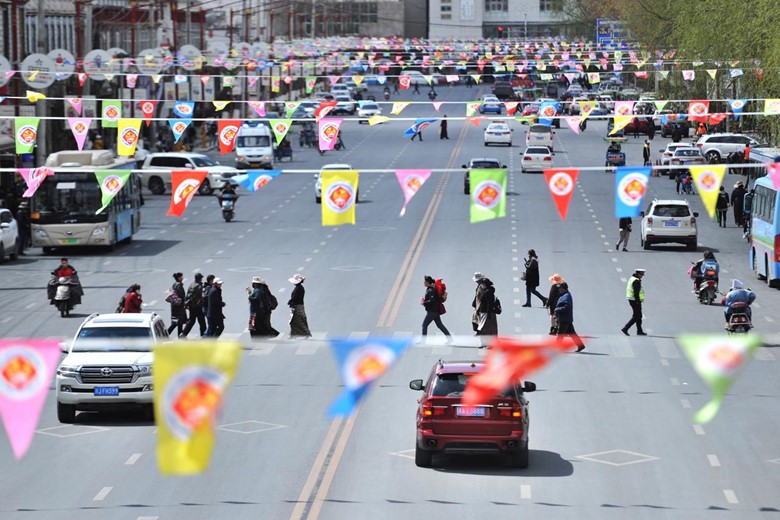
People cross a road under flags marking Tibetan Serfs’ Emancipation Day on March 28, in Lhasa, Tibet Autonomous Region, China March 26, 2019. Picture taken March 26, 2019. REUTERS/Stringer
China says it “peacefully liberated” Tibet in 1950 and has since exerted enormous effort to bring the remote region into the modern era, abolishing feudal practices while protecting its Buddhist people’s right to freely practise their religion and maintain their culture.
Critics, including the United States, say China rules with an iron fist and has overseen widespread rights abuses.
Deputy Tibet governor Norbu Dondrup said Tibetan society was “very dark and very cruel” before Communist Party rule. He was speaking in Beijing on the release of a policy paper marking six decades since China began what it calls “democratic reforms” in Tibet.
He said ordinary people – or “serfs” – could be bought and sold, thrown in jail, or even killed at will when the Dalai Lama was in charge in Tibet.
“The Dalai Lama attacking our human rights totally has ulterior motives. He tramples on human rights, and has no right, no qualifications, and is unworthy of talking about human rights,” Norbu Dondrup said.
“As for some countries slamming our human rights, they either don’t understand or believe the Dalai clique’s rumors and bewitchments,” he said.
The human rights situation in Tibet was extremely good, he said, listing examples such as free medical care and an abundance of food.
Asked whether China would ever allow an independence referendum in Tibet, as has happened in Scotland and Quebec, Norbu Dondrup said Tibet has been an inseparable part of China since ancient times.
“We have never recognized Tibet independence, and neither has any other country,” he said. “Moreover, the peoples of Tibet in the extended family of the peoples of the motherland now have very happy lives.”
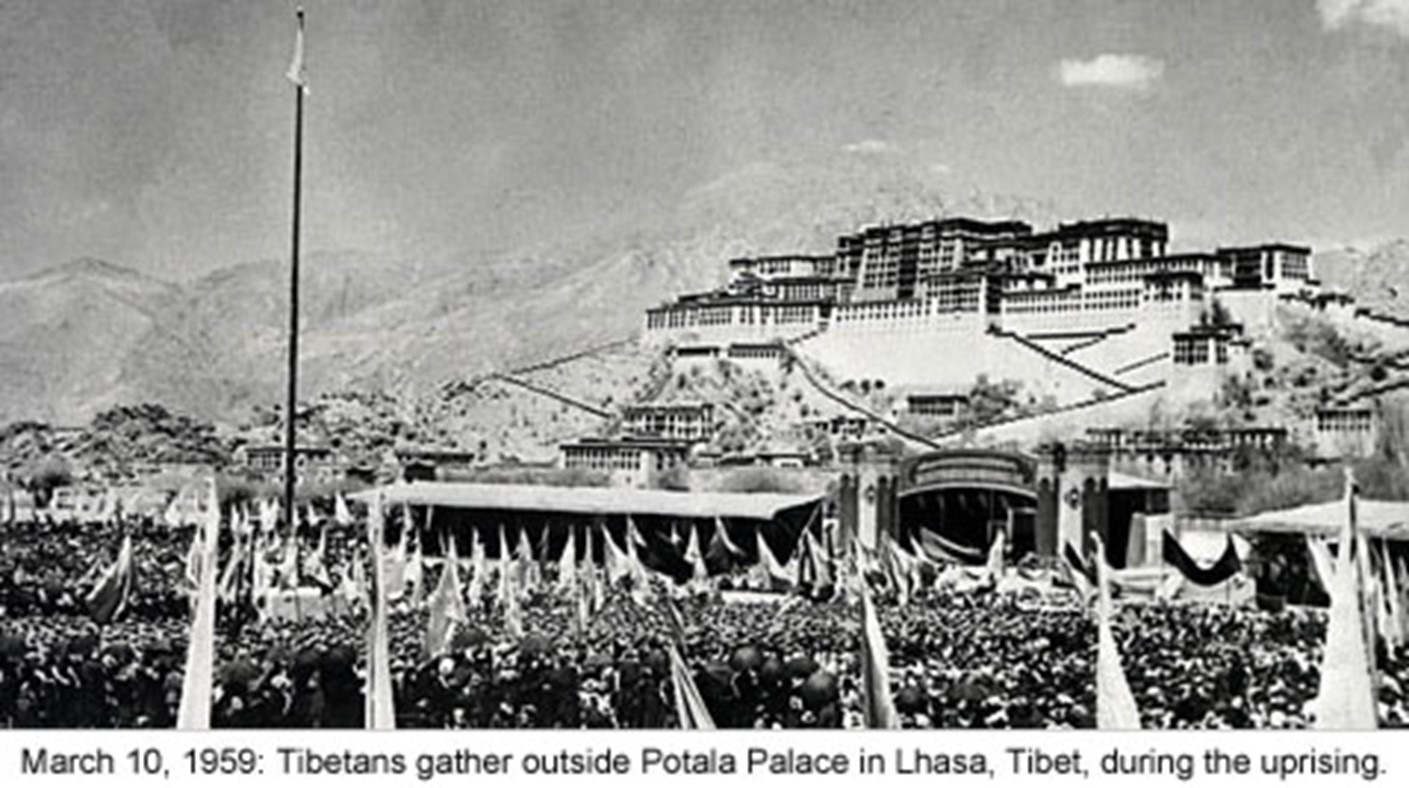
China reviles the Dalai Lama, who crossed the border into exile in India on March 31, 1959, after a failed uprising against Chinese rule.
Seen by Beijing as a dangerous separatist, he says he seeks merely genuine autonomy for his mountainous homeland and denies espousing violence.
The Dalai Lama told Reuters last week it was possible that, once he dies, his incarnation could be found in India and warned that any other successor named by China would not be respected.
The officially atheist Communist Party says it must approve his and other reincarnations of Tibetan lamas.
The Tibet issue has also become another irritant in China-U.S. ties after President Donald Trump signed into law a Reciprocal Access to Tibet Act in December.
That seeks to press China to open the region by denying U.S. entry to officials deemed responsible for restricting access to Tibet. China has denounced the law.
Reporting by Ben Blanchard; Editing by Paul Tait
Living Tibetan Spirits Bewitched by “Peaceful Liberation” of Tibet.
ICE-BREAKING OR HEART-BREAKING? NIXON’S HISTORIC 1972 TRIP TO PEKING
Ice-Breaking or Heart-Breaking? President Nixon’s historic 1972 trip to Peking. Nixon’s Peking Deal breaks the heart of Tibet Nation.
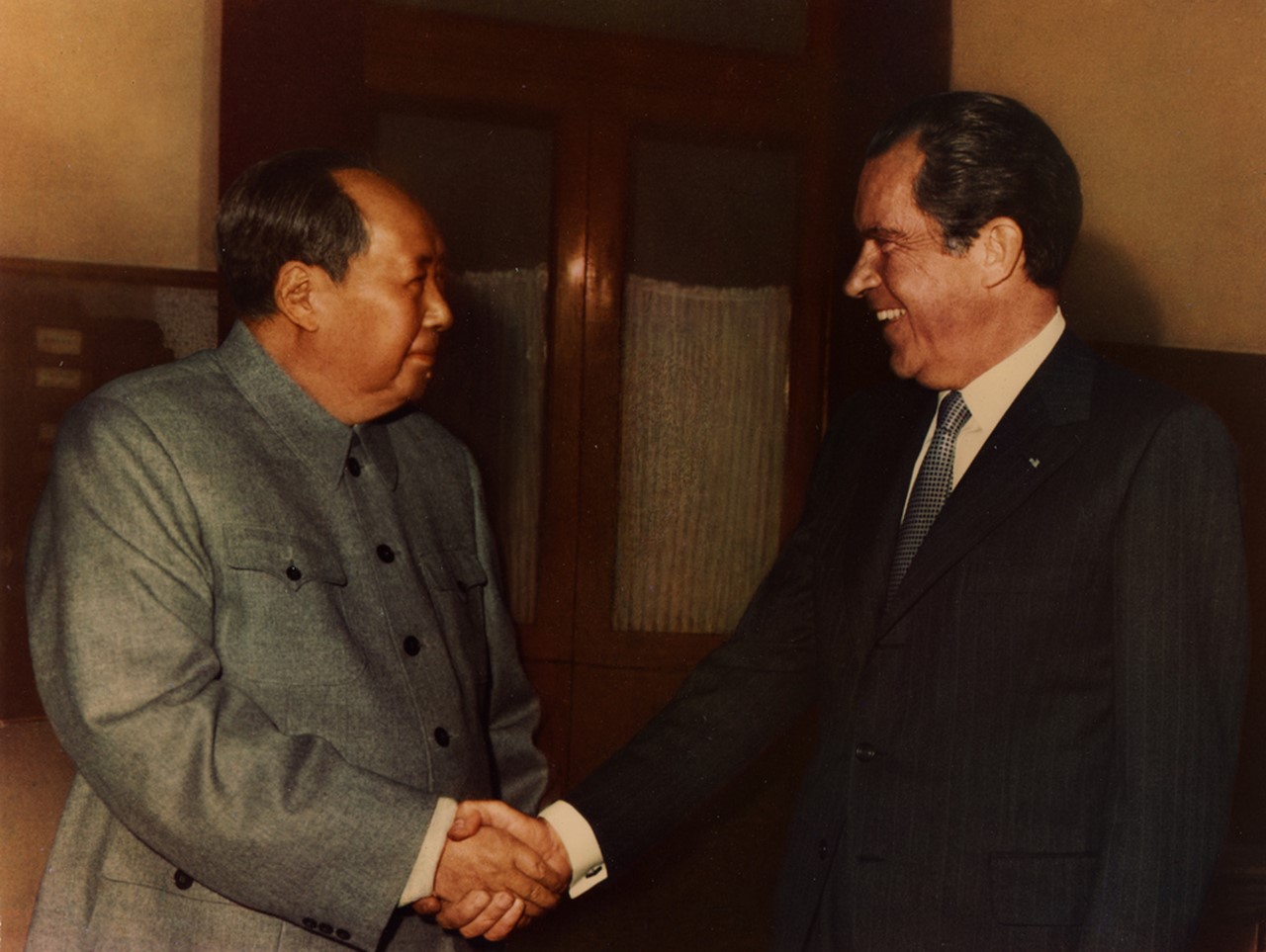
The Richard Nixon Foundation may celebrate the 40th Anniversary of the establishment of diplomatic relations between the US and China. I characterize this 1972 “ice-breaking” trip as “Heart-Breaking.” President Nixon shook hands with Chairman Mao Zedong with his right hand while backstabbing Tibet with his left hand.
Rudranarasimham Rebbapragada
SPECIAL FRONTIER FORCE
Ice-Breaking or Heart-Breaking? President Nixon’s historic 1972 trip to Peking. Deal-Making while Backstabbing Tibet.
Nixon’s historic 1972 trip to China was ‘ice-breaking’
By LIU YINMENG in Yorba Linda, California | China Daily USA | Updated: 2019-01-15 23:28
“ICE-BREAKING OR HEART-BREAKING?” PRESIDENT NIXON’S HISTORIC 1972 TRIP TO PEKING HIDES A PAINFUL TRUTH, THE BACKSTABBING OF TIBET.
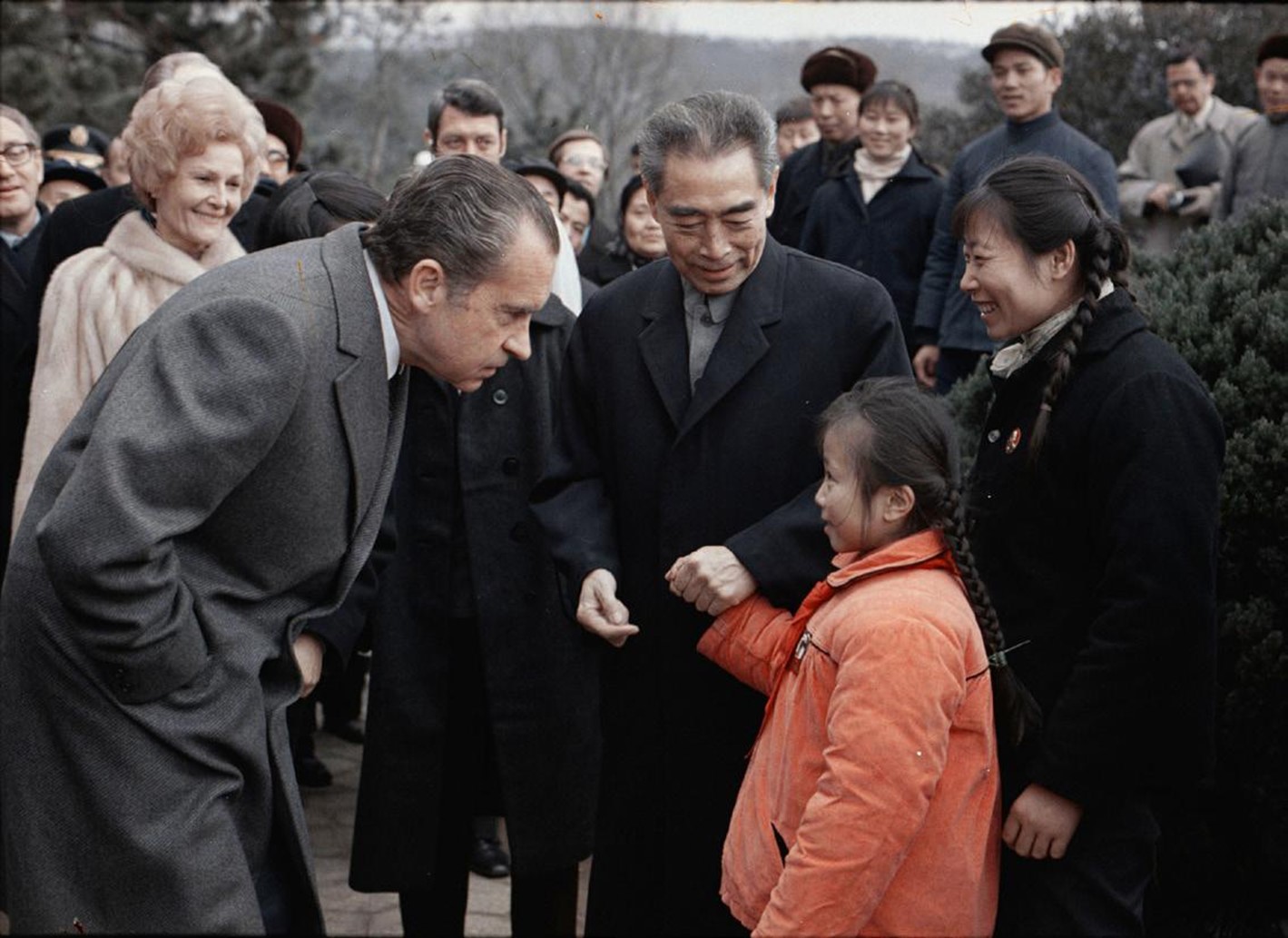
President Richard Nixon and Premier Zhou Enlai greet a young girl at Hangzhou West Lake Park in China on Feb 26, 1972. photo provided by Nixon Library
The Richard Nixon Foundation was a fitting place to celebrate the 40th anniversary of the establishment of diplomatic relations between China and the United States.
An elaborate dinner was held on Sunday at the foundation, the resting place of the American president whose “ice-breaking” trip to China in 1972 opened a significant chapter in the history of the two countries.
Elected officials, representatives of the Chinese Consulate General in Los Angeles, Chinese-American leaders, musicians and business leaders who participated called for goodwill and mutual understanding at a crucial juncture in the Sino-American relationship.
“For many years, Southern California has been running at the forefront in leading US-China subnational exchange and cooperation. It provides a good example of the mutually beneficial nature of our relations,” said Zhang Ping, Chinese consul general in Los Angeles.
He said the fact that President Xi Jinping and US President Donald Trump had reached an important consensus during their meeting at the G20 on Dec 1 is encouraging, and “it’s important that we make concerted efforts to implement their consensus”.
“As we look at the journey that bilateral relations have gone through, we are gratifying to see that our people are always standing behind the relationship,” Zhang said.
The event, co-hosted by the Roundtable of Chinese-American Organizations and the Richard Nixon Foundation, was attended by around 450 people.
The commemorative event kicked off with an “East Meets West” concert that included the national anthems of China and the US performed by the Orange County Music and Dance School.
Attendees also enjoyed performances by soprano Feng Wei and pianist Bai Chao Lan, as well as a selection of songs played by the Orange County-based Pacific Symphony, which made its debut tour in China in May.
Foundation President William Baribault called Nixon’s opening with China a “truly transformational foreign policy”.
“Because of President Nixon’s long and deep reading and understanding of history, he knew that China was a great power, and from his long and deep practice and understanding of statecraft, he knew that a truly stable, secure, prosperous and peaceful world requires the inclusion of all great powers at the table,” Baribault said.
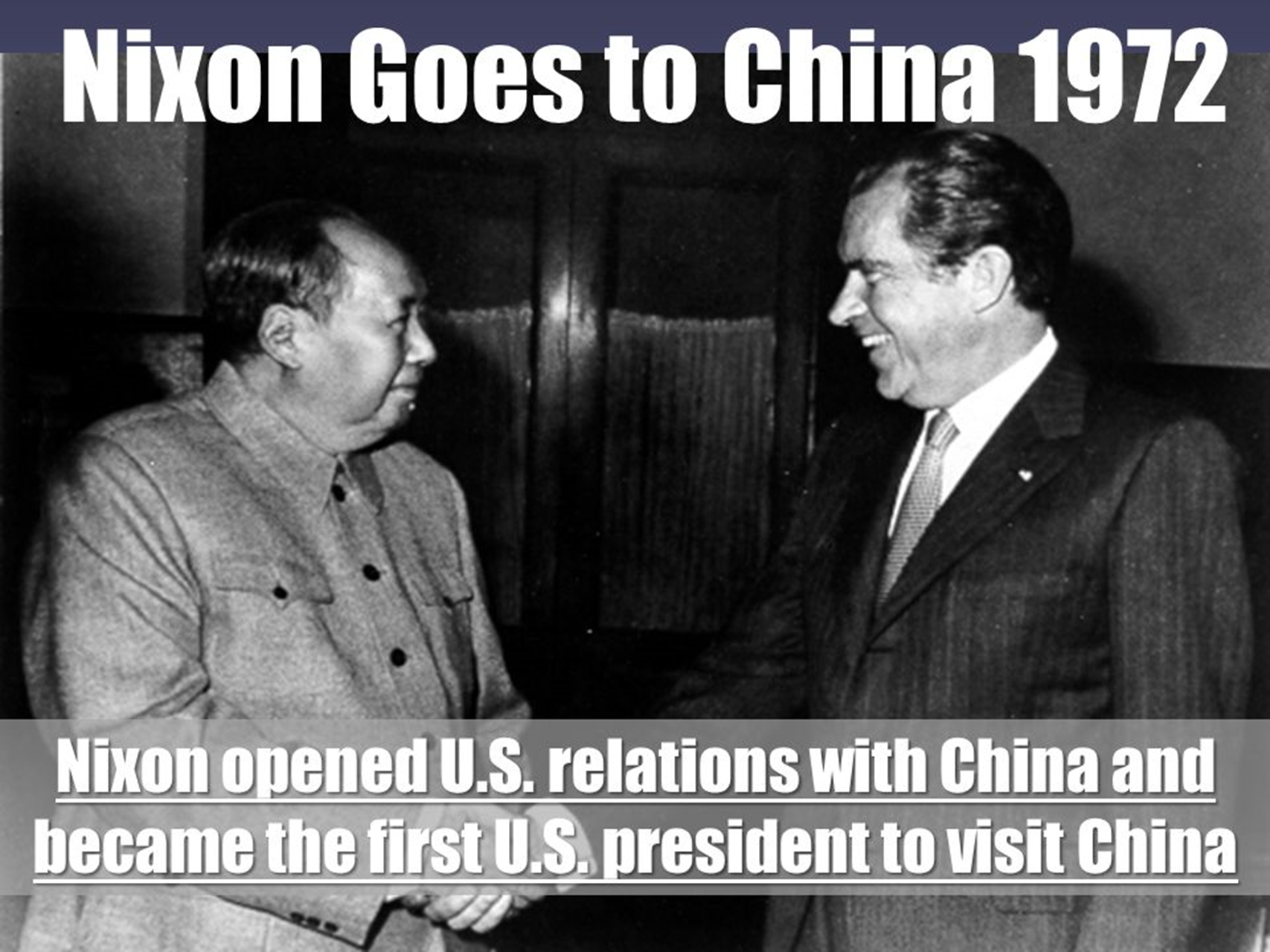
Nixon’s 1972 trip, which he dubbed “the week that changed the world”, marked the first time a US president set foot in China.
It led to the issuance of the Shanghai Communiqué at the end of the trip and the signing of accords between US president Jimmy Carter and Chinese vice- premier Deng Xiaoping in 1979, which formally established US-China diplomatic ties.
“His weeklong tour is one of the world’s most significant diplomatic milestones in the 20th century that has a lasting impact on our future,” said Guo Song, chairwoman of the Roundtable of Chinese-American Organizations.
She said Chinese Americans abroad, who have experienced up close the ups and downs of the relationship, treasured the deep and everlasting friendships between the US and China.
Tibet Awareness – Defend the Rights of Endangered Tibetans
Tibet Awareness. Defend Rights of Endangered Tibetans.
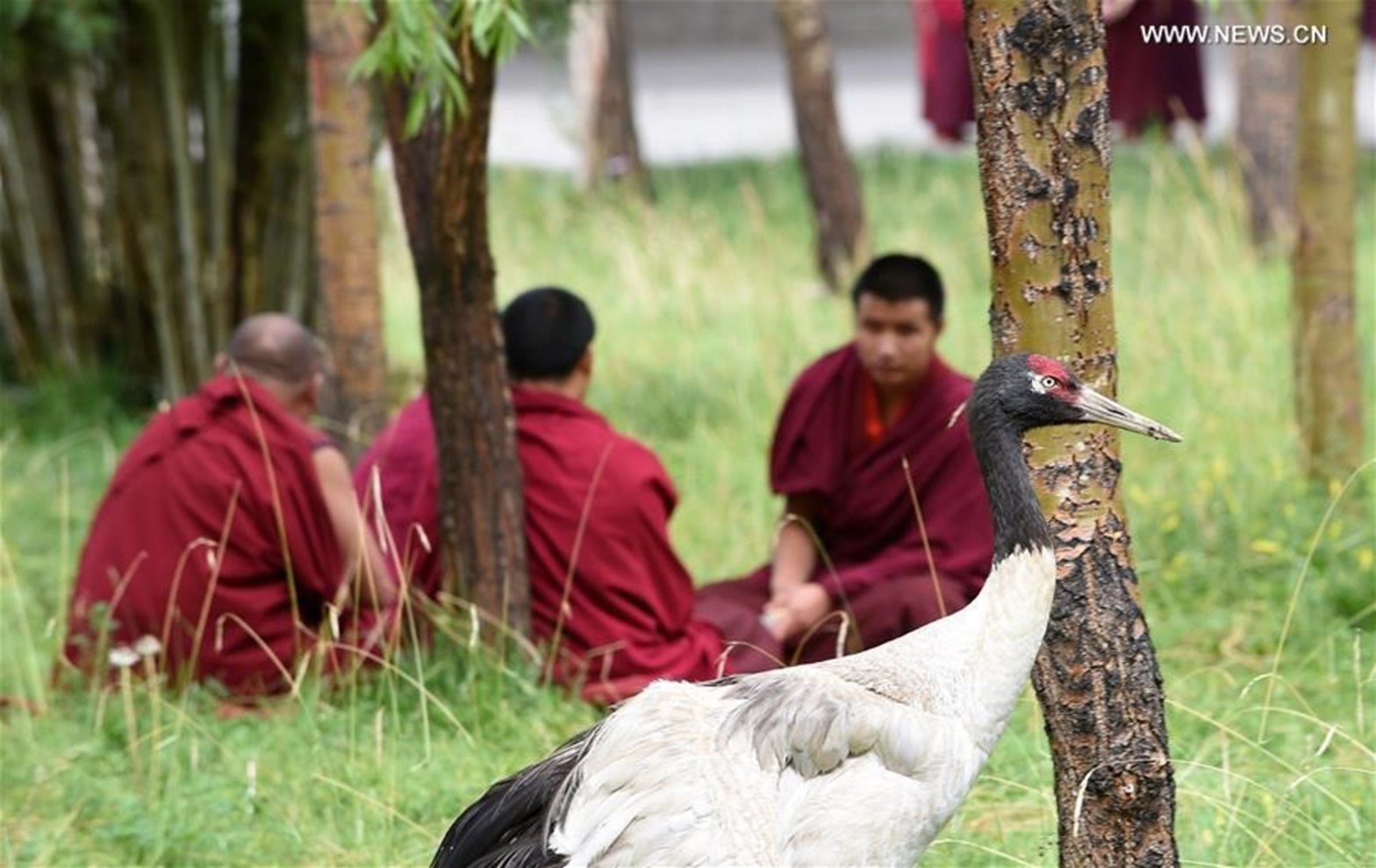
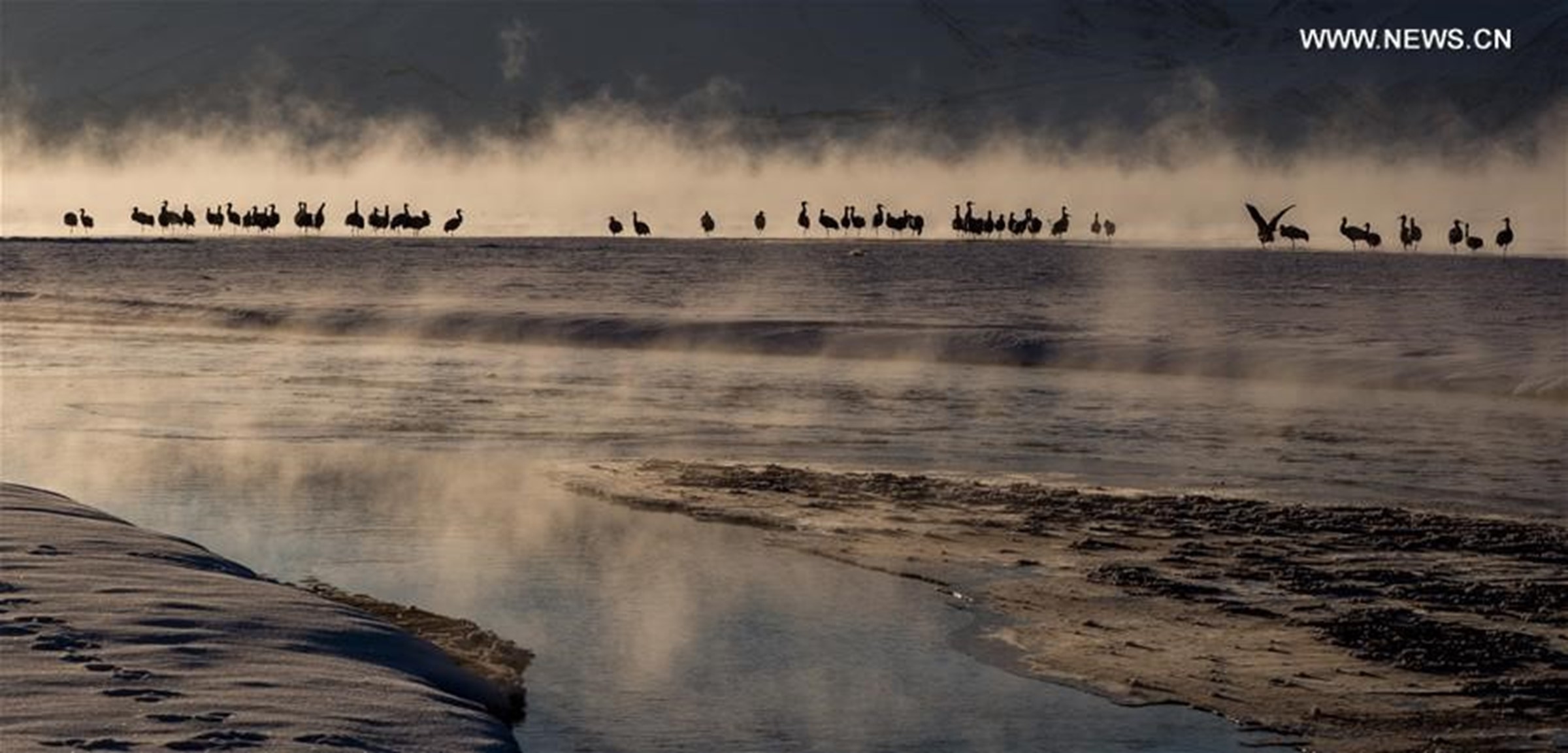
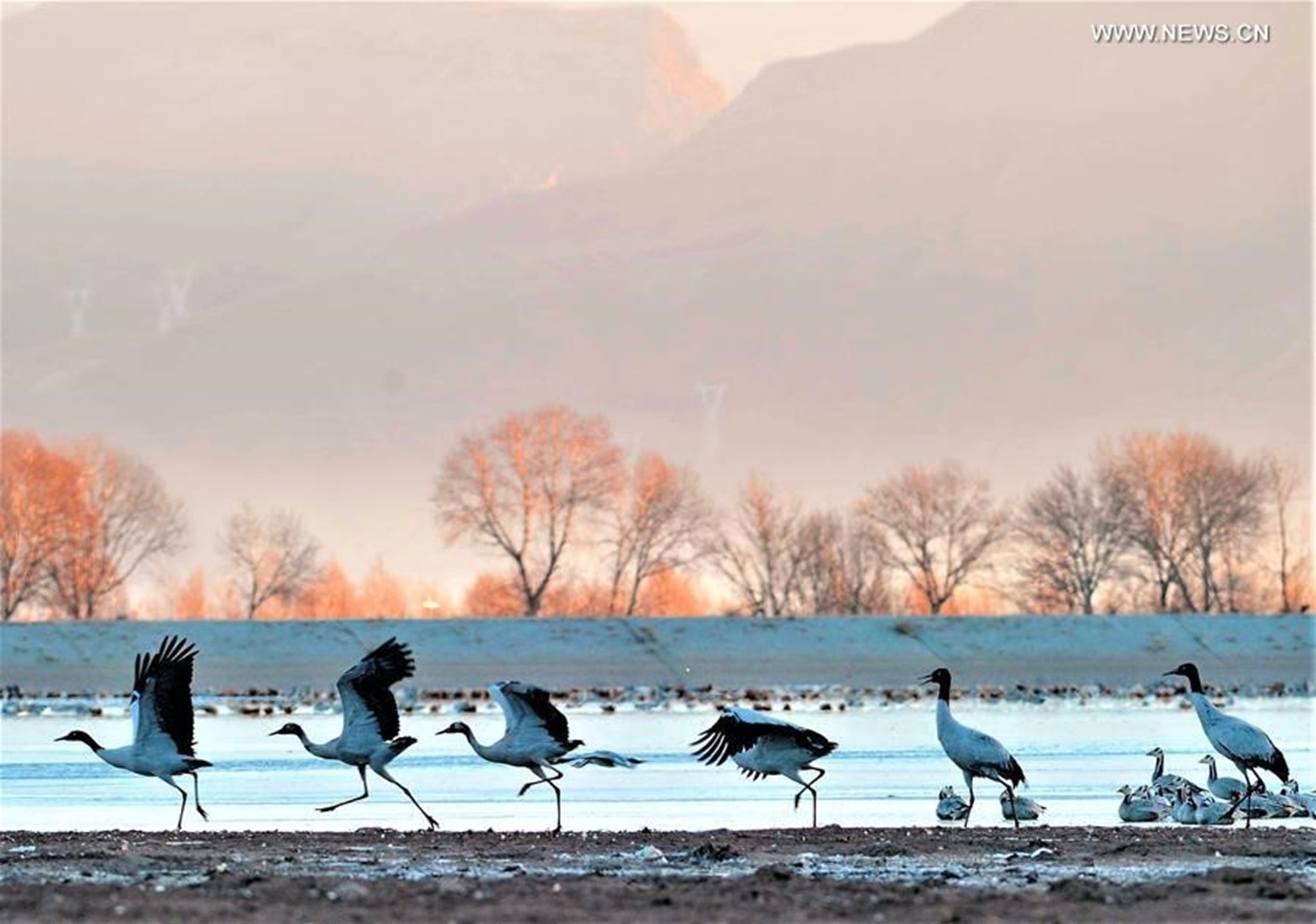
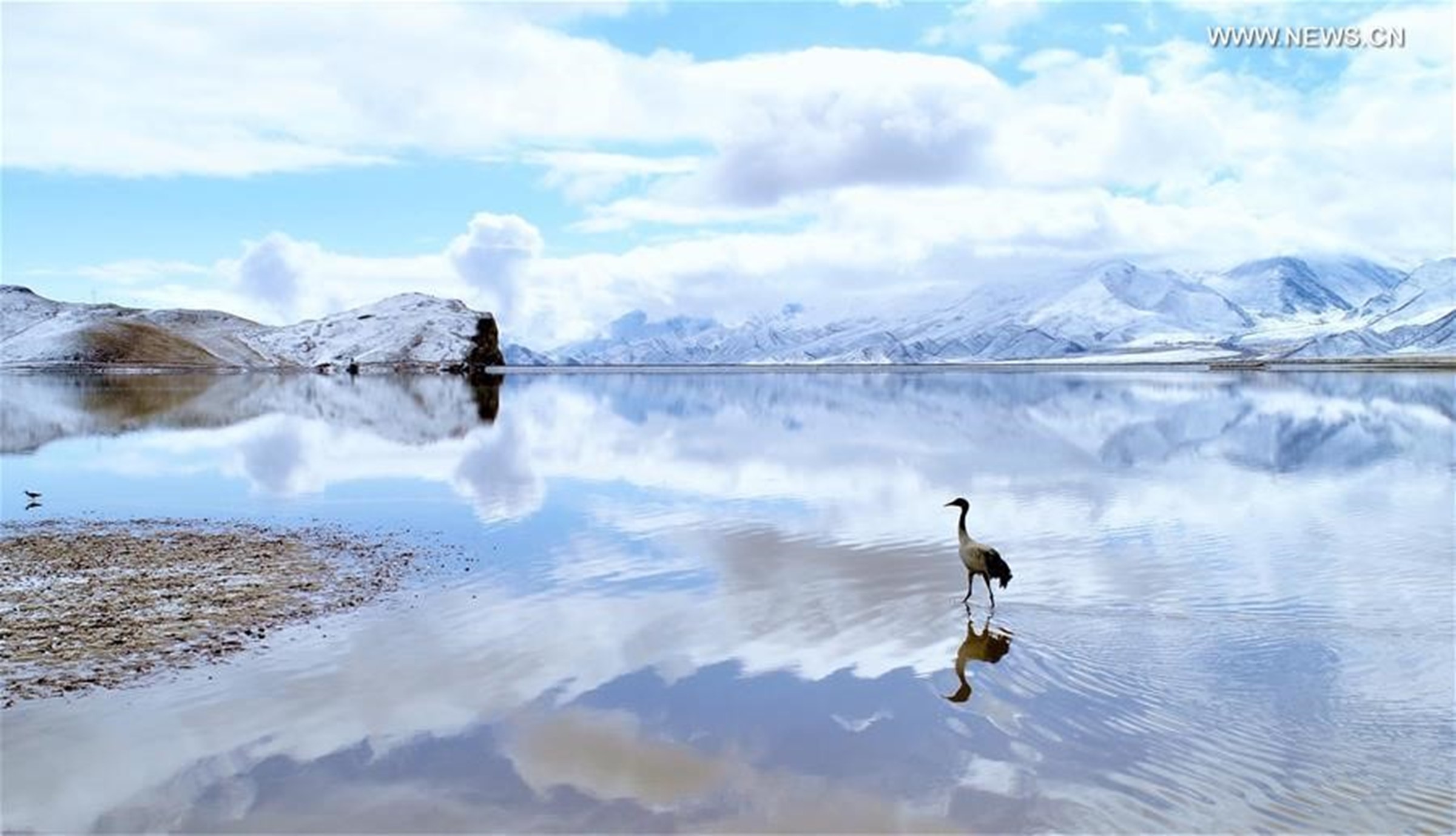
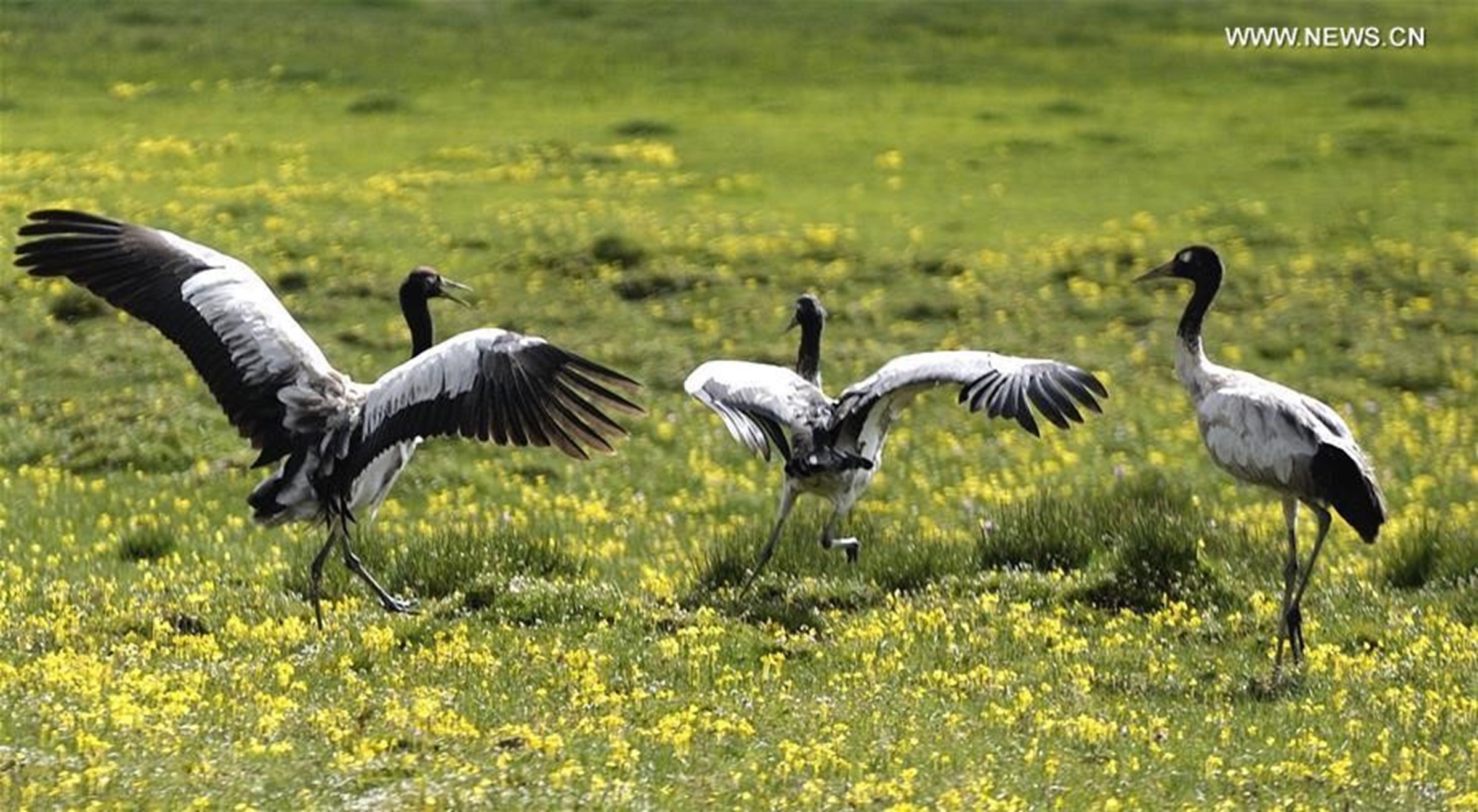
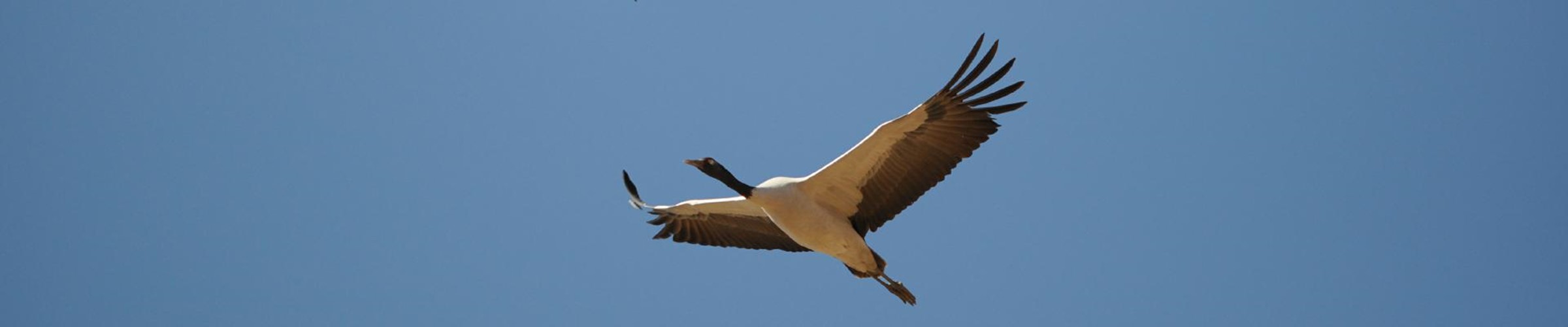
I am sharing photo images of endangered Black-necked Cranes visiting Tibet to promote Tibet Awareness. Since 1950, Tibetans lost their Natural Freedom because of China’s military conquest and occupation. I am asking the global community of nations to defend the Rights of Endangered Tibetans and to restore the Political Rights of Tibetans.
Tibet Awareness. Defend Rights of Endangered Tibetans.
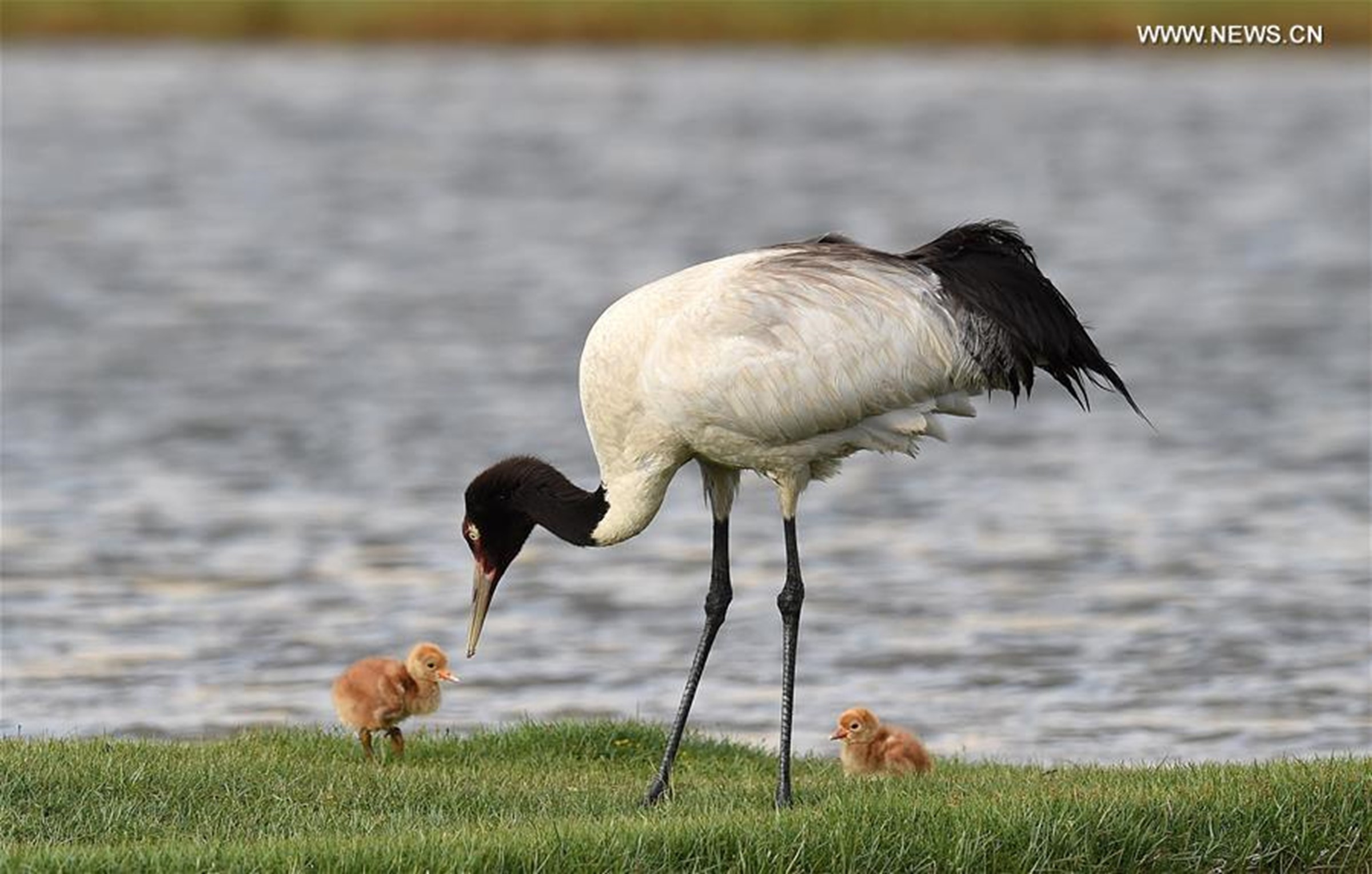
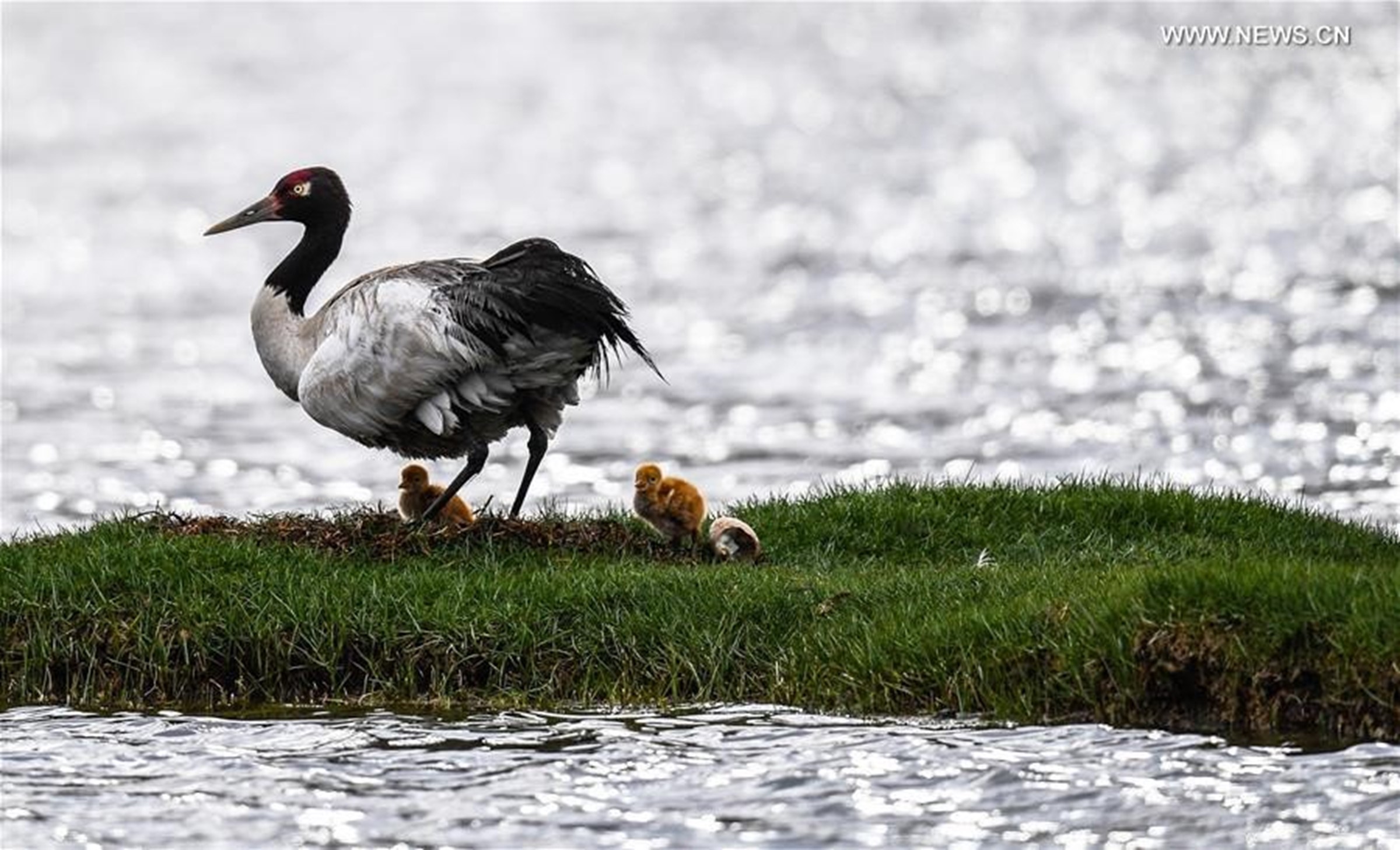
A black-necked crane looks after its chicks in the Qiangtang nature reserve, Tibet, in June of 2017. Black-necked cranes are often seen in Tibet’s river valleys and the region’s barley and wheat fields in winter. With an estimated population of around 10,200, the species is classified as “vulnerable” by the International Union for Conservation of Nature (IUCN). (Xinhua/Chogo)
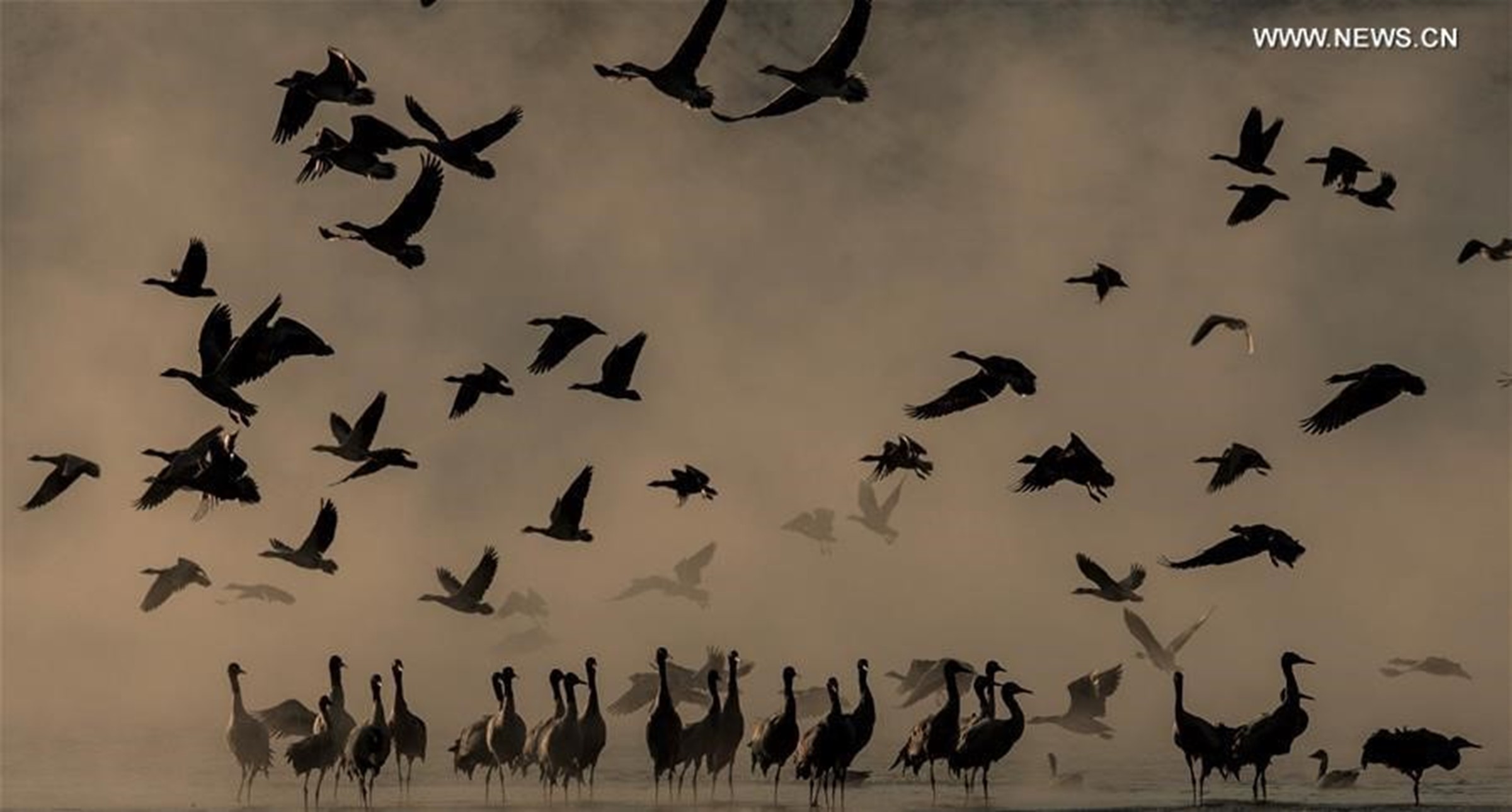
LHASA, Dec. 26 (Xinhua) — Every year, black-necked cranes arrive in Tibet, where they are welcomed by locals and tourists.
“This is the only time of the year when we can see flocks of these birds. It’s spectacular!” said Toinzhub Cering, a wildlife ranger in Lhundrup County, which is about 87 miles northeast of Lhasa, Tibet’s capital.
Black-necked cranes are often seen in Tibet’s river valleys and the region’s barley and wheat fields in winter. And Toinzhub knows exactly where to find them.
For ten years, the 42-year-old has patrolled the nature reserve in Lhundrup, one of the major habitats of black-necked cranes.
With an estimated population of around 10,200, the species is classified as “vulnerable” by the International Union for Conservation of Nature (IUCN).
The black-necked crane is the most recently identified among 15 kinds of cranes worldwide. They are also the only kind that inhabits plateau areas with an altitude of 2,500-5,000 meters.
Toinzhub Cering feels passionate about protecting the species and has been doing his part to help. He is always the first person to call media and authorities each year when the rare birds come and go.
Now that he has learned how to use social media, he often shares photos of the cranes with his friends.
Thanks to efforts made by locals and authorities, these exhausted birds, after flying for over 1,000 km, don’t have to face hunger, pesticide, or poachers.
Instead, they can now easily find pollutant-free highland barley and wheat left by farmers.
But endangered animal protection efforts in Tibet cover more than just birds, with the Tibetan antelope also under people’s watch, among other wildlife.
As for damage and losses caused by such animals, residents can claim compensation from the government.
Between mid-March and late April, black-necked cranes migrate to northern Tibet to reproduce in the lakeside marshes, far beyond human touch.
Yet not all journeys go so well for some cranes. Wounded birds are often left behind by the flock.
Two cranes with broken wings were found in Dazi County near Lhasa this spring. The local forestry authority has been caring for them ever since, and, hopes they can catch up with their flock during next year’s migration.
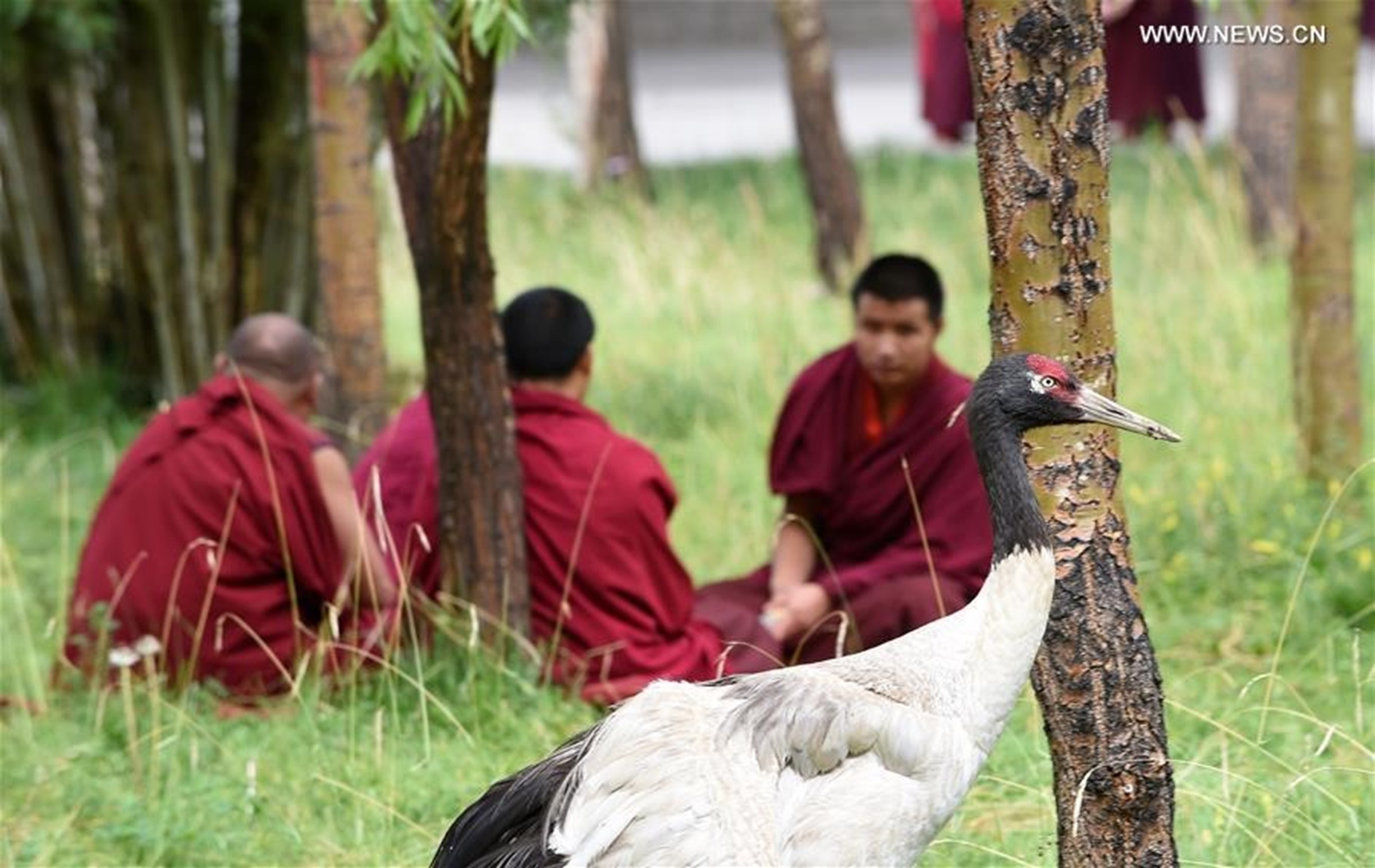
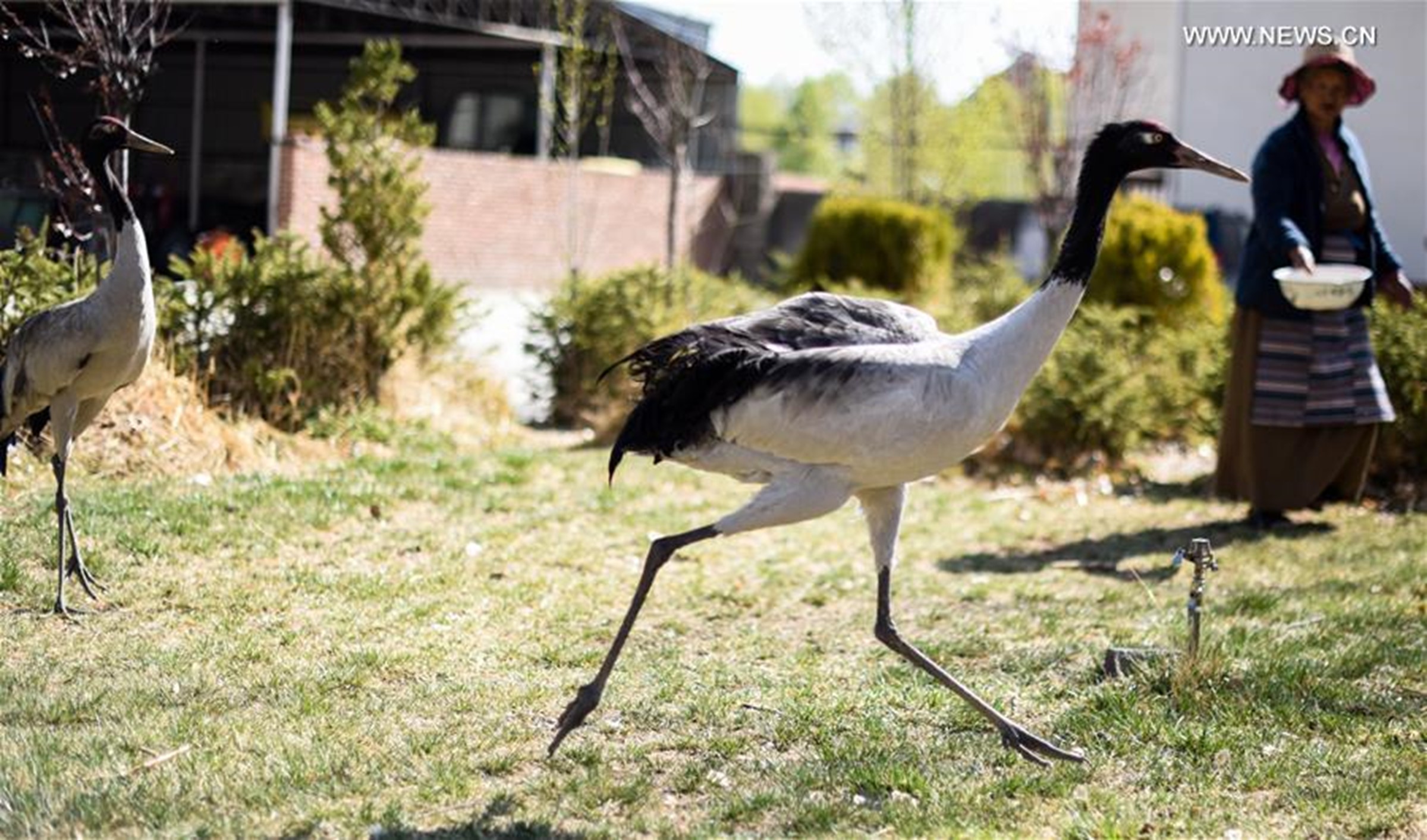
There have also been cases whereby wounded cranes have become permanent residents after recovery.
Black-necked cranes mainly live in the highlands of Tibet, India, Bhutan, and Nepal. Tibet is home to about 80 percent of the world’s total.
Tibet Awareness. Defend Rights of Endangered Tibetans.
A black-necked crane, once wounded during migration, becomes a permanent resident at a temple near Shigatse, U-Tsang region of Tibet, Sept. 27, 2014. (Xinhua/Chogo)
Tibet Awareness. Defend Rights of Endangered Tibetans.
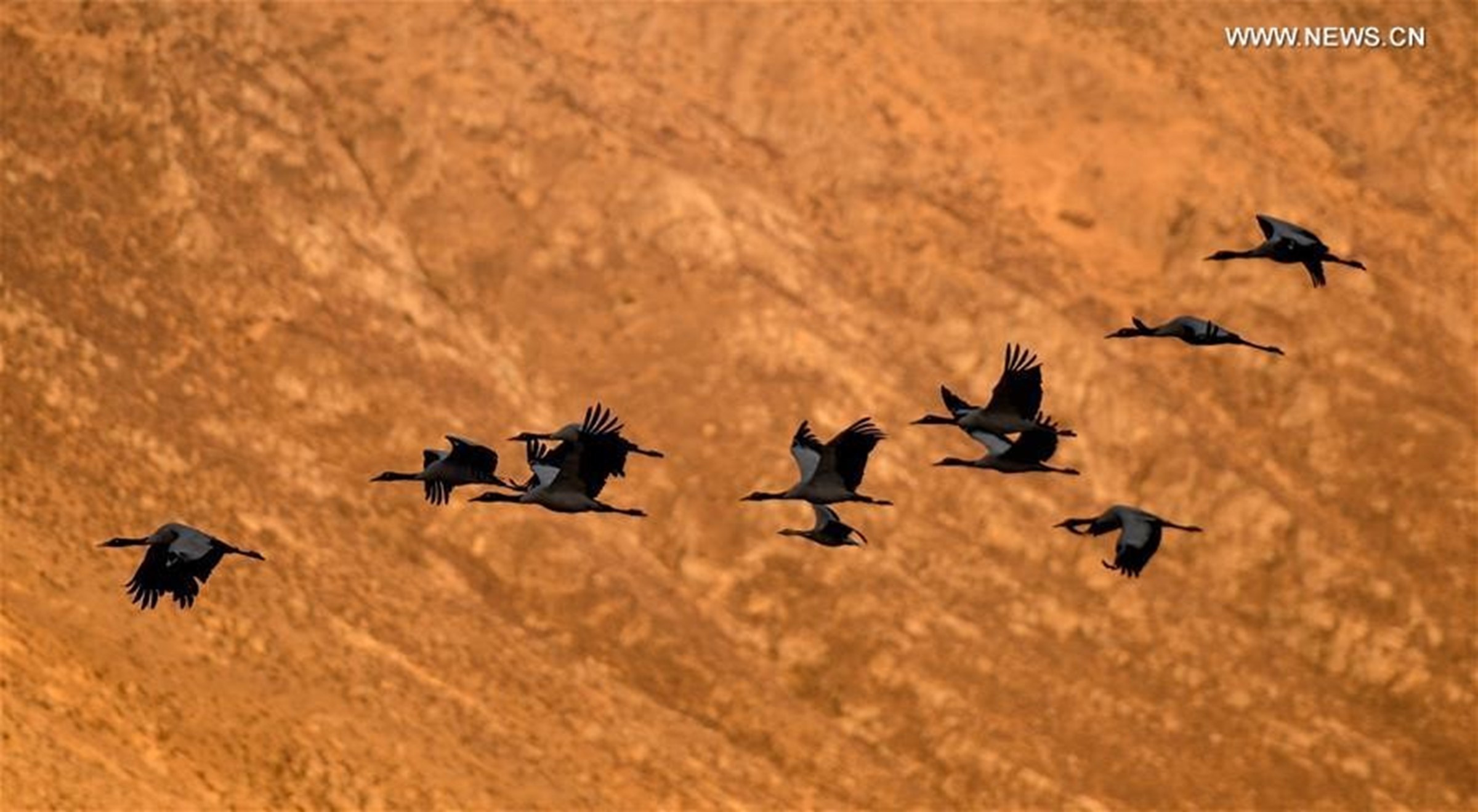
Group of black-necked cranes flying over Lhasa River Valley, Tibet, Nov. 23, 2017. (Xinhua/Purbu Zhaxi)
Tibet Awareness. Defend Rights of Endangered Tibetans.
A black-necked crane looks after its chicks in the Qiangtang nature reserve, Tibet, June 24, 2017. (Xinhua/Purbu Zhaxi)
Tibet Awareness. Defend Rights of Endangered Tibetans.
Photo taken on Dec. 18, 2018 shows black-necked cranes in Lhunzhub County of Lhasa, capital of Tibet. (Xinhua/Purbu Zhaxi)
Tibet Awareness. Defend Rights of Endangered Tibetans.
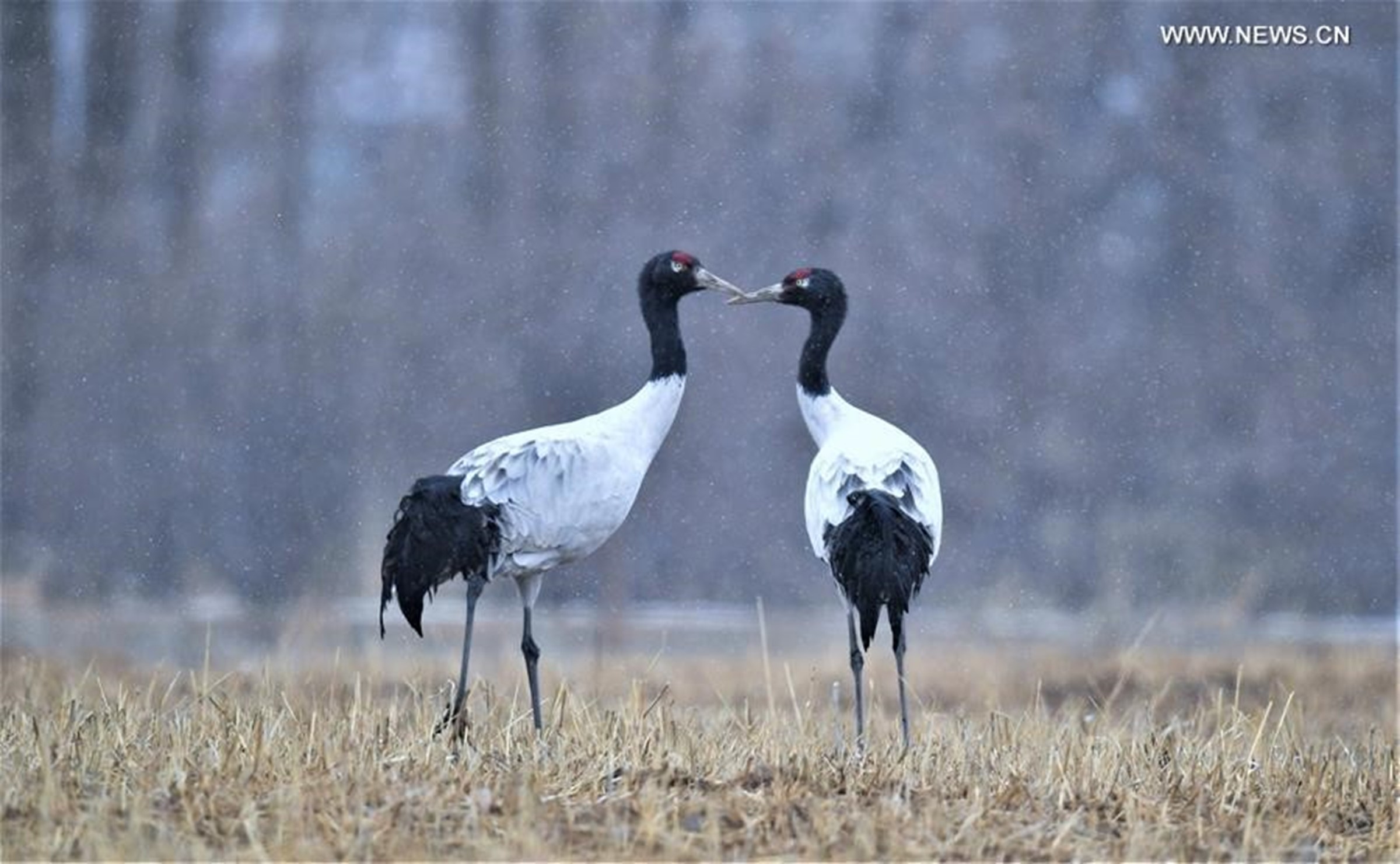
Black-necked cranes are seen in the Lhunzhub County, Tibet, Jan. 9, 2015. (Xinhua/Purbu Zhaxi)
Tibet Awareness. Defend Rights of Endangered Tibetans.
Black-necked crane chicks are seen in the Qiangtang nature reserve, Tibet, June 24, 2017. (Xinhua/Purbu Zhaxi)
Tibet Awareness. Defend Rights of Endangered Tibetans.
Black-necked cranes are seen in a reservoir where they spend the winter in Lhunzhub County of Lhasa City, capital of Tibet, in January of 2017. (Xinhua/Liu Dongjun)
Tibet Awareness. Defend Rights of Endangered Tibetans.
A black-necked crane looks after its chicks in the Qiangtang nature reserve, Tibet, June 24, 2017. (Xinhua/Purbu Zhaxi)
Tibet Awareness. Defend Rights of Endangered Tibetans.
Aerial photo taken on March 10, 2018 shows a black-necked crane in Lhunzhub County, Tibet. (Xinhua/Purbu Zhaxi)
Tibet Awareness. Defend Rights of Endangered Tibetans.
A black-necked crane, once wounded during migration, becomes a permanent resident at a temple near Shigatse, Tibet, Sept. 5, 2016. (Xinhua/Chogo)
Tibet Awareness. Defend Rights of Endangered Tibetans.
A black-necked crane family is seen near Yamdrok Lake,Tibet, Aug. 16, 2009. The little black-necked crane (C) broke the wing during migration, and the whole family became permanent residents after the little one’s recovery near the lake. (Xinhua/Purbu Zhaxi)
Tibet Awareness. Defend Rights of Endangered Tibetans.
Two black-necked cranes, wounded in wings during migration, are cared at a forestry authority in Dagze County, April 12, 2016. (Xinhua/Purbu Zhaxi)
Tibet Awareness. Defend Rights of Endangered Tibetans.
Black-necked cranes fly in the Lhunzhub County, Tibet, Jan. 9, 2015. (Xinhua/Purbu Zhaxi)
Tibet Awareness. Defend Rights of Endangered Tibetans.
Wildlife rangers are seen in the Qiangtang nature reserve, Tibet, Sept. 22, 2012. (Xinhua/Liu Hongming)
Tibet Awareness. Defend Rights of Endangered Tibetans.
BLESSINGS FOR PEACE – MY PRAYERS TO TIBET’S MOUNTAINS FOR JUSTICE
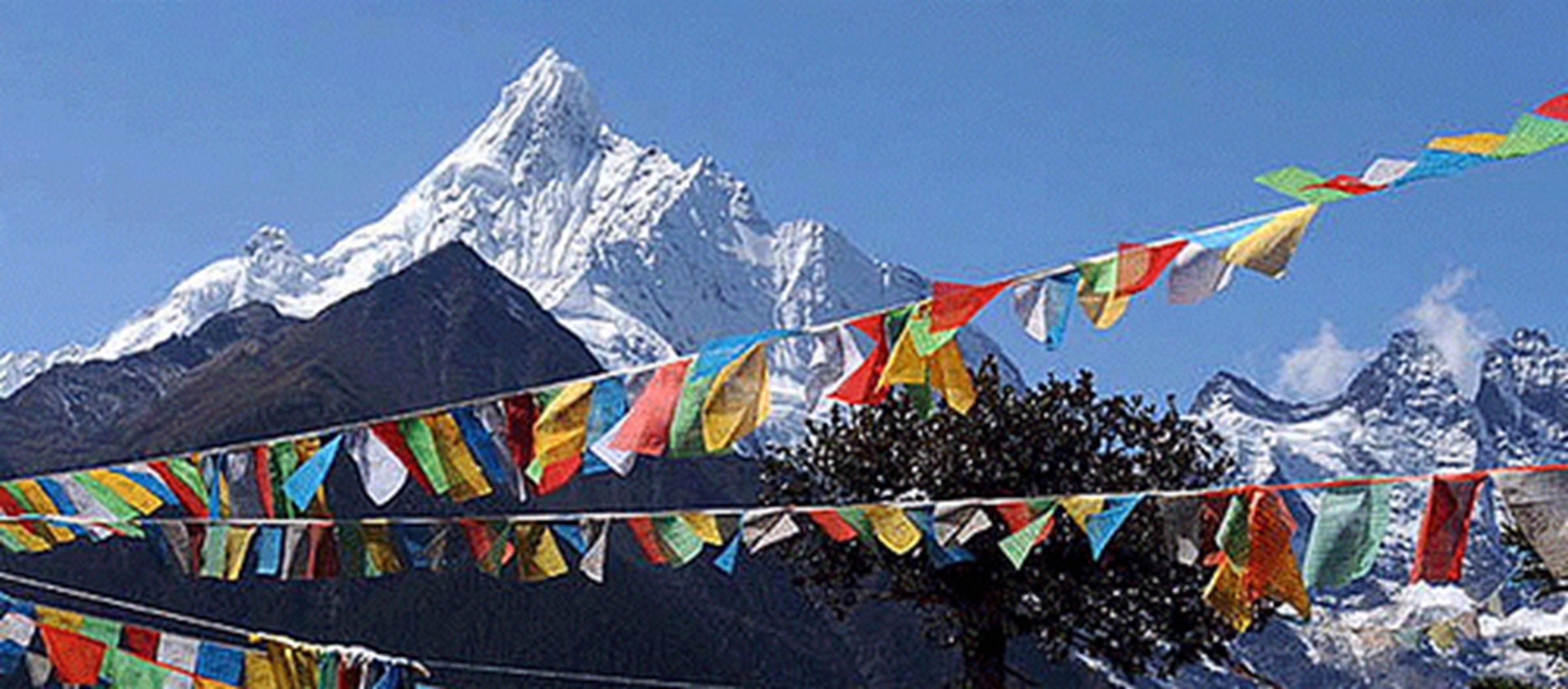
Peace, Harmony, and Tranquility define the Tibetan Living Experience. Tibetans pray to their Mountains to receive the Blessings for Peace. I am praying to Tibet’s Mountains to give us Justice in addition to Peace.
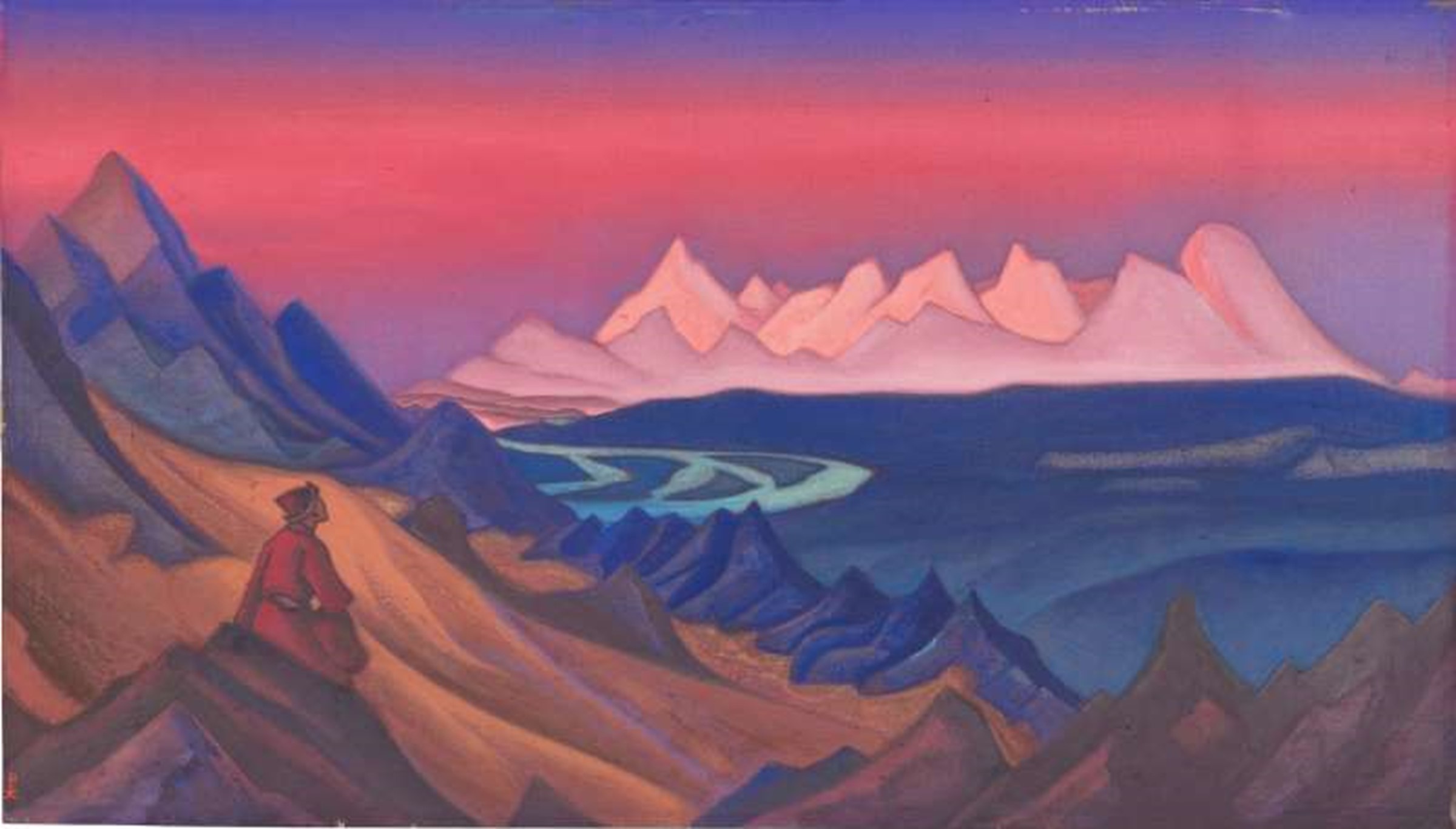
The painting – titled “Tangla. The Song about Shambhala” – shows a mythical paradise. Shambhala is believed to be the birthplace of Kalki, the tenth incarnation of Lord Vishnu.
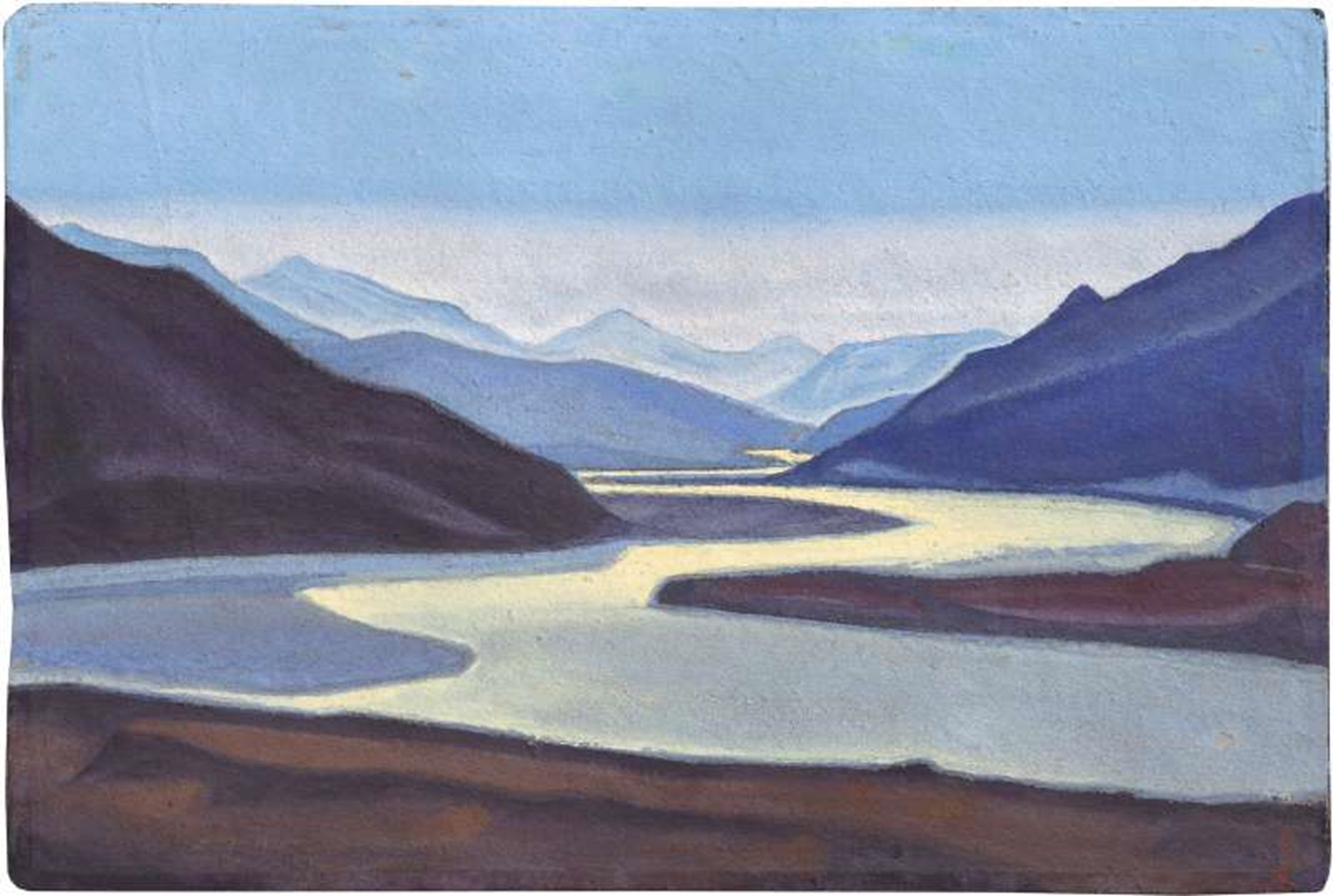
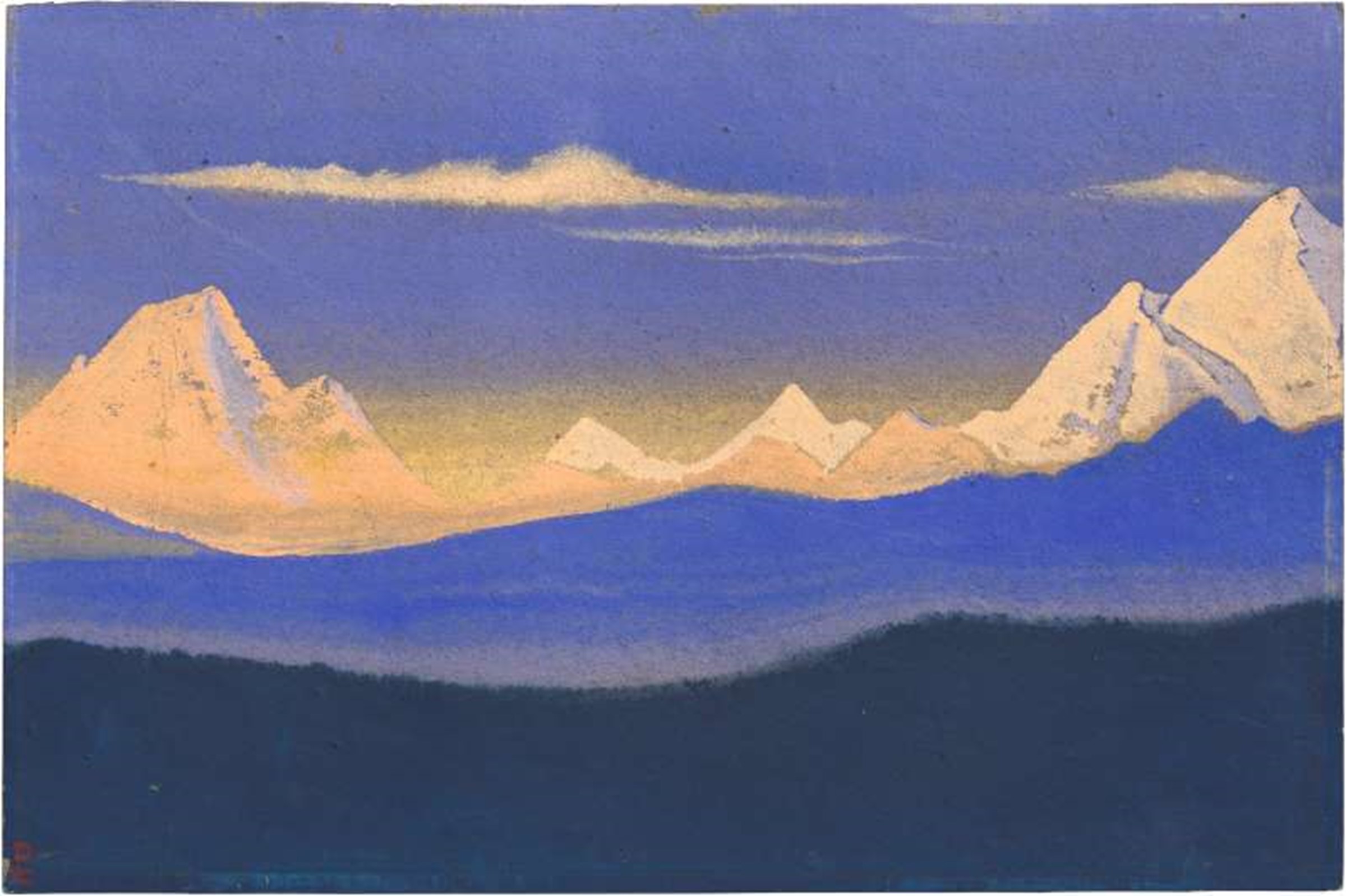
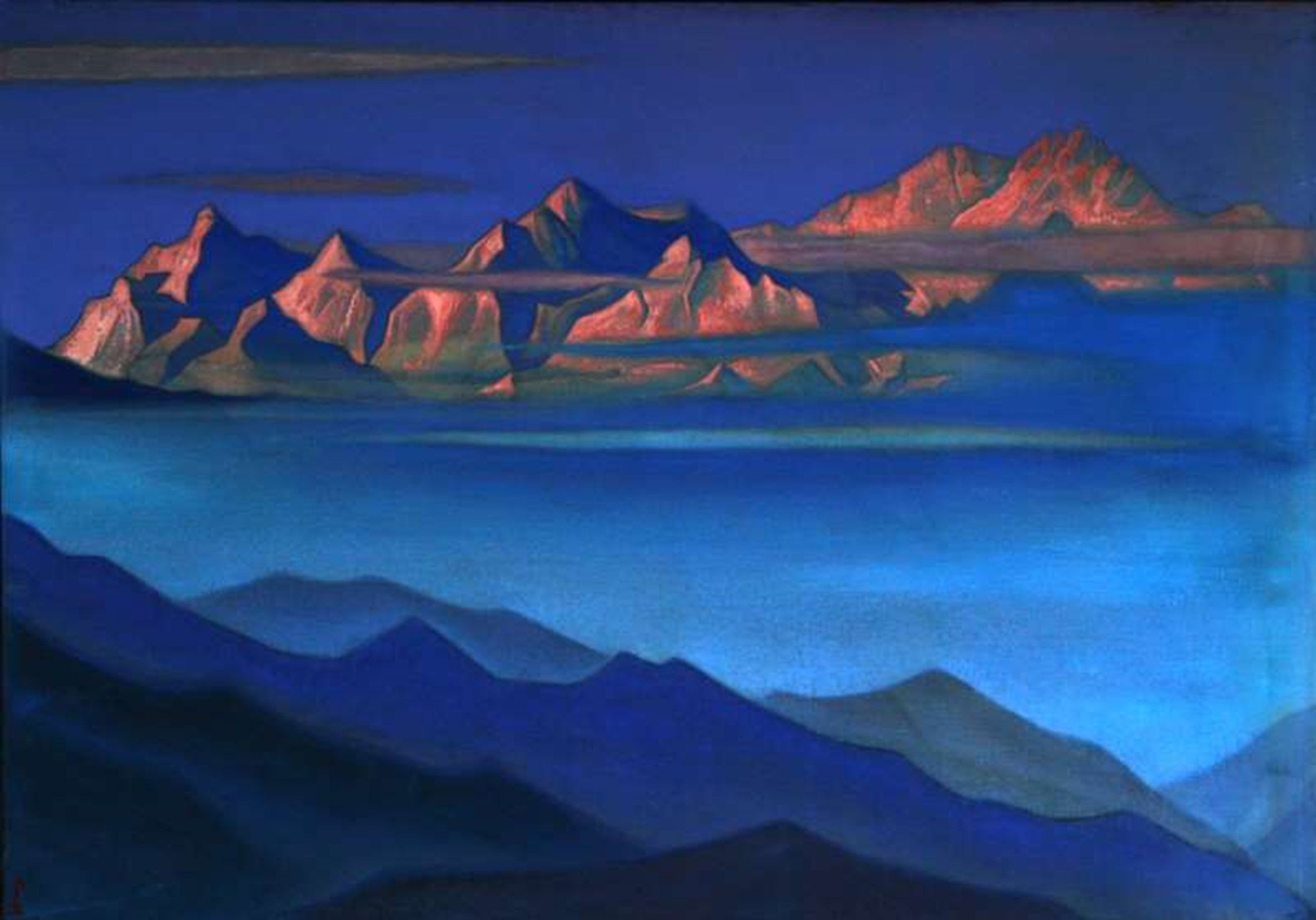
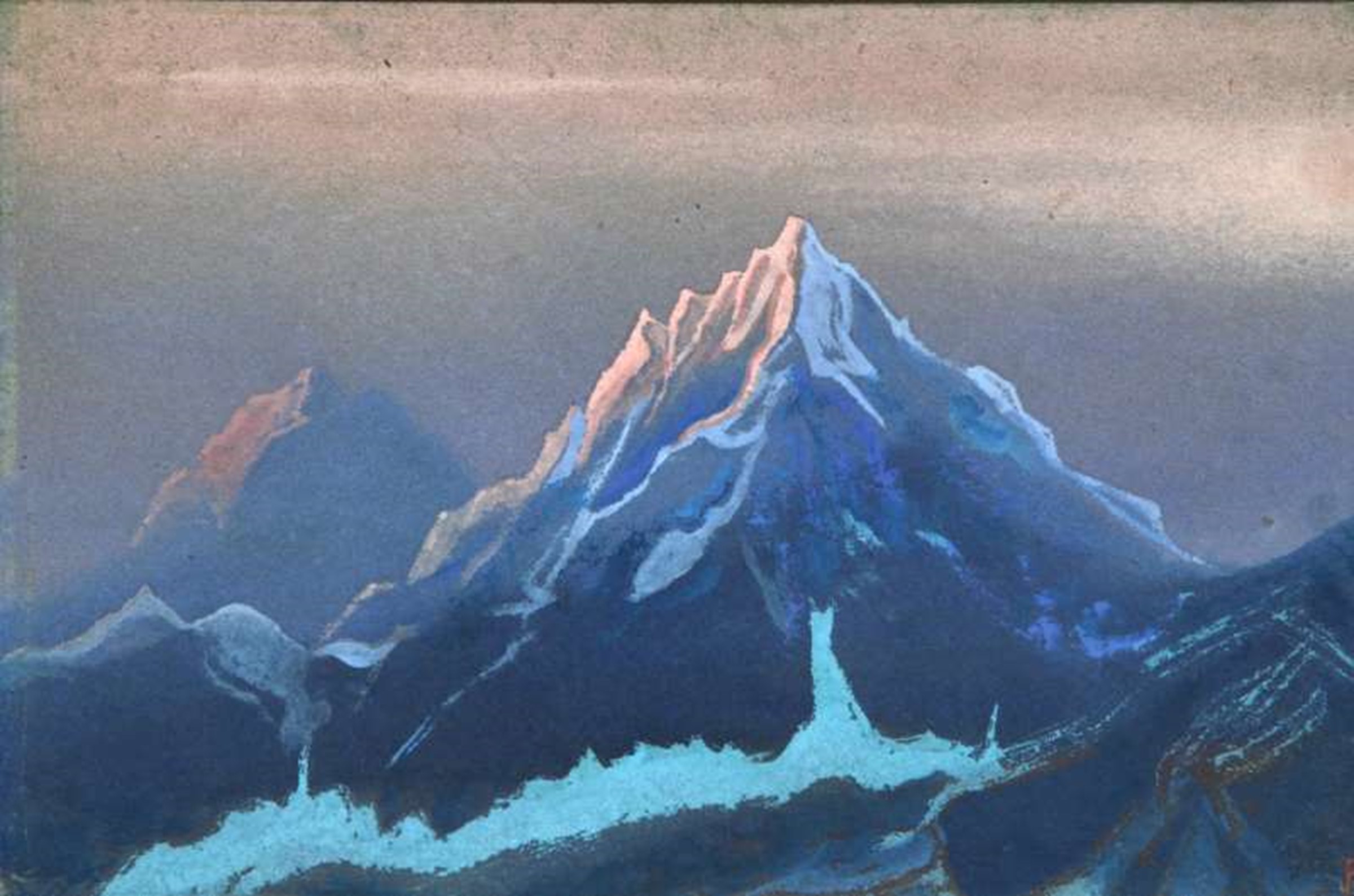
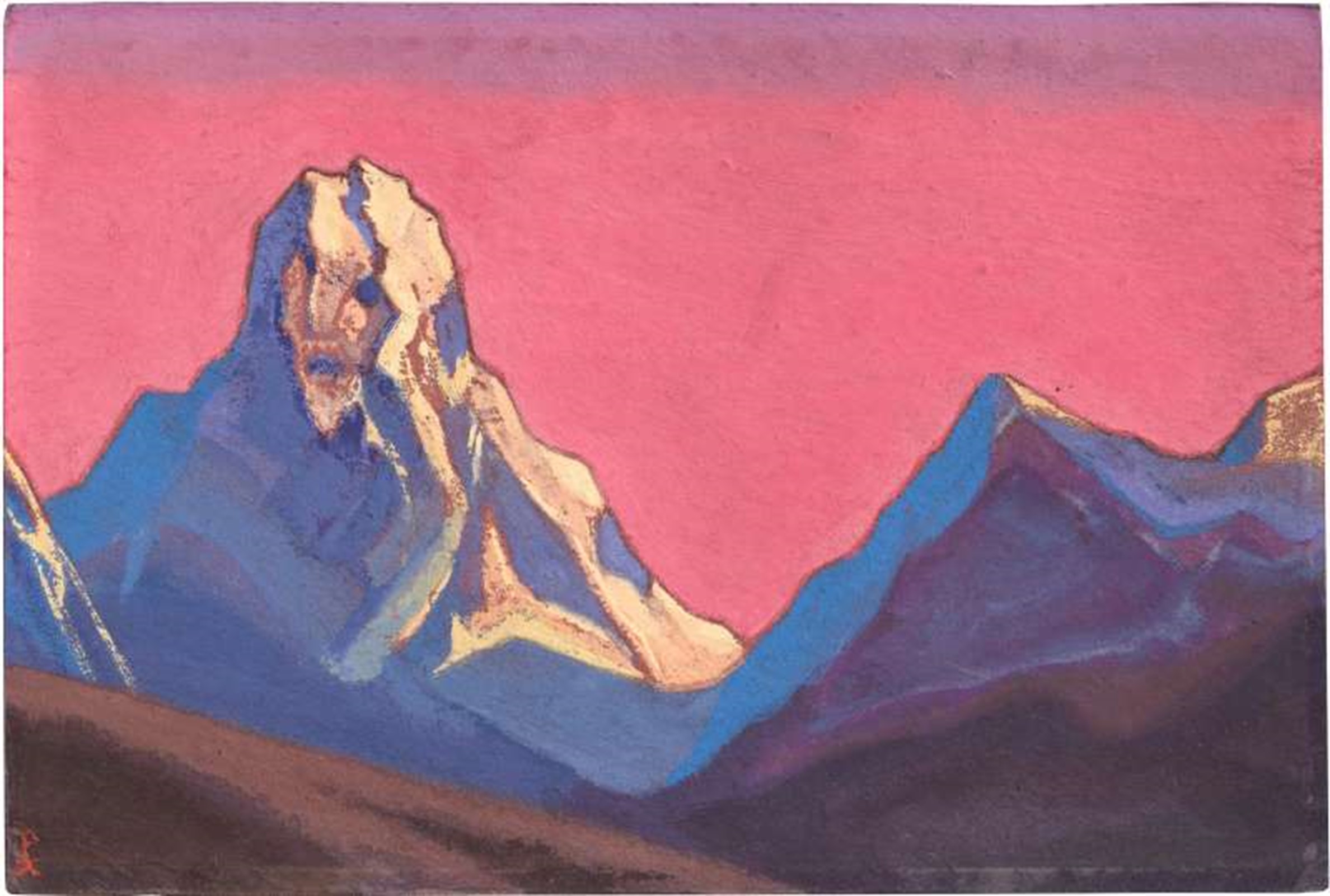
From the meandering Brahmaputra River winding its way through the Himalayas to the magnificent vision of the Kangchenjunga melding with the sky above, here are some colorful and dramatic paintings of Tibet’s mountains.
Brahmaputra River is shown flowing through a path between lofty mountain peaks in this painting titled “Brahmaputra.”. (Found in the collection of State Museum of Oriental Art in Moscow, Russia.)
The painting – titled “Tangla. The Song about Shambhala” – shows a mythical paradise. Shambhala is believed to be the birthplace of Kalki, the tenth incarnation of Lord Vishnu. (Found in the collection of State Museum of Oriental Art.)
A 1924 work titled “Padma Sambhava.” Padmasambhava was an Indian sage who is said to have introduced Tantric Buddhism to Bhutan and Tibet in the eighth century. (Found in the collection of the Nicholas Roerich Museum in New York City, New York, U.S.)
An illustration, titled “Kangchenjunga,” of world’s third highest mountain. (Found in the collection of the International Centre of the Roerichs in Moscow.)
Tibetan Resistance Movement is not about Separatism
Tibetan Resistance Movement is not about Separatism. It is about the Occupation of Tibet by The Evil Red Empire. Red China expanded her territory through military conquest and occupation.
On behalf of Living Tibetan Spirits, I declare that The Tibetan Resistance Movement is not about Separatism. For centuries, Chinese Emperors ruled over Tibet without physically occupying Tibet. In other words, Tibetans enjoyed full freedom during the centuries of rule by foreigners. Tibetans resist the physical occupation of their territories. The issue is not that of separating Tibet from China. The issue is that of evicting the Occupier from Tibetan Soil.
Tibetan Resistance Movement is not about Separatism. It is about the Occupation of Tibet by The Evil Red Empire.
CHINA LEADER CALLS FOR ‘ANTI-SEPARATISM EFFORTS’ IN TIBET
Tibetan Resistance Movement is not about Separatism. It is about the Occupation of Tibet by The Evil Red Empire.
The Associated Press
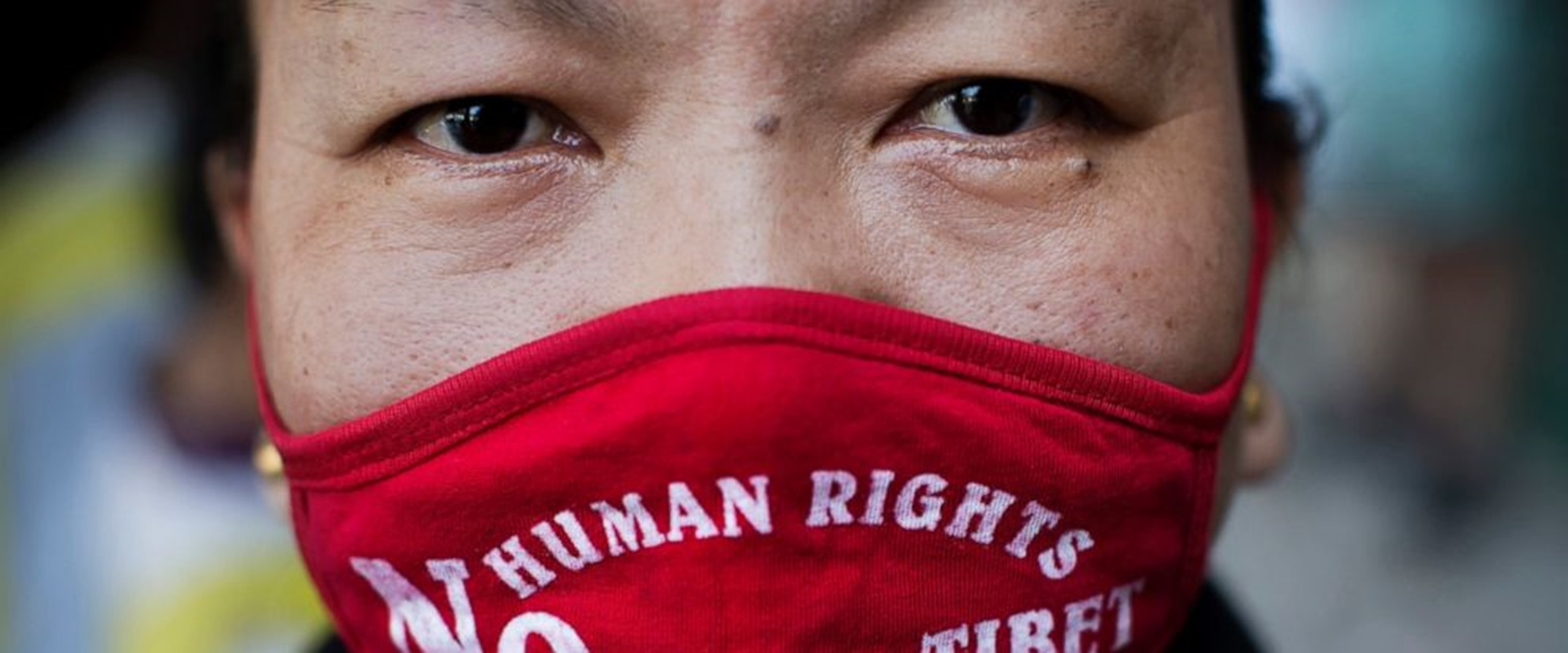
FILE – In this Sept. 17, 2014, file photo, an Exile Tibetan woman wears a mask during a protest to highlight Chinese control over Tibet, coinciding with the visit of Chinese President Xi Jinping in New Delhi, India. (AP Photo/Bernat Armangue, File)
A top Chinese leader has called for “advancing anti-separatism efforts” in Tibet, in a sign of continued high-pressure tactics in the Himalayan region.
Wang Yang, the ruling Communist Party’s No. 4 ranking official, was quoted Monday in state media as stressing the importance of tight control over Tibet’s Buddhist institutions, urging “preparedness and precautions for danger in times of safety.”
Religious figures must “be courageous to battle all separatist elements” in the name of preserving national unity and social stability, Wang was quoted as saying in Tibet’s regional capital of Lhasa during a visit there on Sunday.
Beijing’s forces occupied Tibet shortly after the 1949 communist revolution and security there has been ratcheted up significantly in the decade since anti-government protests spread through Tibetan areas in 2008.
The tactics in Tibet are largely aimed at reducing the influence of the region’s spiritual leader, the Dalai Lama, who lives in exile in India. China claims Tibet has been part of its territory for more than seven centuries and regards the Dalai Lama as a dangerous separatist.
Many Tibetans insist they were essentially independent for much of that time.
Wang has broad responsibility for religious policy as head of the government’s top political advisory body. In his comments Sunday, he also echoed Beijing’s calls for the Sinicization of religion, shorthand for adherence to the dictates of the officially atheist party.
Among recent tightening security measures in Tibet, students were required to sign agreements to “not take part in any form of religious activity” during the summer school holidays.
Young Tibetan monks have also reportedly been forced to leave one of the biggest monasteries in a Tibetan region of western China as part of a drive to replace monastic life with secular education.
Recent months have also seen sweeping crackdowns on traditional Muslim culture among the Uighur ethnic minority group in the northwestern region of Xinjiang and among Christians in eastern China.
Tibetan Resistance Movement is not about Separatism. It is about the Occupation of Tibet by The Evil Red Empire.
TIBET AWARENESS – UNEQUAL YOKING. TIBET IS SUBJECT TO BURDEN IMPOSED BY UNEQUAL YOKING WITH A MONSTROUS BEAST, UNEQUAL IN SIZE AND POWER.
Red China, using military force, yoked with Tibet. To perform farm work, farmers generally use two animals of same type, size, and strength to get work done without imposing unequal burden on animals yoked together. Red China is a huge, monstrous beast, and her Unequal Yoking with Tibet imposes burden called Subjection, Bondage, Servitude, Enslavement, Hardship, Trouble, Pain, and Suffering upon Tibetans.
TIBET AWARENESS – UNEQUAL YOKING. TIBET IS SUBJECT TO BURDEN IMPOSED BY UNEQUAL YOKING WITH A MONSTROUS BEAST, UNEQUAL IN SIZE AND POWER.
Tibet is under the Yoke of Burden, Control, Subjugation to become subservient to Red China’s Doctrine of Neocolonialism.
THINGS THAT SURPRISED ME ABOUT TIBET – FUN AND INTERESTING FACTS
Tibet Awareness – Unequal Yoking. The Burden of Military Occupation.
The country at the roof of the world, was very different from what I expected. Tibet, often considered the spiritual center of the world has more Buddhist monks, stupas and gods than any other place, yet it was anything but the peaceful and calm realm I had envisioned. Not that the available online resources lie about it, but more that there is a general lack of information beyond the Dalai Lama and the Chinese-Tibetan political situation, so my mind veered towards red-robed monks and the magical image of the Potala Palace. The list of things that surprised me about Tibet is quite long, but I will attempt to highlight the most relevant, the top 17 things that most people don’t know about Tibet or that will surprise any traveler to the oft-called Shangri-la.
1. Tibet facts – Tibet is developed and it has incredible infrastructure
Tibet Awareness – Unequal Yoking. Red China’s Subjugation of Tibet.
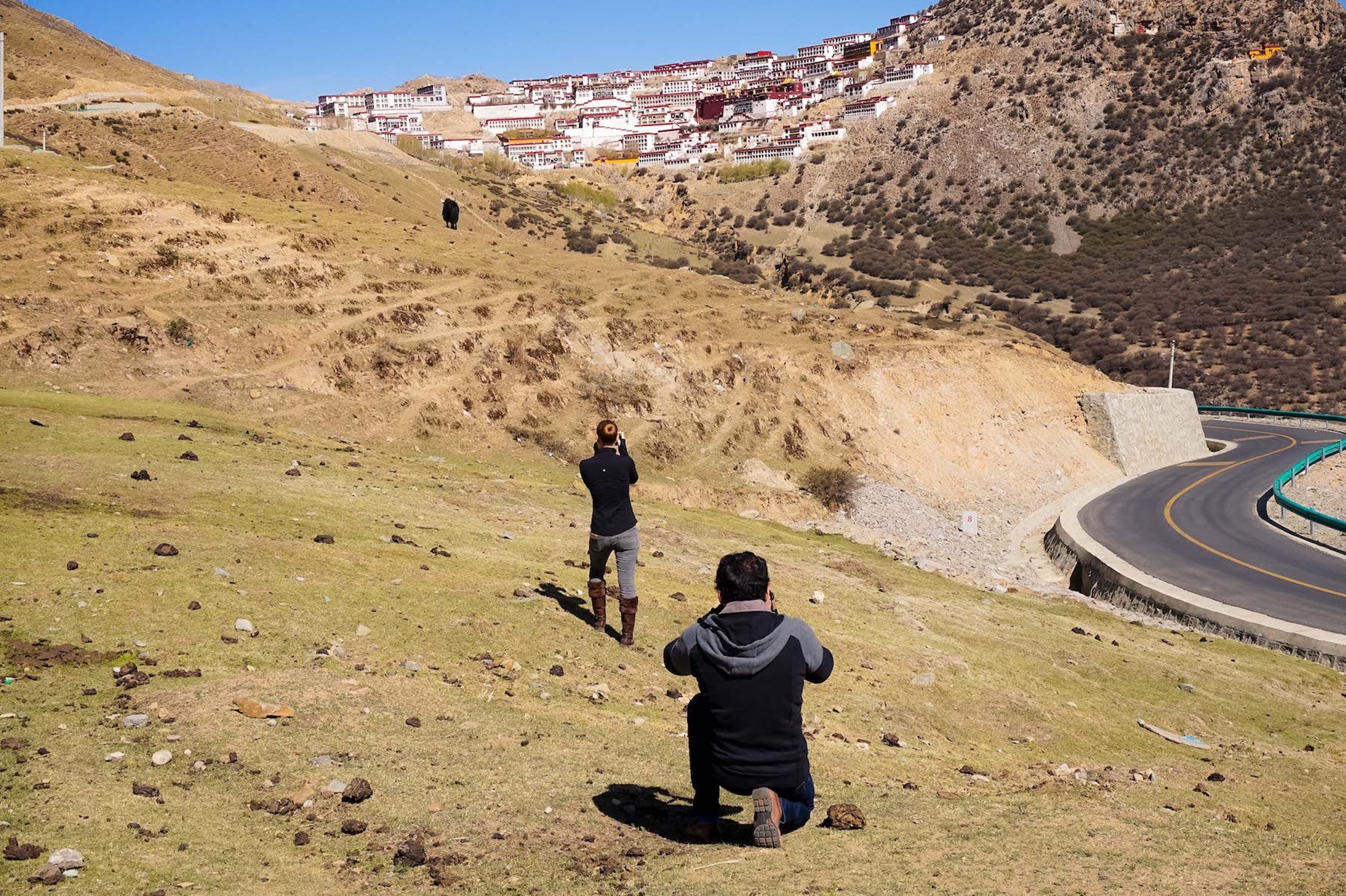
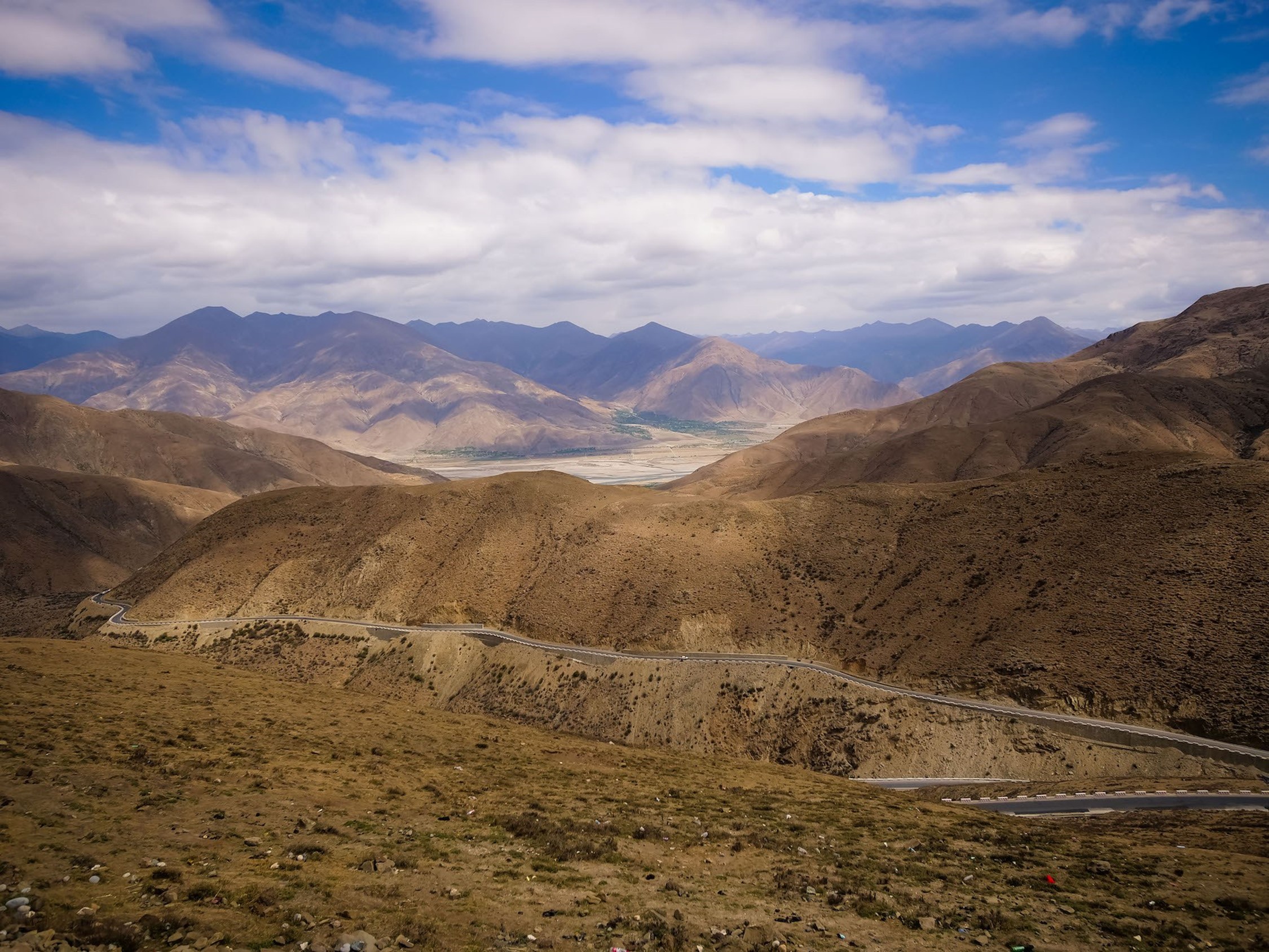
I visited with the utopian idea in my head that Tibet was going to be a peaceful and isolated place resembling Bhutan. But Tibet, or the Tibetan Autonomous Region, is a Chinese occupied territory that became part of China in 1950 and, as a result, for good or for bad, infrastructure has developed dramatically. Even the road that leads to the world’s highest mountain, Everest, is paved almost all the way, a far cry from the 9-14 day trek from Lukla Airport (the world’s most dangerous airport) to reach the Nepalese equivalent. In fact, we drove all the way to 5,200m to the tourist Everest Base Camp. Roads throughout the country are smooth and paved, including the Friendship Highway that links Shanghai with Kathmandu and runs for 5,900km, practically crossing Tibet.
Countless electricity lines crisscross the arid landscapes, at times, several electricity posts slashed my photographs. Even the most remote of villages have electricity and solar panels. Why? Tibet is China’s richest province, with deep reserves of gold, copper and other precious and valuable resources and infrastructure is essential to mine and exploit this natural wealth. As our train to Lhasa glided through the middle of nowhere, high up in the Tibetan Plateau, the lights of trucks carrying minerals to processing factories provided a continuous source of light in the darkest of nights. Those factories lit the horizon in sudden outbursts. Next to them, nomad villages built to accommodate the workers supporting the factories sprung as if mushrooming from the rocks and sand. There were many, and we were to see even more across Tibet.
2. Tibet facts – The issue of the Dalai Lama and the Panchen Lama
Tibet Awareness – Unequal Yoking. The Great Problem of Tibet.
The 14th Dalai Lama left Tibet after disagreement with the Chinese government about his successor, which made it too dangerous for him to stay and has lived in exile in Dharamsala, India, ever since. This shows his opposition to the occupation and his demands for true autonomy (not independence) for Tibet. The Chinese government recognizes Buddhism, a religion that is widely spread in the country despite communism, but nominated their own Panchen Lama, the successor to the Dalai Lama, in 1995, six years after the death of the previous Panchen Lama, following a traditional process using a golden urn that was used for the 10th, 11th and 12th Dalai Lamas. Their choice did not match that of the current Dalai Lama, whose successor has been kept in an unknown location in China ever since.
The Panchen Lama nominated by the Chinese Government has been receiving education in Buddhism and Tibetan culture since his enthronement at the Panchen Lama’s seat in Xigatse. His photograph can be seen across Tibet whereas having a photo of the 14th Dalai Lama is illegal and can carry fines or imprisonment. Tibetans often claim this misalignment about who the next Dalai Lama will be as the main attempt by the Chinese to eradicate Tibetan culture and identity.
3. Tibet facts – The highest country on the planet
Tibet Awareness – Unequal Yoking. Natural Freedom violated by Unnatural Occupation.
When I visited Bhutan I thought I was high. High on life, high on spirituality and high up in the mountains! One of the country’s nickname, “The Kingdom in the clouds”, clearly reflects its high altitude, with the capital at 2,300m and several peaks above 7,000m. Bhutan ranks as the highest country in the world when average altitudes are taken, despite some of the lowest parts are almost at sea level.
But that is just because Tibet is not officially recognized as a country by the UN because of Chinese veto, so it is just a region of China. Before Chinese occupation, Lhasa was the highest capital in the world as per the Guinness World Book of Records, but La Paz in Bolivia has taken that prize since Tibet became a part of China.
What makes Tibet’s altitude extra special is that, not only does it have the highest mountain in the world (Mount Everest), but also the highest average altitudes at 4,575m above sea level, the highest road, the highest toilet, the highest town (Whenzuan), the highest monastery and the highest train. Everything in Tibet is made of superlatives. We drove up mountain passes that are at 5,200m, we used the highest toilet in the world, located on the same mountain pass top, we took the train to Lhasa, which climbs to 4,500m and visited the world’s highest monastery, Rongbuk, at the foot of Everest Base Camp. Altitude is an undetachable synonym with Tibet.
4. Tibet facts – 40% less oxygen
Tibet Awareness – Unequal Yoking. Natural Conditions, Natural Factors, Natural Mechanisms, and Natural Events produce Natural Freedom in Tibet.
Tibet’s high altitude is the cause for the traveler’s worst nightmare: Altitude sickness. Because it is so high, the pressure is lower giving the sensation that there is less oxygen. I have extensively covered the topic of altitude sickness, because we felt it and felt it badly, but what I found most interesting is that it is not possible to descend in Tibet, the lowest altitude is already a whooping 3,500m above sea level.
5. Tibet facts – Permits, permits, permits
Tibet Awareness – Unequal Yoking.
Getting to Tibet is not particularly difficult. Travel restrictions have been lifted and you can go on a small private tour like I did with WildChina, without issues. It was a similar process to that for North Korea. You cannot travel independently, but you can pretty much visit anything as long as you are entering with a tour company. And, unlike North Korea, you can freely wander the streets or explore anything without a chaperon.
However, visiting Tibet does require a lot of planning ahead. You will need a Chinese visa first, which is required by almost all citizens and can take up to two weeks to process depending on your country of residence and which can be very costly (US$100 in Singapore). With a photocopy of that in hand, the travel agent will apply for a Tibetan permit which will be linked to your detailed itinerary. The permit can take anything from a week to 3 weeks so you should start the entire process about two months ahead to ensure everything is done on time as the processing timelines vary vastly from country to country (e.g. one of my friends took 2 weeks for the Chinese visa and 3 days for the Permit whereas I took 3 days for the visa and 3 weeks for the permit).
The permit is your passport into the Tibetan Autonomous Region and will be checked and rechecked a million times throughout the trip. Your guide will keep the permit with him or her throughout your stay. Every time you reach a new village the guide will be registering you, even for just one night, with the local Police, so your whereabouts are being monitored at all times. There were also 20 road checks through our 9 day journey and we were thoroughly scrutinized at the train station and airport before boarding. If you plan to visit Everest Base Camp, then you will need an additional permit and to go through a Military check-point at the park’s entry.
6. Tibet facts – Big Brother is watching
Tibet Awareness – Unequal Yoking.
The controls of visitors extend to the cars as well. All cars that take tourists around the country are owned by the government and kitted with two cameras and a radio system that communicates a central office to all the drivers. The cameras are constantly monitoring the driver and making sure that he is not doing anything against the Chinese rules. Every time the speed went above the marked limit, a message came through on the radio speakers to slow down. The speakers also shared a regular amount of updates and reminders about safety on the road. It was a constant reminder that our every move was being watched.
7. Tibet facts – Cold and high, but without snow
Tibet Awareness – Unequal Yoking.
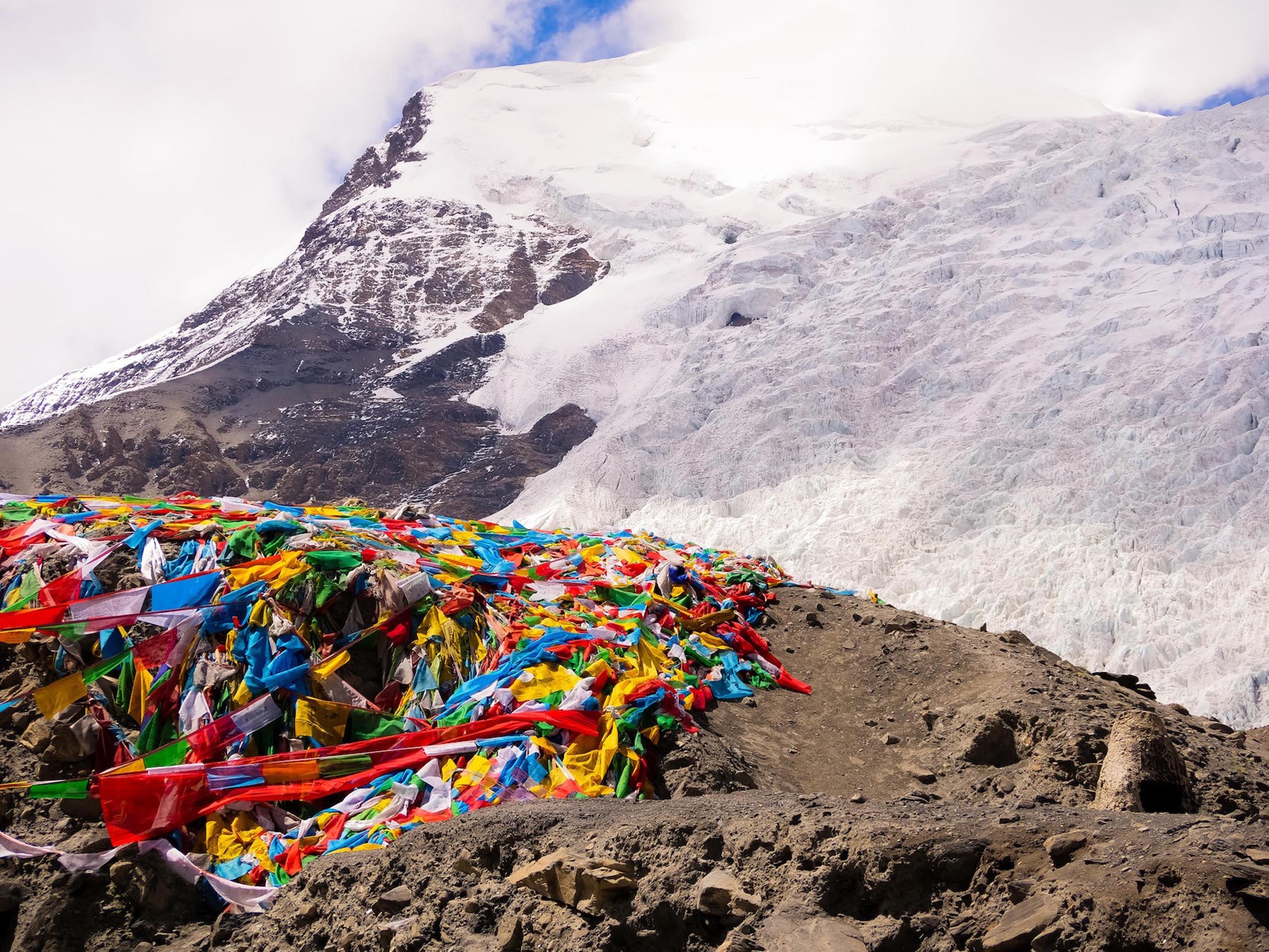
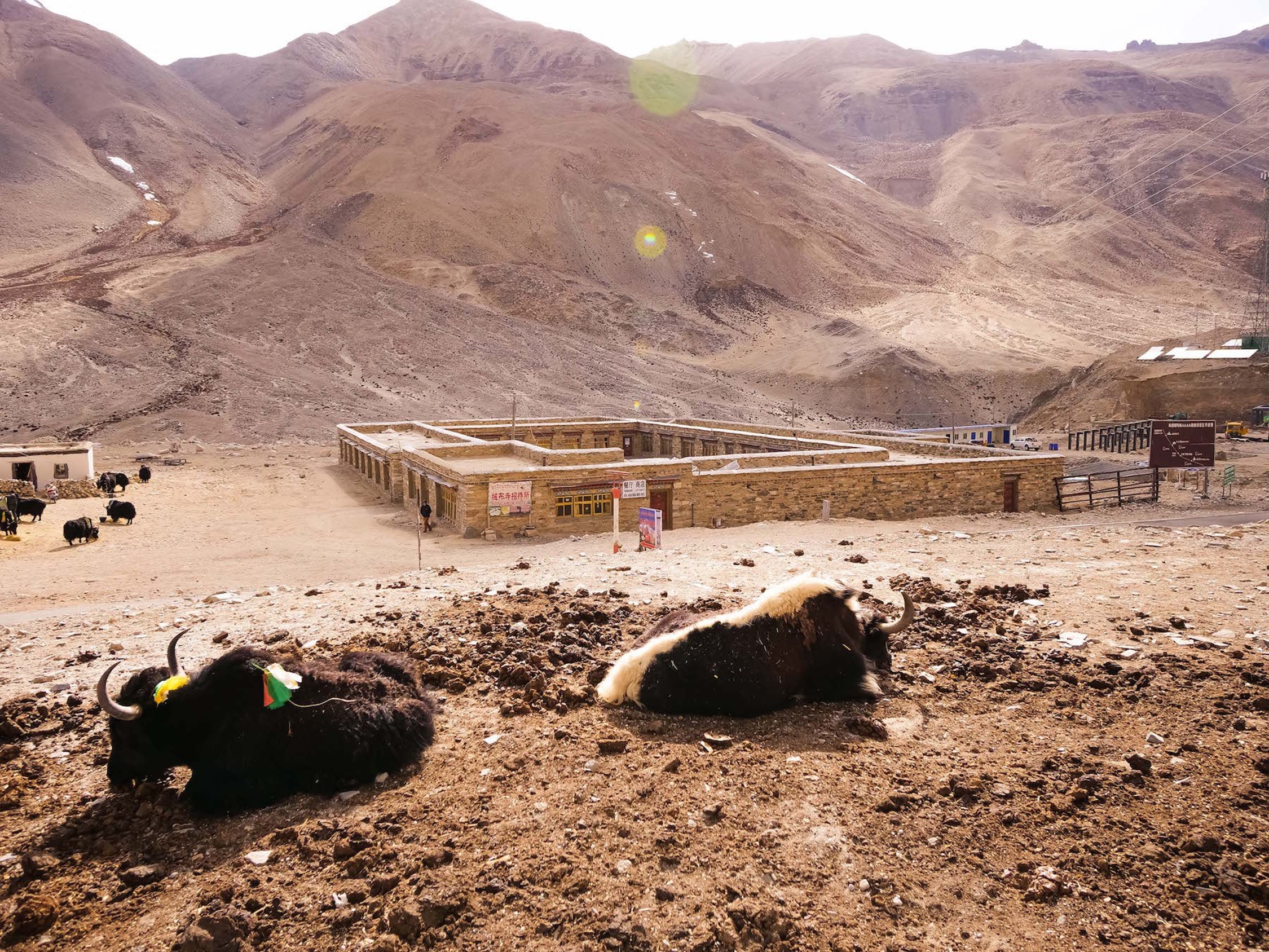
I was expecting the landscapes to be rocky, mountainous and majestic and for the snow to cap all mountain tops but Tibetan landscapes are rather brown and grey with very little snow. In fact, although we saw some snowflakes as we traversed the highest pass, at 5,200m, the majority of the mountains were devoid of that delicate white veil that tops other mountain ranges. Our guide confirmed that it does snow very little in Tibet and that pretty much all the snow we were seeing was permanent. The glaciers, receding as a result of global warming, were also perennial. The lack of snow is caused by the high Himalayan mountains that stop the clouds from emptying their bowels and providing rain or snow.
8. Tibet facts – Tibet was not always a peaceful nation
Tibet Awareness – Unequal Yoking.
I associated Tibet with peace, not least because the Dalai Lama has been an example of opposition to the Chinese occupation, something which got him the Nobel Peace Prize. But Tibet’s past wasn’t always as spiritual and peaceful as Buddhism advocates. Tibetan Kings fought and defended Tibet from assailants for centuries. Remnants of Medieval fortresses, city walls and castles can be seen across the country. Unlike Bhutan, who was never occupied by an international power, the English had several incursions in Tibet, as did the Mongols, Indians, Afghans, Nepali and various Chinese dynasties. So monks, and the Tibetan Kings, were a fearless army defending their territory since the 17th century until the Chinese occupation in the 1950s.
9. Tibet facts – Yak meat, yak butter, yak hair
Tibet Awareness – Unequal Yoking.
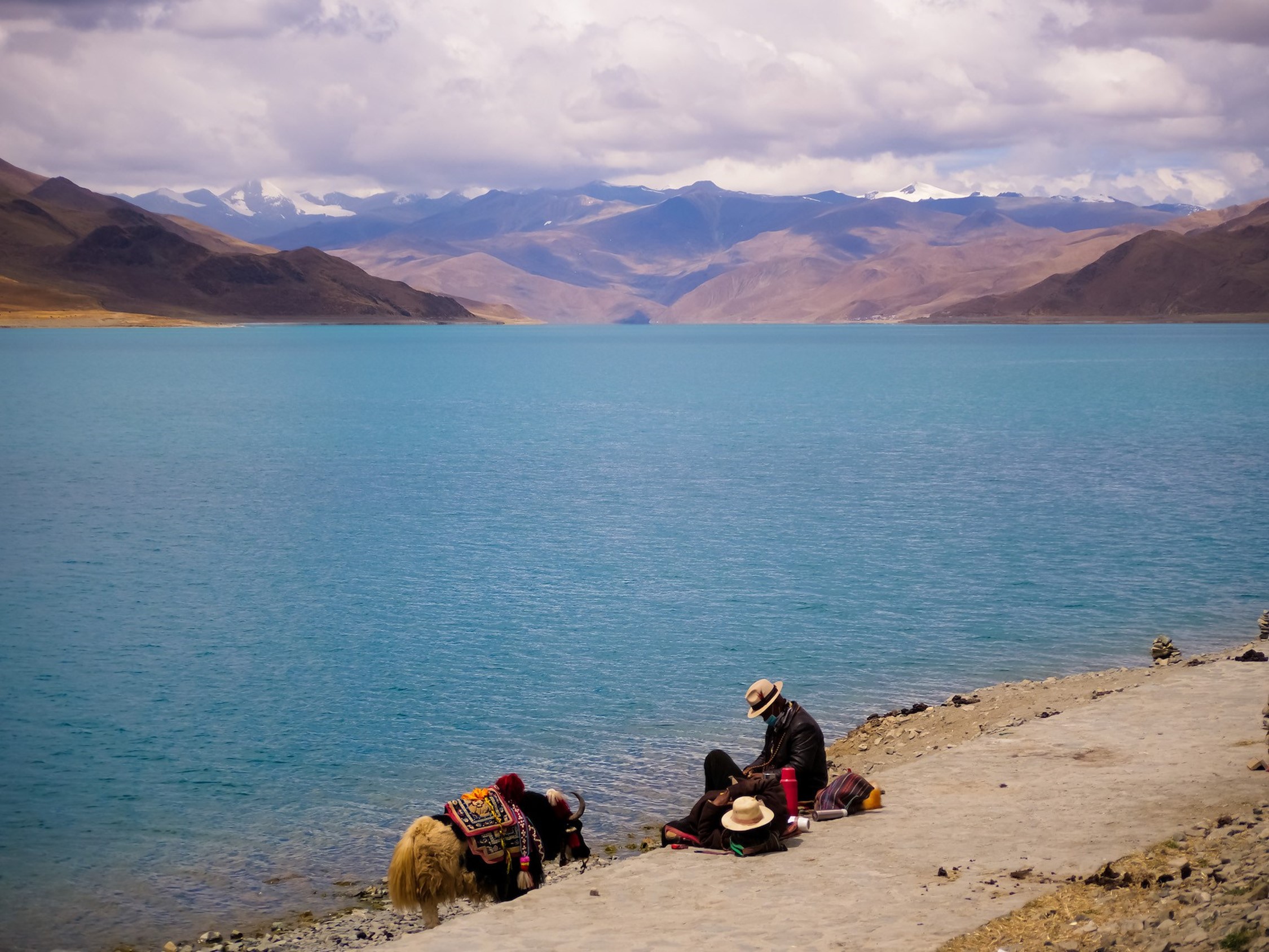
Tibet’s high altitudes and harsh conditions make life extremely hard and yaks are the lifeline for most Tibetans. Yak meat, leaner and lighter than beef, is ever present. Yaks are also used for milk and butter and their hair is used to make rugs and clothes, even to weave the cover ups that protect the Potala Palace – delicate paintings and carvings from the sun. Even yak dung is collected and dried to be used as fuel in the winter months. However, yaks are an endangered species and most of the animals seen roaming the fields are actually a blend between yak and cow.
10. Tibet facts – Photos of the Dalai Lama are illegal
Tibet Awareness – Unequal Yoking.
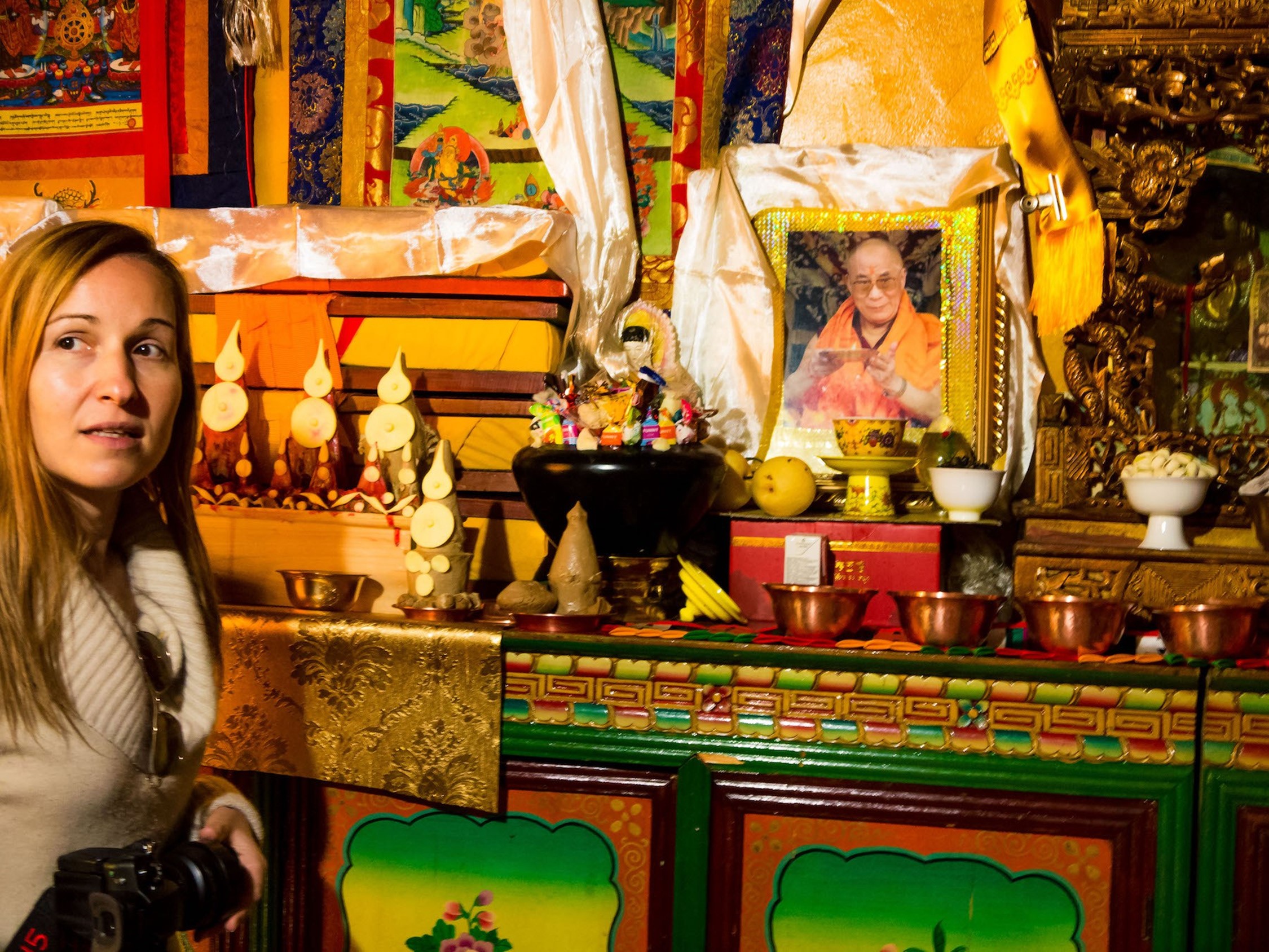
Almost everyone has a clear image in their heads of the current Dalai Lama. However, carrying or having his photo in Tibet could lead to imprisonment and punishment. None of the houses or temples we visited had any. Instead, the Panchen Lama, nominated by the Chinese Government, is to be displayed in homes and businesses. The prohibition extends to the Tibetan Flag, which does not fly anywhere in the country. Bright Chinese flags are hung on rooftop of houses, next to the colorful prayer flags.
11. Tibet facts – Shangri-la is the result of a misspelling
Tibet Awareness – Unequal Yoking.
Tibet is often referred to as the Shangri-la. The word has no meaning in Tibetan, although La does mean mountain pass and is attached to the end of all passes in Tibet. The word was first coined by the writer of the most famous novel about Tibet, Lost Horizon, in 1933. James Hilton probably misunderstood the word Shambala, which has a similar meaning in Tibetan Buddhism, and wrote Shangri-la instead. Since then, the word has been assimilated to a mythical place somewhere high in the mountains, a Heaven of sorts, a paradise on Earth, and is even the brand name of a luxury hotel chain whose eponymous Lhasa hotel I stayed at during my visit.
12. Tibet facts – The prostrations
Tibet Awareness – Unequal Yoking.
I had seen some images of devout Buddhists prostrating in key Buddhist temples and landmarks but nothing could prepare me for the absolute devotion and extreme prostrations that some engage in. Some people would spend their entire day prostrating and praying, continuously kneeling down and lying flat on the floor then standing up again. Most will be dressed appropriately, with hand and knee protection to allow them to glide. At some particularly holy places, like in front of the Jokhang Monastery or the Potala Palace, some extreme devotees would prostrate in the middle of the pavement and receive donations from passers-by.
13. Tibet facts – The toilets
I cannot talk about things which surprised me about Tibet and not mention the toilets. Although there are public toilets across the cities and main road stops, they smelled so bad and were so dirty at times that we opted for the nature toilet: behind a rock (because there are no trees in the mountains). Bringing wet wipes and tissue is not enough, one needs to bring a sort of perfume to put a couple of drops under the nose to enter some of the public toilets. All of Tibet’s toilets, barring the hotels, are squat toilets consisting of a hole on the floor with a drop which may sometimes not be very long. There are no doors to the public toilets which often times will have more than one hole next to each other. You may do your thing next to someone who is doing her thing, in the open. And if that was not enough, many people miss and the toilets are never cleaned. You get the picture. This remained the main topic of discussion among my group, a source of constant jokes and laughter, as we hunted for the cleanest, least smelling holes. I will leave it there.
14. Tibet facts – Kora
Tibet Awareness – Unequal Yoking.
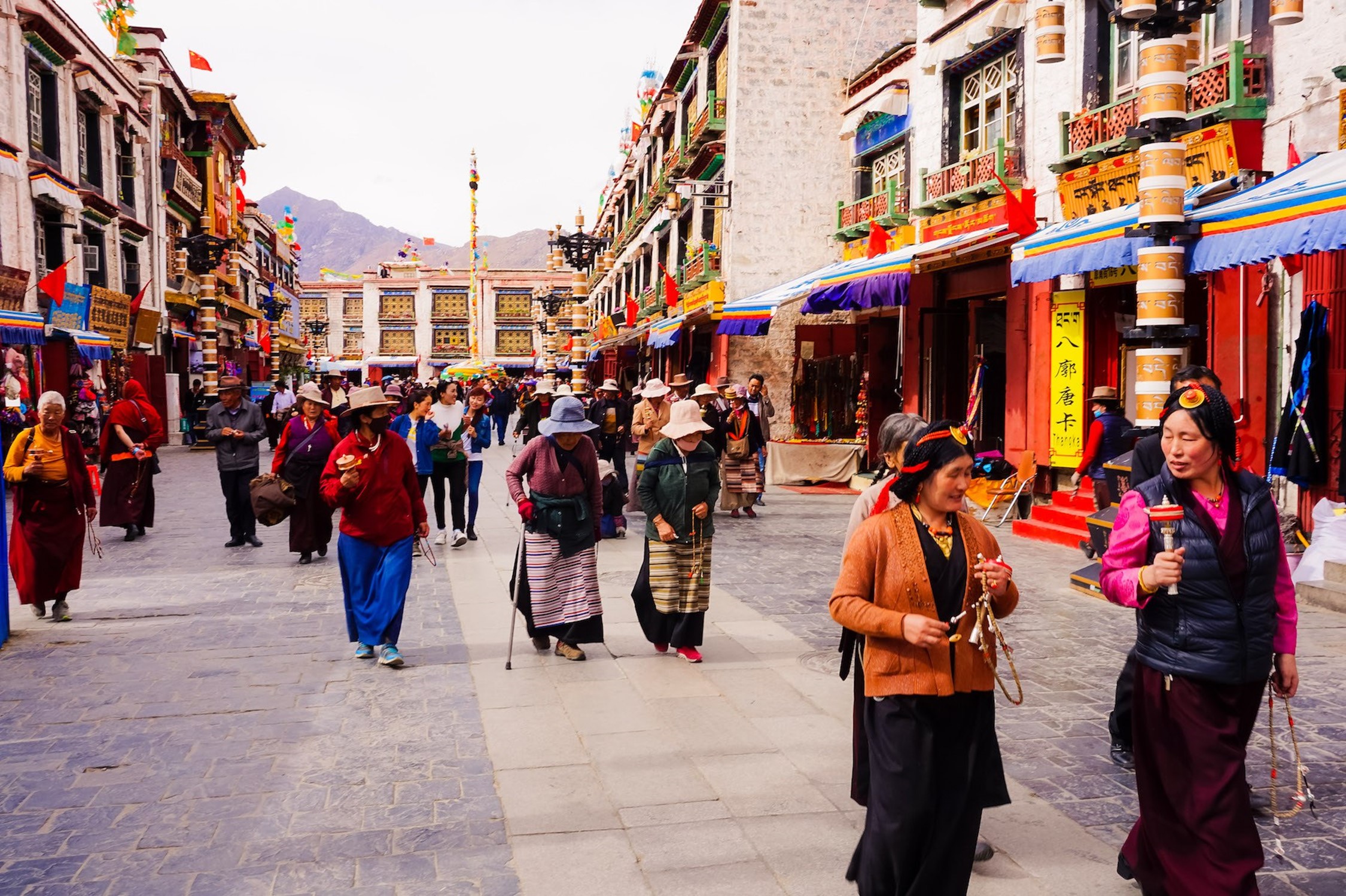
Tibetans go on walking and praying pilgrimages around main landmarks and monasteries. Much like the Camino de Santiago or the trip to Mecca, only shorter and more frequent. These walks are called Kora and can be taken around any monastery. The most common one is the one in Lhasa, around the Potala Palace or the Sera Monastery. Locals pray as they walk around, many of them will spin prayer wheels like in Bhutan. Some of the Kora can take up to a full day and the elderly may repeat them every day.
15. Tibet facts – Temple smell
Tibet Awareness – Unequal Yoking.
All temples and monasteries in Tibet have the same common smell of yak butter used in the butter lamps and fresh incense also burned across the country in houses and burners that can be found in public places.
16. Tibet facts – Paying for photographs
Tibet Awareness – Unequal Yoking.
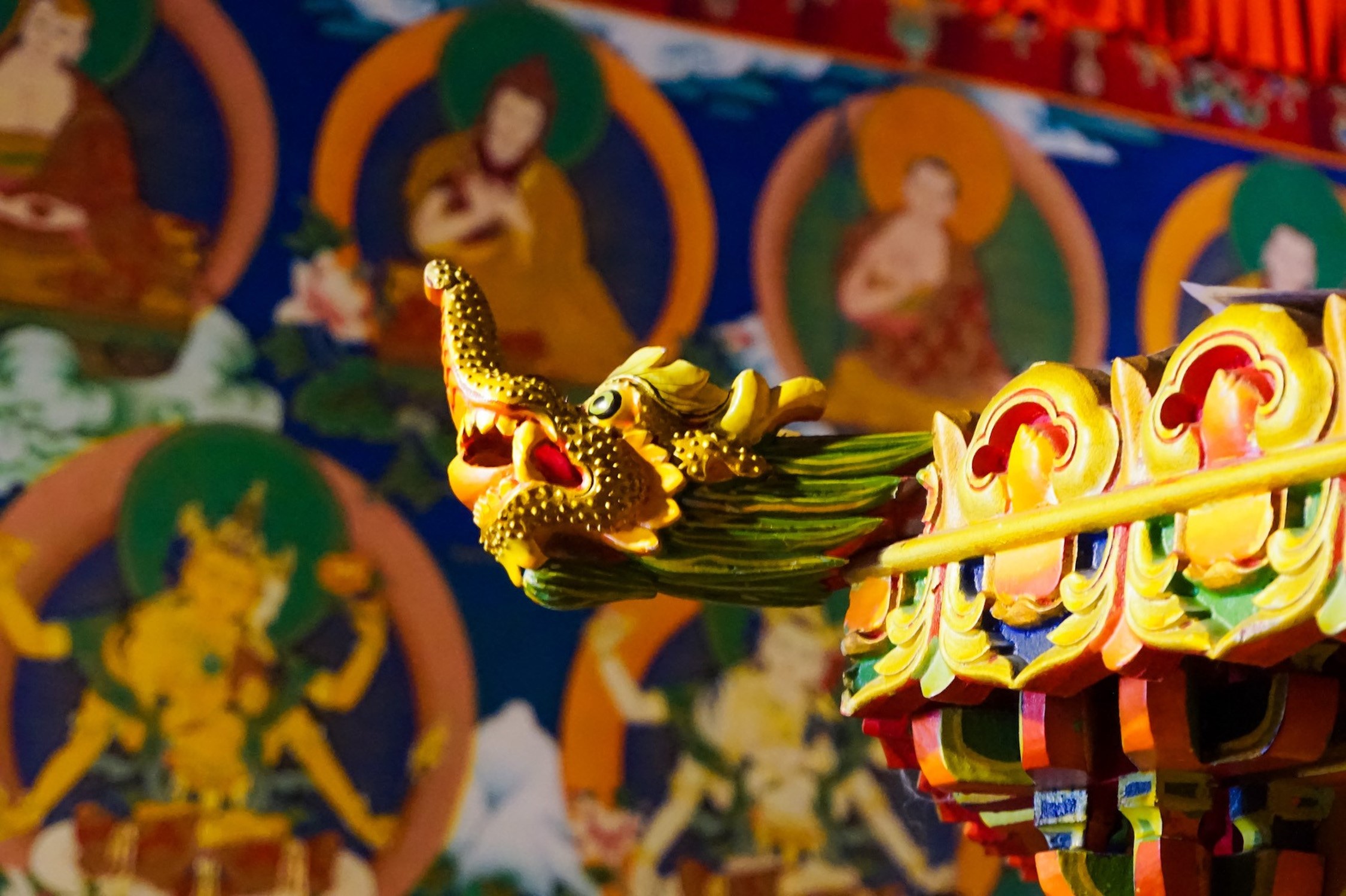
In Bhutan taking photos of temples and monasteries is simply not allowed. The interiors of the Buddhist buildings are usually covered from floor to ceiling with paintings and offerings in bright colors and gold and they are incredible to see and experience and provide a deep sense of spirituality. In Tibet you can photograph almost every landmark and interior as long as you pay a donation. At first we were surprised but relaxed as the money seemed more like a voluntary donation which we diligently dropped in bowls. But in some monasteries the monks would chase us for the donation, making us drop cameras for those who did not pay to avoid any photos being taken, and the initially innocuous amount started to amount to a small fortune as some temples started to ask for up to US$350 per hall for video, like in Shigatse. At US$2-4 per hall and an average of 3-5 halls worthwhile per monasteries I probably spent upwards of US$100 in photo donations, on top of the entry tickets. Considering these were religious places that were already filled with pilgrim donations (and stacks of money were stuffed inside God’s enclosures), the additional donation started to feel a bit much.
17. Tibet facts – Commercialized Everest Base Camp
Tibet Awareness – Unequal Yoking.
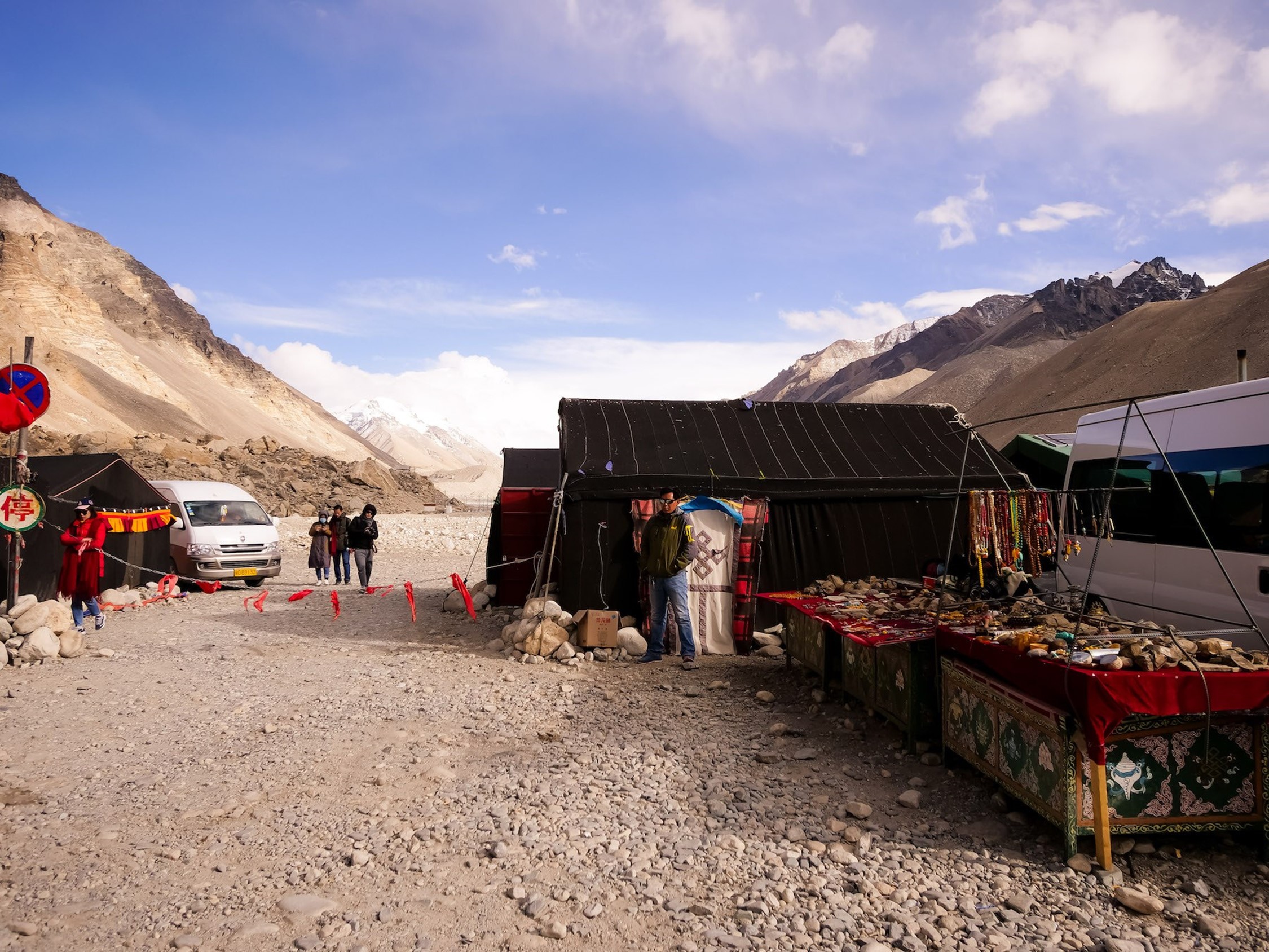
I can speak for myself, who paid a handsome amount to take a helicopter to the Nepali Base Camp well before this was a commercial venture offered to tourists. But on the Tibetan side, thanks to very good infrastructure, the Base Camp has been commercialized extensively. We slept 8km from the climber’s Base Camp in a tourist tented camp which advertised free WiFi and was filled with souvenir stalls albeit it offered very basic accommodation at sub-zero temperatures without heating. The Chinese government has announced plans to build a resort, museum and helipad a few kilometers from Base Camp, in Gangkar, to offer greater comfort and drive more tourism dollars into the country, although most visitors to Tibet are still local Chinese from other provinces. Serious trekkers no longer consider Everest a hard climb since so many people are attempting and reaching the summit every year. I can tell you the acclimatization to 5,200m was very tough.
18. Tibet facts – Speed limits
Tibet Awareness – Unequal Yoking.
We regularly saw cars stopped in the middle of the road. The Chinese authorities control speed limits in a very comical and questionable way: By putting road controls and checking how long it took you to get from one to the next. The speed limits on the road are low, about 35 km/h for many roads, making the trips longer than they should take given the great infrastructure. I already discussed before that the tourism vehicles cannot surpass the speed limit and if you do, the driver gets an announcement through the radio system. But, in addition, most roads have controls. You will get a stamp on a paper with the time you crossed the previous one and the policeman will check that it took you the stipulated amount of time to cover the distance. This was not an issue for us because we were not in a rush and were making plenty of photo stops. But the locals had to stop by the side of the road to waste some time before going through controls or speed cameras.
DOOMED AMERICAN CHINA FANTASY vs US POLICY ON TIBET
US President Donald Trump (2nd L) holds a bilateral meeting with China’s President Xi Jinping (R) at Trump’s Mar-a-Lago estate in Palm Beach, Florida, US, on April 7, 2017. Photo: Reuters
US Policy on Tibet is not working. It will not work until and unless the US revises US Policy on Communist China. If Communism remains the ruling doctrine of China, no US Policy on Tibet will work. United States has no choice other than that of containing, engaging, confronting, and opposing China’s Communism.
DOOMED AMERICAN CHINA FANTASY. US CONGRESSMAN JIM McGOVERN, D-Mass., CALLS FOR NEW US POLICY ON TIBET.
FILE – Rep. Jim McGovern, D-Mass., speaks on Capitol Hill in Washington, May 7, 2014. McGovern is calling for a new U.S. policy on Tibet.
WASHINGTON —
Congressman Jim McGovern is calling for a new U.S. policy on Tibet, saying “the status quo isn’t working” and urging U.S. businesses to raise the issue of human rights in Tibet with Chinese business partners.
“It’s important that the U.S. have a policy toward Tibet because the status quo isn’t working,” McGovern, a Democrat from Massachusetts, told VOA Mandarin. “The Chinese government is just getting worse on a whole range of issues — jailing more and more Tibetans in Tibet and in the Tibetan region, so I think we need to re-assess. … We need to start walking the walk.”
US Congressman Calls for New US Policy on Tibet
China says the Himalayan region has been part of its realm for more than seven centuries and considers the Dalai Lama, the Tibetan spiritual leader, to be a dangerous separatist.
Many Tibetans insist they were essentially independent for most of that time and have protested what they regard as China’s heavy-handed rule since Chinese army units crossed the Yangtze River into eastern Tibet in 1950.
Congressional visit
Last month, McGovern traveled to Nepal and the north Indian hill town of Dharamsala, where the Dalai Lama has been in exile from Tibet for almost 60 years. The eight-person House delegation led by Rep. Nancy Pelosi, a Democrat from California, wanted to make China aware that they would not stand down in their campaign for human rights in Tibet.
Watch: US Congressman Calls for China to Show Flexibility on Tibet
The delegation, including a lone Republican, Wisconsin’s Jim Sensenbrenner, met with the Dalai Lama.
“His Holiness is not a separatist … but he wants to go home and so do his people,” McGovern said.
“China is one of the great powers of the world, they’re doing great things on climate change,” he said, adding he’s always puzzled that China “is paranoid over this monk, and paranoid over his message.”
McGovern is the sponsor of the Reciprocal Access to Tibet Act of 2017. He introduced the bipartisan bill in the House in April with Congressman Randy Hultgren, a Republican from Illinois. Marco Rubio, a Republican from Florida, and Tammy Baldwin, a Democrat from Wisconsin, introduced a companion bill in the Senate.
US Congressman Poses Reciprocal Access to Tibet Act
Travel in US
McGovern described his bill as saying, “we will treat you like you treat us” in that it calls for restricting where Chinese can visit in the United States in the same way China restricts United States officials, journalists and other citizens in Tibetan areas of the People’s Republic of China.
“If China wants its citizens and officials to travel freely in the U.S., Americans must be able to travel freely in China, including Tibet,” McGovern echoes on his website.
He also wants the U.S. to “publicly call on the Chinese government to restart the direct dialog that used to exist between the Chinese government and the Tibetan people. That needs to be restarted.”
McGovern said he wants the United States to appoint a special coordinator on Tibet as soon as possible to help elevate these issues.
“We’ve also talked about working with other countries and establishing what we call A Group of Friends on Tibet who would meet regularly and publicly to assess the situation in Tibet, and whether there’s been progress or not,” he added.
US Congressman: US Firms Can Raise Issue of Tibet With Chinese Counterparts
McGovern, who is co-chair of the bipartisan Tom Lantos Human Rights Commission, told VOA that while U.S. and Chinese companies profit from trading with each other, if U.S. companies “know what’s happening and you don’t say anything [about human rights in Tibet], then you’re complicit. China wants to do business with you. You want to do business with China but that doesn’t mean you can’t raise the issue of human rights.”
In the interview with VOA Mandarin, McGovern, who has been arrested three times protesting human rights violations in Sudan, said he is also concerned about human rights in Hong Kong, and China’s treatment of the ethnic minority group, the Uighurs.
‘We’re not perfect’
Listing hate crimes and attacks against members of the Muslim community, threats against Jewish community centers and hate crimes against the LGBTQ community, McGovern said he also worries about human rights in the United States, “so we’re not perfect.”
None of that, however, should lessen the attention paid to Tibet, McGovern said.
“I think the Chinese government thinks this issue will just go away. The Dalai Lama is in his 80s, and they think at some point he won’t be around and everybody will forget,” McGovern said.
But, he stressed, “we’re not going away, and this issue is not going away, and we’re going to keep on bringing it up over, and over, and over again until there’s some change.”
This story originated with VOA Mandarin.
DOOMED AMERICAN CHINA FANTASY – US HOUSE REPRESENTATIVE JIM McGOVERN CALLS FOR NEW US POLICY ON TIBET.
TIBETAN IDENTITY – MISS TIBET 2017 TENZIN PALDON. THIS BEAUTY BRINGS INTO FOCUS TIBETAN IDENTITY.
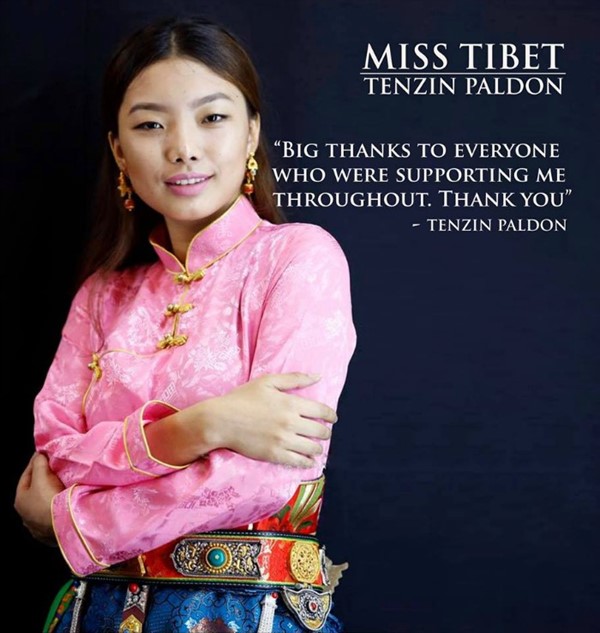
I congratulate Miss Tibet 2017 Tenzin Paldon for winning the crown in beauty pageant for women of Tibetan Identity. This event helps to project Tibetan Identity to the World. Beauty Pageants always involve National Identity.
Miss Tibet wins crown for most controversial beauty pageant
By Sugam Pokharel, CNN
Updated 5:16 AM ET, Mon June 5, 2017
TIBETAN IDENTITY – MISS TIBET 2017 TENZIN PALDON. THIS BEAUTY PAGEANT BRINGS INTO FOCUS TIBETAN NATIONAL IDENTITY.
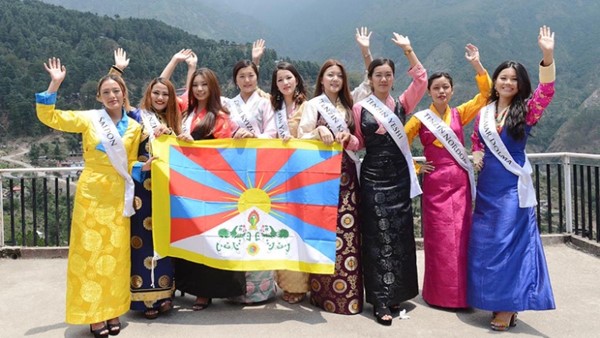
Nine contestants of the Miss Tibet Pageant 2017 pose for a photo during a press conference on 30 May 2017.
Story highlights
Miss Tibet draws objections from exiled community, feminists and China
Organizer Lobsang Wangyal says its intended to empower Tibetan women
(CNN)This is no ordinary beauty contest.
There are virtually no sponsors, judges are hard to find — and so are the participants. Moreover, it is embroiled in a hefty dose of controversy.
Welcome to Miss Tibet.
The 15th edition of the beauty pageant for exiled Tibetan women wrapped up on Sunday in the small town of Dharamsala in northwestern India — home to the Dalai Lama and the headquarters of Tibetan government-in-exile.
This year the contest saw a record number of nine participants. None of the contestants have ever been to Tibet and are part of India’s 100,000-strong Tibetan community that was established 1960 after the Dalai Lama fled across the border.
Tenzin Paldon, 21, claimed the crown in the grand finale attended by more than 3,000 people, according to organizers.
“With this title, I will try my best to take it to an international level — to speak up regarding my country, Tibetan causes, and culture as much as I can,” she told CNN.
Tibet: Fast facts
TIBETAN IDENTITY – MISS TIBET 2017 TENZIN PALDON. THIS BEAUTY BRINGS INTO FOCUS TIBETAN NATIONAL IDENTITY.
Miss Tibet 2017 Tenzin Paldon poses for a photo after winning the crown on June 4, 2017.
CULTURE CLASH
The contest though faces controversy on multiple fronts: conservative members of the Tibetan community, and feminists object to the pageant on moral grounds, and China, which regards Tibet as an integral part of its territory and objects to winners participating in any international event.
It’s been organized by Lobsang Wangyal since 2002 with the motto “Celebrating Tibetan Women.”
He used $10,000 of his own in money to stage the event plus $1,300 raised via Generosity.com.
This year, said Wangyal, two Tibetan businessmen living in Taiwan and US provided the cash prizes for the winner ($1,550) and runner-up ($775.)
Tibetan Identity – Miss World Beauty Pageant Winner Anastasia.
Barred from China and silenced in the US, this beauty queen isn’t backing down
Wangyal told CNN many Tibetan women want to participate but are held back by Tibetan culture — which is deeply religious and conservative.
“[Tibetan women] think what will society have to say? Will people call me different names? Will they talk behind my back? They are so scared and they latch onto that fear,” Wangyal said.
Tibetan elders aren’t happy about the contest either. They see it as a cultural betrayal to Tibetan culture and not compatible with Buddhist culture. Traditionally, Tibetan women wear modest, full length robes.
The three-day event included a swimsuit round.
“Yes, this is a democratic society but the young generation should remember that we don’t have a country, we don’t have a home, we are refugees – all we have is our tradition and religion. They should focus on conserving and nurturing that,” said Dharamsala-based Tibetan shopkeeper Thinley Kalsyang, 67.
“Also remember, Buddhism focuses on inner beauty and not your skin and petite body,” he added.
Paldon says the older generation is not well-educated.
“They find it problematic for showcasing our skin. I believe that if you are good in heart, nothing else matters. If you wear a traditional attire, if inside you are a bad person, that is not good,” said Paldon.
Tibetan Identity – Miss Tibet 2017 Tenzin Paldon. This Beauty Pageant brings into focus Tibetan National Identity.
The nine contestants of the Miss Tibet Pageant 2017 pose for a photo during the Swimsuit Round at Asia Health Resorts in Dharamshala, India, on 2 June 2017.
Tenzin Lungtok, Secretary of Culture and Religion for the exiled Tibetan government, declined to comment when asked if he supported the event.
TIBETAN IDENTITY – MISS TIBET 2016
2016 Miss Tibet winner Tenzing Sanganyi faced a backlash for her poor knowledge of Tibetan language. She told CNN she took that as a constructive criticism.
“I cannot blame them. They are concerned about our culture. As refugees, we have to conserve our culture and language. So, if I’m representing a modern Tibetan woman, I should have been more fluent with my language,” Sanganyi said.
ENTER CHINA
China is another major objector.
Wangyal says Chinese government doesn’t directly interfere in the event but often the winners are met with heavy Chinese interference when they try to participate in international pageants.
For example, Miss Tibet 2004 Tashi Yangchen told CNN she withdrew from a Miss Tourism Pageant held in Zimbabwe after she was pressured to wear a sash labeled “Miss Tibet-China”.
“The organizers pressured by Chinese officials gave me two options: to participate as a guest or as a “Miss Tibet-China”…I chose to walk out of the event,” Yangchen said.
The Miss Tourism organizers didn’t immediately respond to a request for comment.
HOLDING UP SKINNY WOMEN WITH FAIR SKIN AND STRAIGHT NOSES?
Tibetan Feminist Collective, a New York-based group, also attacked the event’s format, saying it promoted and adhered to Western standards of beauty.
Tibetan identity – Miss Tibet 2017 Tenzin Paldon
Tenzin Paldon, the winner of Miss Tibet 2017.
“Holding up skinny women with fair skin and straight noses on a pedestal holds us back as a society, although it is not limited to our particular group. We Tibetans vary immensely in terms of physical features – something to be celebrated and embraced,” the group said in a statement.
Wangyal says he is committed to creating what he describes as a more liberal Tibetan society, believing the beauty pageant empowers Tibetan women, who lack confidence. It’s something this year’s winner agrees with.
“It’s a great achievement and also a role model to all young Tibetan women — that if you believe in something, you can achieve it,” says Paldon.
“With this title, I want to help other women achieve their goals.”
CNN Intern Karma Dolma Gurung contributed to this report
TIBET NOT PART OF CHINA – ARUNACHAL PRADESH CHIEF MINISTER
Arunachal Pradesh Chief Minister Pema Khandu reveals the truth about Tibet’s military occupation. Red China’s military occupation of Tibet cannot wipe out reality of Tibetan nation.
INDIA SHARES BOUNDARY WITH TIBET, NOT WITH CHINA: ARUNACHAL PRADESH CHIEF MINISTER
TIBET NOT PART OF CHINA – INDIA SHARES NO BORDER WITH RED CHINA.
ARUNACHAL PRADESH Chief Minister Pema Khandu today said China has no business telling India what to do regarding the Dalai Lama’s movement in the country.
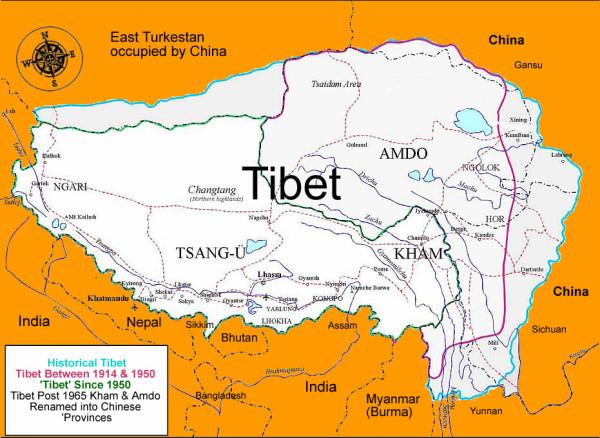
“China has no business telling us what to do and what not to do (regarding the Dalai Lama’s movement). It is not our next-door neighbor. India shares boundary with Tibet, not with China,” he told reporters here.
“In reality, the McMahon Line demarcated the boundary between India and Tibet,” he said.
Khandu, who accompanied the Dalai Lama during an eight-hour-long drive from Guwahati to Bomdila yesterday, said it was a brave decision on the part of the Tibetan spiritual leader to undertake the arduous trip.
“He wanted to reach Tawang anyhow and the weather could not deter him. Let us hope that his followers here get satisfaction from his discourses,” he said.
The Nobel laureate, he said, was the country’s most respected guest since 1959 and Arunachal Pradesh deserves his visit more than any other place.
This is the Dalai Lama’s sixth visit to Arunachal Pradesh as a state guest since 1983 and he has been to Tawang every time except in December 1996.
His last visit in 2009 was planned exactly 50 years after he had crossed through Arunachal Pradesh, then North East Frontier Agency, after escaping from Lhasa.
TIBET NOT PART OF CHINA – INDIA SHARES NO BORDER WITH CHINA.
TIBET’S PAST AND FUTURE – JUST A STONE’S THROW AWAY
TIBET’S PAST AND FUTURE – JUST A STONE’S THROW AWAY. TIBETAN GOVERNMENT-IN-EXILE SEARCHING FOR WAY FORWARD TO RESOLVE CRISIS IN TIBET.
Tibet during its past came under attacks by Chinese Empire and British Empire. Fortunately, Russian Empire never attacked Tibet while British had suspicions about Russian Empire’s expansion. After the downfall of Manchu China or Qing Dynasty in 1911, Tibet declared full independence to come under attack by Red China soon after her founding on October 01, 1949.
TIBET’S PAST AND FUTURE – JUST A STONE’S THROW AWAY. THE ANSWER FOR TIBET’S FUTURE – BEIJING DOOMED.
In my analysis, Tibet will regain full independence in near future. In my expectation, human interventions like War or Peace will not decide Tibet’s Future. Calamity, Catastrophe, Disaster, and Doom that will strike Beijing suddenly will decide Tibet’s Future.. My answer for Tibet’s Future: “BEIJING DOOMED.” Tibet’s Future or Destiny involves the Deciding ‘Event; It’s Just A Stone’s Throw Away.
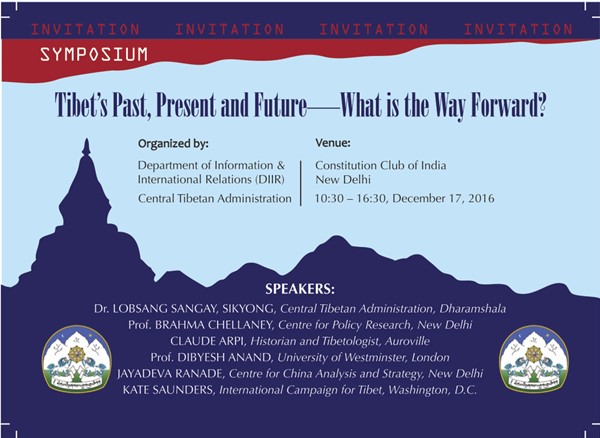
DIIR to Host a Symposium on ‘Tibet’s Past, Present and Future—What is the Way Forward?’
December 15, 2016
By Staff Writer
TIBET’S PAST AND FUTURE – JUST A STONE’S THROW AWAY. TIBET NEVER PART OF CHINA. BEIJING DOOMED.
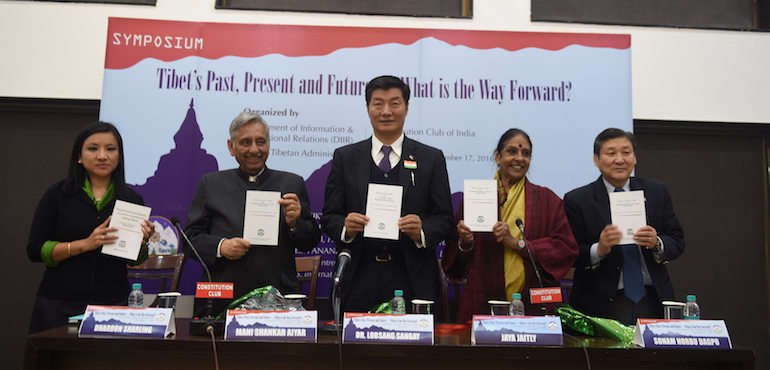
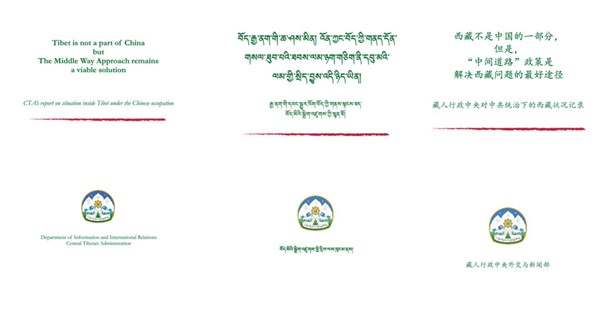
Delhi, December 15, 2016: The Department of Information and International Relations (DIIR) of Central Tibetan Administration (CTA) is releasing a book titled ‘Tibet is not a part of China but the Middle Way remains a Viable Solution.’ The flagship book which is CTA’s report on situation inside Tibet under the Chinese occupation is published in three languages- Tibetan, English and Chinese.
According to Sikyong Dr. Lobsang Sangay, “China has time and again made every effort to create a pristine image of Tibet that is out of touch with reality. Soon after its formation in 1949, the People’s Republic of China occupied Tibet under the guise of ‘liberation.’ Since then, people inside Tibet have expressed their deep resistance against China’s Tibet policies through numerous peaceful protests. It is quite clear that issues such as the reincarnation of His Holiness the Dalai Lama, the degradation of Tibet’s ecosystem, the rapid urbanization of Tibetan rural areas have a direct impact on the world at large. Therefore we are releasing this publication in three languages to present the current situation inside Tibet under the Chinese rule and share our position on these issues in order to draw international attention and generate public discourse on the best way forward to resolving the issue of Tibet, that is through the Middle Way Approach.”
Along with Sikyong Dr. Lobsang Sangay, former diplomat and MP, Shri Mani Shankar Aiyar and academic and writer Prof. Madhu Kishwar will grace the book launch.
DIIR will also organize a symposium on ‘Tibet’s Past, Present and Future—What is the Way Forward?’ Both the book launch and the symposium will take place at the Speaker Hall, Constitution Club of India in New Delhi on December 17, 2017 from 11:00 to 16:30. The event will be streamed live on Tibet TV’s YouTube and Facebook page.
The high-profile symposium, will bring together political leaders, thinkers, intellectuals, academicians and policy makers from across the world to discuss about Tibet. The day-long symposium will feature three plenary sessions to discuss– Tibet’s Historical Past, Current situation in Tibet under China’s occupation and Middle Way Policy—the Way Forward.
Dr. Lobsang Sangay, Sikyong (Political Leader), Central Tibetan Administration, Dharamsala, Prof. Brahma Chellaney, Centre for Policy Research, New Delhi, Claude Arpi, Historian and Tibetologist, Auroville, Prof. Dibyesh Anand, University of Westminster, London, Jayadeva Ranade, Centre for China Analysis and Strategy, New Delhi and Kate Saunders, International Campaign for Tibet, Washington D.C., will speak on the issues informing Tibet’s past, present and future.
“We hope that the symposium will help widen the horizon of intellectual discourse and dialogue on Tibet, it’s history, it’s present status and it’s future directions,”— said Dhardon Sharling, Information Secretary, DIIR.
Press Contact:
Tenzin Lekshey, Media Officer, Tibet Bureau Office in Delhi,-8585901465





























 Whole Dude - Whole Concept