The US-India-Tibet Relations complicated by Pakistan’s military invasion of Kashmir
Whole Problem -Defense of Kashmir complicates the problem of military occupation of Tibet
Communist China apart from its illegal military occupation of Tibet during 1949-50, had illegally occupied Indian territory in the Aksai Chin region of Ladakh Province in the State of Jammu and Kashmir prior to its sudden, military attack during 1962 all along the Himalayan Frontier. India’s Prime Minister Jawahar Lal Nehru failed to request military assistance from the United States to oppose this military occupation and land grab by Communist China due to concerns over the US support for Pakistan’s aggression in Kashmir.
The United States was willing to check Communist China’s expansionist policy, but, unfortunately, India could not take advantage of the US policy for the US simultaneously supports Pakistan’s occupation of Kashmir.
On behalf of Special Frontier Force, I confirm Special Frontier Force’s deployment in Ladakh Province to defend Jammu and Kashmir. In the context of role of foreign powers in Kashmir, it is important to recognize Special Frontier Force as a military organization in which the U.S., India, and Tibet participate as allies. It may be noted that Special Frontier Force had a role in India’s Kargil War.
It is of interest to note that United Kingdom and the United States simultaneously extend military and economic aid to Pakistan in support of its illegal political and military campaigns to annex Jammu and Kashmir. If not United Kingdom, the United States is playing on both sides of fence of parties involved in this dispute.
Both United States and United Kingdom need cooperation of India to contain Communist China’s Expansionist Doctrine. China’s Maritime Expansionism poses direct challenge to Japan, Philippines, Taiwan, Vietnam, Indonesia, Malaysia. China’s Expansionism needs to be addressed in comprehensive manner. There is no choice other than that of addressing the issue of China’s military occupation of Tibet; the first victim of China’s Expansionism. Pakistan cannot be trusted and cannot be counted as ally in any initiative that aims to Checkmate China’s Expansionism. Supplying sophisticated military hardware to Pakistan has not helped the United States. Pakistan shared designs of US military equipment with China helping China to advance her fighting capabilities. China manipulates Pakistan’s Nuclear and Missile Programs and for that reason Pakistan has to be counted as serious Security Risk.
Pakistan with her role in Balochistan, and Afghanistan created more enemies for the United States. The War against Soviet Expansionism got transformed into War on Terrorism as Pakistan used Afghan Campaign to make profits for her military bosses.
India from the beginning tried for peaceful resolution of Kashmir issue following the guidelines given by United Kingdom when it granted Independence to Pakistan and India in 1947. United States and United Kingdom made huge financial investment in Pakistan and as of today, it failed to promote Democracy, Peace, and Justice in South and Central Asia.
Whole Problem -Defense of Kashmir complicates the problem of military occupation of Tibet. Special Frontier Force Defends Jammu and Kashmir in Partnership With Indian Army. Siachen.
Jammu and Kashmir burning? Jammu and Kashmir burning? Media and trouble makers thrive on mischief. Everyday, Kashmir is in the news, and its usually portrayed maliciously.
JAMMU AND KASHMIR BURNING?
Media and trouble makers thrive on mischief. Everyday, Kashmir is in the news, and its usually portrayed maliciously by many of these elements that India is inhuman, steeped in illegality and is evil.
First the facts. As per international law, all of Jammu and Kashmir is integral part of India. This was effected by the treaty of accession signed between the Maharajah of Kashmir and India on 27th Oct 1947. 1. Jammu, Kashmir and Ladakh consists of 22 districts, separatist are present only in 5 districts – which represents a mere 15% of the state, and they are all Sunni Muslim. The voices and faces you see on television like Omar Abdullah, Mehbooba Mufti, Yasin Malik, Shabbir Shah, Gilani, Asiya Andrabi and Lone are from this region and sect. 2. The state has 12% Shia Muslims, 12-14% Gujjar Muslims and 8% Pahadi Rajput Muslims. It also has significant population of Sufis, Christians, Sikhs, Buddhists and Hindus. None of these communities have any separatist demands. 3. The larger two of the three regions of the state consisting of Jammu and Ladakh covering an area of 85,000 square kilometers are not Muslim majority areas, and there has never been any demand of separatism. 4. When terrorist Afzal Guru was hanged, the media made it appear as if the entire state was out on the streets. The reality was that out of 22 districts, there was not a single demonstration in 17 districts and only 5 districts in the Valley saw staged demonstrations. 5. Poonch has 90% and Kargil 90% Muslims, but there was no protest in these areas. 6. Our perception about Jammu and Kashmir is that a battle between nationalism and separatism is going on for the past 68 years. Nationalism has neither been lost nor will it, because in most areas of the state, majority of the people are nationalists. 7. The only legal dispute tenable under international law is, How India should get back areas that are under the illegal occupation of Pakistan and China?
‘Separatism’, ‘dispute’ and ‘autonomy’ are three myths raised by Pakistan and her agents within Kashmir and other parts of India The State should be considered as one entity like Jammu (with maximum of the ground area), Ladakh and only thereafter Kashmir. Pakistan and India baiters have been harping on United Nations Security Council Resolution 47. The resolution identifies Pakistan as an occupying force and states that in order to bring peace and harmony, the following steps will be undertaken in sequence.
1. First Pakistan must demilitarize and withdraw ALL its military forces and nationals used for the purpose of fighting from Kashmir. 2. Subsequently India must demilitarize Kashmir 3. A plebiscite may be held to determine the will of the people of Kashmir. Since Pakistan failed to demilitarize, the entire process of normalization went into a tailspin. That was in 1947, it is now 2016. In November 2010 the United Nations removed Jammu and Kashmir from its list of disputed territories.This UN Resolution is thus dead. Secondly, the resolution was passed by United Nations Security Council under chapter VI of UN Charter.Resolutions passed under Chapter VI of UN charter are considered non binding and have no mandatory enforceability. Since the government and the armed forces do not speak on the issue, the reporting is left mainly to separatist leaders and politicians, Jihadi terrorists, and the media. That most of these people and organizations who owe their loyalty and livelihood to foreigners, the reports will unjustifiably portray India in a bad light. Muslim Pakistan’s national identity is defined by a single dimension of being anti India and the destruction of secular India. Fake issues and imaginary threats from India are constantly raked up to provide justification for the Pakistan army to control the reins of power.
Pakistan has lost all the wars they have waged against India. Pakistan claims concern for Muslim brothers in Kashmir, while simultaneously abducting, torturing and exterminating large number of Baluchis,and Pashtuns, shows its desire for conflict with India. Pakistan because of its terrorist activities and toxic behavior, is on very bad terms and in conflict with all its neighbors be it India, Afghanistan or Bangladesh. The Pakistani leadership and Army have bankrupted and impoverished Pakistan by wasting money and resources on useless confrontations. Pakistan is using Kashmir merely as an issue to harm India by waging a proxy war using terrorism, with the hope of bleeding India with a thousand cuts. In spite of Pakistan’s best efforts, Kashmir will always remain an integral part of India, and we will grow stronger with time. Write and Posted: Aug 2016 – by Gurvinder Singh
Whole Problem -Defense of Kashmir complicates the problem of military occupation of TibetWhole Problem -Defense of Kashmir complicates the problem of military occupation of TibetWhole Problem -Defense of Kashmir complicates the problem of military occupation of TibetWhole Problem -Defense of Kashmir complicates the problem of military occupation of TibetWhole Problem -Defense of Kashmir complicates the problem of military occupation of TibetWhole Problem -Defense of Kashmir complicates the problem of military occupation of TibetWhole Problem -Defense of Kashmir complicates the problem of military occupation of TibetWhole Problem -Defense of Kashmir complicates the problem of military occupation of TibetWhole Problem -Defense of Kashmir complicates the problem of military occupation of Tibet. Special Frontier Force Defends Jammu and Kashmir in Partnership with Indian Army. Siachen.
India-Tibet-US Relations Complicated by Pakistan’s Invasion of Kashmir on 22 October 1947
The Kashmir issue poses a great danger severely undermining India’s ability to exercise full freedom to formulate an independent Tibet Policy. India needs the support of the United States to counter China’s military superiority and at the same time, India has to balance the US involvement in Kashmir in support of Pakistan’s aggression. Meeting between Indian Prime Minister Jawaharlal Nehru and US President Harry Truman in 1949.
In my analysis, India-Tibet relations from the very beginning were impacted by Pakistan’s invasion of Kashmir in October 1947. The United States was willing to check Communist China’s expansionist policy, but, unfortunately, India could not take advantage of the US policy for the US simultaneously supports Pakistan’s occupation of Kashmir
The Kashmir issue poses a great danger severely undermining India’s ability to exercise full freedom to formulate an independent Tibet Policy. India needs the support of the United States to counter China’s military superiority and at the same time, India has to balance the US involvement in Kashmir in support of Pakistan’s aggression.
Book Review: Tibet: When the Gods Spoke by Claude Arpi
The History of Special Frontier Force-Establishment No. 22: The military occupation of Tibet by Communist China had shaped the historical, cultural, religious relationship between India, and Tibet. It commenced an entirely new era in which both India, and Tibet are driven by the same kind of security concerns. Prime Minister Chou En-Lai represents the face of that danger that forced Prime Minister to know and appreciate the nature of Tibetan Nation as represented by the 14th Dalai Lama, and the 10th Panchen Lama Rinpoche.
Claude Arpi shows that the 1954 Panchsheel Agreement’s guiding principle of non-interference in and respect for each other’s territorial integrity left China to do in Tibet whatever it willed
BOOKS Updated: Aug 17, 2019 10:10 IST
572pp, Rs1,650; United Service Institution & Vij Books
Thubten Samphel
Hindustan Times
The History of Special Frontier Force-Establishment No. 22: India desired to promote international peace and tried to avoid armed conflicts. The burden imposed by China’s military occupation of Tibet was viewed with concern, but India tried the use of diplomacy and avoid war. A ceremony to honor Prime Minister Chou En-Lai , and the 14th Dalai Lama during their visit to New Delhi.
In the run-up to signing the Panchsheel agreement: Jawaharlal Nehru with Zhou Enlai, the first Premier of the People’s Republic of China (both center) at Palam Airport on 25 June 1954. (HT Photo)
Claude Arpi’s third volume on relations between India and Tibet covers the deepening Chinese penetration of the plateau and Beijing’s administrative and military consolidation there. The freehand given to China in its consolidation in Tibet was made possible when the two Asian giants signed the Panchsheel Agreement on Tibet in 1954. This was the document with which India withdrew its effective presence in Tibet in the form of two trade agencies and military escorts, though India’s mission in Lhasa operated as before. The agreement’s guiding principle of non-interference in and respect for each other’s territorial integrity left China to do in Tibet whatever it willed. Beijing imposed land ‘reforms’ and new leadership and administrative structure that led to the 1959 uprising against Chinese rule.
Digging deep into India’s national archival treasure trove, Claude Arpi has pulled out a real gem. This gem is the assessment of the various Indian officers, and of the character and motives of those figures, both political and spiritual, within the Tibetan leadership structure. The comments by India’s Tibet hands include the urgent need for Tibet to reform its social structure, making it fair and just for all Tibetans. This Indian examination of the strength and weakness of the Tibetan leadership came for closer scrutiny when the Dalai and Panchen Lamas visited India in 1956 for the Buddha Jayanti commemorations.
These lengthy and fascinating reports were submitted to New Delhi by Apa Pant, the political officer based in Gangtok, who dealt with affairs of Tibet, Bhutan and Sikkim, PN Menon, the former Indian consul general in Lhasa, and PN Luthra, special officer of border areas in the Ministry of External Affairs.
Apa Pant was convinced that “Old Tibet cannot fight new dynamic China.” He suggested that “In Tibet, unless the high monks, thinkers, and saints start seriously the re-organizing of the whole social and economic structure which is today based on privileges and is corrupt, there is no point in calling Tibet a Buddhist land…”
Apa Pant also suggested that “The Chinese have also a doctrine of social revolution and change which they are certain will help the common man. The Tibetans shall have to have an equally powerful dynamic policy of social change.”
Apa Pant made this fearful prediction. With China creating the conditions for the settlement of Tibet by Chinese migrants, “Tibet, as we know it today, will be annihilated, the process for its complete absorption into China (has) started.”
Colonel PN Luthra was assigned to the Panchen Lama’s party in its travels throughout India. About China’s designs on Tibet, the astute colonel has this to say. China, he wrote, “was eating Tibet like an artichoke, leaf by leaf.”
As for the time he spent with the Panchen Lama, Luthra wrote, “At a certain stage of the tour, it became possible to freely and frankly discuss any matter, however delicate, with the Panchen Lama himself or some of his principal associates.” Luthra was impressed by the Panchen Lama’s ability to recognize faces. He was, Luthra wrote, careful to “recognize the humbler staff such as motor drivers and dispatch-riders.” The Panchen Lama told Luthra that he did not believe in the “superstitious practices of Tibetan society. The Dalai Lama’s consultation with his oracle to decide the date of his departure to India had caused the Panchen Lama much amusement.” Luthra wrote, “I once asked the Panchen Lama what it felt like to be the incarnation of Amitabha. He replied that he had no such consciousness nor does he possess any supernatural powers. He struck me as a man without pretensions.”
According to Luthra, despite the traditional rivalry between Lhasa and Shigatse and the court politics of the two Lamas, “There seems to exist personal friendly accord as one would imagine between two youths who have so much in common… I have seen them cutting jokes, thumping each other’s backs and exchanging warm greetings.”
In 1959 when the Tibetan people rose up against Chinese rule in Tibet, the Dalai Lama along with an estimated 87,000 Tibetans fled Tibet to India, Nepal, and Bhutan. The Panchen Lama chose to remain in Tibet. In 1962, the Panchen Lama after extensive research and tour of all Tibet submitted the 70,000-character petition to the Chinese Communist Party, laying bare the Party’s disastrous mistakes on the plateau, nearly falling short of accusing the Party of genocide. Mao Zedong called the Panchen Lama’s constructive criticism “a poisoned arrow” aimed at the Party. For this, the Panchen Lama spent 14 long years in prison. After Mao’s death in 1976, he was released. In 1989, he confided publicly to the Tibetan people that Tibet had lost more than it gained under Chinese rule. That year under mysterious circumstances, the Panchen Lama died.
The third major voice to offer his commentary on the Tibetan political scene is that of PN Menon. He spent two years as India’s consul general in Tibet. In 1956 he was assigned to the Dalai Lama’s party. According to Menon, the weakness of the Tibetan struggle was “the real lack of a sense of unity and political consciousness in the way we understand it. At times the conflicting advice seemed to make the Dalai Lama rather confused…” But according to Menon, the Tibetan leader’s basic common sense seemed to “guide him away from the pitfalls of some of the advice offered.”
Contemporary and future generation of researchers of this period of Tibet’s relations with India will remain grateful to Claude Arpi for making these documents accessible. They will appreciate his bringing alive, loud and clear, the sterling character of these India’s frontier officials and their insights into the ominous events unfolding in overwhelmed and beleaguered Tibet.
Thubten Samphel is an independent researcher and a former director of the Tibet Policy Institute
First Published: Aug 16, 2019, 18:31 IST
The Kashmir issue poses a great danger severely undermining India’s ability to exercise full freedom to formulate an independent Tibet Policy. India needs the support of the United States to counter China’s military superiority and at the same time, India has to balance the US involvement in Kashmir in support of Pakistan’s aggression.
Special Frontier Force Defends Jammu and Kashmir. India’s Tibet Policy is always shaped by security concerns over foreign aggressors in Kashmir. The United States was willing to check Communist China’s expansionist policy, but, unfortunately, India could not take advantage of the US policy for the US simultaneously supports Pakistan’s occupation of Kashmir
Communist China apart from its illegal military occupation of Tibet during 1949-50, had illegally occupied Indian territory in the Aksai Chin region of Ladakh Province in the State of Jammu and Kashmir prior to its sudden, military attack during 1962 all along the Himalayan Frontier. India’s Prime Minister Jawahar Lal Nehru failed to request military assistance from the United States to oppose this military occupation and land grab by Communist China due to concerns over the US support for Pakistan’s aggression in Kashmir.
The United States was willing to check Communist China’s expansionist policy, but, unfortunately, India could not take advantage of the US policy for the US simultaneously supports Pakistan’s occupation of Kashmir.
Irked by China, India signals turnaround on Dalai Lama
As Beijing keeps riling New Delhi with J&K rants, India invites 84-year-old Tibetan leader to deliver prestigious lecture instituted in memory of its second President.
India’s Tibet Policy is always shaped by security concerns over foreign aggressors in Kashmir. As Beijing keeps riling New Delhi with J&K rants, India invites 84-year-old Tibetan leader to deliver prestigious lecture instituted in memory of its second President.
The government has given its nod to an autonomous institution funded by its Ministry of Human Resource Development that is housed in the summer retreat of President of India to invite Dalai Lama to deliver a lecture next Thursday – a move, which is likely to rile China.
The Indian Institute of Advanced Studies (IIAS) housed at Rashtrapati Nivas in Shimla has invited Dalai Lama to deliver a lecture instituted in memory of eminent educationist and philosopher Dr. Sarvepalli Radhakrishnan, who had served as the first Vice President and second President of India.
New Delhi’s nod to the institution to invite Dalai Lama to deliver lecture signaled a subtle shift in its approach on engaging with the exiled Tibetans and it came about 20 months after the Cabinet Secretariat in February 2018 advised senior leaders and the functionaries of the government to stay away from events attended by Dalai Lama and other leaders of the global campaign to free Tibet from “repressive rule” of China.
Dalai Lama will deliver the 24th annual Radhakrishnan Memorial Lecture at the India International Centre in New Delhi on Thursday. Vinay Sahasrabuddhe, a member of Parliament of the ruling Bharatiya Janata Party (BJP) and the Director-General of the Indian Council of Cultural Relations (ICCR) will be the Guest of Honor at the event, according to an invitation circulated by the IAAS.
New Delhi’s ties with Beijing came under stress once again after China joined Pakistan to oppose India’s August 5 decision to strip Jammu and Kashmir of its special status and reorganize the state into two Union Territories.
China is concerned over the implication of the Modi government’s move on Jammu and Kashmir on its protracted boundary dispute with India. The Chinese government perceived it as New Delhi’s “unilateral” move to change the status quo in the disputed territory and to strengthen its claim – not only on areas of Kashmir under occupation of Pakistan, but also on 5180 sq km of areas ceded by Pakistan to China in 1963 as well as on Aksai Chin – a disputed territory between India and China.
Though Modi hosted Xi for the second “informal summit” at a seaside resort near Chennai on October 11 and 12, China’s opposition to India’s decisions on Jammu and Kashmir cast a shadow over the meeting.
India, in fact, raised its pitch to re-assert claim over its territories illegally occupied by China, after the communist country on October 31 described the reorganization of Jammu and Kashmir as “unlawful”.
Whole Problem – India’s Tibet Policy is shaped by foreign aggressors in Kashmir. Communist China apart from its illegal military occupation of Tibet during 1949-50, had illegally occupied Indian territory in the Aksai Chin region of Ladakh Province in the State of Jammu and Kashmir prior to its sudden, military attack during 1962 all along the Himalayan Frontier. India’s Prime Minister Jawahar Lal Nehru failed to request military assistance from the United States to oppose this military occupation and land grab by Communist China due to concerns over the US support for Pakistan’s aggression in Kashmir.
Whole Problem – The Problem of Kashmir undermines India-Tibet-US Relations. The Disputed Territory: Shown in green is the Kashmiri region under Pakistani occupation. The orange-brown region represents Indian-controlled Jammu and Kashmir while the Aksai Chin is under Chinese occupation. The entire territory is the Indian Union State of Jammu and Kashmir. The United States was willing to check Communist China’s expansionist policy, but, unfortunately, India could not take advantage of the US policy for the US simultaneously supports Pakistan’s occupation of Kashmir.
The United States was willing to check Communist China’s expansionist policy, but, unfortunately, India could not take advantage of the US policy for the US simultaneously supports Pakistan’s occupation of Kashmir.
Whole Problem – The Problem of Kashmir undermines India-Tibet-US Relations.The United States was willing to check Communist China’s expansionist policy, but, unfortunately, India could not take advantage of the US policy for the US simultaneously supports Pakistan’s occupation of Kashmir.
The United States was willing to check Communist China’s expansionist policy, but, unfortunately, India could not take advantage of the US policy for the US simultaneously supports Pakistan’s occupation of Kashmir.
Whole Problem – The Problem of Kashmir undermines India-Tibet-US Relations. Service Award presented by all Officers D Sector, Establishment 22, Special Frontier Force, Vikas Regiment.
The United States was willing to check Communist China’s expansionist policy, but, unfortunately, India could not take advantage of the US policy for the US simultaneously supports Pakistan’s occupation of Kashmir.
Whole Problem – The Problem of Kashmir undermines India-Tibet-US Relations. Communist China apart from its illegal military occupation of Tibet during 1949-50, had illegally occupied Indian territory in Aksai Chin Region of Ladakh Province in the State of Jammu and Kashmir prior to its sudden, military attack during 1962 all along the Himalayan Frontier. India’s Prime Minister Jawaharlal Nehru could not request military assistance from the United States as the US considers Kashmir as the territory entitled to Pakistan. The United States was willing to check Communist China’s expansionist policy, but, unfortunately, India could not take advantage of the US policy for the US simultaneously supports Pakistan’s occupation of Kashmir.
The United States was willing to check Communist China’s expansionist policy, but, unfortunately, India could not take advantage of the US policy for the US simultaneously supports Pakistan’s occupation of Kashmir.
Whole Problem – The Problem of Kashmir undermines India-Tibet-US Relations The McMahon Line in India’s North-East Frontier Agency or the State of Arunachal Pradesh. India’s Prime Minister Jawaharlal Nehru could not request military assistance from the United States as the US considers Kashmir as the territory entitled to Pakistan. The United States was willing to check Communist China’s expansionist policy, but, unfortunately, India could not take advantage of the US policy for the US simultaneously supports Pakistan’s occupation of Kashmir.
The United States was willing to check Communist China’s expansionist policy, but, unfortunately, India could not take advantage of the US policy for the US simultaneously supports Pakistan’s occupation of Kashmir.
Whole Problem – The Problem of Kashmir undermines India-Tibet-US Relations: India’s Spiritual response to the plight of Tibetans is the real cause of the 1962 India-China War. In this photo image dated September 04, 1959, Indira Gandhi, daughter of India’s Prime Minister Jawaharlal Nehru is seen with His Holiness Dalai Lama. I take absolute pride at this moment and if War is the price to defend Tibet and its Dignity, as an Indian, I am happy to pay the price. The United States was willing to check Communist China’s expansionist policy, but, unfortunately, India could not take advantage of the US policy for the US simultaneously supports Pakistan’s occupation of Kashmir.
The United States was willing to check Communist China’s expansionist policy, but, unfortunately, India could not take advantage of the US policy for the US simultaneously supports Pakistan’s occupation of Kashmir.
Whole Problem – The Problem of Kashmir undermines India-Tibet-US Relations: During 1962, I was a student at Giriraj Government Arts College, Nizamabad, Andhra Pradesh, India. The entire student community joined together to voice their protest against Communist China’s act of brutal aggression. We raised donations to support the National Defense Fund and people across the entire Nation united to express their Love to the members of Indian Armed Forces who were fighting the battle. By 1971, I had finished my military training and was posted to a Unit that defends the Himalayan Frontier along the McMahon Line.Whole Problem – The Problem of Kashmir undermines India-Tibet-US Relations: There is a legitimate border between India and Tibet. As far as Communist China is concerned, I would ask Indian people to define their territory by accepting the challenge posed by Communist China’s illegal occupation of Tibet.The United States was willing to check Communist China’s expansionist policy, but, unfortunately, India could not take advantage of the US policy for the US simultaneously supports Pakistan’s occupation of Kashmir.
The United States was willing to check Communist China’s expansionist policy, but, unfortunately, India could not take advantage of the US policy for the US simultaneously supports Pakistan’s occupation of Kashmir.
Whole Problem – The Problem of Kashmir undermines India-Tibet-US Relations.REMEMBERING THE 1962 INDIA–CHINA WAR: I remember visiting and paying my respects at the War Memorial erected at WALONG in remembrance of the Battle fought at Namtifield or Namti Plains, near Walong, Arunachal Pradesh (North-East Frontier Agency of Indian Union). Deputy Commissioner Bernard S Dougal paid his tribute in the following verse: The Sentinel hills that round us stand Bear witness that we loved our Land; Amidst shattered rocks and flaming Pine, We fought and died on Namti Plain. O’ Lohit gently by us glide, Pale stars above us softly shine, As we sleep here in sun and rain.Whole Problem – The Problem of Kashmir undermines India-Tibet-US Relations.The United States was willing to check Communist China’s expansionist policy, but, unfortunately, India could not take advantage of the US policy for the US simultaneously supports Pakistan’s occupation of Kashmir.
The United States was willing to check Communist China’s expansionist policy, but, unfortunately, India could not take advantage of the US policy for the US simultaneously supports Pakistan’s occupation of Kashmir.
THE GREAT LESSON LEARNED FROM THE 1962 INDIA–CHINA WAR:
Whole Problem – The Problem of Kashmir undermines India-Tibet-US Relations:”AHIMSA PARAMO DHARMA; DHARMA HIMSA TATHAIVA CHA” – Non-Violence is the highest principle, and so is Violence( use of Force or HIMSA ) in defense of the Righteous. I am not opposed to using force or violence to defend this Flag of Tibet and restore the true Tibetan Identity and its Independence. The United States was willing to check Communist China’s expansionist policy, but, unfortunately, India could not take advantage of the US policy for the US simultaneously supports Pakistan’s occupation of Kashmir.
In 1962, Communist China used a massive force of Peoples’ Liberation Army to attack India all across the Himalayan frontier. Prime Minister Nehru is often blamed for China’s evil actions. On account of Kashmir, Nehru did not join the United States camp that may have prevented this attack. The United States was willing to check Communist China’s expansionist policy, but, unfortunately, India could not take advantage of the US policy for the US simultaneously supports Pakistan’s occupation of Kashmir.
Kashmir is India’s Achilles heel. India-Tibet relations remain compromised as Pakistan’s occupation of Kashmir remains undeterred. The United States was willing to check Communist China’s expansionist policy, but, unfortunately, India could not take advantage of the US policy for the US simultaneously supports Pakistan’s occupation of Kashmir.
On October 20, 2024, 62-Years after the 1962 War, ask China to share the truth
REMEMBERING A WAR – THE 1962 INDIA-CHINA WAR : India’s Spiritual response to the plight of Tibetans is the real cause of the 1962 India-China War. In this photo image dated September 04, 1959, Indira Gandhi, daughter of India’s Prime Minister Jawaharlal Nehru is seen with His Holiness the 14th Dalai Lama. I take absolute pride in this moment and if War is the price to defend Tibet and its Dignity, as an Indian, I am happy to pay the price.REMEMBERING THE 1962 INDIA – CHINA WAR : Communist China apart from its illegal military occupation of Tibet during 1949-50, illegally occupied Indian territory in Aksai Chin Region of Ladakh Province in the State of Jammu and Kashmir prior to its sudden, military attack during 1962 all along the Himalayan Frontier.The Disputed Territory : Shown in green is Kashmiri region under Pakistani occupation. The orange-brown region represents Indian-controlled Jammu and Kashmir while the Aksai Chin is under Chinese occupation. The entire territory is Indian Union State of Jammu and Kashmir.REMEMBERING THE 1962 INDIA – CHINA WAR : The McMahon Line in India’s North East Frontier Agency or the State of Arunachal Pradesh. The Top Secret of 1962 War is the number of Chinese soldiers that were killed and injured during their military attack. Communist China must take courage and admit the true numbers. This War was not a total loss. India learned its lesson. We had a spectacular Military Victory during 1971 during our Bangladesh Liberation War.
During 1962, I was a student at Giriraj Government Arts College, Nizamabad, Telangana, India. The entire student community joined together to voice their protest against Communist China’s act of brutal aggression. We raised donations to support the National Defense Fund and people across the entire Nation united to express their Love to the members of Indian Armed Forces who were fighting the battle. By 1971, I had finished my military training and was posted to an Unit that defends the Himalayan Frontier along the McMahon Line.
REMEMBERING A WAR:THE 1962 INDIA-CHINA WAR : This is a photo image taken in 1972, ten years after the 1962 War, while I proudly served the Nation in North East Frontier Agency. There was no schism or division among the Officers Corps. The Men and the Officers were totally united and were fully motivated to fight the Enemy and we had patrolled the border along the McMahon Line and went beyond the border for Operational reasons. There was no Fear and we were Prepared for the Challenge.
Kindly read the attached story titled “Remembering a War : The 1962 India-China War” and share your comments and views. The attached story is attributed to Neville Maxwell (1923 to 1974), a British journalist who worked for China’s Intelligence service. He published a book titled “India’s China War” and I call him a “Peddler” for he indulged in peddling information provided by China’s Intelligence Service. Neville Maxwell’s story is inspired by Communist China’s Intelligence Service and I am happy to give a public response to their Communist Propaganda that aims to promote fear psychosis among gullible Indian citizens and others. They must know that the people of the world are getting united to oppose China’s military occupation of Tibet.
I have the following problems with this story about “The 1962 India-China War.” You may also share it with others who have Service experience in India and Southeast Asia.
1. The author justifies Communist China’s military invasion of Tibet during 1949-50.
2. The author claims that Communist China respects the McMahon Line. In reality China occupied Aksai Chin region prior to the 1962 War. China has no legal authority inside Tibet and China cannot tell India not to cross the McMahon Line. We have valid reasons to ignore and refuse China’s legitimacy inside Tibet.
3. The author uses slander and innuendo to discredit General Kaul and there is no substance or proof to verify any of those claims. General Kaul’s only fault is that; Kaul is a Kashmiri Brahmin. His promotion and creation of a new Army Corps Commander position are justified because of enemy’s hostility and threats.
4. The author blames Mr. N. B. Mullik, the Director of Intelligence Bureau for doing his job. Mr. Mullik did his best under the given circumstances. To gather intelligence, we need to have aggressive patrolling and we must cross the McMahon Line to verify enemy’s strength and intentions. I did the same thing during 1972 while I was posted in North East Frontier Agency. I went with foot patrol parties and had deliberately, and intentionally crossed the border to know and detect enemy activities. A person with basic Infantry training knows the purpose of a patrol. It is not a picnic. India has a natural right to gather intelligence about the activities of its enemy. The enemy has no jurisdictional rights or legal authority (other than the fact of its military occupation) in that area of Indian security operations.
5. The report gives no credit to Simla Agreement of 1914 and McMahon Treaty that established the legitimate boundary between Tibet and India. Manchu China had signed this Treaty apart from Tibet. Red China invaded and occupied Tibet during 1949-50 and changed the situation for India. Since China had occupied Tibet, there was no good reason for India to initiate bilateral talks with China about border demarcation as the issue was already decided by McMahon Treaty. The essay criticizes India’s effort to control its own legitimate territory. It says India had provoked an angry reaction from China as India wanted to send armed patrols to a few selected border posts. Why should not India send patrols to define its own territory? The story says that India was a bit aggressive. Look at the aggressiveness of China which had already occupied the whole of Tibet and crushed all Tibetan resistance to its military occupation.
6. India played a reasonable role to protect its interests and used its Army with the resources they had at that time. If we are facing a superior force, it does not mean that we should remain entirely passive on our side of border. The only mistake made by Indian Prime Minister Nehru was that of not getting help from the United States to fully confront the military threat posed by Communist China. The Indian Prime Minister was constrained by the US military support for Pakistan’s acts of military aggression.
We had a very good chance to kick the Chinese out of Tibet during 1949-50 and we missed a golden opportunity on account of Pakistan’s War of Aggression in Kashmir. I still believe that India must prepare for this military challenge and stand up to defend Arunachal Pradesh and Ladakh. Unfortunately, we lost Aksai Chin to China without fighting them. After Chinese unilateral occupation of Aksai Chin, India must have joined United States to fight the threat posed by Communist China. We lost territory to China in Pakistan-occupied Kashmir. India must not relent on this border issue and our goal must be that of evicting the military occupier from Tibet.
7. This essay justifies Communist China’s military invasion of Tibet and blames India for defending its borders in the face of China’s superior strength. It has no word to blame China and its Expansionism. The author may even suggest and say that India had offended Alexander the Great and hence he had to fight and conquer India.
8. The 1962 War is not a total loss. The Top Secret of the 1962 India-China War is the number of Chinese killed and wounded in this military invasion. If Communist China has any courage, I ask them to disclose the true numbers. I am glad for we could kill the Enemy on the battlefield.
9. While I served on the Himalayan frontier (1971-December,1974), I had always medically inspected each soldier and made assessment of each soldier’s physical and mental fitness. Each was physically, and mentally fully prepared to face the challenge and fight the Enemy. I have never sent a soldier to get a medical opinion from an Army Psychiatrist. The essay talks about the divisions among the Officer Corps. I have personally met several Officers who served during 1962. In 1971, India had won a great Military Victory in the conduct of Bangladesh Operations. Indian Army, the Officers and men are totally united and worked together with no differences of opinion and executed the operation on the Battlefield. I had no personal or direct contact with very senior Officers but I know all Officers of the rank of Brigadier and below within my Formation. Both during 1962 and during 1971, the men and the Officer Corps of Indian Army were fully united to oppose the enemy and were willing to fight the enemy.
10. All said and done, the 1962 War was a good lesson and we are better prepared and more willing to fight this War again.
Neville Maxwell, a British Journalist, a paid agent of China’s Intelligence Service had named “HARRY ROSSITSKY” as the CIA Station Head in New Delhi. What was the source of this information? How did he come to this conclusion about the Identity of CIA’s Station Head in New Delhi? I welcome China’s Intelligence Service to come and verify our Identities on the Battlefield. CIA does not fight this Battle. When I served in Indian Army along the Himalayan Frontier, it was me, the Officers, and all Ranks of the Units in which I had served who trained and prepared to fight the Enemy. China must face us and not CIA on the Battlefield. There is a legitimate border between India and Tibet. As far as Communist China is concerned, I ask Indian people to define their territory by accepting the Challenge posed by Communist China’s illegal occupation of Tibet.REMEMBERING THE 1962 INDIA – CHINA WAR : I remember visiting and paying my respects at the War Memorial erected at WALONG in remembrance of the Battle fought at Namtifield or Namti Plains, near Walong, Arunachal Pradesh (North East Frontier Agency of Indian Union). Deputy Commissioner Bernard S Dougal paid his tribute in the following verse: The Sentinel hills that round us stand Bear witness that we loved our Land; Amidst shattered rocks and flaming Pine, We fought and died on Namti Plain. O’ Lohit gently by us glide, Pale stars above us softly shine, As we sleep here in Sun and rain.REMEMBERING THE 1962 INDIA – CHINA WAR : I remember visiting and paying my respects at the War Memorial erected in WALONG in remembrance of the Battle fought at Namtifield or Namti Plains, near Walong, – Lohit River: Walong War MemorialREMEMBERING THE 1962 INDIA – CHINA WAR : I remember visiting and paying my respects at the War Memorial erected in WALONG in remembrance of the Battle fought at Namtifield or Namti Plains, near Walong, Lohit River: “WALONG WILL NEVER FALL AGAIN.”
Dr. R. Rudra Narasimham, B.Sc., M.B.B.S., Personal Number. MS-8466 Rank. Captain, AMC/SSC, Medical Officer, South Column, Operation Eagle (1971-72), Personal Number. MR-03277K Rank. Major, AMC/DPC Medical Officer, Headquarters Establishment No. 22 C/O 56 APO (1971-74), Directorate General of Security, Office of Inspector General Special Frontier Force, East Block V, Level IV, R. K. Puram, New Delhi – 110 022 – India.
The story titled, “Remembering A War: The 1962 India – China War” is another face of Communist China’s propaganda warfare. China has been selling this story to gullible Indians and claims that China is a victim of India’s attack on China. This entire piece does not mention the word TIBET and Communist China’s illegal occupation of Tibet and the uprising in Tibet and H.H. Dalai Lama’s getting asylum in India. Communist China had used a massive force of Peoples’ Liberation Army to attack India all across the Himalayan frontier. The political mistake made by Prime Minister Nehru was that of not seeking help from the United States to prevent this attack. United States was willing to check Communist China’s expansionist policy and we should have kicked China out of Tibet during 1949-50.
After the 1962 war, the Indian Army commissioned Lt Gen Henderson Brooks and Brig PS Bhagat to study the debacle. As is wont in India, their report was never made public and lies buried in the government archives. But some experts have managed to piece together the contents of the report. One such person is Neville Maxwell, who has studied the 1962 war in depth and is the author of ‘India’s China War’.
In the articles that follow, Indians will be shocked to discover that, when China crushed India in 1962, the fault lay at India, or more specifically, at Jawaharlal Nehru and his clique’s doorsteps. It was a hopelessly ill-prepared Indian Army that provoked China on orders emanating from Delhi, and paid the price for its misadventure in men, money and national humiliation.This is a three part series of articles by Neville Maxwell:- Part I – The Genesis of the 1962 Sino-Indian War. Part 2 – How the East was Lost. Part 3 – India’s Shameful Debacle.
Part I – The Genesis of the 1962 Sino-Indian War
When the Army’s report into its debacle in the border war was completed in 1963, the Indian government had good reason to keep it TOP SECRET and give only the vaguest, and largely misleading, indications of its contents. At that time the government’s effort, ultimately successful, to convince the political public that the Chinese, with a sudden ‘unprovoked aggression,’ had caught India unawares in a sort of Himalayan Pearl Harbour was in its early stages, and the Report’s cool and detailed analysis, if made public, would have shown that to be self-exculpatory mendacity. But a series of studies, beginning in the late 1960s and continuing into the 1990s, revealed to any serious enquirer the full story of how the Indian Army was ordered to challenge the Chinese military to a conflict it could only lose. So, by now, only bureaucratic inertia, combined with the natural fading of any public interest, can explain the continued non-publication – the Report includes no surprises and its publication would be of little significance but for the fact that so many in India still cling to the soothing fantasy of a 1962 Chinese ‘aggression.’ It seems likely now that the Report will never be released. Furthermore, if one day a stable, confident and relaxed government in New Delhi should, miraculously, appear and decide to clear out the cupboard and publish it, the text would be largely incomprehensible, the context, well known to the authors and therefore not spelled out, being now forgotten. The Report would need an Introduction and gloss – a first draft of which this paper attempts to provide, drawing upon the writer’s research in India in the 1960s and material published later. Two Preambles are required, one briefly recalling the cause and course of the border war; the second to describe the fault-line, which the border dispute turned into a schism, within the Army’s officer corps, which was a key factor in the disaster — and of which the Henderson Brooks Report can be seen as an expression. Origins of the border conflict India, at the time of Independence, can be said to have faced no external threats. True, it was born into a relationship of permanent belligerency with its weaker Siamese twin, Pakistan, left by the British inseparably conjoined to India by the chronically enflamed member of Kashmir, vital to both new national organisms; but that may be seen as essentially an internal dispute, an untreatable complication left by the crude, cruel surgery of Partition. In 1947, China, wracked by civil war, was in what appeared to be death throes and no conceivable threat to anyone. That changed with astonishing speed, however, and, by 1950, when the new-born People’s Republic re-established in Tibet the central authority which had lapsed in 1911, the Indian government will have made its initial assessment of the possibility and potential of a threat from China, and found those to be minimal, if not non-existent. First, there were geographic and topographical factors, the great mountain chains which lay between the two neighbours and appeared to make large-scale troop movements impractical (few could then see in the German V2 rocket the embryo of the ICBM). More important, the leadership of the Indian government – which is to say, Jawaharlal Nehru – had for years proclaimed that the unshakable friendship between India and China would be the key to both their futures, and therefore Asia’s, even the world’s. The new leaders in Beijing were more chary, viewing India through their Marxist prism as a potentially hostile bourgeois state. But, in the Indian political perspective, war with China was deemed unthinkable and, through the 1950s, New Delhi’s defence planning and expenditure expressed that confidence. By the early 1950s, however, the Indian government, which is to say Nehru and his acolyte officials, had shaped and adopted a policy whose implementation would make armed conflict with China not only “thinkable” but inevitable. From the first days of India’s Independence, it was appreciated that the Sino-Indian borders had been left undefined by the departing British and that territorial disputes with China were part of India’s inheritance. China’s other neighbours faced similar problems and, over the succeeding decades of the century, almost all of those were to settle their borders satisfactorily through the normal process of diplomatic negotiation with Beijing. The Nehru government decided upon the opposite approach. India would, through its own research, determine the appropriate alignments of the Sino-Indian borders, extend its administration to make those good on the ground and then refuse to negotiate the result. Barring the inconceivable – that Beijing would allow India to impose China’s borders unilaterally and annex territory at will – Nehru’s policy thus willed conflict without foreseeing it. Through the 1950s, that policy generated friction along the borders and so bred and steadily increased distrust, growing into hostility, between the neighbours. By 1958, Beijing was urgently calling for a standstill agreement to prevent patrol clashes and negotiations to agree on boundary alignments. India refused any standstill agreement, since it would be an impediment to intended advances and insisted that there was nothing to negotiate, the Sino-Indian borders being already settled on the alignments claimed by India, through blind historical process. Then it began accusing China of committing ‘aggression’ by refusing to surrender to Indian claims. From 1961, the Indian attempt to establish an armed presence in all the territory it claimed and then extrude the Chinese was being exerted by the Army and Beijing was warning that if India did not desist from its expansionist thrust, the Chinese forces would have to hit back. On Oct 12, 1962, Nehru proclaimed India’s intention to drive the Chinese out of areas India claimed. That bravado had by then been forced upon him by public expectations which his charges of ‘Chinese aggression’ had aroused, but Beijing took it as in effect a declaration of war. The unfortunate Indian troops on the frontline, under orders to sweep superior Chinese forces out of their impregnable, dominating positions, instantly appreciated the implications: ‘If Nehru had declared his intention to attack, then the Chinese were not going to wait to be attacked.’ On Oct 20, the Chinese launched a pre-emptive offensive all along the borders, overwhelming the feeble – but, in this first instance, determined – resistance of the Indian troops and advancing some distance in the eastern sector. On Oct 24, Beijing offered a ceasefire and Chinese withdrawal on the condition that India agrees to open negotiations: Nehru refused the offer even before the text was officially received. Both sides built up over the next three weeks, and the Indians launched a local counterattack on Nov 15, arousing in India fresh expectations of total victory. The Chinese then renewed their offensive. Now many units of the once crack Indian 4th Division dissolved into rout without giving battle and, by Nov 20, there was no organised Indian resistance anywhere in the disputed territories. On that day, Beijing announced a unilateral ceasefire and intention to withdraw its forces: Nehru, this time, tacitly accepted. Naturally the Indian political public demanded to know what had brought about the shameful debacle suffered by their Army. On Dec 14, a new Army Cdr, Lt Gen JN Chaudhuri, instituted an Operations Review for that purpose, assigning the task of enquiry to Lt Gen Henderson Brooks and Brig PS Bhagat.
Part II – How the East was Lost
All colonial armies are liable to suffer from the tugs of contradictory allegiance and, in the case of India’s, that fissure was opened in the Second World War by Japan’s recruitment from prisoners of war of the Indian National Army to fight against their former fellows. By the beginning of the 1950s, two factions were emerging in the officer corps:-
· One patriotic but above all professional and apolitical, and orthodox in adherence to the regimental traditions established in the century of the Raj; · The other nationalist, ready to respond unquestioningly to the political requirements of their civilian masters and scorning their rivals as fuddy-duddies still aping the departed rulers, and suspected as being of doubtful loyalty to the new ones. The latter faction soon took on an eponymous identification from its leader, B M Kaul. At the time of Independence, Kaul appeared to be a failed officer, if not one disgraced. Although Sandhurst-trained for infantry service, he had eased through the war without serving on any frontline and ended it in a humble and obscure post in public relations. But his courtier wiles, irrelevant or damning until then, were to serve him brilliantly in the new order that Independence brought, after he came to the notice of Nehru, a fellow Kashmiri Brahmin and, indeed, distant kinsman. Boosted by the prime minister’s steady favoritism, Kaul rocketed through the Army structure to emerge in 1961 at the very summit of the Army HQ. Not only did he hold the key appointment of Chief of General Staff but the Army Commander, Thapar, was, in effect, his client. Kaul had, of course, by then acquired a significant following, disparaged by the other side as ‘Kaul boys’ (‘call-girls’ had just entered usage), and his appointment as CGS opened a putsch in HQ, an eviction of the old guard, with his rivals, until then his superiors, being not only pushed out but often hounded thereafter with charges of disloyalty. The struggle between those factions both fed on and fed into the strains placed on the Army by the government’s contradictory and hypocritical policies – on the one hand, proclaiming China an eternal friend against whom it was unnecessary to arm; on the other, exerting armed force to seize territory it knew China regarded as its own. Through the early 1950s, Nehru’s covertly expansionist policy had been implemented by armed border police under the Intelligence Bureau, whose director, NB Mullik, was another favourite and confidant of the prime minister. The Army high command, knowing its forces to be too weak to risk conflict with China, would have nothing to do with it. Indeed when the potential for Sino-Indian conflict inherent in Mullik’s aggressive forward patrolling was demonstrated in the serious clash at the Kongka Pass in Oct 1959, Army HQ and the MEA united to denounce him as a provocateur and insisted that control over all activities on the border be assumed by the Army, which thus could insulate China from Mullik’s jabs. The takeover by Kaul and his ‘boys’ at Army HQ in 1961 reversed that. Now, regular infantry would take over from Mullik’s border police in implementing what was formally designated a ‘forward policy,’ one conceived to extrude the Chinese presence from all territory claimed by India. Field commanders receiving orders to move troops forward into territory the Chinese both held and regarded as their own warned that they had no resources or reserves to meet the forceful reaction they knew must be the ultimate outcome: they were told to keep quiet and obey orders. That may suggest that those driving the forward policy saw it in kamikaze terms and were reconciled to its ending in gunfire and blood – but the opposite was true. They were totally and unshakably convinced that it would end not with a bang but a whimper – from Beijing. The psychological bedrock upon which the forward policy rested was the belief that, in the last resort, the Chinese military, snuffling from a bloody nose, would pack up and quit the territory India claimed. The source of that faith was Mullik, who from beginning to end proclaimed as oracular truth that, whatever the Indians did, there need be no fear of a violent Chinese reaction. The record shows no one squarely challenging that mantra at higher levels than the field commanders who throughout knew it to be dangerous nonsense: there were civilian ‘Kaul boys’ in the ministries of external affairs and defence too and they basked happily in Mullik’s fantasy. Perhaps the explanation for the credulousness lay in Nehru’s dependent relationship with his Intelligence Bureau chief: since the prime minister placed such faith in Mullik, it would be at the least lese majeste, and even heresy, to deny him a kind of papal infallibility. If it be taken that Mullik was not just deluded, what other explanation could there be for the unwavering consistency with which he urged his country forward on a course which, in rational perception, could lead only to war with a greatly superior military power and, therefore, defeat? Another question arises: who, in those years, would most have welcomed the great falling-out which saw India shift in a few years from strong international support for the People’s Republic of China to enmity and armed conflict with it? From founding and leading the Non-Aligned Movement to tacit enlistment in the hostile encirclement of China which was Washington’s aim? Mullik maintained close links with the CIA station head in New Delhi, Harry Rossitsky. Answers may lie in the agency’s archives. China’s stunning and humiliating victory brought about an immediate reversal of fortune between the Army factions. Out went Kaul, out went Thapar, out went many of their adherents – but by no means all. Gen Chaudhuri, appointed to replace Thapar as Army chief, chose not to launch a counter-putsch. He and his colleagues of the restored old guard knew full well what had caused the debacle: political interference in promotions and appointments by the prime minister and Krishna Menon, defence minister, followed by clownish ineptitude in the Army HQ as ‘Kaul boys’ scurried to force the troops to carry out the mad tactics and strategy laid down by the government. It was clear that the trail back from the broken remnants of the 4th Division limping onto the plains in the north-east, up through intermediate commands to the Army HQ in New Delhi and then, on to the source of political direction, would have ended at the prime minister’s door – a destination which, understandably, Chaudhuri had no desire to reach. (Mullik was anyway to tarnish him with the charge that he was plotting to overthrow the discredited civil order, but, in fact, Chaudhuri was a dedicated constitutionalist – ironically, Kaul was the only one of the generals who harbored Caesarist ambitions.)
The Investigation
While the outraged humiliation of the political class left Chaudhuri with no choice but to order an inquiry into the Army’s collapse, it was up to him to decide its range and focus, indeed its temper. The choice of Lt Gen Henderson Brooks to run an Operations Review (rather than a broader and more searching board of inquiry) was indicative of a wish not to make the already bubbling stew of recriminations boil over. Henderson Brooks (until then in command of a corps facing Pakistan) was a steady, competent but not outstanding officer, whose appointments and personality had kept him entirely outside the broils stirred up by Kaul’s rise and fall. That could be said too of the officer Chaudhuri appointed to assist Henderson Brooks, Brig PS Bhagat (holder of a WW II Victoria Cross and commandant of the military academy). But the latter complemented his senior by being a no-nonsense, fighting soldier, widely respected in the Army, and the taut, unforgiving analysis in the Report bespeaks the asperity of his approach. There is further evidence that Chaudhuri did not wish the inquiry to dig too deep, range too widely, or excoriate those it faulted. The following were the terms of reference he set:- · Training; · Equipment; · System of command; · Physical fitness of troops; · Capacity of commanders at all levels to influence the men under their command. The first four of those smacked of an inquiry into the sinking of the Titanic briefed to concentrate on the management of the shipyard where it was built and the health of the deck crew; only the last term has any immediacy, and there the wording was distinctly odd – commanders do not usually ‘influence’ those they command, they issue orders and expect instant obedience. But Henderson Brooks and Bhagat (henceforth HB/B) in effect ignored the constraints of their terms of reference and kicked against other limits Chaudhuri had laid upon their investigation, especially his ruling that the functioning of Army HQ during the crisis lay outside their purview. ‘It would have been convenient and logical’, they note, ‘to trace the events [beginning with] Army HQ, and then move down to the Commands for more details… ending up with field formations for the battle itself’. Forbidden that approach, they would, nevertheless, try to discern what had happened at Army HQ from documents found at lower levels, although those could not throw any light on one crucial aspect of the story – the political directions given to the Army by the civil authorities. As HB/B began their inquiry, they immediately discovered that the short rein kept upon them by the Army chief was by no means the least of their handicaps. They found themselves facing determined obstruction in Army HQ, where one of the leading lights of the Kaul faction had survived in the key post of director of military operations – Brigadier DK Palit. Kaul had exerted his power of patronage to have Palit made DMO although others senior to him were listed for the post, and Palit, as he was himself to admit, was ‘one of the least qualified among [his] contemporaries for this crucial General Staff appointment.’ Palit had thereafter acted as enforcer for Kaul and the civilian protagonists of the ‘forward policy,’ Mullik foremost among the latter, issuing the orders and deflecting or over-ruling the protests of field commanders who reported up their strategic imbecility or operational impossibility. Why Chaudhuri left Palit in this post is puzzling: the Henderson Brooks Report was to make quite clear what a prominent and destructive role he had played throughout the Army high command’s politicization, and, through inappropriate meddling in command decisions, even in bringing about the debacle in the north-east. Palit, though, would immediately have recognized that the HB/B inquiry posed a grave threat to his career and so did that entire he could to undermine and obstruct it. After consultation with Mullik, Palit took it upon himself to rule that HB/B should not have access to any documents emanating from the civil side – in other words, he blindfolded the inquiry, so far as he could, as to the nexus between the civil and military. As Palit smugly recounts his story, in an autobiography published in 1991, he personally faced down both Henderson Brooks and Bhagat, rode out their formal complaints about his obstructionism, and prevented them from prying into the ‘high level policies and decisions’ which he maintained were none of their business. In fact, however, the last word lies with HB/B – or will do if their report is ever published. In spite of Palit’s efforts, they discovered a great deal that the Kaul camp and the government would have preferred to keep hidden; and their report shows that Palit’s self-admiring and mock-modest autobiography grossly misrepresents the role he played. The Henderson Brooks Report is long (its main section, excluding recommendations and many annexes, covers nearly 200 typed foolscap pages), detailed and, as far as the restrictions placed upon its authors allowed, far-ranging. This introduction will touch only upon some salient points, to give the flavor of the whole (a full account of the subject they covered is in the writer’s 1970 study, India’s China War).
Part III – India’s Shameful Debacle
The Forward Policy
This was born and named at a meeting chaired by Nehru on Nov 2, 1961, but it had been alive and kicking in the womb for years before that – indeed its conception dated back to 1954, when Nehru issued an instruction for posts to be set up all along India’s claim lines, ‘especially in such places as might be disputed.’ What happened at this 1961 meeting was that the freeze on provocative forward patrolling, instituted at the Army’s insistence after Mullik had engineered the Kongka Pass clash, was ended – with the Army, now under the courtier leadership of Thapar and Kaul, eagerly assuming the task which Mullik’s armed border police had carried out until the Army stopped them. HB/B note that no minutes of this meeting had been obtained, but were able to quote Mullik as saying that ‘the Chinese would not react to our establishing new posts and that they were not likely to use force against any of our posts even if they were in a position to do so.’ That opinion contradicted the conclusion Army Intelligence had reached 12 months before: that the Chinese would resist by force any attempts to take back territory held by them. HB/B then trace a contradictory duet between the Army HQ and the Western Army Command, with HQ ordering the establishment of ‘penny-packet’ forward posts in Ladakh, specifying their location and strength, and the Western Command protesting that it lacked the forces to carry out the allotted task, still less to face the grimly foreseeable consequences. Kaul and Palit ‘time and again ordered, in furtherance of the “forward policy,” the establishment of individual posts, overruling protests made by the Western Command’. By Aug 1962 about 60 posts had been set up, most manned with less than a dozen soldiers, all under close threat by overwhelmingly superior Chinese forces. The Western Command submitted another request for heavy reinforcements, accompanying it with this admonition: ‘[I]t is imperative that political direction is based on military means. If the two are not correlated, there is a danger of creating a situation where we may lose both in the material and moral sense much more than we already have. Thus, there is no short cut to military preparedness to enable us to pursue effectively our present policy…’ That warning was ignored, reinforcements were denied, orders were affirmed and, although the Chinese were making every effort, diplomatic, political and military, to prove their determination to resist by force, again it was asserted that no forceful reaction by the Chinese was to be expected. HB/B quote Field Marshall Roberts: ‘The art of war teaches us to rely not on the likelihood of the enemy not coming, but on our own readiness to receive him; not on the chance of his not attacking, but rather on the fact that we have made our position unassailable’ But, in this instance, troops were being put in dire jeopardy in pursuit of a strategy based upon an assumption – that the Chinese would not resist with force – which the strategy would itself inevitably prove wrong. HB/B notes that from the beginning of 1961, when the Kaulist putsch reshaped Army HQ, crucial professional military practice was abandoned: This lapse in Staff Duties on the part of the CGS [Kaul], his deputy, the DMO [Palit] and other Staff Directors is inexcusable. From this stemmed the unpreparedness and the unbalance of our forces. These appointments in General Staff are key appointments and officers were handpicked by Gen Kaul to fill them. There was therefore no question of clash of personalities. General Staff appointments are stepping stones to high command, and correspondingly carry heavy responsibility. When, however, these appointments are looked upon as adjuncts to a successful career and the responsibility is not taken seriously, the results, as is only too clear, are disastrous. This should never be allowed to be repeated and the Staff as of old must be made to bear the consequences of their lapses and mistakes. Comparatively, the mistakes and lapses of the Staff sitting in Delhi without the stress and strain of battle are more heinous than the errors made by the commanders in the field of battle.
War and Debacle
While the main thrust of the Forward Policy was exerted in the western sector of the border, it was also applied in the east from Dec 1961. There the Army was ordered to set up new posts along the McMahon Line (which China treated – and treats – as the de facto boundary), and, in some sectors, beyond it. One of these trans-Line posts, named Dhola Post, was invested by a superior Chinese force on Sep 8, 1962, the Chinese thus reacting there exactly as they had been doing for a year in the western sector. In this instance, however, and although Dhola Post was known to be north of the McMahon Line, the Indian government reacted aggressively, deciding that the Chinese force threatening Dhola must be attacked forthwith, and thrown back. Now, again, the duet of contradiction began, the Army HQ and, in this case, Eastern Command (headed by Lt Gen L P Sen) united against the commands below: 33 Corps (Lt Gen Umrao Singh), 4 Div (Maj Gen Niranjan Prasad) and 7 Bde (Brig John Dalvi). The latter three stood together in reporting that the ‘attack and evict’ order was militarily impossible to execute. The point of confrontation, below Thagla ridge at the western extremity of the McMahon Line, presented immense logistical difficulties to the Indian side and none to the Chinese, so whatever concentration of troops could painfully be mustered by the Indians could instantly be outnumbered and outweighed in weaponry. Tactically, again the irreversible advantage lay with the Chinese, who held well-supplied, fortified positions on a commanding ridge feature. The demand for military action and the victory it was expected to bring was political, generated at top level meetings in Delhi. ‘The Defence Minister [Krishna Menon] categorically stated that in view of the top secret nature of conferences no minutes would be kept [and] this practice was followed at all the conferences that were held by the Defence Minister in connection with these operations’. HB/B commented: ‘This is a surprising decision and one which could and did lead to grave consequences. It absolved in the ultimate analysis anyone of the responsibility for any major decision. Thus it could and did lead to decisions being taken without careful and considered thought on the consequences of those decisions.’ Army HQ by no means restricted itself to the big picture. In mid-Sep it issued an order to troops beneath Thagla ridge to:- (a) Capture a Chinese post 1,000 yards NE of Dhola Post. (b) Contain the Chinese concentration S of Thagla.
HB/B comment: ‘The General Staff, sitting in Delhi, ordering an action against a position 1,000 yards NE of Dhola Post is astounding. The country was not known, the enemy situation vague, and for all that there may have been a ravine in between [the troops and their objective], but yet the order was given. This order could go down in the annals of History as being as incredible as the order for “the Charge of the Light Brigade.”
Worse was to follow
Underlying all the meetings in Delhi was still the conviction or by now, perhaps, prayer, that even when frontally attacked the Chinese would put up no serious resistance, still less react aggressively elsewhere. Thus it came to be believed that the problem lay in weakness, even cowardice, at lower levels of command. Gen Umrao Singh (33 Corps) was seen as the hub of the problem, since he was backing his div and brigade commanders in their insistence that the eviction operation was impossible. ‘It was obvious that Lt Gen Umrao Singh would not be hustled into an operation, without proper planning and logistical support. The Defence Ministry and, for that matter, the General Staff and Eastern Command were prepared for a gamble on the basis of the Chinese not reacting to any great extent.’ So the political leadership and Army HQ decided that if Umrao Singh could be replaced by a commander with fire in his belly all would come right, and victory be assured. Such a commander was available – Gen Kaul. A straight switch, with Kaul relinquishing the CGS post to replace Umrao Singh, would have raised too many questions, so it was decided instead that Umrao Singh would simply be moved aside, retaining his corps command but no longer being concerned with the situation on the border. That would become the responsibility of a new formation, 4 Corps, whose sole task would be to attack and drive the Chinese off Thagla ridge. Gen Kaul would command the new corps. HB/B noted how even the most secret of government’s decisions were swiftly reported in the press, and called for a thorough probe into the sources of the leaks. Many years later Palit, in his autobiography, described the transmission procedure. Palit had hurried to see Kaul on learning of the latter’s appointment to command the notional new Corps: ‘I found him in the little bedsitter den where he usually worked when at home. I was startled to see, sitting beside him on the divan, Prem Bhatia, editor of The Times of India, looking like the proverbial cat who has just swallowed a large yellow songbird. He got up as I arrived, wished [Kaul] good luck and left, still with a greatly pleased smirk on his face.’ Bhatia’s scoop led his paper next morning. The ‘spin’ therein was the suggestion that whereas, in the western sector, Indian troops faced extreme logistical problems, in the east that situation was reversed and, therefore, with the dashing Kaul in command of a fresh ‘task force,’ victory was imminent. The truth was exactly the contrary, those in NEFA faced even worse difficulties than their fellows in the west, and victory was a chimera. Those difficulties were compounded by persistent interference from the Army HQ. On orders from Delhi, ‘troops of [the entire 7 Bde] were dispersed to outposts that were militarily unsound and logistically unsupportable.’ Once Kaul took over as Corps Commander, the troops were driven forward to their fate in what HB/B called ‘wanton disregard of the elementary principles of war.’ Even in the dry, numbered paragraphs of their report, HB/B’s account of the moves that preceded the final Chinese assault is dramatic and riveting, with the scene of action shifting from the banks of the Namka Chu, the fierce little river beneath the menacing loom of Thagla ridge along which the under-clad Indian troops shivered and waited to be overwhelmed, to Nehru’s house in Delhi – whither Kaul rushed back to report when a rash foray he had ordered was crushed by a fierce Chinese reaction on Oct 10. To follow those events, and on into the greater drama of the ensuing debacle is tempting but would add only greater detail to the account already published. Given the nature of the dramatic events they were investigating, it is not surprising that HB/B’s cast of characters consisted in the main of fools and/or knaves on the one hand, their victims on the other. But they singled out a few heroes too, especially the jawans, who fought whenever their commanders gave them the necessary leadership, and suffered miserably from the latter’s often gross incompetence. As for the debacle itself, ‘Efforts of a few officers, particularly those of Capt NN Rawat’ to organize a fighting retreat, ‘could not replace a disintegrated command;’ nor could the cool-headed Brig Gurbax Singh do more than keep his 48 Brigade in action as a cohesive combat unit until it was liquidated by the joint efforts of higher command and the Chinese. HB/B place the immediate cause of the collapse of resistance in NEFA in the panicky, fumbling and contradictory orders issued from Corps HQ in Tezpur by a ‘triumvirate’ of officers they judge to be grossly culpable: Gen Sen, Gen Kaul, and Brig Palit. Those were, however, only the immediate agents of disaster: its responsible planners and architects were another triumvirate, comprised of Nehru, Mullik and again, Kaul, together with all those who accompanied them into the fantasy that a much stronger neighbor could be confronted and overcome through guile and puny force.
The Great Lesson Learned from the 1962 India-China War:
I shared my view in my blog post titled “Tibet’s Independence is India’s Security.” Kindly view the same at this page:
REMEMBERING THE 1962 INDIA – CHINA WAR :”AHIMSA PARAMO DHARMA; DHARMA HIMSA TATHAIVA CHA” – Non-Violence is the highest principle, and so is Violence (use of Force or HIMSA ) in defense of the Righteous. I am not opposed to use of the force or violence to defend this Flag of Tibet and restore the true Tibetan Identity and its Independence. The Great Lesson learned from the 1962 War: EVICT THE MILITARY OCCUPIER FROM THE LAND OF TIBET.
On the 35th Anniversary of Tiananmen Square Massacre, the Living Tibetan Spirits regret Tibet’s Policy of Isolationism
Bharat Darshan revisits the past on the 35th Anniversary of Tiananmen Square MassacreBharat Darshan revisits the past on the 35th Anniversary of Tiananmen Square Massacre
On Tuesday, June 4, 2024, the 35th Anniversary of Tiananmen Square Massacre, The Living Tibetan Spirits revisit the past; the spread of Communism to mainland China in 1949.
Bharat Darshan revisits the past on the 35th Anniversary of Tiananmen Square Massacre
Today, on Tuesday, June 04, 2024 The Living Tibetan Spirits regret Tibet’s decision to pursue the policy of Isolationism while confronting the grave threat posed by Communist takeover of mainland China. In 1943, Tibet had the opportunity to establish formal diplomatic relationships with the United States and other countries of Free World to prevent the spread of Communism to Asia.
Bharat Darshan revisits the past on the 35th Anniversary of Tiananmen Square Massacre
Tibet’s unwillingness to openly resist Communism in 1943 is a crucial factor contributing to the loss of human rights in mainland China.
Special Frontier Force-Establishment No. 22-Vikas Regiment regrets Tibet’s Policy of Isolationism in 1943
Bharat Darshan revisits the past on the 35th Anniversary of Tiananmen Square Massacre
CALLS FOR CHINA TO FACE GHOSTS OF ITS PAST ON TIANANMEN ANNIVERSARY
Bharat Darshan revisits the past on the 35th Anniversary of Tiananmen Square Massacre
FILE – A Chinese man stands alone to block a line of tanks heading east on Beijing’s Cangan Boulevard in Tiananmen Square, June 5, 1989.
BEIJING —
The United States has added its voice to international calls for China’s communist-led government to give a full public accounting of those who were killed, detained or went missing during the violent suppression of peaceful demonstrations in and around Tiananmen Square on June 4, 1989.
In a bold statement from Washington to mark the 29th anniversary of a bloody crackdown that left hundreds — some say thousands — dead, Secretary of State Mike Pompeo called on Chinese authorities to release “those who have been jailed for striving to keep the memory of Tiananmen Square alive; and to end the continued harassment of demonstration participants and their families.”
Bharat Darshan revisits the past on the 35th Anniversary of Tiananmen Square Massacre
University students place flowers on the “Pillar of Shame” statue, a memorial for those injured and killed in the Tiananmen crackdown, at the University of Hong Kong, June 4, 2018.
To this day, open discussion of the topic remains forbidden in China and the families of those who lost loved ones continue to face oppression. Chinese authorities have labeled the protests a counter-revolutionary rebellion and repeatedly argued that a clear conclusion of the events was reached long ago.
In an annual statement on the tragedy, the group Tiananmen Mothers urged President Xi Jinping in an open letter to “re-evaluate the June 4th massacre” and called for an end to their harassment.
“Each year when we would commemorate our loved ones, we are all monitored, put under surveillance, or forced to travel” to places outside of China’s capital, the letter said. The advocacy group Human Rights in China released the open letter from the Tiananmen Mothers ahead of the anniversary.
“No one from the successive governments over the past 29 years has ever asked after us, and not one word of apology has been spoken from anyone, as if the massacre that shocked the world never happened,” the letter said.
Bharat Darshan revisits the past on the 35th Anniversary of Tiananmen Square Massacre
FILE – A woman reacts during a candlelight vigil to mark the 28th anniversary of the crackdown of the pro-democracy movement at Beijing’s Tiananmen Square in 1989, at Victoria Park in Hong Kong, China June 4, 2017.
In his statement, Pompeo also said that on the anniversary “we remember the tragic loss of innocent lives,” adding that as Liu Xiaobo wrote in his 2010 Nobel Peace Prize speech, “the ghosts of June 4th have not yet been laid to rest.”
Bharat Darshan revisits the past on the 35th Anniversary of Tiananmen Square Massacre
FILE – Liu Xia, wife of deceased Chinese Nobel Peace Prize-winning dissident Liu Xiaobo and other relatives attend his sea burial off the coast of Dalian, China, in this photo released by Shenyang Municipal Information Office July 15, 2017.
Liu was unable to receive his Nobel prize in person in 2010 and died in custody last year. The dissident writer played an influential role in the Tiananmen protests and was serving an 11-year sentence for inciting subversion of state power when he passed.
At a regular press briefing on Monday, Foreign Ministry spokeswoman Hua Chunying said China had lodged “stern representations” with the United States over the statement on Tiananmen.
“The United States year in, year out issues statements making ‘gratuitous criticism’ of China and interfering in China’s internal affairs,” Hua said. “The U.S. Secretary of State has absolutely no qualifications to demand the Chinese government do anything,” she added.
In a statement on Twitter, which is blocked in China like many websites, Hu Xijin, the editor of the party-backed Global Times, called the statement a “meaningless stunt.”
In another post he said: “what wasn’t achieved through a movement that year will be even more impossible to be realized by holding whiny commemorations today.”
Commemorations for Tiananmen are being held across the globe to mark the anniversary and tens of thousands are expected to gather in Hong Kong, the only place in China such large-scale public rallies to mark the incident can be held.
Bharat Darshan revisits the past on the 35th Anniversary of Tiananmen Square Massacre
A man wipes the face of a statue of the Goddess of Democracy at Hong Kong’s Victoria Park Monday, June 4, 2018.
Exiled Tiananmen student protest leader Wu’Er Kaixi welcomed the statement from Pompeo.
However, he added that over the past 29 years western democracies appeasement of China has nurtured the regime into an imminent threat to freedom and democracy.
“The world bears a responsibility to urge China, to press on the Chinese regime to admit their wrongdoing, to restore the facts and then to console the dead,” he said. “And ultimately to answer the demands of the protesters 29 years ago and put China on the right track to freedom and democracy.”
Wu’er Kaixi fled China after the crackdown and now resides in Taiwan where he is the founder of Friends of Liu Xiaobo. The group recently joined hands with several other non-profit organizations and plans to unveil a sculpture in July — on the anniversary of his death — to commemorate the late Nobel laureate. The sculpture will be located near Taiwan’s iconic Taipei 101 skyscraper.
In Taiwan, the self-ruled democracy that China claims is a part of its territory, political leaders from both sides of the isle have also urged China’s communist leaders to face the past.
On Facebook, Taiwan’s President Tsai Ing-wen noted that it was only by facing up to its history that Taiwan has been able to move beyond the tragedies of the past.
“If authorities in Beijing can face up to the June 4th incident and acknowledge that at its roots it was a state atrocity, the unfortunate history of June 4th could become a cornerstone for China to move toward freedom and democracy,” Tsai said.
Tsai’s predecessor, Ma Ying-jeou, a member of the opposition Nationalist Party or KMT, who saw close ties with China while in office, also urged Beijing to face up to history and help heal families’ wounds.
“Only by doing this can the Chinese communists bridge the psychological gap between the people on both sides of the [Taiwan] Strait and be seen by the world as a real great power,” Ma said.
Bharat Darshan revisits the past on the 35th Anniversary of Tiananmen Square Massacre
Special Frontier Force is known by the study of its military mission
Special Frontier Force-Establishment No. 22-Vikas Regiment: This badge represents a military alliance/pact between India, Tibet, and the United States of America. Its first combat mission was in the Chittagong Hill Tracts which unfolded on 03 November 1971. It was named Operation Eagle. It accomplished its mission of securing peace in the region that is now known as Republic of Bangladesh.The History of Special Frontier Force-Establishment No. 22-Vikas Regiment: “AHIMSA PARAMO DHARMAH; DHARMA HIMSA TATHIVA CHA.” Both India and Tibet recognize Non-Violence or Ahimsa as the highest principle. The military organization, Special Frontier Force-Establishment No. 22-Vikas Regiment represents the second part of the statement; Violence or Himsa is equally the highest principle when it is necessary to defend the righteous.
The military organization which is known as Special Frontier Force-Establishment No. 22-Vikas Regiment came into its existence during the presidency of Dr. Sarvepalli Radhakrishnan, the second President of the Republic of India, 13 May 1962 to 13 May 1967. While Special Frontier Force is a product of Cold War Era secret diplomacy, I share my personal story, the events from early childhood, that shaped the rest of my life and has formulated my bonding with this Organization and my desire to accomplish its military mission.
The military organization which is known as Special Frontier Force-Establishment No. 22-Vikas Regiment came into its existence during the presidency of Dr. Sarvepalli Radhakrishnan, the second President of the Republic of India, 13 May 1962 to 13 May 1967
Dr Sarvepalli Radhakrishnan belonged to Mylapore, Madras City (Chennai) and his daughter, Rukmini was married to the younger brother of my maternal grandfather, Dr. Kasturi. Narayana Murthy, M.D., who lived at 2/37 Kutchery Road in Mylapore. I was born in my grandfather’s residence. While I lived in Mylapore and later during my regular summer vacations spent in Madras City, I used to visit Dr. Radhakrishnan’s daughter’s residence daily. At that time, Dr. Radhakrishnan served as the first Vice President of India (1952-1962). I clearly remember the celebration of 2500th Birth Anniversary of Gautama Buddha on May 24, 1956, while I was in Mylapore, Madras City (Chennai). In India’s capital City of New Delhi, the celebration was attended by His Holiness the 14th Dalai Lama and the 10th Panchen Lama Rinpoche. The Institution of Dalai Lama is the central focus of Tibetan Cultural Identity and Tibetan national character.
Dr. Sarvepalli Radhakrishnan and the history of Special Frontier Force-Establishment No. 22-Vikas Regiment: In India, school children celebrate Dr. Radhakrishnan’s birthday (05 September) as Teacher’s Day and every year that I spent as a student, I had a special reason to remember my family connection with his daughter and the Indian President. He correctly predicted the need for military action to fight injustice and during his Presidency, India bravely resisted the Chinese aggression and thousands of Indian Army soldiers gave their precious lives to defend India. It inspired me to serve in the Indian Armed Forces to continue the task of opposing, and resisting the threat posed by Communist China.
India – Tibet Relations From 1950 to 1962:
The history of Special Frontier Force-Establishment No. 22-Vikas Regiment: The Celebration of 2500th Anniversary of the birth of Gautama Buddha (Buddha Jayanti) in New Delhi on May 24, 1956 displays the historical connection between India, and Tibet. Prime Minister Nehru, President Rajendra Prasad, the 14th Dalai Lama, and the 10th Panchen Lama, Rinpoche are seen in this photo image. Because of Gautama Buddha, India, and Tibet are natural allies. But, the complex, political, and military relationship developed as a reaction to the People’s Republic of China’s invasion of Tibet in 1950.The History of Special Frontier Force-Establishment No. 22-Vikas Regiment: The President of India Babu Rajendra Prasad with the visiting His Holiness the 14th Dalai Lama, and Panchen Lama Rinpoche. India, and Tibet, during 1956 tried to resolve the crisis imposed by China using peaceful, diplomatic negotiations.The History of Special Frontier Force-Establishment No. 22-Vikas Regiment: The military occupation of Tibet by Communist China shaped the historical, cultural, religious relationship between India, and Tibet. It commenced an entirely new era in which both India and Tibet are driven by the same kind of security concerns. Prime Minister Chou En-Lai represents the face of that danger that forced Prime Minister Nehru to know and appreciate the nature of Tibetan Nation as represented by the 14th Dalai Lama and the 10th Panchen Lama Rinpoche.
India achieved its full independence from the British rule on August 15, 1947. India became the Republic of India on January 26, 1950. Dr. Babu Rajendra Prasad became the first President of the Republic of India. The first general elections were held in 1952, and Dr. Sarvepalli Radhakrishnan, who was at that time-serving as India’s ambassador to the Soviet Union, was elected as the first Vice President and he served a second term as the Vice President from 1957 to 1962. India witnessed a major military threat to its Himalayan frontier when the People’s Republic of China sent its army during October 1950 to occupy Tibet while Tibetans had no ability to resist such a massive, military invasion of their territory. Tibet tried to resolve the issue using diplomacy. Tibet requested India to bring the issue to the attention of the United Nations to adopt a resolution against the Communist invasion. At that time Tibet was still following the policy of political isolationism, and neutralism and was not recognized by the United Nations as a member nation. The United States was fighting the Korean War and was fully interested in preventing the spread of Communism in Asia. However, Tibet did not request for direct, US military intervention. India did not have the necessary military force of its own to intervene inside Tibet. At the same time, India also actively pursued its own policy of political neutralism that is known as the Nonaligned Movement to reduce the political tensions caused by the Cold War. India thought that the crisis in Tibet could be resolved by directly negotiating with China without involving the United Nations and without antagonizing its security interests in defending Kashmir from military aggression by Pakistan and its allies in the West. During 1951 Communist China had imposed a 17-Point Agreement on Tibet while Tibetans had no capacity to defend their rights; the Agreement of the Central People’s Government and the Local Government of Tibet on 23rd May 1951 to take measures for the “Peaceful Liberation of Tibet.” China started quoting this agreement to justify its illegal and unjust military occupation of Tibet. It must be clearly understood that the Great Fifth Dalai Lama founded the “Ganden Phodrang” Government of Tibet in 1642. The successive Dalai Lamas have headed the Tibetan State for nearly four centuries. Towards the end of the Qing Dynasty or Ching Dynasty, the Great 13th Dalai Lama declared Tibet’s Independence from Manchu China. From 1911 to 1950 – 39-Years, Tibet was an independent Nation before the creation of this political entity called The People’s Republic of China.
Tibet tried its very best to appease the Communist Party Chairman Mao Tse-Tung until 1954-1955. China took full political, and military advantage of Tibet’s isolationism and took every possible measure to deny the freedom that Tibetans had enjoyed for several centuries in spite of sporadic foreign invasions by the Mongols, and later by the Manchus. In the past, the foreign rulers of Tibet did not intervene in Tibet’s internal affairs and their traditional style of governance through the institution of the Dalai Lama or the “Ganden Phodrang” Government continued for four centuries.
The history of Special Frontier Force-Establishment No. 22-Vikas Regiment: The photo image of His Holiness the 14th Dalai Lama in Peking. Tibet tried its very best to appease the Communist Party Chairman Mao Tse-Tung until 1954-1955. China took full political, and military advantage of Tibet’s isolationism and took every possible measure to deny the freedom that Tibetans had enjoyed for several centuries in spite of sporadic foreign invasions by the Mongols, and later by the Manchus. In the past, the foreign rulers of Tibet did not intervene in Tibet’s internal affairs and their traditional style of governance through the institution of the Dalai Lama or the “Ganden Phodrang” Government continued for four centuries.The History of Special Frontier Force-Establishment No. 22-Vikas Regiment: His Holiness the 14th Dalai Lama with India’s President and Vice President. Both India and Tibet had strongly desired to resolve the conflict with communist China using diplomacy. The existence of an autonomous Tibetan nation serves the best interests of Indian national security.
Both India and Tibet had strongly desired to resolve the conflict with communist China using diplomacy. The existence of an autonomous Tibetan nation serves the best interests of Indian national security.India and Tibet had no intentions to formulate a military alliance/pact in response to China’s military occupation. They had expected that China would consent to release its military grip and allow full autonomy.
The History of Special Frontier Force-Establishment No. 22-Vikas Regiment: India and Tibet had no intentions to formulate a military alliance/pact in response to China’s military occupation. They had expected that China would consent to release its military grip and allow full autonomy. A banquet held in Ashoka Hotel, New Delhi in 1956 to honor the visiting Head of State, the 14th Dalai Lama of Tibet who is seen seated between Prime Minister Jawaharlal Nehru and his daughter Ms. Indira Gandhi.
India desired to promote international peace and tried to avoid armed conflicts. The burden imposed by China’s military occupation of Tibet was viewed with concern, but India tried the use of diplomacy and avoid war.India and Tibet tried to cultivate a friendly relationship with China and its failure was caused by China’s policy of Expansionism.
The photo images of Prime Minister Chou En-Lai, Prime Minister Jawaharlal Nehru, and the 14th Dalai Lama demonstrate the desire of India to promote peaceful co-existence. These efforts towards peaceful co-existence with Communist China had utterly failed during 1957-58. Establishment No. 22 represents the failure of India’s peace initiative. The military occupation of Tibet is not a friendly posture and China could not be trusted as a friend.
The History of Special Frontier Force-Establishment No. 22-Vikas Regiment: Both India and Tibet desired friendly and peaceful relations with China. Prime Minister Chou En-Lai is seen here with the 14th Dalai Lama, Indian Prime Minister Jawaharlal Nehru, and his daughter Ms. Indira Gandhi during his visit to New Delhi in 1956. These efforts towards peaceful co-existence with Communist China had utterly failed during 1957-58.The history of Special Frontier Force-Establishment No. 22-Vikas Regiment: India and Tibet tried to cultivate a friendly relationship with China and its failure was caused by China’s policy of Expansionism. Prime Minister Chou En-Lai’s visit to New Delhi in 1956.The History of Special Frontier Force-Establishment No. 22-Vikas Regiment: India desired to promote international peace and tried to avoid armed conflicts. The burden imposed by China’s military occupation of Tibet was viewed with concern, but India tried the use of diplomacy and avoid war. A ceremony to honor Prime Minister Chou En-Lai, and the 14th Dalai Lama during their visit to New Delhi in 1956.The History of Special Frontier Force-Establishment No. 22-Vikas Regiment: The photo images of Prime Minister Chou En-Lai, Prime Minister Jawaharlal Nehru, and the 14th Dalai Lama demonstrate the desire of India to promote peaceful co-existence. Establishment No. 22 represents the failure of India’s peace initiative. The military occupation of Tibet is not a friendly posture and China could not be trusted as a friend.
While Tibet tried its very best to please the Communist leaders of China, India had also pursued a similar policy to befriend China to address the problem of the military threat posed by the military occupation of Tibet. The “Panchsheela” Agreement of 1954 between India and People’s Republic of China recognizes Chinese sovereignty over Tibet, and India agreed to withdraw its very small, military presence in Tibet. India believed that China would grant full autonomy to Tibet and preserve the political, and cultural institutions of Tibet.
It must be noted that Tibet did not recognize or endorse the Panchsheela Agreement made by India and China.
The history of Special Frontier Force-Establishment No. 22-Vikas Regiment: Chinese Prime Minister Zhou En-Lai visited New Delhi, India in June 1954 after his initiative called the Five Principles of Peaceful Coexistence (PANCHSHEEL). The first President of India, Rajendra Prasad (first right), Vice President Radhakrishnan third right, and India’s Prime Minister Jawaharlal Nehru is at the far left.
Indian Vice President Dr. Radhakrishnan made an unsuccessful attempt to resolve the problem of the military occupation of Tibet. He visited Peking during September/October 1957 and met with various Communist Party leaders including Chairman Mao Tse-Tung, and President Liu Shao-Chi (Liu Shaoqi), and Party General Secretary Teng Hsiao-Ping (Deng Xiaoping).Indian Vice President Radhakrishnan could not get any concessions from the Communist leaders. China had determined to pursue a policy of Expansionism and had tripled the size of its country using its superior military power.
The history of Special Frontier Force-Establishment No. 22- Vikas Regiment: Indian Vice President Dr. Radhakrishnan made an unsuccessful attempt to resolve the problem of the military occupation of Tibet. He visited Peking during September 1957 and met with various Communist Party leaders including Chairman Mao Tse-Tung, and President Liu Shao-Chi (Liu Shaoqi), and Party General Secretary Teng Hsiao-Ping (Deng Xiaoping).The history of Special Frontier Force-Establishment No. 22- Vikas Regiment: Indian Vice President Radhakrishnan visited Peking during September/October 1957 and could not get any concessions from the Communist leaders. China had determined to pursue a policy of Expansionism and had tripled the size of its country using its superior military power.
The Origin of Special Frontier Force – Establishment No. 22:
The need for the use of military force became inevitable after China made it abundantly clear that it would not negotiate its military occupation of Tibet and would not allow the traditional form of Tibetan Government as represented by the Institution of the Dalai Lama. The Tibetan Resistance Movement began with a very modest attempt to train some Tibetan nationals to fight the Chinese People’s Liberation Army that occupied Tibet.
1957 was a turning point. India had recognized that its foreign policy of political neutralism was of no use and had started depending upon the United States to address the military threat posed by China’s occupation of Tibet. But, the effort was too modest and both India and the United States had grossly underestimated the strength of the People’s Liberation Army. Camp Hale at Colorado represents one aspect of CIA operation and had been called ST CIRCUS.
The history of Special Frontier Force-Establishment No. 22- Vikas Regiment: 1957 was a turning point. India had recognized that its foreign policy of political neutralism was of no use and had started depending upon the United States to address the military threat posed by China’s occupation of Tibet. But, the effort was too modest and both India and the United States had grossly underestimated the strength of the People’s Liberation Army. Camp Hale at Colorado represents one aspect of CIA operation and had been called ST CIRCUS.The history of Special Frontier Force-Establishment No. 22-Vikas Regiment can be traced back to 1957-58 when the CIA launched Operation ST CIRCUS. This Commemoration on September 10, 2010, was the first time that the US had officially acknowledge the CIA operation with the Tibetans and it includes the Mustang (Nepal) Operation.
During 1957 it became very clear that Communist China would not relax its military grip over Tibet, and the hopes for limited Tibetan autonomy evaporated. Both India, and Tibet had agreed to seek American military intervention, and it must be believed that India only wanted a covert, military operation to build and establish a Tibetan Resistance Movement to challenge and overthrow the Chinese military regime in Tibet. The climax of this Tibetan Resistance was during March 1959, and China using its vastly superior military power easily crushed this Tibetan Uprising. His Holiness the 14th Dalai Lama had no choice; he and his close followers fled Tibet to seek political asylum in India.
The arrival of His Holiness the 14th Dalai Lama in India to seek political asylum represents the failure of CIA’s covert operation inside Tibet. CIA had grossly underestimated the intelligence capabilities of Communist China.
The history of Special Frontier Force-Establishment No. 22-Vikas Regiment: The arrival of His Holiness the 14th Dalai Lama in India to seek political asylum represents the failure of CIA’s covert operation inside Tibet. CIA had grossly underestimated the intelligence capabilities of Communist China.
India received His Holiness the 14th Dalai Lama with due dignity reflecting India’s belief that the Dalai Lama is the traditional Head of Tibet, an autonomous nation.
The military tyranny imposed by Communist China’s occupation had forced Tibet to break-free from its traditional policy of political isolationism and it is not a big surprise if Tibet finds India as its natural ally.
The history of Special Frontier Force-Establishment No. 22: The Journey of a political refugee. His Holiness the 14th Dalai Lama arrived in India on 31 March 1959 and was presented a Guard of Honor by the Assam Rifles in the Tawang Sector of the North East Frontier Agency which is renamed as Arunachal Pradesh.The history of Special Frontier Force-Establishment No. 22-Vikas Regiment: Indian President Babu Rajendra Prasad received His Holiness the 14th Dalai Lama with due dignity reflecting India’s belief that the Dalai Lama is the traditional Head of Tibet, an autonomous nation.The history of Special Frontier Force-Establishment No. 22-Vikas Regiment: The military tyranny imposed by Communist China’s occupation had forced Tibet to break-free from its traditional policy of political isolationism and it is not a big surprise to find India as its natural ally. Vice President Radhakrishnan is seen with His Holiness the 14th Dalai Lama.
The 1962 India – China War:
The History of Special Frontier Force-Establishment No. 22-Vikas Regiment: Prior to the 1962 India-China War, the Tibetan Resistance Movement had no permanent base in India. The War had forced India to strengthen the Tibetan Resistance Movement and provide it a permanent base within Indian territory. Indian Armed Forces played a major role in training the members of Special Frontier Force with financial, and technical assistance provided by the United States.
I must admit that the Chinese brutal attacks across the Himalayan frontier during October 1962 came as a shocking surprise to me and to most people all over India. To some extent, India, Tibet, and the United States had lacked the intelligence capabilities to know the intentions and the capabilities of their enemy. The costs of this 1962 War would be known if China takes courage and openly admits the numbers of its soldiers wounded, and killed in action. China paid a heavy price and had utterly failed to obtain legitimacy for its military occupation of Tibet.
The history of Special Frontier Force-Establishment No. 22-Vikas Regiment: The 1962 War between India and China paved the way towards a better understanding of India’s security concerns and the need for military alliance/pact with a friendly power like the United States to meet the challenge posed by Communist China. I appreciate Prime Minister Jawaharlal Nehru for his idealistic views and aspiration to be known as a peacemaker. He finally recognized the need for a strong, well-equipped Army.
The 1962 War of Aggression launched by Communist China had a decisive influence on my personal life. I was a college student, and I was in the first year of my 3-year Bachelor of Science degree course. I felt a strong urge to join India’s Armed Forces to specifically address the military threat posed by China. The 1962 War was a conflict imposed by China to teach India a lesson. Later, official documents released by China describe that Chairman Mao Tse-Tung took punitive action to teach a lesson to India when it launched a massive war of retribution attacking Indian Army positions across the entire Himalayan frontier in October 1962. Chairman Mao Tse-Tung was angered by the support extended by India to Tibet to counter the military occupation. Chairman Mao resented India’s role in helping the covert operation of the Central Intelligence Agency and had called it an “Imperialist” conspiracy or plot against China. China had utterly failed to achieve its objectives and the War ended when China declared a unilateral ceasefire on November 21, 1962, and withdrew from the captured Himalayan territory. It should be noted that India did not request China to declare this ceasefire. India did not promise that it will withhold the support that it extends to the Tibetan Government-in-Exile. The Secret White House Recordings of the US President John F Kennedy reveal that Kennedy had threatened to nuke China in 1962 and I must say that the threat achieved its purpose and had forced China to stop its military aggression and withdraw unilaterally without demanding any concessions from India, or Tibet.
The Birth of Special Frontier Force-Establishment No. 22:
The History of Special Frontier Force-Establishment No. 22-Vikas Regiment: The People’s Republic of China could not alter the course of India’s foreign policy. The 1962 War launched by China ended very abruptly when China declared a unilateral ceasefire and withdrew from the captured territory on November 21, 1962. President Kennedy played a decisive role by threatening to “NUKE” China.
President John F. Kennedy immediately responded to the Chinese attack on India. Apart from delivery of arms and ammunition, and other military supplies, American aircraft carried out photo missions over the Indo-Tibetan border. In a meeting held on November 19, 1962 at the White House, President Kennedy, Dean David Rusk (Secretary of State), Averell Harriman (Assistant Secretary of State for Far Eastern Affairs), Robert McNamara (Secretary of Defense), General Paul Adams (Chief of the US Strike Command), John Kenneth Galbraith (US Ambassador to India), John A McCone (Director of Central Intelligence Agency), Desmond Fitzgerald (the Far Eastern CIA Chief), James Critchfield (the Near East CIA Chief), John Kenneth Knaus (CIA’s Tibet Task Force), and David Blee (CIA Station Chief in New Delhi) had decided upon a military aid package in support of the newly created military organization in India which was initially named as Establishment No. 22 and later the name Special Frontier Force was added to describe the location of its headquarters in New Delhi.
The History of Special Frontier Force-Establishment No. 22-Vikas Regiment: In the Cold War Era of Silence and Secrecy, India was fortunate to find the Assistant Secretary of State for Far Eastern Affairs, Averell Harriman who played a crucial role in developing the military response to the 1962 War.The History of Special Frontier Force-Establishment No. 22-Vikas Regiment: John Kenneth Galbraith, the US Ambassador to India played a very helpful role to bring India, and the United States to come together on mutual security concerns and to build a personal relationship between the leaders. This photo image is from 1961 taken during Prime Minister Nehru’s visit to Washington D.C.The history of Special Frontier Force-Establishment No. 22-Vikas Regiment: President Radhakrishnan visiting Indian Army units during the 1962 India-China War. India withstood the attack by Communist China and it soon recovered from its wounds and regained its full confidence to engage China on the battlefield.The history of Special Frontier Force-Establishment No. 22-Vikas Regiment: President Radhakrishnan with Officers of Indian Army during the 1962 India-China War. India understood the need for better preparedness to fight future wars and decided to maintain its support to His Holiness the 14th Dalai Lama, the Head of Tibetan nation who was granted political asylum in India.The History of Special Frontier Force-Establishment No. 22-Vikas Regiment: President Radhakrishnan is seen speaking to news reporters during the 1962 War. India was not deterred by Chinese aggression and had boldly continued the support it extended to the Tibetan Government-in-Exile.
The 1962 India-China War, a military conflict that was initiated by China accomplished the exact opposite of what China had planned to accomplish.
1. India became more firmly aligned with the United States discarding its original policy of political neutralism.
2. The level of cooperation between the Central Intelligence Agency and India’s Research and Analysis Wing (RAW-The Intelligence Bureau of India) became greatly enhanced.
3. India started increasing its own defense-preparedness and strengthened its military capabilities to fight a future war with China.
4. India was not deterred by the Chinese attack and decided to substantially increase its involvement with the Tibetan Resistance Movement. India made the commitment to provide a permanent base to the Tibetan Resistance Movement apart from hosting the Tibetan Government-in-Exile.
5. India, Tibet, and the United States joined together in a military alliance/pact leading to the creation of the military organization called the Establishment No. 22 which is later formally named The Special Frontier Force to describe its official Headquarters in New Delhi.
President Radhakrishnan’s Historic Visit to The United States on June 03/04, 1963:
President John F. Kennedy is known to me for he founded the military organization called the Special Frontier Force-Establishment No. 22-Vikas Regiment, in 1962 to secure Freedom, Democracy, Peace, and Justice in the occupied Land of Tibet. President Kennedy acted as a ‘True Neighbor’ of Tibet when he acted with compassion after recognizing the plight of helpless Tibetan people. The United States must reflect its true national values in the manner in which it treats its alien residents.
After the conclusion of the 1962 War with China, Prime Minister Jawaharlal Nehru’s personal health demanded a serious attention and President Radhakrishnan performed the historical journey to the United States on June 03/04 to meet the US President John F. Kennedy to express India’s solidarity with the United States in promoting Peace and Democracy, and the visit displays the trust, and confidence placed by India in the future of their mutual military assistance, and cooperation. I am happy to share several photo images of that visit.
The History of Special Frontier Force-Establishment No. 22-Vikas Regiment: June 03/04, 1963. The historic visit by President Radhakrishnan to affirm India’s friendly relationship with the United States in their policy towards China.The History of Special Frontier Force-Establishment No. 22-Vikas Regiment: June 03/04, 1963. President Radhakrishnan’s visit affirms the appreciation for American support during the 1962 India-China War.The History of Special Frontier Force-Establishment No. 22-Vikas Regiment: June 03, 1963, Indian President Radhakrishnan by his visit acknowledges the India-Tibet-US military alliance/pact to oppose the military threat posed by China.The History of Special Frontier Force – Establishment No. 22-Vikas RegimentThe History of Special Frontier Force-Establishment No. 22-Vikas Regiment is linked to the presidency of John F. Kennedy.
I met President Radhakrishnan at his Mylapore residence after his retirement during 1967. At that time, both of us were not aware that the very first posting of my career in the Indian Armed Forces would be that of Special Frontier Force-Establishment No. 22 that was created during his presidency. In India, Dr. Sarvepalli Radhakrishnan is recognized as a teacher, philosopher, and a statesman. He is never described as the Supreme Commander of the Indian Armed Forces. I was granted Commission to serve in the Indian Army at the pleasure of the President of India, and my posting order to serve as a Medical Officer in Establishment No. 22 – Special Frontier Force was issued under the authority of the Ministry of Defence which functions under the powers sanctioned by the President of India.
The history of Special Frontier Force-Establishment No. 22-Vikas Regiment: This photo image shows Vice President Radhakrishnan at his New Delhi residence during 1960. The events from 1957 to 1962 shaped Indian foreign policy and it paved the way for alignment with the United States to oppose the military threat posed by the People’s Republic of China. I met President Radhakrishnan at his Mylapore, Madras(Chennai) residence after completion of his term of presidency in 1967. He prefers to read while relaxing in his bed. This is the image, I still carry in my memory.The history of Special Frontier Force-Establishment No. 22-Vikas Regiment: This is a photo image taken at Sarasawa airfield that proudly displays the National Flag of Tibet. Special Frontier Force is a living military organization that is facing its future with hope and encouragement from the United States, India, and Tibet.
Richard Nixon’s flight to Peking on February 21, 1972 changed the World for Worse. The Most Unfortunate Week in the US History
The most unfortunate week in the US history-February 21-27, 1972.
While the US troops fight the biggest battle on February 25, 1972, near Saigon in Vietnam, the US President Richard Nixon spent time in Peking befriending the adversary, giving care and comfort to the Enemy while Americans bled on the battlefield.
Monday, February 21, 1972
At 7 a.m., Guam time, the President and Mrs. Nixon left Guam International Airport for Shanghai, their first stop in the People’s Republic of China. They arrived, after a 4-hour flight, at Hung Chiao (Rainbow Bridge) Airport, Shanghai, at 9 a.m., China time, where they were greeted by officials of the People’s Republic, headed by Vice Minister of Foreign Affairs Ch’iao Kuan-hua. After refreshments and a tour of the terminal, the Presidential party again boarded the Spirit of ’76, accompanied by Vice Minister Ch’iao, Chang Wen Chen and Wang Hai-jun of the Foreign Ministry, a Chinese navigator, radio operator, and three interpreters, for the final leg of the flight to Peking.
At about 11:30 a.m., China time, the party arrived at Capital Airport near Peking. Premier Chou En-lai greeted the President and members of his party, stood with the President for the playing of the national anthems of the two countries, and accompanied the President in a review of the troops.
The Premier then accompanied the President in a motorcade to Peking, to Tiao Yu Tai (Angling Terrace), the guest house where the President and Mrs. Nixon would stay during their visit.
In the afternoon, the President met for an hour with Chairman Mao Tse-tung at the Chairman’s residence and for an hour with Premier Chou and other officials in plenary session at the Great Hall of the People.
The President and Mrs. Nixon were guests of Premier Chou at a banquet in the Great Hall of the People in the evening.
Tuesday, February 22, 1972
After a morning of staff meetings and attention to other White House business, the President met for 4 hours with Premier Chou in the Great Hall.
The First Lady visited the kitchen of the Peking Hotel, where she toured food preparation and cooking areas, and talked with cooks and helpers. She was accompanied by Mme. Lin Chia-mei, wife of Vice Premier Li Hsien Nien, Mme. Chi Peng-fei, wife of the Minister of Foreign Affairs, and Sun Hsin-mang, head of the revolutionary committee of the hotel. During the tour, Mrs. Nixon told reporters of plans for the People’s Republic to present to the people of America two giant pandas, in appreciation for the two musk oxen which were to be given to the Peking Zoo on behalf of the people of the United States.
In the afternoon, Mrs. Nixon visited the Sununer Palace, an imperial residence and garden during the Ching Dynasty. She toured rooms used by the Empress Tzu Hsi and walked in the gardens, viewing the lake Kunming and Longevity Hill. She then went to the Peking Zoo and saw the zoo’s pandas.
In the evening, the President and First Lady attended a cultural program with Premier and Madame Chou and Chiang Ch’ing, the wife of Chairman Mao Tse-tung. They saw a performance of the ballet, “The Red Detachment of Women.”
Wednesday, February 23, 1972
The President and Premier Chou met in the afternoon for four hours of discussions at the guest house where the President was staying.
The First Lady visited the Evergreen People’s Commune on the west edge of Peking. In her hour-long tour, she visited the commune’s clinic, where she observed acupuncture treatments, second- and third-grade classrooms, a commune home, agricultural areas and greenhouses, and a dri goods store.
In the afternoon, Mrs. Nixon visited the Peking Glassware Factory and talked with workers making glass flowers and animals.
In the evening, with Premier Chou En-lai, the President and Mrs. Nixon attended a public exhibition of gymnastics, badminton, and table tennis at the Capital Gymnasium.
Thursday, February 24, 1972
The President and Mrs. Nixon, accompanied by Vice Premier Li Hsien-nien, drove 35 miles north of Peking to visit the Ba Da Ling portion of the Great Wall of China, and then the tombs of the emperors of the Ming Dynasty.
In the afternoon, the President and Premier Chou met again for three hours of discussion. The President and Mrs. Nixon later attended an informal private dinner hosted by Premier Chou in the Great Hall.
Friday, February 25, 1972
In the morning, the President and Mrs. Nixon went to the Forbidden City, the site in Peking of the residence of the emperors for some 8oo years prior to the early 20th century. They were accompanied by Marshal Yeh Chien-ying, Vice Chairman of the Military Affairs Commission.
In the afternoon, the President met again with Premier Chou for an hour.
The First Lady toured the Peking Children’s Hospital.
Marking the final evening of their Peking, stay, the President and the First Lady hosted a banquet honoring Premier Chou and other Chinese officials in the Great Hall.
Saturday, February 26, 1972
At the Peking Airport, the President and Premier Chou and other officials of the United States and the People’s Republic met in plenary session for approximately one hour.
The President and the First Lady, with Premier Chou, then boarded the Premier’s plane for the flight to Hangzhou, People’s Republic of China. From Hangzhou Airport, they drove to a guest house on West Lake, a park and recreational site. where they were to spend the night.
In the afternoon, they joined in a walking tour of Flower Fort Park and a boat tour of West Lake, stopping briefly at the Island of Three Towers Reflecting the Moon. Mrs. Nixon also visited the Temple of the Great Buddha.
They were entertained in the evening at a banquet given by the Chekiang Province Revolutionary Committee.
Sunday, February 27, 1972
With Premier Chou, the President and the First Lady flew in the Premier’s plane from Hangzhou Airport to Shanghai. From Shanghai Airport, they motorcaded to the Shanghai Industrial Exhibition, where, with Premier Chou, they toured exhibits of heavy machinery and electronic equipment, handicrafts, surgical techniques, textiles, light industry, musical instruments, toys, and arts and crafts.
Mrs. Nixon also visited the Shanghai Municipal Children’s Palace, where she watched demonstrations of dancing, gymnastics, a puppet show, theatrics, swordplay, and art by students at the center. Her guide was Chang Hong, a fifth-grade student.
In the late afternoon, the joint communique agreed upon by the President and Premier Chou was released.
In the evening, the President and First Lady were guests at a banquet in the Shanghai Exhibition Hall hosted by the Shanghai Municipal Revolutionary Committee. Premier Chou and Committee Chairman Chang Ch’un-ch’iao then accompanied the President and Mrs. Nixon to a cultural program of acrobatics in the Exhibition Hall.
Monday, February 28, 1972
Premier Chou visited with the President for an hour at the Ching Kiang guest house and then accompanied the Presidential party to the airport for official farewells before the takeoff for the return flight at 10 a.m.
Crossing the International Date Line, the Spirit of ’76 arrived at Elmendorf Air Force Base, Anchorage, Alaska, at midnight on Sunday, February 27, Alaska time. The President and the First Lady spent the night at the residence of the Commanding General and left for the final leg of the flight to Washington at 9:40 a.m. on Monday, February 28, Alaska time.
The official party arrived at Andrews Air Force Base near Washington at 9:15 p.m, E.S.T.
U.S. troops fight the biggest battle in nearly a year
The most unfortunate week in the US history-February 21-27, 1972. Black Day to Freedom. Vietnamese soldiers survey the ruins of An Loc during a lull in the two-month battle for the province town in Vietnam on June 28, 1972. The North Vietnamese used armor in the siege of the major rubber town, but failed to take An Loc.
U.S. troops clash with North Vietnamese forces in a major battle 42 miles east of Saigon, the biggest single U.S. engagement with an enemy force in nearly a year. The five-hour action around a communist bunker line resulted in four dead and 47 wounded, almost half the U.S. weekly casualties.
The most unfortunate week in the US history-February 21-27, 1972. Black Day to FreedomThe most unfortunate week in the US history-February 21-27, 1972. BLACK DAY TO FREEDOMThe most unfortunate week in the US history-February 21-27, 1972. TIBET CONSCIOUSNESS – HOPE FOR FREEDOM. US PRESIDENT NIXON’S VISIT TO COMMUNIST CHINA IS BLACK DAY TO FREEDOM.The most unfortunate week in the US history-February 21-27, 1972. BLACK DAY TO FREEDOM – JULY 15, 1971. US PRESIDENT RICHARD M NIXON ANNOUNCES HIS TRIP TO COMMUNIST CHINA. NIXON-KISSINGER DECISION TO BACKSTAB TIBET TO PLAY A DIRTY SINFUL GAME IN THE NAME OF “REALPOLITIK.” The most unfortunate week in the US history-February 21-27, 1972.
RICHARD NIXON’S FLIGHT TO PEKING. THE WEEK THAT CHANGED THE WORLD FOR WORSE.
Richard Nixon Visits Peking. The Week That Doomed My World. The most unfortunate week in the US history-February 21-27, 1972
My arrival at the US built airfield in Doom Dooma, Tinsukia District, Assam, India during the Week of February 1972 marks an event that Doomed my World.
Richard Nixon Visits Peking. The Week That Doomed My World. The most unfortunate week in the US history-February 21-27, 1972Black Day to Freedom – Whole Villain – Nixon – Mao cartoon. The most unfortunate week in the US history-February 21-27, 1972
I live in the United States, the Leader of the Free World, a Free Nation which gives me no sense of hope for my future Life. I constantly experience the Misery, the Despair, the Frustration, the Disappointment, the Pain, and the Feelings of Hopelessness that describe the lives of Tibetans living in Occupied Tibet.
Richard Nixon visits Peking
The Year 1972
President Richard Nixon visits the People’s Republic of China. After arriving in Peking, the president announced that his breakthrough visitto China is “The week that changed the world.” In meeting with Nixon, Prime Minister Zhou Enlai urged early peace in Vietnam but did not endorse North Vietnam’s political demands. North Vietnamese officials and peace negotiators took a dim view of Nixon’s trip, fearing that China and the United States would make a deal behind their backs. Nixon’s promise to reduce the U.S. military presence on Taiwan seemed to confirm North Vietnam’s fears of a Chinese-American sellout-trading U.S. military reduction in Taiwan for peace in Vietnam.
Despite Hanoi’s fears, China continued to supply North Vietnam levels of aid that had increased significantly in late 1971. This aid permitted the North Vietnamese to launch a major new offensive in March 1972.
1972
Richard Nixon makes the first U.S. presidential visit to Peking
President Richard M. Nixon arrives in Peking, the capital of the People’s Republic of China, on the first presidential visit to the world’s most populous nation. The U.S. federal government had formally opposed China’s communist government since it took power in 1949,
1848
Karl Marx publishes the Communist Manifesto
On February 21, 1848, The Communist Manifesto, written by Karl Marx with the assistance of Friedrich Engels, is published in London by a group of German-born revolutionary socialists known as the Communist League.
Vietnam War
1970
Kissinger begins secret negotiations with North Vietnamese
National Security Advisor Henry Kissinger begins secret peace talks with North Vietnamese representative Le Duc Tho, the fifth-ranking member of the Hanoi Politburo, at a villa outside Paris.
1972
Nixon arrives in Peking for talks
In an amazing turn of events, President Richard Nixon takes a dramatic first step toward normalizing relations with the communist People’s Republic of China (PRC) by traveling to Peking for a week of talks.
Richard Nixon Visits Peking. The Week My World Doomed. The most unfortunate week in the US history-February 21-27, 1972The most unfortunate week in the US history-February 21-27, 1972. The Vietnam War Memorial reminds me of the Unfinished Korea-Vietnam War.
Whole Dude – Whole Equilibrium: Nature grants Freedom to Tibetans without the need for raising questions.
Excerpt: In my analysis, Tibet Equilibrium is about balancing physical force applied by Communist regime to overcome Nature’s Agenda of granting freedom without asking questions. Living Tibetan Spirits speak of Nature’s Agenda in Tibet. Freedom and Independence are gifts of Nature quietly operating across Tibetan Plateau long before the arrival of Anatomically Modern Man. Occupying force wielded by Communist China creates imbalance, disharmony, and discord in the lives of Tibetans who view freedom as natural experience.
WHAT IS TIBET EQUILIBRIUM? I CONSIDER NATURAL CAUSES, NATURAL FACTORS, NATURAL CONDITIONS, NATURAL MECHANISMS, AND NATURAL EVENTS THAT CAN RESTORE NATURAL FREEDOM IN OCCUPIED TIBET.
Natural Sciences such as Physics and Geology describe Natural Forces that are at work shaping Natural Events such as Plate Tectonics that involves collision between plates of Earth’s mantle. For Life to exist on planet Earth, the physical conditions and forces interacting must generate Natural Balance, Natural Order, and Natural Equilibrium for sustained periods of time.
WHAT IS TIBET EQUILIBRIUM? WHAT IS THE CONNECTION BETWEEN POPIGAI IMPACT CRATER IN RUSSIA AND SOUTHERN TIBET UPLIFT?
During the time of ‘Rapid Uplift of Southern Tibet’, planet Earth witnessed massive collision by a meteorite that caused very significant impact crater in Siberia, Russia. This Natural Collision Event, Russia’s Popigai Meteor Crash, contributed to extinction of several species of Life.
I investigate Natural Causes, Natural Factors, Natural Conditions, and Natural Mechanisms that shape Natural Events such as Major and Minor Extinction Events.
What is Tibet Equilibrium? Can Bolide Collision Restore Natural Freedom in Occupied Tibet?
Human History is full of events that involve use of Physical Force applied by Man to change Regime, the Political Power that rules or governs lives of people.
TIBET EQUILIBRIUM – BALANCE OF POWER IN OCCUPIED TIBET. THE GREAT TIBET PROBLEM WILL EXIST UNTIL BALANCE OF POWER IS RESTORED IN OCCUPIED TIBET.
In 1950s, People’s Republic of China invaded Tibet using her superior Physical Power. Tibetans living in Occupied Tibet do not experience Natural Freedom due to change in Balance of Power that operates their lives.
Living Tibetan Spirits speak of Nature’s Agenda in Tibet. Freedom and Independence are gifts of Nature quietly operating across Tibetan Plateau long before the arrival of Anatomically Modern Man. Occupying force wielded by Communist China creates imbalance, disharmony, and discord in lives of Tibetans who view freedom as natural experience. There is no reason for Tibetans to raise their voices demanding freedom.
To again experience Natural Freedom, Tibet needs help from a Natural Event of great magnitude that applies Force or Power to cause Downfall of Power Regime that rules Tibet from its Seat of Power in Beijing. In my analysis, Bolide Collision Event described in the Book of Revelation, Chapter 18, can shake up the Seat of Power in Beijing. For that reason, I proclaim, “Beijing Doomed.”
What is Tibet Equilibrium? What are the Natural Forces acting or operating in Tibet? “Beijing Doomed,” expression of hope for restoring Natural Freedom in Occupied Tibet.
Using seismic data and supercomputers, Rice University geophysicists have conducted a massive seismic CT scan of the upper mantle beneath the Tibetan Plateau.
They concluded that the southern half of the “Roof of the World” formed in less than one-quarter of the time since the beginning of India-Eurasia continental collision.
The research, which appears online this week in the journal Nature Communications, finds that the high-elevation of Southern Tibet was largely achieved within 10 million years. Continental India’s tectonic collision with Asia began about 45 million years ago.
“The features that we see in our tomographic image are very different from what has been seen before using traditional seismic inversion techniques,” said Min Chen, the Rice research scientist who headed the project. “Because we used full waveform inversion to assimilate a large seismic data set, we were able to see more clearly how the upper-mantle lithosphere beneath Southern Tibet differs from that of the surrounding region. Our seismic image suggests that the Tibetan lithosphere thickened and formed a denser root that broke away and sank deeper into the mantle. We conclude that most of the uplift across Southern Tibet likely occurred when this lithospheric root broke away.”
The research could help answer longstanding questions about Tibet’s formation. Known as the “Roof of the World,” the Tibetan Plateau stands more than three miles above sea level. The basic story behind its creation — the tectonic collision between the Indian and Eurasian continents — is well-known to schoolchildren the world over, but the specific details have remained elusive. For example, what causes the plateau to rise and how does its high elevation impact Earth’s climate?
“The leading theory holds that the plateau rose continuously once the India-Eurasia continental collision began, and that the plateau is maintained by the northward motion of the Indian plate, which forces the plateau to shorten horizontally and move upward simultaneously,” said study co-author Fenglin Niu, a professor of Earth science at Rice. “Our findings support a different scenario, a more rapid and pulsed uplift of Southern Tibet.”
It took three years for Chen and colleagues to complete their tomographic model of the crust and upper-mantle structure beneath Tibet. The model is based on readings from thousands of seismic stations in China, Japan and other countries in East Asia. Seismometers record the arrival time and amplitude of seismic waves, pulses of energy that are released by earthquakes and that travel through Earth. The arrival time of a seismic wave at a particular seismometer depends upon what type of rock it has passed through. Working backward from instrument readings to calculate the factors that produced them is something scientists refer to as an inverse problem, and seismological inverse problems with full waveforms incorporating all kinds of usable seismic waves are some of the most complex inverse problems to solve.
Chen and colleagues used a technique called full waveform inversion, “an iterative full waveform-matching technique that uses a complicated numerical code that requires parallel computing on supercomputers,” she said.
“The technique really allows us to use all the wiggles on a large number of seismographs to build up a more realistic 3-D model of Earth’s interior, in much the same way that whales or bats use echo-location,” she said. “The seismic stations are like the ears of the animal, but the echo that they are hearing is a seismic wave that has either been transmitted through or bounced off of subsurface features inside Earth.”
The tomographic model includes features to a depth of about 500 miles below Tibet and the Himalaya Mountains. The model was computed on Rice’s DAVinCI computing cluster and on supercomputers at the University of Texas that are part of the National Science Foundation’s Extreme Science and Engineering Discovery Environment (XSEDE).
“The mechanism that led to the rise of Southern Tibet is called lithospheric thickening and foundering,” Chen said. “This happened because of convergence of two continental plates, which are each buoyant and not easy to subduct underneath the other plate. One of the plates, in this case on the Tibetan side, was more deformable than the other, and it began to deform around 45 million years ago when the collision began. The crust and the rigid lid of upper mantle — the lithosphere — deformed and thickened, and the denser lower part of this thickened lithosphere eventually foundered, or broke off from the rest of the lithosphere. Today, in our model, we can see a T-shaped section of this foundered lithosphere that extends from a depth of about 250 kilometers to at least 660 kilometers.”
Chen said that after the denser lithospheric root broke away, the remaining lithosphere under Southern Tibet experienced rapid uplift in response.
“The T-shaped piece of foundered lithosphere sank deeper into the mantle and also induced hot upwelling of the asthenosphere, which leads to surface magmatism in Southern Tibet,” she said.
Such magmatism is documented in the rock record of the region, beginning around 30 million years ago in an epoch known as the Oligocene.
“The spatial correlation between our tomographic model and Oligocene magmatism suggests that the Southern Tibetan uplift happened in a relatively short geological span that could have been as short as 5 million years,” Chen said.
Additional co-authors include Adrian Lenardic, Cin-Ty Lee, Wenrong Cao and Julia Ribeiro, all of Rice, and Jeroen Tromp of Princeton University.
The research was supported by a grant from the National Science Foundation (NSF), by the NSF’s Extreme Science and Engineering Discovery Environment (XSEDE) program, and by the China Earthquake Administration’s China Seismic Array Data Management Center. Rice’s DAVinCI supercomputer is administered by Rice’s Center for Research Computing and procured in partnership with the Ken Kennedy Institute for Information Technology. The DOI of the Nature Communications paper is: 10.1038/NCOMMS15659
What is Tibet Equilibrium? How to restore Natural Freedom in Occupied Tibet?What is Tibet Equilibrium? Can Time alone restore Natural Freedom in Occupied Tibet?
Whole Dude – Whole Friend: Special Frontier Force Remembers the 41st US President
Whole Dude-Whole Fight: Shoulder Badge, Special Frontier Force
Excerpt: Both the US Government and the Central Intelligence Agency maintain their silence about the support given to the Tibetan Resistance Movement and the eventual creation of Establishment -22/Special Frontier Force, a military alliance/pact between the US, Tibet, and India to fight the military threat posed by Communist China when it occupied Tibet in 1950 and forced His Holiness the 14th Dalai Lama to lead a life in exile. Indeed, that is the Whole Secret. The US, India and Tibet agreed to keep the US role in Tibet as a Secret and I signed a Declaration in Chakrata, India during September 1971 to keep the Tibet Operation as a Secret under the provisions of the Official Secret Acts of India.
Whole Dude – Whole Friend: Special Frontier Force Remembers the 41st US President
Special Frontier Force remembers the 41st US President George Herbert Walker Bush for he served as the Director of the US Central Intelligence Agency. In President Gerald Ford’s final year in office, Bush was appointed Director of the Central Intelligence Agency, which was in disarray after years of scandalous revelations. Though he was only there a year, he was credited for restoring the agency’s morale, and he was well thought of by longtime hands. The main building at the agency’s headquarters in Langley, Va., was renamed in his honor in 1999.
Whole Dude – Whole Friend: Special Frontier Force Remembers the 41st US President
Special Frontier Force deeply mourns the loss of President George H W Bush while acknowledging the role of the US Central Intelligence Agency in fostering friendly relationships between the people of the US, India, and Tibet.
Whole Dude – Whole Friend: Special Frontier Force Remembers the 41st US President
CIA Remembers Former Director, Former President George H.W. Bush
Statement by Director of the Central Intelligence Agency Gina C. Haspel
“We’ve lost a great champion of the Agency—an accomplished Director, faithful advocate, and dear friend—with the passing of former President George H.W. Bush. As a heroic Navy pilot in the Second World War, a skilled statesman who deftly managed the collapse of the Soviet Union and liberated Kuwait from Saddam Husayn’s aggression, and a committed citizen who remained engaged in public service throughout his later years, President Bush exemplified the virtues of patriotism, duty, and compassion. Officers here at the George Bush Center for Intelligence and deployed around the globe honor the memory of a great American. On behalf of the men and women of CIA, I extend our heartfelt condolences to the Bush family.”
George Herbert Walker Bush, whose lone term as the 41st president of the United States ushered in the final days of the Cold War and perpetuated a family political dynasty that influenced American politics at both the national and state levels for decades, died Friday evening. He was 94.
Whole Dude – Whole Friend: Special Frontier Force Remembers the 41st US President
Bush was the last president to have served in the military during World War II and the last whose worldview had been shaped by the imperative to contain Communist expansionism.
His experience in international diplomacy served him well as he dealt with the unraveling of the Soviet Union as an oppressive superpower, and later the rise of China as a commercial behemoth and potential partner.
Whole Dude – Whole Friend: Special Frontier Force Remembers the 41st US President
As cautious and restrained as he was in foreign matters, Bush had an inclination for personal risk-taking that showed up early in his life, when he became a carrier pilot in the war — one of the most dangerous jobs in the military — and then stuck out on his own at war’s end, eschewing a comfortable job in New York to become an oilman in Texas.
Whole Dude – Whole Friend: Special Frontier Force Remembers the 41st US President
Likewise, when his interest turned to politics a decade or so later, he was more than willing to give up his executive suite for a chance at public office.
Whole Dude – Whole Friend: Special Frontier Force Remembers the 41st US President
Steeped in noblesse oblige and the importance of public service, Bush always felt the lure of political life. It finally snared him in 1962 when he was chosen to head Houston’s fledgling GOP. He spent the next three decades in the political limelight, enjoying a roller-coaster career that saw more defeats than victories yet improbably landed him in the White House.
Bush was elected president in 1988 as the successor to Ronald Reagan, a conservative icon whom he ran against and then served as vice president. Unlike Reagan, he was a pragmatic leader guided by moderation, consensus building, and a sense for problem-solving shorn of partisan rhetoric. Like his father, who served in the U.S. Senate, he swore no allegiance to orthodox tenets. That put him at odds with a take-no-prisoners attitude of a new breed of Republicans and helped do in his reelection bid, sending him home to Houston in forced retirement.
Whole Dude – Whole Friend: Special Frontier Force Remembers the 41st US President
Most of Bush’s political career was spent in appointed jobs, where he demonstrated loyalty and a quick-study competence, rarely making headlines. Expectations were modest when he became president. Many in his party hoped he would simply follow in Reagan’s footsteps. Instead, he quickly distinguished himself as the postwar order began to undergo dramatic changes.
Whole Dude – Whole Friend: Special Frontier Force Remembers the 41st US President
Bush was put to the test shortly after taking office. Surging movements in Eastern Europe saw opportunity to free themselves from the Soviet yoke, thanks in part to the liberalizing influence of Soviet leader Mikhail Gorbachev. Bush’s measured response allowed events to unfold, including the destruction of the Berlin Wall, without triggering potentially catastrophic responses from Soviet hard-liners.
Whole Dude – Whole Friend: Special Frontier Force Remembers the 41st US President
Bush again displayed his diplomatic skills in the summer of 1990 when he coordinated a multinational response to the military invasion of tiny Middle East nation Kuwait by neighboring Iraq and its dictator, Saddam Hussein. The victorious Operation Desert Storm brought high approval ratings that appeared to guarantee a second term.
Whole Dude – Whole Friend: Special Frontier Force Remembers the 41st US President
Domestic matters proved a different sort of challenge. Plagued by inherited budget deficits and a Congress under the control of Democrats, Bush was pushed into a tax increase that belied his explicit promise to allow none. He agreed to it because he recognized it was in the country’s best interest, but the political damage was severe. His reelection bid fell short, a failing that haunted him for years. Uncharacteristically, it even caused him to wonder whether history would regard him as a failed president.
Whole Dude – Whole Friend: Special Frontier Force Remembers the 41st US President
“I think over the years he fares well,” said presidential historian Henry Brands, the author of seven presidential biographies and a professor at the University of Texas. “If voters have a referendum and they vote you down, that automatically puts you down a rung. It’s unfair. Bush always was rated very highly by historians more than he was by the public. I think that is changing.”
Whole Dude – Whole Friend: Special Frontier Force Remembers the 41st US President
Bush was born into privilege and reared in the cradle of America’s economic aristocracy, yet from an early age, he refused to ride the coattails of entitlement. Approaching his graduation from Yale University in 1948, he was offered a job at his family’s Wall Street investment firm, close to his native Connecticut. He turned it down. Whatever his destiny, he vowed that it would be fully earned.
Whole Dude – Whole Friend: Special Frontier Force Remembers the 41st US President
So began a remarkable journey that would lead him from the elegant estates of New England to the dusty plains of West Texas, to the leafy precincts of Houston’s nicest neighborhoods, to foreign capitals and back to America’s own, into political campaigns at the humblest level and one that ultimately netted him the White House.
Whole Dude – Whole Friend: Special Frontier Force Remembers the 41st US President
Bush’s long life encompassed the full arc of the 20th century, beginning in an era of steamships and a new ideology called communism, and ending as American spaceships explored distant planets and the hammer-and-sickle was mostly a fading emblem on old flags. He was to be the last president of his generation, which came of age during the Great Depression, participated in a cataclysmic world war, and ushered in unprecedented American power and prosperity.
Whole Dude – Whole Friend: Special Frontier Force Remembers the 41st US President
Turning away from the preordained comfortable life, Bush struck out for Texas and found success, first as an independent oilman and later as a young Congressman from Houston. The misfortune of bad timing hurt him at times in his pursuit of higher office, yet a string of high-profile appointed positions reflected the faith others had in his ability and kept alive his dream of fulfilling his father’s prediction that someday he would become president.
Whole Dude – Whole Friend: Special Frontier Force Remembers the 41st US President
“The world was fortunate to have his background and instincts at a turning point,” said Robert Gates, who served as Bush’s CIA director and deputy national security adviser. “The collapse and end of the Cold War look sort of pre-ordained in hindsight, but for those who were there, it was not clear how it would happen.”
Whole Dude – Whole Friend: Special Frontier Force Remembers the 41st US President
Gates, who served in eight presidential administrations, suggested that Bush never received the credit he deserved for quietly “greasing the skids” that saw communists slide from power in the Soviet Union.
Whole Dude – Whole Friend: Special Frontier Force Remembers the 41st US President
“There is no precedent in all of history for the collapse of a heavily armed empire without a major war,” Gates said. “He was a figure of enormous historical importance.”
Whole Dude – Whole Friend: Special Frontier Force Remembers the 41st US President
Though Bush came to be widely respected by foreign leaders and diplomats, his political profile at home was different. He had long been dogged by assertions that he was a bland and hazy character, aloof and dilettantish. The image baffled him and many who knew him. He was chided for a lack of apparent vision, yet it was not his nature to view himself as a visionary.
Whole Dude – Whole Friend: Special Frontier Force Remembers the 41st US President
“What’s wrong with trying to help people,” he once asked. “What’s wrong with trying to bring peace? What’s wrong with trying to make the world a little better?”
Whole Dude – Whole Friend: Special Frontier Force Remembers the 41st US President
To some, Bush paled in comparison to his strong-willed predecessor in the White House, but he was simply a different breed of politician: a traditional Republican whose belief in limited government was in no way at odds with his view that public service was a calling.
Whole Dude – Whole Friend: Special Frontier Force Remembers the 41st US President
Reagan’s famous maxim that government was not the solution to a problem but the problem itself was not Bush’s view, which might explain why his single term arguably resulted in more significant legislative achievements than Reagan’s two, among them the Americans with Disabilities Act, a bolstered Clean Air Act, and an increased minimum wage.
Whole Dude – Whole Friend: Special Frontier Force Remembers the 41st US President
Bush’s career from start to finish, especially as president, was largely free of scandal or great controversy, with one troubling exception — his role as vice president in the Iran-Contra scandal.
Whole Dude – Whole Friend: Special Frontier Force Remembers the 41st US President
His ethical standards rarely were questioned. His judgment was the product of studied deliberation and ample give-and-take with advisers. He regularly entertained Democratic leaders at the White House and made a great effort to develop personal relationships over drinks and a game of horseshoes, just as he had in the diplomatic world over many years.
Whole Dude – Whole Friend: Special Frontier Force Remembers the 41st US President
“President Bush was inclined to forgive and forget past slights, defeats, and even outrages,” said longtime aide Chase Untermeyer. “Thus did he offer rides to Maine for Senator George Mitchell, make the daughter of Senator Sam Nunn the head of the Points of Light Foundation, and — to clinch the case — become buddies with Bill Clinton.”
Whole Dude – Whole Friend: Special Frontier Force Remembers the 41st US President
Bush was by nature a practical manager. He believed his job was to get something done, taking incremental steps when big ones were unobtainable. He had no use for those who would sacrifice progress on the altar of philosophical purity, nor did he regard opponents as enemies.
Whole Dude – Whole Friend: Special Frontier Force Remembers the 41st US President
He was defeated in an unusual three-way contest with Democrat Clinton and Texas billionaire Ross Perot — a sour coda to a stellar career. Though he had been ambivalent about even running for reelection, the loss would gnaw on him. He believed that he left the job he signed up for unfinished.
Whole Dude – Whole Friend: Special Frontier Force Remembers the 41st US President
Bush was born on June 12, 1924 in Milton, Mass., to Prescott and Dorothy Bush, the second of five children, four of them boys. His was an idyllic childhood spent among the nation’s economically privileged, with numerous trips to family estates in Maine and South Carolina.
Whole Dude – Whole Friend: Special Frontier Force Remembers the 41st US President
Although the hardships of the Great Depression did not severely affect the Bushes, his parents tried to stress that good fortune should not be taken for granted, insisting on modesty at all times, along with concern for those going through hard times. Work mattered. Life, they insisted, was no country club affair.
Whole Dude – Whole Friend: Special Frontier Force Remembers the 41st US President
Bush attended Phillips Academy, a famous boarding school in Andover, Mass., where he excelled academically and athletically. He was a favorite of his classmates, often chosen to captain the teams he was on and known to call out bullies who bedeviled the less popular students.
Whole Dude – Whole Friend: Special Frontier Force Remembers the 41st US President
As he grew to adulthood, he slowly soaked up the history of generations of Walkers and Bushes and began to understand the expectations for those of his class and background — a demand for service to the public good largely divorced from personal gain. It made a deep impression on him.
Whole Dude – Whole Friend: Special Frontier Force Remembers the 41st US President
“Bush was a figure of an older, fading order of American power,” wrote Bush biographer Jon Meacham in “Dynasty and Power,” a 2015 authorized biography. “When his family and … friends looked at him, they saw a man who could have spent his life making and spending money, but who had chosen to obey the biblical injunction, drilled into him by his parents, that to whom much is given much is expected.”
Whole Dude – Whole Friend: Special Frontier Force Remembers the 41st US President
Bush’s first great test came as his days at Andover were ending, graduating in the face of a world succumbing to a widening war. He might have been able to use connections for a service academy appointment or a plum job that did not place him in harm’s way. Like many of his friends and others of his class, including Joseph and John Kennedy, he chose the opposite path.
Whole Dude – Whole Friend: Special Frontier Force Remembers the 41st US President
Bush enlisted in the U.S. Navy upon finishing high school in 1942 and hoped to become a pilot. He earned his wings and was commissioned an ensign before his 19th birthday. His wartime duty was spent in the Pacific flying a three-man Avenger torpedo bomber.
Whole Dude – Whole Friend: Special Frontier Force Remembers the 41st US President
Bush piloted 58 combat missions from the carrier USS San Jacinto, but one stood out. During a Sept. 2, 1944, attack on Japanese positions on Chichi-Jima, one of the Bonin Islands, his Avenger was badly hit by flak. He was able to complete the bombing run but ordered the other two crewmen to “hit the silk” as the plane headed toward the water. He did likewise and was able to haul himself into a life raft after popping up from the sea, dazed and out of breath. His crew mates were never found.
Whole Dude – Whole Friend: Special Frontier Force Remembers the 41st US President
Bush was awarded the Distinguished Flying Cross, yet never considered himself a war hero despite the efforts of later political advertising. “They wrote it up as heroism,” Bush said late in his life of the paperwork leading to the decoration, “but it wasn’t — it was just doing your job.”
Whole Dude – Whole Friend: Special Frontier Force Remembers the 41st US President
In January 1945, while on leave, Bush wed his pre-war fiancee, Barbara Pierce. The two had met at a dance when he was at Phillips and she at a tony boarding school in South Carolina. Her family, like his, came from old money, and among her ancestors were early New England settlers. A distant relative, Franklin Pierce, was the 14th American president.
Whole Dude – Whole Friend: Special Frontier Force Remembers the 41st US President
After the war, Bush and his new wife moved to New Haven, Conn., where he would begin his college education at Yale, the alma mater of his father and four other relatives.
Whole Dude – Whole Friend: Special Frontier Force Remembers the 41st US President
He graduated in under three years because of an accelerated program offered to veterans eager to make up for lost time. He again excelled at sports and captained the baseball team, for which he played first base. He was just as adept in the classroom, gaining Phi Beta Kappa distinction and an economics degree. Yet, as he acknowledged, what should have been idyllic college years had been altered by the war. The class of 1948 were serious men intent on getting out and getting going.
Whole Dude – Whole Friend: Special Frontier Force Remembers the 41st US President
As graduation approached, Bush balked at an offer to join a prominent investment bank started by his maternal grandfather. To a friend he wrote that it bothered him to take advantage of “the benefits of my social position.”
Whole Dude – Whole Friend: Special Frontier Force Remembers the 41st US President
A close family friend encouraged him to think of the oil business, which would take him to Texas. Oil drilling was as foreign to him as tightrope walking or fashion design, but it appealed to his taste for risk and held the promise of great wealth.
Whole Dude – Whole Friend: Special Frontier Force Remembers the 41st US President
In the summer of 1948, Bush loaded up his new Studebaker, a graduation gift, and pointed it southwest, ending up in Odessa several days later. Barbara and their new baby, George, flew down after he had found lodging in a weathered duplex, their first Texas home. Their new life began. The family friend had provided an entry-level sales position with an oilfield tool company, the bottom rung on the ladder. It should be noted this was no ordinary friend — Neil Mallon was the head of Dresser Industries, a leading oilfield equipment company.
Whole Dude – Whole Friend: Special Frontier Force Remembers the 41st US President
By 1950, he, Barbara, and their two young children were living in Midland, where he had formed an oil company with a neighbor, John Overbey. Financial backing came from Bush’s father and some of his father’s friends and business contacts.
Whole Dude – Whole Friend: Special Frontier Force Remembers the 41st US President
With no geologic or engineering background, Bush learned the business from the ground up, “walking fields, talking to people, and trying to make deals,” Overbey later recalled in an interview. Three years later, he and Overbey joined up with two brothers, Hugh and William Liedtke, to form Zapata Petroleum. An offshore subsidiary was formed a year later.
Whole Dude – Whole Friend: Special Frontier Force Remembers the 41st US President
Zapata raised more money and gambled on an interest in a field in Coke County that skeptics claimed was played out. One of the brothers, Bill Liedtke, said years later that the young company drilled 130 wells and never had a dry hole. As for politics, there wasn’t much time for it, though Bush did later mention his modest role as a Republican precinct worker. In one particular primary, he later recalled, perhaps apocryphally, only three GOP voters showed up: him, his wife, and a drunken Democrat who wandered into the wrong polling station.
Whole Dude – Whole Friend: Special Frontier Force Remembers the 41st US President
Bush enjoyed his time in Midland, learning a business, tending to a growing family and making friends who would prove important later. The closeness of the city’s business community was evident when the Bush family’s life was interrupted by tragedy. The second of the children, daughter Robin, was diagnosed with leukemia in 1953, before the disease became largely curable.
Whole Dude – Whole Friend: Special Frontier Force Remembers the 41st US President
His fledgling business career was all but put on hold for more than six months as he, Barbara and Robin made repeated trips to Sloan Kettering Cancer Center in New York. Barbara tried to approach their new circumstances with stoic resolve, to the point of booting visitors out of Robin’s hospital room if they cried. Her husband became increasingly emotional and often was the one who had to leave the room. Robin died later in 1953.
Whole Dude – Whole Friend: Special Frontier Force Remembers the 41st US President
“I hadn’t cried at all when Robin was alive, but after she died, I felt I could cry forever,” she recalled in a 1988 interview with Texas Monthly. “George had a much harder time when she was sick. He was just killing himself, while I was very strong. That’s the way a good marriage works. Had I cried a lot, he wouldn’t have. But then things reversed after she died. George seemed to accept it better.”
Whole Dude – Whole Friend: Special Frontier Force Remembers the 41st US President
The Bushes lived in Midland for almost a decade. It was where he made his first real money — his own money — and where he established his image as a true, if transplanted, Texan, one who could down to a bowl of chili at lunch and a chicken-fried steak at dinner, snacking in between on pork rinds. Everyone in town knew George Bush — “Poppy,” his childhood nickname, had been jettisoned along with the Brooks Brothers suits — but isolated West Texas was not where he needed to be.
Whole Dude – Whole Friend: Special Frontier Force Remembers the 41st US President
A disagreement over the direction of the company led Bush to buy out the other investors in Zapata Offshore in 1959, and he soon moved the company to Houston.
Whole Dude – Whole Friend: Special Frontier Force Remembers the 41st US President
During the early 1960s, Bush began to feel the political itch, or to be more precise, respond to an itch that had been there for years, and waded into a successful race for Harris County GOP Chairman to make sure it did not fall into the hands of perceived extremists in the party’s right wing, many of whom were members of the conspiracy-hawking John Birch Society.
Whole Dude – Whole Friend: Special Frontier Force Remembers the 41st US President
Though little known outside of Houston and Midland, Bush campaigned vigorously as a different sort of Republican, less in step with the northeastern wing of his father and closer to the politics of Barry Goldwater and George Wallace. He went full-tilt conservative, opposing, among other socially progressive initiatives, the pending Civil Rights Act.
Whole Dude – Whole Friend: Special Frontier Force Remembers the 41st US President
After his defeat, Bush struggled to reconcile his moderate views with an election that had seen him embrace, however tentatively, an anti-progressive tone and a segregationist posture.
Whole Dude – Whole Friend: Special Frontier Force Remembers the 41st US President
“This mean, humorless philosophy which says everybody should agree on absolutely everything is not good for the Republican Party or our state,” Bush wrote to a friend after the loss. “When the word moderate becomes a dirty word, we have some soul-searching to do.”
Whole Dude – Whole Friend: Special Frontier Force Remembers the 41st US President
In November 1966, Bush ran for Congress and won, becoming the first Republican from Houston and the star of the growing Texas GOP. He ended up with a plum appointment to the Ways and Means committee — a party nod to the importance of Texas. His voting record was predictably conservative, though not as hard right as his previous rhetoric suggested, and he ended up voting for the Civil Rights Act, as a result receiving stacks of hate mail and some death threats.
Whole Dude – Whole Friend: Special Frontier Force Remembers the 41st US President
Mike Tolson is a senior Chronicle reporter who specializes in long-term projects. He can be reached by e-mail at Mike.Tolson@chron.com.
Whole Dude – Whole Friend: Special Frontier Force Remembers the 41st US President


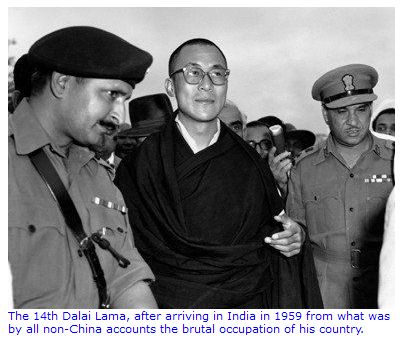


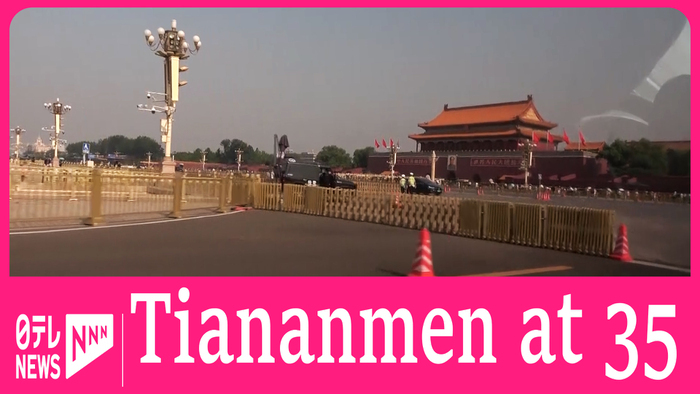


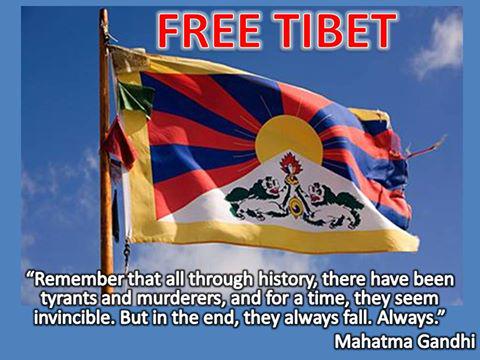


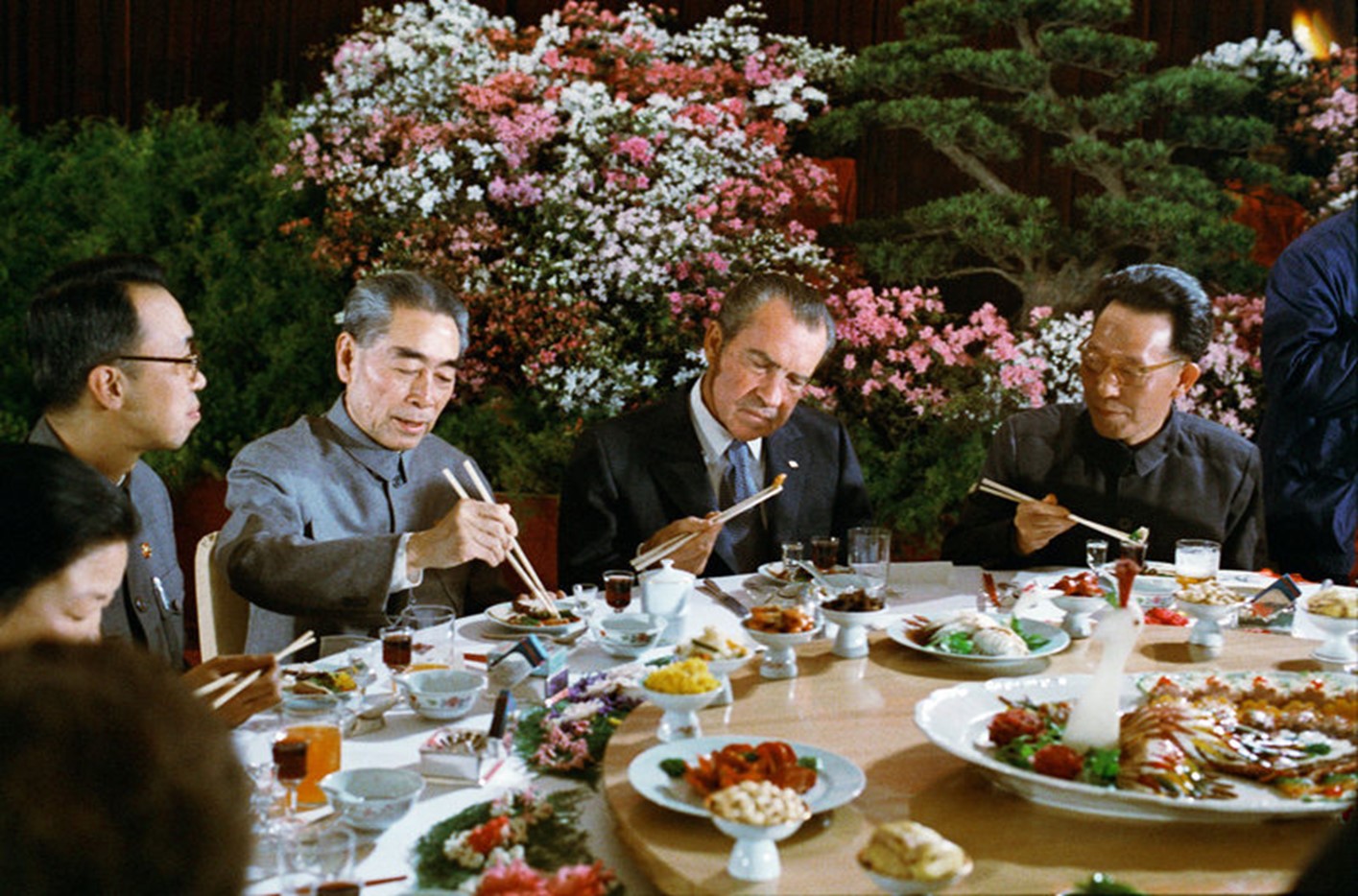

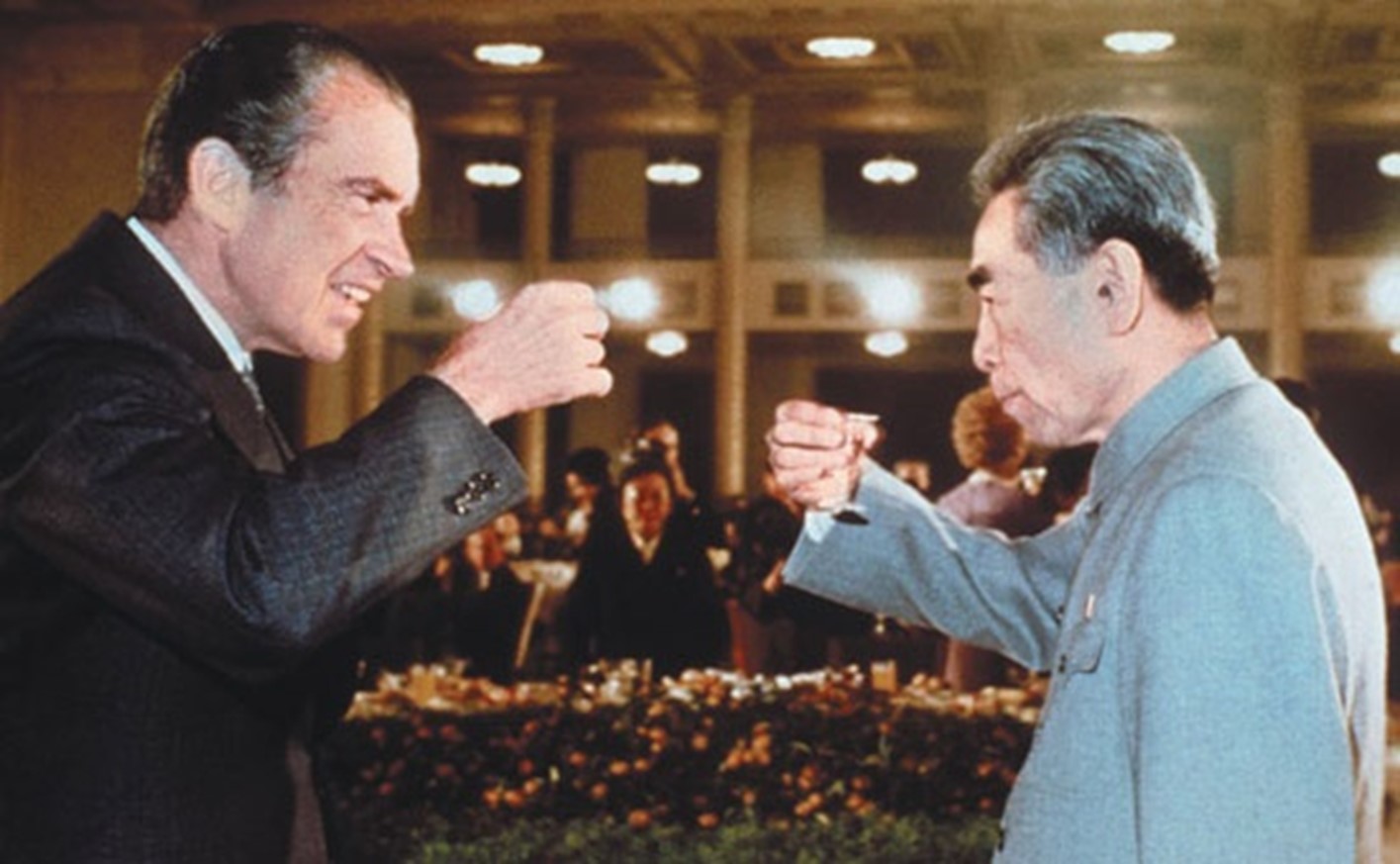

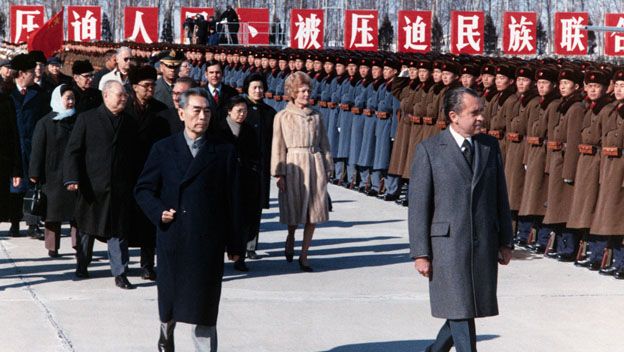



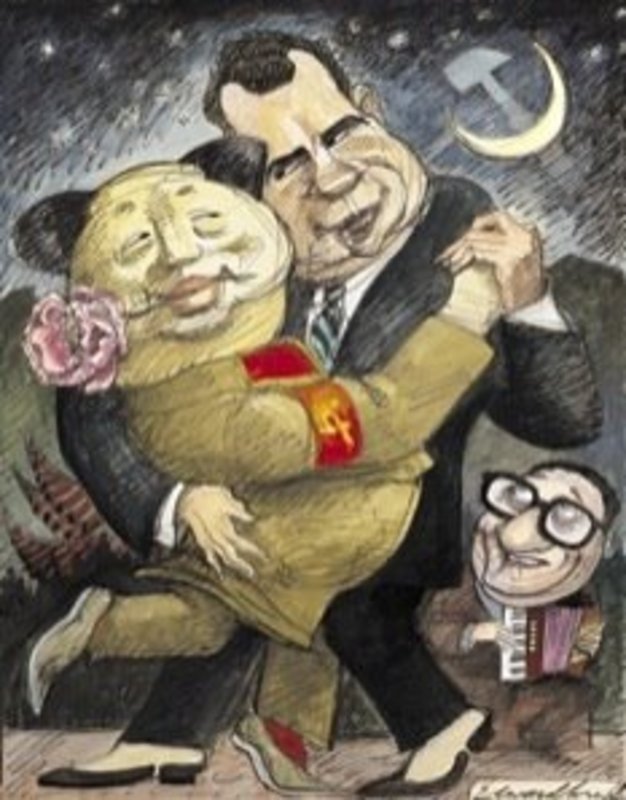







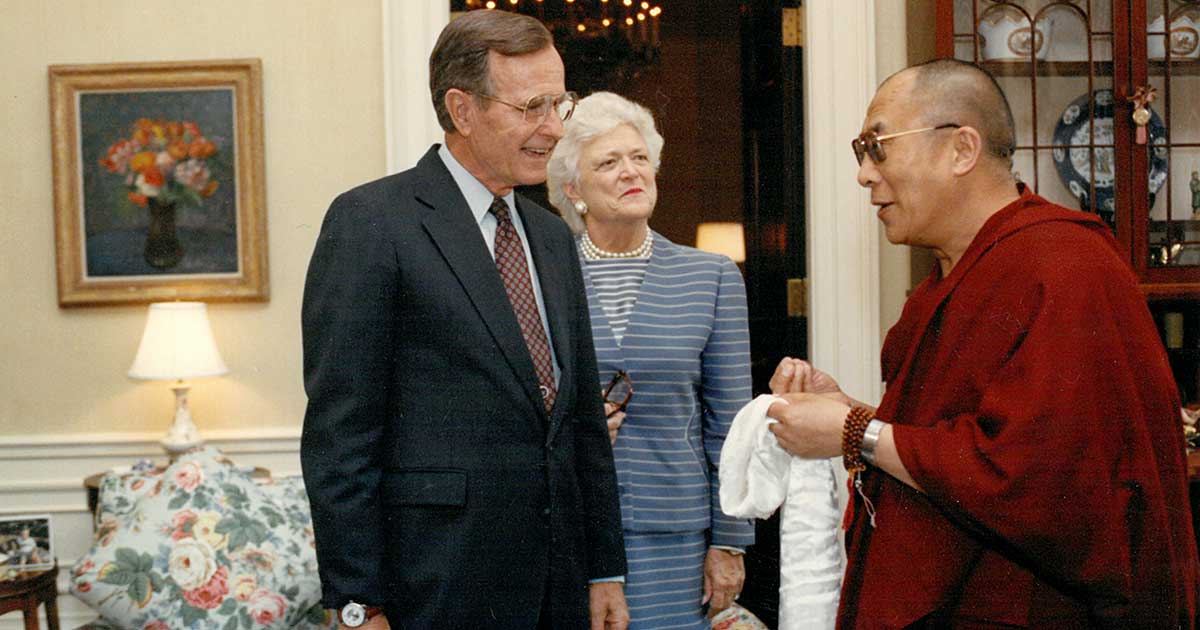


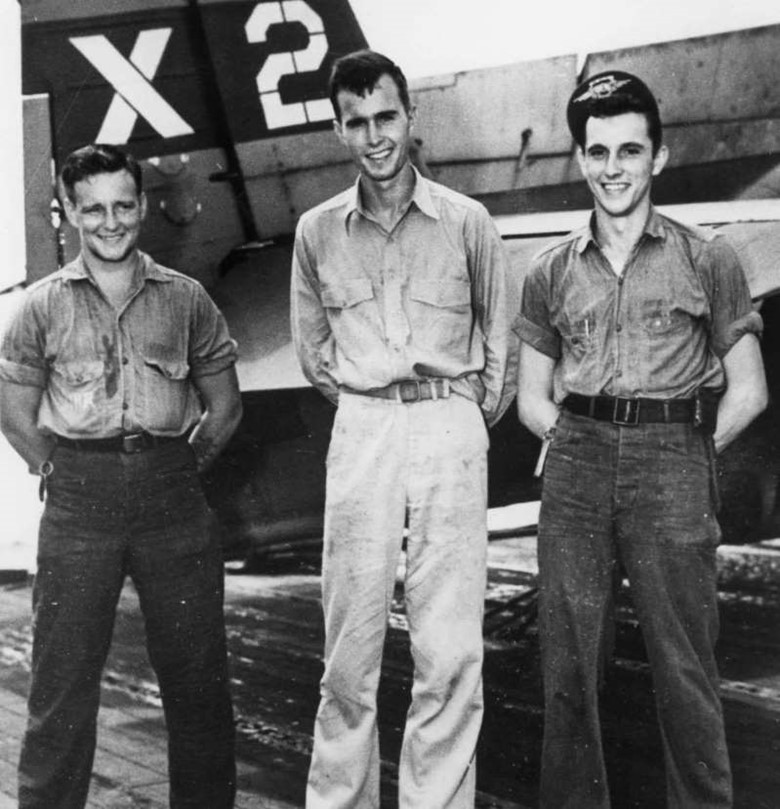



















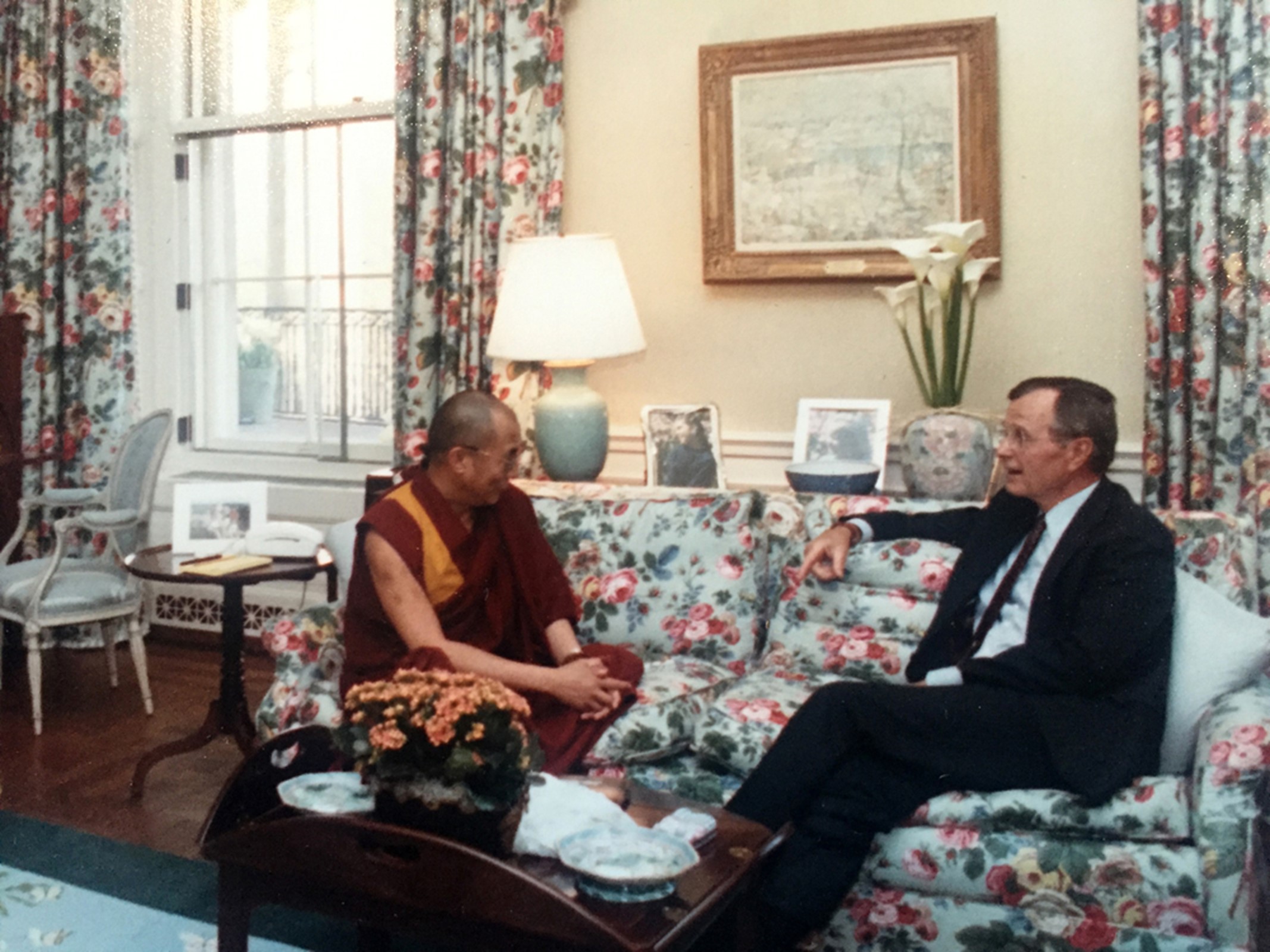
 Whole Dude - Whole Concept