The spread of Communism to mainland China in 1949 makes ‘Tibet Equilibrium’ core policy issue of all other countries. In terms of size, and geographical location, Tibet occupies unique position as ‘Balancer’ to maintain regional stability.
The spread of Communism to mainland China in 1949 makes ‘Tibet Equilibrium’ core policy issue of all other countries. In terms of size, and geographical location, Tibet occupies unique position as ‘Balancer’ to maintain regional stability.
THE EVIL RED EMPIRE – RED CHINA – NEOCOLONIALIST.
Rudra Narasimham Rebbapragada
Special Frontier Force-Establishment 22-Vikas Regiment
TIBET AWARENESS – RED CHINA ON A SLIPPERY SLOPE: RED CHINA TRIED EVERY TRICK AND NOW HAS NO CHANCE TO SAVE HERSELF FROM DOWNFALL.
MAKE TIBET CORE ISSUE OF YOUR POLICY TIBETAN GOVERNMENT-IN-EXILE PRESIDENT TO INDIA
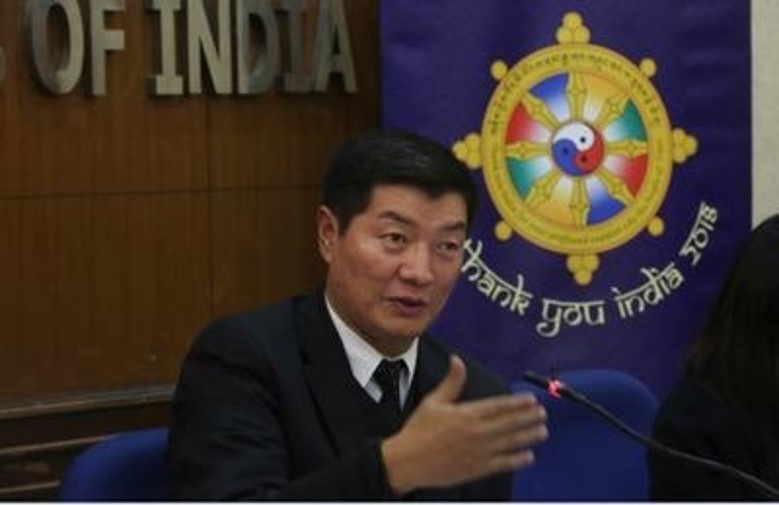
President of the Tibetan government-in-exile Lobsang Sangay
NEW DELHI: President of the Tibetan government-in-exile Lobsang Sangay today appealed to India to make Tibet a “core” issue of its policy.
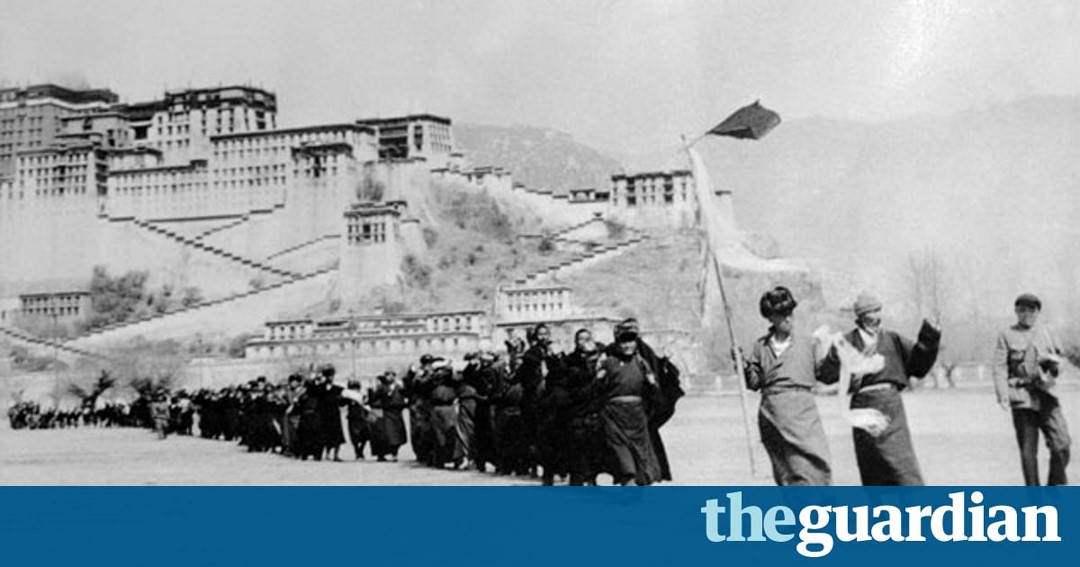
Inaugurating a year-long ‘Thank You India’ campaign marking 60 years of Chinese “occupation” of Tibet and the Dalai Lama coming to India, the president of the Central Tibetan Administration (CTA) said the security of India “partly depended” on the “situation” in Tibet.
“We thank India for its support in past six decades to our cause and also appeal to it to support us politically and make Tibet its core issue,” he said.
Asserting that the Tibetans are in India because of the support of Indian government and people, Sangay said, “We are a success story and it has been a great journey, thanks to India and its people.”
The security and stability in China as well as India depends on the safety and stability in Tibet, he said.
Advocating good relations between India and China, Sangay, however, suggested his host country to be “cautions” of China’s expansionist policy.
“Sixty years back, we lost our country to Chinese occupation. We do not want other countries to face the same consequences,” he said.
Replying to a question on Doklam, the CTA president said that going to the United Nations could be one option for Bhutan who lays claim on the region where Chinese and Indian armies have faced a stand-off.
Sangay said that the ‘Thank You India’ campaign symbolizes gratitude of the Tibetan people towards their host country and it will begin with a interfaith meeting, which will be attended by the Dalai Lama at Rajghat on March 31 followed by a public event at Thyagraj stadium on April 1.
The year-long campaign will include events in more than 20 cities, including Bengaluru and Shimla, and will have initiatives like ‘Little Tibet festival’, ‘Green India’, ‘Healthy India’, ‘Feed the Hungry’ and ‘Clean India’.
The spread of Communism to mainland China in 1949 makes ‘Tibet Equilibrium’ core policy issue of all other countries. In terms of size, and geographical location, Tibet occupies unique position as ‘Balancer’ to maintain regional stability.
Defining America’s Mission – Reagan Doctrine ignores the Threat posed by Red ChinaDefining America’s Mission – Reagan Doctrine ignores the Threat posed by Red China
Special Frontier Force which represents The Tibetan Resistance Movement to contain, to resist, to engage, to counteract, to “Roll-Back” the Spread of Communism, asks Americans to define their Mission and to restore Tibetan Equilibrium using the guidance provided by ‘The Reagan Doctrine of 1985’. Using President Reagan’s words, I ask Americans to do what is “Morally Right.” Using the clue provided by President Reagan, I describe Red China as “the Evil Red Empire.”
Defining America’s Mission – Reagan Doctrine ignores the Threat posed by Red China
February 06, 1985. THE Reagan Doctrine
Defining America’s Mission – Reagan Doctrine ignores the Threat posed by Red China
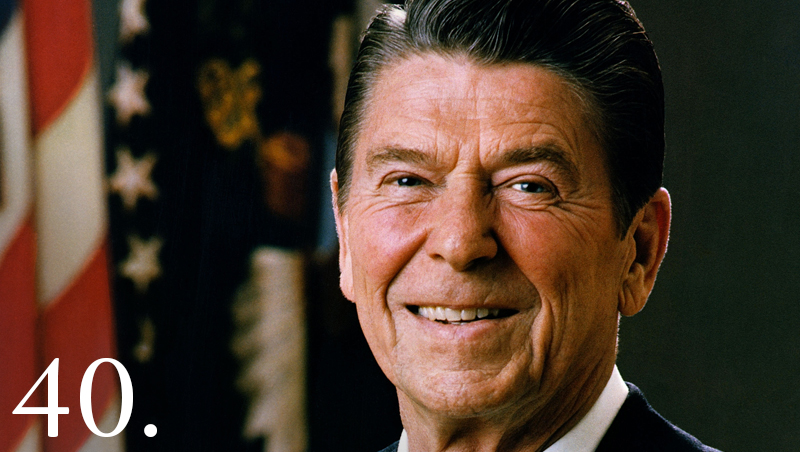
The “Reagan Doctrine” was used to characterize the Reagan administration’s (1981-1988) policy of supporting anti-Communist insurgents wherever they might be. In his 1985 State of the Union address, President Ronald Reagan called upon Congress and the American people to stand up to the Soviet Union, what he had previously called the “Evil Empire”:
Reagan began his foreign policy comments with the dramatic pronouncement that, “Freedom is not the sole prerogative of a chosen few; it is the universal right of all God’s children.” America’s “mission” was to “nourish and defend freedom and democracy.” More specifically, Reagan declared that, “We must stand by our democratic allies. And we must not break faith with those who are risking their lives—on every continent, from Afghanistan to Nicaragua—to defy Soviet-supported aggression and secure rights which have been ours from birth.” He concluded, “Support for freedom fighters is self-defense.”
Breaking with the doctrine of “Containment,” established during the Truman administration—President Ronald Reagan’s foreign policy was based on John Foster Dulles’ “Roll-Back” strategy from the 1950s in which the United States would actively push back the influence of the Soviet Union. Reagan’s policy differed, however, in the sense that he relied primarily on the overt support of those fighting Soviet dominance. This strategy was perhaps best encapsulated in NSC National Security Decision Directive 75. This 1983 directive stated that a central priority of the U.S. in its policy toward the Soviet Union would be “to contain and over time reverse Soviet expansionism,” particularly in the developing world. As the directive noted:
“The U.S. must rebuild the credibility of its commitment to resist Soviet encroachment on U.S. interests and those of its Allies and friends, and to support effectively those Third World states that are willing to resist Soviet pressures or oppose Soviet initiatives hostile to the United States, or are special targets of Soviet policy.”
To that end, the Reagan administration focused much of its energy on supporting proxy armies to curtail Soviet influence. Among the more prominent examples of the Reagan Doctrine’s application, in Nicaragua, the United States sponsored the contra movement in an effort to force the leftist Sandinista government from power. And in Afghanistan, the United States provided material support to Afghan rebels—known as the mujahadeen—helping them end Soviet occupation of their country.
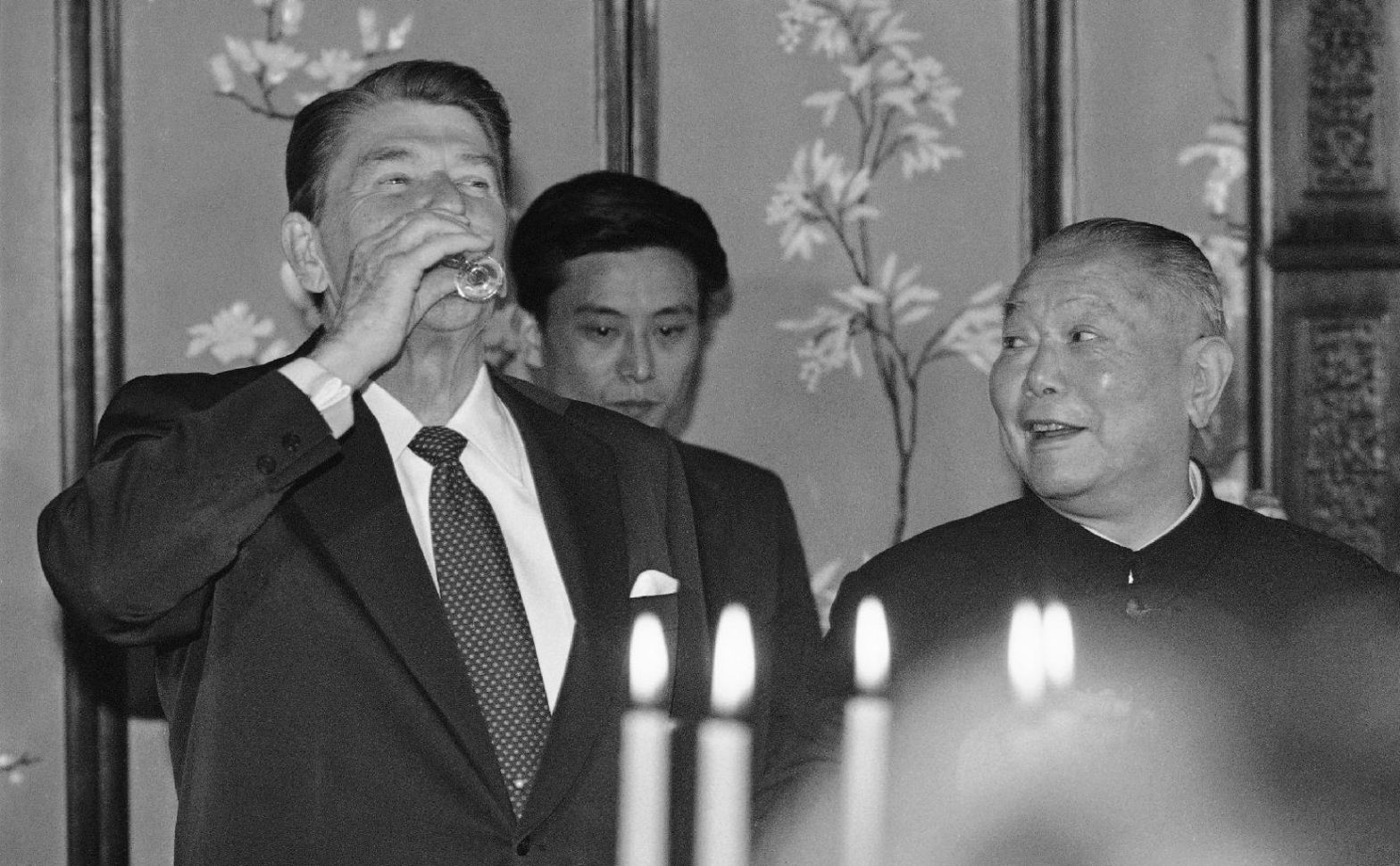
Defining America’s Mission – Reagan Doctrine ignores the Threat posed by Red ChinaDefining America’s Mission – Reagan Doctrine ignores the Threat posed by Red ChinaSPECIAL FRONTIER FORCE VS THE EVIL RED EMPIRE: APRIL 26, 1984. US PRESIDENT RONALD REAGAN WITH EVIL CHINA’S PRESIDENT LI XIANNIAN IN PEKING. RED CHINA IS MORE EVIL AS COMPARED TO RED SOVIET UNION IN 1984.
The Cold War in Asia will be Won with Patience and Perseverance
Whole Story – Whole Legacy – The Cold War in Asia will be WonWhole Story – Whole Legacy – The Cold War in Asia will be Won
The Living Tibetan Spirits initiated Tibetan Resistance Movement during late 1950s with the hope of defeating military occupation of Tibet using Infantry Weapons of Warfare. Indeed, there was such a possibility of seriously degrading Enemy’s war machine during the Vietnam War. Unfortunately, due to Nixon-Kissinger treason, Vietnam War remains unfinished. From a military point of view, due to change in circumstances, ‘The Cold War in Asia’ may not be determined by tactics used in Infantry Warfare due to Enemy’s use of enhanced military capabilities.
Living Tibetan Spirits – The Cold War in Asia. Tibetan Resistance uses military tactic called patience and perseverance.
In my analysis, the outcome in any war is not always determined by relative military power and military tactics used by parties engaged in conflict. The Cold War in Asia will come to its natural conclusion when Nature exercises Force/Power to influence human behavior and actions.
In 2011, Beijing shelled out some 1.5 billion yuan (US$236 million) for the construction of an airport to serve the frigid wilderness of the Tibetan Plateau, saying it wanted to boost the local tourism industry.
Completed in 2013, Yading Airport has since handled no more than 150,000 passengers a year, equivalent to three or four daily flights carrying 400 travelers brave enough to enter the remote backwater. Little wonder: at elevation of 4,411 meters, the airport in southwestern Sichuan’s Daocheng county is the world’s highest, almost one kilometer above the gateway to Tibetan capital Lhasa.
With the air supply about 30% less than you would expect at sea level, it is said that oxygenators are one of the most vital pieces of equipment for airport ground staff to avoid medical complications such as acute mountain sickness. Aircraft flying into the rarefied air must also be equipped with oxygenators before each flight.
Yet this inhospitable airport’s location next to the Tibetan Autonomous Region does appeal to another group of travelers. The People’s Liberation Army has found a number of important roles for the facility, ranging from the testing of a new generation of jet-fighters to fending off missile threats from the Indian Ocean.
It is an open secret that Yading Airport was one of several testing grounds used for the locally built J-20 stealth fighter when it was plying the air route between Yading and Chengdu, capital of Sichuan province, where the jets were manufactured.
Analysts say the alpine climate, steep terrain and high elevation of the airport and its surroundings are ideal for reliability tests on the J-20 and similar warplanes. This is the same reason that the F-22 Raptor, the spearhead of the US Air Force, was tested in Alaska.
But Yading Airport’s significance also lies in the tactical advantages offered by its location at the roof of the world. The Chinese military can observe every movement at Indian installations in the Bay of Bengal, 1,000 kilometers to the southwest, as there is no mountain range blocking the view from Yunnan province across Myanmar.
Hong Kong-based military commentator Leung Kwok-leung noted that the PLA must have installed long-range early warning radars at the airport and it could also host an anti-missile shield at an elevation that would be the envy of other military services.
Chinese observers are undoubtedly monitoring movements by US nuclear submarines in and around the Bay of Bengal, and New Delhi’s construction of a nuclear submarine base there. As a result, Beijing is getting antsy about threats lurking on its southwestern front.
Yading could be the location for the world’s highest mid-range anti-ballistic missile defense system: using the elevation and low latitude, interceptors launched from the plateau could “hitch a ride” on the centrifugal force of the Earth’s rotation.
Leung said this would mean that the PLA could use anti-ballistic missiles launched from Yading to put down Indian or US missiles fired either from bases onshore or from vessels in the Bay of Bengal area while they were still ascending, in a “blocked shot manner”.
This article originally appeared on Asia Times.
Image: Reuters
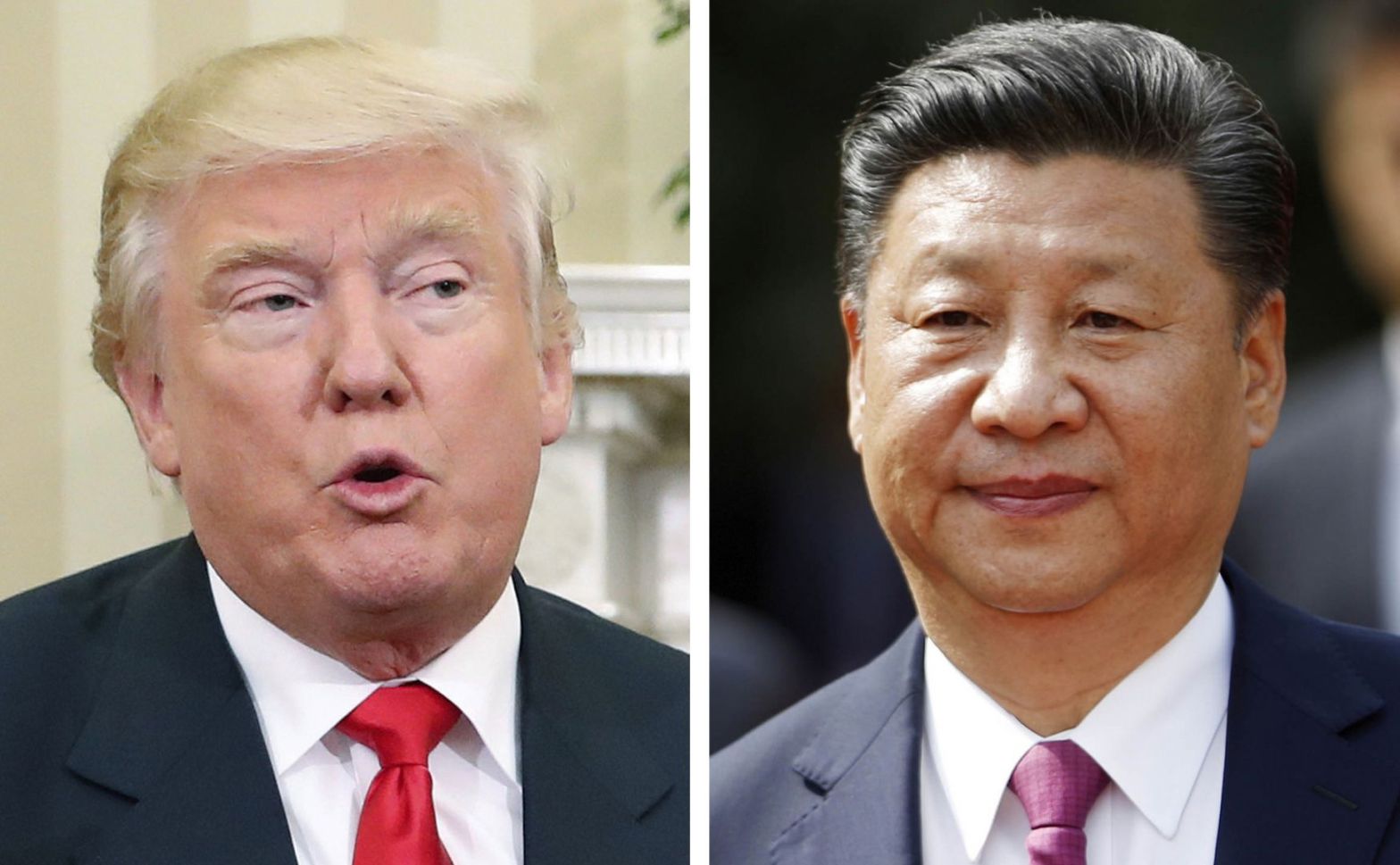
Living Tibetan Spirits – The Cold War in Asia. YADING, TIBET.Whole Story – Whole Legacy – The Cold War in Asia will be WonUNITED STATES – CHINA RELATIONS: PRESIDENTIAL CANDIDATE DONALD TRUMP CLAIMED THAT CHINA IS STEALING JOBS.
The Institution of Dalai Lama Represents the Political Rights of Tibetans to Self-Governance
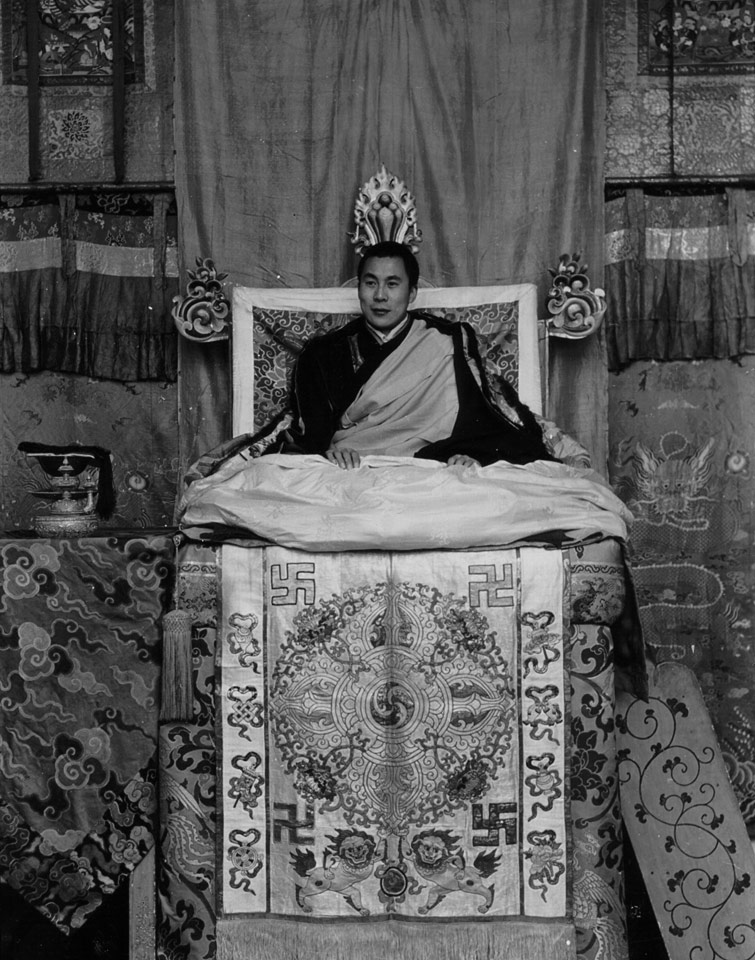
The Institution of Dalai Lama stands for the Ganden Phodrang Government of Tibet which represents political rights of Tibetans for Self-Governance. The Seal that represents The Institution of Dalai Lama does not include the image of any of the Dalai Lama’s that ruled over Tibet for centuries.
In my analysis, ‘Institution of Dalai Lama’ remains relevant to Tibetans in Occupied Tibet. The Institution of Dalai Lama represents The Ganden Phodrang Government of Tibet, the political symbol of Tibetan Rights to Self-Governance. The Seal that represents the Institution of Dalai Lama does not include the image of any of the Dalai Lamas that ruled over Tibet for centuries.
Dalai Lama Says, ‘Institution of Dalai Lama’ No More Politically Relevant
Whole Ruler – Dalai Lama Represents the Political Rights of Tibetans
PANAJI: Tibetan spiritual leader Dalai Lama on Wednesday said the “institution of Dalai Lama” is no longer politically relevant and it was up to the people of Tibet to decide whether the age-old tradition should continue or not.
He said the Chinese government was more concerned about this institution than him for political reasons.
Dalai Lama is a title given to spiritual leaders of Tibetan people. This title is given to those who are considered among the most important monks of the Gelug school, the newest school of Tibetan Buddhism.
Addressing an event at the Goa Institute of Management, the 14th Dalai Lama said, “As early as in 1969, I had formally made a statement whether this very institution of Dalai Lama should continue or not, it is up to the Tibetan people to decide.”
Replying to students’ queries after an hour-long address, he said, “I have no concerns. Nowadays, the Chinese government is more concerned about the Dalai Lama institution than me. The Chinese government is concerned because of political reasons,”
During the 1959 Tibetan uprising, the Dalai Lama had fled to India.
He said in 2001, the elected political leadership was appointed (by the people in exile) and for the next 10 years, he remained in semi-retired position. “Then in 2011, I totally retired from the political responsibility. Now, the elected political leadership carries the full responsibility, I don’t get involved in their decision,” he said.
“Now, no longer Dalai Lama institution is politically relevant,” the 1989 Nobel Peace Prize winner said. About the future Dalai Lama, he said all leaders of different Buddhist traditions hold a meeting in Tibet every year in November.
“This November, we are meeting again. In the previous meetings, they had decided that when my age reaches around 90 years, then the group of leaders will decide about the future Dalai Lama,” the 83-year-old spiritual leader said. When asked about his own selection to the chair, Lama recalled, “According to my mother, the very day when the search party set by the Tibetan government reached my place… That very day our family was completely ignorant.” “But that very day, I was a 2-3-year-old boy… I was so much excited. I myself don’t know why… The search party got some indications that day. When they reached our house, I ran towards them and recognized each persons’ name,” he said. “At that time, I had some sort of some memory about past life,” the Dalai Lama said.
Institution of Dalai Lama Represents the Political Rights of Tibetans to Self-Governance
Science Daily published an article titled, “Water Supplies in Tibet Set to Increase in the Future.” When Freedom is in Short Supply, there is no hope for Water Supplies in Tibet to increase.
Rudra Narasimham Rebbapragada Ann Arbor, MI 48104-4162 USA SPECIAL FRONTIER FORCE
Comparison Pictures of Rongbuk Glaciers. Trouble in Tibet – Freedom is in Short Supply
ScienceDaily
Water supplies in Tibet set to increase in the future —
Science Daily published an article titled, “Water Supplies in Tibet Set to Increase in the Future.” When Freedom is in Short Supply, there is no hope for Water Supplies in Tibet to increase.
ScienceDaily Water supplies in Tibet set to increase in the future Date: January 20, 2016
Source: University of Gothenburg
Summary: The Tibetan Plateau has long been seen as a “hotspot” for international environmental research, and there have been fears that water supplies in the major Asian rivers would drastically decline in the near future. However, new research now shows that water supplies will be stable and may even increase in the coming decades. Researcher Deliang Chen.
The Tibetan Plateau has long been seen as a “hotspot” for international environmental research, and there have been fears that water supplies in the major Asian rivers would drastically decline in the near future. However, new research now shows that water supplies will be stable and may even increase in the coming decades.
A report by the International Panel on Climate Change (IPCC) from 2007 suggests that the glaciers in the Himalayas will be gone by 2035. This statement was questioned and caused a great stir.
“This mistaken claim and the subsequent debate pointed to a need for a better understanding of the dynamics of climate, glaciers and future water supplies in the region,” says Deliang Chen, Professor in the Department of Earth Sciences at the University of Gothenburg.
River flows stable or increasing Since the statement by IPCC in 2007, the Tibetan Plateau has been a focus of international environmental research.
A research group led by Professor Deliang Chen at the University of Gothenburg, in close collaboration with researchers from the Institute of Tibetan Plateau Research at the Chinese Academy of Sciences, headed by Professor Fengge Su, has studied future climate change and its effect on the water balance in the region. The great Asian rivers have their source on the Plateau or in the neighbouring mountains.
The researchers recently published a study in Global and Planetary Change which modelled the water flows upstream in the Yellow River, the Yangtze, the Mekong, the Salween, the Brahmaputra and the Indus. The studies include both data from past decades and simulations for future decades.
The results show that water flows in the rivers in the coming decades would either be stable or would increase compared to the period from 1971-2000. Affects a third of the world’s population The Tibetan Plateau is the highest and most extensive area of high land in the world, and what happens there affects water resources for almost a third of the world’s population.
Dr. Tinghai Ou, who was responsible for the climate projections in the study, has commented that increased precipitation and meltwater from glaciers and snowfall are contributing to increased water flows in the region.
“This is good news because social and economic development in the surrounding areas, including China, India, Nepal and other countries in Southeast Asia, are closely tied to climate change and access to water. But the fact that the glaciers are shrinking in the region could be a concern in the longer term, and we must keep a close eye on what is happening with global warming,” says Professor Deliang Chen.
Story Source: The above post is reprinted from materials provided by University of Gothenburg. The original item was written by Carina Eliasson. Note: Materials may be edited for content and length.
Journal Reference:
F. Su, L. Zhang, T. Ou, D. Chen, T. Yao, K. Tong, Y. Qi. Hydrological response to future climate changes for the major upstream river basins in the Tibetan Plateau. Global and Planetary Change, 2016; 136: 82 DOI: 10.1016/j.gloplacha.2015.10.012
University of Gothenburg. “Water supplies in Tibet set to increase in the future.” ScienceDaily. ScienceDaily, 20 January 2016. <www.sciencedaily.com/releases/2016/01/160120113706.htm>.
Sep. 12, 2012 — Glaciers in the eastern and central regions of the Himalayas appear to be retreating at accelerating rates, similar to those in other areas of the … read more
Copyright 2015 ScienceDaily or by third parties, where indicated. All rights controlled by their respective owners.
Science Daily published an article titled, “Water Supplies in Tibet Set to Increase in the Future.” When Freedom is in Short Supply, there is no hope for Water Supplies in Tibet to increase.
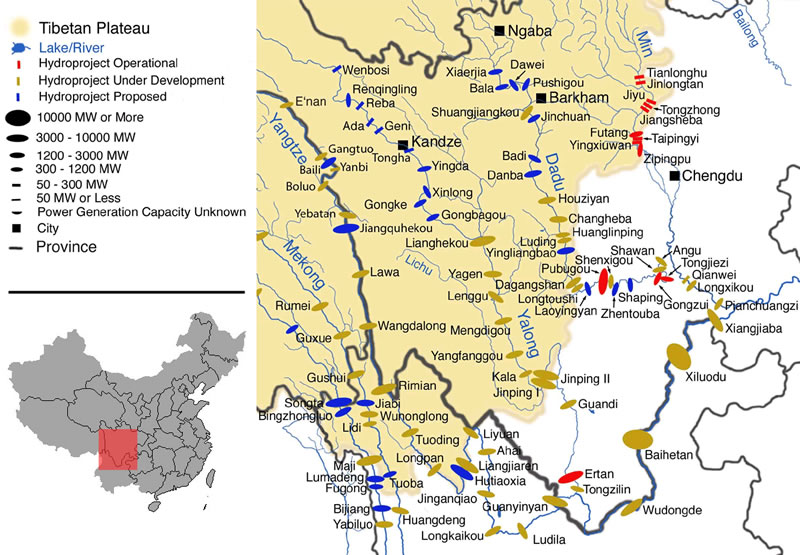
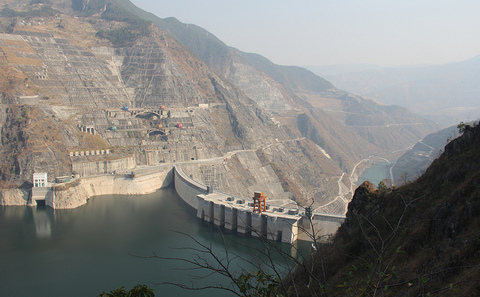
Whole Trouble – Occupation of Tibet brings Trouble for Asia. China’s extensive dam-building would give it control of Southeast Asia’s rivers
People of Asia are slowly coming to grips with ‘Trouble in Tibet’. Red China’s military occupation of Tibet and dam-building to control flow of South Asia’s rivers is a security threat and it demands the use of military power to resolve Tibet’s Trouble.
Preventing a water war in Asia
China’s extensive dam-building would give it control of Southeast Asia’s rivers
Whole Trouble – Occupation of Tibet brings Trouble for Asia. Whole Trouble – Occupation of Tibet brings Trouble for Asia. China’s extensive dam-building would give it control of Southeast Asia’s rivers
An Indian washerman works on the banks of the River Brahmaputra on a foggy winter morning in Gauhati, India, Monday, Jan. 18, 2016. (AP Photo/Anupam Nath)
By THE WASHINGTON TIMES – – Monday, January 18, 2016
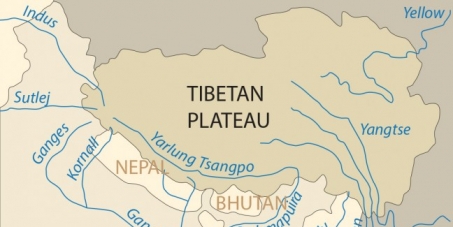
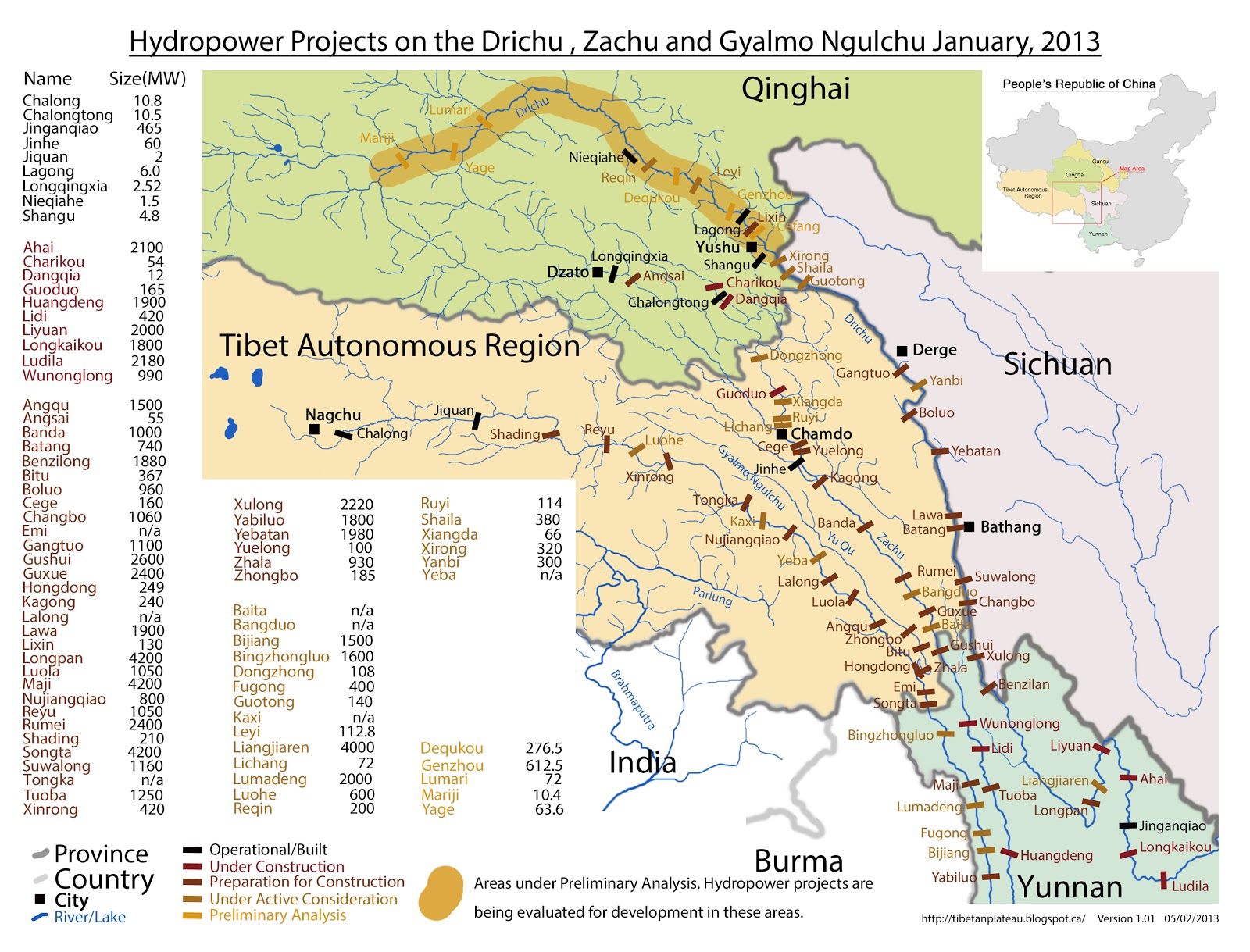
Just when Asia was getting accustomed to the Chinese threat to the oceans of Southeast Asia, there’s another water worry for Asians. The government in Beijing controls the health of six major South and Southeastern Asian rivers, the heart of life in the region. All of the rivers rise on the Tibetan plateau. The Chinese have been on an intensive program of dam-building on the upper reaches of the Brahmaputra, the Irrawaddy, the Meman Chao Phya and the Mekong, which would give them the ability to control these arteries of commerce, as well as irrigation of rice and other crops, for vast areas downstream.
Snows are melting on thousands of glaciers, the largest concentration of ice north and south of the poles, repeating the ancient and constant cycle of change in the world’s weather. One Tibetan lake, Namtso, a holy site where pilgrims circumnavigate its banks in prayer, expanded by 20 square miles between 2000 and 2014. Tibet’s glaciers have shrunk by 15 percent over the past 30 years. Though subject to the whims of climate change, if melting continues at current levels the warmer temperatures could melt two-thirds of the plateau’s glaciers by 2050, and this would affect in unknown ways 2 billion people in China, India, Pakistan, Bangladesh, Bhutan, Burma, Thailand, Laos, Cambodia and Vietnam.
The most dramatic example of prospective risk is China’s plan to divert the Brahmaputra from its upper reaches, where it flows a thousand miles through Tibet and another 600 miles through India, emptying into the harbor of Calcutta, the second-largest city of India. The Brahmaputra is the lifeline of northeast India, a troubled region with caste and other ethnic conflicts.
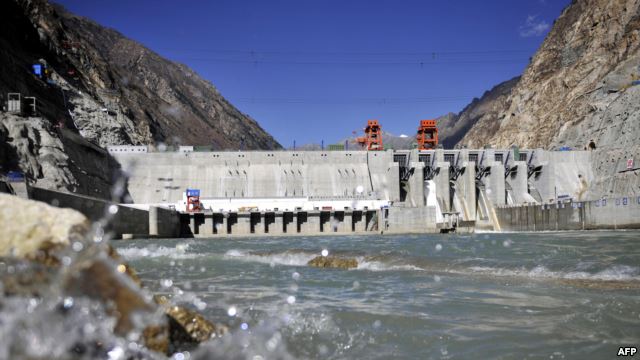
There’s concern in Thailand, Laos, Vietnam and Cambodia over eight dams under construction on the upper reaches of the Mekong River. The Burmese military junta canceled a dam under construction in Myanmar, formerly called Burma, one of six Chinese-led hydroelectric projects planned for the upper reaches of the Irrawaddy. These plants would have exported electricity to southern China.
Government and the business interests worry that China’s apparent intention to dam every major river flowing out of Tibet will lead to environmental imbalance, natural disasters, degrade fragile ecologies, and most of all, divert vital water supplies. The extent of the Chinese program is monumental — on the eight great Tibetan rivers alone, China has completed or started construction of 20 dams, with three-dozen more on the drawing board.
The Dalai Lama points out the obvious, that China’s dam-building could lead to conflict. He warns that India’s use of the Tibetan water “is something very, very essential. So, since millions of Indians use water coming from the Himalayan glaciers I think [India] should express more serious concern. This is nothing to do with politics, just everybody’s interests, including Chinese people.”
The Chinese program for the Brahmaputra is one of the issues which complicate the India-China relationship. Indian Prime Minister Narendra Modi blows hot and cold over the threat. Despite extensive contacts, Himalayan border disputes dating from almost a century are no nearer solution than ever, and water is one of the important irritants. Increasing penetration of the Himalayan kingdoms of Nepal and Bhutan, once dependencies of Britain, has become a new concern in New Delhi.
However, China has become India’s No. 1 trading partner — up to $80 billion in 2015, an increase of $10 billion over 2014. India exports mostly raw materials and imports mostly Chinese electronics and other manufactured goods. Economic relations are the usual guarantee that political and economic disagreements will somehow be sorted out. But not always. Keeping the peace if not necessarily tranquility between the Asian giants must be a priority of the U.S. government. A water war is in nobody’s interest.
Whole Trouble – Occupation of Tibet brings Trouble for Asia
Whole Trouble – Occupation of Tibet brings Trouble for Asia
Whole Trouble – Occupation of Tibet brings Trouble for Asia
Whole Trouble – Occupation of Tibet brings Trouble for Asia
Whole Trouble – Occupation of Tibet brings Trouble for Asia
Whole Trouble – Occupation of Tibet brings Trouble for Asia. Whole Trouble – Occupation of Tibet brings Trouble for Asia. China’s extensive dam-building would give it control of Southeast Asia’s rivers
Whole Trouble – Occupation of Tibet brings Trouble for Asia
Whole Trouble – Occupation of Tibet brings Trouble for Asia
Whole Trouble – Occupation of Tibet brings Trouble for Asia. Whole Trouble – Occupation of Tibet brings Trouble for Asia. China’s extensive dam-building would give it control of Southeast Asia’s rivers
Doomed American China Fantasy – The Cold War in Asia
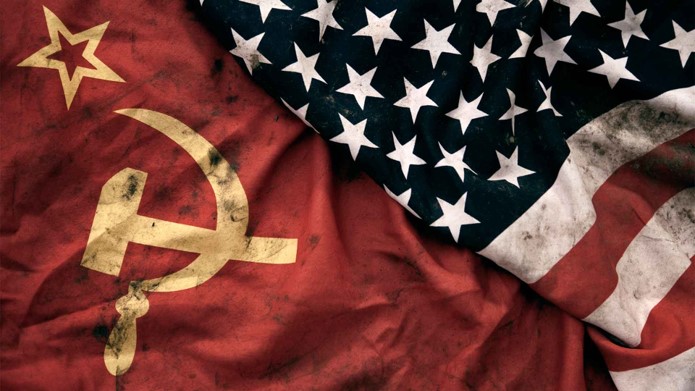
DOOMED AMERICAN CHINA FANTASY – THE COLD WAR IN ASIA 1949 TO 2026. THE SPREAD OF COMMUNISM IN ASIA.
The Cold War in Asia is the product of Communism that spread from Europe to Asia. Nixon-Kissinger in 1971-72 initiated Policy of Doomed American China Fantasy without concern for lessons learned in Korean Peninsula and Vietnam. There is no hope and there is no future for America’s China Fantasy as Communist Party in China survives unchanged and unaffected by changing fortunes of the US Political Parties.
Rudra Narasimham Rebbapragada
DOOM DOOMA DOOMSAYER
Doomed Gun of Doom Dooma symbolizes the Doomed China Fantasy, a Policy initiated by 37th US President Richard M Nixon when he made a trip to Peking on February 21, 1972. DOOMED AMERICAN CHINA FANTASY – THE COLD WAR IN ASIA 1949 TO 2026. THE SPREAD OF COMMUNISM IN ASIA.DOOMED AMERICAN CHINA FANTASY – THE COLD WAR IN ASIA 1949 TO 2026. THE SPREAD OF COMMUNISM IN ASIA. DOOMED AMERICAN CHINA FANTASY – THE COLD WAR IN ASIA 1949 TO 2026. THE SPREAD OF COMMUNISM IN ASIA.
AMERICA’S CHINA FANTASY
DOOMED AMERICAN CHINA FANTASY – THE COLD WAR IN ASIA 1949 TO 2026. THE SPREAD OF COMMUNISM IN ASIA. President Nixon’s Doomed Journey to Peking in February 1972.
America has been operating with the wrong paradigm for China. Day after day, U.S. officials carry out policies based on premises about China’s future that are at best questionable and at worst downright false.
The mistake lies in the very assumption that political change — and with it, eventually, democracy — is coming to China, that China’s political system is destined for far-reaching liberalization. Yet the Bush administration hasn’t thought much about what it might mean for the United States and the rest of the world to have a repressive one-party state in China three decades from now. For while China will certainly be a richer and more powerful country in 30 years, it could still be an autocracy of one form or another. Its leadership (the Communist Party, or whatever else it calls itself in the future) may not be willing to tolerate organized political opposition any more than it does today.
That is a prospect with profound implications for the United States and the rest of the world. And it is a prospect that our current paradigm of an inevitably changing China cannot seem to envision.
The notion of a China on the road to political liberalization has taken hold in the United States because it has served certain specific interests within American society. At first, in the late 1970s and the 1980s, this idea benefited the U.S. national-security establishment. At the time, the United States was seeking close cooperation with China against the Soviet Union, so that the Soviet Union would have to worry simultaneously about both countries; the Pentagon wanted to make sure the Soviet Union tied down large numbers of troops along the Sino-Soviet border that might otherwise have been deployed in Europe. Amid the ideological struggles of the Cold War, though, cooperation with China’s Communist regime was politically touchy in Washington. And so the notion that China was in the process of opening up its political system helped smooth the way with Congress and the American public.
In the 1990s, after the Soviet collapse, the idea of a politically changing China attracted a new constituency, one even more powerful than the Pentagon: the business community. As trade and investment in China became ever more important, American companies found themselves repeatedly beset with questions about why they were doing business with such a repressive regime. The paradigm of inevitable change offered multinational corporations the answer they needed. Not only was China destined to open up its political system, but trade, the theology held, would be the key that would unlock the door. It would lead to political liberalization and to democracy, with or without the support of the Chinese leadership. Accordingly, no one outside China needs to do anything, or even think much about the subject. Why bother to protest a crackdown or urge China to allow political opposition if you know that democracy, by the inexorable laws of history, is coming anyway?
The trouble is, the entire paradigm may turn out to be wrong.
What should the U.S. strategy be for dealing with China’s Leninist regime? If you ask our established political leaders, foreign-policy experts, or sinologists what the United States should do about China, you will undoubtedly get some version or another of this approach. It is called the strategy of “integration.”
The United States, the thinking goes, should try to integrate the Chinese leadership into the international community. It should seek to help China gain admission into the world’s leading international organizations. According to this logic, the nature of the Chinese regime will change after China becomes a member of international bodies such as the World Trade Organization, which it has now joined. China’s Communist Party leadership will gradually behave more like other governments; it will become more open in dealing with the Chinese people and with the rest of the world. Richard Haas, the president of the Council on Foreign Relations, has written of “the existing opportunity to integrate China into a U.S.-led world order.”
This strategy of integration dates back to the Clinton administration. In 1994, President Clinton abandoned his attempt to use trade as a lever for improving human rights in China, then needed to divert attention away from this embarrassing reversal. He did not wish to concede that that he had just downgraded the cause of human rights in China; instead, he sought a new, positive-sounding description of his policy. “Integration” gradually became the label of choice, invoked by the president and his top advisers in press conference after press conference. Integration became, above all, the justification for unrestricted trade with China. “We believe it’s the best way to integrate China further into the family of nations and to secure our interests and our ideals,” declared Clinton in one typical speech.
George W. Bush and his advisers, without ever admitting they were doing so, have perpetuated most of the essentials of Clinton’s China policy, including the avowed commitment to integration. When Secretary of State Condoleezza Rice gives a speech about China, she sooner or later calls for integrating China into the international community.
“Integration” has thus become another catchphrase like “engagement,” the earlier slogan for America’s China policy, which originated somewhat earlier, during the administration of George Bush Senior. With both words, however, the suggestion is the same: that is, with enough engagement, with sufficiently vigorous integration, the United States may succeed in altering the nature of the Chinese regime — although it is not clear exactly how this is supposed to happen. In a way, the American approach is a bit patronizing to China: It sounds as if the United States is a weary, experienced trainer bringing China to a diplomatic version of obedience school.
The fundamental problem with this strategy of integration is that it raises the obvious question: Who’s integrating whom? Is the United States now integrating China into a new international economic order based upon free-market principles? Or is China now integrating the United States into a new international political order where democracy is no longer favored, and where a government’s continuing eradication of all organized political opposition is accepted or ignored?
This is not merely a government issue. Private companies — including Internet firms like Yahoo, Google, and Microsoft — often use slogans like “engagement” and “integration” to explain why they have decided to do business in China despite Chinese rules and laws that allow continuing censorship. “I think [the Internet] is contributing to Chinese political engagement,” Bill Gates told one business gathering. Yet if Microsoft is altering its rules to accommodate China, once again the question is: Who’s changing whom?
Will it have been a success for the U.S. policy of integration if, 30 years from now, the world ends up with a Chinese regime that is still a deeply repressive one-party state but is nevertheless a member of the international community in good standing? If so, that same China will serve as a model for dictators, juntas, and other undemocratic governments throughout the world — and in all likelihood, it will be a leading supporter of these regimes. Pick a dictator anywhere today and you’ll likely find that the Chinese regime is supporting him. It has rewarded Robert Mugabe, the thug who rules Zimbabwe, with an honorary professorship, and his regime with economic aid and, reportedly, new surveillance equipment. It has been the principal backer of the military regime in Burma. And when Uzbek President Islam Karimov ordered a murderous crackdown on demonstrators in 2005, China rushed to defend him.
If China maintains its current political system over the next 30 years, then its resolute hostility to democracy will have an impact in places like Egypt, Syria, and Saudi Arabia. A permanently authoritarian China could also undermine Russia’s already diminishing commitment to democracy.
Thus, when America’s leading officials and CEOs speak so breezily of integrating China into the international community, listeners should ask: If China remains unchanged, what sort of international community will that be? Will it favor the right to dissent? Will it protect freedom of expression? Or will it simply protect free trade and the right to invest?
But wait, say the defenders of America’s existing China policy. We believe in democracy, too. There is no real disagreement here on our ultimate goals. This is all just a question of tactics. The strategy of integration (or of engagement) is designed to change China’s political system and, over the long term, to end China’s one-party state.
These arguments sound in some ways similar to claims made by the Chinese regime itself. Because Chinese Communist Party leaders don’t like to acknowledge that they intend to maintain their monopoly on power, they sometimes tell visitors that they, too, believe in democracy, that this is the ultimate goal for China, and that it is all merely a question of timing. These claims are designed for the hopelessly gullible; by its actions, day after day, the regime makes clear its tenacious hostility to the idea of political pluralism in China.
Generally, the U.S. proponents of a strategy of integration are not so cynical. To be sure, a few of them may be antidemocratic; there have always been Americans who admire, even revere, the simplicity and convenience of autocracy. However, other proponents of integration seem to believe quite sincerely that if the United States continues its current approach toward China, Chinese leaders eventually will be willing to abandon the monopoly on political power they have maintained since 1949. Yet these same proponents fail to explain how or why, given the current U.S. strategy, China’s political system will change.
The examples of reforms that they have invoked so far have served to divert attention away from the core issue of China’s one-party state. The promotion of village elections has proved to be largely unsuccessful, both because the Chinese leadership can confine this experiment exclusively to the villages and because in the villages themselves, authorities have resorted to a variety of methods, including the use of violence, to forestall democracy.
Nor is there evidence that the American promotion of the rule of law will by itself transform the political system. So long as there is no independent judiciary and China remains a one-party regime in which judges are selected by the Communist Party, promoting the rule of law won’t bring about fundamental change. Instead, it simply may lead to a more thoroughly legalized system of repression. Indeed, those lawyers in China who attempt to use the judicial system to challenge the Communist Party or to defend the rights of political dissidents have themselves been subject to persecution, including the loss of their jobs or even time in prison.
The strongest impetus for establishing the rule of law comes from the corporations and investors who are putting their money into China. They need bona fide procedures for resolving financial disputes, just as companies and investors require everywhere else in the world. It is in the interest of the Chinese regime to keep the investment dollars, euros, and yen flowing into the country, and so Chinese officials are willing to establish some judicial procedures for the foreign companies. However, the result could well be a Chinese legal system that offers special protection for foreign investors but not to ordinary Chinese individuals, much less to targets of the regime such as political dissidents or Tibetan activists.
And that raises the larger question about America’s current strategy of integration: Whom does it benefit? Above all, it enriches the elites in both China and the United States. The strategy is good for the American business community, which gets to trade with China and invest in China, and for the new class emerging in Chinese cities — the managers and entrepreneurs, many of them former party cadres or the relatives of cadres — that is getting rich from the booming trade and investment in its country. But it has not been nearly so beneficial for working-class Americans — particularly the tens of thousands who have lost their jobs in the United States as the end result of this “integration” policy.
The American people were told many years ago that bringing China into the international economic system would help change the Chinese political system. Now, American workers may well wonder whether this argument was merely a cruel hoax. Nor has the strategy of integration been such a blessing for ordinary Chinese. To be sure, China as a whole is more prosperous than it has ever been, but this new prosperity is enjoyed mostly by the urban middle class, not by the country’s overworked, underpaid factory laborers or by the hundreds of millions of peasants in the countryside.
Indeed, it is precisely because the regime knows how restive and disenchanted the Chinese people are that it refuses to open up to any form of democracy. The Chinese leaders know that they could be thrown out of office if there were free and open elections. Democracy, or even an organization calling for future democracy, is a threat to the existing political and economic order in China. That is why the regime continues to repress all forms of organized dissent and political opposition. It is also why China’s new class of managers and executives, who profit from keeping wages low, support the regime in its ongoing repression.
A few years ago, the New York Times columnist Nicholas D. Kristof gave voice to one of the most common American misconceptions about China’s political future. Reflecting on how China had progressed and where it was headed, Kristof wrote, “[Hard-liners] knew that after the Chinese could watch Eddie Murphy, wear tight pink dresses and struggle over what to order at Starbucks, the revolution was finished. No middle class is content with more choices of coffees than of candidates on a ballot.”
Once people are eating at McDonald’s or wearing clothes from The Gap, American writers rush to proclaim that these people are becoming like us, and that their political system is therefore becoming like ours. But will the newly enriched, Starbucks-sipping, condo-buying, car-driving denizens of China’s largest cities in fact become the vanguard for democracy in China? Or is it possible that China’s middle-class elite will either fail to embrace calls for a democratic China or turn out to be a driving force in opposition to democracy?
China’s emerging urban middle class, after all, is merely a small proportion of the country’s overall population — far smaller than its counterparts in Taiwan or South Korea. There are an estimated 800 million to 900 million Chinese peasants — most of them living in rural areas, although 100 million or more are working or trying to find jobs as migrants on the margins of Chinese cities. If China were to have nationwide elections, and if peasants were to vote their own interests, then the urban middle class would lose. The margin would not be close. On an electoral map of China, the biggest cities — Shanghai, Beijing, Tianjin, Guangzhou, and the others — might look something like the small gold stars on the Chinese flag: They would be surrounded by a sea of red. Add together the populations of China’s 10 largest cities and you get a total of some 62 million people. That number is larger than the population of France or Britain or Italy. But it is still only about 5 percent of China’s overall population of 1.3 billion.
If you are a multinational company trying to sell consumer products, then the rapid rise in spendable income in China’s largest cities is of staggering importance. When it comes to any national elections, however, that new Chinese middle class is merely a drop in the bucket. Those in China’s urban avant-garde have every reason to fear that they would be outvoted.
China’s urban residents have an even greater reason to fear democracy: The Communist Party has not exactly been evenhanded in its treatment of urban residents vis-à-vis peasants. On the contrary: Its policies have strongly favored the cities over the countryside. This is why there has been a wave of protests in the countryside, arising out of land seizures, local taxes, disputes over village elections, and similar controversies. It is also why the Chinese regime has been, in recent years, particularly fearful of mass movements that might sweep through the countryside and undermine the Communist Party’s control. Looking at Falun Gong, the quasi-religious movement that began to take hold during the 1990s, the Chinese leadership was haunted by a specter from the past: the Taiping Rebellion, which swept out of middle China in the 19th century and shook the Qing Dynasty to its foundations.
What lies behind the Chinese Communist Party’s monopoly on power and its continuing repression of dissent? The answer usually offered is the Communist Party itself — that the party and its more than 70 million members are clinging to their own power and privileges. This is certainly part of the answer, but not all of it. As China’s economy has thrived in recent years, strong economic and social forces have also emerged in Chinese society that will seek to protect the existing order and their own economic interests. The new middle class in Chinese cities is coming to favor the status quo nearly as much as does the Communist Party itself.
Why do we assume that what follows the Chinese Communist Party’s eventual fall will necessarily be political liberalization or democracy? One can envision other possibilities. Suppose, for example, that the party proves over the next decade to be no better at combating the country’s endemic corruption than it has been over the past decade. Public revulsion over this corruption reaches the point where the Chinese people take to the streets; leaders find they cannot depend on troops to quell these demonstrations; the Communist Party finally gives way. Even then, would the result be Chinese democracy? Not necessarily. China’s urban middle class might choose to align itself with the military and the security apparatus to support some other form of authoritarian regime, arguing that it is necessary to do so in order to keep the economy running.
The underlying premise of the U.S. integration strategy is that we can put off the question of Chinese democracy. But two or three decades from now, it may be too late. By then, China will be wealthier, and the entrenched interests opposing democracy will probably be much stronger. By then, China will be so thoroughly integrated into the world financial and diplomatic systems that, because of the country’s sheer commercial power, there will be no international support for any movement to open up China’s political system.
What should the United States do to encourage democratic change in China? A detailed list of policies can emerge only after we first rid ourselves of the delusions and the false assumptions upon which our China policy has long been based.
Above all, we have to stop taking it for granted that China is heading inevitably for political liberalization and democracy. President Bush has continued to repeat the American mantra about China, every bit as much as did his predecessors. “As China reforms its economy, its leaders are finding that once the door to freedom is opened even a crack, it cannot be closed,” Bush declared in one typical speech. Such words convey a heartwarming sense of hopefulness about China, but they do not match the reality of China itself, where doors are regularly opened by more than a crack and then closed again.
America’s political and corporate leaders also need to stop spreading the lie that trade will bring an end to China’s one-party political system. This fiction has been skillfully employed, over and over again, to help win the support of Congress and the American public for approval of trade with China. Trade is trade; its benefits and costs are in the economic sphere. It is not a magic political potion for democracy, nor has it brought an end to political repression or to the Chinese Communist Party’s monopoly on power, and there is not the slightest reason to think it will do so in the future. In fact, it is possible that our trade with China is merely helping the autocratic regime to become richer and more powerful.
America’s current China policy amounts to an unstated bargain: We have abandoned any serious attempt to challenge China’s one-party state, and in exchange we have gotten the right to unfettered commerce with China.
What we need now, above all, are political leaders who are willing to challenge America’s stale logic and phraseology concerning China. We need politicians who will call attention to the fact that America has been carrying out a policy that benefits U.S. and Chinese business interests far more than it helps ordinary working people in either country.
The reexamination should apply to both U.S. political parties and to both poles of the ideological spectrum. On the Democratic left, we need people who will question the assumptions that it is somehow “progressive” to say that democracy doesn’t matter or that it will automatically come to China some day. Such views aren’t in the least bit progressive, liberal, or enlightened. Rather, they were developed by the Clinton administration to justify policies that would enable Bill Clinton to win corporate support. During the 1990s, there were other views concerning China within the Democratic Party — those of Nancy Pelosi, for example, and George Mitchell, who took strong stands on behalf of human rights in China. The Democrats rejected those alternative approaches a decade ago. They would do well to reexamine them now.
Within the Republican Party, we need political leaders willing to challenge the Business Roundtable mentality that has dominated the party’s thinking on China for so long. If Republicans really care about political freedom, then why should they allow U.S. policy toward China to be dominated by corporate interests while the world’s most populous country is governed by a single party that permits no political opposition? President Bush has been able to conceal his business-oriented approach to China behind a facade of hawkish rhetoric. Republicans should not allow this to happen again.
Once the United States finally recognizes that China is not moving inevitably toward democracy, we can begin to decide what the right approach should be. On the one hand, it’s possible that America may seek new measures to goad the Chinese leadership toward democratic change. America also might want to reconsider its doctrinaire adherence to free trade in dealing with China. On the other hand, it’s possible that the American people may decide that there’s absolutely nothing that the United States can or should do about a huge, permanently undemocratic, enduringly repressive China. Such an entity, a Chinese autocracy persisting into the mid-21st century, would cause large problems for U.S. policy elsewhere in the world. Nevertheless, after weighing the costs and benefits of trying to push for democracy in China, the United States could opt for a policy of sheer acceptance of the existing order.
The American people are not being given such options now, however, because the choices are not being laid out. American politicians of both parties talk regularly as if liberalization and democracy are on the way in China. But what if China remains an autocracy? At the moment, that possibility seems to be outside our public discourse. We need to change that in order to figure out what we want to do.
It would be heartening if China’s leaders proceed along the lines that America’s political leaders predict. It would be wonderful if China opens up, either gradually or suddenly, to a new political system in which the country’s 1.3 billion people are given a chance to choose their own leaders. While wishing for such an outcome, however, I will not hold my breath.
James Mann, from whose new book, The China Fantasy, this article is adapted, is author-in-residence at Johns Hopkins University’s School of Advanced International Studies.
DOOMED AMERICAN CHINA FANTASY – THE COLD WAR IN ASIA 1949 TO 2026. THE SPREAD OF COMMUNISM IN ASIA.US – CHINA RELATIONS DEMAND TIBET EQUILIBRIUM.Nixon-Kissinger in 1971-72 initiated Policy of Doomed American China Fantasy without concern for lessons learned in Korean Peninsula and Vietnam. There is no hope and there is no future for America’s China Fantasy
Communist Expansionism in Asia – Unfinished Korea-Vietnam War
Communist Expansionism in Asia – Unfinished Korea-Vietnam War
Democracy, Freedom, Peace, and Justice in Asia are threatened by Communist Expansionism in Asia. United States tried hard to prevent the spread of Communism to mainland China. Having failed to do so, the United States fought battles in Korea and Vietnam but again failed for Korea and Vietnam are not real enemies posing the threat. The United States has yet to fight a War to evict Communist China from Tibet, the very first victim of the spread of Communism to mainland China. I coined the phrase Unfinished Korea-Vietnam War as the real purpose of this War is to contain Communist Expansionism in Asia.
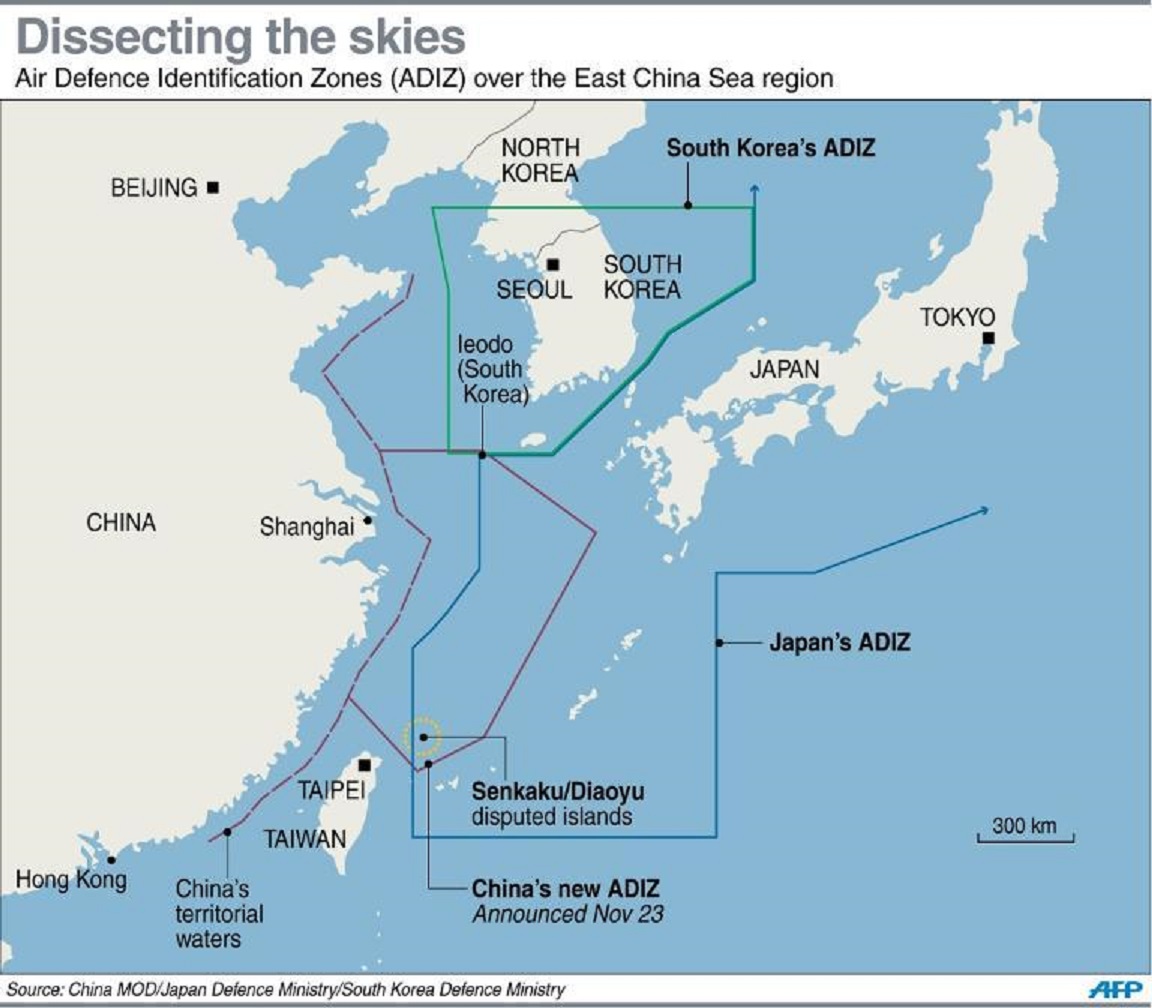
The problem threatening Peace in Asia cannot be resolved by imposing UN sanctions on North Korea. Communist China’s Expansionism in all directions, including Tibet, and South China Sea must be challenged and contained simultaneously. US cannot win this battle without Knowing the Enemy.
Communist Expansionism in Asia – Unfinished Korea-Vietnam War
Rudra Narasimham Rebbapragada
Doom Dooma Doomsayer
Communist Expansionism in Asia – Unfinished Korea-Vietnam War
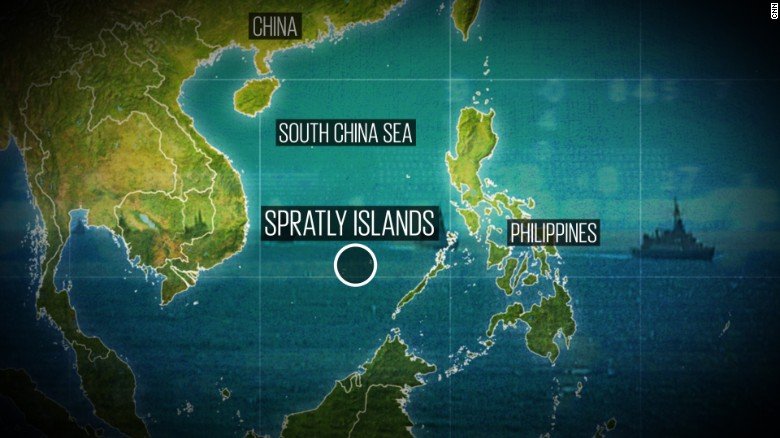
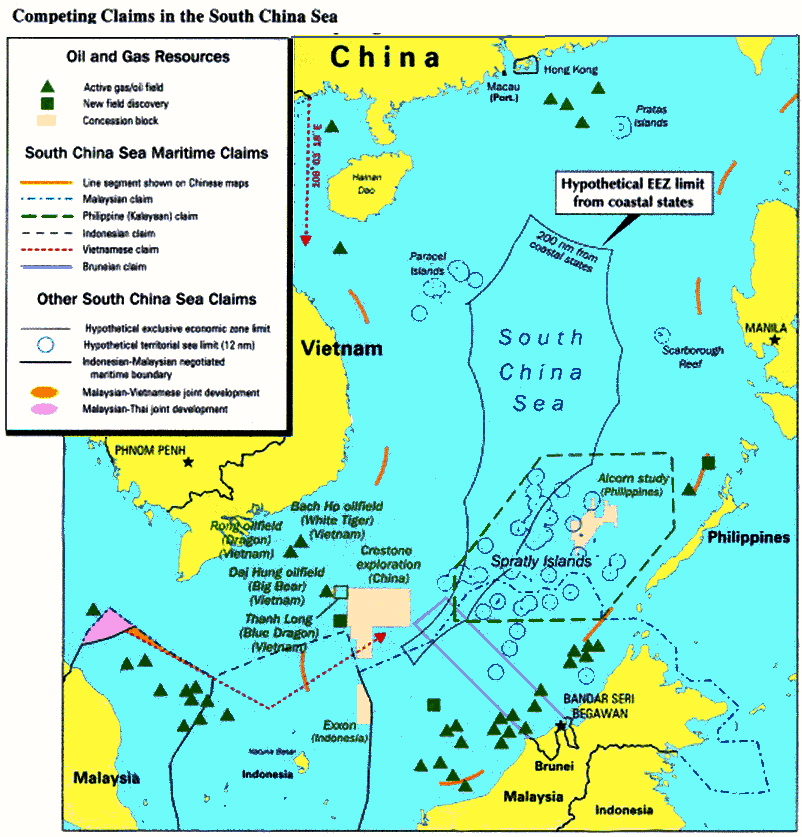
TO STOP KIM JONG-UN, CHINA NEEDS A BIG PRIZE: THE SOUTH CHINA SEA
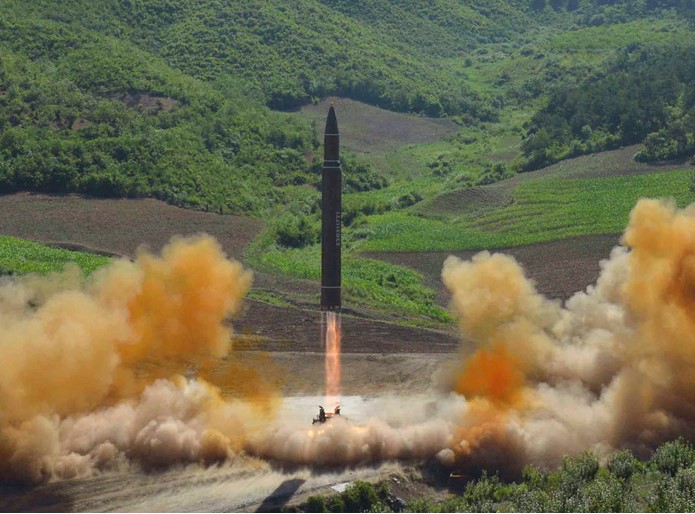
Without any doubt, China can stop Kim Jong-Un’s missile tests. Once and for all, and save a lot of trouble for America and its allies—and for Asian market investors.
But to do that, China needs a big prize, the South China Sea. All of it, so Beijing can write its own navigation rules, exploit all the riches that are hidden beneath, and satisfy the nationalistic sentiment it has nurtured.
Communist Expansionism in Asia – Unfinished Korea-Vietnam War Communist Expansionism in Asia – Unfinished Korea-Vietnam War
The Korean Peninsula is far away from the South China Sea. But the on-going crisis in the Korean Peninsula isn’t independent from what’s going on in the South China Sea, as there is a key player behind each conflict: China.
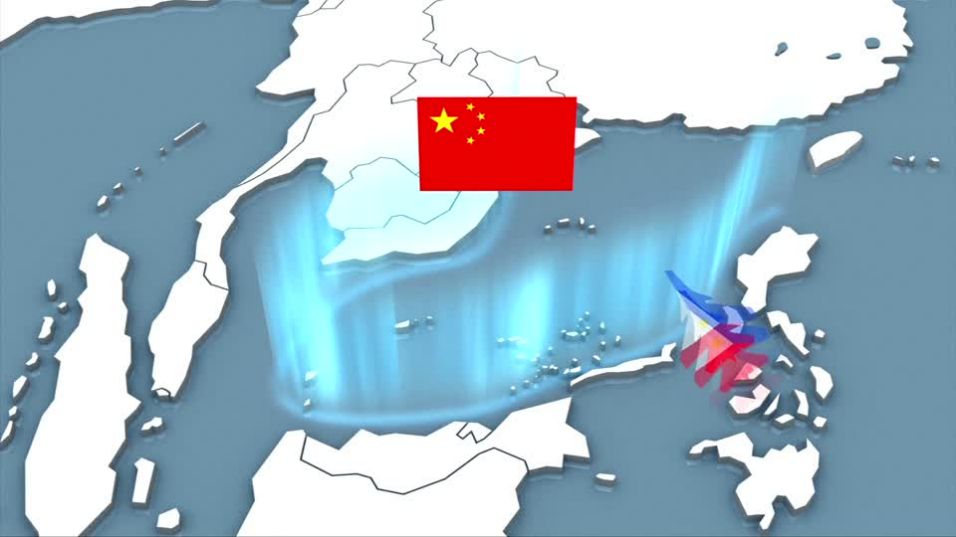
In fact, Kim Jong-Un has emerged as China’s decoy in South China Sea disputes. As the world is fixated on Kim’s nuclear tests and missiles launches, China continues the building of artificial islands in the South China Sea, bullying every neighboring country that dares to challenge its ambitions to dominate the vast waterway. Like threatening the Philippines with all-out war should it enforce an international arbitration ruling, which confirmed that China has no historic title over the waters of the South China Sea.
China also told Vietnam and India to stop searching for oil in the region, or else risk an attack on the oil and gas bases. And it has demanded that Indonesia rescind its decision to rename its maritime region in the southwest part of the South China Sea as the “North Natuna Sea,” asserting its own sovereignty in the area.
But it hasn’t stopped there. It further demanded that America’s close Asian ally, Japan, stay away from its “own” South China Sea.
Meanwhile, bilateral trade between China and North Korea has increased by nearly 20% last year, as Apostolos Pittas, adjunct professor of economics at Long Island University Post notes.
So far, Asian markets have been responding more to the Korean Peninsula crisis, losing a couple of percentage points any time Kim fires a missile and less on China’s South China Sea bullying.
That’s why China has no real intention of taming Kim’s ambitions — unless America and its allies are prepared to let Beijing take control over the entire South China Sea, and step up its bullying tactics.
Are they prepared to pay this big a price?
Red China Expansionism South China SeaCommunist Expansionism in Asia – Unfinished Korea-Vietnam War THE EVIL RED EMPIRE – NUCLEAR EXPANSIONISM – NUCLEAR STRATEGY .Communist Expansionism in Asia – Unfinished Korea-Vietnam War Communist Expansionism in Asia – Unfinished Korea-Vietnam War Communist Expansionism in Asia – Unfinished Korea-Vietnam War red china red alert economic espionageCommunist Expansionism in Asia – Unfinished Korea-Vietnam War People’s Republic of China wants to legalize its military occupation of Tibet and other territories taking full advantage of its military and economic strength.
Tibet is the first victim of the spread of Communism to Asia
Red China took possession of Tibet or seized Tibet using her superior military power. Red China told a lie when she claimed about Peaceful Liberation of Tibet by People’s Liberation Army. Red China is an occupying force that faces eviction from Tibet when Peace, Freedom, and Justice will prevail again.
The Cold War in Asia. The Spread of Communism to Tibet.
The Cold War in Asia began in 1949 with the spread of Communism to mainland China. The spread of Communism has not stopped.
For Tibetans, there is no hope for “Meaningful Autonomy” if The Communist Party of China rules over their daily lives.
Red Dragon – Red China – Hegemonist
Whole Hegemonist – The Future of Red China’s Expansionism – Beijing Doomed.
Hegemony refers to dominance of one nation over others. Hegemonism is the policy or practice of a nation in aggressively expanding its influence over other countries.
Hegemony refers to dominance of one nation over others. Hegemonism is the policy or practice of a nation in aggressively expanding its influence over other countries. The 17-Point Plan or Agreement of March 1953 sets the tone for Communist China’s Expansionist Doctrine
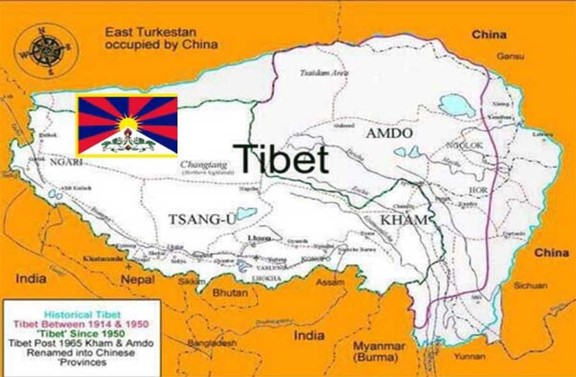
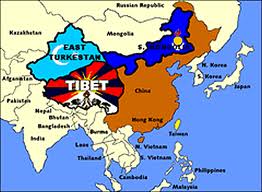
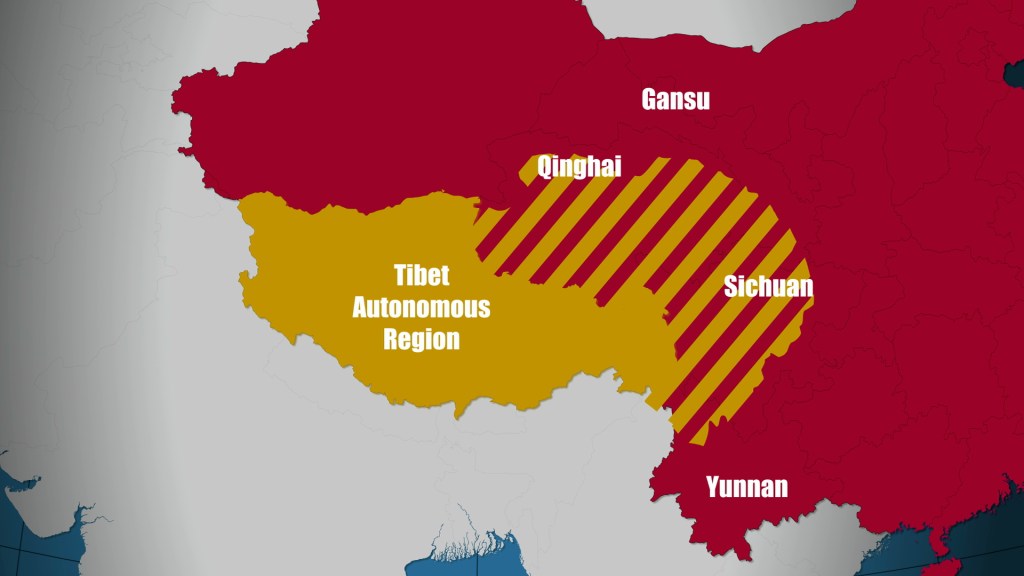
Red China heralded her hegemonistic policy in 1949 when she announced to the world that she would use military force to occupy Tibet which declared full independence on February 13, 1913. In October 1950, Red China attacked Tibet overcoming weak Tibetan resistance and occupied 965, 000 square miles of Tibetan territory which now represents one quarter of Red China’s landmass. This Tibetan territory includes entire Tibet Autonomous Region (TAR) and regions found in Qinghai, Gansu, Sichuan and Yunnan provinces. Red China’s policy of Hegemonism is nothing new. Red China will prevail with her military aggression in South China Sea if Red China is not evicted from Tibet.
#1 You Don’t Need To Fight A War To Win A War
Hegemony refers to dominance of one nation over others. Hegemonism is the policy or practice of a nation in aggressively expanding its influence over other countries. The 17-Point Plan or Agreement of March 1953 sets the tone for Communist China’s Expansionist Doctrine
I submit that we need not always Fight a War to Win a War. At Special Frontier Force, I am known as ‘Doomsayer of Doom Dooma’. I am claiming that we will Win our War against Tibet’s military occupation without fighting a War with Red China for I predict ‘Beijing Is Doomed’ and Red China set herself on irreversible path of Self-Destruction.
Hegemony refers to dominance of one nation over others. Hegemonism is the policy or practice of a nation in aggressively expanding its influence over other countries. The 17-Point Plan or Agreement of March 1953 sets the tone for Communist China’s Expansionist Doctrine
Rudra Narasimham Rebbapragada Ann Arbor, MI 48104-4162, USA Special Frontier Force-Establishment 22-Vikas Regiment
Hegemony refers to dominance of one nation over others. Hegemonism is the policy or practice of a nation in aggressively expanding its influence over other countries. The 17-Point Plan or Agreement of March 1953 sets the tone for Communist China’s Expansionist Doctrine
If you haven’t heard of “HEGEMON” and you’re a geostrategy enthusiast, you’re missing out on a very interesting experience. Developed by the Potomac Foundation, the multiplayer game allows users to take on the identities of different countries, complete with resources and political agendas.
Before you write it off as yet another game imitating life, consider this: Hegemon has quickly become a favorite with strategists and academicians who use the simulation to test different approaches and evaluate results.
Players can take on the roles of the United States, China and other countries in the Asia-Pacific region; from budgeting and strategizing to managing military and technological needs, the ‘game’ involves enacting real-world geopolitical relationships on-screen. Perhaps the most interesting implication of the game is that it allows users to test the waters, so as to speak, on the South China Sea issue. And the revelations are rather edifying.
China could gain a hegemony on the South China Sea
As per an article first published in the Lowy Interpreter, China could gain and sustain a hegemony on the South China Sea without every actually having to resort to armed conflict. The South China Sea issue has been in the news frequently over the past year owing to a rise in hostile disputes over territory between the various claimants. China, most noticeably, has ‘reclaimed’ several territories and undertaken construction operations on the same, much to the chagrin of other stakeholders. As of this past month, the state has halted its actions in the region in keeping with an international effort to resolve the dispute peacefully. However, as the game has revealed, there are other ways in which the state could monopolize the region. Here are some possible outcomes to mull over.
#1 You Don’t Need To Fight A War To Win A War
A very big part of war strategy is avoiding war altogether. You must prepare to excel at the worst, but still keep it from happening at any cost. In the game, only 50% of the region takes to violence across a span of two decades. Instead, the more probable outcome is that countries turn to brokering agreements. It’s interesting to note that the matter of who plays the game affects what the outcome is: military personnel are more likely to opt for confrontational tactics while academics are more prone to choosing the non-combative options.
#2 The Role Of Russia
While Russia isn’t a claimant in the South China Sea issue, or even a regional stakeholder, the state does exert a considerable amount of influence on the area’s security and stability. Alliances and enmities with Russia can go a long way towards affecting the regional balance of power. History has proven that power in geopolitical conflicts is best consolidated through a formidable military presence in the region in question, and the fact that Russia is a significant contributor to the international weapons market all but guarantees Moscow a say-so in the South China Sea issue.
#3 What Would Vietnam Do?
Vietnam makes for a very interesting entry point into the South China Sea dispute because the state is a claimant in the territorial conflict and clearly opposed to Chinese monopoly in the greater South Asian region, but it still continues to be something of a wild card. The country has a land border in common with Beijing, so it serves Vietnam’s security interests to maintain peaceful ties with China. One probable outcome, as we see played out in Hegemon only too often, is that Hanoi is likely to forsake a portion of its stakes in the South China Sea issue in exchange for a decreased Chinese military presence at its borders.
#4 Diplomacy & Perseverance
Many real-world experts have argued that China will seek to avoid open confrontation simply because the costs of war are too high and the state has identified another means to the same end: diplomatic channels. China currently enjoys a position of enviable influence in the region. The current geopolitical landscape of South Asia is marked by an eagerness to either ally with China or, at the very least, avoid an armed conflict with the state. Analysts argue that by simply waiting it out China stands to gain more. As such, if China were to solidify its identity as the dominant regional power it would serve a severe blow to the United States’ ‘pivot to Asia’ strategy.
#5 Deterrence or Destruction?
Yet others argue that even if China were to persevere at the long game, there is no guarantee that other Asian states will concede to its hegemony in the region. China has a historical rival in Japan, and if things were to come to a head, the latter is most likely to align with the United States in an effort to maintain the status quo in Asia. In this case, the arms race and support gathering may result in a more pronounced divide than ever before, and scholars warn that the world might soon be looking at another iteration of the Cold War.
Interesting though it is to see how closely the game imitates real life and vice-versa, theorists will argue against basing actual strategy on gameplay simply because two crucial elements- the stakes involved and the time in hand- do not represent real-time situations accurately. Defeat in a game and defeat on a battlefield are two very different experiences indeed. And while overnight developments are not completely unheard of in military history, most issues develop gradually and decision-makers have months, even years, to chart the most preferred course of action.
So, while geostrategy buffs can definitely learn a thing or two about the South China Sea issue from Hegemon, and maybe even test-drive a few theories, the real world is, as they say, a totally different ballgame.
,Hegemony refers to dominance of one nation over others. Hegemonism is the policy or practice of a nation in aggressively expanding its influence over other countries. The 17-Point Plan or Agreement of March 1953 sets the tone for Communist China’s Expansionist Doctrine
About the author
BRINDA BANERJEE
Brinda Banerjee is a researcher working on security, armed conflict and military policies. She holds a Bachelor’s in Journalism (with Honors), a Master’s in Peace and Conflict Studies and is currently pursuing her Ph.D. in state responses to internal conflict. Brinda writes extensively about current events, conflict resolution and geopolitical dynamics in the modern world.
Hegemony refers to dominance of one nation over others. Hegemonism is the policy or practice of a nation in aggressively expanding its influence over other countries. The 17-Point Plan or Agreement of March 1953 sets the tone for Communist China’s Expansionist DoctrineHegemony refers to dominance of one nation over others. Hegemonism is the policy or practice of a nation in aggressively expanding its influence over other countries. The 17-Point Plan or Agreement of March 1953 sets the tone for Communist China’s Expansionist Doctrine
China cracks down on Tibet CPC officials over links with Dalai Lama
The Cold War in Asia. The Spread of Communism to Tibet.
Beijing, February 2
China’s ruling Communist Party is cracking down on its officials who are taking part in religious activities violating party’s ideology of adhering to atheism and secretly maintaining contacts with Tibetan spiritual leader the Dalai Lama, who has been branded as “separatist” by Beijing.
A video produced by the Tibetan provincial government has revealed cases in the region where local Communist Party of China (CPC) members violated the CPC regulations on religion, anti-separatism and anti-corruption, state-run Global Times reported on Saturday.
So far, three officials have been expelled from the party and 10 others received a warning, the report said.
The Tibetan authority attaches great importance to the party discipline consistent with a nationwide campaign to strengthen the party management. It regulated 46 violations by local CPC members, including religious beliefs, according to the video produced by the publicity department of the regional commission for discipline inspection of Tibet and Tibet television.
The video, part of a four-episode series featuring the region’s efforts on anti-corruption and regulating the party members, was aired from January 28 to 31 on Tibet television, the report said.
Buddhism is a widely popular religion in Tibet, which is governed by the CPC ever since China took control of it in 1950. Despite his exile in India since 1959, the Dalai Lama remains the most revered religious figure in the Himalayan region.
The CPC remains an atheist organization. Thus, CPC members are banned from religious beliefs, because they can only believe in Marxism and believing in other religions means betrayal of their chosen belief and it will shake their belief in Marxism and separate them from the party, Xiong Kunxin, an ethnic studies professor at Tibet University in Lhasa, told the Global Times. — PTI
The Cold War in Asia. The Spread of Communism to Tibet.Special Frontier Force – Establishment 22 – Vikas Regiment: This badge represents a military alliance/pact between India, Tibet, and the United States of America. Its first combat mission was in Chittagong Hill Tracts which unfolded on 03 November 1971. It was named Operation Eagle. It accomplished its mission of securing peace in the region that is now knownas Republic of Bangladesh.
From September 21, 1949 to September 24, 2026, The System of One-Party Governance in Peking remains as a Security Threat
From September 21, 1949 to September 24, 2026, The System of One-Party Governance in Peking remains as a Security Threat
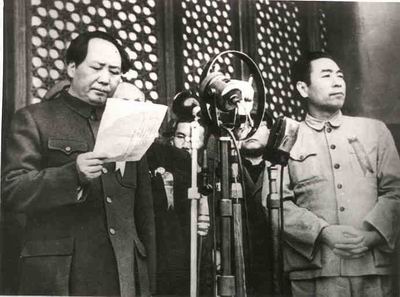
On September 21, 1949 Mao Zedong revealed plan for One-Party Governance of mainland China establishing Single-Party System or Party-State. On September 24, 2026, the Communist Party of China continues to pose threat to Democracy, Freedom, Peace, and Justice in Asia.
On September 21, 1949, Communist Party Chairman Mao Zedong revealed Plan for One-Party Governance of mainland China establishing Single-Party System or Party-State. On September 24, 2026, the Communist Party of China continues to pose threat to Democracy, Peace, and Justice in Asia.
Mao Zedong outlines the New Chinese Government – September 21, 1949
At the opening of the Chinese People’s Political Consultative Conference in Peking, Mao Zedong announces that the new Chinese government will be “under the leadership of the Communist Party of China.”
The September 1949 conference in Peking was both a celebration of the communist victory in the long civil war against Nationalist Chinese forces and the unveiling of the communist regime that would henceforth rule over China. Mao and his communist supporters had been fighting against what they claimed was a corrupt and decadent Nationalist government in China since the 1920s. Despite massive U.S. support for the Nationalist regime, Mao’s forces were victorious in 1949 and drove the Nationalist government onto the island of Taiwan. In September, with cannons firing salutes and ceremonial flags waving, Mao announced the victory of communism in China and vowed to establish the constitutional and governmental framework to protect the “people’s revolution.”
In outlining the various committees and agencies to be established under the new regime, Mao announced that “Our state system of the People’s Democratic Dictatorship is a powerful weapon for safeguarding the fruits of victory of the people’s revolution and for opposing plots of foreign and domestic enemies to stage a comeback. We must firmly grasp this weapon.” He denounced those who opposed the communist government as “imperialistic and domestic reactionaries.” In the future, China would seek the friendship of “the Soviet Union and the new democratic countries.” Mao also claimed that communism would help end reputation as a lesser-developed country. “The era in which the Chinese were regarded as uncivilized is now over. We will emerge in the world as a highly civilized nation.” On October 1, 1949, the People’s Republic of China was formally announced, with Mao Zedong as its leader. He would remain in charge of the nation until his death in 1976.
On September 21, 1949, Communist Party Chairman Mao Zedong revealed Plan for One-Party Governance of mainland China establishing Single-Party System or Party-State. On September 24, 2026, the Communist Party of China continues to pose threat to Democracy, Peace, and Justice in Asia.On September 21, 1949, Communist Party Chairman Mao Zedong revealed Plan for One-Party Governance of mainland China establishing Single-Party System or Party-State. On September 24, 2026, the Communist Party of China continues to pose threat to Democracy, Peace, and Justice in Asia.On September 21, 1949, Communist Party Chairman Mao Zedong revealed Plan for One-Party Governance of mainland China establishing Single-Party System or Party-State. On September 24, 2026, the Communist Party of China continues to pose threat to Democracy, Peace, and Justice in Asia.