THEERTHAM, TIRTHA, TIRTHA SNAAN – SANATANA DHARMA OF INDIA
Sanatana Dharma of India. Theertham, Tirtha Sthan, Tirtha Yatra, Tirtha Snaan.
The ancient traditions of India are often described as ‘Sanatana Dharma’. Indians for a very long time recognized the significance of Water and use it in various rituals, particularly for the purification of the human body which is prone to sickness or illness attributed to sinful thoughts, words, and actions. The term ‘Theertham’ refers to water that is sanctified by prayerful thought and by using it in the devotional worship of God. The term ‘Tirtha’ refers to a body of water such as a well, pond, lake, river, or sea which gets an elevated status because of its geographical association with a physical location, place, or position named ‘Sthan’ or ‘Kshetra’. The physical journey to visit the place of Tirtha Sthan is called Tirtha Yatra. The act of taking a bath or dipping into the water at a Tirtha Sthan is called Tirtha Snaan.
I ask my readers to reflect on the divine attributes of the Water Molecule. The original, sweet taste of fresh water cannot be discovered by the study of the properties of the Chemical Elements, Hydrogen and Oxygen which combine to form the Chemical Compound called Water. Man, like several other terrestrial creatures, depends upon Fresh Water delivered from ‘Heaven’.
Rudranarasimham Rebbapragada
BHAVANAJAGAT.ORG
Kumbh Mela: Millions of Indians take a holy dip – BBC News
Millions of people have taken to the waters at the confluence of India’s sacred Ganges and Yamuna rivers as part of the Kumbh Mela festival – humanity’s largest gathering.
Officials told the BBC some 15m people bathed on Tuesday. They expect about 120m visitors over 49 days.
Hindus believe bathing at the rivers will cleanse their sins and bring salvation.
The holy men were among the first procession to arrive early Tuesday.
Sadhus – or ascetics – smeared ash on their bodies as they came out of the water and chanted “Har Har Gange”, or “Mother Ganges”, and danced while posing for photographers.
Image copyright Ankit Srinivas
The Naga sadhus are the biggest draw of the festival – held in the northern city of Allahabad, recently renamed Prayagraj – and arrived early in the morning in massive colorful processions.
Thousands of the Sadhus – naked and wearing marigold garlands around their necks – were escorted by police to the river as they chanted slogans invoking Shiva, the Hindu god of destruction. Many were waving tridents and swords.
At the last Kumbh in 2013, female ascetics were allowed to bathe at the confluence of the rivers – known as the Sangam – for the first time. A few hundred transgender people were among those who bathed on Tuesday morning.
More than a million foreign pilgrims will also take part in the festival, senior administration official Rajeev Rai told the BBC.
He and other organizers had been preparing for more than a year for the event, which dwarfs the annual Hajj pilgrimage to Islam’s holiest sites in Saudi Arabia.
Image copyright Ankit Srinivas Image caption Religious sects arrived in processions to take a dip
The mela (meaning “fair” in Hindi) has been held in Allahabad for centuries now, but it has grown into a mega event in the past two decades.
Image copyright Getty Images
This year the gathering will be particularly huge and many believe India’s Hindu nationalist government has organized it with an eye on key general elections due in the summer.
Massive billboards of Prime Minister Narendra Modi dot Allahabad city and the Mela ground. Huge cardboard cut-outs have been placed strategically at the bathing areas.
Image copyright Ankit Srinivas
A temporary tent city spread over 32 sq km (12 sq miles) has been set up to accommodate the masses, complete with hundreds of kilometers of new roads. Hospitals, banks, and fire services have been set up just for the festival, along with 120,000 toilets.
Hundreds of new train services are running to and from Allahabad to tackle the rush of pilgrims and more than 30,000 police and paramilitaries have been deployed to provide security and manage the crowds.
In the run-up to the festival, religious sects held daily processions marked by much pomp and show.
Image copyright Ankit Srinivas
At one such procession on Sunday night, there were elephants, camels, and horses. Brass bands and drummers played, as religious leaders sitting atop several vehicles threw marigold flowers to thousands of devotees.
On Monday – a day before the official start of the festival – tens of thousands of pilgrims bathed at the Sangam. Some then lit clay lamps and floated them along with flowers in the Ganges.
Image copyright Ankit Srinivas
Image copyright Ankit Srinivas
The atmosphere at the mela is festive, and the authorities have announced a calendar of music and dance performances. But there’s plenty of impromptu entertainment taking place by the roadside, with children performing rope tricks and shows by drummers and ballad singers.
Most pilgrims, however, say they are here to “answer the call of Mother Ganges”.
“We believe that bathing here will destroy our sins,” farmer Pramod Sharma said.
“The waters here have regenerative properties. Bathing here can cure your ailments. It also removes obstacles from your way,” Shahbji Raja said.
Kumbh Mela at a glance
A pilgrimage in which Hindus gather at points along the Ganges, Yamuna and mythical Saraswati rivers
This year’s event expects 120 million visitors over seven weeks, dwarfing last year’s Hajj pilgrimage in Saudi Arabia which drew about 2.4 million
Astrology determines most aspects of the festival, including its date, duration, and location
The most recent full Kumbh, held in 2013 in Allahabad, was also a Maha (or great) Kumbh, which happen every 144 years. It attracted an estimated 100 million visitors
A lost-and-found camp was set up in 1946 and has since helped reunite countless family members and friends who get separated in the vast crowds
This year, 15 lost-and-found camps have been set up. These computerized centers are interconnected and their announcements will be heard across the Mela grounds. Details will also be uploaded on Facebook and Twitter to help trace the missing
India’s Sanatana Dharma. Theertham, Tirtha, Tirtha Yatra, and Tirtha Snaan.
PROUD TO BE AN INDIAN – THE LEGACY OF RANI PADMINI OF CHITTORGARH
Rani Padmini – Her Essence and Her Existence. She defends her Essence by destroying her physical existence. Rani Padmini’s Essence lives in the heart of Indians giving them Sense of Pride. I am Proud to be Indian for Rani Padmini’s Victory over Death.
Rani Padmini of Chittorgarh is Living Symbol of Indian National Character that makes me Proud to be an Indian. This Cultural Icon of India cannot be tarnished by fiction writers who have no concern for Historical Facts.
RANI PADMINI AND ALAUDDIN KHILJI: SEPARATING FACT FROM FICTION
SWARAJYA
RAM OHRI – Jan 28, 2017, 6:35 pm
PROUD TO BE AN INDIAN – THE LEGACY OF RANI PADMINI OF CHITTORGARH
If reports are to be believed, filmmaker Sanjay Leela Bhansali’s next, Padmavati, is based on Malik Muhammad Jayasi’s poem Padmavat.
Jayasi’s poem about Padmini and Khilji, however, does not have a historical basis.
Historians have some understanding of what may have happened in that fateful chapter of the lives of Rani Padmini and Alauddin Khilji.
After Bajirao Mastani, director Sanjay Leela Bhansali is making another period drama film, Padmavati, this time about Rani Padmini, the queen of Chittorgarh, and Alauddin Khilji, the ruler of Delhi. According to media reports, the film will feature a love story between Padmini and Khilji.
The popular story says that when Khilji attacked Chittor, he fell for Padmini on seeing her reflection in the mirror. This story was woven by a well-known Indian poet, Malik Muhammad Jayasi, in 1540 AD, and finds echo in Jawaharlal Nehru’s Discovery of India as well.
Jayasi’s poem about Padmini and Khilji, however, is not accurate. Historians have, in fact, come up with possible scenarios for what could have actually happened.
According to Jayasi’s poem Padmavat, Rani Padmavati of Chittor was the wife of Raja Ratansen (a name invented by Jayasi with no reference in Mewar history) of Chittor during the reign of Alauddin Khilji. The correct name of Chittor’s then ruler was Rawal Ratan Singh, the thirty-fourth descendant of Bappa Rawal.
What Jayasi’s poem says
There were many talented artists in the court of Ratansen, one of whom was a musician named Raghava Chetan. He was a sorcerer who used his magical powers to target rivals. Once, he was caught red-handed while trying to invoke evil spirits, after which Ratansen banished Raghava from the kingdom after blackening his face. Raghava ran away to Delhi and decided to take revenge by provoking Khilji to attack Chittor.
Raghava knew of a forest near Delhi where Khilji went hunting. One day, he played his flute while Khilji was out hunting. The alluring notes emanating from his flute attracted the attention of Khilji, who then asked his soldiers to fetch the flute player. Thus, Raghava was taken to Khilji’s court.
After reaching Delhi, Raghava told Khilji about the unparalleled beauty of Rani Padmini. That prompted Khilji to attack Chittor, but he found the fort to be heavily defended. So, he laid siege to the fort and forced Ratansen to negotiate with him.
Desperate to capture the beautiful Padmini, Khilji sent a word to Ratansen about him wanting to meet her. The Raja asked Padmini, who flatly refused. However, on being persuaded by her beleaguered husband, Rani Padmini agreed to let Khilji see her in the mirror.
The palace on the right is where Padmini is supposed to have stood. (Sanjeev Nayyar)
Next, Khilji entered the fort with a group of select warriors who had observed the fort’s defenses on their way to the palace. On seeing Padmini in the mirror, Khilji decided that she must be his.
PROUD TO BE AN INDIAN – THE LEGACY OF RANI PADMINI OF CHITTORGARH. THE MIRROR.
The mirror in Chittor in which Khilji is said to have seen Padmini’s reflection (Sanjeev Nayyar)
While returning to his camp, Khilji deceitfully kidnapped Ratansen and took him as prisoner. Thereafter, he informed the Rajput Sardars that Padmini should be handed over to him if they wanted to see their king alive.
The Rajput generals, led by two gutsy warriors, Gora and Badal, who were related to Padmini, decided to beat Khilji at his game. They sent out a word that Padmini would be handed over the next morning.
At the crack of dawn, 150 palanquins (in which royal ladies were carried in medieval times) left the fort and made their way to Khilji’s camp. The palanquins stopped before a tent where King Ratansen was held prisoner. To his surprise, armed Rajputs jumped out from the palanquins, freed Ratansen and galloped away to Chittor, riding the horses grabbed from Khilji’s stable.
Khilji was furious. He ordered the army to storm Chittorgarh. However, the army could not break into the fort. Due to a prolonged siege, food supplies for the troops were running out. So Ratansen opened the fort gates, and Rajputs rode out to fight. They were overpowered, and achieved martyrdom. Rani Padmini and wives of thousands of warriors preferred jauhar (fire is lit, and women jump into the flames) over losing their honor to Khilji’s army.
PROUD TO BE AN INDIAN – THE LEGACY OF RANI PADMINI OF CHITTORGARH. THE PLACE OF JAUHAR.
Place in Chittor where jauhar was committed (Sanjeev Nayyar)
When Khilji entered the fort, all that he found were ashes of these brave women. Their sacrifice has been kept alive by Bards in their songs, where they praise women who preferred supreme sacrifice to dishonor.
When this author visited Chittorgarh Fort in 2008 and asked the guide about the veracity of the mirror story, he said locals did not believe in it.
Having learnt what Jayasi’s poem says, let us now read what the Bharatiya Vidya Bhavan’s book on Indian History says.
In January 1303, Khilji set out on his memorable campaign for the conquest of Chittor. He received strong resistance from the Rajputs under Rana Ratan Singh. The Rajputs offered heroic resistance for about seven months and then, after the women had perished in the flames of jauhar, the fort surrendered on August 26, 1303.
Whilst later writers like Abu-l Fazl, Haji-ud-Dabir (note these two authors use Padmini not as a name, but as a woman possessing special attributes) have accepted the story that the sole reason for invasion of Chittor was Khilji’s desire to get possession of Padmini, many modern writers are inclined to reject it altogether. They point out that the episode of Padmini was first mentioned by Malik Jayasi in 1540 A.D. in his poem Padmavat, which is a romantic tale rather than historical work. Further, the later day writers who reproduced the story with varying details, flourished long after the event, but their versions differed from one another on essential points.
Yarn 2 by Jayasi
In Padmavat, Jayasi wrote that Padmini was the daughter of Raja Gandharva Sen of Sri Lanka. The Lanka story has many contradictions.
1) The name Raja Gandharva Sen is nowhere found in Sinhalese history. The then Buddhist rulers of Lanka had contacts mainly with the Pandya kings of Tamil Nadu and none with Rajputana. The names of Lanka rulers at the time were Vijayabahu III (1220-24), Bhuvanaikabahu I (1281-83), Interregnum (1283-1302) and Vijayabahu V (1325-26 to 1344-45).
Instead, there is a strong possibility that Padmini was a princess of Jaisalmer or of Sinhala, a village near Sojat in Pali district of Rajasthan. In the history of Rajasthan, there are many references which indicate that Rani Padmini was the eleventh wife of Rawal Ratan Singh among his fifteen wives, as polygamy was prevalent among Rajput rulers then. There is, however, no confirmation of her father being Rana Salsi Tanwar as written in the book The Kingdom of Mewar by Irmgard Meininger, a German author.
2) In Padmavat, there is a reference to a parrot who flew all the way from Sri Lanka to Chittor as a messenger to inform Raja Ratansen, or Rawal Ratan Singh, about the beauty of Padmini, daughter of the Sinhala ruler Gandharvasen, making Ratansen travel all the way to the Sinhala kingdom to win the hand of Padmini. This narrative lacks credibility since Lanka never had a king by that name.
3) Jayasi wrote this poem almost 237 years after Khilji’s attack on Chittor. The literature of that era is full of highly imaginative narratives, and poets were known to gleefully use metaphors, alliterations and imaginary personifications. There is also a reference in Padmavat to a sorcerer called Raghav Chetan, who is believed to have been personified as a parrot.
Contradictions in Jayasi’s poem
Amir Khusro, the court poet of Khilji, who accompanied him during the Chittor attack, did not write about Padmini, nor did he allude any episode to her in his book Twarikh-e-Allai. To be fair, it is possible that Khusro might not have wanted to further spoil the image of Khilji. So, he ignored the reference to Padmini. “According to Prof Habib, there is a covert allusion to Padmini episode by Khusro in his Khazain-ul-Fatuh, where he mentions the Queen of Sheba.”
Equally important is the fact that Col James Tod did not refer to Khilji’s desire to capture the beautiful Padmini in his book The Annals and Antiquities of Rajasthan.
There are many instances in history when court poets and writers have followed the instructions of the ruling kings, and wrote histories accordingly. For instance, the book Ain-i-Akbari by Abul Fazal, where he was instructed not to write about Mehrunissa’s — later known as Nur Jahan, wife of Mughal King Jahangir — first marriage with an Afghan Pathan. However, there is a mention of her in Tuzuk-e-Jahangari as his beloved, and how his father had cheated on him.
It would not be wrong to say that Jayasi’s poem Padmavat is a figment of his poetic imagination. “It has also been argued that the invasion of Chittor was the natural expansionist policy of Khilji and no Padmini was need for his casus belli“.
The story of Khilji watching Padmini’s reflection in a mirror, or in a well, as stated in Discovery of India by Pandit Nehru, could have been based on a latter-day interpolation by some local poets. It could also be a phony myth popularized by some imaginative storytellers.
Having questioned the motive for Khilji’s invasion of Chittor, “it should be remembered that Khilji’s lust for a Hindu queen is proved by the known instances of Queen Kamala Devi of Gujarat and the daughter of King Ramachandra of Devagiri. The story of Padmini should not be totally rejected as a myth. But it is impossible, at the present state of knowledge, to regard it definitely as a historical fact”.
In Bajirao Mastani, Bhansali told audiences what a brave general Bajirao Peshwa was. It prompted Col (retired) Anil Athale to write ‘Why Bajirao is India’s greatest cavalry general‘. Having assuaged Maratha pride, Bhansali got away with some historical distortions.
In Padmavati, Bhansali is trying to do a balancing act and be secular. Thus, he might tell audiences how romantic the Sultan of Delhi was, that his love for Padmini was as pure as the holy water of Zamzama, and the sexual conquest of beautiful Hindu queens was the last thing on his mind.
According to a report in the Indian Express, it is alleged by Rajput protesters that Bhansali has deliberately added a dream sequence in his movie which shows Khilji embracing and kissing Padmini, which is an affront to the honor and name of Rani Padmini. It is also a slur on the valor of thousands of Hindu Veeranganas who preferred to die by fire rather than submit to the lust of barbaric invaders.
Bhansali might take refuge under the excuse that the film is based on the poem Padmavat, whose historical significance is unconfirmed. But in the poem, there is no mention of the so-called dream sequence. Ultimately, Bhansali might change the name of the movie, like he did with Goliyon ki Raasleela Ram-Leela. Will it satisfy the nationalists?
Either way, the movie will attract protest like we saw in Jaipur recently. A few things for sure — it will get free publicity, be discussed on prime-time television and become the next battleground between the nationalists and votaries of selective freedom of speech.
References
1. Volume 6 of the History and Culture and Indian People, published by the Bharatiya Vidya Bhavan, p 23
Ram Ohri is a former IPS officer and writes regularly on security issues, demographics, and occasionally, on policy.
PROUD TO BE AN INDIAN – THE LEGACY OF RANI PADMINI OF CHITTORGARH. RANA RATAN SINGH PALACE.PROUD TO BE INDIAN – THE LEGACY OF RANI PADMINI OF CHITTORGARH. PADMINI MAHAL.PROUD TO BE AN INDIAN – THE LEGACY OF RANI PADMINI OF CHITTORGARH. VIEW OF CORRIDOR AT PADMINI PALACE.Essence and Existence- Indians express their Essence in the manner they Exist. Rani Padmini of Chittorgarh expresses her Essence of Moral, and Spiritual Being by ending her physical existence. Sanskrit is the Cultural tool that Indians use to define their Essence. Rani Padmini is Living Symbol of Indian National Character.
Welcome to Telugu New Year SRI “MANMADHA.” UGADI CELEBRATION ON MARCH 21, 2015. Best Wishes to all of my readers for Peace and Joy in Celebration of Spring Season.
Friday, March 20, 2015 is the first day of Spring Season. Today is also the day for Total Solar Eclipse and a New Moon.
THE CELEBRATION OF SPRING SEASON 2015 : FRIDAY, MARCH 20, 2015, THE FIRST DAY OF SPRING IS ALSO THE DAY FOR TOTAL SOLAR ECLIPSE .THE CELEBRATION OF SPRING SEASON : FRIDAY, MARCH 20, 2015 IS ALSO THE DAY FOR TOTAL SOLAR ECLIPSE . A VIEW OF ECLIPSE TAKEN AT FAEROE ISLANDS, NORWAY .
Spiritualism-The Victory over Death : In Indian tradition, Lord Shiva is the Father Principle and His consort Goddess Parvati is the Mother Principle. Man attains Liberation or ‘Moksh’ and obtains his Release from bondage or ‘Mukti’ or ‘Vimochan’ by severing the connection called ‘Attachment’ to free oneself from the fear of Death. The condition called ‘Death’ causes fear if man is not aware of his Objective Reality. The Truth is that there is no disunity between man and God and there is no separation between man and God.
THE VICTORY OVER DEATH – BREAK THE PEDICLE OF ATTACHMENT – Man is attached to his life by a pedicle or attachment called ‘the fear of death’. Man conquers Death and can declare his Victory over Death by simply severing this attachment that arouses the sense of fear of Death. Spiritualism is the potency that brings man’s Essence and Existence to come together to establish the subjective reality of man in the physical world or the material realm. This hymn called ‘Maha Mrityunjaya Mantra’ in praise of Lord Shiva known as ‘Triyambaka appears in the ancient Vedic Book of Rig Veda.’
SPIRITUALISM – THE VICTORY OVER DEATH :
SPIRITUALISM – THE VICTORY OVER DEATH: In Indian tradition, the sense of pain and sorrow caused by death is overcome by coming to correct understanding of true or real nature of Man; His Essence and His Existence.
Spiritualism-The Victory over Death : The Rebbapragadas Family Photo. The Rebbapragada Group is mourning the loss of the second son of (Late) Dr. R. Anjaneyulu, M.D. former Professor of Gynaecology & Obstetrics, B.J. Medical College, Dean Faculty of Medicine, Pune University.
Ramakrishna ‘Rama’ Rebbapragada. Born. February 27, 1958, Died. July 25, 2012. A Funeral Service is being held on Saturday, July 28, 2012 at Boyd – Panciera Douglas Road Chapel, Pembroke Pines, Florida. In Indian Tradition the grief, the pain, and the sorrow caused by loss is overcome by declaring ‘The Victory over Death’ by expressing an understanding of true or real nature of man and his existence.
“EKAM EVA ADVITIYAM” – “I ONE ALONE AND THERE IS NO SECOND” :
The Individuality of man is described in a thought that is expressed in Sanskrit language and it appears in the ancient Vedic Book of Chandogya Upanishad( 6:2:1 ) which reads: “Ekam eva Advitiyam” meaning – “I one alone and there is no second.” The intent of this statement is that of seeking the unity of the Objective Reality of Man and the Ultimate Reality called God. There is no duality between the two and there is no disunity between Man and God.
SPIRITUALISM – THE VICTORY OVER DEATH : THE LAW OF CREATION AND INDIVIDUALITY :
In Indian tradition it is explained that the human body is composite of three principles; three bodies in one, ‘tri-ani-pada’ – the Causal, the Spiritual, and the Material; Man is a Created Being, Man is a Spiritual Being, and Man is a Physical Being with body, and mind. Human being exists as a dual entity or two “Purusha” – the Higher, Real-self( the Spirit, the Soul, or Atma ) which is unchanging and is the basis for Man’s Individuality, and the Lower, Body-self which is subject constant change in morphological appearance and is the basis for Man’s physical Identity in this world. The Law of Creation and Individuality claims that Man always arrives into the physical world as a newly created object that is original, one of its own kind, distinctive, and unique; an Individual that has not existed in the Past and an Individual that will never again exist in the Future in the material realm. I describe Spiritualism as the potency of the Spiritual Matter that brings Man’s Essence and Existence to come together. Being born relates Man to the Subjective and Objective Reality of a biological existence in the physical and material world. Man because of his innate Spiritual nature has the intrinsic power to uplift himself from an event called Death to sustain his Individuality which is the unchanging, underlying Principle that supports the existence of a changing form with a morphological appearance. Under the influence of the Cyclical Flow of Time, the events called Birth and Death flow from one state into another while the Individual with Individuality remains as, “I, one alone and there is no second.”
Spiritualism-The Victory over Death : I define Spiritualism as an Unchanging, Underlying Principle that supports the existence of every living Object that changes in Nature under the influence of the Cyclical Flow of Time.
ROYAL CARIBBEANS MOURNS THE LOSS OF RAMAKRISHNA REBBAPRAGADA :
Kindly read about Ramakrishna ‘Rama'(RAMU) Rebbapragada’s great contribution to Royal Caribbeans and to the Cruise Industry:
“EKAM EVA ADVITIYAM” – This statement in Sanskrit language is from Chandogya Upanishad( 6:2:1 ) and it means: “I, one alone and there is no second.” The original intent of this statement is that of seeking the unity of the Objective Reality of Man known as ‘ATMA’ ( the Individual Soul ) and the Ultimate Reality known as ‘PARAMATMA’ or Supersoul. There is no Duality between the two and there is no disunity between Man and God. However, God is not an object which is under Man’s control and the views about God are subjective opinions. I am quoting this statement to find the Unity of Man in body, mind, and soul. Man’s greatest need is not only to know the world around him but also to know himself better. Man must understand what it is to be a substance and what it is to exist. We need to establish knowledge about Man on a firm basis and the information it provides must be tested for its accuracy and consistency with external reality. Dr. William James in his book, The Principles of Psychology, has observed: “True ideas are those we can assimilate, validate, corroborate, and verify.” The separation of man into body, mind, and soul is not supported by scientific study of man.
SPIRITUALISM – THE UNITY OF MAN IN BODY, MIND, AND SOUL – HUMAN LIFE AND HUMAN EXISTENCE BEGINS WITH CONCEPTION.
Man comes into existence from a single fertilized Egg Cell. This Man cannot be separated into two distinct entities like insentient material being and sentient spiritual being. The physical being and the conscious being are the same. The division of Man into a physical substance and a thinking substance or that of a physical body and a thinking mind is not valid as they have no independent existence of their own. The division of Man into physical body and an immortal, non-material or immaterial Soul is not also valid as the Soul is described as the vital, animating principle that is the chief characteristic of Life.
The Egg Cell is the source of Man’s Life. The Spiritual Nature of Man could be discovered and could be described from the biological properties, characteristics and nature of the corporeal substance found in the Egg Cell.
The Spiritual Nature of Man is not a mental function. The Spiritual Nature of Man could be discovered and could be described from the biological properties, characteristics and nature of Man’s corporeal substance found in the fertilized Egg Cell. This substance is Conscious. This Single Egg Cell grows, divides, develops, and builds the cells, the tissues, and the organ systems that constitute the Human Individual. The Spiritual Nature of the substance present in the Single, fertilized Egg Cell brings the functional unity of all the cells, tissues, and organ systems to establish the Physical Reality called Man.
Human Embryo Implantation at about six days after Conception. The Single, fertilized Egg Cell and the Human Embryo that develops from it is Conscious of its existence reflecting its Spiritual Nature.
About six days after Conception, the developing Human Embryo implants itself into maternal tissues by establish in an anatomical connection called Placenta. The implantation of Human Embryo does not involve any human thought and the Mother has no cortical awareness of the fact of implantation. The implantation demonstrates the Consciousness of the Human Embryo which is aware of the fact of its own existence. Spiritualism defines the internal, mutually beneficial relationship, partnership, association, and connection between the cells, tissues, and organ systems for the benefit of the Human Person who exists because of their living functions. The Subject that is born from the Single, fertilized Egg Cell is always a new, original, distinctive, unique, one of its own kind of Object that exists because of the innate Spiritual Nature of the material substance. Being born relates Man to the Subjective and Objective Realities of his biological existence. There is structural and functional unity between Man and his Body, Mind, and Soul. There is no Life, and there is no Human Existence if these entities are separated. Spiritualism is the potency that brings Man’s Essence and Man’s Existence to come together to provide Man the subjective and Objective Reality of his own biological existence in the physical, and material world. Man is not an embodied Soul and Man is a Living Soul.
Man comes into existence in the physical, material world as a new object. To know and understand the real or true Man, I seek the structural and functional Unity of Man in Body, Mind, and Soul.
MAN IS A SPIRITUAL BEING :
Man is a Spiritual Being – The Great Banyan Tree of Kolkata – Adhyatma Vidya – The Knowledge of the Spiritual Self.
The Banyan Tree offers the unusual appearance. It has roots that appear growing from its branches and the roots are located upwards and away from the ground; it has trunks and branches growing downwards apart from the normal branches that grow upwards and outwards. Because of its adventitious roots, Banyan Tree spreads to cover a wide area and lives for a long time. Knowing and understanding this Asvattha Tree is important to gain the Knowledge of Vedas, the Hindu Scriptures that reveal the Knowledge of the Spiritual Self or Adhyatma Vidya.
THE KNOWLEDGE OF THE BANYAN TREE :
The Hindu Scripture of The Bhagavad Gita, Chapter XV known as Purusottama Yoga speaks about the nature of the Supreme Person. It metaphorically compares the Supreme Being to the popularly known Fig Tree called Ficus benghalensis. The first verse reads as follows:Sri Bhagavan Uvacha : “Urdhva-mulam adhah-sakham Asvattham prahur avyayam, Chandamsi yasya parnani yas tam veda sa Veda vit.”The Supreme Lord Krishna said: There is a Banyan Tree which has its roots upwards and its branches down and metaphorically it is imperishable; and the Vedic hymns are its leaves. One who knows this Tree is the Knower of the Vedas( the person attains the Knowledge of the Ultimate Reality or the Supreme being). When we know the Banyan Tree and its apparent imperishable quality, we may understand the true nature of Man. Man is a spiritual being. The truth or falsity of this proposition depends on the fact of man’s having a substance that is of spiritual nature. Such a substance of spiritual kind is perceptible to the senses, is amenable to direct observation, and could be subjected to verification by experimental science. To establish the fact of man’s spiritual nature, it needs reasoning based upon scientific validity. The structure and the behavior of things contribute to their individual being and function. If man has a set of defining features based upon his structure( Human Anatomy ), function( Human Physiology ), and behavior( Human Behavioral Science ), the spiritual nature of man could be proved on theoretical and practical grounds and could be verified by scientific experiments. I am not seeking to discover a soul or spirit that could have existence independent of man’s physical being. However, it will be important to note that it is not possible to conceive of a soul or spirit if it is never associated with its human body. My purpose is that of describing the spiritual nature of human organism and of other living beings. To understand the true nature of human being, we need to ascertain the validity of Knowledge that pertains to the Spiritual Self. MAN IS A MORTAL BEING :Man’s greatest need is not only to know the world around him but also to know himself better. Man must understand what it is to be a substance and what it is to exist. Man is a physical being or thing with matter and form. The corporeal body of man is composite of two principles; matter, and form. What is called matter is potentiality, and what is called form is actuality. The corporeal substance called protoplasm becomes actuality and is recognized as a living person because of the uniqueness of its genome that operates its living functions and defines its size, shape, color, and external form or morphological appearance. However, life comes into existence only when matter or substance has the ability to acquire energy from its external environment. The human being comes to life when his corporeal substance uses its potential ability and power called ‘Nutrition’ to acquire energy and material from its environment. Life begins with fertilization, the union of sperm with egg cell, and this event called conception proceeds to develop a human being after an important event called implantation. The life journey after conception continues if there is a connection between the energy seeking embryo and its maternal energy provider. To exist means that the substance is maintaining a relationship, a partnership, a connection, or association with its source of energy. Man leads energy dependent existence deriving energy and material from nature which supports other living forms with a similar corporeal substance called protoplasm. The mortality of man must be understood as the dissolution of man’s physical form. The dissolution of living man into non-living molecules and physical elements would not alter that potentiality of protoplasm to acquire energy and material to create its own substance. Things in Nature change with Time; but what is called Nature remains unchanged even under the influence of Time. As per The Laws of Conservation of Mass and Energy as described in classical Physics, mass or energy remain constant. The potentiality of living substance to acquire energy and material to form its own kind of substance has remained unchanged or unaffected by major natural calamities and other cataclysmic events. Life forms perish and yet life continues as new life forms. During the billions of years of existence, planet Earth has experienced several minor, and major Extinction Events described in its geological history. The Science of Paleontology offers scientific evidence to support an argument based upon theoretical and practical grounds to propose that the substance called protoplasm could be eternal, immovable, immutable, and indestructible. At a fundamental level, it could be stated that man is a mortal or materialistic being who derives his physical form because of its association with an imperishable substance. During any stage of his existence, the form called man cannot be separated from the eternal nature of its substance.
Sequoia gigantea is a massive tree. A living thing has a form and has matter. We often recognize the form and give it a name. What about the “MATTER” that constitutes the substance of this Living Thing? We need to understand the ‘potentiality’ of the Matter to know the nature of the Form. The Form has no independent existence of its own. The Form lives if and only if it has Matter that is living.
WHAT IS SOUL OR SPIRIT ? :
Traditionally, man has been divided into two parts; body, and soul. In common usage, the term soul represents the immaterial aspect of a human being. Soul is further defined as that part of the individual which is considered to survive the death of the body. The term spirit is often used to describe a disembodied soul. On separation from the human body, the soul or spirit has a life of its own, a capacity for independent existence or self-subsistence which describes its immortality. THE CONCEPTIONS OF SOUL : There are a variety of conceptions about soul or spirit. Some of the traditional conceptions of soul are the following:1. Soul is the immaterial substance, form, or principle of self-motion, vitality, life force, or life in living things. The insentient body is completely distinct from the sentient soul.2. Soul describes the Doctrine of the Self, and is considered to be synonymous with the True-Self. In a human being, soul confers the Individuality and its nature of humanity.3. Soul is often described as a thinking substance and is equated with mind. The soul has knowledge of itself by reflection of its acts. The soul is the knower and it knows the physical, and mental acts of the human body where it resides.4. Soul is important to maintain, and to preserve life. Soul may not directly participate in the activities of the human body. However, the activities of the human body may have a polluting effect on soul. If the soul is tainted or contaminated by the sinful acts of the body, the soul may obtain purification by its release from the body. Some form of human effort, activity, attitude, and behavior is essential to keep the soul in its natural, pure, and perfect condition.5. The soul that has experienced the polluting effects by its association with a human body would be forced to experience perpetual reincarnation by a process called transmigration. The soul continues to reside as a prisoner in different bodies until such time it attains its original state or condition of purity and perfection.6. Soul is a transcendental or noumenal object that is real but not visible and could not be detected by human sensory perception. The human body that is visible is in fact unreal or is a product of sensory illusion. THE RELATIONSHIP BETWEEN SOUL AND HUMAN BODY : Most religions and cultures speak about soul and describe it as some incorporeal or immaterial substance/principle of human life that is distinct from the body. Despite the frequent acceptance of the existence of a soul, different religions and philosophers have developed a variety of theories as to the nature of the soul and its relationship to the human body. There are divergent views about the origin of the soul, when and how it gets implanted into the human body, and the mortality or when and if the soul dies. I would like to share the view that is attributed to Lord Krishna, the avatar or reincarnation of Hindu God Lord Vishnu. ADHYATMA VIDYA – THE BHAGAVAD GITA :The word ‘vidya’ is related to acquired knowledge derived from studies. The term ‘adhyatma’ pertains to the individual soul, atma, or atman which describes the Spiritual Self. The phrase ‘Adhyatma Vidya’ could be described the Knowledge of the Spiritual Self. The legendary Indian Sage Veda Vyasa also known as Krishna Dvaipayana was the author of the epic ‘The Mahabharata'( Great Epic of the Bharata Dynasty ). Veda Vyasa is recognized as the compiler of ancient Hindu texts known as Vedas. In the Book VI of Mahabharata, Lord Krishna had a conversation with Prince Arjuna while the warring parties of Pandavas, and Kauravas had assembled at the battlefield of Kurukshetra. Lord Krishna revealed His views about soul, human body and their relationship in “The Song of the Lord” known as ‘The Bhagavad Gita’. These poems of The Bhagavad Gita give a synopsis of the religious thought and experience of India through the ages. The Chapter X of The Bhagavad Gita is titled ‘Vibhuti-Vistara Yoga’ and it describes the divine or transcendental attributes of the Supreme Lord. In verse #39, the Lord claims, “I am the generating seed of all existences. There is no being, moving or unmoving( “Chara-acharam” ) that can exist without Me.” In verse #32, the Lord proclaims, “….of all the branches of Learning and Knowledge, I am the Knowledge of the Spiritual Self( “Adhyatma Vidya” ). In verse #22, the Lord describes the nature of His connection with the living beings that He has generated, “…. and in living beings, I am Consciousness( “Bhutanam asmi Chetana” ).” He had also clarified that Consciousness or Chetana as a different characteristic and has separated it from mind, intellect and sense perception. Mind is traditionally viewed as the major organ of sense perception, seat of thoughts, intellect, emotions, feelings, and self-ego. Chetana is associated with the characteristics of a living being. The Lord had also cited The Vedanta Sutra to make the distinction between the body, the soul, and the Supersoul. The Vedanta, the insights from Vedic Scriptures describe three manifestations of the Supreme Lord’s Energy. These are 1. Annamoya or dependence upon Food for existence, 2. Pranamoya or the manifestation of the living symptoms and life forms, and 3. Jnanamoya or the Knowledge of the distinction between the body the field of activity and the Knower who resides in the body. If a living being needs food for its existence, and performs its living functions in a state or condition called awareness or consciousness, it could be described as the manifestation of the Supreme Lord’s Energy. In Chapter VII titled ‘Paramahamsa Vijnana Yoga’ or Knowledge of the Ultimate Truth, in verse #9 Lord Krishna claims: “I am the life( “Jivanam” ) of all that lives.” He had demonstrated a connection between life and consciousness to describe the spiritual nature of Self. The Chapter XIII of The Bhagavad Gita titled ‘Kshetra – Kshetrajna Vibhaga Yoga’ deals with the dichotomy or distinction between the material body, immortal soul, and the Supersoul. It states the view that the material body is called the field of activity or Kshetra. One who knows this body, the field of activity is called the Knower of the Field or Kshetrajna. The Knower of the Field is the Owner of the body. The Supreme Lord is also the Knower of the field of activity in all bodies( verse #3 ). In this human body, there is another indwelling observer, a sanctioner, a preserver, an enjoyer, and indeed ultimate Controller called ‘Paramatama’ or Supersoul. The Supreme Lord or Paramesvaram is residing equally in all living entities( verses # 23, 27, and 28 ). Just like the Sun who illuminates the entire living world, the soul within the body illuminates the entire field of activity of the physical body by Chetana or Consciousness( verse #34 ). This view as stated suggests that consciousness is the proof or the symptom of the presence of the soul. A similar view is shared in Chapter II titled ‘Sankhya Yoga’. The imperishable or indestructible soul pervades or permeates(“tatam” ) the entire physical body( verse #7 ). What is spread all over the body? Consciousness could be described as spread over the entire body and it leads to the interpretation that the symptom of the soul’s presence is perceived as individual consciousness. The final Chapter XVIII of The Bhagavad Gita titled ‘Moksha-Opadesa Yoga’ comes to an interesting conclusion about the Single Reality that pervades all existence that is divided into innumerable forms. Verse #20 reads as follows:”Sarva bhutesu yenaikam bhavam avyayam iksate avibhaktam vibhaktesu taj jnanam viddhi Sattvikam.””Understand that Knowledge by which one undivided, imperishable( “Avyayam” )reality is seen within all diverse living entities is in the nature of goodness( Sattvikam” ). What is that undivided reality that is imperishable that connects all the diverse, living entities? THE BODY-SOUL DICHOTOMY : In the Indian tradition, the individual soul is known as Atma or Atman. The Supreme Soul or the Supersoul is known as Paramatma, Paramesvaram, or Brahman, the Ultimate Truth and the Reality.
However, the concepts about Atma or individual soul vary and Hindus belong to different schools of thought. While the concepts about individual soul are different, there is general agreement among various Indian thinkers and philosophers about the distinction between the material, insentient, and perishable human body and the immaterial, sentient, and imperishable or immortal soul. Soul is independent, and is not attached and it still requires the substance of the corporeal body. However, I am not able to draw that distinction and make that separation from the substance and its function. To describe function, I need the substance. Man lives and functions with consciousness because of the fundamental nature of the corporeal substance called protoplasm, and this substance is apparently imperishable, indestructible, and immortal. We could destroy the physical form of man and several other living forms, but man or nature and the influence of Time have not demonstrated an ability to destroy this living substance which has survived on planet Earth continuously over billions of years. Man cannot create life and man cannot destroy life. Man can only live or exist because of the spiritual nature of his corporeal substance with which he can not seek separation until the time of his death. The substance has a life of its own and continues to create new substance of its own kind and becomes visible as a living life form with a different identity or morphological appearance. Please also review my earlier post titled “Spirituality,Soul, Consciousness, and the God Connection” which is reproduced below this post.
THE STATUS OF MAN IN NATURE :
The First Book of Moses, The Old Testament Book of Genesis describes the story of Creation; in Chapter 2, verse 7, it narrates man’s creation: “And the LORD God formed man of the dust of the ground, and breathed into his nostrils the breath of life; and man became a living soul.”
The Book of Genesis, Chapter 1, verse 27:”So God created man in His own image; in the image of God He created him; male and female He created them.”
MAN IS A CREATED BEING :
Man is a created being. Spirituality explores the connection between man and his Creator. The Trimurti at Elephanta Island Cave Temples near Mumbai, India represents God as the Creator(Brahma), the Preserver(Vishnu) and the Destroyer(Shiva).
MAN IS A SPIRITUAL BEING :
The status of man in nature describes man as a created object; a new object, one of its own kind, distinctive, and unique. The principle of Creation involves the use of inspiration and imagination as opposed to the view proposed by the Theory of Evolution. The fundamental issue is about understanding man’s status in nature. Did man come into existence by gradual changes caused by random and unguided events called genetic mutations? Or, does man actually exist in nature because of his relationship with other objects present in his living environment? What defines man’s existence? What establishes the reality of man’s physical existence? Should we focus on the changing form? Alternately, should we give attention to an unchanging relationship that is a prerequisite for the existence of all life forms? If an object cannot come into its state of existence, how could that object get a shape or form? In the context of a discussion about man’s existence in nature, I state that man is a created object, and hence man exists as a Spiritual being. The term Spirituality describes the nature of this connection between man and His Creator. Soul is the immortal part of man as distinguished from his body; it is the vital principle which moves and animates all Life. Soul may represent the essence of a human being, it could be the quality which confers individuality, humanity, and the moral nature of man. I divide man into two categories; the first category is called the ‘SELF’ which represents man as a physical, mental, and social being; and the second category is called the ‘KNOWING-SELF’ which represents man as a moral, and spiritual being. These two categories function together and the functional unity of the human person is an attribute of a neurobiological function called Consciousness. Man’s physical being is represented by a changing external or morphological appearance and while the physical Identity is constantly changing, the unchanging Individuality is supported by man’s spirituality or the nature of his constant spiritual relationship.
THE ETERNAL REALITY OF SOUL’S IMMORTALITY :
Ajanta Caves near Aurangabad, Maharashtra State, India, Fresco-type wall painting – Man’s spiritual dimension describes man’s humanity, moral nature, individuality, and Consciousness.
Religious thinkers have further defined Soul as that part of the individual which partakes of divinity. People of all races, cultures and religions would like to investigate the nature of this God-Connection as they perceive the world and the universe in which they exist as a fact of Creation. I need to find evidence that would fundamentally deny the fact of Creation.
MAN IS A SOCIAL BEING :
French philosopher Auguste Comte(1798-1857) coined the term Sociology. He believed that the scientific study of social organization would make possible a reconstitution of the social order based on principles of moral progress.
Apart from being a created Physical being, man is recognized as a Social being as he displays social instincts and social behaviors in all of his activities. A rudimentary understanding of Sociology or Theories of Social Science would clarify this matter. Social instincts and Social Behaviors are seen in all animals including bacteria. At a cellular level, the social function is called ‘Association’. Man is an association of trillions of cells. Each human organ and organ system represents an association of cells that display functional subordination to perform selective tasks. Life is just impossible without social structure and organization.
MAN IS A MORAL BEING :
Man is a Spiritual being and is endowed with Moral nature. James Tissot in his painting captures the essence of man. The Book of Matthew, Chapter 27 verses 3-5 narrate the story of Apostle Judas Iscariot and his moral failing that caused the dissolution of his biological existence-“When Judas who had betrayed Him, saw that Jesus was condemned, he was seized with remorse and returned the thirty silver coins to the chief priests and the elders. “I have sinned,” he said,”for I have betrayed innocent blood.” So Judas threw the money into the temple and left. Then he went away and hanged himself.”
Man is an individual who exists in a social group. At the same time, man is a Moral being, as he displays moral behavior even when he is corrupt. Man displays the ability of Repentance for his thoughts, for his actions of commission and omission. Man has the ability to admit his sins, express remorse and may often punish himself for his sinful conduct. Man experiences grief for his actions that are sinful. Man actively searches for solutions for his sinful conduct. Man cannot sustain his biological existence if he had morally failed. A famous example would be that of Apostle Judas Iscariot, the betrayer of Jesus.
MATTER, ENERGY, AND KNOWLEDGE :
Greek philosopher Aristotle had observed that corporeal substances are composite of two principles, form and matter. What is called matter is potentiality, what is called form is actuality. The totality of things have been divided in various ways. The three fundamental distinctions are 1. the distinction between the natural and the supernatural, 2. the distinction between the material and the spiritual, and 3. the distinction between the lifeless and the living. When we make the distinction animate/inanimate, living/non-living, and inorganic/organic, a question arises about the nature of that distinction. The difference, is that one of kind or degree? The Mechanistic View claims the continuity of nature in terms of the universality of purely mechanical principles. I have defined Life as ‘Knowledge in Action’. Please view the blog post at
I define Life as organization of matter with implanted supernatural Knowledge. The establishment of supernatural Knowledge in matter describes the operation of ‘God Principle’, Spirit, or Soul. Life comes into existence when matter and energy come together with the establishment of ‘God Connection’.
LIFE AND CONSCIOUSNESS :
Amoeba proteus, unicellular, protozoan organism is conscious or aware of its own state of existence. It has the abilities of Motion, Nutrition, and Reproduction. All of its living functions are goal-oriented. It responds to its environment and survives adverse environmental conditions by a process called encystment.
The basic characteristic of a Living Cell or organism is the presence of consciousness. I recognize a cell as a Living Cell if it displays functions that characterize the presence of awareness or consciousness. The Living Cell or Living Object need not be aware or conscious of the Subject who may be investigating or observing the properties of that Object. The Living Object need to be aware of its own existence and its condition called Living. Atoms and molecules display their properties and interact according to the Laws of Physics and Chemistry. Living organic molecules show individualistic behaviors under experimental conditions that could be repeated and be verified. The Living Cell is very selective and it responds in a variable manner to physical and chemical stimuli. It can communicate or send signals to other Living Cells present in its environment. It responds according to its internal condition in relation to the environment in which it exists. The interactions of non-living physical matter are not goal-oriented. The interactions of Living matter are goal-oriented and they specifically achieve the purpose of sustaining, preserving, defending, and continuing the Living functions.
MAN IS A MORTAL, PHYSICAL BEING :
Man is a mortal being who must eventually die. When Lazarus died and was laid in a tomb for four days, Jesus performed a miracle and Lazarus came back to life from death. The Book of John, Chapter 11, narrates this event. In verses 41 and 42, Jesus said,”Father, I thank You that You have heard Me. And I know that You always hear Me, but I said this for the benefit of the people who are standing here, that they may believe that You sent Me.” The risen Lazarus had eventually died.
LIFE AND DEATH IS A CONTINUOUS PROCESS :
When does Life begins? When does Life ends? Life always comes into a state of existence from a previously existing Living Cell. Life and Death is a continuous process and is recognized by the presence of Consciousness and Individuality.
When does Life begins? When does Life ends? Every Living Cell is derived from a previously existing Living Cell. Life has not experienced the final event called DEATH. Life continues its act of Living through a function called Reproduction. A given species is considered to be totally extinct only if there is no surviving member to represent that particular species. Death is a programmed event and it gives meaning to the Identity of a Living Object. The dissolution of a single Living Object should not obscure the fact that Life is a continuous process. Life continues as Living Objects get new Identities. It is very reasonable to expect that Life would continue after the death of a given Living Object. People all over the world are a witness to that simple and direct observation. During the Life-Death continuum, the connection between the Creator and the created Living Object is manifested by the biological function called awareness or consciousness. The presence of Soul is evidenced by the presence of consciousness. As long as the Soul is functioning and is united with the physical being, the presence of consciousness could be detected and could be verified.
THE SOUL AND GOD CONNECTION :
All types of Living Cells with or without nucleus represent thermodynamically unstable systems. Without a continuous input of energy a Living Cell will degrade spontaneously into a nonliving collection of molecules. Biological existence is possible because of an association or connection, or partnership between energy seeker and energy provider.
There has been no clearly defined and universally accepted metaphysical conception of the term Soul. It is a term rarely used with precise definition in philosophy, religion, or common life. In this discussion we face the problem of using words to which no definitive meaning is attached. If I make an attempt to define the word ‘God’, you may even speculate that I may belong to a new religious order. We need to come to a consensus even if an entity called ‘God’ does not exist. We need to formulate a view, a hypothetical view about Soul and test that hypothesis by countering it with a skeptical hypothesis. The Science called Physics deals with the properties, changes, interactions, etc. of matter and energy in which energy is considered to be continuous. In the ultimate analysis, matter is a representation of its energy content. The Science called Biology deals with Life and Life processes. While Life is made up of physical matter, Life processes are not explained by simple mechanistic interactions. However, I am willing to use the principles, the methods, and the tools used by Physics. Molecular Biology explains biological events by studying the molecules within cells; the molecular basis of genetics – Nucleic Acids and its relationship to energy cycling and replication. If this universe is seen as matter and energy, I would define God as the Controller of Force/Power/Energy. All living things are essentially made up of the same kind of living matter and yet they appear to be different. Life could be attributed to ONE common principle which has the ability to be simultaneously different. Each living object comes into a state of existence as a new object, as an original object, one of its own kind, unique, and distinctive. This morphological variation is an attribute of the organic molecules that establish the phenotype or the physical identity of that living organism. Physics provides those powerful tools to see the molecules and to recognize their individualistic behavior. Life comes into existence using a creative principle, and creative mechanisms that need inspiration, and imagination apart from the use of simple mechanistic laws. If Life is governed by the Law of Individuality, I would define God as a Creative Force/Power/Energy.
Life is a condition that describes Synchronized Existence, the synchronization of activities, the connection between energy dependent life functions and its Source of Power.
A majority of these life forms that we know and have studied, have synchronized their state of existence with an event that produces alternating periods of light and darkness while that source of light is not being turned ‘on’ and ‘off’. Rather we are forced to experience the effects of an illusion. Sunrise and Sunset is the reality that governs a majority of Biological Rhythms that control the life processes. Illusion is the necessary condition for the biological existence of Life. If Earth’s rotational spin generates this illusion, God uses Force/Power/Energy to cause illusion. In the universe that exists today, to the extent we have verified; there are no two identical celestial objects that exhibit the same rotational spin. In this context, it may be said that the Force/Power/Energy called God has created Earth to provide a home to the life forms that He has created as Individuals. These life forms have the ability called reproduction and yet lack the ability of producing two identical new objects. Sexual or Asexual reproduction always results in the production of new Individuals which could be easily verified by using the Biometric Identification Technology. Even the clones, sharing identical genomes, in reality exist as individuals. This Individuality when investigated by the tools supplied by Physics, it is discovered that the organic molecules behave as Individuals and man is not able to modify that behavior. Under the same experimental conditions, the molecules behave as individuals. When we examine the nature of this biological existence, it indicates that life processes are supported by the provision of energy from an external source. The Living Cell is a thermodynamically unstable system. This means that without a continuous input of energy a Living Cell will degrade spontaneously into a nonliving collection of molecules. This lack of energy independence would direct us to define God as the Power/Force/Energy which delivers Compassion/Mercy/Grace which helps energy acquisition by energy dependent living organisms. Life forms on planet Earth exist depending upon an extraterrestrial source of energy or Cosmic Power/Force/Energy. Life exists because of its ability called ‘Association’. The act of associating, the state of being associated; the companionship, the fellowship, and the partnership is the defining feature of the State or Condition, or Act of Living. Association or partnership between energy seeker and energy provider could be described as God-Connection. Organisms that are single do not live as single cells but develop association with other single cells to form distinct Colonies. Organisms that are multicellular represent an organization of individual cells that are associated having common interests, purposes, sensations, etc., Since association has a purpose, in the context of biological existence, the association or connection, or partnership between the energy seeker, and the energy provider is a meaningful event and not a simple, mechanical, physical event governed by the Laws of Interactions between Matter and Energy. There are Four Fundamental Interactions and they do not regulate or define this Interaction between Living matter and the Cosmic Force/Power/Energy. Living matter uses and exploits energy in a creative manner to build organic molecules and to break down organic molecules. The life processes are very similar and yet the results are totally different. While using energy mostly following a similar metabolic pathway, each organism supports its identity and individuality.
WHO HAS ESTABLISHED THE CONNECTION BETWEEN AUTOTROPHS AND HETEROTROPHS? The creative mechanism to trap Solar Energy describes implanted Knowledge to formulate the connection between autotrophs and heterotrophs.
In mitochondria, many substances(food) are oxidized and ATP, the energy-storing chemical of the Cell is produced. The most important equations for living things are mutually inverse. Respiration of humans, and Cellular Respiration represents the reverse of Photosynthesis.
SOUL AND DEATH :
The idea of ‘Soul’ always comes in the context of Death. If man is immortal, we will not be spending our time and energy discussing to verify the existence of an immortal principle. The human subject has a limited life span and it arouses a sense of curiosity about the existence of something that could defy Death. I am trying to define the word ‘Soul’ in a manner to promote an understanding that ‘Soul’ is immortal if we look at man as an Association of individual living cells. We need to establish the Identity of that Individual for whose purpose or interest this Association of Individual living cells exists. If we think of Death as a final event, it is not supported by factual evidence. In this Association, death is a daily event. We simply fail to acknowledge this daily event as there is an immortal principle that is escaping this death experience. The Individual thinks that he is alive and sustains his Individuality without getting overwhelmed by the dying process that is continuous. While the human organism is changing its external appearance and identity all the time, the Individuality survives if ‘Soul’ the vital, or operating immortal principle is functioning. The issue or question about ‘transmigration’ of Soul would not arise if every living organism exists strictly as an Individual with an Individuality. As stated before,man has no choice and he must always exist as an Individual even when we use Reproductive Genetic Engineering Technology to produce identical clones with the same genome. The dissolution of matter may not change the Law of Conservation of Energy. If Soul is defined as the God Connection that gives the ability of energy acquisition, the Soul when removed from a physical object to which it has given Individuality, would operate as per the commands of the Controller of Force/Power/Energy. It provides the possibility of carrying the impressions of a previous state of existence into a new state of existence with a new identity and Individuality. During the life span of a given Individual, an association of cells in which death is a daily event, Soul is a continuous principle as its purpose and interest is to maintain Individuality of that Individual.
SOUL AND THE LIVING CELL :
I define man as a physical, mental, social, moral, and spiritual being as I define the term ‘health’ as the physical, mental, social, moral, and spiritual well-being of the man in his environment and community and not merely as absence of disease. This definition of ‘health’ would help me to provide ‘comprehensive health care’ in my role as a Primary Care physician. Specialists and Super specialists provide health care in specific areas involving an organ or an organ system.
Jean Paul Sartre had stated that Nothingness(Non-thing or Neant) is a condition of not having Being and yet it is supported by Being. Nothingness comes into the world by the Being-for-itself. The Conscious Knowing-Self or the Essence of man is preceded by the Subjective Reality of physical Existence.
I attach my ideas to some ideas expressed by others. Sartre is a well-known person. He had won the Nobel Prize for literature but declined to accept it. I may not totally agree with him and his views about consciousness. He had stated his view in a manner that people can easily understand. He makes a distinction between objective things and human consciousness. He claims that consciousness is a ‘non-thing'(‘neant’ or nothingness ) and its reality consists in standing back from things and taking a point of view on them. Because consciousness is a non-thing, it does not have any of the causal involvements that things have with other things. If you stand before a mirror, the reflection exists only if it is supported by the presence of a physical being or thing. If the physical thing is taken away, the reflected image is gone but the reflective surface retains its ability to reflect the images of things.
THE BIOLOGICAL MEMBRANE AND CONSCIOUSNESS :
The Biological Membrane is not a simple physical barrier separating the Living Cell from its environment. The Protoplasm or Cytoplasm, the Living Matter uses its Biological Membrane with a sense of awareness or consciousness which recognizes the fact of its existence and the fact of something present in its environment.
In a Living Cell, consciousness reflects its external environment and its internal condition or internal environment. The Living Cell knows, it is aware of its state, fact, and act of its Living. The Living Cell makes contact with its environment by using a cell membrane, a biological membrane, or a bio-membrane. If you carefully look at some of the functions of this membrane, you would discern that the Living Cell has consciousness or awareness of these functions. The Biological Membrane behaves in a conscious manner and it is not a simple, physical barrier between the Protoplasm, the Living Substance and its environment. If the term ‘soul’ describes a vital principle, or a source of Knowledge, it provides the information with which these functions could be performed. Some molecules and ions can freely move across this Bio-membrane and some are actively pumped in or out of the Cell that involves expenditure of energy. The Living Cell has the ability to recognize the condition of its nucleus, if the DNA is damaged, the Cell can initiate a process and cause its own dissolution.
Red Blood Cells display functional subordination to serve the purpose of the Whole Organism. Functional differentiation, and Functional Unity are important to support the existence of the Subject or Individual who is in reality an association of trillions of cells.
In multicellular organism, the consciousness works both at the level of each individual cell and to establish the functioning of the organism as an individual unit. Without functional unity, the organism cannot maintain its biological existence. Cell differentiation is the process by which the individual cells use adaptation to perform specific tasks. Red Blood Cells perform specific tasks.
THE NEURO-BIOLOGICAL ASPECTS OF CONSCIOUSNESS :
Reticular Formation of Brain Stem has connections with almost all other parts of the Central Nervous System and it helps to coordinate and integrate actions of different parts of the CNS. It is important for Behavioral Arousal, and the Capacity for Consciousness.
In the human Brain Stem, several neurons, and nuclei which are in an area called Reticular Formation are functionally adapted to compose the contents of human consciousness. The Reticular Formation gives the Capacity for Consciousness. The contents of this consciousness are read in the cortical areas of the cerebral hemispheres and described as Cortical awareness. Most philosophers, most of the psychologists, and several of the religious thinkers pay attention to this Cortical awareness and describe that as human consciousness. We tend to ignore the fact that there would be no Cortical awareness unless there is a Capacity for Consciousness. Most recently, the surgeons had removed the complete left cerebral hemisphere from a child to stop convulsive seizures. The child is alive, fully conscious, and hopefully would continue to live in future with some neurological deficits. Just like the human heart which has four different muscular chambers and each has a function of its own; we need to understand consciousness by knowing its components. We need to use separate terms to distinguish these different components. There would be confusion if a term is used without attaching a specific meaning. Cortical awareness is important and is very interesting and yet man can exist and survive with minimal cortical awareness. We have seen children with severe degrees of mental retardation, and they can keep their biological existence if they retain the ability to Compose Consciousness. I want to designate the upper Brain Stem as the Seat of Consciousness and the word consciousness itself must describe the functions of the Brain Stem which are most important for man’s biological existence. A man is clinically dead in the absence of these Brain Stem functions involved in the Capacity of Consciousness. In Clinical Medicine, the term conscious is often used to measure the degree of Arousal or Cortical awareness and hence this subject matter would remain confusing for a long time. If a subject is unconscious, I would not issue a ‘death certificate’. In Clinical Medicine, the term used is ‘Brain Death’ and when Brain Death is diagnosed, the human person for all practical purposes is dead. I would suggest that we must use the term ‘Unconscious’ specifically to indicate the Brain Death which is diagnosed by testing the Brain Stem Reflexes. If the human person is viewed as a single physical thing or object, the integration of functions is achieved at the Brain Stem( Reticular Formation), and he maintains his individuality throughout his physical existence only when this part of the brain is functioning. If you like the term individual soul or Jeeva Atma, its existence is a reflection of this function. To see a reflection, we need two things; the physical object and a reflective surface. The quality of reflecting objects may depend upon presence of Knowledge. It is not known if this particular kind of knowledge exists as organic molecules; however, it is very well understood that most of the knowledge to perform a variety of biological functions is contained in organic molecules and the most well-known group of these organic molecules are known as DNA. There are Viruses which can function with RNA. Hence, there is still a possibility of finding organic molecules that could be associated with the functional ability called consciousness, awareness, cognition, recognition, responsiveness, perception, memory, intelligence, and association. The most important aspect of ‘association’ is ‘God Connection’ and without this function of ‘association’ man cannot keep his biological existence.
Consciousness is awareness of existence, the facts that relate to the state or condition of existence. Behavioral Arousal and Cortical awareness of thoughts, feelings, and sensations is an important component of total Biological Existence.
IDENTITY AND INDIVIDUALITY :
The Eternal Reality of Soul’s Immortality is described in The Bhagavad Gita, Chapter II, verse 12. Lord Krishna spoke to the Pandava Prince Arjuna :”Na tv evaham jatu nasam na tvam neme JanadhipaH;Na chaiva na bhavisyamaH, sarve vayam ataH param.” For each of us our Individuality existed in the past and our Individuality will continue in the future without interruption. Certainly, never at any time did I not exist, nor you, nor all these Kings and certainly never shall we cease to exist in the future.
The issue of spirituality, the nature of Soul and consciousness must be explored in the context of arriving at an understanding of man’s Identity and Individuality. If man is viewed as an association of trillions of cells, we need to know the Identity of that Subject who lives because of the functions of the trillions of cells. The purpose of consciousness at cellular level is to foster functional unity of the multicellular organism and to establish it as an Individual. In a multicellular organism, cells have short lives as individuals. The Subject or the whole organism has a life span of its own and it has effects on individual cells. Multicellularity is accompanied by adaptive subordination of all cells to the requirements of the organism as a whole. To achieve proper numerical balance between functionally related cell groups, the death of many cells is necessary for other cells to reach maturity. This programmed cell death plays an important role in embryological development. Such programmed cell death events are essential if the organism as a whole is to develop its normal final form. Waves of genetically driven cell deaths are critical to the proper modeling of organs and organ systems. We need to know and understand that death of cells is a must to establish the Identity and to sustain the Individuality of the human being. The dying process helps man to understand his Individuality. The Individuality is preserved while death is a daily event at the cellular level. The phenotype or the morphological appearance of the human Subject undergoes constant change during the Life journey and yet the Individuality remains unchanged. We recognize the death of this human Subject when his Soul departs from his body. Soul may be stated as an entity which is regarded as being immortal or spiritual part of the person. The Spirit of a dead person generally refers to a principle separate from the body and leading an existence of its own. If Soul is viewed as a Non-thing or Nothingness, it comes into the world of existence by entering the physical being at its conception which becomes conscious or aware of its existence. This consciousness has also existed in a previously existing Living Egg Cell which is the Mother of Life, Energy, and Knowledge. Consciousness by its very nature is immortal, it is eternal, and it has no birth or death. We recognize the arrival and departure of the new product during the Life-Death continuum where the Individuality is unaffected by the changes that are caused by the powerful influence of Time.
Rudra N. Rebbapragada/ R. Rudra Narasimham, B.Sc., M.B.B.S.,
TIME HEALS ALL WOUNDS - DOES IT DESCRIBE THE POWER OF TIME?
THE BOOK OF ECCLESIASTES AND CONCEPTS ABOUT TIME :
The words of the Preacher, the son of King David, King in Jerusalem, Solomon the Wise.
King Solomon is believed to be the author of The Book of Ecclesiastes, The Old Testament Book of Holy Bible. These are his words from Chapter 3, verses 1-11 :
To everything there is a season,
A time for every purpose under Heaven:
A time to be born,
And a time to die;
A time to plant,
And a time to pluck what is planted;
A time to kill,
And a time to heal;
A time to break down,
And a time to build up;
A time to weep,
And a time to laugh;
A time to mourn,
And a time to dance;
A time to cast away stones,
And a time to gather stones;
A time to embrace,
And a time to refrain from embracing;
A time to gain,
And a time to lose;
A time to keep,
And a time to throw away;
A time to tear,
And a time to sew;
A time to keep silence,
And a time to speak;
A time to love,
And a time to hate;
A time of war,
And a time of peace.
What profit has the worker from that in which he labors? I have seen the God-given task with which the sons of men are to be occupied. He has made everything beautiful in its time. Also He has put eternity in their hearts, except that no one can find out the work that God does from beginning to end.
THE HEALING POWER OF TIME :
Human existence could be challenged by physical and psychological injuries. A physical injury could also cause a significant amount of psychological damage and to a similar extent, unhealed psychological wounds may impair physical health and wellbeing. A psychological insult or injury may impact the activities and the normal functioning of a person who is not otherwise physically diseased. Human body is naturally endowed with an ability to repair damage caused to body tissues by physical injuries and other insults. The Repair process by which body heals itself is described as Inflammation and Repair. Human existence is possible because of this valuable, and protective natural healing process. However, this healing process and mechanisms are not under man’s voluntary control. The inflammatory reaction and the repair process result in scars as remnants. Once inflammation has subsided, the body may heal by regeneration of original tissue or the original tissue could be replaced by fibrotic connective tissue leading to scarring; very often wounds heal by a combination of these two events. Different tissues in the human body have different regenerative capacities. Basing upon the ability of regeneration, three different types of cells make up the human body: 1. Labile Cells – have the ability to regenerate throughout life. The epithelial cells of skin surface are regenerated on a regular basis giving us the ability to sustain our physical appearance as long as we live. Several other cells particularly found in blood, lymph, and spleen have this ability. 2. Stable Cells – have the ability to multiply and proliferate throughout life but are dormant unless stimulated. The cells of liver, pancreas, kidney, smooth muscles such as found in the wall of intestines, and the cells of the inner lining of blood vessels belong to this category. If a part of liver is removed, the liver can regenerate new liver cells and the resected liver regains its original size. 3. Permanent Cells – these cells do not have the ability to replicate and when injured or damaged are always replaced by connective tissue that results in loss of function. Neurons, skeletal muscle cells, and cardiac muscle cells belong to this type. The injury of neurons may cause paralysis. The injury of cardiac muscle cells may cause heart failure or cardiac arrest.
The natural process of Wound Healing is Time related.
The human body’s ability to heal itself also depends upon the nature of the insult and the agent causing the injury. Several physical, chemical, and biological agents have a great potential to cause severe damage and result in structural and functional impairment of the body from which recovery is not possible. Wound healing and restoration of function represent a process critical to the practice of Surgery. Surgeons are able to provide curative and restorative services because of the human body’s natural ability to heal itself.
TYPES OF WOUND HEALING :
The Healing of Wounds takes Time and the Types of Wound Healing is also related to the Time Factor.
Wound Healing is the process in which a physical injury ( like a cut injury ) undergoes repair with restoration of intrinsic tissue strength and function and also with resistance to infection and other external influences. Wound Healing is affected by the type of the Wound. Clean, sterile wounds that are not at the risk of contamination by other body secretions from the gastrointestinal tract, the genitourinary tract, or the respiratory tract heal better. Infected wounds and contaminated wounds heal slowly. If a wound is suspected to be contaminated the wound is often left open to evaluate the problem and to control any infectious agent. There are three types of Wound Healing described.
1. Primary Intention or First Intention Wound Healing – Primary Union occurs when there has been little tissue damage, the wound is clean and is not contaminated by foreign matter, the wound is not infected, and the wound edges are closely approximated and are in proper contact. The edges of a wound should be approximated as early as possible after the injury. The surgical procedure known as Primary Wound Closure allows the wound to heal by First Intention. These wounds heal rapidly with minimal amount of scarring. A Surgeon while operating inflicts clean incised wounds and closes the wounds at the end of the surgical procedure. Nature takes over the process of Healing which proceeds in a timely fashion.
The Natural Wound Healing Process known as Inflammation and Repair involves several different kinds of body cells and chemical mediators. Macrophage is one such cell. It eats up dead tissue and devours harmful bacteria, and engulfs foreign matter present in the wound.
2. Second Intention Wound Healing – It will not be possible to close wounds immediately after an injury if the wound is large, and the two skin edges are not in contact; the wound contains a lot of dead tissue or foreign matter, or is infected. The wound could be intentionally left open until the surgeon could make it clean. Sometimes, the injured person arrives late after sustaining an injury. The time of injury is of critical importance in choosing a course of action for its healing. The surgical procedure known as Delayed or Secondary Closure brings about healing by Secondary Union. Apart from the delay in Wound Healing, the resulting scar tissue is also more extensive.
3. Third Intention Wound Healing – Sometimes, the wound is left open and is observed for several days because of low-grade bacterial contamination. Eventually, when the wound looks healthy and the wound edges are healthy, the Surgeon would close the wound allowing it to heal by Third Intention. Depending upon the amount of loss in skin surface, and the size of the wound, skin grafts may be needed for Wound Healing and the process is delayed until suitable graft material is procured and the grafting process concludes successfully.
Wound Healing is affected by several factors that affect human body. A healthy person recovers faster and better if he is injured. When the health is compromised, the recovery from the wounds would be unsatisfactory. Malnutrition, protein deficiency, iron deficiency, Vitamin-C ( Ascorbic acid ) deficiency, diseases of liver and kidneys delay the natural healing process. Conditions causing poor blood supply( Peripheral Arterial Disease ), diabetes, other severe systemic diseases and infections like Tuberculosis can affect wound healing. After Wound Healing, the tissue never regains its original strength that existed prior to the injury. An uncomplicated wound, six months after its healing has about 80 percent of its original strength. Most wounds continue to remodel for more than one year. First Intention healing would generally produce cosmetically acceptable scars. Some scars are unsightly with a raised surface but the scar lies entirely within the confines of the wound. These Hypertrophic scars eventually stabilize in about six months time and are amenable to further cosmetic surgical correction to improve the appearance and to restore the function of the affected body part. Scars known as ‘Keloids’ invade nearby normal tissue that was not previously involved in the wound. This type of scar continues to enlarge even after six months time and does not usually regress or soften. The Keloids cause cosmetic disfigurement which is not easily treatable. Time plays an important role in all the aspects of Wound Healing and Wound Management and exerts an unique influence of its own in the outcomes.
THE EXPERIENCE OF PAIN AND THE EXPRESSION OF GRIEF :
The disfigurement caused by Leprosy is known to humanity for several centuries. This disfigurement is caused by the involvement of nerves and the loss of sensory functions.
We seek help and medical attention for our physical injuries and wounds because of our ability to experience pain.The experience of the physical sensation of pain is of utmost importance in defending and in preserving human existence. If the neurological function of pain perception is blunted or impaired for any reason, the recovery from physical wounds would be delayed and the body sustains further physical damage. Pain is of utmost importance in Clinical Medicine, both for diagnosing an underlying medical condition, to watch the progress, and in treating the condition. The human body that can not express pain or experience pain is at a great risk of harming itself. Psychological insults and injuries also cause pain and grief. To experience mental pain or grief is a natural protective, and defensive mechanism. Such ability to perceive pain from psychological attacks and insults is important to preserve the integrity and existence of the entire organism. By expressing grief, body initiates the natural healing process. While physical wounds need to be closed to help them heal faster, psychological wounds need to be exposed to bring about their healing. Emotional pain and grief must not be concealed. By properly expressing mental grievances, mind gets a chance to purge the negative emotions generated by the psychological assault. The grievance must be reported to a friend, a relative, a therapist, a priest, or to the Law Enforcement and if no such avenue is available it must be submitted to the God the person believes. Psychological wounds when hidden, fail to heal.
Psychological Injuries and Insults Heal with passage of Time. The Pain is eased as the painful event becomes more distant and the memory of the event starts fading. Apart from memory function, Time may alter our perception of the Psychological Attack and the Injury.
Time exists even when there is no conscious entity with its awareness of past, present, and the future. Time exists not because of human memory of past events, awareness of present, and expectation of future. Time exerts an influence of its own which changes our perception of events and alters the course of consequences. A person with very good memory function would experience less pain with the passage of time after sustaining psychological trauma. The qualities of patience, tolerance, and forbearance increase our ability to withstand physical and mental pain. In the Sanskrit language, the qualities of patience, tolerance, and forbearance are described as ‘KSHAMA’. These qualities not only make the individual Stress Resistant and Resilient, they would also allow the Time’s Power of Healing to come into play. Indians seek the quality of KSHAMA to withstand the consequences of physical and psychological wounds and they believe in the concept of Time as a Healer of all Wounds.
THE DIVINE HEALING POWER OF TIME :
Susruta, Surgeon of Ancient India - Surgical Care and intervention is possible only because of the body's intrinsic ability to heal its wounds. Surgery would be impossible without this Natural Gift of Inflammation and Repair.
By simply repeating and remembering the two letters, "RA", "MA" serves like a Medicine while man confronts the problems of Healing and the consequences of physical and psychological wounds. Indian Culture offers RAMA as a Medicine to all the illnesses and injuries that may afflict human existence and survival. The Indian Concept of Time describes its Divine Healing Potential and Rama provides KSHAMA, the patience, tolerance, and forbearance that is needed for Time to exert its Divine Healing Power.
Human body exists with an ability to recognize its own wounds and initiates its well synchronized response almost simultaneously and this timely response could only be described as a Divine Gift, a gift which humans have no ability to invent on their own.
Please also view my blog post titled ‘Pain and Compassion – Philosophy of Medicine’
THIS PORTRAIT OF ADI SHANKARA DEPICTS HIM IN PERFECT, GOOD AND POSITIVE HEALTH.
THE LEGEND ABOUT ‘BHAJA GOVINDAM’ :
Adi Shankara, an Indian philosopher of 8th century CE, born in the southern Indian state of Kerala is well-known for his doctrine of Advaita Vedanta which he had established using Upanishads for reference. Shankara had established the ‘SMARTHA’ tradition to which I belong. He had recommended devotion to both Shiva and Vishnu and also the worship of other gods and goddesses. His poetic composition popularly known as ‘Bhaja Govindam’ deals with issues of human existence and the problem of death. Shankara had renounced the comforts associated with materialistic existence and had become a ‘Sanyasin'( Hindu ascetic) at a very young age and had walked across the length and breadth of India on foot. He had lived by accepting the offerings(‘biksha’) given by the community which often involved walking along the streets in places where he had lived. While he had lived in the city of Kashi also known as Benares or Varanasi, the legend claims that he had composed the twelve verses of Sanskrit poetry. He was accompanied by fourteen of his disciples who had also contributed a verse each and these songs are collectively known as ‘Bhaja Govindam’. The legend describes that Shankara had encountered a man teaching the rules of Sanskrit grammar to his students. In India, the teaching technique often involves learning by rote. A phrase is repeated several times to let the students put it into memory. As this Sanskrit Grammar teacher was repeating the phrase ‘Du krun kariney’, Shankara, a man of great spiritual insight, had instantly recognized that the Sanskrit teacher was actually facing the threat of death and the teacher himself was not aware of the threat to his physical existence. Shankara who had mastered Vedas and Upanishads was aware of the many sources both external and internal that endanger human physical existence. This particular ability of Shankara to diagnose the health of an individual interests me because of my educational experience and training in the ‘Art of Diagnosis’. Unfortunately, Shankara died at the very young age of 32. A mystery surrounds his death. The place of his death is disputed. He was always followed by his disciples. Some accounts claim that he had died in Kedarnath in the Himalayan mountains of Uttaranchal State. Others claim that he had died in the southern Indian city of Kanchi. What had contributed to his premature demise is not known. His portraits always depicted him in good and positive health.
THE ART OF DIAGNOSING GOOD HEALTH :
To diagnose ill-health is easy. The sick person may describe his ailments. In addition to a person’s subjective symptoms, ill-health shows objective manifestations. The art of clinical diagnosis in sickness and disease involves the use of signs and symptoms attributable to specific conditions that affect the state of health of an individual. However, the mere absence of ill-health does not necessarily mean that the person is positively healthy. Health, like beauty is often a matter of subjective impression. But, while beauty is in the eyes of the beholder, the diagnosis of perfect and positive health is a verdict rendered after a carefully executed medical examination.
The important object of medical inspection and examination of Armed Forces personnel is to ensure that they are healthy and are able to perform the tasks assigned to them. As the medical officer providing medical cover to units in the Armed Forces of India and The Sultanate of Oman where I had served, I was responsible for assessment of health of all personnel under my care. To ensure that the troops are in good health, I was required to medically inspect all personnel under my care periodically and diagnose that they were in good health. Good health demands that a person should appear well nourished. In stature and build, a person should represent an average example of his race and class. The person should not present any evidence of emotional hyper-excitability. Temperamentally, the individual should exhibit reasonable aptitude and behavior consistent with the expectations of his occupation. Most importantly, the face of the person should reflect the bloom of vigorous health. A person in good health should appear cheerful and be full of vitality. The entire individual is carefully examined to assess the health status. I had acquired the practical skills of the ‘Art of Diagnosing Good Health’ by carefully carrying out regular, periodic health inspections of all men under my care. Armed Forces insists upon Medical Inspections for a variety of reasons and individuals who are subject to the Rules and Regulations that govern Service in Uniform cannot refuse the mandatory Medical Examinations. Medical Inspection of all the men including all food handlers of the Unit is done typically once every month. In addition, men newly posted to the Unit( New Arrivals), men before proceeding on and returning from Courses of Instruction/Leave of Absence/Temporary Duty, and after Hospital Discharge are Medically Inspected. Recruits posted to the Unit after completion of Recruit Training, and men joining their Units after serving abroad are subjected to Medical Inspections. Thorough, detailed and specific Medical Examinations of military personnel is required under the following conditions :
1. All troops proceeding on ‘active service’ or troops proceeding overseas. 2. Individuals proceeding on permanent transfer to another Unit. 3. Men desirous of an extension of service or re-engagement. 4. Troops for transfer for the Reserve Duty. 5.Officers at the time of initiation of Annual Confidential Reports, entry to Staff College, any Course of Instruction, Fitness for Special Duty. 6. Men under arrest and undergoing sentence and before disciplinary action. 7. Men posted to serve at High Altitude. 8. Special examination at the outbreak of an infectious disease. Typically, I used to examine at least twenty known contacts of each case of Malaria or Viral Hepatitis.
Medicine is not merely the Art of Diagnosing ill-health and it is equally the Art of Diagnosing Good and Positive Health. I had perfected this skill by meticulously repeating the task of conducting Medical Inspections thousands of times during the course of my service in the Armed Forces. This had also contributed to my ability to diagnose ill-health and in the next several posts I would narrate a few specific instances when I had diagnosed an impending outcome of death during my service and there are instances when I had diagnosed Good Health and made individuals to perform their assigned tasks and did not allow them to escape from the obligations of Military Duty. Sometimes, my acute power of observation was better than that of Physicians more qualified than me. During 1973, I was admitted to Military Hospital, ROORKEE for an intestinal infection. During my hospital stay as a patient,while I was standing in the lobby of the Officers’ Ward one particular evening, I had seen a young, male patient coming into the Ward after his admission. When I had looked at him from a distance, and the manner in which he was walking, particularly his gait and the position of his right hand over the right lower quadrant of his abdomen, I had suspected his medical problem. After he came into the Ward, from his facial appearance alone, I had recognized him as the younger brother of an Officer who was then serving with me in my Unit. Both of them belonged to the Corps of Engineers. I had introduced myself and he had confirmed his relationship to the Officer who was then serving at my Unit. I had asked him about his medical ailment. He was getting treatment from the Hospital Physician( Medical Specialist) over the last several days and was
already seen by the Physician twice in the Out-Patient Clinic and was not responding to the medicines that were prescribed. I had looked up at the Hospital Admission document. He was admitted to the Military Hospital with the provisional diagnosis of Fever Not Yet Diagnosed. I told him that Fever was not the real issue and that he was suffering on account of a common well-known surgical condition called Acute Appendicitis. I had confirmed this diagnosis by performing a simple test on this young Officer patient and told him that he would need immediate surgery and that his ‘APPENDIX’ should be removed without any delay. I proceeded to contact the Duty Medical Officer who had admitted and sent this individual to the Officers’ Ward. The Duty Officer had simply admitted this man based upon the written opinion given by the Physician. The Duty Medical Officer came over to the Officers’ Ward and he repeated the test I had performed earlier and the diagnosis was very clear. He immediately called the Duty Surgeon, who came over and repeated the test I had conducted and confirmed that Appendix should be removed. The appendix was removed and the Surgeon came back and told me that the appendix was highly inflamed and was at the risk of a RUPTURE which could pose a greater threat. While, Appendicitis is a common surgical emergency among young adults, Medical Specialists are not trained to treat this condition and sometimes they may fail to look for it. I was less qualified than the Medical Specialist but I had trained myself in the Art of Diagnosis which would be of use in diagnosis if not in delivering the special treatment a medical condition requires. Whatever may be the outcome, a Good Diagnosis is as relevant as a Good and proper Treatment. Roorkee was the hometown of this Officer patient. Later his father came to the Ward to meet me and was particularly excited with this chance coincidence ; I knew his first son and then I was in Roorkee at that precise moment and intervened as his second son was arriving at the Officers’ ward.
BHAJA GOVINDAM – PART-I :
While the Art of Diagnosis interests me, I constantly remind myself that Good Health is due to the GRACE and MERCY of the LORD and Indians love to identify the LORD as GOVINDA. While we exist because of MERCY, when the existence is threatened, we have no choice other than remembering the LORD.
The science of acoustics deals with the nature, properties, generation, propagation, and reception of sound waves. Sound is defined as a vibration, a mechanical disturbance from a state of equilibrium that propagates by wave motion through an elastic medium. In gases, and liquids, sound propagates as longitudinal, compression waves. In solids, sound propagates as transverse, shear waves. Sound waves behave in many ways as light waves do. Sound is a form of energy like light. Light is an electromagnetic wave. Unlike light, sound cannot exist in a vacuum. Acoustics is important in fields of speech and hearing, the production of music, in warfare, in research, in exploration, in medical diagnosis and therapy. Sonar is an acronym for sound navigation and ranging. Sonar is used in detection and location of submerged objects like submarines by using acoustical echo. Ultrasonics describe the study of all sound like waves whose frequency is above the range of normal human hearing. Ultrasound is widely used in industry and in medicine. Pulses of ultrasound could be used to shatter kidney stones and gall stones. Ultrasonic drills and saws are useful in surgery and dentistry. Ultrasonic transducers have come to be widely used in medical imaging and have become a common diagnostic tool in pregnancy and for screening medical conditions that affect children. The technique of studying heart motions by ultrasonic means is known as echocardiography. In modern life we use sound energy in several creative ways.
We encounter a great variety of sounds in our daily life. All natural phenomena such as thunder, rain, waterfall, surf, and gusts of wind generate their unique sounds which could be pleasing aswellas frightening. Across animal kingdom, sound is used for detecting danger, navigation, predation, communication, and also for relaxation. Animals possess special structures for production and reception of sounds. The sounds produced could be mechanical or vocal. The special vocal organs could also produce speech and song. Mammals can also produce sounds with parts of the body that are specialized for other purposes. We can produce sound by tapping the floor or by clapping the hands. Many animals are highly vocal and can produce species-specific sounds. By understanding the sound reception mechanisms used by animals, we can also protect ourselves. Snakes have no reception for sounds propagated through air as they do not have external ears. But they recognize the sound vibrations that are propagated through ground. Snakes often bite when they are stressed. During Operation Eagle 1971 in Chittagong Hill Tracts, the War of Bangladesh Liberation, I had allowed a large group of snakes to move under my legs by remaining still and not provoking them with any attempt to move. I had trained soldiers to protect themselves from snake bites. For example, we can easily alert others by shouting and announcing the presence of a snake while standing still and get help to avoid snake bite. Humans have developed Culture and technology such as radio, telephone, and music that allows them to generate, record, transmit, and broadcast sounds. We should further explore the potential uses for sound energy. In ancient India, thoughts were propagated from person to person using the ‘oral tradition’ which involves the use of sound energy as a tool of human communication.
THE BIOLOGICAL EFFECTS OF SOUND
A sudden, loud sound could disorient a person. High intensity sounds and exposure to noise could cause irritation, anxiety, fear, sleep deprivation, stress-reaction, and hearing loss. It could also cause permanent damage to the sense organs of hearing. High-order explosives produce a supersonic high pressure blast wave that could cause severe primary blast injuries in several organs like brain and lungs. Humans appreciate the value of sound as a tool for obtaining relaxation, rejuvenation of spirit and for mental amusement and entertainment. The soothing effects of sound can provide us mental comfort, help in the healing and recovery process. Indian traditions claim that sound could be used as a medicine and the sound could exert medicinal effects taking advantage of the mind-body connection. Sound undoubtedly can affect our physiological responses to stress. Sound could act like a stressor and as a stress reducer.
THE MYSTICAL EFFECTS OF SOUND
A ‘mantra’ can be defined as a sound, syllable, word, or group of words that are considered capable of creating transformation. The vocal sounds of the ‘mantra’ have inherent meaning independent of the understanding of the person uttering them. The incantor need not know the meaning of the words employed and it makes no difference to the mantric action. When we take prescribed medications, most of us do not understand the chemical formulas of the active ingredients and the pharmacological basis for their medicinal action. The vocal sounds of ‘mantra’ could still work even when we do not know the reason as to how it works. Many of the modern medications are derived from plants, herbs, and compounds that were traditionally used for curing illness. Indian tradition advocates the efficacy of vocal sounds in providing relief from physical problems that afflict us. In Bhagavad Gita, Chapter 7, verse 8, Lord Krishna states that He is the light of the sun and the moon, and that He is the sound in ether. Light energy, and sound energy are aspects of the various energy manifestations of an Eternal, Original,and Primeval Person described as ‘PURUSHA’, the LORD God Creator. Our earthly existence is made possible by our Cosmic Connection with the material energies that we exploit to sustain and support our living functions.. Sound is a unique natural phenomenon of our earthly existence and because of its uniqueness it could be described as a creative energy. In the entire universe that we know and have explored, planet Earth is the only place where sound is generated, sound is propagated, and sound is recognized by living entites with anatomical organs and structures that are designed for that purpose.
THE ATTRIBUTES OF ‘KALI YUGA’ – THE AGE OF STRESS :
A person with a well-integrated personality acquires high resistance against stress and will be able to react healthily while confronting unwholesome life situations.
The Sanskrit word ‘KALI’ means fermented or contaminated water. While fresh water contributes to good health, and vitality, polluted water would induce stress and strain and leads to illness that manifests as strife, discord, quarrel, or contention. One of the attributes of Kali Yuga is the importance attached to wealth acquisition. Money and acquisition of money have become significant “STRESSORS” in our lives. Money related problems are among top concerns playing a role in anxious or depressed moods. As avarice, greed, and wrath have become common, there is no contentment, nor discernment, and nor mental composure. As men are tormented by worries, the use of prescription drugs such as tranquilizers has become very common. Various methods have been developed to cope with psychogenic or internal stress including the use of psychotherapy. Unhealthy coping of stress is leading people to activities such as smoking, drinking, gambling, compulsive eating, and the use of mood altering drugs and chemical substances. Such unhealthy coping mechanisms to deal with stress can trigger more conflicts both at home and in the society.
AN ‘ELIXIR’ TO DESTROY THE POLLUTING EFFECTS OF STRESS
The creative power of sound could be used to counteract the contaminating influence of the age of KALI. The sixteen words of the HARE RAMA Mantra is first attested in the ‘Kali santaranopanisad'( KALI SANTARANA UPANISHAD) which is associated with the Krishna Yajur Veda. Creator Brahma had instructed sage Narada about the efficacy of this Mantra. The mere uttering of the words of HARI, RAMA, and KRISHNA is enough. A person does not require a Guru or a teacher to instruct the mantra. No fee is expected to obtain the knowledge of this mantra. A person is not expected to change his religion or observe any specific religious rituals as a part of using the mantra. There is no set time, or duration for repeating the words of the mantra. The words could be used individually or the precedence of the words could be rearranged. All the words are of a great potency.A person requires no previous qualification or training to use the mantra. There are no rites of initiation. It is unlike the practice of YOGA or MEDITATION. The person need not be in a temple or any other secluded place. The mantra could be used while fully engaged in the routine activities of life. The words could be repeated either out loud, softly to oneself, or internally within the mind. The mind hears the sounds of the words irrespective of the manner used to utter them. The Upanishad further states :
“Iti sodasakam namnam
Kali-kalmasa-nasanam
natah parataropayah
Sarva- Vedesu drsyate.”
The sixteen words of ‘HARE RAMA MAHA MANTRA’ are especially meant for counteracting the polluting effects of the ageof KALI. After searching through all the Vedic literature, one cannot find a better method.
I am not surprised to read about the mystical effects of sounds that could transform our lives and protect us from STRESS. I had personal experience of withstanding the physical stress imposed by sun’s scorching heat in the open deserts during military exercises. We had used nothing more than a little shade provided by thorny bushes or the camouflage net that we use to conceal our presence. The shade would at the most reduce the heat by a couple of degrees and yet the psychological relief it provides us so immense and it enables us to resist heat the entire day. I spent time in evaluating people and witness their ability to withstand a great variety of physical, chemical, biotic, and environmental stressors. The sixteen words of Hare Krishna Mantra have the potential to destroy the evil effects of stress by increasing our stress tolerance, by inducing stress resistance and protect our biological existence. Kindly review a related blog post about Stress.
Rajahmundry Formulates My Connection to India and Indian Literature
Bharat Darshan – City of Rajahmundry shapes My connection to India and Indian literature. Shri. Sarat Chandra Chatterjee or Chattopadhyay, popularly known as Sarat Babu.Shri. Sarat Chandra Chatterjee or Chattopadhyay, popularly known as Sarat Babu.
I belong to Rajahmundry where Kandukuri Veeresalingam had written the first novel ever written in the Telugu language. However, it was ‘ SARAT BABU’ who had first provoked my interest in reading Telugu literature. Sarat Babu, the famous novelist had written in Bengali language but fortunately, his books are translated into Telugu language and while I grew up in Rajahmundry, his novels were extremely popular he quickly aroused my curiosity.
Rajahmundry – My connection to India and Indian literature.
In 1953, the Telugu film ‘DEVADASU’ with Akkineni Nageswara Rao (A N R) in the lead role was released and the songs from that film though not written by Sarat Babu also became very popular. It was not the popularity of this film which had drawn me towards the novels written by Sarat Babu.
Rajahmundry – My connection to India and Indian literature
I actually started reading his translated stories a few years later after joining Danavaipeta Municipal Corporation High School. I was attracted by his powerful narrative style and the portrayal of the characters in his stories. His novels were easily available in the City Public Library. I know Telugu people who learned the Bengali language just to get the pleasure of reading Sarat Babu’s original works. I also know some of my friends who acquired their names from Sarat Babu. I should acknowledge the fact that his novels gave me the impetus to develop the habit of reading books. While Telugu people could embrace and adore a Bengali novelist, I have not witnessed any love for Tamil writers. While I attended Danavaipeta Municipal High School in Rajahmundry, I learned about ‘TIRUKKURAL’ and was not introduced to any other Tamil literature.
The Bengal, Andhra, Tamil Connection:
Rajahmundry – My connection to India and Indian literature.
Since Mylapore, Madras is my birthplace, I grew up with a sense of fondness for that City and during the 1950s I visited Madras several times as my maternal grandparents still lived there. The Howrah-Madras Mail connected Rajahmundry and Madras. At Rajahmundry I got connected to the nation and much of it was inspired by the writers and thinkers of Bengal. At the beginning of the 20th century, Bengal shaped our sentiments and exerted a great influence on our minds. I am not surprised that ‘Vande Mataram’ is our National Song and ‘Jana Gana Mana’ is our National Anthem and the honor goes to Bengal. Unfortunately, Madras apart from being the State Capital could not excite Telugu people’s’ hearts in the way Bengal did. I can not recall the name of even one public figure from the Tamil speaking areas of Madras State who may have visited Rajahmundry or other Telugu speaking areas of Madras State. Actually, the relationship between Telugu and Tamils started deteriorating after India’s independence in 1947 and it led to the linguistic partition of India. I am proud of my Telugu heritage but I am not truly happy with the partition of the country on a linguistic basis.
Rajahmundry – My connection to India and Indian literature
Dr. R. Rudra Narasimham, B.Sc., M.B.B.S.,
C/O Shri. R. Suryanarayana Murthy, M.A., B.Ed.,
13-92 First Cross Road, Prakasam Nagar, Rajahmundry,
East Godavari District, Andhra Pradesh, India.
S.S.L.C. MARCH 1961, Danavaipeta Municipal High School, Rajahmundry.
Rajahmundry – My connection to India and Indian literature
Rajahmundry – The Gateway to Traditions and History
Bharat Darshan – Rajahmundry – The Gateway to Traditions and History. Kandukuri Veeresalingam Pantulu of Rajahmundry
Kandukuri Veeresalingam Pantulu of Rajahmundry
Bharat Darshan – Rajahmundry – The Gateway to Traditions and History
I am a native of Rajahmundry of East Godavari District, Andhra Pradesh, India by way of my family connections. I lived only a small part of my life in my hometown. Within those few years, Rajahmundry very graciously connected me to the nation that we know as India. On one hand, I was introduced to the traditions of River Worship and Idol Worship, I got acquainted with the ideas of Ahimsa (non-injury), and at the same time I was also introduced to India’s history of foreign occupation, the pain imposed by the Muslim invaders, the struggle for Independence from the British Rule and equally important is the social awakening of the people. During the 19th century, India saw the rise of nationalism and simultaneously there was a wish to reform the society. The natives of Rajahmundry received inspiration from a variety of sources.
Bharat Darshan – Rajahmundry – The Gateway to Traditions and History. ANNIE BESANT – ANGEL OF INDIA.
Ms. Annie Besant who became the President of the Theosophical Society in 1907 visited Rajahmundry twice and established a place of worship known as ‘Divya Gjyan Samaj’ in a residential sub-division of Rajahmundry which is still known as ‘ALCOT GARDENS’ (named after Theosophist Henry Steel Olcott).
Bharat Darshan – Rajahmundry – The Gateway to Traditions and History
Bipin Chandra Pal (1858-1932), the leader of ‘Vande Mataram’ nationalist movement visited Rajahmundry in April 1907.
Bharat Darshan – Rajahmundry – The Gateway to Traditions and History
Alluri Sita Ramaraju (1898-1924) was inspired by the patriotic zeal of the revolutionaries in Bengal and waged a brief war against the British winning the hearts of the natives of Rajahmundry.
Kandukuri Veeresalingam Pantulu Garu:
Bharat Darshan – Rajahmundry – The Gateway to Traditions and History
He was born into a poor Brahmin family at Rajahmundry in 1848. About one hundred years later, when I arrived in Innespeta subdivision of Rajahmundry, the first time I had known this great man was during a visit to the municipal park on the Main Road, just a short walking distance from my grandparents’ house. There is a very imposing statue and people spoke about him with pride and admiration. My eldest brother, Hari was a student at the Veeresalingam Theistic High School in Innespeta. During the academic year 1952-53, I studied in 3rd grade at ‘Shade Girls High School’ located near ‘Kambala Cheruvu’ (Lake Kambala) while my family resided in Danavaipeta subdivision of Rajahmundry. Myself and my elder brother Pratap used to walk to the school and the easiest way to reach the school was a private road which traverses the Veeresalingam Gardens. The subdivisions of Danavai peta and the Danavai Pond and Prakasam Nagar are located on the southern side of the Gardens and Gandhi Nagar is located along the northern perimeter of the Gardens. The school is at a short distance from the north-west entrance to the Gardens. Apart from the tombs of Veeresalingam and his wife Rajya Lakshmi, the Gardens had a venue to conduct marriage functions and there was a Home for Widows. On our way to the school, we used to enter the Widow’s Home and a classmate of ours by name Sai Baba would join us in the walk to the school. On our return trip, the three of us used to reach the Home and after leaving Sai Baba, myself and my brother would resume our walk to our residence in Danavaipeta. There were several occasions when we would wait at the Home while Sai Baba’s mother would be breastfeeding him. During that school year, it was my daily experience and I knew that my friend and his mother derived their support from this great benefactor known as Veeresalingam.
As my family lived on the outer fringes of Veeresalingam Gardens during the most part of my later school years at Danavaipeta Municipal High School, walking across the Gardens and playing cricket in the evening in the open areas of the Garden became a part of my daily routine. The Gardens had several flowering plants and fruit-bearing trees and to celebrate the festival of Ganesh we used to gather from the Gardens several flowers, leaves, and fruits which are required for the worship. At the same time, I also knew about ‘Hithakarani Samajamu’. Veeresalingam donated all his lifetime earnings and had established this trust in 1907. Addepalli Vivekananda Devi, a social worker, and educationist lived in Danavaipeta and I had seen her several times and I was aware that she was continuing the relentless effort started by Veeresalingam to empower women and for the uplifting of women.
Bharat Darshan – Rajahmundry – The Gateway to Traditions and History
In 1968, Ms. Addepalli Vivekananda Devi successfully established Srimati. Kandukuri Rajya Lakshmi College for Women near the Lake known as ‘Danavai Gunta’. My sister and a sister-in-law studied in this College.
Veeresalingam was influenced by the ideals of ‘BRAHMO SAMAJ‘ founded by the great social reformers of Bengal, Raja Ram Mohan Roy, Keshub Chunder Sen, and Iswar Chandra Vidya Sagar who did much work for women’s emancipation. Veeresalingam was the pioneer of social reform in Andhra areas of the Madras Presidency apart from his remarkable contributions to Telugu literature and for the cause of education.
Bharat Darshan – Rajahmundry – The Gateway to Traditions and History
During the course of life, moments slip away and fortunately, they are laid into account. If there are no memories, there is no life worth speaking about.
Dr. R. Rudra Narasimham, B.Sc., M.B.B.S.,
Danavaipeta Municipal High School, Rajahmundry,
S.S.L.C. Class, March 1961
Bharat Darshan – Rajahmundry – The Gateway to Traditions and History.

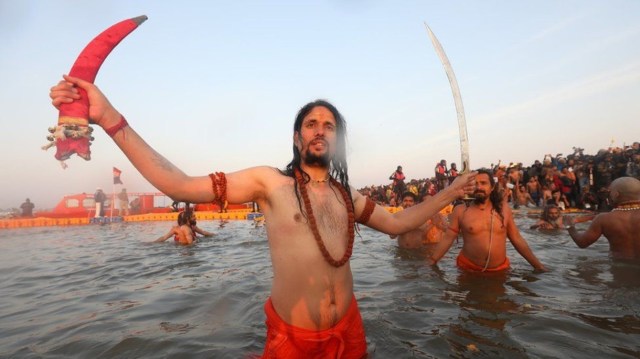

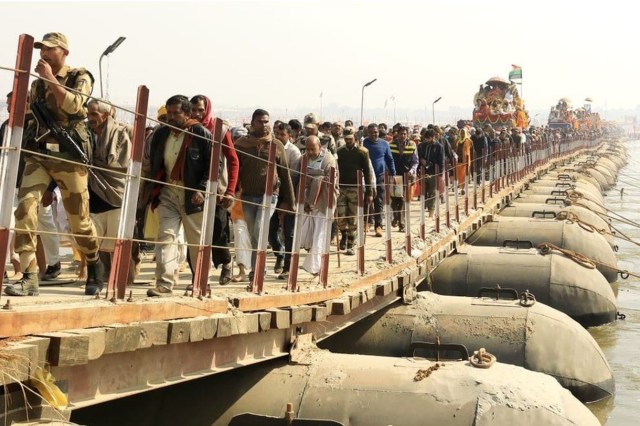
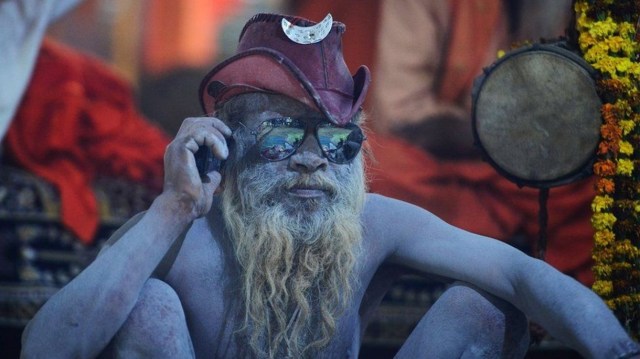
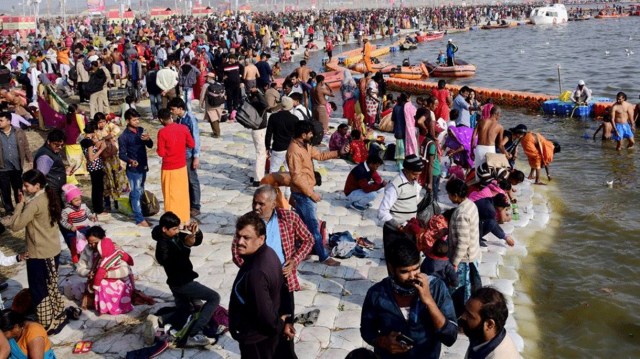

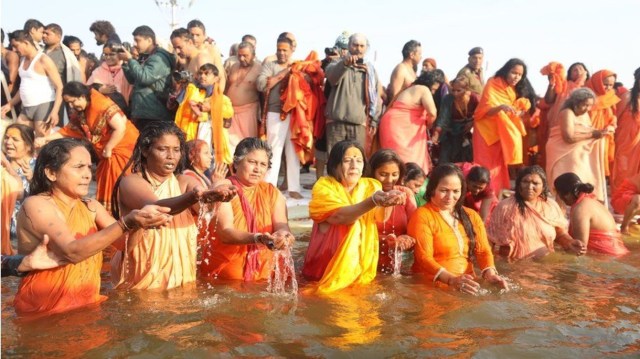
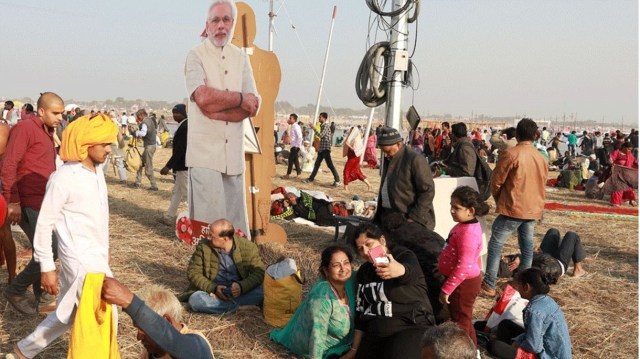
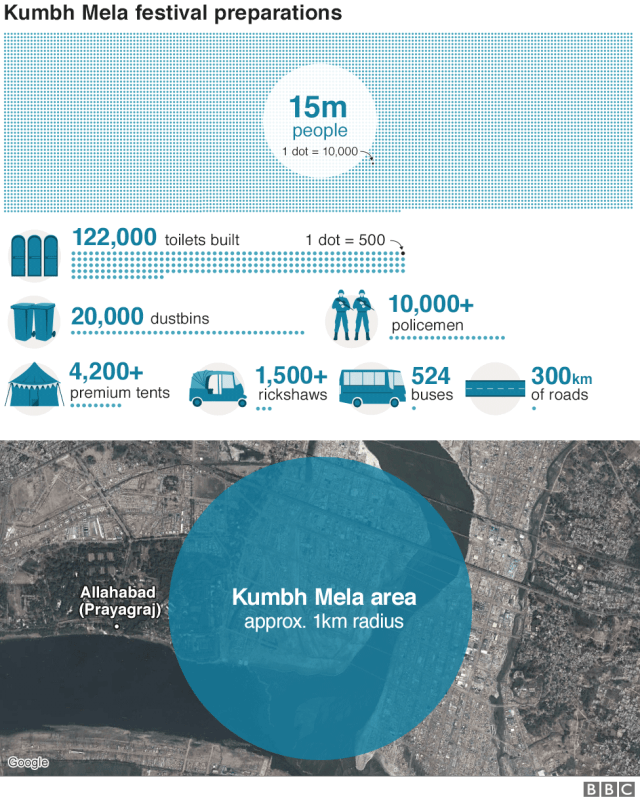



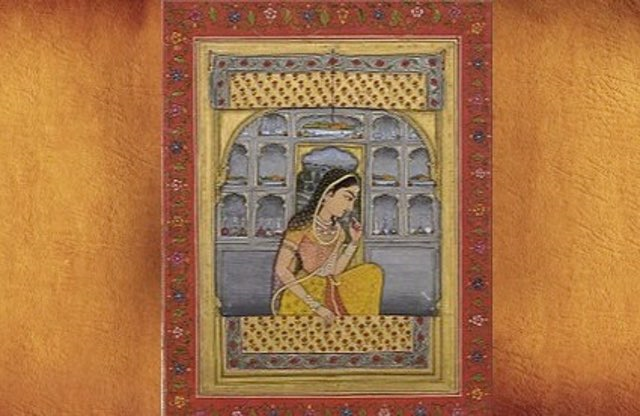







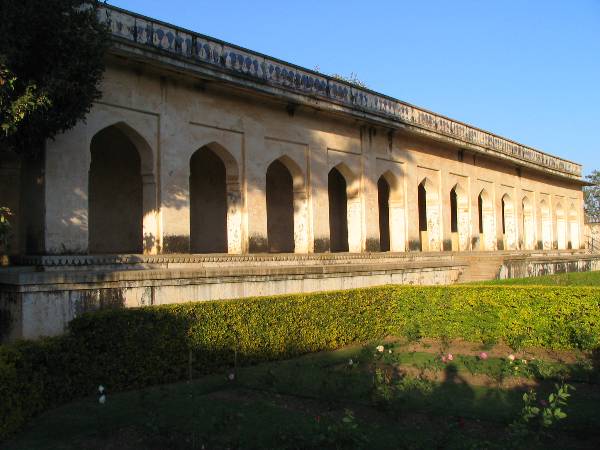
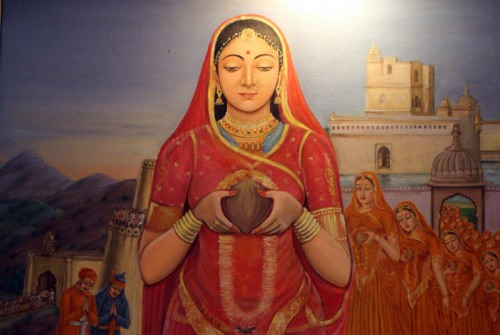



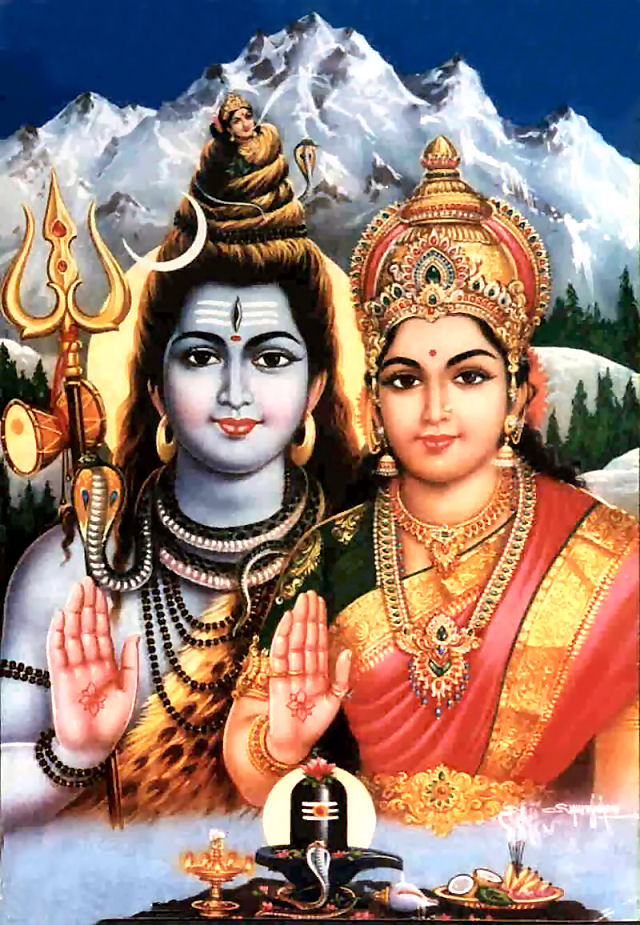

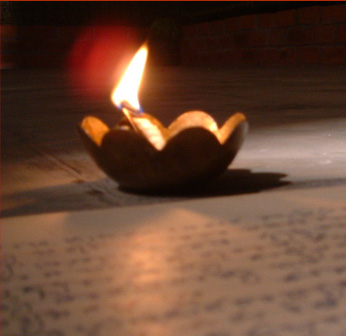
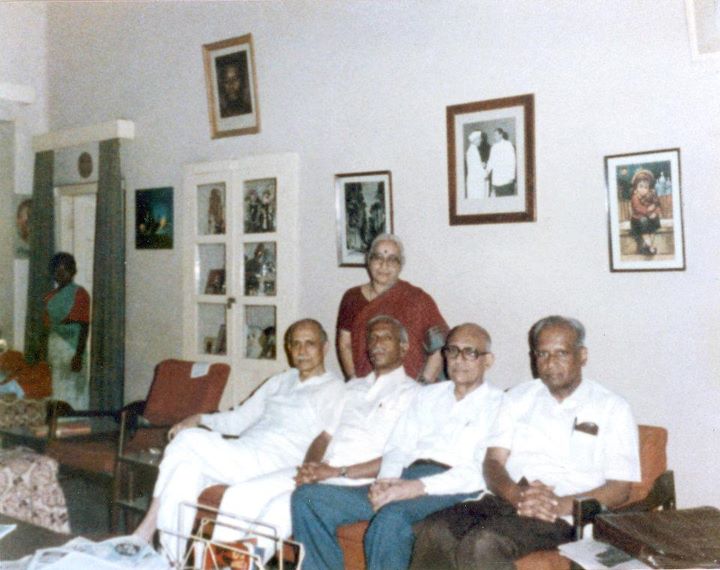
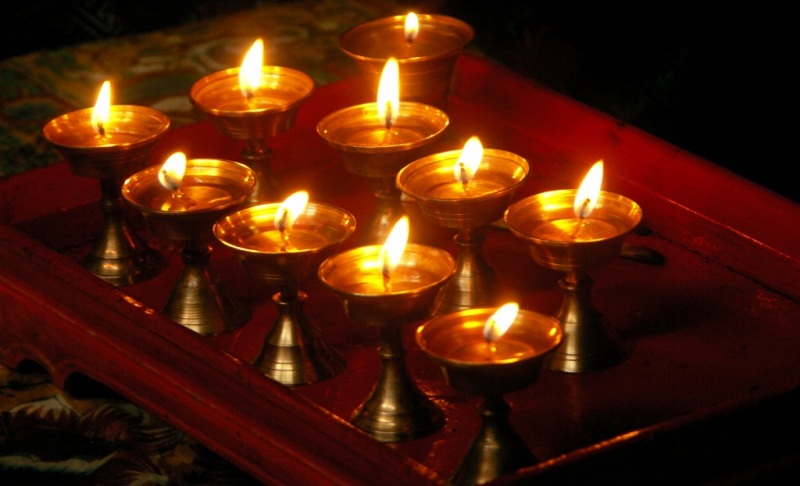


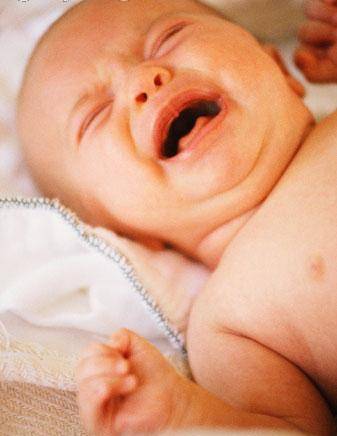
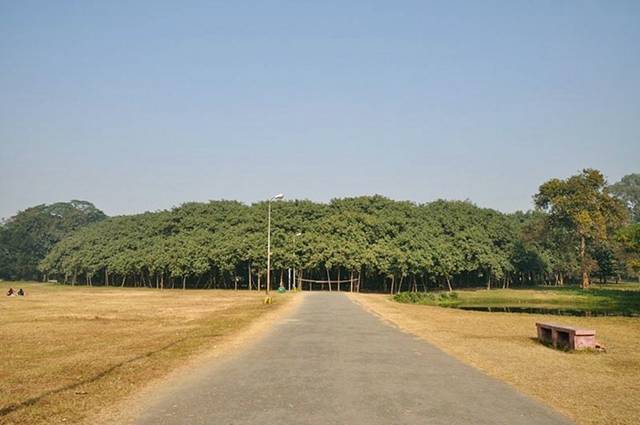
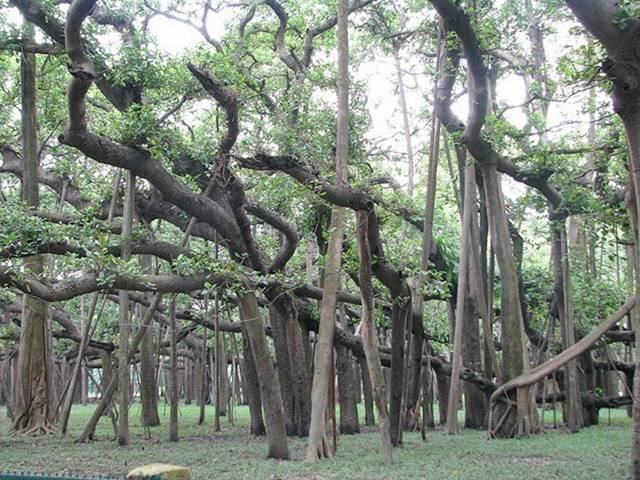

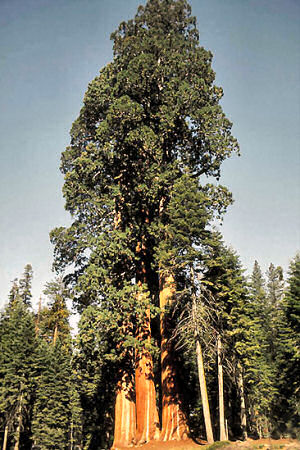
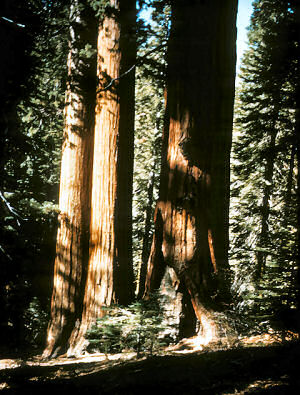
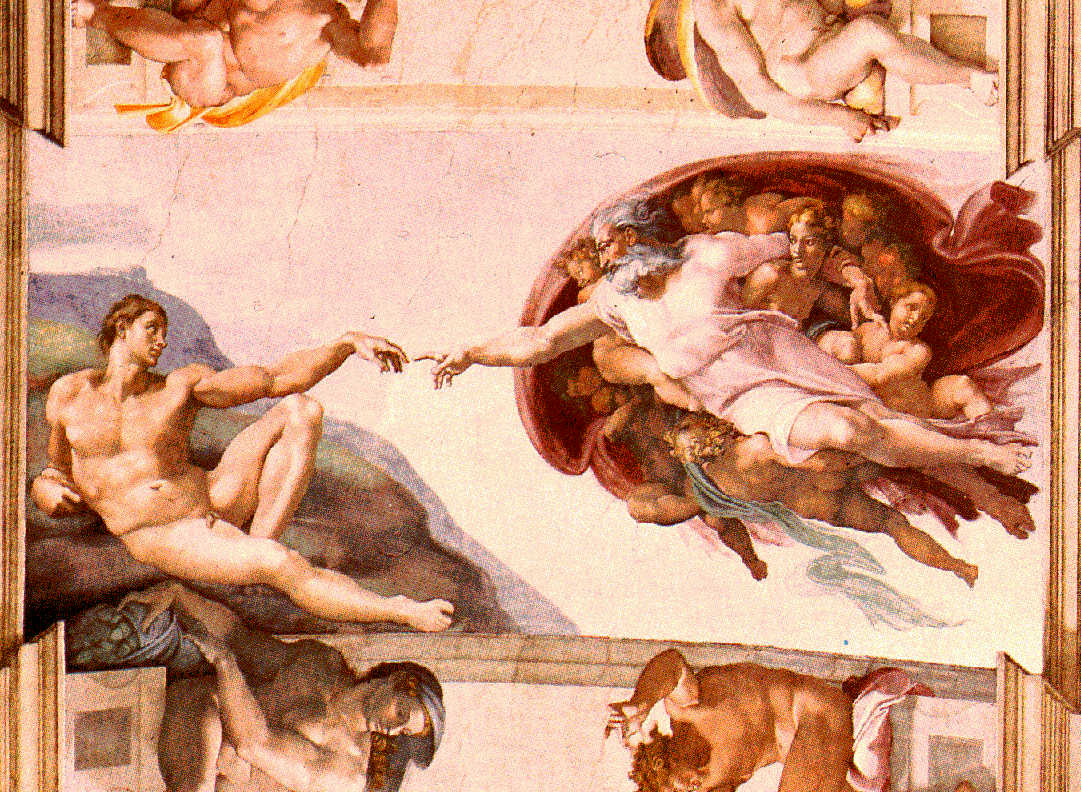
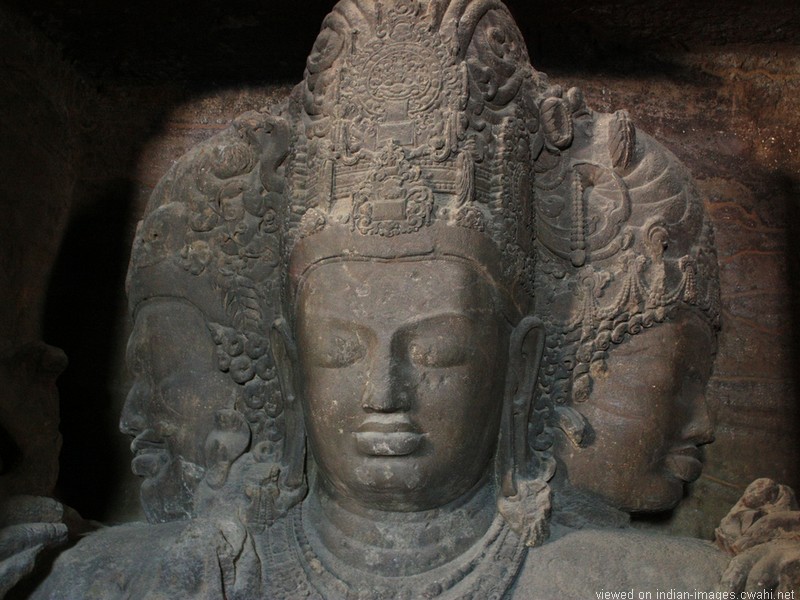


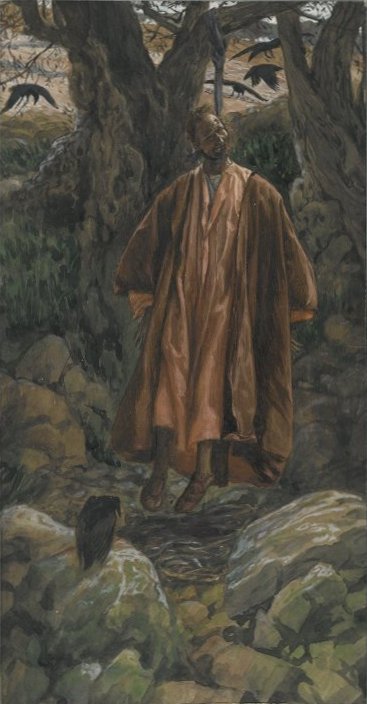


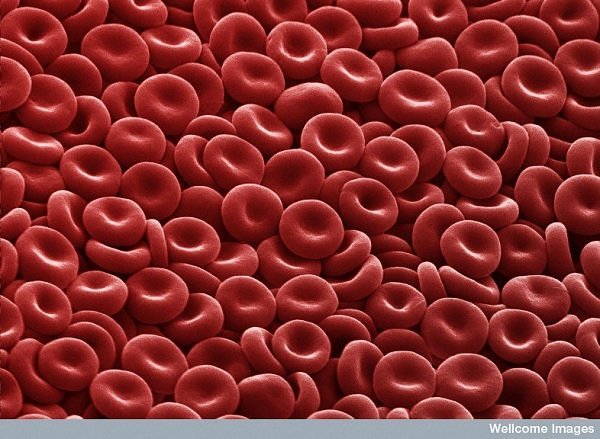


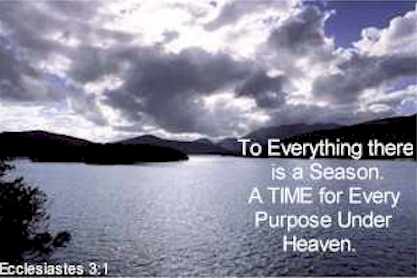


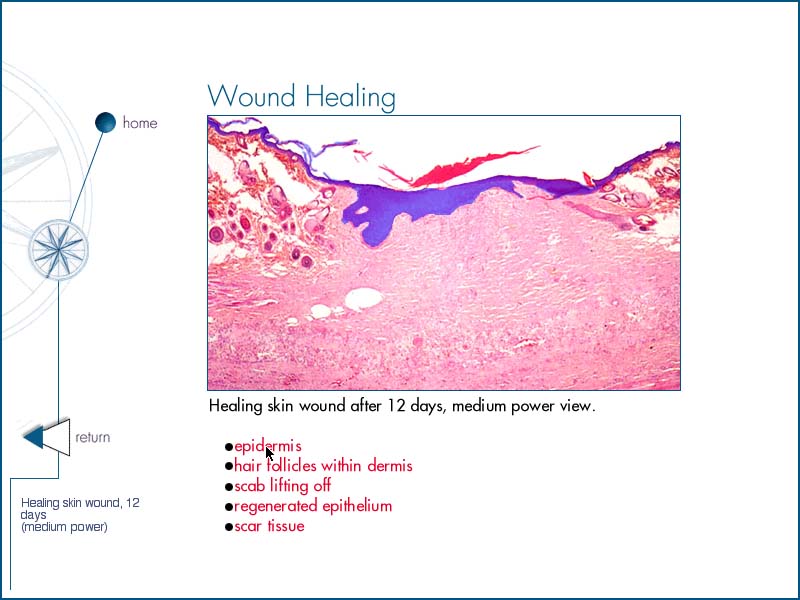




 Whole Dude - Whole Concept