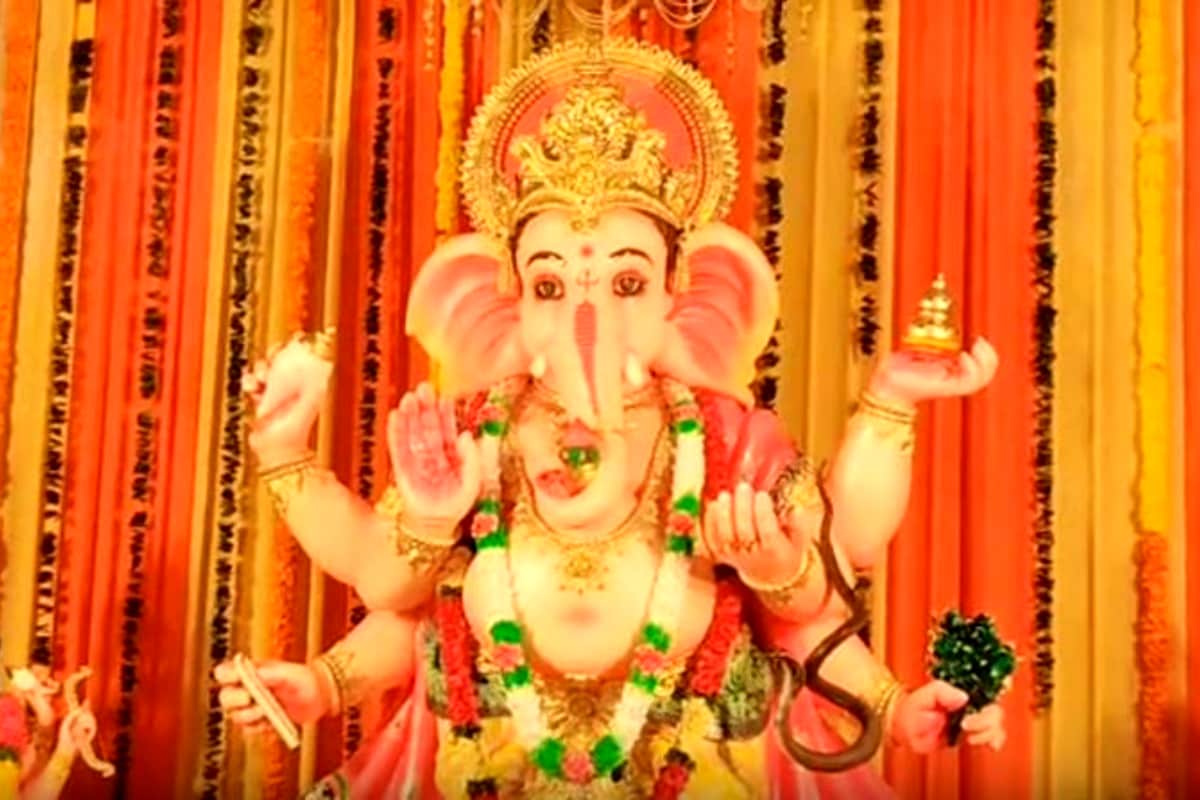
The celebration of Ganesh Chaturthi on Monday, September 14, 2026
Bharat Darshan: Monday, September 14, 2026, The celebration of Ganesh Chaturthi. A Prayer to Lord Ganesha for Success through Obedience and Humility.
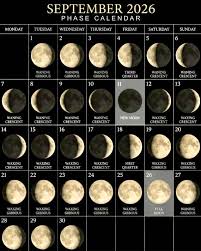
The annual festival of Ganesha Chaturthi marks the birth of Lord Ganesha, the son of Lord Shiva and Goddess Parvati. It involves 10 days of celebration and takes place in the Bhadrapada month (August-September), Shukla Paksha (the Waxing Phase of Moon), the fourth day or Chaturthi as per the Hindu calendar.
Bharat Darshan: Monday, September 14, 2026, The celebration of Ganesh Chaturthi. A Prayer to Lord Ganesha for Success through Obedience and Humility.Bharat Darshan. Monday, September 14, 2026. The celebration of Ganesh Chaturthi on the fourth day of the Waxing Phase (Shukla Paksha) of Moon of the Month Bhadrapada (August-September)
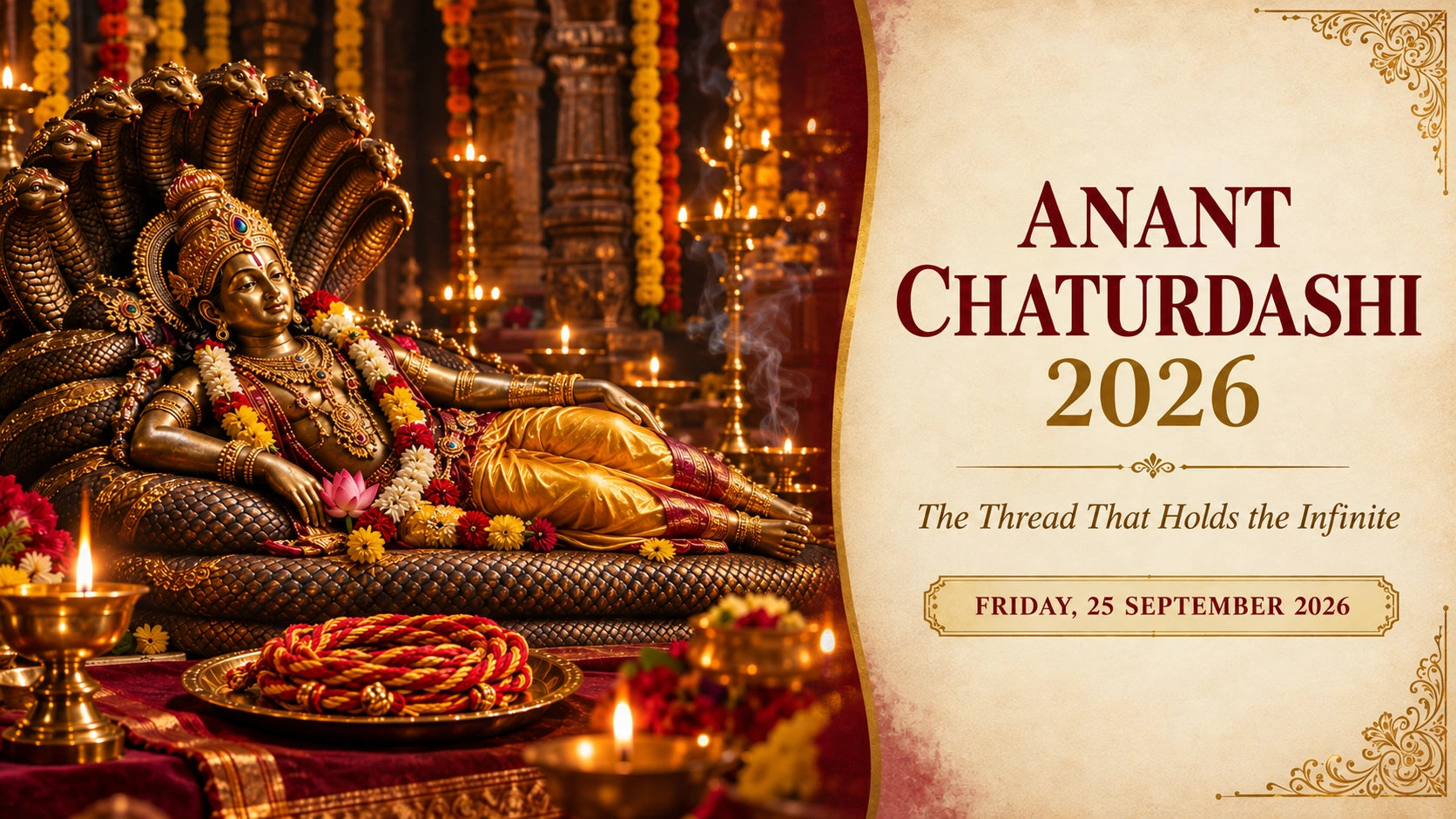
The auspicious festival begins on Monday, September 14. The festival inaugurates with people bringing or making clay idols (murtis) of the Lord, and concludes on the day of Anant Chaturdashi (Friday, September 25), when the idol is submerged in the nearest body of water, called Ganesha visarjan.
Bharat Darshan. Monday, September 14, 2026. The celebration of Ganesh Chaturthi on the fourth day of the Waxing Phase (Shukla Paksha) of Moon of the Month Bhadrapada (August-September)LORD GANESHA – THE MENTOR FOR LEARNING – THE ART OF LEARNING WITH HUMILITY, PATIENCE, AND PERSEVERANCE.
A Prayer to Lord Ganesha for Success through Obedience and Humility
Whole Humility: The celebration of Ganesh Chaturthi. A Prayer to Lord Ganesha for Success through Obedience and Humility.Bharat Darshan. Monday, September 14, 2026. The celebration of Ganesh Chaturthi on the fourth day of the Waxing Phase (Shukla Paksha) of Moon of the Month Bhadrapada (August-September)
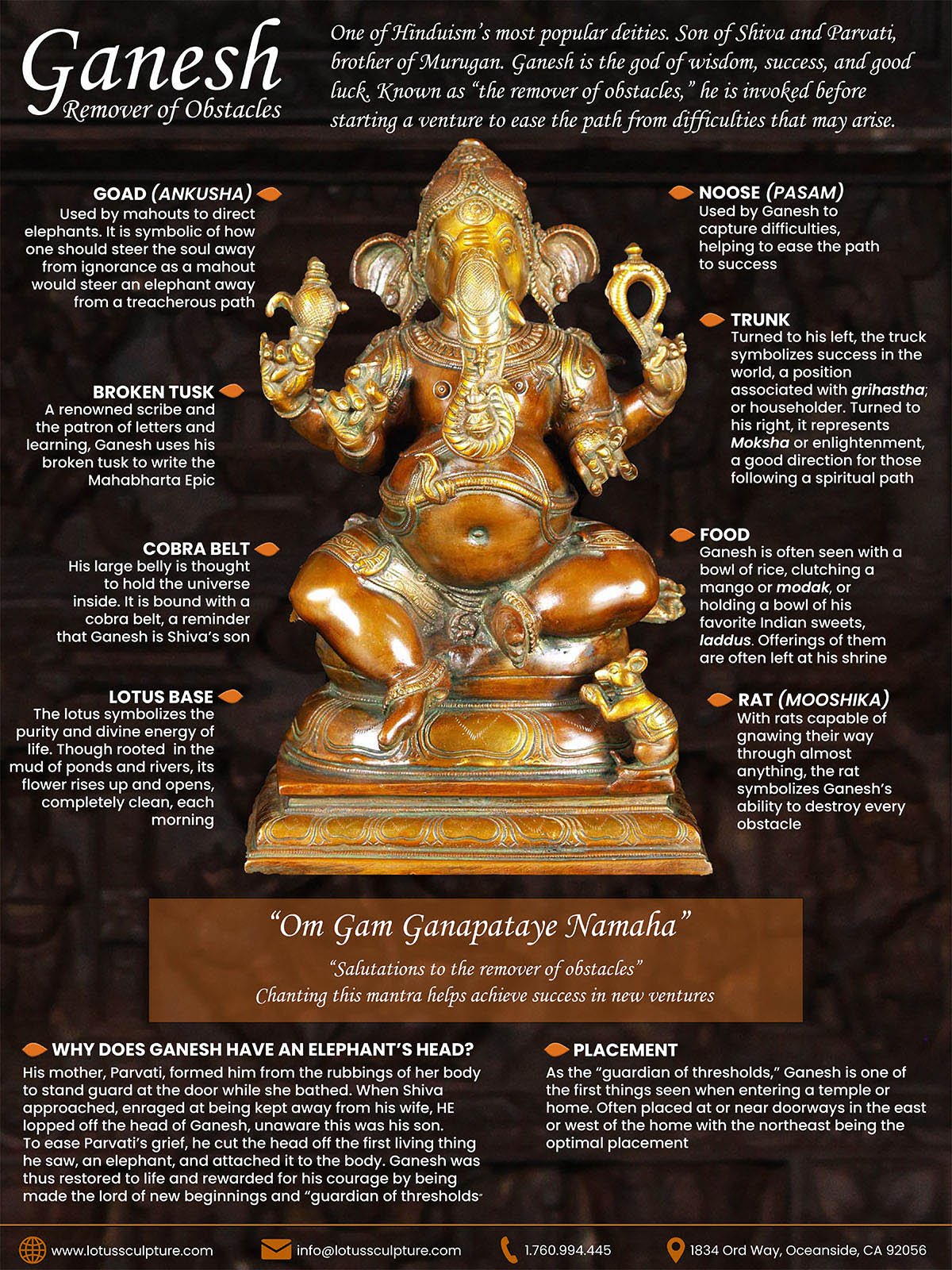
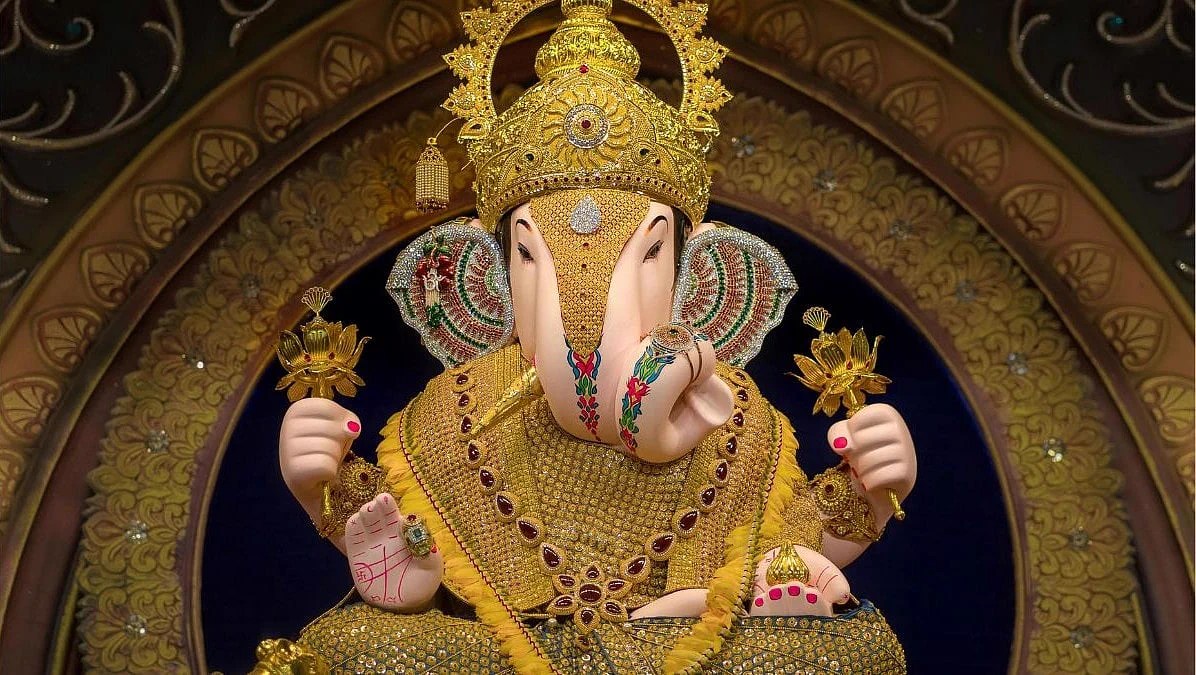
Lord Ganesha is one of the most worshiped deities among Indian Hindus. Also known as Vinayaka or Ganapati, the elephant God is revered as the God of beginnings and the remover of obstacles.
Whole Dude – Whole Humility: A Prayer to Lord Ganesha for Success with Humility.
Indian Cultural Traditions offer tools for Success in all dimensions of Life including health, education, employment, social status and social relationships. The formula for success is simple; perform all tasks making an estimate to take care of negative consequences or outcomes, and plan for roadblocks or obstacles in the planning stage of executing any action. Indians initiate actions seeking Blessings of Lord Ganesha for their desire for Success in Life should not be directed by intellectual pride or arrogant use of physical or material power.
Bharat Darshan. Monday, September 14, 2026. The celebration of Ganesh Chaturthi on the fourth day of the Waxing Phase (Shukla Paksha) of Moon of the Month Bhadrapada (August-September)Bharat Darshan. Monday, September 14, 2026. The celebration of Ganesh Chaturthi on the fourth day of the Waxing Phase (Shukla Paksha) of Moon of the Month Bhadrapada (August-September)Bharat Darshan. Monday, September 14, 2026. The celebration of Ganesh Chaturthi on the fourth day of the Waxing Phase (Shukla Paksha) of Moon of the Month Bhadrapada (August-September)Bharat Darshan. Monday, September 14, 2026. The celebration of Ganesh Chaturthi on the fourth day of the Waxing Phase (Shukla Paksha) of Moon of the Month Bhadrapada (August-September)Bharat Darshan. Monday, September 14, 2026. The celebration of Ganesh Chaturthi on the fourth day of the Waxing Phase (Shukla Paksha) of Moon of the Month Bhadrapada (August-September)Bharat Darshan. Monday, September 14, 2026. The celebration of Ganesh Chaturthi on the fourth day of the Waxing Phase (Shukla Paksha) of Moon of the Month Bhadrapada (August-September)
Supreme Phenomenon of Human Birth – The Celebration of Lord Krishna
Supreme Phenomenon of Human Birth – The Celebration of Lord KrishnaSupreme Phenomenon of Human Birth – The Celebration of Lord Krishna. The Power of Creation is directly experienced by holding your own baby.
A child is a ‘Supreme Phenomenon’; not even the father, nor the mother can surpass it. There is nothing more sublime than the living touch of your own baby. You can experience the ‘Power of Creation’ by simply holding your baby.
Supreme Phenomenon:
Supreme Phenomenon of Human Birth – The Celebration of Lord Krishna. SPIRITUALITY SCIENCE – THE KNOWER-THE KNOWING-SELF: MAN, THE ENTIRE HUMAN ORGANISM IS DERIVED FROM A SINGLE FERTILIZED EGG CELL . HOW IS THE IDENTITY AND INDIVIDUALITY IS ESTABLISHED AND IS KNOWN IN THIS COMPLEX MULTICELLULAR ORGANISM?
By R. Suryanarayana Murthy
I saw thee dragging thy feet up the stairs
Making me watch every movement of thine
Step by step, you steadied up,
Thy broad smile hiding all thy effort
What angel pushes thee up no eye can see.
I saw thee stretching, hugging the mother earth,
Rising and falling while crawling all the way;
All to thyself, no pitfall to frighten thee,
Nor danger lurking can stop thee going
And when the journey was finished there is that glow
“Who can beat me in the race?” thy challenge goes out
Thou art the victor in all such deeds.
Thou wert the star attraction of all ages,
Napoleon acclaiming thee as the greatest of all creation;
Saintly Gandhi hugged thee to press his lips on thine
“Chacha” Nehru crawled by thy side forgetting his power and pomp;
Can the royal throne or sceptred sway provide anything equal to thee?
Thou hast remained through ages humanity’s main hope in a naughty world.
Why did the Buddha see in thy birth unredeemed sorrow and suffering?
Why was it that Jesus saw in thy advent the gnawing pain of unsullied sin?
Or why was it the great Sankara said that thy emergence was enveloped in ‘Maya’ or illusion?
Thou did confound every philosopher and kept to thyself the mystery surrounding thy species
Thou an enigma and a riddle proclaiming the unanswerable divine will.
Still the world all over rejoices in thee and gives thee royal welcome
Without thee life is a desert with no flower to bloom,
Without thee the sweetest of poetry finds no place in heart
Thou art the greatest messenger of love
And give thy message to everybody, “Love thy neighbour as thou lovest thy child,
And see in every person a latent child
And discard all hatred that corrodes the soul.”
What more sublime is there than thy living touch
What greater joy is there than thy winning smile?
For me thou art a Supreme Phenomenon
With none to surpass not even the father, nor the mother.
(This poem was published in Indian Express, Hyderabad (A.P.) Daily Edition dated November 09, 1986.)
Supreme Phenomenon of Human Birth – The Celebration of Lord Krishna
The celebration of Guru Purnima and Vyasa Purnima on Wednesday, July 29, 2026.
The Sanskrit word ‘guru’ translates to ‘dispeller of darkness’. Guru Purnima, marks the appearance day of Srila Vyasadeva. Guru Purnima 2026 is celebrated on Wednesday, July 29, 2026. This sacred festival honors spiritual and academic teachers, mentors, and the birth anniversary of Sage Vyasa. The Purnima Tithi began at 6:18 PM on July 28 and ends at 8:05 PM on July 29, 2026
The celebration of Guru Purnima and Vyasa Purnima on Wednesday, July 29, 2026.
Guru Purnima falls every year on the day of Ashadha Shukla Purnima. It is also known as Vyasa Purnima because Veda Vyasa, the sage who wrote the Mahabharata and assembled the Vedas, celebrates his birthday on this day.
The celebration of Guru Purnima and Vyasa Purnima on Wednesday, July 29, 2026
Bharat Darshan – Bhagavan Ved Vyas – Author of Geetopanishad
The celebration of Guru Purnima and Vyasa Purnima on Wednesday, July 29, 2026
In the Indian tradition, Ved Vyas is the legendary author of epic poem Mahabharat, Bhagavata Purana, and several other Puranas , son of Sage Parashara, and Satyavati. He is father of Sage Shuka, King Pandu, and Minister Vidura. He is great-grandson of Maharishi Vasishta, and grandson of Sage Shakti. Ved Vyas is a historical person, a contemporary of another legendary person known as Lord Krishna whom Indians worship. As per Indian tradition, Lord Krishna belongs to a time period or “Yug” called ‘Dwapar Yug.” Apart from being a great poet, Ved Vyas is recognized as a great teacher, a spiritual guide, and a divine personality with exceptional creative writing abilities. He is often recognized as author of ‘Geetopanishad’ for the divine song, ‘Bhagavad Gita’ distills the essence of Vedic Wisdom and presents it as useful guide to live daily life experiencing peace, harmony, and tranquility.
The celebration of Guru Purnima and Vyasa Purnima on Wednesday, July 29, 2026
In India, there was a suggestion or speculation about some unknown author, who may have inserted into epic poem Mahabharat, his/her poetical work (700 verses) that most Indians recognize as “Bhagavad Gita” and may have given credit to Ved Vyas, original author of Mahabharat. It raises issues about identity of author and the methods that people use to know the identity of any given person. In both Biology, and Medical Science, identification of individuals or individual entities is very important. Forensic Medicine deals with the identification of unknown dead bodies. In common practice, man is recognized by his occupation or actions. A poet is identified by his/her poetical composition, the literary contents of work published.
The celebration of Guru Purnima and Vyasa Purnima on Thursday, July 29, 2026
I took time to study the concepts shared in Bhagavad Gita, and Bhagavata Purana and I could easily identify the similarities of views. In Bhagavad Gita, Lord Sri Krishna spoke to Prince Arjuna. In Bhagavata Purana, in a story popularly known as ‘Prahalad Charitra’ Demon King Hiranyakashipu spoke to grieving family members following death of his brother. Both of them use the same words and share the same Vedic knowledge about life and death.
The celebration of Guru Purnima and Vyasa Purnima on Wednesday, July 29, 2026
The poet who composed Bhagavad Gita knows concepts shared by Vedas and Upanishads. For example, we can compare ‘Parable of the Chariot’ or “Ratha Kalpana” of Katha Upanishad, Part III, verses 3 to 11 with Bhagavad Gita, Chapter III, verses 39 to 43. The author of Bhagavad Gita reconstructed Ratha Kalpana and presented his own version and there is subtle difference between those two concepts. I recognize Veda Vyas as author of Bhagavad Gita through literary analysis and by comparing views and concepts that appear in different works in different contexts. We can easily know the identity of the author by examining his work.
Comparison of Amrita Bindu Upanishad (Krishna Yajur Veda) and Bhagavad Gita:
“Eka eva hi bhutatma bhute bhute vyavasthitah ekadha bahudha caiva drsyate jala Chandravat.” (Verse # 12)
Being the One, the universal Soul is present in all beings, present in each individual living entity, and this One entity is viewed as several, different entities, just like reflection of (same) Moon seen in several pots of water.
The celebration of Guru Purnima and Vyasa Purnima on Wednesday, July 29, 2026
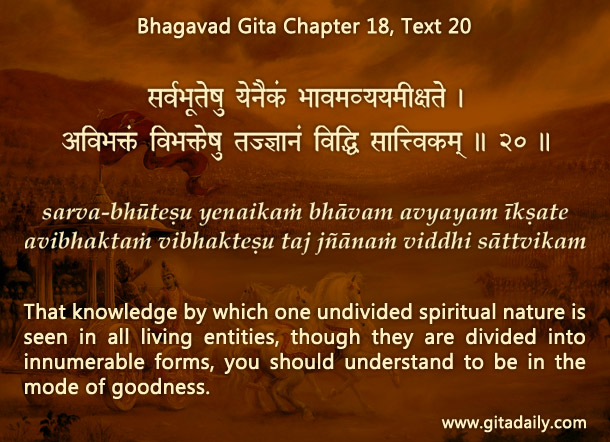
The knowledge of one who sees in every living entity, though divided into innumerable forms, one undivided spiritual nature, that knowledge is to be understood as being in the mode of Goodness. Just like the verse from Amrita Bindu Upanishad, this verse speaks about one single reality pervading all existence.
Comparison of Katha Upanishad (Ratha Kalpana) and Bhagavad Gita:
The celebration of Guru Purnima and Vyasa Purnima on Wednesday, July 29, 2026. Parable of Chariot, Ratha Kalpana of Katha Upanishad. The relationship between body, organs of sense perception, mind, seat of intellect or discernment and soul.
“atmanam rathinam viddhi, sariram ratham eva tu, buddhim tu Saradhim viddhi manah pragraham eva ca; indriyani hayan ahur visayams tesu gocaran atmendriya-mano-yuktam bhoktety ahur manisinah.” (Katha Upanishad, Part III, Sadhana, Verses 3 &4)
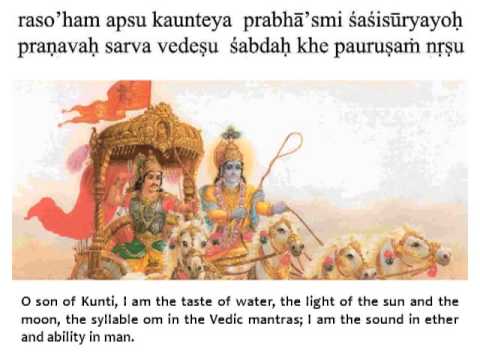
Know the Atman (Self) as the Master or Lord of the chariot, and the body as the chariot, know also the intellect to be the driver and mind as reins. The senses are called the horses, the sense objects are the roads; when the Atman is united with body, senses and mind, then the Wise call Him the Enjoyer.
The celebration of Guru Purnima and Vyasa Purnima on Wednesday, July 29, 2026. Body, Mind, and Soul are connected to each other, with Soul having a central controlling power over some aspects of functions of other parts or units to promote unity and harmony.
These describe hierarchy, various levels of functional control in a complex system that has different parts like body, organs of sense perception, mind, intellect, and a Master who enjoys because of functional Unity and Harmony of organizational units. In a chariot driven by horses, reins are used as a means of guiding, controlling, checking, or restraining horses. The driver uses reins to control horses to slow them down or stop or to allow them to run at full speed without restraint if required.
The celebration of Guru Purnima and Vyasa Purnima on Wednesday, July 29, 2026. The problem called Desire. There are Six kinds of Desires; 1. Kama (Lust), 2. Krodha (Anger), 3. LOBHA (Miserliness), 4. Moha (Infatuation), 5. Mada (Arrogance), and 6. Matsarya (Jealousy).
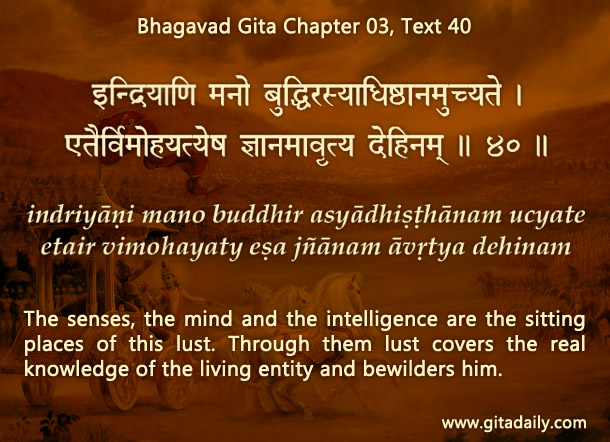
“Indriyani mano buddhir asyadhisthanam ucyate etair vimohayaty esa jnanam avrtya dehinam.” (Bhagavad Gita, Chapter III, Verse 40)
The celebration of Guru Purnima and Vyasa Purnima on Wednesday, July 29, 2026. The problem called Desire. There are Six kinds of Desires; 1. Kama (Lust), 2. Krodha (Anger), 3. LOBHA (Miserliness), 4. Moha (Infatuation), 5. Mada (Arrogance), and 6. Matsarya (Jealousy).
It is declared that the senses, the mind, and the intelligence are the stronghold of this sensual desire (‘Kama’), covering one’s discrimination this enemy called sensual desire deludes the living entities.
The celebration of Guru Purnima and Vyasa Purnima on Wednesday, July 29, 2026. Body, Mind, and Soul are connected to each other, with Soul having a central controlling power over some aspects of functions of other parts or units to promote unity and harmony. Prince Arjuna is the Master (Soul), the Charioteer (Lord Krishna) symbolizes Buddhi (Intellect), the Reins symbolize Mind and Horses symbolize the Sense Organs, the Chariot symbolizes the human Body, and the Road represents the Pursuit to reach goal.
“tasmat tvam indriyany adau niyama bharatarsabha papmanam prajahi hy enam jnana-vijnana nasanam.”(Bhagavad Gita, Chapter III, Verse 41)
The celebration of Guru Purnima and Vyasa Purnima on Wednesday, July 29, 2026
Therefore O’ Arjuna, first you must bring the senses under control and directly destroy this sensual desire(‘Kama’), which is embodiment of sin and the destroyer of knowledge and self-realization.
The celebration of Guru Purnima and Vyasa Purnima on Wednesday, July 29, 2026. To fight with an external enemy is easy. Man has to be mindful of an internal enemy called Desire which has Six Dimensions.
“indriyani parany ahur indriyebhyah param manah, manasas tu para buddhir yo buddheh paratas tu sah.”(Bhagavad Gita, Chapter III, Verse#42)
The celebration of Guru Purnima and Vyasa Purnima on Wednesday, July 29, 2026. To fight with an external enemy is easy. Man has to be mindful of an internal enemy called Desire which has Six Dimensions.
It is declared, the senses are superior (than insensible matter) but more than the senses, the mind is superior, but more than the mind the intelligence is superior, and more than the intelligence that which is superior is the individual consciousness (Atma).
The celebration of Guru Purnima and Vyasa Purnima on Wednesday, July 29, 2026. To fight with an external enemy is easy. Man has to be mindful of an internal enemy called Desire which has Six Dimensions.
The celebration of Guru Purnima and Vyasa Purnima on Wednesday, July 29, 2026. To fight with an external enemy is easy. Man has to be mindful of an internal enemy called Desire which has Six Dimensions.
Thus knowing the individual consciousness (Atman) to be superior to the intelligence, O’ mighty armed one, steady the mind by self-realization and conquer this insatiable enemy which presents in the form of sensual desire (Kama).
The celebration of Guru Purnima and Vyasa Purnima on Wednesday, July 29, 2026. To fight with an external enemy is easy. Man has to be mindful of an internal enemy called Desire which has Six Dimensions.
Bhagavad Gita distills wisdom of Upanishads and conveys knowledge that is of practical value and can be used as daily living guide. While Bhagavad Gita avoids analogy of chariot, the author uses the same concept to guide readers to learn The Art of Self-Discipline, a training that develops self-restraint, self-control to shape character and personal conduct that promote orderliness and efficiency in any given field of human activity or work performance.
If I have the intellectual capacity to compose 700 poems and insert them into work done by another person, I will not stop writing. I will be driven by the same creative zeal to compose more poems and keep publishing my works using my name or another name. Bhagavad Gita exposes identity of a literary genius at work, and very few people have such creative writing ability. If any of my readers have doubts about identity of Ved Vyas; you may have to support your view citing literary works of comparable merit and make claim that a different author made insertion of his/her work giving credit to Ved Vyas.
The celebration of Guru Purnima and Vyasa Purnima on Wednesday, July 29, 2026. To fight with an external enemy is easy. Man has to be mindful of an internal enemy called Desire which has Six Dimensions. Ved Vyas is a historical person. Indian tradition names Time Periods as Yug and Ved Vyas belongs to Dwapara Yuga.
Bhagavad Gita refers to Kurukshetra battlefield as “Dharma Kshetra” and the concern of its author is about values, the battle between good and evil. Secondly, the conversation on the battlefield begins with Prince Duryodhana speaking to his guru Dronacharya. Here, the author is carefully suggesting that battle is not decided by relative strengths of parties engaged in war. Prince Duryodhana made an estimate of strength of Pandava Camp and was impressed by strength of Kaurava Camp. But, the author’s concern is about ‘Dharma’ or right actions and the ultimate success of right over might. Sanjaya was a disciple of author Veda Vyas and the author used his poetic imagination and freedom to confer a special ability to his student to know his thoughts as reflected in battlefield dialogue.
Hymns in praise of Maharishi Ved Vyas:
The celebration of Guru Purnima and Vyasa Purnima on Wednesday, July 29, 2026. To fight with an external enemy is easy. Man has to be mindful of an internal enemy called Desire which has Six Dimensions. Ved Vyas is a Divine Being for he shared Divine Knowledge that brings Joy, Bliss, Happiness, and Ananda.
The celebration of Guru Purnima and Vyasa Purnima on Wednesday, July 29, 2026. To fight with an external enemy is easy. Man has to be mindful of an internal enemy called Desire which has Six Dimensions. Ved Vyas is a Divine Being for he shared Divine Knowledge that brings Joy, Bliss, Happiness, and Ananda.The celebration of Guru Purnima and Vyasa Purnima on Wednesday, July 29, 2026. To fight with an external enemy is easy. Man has to be mindful of an internal enemy called Desire which has Six Dimensions. Ved Vyas is a Divine Being for he shared Divine Knowledge that brings Joy, Bliss, Happiness, and Ananda.
The term ‘Yoga’ is related to ‘Yug’ which pertains to time, and Yoking which means pairing, joining, coming together, harnessed to work together, bonding, and union.Bharat Darshan describes the concept of Whole Yoga.
Yoga explores the principle of man’s Unity with God or Supreme Being. Indian tradition suggests that God is present in entire creation and yet God remains detached, unattached, aloof, distant, or separate from creation. Human Existence is evidence for Unity of man with Divine Principle and yet Human Existence is burdensome, worrisome, and troublesome as God chooses to remain separate from entire creation.
Bharat Drashan describes the concept of Whole Yoga
International Yoga Day – The Celebration of Man – Woman – God Unity called Humanity
The term ‘Yoga’ is related to ‘Yug’ which pertains to time, and Yoking which means pairing, joining, coming together, harnessed to work together, bonding, and union.
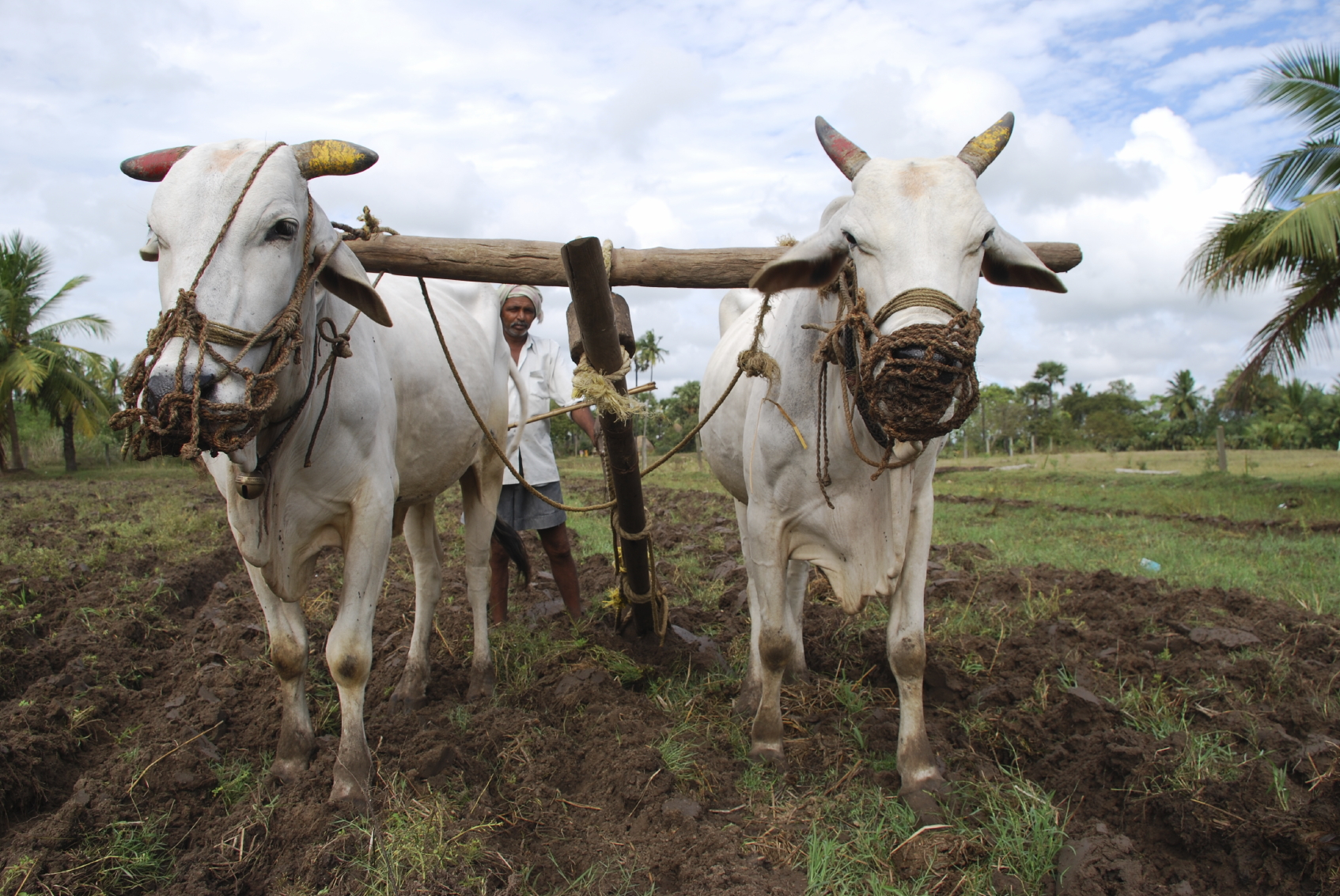
International Yoga Day – The Celebration of Man – Woman – God Unity called Humanity The term ‘Yoga’ is related to ‘Yug’ which pertains to time, and Yoking which means pairing, joining, coming together, harnessed to work together, bonding, and union. The harnessing of farm animals makes the burden of Yoke easy.
The term ‘Yoking’ is also attached to Holy Union of Man and Woman in Matrimony, a coming together if mankind has to survive.
International Yoga Day – Celebration of Man-Woman-God Unity called Humanity. Yoga relates to Yoking, a term used to describe the Yoke of Marriage.
International Yoga Day is observed on June 21 and it emphasizes importance of seeking harmony, and physical well-being through actions that bring body, mind, and soul to work together.
International Yoga Day – The Celebration of Man – Woman – God Unity called Humanity The term ‘Yoga’ is related to ‘Yug’ which pertains to time, and Yoking which means pairing, joining, coming together, harnessed to work together, bonding, and union. The harnessing of farm animals makes the burden of Yoke easy.International Yoga Day – The Celebration of Man – Woman – God Unity called Humanity The term ‘Yoga’ is related to ‘Yug’ which pertains to time, and Yoking which means pairing, joining, coming together, harnessed to work together, bonding, and union. The harnessing of farm animals makes the burden of Yoke easy. The Declaration of International Day of Yoga shows the popularity of the physical practices associated with the Theory of Yoga.
The UN General Assembly declared June 21 as International Yoga Day. Indian Prime Minister Narendra Modi during his maiden address to the UN General Assembly on September 27, 2014, asked the world leaders to adopt June 21 as Yoga Day. He stated that Yoga provides a holistic approach to health and well-being; a holistic way of life that brings harmony between man and nature and promotes simpler lifestyles. Prime Minister Modi has expressed the hope that by changing our lifestyle and creating consciousness, Yoga can help us deal with Climate Change.
International Yoga Day – The Celebration of Man – Woman – God Unity called Humanity The term ‘Yoga’ is related to ‘Yug’ which pertains to time, and Yoking which means pairing, joining, coming together, harnessed to work together, bonding, and union. The harnessing of farm animals makes the burden of Yoke easy. The Declaration of International Day of Yoga shows the popularity of the physical practices associated with the Theory of Yoga. India’s Prime Minister Narendra Modi practices Yoga and finds it useful in his personal life and well-being.
The phenomenon called ‘Humanity’ is the evidence of Divine Providence sustaining Life on Earth as individual human beings arrive and depart experiencing Peace, Harmony, and Tranquility in their living condition.
What is Yoga?
What is Yoga? Yoga is often associated with spiritual practices such as Meditation, “Dhyan” (Internal Reflection and Mental Concentration), Bhakti or Devotion, and a system of postures that includes controlled breathing. In the Indian tradition, Lord Shiva is often depicted in images as a practitioner of Yoga
Yoga is a general term for spiritual practices, and spiritual discipline followed for centuries by devotees of both Hinduism, Jainism, and Buddhism to attain “Higher Consciousness,” liberation from ignorance, release from suffering, and Freedom from Rebirth. It is also one of the six orthodox systems of Indian Philosophy. Patanjali (2nd Century B.C.,) expounded the Theory and the Practice of Yoga called “Raja Yoga” (Royal Yoga). He stated Yoga Sutras or aphorisms and divided the practice of Yoga into eight stages.
The School of Indian Thought called Yoga was expounded by Patanjali who described the Yoga Sutras and the Eightfold Path to “Samadhi” or identification of Individual Consciousness with the Godhead.
Patanjali considered “Samadhi” as the highest stage of Yoga practice in which the Yogi, the practitioner of Yoga finds identification of the individual “Consciousness” with the Ultimate Godhead, or the Absolute Reality (often called Brahman). Hindu tradition recognizes three main types of Yoga; Jnana Yoga, the path of wisdom and discrimination, Bhakti Yoga, the path of Love and Devotion to a personal, or impersonal God, or both, and Karma Yoga, the path of selfless or unattached action. Hatha Yoga emphasizes physical control, holding body in systematized postures, and the practice of controlled breathing. In Jainism and Buddhism, the emphasis may involve withdrawing from the world, mental concentration without allowing the mind to get distracted by extraneous things. In Indian traditions, the highest meditative state is called “Nirvikalpa Samadhi,” content less trance that constitutes Liberation or “Nirvana.”
In Buddhism, Yoga is a tool to attain perfect wisdom, overcoming ignorance by emptying the contents of the mind that permits reaching the State of Pure Consciousness in which Man has no desires.
While Yoga may explain the highest aim or purpose in “Life” for most Hindus, Buddhists, and Jains, certain physical practices have found their acceptance in the West without any concern for the religious doctrine or the philosophical basis. Even in the Indian tradition, the practice called “Japa Yoga” which involves the repetition of certain sounds with mystic power or “Mantras” is concerned about providing relief to man while coping with “Stress”, the physical, and mental challenges posed by day-to-day existence in a world where threats to existence come from several known and unknown directions.
The Indian Tradition of Japa Yoga involves the repetition of certain sounds, words with mystic powers called Mantras. For example, the above Hare Krishna Maha Mantra is composed of Sixteen Words and the mere chanting of these Words may destroy the evil or polluting effects of the present Time Cycle called “Kali Yuga” which is associated or joined with the experience of Stress.
The word ‘Yoga’ is related to the Sanskrit word ‘Yuga’ which symbolizes union, or association of entities or events. It may be noted that the problem of human existence is always connected to the Time and the Place of man’s existence. In the Indian tradition, the events in one’s life are conditioned by the Cyclical Flow of Time, and the Time Cycles have designated names called “Yuga.” The term ‘Yoga’ is variously used in Indian tradition to describe the ‘Yoke’ which is often seen as a mark or symbol of bondage. ‘Yoke’ is commonly used all over the ancient world where the agricultural practices are similar.
What is Yoga? Yoga is related to the Sanskrit Word “Yuga” and it describes the nature of human condition which is influenced by the powerful effects of Time and the need for easing the burden of existence. This principle is often applied in the agricultural fields where the practice of Yoking involves bringing together a pair of Oxen to work together to reduce the burden of their work
Yoke (Hebrew. motah, an oxbow, a yoke, tsemedh, yoke of oxen; Greek. zeugos, a team and Zygos, yoke) in the literal sense, is a bar of wood so constructed as to unite two animals, usually oxen, enabling them to work in the fields, drawing loads and pulling the plow. For these two chief functions yoke was commonly used all over the ancient world.
What is Yoga? The connection between Yoga and Yoke must be properly interpreted. Yoking is about pairing, something that binds, unites, or connects, or joins together. Apart from a pair of animals harnessed together to perform physical tasks that impose a heavy burden (if the work is performed without the pairing); Yoking is about sharing the Burdens of Life. The Yoke of Matrimony helps the pair, the Man and the Woman who are united to share the burden of raising their own children.
The Yoke imposes a burden of its own and can be seen as a sign of bondage and servitude. At the same time, the Yoke provides some relief to the entities that are paired or joined together while they are subject to bondage and servitude for there is sharing of the burden. Man’s existence in the world imposes a burden for man has to constantly find an external source of energy to support his living functions. This burden of ‘Life’ is eased for man is paired with Providence, the term that describes God’s Compassion, Mercy, and Grace. Man is never alone in the toils of his ‘Life.’ I use the term “Spiritual” to describe the nature of a relationship, a partnership, a pairing, “Yoking”, an association, a connection, or bonding between two, or more living entities to find Peace, Harmony, and Tranquility in their living experience. For man’s existence is conditioned and is constantly threatened by both internal, and external challenges from known and unknown directions, man has to find comfort and solace by pairing with the Divine Providence.
Spirituality is about finding Peace, Harmony, and Tranquility in the Living, Human Condition challenged by burdens, worry, anxiety, hopelessness, and misery. The spiritual practice called Yoga will give Peace, Harmony, and Tranquility if Man is Yoked with the Son of Man for His Yoke is Easy and the Burden is Light.
If spirituality is about finding Peace, Harmony, and Tranquility in the living, human condition, the spiritual practice called ‘Yoga’ demands the “Yoking” of man with Son of Man. In The New Testament Book, The Gospel According to Saint Matthew, Chapter 11, verses 28 to 30 describe the ‘Yoga’ prescribed by Jesus Christ: “Come to me, all you who are weary and burdened, and I will give you rest. Take my yoke upon you and learn from me, for I am gentle and humble in heart, and you will find rest for your souls. For my yoke is easy and my burden is light.”
Matthew, Chapter 11, verses 28 to 30 describe the ‘Yoga’ prescribed by Jesus Christ: “Come to me, all you who are weary and burdened, and I will give you rest. Take my yoke upon you and learn from me, for I am gentle and humble in heart, and you will find rest for your souls. For my yoke is easy and my burden is light.”
If spirituality is about finding Peace, Harmony, and Tranquility in the living, human condition, the spiritual practice called ‘Yoga’ demands the “YOKING” of man with “The Good Shepherd.” In The New Testament Book of Bible, The Gospel According to Saint Matthew, Chapter 11, verses 28 to 30 describe the ‘YOGA’ prescribed by Jesus Christ: “Come to me, all you who are weary and burdened, and I will give you rest. Take my yoke upon you and learn from me, for I am gentle and humble in heart, and you will find rest for your souls. For my yoke is easy and my burden is light.”
Yoga explores the principle of man’s Unity with God or Supreme Being. Indian tradition suggests that God is present in entire creation and yet God remains detached, unattached, aloof, distant, or separate from creation. Human Existence is evidence for Unity of man with Divine Principle and yet Human Existence is burdensome, worrisome, and troublesome as God chooses to remain separate from entire creation.
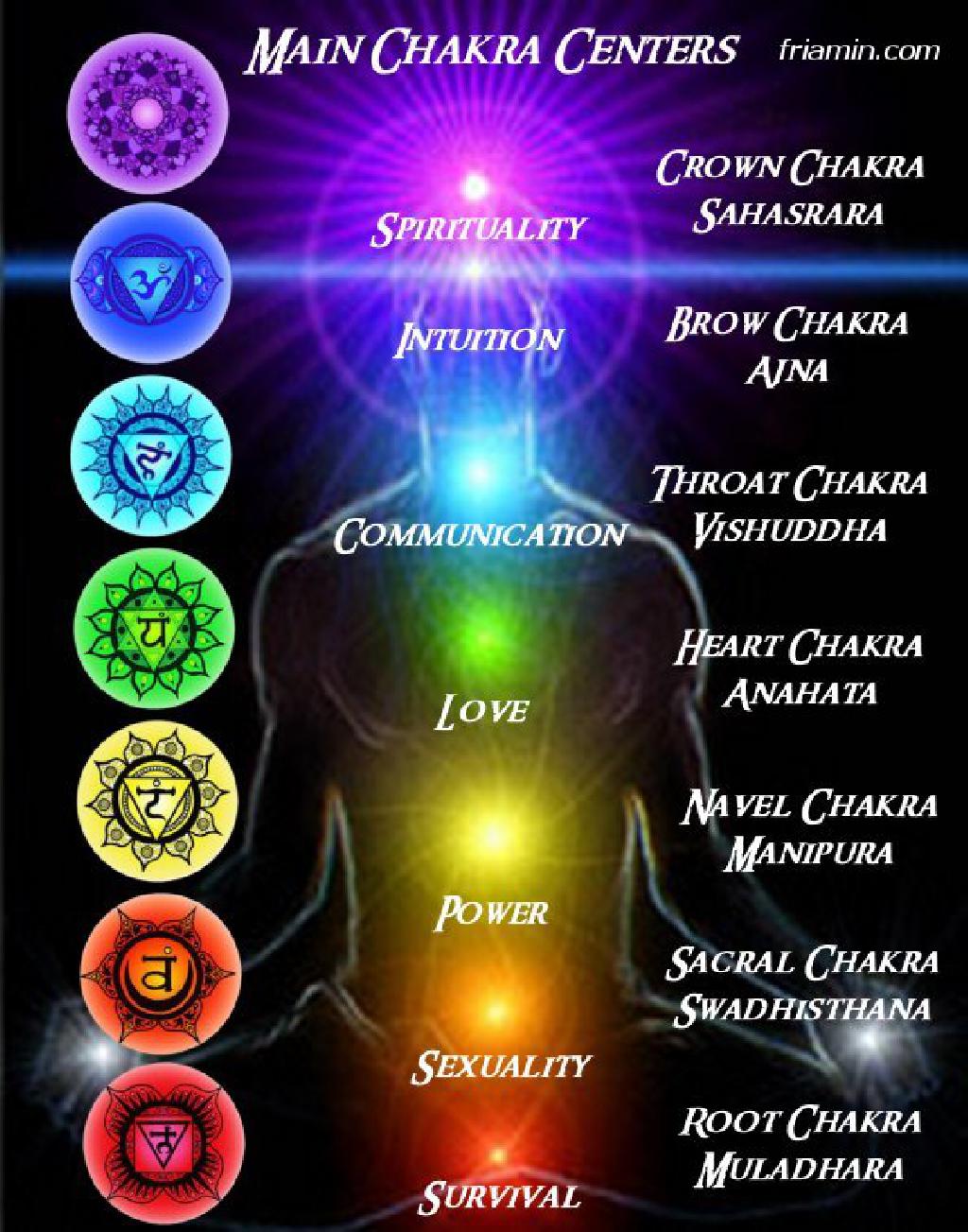
Whole Yoga – Tantric Hinduism – The Awakening of Kundalini.
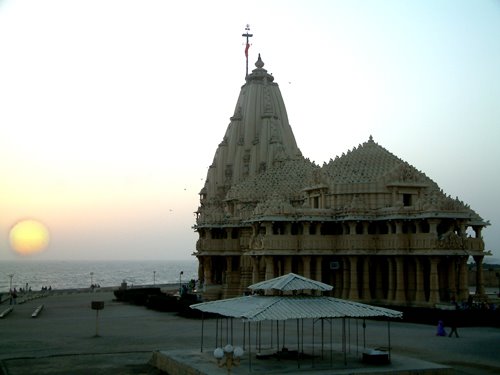
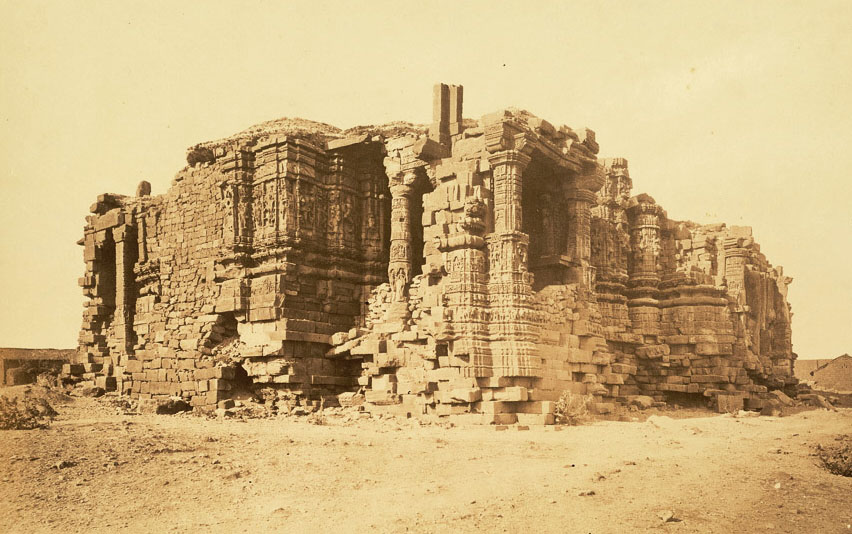
The Temple of Lord Somnath is the evidence for the Power of Creation over the Power of Destruction
The Temple of Lord Somnath speaks of the Power of Creation vs the Power of Destruction.
On May 11, 2026, India celebrates the 75th anniversary of the Somnath Temple’s reconstruction and consecration (Pran Pratishtha). Prime Minister Narendra Modi attended the “Somnath Amrut Mahotsav” and released a commemorative stamp and coin, marking 75 years since Dr. Rajendra Prasad reopened the shrine in 1951, symbolizing national resilience and civilizational revival.
The Temple of Lord Somnath speaks of the Power of Creation vs the Power of Destruction.
This entry is dedicated to the memory of Sardar Vallabhbhai Patel, India’s first Deputy Prime Minister.
THE POWER OF CREATION vs THE POWER OF DESTRUCTION: This story is a tribute to Sardar Vallabhbhai Patel, the first Deputy Prime Minister of Independent India who initiated the task of rebuilding historic Somnath Temple.
The Shrine Eternal:
Somnath Temple is in the ‘Prabhas Kshetra’, near the seaport city of Veraval in Junagadh District, Kathiawar Peninsula of Saurashtra , on the shores of Arabian Sea,the western coast of Gujarat, India. This holy place of pilgrimage is a place of great antiquity and recent excavations there have revealed a settlement dating from about 1500 B.C. As per Indian traditions, the place is of significance as it is considered as the place from where Lord Krishna departed from this world. The presiding deity of this temple is Lord Shiva and He is known by the name of SOMNATH or the Lord of the Moon. The present temple as it exists today is known as ‘Kailash Mahameru Prasada and is built-in CHALUKYA style of temple architecture. The site lied in a state of ruin for centuries and the decision to rebuild it was made by Sardar Vallabhbhai Patel during his visit on 13 November, 1947. The temple was inaugurated on December 1, 1951 by Dr. Rajendra Prasad, the first President of the Republic of India. He had remarked that, “The Somnath temple signifies that the power of creation is always greater than the power of destruction”. The temple symbolizes the enduring fame of Sardar Patel who during the first three years of Indian independence after 1947, had served as Deputy Prime Minister, Minister of Home Affairs, Minister of Information, and Minister of States. He was considered as practical and decisive. He was the architect of the Indian Union and his greatest contribution was the achievement of the peaceful integration of over 535 princely states into the Indian Union. The principality of Junagadh, and the princely State of Hyderabad had initially resisted the offer to join the Indian Union. Having failed in his attempts to join Pakistan, the Nawab of Junagadh fled away from the country. Mr. Bhutto,( the father of Mr. Z.A. Bhutto, who served as Pakistan’s Prime minister) acting in his capacity of the ‘DEWAN’ of the court of Junagadh, had invited Lord Mountbatten to accept the accession of Junagadh to India. In the State of Hyderabad, a militant movement called the Razakars was launched seeking independence but Sardar Patel restored peace in September 1948 and the ruler Nizam had accepted the terms of accession to the Indian Union. This part of Indian history and the integration of princely states into Indian Union has again become relevant after the enemy’s brutal attack in Mumbai which I had mentioned in my previous entry. The enemy had described himself as ‘Deccan Mujahideen’, and the media reports indicate that the enemy had specific designs to gobble Junagadh, and Hyderabad apart from encouraging insurgency in the border State of Kashmir. The enemy’s intentions will force us to defend SOMNATH in Junagadh District which is resurrected after repeated attacks over centuries.
The History of Somnath:
Jyotirlinga Temple at Somnath is mentioned in Hindu prayers in praise and worship of Lord Shiva:”Saurashtra dese visadeti ramye, Jyotirmayam Chandra Kalaa vatamsam, Bhakti pradaanaaya Krupaa vateernam, Tam Somanaatham Saranam prapadye.”Somnath, the confluence of three rivers, River Sarasvati, River Hiranya, River Ilanki and Kapila is mentioned in ancient Hindu Scriptures known as Rig Veda.LORD SOMNATH TEMPLE-THE SHRINE ETERNAL – TESTIMONY TO THE POWER OF CREATION OVER THE POWER OF DESTRUCTION.
Somnath finds its mention in the ancient text of RIG VEDA. It is associated with the holy names of GANGA, YAMUNA, and SARASWATI, popularly known as ‘TIRTH DHAM’ where Indians traditionally offer worship by a practice described as ‘River Worship’. The ancient river of Saraswati may have merged into the Sea at Somnath apart from smaller rivulets known by the names of Hiranya, Kapila and Ilanki. The place is extensively described as a place of pilgrimage and its importance is narrated in the ancient texts of ‘SKANDA PURANA’, ‘BHAGAVATA PURANA’, and ‘SHIVA PURANA’. Lord Shiva in His radiant form known as ‘Jyotirlinga’ resides at Twelve different places in India and Somnath is listed as the first place of residence of ‘DWADASA JYOTIRLINGA’.Tradition claims that the original Temple of Somnath was built by Lord Moon, and was later built by King Ravana of Lanka who is a central figure in the story of Indian epic poem of RAMAYANA. The SINDH area of the Indian subcontinent came under Arab conquest in 7th century A.D. The Somnath Temple built by the YADAVA kings of Vallabhi of Saurashtra around 649 A.D. was destroyed in 725 A.D. by the Arab governor of Sindh. The Pratihara King Nagabhata II rebuilt it in red stone. Between 1001 A.D. and 1027 A.D. , the road to conquest of India was prepared by Sultan Mahmud of Ghazna( modern GHAZNI in Afghanistan) who conducted more than twenty raids into North India. His raids were mainly for plunder. They revealed the wealth of India and demonstrated the vulnerability of India to military attacks. During one of his raids, in 1024 A.D. , marching across India’s Thar Desert, Mahmud of Ghazna had plundered and destroyed the Somnath Temple. The amount looted was estimated at 20 thousand, thousand ‘Dinars’. The enormous treasures found at Somnath have been a theme of wonder for all who have written on that conquest. The Paramara King of Bhoj of Malwa, Solanki King Bhima of Anhilwara/Patan between 1026 A.D. and 1042 A.D. rebuilt the Temple. By 1297/98 A.D. , Gujarat was conquered by Ala-ud-Din Khalij, Sultan of Delhi and the Temple was razed.Solanki King Kumarapala built a Temple of stone and this was destroyed again in 1394 A.D. For the last time, the Temple was destroyed in 1706 A.D by the Mughal Emperor Aurangzeb and the site remained in ruins till India’s independence in 1947. The rebirth of the Temple on December 1, 1951 demonstrates the vitality of the Indian spirit.
SOMNATH – THE POWER OF CREATION OVER THE POWER OF DESTRUCTION. MUGHAL EMPEROR AURANGZEB DESTROYED SOMNATH TEMPLE AND IT WAS A ‘JIHADIST’ ATTACK.SOMNATH TEMPLE – THE POWER OF CREATION OVER THE POWER OF DESTRUCTION. EMPEROR AURANGZEB PERSECUTED HINDUS, SIKHS, AND JAINS FOR THEIR RELIGIOUS BELIEFS.SOMNATH TEMPLE – THE POWER OF CREATION OVER THE POWER OF DESTRUCTION. A PHOTO IMAGE OF SOMNATH TEMPLE IN 1869.Jyotirlinga Temple at Somnath is mentioned in Hindu prayers in praise and worship of Lord Shiva:”Sauraashtra dese visadeti ramye, Jyotirmayam Chandra Kalaa vatamsam, Bhakti pradaanaaya Krupaa vateernam, Tam Somanaatham Saranam prapadye.”
Lord Somanatha is dwelling in His great splendor in the Province of Saurashtra. May this Lord Somanatha who is full of radiance, and the crescent-shaped Moon shines in His matted hair, with His extreme compassion grant me a great sense of devotion with which I would seek my protection and let Him be my refuge.
Dr. R. Rudra Narasimham, B,Sc, M.B.B.S.,
Kurnool Medical College, Kurnool, Andhra Pradesh, India,
M.B.B.S., Class of April 1970.
The Power of Creation vs the Power of Destruction. A tribute to Sardar Patel.
Whole Foods-Whole Inspiration-Whole LanguageWhole Foods, Whole People and Whole Planet inspire Whole Dude to invent Whole Phrases: Whole Linguistics – Whole Language. The concept of Whole Cookie and Whole Love. Whole Dude uses the phrase Whole Linguistics to describe three entities; 1. Language User, 2. Language Interpreter and 3. Language Creator. Image Credit: Agenda Publications, Ann Arbor District Library, Issue Dates, December 1997 and February 1998.
The Discovery of Self – Shankara describes True or Real Self
Tuesday, April 21, 2026, Shankaracharya Jayanti. What is Man? What is Soul?
Adi Shankaracharya Jayanti is observed on Panchami Tithi during Shukla Paksha (the Waxing phase of Moon) of Vaishakha month (the second month of Hindu calendar) and it falls between April and May.
Adi Shankaracharya Jayanti is observed on Panchami Tithi during Shukla Paksha (the Waxing phase of Moon) of Vaishakha month (the second month of Hindu calendar) and it falls between April and May.In his short life of 32 years, Adi Shankara walked across India – twice. Tuesday, April 21, 2026 is Adi Shankara Jayanti. Tuesday, April 21, 2026, Shankaracharya Jayanti. What is Man? What is Soul? Man is Constituted as a Spiritual Being.
On Tuesday, April 21, 2026, I pay my respectful tribute to Adi Guru Shankaracharya and share my thoughts on the realities of my human existence.
Tuesday, April 21 2026, Shankaracharya Jayanti. What is Man? What is Soul? The Man is Constituted as a Spiritual Being.
What it is to be a Substance? and What it is to Exist? We need to establish knowledge about the man on a firm basis and the information it provides must be tested for its accuracy and consistency with an external reality.
Adi Shankaracharya Jayanti is observed on Panchami Tithi during Shukla Paksha (the Waxing phase of Moon) of Vaishakha month (the second month of Hindu calendar) and it falls between April and May.
We have to make the fundamental distinction between the living and the non-living matter. The scientific advances of the 19th and 20th centuries reinforced the materialistic position concerning the basic similarity of organic living and inorganic physical matter. The man is viewed as a product of natural evolution and is thought to be subject to the same laws of Physics and Chemistry or mechanistic principles.
Adi Shankaracharya Jayanti is observed on Panchami Tithi during Shukla Paksha (the Waxing phase of Moon) of Vaishakha month (the second month of Hindu calendar) and it falls between April and May.
We need a methodology to study philosophy and to understand philosophical statements. Logical Positivism, also known as Scientific Empiricism aims to clarify concepts in both everyday and scientific language. It describes analysis of language as the function of philosophy. This analysis of language and of concepts is important to understand questions of belief and ideology which affect what we think we ought to do individually and socially. I use this method of ‘Applied Philosophy’ to analyze the philosophical doctrine of ‘Advaita’ and to study the views and philosophy of Adi Shankara and his efforts to interpret the true or real identity of man and the world.
The Material Basis of Spirituality Science. The Truth about Soul or Spirit. Adi Shankara (c. 788 A.D. – c. 820 A.D.), the founder of the Non-Dualist or Advaita School of Indian Philosophy has shared his ideas about human soul or spirit which is called Atma or Atman in the Indian Sanskrit language. What is the Truth about Soul or Spirit?
Truth is the quality of being in accordance with experience, and verified facts. Truth or Reality can be established by using a reasoning process called verification and validation. To verify or refute a theoretical claim, we need to clarify statements by demonstrating relation between the theoretical claim and the observational evidence. Such a reasoning process could be applied in two manners; 1. The Coherence Theory of Truth, and 2. The Correspondence Theory of Truth.
Tuesday, April 21, 2026, Shankaracharya Jayanti. What is Man? What is Soul? Nietzsche correctly claims that people don’t want to hear the ‘Truth’. As a human being, Nietzsche is not an exception to that Rule. The Truth is, man needs an Illusion if he has to exist on the surface of fast spinning object called planet Earth.
According to the Coherence Theory of Truth, the standard of Truth is the logical consistency of a proposition with a large system of propositions. According to the Correspondence Theory of Truth, Truth is viewed as a relation between an idea or proposition and its object. To verify Truth or Reality, the Subject and Object of an idea or proposition must have a relationship. Truth when applied to statements or ideas is related to the validity of what we mean and hence it requires correspondence between thought and external reality. It is true that a man has the biological ability and capacity called ‘imagination’, but the man may not have the ability and capacity to translate the power of imagination into an actuality, an external experience that could be observed by others. In my imagination, I can seek the existence of an all blissful entity called ‘Shiva’ while in actuality, I exist in the physical world as a fragile, mortal being. Religion, Philosophy, and Science may represent three distinct fields of learning about Truth and Reality. Scientific knowledge not only provides the knowledge that something is true, but it also provides the reason as to why it is true. Religion, and Philosophy could use different methods to study Truth and Reality, but the ideas they share require verification, corroboration, and validation. In the study of a man, the know-er and the known are one. The man is the observer and the observed fact is that of the man’s nature. If a man has to know the truth about his true or real self, the man has to understand the truth and reliability of his own cognitive powers. If the Subject called man is identified as an Object called Soul, or Spirit, the Truth or Reality of Soul, or Spirit involves a structural/functional relationship between the Subject and its Object.
Adi Shankara’s Nirvana Shatakam or Atma Shatakam:
Tuesday, April 21, 2026, Shankaracharya Jayanti. What is Man? What is Soul? To know man, the Self, Soul, Spirit, or Atman as the Knower of Body is the first step in man’s inquiry about Self. The Knowledge will help and guide man to reach his destination using his body like a chariot.
Adi Shankara (c. 788 – c. 820 A.D.), the founder of the Non-Dualist or the Advaita School of Indian Philosophy called ‘Vedanta’ shared his ideas about human Soul, or Spirit or ‘Atma’ or ‘Atman’ in the Indian Sanskrit language. In six short poems popularly known as ‘Nirvana Shatakam’, or ‘Atma Shatakam’, he presents his mental concepts about human Soul, or Spirit which he calls “Aham” (Subject ‘A’). Adi Shankara’s primary concern is about establishing the perfect Identity between this Subject ‘A’ and its Object called “Chidananda Shivam” (Object ‘C’). However, Adi Shankara makes no attempt in his propositions to establish the basis for this Identity between the Subject A and its Object C. Adi Shankara is proposing that the Subject A or Aham has no structural, functional, mental, moral, social, and spiritual relationship with its human body or ‘B’. In his view, the human soul or spirit is not involved, and is not concerned with the existence of human body in which the soul or spirit is thought to be residing. In an effort to establish the school of thought called “Advaita” or Non-Dualism, he systematically separates the human body from its human soul. Adi Shankara further extends this proposition to claim that the Subject A is the same as the Object C and the reason he has given is that of a lack of relationship between Subject A and the human body B. Since, A is not the same as B, A is not equal to B. And, therefore, Adi Shankara claims that A is the same as C or A is equal to C. He is neither describing nor illustrating that there is or there could be a structural, functional, mental, moral, social, and spiritual relationship between A and C. If such relationship exists between A and C, Adi Shankara has not presented any observational evidence in support of his claim that states A = C.
Let us briefly review the six verses. Kindly note that the verses are composed in the Indian Sanskrit language and there are several minor variations in the words that are attributed to Adi Shankara. The word ‘Nirvana’ means ‘Mukti’ or Release (the release of the conditioned human soul), death, Sunset, and conclusion of an event (such as the end of Life).
I must clarify that ‘death’ may not be viewed as a static, or final event. Death is a dynamic event like Life which is characterized by changes like growth and development and various stages like infancy, youth, adult, and old age. Just like Sunset which is followed by Sunrise, the event called death is followed by regeneration, renewal, and rebirth. Living organisms arrive with a plan for their own dissolution and such organic decay and decomposition is influenced by the cyclical flow of Time.
Man is a Physical, Mortal Being, a Created Being with a Living Soul:
The Material Basis of Spirituality Science. The Truth about Soul or Spirit. Nirvana Shatkam, first verse.
Mano buddhi ahankara chittani naham Na cha shrotravjihve na cha ghraana netre Na cha vyoma bhumir na tejo na vayuhu Chidananda rupah Shivoham Shivoham Chidananda rupah Shivoham Shivoham Chidananda rupah Shivoham Shivoham
In the first verse of Nirvana Shatkam, Adi Shankara excludes the four mental functions known as Ma-nah ( the seat of thoughts and imagination, the chief sense organ called Mind), Buddhi (the seat of intellect and knowledge), Chitta (the seat of emotions such as compassion, affection, and devotion), and Ahankara (the seat of ego, self-pride, the sense of pride that is associated with the recognition of ‘Self’ or ‘I’ as the existing or living entity) as the basis of his true Identity or Essence (What you are). These four aspects of mental activities are described in the Indian tradition as “Antah Karanam” or “Mano Chatushtaya.” The human nature which has features such as “Chitta” or “Hrudaya,” “Karuna,” or “Daya” and “Bhakti,” is characterized as Compassion, Kindness, and Devotion; the mental qualities that are needed for formulating Spiritual relationships both within the Individual and between Individuals. Adi Shankara gives no reason for this separation of human nature from its human Soul. Similarly, he excludes the five organs of Sense Perception (often described as “Jnana Indriyas,” the organs that provide sensory information and sensory experience such as ears, tongue, nose, eyes, and skin and the Five Primordial Elements described in the Indian tradition as ‘Pancha Mahabhutas’ such as Sky, Earth, Fire, Wind, and Water. He thinks that they are not fundamentally related to his True Identity and Essence. He is specifically excluding all known material substances, material structures and forces that operate in the natural world in the description of his True Identity. In my view, I consider that man comes into existence as a newly created object, one of its own kind, original, and distinctive who could always be identified as a specific individual.
Adi Shankaracharya Jayanti is observed on Panchami Tithi during Shukla Paksha (the Waxing phase of Moon) of Vaishakha month (the second month of Hindu calendar) and it falls between April and May.
I claim that man is a created being and man has no choice other than that of existing as an Individual with Individuality. The physical form, the morphological appearance of man always makes him unique and it has to be explained and accounted for. I suggest that the human Soul is the internal reality; and Soul is the basis for human Individuality and the Soul is the unchanging principle that allows a man to exist with changing external forms with specific physical attributes. The man is constituted by Chemical Elements and hence exists as a Physical Being.
Man is defined by his Structure, Functions, and Behavior:
The Material Basis of Spirituality Science. The Truth about Soul or Spirit. Nirvana Shatkam, second verse.
Na cha prana sangyo na vai pancha vayu hu Na va sapta dhatur na va pancha kosha Na vak pani padam na chopastha payu Chidananda rupah Shivoham Shivoham Chidananda rupah Shivoham Shivoham Chidananda rupah Shivoham Shivoham
In the second verse of Nirvana Shatkam, Adi Shankara gives a very detailed description of various tissues of the human body and describes all the vital functions and states that the Subject A or Aham has no structural or functional relationship with the man described by Human Anatomy and Human Physiology.
In the second verse of Nirvana Shatkam, Adi Shankara gives a very detailed description of various tissues of the human body and describes all the vital functions and states that the Subject A or Aham has no structural or functional relationship with the man described by Human Anatomy and Human Physiology.
The term Prana refers to the vital life-energy and is generally used to describe the chief characteristic to make the fundamental distinction between living and non-living; the important sign of life is the act of breathing or respiration.The term “Pancha Vayu” refers to, 1. Vyana – the air that is spread in the entire extent of the human body; 2. Samana – the air that is in the navel region; it could be the air that is swallowed during acts of eating and drinking and may refer to the intestinal gas; 3. Udana – the air that is in the throat/neck region; this narrow airway is vital for the respiratory function; 4. Apana – the air that travels downwards and outwards; it could mean the air expelled from the body as flatus or exhaled air from the lungs; and 5. Prana – the inspired air; air that is in the heart, the chief organ of Cardiovascular System that circulates Oxygen throughout human body. The term “Sapta Dhatu” refers to the seven material essences such as the skin, muscle/tendons/nerves, blood, bones, bone marrow, brain (neural tissue), and “Rasa” which describes fluids like semen and lymph. The term “Pancha Kosha” refers to the traditional view about the structure of the Soul. It is believed that the Soul has five coverings or envelopes and each layer establishes human existence and these are called as the five stages of Self-Realization; 1. Anna moya (related to Nutrition), 2. Prana moya (related to vital functions like Respiration), 3. Jnana moya (relates to implantation of Innate Knowledge and Consciousness), 4. Vijnana moya (relates to the ability to make a distinction between human body or the physical Self and Soul as the real or true Self), and 5. Ananda moya (relates to the experience of Bliss, the experience of Peace, Harmony, Tranquility, and Equilibrium as a Living Experience) ; these are the five aspects of Self-Realization and refer to the complete fulfillment or development of a man. I have discussed these five aspects in my blog post:
Adi Shankara also refers to the five organs of action that are described in the Indian tradition as “Karma Indriyas” which are the five instruments of function such as Speech (Vak), Hand-Grip and Manipulation (Pani), Locomotion (Pada), Procreation (Upastha) and Excretion (Payu). Adi Shankara has not bothered to state as to how these different organs and organ systems could function together to support the existence of the human person who lives because of those varied living functions. Life is nothing but to function and in my view, the human Soul is the central organizational structure providing the structural and functional coordination that is required for the human existence.
Man is a Mental Being, an Emotional Being and a Moral Being:
The Material Basis of Spirituality Science. The Truth about Soul or Spirit. Adi Shankaracharya (c.788 – c.820), Exponent of ‘Advaita’ or Non-Dualism. The man exists on earth under the powerful influence called Maya or Grand Illusion.
Na me dvesha ragau na me lobha mohau Na me vai mado naiva matsarya bhavaha Na dharmo na chartho na kamo na mokshaha Chidananda rupah Shivoham Shivoham Chidananda rupah Shivoham Shivoham.
In the third verse of Nirvana Shatkam, Adi Shankara correctly claims that the human Soul may not contribute to human feelings, and thoughts associated with hatred, sexual passion, greed, arrogance, and envy or jealousy. At the same time, he rejects the traditional Indian view about man’s purpose in Life; the purpose of Right Action or “Dharma”, the purpose called earning money or material wealth to support Life or “Artha”, the purpose of Procreation or “Kama”, and the purpose called God-Realization, Liberation, or “Moksha.” In other words, Adi Shankara is suggesting that human life and human existence may have no underlying purpose. He is also not giving any coping mechanism to deal with the problems associated with human emotional experiences like passionate desires. The Indian tradition consistently recommends that a man can exercise self-control as the human Soul is superior to human mind, human intellect, and human sense organs. If the human body has no structural or functional affiliation with its human Soul, it will not be likely that man can exercise self-restraint and self-control. In my view, man, the Mental Being can establish himself as a Moral Being using the innate discerning ability to make the distinction between right and wrong, and distinguish good from evil by knowing the existence of the Knowing-Self or the Soul.
Man is a Spiritual Being:
The Material Basis of Spirituality Science. The Truth about Soul or Spirit. In my analysis, man is not saved by acquired Knowledge. Man cannot directly rule or govern his own body for the building blocks of the body called cells are independent and enjoy functional autonomy.
Na punyam na papam na saukhyam na duhkham Na mantro na tirtham na vedah na yajnah Aham bhojanam naiva bhojyam na bhokta Chidananda rupah Shivoham Shivoham Chidananda rupah Shivoham Shivoham
In the fourth verse of Nirvana Shatkam, Adi Shankara claims that he has no sense of attachment to the consequences of his actions either good (“Punya”) or bad (“Paapa”). He is recommending that man need not perform temple worship, and there is no need to observe religious rituals, sacrifice, and perform acts of pilgrimage. He is rejecting the desire to seek pleasure and comfort (“Saukhyam”) and he may not be able to totally avoid the pain, misery, and the experience of suffering (“Dukham”). He specifically undermines the role of food and its five functions in support of the human existence.
The problem is that of the nature of human existence. In my view, the man at any given age, in any given condition, under all given circumstances including good health or ill-health depends upon the Power/Energy/Force called Mercy/Grace/Compassion, often called Divine Providence. The man is not in control of his own existence. The man needs a guiding, and controlling force called the Divine Providence. In my opinion, the human Soul operates as the Connection between man and the Divine Providence that supports, sustains, and preserves human existence irrespective of man’s experience of pain or pleasure. The man has no choice other than that of seeking Mercy, Grace, and Compassion that is called “Krupa” in the Sanskrit language.
Man is a Social Being:
The Material Basis of Spirituality Science. The Truth about Soul or Spirit. Nirvana Shatkam, fifth verse.
Na me mrityu shanka na mejati bhedha Pita naiva me naiva mata na janmaha Na bandhur na mitram gurur naiva shisyaha Chidananda rupah shivoham shivoham Chidananda rupah shivoham shivoham
In the fifth verse of Nirvana Shatkam, Adi Shankara very boldly asserts that he is without a trace of doubt (“Shanka”) and further adds that the Soul that he calls “Aham” has no Father, or Mother. The Indian tradition describes Father (“Pita”) as the originating principle, and Mother (“Mata”) as the sustaining principle. In my view, the human Soul comes into existence (“Janma”) because of the Supreme Will or the Supreme Soul which is the Prime Cause, the Cause of all types of things and all kinds of Existence. The human Soul is conditioned and is not totally independent and hence, the human soul still needs a Divine Mother Principle to maintain its Spiritual Condition and Spiritual Existence and a Father Principle that can account for its origination or the fact of its existence.
Man is a Conditioned Soul:
The Material Basis of Spirituality Science. The Truth about Soul or Spirit. Nirvana Shatkam, sixth verse.
Aham nirvikalpo nirakara rupo Vibhut vatcha sarvatra sarvendriyanam Na cha sangatham na muktir na meyaha Chidananda rupah Shivoham Shivoham Chidananda rupah Shivoham Shivoham Chidananda rupah Shivoham Shivoham
In this final or sixth verse of Nirvana Shatkam, Adi Shankara tries to eliminate the classical dualism that is called the dualism of Universal vs Particular. He claims that his human Soul or “Aham” is the universal entity that is limitless, formless (“Nirakara”) and is without any attributes or attachments (“Bandha”). In his view, the human Soul is essentially free; it is everything, everywhere, every time and is always in a state of equilibrium. He states this view without a trace of doubt (Nirvikalpa”).
Tuesday, April 21, 2026, Shankaracharya Jayanti. What is Man? What is Soul? Animate vs Inanimate Dualism. Man, Body, and Soul are united by Lord, God or ‘Prabhu’ who still remains aloof, disinterested, or separate from both Animate and Inanimate Matter. God is a separate order distinct from Animate and Inanimate Matter.
I suggest some caution and ask my readers to recognize the importance of separation between the human soul and the Supreme Soul or the Ultimate Reality. I can understand that there is no disunity between man and his Creator.
I ask my readers to know the philosophical system of thought called ‘Nominalism’ that does not grant universality to mental concepts outside the mind. Universality could be applied only to words or “nomina”, mental habits, or concepts. Nominalism only maintains the objective existence of the concrete, individual thing. It denies all objectivity whether actual or potential to universals. The human soul is attached to the human being and the human being has his existence on planet Earth and hence is not an universal entity. Since the human condition demands existence only on planet Earth and not the rest of the universe, the human Soul cannot escape from its conditioned status while it exists as a human Soul. The Universal Soul as proposed by Adi Shankara is just a mental concept and it can only exist in the mind of the man and it may have no correspondence with the facts of external world and the Universe.
What is Truth, What is illusion?
The Material Basis of Spirituality Science. What is Truth and what is illusion? Adi Shankara claims: “Brahma Satyam, Jagat Mithya, Jivo Brahmaiva Na paraH.” Brahma is the Only Truth, the World is Illusion, and there is ultimately no difference between Brahman and the Individual True Self. My question is: “Where does this True-Self exists? Without Existence, there is no Essence. If and only if a Thing exists, it can define its Essence.
Sri Shankaracharya sums up the entire message of Vedanta in three crisp aphorisms. These are:
Adi Shankara is fully convinced in his belief that A (Soul or Spirit or Atman) and the human body B are not connected or related. It must be noted that, A or “Aham” refers to a singular person called ‘I’ and that singular person ‘I’ is in a state called ‘Being’, one who lives, or exists. If A is stated to be existing as an entity called I am, I would like to ask the following questions:
1. Who is Existing?
2. What is Existing?
3. When it is Existing?
4. Where it is Existing?
5. Why it is Existing?
If the Subject A, or Aham (I am), has no size, no shape, and no form, how could we establish the fact that A is existing? Adi Shankara fails to categorically state the place or site where A could be existing. If A is existing, we may like to know the purpose of this existence. If there is a purpose for the existence of A, the question would be, What is that purpose? How is the nature of A or the nature of C is related to its purpose? The Truth and Reality about human Soul, or Spirit can be verified, can be corroborated, and can be validated by knowing the structural, functional, mental, moral, social, and spiritual relationship, partnership, connection, association, or bonding between A, B, and C. Indian tradition suggests that the human body has three aspects; “Tri-ani-pada”, or three-in-one; and the three aspects of human body are, 1. Causal, 2. Spiritual, and 3. Material. There is a material connection between A, B, and C, if the human body has a ‘causal, and a ‘spiritual’ dimension. It would be very interesting to note that Adi Shankara specifically avoids to describe the connection or relationship between the human Soul and the human Consciousness. In the Sanskrit language, Consciousness is called “Chetana” or “Chaitanya” and this term is not used in any of the six verses. Indian tradition believes that consciousness is the evidence for the presence of the human Soul and there is a structural and functional relationship between Soul and the Living Entity that is Conscious. We need to explain the concepts of Subject-Object, Appearance-Reality, Perceptual-Categorical, Immanent-Transcendent, Regulative-Constitutive, Conditioned-Unconditioned Dualism in respect of man’s existence and man’s status in Nature.
The Material Basis of Spirituality Science. What is Truth and what is illusion? Adi Shankara claims: “Brahma Satyam, Jagat Mithya, Jivo Brahmaiva Na paraH.” Brahma is the Only Truth, the World is Illusion, and there is ultimately no difference between Brahman and the Individual True Self. My question is: “Where does this True-Self exists? Without Existence, there is no Essence. If and only if a Thing exists, it can define its Essence.Tuesday, April 21, 2026, Shankaracharya Jayanti. What is Man? What is Soul? What is Matter? and What is Spirit? I ask my readers to learn about the Material Basis of Life and Death. The Laws of Conservation are applicable to both the living, and the non-living matter. Hence, I claim that “Life can neither be created nor destroyed.” Jagat Mithya – World is Unreal: The Great Grand Illusion of Earthly Existence: Man exists on the surface of a fast rotating celestial object called Earth, blissfully ignorant of the facts of its real motions. Man has no direct sensory experience of the Speeds of Earth, its Linear and Angular Momentum can only be explained in writing or speech without its physical experience as a fact. Tuesday, April 21, 2026, Shankaracharya Jayanti. What is Man? What is Soul? The reality of the Human Existence on the Surface of Earth is Conditioned by the Great Grand Illusion which will not allow the Man the Direct Sensory Perception of the Realities of Earth’s Motion, around the Sun, and the Spinning on its own axis.
The Discovery of Whole Joy, Whole Bliss, and Whole Satisfaction
The Discovery of Bliss on Akshaya Tritiya
The festival of Akshaya Tritiya is celebrated by Hindus and Jains around the world. Also known as Akti or Akha Teej, this day is believed to be one of the most auspicious occasions. This year, it falls on Sunday, April 19.
The Discovery of Bliss on Akshaya Tritiya.
According to the Hindu calendar, Akshaya Tritiya falls on the third tithi called Tadiya (lunar day) of Shukla Paksha of the Vaisakha month. Going by the Gregorian calendar, it falls somewhere around April and May.
The Discovery of Bliss on Akshaya Tritiya. Sunday, April 19, 2026 is the third day of the Waxing Crescent phase of the Moon in the Second Month of Vaisaka of Hindu Calendar.
One of the most important rituals includes worshipping Lord Vishnu on this day. For Hindus, the Sanskrit meaning of Akshaya Tritiya, the two words, holds a lot of importance. “Akshaya” means “never diminishing” and the term “Tritiya” signifies the third day of the illuminated half of Vaisakha month.
History and significance
The Discovery of Bliss on Akshaya Tritiya
People celebrate Akshaya Tritiya to bring good luck to their lives. As per common belief, buying gold and properties on this day brings prosperity and wealth in the future.
The Discovery of Bliss on Akshaya Tritiya.
Going by mythology, it is believed that a number of events took place on Akshaya Tritiya, making it an auspicious day.
The Discovery of Bliss on Akshaya Tritiya
As per one legend, on Akshaya Tritiya, Treta Yuga, the second of the four yugas, started and the sixth incarnation of Lord Vishnu, Parshuram, was born.
The Discovery of Bliss on Akshaya Tritiya.
Also, it is considered that Maharishi Ved Vyasa, the author of Mahabharata, started narrating the epic to Lord Ganesh on this day.
The Discovery of Bliss on Akshaya Tritiya.
It was on this occasion that Lord Krishna met his childhood friend Sudama.
The Discovery of Bliss on Akshaya Tritiya.
As per Hindu tradition, the river Ganga descended on Earth from heaven on Akshaya Tritiya.
The Discovery of Bliss on Akshaya Tritiya.
THE STORY OF AKSHAYA PATRA:
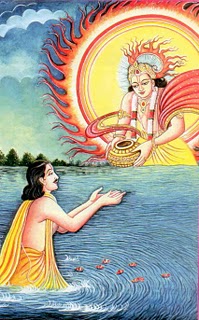
Akshaya Patra. Discover Bliss From an Empty Pot.
DHARMA RAJA, THE ELDEST OF PANDAVA PRINCES RECEIVING “AKSHAYA PATRA” FROM ‘SURYA BHAGAWAN’
The word ‘Akshaya Patra’ in Sanskrit language means an inexhaustible vessel. This pot could supply delicious meals in an endless manner. This story is found in the Indian Epic poem of Mahabharata. Akshaya Patra was a divine gift given to Dharmaraj by the Sun god, Surya. The pot was given to help the princely family of Pandavas to tide over their difficulties while they spent twelve years in the forest. They had to spend time in exile after losing their kingdom in a game of dice. Akshaya Patra would provide meals so that the Pandava family could keep up with the Indian traditions of hospitality.Also keeping in line with the tradition, each day Akshaya Patra would serve the final and last meal to the hostess. The hostess, Draupadi was very mindful of her traditional role and each day she would feed all the guests, all the dependents, all the family members and would then take the last meal.
THE DISCOVERY OF BLISS FROM AN EMPTY POT:
Akshaya Patra. Discover the Bliss From an Empty Pot.
As per the story from Mahabharata, one evening, Princess Draupadi finds herself in a troubled situation. A Hindu sage by the name of Durvasa with a large entourage of his disciples arrives at the forest abode of Pandava princes after hostess Draupadi took the last meal from Akshaya Patra. Since the pot cannot serve any more food, she prays to Lord Krishna seeking help to feed her guests. Lord Krishna appears before her and asks her to feed Him from Akshaya Patra. Draupadi regretfully answers that the pot is empty. He directs her to take a closer look. Princess Draupadi carefully reexamines the pot and discovers a single grain of rice that remained stuck in the pot. As instructed, she feeds the last grain from the pot to Lord Krishna and now the pot gets truly empty. However, Lord Krishna derived His satiation, complete satisfaction when the last grain from the pot got removed. Along with Lord Krishna’s experience of full satisfaction from eating a morsel of food, the entire party of guests experience full satiation and inform Princess Draupadi that she need not serve them any meal. Thus Princess Draupadi escapes from the duty of the hospitality tradition of actually feeding them that evening.
Discovery of Bliss on Akshaya Tritiya.
I am speaking of this story about Akshaya Patra to understand the concept about emptying the mind to discover pure consciousness. In Indian literature and idiom, the mind is often compared to a vessel or a pot. When all thoughts (or desires) are taken out of the mind, what would remain in the mind is like that single grain of rice that Draupadi discovered in the otherwise empty Akshaya Patra. In my analysis, this last grain of food represents the desire or attachment to life. When the desire or attachment to life is surrendered, the man attains the state of pure consciousness which discovers its unity with the Divine consciousness to provide the experience of Pure Bliss and Joy. Lord Krishna could have easily provided a hearty meal to the entire party of guests. He did not choose to provide happiness through gratification of the physical needs of the body. The pot, if seen as the representation of the mind, the mind gets truly emptied when the last grain or desire, or craving, or attachment is removed from it. Lord Krishna demonstrates that there is no need to fill-up the pot to feed our desires. He delivered Joy, Bliss, and the experience of perfect satisfaction after emptying the pot. Just like the empty Akshaya Patra that provided Bliss, when the last grain of desire or attachment is removed from the mind and given in offering to the Lord, the Lord would provide all that you may need without the physical gratification of the senses. Man at any given age, under all given circumstances, in good health, or ill-health exists in this physical world because of ‘God-Connection’, the Connection between man, the energy seeker, and God, the energy provider. When the God-Connection is recognized, the man experiences a sense of satisfaction, mental satiation, and he would have no desires to be gratified.
Bharat Darshan Discovers Bliss on Akshaya Tritiya.
Defining Indian Identity – Finding Truth – Listening to the Heart
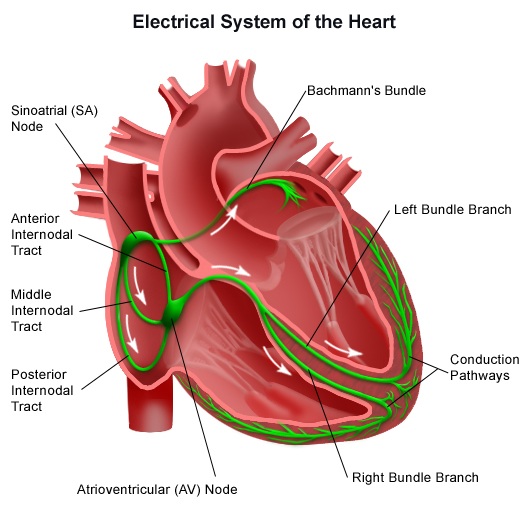
Whole Dude at Whole Foods is a Whole Listener: The Discovery of Truth by listening to the heart beat. Defining Indian Identity – Listen to the heart.
The opportunity to serve in the Indian Armed Forces works like a powerful magnet. It draws into its folds the youth of the country from a multitude of villages that dot our landscape. My service in uniform gave me a wonderful opportunity to personally know and get acquainted with a broad spectrum of the Indian population. The Indian Identity that I describe is the product of such direct and first-hand experience of the people of my land.
After a brief and exciting period of Basic Military Training for Medical Officers (BMOC 20/70) at The Officers Training School, Army Medical Corps Centre & School, in Lucknow, Uttar Pradesh, my tour of duty took me to the Military Hospital, Ambala Cantonment, Haryana.
Whole Dude at Whole Foods is a Whole Listener: The discovery of truth by listening to the heart beat. Defining Indian Identity at Military Hospital, Ambala Cantonment.
The name Ambala is very dear to my heart. Traditionally, Indians do not desire to fight evil and dark forces. They prefer to rely on the names of the mighty Lords that they worship. It is Shiva, Vishnu, Rama and Krishna who fight the battle on their behalf and Indians could simply sit back and relax and watch the demons getting vanquished.
Defining Indian Identity at Military Hospital, Ambala Cantonment.
Ambha Sambhavi Chandramouli Rabhala Aparna Uma Paarvathi
But when a physical fight becomes inevitable and when pushed to confront an enemy and to take up the challenge personally, Indians derive their strength and they get infused with courage by remembering with adoration the name of Bhavani, also known as Durga, Amba, Kali or simply referred to as Mata (Mother). Her name is used as the battle cry. Her name is the armor of divine protection they prefer to use on the front lines of battlefields. When the confrontation is real, nothing works better than the sweet name of Amba. Hence Ambala has represented to me the willingness and the determination of Indians to fight the battle against the enemy. On my second tour of duty in Ambala, I wore with great pride the emblem of Black Elephant on my left arm. Black Elephant is an elite fighting force and the military station of Ambala is it’s home.
I arrived in Ambala during September 1970 and reported to the Military Hospital on my very first posting. My first assignment in the Hospital was that of an internship in the Surgical Division. The Senior Surgical Specialist at that time was Major Mohan Pal Dhir. The advice he gave me was that I should get acquainted with the patients and should try to know them as if they were my personal friends.
I was given the charge of two Surgical Wards, III and IV. My first priority was not learning the principles of surgery and the technique of surgical procedures. As an Officer-in-Charge of the Surgical Ward, my first duty was to learn and remember the rank, name and regimental affiliation of each patient. It sounded pretty easy but in practical terms, it was really difficult. The working hours were totally consumed with processing the medical information and preparing patients for surgical evaluation and procedures. My office staff would meticulously document all the personal information and there was no time to read that again. The patient interrogation is primarily intended to obtain the relevant medical information about their physical ailments and documenting the medical case history. It was easy to remember medical information rather than their personal details.
Since I grew up in India, I accepted the advice of my Senior Mentor with earnestness. The only way I could find time to know personally all the men in my Wards was by returning to the Hospital and spend my evening hours conducting personal interviews with each one of them. We had a variety of sports and recreational facilities and a very lovely Officers’ Club right in front of our Hospital. But I had to ignore such perks of my Service. Thus my journey in uniform included a commitment to know the men at a personal level.
A Simple Experiment to Know the Heart:
Whole Dude at Whole Foods is a Whole Listener: A Simple Experiment to Know the Heart. Listen to the Heartbeat.
Soon after I assumed the charge of the Surgical Wards, during one of my evening visits, my office staff reported that one of the patients lost his expensive wristwatch. While taking a shower, the patient removed the watch and forgot to recover it. Within a short time, the watch disappeared. It was apparent that the watch got stolen by some other patient. I could have simply notified the Military Police and asked them to investigate the incident. Or, I could have used my authority to confine all patients to their beds and directed the staff to conduct a thorough search of their personal belongings.
But, I lack the temperament of a law enforcement official. I depend upon my ability to observe things and derive answers from such observations.
What I observed was the fact that in India, people share a common concern about truth. Truth or reality cannot be concealed. Whatever a person may do, in the person’s heart, the truth is always known. When you listen to the person’s heart, the truth is revealed.
I announced to my staff that I want to listen to the heartbeat of each of my patients and ascertain the truth about the missing wrist watch for myself. They assembled and lined up all patients in front of my office and they marched in one after the other. I conducted this little experiment in absolute silence. No questions were asked. I carefully listened to their heartbeats. After having done so, I demanded that the watch be returned to the place from where it was picked up and if not, the truth would only bring humiliation to the culprit.
The purpose of the experiment was not to directly identify the culprit but it intended to give him a chance to search his own heart and reveal the truth. Next day, when I came to work, my staff cheerfully reported that the watch reappeared in the bathroom and was returned to the owner.
India – The Land of Satya and Dharma:
Whole Dude at Whole Foods is a Whole Listener: Defining Indian Identity – Listen to the Heart. The Land of India or Bharat Varsha is traditionally identified as ‘KARMA KSHETRA’ or ‘KARMA BHUMI’.Human Existence is operated by the ‘Law of Karma’.
India is the land where people’s psyche has a deeply embedded concern about Satya (Truth). It is a fundamental belief of all of its people. They believe that Truth is God and they define God as Truth. The powerful effects of Time would dissolve and destroy all things that are unreal and in the end, only Truth will remain and Truth would prevail.
Whole Dude at Whole Foods is a Whole Listener: The Discovery of Truth by listening to the heart beat. Defining Indian Identity – Listen to the heart.
The Indian National Emblem describes the Motto of the Nation as, Satya Meva Jayate (Truth alone triumphs). Indians cherish the value of Truth and would prefer to merge into that unchanging, Eternal Reality. Nothing else would save them from certain destruction. Dharma or Right Conduct in its simplest context would mean to Indians that they should fulfill the promise they had given. They are afraid of the consequences of a false utterance.
Whole Dude at Whole Foods is a Whole Listener: The Discovery of Truth by listening to the heart beat. Defining Indian Identity – Listen to the heart.
The Story of Ramayana touches the hearts of Indians. It is no surprise that Lord Rama is their beloved Hero. He represents the values that Indians cherish to possess. The nobility of Rama lies in the fact that He had chosen to obey His father with a sincere desire that the father should fulfill the promise he had given to his wife and help him to uphold the enduring principle of adherence to Truth.
Whole Dude at Whole Foods is a Whole Listener: The Discovery of Truth by listening to the heart beat. Defining Indian Identity – Listen to the heart.
It is no surprise that Rama is a beloved Hero. He upheld the values that most Indians value and cherish.
Indians carry their identity in their hearts. The identity is simply revealed by listening to their hearts. When you listen, you would know that all of them share a concern that Truth alone would prevail at the end of the day.
As a member of the medical profession, I can observe a man in good health, in sickness and disease, and eventually in his death and dissolution. I also observe man’s reaction to his own condition and state of existence. I observe the physical, mental, and psychological aspects of the man’s condition.
My experiment which involved listening to the heartbeats of my patients in the Surgical Ward was not intended as a ‘Lie Detector Test’. A typical Lie Detector Test describes a ‘Polygraph’ used on persons suspected of lying; it records certain bodily changes which are assumed to occur when the subject lies in answering questions. The objective of my experiment was not that of finding any bodily response or change in heartbeat in response to my medical examination that was conducted without asking questions. I was not trying to discover a lying person. The person who had stolen the watch knows the truth, the fact that he had stolen. Through my experiment, I tried to evoke a reaction from that person. That subject emotionally reacted to my experiment in the manner that I expected. He admitted the truth by simply returning the watch. I did not question him directly or indirectly if he had taken the watch. I did not find the lying person, but I have proved that the man does have an actual psychological concern about truth.
Medicine cannot stop death and Truth cannot be delivered as a prescription.
Whole Dude at Whole Foods is a Whole Listener: The Discovery of Truth by listening to the heart beat. Defining Indian Identity – Listen to the heart.
I observed some of the funeral processions in India. People either chant “Ram Naam Satya Hai” (The name Rama is eternal Truth), or the “Hare Rama Mantra.”
The man whose physical body experiences death and dissolution could not be true. If the man is mortal, the Indian mind seeks comfort from an idea that is not subject to mortality.
Whole Dude at Whole Foods is a Whole Listener: The Discovery of Truth by Listening to the heart beat.
The Celebration of the Spiritual Dimension of Water on World Water Day. Where Water Flows, Equality Grows.Whole Dude – Whole Conservation: The Celebration of World Water Day on March 22
The Celebration of World Water Day on March 22
World Water Day celebrates water and raises awareness of the 2.2 billion people living without access to safe water. It is about taking action to tackle the global water crisis. A core focus of World Water Day is to support the achievement of Sustainable Development Goal 6: water and sanitation for all by 2030.
Water: Our Common Wealth
The Celebration of World Water Day on March 22
The Importance of Water
River Ganga meandering through the Shivalik ranges near Rishikesh symbolizes my WAVE THEORY OF IMMORTALITY. Man always exists in constant relationship with his physical environment. Immortality is not about perpetual residence in a Heavenly Mansion. Immortality is associated with the idea of Ultimate Reality which is represented by SAT+CHIT+ANANDA. In this physical world, the Indian Identity is immortalized by the flowing River adoringly described as Mother Ganges.The Celebration of World Water Day on March 22
World Water Day, held on 22 March every year since 1993, focuses on the importance of freshwater.
Celebrating World Water Day
The Celebration of World Water Day on March 22, 2024. The Panna Meena Ka Kund Stepwell, Jaipur, Bharat.
The stepwell that these women are climbing is an apt image to mark World Water Day. Stepwells originated in western India over a thousand years ago as way for locals in that arid climate to easily and reliably access fresh water—even during the driest months. The Panna Meena Ka Kund stepwell in Jaipur is a classic example of the beautiful, regular, geometric architecture used to produce these useful public works. Most stepwells also feature shaded side chambers where locals (primarily women) can gather to escape the heat of the day.
In this image, one can see obvious signs of previous high-water marks on the well’s walls as seasonal fluctuations and the changing climate affect water levels throughout the region. The impact of climate change on fresh water accessibility is the theme that the United Nations has chosen for World Water Day 2020. The goal of today’s observance is to focus attention and energy not just on those problems, but on potential solutions as well.
Water and Climate Change
The Celebration of Spiritual Dimension of Water on World Water Day
World Water Day 2020 is about water and climate change – and how the two are inextricably linked. The campaign shows how our use of water will help reduce floods, droughts, scarcity and pollution, and will help fight climate change itself.
By adapting to the water effects of climate change, we will protect health and save lives. And, by using water more efficiently, we will reduce greenhouse gases.
Our key messages for this day are clear:
We cannot afford to wait. Climate policy makers must put water at the heart of action plans.
Water can help fight climate change. There are sustainable, affordable and scalable water and sanitation solutions.
Everyone has a role to play. In our daily lives, there are surprisingly easy steps we can all take to address climate change.
History of the Day
The Celebration of World Water Day on March 22
The idea for this international day goes back to 1992, the year in which the United Nations Conference on Environment and Development in Rio de Janeiro took place. That same year, the United Nations General Assembly adopted a resolution by which 22 March of each year was declared World Day for Water, to be observed starting in 1993.
Later on, other celebrations and events were added. For instance, the International Year of Cooperation in the Water Sphere 2013, and the current International Decade for Action on Water for Sustainable Development, 2018-2028. These observances serve to reaffirm that water and sanitation measures are key to poverty reduction, economic growth, and environmental sustainability.
March 22. The Celebration of World Water Day 2020. Antoine Laurent Lavoisier discovered the chemical composition of Water Molecule.
Antoine Laurent Lavoisier (1743-1794), French Chemist and Physicist. He discovered the Composition of Water Molecule and of various other Organic Compounds.
March 22. The Celebration of World Water Day.
Water Molecule looks very simple and yet it plays a mysterious role inside all living cells. It is essential to Life and its propagation. Its Spiritual nature is revealed by its pure, original, and sweet taste it imparts apart from its role as a Chemical Compound. It is the main mode of transport of many Elements that are needed by the living organisms. Water is the Agent that leaches Nutrient Elements and Compounds from rocks and soils and makes them available for use by plants, and animals.
Bharat Darshan – The Celebration of World Water Day on March 22.
Bharat Darshan – The Celebration of World Water Day on March 22
Bhagavad Gita, Chapter 7, verse 8: I am the taste in water, O son of Kunti, and the radiance of the sun and the moon. I am the sacred syllable Om in the Vedic mantras; I am the sound in ether, and the ability in humans.
Bharat Darshan – The Celebration of World Water Day on March 22
Man alone can describe the original, sweet taste imparted by the Water Molecule. The taste cannot be discovered in the atoms of Hydrogen and Oxygen that constitute the Water Molecule. Indians have glorified the significance of fresh water which is delivered from Heaven and the identity of the Land of Bharat is cherished as the Land where the sacred River Ganges flows.
Bharat Darshan – The Celebration of World Water Day on March 22. Mother Ganges is the Spirit of the Nation called India or Bharat.Bharat Darshan – The Celebration of World Water Day on March 22. This River GANGA or GANGES is adored by people across the Land of India or Bharat. Mother Ganga defines my National Identity and National Individuality. March 22. The Celebration of World Water Day. Living Waters. The New Testament, The Gospel According to John, Chapter 3, verse#5 , Jesus answered, “I tell you the truth, no one can enter the Kingdom of God unless he is born of the water and the Spirit.”
Ugadi is new year according to Luni-Solar calendar. Luni-Solar calendars consider the position of the Moon and the position of the Sun to divide the year into months and days.
Excerpt: The Telugu New Year is traditionally celebrated as Ugadi festival. A traditional holiday dish, a relish called ‘Ugadi Pachadi’ is prepared to reflect the tastes and flavors of the Spring Season which may guide to prepare for the New Year with a willingness to accept the different dimensions of human experience under the influence of Time.
Bharat Darshan – Welcome to Ugadi, the Telugu New Year Parabhava on Thursday, March 19, 2026. In several Indian traditions, the New Year begins during the Spring Season. The first month of the New Year is known as Chaitra.
The Celebration of Telugu New Year – Ugadi:
Ugadi is new year according to Luni-Solar calendar. Luni-Solar calendars consider the position of the Moon and the position of the Sun to divide the year into months and days.Bharat Darshan – Welcome to Ugadi, the Telugu New Year Parabhava on Thursday, March 19, 2026. In several Indian traditions, the New Year begins during the Spring Season. The first month of the New Year is known as Chaitra.
Ugadi or Yugadi is celebrated as the first day of the year by people of Andhra Pradesh, Telangana and Karnataka. On this day new Samvatsara, which is cycle of sixty years, starts. All sixty Samvatsara are identified by unique names.
The Celebration of Telugu New Year Parabhava. The Last Month of Telugu Calendar is known as Phalguna and it concludes on March 19, 2026, Amavasya or the New Moon Day. The New Year begins on Thursday March 19, 2026 with the beginning of Tithi Pratipada, the Waxing Phase, First Month of Chaitra
Ugadi is new year according to Luni-Solar calendar. Luni-Solar calendars consider the position of the Moon and the position of the Sun to divide the year into months and days.
Ugadi is new year according to Luni-Solar calendar. Luni-Solar calendars consider the position of the Moon and the position of the Sun to divide the year into months and days.Ugadi is new year according to Luni-Solar calendar. Luni-Solar calendars consider the position of the Moon and the position of the Sun to divide the year into months and days.The Celebration of Telugu New Year Parabhava. The Last Month of Telugu Calendar is known as Phalguna and it concludes on March 19, 2026, Amavasya or the New Moon Day. The New Year begins on March 19, 2026 with the First Month of Chaitra, Shukla Paksha, Pratipada or Padyami.Ugadi is new year according to Luni-Solar calendar. Luni-Solar calendars consider the position of the Moon and the position of the Sun to divide the year into months and days.
The counter-part of Luni-Solar calendar is Solar calendar which considers only position of the Sun to divide the year into months and days. Because of that Hindu new year is celebrated twice in the year with different names and at two different times of the year. The Hindu new year based on Solar calendar is known as Puthandu in Tamil Nadu, Bihu in Assam, Vaisakhi in Punjab, Pana Sankranti in Orissa and Naba Barsha in West Bengal.
Ugadi is new year according to Luni-Solar calendar. Luni-Solar calendars consider the position of the Moon and the position of the Sun to divide the year into months and days.Ugadi is new year according to Luni-Solar calendar. Luni-Solar calendars consider the position of the Moon and the position of the Sun to divide the year into months and days.
Ugadi is celebrated as Gudi Padwa by the people of Maharashtra. Both Ugadi and Gudi Padwa are celebrated on the same day.
Ugadi is new year according to Luni-Solar calendar. Luni-Solar calendars consider the position of the Moon and the position of the Sun to divide the year into months and days.
The day begins with ritual oil-bath followed by prayers. Oil bath and eating Neem leaves are must rituals suggested by scriptures. North Indians don’t celebrate Ugadi but start nine days Chaitra Navratri Puja on the same day and also eat Neem with Mishri on the very first day of Navratri.
The Telugu New Year is traditionally celebrated as Ugadi festival. A traditional holiday dish, a relish called ‘Ugadi Pachadi’ is prepared to reflect the tastes and flavors of the Spring Season which may guide to prepare for the New Year with a willingness to accept the different dimensions of human experience under the influence of Time.The Telugu New Year is traditionally celebrated as Ugadi festival. A traditional holiday dish, a relish called ‘Ugadi Pachadi’ is prepared to reflect the tastes and flavors of the Spring Season which may guide to prepare for the New Year with a willingness to accept the different dimensions of human experience under the influence of Time.The Celebration of Ugadi, the Telugu New Year. There are Sixty Telugu New Years.The Celebration of Spring Season. Mangifera indica, the Cashew family of Anacardiaceae, the evergreen Mango tree is extensively grown across India. The unripe green fruits are used in the preparation of the traditional holiday dish in celebration of Ugadi festival. The fresh leaves are used in decorating the house. The taste and flavor of unripe Mango is unique, it is not sweet, it is not very sour or tart, and it is not bitter. Telugu people describe this taste as OGARU, the taste sensation imparted by eating unripe Pomegranate fruit. Tamarindus indica, evergreen tree, a native of Africa, belongs to Pea family Fabaceae, the leaves are pinnately compound or feather-formed leaves, the freshly harvested fruits add rich golden color, a mild sour taste with a tinge of sweetness to the traditional holiday dish.The Celebration of Spring Season. Tamarindus indica, evergreen tree, a native of Africa, belongs to Pea family Fabaceae, the leaves are pinnately compound or feather-formed leaves, the freshly harvested fruits add rich golden color, a mild sour taste with a tinge of sweetness to the traditional holiday dish.The Celebration of Spring Season. The Neem tree is evergreen, known as Azadirachta indica, belongs to the Mahogany family Meliaceae and is popular for its medicinal properties. The flowers which impart a mild taste of bitterness add flavor to the traditional holiday dish.The Celebration of Spring Season.The Covenant of Salt – The intimate connection of Salt with the idea of a Covenant or Binding Relationship between man and God or one person and another.The Celebration of Spring Season. Sugarcane, Saccharum officinarum, a perennial grass gives the taste of Sweetness to the traditional holiday dish. Small chunks of Sugarcane are used and in addition freshly prepared sugar called Jaggery, Gur, Gud, or Bellam is used. The Covenant of Salt – The intimate connection of Salt with the idea of a Covenant or Binding Relationship between man and God or one person and another.Ugadi pachadi is a mixture that has six different tastes sweet, sour, salt, pungent, spice and bitter. It signifies that life is a mixture of happiness, sadness, anger, disgust, fear and surprise.
The Telugu speaking people of India follow the Lunar Calendar and the first month of the year ( March-April) is known as Chaitra.
The Telugu New Year is traditionally celebrated as Ugadi festival. A traditional holiday dish, a relish called ‘Ugadi Pachadi’ is prepared to reflect the tastes and flavors of the Spring Season which may guide to prepare for the New Year with a willingness to accept the different dimensions of human experience under the influence of Time.
Sweet taste comes from jaggery & it symbolizes happiness.
Astringent or pungent taste that comes from raw unripe green mangoes & it symbolizes surprises in life.
Bitter taste that comes from neem flowers represent the sadness.
Sour taste comes from the tamarind & symbolizes unpleasantness.
Salty taste is from salt & represents fear of the unknown phase.
Hot or Spice comes from pepper & symbolizes anger.
The Celebration of Telugu New Year Krodhi, April 09 2024 to March 29, 2025
Bharat Darshan – Welcome to Ugadi, the Telugu New Year Krodhi on Tuesday, April 09, 2024.Bharat Darshan – Welcome to Ugadi, the Telugu New Year Krodhi on Tuesday, April 09, 2024. The first month of the Telugu Calendar, Chaitra begins on the first day of the Waxing Phase following the New Moon Day on Tuesday, April 09, 2024.Bharat Darshan – Welcome to Ugadi, the Telugu New Year Krodhi on Tuesday, April 09, 2024.
Welcome to Ugadi, the Telugu New Year Sobhakrith on Wednesday, March 22, 2023.
Telugu people are celebrating the dawn of their New Year called Sobhakrit which brings the Blessings of Peace and Harmony on Wednesday, March 22, 2023.Happy Ugadi to all of you.
Welcome to Ugadi, the Telugu New Year Sobhakrith on Wednesday, March 22, 2023.
Welcome to Ugadi, the Telugu New Year Subhakruth on Saturday, April 02, 2022.
Welcome to Ugadi, the Telugu New Year Subhakruth on Saturday, April 02, 2022.Bharat Darshan – Welcome to Ugadi, the Telugu New Year Plava on Tuesday, April 13, 2021. Chaitra (corresponds to April 13 to May 11) is the first month of the Telugu New Year 2021-22.Bharat Darshan – Welcome to Ugadi, the Telugu New Year Sharvari on Wednesday, March 25, 2020.
THE CELEBRATION OF SPRING SEASON – SATURDAY, APRIL 06, 2019.WELCOME TO THE TELUGU NEW YEAR VIKARI – UGADI CELEBRATION:
The Celebration of Spring Season on Saturday, April 06, 2019.The Celebration of Spring Season, Saturday, March 17, 2018.THE CELEBRATION OF SPRING SEASON ON WEDNESDAY, MARCH 29, 2017. THE DAWN OF TELUGU NEW YEAR “HEVILAMBA.”The Celebration of Spring Season April 06, 2016.THE CELEBRATION OF SPRING SEASON: WELCOME TO TELUGU NEW YEAR “MANMADHA.” UGADI CELEBRATION ON MARCH 21, 2015. EVERY NATURAL PHENOMENON IS POSSIBLE BECAUSE OF AN UNCHANGING REALITY. THINGS IN NATURE CHANGE WITH TIME FOR THERE IS AN UNCHANGING TRUTH THAT OPERATES ALL MANIFESTATIONS.
THE CELEBRATION OF SPRING SEASON: WELCOME TO TELUGU NEW YEAR “JAYA” – UGADI CELEBRATION ON MONDAY, MARCH 31, 2014:
THE CELEBRATION OF SPRING SEASON: THE BEGINNING OF THE NEW YEAR OR “UGADI” COMES WITH A NATURAL CHANGE IN THE ENVIRONMENT THAT BRINGS HOPE BY ITS RENEWAL, REGENERATION, REGROWTH, REVIVAL, AND REBIRTH. I SHARE THIS SENSE OF JOY WITH ALL MY READERS.
TELUGU NEW YEAR VIJAYA: UGADI- THE DAWN OF NEW YEAR APRIL 11, 2013:
VIJAYA – TELUGU NEW YEAR ON APRIL 11, 2013 – UGADI – GREETINGS: The Celebration of Spring Season.Bharat Darshan – Welcome to Ugadi, the Telugu New Year Vishwavasu on Sunday, March 30, 2025.Ugadi Greetings. Best Wishes for a Very Happy Telugu New Year.Bharat Darshan – Welcome to Ugadi, the Telugu New Year Vishwavasu on Sunday, March 30, 2025.Ugadi is new year according to Luni-Solar calendar. Luni-Solar calendars consider the position of the Moon and the position of the Sun to divide the year into months and days.