Whole Dude – Whole Love – Whole Prema

Bharat Darshan defines Indian Identity- What is Prema (Love)? Sri Satya Sai Baba describes the man as an embodiment of PREMA (Love) and it appears that he was inspired by The New Testament Books of Holy Bible which define God as Love and directs man to Love God and to Love one another.

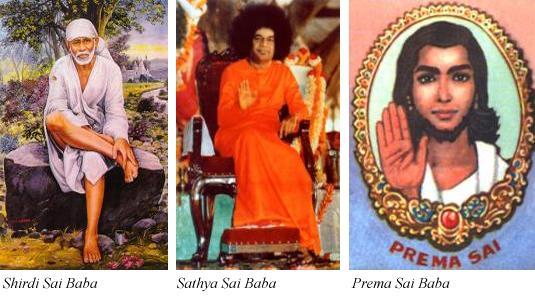
Indian saint Sri Satya Sai Baba describes man as an embodiment of PREMA (Love) and it appears that he drew inspiration from the Books of Holy Bible which define God as Love and directs man to Love God and to Love one another. He further asserts that he would be known as Prema Sai (Sai, the embodiment of Divine Love) in his next reincarnation.

Bharat Darshan defines Indian Identity- What is Prema (Love)? Sri Satya Sai Baba describes the man as an embodiment of PREMA (Love) and it appears that he was inspired by The New Testament Books of Holy Bible which define God as Love and directs man to Love God and to Love one another.

Love is a powerful emotion felt for another person manifesting itself in deep affection, devotion or sexual desire. If love is viewed as fondness or affection it may include or based in part on sexual attraction which is related to libido (sexual urge or instinct), and lust (a desire to gratify the senses or bodily appetite that seeks unrestrained gratification).

Love implies feelings that are attached to relationships or objects and assumes various forms such as sexual love, brotherly love, and love of God. The attachment may be felt for inanimate things as well as people, or ideas, or expressed as an abstraction. There are many different kinds of love; different in object, different in tendency, and different in expression.

The problem of the kinds of love is further complicated by the need to differentiate and relate love and desire. The category of love known as sexual love has the tendency to desire possession of the object that is loved. The tendency of desire is acquisitive. Sexual love is a love born of desire, and the drive of desire continues until it is satisfied by possession of the loved object. Physical possession is the basis for the satisfaction of sexual desire, sexual appetite, or sexual hunger, or sexual thirst. The other forms of love do not tend to possess the object loved but seek to benefit the object that is loved. Love is selfish when it acts like hunger, thirst, or appetite which need to be satisfied for the benefit of the person expressing that love.

Bharat Darshan defines Indian Identity- What is Prema (Love)? Sri Satya Sai Baba describes the man as an embodiment of PREMA (Love) and it appears that he was inspired by The New Testament Books of Holy Bible which define God as Love and directs man to Love God and to Love one another.

Love is altruistic when it acts for the good or the benefit of the beloved. Conjugal love may include a combination of selfishness and altruism. The ancient languages have three distinct words for the main types of love; Eros, Philia, and Agape in Greek language; Amor, Amicita or Dilectio, and Caritas in Latin language. However, English language has no such distinct words and hence it becomes necessary to use such phrases as “sexual love”, “love of friendship”, and “love of charity” in order to indicate plainly that love is common to all three, and to distinguish the three meanings.

The idea of love expressed in Biblical Scriptures makes no distinction between Amor, Dilectio, and Caritas.

Whole Dude – Whole Love. What is Love?

For example, in The Gospel according to Saint Matthew, Chapter 22, verses 37, 38, and 39 Jesus proclaims the Great Commandments while endorsing the Laws of Moses: Jesus said unto him, “Thou shalt love the Lord thy God with all thy heart, and with all thy soul, and with all thy mind. This is the first and great commandment. And the second is like unto it. Thou shalt love thy neighbor as thyself.”

Jesus brings unity between the idea of self-love, love of God, and the love of one another without making distinction between the three different kinds of love. Jesus does not specify if man should wish and expect to be loved in return. Jesus did not attach any purpose to this act of love, and did not describe the nature of desire, the attachment, and the gratification that may operate the Love Commandment.

THE ORIGIN OF LOVE:

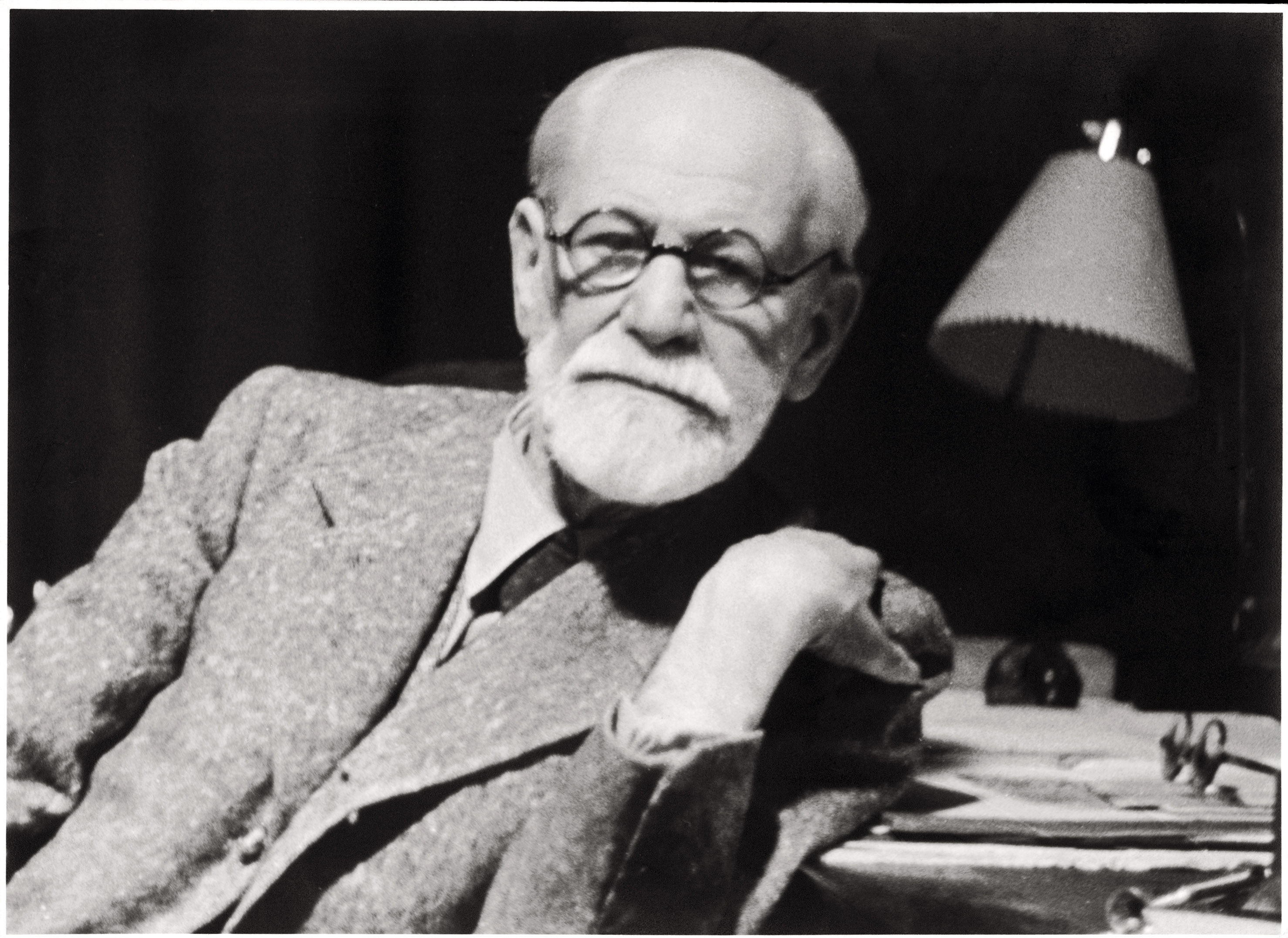
Sigmund Freud places the origin of Love in sexual instincts and he claims that the many varieties or categories of Love are simply the forms which love takes as the libido fixes upon various objects.

Sigmund Freud’s theory places the origin of love in the sexual instincts, and so for him the many varieties of love are simply the forms which love takes as the ‘LIBIDO’ fixes upon various objects. He states, “The nucleus of what we mean by love naturally consists …… in sexual love with sexual union as its aim. We do not separate from this; on the one hand, self-love, and on the other, love for parents and children, friendship and love for humanity in general, and also devotion to concrete objects and to abstract ideas….. All these tendencies are an expression of the same instinctive activities…. They differ from sexual love only because they are diverted from its aim or prevented from reaching it, though they always preserve enough of their original nature to keep their identity recognizable.” If love is the passion of the sexual instinct, temperance is an inadequate restraint. Neither reason nor law is adequate to the task of subduing the nature of the sexual instinct. Sexual instinct is a very powerful biological instinct and it profoundly influences human behavior. Hence it becomes necessary to transform sexual love either by repressing it, or sublimating it, or mixing it with tenderness or kindness. In that context, friendship, charity or compassion, and devotion to God could be stated as transformations of sexual love. Sexual instincts are inhibited or actually repressed in the expression of brotherly love, or feelings of deep affection for children and others where the relationship should not be based upon feelings of sexual attraction.

THE COMPLEXITY OF LOVE:

Bharat Darshan defines Indian Identity- What is Prema (Love)? Sri Satya Sai Baba describes the man as an embodiment of PREMA (Love) and it appears that he was inspired by The New Testament Books of Holy Bible which define God as Love and directs man to Love God and to Love one another.

Love is a very complex emotional instinct and it is complex as it may not always provide a sense of joy or happiness. There is a fact about love; love frequently turns into its opposite, hate. Sometimes there is love and hate of the same object; sometimes love inspires hate, and love may also cause jealousy, anger, and fear. Love seems to be the primal passion, generating all the others according to the oppositions of pleasure and pain and by relation of cause and effect. The individual’s experience of love is extremely variable and it includes the operation of both positive and negative impulses.

The Indian tradition has carefully examined this complex instinctual behavior and it instructs people to understand the three major distinctions or categories of love and to apply a sense of restraint, or that of repression. It brings love under the purview of morality, the code of Right Conduct or Dharma. Indian Culture does not provide the linguistic tools to express feelings associated with sexual passion without using temperance. There is no linguistic equivalent in classical Indian languages to profess love. The terms and words that Indians use have specific meaning attached to them.

LOVE vs PREMA:

Bharat Darshan defines Indian Identity- What is Prema (Love)? Sri Satya Sai Baba describes the man as an embodiment of PREMA (Love) and it appears that he was inspired by The New Testament Books of Holy Bible which define God as Love and directs man to Love God and to Love one another.

Love is not a universal term and this idea is not expressed in Indian tradition and classical literature.

Bharat Darshan defines Indian Identity- What is Prema (Love)? Sri Satya Sai Baba describes the man as an embodiment of PREMA (Love) and it appears that he was inspired by The New Testament Books of Holy Bible which define God as Love and directs man to Love God and to Love one another.

The word “Love” appears repeatedly in the Bible, in several different editions of Bible. I am not a language expert and I believe that people who translated Bible have exercised great care to convey the meaning of love. Many editions of Bible have further clarified the meaning of Love in their glossary section or Bible dictionary and define Love as a deep sense of affection, devotion for someone or something and they very carefully exclude sexual desire and sexual passion. In English speaking world, and in English literature, the word Love is used to describe desire, libido, lust, and passion based upon sexual attraction. So, Love is a generic term and it may not always mean brotherly love and goodwill.

Indian Culture has erected subtle barriers and has not provided linguistic tools to use the word Love as we like. It separates Love into various categories and sets them apart. The feelings of affection, or fondness that are associated with sexual attraction are specifically known as ‘Kama’ and intense sexual passion or desire is called ‘Moha’. Any intense or passionate desire could be called Kama and to act under its influence could be stated as Moha. My love for God could only be expressed in terms of Bhakti or Devotion, and the desire could be called Preet. The desire called Preeti or Preet is a legitimate desire. It is also called “Ishta.” I am allowed to seek or desire certain things in my life and that desire is subject to the rule of Good Conduct or Dharma. I can express the sentiment of Preet only when, and where such desire is allowed to be stated in a legitimate manner, and is acceptable to tradition and established conventions and social norms. If I entertain thoughts of sexual attraction about my attractive and rich neighbor, I am not allowed to express my feelings as Preet. It can not be called “Ishta”. I can call it Kama or Moha. In the epic poem of Ramayana, when King Ravana, the King of Lanka desired to marry Princess Sita and had attended her ‘Swayamvara’, his desire was legitimate as he intended to seek the gratification of the feelings of sexual attraction through rightful conduct called marriage. But, when he abducted her while she was lawfully married to Prince Rama, that desire and sexual attraction represents an impulsive action of Moha, and Kama. King Ravana was not entitled to express his Love for Sita if it is formulated by Kama, and intense sexual passion known as lust or Moha. Similarly, a man can express his love or Preet for a woman in a respectful or legitimate manner and to seek a valid relationship based upon trust, respect, and commitment. If the relationship is illegal, it can not be called Preet. A father’s love, or mother’s love, or brother’s love is described as “Vatsalya,” a natural sense of affection and fondness which is not related to sexual attraction or desire. The word “Prema” or “Prem” is used to describe the feelings of affection, fondness, Friendship (Sneha or Maitri)), Kindness (Daya, or Karuna), Compassion (Krupa), Happiness, Joy (Ananda) that have no direct relationship to the satisfaction of sexual desires and passions. The deep sense of affection between husband and wife is often called “Anurag” which indicates an intimate friendship. I can not literally translate this word Love into any of the Indian languages as such expression is not allowed without stating the nature of its contents.
Whole Dude – Whole Love. What is Love?

The Commandment of Jesus to Love your neighbor as thyself cannot be easily expressed in Indian languages. Jesus has not stated that idea in terms of Friendship (Sneha), Kindness (Daya), or giving Happiness (Ananda). Only when, and if those qualities of friendship, kindness, and giving joy or happiness are specifically included; Jesus could Command others to express Love or Prema to another person.

Whole Dude – Whole Love. What is Love?

However, in the Indian tradition, the deep sense of affection or fondness of God is stated as Bhakti or Devotion.

Whole Dude – Whole Love. What is Love? The Mystical Relationship between Poet Meerabai and Lord Krishna.

16th century Hindu Saint Meerabai (1498 AD to 1547 AD) reveals her deep sense of affection and adoration of Lord Krishna in songs and actions which still captivates the attention of people who learn about her thoughts and feelings. Her passionate feelings expressed in sweet and endearing words cannot be captured by the term Love.

Whole Dude – Whole Love. What is Love? In the Indian tradition, the Love of God is described in an unique manner always imparting a divine sensation or an experience of Sweetness.

Jayadeva in his famous Ashtapadi, Gita Govinda gives an enchanting description of Lord Krishna’s creative activities in Brindavan (Vrindavan) and he depicts the intense erotic feelings of the young maidens as a product of their supreme devotion to the Lord. I can not use the word Love to describe the sexual passions of the Gopis or the young maidens of Brindavan.

Bharat Darshan defines Indian Identity- What is Prema (Love)? Sri Satya Sai Baba describes the man as an embodiment of PREMA (Love) and it appears that he was inspired by The New Testament Books of Holy Bible which define God as Love and directs man to Love God and to Love one another.

SELF-LOVE AND NARCISSISM:

Bharat Darshan defines Indian Identity- What is Prema (Love)? Sri Satya Sai Baba describes the man as an embodiment of PREMA (Love) and it appears that he was inspired by The New Testament Books of Holy Bible which define God as Love and directs man to Love God and to Love one another.
My concern is not about Prema or Love. My concern is about self-love, a man’s love of himself. In psychology the word ‘Narcissim’ is used to describe excessive self-love. In my medical practice, I have not encountered such narcissistic tendencies among people of Indian origin. The Indian tradition has erected barriers and would not easily let us identify ourselves with the physical-self. The Indian tradition repeatedly instructs us about our Essence and true Identity and reminds us not to get attached to the physical-self. If I have no feelings of attachment to my physical-self, I can not really love myself. If I can not truly love myself, I can not also love my neighbor in the same manner, or to a same degree of my self-love. If man is not expected to love himself, the issue of loving the neighbor is redundant.
Bharat Darshan defines Indian Identity- What is Prema (Love)? Sri Satya Sai Baba describes the man as an embodiment of PREMA (Love) and it appears that he was inspired by The New Testament Books of Holy Bible which define God as Love and directs man to Love God and to Love one another.
Whole Dude – Whole Love: What is Love? GERMAN PHILOSOPHER FRIEDRICH WILHELM NIETZSCHE (1844-1900) HAD STATED: “WHAT IS DONE OUT OF LOVE ALWAYS TAKES PLACE BEYOND GOOD AND EVIL.” GOD’S LOVE FOR MAN IS UNCONDITIONED.
Whole Dude – Whole Love: What is Love?

“Prema Sai will be born in Doddamalur”

The Times of India has published a news story about the likely reincarnation of Satya Sai Baba as “Prema Sai Baba.

Whole Dude – Whole Love: What is Love? Indian Saint Sri Sathya Sai Baba announced his plans for his reincarnation as an embodiment of Love called Prema Sai Baba.

M B Maramkal & K R Rajendra Kumar, TNN | Times of India, Apr 28, 2011, 05.52am IST

DODDAMALUR (Mandya): Will the reincarnation be reality or not?
Whatever happens, the tiny village of Doddamalur, off the Bangalore-Mysore highway, will definitely be in the news in the coming years, with scores of stories doing the rounds here over the reincarnation of Sathya Sai Baba as Prema Sai.

What has lent credence to claims of people of the Vaishnava sect temples of Aprameya (Vishnu) and Ambegalu Krishna (toddler Krishna) is based on a book `Sri Sathya Sai — Anandasai’ authored by one Swami, an ardent devotee of Sai Baba. In that, he claims that the godman, during his visit to Doddamalur, had told him that Sai Baba had three avatars in kalyug, and of them, he is the second avatar (reincarnation) of Shirdi Sai Baba. The third will be Prema Sai and he will be born in this village. He also claims that Baba, during his visit in the ’60s, showed a small house where he will be born.

However, confusion prevails among people who are making claims of Baba’s reincarnation in the village. According to Ramadas, who runs a Krishna charitable trust, Prema Sai will be born in this village after 2023, as predicted by Sathya Sai Baba. Ramadas said Baba had predicted that his personal assistant, Narayan Kasturi, who died long ago, will reincarnate himself as a woman in a village near Bhadravathi, marry a person from this village and give birth to Prema Sai. “Today you are my assistant, in the next life you will be my mother,” Sai Baba is supposed to have said.

Doddamalur, located on the banks of the river Kanva, will be called Gunaparthy after the reincarnation, said Raghav, an aged villager, disclosing that the soil and water of the village have curative powers. The village will be called Gun (cure) parthy (place) in the years to come.

WHY DID BABA CHOOSE THIS VILLAGE?

Villagers who are well-versed with its history claim that Baba was carried away by the religious history and mythological importance of this village. People say a Kanva sage did tapasya (penance) here and it was an agrahara (Brahmin settlement) in medieval history. It is said that saint Purandaradasa visited the Aprameya and Krishna temples here and presented a kirtana (discourse) on this village and temples. Baba was enamoured by the historic significance of this village.

“My impression about this story is, Sri Satya Sai Baba has attempted to import a foreign idea to the Land of Bharat without fully understanding the subtle cultural barriers that exist in the Land. The notion of Prema could only be expressed in terms of Friendship (lack of animosity), kindness and goodwill, and that of giving happiness to others. It can not be related to the idea of Love. The theory of reincarnation is not the issue. The issue is about the idea itself. He has to attach meaning to the word “Prema” that he used and distinguish it from the word “Love” that is used in English language.

Whole Dude – Whole Love: What is Love?

Whole Dude – Whole Reality – Whole Light

Defining Indian Identity – The Light Bulb Connection

Bharat Darshan discovers Indian Identity by turning on the Light Bulb

Deepam Jyoti Param Brahma,

Deepam sarva tamopaham, 

Deepena Saadhyate Sarvam,

Sandhyadeepam Namostute.  

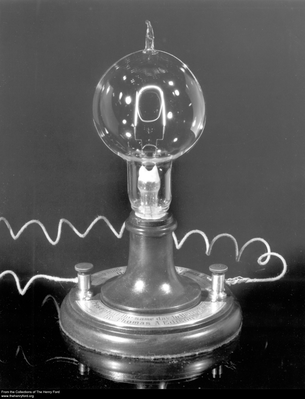
Bharat Darshan discovers Indian Identity by turning on the Light Bulb. Deepam Jyoti Param Brahma – Light and Ultimate Reality. Indian Tradition recognizes ‘Light’ as the manifestation of Ultimate Reality known as Param Brahma and Indians worship all sources of light including that of a light bulb.
Thomas Alva Edison - 'The Light Bulb' Connection to Indian Identity
Bharat Darshan discovers Indian Identity by turning on the Light Bulb. Deepam Jyoti Param Brahma – Light and Ultimate Reality. Indian Tradition recognizes ‘Light’ as the manifestation of Ultimate Reality known as Param Brahma and Indians worship all sources of light including that of a light bulb. Thomas Alva Edison – A Great Inventor of Modern Times. His invention connected me to my Indian Identity.

Firstly, I want to give my thanks to Mr.Thomas Alva Edison, the great American inventor. He is most famous for his development of the first commercially practical incandescent lamp (1879). Perhaps his greatest contribution, however was the development of the world’s first central-electric-light-power station. We owe him thanks for making the human existence pleasant and comfortable.

Thomas Edison’s bright idea

Bharat Darshan discovers Indian Identity by turning on the Light Bulb. Deepam Jyoti Param Brahma – Light and Ultimate Reality. Indian Tradition recognizes ‘Light’ as the manifestation of Ultimate Reality known as Param Brahma and Indians worship all sources of light including that of a light bulb. The invention of Light Bulb in the City of New York.
.Bharat Darshan discovers Indian Identity by turning on the Light Bulb. Deepam Jyoti Param Brahma – Light and Ultimate Reality. Indian Tradition recognizes ‘Light’ as the manifestation of Ultimate Reality known as Param Brahma and Indians worship all sources of light including that of a light bulb.
Bharat Darshan discovers Indian Identity by turning on the Light Bulb. Deepam Jyoti Param Brahma – Light and Ultimate Reality. Indian Tradition recognizes ‘Light’ as the manifestation of Ultimate Reality known as Param Brahma and Indians worship all sources of light including that of a light bulb.
On January 27, 1880, Thomas Edison received a patent for an electric lamp using ‘a carbon filament or strip coiled and connected to platina contact wires.’ This wasn’t exactly the first light bulb, but it was the first practical and inexpensive one, a key technological innovation that introduced a new era. To mark the day, we’re looking at the bright lights of New York City and its surrounding area, as seen from the International Space Station.

Edison moved to New York in 1869 and did much of his work in nearby West Orange, New Jersey. He started the Edison Electric Illuminating Company of New York to supply electricity (and help sell light bulbs). It would eventually merge with several gas companies to form Con Edison, which supplies power to New York City to this day.

I also give my thanks to Nikola Tesla who is indeed the Genius Who Lit the World.  

Bharat Darshan discovers Indian Identity by turning on the Light Bulb. Deepam Jyoti Param Brahma – Light and Ultimate Reality. Indian Tradition recognizes ‘Light’ as the manifestation of Ultimate Reality known as Param Brahma and Indians worship all sources of light including that of a light bulb. While speaking about Light and Electricity, I also pay my homage to Nikola Tesla, The Genius Who Lit the World.

 What is this ‘Light Bulb’ connection that may define the Indian Identity?      

I grew up in India. People visit a variety of temples to worship and to seek the presence of God.They do that at homes as well.When I was a boy, one of my early observations was that, in the evening hours as it gets dark after the sunset, when I flip the switch to turn the light on, my mother would pay respects to the light bulb. It is almost like a reflex behavior. I had asked my mother about it.The instant the light bulb comes to life, it becomes a source of light and being a source of light, it would represent God. My mother had told me that she would be reminded of God’s presence when the light bulb is switched on. My grandmother had also done the same thing.We worship the light bulb as it gives us the awareness and makes us conscious of the reality of God.       

Sri Kalahasti Temple at Sri Kalahasti, Andhra Pradesh, India.
All living entities are ‘CONSCIOUS’ and are aware of their existence and their living environment. Living Entities are also ‘CONSCIOUS’ of the Creator. The legend at Sri Kalahasti establishes the awareness of creatures like a spider, a snake, and an elephant and their desire to seek the LORD.

Light and Consciousness:  

Light or Jyoti in the Sanskrit language represents the Eternal Reality. Jyoti is our conscious, its our awareness and it connects us to the Creator.This consciousness permeates all living entities. Consciousness is a function which enables a living organism to be aware of its own state of existence and to maintain that state of existence. Living organisms are aware of their need for an external source of energy to sustain their state of existence. Living organisms exist as ‘Energy Seekers’ and to exist they need connection with a ‘Energy Provider’. Consciousness is a biological function which establishes the connection between ‘Energy Seeker’ and ‘Energy Provider’. Because of this awareness, all entities would recognize and respond to their Creator, the Prime Source of Energy and the Controller of Energy.       

It is not just humans who possess the awareness of God. In India, in the State of Andhra Pradesh, there is a beautiful town known as SriKalahasti. According to legend, at this place, a spider, a snake, an elephant, and a man worshiped Lord Shiva with an excellent sense of devotion.  

In almost every Indian home a lamp is lit daily before the altar of the Lord. In some houses it is lit at dawn, in some, twice a day – at dawn and dusk and in a few it is maintained continuously (akhanda deepa). All auspicious functions and moments like daily worship, rituals and festivals and even many social occasions like inaugurations commence with the lighting of the lamp, which is often maintained right through the occasion.    

Indians light up a lamp as a ritual to worship a deity of their choice. In several parts of the world and in various cultural traditions, the use of light is prevalent and is a part of ritualistic worship. In the Land of India, light is not only used as part of a ritual but also is directly worshiped with the belief that light represents God. Light is also worshiped in a personal form known as Jyoti, the sister of Skanda and the daughter of Lord Shiva and Mother Parvati.      

Goddess Jyothi, daughter of Parvati
Deepam, Jtoyhi, or Light represents God. The personification of light is Goddess Jyoti. Bharat Darshan discovers Indian Identity by turning on the Light Bulb. Deepam Jyoti Param Brahma – Light and Ultimate Reality. Indian Tradition recognizes ‘Light’ as the manifestation of Ultimate Reality known as Param Brahma and Indians worship all sources of light including that of a light bulb.
Bharat Darshan discovers Indian Identity by turning on the Light Bulb. Deepam Jyoti Param Brahma – Light and Ultimate Reality. Indian Tradition recognizes ‘Light’ as the manifestation of Ultimate Reality known as Param Brahma and Indians worship all sources of light including that of a light bulb.

The above is a prayer to lead us towards Right Conduct, to lead us from darkness towards Light (Eternal Reality) and to lead us from death towards Eternal Life.      

It is easy and simple to know the Indian Identity. Flip that light switch and let the ‘Light Bulb’ connect you to the Reality.

The First Book of Moses called GENESIS, Chapter 1, verses 2, and 3 describe the creation of Light : Then God said, “Let there be light”; and there was light. If light was not created, the physical matter could have simply existed as dark matter. I describe luminosity, the quality of giving off light as an event of creation.  

Essence and Existence: 

Man, the multicellular organism exists as a physical, mental, social, moral, spiritual, and rational being. Man’s existence is conditioned by the subjective reality called alternating periods of light and darkness known as day and night, and the unconditioned reality is that of Sun who shines with the same brightness all the time while man experiences Sun rise and Sunset.   

Bharat Darshan discovers Indian Identity by turning on the Light Bulb. Deepam Jyoti Param Brahma – Light and Ultimate Reality. Indian Tradition recognizes ‘Light’ as the manifestation of Ultimate Reality known as Param Brahma and Indians worship all sources of light including that of a light bulb.
Defining Indian Identity – The Light Bulb Connection to the Reality of existence. Indians celebrate the festival of “KARTHIGAI DEEPAM” . “KARTHIKAI DEEPAM” OR ‘KARTIKA DEEPAM’. Should man search inwards or search outwards to find God? I can search if and only if my existence is supported. For my existence, I depend upon the ability of plants called photo-reception.
Defining Indian Identity – The Light Bulb Connection
Defining Indian Identity – The Light Bulb Connection to the Reality of Existence.

Earthly Existence is synchronized by the creation of Day and Night

Earthly Existence is Synchronized by the Creation of Day and Night. The Vitruvian Man c.1492. The painting by Leonardo da Vinci displays the spirit of scientific inquiry. The term Self-Realization describes complete fulfillment or full development of the Self and Man is not complete without full development of God-Connection. God-Realization is not about Faith or Belief in God. It is about understanding the connection between Man, the Energy Consumer, and God, the Energy Controller.

The Man’s Experience of Life in the Natural World

What it is to be a Substance? and What it is to Exist? We need to establish knowledge about the man on a firm basis and the information it provides must be tested for its accuracy and consistency with an external reality. We have to make the fundamental distinction between the living and the non-living matter. The scientific advances of the 19th and 20th centuries reinforced the materialistic position concerning the basic similarity of organic living and inorganic physical matter. The man is viewed as a product of natural evolution and is thought to be subject to the same laws of Physics and Chemistry or mechanistic principles.

We need a methodology to study philosophy and to understand philosophical statements. Logical Positivism, also known as Scientific Empiricism aims to clarify concepts in both everyday and scientific language. It describes analysis of language as the function of philosophy. This analysis of language and of concepts is important to understand questions of belief and ideology which affect what we think we ought to do individually and socially. I would use this method of ‘Applied Philosophy’ to analyze the concept of Spiritual Optics, the Spiritual dimension of the Man’s experience of Life in the Natural World.

The Beginning. The Story of Creation

Earthly Existence is Synchronized by the Creation of Day and Night.

The Holy Bible, The Old Testament, Book of Genesis, Chapter 1 (verses 1,3,4,5,14 and 15) describes the creation of day and night.   

In the beginning God created the heavens and the earth.   

And God said, “Let there be light,” and there was light.   

God saw that the light was good, and He separated the light from the darkness.   

God called the light “day,” and the darkness He called “night.” And there was evening, and there was morning – the first day.   

And God said, “Let there be lights in the expanse of the sky to separate the day from the night, and let them serve as signs to mark seasons and days and years, and let them be lights in the expanse of the sky to give light on the earth.”   

Earthly Existence is Synchronized by the Creation of Day and Night. .Are We Living in a Designer Universe? The Geocentric Model describes the Design Effect. Video Credit: NASA, Animation: James O’Donoghue  (JAXA)

Explanation: How does your favorite planet spin? Does it spin rapidly around a nearly vertical axis, or horizontally, or backwards? The featured video animates NASA images of all eight planets in our Solar System to show them spinning side-by-side for an easy comparison. In the time-lapse video, a day on Earth — one Earth rotation — takes just a few seconds. Jupiter rotates the fastest, while Venus spins not only the slowest (can you see it?), but backwards. The inner rocky planets, across the top, most certainly underwent dramatic spin-altering collisions during the early days of the Solar System. The reasons why planets spin and tilt as they do remains a topic of research with much insight gained from modern computer modeling and the recent discovery and analysis of hundreds of exoplanets: planets orbiting other stars.


Earthly Existence is Synchronized by the Creation of Day and Night. The First Book of Moses called GENESIS, Chapter 1, verse 4 :”And God saw the light, that it was good; and God divided the light from the darkness.”

Different planets have different rates of rotation. We use Earth’s spin to define coordinate systems for locating objects both on the ground and the sky. The timekeeping system that we use is related to the rotation of the Earth. My human existence in this Universe is synchronized with the rotational spin of the Earth. The spin gives me alternating periods of light and darkness known as Day and Night while the Sun is shining all the time. 

Synchronization of the External and Internal Environment of the Living Things

Earthly Existence is Synchronized by the Creation of Day and Night. The First Book of Moses called GENESIS, Chapter 1, verse 14: Then God said,”Let there be lights in the firmament of the heavens to divide the day from the night; and let them be for signs and seasons, and for days and years;”

The Biological Clock – Every living system studied behaves as if it contains a highly dependable clock. The specialized properties of this clock suggest that it involves some unique biological mechanism indissociable from life itself.   

Biological Clock is an internal-timing mechanism to synchronize biological functions.

The Biological Clock is a self-sustained internal timing mechanism that controls cyclic patterns, or rhythms, of a living organism. All organisms have this ability to synchronize their existence to events in both their internal or external environment. Because of this internal timing, certain physiological and behavioural events vary in intensity. Such time-dependent variability is expressed as a rhythm, or oscillation, with a frequency equal to that of the underlying biological clock. Biological clocks time the Solar day, the period of the Earth’s rotation relative to the Sun.    

Earthly Existence is Synchronized by the Creation of Day and Night. THE ETERNAL LAW OF AGING: THE EPIGENETIC CLOCK, HORVATH’S CLOCK IS A BIOLOGICAL CLOCK TO MEASURE THE AGE OF MOST HUMAN TISSUES, CELL TYPES, AND ORGANS IN THE SAME INDIVIDUAL WHICH CAN HELP IN PREDICTING THE AGING PROCESS.

The Biological Rhythm – Biological Rhythms represent the periodic biological fluctuation in an organism that corresponds to and is in response to periodic environmental change. The most important example of such environmental change is that of the cyclical variations in the relative position of the Earth to the Sun and the immediate effect of this variation is that of night alternating with day or the change from darkness to light. Biological Rhythms that occur once a day are called Circadian(Latin circa:”about,” di: “day,”), Solar day, diel, daily, diurnal(day-active), or nycthemeral rhythm. Circadian rhythms are the most pervasive rhythms regulating many events for every day in the lives of most living organisms. Circadian rhythms are synchronized to an external time-giving stimulus. The external stimulus that is important for most living organisms is that of Sun rise and Sun set, the daily light-dark cycle determined by Earth’s rotation.   

The Day Active or Diurnal Rhythm Regulating the Man   

Earthly Existence is Synchronized by the Creation of Day and Night: THE HUMAN ORGANISM RUNS ITS LIVING FUNCTIONS AS IF OPERATED BY A PRECISE TIMEKEEPING DEVICE OR BIOLOGICAL CLOCK. MAN’S EXPERIENCE OF TIME IS RELATED TO SUN’S APPARENT MOTIONS IN THE SKY. MAN KNOWS THE REALITY OF TIME BECAUSE OF AN ILLUSION THAT CAUSES DAY AND NIGHT GIVING MAN THE PERCEPTION OF SUN’S APPARENT MOTION WHILE CONCEALING THE REALITY OF SUN’S MOTION IN THE MILKY WAY GALAXY.

Within the 24-hour cycle (circadian), a person usually sleeps approximately 8 hours and is awake 16 hours. In man, the daily alteration of sleep and wakefulness is accompanied by many changes, including activities of the nervous and endocrine systems and the liver and kidneys. Daily variations occur in body temperature, in heart and respiratory rates, and in blood pressure and composition of the blood.There are daily variations in chemical syntheses and in cell divisions.   

Earthly Existence is Synchronized by the Creation of Day and Night: There are two kinds of biological responses or rhythms. 1. The activities like Sleep and Wakefulness are related to the fluctuations of physical environment such as darkness, and light, or night and day variation, and 2. The rhythms such as heartbeat, and respiratory rate occur without external geophysical correlates as a consequence of the movements of the Earth.

During the wakeful hours, mental and physical functions are most active and tissue-cell growth increases. During sleep, voluntary muscle activities nearly disappear and there is a decrease in metabolic rate, respiration, heart rate, and blood pressure. The activity of digestive system increases during the resting period, but that of the urinary system decreases. Hormones secreted by the body, such as the stimulant epinephrine(adrenaline) are released in maximal amounts about two hours before awakening so that the body is prepared for activity.   

Earthly Existence is Synchronized by the Creation of Day and Night. The Eternal Law of Aging: HUMAN EXISTENCE IS SYNCHRONIZED WITH DAILY CHANGES IN THE EXTERNAL ENVIRONMENT IN RESPONSE TO DAYLIGHT OR DARK.

If a person tries to break the circadian rhythm by ignoring sleep for a number of days, psychological disorders begin to arise.  

The Laws of Nature

Earthly Existence is Synchronized by the Creation of Day and Night. THE ETERNAL LAW OF AGING: THERE ARE SEVERAL THEORIES ABOUT SENESCENCE. APART FROM THE MEASUREMENT OF CHRONOLOGICAL AGE, IT WOULD BE VERY USEFUL TO ASSESS AND MEASURE THE BIOLOGICAL AGE OF THE HUMAN ORGANISM AS THAT WOULD HELP TO PREDICT AGE-RELATED CHANGES IN THE STRUCTURE AND FUNCTION AND INVENT INTERVENTION MECHANISMS TO REDIRECT OR REGULATE THE AGING PROCESS.

Diverse aspects of human physiology and behaviour show that human existence is synchronized with the Laws of Nature. When we live in accordance with the law, we get a chance to know the provider of the law.   

Earthly Existence id Synchronized by the Creation of Day and Night. MAN’S EXISTENCE IS SHAPED BY FLAT EARTH WITH ARCHED DOME EXPERIENCE.

Whole Dude – Whole Karma

The Concept of Whole Karma

The Land of India or Bharat Varsha is traditionally identified as 'KARMA KSHETRA' or 'KARMA BHUMI'.Human Existence is operated by the 'Law of Karma'.
Bharat Darshan Defines Indian Identity. The Land of Karma.

The Sanskrit word Karma describes the totality of a person’s actions in any one of the successive states of that person’s existence. The ‘Law of Karma’ governs all action and its inevitable consequences on the doer. The ‘Law of Karma’ determines the consequences on the doer not only during the course of his current existence but also during the course of the next successive states of future existence.

Because of this deep-rooted belief in the inevitability of consequences on the doer, the Land of Bharat or India is identified as Karma Kshetra or Karma Bhumi, the Land where the Law of Karma is enforced upon all living and non-living entities.

The Law of Karma and its relationship to Fate or Destiny    

Defining Indian Identity. The Law of Karma. A ceiling decoration from a Jain temple in Ranakpur, Rajasthan, India. The knots represent the interlinking notion of karma.

In whichever manner an individual chooses to act, the action may have been predetermined by his past Karma. In this sense, Karma could be described as the root cause of any action or event. The word Fate or Destiny is described in the Sanskrit language as Daivam, Bhagyam, Niyati, and Vidhi. Fate or Destiny is the Power or Divine Agency that determines the outcome of events before they actually occur. Fate or Destiny determines what happens or has happened to a person during his past, present, or future existence.

Very often, people are confused about the relationship between the concept of Karma and the concept of Daivam, or Vidhi which is popularly described as Fate or Destiny. People may invoke the concept of Fate or Destiny to explain when something inexplicable and unexpected happens in one’s life.

The belief in a Supreme Being and the belief in God as the Prime Cause, and the concept of God’s Supreme Will are slightly different from the concept of the Power or the Divine Agency represented by Daivam or Vidhi. God will not contrive the actions of an individual for His own benefit. God has the intrinsic ability to execute  His own Plans. It is the individual’s Karma (from present and past stages of existence) that determines his own Fate or Destiny in the next and subsequent stages of existence.

The Power or the Agency of Fate or Destiny is not operated by the individual but by a Divine Strategy. The individual has no control over the Divine Strategy. A person can exercise control over his own actions but cannot modify the manner in which the consequences for his actions manifest. The consequences for the actions in one’s own life may manifest at an unknown time, in an unexpected manner strictly according to the Divine Strategy, the Power or Agency that administers Fate or Destiny. Karma literally writes the Fate or Destiny of an individual and yet they may not be used as synonyms. However, it would be correct to attribute any inexplicable event to the doings of Karma or Fate/Destiny.

Defining Indian Identity. The Land of Karma. The Divine Witness, Karma Sakshi of the actions and the consequences of actions during lifetime.

Since most living entities are dependent upon Sun for their existence, the Sun God or Lord Surya is also known as ‘Karma Sakshi’ which means that Sun is a Witness to all of our actions (Karma) during our lifetime. In the ‘Afterlife’, an individual could be judged and punished for his actions by a divine entity known as Lord Yama, Yama Dharmaraj or Karmakar, the Lord of Death and Justice who imposes punishment strictly according to the individual’s account of Karma.

Approved | The Economist
Defining Indian Identity. The Land of Karma. In the Indian tradition, the Final Rites of Passage is called KARMA, or the Final Action, Antya Kriya.

The idea or concept of Karma is firmly associated with the idea or concept of Samsara and the belief that a living entity has existed in the past, and would continue to exist in the future and death is viewed as a transition from one stage of existence to the next.    

The attributes of Karma    

Karma encompasses all actions performed by the five organs of Karma known as ‘Karma Indriya’. These are identified as hands, feet, speech (Vak), Payu, and Upastha. The last two describe bodily functions associated with excretion and reproduction.

In the West also there are stringent laws to protect people from offensive behavior that involve the use of the organs of excretion and reproduction. Lewd public behavior is prohibited by law.

Defining Indian Identity. The Land of Karma. The Cyclical Flow of Action, the performance of one’s own duties called Dharma, the Law of Right Conduct, and the Law of Cause and Effect. The man can never totally abstain from the performance of actions.

Karma describes a variety of activities. It includes occupational duties and work, rituals and ceremonies particularly in the context of death and mourning, the last rites, the rituals of sacrifice such as Havan or Yajna, the interest paid on a loan or debt, the struggle or effort to safeguard existence (Yatana), the good deeds (Punya), and also the sinful activities (Papa). An individual is expected to exercise control on his Organs of Karma and this attitude of self-restraint is described as Indriya Nigraha. An individual has no foreknowledge of his own Fate/Destiny and the only manner by which he may shape the future events is by choosing appropriate Karma according to the Laws of Right Conduct described in the Sanskrit language as Dharma.   

The Mechanisms of Karma

Defining Indian Identity. The Land of Karma. The newborn always arrives with a Credit Balance in the individualized Karma Bank Account.

Karma operates like a Bank Account. An individual entity, the newborn arrives with a Credit Balance of Karma known as Sa Beeja Karma or Sanchita Karma. This Credit Balance represents the Account Balance that is carried Forward from the individual’s previous existence. An individual’s physical existence may end with death, and the Karma Account would not be permanently closed and the Balance is carried Forward and represents the Beginning Balance with which an individual begins a new journey in the cycle of Life-Death-and Life. Whenever, an individual actually experiences the consequences of his past Karma, the Karma that is withdrawn from the Karma Bank Account is called as Prarabdha Karma. The individual actually tastes the Fruits of this Karma and hence it is also known as Karma Phal. The taste of the Fruit depends upon the nature of Karma that is being consumed by the individual. The experience of Prarabdha Karma has direct consequences as it affects the human body in its present state of existence. The individual has no choice in matters concerning this Withdrawal. The individual cannot control the Amount of Withdrawal, the Time of Withdrawal and the effects of the Withdrawal. The Authority which administers the Bank Account makes all the decisions in the manner a Karma Account is operated. The individual during the course of his existence would be continuously replenishing his Karma Bank Account. This Credit Balance in the Karma Account is known as Agami Karma (Kriyamana Karma). This Balance is not yet Withdrawn and is held in store until such time the individual gets a chance to experience its Fruits. Agami Karma represents an individual’s Predestination of which the individual has no foreknowledge. It is not exactly ordained by God. It is only operated by a Divine Strategy which chooses its own Plan to deliver this Agami Karma to the individual from his own Credit Balance. When the Karma Bank Account’s Balance becomes Zero, or nil balance the individual is promptly released from the shackles and entanglements of Karma. Such Liberated Individual Entity is described as Jivanmukta, a person who attained his total independence from the bondage of Samsara, the Cycle of Life-Death- and Life.

The Purpose of Life and Human Existence is ultimately that of eliminating the Balance in the Karma Bank Account and a Zero Balance is a Goal to be obtained. The idea of Liberation (Moksha) or Salvation is neither a reward nor a punishment. It should not be confused with the concept of Heaven and Hell where the individuals may receive rewards or punishment after the Day of Judgment. The concept of Liberation requires that there should be no Credit (Positive Karma), or Debit (Negative Karma ) Balance in the Karma Bank Account.   

Defining Indian Identity. The Land of Karma.

It may not be easy to empty the Karma Bank Account as the individual could only make deposits into his Account and the Account is withdrawn under a Plan operated by Daivam. Adi Shankaracharya describes the Identity of True or Real Self. Self-Knowledge is the key to obtain Release or Vimochan or Mukti from the entanglements of Karma and the act of Liberation called Moksha.

Shankara asserts that the Five Organs of Karma known as Vak (organs of Speech ), Panee (Hands), Pada (Feet), Upastha (organs of reproduction), and  Payu (organ of excretion) do not describe his true Identity.   

In the epic poem of Ramayana, Princess Seetha had instructed Hanuman;"The Fruit of one's own making is indeed experienced in one's life."
Defining Indian Identity. The Land of Karma.

Who Can Oppose Destiny?   

Who can resist Fate?  The epic poem of Ramayana very explicitly states that human entities are Weak (Durbala) and should not attempt to challenge or fight against Fate/Destiny. Since Fate is the work of Divine Strategy, we need to humble ourselves, exhibit an attitude of humility, and seek Divine Grace, Mercy and Compassion to deal with the doings of Fate.

In the story of Ramayana, all the central characters willingly submit themselves to the Power of Daivam, the Agency that operates Fate/Destiny. To illustrate this point of view, I shall quote from Valmiki Ramayana, Book VI, Yuddha Kanda – The Book of War, Chapter (Sarga) 113, verses 30 to 47. It describes the scene after the killing of King Ravana of Lanka who had earlier abducted Princess Seetha and held her captive in a grove known as Ashoka Vana. Prince Rama dispatches Hanuman to give Princess Seetha the message about His victory in the War. After having delivered the message, Hanuman seeks the permission of Princess Seetha to kill the notorious female-demons, the servant-maids of King Ravana who were frightening her during her prolonged captivity. In her response to Hanuman, Princess Seetha claims that the servant-maids were only acting in obedience to the orders of their King and hence should not be targeted with anger. She also further explains that she was only reaping the consequences of her misfortunes on an account of misdeed she may have committed in the past and states, ” The Fruits of one’s own making is indeed experienced in one’s life.” In verse number 42, Princess Seetha asks Hanuman to refrain from talking in that manner (about angry retaliation) and instructs him: “This indeed is a great Divine Strategy. It was ordained that this type of situation (her captivity) is to be obtained by Me, due to the application of Fate. Feeble as I am in these matters (about counteracting the Power of Fate), I shall grant protection from retaliation to the servant-maids of Ravana here.”   

MaivaM vada Mahaabaaho Daivii hye Shaa paraa gatiH,   

PraaptavyaM tu dashaa yog Anmayaitaditi  nishchitam   

Daasiinaam Raavanaasya aham marShayaami iha durbalaa.   

Mahaabaaho=O’ the Great Armed (Hanuman), maa vada= do not speak, evam=like this, eshaa= this, paraa hi= it is indeed great, Daivii gatiH= Divine Strategy, Nishchitam= it was decided, iti=that, idam= this situation, praaptavyam=is to be obtained, ma yaa= by me, durbalaa= feeble, aham=(as) I am, marshayaami=giving protection from retaliation,daasiinaam= the servant-maids, Raavanaasya= of Ravana,  iha=here.   

It is very interesting to note that Princess Seetha specifically using the phrase “Mahaa baaho” to glorify the physical prowess of Hanuman who merely asked for her permission to punish the female demons and it is absolutely clear that no physical effort is truly required on her part to execute that punishment. And yet, she claims that she will not consider punishing the servant-maids just because of her own physical weakness. In saying so, she is actually suggesting to Hanuman that he must also consider himself to be physically feeble and should not engage in any action with an intention to counteract the doings of Fate. Princess Seetha delivers a clear message to all living entities and reminds all of us to realize the ineffectiveness of our physical abilities and the Superiority of the Divine Power which operates Fate/Destiny. In her concluding remarks, Princess Seetha further instructs that it is incorrect to respond to evil with evil. No evil is to be done, even to those cruel persons of sinful deeds, who take pleasure to harm others and continue to perpetuate their sinful acts. Kindness is to be shown by a noble person either towards a sinner or to a virtuous person or even to a person who deserves death, for, there is none who never commits a wrong. Virtuous persons value good conduct as an ornament. A superior person does not take into account the sin of those who have committed an offense or a transgression.   

The epic poem of Ramayana firmly establishes the concept of Karma and the inescapable consequences of Karma and the role played by Daivam, the Divine Power which is manifested as Fate/Destiny and supports an attitude of humility and submission to the Divine Strategy.   

The Secular Aspects of Indian Identity    

Defining Indian Identity. The Land of Karma.

The ideas and concepts that originated in the Land of Bharat or India are secular. None of the concepts demand that the individual must worship any particular God. While embracing these ideas and concepts, Indians are free to worship a God of their own choice. Apart from a Divine Entity, Indians are free to choose a living entity or even a physical entity for an act of Worship and Devotion.

The ideas or concepts of Karma, Fate/Destiny, Satya (Truth), Dharma (Right Conduct), Samsara, Mukti, Moksha (Liberation) are not attached to any particular God. The ideas of Karma and Fate/Destiny do not demand absolute Faith in a particular God. The idea of Karma describes the activities of an individual and its consequences upon the individual. God is not involved in this idea. The idea of Fate/Destiny involves an unknown Supernatural Power or Agency and the Strategy used by this Agency. God does not contrive or conspire to cause an unfortunate event. In the epic poem of Ramayana, Prince Rama and Princess Seetha being reincarnations of Lord Vishnu and Goddess Lakshmi arrived upon planet Earth for their earthly existence without any Credit Balance of Karma and the mechanisms of Karma are not responsible for unfortunate incidents in their lives. They behave and act like ordinary mortals and hence we should not be surprised by Princess Seetha’s remarks about any misdeed she may have committed in her prior life as an explanation for the sufferings she endures. The entire Story is set into motion by a Divine Strategy and the principal players are not directly aware of that Strategy which would unfold in their lives with direct physical consequences. Ordinary mortals would be better off by contemplating upon their misdeeds and seek redemption and obtain protection from the Sovereign Energy/Power/Force of Mercy, Grace, and Compassion described as Krupa.   

The idea of Karma helps us to accept a sense of personal responsibility for any action that we perform, shapes our attitudes,  controls our behavior, and strengthens our character.  God is involved in all the actions performed by the man but God is not held accountable for the actions of the man. God constituted the man as a moral and rational being who has the ability to review his actions even if the choices are predestined.    

Defining Indian Identity. The Land of Karma. January 21 is Squirrel Appreciation Day. My reflections on “Chakrata Karma” with the help of a Squirrel Story.


Whole Dude – Whole Joy – Whole Bliss – Whole Satisfaction

The Discovery of Whole Joy, Whole Bliss, and Whole Satisfaction

The Discovery of Bliss on Akshaya Tritiya

The festival of Akshaya Tritiya is celebrated by Hindus and Jains around the world. Also known as Akti or Akha Teej, this day is believed to be one of the most auspicious occasions. This year, it falls on Friday, May 10.

The Discovery of Bliss on Akshaya Tritiya.

According to the Hindu calendar, Akshaya Tritiya falls on the third tithi called Tadiya (lunar day) of Shukla Paksha of the Vaisakha month. Going by the Gregorian calendar, it falls somewhere around April and May.

The Discovery of Bliss on Akshaya Tritiya. Friday, May 10, 2024 is the third day of the Waxing Crescent phase of the Moon in the Second Month of Vaisaka of Hindu Calendar.

One of the most important rituals includes worshipping Lord Vishnu on this day. For Hindus, the Sanskrit meaning of Akshaya Tritiya, the two words, holds a lot of importance. “Akshaya” means “never diminishing” and the term “Tritiya” signifies the third day of the illuminated half of Vaisakha month.

History and significance

The Discovery of Bliss on Akshaya Tritiya

People celebrate Akshaya Tritiya to bring good luck to their lives. As per common belief, buying gold and properties on this day brings prosperity and wealth in the future.

The Discovery of Bliss on Akshaya Tritiya.

Going by mythology, it is believed that a number of events took place on Akshaya Tritiya, making it an auspicious day.

The Discovery of Bliss on Akshaya Tritiya

As per one legend, on Akshaya Tritiya, Treta Yuga, the second of the four yugas, started and the sixth incarnation of Lord Vishnu, Parshuram, was born.

The Discovery of Bliss on Akshaya Tritiya.

Also, it is considered that Maharishi Ved Vyasa, the author of Mahabharata, started narrating the epic to Lord Ganesh on this day.

The Discovery of Bliss on Akshaya Tritiya.

It was on this occasion that Lord Krishna met his childhood friend Sudama.

The Discovery of Bliss on Akshaya Tritiya.

As per Hindu tradition, the river Ganga descended on Earth from heaven on Akshaya Tritiya.

The Discovery of Bliss on Akshaya Tritiya.

THE STORY OF AKSHAYA PATRA:

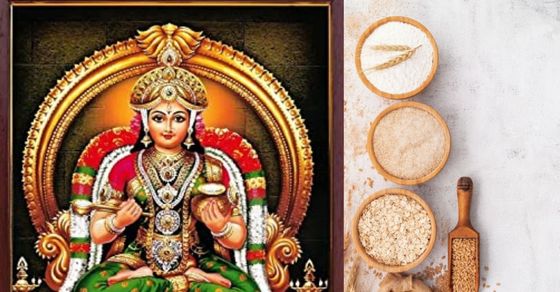
Akshaya Patra. Discover Bliss From an Empty Pot.

DHARMA RAJA, THE ELDEST OF PANDAVA PRINCES RECEIVING “AKSHAYA PATRA” FROM ‘SURYA BHAGAWAN’

The word ‘Akshaya Patra’ in Sanskrit language means an inexhaustible vessel. This pot could supply delicious meals in an endless manner. This story is found in the Indian Epic poem of Mahabharata. Akshaya Patra was a divine gift given to Dharmaraj by the Sun god, Surya. The pot was given to help the princely family of Pandavas to tide over their difficulties while they spent twelve years in the forest. They had to spend time in exile after losing their kingdom in a game of dice. Akshaya Patra would provide meals so that the Pandava family could keep up with the Indian traditions of hospitality.Also keeping in line with the tradition, each day Akshaya Patra would serve the final and last meal to the hostess. The hostess, Draupadi was very mindful of her traditional role and each day she would feed all the guests, all the dependents, all the family members and would then take the last meal.

THE DISCOVERY OF BLISS FROM AN EMPTY POT:

Akshaya Patra. Discover the Bliss From an Empty Pot.

As per the story from Mahabharata, one evening, Princess Draupadi finds herself in a troubled situation. A Hindu sage by the name of Durvasa with a large entourage of his disciples arrives at the forest abode of Pandava princes after hostess Draupadi took the last meal from Akshaya Patra. Since the pot cannot serve any more food, she prays to Lord Krishna seeking help to feed her guests. Lord Krishna appears before her and asks her to feed Him from Akshaya Patra. Draupadi regretfully answers that the pot is empty. He directs her to take a closer look. Princess Draupadi carefully reexamines the pot and discovers a single grain of rice that remained stuck in the pot. As instructed, she feeds the last grain from the pot to Lord Krishna and now the pot gets truly empty. However, Lord Krishna derived His satiation, complete satisfaction when the last grain from the pot got removed. Along with Lord Krishna’s experience of full satisfaction from eating a morsel of food, the entire party of guests experience full satiation and inform Princess Draupadi that she need not serve them any meal. Thus Princess Draupadi escapes from the duty of the hospitality tradition of actually feeding them that evening.

Discovery of Bliss on Akshaya Tritiya.

I am speaking of this story about Akshaya Patra to understand the concept about emptying the mind to discover pure consciousness. In Indian literature and idiom, the mind is often compared to a vessel or a pot. When all thoughts (or desires) are taken out of the mind, what would remain in the mind is like that single grain of rice that Draupadi discovered in the otherwise empty Akshaya Patra. In my analysis, this last grain of food represents the desire or attachment to life. When the desire or attachment to life is surrendered, the man attains the state of pure consciousness which discovers its unity with the Divine consciousness to provide the experience of Pure Bliss and Joy. Lord Krishna could have easily provided a hearty meal to the entire party of guests. He did not choose to provide happiness through gratification of the physical needs of the body. The pot, if seen as the representation of the mind, the mind gets truly emptied when the last grain or desire, or craving, or attachment is removed from it. Lord Krishna demonstrates that there is no need to fill-up the pot to feed our desires. He delivered Joy, Bliss, and the experience of perfect satisfaction after emptying the pot. Just like the empty Akshaya Patra that provided Bliss, when the last grain of desire or attachment is removed from the mind and given in offering to the Lord, the Lord would provide all that you may need without the physical gratification of the senses. Man at any given age, under all given circumstances, in good health, or ill-health exists in this physical world because of ‘God-Connection’, the Connection between man, the energy seeker, and God, the energy provider. When the God-Connection is recognized, the man experiences a sense of satisfaction, mental satiation, and he would have no desires to be gratified.

Bharat Darshan Discovers Bliss on Akshaya Tritiya.

Whole Dude – Whole Katha

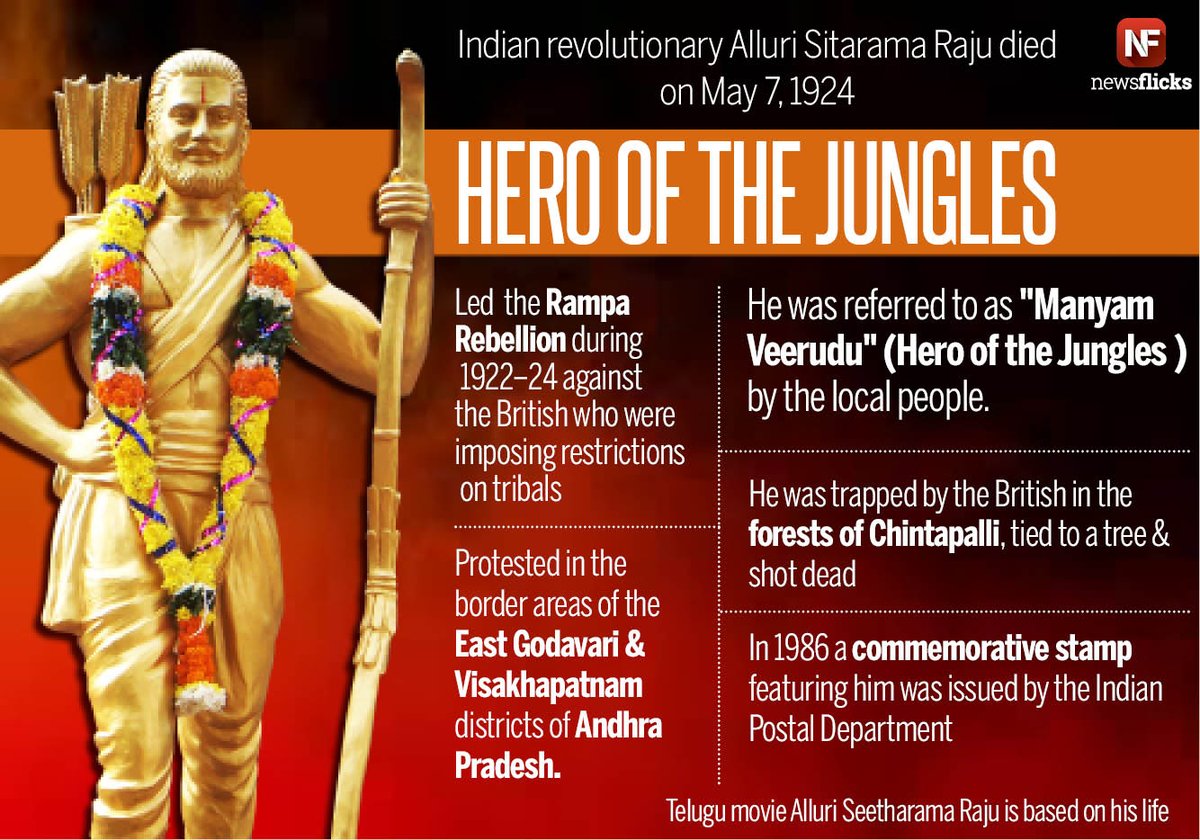
Burra Katha – My Connection to the Telugu Revolutionary Freedom Fighter

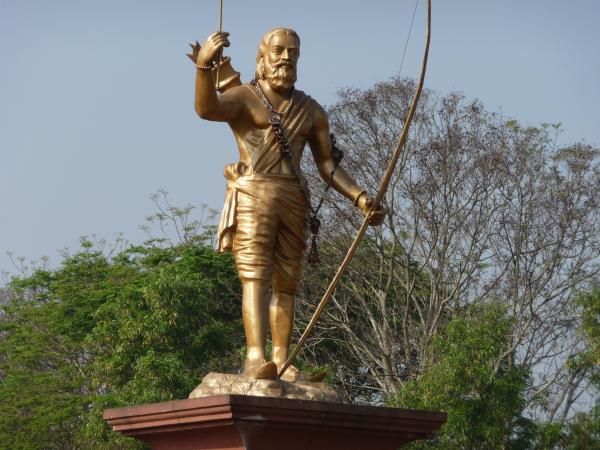
Burra Katha-My Connection to the Nation and Nationalism. A tribute to Telugu Revolutionary Freedom Fighter Alluri Sitarama Raju.
Burrakatha-My Connection to the Nation and Nationalism. A tribute to Telugu Revolutionary Freedom Fighter Alluri Sitarama Raju.

THE PRIDE OF TELUGU PEOPLE-ALLURI SITA RAMA RAJU

Burra Katha-My Connection to the Nation and Nationalism. A tribute to Telugu Revolutionary Freedom Fighter Alluri Sitarama Raju.

BURRA KATHA: THE TRADITIONAL ART FORM OF NARRATIVE ENTERTAINMENT OF ANDHRA PRADESH, INDIA

Burra Katha is the most popular art form of narrative entertainment for the Telugu-speaking Indians. A tribute to Telugu Revolutionary Freedom Fighter Alluri Sitarama Raju.

Burra Katha is the most popular art form of narrative entertainment in the State of Andhra Pradesh, India. In this theatrical form, a story teller accompanied by two partners, one on either side, recites a story while speaking, singing and dancing. The term “BURRA” refers to a stringed musical instrument called TAMBURA. The resonating chamber is made of a hollow shell (and the word ‘burra’ also refers to the human skull in the Telugu language). The main performer wears this instrument across his right shoulder. The term “KATHA” means a story. Storytelling is an important Oral Tradition in India and there are several traditional ways of narrating a story.

The main performer (‘KATHAKOODU’) plays the ‘tambura’ as he dances rhythmically moving forwards and backwards on the stage while reciting a story. He also wears a metal ring and carries a ring in his palm to add to the tempo while he sings. The co-performers play two-headed earthen drums (‘DAKKI’)to accentuate the songs. All the three performers will be wearing anklets with tiny bells called ‘ANDELU’ or ‘GAJJALU’ which add to the music when they dance and perform. One of the drummer is referred to as the ‘RAJKIYA’ and he comments on contemporary political and social issues even if the main story concerns historical or mythological events. The other drummer is known as ‘HASYAM’ and he cracks jokes and provides comic relief and constantly keeps the audience well entertained and keeps up their interest in the performance. The performers regularly address each other and the co-performers often interrupt the main performer to ask doubts and they add emphasis to the main events in the story with short words and phrases. Generally, the performance would begin with a prayer song. Then the main performer introduces the story by establishing the place, time and historical context of the action. The co-performers repeat the refrain of the narrative. The story begins with the statement, “VINARA BHARATA VEERA KUMARA, VEERA GADHA VINARA” which means, HEAR, THE YOUNG BRAVE SON OF BHARAT (INDIA), HEAR THE STORY OF THE BRAVE and the co-performers affirm the proceedings with the words ‘TANDHANA TANE TANDHANA’. After these introductions, the main plot begins in which all three performers take an active role assuming various characters in the incidents, as well as providing narrative bridges between incidents. Thus, dance, recitation, songs, dialogues and enactment of scenes provide variation within a strong narrative line of Burra Katha.

Burra Katha – My Connection to Nation and Nationalism

Burra Katha stories could be mythological, historical and sociopolitical. It became the medium to enlighten the people about the political situation and played an effective role in conveying the message to people and awakening them during Indian Independence Movement. This art form became so popular, the British government banned its performance in the Madras Presidency and Nizam, the ruler of the princely State of Hyderabad, prohibited these shows in Telengana region.

MY CONNECTION TO THE NATION AND NATIONALISM:

I am connected to the place known as Rajahmundry of East Godavari district by way of my family connections. The most important connection is that my father and my grandfather belong to Rajahmundry and both of them worked for the ‘CROWN’ while the British ruled India. The British created opportunities to render public service and Natives who served in the name of the Crown remained in their jobs even after Independence as their services were very much appreciated by the community and such public service was not seen as a hindrance to winning the political freedom. I arrived on the scene after India’s independence and the relics of the colonial rule were still fully evident. For example, the elementary school in my neighborhood was known as King George Elementary School. As I grew up, it is Rajahmundry which shaped my connection to the rest of the country. The spirit of ‘NATIONALISM’ was fully thriving even after the departure of the British. The people of Rajahmundry loved all types of freedom fighters. On one hand, they adored Mahatma Gandhi and on the other hand, they embraced ‘NETAJI’ Subhash Chandra Bose, a revolutionary as their true hero. They made no distinction between the non-violence, ahimsa credo of Gandhi and the revolutionary tactics of armed rebellion advocated by Bose. Fighting the foreign occupier was important to the natives of Rajahmundry and all kinds of tactics were equally welcome. The story that connected me to this spirit of ‘nationalism’ reached me by way of Burra Katha performances that I witnessed in Rajahmundry. The one story that made a lasting impression was about a young revolutionary freedom fighter known popularly as “RAJU.”

ANDHRA SRI , ALLURI SITA RAMA RAJU ( July 4, 1897- May 7, 1924):

Burrakatha-My Connection to the Nation and Nationalism. A tribute to Telugu Revolutionary Freedom Fighter Alluri Sitarama Raju.

He lives in the hearts of the Telugu people as the “Manyam Veerudu” (Hero of the Jungles). He was Andhra’s early revolutionaries. He was inspired by the patriotic zeal of the revolutionaries in Bengal. He fought for social justice, for freedom and to liberate the innocent tribals from ruthless exploitation and oppression. The tribal corridor known as ‘MANYAM’ extends from Vijayanagaram to Godavari districts. He made this Agency area as his home and launched his struggle against the British with the help of the tribal people. This young man renounced his marital life and became the leader of what is known as the ‘RAMPA REBELLION’. In the Telugu language, it is known as the ‘RAMPA PITURI’. The word ‘pituri’ means complaints. He believed that freedom is not something to be begged for. He waged a successful but short lived guerilla warfare against the British occupiers from 1922 to 1923. The British General Rutherford who was deputed to crush the uprising used trickery and enticed Raju with a deal for peace. The British burnt down entire villages of the tribals, beaten the old and the children, molested the women, killed the young and tortured the captives. Raju who had innocently shown up to talk peace to save the tribals from the campaign of terror unleashed by the British forces was unceremoniously captured, was tied up to a tamarind tree and was brutally shot dead with a rifle in Mampa village, in the forests of Chintapalli. He became a martyr at the young age of 28. He was executed without a trial on May 7, 1924. His story generates the feelings of nationalism and is very effectively narrated to the people in the format of Burra Katha. Raju had his early education at Rajahmundry and I feel connected to my place and to the rest of the country because of this man of great spirit and honor.

Burrakatha-My Connection to the Nation and Nationalism. A tribute to Telugu Revolutionary Freedom Fighter Alluri Sitarama Raju.

Whole Dude – Whole Leap

Look Before You Leap – What is Prudence?

Bharat Darshan Asks You to Look Before You Leap. What is Prudence?

Prudence has a role in all the concerns of life. The right end, whether that be the goal of personal happiness or the common good of society, or the performance of one’s duties, cannot be achieved unless the means to it are rightly chosen. Prudence can be acquired through learning to take sufficient counsel and to deliberate enough before taking any action. The habit of prudent action can be gained by a remembrance of the past experience, by the understanding of what is present, and providing for the future by resolving thoughts and making decisions and commanding their execution.

Lord Hanuman’s Leap – Prudence is Indispensable to Good Human Life

Lord Hanuman’s Leap of Faith – A Lesson in the virtue of Prudence

The Indian epic poem of ‘RAMAYANA‘ describes life journey of Lord Rama, the Prince of the Ayodhya Kingdom who was exiled to live in the forest. The story narrates the abduction of His wife, Princess Sita. While searching the forest to find Sita, Lord Rama befriends the ‘VANARA’ or Monkey Forces of Kishkindha Kingdom. The Vanara King Sugriva in an effort to find Sita dispatched his forces in all directions with very strict orders to report back within a month. The search party that proceeded southwards eventually reach the southern sea-shore at the end of their appointed time for reporting back to the King. While they were feeling anxious about their delayed mission, they receive a vital clue about Sita held captive in the island kingdom of Lanka ruled by the demon King Ravana. The search party now gets fearful about the course of action they have to choose. They seek counsel from the eldest member of their party. They decide against returning home with secondhand information about Princess Sita’s whereabouts. After due deliberation, they choose to physically verify the accuracy of the information about Princess Sita’s presence in the island. The action that they selected requires crossing the sea, entering an enemy kingdom, searching diligently tightly guarded places, and returning safely crossing the sea one more time. In the context of this story, as there is no land bridge to reach the island, the safest way to get there is to jump across the sea in one leap. The party’s elder leader recommends entrusting Hanuman with this difficult and challenging mission. The choice of Hanuman is prudent because of His strength, courage, intelligence, and other special abilities like changing of body size at His discretion.

The story describes that Hanuman stood on a hill by the name of Mahendra to gain advantage for the proposed leap. He looks at the sea and directs His mind towards the island of Lanka. He is sure about His devotion to Lord Rama and He is certain about His desire to fulfil Lord Rama’s purpose. He said to Himself: “I shall search and find Sita. I shall fly in the sky and cross the sea.” However, He undertakes this mission with a sense of absolute modesty and humility. He offers worship and prayers to God and to all creation before He leaps into the sky with a roar of triumph. With that leap, Hanuman’s role in the story of Ramayana reaches heroic proportions and continues to be very exalted till the end of the story.

The Quality of Prudence

Bharat Darshan Asks You to Look Before You Leap. What is Prudence?

The quality of prudence is most concerned with action. Prudence is a product of experience and a possession of reason. The maxims of prudence are counsel, deliberation, and judgment. A prudent man knows how to deliberate or calculate well about things to be done. He evaluates the negative as well as the positive consequences of his actions. Prudence also shapes the character of the person. Use of unjust or dishonest means to achieve the end or goal set for oneself is not prudence. ‘ One cannot have prudence unless one has the moral virtues; since prudence is the right reason about things to be done, to which end man is rightly disposed by moral virtue’. The choice of the best means is as important as the election of the right end. The clever thief who plans and executes a successful robbery exhibits no prudence but its counterfeit called cunning. The rightness of the means requires not merely that they are adapted to an end, but that the end itself be right.

Bharat Darshan Asks You to Look Before You Leap. What is Prudence?

Prudence has a role in all the concerns of life. The right end, whether that be the goal of personal happiness or the common good of society, or the performance of one’s duties, cannot be achieved unless the means to it are rightly chosen. Prudence can be acquired through learning to take sufficient counsel and to deliberate enough before taking any action. The habit of prudent action can be gained by a remembrance of the past experience, by the understanding of what is present, and providing for the future by resolving thoughts and making decisions and commanding their execution.

A Prayer to Lord Hanuman

Bharat Darshan Asks You to Look Before You Leap. What is Prudence?

Having known that my human body is deficient of intelligence, I call upon Pavan Kumar (Son of Wind God or Vayu) asking Him to grant me strength, intelligence, and true knowledge to dissolve all of my blemishes which cause pain and misery.

Bharat Darshan Asks You to Look Before You Leap. What is Prudence?

Whole Edict – The House of God in Jerusalem


Whole Edict: Rebuild the Temple, the House of God in Jerusalem

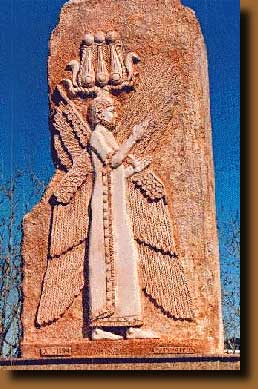
Shahanshah (Cyrus the Great, Emperor of Persia 580-590 B.C., to 529 B.C.)King of Kings,Father of Persian People, Ideal Monarch,Liberator of Jews of Babylonia- The Legend of Cyrus is described by Greek historian Herodotus and Greek author Xenophon. A Shahanshah’s Edict – Rebuild the Temple, the House of God in Jerusalem

SHAHANSHAH, CYRUS II EMPEROR OF PERSIA  

A Shahanshah’s Edict – Rebuild the Temple, the House of God in Jerusalem

Cyrus, the founder of Achaemenid Persian empire and ruled it from 549 BC to 529 BC. The conquest of the great and ancient city of Babylon in 539 BC made Cyrus the ruler of a vast domain from the Aegean and the Mediterranean Sea in the west to the Indus river of India in the east. Nebuchadnezzar II of Babylonia destroyed Jerusalem in 586 BC and forced the Jews to live in exile.

A Shahanshah’s Edict – Rebuild the Temple, the House of God in Jerusalem

Cyrus is famous in the Books of Old Testament of Holy Bible for freeing the Jews held captive in Babylonia. Cyrus had allowed more than 40,000 Jews to return to their Promised Land in 537 BC. He had asked them to take back the gold and silver utensils that were looted from the House of God in Jerusalem.

A Shahanshah’s Edict – Rebuild the Temple, the House of God in Jerusalem

Prophets Isaiah and Jeremiah foretold the destruction of Jerusalem, captivity of Jews and then release with the coming of Cyrus. He is remembered in the Cyrus Legend first recorded by Xenophon, a Greek soldier and author of Cyropaedia. Greek historian Herodotus has described Cyrus as tolerant, ideal monarch, Father of Persian people and as the Liberator of Jews held captive in Babylonia. Cyrus had conquered Lydia, Syria, Babylon, and Palestine. In the year 1971, Iran celebrated the 2,500th anniversary of the founding of the monarchy by Cyrus. He is glorified in the Books of The Old Testament. 

Shahanshah’s Edict – Rebuild the Temple, the House of God in Jerusalem

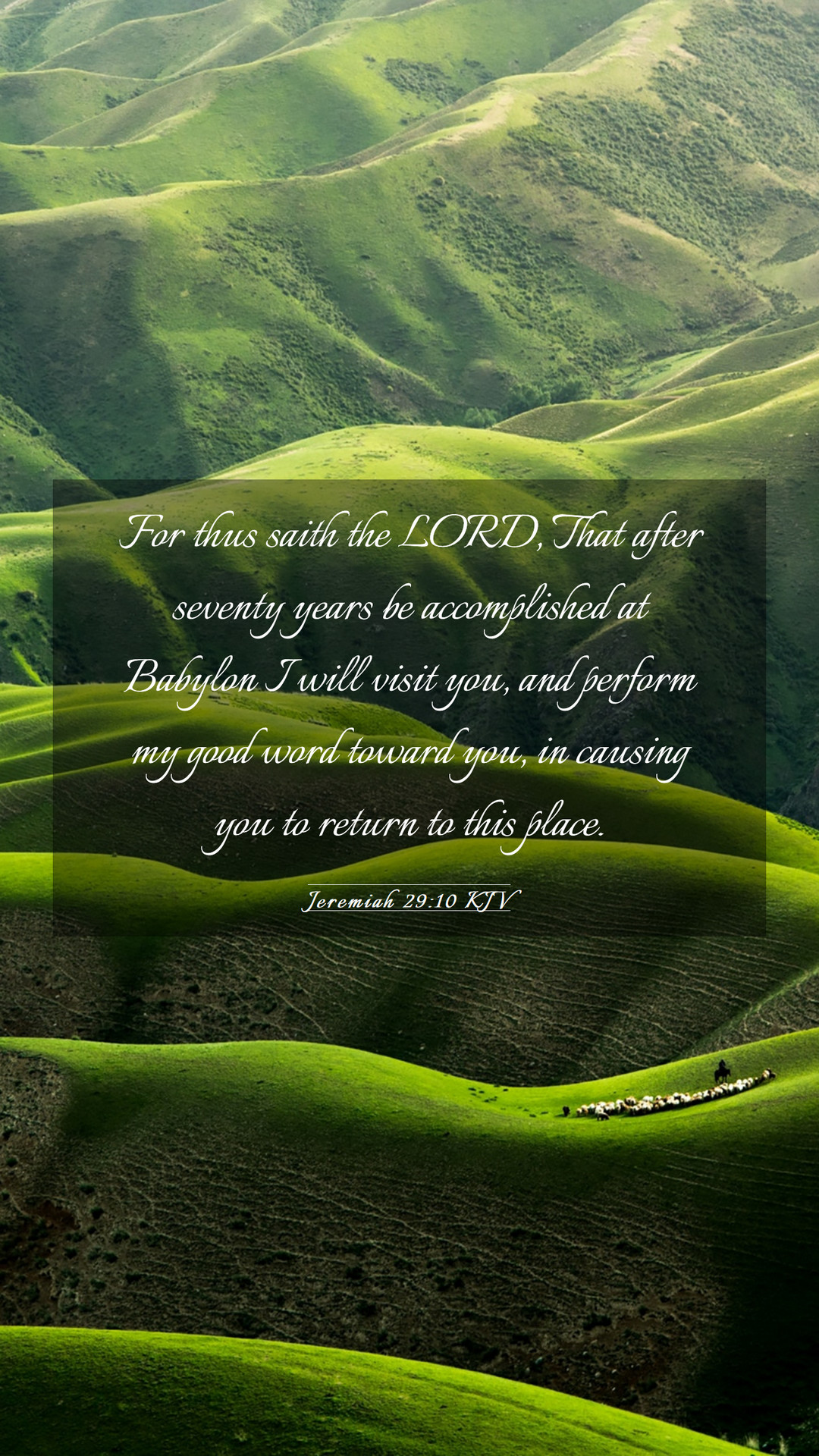
Book of Jeremiah, chapter 29, verse 10, the LORD says, “when seventy years are completed for Babylon, I will come to you and fulfill my gracious promise to bring you back to this place…”  

Shahanshah’s Edict – Rebuild the Temple, the House of God in Jerusalem

Book of Isaiah, chapter 44, verse 28 : God says of Cyrus, “He is my shepherd and will accomplish all that I please; he will say of Jerusalem, “Let it be rebuilt,” and of the temple, “Let its foundations be laid.”  

A Shahanshah’s Edict – Rebuild the Temple, the House of God in Jerusalem

Book of Isaiah, chapter 45, verse 13 : “I will raise up Cyrus in my righteousness; I will make all his ways straight, he will rebuild my city and set my exiles free, but not for a price or reward,” says the LORD Almighty.  

A Shahanshah’s Edict – Rebuild the Temple, the House of God in Jerusalem

Shahanshah’s Edict of Restoration  

A Shahanshah’s Edict – Rebuild the Temple, the House of God in Jerusalem

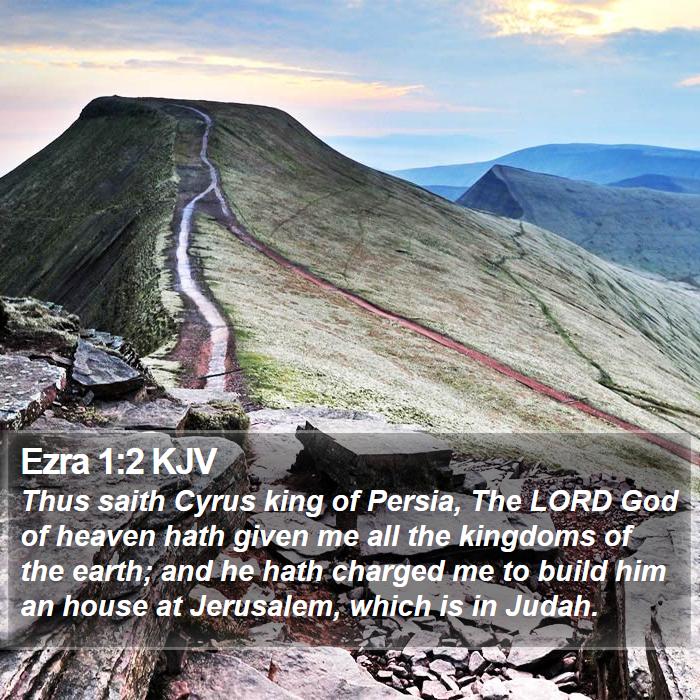
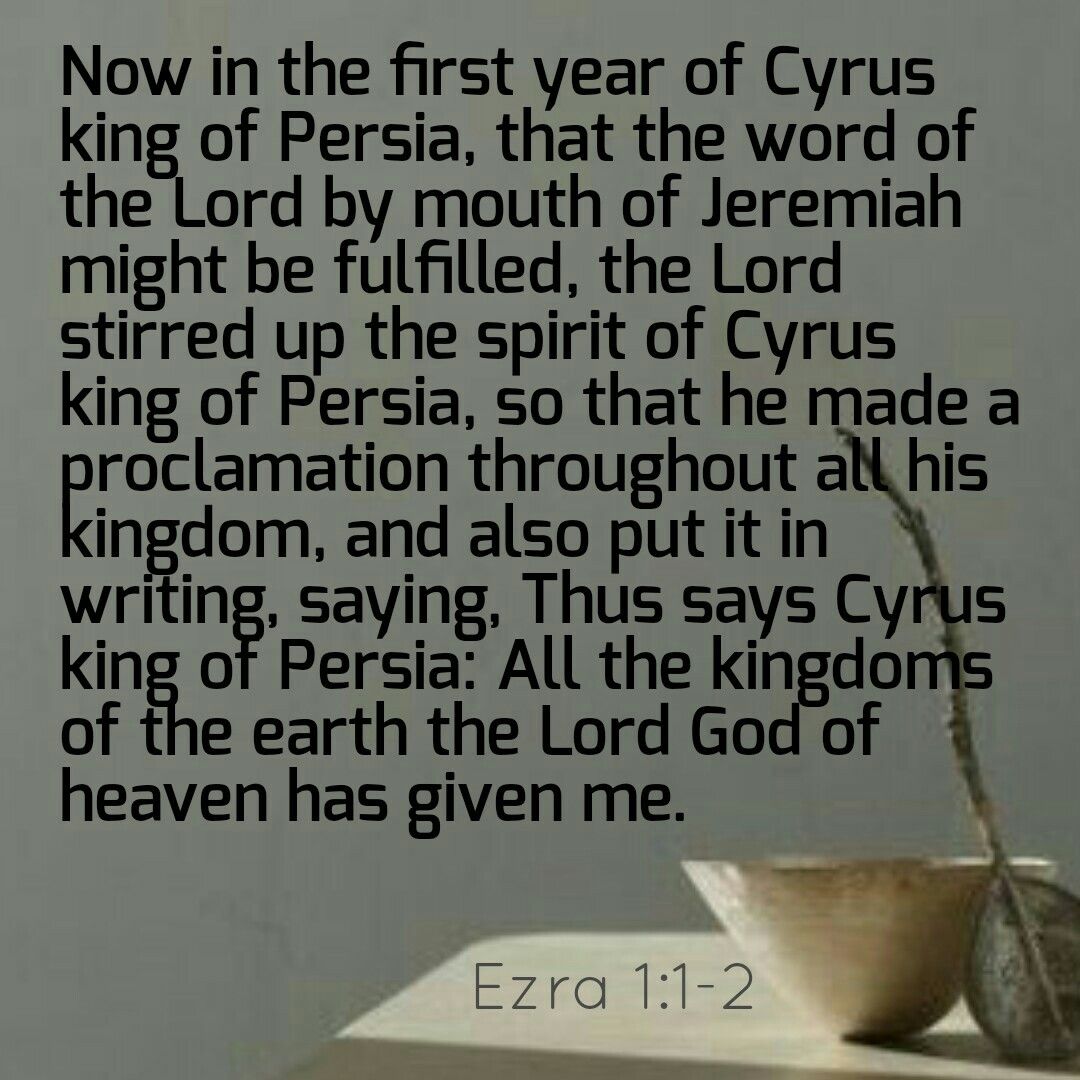
Cyrus’s Edict to rebuild the House of God in Jerusalem is stated in the Book of 2 CHRONICLES, chapter 36, verse 23, and is reproduced in the Book of EZRA, chapter 1, verses 2 and 3.

A Shahanshah’s Edict – Rebuild the Temple, the House of God in Jerusalem

This is what Cyrus King of Persia says;  

“The LORD, the God of heaven, has given me all the kingdoms of the earth and he has appointed me to build a temple for Him at Jerusalem in Judah. Anyone of His people among you- may his God be with him, and let him go up to Jerusalem in Judah and build the temple of the LORD, the God of Israel, the God who is in Jerusalem.”  

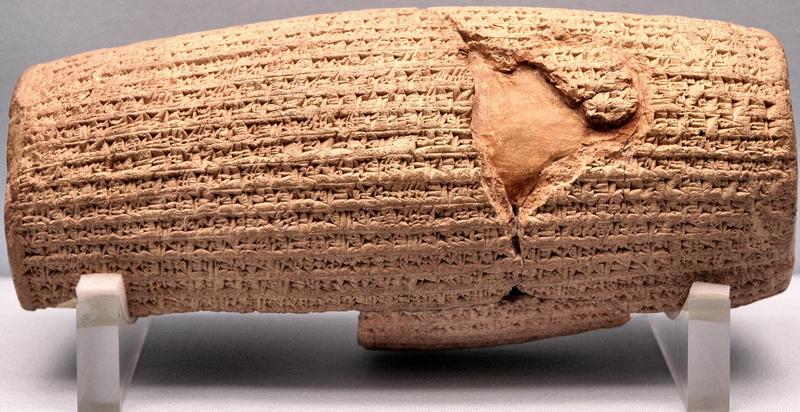
CYRUS CYLINDER  

Cyrus Cylinder was discovered in the foundations of Esagila Temple, Babylon. A Shahanshah’s Edict – Rebuild the Temple, the House of God in Jerusalem

A clay cylinder was discovered in the foundations of the Esagila temple dedicated to chief Babylonian god Marduk. In cuneiform script, the following statement was inscribed on the clay cylinder:  

….I am Cyrus, King of the world. When I entered Babylon…. I did not allow anyone to terrorise the land….I kept in view the needs of people and all its sanctuaries to promote their well-being…. I put an end to their misfortunes. The Great God has delivered all the lands into my hand; the lands that I have made to dwell in a peaceful habitation….  

A Shahanshah’s Edict – Rebuild the Temple, the House of God in Jerusalem

The Legacy of Emperor Cyrus  

A Shahanshah’s Edict – Rebuild the Temple, the House of God in Jerusalem

He was more than a great conqueror who founded an empire. He is best remembered for his unprecedented tolerance and magnanimous attitude towards those he vanquished. He showed a great forbearance and respect towards the religious beliefs and cultural traditions of other races. His policy of religious toleration and contribution to the rebuilding of several nations’ temples earned him the homage of all the people whom he had ruled.

A Shahanshah’s Edict – Rebuild the Temple, the House of God in Jerusalem

In the Book of Isaiah, chapter 45, verses 1 to 6, Cyrus is praised as the ‘ANOINTED OF THE LORD’. The Greeks whom he conquered regarded him as ‘Law-Giver’. The Babylonians treated him as ‘The Liberator’. The Iranians regard him as ‘The Father’. He is considered to be upright, generous, and benevolent.

A Shahanshah’s Edict – Rebuild the Temple, the House of God in Jerusalem

The Holy Book of Quran in Surah Al-Kahaf, verse 18 referred to a person known as “ZUL-QARNAIN” or “DHUL-QARNAYN”, a person wearing a crown of two horns like a ram. Cyrus, a Zoroastrian by faith, promised not to force any person to change his religion and faith and guaranteed religious freedom for all.  

A Shahanshah’s Edict – Rebuild the Temple, the House of God in Jerusalem

Rebuild BETH-EL, House of God at Temple Mount, Jerusalem: 

A Shahanshah’s Edict – Rebuild the Temple, the House of God in Jerusalem

The House of God, the Temple in Jerusalem acts as the figurative “footstool” of God’s presence in the physical world.

A Shahanshah’s Edict – Rebuild the Temple, the House of God in Jerusalem

The First Temple was built by King Solomon in 957 BC. It stood for about 375 to 410 years. The Babylonians destroyed it in 586 BC. The Second Temple was completed during 516 BC and the Roman Emperor POMPEY desecrated it in 63 BC. King Herod had renovated it in 19 BC. The Roman troops of General TITUS totally destroyed it in 70 CE. Just the Western outer wall of the Temple still stands today. An Islamic shrine, the Dome of Rock was built on the site of the Temple Mount in late 7th century CE, and the al-Aqsa Mosque also stands in the temple courtyard.

A Shahanshah’s Edict – Rebuild the Temple, the House of God in Jerusalem

The Jews envision the construction of the Third Temple in Jerusalem. The building of religious shrines on top of the ruined monuments of other faiths causes problems for rebuilding the Temple Mount. This is a problem that Indians have encountered repeatedly in all of their holy places such as Varanasi, Mathura, and Ayodhya.

A Shahanshah’s Edict – Rebuild the Temple, the House of God in Jerusalem

If Shahanshah Cyrus is asked to decide on the religious dispute between Muslims and Jews, he would direct us to rebuild the original House of God or Beth-El at Temple Mount in Jerusalem and to restore the faith and the worship of God that it represents. Let us rebuild ‘House of God’ and let its foundations be laid where it belongs.   

The remnants of Second Temple, the Temple renovated by King Herod. The First Temple was built by King Solomon. The most holy site in Judaism is known as the Western Wall or the Wailing Wall. The Minaret of Al-Aqsa Mosque and the Dome of the Rock are seen behind the Western Wall. A Shahanshah’s Edict – Rebuild the Temple, the House of God in Jerusalem

Whole Dude – Whole Path

The Fear of the Beaten Path vs The Security of Guided Path

The Fear of the ‘Beaten Path’ – Defining Indian Identity.

‘The Order of the Star’ was an organization built around Jiddu Krishnamurti by Ms. Annie Besant and other Theosophists with the hope that he would be the vehicle for the return of the Christ or ‘Maitreya’ (the reincarnation of the Lord of Compassion).

The Dissolution of ‘The Order of The Star’

The Fear of the ‘Beaten Path’ – Defining Indian Identity. JIDDU KRISHNAMURTI GIVING HIS SPEECH IN 1929 DISSOLVING ‘THE ORDER OF THE STAR‘.
The Fear of the ‘Beaten Path’ – Defining Indian Identity

Aug-Sept 1929: I maintain that Truth is a pathless land, and you cannot approach it by any path whatsoever, by any religion, by any sect. Truth, being limitless, unconditioned, unapproachable by any path whatsoever, cannot be organized; nor should any organization be formed to lead or to coerce people along any particular path. You must climb towards the Truth. It cannot be ‘stepped down’ or organized for you.

1933: I feel that no one can lead another to truth, because truth is infinite; it is a pathless land, and no one can tell you how to find it. No one can teach you to be an artist; another can only give you the brushes and canvas and show you the colours to use.

1948: You cannot discover the path, because there is no path, Truth is a thing that is living, and to a living thing there is no path – it is only to dead things that there can be a path. Truth being pathless, to discover it you must be adventurous, ready for danger; and do you think a guru will help you to be adventurous, to live in danger? To seek a guru obviously indicates that you are not adventurous, that you are merely seeking a path to reality as a means of security.

1957: There is no path to reality. Reality is a pathless land, and you must venture out and discover it for yourself. It is because you are frightened inwardly that you depend on something, on the priest, or on a belief, and so you get caught in the net of an organized religion.

1976: But as truth is a pathless land, you can’t lay down a line, a direction, a path to it and practise it, discipline yourself, learn a technique. It is immovable. There is no technique to truth.

1982: So one has to be totally free from all that because truth has no path to it. It is a pathless land, like a ship that has no rudder. You have to walk out of darkness, out of your own chaos, out of your own confusion, out of the forest of ignorance and come to that by yourself, your own comprehension of perception.

1982: Because if there is any form of conditioning, psychically, inwardly, truth cannot be found. Truth is a pathless land, and it must come to one when there is total freedom from conditioning.

The Story about The Star of Bethlehem:

The Fear of the ‘Beaten Path’ – Defining Indian Identity

The New Testament Book Matthew, Chapter 2, verse 1 and 2 describe the visit of the ‘Magi’. After Jesus was born in Bethlehem in Judea, during the time of King Herod, Magi from the east came to Jerusalem and asked, “Where is the one who has been born King of the Jews? We saw his Star in the East and have come to worship him.”

The Fear of the ‘Beaten Path’ – Defining Indian Identity

And Matthew 2:9-10 further states, when they heard the king, they (Magi) went on their way, and the Star they had seen in the East went ahead of them until it stopped over the place where the child was. When they saw the Star, they were overjoyed. On coming to the house, they saw the child with his mother Mary, and they bowed down and worshiped him.

The Fear of the ‘Beaten Path’ – Defining Indian Identity

The Magi, the three wise men of the East did not traverse on a beaten path to discover the newborn Jesus. As there is no beaten path, the Star of Bethlehem clearly guided them to find the truth or reality of the newborn baby.

The Fear of the ‘Beaten Path’ – Defining Indian Identity

Jesus shows the Way to The Father, Truth, and Life:

The Fear of the ‘Beaten Path’ – Defining Indian Identity

The New Testament Book John, Chapter 14, verse 6 describes Jesus as the way to the Father. Jesus answered, “I am the Way and the Truth and the Life. No one comes to the Father except through me.”

“TRUTH IS A PATHLESS LAND”

The Fear of the ‘Beaten Path’ – Defining Indian Identity

‘Truth is a pathless land’ was the speech made by Jiddu Krishnamurti in 1929 when he dissolved the Order of the Star. “I maintain that Truth is a pathless land, and you can not approach it by any path whatsoever, by any religion, by any sect. Truth, being limitless, unconditioned, unapproachable by any path whatsoever, cannot be organised; nor should any organisation be formed to lead or coerce people along any particular path.” Krishnamurti believed that the individual must establish his uniqueness, he should discover for himself that absolute, unconditioned Truth.

The Fear of the Beaten Path:

The Fear of the Beaten Path. Defining Indian Identity. The Impersonal God is Unknowable and hence there is no Path to discover the Absolute Truth or Absolute Reality described as Brahman. THE THOUGHTS OF VARIOUS INDIAN THINKERS HAVE TO BE CAREFULLY INTERPRETED. EVERYTHING THAT EXISTS IS NOT EXACTLY THE SAME OR IDENTICAL TO BRAHMAN. IT WILL BE CORRECT TO INTERPRET THE ABOVE STATEMENT IN THE CONTEXT OF UNITY BETWEEN ORDERS LIKE GOD, ENERGY, MATTER, AND LIVING THINGS. THIS UNITY OR EIKYATA IS THE FUNDAMENTAL BASIS FOR EXISTENCE AND IS CALLED “ASMI” TO DESCRIBE BRAHMAN AS THE ‘CAUSE’ OF EXISTENCE.

The much traveled or a beaten path is recommended if you are aware of your destination. The beaten path provides the wayfarer a sense of security and comfort.

The Fear of the Beaten Path. Defining Indian Identity. As Brahman is Unknowable, the personification of Brahman works like the Star of Bethlehem, a Guiding Star when there is no beaten track to arrive at the destination.

In India, thinkers tend to believe that the principles underlying macrocosm (Universal) and microcosm (Individual) are related. According to Vedas which guide the Indian mind, the ‘Brahman’ (the Absolute Reality or ‘The Father’) cannot be known by any empirical means of knowledge. Socrates states, ‘Know thyself, and you will know the universe and the gods.’ In a similar manner Indian thinkers have always encouraged the values of introspection, to reflect upon your own mind and thoughts to understand Self and Self-Knowledge is a tool, is the way and the path to the Truth. As an Indian, I always experience a sense of fear about the ‘Beaten Path’ and the assurance given by Jesus that He is the Way somehow does not dispel the sense of fear to travel on that path. I need an unbeaten path.

The Fear of the Beaten Path. Defining Indian Identity. The concept of Purusha or True Self guides the man on the Path of Self-Discovery.
Jiddu Krishnamurti (1895-1986)
Whole Dude – Whole Path: The Fear of Beaten Path vs the Security of Guided Path

Whole Dude – Whole Blessings – A Name Beyond All Names

Who am I? Why am I like this? The Blessings of a Name beyond all Names

Bharat Darshan – Happy Rama Navami on Wednesday, April 17, 2024. Lord Rama – MY Beloved Hero.

Sree Rama, Rama, Rameti, Rame, Raame, Manorame

Sahsra Nama tattulyam, Rama Nama Varanane.

MY BELOVED HERO:

Bharat Darshan – Happy Rama Navami on Wednesday, April 17, 2024. Lord Rama – MY Beloved Hero.

The Culture of the Land Of India introduced to me several personalities and Cultural Icons and I tend to develop a relationship with them and each of my relationships exists in a particular context. Shiva is my protector and the Master who guides my intellectual functions. I describe Lord Krishna as my “GURU”, the Guru who guides my actions and I name Prince Karna as my favorite Hero as he is the “Salt of Life.” Rama describes himself in the following words. On the occasion of Princess Seetha’s ordeal by fire at the end of the epic battle, Rama says to Brahma (The Lord of Creation) who appeared there among others:

आत्मानं मानुषं मन्ये रामं दशरथात्मजम् || ६-११७-११
सोऽहं यस्य यतश्चाहं भगवंस्तद्ब्रवीतु मे |

11. manye = I think; aatmaanam = of myself; maanuSham = to be a human being; raamam = called Rama; dasharathaatmajam = the son of Dasaratha; bhagavaan = you; as a gracious Divinity; braviitu = tell; me = me; tat = that; saH aham yasya = which I as such really am; aham yashcha = and why I am like this.

“I think of myself to be a human being, by name Rama, the son of Dasaratha. You, as a gracious Divinity, tell me that which I as such really am like this.”

“I regard myself only as Rama, son of Dasaratha, an ordinary human being. Who I am in reality, where I belong, why I took birth, are matters on which you may enlighten me, and I do not know.”

In the personality of Rama, the course of human conduct and the Dharma governing it come linked together. My love for Rama could be mostly attributed to the story that is revealed in Book II, ‘Ayodhya Kanda’ of Valmiki Ramayana. We should view the events described through imagination and actually experience the emotional state of each character as the story is enacted in front of our eyes. It is claimed that, wherever Rama’s tale is told, Hanuman himself joins the gathering and reverentially stands with tear-filled eyes, listening. This has been my personal experience. Whenever I read the story about this ordinary human being, my eyes fill up with tears. I rechecked my emotions while preparing to write down this entry. When I read Ayodhya Kanda, my eyes can not resist from filling up with tears. For having experienced this emotional connection, I claim that Rama is my Beloved Hero.

My desire to speak about Rama is provided by Rama himself and I did mention about it in the very first entry of my blog posts. I give credit to the Telugu poet Bammera Potana whom I acknowledge as my ‘mentor’. Potana proclaims that he wrote his poems with the help of the creative spirit inspired directly by Rama. My Master Shiva gives the consent to entertain this idea that Rama is my resource for creative writing, my Guru Krishna approves my actions to express my sentimental attachment to Rama, Saraswati gracefully provides the ability to pen my thoughts, Hanuman certifies that my tears are genuine and Ganesha blesses my effort and lets me post this entry.

Bharat Darshan – Happy Rama Navami on Wednesday, April 17, 2024. Lord Rama – MY Beloved Hero. The Life Journey is viewed as a perilous and tedious swim without navigational aids and floatation devices across an unknown and uncharted ocean.

In the Indian tradition, the Life Journey is described as a perilous and tedious swim without navigational aids and floatation devices across an unknown and uncharted ocean. I stay afloat while I cross this ocean and the name ‘Rama’ is like a life jacket, a flotation device which would guide me to get to the destination and gives me the hope to reach the shore. I live in a universe which is a reflection of “Maya.” I find no better way to know the Ultimate Reality. I prefer to cling to the two-letter ‘Mantra’ of Ra-Ma. I would just be happy if I could find the way and end up in the company of others who lived before me placing their trust in this Name.

Mother Kaikeyi spoke prophetic words when she said Rama’s dutifulness would bring him glory undying. That glory she said will continue as long as the Himaalaya stands and the waters of Ganga flow and as long as the ocean-waves beat on the solid earth.

May everyone that reads the Chapter XV of Ayodhya Kanda receive by Rama’s grace the strength to bear the sorrows that have to be faced in life.

I would have loved to share these thoughts with my mother and I shed tears reading Rama’s story while remembering her.

Bharat Darshan – Happy Rama Navami on Wednesday, April 17, 2024. Lord Rama – MY Beloved Hero.

Whole Dude – Whole Legend

Bharat Darshan – Myths, Legends and Reality

Myths, Legends, and Reality – Defining Indian Identity. Sree Seetha Ramachandra Swamy at Bhadradri. Temple of Lord Rama in Bhadrachalam defines the concept of Ultimate Reality.

Sree Seetha Ramachandra Swamy Shrine -Temple of Lord Rama in Bhadrachalam

Myths, Legends, and Reality – Defining Indian Identity. A Temple to define the concept of Ultimate Reality.

This temple town of Bhadrachalam, located on the northern banks of the river Godavari in Khammam District of Telangana, India, best describes my Indian Identity as it brings together our myths, our legends and our quest for the “Ultimate Reality.”

Myths, Legends, and reality – Defining Indian Identity. A Temple to define the Ultimate Reality. The place described as Panchvati is in the vicinity of Bhadrachalam as per our local legend

This place is connected to events described in the epic poem of Ramayan which narrates Lord Rama’s journey in our Land. Rama while living in exile, camped in the forest by the name ‘Dandakaranya’ and His spouse Seetha was abducted and eventually, Rama and His brother Laxmana cross the river Godavari at this place in search of Seetha. A pious man known as Bhadra prayed at this place seeking Lord Rama’s return to this place. Much later, a simple woman who lived in this area discovered the idols of ‘Vaikuntha Rama’ ( the idol depicts Lord Rama with four arms and with the Conch shell and Sudarshana Chakra, the attributes of Lord Vishnu who presides over the realm described as Vaikuntha Lok) with Seetha seated on His lap and the idol of Laxmana standing next to them.

Myths, Legends, and Reality -Defining Indian Identity. A Temple to define the concept of Ultimate Reality

Kancharla Gopanna, a Tahsildar (revenue official) of Palvancha Paragana, built this temple in 1674 A.D. The legend about the divine intervention and the miraculous release of Gopanna from the prison at the Golconda Fort is narrated in my previous entry titled, ‘The Benevolent Shia Ruler of Golconda-Verily A Blessed Soul’.

About Myths and Legends:

Myths, Legends, and Reality. Defining Indian Identity. A Temple to define the concept of Ultimate Reality.

Myths are traditional stories which serve to explain our connection to God and the universe and hence they are not the same like the fictional stories. Myths exist in a historical context but may not be true historical accounts that are supported by scientific verification. Legends are stories handed down for generations among a people and popularly believed to have a historical basis but do not qualify for inclusion in a text book of history. As an Indian, I depend upon myths and legends to derive a sense of direction, a sense of guidance and a sense of hope for my human existence. They help me to know who I am and where I am going.

About Reality and Ultimate Reality:

Indians are very concerned about the effects of Time . We practically witness in our daily lives the forceful consequences of time. Time changes the course of human life and time changes the physical world. However, the “Ultimate Reality” does not change, it is constant and it is eternal. Indians seek this Reality as it represents their natural home and that is their final destination on completion of the life’s journey. Since ‘Truth’ is unchanging in its character, is also described as the Reality that we cherish to experience. Millions of Indians express this desire for Truth and the Reality with a very simple statement. They claim that the name “Ra Ma” is eternal Truth. Our search for Truth and Reality becomes very easy if we just seek “Ra Ma”. Great powers on this earth had vainly tried to destroy our belief in Rama. Mughal Emperor Babur destroyed the temple in Ayodhya which we consider as Rama’s birth place. The forces of Sultan Tughlak destroyed the Rama temple in my home town Rajahmundry. Mughal Emperor Aurangzeb destroyed countless number of temples and idols of Rama. Yet the myth and legend of Rama survives. At Bhadrachalam also known as Bhadra giri or Bhadradri (the hill of Bhadra), Sultan Tani Shah, a benevolent Shia Muslim ruler of Golconda, helped Kancharla Gopanna to maintain this temple and this devotee of Rama is popularly known by the name Bhakta Rama Dasu.

Would it be possible to destroy Rama?

Myths, Legends, and Reality. Defining Indian Identity. A Temple to define the concept of Ultimate Reality.

Many have tried to destroy the idols and images of Rama. For example, if some one would destroy the temple of Rama in Bhadrachalam, we still connect this place and the forest and the river with Rama’s life journey. If some one would destroy the forest, level the ground and change the course of the river, I would still look for the signs of His presence in the creation of the heavens and the earth. I would describe the blue sky as the color of Rama. If some one could destroy the blue sky and when I look up and see the dark sky, I would say that I am reminded of Lord Krishna who is described as black in color as dark as the sky of New Moon’s day. Our myths remind us that Rama and Krishna are one and the same. I do know people take great pride in their physical power but it may not be easy to wipe out a belief system which is more than the Idols which represent the Belief. I had mentioned before in a previous entry and the Indian Identity that I define is willing to accept the challenge of ‘Ten Commandments’ and the Indian Identity would survive as long as there is a sky above our heads and as long as the difference of night and day exists on this earth.

Myths, Legends, and Reality – Defining Indian Identity. A Temple to define the concept of Ultimate Reality.

” Lo ! In the creation of the heavens and the earth and (in) the difference of night and day are tokens (of His sovereignty) for men of understanding”. Surah III, verse 190, Holy Book of Quran.

Myths, Legends, and Reality – Defining Indian Identity. A Temple to define the concept of Ultimate Reality.

Shia Muslim Ruler of Golconda. Verily, a Blessed Soul

Shia Muslim Ruler of Golconda. Verily, a Blessed Soul. SULTAN ABUL HASAN QUTB SHAH (MAY PEACE BE UPON HIM).
Golconda Fort near the City of Hyderabad, the seat of Qutb Shahi Dynasty. 

 Sultan Abul Hasan Qutb Shah was the seventh and the last ruler of the Kingdom of Golconda (Deccan, Southern India) under the Qutb Shahi Dynasty. He ruled from 1672 A.D. to 1687 A.D. He is also known as Abul Hasan Tana Shah and more popularly, he is known as TANI SHAH meaning benevolent ruler. He did not discriminate against those of other ethnicities or religions. He hired Hindus as his ministers and generals. Madanna was his Chief Minister. Madanna had a nephew by name Kancharla Gopanna. He appointed Gopanna as a “Tehsildar” (a revenue official) of Palvancha county. Gopanna inadvertently used the public funds for the construction of Rama temple on the banks of River Godavari at a place known as Bhadrachalam. Sultan Tani Shah found Gopanna was guilty of the misuse of the funds and had him imprisoned at the Golconda Fort.  

A Legend About Divine Intervention: 

Shia Ruler of Golconda, Verily, a Blessed Soul. A Temple to define the concept of Ultimate Reality.
Did Lord Rama actually visit Golconda Fort to obtain the release of Kancharla Gopanna from the prison? Sultan Tani Shah believed that it was God or Allah who had come to him and cleared the debt owed by Gopanna. He further expressed that belief in his actions. He allowed Gopanna to complete the construction of Lord Rama’s Temple in Bhadrachalam and financially supported the maintenance of that Temple. By doing so, the Shia Ruler of Golconda gave us a chance to reflect upon Lord’s Mercy, Grace, and Compassion.

 Gopanna spent about 12 years in prison. According to legend, God intervened on behalf of Gopanna to obtain his release from the prison at Golconda Fort. As per the legend, Lord Rama in disguise had come before the King and returned the money owed by Gopanna and the debt was repaid with gold coins. God who came to rescue Gopanna from the prison had met the Sultan but not the prisoner. Upon his release from the prison, Gopanna did express his sorrow for missing the opportunity to meet the Lord. Gopanna was released from the prison and he successfully finished the construction of the Rama temple which stands even today. Sultan Tani Shah publicly acknowledged that he had met “ALLAH ” and recognized the fact of Gopanna’s release from the prison was made possible by divine intervention. He made permanent arrangements for the upkeep of this temple. The funds that were collected as tax from Palvancha county were allocated to the temple and also he had established an annual tradition of sending pearls to shower the Deity during the annual temple festival. This tradition of offering pearls was continued by the rulers of the princely State of Hyderabad popularly known as the ‘Nizams of Hyderabad’, who ruled the Telangana region continuously until India’s independence. The Hyderabad State became a part of the Indian Union and the State of Andhra Pradesh came into existence in 1956.  The Government of Andhra Pradesh and later Telangana followed the tradition established by Sultan Tani Shah in the 17th century and the tradition of offering pearls to Lord Rama still exists.   

Verily A Blessed Soul: 

Shia Ruler of Golconda, Verily a Blessed Soul.

Did Lord Rama actually visit Golconda Fort to obtain the release of Kancharla Gopanna from the prison? Sultan Tani Shah believed that it was God or Allah who had come to him and cleared the debt owed by Gopanna. He further expressed that belief in his actions. He allowed Gopanna to complete the construction of Lord Rama’s Temple in Bhadrachalam and financially supported the maintenance of that Temple. By doing so, the Shia Ruler of Golconda gave us a chance to reflect upon Lord’s Mercy, Grace, and Compassion.  

This Lord Rama’s Temple in Bhadrachalam is a testimony about Lord’s Grace, Mercy, and Compassion.

 This benevolent ruler defended the Golconda Fort for eight months when the Mughal Emperor Aurangzeb attacked it in 1687 A.D. In October 1687, the Fort was captured by bribery and Sultan Tani Shah was taken as a prisoner and was imprisoned in Daulatabad Fort until his death.  

I recognize Sultan Tani Shah as a Blessed Soul for he recognized God’s plan and purpose and supported Gopanna to build the temple and provided for the maintenance of the temple and gave us the opportunity to know about God’s Compassion, Grace, and Mercy. Secondly, Sultan Tani Shah received the biggest gift that a man could ever seek. Man always cherishes the idea of meeting his Creator, the Father in Heaven, Allah, the Lord, Rama the divine reincarnation of Vishnu and very few actually realize that dream. Gopanna was rescued but could not meet Rama. Sultan Tani Shah did not pray or ask for this favor from God. He is a Blessed Soul because God granted him that gift. He received a sensory experience of that Reality called God and I fully trust this experience he had shared with others. Sultan Tani Shah’s  actions substantiate his claim. Most importantly, he did not seek any personal reward or personal gain while he acted in obedience of a God he never actually believed and had never intended to worship in any manner. He acted without seeking the fruits of his actions. I bless this Shia Ruler of Golconda and pray for Lord’s Peace be upon him forever.   

Myths, Legends, and Reality. Defining Indian Identity. A Temple to define the concept of Ultimate Reality.