The definition of Man precedes the definition of Health
June is Professional Wellness Month – The Theory of Man precedes the Theory of Health
Professional Wellness Month is celebrated each year in June and it throws light on the workplace’s role in creating a holistic environment for employees. It also focuses on how organizations that place emphasis on professional wellness are largely successful, attract top talent, and drive employee retention.
June is Professional Wellness Month – The Theory of Man precedes the Theory of Health
I ask my readers to reject the assumptions and the criteria described by the Fair Labor Standards Act as they contribute to Unequal Employment Opportunities at the American Workplace. As such the Fair Labor Standards Act is not consistent with the Natural Law principle of Equality that formulates the Supreme Law of this Land. We need just one plan to promote the wellness of all workers without making any distinctions such as the hourly wage earners and the salaried class imposed by the US Labor Law FLSA.
June is Professional Wellness Month – The Theory of Man precedes the Theory of Health
Theory of Man precedes Theory of Health
In my analysis, there can be no ‘Theory of Health’ without sharing a ‘Theory of Man’. The question, “What is health?” cannot be asked without raising the question, “What is man?”
June is Professional Wellness Month – The Theory of Man precedes the Theory of Health
In my view, ‘ the existence of a man always precedes the essence of the man’. For that reason, the biological basis of the man’s existence must be identified to define the living entity called man. The natural event called ‘death’ precedes the natural event called ‘birth’ which heralds the arrival of newborn Life. The newborn always arrives after several programmed cellular death events.
June is Professional Wellness Month – The Theory of Man precedes the Theory of Health
The man’s existence in any condition, good health or ill-health, at any age, at any given time and place, depends upon Mercy, Grace, and Compassion (Sanskrit. KRUPA or KRIPA) of LORD God Creator. The man does not exist in the natural world because of his physical and mental work. The man needs input of matter and energy, from an external source, from the moment of conception to the conclusion of his entire life journey. The man’s existence is always conditioned as he cannot regulate either internal, or external factors that determine the fact of his existence.
The Medical Science fails to define the term ‘health’ for it fails to define the term ‘man’. To attach meaning to health, I must attach meaning to the word called ‘man’.
June is Professional Wellness Month – The Theory of Man precedes the Theory of Health
The man represents a biological or biotic community of trillions of individuals; independent, living cells with individuality. The Man is also a natural host to trillions of microbes. Human life must be defined in terms of biotic interactions; both intraspecific, and interspecific biotic interactions.
I ask Medical Science to apply the principles of Clinical Medicine not only to diagnose ill health but also to diagnose good and perfect or ‘Whole Health’ for the man is created by entity called God who is always Perfect and Whole.
Theory of Man–The Spectrum of Seven Colors
June is Professional Wellness Month – The Theory of Man precedes the Theory of Health
My ‘Theory of Man’ defines the Man as the ‘Spectrum of Seven Colors’. Isaac Newton could easily verify his ‘Theory of Light’ by conducting his critical experiment in which he used two prisms to breakdown and to reconstitute white light rays. In case of Man, such experimental verification is not possible as Science does not have the capability to breakdown the man and reconstitute him. However, Science provides verified information about the building blocks of life and about basic living functions such as ‘Metabolism’ which essentially involve making, breaking, and repairing ‘Molecules of Life’.
June is Professional Wellness Month – The Theory of Man precedes the Theory of Health
Man – The Spectrum of Seven Colors
June is Professional Wellness Month – The Theory of Man precedes the Theory of Health
For purposes of defining Man the concept of Light Spectrum is useful. Light Spectrum appears continuous with no distinct boundaries.
June is Professional Wellness Month – The Theory of Man precedes the Theory of Health
The ‘Singularity’ called Man can be easily witnessed at conception at the stage of Single, fertilized Egg Cell.
Theory of Man precedes the Theory of Health. Spirituality Science. Spiritual Functions of Human Ovum or Egg Cell. Is it conscious?
The study of Man during all stages of his physical existence provides information about Man’s Seven Dimensions or Seven Colors. These are, 1. The Physical, Mortal Being, 2. The Mental Being, 3. The Social Being, 4. The Moral Being, 5. The Spiritual Being, 6. The Created Being, and 7. The Rational Being. Science called Cell & Molecular Biology can account for biomolecules of life and yet do not explain or account for the constitution of Man as a Rational Being.
June is Professional Wellness Month – The Theory of Man precedes the Theory of Health
Sixth-Day Adventist integrated plan for physical, mental, social, moral, and spiritual wellbeing of all classes of workers
This painting the Vitruvian Man( c. 1492 ) by Leonardo da Vinci displays a spirit of scientific inquiry. What is Man? The understanding of human nature will help to promote man’s well-being.Sixth-Day Adventist integrated plan for physical, mental, social, moral, and spiritual wellbeing of all classes of workers
Our efforts to support the well-being of Man get affected by our understanding the ‘real’ or ‘true’ nature of Man. I recognize Man’s Existence with Seven Forms or Dimensions. These are, 1. the Physical Being described by Human Anatomy, Human Physiology and other Medical Sciences, the human being in health and sickness, 2. the Mental Being, the intellect, thoughts and emotional states of Man described by Psychology and Psychiatry, 3. the Social Being described by Social Sciences, 4. the Moral Being described by Moral Science and Ethics, the power of discernment used by Man to make distinction between good and evil, and right and wrong, 5. the Spiritual Being described by Vital Power, Animating /Sensible Properties, and Conscious/Cognitive abilities of Man’s Corporeal Substance that develops and builds the cells, tissues, and organs of Human Body, 6. the Created Being which is reflected in the existence of man as an Individual with Individuality without any choice, and 7. the Rational Being which directs man to reconcile his behavior with his true or real nature that makes the man to review the actions performed in the external environment.
June is Professional Wellness Month – The Theory of Man precedes the Theory of Health. SPIRITUALITY SCIENCE – WHOLISTIC MEDICINE: THE DEFINITION OF WHOLE PERSON. 1. CONSCIOUS BEING, 2. PHYSICAL BEING, 3. MENTAL BEING, 4. SOCIAL BEING, 5. MORAL BEING, 6. SPIRITUAL BEING, and 7. CREATED BEING. This entire Human Organism is derived from a Single, Fertilized Egg Cell.
The Six Dimensions of Man contribute to six kinds of Behavior of Man; the physical, mental, social, moral, spiritual and creative facets of Behavior. For example, muscle cell displays the behavior of contraction in response to a stimulus; it is able to contract because of its contractile nature which gives it the power of contracting.
I account for Spiritual Dimension of Human Nature as that of generating a Singular, Harmonious Effect in the working of trillions of cells giving Man power or ability to perform his living functions such as Respiration and display his characteristic Behaviors like Feeding, and Reproduction.
I define the term Health as a systematic study of the Physical, Mental, Moral, Social, and Spiritual aspects of Man’s Well-Being while the man exists as a Created Being.
June is Professional Wellness Month – The Theory of Man precedes the Theory of Health. Sixth-Day Adventist integrated plan for physical, mental, social, moral, and spiritual wellbeing of all classes of workers
Bharat Darshan describes the Breath of Life as a vital, spiritual function.
The Spiritual Connection of Man, Earth and Sun: The process or mechanism called Cellular Respiration is not learned or acquired experience. No Spiritual Teacher, no Spiritual Master, and no Spiritual Guide can implant this Knowledge in Man.
Air and the act of Respiration deliver the vital element Oxygen to the body and then blood circulates this vital element to rest of the building blocks of the body called cells.
No religious doctrine mentions about Cellular Respiration. But, understanding of Existence and Life will be impossible without examining the Connection between Air, Breath, Vayu, Respiration and Food that sustains Life by providing Matter and Energy drawn from an external source.
The understanding of Spirit or Soul begins with knowing as to When Life begins.
I ask my readers to begin their inquiry by studying the Single, Fertilized Egg Cell which initiates a man’s Life Journey. This Cell has Life, has ‘Prana’ for it performs the vital function called ‘Cellular Respiration’.
The vital functions called Respiration and Circulation, the Breath of Life and the Heart Beat of Life have to be interpreted by comparing Photosynthesis with Cellular Respiration. Respiration and Circulation are described as Vital Functions as they provide Vital Energy in the form of Energy-Yielding Chemical Molecules called ATP (Adenosine triphosphate) required for the performance of all living functions.
I use the term Spiritual to describe the nature of connection, relationship, partnership, association, the coming together, the joining, or the yoking of two or more distinct entities to perform guided, goal-oriented, sequential, purposeful actions to support the existence of life on planet Earth.
Sun, Photosynthesis, and Respiration demonstrate the nature of spiritual interactions between Earthly domain and the extraterrestrial or Supernatural domain. I will describe as to how Sanskrit word “Prana” describes mechanism for transmission of Knowledge from Supernatural or Heavenly Realm to Natural or Earthly Realm transcending barrier between the two realms.
Bharat Darshan describes the Breath of Life as a vital, spiritual function.
In 1965, while I was a student of Human Anatomy at Kurnool Medical College, I had the opportunity to know about Dr. J. C. B. Grant (1886-1973), the author of Grant’s Atlas of Anatomy. The 5th Edition of his Atlas was published in 1962 and was available in India in our Medical College Library.
Born in Loanhead (south of Edinburgh) in 1886, Grant studied medicine at the University of Edinburgh Medical School and graduated with an M.B., Ch.B. degree in 1908. While at Edinburgh, he worked under the renowned anatomist Daniel John Cunningham.
badge, headdress, British, Royal Army Medical Corps (INS 8067) Brass cap badge of the rod of Aesculapius with a serpent entwined round it, head uppermost and looking left, all within a laurel wreath. Above, an Imperial (King’s) crown and below, a scroll bearing ROYAL ARMY MEDICAL CORPS. Slider to reverse. Copyright: � IWM. Original Source: http://www.iwm.org.uk/collections/item/object/30078877Bharat Darshan describes the Breath of Life as a vital, spiritual function. The Cap Badges and the Insignia of the British Royal Medical Corps and the Indian Army Medical Corps reveal the Rudi-Grant Connection. The Indian Army Medical Corps was created from the British Royal Army Medical Corps.
Grant became a decorated serviceman of the Royal Army Medical Corps during the First World War before moving to Canada. He established himself as an ‘anatomist extraordinary’ at the University of Toronto, publishing three textbooks that form the basis of Grant’s Anatomy. The textbooks are still used in Anatomy classes today, and made unforgettable memories for those who found themselves in his classes nearly a century ago. One of Grant’s many accomplishments was establishing a division of Histology within the department.
Bharat Darshan describes the Breath of Life as a vital, spiritual function.
As a medical student, I used Grant’s Atlas of Anatomy, the seminal work of Scottish-born Dr. John Charles Boileau Grant, who would become the chair of Anatomy at the University of Toronto in 1930 and retired in 1965.
John Charles Boileau Grant (1886–1973)
The Cap Badges and the Insignia of the British Royal Medical Corps and the Indian Army Medical Corps reveal the Rudi-Grant Connection. The Indian Army Medical Corps was created from the British Royal Army Medical Corps.
The author of Grant’s Atlas of Anatomy (1943) used to train thousands of medical students around the world. He came to University of Toronto’s Faculty of Medicine from University of Manitoba (and previously Edinburgh), and was Chair of the Department of Anatomy there from 1930 to 1965. Although he is best known for this famous atlas, his research and teaching also included biological anthropology, as evidenced by such work as Anthropometry of the Cree and Saulteaux Indians in Northeastern Manitoba (Archaeological Survey of Canada 1929). The human skeletal collection he formed, the “J.C.B. Grant Collection,” is still a core collection for human osteology in the Department of Anthropology at University of Toronto. He is also remembered in the Grant’s Museum at the Medical Sciences Building at the University of Toronto. This museum, with its displays of anatomical specimens, many of which were dissected by Grant himself, continues to be used in an active learning environment by more than 1000 students each year.
Students continue to use Grant’s textbooks today, and for the more artistic anatomist there’s even a Grant’s Anatomy Coloring Book, published in 2018.
Bharat Darshan describes the Breath of Life as a vital, spiritual function.
At the University of Toronto, Dr.McMurrich, Chair of Anatomy was succeeded as chairman in 1930 by Dr. John Charles Boileau Grant. Dr. Grant wrote three text books, of which “An Atlas of Anatomy” (published in 1943) rapidly gained international prominence and is still, one of the most widely used anatomical atlases in the world. It is now known as “Grant’s Atlas of Anatomy” and is in its tenth edition. The atlas was based on a series of elegant dissections done either by Grant or by others under his supervision. Many of these dissections are currently housed in Grant’s Museum at the University of Toronto.
The Rudi-Grant Connection is about knowing the man, the building blocks and the structural units and organization of the human body. To defend human existence, the Rudi-Grant Connection lays emphasis on knowing the person who is at risk apart from knowing the agent posing the risk.
The Identity of Multicellular Human Organism:
Cunningham’s Manuals of Practical Anatomy provide me the learning tools to know and understand Man’s external and internal reality and its Identity as described by Cells, Tissues, Organs, and Organ Systems. Bharat Darshan describes the Breath of Life as a vital, spiritual function.
Daniel John Cunningham was born on 15 April 1850 in Scotland. After his initial schooling at his home town, Crieff, he took up the study of Medicine at the University of Edinburgh and passed with honours. He is best known for the excellent series of dissection manuals, namely Cunningham’s Dissection Manuals. Cunningham’s Manual of Practical Anatomy has provided me the learning tools to know and understand Man’s external and internal reality and its Identity as described by Cells, Tissues, Organs, and Organ Systems.
Cunningham’s Manuals of Practical Anatomy provide me the learning tools to know and understand Man’s external and internal reality and its Identity as described by Cells, Tissues, Organs, and Organ Systems. Bharat Darshan describes the Breath of Life as a vital, spiritual function.Cunningham’s Manuals of Practical Anatomy provide me the learning tools to know and understand Man’s external and internal reality and its Identity as described by Cells, Tissues, Organs, and Organ Systems. Bharat Darshan describes the Breath of Life as a vital, spiritual function.
I learned about the human body while dissecting the body in a systematic manner. The Manual of Practical Anatomy which guides us through this entire process was published in England. The author Dr. Daniel John Cunningham prepared the Manual while dissecting cadavers of British or Irish citizens. He had never encountered cadavers of Indian citizens. At Kurnool Medical College, Kurnool, Andhra Pradesh, India, where I was a student, the Department of Anatomy obtains dead bodies from Government General Hospital Kurnool and most of the deceased are the poor, illiterate, and uneducated people of that region. None of the deceased had the chance to know this man called Cunningham and Cunningham had no knowledge about the existence of these people who arrive on our dissection tables. But, as the dissection of the human body proceeds, inch, by inch, we recognize the anatomical parts as described by Cunningham. The manual also lists some anatomical variations and we very often exchange information between various dissection tables and recognize the variations mentioned. The dissections also involve slicing the organs and studying them, both macroscopically, and microscopically. We did not miss any part of the human body.
Cunningham’s Manuals of Practical Anatomy provide me the learning tools to know and understand Man’s external and internal reality and its Identity as described by Cells, Tissues, Organs, and Organ Systems. Bharat Darshan describes the Breath of Life as a vital, spiritual function.
What is the Identity of the human person or human subject? How does the living, multicellular human organism maintains its Identity and Individuality? Apart from the Cultural Traditions of India, several Schools of Religious Thought claim that the human soul represents the true or real Human Self. Where does this soul exist in the human body? If human soul cannot be found in the human cadaver, what is the location if soul is present in the living person? Does man have a soul? How does the human organism acquires Knowledge about its own structures and the functions they perform?
Nature supports and sustains life through various material energies, and wind or air in motion is considered to be a vital force. The Sanskrit word Prana is described as the ‘Breath of Life’ and death is generally viewed as the departure of Prana. Wind is described in Sanskrit as Vayu, Pavan, and Marut. Wind is very important and it protects planet Earth from Sun’s radiation. Sun heats up the planet in an uneven manner, and the winds redistribute the heat. The importance of wind in controlling climate, rainfall, and ocean currents is well understood.
Wind or Air in Motion – A Life Giving Force
Bharat Darshan describes the Breath of Life as a vital, spiritual functionBharat Darshan describes the Breath of Life as a vital, spiritual function
Air is the source of Carbon and Nitrogen and hence is an important source for food synthesis. Most living organisms depend upon Oxygen to sustain their metabolic activities. The carbon based fossil fuels are derived from atmospheric carbon dioxide. Wind energy is being directly harnessed as an alternate source of energy and will play a greater role in future energy supplies.
Cunningham’s Manuals of Practical Anatomy provide me the learning tools to know and understand Man’s external and internal reality and its Identity as described by Cells, Tissues, Organs, and Organ Systems. Bharat Darshan describes the Breath of Life as a vital, spiritual function.Cunningham’s Manuals of Practical Anatomy provide me the learning tools to know and understand Man’s external and internal reality and its Identity as described by Cells, Tissues, Organs, and Organ Systems. Bharat Darshan describes the Breath of Life as a vital, spiritual function.Cunningham’s Manuals of Practical Anatomy provide me the learning tools to know and understand Man’s external and internal reality and its Identity as described by Cells, Tissues, Organs, and Organ Systems. Bharat Darshan describes the Breath of Life as a vital, spiritual function. Structures between the respiratory bronchioles and alveoli are part of the respiratory pathway, since they contain alveoli and perform gas exchange.
Several cultures across this globe recognize the importance of natural elements such as wind or air. Soul, the life principle of human beings is associated with the act of breathing.
If a man is seriously wounded, is bleeding profusely, and is not breathing, the physician would first give attention to the problem of breathing and restore it before he may give attention to the bleeding wounds. If a physician had to attend upon two patients, one fully conscious, howling in terrible pain and is profusely bleeding, and the second patient who is quiet but not able to breathe on his own, the physician would give the top priority to the quiet patient who may have an obstruction in his airways and is not able to breathe on his own.
Air and the act of Respiration deliver the vital element Oxygen to the body and then blood circulates this vital element to rest of the building blocks of the body called cells.
Cunningham’s Manuals of Practical Anatomy provide me the learning tools to know and understand Man’s external and internal reality and its Identity as described by Cells, Tissues, Organs, and Organ Systems. Bharat Darshan describes the Breath of Life as a vital, spiritual function.
The living function called Cellular Respiration fundamentally involves creating the Chemical Molecules of Energy for Life. The most important organ in the body which is critically dependent upon Oxygen is brain. Compared to heart and circulation, the function of lungs and respiration are of higher importance for human survival.
What is “Pancha Prana?”
Bharat Darshan describes the Breath of Life as a vital, spiritual function
In the Indian Tradition, Pancha Prana (Breath of Life) is described as Vyana, Samana, Udana, Apana and Prana. The term or phrase ‘Prana’ refers to air that is in the heart, and the word is generally used to describe the act of breathing or respiration, as a sign or mark of Life. In reality, this air or breath, or Vayu does not exist as a gas but in combination with the molecules of Hemoglobin contained in the Red Blood Cells.
Bharat Darshan describes the Breath of Life as a vital, spiritual function. Oxygen O2 from the alveoli diffuse into the blood. Then O2 enters the RBC and binds to hemoglobin. 3% of O2 is dissolved in plasma while 97% is bound to Hb oxyHb. The binding is reversible. Hb + O2 HbO2. 104mmHg.
Oxygen is transported in the blood in two ways: Bound to hemoglobin: About 97% of oxygen is transported in this way. Hemoglobin is a pigment found in red blood cells that binds to oxygen molecules, forming a compound called oxyhemoglobin. Each hemoglobin molecule can bind to four oxygen molecules.
Dissolved in blood plasma: About 3% of oxygen is transported in this way.
Bharat Darshan describes the Breath of Life as a vital, spiritual function. Oxygen O2 from the alveoli diffuse into the blood. Then O2 enters the RBC and binds to hemoglobin. 3% of O2 is dissolved in plasma while 97% is bound to Hb oxyHb. The binding is reversible. Hb + O2 HbO2. 104mmHg.
No religious doctrine mentions about Cellular Respiration. But, understanding of Existence and Life will be impossible without examining the Connection between Air, Breath, Vayu, Respiration and Food that sustains Life by providing Matter and Energy drawn from an external source.
The Spiritual Connection of Man, Earth and Sun: The process or mechanism called Cellular Respiration is not learned or acquired experience. No Spiritual Teacher, no Spiritual Master, and no Spiritual Guide can implant this Knowledge in Man.
When Does Life Begin?
Bharat Darshan describes the Breath of Life as a vital, spiritual functionBharat Darshan describes the Breath of Life as a vital, spiritual function
The understanding of Spirit or Soul begins with knowing as to When Life begins.
Bharat Darshan describes the Breath of Life as a vital, spiritual function. Life begins as a Single, Fertilized Egg Cell.Bharat Darshan describes the Breath of Life as a vital, spiritual function. Life begins as a Single, Fertilized Egg Cell.
I ask my readers to begin their inquiry by studying the Single, Fertilized Egg Cell which initiates a man’s Life Journey. This Cell has Life, has ‘Prana’ for it performs the vital function called ‘Cellular Respiration’.
The Spiritual Connection of Man, Earth and Sun: The process or mechanism called Cellular Respiration is not learned or acquired experience. No Spiritual Teacher, no Spiritual Master, and no Spiritual Guide can implant this Knowledge in Man.
The vital functions called Respiration and Circulation, the Breath of Life and the Heart Beat of Life have to be interpreted by comparing Photosynthesis with Cellular Respiration. Respiration and Circulation are described as Vital Functions as they provide Vital Energy in the form of Energy-Yielding Chemical Molecules called ATP (Adenosine triphosphate) required for the performance of all living functions.
The Spiritual Connection of Man, Earth and Sun: The process or mechanism called Cellular Respiration is not learned or acquired experience. No Spiritual Teacher, no Spiritual Master, and no Spiritual Guide can implant this Knowledge in Man. Energy for Life involves the creation of Adenosine triphosphate (ATP) chemical molecules.
The Spiritual Connection between Man, Earth and Sun
Bharat Darshan describes the Breath of Life as a vital, spiritual function.The existence of Life on planet Earth depends upon an external source of energy. But, Life is eternally separated from its original source of energy. What is the “Connection” between man and Sun? Does man have the physical and intellectual ability or capacity to harness Solar Energy to maintain his living functions?
All living entities upon Earth are energy dependent and they thrive by drawing the material energy from nature. Sun is the cosmic source of energy for earthly life. Apart from energy, the Sun is the source of freshwater for all terrestrial life. Sun’s role in the hydrologic cycle could be compared to the role heart plays in the human circulatory system. Human heart is considered to be a vital organ as it works like a mechanical pump to circulate purified blood which sustains all the essential functions of the entire body. Just like the human heart, the Sun provides the energy, which very much like a mechanical pump, lifts water from the oceans into the atmosphere and during this process of evaporation the salt water is transformed into purified fresh water. This water vapor is the most important component of Earth’s atmosphere and it provides the opportunity for our earthly existence. Being the source of energy, and of fresh water, it is appropriate to describe the Sun as the Cosmic Father. His heat may put us to trouble, arouse our sense of thirst, but His rains quench our thirst. Indian Cultural traditions recognize Sun as SAVITA which means Cosmic Father and He is often described as the provider of great rains, and as a friend of waters that flow across the land surface. Earthly existence is simply impossible without this harmonious relationship between the Cosmic Sun and earthly living creatures.
The Science of Spiritual Optics – God is Light:
The Material Basis of Spirituality Science. Spiritual Optics: The most important function of light is not that of providing visual sensation. Light performs several non optical functions. Plants do not have the ability to see Light. But, plants have the ability to use light energy to perform biochemical reactions such as Photosynthesis which is a creative mechanism to trap light energy and convert it into chemical energy that living things can further use to perform a variety of their living functions. Hence light is Divine Providence to transform nonliving matter into Living Organisms which can be identified by their color, and appearance.
Sun, Photosynthesis, and Respiration demonstrate the nature of spiritual interactions between Earthly domain and the extraterrestrial or Supernatural domain. I will describe as to how Sanskrit word “Prana” describes mechanism for transmission of Knowledge from Supernatural or Heavenly Realm to Natural or Earthly Realm transcending barrier between the two realms.
The Material Basis of Spirituality Science – Spiritual Optics: Structures called Chloroplasts found inside the cells of green plants contain the green pigment known as Chlorophyll is the only substance in nature able to trap and store the energy of Sunlight. The light absorbed by Chlorophyll molecules is mainly in the red and blue-violet parts of the visible spectrum; the green portion is not absorbed but reflected, and thus Chlorophyll appears Green. The function of Light and Color is that of Creation of Life.
Optics is the scientific study of Light and the study of Light should be concerned with the genesis, nature, properties of Light and its purpose and role in the establishment of life and interactions among living things. Light is the sign of divine operation in the world of chaos and darkness. Light brings order to the world. Without a source of light, a primary source of external energy, life would be impossible on planet Earth. Further, it can be stated that light is essential for life for the synchronization of life’s living functions, and to generate the experience of peace, harmony, and tranquility in the living condition, or state. Thus light is associated with the experience called happiness.
Whole Dude – Whole Designer – Red Blood Cell: The Magic of Creation will be appreciated by simply comparing Hemoglobin molecule with Chlorophyll molecule.
Light is the source of Life. The establishment of light on planet Earth is a creative process that uses light energy to recreate the spectral colors in the lives of individual organisms. The Biological Coloration is the most compelling evidence of the fact of creation. Animals, and plants do not have the ability to generate colors by simply depending upon spontaneous, random, and unguided mutations. Biological Coloration requires complex synchronization of morphological appearance, biotic interactions and behavior of living organisms that share a given environment. Light is the primary source of external energy to support the existence of all living things. The principles of Physical Optics, Geometrical Optics, Physiological Optics have to operate in conjunction with Spiritual Optics to generate the experience of peace, harmony, and tranquility that is fundamental to existence. Life is a manifestation of order to replace disorder, or confusion that could be caused if light does not provide the stimulus called illumination that drives away darkness. It is no surprise to note that the major Biological Rhythm is called the Diurnal, or Day, or Solar Rhythm.
I use the term Spiritual to describe the nature of connection, relationship, partnership, association, the coming together, the joining, or the yoking of two or more distinct entities to perform guided, goal-oriented, sequential, purposeful actions to support the existence of life on planet Earth.
The Spiritual Connection of Man, Earth and Sun: The process or mechanism called Cellular Respiration is not learned or acquired experience. No Spiritual Teacher, no Spiritual Master, and no Spiritual Guide can implant this Knowledge in Man.
The fundamental living function performed by all the trillions of independent, individual cells of the human body is described as Cellular Respiration. This function involves the use of Oxygen molecules to create new molecules of energy using the Carbon molecules synthesized by plants performing the Photochemical Reaction called Photosynthesis. Cellular respiration is a set of metabolic reactions and processes that take place in the cells of organisms to convert biochemical energy from nutrients into adenosine triphosphate (ATP), and then release waste products. The process or mechanism called Cellular Respiration is not learned or acquired experience. No Spiritual Teacher, no Spiritual Master, and no Spiritual Guide can implant this Knowledge in Man.
Sun, Photosynthesis, and Respiration demonstrate the nature of spiritual interactions between Earthly domain and the extraterrestrial or Supernatural domain.
Veda = Knowledge – “Prana” – Mechanism for transmission of Knowledge:
The Spiritual Connection between Man, Earth and Sun: Knowledge is transmitted as Prana, the outpourings or Breath of the Supreme Being.
Man, the Physical, Mortal Being has Subjective, and Objective experience of his ephemeral existence in real world for that existence is made possible by a Principle that is ‘always present’, and ‘ever-existing’. Sanskrit language coined the term ‘ASMI’ to describe this Principle of Unity or “Eikyata.” Further, Sanskrit language coined the term “Prana” to describe ‘Vital Force’ that operates man’s physical existence in real world. ‘Prana’ describes the underlying mechanism that establishes origin of ‘Vital Force’, the basis of man-God Connection. For all living functions involve knowing a range of information, processing information, interpreting information, and using information in a selective manner, ‘Vital Force’, the animating or vital Principle found in all living things involves mechanisms to acquire Knowledge and transmit Knowledge, or supporting Cognitive abilities which perform functions of knowing often called intelligence used in performing intelligent actions as opposed to transitive actions, or mechanical functions performed by inanimate matter as per Laws of Physics and Chemistry.
The word ‘Veda’ refers to Knowledge which means the fact, the state, or condition of knowing a range of information. As mentioned before, human body performs thousands of functions which involve use of knowledge or processing information. However, human body makes no use of any known human language. In Science, they use the term ‘communication’ to describe the act of transmitting, giving or exchanging of information. Science of transmitting information between living cells and within cells (between intracellular organelle, subunits like nucleus and ribosomes) involves study of chemical molecules which function as signals or chemical messengers. Most modern cancer research involves investigating signalling pathways used by cells to communicate information for purposes such as to begin cell division or to stop cell division.
Sanskrit words very often describe an underlying mechanism while the word stands for an action performed in external world. In this context, I will describe as to how Sanskrit word “Prana” describes mechanism for transmission of Knowledge from Supernatural or Heavenly Realm to Natural or Earthly Realm transcending barrier between the two realms.
The Spiritual Connection between Man, Earth and Sun: Knowledge is transmitted as Prana, the outpourings or Breath of the Supreme Being.
To make it brief, I ask you to read about Photochemistry which is the study of chemical processes that are exclusively brought about by interaction of light with matter. Photoreception is any of the biological responses of organisms to stimulation by light.
The Spiritual Connection between Man, Earth and Sun: PHOTOSYNTHESIS AND RESPIRATION SEEN AS EVIDENCE OF MAN-GOD CONNECTION.
Photochemical reactions play a vital role in biological systems. Two important photobiological processes are 1. Vision, and 2. Photosynthesis. In plants the primary photoreceptive response is photosynthesis which involves using energy of the Sun to convert Carbon dioxide and Water to essential nutritive elements of all life. One important outcome of the photosynthetic chemical reactions is, light energy splits the Water molecule so that one of its component atoms, Oxygen is released as molecular Oxygen which serves to replenish the atmospheric Oxygen supply which would be depleted by respiration processes of most other living organisms. Life on planet Earth is made possible by Sun’s energy that splits water molecules to provide Oxygen, component of air that acts as vital force to sustain Life.Prana describes this Vital Force that operates most living functions called Oxidation-Reduction Chemical Reactions.
The Spiritual Connection between Man, Earth and Sun: OXIDATION-REDUCTION CHEMICAL REACTIONS SUPPORT ALL LIVING FUNCTIONS, FORM THE BASIS FOR INTELLIGENCE AND INTELLIGENT ACTIONS PERFORMED BY LIVING ORGANISMS.
‘Prana’ as a sign of life refers to air in the heart. The right chambers of heart deal with deoxygenated air, and left chambers with oxygenated air. Heart works as a mechanical pump circulating flow of air in the entire human body. If this activity of heart that involves air is improper or missing, life becomes difficult, and its most important consequence is that of immediate brain injury, brain damage, and brain death. Brain’s ability to process information or to provide Knowledge is dependent upon ‘Prana’, the air in human heart. The origin, or the source of this ‘Prana’ is Sun’s light energy. Sun rays are source of intellect for Sun is the Original Cause of ‘Prana’.
The Breath of My Life – Defining Indian Identity
Wind or Air in Motion is a Life Giving Force.The Breath of my Life – Defining Indian Identity. Lord Hanuman, the Son of Vayu or the Wind God, 85 feet tall, stands gracefully in Trinidad, Caribbean Islands.
While Wind, Vayu, Pawan, or Marut are well-recognized as a life-giving force all over the world, Indians have a unique way of celebrating and showing their reverence to this natural energy. Indians all across their Land worship Lord Hanuman who is the legendary son of the Wind God Vayu. Hanuman is invariably described as the son of Wind God and in recognition of that fact He is bestowed with several names such as ‘Pavan Putra’, ‘Pavan Tanaya’, ‘Pavan Suta’, ‘Vayu Putra’, and ‘Marut Nandan’.
The Rudi-Grant Connection studies the Breath of Life as a vital, spiritual function called Cellular Respiration. Lord Hanuman – The Fear of Samsara: Man’s conditioned existence evokes a psychological response called “FEAR”. The difficulties of Life’s Journey is compared to the crossing of a Sea of unknown dimensions. To reach the destination, man needs physical help, and mental comfort. Lord Hanuman is the source of Life’s Vital Energy.
When Indians think of wind or vayu, their thoughts automatically lead to Lord Hanuman whom they value for His devotional service to Lord Rama. The worship of Lord Hanuman became popular in India after the Muslim invasion and conquest of India and beginning in the 12th century A.D. several temples were constructed to worship Him. Lord Hanuman symbolizes the Bhakti Movement (Devotional Service) in India and is generally viewed as the Protector who dispels fears about enemy.
The Rudi-Grant Connection studies the Breath of Life as a vital, spiritual function called Cellular Respiration. The worship of Lord Rama could be accomplished through worship of Lord Hanuman who had rendered an excellent and devoted service to Lord Rama.
The following hymn in praise of Lord Hanuman describe his characteristic personality:
Bharat Darshan describes the Breath of Life as a vital, spiritual function called Cellular Respiration. The Breath of my Life. Defining Indian Identity.
Bharat Darshan Defines Indian Identity as the Breath of My Life:
Whole Dude – Whole Breath: Bharat Darshan Defines Indian Identity as The Breath of My Life. FOR MAN TO DESCRIBE HIS EXPERIENCE CALLED VISION, OR INNER VISION, APART FROM A SOURCE OF EXTERNAL OR INTERNAL LIGHT, NEEDS THE SUPPORT OF THE VITAL FUNCTION CALLED BREATHING (PRANA) THAT ESTABLISHES MAN AS A BREATHING LIVING THING (PRANI OR PRANAVANTA).Whole Dude – Whole Breath: Whole Dude – Whole Breath: Bharat Darshan Defines Indian Identity as The Breath of My Life. Lord Hanuman, 85 feet tall stands gracefully in Trinidad, Caribbean Islands.
Wind or Air in Motion – A Life Giving Force:
Whole Dude – Whole Breath: Bharat Darshan Defines Indian Identity as The Breath of My Life
Nature supports and sustains life through various material energies, and wind or air in motion is considered to be a vital force. The Sanskrit word ‘Prana’ is described as the ‘Breath of Life’ and death is generally viewed as the departure of ‘Prana’. Wind is described in Sanskrit as ‘Vayu’, ‘Pavan’, and ‘Marut’.
The Breath of my Life. Defining Indian Identity.
Wind is very important and it protects planet Earth from Sun’s radiation. Sun heats up the planet in an uneven manner, and the winds redistribute the heat. The importance of wind in controlling climate, rainfall, and ocean currents is well understood.
The Breath of my Life. Defining Indian Identity.
Air is the source of carbon and nitrogen and hence is an important source for food synthesis. Most living organisms also depend upon oxygen to sustain their metabolic activities. The carbon based fossil fuels are derived from atmospheric carbon dioxide. Wind energy is being directly harnessed as an alternate source of energy and will play a greater role in future energy supplies.
Whole Dude – Whole Breath: Bharat Darshan Defines Indian Identity as The Breath of My Life
Several cultures across this globe recognize the importance of natural elements such as wind or air. Soul, the life principle of human beings is associated with the act of breathing. If a man is seriously wounded, is bleeding profusely, and is not breathing, the physician would first give attention to the problem of breathing and restore it before he may give attention to the bleeding wounds. If a physician had to attend upon two patients, one fully conscious, howling in terrible pain and is profusely bleeding, and the second patient who is quiet but not able to breathe on his own, the physician would give the top priority to the quiet patient who may have an obstruction in his airways and is not able to breathe on his own. Air and the act of respiration deliver the vital element oxygen to the body and then blood circulates this vital element to rest of the body and the most important organ in the body which is critically dependent upon oxygen being the brain. Compared to heart and circulation, the function of lungs and respiration are more important to human survival.
The Breath of My Life – Defining Indian Identity:
Whole Dude – Whole Breath: Bharat Darshan Defines Indian Identity as The Breath of My Life
While Wind, ‘Vayu’, ‘Pavan’, or ‘Marut’ are well-recognized as a life-giving force all over the world, Indians have a unique way of celebrating and showing their reverence to this natural energy. Indians all across their Land worship Lord Hanuman who is the legendary son of the Wind God Vayu. Hanuman is invariably described as the son of Wind God and in recognition of that fact He is bestowed with several names such as ‘Pavan Putra’, ‘Pavan Tanaya’, ‘Pavan Suta’, ‘Vayu Putra’, and ‘Marut Nandan’. When Indians think of wind or vayu, their thoughts automatically lead to Lord Hanuman whom they value for His devotional service to Lord Rama. The worship of Lord Hanuman became popular in India after the Muslim invasion and conquest of India and beginning in the 12th century A.D. several temples were constructed to worship Him. Lord Hanuman symbolizes the ‘Bhakti Movement’ (Devotion to the Lord) in India and is generally viewed as the Protector and to dispel fears about enemy.
The following verse in praise of Lord Hanuman describes His characteristics and His personality.
Whole Dude – Whole Breath: Bharat Darshan Defines Indian Identity as The Breath of My Life
Lord Hanuman is described as Lord Rama’s messenger and He is worshipped by respectfully bending the neck and touching the ground with forehead, He is praised for his ability to act with speed like the speed of ‘Mind’, for His ability to move with speed like the speed of ‘Wind’, He is self-less for He has conquered/ has full control on His organs of sense through which gratification of desires is achieved, He is Great in His ‘Wisdom’, He is the son of God ‘Vayu’ and He is an important ‘Commander’ in the army of Monkeys which defeated the evil forces represented by King Ravana.
Whole Dude – Whole Breath: Bharat Darshan Defines Indian Identity as The Breath of My LifeWhole Dude – Whole Breath: Bharat Darshan Defines Indian Identity as The Breath of My Life The worship of Lord Rama could be accomplished through worship of Lord Hanuman who rendered an excellent and devoted service to Lord Rama.Whole Dude – Whole Breath: Man’s conditioned existence evokes a psychological response called “FEAR”. The difficulties of Life’s Journey is compared to the crossing of a Sea of unknown dimensions. To reach the destination, man needs physical help, and mental comfort. Lord Hanuman is the source of Life’s Vital Energy.
Whole Help – Whole Guide to understand the Complexities of Life
Friday, June 10, 2022. The Tenth Anniversary of The Rudolf-Rudi Connection at Whole Foods. How Can I Help You? Whole Dude often describes his Love of Whole Foods as if Love can be measured using the Units of Measurement used by man
I seek the existence of Soul or Spirit in a substance that is basic to life activities, and in a material that is responsible for all living processes. I, therefore, propose that the understanding of the true or real nature of this ground substance of all living matter will help man to discover peace, harmony, and tranquility in all of his internal and external relationships while man exists in a physical environment as a member of a social group, social community, and Society. In this blog post, I would like to pay my respectful tribute to Jan Evangelista Purkinje and Hugo Von Mohl for their great contribution to the scientific understanding of the living substance, living material, and living matter.
Friday, June 10, 2022. The Tenth Anniversary of the Rudolf-Rudi Connection at Whole Foods. How Can I Help You? Whole Dude often describes his Love of Whole Foods as if Love can be measured using the Units of Measurement used by man.
Yes indeed, Life is Complicated. On Friday, June 10, 2022, I made a phone call to inquire about the Complexities of Life. My call is answered with very sweet words, How Can I Help You?
Friday, June 10, 2022. The Tenth Anniversary of the Rudolf-Rudi Connection at Whole Foods. How Can I Help You? Whole Dude often describes his Love of Whole Foods as if Love can be measured using the Units of Measurement used by man.
Life is a Complicated Journey. I am in need of a Guide who may ask me, How Can I Help You?
Friday, June 10, 2022. The Tenth Anniversary of the Rudolf-Rudi Connection at Whole Foods. How Can I Help You? Whole Dude often describes his Love of Whole Foods as if Love can be measured using the Units of Measurement used by man.
Whole Dude – Whole Journey – Whole Spirituality
Whole Dude’s Whole Journey Called Whole Spirituality. The Journey to be Successful and Safe, must proceed on TRACKS that are firmly and properly laid on Ground. I name the Tracks of Life’s Journey as Whole Spirituality. Whole Dude often describes his Love of Whole Foods as if Love can be measured using the Units of Measurement used by man.
Whole Dude often describes his Love of Whole Foods as if Love can be measured using the Units of Measurement used by man.
Friday, June 10, 2022, the Tenth Anniversary of the Rudolf-Rudi Connection at Whole Foods. How Can I Help You? Whole Dude often describes his Love of Whole Foods as if Love can be measured using the Units of Measurement used by man.
Whole Dude demonstrates the fact of his Love; the Love of Whole Foods during a Life Journey that is measured as Service Hours. He rendered Service of about 56, 000 hours with no reported unscheduled absence from work. Over the last 27 years of this Life Journey, Whole Dude never missed a single day of work due to illness, sickness, or injury. Apparently, Whole Dude does not find the Service to be dull, uninteresting, monotonous, tedious, or boring. The lack of boredom during the course of time devoted to Whole Foods could be verified by the fact that Whole Dude has accumulated over 4, 430 hours of Paid Time Off or paid vacation time of about three years. In other words, Whole Dude says that he finds in his Life Journey the experience of psychological satisfaction; mental contentment that establishes happiness in mind and joy in heart. To verify the accuracy of this statement, Whole Dude is disclosing the fact that he does not use alcohol, tobacco, or any other recreational substance to find happiness in his Life Journey. To attest this fact, Whole Dude participated in Community Volunteer Service over several years and the Volunteers are routinely screened to verify that they do not use drugs or alcohol. The reason for finding happiness and joy in living experience is because of Whole Dude’s respectful relationship, his partnership, his association, his bonding, and his connection with a nourishing substance that he calls Whole Food. His Journey has given the insight to know the true or real nature of Whole Food. Whole Dude defines Whole Food as the nutritional substance that supports the man’s physical, mental, social, moral, and spiritual well-being. These five components of well-being are important to have the experience of peace, harmony, and tranquility in human living condition.
Friday, June 10, 2022. The Tenth Anniversary of the Rudolf-Rudi Connection at Whole Foods. How Can I Help You? Whole Dude often describes his Love of Whole Foods as if Love can be measured using the Units of Measurement used by man.
From the beginning of human history, the ideas about spiritualism, and spirituality included a serious concern to find peace, harmony, and tranquility in the living human experience. During the course of his Life Journey, Whole Dude discoveres that Food serves the function of a spiritual medium that fosters unity between man’s body, mind, and soul which generates the peace, harmony, and tranquility that man experiences in his living condition.
No man is truly capable of independent existence that excludes the social community and the physical environment in which he exists. Whole Dude is saying that he is supporting his biological existence because of an Inheritance that includes the Community and a favorable environment which is keeping his Life Journey on sound tracks. The term Tracks is used to describe a pair of parallel steel rails on which freight cars, passenger cars, street cars, and other rolling stock are drawn by powered locomotives. During 1880s, the width of railroad tracks were standardized at 4 feet, 8 and half inches (1.44 m). The railroad tracks are laid on a firm, and well-prepared ground to ensure their stability and a durable metal like steel is used to support its sustained use. The Journey that proceeds on the right Tracks is a Whole Journey and Whole Dude names those Tracks as Whole Spirituality.
Whole Dude – Whole Journey – Whole Spirituality. Whole Dude often describes his Love of Whole Foods as if Love can be measured using the Units of Measurement used by man.
Rudolf is reborn as Rudi to describe the spiritual connection between the Cell and its Energy Provider
Rudolf is reborn as Rudi to describe the spiritual connection between Cell and its Energy Provider. Whole Dude often describes his Love of Whole Foods as if Love can be measured using the Units of Measurement used by man.
Rudi acknowledges his German heritage at Whole Foods when he discovered the spiritual connection between man, food, and God. Whole Foods, Whole People, and Whole Planet are connected by a material substance called Protoplasm or Cytoplasm, a divine plan to provide nourishment to Life.
The Rudolf and Rudi Connection. The Discovery of Whole Spirituality at Whole Foods, Ann Arbor. Whole Dude often describes his Love of Whole Foods as if Love can be measured using the Units of Measurement used by man.
The Rudolf and Rudi Connection at Whole Foods, Ann Arbor can be best described as the concept of Whole Spirituality, the three dimensional spiritual relationship between the multicellular human organism, food, and God.
Rudolf is reborn as Rudi to describe the spiritual connection between Cell and its Energy Provider. The 3-Dimensional Spiritual Relationship between Man, Food, and God. Whole Dude often describes his Love of Whole Foods as if Love can be measured using the Units of Measurement used by man.
Spiritualism – The Cell Theory of Spirituality:
The Rudolf and Rudi Connection. The Discovery of Whole Spirituality at Whole Foods, Ann Arbor. Whole Dude often describes his Love of Whole Foods as if Love can be measured using the Units of Measurement used by man.
In Biology, cell is the basic or fundamental unit of structure, function, and organization in all living things or it is the building block of life. Let me begin with my respectful tribute to some of the people who contributed to ‘The Cell Theory’, one of the foundations of Biological Sciences. Cells were first observed in the 17th century shortly after the discovery of the microscope. Robert Hooke, british curator of instruments at The Royal Society of London, during 1665 coined the word cell. Dutch microscopist Antonie Van Leeuwenhoek (1632-1723) made over 247 microscopes and examined microorganisms and tissue samples. He gave the first complete descriptions of bacteria, protozoa (which he called animalcules), spermatozoa, and striped muscle. He also studied capillary circulation and observed Red Blood Cells.
Robert Hooke, british curator of instruments at The Royal Society of London coined the term cell during 1665. Whole Dude often describes his Love of Whole Foods as if Love can be measured using the Units of Measurement used by man.Dutch microscopist Antonie Van Leeuwenhoek (1668-80) studied capillary circulation and observed Red Blood Cells. Whole Dude often describes his Love of Whole Foods as if Love can be measured using the Units of Measurement used by man.
Improvements in microscopy during early 19th century permitted closer observation and the significance of cells had received better understanding. Matthias Jakob Schleiden (1838), german botanist, Theodor Schwann (1839), german physiologist, and Rudolf Virchow (1855), german pathologist, and others made important contributions to the Cell Theory that describes cell as the building block of all Life.
Schleiden, Professor of Botany, The University of Jena studied plant structure under the microscope, published “Contibutions to Phytogenesis”(1838). He had also published the two-volume text of ‘Principles of Scientific Botany’. Whole Dude often describes his Love of Whole Foods as if Love can be measured using the Units of Measurement used by man.Schwann founder of modern Histology extended the Cell Theory of Plants to animals in his ‘Microscopic Researches into Accordance in the Structure and Growth of Animals and Plants(1839). Whole Dude often describes his Love of Whole Foods as if Love can be measured using the Units of Measurement used by man.Schwann discovered Myelin Sheath covering peripheral axons, now termed Schwann Cells. He coined the term ‘Metabolism’ for the chemical changes that take place in living tissues. Whole Dude often describes his Love of Whole Foods as if Love can be measured using the Units of Measurement used by man.Rudolf Virchow,german pathologist in 1855 coined the biological dictum “OMNIS CELLULA E CELLULA” – All living cells arise only from pre-existing living cells. Whole Dude often describes his Love of Whole Foods as if Love can be measured using the Units of Measurement used by man.
The Cell is the smallest unit in the living organism that is capable of carrying on the essential life processes of sustaining metabolism for producing energy and reproducing. Many simple, small, single-celled organisms like Protozoa perform all life functions. In higher, complex, bigger, multicellular organisms, groups of cells are structurally and functionally differentiated into specialized tissues and organ systems. Thus, the Cell Theory includes the following foundational principles of the Biological Sciences:
1. All living things are made up of cells. Cell is the most elementary or basic unit of Life.
2. Cell is a fundamental unit of structure, function, and organization in all living things including plants and animals.
3. Cells only rise from division of previously existing cells.
4. All cells are similar in composition, form, and function. All cells are basically the same in chemical composition (in spite of variations) in organisms of similar species. For example, all the solid tissues in the human body can be shown to consist largely of similar cells; differing it is true, but that are essentially similar to an Ovum.
5. The cells exhibit functional autonomy. The activity of an organism depends on the total activity of ‘INDEPENDENT’ cells.
6. Energy flow (metabolism and biochemistry) occurs within cells.
7. Cells contain hereditary, biological information (DNA) which is passed from cell to cell during cell division.
The Cell Theory of Spirituality:
The Rudolf-Rudi Connection at Whole Foods. Rudolf Virchow, Photograph, 1893. Rudolf Virchow (1821-1902). Whole Dude often describes his Love of Whole Foods as if Love can be measured using the Units of Measurement used by man.
The basic or fundamental unit of life in the human organism is derived from the fertilized egg cell that eventually develops into a complete organism. The most significant feature of similarity between the cells of the human body is the presence of a soft, gelatinous, semi-fluid, granular material inside the cell. This substance known as Protoplasm or Cytoplasm, or Cytosol is similar to the ground substance found in the Ovum or the Egg Cell.
Human Ovum Structure – The Cell Theory of Spirituality is based upon the Substance, Structure, Form, Organization, Function, Action and Interactions of this Single Fertilized Egg Cell that eventually develops into a complete human organism. Whole Dude often describes his Love of Whole Foods as if Love can be measured using the Units of Measurement used by man.
This viscous, translucent, colloidal substance is enclosed in a membrane called Cell Membrane, Plasma Membrane or Biological Membrane. A small spherical body called nucleus is embedded in the Protoplasm of the cell. The three essential features of any living cell in the human body are that of the presence of protoplasm, the nucleus, and the cell membrane.
Protoplasm – The Ground Substance of Spiritualism and Spirituality:
I seek the existence of Soul or Spirit in a substance that is basic to life activities, and in a material that is responsible for all living processes. I, therefore, propose that the understanding of the true or real nature of this ground substance of all living matter will help man to discover peace, harmony, and tranquility in all of his internal and external relationships while man exists in a physical environment as a member of a social group, social community, and Society. In this blog post, I would like to pay my respectful tribute to Jan Evangelista Purkinje and Hugo Von Mohl for their great contribution to the scientific understanding of the living substance, living material, and living matter.
Jan Evangelista Purkyne(Czech name), Jan Evangelista Purkinje(German name)also known as Johannes Evangelist Purkinje, b. December 17, 1787, d. July 28, 1869. The pioneer Czech experimental Physiologist whose investigations in the fields of Histology, Embryology,and Pharmacology helped create a modern understanding of the eye and vision, brain and heart function, mammalian reproduction, and the composition of cells.
Purkinje conducted his research on human vision at the University of Prague and later on, he served there as a Professor of Physiology (1850-69). He went to Germany and was appointed the Chair of Physiology and Pathology (1823-50) at the University of Breslau, Prussia. There Purkinje created the world’s first independent Department of Physiology (1839) and the first Physiological Laboratory (Physiological Institute, 1842). He is best known for his discovery of large nerve cells with many branching extensions found in the cortex of Cerebellum of the brain (Purkinje Cells, 1837). He discovered the fibrous tissue that conducts electrical impulses from the ‘pacemaker’ called Atrioventricular node or A-V node along the inside walls of the ventricles to all parts of the heart to help in Cardiac contractile function (Purkinje Fibers, 1839). In 1835, he invented and introduced the scientific term ‘Protoplasm’ to describe the ground substance found inside young animal embryo cells. He discovered the sweat glands of the skin (1833); he discovered the nine configuration groups of Fingerprints used in biometric identification of man (1823); he described the germinal vesicle or nucleus of the unripe ovum that now bears his name (1825), and he noted the protein digesting power of pancreatic extracts (1836).
Hugo Von Mohl, b. April 08, 1805, d. April 01, 1872, German Botanist noted for his research on the anatomy and physiology of plant cells.
Hugo Von Mohl named the granular, colloidal material that made up the main substance of the plant cell as “Protoplasm” in 1846. Purkinje invented the word, but Hugo gave more clarity, understanding, and knowing the nature of this ground substance. He viewed cell as an “elementary organ” and in Physiology he explained Protoplasm as an organ of Motion or Movement, Nutrition, and Reproduction. It is the preliminary material in cellular generation. He was the first to propose that new cells are formed by division of preexisting cells and he had observed this process of Cell Division in the algal cells of Conferva glomerata. His observations are very important to understand the Cell Theory that explains cells as the basic building blocks of Life. He was the first to investigate the phenomenon of the stomatal openings in leaves.
The Ground Substance of Spiritualism and Spirituality. The vital characteristics, the animating principles of Protoplasm could be known by observing Amoeba proteus. The Living Substance works as an organ of Motion or Movement, as an organ of Nutrition, and as an organ of Reproduction to generate new cells which have a life span of their own. In these physiological functions, I describe the characteristics such as Cognition, Consciousness, Memory, and Intelligence which have a Spiritual role as they bring functional unity and harmony in the interactions between different parts of the same individual organism while it exists in an environment as a member of a biological community.
Protoplasm is a complex, viscous, translucent solution of such materials as salts and simple sugars with other molecules, mostly proteins and fats, in a colloidal state, that is dispersed but not dissolved in one another. Carbon, Hydrogen, Oxygen, and Nitrogen constitute more than 90 percent of Protoplasm.
The Rudolf-Rudi Connection at Whole Foods. God created Cytoplasm or Protoplasm as the Ground Substance of Spirituality.The Rudolf-Rudi Connection at Whole Foods. God created Cytoplasm or Protoplasm as the Ground Substance of Spirituality.
It exhibits properties such as Protoplasmic Streaming or Cytoplasmic Streaming or Motion that is called “Amoeboid Movement.” It has the intrinsic power to change its shape and position. It has the power of Nutrition by which it can attract and obtain the materials necessary for its growth and maintenance from surrounding matter/environment.
The Rudolf-Rudi Connection at Whole Foods. God created Cytoplasm or Protoplasm as the Ground Substance of Spirituality.
The living functions such as Nutrition, Cellular Respiration, and Reproduction performed by Cytoplasm involve acquiring, processing, retaining, and using information to perform tasks in a sequential manner for a predetermined purpose and hence describe Consciousness, Memory, and Intelligence.
The Rudolf-Rudi Connection at Whole Foods. God created Cytoplasm or Protoplasm as the Ground Substance of Spirituality. Cellular respiration is a set of metabolic reactions and processes that take place in the cells of organisms to convert biochemical energy from nutrients into adenosine triphosphate (ATP), and then release waste products.The Rudolf-Rudi Connection at Whole Foods. God created Cytoplasm or Protoplasm as the Ground Substance of Spirituality.The Rudolf-Rudi Connection at Whole Foods. God created Cytoplasm or Protoplasm as the Ground Substance of Spirituality.The Rudolf-Rudi Connection at Whole Foods. God created Cytoplasm or Protoplasm as the Ground Substance of Spirituality.
The terms Soul and Spirit belong to the materialistic realm where the Physical Reality of man’s biological existence is established. I have not yet discovered any good reason to use the terms Soul and Spirit as a metaphysical or transcendental Reality.
The Inheritance of Cytoplasmic Membrane or Cell or Plasma Membrane:
The Rudolf-Rudi Connection at Whole Foods. God created Cytoplasm or Protoplasm as the Ground Substance of Spirituality. Living cells have a corporeal substance called Protoplasm that has the ability of Spiritual Biotic Interactions. The Biological Membrane or Cell Membrane separates the cell from its environment and other living cells present in the environment. Cells use unique proteins, biological molecules and receptor sites to recognize the other living cells and use chemical signals to facilitate the interactions. Such interactions between living cells have the characteristics of consciousness or awareness.The Rudolf-Rudi Connection at Whole Foods. God created Cytoplasm or Protoplasm as the Ground Substance of Spirituality. Cytoplasmic Membrane or Cell Membrane is an integral feature of Cytoplasm, a limiting membrane devised by Cytoplasm to create boundaries to perform its numerous living functions.
The Functions of Cytoplasmic Membrane or Cell Membrane or Biological Membrane:
1. Protection: It protects the cell from its surroundings or extracellular environment. Plant cell possess wall over the plasma membrane for extra protection and support.
2. Holding cell contents: Plasma membranes hold the semi fluid protoplasmic contents of the cell intact; thus keeping the individuality of the cell.
3. Selective Permeability: Cell membrane allows only selected or specific substances to enter into the cell and are impermeable to others.
Gases like O2 and CO2 can diffuse rapidly in solution through membranes.
Small compounds like H2O and methane can easily pass through where as sugars, amino acids and charged ions are transported with the help of transport proteins.
The size of the molecules which can pass through the plasma membrane is 1-15 A0. This property is responsible for keeping a cell ‘as a cell’, an individual unit.
4. Shape: It maintains form and shape of the cell. It serves as site of anchorage or attachment of the cytoskeleton; thus providing shape to the cell (especially in animal cells without cell wall).
5. Organelles: Cell membrane delimits or covers all sub-cellular structures or organelles like nucleus, mitochondria, plastids, Golgi apparatus, endoplasmic reticulum, microbodies etc. thus protecting them form the surroundings and also helps in maintaining a constant internal environment.
6. Compartmentalization: Cell membrane separate the cells from their external environment and cell organelle from cytosol. It help the cells and their organelles to have their own microenvironments, structural and functional individuality.
7. Cell Recognition: With the help of glycolipids and glycoproteins on its surface, cell membranes are able to differentiate similar cells from dissimilar ones, foreign substances and cells own materials. Cell recognition is useful for tissue formation and defence against microbes.
8. Antigens: Cell membranes possess antigens which determine blood grouping, immune response, acceptance or rejection of a transplant (graft rejection by MHC’s on plasma membrane).
9. Microvilli: They are microscopic finger like projections of plasma membrane present on some cells like intestinal epithelial cells, which are involved in a wide variety of functions, including increasing surface area for absorption, secretion, cellular adhesion etc.
10. Sheaths of cilia and flagella: Cilia and flagella are projections from the cell; made up of microtubules which are covered by an extension of the plasma membrane.
11. Cytoplasmic bridges in plasmodesmata and gap junctions: Plasmodesmata in plant cells and gap junctions in animal cells; meant for intercellular transport and communication, form cytoplasmic bridges between adjacent cells through plasma membrane.
12. Endocytosis and Exocytosis: Bulk intake of materials or endocytosis occurs through development of membrane vesicles or invagination and engulfing by plasma membrane.
Exocytosis: It is reverse of endocytosis that provides for releasing waste products and secretory materials ot of the cells with the help of plasma membrane.
13. Impulse transmission in neurons: The transmission of a nerve impulse along a neuron from one end to the other occurs as a result of electrical changes across the plasma membrane of the neuron
14. Cell metabolism: Cell membranes control cell metabolism through selective permeability and retentivity of substances in a cell.
15. Electron transport chain in bacteria: In bacteria; Electron transport chain is located in cell membrane.
16. Osmosis through cell membrane: It is movement of solvent molecules (generally water) from the region of less concentrated solution to the region of high concentrated solution through a semi permeable membrane. Here the semi permeable membrane that helps in osmosis is the cell membrane. Eg: Root cells take up water from the soil by osmosis
17. Carrier proteins for active transport: They occur in the cell membranes and control active transport of substances. Example, GLUT1 is a named carrier protein found in almost all animal cell membranes that transports glucose across the bilayer or plasma membrane.
18. Plasma Membrane enzymes: Many enzymes are present on the plasma membrane with wide variety of catalytic activity. Example: Red blood cell plasma membranes contain a number of enzymes such as ATPases, anion transport protein, glyceraldehyde 3-phosphate dehydrogenase, protein kinases, adenylate cyclase, acetylcholinesterase.
19. Cell Membrane Receptors: Receptor on the plasma membrane performs signal transduction, converting an extracellular signal into an intra-cellular signal. Membrane possess receptors for hormones, neurotransmitters, antibodies and several other biochemicals.
20. Plasma membrane assisted Cell movements: Undulation and pseudopodia are cell membrane phenomenon involved in cell movement. Amoeba, macrophages and WBCs move with the helps of temporary organelles like pseudopodia. Pseudopods are temporary cytoplasmic projections of the cell membrane in certain unicellular protists such as Amoeba. Some mammalian cells such as fibroblasts can move over a solid surface by wave like undulations of the plasma membrane.
The Ground Substance of Spiritualism and Spirituality. The vital characteristics, the animating principles of Protoplasm could be known by observing Amoeba proteus. The Living Substance works as an organ of Motion or Movement, as an organ of Nutrition, and as an organ of Reproduction to generate new cells which have a life span of their own. In these physiological functions, I describe the characteristics such as Cognition, Consciousness, Memory, and Intelligence as spiritual attributes of Life as they bring functional unity and harmony in the interactions between different parts of the same individual organism while it exists in an environment as a member of a biological community.
The Spirituality of Substance, Function, Organization, Action, and Interactions:
The Rudolf and Rudi Connection. The Discovery of Whole Spirituality at Whole Foods, Ann Arbor. God created Cytoplasm or Protoplasm as the Ground Substance of Spirituality.
To establish the biological existence of the human organism, I add the concept of Spiritualism and Spirituality to the Cell Theory.
The Rudolf-Rudi Connection at Whole Foods. God created Cytoplasm or Protoplasm as the Ground Substance of Spirituality.
The Single Fertilized Egg Cell has ground substance that is of Spiritual nature and the Spiritualism and Spirituality consists of the following functional, and organizational characteristics:
1. The Cell is Conscious of its own existence and knows its internal condition and knows it external environment.
2. The Cell is intelligent and it has the cognitive abilities like perception and memory to acquire information, to retain information, to recall information, and to use information in the performance of its complex tasks in a sequential manner.
3. The Cell has the ability to show characteristics such as mutual cooperation, mutual tolerance, and display functional subordination and subservience while being independent.
4. The Cell grows, divides, and develops into a complete organism while it acquires substances and energy from an external environment. The power of Protoplasm/Cytoplasm to attract matter found in its external environment is called Nutrition. The Cell continuously transforms matter to build matter of its own kind for its own benefit to sustain its existence with its own identity and individuality. The Organism represents a social group or a biological community of Cells. The Spiritual nature of Protoplasm/Cytoplasm brings this functional harmony and unity in the Social Group or Biotic Community of Cells by bringing together its Essence and Existence.
5. The Cell Theory is incomplete for it does not describe the conditioned nature of the Cell’s existence. The Cell represents a Living System that is thermodynamically unstable. It requires a constant supply of matter and energy from its external environment to sustain its living functions. The concept of Whole Spirituality formulates the connection between the Cell and its external source of matter and energy.
The Rudolf and Rudi Connection. The Discovery of Whole Spirituality at Whole Foods, Ann Arbor. The Bone Marrow smear from a patient of Leukemia or Blood Cancer helps to illustrate the nature of Biotic Interactions in the Social Group or Biotic Community that represents the singularity called man. The true or real man can only be discovered by the microscopic study of the Cells that constitute the Organism.
The theoretical claims about Spirit and Soul, the religious and philosophical doctrines of Spiritualism and Spirituality must be verified using the Cell Theory that defines the human organism. To describe Soul or Spirit as nonmaterial or immaterial Self will not help man to know the real or true man.
The Rudolf-Rudi Connection at Whole Foods. God created Cytoplasm or Protoplasm as the Ground Substance of Spirituality.
The Rudolf and Rudi Connection. The Discovery of Whole Spirituality at Whole Foods, Ann Arbor. God created Cytoplasm or Protoplasm as the Ground Substance of Spirituality.
Whole Foods, Whole People, and Whole Planet come together in a Wholesome Relationship as God is the Energy Provider, the Original Source of Matter and Energy for Life.
Friday, June 10, 2022. The Tenth Anniversary of The Rudolf-Rudi Connection at Whole Foods. How Can I Help You?
Man’s Purpose in the vast universe of unknown dimensions
The Discovery of Bhavanajagat.com – BhavanaJagat is devoted to discover the purpose of man in this vast, universe of unknown dimensions.
Spiritualism – The Discovery of BhavanaJagat.com : What is the “Connection” between man and Sun? Does man have the physical and intellectual ability or capacity to harness Solar Energy to maintain his living functions? Man is a spiritual being as his existence demands the presence of a vital, animating, Life Principle that can be named as soul, or spirit. The purpose of soul or spirit involves the use of awareness or consciousness to obtain energy from an external source to maintain the fact or condition called living. Man has no ability to directly rule or govern the individual, independent living cells of his body that display functional autonomy. Man, to support his existence needs the integration of functions of the cells, the tissues, and the various organ systems that constitute the multicellular, complex organism. Soul or spirit is the agency that operates the guiding or controlling mechanisms to provide mutually beneficial relationships and interactions that have characteristics such as mutual assistance, mutual tolerance, mutual cooperation, and mutual subservience for the benefit of the person who exists because of those functions.
Spiritualism – The Discovery of BhavanaJagat.com: Man’s home in the Milky Way Galaxy. Man is destined to live and seek existence on planet Earth as it is created with a purpose; the purpose of providing a home to the living entities.Spiritualism – The Discovery of BhavanaJagat.com: Planet Earth is unique, distinctive, original, and one of its own kind of created celestial object. The feature that I use to determine planet Earth’s originality is that of its Rotational Spin; its Rotational Speed and its Rotational Axis which make the planet the home for all living things.
Bhavanajagat.com is a site devoted to discovering man’s purpose in this vast universe of unknown dimensions. Please note that the word ‘man’ is being used in this conversation to refer to the human organism which is constituted by trillions of individual, independent, living cells that have formulated an association, a partnership, a relationship and bonding that is beneficial to the existence of the ‘subject’ called ‘man’. If man has a purpose in this universe; it will not be possible to discover that purpose by physically exploring the limits or boundaries of the universe. Man’s physical abilities and capacity to directly explore universe are extremely limited. Man needs the safety and comfort of his terrestrial home to perform his life’s journey. The word “Jagat” refers to planet Earth, and this entire known and unknown limits of physical universe. The word Jagat also refers to things that are constantly moving and hence changing. Man exists on planet Earth which is never at the same position as it partakes in the motion of Sun in the Milky Way. It is observed that the galaxies in our universe are not stationary objects and are moving all the time.
Man may never know his precise location in this universe at any given instant and his existence is conditioned by an unknown factor called Change. Since man’s existence is conditioned by constant change, it faces several challenges from known and unknown directions. The purpose of my study and investigation is that of promoting the well-being of all people without any distinction based upon race, ethnicity, country or nationality, culture, religion, language, age, gender, sexual orientation, educational qualification, occupational status, social ranking and participation in social or political organizations. There is a fundamental need to defend, and to preserve human existence as such ideas are always inspired by true or real human nature.
Man is a Rational Being:
Vitruvian Man, the creation of Leonardo da Vinci – Spiritualism – The Discovery of Bhavanajagat.com: What is the purpose of Man in Life and What is His purpose in the World and in the Universe where he exists?
Man has no choice other than that of depending upon his reasoning abilities to arrive at a rational understanding of his purpose in life and his existence in this universe. A tool that man can use to know and understand the world and the universe is called “Bhavana.” The Indian language term “Bhavana” refers to a mental function or activity called thought or imagination. Man has the ability to use sensory information and combine it with his reasoning skills to make inferences about things that he may not be able to directly experience. Man uses a verification process to validate his mental concepts and ideas to find some correspondence between the mental concept and an external reality.
The word “Bhavana” could be used in several contexts such as 1.Originating Principle, 2. Prime Cause, 3. Devotion, 4. Meditation, 5. Mental Reflection or Contemplation, acts of thinking or imagination, 6. an act of Remembrance, 7. a proof or evidence, 8. recognition of things using the olfactory sense perception, 9. the mental preparation prior to performance of acts such as procreation and others,and 10. the use of a fluid medium like honey or fruit juice to dissolve medicinal agents. Using the principles of valid reasoning, it can be suggested that the universe had a beginning and it appears as a creative beginning as the products or things that came into existence appear like original, distinctive, and one of their own kind of objects. As of today, planet Earth appears like one of its own kind of object that is known to be supporting human existence. If planet Earth and the universe are created entities, the beginning implies a creative thought, imagination, or “Bhavana.” I will be using BhavanaJagat.com to share those ideas and mental concepts that may have practical application to provide therapeutic relief to the problems of human existence in this world and in this universe. I would also use Bhavanajagat.com to communicate several aspects of the term Bhavana as it relates to Jagat, planet Earth and universe that are subject to constant change.
Man is a Created Being : The Subjective Reality of Man:
Spiritualism – The Discovery of BhavanaJagat.com: Man is a created being and this fact does not demand the Discovery of the Lord God Creator. Man is a rational being who uses sensory information, applies a reasoning process and makes inferences about existence of things that he may not be able to directly experience.
BhavanaJagat recognizes man as a created being. Man comes into his state of existence as an original, unique, distinctive, one of its own kind of object or thing that has not existed in the past, and will not exist again in the future. This uniqueness is related to the nature of the human genome that always establishes man as a specific Individual. Man has no choice other than that of existing as an Individual with Individuality. This fact of being an Individual is explained by the individualistic behavior of the DNA molecules which determine the morphological appearance, the structures, and functions of the human organism; the DNA and other organic molecules it creates using the mechanism of protein synthesis.
The human person who describes himself as “I” comes into being and declares the fact of his existence by using the two words; “I AM.” The person called “I” has no independent existence at any stage of his existence. The condition called human existence always demands a connection with an external source of energy. In good health, or ill-health, at any given age, under any given circumstances, at any given place and environment, and membership in a social community, man needs to use energy and replenish the used energy. Man can maintain the Subjective Reality of his existence if he is connected to an external source of energy that derives its energy from Cosmic or extraterrestrial source of energy. Man does not establish this connection or partnership because of his physical, or mental efforts and work.
Man is a Spiritual Being: The Objective Reality of Man:
Spiritualism – The Discovery of BhavanaJagat.com : What is the “Connection” between man and Sun? Does man have the physical and intellectual ability or capacity to harness Solar Energy to maintain his living functions? Man is a spiritual being as his existence demands the presence of a vital, animating, Life Principle that can be named as soul, or spirit. The purpose of soul or spirit involves the use of awareness or consciousness to obtain energy from an external source to maintain the fact or condition called living. Man has no ability to directly rule or govern the individual, independent living cells of his body that display functional autonomy. Man, to support his existence needs the integration of functions of the cells, the tissues, and the various organ systems that constitute the multicellular, complex organism. Soul or spirit is the agency that operates the guiding or controlling mechanisms to provide mutually beneficial relationships and interactions that have characteristics such as mutual assistance, mutual tolerance, mutual cooperation, and mutual subservience for the benefit of the person who exists because of those functions.
Man is a Spiritual Being as his existence demands the presence of a vital, animating, Life Principle. While most people agree that there is a fundamental distinction between living, and non-living matter, there is no consensus about the meaning of the term ‘soul’, or ‘spirit’. BhavanaJagat uses the term ‘Soul’, or ‘Spirit’ to describe it as a material living principle and the term will not be used to describe any kind of immaterial principle which may have an independent existence while it is not attached to a living human being.
Man’s Essence and Man’s Existence:
Spiritualism – Discovery of BhavanaJagat.com: The Pencil in Water Illusion: Man leads a ‘conditioned’ existence, just like the Pencil in Water. The Reality of the Pencil can be easily demonstrated by simply removing the Pencil from Water. In case of man it is not easy to conduct such a demonstration as man needs the help of an Illusion and not the experience of Reality. Science can explain the reason for this Illusion, but Science has no Power/Force/Energy to alter the properties of Light rays that produce the Illusion. While being conditioned, man has no choice other than that of Ignorance; the Reality of planet Earth’s motions are not needed as direct sensory experience.
Man’s Essence (What You Are) has two aspects; 1. An External Reality that can be known to others and is recognized by others, and 2. An Internal Reality, known to the man or an entity that can be called “The Knowing-Self.” Man’s physical identity, actions, and behavior are variable and are influenced by variable, external, environmental factors. Man defines his Essence in his thoughts, in his speech, in his actions, and behavior. But, to display this Essence, man needs the help of an unchanging operating principle that is associated with the nature of his living substance or living matter. Soul, or spirit is that unchanging principle that is unaffected by the influence of time or the variable, external, environmental factors. Man’s thoughts, speech, actions, and behavior will reflect this true, or real unchanging spiritual nature when he understands, and knows that his Existence demands the experience of an Illusion. Man exists on the surface of a fast-moving object and man is blissfully ignorant of the reality of Earth’s motions.Man recognizes Sunrise, Sunset, the alternating periods of Light and Darkness, and the changing Seasons. But, man has no direct, sensory experience of the fact of a moving object that causes the changes that he experiences as Day and Night. In other words, man lives because of his ignorance of the amazing speed with which the world is constantly changing its location in the Space. The speed of planet Earth if experienced, is not compatible with human existence. Man exists as he has no direct experience of the Reality of this World and the Universe.
Man can recognize the operation of a Fundamental Force called Gravitation. But, if man’s Essence, and Existence have to come together, we need a Power/Force/Energy that can be called Love which has the attributes of Mercy/Grace/Compassion. To know the existence of this Power/Force/Energy called Love (Mercy/Grace/Compassion), man is endowed with an intellectual ability called ‘devotion’. BhavanaJagat.com explores the purpose of man in this universe using a reasoning process directed by ‘devotion’.
Kindly join me in this effort and visit Bhavanajagat.com to review my thoughts and offer me encouragement and guidance with your feedback.
Rudra Narasimham Rebbapragada,
Ann Arbor, Michigan, U.S.A.
The discovery of BhavanaJagat.com using a reasoning process directed by devotion.
Adhyatma Vidya. The Knowledge of the Spiritual Self. The Great Banyan Tree of Kolkata has lived for over 250 years. This tropical fig tree known as Ficus benghalensis is native to India; ‘adventitious’ roots that grow from its branches go downwards and take root to form new trunks over a relatively wide area. In the Sanskrit language, the Sacred Fig or Ficus religiosa is known as ‘ASVATTHA’. In my opinion, Hindu Scriptures refer to Banyan tree as ‘ASVATTHA’. It is cherished for its everlasting or imperishable nature. If the tree is living, we need to know the nature of its substance that keeps it living.Adhyatma Vidya. The Knowledge of the Spiritual Self. The Banyan Tree offers an unusual appearance. It has roots that appear growing from its branches and the roots are located up in the air and away from the ground; it has trunks and branches growing downwards apart from the normal branches that grow upwards and outwards. Because of its adventitious roots, Banyan Tree spreads to cover a wide area and lives for a long time. Knowing and understanding this Asvattha Tree is important to gain the Knowledge of Vedas, the Hindu Scriptures that reveal the Knowledge of the Spiritual Self or Adhyatma Vidya.
The Knowledge of the Banyan Tree:
The Hindu Scripture, The Bhagavad Gita, Chapter XV known as Purusottama Yoga speaks about the nature of the Supreme Person. It metaphorically compares the Supreme Being to the popularly known Fig Tree or Asvattha.
Adhyatma Vidya. The Knowledge of the Spiritual Self. Ficus religiosa or the Bodhi Tree is often worshipped in India. The tree is also described as “Sthaanuu” which means immovable.
I ask readers to visualize the Banyan tree called Ficus benghalensis rather than the holy tree called Ficus religiosa, or the Bodhi tree under which Lord Gautama Buddha experienced Enlightenment.
Adhyatma Vidya. The Knowledge of Spiritual Self. The Knowledge of Banyan Tree.
The first verse reads as follows: Sri Bhagavan Uvacha: “Urdhva-Mulam adhah-sakham Asvattham prahur avyayam, Chandamsi yasya parnani yas tam Veda sa Veda-vit.”The Supreme Lord Krishna said: There is a (Banyan) Asvattha Tree which has its roots upward and its branches down and metaphorically it is imperishable, and the Vedic hymns are its leaves. One who knows this Tree is the Knower of the Vedas (the person attains the Knowledge of the Ultimate Reality or the Supreme being).
When we know the Banyan Tree and its apparent imperishable quality, we may understand the true nature of man. The man is a spiritual being. The truth or falsity of this proposition depends on the fact of man’s having a substance that is of spiritual nature. Such a substance of spiritual kind is perceptible to the senses, is amenable to direct observation, and could be subject to verification by experimental science. To establish the fact of man’s spiritual nature, it needs reasoning based upon scientific validity.
The structure and the behavior of things contribute to their individual being and function. If the man has a set of defining features based upon his structure (Human Anatomy), function (Human Physiology), and behavior (Human Behavioral Science), the spiritual nature of man could be proved on theoretical and practical reasoning and could be verified by scientific experiments. I am not seeking to discover a soul or spirit that could have an existence independent of man’s physical being. However, it will be important to note that it is not possible to conceive of a soul or spirit if it is never associated with its human body. My purpose is that of describing the spiritual nature of the human organism and of other living beings. To understand the true nature of human being, we need to ascertain the validity of Knowledge that pertains to the Spiritual Self.
Man is a Mortal Being:
Man is a mortal being who must eventually die. When Lazarus died and was laid in a tomb for four days, Jesus performed a miracle and Lazarus came back to life from death. The Book of John, Chapter 11, narrates this event. In verses 41 and 42, Jesus said,”Father, I thank You that You have heard Me. And I know that You always hear Me, but I said this for the benefit of the people who are standing here, that they may believe that You sent Me.” The risen Lazarus had eventually died.
The man’s greatest need is not only to know the world around him but also to know himself better. The man must understand what it is to be a substance and what it is to exist. The man is a physical being or thing with matter and form. The corporeal body of man is composite of two principles; matter, and form. What is called matter is a potentiality, and what is called form is the actuality. The corporeal substance or matter called protoplasm becomes an actuality and is recognized as a living person because of the uniqueness of its genome that operates its living functions and defines its size, shape, color, and external form or morphological appearance. However, life comes into existence only when matter or substance has the ability to acquire energy from its external environment. The human being comes to life when his corporeal substance uses its ability and power called Nutrition to acquire energy and matter from its environment.
Life begins with fertilization, the union of sperm with an egg cell, and this event called conception proceeds to develop a human being after an important event called implantation. The life journey after conception continues if there is a connection between the energy seeking embryo and its maternal energy provider. To exist means that the living entity is maintaining a relationship, a partnership, a connection, or association with its source of energy.
The man leads energy-dependent existence deriving energy and matter from nature which supports other living forms with a similar corporeal substance called protoplasm. The mortality of man must be understood as the dissolution of man’s physical form. The dissolution of a living man into non-living molecules and chemical elements would not alter the potentiality of protoplasm to acquire energy and matter to create its own substance.
Things in Nature change with Time, but what is called Human Nature remains unchanged even under the influence of Time. As per the Laws of Conservation of Mass and Energy, as described in classical Physics, mass or energy remain constant. The potentiality of living substance to acquire energy and matter to form its own kind of substance has remained unchanged or unaffected by major natural calamities and other cataclysmic events. Life forms perish and yet life continues as new life forms. During the billions of years of existence, planet Earth has experienced several minor, and major extinction events described in its geologic history.
The Science of Paleontology offers information to support a hypothesis based upon theoretical and empirical evidence to propose that the substance called protoplasm is eternal, immutable, and indestructible as the Chemical Elements that constitute protoplasm have those defining attributes such as immutability and imperishability. At a fundamental level, it could be stated that the man is a mortal, physical being who derives his physical form because of its association with an imperishable substance. During any stage of its existence, the form called man cannot be separated from the eternal, immortal, and imperishable nature of its chemical elements.
Adhyatma Vidya. The Knowledge of the Spiritual Self. California State Tree known as Redwood includes Sequoia sempervirens and the Giant Sequoia is known as Sequoia gigantea. The Redwoods are the most massive trees in the world and could attain a trunk diameter as large as 30 feet. They also include the tallest trees in the world averaging about 300 feet high. They include the oldest known living trees and may reach ages of over 3,000 years. What is that corporeal substance that is living apparently in an imperishable manner?Adhyatma Vidya. The Knowledge of the Spiritual Self.Sequoia sempervirens. The man has officially designated this tree as the State Tree of California State. What is the connection between man and plants or trees? What is the corporeal substance shared or common to all living entities?Adhyatma Vidya. The Knowledge of the Spiritual Self. Sequoia gigantea is a massive tree. A living thing has a form and has matter. We often recognize the form and give it a name. What about the “MATTER” that constitutes the substance of this living thing? We need to understand the ‘potentiality’ of the Matter to know the nature of the Form. The Form has no independent existence of its own. The Form lives if and only if it has Matter that is living.
What is Soul or Spirit?
The Book of Genesis, Chapter 1, verse 27:”So God created man in His own image; in the image of God He created him; male and female He created them.”
Traditionally, man has been divided into two parts; body, and soul. In common usage, the term soul represents the immaterial aspect of a human being. The soul is further defined as that part of the individual which is considered to survive the death of the body. The term spirit is often used to describe a disembodied soul. On separation from the human body, the soul or spirit has a life of its own, a capacity for independent existence or self-subsistence which describes its immortality. I inform my readers to evaluate the possibility of immortality by understanding the immutable attributes of the Chemical Elements constituting the Living Matter.
The conceptions of Soul:
There are a variety of conceptions about the soul or spirit. Some of the traditional conceptions of the soul are the following:
1. The soul is the immaterial substance, form, or principle of self-motion, vitality, life force, or life in living things. The insentient body is completely distinct from the sentient soul.
2. Soul describes the Doctrine of the Self and is considered to be synonymous with the True-Self. In a human being, the soul confers the Individuality and its Human Nature.
3. The soul is often described as a thinking substance and is often equated with the mind. The soul has knowledge of itself by the reflection of its acts. The soul is the knower and it knows the physical, and mental acts of the human body where it resides.
4. The soul is important to maintain and to preserve life. The soul may not directly participate in the activities of the human body. However, the activities of the human body may have a polluting effect on the soul. If the soul is tainted or contaminated by the sinful acts of the body, the soul may obtain purification by its release from the body. Some form of human effort, activity, attitude, and behavior is essential to keep the soul in its natural, pure, and perfect condition.
5. The soul that has experienced the polluting effects by its association with a human body would be forced to experience perpetual reincarnation by a process called transmigration. The soul continues to reside as a prisoner in different bodies until such time it attains its original state or condition of purity and perfection.
6. The soul is a transcendental or noumenal object that is real but not visible and could not be detected by human sensory perception. The human body that is visible is, in fact, unreal or is a product of sensory illusion.
I ask my readers to attach a simple meaning to terms such as the soul or the spirit. It would be sufficient to describe the soul or the spirit as the vital, animating principle found in all living things.
The relationship between Soul and Human Body:
Most religions and cultures speak about the soul and describe it as some incorporeal or immaterial substance/principle of human life that is distinct from the body. Despite the frequent acceptance of the existence of a soul, different religions and philosophers have developed a variety of theories as to the nature of the soul and its relationship to the human body. There are divergent views about the origin of the soul, when and how it gets implanted into the human body, and the mortality or when and if the soul dies. I would like to share the view that is attributed to Lord Krishna, the avatar or reincarnation of Hindu God Lord Vishnu.
Adhyatma Vidya – The Bhagavad Gita:
The word ‘vidya’ is related to acquired knowledge or learned experience derived from studies or from instructions given by a teacher. The term ‘adhyatma’ pertains to the individual soul, Atma, or atman which describes the Spiritual Self. The phrase ‘Adhyatma Vidya’ could be described as the Knowledge of the Spiritual Self.
The legendary Indian Sage Veda Vyasa known as Krishna Dvaipayana was the author of the epic poem ‘The Mahabharata’ (Great Epic of the Bharata Dynasty). Veda Vyasa is recognized as the compiler of ancient Hindu texts known as the Vedas. The Book VI of Mahabharata narrates Lord Krishna’s conversation with Prince Arjuna while the warring parties of Pandavas and Kauravas had assembled at the battlefield of Kurukshetra. Lord Krishna reveals His views about the soul, the human body and their relationship in “The Song of the Lord” known as ‘The Bhagavad Gita’. These poems of The Bhagavad Gita give a synopsis of the religious thought and experience of Indians through the ages.
Spirituality Science. The Knowledge of Spiritual Self. Adhyatma Vidya. Bhagavad Gita, Chapter 10, text 39.
Chapter X of The Bhagavad Gita is titled ‘Vibhuti-Vistara Yoga’ and it describes the divine or transcendental attributes of the Supreme Lord. In verse #39, the Lord claims, “I am the generating seed of all existences. There is no being, moving or unmoving( “Chara-acharam” ) that can exist without Me.
Adhyatma Vidya. The Knowledge of the Spiritual Self.
Verse #32, the Lord proclaims, “….of all the branches of Learning and Knowledge, I am the Knowledge of the Spiritual Self (Adhyatma Vidya).
Adhyatma Vidya. The Knowledge of the Spiritual Self. In all living beings, I am consciousness.
In verse #22, the Lord describes the nature of His connection with the living beings that He has generated, “…. and in living beings, I am Consciousness (“Bhutanam Asmi Chetana”).” He also clarifies that Consciousness or Chetana as a different characteristic and separates it from the mind, intellect, and organs of sense perception. The mind is traditionally viewed as the major organ of sense perception, the seat of thoughts, intellect, emotions, feelings, and self-ego. Consciousness or Chetana is associated with the characteristics of a living being.
The Lord also cites The Vedanta Sutra to make the distinction between the body, the soul, and the Supersoul. The Vedanta, the insights from Vedic Scriptures describe three manifestations of the Supreme Lord’s Energy. These are 1. Annamoya or dependence upon Food for existence, 2. Pranamoya or the manifestation of the living symptoms and life forms, and 3. Jnanamoya or the Knowledge of the distinction between the body, the field of activity and the Knower who resides in the body. If a living being needs food for its existence and performs its living functions in a state or condition called awareness or consciousness, it could be described as the manifestation of the Supreme Lord’s Energy.
Adhyatma Vidya. The Knowledge of the Spiritual Self. I am ‘Life’ or “Jivanam” in all Living Entities.
In Chapter VII titled ‘Paramahamsa Vijnana Yoga’ or Knowledge of the Ultimate Truth, in verse #9 Lord Krishna claims: “I am the life (“Jivanam”) of all that lives.” He demonstrates a connection between life and consciousness to describe the spiritual nature of Self.
Adhyatma Vidya. The Knowledge of the Spiritual Self: Existence Precedes Essence.
The Chapter XIII of The Bhagavad Gita titled ‘Kshetra – Kshetrajna Vibhaga Yoga’ deals with the dichotomy or distinction between the material body, immortal soul, and the Supersoul. It states the view that the material body is called the field of activity or Kshetra. One who knows this body, the field of activity is called the Knower of the Field or Kshetrajna. The Knower of the Field is the Owner of the body. The Supreme Lord is also the Knower of the field of activity in all bodies( verse #3 ).
The Blessed Lord said: This body, O Kaunteya is called Kshetra (the Field) and he who knows it is called Kshetrajna (the Knower-of-the-Field) by those who know them (Kshetra and Kshetrajna) i. e., by the sages.
In this human body, there is another indwelling Observer, a Sanctioner, a Preserver, an Enjoyer, and indeed ultimate Controller called ‘Paramatma’ or Supersoul. The Supreme Lord or Paramesvaram is residing equally in all living entities( verses # 23, 27, and 28 ).
Adhyatma Vidya. The Knowledge of the Spiritual Self. Body, Soul, and the Supersoul.
The final Chapter XVIII of The Bhagavad Gita titled ‘Moksha-Upadesa Yoga’ comes to an interesting conclusion about the Single Reality that pervades all existence that is divided into innumerable forms. Verse #20 reads as follows:
Understand that Knowledge by which one undivided, imperishable (Avyayam) reality is seen within all diverse living entities is in the nature of goodness (Satvikam).
What is that undivided reality that is imperishable that connects all the diverse, living entities?
The Body-Soul Dichotomy:
In the Indian tradition, the individual soul is known as Atma or Atman. The Supreme Soul or the Supersoul is known as Paramatma, Paramesvaram, or Brahman, the Ultimate Truth, and the Reality. However, the concepts about Atma or individual soul vary and the Hindus belong to different schools of thought. While the concepts about the individual soul are different, there is general agreement among various Indian thinkers and philosophers about the distinction between the material, insentient, and perishable human body and the immaterial, sentient, and imperishable or immortal soul. The soul is independent and is not attached and it still requires the substance of the corporeal body.
However, I am not able to draw that distinction between the Body and it’s embodied Soul as I am not able to make that separation from the substance and its function. To describe a function, I need the substance. Man lives and functions with consciousness because of the fundamental nature of the corporeal substance called protoplasm, and this substance is apparently imperishable, indestructible, and immortal. We could destroy the physical form of man and several other living forms, but man or nature and the influence of Time have not demonstrated an ability to destroy this living substance which has survived on planet Earth continuously over billions of years. Man cannot create life and man cannot destroy life. Man can only live or exist because of the spiritual nature of his corporeal substance with which he can not seek separation until the time of dissolution of his physical form after an event called death. After physical decomposition, the chemical elements get eventually taken up by other living things. The substance has a life of its own and continues to create the new substance of its own kind and becomes visible as a living life form with a different identity or morphological appearance.
Man is a Created Being:
Adhyatma Vidya. Knowledge of the Spiritual Self. Man is a created being. Spirituality explores the connection between man and his Creator. The Trimurti at Elephanta Island Cave Temples near Mumbai, India represents God as the Creator (Brahma), the Preserver (Vishnu) and the Destroyer (Shiva).
The status of man in nature describes the man as a created object; a new object, one of its own kind, distinctive, and unique which cannot be duplicated by using any known reproductive technology such as cloning. Genetically identical twins can still be separated as Individuals with Individuality.
The Eternal Reality of Soul’s Immortality:
Adhyatma Vidya. The Knowledge of the Spiritual Self. Ajanta Caves near Aurangabad, Maharashtra State, India, Fresco-type wall paintings. Man’s spiritual dimension describes man’s humanity, moral nature, individuality, and Consciousness.
Religious thinkers have further defined Soul as that part of the individual which partakes of divinity. People of all races, cultures, and religions would like to investigate the nature of this God-Connection as they perceive the world and the universe in which they exist as a fact of Creation. I have not discovered evidence that would fundamentally deny the fact of Creation.
Man is a Social Being:
French philosopher Auguste Comte (1798-1857) coined the term Sociology. He believed that the scientific study of social organization would make possible a reconstitution of the social order based on principles of moral progress.
Apart from being a created Physical being, the man is recognized as a Social being as he displays social instincts and social behaviors in all of his activities. A rudimentary understanding of Sociology or Theories of Social Science would clarify this matter. Social instincts and Social Behaviors are seen in all animals including bacteria.
At a cellular level, the social function is called ‘Association’. Man is an association of trillions of cells. Each human organ and organ system represents an association of cells that display functional subordination to perform selective tasks. Life is just impossible without social structure and organization.
Matter, Energy, and Knowledge:
The Greek philosopher Aristotle observes that corporeal substances are composite of two principles, form and matter. What is called matter is a potentiality, what is called form is an actuality. The totality of things has been divided in various ways. The three fundamental distinctions are 1. the distinction between the natural and the supernatural, 2. the distinction between the material and the spiritual, and 3. the distinction between the lifeless and the living. When we make the distinction animate/inanimate, living/non-living, and inorganic/organic, a question arises about the nature of that distinction. The difference, is that one of kind or degree? The Mechanistic View claims the continuity of nature in terms of the universality of purely mechanical principles.
I define Life as the organization of matter with implanted supernatural Knowledge. The establishment of supernatural Knowledge in matter describes the operation of ‘God Principle’, Spirit, or Soul. Life comes into existence when matter and energy come together with the establishment of ‘God Connection’.
Life and Consciousness:
Amoeba proteus, the unicellular, protozoan organism is conscious or aware of its own state of existence. It has the abilities of Motion, Nutrition, and Reproduction. All of its living functions are goal-oriented. It responds to its environment and survives adverse environmental conditions by a process called encystment.
The basic characteristic of a Living Cell or organism is the presence of consciousness. I recognize a cell as a Living Cell if it displays functions that characterize the presence of awareness or consciousness. The Living Cell or Living Thing need not be aware or conscious of the Subject who may be investigating or observing the properties of that Object. The Living Object needs to be aware of its own existence and its condition called Living. Atoms and molecules display their properties and interact according to the Laws of Physics and Chemistry. Living organic molecules show individualistic behaviors under experimental conditions that could be repeated and be verified. The Living Cell is very selective and it responds in a variable manner to physical and chemical stimuli. It can communicate or send signals to other Living Cells present in its environment. It responds according to its internal condition in relation to the environment in which it exists. The interactions of non-living physical matter are not goal-oriented. The interactions of Living matter are goal-oriented and they specifically achieve the purpose of sustaining, preserving, defending, and continuing its own living condition or existence.
Life and Death is a continuous process:
When does Life begin? When does Life end? Life always comes into a state of existence from a previously existing Living Cell. Life and Death is a continuous process and is recognized by the presence of Consciousness and Individuality.
When does Life begin? When does Life end? Every Living Cell is derived from a previously existing Living Cell. Life has not experienced the final event called DEATH. Life continues its act of Living through a function called Reproduction. A given species is considered to be totally extinct only if there is no surviving member to represent that particular species. In spite of numerous major and minor extinction events, Life exists on planet Earth as if Life is imperishable. The phenomena of Life and Death always involve a social group of interacting living things.
The Soul and God Connection:
All types of Living Cells with or without nucleus represent thermodynamically unstable systems. Without a continuous input of energy, a Living Cell will degrade spontaneously into a nonliving collection of molecules. Biological existence is possible because of an association or connection, or partnership between energy seeker and energy provider.
There has been no clearly defined and universally accepted metaphysical conception of the term Soul. It is a term often used without a precise definition in philosophy, religion, or routine conversation. In this discussion, I face the problem of using words to which no definitive meaning is attached. If I make an attempt to define the word ‘God’, my readers may even speculate that I may belong to a new religious order. We need to come to a consensus even if an entity called ‘God’ does not exist.
Life is a condition that describes Synchronized Existence, the synchronization of activities, the connection between energy dependent life functions and its Source of Power.
A majority of life forms have synchronized their state of existence with an event that produces alternating periods of light and darkness while that source of light is not being turned ‘on’ and ‘off’. Rather we are forced to experience the effects of an illusion. Sunrise and Sunset is the reality that governs a majority of Biological Rhythms that control the life processes. The illusion is the necessary condition for the biological existence of Life.
Who has established the connection between Autotrophs and Heterotrophs? The creative mechanism to trap Solar Energy describes implanted Knowledge to formulate the connection between autotrophs and heterotrophs.In mitochondria, many substances(food) are oxidized and ATP, the energy-storing chemical of the Cell is produced. The most important equations for living things are mutually inverse. Respiration of humans and Cellular Respiration represents the reverse of Photosynthesis.
Soul and Death:
The idea of ‘Soul’ always comes in the context of Death. If the man is immortal, we will not be spending our time and energy to verify the existence of an immortal principle.
Red Blood Cells display functional subordination to serve the purpose of the Whole Organism. Functional differentiation and Functional Unity are important to support the existence of the Subject or Individual who is, in reality, an association of trillions of cells.
In a multicellular organism, the consciousness works both at the level of each individual cell and to establish the functioning of the organism as an individual unit. Without functional unity, the organism cannot maintain its biological existence. Cell differentiation is the process by which the individual cells use adaptation to perform specific tasks. Red Blood Cells perform specific tasks.
The neurobiological aspects of Consciousness:
Reticular Formation of Brain Stem has connections with almost all other parts of the Central Nervous System and it helps to coordinate and integrate actions of different parts of the CNS. It is important for Behavioral Arousal and the Capacity for Consciousness.
In the Human Brain Stem, several neurons, and nuclei which are in an area called Reticular Formation are functionally adapted to compose the contents of human consciousness. The Reticular Formation gives the Capacity for Consciousness. The selected contents of this consciousness are read in the cortical areas of the cerebral hemispheres and described as Cortical awareness. For example, the information about circulation, respiration, and Acid-Base Balance is processed by the Brain Stem and compensatory mechanisms if needed are initiated without the need for cortical awareness.
Consciousness is awareness of existence, the facts that relate to the state or condition of existence. Behavioral Arousal and Cortical awareness of thoughts, feelings, and sensations is an important component of total Biological Existence.
Identity and Individuality:
The Eternal Reality of Soul’s Immortality is described in The Bhagavad Gita, Chapter II, verse 13. Lord Krishna spoke to the Pandava Prince Arjuna. The morphological Identity constantly changes under the influence of Time.
For each of us, our Individuality existed in the past and our Individuality will continue in the future without interruption. Certainly, never did I not exist, nor you, nor all these Kings and certainly never shall we cease to exist in the future.
The issue of spirituality, the nature of Soul and consciousness must be explored in the context of arriving at an understanding of man’s Identity and Individuality. If the man is viewed as an association of trillions of cells, we need to know the Identity of that Subject who lives because of the functions of the trillions of cells.
Rudra Narasimham Rebbapragada
Bhavanajagat
Adhyatma Vidya – The Discovery of True or Real Self: The Knower – The Knowing-Self: The Man, the entire human organism is derived from a single, fertilized Egg Cell. How does this complex multicellular organism recognizes its own Identity?
Bharat Darshan defines Indian Identity- What is Prema (Love)? Sri Satya Sai Baba describes the man as an embodiment of PREMA (Love) and it appears that he was inspired by The New Testament Books of Holy Bible which define God as Love and directs man to Love God and to Love one another.
Indian saint Sri Satya Sai Baba describes man as an embodiment of PREMA (Love) and it appears that he drew inspiration from the Books of Holy Bible which define God as Love and directs man to Love God and to Love one another. He further asserts that he would be known as Prema Sai (Sai, the embodiment of Divine Love) in his next reincarnation.
Bharat Darshan defines Indian Identity- What is Prema (Love)? Sri Satya Sai Baba describes the man as an embodiment of PREMA (Love) and it appears that he was inspired by The New Testament Books of Holy Bible which define God as Love and directs man to Love God and to Love one another.
Love is a powerful emotion felt for another person manifesting itself in deep affection, devotion or sexual desire. If love is viewed as fondness or affection it may include or based in part on sexual attraction which is related to libido (sexual urge or instinct), and lust (a desire to gratify the senses or bodily appetite that seeks unrestrained gratification).
Love implies feelings that are attached to relationships or objects and assumes various forms such as sexual love, brotherly love, and love of God. The attachment may be felt for inanimate things as well as people, or ideas, or expressed as an abstraction. There are many different kinds of love; different in object, different in tendency, and different in expression.
The problem of the kinds of love is further complicated by the need to differentiate and relate love and desire. The category of love known as sexual love has the tendency to desire possession of the object that is loved. The tendency of desire is acquisitive. Sexual love is a love born of desire, and the drive of desire continues until it is satisfied by possession of the loved object. Physical possession is the basis for the satisfaction of sexual desire, sexual appetite, or sexual hunger, or sexual thirst. The other forms of love do not tend to possess the object loved but seek to benefit the object that is loved. Love is selfish when it acts like hunger, thirst, or appetite which need to be satisfied for the benefit of the person expressing that love.
Bharat Darshan defines Indian Identity- What is Prema (Love)? Sri Satya Sai Baba describes the man as an embodiment of PREMA (Love) and it appears that he was inspired by The New Testament Books of Holy Bible which define God as Love and directs man to Love God and to Love one another.
Love is altruistic when it acts for the good or the benefit of the beloved. Conjugal love may include a combination of selfishness and altruism. The ancient languages have three distinct words for the main types of love; Eros, Philia, and Agape in Greek language; Amor, Amicita or Dilectio, and Caritas in Latin language. However, English language has no such distinct words and hence it becomes necessary to use such phrases as “sexual love”, “love of friendship”, and “love of charity” in order to indicate plainly that love is common to all three, and to distinguish the three meanings.
The idea of love expressed in Biblical Scriptures makes no distinction between Amor, Dilectio, and Caritas.
Whole Dude – Whole Love. What is Love?
For example, in The Gospel according to Saint Matthew, Chapter 22, verses 37, 38, and 39 Jesus proclaims the Great Commandments while endorsing the Laws of Moses: Jesus said unto him, “Thou shalt love the Lord thy God with all thy heart, and with all thy soul, and with all thy mind. This is the first and great commandment. And the second is like unto it. Thou shalt love thy neighbor as thyself.”
Jesus brings unity between the idea of self-love, love of God, and the love of one another without making distinction between the three different kinds of love. Jesus does not specify if man should wish and expect to be loved in return. Jesus did not attach any purpose to this act of love, and did not describe the nature of desire, the attachment, and the gratification that may operate the Love Commandment.
THE ORIGIN OF LOVE:
Sigmund Freud places the origin of Love in sexual instincts and he claims that the many varieties or categories of Love are simply the forms which love takes as the libido fixes upon various objects.
Sigmund Freud’s theory places the origin of love in the sexual instincts, and so for him the many varieties of love are simply the forms which love takes as the ‘LIBIDO’ fixes upon various objects. He states, “The nucleus of what we mean by love naturally consists …… in sexual love with sexual union as its aim. We do not separate from this; on the one hand, self-love, and on the other, love for parents and children, friendship and love for humanity in general, and also devotion to concrete objects and to abstract ideas….. All these tendencies are an expression of the same instinctive activities…. They differ from sexual love only because they are diverted from its aim or prevented from reaching it, though they always preserve enough of their original nature to keep their identity recognizable.” If love is the passion of the sexual instinct, temperance is an inadequate restraint. Neither reason nor law is adequate to the task of subduing the nature of the sexual instinct. Sexual instinct is a very powerful biological instinct and it profoundly influences human behavior. Hence it becomes necessary to transform sexual love either by repressing it, or sublimating it, or mixing it with tenderness or kindness. In that context, friendship, charity or compassion, and devotion to God could be stated as transformations of sexual love. Sexual instincts are inhibited or actually repressed in the expression of brotherly love, or feelings of deep affection for children and others where the relationship should not be based upon feelings of sexual attraction.
THE COMPLEXITY OF LOVE:
Bharat Darshan defines Indian Identity- What is Prema (Love)? Sri Satya Sai Baba describes the man as an embodiment of PREMA (Love) and it appears that he was inspired by The New Testament Books of Holy Bible which define God as Love and directs man to Love God and to Love one another.
Love is a very complex emotional instinct and it is complex as it may not always provide a sense of joy or happiness. There is a fact about love; love frequently turns into its opposite, hate. Sometimes there is love and hate of the same object; sometimes love inspires hate, and love may also cause jealousy, anger, and fear. Love seems to be the primal passion, generating all the others according to the oppositions of pleasure and pain and by relation of cause and effect. The individual’s experience of love is extremely variable and it includes the operation of both positive and negative impulses.
The Indian tradition has carefully examined this complex instinctual behavior and it instructs people to understand the three major distinctions or categories of love and to apply a sense of restraint, or that of repression. It brings love under the purview of morality, the code of Right Conduct or Dharma. Indian Culture does not provide the linguistic tools to express feelings associated with sexual passion without using temperance. There is no linguistic equivalent in classical Indian languages to profess love. The terms and words that Indians use have specific meaning attached to them.
LOVE vs PREMA:
Bharat Darshan defines Indian Identity- What is Prema (Love)? Sri Satya Sai Baba describes the man as an embodiment of PREMA (Love) and it appears that he was inspired by The New Testament Books of Holy Bible which define God as Love and directs man to Love God and to Love one another.
Love is not a universal term and this idea is not expressed in Indian tradition and classical literature.
Bharat Darshan defines Indian Identity- What is Prema (Love)? Sri Satya Sai Baba describes the man as an embodiment of PREMA (Love) and it appears that he was inspired by The New Testament Books of Holy Bible which define God as Love and directs man to Love God and to Love one another.
The word “Love” appears repeatedly in the Bible, in several different editions of Bible. I am not a language expert and I believe that people who translated Bible have exercised great care to convey the meaning of love. Many editions of Bible have further clarified the meaning of Love in their glossary section or Bible dictionary and define Love as a deep sense of affection, devotion for someone or something and they very carefully exclude sexual desire and sexual passion. In English speaking world, and in English literature, the word Love is used to describe desire, libido, lust, and passion based upon sexual attraction. So, Love is a generic term and it may not always mean brotherly love and goodwill.
Indian Culture has erected subtle barriers and has not provided linguistic tools to use the word Love as we like. It separates Love into various categories and sets them apart. The feelings of affection, or fondness that are associated with sexual attraction are specifically known as ‘Kama’ and intense sexual passion or desire is called ‘Moha’. Any intense or passionate desire could be called Kama and to act under its influence could be stated as Moha. My love for God could only be expressed in terms of Bhakti or Devotion, and the desire could be called Preet. The desire called Preeti or Preet is a legitimate desire. It is also called “Ishta.” I am allowed to seek or desire certain things in my life and that desire is subject to the rule of Good Conduct or Dharma. I can express the sentiment of Preet only when, and where such desire is allowed to be stated in a legitimate manner, and is acceptable to tradition and established conventions and social norms. If I entertain thoughts of sexual attraction about my attractive and rich neighbor, I am not allowed to express my feelings as Preet. It can not be called “Ishta”. I can call it Kama or Moha. In the epic poem of Ramayana, when King Ravana, the King of Lanka desired to marry Princess Sita and had attended her ‘Swayamvara’, his desire was legitimate as he intended to seek the gratification of the feelings of sexual attraction through rightful conduct called marriage. But, when he abducted her while she was lawfully married to Prince Rama, that desire and sexual attraction represents an impulsive action of Moha, and Kama. King Ravana was not entitled to express his Love for Sita if it is formulated by Kama, and intense sexual passion known as lust or Moha. Similarly, a man can express his love or Preet for a woman in a respectful or legitimate manner and to seek a valid relationship based upon trust, respect, and commitment. If the relationship is illegal, it can not be called Preet. A father’s love, or mother’s love, or brother’s love is described as “Vatsalya,” a natural sense of affection and fondness which is not related to sexual attraction or desire. The word “Prema” or “Prem” is used to describe the feelings of affection, fondness, Friendship (Sneha or Maitri)), Kindness (Daya, or Karuna), Compassion (Krupa), Happiness, Joy (Ananda) that have no direct relationship to the satisfaction of sexual desires and passions. The deep sense of affection between husband and wife is often called “Anurag” which indicates an intimate friendship. I can not literally translate this word Love into any of the Indian languages as such expression is not allowed without stating the nature of its contents.
Whole Dude – Whole Love. What is Love?
The Commandment of Jesus to Love your neighbor as thyself cannot be easily expressed in Indian languages. Jesus has not stated that idea in terms of Friendship (Sneha), Kindness (Daya), or giving Happiness (Ananda). Only when, and if those qualities of friendship, kindness, and giving joy or happiness are specifically included; Jesus could Command others to express Love or Prema to another person.
Whole Dude – Whole Love. What is Love?
However, in the Indian tradition, the deep sense of affection or fondness of God is stated as Bhakti or Devotion.
Whole Dude – Whole Love. What is Love? The Mystical Relationship between Poet Meerabai and Lord Krishna.
16th century Hindu Saint Meerabai (1498 AD to 1547 AD) reveals her deep sense of affection and adoration of Lord Krishna in songs and actions which still captivates the attention of people who learn about her thoughts and feelings. Her passionate feelings expressed in sweet and endearing words cannot be captured by the term Love.
Whole Dude – Whole Love. What is Love? In the Indian tradition, the Love of God is described in an unique manner always imparting a divine sensation or an experience of Sweetness.
Jayadeva in his famous Ashtapadi, Gita Govinda gives an enchanting description of Lord Krishna’s creative activities in Brindavan (Vrindavan) and he depicts the intense erotic feelings of the young maidens as a product of their supreme devotion to the Lord. I can not use the word Love to describe the sexual passions of the Gopis or the young maidens of Brindavan.
Bharat Darshan defines Indian Identity- What is Prema (Love)? Sri Satya Sai Baba describes the man as an embodiment of PREMA (Love) and it appears that he was inspired by The New Testament Books of Holy Bible which define God as Love and directs man to Love God and to Love one another.
SELF-LOVE AND NARCISSISM:
Bharat Darshan defines Indian Identity- What is Prema (Love)? Sri Satya Sai Baba describes the man as an embodiment of PREMA (Love) and it appears that he was inspired by The New Testament Books of Holy Bible which define God as Love and directs man to Love God and to Love one another.
My concern is not about Prema or Love. My concern is about self-love, a man’s love of himself. In psychology the word ‘Narcissim’ is used to describe excessive self-love. In my medical practice, I have not encountered such narcissistic tendencies among people of Indian origin. The Indian tradition has erected barriers and would not easily let us identify ourselves with the physical-self. The Indian tradition repeatedly instructs us about our Essence and true Identity and reminds us not to get attached to the physical-self. If I have no feelings of attachment to my physical-self, I can not really love myself. If I can not truly love myself, I can not also love my neighbor in the same manner, or to a same degree of my self-love. If man is not expected to love himself, the issue of loving the neighbor is redundant.
Bharat Darshan defines Indian Identity- What is Prema (Love)? Sri Satya Sai Baba describes the man as an embodiment of PREMA (Love) and it appears that he was inspired by The New Testament Books of Holy Bible which define God as Love and directs man to Love God and to Love one another.Whole Dude – Whole Love: What is Love? GERMAN PHILOSOPHER FRIEDRICH WILHELM NIETZSCHE (1844-1900) HAD STATED: “WHAT IS DONE OUT OF LOVE ALWAYS TAKES PLACE BEYOND GOOD AND EVIL.” GOD’S LOVE FOR MAN IS UNCONDITIONED.Whole Dude – Whole Love: What is Love?
“Prema Sai will be born in Doddamalur”
The Times of India has published a news story about the likely reincarnation of Satya Sai Baba as “Prema Sai Baba.
Whole Dude – Whole Love: What is Love? Indian Saint Sri Sathya Sai Baba announced his plans for his reincarnation as an embodiment of Love called Prema Sai Baba.
M B Maramkal & K R Rajendra Kumar, TNN | Times of India, Apr 28, 2011, 05.52am IST
DODDAMALUR (Mandya): Will the reincarnation be reality or not? Whatever happens, the tiny village of Doddamalur, off the Bangalore-Mysore highway, will definitely be in the news in the coming years, with scores of stories doing the rounds here over the reincarnation of Sathya Sai Babaas Prema Sai.
What has lent credence to claims of people of the Vaishnava sect temples of Aprameya (Vishnu) and Ambegalu Krishna (toddler Krishna) is based on a book `Sri Sathya Sai — Anandasai’ authored by one Swami, an ardent devotee of Sai Baba. In that, he claims that the godman, during his visit to Doddamalur, had told him that Sai Baba had three avatars in kalyug, and of them, he is the second avatar (reincarnation) of Shirdi Sai Baba. The third will be Prema Sai and he will be born in this village. He also claims that Baba, during his visit in the ’60s, showed a small house where he will be born.
However, confusion prevails among people who are making claims of Baba’s reincarnation in the village. According to Ramadas, who runs a Krishna charitable trust, Prema Sai will be born in this village after 2023, as predicted by Sathya Sai Baba. Ramadas said Baba had predicted that his personal assistant, Narayan Kasturi, who died long ago, will reincarnate himself as a woman in a village near Bhadravathi, marry a person from this village and give birth to Prema Sai. “Today you are my assistant, in the next life you will be my mother,” Sai Baba is supposed to have said.
Doddamalur, located on the banks of the river Kanva, will be called Gunaparthy after the reincarnation, said Raghav, an aged villager, disclosing that the soil and water of the village have curative powers. The village will be called Gun (cure) parthy (place) in the years to come.
WHY DID BABA CHOOSE THIS VILLAGE?
Villagers who are well-versed with its history claim that Baba was carried away by the religious history and mythological importance of this village. People say a Kanva sage did tapasya (penance) here and it was an agrahara (Brahmin settlement) in medieval history. It is said that saint Purandaradasa visited the Aprameya and Krishna temples here and presented a kirtana (discourse) on this village and temples. Baba was enamoured by the historic significance of this village.
“My impression about this story is, Sri Satya Sai Baba has attempted to import a foreign idea to the Land of Bharat without fully understanding the subtle cultural barriers that exist in the Land. The notion of Prema could only be expressed in terms of Friendship (lack of animosity), kindness and goodwill, and that of giving happiness to others. It can not be related to the idea of Love. The theory of reincarnation is not the issue. The issue is about the idea itself. He has to attach meaning to the word “Prema” that he used and distinguish it from the word “Love” that is used in English language.
Defining Indian Identity – The Light Bulb Connection
Bharat Darshan discovers Indian Identity by turning on the Light Bulb
Deepam Jyoti Param Brahma,
Deepam sarva tamopaham,
Deepena Saadhyate Sarvam,
Sandhyadeepam Namostute.
Bharat Darshan discovers Indian Identity by turning on the Light Bulb. Deepam Jyoti Param Brahma – Light and Ultimate Reality. Indian Tradition recognizes ‘Light’ as the manifestation of Ultimate Reality known as Param Brahma and Indians worship all sources of light including that of a light bulb.Bharat Darshan discovers Indian Identity by turning on the Light Bulb. Deepam Jyoti Param Brahma – Light and Ultimate Reality. Indian Tradition recognizes ‘Light’ as the manifestation of Ultimate Reality known as Param Brahma and Indians worship all sources of light including that of a light bulb. Thomas Alva Edison – A Great Inventor of Modern Times. His invention connected me to my Indian Identity.
Firstly, I want to give my thanks to Mr.Thomas Alva Edison, the great American inventor. He is most famous for his development of the first commercially practical incandescent lamp (1879). Perhaps his greatest contribution, however was the development of the world’s first central-electric-light-power station. We owe him thanks for making the human existence pleasant and comfortable.
Thomas Edison’s bright idea
Bharat Darshan discovers Indian Identity by turning on the Light Bulb. Deepam Jyoti Param Brahma – Light and Ultimate Reality. Indian Tradition recognizes ‘Light’ as the manifestation of Ultimate Reality known as Param Brahma and Indians worship all sources of light including that of a light bulb. The invention of Light Bulb in the City of New York..Bharat Darshan discovers Indian Identity by turning on the Light Bulb. Deepam Jyoti Param Brahma – Light and Ultimate Reality. Indian Tradition recognizes ‘Light’ as the manifestation of Ultimate Reality known as Param Brahma and Indians worship all sources of light including that of a light bulb.Bharat Darshan discovers Indian Identity by turning on the Light Bulb. Deepam Jyoti Param Brahma – Light and Ultimate Reality. Indian Tradition recognizes ‘Light’ as the manifestation of Ultimate Reality known as Param Brahma and Indians worship all sources of light including that of a light bulb.
On January 27, 1880, Thomas Edison received a patent for an electric lamp using ‘a carbon filament or strip coiled and connected to platina contact wires.’ This wasn’t exactly the first light bulb, but it was the first practical and inexpensive one, a key technological innovation that introduced a new era. To mark the day, we’re looking at the bright lights of New York City and its surrounding area, as seen from the International Space Station.
Edison moved to New York in 1869 and did much of his work in nearby West Orange, New Jersey. He started the Edison Electric Illuminating Company of New York to supply electricity (and help sell light bulbs). It would eventually merge with several gas companies to form Con Edison, which supplies power to New York City to this day.
I also give my thanks to Nikola Tesla who is indeed the Genius Who Lit the World.
Bharat Darshan discovers Indian Identity by turning on the Light Bulb. Deepam Jyoti Param Brahma – Light and Ultimate Reality. Indian Tradition recognizes ‘Light’ as the manifestation of Ultimate Reality known as Param Brahma and Indians worship all sources of light including that of a light bulb. While speaking about Light and Electricity, I also pay my homage to Nikola Tesla, The Genius Who Lit the World.
What is this ‘Light Bulb’ connection that may define the Indian Identity?
I grew up in India. People visit a variety of temples to worship and to seek the presence of God.They do that at homes as well.When I was a boy, one of my early observations was that, in the evening hours as it gets dark after the sunset, when I flip the switch to turn the light on, my mother would pay respects to the light bulb. It is almost like a reflex behavior. I had asked my mother about it.The instant the light bulb comes to life, it becomes a source of light and being a source of light, it would represent God. My mother had told me that she would be reminded of God’s presence when the light bulb is switched on. My grandmother had also done the same thing.We worship the light bulb as it gives us the awareness and makes us conscious of the reality of God.
All living entities are ‘CONSCIOUS’ and are aware of their existence and their living environment. Living Entities are also ‘CONSCIOUS’ of the Creator. The legend at Sri Kalahasti establishes the awareness of creatures like a spider, a snake, and an elephant and their desire to seek the LORD.
Light and Consciousness:
Light or Jyoti in the Sanskrit language represents the Eternal Reality. Jyoti is our conscious, its our awareness and it connects us to the Creator.This consciousness permeates all living entities. Consciousness is a function which enables a living organism to be aware of its own state of existence and to maintain that state of existence. Living organisms are aware of their need for an external source of energy to sustain their state of existence. Living organisms exist as ‘Energy Seekers’ and to exist they need connection with a ‘Energy Provider’. Consciousness is a biological function which establishes the connection between ‘Energy Seeker’ and ‘Energy Provider’. Because of this awareness, all entities would recognize and respond to their Creator, the Prime Source of Energy and the Controller of Energy.
It is not just humans who possess the awareness of God. In India, in the State of Andhra Pradesh, there is a beautiful town known as SriKalahasti. According to legend, at this place, a spider, a snake, an elephant, and a man worshiped Lord Shiva with an excellent sense of devotion.
In almost every Indian home a lamp is lit daily before the altar of the Lord. In some houses it is lit at dawn, in some, twice a day – at dawn and dusk and in a few it is maintained continuously (akhanda deepa). All auspicious functions and moments like daily worship, rituals and festivals and even many social occasions like inaugurations commence with the lighting of the lamp, which is often maintained right through the occasion.
Indians light up a lamp as a ritual to worship a deity of their choice. In several parts of the world and in various cultural traditions, the use of light is prevalent and is a part of ritualistic worship. In the Land of India, light is not only used as part of a ritual but also is directly worshiped with the belief that light represents God. Light is also worshiped in a personal form known as Jyoti, the sister of Skanda and the daughter of Lord Shiva and Mother Parvati.
Deepam, Jtoyhi, or Light represents God. The personification of light is Goddess Jyoti. Bharat Darshan discovers Indian Identity by turning on the Light Bulb. Deepam Jyoti Param Brahma – Light and Ultimate Reality. Indian Tradition recognizes ‘Light’ as the manifestation of Ultimate Reality known as Param Brahma and Indians worship all sources of light including that of a light bulb.Bharat Darshan discovers Indian Identity by turning on the Light Bulb. Deepam Jyoti Param Brahma – Light and Ultimate Reality. Indian Tradition recognizes ‘Light’ as the manifestation of Ultimate Reality known as Param Brahma and Indians worship all sources of light including that of a light bulb.
The above is a prayer to lead us towards Right Conduct, to lead us from darkness towards Light (Eternal Reality) and to lead us from death towards Eternal Life.
It is easy and simple to know the Indian Identity. Flip that light switch and let the ‘Light Bulb’ connect you to the Reality.
The First Book of Moses called GENESIS, Chapter 1, verses 2, and 3 describe the creation of Light : Then God said, “Let there be light”; and there was light. If light was not created, the physical matter could have simply existed as dark matter. I describe luminosity, the quality of giving off light as an event of creation.
Essence and Existence:
Man, the multicellular organism exists as a physical, mental, social, moral, spiritual, and rational being. Man’s existence is conditioned by the subjective reality called alternating periods of light and darkness known as day and night, and the unconditioned reality is that of Sun who shines with the same brightness all the time while man experiences Sun rise and Sunset.
Bharat Darshan discovers Indian Identity by turning on the Light Bulb. Deepam Jyoti Param Brahma – Light and Ultimate Reality. Indian Tradition recognizes ‘Light’ as the manifestation of Ultimate Reality known as Param Brahma and Indians worship all sources of light including that of a light bulb.Defining Indian Identity – The Light Bulb Connection to the Reality of existence. Indians celebrate the festival of “KARTHIGAI DEEPAM” . “KARTHIKAI DEEPAM” OR ‘KARTIKA DEEPAM’. Should man search inwards or search outwards to find God? I can search if and only if my existence is supported. For my existence, I depend upon the ability of plants called photo-reception.Defining Indian Identity – The Light Bulb Connection
Defining Indian Identity – The Light Bulb ConnectionDefining Indian Identity – The Light Bulb Connection to the Reality of Existence.
Earthly Existence is synchronized by the creation of Day and Night
Earthly Existence is Synchronized by the Creation of Day and Night. The Vitruvian Man c.1492. The painting by Leonardo da Vinci displays the spirit of scientific inquiry. The term Self-Realization describes complete fulfillment or full development of the Self and Man is not complete without full development of God-Connection. God-Realization is not about Faith or Belief in God. It is about understanding the connection between Man, the Energy Consumer, and God, the Energy Controller.
The Man’s Experience of Life in the Natural World
What it is to be a Substance? and What it is to Exist? We need to establish knowledge about the man on a firm basis and the information it provides must be tested for its accuracy and consistency with an external reality. We have to make the fundamental distinction between the living and the non-living matter. The scientific advances of the 19th and 20th centuries reinforced the materialistic position concerning the basic similarity of organic living and inorganic physical matter. The man is viewed as a product of natural evolution and is thought to be subject to the same laws of Physics and Chemistry or mechanistic principles.
We need a methodology to study philosophy and to understand philosophical statements. Logical Positivism, also known as Scientific Empiricism aims to clarify concepts in both everyday and scientific language. It describes analysis of language as the function of philosophy. This analysis of language and of concepts is important to understand questions of belief and ideology which affect what we think we ought to do individually and socially. I would use this method of ‘Applied Philosophy’ to analyze the concept of Spiritual Optics, the Spiritual dimension of the Man’s experience of Life in the Natural World.
The Beginning. The Story of Creation
Earthly Existence is Synchronized by the Creation of Day and Night.Earthly Existence is Synchronized by the Creation of Day and Night.
The Holy Bible, The Old Testament, Book of Genesis, Chapter 1 (verses 1,3,4,5,14 and 15) describes the creation of day and night.
In the beginning God created the heavens and the earth.
And God said, “Let there be light,” and there was light.
God saw that the light was good, and He separated the light from the darkness.
God called the light “day,” and the darkness He called “night.” And there was evening, and there was morning – the first day.
And God said, “Let there be lights in the expanse of the sky to separate the day from the night, and let them serve as signs to mark seasons and days and years, and let them be lights in the expanse of the sky to give light on the earth.”
Earthly Existence is Synchronized by the Creation of Day and Night. .Are We Living in a Designer Universe? The Geocentric Model describes the Design Effect. Video Credit: NASA, Animation: James O’Donoghue (JAXA)
Explanation: How does your favorite planet spin? Does it spin rapidly around a nearly vertical axis, or horizontally, or backwards? The featured video animates NASA images of all eight planets in our Solar System to show them spinning side-by-side for an easy comparison. In the time-lapse video, a day on Earth — one Earth rotation — takes just a few seconds. Jupiter rotates the fastest, while Venus spins not only the slowest (can you see it?), but backwards. The inner rocky planets, across the top, most certainly underwent dramatic spin-altering collisions during the early days of the Solar System. The reasons why planets spin and tilt as they do remains a topic of research with much insight gained from modern computer modeling and the recent discovery and analysis of hundreds of exoplanets: planets orbiting other stars.
Earthly Existence is Synchronized by the Creation of Day and Night. The First Book of Moses called GENESIS, Chapter 1, verse 4 :”And God saw the light, that it was good; and God divided the light from the darkness.”
Different planets have different rates of rotation. We use Earth’s spin to define coordinate systems for locating objects both on the ground and the sky. The timekeeping system that we use is related to the rotation of the Earth. My human existence in this Universe is synchronized with the rotational spin of the Earth. The spin gives me alternating periods of light and darkness known as Day and Night while the Sun is shining all the time.
Synchronization of the External and Internal Environment of the Living Things
Earthly Existence is Synchronized by the Creation of Day and Night. The First Book of Moses called GENESIS, Chapter 1, verse 14: Then God said,”Let there be lights in the firmament of the heavens to divide the day from the night; and let them be for signs and seasons, and for days and years;”
The Biological Clock – Every living system studied behaves as if it contains a highly dependable clock. The specialized properties of this clock suggest that it involves some unique biological mechanism indissociable from life itself.
Biological Clock is an internal-timing mechanism to synchronize biological functions.
The Biological Clock is a self-sustained internal timing mechanism that controls cyclic patterns, or rhythms, of a living organism. All organisms have this ability to synchronize their existence to events in both their internal or external environment. Because of this internal timing, certain physiological and behavioural events vary in intensity. Such time-dependent variability is expressed as a rhythm, or oscillation, with a frequency equal to that of the underlying biological clock. Biological clocks time the Solar day, the period of the Earth’s rotation relative to the Sun.
Earthly Existence is Synchronized by the Creation of Day and Night. THE ETERNAL LAW OF AGING: THE EPIGENETIC CLOCK, HORVATH’S CLOCK IS A BIOLOGICAL CLOCK TO MEASURE THE AGE OF MOST HUMAN TISSUES, CELL TYPES, AND ORGANS IN THE SAME INDIVIDUAL WHICH CAN HELP IN PREDICTING THE AGING PROCESS.
The Biological Rhythm – Biological Rhythms represent the periodic biological fluctuation in an organism that corresponds to and is in response to periodic environmental change. The most important example of such environmental change is that of the cyclical variations in the relative position of the Earth to the Sun and the immediate effect of this variation is that of night alternating with day or the change from darkness to light. Biological Rhythms that occur once a day are called Circadian(Latin circa:”about,” di: “day,”), Solar day, diel, daily, diurnal(day-active), or nycthemeral rhythm. Circadian rhythms are the most pervasive rhythms regulating many events for every day in the lives of most living organisms. Circadian rhythms are synchronized to an external time-giving stimulus. The external stimulus that is important for most living organisms is that of Sun rise and Sun set, the daily light-dark cycle determined by Earth’s rotation.
The Day Active or Diurnal Rhythm Regulating the Man
Earthly Existence is Synchronized by the Creation of Day and Night: THE HUMAN ORGANISM RUNS ITS LIVING FUNCTIONS AS IF OPERATED BY A PRECISE TIMEKEEPING DEVICE OR BIOLOGICAL CLOCK. MAN’S EXPERIENCE OF TIME IS RELATED TO SUN’S APPARENT MOTIONS IN THE SKY. MAN KNOWS THE REALITY OF TIME BECAUSE OF AN ILLUSION THAT CAUSES DAY AND NIGHT GIVING MAN THE PERCEPTION OF SUN’S APPARENT MOTION WHILE CONCEALING THE REALITY OF SUN’S MOTION IN THE MILKY WAY GALAXY.
Within the 24-hour cycle (circadian), a person usually sleeps approximately 8 hours and is awake 16 hours. In man, the daily alteration of sleep and wakefulness is accompanied by many changes, including activities of the nervous and endocrine systems and the liver and kidneys. Daily variations occur in body temperature, in heart and respiratory rates, and in blood pressure and composition of the blood.There are daily variations in chemical syntheses and in cell divisions.
Earthly Existence is Synchronized by the Creation of Day and Night: There are two kinds of biological responses or rhythms. 1. The activities like Sleep and Wakefulness are related to the fluctuations of physical environment such as darkness, and light, or night and day variation, and 2. The rhythms such as heartbeat, and respiratory rate occur without external geophysical correlates as a consequence of the movements of the Earth.
During the wakeful hours, mental and physical functions are most active and tissue-cell growth increases. During sleep, voluntary muscle activities nearly disappear and there is a decrease in metabolic rate, respiration, heart rate, and blood pressure. The activity of digestive system increases during the resting period, but that of the urinary system decreases. Hormones secreted by the body, such as the stimulant epinephrine(adrenaline) are released in maximal amounts about two hours before awakening so that the body is prepared for activity.
Earthly Existence is Synchronized by the Creation of Day and Night. The Eternal Law of Aging: HUMAN EXISTENCE IS SYNCHRONIZED WITH DAILY CHANGES IN THE EXTERNAL ENVIRONMENT IN RESPONSE TO DAYLIGHT OR DARK.
If a person tries to break the circadian rhythm by ignoring sleep for a number of days, psychological disorders begin to arise.
The Laws of Nature
Earthly Existence is Synchronized by the Creation of Day and Night. THE ETERNAL LAW OF AGING: THERE ARE SEVERAL THEORIES ABOUT SENESCENCE. APART FROM THE MEASUREMENT OF CHRONOLOGICAL AGE, IT WOULD BE VERY USEFUL TO ASSESS AND MEASURE THE BIOLOGICAL AGE OF THE HUMAN ORGANISM AS THAT WOULD HELP TO PREDICT AGE-RELATED CHANGES IN THE STRUCTURE AND FUNCTION AND INVENT INTERVENTION MECHANISMS TO REDIRECT OR REGULATE THE AGING PROCESS.
Diverse aspects of human physiology and behaviour show that human existence is synchronized with the Laws of Nature. When we live in accordance with the law, we get a chance to know the provider of the law.
Earthly Existence id Synchronized by the Creation of Day and Night. MAN’S EXISTENCE IS SHAPED BY FLAT EARTH WITH ARCHED DOME EXPERIENCE.
Bharat Darshan Defines Indian Identity. The Land of Karma.
The Sanskrit word Karma describes the totality of a person’s actions in any one of the successive states of that person’s existence. The ‘Law of Karma’ governs all action and its inevitable consequences on the doer. The ‘Law of Karma’ determines the consequences on the doer not only during the course of his current existence but also during the course of the next successive states of future existence.
Because of this deep-rooted belief in the inevitability of consequences on the doer, the Land of Bharat or India is identified as Karma Kshetra or Karma Bhumi, the Land where the Law of Karma is enforced upon all living and non-living entities.
The Law of Karma and its relationship to Fate or Destiny
Defining Indian Identity. The Law of Karma. A ceiling decoration from a Jain temple in Ranakpur, Rajasthan, India. The knots represent the interlinking notion of karma.
In whichever manner an individual chooses to act, the action may have been predetermined by his past Karma. In this sense, Karma could be described as the root cause of any action or event. The word Fate or Destiny is described in the Sanskrit language as Daivam, Bhagyam, Niyati, and Vidhi. Fate or Destiny is the Power or Divine Agency that determines the outcome of events before they actually occur. Fate or Destiny determines what happens or has happened to a person during his past, present, or future existence.
Very often, people are confused about the relationship between the concept of Karma and the concept of Daivam, or Vidhi which is popularly described as Fate or Destiny. People may invoke the concept of Fate or Destiny to explain when something inexplicable and unexpected happens in one’s life.
The belief in a Supreme Being and the belief in God as the Prime Cause, and the concept of God’s Supreme Will are slightly different from the concept of the Power or the Divine Agency represented by Daivam or Vidhi. God will not contrive the actions of an individual for His own benefit. God has the intrinsic ability to execute His own Plans. It is the individual’s Karma (from present and past stages of existence) that determines his own Fate or Destiny in the next and subsequent stages of existence.
The Power or the Agency of Fate or Destiny is not operated by the individual but by a Divine Strategy. The individual has no control over the Divine Strategy. A person can exercise control over his own actions but cannot modify the manner in which the consequences for his actions manifest. The consequences for the actions in one’s own life may manifest at an unknown time, in an unexpected manner strictly according to the Divine Strategy, the Power or Agency that administers Fate or Destiny. Karma literally writes the Fate or Destiny of an individual and yet they may not be used as synonyms. However, it would be correct to attribute any inexplicable event to the doings of Karma or Fate/Destiny.
Defining Indian Identity. The Land of Karma. The Divine Witness, Karma Sakshi of the actions and the consequences of actions during lifetime.
Since most living entities are dependent upon Sun for their existence, the Sun God or Lord Surya is also known as ‘Karma Sakshi’ which means that Sun is a Witness to all of our actions (Karma) during our lifetime. In the ‘Afterlife’, an individual could be judged and punished for his actions by a divine entity known as Lord Yama, Yama Dharmaraj or Karmakar, the Lord of Death and Justice who imposes punishment strictly according to the individual’s account of Karma.
Defining Indian Identity. The Land of Karma. In the Indian tradition, the Final Rites of Passage is called KARMA, or the Final Action, Antya Kriya.
The idea or concept of Karma is firmly associated with the idea or concept of Samsara and the belief that a living entity has existed in the past, and would continue to exist in the future and death is viewed as a transition from one stage of existence to the next.
The attributes of Karma
Karma encompasses all actions performed by the five organs of Karma known as ‘Karma Indriya’. These are identified as hands, feet, speech (Vak), Payu, and Upastha. The last two describe bodily functions associated with excretion and reproduction.
In the West also there are stringent laws to protect people from offensive behavior that involve the use of the organs of excretion and reproduction. Lewd public behavior is prohibited by law.
Defining Indian Identity. The Land of Karma. The Cyclical Flow of Action, the performance of one’s own duties called Dharma, the Law of Right Conduct, and the Law of Cause and Effect. The man can never totally abstain from the performance of actions.
Karma describes a variety of activities. It includes occupational duties and work, rituals and ceremonies particularly in the context of death and mourning, the last rites, the rituals of sacrifice such as Havan or Yajna, the interest paid on a loan or debt, the struggle or effort to safeguard existence (Yatana), the good deeds (Punya), and also the sinful activities (Papa). An individual is expected to exercise control on his Organs of Karma and this attitude of self-restraint is described as Indriya Nigraha. An individual has no foreknowledge of his own Fate/Destiny and the only manner by which he may shape the future events is by choosing appropriate Karma according to the Laws of Right Conduct described in the Sanskrit language as Dharma.
The Mechanisms of Karma
Defining Indian Identity. The Land of Karma. The newborn always arrives with a Credit Balance in the individualized Karma Bank Account.
Karma operates like a Bank Account. An individual entity, the newborn arrives with a Credit Balance of Karma known as Sa Beeja Karma or Sanchita Karma. This Credit Balance represents the Account Balance that is carried Forward from the individual’s previous existence. An individual’s physical existence may end with death, and the Karma Account would not be permanently closed and the Balance is carried Forward and represents the Beginning Balance with which an individual begins a new journey in the cycle of Life-Death-and Life. Whenever, an individual actually experiences the consequences of his past Karma, the Karma that is withdrawn from the Karma Bank Account is called as Prarabdha Karma. The individual actually tastes the Fruits of this Karma and hence it is also known as Karma Phal. The taste of the Fruit depends upon the nature of Karma that is being consumed by the individual. The experience of Prarabdha Karma has direct consequences as it affects the human body in its present state of existence. The individual has no choice in matters concerning this Withdrawal. The individual cannot control the Amount of Withdrawal, the Time of Withdrawal and the effects of the Withdrawal. The Authority which administers the Bank Account makes all the decisions in the manner a Karma Account is operated. The individual during the course of his existence would be continuously replenishing his Karma Bank Account. This Credit Balance in the Karma Account is known as Agami Karma (Kriyamana Karma). This Balance is not yet Withdrawn and is held in store until such time the individual gets a chance to experience its Fruits. Agami Karma represents an individual’s Predestination of which the individual has no foreknowledge. It is not exactly ordained by God. It is only operated by a Divine Strategy which chooses its own Plan to deliver this Agami Karma to the individual from his own Credit Balance. When the Karma Bank Account’s Balance becomes Zero, or nil balance the individual is promptly released from the shackles and entanglements of Karma. Such Liberated Individual Entity is described as Jivanmukta, a person who attained his total independence from the bondage of Samsara, the Cycle of Life-Death- and Life.
The Purpose of Life and Human Existence is ultimately that of eliminating the Balance in the Karma Bank Account and a Zero Balance is a Goal to be obtained. The idea of Liberation (Moksha) or Salvation is neither a reward nor a punishment. It should not be confused with the concept of Heaven and Hell where the individuals may receive rewards or punishment after the Day of Judgment. The concept of Liberation requires that there should be no Credit (Positive Karma), or Debit (Negative Karma ) Balance in the Karma Bank Account.
Defining Indian Identity. The Land of Karma.
It may not be easy to empty the Karma Bank Account as the individual could only make deposits into his Account and the Account is withdrawn under a Plan operated by Daivam. Adi Shankaracharya describes the Identity of True or Real Self. Self-Knowledge is the key to obtain Release or Vimochan or Mukti from the entanglements of Karma and the act of Liberation called Moksha.
Shankara asserts that the Five Organs of Karma known as Vak (organs of Speech ), Panee (Hands), Pada (Feet), Upastha (organs of reproduction), and Payu (organ of excretion) do not describe his true Identity.
Defining Indian Identity. The Land of Karma.
Who Can Oppose Destiny?
Who can resist Fate? The epic poem of Ramayana very explicitly states that human entities are Weak (Durbala) and should not attempt to challenge or fight against Fate/Destiny. Since Fate is the work of Divine Strategy, we need to humble ourselves, exhibit an attitude of humility, and seek Divine Grace, Mercy and Compassion to deal with the doings of Fate.
In the story of Ramayana, all the central characters willingly submit themselves to the Power of Daivam, the Agency that operates Fate/Destiny. To illustrate this point of view, I shall quote from Valmiki Ramayana, Book VI, Yuddha Kanda – The Book of War, Chapter (Sarga) 113, verses 30 to 47. It describes the scene after the killing of King Ravana of Lanka who had earlier abducted Princess Seetha and held her captive in a grove known as Ashoka Vana. Prince Rama dispatches Hanuman to give Princess Seetha the message about His victory in the War. After having delivered the message, Hanuman seeks the permission of Princess Seetha to kill the notorious female-demons, the servant-maids of King Ravana who were frightening her during her prolonged captivity. In her response to Hanuman, Princess Seetha claims that the servant-maids were only acting in obedience to the orders of their King and hence should not be targeted with anger. She also further explains that she was only reaping the consequences of her misfortunes on an account of misdeed she may have committed in the past and states, ” The Fruits of one’s own making is indeed experienced in one’s life.” In verse number 42, Princess Seetha asks Hanuman to refrain from talking in that manner (about angry retaliation) and instructs him: “This indeed is a great Divine Strategy. It was ordained that this type of situation (her captivity) is to be obtained by Me, due to the application of Fate. Feeble as I am in these matters (about counteracting the Power of Fate), I shall grant protection from retaliation to the servant-maids of Ravana here.”
MaivaM vada Mahaabaaho Daivii hye Shaa paraa gatiH,
PraaptavyaM tu dashaa yog Anmayaitaditi nishchitam
Mahaabaaho=O’ the Great Armed (Hanuman), maa vada= do not speak, evam=like this, eshaa= this, paraa hi= it is indeed great, Daivii gatiH= Divine Strategy, Nishchitam= it was decided, iti=that, idam= this situation, praaptavyam=is to be obtained, ma yaa= by me, durbalaa= feeble, aham=(as) I am, marshayaami=giving protection from retaliation,daasiinaam= the servant-maids, Raavanaasya= of Ravana, iha=here.
It is very interesting to note that Princess Seetha specifically using the phrase “Mahaa baaho” to glorify the physical prowess of Hanuman who merely asked for her permission to punish the female demons and it is absolutely clear that no physical effort is truly required on her part to execute that punishment. And yet, she claims that she will not consider punishing the servant-maids just because of her own physical weakness. In saying so, she is actually suggesting to Hanuman that he must also consider himself to be physically feeble and should not engage in any action with an intention to counteract the doings of Fate. Princess Seetha delivers a clear message to all living entities and reminds all of us to realize the ineffectiveness of our physical abilities and the Superiority of the Divine Power which operates Fate/Destiny. In her concluding remarks, Princess Seetha further instructs that it is incorrect to respond to evil with evil. No evil is to be done, even to those cruel persons of sinful deeds, who take pleasure to harm others and continue to perpetuate their sinful acts. Kindness is to be shown by a noble person either towards a sinner or to a virtuous person or even to a person who deserves death, for, there is none who never commits a wrong. Virtuous persons value good conduct as an ornament. A superior person does not take into account the sin of those who have committed an offense or a transgression.
The epic poem of Ramayana firmly establishes the concept of Karma and the inescapable consequences of Karma and the role played by Daivam, the Divine Power which is manifested as Fate/Destiny and supports an attitude of humility and submission to the Divine Strategy.
The Secular Aspects of Indian Identity
Defining Indian Identity. The Land of Karma.
The ideas and concepts that originated in the Land of Bharat or India are secular. None of the concepts demand that the individual must worship any particular God. While embracing these ideas and concepts, Indians are free to worship a God of their own choice. Apart from a Divine Entity, Indians are free to choose a living entity or even a physical entity for an act of Worship and Devotion.
The ideas or concepts of Karma, Fate/Destiny, Satya (Truth), Dharma (Right Conduct), Samsara, Mukti, Moksha (Liberation) are not attached to any particular God. The ideas of Karma and Fate/Destiny do not demand absolute Faith in a particular God. The idea of Karma describes the activities of an individual and its consequences upon the individual. God is not involved in this idea. The idea of Fate/Destiny involves an unknown Supernatural Power or Agency and the Strategy used by this Agency. God does not contrive or conspire to cause an unfortunate event. In the epic poem of Ramayana, Prince Rama and Princess Seetha being reincarnations of Lord Vishnu and Goddess Lakshmi arrived upon planet Earth for their earthly existence without any Credit Balance of Karma and the mechanisms of Karma are not responsible for unfortunate incidents in their lives. They behave and act like ordinary mortals and hence we should not be surprised by Princess Seetha’s remarks about any misdeed she may have committed in her prior life as an explanation for the sufferings she endures. The entire Story is set into motion by a Divine Strategy and the principal players are not directly aware of that Strategy which would unfold in their lives with direct physical consequences. Ordinary mortals would be better off by contemplating upon their misdeeds and seek redemption and obtain protection from the Sovereign Energy/Power/Force of Mercy, Grace, and Compassion described as Krupa.
The idea of Karma helps us to accept a sense of personal responsibility for any action that we perform, shapes our attitudes, controls our behavior, and strengthens our character. God is involved in all the actions performed by the man but God is not held accountable for the actions of the man. God constituted the man as a moral and rational being who has the ability to review his actions even if the choices are predestined.
Defining Indian Identity. The Land of Karma. January 21 is Squirrel Appreciation Day. My reflections on “Chakrata Karma” with the help of a Squirrel Story.
On the 35th Anniversary of Tiananmen Square Massacre, the Living Tibetan Spirits regret Tibet’s Policy of Isolationism
Bharat Darshan revisits the past on the 35th Anniversary of Tiananmen Square MassacreBharat Darshan revisits the past on the 35th Anniversary of Tiananmen Square Massacre
On Tuesday, June 4, 2024, the 35th Anniversary of Tiananmen Square Massacre, The Living Tibetan Spirits revisit the past; the spread of Communism to mainland China in 1949.
Bharat Darshan revisits the past on the 35th Anniversary of Tiananmen Square Massacre
Today, on Tuesday, June 04, 2024 The Living Tibetan Spirits regret Tibet’s decision to pursue the policy of Isolationism while confronting the grave threat posed by Communist takeover of mainland China. In 1943, Tibet had the opportunity to establish formal diplomatic relationships with the United States and other countries of Free World to prevent the spread of Communism to Asia.
Bharat Darshan revisits the past on the 35th Anniversary of Tiananmen Square Massacre
Tibet’s unwillingness to openly resist Communism in 1943 is a crucial factor contributing to the loss of human rights in mainland China.
Special Frontier Force-Establishment No. 22-Vikas Regiment regrets Tibet’s Policy of Isolationism in 1943
Bharat Darshan revisits the past on the 35th Anniversary of Tiananmen Square Massacre
CALLS FOR CHINA TO FACE GHOSTS OF ITS PAST ON TIANANMEN ANNIVERSARY
Bharat Darshan revisits the past on the 35th Anniversary of Tiananmen Square Massacre
FILE – A Chinese man stands alone to block a line of tanks heading east on Beijing’s Cangan Boulevard in Tiananmen Square, June 5, 1989.
BEIJING —
The United States has added its voice to international calls for China’s communist-led government to give a full public accounting of those who were killed, detained or went missing during the violent suppression of peaceful demonstrations in and around Tiananmen Square on June 4, 1989.
In a bold statement from Washington to mark the 29th anniversary of a bloody crackdown that left hundreds — some say thousands — dead, Secretary of State Mike Pompeo called on Chinese authorities to release “those who have been jailed for striving to keep the memory of Tiananmen Square alive; and to end the continued harassment of demonstration participants and their families.”
Bharat Darshan revisits the past on the 35th Anniversary of Tiananmen Square Massacre
University students place flowers on the “Pillar of Shame” statue, a memorial for those injured and killed in the Tiananmen crackdown, at the University of Hong Kong, June 4, 2018.
To this day, open discussion of the topic remains forbidden in China and the families of those who lost loved ones continue to face oppression. Chinese authorities have labeled the protests a counter-revolutionary rebellion and repeatedly argued that a clear conclusion of the events was reached long ago.
In an annual statement on the tragedy, the group Tiananmen Mothers urged President Xi Jinping in an open letter to “re-evaluate the June 4th massacre” and called for an end to their harassment.
“Each year when we would commemorate our loved ones, we are all monitored, put under surveillance, or forced to travel” to places outside of China’s capital, the letter said. The advocacy group Human Rights in China released the open letter from the Tiananmen Mothers ahead of the anniversary.
“No one from the successive governments over the past 29 years has ever asked after us, and not one word of apology has been spoken from anyone, as if the massacre that shocked the world never happened,” the letter said.
Bharat Darshan revisits the past on the 35th Anniversary of Tiananmen Square Massacre
FILE – A woman reacts during a candlelight vigil to mark the 28th anniversary of the crackdown of the pro-democracy movement at Beijing’s Tiananmen Square in 1989, at Victoria Park in Hong Kong, China June 4, 2017.
In his statement, Pompeo also said that on the anniversary “we remember the tragic loss of innocent lives,” adding that as Liu Xiaobo wrote in his 2010 Nobel Peace Prize speech, “the ghosts of June 4th have not yet been laid to rest.”
Bharat Darshan revisits the past on the 35th Anniversary of Tiananmen Square Massacre
FILE – Liu Xia, wife of deceased Chinese Nobel Peace Prize-winning dissident Liu Xiaobo and other relatives attend his sea burial off the coast of Dalian, China, in this photo released by Shenyang Municipal Information Office July 15, 2017.
Liu was unable to receive his Nobel prize in person in 2010 and died in custody last year. The dissident writer played an influential role in the Tiananmen protests and was serving an 11-year sentence for inciting subversion of state power when he passed.
At a regular press briefing on Monday, Foreign Ministry spokeswoman Hua Chunying said China had lodged “stern representations” with the United States over the statement on Tiananmen.
“The United States year in, year out issues statements making ‘gratuitous criticism’ of China and interfering in China’s internal affairs,” Hua said. “The U.S. Secretary of State has absolutely no qualifications to demand the Chinese government do anything,” she added.
In a statement on Twitter, which is blocked in China like many websites, Hu Xijin, the editor of the party-backed Global Times, called the statement a “meaningless stunt.”
In another post he said: “what wasn’t achieved through a movement that year will be even more impossible to be realized by holding whiny commemorations today.”
Commemorations for Tiananmen are being held across the globe to mark the anniversary and tens of thousands are expected to gather in Hong Kong, the only place in China such large-scale public rallies to mark the incident can be held.
Bharat Darshan revisits the past on the 35th Anniversary of Tiananmen Square Massacre
A man wipes the face of a statue of the Goddess of Democracy at Hong Kong’s Victoria Park Monday, June 4, 2018.
Exiled Tiananmen student protest leader Wu’Er Kaixi welcomed the statement from Pompeo.
However, he added that over the past 29 years western democracies appeasement of China has nurtured the regime into an imminent threat to freedom and democracy.
“The world bears a responsibility to urge China, to press on the Chinese regime to admit their wrongdoing, to restore the facts and then to console the dead,” he said. “And ultimately to answer the demands of the protesters 29 years ago and put China on the right track to freedom and democracy.”
Wu’er Kaixi fled China after the crackdown and now resides in Taiwan where he is the founder of Friends of Liu Xiaobo. The group recently joined hands with several other non-profit organizations and plans to unveil a sculpture in July — on the anniversary of his death — to commemorate the late Nobel laureate. The sculpture will be located near Taiwan’s iconic Taipei 101 skyscraper.
In Taiwan, the self-ruled democracy that China claims is a part of its territory, political leaders from both sides of the isle have also urged China’s communist leaders to face the past.
On Facebook, Taiwan’s President Tsai Ing-wen noted that it was only by facing up to its history that Taiwan has been able to move beyond the tragedies of the past.
“If authorities in Beijing can face up to the June 4th incident and acknowledge that at its roots it was a state atrocity, the unfortunate history of June 4th could become a cornerstone for China to move toward freedom and democracy,” Tsai said.
Tsai’s predecessor, Ma Ying-jeou, a member of the opposition Nationalist Party or KMT, who saw close ties with China while in office, also urged Beijing to face up to history and help heal families’ wounds.
“Only by doing this can the Chinese communists bridge the psychological gap between the people on both sides of the [Taiwan] Strait and be seen by the world as a real great power,” Ma said.
Bharat Darshan revisits the past on the 35th Anniversary of Tiananmen Square Massacre
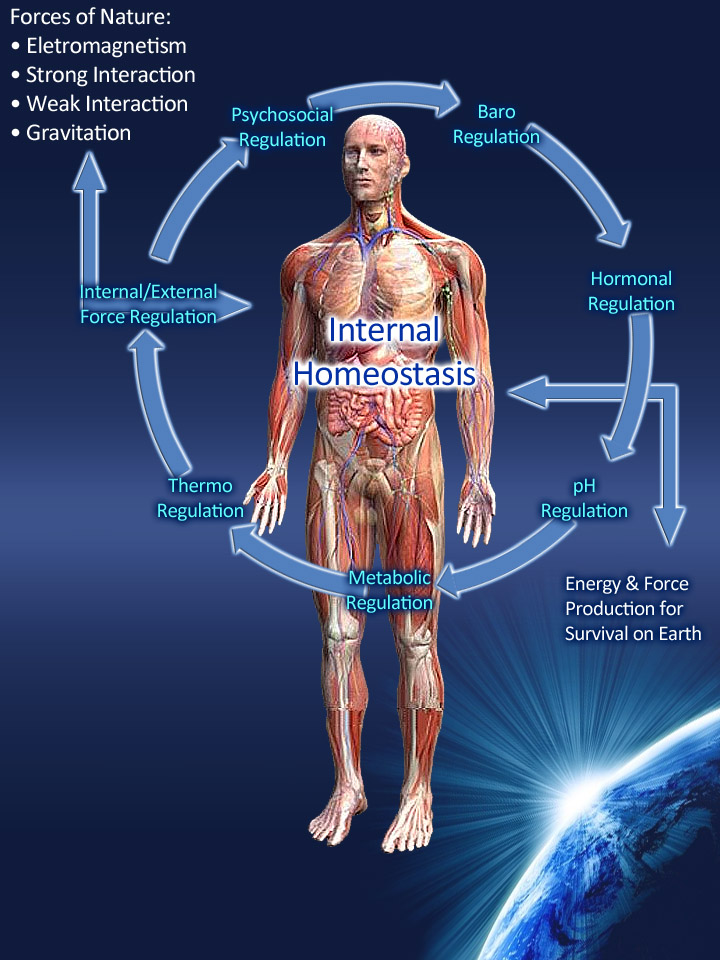


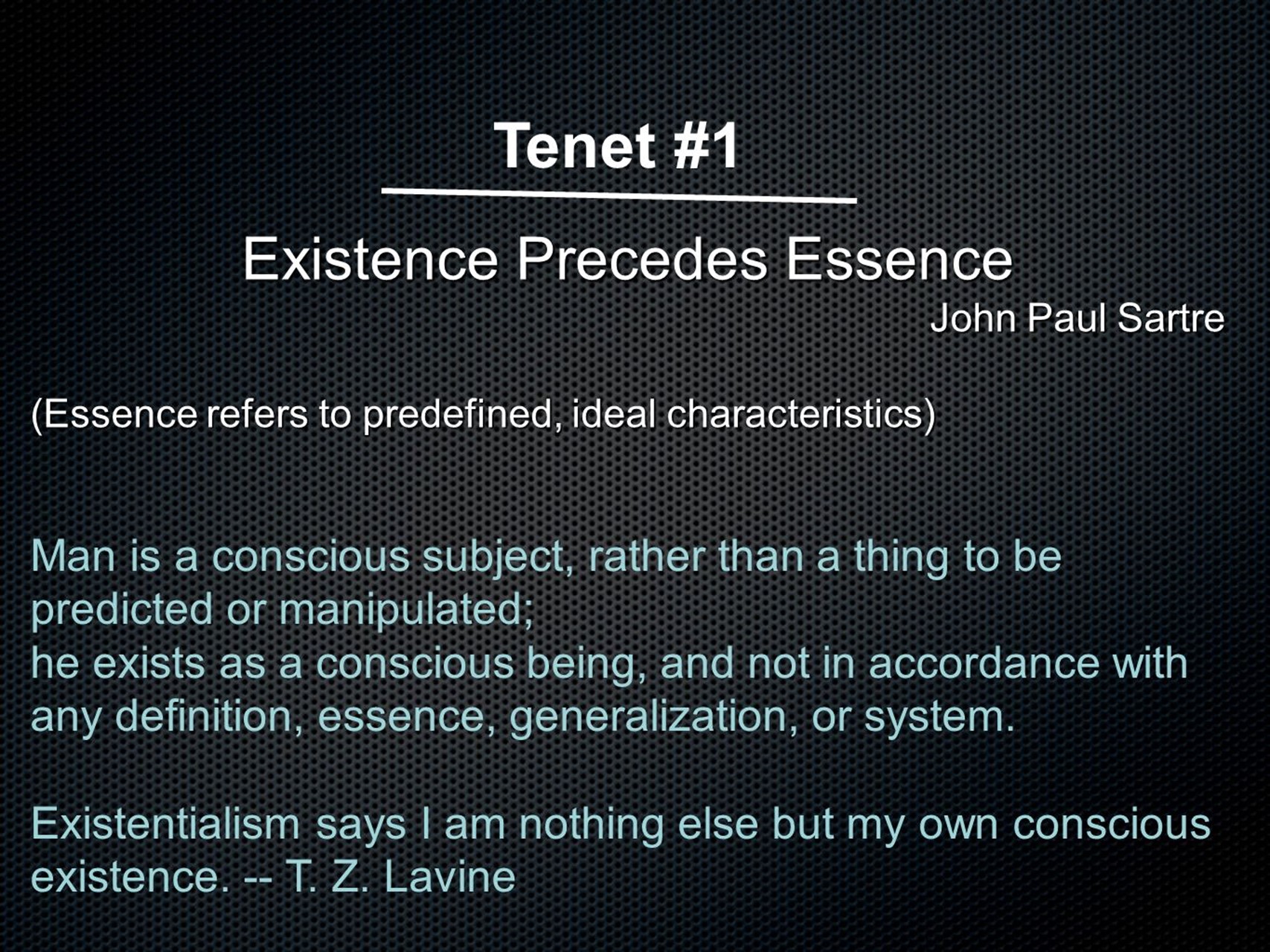


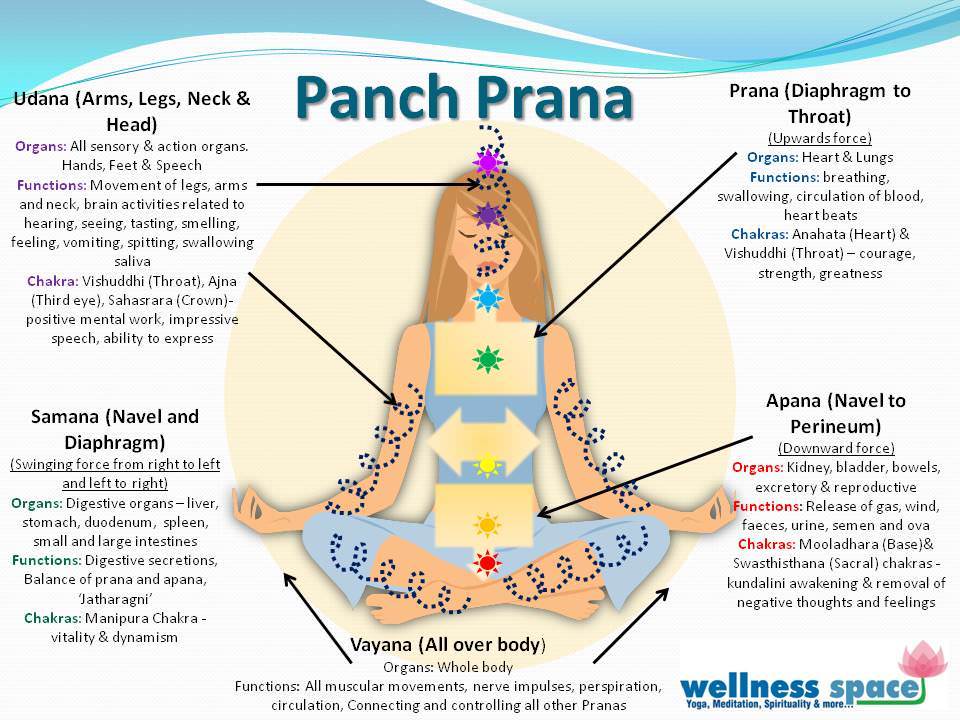


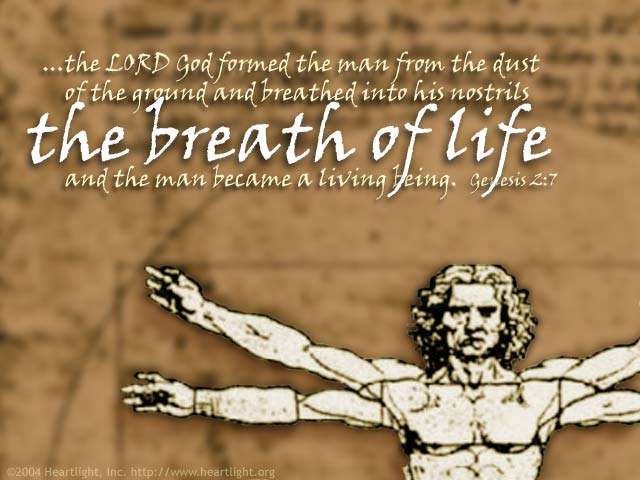


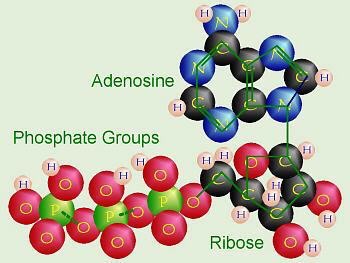


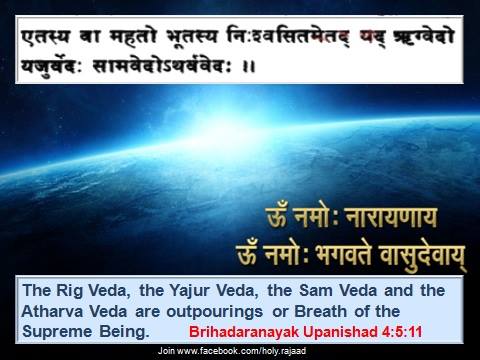
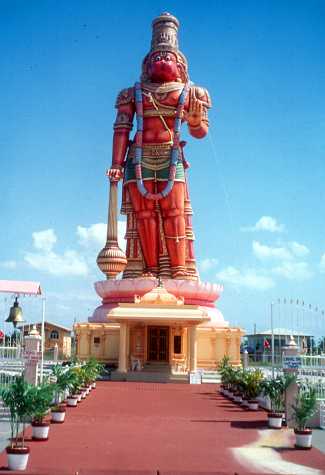
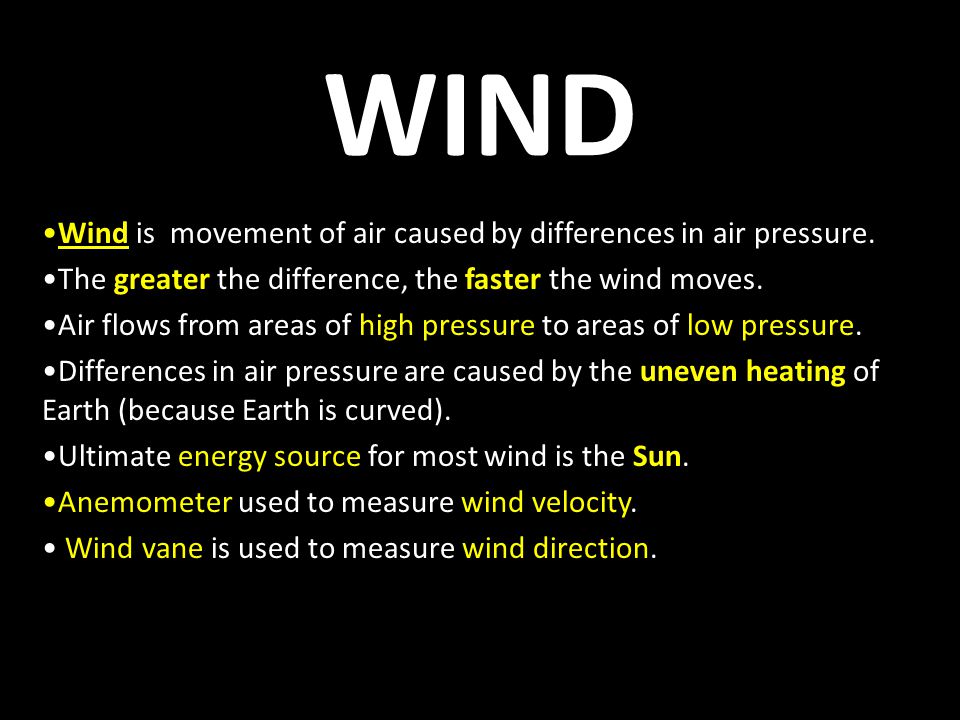
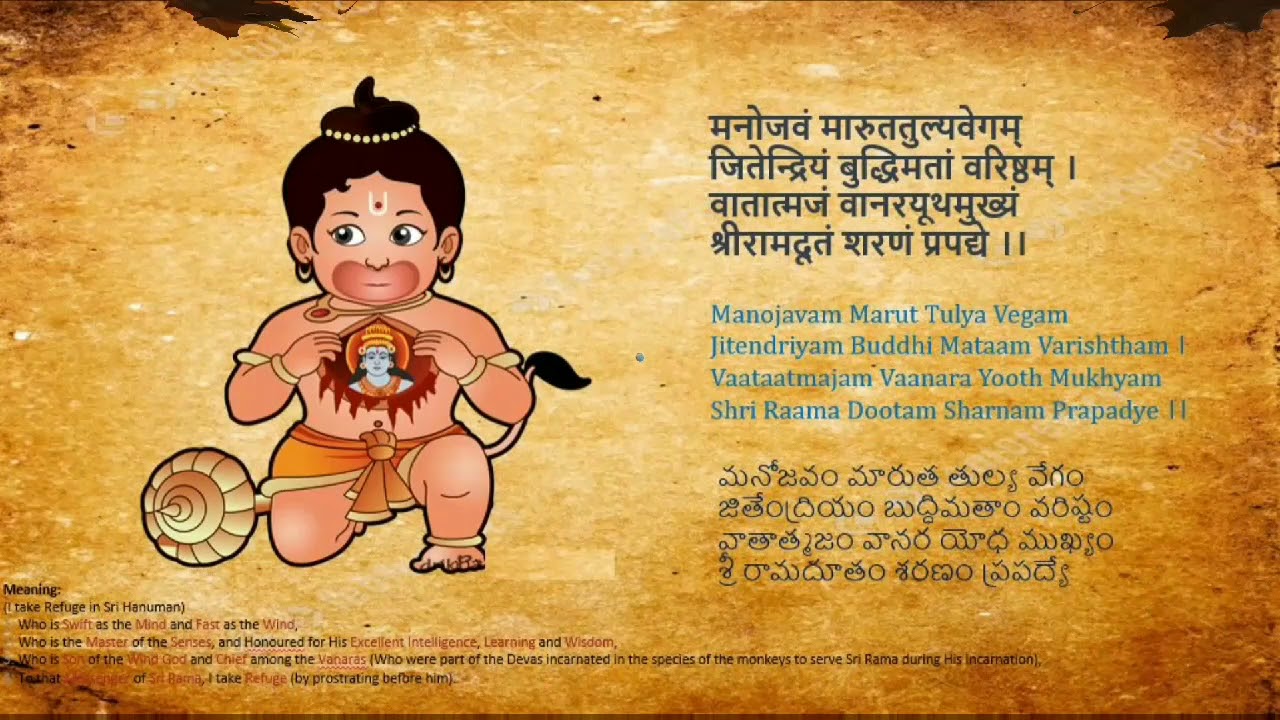
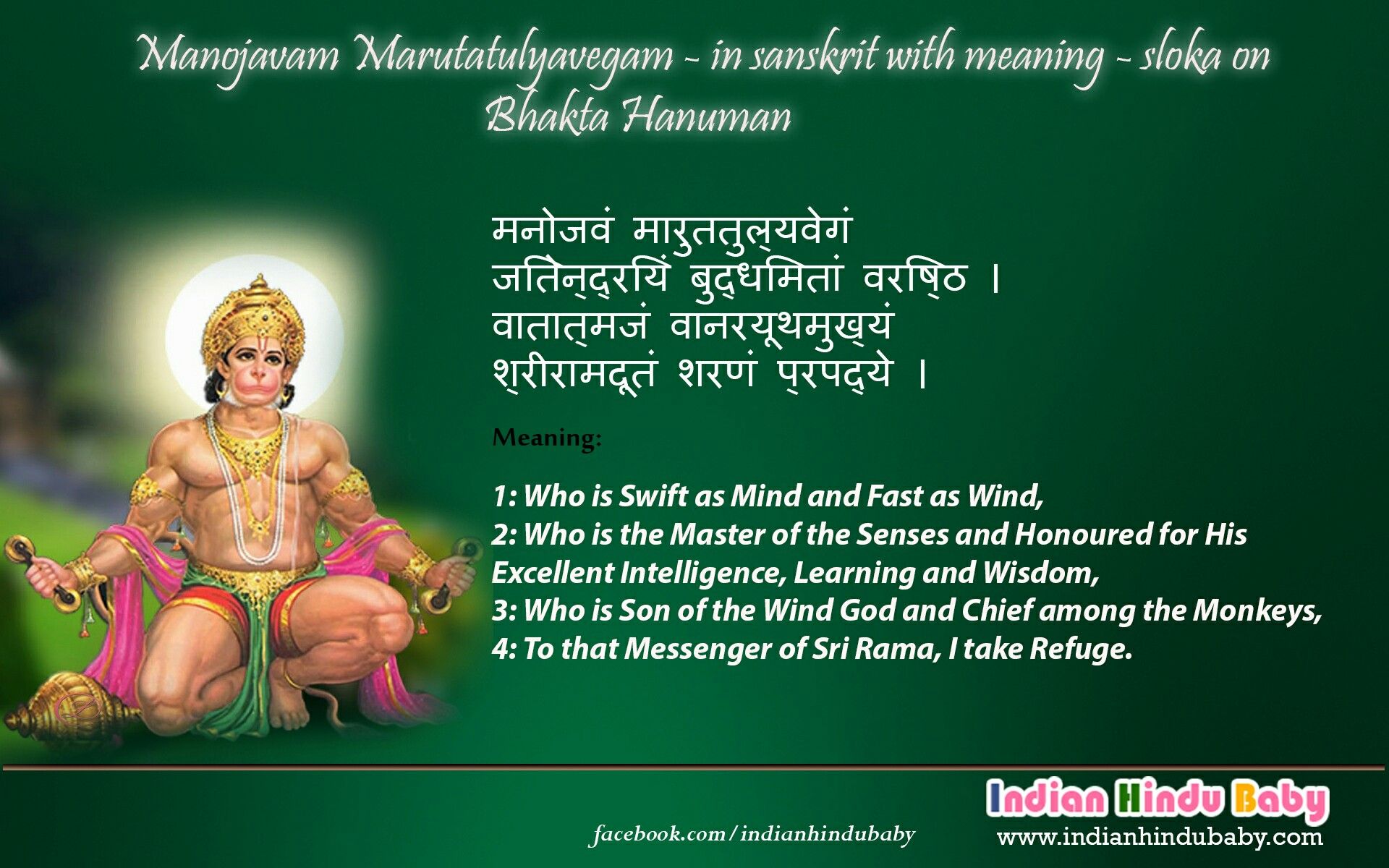
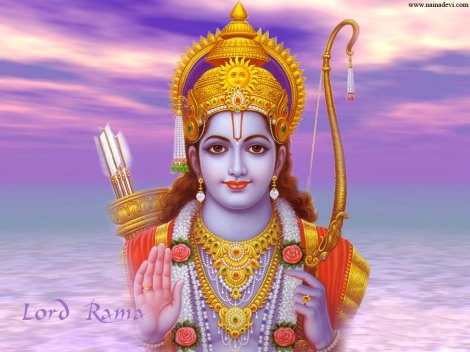
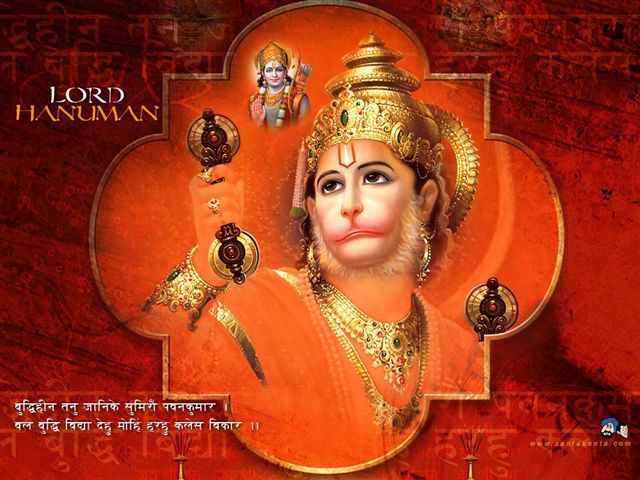


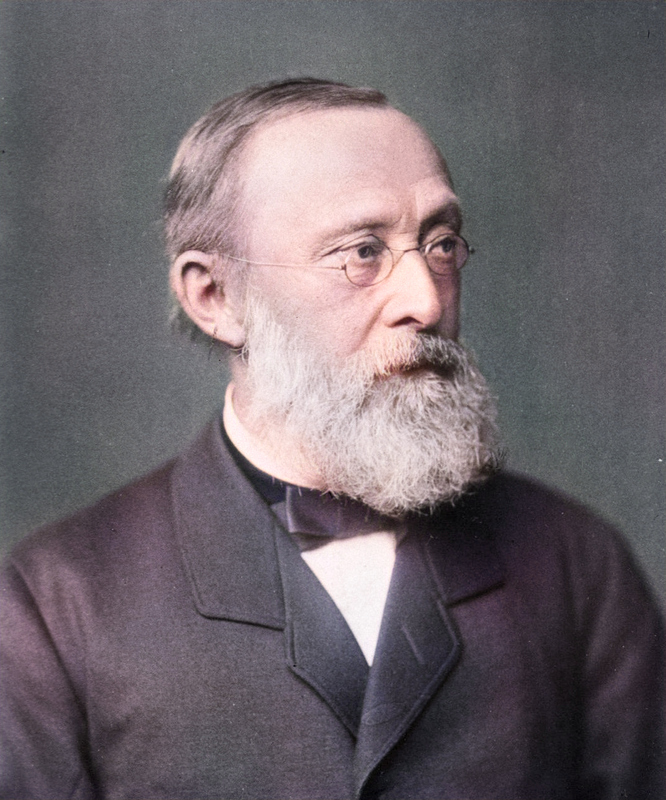


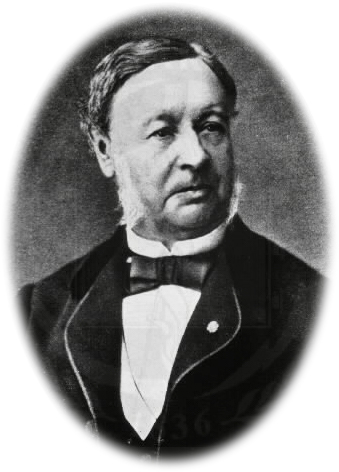


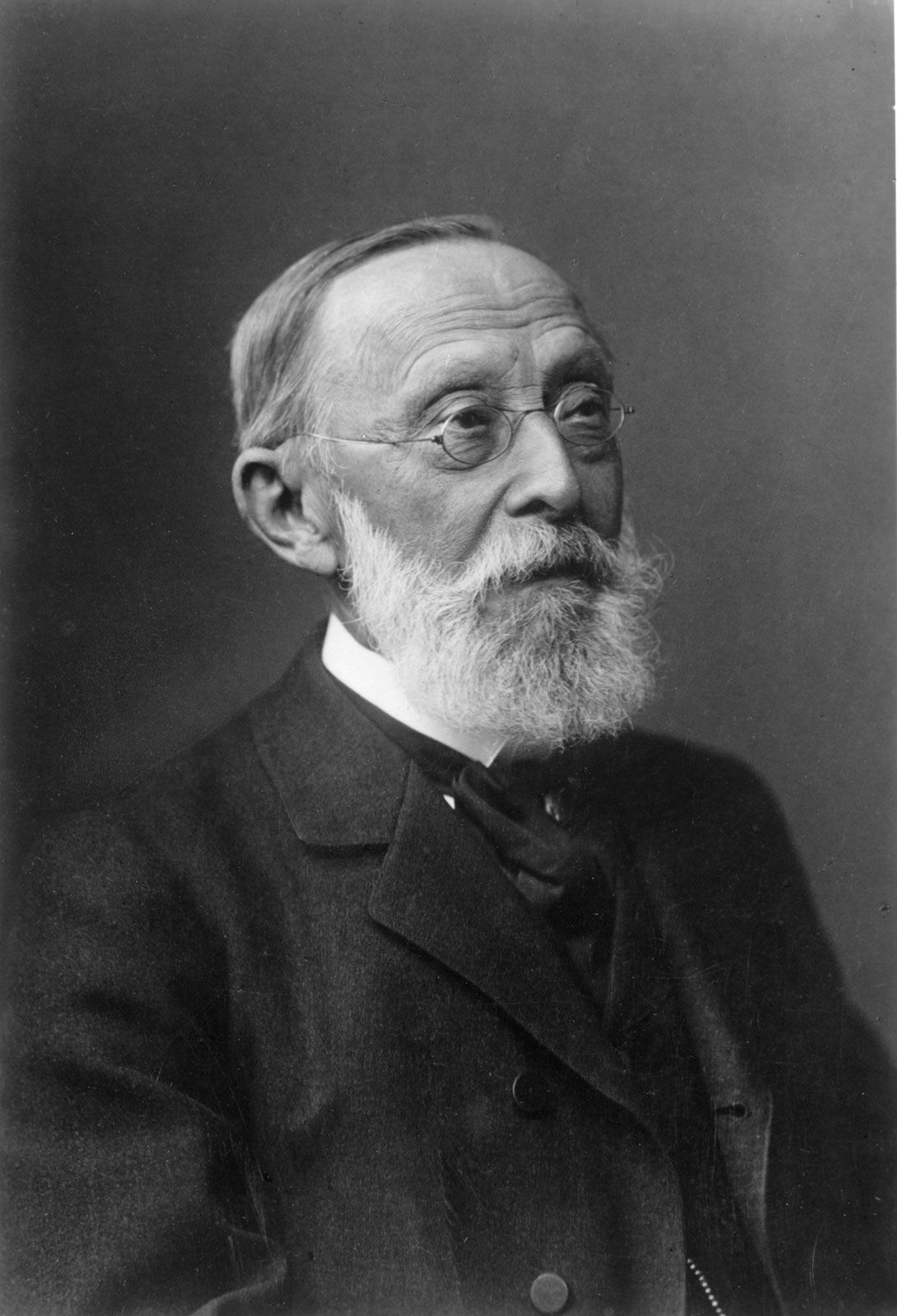





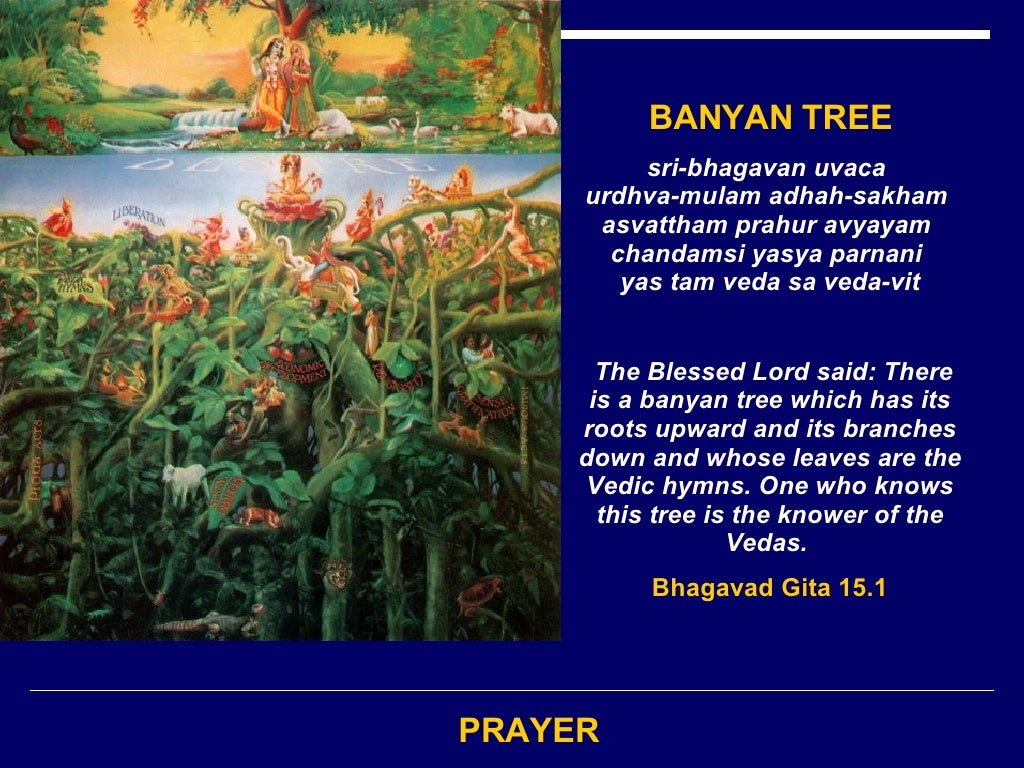


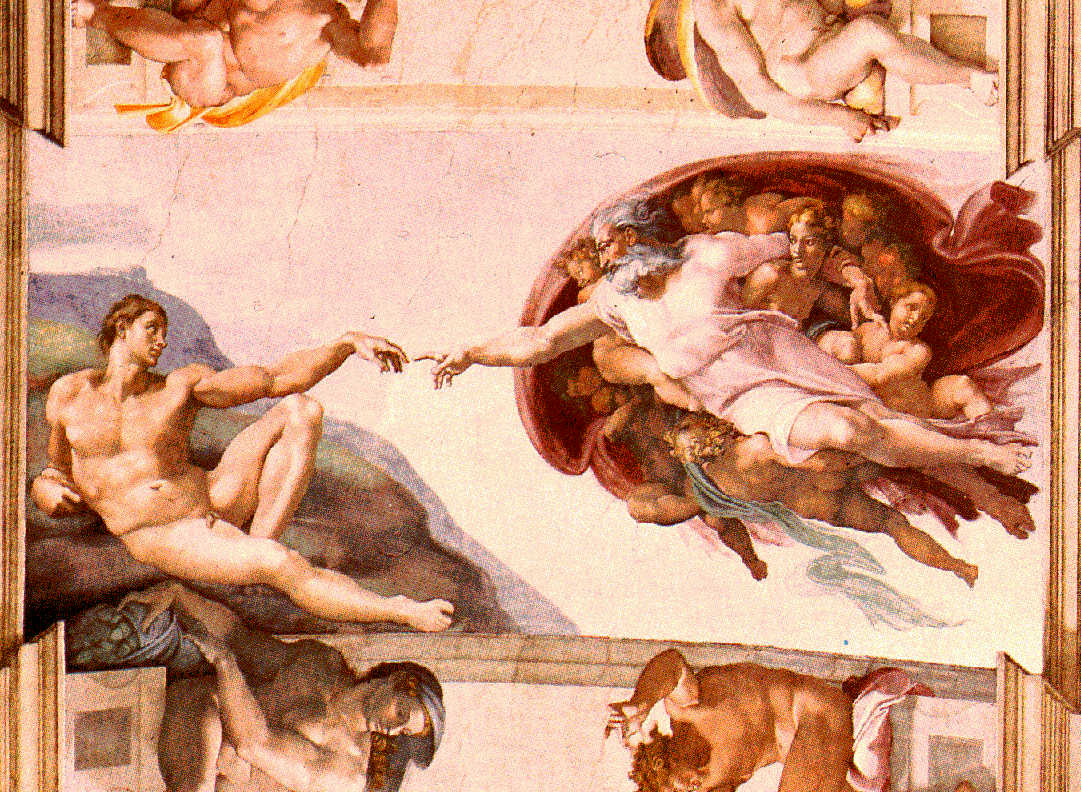


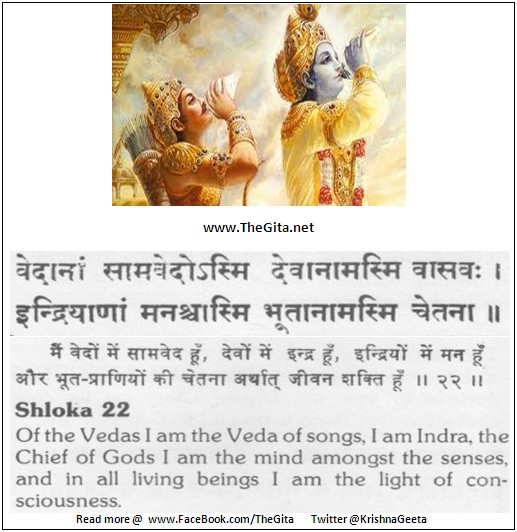
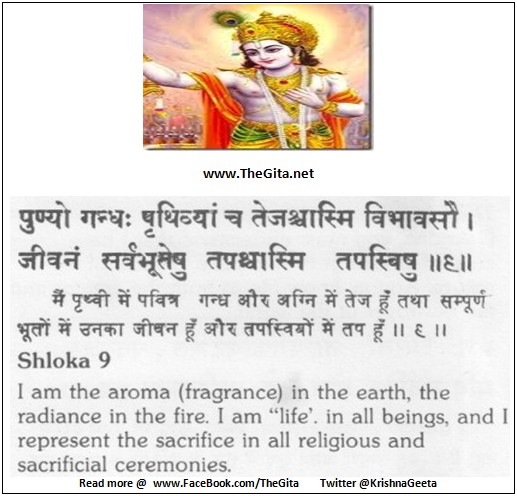

















 Whole Dude - Whole Concept

