Whole Foods-Whole Inspiration-Whole LanguageWhole Foods, Whole People and Whole Planet inspire Whole Dude to invent Whole Phrases: Whole Linguistics – Whole Language. The concept of Whole Cookie and Whole Love. Whole Dude uses the phrase Whole Linguistics to describe three entities; 1. Language User, 2. Language Interpreter and 3. Language Creator. Image Credit: Agenda Publications, Ann Arbor District Library, Issue Dates, December 1997 and February 1998.Mental Health – Set Your Mind Free.
What is Mental Health?
Mental health includes our emotional, psychological, and social well-being. It affects how we think, feel, and act, and helps determine how we handle stress, relate to others, and make choices.
Mental health is important at every stage of life, from childhood and adolescence through adulthood. Over the course of your life, if you experience mental health problems, your thinking, mood, and behavior could be affected.
Mental Health – Set Your Mind Free.
The Fluid Mind is that quality of the mind that equips us to accept what is coming our way and let go of what is (or should be) finished.
Fluid intelligence is the ability to think creatively, adapt to new situations, and solve problems you’ve often never encountered before in novel situations
Fluidity of Thoughts: is a person who has ability to follow and change thoughts smoothly. Such writers are often a good conversationalist, speaker, or writer.
The Fluid Self: our self-concept is not static but fluid, dynamic and ever-changing, influenced by our surroundings and shifts in our experiences and interactions with other
The Fluid Concept of Mind to Set Your Mind Free.
The “fluid concept of mind” refers to the idea that our mental processes, including our ability to think, learn, and adapt, are not static but rather dynamic and flexible. This concept highlights the mind’s capacity for change, growth, and adaptability, contrasting with the notion of a rigid or fixed mental state
Yes indeed, Life is Complicated. The complexities of Life involve the ability to process information and converting the mental process into actions performed by man. I am recommending the Fluid Concept of Mind or Mental Fluidity to Set Your Mind Free.
Mental Health – The Fluid Concept of Mind to Set Your Mind Free.
The Mental Fluidity helps in the communication of thoughts and other mental activities to perform actions such as Speech, Reading, Writing, in Arts, Music and all other actions where the brain and body have to work together. In the Indian tradition, the concept of mental fluidity is emphasized to prevent the problems of mental Burnout, mental inertia, mental lethargy, and as a practical tool to efficiently assimilate the information acquired by the Learning Process.
The “fluid concept of mind” refers to the idea that our mental processes, including our ability to think, learn, and adapt, are not static but rather dynamic and flexible. This concept highlights the mind’s capacity for change, growth, and adaptability, contrasting with the notion of a rigid or fixed mental state
Set Your Mind Free – Let The River Sarasvati Flow:
Set Your Mind Free. Let the River Sarasvati Flow. Goddess Sarasvati is known as the Goddess of Speech or Vak Devi and She is described as the personification of the ancient River Sarasvati which symbolizes Mental Fluidity. Her Speech is Free Flowing for She has Set her Mind Free.Set Your Mind Free. Let the River Sarasvati Flow. Richard Lovelace (1618-1657),English Poet and Soldier
Set Your Mind Free:
Set Your Mind Free. Let the River Sarasvati Flow.
Richard Lovelace, a romantic poet was confined within the walls of Gate House, a prison in Westminster, London. From the prison, in 1642 he wrote the poem, “To Althea, from Prison.” The poem has the following famous lines :
Stone walls do not a prison make,
Nor iron bars a cage;
Minds innocent and quiet take
That for a hermitage;
If I have freedom in my love
And in my soul am free,
Angels alone, that soar above,
Enjoy such liberty.
Those who had confined him could not stop him from exercising his ability to think and dream. No one can imprison or enslave the human mind. A human being essentially seeks to exist in a free state and when imprisoned, the man can still set his mind free to think and dream. A mind that is free, expresses its freedom in speech, in writing, in songs and music. Speech in all of its forms conveys the ability of a man to communicate his thoughts. Fluent and coherent speech requires the formulations of propositions, which are translated into conventional symbols, earlier acquired and readily accessible, which then reach external expression by means of an efficient vocalizing apparatus. The sequences involved in efficient speech production could be interrupted at various levels to produce different types of speech defects.
Disturbances of Speech:
Set Your Mind Free. Let the River Sarasvati Flow. Intellectual impairment due to drugs, disease, and old age cause Speech Disorders.Set Your Mind Free. Let the River Sarasvati Flow. Broca’s Area – Brain’s Speech CenterSet Your Mind Free. Let the River Sarasvati Flow. Co-ordination of sensory and motor functions is vital for normal Speech.
Since speech is an attribute of a free mind, it is important to understand the problems of disturbances of speech:
1. Intellectual impairment: Speech is deranged as a result of a deficit of intellectual function which prevents organization of meaningful propositions. A person who is intoxicated cannot speak well. There are several medical conditions associated with cognitive impairment, and the level of consciousness is impacted. Apart from these problems, a person, who is uneducated or any person who is unwilling to learn, cannot deliver a good speech. In the Sanskrit language such ignorant persons are identified as Murkh or Moron.
2. Dysarthria and Dysphonia: Precise enunciation of words with good volume requires normal function and co-ordination of lips, tongue, palate, and the vocal apparatus called larynx. Several medical conditions could cause a defect in motor output involved in speaking and contribute to slurring and distortion of speech.
3. Aphasia: These are speech difficulties or absence of speech where the person has no motor disorder and the articulatory system is intact. Three major varieties of aphasia are described.
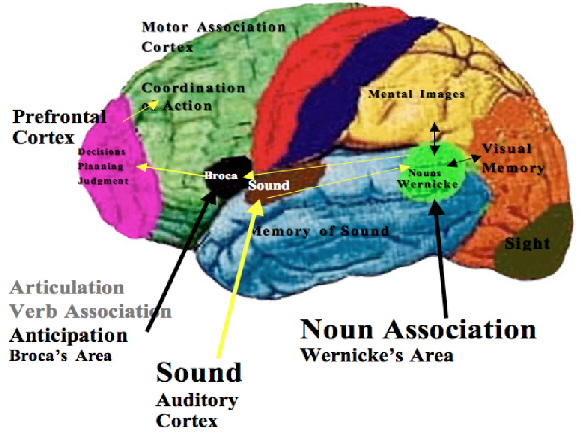
a. Broca’s, motor/expressive/Non-fluent aphasia: Broca’s area of brain produces verbs, builds sentences and predicts what people are going to say. Problems in this area makes the person’s speech non-fluent as the person has profound word finding difficulties. The person speaks slowly and with great effort. The speech is described as ‘telegraphic’ because it has no grammatical structure and small connecting words (e.g., and, or, but), are missing. The person comprehends well. The person can formulate thoughts in appropriate words i.e. internal speech is preserved, but is unable to translate them into corresponding sounds.
b. Wernicke’s/Sensory/Receptive/fluent aphasia: Wernicke’s area of brain is involved in learning patterns corresponding to different types of auditory stimulation. It attaches meanings, images, and feelings to sounds and to individual words. Problems in this area would result in severe impairment in comprehension of language (both spoken and written). The person speaks fluently with ease and often in large amounts. However, the speech often goes in circles (circumlocutory) and contains incorrect word usages (paraphasias). The person fails to understand or carry out spoken instructions. Internal speech is disturbed and hence there is impairment of external speech. The person cannot understand what he hears.
c. Conductive aphasia: The nerve fibers between Broca’s and Wernicke’s areas are involved in this type of problem. The person has trouble converting auditory input to verbal output. It is characterized by a marked inability to repeat words or phrases spoken to the person.
d. Dyslexia and Alexia: Impairment of reading ability in individuals with normal intelligence either due to a developmental disorder or due to acquired brain lesions.
Mental Fluidity as a Free Flowing River or Stream:
Set Your Mind Free. Let the River Sarasvati Flow. Eloquent Speech is often described as a Free Flowing Stream.Set Your Mind Free. Let the River Sarasvati Flow. Eloquent Speech is comparable to free-flowing water, the words come out continuously without any apparent effort.
Speech and Mental Lethargy:
Set Your Mind Free. Let the River Sarasvati Flow. The problem of Mental Lethargy and Mental Inertia.
A normal healthy person with normal intelligence and abilities to speak, write, read, and sing may not automatically become a fluent speaker. Human mind needs to exist in a ‘fluid’ state to maintain and sustain a high state of alertness and activity.
Set Your Mind Free. Let the River Sarasvati Flow.
Mental lethargy is described in the Sanskrit language as “Jadd.” The mental lethargy could be due to disease (‘Roga’), ignorance (Murkh), or could be due to a depressed condition or state of mental activity often named Mental Burnout.
Set Your Mind Free. Let the River Sarasvati Flow.
This condition of mental weakness or diminished energy is characterized by intellectual sluggishness. The mind is dull, lazy or indifferent. Whatever term is used, mental inertia, lack of interest or energy or lassitude is an important issue , and the man’s speech lacks the fluency and the mind lacks the ‘fluidity’ that is needed for coordinating activities. Very often, man creates ‘mental barriers’, and erects ‘mental fences’ and impedes his own intellect from generating creative thoughts and in expressing such thoughts through creative forms of speech and music. There should be no obstacles to the flow of thoughts and to its physical expression.
In its natural state, a river flows without any impediments and that ‘fluid’ flowing state is important for effective human communications.
Set Your Mind Free. Let the River Sarasvati Flow.The Concept of ‘Mental Fluidity’ is very important to appreciate Eloquent Speech. Eloquence has a charming quality of its own, it is pleasing to the ears of the listeners and captivates the minds of the members of the audience. Speech should make the same impact in terms of its appeal like a scenic picture.
Indian Traditions About Letters, Writing, Speech, Arts, and Music:
Set Your Mind Free. Let The River Sarasvati Flow. The Streaming Flow of Eloquent Speech.
The man cannot realize his creative potential in the fields of letters, writing, speech, arts, and music if mind is responding slowly, a condition of mental inertia or lethargy described in the Indian tradition as ‘Buddhi Mandhyam’.
Set Your Mind Free. Let the River Sarasvati Flow. I would like to draw an analogy between the Fluidity that manifests as a Flowing Stream and the Fluidity of a Mind that lets a ‘thought wave’ to propagate.
I would like to draw an analogy between the Fluidity that manifests as a Flowing Stream and the Fluidity of a Mind that lets a ‘thought wave’ to propagate. The Vedic River Sarasvati is personified as the patron Goddess of Speech (‘Vac or Vak’).
Mental Fluidity, Mental Clarity, and Mental Purity:
Set Your Mind Free. Let The River Sarasvati Flow. Star Jasmine or Kunda’s whiteness symbolizes Purity. White Lotus symbolizes Purity. White and radiant personality symbolizes Purity. In the Indian Tradition, the concept of Mental Fluidity is associated with the Quality called Mental Purity.
In the Indian tradition, the concept of Mental Fluidity is associated with the quality called Mental Purity and Goddess Sarasvati is endowed with a pure White and radiant personality which represents Her as the source of Pure Knowledge and Perfect Wisdom. Goddess Sarasvati enjoys a unique autonomous position. Apart from man, the entire Hindu pantheon of Gods pay obeisance to Her and seek Her protection to destroy and dissolve the problem of mental lethargy and mental inertia which impairs mental activity. The mind of man cannot be set free unless the mental barriers and mental fences are totally eradicated and the River Sarasvati is allowed to flow in its natural state without impediments.
A hymn to Worship Goddess Sarasvati:
Set Your Mind Free. Let The River Sarasvati Flow. Jasminum multiflorum,’ KUNDA’, Star Jasmine, Native of India.Set Your Mind Free. Let The River Sarasvati Flow. Moon, ‘INDU’ and the radiant personality of Sarasvati.Set Your Mind Free. Let The River Sarasvati Flow. ‘TUSHAR’, Snow clad peaks of Himalayas, the abode of Snow/Ice.Set Your Mind Free. Let The River Sarasvati Flow. ‘VEENA’, stringed musical instrument, native to India.Set Your Mind Free. Let The River Sarasvati Flow. Nelumbo nucifera, White Lotus flower,’ “Shwetha Padma” , Native of India.Set Your Mind Free. Let The River Sarasvati Flow. The Divine Trinity-Brahma, Vishnu, and Shiva join to worship the Goddess of Pure Knowledge and Perfect Wisdom.Set Your Mind Free. Let The River Sarasvati Flow. The Rig Vedic River Sarasvati, the source of pure, nourishing waters. The Sanskrit language and the Devanagari script originated in the Sarasvati River Valley. Set Your Mind Free. Let The River Sarasvati Flow. Sarasvati, the destroyer of Mental Inertia and Lethargy.Set Your Mind Free, Let The River Sarasvati Flow. ‘AUM’, the Sound Invocation for Sarasvati Vandana, the hymn to worship Goddess Sarasvati.
Ya kundendu tushara haara dhavala, Ya shubhra vastravrita Ya veena vara danda mandithakara, Ya shwetha padmaasana Ya brahmachyuthaha shankara prabrithibhi devai, sada poojitha Samaam paatu Sarasvati Bhagavathi, nihshesha Jaddyapaha.
Meaning:
Salutations to Devi Sarasvati, who is pure white like Jasmine and covered with white garments, with the coolness of Moon, brightness of snow and shine like the garland of Pearls.
Whose hands are adorned with Veena and the boon giving staff and who is seated on white lotus.
Who is always adored by Lord Brahma, Vishnu, Shankara and other Devas.
O Goddess, please protect me and remove my mental inertia and ignorance completely.
Sarasvati is defined as “Saaram vaati iti Sarasvati”, She who flows towards the Absolute is Sarasvati. For river-like streaming and fluent speech the blessings of Sarasvati would help and the mind is set free as long as the waters flow.
Set Your Mind Free-Let The River Sarasvati Flow. Shevata Padma DHAVALA – The White Lotus symbolizes the Purity, Creativity, and Nourishing Qualities of Pure and Free Mind.
Mental Health – The Concept of Mental Fluidity to Set Your Mind Free.
Mental Health – Keeping memories alive to protect mind from age-related cognitive decline
Mental health includes our emotional, psychological, and social well-being. It affects how we think, feel, and act, and helps determine how we handle stress, relate to others, and make choices.
Mental health is important at every stage of life, from childhood and adolescence through adulthood and old age. Over the course of your life, if you experience mental health problems, your thinking, mood, and behavior could be affected.
Mental Health – Keeping memories alive to protect mind from age-related cognitive decline
Protecting against cognitive decline
Mental Health – Keeping memories alive to protect mind from age-related cognitive decline
Memory loss is unusual forgetfulness. You may not be able to remember new events, recall one or more memories of the past, or both.
Alternative Names
Forgetfulness; Amnesia; Impaired memory; Loss of memory; Amnestic syndrome; Dementia – memory loss; Mild cognitive impairment – memory loss
Causes
Normal aging can cause some forgetfulness. It is normal to have some trouble learning new material or needing more time to remember it. But normal aging does not lead to dramatic memory loss. Such memory loss is due to other diseases.
While there’s currently no treatment that can prevent or cure dementia, researchers have identified some factors that may help protect you from cognitive decline. 1. Exercise – Exercise offers an impressive array of health benefits. It helps prevent heart disease and type 2 diabetes; lowers the risk for high blood pressure, colon cancer, and breast cancer; and helps relieve insomnia, anxiety, and depression. In addition, it may help ward off cognitive decline and dementia. Plus, some studies have shown that engaging in a program of regular exercise improved cognitive function in people who already had memory problems, 2. A Mediterranean-style diet – A Mediterranean diet emphasizes fruits, vegetables, whole grains, beans, nuts and seeds, and olive oil, and includes moderate amounts of fish, poultry, and dairy products, while limiting red meat. This eating pattern has long been recognized as promoting better cardiovascular health ,lowering the risk of certain cancers, and may protect against cognitive decline, 3. Alcohol – experts do not recommend drinking alcohol to prevent cognitive decline. If you enjoy an occasional alcoholic beverage, you should limit your consumption to no more one drink per day, 4. Sleep – Getting consistent, good-quality sleep is known to improve overall health and may prevent cognitive decline. Our bodies rely on a certain amount of regular sleep for a variety of essential functions, many of them in the brain. Studies have shown that people who regularly sleep less than the recommended seven to eight hours a night score lower on tests of mental function. This may be because learning and memories are consolidated during sleep, 5. Mental stimulation – as you age, education level is less important in maintaining a healthy brain than the habit of staying mentally active, by using activities that required active mental engagement—reading, writing, doing crossword puzzles, playing board or card games, engaging in group discussions, and playing music, and 6. Social contacts – Social interaction can have profound effects on your health and longevity. In fact, there’s evidence that strong social connections may be as important as physical activity and a healthy diet. Strong social interactions can help protect your memory and cognitive function in several ways as you age
The Whole Dude Connection is about the Moments that Slip Away and are Laid to your Account
The Whole Dude Connection is about the Moments that Slip Away and are Laid to your Account (Labuntur Et Imputantur)The Whole Dude Connection is about the Moments that Slip Away and are Laid to your Account.
In 1965, while I was a student of Human Anatomy at Kurnool Medical College, I had the opportunity to know about Dr. J. C. B. Grant (1886-1973), the author of Grant’s Atlas of Anatomy. The 5th Edition of his Atlas was published in 1962 and was available in India in our Medical College Library.
Born in Loanhead (south of Edinburgh) in 1886, Grant studied medicine at the University of Edinburgh Medical School and graduated with an M.B., Ch.B. degree in 1908. While at Edinburgh, he worked under the renowned anatomist Daniel John Cunningham.
badge, headdress, British, Royal Army Medical Corps (INS 8067) Brass cap badge of the rod of Aesculapius with a serpent entwined round it, head uppermost and looking left, all within a laurel wreath. Above, an Imperial (King’s) crown and below, a scroll bearing ROYAL ARMY MEDICAL CORPS. Slider to reverse. Copyright: � IWM. Original Source: http://www.iwm.org.uk/collections/item/object/30078877The Cap Badges and the Insignia of the British Royal Medical Corps and the Indian Army Medical Corps reveal the Rudi-Grant Connection. The Indian Army Medical Corps was created from the British Royal Army Medical Corps.
Grant became a decorated serviceman of the Royal Army Medical Corps during the First World War before moving to Canada. He established himself as an ‘anatomist extraordinary’ at the University of Toronto, publishing three textbooks that form the basis of Grant’s Anatomy. The textbooks are still used in anatomy classes today, and made unforgettable memories for those who found themselves in his classes nearly a century ago. One of Grant’s many accomplishments was establishing a division of histology within the department.
The Whole Dude Connection is about the Moments that Slip Away and are Laid to your Account
As a student of Human Anatomy during 1965-67, I spent time almost every day, a couple of hours in the evening preparing the drawings for my own Atlas of Anatomy, as the course of study demands the students to learn Anatomy preparing their own pictorial guide.
Students continue to use Grant’s textbooks today, and for the more artistic anatomist there’s even a Grant’s Anatomy Coloring Book, published in 2018.
The Whole Dude Connection is about knowing the man, the building blocks and the structural units and organization of the human body. To defend the human existence, the Rudi-Grant Connection lays the emphasis on knowing the person who is at risk apart from knowing the agent posing the risk.
The Identity of Multicellular Human Organism:
The Whole Dude Connection is about the Moments that Slip Away and are Laid to your Account. Cunningham’s Manuals of Practical Anatomy provide me the learning tools to know and understand Man’s External and Internal Reality and its Identity as described by Cells, Tissues, Organs,and Organ Systems.
Daniel John Cunningham was born on 15 April 1850 in Scotland. After his initial schooling at his home town, Crieff, he took up the study of medicine at the University of Edinburgh and passed with honours. He is best known for the excellent series of dissection manuals, namely Cunningham’s Dissection Manuals. Cunningham’s Manual of Practical Anatomy has provided me the learning tools to know and understand Man’s External and Internal Reality and its Identity as described by Cells, Tissues, Organs,and Organ Systems.
The Whole Dude Connection is about the Moments that Slip Away and are Laid to your Account. Cunningham’s Manuals of Practical Anatomy provide me the learning tools to know and understand Man’s External and Internal Reality and its Identity as described by Cells, Tissues, Organs,and Organ Systems.The Whole Dude Connection is about the Moments that Slip Away and are Laid to your Account. Cunningham’s Manuals of Practical Anatomy provide me the learning tools to know and understand Man’s External and Internal Reality and its Identity as described by Cells, Tissues, Organs,and Organ Systems.
The Moments Slip Away and are laid to your Account
The Moments Slip Away And Are Laid to Your Account. Recalling the Moments at Government Victoria College, Palghat.
Government Victoria College, Palakkad is the oldest institution of higher learning in the Malabar region of Kerala. In January 1888 it was raised to the rank of a second grade college and was affiliated to the University of Madras. The institution was taken over by the Government of Madras Presidency in 1919.The teaching of Geography as an optional subject for ‘Intermediate’ students commenced in 1945. Before the creation of linguistic provinces in 1956, Palghat was part of Madras State after India’s independence in 1947.
Moments Slip Away And Are Laid to Your Account. Recalling the Moments at Government Victoria College, Palghat.
The Motto of the College is the Latin slogan Labuntur et imputantur. Indeed it is true that life’s moments slip away and fortunately they are laid to your account.
Moments Slip Away And Are Laid to Your Account. Recalling the Moments at Government Victoria College, Palghat.
Because of Victoria College, I am able to recall some of those moments that slipped away from my life about 73 years ago. I am speaking of the times when Palghat was a part of Madras State and when Victoria College was affiliated to the Madras University. In 1952, I was a four-year old kid and my father was employed in the Madras State Educational Service. He had obtained his M.A degree in Indian History from Madras University and worked in the Madras Presidency College, Madras which is now known as Chennai city. My father had also a Diploma in Geography and he was transferred to Government Victoria College, Palghat to teach Geography. In his long career in the Educational Service, my father taught mostly Indian History, and at Victoria College, he taught Geography and was assigned to the Department of Geography.
Moments Slip Away And Are Laid to Your Account. Recalling the Moments at Government Victoria College, Palghat.
We lived in a rented house in Palghat. The house is on a dead-end street and it is the last house on the street and it abuts the college compound wall.The house faces the college cricket stadium/sports grounds.There is a canteen of the college right in front of the house.The stadium has a nice pavilion for the spectators to sit and watch the games. Our landlord had two sons who were then students at the college. Apart from my parents, I lived with my two elder brothers. For the first time in my life, I was introduced to the game of Cricket in this house while we lived in Palghat. In the front courtyard of the house, we had a large tree which served as the stumps for our game. Very often, myself and my brothers would watch the Cricket matches and I have seen for the first time the official scorekeeping sheets they fill up during the game. Cricket has been popular with Indians for a long time. It was not Mylapore, Madras and it was not my native place Rajahmundry where I took my first lesson to play this game. I remember Palghat as the place where my love for the game of Cricket began.
Moments Slip Away And Are Laid to Your Account. Recalling the Moments at Government Victoria College, Palghat.
When I opened my Palghat Account, my landlord’s two sons still look young and fresh like any other college students and I still have the visual image of myself and my brothers, all kids, playing cricket in front of the house. This is life. It is full of moments that quietly slip away and if you are lucky, the account that you have created is still there and you have the chance to recapture the moment and you can actually relive in that moment and the freshness of it is carefully preserved and it tastes as good as it was on the first occasion. Thanks to Victoria College, Palghat and I still have an account with credit balance.
Moments Slip Away And Are Laid to Your Account. Recalling the Moments at Government Victoria College, Palghat.
Essence and Existence:
Moments Slip Away And Are Laid to Your Account. Recalling the Moments at Government Victoria College, Palghat.
What is man’s nature and how to describe man’s essence? The essence is supported by existence. The existence is in the moments that slip away on which man has no control. Man exists as he helplessly watches the moment called future is churned into past, and present is only an instant in this future-past continuum. Fortunately, man can recall and revisit the moments that have slipped away and bring past into the present moment. In the final analysis, Life is all about recalling the memories of the past moments laid into our own memory bank accounts.
Mental Health – Keeping memories alive to protect mind from age-related cognitive decline. Reticular Formation of Brain Stem has connections with almost all other parts of the Central Nervous System and it helps to coordinate and integrate actions of different parts of the CNS. It is important for Behavioral Arousal, and the Capacity for Consciousness.
Whole Foods-Whole Inspiration-Whole LanguageWhole Foods, Whole People and Whole Planet inspire Whole Dude to invent Whole Phrases: Whole Linguistics – Whole Language. The concept of Whole Cookie and Whole Love. Whole Dude uses the phrase Whole Linguistics to describe three entities; 1. Language User, 2. Language Interpreter and 3. Language Creator. Image Credit: Agenda Publications, Ann Arbor District Library, Issue Dates, December 1997 and February 1998.
Staying Connected for Mental Health – What is God Connection?
Staying Connected for Mental Health – What is God Connection?Staying Connected for Mental Health – What is God Connection?
Humans are social animals: We crave feeling supported, valued and connected.
Research Points To The Benefits Of Social Connection:
Increased happiness. In one compelling study, a key difference between very happy people and less-happy people was good relationships.
Better health. Loneliness was associated with a higher risk of high blood pressure in a recent study of older people.
A longer life. People with strong social and community ties were two to three times less likely to die during a 9-year study.
Mental Health – An integrated approach to Physical, Mental, Social, Moral, and Spiritual Wellbeing
Staying Connected for Mental Health – What is God Connection? An integrated approach to Physical, Mental, Social, Moral, and Spiritual Wellbeing
I recognize Man’s Existence with Seven Forms or Dimensions. These are, 1. the Physical Being described by Human Anatomy, Human Physiology and other Medical Sciences, the human being in health and sickness, 2. the Mental Being, the intellect, thoughts and emotional states of Man described by Psychology and Psychiatry, 3. the Social Being described by Social Sciences, 4. the Moral Being described by Moral Science and Ethics, the power of discernment used by Man to make distinction between good and evil, and right and wrong, 5. the Spiritual Being described by Vital Power, Animating /Sensible Properties, and Conscious/Cognitive abilities of Man’s Corporeal Substance that develops and builds the cells, tissues, and organs of Human Body, 6. the Created Being which is reflected in the existence of man as an Individual with Individuality without any choice, and 7. the Rational Being which directs man to reconcile his behavior with his true or real nature that makes the man to review the actions performed in the external environment.
The Seven Dimensions of man demand an integrated approach to promote the wellbeing of man.
Staying Connected for Mental Health – What is God Connection? Red Blood Cells provide a very good example of the adaptive subordination of cells to meet the requirements of the Whole Organism. The specialized functions of tissues and organs of human body are possible because of such functional subordination.
The structural differentiation and the functional organization of various organ systems makes man a very complex living organism. This kind of specialized functions of tissues and organs is possible because of adaptive subordination of the cells to the requirements of the Whole Organism. If altruism describes any behavior that appears to favor another individuals’ chances of survival, we can easily recognize this characteristic in the functions performed by the Red Blood Cells. Each Red Blood Cell lives for a very limited life span of its own and during its short period of existence it serves the purpose of the Whole Human Organism with a sense of devotion, with the spirit of cooperation, to provide assistance to all other cells, tissues, and organs of the body in a selfless manner.
I define the term ‘Spiritualism’ as the nature of a relationship, a partnership, an association, or bonding between two individual living entities based upon characteristics such as compassion, sympathy, understanding, cooperation, mutual assistance, mutual tolerance, voluntary subservience to provide some benefit to the member participating in the biotic interaction. Spiritualism is innate and is not acquired by learning experience. The man depends upon the protoplasmic substance for his very existence as a human being and to perform the characteristic living functions. The human form becomes the actuality that it represents by the Nature of its spiritual association with the protoplasmic living matter. Man is a spiritual being because of the spiritual nature of his living substance called protoplasm.
The terms Soul and Spirit belong to the materialistic realm where the Physical Reality of man’s biological existence is established. I have not yet discovered any good reason to use the terms Soul and Spirit as a metaphysical or transcendental Reality.
Staying Connected for Mental Health – What is God Connection?
The importance of human connection
Staying Connected for Mental Health – What is God Connection?
Research shows us that loneliness is on the rise, and that a lack of human connection can be more harmful to your health than obesity, smoking and high blood pressure.
In today’s age, we live busy lives, trying to strike a balance between work, school, hobbies, self-care and more. Often, our social connections fall by the wayside. But connecting with others is more important than you might think. Social connection can lower anxiety and depression, help us regulate our emotions, lead to higher self-esteem and empathy, and actually improve our immune systems. By neglecting our need to connect, we put our health at risk.
The reality is that we’re living in a time of true disconnection. While technology seems to connect us more than ever, the screens around us disconnect us from nature, from ourselves, and from others. Wi-Fi alone isn’t enough to fulfill our social needs – we need face-to-face interaction to thrive. Technology should be enhancing our connection to others, not replacing it.
The God Connection defines Life as the relationship between energy-yielding Matter and energy-demanding Matter
Whole Foods – Whole Planet – Whole Family – Whole Concept: Salutations to Mother Annapurna the Original Source of Whole or Purna Concept (Always Full, Complete and Perfect). My mother’s name is the equivalent of Whole Foods.
Yes indeed, Life is complicated. Before making the next food shopping trip, I ask my readers to reflect upon the connection between food, man, and the world in which the man finds his mortal existence.
Spiritualism – Matter – Energy – Life and Spirituality:
WHAT IS MAN? SPIRITUALITY AND SELF-REALIZATION. RESPIRATION PLAYS CRUCIAL ROLE IN ENERGY TRANSFORMATION.
Man is a Physical Being with matter and form. Materialism is a system of thought that explains the nature of the world as entirely dependent on matter, the final reality. Man must understand what it is to be a substance and what it is to exist. I use a method of investigation or inquiry called ‘Dialectic’ which deals with the nature and relation of things – what each is, how it differs from others, what common quality all have, to what kind each belongs, and in what rank each stands in its kind, and whether its being is real-being, and how many beings there are and how many non-beings to be distinguished from beings.
Life is characterized by the presence of complex transformation of organic molecules and by the organization of such molecules into the successively larger units of protoplasm, cells, organs and tissues. Life comes into existence only when matter has the ability to acquire energy from its external environment. I would like to begin this dialectical inquiry by paying a tribute to people who have significantly contributed to the understanding of matter, and energy transformation in living matter.
The Founder of Modern Chemistry:
Antione Laurent Lavoisier(1743-94), French Chemist and Physicist, a Founder of Modern Chemistry. He was one of the first to use effective quantitative methods in the study of chemical reactions. His classification of substances is the basis of the modern distinction between chemical elements and chemical compounds and of the system of chemical nomenclature. His work established the Law of Conservation of Mass(or Matter). He was guillotined during the Reign of Terror unleashed by French Revolution.
Chemistry is the science that deals with the composition and properties of substances, and with the reactions by which substances are produced from or converted into other substances. The name Organic Chemistry originated to differentiate between those substances derived from plant and animal (organic) sources and those derived from inanimate (inorganic) materials. It refers to the Chemistry of compounds containing Carbon, or chains of connected Carbon atoms. The science called Biochemistry involves the study of the large organic molecules found in living systems and their reactions which make up the life processes. The science called Molecular Biology explains biological events by studying the molecules within cells.
Joseph Priestley(1733-1804), English Theologian, Philosopher, and Scientist. His techniques for studying gases led to his discovery of Sulfur Dioxide, Ammonia, and “Dephlogisticated Air”, the gas that Lavoisier named Oxygen. He had studied Photosynthesis in Plants and Respiration in animals. The most important equations for living things are mutually inverse.Respiration represents the reverse of Photosynthesis in Plants.
The Living Cell is a thermodynamically unstable system. This means that without continuous input of energy, a Cell will degrade spontaneously into a non-living collection of molecules. However, we have to be careful in using the term ‘perishable’. The Law of Conservation of Mass or Matter states that matter may change its form or shape; its mass always remains the same. Mass is the quantity of matter in a body regardless of its volume or of any forces acting on it. The Conservation Laws of classical Physics apply to certain physical properties of an isolated system that remain constant with time. These basic Laws of Physics maintain that the total value of certain quantities like mass and energy remain unchanged during a physical process. Laws of Conservation signify that nature does not change with passage of time. Conservation of Mass implies that matter can be neither created nor destroyed; that is, processes that change the physical or chemical properties of substances leave the total mass unchanged. The Law of Conservation of Energy implies that energy can be neither created nor destroyed although it can be changed from one form into another.
The Laws of Conservation of Mass and Energy could apply to both living systems and non-living physical systems. To maintain life, a living system not only repairs or replaces (or both) its structures by a constant supply of the materials of which it is composed but also keeps its life processes in operation by a steady supply of energy. Living systems must be supplied energy for continual synthesis of new organic molecules and to replace or to repair broken organic molecules. Life is a consequence of successive and coordinated chemical reactions – the most important being the Oxidation-Reduction or Redox Reactions.
Oxidation-Reduction or Redox Reactions:
Most important biological processes involve Oxidation-Reduction or Redox Reactions to acquire Oxidative energy from other substances termed nutrients. The burning of a substance in air is rapid Oxidation or Combustion which is not of much use for living systems. Plants and Animals use a form of Oxidation called Respiration to liberate energy stored in food materials.
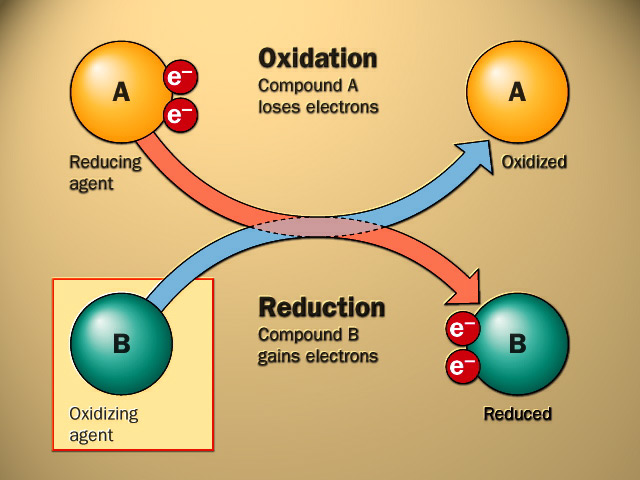
Oxidation-Reduction reactions are complementary chemical reactions characterized by the loss or gain, respectively, of one or more electrons by an atom or molecule. When an atom or molecule combines, or forms a chemical bond, with oxygen, it tends to give up electrons to oxygen. Similarly, when a molecule loses oxygen, it tends to gain electrons. Oxidation is a reaction involving loss of electrons, and Reduction is a reaction involving the gain of electrons. The two processes, Oxidation and Reduction, occur simultaneously and in chemically equivalent quantities; the number of electrons lost by one substance is equaled by the number of electron gained by another substance. The substance losing electrons or electron donor undergoes Oxidation and is called Reductant. The substance gaining electrons or electron acceptor undergoes Reduction and is called Oxidant. Common Reductant substances are Carbon and Hydrogen (readily oxidized). Common Oxidant (substance readily reduced) is Oxygen. Respiration is the process by which an organism exchanges gases with its environment. Organisms that utilize respiration to obtain energy are called aerobic, or Oxygen-dependent. In Biochemistry, respiration refers to the series of biochemical Oxidation-Reduction reactions in which organic molecules such as carbohydrates (sugars), fatty acids (fats), and amino acids (proteins) are converted to carbon dioxide and water. The chemical energy thus obtained is trapped and stored for later use by the cells.
Energy Transformation in Living Matter:
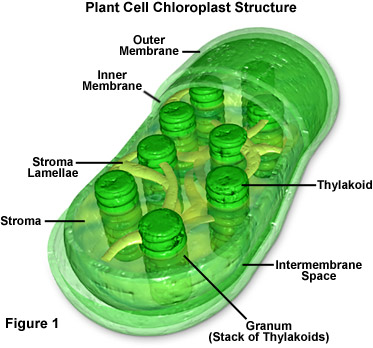
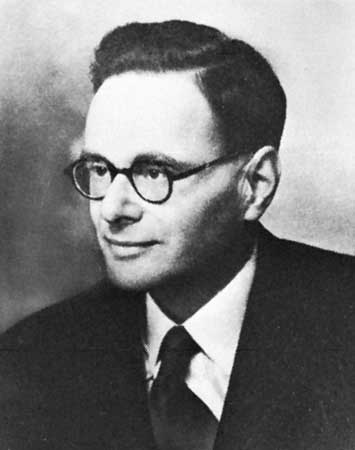
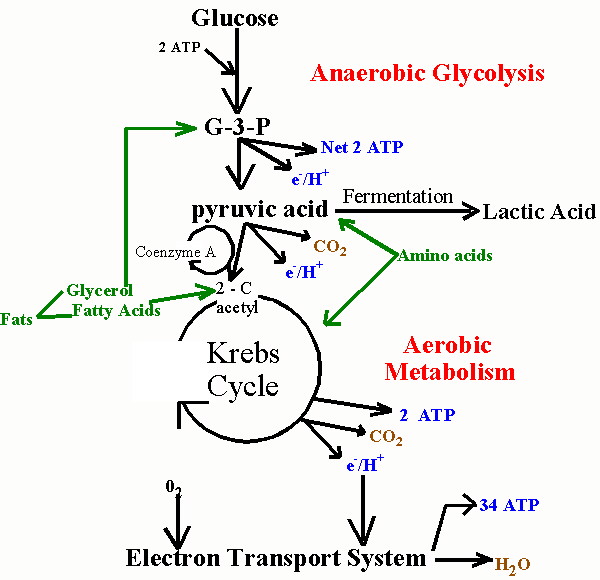
Staying Connected for Mental Health – What is God Connection?Chlorophyll molecule is the green pigment found in the Chloroplasts of plant cells is uniquely capable of converting active light energy into a latent form(Glucose or Sugar)using the photosynthetic mechanism. Carbon is the central or key element in the compounds of which organisms are composed; the Carbon is derived from the Carbon Dioxide found in atmospheric air or dissolved in water. Plants incorporate Carbon into Carbohydrates and other complex organic molecules. During Respiration or Oxidation, Oxygen combines with portions of Carbohydrate molecule, releasing Carbon in the form of Carbon Dioxide and Water.Sir Hans Adolf Krebs (1900-1981), German-born British Biochemist who received the 1953 Nobel Prize for Physiology or Medicine for the discovery in living organisms of the series of chemical reactions known as the Tricarboxylic Acid Cycle/Citric Acid Cycle or Krebs Cycle.Substances formed by the breakdown of Sugars, Fats, and Proteins are converted into Carbon Dioxide and Water, and energy-rich compounds (Adenosine Tri Phosphate or ATP) in a series of chemical reactions. It is the source of two-thirds of the food-derived energy in higher organisms.Mitochondria are organelles found within most cells which provide the cells with energy by converting Oxidation energy into Chemical energy. They have extensive internal membranes or cristae where Cellular Respiration or Oxidation takes place. They provide energy oxidising Sugars, Fats, and Amino Acids using the Kreb’s Cycle. They have their own DNA and replicate autonomously.
The process by which a living cell acquires energy to perform its living functions is called ‘Nutrition’, the power by which living matter attracts or obtains materials necessary for its growth and maintenance from surrounding matter or environment. The cell takes in nutrients and excrete waste products. The nutrients are either used as building blocks in synthesizing large molecules or they are oxidized producing energy for powering the cell’s activities. Life may be stated as a relationship between energy-yielding substance and energy-demanding substance.
Spirituality, Consciousness and Living System:
SPIRITUALITY SCIENCE – THE ART OF KNOWING : HOW DO PLANTS KNOW WHAT THEY KNOW? PLANTS KNOW ABOUT LIGHT, THE LENGTH OF DAY, AND THE DURATION OF DARKNESS CALLED NIGHT. THERE IS NO “INTELLECT” INVOLVED IN THIS PROCESS OF KNOWING. THE ABILITY OF KNOWING LIGHT OR PHOTORECEPTION IS EXPLAINED BY PHOTOCHEMISTRY.
Irrespective of the size, shape, and external appearance, Consciousness is the fundamental characteristic of Living Matter. Consciousness has a set of defining features; it is the principle by which a Living System knows the fact of its own existence; it knows as to where it exists and knows as to how it is existing. Consciousness is the awareness of energy-dependent existence in a given environment and this characteristic is common to all living cells. The term ‘Spiritual’ describes the nature of a relationship, a partnership, an association, bonding, or connection between living molecules to provide some benefit to the existence of a living, individual entity. Hence, I describe Consciousness as a ‘spiritual’ function as it establishes a relationship between the energy-dependent and energy-yielding substances. Human Consciousness is fundamentally related to the Subject called “I am” both at the level of the entire organism and at the level of individual living cells that constitute the organism displaying complex structural and functional organization of molecules which acquire, manipulate, transform, and utilize energy for the benefit of the existence of the Individual whom we recognize as a Human Person. Life has to be studied as structural and functional organization of matter in which knowledge is implanted, the presence of this knowledge is reflected in its living spiritual functions of consciousness, intelligence and use of information to manipulate and transform energy to support its own existence in its given environment.
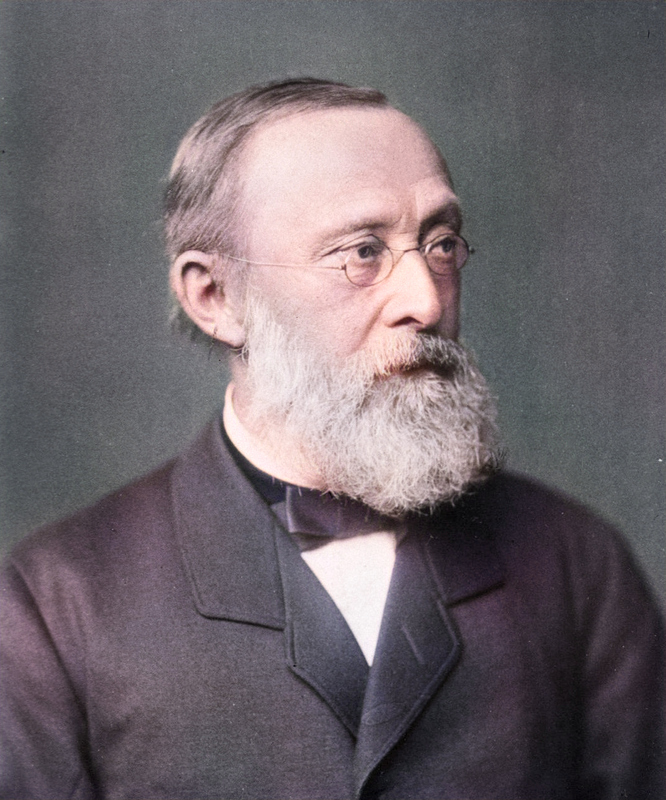
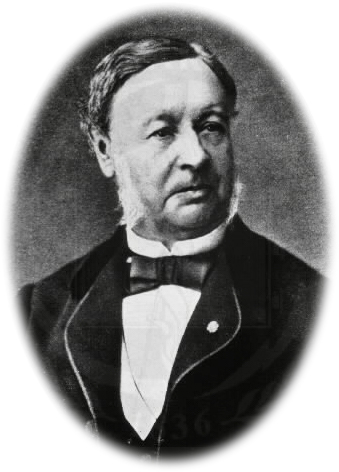
Rudolf is reborn to describe the spiritual connection between the Cell and its Energy Provider
Rudolf is reborn to describe the spiritual connection between the Cell and its Energy Provider. Rudolf Virchow
I acknowledge my German heritage that I discovered at Whole Foods. I discovered the spiritual connection between man, food, and Providence. Whole Foods, Whole People, and Whole Planet are connected by a material substance called Protoplasm or Cytoplasm, a divine plan to provide nourishment to Life.
Whole Foods – Whole Planet – Whole Family – Whole Concept: Salutations to Mother Annapurna the Original Source of Whole or Purna Concept (Always Full, Complete and Perfect). My mother’s name is the equivalent of Whole Foods.
The God Connection discovered at Whole Foods, Ann Arbor can be best described as the concept of Whole Spirituality, the three dimensional spiritual relationship between the multicellular human organism, food, and the Divine Providence.
Staying Connected for Mental Health – What is God Connection? Rudolf is reborn to describe the spiritual connection between Cell and its Energy Provider. The 3-Dimensional Spiritual Relationship between Man, Food, and God.
Spiritualism – The Cell Theory of Spirituality:
Staying Connected for Mental Health – What is God Connection? The Rudolf-God Connection. The Discovery of Whole Spirituality at Whole Foods, Ann Arbor.
In Biology, cell is the basic or fundamental unit of structure, function, and organization in all living things or it is the building block of life. Let me begin with my respectful tribute to some of the people who contributed to ‘The Cell Theory’, one of the foundations of Biological Sciences. Cells were first observed in the 17th century shortly after the discovery of the microscope. Robert Hooke, british curator of instruments at The Royal Society of London, during 1665 coined the word cell. Dutch microscopist Antonie Van Leeuwenhoek (1632-1723) made over 247 microscopes and examined microorganisms and tissue samples. He gave the first complete descriptions of bacteria, protozoa (which he called animalcules), spermatozoa, and striped muscle. He also studied capillary circulation and observed Red Blood Cells.
Robert Hooke, british curator of instruments at The Royal Society of London coined the term cell during 1665.Dutch microscopist Antonie Van Leeuwenhoek (1668-80) studied capillary circulation and observed Red Blood Cells.
Improvements in microscopy during early 19th century permitted closer observation and the significance of cells had received better understanding. Matthias Jakob Schleiden (1838), german botanist, Theodor Schwann (1839), german physiologist, and Rudolf Virchow (1855), german pathologist, and others made important contributions to the Cell Theory that describes cell as the building block of all Life.
Schleiden, Professor of Botany, The University of Jena studied plant structure under the microscope, published “Contibutions to Phytogenesis”(1838). He had also published the two-volume text of ‘Principles of Scientific Botany’.Schwann founder of modern Histology extended the Cell Theory of Plants to animals in his ‘Microscopic Researches into Accordance in the Structure and Growth of Animals and Plants(1839).Schwann discovered Myelin Sheath covering peripheral axons, now termed Schwann Cells. He coined the term ‘Metabolism’ for the chemical changes that take place in living tissues.Rudolf Virchow, German pathologist in 1855 coined the biological dictum “OMNIS CELLULA E CELLULA” – All living cells arise only from pre-existing living cells.
The Cell is the smallest unit in the living organism that is capable of carrying on the essential life processes of sustaining metabolism for producing energy and reproducing. Many simple, small, single-celled organisms like Protozoa perform all life functions. In higher, complex, bigger, multicellular organisms, groups of cells are structurally and functionally differentiated into specialized tissues and organ systems. Thus, the Cell Theory includes the following foundational principles of the Biological Sciences:
1. All living things are made up of cells. Cell is the most elementary or basic unit of Life.
2. Cell is a fundamental unit of structure, function, and organization in all living things including plants and animals.
3. Cells only rise from division of previously existing cells.
4. All cells are similar in composition, form, and function. All cells are basically the same in chemical composition (in spite of variations) in organisms of similar species. For example, all the solid tissues in the human body can be shown to consist largely of similar cells; differing it is true, but that are essentially similar to an Ovum.
5. The cells exhibit functional autonomy. The activity of an organism depends on the total activity of ‘Independent’ cells.
6. Energy flow (metabolism and biochemistry) occurs within cells.
7. Cells contain hereditary, biological information (DNA) which is passed from cell to cell during cell division.
The Cell Theory of Spirituality:
Staying Connected for Mental Health – What is God Connection? The Rudolf-God Connection. The Discovery of Whole Spirituality at Whole Foods, Ann Arbor.
The basic or fundamental unit of life in the human organism is derived from the fertilized egg cell that eventually develops into a complete organism. The most significant feature of similarity between the cells of the human body is the presence of a soft, gelatinous, semi-fluid, granular material inside the cell. This substance known as Protoplasm or Cytoplasm, or Cytosol is similar to the ground substance found in the Ovum or the Egg Cell.
Human Ovum Structure – The Cell Theory of Spirituality is based upon the Substance, Structure, Form, Organization, Function, Action and Interactions of this Single Fertilized Egg Cell that eventually develops into a complete human organism.
This viscous, translucent, colloidal substance is enclosed in a membrane called Cell Membrane, Plasma Membrane or Biological Membrane. A small spherical body called nucleus is embedded in the Protoplasm of the cell. The three essential features of any living cell in the human body are that of the presence of protoplasm, the nucleus, and the cell membrane.
Protoplasm – The Ground Substance of Spiritualism and Spirituality:
I seek the existence of Soul or Spirit in a substance that is basic to life activities, and in a material that is responsible for all living processes. I, therefore, propose that the understanding of the true or real nature of this ground substance of all living matter will help man to discover peace, harmony, and tranquility in all of his internal and external relationships while man exists in a physical environment as a member of a social group, social community, and Society. In this blog post, I would like to pay my respectful tribute to Jan Evangelista Purkinje and Hugo Von Mohl for their great contribution to the scientific understanding of the living substance, living material, and living matter.
Jan Evangelista Purkyne(Czech name), Jan Evangelista Purkinje(German name)also known as Johannes Evangelist Purkinje, b. December 17, 1787, d. July 28, 1869. The pioneer Czech experimental Physiologist whose investigations in the fields of Histology, Embryology,and Pharmacology helped create a modern understanding of the eye and vision, brain and heart function, mammalian reproduction, and the composition of cells.
Purkinje conducted his research on human vision at the University of Prague and later on, he served there as a Professor of Physiology (1850-69). He went to Germany and was appointed the Chair of Physiology and Pathology (1823-50) at the University of Breslau, Prussia. There Purkinje created the world’s first independent Department of Physiology (1839) and the first Physiological Laboratory (Physiological Institute, 1842). He is best known for his discovery of large nerve cells with many branching extensions found in the cortex of Cerebellum of the brain (Purkinje Cells, 1837). He discovered the fibrous tissue that conducts electrical impulses from the ‘pacemaker’ called Atrioventricular node or A-V node along the inside walls of the ventricles to all parts of the heart to help in Cardiac contractile function (Purkinje Fibers, 1839). In 1835, he invented and introduced the scientific term ‘Protoplasm’ to describe the ground substance found inside young animal embryo cells. He discovered the sweat glands of the skin (1833); he discovered the nine configuration groups of Fingerprints used in biometric identification of man (1823); he described the germinal vesicle or nucleus of the unripe ovum that now bears his name (1825), and he noted the protein digesting power of pancreatic extracts (1836).
Hugo Von Mohl, b. April 08, 1805, d. April 01, 1872, German Botanist noted for his research on the anatomy and physiology of plant cells.
Hugo Von Mohl named the granular, colloidal material that made up the main substance of the plant cell as “Protoplasm” in 1846. Purkinje invented the word, but Hugo gave more clarity, understanding, and knowing the nature of this ground substance. He viewed cell as an “elementary organ” and in Physiology he explained Protoplasm as an organ of Motion or Movement, Nutrition, and Reproduction. It is the preliminary material in cellular generation. He was the first to propose that new cells are formed by division of preexisting cells and he had observed this process of Cell Division in the algal cells of Conferva glomerata. His observations are very important to understand the Cell Theory that explains cells as the basic building blocks of Life. He was the first to investigate the phenomenon of the stomatal openings in leaves.
The Ground Substance of Spiritualism and Spirituality. The vital characteristics, the animating principles of Protoplasm could be known by observing Amoeba proteus. The Living Substance works as an organ of Motion or Movement, as an organ of Nutrition, and as an organ of Reproduction to generate new cells which have a life span of their own. In these physiological functions, I describe the characteristics such as Cognition, Consciousness, Memory, and Intelligence which have a Spiritual role as they bring functional unity and harmony in the interactions between different parts of the same individual organism while it exists in an environment as a member of a biological community.
Protoplasm is a complex, viscous, translucent solution of such materials as salts and simple sugars with other molecules, mostly proteins and fats, in a colloidal state, that is dispersed but not dissolved in one another. Carbon, Hydrogen, Oxygen, and Nitrogen constitute more than 90 percent of Protoplasm.
It exhibits properties such as Protoplasmic Streaming or Cytoplasmic Streaming or Motion that is called “Amoeboid Movement.” It has the intrinsic power to change its shape and position. It has the power of Nutrition by which it can attract and obtain the materials necessary for its growth and maintenance from surrounding matter/environment.
The living functions such as Nutrition, Cellular Respiration, and Reproduction performed by Cytoplasm involve acquiring, processing, retaining, and using information to perform tasks in a sequential manner for a predetermined purpose and hence describe Consciousness, Memory, and Intelligence.
The Rudolf-God Connection at Whole Foods. God created Cytoplasm or Protoplasm as the Ground Substance of Spirituality. Cellular respiration is a set of metabolic reactions and processes that take place in the cells of organisms to convert biochemical energy from nutrients into adenosine triphosphate (ATP), and then release waste products.The Rudolf-God Connection at Whole Foods. God created Cytoplasm or Protoplasm as the Ground Substance of Spirituality.The Rudolf-God Connection at Whole Foods. God created Cytoplasm or Protoplasm as the Ground Substance of Spirituality.The Rudolf-God Connection at Whole Foods. God created Cytoplasm or Protoplasm as the Ground Substance of Spirituality.
The terms Soul and Spirit belong to the materialistic realm where the Physical Reality of man’s biological existence is established. I have not yet discovered any good reason to use the terms Soul and Spirit as a metaphysical or transcendental Reality.
The Ground Substance of Spiritualism and Spirituality. The vital characteristics, the animating principles of Protoplasm could be known by observing Amoeba proteus. The Living Substance works as an organ of Motion or Movement, as an organ of Nutrition, and as an organ of Reproduction to generate new cells which have a life span of their own. In these physiological functions, I describe the characteristics such as Cognition, Consciousness, Memory, and Intelligence as spiritual attributes of Life as they bring functional unity and harmony in the interactions between different parts of the same individual organism while it exists in an environment as a member of a biological community.
The Spirituality of Substance, Function, Organization, Action, and Interactions:
Staying Connected for Mental Health – What is God Connection? The Rudolf-God Connection. The Discovery of Whole Spirituality at Whole Foods, Ann Arbor.
To establish the biological existence of the human organism, I add the concept of Spiritualism and Spirituality to the Cell Theory.
The Rudolf-God Connection at Whole Foods. God created Cytoplasm or Protoplasm as the Ground Substance of Spirituality.
The Single Fertilized Egg Cell has ground substance that is of Spiritual nature and the Spiritualism and Spirituality consists of the following functional, and organizational characteristics:
1. The Cell is Conscious of its own existence and knows its internal condition and knows it external environment.
2. The Cell is intelligent and it has the cognitive abilities like perception and memory to acquire information, to retain information, to recall information, and to use information in the performance of its complex tasks in a sequential manner.
3. The Cell has the ability to show characteristics such as mutual cooperation, mutual tolerance, and display functional subordination and subservience while being independent.
4. The Cell grows, divides, and develops into a complete organism while it acquires substances and energy from an external environment. The power of Protoplasm/Cytoplasm to attract matter found in its external environment is called Nutrition. The Cell continuously transforms matter to build matter of its own kind for its own benefit to sustain its existence with its own identity and individuality. The Organism represents a social group or a biological community of Cells. The Spiritual nature of Protoplasm/Cytoplasm brings this functional harmony and unity in the Social Group or Biotic Community of Cells by bringing together its Essence and Existence.
5. The Cell Theory is incomplete for it does not describe the conditioned nature of the Cell’s existence. The Cell represents a Living System that is thermodynamically unstable. It requires a constant supply of matter and energy from its external environment to sustain its living functions. The concept of Whole Spirituality formulates the connection between the Cell and its external source of matter and energy.
The Rudolf-God Connection. The Discovery of Whole Spirituality at Whole Foods, Ann Arbor. The Bone Marrow smear from a patient of Leukemia or Blood Cancer helps to illustrate the nature of Biotic Interactions in the Social Group or Biotic Community that represents the singularity called man. The true or real man can only be discovered by the microscopic study of the Cells that constitute the Organism.
The theoretical claims about Spirit and Soul, the religious and philosophical doctrines of Spiritualism and Spirituality must be verified using the Cell Theory that defines the human organism. To describe Soul or Spirit as nonmaterial or immaterial Self will not help man to know the real or true man.
Staying Connected for Mental Health – What is God Connection? The Rudolf-God Connection at Whole Foods. God created Cytoplasm or Protoplasm as the Ground Substance of Spirituality.
Whole Foods – Whole Planet – Whole Family – Whole Concept: Salutations to Mother Annapurna the Original Source of Whole or Purna Concept (Always Full, Complete and Perfect). My mother’s name is the equivalent of Whole Foods.
Whole Foods, Whole People, and Whole Planet come together in a Wholesome Relationship as God is the Energy Provider, the Original Source of Matter and Energy for Life.
Staying Connected for Mental Health – What is God Connection? Rudolf is Reborn to describe the spiritual connection between the Cell and its Energy Provider.
A pilgrim in search of a free nation. I am a refugee and who is my refuge?
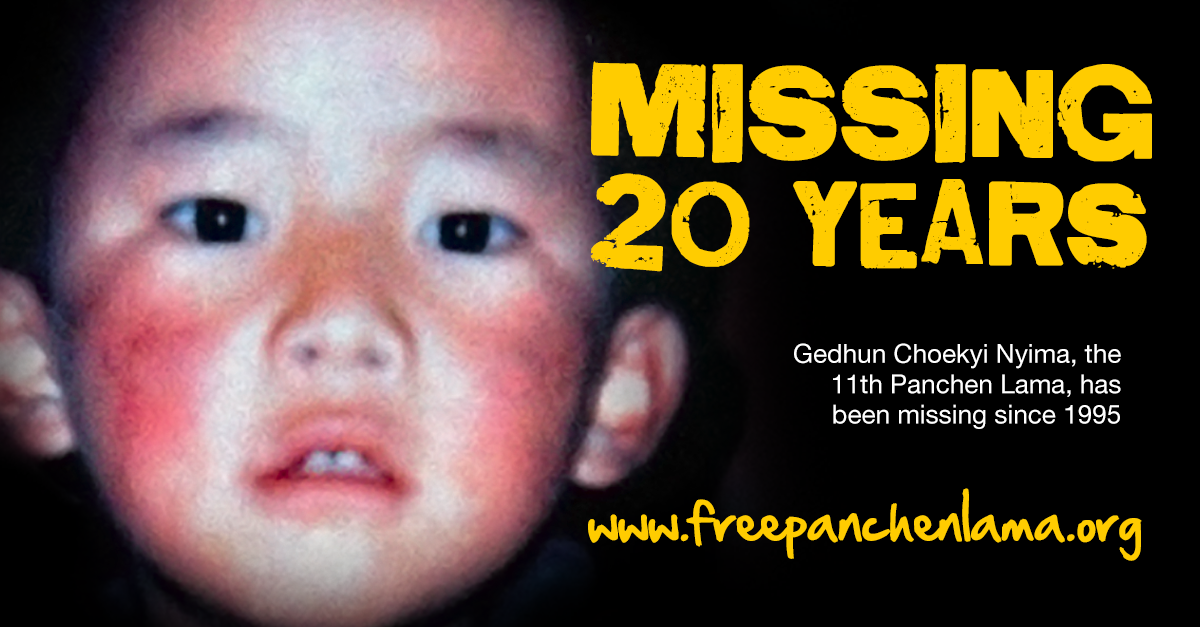
On Monday, May 12, 2025, I am searching for possibilities within, not contrary to God’s Will. For I give shelter to the Living Tibetan Spirits in my consciousness, I exist as a slave in a free country. I consciously experience the problem of occupation, the lack of independent existence.
On Monday, May 12, 2025, I am searching for possibilities within, not contrary to God’s Will. For I give shelter to the Living Tibetan Spirits in my consciousness, I exist as a slave in a free country. I consciously experience the problem of occupation, the lack of independent existence.
On Monday, May 12, 2025, I am searching for possibilities within, not contrary to God’s Will. For I give shelter to the Living Tibetan Spirits in my consciousness, I exist as a slave in a free country. I consciously experience the problem of occupation, the lack of independent existence.On Monday, May 12, 2025, I am searching for possibilities within, not contrary to God’s Will. For I give shelter to the Living Tibetan Spirits in my consciousness, I exist as a slave in a free country. I consciously experience the problem of occupation, the lack of independent existence.
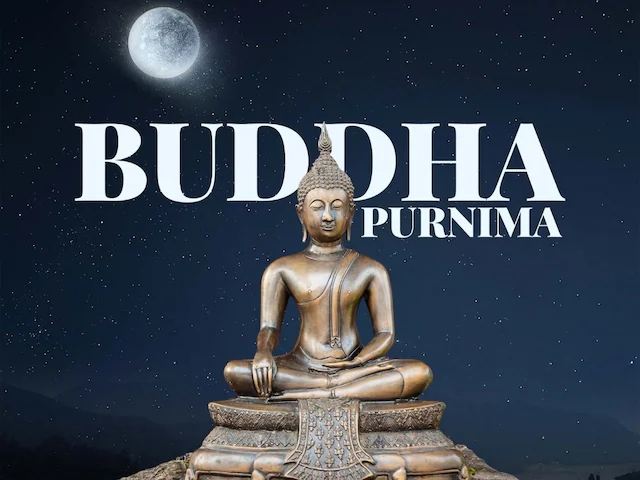
Buddha Purnima, is an auspicious day that marks the birth anniversary of Gautam Buddha, the founder of Buddhism. It is believed that this was also the day he attained enlightenment. Buddha Purnima falls on a full moon night, usually between April and May. This year it will be observed on Monday, May 12. Also known as Buddha Jayanti or Vaisakhi Buddha Purnima or Vesak.
On Monday, May 12, 2025, I am searching for possibilities within, not contrary to God’s Will. For I give shelter to the Living Tibetan Spirits in my consciousness, I exist as a slave in a free country. I consciously experience the problem of occupation, the lack of independent existence.
Buddha Purnima is based on the Asian lunisolar calendar. It is celebrated with great fervour in India, Sri Lanka, Nepal, Bhutan, Tibet and numerous other South East Asian countries including Thailand, China, Korea, Laos, Vietnam, Mongolia, Cambodia and Indonesia.
What is the difference between refuge and refugee?
On Monday, May 12, 2025, I am searching for possibilities within, not contrary to God’s Will. For I give shelter to the Living Tibetan Spirits in my consciousness, I exist as a slave in a free country. I consciously experience the problem of occupation, the lack of independent existence.
As nouns the difference between refuge and refugee is that refuge being a state of safety, protection or shelter while refugee is a person seeking refuge in a foreign country out of fear of political persecution or the prospect of such persecution in his home country, i.e., a person seeking a political asylum. Some persons who need safety, protection or shelter may live in a foreign country without applying for political asylum.
My Musings on Buddha Purnima. I am a Refugee. Who is my Refuge?On Monday, May 12, 2025, I am searching for possibilities within, not contrary to God’s Will. For I give shelter to the Living Tibetan Spirits in my consciousness, I exist as a slave in a free country. I consciously experience the problem of occupation, the lack of independent existence.On Monday, May 12, 2025, I am searching for possibilities within, not contrary to God’s Will. For I give shelter to the Living Tibetan Spirits in my consciousness, I exist as a slave in a free country. I consciously experience the problem of occupation, the lack of independent existence.
On May 24, 1956, I was in Mylapore, Madras, Chennai, India. I went to the Indian Posts & Telegraphs Office on Kutchery Street to buy the First Day Cover issued in celebration of 2500th Buddha Jayanti.
On Monday, May 12, 2025, I am searching for possibilities within, not contrary to God’s Will. For I give shelter to the Living Tibetan Spirits in my consciousness, I exist as a slave in a free country. I consciously experience the problem of occupation, the lack of independent existence.
On that Day, I was not aware that I would fail to see the brightness of the Full Moon on Monday, May 12, 2025. I see darkness. I see gloom. I learned the art of controlling my mind. I learned the art of self-discipline. Yet, I do not experience freedom while living in a free country.
On Monday, May 12, 2025, I am searching for possibilities within, not contrary to God’s Will. For I give shelter to the Living Tibetan Spirits in my consciousness, I exist as a slave in a free country. I consciously experience the problem of occupation, the lack of independent existence.
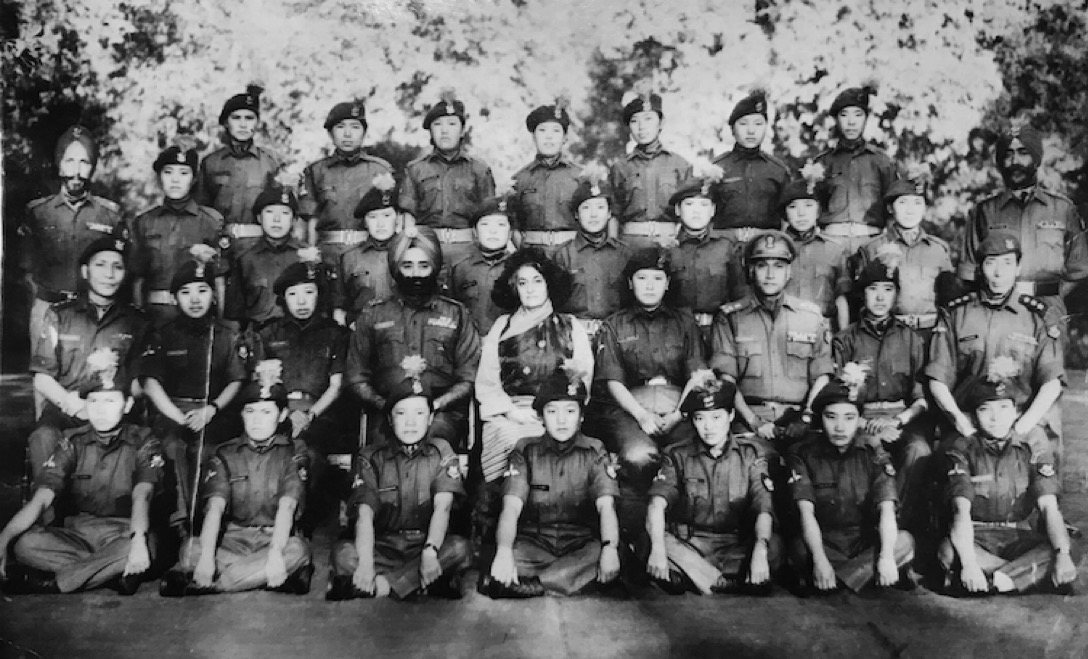
My Life’s Journey began in Mylapore, Madras, Chennai, India. Amongst other places, my Service in the Indian Army Medical Corps took me to Establishment-22 at Chakrata, Dehradun District, Uttarakhand on September 22, 1971. After successful execution of a military operation in the Chittagong Hill Tracts during October 1971 to January 1972, I was posted Delta Sector of Vikas Regiment. I performed this Journey in a transport plane shared by the US and landed in a US built airfield in Doom Dooma, Tinsukia District, Assam, India during February 1972 prior to the US President Richard M Nixon’s visit to Peking. While I was serving in D Sector, Establishment-22 in Doom Dooma, I got married in January 1973. I served in Vikas Regiment during the presidency of Richard Nixon and Gerald Ford. Eventually, I arrived in Ann Arbor, Michigan in 1986 without knowing that the US President Gerald Ford lived in Ann Arbor as a student. It’s not the end of the story. It’s the beginning of my journey as a slave in a free country.
On Monday, May 12, 2025, I am searching for possibilities within, not contrary to God’s Will. For I give shelter to the Living Tibetan Spirits in my consciousness, I exist as a slave in a free country. I consciously experience the problem of occupation, the lack of independent existence.
I find myself living and surviving inside the belly of a Big Fish or a Great Whale. Prophet Jonah survived his ordeal just for three days and three nights. The Son of Man remained in the heart of the earth just for three days, and three nights. For me the end is not in sight for I am living under a very dark shadow, inside the belly of a Big Fish or a Great Whale without the hope of seeing light at the end of the tunnel.
On Monday, May 12, 2025, I am searching for possibilities within, not contrary to God’s Will. For I give shelter to the Living Tibetan Spirits in my consciousness, I exist as a slave in a free country. I consciously experience the problem of occupation, the lack of independent existence.
In my analysis, I am a person in need of Refuge, Shelter, or Protection. I performed my Life Journey under shadow, the darkness of secrecy seeking a false sense of security. I need to break the shackles of secrecy to declare that I am a Refugee. As I am trapped, I can’t go to the Buddha for refuge, I can’t go the Dhamma for refuge, and I can’t go the Sangha for refuge. Who is my Refuge? To Whom, I should address my Petition? If I have no refuge, I ask God to take this cup of agony from me.
On Monday, May 12, 2025, I am searching for possibilities within, not contrary to God’s Will. For I give shelter to the Living Tibetan Spirits in my consciousness, I exist as a slave in a free country. I consciously experience the problem of occupation, the lack of independent existence.
On Monday, May 12, 2025, I am searching for possibilities within, not contrary to God’s Will. If I have no refuge, I ask God to take this cup away from me.
On Monday, May 12, 2025, I am searching for possibilities within, not contrary to God’s Will. For I give shelter to the Living Tibetan Spirits in my consciousness, I exist as a slave in a free country. I consciously experience the problem of occupation, the lack of independent existence.
Buddha Purnima: Significance of Buddha’s Teachings
On Monday, May 12, 2025, I am searching for possibilities within, not contrary to God’s Will. For I give shelter to the Living Tibetan Spirits in my consciousness, I exist as a slave in a free country. I consciously experience the problem of occupation, the lack of independent existence.
Buddha Purnima : Significance of Buddha’s Teachings
Buddha Purnima or Buddha Jayanti is celebrated with great enthusiasm among the Buddhist community as it is one of their most important and sacred festivals. The festival also known as Vesak as it is observed on a full moon in the month Vaisakha, marks the birth of Buddha, the day of his enlightenment as well as the day he entered nirvana and left his human body form.
On Monday, May 12, 2025, I am searching for possibilities within, not contrary to God’s Will. For I give shelter to the Living Tibetan Spirits in my consciousness, I exist as a slave in a free country. I consciously experience the problem of occupation, the lack of independent existence.
This year, Buddha Purnima falls on May 12, which is a Monday.
However, it should be noted that different Buddhist communities may celebrate Buddha Purnima on different dates provided there are two full moons in the month of May.
The significance of this day can be understood by the events it upholds. Legend has it that Buddha’s wife Yashodhara, his first disciple Ananda and the Bodhi tree, the holy place under which Buddha attained enlightenment were all born or created on this very day. It is also believed that on this day Gautam Buddha chose to preach his first sermon in Varanasi or Banaras in India.
By the evidence found in history, Gautam Buddha was born between sixth and fourth century BCE.
Buddha was a firm believer of Karuna (meaning compassion) and Ahimsa (meaning non-violence). He spent his life searching for peace and truth. He believed that the material pleasures held little significance in life, and dedicated his life to spirituality and religion.
Since Buddha was born in a Hindu family, the festival holds a lot of significance for the Hindu community. In Hinduism, Lord Buddha is believed to be the ninth avatar of Lord Vishnu. Therefore, Buddha Purnima is an auspicious day for devotees of Lord Vishnu and is observed with full fervor in India.
Buddha Purnima has a lot of astrological significance as well. Buddha was born with Cancer Ascendant and Moon in Libra, and with the Sun positioned in the mighty Mars. In His Horoscope, the Moon is also aspected by five planets-Sun, Jupiter, Venus, Mars, and Saturn, and these made Him mentally strong.
On Monday, May 12, 2025, I am searching for possibilities within, not contrary to God’s Will. For I give shelter to the Living Tibetan Spirits in my consciousness, I exist as a slave in a free country. I consciously experience the problem of occupation, the lack of independent existence.
In Buddhism, it is believed that for you to be able to enjoy good health, bring happiness to your family, and enjoy peace in life, you must first master control over your mind. In Hinduism, devotees of Lord Ganesh practice a similar belief; that by gaining control over one’s mind, one can find the way to enlightenment. Astrologers believe that to gain control of your mind, you should strengthen the Moon in your horoscope.
How to Celebrate Buddha Purnima
On Monday, May 12, 2025, I am searching for possibilities within, not contrary to God’s Will. For I give shelter to the Living Tibetan Spirits in my consciousness, I exist as a slave in a free country. I consciously experience the problem of occupation, the lack of independent existence.
If you want to achieve mental peace and bliss this Vesak, you should follow Buddha’s “Eightfold path”. It is the only true way to celebrate the festival.
According to Buddha, the Eightfold path included-
Having the Right View or Understanding, by knowing the truth,
Having the Right Intention, by freeing your mind of bad thoughts,
Having the Right Speech, which does not hurt others,
Having the Right Action, by working for the good of others,
Having the Right Livelihood, by maintaining an ethical standard in life,
Having the Right Effort, by resisting evil,
Having the Right Mindfulness, by practicing meditation,
Having the Right Concentration, by controlling your thoughts.
It is believed that by following this path, you can be free from your sufferings, bring harmony and peace, and even bring in more positivity and optimism in your life.
For those who may be suffering from malefic effects of Planet Saturn, following the Eightfold Path can help you release mental pressure and also boost confidence in your life.
Devotees celebrate the festival by serving others and feeding the hungry while they themselves keep a fast and do charitable work.
On Monday, May 12, 2025, I am searching for possibilities within, not contrary to God’s Will. For I give shelter to the Living Tibetan Spirits in my consciousness, I exist as a slave in a free country. I consciously experience the problem of occupation, the lack of independent existence.
Lanterns are also a special part of the celebrations. Mostly seen in Sri Lanka and South Korea, people light colorful electric lanterns, which signifies happiness and enlightenment. Happiness is believed to be the result of the individual becoming more mindful in their life.
On Monday, May 12, 2025, I am searching for possibilities within, not contrary to God’s Will. For I give shelter to the Living Tibetan Spirits in my consciousness, I exist as a slave in a free country. I consciously experience the problem of occupation, the lack of independent existence.
On Monday, May 12, 2025, I am searching for possibilities within, not contrary to God’s Will. If I have no refuge, I ask God to take this cup away from me.
On Monday, May 12, 2025, I am searching for possibilities within, not contrary to God’s Will. For I give shelter to the Living Tibetan Spirits in my consciousness, I exist as a slave in a free country. I consciously experience the problem of occupation, the lack of independent existence.
Excerpt: The author emphasizes his deep connection with India, the land of Gautama Buddha and the profound influence of Buddhism on Indian culture, identity, and national symbols. This article advocates for the freedom of Tibet, currently occupied by China, highlighting the spiritual, historical, and cultural ties India has with Tibet through Buddhism. The author also calls on the United States to uphold democratic values and support Tibetan freedom. He illustrates his commitment to this cause by sharing his first-hand experiences with Tibetan Buddhists, his participation in a challenging trek to support them, and his published essay criticizing the prioritization of economic ties over human rights.
Whole Dude – Whole Noble: India – The Land of Gautama Buddha. SIDDHARTHA – GAUTAMA BUDDHA (c. 563 to c. 483 BC):”Whatever is born, produced, conditioned, contains within itself the nature of its own dissolution.” Photo by Noelli from Flickr site. http://www.dalekoniedaleko.pl
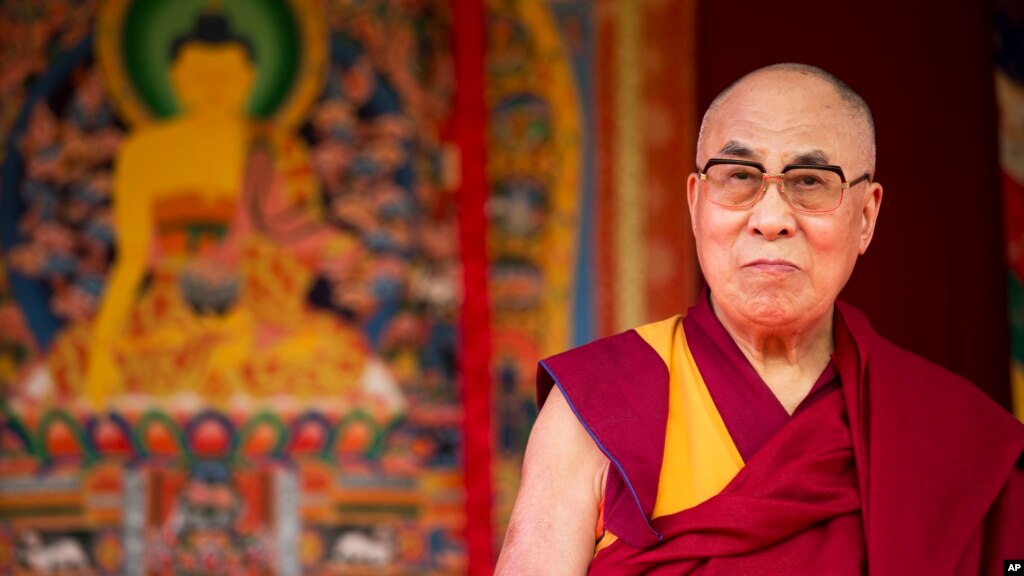
I belong to ‘The Land of Gautama Buddha’ and I whole heartedly pledge my support to His Holiness the 14th Dalai Lama and to the people of his Land. I firmly believe that we should seek and give our support for a Free Tibet and evict the Occupier of Tibet.
Whole Dude – Whole Noble: India – The Land of Gautama Buddha.
Buddham Saranam Gachhami
Dhammam Saranam Gachhami
Sangham Saranam Gachhami
Whole Dude – Whole Noble: India – The Land of Gautama Buddha
This entry is dedicated to the loving memory of those brave men who sacrificed their lives while nurturing fond hopes to win freedom for Tibet and they cherished a dream to preserve the Tibetan Identity.
Whole Dude – Whole Noble: For India is the Land of Gautama Buddha, we have a duty to defend Tibetan Identity.
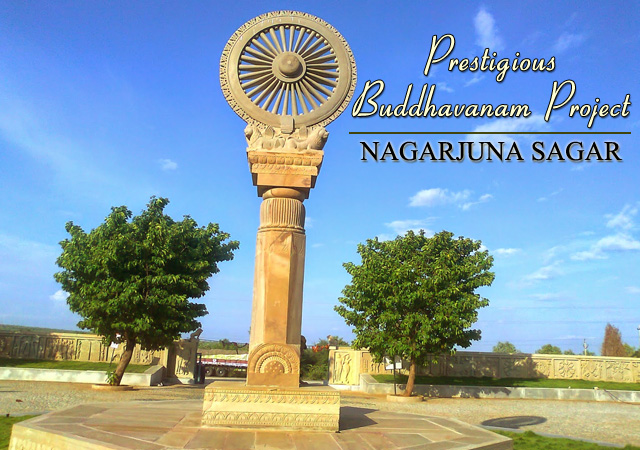
Both Telengana and Andhra Pradesh record the influence of Buddha on our hearts and minds. Acharya Nagarjuna, another great Teacher lived in Nalgonda District. India is the blessed Land where Lord Gautama Buddha had lived and preached. His great compassion and noble qualities made a great impact on our character and our identity as Indians.The symbols such as the National Flag and the National Emblem that we have chosen to represent us speak volumes about the long-lasting influence of the Buddhist preachings.
Whole Dude – Whole Noble: India – The Land of Gautama Buddha. The national flag of India is popularly known as ‘TIRANGA’ or ‘TRICOLOR’. The Saffron or subdued Orange represents Courage, Sacrifice, and the Spirit of Renunciation. The White represents Purity, Peace, and Truth. The Green stands for Fertility, Prosperity, and Faith. The Blue Chakra, the 24-spoked Wheel symbolizes the Wheel of Life in Movement and Death in stagnation. It is the same as the DHARMA CHAKRA or the Wheel of Law found in the Saranath Lion Capital of Emperor Ashoka the Great.Whole Dude – Whole Noble: INDIA – THE LAND OF GAUTAMA BUDDHA: INDIA’S NATIONAL EMBLEM PROCLAIMS THE OFFICIAL MOTTO OF INDIA, “SATYA MEVA JAYATE,” TRUTH ALONE TRIUMPHS.
I had the good fortune to visit Buddhist temples known as Gompas and got acquainted with the Buddhist religious traditions for over four years while I lived with Tibetan Buddhists. I had also visited Tibetan Camps in Bylakuppe and Mundgod in the State of Karnataka.
Whole Dude – Whole Noble: India – The Land of Gautama Buddha. Godparents or Buddhist Temple in Bylakuppe, near Mysuru City, Karnataka
In December 1974, when I arrived in Secunderabad, I thought that I am posted to a military station away from my camp life with Buddhists.The motto of our military formation in Secunderabad is “BASH ON REGARDLESS.” I reached Secunderabad from the Himalayan frontier with the hope that I could bring my wife and my daughter from Kadapa where they had been living while I was serving at a field location where families are not permitted to live. As I arrived at my new Unit, the first thing that I was told was that I need to immediately proceed on a military training exercise and that I am not allowed to bring my family to Secunderabad as my services are urgently needed for the exercise.I dutifully took my place in a military convoy and after a few hours my vehicle went past the government quarters where my parents lived while my father worked as Principal of the Nagarjuna Government Arts College in Nalgonda.
Whole Dude – Whole Noble: India – The Land of Gautama Buddha. Acharya Nagarjuna of Nalgonda District, Telengana, India
I reached the exercise location near Nagarjuna Sagar and that was my first visit to that area even though I had lived in Andhra Pradesh for a fairly long time.I took the opportunity to visit the historical site of Acharya Nagarjuna’s ‘Vihara’.
Whole Dude – Whole Noble: India – The Land of Gautama Buddha. Nagarjuna Sagar, Nagarjuna Konda, Nagarjuna Vihara, Buddha Vanam, Nalgonda District.
Prince Siddhartha left his wife and infant son in the middle of the night and abandoned his life of comfort in a royal palace as he desired to find the “Truth.” I had no intention to travel in the foot steps of Gautama Buddha, but I chose to stay away from my family if that could help His followers to reclaim their lost possessions and preserve their identity. Even today when I look back, I do not regret the time I spent away from my family and my mission to support Tibetan Buddhists was indeed a serious one. I was willing to put my life on-line if that could make a difference in the lives of those Buddhists who needed my services. I want to share the following essay which was published in ‘The Ann Arbor News’ on Thursday,October 14,1999 and hopefully this essay may convey you the passion with which I had served to support the followers of Gautama Buddha:
Don’t neglect Tibet for the sake of making money in China:
Don’t Neglect Tibet For the Sake of Making Money in China.
The United States-China relationship has naturally come under a critical review because of the nuclear espionage charges.It is irrelevant if China has actually benefited from the sensitive information that the U.S. has lost. What is far more important is the fact that the U.S. has lost its ability to keep sensitive information secure.
Presidential candidate George W.Bush has very correctly pointed out that the U.S. needs to prepare against a potential military threat that China might pose.
A review of the U.S.-China bilateral relationship should take us back 30 years to the time it actually began. The relationship,from the beginning,has no solid foundation. In spite of the huge trade and commerce relationship that the U.S. built up with China over these years, there is a basic lack of trust.
The reason for this mistrust is political. The Chinese political system derives its strength from the ideology of communism. The U.S. essentially adheres to the values of democracy, freedom and liberty.
China, as of today, is not a free society.Its political philosophy does not inspire us and is not trustworthy.Whatever the U.S. business investments may be,whatever the market reforms that China has introduced in recent times may be, there is a huge gap in terms of our political ideologies.
Communism and democracy cannot become good partners in a bilateral relationship.
The reason that I believe would end the U.S.-China bilateral relationship is the problem of Tibet.
The identity of Tibetan people could not be destroyed by all these years of Chinese oppression.The passion of Tibetan people for their freedom could not be subdued by prolonged, brutal occupation. Tibetan people are brave and courageous. They are willing to pay the price to regain their land and liberate it. They have the strength, will power and commitment to achieve this goal.
I witnessed this fact when I marched with hundreds of Tibetans through dense inhospitable forests for three months some years ago.
This was not a camping expedition.We had sick people and severely injured people who were sent to hospitals.We had beautiful people who lost their lives in those remote forests and they lay buried or cremated there. Their sacrifices are etched into my memory.
The only reason for taking that risk to suffer loss of life is the issue of winning back Tibetan freedom.
I also had an opportunity to speak with hundreds of Tibetan boys. Each one of them had a clear idea of their national identity and a compelling desire to win their freedom even if they had to pay for it with their lives.
The U.S. should understand that the issue of Tibet is not going to fade away.
When China occupied Tibet, the U.S. sent its citizens to help these people to plan their resistance.The U.S. sent tons and tons of supplies to aid their struggle. U.S. did not cover itself in glory when it withdrew this support it gave to Tibetans. The U.S. personnel were withdrawn and the aid dried up. That was an intensely painful moment for people like me who were then living with Tibetan people.
All of us had an understanding of the event that led the U.S. to backstab the Tibetan people. The U.S. sacrificed the freedom of the Tibetan people in its quest for establishing bilateral ties with communist China.
Thirty years after this betrayal, the United States should reevaluate the basic principles for which it stands today. The U.S. flag has been always a symbol of freedom. The issue is not that of containment of China. The issue is not that of engagement of China. The real issue is that of the freedom of the Tibetan people. We need to stand up for our own fundamental values and do the right thing.
Whole Dude – Whole Noble: India, the Land of Gautama Buddha must secure Peace, Freedom, and Justice in Occupied Tibet.Whole Dude – Whole Noble: India – The Land of Gautama Buddha.
Whole Foods-Whole Inspiration-Whole LanguageWhole Foods, Whole People and Whole Planet inspire Whole Dude to invent Whole Phrases: Whole Linguistics – Whole Language. The concept of Whole Cookie and Whole Love. Whole Dude uses the phrase Whole Linguistics to describe three entities; 1. Language User, 2. Language Interpreter and 3. Language Creator. Image Credit: Agenda Publications, Ann Arbor District Library, Issue Dates, December 1997 and February 1998.Mental Health and the Pursuit of Happinessthrough Spiritual Relationships
Mental stability and happiness are highly linked. It’s almost impossible to have one without the other, and it can be difficult to achieve both when you’re facing some form of adversity in life.
Mental Health and the Pursuit of Happiness through Spiritual Relationships
Emotional and mental health is important because it’s a vital part of your life and impacts your thoughts, behaviors and emotions.
Mental Health and the Pursuit of Happiness through Spiritual Relationships
Being healthy emotionally can promote productivity and effectiveness in activities like work, school or caregiving.
Mental Health and the Pursuit of Happiness through Spiritual Relationships
Spirituality Science – Clinical Medicine can verify the mental experience called Anand, Pure Joy, and Pure Bliss
Spirituality Science – Clinical Medicine Can Verify the Mental Experience called Anand, Pure Joy and Pure Bliss. Mental Health and the Pursuit of Happiness
As student of Medical Science involved in investigating man, I use the medical principles of Dynamic Equilibrium shared by Dr. Claude Bernard, Father of Physiology, and Dr. Walter B. Cannon who coined the phrase ‘Homeostasis’ to verify man’s Living Condition at any given time.
Spirituality Science – Clinical Medicine can verify the mental experience called Anand, Pure Joy, and Pure Bliss Spirituality Science – Clinical Medicine can verify the mental experience called Anand, Pure Joy, and Pure Bliss Spirituality Science – Clinical Medicine can verify the mental experience called Anand, Pure Joy, and Pure Bliss Spirituality Science – Clinical Medicine can verify the mental experience called Anand, Pure Joy, and Pure Bliss SPIRITUALITY SCIENCE – WHOLE DYNAMICS – WHOLE EQUILIBRIUM: IN MAN, HEALTH IS RELATIVE EQUILIBRIUM OF BODY FORM AND FUNCTION WHICH RESULTS FROM ITS SUCCESSFUL DYNAMIC ADJUSTMENT TO FORCES TENDING TO DISTURB IT.
The Indian Tradition developed philosophical concept of “ANAND” often described as Pure Joy, or Pure Bliss. I can verify the same using the medical concept of Equilibrium. Students of Physics easily understand the Concept of Equilibrium and Balance.
Spirituality Science – Clinical Medicine can verify the mental experience called Anand, Pure Joy, and Pure Bliss Spirituality Science – Clinical Medicine can verify the mental experience called Anand, Pure Joy, and Pure Bliss Spirituality Science – Clinical Medicine can verify the mental experience called Anand, Pure Joy, and Pure Bliss
For example, if clinical examination of man reveals rapid pulse rate, respiration rate, high blood pressure, excessive perspiration, tremors and other signs and symptoms of physical, or mental imbalance, I will be able to easily rule out the Condition or State called “Anand.” In Clinical Medicine, Final Diagnosis is always arrived after conclusively eliminating other possible conditions.
Spirituality Science – Clinical Medicine Can Verify the Mental Experience called Anand, Pure Joy, and Pure Bliss.
Rudra Narasimham Rebbapragada Ann Arbor, MI 48104-4162 USA BHAVANAJAGAT
FROM: DEVINDER SINGH GULATI
Spirituality Science – Clinical Medicine Can Verify the Mental Experience called Truth, Consciousness, and Bliss.
ANAND (Sanskrit. Anand, from nand meaning “to rejoice” or “to delight”) denotes mystical experience, spiritual bliss or a state of consciousness such as that of a Jivan Mukta, i.e. one released while still in body. Anand in the Upanishadic texts is taken to be one of the three inherent attributes of Atman or Brahman, the other two being Sat and Chit. In the Taittiriya Upanishad (II. 15), it acquired this meaning of Pure Bliss.
The Self at the lowest or first stage of its evolution is defined as the Annamaya Kosa (the matter) which evolves successively into Pranamaya Kosa (life), Jnanamaya Kosa, man (mind or perceptual consciousness), Vijnanamaya Kosa (Self consciousness, The Knowing Self) and Anandamaya Kosa, Nondual Bliss. In SIKH theology too, Anand is one of the attributes of the Supreme Self; so it can be the state of the Individual Soul as well. GURU Amar Das`s composition Anandu, in the measure Ramkali, gives an exposition of the experience of Anand, of the Union with the Immaculate Hari attained through absorption in “Nam”, i.e. repetition of Divine Name.
That, indeed, which is Jīva (individual soul) is the all-blissful Divine in disguise, descended to enjoy the self-luminous World Brahman. This which is the experience of suffering is an experience made of bliss. The All-Blissful enjoys its bliss only. Who indeed could dare enjoy that which is devoid of bliss? He only could dare it who is all-blissful. As for him who is devoid of bliss, he while enjoying the blissless, would still not enjoy it, would rather perish without bliss. Who can become weak? He only can who is all-powerful. The weak one indeed invaded by weakness would not endure, but would perish without force. Who could enter Ignorance? Only He who is omniscient could enter it. As for the ignorant, he could not endure in that darkness, non-being would remain non-being only. It would perish without knowledge. Ignorance is the play of knowledge, concealing itself in itself. Weakness is the play of power, blisslessness the play of bliss, the concealment of itself in itself. Blissfully laughs the Jīva, blissfully cries, sheds tears, blissfully throbs as if shining in dark Ānanda, agitated by tortures, blissfully throbs agitated by violent pleasures. For the full enjoyment of the dark ignorant portion of that Ānanda he (Jīva) conceals It, becoming obscure and ignorant.
Sri Aurobindo echos the Gurbani:
There is Brahman alone, the One without a second. Being and non-being are its forms and It is also beyond Being and Non-Being. There is nothing else except That. All that is contained in the three times and all that is beyond the three times is indeed that One Brahman alone. Whatever is in the universe, small or large, noble or mean, is Brahman alone, Brahman alone. The world is also Brahman. It is true, not false.
That alone is the Transcendent Being, beyond all the three times, beyond all the worlds, penetrating all the worlds, beyond Being, beyond Non-Being, All-Being, All-Consciousness, All-Bliss, without beginning and end, the eternal Divine.
He is without quality and supports all qualities. He has qualities, infinite qualities, and enjoys the state of being without quality. He Himself transcends the state of being without qualities and the state of being with qualities. He is neither without quality nor with quality because He is One and Single.
Spirituality Science – Clinical Medicine can verify the mental experience called Anand, Pure Joy, and Pure Bliss
Spirituality Science – Clinical Medicine can verify the mental experience called Anand, Pure Joy, and Pure BlissMIND – FACE CONNECTION. FACIAL APPEARANCE OR COUNTENANCE PROVIDES CLUES TO IDENTIFY MENTAL STATE OR CONDITION.
From very ancient times, medical practitioners all over the world, recognized the connection between Mind and Face. The conditions that affect human body and mind can be diagnosed by careful examination of clues offered by Facial Appearance or Countenance.
For example, Indian tradition describes or uses the term “ANTAHKARANA” that includes four, different attributes of Mind. These are, 1. Manas or Manah associated with Thinking, Thoughts, or Power of Imagination, 2. Buddhi associated with Knowledge and Intellect, 3. Chitta associated with Mood such as Kindness, Love, Compassion, Anger, Fear, etc., and 4. Ahamkara associated with Self-Pride or attributes like Arrogance. Each of these Mental Conditions, States or Mental Faculties are often associated with expression of their contents on Face.
While practicing Clinical Medicine in Armed Forces, I gained practical experience of The Art of Diagnosing Positive, Good Health. Armed Forces demand that men and women should be physically and mentally fit at all times. In military practice, the doctor spends more time in conducting medical examination of people to assess their physical and medical fitness as compared to the time spend on examining people to diagnose Ill health, Sickness, or Disease. Observation of Facial Appearance provides important clues about Man’s mental and physical health. On several occasions, I have diagnosed or suspected serious medical conditions when patient simply arrives in the Clinic or Hospital for medical evaluation. People can be very good actors but it is not easy to express things on Face as the facial expression is not always directed by conscious mental activity like thinking or thoughts. For example, a good actor can project sense of Fear and generate facial expression of Fear but in reality it is not the same as Fear expressed on the face of a victim of Heart Attack or Myocardial Infarction.
Spirituality Science – Clinical Medicine can verify the mental experience called Anand, Pure Joy, and Pure Bliss
I agree that it will not be easy to diagnose Mental State, Physical State or Condition by simply examining one photo image. During Medical Examination, I keep the patient distracted and would not let him or her know that I am simultaneously evaluating Facial Expression while performing tests to recognize symptoms and signs caused by various health conditions. I want to assure you that your ‘inner experience’ of truth or reality can be verified by using The Art of Facial Diagnosis.
The Indian tradition describes the mental condition called ‘ANAND’ or Joy, or Bliss as the sign and symptom of Self-Realization. Self-Realized Soul can be medically diagnosed by careful examination of Facial Countenance.
Spirituality Science – Clinical Medicine can verify the mental experience called Anand, Pure Joy, and Pure Bliss
Rudra Narasimham Rebbapragada
Ann Arbor, MI 48104-4162 USA BHAVANAJAGAT
Mental Health and the Pursuit of Happiness through Spiritual Relationships
A Special Tribute to CIA Director Allen Welsh Dulles
Whole Dude – Whole Agency: Allen Welsh Dulles shaped the history of the Central Intelligence Agency. During World War II, he had served in the Office of Strategic Services (1942-1945), and when CIA formed in 1951, he served as Deputy Director under General Walter Bedell Smith. He was appointed the Director by President Dwight D. Eisenhower during January 1953.Whole Dude – Whole Agency: Allen Welsh Dulles shaped the history of the Central Intelligence Agency. During World War II, he had served in the Office of Strategic Services (1942-1945), and when CIA formed in 1951, he served as Deputy Director under General Walter Bedell Smith. He was appointed the Director by President Dwight D. Eisenhower during January 1953.
Whole Dude – Whole Agency
Special Frontier Force pays this special tribute to Allen Welsh Dulles (b. April 7, 1893, Watertown, NY – d. January 29, 1969, Washington, DC), US diplomat, intelligence expert who was the Director of the Central Intelligence Agency during its period of growth. Dulles received M.A. from Princeton in 1916. His service to the nation started during the administration of Woodrow Thomas Wilson (28th President of the US 1913-1921). He served in various diplomatic posts until 1922, and was named chief of the State Department’s Near Eastern Division. He obtained Law degree in 1926, and served as counsellor to the US delegation in Peking. He returned to the US and joined the New York law firm in which his brother John Foster Dulles was a partner. During World War II, Dulles joined the office of Strategic Services (OSS). From October 1942 to May 1945, Dulles served as Chief of OSS office in Bern, Switzerland. He played a critical role in the surrender of German troops in northern Italy. He received the Medal of Merit and Medal of Freedom for his service during the War. In 1948, Dulles served as the Chairman of a three-man committee that surveyed the US intelligence system. After the Central Intelligence Agency was established in 1951, he served as deputy director under General Walter Bedell Smith. In 1953, he was appointed Director of CIA by President Dwight D. Eisenhower (34th President of the US, 1953-1961). He was the first Chairman of U.S. Intelligence Board. Dulles carried out a number of major operations, notably the overthrow of the governments of Mohammad Mossadeq in Iran in 1953, and Jacob Arbenz in Guatemala in 1954. He was reappointed by President John F. Kennedy. Unfortunately, he had to shoulder the blame for the failure of the Bay of Pigs invasion of Cuba in April 1961. He was forced to resign to defend the reputation of the presidency. He was awarded the National Security Medal on November 28, 1961 (and the citation for granting this Medal is attached as a pdf file). President Lyndon B Johnson appointed him as one of seven commissioners of the Warren Commission to investigate the assassination of President John F. Kennedy. He authored several books, notably Germany’s Underground (1947), The Craft of Intelligence (1963), and The Secret Surrender (1963).
Whole Dude-Whole Agency: Allen Dulles reveals the secrets of World War II, but remained silent about the secret operation in Tibet (1958-1964) which was supported by the US President, Indian Prime Minister, and His Holiness the 14th Dalai Lama, the spiritual and temporal leader of the autonomous State of Tibet.Whole Dude – Whole Agency: During World War II, Allen Dulles served as the Chief of the OSS Office in Bern from October 1942 to May 1945. He played a role in the surrender of German troops in northern Italy.Whole Dude – Whole Agency: Interesting account of the role of Office of Strategic Services in Europe during World War II. Fortunately, now we have interesting accounts of the CIA’s Secret War in Tibet. The credit goes to the Director of the CIA.Whole Dude – Whole Agency: Allen Dulles described the ‘Craft of Intelligence’ but kept the CIA Operation in Tibet as a Secret.Whole Dude – Whole Agency: Allen Welsh Dulles rendered remarkable service to the nation and won the admiration of President John F. Kennedy even though he had to accept the blame for the failed mission in Cuba. I salute him for his support to defend Freedom and Democracy in Tibet. The CIA operation in Tibet had also failed during March 1959, but I would not blame CIA for that failure.Whole Dude – Whole Agency: On November 28, 1961, Allen Welsh Dulles, the outgoing CIA Director received the National Security Medal from President John F. Kennedy.Whole Dude – Whole Agency: President Lyndon B. Johnson demonstrated his confidence in the former CIA Director Allen Welsh Dulles by appointing him to the Warren Commission that investigated the assassination of President John F. Kennedy. It was indeed a great honor and speaks of the trust in personal integrity earned by Dulles as the CIA Director.The history of Special Frontier Force – Establishment No. 22: 1957 was a turning point. India recognized that its foreign policy of political neutralism was of no use and started depending upon the United States to address the military threat posed by China’s occupation of Tibet. But, the effort was too modest and both India and the United States had grossly underestimated the strength of the People’s Liberation Army.
Both US Government and the Central Intelligence Agency maintain their silence about the support given to the Tibetan Resistance Movement and the eventual creation of Establishment -22/Special Frontier Force, a military alliance/pact between the US, Tibet, and India to fight the military threat posed by Communist China when it occupied Tibet in 1950 and forced His Holiness the 14th Dalai Lama to lead a life in exile.
Whole Dude – Whole Agency: A special tribute to Allen Welsh Dulles, the Director of CIA who organized training of Tibetans at Camp Hale, Colorado (May 1958 to November 1964).
However, the US had finally acknowledged the CIA operation in Tibet and India by installing a Commemoration Plaque at the Camp Hale, Colorado training site on September 10, 2010. The Director of CIA was not present at the ceremony to honor the memory of people who were involved in this covert operation.
Whole Dude – Whole Agency: A special tribute to Allen Welsh Dulles, the Director of CIA who organized training of Tibetans at Camp Hale, Colorado (May 1958 to November 1964). Special Service Award presented by all Officers D Sector, Establishment 22 on 19 January 1973.
It is my duty and privilege to pay this special tribute to Allen Welsh Dulles in due recognition of the services he had rendered to defend Freedom, Democracy, and Justice in the occupied Land of Tibet.
Whole Dude – Whole Agency: Allen Welsh Dulles shaped the history of the Central Intelligence Agency. During World War II, he had served in the Office of Strategic Services (1942-1945), and when CIA formed in 1951, he served as Deputy Director under General Walter Bedell Smith. He was appointed the Director by President Dwight D. Eisenhower during January 1953.
Whole Foods-Whole Inspiration-Whole LanguageWhole Foods, Whole People and Whole Planet inspire Whole Dude to invent Whole Phrases: Whole Linguistics – Whole Language. The concept of Whole Cookie and Whole Love. Whole Dude uses the phrase Whole Linguistics to describe three entities; 1. Language User, 2. Language Interpreter and 3. Language Creator. Image Credit: Agenda Publications, Ann Arbor District Library, Issue Dates, December 1997 and February 1998.Mental Health and the problem of Loneliness
May is Mental Health Month, a time to shine a light on the importance of mental health to personal wellbeing and overcome reluctance to seeking help. Mental health is key to positive relationships and feelings of satisfaction and fulfillment in life.
Mental health is defined as the capacity in an individual to form harmonious relations with others and to participate in or contribute constructively to changes in the social environment
Mental Health and the problem of Loneliness
Feeling lonely can have a negative impact on mental health, especially if these feelings have lasted a long time. Some research suggests that loneliness is associated with an increased risk of certain mental health problems, including depression, anxiety, low self-esteem, sleep problems and increased stress.
Mental Health and the problem of Loneliness
Research has linked social isolation and loneliness to higher risks for a variety of physical and mental conditions: high blood pressure, heart disease, obesity, a weakened immune system, anxiety, depression, cognitive decline, Alzheimer’s disease, and even death.
Mental Health and the problem of Loneliness
Loneliness is a subjective, unwelcome feeling of lack or loss of companionship, which happens when there is a mismatch between the quantity and quality of the social relationships that we have, and those that we want (Perlman and Peplau, 1981)
There are different types of loneliness: emotional, and social and existential loneliness.
Emotional loneliness is the absence of a significant other with whom a close attachment or meaningful relationship existed (a partner or close friend).
Social loneliness is the lack of a wider social network of friends, neighbors or colleagues.
Existential loneliness is described as a universal aspect of the human condition which expresses the separateness of the person from others.
Loneliness can be a transient feeling that comes and goes. It can also be situational; for example only occurring at certain times like Sundays, bank holidays or Christmas. Or loneliness can be chronic; this means someone feels lonely all or most of the time.
Loneliness can also be characterised by its intensity, or how strongly it is felt, which can change from moment to moment and over different durations of time.
Man’s Physical Existence:
Mental Health and the problem of Loneliness. The subjective reality of man’s physical existence is conditioned by his physical, mental, social, moral, rational, and spiritual well-being.
If man is viewed as a multicellular human organism, we may have to ask ourselves the following question. Who or what is the subject who lives because of the functions of the trillions of cells? Man has to explore the biological basis for his existence in nature. The subjective reality of man’s physical existence is conditioned by his physical, mental, social, moral, rational, and spiritual well-being.Mental health is an important component of the total positive health when health is defined as not the mere absence of disease, but as a state of man’s physical, mental, social, moral, rational, and spiritual well-being.
Mental Health and the problem of Loneliness. The Physiological Basis for Human Existence.
The man is conditioned to exist under the influence of a grand illusion such as the Sunrise and Sunset which regulates the biological rhythms. The man must find a rational basis for his physical existence as the realities of existing on the surface of a fast, spinning planet impose limitations on man’s cognitive abilities. In the final analysis, the man must face the challenges of living his mortal life finding solutions in a logical and rational manner. Physical conditions and ailments affect mental well-being. Mental health and well-being could have important consequences affecting the physical, and social well-being of the man and may even threaten his ability to maintain the biological integrity to survive as a human organism.
The Unity of Man and God
THE UNITY OF MAN AND GOD. THE PRIMARY CONCERN IS NOT ABOUT MAN’S ESSENCE OR IDENTITY. EXISTENCE ALWAYS PRECEDES ESSENCE. ASMI SIGNIFIES UNITY OR “EIKYATA” BETWEEN MAN AND GOD WITHOUT WHICH EXISTENCE IS IMPOSSIBLE.On bhavanajagat.com
To account for man’s existence in physical world, the Sanskrit language created a new word known as “Asmi.” It means always present, or ever-existing. Man is a Mortal, Physical Being who leads a transient, or ephemeral existence. However, to establish the Subjective and Objective Reality of man in natural world, man needs to yoke, join, come together, unite, pair, bond, connect, relate, and seek partnership with an external Reality that is always present, or ever-existing. The Sanskrit word “Asmi” thus signifies Unity of man and God which transforms the Subject “I” into an Object that identifies itself as “I am.”
The Instrument of Unity – Gayatri
THE UNITY OF MAN AND GOD. THE INSTRUMENT OF UNITY IS “GAYATRI.”
Biological Diversity is a creative process as living organisms have no choice other than that of existing as Individuals with Individuality. Ever since Life arrived on planet Earth, living matter, living substance, or living material has remained the same while diverse forms of life lived and became extinct during different periods of geological time. When we speak about biological diversity, we have to constantly remind ourselves that there are certain values which never change under the influence of time. Things in Nature change if and only if the change is operated by an underlying unchanging principle.
Language is the peculiar possession of anatomically modern humans. Prehistoric man could paint, draw, and carve images but did not use human language. Linguistic diversity has to be known by recognizing unchanging human anatomical and physiological mechanisms involved in generating sound, and perception of sound which includes analysis of sound information. Human Speech and Human Writing are two-faces of same language ability and in Clinical Medicine they constitute problems of Speech Disorders.
Life is about using Knowledge to perform a myriad of living functions. In other words, Life is Knowledge in Action. All living functions without any exception need an external source of energy. Life on planet Earth is possible as living forms have capacity to use energy from an extraterrestrial source. Earth and living forms belong to Natural Realm, and the source of energy belongs to Supernatural or heavenly Realm. We see Sun in the sky, but it belongs to Supernatural or Heavenly Realm. Fortunately, there is a barrier between these two realms to make life possible. For Sun is the Source of Supernatural Power/Energy/Force, Sun is the source of Knowledge that living forms use to perform diverse living functions including the use of Speech. Diversity that we experience on Earth is possible for Sun’s Energy is that unchanging Principle that operates all natural phenomena.
The Relevance of Sanskrit in Present Times:
THE UNITY OF MAN AND GOD. THE INSTRUMENT OF UNITY IS “GAYATRI.”
The relevance of Sanskrit in present times becomes apparent when we try to account for man’s existence; how does the ‘Subject’ called “I” becomes the Object called “I am” that can be verified by Science. The thing called “I” will not be known until and unless it is transformed into a living being that claims, “I am.” Science is not able to fully account for the phenomenon called human existence. We all know that man exists in present day phenomenal world but we are not able to explain it as to how such existence is possible.
THE UNITY OF MAN AND GOD. SANSKRIT WORD “ASMI” MEANS ALWAYS PRESENT, OR EVER-EXISTING AND ANY KIND OF EXISTENCE DEMANDS YOKING, OR PAIRING OF MAN AND GOD. On bhavanajagat.com
The Sanskrit word or ‘Sabda’ called “Asmi” accounts for transformation of “I” into a recognizable entity called “I am.” Asmi describes Unity or ‘Eikyata’, the coming together, yoking, or joining of “I” with an external, unchanging Reality, the fundamental basis for all Existence. Things in Nature change under the influence of Time, but every natural change is operated by an Unchanging Principle. There is no natural phenomenon of this world which may not require operation of an underlying unchanging principle.
To answer problems of this age, man has to know himself and know the World in which he exists. Knowing “Asmi” is the beginning of that learning process.
Man never exists all alone
Mental Health and the problem of Loneliness
In my final analysis, Man can never have the Subjective experience of the reality of his own physical existence without the Fundamental Unity between Man and God. The problem of human loneliness simply disappears when Man accounts the reason for his own existence in the physical world.
The Cold War in Asia – The Unfinished Korea-Vietnam War
BITTER MEMORIES OF APRIL 30, 1975 – VIETNAM WAR’S NEVER ENDING PAIN. CIA OFFICER JAMES E. PARKER Jr., IN VIETNAM.
James E. Parker Jr., CIA’s last Vietnam evacuee shares his bitter memories of April 30, 1975 in a story published by The Washington Times. Mr. Parker joined the CIA in 1970. I joined the Indian Army on July 26, 1970 after grant of Short Service Regular Commission during September 1969. Both of us served the CIA’s Mission in Southeast Asia with different expectations. My sadness, and mental pain continue in the context of Tibet’s continued Military Occupation since 1950s. Vietnam War gave me hope of USA’s willingness to engage and contain the threat posed by Communist Expansionism in Southern Asia.
I am still patiently waiting for the US to fulfill its Mission to evict the Military Occupier of Tibet.
Rudra Narasimham Rebbapragada
Special Frontier Force – Establishment 22 – Vikas Regiment
James Parker, CIA’s last Vietnam evacuee, holds bitter memories of fateful day – Washington Times
Sunday, April 30, 2017, 8:18 PM
Last CIA evacuee bitterly recalls U.S. Embassy cowardice, betrayals as Saigon fell to North Vietnam
BITTER MEMORIES OF APRIL 30, 1975 – VIETNAM WAR’S NEVER ENDING PAIN.
James Parker (right) received the CIA’s Intelligence Medal of Merit from CIA Director William Colby in 1975. This photograph is signed: “To James Parker – with thanks and applause for a job well done in Vietnam. William Colby.
By Richard C. Ehrlich – Special to the Washington Times – – Sunday, April 30, 2017
BANGKOK— Time has done little to dull the anger of James Parker James Parker, the last CIA officer to evacuate Vietnam, as the world marks the latest anniversary of the U.S. evacuation of its embassy in Saigon just ahead of advancing North Vietnamese forces in 1975.
When South Vietnam’s capital fell on the last day of April that year, the intelligence officer’s two best military sources committed suicide and the actions of an American diplomat endangered the lives of escaping diplomats and CIA personnel, the 73-year-old Mr. Parker recalled in an interview. Off the coast of Danang, panicked South Vietnamese who evacuated onto a U.S. ship shot, stabbed, raped, trampled and executed one another in revenge attacks.
But much of his anger targets Mr. Parker‘s fellow Americans as they stumbled through one of the low points of the postwar era in their nation’s history.
“As for my experiences, back in Vietnam at the end, [I remember] the absolute chickens—t character of the men in the U.S. Embassy in Saigon, how they were so petty and self-indulgent, so pedantic and so distant from the fighting,” Mr. Parker said in an interview with The Washington Times.
He said the attitude in the embassy contributed to the ignominious defeat.
“Their pusillanimity disrespected the men, American and Asian, I had known who died fighting the good fight,” he said. “The State Department people were not folks to look up to in a combat zone.”
Mr. Parker lives in Las Vegas after a 32-year career in the CIA that started in 1970. He has written several books about his experiences in Southeast Asia, including his newest volume published last year, “The Vietnam War: Its Own Self.” The colorful, 706-page book includes photographs of CIA officers, Hmong and Vietnamese soldiers, maps of bomb sites, and pictures of dead bodies and one nude Lao bar girl.
His memories of the bitter end remain especially vivid. One week before the communist North defeated the U.S.-backed South Vietnamese government, the “evacuation plan for the consulate” in Can Tho city where Mr. Parker was based degenerated into chaos.
“Jim D., a career Central Intelligence Operations officer and chief of the CIA base in the Delta of South Vietnam” insisted that the safest, most reliable evacuation would be in helicopters, Mr. Parker said in the interview, declining to reveal Jim D.’s full name. But Consul General Terry McNamara did not trust that the CIA‘s battle-hardened Air America pilots would fly them to a waiting U.S. Navy ship.
Mr. McNamara yelled: “They could leave us all here. They are wild, uncontrollable animals, the Air America people. We control our own destiny if we go out by boat” on a 60-mile Bassac River route to the South China Sea.
Jim D. replied: “I have my people to protect, and I have [Air America] helicopters. My people go out by helicopter.”
Mr. Parker‘s and his CIA colleagues’ escape was also at risk.
“Mr. McNamara’s plan did not provide for the safety of the CIA officers,” he wrote. “We had no cover. If we were captured by the North Vietnamese, as was entirely possible, McNamara suggested we tell them that we were USAID engineers, which would not have held up during any type of serious interrogation.”
Mr. McNamara, his diplomatic staff and some South Vietnamese nationals went on boats down the “extremely dangerous” river, Mr. Parker said in the interview. “He must have known his plan would leave CIA agents behind. And I don’t think he cared.”
The State Department eventually overruled Mr. McNamara and cleared an evacuation by air.
This allowed Mr. Parker, Jim D. and others to arrange Air America helicopter flights to U.S. Navy ships for themselves, the consulate, embassy and CIA, plus more than 100 CIA key local allies during the final 48 hours.
LOSING SOURCES
One week before the war’s end, Mr. Parker‘s best South Vietnamese source, Gen. Tran Van Hai, predicted the April 30 deadline of North Vietnam’s victory. But the CIA station chief in Saigon, Tom Polgar, and CIA head analyst Frank Snepp refused to believe Mr. Parker.
backed South Vietnamese Rangers also climbed aboard.
“The Vietnamese Rangers took over my ship. Killed, raped, robbed. You could hear gunshots all the time. Soldiers were walking around with bloody knives,” Capt. Flink told Mr. Parker. “We had to lock ourselves in the pilot house. I only had a crew of 40 plus some security, but there were thousands of those wild, crazy Vietnamese people.
They insisted that North Vietnam would allow Saigon and the southern Delta to remain under U.S. protection after a cease-fire, he said.
On May 1, 1975, Gen. Hai was found dead.
“General Hai lay face down at his desk. Alone during the night, without saying good-bye to anyone, he had committed suicide. A half-empty glass of brandy, laced with poison, was near an outstretched hand,” Mr. Parker wrote.
“That report Hai gave me [predicting] the day Saigon would fall to the NVA” probably helped Mr. Parker win a top citation from his Langley bosses, the agent bitterly recalled in the interview.
Hours after Hanoi’s victory, South Vietnamese Gen. Le Van Hung — Mr. Parker‘s other top intelligence source — saluted his troops “and then shook each man’s hand. He asked everyone to leave. Some of his men did not move, so he pushed them out the door, shook off his wife’s final pleas and finally was alone in his office.
“Within moments there was a loud shot. General Hung was dead,” he wrote.
There were other bitter memories in those final days. One month before the final defeat, Merchant Marine Capt. Ed Flink aboard the Pioneer Contender — a U.S. ship chartered to the Military Sealift Command — was evacuating Americans and thousands of South Vietnamese civilians from Danang when it fell to the communists. As the mission proceeded, however, some U.S.-
“They finally shot some of the worst, once we docked but I’ll tell you, son, it was hell. We found bodies all over the ship after everyone got off. Babies, old women, young boys. Cut, shot and trampled to death.”
Mr. Parker said in the interview: “It was Vietnamese officials who shot the rioters.”
Capt. Flink later told interviewers that Vietnamese conducted onboard “kangaroo courts” and executed suspected communists.
Mr. Parker was the last CIA officer to evacuate Vietnam, escaping on May 1, 1975, two days after the U.S. abandoned the embassy in Saigon.
He joined the CIA in 1971 as a paramilitary case officer fighting alongside ethnic Hmong guerrillas and Thai forces against Lao and North Vietnamese communists inside Laos until 1973. In 1974, he became a CIA intelligence officer in South Vietnam handling Vietnamese agents and South Vietnam’s military.
He retired in 1992 but returned to the CIA on Sept. 11, 2001, as a contractor to “teach tradecraft to new hires” and work inside Cambodia, Afghanistan and elsewhere before retiring again in 2011.
Whole Demand -Tibet Wants China to Return the Real Panchen LamaWhole Subversion -Red China’s appointment of 11th Panchen Lama. Red China’s Panchen Lama is a political appointee. Gyaltsen Norbert, the False 11th Panchen Lama symbolizes Red China’s Policy of Subversion. 20 years after Disappearance, Tibet wants China to Return True or Real Panchen Lama.
Red China is a ‘Jackal’ for she is dishonest, a cheat, swindler, and practices deception. Red China has deliberately acted dishonestly to deprive Tibetans of their property, their rights, and their cultural beliefs. Red China uses ‘stratagem’ to deceive others and she uses tricks or ruses in deceiving others. Red China apart from destroying Tibet’s established government called ‘The Institution of Dalai Lama’ is undermining Tibet’s established cultural institutions and belief systems that Tibetan people use to recognize figures of authority and of importance. 20 years after Disappearance, Tibet wants China to Return True or Real Panchen Lama.
Supreme Ruler of Tibet on his Europe’s Visit urges constructive criticism of China. Red China’s Real Face is Exposed; Rabid Jackal
Dalai Lama Calls for More Research into Panchen Lama Disappearance
Dalai Lama Calls for More Research into Panchen Lama Disappearance
FILE – Tibet’s exiled government and Buddhist spiritual leader, the Dalai Lama, on stage before making a speech at the ESS Stadium in Aldershot, southern England, June 29, 2015.
Reuters
September 14, 2015 6:53 PM
OXFORD, ENGLAND—
The Dalai Lama said on Monday more research was needed to settle the fate of the man he named as the Panchen Lama, the second-highest figure in Tibetan Buddhism, who vanished two decades ago but is said by the Chinese to be living a normal life.
Gendun Choekyi Nyima, now 26, disappeared shortly after he was declared by the exiled spiritual leader of Tibet to be the reincarnation of the Panchen Lama when he was six years old. His fate, which is just one area of contention between China and the Dalai Lama over Tibet, continues to be a deep concern to many Tibetans and he remains one of China’s most zealously guarded state secrets.
A senior Chinese official said earlier this month Gendun Choekyi Nyima was “being educated, growing up healthily and does not want to be disturbed”. The Chinese Communist Party has long maintained that Gendun Choekyi Nyima is not the real Panchen Lama, and in 1995, the government selected Gyaltsen Norbu as the 11th Panchen Lama.
The Chinese government sees the appointment of the next Dalai Lama as key to consolidating state control over Tibet, where separatist movements have flared since the 1950s, and to undermining the present Dalai Lama’s influence. “I think the Chinese government is more concerned with the Dalai Lama institution than myself,” the Dalai Lama said on Monday at a news conference at Oxford University.
The Dalai Lama acknowledged reports on Gendun Choekyi Nyima, but said evidence was needed to make them credible. “Some friends say that my Panchen Lama is still alive … and he has also had the opportunity to make a family,” he said. But he added: “We need more research. Unless we do the research, [it’s] no use to make a comment like that.”
The 80-year-old Dalai Lama fled to India after a failed uprising against Chinese rule in 1959. Beijing says he is a violent separatist but the Buddhist monk denies espousing violence and says he only wants genuine autonomy for Tibet.
He has not met British Prime Minister David Cameron during this visit, which comes a month before Chinese president Xi Jinping is due to make his first official state visit to Britain. A meeting between Cameron and the Dalai Lama in 2013 triggered a diplomatic spat between Britain and China.
Whole Demand: 30 years after Disappearance, Tibet wants China to Return True or Real Panchen Lama.