The Cold War in Asia – Resolve Tibet-China Border Dispute
The Cold War in Asia – Resolve Tibet-China Border Dispute
On behalf of Special Frontier Force, I demand Trump – Dalai Lama Meeting. It is “only logical” for we work together to uphold the doctrine of Democracy when it engages, contains, confronts, and opposes the doctrine of Communism. Tibet is the very first victim of the spread of Communism to Asia. Tibet-China Border Dispute is a mere symptom of the Cold War in Asia.
SPECIAL FRONTIER FORCE DEMANDS TRUMP – DALAI LAMA MEETING. IT IS LOGICAL FOR BOTH OPPOSE COMMUNISM.The Cold War in Asia – Resolve Tibet-China Border Dispute
TIBET LEADER SAYS IT IS ‘ONLY LOGICAL’ TRUMP MEETS DALAI LAMA AFTER VISIT TO 3 MAJOR SACRED PLACES
Tibet’s PM in exile is disappointed that Trump did not visit the Buddhist monk despite touring the Vatican and Saudi Arabia.
BY NANDINI KRISHNAMOORTHY
May 25, 2017 07:06 BST
SPECIAL FRONTIER FORCE DEMANDS TRUMP – DALAI LAMA MEETING. PRESIDENT TRUMP WITH POPE FRANCIS.
Donald Trump meets with Pope Francis in the Vatican. Reuters
After embarking on a visit to Muslim, Jewish and Christian lands during his first official overseas tour, it is now “logical “for US President Donald Trump to visit the Tibetan spiritual leader, the Dalai Lama, Tibet’s prime minister in exile Lobsang Sangay has said.
Trump is scheduled to meet NATO leaders on Thursday (25 May). Earlier in the week, he visited Saudi Arabia, Israel and Palestine and met Pope Francis at the Vatican on Wednesday.
More from IBTimes UK
“Donald Trump … has been to all three major sacred places of three major traditions,” Sangay said on Wednesday (24 May). “So, what is left is Buddhism and his holiness the Dalai Lama is the most prominent Buddhist leaders in the world,” Sangay.
The leader in exile is currently on a visit to Washington and was speaking at the Heritage Foundation think tank there, Reuters reports.
“If he [Trump] can meet with all leaders of major traditions, I think it’s just logical that he meets the most prominent Buddhist leader,” he said.
The Dalai Lama has met all the four previous US presidents, greatly angering China.
Beijing considers Tibet a breakaway province and has accused the Dalai Lama of promoting independence for Tibet from the rest of China. The Nobel Peace Prize-winning monk has been saying that he only wants a higher degree of freedom for his homeland Tibet. He fled his hometown after a failed uprising against Chinese rule in 1959.
Although the Dalai Lama has not yet been invited to meet Trump, Sangay said: “We are Tibetans. We are perennially optimistic.”
If Trump were to meet the spiritual leader, it could put in jeopardy negotiations with Beijing as the US is relying on China to do more to rein in an increasingly belligerent North Korea and its pursuit of nuclear and missile programme. Because of this it would be premature to talk about a meeting between Trump and the Buddhist monk, a Trump administration official told Reuters this week.
Special Frontier Force Demands Trump – Dalai Lama Meeting. It is only logical for both oppose Communism.
The Dalai Lama has met all the four previous US presidents, greatly angering China. Reuters file photo.
The Dalai Lama was reportedly planning to visit the US in April, but it was pushed to June because of a hectic schedule. Washington is still not part of the monk’s June itinerary, Sangay said earlier this month.
China had recently asked Washington to “carefully handle” the Tibetan issue after top US lawmakers, including Nancy Pelosi, visited the Dalai Lama at his headquarters in north India in a bid to draw attention to human rights in Tibet.
The lawmakers vowed to stand by the monk and not give up in their campaign to protect human rights in Tibet, much to the fury of Beijing.
Tibet Awareness – Tibet’s Quest to Declare Full Independence
“The Great Game” of rivalry between the empires of Czarist Russia and Queen Victoria’s Great Britain to control Asia changed the fortunes of Tibet forever.
The Great Fifth Dalai Lama founded the ‘Ganden Phodrang’ Government of Tibet in 1642. The successive Dalai Lamas have headed Tibetan State for nearly four centuries without any disruption despite Mongol conquest of Tibet in 1279. During the reign of Seventh Dalai Lama (1708-57), Tibet came under nominal protection of Ch’ing or Manchu Dynasty (1644 – 1912) that ruled China while Tibetans enjoyed their natural freedom and independence. At no time in history, the Chinese Emperor required Tibet to pay taxes or tribute. Qing, Ch’ing, or Manchu China made no attempt to directly rule or govern Tibet. Manchu China’s influence in Tibet was almost nonexistent. “The Great Game” of rivalry between the empires of Czarist Russia and Queen Victoria’s Great Britain to control Asia changed the fortunes of Tibet forever.
“The Great Game” of rivalry between the empires of Czarist Russia and Queen Victoria’s Great Britain to control Asia changed the fortunes of Tibet forever.
During the reign of Thirteenth Dalai Lama, who ascended the throne at Potala Palace in 1895, Tibet repeatedly rebuffed overtures from Great Britain who at first saw Tibet as a trade route to Manchu China and later as countenancing Czarist Russian advances that might endanger British India. Eventually, in 1903, after failure to get Manchu China to control Tibet, Great Britain dispatched a political mission to Lhasa from British India to secure understanding on frontier and trade relations. When Tibet resisted, Great Britain sent a military expedition in 1904 forcing the Dalai Lama to seek shelter in Mongolia in June 1904. The British Expedition in 1905 imposed a treaty that made Tibet a protectorate of Britain without Chinese adherence. After declaring Tibet as her Protectorate, Great Britain lost interest in keeping that commitment, went ahead and achieved a treaty with Qing China without Tibetan participation. In this treaty of 1906, Great Britain conceded to Qing China’s suzerainty over Tibet as Britain was only interested in blocking Czarist Russia’s expansion of power from Central Asia. In 1906, the 13th Dalai Lama returned to Kumbun monastery in southern Tibet and stayed there for over a year. Qing China in an attempt to control Tibet dispatched a military force that launched a brutal attack on Kham killing several Tibetans including monks. In his quest for Tibetan Independence, the 13th Dalai Lama visited Peking during September 1908 to initiate direct diplomatic efforts with Qing Court and other foreign missions in Peking. However, the 13th Dalai Lama could not find any success in Peking, returned to Lhasa at the end of 1909. This success in keeping Britain away from Tibet emboldened Qing China to seek direct control of Tibet by using force against the Tibetans for the first time in 10 centuries. Soon after the 13th Dalai Lama’s arrival in Lhasa, in early 1910, Chinese General Zhao Erfeng marched into Tibet. Great Britain was unwilling to take any role in the dispute between China and Tibet. He had narrowly escaped getting captured by the Chinese and fled to India reaching there on February 21, 1910. The British allowed him to live in Darjeeling, and Kalimpong. The situation in Lhasa changed suddenly in 1911, when the Xinhai Revolution overthrew the Qing Dynasty and established the Republic of China. Taking advantage of the fall of Qing China, the 13th Dalai Lama directed operations from Sikkim defeating the Chinese occupying force in 1912. Tibet expelled all Chinese nationals including diplomats living in Lhasa. He returned to Lhasa in January 1913 and made public the “five-point” statement fully asserting Tibet’s Independence on February 13, 1913.
That dying burst of military aggression by the Qing or Manchu Dynasty converted Tibetan indifference into enmity. From 1913, Tibet functioned as an independent government and defended its frontier against China in occasional fighting as late as 1931. The Great 13th Dalai Lama died on December 17, 1933 while Tibet existed as a fully independent nation. In 1949, Red China, the Evil Empire founded by China’s Communist Party Chairman Mao Zedong, heralded “Liberation” of Tibet. In 1950, Red Army invaded eastern Tibet, overwhelming the poorly equipped Tibetan troops. An appeal by the Fourteenth Dalai Lama to the United Nations was denied as support from Republic of India, and Great Britain was not forthcoming. A Tibetan delegation summoned to Peking in 1951 had to sign a treaty dictated by the Communist conquerors. Red China, a Liar, a Jackal, used deception, and trickery while she promised to guarantee Tibetan autonomy in exchange for keeping her civil and military headquarters at Lhasa. This story of enmity between Tibet and China that began with Manchu China’s military invasion of Tibet in 1910 continues to survive and majority of Tibetans seek full independence and not a meaningful autonomy to which the 14th Dalai Lama has agreed to find a ‘Middle Way’ to placate Red China. As Doomsayer of Doom Dooma, I predict the downfall of Red China and announce Tibet’s destiny to regain full Independence.
Rudra Narasimham Rebbapragada Ann Arbor, MI 48104-4162, USA Special Frontier Force-Establishment 22-Vikas Regiment
“The Great Game” of rivalry between the empires of Czarist Russia and Queen Victoria’s Great Britain to control Asia changed the fortunes of Tibet forever.
THE 13th DALAI LAMA’S DIPLOMATIC PARLEYS IN PEKING IN 1908
August 19, 2015 11:54 pm
“The Great Game” of rivalry between the empires of Czarist Russia and Queen Victoria’s Great Britain to control Asia changed the fortunes of Tibet forever.
The Thirteenth Dalai Lama, Thupten Gyatso
This article appeared in the March-April 2015 edition of Tibetan Review.
“The Great Game” of rivalry between the empires of Czarist Russia and Queen Victoria’s Great Britain to control Asia changed the fortunes of Tibet forever.
Matteo Miele* examines the diplomatic activities of the 13th Dalai Lama in Beijing during his escape there in the aftermath of the British invasion of Tibet in 1903-04, which explains why he made the 1912 declaration of Tibet’s independence: that whereas Tibet viewed itself as an independent country forced to remain subservient to the wishes of its powerful neighbour, China not only considered Tibet a part of its empire but also looked to fully integrate it in ways unprecedented in history and which the communist Chinese eventually carried out in 1959.
The western diplomats
The thirteenth Dalai Lama Thubten Gyatsho (Thub-bstan-rgya-mtsho) arrived in Peking on September 28, 1908[1]. He reached the city by train, at two in the afternoon, greeted by representatives of the Wai-wu pu[2], Li-fan yüan[3] and of the imperial family[4]. Among the conditions for the audience that the Emperor Kuang-hsü and the Empress Dowager Tz’u-hsi would have granted the Dalai Lama there was the k’ou-tou[5], or the act of prostration before the emperor. The reason for the different treatment given to the thirteenth Dalai Lama, in comparison to the one of the visit in the seventeenth century by the Great Fifth, was the intervention of Chang Yin-t’ang who had advised the government on the procedure to follow with the spiritual leader of the Gelug-pa[6]. Thubten Gyatsho had made no secret of his opposition to such a gesture, which would have been therefore replaced by a simple kneel[7]. The successor of Thubten Gyatsho, the fourteenth and current Dalai Lama Tenzin Gyatsho (Bstan-’dzin-rgya-mtsho), gave a purely religious interpretation to that genuflection: Tibetans considered the emperor as the body of manifestation of the bodhisattva Mañjuśrī (tib. ’Jam-dpal-dbyangs) and therefore Thubten Gyatsho knelt to the sprul-sku and not to the political leader of the Empire[8]. The audience, originally scheduled for October 6, also because of ceremonial matters, was then fixed for October 14, 1908[9]. While in Peking, Thubten Gyatsho had the opportunity to have direct or indirect contacts with several Western representatives: an envoy had gone to the British, Russian, German, American and French legations and Ministers of Washington and Paris had a private audience with the Dalai Lama. This created a certain discomfort with the Government of China[10]. For this reason, on October 8, 1908, the Wai-wu pu informed the Doyen of Diplomatic Body the days and times at which the foreign delegates could meet with the Dalai Lama, and only after they have been received and presented by a Chinese officer[11]. Just two days before, on October 6, the Dalai Lama met with William Woodville Rockhill, the US ambassador[12]. At the meeting there were no Chinese, and the American diplomat found Thubten Gyatsho “in a much less happy frame of mind than when I had seen him last; he was evidently irritable, preoccupied, and uncommunicative”[13]. A couple of weeks later, Dorjiev, who was in Peking with the Dalai Lama, shared the latter’s worries with Rockhill: Thubten Gyatsho saw his temporal power over Tibet threatened: after less than two centuries of substantial autonomy within the Manchu imperial system, Ch’ing Dynasty was rethinking the political and administrative status of Tibet[14]. The country, to be divided into administrative districts «as in China proper», would have been then hit by a series of reforms, to regulate the military, the infrastructures, monetary system, education and agriculture[15].
The US ambassador, however, although he was a connoisseur of historical and cultural issues of Asia, could not avoid comparing the Ch’ing Empire with a federal state and about this he wrote to President : If these were really the reforms contemplated, I could not see what objections the Dalai Lama could have to them. Furthermore, military questions, relations with foreign States, educational questions (in some countries) were all Imperial matters which could not be left to the various States to deal with independently[16]. The Dalai Lama was concerned about a marginalization of Dge-lugs school and asked to continue to exercise the right to submit memorials to the emperor, after consultation with the Amban in Lhasa, without being obliged to go through the Viceroy of Ssu-ch’uan and the Li-fan yüan, a right that had been denied to him during his stay in Peking by the Li-fan yüan itself[17].
Before any meeting with the Dalai Lama, the British Ambassador to China Sir John Jordan consulted with his Russian counterpart Korostovetz, agreeing on a «purely ceremonial visit», to be made after the audience of the Dalai Lama to the court, and in any case informing the Wai-wu pu[18] The problem was the political nature that the Dalai Lama seemed intent on giving to these contacts with Western diplomats. In fact, the envoy of the Dalai Lama had spoken to Korostovetz about the contrariety of Thubten Gyatsho about the k’ou-tou and reiterated the claims on the temporal power of Tibet[19]. Shortly after, the meetings with the Russians and the British were held[20]. The visit of Jordan took place on October 20, 1908[21]. After passing the entrance, controlled by two Tibetan soldiers with Russian rifles, the English delegates found themselves in front of the thirteenth Dalai Lama who «was seated cross-legged on yellow satin cushions placed on an altar-like table about 4 feet high, which stood in a recess or alcove»[22]. To his left, five seats for the delegation, to his right, the abbot of Drepung (’Bras-spungs) and the Tibetan-Chinese interpreter, a lama from the bordering area with Ssu-ch’uan[23]. The only Chinese in the room was a young interpreter of the Wai-wu pu, translating into English the Chinese and vice versa[24]. It was a very formal meeting, which lasted about eight minutes[25]. The Dalai Lama expressed his desire to erase the conflicts of the past, wishing a happy new course in relations between Tibet and the Raj and Jordan agreed to his request of handing his message of friendship to Edward VII[26].
The meeting with the Prince of Sikkim
On 25 November 1908, the Dalai Lama also met with Sidkeong Tulku Namgyel (Srid-skyong-sprul-sku-rnam-rgyal), Prince of Sikkim («Maharaj Kumar»)[27]. The young man had arrived at the Yellow Temple[28] around two in the afternoon, and stayed with the Dalai Lama for over two hours[29]. The two talked about their experiences abroad, the Prince in England and Europe, while the Dalai Lama of his travels after the escape from Lhasa and during which he had the opportunity to learn the Mongolian and Chinese languages[30]. In particular, during his stay in Mongolia, the Dalai Lama had been able to meet the Buddhist Mongols and receive affection and respect from them and hoped «to strengthen this influence and to extend it still further over other Buddhist countries in course of time»[31]. The Dalai Lama did not have a good impression of the Jetsun Dampa (Rje-btsun dam-pa)[32]. With regard to the relations with China, the Sikkimese Prince became aware that Thubten Gyatsho had little sympathy towards the Empire, with which he had to continue a forced coexistence[33]. At the same time the Dalai Lama had shown himself well-disposed towards the British and the Raj[34]. In this regard he was interested in the visit of the Panchen Lama in India and the very good hospitality that he had received from the British authorities[35]. Furthermore the Dalai Lama «said that he had been told that the English were the most honest amongst all the nations, and was that so? The Kumar replied in the affirmative, and added that they were the most powerful as well»[36]. The Dalai Lama had the intention, after his return to the Potala, to send some Tibetan students to the Raj to study medicine and other scientific subjects[37]. Another topic of conversation was the project to return the control to the Buddhists of the shrine of Bodh Gaya (at the time controlled by the Hindus), the place where Siddhārtha attained enlightenment[38]. The Dalai Lama would have participated actively in the project, at the request of the Prince, as «joint President» (together with the Panchen Lama) of the company that had to bring the issue forward and of which the Prince would have been the vice-president[39].
Going back to Lhasa
On November 14, 1908, the Emperor Kuang-hsü died, probably poisoned on the orders of Tz’u-hsi[40]. The Empress Dowager died the following day. The Celestial Empire was in the hands of a two-year old child, P’u-i. The thirteenth Dalai Lama left Peking on the morning of December 21, 1908[41]. He headed towards the monastery of Kumbum (Sku-’bum byams-pa gling), in Amdo (A-mdo), waiting “until he receives an Imperial letter, when he will be free to proceed to Lhassa”[42]. While the Dalai Lama was travelling, Sir Jordan received in Peking, on January 4, 1909, a letter from the Secretary of State for Foreign Affairs Sir Edward Grey informing him of the response of a grateful Edward VII to the Dalai Lama[43]. Of course, at the time, it was not possible to deliver the message directly to Thubten Gyatsho and Jordan was not enthusiastic of the idea to go through the Wai-wu pu[44]. The alternative, suggested by Jordan, was to inform him through the Government of India on his arrival in Lhasa[45].
However, within the ceremonial dimension, the new friendship between the head of Tibet and the British was now clear. The meetings with foreign diplomats and the audience at court were the prelude to a radical reversal of the geopolitical map in which Tibet was inserted. Those that between 1903 and 1904 had invaded the Land of Snows would become, in early 1910, the new protectors of the Dalai Lama, again fleeing from Lhasa, but this time running away from a Manchu imperial power that will show its most cruel face in its last months of life.
* Matteo Miele (Frosinone, 1984) holds a PhD in Political and Social Sciences, Program in Geopolitics from the University of Pisa, where he is a Cultore della materia at the Department of Political Sciences. Between August, 2011 and July, 2012 he was a lecturer at the Sherubtse College, Royal University of Bhutan.
[1] The National Archives, Kew (TNA), Sir J. Jordan to Sir Edward Grey, September 30, 1908, FO 535/11, No. 112, p. 96. [2] Ministry of Foreign Affairs. [3] The ministry responsible for outer territories; in Manchu language: Tulergi golo be dasara jurgan. Rowe, William T., China’s Last Empire: The Great Qing, The Belknap Press of Harvard University Press, Cambridge, Ma, 2009, p. 39. [4] TNA, Sir J. Jordan to Sir Edward Grey, September 30, 1908, FO 535/11, No. 112, p. 96. [5] TNA, Rules for the Reception of the Dalai Lama sent from the Grand Council to the Board of Dependencies, the Board of the Interior, and the Comptrollers of the Imperial Household, Inclosure in No. 112 (Sir J. Jordan to Sir Edward Grey, September 30, 1908), FO 535/11, pp. 97-98. [6] Ya Han-chang, Ta lai la ma chuan, Jen min ch’u pan she: Hsin hua shu tien fa hsing, Pei-ching, 1984, p. 215. [7] TNA, Sir J. Jordan to Sir Edward Grey, October 12, 1908, No. 114, FO 535/11, p. 99. [8] Laird, Thomas, The Story of Tibet. Conversations with the Dalai Lama, Grove Press, New York, 2006, p. 232. [9] TNA, Sir J. Jordan to Sir Edward Grey, October 12, 1908, No. 114, FO 535/11, p. 100. The visit and its political and religious meanings were analysed with particular attention in Jagou, Fabienne, The Thirteenth Dalai Lama’s Visit to Beijing in 1908: In Search of a New Kind of Chaplain-Donor Relationship, in Kapstein, Matthew T. (ed.), Buddhism Between Tibet and China, Wisdom Publications, Boston, 2009, pp. 349-378. [10] TNA, Sir J. Jordan to Sir Edward Grey, October 12, 1908, FO 535/11, No. 114, pp. 98-99. [11] Ivi, p. 99; TNA, Wai-wu Pu to Doyen of Diplomatic Body, October 8, 1908, FO 535/11, Inclosure in No. 114, p. 99. [12] TNA, Mr. Rockhill to President Roosevelt, November 8, 1908, Inclosure 1 in No. 3, FO 535/12, p. 3. [13] Ibidem. [14] Ivi, pp. 3-4. [15] Ibidem. [16] Ibidem. [17] Ibidem; TNA, Draft of Paragraphs which the Dalai Lama wished to include in his Memorial to the Empress-Dowager thanking for honours conferred, but which the Li-fan Pu refused to allow him to do. (Given to Mr. Rockhill by one of the Dalai Lama’s Khampos in Chinese, November 5, 1908.), FO 535/12, Inclosure 3, in No. 3, pp. 6-7. [18] TNA, Sir J. Jordan to Sir Edward Grey, October 12, 1908, FO 535/11, No. 114, pp. 98-99. [19] Ivi, p. 99. [20] TNA, Sir J. Jordan to Sir Edward Grey, October 25, 1908, FO 535/11, No. 117, p. 101. [21] Ibidem. [22] TNA, Memorandum by Mr. Mayers, FO 535/11, Inclosure in No. 117 (Sir J. Jordan to Sir Edward Grey, October 25, 1908), pp. 102. [23] Ivi, pp.102-103. [24] Ivi, p. 103. [25] Ibidem. [26] Ibidem. [27] TNA, Memorandum of an interview between the Dalai Lama and the Maharaj Kumar of Sikkim held at the Yellow Temple Peking on November 25th 1908 (signed by W.A. O’Connor, Major), FO 800/244, pp. 260-262. Sidkeong Tulku was born in 1879, the second son of the ninth Choegyal of Sikkim Thutob Namgyal (Mthu-stobs-rnam-rgyal). Ascending to the throne in 1914, he would die the same year, succeeded by his younger brother Tashi Namgyel (Bkra-shis-rnam-rgyal). Chos dbang gting skyes dgon pa byang mkhan po chos dbang, Sbas yul ’bras mo ljongs kyi chos srid dang ’brel ba’i rgyal rabs lo rgyus bden don kun gsal me long, Rnam rgyal bod kyi shes rig nyams zhib khang, Gangtok, 2003, TBRC Resource ID: W00EGS1016728, p. 273 and p. 280. [28] Chinese: Huang-ssu. [29] TNA, Memorandum of an interview between the Dalai Lama and the Maharaj Kumar of Sikkim held at the Yellow Temple Peking on November 25th 1908 (signed by W.A. O’Connor, Major), FO 800/244, p. 260. [30] Ivi, p. 260 and p. 262. [31] Ivi, p. 260. [32] Ivi, p. 262. Indeed, the popular devotion of the Mongols had fuelled some jealousy on the part of the Jetsun Dampa and the latter had subjected the Dalai Lama to several provocations forcing him to move to another monastery. Zhwa sgab pa dbang phyug bde ldan, Bod kyi srid don rgyal rabs, Vol. II, T. Tsepal Taikhang, Kalimpong, W.B., 1976, TBRC Resource ID: W28263, pp. 135-136. [33] TNA, Memorandum of an interview between the Dalai Lama and the Maharaj Kumar of Sikkim held at the Yellow Temple Peking on November 25th 1908 (signed by W.A. O’Connor, Major), FO 800/244, p. 261. [34] Ibidem. [35] Ibidem. [36] Ibidem. [37] Ibidem. [38] Ivi, p. 262. [39] Ibidem. [40] Crossley, Pamela Kyle, The wobbling pivot, China since 1800: an interpretive history, Wiley-Blackwell, New York, 2010, p. 141. [41] TNA, Sir J. Jordan to Sir Edward Grey, December 21, 1908, FO 535/11, No. 119, p. 104. [42] Ibidem. [43] TNA, Sir Edward Grey to Sir J. Jordan, January 4, 1909, FO 535/12, No. 1, p. 1. [44] TNA, Sir J. Jordan to Sir Edward Grey, January 6, 1909, FO 535/12, No. 2, p. 1. [45] Ibidem.
“The Great Game” of rivalry between the empires of Czarist Russia and Queen Victoria’s Great Britain to control Asia changed the fortunes of Tibet forever.“The Great Game” of rivalry between the empires of Czarist Russia and Queen Victoria’s Great Britain to control Asia changed the fortunes of Tibet forever.“The Great Game” of rivalry between the empires of Czarist Russia and Queen Victoria’s Great Britain to control Asia changed the fortunes of Tibet forever.“The Great Game” of rivalry between the empires of Czarist Russia and Queen Victoria’s Great Britain to control Asia changed the fortunes of Tibet forever.“The Great Game” of rivalry between the empires of Czarist Russia and Queen Victoria’s Great Britain to control Asia changed the fortunes of Tibet forever.“The Great Game” of rivalry between the empires of Czarist Russia and Queen Victoria’s Great Britain to control Asia changed the fortunes of Tibet forever.“The Great Game” of rivalry between the empires of Czarist Russia and Queen Victoria’s Great Britain to control Asia changed the fortunes of Tibet forever.
Whole Compassion – How to resolve the Great Problem of Tibet? Balloons are released during the celebration event at the Potala Palace marking the 50th anniversary of the founding of the Tibet Autonomous Region, in Lhasa on September 8, 2015. REUTERS/China Daily
His Holiness the Dalai Lama shares his view on solving world problems. Since 1950, Tibet is under military occupation. Over the years, Red China strengthened her military grip over Tibet. The Great Problem of Tibet may not be solved through warfare as it cost in terms of human lives and money appear to be prohibitive. While I contemplate on the futility of human effort, I recognize the role of Compassion in mitigating human pain and misery. In my analysis, Compassion is a Fundamental Force/Power/Energy and its application will have both physical and psychological consequences. I am seeking the application of Compassion as a Physical Force to uplift Tibetans from pain and suffering. This uplifting Force would also help Red China to get out of Tibet without the loss of human lives.
Tibet Equilibrium – The Balance of Power – The Future of Red China’s Evil Power. Beijing is Doomed for She is Evil. Prophecy revealed by Isaiah 47 :10 and 11.
Red China is marching towards her own self-destruction as a consequence of her own evil actions. As Doomsayer of Dooma, I predict Red China’s sudden downfall following a sudden, unexpected calamity, catastrophe, disaster, or cataclysmic event which drains Red China’s economic and military power and force her to withdraw People’s Liberation Army from Tibetan territory. As Compassion is the driving Force, Red China gets evicted from Tibet without experiencing pain and suffering that accompanies physical battle.
Rudra Narasimham Rebbapragada Ann Arbor, MI 48104-4162, USA Special Frontier Force-Establishment 22-Vikas Regiment
TIBET EQUILIBRIUM – BALANCE OF POWER IN OCCUPIED TIBET. THE GREAT TIBET PROBLEM WILL EXIST UNTIL THE BALANCE OF POWER IS RESTORED IN OCCUPIED TIBET.
Using force never solves world problems: Spiritual leader of Tibet
Tuesday, 15 September 2015 17:02 Yeshe Choesang, Tibet Post International
Whole Compassion – How to resolve the Great Problem of Tibet? As Compassion is the driving Force, Red China gets evicted from Tibet without experiencing pain and suffering that accompanies physical battle.
Oxford, UK — The spiritual leader of Tibet His Holiness the Dalai Lama has praised those countries’ plan to welcome thousands of refugees but warned that a long-term solution was needed, saying “generally using force never solves these problems.”
His remarks came at a meeting Oxford, where he inaugurated the “Dalai Lama Centre for Compassion” – which will specialise in the study of ethics – at the start of a 10-day visit to the UK which will include addressing thousands of people at the 02 arena on Saturday.
“I am a human being, just one among the 7 billion alive today. We all face problems, many of them of our own making. And because we made them, we surely have the ability to solve them. I sometimes wish that grown human beings were more like children, who are naturally open and accepting of others.”
“Instead, as we grow up, we fail to nurture our natural potential and our sense of fundamental human values. We get bogged down in secondary differences between us and tend to think in terms of ‘us’ and ‘them’. Prayer will not change this the way education and intelligence can. We need to learn to distinguish emotions like anger and attachment that are destructive from positive ones like compassion that are a source of happiness,” he said.
He went on to explain that as a Buddhist monk he tries to promote religious harmony, drawing inspiration from the example of India, where all major religions flourish side by side. He described the problems and violence that seem to arise from religious faith today as unthinkable since all religious traditions teach us to be compassionate, forgiving and contented. These are qualities relevant to day to day life. Warm-heartedness, for example, generates trust, which is the foundation of friendship.
His Holiness also explained that he is Tibetan with a responsibility towards the many Tibetans who place their trust and hope in him. He is concerned to preserve Tibet’s natural environment, as well as its compassionate, non-violent Buddhist culture.
Asking for his impressions on the European response to the refugee crisis, he said: “I think some, especially Germany, have given a very good response, and Austria. And then this country also now is showing serious consideration about that – wonderful.”
“But then you have to think, it is impossible for everyone outside Europe to come to Europe, impossible. They are taking care about these refugees, a small number, but ultimately we have to think how to reduce this killing in their own countries.
“And the way to reduce that is not using force … in certain cases maybe but generally using force never solves these problems. He said that only education, dialogue, and personal contact could resolve conflicts in the long-term.
Asked his response to the refugee crisis affecting Europe, he appreciated that their welfare is being taken seriously, but added: “Ultimately we have to stop the killing and fighting in these people’s countries that is forcing them to become refugees, but without the use of force. Military might never solves problems, but instead tends to produce unexpected results.”
“So taking care of several thousand refugees is wonderful, but in the mean time you have to think about long-term solutions, how to bring genuine peace and genuine development, mainly through education, for these Muslim countries,” he said.
He added: “Talk about a clash between Western civilization and Islam is mistaken. My Muslim friends tell me that a genuine Muslim should not spill blood, but should show respect to all the creatures of Allah.”
With regard to his hopes for the new Dalai Lama Centre for Compassion, he said he thought it was a commendable effort, but it would be better to see how it develops. As to whether material development had brought any benefit to Tibetans in Tibet, he expressed appreciation of such infrastructure as roads, airports and the railway.
He also observed that President Xi Jinping seems to be more realistic than some of his predecessors and has been courageous about tackling corruption. When pressed about the 60th anniversary of the declaration of the Tibet Autonomous Region he remarked that many Tibetans are deeply sad inside despite pretending to officials that they are happy.
When one journalist asked if His Holiness thought members of the media had a duty to be more positive about what they report, he commented that while they can’t change the world by themselves, they can make a positive contribution to doing so.
Unless otherwise indicated, all materials on these pages are copyrighted by The The Tibet Post International.
Whole Compassion – How to resolve the Great Problem of Tibet? As Compassion is the driving Force, Red China gets evicted from Tibet without experiencing pain and suffering that accompanies physical battle.Whole Compassion – How to resolve the Great Problem of Tibet? As Compassion is the driving Force, Red China gets evicted from Tibet without experiencing pain and suffering that accompanies physical battle.Whole Compassion – How to resolve the Great Problem of Tibet? As Compassion is the driving Force, Red China gets evicted from Tibet without experiencing pain and suffering that accompanies physical battle.Whole Compassion – How to resolve the Great Problem of Tibet? As Compassion is the driving Force, Red China gets evicted from Tibet without experiencing pain and suffering that accompanies physical battle.
Tibet Awareness – Dalai Lama’s Welcome to British Buddhists on September 26, 1922
TIBET AWARENESS – DALAI LAMA’S WELCOME TO BRITISH BUDDHISTS IN SEPTEMBER 1922.
I am pleased to share this news story published by The Guardian. Tibet declared its full independence on February 13, 1913 and Dalai Lama was keen to develop contacts with Europe while preserving Tibetan Identity and defending Tibetan Freedom.
Rudra Narasimham Rebbapragada Ann Arbor, MI 48104-4162, USA Special Frontier Force- Establishment 22-Vikas Regiment
From the Archive, 26 September 1922: Dalai Lama to Welcome British Buddhists
TIBET AWARENESS – DALAI LAMA’S WELCOME TO BRITISH BUDDHISTS IN SEPTEMBER 1922.
Pilgrims at the Jokhang Temple in Lhasa, 2007. Photograph:
Saturday 26 September 2015 00.00 ED
Reuter’s Agency learns that cablegrams from the Indian frontier, just received in London, show that the members of the British Buddhist Mission to Tibet have crossed the Jelepla Pass, through which the great trade route traverses the Himalayas at a height of some 14,500 feet, and have reached Chumbi. The first and one of the most difficult stages of the great journey has thus been safely accomplished.
The special transport devised for the carriage of stores and gifts for the Dalai Lama and other Tibetan notabilities has answered the severest test, and the Mission reports that everything is going well. The next stage of the journey, that to Gyangtse, is now being made. It has been learned that the Dalai Lama is already acquainted with the approach of the Mission, and is sending a deputation of High Lamas to meet it at Gyangtse. To these will be presented the credentials which are expected to secure for the party permission to proceed to Lhasa itself.
This final stage will be along a route running in a north-westerly direction to the Brahmaputra at Shigatse. Thence a 160-mile journey will be made down the river by boat, the transport being convertible into pontoons for the purpose, to a point about 30 miles south of Lhasa.
This river journey has never yet been made by Europeans. It is at present practically unmapped, and is expected to prove of the greatest interest and importance from the geographical point of view.
In a letter just received, Captain J. E. Ellam, joint leader of the Mission, writes that according to information received in India at the time of writing, the Dalai Lama is anxious to meet representative Buddhists from outside, especially those from the West. “What the Tibetans are afraid of,” Captain Ellam continues, “is an inroad of European adventurers who might seize the country, exploit its resources, and interfere with their religion, laws, customs, &c. Rather than submit to this they would fight or even throw themselves into the arms of the Russian Bolsheviks, some of whose emissaries are now in Lhasa.
“The Dalai Lama wants to develop the resources of his country, which are immense, and to enter into less trammelled relations with the outer world. If,” Captain Ellam says, “the Tibetans can work through the agency of recognised Buddhists upon whom they can rely to protect them from undesirable influences, they will welcome any suggestion to this end with enthusiasm. They realise that their wealth should be the means of procuring for them more of the amenities of that civilisation with which the Dalai Lama and many of his people have already come into contact.
“It is not generally known that several Tibetans have visited England in the guise of Chinese, returning with an account of their experiences.”
Captain Ellam adds that as he is informed that travelling in Tibet is not difficult after the first snows have fallen, and as they will be invited to visit parts of the country where no European has ever been before, he proposes that the Mission shall spend the whole of the winter in the Unknown Land.
Tibet Awareness – Tibetan Resistance of Foreign Power
Tibet Awareness – Tibetan Resistance of Foreign Power
News reports indicate that Tibetans are resisting ban on displaying the Dalai Lama’s image. Tibetans are displaying Dalai Lama’s image giving expression to Tibet’s resistance of military occupation by Red China.
Rudra Narasimham Rebbapragada Ann Arbor, MI 48104-4162 USA Special Frontier Force-Establishment 22-Vikas Regiment
UCANEWS.COM
Tibetans resist ban on displaying Dalai Lama’s image
China attempts to control image as spiritual leader enters his twilight
In this photo taken on Dec. 9, a group of Tibetans spin a prayer wheel under a portrait of the Dalai Lama at Kirti Monastery in Aba, a Tibetan area of China’s Sichuan province. A ban on displaying the spiritual leader’s image has been met with resistance in the autonomous region. (Photo by AFP/Benjamin Haas)
ucanews.com reporter, Beijing.
February 24, 2016
Police and the Bureau for Religious Affairs issued a notice across the Tibetan county of Drango in January making a rare admission.
About 40 percent of the shops in this mountainous area of 50,000 people in western Sichuan province were selling pictures of the Tibetan spiritual leader the Dalai Lama. These were ordered removed by Feb. 2. Announcing the campaign was to eliminate “pornography and illegal publications” ahead of the Chinese New Year, the nationalist Global Times said hanging the Dalai Lama’s image “was the same as displaying Saddam Hussein’s image would be for Americans.” Ordinary Tibetans have fought cyclical campaigns banning the Dalai Lama’s image for decades since he went into exile in 1959. As his reincarnation moves ever closer — a source of dispute between the Dalai Lama and Beijing — propaganda and control of his image has only intensified. In open defiance of the recent ban, thousands of Tibetan Buddhists held a prayer ceremony in Drango to pray for the spiritual leader’s health while he was being treated in Minnesota on Jan. 25. A video circulated online showed people standing and kneeling, hands pressed together, in front of a giant image of the Dalai Lama in this remote corner of Sichuan province. “While this doesn’t breach the letter of the ban — which applied to the sale of his image — it clearly breaches the spirit, which local residents will have known,” said Alistair Currie, campaigns manager of the London-based Free Tibet. Later, police arrested two high-ranking monks from Chongri Monastery in Drango for organizing the event. Barely a month goes by without someone being arrested in the administrative region of Tibet and surrounding Tibetan areas in the neighboring western provinces of Sichuan, Qinghai and Gansu. In December, a video showed a young man walking through the streets of Ngaba county carrying a portrait of the Tibetan spiritual leader and its former flag. He was later arrested, reported Free Tibet. A month earlier, two monks were reportedly sentenced to four and three-and-a-half years in prison for separate, similar protests displaying the Dalai Lama’s image while calling for a free Tibet. A symbol of Tibetan aspirations for more autonomy than Beijing is willing to allow, the Dalai Lama’s image has taken on political as well as spiritual meanings. And signs are that Chinese security forces plan to expunge the Tibetan spiritual leader’s image from every corner of the Tibetan plateau, part of the end game to crush resistance as he moves toward the twilight of his life. Beijing clearly hopes that if it can seize control of the Dalai Lama’s image, it may eventually win hearts and minds — at least after Tibet’s spiritual leader dies. In June last year, China announced it had finished installing televisions in every one of Tibet’s nearly 1,800 Buddhist monasteries, a policy that took three-and-a-half years to implement. Many monks were required to ship television sets on horseback across high Himalayan passes. Far from providing Tibetan monks with entertainment, the move was designed to prevent televisions from displaying images of the Dalai Lama inside monasteries. “By listening to the radio and watching television, monks and nuns have a more intuitive understanding of the party and country’s policies, laws and regulations, ethnic policies and religious policies,” reported the state-run Tibet Daily. During the same period, authorities posted notices in monasteries warning of fines of 5,000 yuan (US$800) to those that did not get rid of old satellite television systems. Many were able to pick up Tibetan news from exiled broadcasters based outside of China including Radio Free Asia — funded by the U.S. government — which began its first satellite bulletin during the Tibetan New Year last February. “The Chinese government is trying really hard to try to stop Tibetans from getting any information from outside,” Tsering Tsomo, director of the Tibetan Center for Human Rights and Democracy based in Dharamsala, India, told ucanews.com during the campaign last year. Instead of displaying images of the Dalai Lama, Buddhist monasteries have recently been ordered to display images of Communist Party leaders and Chinese flags instead. Earlier this month, 70-year-old monk Trigyal died in detention after being accused of throwing Chinese flags into a river instead of installing them on a monastery in Driru County. He served two years of a 13-year prison sentence. “Making the Tibetan people choose between the Dalai Lama and the Communist Party when there is space and opportunity to coexist only leads to deepening the wound in the hearts of the Tibetan people,” said Bhuchung Tsering, vice president of the International Campaign for Tibet based in Washington D.C. “China does not care about the Tibetan way of life.” On occasions authorities have proven unusually tolerant of the Dalai Lama’s image, however. In mid-2013, international media and campaign groups started reporting that authorities had started to allow veneration of the Dalai Lama in monasteries including in Lhasa, Tibet’s capital, for the first time in 17 years — a move denied by authorities in Beijing. Then in July last year, his image was “generally well tolerated” as Tibetan’s marked the spiritual leader’s 80th birthday, Currie said. With so little information coming out of Tibet and a lack of transparency from authorities, it remains difficult to know why enforcement of a ban on the Tibetan spiritual leader’s image has been so erratic, he added. “Trying to prevent celebrations would simply cause more trouble for local authorities that it was worth,” said Currie. It’s a point that highlights the extent to which Beijing has tried to calibrate a policy that tries to diminish the influence of the exiled Tibetan spiritual leader without inciting ordinary people into cyclical rioting that has been a feature of 70 years of rule by the Chinese Communist Party. This policy has been a total failure, said Golog Jigme, an exiled Tibetan monk who managed a long and arduous escape to India in May 2014. In mid-February, he appeared in Berlin and met with members of Germany’s parliament to warn of “appalling Chinese policies in Tibet.” The reason he decided to flee — thereby creating yet another propaganda disaster for Beijing — was straightforward: Chinese military raided his monastery in Qinghai province, smashing and burning images of the Dalai Lama, he said. “After each and every experience of these crackdowns there will be even bigger pictures of the Dalai Lama, even better frames and more beautiful portraits that we will hang on our walls,” he added. “Because this really strengthens our determination to show that, actually, we are not afraid.”
Related Reports
Religious rights in China deteriorate further in 2015 Tibetan leader criticizes China’s ‘Living Buddha’ list Beijing’s plans for Tibetan Buddhism condemned
News reports indicate that Tibetans are resisting ban on displaying the Dalai Lama’s image. Tibetans are displaying Dalai Lama’s image giving expression to Tibet’s resistance of military occupation by Red China.
The Future of Tibet – Can Red China Save herself from the consequences of Evil plans?
The Future of Tibet – Can Red China Save herself from the consequences of Evil plans?
Doom Dooma Doomsayer understands the problems faced by Tibetans; the Great Trouble in Tibet following Tibet’s military conquest. I am not a monk, a priest, or a member of clergy. I am not a prophet. However, my rational analysis of events leads me to announce Beijing’s Doom. Without recourse to any kind of human intervention, Red China faces Eviction From Occupied Tibet.
The Future of Tibet – Can Red China Save herself from the consequences of Evil plans?
TIBET – THE PLATEAU, UNPACIFIED
Tibetans’ culture is changing, by their own will as well as by force
Sep 17th 2016 | YUSHU
Doom Dooma Doomsayer understands the problems faced by Tibetans; the Great Trouble in Tibet following Tibet’s military conquest. I am not a monk, a priest, or a member of clergy. I am not a prophet. However, my rational analysis of events leads me to announce Beijing’s Doom. Without recourse to any kind of human intervention, Red China faces Eviction From Occupied Tibet.
An elderly woman with long, grey plaits, wearing a traditional Tibetan apron of wool in colorful stripes, has spent her day weaving thread outside her home near the southern end of Qinghai Lake, high on the Tibetan plateau. She is among hundreds of thousands of Tibetan nomads who have been forced by the government in recent years to settle in newly built villages. She now lives in one of them with her extended family and two goats. Every few months one of her sons, a red-robed monk, visits from his monastery, a place so cut off from the world that he has never heard of Donald Trump. Her grandson, a 23-year-old with slick hair and a turquoise rain jacket, is more clued in. He is training to be a motorcycle mechanic in a nearby town. Theirs is a disorienting world of social transformation, sometimes resented, sometimes welcome.
Chinese and foreigners alike have long been fascinated by Tibet, romanticizing its impoverished vastness as a haven of spirituality and tranquility. Its brand of Buddhism is alluring to many Chinese—even, it is rumored, to Peng Liyuan, the wife of China’s president, Xi Jinping. Many Tibetans, however, see their world differently. It has been shattered by China’s campaign to crush separatism and eradicate support for the Dalai Lama, their spiritual leader who fled to India after an uprising in 1959. The economic transformation of the rest of China and its cities’ brash modernity are seductive, but frustratingly elusive.
The story of political repression in Tibet is a familiar one. The Dalai Lama accuses China’s government of “cultural genocide”, a fear echoed by a tour guide in Qinghai, one of five provinces across which most of the country’s 6m Tibetans are scattered (the others are Gansu, Sichuan, Yunnan and the Tibet Autonomous Region, or TAR—see map). “We know what happened to the Jews,” he says. “We are fighting for our existence.” Less commonly told is the despair felt by many young Tibetans who feel shut out of China’s boom. They are victims of Tibet’s remote and forbidding topography as well as of racial prejudice and the party’s anti-separatist zeal. They often cannot migrate to coastal factories, and few factories will come to them. Even fluent Mandarin speakers rarely find jobs outside their region.
Doom Dooma Doomsayer understands the problems faced by Tibetans; the Great Trouble in Tibet following Tibet’s military conquest. I am not a monk, a priest, or a member of clergy. I am not a prophet. However, my rational analysis of events leads me to announce Beijing’s Doom. Without recourse to any kind of human intervention, Red China faces Eviction From Occupied Tibet.
Yet Tibetans are not cut off from the rapidly evolving culture of the rest of China, where more than 90% of the population is ethnic Han. Mayong Gasong Qiuding, a 26-year-old hotel worker in Yushu in southern Qinghai, listens to Mandarin, Tibetan and Western pop music in tandem. He can rattle off official slogans but can recite only short Tibetan prayers. His greatest wish, he says, is to go to the Maldives to see the sea. Tibetan women in Qinghai use skin-whitening products, following a widespread fashion among their Han counterparts; a teenager roller-skates anticlockwise around a Buddhist stupa, ignoring a cultural taboo. Young nomads frustrate their elders by forsaking locally-made black, yak-hair tents for cheaper, lighter canvas ones produced in far-off factories.
Han migration, encouraged by a splurge of spending on infrastructure, is hastening such change. Although Tibetans still make up 90% of the permanent population of the TAR, its capital Lhasa is now 22% Han, compared with 17% in 2000. Many Tibetans resent the influx. Yet they are far more likely to marry Han Chinese than are members of some of China’s other ethnic groups. Around 10% of Tibetan households have at least one member who is non-Tibetan, according to a census in 2010. That compares with 1% of households among Uighurs, another ethnic minority whose members often chafe at rule by a Han-dominated government.
Core features of Tibetan culture are in flux. Monasteries, which long ago played a central role in Tibetan society, are losing whatever influence China has allowed them to retain. In recent years, some have been shut or ordered to reduce their populations (monks and nuns have often been at the forefront of separatist unrest). In July buildings at Larung Gar in Sichuan, a sprawling center of Tibetan Buddhist learning, were destroyed and thousands of monks and nuns evicted. Three nuns have reportedly committed suicide since. Of the more than 140 Tibetans who have set fire to themselves since 2011 in protest against Chinese rule, many were spurred to do so by repressive measures at their own monastery or nunnery.
Cloistered life is threatened by social change, too. Families often used to send their second son to a monastery, a good source of schooling. Now all children receive nine years of free education. “The young think there are better things to do,” says a monk at Rongwo monastery in Tongren, a town in Qinghai, who spends his days “praying, teaching [and] cleaning”. New recruits often come from poorly educated rural families.
Mind your language
In the TAR (which is closed to foreign journalists most of the time), the Tibetan language is under particular threat. Even nursery schools often teach entirely in Mandarin. A generation is now graduating from universities there who barely speak Tibetan. Some people have been arrested for continuing to teach in the language. In April last year Gonpo Tenzin, a singer, was sentenced to three-and-a-half years in prison for his album, “No New Year for Tibet”, encouraging Tibetans to preserve their language and culture.
In some areas outside the TAR, however, the government is less hostile to Tibetan. Since the early 2000s, in much of Qinghai, the number of secondary schools that teach in Tibetan has risen, according to research there by Adrian Zenz of the European School of Culture and Theology at Korntal, Germany. The range of degrees taught in Tibetan has expanded too. Unlike elsewhere, someone who has studied mainly in Tibetan can still get a good job in Qinghai. A third of all government roles advertised there between 2011 and 2015 required the language. Despite this, many parents and students chose to be taught in Mandarin anyway, Mr. Zenz found. They thought it would improve job prospects.
Doom Dooma Doomsayer understands the problems faced by Tibetans; the Great Trouble in Tibet following Tibet’s military conquest. I am not a monk, a priest, or a member of clergy. I am not a prophet. However, my rational analysis of events leads me to announce Beijing’s Doom. Without recourse to any kind of human intervention, Red China faces Eviction From Occupied Tibet.
But work can be difficult to get, despite years of huge government aid that has helped to boost growth. Government subsidies for the TAR amounted to 111% of GDP in 2014 (see chart), according to Andrew Fischer of Erasmus University Rotterdam. Eleven airports serve Qinghai and the TAR—they will have three more by 2020. A 156-mile train line from Lhasa (population 560,000) to Shigatse (population 120,000), which was completed in 2014, cost 13.3 billion yuan ($2.16 billion). A second track to Lhasa is being laid from Sichuan, priced at 105 billion yuan.
Better infrastructure has fueled a tourism boom—domestic visitors to the TAR increased fivefold between 2007 and 2015—but most income flows to travel agents elsewhere. Tourists stay in Han-run hotels and largely eat in non-Tibetan restaurants (KFC opened its first Lhasa branch in March). Tibetan resentment at exclusion from tourism- and construction-related jobs was a big cause of rioting in Lhasa in 2008 that sparked plateau-wide protests. Other big money-spinners—hydropower and the extraction of minerals and timber—are controlled by state-owned firms that employ relatively few Tibetans. The Chinese name for Tibet, Xizang, means “western treasure house”. But Tibetans have little share in its spoils. The rehousing of nomads has helped provide some with building jobs, but has also brought suffering: those relocated sometimes find it harder to make a living from herding.
In most other parts of China, villages have been rapidly emptying as people flock to work in cities. In the country as a whole, the agricultural population dropped from 65% to 48% as a share of the total between 2000 and 2010. On the plateau it fell only slightly, from 87% to 83%. It is hard for Tibetans to migrate to places where there are more opportunities. Police and employers treat them as potential troublemakers. In 2010 only about 1% of Tibetans had settled outside the plateau, says Ma Rong of Peking University. They cannot move abroad either. In 2012 Tibetans in the TAR had to surrender their passports (to prevent them joining the Dalai Lama); in parts of Qinghai officials went house-to-house confiscating them.
Doom Dooma Doomsayer understands the problems faced by Tibetans; the Great Trouble in Tibet following Tibet’s military conquest. I am not a monk, a priest, or a member of clergy. I am not a prophet. However, my rational analysis of events leads me to announce Beijing’s Doom. Without recourse to any kind of human intervention, Red China faces Eviction From Occupied Tibet.
For university graduates, the prospects are somewhat better. There are few prospects for secure work in private firms on the plateau. But to help them, the government has been on a hiring spree since 2011. Almost all educated Tibetans now work for the state. A government job is a pretty good one: salaries have been rising fast. Few Tibetans see such work as traitorous to their cause or culture. But the government may not be able to keep providing enough jobs for graduates, especially if a slowdown in China’s economy, which is crimping demand for commodities, has a knock-on effect on the plateau.
Many of the problems faced by Tibetans are common in traditional pastoral cultures as they modernize. But those of Tibetans are compounded by repression. They are only likely to increase when the Dalai Lama, now 81, dies. The central government will try to rig the selection of his successor, and no doubt persecute Tibetans who publicly object.
In private, officials say they are playing a waiting game: they expect the “Tibetan problem” to be more easily solved when he is gone. They are deluding themselves. They ignore his impact as a voice of moderation: he does not demand outright independence and he condemns violence. Tibetan culture may be under duress, but adoration of the Dalai Lama shows no sign of diminishing. Poverty, alienation and the loss of a beloved figurehead may prove an incendiary cocktail.
Doom Dooma Doomsayer understands the problems faced by Tibetans; the Great Trouble in Tibet following Tibet’s military conquest. I am not a monk, a priest, or a member of clergy. I am not a prophet. However, my rational analysis of events leads me to announce Beijing’s Doom. Without recourse to any kind of human intervention, Red China faces Eviction From Occupied Tibet.
A LESSON FOR LIFE – HOW TO KEEP CHINA AWAY? CHINA’S OCCUPATION IS NOT PERMANENT.
Tibetans need lessons in patience and perseverance to keep their lives while the World struggles to find ways to keep China away. What can’t be cured must endured. China’s Occupation is not permanent. I am hopeful that a cure can be discovered to treat the sickness called ‘Trouble in Tibet’ caused by ‘China in Tibet’. The following are some of the lessons taught by the Supreme Ruler of Tibet:
Nothing is Permanent
Keep Smiling
Love and Compassion will restore Peace
Judge your Success by what you give up to regain your Freedom
Start your Struggle now without expecting that you may win.
What you can’t get by your Struggle may come as a Stroke of Luck
Keep your Peace and be Kind to your Family and Friends
Keep your Unity and do not let disputes weaken your Community
Keep control on your Mind to defeat the Enemy who controls your Body
You and the Enemy have the same human potential, you just need the Will Power to change things
Money and Power are not sufficient, you need a Heart to win the Struggle
You have to show Compassion to uplift yourself and Struggle to uplift others from their Misery
The Selfish Desire to seek Freedom from Enemy is indeed Wise
Remember that Mighty Empires have Fallen because of the bites of tiny Mosquito
In your Struggle against your Enemy, the Enemy is your Best Teacher.
When you Struggle, Look at the Positive side. Your Enemy will not live forever.
Rudra Narasimham Rebbapragada Ann Arbor, MI 48104-4162 USA Special Frontier Force – Establishment 22 – Vikas Regiment
TIMELESS LIFE LESSONS FROM THE DALAI LAMA
A LESSON FOR LIFE – HOW TO KEEP CHINA AWAY? CHINA’S OCCUPATION IS NOT PERMANENT.
The Dalai Lama is a monk of the Gelug or “Yellow Hat” School of Tibetan Buddhism, the newest of the Schools of Tibetan Buddhism founded by Je Tsongkhapa. The 14th and current Dalai Lama is Tenzin Gyatso.
A LESSON FOR LIFE – HOW TO KEEP CHINA AWAY? CHINA’S OCCUPATION IS NOT PERMANENT. KEEP SMILING.A LESSON FOR LIFE – HOW TO KEEP CHINA AWAY? CHINA’S OCCUPATION IS NOT PERMANENT.. LOVE AND COMPASSION WILL EVICT CHINA FROM TIBET TO RESTORE WORLD PEACE.A LESSON FOR LIFE – HOW TO KEEP CHINA AWAY? CHINA’S OCCUPATION IS NOT PERMANENT. FREEDOM DEMANDS STRUGGLE AND SACRIFICE.A LESSON FOR LIFE – HOW TO KEEP CHINA AWAY? CHINA’S OCCUPATION IS NOT PERMANENT. START YOUR FIGHT NOW EVEN IF YOU CAN’T WIN THE BATTLE DURING YOUR LIFETIME.A LESSON FOR LIFE – HOW TO KEEP CHINA AWAY? KEEP PRAYING. MIRACLES WILL HAPPEN.A LESSON FOR LIFE – HOW TO KEEP CHINA AWAY? CHINA’S OCCUPATION IS NOT PERMANENT. KEEP PRAYING, MIRACLES WILL HAPPEN.A LESSON FOR LIFE – HOW TO KEEP CHINA AWAY? CHINA’S OCCUPATION IS NOT PERMANENT.A LESSON FOR LIFE – HOW TO KEEP CHINA AWAY? FIRST SECURE FREEDOM OF YOUR OWN MIND TO FIGHT ENEMY WHO OCCUPIES YOUR MIND.A LESSON FOR LIFE – HOW TO KEEP CHINA AWAY? TIBETANS HAVE SAME HUMAN POTENTIAL LIKE ALL OTHERS. HAVE WILL POWER TO DEFEAT YOUR ENEMY.A LESSON FOR LIFE – HOW TO KEEP CHINA AWAY? CHINA’S OCCUPATION IS NOT PERMANENT. LOVE YOURSELF TO LOVE OTHER TIBETANS SUFFERING UNDER OCCUPATION. A LESSON FOR LIFE – HOW TO KEEP CHINA AWAY? CHINA’S OCCUPATION IS NOT PERMANENT. IT IS NOT SELFISH TO DEMAND FREEDOM FROM OCCUPATION.A LESSON FOR LIFE – HOW TO KEEP CHINA AWAY? APART FROM MONEY AND PHYSICAL POWER, YOU NEED A STRONG HEART TO CURE THE TROUBLE IN TIBET. A LESSON FOR LIFE – HOW TO KEEP CHINA AWAY? CHINA’S OCCUPATION IS NOT PERMANENT. MIGHTY ARMIES OF ANCIENT ROME WERE VANQUISHED BY TINY MOSQUITO BITES.A LESSON FOR LIFE – HOW TO KEEP CHINA AWAY? LEARN FROM YOUR ENEMY THE ART OF WARFARE. KNOW ENEMY’S MIND.A LESSON FOR LIFE – HOW TO KEEP CHINA AWAY? MAKE THE EFFORT TO WIN BACK YOUR FREEDOM. NO ENEMY WILL LAST FOREVER.
TIBET EQUILIBRIUM – BALANCE OF POWER IN OCCUPIED TIBET. THE GREAT TIBET PROBLEM WILL EXIST UNTIL THE BALANCE OF POWER IS RESTORED IN OCCUPIED TIBET.TIBET EQUILIBRIUM – BALANCE OF POWER IN TIBET. US PRESIDENT DWIGHT DAVID EISENHOWER WITH INDIAN PRESIDENT DR BABU RAJENDRA PRASAD AT RASHTRAPATI BHAVAN, NEW DELHI. TIBET, INDIA, AND THE US WORK TOGETHER TO RESTORE BALANCE OF POWER IN OCCUPIED TIBET. PHOTO TAKEN IN DECEMBER 1959.
Balance of Power refers to the distribution of military and economic power among nations that is sufficiently even to keep any one of them from being too strong or dangerous. The term ‘Balance’ describes a state of equilibrium or equipoise, equality in power between two nations. Red China’s economic and military power is far greater than power of Tibet and hence there is no equilibrium in Tibet. Red China’s overwhelming economic and military power has serious consequences to all nations in her neighborhood. To restore this Balance of Power, Tibet has willingly joined a larger group by allying with India, and the United States. Special Frontier Force is a military organization that represents Tibet’s alliance with India and USA. While Red China demands “stability” in Occupied Tibet, Tibet and the alliance partners reject Red China’s demand for it will not resolve the problem of Balance of Power. To the same extent, Red China has rejected Tibet’s demand for meaningful autonomy or “Middle Way” as a means to restore Tibet Equilibrium.
Most of my readers know that CIA takes orders from the Executive Branch of Power called US Presidency. The other two branches of Power are known as the US Congress (Legislative Power) and the US Supreme Court (Judicial Power) and the Balance of Power between these three branches is maintained by the US Constitution. CIA has no external source of funding for its activities. The US Congress approves National Budget for funding requests submitted by the Executive Branch. Hotel Mount Annapurna in Nepal that supported CIA operation, was funded by US President Richard M Nixon and American citizens, the taxpayers who provide funds to the Government for further use as allocated by a Budget plan duly approved by representatives of elected by people and signed into a Law by the US President. I categorically affirm that all CIA operations to help Tibetan freedom fighters are funded by the US Congress and Budget Laws signed by the US President. I thank US President Dwight David Eisenhower and the US Congress for supporting Tibetan Resistance Movement to counteract Red China’s Evil Power.
Rudra Narasimham Rebbapragada Ann Arbor, MI 48104-4162 USA Special Frontier Force-Establishment 22-Vikas Regiment
The CIA’s Secret Himalayan Hotel for Tibetan Guerillas
TIBET EQUILIBRIUM – BALANCE OF POWER IN TIBET. I THANK US PRESIDENT DWIGHT DAVID EISENHOWER AND THE US CONGRESS FOR THEIR SUPPORT TO RESTORE BALANCE OF POWER IN OCCUPIED TIBET. Photo. Nolan Peterson. The Daily Signal.
TIBET EQUILIBRIUM – BALANCE OF POWER IN TIBET. HOTEL MOUNT ANNAPURNA IN NEPAL OPENED IN 1973, WITH FUNDING SANCTIONED BY US PRESIDENT RICHARD M NIXON.
The Hotel Mount Annapurna was opened in 1973 as part of a CIA program to rehabilitate former Tibetan guerillas. (Photo: Nolan Peterson/The Daily Signal)
POKHARA, Nepal—It’s been 43 years since the CIA cut off support to the Tibetan guerillas that the agency trained and armed to fight a covert war against China. Yet, a monument to the CIA’s secret war in Tibet is still standing in Pokhara, Nepal.
The former Hotel Mount Annapurna building sits on a quiet side street off the Pokhara airport. Established in 1972 with CIA funds, the hotel was meant to give former Tibetan resistance fighters based in Nepal’s nearby Mustang region a livelihood and a future as they laid down their arms and transitioned to life as refugees.
Tibetan guerillas and their families ran the hotel until it closed in 2010. Today, the Hotel Mount Annapurna building is a nursing school. The aging concrete structure with 1960s lines looks tired and nondescript. Paint is peeling off the exterior walls. The once lush and well manicured landscaping is overgrown and wilted. This relic of the CIA’s secret Cold War guerilla campaign in Tibet is now locked behind a rusting metal gate and easily overlooked. It is in a part of town into which tourists rarely venture.
The area around the Pokhara airport was prime real estate in the 1970s. But business slowly dried up as Pokhara’s tourism center of gravity shifted to the Phewa Lake shoreline to accommodate waves of hippies and trekkers. The Lodrik Welfare Fund—an NGO that former Tibetan resistance fighters created in 1983 to provide welfare for veterans and their families—currently owns the property and rents it out to the Gandaki Medical College.
TIBET EQUILIBRIUM – BALANCE OF POWER IN TIBET. HOTEL MOUNT ANNAPURNA WAS FUNDED BY US PRESIDENT RICHARD M NIXON in 1973. NOW IS RENTED TO A MEDICAL SCHOOL. Photo. Nolan Peterson. The Daily Signal.
The former hotel is now a nursing school. (Photo: Nolan Peterson/The Daily Signal)
“This used to be the best spot, but we shut down because there was no business,” said Tsultrim Gyatso, chairman of the Lodrik Welfare Fund and former manager of the Hotel Mount Annapurna. His father was a Mustang resistance fighter. Gyatso was born in Pokhara in 1972. He worked at the Hotel Mount Annapurna from 1989 to 2010 and was the hotel’s manager at the time it shut down.
Gyatso currently works next door to the former hotel property out of the same offices that were a command center for the Mustang resistance in the 1960s and 1970s—the office he works in was opened in 1962 for the resistance movement. “My father worked in this very office when he was an intelligence officer for the resistance,” Gyatso said.
OVERLOOKED LEGACY
Today there are few visible clues to the former hotel’s guerilla heritage. In the lobby there is a framed poster of Mt. Kailas (the most holy mountain in Tibet), which is hanging next to a painting of the hotel in its glory days. There is also a painted mural on the wall of the main stairwell, the imagery of which pays homage to the fighting spirit of Tibet’s resistance fighters.
The security guard at the gate offered a confused look when asked about the building’s Cold War history. Younger shop owners on the adjacent street shrugged their shoulders politely and said they knew nothing about Tibetan resistance fighters. A few older shop owners, however, acknowledged the hotel used to be run by “Khampas”—a reference to Tibet’s Kham region, which is known for its warriors and bandits and was the birthplace of Tibet’s guerilla campaign after the 1950 Chinese invasion.
Those who knew about the hotel’s past, however, were reluctant to talk about it. Questions about the CIA and Tibetan resistance movement spurred worried looks and anxious body language. One older shop owner, a Sherpa from the Solukhumbu region near Mt. Everest, offered an explanatory hint when he claimed pressure from Maoist rebels during Nepal’s civil war (1996-2006) forced the hotel to shut down. As proof, he pointed to Maoist graffiti on a wall across from the hotel’s entrance. “They’re bullies,” the old Sherpa said, speaking about Maoist rebels. “And they didn’t get along with the Khampas.”
Maoist rebel graffiti outside the former Hotel Mount Annapurna. (Photo: Nolan Peterson/The Daily Signal)
Gyatso disputes the claim, however, and insists that a struggling bottom line forced the hotel’s closure. “We have a friendly relationship with the Maoists,” Gyatso said. “Some of them stayed in the hotel. I know many old Tibetans think communists are the enemy, but we never had a problem with them.”
Gyatso did acknowledge, however, that Communist labor unions contributed to the hotel’s demise. The hotel initially employed only Tibetans, but pressure from unions spurred the hotel to ultimately employ a mix of Tibetans and Nepalese. At its height, the hotel had about 40 employees. But as business tapered in the 1990s and early 2000s, Gyatso said the unions tied his hands when he tried to streamline staff and cut down on expenses.
“The Unified Marxist-Leninist Party workers union gave us a lot of trouble,” he said. “They demanded a lot and basically put us out of business.”
The Lodrik Welfare Fund is an evolution of the Mustang resistance bureaucracy, which is now dedicated to welfare, not armed insurgency. While the hotel was operational, it generated revenue for the Lodrik Welfare Fund to finance schools and public works for Tibetan refugees around Pokhara and to provide benefits for Tibetan resistance veterans. Now only a thin slice of revenue from the building’s rent goes toward the NGO’s welfare projects. The majority of funding comes from foreign sponsors—many of whom are anonymous Americans.
The CIA did not immediately respond to a request for comment on whether it was still providing any support for the veterans of the Mustang resistance living around Pokhara. But Gyatso said there was no ongoing U.S. government support for the guerilla fighter veterans or their descendants.
“There’s no official U.S. support,” Gyatso said. “But of course the U.S. should help us. They used us to fight China for them and then they dropped us on the spot. They should do something for us.”
NO MORE BAD BLOOD
The CIA began training and arming Tibetan guerillas in 1957. Initially, the Tibetan resistance fighters, called the Chushi-Gangdruk, were based inside Tibet. But in the 1960s groups of fighters also set up bases in Nepal’s Mustang region, from which they conducted raids across the border into China.
The Mustang resistance, as the Nepal-based fighters came to be known, were supported by CIA funds until 1972, when President Richard Nixon normalized relations with China and the CIA’s Tibetan operation (in Nepal) ended. The Mustang resistance continued without U.S. support until 1974, when Nepal, bowing to pressure from China, sent soldiers into the arid Himalayan region to root out the Tibetan guerillas.
The Hotel Mount Annapurna was the CIA’s olive branch to the Mustang fighters, attempting to give the former guerrillas (many of whom had no education or professional skills beyond soldiering) a chance to make a livelihood as they transitioned to (their former) life as refugees.
TIBET EQUILIBRIUM – BALANCE OF POWER IN TIBET. TSULTRIM GYATSO, FORMER MANAGER OF HOTEL MOUNT ANNAPURNA FUNDED BY US PRESIDENT RICHARD M. NIXON. Photo. Nolan Peterson. The Daily Signal.
Tsultrim Gyatso, chairman of the Lodrik Welfare Fund and former manager of the Hotel Mount Annapurna. (Photo: Nolan Peterson/The Daily Signal)
“After surrender, it took at least 15 years before the soldiers could finally reintegrate into normal life,” Gyatso said. “The CIA was good in the beginning, but they abandoned us.”
Today, resistance fighter veterans and their descendants still do not have Nepalese citizenship, and most do not have paperwork identifying them as refugees—making it impossible to travel abroad, get a driver’s license, open a bank account or start a business. They live in refugee camps around Pokhara and are largely dependent on welfare for their survival. “Babies don’t even have birth certificates,” Gyatso said. “We just need a paper to identify ourselves so we can work.”
The Mustang resistance raids ultimately did little to seriously damage China’s occupation of Tibet, but the intelligence Tibetan fighters gathered was sometimes of great value to the United States. A raid on a Chinese convoy in 1961, for example, killed a Chinese regimental commander and provided the CIA with what it later referred to as the “bible” on Chinese military intelligence.
A faction of Mustang resistance fighters under the command of Baba Yeshi collaborated with Nepal in 1974 by giving up their compatriots’ positions, clearing the way for an operation that killed many Tibetan guerillas, including their CIA-trained commander, General Gyato Wangdu. Yeshi’s Tibetan collaborators went on to create prosperous carpet-making enterprises in Kathmandu. And unlike the descendants of the Mustang resistance fighters around Pokhara, the descendants of the Tibetan collaborators enjoy Nepalese citizenship, according to Gyatso.
Yet, Gyatso added, there is no more bad blood between the descendants of the Mustang resistance and those who betrayed them. “There are no more divides between factions of the Mustang resistance,” Gyatso said. “We are all Tibetan. The history is there, yes. But we are all against the Chinese. Bad things happened, and His Holiness (the Dalai Lama) has forgiven them.”
Nolan Peterson, a former special operations pilot and a combat veteran of Iraq and Afghanistan, is The Daily Signal’s foreign correspondent based in Ukraine.
TIBET EQUILIBRIUM – BALANCE OF POWER IN OCCUPIED TIBET. US PRESIDENT DWIGHT DAVID EISENHOWER APPROVED FUNDING OF TIBETAN RESISTANCE MOVEMENT WITH INDIA AND TIBET AS US PARTNERS.TIBET EQUILIBRIUM – BALANCE OF POWER IN TIBET. 34th US PRESIDENT DWIGHT DAVID EISENHOWER SANCTIONED FUNDS FOR SUPPORTING TIBETAN RESISTANCE MOVEMENT TO RESTORE BALANCE OF POWER IN TIBET.TIBET EQUILIBRIUM – BALANCE OF POWER IN OCCUPIED TIBET. RED CHINA’S ECONOMIC AND MILITARY POWER IMPOSES A HUGE IMBALANCE OF POWER IN SOUTHEAST ASIA. US PRESIDENT DWIGHT DAVID EISENHOWER TOOK EXECUTIVE ACTION TO CORRECT THIS IMBALANCE.TIBET EQUILIBRIUM – BALANCE OF POWER IN OCCUPIED TIBET. A SPECIAL TRIBUTE TO 34th US PRESIDENT DWIGHT DAVID EISENHOWER FOR HIS PARTNERSHIP WITH TIBET AND INDIA TO RESTORE BALANCE OF POWER IN TIBET.Photo by Bachrach. 1952.TIBET EQUILIBRIUM – BALANCE OF POWER IN OCCUPIED TIBET. THE GREAT TIBET PROBLEM WILL EXIST UNTIL THE BALANCE OF POWER IS RESTORED IN OCCUPIED TIBET.
I describe Red China’s Communist Face using terms such as Evil, Aggressor, Public Enemy No. 1,Tyrant, Occupier, Subjugator, Wicked, Cunning, Jackal, Expansionist, Neocolonialist, Obstructionist, Jackass, and Trojan Horse.
Red China’s global ambitions cannot be trusted because of her One-Party Governance with no Public Accountability and Transparency. I describe Red China’s Communist Face using terms such as Evil, Aggressor, Public Enemy No. 1,Tyrant, Occupier, Subjugator, Wicked, Cunning, Jackal, Expansionist, Neocolonialist, Obstructionist, Jackass, and Trojan Horse.
Rudra Narasimham Rebbapragada
Special Frontier Force – Establishment 22 – Vikas Regiment
CHINA’S GLOBAL AMBITIONS: ARE THERE LESSONS TO BE LEARNT FROM TIBET?
I describe Red China’s Communist Face using terms such as Evil, Aggressor, Public Enemy No. 1,Tyrant, Occupier, Subjugator, Wicked, Cunning, Jackal, Expansionist, Neocolonialist, Obstructionist, Jackass, and Trojan Horse.
The man who replaced the Dalai Lama as the head of Tibet’s government-in-exile has brought a troubling message to Australia. The Chinese military forcibly annexed Tibet in the 1950s, sending the Dalai Lama into hasty exile in India. The Dalai Lama retains his role as spiritual leader. But the Tibetan diaspora elected Lobsang Sangay as their political leader six years ago. He spoke at the National Press Club in Canberra earlier this month. The Harvard-educated lawyer’s message to Australia: “It happened to Tibet – you could be next.”
This is a disturbing idea, but surely a fanciful one? As president of the Tibetan government-in-exile, Sangay’s main agenda is to stir international empathy for Tibet. Encouraging us to identify with Tibet, putting us in Tibet’s shoes, is surely a clever technique for achieving his aim.
Does have anything to support his assertion? His case: “If you understand the Tibetan story, the Chinese government [before the military takeover] started building a road – our first ever highway in Tibet.
“Now, we were promised peace and prosperity with the highway, and our parents and grandparents joined in building the road. In fact, they were paid silver coins to help them build the road…
I describe Red China’s Communist Face using terms such as Evil, Aggressor, Public Enemy No. 1,Tyrant, Occupier, Subjugator, Wicked, Cunning, Jackal, Expansionist, Neocolonialist, Obstructionist, Jackass, and Trojan Horse.
“So my parents told me the Chinese soldiers with guns were so polite, so nice, the kids used to taunt them and taunt them, they always smiled. They never said anything. Then they built the road. Once the road reached Lhasa – the capital city of Tibet – first trucks came, then guns came, then tanks came. Soon, Tibet was occupied. So it started with the road.
“Then another strategy that they deployed was divide and rule, co-opting our ruling elite… They were paid, I think, in Australian context, huge consultation fees.” This brought knowing guffaws from the Australian audience.
“So,” Sangay concluded, “what you see in Australia and around the world – co-optation of ruling elites, getting high consultation fees, business leaders supporting the Chinese line of argument, and even the religious figures – we have seen all that in Tibet. So it started with the road.”
And he compared China’s current international infrastructure project with that road: “So that was the consequence of One Belt, One Road in Tibet.”
One Belt, One Road is President Xi Jinping’s signature foreign policy project. So far, 68 countries have signed up to the mighty vision of an interconnected system of road, rail, ports and bridges embracing most of the world’s population and connecting Europe to Asia and the Pacific through China on land and at sea.
I describe Red China’s Communist Face using terms such as Evil, Aggressor, Public Enemy No. 1,Tyrant, Occupier, Subjugator, Wicked, Cunning, Jackal, Expansionist, Neocolonialist, Obstructionist, Jackass, and Trojan Horse.
However, this is just a beginning; One Belt, One Road was only launched formally in May. Beijing’s plan ultimately encompasses more than 100 countries and at an estimated total cost of between $US1 trillion ($1.26 trillion) and $US4 trillion or more. China has offered to link it with Australia’s Northern Australia Infrastructure Fund, although the Turnbull government has so far declined.
I describe Red China’s Communist Face using terms such as Evil, Aggressor, Public Enemy No. 1,Tyrant, Occupier, Subjugator, Wicked, Cunning, Jackal, Expansionist, Neocolonialist, Obstructionist, Jackass, and Trojan Horse.
In the weekend edict from Beijing clamping down on Chinese foreign investment for fear of excess capital flight, Xi’s government nonetheless encouraged Chinese firms to redirect their money into projects in the One Belt, One Road plan.
Could Chinese infrastructure be a Trojan horse for Chinese takeover of foreign countries? In May, Pakistan’s English-language newspaper Dawn exposed a detailed, 231-page Chinese plan for its 15-year infrastructure rollout in Pakistan. The newspaper’s Khurram Husain described it as “a deep and broad-based penetration of most sectors of Pakistan’s economy as well as its society by Chinese enterprises and culture”.
In Australia, some of China’s proposed infrastructure investments have been prohibited on national security grounds. Last year the Turnbull government blocked a $10 billion Chinese plan to buy into NSW power distribution company Ausgrid. China’s Huawei communications firm has been barred from any investment in Australia’s National Broadband Network. And, as Fairfax’s David Wroe reported on the weekend, the federal intelligence agencies are troubled by Huawei’s buy-in to the proposed 4500 kilometer fiber optic cable connecting the Solomon Islands to Sydney. They fear it is a Chinese state-sponsored effort to find a backdoor into Australia’s critical infrastructure.
A Chinese firm’s purchase of the Port of Darwin raised deep concerns in Washington. Ructions over the decision moved the federal government to change the way the Foreign Investment Review Board reviews proposals – the board is now chaired by a former head of ASIO.
I describe Red China’s Communist Face using terms such as Evil, Aggressor, Public Enemy No. 1,Tyrant, Occupier, Subjugator, Wicked, Cunning, Jackal, Expansionist, Neocolonialist, Obstructionist, Jackass, and Trojan Horse.
Chinese soldiers with fixed bayonets attend the flag-raising ritual at dawn in Tiananmen Square.
Is Sangay right? Geremie Barme, former head of ANU’s Centre for China in the World, is both deeply knowledgeable about China and highly skeptical of its party-state apparatus. He says that Sangay is wrong on two counts. First, says Barme, it’s a “false comparison” to put Tibet with Australia and other countries in the Chinese worldview. “China went into Tibet to extract resources and for military reasons, it was not a big market for China,” says Barme, now an independent scholar and publisher of chinaheritage.net. “China as an economic and political entity is deeply implicated with global economics and politics and it needs not only resources, it needs markets.” Tibet was about resources, in other words, while it sees most of the rest of the world as markets.
I describe Red China’s Communist Face using terms such as Evil, Aggressor, Public Enemy No. 1,Tyrant, Occupier, Subjugator, Wicked, Cunning, Jackal, Expansionist, Neocolonialist, Obstructionist, Jackass, and Trojan Horse.
Second, the Chinese ruling class has not yet decided the scope of their global ambitions, according to Barme. “There is a debate in China at the moment – what responsibilities will they take in the world, and what can they afford?
“They have been studying the US imperium closely for 70 years, and studying why the Soviet Union collapsed. They do know that imperial expansion comes at a very heavy price, and are they prepared to pay that price? They don’t know yet. They do debate it.”
Depending on China’s choice, Lobsang Sangay will turn out to be either a far-seeing prophet or Chicken Little.
Peter Hartcher is the international editor.
I describe Red China’s Communist Face using terms such as Evil, Aggressor, Public Enemy No. 1,Tyrant, Occupier, Subjugator, Wicked, Cunning, Jackal, Expansionist, Neocolonialist, Obstructionist, Jackass, and Trojan Horse.
Tibet Awareness – Supreme Ruler of Tibet forced to live in Exile to defend Freedom in Occupied Tibet
TIBET AWARENESS – SUPREME RULER OF TIBET FORCED TO LIVE IN EXILE TO DEFEND FREEDOM IN OCCUPIED TIBET. A GUARD OF HONOR BY ASSAM RIFLES, MARCH 31, 1959.
After Communist China’s military invasion of Tibet during 1950-51, both India and Tibet earnestly tried to resolve the crisis using peaceful negotiations. China took full military advantage of India’s inability to use military force to neutralize China’s Military Expansionism. India, and Tibet obtained limited assistance from the United States to counter China’s military conquest of Tibet. Futility of their efforts became apparent in March 1959 when China killed thousands of innocent Tibetan civilians who organized massive protest on 13th March to defend their Supreme Ruler.
TIBET AWARENESS – SUPREME RULER OF TIBET FORCED TO LIVE IN EXILE TO DEFEND FREEDOM IN OCCUPIED TIBET. HIS HOLINESS THE 14th DALAI LAMA’S ARRIVAL IN INDIA ON MARCH 31, 1959.
His Holiness the 14th Dalai Lama, Supreme Ruler of Tibet is currently visiting Assam, and Arunachal Pradesh. He had an emotional Reunion with Assam Rifles guard Naren Chandra Das on Sunday, April 02, in Guwahati.
The Supreme Ruler of Tibet is forced to live in Exile to defend Freedom in Occupied Tibet. For that reason, His Holiness has claimed that his reincarnation will not happen inside Tibet if he dies while living in Exile.
Rudra Narasimham Rebbapragada
Dalai Lama’s emotional reunion with guard who aided flight from Tibet
Whole Awareness – Supreme Ruler of Tibet forced to live in Exile to defend Freedom of Tibetans. Dalai Lama’s reunion with Naren Chandra Das 58 Years after his escape from Occupied Tibet.
Buddhist leader meets Naren Chandra Das 58 years after he escorted him in India after his escape from Chinese authorities.
MICHAEL SAFI in Delhi
Monday 3 April 2017
The first time they met, Indian paramilitary guard Naren Chandra Das was ordered not to talk to the bespectacled young soldier he was escorting near the Chinese border in a top-secret mission.
Nearly 60 years later, Das was reunited with the Dalai Lama in an emotional ceremony that recalled the Buddhist leader’s escape from Tibet after a failed uprising against Chinese authorities.
This time the Dalai Lama had the first word. “Looking at your face, I now realize I must be very old too,” he told Das, 79, at a ceremony on Sunday in the north-eastern city of Guwahati.
The ceremony is likely to fuel anger in Beijing over the Dalai Lama’s tour of north-east India, including Arunachal Pradesh, a border state with areas that China regards as its own territory.
Whole Awareness – Supreme Ruler of Tibet forced to live in Exile to defend Freedom of Tibetans. Dalai Lama’s reunion with Naren Chandra Das 58 Years after his escape from Occupied Tibet.
The Dalai Lama said: ‘Looking at your face, I now realize I must be very old too,’ on meeting Naren Chandra Das again. Photograph: Biju Boro/AFP/Getty Images
It has warned India that the tour by the Dalai Lama, whom Beijing calls an “anti-China separatist”, will do serious damage to ties between the two Asian powers.
In Guwahati on Sunday the Dalai Lama – who denies seeking Tibetan independence – remembered the “warm-hearted” welcome he received in India after a 13-day trek through the Himalayas to escape the Chinese army.
“The days prior to my arrival in India were filled with tension and the only concern was safety, but I experienced freedom when I was received warm-heartedly by the people and officials and a new chapter began in my life,” he said.
The Dalai Lama fled his Lhasa palace in March 1959 when he was 23 after years of tension between Tibetans and the Chinese government erupted into popular rebellion.
Disguised as a Chinese soldier, he and members of his cabinet slipped out of the palace and trekked by night through mountains and across the 500-metre (1,640feet) Brahmaputra river to reach the Indian border.
TIBET AWARENESS – SUPREME RULER OF TIBET FORCED TO LIVE IN EXILE TO DEFEND FREEDOM IN OCCUPIED TIBET.
The Dalai Lama and his escape party cross the Zsagola pass, in southern Tibet on 21 March 1959, while being pursued by Chinese military forces. The 23-year-old Dalai Lama is aboard the white horse. Photograph: HG/Associated Press
Until he appeared in India, some observers feared the Dalai Lama had been among the estimated 2,000 people killed when the Chinese crushed the uprising.
India offered him asylum and a home base in the hill town of Dharamsala, where he was permitted to set up a government-in-exile. About 80,000 Tibetan refugees soon joined him in the Himalayan town.
China argues the 1959 rebellion was the work of wealthy landowners bent on maintaining feudal rule, and that its “peaceful liberation” of the mountainous region has brought development and prosperity.
The Chinese foreign ministry on Monday reiterated its objection to the Dalai Lama’s tour of the border states, saying it was “resolutely opposed to any country’s support and facilitation for the 14th Dalai group’s anti-China separatist activities”.
Chinese anger over India’s role in sheltering the Dalai Lama was one of the factors that led to a brief war between the two countries in 1962. Cross-border incursions by Chinese troops are regularly reported and border areas of the state are highly militarized.
From the archive, 1 April 1959: Paratroops join hunt for Dalai Lama
Manchester Guardian, 1 April 1959: The Chinese were yesterday using planes and some fifty thousand troops to search the Tibetan mountain passes for the Dalai Lama
Read more
Like past Indian leaders, the prime minister, Narendra Modi, has maintained an official policy of treating the Dalai Lama as an “honored guest” in the country, inviting him to meet the Indian president in December – another event that drew Chinese condemnation.
India and Tibet share close cultural and religious ties and the Dalai Lama has regularly affirmed India’s sovereignty over the entirety of Arunachal Pradesh, including areas the Chinese government labels “south Tibet”.
Tibet remains under the tight control of the Chinese government and possessing pictures of the Dalai Lama or his writings is illegal.
On Sunday, the Dalai Lama appeared to whisper something to Das as the pair embraced during ceremony. Asked afterwards what the Buddhist leader had told him, Das said: “He was happy to see me.”
Whole Awareness – Supreme Ruler of Tibet forced to live in Exile to defend Freedom of Tibetans. Dalai Lama’s reunion with Naren Chandra Das 58 Years after his escape from Occupied Tibet.





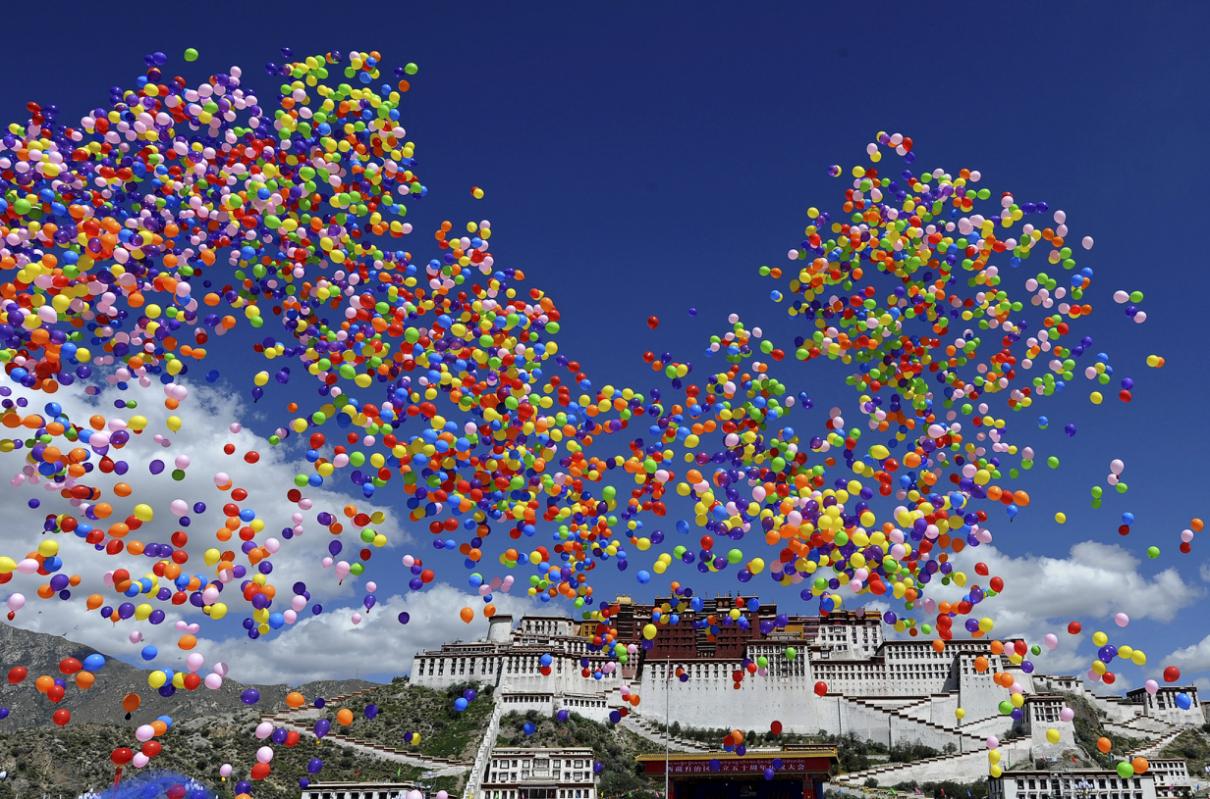


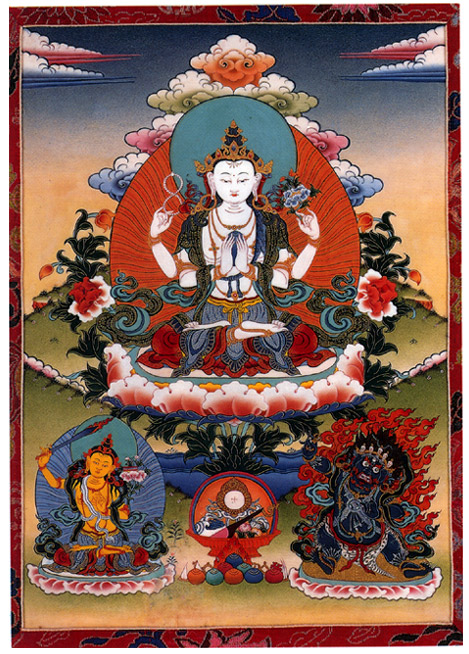
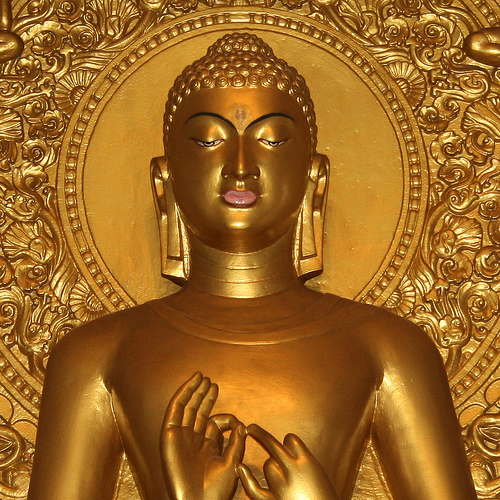





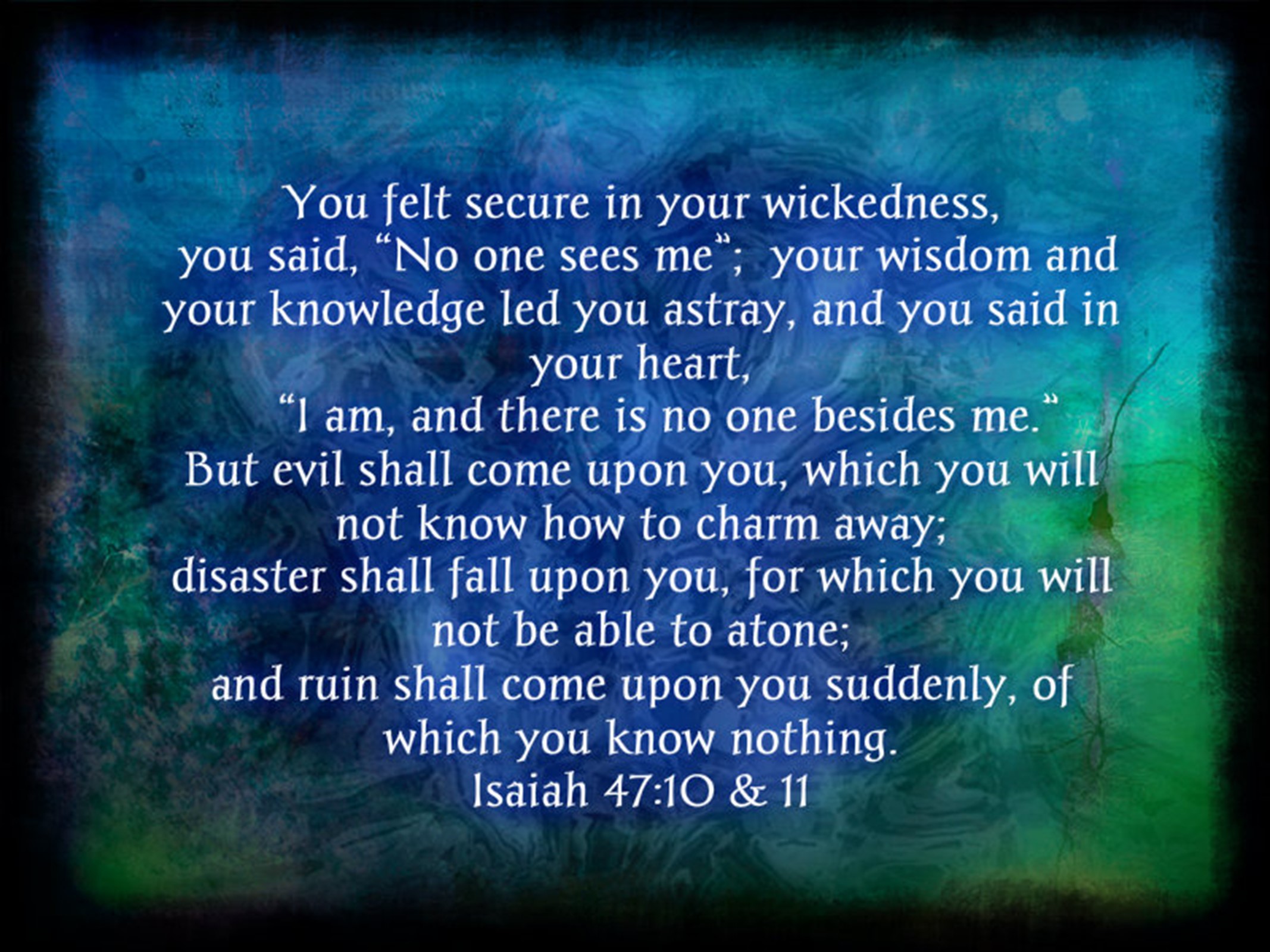
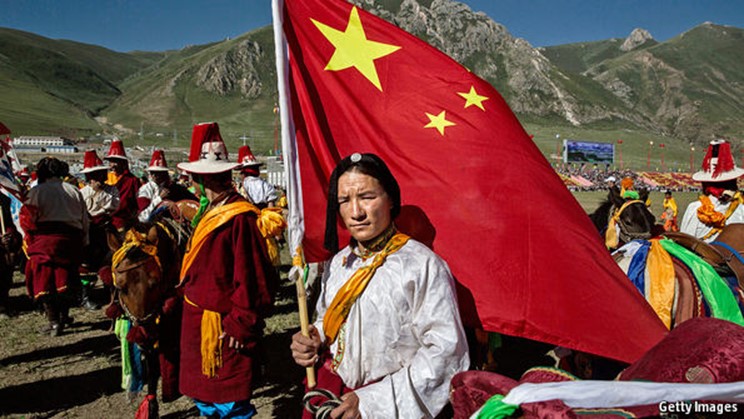


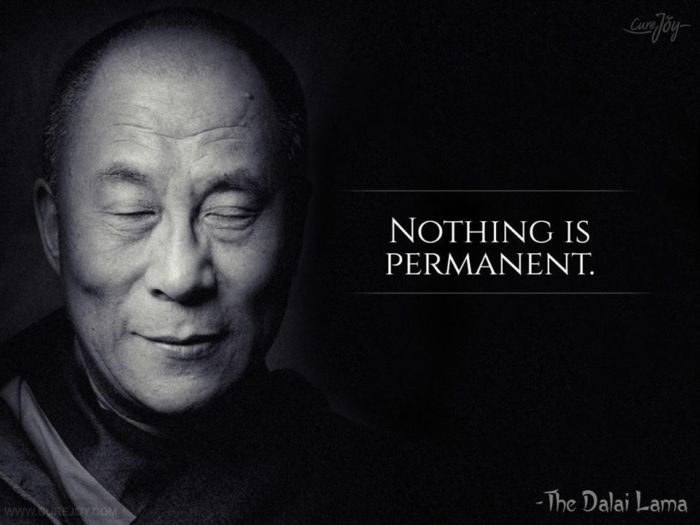

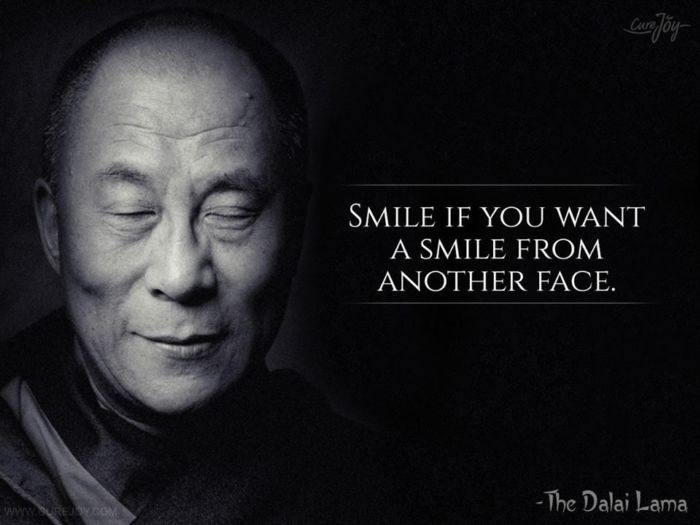





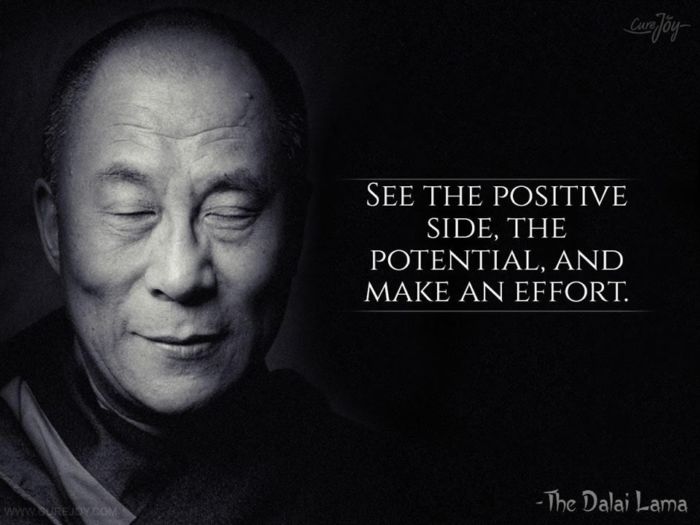


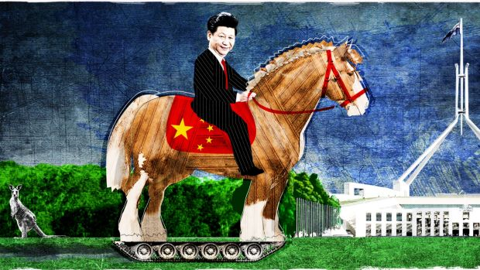


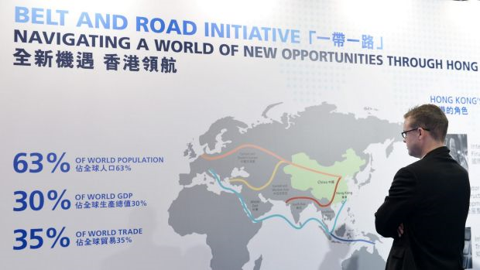
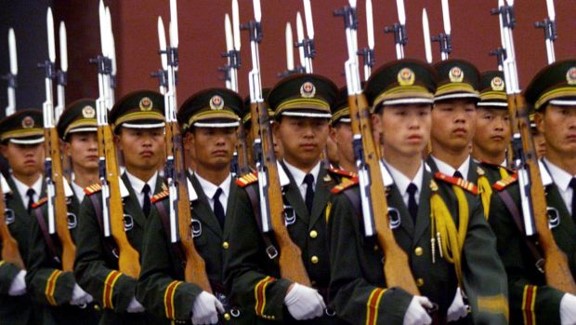
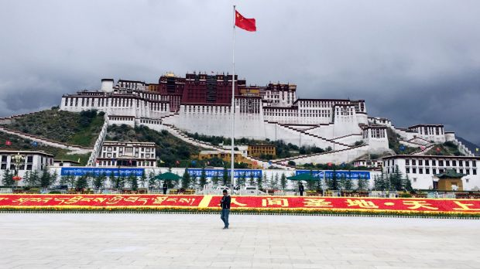

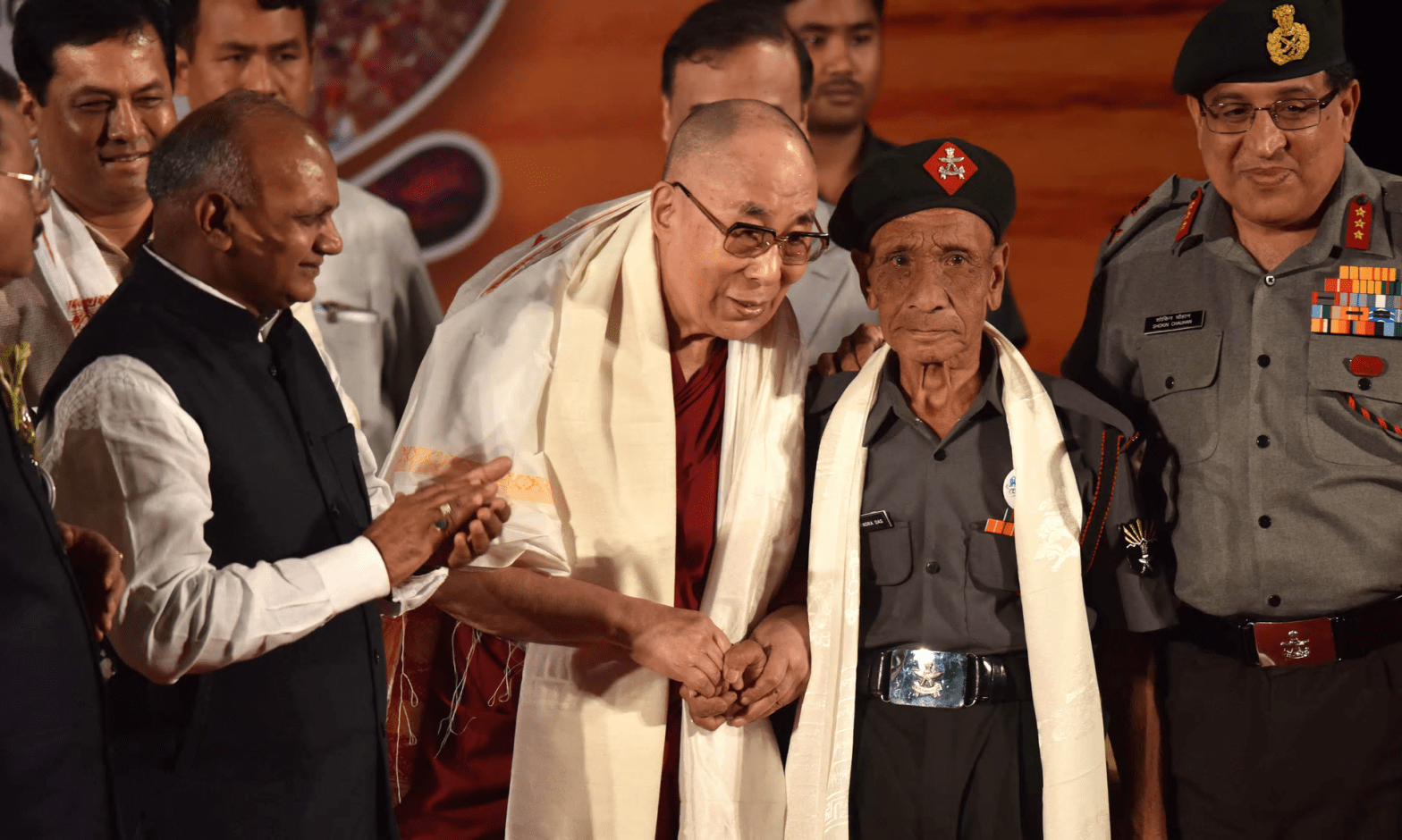

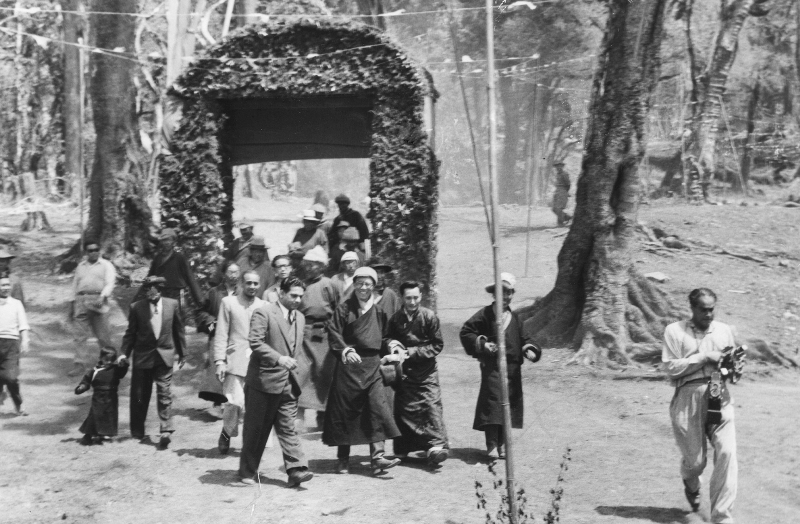
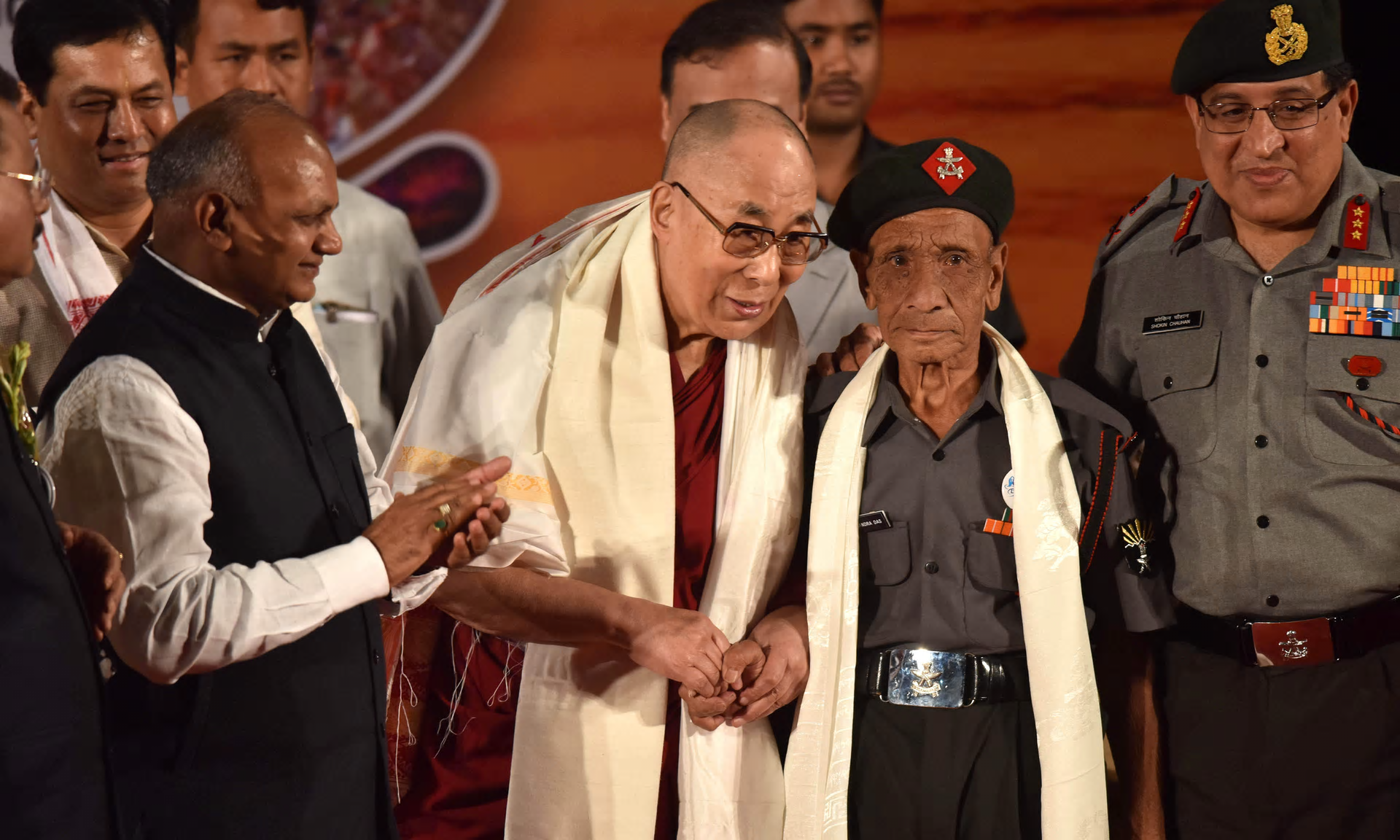
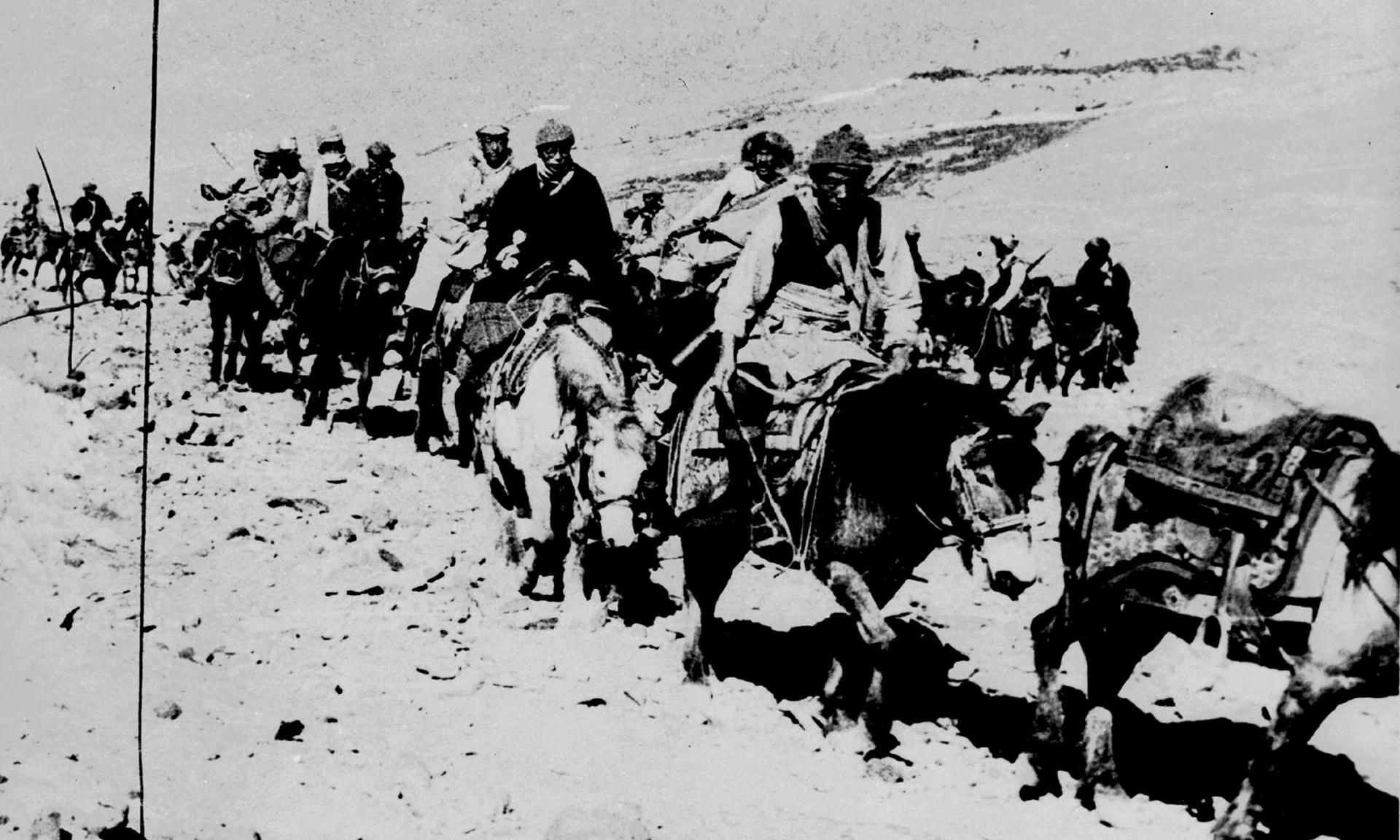
 Whole Dude - Whole Concept