
Whole Blessings – The Blessings of Peace and Freedom in Tibet demands a State Policy of Transparency and Accountability to Tibetans

The Blessings of Peace and Freedom in occupied Tibet hinges on transparency and accountability to Tibetans

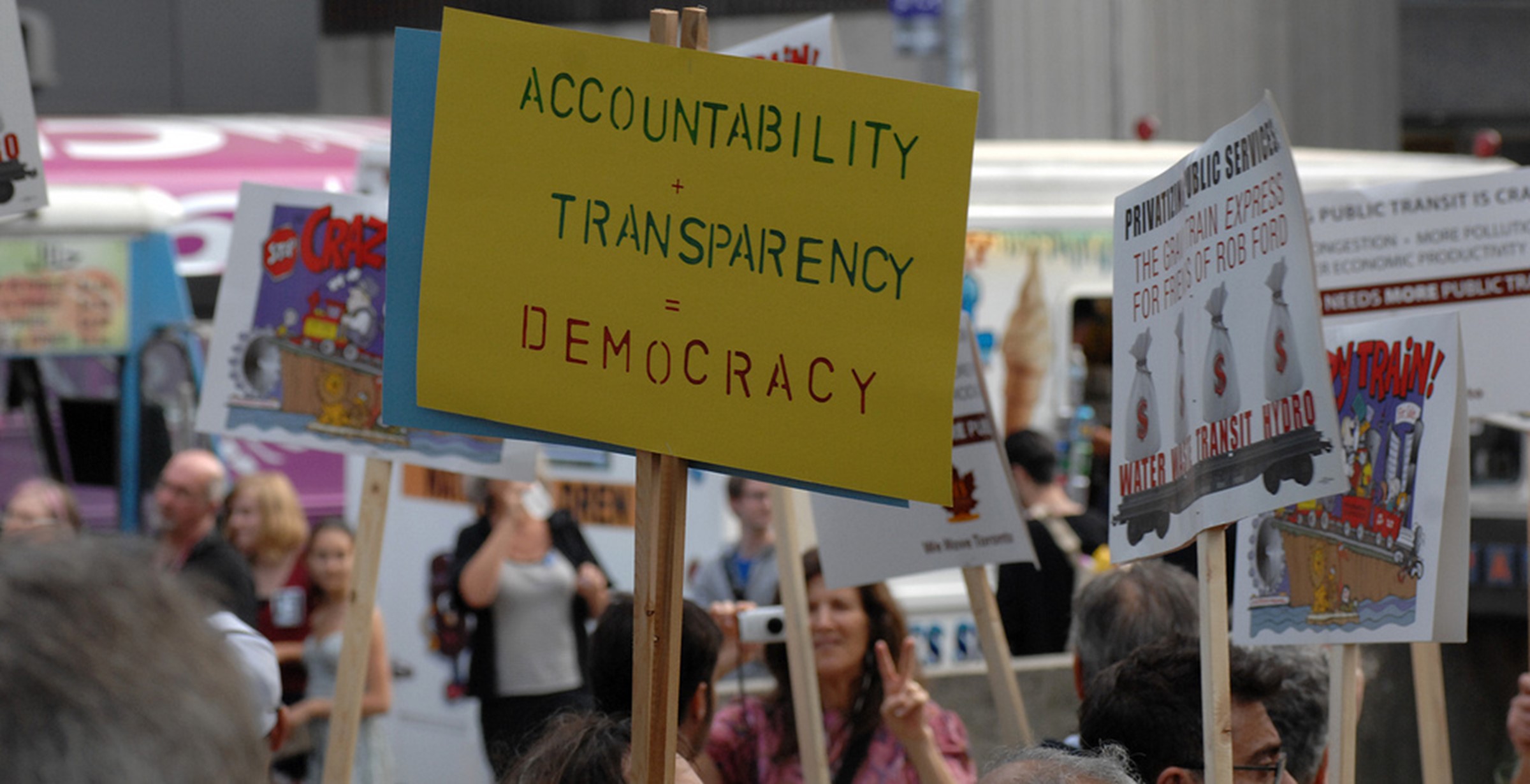
In my analysis, the Fate of Freedom in Tibet hinges on Transparency and Public Accountability to Tibetans. The type of governance in China, India, and the United States is of no consequence if their State Policy is not transparent and is not accountable to Tibetans. On behalf of The Living Tibetan Spirits of Special Frontier Force, I demand a Government Policy that is transparent and is accountable to Tibetans to decide the fate of freedom in Tibet. Hidden Agendas, Covert Actions, and Secret Negotiations will utterly fail to deliver the Blessings of Peace and Justice in Occupied Tibet.

In my analysis, the Fate of Freedom in Tibet hinges on Transparency and Public Accountability to Tibetans. The type of governance in China, India, and the United States is of no consequence if their State Policy is not transparent and is not accountable to Tibetans. On behalf of The Living Tibetan Spirits of Special Frontier Force, I demand a Government Policy that is transparent and is accountable to Tibetans to decide the fate of freedom in Tibet. Hidden Agendas, Covert Actions, and Secret Negotiations will utterly fail to deliver the Blessings of Peace and Justice in Occupied Tibet.

Rudra Narasimham Rebbapragada

SPECIAL FRONTIER FORCE

The fate of freedom in Tibet hinges on democracy in China

Clipped from:

https://www.washingtonpost.com/opinions/2018/11/28/fate-democracy-china-hinges-freedom-tibet/

In my analysis, the Fate of Freedom in Tibet hinges on Transparency and Public Accountability to Tibetans. The type of governance in China, India, and the United States is of no consequence if their State Policy is not transparent and is not accountable to Tibetans. On behalf of The Living Tibetan Spirits of Special Frontier Force, I demand a Government Policy that is transparent and is accountable to Tibetans to decide the fate of freedom in Tibet. Hidden Agendas, Covert Actions, and Secret Negotiations will utterly fail to deliver the Blessings of Peace and Justice in Occupied Tibet.

Tibetan Americans walk in protest to China’s consulate in Los Angeles on Nov. 19, where they held a prayer and candlelight vigil for a 23-year-old Tibetan man named Dopo who self-immolated. (Frederic J. Brown/AFP)

By Carl Gershman

November 28

Carl Gershman is president of the National Endowment for Democracy.

The death last month of Lodi Gyari, who as the Dalai Lama’s special envoy conducted nine rounds of negotiations with Beijing over Tibet’s status, offers an occasion to reflect on the increasingly troubled relationship between the United States and China.

The negotiations conducted by Gyari in 2002 through 2010 were based on the Dalai Lama’s Middle Way Approach, which seeks genuine autonomy for the Tibetan people within the framework of the existing Chinese state and constitution. Earlier in his career, when he was an interpreter for the Tibetan resistance fighters training in the United States and helped found the Tibetan Youth Congress, Gyari was committed to the struggle for Tibetan independence. He never changed his belief that Tibet is “in every sense an occupied nation, brutally occupied.” But he became persuaded that the Dalai Lama’s vision of autonomy offered a nonviolent way to preserve the Tibetan people’s religion, culture, language, and identity. And after conducting exploratory talks in China in the 1980s during the period of reform under Deng Xiaoping and Hu Yaobang, he believed that such an approach was feasible.

But Beijing had no interest in finding a middle ground with the Dalai Lama, and the negotiations were unsuccessful. Beijing actually hardened its position on Tibet. In a speech Gyari gave after the breakdown of the talks, he charged that the regime had increased repression and was seeking the “cultural destruction” of the Tibetan people. China also issued a white paper denouncing the Middle Way and asserting that it wouldn’t resume talks until the Dalai Lama acknowledged that Tibet has been part of China “since antiquity,” a view rejected by all independent scholars. The growing repression, Gyari said, was responsible for “the terrible and tragic wave of self-immolations” by desperate Tibetans, whose resistance was likely to grow.

The bitter disappointment experienced by Gyari parallels the profound disenchantment with China in the United States and other advanced democracies, where policymakers once believed that as China modernized economically it would liberalize internally and become a responsible stakeholder in the rules-based world order.

In fact, exactly the opposite has happened. As China has risen economically, Beijing has become far more repressive, arresting dissidents and independent lawyers, creating mass concentration camps for Uighur Muslims in Xinjiang province, and using facial-recognition technology and other digital tools to establish what has ominously been called the “surveillance state.”

Internationally, it has militarized the South China Sea, despite President Xi Jinping’s pledge in the White House Rose Garden in 2015 not to take such action. China’s military buildup has been described in a Pentagon study as “perhaps the most ambitious grand strategy undertaken by a single nation-state in modern times.” It has engaged in “cyber theft on a massive scale,” and through its $1 trillion Belt and Road Initiative, targets more than 60 countries in an effort to advance its economic and military goals, including securing access to strategic ports.

Such threatening behavior has provoked an international backlash that the Economist has called “the starkest reversal in modern geopolitics.” An example of this reversal was the harsh speech given by Vice President Pence last month at the Hudson Institute, which added the charge of meddling in American politics to all the other alarming Chinese actions. Some observers have seen this speech as a portent of a new Cold War. But one shot across the Chinese bow is not a coherent policy response to the greatest international challenge now facing the United States.

Here Gyari’s experience may help point a way forward. While he failed in his negotiations with Beijing, he was immensely successful as the Dalai Lama’s special envoy in Washington, building bipartisan backing for the Tibet Policy Act (2002), which institutionalized support for Tibet in U.S. foreign policy. He had many allies in this effort, but none was more devoted than Nancy Pelosi, the California Democrat who is the presumptive next House speaker and whose heartfelt statement on the passing of Gyari emphasized that “members of Congress on both sides of the aisle benefitted from Lodi’s insight and wisdom.” She could be an important ally in building bipartisan congressional support for a new China policy.

Two additional elements of such a policy are also tied to Gyari. The first is the importance he attached to the role of India, which has given refuge to the Dalai Lama and the Tibetan government-in-exile, and whose free political environment, he said, “has deeply enriched my thinking.” The Trump administration has emphasized the growing strategic partnership with India, which must be a core part of U.S. policy.

The second element is democracy. Gyari, like the Dalai Lama, believed in the paramount importance of democracy for all people, not least for Tibetans and Chinese. Following the Tibet uprising in 2008, Chinese dissident and future Nobel laureate Liu Xiaobo wrote, “Democratization for all of China is the necessary condition for any solution, whatever its form, to the Tibet issue.”

In my analysis, the Fate of Freedom in Tibet hinges on Transparency and Public Accountability to Tibetans. The type of governance in China, India, and the United States is of no consequence if their State Policy is not transparent and is not accountable to Tibetans. On behalf of The Living Tibetan Spirits of Special Frontier Force, I demand a Government Policy that is transparent and is accountable to Tibetans to decide the fate of freedom in Tibet. Hidden Agendas, Covert Actions, and Secret Negotiations will utterly fail to deliver the Blessings of Peace and Justice in Occupied Tibet.
10th December,2009 marks the 20th anniversary of H.H. Dalai Lama winning the Nobel Peace Prize. In my analysis, the Fate of Freedom in Tibet hinges on Transparency and Public Accountability to Tibetans. The type of governance in China, India, and the United States is of no consequence if their State Policy is not transparent and is not accountable to Tibetans. On behalf of The Living Tibetan Spirits of Special Frontier Force, I demand a Government Policy that is transparent and is accountable to Tibetans to decide the fate of freedom in Tibet. Hidden Agendas, Covert Actions, and Secret Negotiations will utterly fail to deliver the Blessings of Peace and Justice in Occupied Tibet.


Whole Equilibrium – Balancing the Force – Tibetan David vs Chinese Goliath

Whole Equilibrium – Balancing the Force – Tibetan David vs Chinese Goliath. Victory is Just a Stone’s Throw Away.

Excerpt: In my analysis, Tibet Equilibrium is about balancing physical force applied by Communist regime to overcome Nature’s Agenda of granting freedom without asking questions. Living Tibetan Spirits speak of Nature’s Agenda in Tibet. Freedom and Independence are gifts of Nature quietly operating across Tibetan Plateau long before the arrival of Anatomically Modern Man. Occupying force wielded by Communist China creates imbalance, disharmony, and discord in the lives of Tibetans who view freedom as natural experience.

Author Alexander Norman gives an illuminating account of the Dalai Lama, from his selection as an infant through to his exile and his 21st century persona as a benign all-smiling Buddhist version of the Pope

I like the description of the Dalai Lama as a “Tibetan David who stood up to the Chinese Goliath.” In my analysis, Tibetan Equilibrium, the restoration of Natural Freedom in Tibet is Just a Stone’s Throw Away.

Whole Equilibrium – Balancing the Force – Tibetan David vs Chinese Goliath. Victory is Just a Stone’s Throw Away.

Rudra Narasimham Rebbapragada

Special Frontier Force-Establishment 22-Vikas Regiment

Whole Equilibrium – Balancing the Force – Tibetan David vs Chinese Goliath. Victory is Just a Stone’s Throw Away.

The Dalai Lama: a Tibetan David who stood up to the Chinese Goliath

Whole Equilibrium – Balancing the Force – Tibetan David vs Chinese Goliath. Victory is Just a Stone’s Throw Away.

Author Alexander Norman gives an illuminating account of the Dalai Lama, from his selection as an infant through to his exile and his 21st century persona as a benign all-smiling Buddhist version of the Pope

Biography

The Dalai Lama

Alexander Norman

Rider, hardback, 464 pages, €33.59

Tibet’s exiled spiritual leader the Dalai Lama addresses those gathered at Buyant Ukhaa sport palace in Ulaanbaatar, Mongolia, November 20, 2016. REUTERS/B. Rentsendorj

Kim Bielenberg

February 29 2020 02:30 AM

Whole Equilibrium – Balancing the Force – Tibetan David vs Chinese Goliath. Victory is Just a Stone’s Throw Away.

For most of his adult life, the Dalai Lama has been the leader in exile of a vast mountainous territory under the yoke of communist China. Almost as soon as he took power in Tibet as a spiritual and political leader, his authority was being stripped away from him – and within a decade he had fled to India.

Whole Equilibrium – Balancing the Force – Tibetan David vs Chinese Goliath. Victory is Just a Stone’s Throw Away.

Over the decades, the Dalai Lama, now 84, could only read with horror about what happened in his homeland under Communist rule. Monasteries were destroyed, monks were killed and religious freedom obliterated by the occupying power.

There was a ban on displaying or possessing pictures of his image. Tibetan students were even banned from visiting monasteries or taking part in religious ceremonies, and the Chinese stranglehold has hardly loosened.

And yet, after 61 years of exile, the Rolex-wearing holy man – known by his acolytes as “the Precious Protector” and by Rupert Murdoch as a “canny old monk in Gucci loafers” – remains a potent moral and spiritual force around the world.

Whole Equilibrium – Balancing the Force – Tibetan David vs Chinese Goliath. Victory is Just a Stone’s Throw Away.

In his illuminating biography, Alexander Norman describes the Dalai Lama as the “Tibetan David standing up to the Chinese Goliath, armed only with the rhetoric of compassion.”

Whole Equilibrium – Balancing the Force – Tibetan David vs Chinese Goliath. Victory is Just a Stone’s Throw Away.

He roams the globe as a kind of benign all-smiling Buddhist version of the Pope, welcomed by world leaders and cheered at the Glastonbury rock festival, where he was kissed by the singer Patti Smith.

Bizarrely, he once appeared as a guest judge on the Australian version of Masterchef, and relaxes watching the 1970s BBC comedy, Dad’s Army. He is fascinated by the art of clock and watchmaking, hence his interest in Rolex watches.

THE BATTLE OF RIGHT AGAINST MIGHT. Just like David who defeated the Philistine Champion Goliath, Tibet will prevail in its just battle against the military giant called China.

His form of spirituality – with its emphasis on extended periods of meditation – is arguably now more appealing in secularised Western societies than traditional Catholicism.

Alexander Norman is clearly an avid admirer of the Tibetan leader, and interviewed him for this biography, but does not gloss over controversies, or romanticise life in the old Tibet.

In the feudal society of Tibet before the communists arrived, there could be bitter infighting between those with an eye on power, and it was far from being a peace-loving Shangri-la.

One senior official from the last century had his eyes gouged out and was consigned to a dungeon. And Reting Rinpoché, who served as regent when the present Dalai Lama was a boy, also met a sorry end.

Depending on which account you believe, he died by having his testicles crushed, he was poisoned or he was strangled.

The appointment of the present Dalai Lama as a young child is one of the more fascinating episodes in this biography.

He is supposedly the reincarnation of the last one. So how is the infant Dalai Lama found?

Whole Equilibrium – Balancing the Force – Tibetan David vs Chinese Goliath. Victory is Just a Stone’s Throw Away.

The lengthy selection process involves senior officials having dreams and visions, sending out search parties, and worthy toddlers undergoing a series of tests.

The two-year-old boy who became the present Dalai Lama had to choose between two drums, one of which belonged to the previous Dalai Lama, and he picked the right one. He also picked out other objects belonging to his predecessor.

Other auspicious signs that he was the rightful heir were that visitors to his home heard the first cuckoo of spring, and on the day he was born, a rainbow appeared above his house.

Once he had been found, the young child was separated from his parents and taken to a monastery, where he lived until his confirmation by the authorities.

Whole Equilibrium – Balancing the Force – Tibetan David vs Chinese Goliath. Victory is Just a Stone’s Throw Away.

The Dalai Lama by Alexander Norman

When he eventually came of age, the communist pressure on Tibet was already being felt and under duress, his officials signed an agreement with Chairman Mao for the “peaceful liberation” of Tibet.

Of course, by liberation, the communists meant suppression.

Still remarkably young, the Tibetan leader tried to appease Mao in the hope that the territory could maintain some of its independence, or at least its religious freedom.

At a banquet in Beijing, Mao impressed the Dalai Lama with his charm, and at one stage even applied to join the Communist Party. Any hopes that there could be peaceful co-existence were dashed, however, with many monks in open rebellion and a growing Chinese military presence.

Trouble flared in the capital Lhasa in March 1959, and amid fears that he might be captured by the Chinese, the Dalai Lama fled his palace. He crossed the border into India after an epic 15-day journey on foot over the Himalayan mountains.

Once the religious leader had gone into exile, the communist invaders seemed to lose all restraint and their opponents were often subjected to beatings and ritualised humiliation.

The death of Chairman Mao seemed to signal a softening of the treatment of Tibet. The new leader Deng Xiaoping fostered these hopes and even wanted the exiled Dalai Lama to return.

But exiled Tibetans who were invited to return on fact-finding missions encountered extreme poverty and intolerance of their religion. Monasteries had been destroyed, temples were used as slaughterhouses, and schoolchildren were not allowed to learn their own language.

In 2011, the Dalai Lama renounced his claim to lead his people as head of state in favour of a democratically elected layman. He now sees his role as that a teacher.

According to Alexander Norman, this makes perfect sense. The word lama is the Tibetan translation of the Sanskrit word guru – a spiritual guide. Communist tyrants may still hold a grip on China, but across the world, the teachings of the Tibetan holy man have echoed more loudly than the thoughts of Chairman Mao.

Indo Review

Whole Equilibrium – Balancing the Force – Tibetan David vs Chinese Goliath. Victory is Just a Stone’s Throw Away.

Whole Trouble – Troubles of Tibet – Red China’s Cyberspace Expansionism

Red China’s Cyberspace Expansionism

Whole Trouble – Troubles of Tibet – Red China’s Cyberspace Expansionism

In my analysis, Communist China’s Beidou Satellite Navigation Network may succeed in the invasion of Tibetan Cyberspace but will utterly fail in defending China from an attack from Heavenly Domain.

Rudra Narasimham Rebbapragada

SPECIAL FRONTIER FORCE

Red China – Evil Empire-Isaiah 47: 10 and 11

Big data system keeps real-time track of visitors in Tibet – Global Times

Whole Trouble – Troubles of Tibet – Red China’s Cyberspace Expansionism

Clipped from: http://www.globaltimes.cn/content/1121934.shtml

·

Whole Trouble – Troubles of Tibet – Red China’s Cyberspace Expansionism

A Tibetan opera competition held in a park during the traditional Shoton Festival in Lhasa, Tibet Autonomous Region, on August 12, 2018, attracts numerous Tibetan people and tourists from home and abroad. Photo: VCG

Whole Trouble – Troubles of Tibet – Red China’s Cyberspace Expansionism

Tibet University installs a real-time monitoring electronic screen which can display the number of tourists in a given period and the specific number at any tourist attraction. Photo: Courtesy of Nyima Tashi

Whole Trouble – Troubles of Tibet – Red China’s Cyberspace Expansionism

This big data screen made its debut at this year’s Tourism and Culture Expo that kicked off in Lhasa, the capital of Tibet, in early September. The screen shows the distribution of Tibet’s natural resources including lakes, lands and rare wild species. Photo: Courtesy of Wang Sheng

As China enters the era of big data, a key university in Southwest China’s Tibet Autonomous Region is using this technical method to monitor the flow of tourists.

Analysts said the move will not only boost the tourism industry but also help safeguard regional stability and promote national unity.

Tibet University, the largest university in the region with an internationally renowned department of Tibetan studies, has established a big data center based on tourism information.

The center was jointly built by the university’s information and technology school and Beijing-based Wiseweb Technology Company, one of China’s leading companies that provide big data smart software and services. It was officially launched in early September.

Nyima Tashi, dean of the school, told the Global Times on Friday that the center aims to provide data support for the regional government to boost the local tourism industry and further accelerate the region’s openness to the world.

Nyima said the school installed a real-time monitoring electronic screen which could display the number of tourists in a given period and the specific number at any tourist attraction.

Moreover, it can show the background information of local tourist attractions and exhibit any trends of changing tourist preferences.

“In near future, the screen could also show more information about tourists, such as the origin of domestic and overseas tourists and their preferences of scenic spots, as long as the information does not invade personal privacy,” Nyima noted.

The big data screen made its debut at this year’s tourism and culture expo that kicked off in Lhasa, the capital of Tibet, in early September.

Wang Sheng, deputy manager of Wiseweb, told the Global Times on Thursday that the data aims to provide a reference for the regional government to monitor tourism market dynamics.

For example, the screen could display important events held in Tibet, ticket information, and the number of tourists in different scenic spots, he said.

“The real-time monitoring could give a warning to the government on negative social events,” Wang noted.

According to Wang, some data is captured from open sources on the internet while other data is purchased from tourist companies. For the next step, the company will obtain more data from different levels of government. “Possibly, the screen will show more information about overseas tourists,” said Wang.

The big data center impressed foreign visitors. Han Woo-duck, director of South Korea Central Daily China Institute, said in an article published on its website on September 18 that what marveled him most during his four-day visit to Tibet was not the Potala Palace or the Jokhang Monastery, but the big data center at Tibet University.

Han said the university’s staff led him to the center, and the changing data on the screen, shown as pie charts and bar graphs, could demonstrate the changes of tourists in real-time.

“It means that the Tibet University, in the deep heart of China, is building up a big data center. It marks a clear comparison with South Korea, where there is not any real-time information about the number of tourists in scenic spots or the major gathering spots of overseas tourists,” Han said in the article.

Tibet received a record 25.6 million domestic and foreign tourists in 2017, up 10.6 percent compared with the previous year, the Xinhua News Agency reported in January, citing regional authorities.

Tourism has become one of the pillar industries in the region. Tourism revenue during 2017 reached 37.9 billion yuan ($5.9 billion), with a year-on-year increase of 14.7 percent. Statistics showed that for the past five years, total tourism revenue in the region topped 130 billion yuan, said Xinhua.

Due to special ethnic traditions and environmental protection concerns, overseas tourists must get a permit from the regional tourist bureau before entering into Tibet.

From January to April, Tibet received nearly 40,000 foreign tourists, up 50.5 percent compared with the previous year.

“A big data system incorporating tourism information will help local governments manage the industry in a more orderly way and avoid accidents,” Xiong Kunxin, a professor of ethnic studies at the Minzu University of China in Beijing, told the Global Times on Friday.

In addition to sharing the beautiful scenery and cultural heritage with the outside world, developing tourism in Tibet is also an important move to safeguard regional stability, promote national unity, and guard against separatist forces, said Xiong.

Whole Trouble – Troubles of Tibet – Red China’s Cyberspace Expansionism


Whole Trouble – Troubles of Tibet – Tibetans Under Constant Surveillance

Trouble in Tibet – Tibetans Under Constant Surveillance

TROUBLE IN TIBET – TIBETANS UNDER SURVEILLANCE. HUMAN RIGHTS VIOLATIONS IN OCCUPIED TIBET.

Red China extended indefinitely a village-based Tibet Surveillance Program which in its essence is a continuous Human Rights violation.

Rudra Narasimham Rebbapragada
Ann Arbor, MI 48104-4162 USA
SPECIAL FRONTIER FORCE


CHINA DIGITAL TIMES

Tibet: Surveillance & Living Buddhas

Human Rights Watch reports that authorities in Tibet are extending a village-based surveillance scheme that was originally scheduled to end in 2014, creating a permanent system of cadre teams to maintain political stability in the region:

“The Chinese government’s decision to extend its Tibet surveillance program indefinitely is nothing less than a continuous human rights violation,” said Sophie Richardson, China director. “The new normal is one of permanent surveillance of Tibetans.”

[…] The purpose of the village-based cadre teams was initially described as improving services and material conditions in the villages, but, according to the Party leader of the TAR in 2011, their primary requirement was to turn each village into “a fortress” in “the struggle against separatism,” a reference to support for Tibetan independence and the Dalai Lama.

This was done by setting up new Communist Party organizations in each village, establishing local security schemes, gathering information about villagers, and other measures. The teams were also required to carry out re-education with villagers on “Feeling the Party’s kindness” and other topics.

[…] The village-based teams also “screen and mediate social disputes,” which involves acting to settle and contain any disputes among villagers or families, because of official concerns in China that small disputes might lead to wider unrest or “instability.” One objective is to prevent villagers from presenting petitions to higher level officials.

[…] In August 2015, a statement posted on a government Tibetan-language website said that the TAR authorities had called for work teams “to be constantly stationed at their village committees.” It added that “on hearing that village-based-cadre work was to continue, the rural masses were overjoyed, saying that this was one of the Party and government’s best policies to benefit rural areas.”

Read Human Rights Watch’s 2013 report on the surveillance grid in Tibet, the reported use of monks’ cellphones as monitoring devices, and more on surveillance in the region, via China Digital Times.

Meanwhile, the BBC reports that the Chinese State Administration for Religious Affairs has established the country’s first database of “authentic living buddhas,” complete with photos, personal details, and license numbers, that has been made available to the public for verification purposes.

Beijing has taken the unusual step of concerning itself with matters of reincarnation by releasing the names, photographs and locations of 870 “verified” buddhas on the website of the State Administration for Religious Affairs, Xinhua news agency reports. It’s a move that’s been praised by one of the men who features on the list. “As a living buddha, I feel genuinely happy about it,” Drukhang Thubten Khedrup tells the state-run news agency.

According to China’s religious affairs agency, the system has been inaugurated to counter “fake” buddhas who are undermining Tibetan Buddhism by cheating believers out of cash.
However, the spiritual cataloguing scheme has already been criticised as a means of further controlling Tibetan affairs. “This living Buddha database and the whole policy toward reincarnation is clearly a pre-emptive move by the government to control what happens after this Dalai Lama,” Amnesty International’s Nicholas Bequelin told Time magazine in December 2015, when the list was first announced. It’s also seen as a means of confirming state choices for other religious appointments.

At China Real Time, Olivia Geng and Josh Chin note that fake living buddhas were described as a national security threat on state broadcaster CCTV last year.They also point out that the Dalai Lama is not among those on the new register, despite Beijing’s repeated insistence that he must reincarnate, and that it has the right to identify his reincarnation.

Elsewhere, Jane Qiu looks at the negative impacts that a series of government grazing restrictions and fencing policies have had on the Tibetan grasslands and the health of the surrounding environment. From Nature:

The challenges that face Dodra and other Tibetan herders are at odds with glowing reports from Chinese state media about the health of Tibetan grasslands — an area of 1.5 million square kilometres — and the experiences of the millions of nomads there. Since the 1990s, the government has carried out a series of policies that moved once-mobile herders into settlements and sharply limited livestock grazing. According to the official account, these policies have helped to restore the grasslands and to improve standards of living for the nomads.

But many researchers argue that available evidence shows the opposite: that the policies are harming the environment and the herders. “Tibetan grasslands are far from safe,” says Wang Shiping, an ecologist at the Chinese Academy of Sciences’ (CAS) Institute of Tibetan Plateau Research (ITPR) in Beijing. “A big part of the problem is that the policies are not guided by science, and fail to take account of climate change and regional variations.”

The implications of that argument stretch far beyond the Tibetan Plateau, which spans 2.5 million square kilometres — an area bigger than Greenland — and is mostly controlled by China. The grasslands, which make up nearly two-thirds of the plateau, store water that feeds into Asia’s largest rivers. Those same pastures also serve as a gigantic reservoir of carbon, some of which could escape into the atmosphere if current trends continue. Degradation of the grasslands “will exacerbate global warming, threaten water resources for over 1.4 billion people and affect Asian monsoons”, says David Molden, director general of the International Centre for Integrated Mountain Development (ICIMOD) in Kathmandu, Nepal. [

Read more on threats to grasslands in Tibet and elsewhere, including a 2013 Human Rights Watch report on the forced settlement of Tibetan herders, via China Digital Times.

January 19, 2016 12:04 AM
Posted By: CINDY

China Digital Times is supported by the Berkeley Counter-Power Lab | 2011 Copyright © China Digital Times | Powered by WordPress

TROUBLE IN TIBET – TIBETANS UNDER SURVEILLANCE – HUMAN RIGHTS VIOLATION IN OCCUPIED TIBET.
TROUBLE IN TIBET – TIBETANS UNDER SURVEILLANCE. RED CHINA’S PROPAGANDA AGENTS MOVE INTO EVERY TIBETAN VILLAGE.


TROUBLE IN TIBET – TIBETANS UNDER SURVEILLANCE. HUMAN RIGHTS VIOLATIONS N OCCUPIED TIBET.

Whole Trouble – The Troubles of Tibet – Communist Regime vs Climate Change

Trouble in Tibet – Climate Change is no Secret

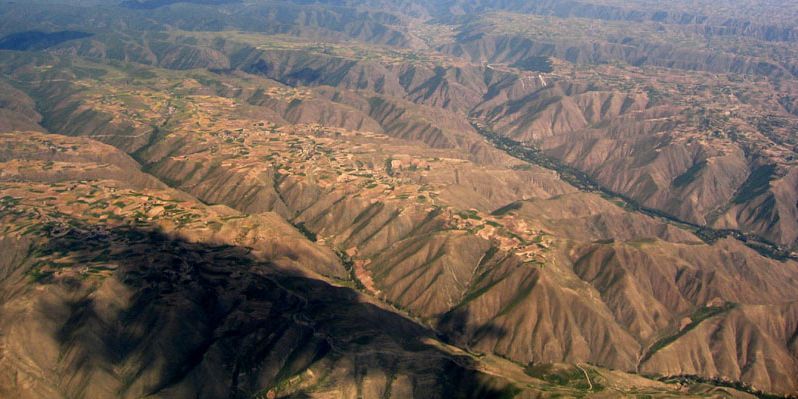
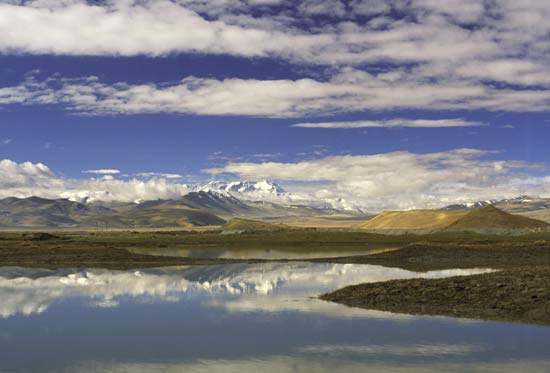
Tibet is in deep trouble; the trouble called ‘Climate Change’ is no Secret, the trouble caused by Communist Regime occupying Tibet is indeed the bigger of the two troubles confronting Tibet. Regime Change in Tibet will resolve the problem of ‘Climate Change’.

Tibet is in deep trouble; the trouble called ‘Climate Change’ is no Secret, the trouble caused by Communist Regime occupying Tibet is indeed the bigger of the two troubles confronting Tibet. Regime Change in Tibet will resolve the problem of ‘Climate Change’.

Rudra Narasimham Rebbapragada
Ann Arbor, MI 48104-4162 USA
SPECIAL FRONTIER FORCE

Tibet is in deep trouble; the trouble called ‘Climate Change’ is no Secret, the trouble caused by Communist Regime occupying Tibet is indeed the bigger of the two troubles confronting Tibet. Regime Change in Tibet will resolve the problem of ‘Climate Change’.

EURASIA REVIEW – A JOURNAL OF ANALYSIS AND NEWS

NEW METHOD UNLOCKS CLIMATE CHANGE SECRETS FROM TIBETAN ICE

ISSN 2330-717x

The Qinghai-Tibetan Plateau lies between the Himalayan range to the south and the Kunlun Range to the north. Map by Lencer, Wikipedia Commons.

The Qinghai-Tibetan Plateau lies between the Himalayan range to the south and the Kunlun Range to the north. Map by Lencer, Wikipedia Commons.

By EURASIA REVIEW December 19, 2015

Identifying forest fire molecules in the Tibetan ice could give us an insight into how human activity is contributing to climate change and melting glaciers. A new study published in Talanta presents a method to help scientists identify forest fire molecules in Tibet.

The researchers behind the new method, from the Institute of Tibetan Plateau Research in China, say their work will enable scientists to spot the molecules produced by burning forests more easily. This will help them understand the history of fires in the region, adding to the picture of how humans are contributing to climate change.

The Tibetan Plateau is one of the cleanest regions in the world. It is a huge area, covering around 1000km north to south and 2500km west to east, in western China and India. The glaciers supply water to people in surrounding countries and are critical for people’s survival. However, they’re retreating at an alarming rate, putting the water supply in jeopardy for more than 1 billion people.

Climbing temperatures are contributing to the disappearance of the glaciers. But previous research has also pointed to molecules in the air called carbonaceous aerosols as another cause of the glaciers melting. Carbonaceous aerosols are commonly produced by burning fossil fuels. However, almost half of the carbonaceous aerosols in south Asia are produced when people burn biomass, such as trees.

Studying the aerosols trapped in the ice of the glaciers can give scientists insights into the history of biomass burning and how it is related to climate change and glacial melting. For the new study, the researchers developed a method to help scientists identify a molecule called levoglucosan, which can identify carbonaceous aerosols that came from biomass burning.
Researchers often look for levoglucosan in snow and ice in Antarctica and the Arctic. However, ice from the Tibetan Plateau contains many more complex molecules, such as sugar and sugar alcohol, making it much harder to spot the levoglucosan.

“Carbonaceous aerosols can tell the story of biomass burning in a region, helping us understand more about how human activity has shaped glaciers over time,” explained Mr. Chao You, lead author of the study from the Institute of Tibetan Plateau Research. “But it’s quite difficult to identify the molecules that tell us when these aerosols were released, so we wanted to come up with a better method to use in Tibet.”

Usually, researchers use a technique called High Performance Liquid Chromatography (HPLC) to identify levoglucosan in snow and ice samples. However, because of the insoluble particles in the Tibetan ice, using this method without pre-treating the samples can actually harm the system. Furthermore, levoglucosan is present at such low concentrations in the Tibetan ice that standard methods often can’t identify the molecules.

Mr. You and his colleagues developed a method that can detect levoglucosan at tiny concentrations in snow and ice samples. The researchers first melted the ice, filtered it and mixed it with acetonitrile. They then analyzed the mixture using chemistry analysis called ultra-performance liquid chromatography combined with triple tandem quadrupole mass spectrometry. They then analyzed the levoglucosan in the sample.

The method is very sensitive: the team could identify levoglucosan at a concentration of only 110 nanograms per liter of ice. They could use the method with small samples of only 0.5ml. Also, the method is not just suitable for Tibetan ice, but for samples from any low and middle latitude glaciers around the world.

“I am interested in finding more evidence of biomass burning in Tibetan glacier snow and ice. To do this, we improved and tested this new method for identifying levoglucosan quickly and accurately in Tibetan ice and snow,” explained Mr. You. “Our method can reveal more detailed information about the environmental process and changes that happened in Tibetan glaciers.”

This research was supported by the National Scientific Foundation of China.

Copyright 2015 | By Eurasia Review(ISSN 2330-717x)

In Era of Turmoil, Top of the World is Melting

The Tibetan lifestyle may be severely affected future climate changes ...

Tibet is in deep trouble; the trouble called ‘Climate Change’ is no Secret, the trouble caused by Communist Regime occupying Tibet is indeed the bigger of the two troubles confronting Tibet. Regime Change in Tibet will resolve the problem of ‘Climate Change’.

Whole Trouble – Dalai Lama will not Reincarnate in Land where his portraits are confiscated

Trouble in Tibet – Dalai Lama Portraits Confiscated

Confiscation of Dalai Lama portraits in Occupied Tibet is a sign and symptom of deep Trouble in Tibet. To give relief from Trouble, Tibet needs Freedom From Occupation. The Dalai Lama will not reincarnate in a Land where his portraits are confiscated.

Confiscation of Dalai Lama portraits in Occupied Tibet is a sign and symptom of deep Trouble in Tibet. To give relief from Trouble, Tibet needs Freedom From Occupation. The Dalai Lama will not reincarnate in a Land where his portraits are confiscated.

Rudra Narasimham Rebbapragada
Ann Arbor, MI 48104-4162 USA
SPECIAL FRONTIER FORCE

Confiscation of Dalai Lama portraits in Occupied Tibet is a sign and symptom of deep Trouble in Tibet. To give relief from Trouble, Tibet needs Freedom From Occupation. The Dalai Lama will not reincarnate in a Land where his portraits are confiscated.

DALAI LAMA PORTRAITS CONFISCATED IN CHINA: REPORT

February 3, 2016 12:40 AM

A man prays below a portrait of the Dalai Lama at Kirti Monastery in Aba, a Tibetan area of China’s Sichuan province, on December 9, 2015 (AFP Photo/Benjamin Haas)

Beijing (AFP) – A Chinese province with a large Tibetan population has ordered shopkeepers to hand in portraits of the Dalai Lama, state-run media said Wednesday, quoting Beijing experts likening the Nobel laureate to executed Iraqi leader Saddam Hussein.

Sichuan in the southwest, which includes several ethnically Tibetan areas, set up a “law enforcement squad” of cultural bureau personnel, police and other officials to enforce the drive, reported the Global Times, which is close to the ruling Communist party.

The aim was to “crack down on pornography and illegal publications, which include portraits of the Dalai Lama” ahead of the Lunar New Year, it quoted Gou Yadong, director of the provincial publicity department, as saying.

People were more than welcome to put on show pictures of the country’s past and present leaders, he added, referring to former heads of the ruling party.
The Global Times also cited Lian Xiangmin, of the China Tibetology Research Centre in Beijing, as saying that for Chinese people, hanging his picture was the same as displaying Saddam Hussein’s image would be for Americans.

The former Iraqi leader was executed in 2006 after being convicted of crimes against humanity, while the Dalai Lama, who fled Tibet after a failed uprising against Chinese rule, was awarded the 1989 Nobel Peace prize.

The move in Sichuan comes as Beijing steps up a campaign against the spiritual leader, who is still widely revered by Tibetans.
Beijing brands him a dangerous separatist, despite his repeated statements condemning violence, and in Tibet it tightly controls images of him as part of what many Tibetans see as official repression of their religion and culture.

China denies repression of minorities and says its massive investment in Tibet has brought development to a formerly poverty stricken region.
Some Tibetan areas in Sichuan had seen laxer enforcement in recent years, with business owners displaying his portrait in shops.

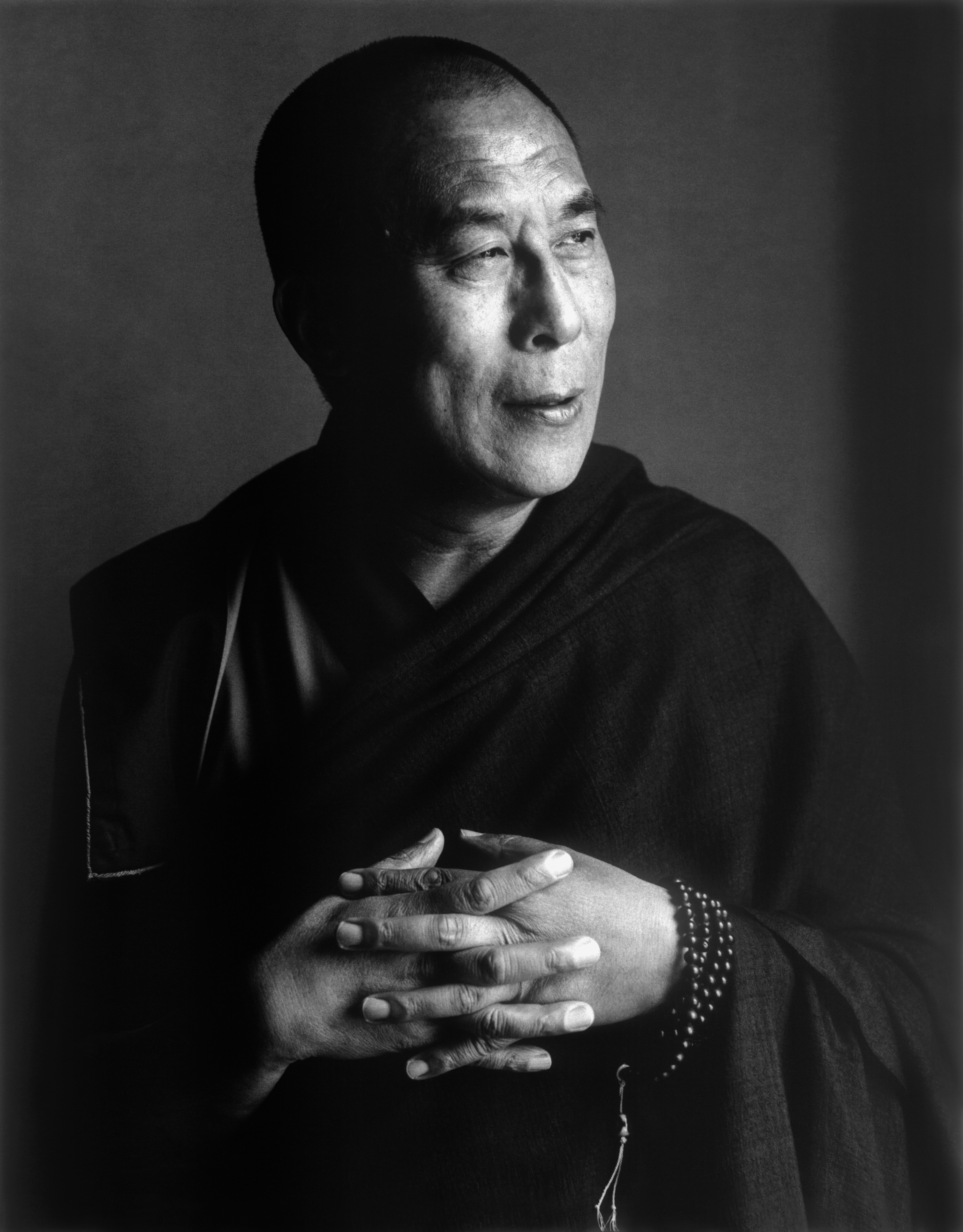
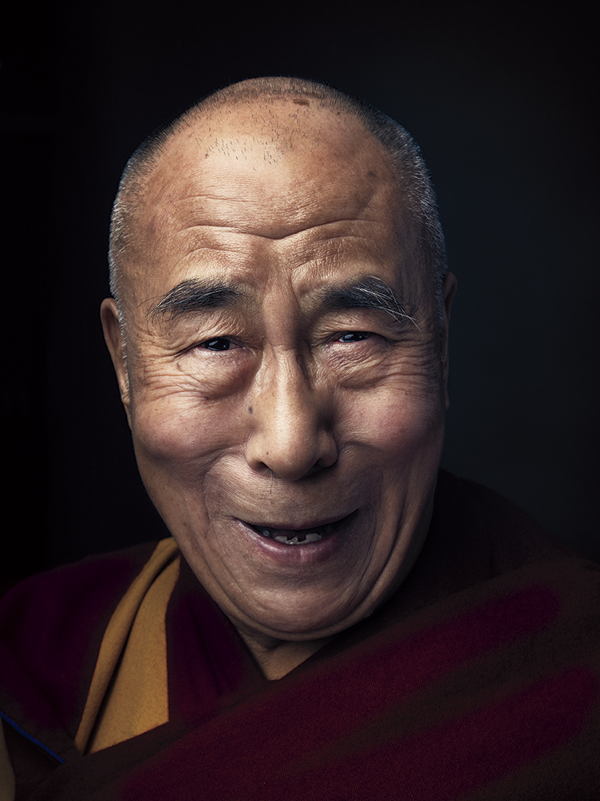
TROUBLE IN TIBET – DALAI LAMA PORTRAITS CONFISCATED IN OCCUPIED TIBET. 1987 Photography by Herb Ritts.
Confiscation of Dalai Lama portraits in Occupied Tibet is a sign and symptom of deep Trouble in Tibet. To give relief from Trouble, Tibet needs Freedom From Occupation. The Dalai Lama will not reincarnate in a Land where his portraits are confiscated.

Whole Prayer – Prayer for Freedom to Blossom in Tibet

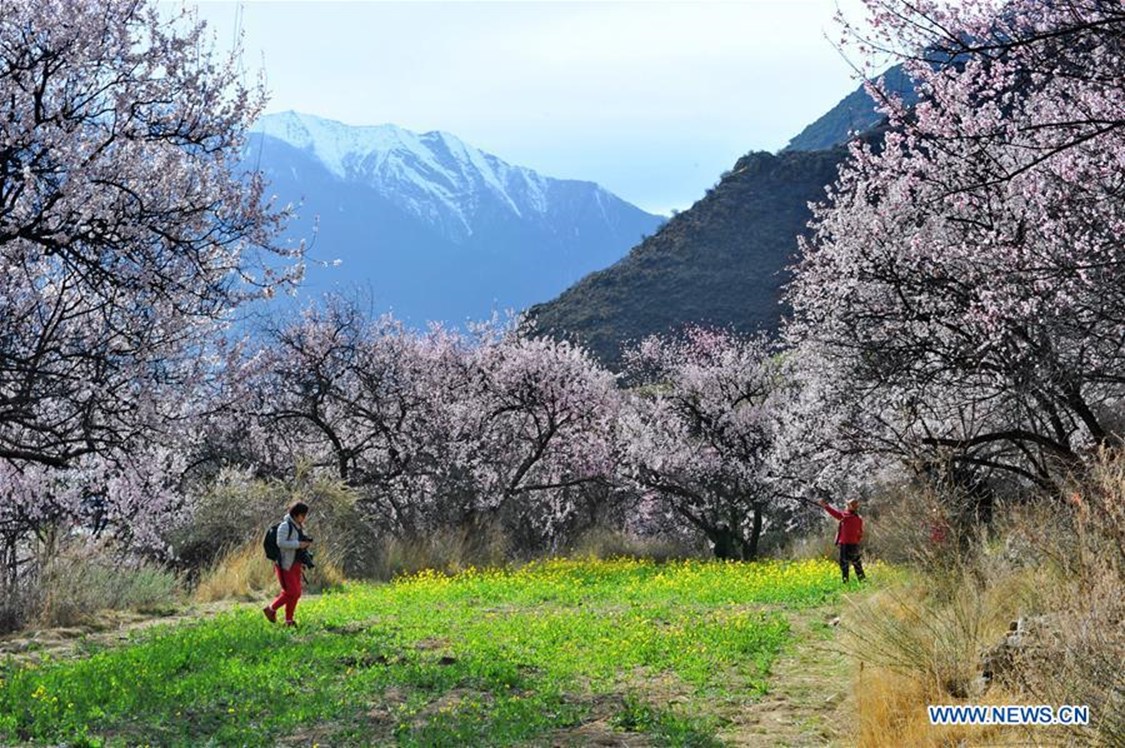
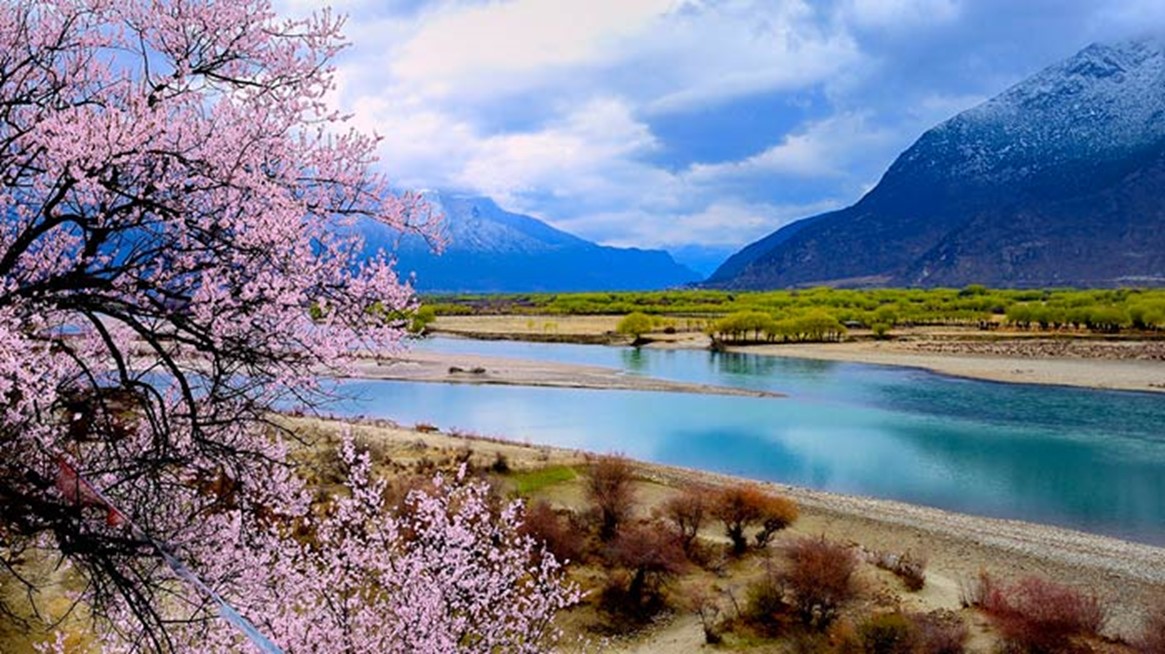
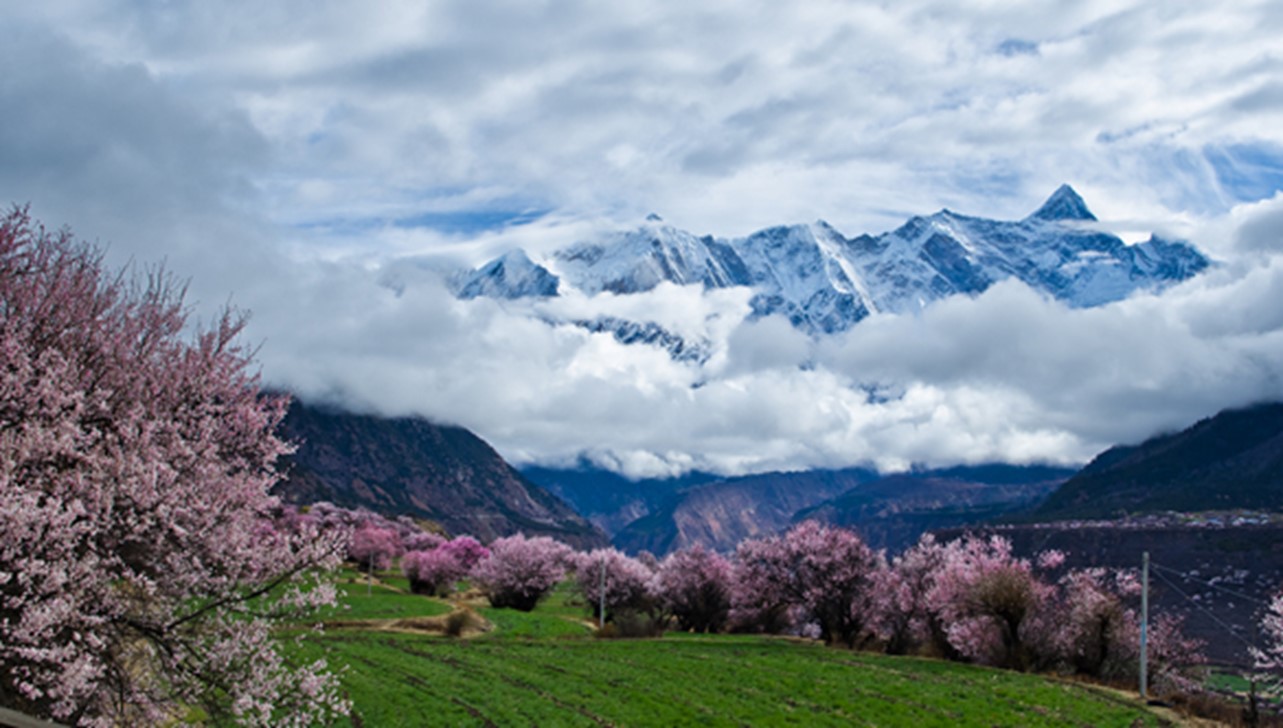
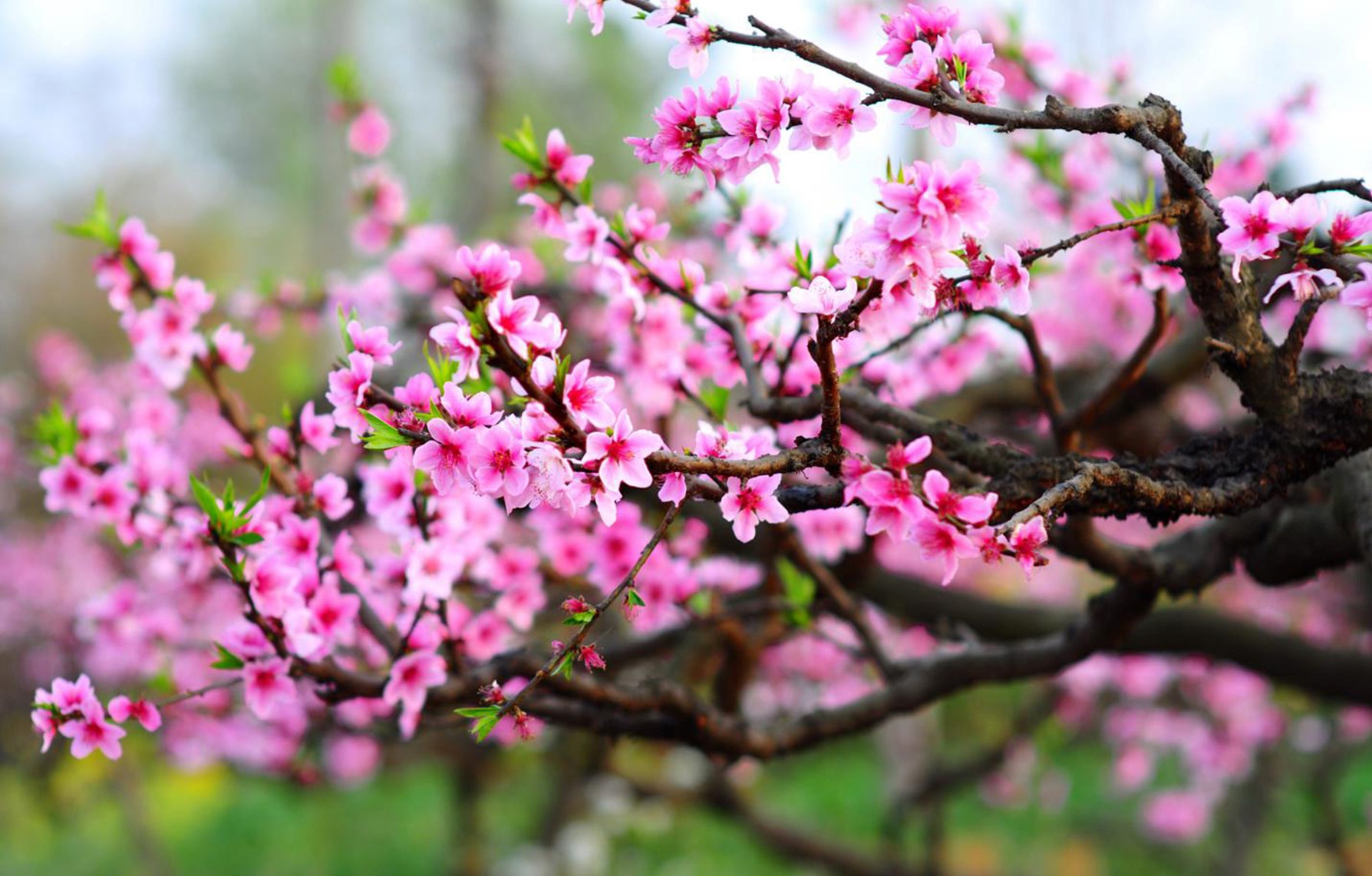
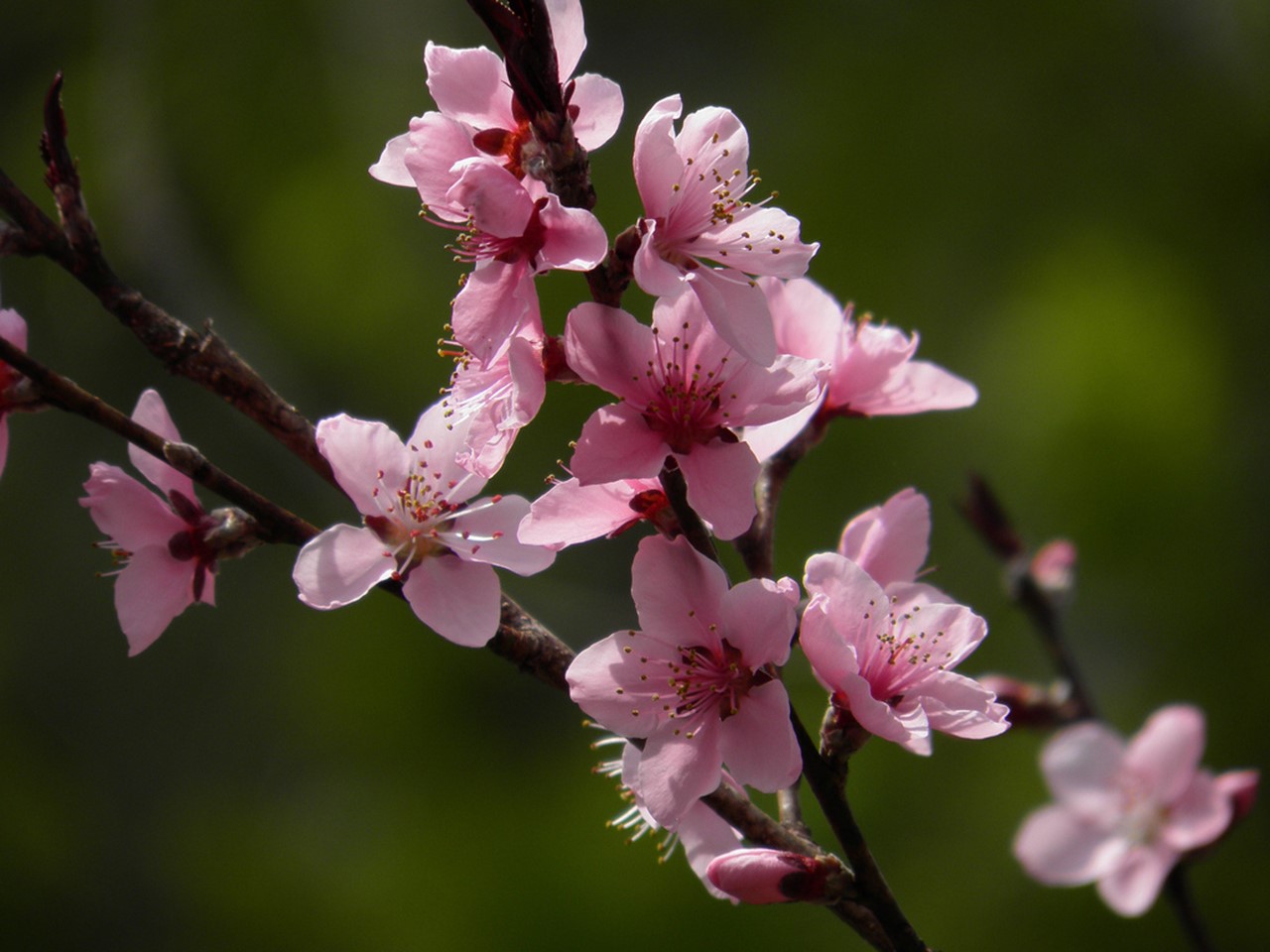
Peach Blossoms – Prayer for Freedom to Blossom in Tibet

Tibetans need courage and freedom to be the people they were made to be. They need humility to lay aside progress or development granted by occupation. I ask the Lord of Compassion to give wings to Tibetans and they shall fly to experience the Joy of Freedom.

Tibetans need courage and freedom to be the people they were made to be. They need humility to lay aside progress or development granted by occupation. I ask the Lord of Compassion to give wings to Tibetans and they shall fly to experience the Joy of Freedom.

Rudra Narasimham Rebbapragada

SPECIAL FRONTIER FORCE

Clipped from: http://usa.chinadaily.com.cn/a/201803/28/WS5abb4f62a3105cdcf6514dd7_1.html

Tibetans need courage and freedom to be the people they were made to be. They need humility to lay aside progress or development granted by occupation. I ask the Lord of Compassion to give wings to Tibetans and they shall fly to experience the Joy of Freedom.

Photo taken on March 27, 2018 shows peach blossoms at the Gala peach blossom scenic area in the Baiyi district of Nyingchi, Tibet. [Photo/Xinhua]

Tibetans need courage and freedom to be the people they were made to be. They need humility to lay aside progress or development granted by occupation. I ask the Lord of Compassion to give wings to Tibetans and they shall fly to experience the Joy of Freedom.

Whole Waiting – Be Patient, There Will be a Tibetan Spring

Waiting for the Tibetan Spring with Optimism shared by Richard Gere

WORLD PARLIAMENTARIANS CONVENTION ON TIBET HELD IN OTTAWA, CANADA, 2012. Carl Gershman, President of the National Endowment for Democracy, Washington, DC, Professor Jayadeva Ranade, Distinguished Fellow with the Centre for Air Power Studies, New Delhi, with Richard Gere, Chairman of the International Campaign for Tibet.

Richard Gere shared his sense of optimism and expressed his hope for a Tibetan Spring and encouraged Tibetan supporters to wait with patience. At Special Frontier Force, I recognize Patience and Perseverance as part of our military strategy.

If not Tibetan Spring, I am waiting for a Red China “Meltdown” that would eventually lead to the Tibetan Spring. The term ‘meltdown’ describes a situation in which a rapid rise in the power level of a nuclear reactor, as from a defect in the cooling system, results in the melting of the fuel rods and the release of dangerous radiation and may cause the core to sink into the earth. ‘Meltdown’ also refers to a sudden decline or breakdown in a situation or condition. I am really impressed by Red China’s expanding military, economic, and political power. At the same time, I recognize inherent weakness of Red China’s Expansionism. In my analysis, there is no person, and there is no national entity that can save Red China from a catastrophic ‘Meltdown’, a sudden decline, a rapid breakdown of her Evil Power.

Rudra Narasimham Rebbapragada
Ann Arbor, MI 48104-4162, USA

Special Frontier Force, Establishment 22, Vikas Regiment

Richard Gere: ‘There Will Be a Tibetan Spring Eventually,’ We Have to Be Patient

Richard Gere: ‘There Will Be a Tibetan Spring Eventually,’ We Have to Be Patient

July 4, 2015 | 09:21AM PT

‘I am welcomed by the Chinese people, but not by the Chinese government’

LEO BARRACLOUGH

KARLOVY VARY, Czech Republic — Richard Gere predicted a Tibetan Spring at a press conference on Saturday at the Czech Republic’s Karlovy Vary Film Festival.
The actor, who received the festival’s Crystal Globe for outstanding contribution to world cinema on Friday, was addressing a question regarding Chinese control of Tibet, which it has occupied since an invasion in 1950.

Gere is a follower of the Dalai Lama, the India-based spiritual leader of Tibet, and an advocate for the liberation of Tibet. He disputed a suggestion from a journalist that he was not welcome in China. “I am welcomed by the Chinese people, but not by the Chinese government. I haven’t been able to (visit China) since 1993. But you guys can understand that. The Czech Republic understands Communism very well,” he said.

Gere rejected the suggestion that there were negotiations going on behind the scenes that would lead to an improvement in relations between the Tibetan Buddhists in exile and the Chinese government.

He was asked what would happen when the Dalai Lama, who is 80 years old on July 6, dies and the Tibetan Buddhists sought out the next Dalai Lama. Gere referred to an episode in Tibetan history when the Panchen Lama, the second-highest Tibetan lama, spoke out against the Chinese treatment of Tibetans in 1989, and died in “mysterious” circumstances soon thereafter. When the Panchen Lama’s successor, a 6-year-old boy, was named by the Tibetan Buddhists, he was “kidnapped” by the Chinese Communist authorities, Gere said, and “has not been seen since.” The Chinese then selected their own Panchen Lama, whom the Tibetans regard as “bogus,” Gere said. This scenario could be repeated when the Dalai Lama dies, Gere claimed.

“There is a fear — which is based in reality — that the Chinese will try to co-opt the next incarnation of the Dalai Lama. In fact the Chinese Communist Party has said that it is only up to the Chinese to decide who the Dalai Lama will incarnate as,” he said. “So there is a drama going on now about who will decide who is the next Dalai Lama.”

He continued: “The Dalai Lama has said: ‘Well, first of all, he is not going to incarnate inside of China if it is still controlled by the Chinese Communists.’ In any event it is up to him where he, and how he incarnates, not the Chinese Communists, so there is this absurd line of reasoning and declarations from the Communist Party.”
Gere added that the Czechs, because of their experience of living under Communism, could identify with such “absurdity.” “You have such experience with the absurdities of a Communist party, so you’ll understand the position of the Tibetans quite well. It will change eventually as it changed here, and there will be a Prague Spring in Tibet,” he said, referring to the anti-communist uprising in Czechoslovakia in 1968, that was unsuccessful, and the Velvet Revolution in 1989, which ended communist rule in the country. “Things will change,” Gere said. “We have to be patient and we have to keep Tibetan culture alive in the meantime, because the Chinese are doing their best to completely eradicate it.”

Filed Under:

  • Karlovy Vary Film Festival
  • Richard Gere

© Copyright 2015 Variety Media, LLC, a subsidiary of Penske Business Media, LLC. Variety and the Flying V logos are trademarks of Variety Media, LLC.

Richard Gere: ‘There Will Be a Tibetan Spring Eventually,’ We Have to Be Patient

Whole Trouble – “The World We Make” is not the World Tibet Wants

Trouble in Tibet – “The World We Make”

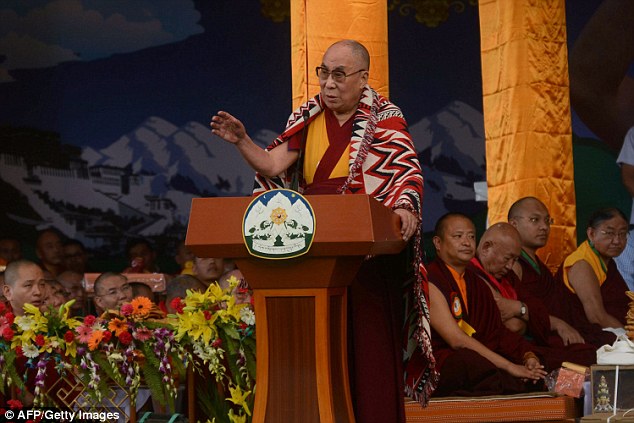
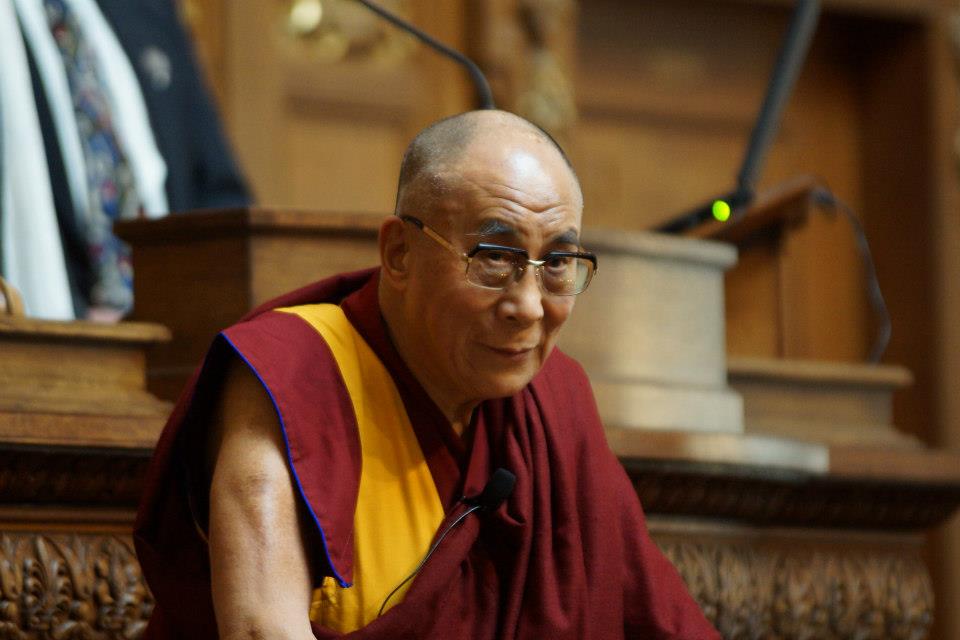
The Dalai Lama, shown here speaking to the Wisconsin Legislature in 2013, will be back in Madison on March 9, 2016 to participate in a gathering billed as “The World We Make.”

As of today, our World is in awful shape. Actually, we did not make this World. Just as in the case of Tibet, troubles are imposed upon innocent people who simply mind their own business without causing inconvenience to others. There is no choice other than that of remaking this World to give Peace and Justice to all people.

Rudra Narasimham Rebbapragada
Ann Arbor, MI 48104-4162 USA
Special Frontier Force, Establishment 22, Vikas Regiment

THE CAP TIMES

Madison, Wisconsin

Bill Berry: Wake up, Wisconsin, to impact of Dalai Lama, climate change

BILL BERRY | state columnist Jan 25, 2016 JOHN HART – State Journal

The Dalai Lama, shown here speaking to the Wisconsin Legislature in 2013, will be back in Madison on March 9 to participate in a gathering billed as “The World We Make.” An international spiritual leader, the Dalai Lama has worked for decades to building better understanding among the scientific and spiritual communities. John Hart/State Journal111

News that didn’t but should have stopped the presses as we came out of post-Christmas hibernation:

Welcome back: The Dalai Lama will make his 10th visit to Madison come March 9, as reported last week in Madison media. Beyond the Madison market, chances are the word won’t get out much on the visit from this international spiritual, ethical and moral leader. Its too bad. His international impact is immense. He’ll participate in a Capitol Theater event billed as The World We Make, a gathering of world leaders in science, health care and the media, according to its sponsor, the Center for Healthy Minds at UW-Madison. Among his many accomplishments, the Dalai Lama has been able to build better understanding among the scientific and spiritual communities.

The connection between the Dalai Lama and UW-Madison is well known in the Madison area. Outstate, not so much. But people might like to know that the connection has led to vibrant research on the healthy mind at the center, headed by Richard Davidson, and elsewhere on the UW campus. The simple idea that we can learn about humans by studying the healthy mind is transformational. Its also part of a vibrant body of research that stretches well beyond the Madison campus.

Bill Berry of Stevens Point writes a semimonthly column for The Capital Times. billnick

About the columnist

Bill Berry
Bill Berry is a self-employed writer and editor who contributes to state and national publications. His Capital Times columns cover an array of topics, but he specializes in conservation, agriculture and sustainable land use.

Dalai Lama Speaks To State Legislature

Dalai Lama’s Address to the Wisconsin State Legislature | Wisconsin ...

... tours, tickets, mp3 downloads, concert pictures, videos, Madison WI

capitol-theater

Whole Problem – The Great Problem of Tibet is on the Back Burner

The Great Problem of Tibet is on the Back Burner

The Great Problem of Tibet is on the Back Burner. My hope for Tibet’s Future comes from the Biblical Prophesy.

During the month of March, Tibet Awareness Month, I regret to report that The Great Problem of Tibet is still on the Back Burner. But, I am adamantly hopeful for the word Evil means Doom, Apocalypse, Calamity, Cataclysm, and Disaster. The global attention for Tibet has shrunk but the Evil Red Empire could be rushing ahead to meet its unavoidable Fate. My hope comes from a Biblical Prophesy.

The Great Problem of Tibet is on the Back Burner. My hope for Tibet’s Future comes from the Biblical Prophesy.

How China has shrunk global attention for Tibet and the Dalai Lama — Quartz

Clipped from: https://qz.com/1565178/how-china-has-shrunk-global-attention-for-tibet-and-the-dalai-lama/

The global attention for Tibet has shrunk but the Evil Red Empire could be rushing ahead to meet its unavoidable Fate. My hope comes from a Biblical Prophesy.

March is a sensitive month in Tibet. In 1959, an uprising led to a bloody crackdown by Chinese forces, culminating in the 23-year-old Dalai Lama’s escape to India on March 17, where he arrived after two weeks of apprehension over his fate. Protests marking the Tibetan revolt were put down in 1989, and most recently in 2008, months before China was set to showcase itself to the world with the opening of the Beijing Olympics.

It’s hard to imagine such acts of defiance taking place today. In 2011, Beijing further tightened its chokehold on the autonomous region under the leadership of new Tibet Communist Party secretary Chen Quanguo (paywall), who implemented a vast array of security measures, including the incarceration and “re-education” of those who had returned from listening to the Dalai Lama’s teachings in India. Tibetans were also forced to adapt their culture to party ideology and to learn how to “revere” science, part of Beijing’s ongoing propaganda campaign that portrays its rule in Tibet as a benevolent exercise in modernization and anti-feudalism. Ten years ago today (March 28), the Chinese instituted Serfs’ Emancipation Day as a holiday to celebrate its program.

The global attention for Tibet has shrunk but the Evil Red Empire could be rushing ahead to meet its unavoidable Fate. My hope comes from a Biblical Prophesy.

Reuters

Smoke rises from burning buildings below the Potala Palace in the Tibetan capital Lhasa during protests on March 14, 2008.

“To some extent, China has been very successful in dealing with Tibet,” said Tsering Shakya, an academic at the University of British Columbia in Vancouver.

Beijing is applying the Tibet model to another minority considered to pose a danger to the state. In 2016, Chen became party secretary in the Xinjiang region of northwest China, where his Tibetan policies are largely seen as the foundation for repression of the Uyghur minority. Large-scale re-education camps hold hundreds of thousands of Muslims as Uyghur cultural and religious practices face systematic erosion.

From Kundun to Rock Dog

Advocates hope that growing international awareness over Xinjiang will help rekindle the world’s attention toward Tibet, which has dwindled amid the Chinese Communist Party’s relentless efforts to reshape the global conversation about the region.

Perhaps the starkest manifestation of that is in the arts. Tibet, once a cause célèbre in Hollywood as the subject of films such as Kundun and Seven Years in Tibet—in which Brad Pitt played the role of an Austrian mountaineer who tutored the young Dalai Lama—is today almost nowhere to be seen on screen. Actor Richard Gere, one of the most well-known celebrities to support Tibetan independence, said in 2017 that he has been shut out of major productions because of his outspokenness.

The global attention for Tibet has shrunk but the Evil Red Empire could be rushing ahead to meet its unavoidable Fate. My hope comes from a Biblical Prophesy.

Reuters/Yuri Gripas

Nancy Pelosi talks to Richard Gere at a memorial event for Kasur Gyari, former special envoy of the Dalai Lama to the US, March 12, 2019.

When Tibet is still visible, said Seagh Kehoe at the University of Leicester, it is often in a watered-down and totally depoliticized fashion, as in the animated Rock Dog, a 2016 joint US-China production about a Tibetan mastiff who becomes a music star. Self-censorship over Tibet can be seen at work in London as well, with a West End theater suspending performance of a play about Tibet last year reportedly at the urging of the British Council, the UK’s international cultural organization, which is partly government funded. Following accusations of censorship by its playwright and apologies by the theater, Pah-la is now due to be staged next month.

Shaping the narrative on campus

Universities are another important battleground in Beijing’s attempt to mold its narrative. Campus activism in an earlier era was generally pro-Tibetan. That’s changing today with the ballooning number of Chinese students abroad—over 600,000 now compared with fewer than 50,000 in the late 1990s.

Chinese authorities “see overseas students as allies in their ongoing efforts to counter regime opponents” including groups sympathetic to Tibet, Xinjiang, Taiwan, and the Falun Gong, according to a report (pdf) last year by the Wilson Center, a Washington, DC-based think tank. The report detailed attempts by Chinese officials to put pressure on institutions to cancel invitations to the Dalai Lama and to bring more Chinese delegations to US universities to espouse the Communist Party’s line on Tibet.

Chemi Lhamo, a Tibetan student who was elected last month as a student president at the University of Toronto, received thousands of threatening Instagram messages from Chinese students. The student union decided to close her office out of concern for her safety. Chinese officials in Canada denied having anything to do with the incident or a case in which an Uyghur speaker was disrupted by Chinese students at McMaster University who had reportedly sought advice (paywall) from the consulate in Toronto. Chinese diplomats in Canada have praised the actions of students in both instances as being “patriotic.”

“Slow violence” gets less attention

Draconian restrictions on travel by Tibetans, foreign diplomats and journalists have made getting disseminating information from the region immensely more difficult.

Ever-tightening security has eliminated visible, large-scale displays of protest. The “optics of urgency” spotlighting the Xinjiang situation, such as satellite photos of camps and reporting by journalists on the ground, are missing from the Tibet narrative, wrote Gerald Roche, an anthropologist at La Trobe University in Melbourne. The “slow violence” that characterizes the plight of Tibet today, Roche added, makes it harder to get global attention.

Ahead of the 60th anniversary of the uprisings in Tibet, Chinese authorities further tightened control, restricting even foreign tourists from traveling there. Meanwhile, a white paper from China’s State Council on Tibet released yesterday (March 27) boasted of “democratic reform” over the past six decades, including a chapter titled “The People Have Become Masters of Their Own Affairs.”

During the month of March, Tibet Awareness Month, I regret to report that The Great Problem of Tibet is still on the Back Burner. But, I am adamantly hopeful for the word Evil means Doom, Apocalypse, Calamity, Cataclysm, and Disaster. The global attention for Tibet has shrunk but the Evil Red Empire could be rushing ahead to meet its unavoidable Fate. My hope comes from a Biblical Prophesy.

Reuters/Thomas Peter

Armed police attempt to prevent a photographer from taking pictures at the entrance to the village of Taktser, known in Chinese as Hongya, where the Dalai Lama was born in 1935, Qinghai province, China March 9, 2019.

Dramatic protests have continued. Since 2009, Tibetans have been self-immolating as a form of protest, with the act spreading from nuns and monks to laypeople. The International Campaign for Tibet’s latest count of self-immolations totals 155, with the last of the three known to have occurred in 2018 taking place in December. International media coverage, however, has largely disappeared. “We have some 150 cases of self-immolation, but for all, I know it could be 300,” said Kevin Carrico at Monash University in Australia. “Even for people who pay attention to this situation, we don’t really know what’s happening.”

The debate over the next Dalai Lama

Sophie Richardson, China director at Human Rights Watch in Washington, said that spotlighting China’s human-rights abuses in Xinjiang can reinforce mutual support between diaspora Uyghur and Tibetan groups. There’s a common “core pathology” underlining Beijing’s actions in both places, including the “erasing of cultural identities and practices,” she said. Lhamo, the Tibetan student, told Quartz that a growing focus of her activism now involves building ties and sharing information with Uyghurs, Taiwanese, and the Falun Gong.

Advocacy groups have also welcomed renewed pressure by the US on Beijing. Congress passed the Tibet Reciprocal Act in December, which denies entry to the US any Chinese official who blocks Americans from going to Tibet. Matteo Mecacci, a former lawmaker in Italy and president for the International Campaign for Tibet, said the bill signals “enduring, bipartisan support for Tibet” in the US. The law requires annual reports detailing access to Tibet for Americans, with the first published this week.

The Dalai Lama smiles as he sits on his chair at the Tsuglakhang temple in Dharmsala, India, Feb. 27, 2019.

AP Photo/Ashwini Bhatia

The Dalai Lama smiles as he sits on his chair at the Tsuglakhang temple in Dharmsala, India, Feb. 27, 2019.

The fight over the Dalai Lama’s succession—and China’s obsessive control over it—could also return Tibet to headlines in the coming years.

Amid a flurry of attention this month marking the leader’s 60th anniversary in exile in Dharamsala, the 83-year-old Dalai Lama said in an interview that his next incarnation could be found in India, adding that Beijing is likely to appoint its own successor whom “nobody will trust.” Beijing, which consistently maintains that the Dalai Lama is a separatist, promptly reiterated that the selection of the next Tibetan spiritual leader must follow Chinese law.

During the month of March, Tibet Awareness Month, I regret to report that The Great Problem of Tibet is still on the Back Burner. But, I am adamantly hopeful for the word Evil means Doom, Apocalypse, Calamity, Cataclysm, and Disaster. The global attention for Tibet has shrunk but the Evil Red Empire could be rushing ahead to meet its unavoidable Fate. My hope comes from a Biblical Prophesy.