Spirituality Science – Behold the Human Condition

Spirituality Science – Behold the Man – Eccentric Homo

SPIRITUALITY SCIENCE - BEHOLD THE MAN - ECCE HOMO: Roman Governor of Judea, Pontius Pilate of 1st century A.D. had presented Jesus to  a big crowd of Jews of Jerusalem  making this announcement: "Ecce Homo."( etcha homo. Latin. Behold The Man). I would like to Behold Jesus, the Son of Man to describe the physiological function called 'Homeostasis' that maintains stability and equilibrium to preserve constant the conditions of Life.
SPIRITUALITY SCIENCE – BEHOLD THE MAN – ECCE HOMO: Roman Governor of Judea, Pontius Pilate of 1st century A.D. had presented Jesus to a big crowd of Jews of Jerusalem making this announcement: “Ecce Homo.”( etcha homo. Latin. Behold The Man). This reality of Jesus actually represents the fundamental problem of man who exists as a prisoner because of the problem called ‘Sin’. To liberate man from the burden of Sin, Jesus was arrested and was tried like a criminal. I would like to Behold Jesus, the Son of Man to describe the physiological function called ‘Homeostasis’ that maintains stability and equilibrium to keep constant the conditions of Life.
SPIRITUALITY SCIENCE - BEHOLD THE MAN - ECCE HOMO:  Friedrich Wilhelm Nietzsche(1844-1900), German philosopher wrote his last book titled  "Ecce Homo: How One Becomes What One Is" in 1888 before losing his mental lucidity. I Behold The Man to describe the physiological condition called 'Homeostasis' that provides stability and equilibrium within the organism to maintain all the vital mechanisms to keep the conditions of Life constant in the face of varied internal and external environmental conditions.
SPIRITUALITY SCIENCE – BEHOLD THE MAN – ECCE HOMO: Friedrich Wilhelm Nietzsche(1844-1900), German philosopher wrote his last book titled “Ecce Homo: How One Becomes What One Is” in 1888 before losing his mental lucidity. I Behold The Man to describe the physiological condition called ‘Homeostasis’ that provides stability and equilibrium within the organism to maintain all the vital mechanisms to keep the conditions of Life constant in the face of varied internal and external environmental conditions.

I define the term ‘Spirituality’ as an internal mutually beneficial partnership between the cells, the tissues, organs, and the organ systems of the human organism and the Whole Organism which exists as the Singular Entity identified as the human being. Spirituality brings structural unity and functional harmony and is the fundamental basis for man to discover Peace, Harmony, and Tranquility in his living condition and in his living experience in any given external environment as a member of any given external community. In terms of Science, the human being is a biological community of independent cells and each exists with its own internal environment and an external environment and constantly interacts with its own intracellular organelles and other living cells found in its external environment. Similarly, man has an internal environment called ‘Milieu Interieur’ and the organism tries to maintain ‘Homeostasis’ which is defined as the tendency to maintain internal stability by coordinated responses of the organ systems that automatically compensate for environmental changes and it is analogous to maintenance of stability or equilibrium while participating in social interactions within a social group. French physiologist, Dr. Claude Bernard(1813-1878) described ‘Homeostasis’: “All the vital mechanisms, varied as they are, have only one object; that of preserving constant the conditions of Life.” In this context of the structural and functional relationship of the human organism to maintain stability and equilibrium within the organism and while participating in social interactions within a social group, I would ask my readers to “Behold The Man.” I would like to present two men and provide a contrast as to how their ‘Homeostasis’ was compromised and as to how they failed to keep their existence; 1. due to an external threat to existence posed by the social group in which the individual lived and participated in social interactions, and 2. due to an internal threat posed by another living organism with which the individual participated in biotic interactions.

Behold the Man – Ecce Homo – The Son of Man:

ECCE HOMO – BEHOLD THE MAN – THE SON OF MAN

The Vulgate or Latin Version of the Bible, the official biblical text of the Roman Catholic Church, in the New Testament Book of The Gospel According to Apostle John, Chapter 19, verses 4 and 5 describe the words used by the Roman Governor of Judea, Pontius Pilate when he presented Jesus to a huge crowd of Jews that had gathered outside his palace to demand that Jesus must be punished by Crucifixion: Once more Pilate came out and said to the Jews, “Look, I am bringing him out to you to let you know that I find no basis for a charge against him.” When Jesus came out wearing the crown of thorns and the purple robe, Pilate said to them, “Ecce Homo !”(Behold The Man)

SPIRITUALITY SCIENCE - BEHOLD THE MAN - ECCE HOMO: Man leads a dependent and conditioned existence. The existence of Jesus, the Son of Man was conditioned by God's Plan for humanity who acquired Sin through acts of disobedience that violated God's Will and Purpose in man's life. Jesus when confronted by an external threat, the demand for crucifixion, that takes away the stability and equilibrium needed for his existence, He did not beg for mercy, did not plead with Pilate to set Him free.
SPIRITUALITY SCIENCE – BEHOLD THE MAN – ECCE HOMO: Man leads a dependent and conditioned existence. The existence of Jesus, the Son of Man was conditioned by God’s Plan for humanity who acquired Sin through acts of disobedience that violated God’s Will and Purpose in man’s life. Jesus when confronted by an external threat, the demand for crucifixion, that takes away the stability and equilibrium needed for his existence, He did not beg for mercy, did not plead with Pilate to set Him free. The existence of Jesus as a human being was threatened from the time of His conception for He was sent to the world to live in an environment and interact with a social community that had already inherited Sin.

To maintain Life, man has to always preserve the stability and equilibrium of his internal and external living conditions. But, man constantly faces several threats to his existence and these threats may exist within or without, the environment in which the existence is maintained. Jesus faced the threat called the demand for his crucifixion because of His social interactions with members of His own social community of Jews who failed to understand God’s Will and God’s Purpose in human life. The Roman Governor of Judea, Pontius Pilate was unwilling to find any crime in the conduct of Jesus and had repeatedly told the gathering of Jews that he finds no basis for a charge against Him. Pilate very reluctantly imposed the capital punishment not only because of the insistent demand of Jews , but because of the unwillingness of Jesus to beg for mercy or pleading to set Him free. Apostle John has reported on the conversation between Pilate and Jesus 😦 John 19:10-11) “Do you refuse to speak to me?” Pilate said, “Don’t you realize I have power either to free you or to crucify you?” Jesus answered, “You have no power over me if it were not given to you from above. Therefore the one who handed me over to you is guilty of a greater sin.”  Before His arrest and trial by Pilate, Jesus had demonstrated various kinds of supernatural powers and had performed miracles. In fact, both the Jews and the Romans had mockingly told  Jesus that He could save Himself from crucifixion using supernatural powers and prove His claim to be ‘The Son of God’. I understand the Biblical narration of crucifixion to behold the human being, to understand the human condition that has no real freedom and is simply dependent upon an external source of support called ‘Providence’. Jesus who had stated that His mission or purpose in life as that of sharing the ‘Truth’, knows that the human being has no ‘Free Will’ and understands that man has no choice apart from living in obedience to God’s Will and Purpose in human life. It is not surprising to find that Jesus made no attempt to run away from the threat, and did nothing to defend His existence. He had simply desired to bear witness to God’s Will and God’s purpose of His human existence. Jesus as a Spiritual Being showed patience and showed tolerance of people who were persecuting Him and for His Deliverance, He called upon His Father: “Jesus called out with a loud voice, ‘Father, into your hands I commit my spirit.’ When he said this, he breathed his last.”(The New Testament Book of the Gospel According to Apostle Luke, Chapter 23, verse #46). The fact that Jesus has simply existed like any other mortal human being is revealed in His final announcement as mentioned in The Gospel According to Apostle John, Chapter 19, verse#28 which reads: Later, knowing that all was now completed, and  so that the Scripture would be fulfilled, Jesus said, “I am thirsty.” In my view, thirst is the clearest symptom of mortal existence.

Behold the Man – Ecce Homo – Behold Nietzsche

SPIRITUALITY SCIENCE - BEHOLD THE MAN - ECCE HOMO: Nietzsche wrote this book in 1888 and it was published twenty years later in 1908. He signs the book "Dionysus versus the Crucified." Nietzsche made an attempt to draw a contrast between himself and Jesus Christ.
SPIRITUALITY SCIENCE – BEHOLD THE MAN – ECCE HOMO: Nietzsche wrote this book in 1888 and it was published twenty years later in 1908. He signs the book “Dionysus versus the Crucified.” Nietzsche made an attempt to draw a contrast between himself and Jesus Christ.
Spirituality Science - Behold The Man - Ecce Homo: In his final book, Nietzsche claimed that he truly is a man and in his view, to be a "man" alone is to be more than a "Christ."
Spirituality Science – Behold The Man – Ecce Homo: In his final book, Nietzsche claimed that he truly is a man and in his view, to be a “man” alone is to be more than a “Christ.”

To Behold The Man called Nietzsche, as a practitioner of Medicine, I would give a least amount of attention to his views and perspectives about human values and human existence. I would like to ascertain his complete medical history and assess his medical condition through a careful physical examination and use any investigative tools that may help me to know the man under my observation. Nietzsche born October 05, 1844 was apparently in good health during 1864 when he went to the University of Bonn to study theology and classical philology and in 1865 he transferred to University of Leipzig. He began military service in October 1867 in the cavalry company of an artillery regiment, sustained a serious chest injury while mounting a horse in March 1868. He resumed his studies in University of Leipzig in October 1868 while on extended sick leave from the military. In 1869, the University of Leipzig conferred the doctorate without examination or dissertation and paved the way for his selection for professorship in classical philology(Linguistics) in the University of Basel, Switzerland. He took leave during  August 1870 when he had participated in Franco-Prussian War as a voluntary medical orderly. He had to quit that service when he contracted dysentery and diphtheria. His health problems continued to persist and by October 1876, Nietzsche requested and received a year’s sick leave. Because his health continued to deteriorate steadily he resigned his professorial chair on June 14, 1879. Nietzsche was seriously ill, half-blind, in virtually unrelenting pain during a decade of isolation from 1879 to 1889. He lived in boarding houses in Switzerland, France, and Italy with only limited human contacts. His most acknowledged literary and philosophical masterpiece, “Thus Spake Zarathustra” was published between 1883 and 1885 in four parts. Nietzsche’s final lucid year was 1888, a period of supreme productivity. He wrote and published ‘The Case of Wagner’, wrote a synopsis of his philosophy, ‘Twilight of the Idols'(published later in 1889), The Antichrist(published later in 1895), ‘Nietzsche contra Wagner’, and ‘Ecce Homo : How One becomes What One Is’, a reflection on his own works and his human significance. Ecce Homo got published in 1908, twenty years after its composition. Nietzsche collapsed in the streets of Turin, Italy in January 1889 and lost control of his mental faculties. He spent the last 11 years of his life in total mental darkness. He was first moved to an asylum in Basel, then he lived in Naumburg under his mother’s care and after her death in 1897, he lived in Weimar in his sister’s care. He died on August 25, 1900. His medical condition suggests the diagnosis of Atypical General Paralysis caused by the Tertiary Stage of Syphilitic infection and is known as Neurosyphilis which is the involvement of brain and nervous system due to dormant Syphilitic infection. I am most surprised to note that Nietzsche had failed to take into account the problems of his own injury and sickness that compelled him to change the direction of his life repeatedly without giving him the opportunity called “Free to Will.”

Spirituality Science - Behold The Man - Ecce Homo: This Spirochete bacterium known as Treponema pallidum which had infected Nietzsche had eventually wiped out his mortal existence. This Syphilitic infection causes Meningoencephalitis, inflammation of the brain and nerve tissues that destroys cerebral cortex leading to general dissolution and death within 3 to 10 years after the onset of clinical symptoms of brain involvement.
Spirituality Science – Behold The Man – Ecce Homo: This Spirochete bacterium known as Treponema pallidum which had infected Nietzsche had eventually wiped out his mortal existence. This Syphilitic infection causes Meningoencephalitis, inflammation of the brain and nerve tissues that destroys cerebral cortex leading to general dissolution and death within 3 to 10 years after the onset of clinical symptoms of brain involvement.

Nietzsche’s ability to maintain ‘Homeostasis’ was undermined when he got exposed to infection by a Spirochete bacterium called Treponema pallidum which infects man during sexual relationship with an infected individual. It is very easy to ignore this infection as in its Primary Stage the infection causes a painless sore at the site of infection and the sore heals without application of any medication. This bacterium remains dormant and may manifest signs of infection called Secondary Stage after a lapse of several months. During that Secondary Phase there would be generalized eruptions of the skin, mucous membranes, inflammation of eyes, bones, and central nervous system. It must be noted that during Nietzsche’s lifetime, there were no proper antibiotic drugs to treat the Syphilitic infection. The Tertiary Stage is delayed for some time(15 to 25 years) after the initial infection. During the period Nietzsche had lived, this kind of Syphilitic infection accounted for 10 percent of all admissions to mental hospitals. In Nietzsche’s case, looking at the medical problems that he had experienced during 1876, I would like to suggest that he had contacted Syphilitic infection during 1861 while he was about 17-years of age, because of a social interaction with another human being who was already infected by Syphilis.  Nietzsche had formulated all his perspectives and views about human values, and human existence not knowing that he has no “Will to Power”, or “Will to Life” if he fails in the battle against the invasion of his body by this Spirochete bacterium. In his book Ecce Homo, Nietzsche proclaims the ultimate value of everything that has happened to him including his near-blindness as an example of ‘Love of Fate'(amor fati). He might not have given attention to problems like injuries and diseases which have a direct relationship to the course of action that man deliberately chooses to express his sense of Freedom of choice and action. The madness that claimed Nietzsche only months after he began writing Ecce Homo had already begun its work. He reveals the tragic fact that his very aliveness was in a state of being overwhelmed, consumed, by powerful unconscious emotion, the condition called ‘decadence’. He writes about Christianity’s decadence while in reality his brain was getting destroyed by the Syphilitic infection.

SPIRITUALITY SCIENCE - BEHOLD THE MAN - ECCE HOMO: Nietzsche has correctly stated that people don't want to hear the 'Truth'. As a human being, he is not an exception to that Rule. The Truth is, man needs an Illusion if he has to exist on the surface of fast spinning object called planet Earth.
SPIRITUALITY SCIENCE – BEHOLD THE MAN – ECCE HOMO: Nietzsche has correctly stated that people don’t want to hear the ‘Truth’. As a human being, he is not an exception to that Rule. The Truth is, man needs an Illusion if he has to exist on the surface of fast spinning object called planet Earth.

In the last Chapter of Ecce Homo titled, “Why I am a Destiny”, Nietzsche suggests a contrast with Jesus to claim that he truly is a “man.” In his view, to be a “man” alone is to be more than a “Christ.” In my opinion, both Nietzsche and Jesus had lived their lives as human beings and they faced great threats to their existence from different directions. It is indeed correct to suggest that man is like Christ for man is created in God’s own image. Nietzsche’s Spiritual Being was challenged by the problem of a bacterium that entered his body and similarly, the Spiritual nature of human society is challenged by the problem of Sin and acts of disobedience. Man finds it to difficult to experience Peace, Harmony, and Tranquility as there is no stability or equilibrium in his living condition. I would like to invite my readers to “Behold The Man” to know the human being and the physiological mechanism called ‘Homeostasis’ that is central to the mortal human existence as it faces internal or external threats. Eventually, man depends upon the Force of Mercy, Grace, and Compassion called “KRUPA” in Indian Sanskrit language even when man has no knowledge of God’s existence.

http://www.youtube.com/watch?v=5gOjek5FF94

SPECIAL FRONTIER FORCE vs CHINA’S MILITARY MIGHT

SPECIAL FRONTIER FORCE vs CHINA’S MILITARY MIGHT:

Special Frontier Force vs China - Military Might: Mr. Harsh V Pant, Department of Defence Studies, King's College, London discussed the problem of increased defence spending by China.
Special Frontier Force vs China – Military Might: Mr. Harsh V Pant, Department of Defence Studies, King’s College, London discussed the problem of increased defence spending by China.

Special Frontier Force is a military organization founded by the United States, India, and Tibet to contain the military threat posed by Communist China’s military occupation of Tibet since 1950. Its military mission visualizes the eviction of the military occupier of Tibet through military action. In my opinion, China’s military power, military strategy and military tactics will not assure the inevitability of peace that is imposed by China by its occupation of Tibet. Peace and War are conditions that prevail in relationship with an external reality called Natural Order. Tibetan Resistance is the symptom of the absence of Natural Order. Tibetan Resistance will prevail and Resistance will endure if Natural Order is not restored in Tibet. It is true that China rules Tibet with an Iron Fist. Resistance will endure, and Resistance will prevail to break the knuckles of the military grip over Tibet. I am pleased to share this article written by Mr. Harsh V Pant, Department of Defence Studies, King College, London on the problem of China’s military spending.

https://twitter.com/wholedude

BRACE FOR CHINESE MILITARY MIGHT

By Harsh V Pant

Special Frontier Force vs China's Military Might: Mr. Harsh V Pant, Department of Defence Studies, King's College, London expressed his serious concern about China's growing military spending.
Special Frontier Force vs China’s Military Might: Mr. Harsh V Pant, Department of Defence Studies, King’s College, London expressed his serious concern about China’s growing military spending.

Published: 13th February 2014 06:00 AM

The author is a reader in international relations, department of defence studies, King’s College, London.

It is being estimated that China’s defence budget will reach a whopping US $148 billion in 2014, second only to the defence budget of the USA and leaving behind the combined defence budgets of western nations such as Germany, France and the United Kingdom.
China’s defence budget has risen each year for two decades and the trend shows no sign of abating. Thanks to rapidly rising defence expenditures by China and Russia, global defence spending is rising for the first time in five years. Across Asia-Pacific, there is an arms race brewing as nations try to secure their interests at a time of geopolitical transition. The region is likely to account for nearly 28 per cent of global defence spending by 2020.

Last year China had hiked its defence budget by 10.7 per cent to USD 115.7 billion, well above India’s defence spending of USD 37.4 billion. While its civilian leadership has tried to downplay the increase suggesting much of it will go to human resources development, infrastructure and training, it is the response of the Chinese military that should be a matter of concern. The military has been unambiguous in suggesting when it comes to military spending, there is no need for China “to care about what others may think”.

Divisions within China about the future course of the nation’s foreign policy are starker than ever before. It is now being suggested that much like young Japanese officers in the 1930s, young Chinese military officers are increasingly taking charge of strategy with the result that rapid military growth is shaping the nation’s broader foreign policy objectives.

Civil-military relations in China are under stress with the PLA asserting its pride more forcefully than even before and demanding respect from other states. Not surprisingly, China has been more aggressive in asserting its interests not only vis-à-vis India but also vis-à-vis the US, the EU, Japan and Southeast Asian states. There is a sense that China can now prevail in conflicts with its regional adversaries. Some voices have openly called for wars.

The Air Force Colonel, Dai Xu, has argued that in light of China’s disputes with Japan in the East China Sea and Vietnam and the Philippines in the South China Sea, a short, decisive war, like the 1962 border clash with India, would deliver long-term peace. This would be possible, as Washington would not risk war with China over these territorial spats, according to this assessment.

The increasing assertion by the Chinese military and changing balance of power in the nation’s civil-military relations is a real cause of concern for China’s neighbours. The pace of Chinese military modernisation has already taken the world by surprise and it is clear that the process is going faster than many had anticipated. China launched its first aircraft carrier last year as well as several versions of new fighter jets including a stealth fighter bracing to deal with big US military push into Asia-Pacific.

A growing economic power, China is now concentrating on the accretion of military might so as to secure and enhance its own strategic interests. China, which has the largest standing army in the world with more than 2.3 million members, continues to make the most dramatic improvements in its nuclear force among the five nuclear powers, and improvements in conventional military capabilities are even more impressive.
What has been causing concern in Asia and beyond is the opacity that seems to surround China’s military build-up, with an emerging consensus that Beijing’s real military spending is at least double the announced figure. Tensions are escalating between China and its neighbours. Japanese prime minister Shinzo Abe has suggested the two countries are “in a similar situation” to Germany and Britain just before the outbreak of World War One.

At this critical juncture in the regional strategic landscape, India’s own defence modernisation programme is faltering despite this being at a time when India is expected to spend $112 billion on capital defence acquisitions over the next five years in what is being described as “one of the largest procurement cycles in the world”. Indian military planners are shifting their focus away from Pakistan as China takes centre-stage in future strategic planning.

Over the past two decades, the military expenditure of India has been around 2.75 per cent but since India has been experiencing significantly higher rates of economic growth over the last decade compared to any other time in its history, the overall resources that it has been able to allocate to its defence needs has grown significantly. The armed forces for long have been asking for an allocation of 3% of the nation’s GDP to defence.

The Indian Parliament has also underlined the need to aim for the target of 3% of the GDP. Yet as a percentage of the GDP, the annual defence spending has declined to one of its lowest levels since 1962. And now with a slow-down in the Indian economy, the Indian prime minister has suggested that the golden age of defence modernisation is already over.

But defence expenditure alone will not solve all the problems plaguing Indian defence policy. More damagingly, for the last several years now the defence ministry has been unable to spend its budgetary allocation. The defence acquisition process remains mired in corruption and bureaucratese. India’s indigenous defence production industry has time and again made its inadequacy to meet the demands of the armed forces apparent. The Indian armed forces keep waiting for arms while the finance ministry is left with unspent budget year after year. Most large procurement programmes get delayed resulting in cost escalation and technological or strategic obsolescence of the budgeted items. The present defence minister has been one of the most ineffective leaders of India’s defence establishment.

The Indian government is yet to demonstrate the political will to tackle the defence policy paralysis that is rendering all the claims of India’s rise as a military power increasingly hollow. The capability differential between China and India is rising at an alarming rate. Without a radical overhaul of the national security apparatus, Indian defence planners will not be able to manage China’s rise.

An effective defence policy is not merely about deterring China. But if not tackled urgently, India will lose the confidence to conduct its foreign policy unhindered from external and internal security challenges.

THE SCIENCE OF VIRTUE AND VICE – THE MORAL PHILOSOPHY

SPIRITUALITY – THE SCIENCE OF VIRTUE AND VICE:

SPIRITUALITY - THE SCIENCE OF VIRTUE AND VICE: Socrates(470-399 B.C.), Greek philosopher compares the harmony produced by virtue in the Soul with the harmony of the parts in a healthy body. His view provides  a rational basis for seeking a scientific understanding of Virtue and Vice.
SPIRITUALITY – THE SCIENCE OF VIRTUE AND VICE: Socrates(470-399 B.C.), Greek philosopher compares the harmony produced by virtue in the Soul with the harmony of the parts in a healthy body. His view provides a rational basis for seeking a scientific understanding of Virtue and Vice.

Greek philosopher Socrates(470-399 B.C.) compares the harmony produced by Virtue in the Soul with the harmony of the parts in a healthy body. He states, “Virtue is the health and beauty and well-being of the Soul, and Vice the disease and weakness and deformity of the same.” His view provides a rational basis for seeking a scientific understanding of Virtue and Vice. If Soul  or Spirit is defined as the vital, animating principle that operates in all living beings, Spirituality is a Science that describes the establishment and existence of man as a Spiritual Being. I would define Spirituality as an internal, mutually beneficial partnership between the cells, the tissues, and the organ systems of the human organism and the Whole Organism which exists as the human being. To that extent it may be stated that, Spirituality brings structural unity and functional harmony in the multicellular human organism. Spirituality involves both intrapersonal, and interpersonal relationships. However, in common usage Spiritual relationships are stated as interpersonal relationships based upon sympathy, and understanding of thoughts and feelings. To develop a basis for scientific understanding of Soul or Spirit and the characteristic attributes of Spiritual functions, I would like to give special attention to the following defining aspects of man, his living condition, and the nature of human existence: 1. Man as a Conscious being, 2. Man as an Intelligent and Mental being, 3. Man as a Moral being with ability called Discernment, 4. Man as a Social being formulating his biological existence through spiritual, biotic interactions both intraspecific and interspecific, and 5. Man as a Physical being making choices between right and wrong in the context of self-preservation or existence. The last is an area where I would like to suggest that we have to make a careful distinction between Human Nature and Human Behavior. In my view, I seek to find Human Nature in terms of living functions that the human organism performs to maintain its existence while living in a given environment and participating in interactions with other members of its biotic community and much of these functions can only be understood at molecular and cellular levels. The term Human Behavior is the subject of study of a Science called Psychology. The terms Virtue and Vice are used without making a careful distinction between Human Nature and Human Behavior and hence cause some confusion in defining them.

VIRTUE IS GOOD, AND VICE IS EVIL:

SPIRITUALITY - SCIENCE OF VIRTUE AND VICE: Immanuel Kant(1724-1804), German philosopher states that good and evil occur only in the realm of freedom, not at all in the realm of existence or nature.
SPIRITUALITY – SCIENCE OF VIRTUE AND VICE: Immanuel Kant(1724-1804), German philosopher states that good and evil occur only in the realm of freedom, not at all in the realm of existence or nature.

Virtue is Good and Vice is Evil. Men tend to estimate or judge all things according to their own condition and the way things affect them. What is the principle of goodness in the virtues? There are several questions about objectivity or subjectivity of good and evil. How to determine good and evil? Are they determined by nature or convention? Are they objects of Knowledge or simply a matter of Opinion? Are they relative to individual desires?  The terms Virtue and Vice are related to Morality, consideration of Good and Evil in human life, and with the issue of Right and Wrong in human desires, thoughts, and actions. However, to make the determination about good and evil, to make the distinction between Virtue and Vice, a few objective principles could be relevant; 1. The Rule of Reason, 2. Confirmity to Nature or Natural Law, 3. The Standard of Utility – useful and profitable nature of Virtue, 4. Obedience to the Moral Law and Moral Duty which is often shaped by acceptable standards established by social conventions or man-made rules and regulations that regulate human actions and behavior in a civilized society, and 5. Submission to God’s Will as dictated by individual’s religious faith. According to Immanuel Kant(1724-1804), German philosopher, good and evil occur only in the realm of freedom, not at all in the realm of existence or nature. Kant asserts that good and evil always imply a reference to the will as determined by the Law of Reason which is the Law of Freedom. In Kant’s view, virtue is the moral strength of a man’s will in his obedience to duty and Free Will is the seat or the source of all the goodness or evil that there is. While I appreciate the view shared by Kant and its relevance to the understanding of human actions and behavior, the concept of “Free Will” fails to account for man’s biological existence. To exercise “Free Will” man must establish his living condition called existence. The Law of Reason, human rationality, and human knowledge do not fully account for human existence. It is not rational for man to exist on the surface of a very fast spinning object like planet Earth. Man’s power of reasoning has no role. Man’s existence is possible because of the Force of Gravitation, a  Law of Nature and its operation can be explained but cannot be accounted by the Law of Reason.

MORAL PHILOSOPHY – THE SCIENCE OF VIRTUE AND VICE:

SPIRITUALITY - THE SCIENCE OF VIRTUE AND VICE: Thomas Hobbes(1588-1679), English philosopher claims, "Moral philosophy is the Science of Virtue and Vice," - and "Therefore the true doctrine of the Laws of Nature is the true Moral Philosophy."
SPIRITUALITY – THE SCIENCE OF VIRTUE AND VICE: Thomas Hobbes(1588-1679), English philosopher claims, “Moral philosophy is the Science of Virtue and Vice,” – and “Therefore the true doctrine of the Laws of Nature is the true Moral Philosophy.”

According to Thomas Hobbes(1588-1679), English philosopher, “Moral philosophy is the science of virtue and vice” – and “Therefore the true doctrine of the Laws of Nature is the true Moral philosophy.” In Hobbes opinion, virtues derive their goodness from Natural Law or the Laws of Nature. Their contrary are vice. Natural Law demands man to do whatever is required for self-preservation and peace. Self-preservation is the end which determines the direction of virtuous conduct. Hobbes defines human nature as self-interested cooperation. In his view, the goodness of virtues must be praised as the means of peaceable, sociable, and comfortable living.

THE LAW OF REASON, THE LAW OF NATURE, AND DIVINE NATURE:

SPIRITUALITY - THE SCIENCE OF VIRTUE AND VICE: Baruch Spinoza(1632-1677), Dutch philosopher taught that there is but one Infinite Substance, God or Nature having infinite attributes. He held that human mind and human body as merely different aspects of a single Substance and God is Nature in its fullness.
SPIRITUALITY – THE SCIENCE OF VIRTUE AND VICE: Baruch Spinoza(1632-1677), Dutch philosopher taught that there is but one Infinite Substance, God or Nature having infinite attributes. He held that human mind and human body as merely different aspects of a single Substance and God is Nature in its fullness.

Baruch Spinoza(1632-1677), Dutch philosopher taught that there is one Infinite Substance, God or Nature having infinite attributes of which only thought and extension are knowable. He held that human mind, and human body as merely different aspects of a single Substance and God is Nature in its fullness. Both Spinoza and Hobbes stated a theory of Virtue making self-preservation the end which determines the direction of virtuous conduct. Both consider civil peace or the good of others in relation to self. Whereas Hobbes describes Virtue by reference to Natural Law, Spinoza identifies virtue in terms of adequate ideas of God’s Nature. Spinoza identifies Virtue with power and holds that,  “The more each person strives and is able to seek his own profit, that is to say, to preserve his own being, the more virtue does he possess.” “The endeavor after self-preservation…….the primary and only foundation of Virtue.” “To act in confirmity with Virtue is to act according to the guidance of reason……, it is a good which is common to all men, and can be equally possessed by all in so far as they are of the same nature.”  In Spinoza’s view, self-preservation has its foundation in knowledge of God. While I generally agree with the view shared by Spinoza, I tend to think that this self-preservation or human existence is fundamentally established by God’s Unconditioned Love which does not demand knowledge about existence of God. In other words, man can maintain his conditioned existence without any basic ability to gain knowledge of God.

THE RELATIONSHIP OF VIRTUE AND VICE WITH HAPPINESS:

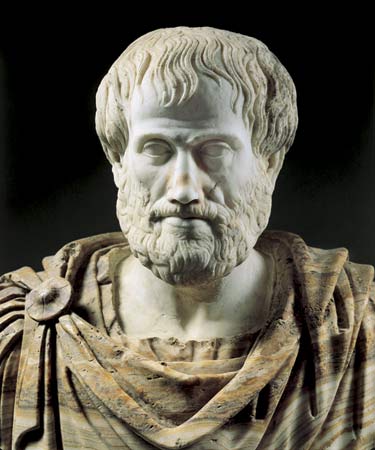
SPIRITUALITY - THE SCIENCE OF VIRTUE AND VICE: Aristotle(384-322 B.C.), Greek philosopher states that happiness may be seen as constituted by bodily and external goods such as health, pleasure, friendship, and wealth. Virtue is the good that causes our thinking and acting well with respect to all other goods. Happy man is one who is active in accordance with complete virtue.
SPIRITUALITY – THE SCIENCE OF VIRTUE AND VICE: Aristotle(384-322 B.C.), Greek philosopher states that happiness may be seen as constituted by bodily and external goods such as health, pleasure, friendship, and wealth. Virtue is the good that causes our thinking and acting well with respect to all other goods. Happy man is one who is active in accordance with complete virtue.

Virtue can be viewed in the context of Duty or that of gratification and pleasure.  Virtue can be seen as the means to obtain the end called Happiness. Virtue is a natural and necessary condition of Happiness. Virtue and Happiness can be explained as reciprocal notions like Cause and Effect. In Kant’s view, Virtue consists of doing one’s duty to become worthy of happiness. Virtue is related to happiness through the medium of duty. Aristotle(384-322 B.C.), Greek philosopher states a view of Happiness in which it may be seen as constituted by bodily and external goods such as health, pleasure, friendship, and wealth. Virtue is the good that causes our thinking and acting well with respect to all other goods. Happy man is one who is active in accordance with complete Virtue. If the object of Virtue is Happiness, I would like to assert that there will be no Happiness unless and until man discovers Peace, Harmony, and Tranquility in his living condition called existence. The specific quality of the maxims that define the difference between Virtue and Vice are Peace, Harmony, and Tranquility. In my opinion, man the Spiritual Being is known from the nature of his conditioned human existence seeking Peace, Harmony, and Tranquility within himself and with others in his environment, and community. I would like to define the terms Virtue and Vice as relative to man’s experience of Peace, Harmony, and Tranquility in his own life and in his interactions with his external environment and community.

https://twitter.com/wholedude 

Related Articles:

http://Bhavanajagat.com/2012/05/02/Spiritualism-The-Biological-Basis-of-Spirituality/

http://Bhavanajagat.com/2012/05/05/Spiritualism-The-Cell-Theory-of-Spirituality/

http://Bhavanajagat.com/2012/05/12/Spiritualism-The-Molecular-Basis-of-Spirituality/


SPIRITUALITY SCIENCE – UNCONDITIONED LOVE

SPIRITUALITY SCIENCE – BEYOND GOOD AND EVIL:

Spirituality Science - Beyond Good and Evil: Friedrich Wilhelm Nietzsche(1844-1900), German philosopher introduced the concept of "Life as Will to Power." He explained his Moral Philosophy in his books, 'Beyond Good and Evil : Prelude to a Philosophy of the Future'(1886), and 'On the Genealogy of Morals'(1887).
Spirituality Science – Beyond Good and Evil: Friedrich Wilhelm Nietzsche(1844-1900), German philosopher introduced the concept of “Life as Will to Power.” He explained his Moral Philosophy in his books, ‘Beyond Good and Evil : Prelude to a Philosophy of the Future'(1886), and ‘On the Genealogy of Morals'(1887).

I define ‘Spirituality Science’ – ‘Adhyatma Vidya'(The Knowledge of Spiritual Self) as an investigation of the spiritual nature of corporeal or material substances. I must clarify that I am not seeking to discover a soul or a spirit that could have existence independent of man’s physical being. My inquiry pertains to the relationship between soul, spirit, and human body. When I speak of man as a Spiritual Being, the truth or falsity of my proposition depends on the fact of man’s having a corporeal substance that is of spiritual nature. The structure and the behavior of things contribute to their individual being, and function. In my view, the ability called discernment, the capacity to make a distinction between good and evil is a spiritual function. Good is a property of being or existence and hence it provides the direction of conduct and behavior that support self-preservation. The specific qualities of the maxims that define the difference between good and evil are Peace, Harmony, and Tranquility. The term evil is the opposite of good. Evil is often associated with violence, agitation, disharmony, disturbance, confusion, and unruly behavior or conduct. Life comes into existence when matter and energy come together. The human being comes to life when the body matter uses its potentiality or power to acquire energy and matter from its external environment. This power to exploit matter and energy for the establishment and sustaining existence is called the power of “Nutrition.” It demands the operation of a principle called discernment, a fundamental, or primary function of knowing what is good or bad for the purposes of self-preservation.

“LIFE AS WILL TO POWER”:

Spirituality Science - Beyond Good and Evil: Nietzsche described Life as "Will to Power", which is precisely the "Will to Life." In Physiology, the term that is used is "NUTRITION", the Power with which the living corporeal substance called Protoplasm or Cytoplasm exploits matter and energy available from its external environment.
Spirituality Science – Beyond Good and Evil: Nietzsche described Life as “Will to Power”, which is precisely the “Will to Life.” In Physiology, the term that can be used is “NUTRITION”, the Power with which the living corporeal substance called Protoplasm or Cytoplasm exploits matter and energy available from its external environment.

The term ‘will’ denotes the power of choice and deliberate action, the power of controlling one’s own actions. The desire, the disposition, the attitude, the purpose, a reasoned choice, or decision to influence actions come under the purview of the term ‘will’. While describing actions, we may have to make a careful distinction between living functions and the behavior of the organism in response to other stimuli including mental stimuli. The living functions do not depend upon mental stimuli. Man may use his ‘will power’ to find food to keep his existence. But, the living function called ‘Nutrition’ does not depend upon such ‘will power’ or some other mental stimulus. However, the Power of Nutrition does require the operation of the principle called discernment of good and evil, the choice between right and wrong in the context of self-preservation or existence. This function is dependent upon the spiritual nature of man’s corporeal substance. Nietzsche correctly observed that life is associated with an instinct for growth and durability. He writes, “Exploitation does not belong to a depraved, or imperfect and primitive society; it belongs to the nature of the living being as a primary organic function, it is a consequence of the intrinsic Will to Power, which is precisely the Will to Life.” Nietzsche contends, “That all the supreme values of mankind lack this ‘Will’, that values which are symptomatic of decline, nihilistic values, are lording it under the holiest names.” In his opinion, traditional philosophy, religion and morality simply represent the masks that a deficient ‘Will to Power’ wears. In Nietzsche’s analysis, the sustaining values of Western Civilization have been sublimated products of decadence using the ‘ascetic’ ideal that endorses existence as pain and suffering. He rejects the concepts of ‘common good’ or ‘common evil’. “Absolute good or absolute evil don’t exist, and instead there’s a universal driving force in humans called the ‘Will to Power'(expressed in ambition, greed, social rank, achievement etc.,) that makes it impossible for ‘common good’ or ‘common evil’ to exist.” He further observes, “And how could there be a ‘common good’ ! The expression contradicts it self; that which can be common is always of small value….. the great things remain for the great, the abysses for the profound, the delicacies and thrills for the refined, and to sum up shortly, everything rare for the rare.” In my view, the “Will to Power” and the “Will to Life” are not the same. The “Will to Life” is similar to the Power called Nutrition and it is a ‘common good’ for it relates to the purpose called existence.

THE GENEALOGY OF MORALS:

Spirituality Science - Beyond Good and Evil: In his book, The Genealogy of Morals, Nietzsche interpreted traditional morality using an etymological approach.
Spirituality Science – Beyond Good and Evil: In his book, The Genealogy of Morals, Nietzsche interpreted traditional morality using an etymological approach.

Nietzsche locates the origin of Good and Bad in the distinction between the nobility and the commoners.To interpret traditional morality, he used an etymological approach. He examined the etymology of the German words ‘good’, ‘bad’, and ‘evil’. He maintained that the distinction between good and bad was originally descriptive. Good is a non-moral reference to those who are privileged, the masters as opposed to those who are base, the slaves. His criticism is based on the typology of “master” and “slave” morality. The nobility determined that their actions are good. The actions of the strong in Nietzsche’s opinion stand only from their inherent power, not from malice. The good and evil contrast arose when slaves avenged themselves by converting attributes of mastery into vices. Since the masters who represent good and powerful, it is opposed by introducing the idea that the ‘meek’ would inherit the earth. Pride became a sin. Charity, humility, and obedience replaced competition, pride, and autonomy. The Slave Morality further secured its triumph by claiming that it is the only true morality. In his view, both traditional philosophical and religious ethics are based  on this insistence on absoluteness. “There is Master-Morality and Slave-Morality, – It is obvious that everywhere the designations of moral value were at first applied to Men, and were only derivatively and at a later period applied to Actions;(it is a gross mistake, therefore,) the noble type of man regards Himself as the determiner of values…. He is a CREATOR OF VALUES.” Nietzsche took an optimistic view of this new, Noble type of man and confidently predicts, “A good and healthy aristocracy would be able to elevate themselves to a higher Existence.” Nietzsche had attacked Christianity and Democracy as moralities for the “Weak Herd.” He argued  for the natural aristocracy of the Superman who driven by the “Will to Power” celebrates life on Earth rather than sanctifying it for some heavenly reward. Such a heroic man of merit has the courage to live “dangerously” and thus rise above the masses, developing his natural capacity for the creative use of passion.”

“WHAT IS DONE OUT OF LOVE ALWAYS TAKES PLACE BEYOND GOOD AND EVIL”:

SPIRITUALITY SCIENCE - BEYOND GOOD AND EVIL: Nietzsche's main concern is about man's "Will to Power" in the context of human behavior. He has not adequately explored the true or real human nature that is primarily involved in existence and self-preservation. But surprisingly, he recognizes the attribute called 'LOVE' that operates Beyond Good and Evil.
SPIRITUALITY SCIENCE – BEYOND GOOD AND EVIL: Nietzsche’s main concern is about man’s “Will to Power” in the context of human behavior. He has not adequately explored the true or real human nature that is primarily involved in  the performance of living functions that shape human existence and self-preservation. But surprisingly, he recognizes the attribute called ‘LOVE’ that operates Beyond Good and Evil.

In my view, Nietzsche has not defined the terms ‘man’ and ‘existence’ and hence his perspective on human morality lacks balance. He has failed to make the distinction between human nature and human behavior and actions. I view man as a multicellular organism that is comprised of trillions of individual, independent, living cells. Man is constituted as a biological community of cells and hence there is a need to define ‘common good’ to establish the existence of the Individual who exists because of the living functions performed by all the cells of the human body. When Nietzsche speaks about Actions, he has failed to recognize the actions that are described as ‘Metabolism’ or the living functions that each individual cell performs to keep its own existence. Life is possible because of the intraspecific biotic interactions, the interactions between the cells, the tissues, the organs, and the organ systems that are central to define man as a Physical Being. Man cannot directly rule or govern even a single cell in his entire human body. The reality of cellular autonomy is known to all the students of Biology. Most medical interventions to help man in sickness or health are designed taking into account the problem of cellular autonomy. Man has the primary organic ability to exploit nature because of the ability of green plants to exploit Sun’s energy. Man has no direct ability to exploit Sun’s energy for the purposes of his existence and self-preservation. Even the green plants need the help of microbes to fix atmospheric Nitrogen to synthesize organic compounds. Nietzsche’s claim that a good and healthy aristocracy would be able to elevate themselves to a “Higher Existence” has no merit. In reality, man leads a dependent, mortal existence under the influence called Time. The only hope for “Elevation” in the context of human existence is the operation of God’s Unconditioned Love which does not demand that man must acknowledge the existence of God. The Unconditioned or Whole Love of God always exists Beyond Good and Evil and this Love formulates the ability called Discernment and man makes the distinction between Good and Evil as a tool for his self-preservation. In other words, I may state that man is constituted as a Moral Being and he fundamentally knows the difference between Good and Evil.

http://BhavanaJagat.com/2011/07/13/Adhyatma-Vidya-The-Knowledge-of-the-Spiritual-Self/


Whole Threat – Military Occupation of Tibet remains a threat to the World

China’s Military Threat is worsening since 1950

Special Frontier Force - China's Military Threat: On the happy occasion of the celebration of India's Republic Day on January 26, 2014, I would like to speak about the military threat posed by China's military occupation of Tibet.
China’s Military Threat is worsening since 1950: On the happy occasion of the celebration of India’s Republic Day on January 26, 2014, I speak about the military threat posed by China’s military occupation of Tibet.

India declared itself as a sovereign Republic on January 26, 1950.  As Indians celebrate Republic Day on this day, I share an article titled “AIM OF CHINA’S MILITARY REFORMS” authored by  Professor Jayadeva Ranade, a member of the National Security Advisory Board, Distinguished Fellow with the Centre for Air Power Studies, New Delhi and who had in the past served as the additional Secretary in the Cabinet Secretariat. The threat posed by China by its military invasion of Tibet since 1950 is worsening without any respite.

Special Frontier Force - China's Military Threat: The Deputy Commander-in-Chief, Myanmar Defence Service and Commander-in-Chief, Myanmar Army Vice Senior General Soe Win visited the Indian Army Eastern Command Headquarters in Fort William, Kolkata on December 10, 2013. He is seen with Eastern Army Commander Lieutenant General Dalbir Singh Suhag who served as the Inspector General Special Frontier Force from April 2009 to March 2011.
China’s Military Threat: The Deputy Commander-in-Chief, Myanmar Defence Service and Commander-in-Chief, Myanmar Army Vice Senior General Soe Win visited the Indian Army Eastern Command Headquarters in Fort William, Kolkata on December 10, 2013. He is seen with Eastern Army Commander Lieutenant General Dalbir Singh Suhag who served as the Inspector General Special Frontier Force from April 2009 to March 2011.

For the first time in the history of Special Frontier Force, its Inspector General is now appointed as the Vice Chief of Army Staff (VCOAS). Lieutenant General Dalbir Singh Suhag served as Inspector General Special Frontier Force from April 2009 to March 2011. He served as the GOC-in-C, Eastern Command from June 16, 2012 to December 31, 2013. His present appointment as the Vice Chief of Army Staff indicates that he will become the next Indian Army Chief in August 2014.

In my opinion, China’s military power, military strategy, and military tactics will not assure the inevitability of peace that is imposed by its military occupation of Tibet. Peace and War are conditions that prevail in relationship with an external reality called Natural Order. Tibetan Resistance is a symptom of the absence of Natural Order in Tibet. Resistance will prevail, and Resistance will endure if Natural Order is not restored in Tibet. Tibetans love Tibet and the Love of one’s own country is neither a moral, nor a religious virtue for it is a Natural Virtue. Speaking of War and Peace in Tibet, I ask, “Can we order Peace for the sake of War, and not War for the sake of Peace?” If Perseverance is the Secret of all Triumphs, Tibetan Resistance can hope for its Victory.

Special Frontier Force - China's Military Threat: China's Military Power, China's Military Strategy, and China's Military Tactics cannot overcome the Power of Perseverance, the Perseverance of Tibetan Resistance.
China’s Military Threat: China’s Military Power, China’s Military Strategy, and China’s Military Tactics cannot overcome the Power of Perseverance, the Perseverance of Tibetan Resistance.

Aim of China’s Military Reforms

By Jayadeva Ranade

SPECIAL FRONTIER FORCE - CHINA'S MILITARY THREAT: WORLD PARLIAMENTARIANS CONVENTION ON TIBET HELD IN OTTAWA, CANADA, 2012. Carl Gershman, President of the National Endowment for Democracy, Washington, DC, Professor Jayadeva Ranade, Distinguished Fellow with the Centre for Air Power Studies, New Delhi, with Richard Gere, Chairman of the International Campaign for Tibet.
CHINA’S MILITARY THREAT: WORLD PARLIAMENTARIANS CONVENTION ON TIBET HELD IN  OTTAWA,  CANADA, 2012. Carl Gershman, President of the National Endowment for Democracy, Washington, DC, Professor Jayadeva Ranade, Distinguished Fellow with the Centre for Air Power Studies, New Delhi, with Richard Gere, Chairman of the International Campaign for Tibet.

Published: 21st January 2014 06:00 AM

The writer is a member of the National Security Advisory Board and former additional secretary in the cabinet secretariat, Indian government.

Special Frontier Force - China's Military Threat: China CV-16 Liaoning Aircraft Carrier. Navy J-15 Flying Shark takeoff. China has modernized its military cpabilities.
China’s Military Threat: China CV-16 Liaoning Aircraft Carrier. Navy J-15 Flying Shark takeoff. China has modernized its military capabilities.

Modernization of China’s People’s Liberation Army (PLA) has entered the final stage of its current phase. The Chinese Communist Party (CCP)’s Third Plenum, which was held in November 2013 and represents a major advance in China’s reforms, provided a substantive push to the PLA’s modernization when it approved proposals for major organizational restructuring. The reforms coincide with China’s continuing assertiveness that has unsettled its neighbors.
Appointments to the Central Military Commission (CMC) effected earlier by the CCP’s 18th Congress in Beijing in November 2012 accelerated the drive to strengthen and modernize the 2.3 million-strong PLA. Within days of his appointment as the CMC chairman, Xi Jinping not only endorsed the military modernization policies of his predecessors Hu Jintao and Jiang Zemin, but also began bluntly advocating more rapid modernization and technological upgrade of the PLA.
The organizational reforms approved by the CCP’s Third Plenum indicate that changes are imminent in the PLA’s command structure comprising the four principal departments and seven military regions. The PLA Navy (PLAN), PLA Air Force (PLAAF) and China’s strategic missile strike force, namely the Second Artillery, have clearly been allotted an enhanced operational role and will receive priority in allocation of budgets and manpower. Personnel of the Second Artillery, PLAAF and PLAN already receive higher salaries than their counterparts in the PLA’s ground forces. Within days of the Third Plenum, CMC vice-chairman and till recently the PLAAF commander, Xu Qiliang, wrote an article in the party mouthpiece People’s Daily confirming the reforms will be implemented. He mentioned that the number of non-combatants would be drastically reduced and that the reforms would enable the PLA to win wars.
Quite separately, reports filtering out of Beijing and disclosed initially in the solitary official English-language China Daily, suggest that plans have been finalized to merge the military regions. These envisage reorganizing the seven military regions into five “combat zones” (zhan chu) within the next five years. Over the past few years China’s military literature has hinted at such impending change with occasional references to “Theatre Commands”. The reorganization is intended to concentrate firepower and troops trained for a specific type of warfare within a single theatre or zone for ease of rapid deployment. Land and sea warfare forces are to be grouped separately. This reorganization gives the PLA a definite “outward orientation” neatly meshing with its doctrine of “active defence”.

Special Frontier Force - China's Military Threat: Shenyang SAC J-16 Stealth Fighter Aircraft.
China’s Military Threat: Shenyang SAC J-16 Stealth Fighter Aircraft. Military Spending will not increase Military Power.

According to these reports, the three mainly coastal military regions of Jinan, Nanjing and Guangzhou are to be converted into three “combat zones.” Adopting a mainly maritime role, their primary objective will be to reinforce China’s efforts to establish dominance over the East China Sea and South China Sea and face up to the US-Japan alliance. By 2020, all three zones will be reinforced by three aircraft carrier combat groups. Reports suggest existing aircraft carrier Liaoning will be deployed in the East China Sea, while the other two aircraft carriers will be in the South China Sea. Interestingly on January 1, Xinhua showed pictures of Liaoning returning to its home base in Qingdao after month-long exercises in the South China Sea, but avoided mention of the run-in with the US-guided missile warship USS Cowpens.
In April 2013, Xinhua reported Rear Admiral Song Xue, deputy chief of staff of the PLA Navy, saying a second aircraft carrier was under construction. He told foreign military attaches that it would be larger and carry more fighter aircraft. On January 18, 2014, party secretary of Liaoning province Wang Min disclosed China’s second domestically produced aircraft carrier is being built at Dalian and would be ready in six years.
The four inland military regions of Shenyang, Beijing, Chengdu and Lanzhou are to similarly be merged into two large combat zones. Chengdu and Lanzhou both exercise operational jurisdiction over the India-China border. Each of the two new zones will have units of the PLA Navy, Air Force and Second Artillery integral to them. They will function under a new unified combat command. These reports also disclose that the PLA’s 300,000 non-combatant personnel will be eliminated by 2022. Though China’s ministry of defence denied the reports, it is pertinent that mention was first made in China Daily and that its contents are generally in consonance with Xu Qiliang’s assertion in People’s Daily and the reforms approved at the CCP CC’s Third Plenum.

Special Frontier Force - China's Military Threat:  China has built over 39 Wind Tunnels that include Subsonic, Supersonic, Hypersonic, and others to improve its ability to design and test its military aircraft.
China’s Military Threat: China has built over 39 Wind Tunnels that include Subsonic, Supersonic, Hypersonic, and others to improve its ability to design and test its military aircraft.
Special Frontier Force - China's Military Threat: China has reportedly developed a WU-14 Hypersonic Glide Vehicle. China's Military Empire will collapse under its own weight as things in Nature change while Natural Order remains Unchanging.
China’s Military Threat: China has reportedly developed a WU-14 Hypersonic Glide Vehicle. China’s Military Empire will collapse under its own weight as things in Nature change while Natural Order remains Unchanging.

Rapid advances have also been made in the indigenous development of advanced defence technology and hardware in the past three years. Emphasis was underscored with the appointment of General Zhang Youxia, a known proponent of indigenous development of modern advanced defence technology, as director of the PLA’s General Armaments Department (GAD) in October 2012. The latest development was the announcement on January 9 that China had conducted the first flight test of a new hypersonic glide vehicle, dubbed the WU-14 by the Pentagon, thus becoming one of five nations to possess this capability. The hypersonic vehicle, capable of travelling at speeds between Mach 8 and 12, represents a major advance in China’s secretive strategic nuclear and conventional military and missile programmes. China had in May 2012 opened a new JF12 shockwave hypersonic wind tunnel—the largest of its kind—that replicates flying conditions between Mach 5 and 9.

Also this month, pictures of the new two-seater J-16 stealth fighter built by the Shenyang Aircraft Corporation were posted online. Slated to first be inducted by PLAN and later the PLAAF, the J-16 is loaded with eight tons of air-to-air and anti-ship missiles and has a combat radius of several hundred miles, enabling it to help Chinese warships battle for control of regional waters claimed by China. Some reports claim two dozen J-16 are ready for induction.
These military reforms will give the PLA an outward focus, implying that “recovery” of territories claimed by Beijing will be a central feature of China’s strategic agenda. They will reinforce diplomacy aimed at realising “China’s Dream”. Xi Jinping, meanwhile, continues to further tighten his and the CCP’s grip on the PLA. An important example is the Third Plenum approving the PLA being brought within the ambit of the party’s anti-corruption watchdog, the Central Discipline Inspection Commission.

Professor Jayadeva Ranade is a member of the National Security Advisory Board and former additional secretary in the cabinet secretariat, Indian government.

China’s Military Threat: Nuclear Submarine 2009 plan type094 02

IN GOD WE TRUST – BHAVANAJAGAT – 2013 IN REVIEW

The WordPress.com stats helper monkeys prepared a 2013 annual report for this blog.

BhavanaJagat is inspired by Goddess Sarasvati who personifies Pure Knowledge and Perfect Wisdom.

Here’s an excerpt:

The Louvre Museum has 8.5 million visitors per year. This blog was viewed about 160,000 times in 2013. If it were an exhibit at the Louvre Museum, it would take about 7 days for that many people to see it. My blog post titled “What is Life – Life is Knowledge in Action” has attracted the most number of views.

http://BhavanaJagat.com/2010/08/05/What-is-Life-Life-is-Knowledge-in-Action/

Click here to see the complete report.

https://twitter.com/wholedude

IN GOD WE TRUST – WHOLE CHRIST – WHOLE LOVE

WHOLE CHRIST – WHOLE LOVE:

WHOLECHRIST - WHOLELOVE: The term "WholeChrist" refers to Jesus before His human birth, after His Resurrection, and to the Hope of His Second Coming. The term "WholeLove" describes God's Unconditioned Love that is not determined by human knowledge and rationality. The Birth of Jesus cannot be accounted by human knowledge and rationality.
WHOLECHRIST – WHOLELOVE: The term “WholeChrist” refers to Jesus before His human birth, during His earthly existence, after His Resurrection, and to the Hope of His Second Coming to establish the ‘Kingdom of Heaven on Earth’.The term “WholeLove” describes God’s Unconditioned Love that is not determined by human knowledge and rationality. The Birth of Jesus cannot be fully accounted by human knowledge and rationality for man lacks the ability to account for his own existence.

The word Christ(Greek. Christos) refers to the Messiah whose appearance is prophesied in the Old Testament and is used as a title to describe Jesus of Nazareth. I am using the term “WholeChrist” to describe Jesus before His human birth, Jesus during the years spent on this Earth, Jesus after His Resurrection, and Jesus who gives the Hope of the Second Coming to establish ‘The Kingdom of Heaven on Earth’. The word Christ may not communicate the entirety of Jesus and in the four Gospels we do not obtain the full picture as the event called ‘The Second Coming’ has not yet taken place. The word “Love”(Hebrew. ‘ahavah’, Greek. ‘agape’) is presented in Scripture as the very nature or essence of God, the supreme attribute in which all other attributes are harmonized. Love is a bond that unites all virtues. I consider the Power/Force/Energy of Mercy, Grace, and Compassion as the operating mechanism of God’s Love and could be simply called Divine Providence. I am using the term “WholeLove” to describe God’s Unconditioned Love that is not determined or fully accounted by human knowledge and human rationality. In other words, I have no ability to empower myself to receive God’s Unconditioned Love. I cannot manipulate God’s WholeLove through my actions, behavior, or even prayers. I can experience WholeLove but, I cannot explain or fully account for the existence of that Love.

WHOLECHRIST – WHOLELOVE – WHOLECREATION:THE BIRTH OF JESUS:

WholeChrist - WholeLove: The Birth of Jesus as a Spiritual Being cannot be fully accounted by using human knowledge and human rationality. Man must try to know and understand as to where he exists and as to how he exists.
WholeChrist – WholeLove – WholeCreation: The Birth of Jesus as a Spiritual Being cannot be fully accounted by using human knowledge and human rationality. Man must try to know and understand as to where he exists and as to how he exists. God uses the dimension called WholeLove to bring Unity and Harmony between the dimensions of Matter, Energy, Time, and Space to create man and the World in which man exists.

Man cannot explain the Birth of Jesus using his scientific knowledge. The Birth of Jesus can only be understood as a fact of Creation, a creative event. It should not come as a surprise as each human being who took birth on Earth has always arrived as an original, unique, distinctive, and one of its own kind of object with a genome that never existed in the past, and would also never exist again in the future. Each man is born as a created being and the birth of Jesus as a singular event reveals a creative mechanism not known to man and not subject to the limitations of man’s rational power. God uses the dimension called WholeLove to bring Unity and Harmony between the dimensions of Matter, Energy, Time, and Space to create man and the World in which man exists.

WHOLECHRIST – WHOLELOVE – WHOLEEXISTENCE:

WholeChrist - WholeLove -WholeExistence: The Birth of Jesus and His earthly existence describes the operation of a Supreme, Spiritual WholeLaw that harmonizes all Laws of Nature that operate in the physical world to establish WholeExistence which may be stated as a Law of Conservation:" Matter is neither created nor destroyed."
WholeChrist – WholeLove -WholeExistence: The Birth of Jesus and His earthly existence describes the operation of a Supreme, Spiritual WholeLaw that harmonizes all Laws of Nature that operate in the physical world to establish WholeExistence which may be stated as a Law of Conservation:” Matter is neither created nor destroyed.” Similarly, it can be stated: “Life is neither created nor destroyed.”

WholeChrist - WholeLove: God Exists. Very often people raise the question about God's place of existence in this vast universe of unknown dimensions. Where does man exist? How could be man be certain about the location of his own existence in this universe which is constantly moving every instant?
WholeChrist – WholeLove – WholeExistence: God Exists. Very often people raise the question about God’s place of existence in this vast universe of unknown dimensions. Where does man exist? How could man be certain about the location of his own existence in this universe which is constantly moving every instant?

WholeChrist - WholeLove: Where does man exist? It is easy to describe man's place of existence in the Solar System, and Milky Way, but in reality man exists in Space without any awareness of his position that changing every instant. No object that is known in this universe continues to exist at the same position at two different instants.
WholeChrist – WholeLove – WholeExistence: Where does man exist? It is easy to describe man’s place of existence in the Solar System, and Milky Way Galaxy, but in reality man exists in Space without any awareness of his position that is changing every instant. No object that is known in this universe continues to exist at the same position at two different instants. Man exists in a restless universe under the Blissful influence called WholeLove which shields man from the harsh realities of physical universe.

To experience the Joy of Christmas, to seek the uplifting power of Jesus Christ, man must know the truth and reality about human existence. Human knowledge and rationality in themselves do nothing to justify human existence or the existence of this universe. To establish the fact of this human existence on one known planet called Earth is beyond the abilities of human cognitive powers. The biological basis of human existence demands the support of Love whose operating principles are Mercy, Grace, and Compassion. This Love is not conditioned by human behavior and human actions and not even prayers. Man cannot empower himself to acquire God’s Love using his free will. The good and evil actions of man, the right and bad conduct of man will be possible if and only if man’s existence precedes his actions and behavior. It is often argued that the evil and suffering in the world seems to count against the existence of God. I have to account for my physical existence before I can share the experience of pain, misery, disappointment, frustration, and suffering of my life’s condition. The fact or the reality of human pain and suffering cannot exclude the fact of God’s existence. Man at any given age and any given stage of his existence, from conception, physical birth, infancy, youth, adult, old age and death, in ill-health or good health depends upon an Unchanging Spiritual Principle to bring Unity and Harmony to maintain that condition or state called existence. This concept of God’s Unconditioned Love or WholeLove for man is shared by the Birth of Jesus. When I think of this WholeLove, I feel better, my mood gets uplifted, the burden of my painful existence is eased, and I can sense the Joy of the Season.

WHOLECHRIST – WHOLELOVE – WHOLELAW:

WholeChrist - WholeLove - WholeLaw: Love is defined by stating its attributes. Love is Patient. Love is Kind. Love does not envy. Love does not boast, it is not proud. Love is not rude. Love is not self-seeking. Love is not easily angered. Love protects, trusts, hopes, always perseveres and Love never fails. Divine Mother Mary is seen expressing such Love for her baby Jesus.
WholeChrist – WholeLove – WholeLaw: Love is defined by stating its attributes. Love is Patient. Love is Kind. Love does not envy. Love does not boast, it is not proud. Love is not rude. Love is not self-seeking. Love is not easily angered. Love protects, trusts, hopes, always perseveres and Love never fails. Divine Mother Mary is seen expressing such Love for her baby Jesus.

Apostle Paul in his First Epistle to Corinthians, in the New Testament Book of 1 Corinthians, Chapter 13, verses #4 to 8 describes the attributes of Love: “Love is patient, love is kind. It does not envy. It does not boast, it is not proud. It is not rude, it is not self-seeking, it is not easily angered, it keeps no record of wrongs. Love does not delight in evil but rejoices with the truth. It always protects, always trusts, always hopes, always perseveres. Love never fails. But where there are prophecies, they will cease; where there are tongues, they will be stilled; where there is knowledge, it will pass away.”  Jesus Christ while teaching the operating principle called Love, names Love as a Law, a Law above all other laws of nature, and above all other Commandments. In the Gospel According to Saint Matthew, Chapter 22, verses #37 to 40 “WholeLove” is explained as “Whole Law”: Jesus replied: ” ‘Love the Lord your God with all your heart and with all your soul and with all your mind.’ This is the first and greatest commandment. And the second is like it: ‘Love your neighbor as yourself.’ All the Law and the Prophets hang on these two commandments.” Love is the supreme attribute, nature, and essence of God and at the same time it operates as a Law above all other Laws of Nature and the commandments shared by Prophets. WholeLove can be stated as the WholeLaw that governs the existence of man and gives man the chance to experience Peace, Harmony, and Tranquility in his living condition.

WHOLECHRIST – WHOLELOVE – WHOLEREALITY:

WholeChrist - WholeLove - WholeReality: The Birth of Jesus Christ. Life is neither created nor destroyed. The term WholeChrist describes Jesus as an eternal, immortal, unborn Spiritual Principle that existed before His birth, that existed in the Middle or during His earthly Life, and continues to exist in Future without being influenced by Time.
WholeChrist – WholeLove – WholeReality: The Birth of Jesus Christ. Life is neither created nor destroyed. The term WholeChrist describes Jesus as an eternal, immortal, unborn Spiritual Principle that existed before His birth, that existed in the Middle or during His earthly Life, and continues to exist in Future without being influenced by Time.

Apostle Paul in his First Epistle to Corinthians, in the New Testament Book of 1 Corinthians, Chapter 13, verse#13 states the Principle of Conservation: “And now these three remain: faith, hope, and love. But the greatest of these is love.”  Man exists in a world that is restless and is constantly changing. The Individual, created human being is born, grows and develops, exists with a physical identity that constantly changes under the powerful influence of Time and the event called death records the loss of that identity that is never constant at any time of its earthly existence. In the natural world, such changes in appearance are governed by the Laws of Conservation such as the Laws of Conservation of Mass, Energy, and Momentum. During man’s physical existence, the physical form and appearance change and yet the Spiritual Principles of Faith, Hope, and Love are conserved. Man cannot depend upon his knowledge and rationality as they are always subject to change. To know the Subjective and Objective Reality or the “WholeReality” of his ‘WholeExistence’, man needs to know the Law of Conservation of Faith, Hope, and Love.

WHOLECHRIST – WHOLELOVE – WHOLEPRAYER:

WholeChrist - WholeLove - WholePrayer: The Gospel According to Saint Matthew, Chapter 6 gives the account of "WholePrayer" that is popularly known as 'Lord's Prayer'. Father knows what you need before you ask Him. We pray for His "WILL" be done on earth as it is in Heaven. The 'WholePrayer' gives virtues such as Patience, Perseverance, Tolerance, and Kindness the attributes of 'WholeLove'.
WholeChrist – WholeLove – WholePrayer: The Gospel According to Saint Matthew, Chapter 6 gives the account of “WholePrayer” that is popularly known as ‘Lord’s Prayer’. Father knows what you need before you ask Him. We pray for His “WILL” be done on earth as it is in Heaven. The ‘WholePrayer’ gives virtues such as Patience, Perseverance, Tolerance, and Kindness the attributes of ‘WholeLove’.

The word Prayer refers to man’s communication with God. It is a spiritual or devotional communication to make a humble, sincere request. Prayer is the act of supplication and it includes words of praise, words of thanksgiving, words of confession, and words of plea seeking sanction of a favor to transform a mental desire into a physical reality in the external world. If God is omniscient, He must know of the evil; and if God is omnipotent, He must be able to remove the evil; and if God is perfectly benevolent and is loving, there should be no pain and suffering. To experience pain and misery, to experience suffering, disappointment and frustration, I have to maintain the condition called existence. At a fundamental level, I have to understand my ability to know things, my power to rule or govern things, and I must know my ability to make choices to change things in my external environment. Jesus in the New Testament Book of Matthew, Chapter 6, verse# 8 instructs: “Do not be like them(pagans), for your Father knows what you need before you ask Him.”  In Lord’s Prayer, Jesus makes it abundantly clear that the purpose of the ‘WholePrayer’ is that of asking, “Your will be done on earth as it is in heaven.” Using my human knowledge and rationality, I can neither account for my existence nor account for my experience of pain and suffering which describes the nature of my existence. I describe ‘WholePrayer’ as an act of Faith, and Hope in recognition of the fact or reality called WholeLove that imparts its qualities and virtues such as Patience, Perseverance, Tolerance, and Kindness. Even if I cannot change the circumstances of my life that cause or give the experience of pain, suffering, and misery, the acceptance of WholeLove makes me pain-tolerant, and pain-resistant. It gives me the strength called ‘Endurance’ to overcome the challenge called the ‘Stress of Life’.

WholeChrist - WholeLove - Nietzsche: "That which is done out of Love always takes place beyond Good and Evil." Man with his Good or Evil actions and behavior cannot control the flow of God's Unconditioned or 'WholeLove'.
WholeChrist – WholeLove – Nietzsche: “That which is done out of Love always takes place beyond Good and Evil.” Man with his Good or Evil actions and behavior cannot control the flow of God’s Unconditioned or ‘WholeLove’.

I wish you all a Merry Christmas.

https://twitter.com/wholedude

Whole Dude – Whole Nihilism

Whole Dude – Whole Designer – Whole Nihilism:

WholeDude - WholeDesigner - Whole Nihilism: German philosopher Friedrich Wilhelm Nietzsche(1844 to 1900) often thought of his writings as struggles with "Nihilism." In his view, Knowledge and Rationality in themselves do nothing to justify Human Existence and do nothing to justify the existence of the World.
WholeDude – WholeDesigner – Whole Nihilism: German philosopher Friedrich Wilhelm Nietzsche (1844 to 1900) often thought of his writings as struggles with “Nihilism.” In his view, Knowledge and Rationality in themselves do nothing to justify Human Existence and do nothing to justify the existence of the World. I appreciate this thought shared by Nietzsche and would like to keep my independence by contesting his views on Human Existence.

Nietzsche often thought of his writings as struggles with Nihilism. In his view, Knowledge and Rationality in themselves do nothing to justify Human Existence and do nothing to justify the existence of the World. I agree and at the same time, I disagree with him. I would like to share my concept of “Whole Nihilism” to contest his views on Nihilism. In my opinion, Nietzsche fails to make the following distinctions and hence fails to establish his thesis of Nihilism. The fundamental distinctions that we need to consider are:

1. The distinction between Acquired Knowledge and Innate Knowledge,

2. The distinction between Human Essence and Human Existence,

3. The distinction between Human Behavior and Human Nature,

4. The distinction between Human Identity and Human Individuality, and

5. The distinction between a Mortal Being and a Created Being.

Firstly, I would like to describe Nietzsche’s thoughts on Nihilism and explain his views on this subject.

WholeDude - WholeDesigner - Whole Nihilism: In the emergence of 19th-century "POSITIVISM", Nietzsche predicted the ushering of a new era that dissolves the religious and philosophical absolutes. Nietzsche visualized the collapse of the metaphysical and theological foundations and sanctions for traditional morality. The decadence of the sustaining values of Western Civilization would leave behind a pervasive sense of purposelessness and meaninglessness. And the triumph of meaninglessness is the triumph of Nihilism.
WholeDude – WholeDesigner – Whole Nihilism: In the emergence of 19th-century “POSITIVISM”, Nietzsche predicted the ushering of a new era that dissolves the religious and philosophical absolutes. Nietzsche visualized the collapse of the metaphysical and theological foundations and sanctions for traditional morality. The decadence of the sustaining values of Western Civilization would leave behind a pervasive sense of purposelessness and meaninglessness. And the triumph of meaninglessness is the triumph of Nihilism.

“POSITIVISM” is a system of philosophy basing Knowledge solely on the data of sense experience. It is a system of philosophy originated by French philosopher Auguste Comte (1798-1857) who demanded that Knowledge must be exclusively based on observable scientific facts and their relation to each other, and he rejected speculations about or search for ultimate origins. Positivism as a theory of Knowledge is fundamentally flawed for it fails to acknowledge the existence of Innate Knowledge. For example, the genetic information and biological information implanted in the living cells is the Knowledge that is used to perform a variety of complex, sequential, goal-oriented living functions. In the absence of this Innate Knowledge, life and existence is simply impossible. For this reason, I define Life as Knowledge in Action. Having said this, I recognize that in the 19th-century Positivism, Nietzsche visualizes the emergence of an age that dissolves the religious and philosophical absolutes.

Nihilism as a philosophical doctrine denies the existence of any basis for Knowledge or Truth. Nihilism is often stated as the belief that there is no meaning or purpose in Human Existence. Nihilism demands the rejection of customary beliefs to religion, and morality. Nietzsche uses the term Nihilism to describe the devaluation of the highest values or the ‘ascetic ideal’ postulated by traditional philosophy and religion. Nietzsche was apparently preoccupied by the origin and function of values in human life. In his view, life neither possesses nor lacks intrinsic value and yet is always being evaluated. He concludes that the evaluations of life must be read as symptoms of the condition of the evaluator. It seems that Nietzsche wants to suggest that any evaluation of life is simply a matter of subjective opinion and there is no objective basis for evaluation of human life.

I find a problem with Nietzsche’s view and I claim that the fact of life, the condition of life, and the state of life do always have an objective basis and the objective basis of life could be verified by other scientific observers and by experimentation.

Nietzsche probes the fundamental cultural values of Western philosophy, religion, and morality which he characterized as expressions of ascetic ideal. Nietzsche claims that the ascetic ideal is born when suffering becomes endowed with ultimate significance. The Judeo-Christian tradition makes suffering tolerable by interpreting it as God’s intention and as an occasion for atonement. In Nietzsche’s opinion, Christianity makes a deceptive claim by attaching cosmic significance to each individual’s life and death. Similarly, Nietzsche points that traditional philosophy expresses the ascetic ideal when it privileged soul over body, mind over senses, duty over desire, reality over appearance, and the timeless over the temporal. Nietzsche attaches no merit in Christianity’s promise of Salvation to the Sinner who repents and to the same extent he ridicules the promise of Emancipation or Enlightenment offered by philosophy to the seekers of its Knowledge. Nietzsche makes a valid point in his statement about religion and philosophy which make the assumption that existence requires explanation, justification, and some form of expiation by either paying a penalty or by atonement. Nietzsche argues that both religion and philosophy denigrate experience in favor of true world. He views both as symptoms of a declining life in distress. In the decadence, in the decline and in the eventual collapse of the metaphysical and theological foundations and sanctions of traditional morality, Nietzsche apprehends a huge void, a pervasive sense of purposelessness, and meaninglessness. And the triumph of meaninglessness is the triumph of Nihilism. From this perspective, Nietzsche claims that “God is Dead.”

The Doctrine of Whole Nihilism:

Whole Dude – Whole Nihilism: Fertilization of an egg by a sperm, conception occurs in the oviduct. Cleavage (cell division) begins in the oviduct. as the embryo is moved. toward the uterus. by peristalsis and the. movements of cilia. 3. Cleavage continues. By the time the embryo. reaches the uterus, it is a ball of cells. It floats in the uterus for. several days, nourished by. endometrial secretions. It. becomes a blastocyst. 4. Ovary. Uterus. Endometrium. From ovulation to implantation. Inner cell mass. Cavity. Blastocyst. Trophoblast. (a) Implantation of blastocyst. (b) Fertilization occurs. A sperm. enters the oocyte; meiosis of. the oocyte finishes; and the. nuclei of the ovum and sperm. fuse, producing a zygote. 2. Ovulation releases a. secondary oocyte, which. enters the oviduct. 1. The blastocyst implants. in the endometrium. about 7 days after conception. 5.

At a fundamental level, man has no ability to attach meaning, purpose, or values to his own human existence. The religious doctrines, the different schools of philosophy do not provide the basic Knowledge and information that is used by the fertilized Egg Cell that divides, multiplies, grows, and develops into the complex, multicellular human organism. Man has no choice other than that of existing as an Individual with Individuality. Each human being arrives into the World as a Created Being and man has no ability to create a replica of this one of its own kind of living object.

Whole Dude – Whole Nihilism: The fertilized Egg Cell does not depend upon Knowledge that is exclusively acquired from Sensory Experience. 4 cells. 2 cells. morula. day 7. blastocyst. zygote. inner cell. mass of. blastocyst. Fertilization occurs. within the uterine. tube. sperm. embryo. day 0. The blastocyst. implants in the. uterus. ovary. ovulated egg. muscle layer. uterine wall. endometrium. (a) The first week of development.

The fertilized Egg Cell does not depend upon Knowledge that is exclusively acquired from Sensory Experience. To establish the fact of human life, the fertilized Egg Cell does not depend upon learning from Knowledge contained in books or imparted by educational experience.

The ‘ascetic ideal’ stated by Nietzsche has no relevance and has no significance as human life is not guided by those metaphysical, or theological values. Man cannot simply choose to exist by defining his Essence through his actions or things he want to do. The fact of Existence must always precede the ability to describe the attributes called Essence. The fertilized Egg Cell proceeds to perform its functions without any concerns about the meaning, purpose, or significance of the Life that it establishes as a Physical, Objective Reality.

Human Knowledge and Human Rationality are not the requirements for establishing the fact, the state, and the condition called Human Existence. To the same extent, it may be said that man is a Mortal Being as his Human Existence in Space is operated under the influence of Time and not by Human Knowledge and Rationality.

WholeDude - WholeDesigner - Whole Nihilism: What is Reality and What is Appearance? What is Timeless and What is Temporal? Can mind, and senses explain the reality of this World?
WholeDude – WholeDesigner – Whole Nihilism: What is Reality and What is Appearance? What is Timeless and What is Temporal? Can mind, and senses explain the reality of this World?

Man may never know the distinction between Reality and Appearance as he ceases to exist in the absence of an influence called Grand Illusion. Man’s physical existence on planet Earth has a cosmic significance as Human Existence depends upon an extraterrestrial or Cosmic source of Energy. The external source of energy required for Life is not found on planet Earth and it has to be continuously supplied. This source of external Energy does not depend upon man’s ability to find meaning or purpose in his own existence.

The concept of ‘Whole Nihilism’ describes the fact, the reality, and the truth of Human Existence without any concern for meaning or purpose for that Existence.

Whole Dude – Whole Nihilism: The concept of ‘Whole Nihilism’ describes the fact, the reality, and the truth of Human Existence without any concern for meaning or purpose for that Existence.

IN GOD WE TRUST – SUPERMAN

WHOLEDUDE – WHOLEDESIGNER – SUPERMAN – THE DOCTRINE OF ETERNAL RECURRENCE:

WholeDude - WholeDesigner - Superman: Friedrich Wilhelm Nietzsche(1844 to 1900), German philosopher in his most celebrated book 'Thus Spake Zarathustra'(1883-85) introduced in eloquent poetic prose the concepts of the 'Superman', and the 'will to power'.
WholeDude – WholeDesigner – Superman: Friedrich Wilhelm Nietzsche(1844 to 1900), German philosopher in his most celebrated book ‘Thus Spake Zarathustra'(1883-85) introduced in eloquent poetic prose the concepts of the ‘Superman or ‘Superior Man’, and the ‘Will to Power’ using his doctrine of  Eternal Recurrence.

WholeDude - WholeDesigner - Superman: The German word 'Ubermenschen' means a Superman or a Superior Man. Nietzsche argued for the "Natural Aristocracy" of the 'Superman' who driven by the 'Will to Power' celebrates life on Earth rather than sanctifying it for some heavenly reward.
WholeDude – WholeDesigner – Superman: The German word ‘Übermensch’ means a Superman or a Superior Man. Nietzsche argued for the “Natural Aristocracy” of the ‘Superman’ who driven by the ‘Will to Power’ celebrates life on Earth rather than sanctifying it for some heavenly reward. Nietzsche described the concept of ‘Superman’ or ‘Superior Man’ based on his doctrine of “Eternal Recurrence.”

Nietzsche in his most celebrated book ‘Thus Spake Zarathustra’ introduced the concepts of the Superman or Superior Man and the Will to Power. The basic conception of  Thus Spoke Zarathustra asks the question: “How well disposed would a person have to become to himself and to life to crave nothing more fervently than the infinite repetition without alternation, of each and every moment?” Nietzsche says, the person who could accept recurrence without self-deception or evasion would be a super human being or “UBERMENSCH”, a Superman whose distance from the ordinary man is greater than the distance between man and ape. This Superior Man would not be a product of long evolution; rather, he would emerge when any man with superior potential completely masters himself and strikes off conventional Christian “Herd Mentality” to create his own values, which are completely rooted in life on this Earth. Nietzsche attacked Christianity and Democracy as moralities for the “Weak Herd”. He argued for the “Natural Aristocracy” of the Superman who driven by the ‘Will to Power’ celebrates life on Earth rather than sanctifying it for some heavenly reward. Such a heroic man of merit has the courage to live “dangerously” and thus rise above the masses, developing his natural capacity for the creative use of passion. Nietzsche’s goal was a “Caesar with Christ’s Soul.”

WholeDude - WholeDesigner - Superman: Nietzsche described the concept of "UBERMENSCH", the Superman or the Superior Man. Nietzsche's goal was a "Caesar with Christ's Soul." Nietzsche argued for the "Natural Aristocracy" of the Superman and ridiculed the idea of the "MEEK" inheriting Earth.
WholeDude – WholeDesigner – Superman: Nietzsche described the concept of “UBERMENSCH”, the Superman or the Superior Man. Nietzsche’s goal was a “Caesar with Christ’s Soul.” Nietzsche argued for the “Natural Aristocracy” of the Superman and ridiculed the idea of the “MEEK” inheriting Earth.

George Bernard Shaw popularized the term “Superman” by his play ‘Man and Superman'(1903).

WholeDude - WholeDesigner - Superman: Nietzsche's concept of Superman was popularized by George Bernard Shaw in his play 'Man And Superman'. This is a picture of the cast of Roundabout Theatre's production of that play directed by William Woodman. The cast includes Kim Hunter, David Birney, John Carpenter, Frances Conroy, Michael Cumpsty, Anthony Fusco, I.M. Hobson, Jonathan Walker, and Harriet Harris.
WholeDude – WholeDesigner – Superman: Nietzsche’s concept of Superman was popularized by George Bernard Shaw in his play ‘Man And Superman’. This is a picture of the cast of Roundabout Theatre’s production of that play directed by William Woodman. The cast includes Kim Hunter, David Birney, John Carpenter, Frances Conroy, Michael Cumpsty, Anthony Fusco, I.M. Hobson, Jonathan Walker, and Harriet Harris.

WHOLEDUDE – WHOLEDESIGNER – THE CONCEPT OF “BHAVANAJAGAT”:

WholeDude - WholeDesigner - Superman: Nietzsche's concept of Superman, Superior Man, or "UBERMENSCH" is based on the Doctrine of Eternal Recurrence. In the concept of 'BHAVANAJAGAT' the world or 'JAGAT' exists in a constant state of motion. Fundamentally, there is no possibility of the infinite repetition without alteration of each and every moment as visualized by Nietzsche.
WholeDude – WholeDesigner – Superman: Nietzsche’s concept of Superman, Superior Man, or “UBERMENSCH” is based on the Doctrine of Eternal Recurrence. In the concept of ‘BHAVANAJAGAT’ the world or ‘JAGAT’ exists in a constant state of motion. Fundamentally, there is no possibility of the infinite repetition without alteration of each and every moment as visualized by Nietzsche.

Nietzsche’s concept of Superman, Superior Man, or “UBERMENSCH” is based on his doctrine of Eternal Recurrence. He visualized the possibility of the infinite repetition without alteration of each and every moment. In my concept of “BHAVANAJAGAT”, the term ‘JAGAT’ refers to planet Earth which exists in a state of constant motion without giving the possibility of the infinite repetition without alteration of each and every moment. Man’s thoughts, ideas, and the power of imagination have no effect on the reality of planet Earth and its nature of existence. Earth churns each future moment into a past moment without ever giving the man the opportunity to know the existence of any present moment. Each moment in the life of planet Earth is a new moment and there is no infinite repetition of any given or recognized moment. Man has to recognize the basic reality about Earth where there can never be two identical moments. “BHAVANAJAGAT” uses the term ‘BHAVANA’ to describe the Unchanging Principle that establishes the human existence in a constantly changing world. For man has no power to experience the repetition of any single moment during his entire period of physical existencethere is no possibility of man evolving into a Superman, Superior Man, or “UBERMENSCH”. Nietzsche’s concept is fundamentally flawed; his doctrine of Eternal Recurrence is a simple product of his mental imagination and it has no correspondence with any external reality. In fact, man has no physical or mental power to establish his own existence on Earth. Man has no intrinsic superior potential to master himself. Man is designed to exist in a constantly changing world without any potential to govern or rule the functions of the independent cells that constitute his body.

https://twitter.com/wholedude

Related articles

Whole Victory – Kashmir War

WholeDude - Whole Victory - Kashmir: Indian Armed Forces perform duties with commendable devotion and dedication to defend Indian Union from attacks by its enemies.
WholeDude – Whole Victory – Kashmir: Indian Armed Forces perform duties with commendable devotion and dedication to defend Indian Union from attacks by its enemies.

VICTORY IN THE VALLEY

WholeDude - WholeVictory - Kashmir: Lieutenant General Syed Hasnain shares his vision about the role of Indian Armed Forces in Kashmir and predicts a Victory in all its aspects.
WholeDude – WholeVictory – Kashmir: Lieutenant General Syed Hasnain shares his vision about the role of Indian Armed Forces in Kashmir and predicts a Victory in all its aspects.

Lt Gen Syed Ata Hasnain
Indian Express, Wed Dec 11 2013

Define what it means before you decide what the army should do.
For the first time in years, a newspaper’s leadership has thrown up a serious strategic issue for debate. Kashmir is far too complex for inexperienced minds to fully comprehend and there are so many stakeholders it confounds even those who have a semblance of an idea. In a recent article in this paper (‘Disarming Kashmir’, Indian Express, December 7,), Editor-in-Chief Shekhar Gupta talks about victory in the 24-year standoff and the necessity of an early withdrawal of the army from Kashmir’s hinterland. We must first highlight what Gupta is seeking through this thought-provoking article. He says the army has become weary and therefore less professional, having lost soldiers in tactical operations this year. He wants the army to strengthen the LoC and de-escalate in the Valley, because Kashmiris, he says, must get a part of the “peace” dividend. He takes a dig, saying that some respected general with five tenures in the Valley had told him that, having defeated the Lashkar, the army has only been building golf courses and guest houses for the last five years. He adds that if any of these bad boys show their faces in Kashmir again, the army can come back to sort them out. He claims that the military objective in Kashmir (if any was spelt out) has been achieved and, that the UPA government has veritably introduced a concept of governance — veto power (on strategic decisions) for the army. One of the most important points Gupta makes is, “you cannot find a Kashmir settlement with Pakistan before embracing your own Kashmiris and restoring trust with them first”.
On the face of it, this article evokes negatives all the way but re-reads throw up issues which need serious pondering. Unfortunately, not many are aware of the degree of intellectual analysis that the army itself has done of its role in Kashmir. It recently organised a full deliberation on the concept of victory at the Army War College, Mhow.

The first question is: have we ever enunciated an aim in Kashmir? In all these years, there never has been a clearly stated political aim given to the security forces. The informally stated military aim was stabilisation by controlling infiltration and eliminating terrorists. No one realises that in such situations, political and military aims cannot be separated. In 2011, we enunciated our own joint politico-military aim for our commanders — “integrate Jammu and Kashmir with mainstream India, politically, economically, socially and psychologically”. We were clear that eliminating terrorists was the easiest part of this war, that eliminating “terrorism” was the real challenge. I wish Gupta had faulted the army for not demanding the articulation of a politico-military aim as fighting without an aim is actually unfair. The lack of such an aim results in exactly what Gupta has done — declaring victory prematurely. Victory has to be measured against an aim, or else all kinds of versions are thrown around. We also have to measure victory against a realistic assessment of the future. Afghanistan 2014 with all its imponderables looms before us; any idea of victorious peace and subsequent actions has to be connected to it. Incidentally, I am speaking of victory as not against the people of Kashmir but for them, and against the intent of Pakistan, the separatists and terror groups.

It is essential to explain a few things to those with limited military orientation. First, Kashmir is a case of rim-land insurgency. It is not the LoC alone that needs to be strong. In the event of conventional war with Pakistan, the hinterland of Kashmir is as important as the LoC. It is here that the strategic assets exist, along with strategic arteries, which can be choked in war. Remember, in each Indo-Pak war, Pakistan has depended on the Kashmiri people to rise against us. Second, the larger number of incidents, and the loss of brave soldiers, this year should make us re-evaluate the actual military situation in the Valley. Ironically, this is least important in assessing victory. In counter-insurgency/ counter-terrorism campaigns, the answer finally lies in what the people think. Third, in all these years, no serious attempt was made to project to the Kashmiri people how and why their future lay only with India. The only agency that did this was the army. No government agency has ever put together a psychological campaign to win the confidence of the people. The army did it because it is a part of its professional responsibility and all international military counter-insurgency experience talks of winning hearts and minds (WHAM). The “hearts doctrine” articulated by the army in 2011-12 was the first strategically oriented WHAM programme in Kashmir. Separatism and radicalism run hand in hand in the Valley and it will take years of committed campaigning before these are diluted — the on and off presence of terror groups doesn’t help. Who has the capability to strategize, plan and stay committed to such a campaign but the army? To presume that the army has done its job and should hand over the responsibility to civilian agencies is absolutely correct, provided there are agencies who can take it forward to “peace”. If there is none, why rue the army’s insistence that its work must not be undone? Twenty-four years of institutional wisdom need not be sacrificed in the urgency for declaring a premature victory.

A few other observations by Gupta are designed to provoke non-intellectual minds, but they deserve a brief comment. The number of soldiers lost in negative incidents in a year is never reflective of the capability of an army fighting terrorism. Moreover, the deployment of the regular army in the hinterland is at its minimum today. The army’s Rashtriya Rifles (RR) operates in the hinterland and its soldiers never get exhausted because it has a well-thought-out relief programme. Tactical minds within the RR also rue their presence among the populace, to neutralise just a handful of terrorists each year. This really is the problem — a misunderstanding that the RR’s task is to kill terrorists alone, and not recognising that the task of a counter-insurgency force is to cement the separatist population with the mainstream. There is something else that our countrymen need to know about the RR: the professional and experienced military force is our add-on resource for conventional operations, especially now that 110 wings of Pakistan’s Frontier Corps (the country’s virtual RR) have received operational experience and modern weaponry to make them force multipliers. That is a major reason the RR cannot be disbanded or re-deployed for counter-insurgency tasks in Naxal-affected areas.

To claim victory over terror groups is premature also because the number of surrendered terrorists in the Valley (all with different shades of antipathy to the establishment) is higher than the number of terrorists in holding camps and launch pads in PoK. None of the promises (by the state government or the police) to these surrendered terrorists has been fulfilled, creating a potential resource for home terror.

Gupta’s most potent statement is, “Because its (the government’s) politics is frozen, it has introduced an unprecedented new factor in Indian policymaking: a veto for the army”. Seeking and giving professional military advice is a part of governance and on Siachen, Kashmir or Manipur, the army has offered just that. If you go by this accusation, every proposal by the army should have been accepted. In the case of Siachen, it is the trust deficit that prevents the vacation of the Saltoro Ridge; on the Armed Forces (Jammu and Kashmir) Special Powers Act, 1990, the government almost relented but the only organisation that offered a rationale for its retention was the army. Its arguments went well beyond the ordinary, explaining just how it was balancing hard and soft power in the emerging situation and just how the AFSPA was only an umbrella to be used in an emergency. The army likes a cemented victory and celebration for the people, not a half-baked one which gives adversaries reason for glee.

The general with five tenures in Kashmir who says the army is out of a job needs to revisit Kashmir. Not a single new golf course has come up and yes, guest rooms are indeed necessary to ensure that more armchair strategists visit Kashmir to be briefed at Keran, Machel, Gurez, Uri, Sopore, Tral and Shopian, before passing judgement on their professional army. Don’t just visit Srinagar, Gulmarg and Pahalgam to make up your mind because the advice you will then proffer will never meet the professional needs of our army or that of our nation. Learn to trust your army — it is your army.

The writer Syed Ata Hasnain is a recently retired Lt. General, is a former general officer commanding of the Srinagar-based 15 Corps.

Whole Victory – Kashmir War