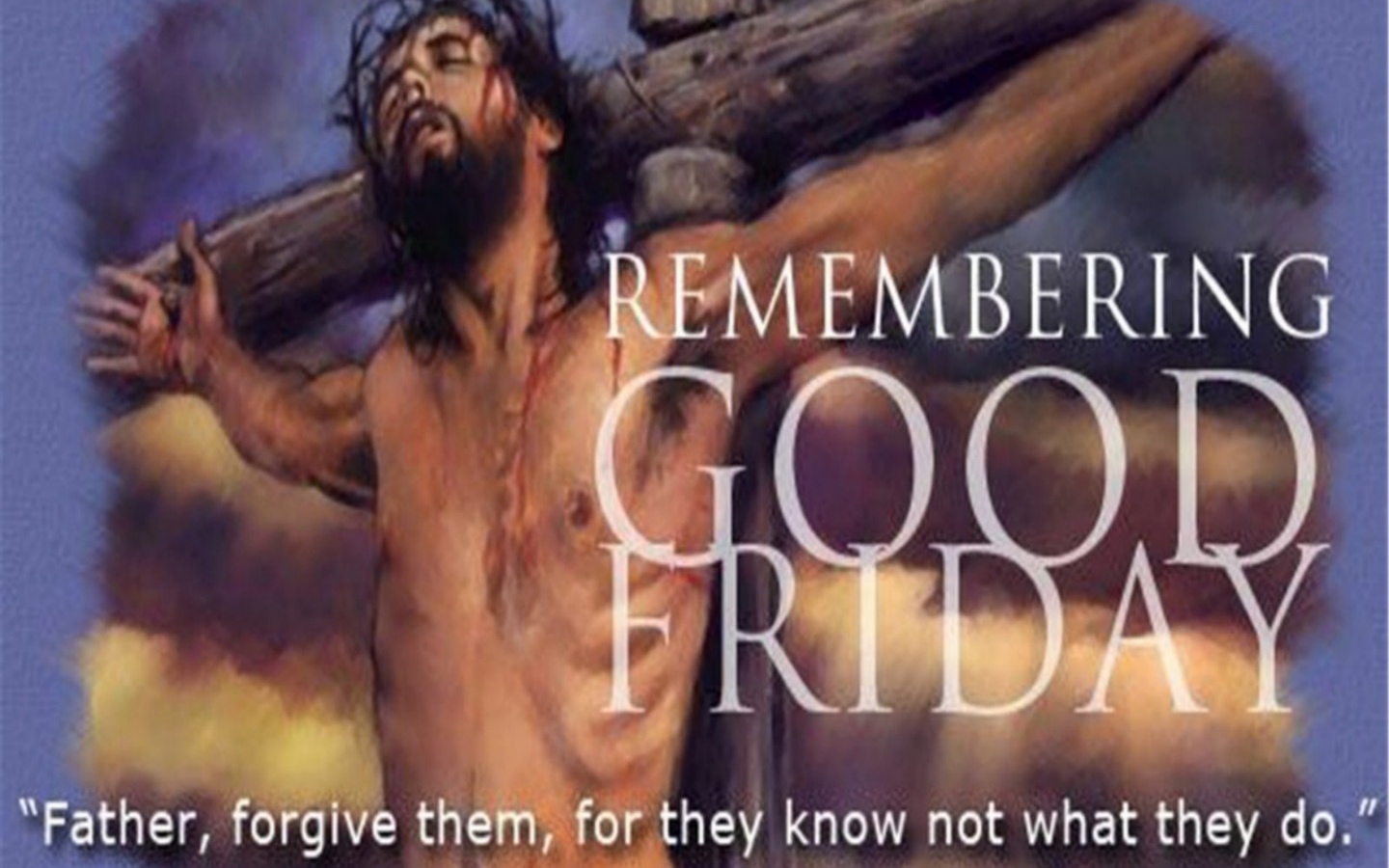
Jesus Rides Upon a Donkey for Every Donkey has its Own Day
Palm Sunday 2024. Simon Cyrene, the Bearer of the Cross Leads a Donkey’s Life of Service, Carrying the Burdens of Life With Humility.
Welcome to the Celebration of Palm Sunday on March 24, 2024. This Septuagenarian celebrates the Septuagint Prophecy on Palm Sunday for Jesus fulfills Prophecy revealed by The Old Testament Prophet Zechariah. As the saying goes, every donkey has his day.
Palm Sunday 2024. Simon Cyrene, the Bearer of the Cross Leads a Donkey’s Life of Service, Carrying the Burdens of Life With Humility. This Septuagenarian Celebrates the Septuagint Prophecy on Palm Sunday According to the Whole Gospel.
I am inviting my readers to reflect upon the choice made by Jesus Christ when he rode into Jerusalem riding on the back of a donkey.
Palm Sunday 2024. Simon Cyrene, the Bearer of the Cross Leads a Donkey’s Life of Service, Carrying the Burdens of Life With Humility. This Septuagenarian Celebrates the Septuagint Prophecy on Palm Sunday According to the Whole Gospel.Palm Sunday 2024. Simon Cyrene, the Bearer of the Cross Leads a Donkey’s Life of Service, Carrying the Burdens of Life With Humility. This Septuagenarian Celebrates the Septuagint Prophecy on Palm Sunday According to the Whole Gospel.Palm Sunday 2024. Simon Cyrene, the Bearer of the Cross Leads a Donkey’s Life of Service, Carrying the Burdens of Life With Humility. This Septuagenarian Celebrates the Septuagint Prophecy on Palm Sunday According to the Whole Gospel.Palm Sunday 2024. Simon Cyrene, the Bearer of the Cross Leads a Donkey’s Life of Service, Carrying the Burdens of Life With Humility. This Septuagenarian Celebrates the Septuagint Prophecy on Palm Sunday According to the Whole Gospel.
Palm Sunday According to the Whole Gospel:
Palm Sunday 2024. Simon Cyrene, the Bearer of the Cross Leads a Donkey’s Life of Service, Carrying the Burdens of Life With Humility.Palm Sunday 2024. Simon Cyrene, the Bearer of the Cross Leads a Donkey’s Life of Service, Carrying the Burdens of Life With Humility. This Septuagenarian Celebrates the Septuagint Prophecy on Palm Sunday According to Whole Gospel.
Greetings from Septuagenarian Celebrating the Septuagint Prophecy on Happy Palm Sunday, March 24, 2024.
Palm Sunday 2024. Simon Cyrene, the Bearer of the Cross Leads a Donkey’s Life of Service, Carrying the Burdens of Life With Humility. This Septuagenarian Celebrates the Septuagint Prophecy on Palm Sunday According to the Whole Gospel.Palm Sunday 2024. Simon Cyrene, the Bearer of the Cross Leads a Donkey’s Life of Service, Carrying the Burdens of Life With Humility. This Septuagenarian Celebrates the Septuagint Prophecy on Palm Sunday According to the Whole Gospel.
THE ABOVE ARTISTIC CREATION CORRECTLY DEPICTS THE CELEBRATION OF PALM SUNDAY DESCRIBED IN THE GOSPEL ACCORDING TO APOSTLE MATTHEW.
Palm Sunday 2024. Simon Cyrene, the Bearer of the Cross Leads a Donkey’s Life of Service, Carrying the Burdens of Life With Humility. This Septuagenarian Celebrates the Septuagint Prophecy on Palm Sunday According to the Whole Gospel.Palm Sunday 2024. Simon Cyrene, the Bearer of the Cross Leads a Donkey’s Life of Service, Carrying the Burdens of Life With Humility. This Septuagenarian Celebrates The Septuagint Prophecy On Palm Sunday According to the Whole Gospel.Palm Sunday 2024. Simon Cyrene, the Bearer of the Cross Leads a Donkey’s Life of Service, Carrying the Burdens of Life With Humility. This Septuagenarian Celebrates the Septuagint Prophecy on Palm Sunday According to the Whole Gospel.
Palm Sunday According to the Whole Gospel: The Gospel According to Saint Matthew is the First Book of The New Testament. Its historical account of Jesus’ Triumphal Entry into Jerusalem on Palm Sunday differs from the other three Gospels. The Gospel Story that I am sharing describes vision of the Second Coming of Jesus Christ.
The Gospel According to Saint Matthew:
Palm Sunday 2024. Simon Cyrene, the Bearer of the Cross Leads a Donkey’s Life of Service, Carrying the Burdens of Life With Humility. This Septuagenarian Celebrates the Septuagint Prophecy on Palm Sunday According to the Whole Gospel.
The Gospel of Matthew was written in Greek language; is the most highly valued, most popular, and widely read of the four Gospels. This is revealed not only by its position in the canon, it is found in first place in most of the known lists of the Gospels but also by the fact of its widespread citation and for it is by far the most often quoted Gospel. Matthew, the Apostle (The Book of Matthew, Chapter 10, verse 3) was eyewitness to the most significant events of Christ’s life and mission. Matthew (Greek. Maththaios) was initially known as Levi, a tax collector (telones) whom Jesus met at the tax office (Matthew, Chapter 9, verse 9). Levi changed his name to Matthew (Hebrew. “Gift of Yahweh”) and it may mean “Amittai” or “True”, when he became a disciple of Jesus. He carefully recorded all the teachings and sayings of Jesus and the Book of Matthew is the teaching Gospel par excellence. Matthew’s Gospel is also the Gospel of fulfillment and it is especially concerned with showing that Christ is fulfillment of the Revelations of The Old Testament. Matthew’s Gospel is the historical record of Jesus Christ, the King of Jews. It describes the birth of the King, preparation of the King, the Law of the Kingdom, the power of the King, the Proclamation of the Kingdom, the rejection of the King, the growth of the Kingdom, the Mission of the King, the Fellowship of the Kingdom, the Triumphal entry of King into Jerusalem, the Consummation of the Kingdom, the Death and Resurrection of the King, and finally the great challenge of the Kingdom. I would like to focus upon the most important event of Jesus’ entry into Jerusalem as a King in a ceremonial procession.
Palm Sunday 2024. Simon Cyrene, the Bearer of the Cross Leads a Donkey’s Life of Service, Carrying the Burdens of Life With Humility. This Septuagenarian Celebrates the Septuagint Prophecy on Palm Sunday According to the Whole Gospel.
Simon Cyrene, the Bearer of the Cross, Lives the Life of a Donkey:
Palm Sunday 2024. Simon Cyrene, the Bearer of the Cross Leads a Donkey’s Life of Service, Carrying the Burdens of Life With Humility. This Septuagenarian Celebrates the Septuagint Prophecy on Palm Sunday According to the Whole Gospel.
Cross (Greek. Stauros): There are three biblical uses of the term: first, the wooden instrument of torture; second, the Cross as a symbolic representation of redemption; third, death on the Cross, i.e., Crucifixion. The English word ‘Cross’ is derived from the Latin ‘Crux’. The Cross existed in different forms, the most important form is known as ‘The Crux immissa’, the type of Cross usually presented in Art in which the upright beam extends above the cross beam, and traditionally this depiction of Cross is held to be the Cross on which the ‘Redeemer’ suffered and died. It is often called the ‘Latin form of Cross. Because of the sacrificial death of the Savior on the Cross, it is presented as the medium of Reconciliation (The Epistle of Apostle Paul to Ephesians, Chapter 2, verse 16) between man and God. In The Epistle of Apostle Paul to the Colossians, Chapter 1, verse 20, states that Peace is effected through the Cross and Chapter 2, verse 14 also claims that the penalties of the law are removed from the believer by the Cross.
Palm Sunday 2024. Simon Cyrene, the Bearer of the Cross Leads a Donkey’s Life of Service, Carrying the Burdens of Life With Humility. This Septuagenarian Celebrates the Septuagint Prophecy on Palm Sunday According to the Whole Gospel.
The Epistle of Apostle Paul to the Galatians, Chapter 2, verse 20 says that man is crucified with Christ and lives by faith of the Son of God. Crucifixion is a dreaded event, and in common usage, the cares and troubles of life are often compared to a Cross. Kindly examine the connection between Cross and the humble Donkey which man uses as a beast of burden.
Palm Sunday 2024. Simon Cyrene, the Bearer of the Cross Leads a Donkey’s Life of Service, Carrying the Burdens of Life With Humility. This Septuagenarian Celebrates the Septuagint Prophecy on Palm Sunday According to the Whole Gospel.
Palm Sunday According to the Whole Gospel: The ‘Cross’ is a symbolic representation of redemption, it describes the act known as Crucifixion or death on the Cross on which the Redeemer suffered and died. Donkey, Equus africanus asinus has a dark stripe from the mane back to onto the tail and a prominent crosswise stripe across the shoulders. Donkeys are domesticated descendants from African ass (true ass) known as Equus asinus which belongs to the Horse family of Equidae. Donkeys derived from Nubian and Somalian subspecies of African wild ass have served mankind since 4,000 B.C. It is tamed and trained for work. It is sturdy, surefooted, known for its endurance and for its ability to carry heavy loads. Donkeys were a fundamental part of economy, they undertook heavy work on the farm and sometimes used for personal transportation. In the southwestern United States, the small donkey is known as ‘Burro’, the word for donkey in Spanish language. Many Americans are very fond of eating ‘burrito’, a Mexican dish consisting of a flour tortilla wrapped around a filling of meat, cheese, refried beans, etc. However, most Americans are not familiar with the crosswise stripes on Donkey’s back that could be termed as ‘Donkey Cross’. Donkey is frequently mentioned in the Books of Bible; Prophet Abraham’s journey of testing, with his son Isaac, was made with a donkey (The First Book of Moses, Genesis, Chapter 22, verses 3,5), Balaam’s donkey was given the temporary power of speech in order to rebuke the foolish prophet (The Fourth Book of Moses, Numbers, Chapter 22, verses 21-33), Israelites captured some 61,000 donkeys from the Midianites (The Fourth Book of Moses, Numbers, Chapter 31, verse 34). Mule is the offspring of a male donkey and a horse mare and it is sterile. King David introduced the use of mule for riding. In the Biblical times, mules were used by kings, officials, and army officers for personal transportation. Jesus Christ, the one coequal with God descended to agony and torture of death due to Crucifixion by riding on the back of a donkey to fulfill the prophecy of Zechariah 9:9
“Tell the daughter of Zion, ‘Behold, your King is coming to you. Lowly, and sitting on a donkey, A colt, the foal of a donkey.”
Palm Sunday 2024. Simon Cyrene, the Bearer of the Cross Leads a Donkey’s Life of Service, Carrying the Burdens of Life With Humility. This Septuagenarian Celebrates the Septuagint Prophecy on Palm Sunday According to the Whole Gospel.
It is very interesting and important to note the difference in narration of this event.
Palm Sunday 2024. Simon Cyrene, the Bearer of the Cross Leads a Donkey’s Life of Service, Carrying the Burdens of Life With Humility. This Septuagenarian Celebrates the Septuagint Prophecy on Palm Sunday According to the Whole Gospel.Palm Sunday 2024. Simon Cyrene, the Bearer of the Cross Leads a Donkey’s Life of Service, Carrying the Burdens of Life With Humility. This Septuagenarian Celebrates the Septuagint Prophecy on Palm Sunday According to the Whole Gospel.
In the Gospel of Matthew, Chapter 21, verse 2, Jesus instructs two of his disciples, “Go into the village opposite you, and immediately you will find a (female) donkey tied, and a colt (young, male donkey) with her. Loose them and bring them to Me.”
Palm Sunday 2024. Simon Cyrene, the Bearer of the Cross Leads a Donkey’s Life of Service, Carrying the Burdens of Life With Humility. This Septuagenarian Celebrates the Septuagint Prophecy on Palm Sunday According to the Whole Gospel.Palm Sunday 2024. Simon Cyrene, the Bearer of the Cross Leads a Donkey’s Life of Service, Carrying the Burdens of Life With Humility. This Septuagenarian Celebrates the Septuagint Prophecy on Palm Sunday According to the Whole Gospel.Palm Sunday 2024. Simon Cyrene, the Bearer of the Cross Leads a Donkey’s Life of Service, Carrying the Burdens of Life With Humility. This Septuagenarian Celebrates the Septuagint Prophecy on Palm Sunday According to the Whole Gospel.Palm Sunday 2024. Simon Cyrene, the Bearer of the Cross Leads a Donkey’s Life of Service, Carrying the Burdens of Life With Humility. This Septuagenarian Celebrates the Septuagint Prophecy on Palm Sunday According to the Whole Gospel.Palm Sunday 2024. Simon Cyrene, the Bearer of the Cross Leads a Donkey’s Life of Service, Carrying the Burdens of Life With Humility. This Septuagenarian Celebrates the Septuagint Prophecy on Palm Sunday According to the Whole Gospel.
In the Gospel According to Mark, Chapter 11, verse 2, in the Gospel According to Luke, Chapter 19, verse 30, and in the Gospel According to John, Chapter 12, verse 14, no mention was made about the female donkey which was needed by Jesus and fetched by His disciples. Many Biblical scholars are not able to explain this apparent discrepancy in the four Gospel accounts and they are not certain if one or two donkeys are involved and the gender identity of the donkey(s) that Jesus used for His victorious entry into Jerusalem. The four Gospel accounts are incomplete and have not revealed the Whole Story of the Donkey and the Donkey Cross.
Palm Sunday 2024. Simon Cyrene, the Bearer of the Cross Leads a Donkey’s Life of Service, Carrying the Burdens of Life With Humility. This Septuagenarian Celebrates the Septuagint Prophecy on Palm Sunday According to the Whole Gospel.
Every Donkey Has His Day
Palm Sunday 2024. Simon Cyrene, the Bearer of the Cross Leads a Donkey’s Life of Service, Carrying the Burdens of Life With Humility. This Septuagenarian Celebrates the Septuagint Prophecy on Palm Sunday According to the Whole Gospel.Palm Sunday 2024. Simon Cyrene, the Bearer of the Cross Leads a Donkey’s Life of Service, Carrying the Burdens of Life With Humility. This Septuagenarian Celebrates the Septuagint Prophecy on Palm Sunday According to the Whole Gospel.
The Whole Gospel – The Gospel According to Angry Matthew:
On a very dark Sunday night in the City of Baghdad, Angry Matthew was on duty at a checkpoint with members of his Infantry Company conducting vital security operations to defend the City from attacks by insurgents. It was calm and there were no suspicious movements. Suddenly, the very alert Angry Matthew noticed a pair of donkeys slowly marching towards his post under the cover of the darkness. Donkeys and Donkey carts in Baghdad have been used by insurgents to fire rockets and missiles. There was no cart and they had approached the checkpoint without making any kind of noise. Angry Matthew was intently observing this donkey pair using his night vision goggles and was surprised to see the shadow of a person riding on the back of the lead donkey. He wanted to immediately shoot at that shadowy figure and alerted his other buddies to get ready for action. The buddies calmly reacted and told Angry Matthew that they could not confirm the presence of any person riding the back of the donkey. They decided to withhold fire and wanted to continue their observation. Angry Matthew’s mood suddenly changed and he lost his sense of suspicion and mistrust and all alone he decided to move closer to the donkeys to get an intimate look. He dropped his gun in the checkpoint and moved forward like a curious kid, and he was seeing a donkey at such a close distance for the first time in his entire life. He was amazed when he saw the vision or apparition of Jesus riding on the back of the donkey. He immediately fell to his knees, and started shouting, “Jesus, Jesus, Jesus, Jesus, My King and My Savior.” He started jumping with joy and went dancing around the donkey pair, running in circles. He soon recognized the gender identity of the donkey pair; one is a female, and the second one is a colt, or young male. The donkeys understand human moods, human language and human actions. The female enjoyed the moments of devoted attention and the sense of pure happiness in the actions of Angry Matthew. The colt started getting aroused by the cheerful mood of its female companion. As Angry Matthew continued to dance around them, the colt swiftly mounted on the back of the female and started to penetrate it with deep, rhythmic pushes with its very long, strong, personal organ that looked like a short barrel gun. When the colt placed its forefeet on top of the female, and stood on its hind legs, Angry Matthew could immediately recognize the ‘Donkey Cross’ on its back. He immediately accepted the Cross as the medium of reconciliation, and as the Symbol of Peace, and felt totally relieved from all the burdens and penalties of his hard, military life in Baghdad. Angry Matthew did not want to miss the glorious view of the ‘Donkey Cross’. He encouraged the colt to stay up and to keep pushing and mating with the lively female. He spontaneously loved the act of Lovemaking. He burst into a song:
” Make Love, Love, Love, and make more Love,
I have no need for War, War, War and no more War.”
The donkey pair fully shared the excitement and enthusiasm and performed the longest ever recorded mating dance. As the dawn slowly arrived, the donkey pair moved out and vanished quickly without any trace. Angry Matthew simply collapsed to the ground. His buddies from the checkpoint quickly moved to give him help. They tried and could not get him to respond. Without wasting any more time, they got him evacuated to the Field Hospital where Angry Matthew recovered his consciousness after three days. By the time, he opened his eyes, Angry Matthew found that he cannot do the job of being a Sergeant in the U.S. Army. He is fully reconciled, he has found Peace and accepted medical disability pension to find satisfaction in Life seeking the memory of the Donkey Cross and the mystical vision of his Savior who came to him riding on the back of a humble Donkey of Baghdad. He fully realized as to why Jesus had asked His disciples to fetch the female donkey and the colt. He got a glimpse of his previous life; his life as Apostle Matthew, the witness of Jesus’s entry into Jerusalem on Palm Sunday. After the ride into Jerusalem, Jesus allowed the donkey pair to relax and enjoy the moment. Jesus as He prepared Himself for the ultimate sacrifice, wanted man to recognize that Lovemaking is not a sin and it is a natural God-given instinct. He gave permission to the young, virile, colt to fully display the Donkey Cross on its back while it enjoyed the feast of ravishing the female partner. The Cross is not inconsistent with expression of Sexual Love and does not condemn man to a life of total celibacy and total sexual abstinence.Now, Angry Matthew knows that the Second Coming of Jesus Christ would be on a dark Sunday night, and he is expecting that the mystery of the Second Coming would come into open, and full display of all mankind in the City of Baghdad.
Whole Dude wants to ask, do you recognize the Donkey Cross as the symbol of Redemption? Please share your experience of Donkey Cross and Donkey Lovemaking and join me in a Whole Conversation.
Whole Dude-Whole Gospel: The ‘Cross’ is a symbolic representation of redemption, it describes the act known as Crucifixion or death on the Cross on which the Redeemer suffered and died. Donkey, Eqqus africanus asinus has a dark stripe from the mane back to onto the tail and a prominent crosswise stripe across the shoulders.
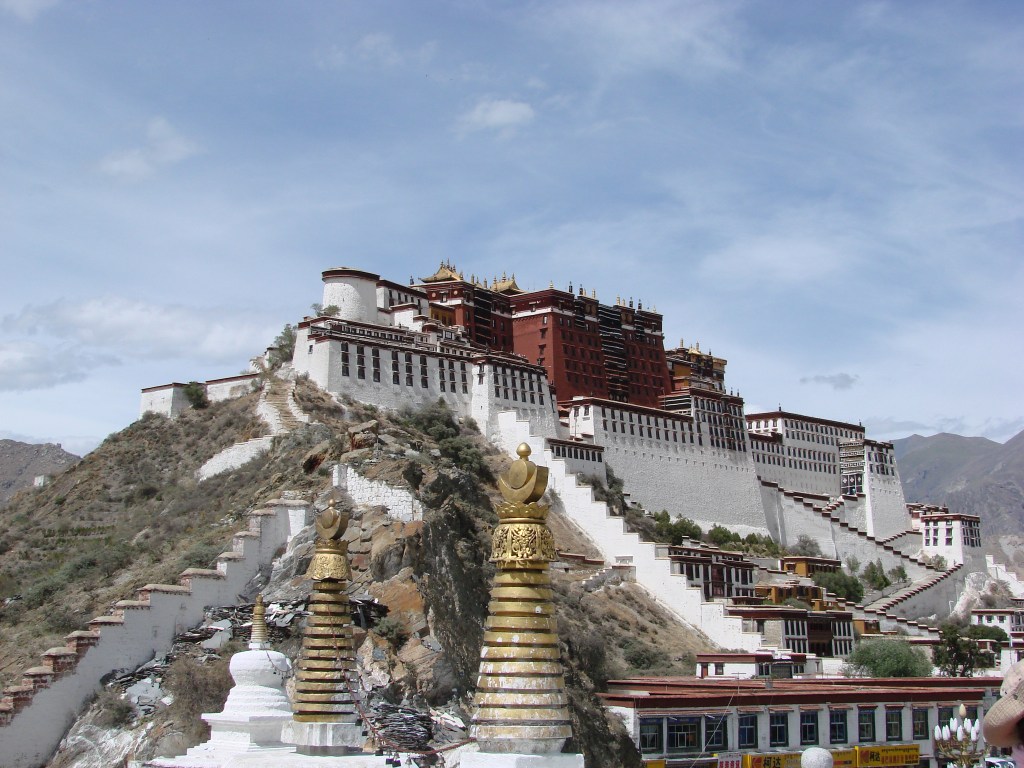
The Living Tibetan Spirits – What is my Final Destination?The Living Tibetan Spirits – What is my Final Destination?
In my Consciousness, I host ‘The Living Tibetan Spirits’, the Spirits of young Tibetan Soldiers who gave their precious lives in the Chittagong Hill Tracts during Bangladesh Ops of 1971.
The Living Tibetan Spirits – What is my Final Destination?
His Holiness the Dalai Lama expressed his desire to return to his home in Tibet. I admit that myself and ‘The Tibetan Living Spirits’ have no Home or Place that we may claim as our own.
The Living Tibetan Spirits – What is my Final Destination?
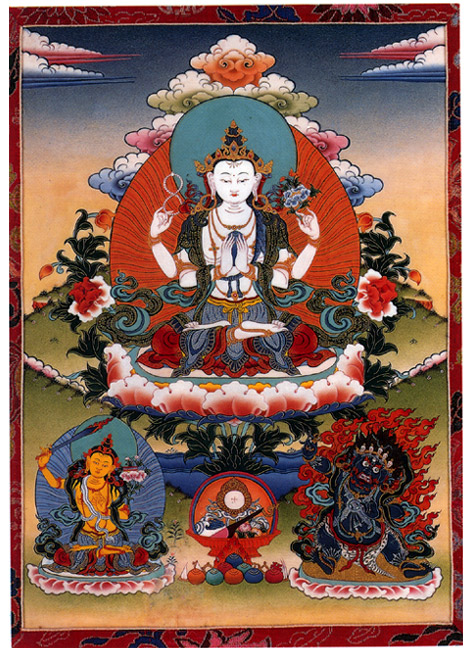
What is my Final Destination? I have no answer. If not His Holiness, I need Manjushree (Manjusri) Bodhisattva of Wisdom to give the Blessings of Compassion to complete my mortal journey with or without reaching a Final Destination.
The Living Tibetan Spirits – What is my Final Destination?
It has been a lifetime wish for the Lama to visit Wutaishan, his native town. But he must follow his own saying: Look at situations from all angles. It is unwise for him to go on pilgrimage in China right now.
At the end of 2017, Prof Samdhong Rinpoche, former Chairman of the Central Tibetan Administration in Dharamshala and now, the Dalai Lama’s Special Envoy, went to China to ‘negotiate’ an eventual visit of the Tibetan leader to Wutaishan in Shanxi Province of northern China.
Mount Wutai is said to be one of the four sacred mountains in Buddhism. Each of the mountains is viewed as the abode of one of the four great bodhisattvas. Wutai is the home of Manjushree, the Bodhisattva of wisdom.
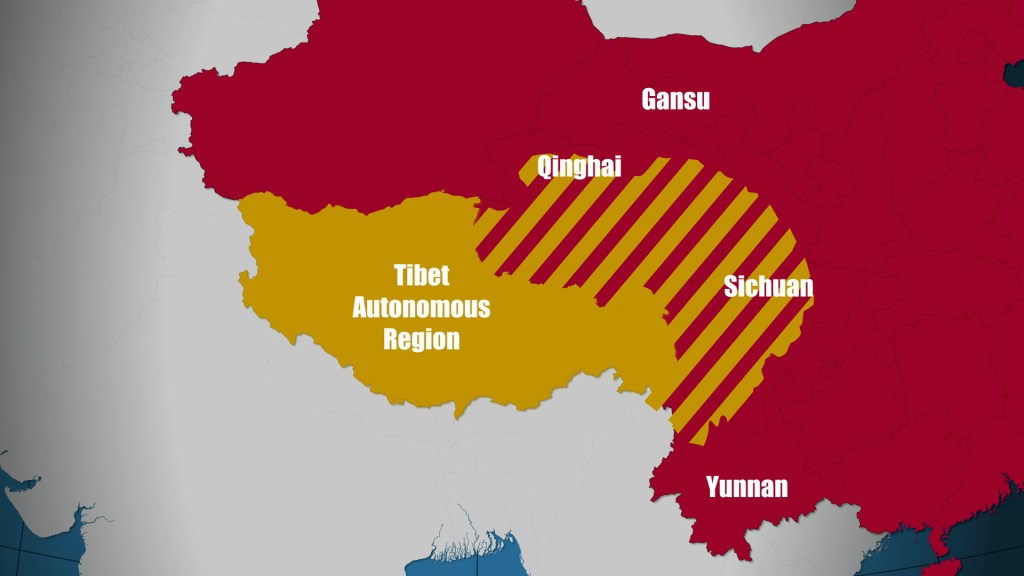
Since decades, the Dalai Lama has expressed the wish to visit Wutaishan in his lifetime. While in China, Samdhong Rinpoche is said to have met senior officials of the United Front Work Department in Kunming and Wutaishan to discuss the proposed visit, which would exclude Tibet, as Beijing does not want to see the Dalai Lama returning to his native land, where he is immensely popular.
Beijing believes that China could benefit from the visit by extracting a ‘statement’ from the Dalai Lama. But can the Tibetan leader ‘admit’ to Tibet always ‘belonging’ to China?
In his Five-Point Peace Plan speech in Washington DC in 1987, which heralded his Middle Way approach, the Dalai Lama stated: “The real issue …is China’s illegal occupation of Tibet, which has given it direct access to the Indian sub-continent. The Chinese authorities have attempted to confuse the issue by claiming that Tibet has always been a part of China. This is untrue. Tibet was a fully independent State when the People’s Liberation Army invaded the country in 1949/50.”
The Dalai Lama knows history can’t (and shouldn’t) be changed. In 1987, the Lama stated: “China’s aggression, condemned by virtually all nations of the free world, was a flagrant violation of international law. …China’s military occupation of Tibet continues.”
The recent secret, though formal, contacts between Beijing and Dharamshala, could make the public believe that there was a relaxation of the Chinese position. It is not the case.
On February 11, The Global Times reported: “The public security bureau (PSB) in Southwest China’s Tibet Autonomous Region has released details on how the public can provide tips on activities of criminal gangs connected to the separatist forces of the Dalai Lama.”
Practically, it means that the Tibetans, who worship, or even simply respect, the Dalai Lama could now be termed criminals?
The mouthpiece of the Party continued: “[the circular] warns local people to be on the lookout for the ‘evil forces’ of the Dalai Lama that might use local temples and religious control to confuse and incite people against the Party and Government.”
The circular asked people to report on the activities of ‘foreign hostile forces’. Interestingly, a few weeks ago, Beijing announced the nomination of three Han cadres in the 20-member Tibet delegation to the National People’s Congress (NPC).
One of the delegates is Zhao Kezhi, the Minister of Public Security, responsible for the dreaded PSBs; he will ‘represent’ Tibet at the NPC. Probably wanting to show the leadership his efficiency, Zhao acted fast; the PSB’s circular said: “Criminal gangs are cancers on the healthy economic and social development, and gangsters are a chronic disease that severely disgusts the public”.
It listed 22 illegal activities to be reported to the PSB; three of them mention the ‘Dalai’s clique’: “The Dalai Lama has been in exile for decades but still holds the ambition to split China’s Tibet from the Chinese territory.”
Dai, a professor at Public Security University of China told The Global Times: “Collusion with criminal gangs is a tactic the Dalai group uses to spreading its message of separatism. These kinds of gangsters were involved in the Lhasa rebellion in the 1950s and the violent incident in 2008 in Tibet.”
Dai added “the spread of separatist gangs in Tibet is rampant. Only a campaign against the ‘gangsters’ would deter secessionist activities by the Dalai.”
Wang Xiaobin, a Chinese scholar at the Beijing-based China Tibetology Research Center, explained that the primary task for Tibet is “to maintain national and ethnic unity”. He cited a few groups in China “closely connected with the Dalai group…The Dalai group always interferes in national affairs by controlling temples, including lamas and living Buddhas, and by spreading a kind of ‘middle way’ to the world.”
Xinhua had earlier reported that the campaign would involve targeting “protective umbrellas of gang crime — the officials who shelter the criminals.”
This explains another Han nomination in the NPC’s Tibet delegation, Jing Hanchao, who is currently Vice-President of the Supreme People’s Court. Jing will make sure that the ‘criminals’ caught in the nets of Zhao Kezhi are heavily sentenced.
All this comes at a time when Beijing has just introduced sophisticated facial recognition software on the plateau. The circular promised that the PSB informers’ identity and safety will be protected: “The targets are gangsters who threaten political stability and infiltrate politics, or encourage the public to go against the Party.”
Beijing has also taken the campaign against the Dalai Lama internationally; there too it has been ferocious.
On February 8, The People’s Daily Online titled: ‘Mercedes-Benz: Don’t dare challenge China’s core interest’ while announcing that the German car company had apologized for quoting the Dalai Lama ‘in an extremely wrong message’. What did Mercedes-Benz do so wrong?
Next to one of its luxury cars, the German firm had quoted the Dalai Lama: “Look at situations from all angles, and you will become more open.”
You may think that it is a nice quote, but Beijing is not amused: “The post not only hurt the feelings of the Chinese people, but also challenged their bottom line on national sovereignty.”
The challenge is clear: If the firm, which sold 600,000 new cars in China in 2017, wants to continue to do business in the Middle Kingdom, it has to follow the paranoid regime’s diktats. The same misadventure had recently happened to the US hotel chain Marriott, who had to profusely apologize for wrongly marking Tibet and Taiwan as independent countries.
President Xi Jinping would have said in 2015 that foreign interference in China’s domestic affairs is intolerable: “Country, enterprise, or individual should not challenge the core interests of China, and [have] any activity to split China.”
Even after due apology by Mercedes-Benz, the Chinese newspaper said that “the apology lacks sincerity and reflects the German carmaker’s lack of understanding of Chinese culture and values. China’s core interests cannot be challenged.”
The paper even compared the Dalai Lama to Hitler: “How will the German people react if a foreign enterprise speaks highly of Adolf Hitler.”
It seems definitely unwise for the Dalai Lama, considered by Beijing as the ‘head of the gangsters’, to go on pilgrimage in China right now. Let us hope that the spiritual leader will not accept the diktats of the bully regime in Beijing.
(The writer is an expert on India-China relations and an author)
The Living Tibetan Spirits – What is my Final Destination?
Whole Dude – Whole Liberator: The US Liberator Express could have stopped Communist China’s Peaceful Liberation of Tibet.
On behalf of Special Frontier Force, I review the “HUMP” airlift operation during the course of The Pacific War 1941 – 1945. The legacy of the “HUMP” cargo flight service operation endures to this day as the same US transport aircraft shaped the beginning of the Tibetan Resistance Movement in 1948-49. Some Hump flights delivered arms and ammunition to Tibet but Tibet failed to use the opportunity to formulate diplomatic and military alliance with the US. Special Frontier Force which represents the Tibetan Resistance Movement acquired some of the US aircraft that provided cargo flights flying the “hump” route. I have flown in these aircraft in the Indian sector of The China-Burma-India Theater of World War II and visited various airfields in Assam, northeast India built by US forces who arrived in response to Japan’s successful military campaign in Southeast Asia during 1941- 42. In my analysis, the Supreme Ruler of Tibet and his regents failed to seize the great opportunity to fully prepare Tibet from the threat of Chinese Expansionism.
On August 14, the V-J Day, the Rudi Connection at Whole Foods reviews the US-Tibet Relations and the Hump Airlift Operations
On Sunday, August 14, 2022, Victory Over Japan Day, the Rudi Connection at Whole Foods Remembers the US President FDR-the Dalai Lama Connection and the Hump Airlift Operations
Yes indeed, Life is Complicated. The complexity of Life involves the problem of earning the Daily Bread. For people who serve in Uniform, the Daily Bread often comes in the context of a struggle, waging a War for Life and Death. The Rudi Connection at Whole Foods remembers that the War was not over on August 14, 1945, the Victory Over Japan Day.
On Sunday, August 14, 2022, Victory Over Japan Day, the Rudi Connection at Whole Foods Remembers the US President FDR-the Dalai Lama Connection and the Hump Airlift Operations. August 14, 1945. Victory Over Japan Day. Victory Kiss in Times Square.
V-J Day, or Victory over Japan Day, marks the end of World War II, one of the deadliest and most destructive wars in history. When President Harry S. Truman announced on Aug. 14, 1945, that Japan had surrendered unconditionally, war-weary citizens around the world erupted in celebration. The Pacific War ended on August 14, 1945, but the “hump” cargo flights continued until September or November 1945 as Nationalist China fought a bitter civil war with Red Army supported by China’s Communist Party.
The 14th Dalai Lama Reveals His Patel Philippe Pocket watch, a Gift from the US President Franklin Roosevelt in 1943
On Sunday, August 14, 2022, Victory Over Japan Day, the Rudi Connection at Whole Foods Remembers the US President FDR-the Dalai Lama Connection and the Hump Airlift Operations.On Sunday, August 14, 2022, Victory Over Japan Day, the Rudi Connection at Whole Foods Remembers the US President FDR-the Dalai Lama Connection and the Hump Airlift Operations.
It has been known for a long time that his Holiness, The Dalai Lama was given a Patek Philippe Pocket-watch by U.S. President Franklin Roosevelt. Until today, the Dalai Lama’s Patek Philiipe has never been seen, but in the photo below we see his holiness showing his watch off in Washington DC., on June 14, 2016.
The photo below is a close-up photo of His Holiness, The Dalai Lama holding his Patek Phillipe & Company [Reference 658] pocket watch. On Sunday, August 14, 2022, Victory Over Japan Day, the Rudi Connection at Whole Foods Remembers the US President FDR-the Dalai Lama Connection and the Hump Airlift Operations
A Treasured Gift of Friendship From the US President Franklin Roosevelt during World War II
The Patek Philippe was a given to The Dalai Lama as a gift from U.S. President Franklin Roosevelt in 1943. During World War II , the Allied Powers wanted to build a road through Tibet, from India that continued to China. In 1943, two American agents from the Office Of Strategic Services (the US Central Intelligence Agency) delivered a package to the young Dalai Lama from U.S. President Roosevelt, which contained a letter and a complicated yellow-gold Patek Phillipe Reference 658 Pocket-watch model.
On Sunday, August 14, 2022, Victory Over Japan Day, the Rudi Connection at Whole Foods Remembers the US President FDR-the Dalai Lama Connection and the Hump Airlift OperationsOn Sunday, August 14, 2022, Victory Over Japan Day, the Rudi Connection at Whole Foods Remembers the US President FDR-the Dalai Lama Connection and the Hump Airlift Operations.On Sunday, August 14, 2022, Victory Over Japan Day, the Rudi Connection at Whole Foods Remembers the US President FDR-the Dalai Lama Connection and the Hump Airlift Operations.
It was U.S. Senator Patrick Leahy who shared this magnificent Patek Philippe watch to the world. Senator Patrick Leahy is pictured below with His Holiness, The Dalai Lama in Washington DC, along with Mrs. Leahy.
On Sunday, August 14, 2022, Victory Over Japan Day, the Rudi Connection at Whole Foods Remembers the US President FDR-the Dalai Lama Connection and the Hump Airlift Operations
Senator Patrick Leahy showcased the Dalai Lama’s Patek Philippe in a Tweet on Twitter Today, as seen below.
On Sunday, August 14, 2022, Victory Over Japan Day, the Rudi Connection at Whole Foods Remembers the US President FDR-the Dalai Lama Connection and the Hump Airlift OperationsOn Sunday, August 14, 2022, Victory Over Japan Day, the Rudi Connection at Whole Foods Remembers the US President FDR-the Dalai Lama Connection and the Hump Airlift Operations
On this day, August 14, 1935, FDR signs the Social Security Act to provide economic security to the working Americans during their old age, a safety net to the retirees and the disabled.
Special Frontier Force Reviews Hump Airlift Operation 1942 – 1945. I am able to review the Hump Airlift Operation for I served at Dum Duma Airfield near Chabua Airfield shown in this Map.
“The world’s first strategic airlift,” the U.S. Air Force calls it.
Special Frontier Force Reviews Hump Airlift Operation 1942 – 1945
Special Frontier Force Reviews Hump Airlift Operation 1942 – 1945. THE LEGACY OF THE HUMP OPERATION LIVES TO THIS DAY.Special Frontier Force Reviews Hump Airlift Operations of 1942-1945. This US Transport Plane C-87 Liberator Express was used for delivering arms and ammunition to Tibet during Hump Airlift Operations of 1942-45.
Excerpt: On behalf of Special Frontier Force, I review the “HUMP” airlift operation during the course of The Pacific War 1941 – 1945. The legacy of the “HUMP” cargo flight service operation endures to this day as the same US transport aircraft shaped the beginning of the Tibetan Resistance Movement in 1948-49. Some Hump flights delivered arms and ammunition to Tibet but Tibet failed to use the opportunity to formulate diplomatic and military alliance with the US. Special Frontier Force which represents the Tibetan Resistance Movement acquired some of the US aircraft that provided cargo flights flying the “hump” route. I have flown in these aircraft in the Indian sector of The China-Burma-India Theater of World War II and visited various airfields in Assam, northeast India built by US forces who arrived in response to Japan’s successful military campaign in Southeast Asia during 1941- 42. In my analysis, the Supreme Ruler of Tibet and his regents failed to seize the great opportunity to fully prepare Tibet from the threat of Chinese Expansionism.
Special Frontier Force Reviews Hump Airlift Operation 1942 – 1945. The Legacy of the Hump Operation lives to this day.
About 80 years ago (April 04, to June 22, 1944) during the Battles of Kohima, and Imphal, Allied troops, mainly Indians, drove back the invading Japanese forces from India’s borders. “Hump” airlift operation was primarily intended to support Chiang Kai-shek’s Nationalist China at their capital Chungking. The Pacific War ended on August 14, 1945, but the “hump” cargo flights continued until September or November 1945 as Nationalist China fought a bitter civil war with Red Army supported by China’s Communist Party. However as US relations with Nationalist China cooled off, US Special Representative to China placed an embargo on further shipment of US arms to Nationalist China during August 1946.
I am sharing an article titled “The Hump was the Deadliest Cargo Flight in History” authored by David Axe. This author mostly refers to findings from Francis B Pike’s book titled ‘HIROHITO’S WAR – THE PACIFIC WAR 1941 – 1945’. To understand the “hump” airlift operation, it will be necessary to know about ‘Burma Road’, a road extending about 700 miles from Kunming, Yunnan Province., S.China, to Lashio, a railhead in Burma. It was built-in 1937- 38 over mountainous terrain by the Chinese. It achieved its greatest importance during World War II, when Japan controlled the East Asian coast and the road served as a vital artery for the transport of Allied military supplies to Chinese forces fighting Japanese. On December 25, 1941, Japan captured Hong Kong. Japanese forces based in Thailand invaded Burma on February 08, 1942. Japanese captured Rangoon on March 08, and Allied Forces lost control over Lashio on April 30, 1942, which closed the Burma Road ending overland supply to Nationalist China. By the end of May 1942, the Japanese held most of Burma and the Allies were left with no supply route to engage Japan on Chinese territory. The solution was found in an air route from Assam in India’s Northeast to Kunming, and various airports in Yunnan Province, Southwest China, the “Dangerous” hump route along the southern edge of Himalaya mountain range. The “hump” route covered a distance of about 525 miles passing over the mountainous region of far north Burma and Western China. The height of mountains in Burma, North-South spur of the main East-West Himalaya mountain range, varied from 16,000 to 12,000 feet. In March 1942, the China National Aviation Corporation (CNAC) began freight service over the “hump” and the US began a transport program in April 1942. In 1944 Japan advanced toward Assam to cut Allied supply lines or capture the airfields at the Western end of the “hump.” Japan’s attack on Assam (March to July 1944) was defeated with help from transport planes withdrawn from the “hump.”
US Army’s Air Transport Command using elements of the 10th Air Force began flying cargo over the “hump” using Dakota C- 47 Skytrains, C – 46 Commandos which gradually expanded into first sustained, long-range, 24-hour around the clock, all-weather aerial cargo flight operation in history. Initially, the “hump” operation involved about 27 planes and about 1,100 pilots and support personnel. By December 1943, cargo planes carried tons of supplies equivalent to the tonnage carried along the Burma Road at the peak of its overland supply operation. In the fall of 1944, Consolidated C – 87s, Douglas C – 54 four engine aircraft were pressed into cargo flight service. In August 1945, the “hump” operation involved 622 aircraft, 34,000 military personnel, and about 47,000 civilian employees. During the course of the “hump” operation, the United States lost 509 downed aircraft identified, and 81 aircraft were listed as missing. The loss of aircraft was mostly contributed by weather-related problems and a few due to enemy action. The United States lost 1,314 crew members killed in action, and 1,171 personnel survived bailouts. US officials reported 345 as Missing in Action (MIA). The search and accounting of MIA have mostly concluded by 1950s and in recent times, there has been a renewed demand to continue search operations following the discovery of cargo plane crash sites in the jungles of Northern Burma along the “hump” flight routes.
At Special Frontier Force I derive consolation from the fact that the legacy of the “HUMP” operation endures. The US transport planes played a role in shaping the Tibetan Resistance Movement from its early beginning during 1948-49 as United States, India, and Tibet recognized the security threats posed by growing Communist military power in mainland China.
Special Frontier Force Reviews Hump Airlift Operation 1942 – 1945. The Legacy of the Hump Operation endures to this day for the US transport aircraft supported Tibetan Resistance Movement since 1948-49.
Rudra Narasimham Rebbapragada Ann Arbor, MI 48104-4162, USA The Spirits of Special Frontier Force
Special Frontier Force Reviews Hump Airlift Operation 1942 – 1945 for its Legacy endures to this day. The Hump aircraft shaped The Tibetan Resistance Movement.
THE HUMP WAS ONE OF THE DEADLIEST CARGO FLIGHTS IN HISTORY
Special Frontier Force Reviews Hump Airlift Operation 1942 – 1945. The legacy of the Hump Operation survives to this day. US transport aircraft shaped Tibetan Resistance Movement since 1948-49.
A third of Allied aircrews died hauling supplies to China in World War II
by DAVID AXE
Few people appreciate it today, but for a period of more than three years during World War II, a force of mostly American airmen undertook one of history’s most complex — and deadliest — logistical operations, flyingthousands of tons of supplies from India over the Himalayas into China in rickety, under-powered cargo planes.
“The world’s first strategic airlift,” the U.S. Air Force calls it.
These flights over “the Hump” were indispensable to China’s war effort against the Japanese, and thus a major factor in the Allies’ ultimate victory.
But at a tremendous cost. No fewer than 700 Allied planes crashed or got shot down and 1,200 airmen died. “Every 340 tons delivered cost the life of a pilot,” historian Francis Pike writes in his exhaustive new history.
Hirohito’s War: The Pacific War, 1941–1945.
Within a few months after bombing Pearl Harbor in December 1941, the armies of Imperial Japan occupied a swath of Asia extending from China and Korea south into Burma and what is now Indonesia, eastward all the way to isolated islands in the middle of the Pacific.
Tokyo’s march seemed inexorable. And Japan’s expansion might have been much, much more aggressive if not for the valiant and bloody resistance that Chinese Generalissimo Chiang Kai-shek and his fighters offered up in the portions of their country the Japanese did not fully control.
Chiang’s soldiers tied up no fewer than 1.5 million of Tokyo’s own troops, Pike asserts in his dense new tome, which at nearly a thousand pages defies conventional review. But the Chinese were strapped for weapons, ammo, and supplies. The Allies — and America, in particular — were desperate to keep China fighting and, by extension, keep Japan bogged down.
As Pike explains, prior to May 1942 the Allies maintained a land route from India through Burma into China. But Tokyo’s conquest of Burma shifted the burden of supplying Chiang’s forces to a contingent of initially just 25 planes — a mix of Douglas DC-3s, C-39s, C-47s and C-53s that was wholly inadequate for the mission’s demands.
“When fully loaded, Douglas DC-3s could not climb high enough to clear all the peaks and were forced to weave a perilous path through the mountains, a task that was virtually impossible when the treacherous Himalayan weather closed in,” Pike writes.
Turbulence could force a plane to drop thousands of feet in mere seconds. “Flight operations were a pilot’s nightmare,” according to the Air Force.
Planes crashed. Japanese fighters shot down others. In April 1943 the U.S. Army Air Corps rushed the bigger and more powerful Curtis-Wright C-46 into production to help out with Hump ops, but the new plane’s engines had a tendency to ice up. “The bugs were worked out over the Hump,” Pike quotes one pilot as explaining.
Special Frontier Force Reviews Hump Airlift Operation – China-Burma-India Theater, World War II. C-46 Transport Plane flying east of Salween River. “HUMP” refers to Mountains that separate Salween and Mekong Rivers.Special Frontier Force Reviews Hump Airlift Operation 1942 – 1945.
At the top — a C-46 over the Hump. At right — view from over the Hump. Photo by Gifford Bull
By the end of 1943, the Allies’ Air Transport Command had 142 types of transport and five crews for each plane. ATC eventually swelled to 700 planes supported by 84,000 military personnel flying 1,000 miles round trip delivering up to 10,000 tons of supplies a month, “with a plane crossing the Hump every two minutes,” according to Pike.
Granted, the airplanes and aircrews were just part of what was, in fact, an unbelievably vast effort, also involving cargo ships that deposited supplies in Calcutta and trains that hauled the material to the airfields — not to mention roughly two million Indian and Chinese laborers who built the airstrips in their respective countries by hand.
But the aircrews arguably suffered the most of all the people involved in the Hump operation. “There was an approximately one in three chance of being killed,” Pike writes — one of the worst wartime survival rates ever. Of the 700 planes (US official estimate 590 planes) that went down trying to cross the Hump between 1942 and 1945, some 500 (US official estimate 81 missing aircraft and 509 downed planes fully identified) remain missing more than 70 years later.
Published on Jun 18. All rights reserved by the author.
FRANCIS B PIKE DESCRIBED THE HUMP CARGO FLIGHT OPERATION OF 1942 – 1945 IN HIS BOOK TITLED ‘HIROHITO’S WAR. SPECIAL FRONTIER FORCE REVIEWED THE HUMP OPERATION FOR ITS LEGACY CONTINUES TO THIS DAY.SPECIAL FRONTIER FORCE REVIEWS HUMP AIRLIFT OPERATION 1942 – 1945. FRANCIS B PIKE MAY NOT HAVE KNOWN THAT THE LEGACY OF THE HUMP OPERATION LIVES TO THIS DAY.Special Frontier Force Reviews Hump Airlift Operation 1942 – 1945. THE BURMA ROAD DURING WORLD WAR IISpecial Frontier Force Reviews Hump Airlift Operation 1942 – 1945. Japan’s conquest of Burma in 1942 cut off the overland supply route known as the Burma Road forcing the choice of an aerial route to deliver military supplies to Nationalist China.Special Frontier Force Reviews Hump Airlift Operation 1942 – 1945. The Legacy of the Hump Operation still survives to this day.Special Frontier Force Reviews Hump Airlift Operation 1942 – 1945. Its Legacy continues to this day.Special Frontier Force Reviews Hump Airlift Operation 1942 – 1945. Its legacy continues to this day. US Cargo planes used in Burma Drop supported the Tibetan Resistance Movement since 1948-49.Special Frontier Force Reviews Hump Airlift Operation 1942 – 1945 as its Legacy continues to this day.Special Frontier Force Reviews the Legacy of Hump Airlift Operation 1942 – 1945.Special Frontier Force Reviews The Legacy of Hump Airlift Operation 1942 – 1945.Special Frontier Force Reviews Hump Airlift Operation 1942 – 1945.
Special Frontier Force Reviews the Discovery of wreckage of a Hump Airlift Operation Transport Plane
Special Frontier Force Reviews the Discovery of wreckage of a Hump Airlift Operation Transport Plane. This US Transport Plane C-87 Liberator Express was used for delivering arms and ammunition to Tibet during Hump Airlift Operations of 1942-45.
Special Frontier Force shares interest in the discovery of wreckage of a Hump Transport Plane that crashed in Tibet 80 years ago. In a previous post on this subject, I have shared the maps of Hump Flight routes and majority of crashes occurred either in Burma or Southwest China, and not in Tibet.
Wreckage of a Hump Transport Plane That Crashed in Tibet 80 Years Ago Now En Route to the Jianchuan Museum in Chengdu, China
Whole Dude – Whole Liberator: Special Frontier Force Reviews the Discovery of wreckage of a Hump Airlift Operation Transport Plane.
On August 5, Xinhua News Agency photo center photographer embedded into the search party took a group photo with volunteers in the 4,100-meter-high unpopulated area
On August 5, volunteers collected wreckage in the 4,200-meter-high area.
Whole Dude – Whole Liberator: Special Frontier Force Reviews the Discovery of wreckage of a Hump Airlift Operation Transport Plane. On August 5, Xinhua News Agency photo center photographer embedded into the search party took a group photo with volunteers in the 4,100-meter-high unpopulated area (PRNewsFoto/Xinhua News Agency)
CHENGDU, China, Aug. 13, 2015 /PRNewswire/ — Wreckage of an air freighter that was navigating over the Hump, the name given by Allied World War II pilots to the eastern part of the Himalayas due to the difficult challenge the mountain range posed to the pilots, when it crashed into a glacier 70 years ago and where its debris have since remained, was moved from Bomi County, Tibet, to Chengdu, Sichuan province on August 11. The valuable historical relics which are an important part of the story of Sino-US cooperation during WWII will be sent to China’s largest private museum, Jianchuan Museum.
The remains belong to the United States army’s Consolidated C-87 Liberator Express, serial 41-24688, which crashed in the winter of 1943. The C-87 plane and the remains of five U.S. pilots were discovered in the area, 4,100 meters above sea level, by local hunter Luo Song in September 1993. China and the U.S. later confirmed that the remains belonged to an airplane which had crashed at that time. The two countries held a transfer of remains ceremony at which then U.S. President Bill Clinton paid final respects to the deceased. However, the majority of the remains of the plane were left on the glacier.
Jianchuan Museum security director Choenyi Choedak took part in the search. He told reporters that the search team found many remains including three pairs of army boots, including a pair of thigh-high boots, two pairs of hunting boots and one pair of low boots.
“Those boots are the same ones that I saw in the 1990s,” Luo Song, an inhabitant of Zhongbei Village, Yigong, who guided the search team to the glacier and one of five local people who first discovered the crashed remains in 1990, said.
Beset by the limitations in terms of transport, the search team could only move about 50 pieces of the valuable wreckage, including a 4.5-meter-long and 2-meter-wide wing with an engraved white five-pointed star, as well as the dashboard, the engine and cabin parts. A reporter described seeing words and acronyms, among them, “Chicago,” “USA,” “FBE-18” and “PAT” on some parts of what was collected.
Yang Jianchao, head of the search team and deputy director of Jianchuan Museum, said that it was especially difficult to climb onto the glacier as there are no roads or bridges. The members of the search team had to build makeshift roads and bridges while climbing and then carried the remains on their backs and descended the mountain with the help of 41 Tibetan porters.
The route over the Hump was established during the World War II and served as an “aerial lifeline” to transport strategic supplies from Allied positions further west into China. It is the longest-running, hardest and most costly airborne route in the history of wartime aviation. The Hump pilots transported about 850,000 tons of strategic supplies and roughly 1,500 American planes crashed along the route in southwest China.
“The route can be clearly seen from the light reflected by the wreckage of our companions’ crashed planes on a clear day and we call the valley with the scattered wreckage of airplanes ‘Aluminum Valley’, a name as cold as the metal,” citing The Time’s descriptions of the Hump during World War II. Yang, the museum deputy director, explained that during the war, thousands of aircraft flying the Hump crashed, but few of them have ever been found. It is the first time that such a considerable collection of remains is being brought together in a museum.
The search was initially planned six years ago. In 2009, Jianchuan Museum curator Fan Jianquan, learned from his comrade-in-arms that the wreckage of a U.S. transport airplane along the WWII Hump route remained in the depopulated zone in Nyingchi Prefecture in Tibet. He immediately developed a strong desire to find and bring in what he knew had to be a behemoth of a plane to Chengdu.
“Six years ago I told myself that I must take the remains to Chengdu, but I was unable to do what I had hoped to do as conducting a search over such uninhabitable terrain combined with the need to properly handle and preserve such cultural relics needed the assistance of professionals,” Fan elaborated. “My wish finally came true this year, after years of elaborate planning.”
One of the halls in the museum, the Flying Squad Hall, houses many U.S. army relics from the World War II period, in commemoration of the aid provided by the U.S. Air Force to China during the war.
“I felt all the hard work had been more than worthwhile when I saw the wreckage,” said Hu Zhiyang, a volunteer who was nearly hit by a rock that had fallen off the side of the mountain during the climb. Despite the elaborate planning, the actual search proved far more difficult than expected. Another team leader Jiang Fan said that he felt he could vividly imagine the ordeal of the pilots when he first came upon the wreckage. “These pilots were the very the best flyers of that era. It is heart rendering to think that they travelled so far from their homelands to fight for the world peace,” Jiang said.
Search team member Ni Jian said that he felt that it was a worthy search, although the expedition was exhausting and he suffered badly from altitude sickness. Kuailu Investment, where Ni works, invested over 300 million yuan (approx. US$50 million) in making a film to be named The Bombing, depicting the horror that can be inflicted by military aggression by showing the ruthless bombing of Chongqing by the Japanese army during the Sino-Japanese war and the history of Chinese and American air forces joining together in the bloody battle. He said, “We will share the spiritual wealth of this search journey with the movie crew, encouraging all to remember the history and making this anti-war movie even richer in content.” According to sources, the 3D movie, made possible as a result of a Sino-US partnership, is already 70 per cent finished, and is expected to be completed this October and be released next February.
The remains will go on display at Jianchuan Museum and be opened to the public on or about August 15. In addition, Xinhua News Agency chief editor Chen Xiaobo and a renowned exhibition curator, will host the exhibition where large sections of the plane will be on display, entitled “Broken wings – searching for C-87”.
Whole Dude – Whole Liberator: Special Frontier Force reviews Hump Airlift Operations of 1942-1945. Consolidated C-87 Liberator Express Transport aircraft delivered arms and ammunition to Tibet during World War II while they flew over Tibet.Special Frontier Force Reviews Hump Airlift Operation – China-Burma-India Theater-World War II – Brigadier General Tom Hardin, Commander, Hump Fliers.Special Frontier Force Reviews Hump Airlift Operation, China-Burma-India Theater, World War II. Hump Fliers Captain “Bamboo” Joe Barube and Lieutenant Ernest Lajoie returning from China Operations Office.Special Frontier Force Reviews Hump Airlift Operation, China-Burma-India Theater, World War II. Hump Flier Assistant Engineer John Huffman, a bail out survivor wearing Tibetan clothes.Special Frontier Force Reviews Hump Airlift Operation, China-Burma-India Theater World War II. Hump Flight Maintenance Field in India.Special Frontier Force Reviews Hump Airlift Operation, China-Burma-India Theater, World War II. Air Depot in China showing freight received from India. Freight included even trucks, jeeps, and ambulances apart from guns and bombs.Whole Dude – Whole Liberator: Special Frontier Force Reviews Hump Airlift Operation, China-Burma-India Theater, World War II. Anything that can be broken down into four-ton-Units have gone over the “HUMP.”Whole Dude – Whole Liberator: Special Frontier Force Reviews Hump Airlift Operation 1942 – 1945. On Sunday, August 14, 2022, Victory Over Japan Day, the Rudi Connection at Whole Foods Remembers the US President FDR-the Dalai Lama Connection and the Hump Airlift Operations.
Special Frontier Force Reviews Hump Airlift Operation 1942 – 1945. I am able to review the Hump Airlift Operation for I served at Dum Duma Airfield near Chabua Airfield shown in this Map.
“The world’s first strategic airlift,” the U.S. Air Force calls it.
Special Frontier Force Reviews Hump Airlift Operation 1942 – 1945
Special Frontier Force Reviews Hump Airlift Operation 1942 – 1945. THE LEGACY OF THE HUMP OPERATION LIVES TO THIS DAY.Special Frontier Force Reviews Hump Airlift Operations of 1942-1945. This US Transport Plane C-87 Liberator Express was used for delivering arms and ammunition to Tibet during Hump Airlift Operations of 1942-45.
Excerpt: On behalf of Special Frontier Force, I review the “HUMP” airlift operation during the course of The Pacific War 1941 – 1945. The legacy of the “HUMP” cargo flight service operation endures to this day as the same US transport aircraft shaped the beginning of the Tibetan Resistance Movement in 1948-49. Some Hump flights delivered arms and ammunition to Tibet but Tibet failed to use the opportunity to formulate diplomatic and military alliance with the US. Special Frontier Force which represents the Tibetan Resistance Movement acquired some of the US aircraft that provided cargo flights flying the “hump” route. I have flown in these aircraft in the Indian sector of The China-Burma-India Theater of World War II and visited various airfields in Assam, northeast India built by US forces who arrived in response to Japan’s successful military campaign in Southeast Asia during 1941- 42. In my analysis, the Supreme Ruler of Tibet and his regents failed to seize the great opportunity to fully prepare Tibet from the threat of Chinese Expansionism.
Special Frontier Force Reviews Hump Airlift Operation 1942 – 1945. The Legacy of the Hump Operation lives to this day.
About 80 years ago (April 04, to June 22, 1944) during the Battles of Kohima, and Imphal, Allied troops, mainly Indians, drove back the invading Japanese forces from India’s borders. “Hump” airlift operation was primarily intended to support Chiang Kai-shek’s Nationalist China at their capital Chungking. The Pacific War ended on August 14, 1945, but the “hump” cargo flights continued until September or November 1945 as Nationalist China fought a bitter civil war with Red Army supported by China’s Communist Party. However as US relations with Nationalist China cooled off, US Special Representative to China placed an embargo on further shipment of US arms to Nationalist China during August 1946.
I am sharing an article titled “The Hump was the Deadliest Cargo Flight in History” authored by David Axe. This author mostly refers to findings from Francis B Pike’s book titled ‘HIROHITO’S WAR – THE PACIFIC WAR 1941 – 1945’. To understand the “hump” airlift operation, it will be necessary to know about ‘Burma Road’, a road extending about 700 miles from Kunming, Yunnan Province., S.China, to Lashio, a railhead in Burma. It was built-in 1937- 38 over mountainous terrain by the Chinese. It achieved its greatest importance during World War II, when Japan controlled the East Asian coast and the road served as a vital artery for the transport of Allied military supplies to Chinese forces fighting Japanese. On December 25, 1941, Japan captured Hong Kong. Japanese forces based in Thailand invaded Burma on February 08, 1942. Japanese captured Rangoon on March 08, and Allied Forces lost control over Lashio on April 30, 1942, which closed the Burma Road ending overland supply to Nationalist China. By the end of May 1942, the Japanese held most of Burma and the Allies were left with no supply route to engage Japan on Chinese territory. The solution was found in an air route from Assam in India’s Northeast to Kunming, and various airports in Yunnan Province, Southwest China, the “Dangerous” hump route along the southern edge of Himalaya mountain range. The “hump” route covered a distance of about 525 miles passing over the mountainous region of far north Burma and Western China. The height of mountains in Burma, North-South spur of the main East-West Himalaya mountain range, varied from 16,000 to 12,000 feet. In March 1942, the China National Aviation Corporation (CNAC) began freight service over the “hump” and the US began a transport program in April 1942. In 1944 Japan advanced toward Assam to cut Allied supply lines or capture the airfields at the Western end of the “hump.” Japan’s attack on Assam (March to July 1944) was defeated with help from transport planes withdrawn from the “hump.”
US Army’s Air Transport Command using elements of the 10th Air Force began flying cargo over the “hump” using Dakota C- 47 Skytrains, C – 46 Commandos which gradually expanded into first sustained, long-range, 24-hour around the clock, all-weather aerial cargo flight operation in history. Initially, the “hump” operation involved about 27 planes and about 1,100 pilots and support personnel. By December 1943, cargo planes carried tons of supplies equivalent to the tonnage carried along the Burma Road at the peak of its overland supply operation. In the fall of 1944, Consolidated C – 87s, Douglas C – 54 four engine aircraft were pressed into cargo flight service. In August 1945, the “hump” operation involved 622 aircraft, 34,000 military personnel, and about 47,000 civilian employees. During the course of the “hump” operation, the United States lost 509 downed aircraft identified, and 81 aircraft were listed as missing. The loss of aircraft was mostly contributed by weather-related problems and a few due to enemy action. The United States lost 1,314 crew members killed in action, and 1,171 personnel survived bailouts. US officials reported 345 as Missing in Action (MIA). The search and accounting of MIA have mostly concluded by 1950s and in recent times, there has been a renewed demand to continue search operations following the discovery of cargo plane crash sites in the jungles of Northern Burma along the “hump” flight routes.
At Special Frontier Force I derive consolation from the fact that the legacy of the “HUMP” operation endures. The US transport planes played a role in shaping the Tibetan Resistance Movement from its early beginning during 1948-49 as United States, India, and Tibet recognized the security threats posed by growing Communist military power in mainland China.
Special Frontier Force Reviews Hump Airlift Operation 1942 – 1945. The Legacy of the Hump Operation endures to this day for the US transport aircraft supported Tibetan Resistance Movement since 1948-49.
Rudra Narasimham Rebbapragada Ann Arbor, MI 48104-4162, USA The Spirits of Special Frontier Force
Special Frontier Force Reviews Hump Airlift Operation 1942 – 1945 for its Legacy endures to this day. The Hump aircraft shaped The Tibetan Resistance Movement.
THE HUMP WAS ONE OF THE DEADLIEST CARGO FLIGHTS IN HISTORY
Special Frontier Force Reviews Hump Airlift Operation 1942 – 1945. The legacy of the Hump Operation survives to this day. US transport aircraft shaped Tibetan Resistance Movement since 1948-49.
A third of Allied aircrews died hauling supplies to China in World War II
by DAVID AXE
Few people appreciate it today, but for a period of more than three years during World War II, a force of mostly American airmen undertook one of history’s most complex — and deadliest — logistical operations, flyingthousands of tons of supplies from India over the Himalayas into China in rickety, under-powered cargo planes.
“The world’s first strategic airlift,” the U.S. Air Force calls it.
These flights over “the Hump” were indispensable to China’s war effort against the Japanese, and thus a major factor in the Allies’ ultimate victory.
But at a tremendous cost. No fewer than 700 Allied planes crashed or got shot down and 1,200 airmen died. “Every 340 tons delivered cost the life of a pilot,” historian Francis Pike writes in his exhaustive new history.
Hirohito’s War: The Pacific War, 1941–1945.
Within a few months after bombing Pearl Harbor in December 1941, the armies of Imperial Japan occupied a swath of Asia extending from China and Korea south into Burma and what is now Indonesia, eastward all the way to isolated islands in the middle of the Pacific.
Tokyo’s march seemed inexorable. And Japan’s expansion might have been much, much more aggressive if not for the valiant and bloody resistance that Chinese Generalissimo Chiang Kai-shek and his fighters offered up in the portions of their country the Japanese did not fully control.
Chiang’s soldiers tied up no fewer than 1.5 million of Tokyo’s own troops, Pike asserts in his dense new tome, which at nearly a thousand pages defies conventional review. But the Chinese were strapped for weapons, ammo, and supplies. The Allies — and America, in particular — were desperate to keep China fighting and, by extension, keep Japan bogged down.
As Pike explains, prior to May 1942 the Allies maintained a land route from India through Burma into China. But Tokyo’s conquest of Burma shifted the burden of supplying Chiang’s forces to a contingent of initially just 25 planes — a mix of Douglas DC-3s, C-39s, C-47s and C-53s that was wholly inadequate for the mission’s demands.
“When fully loaded, Douglas DC-3s could not climb high enough to clear all the peaks and were forced to weave a perilous path through the mountains, a task that was virtually impossible when the treacherous Himalayan weather closed in,” Pike writes.
Turbulence could force a plane to drop thousands of feet in mere seconds. “Flight operations were a pilot’s nightmare,” according to the Air Force.
Planes crashed. Japanese fighters shot down others. In April 1943 the U.S. Army Air Corps rushed the bigger and more powerful Curtis-Wright C-46 into production to help out with Hump ops, but the new plane’s engines had a tendency to ice up. “The bugs were worked out over the Hump,” Pike quotes one pilot as explaining.
Special Frontier Force Reviews Hump Airlift Operation – China-Burma-India Theater, World War II. C-46 Transport Plane flying east of Salween River. “HUMP” refers to Mountains that separate Salween and Mekong Rivers.Special Frontier Force Reviews Hump Airlift Operation 1942 – 1945.
At the top — a C-46 over the Hump. At right — view from over the Hump. Photo by Gifford Bull
By the end of 1943, the Allies’ Air Transport Command had 142 types of transport and five crews for each plane. ATC eventually swelled to 700 planes supported by 84,000 military personnel flying 1,000 miles round trip delivering up to 10,000 tons of supplies a month, “with a plane crossing the Hump every two minutes,” according to Pike.
Granted, the airplanes and aircrews were just part of what was, in fact, an unbelievably vast effort, also involving cargo ships that deposited supplies in Calcutta and trains that hauled the material to the airfields — not to mention roughly two million Indian and Chinese laborers who built the airstrips in their respective countries by hand.
But the aircrews arguably suffered the most of all the people involved in the Hump operation. “There was an approximately one in three chance of being killed,” Pike writes — one of the worst wartime survival rates ever. Of the 700 planes (US official estimate 590 planes) that went down trying to cross the Hump between 1942 and 1945, some 500 (US official estimate 81 missing aircraft and 509 downed planes fully identified) remain missing more than 70 years later.
Published on Jun 18. All rights reserved by the author.
FRANCIS B PIKE DESCRIBED THE HUMP CARGO FLIGHT OPERATION OF 1942 – 1945 IN HIS BOOK TITLED ‘HIROHITO’S WAR. SPECIAL FRONTIER FORCE REVIEWED THE HUMP OPERATION FOR ITS LEGACY CONTINUES TO THIS DAY.SPECIAL FRONTIER FORCE REVIEWS HUMP AIRLIFT OPERATION 1942 – 1945. FRANCIS B PIKE MAY NOT HAVE KNOWN THAT THE LEGACY OF THE HUMP OPERATION LIVES TO THIS DAY.Special Frontier Force Reviews Hump Airlift Operation 1942 – 1945. THE BURMA ROAD DURING WORLD WAR IISpecial Frontier Force Reviews Hump Airlift Operation 1942 – 1945. Japan’s conquest of Burma in 1942 cut off the overland supply route known as the Burma Road forcing the choice of an aerial route to deliver military supplies to Nationalist China.Special Frontier Force Reviews Hump Airlift Operation 1942 – 1945. The Legacy of the Hump Operation still survives to this day.Special Frontier Force Reviews Hump Airlift Operation 1942 – 1945. Its Legacy continues to this day.Special Frontier Force Reviews Hump Airlift Operation 1942 – 1945. Its legacy continues to this day. US Cargo planes used in Burma Drop supported the Tibetan Resistance Movement since 1948-49.Special Frontier Force Reviews Hump Airlift Operation 1942 – 1945 as its Legacy continues to this day.Special Frontier Force Reviews the Legacy of Hump Airlift Operation 1942 – 1945.Special Frontier Force Reviews The Legacy of Hump Airlift Operation 1942 – 1945.Special Frontier Force Reviews Hump Airlift Operation 1942 – 1945.
Special Frontier Force Reviews the Discovery of wreckage of a Hump Airlift Operation Transport Plane
Special Frontier Force Reviews the Discovery of wreckage of a Hump Airlift Operation Transport Plane. This US Transport Plane C-87 Liberator Express was used for delivering arms and ammunition to Tibet during Hump Airlift Operations of 1942-45.
Special Frontier Force shares interest in the discovery of wreckage of a Hump Transport Plane that crashed in Tibet 80 years ago. In a previous post on this subject, I have shared the maps of Hump Flight routes and majority of crashes occurred either in Burma or Southwest China, and not in Tibet.
Wreckage of a Hump Transport Plane That Crashed in Tibet 80 Years Ago Now En Route to the Jianchuan Museum in Chengdu, China
Special Frontier Force Reviews the Discovery of wreckage of a Hump Airlift Operation Transport Plane.
On August 5, Xinhua News Agency photo center photographer embedded into the search party took a group photo with volunteers in the 4,100-meter-high unpopulated area
On August 5, volunteers collected wreckage in the 4,200-meter-high area.
Special Frontier Force Reviews the Discovery of wreckage of a Hump Airlift Operation Transport Plane. On August 5, Xinhua News Agency photo center photographer embedded into the search party took a group photo with volunteers in the 4,100-meter-high unpopulated area (PRNewsFoto/Xinhua News Agency)
CHENGDU, China, Aug. 13, 2015 /PRNewswire/ — Wreckage of an air freighter that was navigating over the Hump, the name given by Allied World War II pilots to the eastern part of the Himalayas due to the difficult challenge the mountain range posed to the pilots, when it crashed into a glacier 70 years ago and where its debris have since remained, was moved from Bomi County, Tibet, to Chengdu, Sichuan province on August 11. The valuable historical relics which are an important part of the story of Sino-US cooperation during WWII will be sent to China’s largest private museum, Jianchuan Museum.
The remains belong to the United States army’s Consolidated C-87 Liberator Express, serial 41-24688, which crashed in the winter of 1943. The C-87 plane and the remains of five U.S. pilots were discovered in the area, 4,100 meters above sea level, by local hunter Luo Song in September 1993. China and the U.S. later confirmed that the remains belonged to an airplane which had crashed at that time. The two countries held a transfer of remains ceremony at which then U.S. President Bill Clinton paid final respects to the deceased. However, the majority of the remains of the plane were left on the glacier.
Jianchuan Museum security director Choenyi Choedak took part in the search. He told reporters that the search team found many remains including three pairs of army boots, including a pair of thigh-high boots, two pairs of hunting boots and one pair of low boots.
“Those boots are the same ones that I saw in the 1990s,” Luo Song, an inhabitant of Zhongbei Village, Yigong, who guided the search team to the glacier and one of five local people who first discovered the crashed remains in 1990, said.
Beset by the limitations in terms of transport, the search team could only move about 50 pieces of the valuable wreckage, including a 4.5-meter-long and 2-meter-wide wing with an engraved white five-pointed star, as well as the dashboard, the engine and cabin parts. A reporter described seeing words and acronyms, among them, “Chicago,” “USA,” “FBE-18” and “PAT” on some parts of what was collected.
Yang Jianchao, head of the search team and deputy director of Jianchuan Museum, said that it was especially difficult to climb onto the glacier as there are no roads or bridges. The members of the search team had to build makeshift roads and bridges while climbing and then carried the remains on their backs and descended the mountain with the help of 41 Tibetan porters.
The route over the Hump was established during the World War II and served as an “aerial lifeline” to transport strategic supplies from Allied positions further west into China. It is the longest-running, hardest and most costly airborne route in the history of wartime aviation. The Hump pilots transported about 850,000 tons of strategic supplies and roughly 1,500 American planes crashed along the route in southwest China.
“The route can be clearly seen from the light reflected by the wreckage of our companions’ crashed planes on a clear day and we call the valley with the scattered wreckage of airplanes ‘Aluminum Valley’, a name as cold as the metal,” citing The Time’s descriptions of the Hump during World War II. Yang, the museum deputy director, explained that during the war, thousands of aircraft flying the Hump crashed, but few of them have ever been found. It is the first time that such a considerable collection of remains is being brought together in a museum.
The search was initially planned six years ago. In 2009, Jianchuan Museum curator Fan Jianquan, learned from his comrade-in-arms that the wreckage of a U.S. transport airplane along the WWII Hump route remained in the depopulated zone in Nyingchi Prefecture in Tibet. He immediately developed a strong desire to find and bring in what he knew had to be a behemoth of a plane to Chengdu.
“Six years ago I told myself that I must take the remains to Chengdu, but I was unable to do what I had hoped to do as conducting a search over such uninhabitable terrain combined with the need to properly handle and preserve such cultural relics needed the assistance of professionals,” Fan elaborated. “My wish finally came true this year, after years of elaborate planning.”
One of the halls in the museum, the Flying Squad Hall, houses many U.S. army relics from the World War II period, in commemoration of the aid provided by the U.S. Air Force to China during the war.
“I felt all the hard work had been more than worthwhile when I saw the wreckage,” said Hu Zhiyang, a volunteer who was nearly hit by a rock that had fallen off the side of the mountain during the climb. Despite the elaborate planning, the actual search proved far more difficult than expected. Another team leader Jiang Fan said that he felt he could vividly imagine the ordeal of the pilots when he first came upon the wreckage. “These pilots were the very the best flyers of that era. It is heart rendering to think that they travelled so far from their homelands to fight for the world peace,” Jiang said.
Search team member Ni Jian said that he felt that it was a worthy search, although the expedition was exhausting and he suffered badly from altitude sickness. Kuailu Investment, where Ni works, invested over 300 million yuan (approx. US$50 million) in making a film to be named The Bombing, depicting the horror that can be inflicted by military aggression by showing the ruthless bombing of Chongqing by the Japanese army during the Sino-Japanese war and the history of Chinese and American air forces joining together in the bloody battle. He said, “We will share the spiritual wealth of this search journey with the movie crew, encouraging all to remember the history and making this anti-war movie even richer in content.” According to sources, the 3D movie, made possible as a result of a Sino-US partnership, is already 70 per cent finished, and is expected to be completed this October and be released next February.
The remains will go on display at Jianchuan Museum and be opened to the public on or about August 15. In addition, Xinhua News Agency chief editor Chen Xiaobo and a renowned exhibition curator, will host the exhibition where large sections of the plane will be on display, entitled “Broken wings – searching for C-87”.
Special Frontier Force reviews Hump Airlift Operations of 1942-1945. Consolidated C-87 Liberator Express Transport aircraft delivered arms and ammunition to Tibet during World War II while they flew over Tibet.Special Frontier Force Reviews Hump Airlift Operation – China-Burma-India Theater-World War II – Brigadier General Tom Hardin, Commander, Hump Fliers.Special Frontier Force Reviews Hump Airlift Operation, China-Burma-India Theater, World War II. Hump Fliers Captain “Bamboo” Joe Barube and Lieutenant Ernest Lajoie returning from China Operations Office.Special Frontier Force Reviews Hump Airlift Operation, China-Burma-India Theater, World War II. Hump Flier Assistant Engineer John Huffman, a bail out survivor wearing Tibetan clothes.Special Frontier Force Reviews Hump Airlift Operation, China-Burma-India Theater World War II. Hump Flight Maintenance Field in India.Special Frontier Force Reviews Hump Airlift Operation, China-Burma-India Theater, World War II. Air Depot in China showing freight received from India. Freight included even trucks, jeeps, and ambulances apart from guns and bombs.Special Frontier Force Reviews Hump Airlift Operation, China-Burma-India Theater, World War II. Anything that can be broken down into four-ton-Units have gone over the “HUMP.”
On the Tenth Day of January 2024, Septuagenarian trusts in God of Hope
On the Tenth Day of January 2024, the Septuagenarian Lives on Hope alone. When Everything Else Ceases, Love Never Fails.
Excerpt: I am not surprised to find that people do not understand the pain that I reveal in my writing. I am not surprised to find that people do not perceive the hardships that I endure. I am not surprised to find that people cannot hear my voice filled with desperation. I seek Peace, Harmony, and Tranquility while preparing to face the challenges posed in the New Year of my life. I seek Wisdom shared by the Septuagint, the Greek version of the Bible known to Jesus during His lifetime. He cautions people about hardened hearts, spiritual blindness, and deafness that makes people unresponsive to human pain and suffering. I should not hope or desire to find people who have the heart to feel for my problems, who have eyes to see my difficulties, and who have ears to listen to my pitiable groans.
On the Tenth Day of January 2024, the Septuagenarian Lives on Hope Alone. When Everything Else Ceases, Love Never Fails.On the Tenth Day of January 2024, the Septuagenarian Lives on Hope Alone. When Everything Else Ceases, Love Never Fails.On the Tenth Day of January 2024, the Septuagenarian Lives on Hope Alone. When Everything Else Ceases, Love Never Fails.On the Tenth Day of January 2024, the Septuagenarian Lives on Hope Alone. When Everything Else Ceases, Love Never Fails.On the Tenth Day of January 2024, the Septuagenarian Lives on Hope Alone. When Everything Else Ceases, Love Never Fails.On the Tenth Day of January 2024, the Septuagenarian Lives on Hope Alone. When Everything Else Ceases, Love Never Fails.On the Tenth Day of January 2024, the Septuagenarian Lives on Hope Alone. When Everything Else Ceases, Love Never Fails.
On the Tenth Day of January, 2024, the Septuagenarian Discovers the Septuagint
On the Tenth Day of January 2024, the Septuagenarian Lives on Hope Alone. When Everything Else Ceases, Love Never Fails.On the Tenth Day of January 2024, the Septuagenarian Lives on Hope Alone. When Everything Else Ceases, Love Never Fails.
I acknowledge the fulfillment of Isaiah’s prophecy on the Tenth Day of January 2024. At any given place, and time, the external circumstances impacting our living conditions vary as all of us have individualistic life experiences even while sharing a common living environment. Prophet Isaiah reveals my predicament, the burden of Cross that I must carry without any choice.
On the Tenth Day of January 2024, the Septuagenarian Lives on Hope Alone. When Everything Else Ceases, Love Never Fails.
I seek Peace, Harmony, and Tranquility while preparing to face the challenges posed in the New Year of my life. I seek Wisdom shared by the Septuagint, the Greek version of the Bible known to Jesus during His lifetime. He cautions people about hardened hearts, spiritual blindness, and deafness that makes people unresponsive to human pain and suffering. I should not hope or desire to find people who have the heart to feel for my problems, who have eyes to see my difficulties, and who have ears to listen to my pitiable groans.
On the Tenth Day of January 2024, the Septuagenarian Lives on Hope Alone. When Everything Else Ceases, Love Never Fails.
The Septuagint helps me to secure my mental peace; by knowing the Septuagint, particularly, the ideas shared by Prophet Isaiah which guided Jesus during His very difficult Life Journey.
On the Tenth Day of January 2024, the Septuagenarian Lives on Hope Alone. When Everything Else Ceases, Love Never Fails.On the Tenth Day of January 2024, the Septuagenarian Lives on Hope Alone. When Everything Else Ceases, Love Never Fails.
I am not surprised to find that people do not understand the pain that I reveal in my writing. I am not surprised to find that people do not perceive the hardships that I endure. I am not surprised to find that people cannot hear my voice filled with desperation.
On the Tenth Day of January 2024, the Septuagenarian Lives on Hope Alone. When Everything Else Ceases, Love Never Fails.On the Tenth Day of January 2024, the Septuagenarian Lives on Hope Alone. When Everything Else Ceases, Love Never Fails.
I am not perturbed for I live among people whose hearts have become dull. At least for now, I must live without the benefit of healing promised by Jesus.
Jesus speaks of conversion that leads to healing of hearts. Time has healing power of its own. Both physical wounds and emotional injuries heal under the influence of time. In 2024, I need to wait with patience and ask for the blessings of perseverance for the healing process to manifest its results. My Redeemer lives. I live on the hope of meeting Him.
On the Tenth Day of January 2024, the Septuagenarian Lives on Hope Alone. When Everything Else Ceases, Love Never Fails.
On the Tenth Day of January 2024, the Septuagenarian Lives on Hope Alone. When Everything Else Ceases, Love Never Fails.On the Tenth Day of January 2024, the Septuagenarian Lives on Hope Alone. When Everything Else Ceases, Love Never Fails.On the Tenth Day of January 2024, the Septuagenarian Lives on Hope Alone. When Everything Else Ceases, Love Never Fails.On the Tenth Day of January 2024, the Septuagenarian Lives on Hope Alone. When Everything Else Ceases, Love Never Fails.
Whole Dude – Whole Friend: Special Frontier Force Remembers the 41st US President
Whole Dude-Whole Fight: Shoulder Badge, Special Frontier Force
Excerpt: Both the US Government and the Central Intelligence Agency maintain their silence about the support given to the Tibetan Resistance Movement and the eventual creation of Establishment -22/Special Frontier Force, a military alliance/pact between the US, Tibet, and India to fight the military threat posed by Communist China when it occupied Tibet in 1950 and forced His Holiness the 14th Dalai Lama to lead a life in exile. Indeed, that is the Whole Secret. The US, India and Tibet agreed to keep the US role in Tibet as a Secret and I signed a Declaration in Chakrata, India during September 1971 to keep the Tibet Operation as a Secret under the provisions of the Official Secret Acts of India.
Whole Dude – Whole Friend: Special Frontier Force Remembers the 41st US President
Special Frontier Force remembers the 41st US President George Herbert Walker Bush for he served as the Director of the US Central Intelligence Agency. In President Gerald Ford’s final year in office, Bush was appointed Director of the Central Intelligence Agency, which was in disarray after years of scandalous revelations. Though he was only there a year, he was credited for restoring the agency’s morale, and he was well thought of by longtime hands. The main building at the agency’s headquarters in Langley, Va., was renamed in his honor in 1999.
Whole Dude – Whole Friend: Special Frontier Force Remembers the 41st US President
Special Frontier Force deeply mourns the loss of President George H W Bush while acknowledging the role of the US Central Intelligence Agency in fostering friendly relationships between the people of the US, India, and Tibet.
Whole Dude – Whole Friend: Special Frontier Force Remembers the 41st US President
CIA Remembers Former Director, Former President George H.W. Bush
Statement by Director of the Central Intelligence Agency Gina C. Haspel
“We’ve lost a great champion of the Agency—an accomplished Director, faithful advocate, and dear friend—with the passing of former President George H.W. Bush. As a heroic Navy pilot in the Second World War, a skilled statesman who deftly managed the collapse of the Soviet Union and liberated Kuwait from Saddam Husayn’s aggression, and a committed citizen who remained engaged in public service throughout his later years, President Bush exemplified the virtues of patriotism, duty, and compassion. Officers here at the George Bush Center for Intelligence and deployed around the globe honor the memory of a great American. On behalf of the men and women of CIA, I extend our heartfelt condolences to the Bush family.”
George Herbert Walker Bush, whose lone term as the 41st president of the United States ushered in the final days of the Cold War and perpetuated a family political dynasty that influenced American politics at both the national and state levels for decades, died Friday evening. He was 94.
Whole Dude – Whole Friend: Special Frontier Force Remembers the 41st US President
Bush was the last president to have served in the military during World War II and the last whose worldview had been shaped by the imperative to contain Communist expansionism.
His experience in international diplomacy served him well as he dealt with the unraveling of the Soviet Union as an oppressive superpower, and later the rise of China as a commercial behemoth and potential partner.
Whole Dude – Whole Friend: Special Frontier Force Remembers the 41st US President
As cautious and restrained as he was in foreign matters, Bush had an inclination for personal risk-taking that showed up early in his life, when he became a carrier pilot in the war — one of the most dangerous jobs in the military — and then stuck out on his own at war’s end, eschewing a comfortable job in New York to become an oilman in Texas.
Whole Dude – Whole Friend: Special Frontier Force Remembers the 41st US President
Likewise, when his interest turned to politics a decade or so later, he was more than willing to give up his executive suite for a chance at public office.
Whole Dude – Whole Friend: Special Frontier Force Remembers the 41st US President
Steeped in noblesse oblige and the importance of public service, Bush always felt the lure of political life. It finally snared him in 1962 when he was chosen to head Houston’s fledgling GOP. He spent the next three decades in the political limelight, enjoying a roller-coaster career that saw more defeats than victories yet improbably landed him in the White House.
Bush was elected president in 1988 as the successor to Ronald Reagan, a conservative icon whom he ran against and then served as vice president. Unlike Reagan, he was a pragmatic leader guided by moderation, consensus building, and a sense for problem-solving shorn of partisan rhetoric. Like his father, who served in the U.S. Senate, he swore no allegiance to orthodox tenets. That put him at odds with a take-no-prisoners attitude of a new breed of Republicans and helped do in his reelection bid, sending him home to Houston in forced retirement.
Whole Dude – Whole Friend: Special Frontier Force Remembers the 41st US President
Most of Bush’s political career was spent in appointed jobs, where he demonstrated loyalty and a quick-study competence, rarely making headlines. Expectations were modest when he became president. Many in his party hoped he would simply follow in Reagan’s footsteps. Instead, he quickly distinguished himself as the postwar order began to undergo dramatic changes.
Whole Dude – Whole Friend: Special Frontier Force Remembers the 41st US President
Bush was put to the test shortly after taking office. Surging movements in Eastern Europe saw opportunity to free themselves from the Soviet yoke, thanks in part to the liberalizing influence of Soviet leader Mikhail Gorbachev. Bush’s measured response allowed events to unfold, including the destruction of the Berlin Wall, without triggering potentially catastrophic responses from Soviet hard-liners.
Whole Dude – Whole Friend: Special Frontier Force Remembers the 41st US President
Bush again displayed his diplomatic skills in the summer of 1990 when he coordinated a multinational response to the military invasion of tiny Middle East nation Kuwait by neighboring Iraq and its dictator, Saddam Hussein. The victorious Operation Desert Storm brought high approval ratings that appeared to guarantee a second term.
Whole Dude – Whole Friend: Special Frontier Force Remembers the 41st US President
Domestic matters proved a different sort of challenge. Plagued by inherited budget deficits and a Congress under the control of Democrats, Bush was pushed into a tax increase that belied his explicit promise to allow none. He agreed to it because he recognized it was in the country’s best interest, but the political damage was severe. His reelection bid fell short, a failing that haunted him for years. Uncharacteristically, it even caused him to wonder whether history would regard him as a failed president.
Whole Dude – Whole Friend: Special Frontier Force Remembers the 41st US President
“I think over the years he fares well,” said presidential historian Henry Brands, the author of seven presidential biographies and a professor at the University of Texas. “If voters have a referendum and they vote you down, that automatically puts you down a rung. It’s unfair. Bush always was rated very highly by historians more than he was by the public. I think that is changing.”
Whole Dude – Whole Friend: Special Frontier Force Remembers the 41st US President
Bush was born into privilege and reared in the cradle of America’s economic aristocracy, yet from an early age, he refused to ride the coattails of entitlement. Approaching his graduation from Yale University in 1948, he was offered a job at his family’s Wall Street investment firm, close to his native Connecticut. He turned it down. Whatever his destiny, he vowed that it would be fully earned.
Whole Dude – Whole Friend: Special Frontier Force Remembers the 41st US President
So began a remarkable journey that would lead him from the elegant estates of New England to the dusty plains of West Texas, to the leafy precincts of Houston’s nicest neighborhoods, to foreign capitals and back to America’s own, into political campaigns at the humblest level and one that ultimately netted him the White House.
Whole Dude – Whole Friend: Special Frontier Force Remembers the 41st US President
Bush’s long life encompassed the full arc of the 20th century, beginning in an era of steamships and a new ideology called communism, and ending as American spaceships explored distant planets and the hammer-and-sickle was mostly a fading emblem on old flags. He was to be the last president of his generation, which came of age during the Great Depression, participated in a cataclysmic world war, and ushered in unprecedented American power and prosperity.
Whole Dude – Whole Friend: Special Frontier Force Remembers the 41st US President
Turning away from the preordained comfortable life, Bush struck out for Texas and found success, first as an independent oilman and later as a young Congressman from Houston. The misfortune of bad timing hurt him at times in his pursuit of higher office, yet a string of high-profile appointed positions reflected the faith others had in his ability and kept alive his dream of fulfilling his father’s prediction that someday he would become president.
Whole Dude – Whole Friend: Special Frontier Force Remembers the 41st US President
“The world was fortunate to have his background and instincts at a turning point,” said Robert Gates, who served as Bush’s CIA director and deputy national security adviser. “The collapse and end of the Cold War look sort of pre-ordained in hindsight, but for those who were there, it was not clear how it would happen.”
Whole Dude – Whole Friend: Special Frontier Force Remembers the 41st US President
Gates, who served in eight presidential administrations, suggested that Bush never received the credit he deserved for quietly “greasing the skids” that saw communists slide from power in the Soviet Union.
Whole Dude – Whole Friend: Special Frontier Force Remembers the 41st US President
“There is no precedent in all of history for the collapse of a heavily armed empire without a major war,” Gates said. “He was a figure of enormous historical importance.”
Whole Dude – Whole Friend: Special Frontier Force Remembers the 41st US President
Though Bush came to be widely respected by foreign leaders and diplomats, his political profile at home was different. He had long been dogged by assertions that he was a bland and hazy character, aloof and dilettantish. The image baffled him and many who knew him. He was chided for a lack of apparent vision, yet it was not his nature to view himself as a visionary.
Whole Dude – Whole Friend: Special Frontier Force Remembers the 41st US President
“What’s wrong with trying to help people,” he once asked. “What’s wrong with trying to bring peace? What’s wrong with trying to make the world a little better?”
Whole Dude – Whole Friend: Special Frontier Force Remembers the 41st US President
To some, Bush paled in comparison to his strong-willed predecessor in the White House, but he was simply a different breed of politician: a traditional Republican whose belief in limited government was in no way at odds with his view that public service was a calling.
Whole Dude – Whole Friend: Special Frontier Force Remembers the 41st US President
Reagan’s famous maxim that government was not the solution to a problem but the problem itself was not Bush’s view, which might explain why his single term arguably resulted in more significant legislative achievements than Reagan’s two, among them the Americans with Disabilities Act, a bolstered Clean Air Act, and an increased minimum wage.
Whole Dude – Whole Friend: Special Frontier Force Remembers the 41st US President
Bush’s career from start to finish, especially as president, was largely free of scandal or great controversy, with one troubling exception — his role as vice president in the Iran-Contra scandal.
Whole Dude – Whole Friend: Special Frontier Force Remembers the 41st US President
His ethical standards rarely were questioned. His judgment was the product of studied deliberation and ample give-and-take with advisers. He regularly entertained Democratic leaders at the White House and made a great effort to develop personal relationships over drinks and a game of horseshoes, just as he had in the diplomatic world over many years.
Whole Dude – Whole Friend: Special Frontier Force Remembers the 41st US President
“President Bush was inclined to forgive and forget past slights, defeats, and even outrages,” said longtime aide Chase Untermeyer. “Thus did he offer rides to Maine for Senator George Mitchell, make the daughter of Senator Sam Nunn the head of the Points of Light Foundation, and — to clinch the case — become buddies with Bill Clinton.”
Whole Dude – Whole Friend: Special Frontier Force Remembers the 41st US President
Bush was by nature a practical manager. He believed his job was to get something done, taking incremental steps when big ones were unobtainable. He had no use for those who would sacrifice progress on the altar of philosophical purity, nor did he regard opponents as enemies.
Whole Dude – Whole Friend: Special Frontier Force Remembers the 41st US President
He was defeated in an unusual three-way contest with Democrat Clinton and Texas billionaire Ross Perot — a sour coda to a stellar career. Though he had been ambivalent about even running for reelection, the loss would gnaw on him. He believed that he left the job he signed up for unfinished.
Whole Dude – Whole Friend: Special Frontier Force Remembers the 41st US President
Bush was born on June 12, 1924 in Milton, Mass., to Prescott and Dorothy Bush, the second of five children, four of them boys. His was an idyllic childhood spent among the nation’s economically privileged, with numerous trips to family estates in Maine and South Carolina.
Whole Dude – Whole Friend: Special Frontier Force Remembers the 41st US President
Although the hardships of the Great Depression did not severely affect the Bushes, his parents tried to stress that good fortune should not be taken for granted, insisting on modesty at all times, along with concern for those going through hard times. Work mattered. Life, they insisted, was no country club affair.
Whole Dude – Whole Friend: Special Frontier Force Remembers the 41st US President
Bush attended Phillips Academy, a famous boarding school in Andover, Mass., where he excelled academically and athletically. He was a favorite of his classmates, often chosen to captain the teams he was on and known to call out bullies who bedeviled the less popular students.
Whole Dude – Whole Friend: Special Frontier Force Remembers the 41st US President
As he grew to adulthood, he slowly soaked up the history of generations of Walkers and Bushes and began to understand the expectations for those of his class and background — a demand for service to the public good largely divorced from personal gain. It made a deep impression on him.
Whole Dude – Whole Friend: Special Frontier Force Remembers the 41st US President
“Bush was a figure of an older, fading order of American power,” wrote Bush biographer Jon Meacham in “Dynasty and Power,” a 2015 authorized biography. “When his family and … friends looked at him, they saw a man who could have spent his life making and spending money, but who had chosen to obey the biblical injunction, drilled into him by his parents, that to whom much is given much is expected.”
Whole Dude – Whole Friend: Special Frontier Force Remembers the 41st US President
Bush’s first great test came as his days at Andover were ending, graduating in the face of a world succumbing to a widening war. He might have been able to use connections for a service academy appointment or a plum job that did not place him in harm’s way. Like many of his friends and others of his class, including Joseph and John Kennedy, he chose the opposite path.
Whole Dude – Whole Friend: Special Frontier Force Remembers the 41st US President
Bush enlisted in the U.S. Navy upon finishing high school in 1942 and hoped to become a pilot. He earned his wings and was commissioned an ensign before his 19th birthday. His wartime duty was spent in the Pacific flying a three-man Avenger torpedo bomber.
Whole Dude – Whole Friend: Special Frontier Force Remembers the 41st US President
Bush piloted 58 combat missions from the carrier USS San Jacinto, but one stood out. During a Sept. 2, 1944, attack on Japanese positions on Chichi-Jima, one of the Bonin Islands, his Avenger was badly hit by flak. He was able to complete the bombing run but ordered the other two crewmen to “hit the silk” as the plane headed toward the water. He did likewise and was able to haul himself into a life raft after popping up from the sea, dazed and out of breath. His crew mates were never found.
Whole Dude – Whole Friend: Special Frontier Force Remembers the 41st US President
Bush was awarded the Distinguished Flying Cross, yet never considered himself a war hero despite the efforts of later political advertising. “They wrote it up as heroism,” Bush said late in his life of the paperwork leading to the decoration, “but it wasn’t — it was just doing your job.”
Whole Dude – Whole Friend: Special Frontier Force Remembers the 41st US President
In January 1945, while on leave, Bush wed his pre-war fiancee, Barbara Pierce. The two had met at a dance when he was at Phillips and she at a tony boarding school in South Carolina. Her family, like his, came from old money, and among her ancestors were early New England settlers. A distant relative, Franklin Pierce, was the 14th American president.
Whole Dude – Whole Friend: Special Frontier Force Remembers the 41st US President
After the war, Bush and his new wife moved to New Haven, Conn., where he would begin his college education at Yale, the alma mater of his father and four other relatives.
Whole Dude – Whole Friend: Special Frontier Force Remembers the 41st US President
He graduated in under three years because of an accelerated program offered to veterans eager to make up for lost time. He again excelled at sports and captained the baseball team, for which he played first base. He was just as adept in the classroom, gaining Phi Beta Kappa distinction and an economics degree. Yet, as he acknowledged, what should have been idyllic college years had been altered by the war. The class of 1948 were serious men intent on getting out and getting going.
Whole Dude – Whole Friend: Special Frontier Force Remembers the 41st US President
As graduation approached, Bush balked at an offer to join a prominent investment bank started by his maternal grandfather. To a friend he wrote that it bothered him to take advantage of “the benefits of my social position.”
Whole Dude – Whole Friend: Special Frontier Force Remembers the 41st US President
A close family friend encouraged him to think of the oil business, which would take him to Texas. Oil drilling was as foreign to him as tightrope walking or fashion design, but it appealed to his taste for risk and held the promise of great wealth.
Whole Dude – Whole Friend: Special Frontier Force Remembers the 41st US President
In the summer of 1948, Bush loaded up his new Studebaker, a graduation gift, and pointed it southwest, ending up in Odessa several days later. Barbara and their new baby, George, flew down after he had found lodging in a weathered duplex, their first Texas home. Their new life began. The family friend had provided an entry-level sales position with an oilfield tool company, the bottom rung on the ladder. It should be noted this was no ordinary friend — Neil Mallon was the head of Dresser Industries, a leading oilfield equipment company.
Whole Dude – Whole Friend: Special Frontier Force Remembers the 41st US President
By 1950, he, Barbara, and their two young children were living in Midland, where he had formed an oil company with a neighbor, John Overbey. Financial backing came from Bush’s father and some of his father’s friends and business contacts.
Whole Dude – Whole Friend: Special Frontier Force Remembers the 41st US President
With no geologic or engineering background, Bush learned the business from the ground up, “walking fields, talking to people, and trying to make deals,” Overbey later recalled in an interview. Three years later, he and Overbey joined up with two brothers, Hugh and William Liedtke, to form Zapata Petroleum. An offshore subsidiary was formed a year later.
Whole Dude – Whole Friend: Special Frontier Force Remembers the 41st US President
Zapata raised more money and gambled on an interest in a field in Coke County that skeptics claimed was played out. One of the brothers, Bill Liedtke, said years later that the young company drilled 130 wells and never had a dry hole. As for politics, there wasn’t much time for it, though Bush did later mention his modest role as a Republican precinct worker. In one particular primary, he later recalled, perhaps apocryphally, only three GOP voters showed up: him, his wife, and a drunken Democrat who wandered into the wrong polling station.
Whole Dude – Whole Friend: Special Frontier Force Remembers the 41st US President
Bush enjoyed his time in Midland, learning a business, tending to a growing family and making friends who would prove important later. The closeness of the city’s business community was evident when the Bush family’s life was interrupted by tragedy. The second of the children, daughter Robin, was diagnosed with leukemia in 1953, before the disease became largely curable.
Whole Dude – Whole Friend: Special Frontier Force Remembers the 41st US President
His fledgling business career was all but put on hold for more than six months as he, Barbara and Robin made repeated trips to Sloan Kettering Cancer Center in New York. Barbara tried to approach their new circumstances with stoic resolve, to the point of booting visitors out of Robin’s hospital room if they cried. Her husband became increasingly emotional and often was the one who had to leave the room. Robin died later in 1953.
Whole Dude – Whole Friend: Special Frontier Force Remembers the 41st US President
“I hadn’t cried at all when Robin was alive, but after she died, I felt I could cry forever,” she recalled in a 1988 interview with Texas Monthly. “George had a much harder time when she was sick. He was just killing himself, while I was very strong. That’s the way a good marriage works. Had I cried a lot, he wouldn’t have. But then things reversed after she died. George seemed to accept it better.”
Whole Dude – Whole Friend: Special Frontier Force Remembers the 41st US President
The Bushes lived in Midland for almost a decade. It was where he made his first real money — his own money — and where he established his image as a true, if transplanted, Texan, one who could down to a bowl of chili at lunch and a chicken-fried steak at dinner, snacking in between on pork rinds. Everyone in town knew George Bush — “Poppy,” his childhood nickname, had been jettisoned along with the Brooks Brothers suits — but isolated West Texas was not where he needed to be.
Whole Dude – Whole Friend: Special Frontier Force Remembers the 41st US President
A disagreement over the direction of the company led Bush to buy out the other investors in Zapata Offshore in 1959, and he soon moved the company to Houston.
Whole Dude – Whole Friend: Special Frontier Force Remembers the 41st US President
During the early 1960s, Bush began to feel the political itch, or to be more precise, respond to an itch that had been there for years, and waded into a successful race for Harris County GOP Chairman to make sure it did not fall into the hands of perceived extremists in the party’s right wing, many of whom were members of the conspiracy-hawking John Birch Society.
Whole Dude – Whole Friend: Special Frontier Force Remembers the 41st US President
Though little known outside of Houston and Midland, Bush campaigned vigorously as a different sort of Republican, less in step with the northeastern wing of his father and closer to the politics of Barry Goldwater and George Wallace. He went full-tilt conservative, opposing, among other socially progressive initiatives, the pending Civil Rights Act.
Whole Dude – Whole Friend: Special Frontier Force Remembers the 41st US President
After his defeat, Bush struggled to reconcile his moderate views with an election that had seen him embrace, however tentatively, an anti-progressive tone and a segregationist posture.
Whole Dude – Whole Friend: Special Frontier Force Remembers the 41st US President
“This mean, humorless philosophy which says everybody should agree on absolutely everything is not good for the Republican Party or our state,” Bush wrote to a friend after the loss. “When the word moderate becomes a dirty word, we have some soul-searching to do.”
Whole Dude – Whole Friend: Special Frontier Force Remembers the 41st US President
In November 1966, Bush ran for Congress and won, becoming the first Republican from Houston and the star of the growing Texas GOP. He ended up with a plum appointment to the Ways and Means committee — a party nod to the importance of Texas. His voting record was predictably conservative, though not as hard right as his previous rhetoric suggested, and he ended up voting for the Civil Rights Act, as a result receiving stacks of hate mail and some death threats.
Whole Dude – Whole Friend: Special Frontier Force Remembers the 41st US President
Mike Tolson is a senior Chronicle reporter who specializes in long-term projects. He can be reached by e-mail at Mike.Tolson@chron.com.
Whole Dude – Whole Friend: Special Frontier Force Remembers the 41st US President
Whole Dude – Whole Director: The Spymaster of Special Frontier Force. The Director of the Central Intelligence Agency Richard Helms. His famous quote: “God did not give prescience to human beings.”
Excerpt: It may be noted that there is not much awareness about CIA’s covert operations inside countries like Tibet. I sincerely appreciate the dedication of CIA officers who had served in Southeast Asia to defend freedom, and democracy in the occupied Land of Tibet.
Whole Dude – Whole Director:
Special Frontier Force pays a respectful tribute to Richard McGarrah Helms (b. March 30, 1913 – d. October 23, 2002, Washington D.C.), the Chief Spymaster of the Central Intelligence Agency from June 1966 to February 1973.
Whole Dude – Whole Director: Richard M Helms during the year 1980, in this White House ceremony received an award from President Ronald Reagan for “Exceptionally Meritorious Service.” It may be noted that George Herbert Walker Bush who was the Vice President at that time had also served as the Director of CIA (1976-1977)during the presidency of Gerald Ford.
Richard M Helms – The Intelligence Professional:
Whole Dude – Whole Director: Richard Helms was appointed as the eighth Director of CIA on June 30, 1966. In a function held in the East Room, White House, President Lyndon B. Johnson is seen speaking to Dennis Helms, son of the newly sworn in CIA Director.Whole Dude – Whole Director: This World War II era letter from Richard Helms to his young son Dennis reveals the long history of meritorious service rendered by Helms since the time he served in the wartime Office of Strategic Services. This letter is most interestingly written on Adolf Hitler’s private stationery.
Richard Helms was the chief architect of the legislation, National Security Act of September 1947 that created the Central Intelligence Agency replacing the wartime Office of Strategic Services. CIA came into existence during the presidency of Harry S Truman, 33rd President of the US (1949-1952). The National Security Council that is chaired by the President was formed in 1949, CIA was established in 1951.
Whole Dude – Whole Director: The Original Headquarters Building (OHB) reflects the vision of Allen Welsh Dulles, the 5th Director of CIA. CIA is the principle Intelligence and Counterintelligence agency of the US Government. It is organized as 1. The Intelligence Directorate, 2. The Directorate of Operations which includes espionage, 3. The Directorate of Science and Technology, and 4. The Directorate of Administration.
Whole Dude – Whole Director: The entrance to the Central Intelligence Agency Headquarters. In a world of sovereign nations, information is a prime element of national power. Intelligence is best defined as evaluated information, is the vital and pivotal foundation for national decisions. The Director of CIA is Adviser to the National Security Council which is chaired by the President. (Photo credit: Wikipedia)
Richard Helms was commissioned into US Naval Reserve during 1942 and served as Lieutenant Commander. He served with Office of Strategic Services and its successors from 1943 to 1947. He held various appointments within the CIA. He was the Deputy Director of Plans from 1962 to 1965. He was the Deputy Director of the CIA from April 28, 1965 to June 1966. Intelligence in service to Liberty found an unsurpassed Champion in Richard Helms who served two presidents, Lyndon B. Johnson, and Richard M. Nixon.
Whole Dude – Whole Director: June 30, 1966 The White House. Richard Helms replaced CIA Director William F. Raborn who served from 1965 to 1966. The 5th Director of CIA, Allen Welsh Dulles attended this swearing-in ceremony.
Allen Welsh Dulles, the 5th Director of CIA told US Congress, “The CIA should be directed by a relatively small but elite corps of men with a passion for anonymity and a willingness to stick at that particular job.” Helms truly depicts the qualities demanded by Allen Welsh Dulles. Helms said, “Intelligence was not merely a job but rather a calling.” He asked his employees to “Make Intelligence a profession, not just an occupation.”
Whole Dude – Whole Director: During the presidency of Richard Nixon, the CIA Director was placed under tremendous pressure to accomplish the political agenda of the President without real concern for national interests.Whole Dude – Whole Director: The National Security Council briefing by CIA Director Richard Helms. It must be noted that Dr. Henry Kissinger used his position to undermine the importance of Central Intelligence Agency. Kissinger also undermined the role of the Secretary of State before he became the Secretary of State. Kissinger’s foreign policy initiatives are not based upon analysis of Intelligence.
Between 1950 and 1973, the CIA had also carried on extensive mind-control experiments at universities, prisons, and hospitals which included the use of LSD and other mind-altering drugs on unwitting test subjects. However, there is a huge concern about CIA tactics to prevent Salvador Allende from winning the 1970 elections in Chile and later when CIA worked to topple him from power. CIA had tried to assassinate several foreign leaders, including Fidel Castro of Cuba. But, the CIA had not acted on its own and was only trying to serve the political bosses of their times.
Whole Dude – Whole Director: Richard Helms got ensnared in US Congress’s investigation because a successor, William Colby released a trove of documents, nicknamed “The Family Jewels” detailing the misdeeds of the Agency. Helms testified in Congressional hearings.Whole Dude – Whole Director: Apart from the Congressional hearings, Richard Helms had faced news media during April 1975 and spoke to reporters who had very little understanding of Agency’s great performance in other countries.Whole Dude – Whole Director: Damage was done to the personal reputation of Richard Helms and he was painted as a dangerous CIA Director while he tried his best to serve the President and the country without any political bias.Whole Dude – Whole Director: The CIA celebrated its 50th Anniversary during 1997 and the former Director Helms was most warmly received and was acknowledged for his great contribution to the Organization in a variety of capacities.
It may be noted that there is not much awareness about CIA’s covert operations inside countries like Tibet. I sincerely appreciate the dedication of CIA officers who had served in Southeast Asia to defend freedom, and democracy in the occupied Land of Tibet.
Whole Dude – Whole Director: TIBET AWARENESS – PROJECT CIRCUS. The quest for Freedom in Tibet. A military training Camp known as Camp Hale was established in Colorado under the supervision of CIA officers Roger E. McCarthy and John Reagan.Whole Dude – Whole Director: The history of Special Frontier Force-Establishment No. 22 can be traced back to 1957-58 when the CIA launched Operation ST CIRCUS. This Commemoration on September 10, 2010 was the first time that US had officially acknowledge the CIA operation with the Tibetans and it includes the Mustang(Nepal) Operation.Whole Dude – Whole Director: The CIA covert operations inside Tibet led to the creation of a military organization called Establishment Number. 22, or Special Frontier Force which was formed in 1962 during the presidency of John F. Kennedy.
I would like to recognize Richard M. Helms as a Cold War Era Hero who did his best to support and encourage the cause of political freedom, liberty, and democracy in the world in very difficult times.
Whole Dude – Whole Director: Special Service Award presented by all Officers D Sector, Establishment – 22 on 19 January 1973.Whole Dude – Whole Director: The Spirits of Special Frontier Force recognizes CIA Director Richard Helms as a Cold War Era Hero. Helms was skeptical about the likely success of large-scale covert actions meant to manipulate political and economic events abroad. CIA should not try to bite more than what it can chew.
I say Richard Helms is the greatest Spymaster who had ever served the Central Intelligence Agency and what do you want to say?
Whole Dude – Whole Spy: The Central Intelligence Agency must become the Champion of Freedom and Democracy in the rest of the world. In its entire history of existence, the CIA’s work in Tibet truly reflects the ideals of Human Rights, Peace and Liberty.
Whole Dude – Whole Champion: A special tribute to Spymaster John Alexander McCone, the 6th CIA Director who played a leading role during the Cuban Missile Crisis. EXCOMM meeting at the White House Cabinet Room during the Cuban Missile Crisis on October 29, 1962. (Photo credit: Wikipedia)
Excerpt: Establishment – 22 is the child of CIA’s Secret War in Tibet and it will be correct to recognize CIA as the ‘Mastermind’ of this operation to defend Freedom, and Democracy in the occupied Land of Tibet. Special Frontier Force take this opportunity to pay a special tribute to its ‘Master’, John Alexander McCone (b. January 04, 1902 – d. February 14, 1991) who served as the Director of CIA from November 1961 to April 1965.
Special Frontier Force – The Great Spymaster:
Whole Dude – Whole Champion: A special tribute to Spymaster John Alexander McCone, the 6th CIA Director who played a leading role during the Cuban Missile Crisis. Special Service Award presented by all Officers D Sector, Establishment -22 on 19 January 1973.
Establishment No. 22 is a military establishment that represents a military pact/alliance between the United States, India, and the Tibetan Government -in-Exile. It came into existence during November 1962 and during 1966, this organization was named Special Frontier Force. Between the Central Intelligence Agency and the members of Special Frontier Force there has been a Master-Student relationship. Establishment – 22 is the child of CIA’s Secret War in Tibet and it will be correct to recognize CIA as the ‘Mastermind’ of this operation to defend Freedom, and Democracy in the occupied Land of Tibet. Special Frontier Force take this opportunity to pay a special tribute to its ‘Master’, John Alexander McCone (b. January 04, 1902 – d. February 14, 1991) who served as the Director of CIA from November 1961 to April 1965.
Whole Dude – Whole Champion: This is a special tribute to Spymaster John Alexander McCone who served as CIA’s 6th Director from November 1961 to April 1965.
John A. McCone obtained a bachelor’s degree in Mechanical Engineering from University of California at Berkeley. He built his career in the steel, construction, shipping, shipbuilding, and aircraft production industries. He founded the Bechtel-McCone Steel Company and his role in shipbuilding, and military aircraft production had attracted the attention of President Harry S. Truman who had appointed him to the Air Policy Commission in 1947 to develop strategy for American military airpower. During 1948, he was appointed as the Special Deputy to the Secretary of Defense. In 1950, he was appointed as Undersecretary of the Air Force. President Dwight Eisenhower appointed him as the Chairman of the Atomic Energy Commission during 1958 and held that position until 1961.
Whole Dude – Whole Champion: In this photo taken during 1958, John A. McCone, Chairman of the World Affairs Council is seen with General Lauris Norstad, Supreme Commander of the Allied Powers in Europe.
Whole Dude – Whole Champion: U.S. delegates to the Fourth General Conference of the International Atomic Energy Agency, Vienna, Austria 1960. Left to Right:- Ambassador John S. Graham, Vice Admiral Paul F. Foster, US Navy (Retd), the Permanent U.S. Representative to the IAEA, and John A. McCone, Chairman of the U.S. Atomic Energy Commission.
During his tenure as the Chairman of the U.S. Atomic Energy Commission, John McCone made very significant disclosures about Israel’s nuclear capabilities. After the disaster of the Bay of Pigs Invasion of Cuba, President Kennedy forced the resignation of the CIA director Allen Welsh Dulles and Richard Bissell, the Deputy Director for Plans and Operations who had a major role in making the plan for this CIA’s Black Operation. In a very surprising, and sudden move, President Kennedy called John McCone, a Republican to take charge of the Central Intelligence Agency disregarding the fact that McCone had no prior experience in Intelligence.
Whole Dude – Whole Champion: President John F. Kennedy’s selection of Spymaster during 1961. Left to Right:- Allen Welsh Dulles, 5th Director of CIA, Richard Bissell, Deputy Director of Plans/Operations, President John F. Kennedy, and the newly selected 6th Director of CIA, John A. McCone.Whole Dude – Whole Champion: September 27, 1961. President Kennedy with CIA Director Allen Dulles and his new pick, John A. McCone.Whole Dude – Whole Champion: November 29, 1961. President John F. Kennedy with outgoing CIA Director Allen Dulles.
Whole Dude – Whole Master: November 29, 1961. President John F. Kennedy welcomes the 6th Director of CIA, John Alexander McCone.
Whole Dude – Whole Champion: John Alexander McCone gets the task of “rebuilding” CIA after the Bay of Pigs debacle.Whole Dude – Whole Champion: A new chapter in the history of CIA. John Alexander McCone became the “Government’s principal foreign intelligence Officer” and he would work the heads of all departments and agencies, such as the State, Defense, the Attorney General, and the Chairman of the Atomic Energy Commission, that have responsibilities in the foreign intelligence field. In this photo McCone is seen with Robert Kennedy, the Attorney General. The DCI would coordinate and direct the total intelligence community.
John McCone played a leading role in strengthening the intelligence gathering abilities of CIA by launching a technological revolution. On August 05, 1963, he created the Directorate of Science and Technology.
Whole Dude – Whole Champion: May 01, 1964. Presidential candidate, New York State Governor, Nelson A. Rockefeller gets Intelligence briefing. Left to Right:John McCone, DIC; Governor Nelson A. Rockefeller; Robert S. McNamara, Defense Secretary; Dean Rusk, Secretary of State. Photo credit: Francis Miller/Time & Life.
McCone was responsible for a number of covert operations in Vietnam, Laos, Cuba, Ecuador, and Brazil. John McCone was present in the meeting held at The White House on November 19, 1962 to enter into an agreement/pact with India, and the Tibetan Government-in-Exile to formulate Establishment No. 22/Special Frontier Force to address the military threat posed by People’s Republic of China’s military occupation of Tibet. This operation that involves India and Tibet remains a secret. McCone was a key figure during the October 1962 Cuban Missile Crisis. He predicted that the Soviet Union would place offensive nuclear weapons in Cuba. However, he had differences with President Lyndon B. Johnson and had resigned from his post during April 1965 and was replaced by Admiral William F. Raborn. President Ronald Reagan during 1987 presented John McCone with the Presidential Medal of Freedom.
I say that John McCone was one of the best managers that CIA ever had. I call him a Whole Champion. What do you want to say?
Whole Dude – Whole Champion: Spymaster John Alexander McCone created the Directorate of Science and Technology on August 05, 1963 and launched technological revolution in Intelligence
Whole Dude – Whole Spy: The Spymaster of Special Frontier Force. The Director of the Central Intelligence Agency Richard Helms, in the White House Cabinet Room. His famous quote: “God did not give prescience to human beings.” (Photo credit: Wikipedia)
Whole Dude – Whole Spy:
Special Frontier Force pays a respectful tribute to Richard McGarrah Helms (b. March 30, 1913 – d. October 23, 2002, Washington D.C.), the Chief Spymaster of the Central Intelligence Agency from June 1966 to February 1973.
Whole Dude – Whole Spy: Richard M Helms during the year 1980, in this White House ceremony received an award from President Ronald Reagan for “Exceptionally Meritorious Service.” It may be noted that George Herbert Walker Bush who was the Vice President at that time had also served as the Director of CIA (1976-1977)during the presidency of Gerald Ford.
Richard M Helms – The Intelligence Professional:
Whole Dude – Whole Spy: Richard Helms was appointed as the eighth Director of CIA on June 30, 1966. In a function held in the East Room, White House, President Lyndon B. Johnson is seen speaking to Dennis Helms, son of the newly sworn in CIA Director.Whole Dude – Whole Spy: This World War II era letter from Richard Helms to his young son Dennis reveals the long history of meritorious service rendered by Helms since the time he served in the wartime Office of Strategic Services. This letter is most interestingly written on Adolf Hitler’s private stationery.
Richard Helms was the chief architect of the legislation, National Security Act of September 1947 that created the Central Intelligence Agency replacing the wartime Office of Strategic Services. CIA came into existence during the presidency of Harry S Truman, 33rd President of the US (1949-1952). The National Security Council that is chaired by the President was formed in 1949, CIA was established in 1951.
Whole Dude – Whole Spy: The Original Headquarters Building (OHB) reflects the vision of Allen Welsh Dulles, the 5th Director of CIA. CIA is the principle Intelligence and Counterintelligence agency of the US Government. It is organized as 1. The Intelligence Directorate, 2. The Directorate of Operations which includes espionage, 3. The Directorate of Science and Technology, and 4. The Directorate of Administration.
Whole Dude – Whole Spy: The entrance to the Central Intelligence Agency Headquarters. In a world of sovereign nations, information is a prime element of national power. Intelligence is best defined as evaluated information, is the vital and pivotal foundation for national decisions. The Director of CIA is Adviser to the National Security Council which is chaired by the President. (Photo credit: Wikipedia)
Richard Helms was commissioned into US Naval Reserve during 1942 and served as Lieutenant Commander. He served with Office of Strategic Services and its successors from 1943 to 1947. He held various appointments within the CIA. He was the Deputy Director of Plans from 1962 to 1965. He was the Deputy Director of the CIA from April 28, 1965 to June 1966. Intelligence in service to Liberty found an unsurpassed Champion in Richard Helms who served two presidents, Lyndon B. Johnson, and Richard M. Nixon.
Whole Dude – Whole Spy: June 30, 1966 The White House. Richard Helms replaced CIA Director William F. Raborn who served from 1965 to 1966. The 5th Director of CIA, Allen Welsh Dulles attended this swearing-in ceremony.
Allen Welsh Dulles, the 5th Director of CIA told US Congress, “The CIA should be directed by a relatively small but elite corps of men with a passion for anonymity and a willingness to stick at that particular job.” Helms truly depicts the qualities demanded by Allen Welsh Dulles. Helms said, “Intelligence was not merely a job but rather a calling.” He asked his employees to “Make Intelligence a profession, not just an occupation.”
Whole Dude – Whole Spy: During the presidency of Richard Nixon, the CIA Director was placed under tremendous pressure to accomplish the political agenda of the President without real concern for national interests.Whole Dude – Whole Spy: The National Security Council briefing by CIA Director Richard Helms. It must be noted that Dr. Henry Kissinger used his position to undermine the importance of Central Intelligence Agency. Kissinger also undermined the role of the Secretary of State before he became the Secretary of State. Kissinger’s foreign policy initiatives are not based upon analysis of Intelligence.
Between 1950 and 1973, the CIA had also carried on extensive mind-control experiments at universities, prisons, and hospitals which included the use of LSD and other mind-altering drugs on unwitting test subjects. However, there is a huge concern about CIA tactics to prevent Salvador Allende from winning the 1970 elections in Chile and later when CIA worked to topple him from power. CIA had tried to assassinate several foreign leaders, including Fidel Castro of Cuba. But, the CIA had not acted on its own and was only trying to serve the political bosses of their times.
Whole Dude – Whole Spy: Richard Helms got ensnared in US Congress’s investigation because a successor, William Colby released a trove of documents, nicknamed “The Family Jewels” detailing the misdeeds of the Agency. Helms testified in Congressional hearings.Whole Dude – Whole Spy: Apart from the Congressional hearings, Richard Helms had faced news media during April 1975 and spoke to reporters who had very little understanding of Agency’s great performance in other countries.Whole Dude – Whole Spy: Damage was done to the personal reputation of Richard Helms and he was painted as a dangerous CIA Director while he tried his best to serve the President and the country without any political bias.Whole Dude – Whole Spy: The CIA celebrated its 50th Anniversary during 1997 and the former Director Helms was most warmly received and was acknowledged for his great contribution to the Organization in a variety of capacities.
It may be noted that there is not much awareness about CIA’s covert operations inside countries like Tibet. I sincerely appreciate the dedication of CIA officers who had served in Southeast Asia to defend freedom, and democracy in the occupied Land of Tibet.
Whole Dude – Whole Spy: The CIA covert operations inside Tibet led to the creation of a military organization called Establishment Number. 22, or Special Frontier Force which was formed in 1962 during the presidency of John F. Kennedy.
I would like to recognize Richard M. Helms as a Cold War Era Hero who did his best to support and encourage the cause of political freedom, liberty, and democracy in the world in very difficult times.
Whole Dude – Whole Spy: The Spirits of Special Frontier Force recognizes CIA Director Richard Helms as a Cold War Era Hero. Helms was skeptical about the likely success of large-scale covert actions meant to manipulate political and economic events abroad. CIA should not try to bite more than what it can chew.Whole Dude – Whole Spy: Special Service Award presented by all Officers D Sector, Establishment – 22 on 19 January 1973.
I say Richard Helms is a great Spymaster who had ever served the Central Intelligence Agency and what do you want to say?
Whole Dude – Whole Spy: The Central Intelligence Agency must become the Champion of Freedom and Democracy in the rest of the world. In its entire history of existence, the CIA’s work in Tibet truly reflects the ideals of Human Rights, Peace and Liberty.
Esprit de corps is a feeling of loyalty and pride that is shared by the members of a group who consider themselves to be different from other people in some special way. In my analysis, the Seva or the Service in Uniform is truly about Serving the Men who Defend our Nation with utmost Loyalty. My Devotion to Duty is purely reflected in my Devotion to Serve my Comrades.
Silver Plate presented by all Officers, D-Sector, Establishment 22 in appreciation of my Service in the North East Frontier Agency/Arunachal Pradesh in January 1973
Excerpt: I love the Service Award I earned at Doom Dooma without using any Service Weapon. I love Doom Dooma for the opportunity it gave to me to demonstrate my commitment to serve the men who serve our country without any concern for my personal safety.
Sainya Seva Medal. Service Award without Service Weapon.
SAINYA SEVA MEDAL
The Government of India awards Sainya Seva Medal to Service Personnel serving in Indian Armed Forces in recognition of ‘non-operational’ services under conditions of special hardship and severe climate. The bar or clasp shows the words ” NEFA ” in Hindi. To qualify for this award, an aggregate of one- year service in the North-East Frontier Agency (NEFA) is required. The Medal shows an image of Nanda Devi Himalayan mountain peak with a bamboo stand in the foreground.
REMEMBERING A WAR:THE 1962 INDIA-CHINA WAR: This is a photo image taken in 1972, ten years after the 1962 War, while I had proudly served the Nation in North East Frontier Agency. There was no schism or division among the Officers Corps. The Men and the Officers were totally united and were fully motivated to fight the Enemy and we had patrolled the border along the McMahon Line and went beyond the border for Operational reasons. There was no Fear and we were Prepared for the Challenge.
I am proud of my military service in North East Frontier Agency (renamed Arunachal Pradesh) for several reasons. These are;
Special Frontier Force – Sainya Seva Medal – Service Award without Service Weapon
In 1962, Communist China’s War of Aggression across Himalayan Frontier motivated me to Resist, to Oppose and to Fight against Red China’s military threat posed from Occupied Tibet. 54 Years after the 1962 War, India is unwilling to part with her territory. India lost control of her territory in the Ladakh region as Tibet still remains under Chinese occupation.
REMEMBERING THE 1962 INDIA – CHINA WAR: The McMahon Line in India’s North East Frontier Agency or the State of Arunachal Pradesh. The Top Secret of 1962 War is the number of Chinese soldiers that were killed and injured during their military attack. Communist China must take courage and admit the true numbers. This War was not a total loss. India learned its lesson. We had a spectacular Military Victory in 1971 during our Bangladesh Liberation War.
Fortunately, in the North-East Himalayan Sector, India retains control over territory which we initially lost in the 1962 War. In 1972, I was very glad to serve in this area for one complete year and I could personally witness the fact that India is fully prepared to fight against Red China one more time. We are willing to do our best to keep ‘NEFA’ (Arunachal Pradesh) under our control whatever may be the Chinese threats protests, and claims to territory she calls “Southern Tibet.” China, apart from the illegal military occupation of Tibet, claims Indian territory publishing maps showing international borders. In recent years, China refused to issue a visa to an Officer of the Indian Administrative Service who had earlier served in this region.
Special Frontier Force – Sainya Seva Medal – Service Award without Service Weapon
The tensions still exist and I am glad for we are better prepared now and if war is inevitable, we welcome that challenge. To serve in NEFA, I was stationed at Doom Dooma, Tinsukia District, Assam. When I first arrived in Doom Dooma to join my Unit, the first thing that I was told by my Unit Adjutant was, ” Rudra, if you need a copy of your most recent photo, ask the Chinese Intelligence, and they could provide you one.” The Chinese Intelligence operatives or spies keep tabs on each Officer who is entering this area while keeping a close watch on our movements.
To my utter surprise, my Indian Army Picture ID Card stolen during 1972 resurfaces in the Indian Movie titled TE3N. Doomsayer of Doom Dooma earns Sainya Seva Medal – Service Award Without Service Weapon.
We are neither threatened nor intimidated by this kind of Chinese surveillance. We want to assure China that we will not be deterred by their superior Intelligence capabilities.
Special Frontier Force – Sainya Seva Medal. Service Award without Service Weapon.
I arrived in Doom Dooma without my Service Weapon issued by Indian Army as I am expected to participate in operations not known to Indian Army.
Special Frontier Force – Sainya Seva Medal – Service Award without Service Weapon. Doomed Gun of Doom Dooma
My Unit in Doom Dooma is fully armed and equipped by the United States. While I arrived in Doom Dooma, US President Richard M. Nixon arrived in Peking seeking Communist Party Chairman Mao Zedong’s hand in friendship.
Special Frontier Force – Sainya Seva Medal – Service Award without Service Weapon. Richard Nixon Visits China. The Last Week of February 1972 My Life Doomed.
I was not amused. I had no choice, no alternative for providing Military Service using the US Infantry Weapon for my personal protection. At Doom Dooma, I am predestined to oppose Red China without access to any Service Weapon. I moved around in NEFA performing military tasks sanctioned by my Unit without carrying any Military Weapon.
Indian Army’s Commitment to its Men:
In the Indian Army, we take pride in looking after our men and very often we stretch ourselves to do our best to safeguard the welfare of our men even under the most difficult circumstances. And we maintain this attitude while extending help to others who may not be members of our Service.
I remember my visit to a Forward Company location when a Sub-Inspector of Police came to me asking for medical attention. He belonged to the Central Reserve Protection Force and was dispatched to this difficult area without any prior health screening. I will not be surprised if the same thing is happening today. We deploy police personnel to work in remote areas and we do not care and value their services. This Police Officer was not medically fit to serve in this area and no attempt was made to ascertain his physical fitness to perform the task for which he was sent. Fortunately, he survived the long trek and the very difficult and physically challenging climb to reach the Village where I am camping. The Village has a Government Clinic and as there was no Doctor posted at the Clinic, I was voluntarily providing services to all civilians residing in that area.
I examined him and found his blood pressure to be very high and he was at great risk of suffering from a stroke which could be fatal or cause paralysis. Apparently, he had undiagnosed high blood pressure for a long time and I could also find evidence that his kidneys were already damaged. To bring his blood pressure under control, he needed immediate hospital treatment and required emergency medical evacuation.
His Police Department never cared to inquire about his well-being before giving him the posting order. Whereas in the Armed Forces, we routinely interview the men and get them medically examined before they are sent to difficult areas.
I prepared a note about his medical condition and the Signal Company Operators immediately dispatched this message. Within minutes, my request for Emergency Medical Evacuation was approved. Doom Dooma Air Force Station was asked to send a helicopter. After a short while, I received a call from the helicopter pilot who spoke to me on his radio and informed me that he was sitting in his helicopter and was ready to take off as soon as the weather permits. That was a particularly, rainy and cloudy day with very poor visibility and the mission was really challenging. The pilot had assured me that he would fly in spite of all odds and would pick up my patient. The control tower was closely monitoring the clouds and they were waiting for a window of opportunity to make this trip while the cloud system moves through the mountain valley. He had asked me to keep the patient ready at the helipad and that he would not be able to spend even an extra minute on the ground.
Special Frontier Force – Sainya Seva Medal – Service Award without Service Weapon. Mi- 4 Helicopter provided airlift service for our operations in NEFA (Arunachal Pradesh)
Instantly, the whole scenario at my Company location got transformed. The day started on a very dull note. It was raining and there was dense fog. Suddenly, everybody got busy. As per standing orders, armed men were sent to secure our landing strip, weather signs were posted, the helipad was marked with fresh paint. Equipment for Fire-Fighting and Smoke Signaling were positioned on the ground. We erected a small shelter for the patient to rest while awaiting evacuation. A Sub-Inspector of Police suddenly became the focus of attention literally transforming him into a ‘VIP’ or Very Important Person. He was worried about his senior officers who dispatched him to this station. He was concerned that he might offend them by leaving his duty station without their prior permission. I reassured him and told him that the Indian Army would accept total responsibility for sending him to the hospital. I informed him that we value him and care for his well-being and that we would not expect any person to perform duty when their personal health is at risk.
The pilot made the bold trip as promised and safely transported him to Service Hospital at Air Force Station, Jorhat. The Sub-Inspector of Police told me that he would never forget this particular day of his life on which he could directly experience the sense of urgency with which we acted and treated him as if he is the most precious thing on earth.
I love the Service Award I earned at Doom Dooma without using any Service Weapon. I love Doom Dooma for the opportunity it gave to me to demonstrate my commitment to serve the men who serve our country without any concern for my personal safety.
Doomsayer of Doom Dooma Earns Bharat Sarkar, Indian Army Sainya Seva Medal -Service Award for Military Service Without Military Service Weapon.Doomsayer of Doom Dooma Earns Sainya Seva Medal – Service Award Without Service Weapon.
Doomsayer of Doom Dooma Earns Sainya Seva Medal – Service Award Without Service Weapon. Walong War Memorial.
Doomsayer of Doom Dooma Earns Sainya Seva Medal – Service Award Without Service Weapon. Walong War Memorial.Special Frontier Force – Sainya Seva Medal – Service Award without Service Weapon.During 1962 Chinese aggression Indian Army had valiantly resisted the enemy’s attack in a historical battle at Namti Plains, near Walong, Arunachal Pradesh.Special Frontier Force – Lohit River: “WALONG WILL NEVER FALL AGAIN.”Special Frontier Force – Sainya Seva Medal – Service Award without Service Weapon