The celebration of the birth anniversary of Goddess Radha, the Goddess of Love, Mercy, Grace, and Compassion
Radha Ashtami is a well-known Hindu festival to commemorate the birth anniversary of Goddess Radha, Shri Radha Rani, the consort of Lord Krishna. It falls on Ashtami Tithi, the eighth day. Of the Waxing Phase of the Moon, during Shukla Paksha of Bhadrapada month.
Radha Ashtami is a well-known Hindu festival to commemorate the birth anniversary of Goddess Radha, Shri Radha Rani, the consort of Lord Krishna. It falls on Ashtami Tithi, the eighth day. Of the Waxing Phase of the Moon, during Shukla Paksha of Bhadrapada month.
Radha Ashtami is a well-known Hindu festival to commemorate the birth anniversary of Goddess Radha, Shri Radha Rani, the consort of Lord Krishna. It falls on Ashtami Tithi, the eighth day. Of the Waxing Phase of the Moon, during Shukla Paksha of Bhadrapada month.
According to the Hindu beliefs, Goddess Radha is the incarnation or avatar of Goddess Lakshmi, the consort of Lord Vishnu, the Lord God Protector of the Hindu Trinity.
Radha Ashtami is a well-known Hindu festival to commemorate the birth anniversary of Goddess Radha, Shri Radha Rani, the consort of Lord Krishna. It falls on Ashtami Tithi, the eighth day. Of the Waxing Phase of the Moon, during Shukla Paksha of Bhadrapada month.
The occasion of Radha Ashtami falls 15 days after the festival of Janmashtami, or Krishna Ashtami, the birth anniversary of Lord Krishna. It usually takes place in the month of August or September according to the Gregorian calendar.
Radha Ashtami is a well-known Hindu festival to commemorate the birth anniversary of Goddess Radha, Shri Radha Rani, the consort of Lord Krishna. It falls on Ashtami Tithi, the eighth day. Of the Waxing Phase of the Moon, during Shukla Paksha of Bhadrapada month.
Devotees keep fast on Radha Ashtami day. Goddess Radha is worshipped during Madhyahna Kala which is noon time according to Hindu division of the day.
Radha Ashtami is a well-known Hindu festival to commemorate the birth anniversary of Goddess Radha, Shri Radha Rani, the consort of Lord Krishna. It falls on Ashtami Tithi, the eighth day. Of the Waxing Phase of the Moon, during Shukla Paksha of Bhadrapada month.
Radha Ashtami is also known as Radhashtami and Radha Jayanti.In the Indian tradition, the Lord God Creator is the Controller of Power/Force/Energy that operates all interactions of the natural world, and the universe. The Lord God Creator separates Himself from the Power/Force/Energy that He Controls, Regulates, Sustains, and Operates. In the Indian tradition, the Power/Force/Energy or Shakti is personified as the consort of Lord God Creator. As the manifestations of Power/Force/Energy are varied, each attribute acquires a personality of its own and the man easily recognizes the nature of the blessings he receives from his benefactor. In the Indian tradition, Goddess Radha is the personification of Love that symbolizes the Spiritual Unity between the Original Source of Love and the physical manifestation of the Force called Love.
Radha Ashtami is a well-known Hindu festival to commemorate the birth anniversary of Goddess Radha, Shri Radha Rani, the consort of Lord Krishna. It falls on Ashtami Tithi, the eighth day. Of the Waxing Phase of the Moon, during Shukla Paksha of Bhadrapada month.
Living the Long Journey of Life with a heavy burden to serve the God of Compassion
Learn human anatomy to live the long journey of life with a heavy burden
So what is the Identity of this Human person or Human subject who experiences his life using the Sensory Experience such as taste? How does the living Human organism maintain its Identity and Individuality? Apart from the Cultural Traditions of India, several Schools of Religious Thought claim that the Human Individuality and true or real Identity is represented by Human Soul. Where does this soul exist in the human body? What is the location if the soul is present in the living person? Does man have a soul?How does the human organism acquires Knowledge about its own structures and the functions they perform?To know the burdens of Life, I ask my readers to know the reality of man and the nature of his existence.
A Force of Compassion to lift the heavy burden of life’s long journey
Krupa (Krupa) – A force to preserve the human existence. Alpha Orionis, Betelgeuse, a massive Red Supergiant Star is evaporating.
Alpha Orionis, or Betelgeuse is the largest and brightest Star visible to the naked eye near the Constellation of Orion. This mammoth star is slowly evaporating. This massive star is shedding weight and is near end of its life. This red Supergiant star is about 430 light years distant. If this star is now placed at the center of our Solar system, its plume would extend past the orbit of planet Jupiter. Sun towards the end of its life would also evaporate and its expanding plume would totally wipeout all living entities on planet Earth. When we speak about human existence, we need to understand man as a biological species. Like all other living creatures of this planet Earth, man is a mortal being. Whosoever had arrived on this planet, must also depart. Extinction is not merely a past geological event. The reign of Dinosaurs upon Earth ended 65 million years ago and it is marked as Cretaceous-Tertiary Extinction Event or K-T Event.
The Phenomenon of Extinction:
Krupa (Krupa) – a force to preserve the human existence. The dimming of Betelgeuse, Orion Constellation.
Apart from Cosmic Radiation, and Massive Collision events involving asteroids, comets, or other heavenly bodies, there are biological factors involved in the phenomenon of Extinction. Man’s existence depends upon an orderly functioning of the universe. The existence of the Individual (microcosm) is linked to the existence of Cosmos (macrocosm).
Is Man Born Free?
Krupa (Kripa) – a force to preserve the human existence.
In the Sanskrit literature, the word ‘Daivam’ describes ‘Fate’. It conveys the sense of belief in God as the ‘Prime Cause’. If God is in control, man is not free to act as he pleases even in his own defense. We may not be able to conduct experiments and scientifically establish the fact that God is in control. What we clearly understand is that the man cannot govern or rule the cells that constitute his body and define his physical existence.
Krupa (Kripa) – a force for preservation of the human existence. Man cannot directly rule or govern or regulate the cellular functions of his own body.
Man is not an independent living entity. Man’s dependence upon external sources of energy, and the biological phenomenon of ‘cellular autonomy’ would not permit man to act as he pleases. Man is not in control of his existence. Man’s capacity to defend his own existence is limited and he continuously faces challenges to his existence from several different directions. If man is truly free, the Universe, the World, and the Society can place no constraints on him. Man is tied down, he is born in shackles without Freedom.
Yes Indeed, Life is Complicated. The complexity of Life involves the conditioned or the dependent nature of the human existence. The man has no existence if he is not connected to an external source of energy. The external source of energy which supports the existence of Life is often described as the Divine Providence, the original source of Love, Mercy, Grace, and Compassion.
Radha Ashtami is a well-known Hindu festival to commemorate the birth anniversary of Goddess Radha, Shri Radha Rani, the consort of Lord Krishna. It falls on Ashtami Tithi, the eighth day. Of the Waxing Phase of the Moon, during Shukla Paksha of Bhadrapada month. Radha Ashtami is a well-known Hindu festival to commemorate the birth anniversary of Goddess Radha, Shri Radha Rani, the consort of Lord Krishna. It falls on Ashtami Tithi, the eighth day. Of the Waxing Phase of the Moon, during Shukla Paksha of Bhadrapada month. Radha Ashtami is a well-known Hindu festival to commemorate the birth anniversary of Goddess Radha, Shri Radha Rani, the consort of Lord Krishna. It falls on Ashtami Tithi, the eighth day. Of the Waxing Phase of the Moon, during Shukla Paksha of Bhadrapada month. Radha Ashtami is a well-known Hindu festival to commemorate the birth anniversary of Goddess Radha, Shri Radha Rani, the consort of Lord Krishna. It falls on Ashtami Tithi, the eighth day. Of the Waxing Phase of the Moon, during Shukla Paksha of Bhadrapada month. Radha Ashtami is a well-known Hindu festival to commemorate the birth anniversary of Goddess Radha, Shri Radha Rani, the consort of Lord Krishna. It falls on Ashtami Tithi, the eighth day. Of the Waxing Phase of the Moon, during Shukla Paksha of Bhadrapada month. Radha Ashtami is a well-known Hindu festival to commemorate the birth anniversary of Goddess Radha, Shri Radha Rani, the consort of Lord Krishna. It falls on Ashtami Tithi, the eighth day. Of the Waxing Phase of the Moon, during Shukla Paksha of Bhadrapada month. Radha Ashtami is a well-known Hindu festival to commemorate the birth anniversary of Goddess Radha, Shri Radha Rani, the consort of Lord Krishna. It falls on Ashtami Tithi, the eighth day. Of the Waxing Phase of the Moon, during Shukla Paksha of Bhadrapada month. Radha Ashtami is a well-known Hindu festival to commemorate the birth anniversary of Goddess Radha, Shri Radha Rani, the consort of Lord Krishna. It falls on Ashtami Tithi, the eighth day. Of the Waxing Phase of the Moon, during Shukla Paksha of Bhadrapada month. Radha Ashtami is a well-known Hindu festival to commemorate the birth anniversary of Goddess Radha, Shri Radha Rani, the consort of Lord Krishna. It falls on Ashtami Tithi, the eighth day. Of the Waxing Phase of the Moon, during Shukla Paksha of Bhadrapada month. Radha Ashtami is a well-known Hindu festival to commemorate the birth anniversary of Goddess Radha, Shri Radha Rani, the consort of Lord Krishna. It falls on Ashtami Tithi, the eighth day. Of the Waxing Phase of the Moon, during Shukla Paksha of Bhadrapada month. Radha Ashtami is a well-known Hindu festival to commemorate the birth anniversary of Goddess Radha, Shri Radha Rani, the consort of Lord Krishna. It falls on Ashtami Tithi, the eighth day. Of the Waxing Phase of the Moon, during Shukla Paksha of Bhadrapada month. Radha Ashtami is a well-known Hindu festival to commemorate the birth anniversary of Goddess Radha, Shri Radha Rani, the consort of Lord Krishna. It falls on Ashtami Tithi, the eighth day. Of the Waxing Phase of the Moon, during Shukla Paksha of Bhadrapada month.
The celebration of Ganesh Chaturthi on Tuesday, August 26, 2025
Bharat Darshan: Tuesday, August 26, 2025, The celebration of Ganesh Chaturthi. A Prayer to Lord Ganesha for Success through Obedience and Humility.
The annual festival of Ganesha Chaturthi marks the birth of Lord Ganesha, the son of Lord Shiva and Goddess Parvati. It involves 10 days of celebration and takes place in the Bhadrapada month (August-September), Shukla Paksha (the Waxing Phase of Moon), the fourth day or Chaturthi as per the Hindu calendar.
Bharat Darshan: Tuesday, August 26, 2025, The celebration of Ganesh Chaturthi. A Prayer to Lord Ganesha for Success through Obedience and Humility.Bharat Darshan. Tuesday, August 26, 2025. The celebration of Ganesh Chaturthi on the fourth day of the Waxing Phase (Shukla Paksha) of Moon of the Month Bhadrapada (August-September)
The auspicious festival begins on Tuesday, August 26. The festival inaugurates with people bringing or making clay idols (murtis) of the Lord, and concludes on the day of Anant Chaturdashi (Saturday, September 06), when the idol is submerged in the nearest body of water, called Ganesha visarjan.
Bharat Darshan: Tuesday, August 26, 2025, The celebration of Ganesh Chaturthi. A Prayer to Lord Ganesha for Success through Obedience and Humility.
A Prayer to Lord Ganesha for Success through Obedience and Humility
Whole Humility: The celebration of Ganesh Chaturthi. A Prayer to Lord Ganesha for Success through Obedience and Humility.Bharat Darshan: Tuesday, August 26, 2025, The celebration of Ganesh Chaturthi. A Prayer to Lord Ganesha for Success through Obedience and Humility.
Lord Ganesha is one of the most worshiped deities among Indian Hindus. Also known as Vinayaka or Ganapati, the elephant God is revered as the God of beginnings and the remover of obstacles.
Whole Dude – Whole Humility: A Prayer to Lord Ganesha for Success with Humility.
Indian Cultural Traditions offer tools for Success in all dimensions of Life including health, education, employment, social status and social relationships. The formula for success is simple; perform all tasks making an estimate to take care of negative consequences or outcomes, and plan for roadblocks or obstacles in the planning stage of executing any action. Indians initiate actions seeking Blessings of Lord Ganesha for their desire for Success in Life should not be directed by intellectual pride or arrogant use of physical or material power.
Bharat Darshan: Tuesday, August 26, 2025, The celebration of Ganesh Chaturthi. A Prayer to Lord Ganesha for Success through Obedience and Humility.Bharat Darshan: Tuesday, August 26, 2025, The celebration of Ganesh Chaturthi. A Prayer to Lord Ganesha for Success through Obedience and Humility.Bharat Darshan: Tuesday, August 26, 2025, The celebration of Ganesh Chaturthi. A Prayer to Lord Ganesha for Success through Obedience and Humility.Bharat Darshan: Tuesday, August 26, 2025, The celebration of Ganesh Chaturthi. A Prayer to Lord Ganesha for Success through Obedience and Humility.Bharat Darshan: Tuesday, August 26, 2025, The celebration of Ganesh Chaturthi. A Prayer to Lord Ganesha for Success through Obedience and Humility.Bharat Darshan: Tuesday, August 26, 2025, The celebration of Ganesh Chaturthi. A Prayer to Lord Ganesha for Success through Obedience and Humility.Bharat Darshan: Tuesday, August 26, 2025, The celebration of Ganesh Chaturthi. A Prayer to Lord Ganesha for Success through Obedience and Humility.
The celebration of Guru Purnima and Vyasa Purnima on Thursday, July 10, 2025.
The Sanskrit word ‘guru’ translates to ‘dispeller of darkness’. Guru Purnima, marks the appearance day of Srila Vyasadeva.
The celebration of Guru Purnima and Vyasa Purnima on Thursday, July 10, 2025
Guru Purnima falls every year on the day of Ashadha Shukla Purnima. It is also known as Vyasa Purnima because Veda Vyasa, the sage who wrote the Mahabharata and assembled the Vedas, celebrates his birthday on this day.
The celebration of Guru Purnima and Vyasa Purnima on Thursday, July 10, 2025
Bharat Darshan – Bhagavan Ved Vyas – Author of Geetopanishad
The celebration of Guru Purnima and Vyasa Purnima on Thursday, July 10, 2025
In the Indian tradition, Ved Vyas is the legendary author of epic poem Mahabharat, Bhagavata Purana, and several other Puranas , son of Sage Parashara, and Satyavati. He is father of Sage Shuka, King Pandu, and Minister Vidura. He is great-grandson of Maharishi Vasishta, and grandson of Sage Shakti. Ved Vyas is a historical person, a contemporary of another legendary person known as Lord Krishna whom Indians worship. As per Indian tradition, Lord Krishna belongs to a time period or “Yug” called ‘Dwapar Yug.” Apart from being a great poet, Ved Vyas is recognized as a great teacher, a spiritual guide, and a divine personality with exceptional creative writing abilities. He is often recognized as author of ‘Geetopanishad’ for the divine song, ‘Bhagavad Gita’ distills the essence of Vedic Wisdom and presents it as useful guide to live daily life experiencing peace, harmony, and tranquility.
The celebration of Guru Purnima and Vyasa Purnima on Thursday, July 10, 2025
In India, there was a suggestion or speculation about some unknown author, who may have inserted into epic poem Mahabharat, his/her poetical work (700 verses) that most Indians recognize as “Bhagavad Gita” and may have given credit to Ved Vyas, original author of Mahabharat. It raises issues about identity of author and the methods that people use to know the identity of any given person. In both Biology, and Medical Science, identification of individuals or individual entities is very important. Forensic Medicine deals with the identification of unknown dead bodies. In common practice, man is recognized by his occupation or actions. A poet is identified by his/her poetical composition, the literary contents of work published.
The celebration of Guru Purnima and Vyasa Purnima on Thursday, July 10, 2025
I took time to study the concepts shared in Bhagavad Gita, and Bhagavata Purana and I could easily identify the similarities of views. In Bhagavad Gita, Lord Sri Krishna spoke to Prince Arjuna. In Bhagavata Purana, in a story popularly known as ‘Prahalad Charitra’ Demon King Hiranyakashipu spoke to grieving family members following death of his brother. Both of them use the same words and share the same Vedic knowledge about life and death.
The celebration of Guru Purnima and Vyasa Purnima on Thursday, July 10, 2025
The poet who composed Bhagavad Gita knows concepts shared by Vedas and Upanishads. For example, we can compare ‘Parable of the Chariot’ or “Ratha Kalpana” of Katha Upanishad, Part III, verses 3 to 11 with Bhagavad Gita, Chapter III, verses 39 to 43. The author of Bhagavad Gita reconstructed Ratha Kalpana and presented his own version and there is subtle difference between those two concepts. I recognize Veda Vyas as author of Bhagavad Gita through literary analysis and by comparing views and concepts that appear in different works in different contexts. We can easily know the identity of the author by examining his work.
Comparison of Amrita Bindu Upanishad (Krishna Yajur Veda) and Bhagavad Gita:
“Eka eva hi bhutatma bhute bhute vyavasthitah ekadha bahudha caiva drsyate jala Chandravat.” (Verse # 12)
Being the One, the universal Soul is present in all beings, present in each individual living entity, and this One entity is viewed as several, different entities, just like reflection of (same) Moon seen in several pots of water.
The celebration of Guru Purnima and Vyasa Purnima on Thursday, July 10, 2025
The knowledge of one who sees in every living entity, though divided into innumerable forms, one undivided spiritual nature, that knowledge is to be understood as being in the mode of Goodness. Just like the verse from Amrita Bindu Upanishad, this verse speaks about one single reality pervading all existence.
Comparison of Katha Upanishad (Ratha Kalpana) and Bhagavad Gita:
The celebration of Guru Purnima and Vyasa Purnima on Thursday, July 10, 2025. Parable of Chariot, Ratha Kalpana of Katha Upanishad. The relationship between body, organs of sense perception, mind, seat of intellect or discernment and soul.
“atmanam rathinam viddhi, sariram ratham eva tu, buddhim tu Saradhim viddhi manah pragraham eva ca; indriyani hayan ahur visayams tesu gocaran atmendriya-mano-yuktam bhoktety ahur manisinah.” (Katha Upanishad, Part III, Sadhana, Verses 3 &4)
Know the Atman (Self) as the Master or Lord of the chariot, and the body as the chariot, know also the intellect to be the driver and mind as reins. The senses are called the horses, the sense objects are the roads; when the Atman is united with body, senses and mind, then the Wise call Him the Enjoyer.
The celebration of Guru Purnima and Vyasa Purnima on Thursday, July 10, 2025. Body, Mind, and Soul are connected to each other, with Soul having a central controlling power over some aspects of functions of other parts or units to promote unity and harmony.
These describe hierarchy, various levels of functional control in a complex system that has different parts like body, organs of sense perception, mind, intellect, and a Master who enjoys because of functional Unity and Harmony of organizational units. In a chariot driven by horses, reins are used as a means of guiding, controlling, checking, or restraining horses. The driver uses reins to control horses to slow them down or stop or to allow them to run at full speed without restraint if required.
The celebration of Guru Purnima and Vyasa Purnima on Thursday, July 10, 2025. The problem called Desire. There are Six kinds of Desires; 1. Kama (Lust), 2. Krodha (Anger), 3. LOBHA (Miserliness), 4. Moha (Infatuation), 5. Mada (Arrogance), and 6. Matsarya (Jealousy).
“Indriyani mano buddhir asyadhisthanam ucyate etair vimohayaty esa jnanam avrtya dehinam.” (Bhagavad Gita, Chapter III, Verse 40)
The celebration of Guru Purnima and Vyasa Purnima on Thursday, July 10, 2025. The problem called Desire. There are Six kinds of Desires; 1. Kama (Lust), 2. Krodha (Anger), 3. LOBHA (Miserliness), 4. Moha (Infatuation), 5. Mada (Arrogance), and 6. Matsarya (Jealousy).
It is declared that the senses, the mind, and the intelligence are the stronghold of this sensual desire (‘Kama’), covering one’s discrimination this enemy called sensual desire deludes the living entities.
The celebration of Guru Purnima and Vyasa Purnima on Thursday, July 10, 2025. Body, Mind, and Soul are connected to each other, with Soul having a central controlling power over some aspects of functions of other parts or units to promote unity and harmony. Prince Arjuna is the Master (Soul), the Charioteer (Lord Krishna) symbolizes Buddhi (Intellect), the Reins symbolize Mind and Horses symbolize the Sense Organs, the Chariot symbolizes the human Body, and the Road represents the Pursuit to reach goal.
“tasmat tvam indriyany adau niyama bharatarsabha papmanam prajahi hy enam jnana-vijnana nasanam.”(Bhagavad Gita, Chapter III, Verse 41)
The celebration of Guru Purnima and Vyasa Purnima on Thursday, July 10, 2025
Therefore O’ Arjuna, first you must bring the senses under control and directly destroy this sensual desire(‘Kama’), which is embodiment of sin and the destroyer of knowledge and self-realization.
The celebration of Guru Purnima and Vyasa Purnima on Thursday, July 10, 2025. To fight with an external enemy is easy. Man has to be mindful of an internal enemy called Desire which has Six Dimensions.
“indriyani parany ahur indriyebhyah param manah, manasas tu para buddhir yo buddheh paratas tu sah.”(Bhagavad Gita, Chapter III, Verse#42)
The celebration of Guru Purnima and Vyasa Purnima on Thursday, July 10, 2025. To fight with an external enemy is easy. Man has to be mindful of an internal enemy called Desire which has Six Dimensions.
It is declared, the senses are superior (than insensible matter) but more than the senses, the mind is superior, but more than the mind the intelligence is superior, and more than the intelligence that which is superior is the individual consciousness (Atma).
The celebration of Guru Purnima and Vyasa Purnima on Thursday, July 10, 2025. To fight with an external enemy is easy. Man has to be mindful of an internal enemy called Desire which has Six Dimensions.
The celebration of Guru Purnima and Vyasa Purnima on Thursday, July 10, 2025. To fight with an external enemy is easy. Man has to be mindful of an internal enemy called Desire which has Six Dimensions.
Thus knowing the individual consciousness (Atman) to be superior to the intelligence, O’ mighty armed one, steady the mind by self-realization and conquer this insatiable enemy which presents in the form of sensual desire (Kama).
The celebration of Guru Purnima and Vyasa Purnima on Thursday, July 10, 2025. To fight with an external enemy is easy. Man has to be mindful of an internal enemy called Desire which has Six Dimensions.
Bhagavad Gita distills wisdom of Upanishads and conveys knowledge that is of practical value and can be used as daily living guide. While Bhagavad Gita avoids analogy of chariot, the author uses the same concept to guide readers to learn The Art of Self-Discipline, a training that develops self-restraint, self-control to shape character and personal conduct that promote orderliness and efficiency in any given field of human activity or work performance.
If I have the intellectual capacity to compose 700 poems and insert them into work done by another person, I will not stop writing. I will be driven by the same creative zeal to compose more poems and keep publishing my works using my name or another name. Bhagavad Gita exposes identity of a literary genius at work, and very few people have such creative writing ability. If any of my readers have doubts about identity of Ved Vyas; you may have to support your view citing literary works of comparable merit and make claim that a different author made insertion of his/her work giving credit to Ved Vyas.
The celebration of Guru Purnima and Vyasa Purnima on Thursday, July 10, 2025. To fight with an external enemy is easy. Man has to be mindful of an internal enemy called Desire which has Six Dimensions. Ved Vyas is a historical person. Indian tradition names Time Periods as Yug and Ved Vyas belongs to Dwapara Yuga.
Bhagavad Gita refers to Kurukshetra battlefield as “Dharma Kshetra” and the concern of its author is about values, the battle between good and evil. Secondly, the conversation on the battlefield begins with Prince Duryodhana speaking to his guru Dronacharya. Here, the author is carefully suggesting that battle is not decided by relative strengths of parties engaged in war. Prince Duryodhana made an estimate of strength of Pandava Camp and was impressed by strength of Kaurava Camp. But, the author’s concern is about ‘Dharma’ or right actions and the ultimate success of right over might. Sanjaya was a disciple of author Veda Vyas and the author used his poetic imagination and freedom to confer a special ability to his student to know his thoughts as reflected in battlefield dialogue.
Hymns in praise of Maharishi Ved Vyas:
The celebration of Guru Purnima and Vyasa Purnima on Thursday, July 10, 2025. To fight with an external enemy is easy. Man has to be mindful of an internal enemy called Desire which has Six Dimensions. Ved Vyas is a Divine Being for he shared Divine Knowledge that brings Joy, Bliss, Happiness, and Ananda.
The celebration of Guru Purnima and Vyasa Purnima on Thursday, July 10, 2025. To fight with an external enemy is easy. Man has to be mindful of an internal enemy called Desire which has Six Dimensions. Ved Vyas is a Divine Being for he shared Divine Knowledge that brings Joy, Bliss, Happiness, and Ananda.The celebration of Guru Purnima and Vyasa Purnima on Thursday, July 10, 2025. To fight with an external enemy is easy. Man has to be mindful of an internal enemy called Desire which has Six Dimensions. Ved Vyas is a Divine Being for he shared Divine Knowledge that brings Joy, Bliss, Happiness, and Ananda.
Bharat Darshan describes the concept of Whole Yoga.
Yoga explores the principle of man’s Unity with God or Supreme Being. Indian tradition suggests that God is present in entire creation and yet God remains detached, unattached, aloof, distant, or separate from creation. Human Existence is evidence for Unity of man with Divine Principle and yet Human Existence is burdensome, worrisome, and troublesome as God chooses to remain separate from entire creation.
Bharat Drashan describes the concept of Whole Yoga
International Yoga Day – The Celebration of Man – Woman – God Unity called Humanity
International Yoga Day – The Celebration of Man – Woman – God Unity called Humanity. International Day of Yoga 2025 celebrated at Rama Krishna Mission Beach, Visakhapatnam (Vizag), Andhra Pradesh, India.International Yoga Day – The Celebration of Man – Woman – God Unity called Humanity. International Day of Yoga 2025 celebrated at Rama Krishna Mission Beach, Visakhapatnam (Vizag), Andhra Pradesh, India.International Yoga Day – The Celebration of Man – Woman – God Unity called Humanity. International Day of Yoga 2025 celebrated at Rama Krishna Mission Beach, Visakhapatnam (Vizag), Andhra Pradesh, India.
The term ‘Yoga’ is related to ‘Yug’ which pertains to time, and Yoking which means pairing, joining, coming together, harnessed to work together, bonding, and union.
International Yoga Day – The Celebration of Man – Woman – God Unity called Humanity The term ‘Yoga’ is related to ‘Yug’ which pertains to time, and Yoking which means pairing, joining, coming together, harnessed to work together, bonding, and union. The harnessing of farm animals makes the burden of Yoke easy.
The term ‘Yoking’ is also attached to Holy Union of Man and Woman in Matrimony, a coming together if mankind has to survive.
International Yoga Day – Celebration of Man-Woman-God Unity called Humanity. Yoga relates to Yoking, a term used to describe the Yoke of Marriage.
International Yoga Day is observed on June 21 and it emphasizes importance of seeking harmony, and physical well-being through actions that bring body, mind, and soul to work together.
International Yoga Day – The Celebration of Man – Woman – God Unity called Humanity The term ‘Yoga’ is related to ‘Yug’ which pertains to time, and Yoking which means pairing, joining, coming together, harnessed to work together, bonding, and union. The harnessing of farm animals makes the burden of Yoke easy.International Yoga Day – The Celebration of Man – Woman – God Unity called Humanity The term ‘Yoga’ is related to ‘Yug’ which pertains to time, and Yoking which means pairing, joining, coming together, harnessed to work together, bonding, and union. The harnessing of farm animals makes the burden of Yoke easy. The Declaration of International Day of Yoga shows the popularity of the physical practices associated with the Theory of Yoga.
The UN General Assembly declared June 21 as International Yoga Day. Indian Prime Minister Narendra Modi during his maiden address to the UN General Assembly on September 27, 2014, asked the world leaders to adopt June 21 as Yoga Day. He stated that Yoga provides a holistic approach to health and well-being; a holistic way of life that brings harmony between man and nature and promotes simpler lifestyles. Prime Minister Modi has expressed the hope that by changing our lifestyle and creating consciousness, Yoga can help us deal with Climate Change.
International Yoga Day – The Celebration of Man – Woman – God Unity called Humanity The term ‘Yoga’ is related to ‘Yug’ which pertains to time, and Yoking which means pairing, joining, coming together, harnessed to work together, bonding, and union. The harnessing of farm animals makes the burden of Yoke easy. The Declaration of International Day of Yoga shows the popularity of the physical practices associated with the Theory of Yoga. India’s Prime Minister Narendra Modi practices Yoga and finds it useful in his personal life and well-being.
The phenomenon called ‘Humanity’ is the evidence of Divine Providence sustaining Life on Earth as individual human beings arrive and depart experiencing Peace, Harmony, and Tranquility in their living condition.
What is Yoga?
What is Yoga? Yoga is often associated with spiritual practices such as Meditation, “Dhyan” (Internal Reflection and Mental Concentration), Bhakti or Devotion, and a system of postures that includes controlled breathing. In the Indian tradition, Lord Shiva is often depicted in images as a practitioner of Yoga
Yoga is a general term for spiritual practices, and spiritual discipline followed for centuries by devotees of both Hinduism, Jainism, and Buddhism to attain “Higher Consciousness,” liberation from ignorance, release from suffering, and Freedom from Rebirth. It is also one of the six orthodox systems of Indian Philosophy. Patanjali (2nd Century B.C.,) expounded the Theory and the Practice of Yoga called “Raja Yoga” (Royal Yoga). He stated Yoga Sutras or aphorisms and divided the practice of Yoga into eight stages.
The School of Indian Thought called Yoga was expounded by Patanjali who described the Yoga Sutras and the Eightfold Path to “Samadhi” or identification of Individual Consciousness with the Godhead.
Patanjali considered “Samadhi” as the highest stage of Yoga practice in which the Yogi, the practitioner of Yoga finds identification of the individual “Consciousness” with the Ultimate Godhead, or the Absolute Reality (often called Brahman). Hindu tradition recognizes three main types of Yoga; Jnana Yoga, the path of wisdom and discrimination, Bhakti Yoga, the path of Love and Devotion to a personal, or impersonal God, or both, and Karma Yoga, the path of selfless or unattached action. Hatha Yoga emphasizes physical control, holding body in systematized postures, and the practice of controlled breathing. In Jainism and Buddhism, the emphasis may involve withdrawing from the world, mental concentration without allowing the mind to get distracted by extraneous things. In Indian traditions, the highest meditative state is called “Nirvikalpa Samadhi,” content less trance that constitutes Liberation or “Nirvana.”
In Buddhism, Yoga is a tool to attain perfect wisdom, overcoming ignorance by emptying the contents of the mind that permits reaching the State of Pure Consciousness in which Man has no desires.
While Yoga may explain the highest aim or purpose in “Life” for most Hindus, Buddhists, and Jains, certain physical practices have found their acceptance in the West without any concern for the religious doctrine or the philosophical basis. Even in the Indian tradition, the practice called “Japa Yoga” which involves the repetition of certain sounds with mystic power or “Mantras” is concerned about providing relief to man while coping with “Stress”, the physical, and mental challenges posed by day-to-day existence in a world where threats to existence come from several known and unknown directions.
The Indian Tradition of Japa Yoga involves the repetition of certain sounds, words with mystic powers called Mantras. For example, the above Hare Krishna Maha Mantra is composed of Sixteen Words and the mere chanting of these Words may destroy the evil or polluting effects of the present Time Cycle called “Kali Yuga” which is associated or joined with the experience of Stress.
The word ‘Yoga’ is related to the Sanskrit word ‘Yuga’ which symbolizes union, or association of entities or events. It may be noted that the problem of human existence is always connected to the Time and the Place of man’s existence. In the Indian tradition, the events in one’s life are conditioned by the Cyclical Flow of Time, and the Time Cycles have designated names called “Yuga.” The term ‘Yoga’ is variously used in Indian tradition to describe the ‘Yoke’ which is often seen as a mark or symbol of bondage. ‘Yoke’ is commonly used all over the ancient world where the agricultural practices are similar.
What is Yoga? Yoga is related to the Sanskrit Word “Yuga” and it describes the nature of human condition which is influenced by the powerful effects of Time and the need for easing the burden of existence. This principle is often applied in the agricultural fields where the practice of Yoking involves bringing together a pair of Oxen to work together to reduce the burden of their work
Yoke (Hebrew. motah, an oxbow, a yoke, tsemedh, yoke of oxen; Greek. zeugos, a team and Zygos, yoke) in the literal sense, is a bar of wood so constructed as to unite two animals, usually oxen, enabling them to work in the fields, drawing loads and pulling the plow. For these two chief functions yoke was commonly used all over the ancient world.
What is Yoga? The connection between Yoga and Yoke must be properly interpreted. Yoking is about pairing, something that binds, unites, or connects, or joins together. Apart from a pair of animals harnessed together to perform physical tasks that impose a heavy burden (if the work is performed without the pairing); Yoking is about sharing the Burdens of Life. The Yoke of Matrimony helps the pair, the Man and the Woman who are united to share the burden of raising their own children.
The Yoke imposes a burden of its own and can be seen as a sign of bondage and servitude. At the same time, the Yoke provides some relief to the entities that are paired or joined together while they are subject to bondage and servitude for there is sharing of the burden. Man’s existence in the world imposes a burden for man has to constantly find an external source of energy to support his living functions. This burden of ‘Life’ is eased for man is paired with Providence, the term that describes God’s Compassion, Mercy, and Grace. Man is never alone in the toils of his ‘Life.’ I use the term “Spiritual” to describe the nature of a relationship, a partnership, a pairing, “Yoking”, an association, a connection, or bonding between two, or more living entities to find Peace, Harmony, and Tranquility in their living experience. For man’s existence is conditioned and is constantly threatened by both internal, and external challenges from known and unknown directions, man has to find comfort and solace by pairing with the Divine Providence.
Spirituality is about finding Peace, Harmony, and Tranquility in the Living, Human Condition challenged by burdens, worry, anxiety, hopelessness, and misery. The spiritual practice called Yoga will give Peace, Harmony, and Tranquility if Man is Yoked with the Son of Man for His Yoke is Easy and the Burden is Light.
If spirituality is about finding Peace, Harmony, and Tranquility in the living, human condition, the spiritual practice called ‘Yoga’ demands the “Yoking” of man with Son of Man. In The New Testament Book, The Gospel According to Saint Matthew, Chapter 11, verses 28 to 30 describe the ‘Yoga’ prescribed by Jesus Christ: “Come to me, all you who are weary and burdened, and I will give you rest. Take my yoke upon you and learn from me, for I am gentle and humble in heart, and you will find rest for your souls. For my yoke is easy and my burden is light.”
Matthew, Chapter 11, verses 28 to 30 describe the ‘Yoga’ prescribed by Jesus Christ: “Come to me, all you who are weary and burdened, and I will give you rest. Take my yoke upon you and learn from me, for I am gentle and humble in heart, and you will find rest for your souls. For my yoke is easy and my burden is light.”
If spirituality is about finding Peace, Harmony, and Tranquility in the living, human condition, the spiritual practice called ‘Yoga’ demands the “YOKING” of man with “The Good Shepherd.” In The New Testament Book of Bible, The Gospel According to Saint Matthew, Chapter 11, verses 28 to 30 describe the ‘YOGA’ prescribed by Jesus Christ: “Come to me, all you who are weary and burdened, and I will give you rest. Take my yoke upon you and learn from me, for I am gentle and humble in heart, and you will find rest for your souls. For my yoke is easy and my burden is light.”
Yoga explores the principle of man’s Unity with God or Supreme Being. Indian tradition suggests that God is present in entire creation and yet God remains detached, unattached, aloof, distant, or separate from creation. Human Existence is evidence for Unity of man with Divine Principle and yet Human Existence is burdensome, worrisome, and troublesome as God chooses to remain separate from entire creation.
Millions stretch and bend as Indian PM Modi leads International Yoga Day exercises
21st June 2016 | AFP
In this photograph released by the Indian Press Information Bureau (PIB) on June 21, 2016, Indian Prime Minister Narendra Modi takes part in a yoga demonstration at the Capitol Complex in Chandigarh. AFP PHOTO / PIB –
CHANDIGARGH: Indian Prime Minister Narendra Modi called yoga a “people’s mass movement” as he took to the mat Tuesday along with millions of others worldwide to celebrate the ancient practice.
Across India, sailors, soldiers, school children and bureaucrats bent and twisted their bodies from early morning at mass outdoor sessions to mark the second International Yoga Day.
Sessions were also held around the world including at the Sydney Opera House where colorful mats were spread outside the Australian landmark, while Afghans and foreigners gathered at the Indian embassy in Kabul.
Yoga-loving Modi, dressed in a white track suit, led more than 30,000 people in the northern city of Chandigarh for a mass session where they performed poses and breathing exercises at the outdoor Capitol Complex.
“Do not wait, make yoga a part of your life,” Modi urged in a brief speech to mark the event, an idea he successfully asked the United Nations to adopt. “This is a day linked with good health and now it has become a people’s mass movement,” the 65-year-old premier said.
Modi took a short break to inspect the poses of his fellow yogis, who included students and soldiers, before returning to his spot.
His ministers were also dispatched to cities around India to stretch and bend along school children, while the navy tweeted photos of sailors on mats spread atop an aircraft carrier.
Modi, who credits yoga for his ability to work long hours on little sleep, has been spearheading an initiative to reclaim the practice as a historic part of Indian culture after his Hindu nationalist government came to power in 2014.
Indian scholars believe yoga dates back 5,000 years, based on archaeological evidence of poses found inscribed on stones and references to Yogic teachings in the ancient Hindu scriptures of the Vedas.
Modi, who has established a government ministry charged with promoting yoga, last year led around 35,000 people in New Delhi in an outdoor session to mark the first World Yoga Day.
Indian Home Minister Rajnath Singh, center in middle row, performs yoga with others at an event to celebrate International Yoga Day in Lucknow, India, Tuesday, June 21, 2016. Millions of yoga enthusiasts are bending their bodies in complex postures across India as they take part in a mass yoga program to mark the second International Yoga Day. (AP Photo/Rajesh Kumar Singh)
Yoga guru Vachanaananda (2R) conducts a laughter session with Chief Minister of Karnataka Siddaramaiah (R), Union Minister for Fertilizer Ananth Kumar (2L), and Bollywood actress Bipasha Basu (C) at a yoga session to mark International Yoga Day in Bangalore on June 21, 2016. / AFP PHOTO / Manjunath Kiran
This photo taken on June 20, 2016 shows Chinese enthusiasts practicing yoga at a glass sightseeing platform in Shilinxia scenic area in Beijing. June 21 marks the International Yoga Day. / AFP PHOTO / STR / China OUT
Sydneysiders engage in a yoga event in front of the Australia’s iconic landmark Opera House in Sydney on June 21, 2016. Hundreds of Yoga lovers gathered at Opera House to mark the International Yoga Day. / AFP PHOTO / Wendell Teodoro
Indian Yoga practitioners pose in front of a floral arrangement after taking part in a morning yoga session to mark International Yoga Day in Lodhi Gardens in New Delhi on June 21, 2016. / AFP PHOTO / ROBERTO SCHMIDT
Kashmiri students perform yoga at an event to celebrate International Yoga Day in Srinagar, India, Tuesday, June 21, 2016. Millions of yoga enthusiasts are bending their bodies in complex postures across India as they take part in a mass yoga program to mark the second International Yoga Day. (AP Photo/Mukhtar Khan)
Nepali yoga practitioners take part in a yoga session to mark International Yoga Day in Kathmandu on June 21, 2016. / AFP PHOTO / PRAKASH MATHEMA
In this photograph released by the Indian Press Information Bureau (PIB) on June 21, 2016, Indian Armed Forces personnel take part in a yoga session to mark International Yoga Day on the Indian Navy aircraft carrier INS Viraat in Mumbai.
Indian army personnel take part in a yoga session on International Yoga Day at Khasa on the outskirts of Amritsar on June 21, 2016. Yoga, which means union in Sanskrit, is a family of ancient spiritual practices and also a school of spiritual thought from the South East Asian continent, where it remains a vibrant living tradition and is seen as a means of enlightenment. / AFP PHOTO / NARINDER NANU
Indian Yoga practitioner Goverdhan, sits in front of a monument as he practices yoga in Lodhi Gardens in New Delhi on June 21, 2016, on International Yoga Day. A large group of yoga practitioners gathered at the park to mark International Yoga Day but Goverdhan sat away from the group and completed the same morning ritual he has done for the past 14 years since moving to a colony near the park. / AFP PHOTO / ROBERTO SCHMIDT
Indian yoga practitioners take part in a session during heavy rains on International Yoga Day in Jammu on June 21, 2016. / AFP PHOTO /
In this photograph released by the Indian Press Information Bureau (PIB) on June 21, 2016, Indian Armed Forces personnel take part in a yoga session to mark International Yoga Day on the Indian Navy aircraft carrier INS Viraat in Mumbai.
Indian army personnel take part in a yoga session on International Yoga Day at Khasa on the outskirts of Amritsar on June 21, 2016. Yoga, which means union in Sanskrit, is a family of ancient spiritual practices and a school of spiritual thought from the South East Asian continent, where it remains a vibrant living tradition and is seen as a means of enlightenment. / AFP PHOTO / NARINDER NANU
Indian yoga practitioners participate in a mass yoga session to mark the International Yoga Day at Capitol complex in Chandigarh on June 21, 2016. / AFP PHOTO / PRAKASH SINGH
Participants perform yoga during World Yoga Day in Srinagar June 21, 2016. REUTERS/Danish Ismail
A student performs yoga during World Yoga Day in Srinagar, India June 21, 2016. REUTERS/Danish Ismail
Participants perform yoga during World Yoga Day in Ahmedabad, India, June 21, 2016. REUTERS/Amit Dave
A participant performs yoga during World Yoga Day on a seafront promenade in Mumbai, India, June 21, 2016. REUTERS/Shailesh Andrade
Participants perform yoga during World Yoga Day in Ahmedabad, India, June 21, 2016. REUTERS/Amit Dave
In this photograph released by the Indian Press Information Bureau (PIB) on June 21, 2016, Indian Armed Forces personnel take part in a yoga session to mark International Yoga Day on the Indian Navy aircraft carrier INS Viraat in Mumbai.
Participants perform yoga during World Yoga Day on a seafront promenade in Mumbai, India, June 21, 2016. REUTERS/Shailesh Andrade
Indian army personnel take part in a yoga session on International Yoga Day at Khasa on the outskirts of Amritsar on June 21, 2016. Yoga, which means union in Sanskrit, is a family of ancient spiritual practices and a school of spiritual thought from the South East Asian continent, where it remains a vibrant living tradition and is seen as a means of enlightenment. / AFP PHOTO / NARINDER NANU
Indian Yoga practitioners participate in a morning yoga session in Lodhi Gardens in New Delhi on June 21, 2016, on International Yoga Day. / AFP PHOTO / ROBERTO SCHMIDT
Indian Army soldiers participate in a yoga demonstration on International Yoga Day in Chennai on June 21, 2016. Yoga, which means union in Sanskrit, is a family of ancient spiritual practices and a school of spiritual thought from the South East Asian continent, where it remains a vibrant living tradition and is seen as a means of enlightenment. / AFP PHOTO / ARUN SANKAR
An Indian Yoga practitioner sits away from others as she participates in a morning yoga session to mark International Yoga Day in Lodhi Gardens in New Delhi on June 21, 2016 / AFP PHOTO / ROBERTO SCHMIDTAn Indian Yoga instructor takes photographs as others participate in a morning yoga session to mark International Yoga Day in Lodhi Gardens in New Delhi on June 21, 2016. / AFP PHOTO / ROBERTO SCHMIDT
Whole Foods-Whole Inspiration-Whole LanguageWhole Foods, Whole People and Whole Planet inspire Whole Dude to invent Whole Phrases: Whole Linguistics – Whole Language. The concept of Whole Cookie and Whole Love. Whole Dude uses the phrase Whole Linguistics to describe three entities; 1. Language User, 2. Language Interpreter and 3. Language Creator. Image Credit: Agenda Publications, Ann Arbor District Library, Issue Dates, December 1997 and February 1998.Friday, May 02, 2025, Shankaracharya Jayanti. What is Man? What is Soul?
Adi Shankaracharya Jayanti is observed on Panchami Tithi during Shukla Paksha (the Waxing phase of Moon) of Vaishakha month (the second month of Hindu calendar) and it falls between April and May.
In his short life of 32 years, Adi Shankara walked across India – twice. May 2, 2025 is Adi Shankara Jayanti. Friday, May 02, 2025, Shankaracharya Jayanti. What is Man? What is Soul? Man is Constituted as a Spiritual Being.
On Friday, May 02, 2025, I pay my respectful tribute to Adi Guru Shankaracharya and share my thoughts on the realities of my human existence.
Friday, May 02, 2025, Shankaracharya Jayanti. What is Man? What is Soul? The Man is Constituted as a Spiritual Being.Friday, May 02, 2025, Shankaracharya Jayanti. What is Man? What is Soul? The Man is Constituted as a Spiritual Being.Friday, May 02, 2025, Shankaracharya Jayanti. What is Man? What is Soul? The Man is Constituted as a Spiritual Being.
What it is to be a Substance? and What it is to Exist? We need to establish knowledge about the man on a firm basis and the information it provides must be tested for its accuracy and consistency with an external reality. We have to make the fundamental distinction between the living and the non-living matter. The scientific advances of the 19th and 20th centuries reinforced the materialistic position concerning the basic similarity of organic living and inorganic physical matter. The man is viewed as a product of natural evolution and is thought to be subject to the same laws of Physics and Chemistry or mechanistic principles.
We need a methodology to study philosophy and to understand philosophical statements. Logical Positivism, also known as Scientific Empiricism aims to clarify concepts in both everyday and scientific language. It describes analysis of language as the function of philosophy. This analysis of language and of concepts is important to understand questions of belief and ideology which affect what we think we ought to do individually and socially. I would use this method of ‘Applied Philosophy’ to analyze the philosophical doctrine of ‘Advaita’ and to study the views and philosophy of Adi Shankara and his efforts to interpret the true or real identity of man and the world.
The Material Basis of Spirituality Science. The Truth about Soul or Spirit. Adi Shankara (c. 788 A.D. – c. 820 A.D.), the founder of the Non-Dualist or Advaita School of Indian Philosophy has shared his ideas about human soul or spirit which is called Atma or Atman in the Indian Sanskrit language. What is the Truth about Soul or Spirit?
Truth is the quality of being in accordance with experience, and verified facts. Truth or Reality can be established by using a reasoning process called verification and validation. To verify or refute a theoretical claim, we need to clarify statements by demonstrating relation between the theoretical claim and the observational evidence. Such a reasoning process could be applied in two manners; 1. The Coherence Theory of Truth, and 2. The Correspondence Theory of Truth.
Friday, May 02, 2025, Shankaracharya Jayanti. What is Man? What is Soul? Nietzsche correctly claims that people don’t want to hear the ‘Truth’. As a human being, Nietzsche is not an exception to that Rule. The Truth is, man needs an Illusion if he has to exist on the surface of fast spinning object called planet Earth.
According to the Coherence Theory of Truth, the standard of Truth is the logical consistency of a proposition with a large system of propositions. According to the Correspondence Theory of Truth, Truth is viewed as a relation between an idea or proposition and its object. To verify Truth or Reality, the Subject and Object of an idea or proposition must have a relationship. Truth when applied to statements or ideas is related to the validity of what we mean and hence it requires correspondence between thought and external reality. It is true that a man has the biological ability and capacity called ‘imagination’, but the man may not have the ability and capacity to translate the power of imagination into an actuality, an external experience that could be observed by others. In my imagination, I can seek the existence of an all blissful entity called ‘Shiva’ while in actuality, I exist in the physical world as a fragile, mortal being. Religion, Philosophy, and Science may represent three distinct fields of learning about Truth and Reality. Scientific knowledge not only provides the knowledge that something is true, but it also provides the reason as to why it is true. Religion, and Philosophy could use different methods to study Truth and Reality, but the ideas they share require verification, corroboration, and validation. In the study of a man, the know-er and the known are one. The man is the observer and the observed fact is that of the man’s nature. If a man has to know the truth about his true or real self, the man has to understand the truth and reliability of his own cognitive powers. If the Subject called man is identified as an Object called Soul, or Spirit, the Truth or Reality of Soul, or Spirit involves a structural/functional relationship between the Subject and its Object.
Adi Shankara’s Nirvana Shatakam or Atma Shatakam:
Friday, May 02, 2025, Shankaracharya Jayanti. What is Man? What is Soul? To know man, the Self, Soul, Spirit, or Atman as the Knower of Body is the first step in man’s inquiry about Self. The Knowledge will help and guide man to reach his destination using his body like a chariot.
Adi Shankara (c. 788 – c. 820 A.D.), the founder of the Non-Dualist or the Advaita School of Indian Philosophy called ‘Vedanta’ shared his ideas about human Soul, or Spirit or ‘Atma’ or ‘Atman’ in the Indian Sanskrit language. In six short poems popularly known as ‘Nirvana Shatakam’, or ‘Atma Shatakam’, he presents his mental concepts about human Soul, or Spirit which he calls “Aham” (Subject ‘A’). Adi Shankara’s primary concern is about establishing the perfect Identity between this Subject ‘A’ and its Object called “Chidananda Shivam” (Object ‘C’). However, Adi Shankara makes no attempt in his propositions to establish the basis for this Identity between the Subject A and its Object C. Adi Shankara is proposing that the Subject A or Aham has no structural, functional, mental, moral, social, and spiritual relationship with its human body or ‘B’. In his view, the human soul or spirit is not involved, and is not concerned with the existence of human body in which the soul or spirit is thought to be residing. In an effort to establish the school of thought called “Advaita” or Non-Dualism, he systematically separates the human body from its human soul. Adi Shankara further extends this proposition to claim that the Subject A is the same as the Object C and the reason he has given is that of a lack of relationship between Subject A and the human body B. Since, A is not the same as B, A is not equal to B. And, therefore, Adi Shankara claims that A is the same as C or A is equal to C. He is neither describing nor illustrating that there is or there could be a structural, functional, mental, moral, social, and spiritual relationship between A and C. If such relationship exists between A and C, Adi Shankara has not presented any observational evidence in support of his claim that states A = C.
Let us briefly review the six verses. Kindly note that the verses are composed in the Indian Sanskrit language and there are several minor variations in the words that are attributed to Adi Shankara. The word ‘Nirvana’ means ‘Mukti’ or Release (the release of the conditioned human soul), death, Sunset, and conclusion of an event (such as the end of Life).
I must clarify that ‘death’ may not be viewed as a static, or final event. Death is a dynamic event like Life which is characterized by changes like growth and development and various stages like infancy, youth, adult, and old age. Just like Sunset which is followed by Sunrise, the event called death is followed by regeneration, renewal, and rebirth. Living organisms arrive with a plan for their own dissolution and such organic decay and decomposition is influenced by the cyclical flow of Time.
Man is a Physical, Mortal Being, a Created Being with a Living Soul:
The Material Basis of Spirituality Science. The Truth about Soul or Spirit. Nirvana Shatkam, first verse.
Mano buddhi ahankara chittani naham Na cha shrotravjihve na cha ghraana netre Na cha vyoma bhumir na tejo na vayuhu Chidananda rupah Shivoham Shivoham Chidananda rupah Shivoham Shivoham Chidananda rupah Shivoham Shivoham
In the first verse of Nirvana Shatkam, Adi Shankara excludes the four mental functions known as Ma-nah ( the seat of thoughts and imagination, the chief sense organ called Mind), Buddhi (the seat of intellect and knowledge), Chitta (the seat of emotions such as compassion, affection, and devotion), and Ahankara (the seat of ego, self-pride, the sense of pride that is associated with the recognition of ‘Self’ or ‘I’ as the existing or living entity) as the basis of his true Identity or Essence (What you are). These four aspects of mental activities are described in the Indian tradition as “Antah Karanam” or “Mano Chatushtaya.” The human nature which has features such as “Chitta” or “Hrudaya,” “Karuna,” or “Daya” and “Bhakti,” is characterized as Compassion, Kindness, and Devotion; the mental qualities that are needed for formulating Spiritual relationships both within the Individual and between Individuals. Adi Shankara gives no reason for this separation of human nature from its human Soul. Similarly, he excludes the five organs of Sense Perception (often described as “Jnana Indriyas,” the organs that provide sensory information and sensory experience such as ears, tongue, nose, eyes, and skin and the Five Primordial Elements described in the Indian tradition as ‘Pancha Mahabhutas’ such as Sky, Earth, Fire, Wind, and Water. He thinks that they are not fundamentally related to his True Identity and Essence. He is specifically excluding all known material substances, material structures and forces that operate in the natural world in the description of his True Identity. In my view, I consider that man comes into existence as a newly created object, one of its own kind, original, and distinctive who could always be identified as a specific individual.
Friday, May 02, 2025, Shankaracharya Jayanti. What is Man? What is Soul?
I claim that man is a created being and man has no choice other than that of existing as an Individual with Individuality. The physical form, the morphological appearance of man always makes him unique and it has to be explained and accounted for. I suggest that the human Soul is the internal reality; and Soul is the basis for human Individuality and the Soul is the unchanging principle that allows a man to exist with changing external forms with specific physical attributes. The man is constituted by Chemical Elements and hence exists as a Physical Being.
Man is defined by his Structure, Functions, and Behavior:
The Material Basis of Spirituality Science. The Truth about Soul or Spirit. Nirvana Shatkam, second verse.
Na cha prana sangyo na vai pancha vayu hu Na va sapta dhatur na va pancha kosha Na vak pani padam na chopastha payu Chidananda rupah Shivoham Shivoham Chidananda rupah Shivoham Shivoham Chidananda rupah Shivoham Shivoham
In the second verse of Nirvana Shatkam, Adi Shankara gives a very detailed description of various tissues of the human body and describes all the vital functions and states that the Subject A or Aham has no structural or functional relationship with the man described by Human Anatomy and Human Physiology. The term Prana refers to the vital life-energy and is generally used to describe the chief characteristic to make the fundamental distinction between living and non-living; the important sign of life is the act of breathing or respiration.The term “Pancha Vayu” refers to, 1. Vyana – the air that is spread in the entire extent of the human body; 2. Samana – the air that is in the navel region; it could be the air that is swallowed during acts of eating and drinking and may refer to the intestinal gas; 3. Udana – the air that is in the throat/neck region; this narrow airway is vital for the respiratory function; 4. Apana – the air that travels downwards and outwards; it could mean the air expelled from the body as flatus or exhaled air from the lungs; and 5. Prana – the inspired air; air that is in the heart, the chief organ of Cardiovascular System that circulates Oxygen throughout human body. The term “Sapta Dhatu” refers to the seven material essences such as the skin, muscle/tendons/nerves, blood, bones, bone marrow, brain (neural tissue), and “Rasa” which describes fluids like semen and lymph. The term “Pancha Kosha” refers to the traditional view about the structure of the Soul. It is believed that the Soul has five coverings or envelopes and each layer establishes human existence and these are called as the five stages of Self-Realization; 1. Anna moya (related to Nutrition), 2. Prana moya (related to vital functions like Respiration), 3. Jnana moya (relates to implantation of Innate Knowledge and Consciousness), 4. Vijnana moya (relates to the ability to make a distinction between human body or the physical Self and Soul as the real or true Self), and 5. Ananda moya (relates to the experience of Bliss, the experience of Peace, Harmony, Tranquility, and Equilibrium as a Living Experience) ; these are the five aspects of Self-Realization and refer to the complete fulfillment or development of a man. I have discussed these five aspects in my blog post:
Adi Shankara also refers to the five organs of action that are described in the Indian tradition as “Karma Indriyas” which are the five instruments of function such as Speech (Vak), Hand-Grip and Manipulation (Pani), Locomotion (Pada), Procreation (Upastha) and Excretion (Payu). Adi Shankara has not bothered to state as to how these different organs and organ systems could function together to support the existence of the human person who lives because of those varied living functions. Life is nothing but to function and in my view, the human Soul is the central organizational structure providing the structural and functional coordination that is required for the human existence.
Man is a Mental Being, an Emotional Being and a Moral Being:
The Material Basis of Spirituality Science. The Truth about Soul or Spirit. Adi Shankaracharya (c.788 – c.820), Exponent of ‘Advaita’ or Non-Dualism. The man exists on earth under the powerful influence called Maya or Grand Illusion.
Na me dvesha ragau na me lobha mohau Na me vai mado naiva matsarya bhavaha Na dharmo na chartho na kamo na mokshaha Chidananda rupah Shivoham Shivoham Chidananda rupah Shivoham Shivoham.
In the third verse of Nirvana Shatkam, Adi Shankara correctly claims that the human Soul may not contribute to human feelings, and thoughts associated with hatred, sexual passion, greed, arrogance, and envy or jealousy. At the same time, he rejects the traditional Indian view about man’s purpose in Life; the purpose of Right Action or “Dharma”, the purpose called earning money or material wealth to support Life or “Artha”, the purpose of Procreation or “Kama”, and the purpose called God-Realization, Liberation, or “Moksha.” In other words, Adi Shankara is suggesting that human life and human existence may have no underlying purpose. He is also not giving any coping mechanism to deal with the problems associated with human emotional experiences like passionate desires. The Indian tradition consistently recommends that a man can exercise self-control as the human Soul is superior to human mind, human intellect, and human sense organs. If the human body has no structural or functional affiliation with its human Soul, it will not be likely that man can exercise self-restraint and self-control. In my view, man, the Mental Being can establish himself as a Moral Being using the innate discerning ability to make the distinction between right and wrong, and distinguish good from evil by knowing the existence of the Knowing-Self or the Soul.
Man is a Spiritual Being:
The Material Basis of Spirituality Science. The Truth about Soul or Spirit. In my analysis, man is not saved by acquired Knowledge. Man cannot directly rule or govern his own body for the building blocks of the body called cells are independent and enjoy functional autonomy.
Na punyam na papam na saukhyam na duhkham Na mantro na tirtham na vedah na yajnah Aham bhojanam naiva bhojyam na bhokta Chidananda rupah Shivoham Shivoham Chidananda rupah Shivoham Shivoham
In the fourth verse of Nirvana Shatkam, Adi Shankara claims that he has no sense of attachment to the consequences of his actions either good (“Punya”) or bad (“Paapa”). He is recommending that man need not perform temple worship, and there is no need to observe religious rituals, sacrifice, and perform acts of pilgrimage. He is rejecting the desire to seek pleasure and comfort (“Saukhyam”) and he may not be able to totally avoid the pain, misery, and the experience of suffering (“Dukham”). He specifically undermines the role of food and its five functions in support of the human existence.
The problem is that of the nature of human existence. In my view, the man at any given age, in any given condition, under all given circumstances including good health or ill-health depends upon the Power/Energy/Force called Mercy/Grace/Compassion, often called Divine Providence. The man is not in control of his own existence. The man needs a guiding, and controlling force called the Divine Providence. In my opinion, the human Soul operates as the Connection between man and the Divine Providence that supports, sustains, and preserves human existence irrespective of man’s experience of pain or pleasure. The man has no choice other than that of seeking Mercy, Grace, and Compassion that is called “Krupa” in the Sanskrit language.
Man is a Social Being:
The Material Basis of Spirituality Science. The Truth about Soul or Spirit. Nirvana Shatkam, fifth verse.
Na me mrityu shanka na mejati bhedha Pita naiva me naiva mata na janmaha Na bandhur na mitram gurur naiva shisyaha Chidananda rupah shivoham shivoham Chidananda rupah shivoham shivoham
In the fifth verse of Nirvana Shatkam, Adi Shankara very boldly asserts that he is without a trace of doubt (“Shanka”) and further adds that the Soul that he calls “Aham” has no Father, or Mother. The Indian tradition describes Father (“Pita”) as the originating principle, and Mother (“Mata”) as the sustaining principle. In my view, the human Soul comes into existence (“Janma”) because of the Supreme Will or the Supreme Soul which is the Prime Cause, the Cause of all types of things and all kinds of Existence. The human Soul is conditioned and is not totally independent and hence, the human soul still needs a Divine Mother Principle to maintain its Spiritual Condition and Spiritual Existence and a Father Principle that can account for its origination or the fact of its existence.
Man is a Conditioned Soul:
The Material Basis of Spirituality Science. The Truth about Soul or Spirit. Nirvana Shatkam, sixth verse.
Aham nirvikalpo nirakara rupo Vibhut vatcha sarvatra sarvendriyanam Na cha sangatham na muktir na meyaha Chidananda rupah Shivoham Shivoham Chidananda rupah Shivoham Shivoham Chidananda rupah Shivoham Shivoham
In this final or sixth verse of Nirvana Shatkam, Adi Shankara tries to eliminate the classical dualism that is called the dualism of Universal vs Particular. He claims that his human Soul or “Aham” is the universal entity that is limitless, formless (“Nirakara”) and is without any attributes or attachments (“Bandha”). In his view, the human Soul is essentially free; it is everything, everywhere, every time and is always in a state of equilibrium. He states this view without a trace of doubt (Nirvikalpa”).
Friday, May 02, 2025, Shankaracharya Jayanti. What is Man? What is Soul? Animate vs Inanimate Dualism. Man, Body, and Soul are united by LORD God or ‘Prabhu’ who still remains aloof, disinterested, or separate from both Animate and Inanimate Matter. GOD is a separate order distinct from Animate and Inanimate Matter.
I suggest some caution and ask my readers to recognize the importance of separation between the human soul and the Supreme Soul or the Ultimate Reality. I can understand that there is no disunity between man and his Creator.
I ask my readers to know the philosophical system of thought called ‘Nominalism’ that does not grant universality to mental concepts outside the mind. Universality could be applied only to words or “nomina”, mental habits, or concepts. Nominalism only maintains the objective existence of the concrete, individual thing. It denies all objectivity whether actual or potential to universals. The human soul is attached to the human being and the human being has his existence on planet Earth and hence is not an universal entity. Since the human condition demands existence only on planet Earth and not the rest of the universe, the human Soul cannot escape from its conditioned status while it exists as a human Soul. The Universal Soul as proposed by Adi Shankara is just a mental concept and it can only exist in the mind of the man and it may have no correspondence with the facts of external world and the Universe.
What is Truth, What is illusion?
The Material Basis of Spirituality Science. What is Truth and what is illusion? Adi Shankara claims: “Brahma Satyam, Jagat Mithya, Jivo Brahmaiva Na paraH.” Brahma is the Only Truth, the World is Illusion, and there is ultimately no difference between Brahman and the Individual True Self. My question is: “Where does this True-Self exists? Without Existence, there is no Essence. If and only if a Thing exists, it can define its Essence.
Sri Shankaracharya sums up the entire message of Vedanta in three crisp aphorisms. These are:
Adi Shankara is fully convinced in his belief that A (Soul or Spirit or Atman) and the human body B are not connected or related. It must be noted that, A or “Aham” refers to a singular person called ‘I’ and that singular person ‘I’ is in a state called ‘Being’, one who lives, or exists. If A is stated to be existing as an entity called I am, I would like to ask the following questions:
1. Who is Existing?
2. What is Existing?
3. When it is Existing?
4. Where it is Existing?
5. Why it is Existing?
If the Subject A, or Aham (I am), has no size, no shape, and no form, how could we establish the fact that A is existing? Adi Shankara fails to categorically state the place or site where A could be existing. If A is existing, we may like to know the purpose of this existence. If there is a purpose for the existence of A, the question would be, What is that purpose? How is the nature of A or the nature of C is related to its purpose? The Truth and Reality about human Soul, or Spirit can be verified, can be corroborated, and can be validated by knowing the structural, functional, mental, moral, social, and spiritual relationship, partnership, connection, association, or bonding between A, B, and C. Indian tradition suggests that the human body has three aspects; “Tri-ani-pada”, or three-in-one; and the three aspects of human body are, 1. Causal, 2. Spiritual, and 3. Material. There is a material connection between A, B, and C, if the human body has a ‘causal, and a ‘spiritual’ dimension. It would be very interesting to note that Adi Shankara specifically avoids to describe the connection or relationship between the human Soul and the human Consciousness. In the Sanskrit language, Consciousness is called “Chetana” or “Chaitanya” and this term is not used in any of the six verses. Indian tradition believes that consciousness is the evidence for the presence of the human Soul and there is a structural and functional relationship between Soul and the Living Entity that is Conscious. We need to explain the concepts of Subject-Object, Appearance-Reality, Perceptual-Categorical, Immanent-Transcendent, Regulative-Constitutive, Conditioned-Unconditioned Dualism in respect of man’s existence and man’s status in Nature.
Friday, May 02, 2025, Shankaracharya Jayanti. What is Man? What is Soul?Friday, May 02, 2025, Shankaracharya Jayanti. What is Man? What is Soul? What is Matter? and What is Spirit? I ask my readers to learn about the Material Basis of Life and Death. The Laws of Conservation are applicable to both the living, and the non-living matter. Hence, I claim that “Life can neither be created nor destroyed.” Friday, May 02, 2025, Shankaracharya Jayanti. What is Man? What is Soul? The reality of the Human Existence on the Surface of Earth is Conditioned by the Great Grand Illusion which will not allow the Man the Direct Sensory Perception of the Realities of Earth’s Motion, around the Sun, and the Spinning on its own axis.
The Discovery of Whole Joy, Whole Bliss, and Whole Satisfaction
The Discovery of Bliss on Akshaya Tritiya
The festival of Akshaya Tritiya is celebrated by Hindus and Jains around the world. Also known as Akti or Akha Teej, this day is believed to be one of the most auspicious occasions. This year, it falls on Wednesday, April 30.
The Discovery of Bliss on Akshaya Tritiya.
According to the Hindu calendar, Akshaya Tritiya falls on the third tithi called Tadiya (lunar day) of Shukla Paksha of the Vaisakha month. Going by the Gregorian calendar, it falls somewhere around April and May.
The Discovery of Bliss on Akshaya Tritiya. Wednesday, April 30, 2025 is the third day of the Waxing Crescent phase of the Moon in the Second Month of Vaisaka of Hindu Calendar.
One of the most important rituals includes worshipping Lord Vishnu on this day. For Hindus, the Sanskrit meaning of Akshaya Tritiya, the two words, holds a lot of importance. “Akshaya” means “never diminishing” and the term “Tritiya” signifies the third day of the illuminated half of Vaisakha month.
History and significance
The Discovery of Bliss on Akshaya Tritiya
People celebrate Akshaya Tritiya to bring good luck to their lives. As per common belief, buying gold and properties on this day brings prosperity and wealth in the future.
The Discovery of Bliss on Akshaya Tritiya.
Going by mythology, it is believed that a number of events took place on Akshaya Tritiya, making it an auspicious day.
The Discovery of Bliss on Akshaya Tritiya
As per one legend, on Akshaya Tritiya, Treta Yuga, the second of the four yugas, started and the sixth incarnation of Lord Vishnu, Parshuram, was born.
The Discovery of Bliss on Akshaya Tritiya.
Also, it is considered that Maharishi Ved Vyasa, the author of Mahabharata, started narrating the epic to Lord Ganesh on this day.
The Discovery of Bliss on Akshaya Tritiya.
It was on this occasion that Lord Krishna met his childhood friend Sudama.
The Discovery of Bliss on Akshaya Tritiya.
As per Hindu tradition, the river Ganga descended on Earth from heaven on Akshaya Tritiya.
The Discovery of Bliss on Akshaya Tritiya.
THE STORY OF AKSHAYA PATRA:
Akshaya Patra. Discover Bliss From an Empty Pot.
DHARMA RAJA, THE ELDEST OF PANDAVA PRINCES RECEIVING “AKSHAYA PATRA” FROM ‘SURYA BHAGAWAN’
The word ‘Akshaya Patra’ in Sanskrit language means an inexhaustible vessel. This pot could supply delicious meals in an endless manner. This story is found in the Indian Epic poem of Mahabharata. Akshaya Patra was a divine gift given to Dharmaraj by the Sun god, Surya. The pot was given to help the princely family of Pandavas to tide over their difficulties while they spent twelve years in the forest. They had to spend time in exile after losing their kingdom in a game of dice. Akshaya Patra would provide meals so that the Pandava family could keep up with the Indian traditions of hospitality.Also keeping in line with the tradition, each day Akshaya Patra would serve the final and last meal to the hostess. The hostess, Draupadi was very mindful of her traditional role and each day she would feed all the guests, all the dependents, all the family members and would then take the last meal.
THE DISCOVERY OF BLISS FROM AN EMPTY POT:
Akshaya Patra. Discover the Bliss From an Empty Pot.
As per the story from Mahabharata, one evening, Princess Draupadi finds herself in a troubled situation. A Hindu sage by the name of Durvasa with a large entourage of his disciples arrives at the forest abode of Pandava princes after hostess Draupadi took the last meal from Akshaya Patra. Since the pot cannot serve any more food, she prays to Lord Krishna seeking help to feed her guests. Lord Krishna appears before her and asks her to feed Him from Akshaya Patra. Draupadi regretfully answers that the pot is empty. He directs her to take a closer look. Princess Draupadi carefully reexamines the pot and discovers a single grain of rice that remained stuck in the pot. As instructed, she feeds the last grain from the pot to Lord Krishna and now the pot gets truly empty. However, Lord Krishna derived His satiation, complete satisfaction when the last grain from the pot got removed. Along with Lord Krishna’s experience of full satisfaction from eating a morsel of food, the entire party of guests experience full satiation and inform Princess Draupadi that she need not serve them any meal. Thus Princess Draupadi escapes from the duty of the hospitality tradition of actually feeding them that evening.
Discovery of Bliss on Akshaya Tritiya.
I am speaking of this story about Akshaya Patra to understand the concept about emptying the mind to discover pure consciousness. In Indian literature and idiom, the mind is often compared to a vessel or a pot. When all thoughts (or desires) are taken out of the mind, what would remain in the mind is like that single grain of rice that Draupadi discovered in the otherwise empty Akshaya Patra. In my analysis, this last grain of food represents the desire or attachment to life. When the desire or attachment to life is surrendered, the man attains the state of pure consciousness which discovers its unity with the Divine consciousness to provide the experience of Pure Bliss and Joy. Lord Krishna could have easily provided a hearty meal to the entire party of guests. He did not choose to provide happiness through gratification of the physical needs of the body. The pot, if seen as the representation of the mind, the mind gets truly emptied when the last grain or desire, or craving, or attachment is removed from it. Lord Krishna demonstrates that there is no need to fill-up the pot to feed our desires. He delivered Joy, Bliss, and the experience of perfect satisfaction after emptying the pot. Just like the empty Akshaya Patra that provided Bliss, when the last grain of desire or attachment is removed from the mind and given in offering to the Lord, the Lord would provide all that you may need without the physical gratification of the senses. Man at any given age, under all given circumstances, in good health, or ill-health exists in this physical world because of ‘God-Connection’, the Connection between man, the energy seeker, and God, the energy provider. When the God-Connection is recognized, the man experiences a sense of satisfaction, mental satiation, and he would have no desires to be gratified.
Bharat Darshan Discovers Bliss on Akshaya Tritiya.
Whole Foods-Whole Inspiration-Whole LanguageWhole Foods, Whole People and Whole Planet inspire Whole Dude to invent Whole Phrases: Whole Linguistics – Whole Language. The concept of Whole Cookie and Whole Love. Whole Dude uses the phrase Whole Linguistics to describe three entities; 1. Language User, 2. Language Interpreter and 3. Language Creator. Image Credit: Agenda Publications, Ann Arbor District Library, Issue Dates, December 1997 and February 1998.
The Art of Learning and Creative Writing
Pioneer High School, Ann Arbor, Michigan. The Students started a new School Year on September 08. My children in the past had attended this School. In the past ten years, I had visited this building countless number of times particularly after the School is closed at the end of the day.
East and West – What sets us apart in Learning and Creative Writing?
Besides food, in the East, particularly in India, we tend to use visual images and use imaginary personalities with individualistic characteristics to engage in all kinds of human effort and activity. In the field of Education, we use the images and the characteristics associated with the following personalities:
The Art of Learning and Creative Writing: Lord Shiva-The God of Learning: Om, NamaH Shivaya, Siddham NamaH.
Lord Shiva, the God of Learning insists that we should seek the ability to think for ourselves. Learning commences after the student respectfully submits to Him and states that he is ready and prepared for Learning.
The Art of Learning and Creative Writing: Om, Namah Sivaya – The Five Letter Mantra – Traditional Indian Greeting-Namaskar
In Sanskrit language the student makes his submission to Lord Shiva: ” Om, Namah Shivaya; Siddham NamaHa.” An attitude of humility, and a willingness to accept personal responsibility and being mentally prepared before any Learning instruction is imparted are the first steps for Learning to begin. In my view, Lord Shiva presides over the frontal area (Prefrontal Cortex) of the human brain which is the seat of intellectual thoughts.
The Art of Learning and Creative Writing: Sarasvati – The Goddess of Wisdom and Perfect Knowledge, the Goddess of Speech or Vaak presides over the Broca’s Area, the Speech Center of the Brain.
Sarasvati is the Goddess of Wisdom and Perfect Knowledge. Learning is not about the mere exposure of a student to new information. Learning involves the process of assimilation of new information and an ability to analyze that information, and to formulate an opinion based upon that information. The student should be able to express that information in his speech and prove that he had imbibed the information in a critical manner. Sarasvati is also the Goddess of Speech or “Vaak” and controls the Speech Center or Area of the brain known as Broca’s Area. She banishes mental lethargy, mental laziness which impedes the ability to learn new information. She removes the mental barriers, the mental fences that we erect which disrupt ‘mental fluidity’, the fluid dynamics required for smooth flow of mental impulses between different areas of the brain involved in Learning and Speech.
The Art of Learning and Creative Writing: Lord Ganesha – The Mentor of Learning, the Remover of Obstacles.
Lord Ganesha is the Mentor of Learning. Learning is a complicated process. At individual level, it needs neuro-muscular coordination and at an external level it needs the removal of all distractions that interfere with the process of Learning. Ganesha removes all obstacles that could prevent the student from his pursuit of Learning.
The Art of Learning and Creative Writing: Lord Rama is the source of inspiration to writers, musicians, dancers, and other artists and craftsmen.
Apart from the three personalities, the student can choose an image of his choice to specifically draw inspiration while he travels on the path of Learning. The personality of Lord Rama alone inspires thousands of Indians to express their devotion to Him in creative and distinctive ways. In the Indian Tradition, the Guru or the teacher has a very unique position and is elevated to the status of the Divine Trinity represented by Brahma (the Creator), Vishnu (the Protector), and Shiva (the Restorer).
The Creative Writing Class at Pioneer High School, Ann Arbor, Michigan:
Jeff Kass is a teacher of Creative Writing at Pioneer High School in Ann Arbor and he also teaches at the Eastern Michigan University in Ypsilanti, Michigan. He teaches four sections of Creative Writing per day and over 110 students attend his classes to learn Creative Writing at Pioneer High School.
George Bernard Shaw – July 26, 1856 to November 2, 1950 – Author of more than 60 plays, distinguished essayist, music critic, the only person who won a Nobel Prize for Literature and also an Academy Award.
George Bernard Shaw apart from being a great playwright, was an influential music and drama critic, a superb essayist, and a penetrating analyst of virtually every important aspect of Western culture. The adjective ‘Shavian’ describes anything resembling his distinctive ideas or personality. Shaw rejected orthodoxy to become an atheist and a Darwinist, and moved through radical anarchism, Marxism to Socialism. He had finally arrived at Creative Evolution which viewed life as a whole and over an infinite time span. I could use his image to inspire myself while I indulge in expressing my thoughts, but I cannot draw any inspiration from his distinctive ideas and use them as a basis for my writing.
Jeff Kass includes a quotation from the playwright George Bernard Shaw in the hand-out for his class and designates the quotation as the Mission Statement, the Journey in Learning and Creative Writing that his students will diligently pursue throughout the semester. The Bernard Shaw quote is as follows: ” I want to be thoroughly used up when I die, for the harder I work, the more I live.” Jeff Kass further instructs his students: “I want you to be thoroughly used up. I want you to feel like you gave this class everything you possibly could and you have nothing left.” He drew the analogy of a boating crew, the athletes who compete in boating races. These athletes at the end of the race are very physically exhausted, they manage to hobble across the dock without an ounce of energy left in their bodies. Jeff Kass states that his Creative Writing Class students may experience a figurative death at the end of their semester as they are thoroughly used up.
The Art of Learning and Creative Writing: Row, row, row your boat, Gently down the Stream; Merrily, merrily, merrily, merrily, Life is but a Dream.
Creative Writing and Mental Fluidity:
Creative Writing should not demand any kind of strenuous effort and particularly should not result in mental strain. Firstly, writing needs neuromuscular coordination but it is not viewed as a physical effort. What makes an individual ‘creative’ is his ability to think for himself. An individual may need the necessary language skills to express his thoughts; he needs information about the subject of his thoughts, and his mind actually experiences a sense of profound relief when the thoughts find an outlet in the form of written expression.
Creative Writing is like the sense of relief a pregnant woman experiences after delivering the baby she had conceived before. A mind, full of thoughts is often compared to the state of pregnancy. The act of delivery is the ultimate Joy and the painful contractions of delivery are instantly forgotten and the face of the mother reflects a glow of happiness.
Creative Writing is like the sense of relief a pregnant woman experiences after delivering the baby she had conceived before. A mind, full of thoughts is often compared to the state of pregnancy. The act of delivery is the ultimate Joy and the painful contractions of delivery are instantly forgotten and the face of the mother reflects a glow of happiness.
I expect to see a Glow of Happiness when the students leave the Creative Writing Class. Creative Writing should not be like that of a boat rowing race and it should rather represent the act of gently rowing the boat down the stream and the act of rowing should give a sense of Joy as expressed in the following popular nursery rhyme:
I expect to see a Glow of Happiness when the students leave the Creative Writing Class. Creative Writing should not be like that of a boat rowing race and it should rather represent the act of gently rowing the boat down the stream and the act of rowing should give a sense of Joy as expressed in the following popular nursery rhyme:
Row, row, row your boat
Gently down the stream
Merrily, merrily, merrily, merrily
Life is but a Dream.
A Creative Writer never dies as he always lives through the thoughts that he had expressed in his Writing.
Individualism and Creativity:
The Art of Learning and Creative Writing: What is Creativity?
We come into existence as individuals. We are created as persons with qualities and characteristics that set us apart from others. Our personal identity relates to the condition of being an individual or different from others. The students of the Creative Writing class should be able to describe their ‘Individuality’. For Creative Writing, the individual must express his original, distinctive ideas, the ideas that set him apart from the ideas expressed by other individuals. The Individuality is not related to the individual’s skin color, hair color, or the glasses the individual may wear. The Individuality exists in the thoughts and which when expressed in words speak about the Creativity of the individual. The students of the Creative writing class should seek to exist as individuals, capable of thinking for themselves, form their own opinions, and express their own distinctive ideas. The Class should provide tools to students to express their Individualism.
Creative Writing: Individualistic Rhythm vs Group Dance:
The Art of Learning and Creative Writing: Raas Leela – Lord Krishna in Vrindavan dancing with Gopis. Lord Krishna is simultaneously One and also Different. He is the manifestation of Creative Energy.This Group Dance is an example of ‘Individualistic Rhythm’.
Jeff Kass encourages his students to perform a ‘Group Dance’ to encourage them to share their thoughts with the ‘Group’ and getting connected to them.The individual always exists in an environment. For Creative Writing, the individual needs to get connected to his ‘Inner- Self’, set himself apart from the social group to which he may belong. His concern should not be about the ‘Group’. His concern should be to focus on his own thoughts about everything else. What he thinks about the ‘Group’ is more relevant than being part of the ‘Group’. Creative Writing is not like the ‘Group Dance’ and in fact, it describes the ‘Individualistic Rhythm’. Lord Krishna in the above illustration is seen dancing with a Group of maidens known as Gopis. He appears before each of His dancing partner as a Different individual. He uses His Creative Energy to perform His Individualistic Rhythm. Creativity gives us the ability to express individualistic variation and define our Identity in thought and action.
“Reflections” – Creative Writing Class at Pioneer High School:
The Art of Learning and Creative Writing: I expect to see a Glow of Happiness when the students leave the Creative Writing Class. Creative Writing should not be like that of a boat rowing race and it should rather represent the act of gently rowing the boat down the stream and the act of rowing should give a sense of Joy as expressed in the following popular nursery rhyme:
The Creative Writing Class at Pioneer High begins with an incomplete quote from playwright George Bernard Shaw. The quote should read as follows: “I am of the opinion that my life belongs to the whole community and as long as I live, it is my privilege to do for it whatever I can. I want to be thoroughly used up when I die, for the harder I work the more I live.” This is the view of George Bernard Shaw about the purpose of his human life and existence and hence the quote cannot be used to inspire students learning the Art of Creative Writing. For Creative Writing, the individual must first recognize his individuality, define his identity and purpose, and get connected to his ‘inner-self’ before paying attention to the social community or “Group”. This flawed ‘Mission Statement’ is now getting expressed in the ‘Reflections’ of the students. Two of the students of this Class use a homophobic word in written assignments submitted to the teacher. Sexuality describes our attitude about human sexual relationships. A Creative Writer should first learn to express his/her ideas about his/her own gender. The same applies to issues such as race, religion, or ethnicity. The Creative Writer must be given the tools to express ideas and thoughts that explain his/her gender, race, ethnicity, physical or anthropometric identity, and purpose in life before venturing to express opinions about relationships with others. The student should first recognize the difference between an ‘idea’ and an ‘opinion’. The Class should aim at expressing ‘ideas’ and not upon voicing ‘opinions’. By including the ‘opinion’ of GBS in the ‘Mission Statement’, the students are given the wrong impression that their purpose is that of expressing ‘opinions’. If I am a male, my own personal awareness of my gender is more important than expressing that gender identity in the context of homophobia. A Creative Writer needs to express unique, and distinctive ideas and such ideas would arise only if he/she understands his/her own self.
A Teachable Moment to the Teachers: Creative Writing at Pioneer High School:
In the last three weeks, Jeff Kass at Pioneer High School publicly disclosed verbal or written statements of his Creative Writing Class students without giving them a prior warning. It would be appropriate to disclose to the students that their statements would be publicly disclosed and would be openly debated by the rest of the Community. A physician who may have seen or diagnosed the pregnancy of the teen in the Creative Writing Class would not have divulged that information to others. A priest who may hear confessional statements of his parishioners would not disclose them to the rest of the congregation. I wonder if there is a confidentiality clause in the teacher-pupil relationship. At a minimum, the students should be aware of the blog postings of their teacher and the public discussion. It is relevant as the teacher has not set boundaries to the freedom of speech in the context of his lesson plans. The homophobic word or expression in the written assignments rendered by two students should be evaluated for its academic merit. It appears that the students who used the words have not yet acquired narrative skills. The word ‘idea’ in the context of Creative Writing could be defined as something one thinks, a thought, mental conception, or image. Students should be encouraged to visualize their ideas and then describe their mental pictures or images. The ‘reflective’ statements with the homophobic word lack this quality; a clear description of a mental image or picture and from an academic point of view, a creative idea is neither described nor stated. The word ‘opinion’ is defined as a mental conviction, a belief, an evaluation, impression, estimation, or judgment of the quality or worth of a person or thing; a conclusion affected by one’s personal manner of looking at things. The homophobic word qualifies as an ‘opinion’ and if it is used as an ‘idea’, the mental concept or image is poorly narrated. Creative Writing demands that the writer should project his mental concepts in a vivid manner and a reader should be able to visualize that ‘idea’ described by the author. It is a teachable moment to the teachers as the incident reveals the pitfalls of inadequate instruction.
Creative Writing is like the sense of relief a pregnant woman experiences after delivering the baby she had conceived before. A mind, full of thoughts is often compared to the state of pregnancy. The act of delivery is the ultimate Joy and the painful contractions of delivery are instantly forgotten and the face of the mother reflects a glow of happiness.
Whole Humility – The celebration of Ganesh Chaturthi. A Prayer to Lord Ganesha for Success through Obedience and Humility.
Excerpt: Indians worship Lord Ganesha to seek success with a sense of humility.While exploring the thoughts, ideas, and mental concepts that originated in the Land of India, I seek a creative inspiration from Lord Rama who had inspired poet Bammera Potana.
Whole Dude – Whole Humility: A Prayer to Lord Ganesha for Success with Humility.
Lord Ganesha is unique among all deities. He has a human form with the head of an Asian elephant. Like the elephant which can grasp objects with its trunk, the entire realm of knowledge is in His grasp. In brilliance, He outshines Sun (Surya) and His radiant appearance can illuminate the entire universe. His body is so huge, it can accommodate the entire creation.
Whole Dude – Whole Humility: A Prayer to Lord Ganesha for Success with Humility.
Lord Ganesha is worshiped to remove obstacles. He removes obstacles when we contemplate actions that promote our well-being and brings us the goodwill of others and the actions should have no evil design or purpose. Lord Ganesha removes obstacles and paves the way for accomplishment and success in human endeavors. The notion that success is the result of divine sanction rather than being entirely due to personal effort, would let us reach our goals with a sense of modesty and humility.
Whole Dude – Whole Humility: PRAYER TO LORD GANESHA – SUCCESS THROUGH OBEDIENCE AND HUMILITY.
The primary goals for man have been described as Dharma, Artha, Kama, and Moksha. Dharma (right conduct)is not only a goal but also is the way. The other three goals should only be reached following the way of Dharma. To prepare for the journey on the path of Dharma, the traveler finds direction from a sense of humility. The radiant and immense personality of Ganesha endows us with humility. Having reached the goals of Artha (personal wealth, social status and position), and Kama (fulfillment of desires, progeny, and family), we inevitably encounter with the consequences of the powerful effects of time. The following verse from ‘ Bhaja Govindam’ sets us on a mission to seek the fourth goal of human existence.
Whole Dude – Whole Humility: A Prayer to Lord Ganesha for Success with Humility.
The fear that time would dissolve everything we possess would help us to overcome arrogance that may be associated with acquiring wealth, family and being youthful in age.
Sooner or later, we set our sights for the fourth goal and it will not be very easy to visualize the final destination. To achieve Moksha or Mukti, to reach the shore of liberation and conclude the journey across the ocean of Samsara, a person endowed with humility would be able to say the following prayer and get the needed help.
Whole Dude – Whole Humility: A prayer to Lord Ganesha for Success with Humility. The flow of Time remains a Mystery. Man is conditioned to experience the aging process as if Time flows in a Straight Line like an Arrow.
Human existence is permanently bound to the illusion that shapes the sensory experience of Sunrise and Sunset. Sun shines with all His radiance all the time. The living entities exist in an illusion state which helps them to mark their existence by the alternating periods of light and darkness. We do not have the biological ability to detect the spin of the Earth and we have synchronized our existence with Sunrise and Sunset and this biological rhythm, known as Solar Rhythm, Circadian Rhythm, or Diurnal Rhythm, manages several of our biological functions.
Whole Dude – Whole Humility: The Grandfather Clock – The division of the day into hours, minutes, and seconds helps us to recognize the passage of time. We have no sensory perception of Earth’s spin that gives us alternate periods of light and darkness.
It is not easy to comprehend the Ultimate Reality when the existence is synchronized with an illusion. Time’s Power of Dissolution would eventually compel us to investigate and to explore the concept of Absolute and Unchanging Reality. A prayer to Lord Ganesha would endow us with humility that we need to achieve the four primary goals and gives us success in life.
MENTORSHIP: Bammera Potana, the well-known Telugu poet while translating the epic poem of Bhagavatam from the Sanskrit language into Telugu stated that he would narrate the story of Bhagavatam using imagination and inspiration entirely provided by Lord Rama:
Whole Dude – Whole Humility: A Prayer to Lord Ganesha for Success with Humility under the mentorship of poet Bammera Potana.Whole Dude – Whole Humility: A Prayer to Lord Ganesha for Success with Humility under the mentorship of poet Bammera Potana.
I would like to narrate my story, describe my ideas, and share my thoughts drawing inspiration from Lord Rama. My endeavor is to destroy the state of conditioned existence called ‘Bhava’, and get over the fear of ‘Samsara’, a journey of the embodied soul across uncharted sea which constantly evokes a sense of fear of the unknown.
Whole Dude – Whole Humility: A Prayer to Lord Ganesha for Success with Humility under the mentorship of Poet Bammera Potana.
Maharishi Valmiki, Adikavi, Prime Poet, had no formal education. He was totally inspired to narrate the Story of Lord Rama called RAMAYANA. Telugu Poet Bammera Potana who also had no formal education translated the epic poem known as Bhagavatam from Sanskrit into Telugu and displayed his immense powers of creativity. He not only dedicated his work to Lord Rama but also acknowledged that every word that he used was inspired by Lord Rama. For my humble endeavor, I seek the same inspiration.
Whole Humility – The celebration of Ganesh Chaturthi. A Prayer to Lord Ganesha for Success through Obedience and Humility.
Anyatha sharanam nasti, tvameva sharanam mamah
Tasmat karunya bhavena, kshamasva Parameshvara.
I have no other refuge, Thou art my sole refuge, Out of a sense of compassion, protect me, O Supreme Lord!
Whole Dude – Whole Humility: A prayer to Lord Ganesha for Success with Humility.Whole Dude – Whole Humility: A Prayer to Lord Ganesha for Success with Humility. THE MAN’S EXISTENCE IS SHAPED BY FLAT EARTH WITH ARCHED DOME EXPERIENCE. THE REALITIES OF EARTH’S SHAPE AND MOTIONS ARE OVERPOWERED BY THE INFLUENCE CALLED ILLUSION.
Bharat Darshan: Saturday, September 07, 2024, The celebration of Ganesh Chaturthi. A Prayer to Lord Ganesha for Success through Obedience and Humility.
The Rudi Connection at Whole Foods Recommends the Fluid Concept of Mind to Set Your Mind Free.
Yes indeed, Life is Complicated. The complexities of Life involve the ability to process information and converting the mental process into actions performed by man. I am recommending the Fluid Concept of Mind or Mental Fluidity to Set Your Mind Free.
The Mental Fluidity helps in the communication of thoughts and other mental activities to perform actions such as Speech, Reading, Writing, in Arts, Music and all other actions where the brain and body have to work together. In the Indian tradition, the concept of mental fluidity is emphasized to prevent the problems of mental Burnout, mental inertia, mental lethargy, and as a practical tool to efficiently assimilate the information acquired by the Learning Process.
Set Your Mind Free – Let The River Sarasvati Flow:
Set Your Mind Free. Let the River Sarasvati Flow. Goddess Sarasvati is known as the Goddess of Speech or Vak Devi and She is described as the personification of the ancient River Sarasvati which symbolizes Mental Fluidity. Her Speech is Free Flowing for She has Set her Mind Free.Set Your Mind Free. Let the River Sarasvati Flow. Richard Lovelace (1618-1657),English Poet and Soldier
Set Your Mind Free:
Set Your Mind Free. Let the River Sarasvati Flow.
Richard Lovelace, a romantic poet was confined within the walls of Gate House, a prison in Westminster, London. From the prison, in 1642 he wrote the poem, “To Althea, from Prison.” The poem has the following famous lines :
Stone walls do not a prison make,
Nor iron bars a cage;
Minds innocent and quiet take
That for a hermitage;
If I have freedom in my love
And in my soul am free,
Angels alone, that soar above,
Enjoy such liberty.
Those who had confined him could not stop him from exercising his ability to think and dream. No one can imprison or enslave the human mind. A human being essentially seeks to exist in a free state and when imprisoned, the man can still set his mind free to think and dream. A mind that is free, expresses its freedom in speech, in writing, in songs and music. Speech in all of its forms conveys the ability of a man to communicate his thoughts. Fluent and coherent speech requires the formulations of propositions, which are translated into conventional symbols, earlier acquired and readily accessible, which then reach external expression by means of an efficient vocalizing apparatus. The sequences involved in efficient speech production could be interrupted at various levels to produce different types of speech defects.
Disturbances of Speech:
Set Your Mind Free. Let the River Sarasvati Flow. Intellectual impairment due to drugs, disease, and old age cause Speech Disorders.Set Your Mind Free. Let the River Sarasvati Flow. Broca’s Area – Brain’s Speech CenterSet Your Mind Free. Let the River Sarasvati Flow. Co-ordination of sensory and motor functions is vital for normal Speech.
Since speech is an attribute of a free mind, it is important to understand the problems of disturbances of speech:
1. Intellectual impairment: Speech is deranged as a result of a deficit of intellectual function which prevents organization of meaningful propositions. A person who is intoxicated cannot speak well. There are several medical conditions associated with cognitive impairment, and the level of consciousness is impacted. Apart from these problems, a person, who is uneducated or any person who is unwilling to learn, cannot deliver a good speech. In the Sanskrit language such ignorant persons are identified as Murkh or Moron.
2. Dysarthria and Dysphonia: Precise enunciation of words with good volume requires normal function and co-ordination of lips, tongue, palate, and the vocal apparatus called larynx. Several medical conditions could cause a defect in motor output involved in speaking and contribute to slurring and distortion of speech.
3. Aphasia: These are speech difficulties or absence of speech where the person has no motor disorder and the articulatory system is intact. Three major varieties of aphasia are described.
a. Broca’s, motor/expressive/Non-fluent aphasia: Broca’s area of brain produces verbs, builds sentences and predicts what people are going to say. Problems in this area makes the person’s speech non-fluent as the person has profound word finding difficulties. The person speaks slowly and with great effort. The speech is described as ‘telegraphic’ because it has no grammatical structure and small connecting words (e.g., and, or, but), are missing. The person comprehends well. The person can formulate thoughts in appropriate words i.e. internal speech is preserved, but is unable to translate them into corresponding sounds.
b. Wernicke’s/Sensory/Receptive/fluent aphasia: Wernicke’s area of brain is involved in learning patterns corresponding to different types of auditory stimulation. It attaches meanings, images, and feelings to sounds and to individual words. Problems in this area would result in severe impairment in comprehension of language (both spoken and written). The person speaks fluently with ease and often in large amounts. However, the speech often goes in circles (circumlocutory) and contains incorrect word usages (paraphasias). The person fails to understand or carry out spoken instructions. Internal speech is disturbed and hence there is impairment of external speech. The person cannot understand what he hears.
c. Conductive aphasia: The nerve fibers between Broca’s and Wernicke’s areas are involved in this type of problem. The person has trouble converting auditory input to verbal output. It is characterized by a marked inability to repeat words or phrases spoken to the person.
d. Dyslexia and Alexia: Impairment of reading ability in individuals with normal intelligence either due to a developmental disorder or due to acquired brain lesions.
Mental Fluidity as a Free Flowing River or Stream:
Set Your Mind Free. Let the River Sarasvati Flow. Eloquent Speech is often described as a Free Flowing Stream.Set Your Mind Free. Let the River Sarasvati Flow. Eloquent Speech is comparable to free-flowing water, the words come out continuously without any apparent effort.
Speech and Mental Lethargy:
Set Your Mind Free. Let the River Sarasvati Flow. The problem of Mental Lethargy and Mental Inertia.
A normal healthy person with normal intelligence and abilities to speak, write, read, and sing may not automatically become a fluent speaker. Human mind needs to exist in a ‘fluid’ state to maintain and sustain a high state of alertness and activity.
Set Your Mind Free. Let the River Sarasvati Flow.
Mental lethargy is described in the Sanskrit language as “Jadd.” The mental lethargy could be due to disease (‘Roga’), ignorance (Murkh), or could be due to a depressed condition or state of mental activity often named Mental Burnout.
Set Your Mind Free. Let the River Sarasvati Flow.
This condition of mental weakness or diminished energy is characterized by intellectual sluggishness. The mind is dull, lazy or indifferent. Whatever term is used, mental inertia, lack of interest or energy or lassitude is an important issue , and the man’s speech lacks the fluency and the mind lacks the ‘fluidity’ that is needed for coordinating activities. Very often, man creates ‘mental barriers’, and erects ‘mental fences’ and impedes his own intellect from generating creative thoughts and in expressing such thoughts through creative forms of speech and music. There should be no obstacles to the flow of thoughts and to its physical expression.
In its natural state, a river flows without any impediments and that ‘fluid’ flowing state is important for effective human communications.
Set Your Mind Free. Let the River Sarasvati Flow.The Concept of ‘Mental Fluidity’ is very important to appreciate Eloquent Speech. Eloquence has a charming quality of its own, it is pleasing to the ears of the listeners and captivates the minds of the members of the audience. Speech should make the same impact in terms of its appeal like a scenic picture.
Indian Traditions About Letters, Writing, Speech, Arts, and Music:
Set Your Mind Free. Let The River Sarasvati Flow. The Streaming Flow of Eloquent Speech.
The man cannot realize his creative potential in the fields of letters, writing, speech, arts, and music if mind is responding slowly, a condition of mental inertia or lethargy described in the Indian tradition as ‘Buddhi Mandhyam’.
Set Your Mind Free. Let the River Sarasvati Flow. I would like to draw an analogy between the Fluidity that manifests as a Flowing Stream and the Fluidity of a Mind that lets a ‘thought wave’ to propagate.
I would like to draw an analogy between the Fluidity that manifests as a Flowing Stream and the Fluidity of a Mind that lets a ‘thought wave’ to propagate. The Vedic River Sarasvati is personified as the patron Goddess of Speech (‘Vac or Vak’).
Mental Fluidity, Mental Clarity, and Mental Purity:
Set Your Mind Free. Let The River Sarasvati Flow. Star Jasmine or Kunda’s whiteness symbolizes Purity. White Lotus symbolizes Purity. White and radiant personality symbolizes Purity. In the Indian Tradition, the concept of Mental Fluidity is associated with the Quality called Mental Purity.
In the Indian tradition, the concept of Mental Fluidity is associated with the quality called Mental Purity and Goddess Sarasvati is endowed with a pure White and radiant personality which represents Her as the source of Pure Knowledge and Perfect Wisdom. Goddess Sarasvati enjoys a unique autonomous position. Apart from man, the entire Hindu pantheon of Gods pay obeisance to Her and seek Her protection to destroy and dissolve the problem of mental lethargy and mental inertia which impairs mental activity. The mind of man cannot be set free unless the mental barriers and mental fences are totally eradicated and the River Sarasvati is allowed to flow in its natural state without impediments.
A hymn to Worship Goddess Sarasvati:
Set Your Mind Free. Let The River Sarasvati Flow. Jasminum multiflorum,’ KUNDA’, Star Jasmine, Native of India.Set Your Mind Free. Let The River Sarasvati Flow. Moon, ‘INDU’ and the radiant personality of Sarasvati.Set Your Mind Free. Let The River Sarasvati Flow. ‘TUSHAR’, Snow clad peaks of Himalayas, the abode of Snow/Ice.Set Your Mind Free. Let The River Sarasvati Flow. ‘VEENA’, stringed musical instrument, native to India.Set Your Mind Free. Let The River Sarasvati Flow. Nelumbo nucifera, White Lotus flower,’ “Shwetha Padma” , Native of India.Set Your Mind Free. Let The River Sarasvati Flow. The Divine Trinity-Brahma, Vishnu, and Shiva join to worship the Goddess of Pure Knowledge and Perfect Wisdom.Set Your Mind Free. Let The River Sarasvati Flow. The Rig Vedic River Sarasvati, the source of pure, nourishing waters. The Sanskrit language and the Devanagari script originated in the Sarasvati River Valley. Set Your Mind Free. Let The River Sarasvati Flow. Sarasvati, the destroyer of Mental Inertia and Lethargy.Set Your Mind Free, Let The River Sarasvati Flow. Bhagavathi, Facilitator of man’s journey from Reality to Ultimate Reality.Set Your Mind Free, Let The River Sarasvati Flow. ‘AUM’, the Sound Invocation for Sarasvati Vandana, the hymn to worship Goddess Sarasvati.
Ya kundendu tushara haara dhavala, Ya shubhra vastravrita Ya veena vara danda mandithakara, Ya shwetha padmaasana Ya brahmachyuthaha shankara prabrithibhi devai, sada poojitha Samaam paatu Sarasvati Bhagavathi, nihshesha Jaddyapaha. _/_
Meaning:
Salutations to Devi Sarasvati, who is pure white like Jasmine and covered with white garments, with the coolness of Moon, brightness of snow and shine like the garland of Pearls.
Whose hands are adorned with Veena and the boon giving staff and who is seated on white lotus.
Who is always adored by Lord Brahma, Vishnu, Shankara and other Devas.
O Goddess, please protect me and remove my mental inertia and ignorance completely.
Sarasvati is defined as “Saaram vaati iti Sarasvati”, She who flows towards the Absolute is Sarasvati. For river-like streaming and fluent speech the blessings of Sarasvati would help and the mind is set free as long as the waters flow.
Set Your Mind Free-Let The River Sarasvati Flow. Shevata Padma DHAVALA – The White Lotus symbolizes the Purity, Creativity, and Nourishing Qualities of Pure and Free Mind.
Set Your Mind Free to learn the concept of Whole Language
Yes indeed, Life is Complicated. The complexities of Life demand the understanding of the nature of human life and human existence by applying the concept of Whole Language.
Spirituality Science – Whole Linguistics – Whole Language
SPIRITUALITY SCIENCE – WHOLE LINGUISTICS – WHOLE LANGUAGE: LINGUISTICS IS DESCRIBED AS THE SCIENCE OF HUMAN LANGUAGE. I AM USING THE PHRASE WHOLE LINGUISTICS TO DESCRIBE THREE ENTITIES; 1. LANGUAGE USER, 2. LANGUAGE INTERPRETER, AND 3. LANGUAGE CREATOR.
Language is how human beings, as members of a social group and participants in its culture, communicate. Language is the peculiar possession of human beings. Human Speech (spoken and written) is the criteria by which we can easily recognize the difference that exists between man and other species. In this article, I inform my readers about the requirement to develop concepts that I name as “Whole Linguistics” and “Whole Language” to understand nature of Human Life and Human Existence.
SPIRITUALITY SCIENCE – WHOLE LINGUISTICS – WHOLE LANGUAGE: LANGUAGE IS DEFINED AS A SYSTEM OF VOCAL SOUNDS AND COMBINATION OF SUCH SOUNDS TO WHICH MEANING IS ATTRIBUTED, USED FOR THE EXPRESSION OR COMMUNICATION OF THOUGHTS AND FOR SHARING INFORMATION. TO EXPLAIN AND ACCOUNT FOR HUMAN LIFE AND HUMAN EXISTENCE THERE IS NEED FOR “WHOLE LINGUISTICS”, AND “WHOLE LANGUAGE.”
I define “Whole Language” as the particular form or manner of selecting and combining words characteristic of a “Whole Man”, “Whole Person”, or “Whole Dude.” It is a style of expression in words to explain and account for Human Life and Human Existence without depending upon the ability to attach meanings to the words and languages man uses. The structure and properties of human language do not formulate the basis for man’s biological existence.
Linguistics which is described as the Science of Language includes phonetics, phonology, morphology, syntax, and semantics. Linguistics is sometimes subdivided into Descriptive, Historical, Comparative, Theoretical, Applied, and Geographical Linguistics. Since Linguistics is concerned with Language it must include the study of vocalized human speech, human writing, human reading, and human sensory perception of sounds and their interpretation. In proposing to use the phrase “Whole Linguistics”, I am visualizing the existence of three entities, 1. Language User, 2. Language Interpreter, and 3. Language Creator. It introduces a concept about the Creative Beginning of man and his Language.
Spirituality Science – Whole Linguistics – Whole Language. Dr. Bertrand Russell devised a System of Language Analysis.
SPIRITUALITY SCIENCE – WHOLE LINGUISTICS – WHOLE LANGUAGE: BERTRAND RUSSELL DEVELOPED THE SYSTEM OF LANGUAGE ANALYSIS CALLED “LOGICAL ATOMISM.” IN HIS OPINION, LANGUAGE CAN BE ANALYZED IN TERMS OF AGGREGATES OF FIXED, IRREDUCIBLE UNITS OR ELEMENTS. HOW ABOUT LIFE AND EXISTENCE?
Dr. Bertrand Russell developed the system of Language Analysis called “Logical Atomism.” In his opinion, Language can be analyzed in terms of fixed, irreducible units or elements or an “Atom” of Language. Russell thinks that there can be a perfect one-to-one correspondence existing between an “Atom of Language” (an “Atomic Proposition”) and an “Atomic Fact.” An Atomic Proposition is a term that asserts that a certain thing has a certain quality. An Atomic Fact is the simplest kind of fact and consists in possession of a certain quality by some specific individual thing. According to Russell, for Language to mirror reality it can be proposed that the world is composed of facts that are utterly simple and comprehensible. He uses ‘Atomic Propositions’ as the building blocks from which logical connectives, the more complex “Molecular Propositions” are constructed.
The Rudi Connection at Whole Foods. Tracking the Origin of Man by investigating the Origin of Language using the concept of Whole Language.
I encounter several problems if I try to apply Russell’s Theory of “Logical Atomism” to interpret nature of Human Life and Human Existence. What is that ‘Atomic Proposition’, or ‘Atomic Fact’ that can describe man as a specific, individual thing? How is the Identity of Human Individual is established in multicellular human organism? Who is that specific, individual thing for whose benefit all the trillions of individual, living cells exist? If man is known as a specific, individual thing, how do these trillions of individual cells recognize his Identity?
Russell demands that concepts must be clarified in both every day and scientific Language. In his view, all genuine knowledge about man and nature can be expressed in a single Language common to all the Sciences. Semantics is the branch of Linguistics concerned with the nature, the structure the development and changes of the meanings of speech forms or with contextual meaning. I want to use the phrase “Whole Semantics” to describe the relationship between Language User who uses words, phrases, concepts, feelings, (etc., associated with them) and the mind of Language Interpreter whom I identify as “Whole Person”, “Whole Man”, or “Whole Dude.” By combining words, by coining new phrases, I can describe an original term whose meaning, or explanation could be missing if the original term is used as such. For example, by using the phrase ‘Whole Person, ‘Whole Man’, or ‘Whole Dude’ I will be able to account for all the dimensions of Human Life, and Human Existence. The term ‘man’ when used alone could be interpreted by each reader in slightly differing manners based upon their individual mental makeups. By using the phrase such as ‘Whole Man’, I am alerting the reader to interpret its meaning considering the various possibilities, the various dimensions to life such as a physical dimension (age, sex, color, race, ethnicity, and country of origin), a mental dimension described by his thoughts and feelings, a social dimension described by the language he uses, his religion, his social position, education, occupation, and his culture, his moral dimension that includes his perceptions about right and wrong, his spiritual dimension that may account for his existence as a created being, one of its own kind, and distinctive that makes him an Individual with Individuality and his rational dimension that describes the reasoning process used to verify truth of any given statement.
The Rudi Connection at Whole Foods. Tracking the Origin of Man by investigating the Origin of Language using the concept of Whole Language.
Language represents a very complex series of events. These events take place in many planes of experience; 1. Physical (the sound waves), 2. Chemical (the body Chemistry), 3. Physiological (the movements of nerve impulses and of the various muscles and structures involved in articulation or generation of sounds), 4. Psychological (the reaction to stimuli), 5. General Cultural (situation of the speaker in respect to the cultural system of his society), 6. Linguistic (the Language being spoken), and 7. Semantic (its meaning). Vocabulary is a list of words and often phrases, abbreviations, inflectional forms, etc., arranged in alphabetical order and defined as in a dictionary or glossary. I use the phrase “Whole Vocabulary” to explain that the human body does not use Human Language to perform its functions at the level of individual cells, tissues, organs, and organ systems that comprise the human body. Human organism interacts with its constituent cells, tissues, and organs all the time using chemical molecules to send signals without any need for any known human language.
SPIRITUALITY SCIENCE – WHOLE LINGUISTICS – WHOLE LANGUAGE: THIS DIAGRAM OR MODEL OF SIGNAL TRANSDUCTION PATHWAY IN MECHANOTRANSDUCTION EXPLAINS MECHANOSENSITIVITY IN CELLS AND TISSUES. SOME OF THE ABBREVIATIONS ARE, EP2-PROSTAGLANDIN RECEPTOR 2, 7TR-SEVEN TRANSMEMBRANE HELIX RECEPTOR, G GTP-BINDING PROTEIN, cAMP-CYCLIC ADENOSINE MONOPHOSPHATE, PKA-PROTEIN KINASE A, PKC-PROTEIN KINASE C, CRE-cAMP RESPONSE ELEMENT. MAN HAS TO DEVISE NUMEROUS TERMS TO SPEAK ABOUT LIVING FUNCTIONS WHICH TAKE PLACE WITH NO CONCERN FOR USING VOCABULARY.
SPIRITUALITY SCIENCE – WHOLE LINGUISTICS – WHOLE LANGUAGE: AMONG ALL LIFE FORMS, THERE ARE SIMILAR SIGNAL TRANSDUCTION PATHWAYS THAT ARE USED TO COMMUNICATE INSTRUCTIONS TO CELLS USING NERVE IMPULSES OR CHEMICAL MOLECULES CALLED HORMONES. THE ABILITY OF THE CELL TO UNDERSTAND THE MESSAGE AND RESPOND WITH A PROPER SEQUENCE OF ACTIONS WHICH OFTEN INVOLVES A ‘SECOND MESSENGER’ IS THE BASIS FOR LIFE AND EXISTENCE. GLUTAMATE SIGNALING THAT IS INVOLVED IN SIGNAL TRANSDUCTION PATHWAYS THAT STIMULATE A CELL TO DIVIDE OR PROLIFERATE CANNOT BE AFFECTED BY VERBAL COMMANDS.
SPIRITUALITY SCIENCE – WHOLE LINGUISTICS – WHOLE LANGUAGE: COMMUNICATION WITHIN THE HUMAN ORGANISM INVOLVES THE SEQUENTIAL ACTIONS AND INTERACTIONS THAT INVOLVE A VARIETY OF CHEMICAL MOLECULES. MAN HAS NO ABILITY TO SPEAK TO THE CELL USING HUMAN LANGUAGE AND INSTRUCT IT TO PERFORM TASKS LIKE CELL DIVISION.
To understand the Language that human body uses to perform its myriad living functions, we need to learn about chemical molecules that act as major communicators. The Cyclic Adenosine Monophosphate (cAMP) is a major communicator molecule in cells. cAMP controls many important functions in the cell including the ability of the cell to generate electrical impulses. It is often called “Second Messenger” and it activates Inactive Protein Kinase, and the Active Protein Kinase then triggers responses of target cells or structures by activating enzymes, stimulating cellular secretion, opening ion channels, and etc., Cyclic Monophosphate mononucleotide of Adenosine or cAMP is formed from Adenosine Triphosphate or ATP by the catalytic action of the enzyme Adenylyl Cyclase. cAMP is responsible for the intracellular mediation of hormonal effects on various cellular processes such as lipid metabolism, membrane transport and cell proliferation.
SPIRITUALITY SCIENCE – WHOLE LINGUISTICS – WHOLE LANGUAGE: IN THE ENTIRE HUMAN VOCABULARY THERE IS NO WORD OR PHRASE THAT MAN CAN USE TO COMMUNICATE WITH THE CELLS OF HIS OWN BODY.
I am stating that I cannot issue verbal commands to my human body and direct it to perform according to my choice or desires. In the entire human Vocabulary there is no word or phrase that man can use to communicate with the cells, tissues, and organs of his own body. Language can be used to describe living functions such as ‘Metabolism’ but Life and Existence is not about the ability to attach meanings to words or the ability called Language Arts. Russell held the view that it is possible to infer something about the world from the Language in which it is correctly described. He further directed that Language must be used to state its minimum requirements and avoid the use of descriptive phrases which may postulate the existence of objects. Russell finds it very easy and convenient to formulate his opinion and conclude that a ‘Proposition’ is a picture of the facts that it asserts and must have in a sense the same structure. He stresses the importance of similarity of structure as a criterion in inferring causal relationships. He endorses the application of rationality to all aspects of thought and Language.
Humans have the distinctive ability to use Language and yet there is no similarity of structure in the Language used for human communication and the structure of chemical molecules involved in communications between cells, tissues, and organs of his own body. To account for Human Life and Human Existence, I need to overcome the linguistic barriers placed by Russell.
To establish the existence of man as a ‘speaking animal’, I use the concept of ‘Whole Devotion’; a valid method of inquiry guided and controlled by ‘Love’ which acts as the Fundamental Force operating Human Life and Human Existence. ‘Whole Love’ as a phrase accounts for Subjective and Objective Reality called Existence that man experiences in his daily living condition. In times of crisis, when man faces challenges to his life and existence, man may not be able to make use of his knowledge and wisdom to effectively communicate with his body to alter or correct the problems of his structural and functional organization. However, human Language can be used for a system of communication called Prayer. The hope that the communication called Prayer will be received gives man the chance to survive tough times with a sense of peace and tranquility. The purpose of human language is to provide comfort and reassurance when language becomes ineffective in solving human problems.
SPIRITUALITY SCIENCE – THE ORIGIN OF MAN: In Indian tradition, Goddess Sarasvati personifies human intellectual abilities like Language, Arts, and Music. She is the Goddess of Speech, Pure Knowledge and of Perfect Wisdom. In Indian Culture, human learning commences after seeking Her Blessings for the fulfilment of human desire to acquire Knowledge and Wisdom. This article is dedicated to Goddess Sarasvati as I recognize Human Speech and Language have spiritual characteristics.
The problem of the origin of man is connected with the problem of the origin of Language. The Theory of Evolution proposed by Charles Darwin believes that man has descended from other forms of life such as apes. It must be noted that Language is one of the principal characteristics of the specifically human world. Human Speech, both spoken and written is the criteria by which we can recognize the difference that exists between man and other species. Language is the means by which human beings communicate as members of a social group and as participants in its Culture. Language is the peculiar possession of human beings. No other species has conventionalized its cries and utterances to constitute a systematic symbolism in the same manner as human Language. Man may be described as the talking and writing animal.
Language represents a complex series of events. These events are on many planes of experience; 1. Physical, that involves the ability to generate sound waves, the propagation of sound waves, and the reception of sound waves or the perception called hearing. The physical capacity for the use of Language requires the physical capacity called ‘Precision Grip’ which gives the ability to write using a writing instrument, 2. Chemical, that involves body chemistry and its ability to generate the energy needed for performing the functions associated with the use of Language, 3. Physiological, that involves the transmission of nerve impulses and the movements of muscles used in speech or writing, 4. Psychological, that involves a generation of thoughts and feelings and the reaction to such stimuli, 5. Cultural, that pertains to the situation of the speaker or writer in respect to the cultural system of his society, 6. Linguistic, that involves the specific Language that is spoken or used for communication, and 7. Semantics, that involves the ability to convey and grasp the meaning of the Language used in communication.
The Tower of Babel – The Confusion of Tongues:
SPIRITUALITY SCIENCE – THE ORIGIN OF MAN – THE ORIGIN OF LANGUAGE: The Old Testament Book of GENESIS describes the origin of man and describes as to why men may not understand one another’s speech. Human species are constituted as a single species and yet it displays an amazing varieties of tongues that they use for speech and writing.
If human beings constitute members of a single species which share certain common characteristics of both anatomical structures and physiological functions, Language must be the same for all the members of this given species. Like human society, human Language seem to be partly natural, and partly conventional. All conventional languages have certain features of structure which indicate their natural basis in the physical and mental constitution of man. All conventional languages have a common, natural basis, and the confusion of tongues is explained in Bible. The Old Testament Book of Genesis, Chapter 11, verses 1-9 tells us that “The whole earth was of one language and one speech,” but at the time when men began to build ” a tower whose top may reach into heaven,” the LORD said, ” Behold, the people is one, and they all have one language; and this they begin to do and now nothing will be restrained from them, which they have imagined to do. Go to, let us go down, and there confound their language, that they may not understand one another’s speech.” At the Tower of Babel (“The Gate of God”), the structure that was built-in the plain of Shinar, by the hand of God every man was stricken for his rebellion, with an oblivion of his former language. God frustrated human plans by confusing their Language and scattered them over all the earth.
The Art and the History of Writing:
Spirituality Science – The Origin of Alphabet. The History of Writing.
Writing is the visible recording of Language that is peculiar to the human species. Writing is not the mere transmission of ideas for it uses a medium that can be used as a historical record. The first known writing dates from 6,000 B.C. Ancient languages like Sanskrit developed alphabet where one letter symbolizes one phoneme or a significant sound. The major non-alphabetic forms of writing are Chinese, in which each character represents a word or concept, and Japanese, in which each character represents a syllable. It appears that writing arose independently in different parts of the world.
Spirituality Science – The Origin of Man. The History of Writing.
Seven original systems of writing that can be recognized are, 1. Sumerian in Mesopotamia, 3100 B.C. to A.D. 75, 2. Proto-Elamite in Elam, 3000 B.C. to A.D. 400, 3. Egyptian in Egypt, 3000 B.C. to A.D. 400, 4. Proto-Indic in the Indus Valley around 2200 B.C., 5. Cretan in Crete and Greece, 2000 to 1200 B.C., 6. Chinese in China, 1300 B.C. to the present, and 7. Hittite in Anatolia and Syria, 1500 B.C. to 700 B.C. The original, ideographic, writing system of Maya tribes of Central America developed independently in their Pre-Classic Period (1500 B.C. ? – A.D. 300).
SPIRITUALITY SCIENCE – THE ORIGIN OF MAN – THE ORIGIN OF LANGUAGE: The Cuneiform(Latin=Wedge-shaped) system of writing developed before the last centuries of the 4th millennium B.C. in the lower Tigris and Euphrates Valley by the Sumerians.SPIRITUALITY SCIENCE – THE ORIGIN OF MAN – THE ORIGIN OF LANGUAGE: The Proto-Elamite writing system found in Elam, 3000B.C.SPIRITUALITY SCIENCE – THE ORIGIN OF MAN – THE ORIGIN OF LANGUAGE: Egyptian Hieroglyphic(Greek=Priestly writing) type of writing were already perfected in the first dynasty 3110 – 2884 B.C.SPIRITUALITY SCIENCE – THE ORIGIN OF MAN – THE ORIGIN OF LANGUAGE: Proto-Indic in the Indus Valley, c. 2500 – c. 1500 B.C. flourished along the Indus River.SPIRITUALITY SCIENCE – THE ORIGIN OF MAN – THE ORIGIN OF LANGUAGE: The chief cities of Indus Valley Civilization were Mohenjo-Daro, and Harappa. People had used copper, bronze, and pottery. They used a pictograph script.SPIRITUALITY SCIENCE – THE ORIGIN OF MAN – THE ORIGIN OF LANGUAGE: Phaistos Disk, Crete, Greece. Minoan Seal Stones.SPIRITUALITY SCIENCE – THE ORIGIN OF MAN – THE ORIGIN OF LANGUAGE: Hittite of Anatolia and Syria had used a cuneiform writing style, 1500 B.C. to 700 B.C.SPIRITUALITY SCIENCE – THE ORIGIN OF MAN – THE ORIGIN OF LANGUAGE:: Chinese characters can be traced to 4000 B.C. signs. Bronze Age China, Shang dynasty, Oracle Bone Script.SPIRITUALITY SCIENCE – THE ORIGIN OF MAN – THE ORIGIN OF LANGUAGE: Maya tribes of Central America developed an original, ideographic system of writing with which they recorded chronology, astronomy, history, and religion.SPIRITUALITY SCIENCE – THE ORIGIN OF MAN – THE ORIGIN OF LANGUAGE: The first alphabetic system of writing was developed by the Greeks
Writing serves the purpose of communication and the written shapes become signs for elements of linguistic value. However, it must be noted that painting pictures on the walls of caves or on the rocks may not fall in the category of writing. Aristotle says that man is the only animal whom nature “has endowed with the gift of speech.” The origin of human Speech cannot be explained in evolutionary terms. Human Speech is a creative phenomenon and it uses a creative mechanism to generate variations while the humans are endowed with the same kind of gift. Human Language is the instrument by which the thoughts of men’s minds are conveyed from one to another. Language expresses thought, diverse languages are different mediums of the same thing. Aristotle declares, “All men may not have the same speech sounds, but the mental experiences which these directly symbolize, are the same for all.” The human community when conceived in terms of the communication of thought is not limited by political boundaries. Man overcomes the barriers set up by a diversity of tongues by using a tool called translation.
Human Language has the Spiritual attribute called Immortality for it includes the thoughts shared by the living and the dead and extends to those as yet unborn. Human Civilization can be described as the Civilization of Dialogue and the conversation continues from one generation to the next as if man is not a perishable creature. Plato observes, “thought and speech are the same, with this exception, that which is called thought is the unuttered conversation of the Soul with itself.”
Spirituality Science. The Origin of Language. The History of Writing.
The Rudi Connection at Whole Foods Recommends the Concept of Mental Fluidity to Set Your Mind Free.
Bharat Darshan defines Indian Identity- What is Prema (Love)? Sri Satya Sai Baba describes the man as an embodiment of PREMA (Love) and it appears that he was inspired by The New Testament Books of Holy Bible which define God as Love and directs man to Love God and to Love one another.
Indian saint Sri Satya Sai Baba describes man as an embodiment of PREMA (Love) and it appears that he drew inspiration from the Books of Holy Bible which define God as Love and directs man to Love God and to Love one another. He further asserts that he would be known as Prema Sai (Sai, the embodiment of Divine Love) in his next reincarnation.
Bharat Darshan defines Indian Identity- What is Prema (Love)? Sri Satya Sai Baba describes the man as an embodiment of PREMA (Love) and it appears that he was inspired by The New Testament Books of Holy Bible which define God as Love and directs man to Love God and to Love one another.
Love is a powerful emotion felt for another person manifesting itself in deep affection, devotion or sexual desire. If love is viewed as fondness or affection it may include or based in part on sexual attraction which is related to libido (sexual urge or instinct), and lust (a desire to gratify the senses or bodily appetite that seeks unrestrained gratification).
Love implies feelings that are attached to relationships or objects and assumes various forms such as sexual love, brotherly love, and love of God. The attachment may be felt for inanimate things as well as people, or ideas, or expressed as an abstraction. There are many different kinds of love; different in object, different in tendency, and different in expression.
The problem of the kinds of love is further complicated by the need to differentiate and relate love and desire. The category of love known as sexual love has the tendency to desire possession of the object that is loved. The tendency of desire is acquisitive. Sexual love is a love born of desire, and the drive of desire continues until it is satisfied by possession of the loved object. Physical possession is the basis for the satisfaction of sexual desire, sexual appetite, or sexual hunger, or sexual thirst. The other forms of love do not tend to possess the object loved but seek to benefit the object that is loved. Love is selfish when it acts like hunger, thirst, or appetite which need to be satisfied for the benefit of the person expressing that love.
Bharat Darshan defines Indian Identity- What is Prema (Love)? Sri Satya Sai Baba describes the man as an embodiment of PREMA (Love) and it appears that he was inspired by The New Testament Books of Holy Bible which define God as Love and directs man to Love God and to Love one another.
Love is altruistic when it acts for the good or the benefit of the beloved. Conjugal love may include a combination of selfishness and altruism. The ancient languages have three distinct words for the main types of love; Eros, Philia, and Agape in Greek language; Amor, Amicita or Dilectio, and Caritas in Latin language. However, English language has no such distinct words and hence it becomes necessary to use such phrases as “sexual love”, “love of friendship”, and “love of charity” in order to indicate plainly that love is common to all three, and to distinguish the three meanings.
The idea of love expressed in Biblical Scriptures makes no distinction between Amor, Dilectio, and Caritas.
Whole Dude – Whole Love. What is Love?
For example, in The Gospel according to Saint Matthew, Chapter 22, verses 37, 38, and 39 Jesus proclaims the Great Commandments while endorsing the Laws of Moses: Jesus said unto him, “Thou shalt love the Lord thy God with all thy heart, and with all thy soul, and with all thy mind. This is the first and great commandment. And the second is like unto it. Thou shalt love thy neighbor as thyself.”
Jesus brings unity between the idea of self-love, love of God, and the love of one another without making distinction between the three different kinds of love. Jesus does not specify if man should wish and expect to be loved in return. Jesus did not attach any purpose to this act of love, and did not describe the nature of desire, the attachment, and the gratification that may operate the Love Commandment.
THE ORIGIN OF LOVE:
Sigmund Freud places the origin of Love in sexual instincts and he claims that the many varieties or categories of Love are simply the forms which love takes as the libido fixes upon various objects.
Sigmund Freud’s theory places the origin of love in the sexual instincts, and so for him the many varieties of love are simply the forms which love takes as the ‘LIBIDO’ fixes upon various objects. He states, “The nucleus of what we mean by love naturally consists …… in sexual love with sexual union as its aim. We do not separate from this; on the one hand, self-love, and on the other, love for parents and children, friendship and love for humanity in general, and also devotion to concrete objects and to abstract ideas….. All these tendencies are an expression of the same instinctive activities…. They differ from sexual love only because they are diverted from its aim or prevented from reaching it, though they always preserve enough of their original nature to keep their identity recognizable.” If love is the passion of the sexual instinct, temperance is an inadequate restraint. Neither reason nor law is adequate to the task of subduing the nature of the sexual instinct. Sexual instinct is a very powerful biological instinct and it profoundly influences human behavior. Hence it becomes necessary to transform sexual love either by repressing it, or sublimating it, or mixing it with tenderness or kindness. In that context, friendship, charity or compassion, and devotion to God could be stated as transformations of sexual love. Sexual instincts are inhibited or actually repressed in the expression of brotherly love, or feelings of deep affection for children and others where the relationship should not be based upon feelings of sexual attraction.
THE COMPLEXITY OF LOVE:
Bharat Darshan defines Indian Identity- What is Prema (Love)? Sri Satya Sai Baba describes the man as an embodiment of PREMA (Love) and it appears that he was inspired by The New Testament Books of Holy Bible which define God as Love and directs man to Love God and to Love one another.
Love is a very complex emotional instinct and it is complex as it may not always provide a sense of joy or happiness. There is a fact about love; love frequently turns into its opposite, hate. Sometimes there is love and hate of the same object; sometimes love inspires hate, and love may also cause jealousy, anger, and fear. Love seems to be the primal passion, generating all the others according to the oppositions of pleasure and pain and by relation of cause and effect. The individual’s experience of love is extremely variable and it includes the operation of both positive and negative impulses.
The Indian tradition has carefully examined this complex instinctual behavior and it instructs people to understand the three major distinctions or categories of love and to apply a sense of restraint, or that of repression. It brings love under the purview of morality, the code of Right Conduct or Dharma. Indian Culture does not provide the linguistic tools to express feelings associated with sexual passion without using temperance. There is no linguistic equivalent in classical Indian languages to profess love. The terms and words that Indians use have specific meaning attached to them.
LOVE vs PREMA:
Bharat Darshan defines Indian Identity- What is Prema (Love)? Sri Satya Sai Baba describes the man as an embodiment of PREMA (Love) and it appears that he was inspired by The New Testament Books of Holy Bible which define God as Love and directs man to Love God and to Love one another.
Love is not a universal term and this idea is not expressed in Indian tradition and classical literature.
Bharat Darshan defines Indian Identity- What is Prema (Love)? Sri Satya Sai Baba describes the man as an embodiment of PREMA (Love) and it appears that he was inspired by The New Testament Books of Holy Bible which define God as Love and directs man to Love God and to Love one another.
The word “Love” appears repeatedly in the Bible, in several different editions of Bible. I am not a language expert and I believe that people who translated Bible have exercised great care to convey the meaning of love. Many editions of Bible have further clarified the meaning of Love in their glossary section or Bible dictionary and define Love as a deep sense of affection, devotion for someone or something and they very carefully exclude sexual desire and sexual passion. In English speaking world, and in English literature, the word Love is used to describe desire, libido, lust, and passion based upon sexual attraction. So, Love is a generic term and it may not always mean brotherly love and goodwill.
Indian Culture has erected subtle barriers and has not provided linguistic tools to use the word Love as we like. It separates Love into various categories and sets them apart. The feelings of affection, or fondness that are associated with sexual attraction are specifically known as ‘Kama’ and intense sexual passion or desire is called ‘Moha’. Any intense or passionate desire could be called Kama and to act under its influence could be stated as Moha. My love for God could only be expressed in terms of Bhakti or Devotion, and the desire could be called Preet. The desire called Preeti or Preet is a legitimate desire. It is also called “Ishta.” I am allowed to seek or desire certain things in my life and that desire is subject to the rule of Good Conduct or Dharma. I can express the sentiment of Preet only when, and where such desire is allowed to be stated in a legitimate manner, and is acceptable to tradition and established conventions and social norms. If I entertain thoughts of sexual attraction about my attractive and rich neighbor, I am not allowed to express my feelings as Preet. It can not be called “Ishta”. I can call it Kama or Moha. In the epic poem of Ramayana, when King Ravana, the King of Lanka desired to marry Princess Sita and had attended her ‘Swayamvara’, his desire was legitimate as he intended to seek the gratification of the feelings of sexual attraction through rightful conduct called marriage. But, when he abducted her while she was lawfully married to Prince Rama, that desire and sexual attraction represents an impulsive action of Moha, and Kama. King Ravana was not entitled to express his Love for Sita if it is formulated by Kama, and intense sexual passion known as lust or Moha. Similarly, a man can express his love or Preet for a woman in a respectful or legitimate manner and to seek a valid relationship based upon trust, respect, and commitment. If the relationship is illegal, it can not be called Preet. A father’s love, or mother’s love, or brother’s love is described as “Vatsalya,” a natural sense of affection and fondness which is not related to sexual attraction or desire. The word “Prema” or “Prem” is used to describe the feelings of affection, fondness, Friendship (Sneha or Maitri)), Kindness (Daya, or Karuna), Compassion (Krupa), Happiness, Joy (Ananda) that have no direct relationship to the satisfaction of sexual desires and passions. The deep sense of affection between husband and wife is often called “Anurag” which indicates an intimate friendship. I can not literally translate this word Love into any of the Indian languages as such expression is not allowed without stating the nature of its contents.
Whole Dude – Whole Love. What is Love?
The Commandment of Jesus to Love your neighbor as thyself cannot be easily expressed in Indian languages. Jesus has not stated that idea in terms of Friendship (Sneha), Kindness (Daya), or giving Happiness (Ananda). Only when, and if those qualities of friendship, kindness, and giving joy or happiness are specifically included; Jesus could Command others to express Love or Prema to another person.
Whole Dude – Whole Love. What is Love?
However, in the Indian tradition, the deep sense of affection or fondness of God is stated as Bhakti or Devotion.
Whole Dude – Whole Love. What is Love? The Mystical Relationship between Poet Meerabai and Lord Krishna.
16th century Hindu Saint Meerabai (1498 AD to 1547 AD) reveals her deep sense of affection and adoration of Lord Krishna in songs and actions which still captivates the attention of people who learn about her thoughts and feelings. Her passionate feelings expressed in sweet and endearing words cannot be captured by the term Love.
Whole Dude – Whole Love. What is Love? In the Indian tradition, the Love of God is described in an unique manner always imparting a divine sensation or an experience of Sweetness.
Jayadeva in his famous Ashtapadi, Gita Govinda gives an enchanting description of Lord Krishna’s creative activities in Brindavan (Vrindavan) and he depicts the intense erotic feelings of the young maidens as a product of their supreme devotion to the Lord. I can not use the word Love to describe the sexual passions of the Gopis or the young maidens of Brindavan.
Bharat Darshan defines Indian Identity- What is Prema (Love)? Sri Satya Sai Baba describes the man as an embodiment of PREMA (Love) and it appears that he was inspired by The New Testament Books of Holy Bible which define God as Love and directs man to Love God and to Love one another.
SELF-LOVE AND NARCISSISM:
Bharat Darshan defines Indian Identity- What is Prema (Love)? Sri Satya Sai Baba describes the man as an embodiment of PREMA (Love) and it appears that he was inspired by The New Testament Books of Holy Bible which define God as Love and directs man to Love God and to Love one another.
My concern is not about Prema or Love. My concern is about self-love, a man’s love of himself. In psychology the word ‘Narcissim’ is used to describe excessive self-love. In my medical practice, I have not encountered such narcissistic tendencies among people of Indian origin. The Indian tradition has erected barriers and would not easily let us identify ourselves with the physical-self. The Indian tradition repeatedly instructs us about our Essence and true Identity and reminds us not to get attached to the physical-self. If I have no feelings of attachment to my physical-self, I can not really love myself. If I can not truly love myself, I can not also love my neighbor in the same manner, or to a same degree of my self-love. If man is not expected to love himself, the issue of loving the neighbor is redundant.
Bharat Darshan defines Indian Identity- What is Prema (Love)? Sri Satya Sai Baba describes the man as an embodiment of PREMA (Love) and it appears that he was inspired by The New Testament Books of Holy Bible which define God as Love and directs man to Love God and to Love one another.Whole Dude – Whole Love: What is Love? GERMAN PHILOSOPHER FRIEDRICH WILHELM NIETZSCHE (1844-1900) HAD STATED: “WHAT IS DONE OUT OF LOVE ALWAYS TAKES PLACE BEYOND GOOD AND EVIL.” GOD’S LOVE FOR MAN IS UNCONDITIONED.Whole Dude – Whole Love: What is Love?
“Prema Sai will be born in Doddamalur”
The Times of India has published a news story about the likely reincarnation of Satya Sai Baba as “Prema Sai Baba.
Whole Dude – Whole Love: What is Love? Indian Saint Sri Sathya Sai Baba announced his plans for his reincarnation as an embodiment of Love called Prema Sai Baba.
M B Maramkal & K R Rajendra Kumar, TNN | Times of India, Apr 28, 2011, 05.52am IST
DODDAMALUR (Mandya): Will the reincarnation be reality or not? Whatever happens, the tiny village of Doddamalur, off the Bangalore-Mysore highway, will definitely be in the news in the coming years, with scores of stories doing the rounds here over the reincarnation of Sathya Sai Babaas Prema Sai.
What has lent credence to claims of people of the Vaishnava sect temples of Aprameya (Vishnu) and Ambegalu Krishna (toddler Krishna) is based on a book `Sri Sathya Sai — Anandasai’ authored by one Swami, an ardent devotee of Sai Baba. In that, he claims that the godman, during his visit to Doddamalur, had told him that Sai Baba had three avatars in kalyug, and of them, he is the second avatar (reincarnation) of Shirdi Sai Baba. The third will be Prema Sai and he will be born in this village. He also claims that Baba, during his visit in the ’60s, showed a small house where he will be born.
However, confusion prevails among people who are making claims of Baba’s reincarnation in the village. According to Ramadas, who runs a Krishna charitable trust, Prema Sai will be born in this village after 2023, as predicted by Sathya Sai Baba. Ramadas said Baba had predicted that his personal assistant, Narayan Kasturi, who died long ago, will reincarnate himself as a woman in a village near Bhadravathi, marry a person from this village and give birth to Prema Sai. “Today you are my assistant, in the next life you will be my mother,” Sai Baba is supposed to have said.
Doddamalur, located on the banks of the river Kanva, will be called Gunaparthy after the reincarnation, said Raghav, an aged villager, disclosing that the soil and water of the village have curative powers. The village will be called Gun (cure) parthy (place) in the years to come.
WHY DID BABA CHOOSE THIS VILLAGE?
Villagers who are well-versed with its history claim that Baba was carried away by the religious history and mythological importance of this village. People say a Kanva sage did tapasya (penance) here and it was an agrahara (Brahmin settlement) in medieval history. It is said that saint Purandaradasa visited the Aprameya and Krishna temples here and presented a kirtana (discourse) on this village and temples. Baba was enamoured by the historic significance of this village.
“My impression about this story is, Sri Satya Sai Baba has attempted to import a foreign idea to the Land of Bharat without fully understanding the subtle cultural barriers that exist in the Land. The notion of Prema could only be expressed in terms of Friendship (lack of animosity), kindness and goodwill, and that of giving happiness to others. It can not be related to the idea of Love. The theory of reincarnation is not the issue. The issue is about the idea itself. He has to attach meaning to the word “Prema” that he used and distinguish it from the word “Love” that is used in English language.
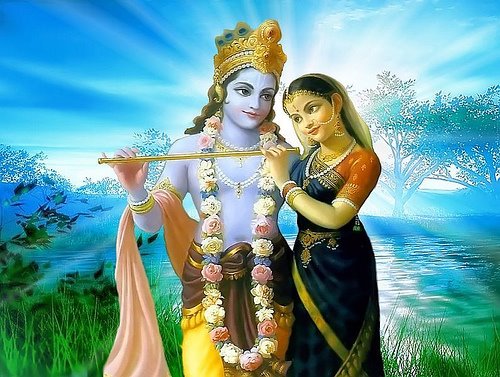


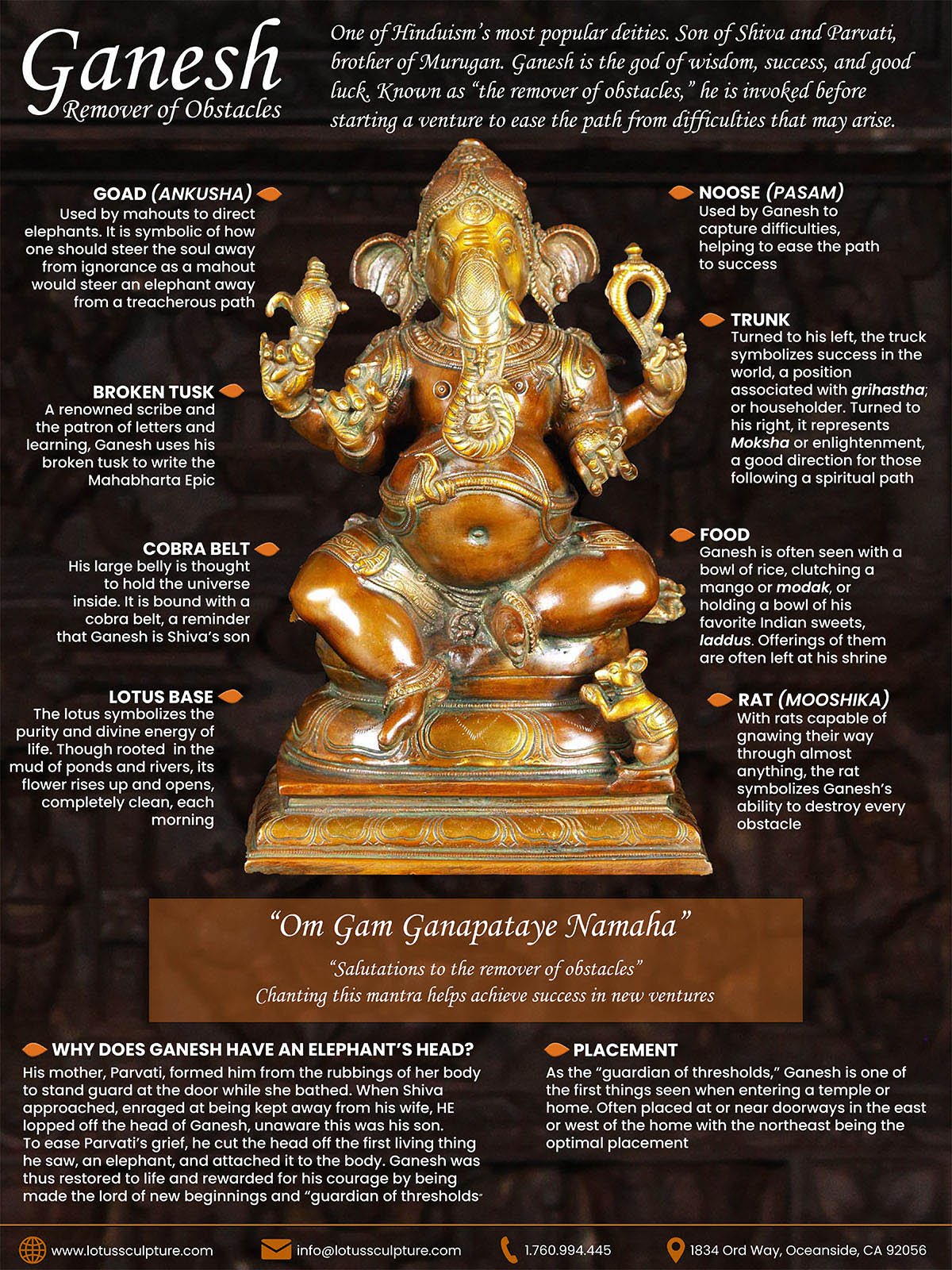


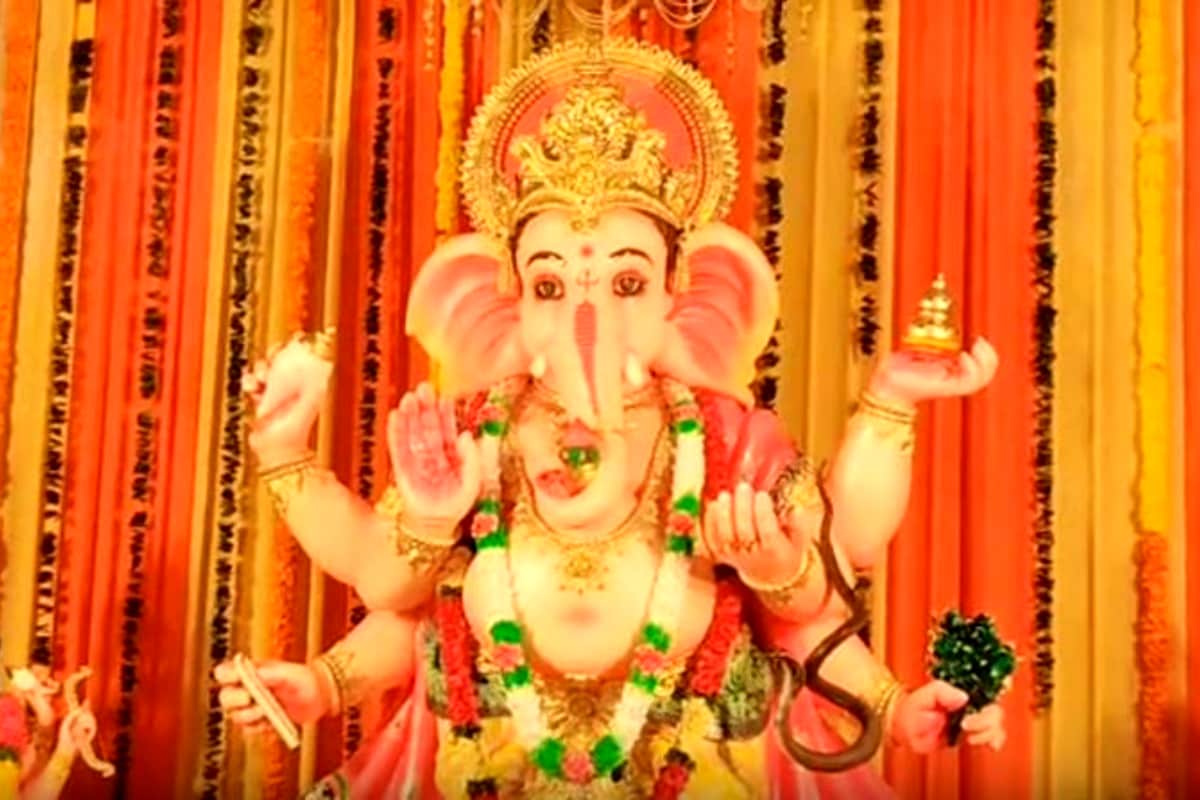







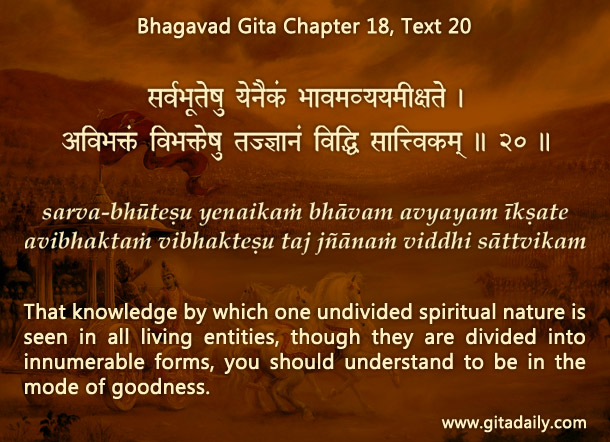


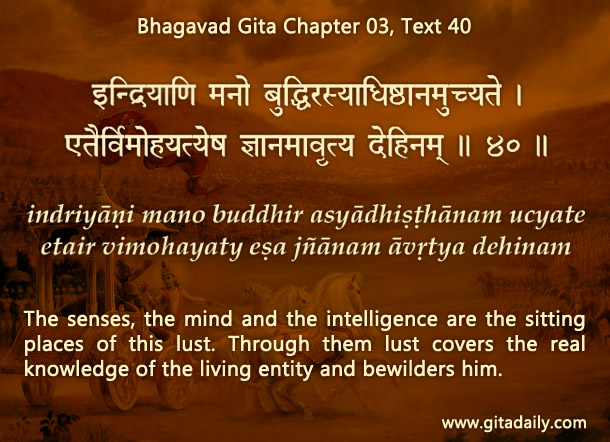







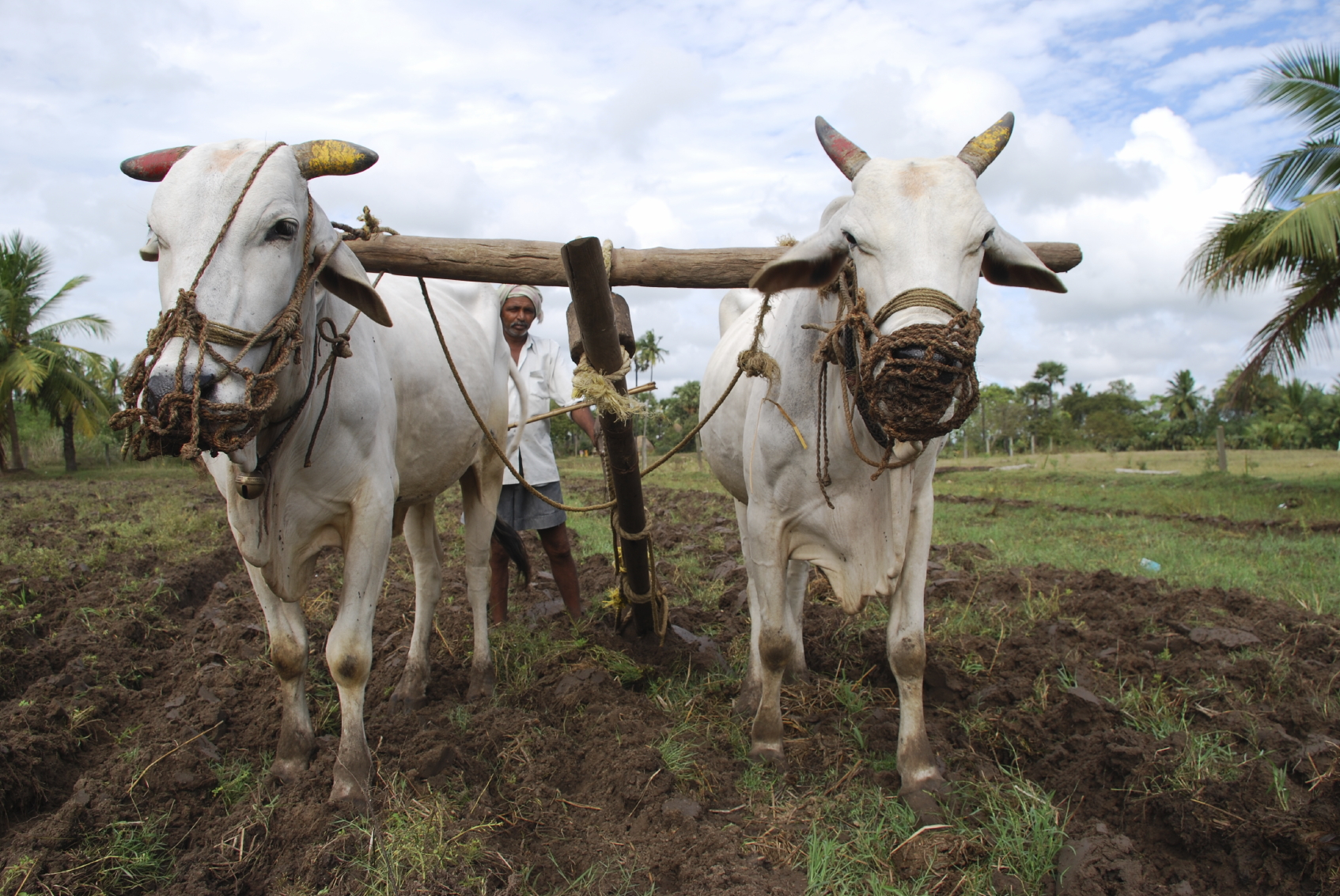


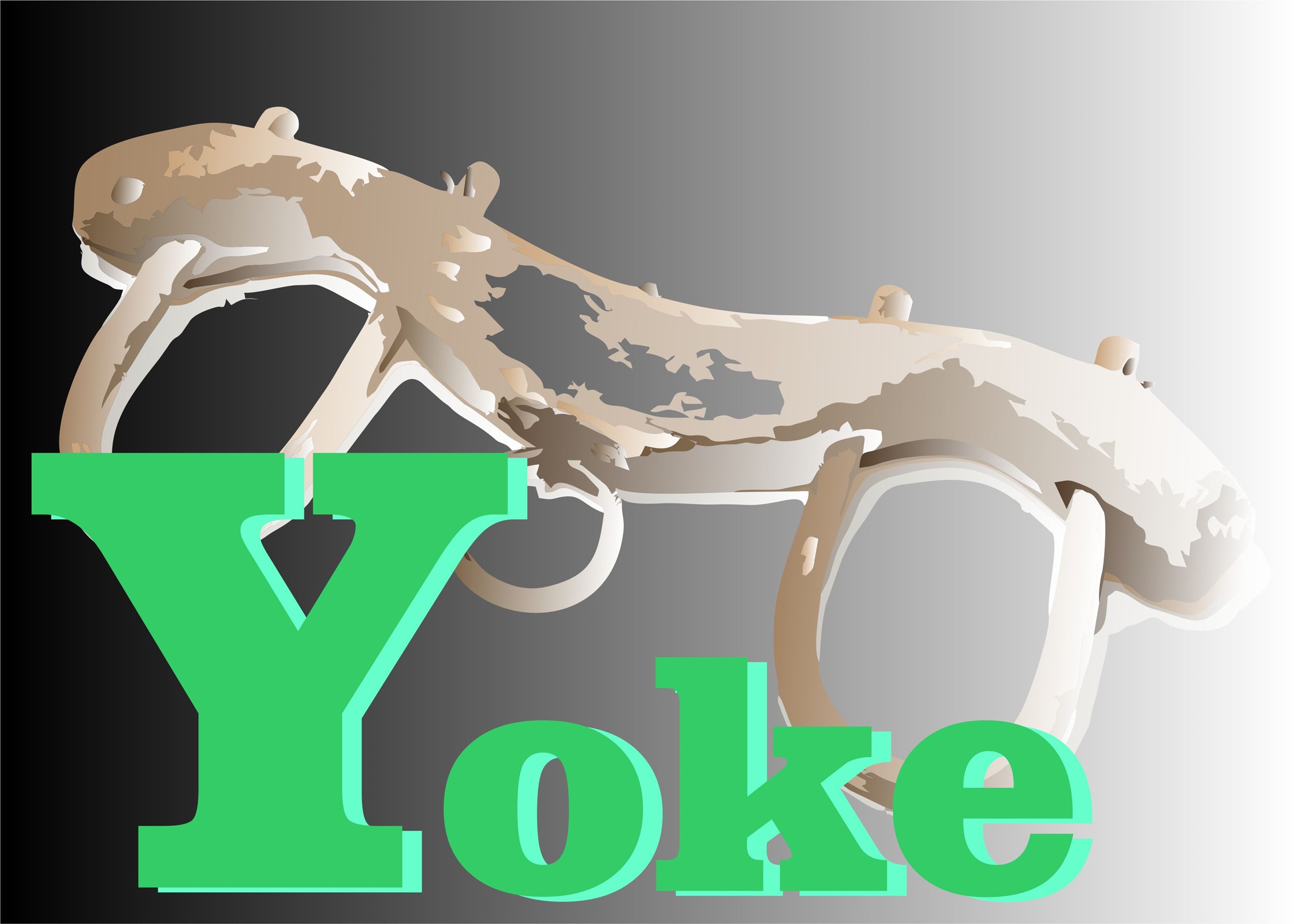


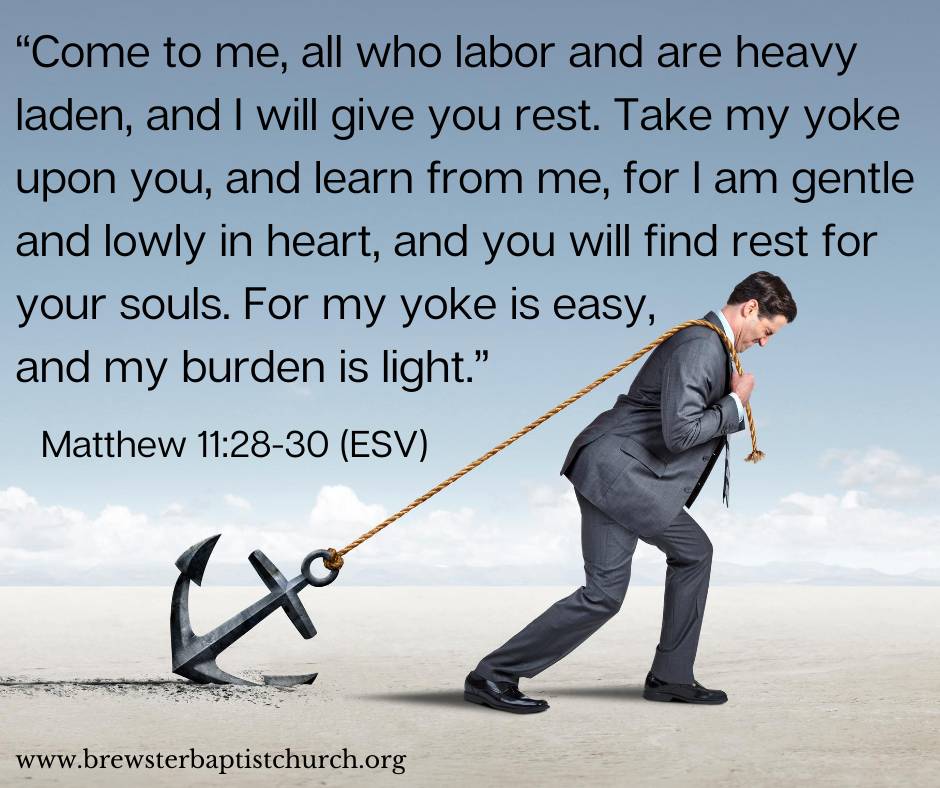


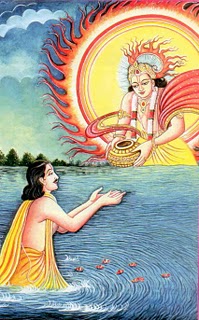



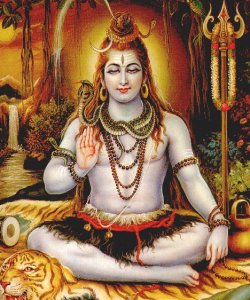





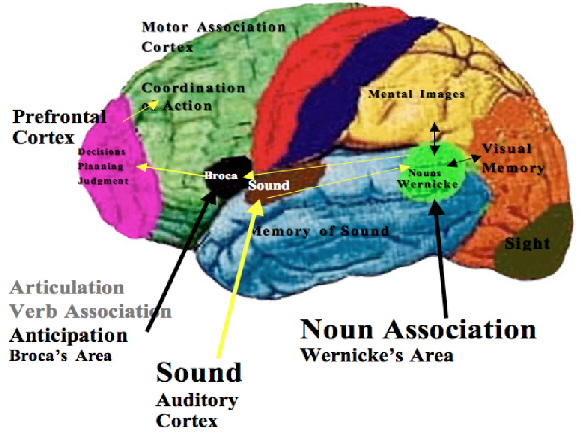







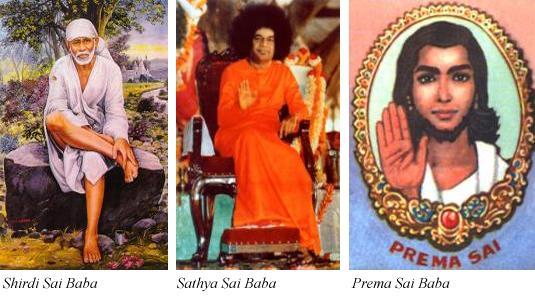

 Whole Dude - Whole Concept