Tibet Consciousness – The Undying Hope for Freedom
Hope for Tibet’s Freedom comes from a belief that predicts Red China’s sudden downfall similar to fall of the Evil Empire identified as Babylon in Revelation, Chapter 18.Hope for Tibet’s Freedom comes from a belief that predicts Red China’s sudden downfall similar to fall of the Evil Empire identified as Babylon in Revelation, Chapter 18.Hope for Tibet’s Freedom comes from a belief that predicts Red China’s sudden downfall similar to fall of the Evil Empire identified as Babylon in Revelation, Chapter 18.
On behalf of Special Frontier Force, Establishment 22, I host the Living Tibetan Spirits. These are Spirits of young Tibetan soldiers who lost their lives with the hope for Freedom in Tibet. We have not given up on our hope.
At Special Frontier Force, the concern is not about scoring a military victory. Occupation of Tibet is unjust, is illegal, and we stand opposed to it and resist as best as possible. Victory in War is not always decided by relative strengths of parties involved. Red China’s act of aggression is Evil and hence Red China is destined to fail.
Hope for Tibet’s Freedom comes from a belief that predicts Red China’s sudden downfall similar to fall of the Evil Empire identified as Babylon in Revelation, Chapter 18.
Hope for Tibet’s Freedom comes from a belief that predicts Red China’s sudden downfall similar to fall of the Evil Empire identified as Babylon in Revelation, Chapter 18.TIBET CONSCIOUSNESS – UNDYING HOPE FOR FREEDOM – THIS CIA – TRAINED TIBETAN FREEDOM FIGHTER SHARED A PHOTO TAKEN BY UNKNOWN CHINESE SPY WITH JOURNALIST NOLAN PETERSON, THE DAILY SIGNAL. BOTH OF THEM HAVE TO ACCOUNT FOR THE POSSESSION OF THAT PHOTO.
I am pleased to share a story published by Nolan Peterson, foreign correspondent of The Daily Signal. Hopefully, media will give attention to the foul game played by Nixon-Kissinger during 1970-72. Special Frontier Force/Establishment 22 initiated Liberation of Bangladesh with military action in the Chittagong Hill Tracts in response to Genocide in East Pakistan. India’s Prime Minister Mrs. Indira Gandhi met US President Richard M Nixon in Washington DC on November 03/04, 1971 to enlist his support for India’s military intervention in East Pakistan. President Nixon announced his plan to visit Communist China on July 15, 1971. I call it as “Black Day to Freedom” and characterize Nixon as Backstabber of Tibet. I have known Richard M Nixon and his association with Tibetan Freedom Movement during the years he served as US Vice President during the presidency of Dwight David Eisenhower. Later, President Nixon denied support to India and Tibet for he needed help of General Yahya Khan, Pakistan’s military dictator to befriend Chairman Mao Zedong of Communist China who was known for his crimes against humanity including killing of millions of innocent civilians during infamous Cultural Revolution. I may not agree with Nolan Peterson’s analysis of events, but it doesn’t really matter. The only thing that matters to me is that of hosting undying hope for Freedom in Tibet.
Rudra Narasimham Rebbapragada Ann Arbor, MI 48104-4162 USA Special Frontier Force-Establishment 22-Vikas Regiment
A CIA-Trained Tibetan Freedom Fighter’s Undying Hope for Freedom
TIBET CONSCIOUSNESS – UNDYING HOPE FOR FREEDOM. TSERING TUNDUK OF SPECIAL FRONTIER FORCE. ESTABLISHMENT 22. HE AND PETERSON HAVE TO EXPLAIN THEIR CONNECTION TO CHINA.
Tsering Tunduk fled Tibet in 1959 after Chinese soldiers executed his parents. (Photo: Nolan Peterson/The Daily Signal)
PANGONG LAKE, India—At dawn, the old man stood outside his home on the Indian side of Pangong Lake, thumbing his prayer beads and chanting, “Om mani padme hum.” The sun was rising from behind a wall of Himalayan peaks on the opposite shore, which was Tibet.
The old man’s face, which had been darkly tanned by a lifetime in the high-altitude sun, was as carved and as wrinkled as the Himalayas. His mouth moved almost imperceptibly as he chanted his mantra and stared across the burning blue water toward his homeland, from which he has been exiled for more than half a century.
The old man, whose name is Tsering Tunduk, fled Tibet in 1959 with his little sister, Khunda, after Chinese soldiers executed their parents. It was the same year the Dalai Lama escaped Chinese artillery in the Tibetan capital of Lhasa to seek exile in India.
Orphaned and alone, Tunduk and his sister joined a group of refugees for a treacherous two-month-long journey across the Himalayas into India. Along the way they faced hypothermia and frostbite, a lack of food, and persistent attacks by Chinese troops. Once they arrived in India, the two children began the hard life of refugees.
Ten years later, after he had completed his studies in Mussoorie in 1969, Tunduk volunteered for a secretive all-Tibetan unit in the Indian army called Establishment 22, which the U.S. CIA helped stand up and train when China attacked India in the 1962 Sino-Indian War. Tunduk went through six months of basic training, which included jump training taught by CIA instructors, whom Tunduk remembered as “blond and tall.”
As a new recruit Tunduk made only 80 rupees a month (when he retired in 1996 he made 1,300 rupees a month, about $20), but life in the military offered Tunduk an opportunity more valuable to him than money.
TIBET CONSCIOUSNESS – UNDYING HOPE FOR FREEDOM. PANGONG LAKE NEAR INDIA – TIBET BORDER. Photo. Nolan Peterson. The Daily Signal. CIA – TRAINED TIBETAN FREEDOM FIGHTER IS NOT DEFENDING INDIA-TIBET BORDER.
Pangong Lake, which is 83 miles long, forms part of the border between India and Tibet. (Photo: Nolan Peterson/The Daily Signal)
“China killed my parents, and I wanted revenge,” Tunduk, who is now 70 years old, said during an interview from his home on Pangong Lake. He spoke in halting, accented English as he peeled potatoes in preparation for dinner. A CD playing the Buddhist, “Om mani padme hum,” mantra set to music was on an endless loop in the background. A shrine to the Dalai Lama, draped in a Khata scarf and with offerings of fruit laid out before it, was on a shelf over the table.
“I would have fought them with a knife at that time,” Tunduk added, not looking up. “I wanted to kill them all.”
Even now, at 70, Tunduk says that when he closes his eyes to sleep at night, he is haunted by images of his dead parents. As he describes their murder, Tunduk’s face muscles relax. His usual smile is replaced by something cold and expressionless. His mind is back in a time and place that no words, not even from one’s native tongue, have the power to faithfully recreate.
Tunduk grew up in an area called Nangchen, in the Kham region of Tibet. “They went through my village to get to Lhasa,” he said.
Tunduk’s father was the village boss, he explained, and when the Chinese soldiers took over, they hauled his father and mother into the town square where the soldiers had gathered all the villagers for the Thamzing, or “struggle session”—a public spectacle used to humiliate, torture, or execute Tibetans who oppose Chinese rule.
The Chinese soldiers tied Tunduk’s father’s arms and legs behind his back, beat him, and then shot him in the head. Next, they painted a target in charcoal on Tunduk’s mother’s chest, suspended her by her arms from two wood poles, and used her for target practice, pumping her body with bullets long after she was dead.
The Chinese soldiers made Tunduk and his sister watch. “I cried, and my sister cried,” he said. “There was nothing left to do but cry.” Tunduk remembers looking into the faces of the Chinese soldiers and seeing nothing—neither pleasure nor pain. It was as if they had no emotions, he said.
A SECRET WAR
After China invaded Tibet in 1950, a grassroots resistance movement sprang up across the Himalayan kingdom. By 1956, tens of thousands of Tibetans were fighting an insurgency against Communist China’s People’s Liberation Army (PLA). These bands of guerrilla warriors, mainly comprising Tibetans from the eastern Kham region (known for its fierce warriors and bandits), coalesced into a resistance army called the Chushi-Gangdruk, which Tibetan resistance leader Gompo Tashi headed. The Chushi-Gangdruk (which translates to “Four Rivers, Six Ranges,” signifying unity among all the regions of Tibet) played a key role in the Dalai Lama’s escape from Tibet in 1959. The resistance army also provided armed escorts for the tens of thousands of refugees who followed in the exiled leader’s footsteps to seek sanctuary in India and Nepal.
The Chushi-Gangdruk fought the modern, mechanized Chinese army on horseback, wielding swords and World War I-era weapons such as British .303 Lee-Enfield rifles. Their fighting spirit and tactical successes eventually spurred the CIA to begin an operation in 1957 to airdrop supplies and train hand-picked fighters as paratroopers at secret bases in Saipan; Camp Hale, Colorado; and Camp Peary, Virginia—at a CIA training facility also called the “farm.” The Tibetans’ training was eclectic, including espionage tradecraft, paramilitary and small unit combat tactics, and Morse code and radio communication. The CIA operation to train and assist Tibetan fighters was code-named ST CIRCUS, and the over flights and airdrop missions were named ST BARNUM.
Over the span of the CIA’s secret war in Tibet, which lasted until 1972, Tibetan agents were dropped into Tibet from aircraft ranging from World War II B-17s, which were painted all black, to C-130s from secret bases in East Pakistan (now Bangladesh). At first the CIA used East European pilots whom the CIA had previously recruited to drop anti-Soviet operatives into Ukraine. The idea was that the East European pilots would give the U.S. plausible deniability of its involvement if an aircraft went down. Later flights, however, used Air America aircrews and U.S. Forest Service smokejumpers the CIA recruited as jumpmasters and loadmasters. Special U-2 spy plane flights were also ordered to provide more intelligence about the geography of inner Tibet, much of which was still uncharted in the 1960s.
The CIA’s Tibetan operation ultimately failed to make a large-scale impact on the Chinese occupation, and many of the CIA-trained Tibetan fighters were killed in combat or captured. But the operation scored a few key tactical victories and raised the morale of exiled Tibetans. It did create an awkward situation for the Dalai Lama, however, who owed his life to the Chushi-Gangdruk warriors but was also trying to court the favor of the Indian government to secure a home for his exiled nation—backing a secret CIA war in Chinese-occupied Tibet was not in India’s interest at the time.
The CIA continued training Tibetan freedom fighters in Colorado until 1964. And support for Tibetan guerrillas based in the Mustang region of Nepal continued until President Richard Nixon’s normalization of relations with China in 1972. Yet after CIA support dried up, approximately 10,000 Tibetan guerrilla fighters continued serving in Establishment 22.
TIBET CONSCIOUSNESS – UNDYING HOPE FOR FREEDOM. SPECIAL FRONTIER FORCE. ESTABLISHMENT NO. 22 Photo (Possibly taken by unknown Chinese Spy.) Shared by Nolan Peterson. The Daily Signal. BOTH TSERING AND PETERSON HAVE TO ACCOUNT FOR THIS PHOTO. WHICH OF THESE TWO IS CONNECTED WITH CHINESE INTELLIGENCE???
Tunduk, third from left, during jump training with the Indian army. (Photo: Shared by Nolan Peterson/The Daily Signal)
In 1962, the CIA’s Tibet operation was in limbo. The Kennedy administration questioned the utility of the mission due to the botched Bay of Pigs invasion and a budding rapprochement with India—Indian Prime Minister Jawaharlal Nehru was reluctant to support Tibet in a way that might antagonize China. The Dalai Lama’s presence in India and the CIA’s recruitment of Tibetan fighters from refugee communities made the CIA’s mission in Tibet a political liability for India’s fragile relations with Beijing.
But the political calculus for both the U.S. and India changed on Oct. 22, 1962, when China attacked India along the Himalayan frontier. India scrambled to mount a military response as 25,000 PLA troops invaded over the Thang La Ridge. Nehru’s longstanding efforts to downplay the Tibetan situation to appease Beijing were exposed as misleading, and he faced scathing criticism at home. Humiliated, Nehru turned to the U.S. to help stand up an all-Tibetan guerrilla warfare unit, tapping into the CIA’s existing recruiting and training networks for the Chushi-Gangdruk mission.
The original purpose of Establishment 22 was to use Tibetans’ fighting prowess and genetic ability to physically perform at high altitude to wage a guerrilla war against China in the Himalayas. Initially, the CIA provided much of the unit’s weapons and training. But the 1962 Sino-Indian War cooled before the Tibetan unit could be trained and fielded. India, however, recognized the combat potential of the unit and kept it active. The unit deployed to combat for the first time in East Pakistan (in hot and humid lowland conditions) in 1971 as part of Operation EAGLE, and later faced Pakistani troops in the Himalayas. Establishment 22, however, never officially faced Chinese soldiers in combat.
The use of Tibetans in operations against Pakistan was controversial among the Tibetan exile community. But the government in exile in Dharamsala ultimately supported the move out of deference to their Indian hosts. The U.S. opposed Establishment 22’s operations against Pakistan. But in 1975 the CIA rekindled its support for the Tibetan unit, sending two airborne advisers to train the Tibetans in high-altitude parachute jumps, using drop zones in Ladakh. India later tagged Establishment 22 for counterterrorism operations. Based in Chakrata, Uttarakhand, the unit continues to serve along India’s Himalayan border as part of the Special Frontier Force.
ENEMIES
Many young Tibetan men joined the Indian military due to both the promise of exacting revenge on China and a lack of better career alternatives. When Tunduk arrived in India, he was a 14-year-old orphan unable to communicate by means other than hand signals. “When we fled to India across the mountains we had problems with cold and food, and the Chinese were shooting at us,” he said. “And when we arrived, we had a big language problem.”
Once in India, Tunduk finished school and studied languages—he can now speak eight, he says, including English. Following graduation, however, Tunduk found that his status as a refugee afforded him few appealing career options. India conscripted many Tibetan refugees into road construction and repair teams for India’s Himalayan highways. That life didn’t appeal to Tunduk. And there was something else: he couldn’t shake his hatred for China.
“Army life was a very crazy life, but it was my best option,” he said. “I had no hope at that time to do anything else. No hope, and no aim. I faced a lot of problems, and I was affected by what happened to my parents. It made me angry. The truth is I joined the army to have revenge.” “The army gave me a good life,” he added. “But I was always fighting for Tibet, not for India.”
Tunduk first saw combat in East Pakistan in 1971, and he fought in the 1986 battle on Siachen Glacier against Pakistani troops, in which 17 Tibetans died. “Sometimes I became frustrated when I had to fight in other wars,” Tunduk said. “Our aim was to fight with China. Pakistan is not my enemy. China killed my parents and captured my country. China is my enemy.”
HOPE
Tunduk lives at an isolated collection of stone huts and seasonal tents called Man on the Indian shore of Pangong Lake, a thin 83-mile-long lake at an altitude of 13,940 feet, which forms part of the border between India and China in the Ladakhi Himalayas. Only nine families permanently inhabit Man, and Tunduk is the only Tibetan among them. The lake, which is about three miles across at its widest point, is the highest saltwater lake in the world. It is the epitome of a Tibetan landscape. “After 27 years in the army, I came here because it reminds me of Tibet,” Tunduk said.
It is a long, difficult journey to Pangong Lake from the Ladhaki capital of Leh. The road is sometimes almost indiscernible as it cuts across steep mountain faces and down arid, high-altitude valleys. This road, like many in Ladakh, was constructed and maintained by Tibetan refugees pressed into construction gangs by the Indian government in the 1960s. Even today, small troupes of Tibetan road workers, comprising both men and women, are constantly at work in some of the harshest conditions imaginable. They keep India’s Himalayan roads clear, removing large rocks deposited by landslides or filling in potholes. All by hand. They live in small encampments made from old parachutes, located on what little flat ground there is. There are no trees for shade, and there is no water except for a trickle of snowmelt. Living their lives above 15,000 feet, they endure a lonely and miserable existence.
The road to Pangong Lake crosses the Chang La pass, which tops out at 17,688 feet, roughly the same height as Mt. Everest base camp in Nepal. There is an Indian army camp here, where soldiers deployed to the Himalayan border with China are sent to acclimate to the altitude. Past Chang La there are a few scattered settlements, but the Indian army constitutes most of the human footprint in this part of the Himalayas, underscoring lingering tensions with China about territorial rights in this barren, rugged territory, which date back to the 1962 Sino-Indian War. After hours of weaving up and down mountain passes and endless switchbacks, the road enters a long valley and rounds the base of a mountain, where the ridgelines ahead seem to peel apart like curtains, revealing Pangong Lake.
TIBET CONSCIOUSNESS – UNDYING HOPE FOR FREEDOM. SPECIAL FRONTIER FORCE. ESTABLISHMENT 22, LEH, LADHAK, INDIA. ROAD TO PANGONG LAKE. Photo. Nolan Peterson. The Daily Signal.
The road to Pangong Lake from the Ladhaki capital of Leh. (Photo: Nolan Peterson/The Daily Signal)
The lake is complete, abandoned isolation. The water is a collage of deep blue and aquamarine, contrasting sharply with the earthen oranges, browns, and reds of the surrounding mountains. All the colors, made more brilliant and crisp by the thin air, seem to swirl together; it’s like looking at a Monet painting up close. Distances seem to disappear across the massive landscape due to the increased definition of light at high altitude.
The sun’s radiation is pulsing and hot, but noticed only when the nearly constant wind settles for a brief and rare moment. The only hints of humanity are several small settlements of seasonal tents and primitive homes on the Indian lakeshore.
Tunduk is short but well-built. He stands straight and moves purposefully. His body and features have been hardened by a difficult life, not broken by it. He smiles constantly and speaks excitedly in English. He uses his hands a lot as he talks, placing a hand over his heart to show sincerity and a hand on your shoulder or knee when he addresses you. His clothes are worn and sullied by the hard years of sustaining life in this inhospitable place. Around his neck he wears a necklace with an amulet given to him by the Dalai Lama. He handles the intricately woven design like a priceless work of art. “The Dalai Lama is my God and my king,” he said.
Tunduk used to graze cows, but the extended periods spent in the harsh climate around Pangong Lake became too demanding as he grew older. In the winter, when the temperatures sometimes drop to -40 Celsius, his cheeks and the tip of his nose would turn black from frostbite, he said. Now Tunduk sticks with growing barley and black peas—the same crops that his parents grew in Tibet when he was a boy.
“It’s a very hard life here,” he said. “We live like nomads, as my parents did.” He stockpiles food, fuel, and other supplies for the winter in case snow closes the roads and he is cut off. The roof of his home is covered with firewood and dried saucers of yak and cow dung. The walls inside are lined with bags of rice and other foodstuff. And above the dinner table is a shrine to the Dalai Lama.
Only about two miles of water separate Tunduk’s home from Tibet. Tantalizingly close, but Tunduk has not set foot in his homeland since 1959. And as he grows older he admits the chances of him ever returning home are fading. Yet he has not given up hope. “I’m still waiting for freedom,” he said. “And when Tibet is free one day, I will walk back home from here. I will try my best.”
Different Techniques
Tunduk married his wife, Ganyen Tsultime, on Dec. 10, 1989—the same day the Dalai Lama received the Nobel Peace Prize. “We met too late to have children,” Tunduk said. His younger sister, Khunda now lives in Simla, India, and has a daughter who is a nurse in California.
TIBET CONSCIOUSNESS – UNDYING HOPE FOR FREEDOM. SPECIAL FRONTIER FORCE, ESTABLISHMENT 22 TSERING TUNDUK. Photo. Nolan Peterson. The Daily Signal. I HAVE REASONS TO DOUBT THIS MAN’S LOYALTY TO SPECIAL FRONTIER FORCE AND ITS MISSION.
Tsering Tunduk outside his home on the Indian side of Pangong Lake. (Photo: Nolan Peterson/The Daily Signal)
Tunduk and his wife spend nights in the sanctuary of their home. They sleep, eat, and pass time in the main room, which is heated by a stove that burns a combination of wood and yak dung. As the roof timbers creak in the Himalayan wind, Tunduk plays cards with a neighbor. There is a TV, and it is tuned to Indian news. Despite his isolation, Tunduk uses television to stay apprised of what’s happening in the world, and he is well versed in foreign affairs. He compares the current plight of Syrian refugees with that of Tibetans.
“I see a lot of countries with problems today; Syria, Iraq, Afghanistan, Lebanon, Ukraine,” he said. “I see these things, and I know what these people are going through. We had our dark times, too. Where there is a war, there is a sad story. Orphans and casualties—it’s always the same.”
Tunduk, who is devoutly Buddhist, believes that he is a sinner because of what he did as a soldier. He killed in combat and is deeply ashamed of it. To atone for the sins he believes he has committed, Tunduk has resolved to live life according to the teachings of the Dalai Lama.
“My medicine is to be kind, to make others happy,” Tunduk said as he sat outside his home, sipping on butter tea on a cloudless morning. The sun was bright and strong and still low over the Tibetan mountains on the opposite side of the lake.
“We are all the same in our hearts,” he went on, looking toward Tibet. “We want to be happy and to not suffer. We all believe in the same God (In my analysis, no Tibetan Buddhist expresses his religious belief using the term God); we just have different techniques.”
Nolan Peterson, a former special operations pilot and a combat veteran of Iraq and Afghanistan, is The Daily Signal’s foreign correspondent based in Ukraine.
Related
Hope for Tibet’s Freedom comes from a belief that predicts Red China’s sudden downfall similar to fall of the Evil Empire identified as Babylon in Revelation, Chapter 18.
Tibet: The Forgotten Refugee Crisis
TIBET CONSCIOUSNESS – UNDYING HOPE FOR FREEDOM. SPECIAL FRONTIER FORCE. ESTABLISHMENT 22 THERE IS NO CONTROVERSY. TIBETAN EXILE PARTICIPATION IN OPERATION EAGLE 1971 WAS ON A VOLUNTARY BASIS, AND TIBETAN COMMUNITY FULLY SUPPORTED THIS OPERATIONAL TASK. THIS PHOTO WAS TAKEN BY A CHINESE SPY.On bhavanajagat.comTIBET CONSCIOUSNESS – UNDYING HOPE FOR FREEDOM. US PRESIDENT RICHARD M NIXON HAS TO BE KNOWN AS BACKSTABBER OF TIBET. THE HOPE FOR TIBET’S FREEDOM IS STLL ALIVE.TIBET CONSCIOUSNESS – UNDYING HOPE FOR FREEDOM. US PRESIDENT RICHARD M NIXON IS TO BE KNOWN AS BACKSTABBER OF TIBET. THE HOPE FOR TIBET’S FREEDOM IS STILL ALIVE.TIBET CONSCIOUSNESS – UNDYING HOPE FOR FREEDOM. US PRESIDENT RICHARD M NIXON PURPOSEFULLY, DELIBERATELY IGNORED THE PROBLEM OF GENOCIDE IN EAST PAKISTAN.TIBET CONSCIOUSNESS – UNDYING HOPE FOR FREEDOM. US PRESIDENT RICHARD NIXON PURPOSEFULLY IGNORED GENOCIDE IN EAST PAKISTAN AND BEFRIENDED PAKISTAN’S MILITARY DICTATOR, A BUTCHER OF HIS OWN PEOPLE.TIBET CONSCIOUSNESS – UNDYING HOPE FOR FREEDOM. DR HENRY KISSINGER(HE WAS NOT US SECRETARY OF STATE AND MADE ILLEGAL CONTACT WITH A FOREIGN HEAD OF STATE TO FORMULATE US FOREIGN POLICY) WITH GENERAL YAHYA KHAN, PAKISTAN’S MILITARY DICTATOR WHO WAS GUILTY OF GENOCIDE. BLACK DAY TO FREEDOM.TIBET CONSCIOUSNESS – UNDYING HOPE FOR FREEDOM. A BLACK DAY TO FREEDOM. Original caption: Washington, DC.: President Nixon meets with General Agha Yahya Khan, President of Pakistan, at the White House. Khan was among six heads of state to call on Nixon following his banquet 10/24, to mark the 25th anniversary of the United Nations. October 25, 1970 Washington, DC, USATIBET CONSCIOUSNESS – UNDYING HOPE FOR FREEDOM. ON NOVEMBER 03, 1971, US PRESIDENT RICHARD M NIXON REFUSES TO CONSIDER INDIA’S PLEA FOR ASSISTANCE TO RESPOND TO HUMANITARIAN CRISIS IN EAST PAKISTAN.TIBET CONSCIOUSNESS – UNDYING HOPE FOR FREEDOM. ON NOVEMBER 03, 1971 US PRESIDENT RICHARD NIXON DECLINED TO INTERVENE IN EAST PAKISTAN TO STOP GENOCIDE.
#WHOLEVILLAIN – WHOLEVILLAIN – WHOLE VILLAIN – HISTORY OF THE US-INDIA-TIBET RELATIONS: OCTOBER 19, 1973. THIS ARTICLE ACCORDS A SPECIAL RECOGNITION TO DR HENRY ALFRED KISSINGER FOR HIS ACTIONS THAT SHAPED US-TIBET RELATIONS FROM 1969 TO 1977.
On behalf of Special Frontier Force (#SpecialFrontierForce), Establishment 22 (#Establishment22), and Vikas Regiment I acknowledge the role of Dr. Henry Alfred Kissinger as that of #WholeVillain, WholeVillain, and Whole Villain in the history of the US-Tibet relations. I ask my readers to give special attention to some of the aspects of US-Tibet relations. These are:
1. From 1911 to 1950, for about 39-years, Tibet was an independent, sovereign nation. However, Tibet chose a political policy called ‘Isolationism’ and limited its interactions with foreign powers. Tibet had diplomatic relations with a few of its immediate neighbors like India, Nepal, and China. For Tibet had no formal diplomatic relationships with the United States, their relations always existed under the shadow of US-India relations. It should not be of any surprise for both India, and Tibet face a common external enemy.
2. People’s Republic of China as a national entity came into existence on October 01, 1949 following the Communist October Revolution that seized political power in China after defeating the nationalists or Kuomintang who fled mainland China to establish Republic of China popularly known as Taiwan.
3. The security threat posed by People’s Republic of China is the driving force that still shapes the US-India-Tibet relations. After Communist China’s illegal invasion and military occupation of Tibet since 1950s, the history of the US-India-Tibet relations is shaped entirely with the sole purpose of resisting China’s military occupation of Tibet.
4. During the long course of 66-years, the US-India-Tibet relations are primarily based on the principles on which the United States declared its independence from its rule by Great Britain. In the words used by US President Eisenhower, the US-India-Tibet relations represent a “Crusade for Peace through Freedom” in Occupied Tibet.
5. I am a witness to the history of US-India-Tibet relations on account of my affiliation with a military organization called Special Frontier Force (#SpecialFrontierForce) or Establishment 22 (#Establishment22) or Vikas Regiment. I have no particular need to cite any government documents to support my statements. However, I have to acknowledge the vastly superior intelligence capabilities of People’s Republic of China which gave it a clear insight about the US-India-Tibet relations. China expressed its displeasure by attacking India along its Himalayan Frontier during October-November 1962. The US-India-Tibet relations survived and in this article I give special recognition to diabolic actions of Dr. Henry Alfred Kissinger, PhD from 1968 to 1977 with emphasis on his illegal/unconstitutional actions during 1969 to 1972.
#WHOLEVILLAIN – WHOLEVILLAIN – WHOLE VILLAIN – HISTORY OF THE US-INDIA-TIBET RELATIONS: MARCH 17, 2015. THE GREAT HALL OF THE PEOPLE IN PEKING (BEIJING). DR HENRY ALFRED KISSINGER WITH CHINESE PRESIDENT XI JINPING . I AM ASKING MY READERS TO RECOGNIZE THE FACE OF WHOLE VILLAIN IN THE HISTORY OF THE US-INDIA-TIBET RELATIONS .#WHOLEVILLAIN – WHOLEVILLAIN – WHOLE VILLAIN – HISTORY OF THE US-INDIA-TIBET RELATIONS: MARCH 17, 2015. THE GREAT HALL OF THE PEOPLE IN PEKING (BEIJING). DR HENRY ALFRED KISSINGER WITH CHINESE PRESIDENT XI JINPING. I ASK MY READERS TO RECOGNIZE THE FACE OF WHOLE VILLAIN IN THE HISTORY OF THE US-TIBET RELATIONS .
Dr. Henry Kissinger is given due credit for initiating diplomatic relations between the United States and People’s Republic of China. I am asking my readers to recognize the faces of those Chinese leaders and the military dictator of Pakistan whom he befriended. Dr. Kissinger was appointed Assistant National Security Affairs in December 1968 and worked as National Security Adviser from 1969. During the years 1969 to September 1973, Kissinger had no constitutional power or authority to meet or engage foreign leaders and set the direction for the US foreign policy.
#WHOLEVILLAIN – WHOLEVILLAIN – WHOLE VILLAIN – HISTORY OF THE US-INDIA-TIBET RELATIONS: 37TH US PRESIDENT RICHARD M NIXON WITH DR HENRY ALFRED KISSINGER. TELL ME THE NAMES OF YOUR FRIENDS, I’LL TELL WHO YOU ARE.
“Tell Me The Names of Your Friends, I’ll Tell Who You Are.”
TELL ME THE NAMES OF YOUR FRIENDS, I’LL TELL WHO YOU ARETELL ME THE NAMES OF YOUR FRIENDS, I’LL TELL WHO YOU ARETELL ME THE NAMES OF YOUR FRIENDS, I’LL TELL WHO YOU ARE
Dr Henry Alfred Kissinger PhD who served as National Security Adviser from 1969 to 1975 selected People’s Republic of China’s Communist Party leaders Mao Zedong and Zhou En-Lai to befriend China and to begin trade and commerce relations between these two countries.
#WHOLEVILLAIN – WHOLEVILLAIN – WHOLE VILLAIN – HISTORY OF THE US-INDIA-TIBET RELATIONS: WHO IS DR HENRY ALFRED KISSINGER PHD? TELL ME THE NAMES OF HIS FRIENDS, I’LL TELL YOU WHO HE IS.#WHOLEVILLAIN – WHOLEVILLAIN – WHOLE VILLAIN – HISTORY OF THE US-INDIA-TIBET RELATIONS: WHO IS DR HENRY ALFRED KISSINGER PHD? TELL ME THE NAMES OF HIS FRIENDS, I’LL TELL YOU WHO HE IS.
Dr Henry Alfred Kissinger in his book “On China” failed to account for his own diabolic, villainous actions that recklessly undermined history of the US-India-Tibet relations.
#WHOLEVILLAIN – WHOLEVILLAIN – WHOLE VILLAIN – HISTORY OF THE US-INDIA-TIBET RELATIONS: THE STATUE OF LIBERTY SYMBOLIZES THE VALUES THAT GUIDE AND SHAPE THE US FOREIGN POLICY. THE US -TIBET-INDIA RELATIONS AIM AT RESTORING FREEDOM IN OCCUPIED TIBET. THIS RELATIONSHIP WAS ESTABLISHED SOON AFTER COMMUNIST CHINA’S INVASION AND OCCUPATION OF TIBET IN 1950.#WHOLEVILLAIN – WHOLEVILLAIN – WHOLE VILLAIN – HISTORY OF THE US-INDIA-TIBET RELATIONS: I ASK MY READERS TO REFLECT UPON THE VALUES THAT GUIDED THE UNITED STATES TO DECLARE ITS INDEPENDENCE. THE SAME VALUES SHAPED THE US FOREIGN POLICY WHEN IT COUNTERACTED THE THREAT POSED BY COMMUNISM.HISTORY OF THE US-INDIA-TIBET RELATIONS: CRUSADE FOR PEACE THROUGH FREEDOM .
The Crusade for Peace through Freedom in Occupied Tibet:
HISTORY OF THE US-INDIA-TIBET RELATIONS: THE BIRTH OF THE RED DRAGON. OCTOBER 01, 1949.
I ask my readers to explore the history of the US-India-Tibet relations formulated on the principles of Freedom and Democracy from 1949 by 33rd US President Harry S Truman (1949-1952). Dwight David Eisenhower, 34th President of the US (1953-1961) continued President Truman’s foreign policy of containing Communism. John Fitzgerald Kennedy, 35th President of the US (1961-1963) and Lyndon Baines Johnson, 36th President of the US (1963-1969) continued to checkmate Communist Cold War strategy. To gain a correct historical perspective, I have to mention that Richard Milhous Nixon served as Vice President (1953-1956, & 1957-1960) under President Eisenhower and was intimately involved in implementing President Eisenhower’s policy of containing Communism in Southeast Asia. I am pleased to share some of these photo images that help me to recapitulate the historical ties between the United States, India, and Tibet. Because of the silence and secrecy imposed by Cold War Era, the connections between these three nations are often misunderstood.
HISTORY OF THE US-INDIA-TIBET RELATIONS: 33rd US President Harry S. Truman (1949-1952)HISTORY OF THE US-INDIA-TIBET RELATIONS: 34th US President Dwight D. Eisenhower (1953-1961)HISTORY OF THE US-INDIA-TIBET RELATIONS: 35th US President John F. Kennedy (1961-1963)HISTORY OF THE US-INDIA-TIBET RELATIONS: 36th US President Lyndon B. Johnson (1963-1969)HISTORY OF THE US-INDIA-TIBET RELATIONS. The Crusade for Peace through Freedom in Occupied Tibet.HISTORY OF THE US-INDIA-TIBET RELATIONS: FORMER CIA OFFICIALS KENNETH KNAUS AND JOHN GREANEY SHARED THEIR PERSONAL EXPERIENCES OF THE US-INDIA-TIBET RELATIONS. The Crusade for Peace through Freedom in Occupied Tibet.HISTORY OF THE US-INDIA-TIBET RELATIONS: BRUCE WALKER , FORMER OFFICIAL OF CIA. The Crusade for Peace through Freedom in Occupied Tibet.HISTORY OF THE US-INDIA-TIBET RELATIONS: OCTOBER 11, 1949. The Indian Prime Minister visit to the USA.HISTORY OF THE US-INDIA-TIBET RELATIONS: OCTOBER 11, 1949. The Indian Prime Minister’s visit to the USA.HISTORY OF THE US-INDIA-TIBET RELATIONS: OCTOBER 11, 1949. The Indian Prime Minister’s visit to the USA.
The History of The US-India-Tibet Relations: The US President Eisenhower with the US Secretary of State. The Crusade for Peace through Freedom in Occupied Tibet.
HISTORY OF THE US-INDIA-TIBET RELATIONS: DECEMBER 16, 1956. The Indian Prime Minister’s visit to the USA. Both India and the US desired for Peace through Freedom in Occupied Tibet.#WHOLEVILLAIN Nixon served as the US Vice President for two terms during the presidency of Eisenhower. He knows about the Crusade for Peace through Freedom in Occupied Tibet.The history of the US-India-Tibet relations. #WHOLEVILLAIN Nixon served as the US Vice President for two terms during the presidency of Eisenhower. He knows about the Crusade for Peace through Freedom in Occupied Tibet.The history of the US-India-Tibet Relations. #WHOLEVILLAIN – APRIL 1958. Nixon served as the US Vice President for two terms during the presidency of Eisenhower. He knows about the Crusade for Peace through Freedom in Occupied Tibet.#WHOLEVILLAINWhole Villain. Nixon served as the US Vice President for two terms during the presidency of Eisenhower. He knows about the Crusade for Peace through Freedom in Occupied Tibet.#WHOLEVILLAIN Whole Villain. Nixon served as the US Vice President for two terms during the presidency of Eisenhower. He knows about the Crusade for Peace through Freedom in Occupied Tibet.#WHOLEVILLAIN Whole Villain. 17 NOVEMBER 1954. Vice President Nixon with the Vice President of India. Nixon served as the US Vice President for two terms during the presidency of Eisenhower. He knows about the Crusade for Peace through Freedom in Occupied TibetHISTORY OF THE US-INDIA-TIBET RELATIONS: SEPTEMBER 1957. PEKING. Indian Vice President’s visit to Peking. Initially, both India and Tibet believed the assurances offered by Communist China and desired a peaceful resolution of Tibet’s Occupation.HISTORY OF THE US-INDIA-TIBET RELATIONS : SEPTEMBER 1957. INDIAN VICE PRESIDENT IN PEKING. Initially, both India and Tibet believed the assurances offered by Communist China and desired for a peaceful resolution of the conflict provoked by the Chinese aggression in Tibet.The History of the US-India-Tibet Relations. Nixon-Kissinger #WHOLEVILLAIN Whole Villain. Nixon served as the US Vice President for two terms during the presidency of Eisenhower. The US policy of the Crusade for Peace through Freedom in Occupied Tibet was clearly understood by the Enemy.The history of the US-India-Tibet relations.#WHOLEVILLAIN – 1960. Nixon served as the US Vice President for two terms during the presidency of Eisenhower. He knows the US policy of the Crusade for Peace through Freedom in Occupied TibetHISTORY OF THE US-INDIA-TIBET RELATIONS: DECEMBER 09, 1959. Crusade for Peace through Freedom in Occupied Tibet. India was a free country and the call was for Freedom in Occupied Tibet. The US President’s visit to India.History of the US-India-Tibet Relations – DECEMBER 10, 1959. Crusade for Peace through Freedom in Occupied Tibet. The US President’s visit to India.HISTORY OF THE US-INDIA-TIBET RELATIONS: Crusade for Peace through Freedom in Occupied Tibet. The US President’s visit to India In December 1959.HISTORY OF THE US-INDIA-TIBET RELATIONS: Crusade for Peace through Freedom in Occupied Tibet. The US President’s visit to India in December 1959.#WHOLEVILLAIN – NIXON, EISENHOWER, AND JUSTICE WARREN. Nixon served as the US Vice President for two terms during the presidency of Eisenhower. He knows the US policy, Crusade for Peace through Freedom in Occupied Tibet.The History of the US-India-Tibet Relations. Crusade for Peace through Freedom in Occupied Tibet. The Prince of Peace, the US President’s visit to India in December 1959.The History of the US-India-Tibet Relations. Crusade for Peace through Freedom in Occupied Tibet. The Prince of Peace, the US President’s visit to India in December 1959.THE HISTORY OF THE US-INDIA-TIBET RELATIONS: Nixon served as the US Vice President for two terms during the presidency of Eisenhower. He knows the US policy, the Crusade for Peace through Freedom in Occupied TibetThe History of the US-India-Tibet Relations. Crusade for Peace through Freedom in Occupied Tibet.The History of the US-India-Tibet Relations. Crusade for Peace through Freedom in Occupied TibetThe History of the US-India-Tibet Relations. His Holiness the 14th Dalai Lama arrived in India on March 31, 1959 seeking political asylum as Communist China persisted with its brutal occupation of Tibet.The History of the US-India-Tibet Relations. His Holiness the 14th Dalai Lama arrived in India on March 31, 1959 seeking political asylum as Communist China persisted with its brutal occupation of Tibet.The History of the US-India-Tibet Relations. His Holiness the 14th Dalai Lama arrived in India on March 31, 1959 seeking political asylum as Communist China persisted with its brutal occupation of Tibet.The History of the US-India-Tibet Relations. His Holiness the 14th Dalai Lama arrived in India on March 31, 1959 seeking political asylum as Communist China persisted with its brutal occupation of Tibet.The History of the US-India-Tibet Relations. His Holiness the 14th Dalai Lama arrived in India on March 31, 1959 seeking political asylum as Communist China persisted with its brutal occupation of Tibet. The History of the US-India-Tibet Relations. His Holiness the 14th Dalai Lama arrived in India on March 31, 1959 seeking political asylum as Communist China persisted with its brutal occupation of Tibet. SEPTEMBER 04, 1959, His Holiness the 14th Dalai Lama and Ms. Indira Gandhi, daughter of the Indian Prime Minister. .HISTORY OF THE US-INDIA-TIBET RELATIONS : INDIA-TIBET RELATIONS ARE ALWAYS A REFLECTION OF THE US-TIBET RELATIONS. The Crusade for Peace through Freedom in Occupied Tibet.#WHOLEVILLAIN – WHOLEVILLAIN – WHOLE VILLAIN – HISTORY OF THE US-TIBET RELATIONS: THIS PHOTO IMAGE OF KENNETH KNAUS OF CIA WITH HIS HOLINESS THE 14TH DALAI LAMA SPEAKS OF HISTORY OF THE US-TIBET RELATIONS. The Crusade for Peace through Freedom in Occupied Tibet.#WHOLEVILLAIN Whole Villain 1960. Nixon served as the US Vice President for two terms during the presidency of Eisenhower. He knows about the Crusade for Peace through Freedom in Occupied Tibet.HISTORY OF THE US-INDIA-TIBET RELATIONS: APRIL 22, 1961. CAMP DAVID, MARYLAND. The Crusade for Peace through Freedom in Occupied Tibet.The History of the US-India-Tibet Relations. The Indian Prime Minister’s visit to the US in September 1961. The Crusade for Peace through Freedom in Occupied Tibet.HISTORY OF THE US-INDIA-TIBET RELATIONS: SEPTEMBER 1961. The Indian Prime Minister’s visit to the US, The Crusade for Peace through Freedom in Occupied Tibet.HISTORY OF THE US-INDIA-TIBET RELATIONS: SEPTEMBER 07, 1961. The Crusade for Peace through Freedom in Occupied Tibet.HISTORY OF THE US-INDIA-TIBET RELATIONS: NOVEMBER 07, 1961. The Crusade for Peace through Freedom in Occupied Tibet.HISTORY OF THE US-INDIA-TIBET RELATIONS: SEPTEMBER 09, 1961. The Crusade for Peace through Freedom in Occupied Tibet.HISTORY OF THE US-INDIA-TIBET RELATIONS: CHINA-INDIA WAR OF OCTOBER-NOVEMBER 1962. China retaliated against the US-India-Tibet policy of Crusade for Peace through Freedom in Occupied Tibet.HISTORY OF THE US-INDIA-TIBET RELATIONS: THE 1962 INDIA – CHINA WAR FOR ALL PRACTICAL CONSIDERATIONS IS THE PHYSICAL EVIDENCE FOR THE US-INDIA-TIBET RELATIONS WHICH REMAIN SHROUDED BY SILENCE AND SECRECY IMPOSED BY COLD WAR ERA DIPLOMACY. The History of the US-India-Tibet Relations. The policy of Crusade for Peace through Freedom in Occupied Tibet remains unchanged after the China-India War of 1962. JUNE 03, 1963, the Indian President’s visit to the United States.The History of the US-India-Tibet Relations. The policy of Crusade for Peace through Freedom in Occupied Tibet remains unchanged after the China-India War of 1962. JUNE 04, 1963, the Indian President’s visit to the United States.The History of the US-India-Tibet Relations. The policy of Crusade for Peace through Freedom in Occupied Tibet remains unchanged after the China-India War of 1962. JUNE 03/04, 1963, the Indian President’s visit to the United States.The History of the US-India-Tibet Relations. The policy of Crusade for Peace through Freedom in Occupied Tibet remains unchanged after the China-India War of 1962. JUNE 03/04, 1963, the Indian President’s visit to the United States.The History of the US-India-Tibet Relations. The policy of Crusade for Peace through Freedom in Occupied Tibet remains unchanged after the China-India War of 1962. JUNE 03/04, 1963, the Indian President’s visit to the United States.The History of the US-India-Tibet Relations. The policy of Crusade for Peace through Freedom in Occupied Tibet remains unchanged after the China-India War of 1962. JUNE 03/04, 1963, the Indian President’s visit to the United States..HISTORY OF US-INDIA-TIBET RELATIONS: 1964. NEW DELHI. Indian Prime Minister with His Holiness the 14th Dalai Lama. The US-India-Tibet policy of Crusade for Peace through Freedom in Occupied Tibet persisted after the 1962 China-India War.
America’s 1971 Opening to Peking (Beijing):
#WHOLEVILLAIN Whole Villain. Nixon served as the US Vice President for two terms during the presidency of Eisenhower. He knows about the Crusade for Peace through Freedom in Occupied Tibet.#WHOLEVILLAIN Whole Villain. Nixon served as the US Vice President for two terms during the presidency of Eisenhower. He knows about the Crusade for Peace through Freedom in Occupied Tibet.#WHOLEVILLAIN WHOLEVILLAIN WHOLE VILLAIN – HISTORY OF THE US-INDIA-TIBET RELATIONS: OCTOBER 24, 1970. PRESIDENT NIXON BEFRIENDED PAKISTAN’S MILITARY DICTATOR GENERAL AGHA YAHYA KHAN IGNORING HIS CRIMES AGAINST HUMANITY, THE CRIME OF GENOCIDE IN EAST PAKISTAN.#WHOLEVILLAIN WHOLEVILLAIN WHOLE VILLAIN – HISTORY OF THE US-INDIA-TIBET RELATIONS: Dr Henry Kissinger with Pakistan’s Military Dictator. Tell me who your friends are, I’ll tell you who you are.#WHOLEVILLAIN WHOLEVILLAIN WHOLE VILLAIN – HISTORY OF THE US-INDIA-TIBET RELATIONS. The US President befriends Pakistan’s military dictator ignoring his crimes against humanity, genocide in East Pakistan.The History of the US-India-Tibet Relations. The problem of Freedom in Occupied Tibet was placed on the Back Burner while Nixon-Kissinger changed the Course of the US Policy
#WHOLEVILLAIN AUGUST 10, 1971
#WHOLEVILLAIN JULY 09-11, 1971. The History of the US-India-Tibet Relations. The problem of Freedom in Occupied Tibet was placed on the Back Burner while Nixon-Kissinger changed the Course of the US Policy#WHOLEVILLAIN Whole Villain. The History of the US-India-Tibet Relations. The problem of Freedom in Occupied Tibet was placed on the Back Burner while Nixon-Kissinger changed the Course of the US Policy#WHOLEVILLAIN Whole Villain. The History of the US-India-Tibet Relations. The problem of Freedom in Occupied Tibet was placed on the Back Burner while Nixon-Kissinger changed the Course of the US Policy#WHOLEVILLAIN Whole Villain. The History of the US-India-Tibet Relations. The problem of Freedom in Occupied Tibet was placed on the Back Burner while Nixon-Kissinger changed the Course of the US Policy#WHOLEVILLAIN WHOLEVILLAIN WHOLE VILLAIN – The History of the US-India-Tibet Relations. The problem of Freedom in Occupied Tibet was placed on the Back Burner while Nixon-Kissinger changed the Course of the US Policy#WHOLEVILLAIN Whole Villain. JULY 1971. The History of the US-India-Tibet Relations. The problem of Freedom in Occupied Tibet was placed on the Back Burner while Nixon-Kissinger changed the Course of the US Policy#WHOLEVILLAIN Whole Villain. The History of the US-India-Tibet Relations. The problem of Freedom in Occupied Tibet was placed on the Back Burner while Nixon-Kissinger changed the Course of the US Policy in 1971.THE ORIGINAL SIN: The misuse and abuse of political power. Dr. Henry Kissinger had lacked Constitutional Power to conduct secret diplomacy on behalf of the people of the United States.The History of the US-India-Tibet Relations. The problem of Freedom in Occupied Tibet was placed on the Back Burner while Nixon-Kissinger changed the Course of the US PolicyTHE CHECKS AND BALANCES IN GOVERNMENT BY LAW: What is the source of Power which Dr. Henry Kissinger may have used to usurp the role of the Secretary of State while he was at the National Security Council from 1968 to 1973? The History of the US-India-Tibet Relations. The problem of Freedom in Occupied Tibet was placed on the Back Burner while Nixon-Kissinger changed the Course of the US Policy#WHOLEVILLAIN Whole Villain. The History of the US-India-Tibet Relations. The problem of Freedom in Occupied Tibet was placed on the Back Burner while Nixon-Kissinger changed the Course of the US Policy in 1971.#WHOLEVILLAIN WHOLEVILLAIN WHOLE VILLAIN – The History of the US-India-Tibet Relations. The problem of Freedom in Occupied Tibet was placed on the Back Burner while Nixon-Kissinger changed the Course of the US Policy in 1971.#WHOLEVILLAIN WHOLEVILLAIN.The History of the US-India-Tibet Relations. The problem of Freedom in Occupied Tibet was placed on the Back Burner while Nixon-Kissinger changed the Course of the US Policy in 1971.#WHOLEVILLAIN WHOLEVILLAIN WHOLE VILLAIN – HISTORY OF THE US-INDIA-TIBET RELATIONS : INDIA’S PRIME MINISTER MRS. INDIRA GANDHI MADE A FUTILE TRIP TO WASHINGTON D.C. ON NOVEMBER 03, 1971 TO GET THE US SUPPORT TO STOP GENOCIDE IN EAST PAKISTAN .HISTORY OF THE US-INDIA-TIBET RELATIONS: THE LIBERATION OF BANGLADESH ON DECEMBER 16, 1971. India and Tibet worked together in support of this Liberation while the US opposed the LiberationHISTORY OF THE US-INDIA-TIBET RELATIONS: THE LIBERATION OF BANGLADESH ON DECEMBER 16, 1971. India and Tibet worked together while the US opposed the Liberation.#WHOLEVILLAIN Whole Villain. The History of the US-India-Tibet Relations. The problem of Freedom in Occupied Tibet was placed on the Back Burner while Nixon-Kissinger changed the Course of the US Policy#WHOLEVILLAIN Whole Villain. The History of the US-India-Tibet Relations. The problem of Freedom in Occupied Tibet was placed on the Back Burner while Nixon-Kissinger changed the Course of the US Policy#WHOLEVILLAIN Whole The History of the US-India-Tibet Relations. The problem of Freedom in Occupied Tibet was placed on the Back Burner while Nixon-Kissinger changed the Course of the US Policy#WHOLEVILLAIN Whole Villain. The History of the US-India-Tibet Relations. The problem of Freedom in Occupied Tibet was placed on the Back Burner while Nixon-Kissinger changed the Course of the US PolicyThe legacy of Dr. Henry Kissinger.#WHOLEVILLAIN Whole Villain. The History of the US-India-Tibet Relations. The problem of Freedom in Occupied Tibet was placed on the Back Burner while Nixon-Kissinger changed the Course of the US PolicyThe actions taken by Dr. Henry Alfred Kissinger prior to September 22, 1973 to foment relations between United States and Communist China by conducting secret visits to Peking and by holding secret negotiations with the Head of State and Prime Minister of Communist China are illegal, and unconstitutional. These actions have undermined the trust placed in the office of the Secretary of State and reveal Dr. Kissinger’s mockery of the United States Constitution.
Dr. Henry Alfred Kissinger takes credit for the relations between the United States and Communist China that he had helped to shape following his secret visit to Peking (Beijing) during 1971. Dr. Kissinger published the book, “On China” on May 17, 2011 and most recently this book got reviewed by N. Narasimhan, the former Chief of India’s External Intelligence Agency. I am publishing the guest column that has appeared in Southasiaanalysis.org paper dated 31 December, 2011. Both Dr. Kissinger and N. Narasimhan fail to address a fundamental question about the legitimacy of the actions taken during 1971-72 that paved the way for normalization of U.S. – China relationship. Dr. Kissinger’s mischief began with his appointment as Assistant for National Security Affairs in December 1968. While working on behalf of National Security Council, Dr. Kissinger conducted secret negotiations with Heads of State and Prime Ministers without participation of Mr. William P. Rogers, the Secretary of State. Dr. Kissinger was sworn in as Secretary of State on September 22, 1973. Dr. Kissinger had grossly misused his position as an adviser and his actions during 1971-1973 prior to his appointment as Secretary of State were illegal and unconstitutional. The United States Constitution demands that the U.S. Administration is held fully accountable for all of its actions, and the U.S. Congress acts on behalf of the people to demand that public accountability. The actions of Dr. Kissinger during 1971-72 were a clear violation of trust placed in the office of the Secretary of State. For Constitution is the source of Power, it has provisions to check the use of power. The abuse of power is accomplished by separation of powers. A system of checks and balances limits the power of each branch of the Government and permits the Law of the Constitution to be applied when its officials usurp powers not granted by the Constitution or otherwise act unconstitutionally. Dr. Kissinger was not vested with powers to conduct secret diplomatic negotiations with officials of foreign governments while he was at National Security Council.
#WHOLEVILLAIN – WHOLEVILLAIN – WHOLE VILLAIN – HISTORY OF THE US-TIBET RELATIONS: DR HENRY ALFRED KISSINGER WON THE 1973 NOBEL PEACE PRIZE FOR MAKING A CEASE-FIRE AGREEMENT WITH NORTH VIETNAM. IT WAS SOON FOLLOWED BY UTTER DISASTER. THE US ARMY WAS BETRAYED. SAIGON WAS CAPTURED BY NORTH VIETNAM .#WHOLEVILLAIN WHOLEVILLAIN WHOLE VILLAIN: A HISTORICAL FALL FROM GRACE. PRESIDENT RICHARD MILHOUS NIXON RESIGNED ON AUGUST 09, 1974.The History of the US-India-Tibet Relations. The problem of Freedom in Occupied Tibet was placed on the Back Burner while Nixon-Kissinger changed the Course of the US PolicyThe history of the US-India-Tibet relations. The legacy of Dr. Henry Kissinger #WHOLEVILLAIN Whole Villain, APRIL 29, 1975 FALL OF SAIGONThe history of the US-India-Tibet relations. The legacy of Dr. Henry Kissinger. #WHOLEVILLAIN Whole VillainThe legacy of Dr. Henry Kissinger #WHOLEVILLAIN Whole Villain. The History of the US-India-Tibet Relations. The problem of Freedom in Occupied Tibet was placed on the Back Burner while Nixon-Kissinger changed the Course of the US PolicyTHE LEGACY OF DR HENRY ALFRED KISSINGER. The History of the US-India-Tibet Relations. The problem of Freedom in Occupied Tibet was placed on the Back Burner while Nixon-Kissinger changed the Course of the US PolicyTHE LEGACY OF DR HENRY ALFRED KISSINGER. The History of the US-India-Tibet Relations. The problem of Freedom in Occupied Tibet was placed on the Back Burner while Nixon-Kissinger changed the Course of the US Policy
The Living Tibetan Spirits:
HISTORY OF THE US-INDIA-TIBET RELATIONS SINCE 1949. THERE IS HOPE FOR FUTURE AND THERE IS HOPE FOR VICTORY IN THE CRUSADE FOR PEACE THROUGH FREEDOM IN OCCUPIED TIBET .
I speak on behalf of the Living Tibetan Spirits, the spirits of the young Tibetan men who live in my consciousness. Myself, and the Living Tibetan Spirits feel dismayed by Dr. Kissinger’s book “On China”, and its review by the former chief of India’s External Intelligence Agency. Both of them fail to speak about the United States-Tibet relations that established the multinational defense pact or alliance called Establishment Number. 22 (1962) and later named as Special Frontier Force (1966) to secure Freedom, Liberty, and Democracy in the occupied Land of Tibet. There was a basic and fundamental understanding between the people of Tibet and the United States to defend the Freedom of Tibet. Dr. Kissinger has caused a breach of trust between these two parties which have agreed to work together to defend the rights of Tibetan people to regain their lost freedom. The ideological rift between the US and Communist China is as wide as it was during 1949. The US-India-Tibet Relations survived the test of times and there is hope for a better future. There is hope for victory in the ‘Crusade for Peace through Freedom in Occupied Tibet’.
Rudra N. Rebbapragada,
Ann Arbor, Michigan, U.S.A.
Service Information: Service Number: MS-8466/MR-03277K; Rank: Major; Branch: Army Medical Corps/Short Service Regular Commission/Direct Permanent Commission (1969-1984); Medical Officer, South Column, Operation Eagle (1971-72), Headquarters Establishment No. 22 C/O 56 APO (1971-74), Directorate General of Security, Office of Inspector General Special Frontier Force, East Block V, Level IV, R. K. Puram, New Delhi – 110 022
“ Relations Between Great Powers cannot b sustained by inertia, commerce or mere sentiments” Aaron Freidburg in New Republic, August 4, 2011.
That this Book is unique in many ways is quite obvious. Not just because of the Statistics. that Dr.Kissinger has counted having made about 50 trips to Beijing and the sheer mental and physical stamina on display. Hypothetically, someone can beat that in numerical terms. Or can conceivably even carry out missions of comparable importance in future. But there is not even a “ghostly” chance of any one replicating the meetings he has had with Mao, Deng, and the successor Chairmen of CPC/CMC/PRC; or the meticulous manner he has kept a record of these and shared them with the world.
For good or bad, this review will be understandably in the nature of lessons to be learnt, in the light of where we are now, our system and other deficiencies, and that have contributed calling for remedial action with urgency, to safeguard long and continually being neglected vital national interests.
India – China Border Dispute and War:
The India – China border war of 1962 has been covered here more in the perspective of a major illustration of Dr.K’s basic thesis on China’s “exceptionalism” and “singularity”, as characteristic style of statecraft distilled in which principles of “deterrent co-existence”, and “offensive-deterrence”(being defined as “luring in the opponents and then dealing them a sharp and stunning blow”) are important components.
Parenthetically, the India – China Border War has also been given dubious pride of place, as a dramatic opening prop for the Prologue with which Dr.K has begun the book ! Not being a critical element to his main purpose of the Book, in Dr.K’s broad brush treatment of the history and actual developments preceding the October – November 1962 Chinese attack on India, the facts are smudgy and a number of crucial issues have been glossed over. In fact, there are arguably many historic inaccuracies.
The Chinese Attack was a well planned meticulous attack This Book has done yeoman service to the Indian cause by conclusively demonstrating that the Chinese attack was a well planned and meticulously executed “malice aforethought”, which was personally handled by Mao himself. The quotes attributed to Mao in this Section almost all have been sourced from an article by one John K.Garver.
Some of Dr.K’s assessments of Chinese working and decision-making style described in this Section, which get repeated often in different forms, throughout the Book are worth reproduction for ready perusal.
“It was not yet an order for military confrontation; rather a kind of alert to prepare a strategic plan. As such, it triggered the familiar Chinese style of dealing with strategic decisions: thorough analysis; careful preparation; attention to psychological and political factors; quest for surprise; and rapid conclusion“. (Page 188, Chapter 7 – from an account of Mao’s meeting with Chinese Military Commanders in 1962)
Dr.K goes on to mention two specific points which demonstrated the comprehensive way in which Chinese policy was being planned. The Chinese leaders were concerned that the U.S might use the Sino – Indian conflict they were preparing for to unleash Taiwan against the Mainland. Also the U.S may start some mischief in Indo – China, in the developments of the then current edition of the Vietnam War, and use it for an American attack on Southern China through Laos.
They used a simple subterfuge to obtain quick reassurance on the first point. At the routine Ambassador level meetings then under way at far away Warsaw, they got the U.S. Representative to deny any American intention of armed action in Taiwan by making a false allegation that the U.S. had amassed troops for this purpose, and getting it refuted by him. Remarkable in itself, Dr.K also highlights this to additionally emphasize the difference between a comprehensive approach to policy making (Chinese model) and a segmented one (by others).
Then Chinese Ambassador Wang Bingnan at Warsaw had claimed in his Memoirs that this information played a very “big role” in Beijing’s final decision to proceed with the operations in the Himalayas. (Page-189, Chapter -7).
The role of the Soviet Union, Khrushchev and the Cuban missile crisis finds a mention in this Section, with references to Soviet flip-flops. But Dr.K does not make a specific point that the then raging Sino – Soviet ideological war may have played any significant role in the Chinese decisions and actions leading to the 1962 war – the point (the cruciality of the Soviet/Russian factor and role) he has made in every other of the three major comparable international conflicts/crises he has elaborated on, namely, the Korean war, the Taiwan Straits crises and the third Vietnam war (“We touched the Tiger’s buttocks”), to exemplify China’s use of armed action as a policy tool in its international relations. (Page-340, Chapter-13).
It needs to be noted though that Dr.K has graphically/gleefully, but briefly, described, in different places, caustic /acerbic exchanges between the Chinese and Soviet leaders and their publications, to show China’s irritation and indignation at different aspects of Indo-Soviet relations. But not as significant factor in China launching the Border War. The so-called 1961 “Indian Forward Policy/Nehru’s Forward Policy” gets mention, as occasion to quote Mao epigrammatically telling the Central Military Commission (CMC) and top leaders, “a person sleeping in comfortable bed is not easily roused by someone else’s snoring”. (Page 187, Chapter 7). (What or whom, did he have in mind in this allusion?!)
Tibet, Tripartite Agreement and Neville Maxwell’s Thesis”
Neville Maxwell who had made much of this “Forward Policy” as the main reason for “India’s China War”, in his eponymous Book sponsored by the PRC, (he was a State guest in Beijing writing the Book) gets a small foot note reference (Serial # 7, Page-545, Notes), in the early tracing of the history of the Simla Tripartite negotiations leading to the McMahon Line Agreement (1914), to quote the Emperor’s then Representatives in Calcutta, Lu Hsing – Chi on the Middle Kingdom’s positive attitude to the Simla Meeting; “We must exert muscles to the utmost during this Conference”, (Page-186, Chapter 7)
Dr.K, however fails to note that the main reason for the then Chinese Central Government’s refusal to fully “sign” the Tripartite Agreement was their non acceptance of the border between “Inner” (Sichuan and Yunnan provinces) and “Outer” (present Autonomous Region area) Tibet, and not the India – Tibet segment of the Line, while he elaborates on the significance/ difference in Diplomatic Practice between “initialling” and “signing” an International Agreement.
Though mentioning Tibet in the context of the evolution the McMahon Line aspect of the border dispute, Dr.K briefly refers to HH the Dalai Lama (DL) taking asylum in India in 1959 in this Section, only to the extent of China beginning “to treat the issue of demarcation line increasingly in strategic terms”, not as a significant trigger for the Border War China launched three and a half years later. (Page 187, Chapter 7).
There is an amazing passage of brutal frankness, in a book replete with breath-taking dialogue scripts, on the 1959 Tibetan Revolt and the D.L’s escape – a verbatim record of a macabre exchange between Mao and Khrushchev during the latter’s visit to Beijing in October, 1959, that has to be highlighted . (Page-171, Chapter-6)
Three Mao quotes given by Dr.K in this Section on India – China 1962 War are worth reproducing, as they unambiguously establish the “malice aforethought” of Mao to unleash the War on India, as supplementary Diplomacy, with meticulous preparedness. (i)“You (perhaps referring Nehru) wave a gun, and I will wave a gun. We will stand face to face and can each practice our courage.” Mao defined it as policy of “armed coexistence” (to the CMC – page 188, Chapter-7). (ii) “Lack of forbearance in small matters upsets great plans. We must pay attention to the situation”. (to the CMC – Page 188, Chapter-7) (iii) “We fought a war with old Chiang (Kai-shek). We fought a war with Japan, and with America. With none of these did we fear. And in each case we won. Now the Indians want to fight a war with us. Naturally, we don’t have fear. We cannot give ground, once we give ground it would be tantamount to letting them seize a big piece of land equivalent to Fujian province……Since Nehru sticks his head out and insists on us fighting him, for us not to fight with him would not be friendly enough. Courtesy emphasizes reciprocity”.(In early October 1962 – “to assembled Chinese leaders to announce the final decision, which was for war” – Page 190, Chapter-7)
Other Aspects of Indian Interest
It is somewhat disappointing for the Indian observer that Dr.K. had not found time and space to cover China – Pakistan relations despite their having been found to be crucial in U.S – China bilateral talks, and had apparently been dealt with as such at top leadership meetings, from two important perspectives, namely, nuclear/missile proliferation and international terrorism, during the Clinton and George W.Bush, Presidencies.(On Terrorism, Dr.K evocatively describes China as an “agnostic bystander” – till America’s “9/11”)
However, all that he has to say on the bilateral, collusive violations of international agreements and commitments on nuclear and missile non proliferation areas by the two “rogue” friends of the U.S. is :–
“Finally, the experience with the “Private” proliferation network of apparently friendly Pakistan with North Korea, Libya, and Iran demonstrates the vast consequences to the international order of the spread of nuclear weapons, even when the proliferating country does not meet the formal criteria of a rogue state.” (Page-496 – Chapter-18).
The following passage from Huang Hua’s harangue to Brzezinski in the segment relating to the third Vietnam War (page 352, Chapter 13) has something India can ponder over, in the light of its so far ineffective responses to Pakistan’s long persisting Low Intensity War strategy, to expose the fallacious perceptions it is based on. “As for the argument that the Soviet Union would not dare to use conventional arms for fear of nuclear attack from the West, this is only wishful thinking. To base a strategic stance on this thinking is not only dangerous but also unreliable”. (citation # 15, page 352, Chapter 13 and page 555 of Notes ).
The suggestion is that India needs to drastically change the ambiance of bilateral equations in Subcontinent, and gain “strategic space and strategic autonomy”, by appropriate actions and responses to periodic provocations by Pakistan, so that its “all weather friend” China, as ever pragmatic, finds it prudent to read the wisdom of the above quote to its permanently parasitic neighbour – with two small changes, inserting “India” in place of “Soviet Union” and “you” in place of “the West”, as highlighted in passage above.
Four major Historic Occurrences in US-China Relations: Principled?
These figure repeatedly in the context of the four major historic occurrences, marking the evolution of U.S – China bilateral relations, post October 1949, namely; the triangle of U.S – Soviet Union – China, Cold War era and beyond, the tortuous negotiations over Taiwan, the Korean and Vietnam wars, as well as the domestic convulsions engineered by Mao in revolutionary zeal.
Behind the facade of fiery militancy bordering on nuclear war mongering/of “principled” ideological firmness/political toughness/historic Civilizational patience, drawing inspiration from Confucius, Sun Tzu, and so on, the PRC leadership is capable of extreme elasticity and pliability, surpassing the marvels witnessed in the fantastic physical contortions of the famed Chinese Circus Gymnasts.
The only principle of their “Principled stand” is pragmatic achievement of the desired goal, by hook or crook, which may be battle for survival against, or keeping at bay, the Polar Bear time and again, checkmate the U.S. Imperialism in Korea, Vietnam, Taiwan, Southeast Asia, and of late, the East Pacific, or determined pursuit of pulling the country out of backwardness, poverty, towards economic domination of the world.
It looks like the hoary Middle Kingdom Statecraft culture held the concept of “consistency” at arm’s length and use of the ideograph to depict this. Or that it had been banned along the way by Emperor Chin Shi Huang Di, with the writings of Confucius and other Chinese wise men.
Dr.K’s dramatic, ‘blow – by – blow’ account of how the Chinese Leadership desperately sought to settle the crisis precipitated by Fang Lizhi, (China’s Andrei Sakhrov sans the Noble and perhaps the Hydrogen bomb), suddenly seeking refuge in the US Embassy in Beijing with his wife on June 4 1989, fearing the worst to his safety following the Tiananmen (TAM) crack down, is a vivid, “no-holds-barred” play out of most of the above “Chinese characteristics” (pages 428-432, Chapter 15). It is also the high point of the trust Chinese Leaders had in Dr.K and his (brain) power to deliver them from the most awkward of situations (they were many) when he specially undertook this mission (November 1989) as a non official. The passage “At this point Deng got up from his seat and unscrewed the phones between his seat and mine as a symbol that he wanted to talk privately” (page 430) and what followed to a happy, face-saving package deal end, epitomizes the quintessential spirit and substance of Dr.K’s Book, on himself, China, and all in between. Point to note:- When the chips are down, there is no scale to measure the depth of a Chinese climb down.
The Chinese Leadership of all generations practices with consummate success all verbal and physical feints, duplicity, outright lies, wrapped in deliberate studied ambiguity, grandstanding calls for World Revolutions against Imperialism, Revisionism, Hegemonism, Brinkmanship in readiness to risk nuclear war annihilation, as a tool of blackmail, and so on, to achieve well planned, meticulously executed, long-range objectives of domination, even from an intrinsically weak position – Wei Qi style.
The “Chinese characteristics”- the world should take note of:
The known history of the 1962 India-China Border War, and the “unknown” developments in this area of the past three decades since the resumption of the dialogue between the two countries, post the 1962 War hiatus, (dealt with in detail elsewhere in this Paper), are the close-to-home, hurtful, demonstration of these “Chinese Characteristics”.
Most of the time they have succeeded in pulling the wool over the eyes of “friends” as well as “foes” at the given point of time. (many times the same entity is simultaneously invested with both the roles and dealt with).
PRC’s ‘cohort’-ing with impunity with “rogue”countries and their discredited leaders, shunned by most the world at a given point of time, like those of Sudan, Zimbabwe, Ethiopia, Somalia, Cambodia, Myanmar and many despots of later America, inter alias for crass material benefits like access to oil and other commodities, or for diplomatic purposes, uniquely sets them apart as unafraid of isolation or widespread unpopularity. Eventually they have the last laugh.
There have been, inevitably, a few misfires and failures, in this approach, and the PRC has taken the tumble, at times grievous hurt, on the chin, and continued to march forward.
Now the Chinese involvement with Col. Gaddafi in Libya and the temporary set-back in their oil fortunes there are the latest illustration. Their cozy relationship with Bangladesh after a short interregnum, despite their support to the hilt to Pakistani suppression in the East, prior to and during 1981 war, is another classic of adroit, nimble footwork, turning 180 degrees, sans any qualms.
All along, the Chinese Leadership has demonstrated extraordinary capacity to mobilize resources, man power, material and what have you, on a stupendous scale, and concentrate these to tackle the tasks on hand, be it the Korean War, Taiwan Straits crises, border show downs with the Soviets in Siberia, or the ill-conceived, force-marching of the country to instant economic Utopia, through the Great Leap Forward steroid administration, the Societal Purification and perpetual Revolution sought in the GPCR and dazzling achievements in putting up modern Infrastructure show pieces or disconcerting cyber attacks on strategic assets of countries all over the world with uncanny ease which can poise them to the role of Hitler of the future e-universe.
Aggressive Postures of Chinese Diplomacy:
To illustrate (one of many) the confidence and aggressive facet of Chinese diplomacy, even when in a hole of relative weakness, Dr.K cites detailed accounts of meetings of not only Deng, but also of second tier leaders like Foreign Minister Huang Hua, where they passionately hector his successor NSA, Zbig. Brzezinski, on the wrong line of policy and approach, in their view, adopted by the U.S towards the Soviet Union, (in the backdrop of the 3rd Vietnam War) which, inter alias allowed the Soviets various concessions in areas of trade and technology, instead of putting military pressure on it, that would rebound to haunt the U.S. through competition and challenge in future (Page 351- 353 Chapter 13).
It is ironic that, now, the shoe is on the other foot. The accommodative policy adopted by the U.S towards China in the past two decades, 1990-2010, in trade and technology transfer areas, have made China a major challenge to U.S, while the Soviet Union had withered away. Throughout the Book Dr.K gives invaluable insights into the PRC and CPC inner working, and thought – cum – decision-making processes at the highest levels from extensively researched authentic records, mostly of U.S provenance, but also plenty of Chinese and Soviet origin. It is felt that China watching scholars and diplomats will reap adequate dividends if they strive to access similar archival records of Albania, under Enver Hoxha / Mehmet Shehu the only country which PRC/CPC had kept close relations with during its decades of “revolutionary” isolation, including the domestically turbulent GPCR years, when it strove to be the center / leader of World Revolution and Communist Orthodoxy. In particular, significant keys to the mystery of Lin Piao’s death and the rise and fall of the Gang of Four may be available here.
“Insistent Posture” of the Chinese:
The most important take for me personally from Dr.K’s Book, in dealing with China is the phrase “Insistent Posture” (IP). This occurs obscurely (Page 508) in the last brilliant Chapter-18, “The New Millennium”, in the context of Dr.K comprehensively analyzing a December, 2010 seminal, authoritative Statement on PRC Foreign Policy by State Councillor Dai Bingguo in its multifaceted aspects. It has apparently been used by the “Triumphalist” school in the ongoing “The National Destiny Debate”, exemplified by two very popular, “deeply nationalistic” Books, “China is Unhappy”, a 2009 collection of essays, and “China Dream” a 2010 publication by PLA Senior Colonel Liu Mingfu, both of which advocate that China should stand up and follow aggressive measures “to become the number one in the world”. One ostensible purpose of Dai Bingguo is to distance the PRC leadership from this popular, almost militarist posture, carry conviction with and reassure the world about the bonafides of the Official policy, namely, “peaceful rise” – since revised to “peaceful development” – and “harmonious world”. (Pages 504 onwards, Chapter-18).
All the above three offerings have been expertly summarized and analyzed by Dr.K, with appreciable objectivity and thoroughness, as well as realism of an American strategic thinker. Hence, one should refrain from seeking to gild the lily, as it were, but recommend that this Chapter should be read in full, along with the succeeding, equally brilliant, “Epilogue”, where, after drawing parallel from the developments leading to World War-I, with the help of a U.K. diplomatic study, “The Crowe Memorandum”, he weighs in, ever so gently, in favour of a non-confrontationist development of U.S – China relations, in future, in the face of real, strong, inevitable challenges.
I have plumbed that “Insistent Posture” should be the watch word hereafter which should guide India’s approach to all aspects of bilateral relations with the PRC.
Obiter on India – China relations The Indian Public Should be taken into Confidence:
The nitty-gritty of the post Nehru era India – China border dispute negotiations have been marked by near total secrecy. This has been plainly proven to be purposeless, self-defeating, counterproductive, and arguably much worse. This has given rise to lot of unhealthy speculation about various proposals proffered by either side.
One of these is a “swap”, attributed to different Chinese Leaders including Mao, Chou, Deng, at different points of time. In essence this amounted to a Chinese offer that they would allow India to keep the disputed area in the Eastern sector, in return for India’s acceptance of the Chinese claims in the Western (Ladakh) sector.
Dr.K’s Book refers to this Swap in suitably authentic tone, as having been offered by Chou Enlai, and its non acceptance by India, without however any specific official level citation at this point (page 187, Chapter 7). Other references allude to this subject else were in the Book in general terms, basing on the secondary source, Mr John Garver.
Ambassador C.V.Ranganathan Book, “India and China, The Way Ahead”, second edition, 2004, (herein after referred to as “CVR – ICWA”), gives strong credence to this thesis, with a detailed narrative of the 1979 talks in Beijing between Deng and the visiting then Indian External Affairs Minister, Mr. Vajpayee, wherein the Swap had figured (Pages 166 – 168, CVR – ICWA). No documentary authority has however been cited. The narrative also shies away from authoritatively spelling out details of the Swap. It however avers that India rejected the PRC proposals on Constitutional legal, technical grounds, again without citing any authority.
“CVR – ICWA” nevertheless speculates that difficulties envisaged in “selling” any line of territorial compromise to the Indian public to settle the Border issue would be electoral hot potato. Does this mean that India just kept mum without any response, beyond, “Sorry we cannot accept this for domestic political reasons”?. Or they discussed their problems with their counterparts, in whatever fashion, but had chosen to hide it from the Indian public?
Whichever way, even if essentially correct, this premise is a totally fallacious, escapist, if not a “cop-out”, showing poor appreciation and judgement of the dynamics of India’s domestic polity.
India’s relations with the PRC is one area which can be safely postulated as extrinsic to, and fairly well insulated from the vagaries of domestic electoral politics, which can be safely kept that way unless violently mishandled.
Whatever the assessed obstacles, these will not go away with time, but only assume more dangerous dimensions, eventually bringing greater grief to the country, through the tactics of “seeping aggression” being successfully pursued by the PRC, through more frequent, enlarging, and growingly emphatic references to their claims to Tawang and “South Tibet”, which had not been seen till recently.
Recently, there was an article in Chinese media in which the author discussed in detail the relative merits of China handing over to India areas claimed by it in the Eastern Sector (Arunachal Pradesh), in return for India agreeing to China’s retention of the area under its occupation in the Ladakh Sector (Aksai Chin).
Probably for the first time, this author claimed at length that Chairman Mao had himself convincingly advanced in detail (obviously before his death) the strategic advantages of China retaining Aksai Chin, compared to lesser purchase in keeping Arunachal Pradesh. This seemed to indicate the existence of an ongoing debate, or its recrudescence, on the subject within China and a serious attempt being made by some section of the leadership to gain wider acceptance among the country’s population for this move, in the face of internal opposition.
This clearly calls for India to have a goal and a strategy to take advantage of such debates in China by appropriate, adroit modifications in negotiating positions / postures.
India Should produce a White paper on Border Negotiations:
In view of these developments, it is time that Government of India sets all speculation on this at rest without further delay, with an authentic, comprehensive report on Border negotiations held so far since 1963-1964, on the lines of the White Papers published prior to 1963 events. Simultaneously, Government of India should make public every aspect of what all has transpired in bilateral negotiations between the two countries covering all subjects, beyond the Border Dispute too.
The paradox and contrast with Government of India in keeping its “Aam Admi”( general public ) in total darkness on momentous external relations issues affecting national security, thereby denying itself the strength and support of the masses, needs to be taken note of and corrected.
Issue of River Waters:
There is a special urgency to do this immediately in respect of negotiations on the exploitation of waters of international rivers flowing out of Tibet for which both the Governments have constituted the “India – China Expert Level Mechanism on Trans – Border Rivers” which holds annual meetings.
The potential long-term adverse effects of the River Waters issue are much more damaging to the future of the Nation and its population, than even the dispute over Border territorial claims, whose (mis) handling over the years has proved dangerous enough to National security. The absence so far of any meaningful detailed disclosures on this subject, covering Government of India’s attitude and actions, if any, as well as PRC’s responses, if any, evoke an eerie, nightmarish feeling of replay of the Border dispute tragedy of the 1954 – 1962 vintage.
In the absence of more detailed information, the PM’s recent statement on the River Waters, in the current Parliament Session, gives the impression that Government of India may be following a wrong course of action intending to domestically down play the problems with the PRC, in the misplaced assessment that this is either necessary, or will lead to maintaining over all, friction – free, “friendly” relations with the PRC. If so, there has been a culpable failure to learn the lessons from the tragic experiences of Mr.Nehru which led to his refusal to a January, 7 1963 oral message of Chou Enlai requesting to meet personally and discuss the six (Non-Aligned Movement) nation Colombo proposals, with the observation “matters are gone too far and the people of India could not be persuaded to accept Chinese ‘bluff and nonsense’ any more”. (Pages 99 – 101 of India’s CDA in Beijing, Dr.P.K.Banerjee Memoirs of the Chinese Invasion of India).
White papers published by Government of India on the 1962 War graphically show the background for Mr.Nehru’s above frustration. That it is fatal to second guess PRC’s intentions and meanings from their cleverly ambiguous statements, especially from a self-induced, preconceived naive mind-set, resulting in make-believe or wishful interpretations of what one wants to see and hear, rather than nailing the PRC in writing on what they had specifically intended or wanted say.
Two letters exchanged between the two Prime Ministers, one of Mr Nehru dated May, 22, 1959 where he sought it interpret Chou Enlai on having accepted the McMahon Line during his visit to India in January, 1957 (letter written after a lapse of two years after the visit!) and Chou Enlai’s flat contradiction of the same in his reply dated September, 8, 1959 are prime examples of the failure to adopt the methodology of “Insistent Posture” (refer Para 73).
An extract of Diplomatic Note dated 31 May 1962 by the Chinese Foreign Ministry to the Indian Embassy in Beijing at Appendix – II is another shining illustration of the dangers of the preconceived mind-set in dealing with the PRC (Page-142, CVR – ICWA).
There was no Dr.K in the 1950s to wise up the world with experience to share in dealing with latter-day Middle Kingdom Mandarins who have carried the same Imperial DNA for millennia, mutated for good measure with dyed – in – the wool , Marxist – Leninist Revolutionary ambitions.
Government of India will be well advised even now to go over with fine tooth comb what all have been officially exchanged with the PRC, on the subject of River Waters, what replies the PRC had given in writing, including the record of exchanges at annual meetings of Experts. ( hopefully they are comprehensive.
The Concept of “Line of Actual Control”:
The Line of Actual Control (LAC) is a crucial concept, which unfortunately has remained only that, for decades now, in India – China Border negotiations. The PRC has successfully evaded giving any meaningful idea of their version of this LAC, in spite of undertaking to do so in solemn bilateral undertakings in Agreements signed by Heads of States and Governments of the two countries periodically. Absence “Insistent Posture” on Government of India’s part, the PRC has merrily gotten away without giving any concrete description of the LAC, so that they can draw it any time in future South of Tawang and tell Government of India that they have never said anything contradictory before officially and they cannot be proven wrong. And they will get Neville Maxwells of 21st century (perhaps some Indians too!) to paint them as paragons of all Celestial virtues, attributed to Confucius, Sun Tzu etc.
Singularity and Exceptionalism:
Dr.K devotes time and space in the Book to highlight China’s “Singularity” and “Exceptionalism”. One salient aspect emphasized is the great influence of China’s ancient Civilizational history, Culture, and writings of Philosophers like Confucius, Sun Tzu as the bedrock and guiding force throughout the many millennia, to the cataclysmic contemporary developments of 20th/21st Century, and the strength and sustenance Mao and his successors had drawn from this, to the extent of even using the same ancient elliptical, allegoric, epigrammatic, vague circumlocutory verbiage to hide and fudge, so as to thrive and succeed.
India too has a great History:
India has also been blessed with ancient history and civilization and great philosophers and thinkers whose teachings had served generations of Rulers and the Ruled for millennia. Except that in Indian case there seems to be a disastrous break in the past couple of centuries under British colonialism, and contemporary Rulers seem unaware of and unwilling to draw strength, sustenance and guidance from their Heritage, in meaningful, practical ways. This is an important point to ponder over while learning from the successful Chinese experience, so rivetingly told in the Book by the master practitioner of International Diplomacy. Another noteworthy/mentionable fact is that the PRC has been most successful in educating and sensitizing the entire country without significant distinction among populations in rural and urban areas, on the major aspects of its Foreign Policies and external relations with important countries at any given point of time, (dealt with in the Book), both in broad strategic long-term perspective and nuances, as well as immediate tactical moves, as situations develop, so as to be able to demonstrate massive support on the street, especially when it concerns countries like Japan, Soviet Union, Vietnam and the U.S.
Even allowing for the differences in the systems of government, control over media etc., this gulf is a major, self-inflicted failure which is regrettably and totally unjustified. (The writer is a former chief of India’s External Intelligence Agency)
Dr. Kissinger’s diplomatic initiatives totally failed the US Policy in Southeast Asia. Communist China remains a huge military threat in this region and the United States failed in its mission to curb the expansion of Communist Power.The History of the US-India-Tibet Relations. The problem of Freedom in Occupied Tibet was placed on the Back Burner while Nixon-Kissinger changed the Course of the US Policy
Tibet Awareness – Full Independence is the Only Solution
For all practical purposes, Full Independence of Tibet is the only solution for Tibet issue.
For all practical purposes, Full Independence of Tibet is the only solution for Tibet issue. Red China is opposed to relaxing its military grip and is promising to continue ruling Tibet with Iron Fist without conceding a genuine demand of meaningful autonomy for Tibet. United Front Work Department of the Communist Party of China Central Committee held 6th Tibet Work Forum in Beijing on August 24-25, 2015. It announced, “The Central Government neither did in the past, nor now or in the future will ever accept the Middle Way solution to the Tibet issue.” Red China’s President Xi Jinping repeated the same statement confirming that the ‘Middle Way’ proposed by the Dalai Lama group will never be accepted.
Tibet’s Full Independence is achieved by cracking those knuckles of Red China’s Iron Fist. I coined the phrase “Whole Separatism” to assert my Whole Determination to crack open all the Knuckles of Red China’s Iron Fist.
The phrase ‘Tibet Separatism’ is not acceptable as Tibet is never a part of China despite the military conquests of the past Chinese Emperors. However, it must be acknowledged that China subjugates Tibet with her Iron Fist. Tibet’s Full Independence is achieved by cracking those knuckles of Red China’s Iron Fist. I coined the phrase “Whole Separatism” to assert my Whole Determination to crack open and “separate” all the Knuckles of Red China’s Iron Fist.
Tibet’s Full Independence is achieved by cracking those knuckles of Red China’s Iron Fist. I coined the phrase “Whole Separatism” to assert my Whole Determination to crack open all the Knuckles of Red China’s Iron Fist.
Rudra Narasimham Rebbapragada Ann Arbor, MI 48104-4162, USA Special Frontier Force-Establishment 22-Vikas Regiment
Tibet’s Full Independence is achieved by cracking those knuckles of Red China’s Iron Fist. I coined the phrase “Whole Separatism” to assert my Whole Determination to crack open all the Knuckles of Red China’s Iron Fist.
China’s Xi vows unceasing fight against Tibet separatism | Reuters
REUTERS
Edition: U.S.
World | Wed Aug 26, 2015 12:11am EDT
BEIJING | By BEN BLANCHARD
Tibet’s Full Independence is achieved by cracking those knuckles of Red China’s Iron Fist. I coined the phrase “Whole Separatism” to assert my Whole Determination to crack open all the Knuckles of Red China’s Iron Fist.
Chinese President Xi Jinping applauds during the opening ceremony of the 15th IAAF World Championships at the National Stadium in Beijing, China August 22, 2015. Reuters/Damir Sagolj
BEIJING China will wage an unceasing fight against separatism in its restive mountainous region of Tibet, President Xi Jinping said, as the government repeated it would never accept exiled Tibetan spiritual leader the Dalai Lama’s genuine autonomy proposals.
This year marks several sensitive anniversaries for the remote region that China has ruled with an iron fist since 1950, when Communist troops marched in and took control in what Beijing calls a “peaceful liberation”.
It is 50 years since China established what it calls the Tibet Autonomous Region and the 80th birthday of Tibetan spiritual leader the Dalai Lama, who has lived in exile in India since fleeing Tibet in 1959 following an abortive uprising.
At a two-day conference this week of the senior leadership about Tibet, only the sixth ever held, Xi repeated the government’s standard opposition to Tibetan independence, saying he would fight an “an unswerving anti-separatism battle”, state media said in comments reported late on Tuesday. “We should fight against separatist activities by the Dalai group,” Xi was quoted as saying.
The Dalai Lama denies seeking independence, saying he only wants genuine autonomy for Tibet, something he calls the Middle Way and which Beijing believes is merely a smokescreen for independence, arguing Tibet already has real autonomy.
An accompanying commentary published by the United Front Work Department, which has led unsuccessful on-off talks with the Dalai Lama’s envoys, said the government had not accepted, and would never accept, the Middle Way.
The Middle Way seeks to cleave off one-quarter of China, as it would include historic parts of Tibet in neighboring Chinese provinces, the commentary, carried on the department’s WeChat account, said. “The so-called ‘Middle Way’ is in essence a splittist political demand,” it said.
Activists say China has violently tried to stamp out religious freedom and culture in Tibet. China rejects the criticism, saying its rule has ended serfdom and brought development to a backward region.
Xi called for efforts to promote “patriotism among the Tibetan Buddhist circle and effectively manage monasteries in the long run, encouraging interpretations of religious doctrines that are compatible with a socialist society”, state media said.
There should also be more campaigns to promote ethnic unity and promote a sense “of belonging to the same Chinese nationality”, he added. Tibet remains under heavy security, with visits by foreign media tightly restricted, making an independent assessment of the situation difficult.
(Reporting by Ben Blanchard; Editing by Clarence Fernandez)
Tibet’s Full Independence is achieved by cracking those knuckles of Red China’s Iron Fist. I coined the phrase “Whole Separatism” to assert my Whole Determination to crack open all the Knuckles of Red China’s Iron Fist.Tibet’s Full Independence is achieved by cracking those knuckles of Red China’s Iron Fist. I coined the phrase “Whole Separatism” to assert my Whole Determination to crack open all the Knuckles of Red China’s Iron Fist.Tibet’s Full Independence is achieved by cracking those knuckles of Red China’s Iron Fist. I coined the phrase “Whole Separatism” to assert my Whole Determination to crack open all the Knuckles of Red China’s Iron Fist. Tibet’s Full Independence is achieved by cracking those knuckles of Red China’s Iron Fist. I coined the phrase “Whole Separatism” to assert my Whole Determination to crack open all the Knuckles of Red China’s Iron Fist.
Tibet Awareness – Tibetan System of Governance is an integral feature of Tibetan Buddhism
TIBET AWARENESS – THE NATURE OF TIBETAN GOVERNANCE. DALAI LAMA IS THE SUPREME RULER OF TIBET. THIS PHOTO DATED 22 FEBRUARY 1940 EXPLAINS THE NEED TO STUDY TIBETAN BUDDHISM AS A POLITICAL SCIENCE.On bhavanajagat.com
Professor Donald S. Lopez, the Arthur E. Link Distinguished University Professor of Buddhist and Tibetan studies at the University of Michigan published several books on Buddhism and teaches it as religion and as a philosophical doctrine.
TIBET AWARENESS – I ASK PROFESSOR DONALD S. LOPEZ AND OTHERS WHO TEACH TIBETAN BUDDHISM TO EXPLAIN THE NATURE OF TIBETAN GOVERNANCE AND TIBET’S POLITICAL INSTITUTION CALLED GANDEN PHODRANG GOVERNMENT OF TIBET. TIBETAN BUDDHISM IS POLITICAL SCIENCE.
I ask Professor Lopez and all other teachers of Tibetan studies to emphasize the nature of Tibetan governance and as to how Tibetan Buddhism evolved into a political system giving Tibetans a cultural tool to choose the Head of State, the Supreme Ruler of Tibet and the political institution called the Ganden Phodrang Government of Tibet, the political Institution of Dalai Lama. Tibetan Buddhism is a Political Science for it has established the rules for choosing a political official who governs the State and administers justice, and this System of Governance existed for nearly four centuries until Communist China’s military occupation of Tibet in 1950.
Tibetan Buddhism evolved into a political system giving Tibetans a cultural tool to choose the Head of State, the Supreme Ruler of Tibet and the political institution called the Ganden Phodrang Government of Tibet, the political Institution of Dalai Lama. Tibetan Buddhism is a Political Science for it has established the rules for choosing a political official who governs the State and administers justice, and this System of Governance existed for nearly four centuries until Communist China’s military occupation of Tibet in 1950.
Rudra Narasimham Rebbapragada Ann Arbor, MI 48104-4162 USA Special Frontier Force-Establishment 22-Vikas Regiment
Religion department hosts Buddhist scholar for lecture series
Aryanna Duhl, Staff Writer 9:31 a.m. EDT March 30, 2016
Tibetan Buddhism is Political Science, a System of Governance that existed for nearly four centuries until Communist China’s military occupation of Tibet in 1950.
Professor Donald S. Lopez of the University of Michigan gave two lectures as part of the Department of Religion’s 15th annual Tessa J. Bartholomuesz Lecture Series and the department’s 50th Annviersary Celebration. (Photo: James Papastavros/FSView)
“He’s like the Stephen King of Buddhist studies,” said Dr. Bryan J. Cuevas as he presented the featured speaker of the Department of Religion’s 15th annual Tessa J. Bartholomuesz Lecture Series. Professor Donald S. Lopez, the Arthur E. Link Distinguished University Professor of Buddhist and Tibetan Studies at the University of Michigan, gave two lectures, which were also a part of the Department of Religion’s 50th Anniversary celebration.
In his first presentation, “Dispatches from Nirvana: 45 Years of Buddhist Studies,” Lopez spoke first about how he came to study Buddhism. He explained that during the Vietnam War, he became disenchanted with Western thought, turning to “Eastern mysticism.”
Before his position at the University of Michigan, Lopez taught at Middlebury College in Vermont, where he was one of four religion professors, and the only one studying Eastern religions. He taught a variety of subjects, including Daoism, Confucianism and Buddhism. He then moved to Michigan, where he is one of three Buddhism scholars.
Professor Lopez has written many books on Buddhism, but spoke the most on authoring anthologies, where he attempts to question the “classics” of Buddhist literature. He estimated that only 10% of available Tibetan works have actually been studied, and attributed this to the previous lack of scholars who spoke the language. “Language foundation is crucial” to the study of religions, Lopez stressed. He clarified that when scholars don’t understand the language and culture of a religious people, they must rely only on the texts that the people have always deemed the “classics” and are therefore unable to explore others.
In his second lecture, “Christian vs. Buddhist: The Battle for the Soul of Tibet,” Lopez described the missions of Ippoito Desideri, an Italian Jesuit missionary in Tibet in the 1700s who was the first European to have studied and understood the Tibetan language and culture.
With this understanding, Desideri used the same rhetoric of the Tibetan texts to try to convince the Buddhist monks to convert to Catholicism. According to Lopez, as Desideri learned about Tibetan religion, he found that “what the Buddhists were studying was philosophy.”
This idea of Buddhism as philosophy is something that Lopez also discussed in his first lecture, sharing his hope that Buddhist studies would find its way into the Philosophy department of universities. Lopez claimed that, “when we consider a religious text to be the work of the divine,” we diminish what scholars can think about it.
He accredits the slow development of scholarship in Buddhist studies to the “delayed reaction moving away from the idea that these [Buddhist] texts were only religious doctrine,” and that once “liberated from the sacrality of the text,” scholars can study it as creative poetry.
There is still a lot of examination to be done of Buddhist thought, in attempting to fully understanding the culture as well as answering some of the most difficult philosophical questions. Though there will likely be many generations of scholars searching for answers to questions such as, “When was the Buddha born, and when did he die?” or even, “Does God exist?” Professor Lopez is proud of how far the issues of Buddhism have come.
“We are now in the golden age of Buddhist studies,” he said
I ask Professor Lopez and all other teachers of Tibetan studies to emphasize the nature of Tibetan governance and as to how Tibetan Buddhism evolved into a political system giving Tibetans a cultural tool to choose the Head of State, the Supreme Ruler of Tibet and the political institution called the Ganden Phodrang Government of Tibet, the political Institution of Dalai Lama.
The Cold War in Asia – Lessons of Covert Action in Tibet
The Cold War in Asia. Lessons of Covert Action in Tibet.
The Cold War in Asia represents the security threat posed by the spread of Communism to mainland China. Because of my lifetime affiliation with the military organization called Special Frontier Force, I can review the covert action in Tibet to draw some lessons.
Whole Dude – Whole Secret: The CIA covert operations inside Tibet led to the creation of a military organization called Establishment Number. 22, or Special Frontier Force which was formed in 1962 during the presidency of John F. Kennedy
In my analysis, the US, India, and Tibet lack the intelligence capabilities to conduct a successful covert action in Tibet. In 1959, Tibet National Uprising failed for the CIA underestimated the enemy’s capabilities both in terms of intelligence and the use of military power to crush civilian uprising or rebellion. In 1962, the CIA again failed to know the enemy’s war preparation and the attack across the Himalayan Frontier came as a rude surprise.
Establishment No. 22 – Operation Eagle: This badge represents a military alliance/pact between India, Tibet, and the United States of America. Its first combat mission was in the Chittagong Hill Tracts which unfolded on 03 November 1971. It was named Operation Eagle. It accomplished its mission of securing peace in the region that is now knownas Republic of Bangladesh.
I directly ask the CIA to improve its intelligence capabilities to respond to the security challenge posed by the spread of Communism to mainland China. The United States fought wars in Korea and Vietnam without testing the enemy’s military capabilities. To fight against the enemy, the United States must recognize the face of the enemy. No covert action will succeed without knowing your enemy.
Rudra Narasimham Rebbapragada
Special Frontier Force-Establishment 22-Vikas Regiment
TIBET AWARENESS – PROJECT CIRCUS. The quest for Freedom in Tibet. A military training Camp known as Camp Hale was established in Colorado under the supervision of CIA officers Roger E. McCarthy and John Reagan.Whole Dude – Whole Secret: The CIA Tibet Operation.Whole Dude – Whole Agency: Allen Welsh Dulles shaped the history of the Central Intelligence Agency. During World War II, he had served in the Office of Strategic Services(1942-1945), and when CIA formed in 1951, he served as Deputy Director under General Walter Bedell Smith. He was appointed the Director by President Dwight D. Eisenhower during January 1953.Whole Dude-Whole Master: November 29, 1961. President John F. Kennedy welcomes the 6th Director of CIA, John Alexander McCone.Richard McGarrah Helms(March 30, 1913 – October 22, 2002) was the chief architect of the legislation that created the Central Intelligence Agency during 1947. He had served in CIA in various positions and was its Director from June 1966 to February 1973. The 1962 India-China War was the consequence of a failed CIA mission inside Tibet.
Between 1950 and 1972, the Central Intelligence Agency (CIA), in close cooperation with the Departments of State (DoS) and Defense (DoD), conducted a comprehensive covert action campaign in support of Tibetan resistance movements fighting against Communist Chinese occupation of their homeland. The campaign consisted of “political action, propaganda, paramilitary, and intelligence operations” intended to internally weaken and undermine the expansionist ambitions of the People’s Republic of China (PRC).[i] Following the October 1950 invasion of Tibet by the PRC, the CIA’s Special Activities Division (SAD) inserted teams into Tibet to train, advise, and assist Tibetans who were already fighting the Communists.[ii]
A number of Tibetan resistance fighters were specially selected and exfiltrated to the Pacific island of Saipan and Camp Hale in Colorado to undergo training in demolitions, clandestine communication, and other critical skills.[iii] Operating out of neighboring Nepal and India, SAD-directed teams of Tibetan rebels waged a ceaseless campaign against the Chinese that tied down significant PRC troop strength, strengthened international opposition to Chinese atrocities against Tibetans, and prevented the PRC from effectively pursuing its regional ambitions in South Asia to further spread its communist ideology.[iv] The CIA continued to support the Tibetan resistance until 1972 when U.S. President Richard Nixon changed course and decided to normalize relations with the PRC.[v]
Though the CIA’s Tibetan covert action campaign never successfully ousted the Chinese Communists, the campaign was quite successful in accomplishing the U.S.’s limited objectives. Through its covert action campaign, the U.S. sought to internally weaken the PRC through sustained attrition and distraction in order to prevent the Chinese from spreading their brand of communism across South Asia – specifically India.[vi] The CIA’s covert action campaign succeeded in three ways: it depleted the PRC’s already limited resources, which further weakened the state; it undermined the PRC’s international standing and limited its regional influence, and it prevented the expansion of the PRC’s borders.[vii]
Specifically, the CIA’s covert action campaign forced the PRC to commit vast numbers of troops and resources to pacify Tibet, which delayed a number of other critical initiatives that the young communist state sought to pursue. In 1959, the CIA estimated that the PRC had over 60,000 soldiers deployed just to subjugate Tibet, a force that required 256 tons of supplies daily to sustain. [viii] The PRC, which had just successfully ended its own civil war in 1949, saw its military stretched incredibly thin by its Tibetan occupation. This strain likely undermined the ability of the Chinese government in Beijing to effectively consolidate full control over the expansive country, further encumbering efforts to pursue its strategic ambitions.
Adding to the PRC’s frustrations was the widespread international condemnation resulting from the increasingly brutal pacification campaign that China felt compelled to undertake to try and quell the Tibetan rebellion.[ix] Much of this international focus was (and still is) cultivated by Tenzin Gyatso, the 14thDalai Lama and the spiritual leader of the majority of Tibet’s Buddhists. During a particularly violent 1959 revolt, The Dalai Lama fled from Tibet with over 100,000 of his followers, escaping with the help of the CIA to India where he established a Tibetan “government in exile”.[x] This government has been a constant thorn in the PRC’s side, with the Dalai Lama and his disciples incessantly lobbying the international community for Tibetan rights and autonomy from China.[xi] The sustained focus on Chinese atrocities against the Tibetans significantly undermined the PRC’s regional standing and efforts to strengthen ties with neighbors.
Finally, the CIA’s covert action campaign was successful in its primary objective of preventing the spread of communism across South Asia. Mao Tsetung, the chairman of the PRC’s Communist Party, was convinced during an extended stay in the Soviet Union between 1949 and 1950 to undertake the leadership role in “liberating” Asia for the cause of global communism.[xii] However, the PRC’s inability to fully control Tibet, largely due to the CIA’s covert action campaign that sustained indigenous resistance, denied China the use of key terrain that might have enabled military action against India or even the Middle East.[xiii] The covert action campaign thus protected the U.S. or its allies from the need to fight a major land conflict in South Asia against the military forces of the PRC.
The CIA achieved a significant victory for the U.S. with a minimal commitment of American resources: total expenditures per year amounted to roughly $1.7 million dollars.[xiv] However, it is important to note that the CIA’s covert action campaign cost tens of thousands of Tibetans their lives, and the supported resistance encouraged violent oppression from the Chinese occupiers. Further, when relations between the U.S. and China normalized under President Nixon, many Tibetans and even a few CIA SAD officers saw the abrupt decision in 1972 to cease support of the Tibetan resistance as tantamount to betrayal.[xv] The Dalai Lama described this sentiment with some bitterness in a 1998 interview, saying that the CIA had aided his cause, “not because they cared about Tibetan independence, but as part of their worldwide efforts to destabilize all Communist governments.”[xvi] Despite such accusations of duplicity, the CIA achieved its stated objectives through this covert action campaign.
The CIA’s efforts in Tibet were successful because the objectives of the covert action campaign were reasonably limited and achievable with the resources available. While the Tibetans themselves may have nursed illusions of eventually driving all Chinese occupiers from their homeland, it is clear from the available records that the CIA and the political leadership in Washington were content to simply destabilize China and frustrate the Communists’ designs to spread their ideology throughout Asia.[xvii] Once the political winds changed and relations started to improve between the U.S. and China, the continuation of support to the Tibetan resistance was no longer in the best interests of the U.S. The U.S. successfully achieved its objectives through this covert action campaign because those objectives were achievable without escalating into a wider conflict.
Other successful covert actions, such as the SAD-spearheaded coups that toppled the governments of Mohammed Mossadegh of Iran in 1953[xviii] and Jacobo Arbenz of Guatemala in 1954[xix] are thought by historians to have given the CIA and subsequent U.S presidents an overly optimistic opinion of the potential for covert action to achieve outsized objectives. This overconfidence likely led to the 1961 “Bay of Pigs” invasion in Cuba, which was a tremendous failure because its objectives were overly ambitious and unachievable given the limited resources that the U.S. committed.[xx] Rather than be greeted as liberators and reinforced by masses of Cubans dissidents flocking to their cause, the US-backed Cuban rebel forces were quickly overwhelmed. The most important lesson that covert action practitioners and policymakers who consider the use of covert action should take from the highly effective campaign in Tibet is that such campaigns must be reasonably limited in their objectives to maximize the chances of success.
The Cold War in Asia. Lessons from Covert Action in Tibet.
Preserve Tibetan Language to defend Tibetan Culture and Heritage
Preserve Tibetan Language to defend Tibetan Culture and Heritage
Language is the peculiar possession of man. Using the faculty called Language, a distinction can be made between man and animal, and between man and man. At Special Frontier Force, I have the opportunity to learn Tibetan Language. All the same, it is important to preserve the Tibetan Language to defend Tibetan Culture and Heritage.
Rudra Narasimham Rebbapragada Ann Arbor, MI 48104-4162 USA
Special Frontier Force-Establishment 22-Vikas Regiment
Preserve Tibetan Language to defend Tibetan Culture and Heritage
CHINA DIGITAL TIMES
Struggling to Preserve “Fading” Tibetan Language
The New York Times’ Edward Wong reports on the erosion of Tibetan language by official policy on one hand and economic pressure on the other:
“This directly harms the culture of Tibetans,” said Mr. Tashi, 30, a shopkeeper who is trying to file a lawsuit to compel the authorities to provide more Tibetan education. “Our people’s culture is fading and being wiped out.”
China has sharply scaled back and restricted, the teaching of languages spoken by ethnic minorities in its vast western regions in recent years, promoting instruction in Chinese instead as part of a broad push to encourage the assimilation of Tibetans, Uighurs, and other ethnic minorities into the dominant ethnic Han culture. […] In March 2012, a student in Gansu, Tsering Kyi, 20, set fire to herself and died after her high school changed its main language to Chinese, her relatives said. She is one of more than 140 Tibetans who since 2009 have self-immolated in political protest. […] But Tibetan attitudes are complicated by the practical reality of living in a country where the Chinese language is dominant, and where parents and children sometimes prefer English as a second language of education, not a minority language. Some Tibetan parents worry that their native language and culture are dying but nevertheless tell their children to prioritize Chinese studies, in part because the national university entrance exam is administered only in Chinese.
An accompanying video by Jonah Kessel records Tashi Wangchuk’s attempted legal challenge, and his fear that the goal of what “looks like development or help on the surface […] is to eliminate our culture.”
Lack of proficiency in Mandarin can indeed place young Tibetans and members of other ethnic minorities at an economic disadvantage, though discrimination on the part of employers also plays a part.
The central government has stiffened its resolve to decide on the reincarnation of “living Buddhas, so as to ensure victory [in] the anti-separatist struggle”, Zhu Weiqun, chairman of the ethnic and religious affairs committee of the top advisory body to China’s parliament, wrote in the state-run Global Times.
[…] China says the tradition must continue and it must approve the next Dalai Lama. However, the Dalai Lama has said he thinks the title could end when he dies.
[…] In a commentary, Zhu said the issue “has never been purely a religious matter or to do with the Dalai Lama’s individual rights; it is first and foremost an important political matter in Tibet and an important manifestation of the Chinese central government’s sovereignty over Tibet”.
Guard posts erected among shops and in courtyards around the Jokhang Temple in Lhasa watch the comings and goings of residents. The posts are manned by locals who are selected by the residents’ management committee, though some appeared to be unstaffed. At night, the doors to the courtyards are locked, residents say.
[…] “This is a Chinese specialty, where the masses participate in managing and controlling society and they also enjoy the results of managing their society,” said Qi Zhala, the top Communist Party official in Lhasa.
Earlier this month, Reuters reporters, along with a small group of journalists, were granted a rare visit to the region on a highly choreographed official tour. Chinese authorities restrict access for foreign journalists to Tibet, making independent assessments of the situation difficult.
Preserve Tibetan Language to defend Tibetan Culture and HeritagePreserve Tibetan Language to defend Tibetan Culture and HeritagePreserve Tibetan Language to defend Tibetan Culture and HeritagePreserve Tibetan Language to defend Tibetan Culture and HeritagePreserve Tibetan Language to defend Tibetan Culture and HeritagePreserve Tibetan Language to defend Tibetan Culture and HeritagePreserve Tibetan Language to defend Tibetan Culture and Heritage
Tibetan Exiles like all other human beings may face a perplexing question about their Identity. To Be Tibetan, Or Not To Be Tibetan is the First Question. Man is a terrestrial creature and his identity is largely shaped by his natural habitat. To be a Tibetan in Tibet is easy and natural. For Tibetans living in exile for a long time, alienation from native land poses a painful choice. To resolve this crisis, if I could help, I prefer to remove any superimposition of Chinese Identity over Tibetan territory. I prefer the second choice, “Take arms against a sea of troubles, and by opposing end them?”
Tibetan Exiles like all other human beings may face a perplexing question about their Identity. To Be Tibetan, Or Not To Be Tibetan is the First Question. Man is a terrestrial creature and his identity is largely shaped by his natural habitat. To be a Tibetan in Tibet is easy and natural. For Tibetans living in exile for a long time, alienation from native land poses a painful choice. To resolve this crisis, if I could help, I prefer to remove any superimposition of Chinese Identity over Tibetan territory. I prefer the second choice, “Take arms against a sea of troubles, and by opposing end them?”
LONG LIVE TIBETAN RESISTANCE.
Rudra Narasimham Rebbapragada Ann Arbor, MI 48104-4162 USA Special Frontier Force-Establishment 22-Vikas Regiment
Tibetan Exiles like all other human beings may face a perplexing question about their Identity. To Be Tibetan, Or Not To Be Tibetan is the First Question. Man is a terrestrial creature and his identity is largely shaped by his natural habitat. To be a Tibetan in Tibet is easy and natural. For Tibetans living in exile for a long time, alienation from native land poses a painful choice. To resolve this crisis, if I could help, I prefer to remove any superimposition of Chinese Identity over Tibetan territory. I prefer the second choice, “Take arms against a sea of troubles, and by opposing end them?”
THE DIPLOMAT
Tibetan Exiles like all other human beings may face a perplexing question about their Identity. To Be Tibetan, Or Not To Be Tibetan is the First Question. Man is a terrestrial creature and his identity is largely shaped by his natural habitat. To be a Tibetan in Tibet is easy and natural. For Tibetans living in exile for a long time, alienation from native land poses a painful choice. To resolve this crisis, if I could help, I prefer to remove any superimposition of Chinese Identity over Tibetan territory. I prefer the second choice, “Take arms against a sea of troubles, and by opposing end them?”
Image Credit. Tibetans in Exile. Natalia Davidovich
Tibet in Limbo: An Exile’s Account of Citizenship in a World of Nation-States
The international community needs to address the plight of Tibetan refugees.
By Tenzin Pelkyi for The Diplomat January 06, 2016
Recently, an Al Jazeera article offered a profile of statelessness which featured tales of refugees from around the world. From Tibet to Kazakhstan, Syria to the Dominican Republican, the intimate glimpses of life for the millions of dislocated individuals in countries across the globe highlighted the common obstacles faced by those forced to flee their ancestral lands. Tibet is a prime example of this 21st century phenomenon of statelessness in a world of nation-states. In fact, many parallels have been drawn between the troubled Himalayan region and stateless peoples from the Palestinians to the Kurds. In 2015, a number of important events took place in the secretive underbelly of Tibetan exile politics – a world unto itself for those of us who have to navigate it either as members of the in group (Tibetan exiles) or out group (non-Tibetan activists, scholars, journalists), including the Tibetan exile elections, inception of the Tibetan feminist movement, the rising numbers of self-immolation protests in Tibet, and a major rebranding of the official Central Tibetan Administration (CTA) policy of “genuine autonomy” for Tibet (i.e. “The Middle Way”). As such, I think it’s important to properly contextualize the article and clarify a few key points in regard to the issue of Tibetan refugees. Having personally been born after the cut-off point for Indian citizenship granted to Tibetan refugees after the 2010 ruling, I, like many others, take issue with the arbitrary window period for citizenship. Although it’s certainly better than no such law at all, there is still a restriction on citizenship for future Tibetan refugees and an entire generation excluded from this opportunity. Tibetans like myself, who were naturalized in the U.S. after relocating through the special visa provision for Tibetan refugees included in the Immigration Act of 1990, are privileged in holding American citizenship. But there are far more in the settlements in India who are not so fortunate. Beyond the issue of a cut-off point for citizenship, the very idea of Indian citizenship was hotly debated in the Tibetan exile community. Those advocating for Tibetan independence, which the exile administration opposes, have argued that granting exiles Indian citizenship when the administration is headquartered in India would negate the very existence of such an entity. An official name change of the CTA was posed in 2012 and met with vocal opposition for restricting its jurisdiction to “the Tibetan exile people,” encompassing only the exile population of roughly 128,000 rather than the entire population of Tibet (over 6 million). Indian citizenship thus has tremendous implications for any prospects for Tibetan statehood. With the rise of disputes between Tibetan exiles in the Indian settlements and locals, legal protections for Tibetan refugees are becoming an increasing concern. Tibetan exiles are required to carry and renew a registration certificate and an identity card to travel overseas. A lack of citizenship means Tibetans are unable to own land and travel freely. Harsh penalties, including incidents of arrest, for the mere failure to renew these documents have further heightened fears over the tenuous nature of exile in the settlements. Restrictions on employment opportunities in India have also contributed to growing debate over Indian citizenship. As we head into the new year, the plight of Tibetan refugees must be more fully addressed by the international community, lest we have yet another global humanitarian crisis on our hands. Tenzin Pelkyi is a writer, activist, and law student. She sits on the board of the Asian American Organizing Project and is also the founder/editor of the Tibetan Feminist Collective. She writes and speaks regularly about Tibet, Asian American advocacy, reproductive rights, and racial justice.
Tibetan Exiles like all other human beings may face a perplexing question about their Identity. To Be Tibetan, Or Not To Be Tibetan is the First Question. Man is a terrestrial creature and his identity is largely shaped by his natural habitat. To be a Tibetan in Tibet is easy and natural. For Tibetans living in exile for a long time, alienation from native land poses a painful choice. To resolve this crisis, if I could help, I prefer to remove any superimposition of Chinese Identity over Tibetan territory. I prefer the second choice, “Take arms against a sea of troubles, and by opposing end them?”Tibetan Exiles like all other human beings may face a perplexing question about their Identity. To Be Tibetan, Or Not To Be Tibetan is the First Question. Man is a terrestrial creature and his identity is largely shaped by his natural habitat. To be a Tibetan in Tibet is easy and natural. For Tibetans living in exile for a long time, alienation from native land poses a painful choice. To resolve this crisis, if I could help, I prefer to remove any superimposition of Chinese Identity over Tibetan territory. I prefer the second choice, “Take arms against a sea of troubles, and by opposing end them?”Tibetan Exiles like all other human beings may face a perplexing question about their Identity. To Be Tibetan, Or Not To Be Tibetan is the First Question. Man is a terrestrial creature and his identity is largely shaped by his natural habitat. To be a Tibetan in Tibet is easy and natural. For Tibetans living in exile for a long time, alienation from native land poses a painful choice. To resolve this crisis, if I could help, I prefer to remove any superimposition of Chinese Identity over Tibetan territory. I prefer the second choice, “Take arms against a sea of troubles, and by opposing end them?”Tibetan Exiles like all other human beings may face a perplexing question about their Identity. To Be Tibetan, Or Not To Be Tibetan is the First Question. Man is a terrestrial creature and his identity is largely shaped by his natural habitat. To be a Tibetan in Tibet is easy and natural. For Tibetans living in exile for a long time, alienation from native land poses a painful choice. To resolve this crisis, if I could help, I prefer to remove any superimposition of Chinese Identity over Tibetan territory. I prefer the second choice, “Take arms against a sea of troubles, and by opposing end them?”
Tibet Awareness – Tibetan Resistance of Foreign Power
Tibet Awareness – Tibetan Resistance of Foreign Power
News reports indicate that Tibetans are resisting ban on displaying the Dalai Lama’s image. Tibetans are displaying Dalai Lama’s image giving expression to Tibet’s resistance of military occupation by Red China.
Rudra Narasimham Rebbapragada Ann Arbor, MI 48104-4162 USA Special Frontier Force-Establishment 22-Vikas Regiment
UCANEWS.COM
Tibetans resist ban on displaying Dalai Lama’s image
China attempts to control image as spiritual leader enters his twilight
In this photo taken on Dec. 9, a group of Tibetans spin a prayer wheel under a portrait of the Dalai Lama at Kirti Monastery in Aba, a Tibetan area of China’s Sichuan province. A ban on displaying the spiritual leader’s image has been met with resistance in the autonomous region. (Photo by AFP/Benjamin Haas)
ucanews.com reporter, Beijing.
February 24, 2016
Police and the Bureau for Religious Affairs issued a notice across the Tibetan county of Drango in January making a rare admission.
About 40 percent of the shops in this mountainous area of 50,000 people in western Sichuan province were selling pictures of the Tibetan spiritual leader the Dalai Lama. These were ordered removed by Feb. 2. Announcing the campaign was to eliminate “pornography and illegal publications” ahead of the Chinese New Year, the nationalist Global Times said hanging the Dalai Lama’s image “was the same as displaying Saddam Hussein’s image would be for Americans.” Ordinary Tibetans have fought cyclical campaigns banning the Dalai Lama’s image for decades since he went into exile in 1959. As his reincarnation moves ever closer — a source of dispute between the Dalai Lama and Beijing — propaganda and control of his image has only intensified. In open defiance of the recent ban, thousands of Tibetan Buddhists held a prayer ceremony in Drango to pray for the spiritual leader’s health while he was being treated in Minnesota on Jan. 25. A video circulated online showed people standing and kneeling, hands pressed together, in front of a giant image of the Dalai Lama in this remote corner of Sichuan province. “While this doesn’t breach the letter of the ban — which applied to the sale of his image — it clearly breaches the spirit, which local residents will have known,” said Alistair Currie, campaigns manager of the London-based Free Tibet. Later, police arrested two high-ranking monks from Chongri Monastery in Drango for organizing the event. Barely a month goes by without someone being arrested in the administrative region of Tibet and surrounding Tibetan areas in the neighboring western provinces of Sichuan, Qinghai and Gansu. In December, a video showed a young man walking through the streets of Ngaba county carrying a portrait of the Tibetan spiritual leader and its former flag. He was later arrested, reported Free Tibet. A month earlier, two monks were reportedly sentenced to four and three-and-a-half years in prison for separate, similar protests displaying the Dalai Lama’s image while calling for a free Tibet. A symbol of Tibetan aspirations for more autonomy than Beijing is willing to allow, the Dalai Lama’s image has taken on political as well as spiritual meanings. And signs are that Chinese security forces plan to expunge the Tibetan spiritual leader’s image from every corner of the Tibetan plateau, part of the end game to crush resistance as he moves toward the twilight of his life. Beijing clearly hopes that if it can seize control of the Dalai Lama’s image, it may eventually win hearts and minds — at least after Tibet’s spiritual leader dies. In June last year, China announced it had finished installing televisions in every one of Tibet’s nearly 1,800 Buddhist monasteries, a policy that took three-and-a-half years to implement. Many monks were required to ship television sets on horseback across high Himalayan passes. Far from providing Tibetan monks with entertainment, the move was designed to prevent televisions from displaying images of the Dalai Lama inside monasteries. “By listening to the radio and watching television, monks and nuns have a more intuitive understanding of the party and country’s policies, laws and regulations, ethnic policies and religious policies,” reported the state-run Tibet Daily. During the same period, authorities posted notices in monasteries warning of fines of 5,000 yuan (US$800) to those that did not get rid of old satellite television systems. Many were able to pick up Tibetan news from exiled broadcasters based outside of China including Radio Free Asia — funded by the U.S. government — which began its first satellite bulletin during the Tibetan New Year last February. “The Chinese government is trying really hard to try to stop Tibetans from getting any information from outside,” Tsering Tsomo, director of the Tibetan Center for Human Rights and Democracy based in Dharamsala, India, told ucanews.com during the campaign last year. Instead of displaying images of the Dalai Lama, Buddhist monasteries have recently been ordered to display images of Communist Party leaders and Chinese flags instead. Earlier this month, 70-year-old monk Trigyal died in detention after being accused of throwing Chinese flags into a river instead of installing them on a monastery in Driru County. He served two years of a 13-year prison sentence. “Making the Tibetan people choose between the Dalai Lama and the Communist Party when there is space and opportunity to coexist only leads to deepening the wound in the hearts of the Tibetan people,” said Bhuchung Tsering, vice president of the International Campaign for Tibet based in Washington D.C. “China does not care about the Tibetan way of life.” On occasions authorities have proven unusually tolerant of the Dalai Lama’s image, however. In mid-2013, international media and campaign groups started reporting that authorities had started to allow veneration of the Dalai Lama in monasteries including in Lhasa, Tibet’s capital, for the first time in 17 years — a move denied by authorities in Beijing. Then in July last year, his image was “generally well tolerated” as Tibetan’s marked the spiritual leader’s 80th birthday, Currie said. With so little information coming out of Tibet and a lack of transparency from authorities, it remains difficult to know why enforcement of a ban on the Tibetan spiritual leader’s image has been so erratic, he added. “Trying to prevent celebrations would simply cause more trouble for local authorities that it was worth,” said Currie. It’s a point that highlights the extent to which Beijing has tried to calibrate a policy that tries to diminish the influence of the exiled Tibetan spiritual leader without inciting ordinary people into cyclical rioting that has been a feature of 70 years of rule by the Chinese Communist Party. This policy has been a total failure, said Golog Jigme, an exiled Tibetan monk who managed a long and arduous escape to India in May 2014. In mid-February, he appeared in Berlin and met with members of Germany’s parliament to warn of “appalling Chinese policies in Tibet.” The reason he decided to flee — thereby creating yet another propaganda disaster for Beijing — was straightforward: Chinese military raided his monastery in Qinghai province, smashing and burning images of the Dalai Lama, he said. “After each and every experience of these crackdowns there will be even bigger pictures of the Dalai Lama, even better frames and more beautiful portraits that we will hang on our walls,” he added. “Because this really strengthens our determination to show that, actually, we are not afraid.”
Related Reports
Religious rights in China deteriorate further in 2015 Tibetan leader criticizes China’s ‘Living Buddha’ list Beijing’s plans for Tibetan Buddhism condemned
News reports indicate that Tibetans are resisting ban on displaying the Dalai Lama’s image. Tibetans are displaying Dalai Lama’s image giving expression to Tibet’s resistance of military occupation by Red China.
Tibet Consciousness is Immortal, Eternal, and Everlasting
Tibet Consciousness is Immortal, Eternal, and Everlasting. The Source of Tibet Consciousness is Immortal, Eternal, and Everlasting. The true source of Tibetan Identity is Bodhisattva Avalokitesvara who transcends the barriers of Time, Space and Matter.
While concerns are shared about future reincarnation of the 14th Dalai Lama, I state that the vital, animating principle associated with ‘Consciousness’ is Immortal, Eternal, and Everlasting. The Principle of Tibetan Identity does not change under the influence of Time. The Original Source of Tibet Consciousness is Bodhisattva Avalokitesvara who transcends barriers of Time, Space, and Matter. In principle, I describe the Tibetan Identity using the phrase Whole Identity. It is not about the Identity of a particular person whom we recognize as the 14th Dalai Lama. In reality, it speaks about a composite Identity, an unbroken, succession of Identity, an Identity directly derived from the Bodhisattva who has neither a beginning nor an end.
Rudra Narasimham Rebbapragada Ann Arbor, MI 48104-4162 USA Special Frontier Force-Establishment 22-Vikas Regiment
THE NEW YORK TIMES
Tibet Consciousness is Immortal, Eternal, and Everlasting. The Source of Tibet Consciousness is Immortal, Eternal, and Everlasting. The true source of Tibetan Identity is Bodhisattva Avalokitesvara who transcends the barriers of Time, Space and Matter.
The Last Dalai Lama?
At 80, Tenzin Gyatso is still an international icon, but the future of his office — and of the Tibetan people — has never been more in doubt.
By PANKAJ MISHRA
December 1, 2015
Tibet Consciousness is Immortal, Eternal, and Everlasting. The Source of Tibet Consciousness is Immortal, Eternal, and Everlasting. The true source of Tibetan Identity is Bodhisattva Avalokitesvara who transcends the barriers of Time, Space and Matter.
Photo illustration by Mauricio Alejo for The New York Times. Stylist: Karla Muso.
On a wet Sunday in June at the Glastonbury Festival, more than 100,000 people spontaneously burst into a rendition of ‘‘Happy Birthday.’’ Onstage, Tenzin Gyatso, the 14th Dalai Lama, blew out the solitary candle on a large birthday cake while clasping the hand of Patti Smith, who stood beside him. The world’s most famous monk then poked a thick finger at Smith’s silvery mane. ‘‘Musicians,’’ he said, ‘‘white hair.’’ But ‘‘the voice and physical action,’’ he added in his booming baritone, ‘‘forceful.’’ As Smith giggled, he went on: ‘‘So, that gives me encouragement. Myself, now 80 years old, but I should be like you — more active!’’
The crowd, accustomed to titanic vanity from its icons — Kanye West declared himself the ‘‘greatest living rock star on the planet’’ the previous night — looked uncertain before erupting with cheers and claps. The Dalai Lama then walked into the throng of celebrities wandering about backstage, limping slightly; he has a bad knee. He looked as amused and quizzical as ever in his tinted glasses when Lionel Richie approached and, bowing, said, ‘‘How are you?’’ ‘‘Good, good,’’ he replied, clasping Richie’s hands. When the Dalai Lama entered his dressing room, I stood up hurriedly, as did the Tibetan monk who was sitting beside me. ‘‘Sit, sit,’’ he said and then noticed a black-and-white photo of naked young men and women dancing during Glastonbury’s earliest days. He turned to me with a mischievous smile, and said, ‘‘Please sit and enjoy the photo.’’ He then spoke in rapid-fire Tibetan to the monk, cackling with delight: ‘‘These pleasures,’’ he said, ‘‘are not for us.’’
And yet here he was in his crimson robes — ‘‘just a simple Buddhist monk,’’ as he describes himself — among Britain’s extravagantly costumed young revelers in a 900-acre bacchanal in the muddy heart of the English countryside, inconceivably remote from the mountain passes, high plateau and rolling grasslands of his Tibetan homeland. For much of his 80 years, the Dalai Lama has been present at these strange intersections of religion, entertainment and geopolitics. In old photos, you can see the 9-year-old who’d received the gift of a Patek Phillipe watch from President Franklin Delano Roosevelt. Another twist of the kaleidoscope reveals him tugging at Russell Brand’s shaggy beard, heartily laughing with George W. Bush in the White House or exhorting you to ‘‘Think Different’’ in an advertisement for Apple.
Tibet Consciousness is Immortal, Eternal, and Everlasting. The Source of Tibet Consciousness is Immortal, Eternal, and Everlasting. The true source of Tibetan Identity is Bodhisattva Avalokitesvara who transcends the barriers of Time, Space and Matter.
The Dalai Lama photographed in New Delhi on Sept. 13, 2015. Raghu Rai / Magnum Photos for The New York Times
Though the Dalai Lama has yet to use a computer, the 1990s ‘‘Think Different’’ ad is a reminder that he was a mascot of globalization in its early phase, between the fall of the Berlin Wall in 1989 and the terrorist attacks of 9/11. In that innocent era, the universal triumph of liberal capitalism and democracy seemed assured, as new nation-states appeared across Europe and Asia, the European Union came into being, apartheid in South Africa ended and peace was declared in Northern Ireland. It could only be a matter of time before Tibet, too, was free. The Dalai Lama still travels energetically around the world while frequently joking about his age (‘‘Time to say, ‘Bye-bye!’ ’’). His Twitter, Facebook and Instagram accounts help secure his place in the contemporary whirl. But the cause of Tibet, once eagerly embraced by politicians as well as entertainers, has been eclipsed in the post-9/11 years. The world has become more interconnected, but — defined by spiraling wars, frequent terrorist attacks and the rapid rise of China — it provokes more anxiety and bewilderment than hope. The Dalai Lama himself has watched helplessly from his residence in Dharamsala, a scruffy Indian town in the Himalayan foothills, as his country, already despoiled by Mao’s Cultural Revolution, is coerced into an equally breakneck modernization program directed from Beijing.
The economic potency of China has made the Dalai Lama a political liability for an increasing number of world leaders, who now shy away from him for fear of inviting China’s wrath. Even Pope Francis, the boldest pontiff in decades, reportedly declined a meeting in Rome last December. When the Dalai Lama dies, it is not at all clear what will happen to the six million Tibetans in China. The Chinese Communist Party, though officially atheistic, will take charge of finding an incarnation of the present Dalai Lama. Indoctrinated and controlled by the Communist Party, the next leader of the Tibetan community could help Beijing cement its hegemony over Tibet. And then there is the 150,000-strong community of Tibetan exiles, which, increasingly politically fractious, is held together mainly by the Dalai Lama. The Tibetan poet and activist Tenzin Tsundue, who has disagreed with the Dalai Lama’s tactics, told me that his absence will create a vacuum for Tibetans. The Dalai Lama’s younger brother, Tenzin Choegyal, was more emphatic: ‘‘We are finished once His Holiness is gone.’’
The Tibetan feeling of isolation and helplessness has a broad historical basis. By late 1951, as many of Europe’s former colonies in Asia and Africa were aspiring to become nation-states, China’s People’s Liberation Army occupied Tibet. Not long after, giant posters of Mao Zedong appeared in front of the Potala Palace in Lhasa, the seat of the Dalai Lama, traditionally the most powerful leader of the Gelugpa order of Tibetan Buddhism and the spiritual and temporal leader of Tibet.
Tibet Consciousness is Immortal, Eternal, and Everlasting. The Source of Tibet Consciousness is Immortal, Eternal, and Everlasting. The true source of Tibetan Identity is Bodhisattva Avalokitesvara who transcends the barriers of Time, Space and Matter.
The Dalai Lama, about 4 years old, in 1939. Popperfoto / Getty Images
Previous Dalai Lamas held political authority over a vast state — twice the size of France — that covered half of the Tibetan plateau and was supported by an intricate bureaucracy and tax system. But the Chinese Communists claimed that Tibet had a long history as a part of the Chinese motherland. In truth, a complex and fluid relationship existed for centuries between Tibet’s Dalai Lamas and China’s imperial rulers. In the early 1950s, the Tibetans, under their very young leader, the current Dalai Lama, failed to successfully press their claims to independence. Nor could they secure any significant foreign support. India, newly liberated from British rule, was trying to develop close relations with China, its largest Asian neighbor. The United States was too distracted by the Korean War to pay much attention to cries of help from Tibet.
The Dalai Lama had little choice but to capitulate to the Chinese and affirm China’s sovereignty over Tibet. In return, he was promised autonomy and allowed to retain a limited role as the leader of the Tibetan people. He traveled to Beijing in 1954 to meet Mao Zedong and was impressed by Communist claims to social justice and equality.
But the Chinese program to uproot ‘‘feudal serfdom’’ in Tibet soon provoked resentment. In 1956, armed rebellion erupted in eastern Tibet. By then, the Central Intelligence Agency had spotted Tibet’s potential as a base of subversion against Communist China. The Dalai Lama’s second-oldest brother, Gyalo Thondup, helped the C.I.A. train Tibetan guerrillas in Colorado, among other places, and parachute them back into Tibet. Almost all of these aspiring freedom fighters were caught and executed. (Gyalo Thondup now accuses American cold warriors of using the Tibetans to ‘‘stir up trouble’’ with China.) China’s increasingly brutal crackdown led to a big anti-Chinese uprising in Lhasa in 1959. Its failure forced the Dalai Lama to flee. He made a perilous crossing of the Himalayas to reach India, where he repudiated his previous agreement with Beijing and established a government in exile. The Dalai Lama quickly warmed to his new home — India was revered in Tibet as the birthplace of Buddhism — and adopted Mahatma Gandhi as an inspiration. But his Indian hosts were wary of him. Jawaharlal Nehru, the Indian prime minister, was committed to building a fraternal association with Chinese leaders. He dismissed the Dalai Lama’s plan for independence as a fantasy. The C.I.A. ceased its sponsorship of the Tibetans in exile around the time that Richard Nixon and his national security adviser, Henry Kissinger, reached out to Mao Zedong in the early 1970s. Though Western diplomatic support for the Dalai Lama rose after the Tiananmen Square massacre in 1989, it declined again. By 2008, Britain was actually apologizing for not previously recognizing Tibet as part of China.
Tibet Consciousness is Immortal, Eternal, and Everlasting. The Source of Tibet Consciousness is Immortal, Eternal, and Everlasting. The true source of Tibetan Identity is Bodhisattva Avalokitesvara who transcends the barriers of Time, Space and Matter.
The Panchen Lama, left, and the Dalai Lama, right, with Mao Zedong in 1956, the year a failed rebellion broke out in Eastern Tibet. AFP / Getty Images
The Tibetan homeland, meanwhile, has been radically remade. The area once controlled by the Dalai Lama and his government in Lhasa is now called the Tibet Autonomous Region, although roughly half of the six million Tibetans in China live in provinces adjoining it. The Chinese have tried extensive socioreligious engineering in Tibet. In 1995, Chinese authorities seized the boy the Dalai Lama identified as the next Panchen Lama, the 11th in a distinguished line of incarnate lamas. The Chinese then installed their own candidate, claiming that the emperors of China in Beijing had set up a system to select religious leaders in Tibet. (The whereabouts of the Dalai Lama-nominated Panchen Lama are a state secret in China. It is possible that, if freed from captivity, he would follow the example of the Karmapa, a lama who represents another Buddhist tradition in Tibet, who, though officially recognized by the Chinese authorities, escaped to India in 1999.)
Chinese authorities claim that Tibet, helped by government investments and subsidies, has enjoyed a faster G.D.P. growth rate than all of China. Indeed, Beijing has brought roads, bridges, schools and electricity to the region. In recent years, it has connected the Tibetan plateau to the Chinese coast by a high-altitude railway. But this project of modernization has had ruinous consequences. The glaciers of the Tibetan plateau, which regulate the water supply to the Indus, Brahmaputra, Mekong, Salween, Yangtze and Yellow Rivers, were already retreating because of global warming and are now melting at an alarming rate, threatening the livelihoods of hundreds of millions. Lhasa, the forbidden city of legend, is a sprawl of Chinese-run karaoke bars, massage parlors and gambling dens. The pitiless logic of economic growth — which pushed Tibetan nomads off their grasslands, brought Han Chinese migrants into Tibet’s cities and increased rural-urban inequality — has induced a general feeling of disempowerment.
In recent decades, Tibetan monks and nuns have led demonstrations against Chinese rule. The Communist Party has responded with heavy-handed measures, including: martial law; forced resettlement of nomads; police stations inside monasteries; and ideological re-education campaigns in which dissenters endlessly repeat statements like ‘‘I oppose the Dalai clique’’ and ‘‘I love the Communist Party.’’ Despair has driven more than 140 people, including more than two dozen Buddhist monks and nuns, to the deeply un-Buddhist act of public suicide. As if in response to these multiple crises in his homeland, the Dalai Lama has embarked on some improbable intellectual journeys. In 2011, he renounced his role as the temporal leader of the Tibetan people and declared that he would focus on his spiritual and cultural commitments. Today, the man who in old photos of Tibet can be seen enacting religious rites wearing a conical yellow hat — in front of thangkas, or scrolls, swarming with scowling monsters and copulating deities — speaks of going ‘‘beyond religion’’ and embracing ‘‘secular ethics’’: principles of selflessness and compassion rooted in the fundamental Buddhist notion of interconnectedness.
Tibet Consciousness is Immortal, Eternal, and Everlasting. The Source of Tibet Consciousness is Immortal, Eternal, and Everlasting. The true source of Tibetan Identity is Bodhisattva Avalokitesvara who transcends the barriers of Time, Space and Matter.
Visitors seeking the Dalai Lama’s blessing in Dharamsala, the Indian city where he has made his home in exile since 1959. Raghu Rai / Magnum Photos for The New York Times
Increasingly, the Dalai Lama addresses himself to a nondenominational audience and seems perversely determined to undermine the authority of his own tradition. He has intimated that the next Dalai Lama could be female. He has asserted that certain Buddhist scriptures disproved by science should be abandoned. He has suggested — frequently, during the months that I saw him — that the institution of the Dalai Lama has outlived its purpose. Having embarked in the age of the selfie on a project of self-abnegation, he is now flirting with ever-more-radical ideas. One morning at his Dharamsala residence in May this year, he told me that he may one day travel to China, but not as the Dalai Lama.
The Dalai Lama lives in a heavily guarded hilltop compound in the Dharamsala suburb known as McLeod Ganj. Outsiders are rarely permitted into his private quarters, a two-story building where he sleeps and meditates. But it is not difficult to guess that he enjoys stunning views of the Kangra Valley to the south and of eternally snowy Himalayan peaks to the north. The cawing of crows in the surrounding cedar forest punctuates the chanting from an adjacent temple. Any time of day, you can see aging Tibetan exiles with prayer wheels and beads recreating one of Lhasa’s most famous pilgrim circuits, which runs around the Potala Palace, the 17th-century, thousand-room residence that the Dalai Lama left behind in 1959 and has not seen since.
To reach the modest reception hall where the Dalai Lama meets visitors, you have to negotiate a stringent security cordon; the Indian government, concerned about terrorists international and domestic, gives the Dalai Lama its highest level of security. There is usually a long wait before he shuffles in, surrounded by his translator and aides.
I first saw the Dalai Lama in the dusty North Indian town Bodh Gaya in 1985, four years before he won the Nobel Peace Prize. Speaking without notes for an entire day, he explicated, with remarkable vigor, arcane Buddhist texts to a small crowd at the site of the Buddha’s enlightenment. Thirty years later, at our first meeting, in May of last year, he was still highly alert; a careful listener, he leaned forward in his chair as he spoke. When I asked him about the spate of self-immolations by Buddhist monks in Tibet, he looked pained. ‘‘Desperation,’’ he replied. But the important thing, he stressed, was that the self-immolators do not harbor hatred for the Chinese. ‘‘They can also kill a few people with them,’’ he said, ‘‘but they are nonviolent.’’
He then quickly reminded me that he had renounced his political responsibilities, ending a four-century-old tradition according to which the Dalai Lama exercised political as well as spiritual authority over Tibetans. As part of his democratic reforms, an elected leader of the Tibetan government in exile now looks after temporal matters; he also deals with diplomatic and geopolitical issues. ‘‘My concern now,’’ the Dalai Lama said, ‘‘is preservation of Tibetan culture.’’
He told me that he was not against modernization. For instance, the high-altitude railway from the Chinese coast to Tibet could bring all kinds of benefits to Tibetans. It depended on what the Chinese intended to achieve. Then, pointing a finger at me, he said, ‘‘Perhaps, also to strike fear in Indian hearts!’’ and began to laugh.
I laughed, too, though I was slightly disconcerted by his quick alternation between seriousness and levity. I was to discover over the next months that proximity to the Dalai Lama, his weirdly egoless but world-historical solidity, provokes unease, bewilderment and skepticism, as well as admiration. He embodies an ancient spiritual and philosophical tradition that enjoins a suspicion of the individual self and its desires, and stresses ethical duties over political and economic rights. At the same time, he represents — and cannot but represent, despite his recent avowals — a stateless people in a world defined by nation-states, pursuing those very interests and rights. The Dalai Lama’s life can seem one long, heroic effort to resolve the contradictions of being both a committed monk and a reluctant politician.
Born Lhamo Dhondup in a family of farmers in the northeastern Tibetan province Amdo, he was 2 when a search party of monks identified him in 1937 as the reincarnation of the recently deceased 13th Dalai Lama. Taken from his mud-and-stone house to the Potala Palace, he had barely assumed full political authority when the P.L.A. invaded Tibet. It is estimated that hundreds of thousands of Tibetans were killed in the 1950s and ’60s, and the Communists who destroyed Tibet’s temples and monasteries were as ferocious, by all accounts, as the iconoclasts of radical Islam are today. Yet the Dalai Lama appears wholly untouched by bitterness and self-pity — the sense of victimhood that fuels many contemporary battles for territory, resources and dignity.
Indeed, even as he seems the paragon of saintly forgiveness, he advances a claim to ordinariness. ‘‘I am a human being like any other,’’ I heard him repeat in several public appearances over the last year. In Tibet, he told me, too many superstitious beliefs had overlaid Buddhism’s commitment to empirically investigate the workings of the mind. Tibetans believed that he ‘‘had some kind of miracle power,’’ he said. ‘‘Nonsense!’’ he thundered. ‘‘If I am a living god, then how come I can’t cure my bad knee?’’
He similarly asserted his nonsupernatural qualities at the summit meeting of Nobel Peace Prize winners in Rome this December. When the city’s former mayor asked him how he coped with jet lag, the Dalai Lama, Newsweek reported, gave a frankly nonreligious explanation. He could train his mind to sleep well, he said (he goes to bed at 7 p.m. and wakes at 3 a.m. to meditate). ‘‘Traveling the world — time difference — no problem,’’ he added, ‘‘but bowel movement does not obey my mind. But this morning, thanks to your blessings — after 7 o’clock, full evacuation. So now I am very comfortable.’’
The Dalai Lama works hard to establish a sense of intimacy with his listeners, usually by goading and teasing them. At Princeton last fall, he gave a talk on secular ethics to more than 4,000 students and staff members while sporting the university’s orange cap (droll headgear often leads his attempts at informality). He broke often into his conversation-stopping laughs. His audience, not accustomed to his rapid swings between mirth and thoughtfulness, remained largely earnest.
A solemn hush fell when a student asked the Dalai Lama for the key to happiness. The Dalai Lama seemed to ponder the question. And then in his noun-stressing baritone he declaimed: ‘‘Money!’’ ‘‘Sex!’’
The crowd, misled by his meaningful pause, was again slow to catch up with the Dalai Lama, who had thrown his head back and started on one of his long and deep laughs. Asked for his views on investment banking, he repeated three of his favorite words, ‘‘I don’t know.’’ In order to answer the question, he said, he would have to work for a year in an investment bank. Then, with excellent timing, he added, ‘‘With that high salary!’’
Facing eclectic audiences — atheists and Muslims, hedge-funders and Indian peasants, the American Enterprise Institute and left-wing activists — he makes no attempt to appease. He often informs conservative audiences in America, ‘‘I am Marxist’’ (and he is one — at least in his critique of inequality). He has also declared himself a true jihadi in his everyday struggle against ‘‘destructive emotions.’’ In Washington this February, he told a startled group of American Muslims that ‘‘George Bush is my friend,’’ before revealing that he wrote to him immediately after 9/11 pleading for a measured response and later chided him for prolonging the cycle of violence.
The scale of the Dalai Lama’s loss and displacement primes you for a more recognizably human reaction than this endless conciliation: Tibet should remain part of China; today’s enemies are tomorrow’s friends; all existence is deeply interconnected; and the other homilies that form part of his ‘‘secular ethics.’’ And while you certainly don’t expect the Dalai Lama to match his description by Chinese functionaries — one apparatchik memorably characterized him as ‘‘a wolf wrapped in robes, a monster with a human face and an animal’s heart’’ — even those who agree with Desmond Tutu that he is ‘‘for real’’ cannot fail to acknowledge his failure as a political negotiator.
The Dalai Lama’s readiness to compromise has not prompted more concessions from the Chinese. Tibet — rich in minerals (copper, zinc, iron ore) and the site of several nuclear missile bases — may simply be too valuable a territory for the Chinese to barter away to a powerless monk. The Tibetan diaspora, denied the rights of citizenship in India, has fragmented, spreading out from its Indian base into Europe and North America. Some of its members have long criticized the Dalai Lama’s decision to settle for autonomy within China rather than full independence, a demand he publicly abandoned in the late 1980s. More militant sectarian divisions have also opened up. The Dalai Lama is stalked wherever he goes these days by drum beating protesters shouting, ‘‘False Dalai Lama, stop lying!’’ They belong to the International Shugden Community, part of a Buddhist sect that accuses the Dalai Lama of ostracizing worshipers of the deity in Tibetan mysticism known as Dorje Shugden, as well as, more bizarre, of being a Muslim.
And the Dalai Lama’s willingness to settle for ‘‘genuine autonomy’’ within China — an enhanced Tibetan hand in policies that affect Tibetans’ education, religion, environmental conditions and demographics — has failed to convince the Chinese that he is not a ‘‘splittist,’’ or secessionist. Formal talks between the Dalai Lama and China, which were renewed in 2001, went nowhere before ending in 2010. Informal discussions continue, and there is talk, much of it from the Dalai Lama, of his making a pilgrimage to Mount Wutai, a Buddhist site in China. There is a broad hope among the Tibetan establishment that such a visit could pave the way for the Dalai Lama’s permanent return to Tibet. In the final paragraph of his memoirs, ‘‘The Noodle Maker of Kalimpong,’’ Gyalo Thondup, a longstanding emissary between the Dalai Lama and Chinese leaders, recounts a meeting in which his younger brother urges him to stay healthy. ‘‘We have to return home together,’’ the Dalai Lama says. It seems more likely, however, that China will wait for the Dalai Lama to die in exile rather than risk his politically fraught return home.
The prospect of a world without the Dalai Lama has created a new set of quandaries for the Tibetan community in exile, even as it still looks to him for guidance. A decade ago, I visited Dharamsala to research an article for this magazine about young Tibetans disaffected with the Dalai Lama’s leadership. They belonged to the 35,000-member Tibetan Youth Congress, a traditional advocacy group for independence. At the time, the most prominent among this new generation of Tibetan activists was the poet Tenzin Tsundue. He staged protests in Indian cities during state visits by Chinese premiers and was subsequently barred by the police from traveling in India. Lately, though, the pressures on him have come not from the Indian government, Tenzin Tsundue told me, but from the Tibetan establishment in Dharamsala, which discounts Tibetans demanding independence as ‘‘anti-Dalai Lama.’’ In Tenzin Tsundue’s assessment, the Dalai Lama is trying hard to signal to the Chinese that he speaks for all Tibetans in his bid for autonomy: ‘‘ ‘Independence is impossible,’ he has said. ‘Why should someone waste his or her energy on insisting on independence?’ ’’ Tenzin Tsundue told me that the T.Y.C. had split under the weight of this official disapproval.
The current president of the youth congress, Tenzing Jigme, is a rock musician who spent 15 years in the United States. I met him at the Moonpeak Cafe in Dharamsala. On the winding road before us, narrowed by carts vending turquoise and coral jewelry, was the cosmopolitan multitude that every visiting journalist rhapsodizes about: crimson-robed monks, longhaired travelers on motorcycles, Tibetan women in brightly striped chubas, Sikh day-trippers, Kashmiri carpet-sellers and English, German and Israeli backpackers. But the adventure of globalism, it emerged from my conversation with Tenzing Jigme, had curdled here no less than in Lhasa. Dharamsala receives fewer seekers of Eastern wisdom from the West than it did a decade ago. Mindfulness is now commonly accepted as a boost to corporate efficiency. And Indian real estate speculators seem to be thinking differently by covering the hills around the Dalai Lama’s residence with cement. The flow of refugees from Tibet, once running into the thousands, has slowed to a trickle. Many exiles have returned to Tibet, where urban and rural incomes have risen. And life for ordinary Tibetans in Dharamsala remains a struggle. They still cannot own property, and an increasing number hope to emigrate to the West. (Many of the young T.Y.C. activists I interviewed in 2005 have scattered across the world.) The United States is a favored destination; some Tibetans are doing very well there, but many have ended up working as dishwashers and janitors. Others became vulnerable to visa racketeers.
Among the elite, accusations of corruption and nepotism have further roiled the close-knit Tibetan exile community. In the latest scandal, Gyalo Thondup accused his sister-in-law’s father of siphoning off the Tibetan government in exile’s gold and silver. His sister-in-law denied the accusations in a widely circulated Facebook post.
Tenzing Jigme did not blame the Dalai Lama for these setbacks. In fact, he credited him with ‘‘the democratic shift in the community,’’ the advent of elected leaders. ‘‘He keeps preparing us for the future,’’ he said. But there was no doubt, he added, that the Tibetans faced a political impasse. The possibility that many would lapse into violence after the Dalai Lama dies had only grown.
One institution that hopes to forestall this bleak future is the Tibetan government in exile, now known as the Central Tibetan Administration. At the Dalai Lama’s residence this spring, I met with Lobsang Sangay, who in 2011 was elected the political head of the C.T.A. An imposing figure in his late 40s, Lobsang Sangay is the first Tibetan to attend Harvard Law School, and also the first nonmonk to rise high in the Tibetan hierarchy. Once a member of the youth congress and an advocate of independence, he now performs the delicate job of emphasizing the advantages of the ‘‘middle way’’ — autonomy under Chinese rule.
He was more sanguine than Tenzing Jigme, even buoyant, and seemed invested in old-style realpolitik. A year ago, he told me that he hoped the new Indian government of assertive Hindu nationalists would stand up to China. This expectation seemed to have been fueled, at least in part, by the Tibetan community’s diplomatic setbacks in the West. The Dalai Lama was scheduled to visit Oslo in May 2014 to celebrate the 25th anniversary of his Nobel Peace Prize, but even the president of Norway’s Parliament, who once headed its pro-Tibet committee, declined to meet him. Lobsang Sangay was incredulous. ‘‘This is in Norway, an oil-rich country! It is clear that China wants the West to kowtow.’’
When I saw him again in late May this year, Lobsang Sangay said he hoped China would learn from its struggles with growing anti-mainland-Chinese sentiment in Taiwan and Hong Kong and reconsider its policy in Tibet. This seems a common expectation among the Tibetan establishment, though it is not much shared outside it. The Dalai Lama told me that the Chinese ‘‘are facing a kind of dilemma.’’ In Tibet, ‘‘they tried their best to obliterate, like Tiananmen event, but they failed.’’
In the meantime, it was imperative, Lobsang Sangay told me, for Tibetans to remain united. Tibetans, he said, needed to keep in mind four key points: survive, sustain, strengthen and succeed. Briskly, Lobsang Sangay sketched a vision in which Tibetans grow richer and more resourceful through private entrepreneurship. He said, ‘‘Mahatma Gandhi, after all, received blank checks for his activism from big Indian businessmen.’’
The C.T.A.’s previous leader, a senior Buddhist monk named Lobsang Tenzin but better known as Samdhong Rinpoche, also insists on the middle way with the Chinese and is also a self-professed Gandhian. (He is one of the Dalai Lama’s closest political advisers.) Only Tenzin Choegyal, the Dalai Lama’s younger brother and the most influential of his relatives, dissents from the establishment line. T.C., as he is known, is robustly skeptical of both C.T.A. leaders. ‘‘Lobsang Sangay,’’ he said, ‘‘is already preparing for his next election.’’ Samdhong Rinpoche, he told me, was too rigid.
T.C. trained as a monk — he was discovered to be a rinpoche, or incarnate lama — before relinquishing his robes; his bold public statements have made him the enfant terrible of the Tibetan community in exile. Autonomy, he told a French newspaper recently, would give the Tibetans one foot in their homeland. They would then use the other foot to kick out the Chinese. The Chinese media quickly seized upon these remarks as proof of the Dalai Lama’s perfidious ‘‘splittism.’’
I first met T.C. in February this year, at one of the Dalai Lama’s freewheeling public talks on secular ethics in Basel. Thousands of people — some Tibetans, but a majority of them Europeans — packed the St. Jakobshalle. The Dalai Lama sat on the stage with Basel’s mayor, who looked very awkward wearing a Tibetan khatag over his suit. The Dalai Lama repeated many of the things I heard him say at other venues: It was up to the young to strive for peace in the new century. If that seemed unrealistic, then they should ‘‘forget about it.’’ ‘‘My generation,’’ he said, ‘‘is 20th century. Our time is gone. Time to say, ‘Bye-bye.’ ’’ Asked during the Q. and A. if he planned to reincarnate, the Dalai Lama boomed, ‘‘No!’’ Abruptly, he leaned toward his interpreter and asked in Tibetan, ‘‘What is the topic of this talk?’’ T.C. turned to me and murmured, ‘‘His Holiness is getting more forgetful with age!’’
A dead ringer for his brother, with the same high cheekbones, sharp eyes and kindly expression, T.C. speaks English with an Anglo-Indian lilt, a result of his boarding-school education and stint in the Indian military. As the Dalai Lama spoke, T.C. grew gloomier. He was convinced the Tibetans had no future. Tibetans were far from secure in India; they could be asked to leave any time by the Indian government. The various incarnate lamas in exile who made money off gullible Westerners were sectarian at heart, as were the Shugden. He did see some signs of hope, however. The Chinese president, Xi Jinping, was supposedly rethinking his stance on Tibet. The Dalai Lama had enjoyed friendly relations with his father in Beijing. Also, Xi’s wife is Buddhist and has visited Lhasa. Did I know that the wife of a senior Chinese leader had an affair with a restaurant owner there? I did not. I remarked on the number of Tibetans in Basel. (Tibetans began to settle in Switzerland in the 1960s.) Many of the volunteers controlling the crowd in the arena, I learned, were hedge-funders and bankers. One of them turned out to be T.C.’s own son. In general, T.C. said, the small Tibetan diaspora had flourished in their host societies.
Cut off from both Tibet and Dharamsala, the Tibetans in the West can be extra-zealous in their devotion to their cherished leader. During the Q. and A., a member of Shugden was able to say no more than ‘‘Millions of Shugden people — ’’ before Tibetan volunteers snatched away his microphone and quickly bundled him out of sight. The Dalai Lama went on to explain his position yet again, which is, broadly, that he had not banned but merely expressed his disapproval of the Shugden deity. I told T.C. that it would have been better to let the Shugden member speak. T.C. agreed. Shugden members, he said, ‘‘want His Holiness to lose his cool. But it won’t happen.’’
For two days, Basel was enlivened by thousands of Tibetan expatriates in brilliant crimson sashes and brocade jackets. They waited for the Dalai Lama outside his hotel, keeping warm in the bone-chilling cold by singing and dancing, their exuberant drums drowning out the Shugden protesters chanting, ‘‘False Dalai Lama, stop lying!’’
Inside the arena one evening, the Dalai Lama started his speech with an effort to reconcile his audience to their displacement. He confessed that the last time he traveled there, he promised he would be in Tibet soon. But Switzerland was also ‘‘the land of the snows.’’ And, he added, ‘‘it feels like I am there. We are all from the land of the snows, not just those who were born in Tibet but also those born here.’’
He then gave a pep talk of sorts. Tibetans should be proud of themselves, he said. They and their culture were now respected all over the world. Modern science was validating the insights of Tibetan Buddhism and confirming Tibetan medicine’s assumptions about the indivisibility of body and mind. Millions of Chinese were also attracted to Tibetan Buddhism. But it was important for Tibetans not to grow complacent, to preserve their ‘‘moral culture of compassion.’’
By the time the Dalai Lama left the arena, making his way through the large assembly of Tibetans — chatting, holding hands, bumping foreheads with babies — most people had moist eyes. The Tibetans gathered here were the Dalai Lama’s devoted people, those he had held together and led, Moses-like, into the modern world. His speech made clear that, to him, Tibet had become more than a geographical and political entity; it was now a noble idea, a different way of being in the world. Its fulfillment did not require political sovereignty, let alone nationalist passion. It could be realized in any part of the world and was available to anyone, Tibetan or not.
Cynics might argue that the Dalai Lama has lapsed into a woolly internationalism; others, that his motives are pragmatic: He must constantly improvise to appear conciliatory to the Chinese, on whom Tibet’s future depends. (As Tenzin Tsundue told me, the Dalai Lama has lately invested his faith in Xi Jinping. But Xi has only hardened his stance on Tibet. So now the Dalai Lama says that ‘‘many Chinese are Buddhists, and will bring change in China.’’)
But neither cynicism nor pragmatism entirely explains his stance. It may be that he is trying to actualize the insights he has gathered as a global nomad in his post-Tibet existence — that he has transmuted his own homelessness into a vision of freedom that accords with the Buddhist emphasis on change and impermanence. Over the previous months he had expressed various versions of a drastic prospect: The institution of the Dalai Lama had outlived its purpose, he said. ‘‘If it is not needed, then do away with it.’’
A few months after we met in Basel, I went to see T.C. at his secluded hillside home in Dharamsala, a 15-minute walk from the Dalai Lama’s residence. A modern two-story building, it overlooks the British-built bungalow where the Dalai Lama’s mother used to live and which is now a guesthouse. Sitting in his book-lined study, T.C. seemed more despondent than he did in Basel. There had been, he reported, no initiative on Tibet from Xi Jinping, and early signs from India’s Hindu nationalist government were alarming. ‘‘I am really scared,’’ he said. An August 2014 meeting between the Dalai Lama and the Indian prime minister, Narendra Modi, was a cloak-and-dagger affair. The Dalai Lama was ushered into the prime minister’s official residence in Delhi at night, and in secret. ‘‘As if His Holiness is some kind of criminal,’’ T.C. said indignantly. Modi then proceeded to ask ‘‘insulting’’ questions: Why, for instance, was the Dalai Lama organizing a meeting of religious leaders in Delhi?
‘‘As a Tibetan,’’ T.C. said, ‘‘I am very hurt over this.’’ The Dalai Lama had been for decades the ‘‘best ambassador’’ for India, publicizing the virtues of Indian philosophy and culture. T.C. was also mortified by his elder brother Gyalo Thondup’s book and its denunciation of the Tibetan establishment. ‘‘Why write a book like that?’’ The Tibetan elites were already floundering. ‘‘You look at our directors and ministers; they are not spiritually grounded.’’
T.C. spoke for a bit on what seems his favorite subject: the ills of organized religion, as distinct from private spirituality. The Dalai Lama system, too, was ‘‘pretty reactionary.’’ He then added, ‘‘Tell His Holiness that I said this.’’
When I arrived at the Dalai Lama’s residence the next morning, those waiting for an audience lined the long driveway: Mongolian monks, Swedish backpackers and recently arrived Tibetan refugees. Flanked by a retinue that I had come to recognize — two close aides, a translator, a senior monk or two, bodyguards — the Dalai Lama patiently, even energetically, clasped their hands and posed for photos.
He chuckled when I told him that his younger brother thought his high office was past its sell-by date. Then, quickly becoming serious, he added that all religious institutions, including the Dalai Lama, developed in feudal circumstances. Corrupted by hierarchical systems, they began to discriminate between men and women; they came to be compromised by such cultural spinoffs as Sharia law and the caste system. But, he said, ‘‘time change; they have to change. Therefore, Dalai Lama institution, I proudly, voluntarily, ended.’’
‘‘So,’’ he concluded, ‘‘it is backward.’’
We sat in his reception room, flanked by his aides and an interpreter he turned to whenever he lapsed into rapid Tibetan. He sought his translation services frequently after I asked if he expected to travel to China. It was, he said, the ‘‘main request’’ of all Tibetans. He was ready, he said, if he was invited. ‘‘I feel I can be useful for at least next 10 years.’’ There were now, he said, 400 million Chinese Buddhists; it was the largest population of Buddhists anywhere in the world. So he was ‘‘very, very keen to return,’’ adding, ‘‘not as the Dalai Lama,’’ but as a ‘‘practitioner of Buddhism.’’
I told him about an invitation I had received to a conference about ‘‘spiritual consciousness’’ in Beijing that had the imprimatur of the Communist Party. He was unexpectedly curious about it. He said that I should have gone, and that if I was invited again I should go and speak frankly to the Chinese: ‘‘You should criticize Dalai Lama institution, like my younger brother.’’
I laughed, but he was again making a point. ‘‘We voluntarily changed that. Why? If there is something good, then no need for change. Because it is outdated.’’ He added, ‘‘As a Buddhist, we must be realistic.’’
The ‘‘world picture,’’ as he saw it, was bleak. People all over the world were killing in the name of their religions. Even Buddhists in Burma were tormenting Rohingya Muslims. This was why he had turned away from organized religion, engaged with quantum physics and started to emphasize the secular values of compassion. It was no longer feasible, he said, to construct an ethical existence on the basis of traditional religion in multicultural societies.
As he walked onto the veranda, he saw a woman standing there and exclaimed with delight. She was French and visited Dharamsala each year to see His Holiness. The Dalai Lama hugged her and introduced her as a friend he made on his first visit to Europe in 1973. ‘‘Sometimes,’’ he said, ‘‘I describe her as my girlfriend.’’
The Frenchwoman, a sprightly figure at 96, riposted, ‘‘You could get a younger one!’’ Chortling with laughter, the Dalai Lama walked down the veranda, holding her tightly to his waist.
At Glastonbury a few weeks later, the Dalai Lama emerged from a helicopter into a summer drizzle, followed by T.C. Recognizing a monk among the reception party, he clasped his hand and gently bumped his forehead against his, examining his strange new setting with a frank curiosity.
From a vantage point over the large tent-city that sprouts there every summer, he asked the organizers a series of cryptic questions: ‘‘How old?’’ ‘‘When?’’ and — inevitably, since regular bowel movements concern him greatly — ‘‘Toilets?’’ At Green Fields, a 60-acre site dedicated to ‘‘peace, compassion and understanding,’’ he walked through the reverential crowds with a T-shirt draped around his head and started his talk with, ‘‘We are all the same human beings.’’
I sheltered from the rain with T.C. in a Land Rover. T.C. said that Modi had sent a minister to wish the Dalai Lama a happy birthday. But he was still worried. ‘‘Who knows what Modi will do to Tibetans in India?’’ he said. He was also still upset about his elder brother’s book. Gyalo Thondup had traveled to Dharamsala to celebrate the Dalai Lama’s birthday. The brothers met up but had not discussed the book. ‘‘Why write it?’’ T.C. said again.
Out in the rain, the Dalai Lama aimed some lighthearted but sharp-edged remarks at drowsy British flower children. The British, or ‘‘You Britishers!’’ as he called them in his simultaneously blunt and disarming English, had benefited from imperialism and self-interest. Now it was time for them to acknowledge that they lived in an interconnected world.
At lunch — a vegan buffet arranged by Greenpeace — the Dalai Lama saw me and gestured to the bench in front of him. I sat down, acutely aware of the envious and resentful eyes of many people who wanted to eat lunch with the Dalai Lama. He examined my plate. ‘‘You are not having soup? I am having soup first and then more food!’’
A Greenpeace host complained at length about Modi’s government, which was cracking down on Western nongovernmental organizations. The Dalai Lama listened with concern and then said, ‘‘Criticism in India of Modi is growing.’’
At a panel discussion on climate change hosted by The Guardian, he criticized Vladimir Putin’s decision to enhance Russia’s nuclear arsenal and endorsed Pope Francis’ call for moral action. He stressed the importance of personal responsibility. But when the English moderator turned to him and asked, in an earnest, almost pleading voice, ‘‘What should we do?’’ the Dalai Lama replied, ‘‘I don’t know.’’ Earlier, at Green Fields, he was asked about music. He did not think much of it, he said: ‘‘If music really brings inner peace, then this Syria and Iraq — killing each other — there, through some strong music, can they reduce their anger? I don’t think so.’’
While waiting to cut his birthday cake, he watched Patti Smith and her fellow musicians perform. I would read the next day that Smith ended her performance by holding aloft her guitar and shouting: ‘‘Behold, the greatest weapon of my generation!’’ before wrecking her instrument. Given his views on ‘‘strong music,’’ I wondered what the Dalai Lama would have made of this war cry. But by then he was on his way to London. Three days later, he would cut another cake with his friend George W. Bush, with whom he shares a birthday, at the Bush presidential center in Dallas, and announce to the diamonds-and-pearls Republicans, ‘‘I love George Bush, although as far as his policies are concerned I have some reservations.’’
Pankaj Mishra is the author of, most recently, ‘‘From the Ruins of Empire: The Revolt Against the West and the Remaking of Asia.’’
Tibet Consciousness is Immortal, Eternal, and Everlasting. The Source of Tibet Consciousness is Immortal, Eternal, and Everlasting. The true source of Tibetan Identity is Bodhisattva Avalokitesvara who transcends the barriers of Time, Space and Matter.
Boosting Happiness – Is there Happiness in Occupied Tibet?
Boosting Happiness – Is there Happiness in Occupied Tibet? This question must be answered while standing on Tibetan soil while witnessing the reality of occupied Tibet.
In my opinion, happiness cannot be discovered by mind training. The mental experience of happiness demands correspondence with an external reality. The reality of Tibet is described by Occupation, Subjugation, Suppression, Oppression, and Tyranny. No amount of mind training will change that reality. To find happiness in Tibet, we need to free the mind from burdens imposed by foreign conquest. The path to happiness brings me to the problem of military occupation of Tibet. If it is possible, I shall choose selfless love to evict the military occupier of Tibet.
Rudra Narasimham Rebbapragada Ann Arbor, MI 48104-4162 USA Special Frontier Force-Establishment 22-Vikas Regiment
Boosting Happiness – Is there Happiness in Occupied Tibet? This question must be answered while standing on Tibetan soil while witnessing the reality of occupied Tibet.
DAILY MAIL
HAPPINESS: DALAI LAMA’S RIGHT-HAND MAN REVEALS THE KEY TO CONTENTMENT Meet the happiest man in the world: The Dalai Lama’s right-hand man reveals the key to contentment
Tibet Consciousness. Is there happiness in Occupied Tibet? This question has to be answered while standing on Tibetan soil witnessing an external reality. Matthieu Ricard on happiness.
By Jane Mulkerrins
Published: 19:03 EST, 28 November 2015 | Updated: 00:21 EST, 29 November 2015.
He has written bestselling books, led world finance leaders in meditation and been dubbed the most contented person on the planet.
But as geneticist-turned-Buddhist monk MATTHIEU RICARD tells Jane Mulkerrins, the secret to true happiness goes deeper than worldly successHappiness, Buddhist monk Matthieu Ricard insists, is something we can all achieve to a greater degree with ‘mind-training’While I may not have empirical evidence to back this up, I’d wager that New York City is one of the most selfish places on earth. Dominated by the buzz of Wall Street dollars, fuelled by the froth of the fashion industry, it’s a city obsessed with the twin pillars of power and wealth, and populated largely by ambitious individualists. There’s a strong history of philanthropy among the one per cent, but naming a library after oneself is hardly an act of selfless charity.
And yet, on a Monday evening in an elegant Manhattan museum, a well-heeled crowd of New Yorkers is giving a rock-star reception to a Tibetan Buddhist monk, who is here to preach on the transformative value of altruism.
Brought up in Paris, Matthieu Ricard, 69, has been named ‘the happiest man in the world’, and is best known for his two bestselling books The Art of Meditation and Happiness: A Guide to Developing Life’s Most Important Skill (Matthieu’s share of the proceeds goes to funding hospitals and schools in Tibet). In the latter, Matthieu presents the notion that our concept of happiness is flawed: true happiness is not a feeling of elation or euphoria; rather, it is ‘a deep sense of flourishing that arises from an exceptionally healthy mind – contentment rather than the collection of good times’.
Matthieu Ricard on Boosting Happiness. Boosting Happiness – Is there Happiness in Occupied Tibet? This question must be answered while standing on Tibetan soil while witnessing the reality of occupied Tibet.
In both books, he offers ways to train one’s brain, suggesting that happiness – like meditation – can be learned. ‘Meditation is not a mere relaxation method but a long-term cultivation of human qualities,’ he says.In spite of spending much of his time sequestered in a Himalayan hermitage, Matthieu – a former high-flying molecular geneticist and the son of a prominent French philosopher – has become an enormously influential figure internationally and a regular fixture at the World Economic Forum in Davos, where he leads masters of the financial universe in morning meditation.
Boosting Happiness – Is there Happiness in Occupied Tibet? This question must be answered while standing on Tibetan soil while witnessing the reality of occupied Tibet. Matthieu Ricard with Jane Mulkerrins.
‘I sometimes feel sad when sadness is the appropriate response, for a disaster in Nepal… But sadness is not mutually exclusive with a genuine sense of flourishing,’ said Matthieu (pictured with Jane Mulkerrins)
He is the right-hand man of the Dalai Lama and one of his two TED talks, on the habits of happiness, has been watched by more than five and a half million people.His writings on happiness and meditation have also led to his weighty new tome Altruism, described in a review by The Wall Street Journal as ‘a careful, detailed, hard-nosed assessment of what is needed both for individual happiness and for the welfare of the planet’.In an era defined by image, introspection and the selfie – which neatly sums up what Matthieu refers to as the ‘narcissistic epidemic’ – the notion of altruism might appear to have been abandoned by modern society. But running to more than 850 pages, and bringing together economics, evolution and environmental challenges, as well as medicine and neuroscience, Matthieu’s Altruism: The Power of Compassion to Change Yourself and The World is a positive, polemical call to arms. ‘It is so rich, so diverse, and yes, so long, that it is best kept as an inspiring resource to be consulted over many years,’ advises the WSJ.
On stage this evening, dressed in his red robes, Matthieu admits that he never intended to produce such a hefty read. And he certainly never planned to write a book about the environment. ‘But in the end, it is simply a matter of altruism versus selfishness,’ he says. ‘If a rhinoceros ran into the room now, you would all run away,’ he notes to the hugely attentive audience. ‘But if I say that a rhinoceros might be coming in 30 years, no one will do anything.’
Tibet Consciousness – Is there Happiness in Occupied Tibet? This question has to be answered while standing on Tibetan soil while Red Army is watching you. Matthieu Ricard on Happiness.
A few days after his talk, I meet Matthieu at the exclusive Manhattan townhouse where he is staying during his week-long visit to the city, a four-floored brownstone belonging to Andrea Soros Colombel, the philanthropist daughter of billionaire investor George, who has a charity that has supported Tibetan culture and people for more than 20 years. It feels incongruous to be meeting in a place of such wealth. A little later, when we leave the house together to take some photographs, Matthieu comments, with a chuckle, that the entrance vestibule is the size of his hermitage.As he sinks into a large grey armchair in the top-floor lounge, I ask how he copes with the frenetic pace of his speaking schedule. This week alone, he has given scores of presentations and talks to NGOs, at corporations including Google and alongside numerous luminaries such as Richard Gere and Arianna Huffington. ‘It’s temporary,’ he smiles beatifically and shrugs. ‘If it were a full-time job, I would quit.’
Later today, however, he will be making a diversion en route back to Nepal, flying to his native France for three weeks to visit his 92-year-old mother, herself now a Buddhist nun who lives in the Dordogne.The Ricard family, it seems, are an impressive lot. Matthieu’s elder sister spent her career working with mute children, but at 42 years old was diagnosed with Parkinson’s. ‘She’s incredibly courageous, never complains, but she’s had a lot of suffering,’ says Matthieu.
Tibet Consciousness. is there Happiness in Occupied Tibet? This question has to be answered while living under occupation on Tibetan soil. Matthieu Ricard on Happiness.
At the Shechen Tennyi Dargyeling Monastery in Nepal, by contrast, he rises at 4am and meditates until daybreak. ‘Then I take tea on the balcony, watching the birds on the mountains,’ he says. After another meditation, he eats lunch and in the afternoon studies Tibetan texts. ‘Or, in the past few years, I’ve worked on my books.’ He meditates again until sunset, says prayers, and goes to bed early.
Tibet Consciousness – Is there happiness in Occupied Tibet? This question has to be answered while facing Red Army on Tibetan soil. Matthieu Ricard on Happiness.
‘I love children. But the idea that I need to be their father? I don’t see the need for that,’ said Matthieu
For his part, Matthieu is witty and quick to laugh; the word twinkly feels belittling to apply to one so spiritually enlightened, but he exudes calm, composed but playful charisma.Growing up in lofty circles in Paris – Matthieu’s father Jean-François Revel was a prominent philosopher and journalist and a former member of the French Resistance, while his mother Yahne le Toumelin was a painter – he was surrounded by artists and intellectuals. He first had lunch with the Russian composer Stravinsky aged just 16.
Was it, I ask, a completely secular upbringing? ‘Not completely,’ says Matthieu. ‘No religious practice, but from when I was about 14 my mother got into studying the Christian mystics. ‘Buddhism didn’t have much to offer at the time because there were not many good translations.’Matthieu is clearly fearsomely bright – though he wears it lightly – and speaks French, English and Tibetan fluently. ‘I learned Greek, Latin and German, which I forgot. And I used to speak fluent Spanish when I was a kid, which I also forgot,’ he says ruefully. ‘I was printing books in Delhi, so I know everything about printing in Hindi, but I could not have a conversation in it,’ he adds.
He is also an accomplished photographer, praised by the legendary Henri Cartier-Bresson, who said of his work, ‘Matthieu’s spiritual life and his camera are one, from which spring these images, fleeting and eternal.’When Matthieu was 18, his parents separated (his father left his mother for the journalist Claude Sarraute), and Matthieu started studying to become a molecular biologist. But he felt that something was missing. ‘I didn’t know what. But it was some sort of aspiration. I could sense a potential, but I didn’t know where to look,’ he recalls, removing his round-rimmed glasses and cleaning them with a cloth he produces from the folds of his robes.Inspired by films about Tibetan monks made by his friend Arnaud Desjardins, Matthieu decided the place to look was India, and in 1972, aged 26, he left Paris for Darjeeling to study under Kangyur Rinpoche, a Tibetan master in the Nyingma tradition, the most ancient school of Buddhism. He remained in Darjeeling for seven years, during four of which he never left his hermitage – a small hut on stilts, facing the mountains, with no electricity or running water. ‘It was the most peaceful, satisfying time of my life; I felt totally content,’ he sighs.
His father, while not impressed by his son’s decision to abandon his successful career for Buddhism, did not stand in his way. His mother, meanwhile, took a three-year retreat and followed her son into the faith.Matthieu still sees himself more as a scientist than a philosopher and believes that from a Buddhist perspective the contemplative or meditative tradition is a science of the mind.
Neuroscientist Richard Davidson at the University of Wisconsin-Madison conducted experiments on experienced meditators, each of whom had completed up to 50,000 hours of meditation, first when their brains were in a neutral state and then while meditating on generating a state of ‘unconditional loving kindness and compassion’. The results showed huge changes in brain activity between the two states, with Matthieu’s results showing the greatest difference they had ever measured, leading to him to being dubbed the ‘happiest man in the world’.
He, however, bats the title away. ‘There is no scientific basis to it; there is no happiness centre in the brain,’ he insists. ‘What we did at Madison was testing the effects of compassion and meditation. ‘It is true that it was of unprecedented magnitude,’ he concedes. ‘But what do they know about seven billion people? They have not all been measured.‘It’s not a terrible title,’ he admits, ‘but it sort of stuck like a piece of Scotch tape that you can’t get rid of.’But happiness, he insists, is something we can all achieve to a greater degree with ‘mind-training. ‘Not everyone will play the piano like Rachmaninoff, but if you spend three years practising for half an hour a day, you will definitely enjoy playing the piano,’ he asserts.‘You may not be like Federer when you play tennis, but if you practise, you may fully enjoy playing tennis. Why not the same thing with human qualities? If you can become good at chess or music, why not at altruism and compassion?’ Just two weeks of practising compassion meditation increases pro-social behavior (showing kindness, volunteering, donating or cooperating) and reduces activity in the area of the brain associated with fear, he says.
Tibet Consciousness. Is there Happiness in Occupied Tibet? I am seeking Power of Compassion to uplift Red Army from Tibetan territory without giving them experience of pain and misery. Matthieu Ricard on Happiness.
In studies conducted with children, who took part in mindfulness and cooperation exercises three times a week, their pro-social behavior increased exponentially. Such findings, Matthieu believes, prove the enormous potential meditation has to reduce discrimination and exclusion.And, as the book’s bold title claims, Matthieu also believes that greater altruism and compassion can improve our world beyond the individual level, too – at a cultural and societal level.‘Aristotle was a great philosopher, but he was in favor of slavery,’ he points out.‘Nobody is in favor of slavery any more. Did human beings change? No. Institutions changed.‘Culture is cumulative,’ he believes. ‘We don’t have to re-examine every generation. ‘Whether slavery is wrong and we should abolish it, or whether women should have the right to vote – that is acquired in our culture.’Matthieu likens it to ‘two knives sharpening. Individuals change culture, culture changes the individuals – and the next generation will change it again,’ he says.
Matthieu’s is a powerfully positive and inspirational message; does he ever feel unhappy, I wonder? ‘No, I don’t feel fundamentally unhappy,’ he says. ‘I sometimes feel sad when sadness is the appropriate response, for a disaster in Nepal or a massacre – how can you not feel sad? ‘But sadness is not mutually exclusive with a genuine sense of flourishing, because it gives rise to compassion; it gives rise to the determination to do something,’ he asserts. Contrary though it may sound, ‘happiness shouldn’t always be pleasant,’ he says.
What about regrets, I ask. Does he harbour any of those? ‘Regret?’ he cries, motioning around the expensively decorated mansion. ‘Every time I look at these things, I feel, wow, imagine the responsibility of taking care of this place.‘My teacher used to say if you have a horse, you have the suffering of having a horse. If you have a house, you have the suffering of having a house. So much trouble to fix the tap, the electricity…’ he chuckles.Has he ever regretted not having a family of his own?‘Absolutely no regret,’ he says firmly. ‘We have so many children in the monastery, and we have so many children in the school there. ‘I love children. But the idea that I need to be their father? I don’t see the need for that.’
Tibet Consciousness. is there Happiness in Occupied Tibet? This question has to be answered while living under occupation on Tibetan soil. Matthieu Ricard on Happiness.TIBET CONSCIOUSNESS. IS THERE HAPPINESS IN OCCUPIED TIBET? WITH SELFLESS LOVE, I WOULD LOVE TO EVICT MILITARY OCCUPIER OF TIBET. MATTHIEU RICARD ON HAPPINESS.TIBET CONSCIOUSNESS – IS THERE HAPPINESS IN OCCUPIED TIBET? MATTHIEU RICARD. PHOTO. PARO TAKTSANG.TIBET CONSCIOUSNESS. IS THERE HAPPINESS IN OCCUPIED TIBET? MATTHIEU RICARD ON HAPPINESS.Tibet Consciousness. Is there Happiness in Occupied Tibet? The Path to Happiness brings me to the problem of evicting the Military Occupier from Tibet. Matthieu Ricard on Happiness.


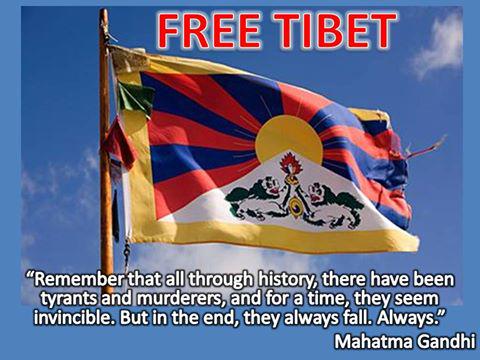


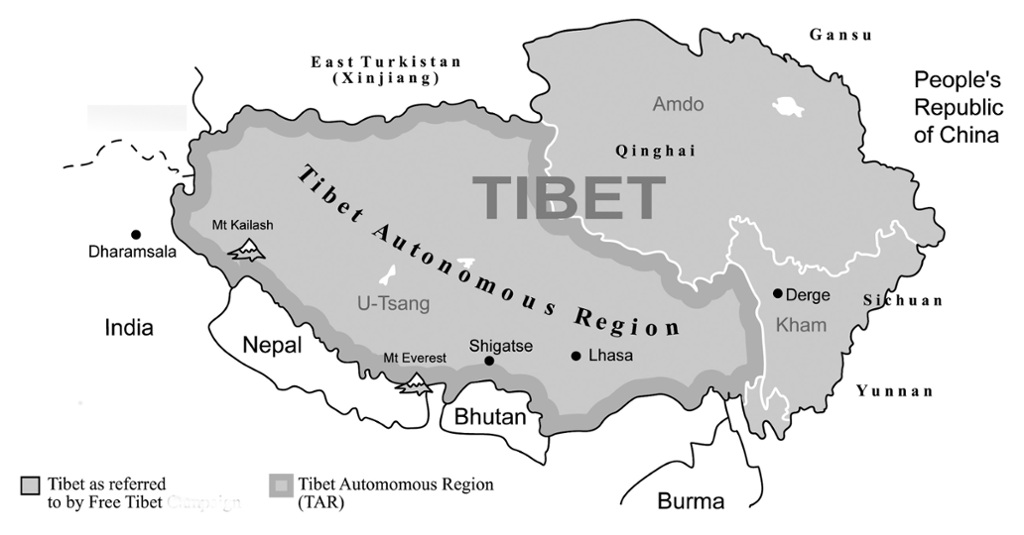


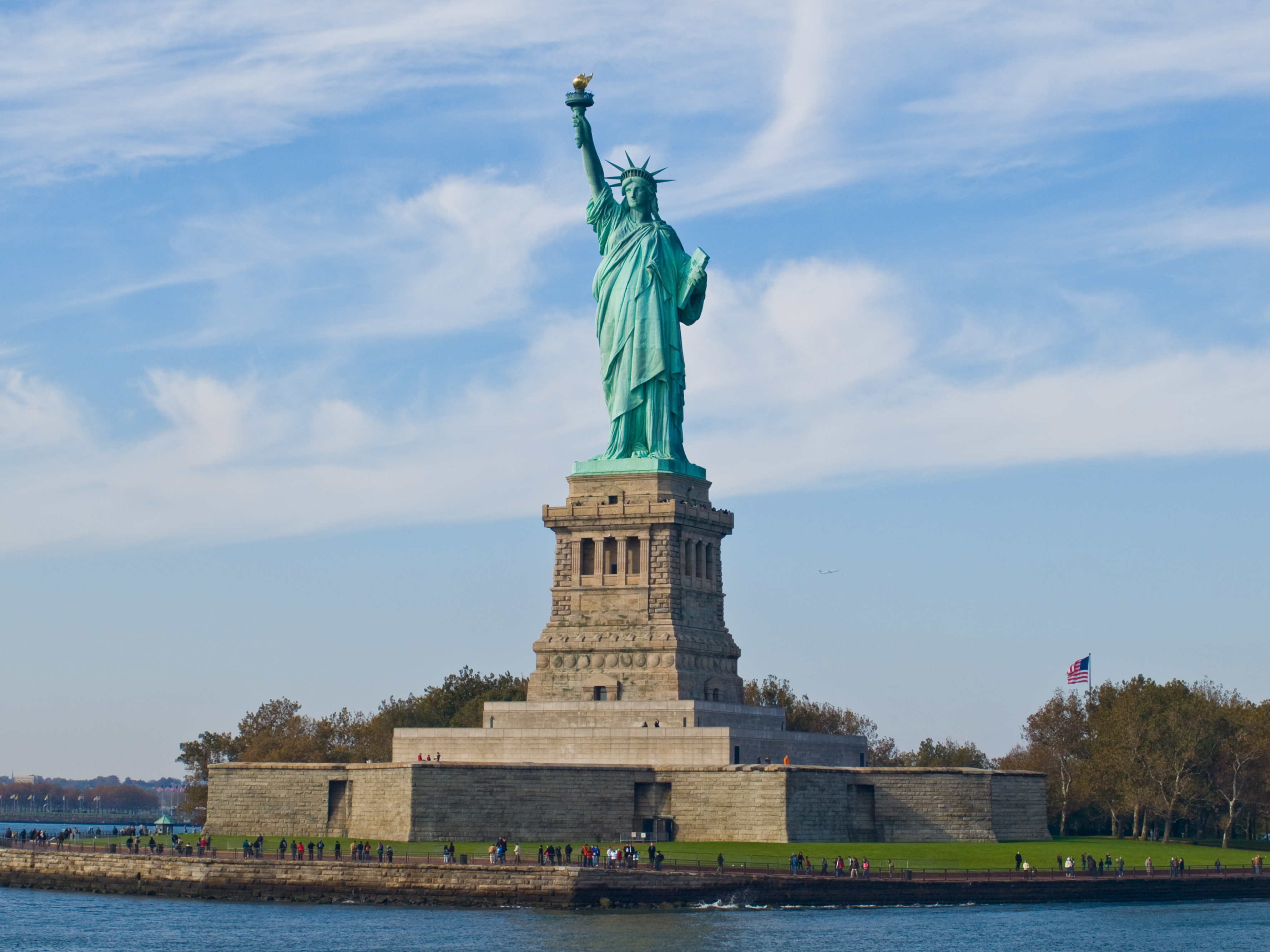

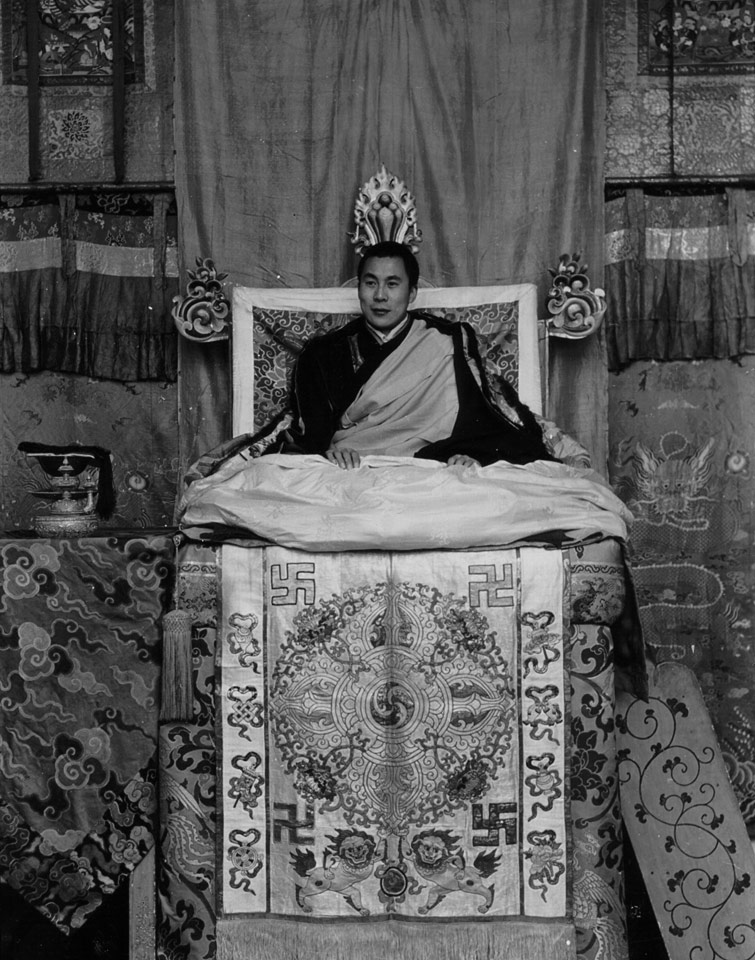




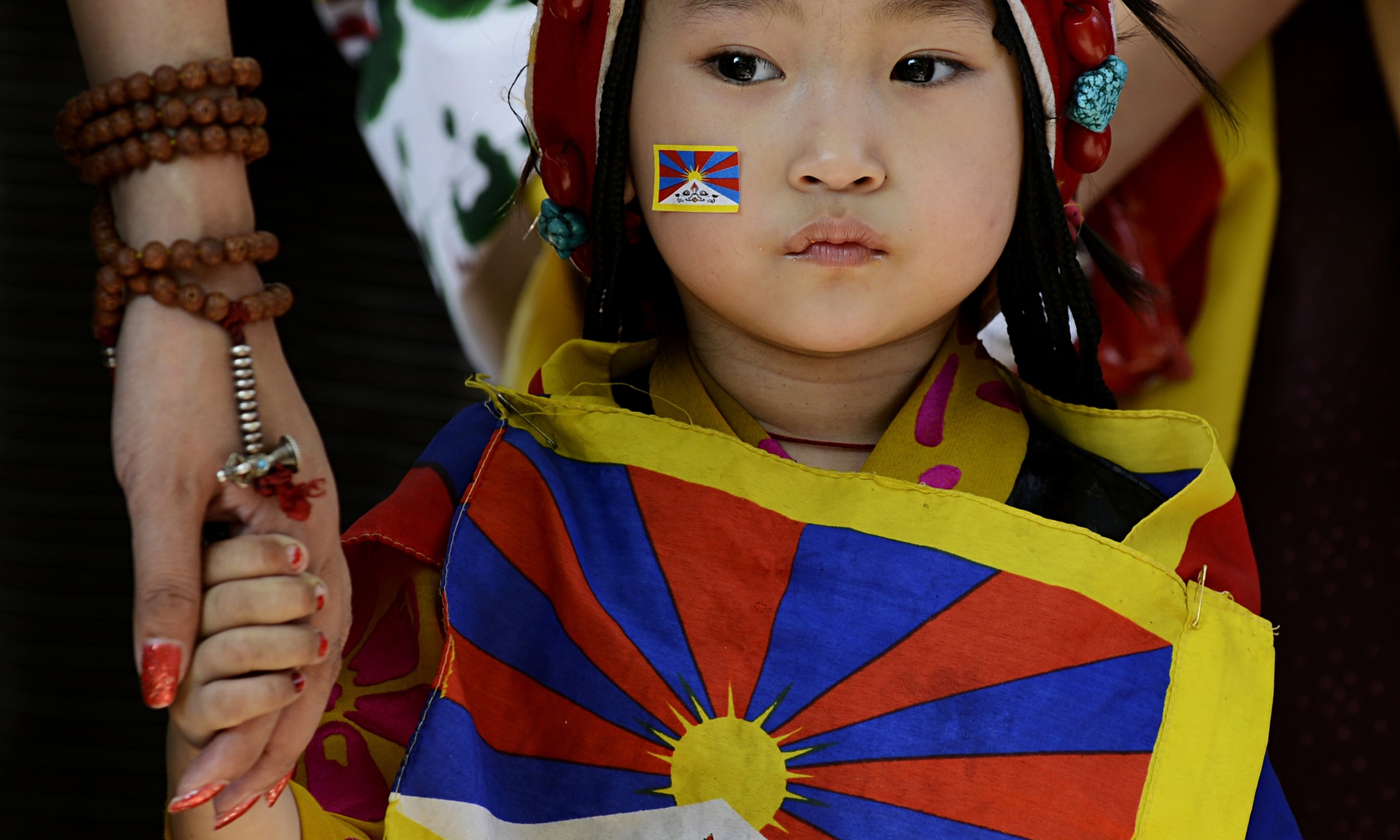

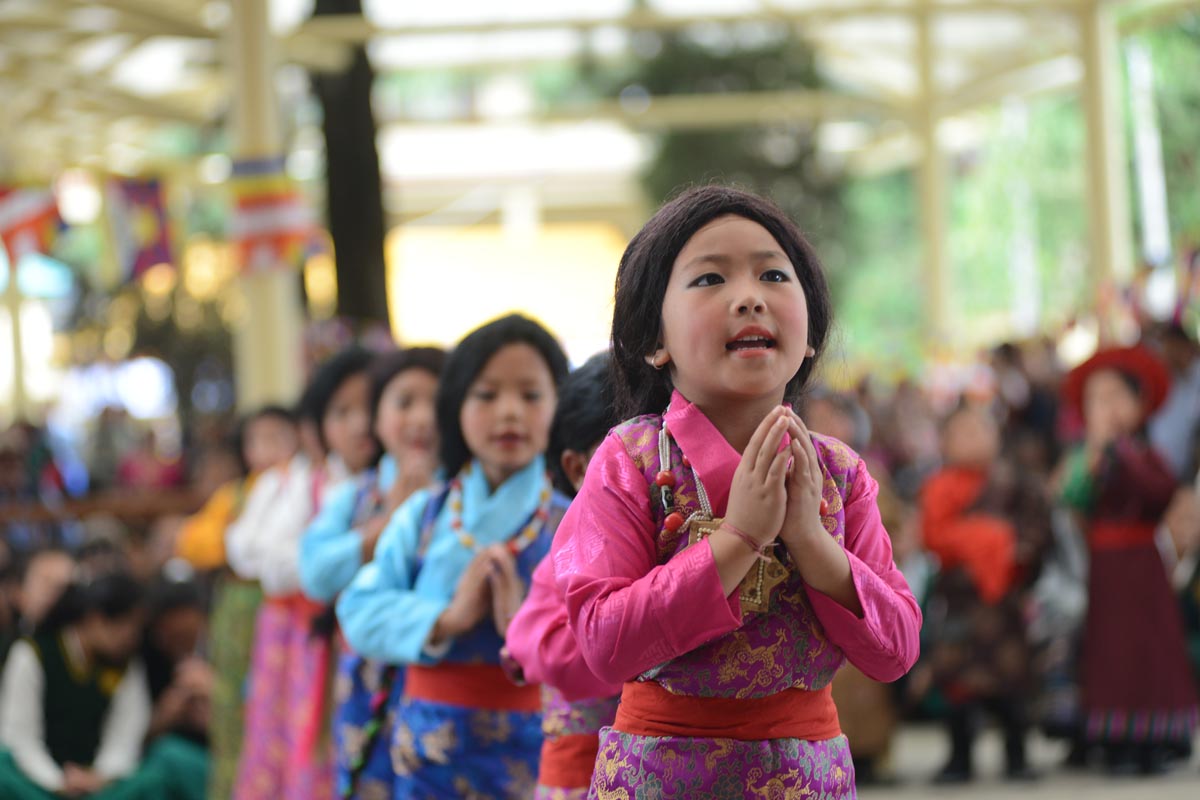




 Whole Dude - Whole Concept