Trouble in Tibet – Dalai Lama Portraits Confiscated
Confiscation of Dalai Lama portraits in Occupied Tibet is a sign and symptom of deep Trouble in Tibet. To give relief from Trouble, Tibet needs Freedom From Occupation. The Dalai Lama will not reincarnate in a Land where his portraits are confiscated.
Confiscation of Dalai Lama portraits in Occupied Tibet is a sign and symptom of deep Trouble in Tibet. To give relief from Trouble, Tibet needs Freedom From Occupation. The Dalai Lama will not reincarnate in a Land where his portraits are confiscated.
Rudra Narasimham Rebbapragada Ann Arbor, MI 48104-4162 USA SPECIAL FRONTIER FORCE
Confiscation of Dalai Lama portraits in Occupied Tibet is a sign and symptom of deep Trouble in Tibet. To give relief from Trouble, Tibet needs Freedom From Occupation. The Dalai Lama will not reincarnate in a Land where his portraits are confiscated.
DALAI LAMA PORTRAITS CONFISCATED IN CHINA: REPORT
February 3, 2016 12:40 AM
A man prays below a portrait of the Dalai Lama at Kirti Monastery in Aba, a Tibetan area of China’s Sichuan province, on December 9, 2015 (AFP Photo/Benjamin Haas)
Beijing (AFP) – A Chinese province with a large Tibetan population has ordered shopkeepers to hand in portraits of the Dalai Lama, state-run media said Wednesday, quoting Beijing experts likening the Nobel laureate to executed Iraqi leader Saddam Hussein.
Sichuan in the southwest, which includes several ethnically Tibetan areas, set up a “law enforcement squad” of cultural bureau personnel, police and other officials to enforce the drive, reported the Global Times, which is close to the ruling Communist party.
The aim was to “crack down on pornography and illegal publications, which include portraits of the Dalai Lama” ahead of the Lunar New Year, it quoted Gou Yadong, director of the provincial publicity department, as saying.
People were more than welcome to put on show pictures of the country’s past and present leaders, he added, referring to former heads of the ruling party. The Global Times also cited Lian Xiangmin, of the China Tibetology Research Centre in Beijing, as saying that for Chinese people, hanging his picture was the same as displaying Saddam Hussein’s image would be for Americans.
The former Iraqi leader was executed in 2006 after being convicted of crimes against humanity, while the Dalai Lama, who fled Tibet after a failed uprising against Chinese rule, was awarded the 1989 Nobel Peace prize.
The move in Sichuan comes as Beijing steps up a campaign against the spiritual leader, who is still widely revered by Tibetans. Beijing brands him a dangerous separatist, despite his repeated statements condemning violence, and in Tibet it tightly controls images of him as part of what many Tibetans see as official repression of their religion and culture.
China denies repression of minorities and says its massive investment in Tibet has brought development to a formerly poverty stricken region. Some Tibetan areas in Sichuan had seen laxer enforcement in recent years, with business owners displaying his portrait in shops.
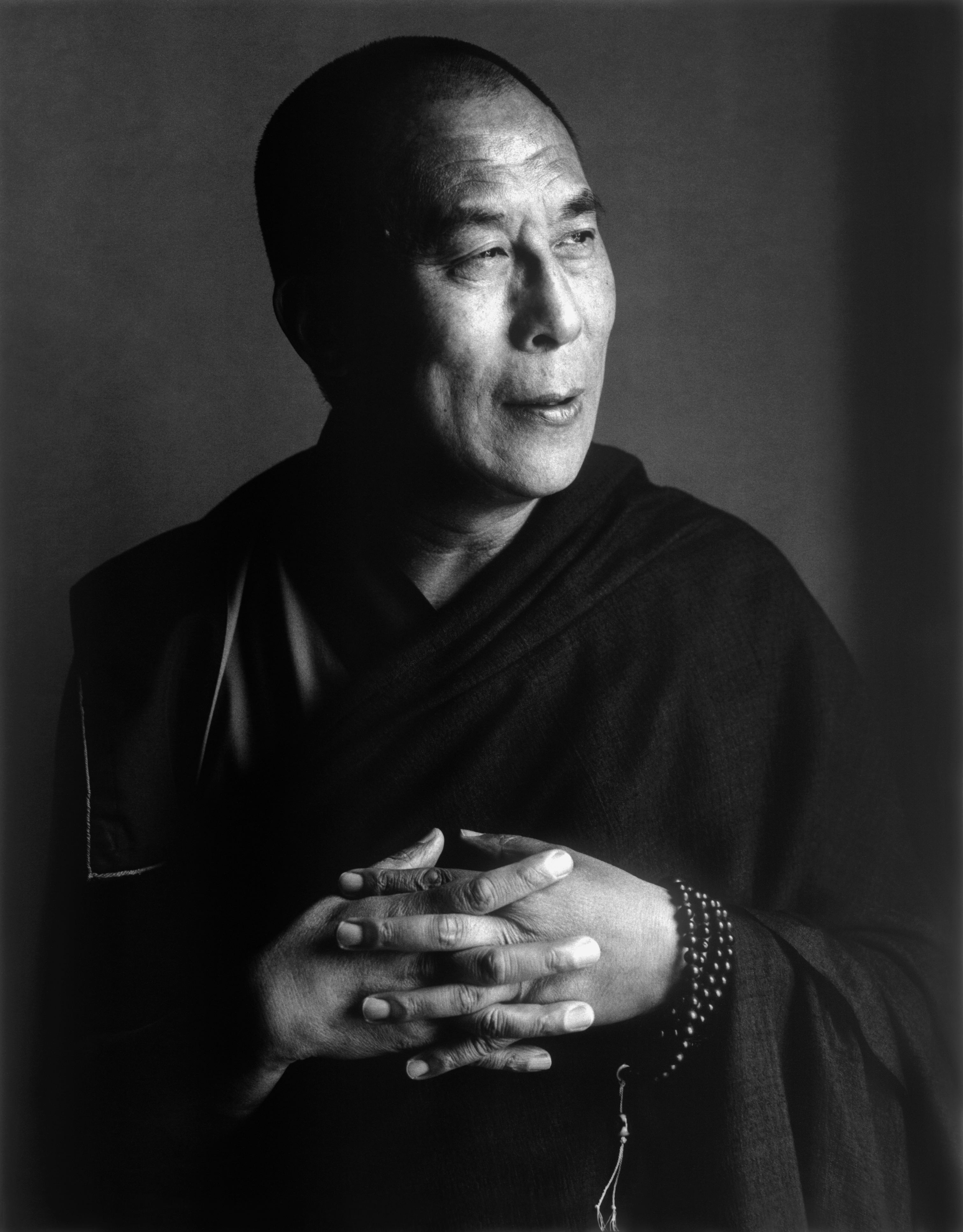
TROUBLE IN TIBET – DALAI LAMA PORTRAITS CONFISCATED IN OCCUPIED TIBET. 1987 Photography by Herb Ritts.Confiscation of Dalai Lama portraits in Occupied Tibet is a sign and symptom of deep Trouble in Tibet. To give relief from Trouble, Tibet needs Freedom From Occupation. The Dalai Lama will not reincarnate in a Land where his portraits are confiscated.
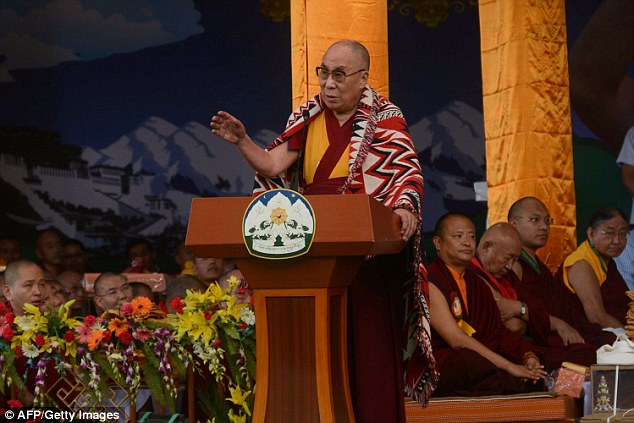
The Dalai Lama, shown here speaking to the Wisconsin Legislature in 2013, will be back in Madison on March 9, 2016 to participate in a gathering billed as “The World We Make.”
As of today, our World is in awful shape. Actually, we did not make this World. Just as in the case of Tibet, troubles are imposed upon innocent people who simply mind their own business without causing inconvenience to others. There is no choice other than that of remaking this World to give Peace and Justice to all people.
Rudra Narasimham Rebbapragada Ann Arbor, MI 48104-4162 USA Special Frontier Force, Establishment 22, Vikas Regiment
THE CAP TIMES
Madison, Wisconsin
Bill Berry: Wake up, Wisconsin, to impact of Dalai Lama, climate change
BILL BERRY | state columnist Jan 25, 2016 JOHN HART – State Journal
The Dalai Lama, shown here speaking to the Wisconsin Legislature in 2013, will be back in Madison on March 9 to participate in a gathering billed as “The World We Make.”An international spiritual leader, the Dalai Lama has worked for decades to building better understanding among the scientific and spiritual communities. John Hart/State Journal111
News that didn’t but should have stopped the presses as we came out of post-Christmas hibernation:
Welcome back: The Dalai Lama will make his 10th visit to Madison come March 9, as reported last week in Madison media. Beyond the Madison market, chances are the word won’t get out much on the visit from this international spiritual, ethical and moral leader. Its too bad. His international impact is immense. He’ll participate in a Capitol Theater event billed as The World We Make, a gathering of world leaders in science, health care and the media, according to its sponsor, the Center for Healthy Minds at UW-Madison. Among his many accomplishments, the Dalai Lama has been able to build better understanding among the scientific and spiritual communities.
The connection between the Dalai Lama and UW-Madison is well known in the Madison area. Outstate, not so much. But people might like to know that the connection has led to vibrant research on the healthy mind at the center, headed by Richard Davidson, and elsewhere on the UW campus. The simple idea that we can learn about humans by studying the healthy mind is transformational. Its also part of a vibrant body of research that stretches well beyond the Madison campus.
Bill Berry of Stevens Point writes a semimonthly column for The Capital Times. billnick
About the columnist
Bill Berry is a self-employed writer and editor who contributes to state and national publications. His Capital Times columns cover an array of topics, but he specializes in conservation, agriculture and sustainable land use.
The Great Problem of Tibet is on the Back Burner. My hope for Tibet’s Future comes from the Biblical Prophesy.
During the month of March, Tibet Awareness Month, I regret to report that The Great Problem of Tibet is still on the Back Burner. But, I am adamantly hopeful for the word Evil means Doom, Apocalypse, Calamity, Cataclysm, and Disaster. The global attention for Tibet has shrunk but the Evil Red Empire could be rushing ahead to meet its unavoidable Fate. My hope comes from a Biblical Prophesy.
The Great Problem of Tibet is on the Back Burner. My hope for Tibet’s Future comes from the Biblical Prophesy.
How China has shrunk global attention for Tibet and the Dalai Lama — Quartz
The global attention for Tibet has shrunk but the Evil Red Empire could be rushing ahead to meet its unavoidable Fate. My hope comes from a Biblical Prophesy.
March is a sensitive month in Tibet. In 1959, an uprising led to a bloody crackdown by Chinese forces, culminating in the 23-year-old Dalai Lama’s escape to India on March 17, where he arrived after two weeks of apprehension over his fate. Protests marking the Tibetan revolt were put down in 1989, and most recently in 2008, months before China was set to showcase itself to the world with the opening of the Beijing Olympics.
It’s hard to imagine such acts of defiance taking place today. In 2011, Beijing further tightened its chokehold on the autonomous region under the leadership of new Tibet Communist Party secretary Chen Quanguo (paywall), who implemented a vast array of security measures, including the incarceration and “re-education” of those who had returned from listening to the Dalai Lama’s teachings in India. Tibetans were also forced to adapt their culture to party ideology and to learn how to “revere” science, part of Beijing’s ongoing propaganda campaign that portrays its rule in Tibet as a benevolent exercise in modernization and anti-feudalism. Ten years ago today (March 28), the Chinese instituted Serfs’ Emancipation Day as a holiday to celebrate its program.
The global attention for Tibet has shrunk but the Evil Red Empire could be rushing ahead to meet its unavoidable Fate. My hope comes from a Biblical Prophesy.
Reuters
Smoke rises from burning buildings below the Potala Palace in the Tibetan capital Lhasa during protests on March 14, 2008.
“To some extent, China has been very successful in dealing with Tibet,” said Tsering Shakya, an academic at the University of British Columbia in Vancouver.
Beijing is applying the Tibet model to another minority considered to pose a danger to the state. In 2016, Chen became party secretary in the Xinjiang region of northwest China, where his Tibetan policies are largely seen as the foundation for repression of the Uyghur minority. Large-scale re-education camps hold hundreds of thousands of Muslims as Uyghur cultural and religious practices face systematic erosion.
From Kundun to Rock Dog
Advocates hope that growing international awareness over Xinjiang will help rekindle the world’s attention toward Tibet, which has dwindled amid the Chinese Communist Party’s relentless efforts to reshape the global conversation about the region.
Perhaps the starkest manifestation of that is in the arts. Tibet, once a cause célèbre in Hollywood as the subject of films such as Kundun and Seven Years in Tibet—in which Brad Pitt played the role of an Austrian mountaineer who tutored the young Dalai Lama—is today almost nowhere to be seen on screen. Actor Richard Gere, one of the most well-known celebrities to support Tibetan independence, said in 2017 that he has been shut out of major productions because of his outspokenness.
The global attention for Tibet has shrunk but the Evil Red Empire could be rushing ahead to meet its unavoidable Fate. My hope comes from a Biblical Prophesy.
Reuters/Yuri Gripas
Nancy Pelosi talks to Richard Gere at a memorial event for Kasur Gyari, former special envoy of the Dalai Lama to the US, March 12, 2019.
When Tibet is still visible, said Seagh Kehoe at the University of Leicester, it is often in a watered-down and totally depoliticized fashion, as in the animated Rock Dog, a 2016 joint US-China production about a Tibetan mastiff who becomes a music star. Self-censorship over Tibet can be seen at work in London as well, with a West End theater suspending performance of a play about Tibet last year reportedly at the urging of the British Council, the UK’s international cultural organization, which is partly government funded. Following accusations of censorship by its playwright and apologies by the theater, Pah-la is now due to be staged next month.
Shaping the narrative on campus
Universities are another important battleground in Beijing’s attempt to mold its narrative. Campus activism in an earlier era was generally pro-Tibetan. That’s changing today with the ballooning number of Chinese students abroad—over 600,000 now compared with fewer than 50,000 in the late 1990s.
Chinese authorities “see overseas students as allies in their ongoing efforts to counter regime opponents” including groups sympathetic to Tibet, Xinjiang, Taiwan, and the Falun Gong, according to a report (pdf) last year by the Wilson Center, a Washington, DC-based think tank. The report detailed attempts by Chinese officials to put pressure on institutions to cancel invitations to the Dalai Lama and to bring more Chinese delegations to US universities to espouse the Communist Party’s line on Tibet.
Chemi Lhamo, a Tibetan student who was elected last month as a student president at the University of Toronto, received thousands of threatening Instagram messages from Chinese students. The student union decided to close her office out of concern for her safety. Chinese officials in Canada denied having anything to do with the incident or a case in which an Uyghur speaker was disrupted by Chinese students at McMaster University who had reportedly sought advice (paywall) from the consulate in Toronto. Chinese diplomats in Canada have praised the actions of students in both instances as being “patriotic.”
“Slow violence” gets less attention
Draconian restrictions on travel by Tibetans, foreign diplomats and journalists have made getting disseminating information from the region immensely more difficult.
Ever-tightening security has eliminated visible, large-scale displays of protest. The “optics of urgency” spotlighting the Xinjiang situation, such as satellite photos of camps and reporting by journalists on the ground, are missing from the Tibet narrative, wrote Gerald Roche, an anthropologist at La Trobe University in Melbourne. The “slow violence” that characterizes the plight of Tibet today, Roche added, makes it harder to get global attention.
Ahead of the 60th anniversary of the uprisings in Tibet, Chinese authorities further tightened control, restricting even foreign tourists from traveling there. Meanwhile, a white paper from China’s State Council on Tibet released yesterday (March 27) boasted of “democratic reform” over the past six decades, including a chapter titled “The People Have Become Masters of Their Own Affairs.”
During the month of March, Tibet Awareness Month, I regret to report that The Great Problem of Tibet is still on the Back Burner. But, I am adamantly hopeful for the word Evil means Doom, Apocalypse, Calamity, Cataclysm, and Disaster. The global attention for Tibet has shrunk but the Evil Red Empire could be rushing ahead to meet its unavoidable Fate. My hope comes from a Biblical Prophesy.
Reuters/Thomas Peter
Armed police attempt to prevent a photographer from taking pictures at the entrance to the village of Taktser, known in Chinese as Hongya, where the Dalai Lama was born in 1935, Qinghai province, China March 9, 2019.
Dramatic protests have continued. Since 2009, Tibetans have been self-immolating as a form of protest, with the act spreading from nuns and monks to laypeople. The International Campaign for Tibet’s latest count of self-immolations totals 155, with the last of the three known to have occurred in 2018 taking place in December. International media coverage, however, has largely disappeared. “We have some 150 cases of self-immolation, but for all, I know it could be 300,” said Kevin Carrico at Monash University in Australia. “Even for people who pay attention to this situation, we don’t really know what’s happening.”
The debate over the next Dalai Lama
Sophie Richardson, China director at Human Rights Watch in Washington, said that spotlighting China’s human-rights abuses in Xinjiang can reinforce mutual support between diaspora Uyghur and Tibetan groups. There’s a common “core pathology” underlining Beijing’s actions in both places, including the “erasing of cultural identities and practices,” she said. Lhamo, the Tibetan student, told Quartz that a growing focus of her activism now involves building ties and sharing information with Uyghurs, Taiwanese, and the Falun Gong.
Advocacy groups have also welcomed renewed pressure by the US on Beijing. Congress passed the Tibet Reciprocal Act in December, which denies entry to the US any Chinese official who blocks Americans from going to Tibet. Matteo Mecacci, a former lawmaker in Italy and president for the International Campaign for Tibet, said the bill signals “enduring, bipartisan support for Tibet” in the US. The law requires annual reports detailing access to Tibet for Americans, with the first published this week.
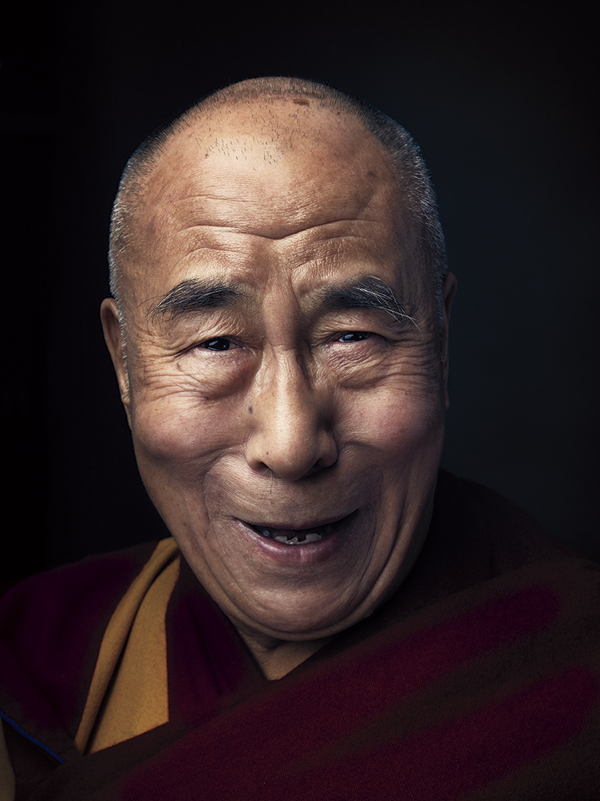
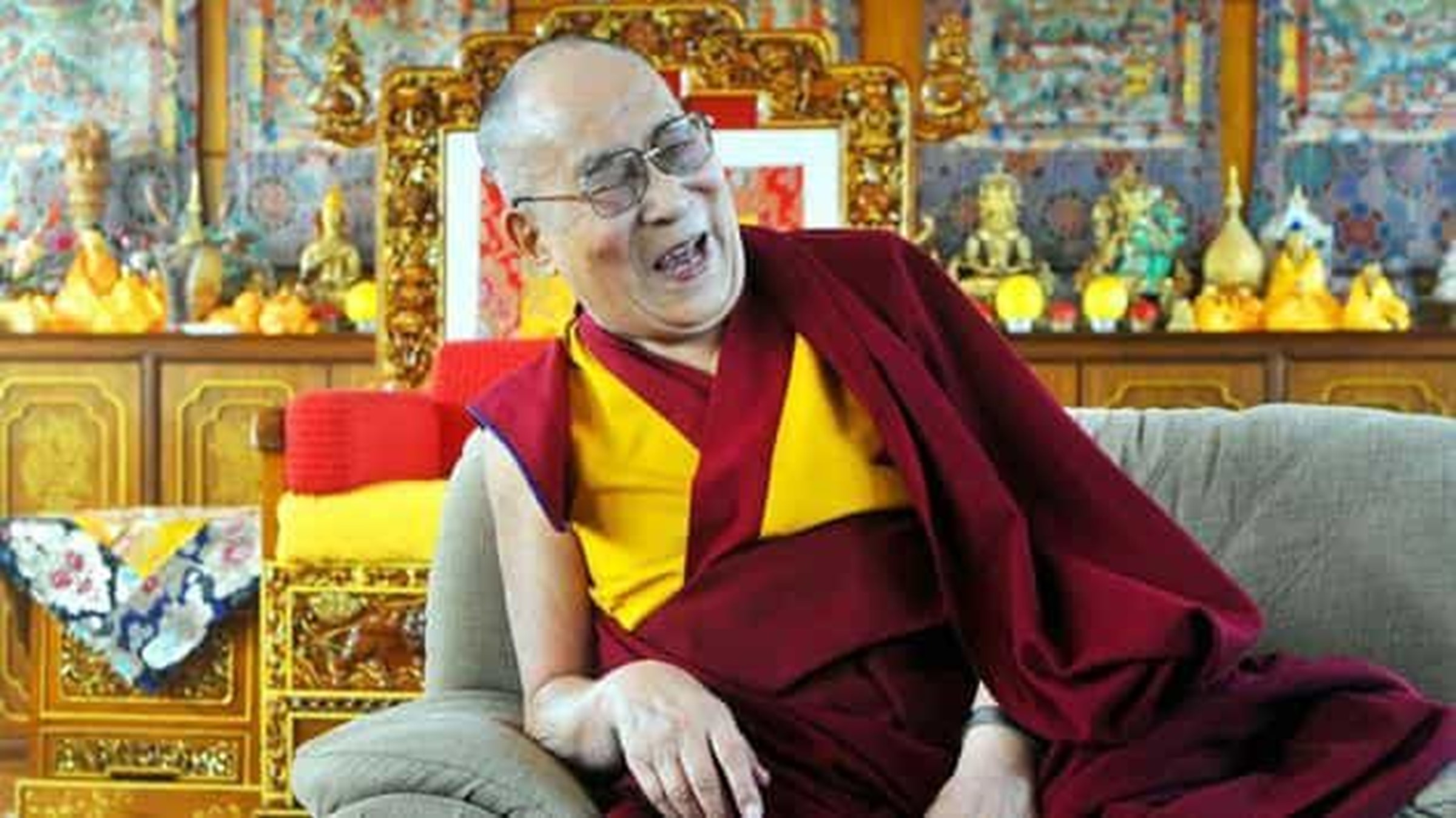
The Dalai Lama smiles as he sits on his chair at the Tsuglakhang temple in Dharmsala, India, Feb. 27, 2019.
AP Photo/Ashwini Bhatia
The Dalai Lama smiles as he sits on his chair at the Tsuglakhang temple in Dharmsala, India, Feb. 27, 2019.
The fight over the Dalai Lama’s succession—and China’s obsessive control over it—could also return Tibet to headlines in the coming years.
Amid a flurry of attention this month marking the leader’s 60th anniversary in exile in Dharamsala, the 83-year-old Dalai Lama said in an interview that his next incarnation could be found in India, adding that Beijing is likely to appoint its own successor whom “nobody will trust.” Beijing, which consistently maintains that the Dalai Lama is a separatist, promptly reiterated that the selection of the next Tibetan spiritual leader must follow Chinese law.
During the month of March, Tibet Awareness Month, I regret to report that The Great Problem of Tibet is still on the Back Burner. But, I am adamantly hopeful for the word Evil means Doom, Apocalypse, Calamity, Cataclysm, and Disaster. The global attention for Tibet has shrunk but the Evil Red Empire could be rushing ahead to meet its unavoidable Fate. My hope comes from a Biblical Prophesy.
Tibet Awareness – The Third Pole of Earth is vanishing – A Recipe for Disaster
Whole Awareness – Less Snow and Less Freedom in Tibet – A Recipe for Disaster
A report published in Climate Dynamics suggests that less snow in Tibet means more heatwaves in Europe. How about less Freedom in Tibet? What repercussions it would have on rest of the world? As Doomsayer of Doom Dooma, I predict that less ‘Freedom’ in Tibet is a recipe for a great disaster. A calamity, a catastrophe, and a disaster will strike Red China forcing her out of Tibet.
Rudra Narasimham Rebbapragada Ann Arbor, MI 48104-4162, USA Special Frontier Force. Establishment 22. Vikas Regiment
Less snow in Tibet means more heatwaves in Europe
Worsening heatwaves in Europe and north-east Asia are to thinner snow cover on the Tibetan Plateau, highlighting its key role in global weather systems, a study by Chinese scientists finds
TIBET AWARENESS – GLOBAL WARMING – CLIMATE ACTION. RED CHINA REFUSES TO ACCEPT THE CAUSE OF GLOBAL WARMING. RED CHINA IS USING DECEPTION AND PROPAGANDA INSTEAD OF ADDRESSING CORE ISSUES.
Chinese scientists found that reduced snow cover on the Tibetan Plateau triggers high pressure over southern Europe and northeast Asia, reducing cloud formation and pushing up temperatures.
Wednesday 7 October 2015
Recent summer heatwaves in Europe and northeast Asia have caused massive water shortages and a large number of deaths. But the mechanism behind these extreme weather events is not fully understood.
Scientists at China’s Nanjing University of Information Science and Technology now say that decreasing snow cover in the Tibetan Plateau could be playing an important role. Professor Wu Zhiwei and her team used monthly snow cover and air temperature data from the past fifty years to build a global circulation model.
Their findings show that reduced snow cover on the Tibetan Plateau triggers high pressure over southern Europe and northeast Asia, reducing cloud formation and pushing up temperatures. Warmer and drier conditions in turn further inhibit cloud formation, intensifying local heat waves, says their paper, published recently in Climate Dynamics. With further snow loss projected in the future, “Tibetan Plateau snow cover may play an increasingly significant role in shaping the Eurasian heat waves in the next decades,” the Chinese scientists conclude.
Summer snow cover on the Tibetan plateau has already decreased significantly over the past 50 years with rising levels of global greenhouse gases. The region is warming at almost three times the global average.
Global climate connections
As climate models grow more sophisticated and complex, scientists have identified a set of long-distance atmospheric connections – or “teleconnections” – linking climate and weather in regions that are far apart.
These teleconnections also explain why rising sea temperatures in the Pacific Ocean affect summer rainfall in North America and why there are major global climate anomalies when an EL NINO occurs.
The findings are significant for southern Europe and north-east Asia, where heatwaves have become more frequent and more severe over the past decades. In 2003 Europe was caught off guard as sweltering temperatures brought the hottest summer since records began, leading to 70,000 deaths. In July – August 2010, another heat wave caused an estimated 56,000 deaths in western Russia.
In northern China heatwaves have led to major drinking water shortages for over half a billion people.
Tibet – the weather maker
Scientists agree that as the largest and highest plateau in the world, Tibet plays a key role in the global climate system. But many of the details remain a mystery. The authors of the paper acknowledge their findings contain a number of caveats – including the lack of high quality and long-term climate data for the Tibetan Plateau. The plateau and the Hindu Kush Himalayas are together often called the third pole because they hold the world’s largest stock of ice outside the poles. The plateau’s remoteness, high altitude and harsh conditions mean that even basic weather stations are few. Satellite data only exists from the 1970s and is plagued by errors because of the lack of calibration from ground observations.
Earlier studies have shown how heavy snowfall over the Tibetan Plateau can both weaken and prolong the duration of the summer monsoon system in the region. Another study linked greater winter snow cover in Tibet with warmer winters in Canada.
The Nanjing study adds fresh insights: “The findings in this paper are very important for understanding the causes to the increased frequency of heatwaves in Eurasia,” said Wen Zhou from the Guy Carpenter Asia-Pacific Climate Impact Centre, City University of Hong Kong. She is leading a separate team to study the influence of high summer temperatures in southeast China on the Asian monsoons.
Plugging the gap
China is trying to fill this data gap. Last year, government institutions launched a US $49-million initiative to wire up the plateau with sensors in an unprecedented attempt to understand its influence on climate — especially the Asian monsoons.
The Chinese effort could help to predict extreme weather — both in Asia and as far afield as North America — and give scientists a steer on how climate change affects these events.
The China Meteorological Administration and the National Natural Science Foundation of China has set up sensors on high towers and in the soil to monitor temperature and moisture and cloud formation, as well as deploying sensors mounted on weather balloons and unmanned aerial vehicles.
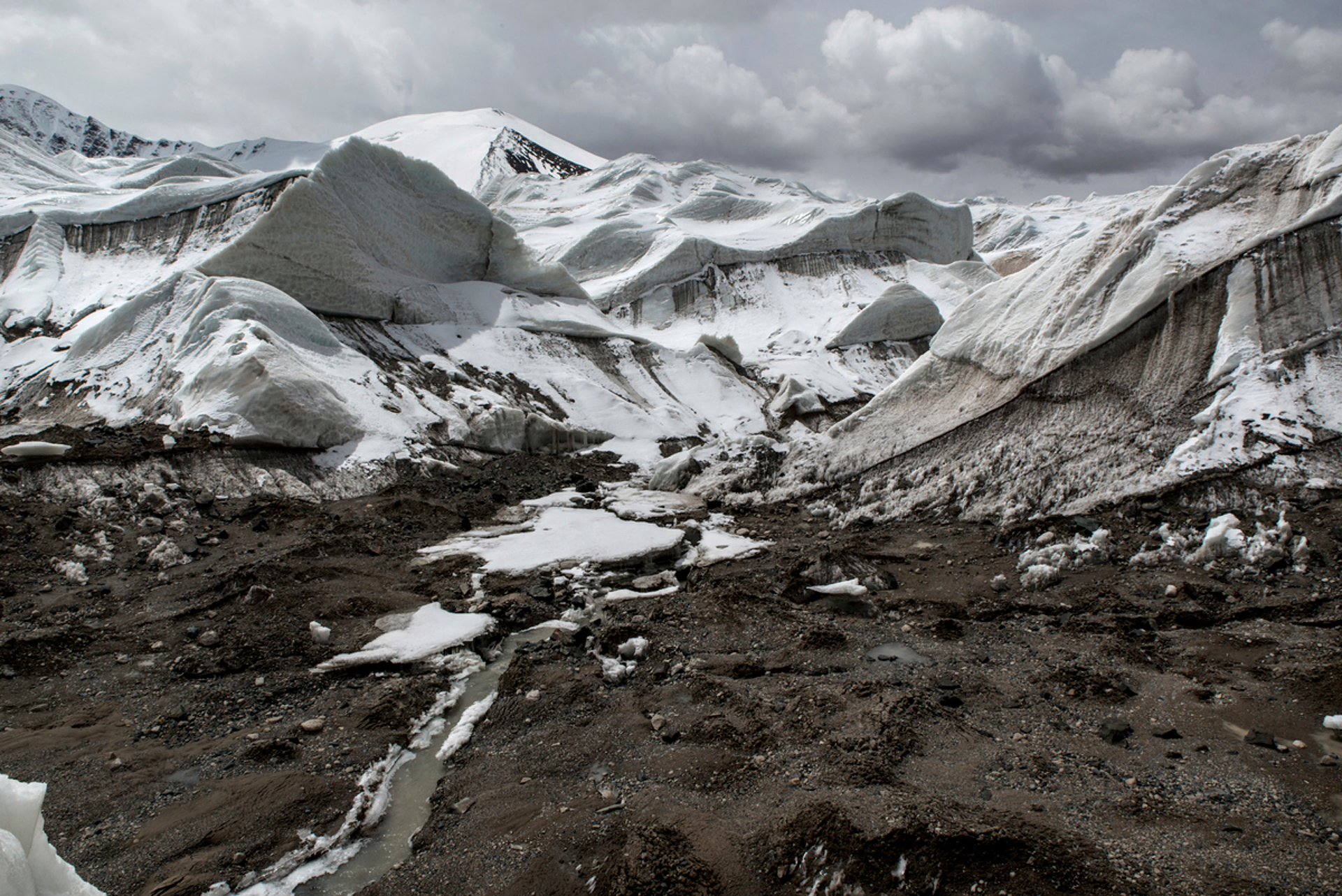
Whole Awareness – Less Snow and Less Freedom in Tibet – A Recipe for DisasterWhole Awareness – Less Snow and Less Freedom in Tibet – A Recipe for DisasterWhole Awareness – Less Snow and Less Freedom in Tibet – A Recipe for DisasterTIBET AWARENESS – LESS SNOW AND LESS FREEDOM IN TIBET – A RECIPE FOR DISASTER. MELTING GLACIERS OF TIBET.TIBET AWARENESS – LESS SNOW AND LESS FREEDOM IN TIBET – A RECIPE FOR DISASTER. GLACIERS IN TIBET MELTING. CONSEQUENCE OF COLONIALISTIC EXPLOITATION BY RED CHINA.TIBET AWARENESS – LESS SNOW AND LESS FREEDOM IN TIBET – A RECIPE FOR DISASTER. EFFECTS OF POLLUTION, GLOBAL WARMING IN TIBET.TIBET AWARENESS – LESS SNOW AND LESS FREEDOM IN TIBET – A RECIPE FOR DISASTER. CLIMATE CHANGE IS SYMPTOM OF TIBET’S MILITARY OCCUPATION.TIBET AWARENESS – LESS SNOW AND LESS FREEDOM IN TIBET – A RECIPE FOR DISASTER. TIBETAN PLATEAU GLACIERS MELTING RAPIDLY AFTER THE LOSS OF FREEDOM.TIBET AWARENESS – LESS SNOW AND LESS FREEDOM IN TIBET – A RECIPE FOR DISASTER. GLACIERS IN TIBET MELTING.Whole Awareness – Less Snow and Less Freedom in Tibet – A Recipe for DisasterWhole Awareness – Less Snow and Less Freedom in Tibet – A Recipe for DisasterWhole Awareness – Less Snow and Less Freedom in Tibet – A Recipe for DisasterWhole Awareness – Less Snow and Less Freedom in Tibet – A Recipe for DisasterWhole Awareness – Less Snow and Less Freedom in Tibet – A Recipe for DisasterWhole Awareness – Less Snow and Less Freedom in Tibet – A Recipe for Disaster
To celebrate observance of World Human Rights Day on December 10, 2024, I speak about Tibet’s yoking with Red China. This yoking, coming together, or joining of Red China with Tibet speaks of Subjection, Bondage, Servitude, Enslavement, Hardship, Burden, Trouble, Pain, Suffering, Sorrow, and Misery. Tibetans resist this burden imposed upon their Natural Freedom. Tibet is under Control, and Tibet is Subdued under burden imposed by Red China’s Yoke. We need to help Tibet to resist Subservience to Red China.
TIBET AWARENESS – FULL INDEPENDENCE INEVITABLE. RED CHINA’S POLICY OF RULING TIBET WITH IRON FIST IS DOOMED.
TIBET POST INTERNATIONAL
Tibet: News WHAT PERCEIVED IN TIBET WAS A SMALL REALITY: GERMAN RIGHTS CHIEF
Saturday, 05 December 2015 20:46 Yeshe Choesang, Tibet Post International
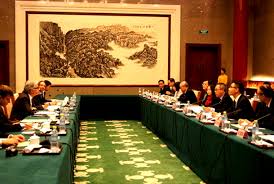
TIBET CONSCIOUSNESS – WORLD HUMAN RIGHTS DAY, DECEMBER 10, 2015. Red China and Germany hold the 13th Human Rights Dialogue in Beijing on November 24, 2015.
Dharamshala — German Human Rights Commissioner Mr Christoph Straesser who has led a delegation to Tibet, said what his delegation perceived was surely only a small part of reality in Tibet.
Straesser’s comment came after Beijing said China and Germany held “candid” and “in-depth” talks during their 13th Human Rights Dialogue in Beijing.
During an interview with German newspaper Deutsche Welle, Mr Straesser rebuked the Chinese government for showing an ‘incorrect perception of reality’ during his recent visit to China and Tibet as part of the EU-China human rights dialogue.
The Chinese State-Run Media Xinhua reported on November 25 that the dialogue was attended by top officials of the CCP, holding that the “dialogue was candid, comprehensive and deep and promoted mutual understanding.”
“Both sides exchanged views on new progress and cooperation in human rights area, human rights and environmental protection, social integration and human rights and other issues,” it claimed.
However, responding to a question on the freedom of religion and language in Tibet, Straesser said: “What we perceived was surely only a small part of reality in this region.”
“But given the decades-long discussions held in Germany, there is also the impression that Dalai Lama supporters aren’t allowed to freely practice their religion given that the Dalai Lama is seen in China as someone who is allegedly seeking state autonomy for Tibet.” “His supporters are in constant danger of having their rights infringed because of their affiliation. This also leads to more arrests and very unpleasant situations for these people,” he added.
Describing the current situation in Tibet as a clear violation of the right to religious freedom, he said, ” However, we must take into account that only through persistent dialogue can we achieve that the Chinese government views the Dalai Lama as someone who is not seeking to divide the country.”
“We also have to point to the fact that the Dalai Lama is also seen in our region – when he comes to Germany – as a religious leader and a Nobel Peace Prize laureate who says he has no intention whatsoever of disentangling Tibet from the People’s Republic of China,” he said.
The German Human Rights Commissioner also discussed the issue of political prisoners and other Chinese dissidents including the case of Gao Yu, an outspoken former journalist who was granted medical parole after she was sentenced to seven years in prison in April 2015.
The Germany delegation paid a visit to Tibet. Beijing said it “hopes the tour will help the German side get a correct and objective understanding of the region.”
TIBET CONSCIOUSNESS – TIBET CLIMATE ACTION. DEMANDING FREEDOM, PEACE, AND JUSTICE FOR TIBET.Tibet Consciousness- World Human Rights Day, December 10, 2015.Tibet Consciousness – World Human Rights Day, December 10, 2015.Tibet Consciousness – Human Rights Day, December 10, 2015.
Whole Awareness – Tibet Awareness of the Living Tibetan Spirits
Whole Awareness – Tibet Awareness of the Living Tibetan Spirits
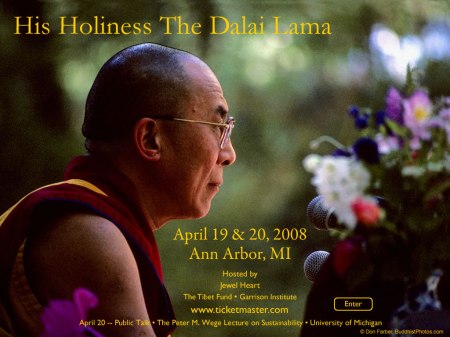
Following the visit of His Holiness the 14th Dalai Lama’s visit to Ann Arbor, MI, USA in 2008, I coined the phrase ‘The Living Tibetan Spirits’. I am not a monk. I am speaking of my ‘spirituality’ in the context of hosting the ‘Spirits’ of young Tibetan soldiers who gave their precious lives while taking part in a military action in the Chittagong Hill Tracts that initiated the Liberation of Bangladesh during 1971. I claim that I am Tibetan for I host their ‘Spirits’ in my Consciousness.
His Holiness The Dalai Lama – Winner of the 1989 Nobel Peace Prize:
Whole Dude – Whole Spirits: HIS HOLINESS THE 14th DALAI LAMA – PRINCE OF PEACE: The Dalai Lama is seen seated on his throne in Potala Palace, Lhasa, Tibet in this photo image from 1956/1957.
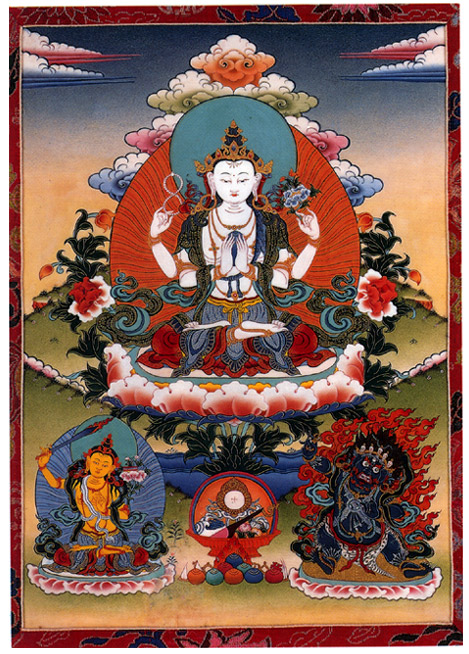
The Dalai Lama is believed to be a manifestation of Avalokiteshvara or Chenrezig, the Bodhisattva of Compassion and the patron saint of Tibet. Bodhisattvas are enlightened beings who have postponed their own nirvana and chosen to take rebirth in order to serve humanity.
Tenzin Gyatso, the 14th Dalai Lama, was born in 1935 in a small hamlet in northeastern Tibet. At the age of 2, the child who was named Lhamo Dhondup, was recognized as the reincarnation of the 13th Dalai Lama, Thubten Gyatso.
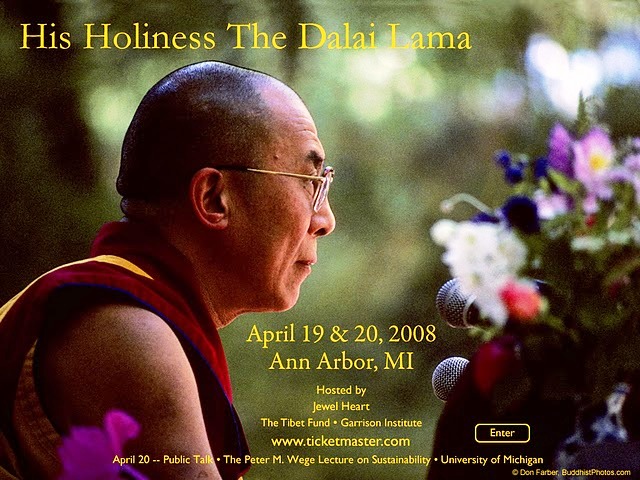
The 14th Dalai Lama will visit Ann Arbor for a series of talks in Crisler Arena at the University of Michigan on Saturday and Sunday April 19 and 20. His presentation of the University of Michigan’s annual Peter M. Wege Lecture on Sustainability is in celebration of Earth Day. The Wege Lecture is sponsored by the Center for Sustainable Systems at the School of Natural Resources and Environment. He will also present a two-day program with two sessions on April 19 and 20. The session will focus on “Engaging Wisdom and Compassion.” The teaching will be based on Acharya Nagarjuna’s Commentary on Ultimate Compassion and Je Tsong Khapa’s “In Praise of Dependent Origination.”
The Future of Tibet:
Whole Dude – Whole Spirits: The Vatican City State and Tibet. Just like the Pope who is the Head of the Vatican City State, H.H. Dalai Lama is the Temporal and Spiritual Leader of the Land of Tibet.
Vatican City is recognized as an ecclesiastical State. Sovereignty is exercised by the Pope upon his election as the Head of the Roman Catholic Church. The Pope has absolute executive, legislative and judicial powers within the Vatican City State. Similarly, the Dalai Lama is the spiritual and temporal Head of Tibet. The United States formulated an official policy about the Taiwan. With regards to Tibet, the United States has to first recognize the fact that the Tibet is under illegal Chinese occupation since 1951.
The Living Tibetan Spirits of Special Frontier Force:
Whole Dude – Whole Spirits: SPIRITUALISM AND THE LIVING TIBETAN SPIRITS: In Tibetan Buddhism, Bodhisattva-Avalokitesvara is physically manifested as His Holiness The Dalai Lama.
Special Frontier Force, Establishment 22, Vikas Regiment is a multinational defense plan to defend freedom and democracy in the occupied Land of Tibet.
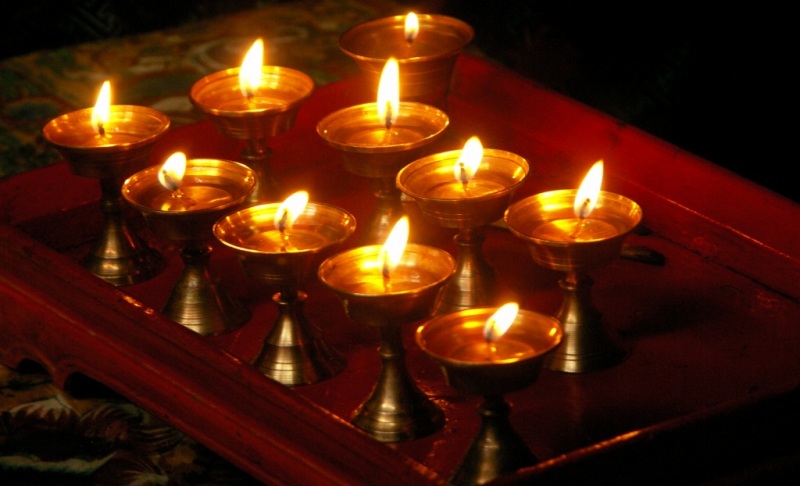
Whole Dude – Whole Spirits: SPIRITUALISM – THE LIVING TIBETAN SPIRITS – OLD FLAMES NEVER DIE : The butter lamps lit in my Unit Gompa or Gonpa to pay tribute to the departed souls, the people who gave their precious lives to defend the Freedom of people.
The Living Tibetan Spirits: My Body is Indian but Spiritually I’m Tibetan
The Living Tibetan Spirits: My Body is Indian but Spiritually I’m Tibetan
Following the visit of His Holiness the 14th Dalai Lama’s visit to Ann Arbor, MI, USA in 2008, I coined the phrase ‘The Living Tibetan Spirits’. I am not a monk. I am speaking of my ‘spirituality’ in the context of hosting the ‘Spirits’ of young Tibetan soldiers who gave their precious lives while taking part in a military action in the Chittagong Hill Tracts that initiated the Liberation of Bangladesh during 1971. I claim that I am Tibetan for I host their ‘Spirits’ in my Consciousness.
The Living Tibetan Spirits: My Body is Indian but Spiritually I’m Tibetan
“Self-grasping (or self-focus) gives rise to suffering. It is the root of all afflictions.”
– The Dalai Lama, as translated Saturday by Thupten Jinpa.
The Living Tibetan Spirits: My Body is Indian but Spiritually I’m Tibetan
“At the root of all our suffering lies a form of ignorance, a form of unknowing.”
– The Dalai Lama, as translated Saturday by Thupten Jinpa
‘My body is Tibetan but spiritually I’m an Indian,’ says the Dalai Lama
Tibet Awareness: My body is Indian but spiritually I am Tibetan.
In a freewheeling interview with HT, the Dalai Lama speaks on wide-ranging spiritual and political issues, including what he thinks of India-China ties.
On the outer periphery of Mahabodhi temple in Bodh Gaya in Bihar, a mere few hundred steps from the Bodhi tree under which Buddha attained enlightenment more than 2,000 years ago, the 14th Dalai Lama prays and meets his followers in a monastery behind an iron security curtain. Inside the temple, Trinley Thaye Dorje, the co-claimant along with Ogyen Trinley Dorje for the title of 17th Karmapa or head of Karma Kagyu school, is preaching to his followers from all over the world on Buddhism. The 17th Karmapa will become the key leader of Tibetan Buddhism in case the 14th Dalai Lama dies without reincarnation. The two religious leaders have no common ground because of the Dalai Lama, like China, recognizes Ogyen Dorje, who left India for the US in May 2017 and acquired citizenship of Dominica in March this year, as the real Karmapa.
On Sunday morning after he discreetly meets a group of monks that has made its way from Tibet Autonomous Region of China, the frail-looking but mentally alert 84-year-old spiritual leader of the Tibetan people talked exclusively to Shishir Gupta on wide-ranging political and spiritual issues. Edited excerpts:
How is your health these days?
Quite Good… Not very good …. for an 84-year-old person, quite good. I go for morning walks in Dharamshala also…. Here I take around 600 steps each morning in the monastery.
What was the reason for the indefinite postponement of the 13th Religious Conference of the Schools of Tibetan Buddhism and Bon Tradition (November 29-December 1, 2018) in Dharamshala? The conference was called to discuss the future of the institution of Dalai Lama.
One important lama (Kathok Getse Rinpoche, Head of Nyingma school) suddenly passed away. The conference had to be postponed as it was a period of mourning. It has nothing to do with 17th Karmapa Ogyen Trinley Dorje not getting a visa to visit India. I could not meet Thaye Dorje as he was not present when I went for pilgrimage to the Stupa.
Do you talk to both Ogyen and Thaye?
No, I have not yet met Thaye Dorje. Recently, the two met in France. A rightful beginning. Shamar Rinpoche, the nephew of 16th Karmapa Rangjung Rigpe Dorje who took refuge in Sikkim after 1959 uprising, told me that there were indications that Thaye Dorje was the reincarnation of the previous Karmapa. In the meantime, Situ Rinpoche (the rival regent) appointed Ogyen Dorje as the Karmapa. I mentioned to Shamar that a high lama in the 19th century had five reincarnations. It is possible for 16th Karmapa to have few reincarnations but the holder of the seat should be one. This is like the two Panchen Lamas with Gedhun Choekyi Nyima (proclaimed by Dalai Lama as reincarnation on May 14, 1995) still alive (other being Gyaltsen Norbu who was appointed by the Chinese government). But then some group told me that I should not be talking about the possibility of two or three reincarnations. I said, OK, then I will keep quiet.
Then who will decide the rightful one heir to the seat?
Situ Rinpoche found a remarkable child (Ogyen Dorje) in Tibet. They came to see me and finalize that. Then I said yes to Ogyen as the reincarnation of the 16th Karmapa.
There are now two Panchen Lamas, two Karmapas, now the question comes to the tallest lama, the Dalai Lama. Have you initiated the process of your reincarnation because the Chinese government has already initiated the process?
No, no, no. That is not my business. I made it clear as early as in 1969 that it was up to the Tibetan people to decide whether the very institution of Dalai Lama should continue or not. They will decide. I have no concern. Since the 5th Dalai Lama, the (person holding the) title was the head of both temporal and spiritual affairs. Since 2001, I have proudly, voluntarily and happily given up the political role. We have already achieved elected political leadership (Centralized Tibetan Administration in Dharamshala) and they carry their full responsibility about our temporal affairs. I have totally retired since 2011. So, my thinking is more liberal than Chinese thinking which is more orthodox.
But how will people under stress in Tibet decide whether the institution of Dalai Lama should continue?
It should be decided in a free country, not in Tibet, where there is no freedom.
Have you initiated the process of dialogue on the Dalai Lama institution?
No. Formally, not yet. As the Dalai Lama institution is close to Mongolia, Mongolian people should be involved. I think there should be an international Buddhist conference involving Himalayan people and other Buddhist countries to decide on this. My main concern is that my body, speech, mind, and life should be useful to other people. So long as space remains, and suffering remains, I remain. My daily prayer is the source of my inner strength. This institution of Dalai Lama, I half-jokingly, half-seriously say, has lasted six to seven hundred years should cease with the 14th with grace. If the 15th Dalai Lama turns out to be naughty as the sixth, then the institution will cease in disgrace. The institution could voluntarily and democratically cease with the 14th Dalai Lama being quite famous (he laughs).
Has your middle way approach with China worked? Is it going to benefit Tibetans at all?
Oh yes. Like Germany and France after centuries of fighting came together after second World War to form European Union on shared common values, we also want to be part of the Peoples Republic of China provided the Tibetan culture, language, knowledge, and environment are protected. We get a more economic benefit for material development as China is rich economically but spiritually, we can help millions of Chinese Buddhists. This is mutually beneficial. Historically, Tibet has never been part of China and this even some Chinese historians admit. But past is past, we must live harmoniously and happily together rather than talk in terms of our nation and their nation. People ask me about the future of India and China relations. I say that neither India nor China has the capability to destroy each other. They must live happily side by side with minor irritants. Ultimately, Hindi-Chini Bhai Bhai should be the principle. One must remember that there are around 400 million Chinese Buddhists who are inspired by Tibetan Buddhism, which in turn derives the majority of its strength from the Nalanda traditions.
There are media reports about Dr. Lobsang Sangay, President of Centralized Tibetan Administration (CTA) often disregarding the advice of the 14th Dalai Lama. How is your relationship with him?
No. As he is the head of elected political leadership, all decision-making is in his hand. I have never tried to control the political leadership. But in the meantime, he believes me and trusts me. There are some small rumors.
Will Ogyen Dorje return to India? We are told that the 17th Karmapa claimant is putting conditions to the Indian Government for his return?
That I don’t know. Most probably, I think he will return. I recently had discussions with the Ministry of External Affairs and told them that it is between the government of India and Ogyen to decide. I have no problems. It is his business. Not an important matter. There is no question of the Tibetan movement splintering in this context.
Are you looking forward to a pilgrimage to China?
Yes. Sure. As far (back) as 1954, I expressed my desire to the Chinese government to visit Wutai Shan, the home of 13th Dalai Lama. I was told that there was no road. I still have that desire, but it is up to the Chinese government. Once a high Tibetan lama wanted to go to Bodh Gaya, but his disciple said that the real Bodh Gaya is in your heart. Historically, the Wutai Shan is the seat of Deva of wisdom. Whether I am there physically or not, that wisdom from the Deva is already in my brain…. very sharp.
Is there any back channel open with the Chinese for resolving the Tibetan issue?
After we decided not to seek independence from China in 1974, Chinese leader Deng Xiaoping decided to have direct contact with us through my elder brother and the dialogue started in 1979. We sent four fact-finding missions to Tibet from 1979 but the dialogue ceased with the death of Deng in 1997. The official dialogue again started under President Jiang Zemin in 2002 but ceased in June 2010. Since then there is only an informal channel open with Chinese retired officials and private businessmen coming to see me from time to time. And they have some connection with the top leader. The Chinese are not in touch with the CTA. We never used the word Tibetan Government in exile. It is the Chinese who have used this and recognized them (he laughs).
Of late various heads of government refuse to meet you fearing the reaction of a now all-powerful China? What is your reaction to it?
I have nothing to ask from any head of state or country. I think they are afraid of the Chinese reaction. I met Barack Obama as former US President and Nobel laureate as also late President George Bush Senior. My visit to Sri Lanka was canceled at the last moment. I have not visited Thailand since it established diplomatic relations with China. I am never allowed into Buddhist countries because I am a Buddhist (he laughs) except Japan.
Any plans to visit the US and meet President Donald Trump?
No because of my physical condition. Normally, I used to go to the US annually for a medical check-up. One Indian doctor found traces of prostate cancer at the Mayo Clinic in USA. A team of 10 doctors discussed and ruled out surgery due to my age and side effects. Instead, I got radiation and have been completely cured of the disease. I have not traveled to the US in the past two years as it is too far, and I cannot handle too much physical exertion. So instead of going to the US for treatment, I go to a private hospital in Delhi.
US President Donald Trump has just signed “The Reciprocal Access to Tibet Act 2018”, which allows the Tibetans to return to their homeland or else the Chinese officials stopping them face sanctions. What is your reaction to this?
The present president of the greatest democratic nation is a bit unpredictable. So, I am in no position to comment on this as I do not know enough. But both the US houses have been strong supporters of Tibet over the decades and so has been the American government. American people love Tibet.
What is your reaction when you were asked to shift “Thank You India” event to mark 60 years of your exile in New Delhi to Dharamshala in April?
The Indian government tried to avoid any obstacle to their relations with China. That is understandable. That is OK. I was not unhappy. Not much. Nothing. Basically, our relations with India are centuries old since a Nalanda master introduced Buddha Dharma in Sanskrit tradition in the 8th century. My body is Tibetan but spiritually and mentally I am an Indian. Today 10,000 monks and now nuns are studying in Nalanda Buddhist traditions with total freedom and not in any restricted environment in Tibet.
Will you or your people ever be able to return to their homeland, Tibet?
India is the only place where modern education meets ancient knowledge, which is needed to tackle emotions. I am committed to reviewing the ancient Indian knowledge to tackle emotions. For these things’ freedom is very important. My return to Tibet is of no use if there is no freedom. I prefer this country and this freedom and then I am the longest guest of India.
The Living Tibetan Spirits: My Body is Indian but Spiritually I’m Tibetan
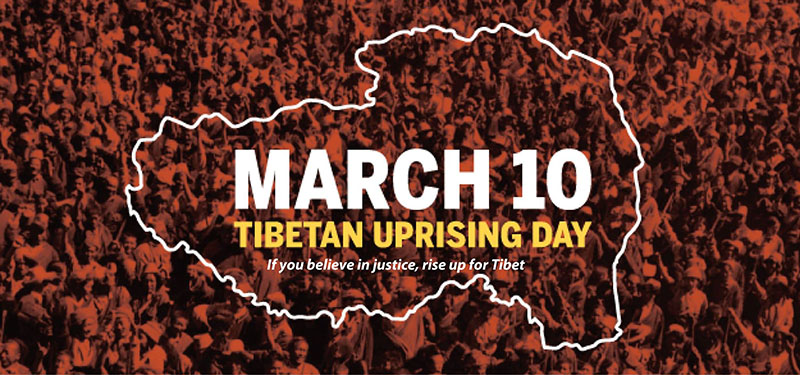
Sunday, March 10, 2024. 65th Anniversary of Tibetan Uprising Day.
On Sunday, March 10, 2024, the Living Tibetan Spirits commemorate events of Tibetan Uprising on Tuesday, March 10, 1959.
Sunday, March 10, 2024. 65th Anniversary of Tibetan Uprising Day.
Tibet Uprising or Tibet Rebellion on Tuesday, March 10, 1959 makes a profound impact on the course of my life’s journey since 1971 when I joined the Tibetan Resistance Movement in support of Human Rights, Freedom, Peace and Justice in Occupied Tibet. I speak on behalf of the Living Tibetan Spirits who live in exile without a refugee status, without asylum protection, and without any entity that can be called a friend.
Sunday, March 10, 2024. 65th Anniversary of Tibetan Uprising Day: For Seventy Five years, Tibetans are living under military occupation and political oppression. What is Tibet’s Future? How to evict the illegal occupier of Tibet?
How to find Hope when the Final Destination remains unknown? Can Patience and Perseverance serve the purpose of Hope for Freedom, Peace, and Justice?
Sunday, March 10, 2024. 65th Anniversary of Tibetan Uprising Day.
Sunday, March 10, 2024. 65th Anniversary of Tibetan Uprising Day.
The Norbulingka, the Dalai Lama’s Summer Palace in Lhasa, Tibet, which was destroyed by the Chinese Army during the 1959 Tibetan Uprising but later rebuilt. lapin.lapin on Flickr.com
Chinese artillery shells pummeled the Norbulingka, the Dalai Lama’s summer palace, sending plumes of smoke, fire, and dust into the night sky. The centuries-old building crumbled under the barrage, while the badly outnumbered Tibetan Army fought desperately to repel the People’s Liberation Army (PLA) from Lhasa…
Meanwhile, amidst the snows of the high Himalaya, the teenaged Dalai Lama and his bodyguards endured a cold and treacherous two-week-long journey into India.
Origins of the Tibetan Uprising of 1959
Tibet had an ill-defined relationship with China’s Qing Dynasty (1644-1912); at various times it could have been an ally, an opponent, a tributary state, or a region within Chinese control.
In 1724, during a Mongol invasion of Tibet, the Qing seized the opportunity to incorporate the Tibetan regions of Amdo and Kham into China proper. The central area was renamed Qinghai, while pieces of both regions were broken off and added to other western Chinese provinces. This land grab would fuel Tibetan resentment and unrest into the twentieth century.
When the last Qing Emperor fell in 1912, Tibet asserted its independence from China. The 13th Dalai Lama returned from three years of exile in Darjeeling, India, and resumed control of Tibet from his capital at Lhasa. He ruled until his death in 1933.
China, meanwhile, was under siege from a Japanese invasion of Manchuria, as well as a general breakdown of order across the country.
Between 1916 and 1938, China descended into the “Warlord Era,” as different military leaders fought for control of the headless state. In fact, the once-great empire would not pull itself back together until after World War II, when Mao Zedong and the Communists triumphed over the Nationalists in 1949.
Meanwhile, a new incarnation of the Dalai Lama was discovered in Amdo, part of Chinese “Inner Tibet.” Tenzin Gyatso, the current incarnation, was brought to Lhasa as a two-year-old in 1937 and was enthroned as the leader of Tibet in 1950, at 15.
China Moves in and Tensions Rise
In 1950, Mao’s gaze turned west. He decided to “liberate” Tibet from the Dalai Lama’s rule and bring it into the People’s Republic of China. The PLA crushed Tibet’s tiny armed forces in a matter of weeks; Beijing then imposed the Seventeen Point Agreement, which Tibetan officials were forced to sign (but later renounced).
According to the Seventeen Point Agreement, privately-held land would be socialized and then redistributed, and farmers would work communally. This system would first be imposed on Kham and Amdo (along with other areas of the Sichuan and Qinghai Provinces), before being instituted in Tibet proper.
All the barley and other crops produced on the communal land went to the Chinese government, according to Communist principles, and then some was redistributed to the farmers. So much of the grain was appropriated for use by the PLA that the Tibetans did not have enough to eat.
By June of 1956, the ethnic Tibetan people of Amdo and Kham were up in arms.
As more and more farmers were stripped of their land, tens of thousands organized themselves into armed resistance groups and began to fight back. Chinese army reprisals grew increasingly brutal and included wide-spread abuse of Tibetan Buddhist monks and nuns. (China alleged that many of the monastic Tibetans acted as messengers for the guerrilla fighters.)
The Dalai Lama visited India in 1956 and admitted to Indian Prime Minister Jawaharlal Nehru that he was considering asking for asylum. Nehru advised him to return home, and the Chinese Government promised that communist reforms in Tibet would be postponed and that the number of Chinese officials in Lhasa would be reduced by half. Beijing did not follow through on these pledges.
By 1958, as many as 80,000 people had joined the Tibetan resistance fighters.
Alarmed, the Dalai Lama’s government sent a delegation to Inner Tibet to try and negotiate an end to the fighting. Ironically, the guerrillas convinced the delegates of the righteousness of the fight, and Lhasa’s representatives soon joined in the resistance!
Meanwhile, a flood of refugees and freedom fighters moved into Lhasa, bringing their anger against China with them. Beijing’s representatives in Lhasa kept careful tabs on the growing unrest within Tibet’s capital city.
March 1959 – The Uprising Erupts in Tibet Proper
Important religious leaders had disappeared suddenly in Amdo and Kham, so the people of Lhasa were quite concerned about the safety of the Dalai Lama. The people’s suspicions therefore were raised immediately when the Chinese Army in Lhasa invited His Holiness to watch a drama at the military barracks on March 10, 1959. Those suspicions were reinforced by a none-too-subtle order, issued to the head of the Dalai Lama’s security detail on March 9, that the Dalai Lama should not bring along his bodyguards.
On the appointed day, March 10, some 300,000 protesting Tibetans poured into the streets and formed a massive human cordon around Norbulingka, the Dalai Lama’s Summer Palace, to protect him from the planned Chinese abduction. The protestors stayed for several days, and calls for the Chinese to pull out of Tibet altogether grew louder each day. By March 12, the crowd had begun to barricade the streets of the capital, while both armies moved into strategic positions around the city and began to reinforce them.
Ever the moderate, the Dalai Lama pleaded with his people to go home and sent placatory letters to the Chinese PLA commander in Lhasa. and sent placatory letters to the Chinese PLA commander in Lhasa.
When the PLA moved artillery into range of the Norbulingka, the Dalai Lama agreed to evacuate the building. Tibetan troops prepared a secure escape route out of the besieged capital on March 15. When two artillery shells struck the palace two days later, the young Dalai Lama and his ministers began the arduous 14-day trek over the Himalayas for India.
On March 19, 1959, fighting broke out in earnest in Lhasa. The Tibetan army fought bravely, but they were vastly outnumbered by the PLA. In addition, the Tibetans had antiquated weapons.
The firefight lasted just two days. The Summer Palace, Norbulingka, sustained over 800 artillery shell strikes that killed an unknown number of people inside; the major monasteries were bombed, looted and burned. Priceless Tibetan Buddhist texts and works of art were piled in the streets and burned. All remaining members of the Dalai Lama’s bodyguard corps were lined up and publicly executed, as were any Tibetans discovered with weapons. In all, some 87,000 Tibetans were killed, while another 80,000 arrived in neighboring countries as refugees. An unknown number tried to flee but did not make it.
In fact, by the time of the next regional census, a total of about 300,000 Tibetans were “missing” – killed, secretly jailed, or gone into exile.
Aftermath of the 1959 Tibetan Uprising
Since the 1959 Uprising, the central government of China has been steadily tightening its grip on the Tibet.
Although Beijing has invested in infrastructure improvements for the region, particularly in Lhasa itself, it has also encouraged thousands of ethnic Han Chinese to move to Tibet. In fact, Tibetans have been swamped in their own capital; they now constitute a minority of the population of Lhasa.
Today, the Dalai Lama continues to head the Tibetan government-in-exile from Dharamshala, India. He advocates increased autonomy for Tibet, rather than full independence, but Chinese government generally refuses to negotiate with him.
Periodic unrest still sweeps through Tibet, especially around important dates such as March 10 to 19 – the anniversary of the 1959 Tibetan Uprising.
Your Citation
Szczepanski, Kallie. “The Tibetan Uprising of 1959.” ThoughtCo, Feb. 6, 2017, thoughtco.com/the-tibetan-uprising-of-1959-195267. Szczepanski, Kallie. (2017, February 6). The Tibetan Uprising of 1959. https://www.thoughtco.com/the-tibetan-uprising-of-1959-195267
Sunday, March 10, 2024. 65th Anniversary of Tibetan Uprising Day.Sunday, March 10, 2024. 65th Anniversary of Tibetan Uprising Day .
Tibet Awareness – Military conquest of Tibet is not a done deal
Tibet Awareness – Annexation of Tibet by China. It’s Not a Done Deal. In fact, there is no deal between Tibet and China on the border issue.
The Border called the McMahon Line between India and Tibet is not my primary concern. In 1913-14, Tibet and China had the opportunity to negotiate a deal to determine and demarcate the border between China and Tibet. They failed to do so. In fact, there is no deal between Tibet and China on the border issue.
Representatives of Tibet, Great Britain, and China at Simla Accord 1914. Front row, from left: an assistant to Ivan Chen; Sekyong Trulku, Prince of Sikkim; Ivan Chen, Chinese plenipotentiary; Sir Henry McMahon, British Plenipotentiary; Lonchen Shatra, Tibetan Plenipotentiary; Teji Trimon, assistant; Nedon Khanchung, Secretary.
I contest the occupation of Tibet by the People’s Republic of China since 1950. In my analysis, annexation of Tibet by China is not a done deal. Tibetans have never agreed to submit their territory to be ruled over by the Communist Party of China. Tibet is never a part of China. In fact, there is no deal between China and Tibet on the demarcation of their border.
Tibet Awareness – Annexation of Tibet by China. It’s Not a Done Deal. In fact, there is no deal between Tibet and China on the border issue.
BOOK EXCERPT
How the McMahon Line came to be the border between India and Tibet (and, later, China)
Tibet Awareness – Annexation of Tibet by China. It’s Not a Done Deal. In fact, there is no deal between Tibet and China on the border issue. Contested Lands: India, China and the Boundary Dispute, Maroof Raza, Westland Non-Fiction.
An excerpt from ‘Contested Lands: India, China and the Boundary Dispute’, by Maroof Raza.
Maroof Raza
Tibet Awareness – Annexation of Tibet by China. It’s Not a Done Deal. In fact, there is no deal between Tibet and China on the border issue. The original draft of the MacMohan Line in 1914: West (left) and East (right)
Lt Col Arthur Henry McMahon was formally nominated to represent the British government at the Simla Conference. With the rank of “secretary” in the foreign department of the British Government of India, McMahon was “empowered to sign any Convention, Agreement or Treaty, which may be concluded at the Conference”.
As a young captain, he had spent two years demarcating the Durand Line that separates Pakistan from Afghanistan today. He was moulded “in the furnace of responsibility and the anvil of self-reliance and relished the creation and laying down of boundaries.” His task at the Simla Conference, however, was neither enjoyable nor easy.
…China, wary of a Britain-Tibet deal, took a while to announce their representative or plenipotentiary for the Simla Conference. Eventually, when they did so, the Chinese first stated that Ivan Chen, an experienced diplomat, and Hu Hanmin would be their representatives. However, China decreed that they would be called pacificators, and would carry “no territorial powers.”
The British objected. It was only after threats and prodding that a Chinese presidential order was signed appointing Ivan Chen as their plenipotentiary and authorizing him “to sign articles that may be agreed upon in order that all difficulties which have existed in the past may be dissolved.” He just about made it in time for the opening convention of the conference.
In contrast, the Dalai Lama was decisive and swift in appointing Lonchen Shatra Paljor Dorje, his Prime Minister who later impressed everybody with his quiet dignity, as his choice for the tripartite talks. Shatra was described as “a man of great ability and patriotism.” Moreover, an official statement from the Grand Lama stated “the Chief Minister Shatra Paljor Dorje is hereby authorized to decide on all questions which may benefit Tibet and to seal all documents relating thereto.”
Both sides made their positions known in the very first meeting held at Simla on 13 October 1913. With the Chinese defeated and evicted from Tibet, Lhasa made it known that it had an “independent” status and placed a document to this effect. But the Chinese still insisted that Tibet formed an integral part of the Chinese territory and no attempts shall be made by Tibet or by Great Britain to interrupt the continuity of this territorial integrity.
For China, unlike the British Government of India, Tibet’s precise boundaries weren’t important. The British hosting the conference wanted a defined boundary for Tibet, not just with India, but also with China. This was the primary reason for the Simla Conference to have dragged on for over six months, with contestable results.
The Chinese also made a range of ridiculous claims over Tibet, most notably over its territories from the Kunlun Mountains, southeast and south of the River Tsangpo (Brahmaputra) on to the River N’Maikha in Burma (now Myanmar). Even though McMahon was prepared for some surprises, he didn’t expect this cartographic aggression based on inconsistent and vague historical assertions.
However, there were factors that restrained McMahon from defining the boundaries. For one, a draft prepared by officials at Britain’s India Office had only envisaged a two-party meeting between representatives of Peking and Delhi. With Tibet’s entry in the deliberations, McMahon had to put up appearances to hide his limitations.
In reality, in the absence of clarity about the southern limits of Tibet, McMahon was awaiting some survey reports from the expeditions along the Himalayas, particularly from India’s northeast and the tri-junction between India, Tibet and Bhutan. This region had many unsurveyed “grey areas” along a frontier of over 1,000 kilometres and was often covered with mist or clouds with many snow-covered mountains that couldn’t be easily accessed from the Indian side. This prevented McMahon from presenting a clear proposal to the conference plenipotentiaries on this part of the boundary.
Thus McMahon opened the “second meeting” of the conference on 18 November 1913 by sharing his dilemma with colleagues. He placed a skeleton map of what should be “Tibet”, admitting – after both sides had made widely divergent claims – that he was “at a loss as to what really was Tibet”.
Thereafter, he conveyed to both the Chinese and the Tibetans that without an agreement on the “limits of Tibet”, further progress was not possible. China’s Chen first said he’d have to refer the matter to Peking and then he took to bed after the meeting, claiming he was ill! Thus, with no hope of an immediate headway and with the winter in Simla bringing life to a virtual standstill, the conference venue was shifted to Delhi. It was over subsequent meetings in Delhi, both formal and informal, that there was some movement forward.
The Tibetans brought to these meetings more than ninety records and documents and backed their boundary claims with historical records in their original form, including fifty-six different registers, with numbers of monasteries and details of families, “where the writ of the Dalai Lama was unquestioned”. The Chinese, on the other hand, made historically refutable claims based on scanty evidence.
Moreover, the Tibetans’ statements were extremely critical of the “scorched earth” policies of the Chinese, especially its military commander Zhao Erfeng, who had destroyed many of their temples and villages and massacred hundreds of lamas and people. Erfeng was known to have made paper shoe soles from the leaves of Buddhist scriptures containing the teachings of Lord Buddha!
The Tibetans were thus unwilling to accept Chinese claims based on the ruthless military campaigns by Erfeng, stating that “Chao Erh-feng had been guilty of such glaring misdeeds and that even if he had a hundred lives he should forfeit every one of them to the law…”
Thus, the hotly contested territorial claims of the Chinese and Tibetans put McMahon in a spot in his attempts to find common ground, to end their “state of war” and to move the conference towards its conclusion. However, given his vast experience in map-making, McMahon proposed the division of Tibet into two zones – with the approval of Whitehall in London – by drawing lines on a map to mark: Inner (by a blue line) and Outer (by a red line) Tibet.
But the Chinese were unwilling to accept the concept of Inner or Outer Tibet. Even then, McMahon was hopeful of a settlement at the fifth conference in Delhi that was to be held on 11 March 1914. At the fifth conference, McMahon, apprehensive that China–Tibet hostilities would stall his best efforts, warned both parties that any attempts to change the ground realities to attain a favourable deal at the conference would have grave consequences. He demanded instead statesmanship from Ivan Chen and Lochen Shatra.
There was, however, a quiet spoiler lurking on the sidelines. Lu Hsing Chi was a Chinese spy at the conference, who set alarm bells ringing in China about a possible outcome that would put China at a disadvantage vis-à-vis Tibet, and thus, Peking virtually rejected the entire draft that McMahon and his team had painfully put together, demanding a better deal. Sensing that the conference might collapse, McMahon threatened to present proposals that were more stringent. This kept the Chinese team on board until the conference shifted back to Simla in April 1914, when McMahon had a private chat with Chen.
McMahon warned that if Chen failed to initial the documents in the final meetings, it would be withdrawn. Deep inside he was also prepared for the conference to end without any results even though McMahon had hoped that this was to be a decisive phase of the conference. Thus, he resorted to theatricals.
He began with a summary of earlier conference proceedings and when he ran into resistance by the Chinese and then by the Tibetans, his patience ran out. As a shocker to those in attendance, he ordered the withdrawal of the convention “with as much ceremony as possible”, as recorded by observers, to drive home his frustration with the negotiations.
This unnerved Ivan Chen, the Chinese plenipotentiary in Simla. However, in one last attempt, the conference was reconvened the next day, to give them a final chance to reconsider their positions. Facing the distinct possibility of China being left out of the border arrangements, Chen made up his mind to initial the draft and the map and, much to the relief of all, proceeded with the formalities.
However, Chen announced that he was still “bound to await definite authority from his government in Peking before the convention was formally signed and sealed.” Even as it appeared that matters had finally come to a successful conclusion, this was not to be. Chen informed McMahon’s office that his government had refused to accept – “repudiated” – his signing of the convention! McMahon was disappointed, given his multiple attempts to accept Chinese demands.
It soon became known that the man who influenced Peking to put the brakes was Lu Hsing, their Calcutta-based spy, who was elevated to an official position to negotiate with Lhasa. London was brought into these talks and soon Chinese officials suggested that Chen had been forced to agree to the terms of the convention, whereby its venue should be shifted to Peking or London. There is a view that this process reflects a conflict of interest as McMahon was both the arbitrator and the interested party here.
On the brighter side, however, the conference yielded another outcome. After Peking and Lhasa had presented enough documentation to back their conflicting territorial claims on the Sino-Tibetan frontiers, which had led to no agreement, the focus of the conference shifted to the Indo-Tibetan boundary. On this, the Chinese delegate opted to stay out, as he claimed he wasn’t authorised to discuss it.
Thus, McMahon and the Tibetan delegate agreed on an Indo-Tibet boundary on 24-25 March 1914. To that effect, McMahon drew a line on a small-scale map and this line came to be known as the McMahon Line. This boundary was marked in red ink along the crest of the Himalayas—the watershed that gave northeast India a defined boundary with Tibet. This was a major outcome after many months of negotiations, even though this was a secondary objective of the Simla Conference.
Tibet Awareness – Annexation of Tibet by China. It’s Not a Done Deal. In fact, there is no deal between Tibet and China on the border issue.
Tibetans View Freedom as a Natural Condition, a Natural Law of their Land
Tibet Awareness. Military Power Seized Tibetan Freedom.
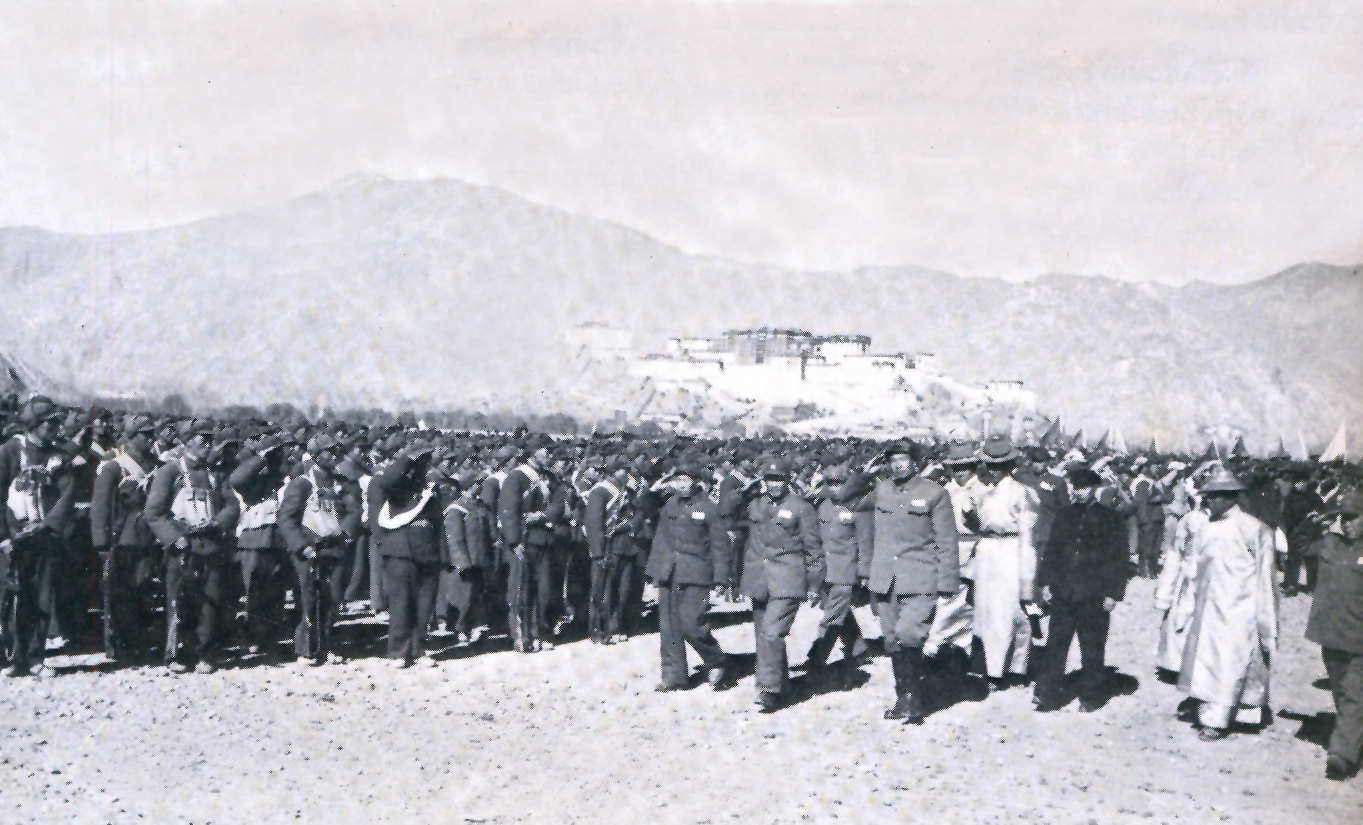
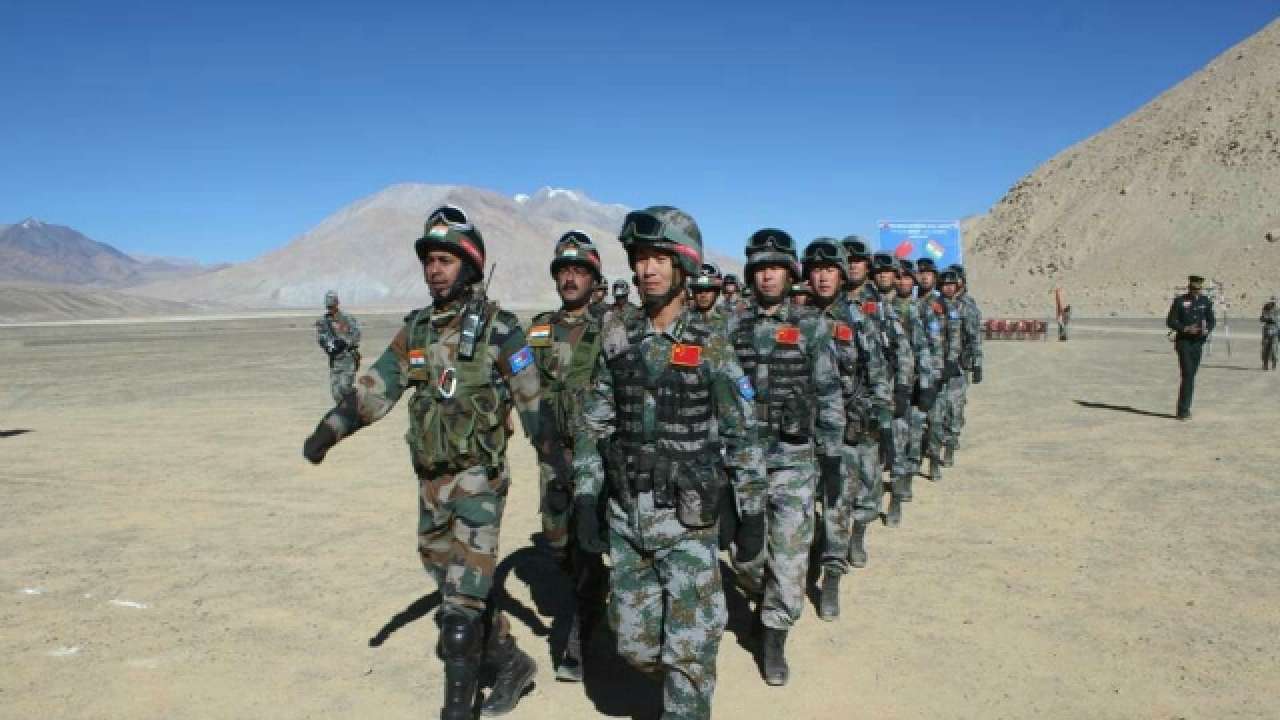
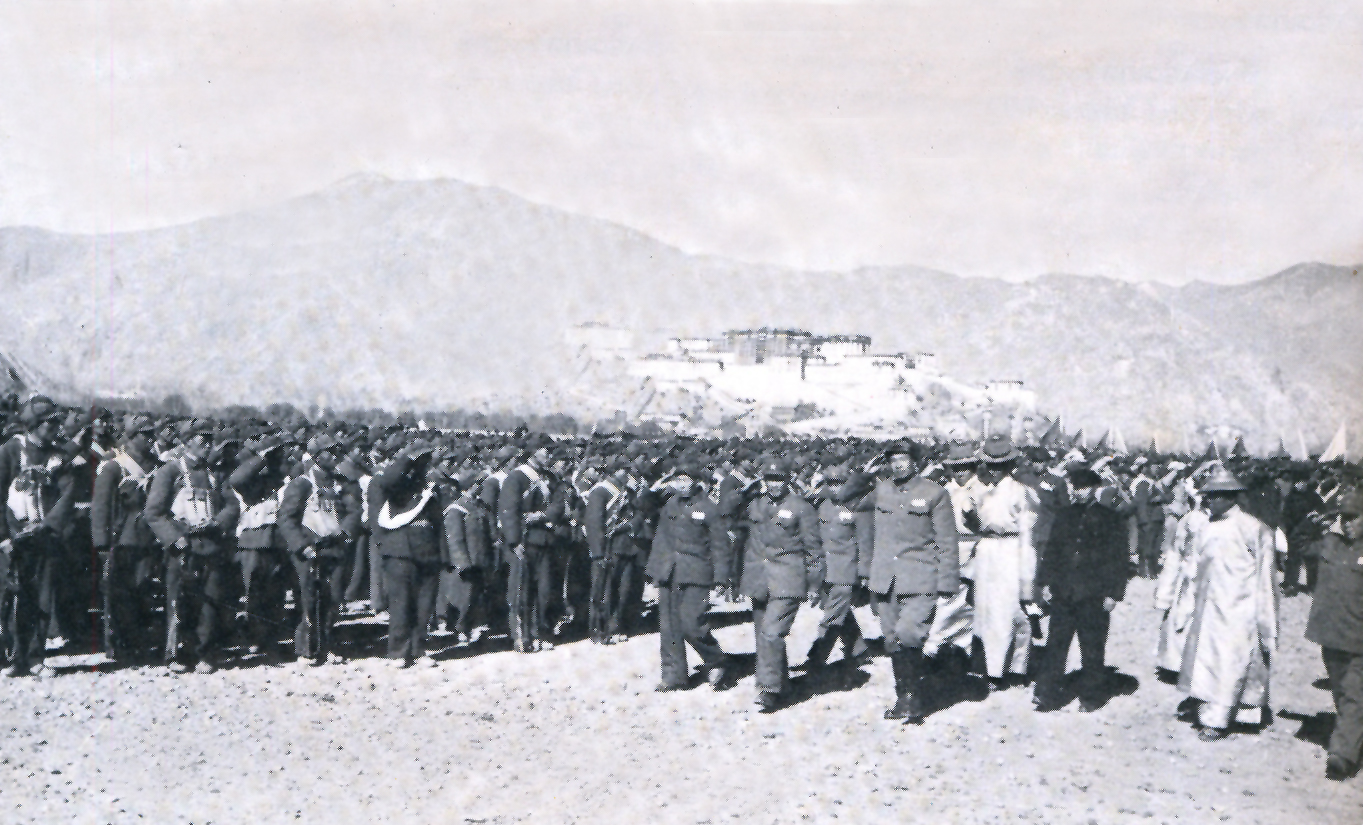
In my analysis, the Tibetan Resistance Movement can only be described as the Struggle for Natural Freedom. Tibetans resist military occupation of Tibet by a foreign invader for occupation totally undermines the Tibetan National Experience of Natural Freedom that defines the Land and its denizens. Freedom is not viewed as a Political Right. Tibetans cherish Freedom as a Nature’s Gift which no man has the power to trample upon.
Tibet Awareness. Military Power Seized Tibetan Freedom. A PLA air defense unit of the Tibet Military Command has recently held a drill at an area, 4,500 meters above the sea level, in Occupied Tibet. The live-fire drill aimed to improve air defense preparedness in complex weather conditions. (Photo: China News Service/Zhu Jian)Tibet Awareness. Military Power Seized Tibetan Freedom. A PLA air defense unit of the Tibet Military Command has recently held a drill at an area, 4,500 meters above the sea level, in Occupied Tibet. The live-fire drill aimed to improve air defense preparedness in complex weather conditions. (Photo: China News Service/Zhu Jian)Tibet Awareness. Military Power Seized Tibetan Freedom. A PLA air defense unit of the Tibet Military Command has recently held a drill at an area, 4,500 meters above the sea level, in Occupied Tibet. The live-fire drill aimed to improve air defense preparedness in complex weather conditions. (Photo: China News Service/Zhu Jian)Tibet Awareness. Military Power Seized Tibetan Freedom. A PLA air defense unit of the Tibet Military Command has recently held a drill at an area, 4,500 meters above the sea level, in Occupied Tibet. The live-fire drill aimed to improve air defense preparedness in complex weather conditions. (Photo: China News Service/Zhu Jian)Tibet Awareness. Military Power Seized Tibetan Freedom. A PLA air defense unit of the Tibet Military Command has recently held a drill at an area, 4,500 meters above the sea level, in Occupied Tibet. The live-fire drill aimed to improve air defense preparedness in complex weather conditions. (Photo: China News Service/Zhu Jian)Tibet Awareness. Military Power Seized Tibetan Freedom. A PLA air defense unit of the Tibet Military Command has recently held a drill at an area, 4,500 meters above the sea level, in Occupied Tibet. The live-fire drill aimed to improve air defense preparedness in complex weather conditions. (Photo: China News Service/Zhu Jian)Tibet Awareness. Military Power Seized Tibetan Freedom. A PLA air defense unit of the Tibet Military Command has recently held a drill at an area, 4,500 meters above the sea level, in Occupied Tibet. The live-fire drill aimed to improve air defense preparedness in complex weather conditions. (Photo: China News Service/Zhu Jian)Tibet Awareness. Military Power Seized Tibetan Freedom. A PLA air defense unit of the Tibet Military Command has recently held a drill at an area, 4,500 meters above the sea level, in Occupied Tibet. The live-fire drill aimed to improve air defense preparedness in complex weather conditions. (Photo: China News Service/Zhu Jian)Tibet Awareness. Military Power Seized Tibetan Freedom. A PLA air defense unit of the Tibet Military Command has recently held a drill at an area, 4,500 meters above the sea level, in Occupied Tibet. The live-fire drill aimed to improve air defense preparedness in complex weather conditions. (Photo: China News Service/Zhu Jian)Tibet Awareness. Military Power Seized Tibetan Freedom in 1950-51.Tibetans Struggle for Natural Freedom.




















 Whole Dude - Whole Concept