Whole Dispute – Resolve Tibet-China Border Dispute

Resolve Tibet-China Border Dispute
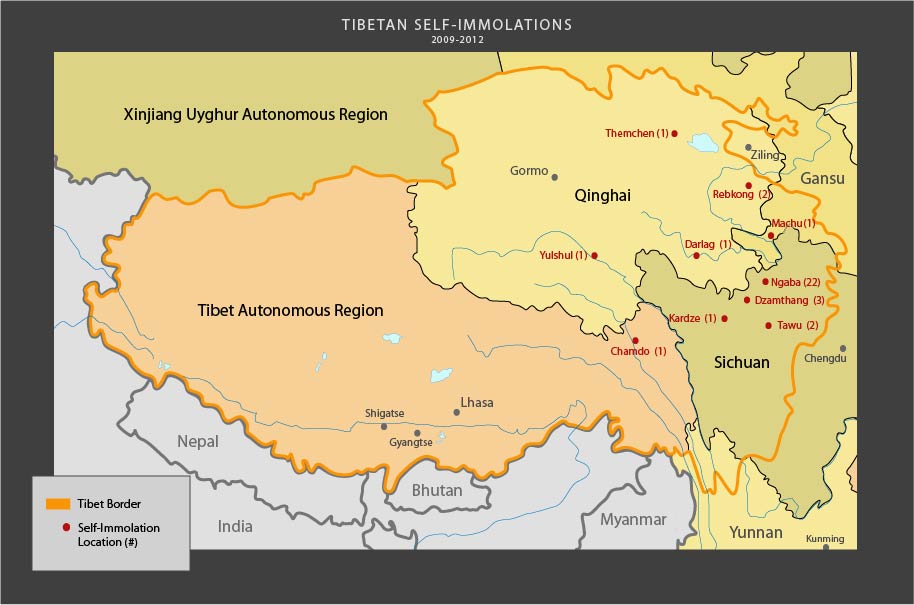
People's Republic of China's province called Tibetan Autonomous Region or "TAR" was established in 1965 after Communist China had annexed Tibetan territory and illegally added it to adjoining Chinese provinces. Hence, there is a valid dispute about China-Tibet boundaries.
Whole Dispute: People’s Republic of China’s province called Tibetan Autonomous Region or “TAR” was established in 1965 after Communist China annexed Tibetan territory and illegally added it to adjoining Chinese provinces. Hence, there is a valid dispute about China-Tibet boundaries. Tibet Protests Map 2008-2009.

It is surprising to note that people who write about the Sino-Indian border conflict make no reference to the history of Tibet. To state very briefly, the Great Fifth Dalai Lama founded the Ganden Phodrang Government of Tibet in 1642. The successive Dalai Lamas have headed the Tibetan State for nearly four centuries. From 1279 to 1368 Tibet was under the nominal control of the Yuan or Mongol dynasty of China, but subsequently regained its independence. In 1644, the Manchu or Qing dynasty was established in China and Tibet came under its nominal protection although for the most part the country retained control over its internal affairs. With the downfall of the Qing or Ching dynasty, the Great 13th Dalai Lama declared Tibet’s Independence on 13th February, 1913. For 39 years, from 1911 to 1950, Tibet was an independent nation. In Political Science, when states are called free and independent, their autonomy or sovereignty means that they have full power to levy war, conclude peace, contract alliances, establish commerce, and do all other acts and things which independent states may have the right to do. In its capacity as an independent nation, Tibet signed a treaty called the McMahon Treaty (following the Simla Agreement) which established the border between India and Tibet. The Republic of India after gaining its full independence during 1947 did not annul or revoke this treaty. As such, for all legal purposes, this treaty is valid. People’s Republic of China came into its existence after the Communists took over mainland China during 1949 and forced the Nationalist Party (Kuomintang) establish the Republic of China in Formosa or Taiwan. Both the Nationalists, and the Communists seek the reunification of Taiwan with the mainland. That issue is not yet decided. Meantime, Communist China invaded Tibet during 1950 and occupied it. In 1951, a defeated Tibet signed a treaty making Tibet a part of China. However, most Tibetans do not recognize this treaty and do not accept its legitimacy. In 1959, after a failed, massive Tibetan uprising, the 14th Dalai Lama and about 100, 000 of his followers escaped to India. Tibetans have established the Tibetan Government-in-Exile, and on September 02, 1960, the first members of the First Tibetan Parliament-in-Exile took their oath of office. In September, 2012, Tibetans have celebrated 52nd Democracy Day. During 1965, People’s Republic of China formed a province that it named as Tibetan Autonomous Region or “TAR.” In doing so, Communist China annexed several parts of Tibet and added them to its own territory. Tibetans have not agreed for this seizure of their territory. One of the central demands of the Tibetan Government-in-Exile is that of unifying all the Tibetan territory that is now under Chinese military occupation.

We have to very important issues; 1. Unification of Republic of China with People’s Republic of China and establish a national entity called China, and 2. demarcating the border between the new “One-China” and its neighbor, Tibet. Tibetans have not surrendered their claims for independence, freedom, and self-determination. As such, Tibet is not a part of China and the borders of China’s province called “TAR” do not establish the legitimate borders between Tibet and China.

India forgets that China cannot be trusted
G.PARTHASARATHY

December 5, 2012:

One cannot but be surprised by the statement of the National Security Advisor (NSA) Shivshankar Menon brushing aside the serious implications of Chinese actions, while voicing optimism that “we are in the process of agreeing on a framework to settle the boundary”.

Have we forgotten that after agreeing to delineate the Line of Actual Control, the Chinese backed off on the entire process?

In 2005, Premier Wen Jiabao agreed that “in reaching a border settlement, the two sides shall safeguard due interests of their settled populations in border areas”.

This clearly signaled that there was no question of transferring territories containing settled populations and addressed Indian concerns on Chinese claims to Tawang in Arunachal Pradesh. Within a year, however, China was laying claim not merely to Tawang, but the entire state of Arunachal Pradesh.

One can only conclude that the new “framework” the NSA spoke of to settle the boundary issue would be about as successful as the much-touted “Joint anti-Terror Mechanism” with Pakistan, which came apart with the 26/11 attacks.

Just a day before the NSA spoke, Army Chief General Bikram Singh described bilateral relations with China as “absolutely perfect” and added that mechanisms were now in place to solve any issues
between the two countries. This was an astonishing comment, at a time when the army wants additional strike formations, apart from vastly improved communications on the border with China.

Was it because Singh feels the army is unlikely to get its needs fulfilled soon, and needs to sound conciliatory to the Chinese? Do the other two Service Chiefs and the Defence Minister share this
optimism? All these issues need to be debated now that Parliament is in session.

INTERNAL RUMBLINGS

China can now be described as a “dynastic dictatorship,” after its 18th Party Congress. Outgoing leader Hu Jintao voiced concern at the growing dissatisfaction in China over political corruption.

The Party Congress had been preceded by the downfall of its rising star Bo Xilai, whose lavish and flamboyant lifestyle had led to the conviction of his wife for murdering a British businessman and
revelations of the billions of dollars of assets that Bo and his family had acquired.

This was followed by a a well documented leak, quite evidently by Bo’s supporters, about ill-gotten wealth accumulated by Prime Minister Wen Jiabao and his family.

China’s worst kept secrets about dynastic politics in the Communist Party became public when it emerged that four of the seven members of its highest decision-making body, the Standing Committee of the Politburo, were “Princelings,” or descendants of first generation, Mao-era political leaders. Most “Princelings”, including Party Chief Xi Jinping, lead lavish life styles, with families having extensive business interests. The contradictions between having an open economy linked to foreign markets on the one hand and a one-party, authoritarian political structure perceived to be unresponsive to pubic grievances on the other, are coming to the forefront in China.

China will continue to seek new ways to further open up its economy and maintain a high growth rate. But the “Princelings” are unlikely to bring any changes in the basic authoritarian nature of the State apparatus. Tutored by Deng Xiao Ping, who was determined not to follow the glasnost and perestroika path of Gorbachev in the Soviet Union, the new dispensation will be averse to increasing democratization.

TERRITORIAL AGGRESSION

With jingoistic propaganda, evidently to divert public opinion away from domestic issues like high level corruption, China is obviously in no mood to show any flexibility on its territorial claims along the Sino-Indian border. As Chinese passports are generally valid for ten years, there can logically be no change in China’s territorial claims in this period.

China will continue on its path of rapid military modernization, combined with an assertive line on its maritime and land boundary claims.

China’s recent decision to depict the entire South China Sea, together with Arunachal Pradesh and parts of Ladakh as Chinese territory in maps on Chinese passports, has to be seen in the light of this
growing Chinese readiness to use force and military coercion to enforce its territorial claims. One has recently witnessed aggressive Chinese postures resulting in a virtual naval takeover around the
disputed Scarborough Shoal, claimed by the Philippines.

A similar aggressive approach has been taken on recent tensions with Japan, with Chinese naval vessels entering territorial waters, adjacent to the disputed Diaoyu/Senkaku Islands.

China has evidently been emboldened by the American assertion that while the US does have a stand on freedom and maintenance of peace and stability in the South China Sea, it “does not take sides in (maritime) disputes”.

ECONOMIC CONCERNS

New Delhi is now talking of getting superfast trains and rail equipment from China, at a time when there is growing concern at our over dependence on second rate Chinese power equipment.

There are also concerns about dangers to cyber security and communications infrastructure posed by imports from China. Should we not insist on co-production, together with transfer or technology, in such strategic sectors, with preference for cooperation with friendly countries like Japan, France and Germany?

(The author is former High Commissioner to Pakistan.)

Comments:
Dear Mr GP, Many thanks for this caution. Will the ears listen to and the eyes see the ground realities instead of indulging in this ‘all is well’ kind of assumption and self assurance? . The present atmosphere is somewhat similar to the one that prevailed in early 1960s when our leaders wrongly assumed that China would never attack India. Reference is invited to the recent interview granted by Dai Bingguo Chinese Negotiator to PTI (covered by this publication) covering China – Pakistan relationships and China’s territorial claims. We need to exercise extra caution, think and act carefully. I held the view earlier that China will think twice before attacking India once again. But am forced to rethink. Camradely with China can wait. Recent bonhomie in the form of financial assistance, collaboration in power and infrastructure may not be entirely and mutually beneficial. One may need to read the fine print very carefully! Thanks for this opportunity to interact.

Regards

from: Dr.Guru.Raghavan
Posted on: Dec 5, 2012 at 23:08 IST

Tibet declared its independence on February 13, 1913 and had signed the McMahon Treaty with India after the Simla Agreement of 1914. Republic of India has not annulled or voided this Treaty and holds it as a valid agreement between two neighboring States. However, Tibetans do not agree the boundaries of the present Tibetan Autonomous Region and are demanding the unification of the three provinces, 1. U-Tsang, 2. Kham, and 3. Amdo of Tibet nation as it existed before China's illegal military occupation since 1950.
Tibet declared its independence on February 13, 1913 and signed the McMahon Treaty with British India after the Simla Agreement of 1914. Republic of India has not annulled or voided this Treaty and holds it as a valid agreement between two neighboring States. However, Tibetans dispute the boundaries of the present Tibetan Autonomous Region and are demanding the unification of the three provinces, 1. U-Tsang, 2. Kham, and 3. Amdo of Tibet nation as it existed before China’s illegal military occupation since 1950.

Whole Dude – Whole Awareness

What is Truth?

The Truth about Self, The Inquiry about Self, Who am I?

The term Truth suggests confirmity with facts, experience, or with Reality, either as an idealized abstraction or in actual application to statements, ideas, acts, etc., Truth signifies an established or verified fact, or principle. Truth is related to the validity of what we mean. Plato defined the nature of Truth as correspondence between thought and reality. Dr. William Jones in his book, ‘The Principles of Psychology’ states : “True ideas are those we can assimilate, validate, corroborate, and verify.”

The universe is vast and man’s role in it is insignificant. Man’s great need is not only to know the world around him but also know himself better. Man has to know the Truth about himself.

The Three Dimensions of Truth:

1. Truth is correspondence between a statement and the reality of external world.

2. Truth is correspondence between the observer and the reality of the observed fact. Here, we need to recognize the method used for the observation such as intuition, sense experience, or revelation.

3. Truth is correspondence between man and his true nature.

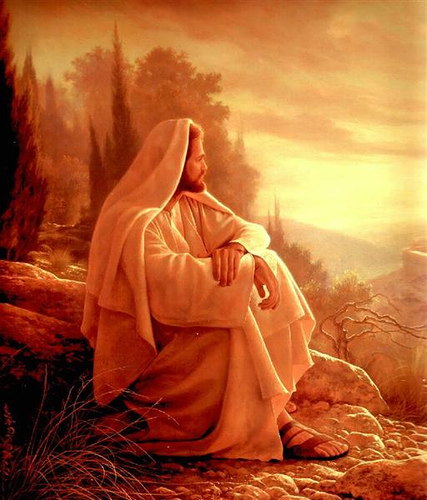
Lord Jesus Christ – Truth as Prophecy:

The Truth of Jesus, The Book of John, Chapter 20, verse 29: Jesus said to him (Thomas), “Have you come to believe because you have seen me? Blessed are those who have not seen and have believed.” Truth – Is it a matter of sight or sense experience, or is it a matter of faith and belief?

The Truth about Lord Jesus Christ had come to a very critical scrutiny while he got arrested and stood before Pilate, the Roman Governor. The Book of John, Chapter 18, verses 37 and 38 record the conversation between Jesus and Pilate: So Pilate said to him, “Then you are a King?” Jesus answered, “You say I am a King. For this I was born, and for this I came into the world, to testify to the truth. Everyone who belongs to the truth listens to my voice.”  “What is truth?” Pilate asked. Jesus did not answer the question as the truth must have correspondence with reality in external world. The truth of Jesus is about establishment of Kingdom of Heaven upon Earth. It was a prophetic truth and the truth would be evident only when the Prophecy comes true.

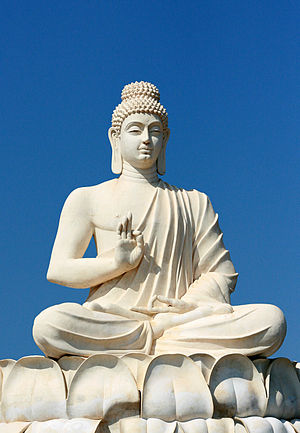
Lord Gautama Buddha – Truth as Experience:

Lord Gautama Buddha c. 563 to c. 483 B.C. also known as Prince Siddhartha (he who will accomplish) witnessed irremediable human suffering in the form of physical disability, sickness, oldage, and death. Acting under the uplifting Power of Compassion, he left the royal palace in search of Truth.

 Lord Gautama Buddha known as Siddhartha (He who will accomplish), c. 563 B.C to c. 483 B.C., left the palace at the age of 29 leaving behind his young wife and infant son. After six years of ascetic life, while meditating under a Pipal tree (later called Bodhi or Enlightenment Tree ), he became Supreme Buddha (c. 528 B.C.) at the age of 35. He preached his first sermon at Sarnath. He outlined his Doctrine of Four Noble Truths and the First Noble Truth is that of suffering, the experience of pain and sorrow called DUKHA  is implicit in human existence. Buddha’s truth is related to man’s experience of the nature of his existence in the world.

I maintain that man exists at any stage of his existence, at any given age, under any given circumstance, in either good health or ill health, in pain and suffering or that of joy and happiness due to the operation of a Fundamental Force/Power/Energy that delivers Mercy/Grace/Compassion. If suffering describes one face of the coin called human existence, Compassion describes the second face of the same coin. Compassion is implicit in human existence and that of all living things.

Lord Rama – Truth in Action:

“WHO AM I? WHY I AM LIKE THIS?” were the questions asked by Lord Rama and these are the questions that we need to ask ourselves to know the Truth about Self.

 In the epic poem known as Ramayana, Indian poet Valmiki describes Lord Rama’s life journey. Rama spends 14 years in the forest to help fulfilment of the word or promise made by his father. In the final Chapter, Book Six, Yuddha Kanda, Chapter (Sarga) 117, verse 11, he asks the following question:

“aatmaanaM  maanuShaM manye RaamaM Dasharathaatmajam;

so aHaM yasya yatashchaahaM bhagavaMstadbraviitu me.”

“I think of myself to be a human being, by name Rama, the son of Dasaratha. You, as a gracious Divintiy tell me who I am and why I am like this?”

In the story of Ramayana, the Creator Lord Brahma responds to the questions asked by Lord Rama. These are the questions that we need to ask ourselves. To know Truth about Self, man must begin his inquiry with the question of Who am I?

The Inquiry about Self – Who am I?

Socrates before taking poison that would end his life had stated: “The unexamined life is not worth living.” “Know thyself” is a virtue and to defend that virtue, Socrates made no attempt to save his life.

 The tradition of knowing oneself is a longer tradition than any other Science. This is a study in which the Knower and the Known are one. The object of scientific inquiry is the nature of the scientist.

How to discover the Truth about Self?

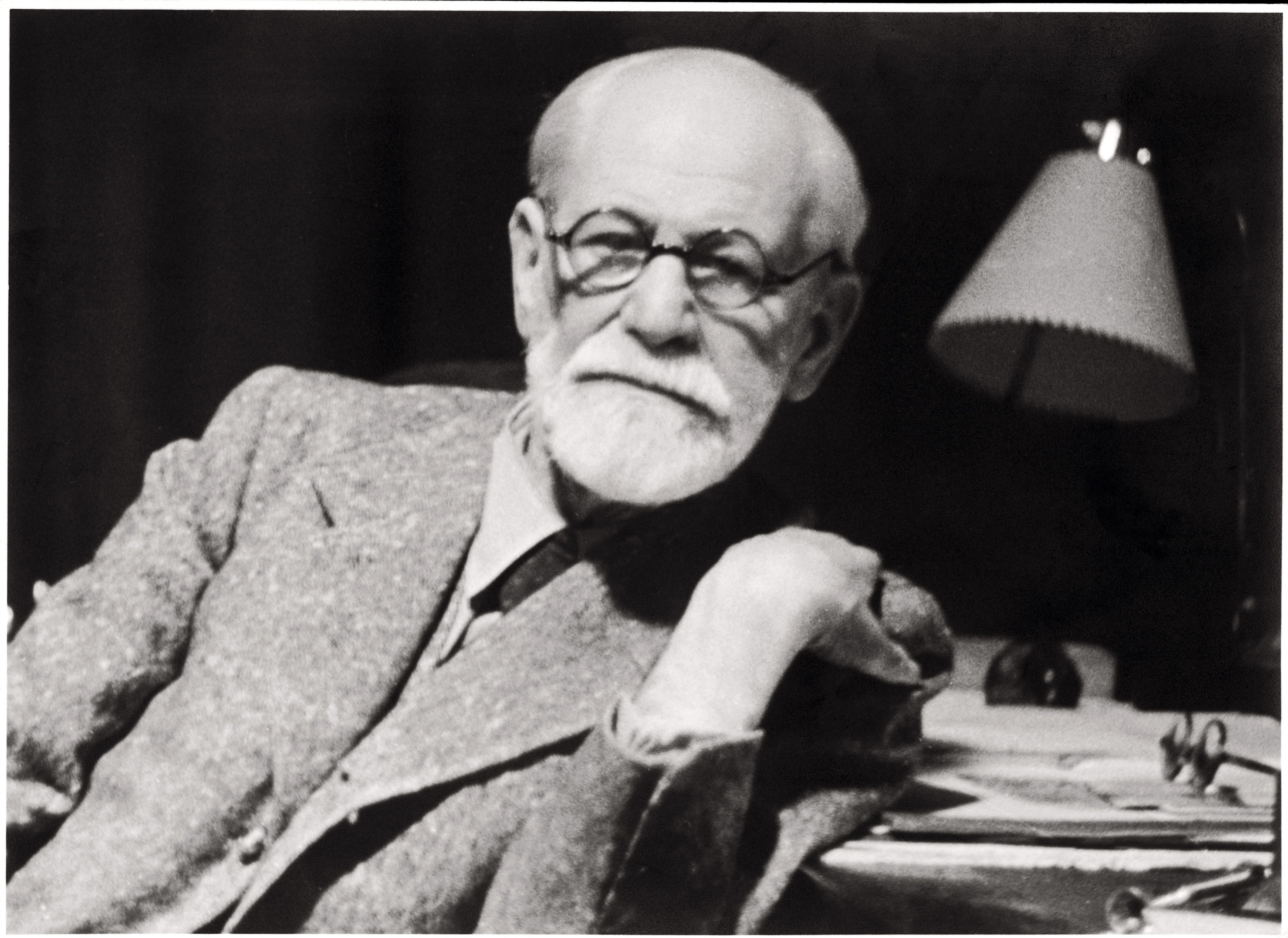
Austrian psychoanalyst Sigmund Freud: “No knowledge can be obtained from revelation, intuition, or inspiration.”

 Religion, Philosophy, and Science may represent three distinct fields of learning about Truth and Reality. Each tries to answer fundamental questions about human life. All three differ from each other in the selection of method and subject matter. Auguste Comte, the 19th century French philosopher, the founder of Sociology had described Positive Science as the study of natural, mental, and social phenomena by empirical methods. In his view, Philosophy is mere speculation and Religion is superstition or irrational belief. Speculation represents a futile attempt to go behind the phenomena in order to discover ultimate causes or substances and such speculative methods may result in guess work or conjecture and not in knowledge. Philosophy may use Logic and system and yet its conclusions may lack the validity or objectivity of Science.The philosophical inquiry does not involve investigation by experiment. Science not only provides the knowledge that something is true, but also the reasons why it is true. The famous Austrian psychoanalyst Sigmund Freud had categorically claimed that no knowledge can be obtained from revelation, intuition, or inspiration. There is a tendency in modern times to reject the methods used by Religion and Philosophy. Philosophy may use intuitive generalization or induction from ordinary sense experience. The scientific method involves induction from an inference from experiments which involve testing and verifying a hypothesis. The observations of scientist go beyond the experiences which ordinary men have in the course of daily life. The instruments that are invented and used by scientists have immense abilities to collect numerous kinds of empirical data with precision, accuracy, and consistency. However, it may not be easy to conclude that Science alone can arrive at correspondence with Truth and Reality. Could we extend scientific methodology of investigation to every field of Inquiry? Could we obtain clarity and certainity in all matters using scientific methods? Could Science  be the only avenue to Truth? Could we find Truth and Reality as an external experience? Could man use scientific information to experience Truth and Reality?

Sir Issac Newton demonstrated the properties of Light rays using experimets. Science explains this optical illusion. Could Science remove the optical illusion and give man a chance to experience the reality of this Pencil. The Reality of this Pencil would be known when the Pencil is removed from water and man has no ability to change the properties of Light rays.

 When a object exists in  a conditioned state, like this Pencil in water, Science may explain the illusion generated. Science and scientific information may not provide the direct experience of Truth and Reality. Man is the observer, and the reality or truth of Earth’s Angular Speed, or Linear Speed is not an observed fact obtained by direct human sense experience. Scientific information can not provide the experience that could be generated by the truth and reality of Earth’s Motion.

The Purpose of Science: The Knowledge about Self:

The purpose of Science is to describe observation and experience and provide accepted body of information and arrange it into a meaningful pattern to explain truth and reality.

The purpose of Science is to describe and codify observation and experiences. Natural Sciences such as Physical Sciences, Biological Sciences, and Medical Sciences provide accepted body of information about the world and human body. We need to arrange this information into a meaningful pattern and interpret it to describe the Reality or Truth about man. We need to apply a reasoning process which involves analysis of basic concepts to determine their consistency. Something could be said to be true if, and only if it could be verified by logical or scientific procedures. We need to use a reasoning process, a philosophical analysis to clarify statements, to verify or refute a theoretical claim by demonstrating relation between the theoretical claim and the observational evidence.

The Self and the Knowing-Self:

I divide man into two categories; 1. The Self: it represents the man as a physical, mental, and social being. The Self represents the thinking person or the person having thoughts, and feelings. 2. The Knowing-Self: it represents man as a moral, and spiritual being. The Knowing-Self is aware or Conscious of the thoughts and feelings of The Self.

Thinking vs Consciousness:

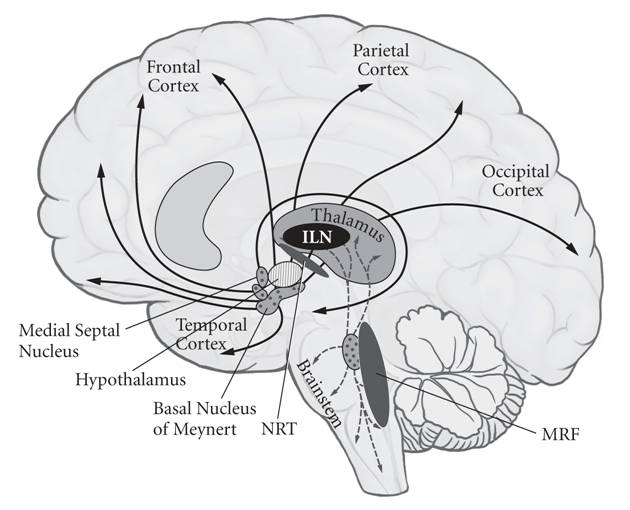
Dr Florian Mormann & Dr Christof Koch have defined Neural Correlates of Consciousness as the minimal neuronal mechanism jointly sufficient for any one specific Conscious percept. This definition basically makes no distinction between Thinking and Consciousness. The NCC definition is not based on correct understanding of the function known as Consciousness. It fails to speak about the role of Reticular Formation, and Brain Stem Nuclei that have the Capacity of Consciousness. The Capacity of Consciousness is an essential precondition of the Content of Consciousness. The Reticular Formation filters incoming stimuli to discriminate irrelevant background stimuli and composes the Content of Consciousness before relaying the information to the Cerebral hemispheres to cause Cortical awareness.

The Self may think about the nature of consciousness, but Thinking and Consciousness are two distinct functions. Thinking and Consciousness are not one and the same. Consciousness functions to provide Awareness and it is not involved in mental activities such as Thinking. The conscious individual is aware of his thoughts. The Reticular Formation supports functions such as AROUSAL and it maintains wakefulness, alertness, and sleep. In the absence of this Brain Stem function, the Individual is not capable of generating thoughts, and feelings and would not be aware of what goes on inside the Individual, and what goes on outside the Individual.

In Clinical Medicine, the medical practitioner evaluates the Level of Arousal or Alertness of his patient.

The Individual – Identity and Individuality – The Two Sides of the same Coin:

The Self has two aspects- External Reality describes the Identity of the Individual; Internal Reality establishes the Individuality of the Individual.

 If man is viewed as a living thing, the thing is made of Matter and Form. The Form establishes the morphological appearance in the external world. The Matter establishes the Individuality of the Individual. The external appearance or Phenotype of man undergoes constant change and is not the same at all times. The Individuality is related to the Genotype which remains constant while man goes through various stages of his existence from conception to old age. As per The Law of Individuality and Creation, man is a created being who would always exist as an Individual with Individuality and man has no choice other than that of existing as an Individual. The Truth about Self is not about the Identity of the Individual in terms of his anthropometric measurements, biometric information, name, gender, race, ethnicity, language, religion, nationality, education, social occupation, social status or social ranking, and affiliations. This external reality has a degree of correspondence in the external world as it is often confirmed  and is recognized by others who can observe the Individual. But this knowledge is subject to change and the information it provides is not experienced in a constant, and objective manner. The Truth about Self is the Truth about the human organism which is multicellular. We need to know as to who or what is the subject who lives because of the functions of the trillions of cells that comprise the human organism.

Who am I?  –  “I am Consciousness”:

WHO AM I? This question must be answered by applying a reasoning process to Inferential Knowledge about Cell Structure (ANATOMY) and Cell Functions (PHYSIOLOGY). Life is defined as “Knowledge in Action.”

 All living organisms use similar building units called cells. Basically, the cell has a membrane, a nucleus, and a living substance known as Protoplasm. The nucleus has nucleic acids like DNA/RNA which have no independent existence of their own. The genome functions when it is associated with Protoplasm which has the exclusive ability to obtain energy (food) from its environment. Consciousness is a natural principle that describes the condition of an Individual; the condition of knowing, awareness, or recognizing the fact, the state, and the act of biological existence in a given environment. The term environment refers to all the conditions, circumstances, and influences surrounding, and affecting the existence of a given Individual, or a group of Individuals. Who is this Individual who has the ability to know and be aware of its external, and internal environment? The Individual is a living organism and the organism could be unicellular or multicellular. The most fundamental aspect of Consciousness as a living function that establishes biological existence is that of acquiring energy from environment. The living cell is a thermodynamically unstable system. This means that without continuous input of energy, a cell will degrade spontaneously into a non living collection of molecules.

“I am Consciousness” – The Verification of the Proposition:

The proposition that “I am Consciousness” could be subjected to a reasoning process in two manners: 1. The Coherence Theory of Truth, and 2. The Correspondence Theory of Truth.

1. “I am Consciousness” – The Coherence Theory of Truth: The standard of Truth is the logical consistency of a proposition with a large system of propositions. “I am Consciousness” is the proposition. The propositions to support my proposition are :

a. Consciousness is a mental experience.

b. Consciousness is a sense experience.

c. Consciousness is a physical or body experience.

d. Consciousness is a social experience.

e. Consciousness is a moral experience.

f. Consciousness is a spiritual experience.

g. Consciousness is a cellular experience.

The Subject “I am” of the proposition could be defined as a physical, mental, social, moral, and spiritual being based upon the contents of the ‘Total Consciousness’ experience of that Individual.

2. “I am Consciousness” – The Correspondence Theory of Truth: Truth is viewed as a relation between an idea or proposition and its object. “I am Consciousness” is the proposition. The Subject known as “I am” is related to an idea or object described as “Consciousness.” We need to verify the Truth or Reality of a relation between the Subject and its Object. The Subject is the whole or entire human organism comprising of trillions of individual cells which function as organs and tissues of the body. The Subject “I am” can not be defined merely as a single individual,specific organ like brain or mind. The body organ called brain has no independent existence of its own. Brain and its cells (neurons, axons, and connective tissue) need energy to sustain its metabolic activities. The functional relationship between the Subject and the Object operates and involves the activity of the entire organism and is not limited to the activities of brain or mind. The purpose of Consciousness at cellular level is to foster functional unity of the multicellular organism and establish it as an Individual. A living thing maintains it Individuality while being a member of a given social group. The process by which a living cell acquires energy to perform its living functions is called ‘Nutrition’. Consciousness is the awareness of energy dependent existence in a given environment and it is the characteristic of all living cells irrespective of their differentiation, functional subordination, and identification as the constituent parts of specific organs, tissues, and organ systems. The idea or Object called “Consciousness” is fundamentally related to the Subject called “I am” both at the level of the entire organism and at the level of individual cells.

Human Knowledge and Self-Knowledge:

WHO AM I? Lord Krishna described Himself in The Bhagavad Gita, Chapter X, The Opulence of the Absolute, verse 22:”Of the Vedas, I am the Sama Veda; of the demigods, I am Indra; of the senses, I am the Mind; and in Living Beings, I AM CONSCIOUSNESS.”

 Human Knowledge is of two kinds; 1. Acquired Knowledge that is dependent upon sense experience, and reason, and 2. Innate or Intuitive Knowledge, the genetic information, the biological information that all living cells and organisms use to perform living functions and to exhibit biological behavior and instincts. Knowledge about Self, or Self-Knowledge begins with the implantation of Consciousness in Matter and not as Sense experience, and not on account of rational thinking with application of reason.