The Celebration of World Tibet Day – The Concept of Tibet Equilibrium
The Celebration of World Tibet Day – The Concept of Tibet Equilibrium. I coined the phrase ‘Tibet Equilibrium to describe a Natural Condition that restores Natural Freedom, Natural Order, Natural Balance of Power and Natural Harmony in Occupied Tibet.
Thursday, July 06, 2017, 82nd Birthday of His Holiness the 14th Dalai Lama is observed as ‘World Tibet Day’ to promote Tibet Awareness.
I coined the phrase ‘Tibet Equilibrium to describe a Natural Condition that restores Natural Freedom, Natural Order, Natural Balance of Power and Natural Harmony in Occupied Tibet.
I coined the phrase ‘Tibet Equilibrium’ to describe a Natural Condition that restores Natural Freedom, Natural Order, Natural Balance of Power, and Natural Harmony in Occupied Tibet.
Rudra Narasimham, Rebbapragada
Special Frontier Force-Establishment 22-Vikas Regiment
I coined the phrase ‘Tibet Equilibrium to describe a Natural Condition that restores Natural Freedom, Natural Order, Natural Balance of Power and Natural Harmony in Occupied Tibet.
World Tibet Day – Tibet Awareness – Tibet Equilibrium. I coined the phrase ‘Tibet Equilibrium to describe a Natural Condition that restores Natural Freedom, Natural Order, Natural Balance of Power and Natural Harmony in Occupied Tibet.
World Tibet Day – Tibet Awareness – Tibet Equilibrium. 82nd Birthday of His Holiness the 14th Dalai Lama on Thursday, July 06, 2017. I coined the phrase ‘Tibet Equilibrium to describe a Natural Condition that restores Natural Freedom, Natural Order, Natural Balance of Power and Natural Harmony in Occupied Tibet.
(Photo: AFP)
Thousands of Tibetans on Thursday morning joined in the 82nd birthday celebrations of their spiritual leader, the Dalai Lama here. On this occasion, the Tibetan cabinet urged US President Donald Trump to initiate steps to restart dialogue on Tibet’s future.
Large crowds donning traditional dresses began to assemble since morning at the Shiwatsel Phodrang complex on the city’s outskirts for the birthday celebrations.
“Special prayer sessions were held for the long life of His Holiness,” a Central Tibetan Administration (CTA) spokesperson told IANS.
The Dalai Lama, revered by the Tibetans as a “living god”, attended the prayers and blessed the gathering.
Tibetan Prime Minister Lobsang Sangay also attended the celebrations, while his cabinet urged Trump to initiate steps for restarting the dialogue process on the future of Tibet.
“We also urge President Trump to support the middle-way approach and dialogue between the envoys of His Holiness the Dalai Lama and the representatives of the Chinese government,” said the cabinet in a statement.
Expressing gratitude to US Secretary of State Rex Tillerson for his support for dialogue, it said: “We also thank Terry Branstad, the US Ambassador to China, for calling on China to provide meaningful autonomy for Tibetans.”
The cabinet reiterated its commitment to “middle-way” approach as the mutually beneficial solution to resolving the long-standing issue of Tibet.
Meanwhile, officials of the Dalai Lama’s office said the spiritual leader would stay in Shiwatsel Phodrang in Leh till July 30.
During his visit, he would participate in religious ceremonies, conduct meditational retreat and deliver teachings at Diskit Monastery in the Nubra Valley, Padum in Zanskar area and the Shiwatsel teaching ground here.
The Dalai Lama’s sermons on ethics, non-violence, peace and religious harmony have made him one of the 20th century’s most revered spiritual leaders.
Born on July 6, 1935, at Taktser hamlet in northeastern Tibet, the Dalai Lama was recognized at the age of two as the reincarnation of the 13th Dalai Lama, Thubten Gyatso.
He fled Tibet after a failed uprising against the Chinese rule in 1959 and has been based in India since then.
The Dalai Lama was awarded the Nobel Peace Prize in 1989 for his non-violent campaign for democracy and freedom in his homeland.
However, the Chinese view him as a hostile element bent on splitting Tibet from China.
India is home to around 100,000 Tibetans. The Tibetan government-in-exile is not recognized by any country.
World Tibet Day – Tibet Awareness – Tibet Equilibrium. Thursday, July 06, 2017.I coined the phrase ‘Tibet Equilibrium to describe a Natural Condition that restores Natural Freedom, Natural Order, Natural Balance of Power and Natural Harmony in Occupied Tibet.
Thank You India Campaign of 2018 – Living Tibetan Spirits
Whole Campaign – Dalai Lama’s Thank You India Campaign
I identify myself as host of ‘The Living Tibetan Spirits’. His Holiness the Dalai Lama arrived in India sixty-six-years ago. I count the days of my life-in-exile since January 10, 1984. I live as a Refugee in the United States without knowing my Refuge. Many Tibetan refugees may understand my claims about life-in-exile for it is not a personal choice. It’s a choice imposed upon us.
Whole Campaign – Dalai Lama’s Thank You India Campaign
Rudra Narasimham Rebbapragada
Special Frontier Force-Establishment 22-Vikas Regiment
Whole Campaign – Dalai Lama’s Thank You India CampaignWhole Campaign – Dalai Lama’s Thank You India CampaignWhole Campaign – Dalai Lama’s Thank You India CampaignWhole Campaign – Dalai Lama’s Thank You India Campaign
As Dalai Lama Event is Shifted From Delhi, Modi’s Line on Tibet Remains a Puzzle – The Wire
Whole Campaign – Dalai Lama’s Thank You India Campaign
The MEA says India’s position on the Dalai Lama is the same but the fact that a circular was issued advising officials to keep their distance suggests a change had occurred which is now being corrected.
Whole Campaign – Dalai Lama’s Thank You India Campaign
The Dalai Lama waves as he leaves after speaking on “Embracing the Beauty of Diversity in our World” to thousands at the UC San Diego campus in San Diego, California, US, June 16, 2017. Credit: Reuters/ Mike Blake/Files
New Delhi: Days after newspaper reports of a top official directing all government functionaries to avoid events commemorating 60 years of the Dalai Lama’s exile in India, the Tibetan ‘government in exile’ has decided to shift major programmes slotted for Delhi on March 31 April 1 to Dharamsala in Himachal Pradesh.
While officials from the Central Tibet Administration (CTA) – the NGO that the exiles run – denied receiving any instructions from the Indian government, China-watchers in Delhi say they are puzzled by the underlying message the Modi government is sending with its new circular, given how it had earlier projected a willingness to play the ‘Tibet card’.
The Indian Express reported on March 4 that Cabinet Secretary P.K. Sinha had issued a classified circular “discouraging” government functionaries – political and bureaucratic – from attending events organised by the Tibetan government-in-exile to mark the key anniversary over the next few months.
The circular was apparently issued to central ministries and state governments on the urging of the new foreign secretary, Vijay Gokhale. The letter from Gokhale to Sinha was dated February 22, as per the newspaper. A day later, Gokhale travelled to Beijing on his first visit to China as foreign secretary.
The Ministry of External Affairs responded to reporters queries on the Indian Express report by stating that India has not changed its position on the Dalai Lama. Describing him as a “revered religious leader” who is “deeply respected” by Indians, the MEA added that the Dalai Lama is “accorded all freedom to carry out his religious activities in India”.
Speaking to The Wire, Dhardon Sharling, information secretary, CTA, did not want to comment on the circular “since this was not officially communicated to us”.
She added that there had been a change in plans for the main ‘Thank you India’ event. “It is true that the ‘thank you India’ public event is rescheduled and will take place on March 31 – the 60th year since his Holiness stepped on the Indian soil and the venue is shifted from Delhi to Dharamshala,” Sharling said.
While the March 31 inter-faith meeting of Raj Ghat had been cancelled, the main event was to be held in Delhi on April 1, which has now been shifted a day earlier to Dharamshala.
Sharling said that the events were planned throughout the year “to publicly express our gratitude to the government and people of India”.
“India has been our second home for six decades,” she added.
When asked about the cause behind the change in plans, she said, “I cannot cite the key reason behind but we are following directives from our leadership to hold the event in Dharamshala instead”.
The CTA Sangay is in Delhi on an “official visit” this week, during which he will meet with “officials and dignitaries”.
According to some sources, similar circulars have been sent out in previous years as periodic reminders to government officials to keep their distance.
However, according to another former Indian diplomat, it was a “little surprising” that a formal circular was issued. “Government does at times discourage people from attending a meeting, but this was a pre-emptive move…and done on a formal circular,” he said.
Former director of the Institute of Chinese studies Alka Acharya also wondered if these notes were a normal routine. “It would not be surprising if such notes were sent around by the MEA from time to time in the past as well, possibly on the eve of state visits or when some very high-profile functions were organised,” she said.
The Cabinet Secretary’s circular gave the reasoning that the Dalai Lama’s upcoming commemorative events would be held at a “very sensitive time in the context of India’s relations with China”.
Prime Minister Narendra Modi is scheduled to attend the SCO summit in June. The Times of India reported that there are important bilateral meets planned ahead of that high-level visit by Modi.
India-based French expert on Sino-India ties and Tibet, Claude Arpi, described himself as “sad” at the issuing of the circular, adding that “sensitive time means nothing”. “Times have been ‘sensitive’ since the Dalai Lama crossed the border at Khenzimane on March 31, 1959. It will remain ‘sensitive’,” asserted Arpi.
China has frequently raised the issue of presence of Tibetan refugees and activities of Dalai Lama with the Indian government. The default Indian position has always been that India is a “open society” and there are not many restrictions on freedom of expression, including for refugees.
“It is a sensitive issue that has always been managed. The Dalai Lama has been meeting senior government functionaries. A complete restriction on him is something we have never accepted,” said the former Indian diplomat.
In fact, he pointed out that the circular could give the impression to the Chinese that the government has more leverage on the activities of the Tibetan exiles. “It raises expectations,” he said.
Arpi agreed that China will also ‘note’ that India agreed “to their demand and ask more”. “It will not help India in the long run,” he argued, adding, “…if the time was really sensitive, one or two ministers could be told not to meet HHDL (His Holiness Dalai Lama). Why a circular? [This is] uncalled for.”
He asked whether China would have been ‘nicer’ and supported Indian aspirations at the UN Security council if India had capitulated at Doklam. “The answer is No”.
Strategic expert Bharat Karnad had more scathing phrases for the cabinet secretary’s circular – “Sheer cravenness”.
When asked if he thought that it was justified for India to be circumspect at this moment, Karnad said, “Not in the least. If anything, Xi’s assumption of dictatorial powers is the time to stand up to China, not display what in my books I have called “bovine pacifism” where big powerful states are concerned”
The CTA president Lobsang Sangay had announced in January that the 60 years anniversary would be marked by year-long events, with the highlight being a public gathering at New Delhi’s Thyagaraj sports complex on April 1.
Termed the ‘Thank you India’ campaign, Sangay had said at the launch that the April 1 event “will feature public addresses by Indian dignitaries and Tibetan cultural performances and is expected to draw over 5000 people”.
Acharya pointed out that there had seemed to be a “rethinking” in official circles, “and most certainly a hardening of views on the Tibetan issue, within the strategic community”.
She was referring to the earlier playing up of the so-called ‘Tibet card’ by this government, which was to have a more visible relationship with the Tibetan leader and high-profile visits to Arunachal Pradesh. Ministers like Kiren Rijiju and Mahesh Sharma have met with the spiritual leader, though the prime minister has not yet done so.
The Dalai Lama shared the stage with Indian president in 2016 in Rashtrapati Bhawan at an event described as “non-political” after a Chinese protest. When the Dalai Lama visited Arunachal last year on his sixth visit, he was received by the chief minister and other state officials.
India had also allowed the US ambassador Richard Varma to visit Tawang for the first time. China claims the entire Indian state of Arunachal Pradesh and calls it “southern Tibet”.
The Indian government had also asserted that its steadfast response to China during the Doklam crisis was one of the reason for Chinese troops to withdraw from the confrontation site. The Chinese troops may have gone away from the eyeball-to-eyeball situation, but they continue to maintain a presence in the region.
While relations has been tense between India and China over a number of issues, there had been tactical cooperation recently between the two neighbours. Despite initial objections, China allowed Pakistan to be put on the ‘grey list’ of the Financial Action Task Force for not taking steps to stop financial transactions by terror groups like Jaish-e-Mohammed and Lashkar-e-Taiba.
Acharya believed that given that the foreign secretary’s note to the cabinet secretary went out a day before he left for Bejing, “there seems to be a prima facie case for a quid pro quo having occurred”.
However, she does not believe that this amounts to a downgrading in ties with the Central Tibetan Administration (CTA).
“…this is probably not the first time that such notes have been circulated and the government’s note orcCircular by itself does not amount to any dramatic shift or change. In fact, there have been numerous occasions in the past when the government has taken a step backwards or reconsidered its decision with regard to either hosting specific events or cancelled meetings scheduled with the Dalai Lama. Often to our discomfiture,” she said.
The cancellation of the scheduled meeting of the BJP president Amit Shah with Dalai Lama in May 2015 ahead of the prime minister’s visit to China was cited as an example.
She argued that the circular may not be a downgrading, as much as “reverting to the earlier approach of distancing the government from events and activities organised by the Dalai Lama or the CTA”.
Acharya pointed out that that as joint secretary of East Asia division, “the current Foreign Secretary had ensured that there was no government participation in the “50 Years in Exile events” organised in 2009″.
As per sources in the Tibetan government-in-exile, the events around the golden jubilee anniversary had been rather subdued. “There was no media, PR or social media then. There was a different leadership then. Things have changed a lot in ten years”.
Arpi was not convinced. “Perhaps not,” he said on the possibility of downgrading of links between the Indian government and the CTA due to the circular, adding, “JS (XP) said that nothing has changed. It remains unfortunate, but hopefully temporary”.
He added that there was “no doubt that the coming months will be hot, especially when the passes in the central and eastern sectors open”. Arpi was pointing to the possibility of more Chinese ‘incursions’ across the un-demarcated boundary.
However, Karnad noted that if this was the “first step in India’s surrendering the ‘Tibet card’ then more trouble is heading this way”. “Especially because NSA Doval has got nothing from the Chinese special representative on border talks on paper to say this is the exchange. Time and again, Chinese leaders have said something, gotten India to commit, and then backed off – but Delhi has never shown the guts to do the same,” he added.
Whole Campaign – Dalai Lama’s Thank You India CampaignWhole Campaign – Dalai Lama’s Thank You India CampaignWhole Campaign – Dalai Lama’s Thank You India CampaignWhole Campaign – Dalai Lama’s Thank You India CampaignWhole Campaign – Dalai Lama’s Thank You India CampaignWhole Campaign – Dalai Lama’s Thank You India CampaignWhole Campaign – Dalai Lama’s Thank You India CampaignWhole Campaign – Dalai Lama’s Thank You India Campaign
The Cold War in Asia – Lessons of Covert Action in Tibet
The Cold War in Asia. Lessons of Covert Action in Tibet.
The Cold War in Asia represents the security threat posed by the spread of Communism to mainland China. Because of my lifetime affiliation with the military organization called Special Frontier Force, I can review the covert action in Tibet to draw some lessons.
Whole Dude – Whole Secret: The CIA covert operations inside Tibet led to the creation of a military organization called Establishment Number. 22, or Special Frontier Force which was formed in 1962 during the presidency of John F. Kennedy
In my analysis, the US, India, and Tibet lack the intelligence capabilities to conduct a successful covert action in Tibet. In 1959, Tibet National Uprising failed for the CIA underestimated the enemy’s capabilities both in terms of intelligence and the use of military power to crush civilian uprising or rebellion. In 1962, the CIA again failed to know the enemy’s war preparation and the attack across the Himalayan Frontier came as a rude surprise.
Establishment No. 22 – Operation Eagle: This badge represents a military alliance/pact between India, Tibet, and the United States of America. Its first combat mission was in the Chittagong Hill Tracts which unfolded on 03 November 1971. It was named Operation Eagle. It accomplished its mission of securing peace in the region that is now knownas Republic of Bangladesh.
I directly ask the CIA to improve its intelligence capabilities to respond to the security challenge posed by the spread of Communism to mainland China. The United States fought wars in Korea and Vietnam without testing the enemy’s military capabilities. To fight against the enemy, the United States must recognize the face of the enemy. No covert action will succeed without knowing your enemy.
Rudra Narasimham Rebbapragada
Special Frontier Force-Establishment 22-Vikas Regiment
TIBET AWARENESS – PROJECT CIRCUS. The quest for Freedom in Tibet. A military training Camp known as Camp Hale was established in Colorado under the supervision of CIA officers Roger E. McCarthy and John Reagan.Whole Dude – Whole Secret: The CIA Tibet Operation.Whole Dude – Whole Agency: Allen Welsh Dulles shaped the history of the Central Intelligence Agency. During World War II, he had served in the Office of Strategic Services(1942-1945), and when CIA formed in 1951, he served as Deputy Director under General Walter Bedell Smith. He was appointed the Director by President Dwight D. Eisenhower during January 1953.Whole Dude-Whole Master: November 29, 1961. President John F. Kennedy welcomes the 6th Director of CIA, John Alexander McCone.Richard McGarrah Helms(March 30, 1913 – October 22, 2002) was the chief architect of the legislation that created the Central Intelligence Agency during 1947. He had served in CIA in various positions and was its Director from June 1966 to February 1973. The 1962 India-China War was the consequence of a failed CIA mission inside Tibet.
Between 1950 and 1972, the Central Intelligence Agency (CIA), in close cooperation with the Departments of State (DoS) and Defense (DoD), conducted a comprehensive covert action campaign in support of Tibetan resistance movements fighting against Communist Chinese occupation of their homeland. The campaign consisted of “political action, propaganda, paramilitary, and intelligence operations” intended to internally weaken and undermine the expansionist ambitions of the People’s Republic of China (PRC).[i] Following the October 1950 invasion of Tibet by the PRC, the CIA’s Special Activities Division (SAD) inserted teams into Tibet to train, advise, and assist Tibetans who were already fighting the Communists.[ii]
A number of Tibetan resistance fighters were specially selected and exfiltrated to the Pacific island of Saipan and Camp Hale in Colorado to undergo training in demolitions, clandestine communication, and other critical skills.[iii] Operating out of neighboring Nepal and India, SAD-directed teams of Tibetan rebels waged a ceaseless campaign against the Chinese that tied down significant PRC troop strength, strengthened international opposition to Chinese atrocities against Tibetans, and prevented the PRC from effectively pursuing its regional ambitions in South Asia to further spread its communist ideology.[iv] The CIA continued to support the Tibetan resistance until 1972 when U.S. President Richard Nixon changed course and decided to normalize relations with the PRC.[v]
Though the CIA’s Tibetan covert action campaign never successfully ousted the Chinese Communists, the campaign was quite successful in accomplishing the U.S.’s limited objectives. Through its covert action campaign, the U.S. sought to internally weaken the PRC through sustained attrition and distraction in order to prevent the Chinese from spreading their brand of communism across South Asia – specifically India.[vi] The CIA’s covert action campaign succeeded in three ways: it depleted the PRC’s already limited resources, which further weakened the state; it undermined the PRC’s international standing and limited its regional influence, and it prevented the expansion of the PRC’s borders.[vii]
Specifically, the CIA’s covert action campaign forced the PRC to commit vast numbers of troops and resources to pacify Tibet, which delayed a number of other critical initiatives that the young communist state sought to pursue. In 1959, the CIA estimated that the PRC had over 60,000 soldiers deployed just to subjugate Tibet, a force that required 256 tons of supplies daily to sustain. [viii] The PRC, which had just successfully ended its own civil war in 1949, saw its military stretched incredibly thin by its Tibetan occupation. This strain likely undermined the ability of the Chinese government in Beijing to effectively consolidate full control over the expansive country, further encumbering efforts to pursue its strategic ambitions.
Adding to the PRC’s frustrations was the widespread international condemnation resulting from the increasingly brutal pacification campaign that China felt compelled to undertake to try and quell the Tibetan rebellion.[ix] Much of this international focus was (and still is) cultivated by Tenzin Gyatso, the 14thDalai Lama and the spiritual leader of the majority of Tibet’s Buddhists. During a particularly violent 1959 revolt, The Dalai Lama fled from Tibet with over 100,000 of his followers, escaping with the help of the CIA to India where he established a Tibetan “government in exile”.[x] This government has been a constant thorn in the PRC’s side, with the Dalai Lama and his disciples incessantly lobbying the international community for Tibetan rights and autonomy from China.[xi] The sustained focus on Chinese atrocities against the Tibetans significantly undermined the PRC’s regional standing and efforts to strengthen ties with neighbors.
Finally, the CIA’s covert action campaign was successful in its primary objective of preventing the spread of communism across South Asia. Mao Tsetung, the chairman of the PRC’s Communist Party, was convinced during an extended stay in the Soviet Union between 1949 and 1950 to undertake the leadership role in “liberating” Asia for the cause of global communism.[xii] However, the PRC’s inability to fully control Tibet, largely due to the CIA’s covert action campaign that sustained indigenous resistance, denied China the use of key terrain that might have enabled military action against India or even the Middle East.[xiii] The covert action campaign thus protected the U.S. or its allies from the need to fight a major land conflict in South Asia against the military forces of the PRC.
The CIA achieved a significant victory for the U.S. with a minimal commitment of American resources: total expenditures per year amounted to roughly $1.7 million dollars.[xiv] However, it is important to note that the CIA’s covert action campaign cost tens of thousands of Tibetans their lives, and the supported resistance encouraged violent oppression from the Chinese occupiers. Further, when relations between the U.S. and China normalized under President Nixon, many Tibetans and even a few CIA SAD officers saw the abrupt decision in 1972 to cease support of the Tibetan resistance as tantamount to betrayal.[xv] The Dalai Lama described this sentiment with some bitterness in a 1998 interview, saying that the CIA had aided his cause, “not because they cared about Tibetan independence, but as part of their worldwide efforts to destabilize all Communist governments.”[xvi] Despite such accusations of duplicity, the CIA achieved its stated objectives through this covert action campaign.
The CIA’s efforts in Tibet were successful because the objectives of the covert action campaign were reasonably limited and achievable with the resources available. While the Tibetans themselves may have nursed illusions of eventually driving all Chinese occupiers from their homeland, it is clear from the available records that the CIA and the political leadership in Washington were content to simply destabilize China and frustrate the Communists’ designs to spread their ideology throughout Asia.[xvii] Once the political winds changed and relations started to improve between the U.S. and China, the continuation of support to the Tibetan resistance was no longer in the best interests of the U.S. The U.S. successfully achieved its objectives through this covert action campaign because those objectives were achievable without escalating into a wider conflict.
Other successful covert actions, such as the SAD-spearheaded coups that toppled the governments of Mohammed Mossadegh of Iran in 1953[xviii] and Jacobo Arbenz of Guatemala in 1954[xix] are thought by historians to have given the CIA and subsequent U.S presidents an overly optimistic opinion of the potential for covert action to achieve outsized objectives. This overconfidence likely led to the 1961 “Bay of Pigs” invasion in Cuba, which was a tremendous failure because its objectives were overly ambitious and unachievable given the limited resources that the U.S. committed.[xx] Rather than be greeted as liberators and reinforced by masses of Cubans dissidents flocking to their cause, the US-backed Cuban rebel forces were quickly overwhelmed. The most important lesson that covert action practitioners and policymakers who consider the use of covert action should take from the highly effective campaign in Tibet is that such campaigns must be reasonably limited in their objectives to maximize the chances of success.
The Cold War in Asia. Lessons from Covert Action in Tibet.
The Supreme Ruler of Tibet is unlike any spiritual leader or king
The Supreme Ruler of Tibet is unlike any spiritual leader or king
I am pleased to share the photo images of the 14th Dalai Lama, the Supreme Ruler of Tibet, living in exile.
All photographs are part of the book, ‘A God in Exile: The Fourteenth Dalai Lama by Raghu Rai’, published by Roli Books.
The BBC News shared these photo images describing the Dalai Lama as a ‘spiritual leader’. Photographer and author Raghu Rai went a step further in recognizing the Dalai Lama as “A God in Exile.”
In my analysis, the relevance of the 14th Dalai Lama relates to the Institution of Dalai Lama that governs Tibet giving a sense of reality to the Tibetan Living Experience. If the Dalai Lama is just a Spiritual Leader, he would not be living in exile. If the Dalai Lama is indeed a ‘God’, Communist China would have utterly failed in crushing the massive Tibetan Uprising of March 1959.
Rudra Narasimham Rebbapragada
Special Frontier Force-Establishment 22-Vikas Regiment
The Supreme Ruler of Tibet is unlike any spiritual leader or kingThe Supreme Ruler of Tibet is unlike any spiritual leader or king
The Dalai Lama: Intimate portrait of a spiritual leader – BBC News
The 14th Dalai Lama. The Supreme Ruler of Tibet living in exile. The Supreme Ruler of Tibet is unlike any spiritual leader or king
Image copyright Raghu Rai Image caption The Dalai Lama watching the TV series, Mahabharata
A new book by acclaimed Indian photographer Raghu Rai offers an unprecedented glimpse into the life of one of the world’s leading religious figures.
A God In Exile is the result of a photographer’s decades-long insight into his muse. Rai took his first picture of the iconic Tibetan spiritual leader in 1975.
He recalled being stopped by the Dalai Lama’s security. “I somehow managed to make eye contact with His Holiness and asked him if I could take some photos of him. He smiled and said yes,” Rai told the BBC.
Over the years, he has photographed the Dalai Lama many times and has cultivated a “deep friendship”.
In March 1959, as Chinese troops crushed an attempted uprising in Tibet, the 14th Dalai Lama, who was born Tenzin Gyatso, fled into India. He was then a young man in his mid-20s.
The 14th Dalai Lama. The Supreme Ruler of Tibet living in exile. The Supreme Ruler of Tibet is unlike any spiritual leader or king
Image copyright Raghu Rai
The Indian government granted him asylum and he settled in the northern town of Dharamshala. About 80,000 Tibetans followed him into exile, most of whom settled in the same area.
The 14th Dalai Lama. The Supreme Ruler of Tibet living in exile.The Supreme Ruler of Tibet is unlike any spiritual leader or king
Image copyright Raghu Rai
Thronged by Tibetan worshippers and tourists, the Dalai Lama is seen in the above image blessing a woman at a ceremony.
“When he sees his Tibetans, my god! You should see his eyes! It’s like a grandfather doting on his grandchildren,” Rai says.
In 2014, Rai decided to curate the hundreds of photos he had taken of the Dalai Lama and compile them into a book – a project which, he said, has been in the making for 40 years.
· The ancient wisdom the Dalai Lama hopes will enrich the world
The 14th Dalai Lama. The Supreme Ruler of Tibet living in exile. The Supreme Ruler of Tibet is unlike any spiritual leader or king
Image copyright Raghu Rai
Many of the photos in the collection capture the Dalai Lama in candid moments, giving us an intimate glimpse into his everyday life.
“He loves to play with animals – I was waiting for him one day when he suddenly showed up with a cat,” Rai says.
The 14th Dalai Lama. The Supreme Ruler of Tibet living in exile. The Supreme Ruler of Tibet is unlike any spiritual leader or king
Image copyright Raghu Rai
Rai also captured scenes from the Dalai Lama’s 80th birthday celebrations in 2015 at home in Dharamshala.
He hosted his siblings, including his older brother, Gyalo Thondup (pictured above), whom he introduced to guests as a “troublemaker”.
The book’s preface, written by Rai, offers readers an account of his interactions with the Dalai Lama.
“He left an indelible impression on me – gentle, gracious, humble and full of wonder. It is peculiar to say such a thing, but I got the strange yet pleasant feeling of being equals, despite his position. In hindsight, I realise it was because His Holiness behaved with such unfeigned kindness and lack of vanity.”
The 14th Dalai Lama. The Supreme Ruler of Tibet living in exile. The Supreme Ruler of Tibet is unlike any spiritual leader or king
Image copyright Raghu Rai
Many images in the book feature the Dalai Lama performing innocuous chores such as repairing his TV or gardening in his home – tasks that he always did himself, Rai says.
The 14th Dalai Lama. The Supreme Ruler of Tibet living in exile. The Supreme Ruler of Tibet is unlike any spiritual leader or king
Image copyright Raghu Rai
“In a lot of ways, he gave me everything a photographer ever wants from a subject,” the photographer says.
The 14th Dalai Lama. The Supreme Ruler of Tibet living in exile. The Supreme Ruler of Tibet is unlike any spiritual leader or king
Image copyright Raghu Rai
Among the Dalai Lama’s favorite places at his home is the garden, where he grows all sorts of plants.
All photographs are part of the book, ‘A God in Exile: The Fourteenth Dalai Lama by Raghu Rai’, published by Roli Books.
The Supreme Ruler of Tibet is unlike any spiritual leader or king
Whoops! It’s Hoop Time in Tibet. It gives me Whole Hope. I am hoping that Tibetans will begin scoring Wins on the playground which will ultimately lead to a Win on the battlefield. I am praying for the time to announce Tibetan Victory in the Hoops Game. As the saying goes, “The Battle of Waterloo was Won on the Playing Fields of Eton.” The saying emphasizes that the foundations for victory at Waterloo, and by extension, British military prowess, were laid through the discipline, teamwork, and leadership skills developed during a public school education. The quote suggests that the values of courage, discipline, and teamwork, which are crucial in war, were instilled in British officers during their time at prestigious public schools like Eton. Freedom does not come automatically even if you live at the ‘Rooftop’ of the World. Tibetans need to ascend to a new level where they can outplay their opponents in a Game of Strength and Will Power.
Rudra Narasimham Rebbapragada
Special Frontier Force-Establishment 22-Vikas Regiment
Monks, nomads, and a sport’s unlikely ascent in a remote corner of the globe
Whoops! Tibetans Win Freedom Playing Hoops
An Rong Xu
ALONG the northeastern edge of the Tibetan plateau, a treacherous landscape where yaks graze above the clouds, basketball hoops are everywhere: at the bases of cliffs; in the courtyards of centuries-old, golden-roofed monasteries; in nomadic villages tucked into the hills.
It was within such a village, Zorge Ritoma, that Dugya Bum, a sheep and yak herder from the Golden Stone Clan, took up the sport. He’d played in school, but after dropping out at 16 he became a full-time nomad, the livelihood of his ancestors. During winter, his family lived in a mud-walled house about four miles from Zorge Ritoma’s center, grazing yaks and sheep at the foot of the mountains. In the summer, when the weather improved, they took the herds up to rich, high-altitude pastures and resided in temporary tents. In the fall, they would gradually make the journey back down.
As a teenager, Dugya Bum grew his hair long and smoked cigarettes. He avoided eye contact. His parents, all too familiar with the physical demands of a permanent nomadic existence, encouraged him to explore alternative life paths. So in 2011, he took a job at Norlha, a textile company that had opened in the village a few years earlier and was hiring nomads as yak-wool artisans. But the routines of office and factory work didn’t suit him.
Then, in 2015, a tall, gangly stranger arrived from the United States. The newcomer set about putting together a real basketball team, with practices and drills and tournaments and all the rest. Dugya Bum signed on to play after work. The sport became central to his life. The team generated excitement throughout the village, and in the nomadic communities beyond. Now, going on four years later, a semi-professional sports program is flourishing and spreading hope, in a region better known for its reincarnated lamas than its athletes.
A few years ago, while living in Queens, I began to wonder whether any Buddhist monks played hoops. I’d loved the sport since childhood and had recently become fascinated by practitioners of Buddhism. And while the pairing may seem far-fetched, it made a certain sense to me. Devotion to the sport involves countless hours in the solitude of echoing, dimly lit places—rickety old gymnasiums, empty playgrounds, driveways late at night—where one undergoes a genuinely meditative sensory experience: the rhythmic bouncing of a ball; the mental focus and repetition essential for knocking down free throws; the visualizations, such as imagining oneself sinking a last-second shot. There’s a reason Phil Jackson—a.k.a. the Zen Master—didn’t coach football.
I visited a few Buddhist monasteries in the New York area, where I was met with a consistent response from the polite but puzzled residents: No, monks don’t play basketball. That seemed to be that.
But there’s always the internet. Late one evening in 2017, I Googled basketball and Buddhist monk and eventually found a Facebook page on which a grainy video had been posted. It showed a red-robed monk on an outdoor court effortlessly leaping up, grabbing the rim, and shattering the backboard. I initially suspected this was a hoax, but if so, it was an elaborate one. In one picture on the page, a man stood on a mountaintop amid rising smoke. “Team captain Jampa making offerings and passionate prayers to his village’s mountain gods before a basketball match,” the caption said. In another picture, a flock of sheep approached a basketball court beside a barren hill. “And the fans rush the court!” that caption said. I saw a picture of young nomadic women shooting baskets on a snowy, icy court, and a video of a young monk executing a pretty up-and-under move to evade a shot-blocker and put the ball in the hoop. This, it turned out, was Norlha basketball.
A red-robed monk effortlessly leaped up and shattered the backboard.
I contacted Willard “Bill” Johnson, the team coach and the moderator of the Facebook page. He told me, in a dreamy voice, that the people of Tibet were mad for hoops.
Johnson described to me the upcoming Norlha Basketball Invitational and Tibetan Hoop Exchange, featuring a tournament that he said would showcase the top teams—some composed of nomads, others of monks—in the Gannan Tibetan Autonomous Prefecture. (Gannan is part of China’s Gansu province and is located in the traditional Tibetan region of Amdo.) Johnson called it a “turning point” for his team— “our big test.” The tournament would gauge his players’ strength against tougher competition than they had yet seen. Excited, I made travel arrangements to attend the tournament. The next day, alas, it was postponed. The tournament would have coincided with the 19th National Congress of the Chinese Communist Party in Beijing, for which security was being tightened throughout the country. Local police from China’s Public Security Bureau, concerned about large gatherings, had asked Norlha for the postponement.
I decided to make the journey, nonetheless.
Basketball first appeared in the Tibetan highlands about 100 years ago. At that time, the rugged, sparsely populated Tibetan plateau was ruled by warlords on its eastern frontier and in central and western Tibet by the Buddhist government of the Dalai Lama.
According to Chinese historical records, in 1935 central Tibet sent a basketball team to the Sixth National Games in Shanghai, more than 2,500 miles from the Tibetan capital of Lhasa. But the team didn’t arrive until after the tournament was over. An overland trip would have taken several months on horseback, Tibet historians told me, with provisions carried by yaks or mules.
Whoops! Tibetans Win Freedom Playing Hoops
Sheep being herded in Zorge Ritoma. (An Rong Xu)
In his book Seven Years in Tibet, the Austrian mountaineer Heinrich Harrer wrote that upon his arrival in Lhasa in 1946, the city “made no provision for games,” with one exception: “a small ground for basketball.” Particularly in eastern Tibet, the sport spread in part for topographic reasons: The uneven and rocky landscape encouraged basketball over soccer, which requires a much more level ground.
In 1951, China’s People’s Liberation Army, including a military basketball team, marched into central Tibet and occupied—or “peacefully liberated,” in the Chinese view—the region. It would be another eight years before the Dalai Lama fled from Lhasa into exile in India. During the interim, championship basketball games were held in a large open space in front of the Potala Palace, the Dalai Lama’s enormous hillside residence. Dongak Tenzing, 83, a former Tibetan soldier who grew up in Lhasa and now lives in Madison, Wisconsin, described them to me. Thousands of people would attend, Tibetan townspeople, government and palace officials, uniformed Chinese military personnel, aristocrats, and monks. Food and drink stalls surrounded the manicured dirt court, and the score was displayed on a blackboard. The games—which were organized by the Chinese—were clean and disciplined, Dongak remembered. Rough play was prohibited, as were displays of emotion, which were considered rude.
Nomads have lived in the Zorge Ritoma area since at least the 17th century. Until the late 1950s, they lived in yak-wool tents year-round; by the 1960s, when they started building dwellings with mud walls to stay in during the winter, basketball was an important part of village life for young men, according to Dugya Bum’s grandfather Gonpo Tashi, who played as a child. The basketballs used at that time, he said, were made from the bladders and skin of freshly slaughtered animals; while lacking the bounce necessary for proper dribbling, they were adequate for passing and shooting.
In Zorge Ritoma, villagers played a rough, unusual variation of basketball using a wooden hoop, Jampa Dhundup, a point guard and leader for Norlha’s team, told me. According to the rules, the ball couldn’t touch players below the waist. And “whichever team fought the best won—no one thought about skill.”
In the late 1990s, television started trickling into remote areas. At the same time, basketball was becoming a favorite pastime of Tibetan monks. Johnson mentioned to me an old tradition of “big, strong monks who were athletes”—an apparent reference to the dobdobs, the physically aggressive monks who carried weapons, engaged in sporting competitions, and served as monastic police and bodyguards for important lamas and other travelers.
Alex McKay, a Tibetologist and sports historian of the Himalayan region, suggested to me that the macho image of the American basketball star likely appeals to eastern Tibetans because they have roots in a warrior culture. As one Tibetan player from Amdo told Chinese media during a tournament in March: “We don’t have professional coaches back home. All of us learned to play by watching NBA and CBA games on TV, by following the players’ movements. No one gave us any direction.”
Zorge Ritoma, known among locals simply as Ritoma, sits at the base of four sacred peaks. Its 275 families are scattered across several valleys in red- and pink-roofed houses, now mostly made of brick or stone. Much of the village’s food is derived from yaks—meat, cheese, butter, and yogurt—and religion is embedded in everyday life. “Sky burials,” in which the body is taken to a mountaintop and prepared for vultures, are performed on the dead.
In 2007, Kim Yeshi—a French American who studied anthropology and Tibetan Buddhism in college and married a Tibetan man in 1979—along with her daughter, Dechen Yeshi, co-founded the Norlha plant in Ritoma. The intent was both to preserve Tibetan culture and to offer a consistent source of income to the villagers. A year later, Kim decided to have a basketball court built to accommodate the community’s obsession with the game. It’s a paved surface adjacent to a workshop on a narrow, relatively flat stretch between Ritoma’s main road and a hill whose incline doubles as makeshift bleachers.
The employees played after work. Using one or two basketballs, they congregated around the hoop and heaved up shots. A regular at the court was Dugya Bum. As the eldest son, he would normally have been expected to carry on as the nomadic heir to the family’s herds and have a wife chosen for him. Instead, shortly after he dropped out of school, his grandfather approached Norlha’s executives and asked, “Do you have something he can do?” Norlha trained Dugya Bum to use an office computer, speak rudimentary English, and take photographs of models wearing the scarves the company manufactures from yak wool. He liked the photography, but didn’t excel at it; principally, he saw it as an opportunity to get closer to a particular model, Lhamo Tso, with whom he had fallen in love.
Whoops! Tibetans Win Freedom Playing Hoops
Dugya Bum, who is the best player on the Norlha basketball team. (An Rong Xu)
Dugya Bum was a rebellious, immature employee. He ignored the no-smoking rule and routinely snuck into the guesthouse kitchen to take food. He was transferred to the factory workroom, where he eventually became a dyer. He complained about his pay.
In the felting section upstairs, a quiet, skinny man of 20 named Jamphel Dorjee was having his own troubles. Jamphel had grown up herding animals in a village down the road. He had married a woman in Ritoma, where he didn’t know anyone. His wife worked at Norlha, so he had gotten a job there too. Jamphel was shy, and his workstation was isolated from other employees’. After work, he had nothing to do. But he noticed that every evening, the other male employees played basketball. One night, he followed them to the court. Soon, he was trying to play. But neither he nor Dugya Bum knew that basketball would transform their lives.
Bill Johnson, 32, grew up in Everett, Washington, north of Seattle. In high school, he was into math and theater. But when he sprouted to 6 foot 8, he began to focus on basketball. He could shoot well, but because of his skinny frame, he struggled with rebounding and defense. He wasn’t recruited by any major basketball schools, so he enrolled at MIT. He worked hard at his game, and in 2009, when he was a senior and co-captain, MIT advanced to the Division III NCAA tournament—the first berth in its history.
Whoops! Tibetans Win Freedom Playing Hoops
Norlha coach Bill Johnson (left) and veteran point guard Jampa Dhundup (right). (An Rong Xu)
When he wasn’t on the court, Johnson had a slightly offbeat vibe. He won a school talent show with an interpretive dance involving streamers and tight pink shorts. (“If you’ve seen the movie Napoleon Dynamite, it was almost like that,” Jimmy Bartolotta, an MIT teammate, told me.) Rather than spend spring break in Cancún with his friends, he volunteered to teach dental hygiene in Nicaragua.
After graduation, Johnson became an MIT assistant coach, then played in a league in Costa Rica. “I was nickel-and-diming it,” he says, “barely getting by.” While visiting Bartolotta, who played professionally in Iceland, Johnson partied and drank with fans; soon after, he signed a short-term contract to play there. After that, he went to play for six months in Australia.
In 2014, after a stint playing in Cape Verde, Johnson returned to the United States. His MIT friends were now neurosurgeons and engineers, real-estate investors and CEOs. Johnson—who had grown out his beard, and often bundled his hair into a man bun—had no real career plan. He was scrolling through Facebook when he noticed a post from a cousin in India about a former classmate, Dechen Yeshi, who was hiring a tutor for her young daughter in Ritoma. Johnson began researching Norlha online. When he saw a photo of its basketball court, that “sealed the deal,” Johnson says.
One player sported dress shoes; another, a worn business suit; and another, mittens.
He applied for the job opening and was immediately rejected. Dechen considered him overqualified. Also, she was puzzled by the degree to which his application emphasized basketball. But over the next several months, he emailed repeatedly. Even after the tutor position was filled, Johnson told Dechen he was willing to help the company in any capacity.
Dechen, in turn, researched Johnson online. His persistence and academic credentials impressed her, as did his attitude. So, she invited him to Ritoma to be a volunteer basketball coach for the Norlha team. The ragtag group of Norlha workers occasionally competed in ad hoc tournaments, and she thought Johnson could perhaps instill discipline and teamwork—values that might also benefit the company. Plus, he’d offered to pay his own way. “All I need is a bed,” he’d written.
Whoops! Tibetans Win Freedom Playing Hoops
Left: Dechen Yeshi (center), a co-founder of Norlha, inspects a new product in the company’s workshop. (An Rong Xu)
Johnson arrived in Ritoma in August 2015. The place felt empty: The nomads and their animals were off in the high summer pasture.
At the Norlha guesthouse, where he’d be staying, he met with Jampa, the team’s soft-spoken veteran guard. Jampa, now 30, is also a poet, whose work has been published as far off as Lhasa, some 1,400 miles away. “We want to be the best team in Gannan,” Jampa said. “We can start tomorrow. Tell us what to do.”
At the first practice, about 25 Norlha employees gathered on the court. To them, the moment was surreal: Here stood a professional player from the United States. (“We all thought, NBA,” Jampa recalls.)
For his part, Johnson saw a “hodgepodge of guys.” Most of the players were wearing jeans. One sported dress shoes; another, a worn business suit; and another, mittens. Moments before practice was to begin, there was a roar and a cloud of dust as a motorbike bearing another player screeched to a stop at mid-court. “Holy shit,” Johnson muttered to himself. “What is this?”
Johnson is careful to describe his coaching style as a collaborative effort between himself and the players. Still, he knew what he saw when practice began. Players hogged the ball. They made clumsy attempts at virtuoso dribbling. Shooting forms were askew. “Nothing was right,” Johnson says. “These guys just beat the crap out of each other.”
Johnson’s first impression of Dugya Bum was negative. He had an arrogant vibe, and off the court, he dressed in flashy clothes: big coral necklaces, orange bandannas, porcupine-style hair. His jump shot was herky-jerky, and his skills were underwhelming. But at 6-foot-1, Dugya Bum at least carried himself like a basketball player. He was fast, and he was fluid.
Constantly following Dugya Bum to practice was Jamphel, who admired his co-worker’s athleticism. Unlike Dugya Bum, though, Jamphel, at 5-foot-10, was timid and constantly had the ball stolen from him. His shot resembled an overhead catapult and was wildly inaccurate.
Still, Johnson was enthusiastic as he ran his new players through drills for the first time. Practices, which lasted from 5:30 p.m. until sundown, became must-see events. Villagers brought stools and thermoses of hot water. They laughed when shots were missed and clapped when they went in. They watched as Johnson shouted at his guys and occasionally played alongside them. Sometimes, to everyone’s delight, he would dunk the ball.
Johnson led the players on jogs through the village and sat with them to meditate. During lunch, he had them lift weights—mostly bricks and bags of flour or rice—in the factory courtyard. He showed them film of the San Antonio Spurs, whose style emphasized teamwork. The players called Johnson gegen, meaning “teacher.”
Jampa phoned representatives of rival teams to schedule games. Occasionally, local businessmen sponsored tournaments. Nomadic teams traveled to them by motorbike and camped out in tents. All-monk teams also joined the competitions. Across the region, Johnson noticed, were passionate players without coaches or “any concept of what we would consider organized play.”
At times, the most effective way to guide and motivate his team, Johnson realized, was to play himself. So he suited up for one tournament in August 2016, in a cavernous gym full of cigarette smoke in Maqu, 125 miles from Ritoma. Despite Johnson’s participation, Norlha was overwhelmed by a more aggressive, better-shooting team and lost in the first round of the playoffs. Dugya Bum had scored a few baskets, but he hadn’t played impressively. Johnson had forbidden him to shoot anything but layups because of his faulty jumper. As for Jamphel, “I wouldn’t even consider putting him in,” Johnson says.
With winter approaching, the practice was put on hold until April. Nonetheless, Dugya Bum began messaging Johnson, requesting one-on-one instruction. They met at the court at 6:30 a.m., or during lunch, or before dusk, to run drills and lift weights. Johnson deconstructed Dugya Bum’s jump shot. Jamphel tagged along. Together, over the long, brutal winter, the two teammates worked on their game. Dugya Bum quit smoking. “I’d give up my life for basketball,” he told fellow Norlha employees.
By the summer of 2017, Dugya Bum was a different player. He blew past defenders for easy baskets. He dished the ball off to teammates for assists. His jump shot had improved; he got the green light to shoot from mid-range. With added muscle, he finished more easily at the rim, powering through contact with opposing players. There were moments, Johnson thought when Dugya Bum could have held his own playing New York City streetball.
Players informed Johnson they couldn’t practice because they had to chase mastiffs that were roaming around the village and terrifying people.
Norlha was also playing better as a team. Players no longer ignored their teammates to go one-on-one. Now they worked the ball around for an open shot. At summer’s end, Dugya Bum was selected as an all-star to play in Gannan’s annual tournament. Afterward, he was named one of Gannan’s top 10 players.
In the workroom, meanwhile, Dugya Bum’s attitude had improved. He made eye contact with co-workers and talked more openly. Basketball had helped him “find meaning,” Dechen Yeshi, who called him a “model employee,” told me. By this time, he had also married Lhamo Tso, the Norlha model.
Jamphel had also progressed on the court and was earning minutes. He was a more adept ball handler, had improved his court awareness, and made open shots. But what Johnson admired most were his intangibles: Whatever Johnson asked him to do, he did without hesitation.
Even more significant was Jamphel’s evolution off the court. The once-quiet young man was now opening up to teammates. “We’ve become best friends,” Jamphel recently said of them.
Jamphel’s wife, Jamyang Dolma, works at Norlha as a tailor and a model. Like other nomadic women suddenly thrust into a 9-to-5 job, she had found the concept of free time after work completely alien.
For women especially, nomadic life is difficult. Days are long and dominated by chores: starting fires, milking animals, chopping wood, churning butter, cooking meals, collecting dung for use as fuel, cleaning pots, caring for children. The idea of a hobby never came up. “In traditional life, women don’t play basketball, but it doesn’t mean women don’t like it,” Jamyang Dolma told me. “It may be because they never had the opportunity or anybody to lead them.”
In 2016, a female Norlha employee, Wandi Tso, asked Johnson whether women at the company could form a team.
“Whenever you want to play,” Johnson told her, “let’s do it.”
The women who signed up were initially too afraid to even catch the ball. But as they learned the fundamentals, their confidence rose. Their shooting form was generally “textbook,” Johnson says, unlike the men’s, whose years of bad habits had to be trained out of them. Villagers in Ritoma gradually grew accustomed to seeing women on the court.
Dugya Bum and Jamphel helped Johnson train the women’s team, which included both of their wives. Lhamo Tso became the team’s best all-around player, and Jamyang Dolma the team’s best shooter. At home, she and Jamphel would discuss the drills they’d worked on that day.
Whoops! Tibetans Win Freedom Playing Hoops
Left: Jamphel Dorjee, the most improved player on the men’s team. Above right: Players from the Norlha women’s team, including Lhamo Tso (far left), the team’s best all-around player, and Jamyang Dolma (second from right), the team’s best shooter and Jamphel Dorjee’s wife. (An Rong Xu)
In September 2017, the Norlha women played competitively in front of the villagers, in a three-on-three tournament organized by Johnson. Wearing light-blue jerseys, the Norlha players giggled each time they blundered and clapped whenever their team scored.
When I was there, I watched one of the women’s team’s practices. Two female coaches were visiting for the week: Ashley Graham, a former professional player in Europe who owns the training group Pinnacle Hoops, and Carly Fromdahl, a Pinnacle instructor who played college ball at Seattle University. They ran the Norlha women through drills, including layup lines (the women dribbled slowly but made most of their shots), ball-handling exercises, and chest-and-bounce passes.
Basketball, Dechen told me, has become a “gateway for the women to try new things.” They started doing yoga and meet regularly outside of work. They eat meals together now and have begun discussing their jobs, lives, and plans for the future.
Basketball has “made them more courageous,” Dechen said.
For the men’s team, however, hurdles began to emerge. At MIT, Johnson had considered practice time sacred—something to be missed only because of serious illness or a family member’s death. In Ritoma, Johnson scheduled mandatory practices three days a week. But aside from Dugya Bum and Jamphel, attendance was spotty. Once, Johnson’s players informed him they couldn’t practice, because they had to chase after fearsome Tibetan mastiffs that were roaming around the village and terrifying people. Another time, they said they couldn’t practice because they had been up all night circumambulating the village monastery, a Buddhist ritual performed to accumulate merit toward future rebirths. Often, players had to help relatives with nomadic duties, such as finding lost sheep.
So early in the 2017 season, Johnson set a benchmark: To play in a major tournament in Maqu scheduled for August, the team was required to hold 20 practices with at least 10 players in attendance. But at summer’s end, the standard hadn’t been met. At a team meeting, Johnson said Norlha wouldn’t play in Maqu. (He later discovered that multiple players had joined the team solely for the trip, during which they would have been able to skip work and stay in a hotel.) All but three of the players quit. The holdouts: Dugya Bum, Jamphel, and Jampa.
Soon afterward, Johnson and Dechen met to discuss the program’s future. Norlha’s team was open only to employees, and it had become clear that the company’s 120-person workforce was not a large enough pool from which to draw a committed squad. During their chat, Johnson noted that among the villagers who didn’t work at the factory were many good players who were eager to train but had no coach.
Korchen Kyap, for example, was a 23-year-old nomad who had proved to be one of Ritoma’s best players—6-foot-2, with excellent leaping ability. Throughout the previous winter, when Johnson returned to the United States to visit family, Korchen Kyap and other nomads who had been playing without a coach flocked to Norlha’s court daily for pickup games, braving the ice and snow. But during the summer, the heart of the basketball season, it was impossible for Korchen Kyap to play with the team, even without Norlha’s employees-only rule. The up-mountain pasture to which he herded his animals each morning was too far from the village center for him to return for practice at 5:30 p.m.
Dechen had seen how Johnson’s brand of team-first basketball had brought Tibetans together, spread the Norlha name, and raised revenue by earning cash prizes—anywhere from the equivalent of several hundred to several thousand dollars—at tournaments in the region.
So Dechen decided to open up the team to the nomads—and pay the players. She set aside an annual budget of 145,000 yuan, or about $21,000. Two players, Dugya Bum and Chökyong Kyap—a fiery, talented guard from the White Horse Clan—would become full-time basketball players, with Dugya Bum earning a monthly salary of 2,500 yuan (about $365, or four times the average local income) and Chökyong Kyap earning 2,000 yuan. Eight players making 1,000 yuan a month would round out Norlha’s traveling team. Five practice players, including three developmental players, would earn 500 yuan apiece. (Johnson himself was now earning a salary as Norlha’s e-commerce manager, a job he’d taken on in 2016.)
Johnson is hoping to eventually add monks to the team. Ritoma’s best monk player is Dugya Bum’s brother, Sonam Drakpa. (He is the backboard-shatterer I saw in the video on Norlha’s Facebook page.) He and two other monks—Korchen Kyap’s brother and a 6-foot-4 bruiser named Sherab—scrimmage with Norlha during the monastery’s brief summer break. But as far as playing full-time, “it’s tough with the monks’ schedules,” Johnson told me sadly.
Whoops! Tibetans Win Freedom Playing Hoops
Photographs were taken in October 2018 in Zorge Ritoma (An Rong Xu)
I wasn’t the only visitor who had planned to attend Johnson’s Norlha Basketball Invitational and Tibetan Hoop Exchange. Eight other Americans made the trip as well, including four basketball players: Graham and Fromdahl from Pinnacle Hoops; Andrew Greenblatt, a former Division III men’s basketball player at Swarthmore College who had helped Johnson raise funds for the tournament; and Isaac Eger, a writer who was traveling the world playing pickup basketball. Johnson had arranged for some low-key pickup games against monks in the region. Building relationships with them, he said, is “priceless.”
With this in mind, Johnson planned a scrimmage with the top team from Labrang, one of Amdo’s largest monasteries. But first, we were given a tour. Pressed up against a big green mountain, the monastery’s white, red, and yellow structures, some with gilded roofs, are connected by a labyrinth of dirt alleyways through which monks and pilgrims roam. A monk leading tours collected my ticket stub, crumpled it up, and tossed it into a trash bin. “NBA,” he said, bumping my fist.
The day of the scrimmage, as we drove along a narrow mountain pass, Johnson warned our group of Labrang’s physicality and offered an advance apology: “No one’s purposely trying to hurt you,” he said. “They’re still Buddhist.” (I’d intended to play but was sidelined after pulling a muscle the previous day while demonstrating a jump hook.)
We made a winding descent into a valley, then turned off the road and drove unsteadily on rocky grasslands. The court appeared, its weathered surface riddled with cracks and wet spots. A stream flowed alongside it. In all directions, empty plateau stretched for miles.
A green taxi wobbled up behind us. It stopped shy of the water’s edge, and several 20-something monks in robes got out, holding bags and basketballs. More taxis followed, also filled with monks. The men vanished into a nearby hut and emerged wearing basketball gear, including white “USA” jerseys. They splashed across the stream and onto the court.
The athleticism and creativity of Labrang’s players were immediately evident. They hung in the air on jump shots and made Kobe Bryant–esque fadeaways. They played hard, and they fouled hard. At one point, Greenblatt got clocked by the opposing point guard and fell. “They don’t mean any harm!” Johnson shouted.
A stray ball rolled onto the court, and some of the Americans stopped playing. Labrang seized the chance to make an uncontested layup. “Guys!” Johnson shouted, “There’s gonna be hawks, vultures, balls rolling onto the court—you gotta play through!”
The teams played two games to 20, and both went down to the wire. The monks won the first one, 20–19. The second went to the Americans, 20–18. After that game, Greenblatt, Graham, and Fromdahl sprawled onto the court exhausted, unaccustomed to playing at that altitude.
“These guys are tough,” Johnson said.
“Super tough,” Greenblatt replied.
Whoops! Tibetans Win Freedom Playing Hoops
The Norlha basketball team prepares for a game against the Sichuan All-Stars at a tournament in Hezuo, the capital city of the Gannan Tibetan Autonomous Prefecture. (An Rong Xu)
Although the Norlha Invitational tournament had been postponed, Johnson was still planning to lead, with the visiting Americans, several days of clinics for Norlha’s teams. But after the first day—a cool, sunny afternoon of spirited drills and pickup games—Johnson received more bad news: False rumors had reached the Public Security Bureau that the Americans, me included, were NBA players; apparently worried that our presence would attract large crowds, the authorities urged the Norlha team to stay away from the court. All remaining basketball activities were called off.
The following day, a damp snow fell, blanketing the court. Entire streets were reduced to mud. The village was quiet.
I took the opportunity to visit Dugya Bum’s house. I walked through his front gate into a muddy outer courtyard, and then into a room with a red carpet and wood-paneled walls. Displayed high on one was an elegantly framed picture, bordered by Tibetan letters, of LeBron James in front of a grasslands backdrop of horses and mountains. Basketball trophies were perched on a shelf.
Sipping butter tea, we spoke about his dream, nearly realized, of making a living playing basketball. When I asked him what his life would be like without hoops, he chuckled uncomfortably, then paused. “If basketball disappeared,” he said softly, “my love would be finished. Everything would be finished.”
Shortly after I left the plateau, good news arrived at last: A monk had built a new gymnasium in Hezuo, the capital city of Gannan, 16 miles away, and there would be a tournament in late November. In a preliminary-round game, Norlha faced the Zorge All-Stars, a brutally physical, all-nomad team. Norlha lost in overtime by one point. But the team won its three other matchups, qualifying for the playoffs.
Norlha won a quarterfinal rematch against Zorge, 48–39. In the semifinals, Norlha defeated a university team from Zhuoni County by one point, setting up an evening final against White Khata, a team featuring standout players from across the vast Amdo region.
Before sunrise on the day of the championship, Norlha’s players rode their motorbikes up to Amnye Tongra, Ritoma’s highest peak. They made offerings of sugar, barley, and fruit to the mountain deity believed to protect Ritoma and shouted, “Lha gyal lo!“— “Victory to the gods!”
A large contingency of Ritomans—nomads, monks, and Norlha employees—drove to Hezuo, where fans of both teams squeezed into the tiny, high-ceilinged gym, stuffing it beyond capacity. Fans bled onto the court; some climbed up the basket supports. Norlha wore its standard blue jerseys; Khata wore red. On the walls behind the baskets hung billboard-size posters of Kobe Bryant and LeBron James.
Eventually, officials locked the gym door; outside, latecomers climbed onto one another’s shoulders and peered in through the windows. Back in Ritoma, in the monastery and in households alike, people huddled around their smartphones, which were illuminated with shaky video feeds of the match.
When the game began, Dugya Bum seemed overhyped and anxious. On his first offensive touch, he rose up for a 10-foot jump shot that clanked long off the backboard. Twice in the ensuing minutes, he turned the ball over.
Meanwhile, Khata’s blazing-fast guards penetrated at will. The score, indicated on a small flip-style board at center court, seesawed back and forth. At halftime, Norlha led 18–16.
In the second half, Dugya Bum’s nerves settled. He soared in for rebounds and, low in his defensive stance, kept Khata’s ball handlers at bay. Norlha led 28–24 entering the final quarter.
Whoops! Tibetans Win Freedom Playing Hoops
Johnson hopes that his team will become so well-respected that it will attract players from across the Tibetan plateau. (An Rong Xu)
Khata bounced back, tying the score and then taking a narrow lead. In the waning minutes, with Norlha trailing 36–35, Johnson hit a three-pointer from the top of the key. Khata replied with a three of its own and followed that with a lay up to pull ahead by three. A Norlha player then made one of two free throws to cut the lead to two.
But that was as close as the team got. In the final seconds, there was scrambling and desperation from Norlha. Whoops and hollers filled the gym. But the clock wound down. A horn rang and Khata fans burst onto the court. Norlha had lost 41–39. Dugya Bum kneeled on the floor and covered his eyes, hiding tears.
Johnson huddled his team close. “We played our hearts out!” he shouted. “I know this hurts. But use this hurt, this feeling that you have right now, to fuel you over the winter.”
Jampa drove Johnson and Dugya Bum back to Ritoma. Dugya Bum was in the back seat, silent. It was almost midnight when they arrived back in Ritoma. Jampa dropped off Dugya Bum and Johnson at Norlha’s gate.
In a few months, Johnson would move out of the guesthouse and into his own place in the village. “I’m still scratching the surface of this way of life, this culture, Buddhism,” he told me, adding that he’s “definitely here for the long haul.”
Johnson’s vision for Norlha basketball is to build a program so well respected across the plateau that the best and most driven players will flock to train in Ritoma and then return to their towns and villages as player-coaches to spread what they have learned. Johnson knows achieving this goal is in large part dependent on Dugya Bum: If his commitment remains steadfast, Johnson believes he could become one of the best players in all of Tibet.
It was with these aspirations in mind that Johnson, late that night after their championship loss, gathered his thoughts as he and Dugya Bum stood together in the darkness. Before heading their separate ways, they embraced. Then Johnson looked Dugya Bum in the eye. “What you’ve done this last year was amazing,” Johnson said. “But keep it going. You’re our leader now. This is just the beginning.”
Support for this article was provided by a grant from the Pulitzer Center. It appears in the January/February 2019 print edition with the headline “How Tibet Went Crazy for Hoops.”
The Supreme Ruler of Tibet is trapped in Exile for 66-Years
The Supreme Ruler of Tibet is Living in Exile for Sixty-Six-Years.
On Saturday, July 12, 2025 I want to remind my readers that the Supreme Ruler of Tibet is trapped in exile for sixty-six- years. My concern is not about the Face of Tibetan Buddhism. I am helplessly watching the Face of Tibetan Ruler changing under influence of relentless trappings of Time.
Rudra Narasimham Rebbapragada
Special Frontier Force-Establishment 22-Vikas Regiment
TIBET AWARENESS – SUPREME RULER OF TIBET FORCED TO LIVE IN EXILE. A GUARD OF HONOR BY ASSAM RIFLES, MARCH 31, 1959.
The Dalai Lama on Donald Trump, China and His Search for Joy | Time
The Supreme Ruler of Tibet is Living in Exile for Sixty-Six-Years.
Morning has broken on the cedar-strewn foothills of the Himalayas. His Holiness the 14th Dalai Lama sits in meditation in his private chapel in Dharamsala, a ramshackle town perched on the upper reaches of North India’s Kangra Valley. Rousing slowly, he unfolds his legs with remarkable agility for a man of 83, finds the red felt slippers placed neatly beneath his seat and heads outside to where a crowd has already gathered.
Around 300 people brave the February chill to offer white khata scarves and receive the Dalai Lama’s blessing. There’s a group from Bhutan in traditional checkered dress. A man from Thailand has brought his Liverpool F.C. scarf, seeking divine benediction for the U.K. soccer team’s title bid. Two women lose all control as they approach the Dalai Lama’s throne and are carried away shaking in rapture, clutching prayer beads and muttering incantations.
The Dalai Lama engages each visitor like a big kid: slapping bald pates, grabbing onto one devotee’s single braid, waggling another’s nose. Every conversation is peppered with giggles and guffaws. “We 7 billion human beings — emotionally, mentally, physically — are the same,” he tells TIME in a 90-minute interview. “Everyone wants a joyful life.”
The Supreme Ruler of Tibet is Living in Exile for Sixty-Six-Years. Ruven Afanador for TIME
His own has reached a critical point. The Dalai Lama is considered a living Buddha of compassion, a reincarnation of the bodhisattva Chenrezig, who renounced Nirvana in order to help mankind. The title originally only signified the preeminent Buddhist monk in Tibet, a remote land about twice the size of Texas that sits veiled behind the Himalayas. But starting in the 17th century, the Dalai Lama also wielded full political authority over the secretive kingdom. That changed with Mao Zedong’s conquest of Tibet, which brought the rule of the current Dalai Lama to an end. On March 17, 1959, he was forced to escape to India.
In the six decades since, the leader of the world’s most secluded people has become the most recognizable face of a religion practiced by nearly 500 million people worldwide. But his prominence extends beyond the borders of his own faith, with many practices endorsed by Buddhists, like mindfulness and meditation, permeating the lives of millions more around the world. What’s more, the lowly farmer’s son named as a “God-King” in his childhood has been embraced by the West since his exile. He won the Nobel Peace Prize in 1989 and was heralded in Martin Scorcese’s 1997 biopic. The cause of Tibetan self-rule remains alive in Western minds thanks to admirers ranging from Richard Gere to the Beastie Boys to Democratic House Speaker Nancy Pelosi, who calls him a “messenger of hope for millions of people around the world.”
Yet as old age makes travel more difficult, and as China’s political clout has grown, the Dalai Lama’s influence has waned. Today the Chinese Communist Party (CCP) that drove him out of Tibet is working to co-opt Buddhist principles — as well as the succession process itself. Officially atheist, the party has proved as adaptive to religion as it is to capitalism, claiming a home for faith in the nationalism Beijing has activated under Xi Jinping. In January, the CCP announced it would “Sinicize” Buddhism over the next five years, completing a multimillion-dollar rebranding of the faith as an ancient Chinese religion.
The Supreme Ruler of Tibet is Living in Exile for Sixty-Six-Years. Ruven Afanador for TIME
The Dalai Lama delivers a lecture from his throne on Feb. 18, 2019 to mark Losar, the Tibetan new year.
From Pakistan to Myanmar, Chinese money has rejuvenated ancient Buddhist sites and promoted Buddhist studies. Beijing has spent $3 billion transforming the Nepalese town of Lumbini, birthplace of Lord Buddha, into a luxury pilgrimage site, boasting an airport, hotels, convention center, temples and a university. China has hosted World Buddhist Forums since 2006, inviting monks from all over the world.
Although not, of course, the world’s most famous. Beijing still sees the Dalai Lama as a dangerous threat and swiftly rebukes any nation that entertains him. That appears to be working too. Once the toast of capitals around the world, the Dalai Lama has not met a world leader since 2016. Even India, which has granted asylum to him as well as to about 100,000 other Tibetans, is not sending senior representatives to the diaspora’s commemoration of his 60th year in exile, citing a “very sensitive time” for bilateral relations with Beijing. Every U.S. President since George H.W. Bush has made a point of meeting the Dalai Lama until Donald Trump, who is in negotiations with China over reforming its state-controlled economy.
Still, the Dalai Lama holds out hope for a return to his birthplace. Despite his renown and celebrity friends, he remains a man aching for home and a leader removed from his people. Having retired from “political responsibility” within the exiled community in 2011, he merely wants “the opportunity to visit some holy places in China for pilgrimage,” he tells TIME. “I sincerely just want to serve Chinese Buddhists.”
Despite that, the CCP still regards the Dalai Lama as a “wolf in monk’s robes” and a dangerous “splittist,” as Chinese officials call him. He has rejected calls for Tibetan independence since 1974 — acknowledging the geopolitical reality that any settlement must keep Tibet within the People’s Republic of China. He instead advocates for greater autonomy and religious and cultural freedom for his people. It matters little.
“It’s hard to believe a return would happen at this point,” says Gray Tuttle, a professor of modern Tibetan studies at Columbia. “China holds all the cards.”
The Supreme Ruler of Tibet is Living in Exile for Sixty-Six-Years.
The boy born Lhamo Thondup was identified as the 14th incarnation of the Dalai Lama at just 2 years old, when a retinue of top lamas, or senior Buddhist Tibetan monks, followed a series of oracles and prophecies to his village in northeastern Tibet. The precocious toddler seemed to recognize objects belonging to the 13th Dalai Lama, prompting the lamas to proclaim him the celestial heir. At age 4, he was carried on a golden palanquin into the Tibetan capital, Lhasa, and ensconced in its resplendent Potala Palace. A daily routine of spiritual teaching by top religious scholars followed.
“Sometimes my tutor kept a whip to threaten me,” the Dalai Lama recalls, smiling. “The whip was yellow in color, as it was for a holy person, the Dalai Lama. But I knew that if the whip was used, it made no difference — holy pain!”
It was a lonely childhood. The Dalai Lama rarely saw his parents and had no contact with peers of his own age, save his elder brother Lobsang Samden, who served as head of household. Despite his tutors’ focus on spiritual matters, or perhaps because of it, he was fascinated by science and technology. He would gaze from the Potala’s roof at Lhasa street life through a telescope. He took apart and reassembled a projector and camera to see how they functioned. “He continually astonished me by his powers of comprehension, his pertinacity and his industry,” wrote the Austrian mountaineer Heinrich Harrer, who became the Dalai Lama’s tutor and was one of six Europeans permitted to live in Lhasa at the time. Today the Dalai Lama proudly describes himself as “half Buddhist monk, half scientist.”
The Dalai Lama was only supposed to assume a political role on his 18th birthday, with a regent ruling until then. But the arrival of Mao’s troops to reclaim dominion over Tibet in 1950 caused the Tibetan government to give him full authority at just 15. With no political experience or knowledge of the outside world, he was thrust into negotiations with an invading army while trying to calm his fervent but poorly armed subjects.
Conditions worsened over the next nine years of occupation. Chinese proclamations calling Lord Buddha a “reactionary” enraged a pious populace of 2.7 million. By March 1959, rumors spread that the Dalai Lama would be abducted or assassinated, fomenting a doomed popular uprising that looked likely to spill into serious bloodshed. “Just in front of the Potala [Palace], on the other side of the river, there was a Chinese artillery division,” the Dalai Lama recalls. “Previously all the guns were covered, but around the 15th or 16th, all the covers were removed. So, then we knew it was very serious. On the 17th morning, I decided to escape.”
The two-week journey to India was fraught, as Chinese troops hunted the party across some of the world’s most unforgiving terrain. The Dalai Lama reached India incognito atop a dzo, a cross between a yak and a cow. Every building in which he slept en route was immediately consecrated as a chapel, but the land he left behind was ravaged by Mao’s disastrous Great Leap Forward and Cultural Revolution. Hundreds of thousands died. By some reckonings, 99.9% of the country’s 6,400 monasteries were destroyed.
Tibet’s desire to remain isolated and undisturbed had served it poorly. The kingdom had no useful allies, the government of Lhasa having declined to establish official diplomatic relations with any other nation or join international organizations. The Dalai Lama’s supplications were thus easy to ignore. Tibet had remained staunchly neutral during World War II, and the U.S. was already mired in a fresh conflict on the Korean Peninsula.
“[First Indian Prime Minister] Pandit Nehru told me, ‘America will not fight the Chinese communists in order to liberate Tibet, so sooner or later you have to talk with the Chinese government,'” the Dalai Lama recalls.
The Supreme Ruler of Tibet is Living in Exile for Sixty-Six-Years. Ruven Afanador for TIME
Around 300 devotees line up early at Tsuglagkhang temple to offer the Dalai Lama traditional khata scarves and to receive his blessing.
When Tibetans first followed the Dalai Lama into India, they lived with bags packed and did not build proper houses, believing a glorious return would come at a moment’s notice. It never did.
Four decades of conversations between China and exiled Tibetan leadership have led nowhere. Consolatory talks began in the 1970s between the Dalai Lama’s envoys and reformist Chinese leader Deng Xiaoping and continued under Deng’s successor, Jiang Zemin. The talks stipulated that Tibetan independence was off the table, but even so, the drawn-out process was suspended in 1994 and after briefly resuming in the 2000s is again at a standstill.
Meanwhile, Tibet remains firmly under the thumb of Beijing. The U.N. High Commissioner for Human Rights has lamented that conditions are “fast deteriorating” in the region. In May, Tibetan businessman Tashi Wangchuk was jailed for five years merely for promoting the Tibetan language. In December, the government issued a directive to stop Tibetan language and culture from being taught in monasteries. Once known as the “abode of the gods,” Lhasa has become a warren of neon and concrete like any other Chinese city. Although the U.S. officially recognizes Tibet as part of China, Vice President Mike Pence said in July that the Tibetan people “have been brutally repressed by the Chinese government.”
Many allege their cultural and religious freedom is under attack by the Beijing government. Some in Tibet resort to extreme measures to protest their treatment. Since 2009, more than 150 Tibetans — monks, nuns and ordinary civilians — have set themselves ablaze in protest. Often self-immolators exalt the Dalai Lama with their final breaths. Despite his message of nonviolence, the Dalai Lama has been criticized for refusing to condemn the practice. “It’s a very difficult situation,” he says. “If I criticize [self-immolators], then their family members may feel very sad.” He adds, however, that their sacrifice has “no effect and creates more problems.”
Beijing vehemently refutes accusations of human-rights violations in Tibet, insisting that it fully respects the religious and cultural rights of the Tibetan people, and highlights how development has raised living standards in the previously isolated and impoverished land. China has spent more than $450 million renovating Tibet’s major monasteries and religious sites since the 1980s, according to official figures, with $290 million more budgeted through 2023. The world’s No. 2 economy has also greenlighted massive infrastructure projects worth $97 billion, with new airports and highways carving through the world’s highest mountains, nominally to boost the prosperity of the 6 million ethnic Tibetans.
This level of investment presents a dilemma to Tibetans stranded in exile. The majority live in India, under a special “guest” arrangement by which they can work and receive an education but, crucially, not buy property. Many toil as roadside laborers or make trinkets to sell to tourists. And so large numbers of young Tibetans are making the choice to return, lured to a homeland they have never known. “If you want a safe and secure future for your children, then either you go back to Tibet or some other country where you can get citizenship,” says Dorji Kyi, director of the Lha NGO in Dharamsala, which supports Tibetan exiles.
The Supreme Ruler of Tibet is Living in Exile for Sixty-Six-Years. Ruven Afanador for TIME
At 83, the Buddhist leader reflects on a life spent away from his native Tibet.
Many of the returnees are armed with better education and world experience than their peers who grew up in Tibet. “Some of them do well,” says Thupten Dorjee, president of Tibetan Children’s Village, a network of five orphanages and eight schools that has cared for 52,000 young Tibetans in India. “But if they get involved in political things then they land into trouble.”
Tibet still has a government-in-exile, the Central Tibetan Administration (CTA) in Dharamsala, but it is dogged by infighting and scandal. Exiles are instead forging their own path. Last September, the Dalai Lama himself was filmed at his temple telling young Tibetans that it was better to live under Beijing’s rule than stay as “beggars” in exile. Speaking to TIME, he said it was “no problem” if exiled Tibetans chose to return to China.
Even those who have achieved prosperity elsewhere are opting to return. Songtsen Gyalzur, 45, sold his real estate business in Switzerland, where his Tibet-born parents immigrated after first fleeing to India, to start China’s Shangri-La Highland Craft Brewery in 2014. Today his award-winning brewery has an annual capacity of 2.6 million gallons of lagers, ales and porters. He recruits 80% of the staff from orphanages his mother set up in Tibetan areas in the 1990s. “Tibet has so many well-educated, well-trained professionals abroad who a real impact on people’s lives could have here,” he says.
Despite the “Lost Horizon” legend, the kingdom was never a spiritual and agrarian utopia. Most residents lived a Hobbesian existence. Nobles were strictly ranked in seven classes, with only the Dalai Lama belonging to the first. Few commoners had any sort of education. Modern medicine was forbidden, especially surgery, meaning even minor ailments were fatal. The sick was typically treated with a gruel of barley meal, butter and the urine of a holy monk. Life expectancy was 36 years. Criminals had limbs amputated and cauterized in boiling butter. Even the wheel wasn’t commonly employed, given the dearth of passable roads.
The Dalai Lama has admitted that Tibet was “very, very backward” and insists he would have enacted reforms. But he also emphasizes that traditional Tibetan life was more in communion with nature than the present. Tibet hosts the largest store of fresh water outside the Arctic and Antarctic, leading some environmentalists to term its frozen plateau the “third pole,” and especially vulnerable to the choking development unleashed by the Beijing government.
“Global warming does not make any sort of exception — just this continent or that continent, or this nation or that nation,” the Dalai Lama says. Asked who is responsible for fixing the crisis, he points not to Beijing but to Washington. “America, as a leading nation of the free world, should take more serious consideration about global issues.”
The Supreme Ruler of Tibet is Living in Exile for Sixty-Six-Years. Ruven Afanador for TIME
The Dalai Lama meditates in his private chapel inside his residence on Feb. 18, 2019.
The Dalai Lama is a refreshingly unabashed figure in person. His frequent laughter and protuberant ears make him seem cuddly and inoffensive, and it’s difficult to overstate how tactile he is. He appears equally at home with both the physical and the spiritual, tradition and modernity. He meditated within reach of an iPad tuned to an image of a babbling brook and mountains and a few minutes later turned to Tibetan scriptures written on wide, single sheets, unbound. He retires at 6 p.m. and rises at 4 a.m. and spends the first hours of his day in meditation.
“Western civilization, including America, is very much oriented toward materialistic life,” he says. “But that culture generates too much stress, anxiety and jealousy, all these things. So, my No. 1 commitment is to try to promote awareness of our inner values.” From kindergarten onward, he says, children should be taught about “taking care of emotion.”
“Whether religious or not, as a human being we should learn more about our system of emotion so that we can tackle destructive emotion, in order to become calmer, have more inner peace.”
The Dalai Lama said his second commitment is to religious harmony. Conflicts in the Middle East tend to involve sectarian strife within Islam. “Iran is mainly Shi’ite. Saudi Arabia, plus their money, is Sunni. So, this is a problem,” he says, lamenting “too much narrow-mindedness” and urging people of all faiths to “broaden” their thinking.
Buddhism has its own extremists. The themes of Buddhism, as a nontheistic religion with no single creator deity, are more accessible to followers of other faiths and even ardent atheists, emphasizing harmony and mental cleanliness. But the Dalai Lama says he is “very sad” about the situation in Myanmar, where firebrand Buddhist monks have incited the genocide of Rohingya Muslims. “All religions have within them a tradition of human loving kindness,” he says, “but instead are causing violence, division.”
He keeps a sharp eye on global affairs and is happy to weigh in. Trump’s “America first” foreign policy and obsession with a wall on the southern U.S. border make him feel “uncomfortable,” he says, calling Mexico “a good neighbor” of the U.S. Britain’s impending exit from the European Union also warrants a rebuke, as he has “always admired” the E.U.
The Supreme Ruler of Tibet is Living in Exile for Sixty-Six-Years. Ruven Afanador for TIME
Six decades on, the Dalai Lama still hopes he will visit his birthplace again.
In his ninth decade and moving with the help of assistants, the Dalai Lama continues to explore human consciousness and question long-held shibboleths. During a series of lectures in February to mark the Tibetan new year, he pontificates on everything from artificial intelligence — it can never compete with the human mind, he says — to blind deference to religious dogma. “Buddha himself told us, ‘Do not believe my teaching on faith, but rather through thorough investigation and experiment,'” he says. “So, if some teaching goes against reason, we should not accept it.”
This includes the institution of the Dalai Lama itself. Even as a young boy, his scientific mind led him to question the idea that he was the 14th incarnation of a deity king. His former tutor recalled that he found it odd that the prior Dalai Lama “was so fond of horses and that they mean so little to me.” Today the Dalai Lama says the institution he embodies appears “feudal” in nature. Leaving the spiritual element aside, he says he doesn’t believe any political authority should be conferred when he dies. “On one occasion the Dalai Lama institution started,” he says. “That means there must be one occasion when the institution is no longer relevant. Stop. No problem. This is not my concern. China’s communists, I think, are showing more concern.”
Indeed, they are. In a blow to the Tibetan exile community, China has set about bringing the leadership of Tibetan Buddhism into the party fold. When the Dalai Lama named a Tibetan child as the reincarnation of the previous Panchen Lama in 1995 — the second highest position in Tibetan Buddhism after himself — China put the boy into “protective custody” and installed a more pliant figure instead. The whereabouts of the Dalai Lama’s choice remain unknown.
So, when the Dalai Lama leaves this plane of existence, it’s highly likely a 15th incarnation will be chosen by the godless CCP. “It’s pretty obvious the Chinese state is preparing for it, which is absurd,” Tuttle says. Tibetan Buddhists will be forced to choose between the party’s Dalai Lama and the selection of Tibetan exiles. On this point, at least, the incumbent is very clear. Any decision on the next Dalai Lama, he says, should be “up to the Tibetan people.”
No doubt the party’s desire to name a Dalai Lama stems from the fact that there are 244 million Buddhists in China — a cohort that dwarfs the CCP membership by 3 to 1. The party craves legitimizing its power above all else and believes yoking it to the institution of the Dalai Lama will provide that. But Beijing clearly also hopes it will be a symbolic final nail in the coffin of Tibetan self-rule, completing the absorption of Tibet into the People’s Republic of China that began seven decades ago.
So, in a twist of irony, it seems the incumbent God-King’s wish will eventually be granted. One day a Dalai Lama will return to China — in this body or the next, with his blessing or without.
The Dalai Lama preaches to Buddhist worshipers and monks at the Buyant Ukhaa sport complex in Ulan Bator, Mongolia, 20 November 2016. The Dalai Lama, Tibet’s exiled Buddhist leader is on a four -day visit to Mongolia despite China’s objection, testing Mongolia’s ties with it neighbour.
The celebration of Guru Purnima and Vyasa Purnima on Thursday, July 10, 2025.
The Sanskrit word ‘guru’ translates to ‘dispeller of darkness’. Guru Purnima, marks the appearance day of Srila Vyasadeva.
The celebration of Guru Purnima and Vyasa Purnima on Thursday, July 10, 2025
Guru Purnima falls every year on the day of Ashadha Shukla Purnima. It is also known as Vyasa Purnima because Veda Vyasa, the sage who wrote the Mahabharata and assembled the Vedas, celebrates his birthday on this day.
The celebration of Guru Purnima and Vyasa Purnima on Thursday, July 10, 2025
Bharat Darshan – Bhagavan Ved Vyas – Author of Geetopanishad
The celebration of Guru Purnima and Vyasa Purnima on Thursday, July 10, 2025
In the Indian tradition, Ved Vyas is the legendary author of epic poem Mahabharat, Bhagavata Purana, and several other Puranas , son of Sage Parashara, and Satyavati. He is father of Sage Shuka, King Pandu, and Minister Vidura. He is great-grandson of Maharishi Vasishta, and grandson of Sage Shakti. Ved Vyas is a historical person, a contemporary of another legendary person known as Lord Krishna whom Indians worship. As per Indian tradition, Lord Krishna belongs to a time period or “Yug” called ‘Dwapar Yug.” Apart from being a great poet, Ved Vyas is recognized as a great teacher, a spiritual guide, and a divine personality with exceptional creative writing abilities. He is often recognized as author of ‘Geetopanishad’ for the divine song, ‘Bhagavad Gita’ distills the essence of Vedic Wisdom and presents it as useful guide to live daily life experiencing peace, harmony, and tranquility.
The celebration of Guru Purnima and Vyasa Purnima on Thursday, July 10, 2025
In India, there was a suggestion or speculation about some unknown author, who may have inserted into epic poem Mahabharat, his/her poetical work (700 verses) that most Indians recognize as “Bhagavad Gita” and may have given credit to Ved Vyas, original author of Mahabharat. It raises issues about identity of author and the methods that people use to know the identity of any given person. In both Biology, and Medical Science, identification of individuals or individual entities is very important. Forensic Medicine deals with the identification of unknown dead bodies. In common practice, man is recognized by his occupation or actions. A poet is identified by his/her poetical composition, the literary contents of work published.
The celebration of Guru Purnima and Vyasa Purnima on Thursday, July 10, 2025
I took time to study the concepts shared in Bhagavad Gita, and Bhagavata Purana and I could easily identify the similarities of views. In Bhagavad Gita, Lord Sri Krishna spoke to Prince Arjuna. In Bhagavata Purana, in a story popularly known as ‘Prahalad Charitra’ Demon King Hiranyakashipu spoke to grieving family members following death of his brother. Both of them use the same words and share the same Vedic knowledge about life and death.
The celebration of Guru Purnima and Vyasa Purnima on Thursday, July 10, 2025
The poet who composed Bhagavad Gita knows concepts shared by Vedas and Upanishads. For example, we can compare ‘Parable of the Chariot’ or “Ratha Kalpana” of Katha Upanishad, Part III, verses 3 to 11 with Bhagavad Gita, Chapter III, verses 39 to 43. The author of Bhagavad Gita reconstructed Ratha Kalpana and presented his own version and there is subtle difference between those two concepts. I recognize Veda Vyas as author of Bhagavad Gita through literary analysis and by comparing views and concepts that appear in different works in different contexts. We can easily know the identity of the author by examining his work.
Comparison of Amrita Bindu Upanishad (Krishna Yajur Veda) and Bhagavad Gita:
“Eka eva hi bhutatma bhute bhute vyavasthitah ekadha bahudha caiva drsyate jala Chandravat.” (Verse # 12)
Being the One, the universal Soul is present in all beings, present in each individual living entity, and this One entity is viewed as several, different entities, just like reflection of (same) Moon seen in several pots of water.
The celebration of Guru Purnima and Vyasa Purnima on Thursday, July 10, 2025
The knowledge of one who sees in every living entity, though divided into innumerable forms, one undivided spiritual nature, that knowledge is to be understood as being in the mode of Goodness. Just like the verse from Amrita Bindu Upanishad, this verse speaks about one single reality pervading all existence.
Comparison of Katha Upanishad (Ratha Kalpana) and Bhagavad Gita:
The celebration of Guru Purnima and Vyasa Purnima on Thursday, July 10, 2025. Parable of Chariot, Ratha Kalpana of Katha Upanishad. The relationship between body, organs of sense perception, mind, seat of intellect or discernment and soul.
“atmanam rathinam viddhi, sariram ratham eva tu, buddhim tu Saradhim viddhi manah pragraham eva ca; indriyani hayan ahur visayams tesu gocaran atmendriya-mano-yuktam bhoktety ahur manisinah.” (Katha Upanishad, Part III, Sadhana, Verses 3 &4)
Know the Atman (Self) as the Master or Lord of the chariot, and the body as the chariot, know also the intellect to be the driver and mind as reins. The senses are called the horses, the sense objects are the roads; when the Atman is united with body, senses and mind, then the Wise call Him the Enjoyer.
The celebration of Guru Purnima and Vyasa Purnima on Thursday, July 10, 2025. Body, Mind, and Soul are connected to each other, with Soul having a central controlling power over some aspects of functions of other parts or units to promote unity and harmony.
These describe hierarchy, various levels of functional control in a complex system that has different parts like body, organs of sense perception, mind, intellect, and a Master who enjoys because of functional Unity and Harmony of organizational units. In a chariot driven by horses, reins are used as a means of guiding, controlling, checking, or restraining horses. The driver uses reins to control horses to slow them down or stop or to allow them to run at full speed without restraint if required.
The celebration of Guru Purnima and Vyasa Purnima on Thursday, July 10, 2025. The problem called Desire. There are Six kinds of Desires; 1. Kama (Lust), 2. Krodha (Anger), 3. LOBHA (Miserliness), 4. Moha (Infatuation), 5. Mada (Arrogance), and 6. Matsarya (Jealousy).
“Indriyani mano buddhir asyadhisthanam ucyate etair vimohayaty esa jnanam avrtya dehinam.” (Bhagavad Gita, Chapter III, Verse 40)
The celebration of Guru Purnima and Vyasa Purnima on Thursday, July 10, 2025. The problem called Desire. There are Six kinds of Desires; 1. Kama (Lust), 2. Krodha (Anger), 3. LOBHA (Miserliness), 4. Moha (Infatuation), 5. Mada (Arrogance), and 6. Matsarya (Jealousy).
It is declared that the senses, the mind, and the intelligence are the stronghold of this sensual desire (‘Kama’), covering one’s discrimination this enemy called sensual desire deludes the living entities.
The celebration of Guru Purnima and Vyasa Purnima on Thursday, July 10, 2025. Body, Mind, and Soul are connected to each other, with Soul having a central controlling power over some aspects of functions of other parts or units to promote unity and harmony. Prince Arjuna is the Master (Soul), the Charioteer (Lord Krishna) symbolizes Buddhi (Intellect), the Reins symbolize Mind and Horses symbolize the Sense Organs, the Chariot symbolizes the human Body, and the Road represents the Pursuit to reach goal.
“tasmat tvam indriyany adau niyama bharatarsabha papmanam prajahi hy enam jnana-vijnana nasanam.”(Bhagavad Gita, Chapter III, Verse 41)
The celebration of Guru Purnima and Vyasa Purnima on Thursday, July 10, 2025
Therefore O’ Arjuna, first you must bring the senses under control and directly destroy this sensual desire(‘Kama’), which is embodiment of sin and the destroyer of knowledge and self-realization.
The celebration of Guru Purnima and Vyasa Purnima on Thursday, July 10, 2025. To fight with an external enemy is easy. Man has to be mindful of an internal enemy called Desire which has Six Dimensions.
“indriyani parany ahur indriyebhyah param manah, manasas tu para buddhir yo buddheh paratas tu sah.”(Bhagavad Gita, Chapter III, Verse#42)
The celebration of Guru Purnima and Vyasa Purnima on Thursday, July 10, 2025. To fight with an external enemy is easy. Man has to be mindful of an internal enemy called Desire which has Six Dimensions.
It is declared, the senses are superior (than insensible matter) but more than the senses, the mind is superior, but more than the mind the intelligence is superior, and more than the intelligence that which is superior is the individual consciousness (Atma).
The celebration of Guru Purnima and Vyasa Purnima on Thursday, July 10, 2025. To fight with an external enemy is easy. Man has to be mindful of an internal enemy called Desire which has Six Dimensions.
The celebration of Guru Purnima and Vyasa Purnima on Thursday, July 10, 2025. To fight with an external enemy is easy. Man has to be mindful of an internal enemy called Desire which has Six Dimensions.
Thus knowing the individual consciousness (Atman) to be superior to the intelligence, O’ mighty armed one, steady the mind by self-realization and conquer this insatiable enemy which presents in the form of sensual desire (Kama).
The celebration of Guru Purnima and Vyasa Purnima on Thursday, July 10, 2025. To fight with an external enemy is easy. Man has to be mindful of an internal enemy called Desire which has Six Dimensions.
Bhagavad Gita distills wisdom of Upanishads and conveys knowledge that is of practical value and can be used as daily living guide. While Bhagavad Gita avoids analogy of chariot, the author uses the same concept to guide readers to learn The Art of Self-Discipline, a training that develops self-restraint, self-control to shape character and personal conduct that promote orderliness and efficiency in any given field of human activity or work performance.
If I have the intellectual capacity to compose 700 poems and insert them into work done by another person, I will not stop writing. I will be driven by the same creative zeal to compose more poems and keep publishing my works using my name or another name. Bhagavad Gita exposes identity of a literary genius at work, and very few people have such creative writing ability. If any of my readers have doubts about identity of Ved Vyas; you may have to support your view citing literary works of comparable merit and make claim that a different author made insertion of his/her work giving credit to Ved Vyas.
The celebration of Guru Purnima and Vyasa Purnima on Thursday, July 10, 2025. To fight with an external enemy is easy. Man has to be mindful of an internal enemy called Desire which has Six Dimensions. Ved Vyas is a historical person. Indian tradition names Time Periods as Yug and Ved Vyas belongs to Dwapara Yuga.
Bhagavad Gita refers to Kurukshetra battlefield as “Dharma Kshetra” and the concern of its author is about values, the battle between good and evil. Secondly, the conversation on the battlefield begins with Prince Duryodhana speaking to his guru Dronacharya. Here, the author is carefully suggesting that battle is not decided by relative strengths of parties engaged in war. Prince Duryodhana made an estimate of strength of Pandava Camp and was impressed by strength of Kaurava Camp. But, the author’s concern is about ‘Dharma’ or right actions and the ultimate success of right over might. Sanjaya was a disciple of author Veda Vyas and the author used his poetic imagination and freedom to confer a special ability to his student to know his thoughts as reflected in battlefield dialogue.
Hymns in praise of Maharishi Ved Vyas:
The celebration of Guru Purnima and Vyasa Purnima on Thursday, July 10, 2025. To fight with an external enemy is easy. Man has to be mindful of an internal enemy called Desire which has Six Dimensions. Ved Vyas is a Divine Being for he shared Divine Knowledge that brings Joy, Bliss, Happiness, and Ananda.
The celebration of Guru Purnima and Vyasa Purnima on Thursday, July 10, 2025. To fight with an external enemy is easy. Man has to be mindful of an internal enemy called Desire which has Six Dimensions. Ved Vyas is a Divine Being for he shared Divine Knowledge that brings Joy, Bliss, Happiness, and Ananda.The celebration of Guru Purnima and Vyasa Purnima on Thursday, July 10, 2025. To fight with an external enemy is easy. Man has to be mindful of an internal enemy called Desire which has Six Dimensions. Ved Vyas is a Divine Being for he shared Divine Knowledge that brings Joy, Bliss, Happiness, and Ananda.
Whole Dispatch – Peaceful Evacuation of the People’s Liberation Army from Tibet to the Buddhist Paradise on the Sea. Magic Kingdom in Shanghai – The Magic of Regime Change. Fall of Babylon in Pudong Dragon’s Field. Revelation 18: 1-24.
I describe ‘The Great Tibet Problem’ as its military occupation by People’s Liberation Army (PLA). The problem of occupation can be resolved by dispatching the PLA soldiers in Tibet to Shanghai Beach, the Buddhist Paradise on the Sea. Shanghai, on China’s central coast, is the country’s biggest and most-populous city and a global financial hub with world’s busiest seaport. Shanghai or its nickname “Mo Dou” is often translated as “Demon City”, “Sin City”, and “Magic City.”
Lake Manasarovar is among the world’s highest freshwater lakes. At an elevation of 4,583 meters, the lake covers 412 square kilometers. With the northern part broader than the southern end, the deepest point of the lake is over 70 meters. The lake is purer than a sapphire and one can see through dozens of meters into the lake. The lake is located in the Burang County, 20 km southeast of the Mount Kailash.
Covering more than 400 square kilometers of waters, Lake Manasarovar is the world’s highest freshwater lake with 4587 meters above the sea level and the average water depth of 46 meters. It is revered a sacred place in four religions: Bön, Buddhism, Hinduism and Jainism. In the Buddhist scriptures, this lake is called “the mother of the World Rivers.” It means “invincible lake” in the Tibetan words.
In Tibetan language, Manasarovar means “invincible lake”. In “Regions In Great Tang”, wrote by monk Xuanzang, Lake Manasarovar was regarded as the sacred Yaochi Lake of Nirvana. In the 11th century Buddhism won in the competition against the local Bon Religion and changed the lake’s name from “Machui Co” into “Manasarovar”, which means the “Invincible Lake”, in the hope of winning more believers in Tibet. In Tibetan Buddhism, it is believed that bathing with the water of Manasarovar will drive off avaricious desires, troubled thoughts and past sins; drinking the water will keep healthy and away from disease; while circling the lake will bring boundless beneficence to the pilgrims. Thus all the pilgrims to Tibet will come to Manasarovar and regard circling and drinking from the lake as their greatest fortune. Throughout the year, numerous pilgrims and visitors are attracted to the holy Mt. Kailash and the Lake Manasarovar. It is also 1 of 3 Holy Lakes in Tibet (the other 2 are Namtso Lake and Yamdrok Tso Lake).
According to legend, Lake Manasarovar is the lake in which a great Tibetan monk saw the letters “Aha”, ” Kha”, ” Mha”. These three initials helped the search team to locate the current 14th Dalai Lama of Tibet. The three initials stand for the province, the district, and the monastery in which the current Dalai Lama was born, i.e. Ahamdho, Khumbum, and Taktser respectively.
The Indian poet Kalidasa once wrote that the waters of Lake Manasarovar are “like pearls” and that to drink them erases the “sins of a hundred lifetimes.” How to dispatch the PLA soldiers from Lake Manasarovar to Shanghai beach, the Buddhist Paradise on the Sea?Lake Manasarovar, or Mapam Yumtso (Victorious Lake) in Tibetan, is the most venerated of Tibet’s many lakes and one of its most beautiful. How to dispatch the PLA soldiers from Lake Manasarovar to Shanghai beach, the Buddhist Paradise on the Sea?Lake Manasarovar, meaning “Invincible Jasper Lake” in Tibetan, is located in Burang County, Ngari, Tibet and 30 kilometers (10 miles) southeast of Mount Kailash. With an altitude of 4,588 meters (15,049 feet), it is one of the highest freshwater lakes in the world. How to dispatch the PLA soldiers from Lake Manasarovar to Shanghai beach, the Buddhist Paradise on the Sea?Soldiers patrol the border in snow in Tibet with the temperature dropping to minus thirty degrees Celsius on January 14, 2020. The sentry post, located near the Lake Manasarovar in Ngari prefecture has an average altitude of over 4,800 meters above sea level. (Photo: China News Service/ Liu Xiaodong/ Dang Hongbo) How to dispatch the PLA soldiers from Lake Manasarovar to Shanghai beach, the Buddhist Paradise on the Sea?Soldiers patrol the border in snow in Tibet with the temperature dropping to minus thirty degrees Celsius on January 14, 2020. The sentry post, located near the Lake Manasarovar in Ngari prefecture has an average altitude of over 4,800 meters above sea level. (Photo: China News Service/ Liu Xiaodong/ Dang Hongbo) How to dispatch the PLA soldiers from Lake Manasarovar to Shanghai beach, the Buddhist Paradise on the Sea?Soldiers patrol the border in snow in Tibet with the temperature dropping to minus thirty degrees Celsius on January 14, 2020. The sentry post, located near the Lake Manasarovar in Ngari prefecture has an average altitude of over 4,800 meters above sea level. (Photo: China News Service/ Liu Xiaodong/ Dang Hongbo) How to dispatch the PLA soldiers from Lake Manasarovar to Shanghai beach, the Buddhist Paradise on the Sea?Soldiers patrol the border in snow in Tibet with the temperature dropping to minus thirty degrees Celsius on January 14, 2020. The sentry post, located near the Lake Manasarovar in Ngari prefecture has an average altitude of over 4,800 meters above sea level. (Photo: China News Service/ Liu Xiaodong/ Dang Hongbo) How to dispatch the PLA soldiers from Lake Manasarovar to Shanghai beach, the Buddhist Paradise on the Sea?Soldiers patrol the border in snow in Tibet with the temperature dropping to minus thirty degrees Celsius on January 14, 2020. The sentry post, located near the Lake Manasarovar in Ngari prefecture has an average altitude of over 4,800 meters above sea level. (Photo: China News Service/ Liu Xiaodong/ Dang Hongbo) How to dispatch the PLA soldiers from Lake Manasarovar to Shanghai beach, the Buddhist Paradise on the Sea?How to dispatch the PLA soldiers from Lake Manasarovar to Shanghai beach, the Buddhist Paradise on the Sea?How to dispatch the PLA soldiers from Lake Manasarovar to Shanghai Beach, the Buddhist Paradise on the Sea?How to dispatch the PLA soldiers from Lake Manasarovar to Shanghai Beach, the Buddhist Paradise on the Sea?How to dispatch the PLA soldiers from Lake Manasarovar to Shanghai beach, the Buddhist Paradise on the Sea? Zhoushan is a well known beach and a tourist city. It is more famous as a “Buddhist Paradise on the Sea.” It offers some of the most beautiful scenery in Shanghai. Its blue water, golden sand, sparkling stones, islands and mountain peaks gives you a feeling of paradise.
In my analysis, Babylon mentioned in the New Testament Book Revelation, Chapters 17 and 18 is the code name for the Evil Empire represented by Beijing. The word “EVIL” means Calamity, Catastrophe, Disaster, Doom, or Apocalypse. A natural event will bring the sudden, unexpected downfall of the Evil Empire in one day forcing the retreat of all the military personnel from Occupied Tibet.
Revelation 18 is the eighteenth chapter of the Book of Revelation or the Apocalypse of John in the New Testament of the Bible. This chapter describes the Fall of Babylon the Great. In my view, Babylon is the code name for the Evil Empire represented by Beijing. How to dispatch the PLA soldiers from Lake Manasarovar to Shanghai beach, the Buddhist Paradise on the Sea? A natural calamity may force their retreat.
The Cold War in Asia – The US Strategy Putting Communist China ahead of Tibet totally Failed
Whole Strategy – “America First, Tibet on the Back Burner” Strategy totally FailedWhole Strategy – “America First, Tibet on the Back Burner” Strategy totally Failed
The Cold War in Asia began with the spread of Communism to mainland China. It is no surprise if President Trump thinks of China as a ‘Security Threat’. However, American infatuation with Communist China is not over. Americans are not yet ready to come to grips with realities of world dominated by Socialism with Chinese Characteristics. “America First – Tibet on The Back Burner” Strategy has totally failed.
Whole Strategy – “America First, Tibet on the Back Burner” Strategy totally Failed
Rudra Narasimham Rebbapragada Special Frontier Force-Establishment 22-Vikas Regiment
The Cold War in Asia began with the spread of Communism to mainland China. It is no surprise if President Trump thinks of China as a ‘Security Threat’. However, American infatuation with Communist China is not over. Americans are not yet ready to come to grips with realities of world dominated by Socialism with Chinese Characteristics. “America First – Tibet on The Back Burner” Strategy has totally failed.
China condemns the US Cold War Mentality on National Security
The Cold War in Asia began with the spread of Communism to mainland China. It is no surprise if President Trump thinks of China as a ‘Security Threat’. However, American infatuation with Communist China is not over. Americans are not yet ready to come to grips with realities of world dominated by Socialism with Chinese Characteristics. “America First – Tibet on The Back Burner” Strategy has totally failed.
Image copyright Getty Images Image caption Chinese President Xi Jinping has enjoyed a cordial relationship with Donald Trump.
China has condemned the “Cold War mentality” of the White House after the publication of a new US national security policy. The document labels China and Russia as “rival powers” and lays out a number of potential threats they pose. The new strategy said Beijing and other governments were determined to challenge American power. But China’s foreign ministry criticized the strategy report, saying Washington should “abandon outdated notions.” Spokeswoman Hua Chunying said: “No country or report will succeed in distorting facts or deploying malicious slander. “We urge the US side to stop intentionally distorting China’s strategic intentions and to abandon outdated ideas of Cold War mentality and the zero-sum game.” Russia also responded to the new strategy by saying it “cannot accept” that it is treated as a threat.It also criticized what it said was the “imperialist character” of the document.
Trump’s pragmatic view of troubled world
The Cold War in Asia began with the spread of Communism to mainland China. It is no surprise if President Trump thinks of China as a ‘Security Threat’. However, American infatuation with Communist China is not over. Americans are not yet ready to come to grips with realities of world dominated by Socialism with Chinese Characteristics. “America First – Tibet on The Back Burner” Strategy has totally failed.
In the new US national security strategy, China and Russia are said to “challenge American power, influence and interests, attempting to erode American security and prosperity”. “They are determined to make economies less free and less fair, to grow their militaries, and to control information and data to repress their societies and expand their influence.”
The Cold War in Asia began with the spread of Communism to mainland China. It is no surprise if President Trump thinks of China as a ‘Security Threat’. However, American infatuation with Communist China is not over. Americans are not yet ready to come to grips with realities of world dominated by Socialism with Chinese Characteristics. “America First – Tibet on The Back Burner” Strategy has totally failed.
The new national security strategy contains a range of claims about China, including: China and Russia “are developing advanced weapons and capabilities” that could threaten the US. Competitors such as China “steal US intellectual property valued at hundreds of billions of dollars” China and Russia are investing in the developing world “to expand influence and gain competitive advantages” over the US. In Europe, China is gaining a foothold “by expanding its unfair trade practices and investing in key industries.” China also “seeks to pull the [Central America] region into its orbit through state-led investments and loans.” Some of the claims have been made before, but the new document casts them as part of a battle for dominance.
Analysis: Friends or rivals?
The BBC’s Robin Brant in Shanghai First at his golf club in Florida, then at the Forbidden City in Beijing, President Trump has taken every opportunity to say how close a friendship he’s built with his Chinese counterpart Xi Jinping. But now the official version is rivals – not friends. The classification sends a clear message about America’s changing stance towards a rising China, a China that’s made no secret of its plan to significantly expand its navy, assert more regional authority and expand its influence further abroad through a massive state-backed investment push. Economic rivalry is crucial to this dynamic. The Trump administration is investigating China for what it alleges is the dumping of artificially cheap aluminum products on US markets. It has threatened to do the same on steel exports. Ahead of the document’s publication, there were reports that the National Security Strategy would classify China as an economic “aggressor”, but that did not appear in the final version. Strategy documents are often released with little ceremony, but President Trump appeared at a special event to mark the release of the new strategy.In a speech about his new strategy, Mr. Trump said the US faced a new era of competition, and that China and Russia were the primary threats to US economic dominance.But, he said, the US must attempt to build a “great partnership with them”. Mr. Trump described “four pillars” to his new plan: protecting the homeland, promoting American prosperity, demonstrating peace through strength and advancing American influence. The 68-page document, which White House officials began work on 11 months ago, suggests a return to Mr. Trump’s campaign promise of “America First.”
The Cold War in Asia began with the spread of Communism to mainland China. It is no surprise if President Trump thinks of China as a ‘Security Threat’. However, American infatuation with Communist China is not over. Americans are not yet ready to come to grips with realities of world dominated by Socialism with Chinese Characteristics. “America First – Tibet on The Back Burner” Strategy has totally failed.
In his speech, Mr. Trump referred to his election victory, saying that in 2016 voters chose to “Make America Great Again.”Previous American leaders had “drifted” and “lost sight of America’s destiny” he said, standing before a backdrop of American flags. “Now less than one year later I am proud to report that the entire world has heard the news and has seen the signs,” he said. “America is coming back and America is coming back strong.” He also outlined his campaign promise to build a wall on the border with Mexico, as well as reform of the immigration visa system. The new policy stresses economic security but does not recognize climate change as a national security threat.His predecessor, Barack Obama, in 2015 declared climate change an “urgent and growing threat to our national security”.
The Cold War in Asia began with the spread of Communism to mainland China. It is no surprise if President Trump thinks of China as a ‘Security Threat’. However, American infatuation with Communist China is not over. Americans are not yet ready to come to grips with realities of world dominated by Socialism with Chinese Characteristics. “America First – Tibet on The Back Burner” Strategy has totally failed.
Whole Heaven – Creating Shangri La in Occupied Tibet
Shangri-La is a fictional utopian paradise, most famously described in James Hilton’s 1933 novel Lost Horizon. It’s often depicted as a mystical, harmonious valley hidden in the Kunlun mountains of Tibet, where people live long, peaceful lives. The concept has become a metaphor for any earthly paradise, a secluded and idyllic haven.
Tibet Awareness. Tibet’s Quest for Full Independence. Knowing Tibet. Institution of Tibetan national Identity.
In my opinion, Peace, Harmony, and Tranquility will get reestablished in Tibet when the Kingdom of Heaven replaces the Communist rule over Tibet.
NATURE NURTURES TIBETAN IDENTITY OF TIBETAN NATION.
Rudra Narasimham Rebbapragada Special Frontier Force-Establishment 22-Vikas Regiment
Whole Heaven – Creating Shangri La in Occupied Tibet
While The Division of Heaven and Earth by Shokdung is about resistance within Tibet, A Life Unforeseen by Rinchen Sadutshang is about the author’s work for the government in exile
Thubten Samphel Hindustan Times
Soldiers of the Chinese People’s Liberation Army (PLA) patrol through the streets of Lhasa in this picture taken on March 14, 2008.(AFP) Shokdung is the pen name for Tra-gya. It means the “morning conch.” The translator, Matthew Akester, thinks it is meant as a wake-up call for Tibet, a call for a peaceful revolution against Beijing’s iron-fisted rule on the Tibetan Plateau. Indeed, the message of Shokdung takes the readers back to the 19th century when a powerful West confronted and encroached upon a weakened Manchu China. This humiliating encounter between East and West resulted in agonized soul searching among Chinese scholars on how to forge an effective response. Some scholars blamed the dead weight of tradition and Confucianism for China’s inability to confront the Western challenge. They pointed to two gentlemen, Mr. Science and Mr. Democracy, who could save China from further humiliation. The argument Shokdung advances in his brave book is that Tibet is similarly weighed down by tradition and Buddhism. These two forces prevent Tibetans from developing an effective response to Beijing’s rule. His is a brave book because Shokdung writes from Tibet. It is a brave book in another sense because Shokdung targets the most cherished tradition of Tibet, its spiritual heritage, to the consternation of the spiritual establishment in Tibet. The American Chinese scholar, Dan Smyer Yu, calls Shokdung’s views on Tibetan culture “an anti-traditionalist imagining of modern Tibet.”
Shokdung shot to fame in Tibet and around the world in 2009 when his book The Division of Heaven and Earth was published. According to Tibet scholar, Francoise Robin, who provides a foreword to the English translation, “The book, with an initial print run of 1,000 copies, circulated unhindered in Xining and all over Tibet for six months, until the author was arrested on 23 April 2010.” Shokdung anticipated his arrest when he said, “I may lose my head because of my mouth.” Shokdung’s comments on the nature of the party state in Tibet are brutal and unrelenting. That is why he got into trouble with the authorities. Shokdung writes, “We can see that there is no greater terrorist than the totalitarian regime… In particular, the terrorism of sealing down the bodies of the common Tibetan people, sealing up the mouths of the eminent ones, and sealing off the minds of the unthinking population, and the methods of state terrorism are something they have been practicing for the last half century, so who can deny that it is their basic character?” Shokdung writes that Tibet’s salvation lies in organizing a coordinated non-violent civil disobedience movement. “Whether or not there will be a Tibetan Gandhi, whether or not Satyagraha has any foundation there, whether or not non-violent non-cooperation will produce results, this we cannot know without an unfailing prophecy; but if the answer is to be affirmative, that prophecy is something that each Tibetan must keep in their heart. This is my belief.” While Shokdung is a rebel and dissident who is fortunately now out of prison, the late Rinchen Sadutshang life was one of service to Tibet both within the country and in exile. He belonged to the fabulous Sadutshang family, which once dominated the wool trade ferried on the mule train between Tibet and India for final export to America and Britain. The family had a huge wool godown in Kalimpong, which was later transformed into a school for Tibetan refugee children.
Rinchen Sadutshang career in the service of the Tibetan government began in 1948 and spanned what his daughter calls “the defining moments of Tibet’s modern history.” This included the loss of Tibet and its labored and painful reconstruction in exile. Because he enjoyed the benefit of a modern education at St Joseph’s College in Darjeeling, the author was involved in all the critical events to prevent Tibet’s current fate. As His Holiness the Dalai Lama writes in his foreword to the memoir, “He accompanied the Tibetan delegation to Beijing in 1951 when the Seventeen-Point Agreement was signed. Later, he was a member of the Tibetan delegation to the United Nations in 1959 and 1961.” The Tibetan representation at the world body resulted in the UN General Assembly passing three separate resolutions on Tibet, the last being in 1965, that called on China to respect the fundamental human rights of the Tibetan people and their right to self-determination. The Tibetan lobby at the UN, against all odds, managed to raise the issue of Tibet for discussion and debate at the highest international level. Given the Tibetan exiles’ lack of firepower both in resources and manpower, this is an achievement to be proud of. Later, the author was inducted into the Kashag, the highest executive body of the Central Tibetan Administration. He rounded off his career as the representative of His Holiness the Dalai Lama in New Delhi who liaises with the government of India. As for his career in the service of the Tibetan people, Rinchen Sadutshang had this to say. “By the early 1980s, I had given the prime years of my life to the service of the Dalai Lama and my government. When I first started to work in Dharamsala, my salary was seventy-five rupees a month, barely enough to meet my own personal needs, let alone the needs of my family. Although my salary gradually increased, if I hadn’t had some money of my own, my family would have suffered. I had a wife and six children, but I put the needs of the exile government before theirs. As I mentioned, the government of Bhutan had offered me a potentially lucrative position, and the Indian Central Bureau of Investigation also offered me a good job. But I declined both opportunities because of my loyalty to my country and the Tibetan government in exile, which was sorely in need of officials who were familiar with India and who could communicate in English.” Thubten Samphel is the director of the Tibet Policy Institute and author of Falling Through the Roof.
In my opinion, Peace, Harmony, and Tranquility will get reestablished in Tibet when the Kingdom of Heaven replaces the Communist rule over Tibet.


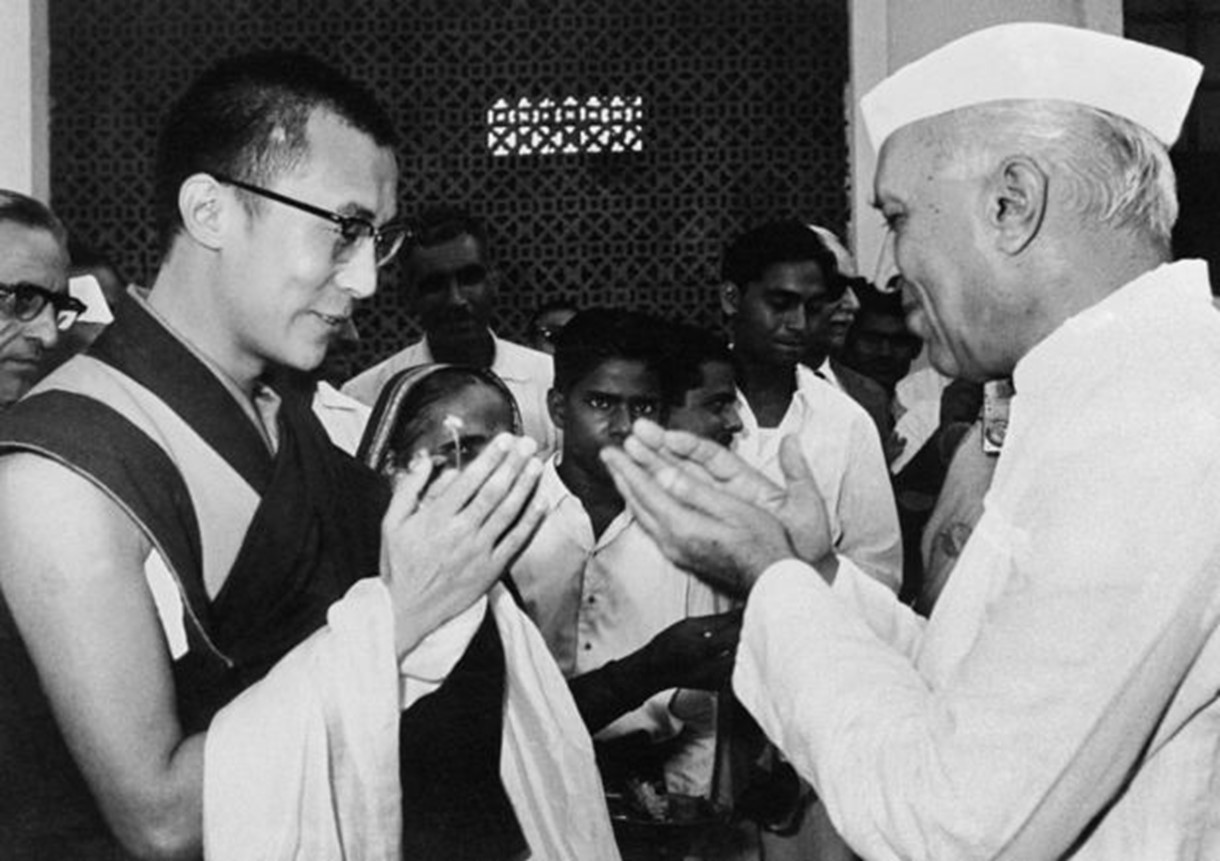



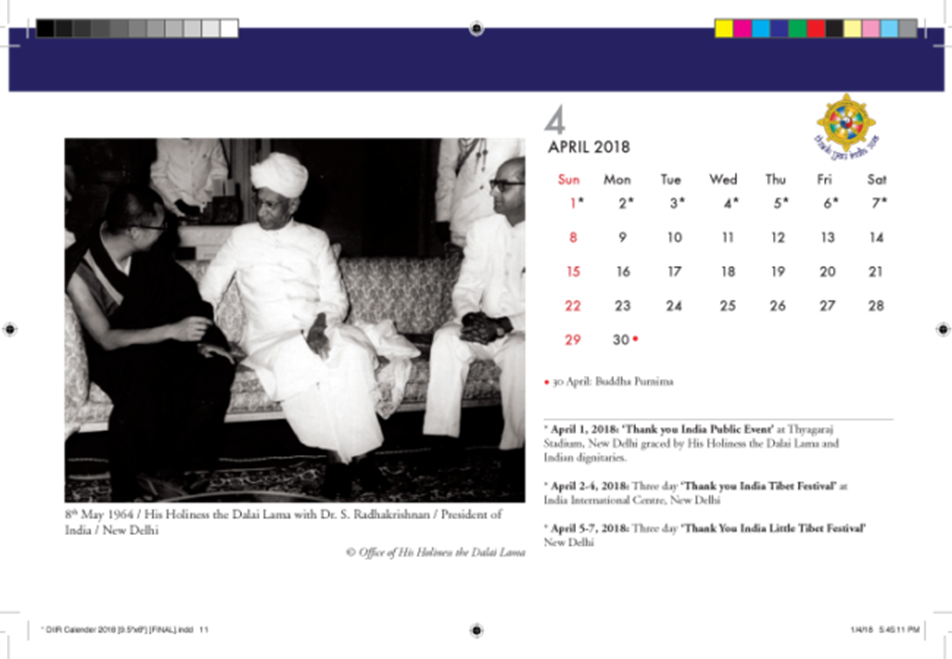


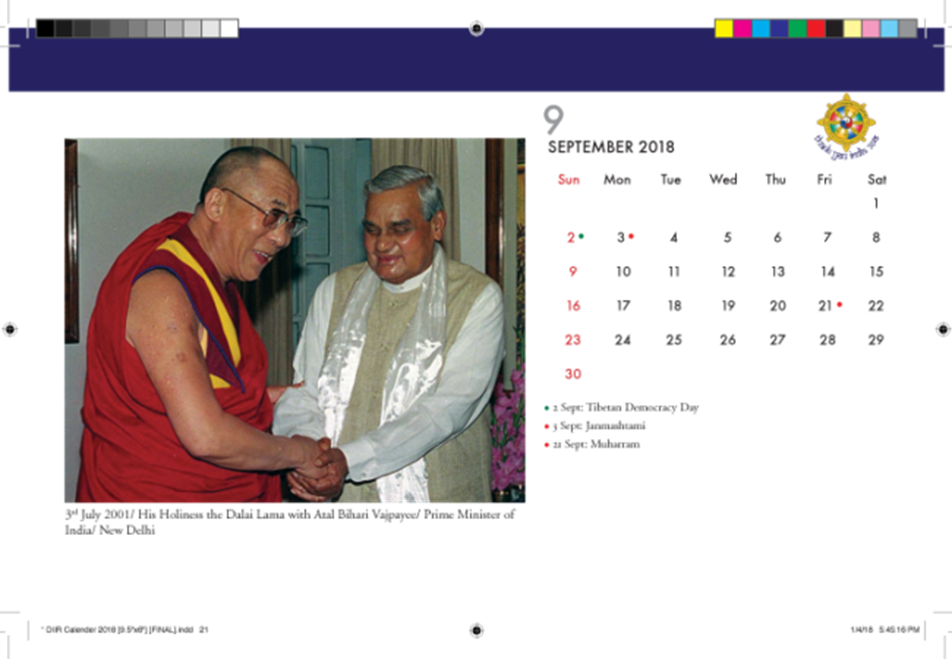
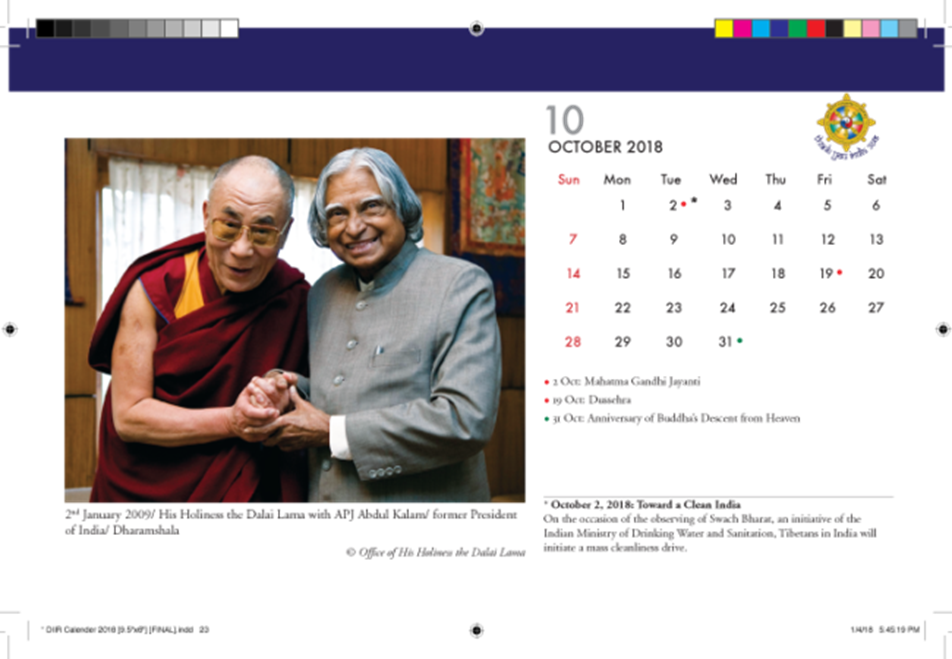
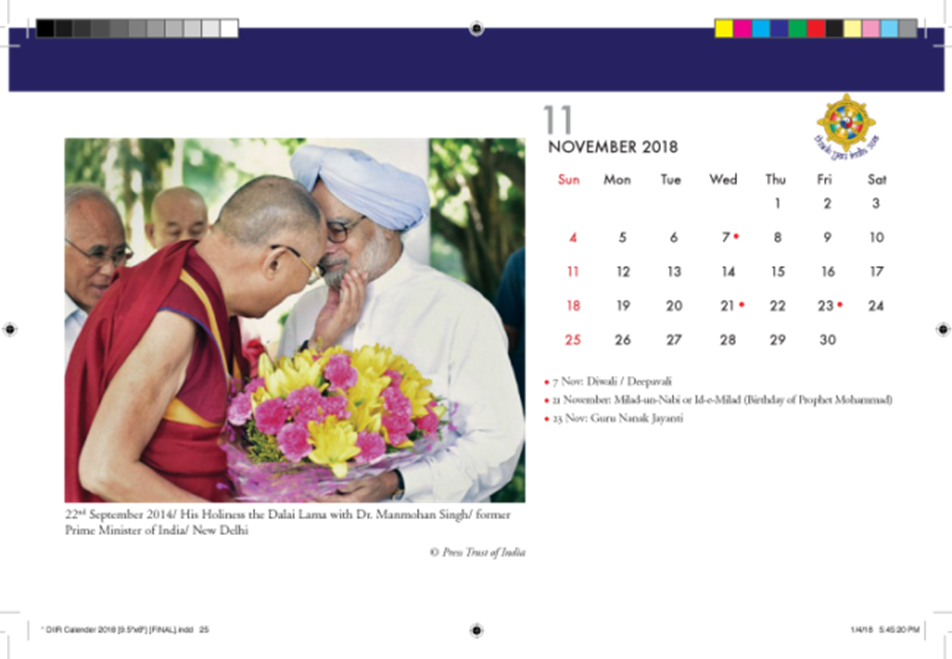




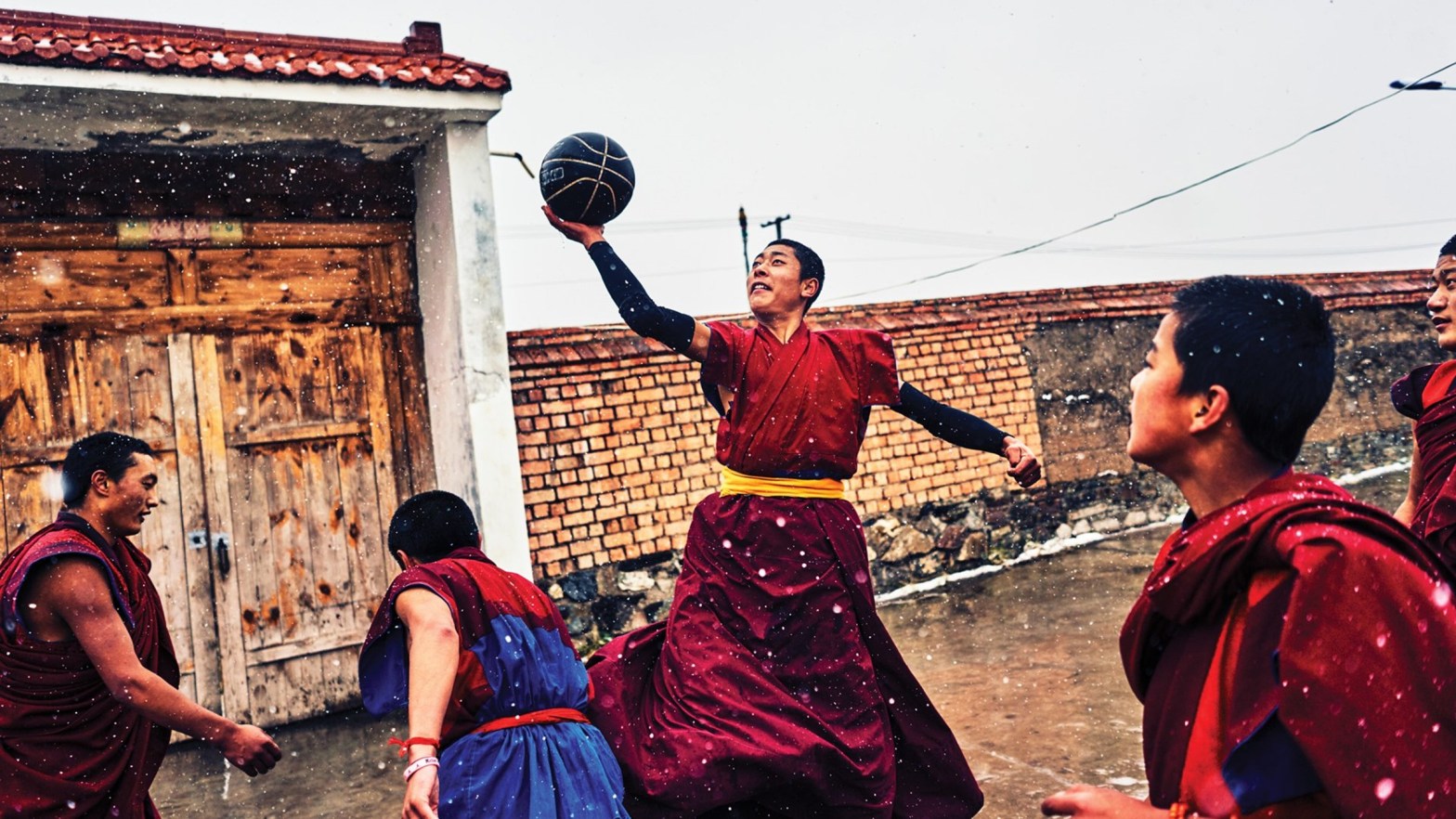


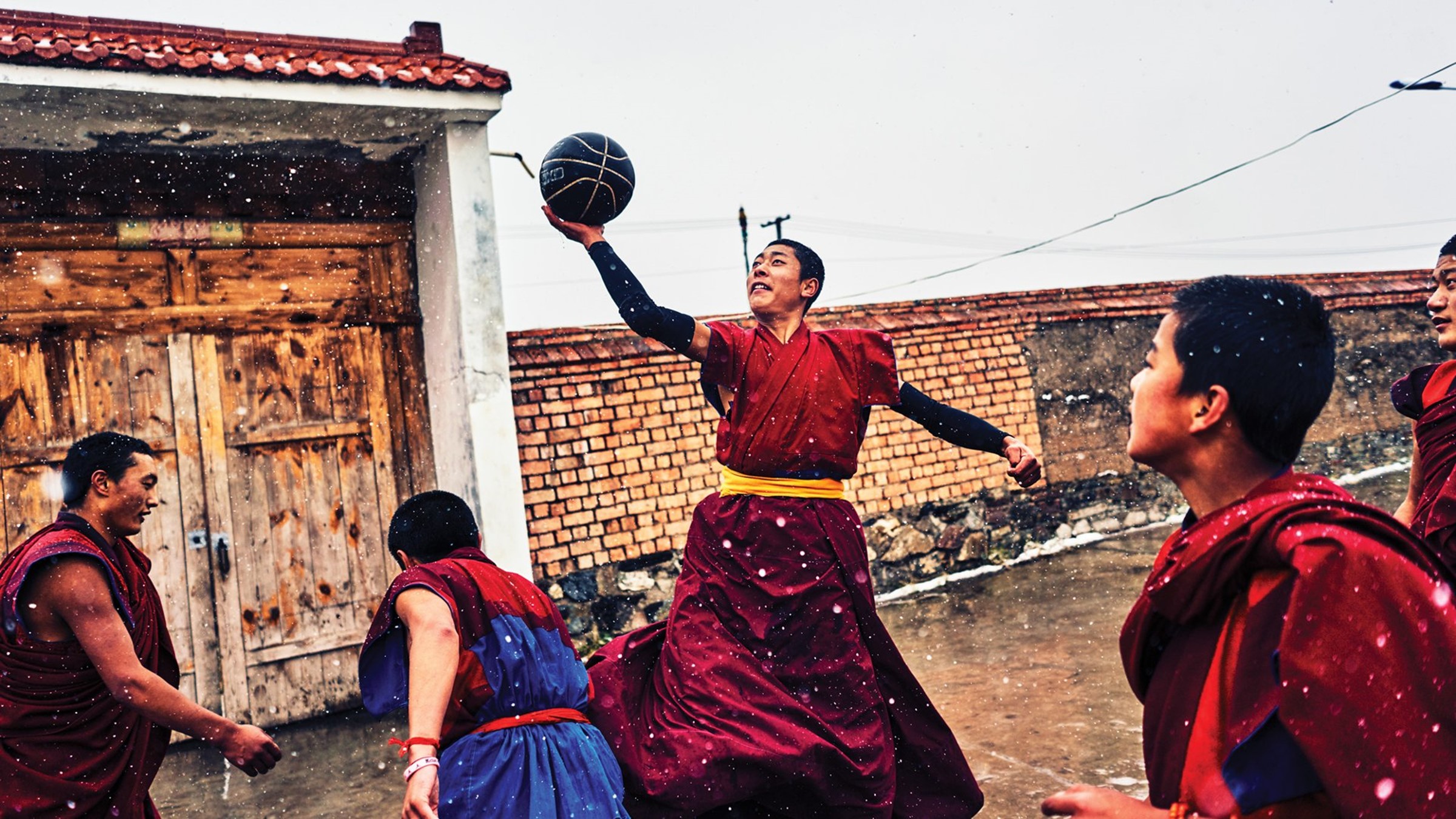
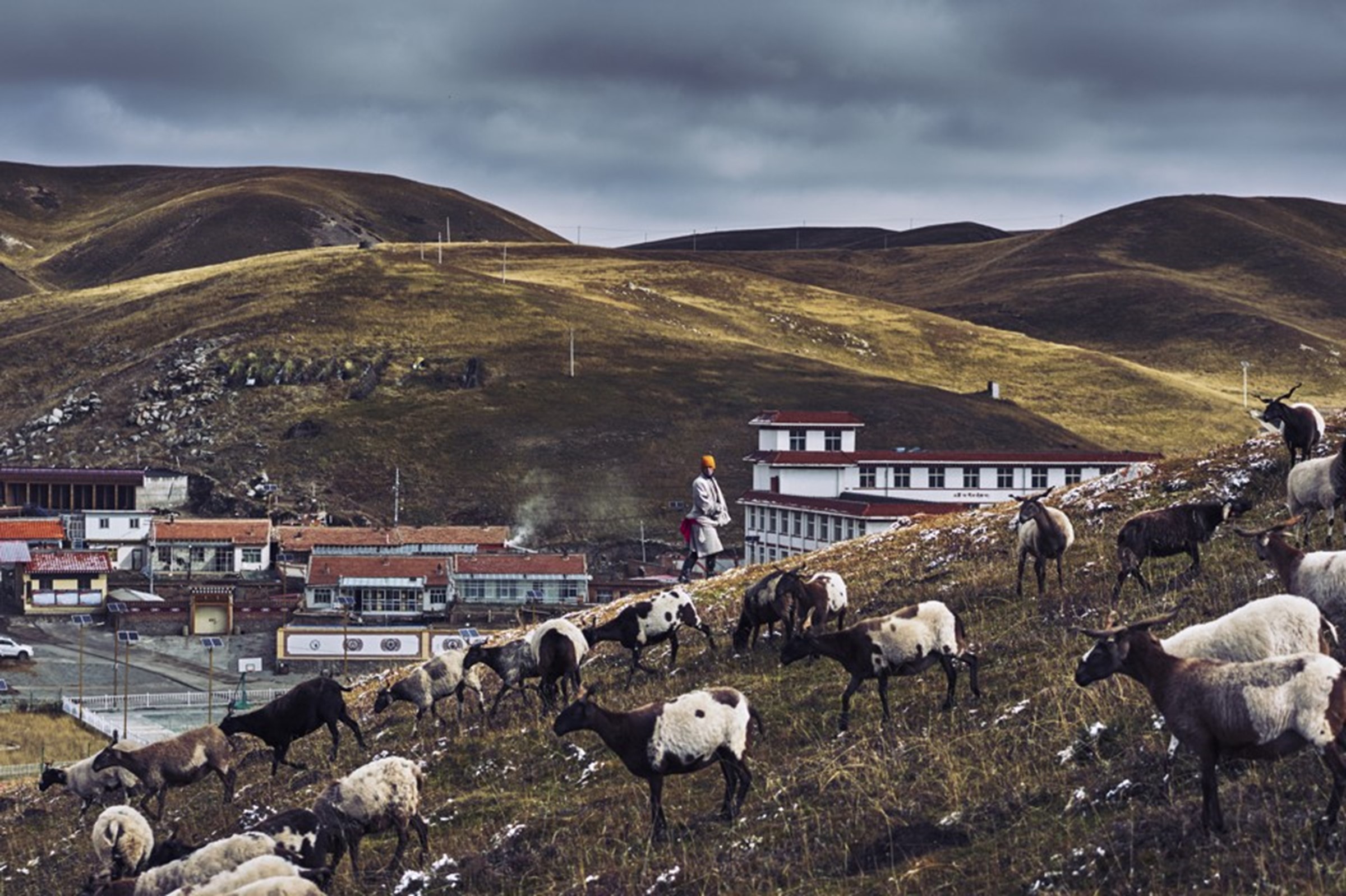
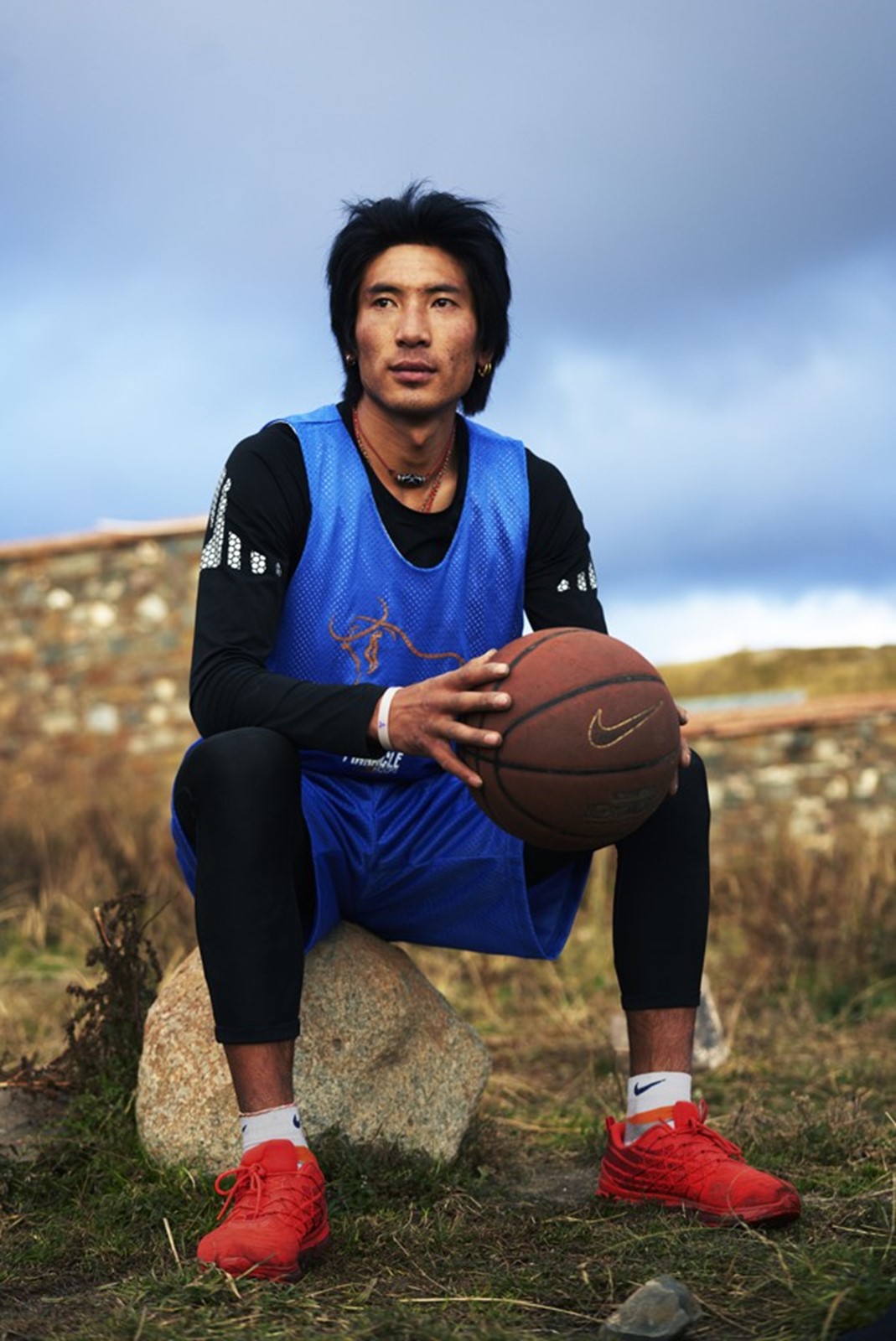

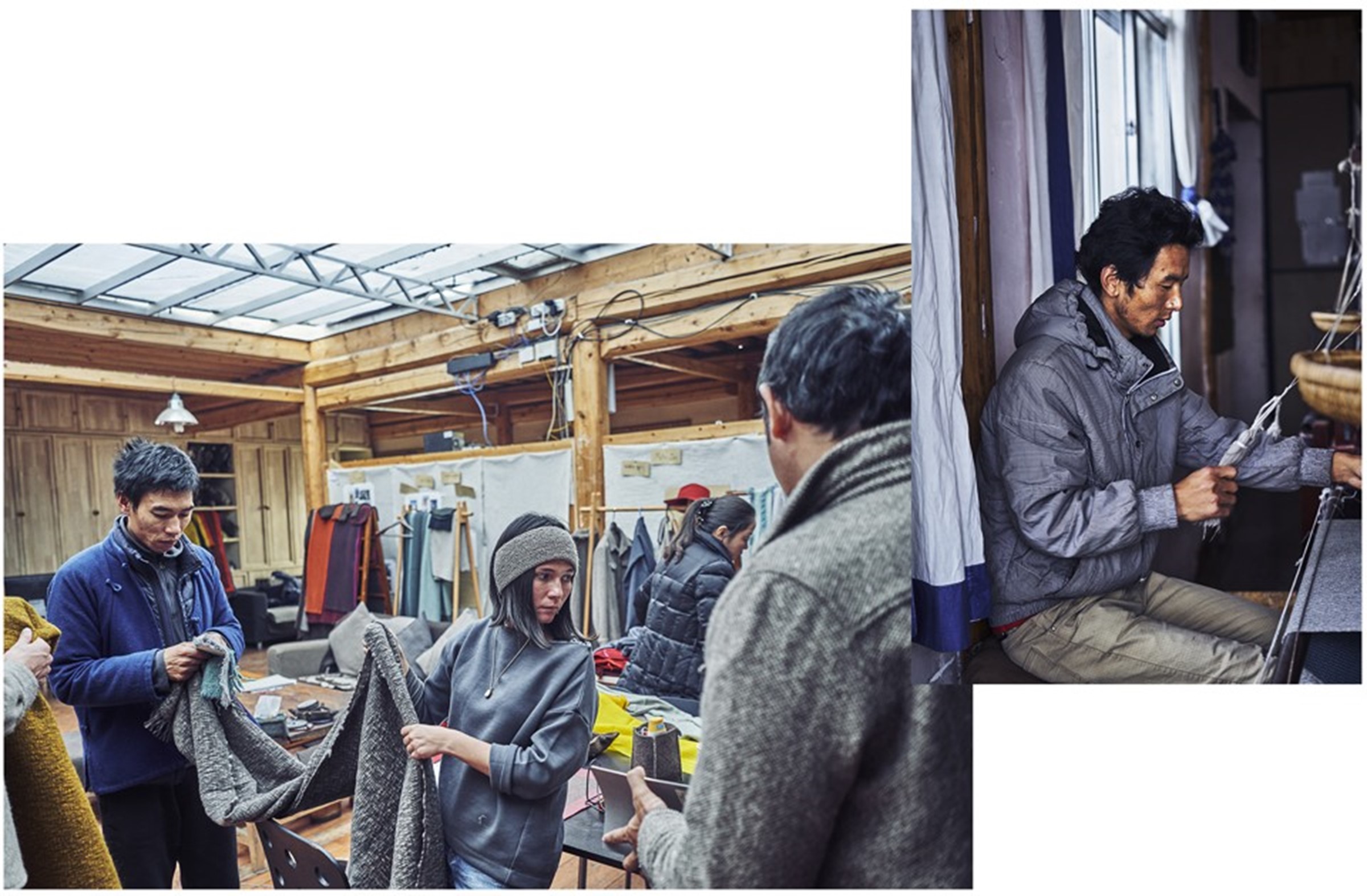
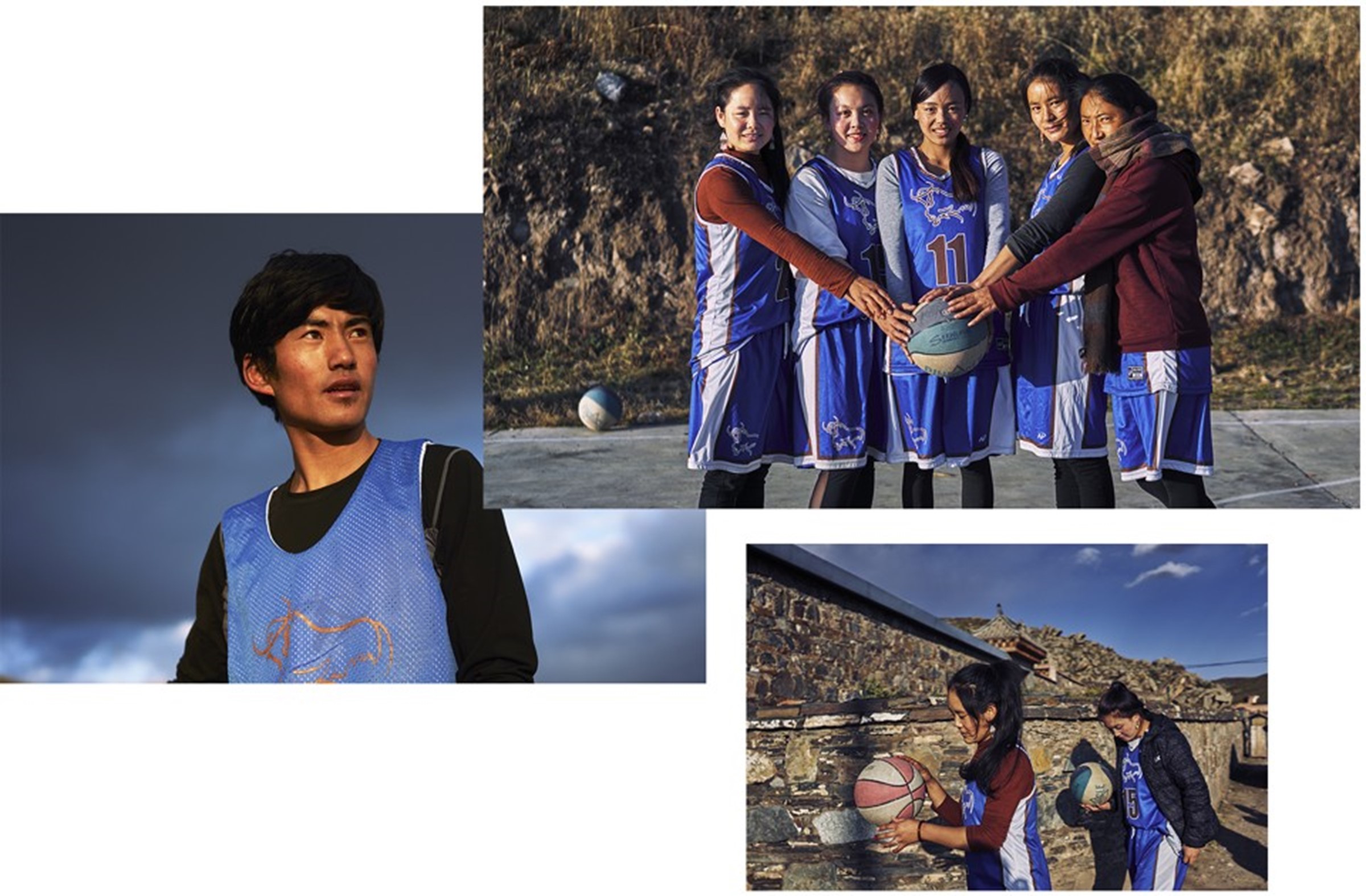
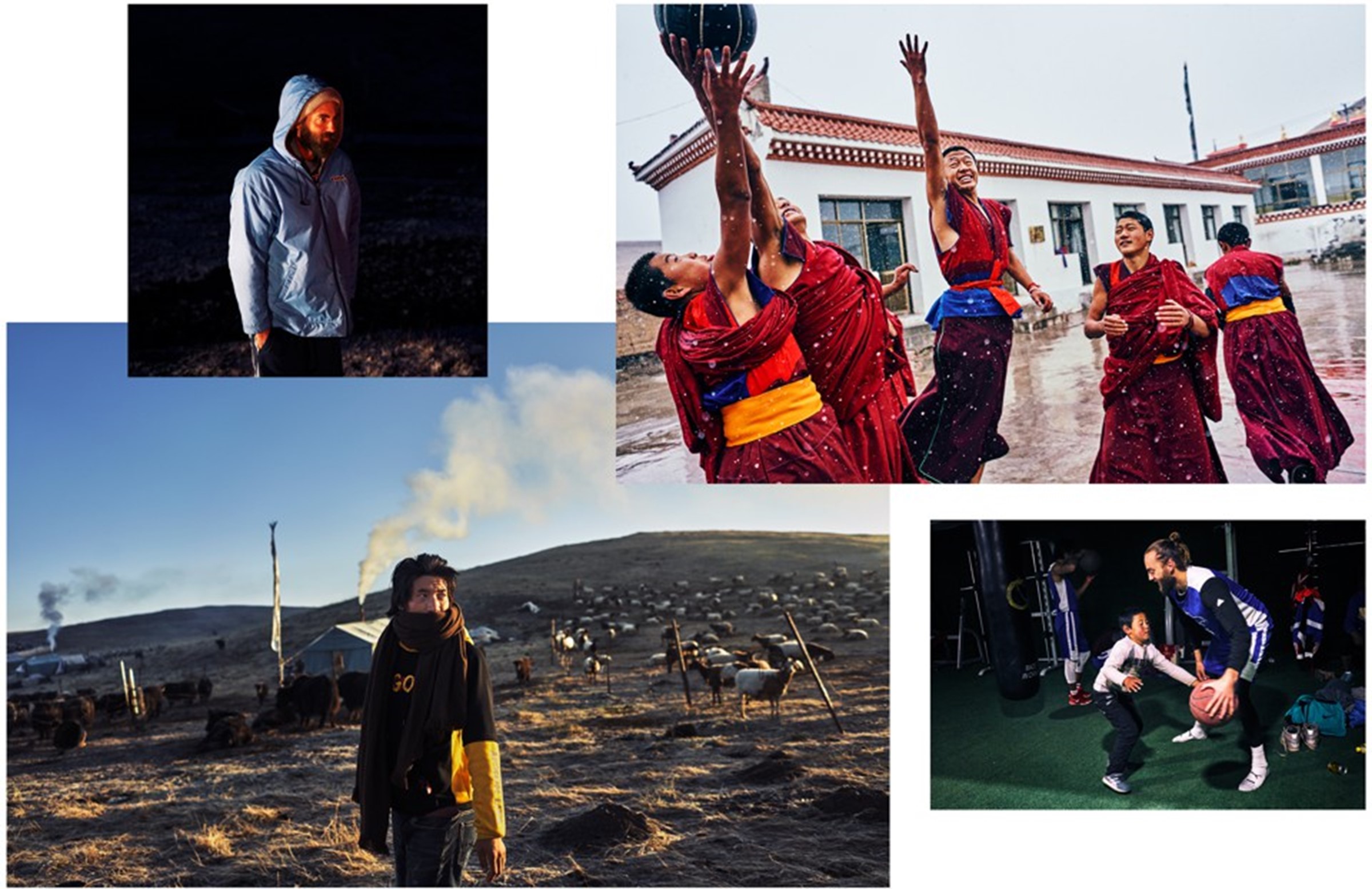

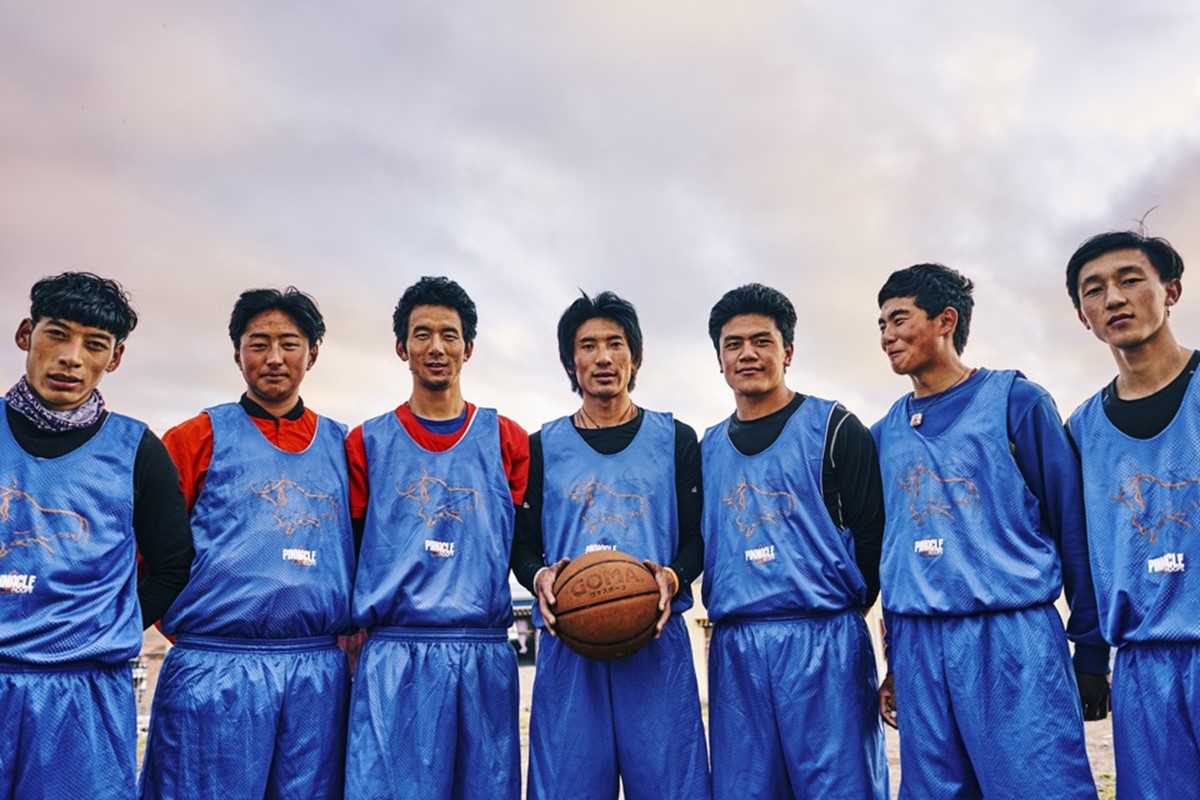


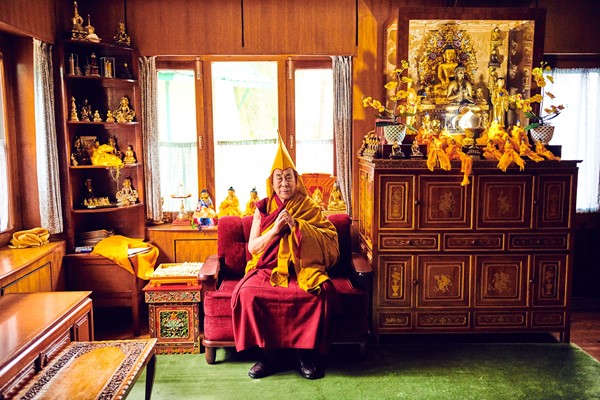
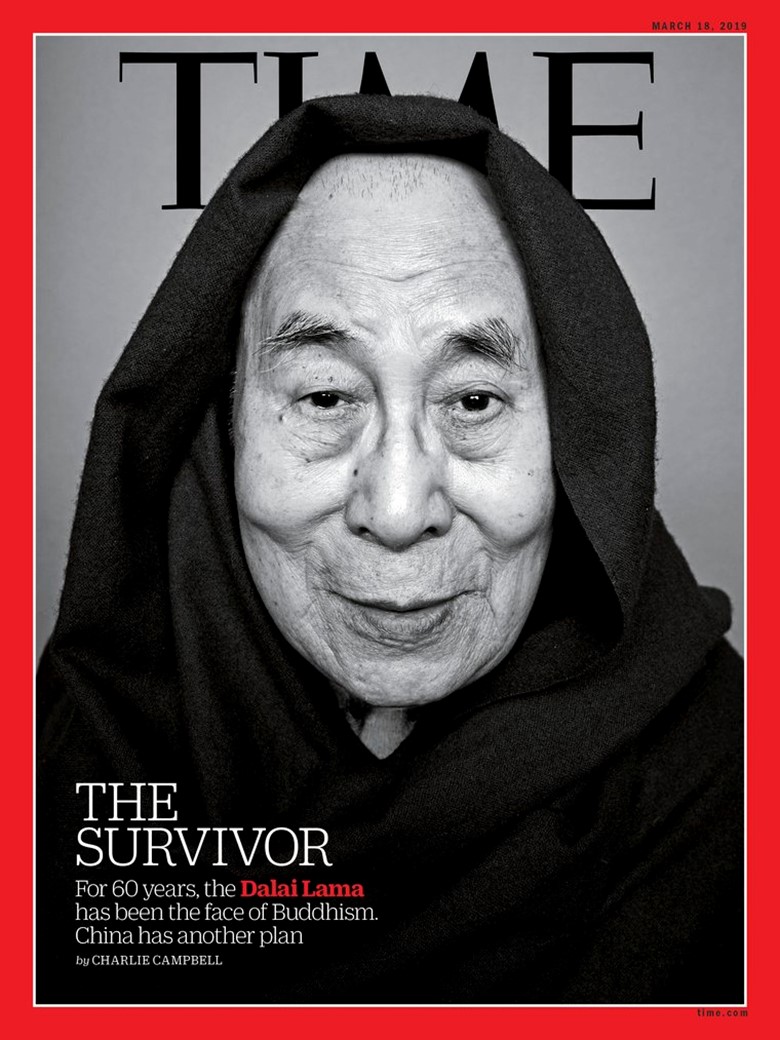


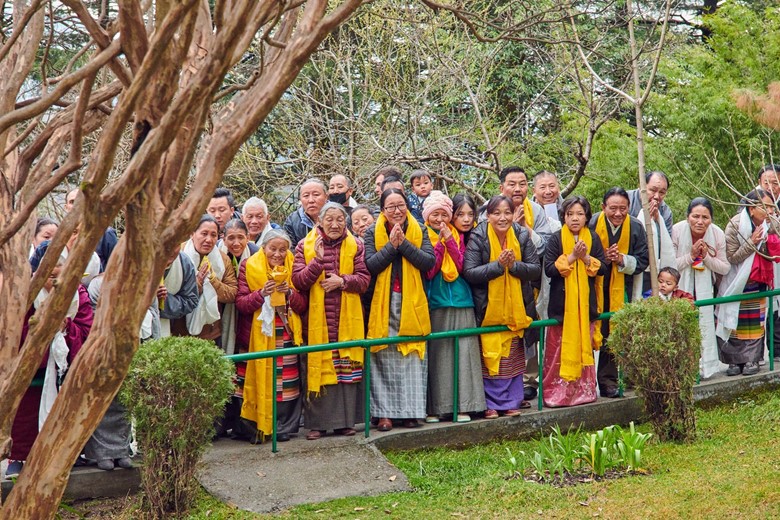

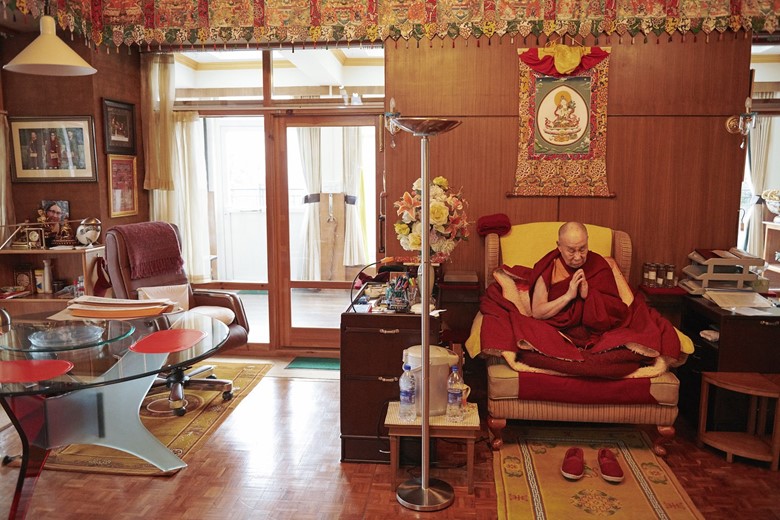

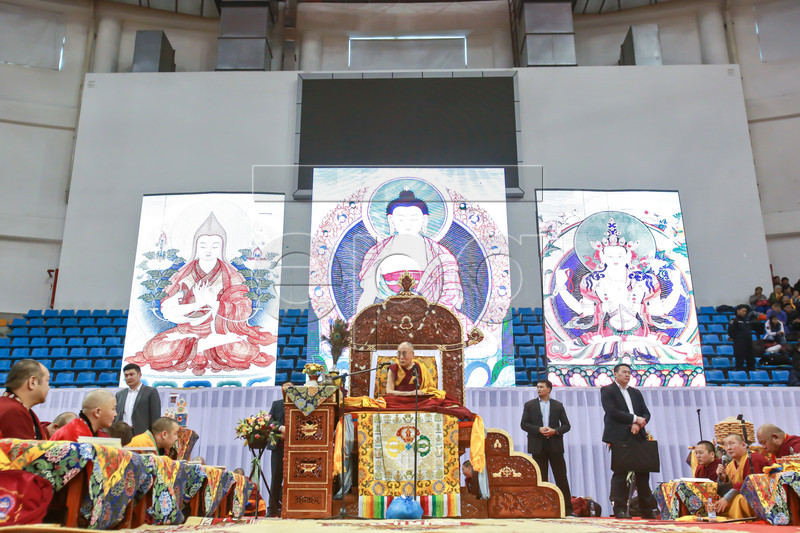


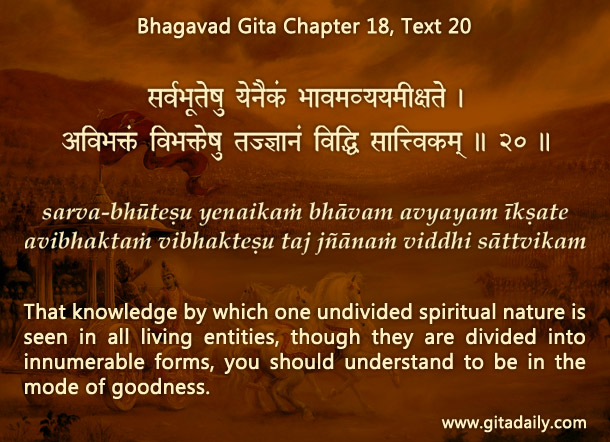


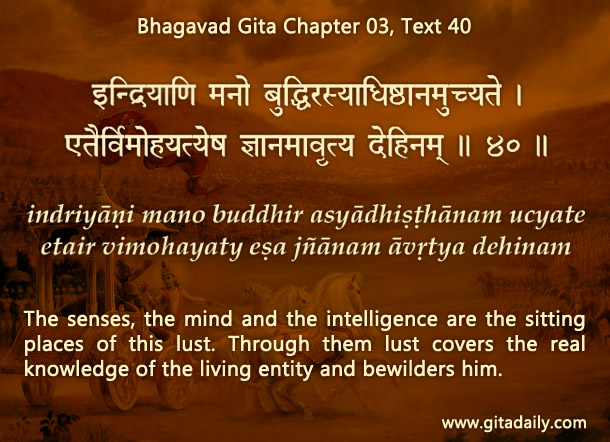




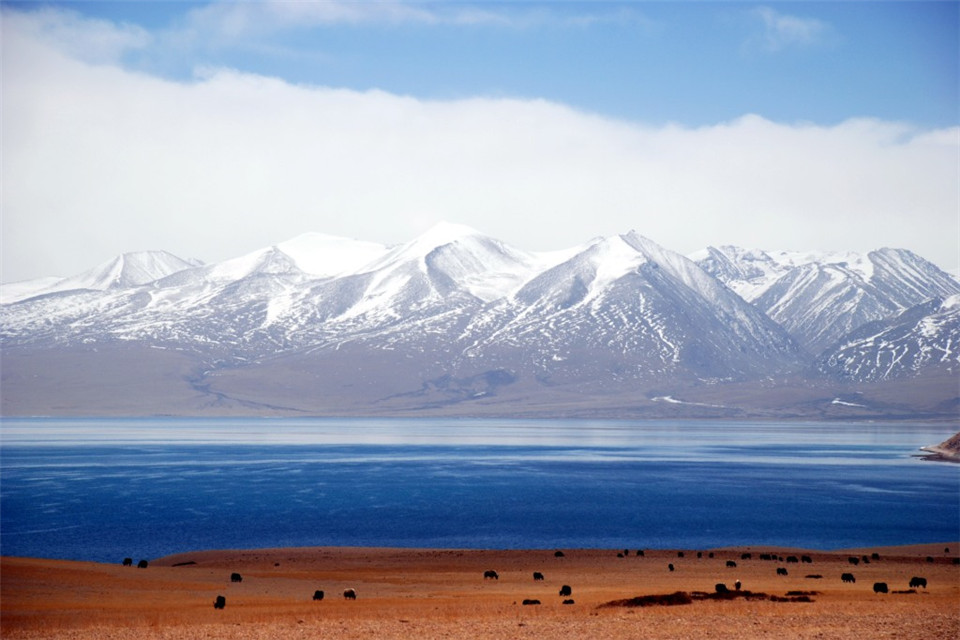
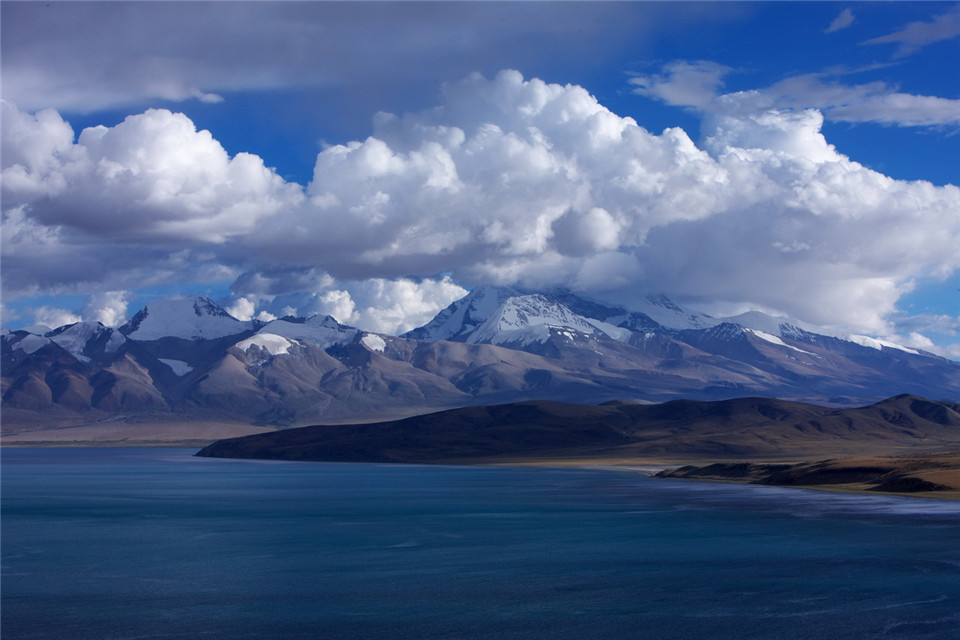






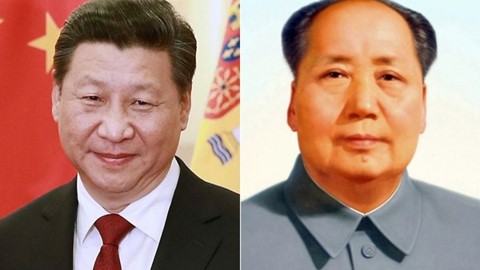






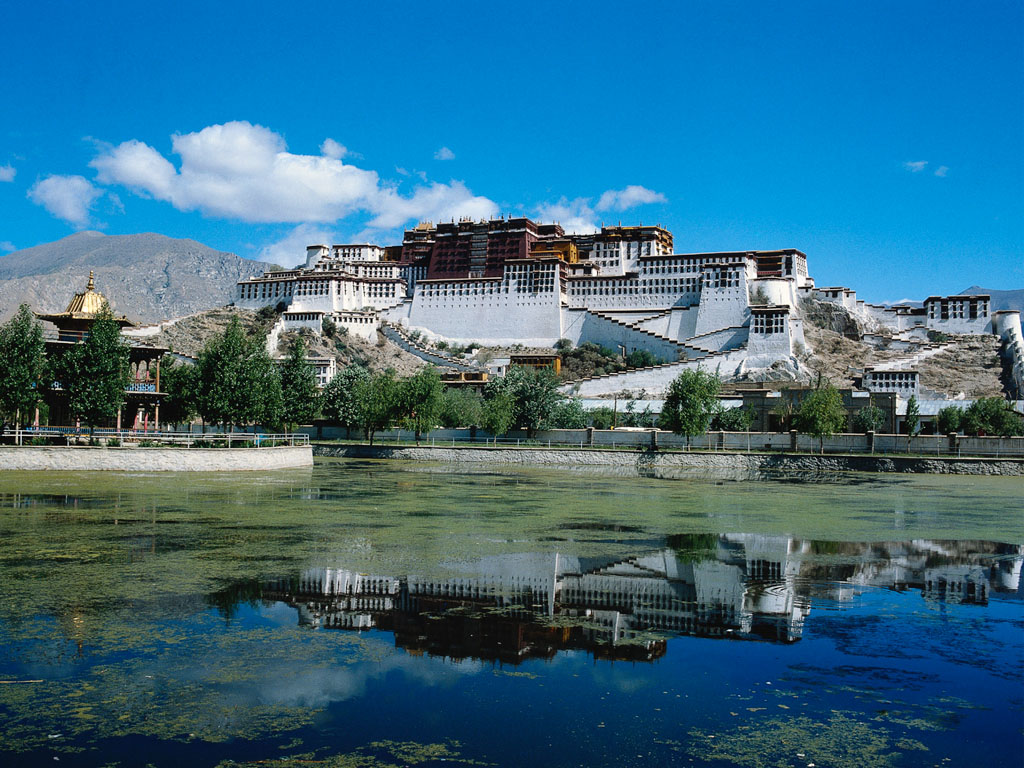


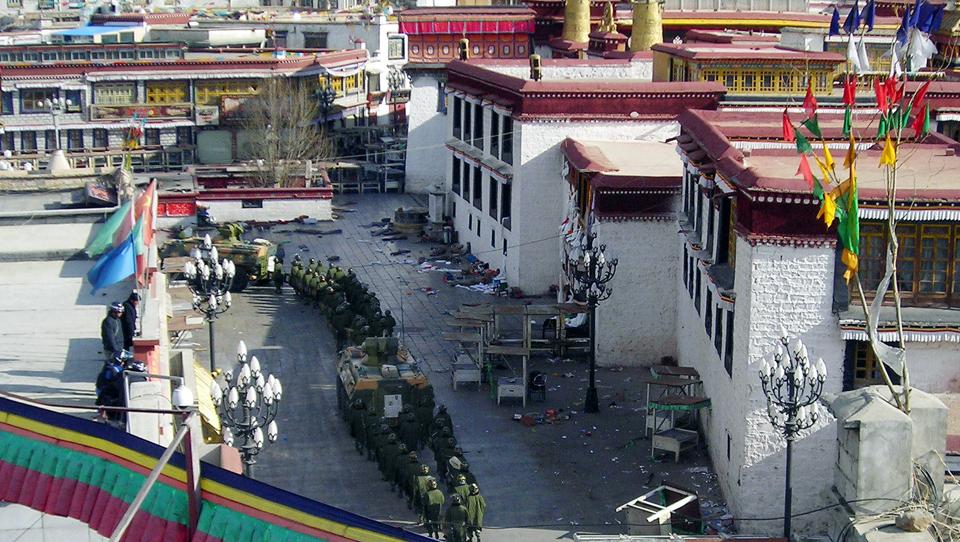
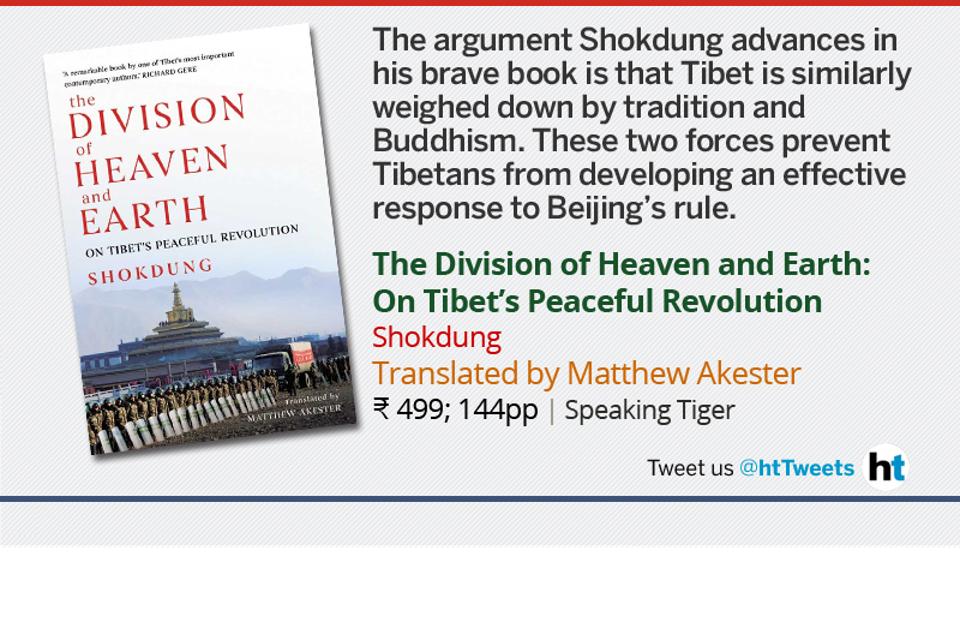


 Whole Dude - Whole Concept