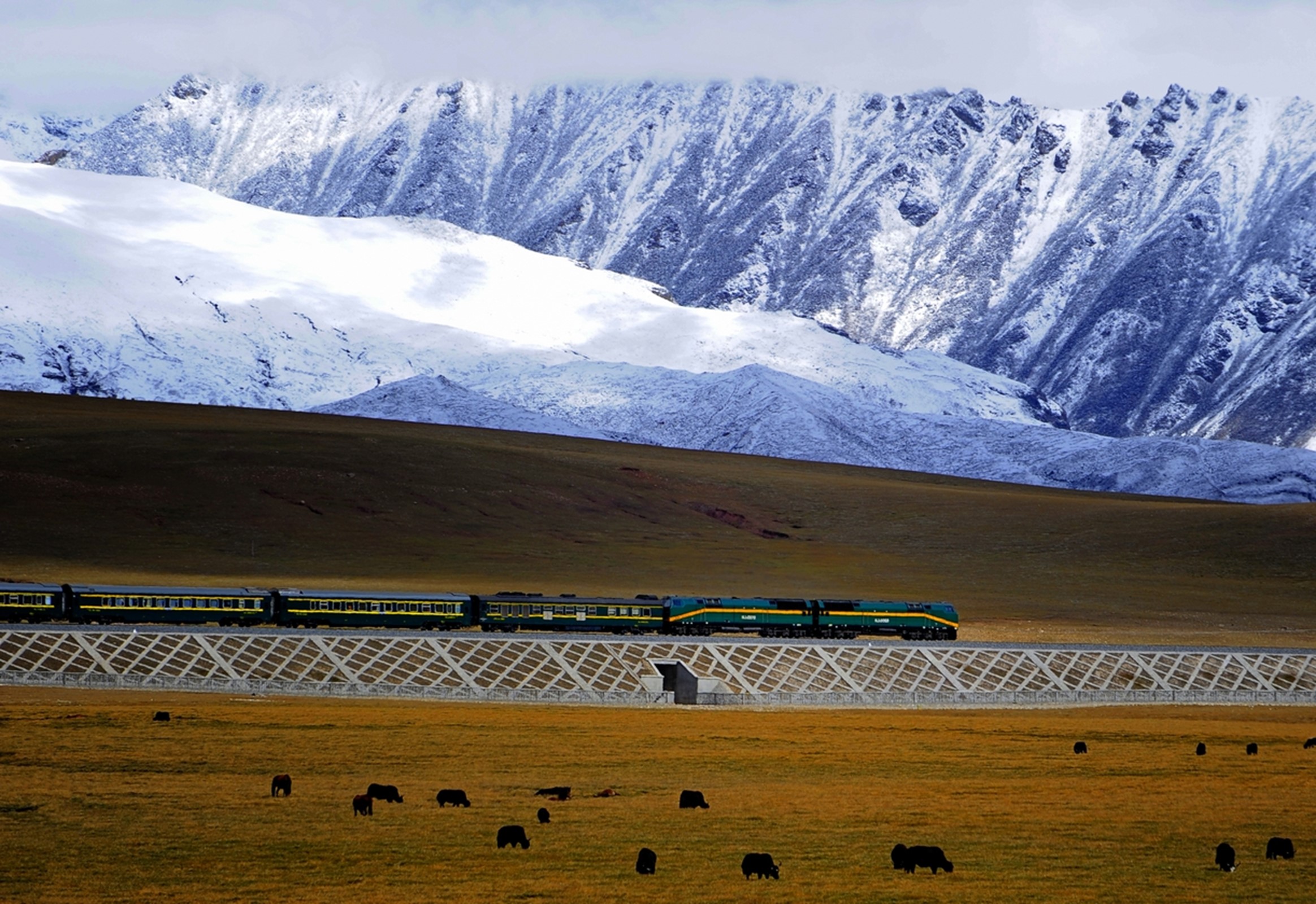
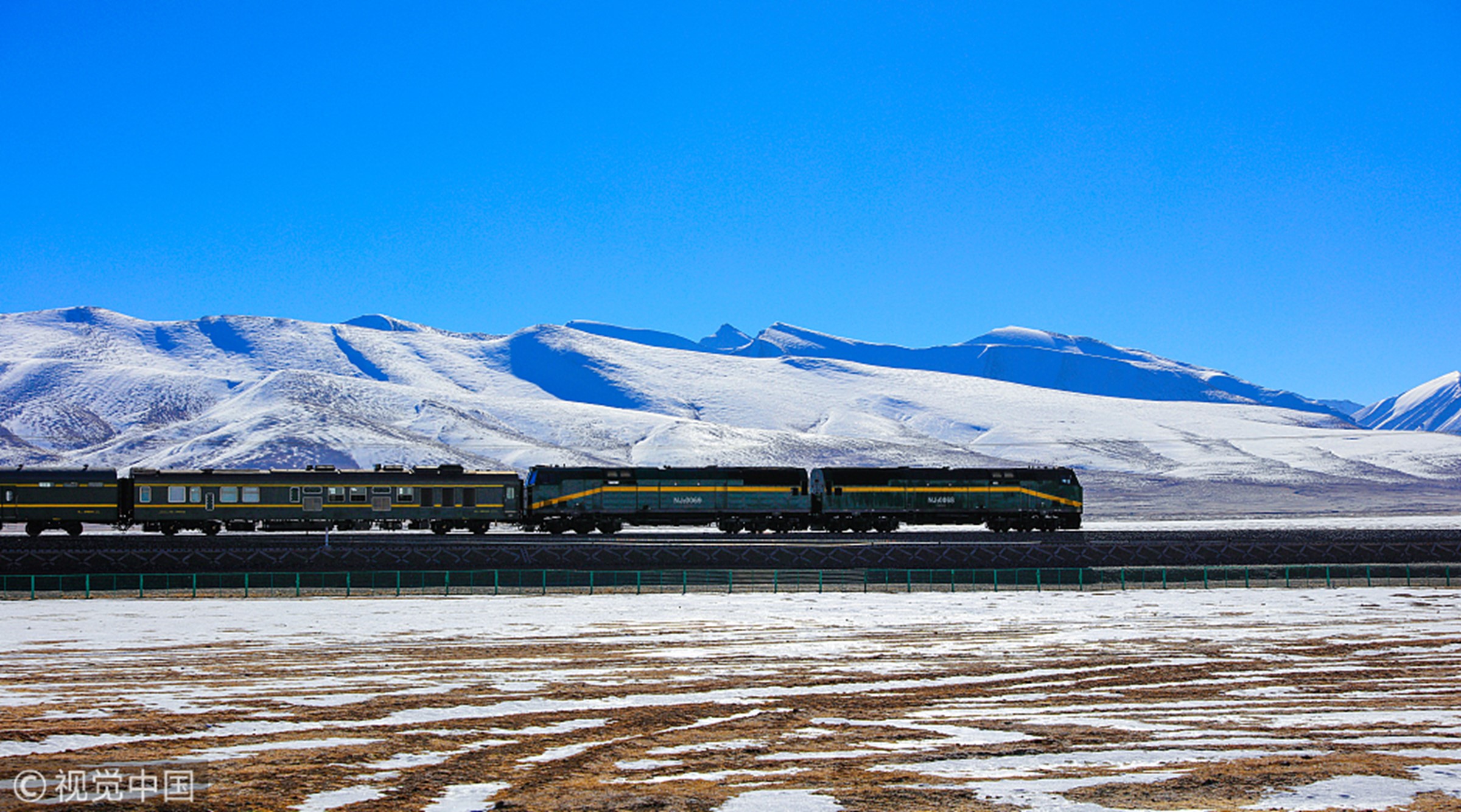
In my analysis, the Qinghai-Tibet Railway symbolizes the relentless pace of colonization of Occupied Tibet.
The Relentless Colonization of Occupied Tibet.
During the 1950s, both Tibet and India failed to imagine the real consequences of Communist China’s military invasion of Tibet. The leaders of both countries made futile attempts to appease Communist China for they had grossly underestimated China’s capabilities to occupy Tibetan Plateau building roads, bridges, and railway lines. These infrastructure projects across the vast Tibetan Plateau tremendously boosted China’s defense capabilities. Evicting the Occupier of Tibet may indeed pose a super challenge. For I trust in God, I conclude that ‘Nothing is Impossible’.
The Relentless Colonization of Occupied Tibet.
Rudranarasimham Rebbapragada
SPECIAL FRONTIER FORCE
Qinghai-Tibet Railway carries record-high passengers in
2018
The Relentless Colonization of Occupied Tibet.
[Photo/IC]
The Qinghai-Tibet Railway, the world’s highest and longest plateau railroad, last year carried around 16.56 million passengers.
The figure represents a 10 percent year-on-year increase and a new record since the railway began operating in 2006.
The railway delivered 34 million tons of cargo in 2018, an increase of 5.8 percent in 2017, according to the Qinghai-Tibet Railway Company. The railway has in 12 years transported a total of 182 million passengers and 552 million tons of goods.
The railway’s capacity has improved significantly since the Golmud-Lhasa section, an extension of the railway, was completed in August last year. New management and mechanisms were introduced to improve efficiency.
During peak times the railway company also ran additional or temporary trains to meet increasing ticket demands.
The enhanced transportation capacity has been a catalyst for social and economic development in Tibet autonomous region and Qinghai province, as well as a driving force for tourism in the regions.
In my analysis, the Great Problem of Tibet cannot be resolved by sanctioning “Meaningful Autonomy” to Tibetan people as demanded by His Holiness the 14th Dalai Lama. In fact, Tibetans cannot hope for any kind of autonomy if the military occupation of Tibet prevails across Tibetan Territory.
Rudranarasimham Rebbapragada
SPECIAL FRONTIER FORCE
The Dangerous Military Occupation of Tibet.
Chinese military equips troops in Tibet with mobile howitzers: Report | India News – India TV
The Dangerous Military Occupation of Tibet.
Tuesday, January 08, 2019
Chinese military equips troops in Tibet with mobile
howitzers: Report
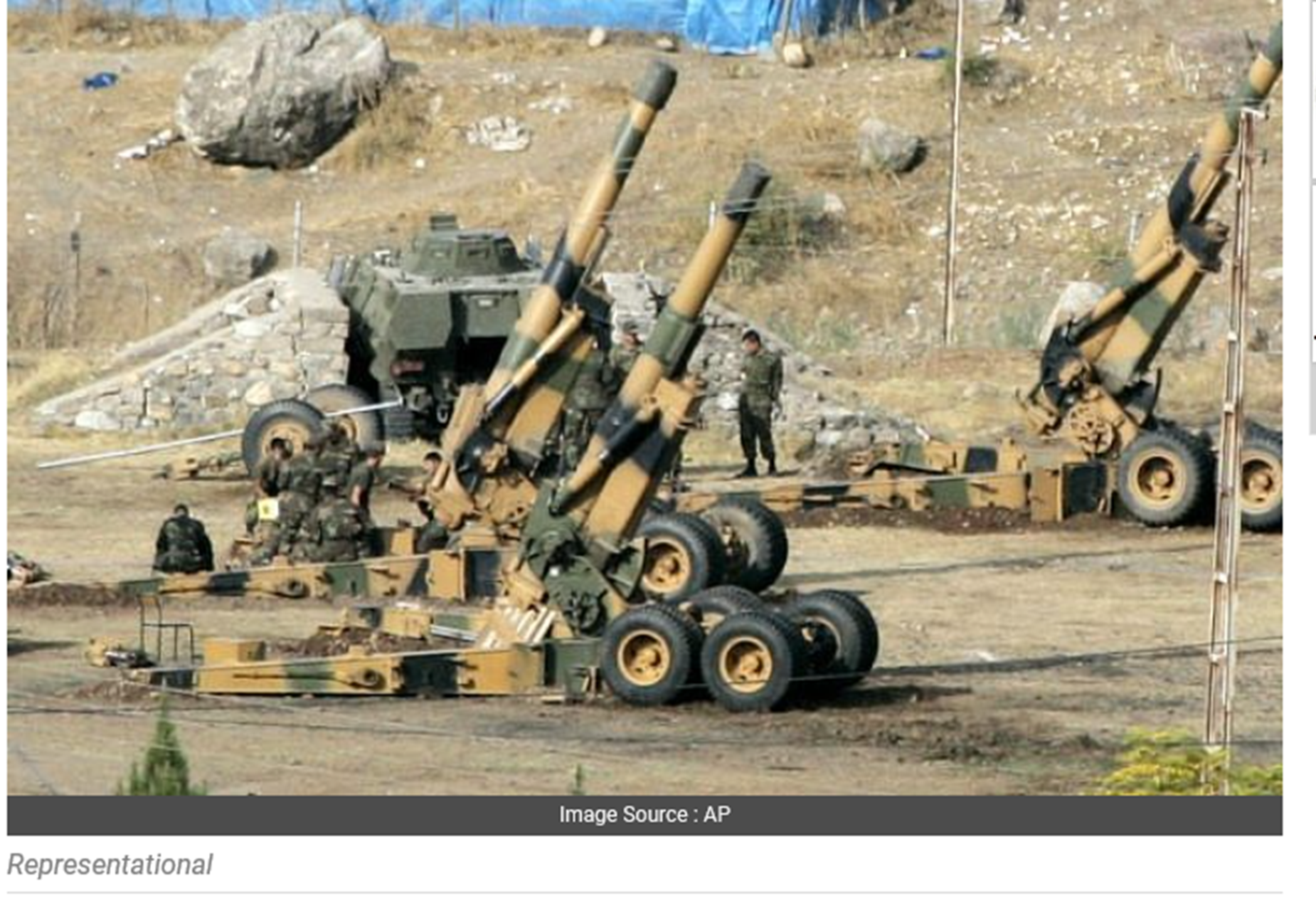
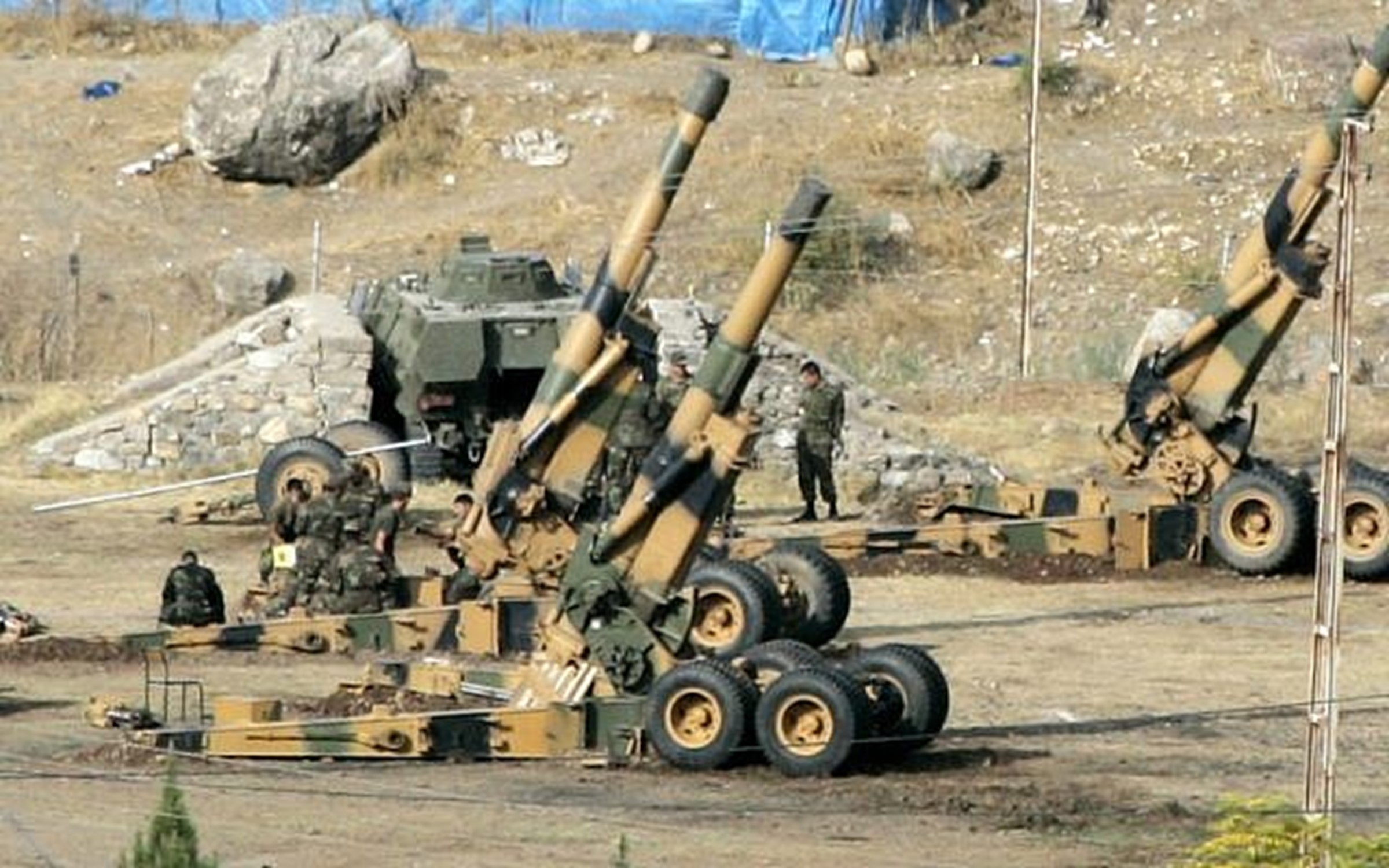
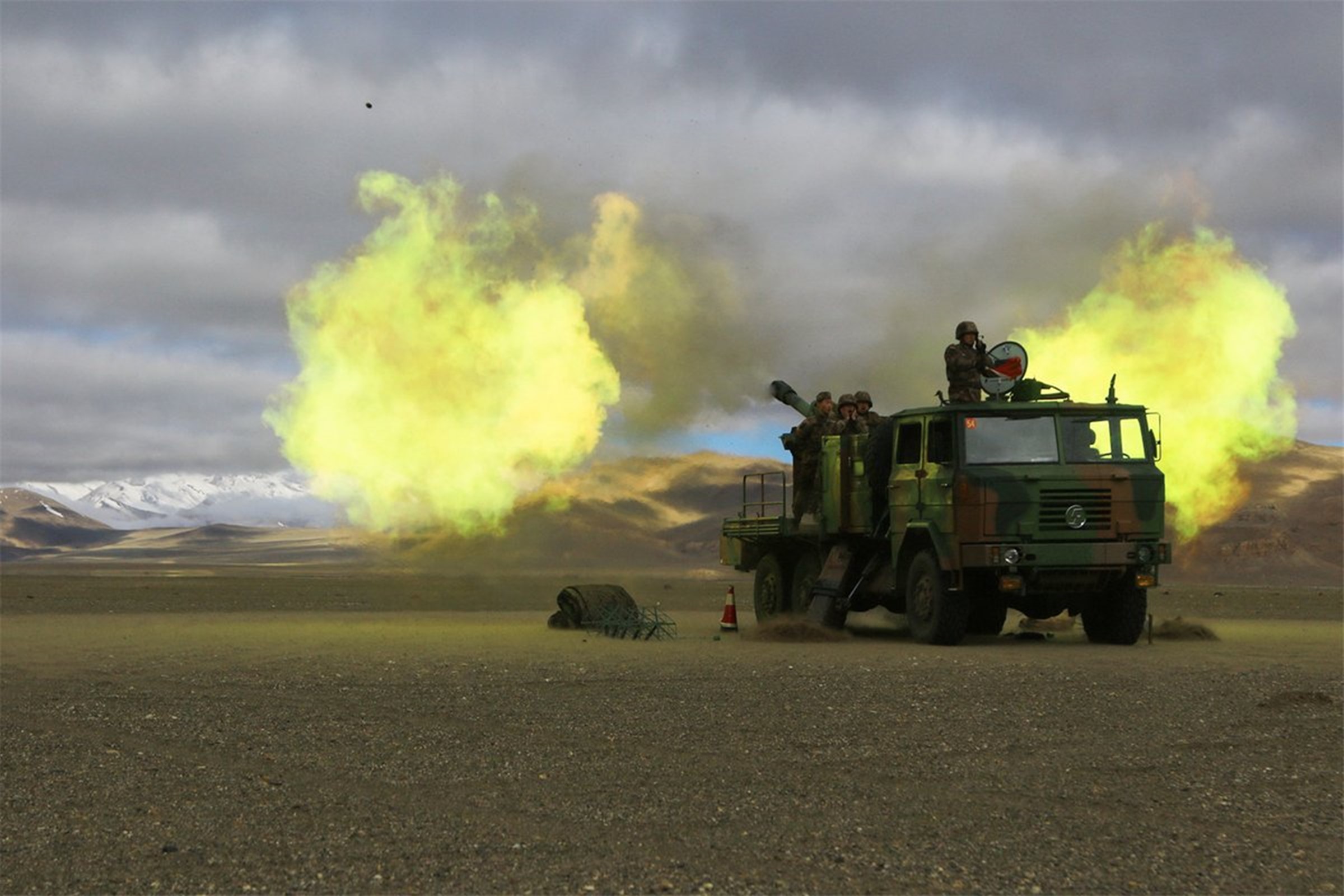
China’s People’s Liberation Army (PLA) stationed in Tibet Autonomous Region has been equipped with mobile howitzers which aims to boost the troops’ high-altitude combat capability to improve border security, state-run Global Times reported.
Reported by: PTI, Beijing [ Updated: January 08, 2019 16:53 IST ]
The Dangerous Military Occupation of Tibet.
Image Source: AP
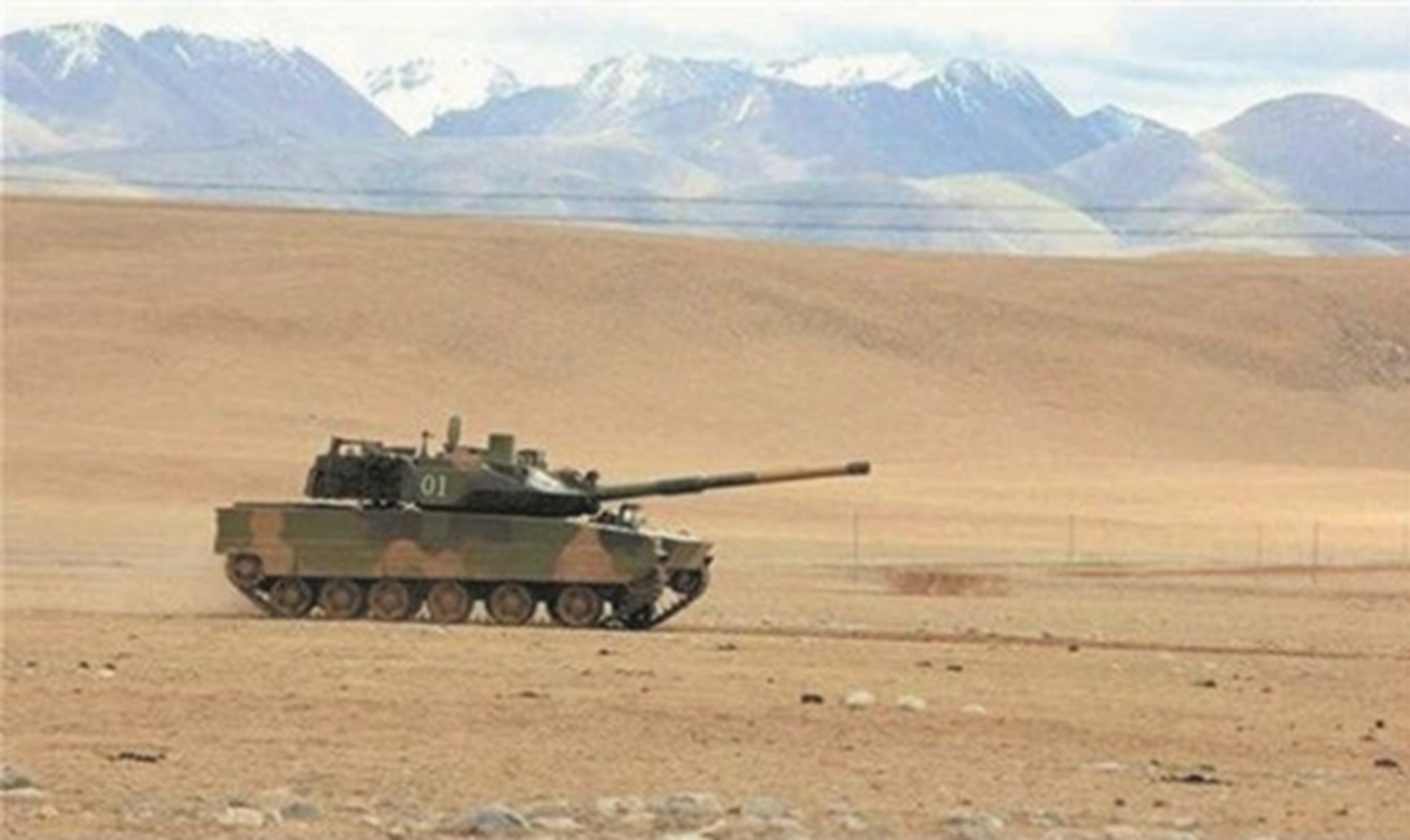
After the recent induction of lightweight battle tank in Tibet bordering India, the Chinese military has equipped its troops stationed at the Himalayan plateau with new vehicle-mounted howitzers to improve their combat capability, official media here reported on Tuesday.
China’s People’s Liberation Army (PLA) stationed in Tibet Autonomous Region has been equipped with mobile howitzers which aims to boost the troops’ high-altitude combat capability to improve border security, state-run Global Times reported.
It quoted Chinese military analysts as saying that the new equipment would be the PLC-181 vehicle-mounted howitzer. The announcement was made in an article released by the WeChat account of the PLA Ground Force on Saturday, the report said.
The equipment was used in an artillery brigade in Tibet during the 2017 China-India stand-off at Doklam, it said. Song Zhongping, a military expert and TV commentator, told Global Times that the howitzer has a 52-caliber cannon with a range of over 50 km and shoots laser-guided and satellite-guided projectiles.
It will boost the high-altitude combat capability of the PLA in Tibet, Song said.
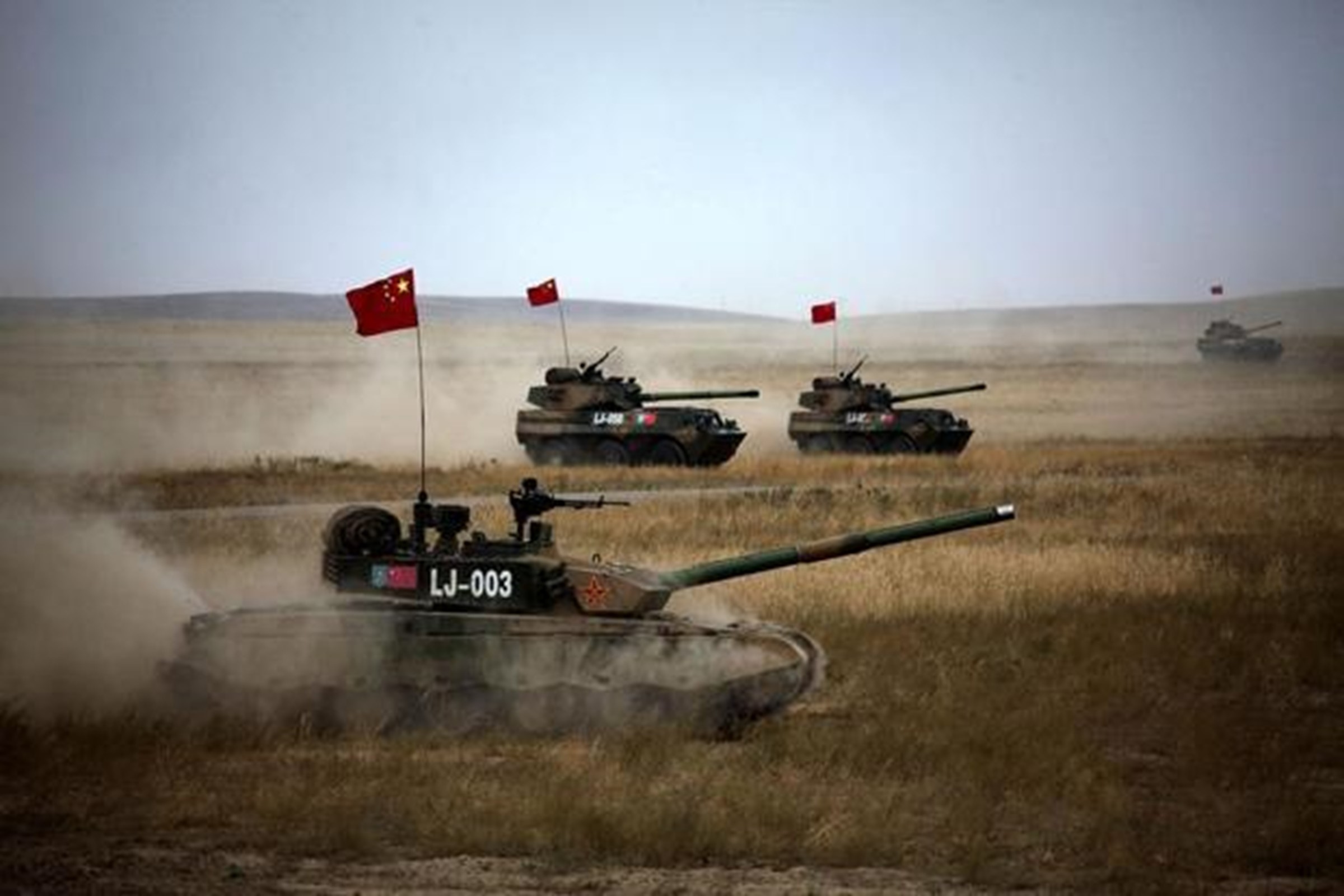
The induction of the mobile howitzers followed the move by the PLA to put into service the lightweight battle tank, which was tested by its military during exercises in Tibet held at the peak of the Doklam standoff.
The Type 15 has an engine capable of 1,000 horsepower and is significantly lighter than the PLA’s other main battle tanks in service, weighing about 32 to 35 tons. The tank meant for rugged and mountainous terrain of the Himalayan region.
The induction of the tank and the mobile howitzers highlighted the PLA’s efforts to reinforce its troops with new equipment despite steady normalization of military relations since last year.
As part of the military training in 2019, an artillery brigade in the Tibet Military Command ordered soldiers to take part in a military skills competition at a training ground on the Qinghai-Tibet Plateau 3,700 meters above sea level, the report said.
Last week, President Xi Jinping, who also heads the military, ordered the armed forces to enhance their combat readiness to make sure they are always ready for battle, saying risks and challenges for China are on the rise.
China’s border issue has not been completely resolved, and was challenged by pro-Tibet independence forces and terrorists, the report quoted analyst as saying.
Zhao Gancheng, director of the Centre for Asia-Pacific Studies at the Shanghai Institute for International Studies, told the daily that the military investment in Tibet has been rising, but is primarily meant for defense and not to provoke conflict with neighboring countries.
He said the PLA troops stationed in Tibet need to improve their combat capabilities in plateau areas and strengthen their willpower in extreme weather as they are primarily responsible for the border defense against terrorists and foreign invaders, he said.
To cope with altitude sickness, the PLA built oxygen stations for the soldiers in Tibet in 2015, which were used for medical purposes, but are now also being used regularly in training.
COMMUNIST CHINA IS USING BUDDHISM AS A TOOL FOR HER EXPANSIONIST REGIME
Communist China is using Buddhism as a tool for her Expansionist Regime.
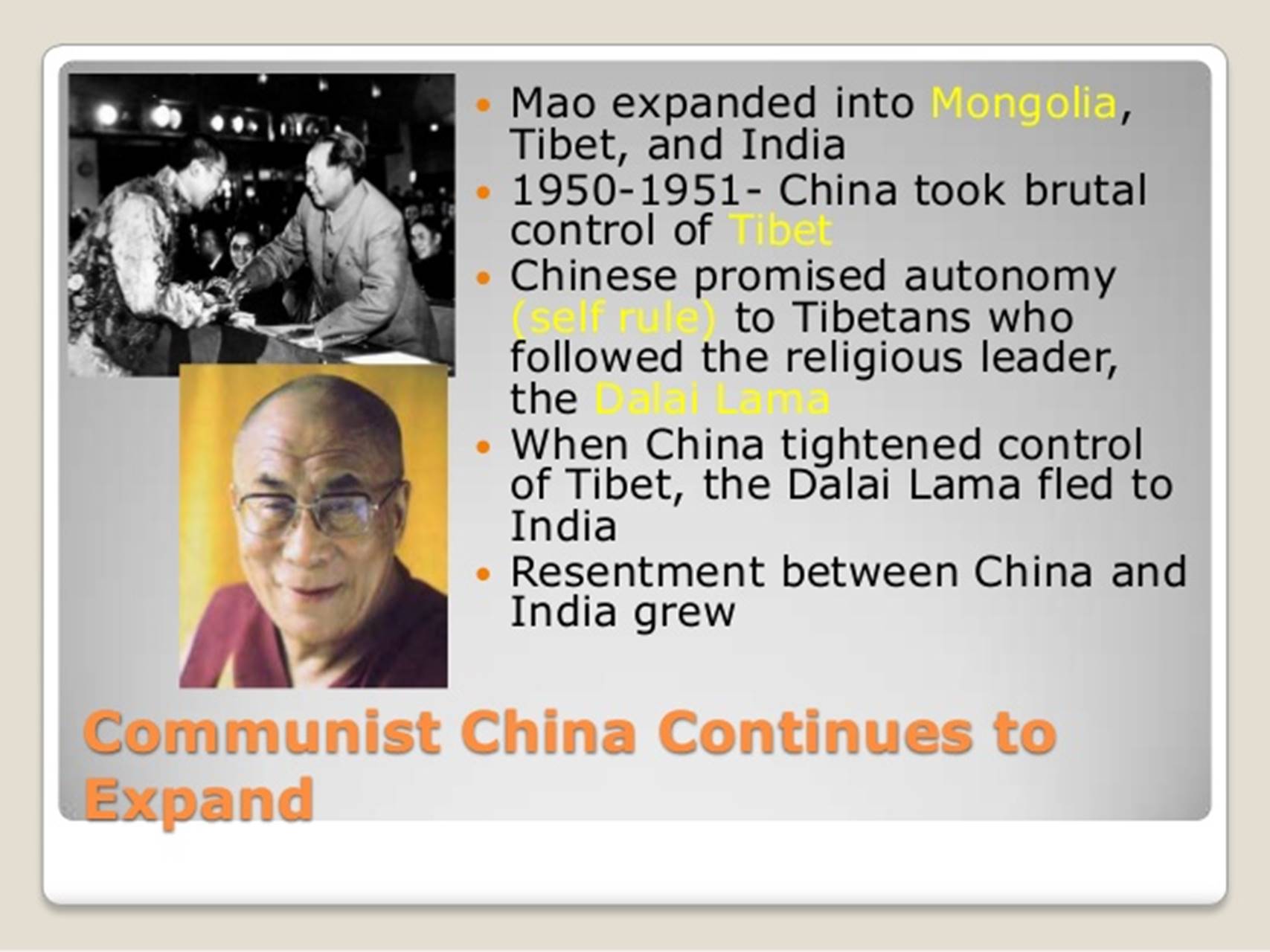
During 1950-1951 Communist China took brutal control of Tibet using her hard military power. Now, the Communist Party of China is demanding Buddhists and others to subjugate their religion and culture to serve the needs of China’s Expansionist Regime.
Buddhist scholars had gathered this week in northwest China’s Qinghai province to discuss how to leverage Buddhism in constructing and expanding the BRI.
Sutirtho Patranobis
Hindustan Times, Beijing
Communist China is using Buddhism as a tool for her Expansionist Regime.
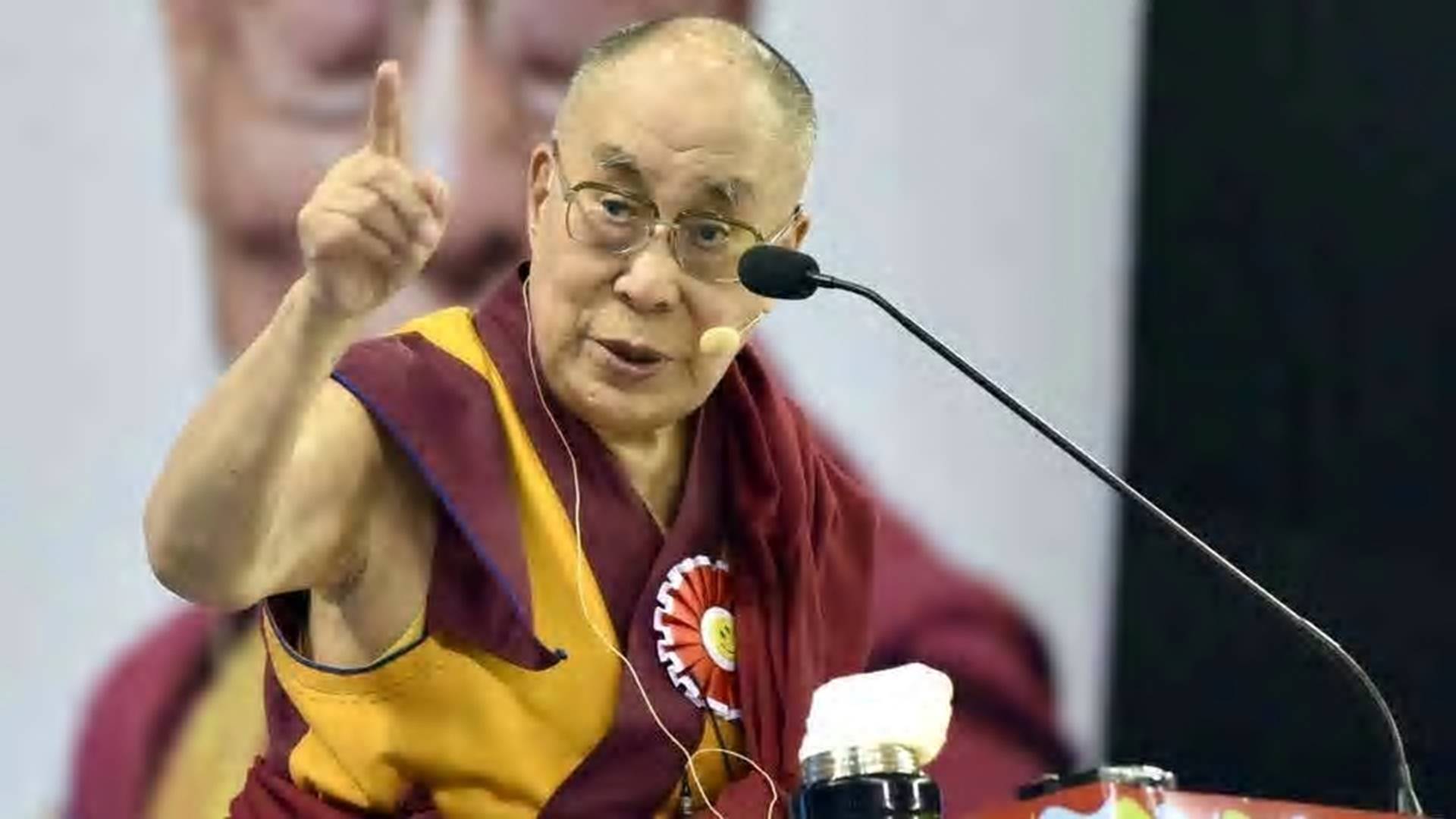
His Holiness Dalai Lama addresses teachers after the inauguration of Happiness Curriculum of the Delhi government at Thyagraj Sports Complex in New Delhi, in July 2018. (Sonu Mehta/HT File Photo)
India is the biggest challenge for Beijing to use Buddhism in support of President Xi Jinping’s Belt and Road Initiative (BRI) to tackle terrorism and separatism and for strategic purposes, leading Chinese scholars have said.
For one, the Chinese Buddhist scholars argued at a recent symposium, the Dharamshala-based Dalai Lama has established a “separatist” base in India and promotes traditional religion and culture – as opposed to the Communist Party’s socialist values – to maintain his base.
India itself is a “stumbling block” as it has not joined BRI, a connectivity project worth billions of dollars, because of geopolitical reasons.
The scholars gathered this week in northwestern Qinghai province to discuss how to leverage Buddhism in constructing and expanding the BRI. The symposium was seemingly focused on “Sinicizing” – and also politicizing – Buddhism for the purpose of statecraft.
“Soft power like religion, if used properly, will convert to hard power,” one scholar said.
“Guided by the core socialist values, the symposium aims to encourage Tibetan Buddhism to adapt to the socialist society and teach the religion to serve the construction of the Belt and Road Initiative,” the sitetibet.cn news website reported.
Tibetan Buddhism can act as a bridge between BRI countries so that they can better communicate with each other since religious and cultural beliefs are similar in Central and South Asia, Qin Yongzhang, a research fellow at the Chinese Academy of Social Sciences (CASS), told Global Times tabloid.
The BRI, for example, has “injected new energy into China-Nepal ties” and China has built a relationship with Mongolia through Tibetan Buddhism.
Not so the case with India.
“One immediate challenge of promoting BRI through Tibetan Buddhism comes from India, which has been holding back for geopolitical reasons,” Qin said.
“The Dalai Lama has established a separatist base in India, and has been advocating the ‘traditional culture’ as leverage to expand his influence.”
Buddhism has a significant role in curbing separatism, religious extremism and terrorism while implementing BRI because it pursues harmony and opposes violence, said Xiong Kunxin, an ethnic studies professor at Tibet University in Lhasa.
The position against India and the Dalai Lama is in line with a recent decision by a Chinese county not to allow India-trained Buddhist monks to teach in China.
In May, the county in southwestern Sichuan province banned Tibetan monks “wrongly educated” in India from teaching Buddhism to prevent the spread of “separatist” ideas.
Officials of Litang county issued the ban, the first such move outside the Tibet Autonomous Region (TAR).
“As some monks received education overseas from the 14th Dalai Lama clique – whom China regards as separatists – it is necessary to tighten supervision so as to prevent the clique from using local Buddhists to conduct separatist activities,” Zhu Weiqun, former head of the ethnic and religious affairs committee of the national committee of the Chinese People’s Political Consultative Conference, had said.
First Published: Oct 18, 2018, 14:52 IST
Communist China is using Buddhism as a tool for her Expansionist Regime.
Colonization of Tibet poses risks to all living downstream
Colonization of Tibet poses risks to all living Downstream.
The major rivers of Asia take origin in Tibet. People living downstream are facing increasing risks as the rivers are drying up due to Communist China’s colonization of Tibet.
Colonization of Tibet poses risks to all living Downstream.
Arunachal Pradesh: Authorities warn of flash floods in East Siang as landslide blocks river in Tibet
Over 6,000 people were evacuated from Tibet’s Menling County after the landslide led to the formation of a barrier lake.
Colonization of Tibet poses risks to all living Downstream.
Sections of the Siang river in Arunachal Pradesh dried up due to landslide upstream | HT photo
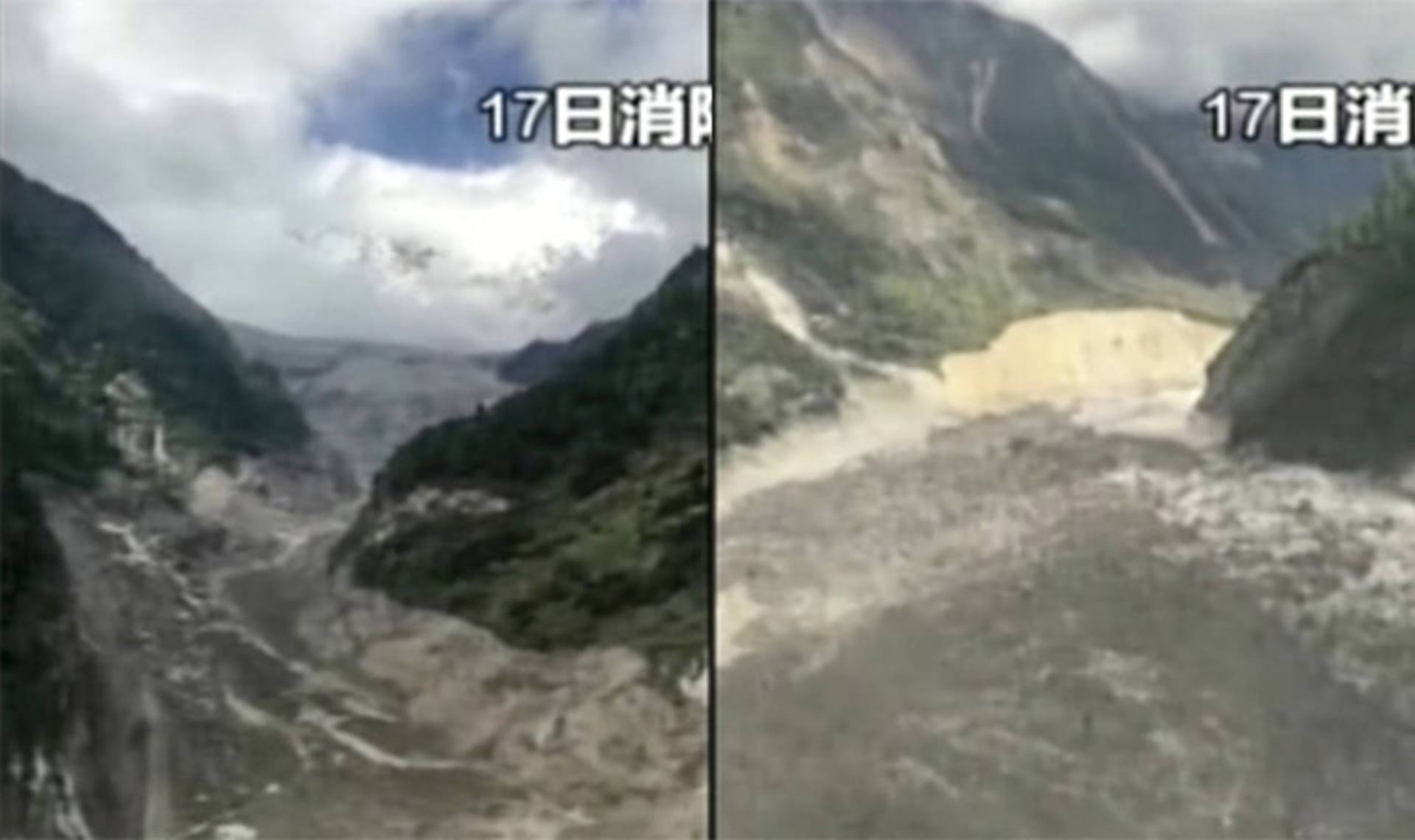
The Arunachal Pradesh government has warned of flash floods downstream of the Siang River after China informed India that a landslide has blocked a section of the river in the Tibet region, The Times of India reported on Friday.
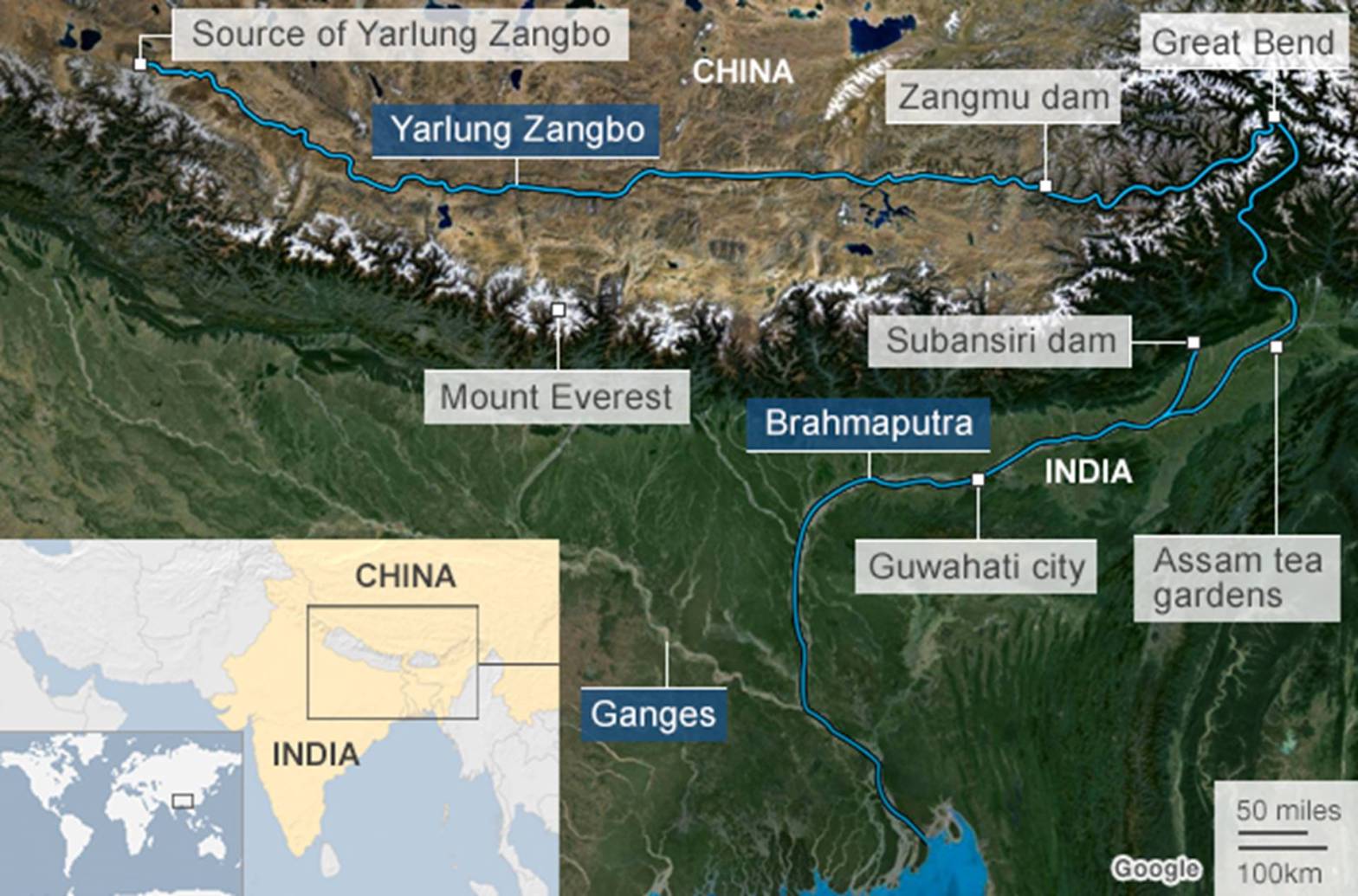
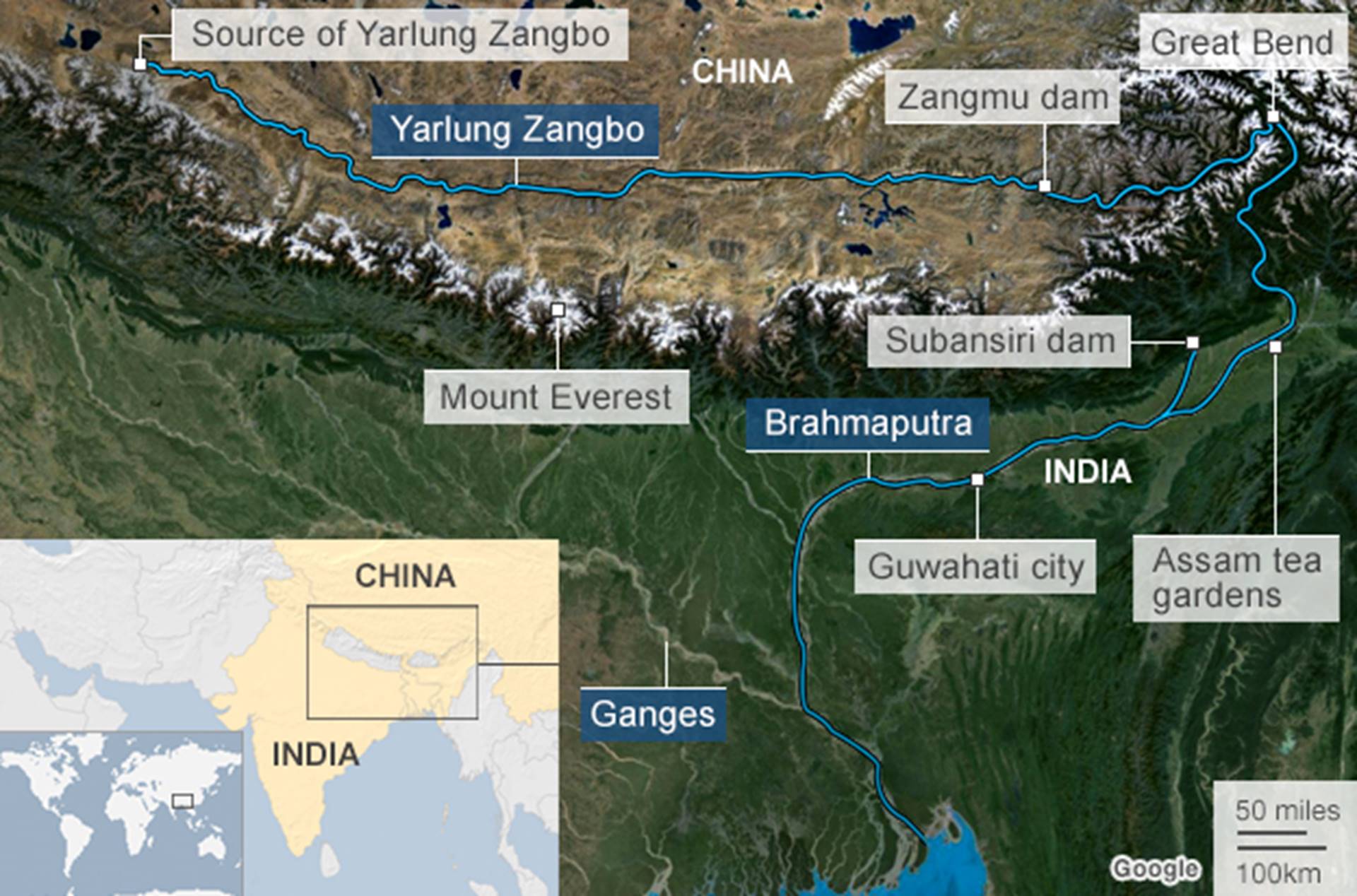
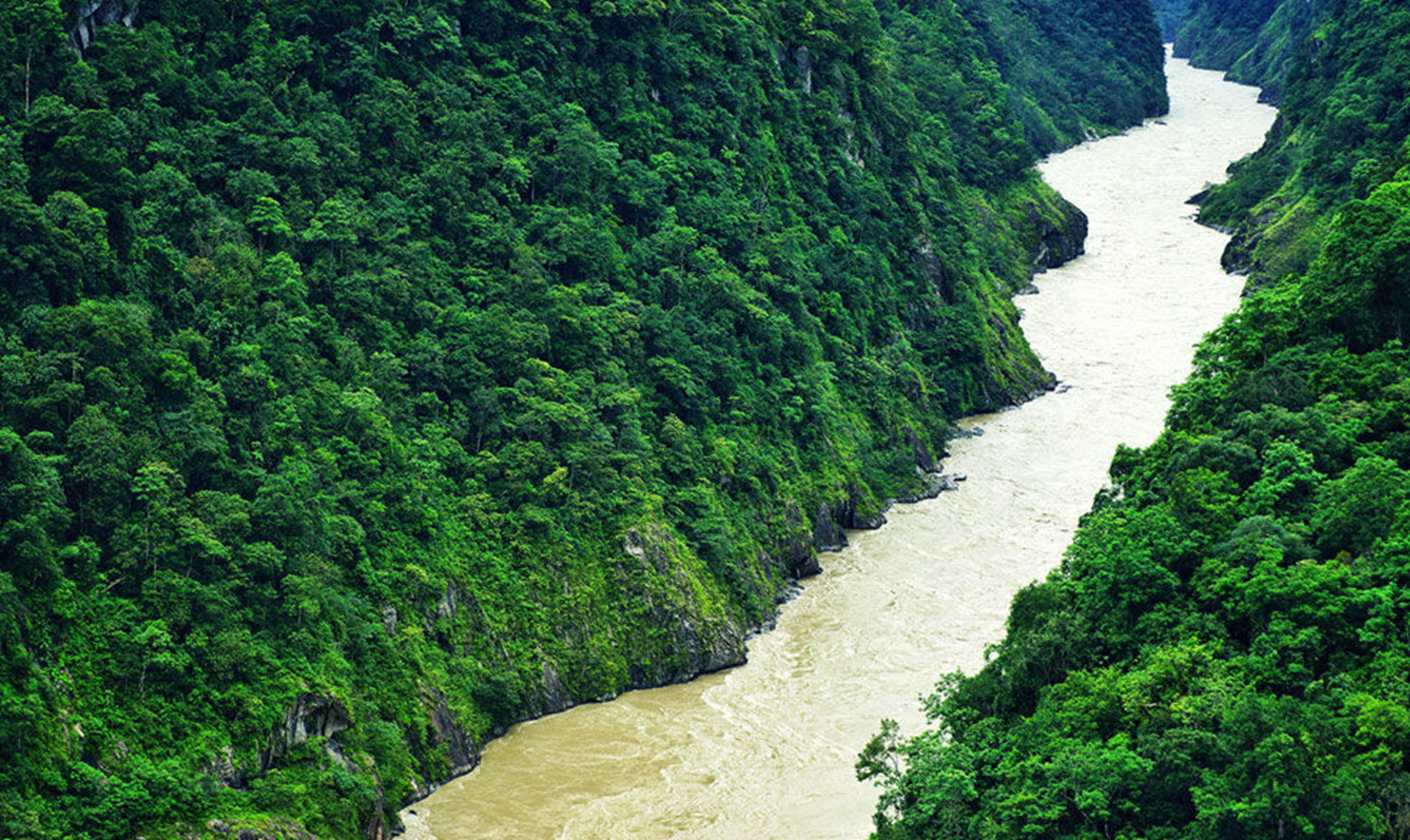
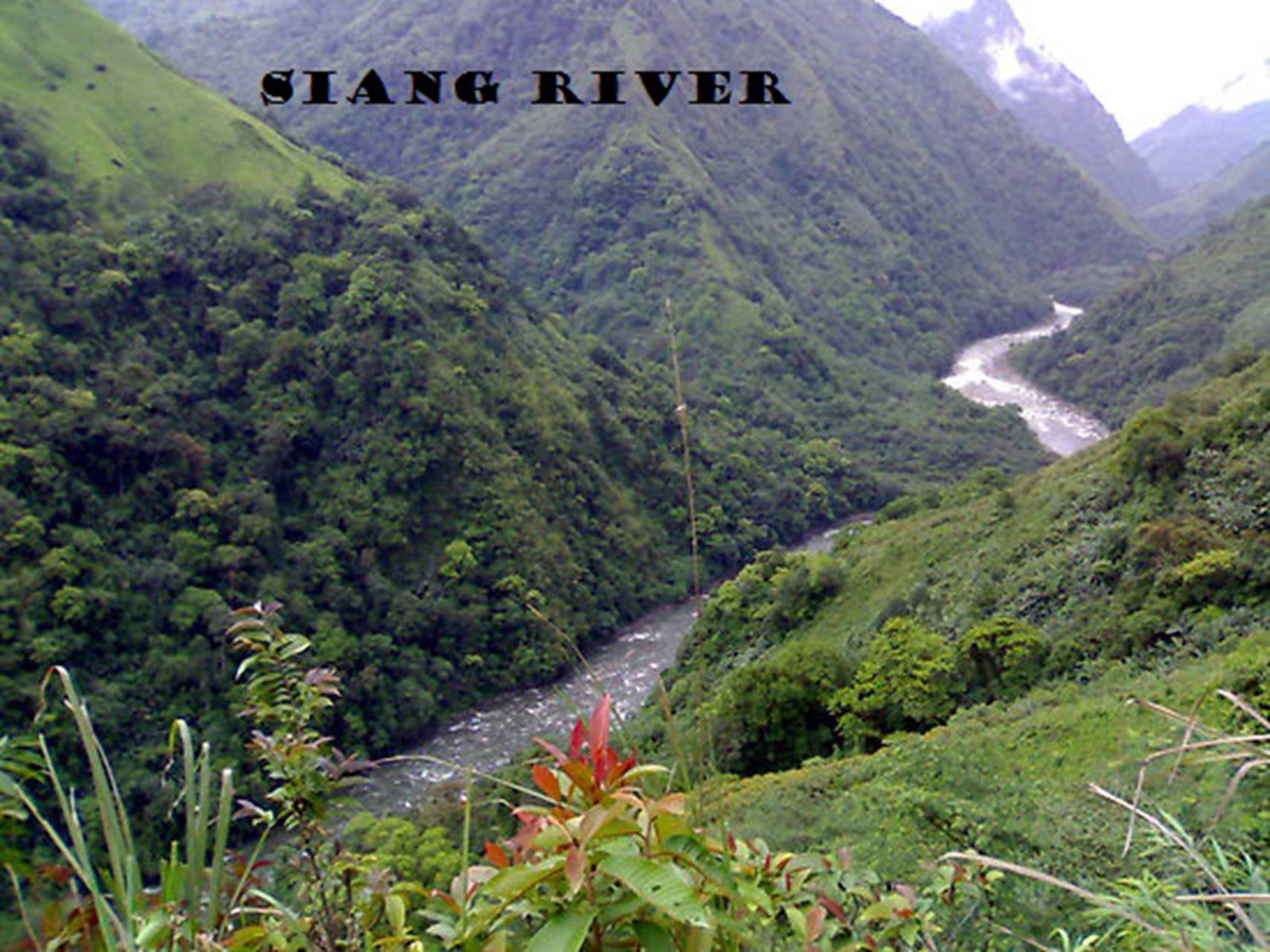
The Yarlung Tsangpo is the upper stream of the Brahmaputra river. It is known as the Siang river once it enters Arunachal Pradesh and the Brahmaputra when it enters Assam.
The East Siang district administration has asked people not to venture near the Siang river and asked them to stay alert. The water level in the Siang river has reduced due to the landslide blocking the flow of water. The landslide has led to the formation of a lake and there are fears of large-scale floods downstream if the lake breaches, reported the Hindustan Times.
“We got a report from the Central Water Commission about the landslide in Tibet,” said Deputy Commissioner of Upper Siang district Duly Kamduk. “The water level in Siang river has gone down by around 2 meters at Tuting in Arunachal Pradesh.”
A statement issued by the East Siang district administration asked people living on the banks of the river in Jarku, Paglek, SS Mission, Jarkong, Banskota, Berung, Jampani, Sigar, Ralling, Borguli, Seram, Kongkul, Namsing, Mer, Gadum not to remove driftwood, tree barks on the banks of the river as these will serve as a natural flood control mechanism, reported Northeast Today.
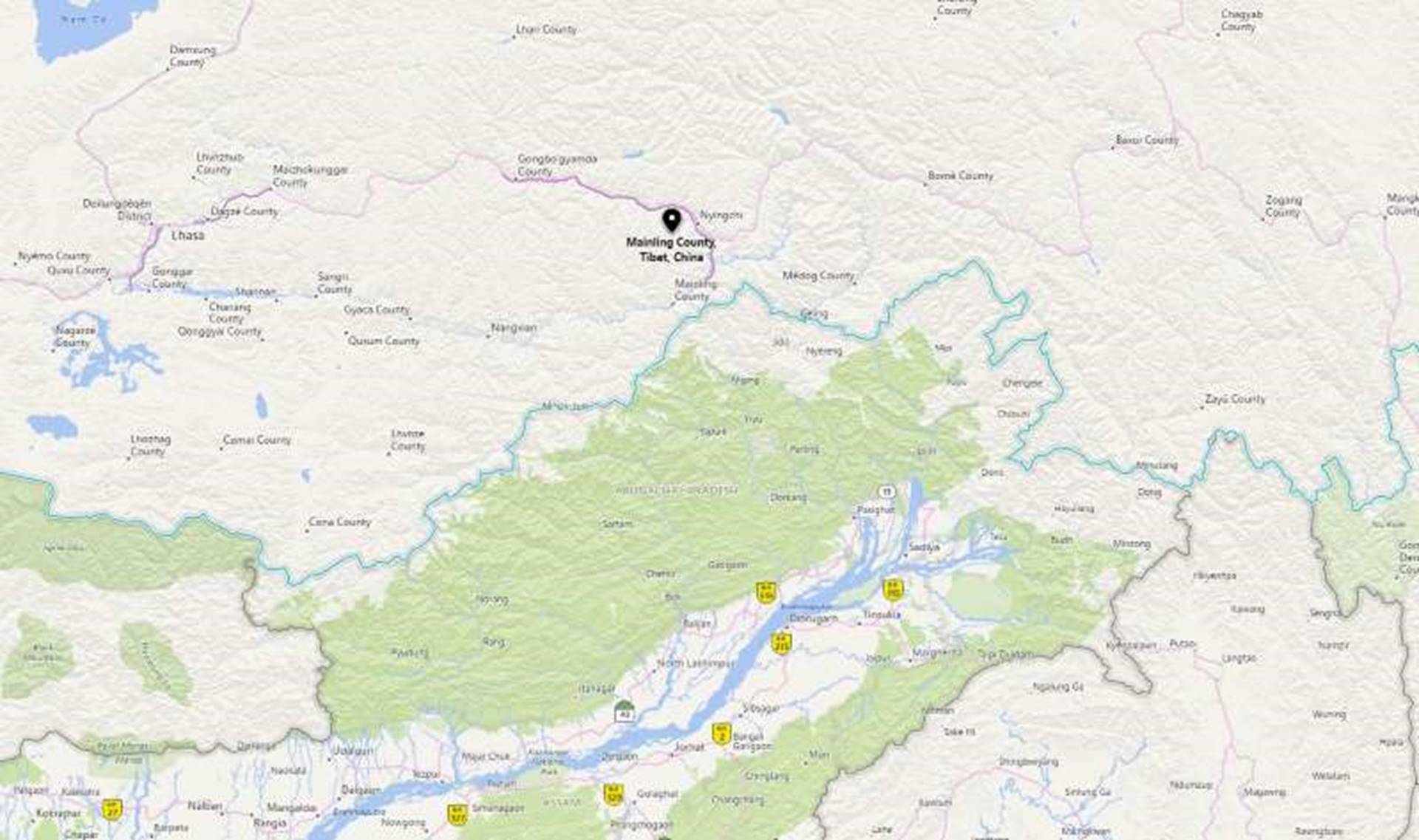
Meanwhile, in China, over 6,000 people were evacuated after a barrier lake was formed following the landslide in the Yarlung Tsangpo River in Tibet’s Menling County, reported Xinhua. The amount of water in the lake is above 300 million cubic meters.
In August, several people were airlifted from Assam’s Dhemaji district as Siang river got flooded due to heavy rainfall in the Chinese portion.
Colonization of Tibet poses risks to all living Downstream.Colonization of Tibet poses risks to all living Downstream.Colonization of Tibet poses risks to all living Downstream.Colonization of Tibet poses risks to all living Downstream
The woes of Tsangpo-Brahmaputra River – Upstream Occupation and Downstream Worries
The Woes of Tsangpo-Brahmaputra River. The Upstream Occupation and the Downstream Worries.
The woes of Yarlung Tsangpo-Brahmaputra River describe the tragedy of upstream occupation causing the downstream worries. The massive landslide in Tibet blocking Yarlung Tsangpo River symbolizes the woes of military conquest of Tibet and its colonization by Communist China.
The Woes of Tsangpo-Brahmaputra River. The Upstream Occupation and the Downstream Worries.
China orders evacuations after landslide blocks Tibet River
A barrier lake was formed on the Yarlung Tsangpo, the headwater of India’s Brahmaputra River, following the Wednesday morning collapse of a cliff in the deep valley through which the river flows, the local emergency response bureau said in a report carried by state media.
No deaths or injuries have been reported and the bureau said China has been keeping India updated on the blockage, which could potentially affect water levels in lower regions.
The landslide struck near a village in Menling County and water in the lake had risen to a height of 40 meters (131 feet) by Thursday, the bureau said.
With its towering peaks and glaciers, Tibet is the source of numerous Asian rivers, adding to China’s strategic influence over its southern neighbors. Fast-rising temperatures have caused those glaciers to melt at an increasing pace, throwing a shadow over future water resources for China and other Asian nations.
The Woes of Tsangpo-Brahmaputra River. The Upstream Occupation and the Downstream Worries.
Though there were no reports of deaths or injuries after the landslide, it is the second landslide that has rocked the Tibet. A massive landslide hit Derge in the Traditional Tibetan province of Kham and completely blocked the Dri Chu river earlier this week on Oct 11.
Landslide and flooding of villages in Tibet are linked to Chinese construction projects, the London-based advocacy group Free Tibet said on Oct 15 after the landslide that cut off Drichu.
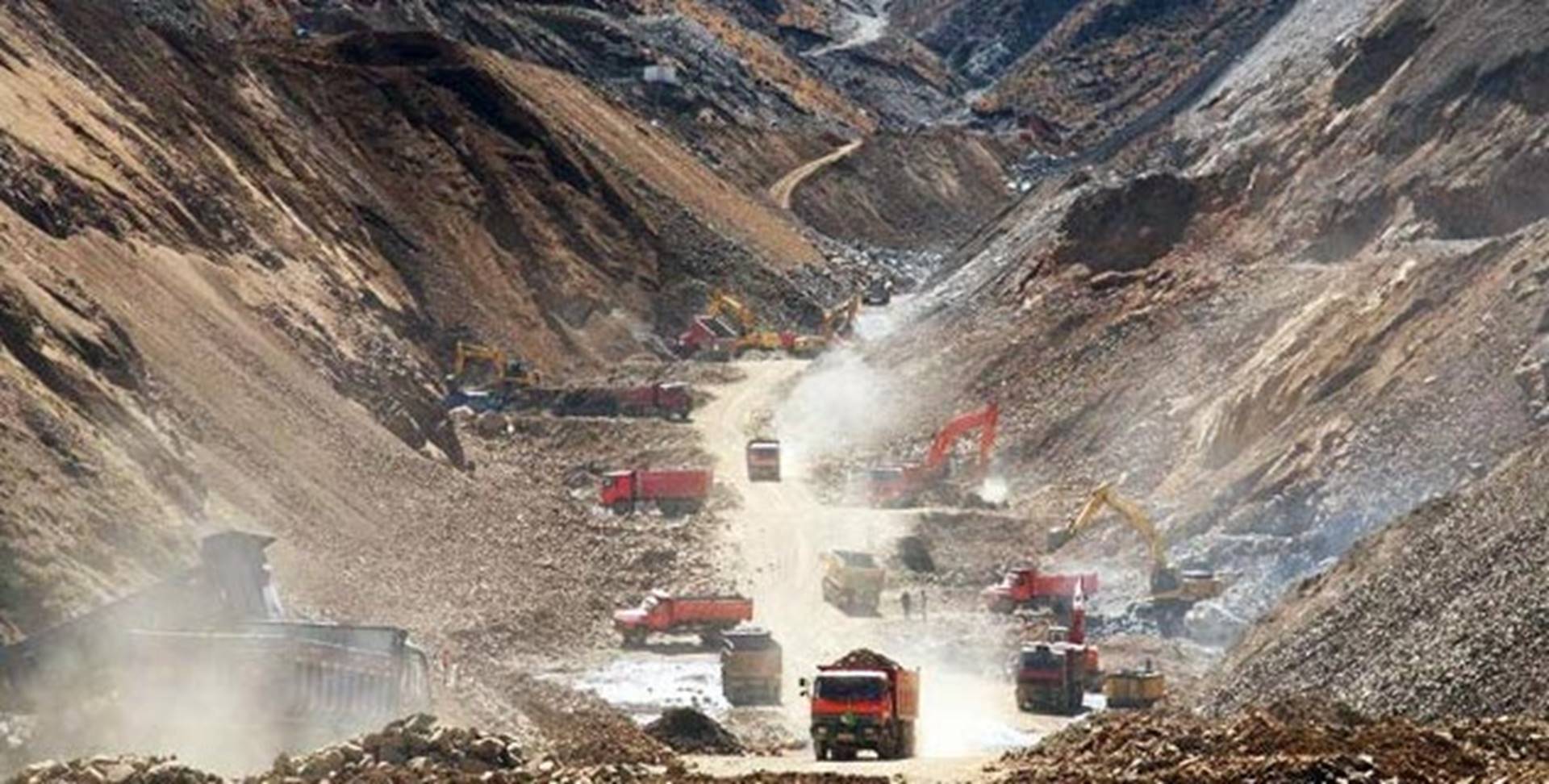
“Chinese authorities have been conducting excessive mining, development and dam construction projects in the area which, according to the local population, are directly linked to the increased occurrences of flooding, particularly in the regions of Karze and Ngawa. Chinese sources claim these incidents are natural and unrelated,” Free Tibet stated
The group further noted that of late, China’s exploitation of Tibet’s natural resources has gathered pace significantly.
The ill-advised developmental projects being carried out in Tibet by the Chinese regime at the cost of the fragile Tibetan environment.
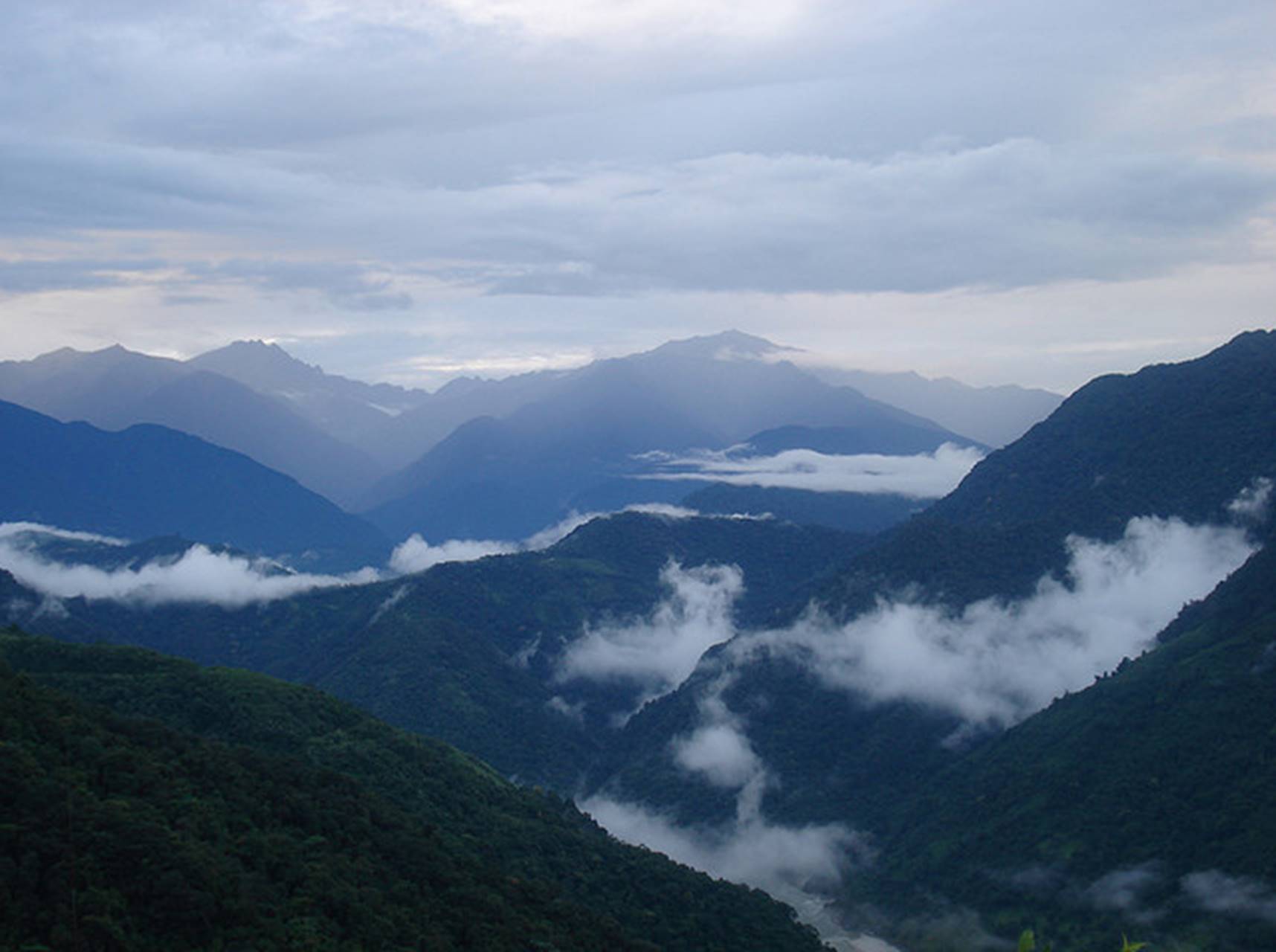
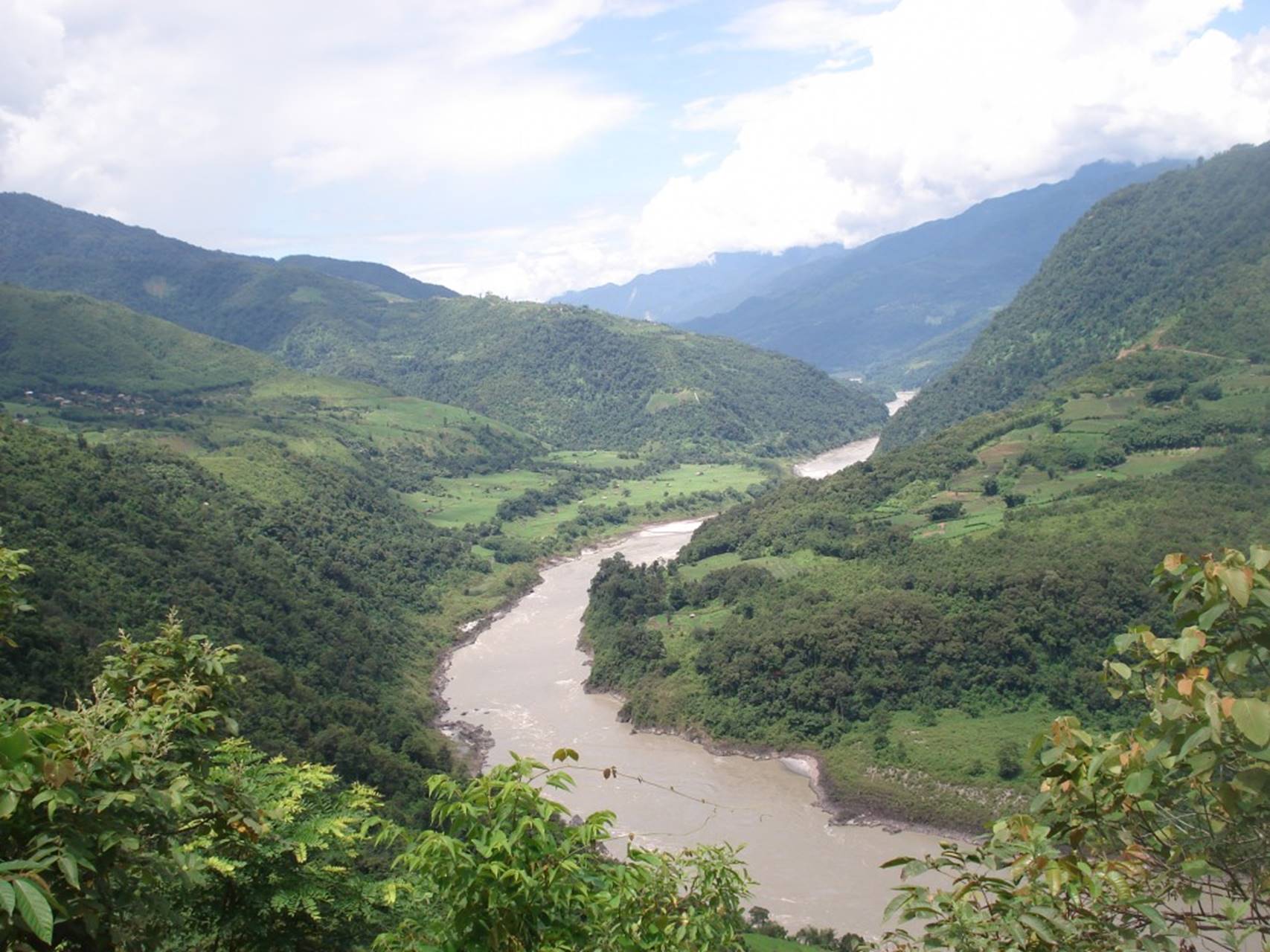
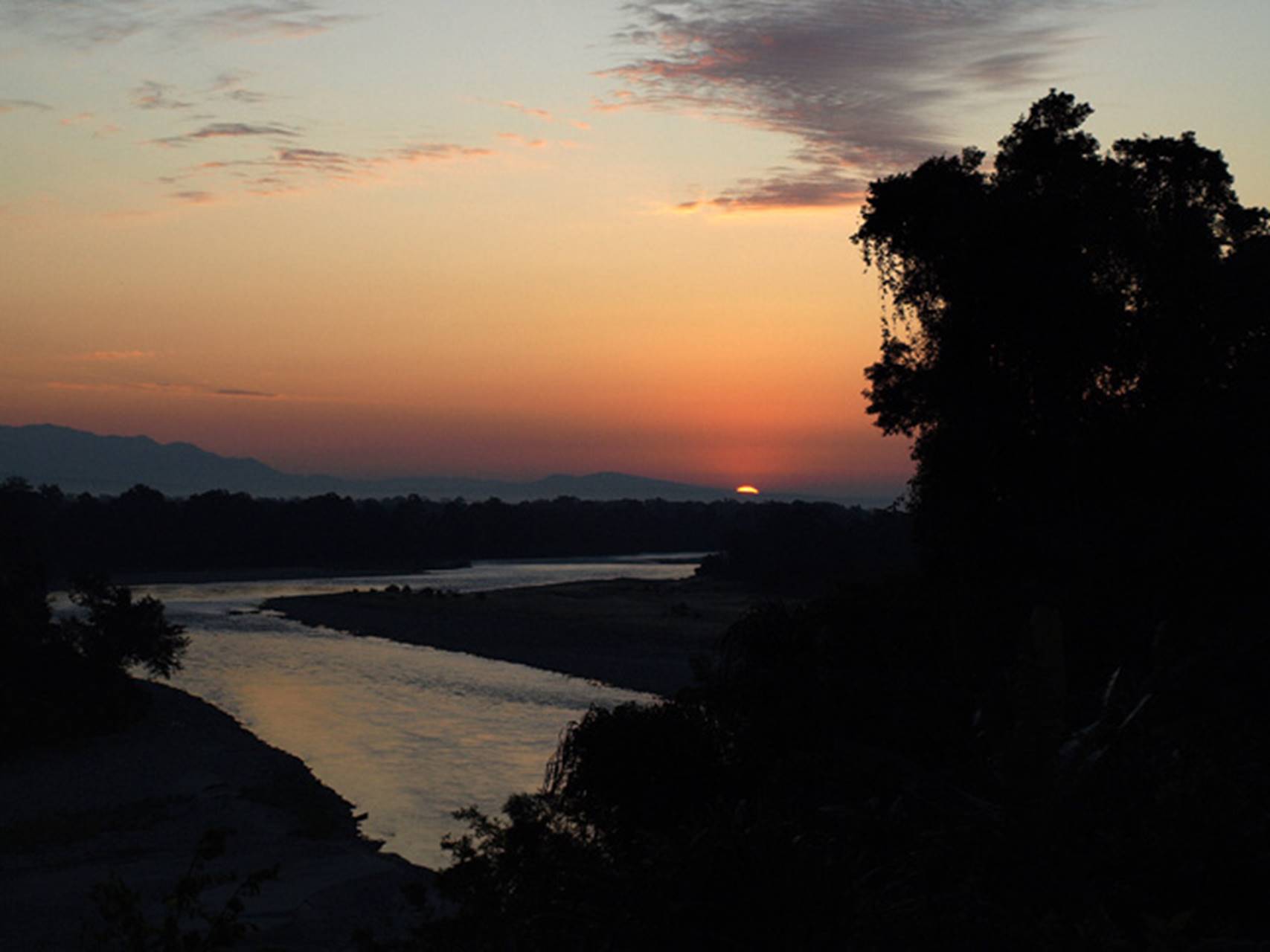
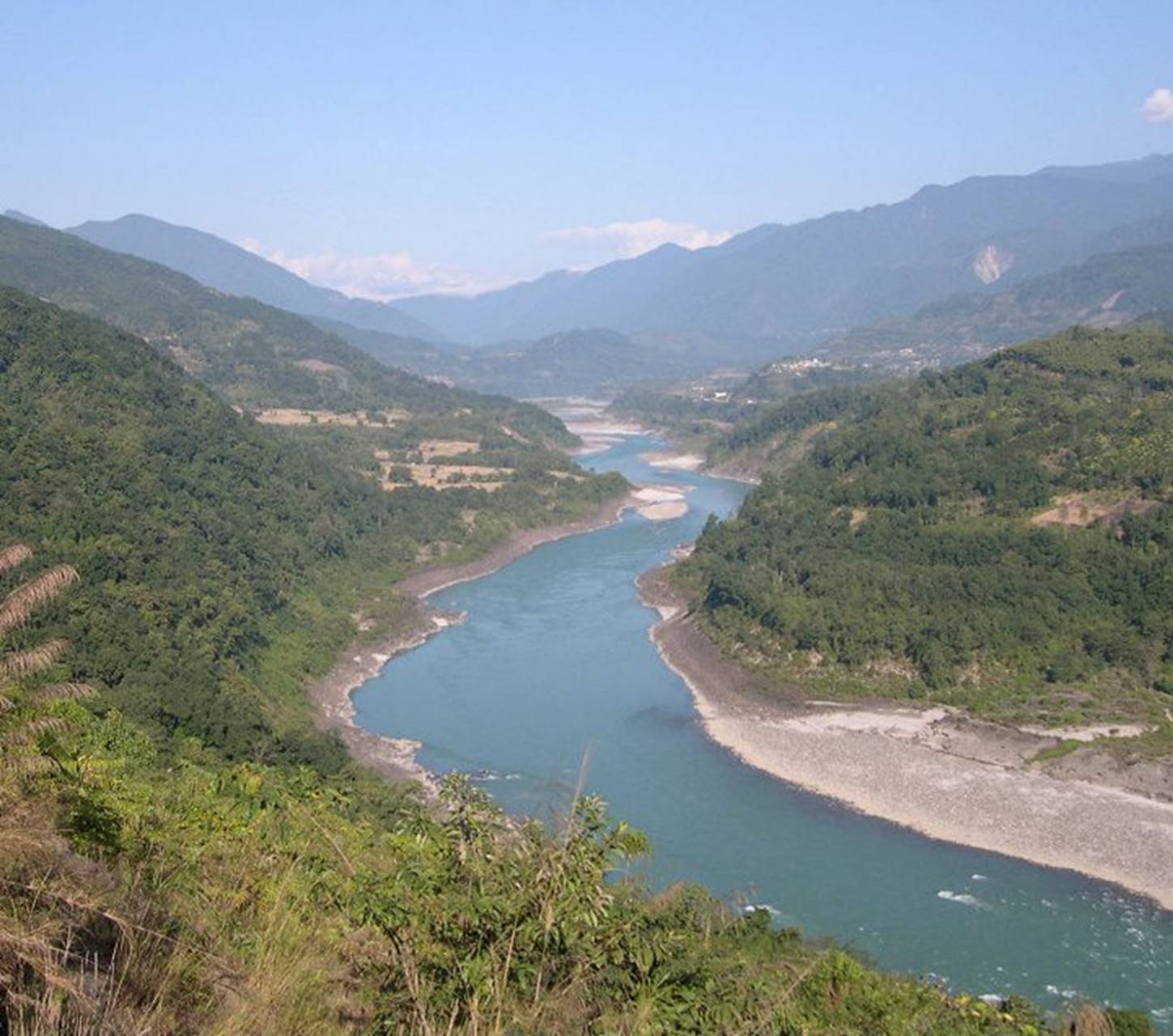
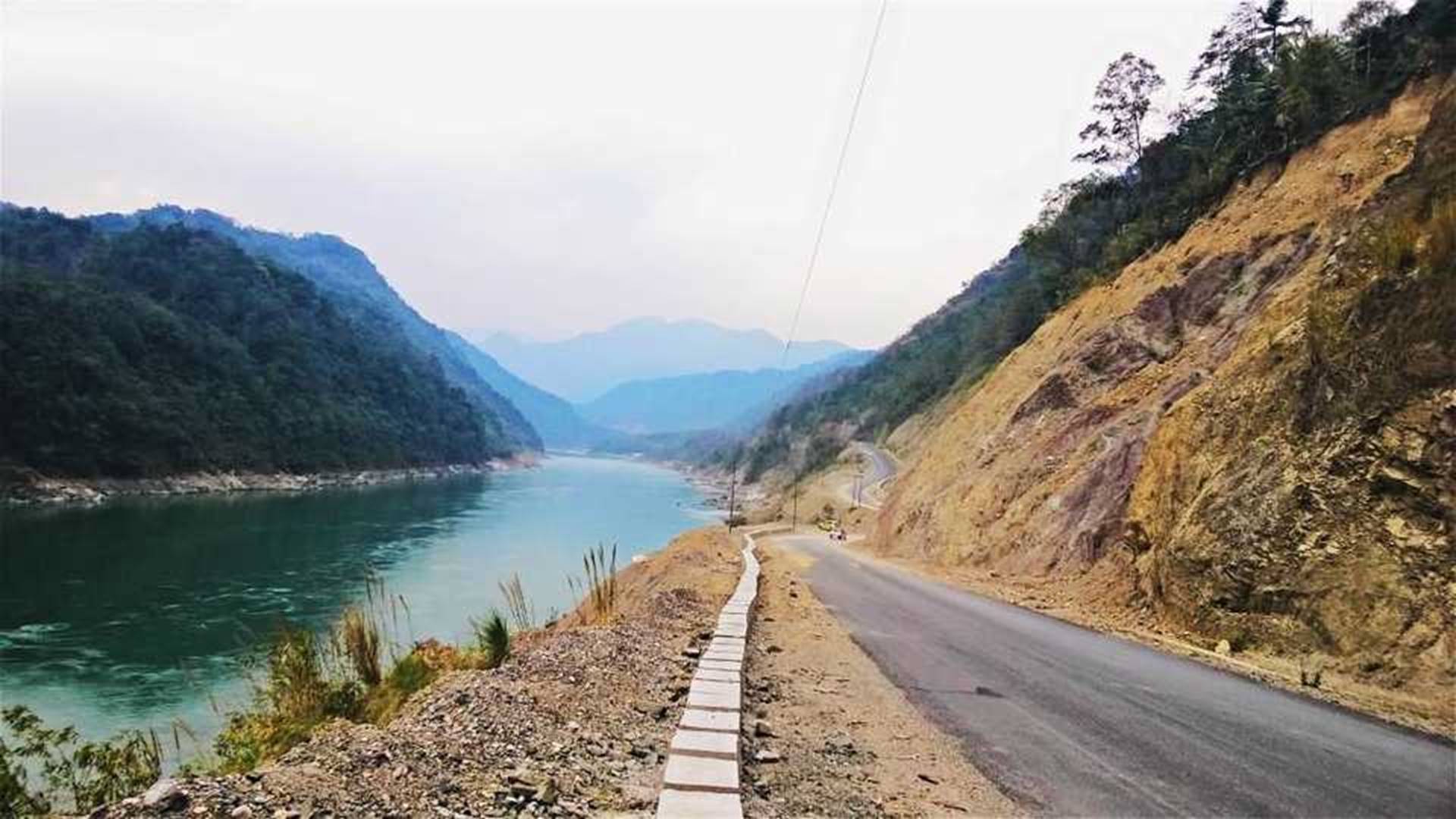
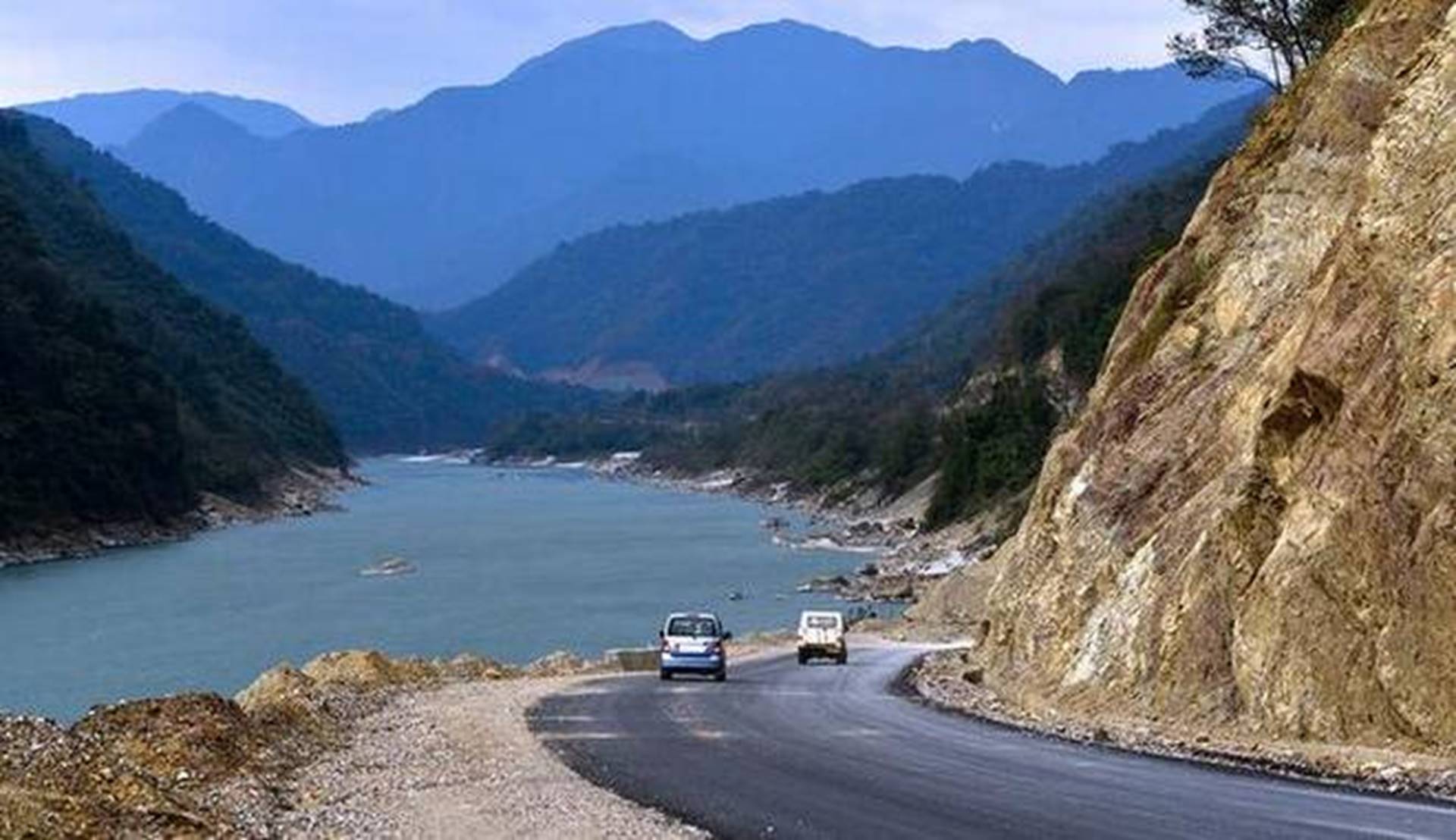
The Woes of Tsangpo-Brahmaputra River. The Upstream Occupation and the Downstream Worries. View of Siang District, Arunachal Pradesh, India.The woes of Tsangpo-Brahmaputra River – Upstream Occupation and Downstream WorriesThe woes of Tsangpo-Brahmaputra River – Upstream Occupation and Downstream WorriesThe woes of Tsangpo-Brahmaputra River – Upstream Occupation and Downstream WorriesThe woes of Tsangpo-Brahmaputra River – Upstream Occupation and Downstream WorriesThe woes of Tsangpo-Brahmaputra River – Upstream Occupation and Downstream WorriesThe Woes of Tsangpo-Brahmaputra River. The Upstream Occupation and the Downstream Worries. Siang River near Pasighat, Siang District, Arunachal Pradesh, India.
BLESSED ARE THE PEACEMAKERS MARCHING FOR PEACE IN OCCUPIED TIBET
Blessed are the peacemakers marching for peace in Occupied Tibet.
“Blessed are the peacemakers for they shall be called sons of God.” I invoke the blessings of God on Kunga Norbu and Adam Schaeuble who are walking to bring peace in Occupied Tibet by promoting the public awareness of the Great Tibet Problem.
Blessed are the peacemakers marching for peace in Occupied Tibet.
Kunga Norbu left, and Adam Schaeuble pose for a picture on the Big Four Bridge during their multi-state walking campaign to raise awareness about Tibet. Norbu is the nephew of the Dalai Lama, who gave his blessing for the trek, and suggested that the duo “create a wave of positivity.”
As they walked across Big Four Bridge that October Sunday, Kunga Norbu and Adam Schaeuble weren’t protesting anything.
The casual observer, though, might have thought differently.
A multicolored flag rested against Kunga’s shoulder as he strolled down the ramp into Jeffersonville. The emblem on it symbolized the country of his father’s birth, a nation no longer able to control the teachings of its past let alone its own future. Emblazoned on his and Adam’s yellow shirts were the words “Team Tibet” in crimson ink.
“If you walk anywhere and you’ve got a guy with a giant flag, people are probably like eyeballing you asking what kind of a thing is this? That’s the society that we live in,” said Adam. “Is this a good march or a bad march? Is this positive or is it negative? People almost always assume that it’s negative. But when we get to tell people about it, they realize it’s a cool, positive story.”
Louisville was stop number four on the duo’s eight-day walking tour to bring awareness about issues facing Tibet while also supporting and preserving Tibetan culture. On Oct. 4, they finished their journey in Columbus, Ohio with more than 200 miles walked.
“There are six million Tibetans in Tibet now,” Kunga said when discussing the treatment of Tibetan citizens by the Chinese government, the country that invaded Tibet in the 1950s. “We have to do something. We have to do anything. Even walking. Even one-mile.”
Kunga had completed this mileage before. In March of 2013, the Tibetan-American undertook a 230-mile trek from Washington, D.C., to New York City in memory of his brother Jigme. In 2011, Jigme lost his life when a sports utility vehicle struck him on a Florida road during a similar walk for Tibetan independence. He was 45.
But circumstances have since changed for the Bloomington resident. In January of 2015, a stroke wreaked havoc on Kunga’s body. After regaining most of his physical abilities through rehab, speech difficulties are the only remnants of the illness.
“When he starts talking about Tibet, he gets clearer,” Adam said. “Like his speech is more succinct. It’s like he’s talking from his heart. It’s really cool.”
Despite his health setbacks, the 55-year-old still wanted to honor his Tibetan heritage. His father, Thubten Norbu, established the Tibetan and Mongolian Buddhist Cultural Center in Bloomington and was a professor at Indiana University. Thubten, too, was a Buddhist lama, not to mention the older brother of His Holiness the Dalai Lama.
That’s right. Kunga is the Dalai Lama’s nephew.
Adam, on the other hand, has no Tibetan lineage. His friendship with Kunga brought him to this mission. Strangely enough, during high school, the now 38-year-old did a report on Tibet. Part of that assignment consisted of reading a book by — you guessed it — Professor Norbu, Kunga’s father.
Nine years ago, Kunga walked into the gym Adam owns. They quickly became pals. When Kunga’s brother died, Adam organized an Mt. Everest Challenge for his “gym family.” Participants climbed on an apparatus called Jacob’s Ladder in order to finish the steps Jigme wasn’t able to complete.
Knowing about his friend’s wish to do another walk that would bring awareness to Tibetan issues, Adam suggested they do a roughly week-long trek that would finish in Columbus, Ohio. Instead of traversing the whole way by foot on dangerous interstates, the pair would find trails in different Midwest cities. Kunga, Adam and anyone else who might want to come along would walk along these much safer paths to achieve their 200-mile goal.
“I’m like the big, noisy white Sherpa,” Adam said, referencing the Himalayan mountaineers who, at times, help climbers reach Mt. Everest.
Kunga liked the plan. In a March 2018 audience with the Dalai Lama, he asked for his uncle’s blessing. The Dalai Lama freely gave it and suggested to them an optimistic objective: Create a wave of positivity.
“That was his challenge for us, two people from two different cultures that are doing this because they are friends and support each other,” Adam said.
And, by just walking 200-miles with a Tibetan flag and their friendship, Kunga and Adam accomplished just this.
“The culture can’t be stamped out if people are still talking about what’s going on,” Adam said. “That’s the way we keep that culture alive. Just keep talking about it and share and share.”
— Amanda Hillard Beam is a Floyd County resident and Jeffersonville native. Contact her by email at adbeam47@aol.com.
Blessed are the peacemakers marching for peace in Occupied Tibet.
Bloodthirsty Dracula symbolizes the relationship between Han Chinese and Tibetans
Han Chinese and Tibetans. The Blood Relationship. Han Chinese are like the Teeth. The Tibetans are like the Lips. The Evil, Bloodthirsty Dracula’s Relationship with Tibet.
“The Tibetans and the Han Chinese are like lips and teeth, we are linked by Blood.”
Han Chinese and the Tibetans. The Blood Relationship. Chinese are like the Teeth and the Tibetans are like the Lips. The Evil, Bloodthirsty Dracula’s Relationship with Tibet.
Han Chinese are like the teeth of ‘The Dracula’. Innocent Tibetans are like the lips of The Dracula’s Bride. Instead of kissing the lips, Han Chinese thirst for the blood of the Tibetans. Indeed, it is a true story about Blood Relationship.
China spends big in Tibet to avert a crisis when the Dalai Lama dies
Global Power
China is increasingly trying to enhance its image by casting itself as the largest nation of Buddhist believers.
by Eric Baculinao and Jason Cumming / Aug.30.2018 / 3:53 AM ET / Updated Aug.30.2018 / 4:09 AM ET
Han Chinese and The Tibetans. The Blood Relationship. Chinese are like the Teeth and the Tibetans are like the Lips. The Evil, Bloodthirsty Dracula’s Relationship with Tibet.
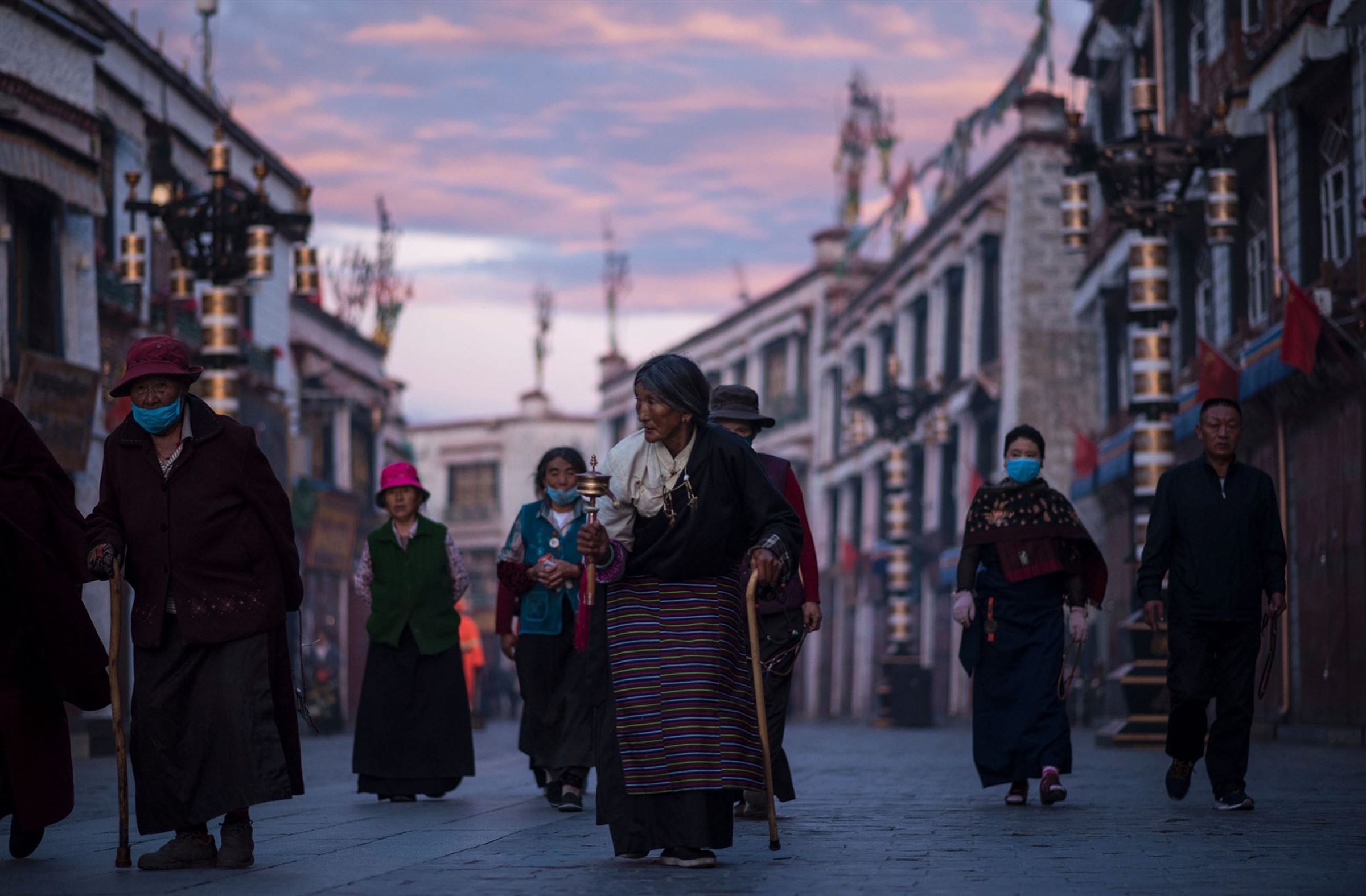
Pilgrims near the Jokhang Temple in Lhasa. Johannes Eisele file / AFP/Getty Images
LHASA, China: China is pouring billions of dollars into Tibet as Beijing seeks to cement its control before the succession struggle that is likely to follow the death of the Dalai Lama.
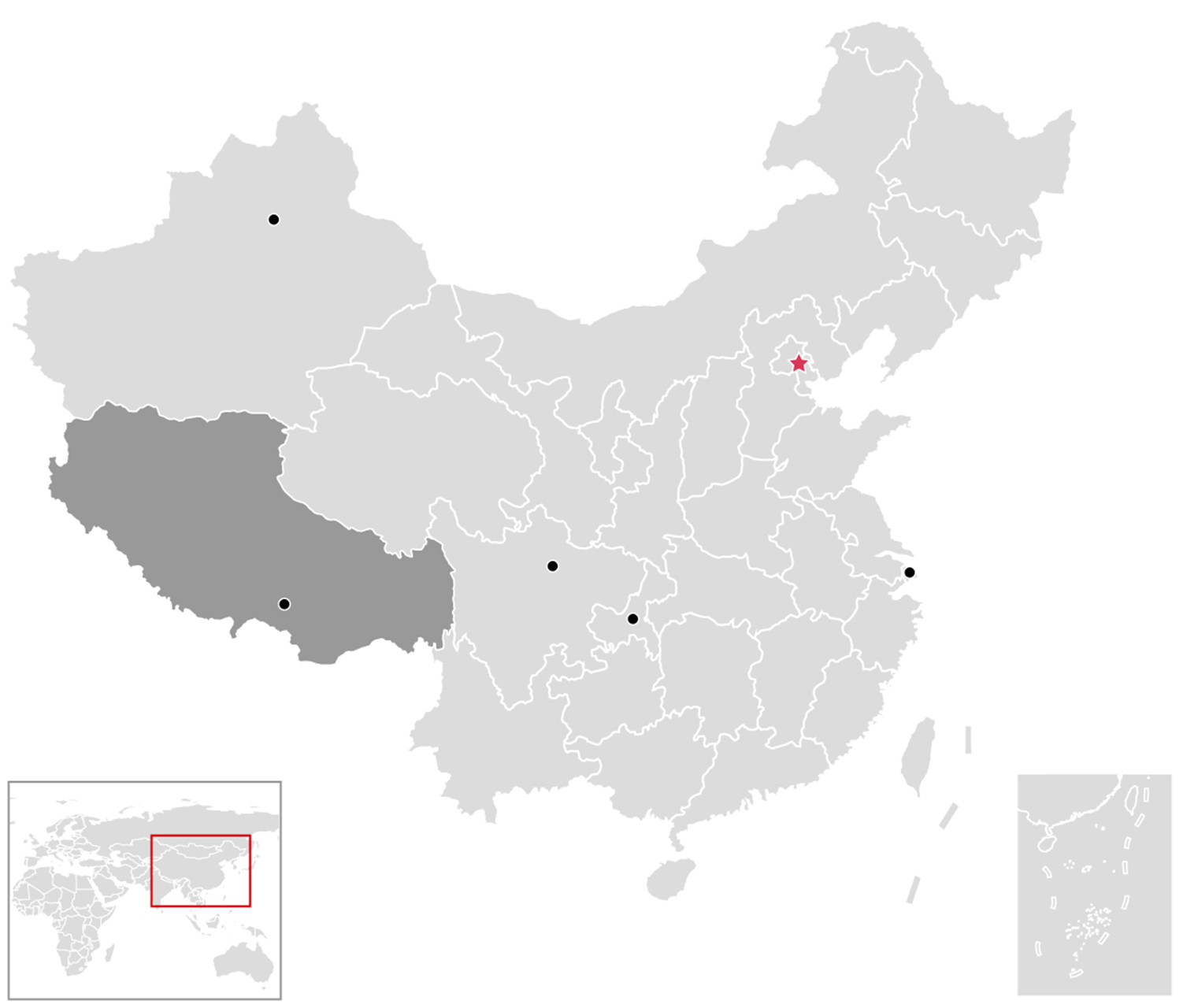
During a rare Chinese government-organized visit to the region, local officials described a development program that they contend will bring prosperity to the 3.3 million Tibetans who inhabit a vast area roughly double the size of Texas.
The massive infrastructure projects include new airports and highways that cut through the world’s highest mountains, with planned investment totaling $97 billion.
The investment plan aims to protect Tibetan Buddhism’s holy sites while building a sustainable “green economy” that safeguards the fragile environment that is an average elevation of 13,000 feet above sea level.
The roof of the world
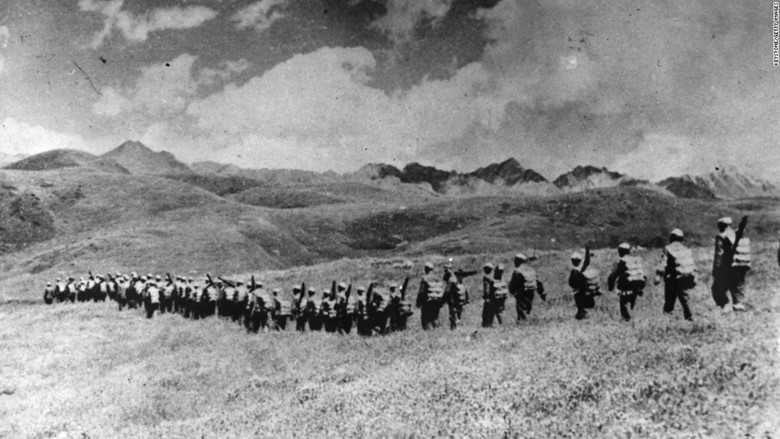
Chinese troops marched into Tibet in 1950 in what Beijing officially terms a peaceful liberation. China has long aimed to reduce the influence of the Dalai Lama, who lives in exile in India.
Han Chinese and The Tibetans. The Blood Relationship. Chinese are like the Teeth and the Tibetans are like the Lips. The Evil, Bloodthirsty Dracula’s Relationship with Tibet.
Source: Natural Earth
Graphic: Jiachuan Wu / NBC News
According to official figures, China has also already spent over $450 million renovating Tibet’s major monasteries and other religious sites since the 1980s. An additional $290 million has been budgeted for the next five years.
The huge investment by China comes as the officially atheist country increasingly tries to enhance its image by casting itself as the largest nation of Buddhist believers. China claims some 300 million Buddhists of various schools, of which Tibetan Buddhism is one.
The effort comes as China faces charges from rights groups and exiles of repressing the Tibetan people. China has ruled Tibet with an iron fist since 1951, a year after its troops marched in.
Han Chinese and the Tibetans. The Blood Relationship. Chinese are like the Teeth. The Tibetans are like the Lips. The Evil, Bloodthirsty Dracula’s Relationship with Tibet.
The Dalai Lama in 2015.Ben Stansall / AFP – Getty Images file
Last month, Vice President Mike Pence said Tibet’s people “have been brutally repressed by the Chinese government.” And in June, the U.N. High Commissioner for Human Rights said conditions were “fast deteriorating” in Tibet.
Beijing routinely denies charges of repression, saying that its rule ended serfdom and brought prosperity to what was a backward region and that it fully respects the rights of the Tibetan people.
It insists Tibet has historically been part of its territory since the mid-13th century. Many Tibetans, though, say the region has been effectively independent for most of its history.
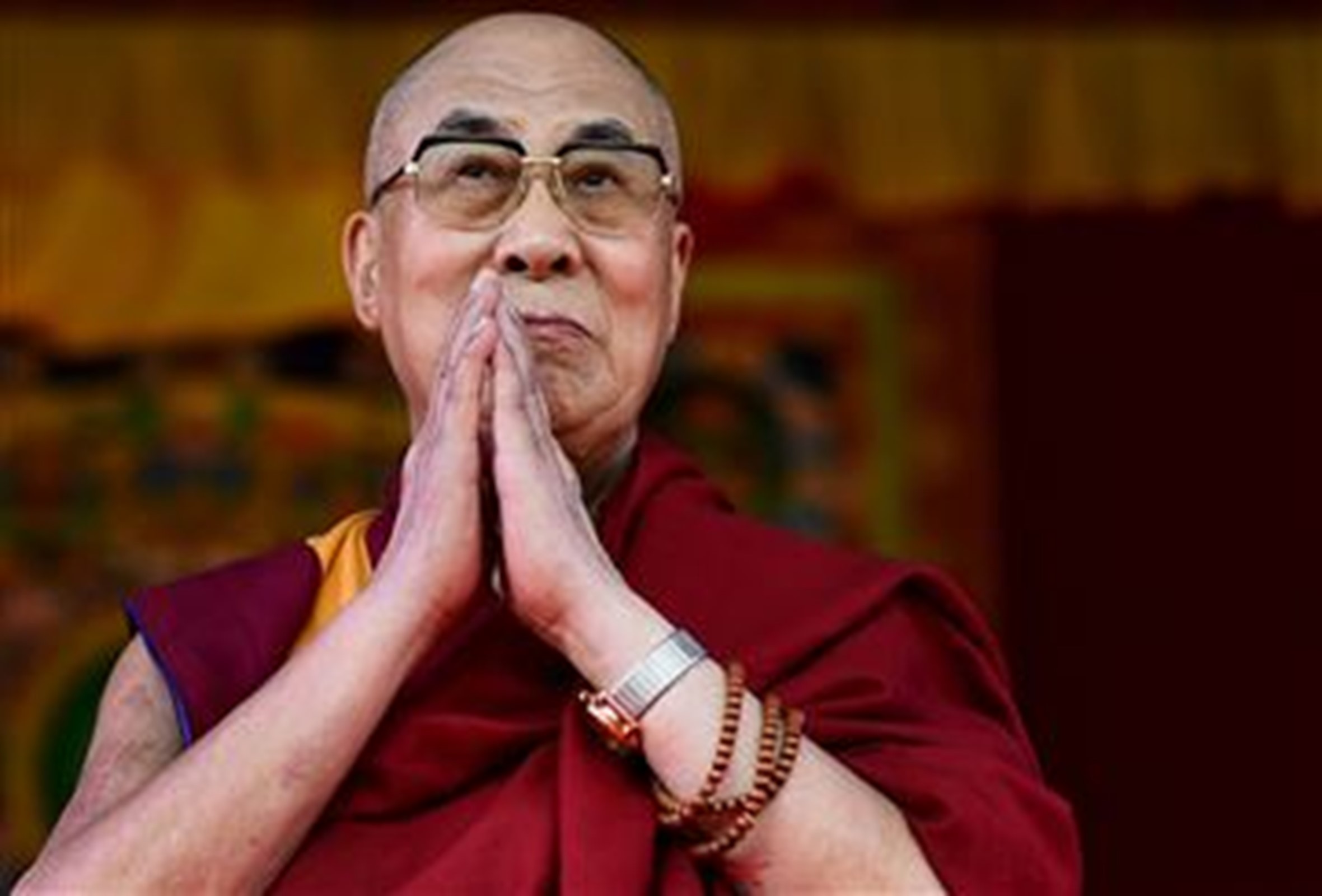
While Beijing regards the Dalai Lama as a dangerous separatist who seeks to split off nearly a quarter of the land mass of the People’s Republic of China, the Nobel Peace Prize-winning Tibetan spiritual leader says he only seeks greater rights for Tibetans, including religious freedom and autonomy.
Reincarnation
For supporters of the Dalai Lama, China’s Tibet strategy is “aimed at increasing its control and limiting the personal freedom of the Tibetan people,” said Matteo Mecacci, a former lawmaker in Italy and president of the International Campaign for Tibet.
He called the infrastructure improvements and monastery renovations “superficial.”
Mecacci said Tibetans are “not even allowed to receive teachings from the Dalai Lama.”
Han Chinese and the Tibetans. The Blood Relationship. Chinese are like the Teeth and the Tibetans are like the Lips. The Evil, Bloodthirsty Dracula’s Relationship with Tibet.
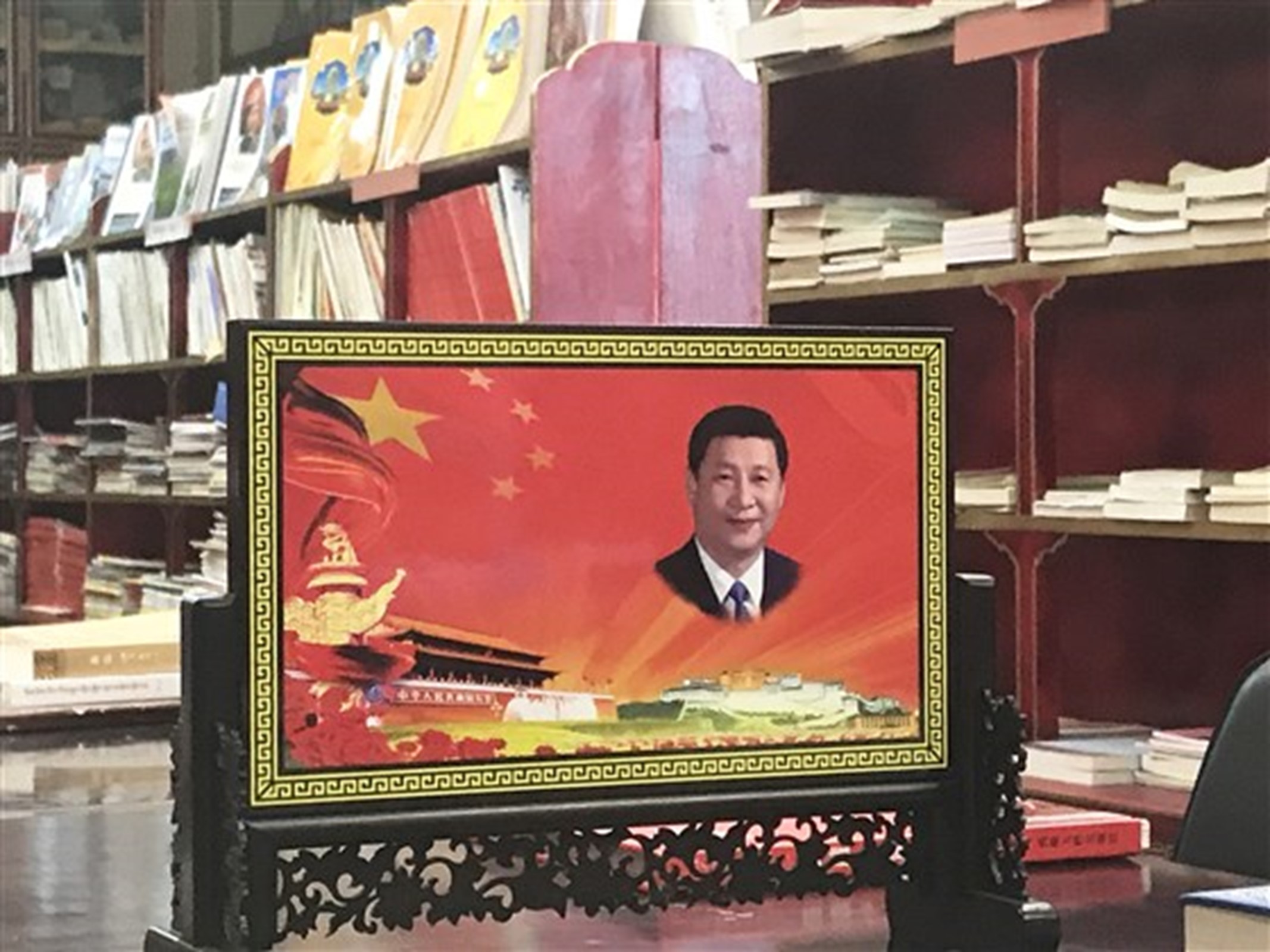
A portrait of Chinese President Xi Jinping at the Sera Monastery in Tibet. Eric Baculinao / NBC News
He added, “When it comes to the real practice of Buddhism, China continues to increase restrictions.”
With the Dalai Lama now 83, many Tibetans fear that China will use the succession issue to split Tibetan Buddhism, with a new Dalai Lama named by exiles and another by the government after his death.
(Barry Kerzin, an American monk and the Dalai Lama’s personal physician, told NBC News that he is “perfectly fit.”)
The Dalai Lama, who fled Tibet and went into exile in India in 1959, has repeatedly tussled with China’s ruling Communist Party over who has final authority on the issue of reincarnation.
“The Tibetans and the Han Chinese are like lips and teeth, we are linked by blood.”
Tibetan Buddhism holds that the soul of a senior lama is reincarnated in the body of a child on his death.
China says it must approve the next Dalai Lama, and the Dalai Lama has said his biggest concern is that China will try to name his successor.
Han Chinese and the Tibetans. The Blood Relationship. Chinese are like the Teeth and the Tibetans are like the Lips. The Evil, Bloodthirsty Dracula’s Relationship with Tibet.
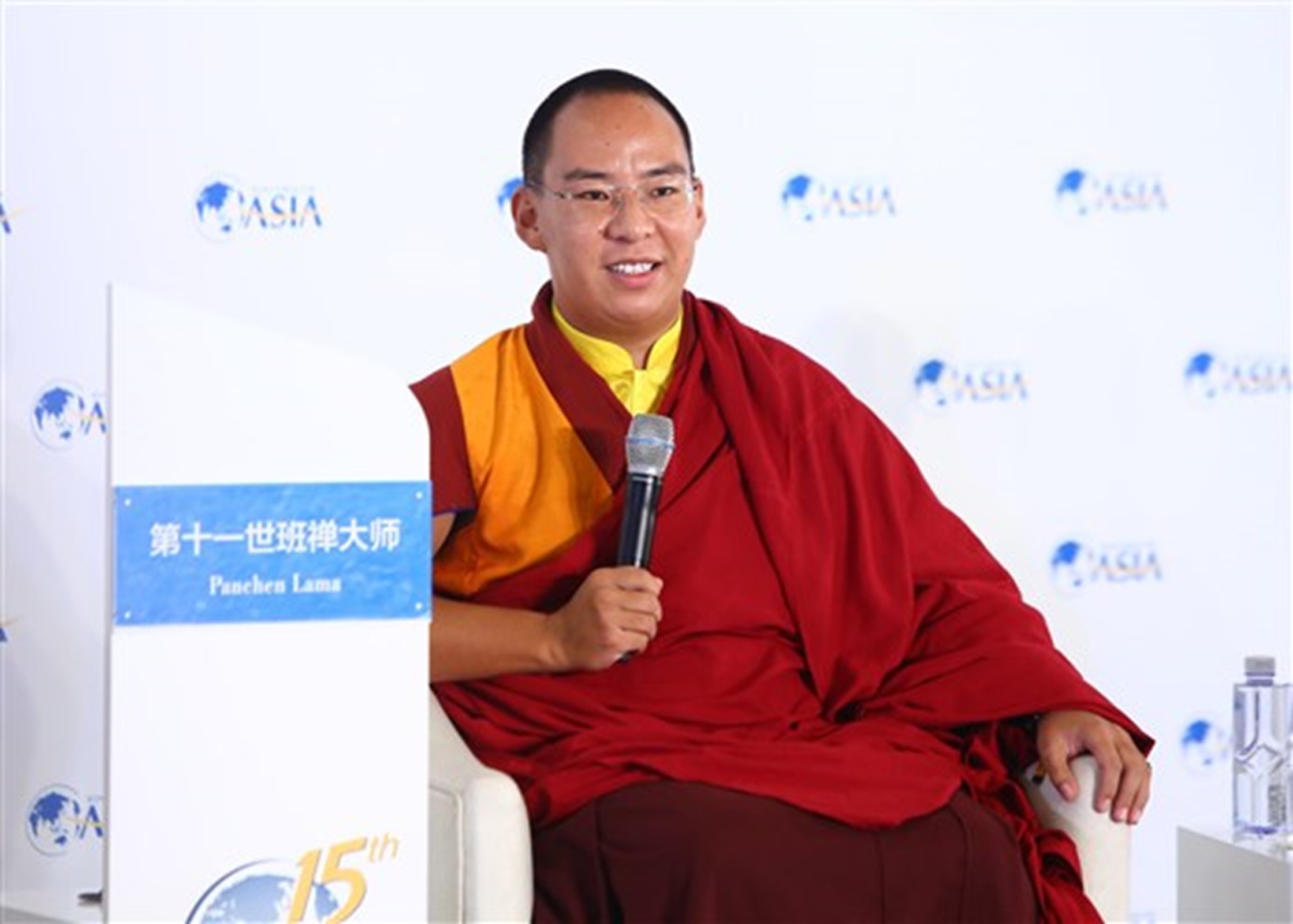
The Panchen Lama who was installed by the Chinese government attends an event in 2016.Cui hao / Imaginechina/Getty file
In 1995, after the Dalai Lama named a boy in Tibet as the reincarnation of the previous Panchen Lama, the second-highest figure in Tibetan Buddhism, China put the boy under house arrest and installed another instead.
Many Tibetans are torn between accepting and spurning the Chinese-appointed Panchen Lama.
Palaces and shrines
Explaining the seeming contradictions in China’s policy, Tibet’s foreign affairs deputy chief, Ma Qiang, said that while the Community Party “doesn’t believe in religion,” China’s government was “duty-bound to protect Tibetan Buddhism and restore and preserve its holy sites because that is also what the Tibetan people want so they can exercise their freedom of worship.”
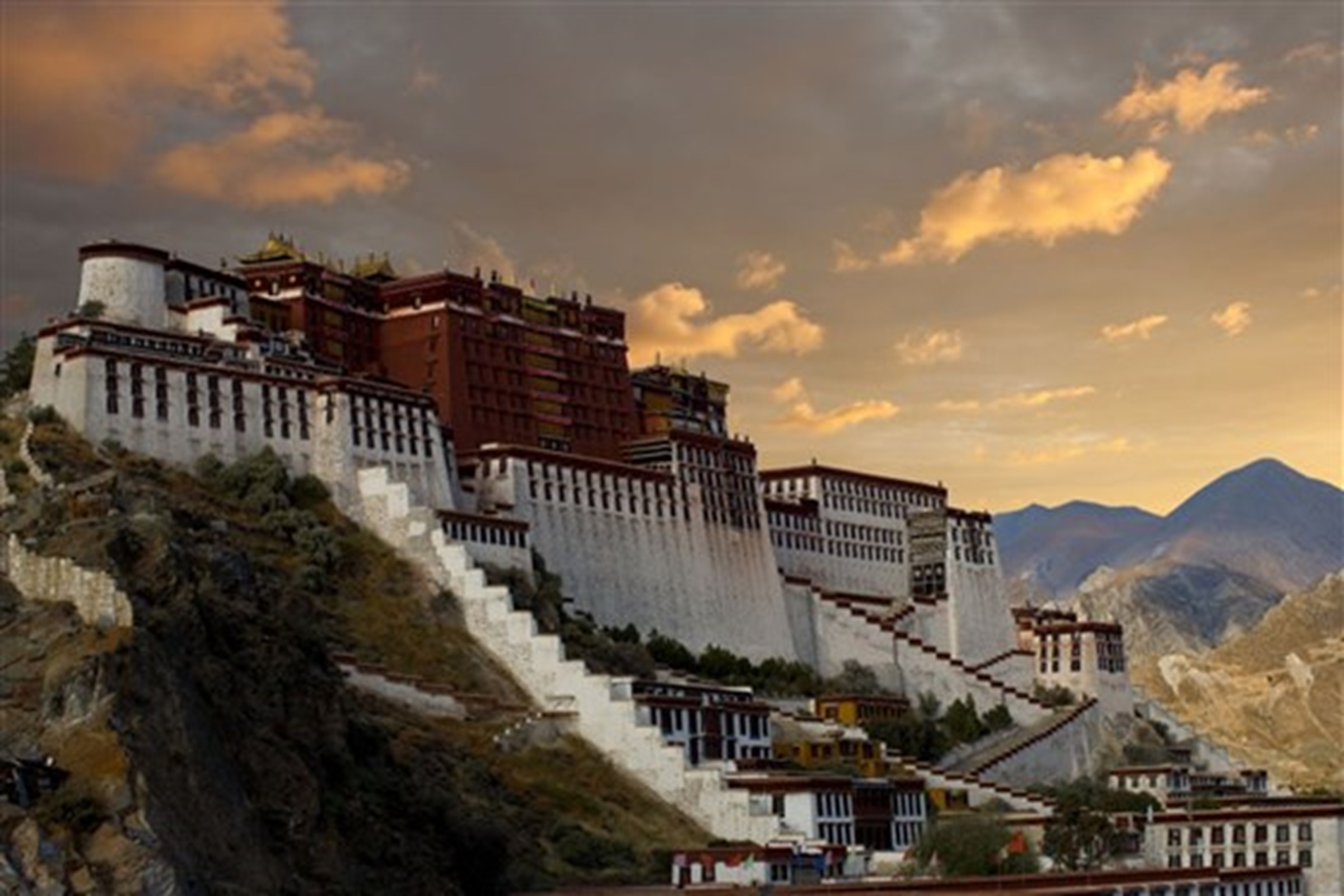
The most iconic landmark to receive Chinese funding is the imposing Potala Palace, the thousand-room residence that overlooks Lhasa. It houses the tombs of all but one of the Dalai Lamas who have died since 1682.
Han Chinese and the Tibetans. The Blood Relationship. Chinese are like the Teeth and the Tibetans are like the Lips. The Evil, Bloodthirsty Dracula’s Relationship with Tibet.
Lhasa’s Potala Palace. iStock / Getty
According to the museum’s deputy director, Gonga Zhaxi, the 13-story palace has undergone two major renovations on which Beijing spent $37 million. Another $4.4 million has been budgeted for the repair of its ornate golden roofs.
To protect its priceless Buddha statues, frescoes and scriptures, a limit has been set of 5,000 pilgrims and tourists per day, and cats have been deployed against the colony of rats, he said.
Other sites that have benefited from Chinese cash include:
The seventh-century Jokhang Temple is Tibet’s holiest shrine as it houses a life-sized statue of Buddha (Jowo Shakyamuni) at the age of 12. The labyrinth of chapels thick with the smoke of incense and prayer candles is visited daily by around 12,000 pilgrims and tourists. Buddha’s statue was the gift of the Chinese Tang dynasty Princess Wencheng when she married Tibetan King Songtsan Gambo around 1,300 years ago. The union is now immortalized in a spectacular open-air opera with a cast of 800. A private production company has invested more than $80 million to promote this narrative of Tibet-China unity. Lhagba, a prominent monk and the site’s management director, said Beijing has spent $14.7 million on major repairs there in the past 10 years.
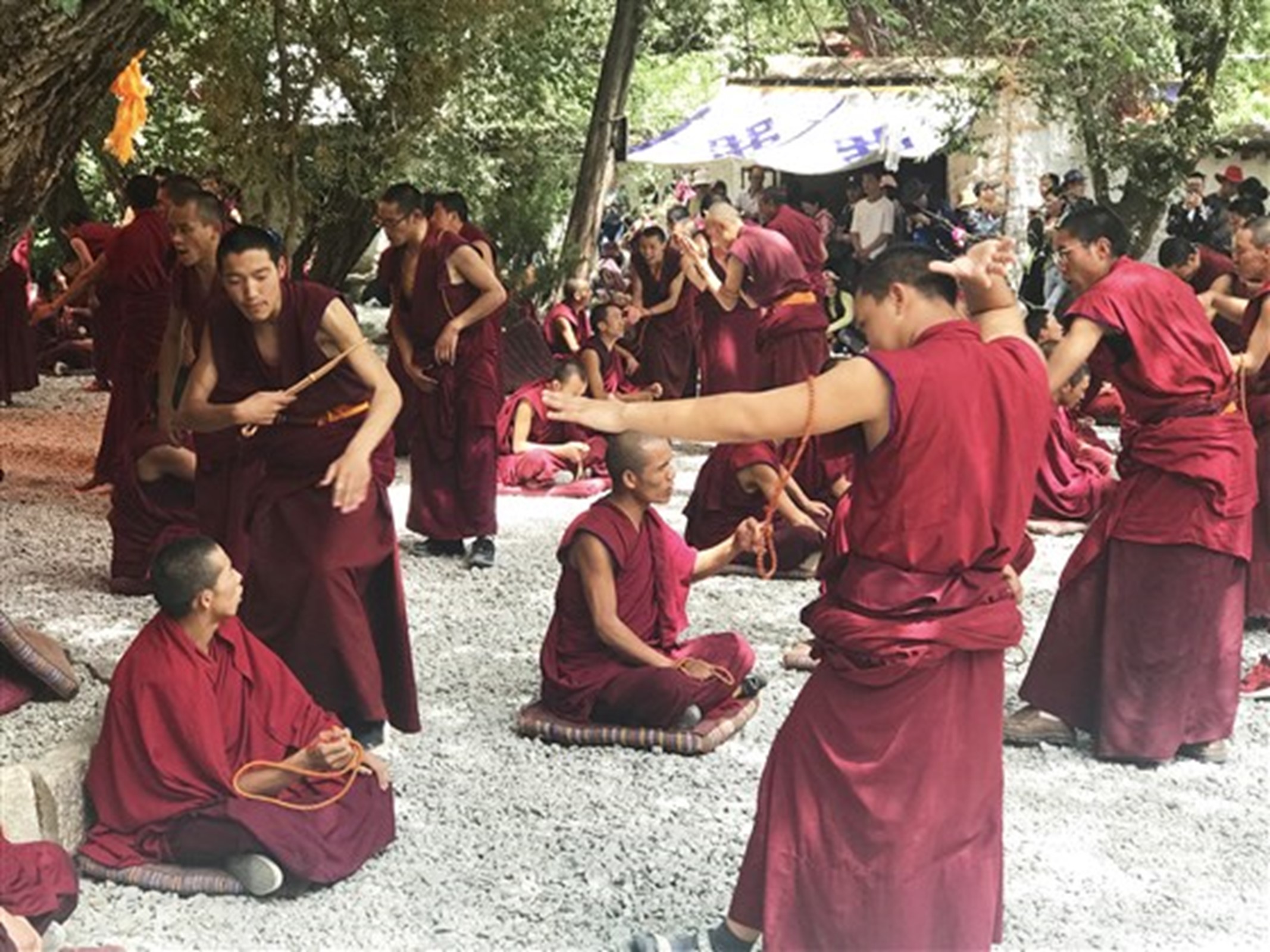
Beijing has also helped with major renovations at Drepung Monastery and Sera Monastery, two of Tibet’s most influential Buddhist academies, with grants of $30 million and $8 million. Thanks to government help, the monks can focus on their studies and need not bother with the monastery’s repairs, according to Awang Ciren, the monastery’s academic head. To increase its enrollment of 480 monks, Beijing is building a new dormitory that can accommodate 170 monks, he added.
In addition, 46,000 monks and nuns are now covered by health insurance and social security, officials said.
And with Beijing’s “preferential” policy and massive budget subsidies, Tibet’s economy has been growing faster than the rest of China.
Some $170 million was spent on environmental projects last year, part of a 23-year plan unveiled in 2009 that’s worth $2 billion.
“In Tibet, we don’t allow the burning of coal, and since 2011, we have stopped approving any new mining projects,” said Luo Jie, Tibet’s environmental protection chief, adding that more than one-third of Tibet’s territory consisted of nature reserves. “We also don’t tolerate river pollution.”
Developing a “green economy” is the future of Tibet, according to economic planning official Jiang Taichang
Tourism is also an industry that is drawing more focus. Last year, more than 25 million tourists and pilgrims visited Tibet, generating more than $5.5 billion or one-third of Tibet’s income, and their number is expected to rise to 70 million in four years. (The majority of tourists are Chinese, as security has been ratcheted up significantly in the decade since anti-government protests spread through Tibetan areas in 2008 and Tibet remains mostly off-limits to foreigners.)
Han Chinese and the Tibetans. The Blood Relationship. Chinese are like the Teeth and the Tibetans are like the Lips. The Evil, Bloodthirsty Dracula’s Relationship with Tibet.
Monks at Tibet’s Sera Monastery debate Buddhist teachings. Eric Baculinao / NBC News
Lhasa’s special economic zone, built with a $30 million investment from Beijing, is already fully leased out, with 200 enterprises producing a range of products from beer to medicines. A new technology zone and financial district are being planned.
Norbu Thondup, the Beijing-appointed executive vice chairman of the Tibet Autonomous Region, Tibet’s administrative name, condemned the “sabotage” activities aimed at the “harmony and happiness in today’s Tibet” by groups supporting the Dalai Lama.
He reiterated China’s policy that the “gate is open” if the Dalai Lama abandons the idea of “splitting” Tibet from China.
“The decision is for the Dalai to make,” Thondup said of him returning to his homeland. “The Tibetans and the Han Chinese are like lips and teeth, we are linked by blood.”
But Mecacci, of the International Campaign for Tibet, said it was important for China to engage with the Dalai Lama.
“Only a serious dialogue while the Dalai Lama is alive can provide a lasting political solution in Tibet,” he said. “Finding an agreement with the Tibetans would help China because it’s the right thing to do and because it will help China both domestically and internationally.”
Eric Baculinao reported from Lhasa and Jason Cumming from London.
Han Chinese and the Tibetans. The Blood Relationship. Chinese are like the Teeth and the Tibetans are like the Lips. The Evil, Bloodthirsty Dracula’s Relationship with Tibet.
Tibet Awareness – Unconventional Warfare to Fight Against the Devil
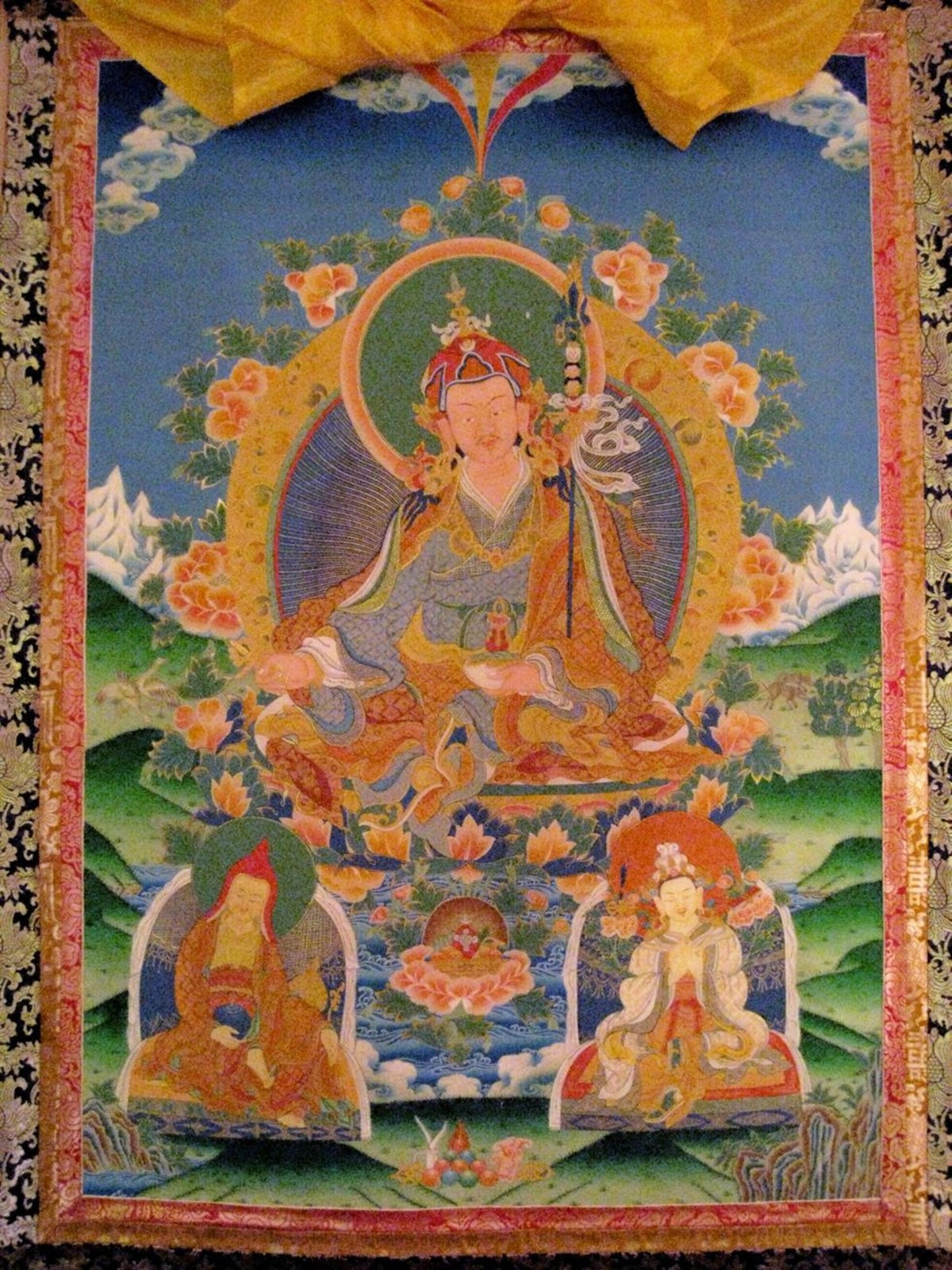
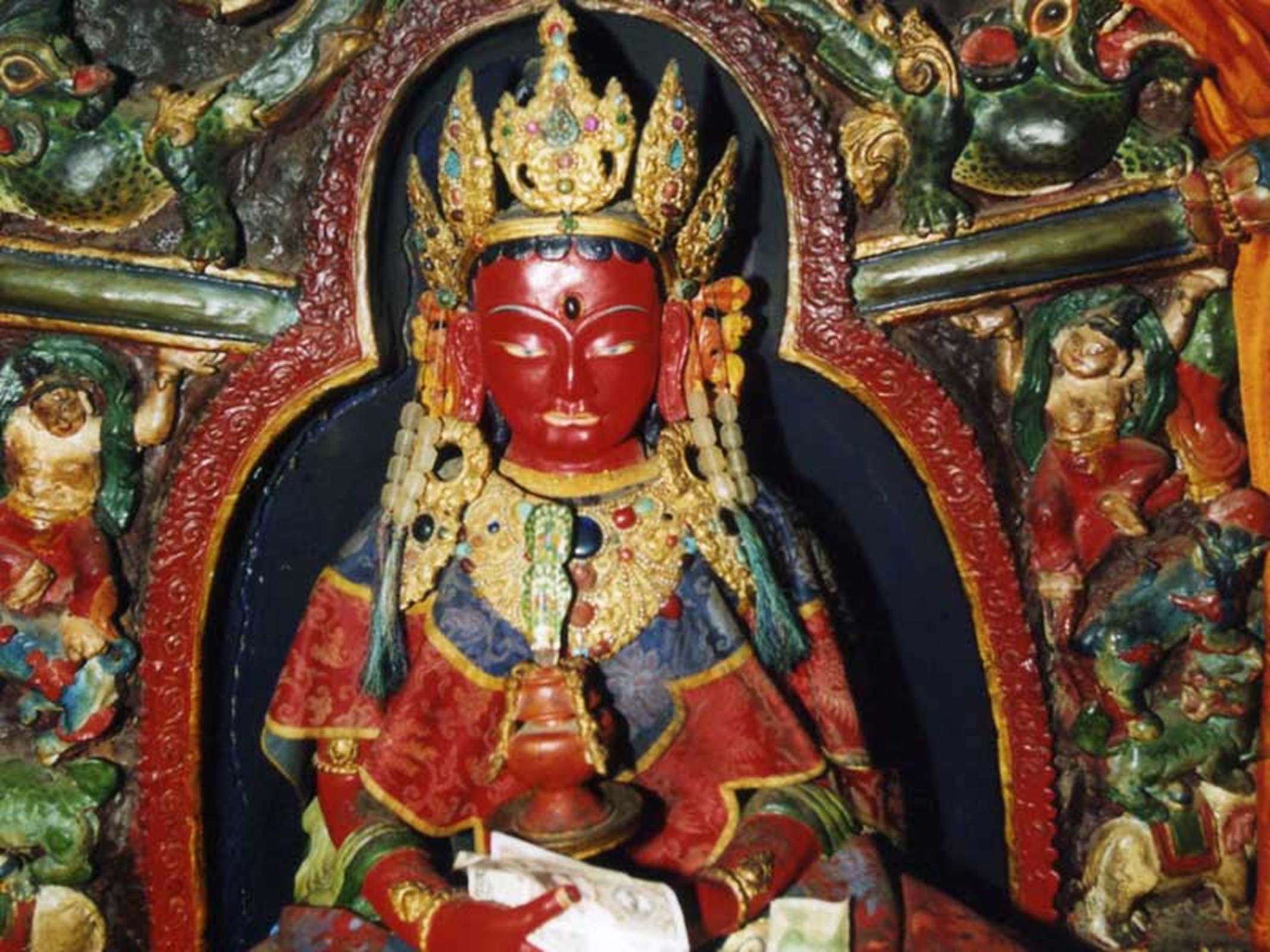
Blessings for Peace. A Charming Way to Fight Against The Devil. Guru Padmasambhava, Shantirakshita (Protector of Peace).
Living Tibetan Spirits seek the Blessings of Guru Padmasambhava, Shantarakshita (Protector of Peace) to fight against the Devil giving us pain, and misery by robbing the Natural Freedom that Tibetans inherited entirely due to Natural Conditions, Natural Causes, Natural Factors, and Natural Mechanisms. Freedom in Tibet is the gift of Mother Nature. Whereas Occupation is the Sickness imposed by the Evil Power called The Red Dragon. In the fight against the Evil Power occupying Tibet, Living Tibetan Spirits embrace both conventional, and unconventional tactics of Warfare.
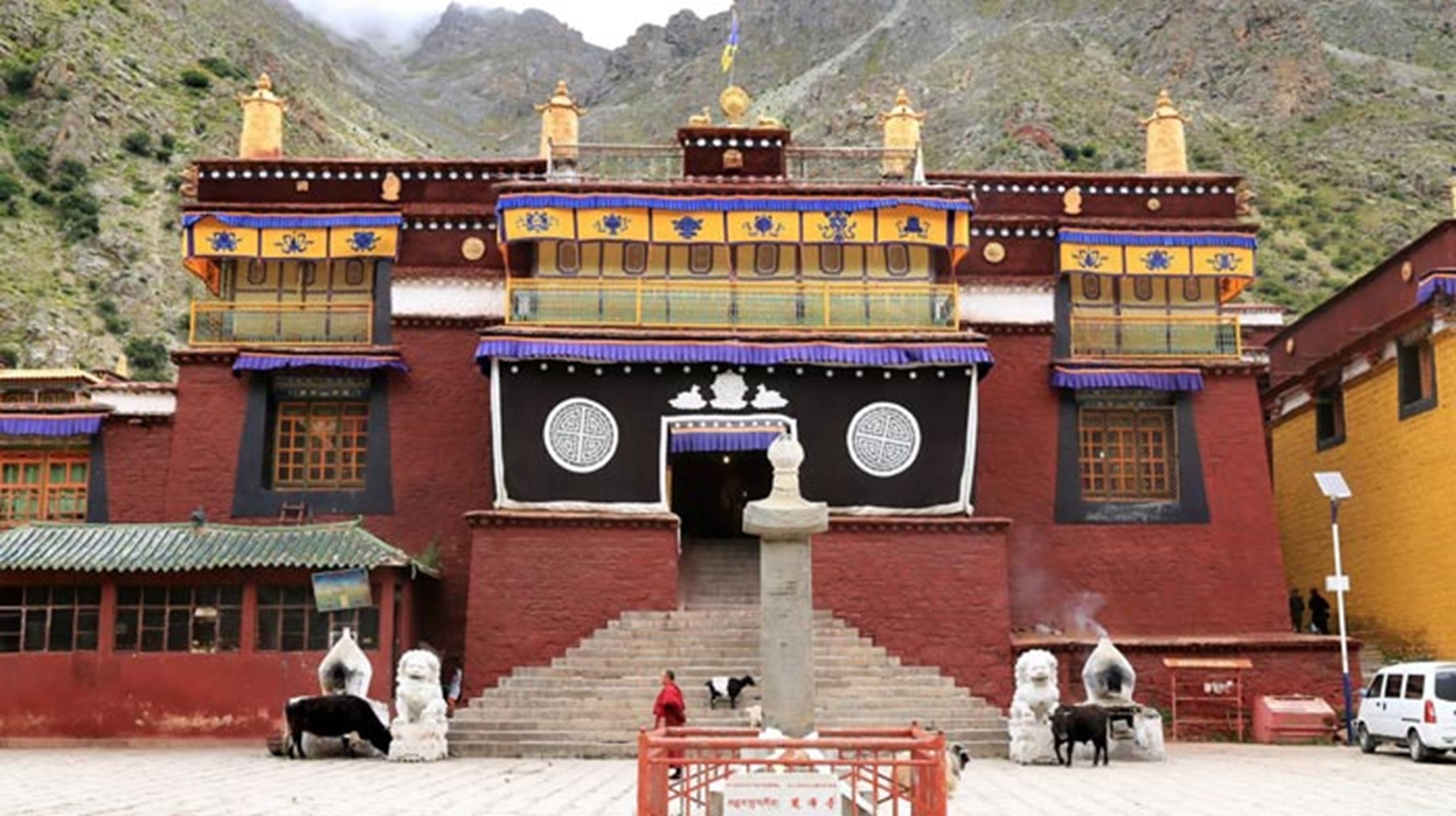
Blessings for Peace. A Charming Way to Fight Against The Devil. The Protector of Peace at Tsurphu Monastery, Tibet.
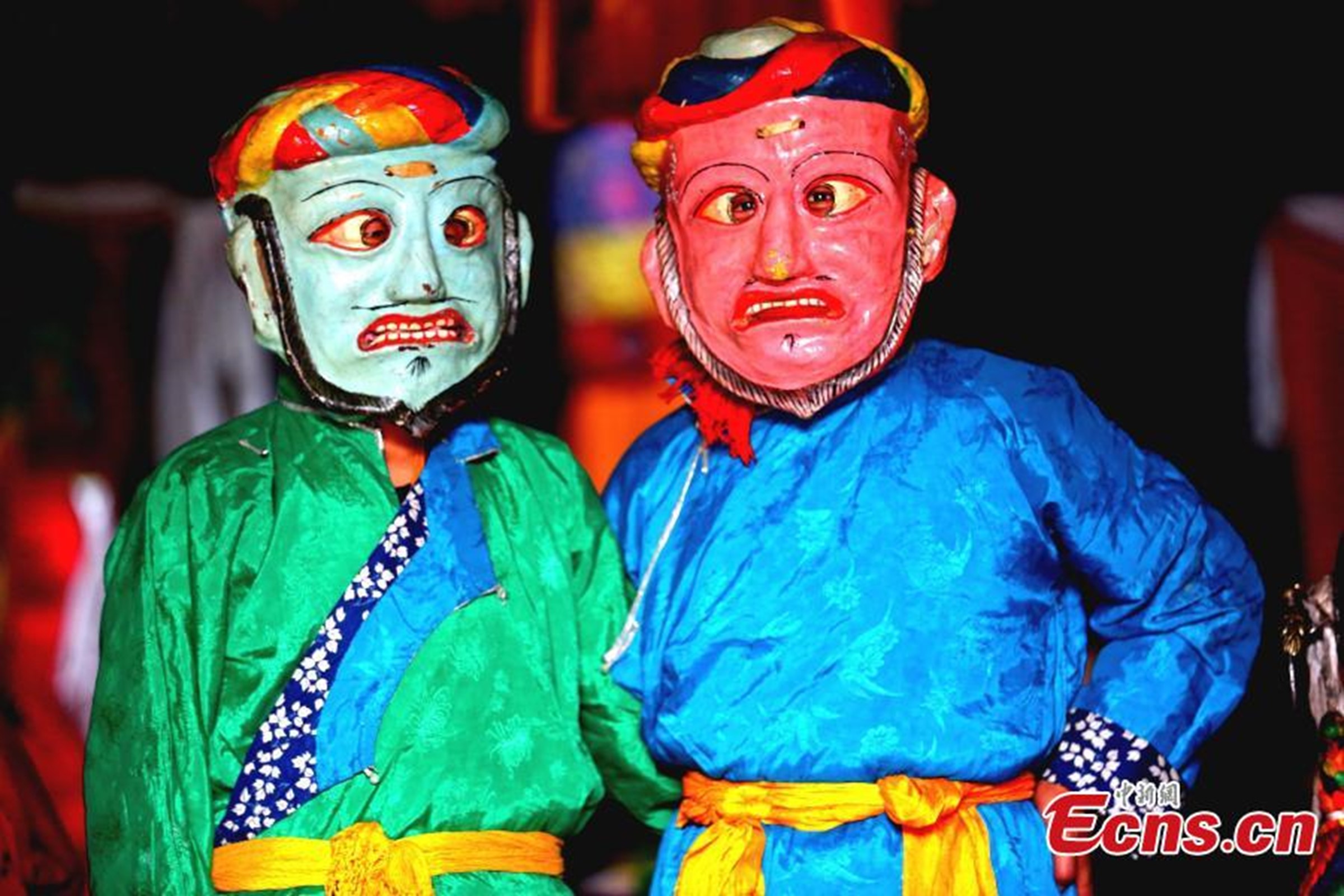
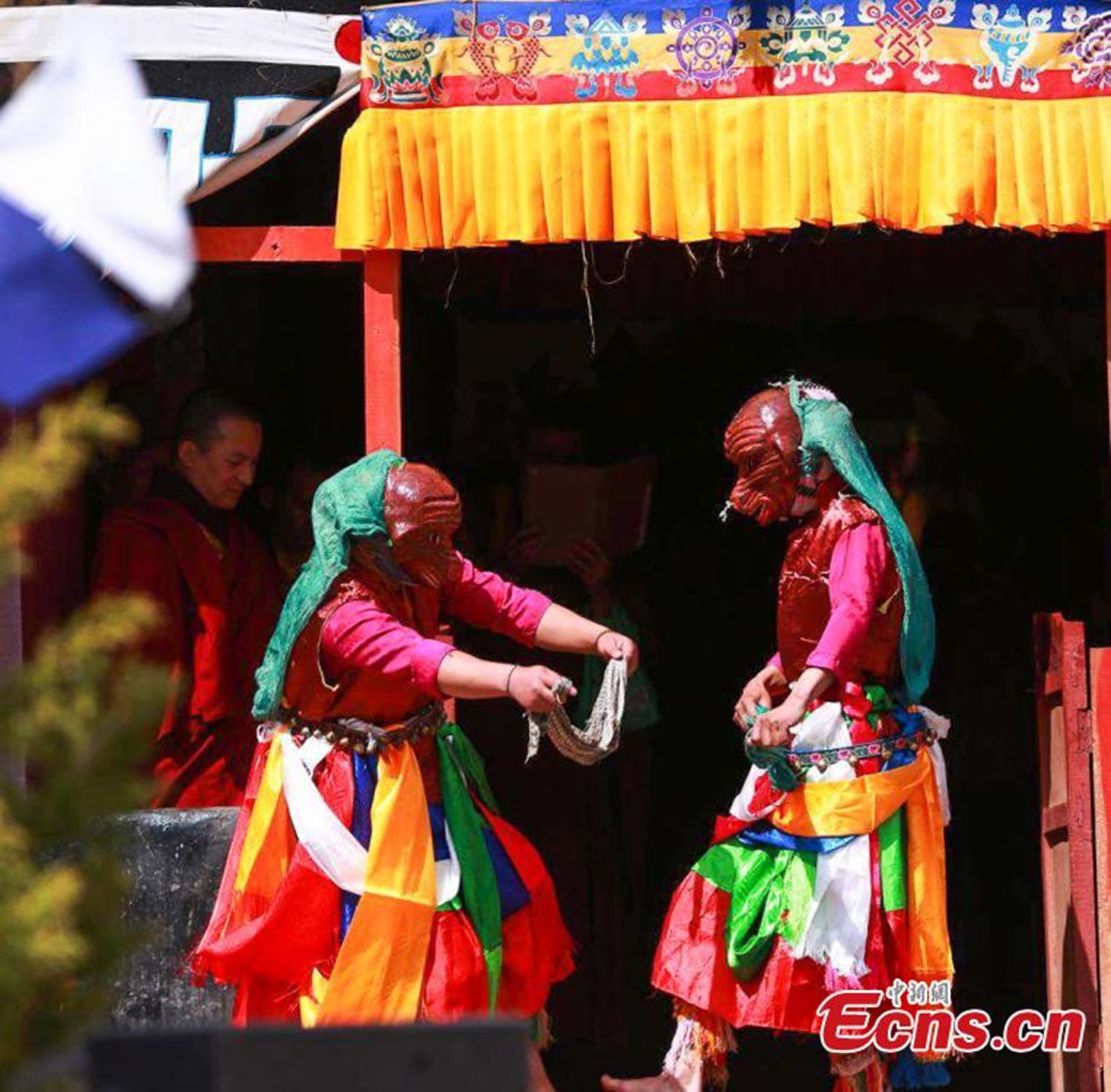
TSURPHU CHAM DANCE FESTIVAL, TSURPHU MONASTERY FESTIVAL
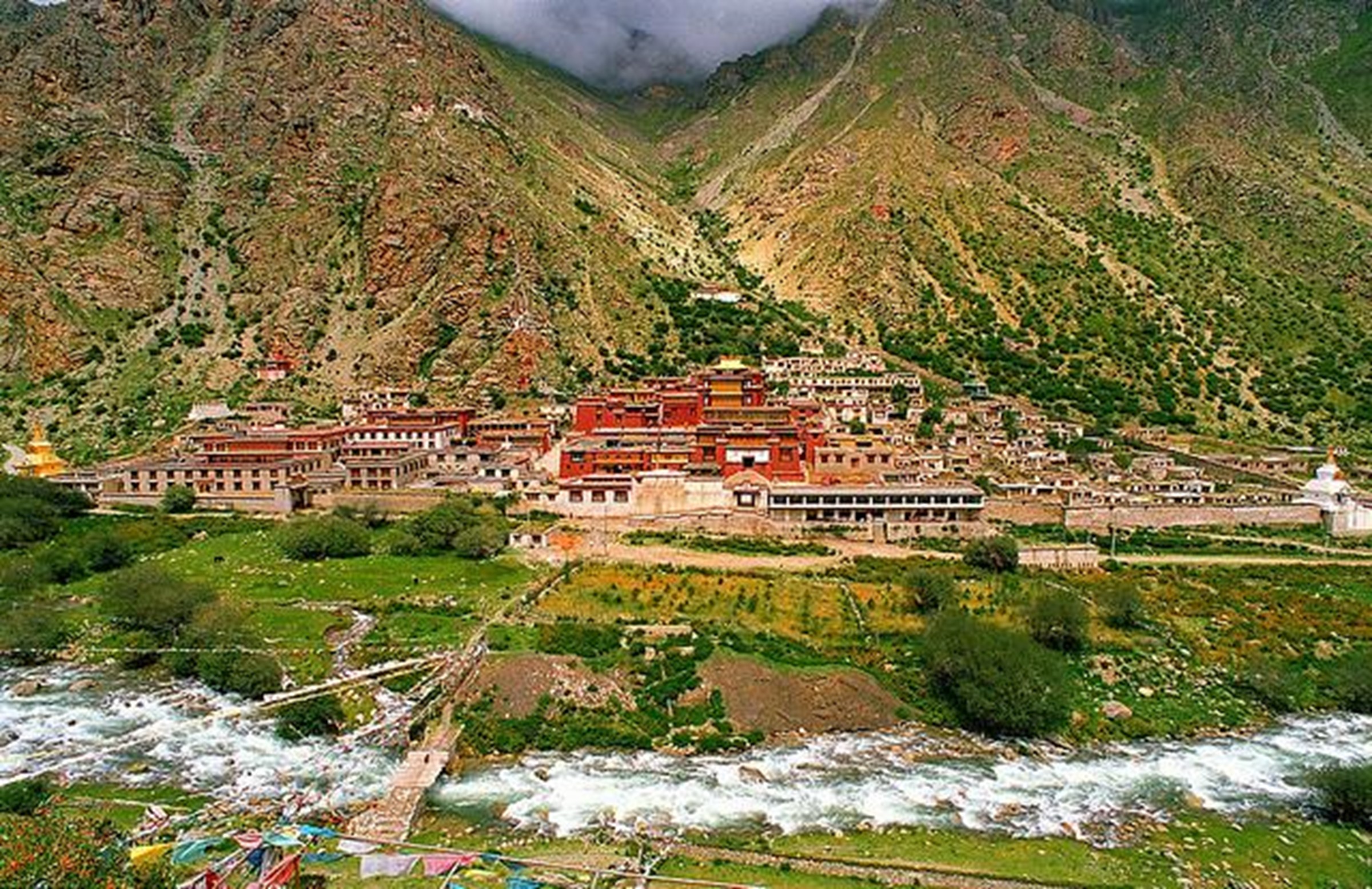
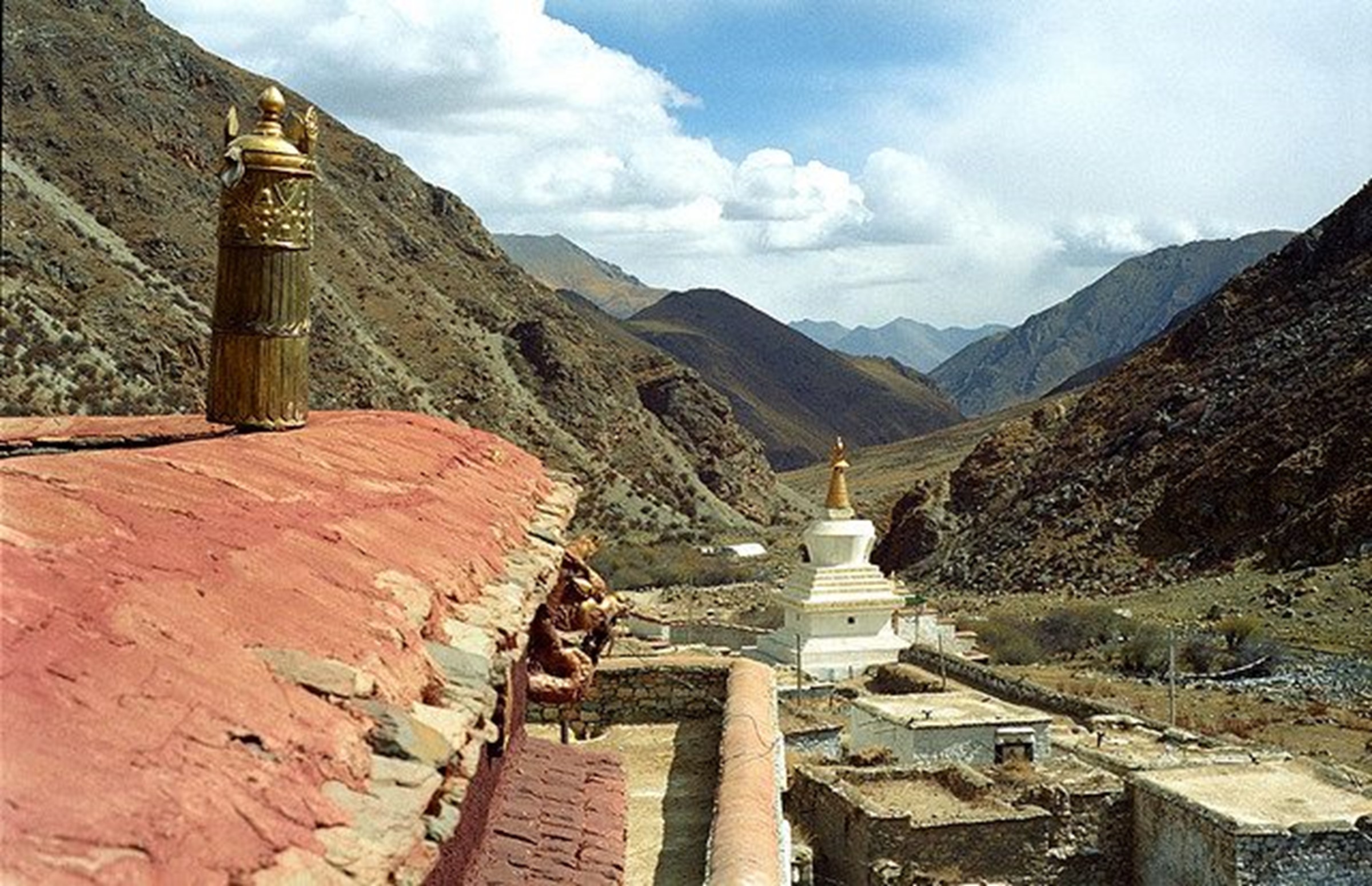
With the altitude of 4,300m, Tsurphu Monastery lies at the upper reach of Tsurphu river, about 70 km to the west of Lhasa. It was established by Dusum Khyenpa, the 1st Karmapa, and became the patriarch temple for Karma Kargyu to pass on and carry forward Tibetan Buddhism. Tsurphu Monastery has already been 800 years of history.
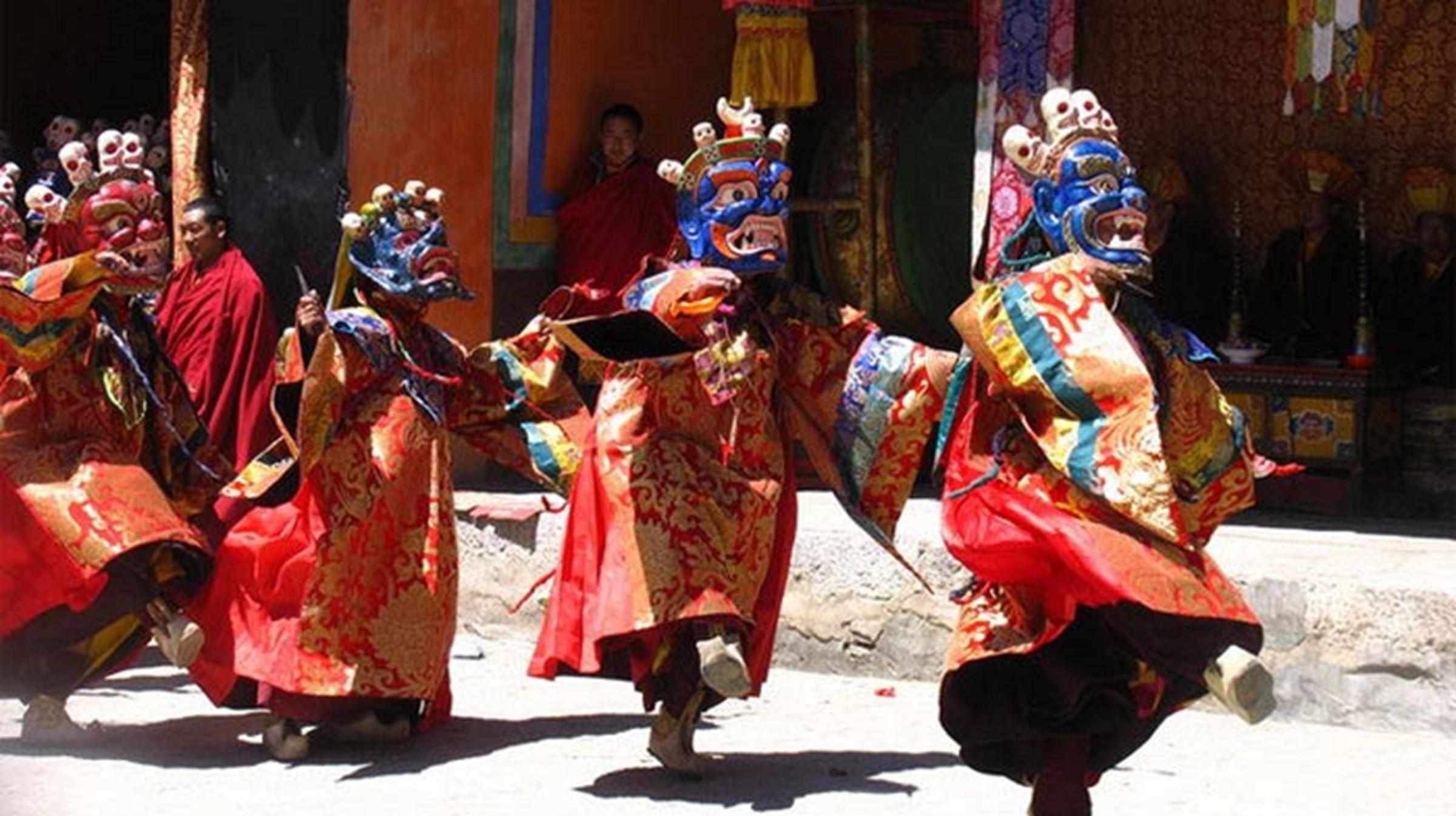
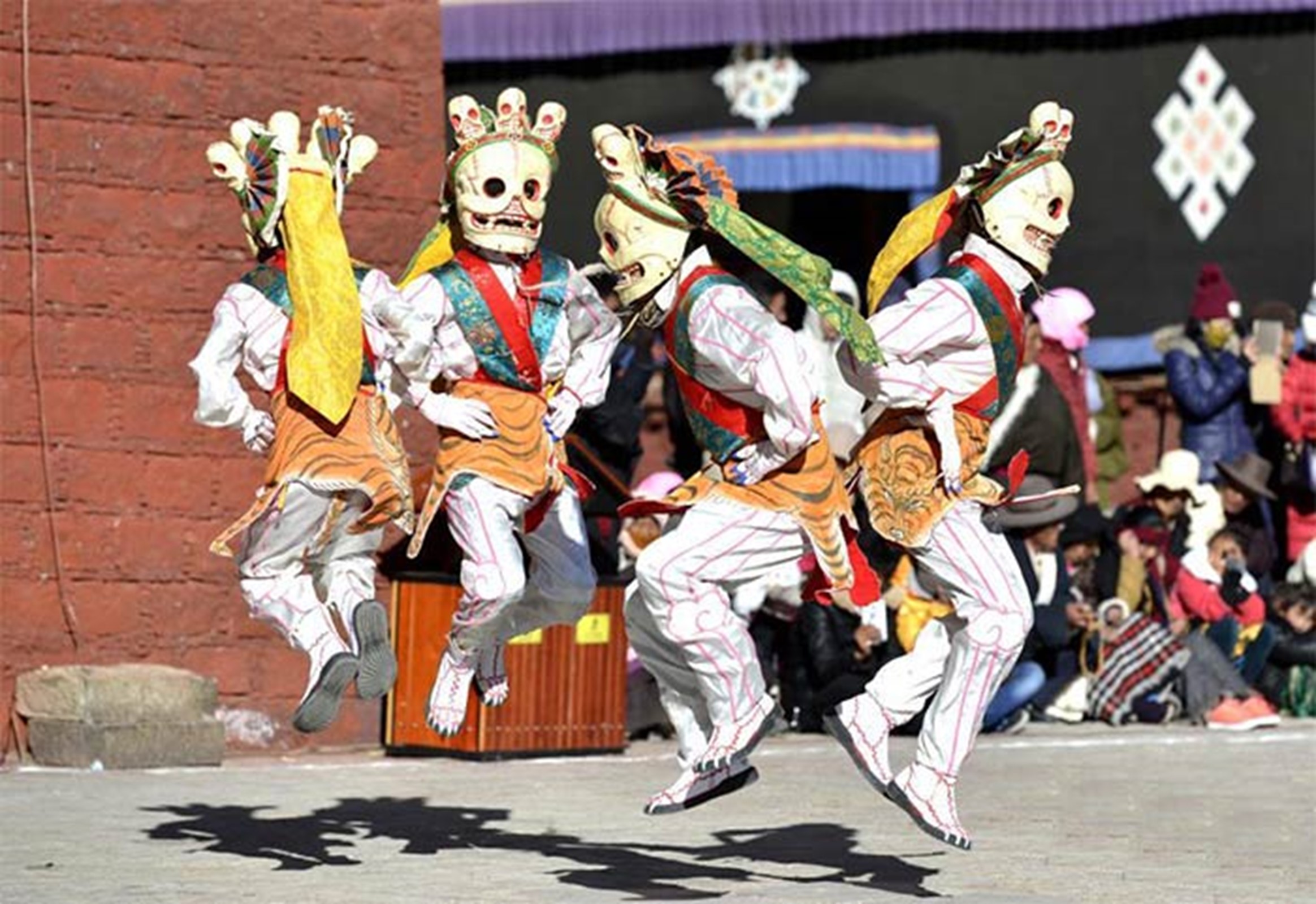
Blessings for Peace. A Charming Way to Fight Against The Devil. Tsurphu Cham Dance Festival.
Tsurphu Monastery is the most important temple for Karma Kargyu in Tibet.
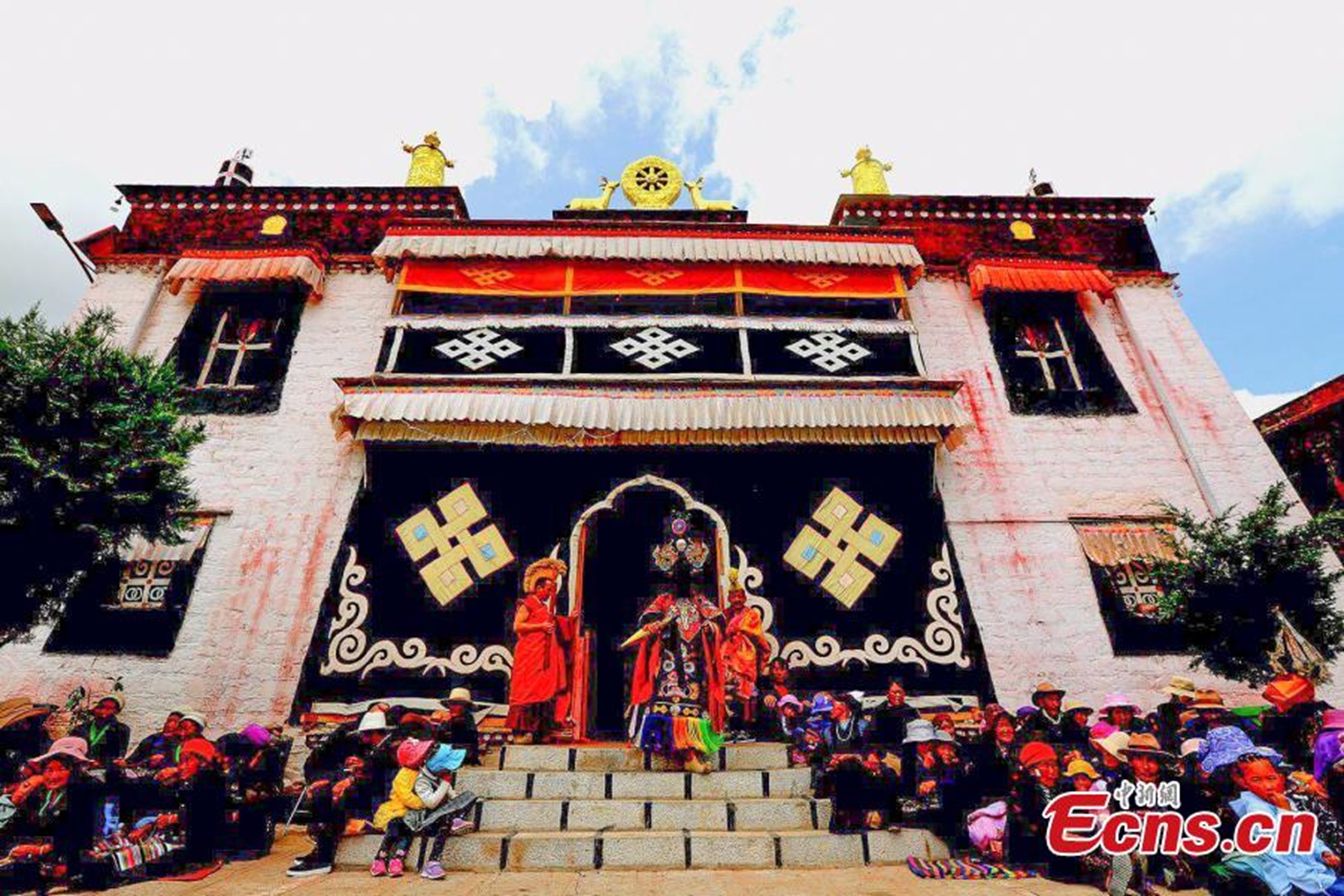
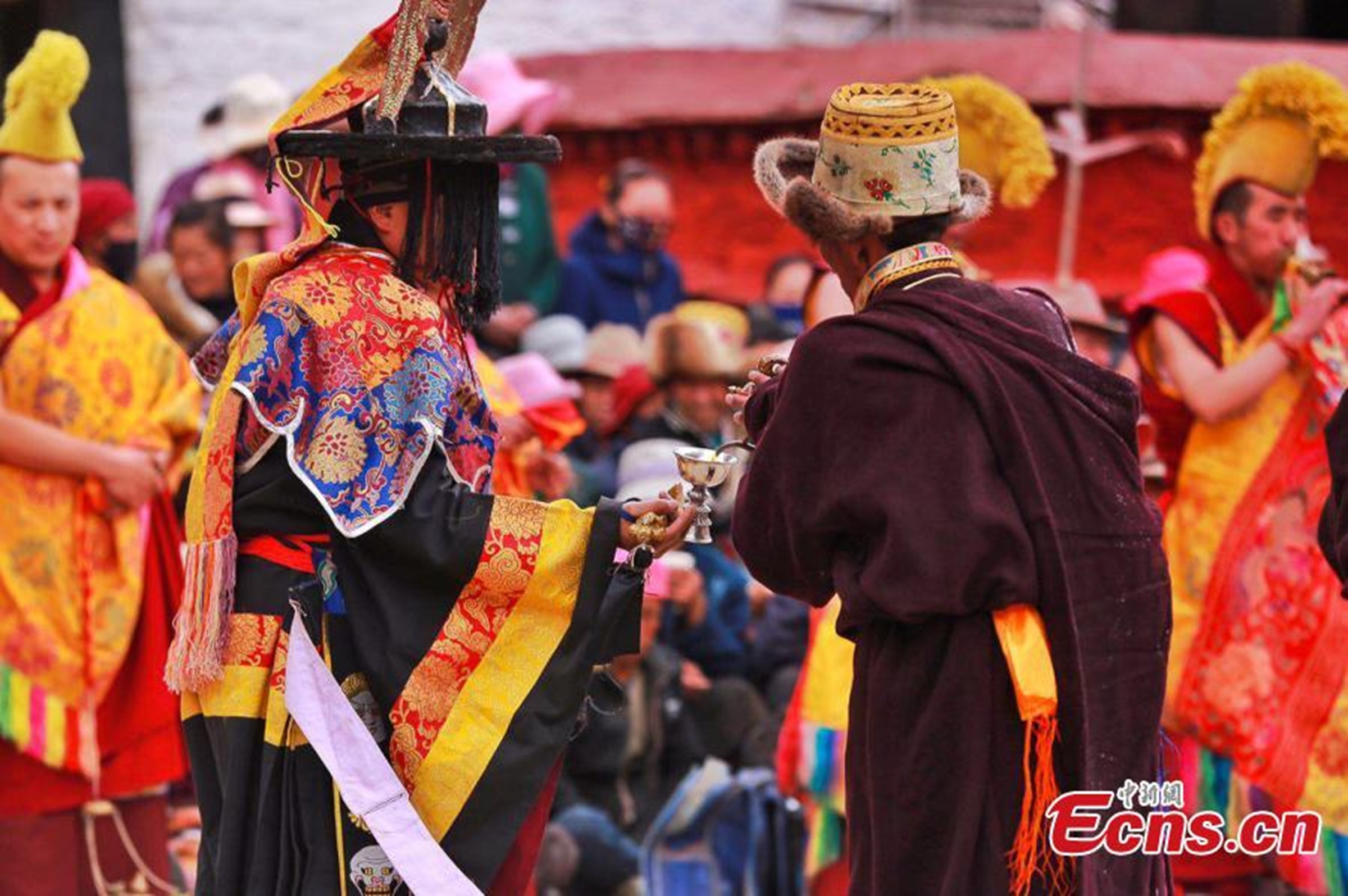
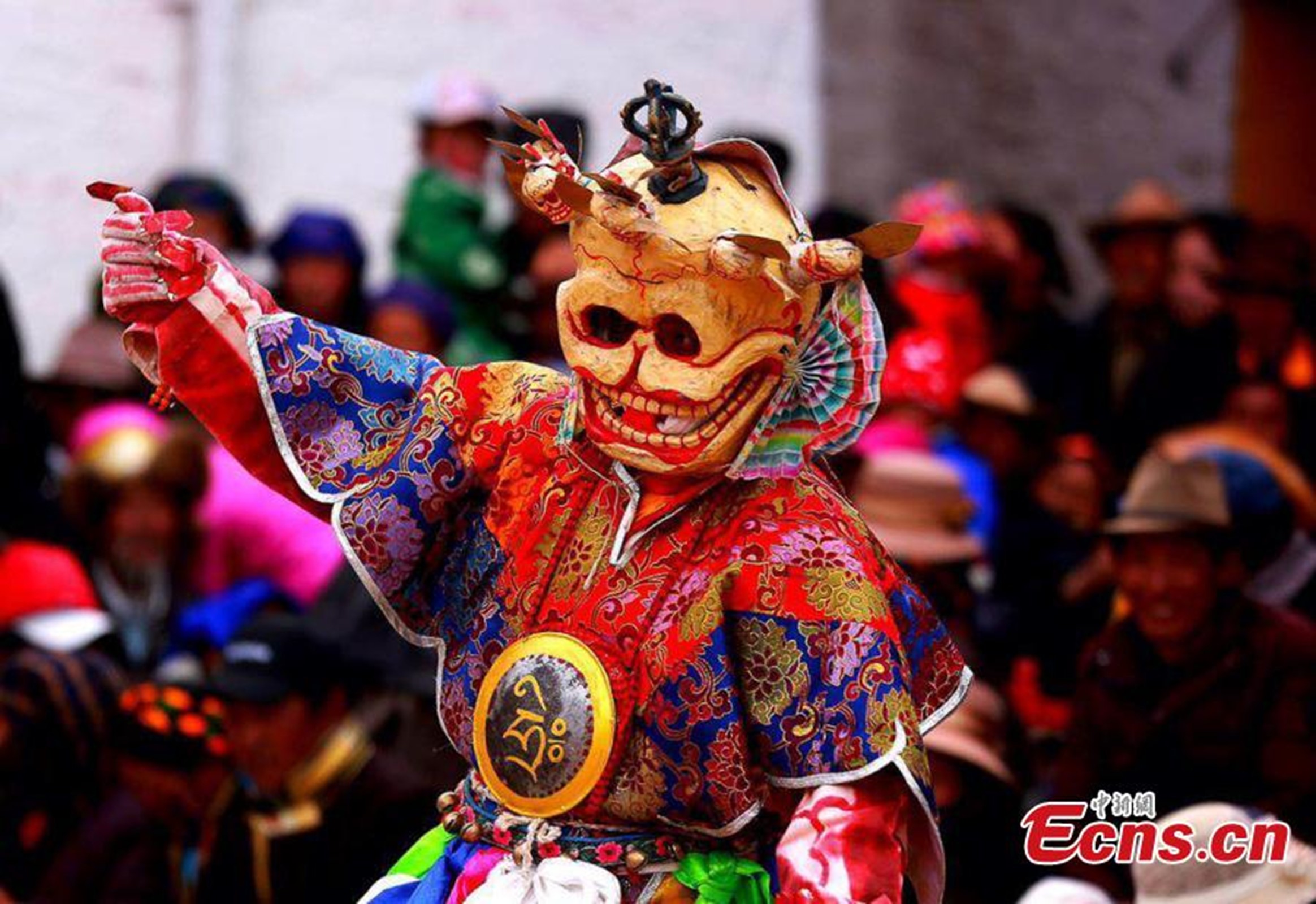
Tsurphu Cham Dance Festival falls on the 10th day of the fourth month in Tibetan Calendar. This Cham dance festival is celebrated to commemorate the great Indian guru Padmasambhava who came to Tibet and devoted himself in promoting Buddhism. During the Tsurphu Festival, you can also observe some other religious activities, like grand dharma assembly, Buddha exhibition, etc.
Blessings for Peace. A Charming Way to Fight Against The Devil. Tsurphu Cham Dance Festival.
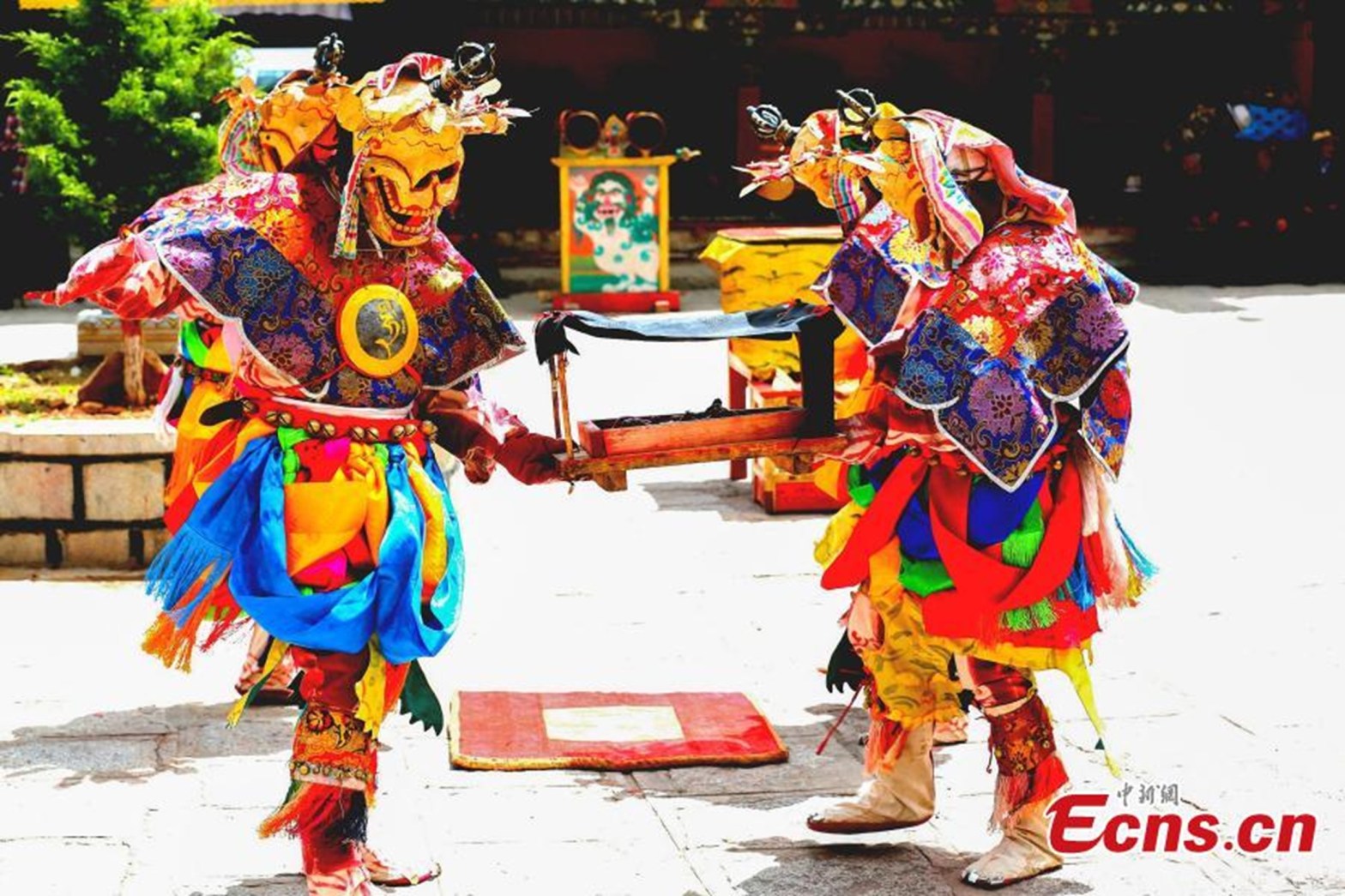
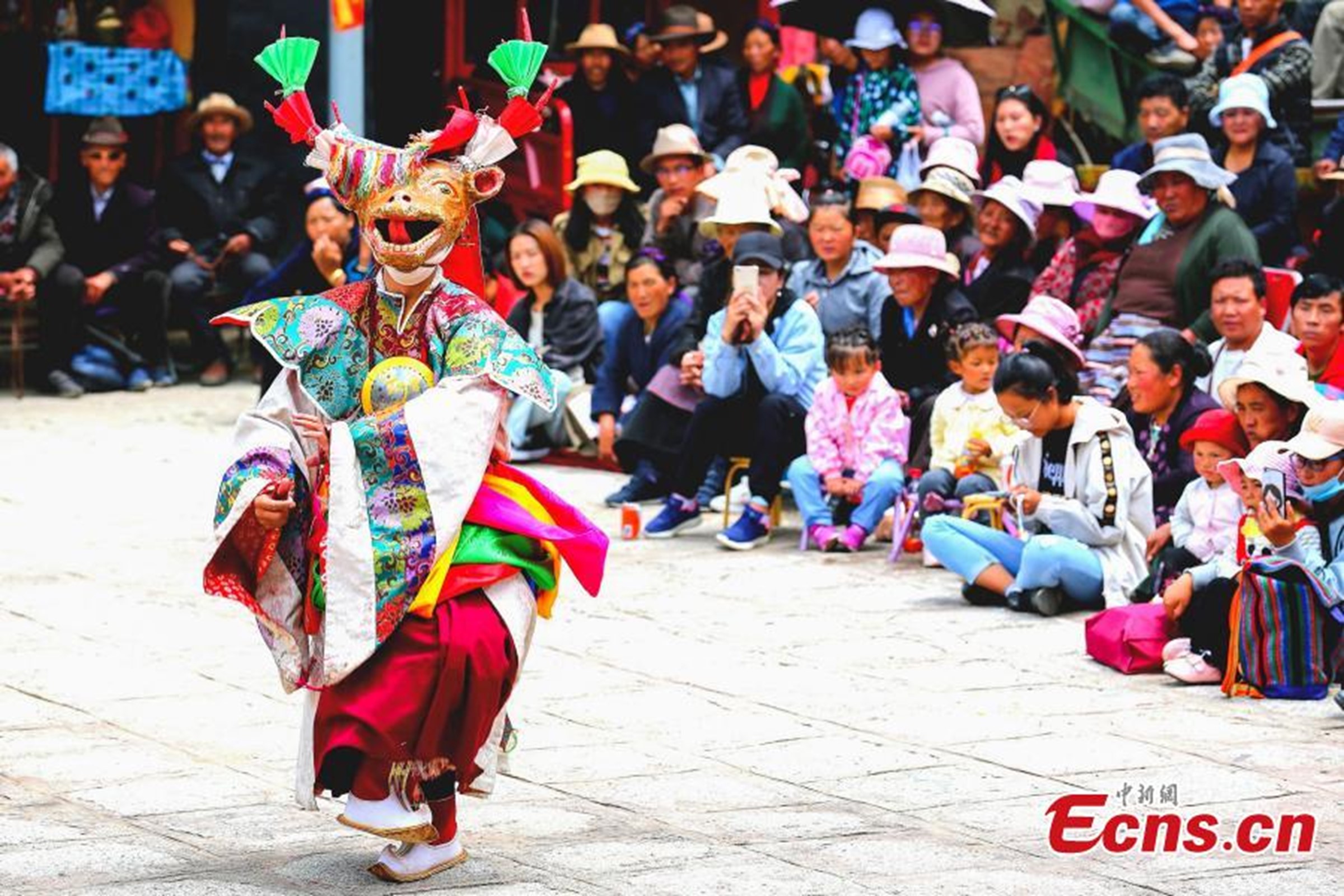
Cham dance is performed during Tsurphu Festival.
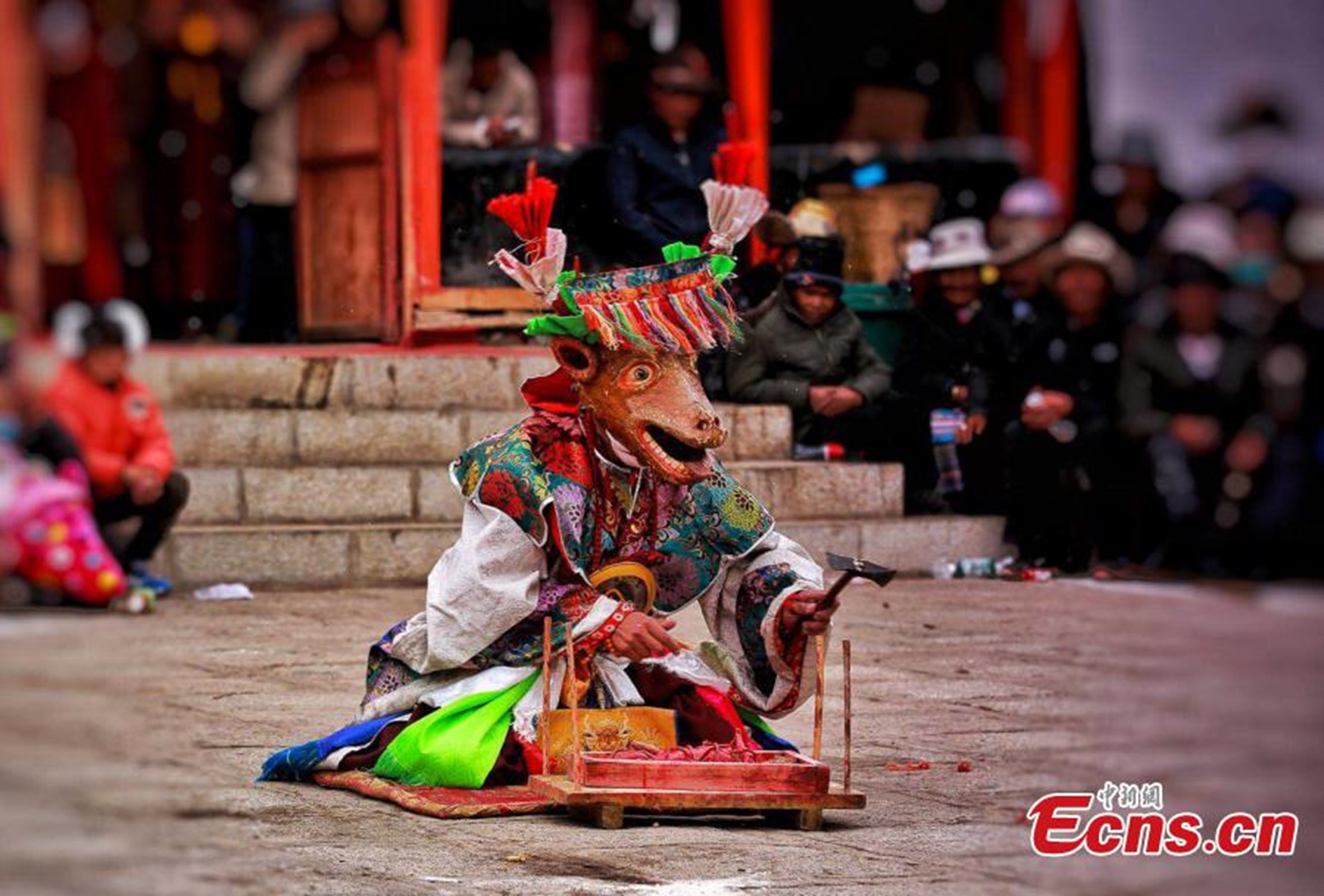
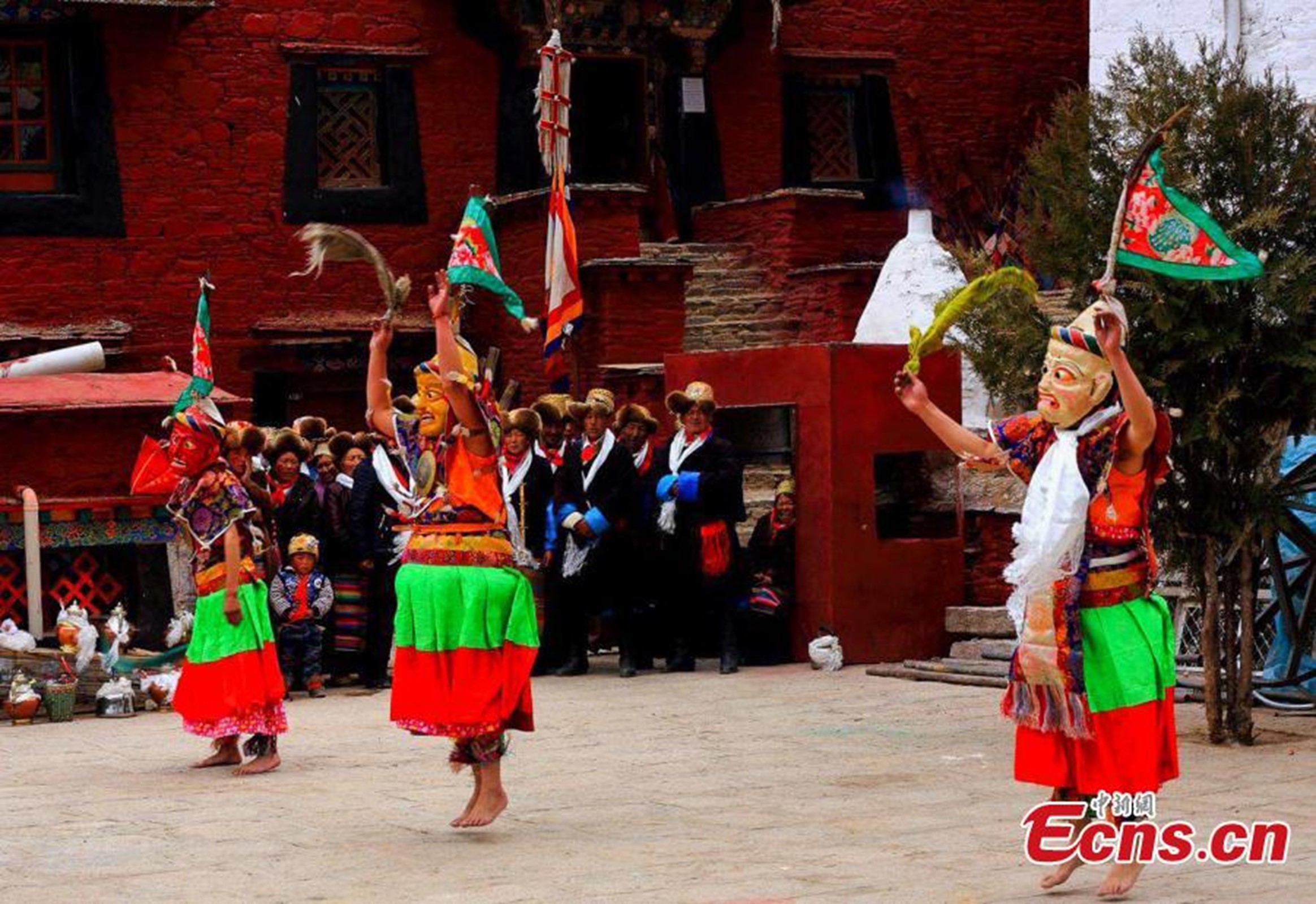
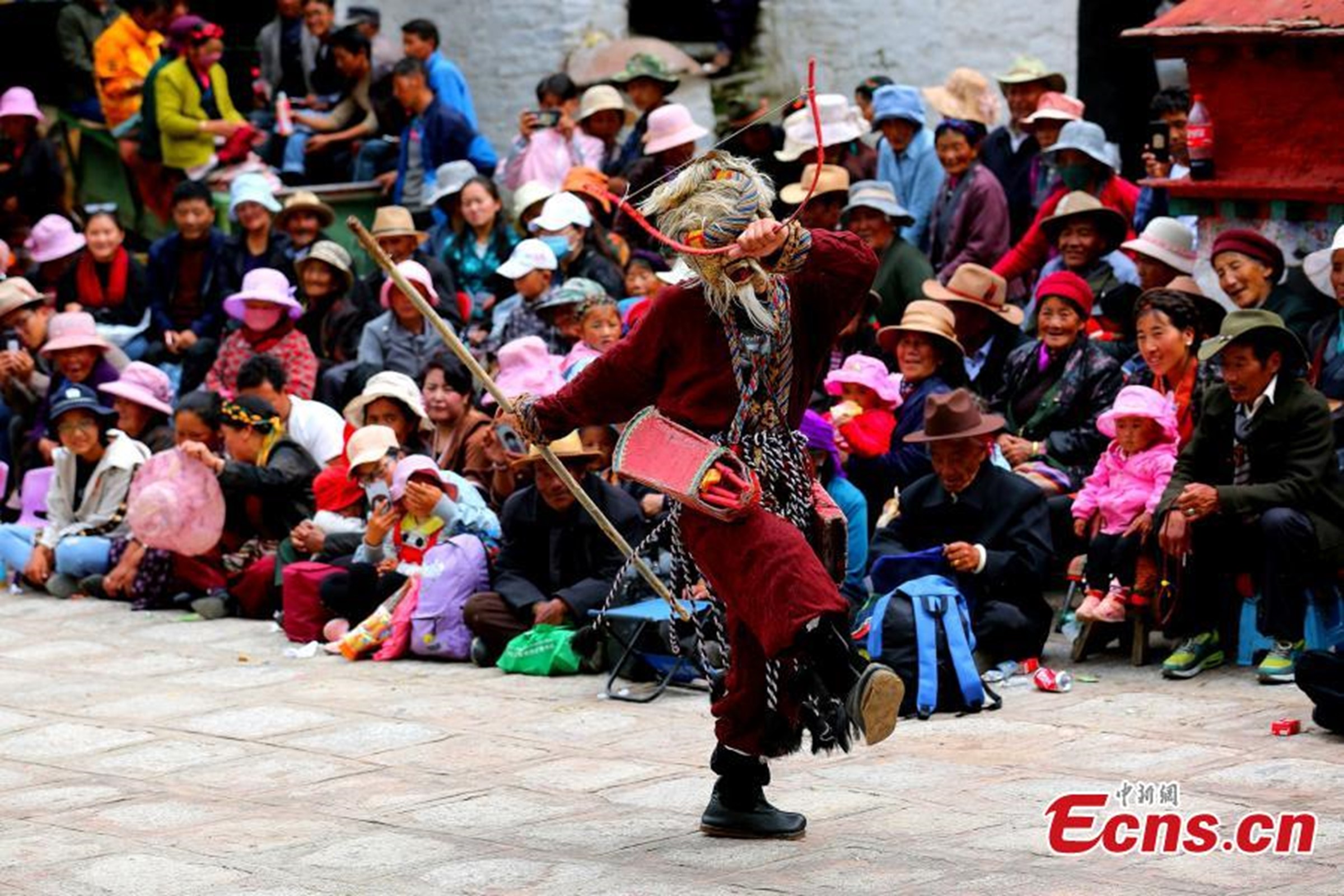
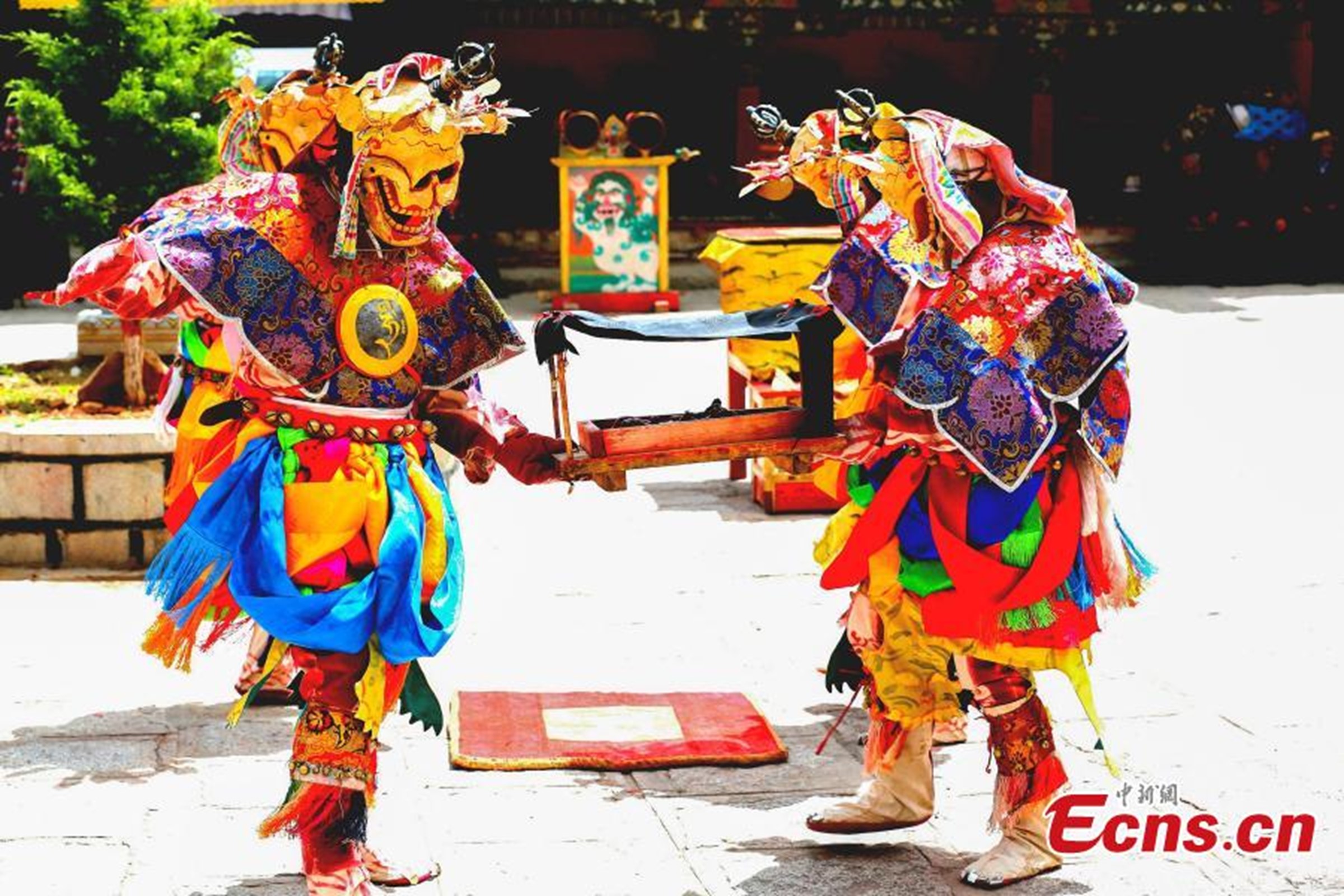
Cham dance in Tsurphu Monastery is a kind of Tibetan art and performance. It has plots, characters, music and dances. However, Cham dance is different from Tibetan Opera and has greater significance in religion. Not only can it entertain the audience but also advocate Tibetan Buddhism. It’s a grand religious activity organized by the temple. As for famous Tibetan monasteries, they have their own Cham group and make uniform Cham masks, dance costumes, ornamentations and musical instruments, etc. Usually, those items are treasured very well in the temple. Cham dancers have to pass through several religious rituals before using them.
Blessings for Peace. A Charming Way to Fight Against The Devil. Tsurphu Cham Dance Festival.
Lots of Tibetans are watching Cham dance outside Tsurphu Temple.
There are many strict rules on Cham performance. Major roles are played by monks and dancers should be flexible and alert. All of them shall be completely into the roles even before the play. Body movements, facial expressions, hand gestures and dance steps must be elegant and smooth. In other words, as long as they put on Cham costumes and masks, they need to be like the real deities. It’s said that deities would get angry if they failed to meet those requirements and something bad would happen to relevant personnel. In addition to appreciating the Cham dance, Tibetan people also worship Buddha and receive blessings at Tsurphu Monastery.
If you are interested in Tibetan Buddhism and Cham dance, taking part in Tsurphu Cham Dance Festival is an excellent chance to feel religious atmosphere you couldn’t afford to miss. After visiting Tsurphu Monastery, you can also try to trek from Tsurphu to Yampachen and the scenery along the route will never let you down.
Blessings for Peace. A Charming Way to Fight Against The Devil. Tsurphu Cham Dance Festival at Tsurphu Monastery, Tibet.Blessings for Peace. A Charming Way to Fight Against The Devil. Tsurphu Monastery, Tibet.Blessings for Peace. A Charming Way to Fight Against The Devil at Tsurphu Monastery, Tibet.Blessings for Peace. A Charming Way to Fight Against The Devil at Tsurphu Monastery, Tibet.Blessings for Peace. A Charming Way to Fight Against The Devil at Tsurphu, Tibet. Freedom and Peace are gifts of Mother Nature.Blessings for Peace. A Charming Way to Fight Against The Devil at Tsurphu Monastery.Blessings for Peace. A Charming Way to Fight Against The Devil. Freedom and Peace are the gifts of Mother Nature at Tsurphu, Tibet.Blessings for Peace. A Charming Way to Fight Against The Devil. Peace and Freedom are the gifts of Mother Nature at Tsurphu, Tibet.Blessings for Peace. A Charming Way to Fight Against The Devil at Tsurphu Monastery, Tibet.Blessings for Peace. Prayer Flags at Tsurphu, Tibet describe Peace and Freedom as the gifts of Mother Nature.Blessings for Peace. A Charming Way to Fight Against The Devil at Tsurphu Monastery, Tibet.Blessings for Peace. A Charming Way to Fight Against The Devil at Tsurphu Monastery, Tibet.Blessings for Peace. A Charming Way to Fight Against The Devil at Tsurphu Monastery, Tibet.Blessings for Peace. A Charming Way to Fight Against The Devil at Tsurphu Monastery, Tibet.Blessings for Peace. A Charming Way to Fight Against The Devil at Tsurphu Monastery, Tibet.Blessings for Peace. A Charming Way to Fight Against The Devil at Tsurphu Monastery, Tibet.Blessings for Peace. A Charming Way to Fight Against The Devil at Tsurphu Monastery, Tibet.Blessings for Peace. A Charming Way to Fight Against The Devil at Tsurphu Monastery, Tibet.BLESSINGS FOR PEACE. A CHARMING WAY TO FIGHT AGAINST THE DEVIL AT TSURPHU Monastery, Tibet.
Red China – Aggressor Nation Occupying Tibet. In my analysis, Communist China, Red China is aggressor, hegemonist, imperialist, Expansionist,Neocolonialist, and Evil One occupying Tibet using military force. I do not consider the actions of Tibet, or of India to explain as to why Tibet lost Freedom in 1950.
In my analysis, Communist China, Red China is aggressor, hegemonist, imperialist, Expansionist,Neocolonialist, and Evil One occupying Tibet using military force. I do not consider the actions of Tibet, or of India to explain as to why Tibet lost Freedom in 1950.
Red China, Aggressor Nation Occupying Tibet: In my analysis, Communist China, Red China is aggressor, hegemonist, imperialist, Expansionist,Neocolonialist, and Evil One occupying Tibet using military force. I do not consider the actions of Tibet, or of India to explain as to why Tibet lost Freedom in 1950.
How Tibet Lost Its Independence and India Its Gentle Neighbor
It relates to the sequence of events and the role of KM Panikkar, the Indian Ambassador in China, during the weeks after the invasion of Tibet.
Red China – Aggressor. Indian Mission in Lhasa till 1952. In my analysis, Communist China, Red China is aggressor, hegemonist, imperialist, Expansionist,Neocolonialist, and Evil One occupying Tibet using military force. I do not consider the actions of Tibet, or of India to explain as to why Tibet lost Freedom in 1950.
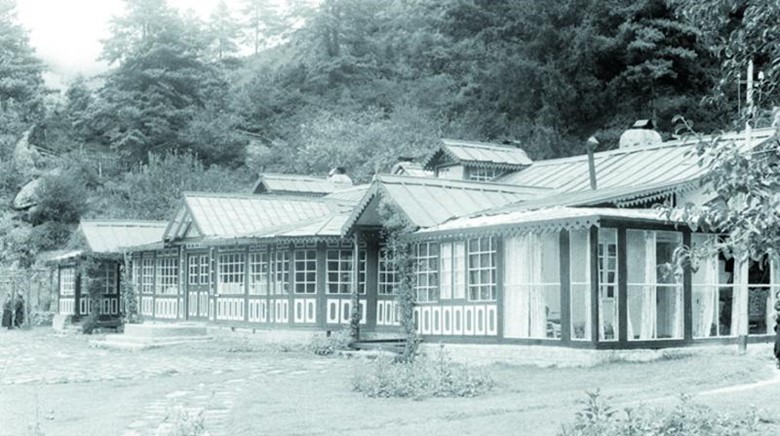
Dekyi Linka, the Indian Mission in Lhasa till 1952 (thereafter the Indian Consulate-General).
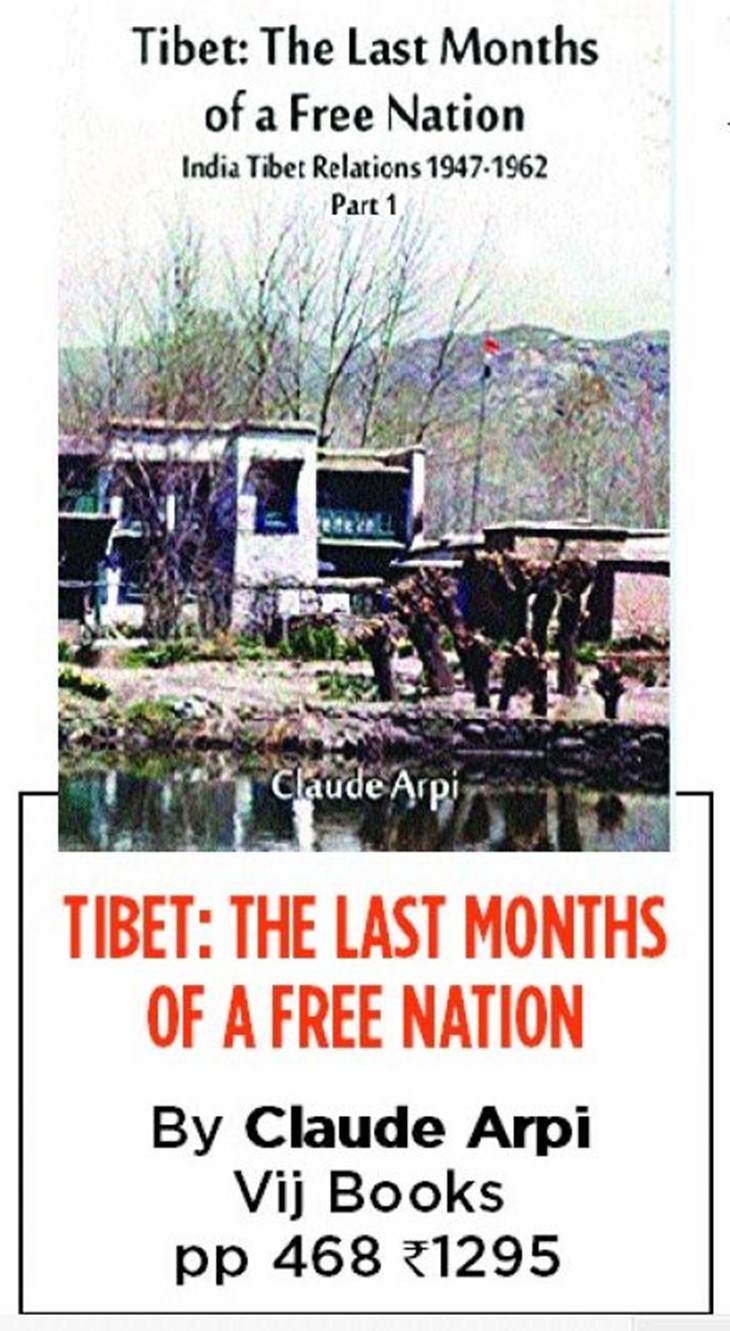
Claude Arpi, holding the Field Marshal KM Cariappa Chair of Excellence from the United Service Institution of India (USI), for his research on the Indian Presence in Tibet 1947-1962 (in 4 volumes), has extensively worked in the National Archives of India and well the Nehru Library (on the Nehru Papers) on the history of Tibet, the Indian frontiers and particularly the Indian Frontier Administrative Service.
The Last Months of a Free Nation — India Tibet Relations (1947-1962) is the first volume of the series, using never-accessed-before Indian archival material. Though Tibet’s system of governance had serious lacunae, the Land of Snows was a free and independent nation till October 1950, when Mao decided to “liberate”it. But “liberate” from what, was the question on many diplomats’ and politicians’ lips in India; they realized that it would soon be a tragedy for India too; Delhi would have to live with a new neighbor, whose ideology was the opposite of Tibet’s Buddhist values; the border would not be safe anymore.
The narrative starts soon after Independence and ends with the signing, under duress, of the 17-Point Agreement in Beijing in May 1951, whose first article says: “The Tibetan people shall unite and drive out imperialist aggressive forces from Tibet; the Tibetan people shall return to the big family of the Motherland-the People’s Republic of China.” Tibet had lost its Independence …and India, a gentle neighbour.
Reproduced below are extracts from a chapter The View from the South Block.
It relates to the sequence of events and the role of KM Panikkar, the Indian Ambassador in China, during the weeks after the invasion of Tibet.
It is usually assumed that Sardar Patel, the Deputy Prime Minister wrote his “prophetic” letter to Jawaharlal Nehru, the Prime Minister, detailing the grave implications for India of Tibet’s invasion. In fact, he used a draft sent to him by Sir Girija Shankar Bajpai, the Secretary General of the Ministry of External Affairs and Commonwealth.
On November 7, 1950, just a month after the entry of the People’s Liberation Army in Tibet, Patel sent Bajpai’s note to Nehru under his own signature Bajpai, the top-most Indian diplomat, was deeply upset by the turn of events; he also shared his note with President Rajendra Prasad, C. Rajagopalachari and others. Nehru ignored Patel’s letter and the views of his colleagues.
Red China – Aggressor. In my analysis, Communist China, Red China is aggressor, hegemonist, imperialist, Expansionist,Neocolonialist, and Evil One occupying Tibet using military force. I do not consider the actions of Tibet, or of India to explain as to why Tibet lost Freedom in 1950.
November 1950 It is usually assumed that Sardar Patel, the Deputy Prime Minister of India wrote the “prophetic” letter to Jawaharlal Nehru, the Prime Minister, detailing the grave implications for India of Tibet’s invasion. In fact, he used a draft sent to him by Sir Girija Shankar Bajpai, the Secretary General of the Ministry of External Affairs and Commonwealth. On November 7, 1950, a month after the entry of the People’s Liberation Army in Tibet, Patel sent Bajpai’s note under his own signature, to Nehru, who ignored Patel’s letter.
Bajpai, deeply upset by the turn of events, had also sent his note to President Rajendra Prasad and C Rajagopalachari.
Girija Shankar Bajpai’s Note of October 31 Bajpai first noted that on July 15, 1950, the Governor of Assam had informed Delhi that, according to information received by the local Intelligence Bureau, Chinese troops, “in unknown strength, had been moving towards Tibet from three directions, namely the north, north-east and south-east.” The same day, the Indian Embassy in China reported that rumours in Beijing had been widely “prevalent during the last two days that military action against Tibet has already begun.” Though Panikkar was unable to get any confirmation, he virtually justified Beijing’s military action by writing: “in view of frustration in regard to Formosa, Tibetan move was not unlikely.” A few days later], Bajpai remarked that the Ambassador [Panikkar] had answered [Delhi] that he did not consider the time suitable for making a representation to the Chinese Foreign Office. Bajpai is more and more frustrated with Panikkar’s surrender to Chinese interests and perhaps also by the support that the ambassador gets from the Prime Minister. The Secretary General is clearly in a difficult position. Already on July 20, Panikkar’s attention had been drawn by South Block to the fact that Beijing’s argument that the “Tibetans had been stalling the talks,” was wrong. Panikkar had been informed by Delhi that the Tibetan Delegation should not be blamed for something they are not responsible for…
Panikkar brings in philosophical issues India [Panikkar] attempted to change the Communist regime’s decision to “liberate” Tibet, by bringing a philosophical angle to the issue: “In the present dangerous world situation, a military move can only bring a world nearer [to a conflict], and any Government making such a move incurs the risk of accelerating the drift towards that catastrophe.”
Mao was not in the least bothered about such niceties.
Another Aide-Memoire Delhi again repeats its “philosophical” position: it would be bad for Beijing to invade Tibet: “The Government of India would desire to point out that a military action at the present time against Tibet will give those countries in the world which are unfriendly to China a handle for anti-Chinese propaganda at a crucial and delicate juncture in inter-national affairs.” Delhi is convinced that “the position of China will be weakened” by a (Chinese) military solution.
The Chinese plans are clear The objective of Mao and the Southwestern Bureau in Chengdu is to occupy Chamdo, it is therefore clear that the PLA is preparing to enter “Tibet proper”. …The objective remains the fall of Chamdo before the winter, ambassador or no ambassador, negotiation or no negotiations.
As Tibet is invaded, Sir Girija’s narrative continues: On October 17, the Indian Ambassador receives the full details of the Chinese invasion of Tibet. South Block confirms that Tibet has been invaded, it was “brought to our notice at the request of the Tibetan Government in a message sent through our Mission in Lhasa,” says a cable from Delhi. The next day, Panikkar continues to argue against the invasion having happened; he says that out of the incidents to which Lhasa has drawn Delhi’s attention, only one appears to be new.
Bajpai more upset Sir Girija Bajpai is further upset when Panikkar argues: “Further I should like to emphasise that the Chinese firmly hold that Tibet is purely an internal problem and that while they are prepared in deference to our wishes to settle question peacefully they are NOT prepared to postpone matters indefinitely.”
This is written by the Ambassador of India.
(On October 22], Nehru cables the Ambassador in Beijing: “I confess I am completely unable to understand urgency behind Chinese desire to ‘liberate’ when delay CANNOT possibly change situation to her disadvantage.”
Finally on October 24, the Ambassador presents an aide-memoire to the Chinese Foreign Office. Bajpai notes “The contrast between the tone and content of the instructions sent to the Ambassador, and his feeble and apologetic ‘note’ deserves notice.” This raises a question, how could the ambassador present an aide-memoire without its content being vetted by South Block? It is a mystery.
Bajpai could only conclude that “from the foregoing narrative which I have been at some pains to document, that ever since the middle of July, at least, Peking’s objective has been to settle the problem of its relations by force.” From Mao’s cables, [one can see that] the invasion (or “liberation” for the Chinese side) did not at all depend on “negotiations” or “talks” with Tibetans. The army action had been decided since months.
Though Bajpai says that he is not interested to find “scapegoats”, he finally blames his ambassador to China: “The search for scapegoats is neither pleasant nor fruitful, and I have no desire to indulge in any such pastime. …however, I feel it my duty to observe that, in handling the Tibetan issue with the Chinese Government, our Ambassador has allowed himself to be influenced more by the Chinese point of view, by Chinese claims, by Chinese maps and by regard for Chinese susceptibilities than by his instructions or by India’s interests.” This is a strong, though late indictment of Panikkar.
Patel replies to Bajpai …When on October 31, Sardar Patel wrote back to Bajpai: “The Chinese advance into Tibet upsets all our security calculations. …I entirely agree with you that a reconsideration of our military position and disposition of our forces are inescapable.” A few days later, Bajpai would write a note for Patel who sent it to Nehru, who did not even acknowledge it… Patel passed away five weeks later.
The rest is history.
Red China – Aggressor. Invasion of Tibet in 1950. In my analysis, Communist China, Red China is aggressor, hegemonist, imperialist, Expansionist,Neocolonialist, and Evil One occupying Tibet using military force. I do not consider the actions of Tibet, or of India to explain as to why Tibet lost Freedom in 1950.
Tibet Awareness – Look at Tibet Issue From All Angles
We look at Tibet issue from all angles to openly declare that Red China is an Evil Power, a Tyrant, an Aggressor, a Neocolonialist, an Expansionist, an Oppressor, and a Subjugator of Tibet.We look at Tibet issue from all angles to openly declare that Red China is an Evil Power, a Tyrant, an Aggressor, a Neocolonialist, an Expansionist, an Oppressor, and a Subjugator of Tibet.
We look at Tibet issue from all angles to openly declare that Red China is an Evil Power, a Tyrant, an Aggressor, a Neocolonialist, an Expansionist, an Oppressor, and a Subjugator of Tibet.
Mercedes-Benz Apologizes to China Over Dalai Lama Post
We look at Tibet issue from all angles to openly declare that Red China is an Evil Power, a Tyrant, an Aggressor, a Neocolonialist, an Expansionist, an Oppressor, and a Subjugator of Tibet.
Mercedes-Benz has become the latest major global brand to offer a public apology after upsetting the Chinese government on a sensitive subject.
We look at Tibet issue from all angles to openly declare that Red China is an Evil Power, a Tyrant, an Aggressor, a Neocolonialist, an Expansionist, an Oppressor, and a Subjugator of Tibet.
The carmaker apologized Tuesday for hurting “the feelings” of Chinese people by quoting the Dalai Lama in a post on its Instagram account. The move comes just weeks after Marriott, Delta Air Lines and other big names found themselves in trouble with Beijing over how they described politically sensitive places like Taiwan and Tibet.
The Chinese government has launched frequent attacks on the Dalai Lama, the exiled spiritual leader of Tibet, calling him a “traitor” and a separatist. Beijing considers Tibet to be part of its territory and comes down hard on any suggestions to the contrary.
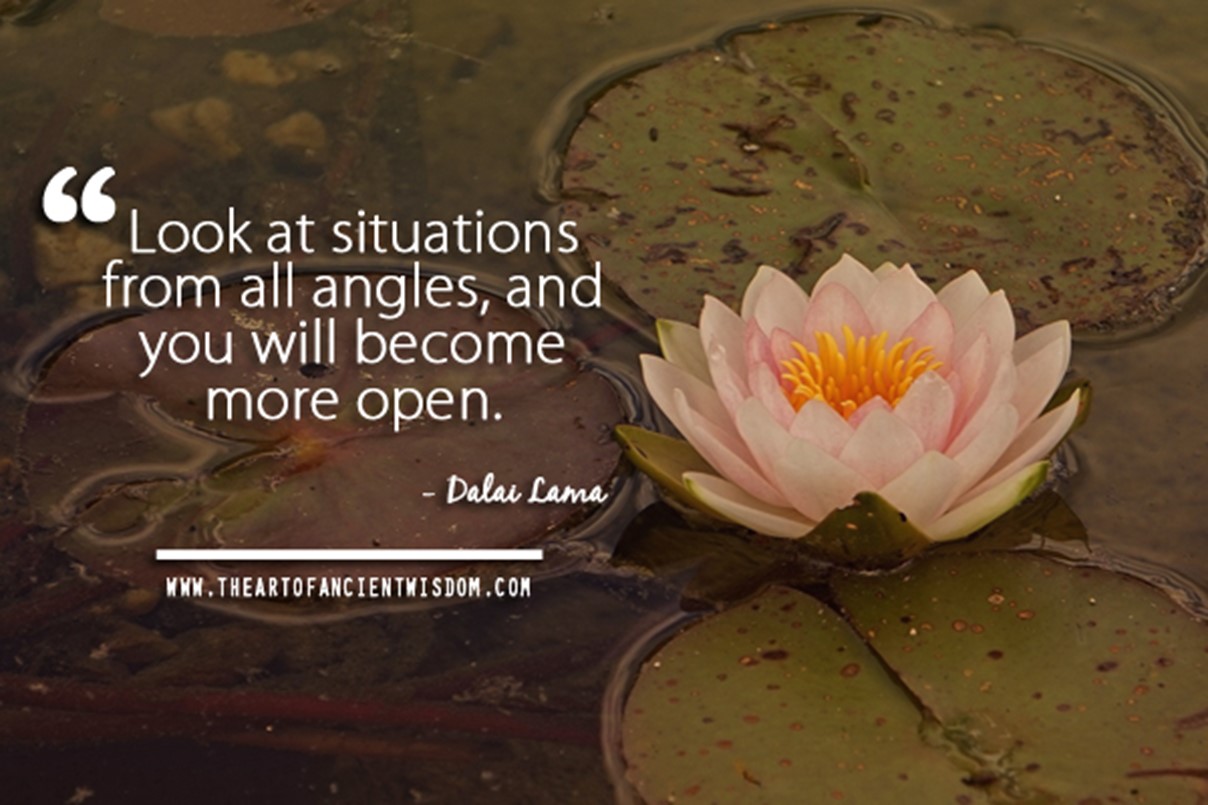
Mercedes, which is owned by Daimler, (DDAIF) ran afoul of China’s stance when it paired a quote attributed to the Dalai Lama with a photo of one of its luxury sedans on Instagram — a social media platform that is banned in China.
“Look at situations from all angles, and you will become more open,” the quote read.
The ad was posted on Monday and garnered nearly 90,000 likes before Mercedes deleted it the following day, according to a screenshot posted by Chinese state media.
The Global Times, a state-run newspaper that often strikes a nationalistic tone, criticized Mercedes, saying the company was quick to respond to the incident but shouldn’t make such mistakes in the first place.
Mercedes issued a statement in Chinese about the incident on Weibo, China’s equivalent of Twitter (TWTR), offering a “sincere apology” three separate times.
“We fully understand how it has hurt the feelings of people in the country, including our colleagues working in China, we sincerely apologize for this,” Mercedes said, adding that the post contained “extremely erroneous information.”
With its rising middle class and growing economic might, China is a key market for many global brands. Mercedes is no exception.
Of the nearly 2.4 million vehicles it sold worldwide last year, more than a quarter were snapped up by Chinese buyers.
A growing number of international companies have recently found themselves in hot water in China over politically sensitive issues.
Authorities last month blocked Marriott’s websites and apps for a week in China after it listed Tibet, Hong Kong, Macau and Taiwan as separate countries in its emails and apps. Marriott (MAR) apologized profusely, saying it respects and supports the sovereignty and territorial integrity of China.
Shortly after that, Delta (DAL) came under fire for similarly listing Taiwan and Tibet as countries. It said it was “an inadvertent error with no business or political intention” in its apology.
At the same time, the owner of European clothing brand Zara was chastised by regulators for listing Taiwan as a country and ordered to rectify the situation.
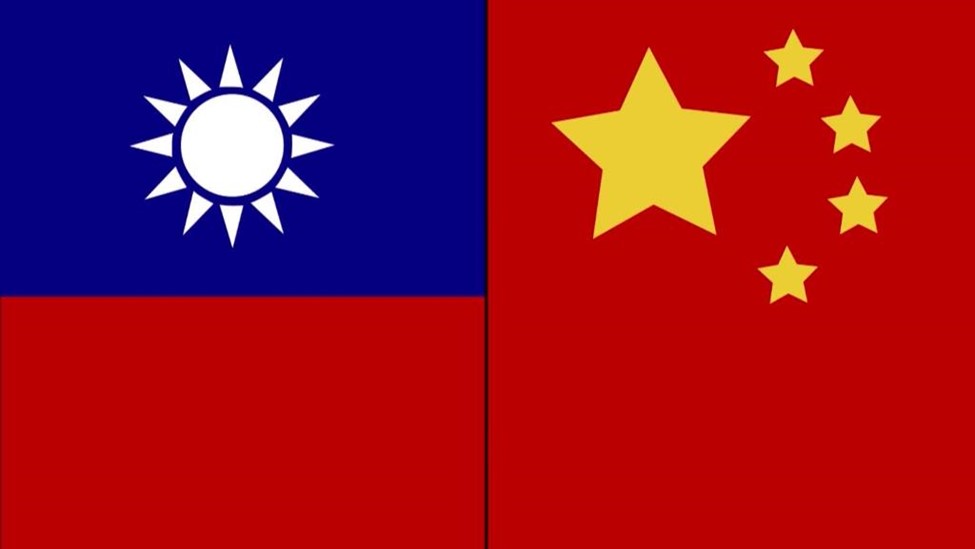
China and Taiwan — officially the People’s Republic of China and the Republic of China — separated in 1949 following the Communist victory on the mainland after a civil war.
They have been governed separately since, though a shared cultural and linguistic heritage mostly endures, with Mandarin spoken as the official language in both places. The government in Beijing has always maintained that Taiwan is a renegade province that is part of its sovereign territory.
Communist China sent troops into Tibet in 1950 to enforce its claim on the region and has controlled it since 1951 — though the central government in Beijing has faced repeated bouts of unrest from ethnic Tibetans unhappy over its rule.
— Nanlin Fang contributed to this report.
CNNMoney (Hong Kong) First published February 7, 2018: 2:43 AM ET
We look at Tibet issue from all angles to openly declare that Red China is an Evil Power, a Tyrant, an Aggressor, a Neocolonialist, an Expansionist, an Oppressor, and a Subjugator of Tibet.