Whole Legacy – The US Policy on Tibet is not Working
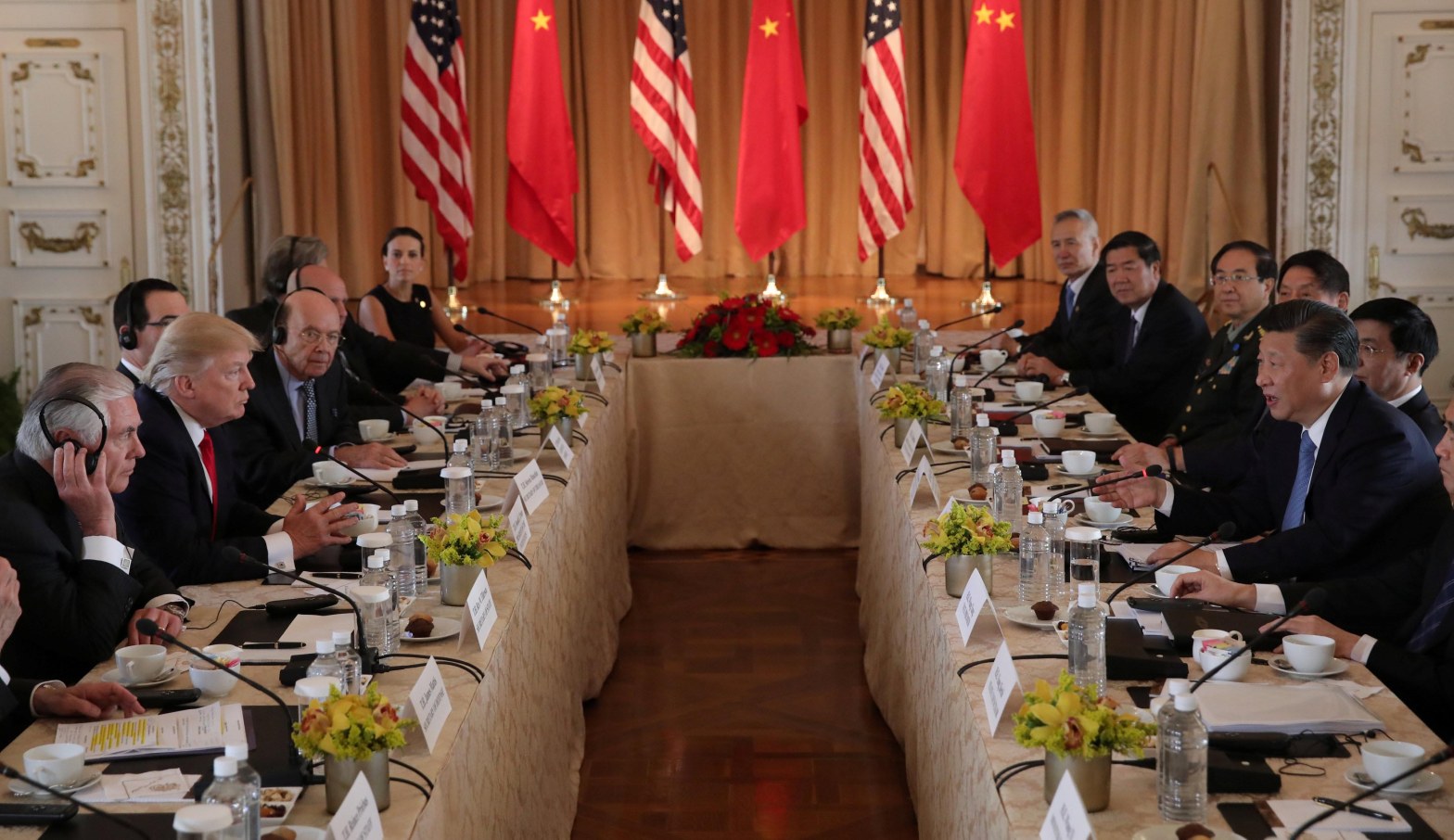
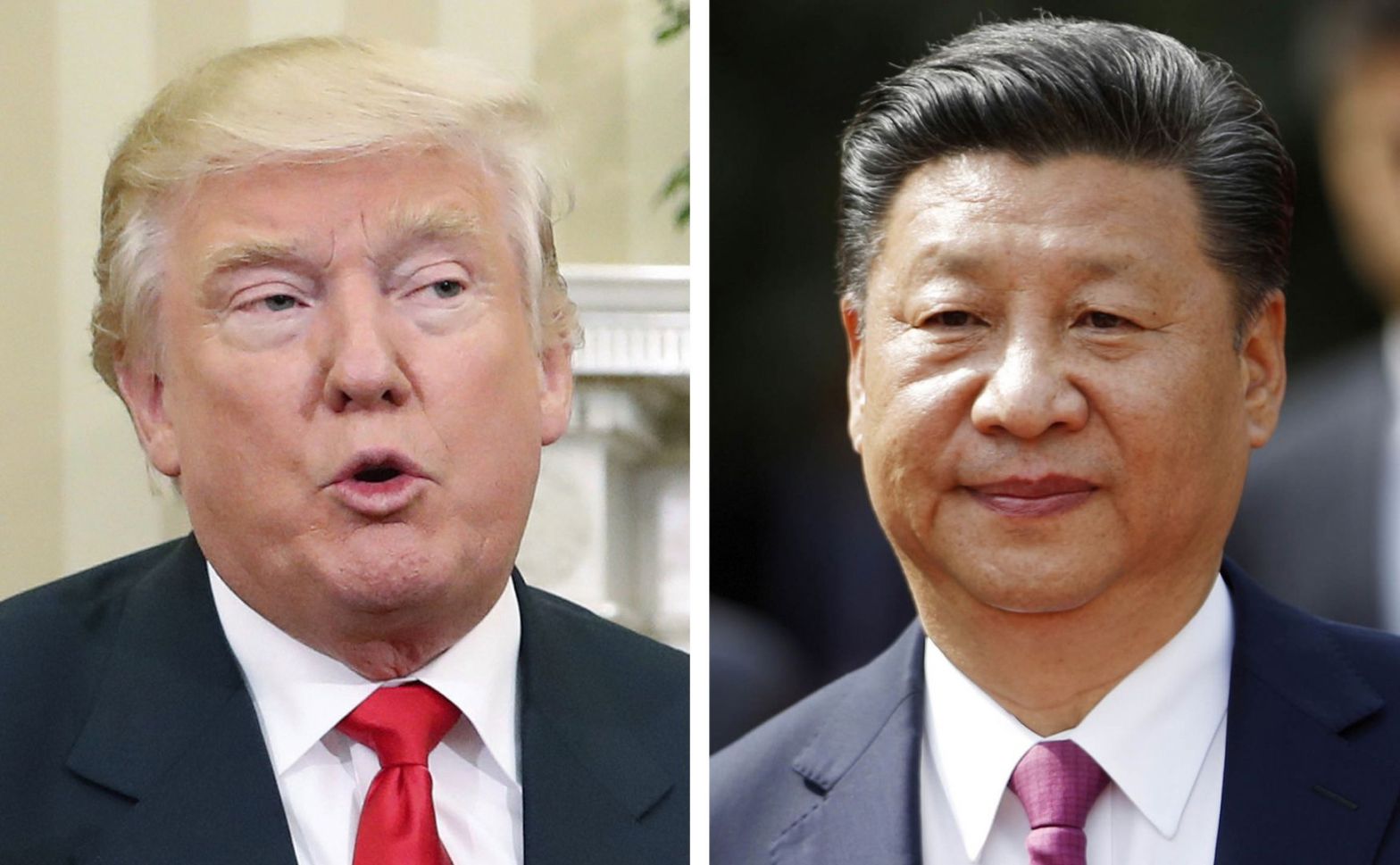
Cold War in Asia. US policy on Tibet is not working as Communism remains the ruling doctrine of China.US President Donald Trump (2nd L) holds a bilateral meeting with China’s President Xi Jinping (R) at Trump’s Mar-a-Lago estate in Palm Beach, Florida, US, on April 7, 2017. Photo: Reuters
US Policy on Tibet is not working. It will not work until and unless the US revises US Policy on Communist China. If Communism remains the ruling doctrine of China, no US Policy on Tibet will work. United States has no choice other than that of containing, engaging, confronting, and opposing China’s Communism.
Rudra Narasimham Rebbapragada
Special Frontier Force-Establishment 22-Vikas Regiment
DOOMED AMERICAN CHINA FANTASY. US CONGRESSMAN JIM McGOVERN, D-Mass., CALLS FOR NEW US POLICY ON TIBET.
FILE – Rep. Jim McGovern, D-Mass., speaks on Capitol Hill in Washington, May 7, 2014. McGovern is calling for a new U.S. policy on Tibet.
WASHINGTON —
Congressman Jim McGovern is calling for a new U.S. policy on Tibet, saying “the status quo isn’t working” and urging U.S. businesses to raise the issue of human rights in Tibet with Chinese business partners.
“It’s important that the U.S. have a policy toward Tibet because the status quo isn’t working,” McGovern, a Democrat from Massachusetts, told VOA Mandarin. “The Chinese government is just getting worse on a whole range of issues — jailing more and more Tibetans in Tibet and in the Tibetan region, so I think we need to re-assess. … We need to start walking the walk.”
US Congressman Calls for New US Policy on Tibet
China says the Himalayan region has been part of its realm for more than seven centuries and considers the Dalai Lama, the Tibetan spiritual leader, to be a dangerous separatist.
Many Tibetans insist they were essentially independent for most of that time and have protested what they regard as China’s heavy-handed rule since Chinese army units crossed the Yangtze River into eastern Tibet in 1950.
Congressional visit
Last month, McGovern traveled to Nepal and the north Indian hill town of Dharamsala, where the Dalai Lama has been in exile from Tibet for almost 60 years. The eight-person House delegation led by Rep. Nancy Pelosi, a Democrat from California, wanted to make China aware that they would not stand down in their campaign for human rights in Tibet.
Watch: US Congressman Calls for China to Show Flexibility on Tibet
The delegation, including a lone Republican, Wisconsin’s Jim Sensenbrenner, met with the Dalai Lama.
“His Holiness is not a separatist … but he wants to go home and so do his people,” McGovern said.
“China is one of the great powers of the world, they’re doing great things on climate change,” he said, adding he’s always puzzled that China “is paranoid over this monk, and paranoid over his message.”
McGovern is the sponsor of the Reciprocal Access to Tibet Act of 2017. He introduced the bipartisan bill in the House in April with Congressman Randy Hultgren, a Republican from Illinois. Marco Rubio, a Republican from Florida, and Tammy Baldwin, a Democrat from Wisconsin, introduced a companion bill in the Senate.
US Congressman Poses Reciprocal Access to Tibet Act
Travel in US
McGovern described his bill as saying, “we will treat you like you treat us” in that it calls for restricting where Chinese can visit in the United States in the same way China restricts United States officials, journalists and other citizens in Tibetan areas of the People’s Republic of China.
“If China wants its citizens and officials to travel freely in the U.S., Americans must be able to travel freely in China, including Tibet,” McGovern echoes on his website.
He also wants the U.S. to “publicly call on the Chinese government to restart the direct dialog that used to exist between the Chinese government and the Tibetan people. That needs to be restarted.”
McGovern said he wants the United States to appoint a special coordinator on Tibet as soon as possible to help elevate these issues.
“We’ve also talked about working with other countries and establishing what we call A Group of Friends on Tibet who would meet regularly and publicly to assess the situation in Tibet, and whether there’s been progress or not,” he added.
US Congressman: US Firms Can Raise Issue of Tibet With Chinese Counterparts
McGovern, who is co-chair of the bipartisan Tom Lantos Human Rights Commission, told VOA that while U.S. and Chinese companies profit from trading with each other, if U.S. companies “know what’s happening and you don’t say anything [about human rights in Tibet], then you’re complicit. China wants to do business with you. You want to do business with China but that doesn’t mean you can’t raise the issue of human rights.”
In the interview with VOA Mandarin, McGovern, who has been arrested three times protesting human rights violations in Sudan, said he is also concerned about human rights in Hong Kong, and China’s treatment of the ethnic minority group, the Uighurs.
‘We’re not perfect’
Listing hate crimes and attacks against members of the Muslim community, threats against Jewish community centers and hate crimes against the LGBTQ community, McGovern said he also worries about human rights in the United States, “so we’re not perfect.”
None of that, however, should lessen the attention paid to Tibet, McGovern said.
“I think the Chinese government thinks this issue will just go away. The Dalai Lama is in his 80s, and they think at some point he won’t be around and everybody will forget,” McGovern said.
But, he stressed, “we’re not going away, and this issue is not going away, and we’re going to keep on bringing it up over, and over, and over again until there’s some change.”
This story originated with VOA Mandarin.
DOOMED AMERICAN CHINA FANTASY – US HOUSE REPRESENTATIVE JIM McGOVERN CALLS FOR NEW US POLICY ON TIBET.US Policy on Tibet is not working. It will not work until and unless the US revises US Policy on Communist China. If Communism remains the ruling doctrine of China, no US Policy on Tibet will work. United States has no choice other than that of containing, engaging, confronting, and opposing China’s Communism.US Policy on Tibet is not working. It will not work until and unless the US revises US Policy on Communist China. If Communism remains the ruling doctrine of China, no US Policy on Tibet will work. United States has no choice other than that of containing, engaging, confronting, and opposing China’s Communism.
Whole Doom – Doomsayer of Doom DoomaWhole Dude – Whole Doom: Predicting the Sudden Downfall of The Evil Red Empire.
Excerpt: President Reagan suggests that the answers for all the problems men face are found within the covers of The Bible. The problems of man do not always need human interventions like insurrection, rebellion, warfare, and other forms of physical force that man uses to resolve conflicts. President Reagan shares a hope that human struggle for Freedom, Fairness, and Justice could be resolved without using bombs, rockets, armies, or military might. In the last book of The New Testament called ‘Revelation’ I discovered a hidden prophecy that graphically describes the downfall of The Evil Red Empire.
Doom Dooma Doomsayer predicts heavenly strike by asteroid – Beijing is doomedDoom Dooma Doomsayer predicts heavenly strike by asteroid – Beijing is doomed
At Establishment 22, Special Frontier Force, I am known as ‘Doom Dooma Doomsayer’ for I predict Evil Red Empire’s Downfall because of a cataclysmic event which she cannot ward off by paying a ransom.
Doom Dooma Doomsayer predicts heavenly strike by asteroid – Beijing is doomed
My predisposition is inherited at a place known as Doom Dooma, Assam, in Northeast India. I am not a prophet and I am not claiming that I am making a new prophetic revelation.
Doom Dooma Doomsayer predicts heavenly strike by asteroid – Beijing is doomed
By divine guidance, I received the opportunity to read the Book of Isaiah, and the Book of Revelation to learn that the term Evil is always associated with Calamity, Disaster, Downfall, Catastrophe, Cataclysm, Trouble, and Woe for evil action always brings its own punishment as a consequence. Evildoer is judged, condemned, and is punished. Evil moves towards its own end of self-destruction.
Doom Dooma Doomsayer predicts heavenly strike by asteroid – Beijing is doomed
The term ‘apocalypse’ means unveiling or revelation; it depicts destruction of ‘Evil’ and triumph of Good. Apocalypse often refers to a striking disclosure of something not previously realized.
Doom Dooma Doomsayer predicts heavenly strike by asteroid – Beijing is doomed
The term ‘prophecy’ means declaration or prediction of something under the influence of divine guidance. In Bible, the term ‘Prophet’ describes person who speaks for God as though under divine guidance, and Prophet often predicts future events.
Doom Dooma Doomsayer predicts heavenly strike by asteroid – Beijing is doomed
The term ‘Doom’ means ‘what is laid down’,decree, judgment, sentence of condemnation, destiny, tragic fate, ruin, and to ordain as penalty. I am named ‘Doomsayer’ for I am predisposed to predicting catastrophe or disaster, calamity, or ‘The Deluge’.
Doom Dooma Doomsayer predicts heavenly strike by asteroid – Beijing is doomed
Evil Red Empire, Red Dragon, Red China embraced self-destruction for her evil actions. Hence, with no further doubt, I pronounce, “Beijing Doomed.”
Doom Dooma Doomsayer predicts heavenly strike by asteroid – Beijing is doomed
I am not predicting a random, spontaneous, purposeless strike or impact by an asteroid. I am predicting Heavenly Strike that is Precise, Selective, Guided, Goal-Oriented and Purposeful for it delivers Justice while destroying Evil.
Doom Dooma Doomsayer predicts heavenly strike by asteroid – Beijing is doomed
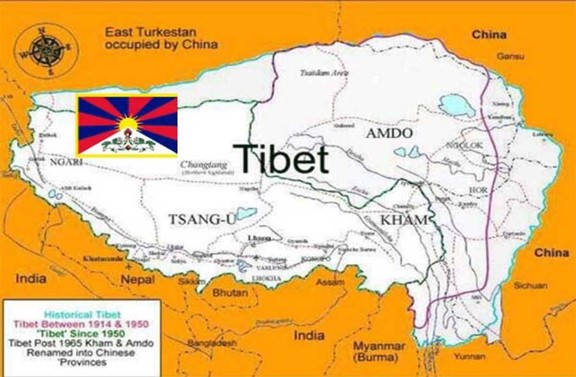
TIBET AWARENESS – THE HISTORY OF UNREST IN TIBET. Most of the self-immolations and the worst cases of historical repression are in the same spots in the Tibetan provinces near China.
From 1947, both Tibet and India anticipated Trouble in Tibet while the Communists came into Power in mainland China forcing Chiang Kai-shek’s Nationalists to retreat to Formosa or Taiwan. During 1945 to 1949, Tibet was unwilling to fully embrace the offer of the US Friendship hoping Red China will respect Tibet’s Policy of Isolationism or Neutralism. Trouble in Tibet speaks of the lack of Intelligence capabilities; Tibet’s Trouble describes Tibet’s Intelligence failure; Tibet failed to know the Enemy’s Mind and it was a total Intelligence Disaster. For Tibet failed to provide the necessary Intelligence, the response of India and the United States was inadequate from the beginning of Tibet’s Trouble.
Rudra Narasimham Rebbapragada Ann Arbor, MI 48104-4162 USA Special Frontier Force-Establishment 22-Vikas Regiment
The beginning of the Cold War in Asia in 1949 with the Communist takeover of mainland China.
THE NEW YORK TIMES
A WRITER’S QUEST TO UNEARTH THE ROOTS OF TIBET’S UNREST
SINOSPHERE
By LUO SILING AUG. 14, 2016
Tibet Awareness – The History of Tibet’s Unrest
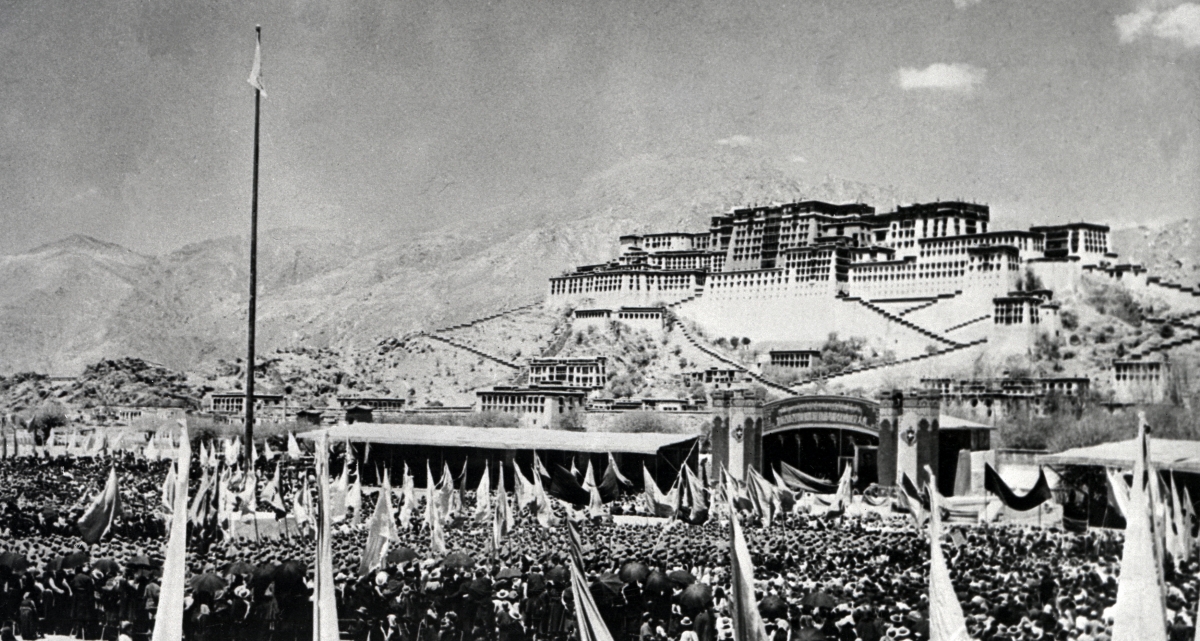
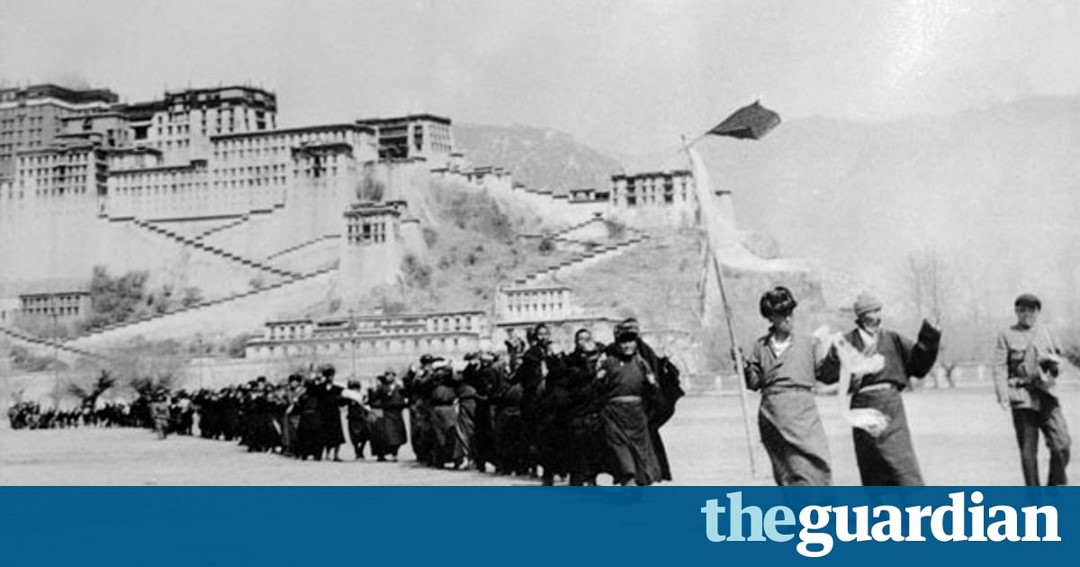
On March 10, 1959, several thousand Tibetans, fearing that the Chinese might abduct the Dalai Lama, gathered at the Norbulingka summer palace to protect the Tibetan spiritual leader. Credit The Office of Tibet, Washington, D.C.
Generations of Chinese have been taught that the Tibetan people are grateful to China for having liberated them from feudalism and serfdom, and yet Tibetan protests, including self-immolations, continue to erupt against Chinese rule. In ‘TIBET IN AGONY: LHASA 1959’,to be published in October by Harvard University Press, the Chinese-born writer Jianglin Li explores the roots of Tibetan unrest in China’s occupation of Tibet in the 1950s, culminating in March 1959 with the Peoples Liberation Army’s shelling of Lhasa and the Dalai Lama’s flight to India. In an interview, she shared her findings.
You’ve drawn parallels between the killings in Lhasa in 1959 and the 1989 military crackdown on pro-democracy protests in Beijing.
China was better able to cover up its actions in Lhasa in 1959, before the advent of instantaneous global media coverage, but the two have much in common. In both, the Chinese Communists used military might to crush popular uprisings, and both involved egregious massacres of civilians. But for Tibetans, what sets the Lhasa massacre apart is their bitter sense of China as a foreign occupying power. The Tibetans were subjugated by force, and they are still protesting today.
What happened in 1959?
The crisis began on the morning of March 10, when thousands of Tibetans rallied around the Dalai Lama’s Norbulingka palace to prevent him from leaving. He had accepted an invitation to a theatrical performance at the People’s Liberation Army headquarters, but rumors that the Chinese were planning to abduct him set off general panic. Even after he canceled his excursion to mollify the demonstrators, they refused to leave and insisted on staying to guard his palace. The demonstrations included a strong outcry against Chinese rule, and China promptly labeled them an armed insurrection, warranting military action. About a week after the turmoil began, the Dalai Lama secretly escaped, and on March 20, Chinese troops began a concerted assault on Lhasa. After taking over the city in a matter of days, inflicting heavy casualties and damaging heritage sites, they moved quickly to consolidate control over all Tibet.
Why did the Dalai Lama flee to India?
Mainly he hoped to prevent a massacre. He thought the crowds around his palace would disperse once he left, robbing the Chinese of a pretext to attack. In fact, not even his departure could have prevented the blood bath that ensued, because Mao Zedong had already mobilized his troops for a final showdown in Tibet.
Jianglin Li Credit Ding Yifu
When the Dalai Lama left, he didn’t plan to go as far as India. He hoped to return to Lhasa after negotiating peace with the Chinese from the safety of the Tibetan hinterlands. But once he heard about the destruction in Lhasa several days into his journey he realized that plan was no longer feasible.
Why were the Tibetans afraid the Chinese would abduct the Dalai Lama?
For Tibetans, he is a sacred being, to be protected at all costs. He had traveled to Beijing to meet Mao in 1954 without setting off mass protests. By 1959, however, tensions had risen, and Tibetans had reason to fear the Chinese theater invitation might be a trap.
The trouble actually started in the Tibetan regions of nearby Chinese provinces Yunnan, Sichuan, Qinghai and Gansu, home to about 60 percent of the Tibetan population. When the Chinese Communists forced collectivization on these Tibetan nomads and farmers in the latter half of the 1950s, the results were catastrophic. Riots and rebellions spread like wildfire. The Communists responded with military force, and there were terrible massacres. Refugees streamed into Tibet, bringing their horror stories into Lhasa.
Some of the most frightening reports had to do with the disappearances of Tibetan leaders in Sichuan and Qinghai. It was party policy to try to pre-empt Tibetan rebellion by luring prominent Tibetans from their communities with invitations to banquets, shows or study classes from which many never returned. People in Lhasa thought the Dalai Lama could be next.
You’ve documented the massacres of Tibetans in the Chinese provinces in the late 1950s.
In 2012, I drove across Qinghai to a remote place an elderly Tibetan refugee in India had told me about: a ravine where a flood one year brought down a torrent of skeletons, clogging the Yellow River. From his description, I identified the location as Drongthil Gully, in the mountains of Tsolho Tibetan Autonomous Prefecture. I had read in Chinese sources about major campaigns against Tibetans in that area in 1958 and 1959. About 10,000 Tibetans, entire families with their livestock had fled to the hills there to escape the Chinese. At Drongthil Gully, the Chinese deployed six ground regiments, including infantry, cavalry and artillery, and something the Tibetans had never heard of: aircraft with 100-kilogram bombs. The few Tibetans who were armed, the head of a nomad household normally carried a gun to protect his herds shot back, but they were no match for the Chinese, who recorded that more than 8,000 rebel bandits were annihilated, killed, wounded or captured in these campaigns.
I wondered about the skeletons until I saw the place for myself, and then it seemed entirely plausible. The river at the bottom of the ravine there flows into a relatively narrow section of the Yellow River. In desolate areas like this, Chinese troops were known to withdraw after a victory, leaving the ground littered with corpses.
Tibet Awareness – The History of Tibet’s Unrest.Credit Harvard University Press
The Tibetans in Sichuan, Yunnan, Gansu and Qinghai were already under nominal Chinese administration when the Communists took over in 1949. How was Tibet annexed?
It was Mao’s goal from the moment he came to power. Tibet is strategically located, he said in January 1950, and we must occupy it and transform it into a people’s democracy.
He started by sending troops to invade Tibet at Chamdo in October 1950, forcing the Tibetans to sign the 17-Point Agreement for the Peaceful Liberation of Tibet, which ceded Tibetan sovereignty to China. Next, the People’s Liberation Army marched into Lhasa in 1951, at the same time in disregard of the Chinese promise in the agreement to leave the Tibetan sociopolitical system intact smuggling an underground Communist Party cell into the city to build a party presence in Tibet.
Meanwhile, Mao was preparing his military and awaiting the right moment to strike. Our time has come, he declared in March 1959, seizing on the demonstrations in Lhasa. After conquering the city, China dissolved the Tibetan government and under the slogan of simultaneous battle and reform imposed the full Communist program throughout Tibet, culminating in the establishment of the Tibet Autonomous Region in 1965.
How did Mao prepare his military for Tibet?
Mao welcomed the campaigns to suppress minority uprisings within China’s borders as practice for war in Tibet. There were new weapons for his troops to master, to say nothing of the unfamiliar challenges of battle on the Qinghai-Tibetan Plateau.
The new weapons included 10 Tupolev TU-4 bombers, which Stalin gave Mao in 1953. Mao tested them in airstrikes at three Tibetan monasteries in Sichuan, starting with Jamchen Choekhor Ling, in Lithang. On March 29, 1956, while thousands of Chinese troops fought Tibetans at the monastery, two of the new planes were deployed. The Tibetans saw giant birds approach and drop some strange objects, but they had no word for airplane, or for bomb. According to Chinese records, more than 2,000 Tibetans were annihilated in the battle, including civilians who had sought refuge in the monastery.
Tibet Awareness – The History of Tibet’s Unrest. His Holiness the 14th Dalai Lama met with Chairman Mao Zedong in 1954. Tibet failed to Know its Enemy. Intelligence Disaster.
The Dalai Lama meeting with Mao Zedong in Peking on Oct. 13, 1954. Credit Associated Press
Mao used his most seasoned troops in Tibet. Gen. Ding Sheng and his 54th Army, veterans of the Korean War, had gained experience suppressing minority uprisings in Qinghai and Gansu in 1958 before heading to Tibet in 1959.
How often was the Chinese military used against Tibetans, and how many Tibetan casualties were there?
We don’t have an exact tally of military encounters, since many went unrecorded. My best estimate based on official Chinese materials, public and classified, is about 15,000 in all Tibetan regions between 1956 and 1962.
Precise casualty figures are hard to come by, but according to a classified Chinese military document I found in a Hong Kong library, more than 456,000 Tibetans were annihilated from 1956 to 1962.
How does this history relate to recent Tibetan self-immolations?
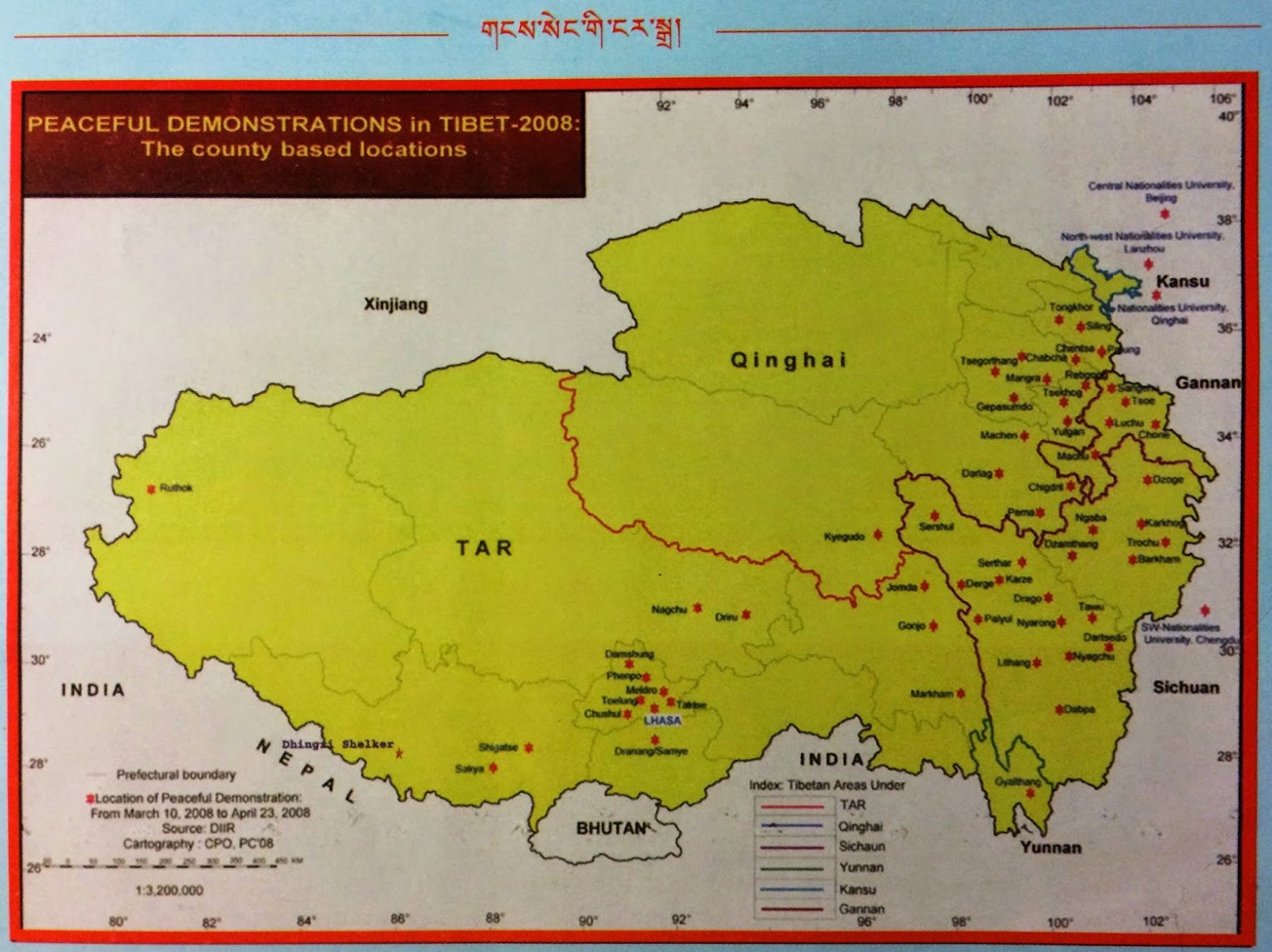
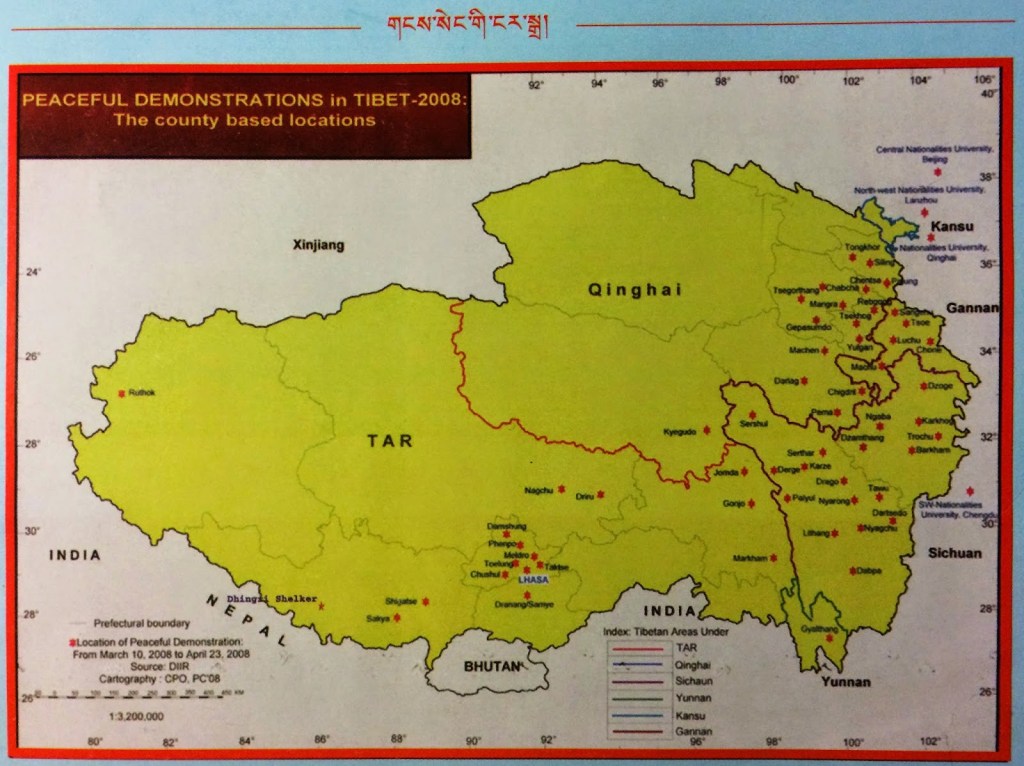
I think they are a direct consequence. I’ve compared a map of the self-immolations with my map of Chinese crackdowns on Tibetans between 1956 and 1962, and there’s a striking correlation. Most of the self-immolations and the worst cases of historical repression are in the same spots in the Tibetan provinces near China.
How did you get interested in this?
Like everyone in China, I was raised on the party line. I never thought to question it until I came to the U.S. for graduate study in 1988 and discovered how differently people here think of Tibet.
Since 2007, I’ve been making annual research trips to Asia, where I have recorded interviews with hundreds of Tibetan refugees in India and Nepal, including the Dalai Lama and his brother. In 2012, I explored Tibetan historical sites in Sichuan, Qinghai, Gansu and Yunnan and interviewed people there. I crosscheck what I learn in the field with written data: official annals of the Tibetan regions, Chinese documents, and Tibetan and Chinese memoirs.
How has the Chinese government responded to your work?
The only official response to my books has been to ban them, but I’ve been denied a visa since my trip to sensitive Tibetan regions in 2012. This has been painful because my 84-year-old mother still lives in China.
Insight, analysis and conversation about Chinese culture, media and politics.
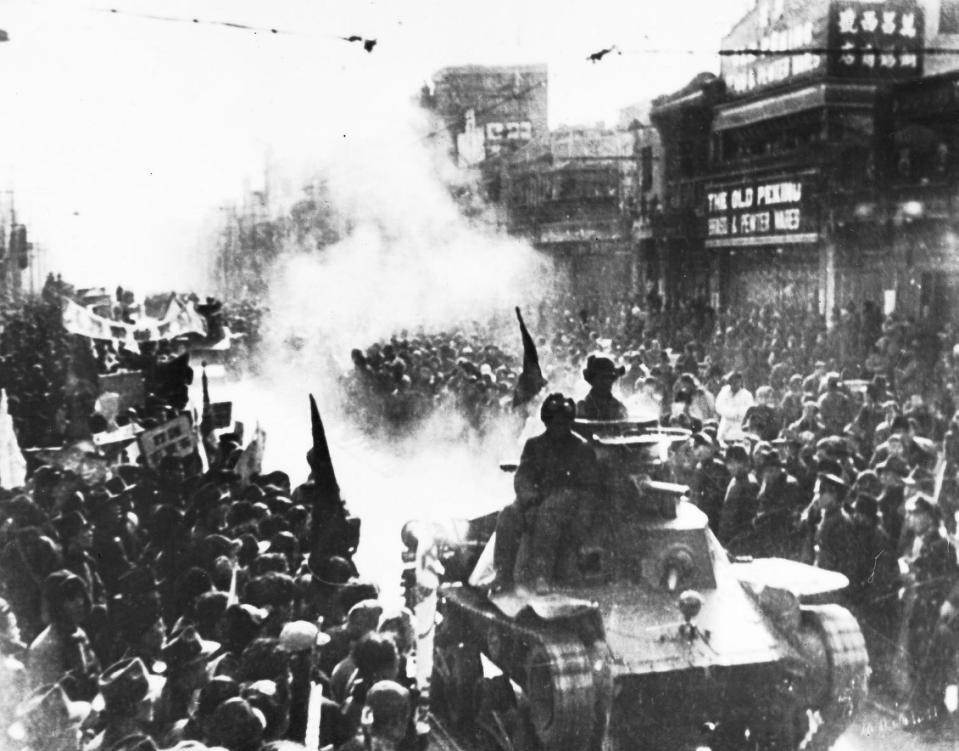
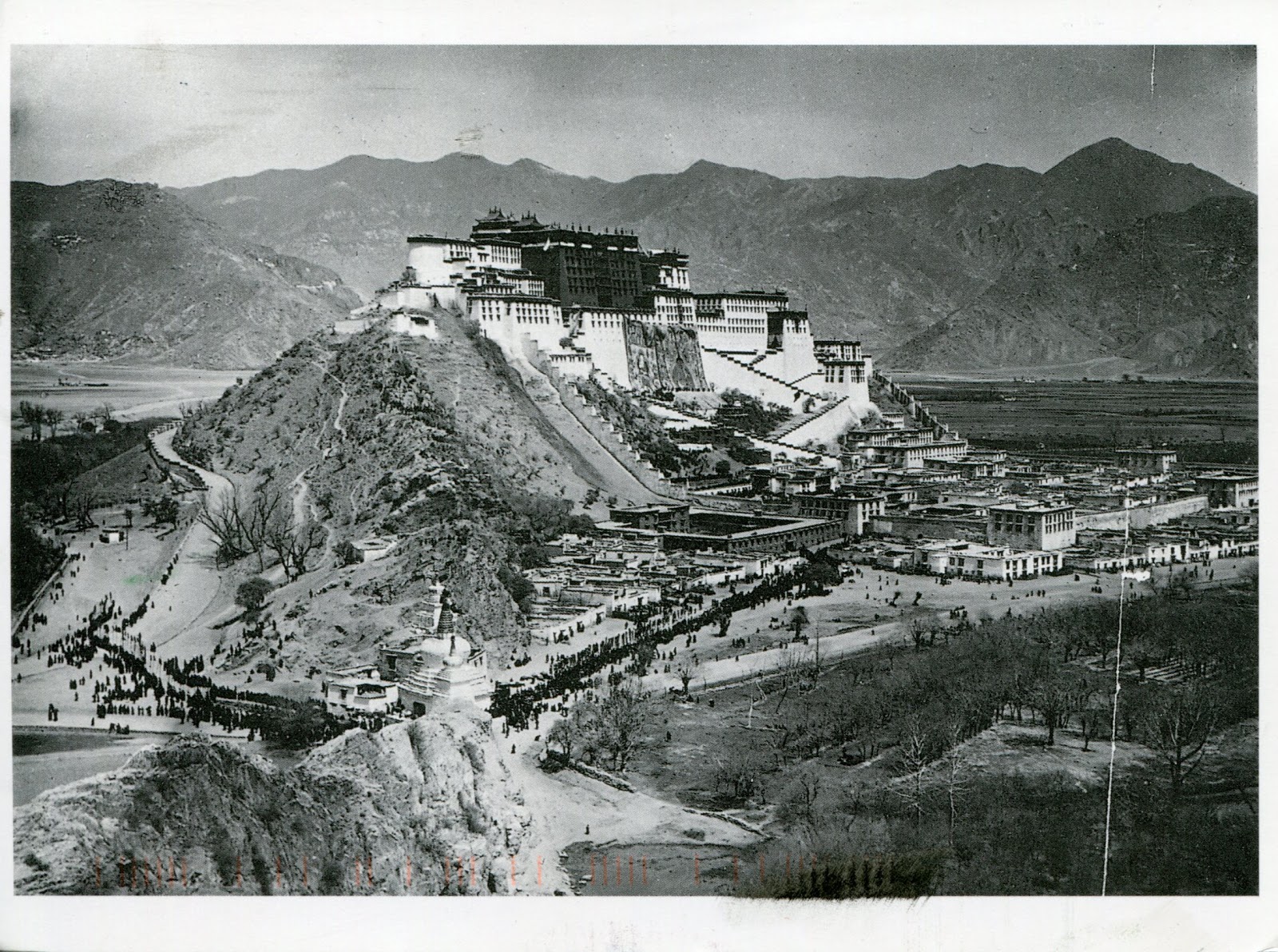
FILE – In this May 2, 1949 file photo, a column of Chinese Communist light tanks enter the streets of Peking, which are filled with people watching the conquerors pass. In 1949, Chiang Kai-shek’s Nationalists lost the Chinese civil war to Mao Zedong’s Communists and retreat from the Chinese mainland to the island of Taiwan. The Republic of China, however, retained China’s Security Council seat with the key backing of the U.S. in order to restrain Mao’s ally, the Soviet Union, as the Cold War unfolds. (AP Photo, File)TIBET AWARENESS – THE HISTORY OF TIBET’S UNREST. LHASA, MARCH 10, 1959.TIBET AWARENESS – THE HISTORY OF TIBET’S UNREST. POTALA PALACE, LHASA, TIBET.TIBET AWARENESS – HISTORY OF TIBET’S UNREST – TIBETAN NATIONAL UPRISING DAY, MARCH 10, 1959.Most of the self-immolations and the worst cases of historical repression are in the same spots in the Tibetan provinces near China.Tibet Awareness – History of Tibet’s Unrest. Most of the self-immolations and the worst cases of historical repression are in the same spots in the Tibetan provinces near China.Most of the self-immolations and the worst cases of historical repression are in the same spots in the Tibetan provinces near China.Most of the self-immolations and the worst cases of historical repression are in the same spots in the Tibetan provinces near China.
Tibet Equilibrium – Balance between Natural Freedom and Political Oppression
Tibet Equilibrium is Balance Between Nature and Political Power.
In my analysis, the Tibetan Resistance Movement primarily aims at achieving the Balance between Natural Freedom and Political Power of any entity that rules over the lives of Tibetan People. For centuries, on account of Tibet Equilibrium, Tibetans enjoyed independent lifestyles despite military conquests of Tibet by Yuan and Manchu Dynasties of China. Red China’s military invasion, military occupation and colonization of Tibet impose severe strains on Nature as well as all denizens of Tibetan Plateau.
Tibetans are left with no choice other than that of Resistance for Red China rules over Tibet with Iron Fist severely undermining the experience of Natural Balance, Natural Harmony, and Natural Tranquility, the gifts of Nature and Natural Conditions presiding over Tibetan Existence from the beginning of its long History.
Tibet Equilibrium can be defined as the Balance Between Nature and Political Power.
Nik Fes – Sep 17, 2018
Tibet Equilibrium can be defined as the Balance Between Nature and Political Power.
The Chinese Tibet Autonomous Region wants to put environmental protection measures before the development of tourism. Nature and tourism need to coexist in balance.
The tourism industry in the region has developed rapidly in recent years and has become a growth driver, said Qizhala, the chairman of the local government.
Tourism contributes to Tibet’s GDP with at least 30%, according to him. The number of tourists from home and abroad arriving in Tibet annually is expected to reach 30 million, compared to 10 million in 2012 and 20 million in 2015.
Despite the incredible tourism book, the local government has always emphasized environmental protection. Experts have also advised balancing environmental protection, nature and tourism. Efforts are being made to prevent “blind development and overdevelopment,” as described by Qizhala.
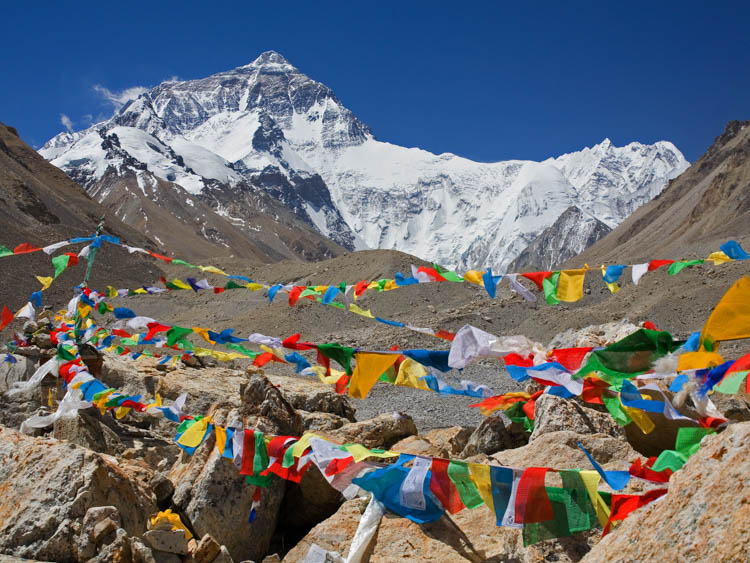
The region plans to reduce the number of tourists who want to visit vantage points near glaciers, such as Qomolangma mountain. A cap on visits to Mount Qomolangma is set to be established and implemented in 2019.
“We always have to keep an eye on the minimum standard of environmental protection,” Qizhala said. Since 2009, a total of 9.6 billion yuan ($1.4 billion) has been invested in environmental protection in the region. Last year alone, 1.14 billion yuan was invested.
In order to protect wildlife better, a mechanism was introduced in 2015 to provide compensation to farmers and shepherds who have suffered wildlife losses. So far, 85 million yuan has been spent on it.
Regarding the future, Yao Tandong, director of the Institute for the Qinghai-Tibet Plateau suggests that more national parks be built to make better use of tourism resources and protect the environment.
The region is considering setting up four national parks. These include Tibet’s largest lake, the mountain Qomolangma, the Yarlung Zangbo, and the earth forest of the Kingdom of Guge. Once these scenic national parks have been established, consistent planning for their protection can be implemented to minimize the environmental damage caused by tourism, Qizhala concluded.
Tibet Equilibrium is Balance Between Nature and Political Power.
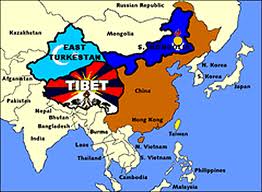
The spread of Communism to mainland China in 1949 makes ‘Tibet Equilibrium’ core policy issue of all other countries. In terms of size, and geographical location, Tibet occupies unique position as ‘Balancer’ to maintain regional stability.
The spread of Communism to mainland China in 1949 makes ‘Tibet Equilibrium’ core policy issue of all other countries. In terms of size, and geographical location, Tibet occupies unique position as ‘Balancer’ to maintain regional stability.
THE EVIL RED EMPIRE – RED CHINA – NEOCOLONIALIST.
Rudra Narasimham Rebbapragada
Special Frontier Force-Establishment 22-Vikas Regiment
TIBET AWARENESS – RED CHINA ON A SLIPPERY SLOPE: RED CHINA TRIED EVERY TRICK AND NOW HAS NO CHANCE TO SAVE HERSELF FROM DOWNFALL.
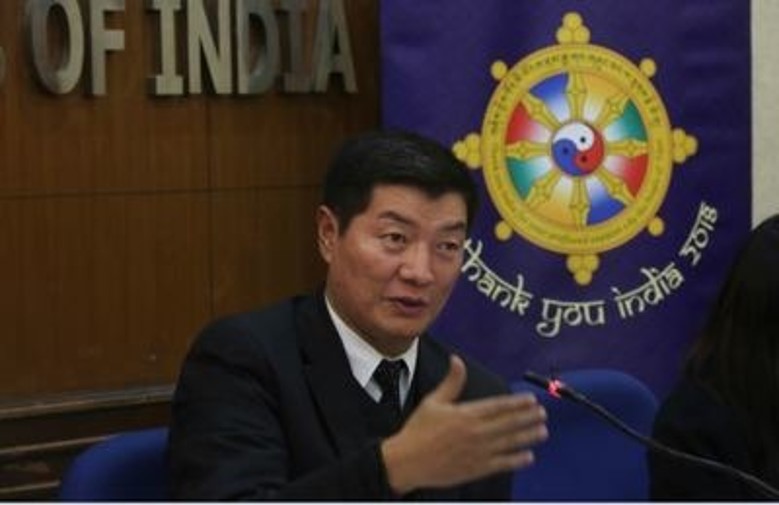
MAKE TIBET CORE ISSUE OF YOUR POLICY TIBETAN GOVERNMENT-IN-EXILE PRESIDENT TO INDIA
President of the Tibetan government-in-exile Lobsang Sangay
NEW DELHI: President of the Tibetan government-in-exile Lobsang Sangay today appealed to India to make Tibet a “core” issue of its policy.
Inaugurating a year-long ‘Thank You India’ campaign marking 60 years of Chinese “occupation” of Tibet and the Dalai Lama coming to India, the president of the Central Tibetan Administration (CTA) said the security of India “partly depended” on the “situation” in Tibet.
“We thank India for its support in past six decades to our cause and also appeal to it to support us politically and make Tibet its core issue,” he said.
Asserting that the Tibetans are in India because of the support of Indian government and people, Sangay said, “We are a success story and it has been a great journey, thanks to India and its people.”
The security and stability in China as well as India depends on the safety and stability in Tibet, he said.
Advocating good relations between India and China, Sangay, however, suggested his host country to be “cautions” of China’s expansionist policy.
“Sixty years back, we lost our country to Chinese occupation. We do not want other countries to face the same consequences,” he said.
Replying to a question on Doklam, the CTA president said that going to the United Nations could be one option for Bhutan who lays claim on the region where Chinese and Indian armies have faced a stand-off.
Sangay said that the ‘Thank You India’ campaign symbolizes gratitude of the Tibetan people towards their host country and it will begin with a interfaith meeting, which will be attended by the Dalai Lama at Rajghat on March 31 followed by a public event at Thyagraj stadium on April 1.
The year-long campaign will include events in more than 20 cities, including Bengaluru and Shimla, and will have initiatives like ‘Little Tibet festival’, ‘Green India’, ‘Healthy India’, ‘Feed the Hungry’ and ‘Clean India’.
The spread of Communism to mainland China in 1949 makes ‘Tibet Equilibrium’ core policy issue of all other countries. In terms of size, and geographical location, Tibet occupies unique position as ‘Balancer’ to maintain regional stability.
Defining America’s Mission – Reagan Doctrine ignores the Threat posed by Red ChinaDefining America’s Mission – Reagan Doctrine ignores the Threat posed by Red China
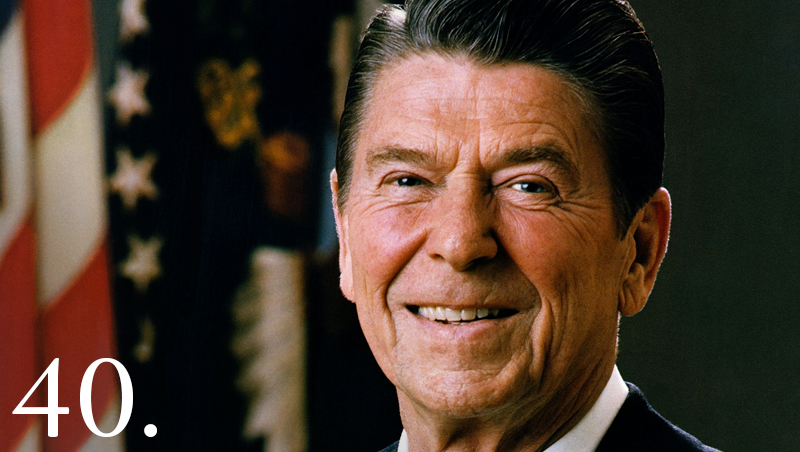
Special Frontier Force which represents The Tibetan Resistance Movement to contain, to resist, to engage, to counteract, to “Roll-Back” the Spread of Communism, asks Americans to define their Mission and to restore Tibetan Equilibrium using the guidance provided by ‘The Reagan Doctrine of 1985’. Using President Reagan’s words, I ask Americans to do what is “Morally Right.” Using the clue provided by President Reagan, I describe Red China as “the Evil Red Empire.”
Defining America’s Mission – Reagan Doctrine ignores the Threat posed by Red China
February 06, 1985. THE Reagan Doctrine
Defining America’s Mission – Reagan Doctrine ignores the Threat posed by Red China
The “Reagan Doctrine” was used to characterize the Reagan administration’s (1981-1988) policy of supporting anti-Communist insurgents wherever they might be. In his 1985 State of the Union address, President Ronald Reagan called upon Congress and the American people to stand up to the Soviet Union, what he had previously called the “Evil Empire”:
Reagan began his foreign policy comments with the dramatic pronouncement that, “Freedom is not the sole prerogative of a chosen few; it is the universal right of all God’s children.” America’s “mission” was to “nourish and defend freedom and democracy.” More specifically, Reagan declared that, “We must stand by our democratic allies. And we must not break faith with those who are risking their lives—on every continent, from Afghanistan to Nicaragua—to defy Soviet-supported aggression and secure rights which have been ours from birth.” He concluded, “Support for freedom fighters is self-defense.”
Breaking with the doctrine of “Containment,” established during the Truman administration—President Ronald Reagan’s foreign policy was based on John Foster Dulles’ “Roll-Back” strategy from the 1950s in which the United States would actively push back the influence of the Soviet Union. Reagan’s policy differed, however, in the sense that he relied primarily on the overt support of those fighting Soviet dominance. This strategy was perhaps best encapsulated in NSC National Security Decision Directive 75. This 1983 directive stated that a central priority of the U.S. in its policy toward the Soviet Union would be “to contain and over time reverse Soviet expansionism,” particularly in the developing world. As the directive noted:
“The U.S. must rebuild the credibility of its commitment to resist Soviet encroachment on U.S. interests and those of its Allies and friends, and to support effectively those Third World states that are willing to resist Soviet pressures or oppose Soviet initiatives hostile to the United States, or are special targets of Soviet policy.”
To that end, the Reagan administration focused much of its energy on supporting proxy armies to curtail Soviet influence. Among the more prominent examples of the Reagan Doctrine’s application, in Nicaragua, the United States sponsored the contra movement in an effort to force the leftist Sandinista government from power. And in Afghanistan, the United States provided material support to Afghan rebels—known as the mujahadeen—helping them end Soviet occupation of their country.
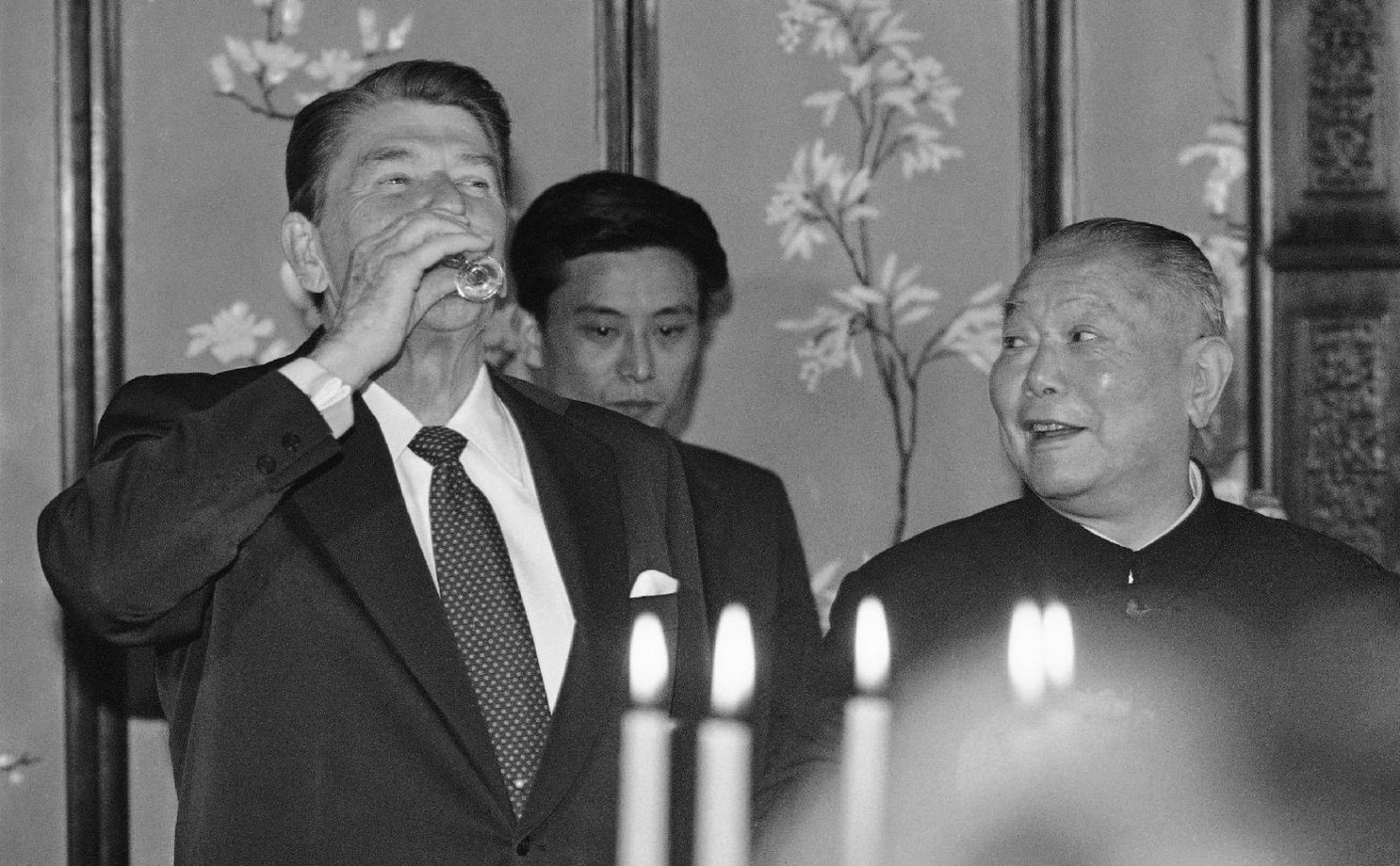
Defining America’s Mission – Reagan Doctrine ignores the Threat posed by Red ChinaDefining America’s Mission – Reagan Doctrine ignores the Threat posed by Red ChinaSPECIAL FRONTIER FORCE VS THE EVIL RED EMPIRE: APRIL 26, 1984. US PRESIDENT RONALD REAGAN WITH EVIL CHINA’S PRESIDENT LI XIANNIAN IN PEKING. RED CHINA IS MORE EVIL AS COMPARED TO RED SOVIET UNION IN 1984.
Special Frontier Force – The Problem of Espionage:
Special Frontier Force-The Problem of Espionage: The Chinese military philosopher in a military treatise known as PING-FA(The Art of War) written c. 400 BC mentions the use of secret agents and the importance of good intelligence.Special Frontier Force-The Problem of Espionage: Establishment No. 22 or Special Frontier Force represents a military alliance/pact between the United States, India, and Tibet to confront the military threat posed by the Communist Red Dragon’s occupation of Tibet since 1950. It is no surprise that at Special Frontier Force we have constantly experienced the problem of espionage orchestrated by the People’s Republic of China.
To obtain knowledge of the enemy’s intentions intelligence systems have been in use from ancient times. The concept of intelligence is not new. The military treatise “Ping-Fa”(The Art of War) written c. 400 BC by the Chinese philosopher Sun-Tzu mentions the use of secret agents and the importance of good intelligence. The intelligence service of the People’s Republic of China is known as the Social Affairs Department. The term espionage describes the process of obtaining information using spies, secret agents, and involves the use of illegal monitoring devices. At Establishment No. 22 or Special Frontier Force the evidence for espionage conducted by the People’s Republic of China is revealed by the photo images obtained by China’s spies and secret agents. After an investigation, the Department of Security of Central Tibetan Administration had dismissed from Service its top military leader/Political Leader/Dapon Radug (or Ratuk) Ngawang during 1976. Another Senior Political Leader Jamba Kalden had voluntarily retired from Service during 1977 after admitting that he had failed to stop or prevent the acts of espionage. It is very interesting to mention that Dapon Ratuk Ngawang had actually escorted His Holiness the 14th Dalai Lama on his way to India after the failed National Uprising Day (March 10, 1959 ) in Lhasa, Tibet. Ratuk Ngawang, is currently 85-years old (in 2013, the original date of this article), is not formally charged for any crime or illegal activity by the Government of India or Tibetan Government-in-Exile. After his retirement, he was permitted to live in India in the Capital City of New Delhi and he draws a modest amount of pension for the years he spent in Service. I had worked with him at Establishment No. 22/Special Frontier Force from September 1971 to December 1974. His wife was in charge of the camp where we trained the female paratroopers of SFF. She released some of the prohibited, illegal photo images captured by the enemy agents sheltered by Ratuk Ngawang. I am fully convinced that he supported espionage activity at my military organization.
Special Frontier Force – The Problem of Espionage.January 21 is Squirrel Appreciation Day. My reflections on “Chakrata Karma” with the help of a Squirrel Story. During January 1974, there was an attempt on my life at the Military Hospital Wing, Chakrata. This type of Charcoal burner was placed in my duty room in an attempt to poison me. I suspect the involvement of Political Leader Ratuk Ngawang and his wife who could have used a Tibetan female nurse to place this burner in the small duty room.Special Frontier Force-The Problem of Espionage: Chinese Intelligence correctly guessed that the 14th Dalai Lama had escaped from Lhasa to seek asylum in India after the failed Day of National Uprising in Tibet. Peking(Beijing) had announced that the 14th Dalai Lama had arrived in India, a day before New Delhi could make a formal announcement. Chinese intelligence always remained ahead of the United States, India, and Tibet.Special Frontier Force-The Problem of Espionage: 54 years ago, His Holiness the 14th Dalai Lama had arrived in India on March 31, 1959. A Guard of Honor was presented by the Assam Rifles after he crossed into India’s North East Frontier Agency(Arunachal Pradesh) at Chutangmu/Khenzimani in TAWANG sector. The Chinese intelligence pursued him constantly monitoring his movements and activities all these years.Special Frontier Force-The Problem of Espionage: Dapon/Political Leader Radug Ngawang served in Establishment No. 22 or Special Frontier Force after arriving in India along with His Holiness the 14th Dalai Lama. The Tibetan Government-in-Exile had simply dismissed him from Service and had spared him from punitive retaliatory action even after knowing that he had harbored Communist spy or spies. His Holiness treated him with mercy and compassion in due recognition of his past performance before falling prey to Chinese influence.Special Frontier Force-The Problem of Espionage: This is the photo image of Ratuk or Radug Ngawang at 84-years of age. While giving interviews to Indian news media and other writers, Ngawang had shared photo images that were illegally taken at Establishment No. 22 or Special Frontier Force where such photography is strictly forbidden. I have no hesitation to identify him as a Communist Agent who had supported espionage activity.
The term ‘intelligence’ is used to describe government operations that involve evaluation of information concerning the strength, activities, and probable course of action of its opponents. Espionage involves the gathering of ‘intelligence’ information which is further used in evaluation to design a political or a military course of action to deter the enemy. Radug Ngawang had exposed his participation in espionage by releasing the following photo images that were taken at Establishment No. 22/Special Frontier Force during 1971-1975 prior to his dismissal from Service in 1976. He clearly understands that the possession of these images is illegal and he is fully aware of the fact that the people shown in the images had no clue that they were being secretly photographed and did not know that the photo images will be released without official permission..
Special Frontier Force-The Problem of Espionage-Photo provided by Dapon/Political Leader Ratuk Ngawang. In this illegally taken photo image, Gyalo Thondup, the 14th Dalai Lama’s elder brother is seen addressing the Tibetan men who serve in Establishment No. 22/Special Frontier Force and had encouraged them to join the War of Liberation of Bangladesh 1971. From right to left the persons seated is 1. Brigadier T S Oberoi, Commandant Establishment No. 22, 2. Mr. R. N. Kao, the Secretary, Directorate General of Security and RAW(Research and Analysis Wing), and 3. Major General Sujan Singh Uban, the Inspector General Special Frontier Force. None of us were aware that this photo was taken. Photography was strictly forbidden.Special Frontier Force-The Problem of Espionage: This is an illegal photo image shared by Political Leader Ratuk Ngawang who is at far left. His Holiness the 14th Dalai Lama (right), Major General Sujan Singh Uban, the Inspector General Special Frontier Force (second from right), and Senior Political Leader Jamba Kalden (third from right). A Chinese spy (later discovered in the robes of a Buddhist monk) secretly took this photo on June 03, 1972 when His Holiness visited Establishment No. 22 for the very first time after its inception in November 1962. These Political Leaders lost their jobs because of the problem of espionage.Special Frontier Force-The Problem of Espionage: Political Leader Ratuk Ngawang is seen standing at right looking towards the photographer. This illegal photo image was shared by Ratuk Ngawang and it helps me to identify him as a Communist Agent who had harbored Chinese spy/spies at Establishment No. 22. Other people, Major General Sujan Singh Uban Inspector General Special Frontier Force (second from right), Mr. R. N. Kao Secretary Directorate General of Security-Research and Analysis Wing-RAW (third from right), and Brigadier T S Oberoi Commandant Establishment No. 22 (far left). I served with these people including Ratuk Ngawang from September 1971 to December 1974 and I can very easily confirm that this photo is the evidence of the problem of espionage.Special Frontier Force-The Problem of Espionage: For the first time in the history of our military pact and alliance with Tibet, His Holiness the 14th Dalai Lama, the Head of Tibetan Government-in-exile had accepted our invitation to visit Establishment No. 22. This was entirely a private visit and it was kept as a ‘top secret’. Photography during this visit on June 03, 1972 was strictly forbidden. However, Political Leader Ratuk Ngawang had a copy of this photo and he had shared the same with a news reporter who had interviewed him at his house in New Delhi several years after his dismissal from Service during 1976. Senior Political Leader Jamba Kalden had become a victim of this espionage and had to retire from Service for he had failed to prevent this crime.Special Frontier Force-Establishment No. 22 – The Problem of Espionage – Illegal photo image was taken on June 03, 1972. His Holiness the 14th Dalai Lama maintained a safe distance from the activities of Establishment No. 22/Special Frontier Force. However, during 1971-72 he had to make an exception as he had granted his permission to train his men by allowing their participation in the Liberation War of Bangladesh 1971. I participated in this military action known as ‘Operation Eagle’. In an attempt to stall this military operation, Dr. Henry Alfred Kissinger, the US Secretary of State had personally urged China’s Prime Minister Zhou Enlai to attack India across the Himalayan frontier(North East Frontier Agency-NEFA-Arunachal Pradesh). China did not comply with that request as China gave a high priority to secure the defeat of the US Army in Vietnam.Special Frontier Force – Establishment No. 22 – The Problem of Espionage – Illegal photo image was taken on June 03, 1972. This was a historical moment and yet it was not expected to be captured in a photo image. A Chinese spy dressed in the robes of a Buddhist monk was later arrested at Establishment No. 22. I was informed about the death of this spy on January 10, 1973. I do not know the exact date of death. The body was cremated according to Buddhist rites and the cause of death was not confirmed by an autopsy. Indian Intelligence Bureau official had expressed his sense of indignation and was totally dismayed by the attitude of Political Leader Ratuk Ngawang who had failed to deliver the spy to Indian Intelligence Bureau for their interrogation and investigation of the problem of espionage. The fact that this photo image exists is the clearest evidence of the Chinese espionage at Establishment No. 22-Special Frontier Force.Special Frontier Force – Establishment No. 22 – The Problem of Espionage – Illegal photo image was taken during Prime Minister Indira Gandhi’s visit to recognize the female paratroopers of SFF. This was a historical moment and yet it was not expected to release this photo image.Special Frontier Force – Establishment No. 22 – The Problem of Espionage – Illegal photo image was taken during Secretary R N Kao’s visit to recognize the female paratroopers of SFF. This was a historical moment and yet it was not expected to release this photo image.
While I served in Special Frontier Force-Establishment No. 22 from September 1971 to December 1974, I interacted with Political leader Ratuk Ngawang on numerous occasions during our routine training activities. I never had the opportunity to medically examine him or interview him at my Medical Inspection Room/Hospital Wing of Establishment No. 22. I am not surprised to know about his dismissal from Service during 1976 after the Tibetan Government-in-Exile had decided not to frame any charges against him. I have no doubt in my mind that he is not fit to be a member of the Tibetan Resistance Movement. He lost his desire to resist the Enemy.
Rudra N. Rebbapragada, Ann Arbor, Michigan, USA.,
Organization: The Spirits of Special Frontier Force.
Establishment No. 22 – Operation Eagle: This badge represents a military alliance/pact between India, Tibet, and the United States of America. Its first combat mission was in the Chittagong Hill Tracts which unfolded on 03 November 1971. It was named Operation Eagle. It accomplished its mission of securing peace in the region that is now knownas Republic of Bangladesh.
Tibet Awareness – Tibetan System of Governance is an integral feature of Tibetan Buddhism
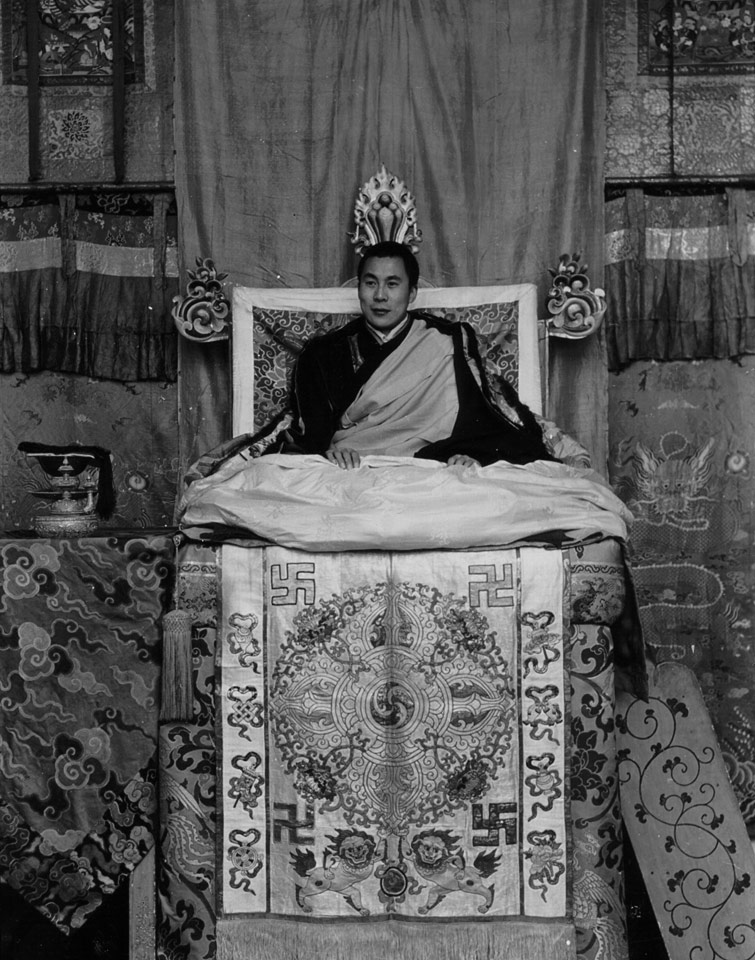
TIBET AWARENESS – THE NATURE OF TIBETAN GOVERNANCE. DALAI LAMA IS THE SUPREME RULER OF TIBET. THIS PHOTO DATED 22 FEBRUARY 1940 EXPLAINS THE NEED TO STUDY TIBETAN BUDDHISM AS A POLITICAL SCIENCE.On bhavanajagat.com
Professor Donald S. Lopez, the Arthur E. Link Distinguished University Professor of Buddhist and Tibetan studies at the University of Michigan published several books on Buddhism and teaches it as religion and as a philosophical doctrine.
TIBET AWARENESS – I ASK PROFESSOR DONALD S. LOPEZ AND OTHERS WHO TEACH TIBETAN BUDDHISM TO EXPLAIN THE NATURE OF TIBETAN GOVERNANCE AND TIBET’S POLITICAL INSTITUTION CALLED GANDEN PHODRANG GOVERNMENT OF TIBET. TIBETAN BUDDHISM IS POLITICAL SCIENCE.
I ask Professor Lopez and all other teachers of Tibetan studies to emphasize the nature of Tibetan governance and as to how Tibetan Buddhism evolved into a political system giving Tibetans a cultural tool to choose the Head of State, the Supreme Ruler of Tibet and the political institution called the Ganden Phodrang Government of Tibet, the political Institution of Dalai Lama. Tibetan Buddhism is a Political Science for it has established the rules for choosing a political official who governs the State and administers justice, and this System of Governance existed for nearly four centuries until Communist China’s military occupation of Tibet in 1950.
Tibetan Buddhism evolved into a political system giving Tibetans a cultural tool to choose the Head of State, the Supreme Ruler of Tibet and the political institution called the Ganden Phodrang Government of Tibet, the political Institution of Dalai Lama. Tibetan Buddhism is a Political Science for it has established the rules for choosing a political official who governs the State and administers justice, and this System of Governance existed for nearly four centuries until Communist China’s military occupation of Tibet in 1950.
Rudra Narasimham Rebbapragada Ann Arbor, MI 48104-4162 USA Special Frontier Force-Establishment 22-Vikas Regiment
Religion department hosts Buddhist scholar for lecture series
Aryanna Duhl, Staff Writer 9:31 a.m. EDT March 30, 2016
Tibetan Buddhism is Political Science, a System of Governance that existed for nearly four centuries until Communist China’s military occupation of Tibet in 1950.
Professor Donald S. Lopez of the University of Michigan gave two lectures as part of the Department of Religion’s 15th annual Tessa J. Bartholomuesz Lecture Series and the department’s 50th Annviersary Celebration. (Photo: James Papastavros/FSView)
“He’s like the Stephen King of Buddhist studies,” said Dr. Bryan J. Cuevas as he presented the featured speaker of the Department of Religion’s 15th annual Tessa J. Bartholomuesz Lecture Series. Professor Donald S. Lopez, the Arthur E. Link Distinguished University Professor of Buddhist and Tibetan Studies at the University of Michigan, gave two lectures, which were also a part of the Department of Religion’s 50th Anniversary celebration.
In his first presentation, “Dispatches from Nirvana: 45 Years of Buddhist Studies,” Lopez spoke first about how he came to study Buddhism. He explained that during the Vietnam War, he became disenchanted with Western thought, turning to “Eastern mysticism.”
Before his position at the University of Michigan, Lopez taught at Middlebury College in Vermont, where he was one of four religion professors, and the only one studying Eastern religions. He taught a variety of subjects, including Daoism, Confucianism and Buddhism. He then moved to Michigan, where he is one of three Buddhism scholars.
Professor Lopez has written many books on Buddhism, but spoke the most on authoring anthologies, where he attempts to question the “classics” of Buddhist literature. He estimated that only 10% of available Tibetan works have actually been studied, and attributed this to the previous lack of scholars who spoke the language. “Language foundation is crucial” to the study of religions, Lopez stressed. He clarified that when scholars don’t understand the language and culture of a religious people, they must rely only on the texts that the people have always deemed the “classics” and are therefore unable to explore others.
In his second lecture, “Christian vs. Buddhist: The Battle for the Soul of Tibet,” Lopez described the missions of Ippoito Desideri, an Italian Jesuit missionary in Tibet in the 1700s who was the first European to have studied and understood the Tibetan language and culture.
With this understanding, Desideri used the same rhetoric of the Tibetan texts to try to convince the Buddhist monks to convert to Catholicism. According to Lopez, as Desideri learned about Tibetan religion, he found that “what the Buddhists were studying was philosophy.”
This idea of Buddhism as philosophy is something that Lopez also discussed in his first lecture, sharing his hope that Buddhist studies would find its way into the Philosophy department of universities. Lopez claimed that, “when we consider a religious text to be the work of the divine,” we diminish what scholars can think about it.
He accredits the slow development of scholarship in Buddhist studies to the “delayed reaction moving away from the idea that these [Buddhist] texts were only religious doctrine,” and that once “liberated from the sacrality of the text,” scholars can study it as creative poetry.
There is still a lot of examination to be done of Buddhist thought, in attempting to fully understanding the culture as well as answering some of the most difficult philosophical questions. Though there will likely be many generations of scholars searching for answers to questions such as, “When was the Buddha born, and when did he die?” or even, “Does God exist?” Professor Lopez is proud of how far the issues of Buddhism have come.
“We are now in the golden age of Buddhist studies,” he said
I ask Professor Lopez and all other teachers of Tibetan studies to emphasize the nature of Tibetan governance and as to how Tibetan Buddhism evolved into a political system giving Tibetans a cultural tool to choose the Head of State, the Supreme Ruler of Tibet and the political institution called the Ganden Phodrang Government of Tibet, the political Institution of Dalai Lama.I ask Professor Lopez and all other teachers of Tibetan studies to emphasize the nature of Tibetan governance and as to how Tibetan Buddhism evolved into a political system giving Tibetans a cultural tool to choose the Head of State, the Supreme Ruler of Tibet and the political institution called the Ganden Phodrang Government of Tibet, the political Institution of Dalai Lama.
Doomed American China Fantasy – The Cold War in Asia
DOOMED AMERICAN CHINA FANTASY – THE COLD WAR IN ASIA 1949 TO 2026. THE SPREAD OF COMMUNISM IN ASIA.
The Cold War in Asia is the product of Communism that spread from Europe to Asia. Nixon-Kissinger in 1971-72 initiated Policy of Doomed American China Fantasy without concern for lessons learned in Korean Peninsula and Vietnam. There is no hope and there is no future for America’s China Fantasy as Communist Party in China survives unchanged and unaffected by changing fortunes of the US Political Parties.
Rudra Narasimham Rebbapragada
DOOM DOOMA DOOMSAYER
Doomed Gun of Doom Dooma symbolizes the Doomed China Fantasy, a Policy initiated by 37th US President Richard M Nixon when he made a trip to Peking on February 21, 1972. DOOMED AMERICAN CHINA FANTASY – THE COLD WAR IN ASIA 1949 TO 2026. THE SPREAD OF COMMUNISM IN ASIA.DOOMED AMERICAN CHINA FANTASY – THE COLD WAR IN ASIA 1949 TO 2026. THE SPREAD OF COMMUNISM IN ASIA. DOOMED AMERICAN CHINA FANTASY – THE COLD WAR IN ASIA 1949 TO 2026. THE SPREAD OF COMMUNISM IN ASIA.
AMERICA’S CHINA FANTASY
DOOMED AMERICAN CHINA FANTASY – THE COLD WAR IN ASIA 1949 TO 2026. THE SPREAD OF COMMUNISM IN ASIA. President Nixon’s Doomed Journey to Peking in February 1972.
America has been operating with the wrong paradigm for China. Day after day, U.S. officials carry out policies based on premises about China’s future that are at best questionable and at worst downright false.
The mistake lies in the very assumption that political change — and with it, eventually, democracy — is coming to China, that China’s political system is destined for far-reaching liberalization. Yet the Bush administration hasn’t thought much about what it might mean for the United States and the rest of the world to have a repressive one-party state in China three decades from now. For while China will certainly be a richer and more powerful country in 30 years, it could still be an autocracy of one form or another. Its leadership (the Communist Party, or whatever else it calls itself in the future) may not be willing to tolerate organized political opposition any more than it does today.
That is a prospect with profound implications for the United States and the rest of the world. And it is a prospect that our current paradigm of an inevitably changing China cannot seem to envision.
The notion of a China on the road to political liberalization has taken hold in the United States because it has served certain specific interests within American society. At first, in the late 1970s and the 1980s, this idea benefited the U.S. national-security establishment. At the time, the United States was seeking close cooperation with China against the Soviet Union, so that the Soviet Union would have to worry simultaneously about both countries; the Pentagon wanted to make sure the Soviet Union tied down large numbers of troops along the Sino-Soviet border that might otherwise have been deployed in Europe. Amid the ideological struggles of the Cold War, though, cooperation with China’s Communist regime was politically touchy in Washington. And so the notion that China was in the process of opening up its political system helped smooth the way with Congress and the American public.
In the 1990s, after the Soviet collapse, the idea of a politically changing China attracted a new constituency, one even more powerful than the Pentagon: the business community. As trade and investment in China became ever more important, American companies found themselves repeatedly beset with questions about why they were doing business with such a repressive regime. The paradigm of inevitable change offered multinational corporations the answer they needed. Not only was China destined to open up its political system, but trade, the theology held, would be the key that would unlock the door. It would lead to political liberalization and to democracy, with or without the support of the Chinese leadership. Accordingly, no one outside China needs to do anything, or even think much about the subject. Why bother to protest a crackdown or urge China to allow political opposition if you know that democracy, by the inexorable laws of history, is coming anyway?
The trouble is, the entire paradigm may turn out to be wrong.
What should the U.S. strategy be for dealing with China’s Leninist regime? If you ask our established political leaders, foreign-policy experts, or sinologists what the United States should do about China, you will undoubtedly get some version or another of this approach. It is called the strategy of “integration.”
The United States, the thinking goes, should try to integrate the Chinese leadership into the international community. It should seek to help China gain admission into the world’s leading international organizations. According to this logic, the nature of the Chinese regime will change after China becomes a member of international bodies such as the World Trade Organization, which it has now joined. China’s Communist Party leadership will gradually behave more like other governments; it will become more open in dealing with the Chinese people and with the rest of the world. Richard Haas, the president of the Council on Foreign Relations, has written of “the existing opportunity to integrate China into a U.S.-led world order.”
This strategy of integration dates back to the Clinton administration. In 1994, President Clinton abandoned his attempt to use trade as a lever for improving human rights in China, then needed to divert attention away from this embarrassing reversal. He did not wish to concede that that he had just downgraded the cause of human rights in China; instead, he sought a new, positive-sounding description of his policy. “Integration” gradually became the label of choice, invoked by the president and his top advisers in press conference after press conference. Integration became, above all, the justification for unrestricted trade with China. “We believe it’s the best way to integrate China further into the family of nations and to secure our interests and our ideals,” declared Clinton in one typical speech.
George W. Bush and his advisers, without ever admitting they were doing so, have perpetuated most of the essentials of Clinton’s China policy, including the avowed commitment to integration. When Secretary of State Condoleezza Rice gives a speech about China, she sooner or later calls for integrating China into the international community.
“Integration” has thus become another catchphrase like “engagement,” the earlier slogan for America’s China policy, which originated somewhat earlier, during the administration of George Bush Senior. With both words, however, the suggestion is the same: that is, with enough engagement, with sufficiently vigorous integration, the United States may succeed in altering the nature of the Chinese regime — although it is not clear exactly how this is supposed to happen. In a way, the American approach is a bit patronizing to China: It sounds as if the United States is a weary, experienced trainer bringing China to a diplomatic version of obedience school.
The fundamental problem with this strategy of integration is that it raises the obvious question: Who’s integrating whom? Is the United States now integrating China into a new international economic order based upon free-market principles? Or is China now integrating the United States into a new international political order where democracy is no longer favored, and where a government’s continuing eradication of all organized political opposition is accepted or ignored?
This is not merely a government issue. Private companies — including Internet firms like Yahoo, Google, and Microsoft — often use slogans like “engagement” and “integration” to explain why they have decided to do business in China despite Chinese rules and laws that allow continuing censorship. “I think [the Internet] is contributing to Chinese political engagement,” Bill Gates told one business gathering. Yet if Microsoft is altering its rules to accommodate China, once again the question is: Who’s changing whom?
Will it have been a success for the U.S. policy of integration if, 30 years from now, the world ends up with a Chinese regime that is still a deeply repressive one-party state but is nevertheless a member of the international community in good standing? If so, that same China will serve as a model for dictators, juntas, and other undemocratic governments throughout the world — and in all likelihood, it will be a leading supporter of these regimes. Pick a dictator anywhere today and you’ll likely find that the Chinese regime is supporting him. It has rewarded Robert Mugabe, the thug who rules Zimbabwe, with an honorary professorship, and his regime with economic aid and, reportedly, new surveillance equipment. It has been the principal backer of the military regime in Burma. And when Uzbek President Islam Karimov ordered a murderous crackdown on demonstrators in 2005, China rushed to defend him.
If China maintains its current political system over the next 30 years, then its resolute hostility to democracy will have an impact in places like Egypt, Syria, and Saudi Arabia. A permanently authoritarian China could also undermine Russia’s already diminishing commitment to democracy.
Thus, when America’s leading officials and CEOs speak so breezily of integrating China into the international community, listeners should ask: If China remains unchanged, what sort of international community will that be? Will it favor the right to dissent? Will it protect freedom of expression? Or will it simply protect free trade and the right to invest?
But wait, say the defenders of America’s existing China policy. We believe in democracy, too. There is no real disagreement here on our ultimate goals. This is all just a question of tactics. The strategy of integration (or of engagement) is designed to change China’s political system and, over the long term, to end China’s one-party state.
These arguments sound in some ways similar to claims made by the Chinese regime itself. Because Chinese Communist Party leaders don’t like to acknowledge that they intend to maintain their monopoly on power, they sometimes tell visitors that they, too, believe in democracy, that this is the ultimate goal for China, and that it is all merely a question of timing. These claims are designed for the hopelessly gullible; by its actions, day after day, the regime makes clear its tenacious hostility to the idea of political pluralism in China.
Generally, the U.S. proponents of a strategy of integration are not so cynical. To be sure, a few of them may be antidemocratic; there have always been Americans who admire, even revere, the simplicity and convenience of autocracy. However, other proponents of integration seem to believe quite sincerely that if the United States continues its current approach toward China, Chinese leaders eventually will be willing to abandon the monopoly on political power they have maintained since 1949. Yet these same proponents fail to explain how or why, given the current U.S. strategy, China’s political system will change.
The examples of reforms that they have invoked so far have served to divert attention away from the core issue of China’s one-party state. The promotion of village elections has proved to be largely unsuccessful, both because the Chinese leadership can confine this experiment exclusively to the villages and because in the villages themselves, authorities have resorted to a variety of methods, including the use of violence, to forestall democracy.
Nor is there evidence that the American promotion of the rule of law will by itself transform the political system. So long as there is no independent judiciary and China remains a one-party regime in which judges are selected by the Communist Party, promoting the rule of law won’t bring about fundamental change. Instead, it simply may lead to a more thoroughly legalized system of repression. Indeed, those lawyers in China who attempt to use the judicial system to challenge the Communist Party or to defend the rights of political dissidents have themselves been subject to persecution, including the loss of their jobs or even time in prison.
The strongest impetus for establishing the rule of law comes from the corporations and investors who are putting their money into China. They need bona fide procedures for resolving financial disputes, just as companies and investors require everywhere else in the world. It is in the interest of the Chinese regime to keep the investment dollars, euros, and yen flowing into the country, and so Chinese officials are willing to establish some judicial procedures for the foreign companies. However, the result could well be a Chinese legal system that offers special protection for foreign investors but not to ordinary Chinese individuals, much less to targets of the regime such as political dissidents or Tibetan activists.
And that raises the larger question about America’s current strategy of integration: Whom does it benefit? Above all, it enriches the elites in both China and the United States. The strategy is good for the American business community, which gets to trade with China and invest in China, and for the new class emerging in Chinese cities — the managers and entrepreneurs, many of them former party cadres or the relatives of cadres — that is getting rich from the booming trade and investment in its country. But it has not been nearly so beneficial for working-class Americans — particularly the tens of thousands who have lost their jobs in the United States as the end result of this “integration” policy.
The American people were told many years ago that bringing China into the international economic system would help change the Chinese political system. Now, American workers may well wonder whether this argument was merely a cruel hoax. Nor has the strategy of integration been such a blessing for ordinary Chinese. To be sure, China as a whole is more prosperous than it has ever been, but this new prosperity is enjoyed mostly by the urban middle class, not by the country’s overworked, underpaid factory laborers or by the hundreds of millions of peasants in the countryside.
Indeed, it is precisely because the regime knows how restive and disenchanted the Chinese people are that it refuses to open up to any form of democracy. The Chinese leaders know that they could be thrown out of office if there were free and open elections. Democracy, or even an organization calling for future democracy, is a threat to the existing political and economic order in China. That is why the regime continues to repress all forms of organized dissent and political opposition. It is also why China’s new class of managers and executives, who profit from keeping wages low, support the regime in its ongoing repression.
A few years ago, the New York Times columnist Nicholas D. Kristof gave voice to one of the most common American misconceptions about China’s political future. Reflecting on how China had progressed and where it was headed, Kristof wrote, “[Hard-liners] knew that after the Chinese could watch Eddie Murphy, wear tight pink dresses and struggle over what to order at Starbucks, the revolution was finished. No middle class is content with more choices of coffees than of candidates on a ballot.”
Once people are eating at McDonald’s or wearing clothes from The Gap, American writers rush to proclaim that these people are becoming like us, and that their political system is therefore becoming like ours. But will the newly enriched, Starbucks-sipping, condo-buying, car-driving denizens of China’s largest cities in fact become the vanguard for democracy in China? Or is it possible that China’s middle-class elite will either fail to embrace calls for a democratic China or turn out to be a driving force in opposition to democracy?
China’s emerging urban middle class, after all, is merely a small proportion of the country’s overall population — far smaller than its counterparts in Taiwan or South Korea. There are an estimated 800 million to 900 million Chinese peasants — most of them living in rural areas, although 100 million or more are working or trying to find jobs as migrants on the margins of Chinese cities. If China were to have nationwide elections, and if peasants were to vote their own interests, then the urban middle class would lose. The margin would not be close. On an electoral map of China, the biggest cities — Shanghai, Beijing, Tianjin, Guangzhou, and the others — might look something like the small gold stars on the Chinese flag: They would be surrounded by a sea of red. Add together the populations of China’s 10 largest cities and you get a total of some 62 million people. That number is larger than the population of France or Britain or Italy. But it is still only about 5 percent of China’s overall population of 1.3 billion.
If you are a multinational company trying to sell consumer products, then the rapid rise in spendable income in China’s largest cities is of staggering importance. When it comes to any national elections, however, that new Chinese middle class is merely a drop in the bucket. Those in China’s urban avant-garde have every reason to fear that they would be outvoted.
China’s urban residents have an even greater reason to fear democracy: The Communist Party has not exactly been evenhanded in its treatment of urban residents vis-à-vis peasants. On the contrary: Its policies have strongly favored the cities over the countryside. This is why there has been a wave of protests in the countryside, arising out of land seizures, local taxes, disputes over village elections, and similar controversies. It is also why the Chinese regime has been, in recent years, particularly fearful of mass movements that might sweep through the countryside and undermine the Communist Party’s control. Looking at Falun Gong, the quasi-religious movement that began to take hold during the 1990s, the Chinese leadership was haunted by a specter from the past: the Taiping Rebellion, which swept out of middle China in the 19th century and shook the Qing Dynasty to its foundations.
What lies behind the Chinese Communist Party’s monopoly on power and its continuing repression of dissent? The answer usually offered is the Communist Party itself — that the party and its more than 70 million members are clinging to their own power and privileges. This is certainly part of the answer, but not all of it. As China’s economy has thrived in recent years, strong economic and social forces have also emerged in Chinese society that will seek to protect the existing order and their own economic interests. The new middle class in Chinese cities is coming to favor the status quo nearly as much as does the Communist Party itself.
Why do we assume that what follows the Chinese Communist Party’s eventual fall will necessarily be political liberalization or democracy? One can envision other possibilities. Suppose, for example, that the party proves over the next decade to be no better at combating the country’s endemic corruption than it has been over the past decade. Public revulsion over this corruption reaches the point where the Chinese people take to the streets; leaders find they cannot depend on troops to quell these demonstrations; the Communist Party finally gives way. Even then, would the result be Chinese democracy? Not necessarily. China’s urban middle class might choose to align itself with the military and the security apparatus to support some other form of authoritarian regime, arguing that it is necessary to do so in order to keep the economy running.
The underlying premise of the U.S. integration strategy is that we can put off the question of Chinese democracy. But two or three decades from now, it may be too late. By then, China will be wealthier, and the entrenched interests opposing democracy will probably be much stronger. By then, China will be so thoroughly integrated into the world financial and diplomatic systems that, because of the country’s sheer commercial power, there will be no international support for any movement to open up China’s political system.
What should the United States do to encourage democratic change in China? A detailed list of policies can emerge only after we first rid ourselves of the delusions and the false assumptions upon which our China policy has long been based.
Above all, we have to stop taking it for granted that China is heading inevitably for political liberalization and democracy. President Bush has continued to repeat the American mantra about China, every bit as much as did his predecessors. “As China reforms its economy, its leaders are finding that once the door to freedom is opened even a crack, it cannot be closed,” Bush declared in one typical speech. Such words convey a heartwarming sense of hopefulness about China, but they do not match the reality of China itself, where doors are regularly opened by more than a crack and then closed again.
America’s political and corporate leaders also need to stop spreading the lie that trade will bring an end to China’s one-party political system. This fiction has been skillfully employed, over and over again, to help win the support of Congress and the American public for approval of trade with China. Trade is trade; its benefits and costs are in the economic sphere. It is not a magic political potion for democracy, nor has it brought an end to political repression or to the Chinese Communist Party’s monopoly on power, and there is not the slightest reason to think it will do so in the future. In fact, it is possible that our trade with China is merely helping the autocratic regime to become richer and more powerful.
America’s current China policy amounts to an unstated bargain: We have abandoned any serious attempt to challenge China’s one-party state, and in exchange we have gotten the right to unfettered commerce with China.
What we need now, above all, are political leaders who are willing to challenge America’s stale logic and phraseology concerning China. We need politicians who will call attention to the fact that America has been carrying out a policy that benefits U.S. and Chinese business interests far more than it helps ordinary working people in either country.
The reexamination should apply to both U.S. political parties and to both poles of the ideological spectrum. On the Democratic left, we need people who will question the assumptions that it is somehow “progressive” to say that democracy doesn’t matter or that it will automatically come to China some day. Such views aren’t in the least bit progressive, liberal, or enlightened. Rather, they were developed by the Clinton administration to justify policies that would enable Bill Clinton to win corporate support. During the 1990s, there were other views concerning China within the Democratic Party — those of Nancy Pelosi, for example, and George Mitchell, who took strong stands on behalf of human rights in China. The Democrats rejected those alternative approaches a decade ago. They would do well to reexamine them now.
Within the Republican Party, we need political leaders willing to challenge the Business Roundtable mentality that has dominated the party’s thinking on China for so long. If Republicans really care about political freedom, then why should they allow U.S. policy toward China to be dominated by corporate interests while the world’s most populous country is governed by a single party that permits no political opposition? President Bush has been able to conceal his business-oriented approach to China behind a facade of hawkish rhetoric. Republicans should not allow this to happen again.
Once the United States finally recognizes that China is not moving inevitably toward democracy, we can begin to decide what the right approach should be. On the one hand, it’s possible that America may seek new measures to goad the Chinese leadership toward democratic change. America also might want to reconsider its doctrinaire adherence to free trade in dealing with China. On the other hand, it’s possible that the American people may decide that there’s absolutely nothing that the United States can or should do about a huge, permanently undemocratic, enduringly repressive China. Such an entity, a Chinese autocracy persisting into the mid-21st century, would cause large problems for U.S. policy elsewhere in the world. Nevertheless, after weighing the costs and benefits of trying to push for democracy in China, the United States could opt for a policy of sheer acceptance of the existing order.
The American people are not being given such options now, however, because the choices are not being laid out. American politicians of both parties talk regularly as if liberalization and democracy are on the way in China. But what if China remains an autocracy? At the moment, that possibility seems to be outside our public discourse. We need to change that in order to figure out what we want to do.
It would be heartening if China’s leaders proceed along the lines that America’s political leaders predict. It would be wonderful if China opens up, either gradually or suddenly, to a new political system in which the country’s 1.3 billion people are given a chance to choose their own leaders. While wishing for such an outcome, however, I will not hold my breath.
James Mann, from whose new book, The China Fantasy, this article is adapted, is author-in-residence at Johns Hopkins University’s School of Advanced International Studies.
DOOMED AMERICAN CHINA FANTASY – THE COLD WAR IN ASIA 1949 TO 2026. THE SPREAD OF COMMUNISM IN ASIA.US – CHINA RELATIONS DEMAND TIBET EQUILIBRIUM.Nixon-Kissinger in 1971-72 initiated Policy of Doomed American China Fantasy without concern for lessons learned in Korean Peninsula and Vietnam. There is no hope and there is no future for America’s China Fantasy
Communist Expansionism in Asia – Unfinished Korea-Vietnam War
Communist Expansionism in Asia – Unfinished Korea-Vietnam War
Democracy, Freedom, Peace, and Justice in Asia are threatened by Communist Expansionism in Asia. United States tried hard to prevent the spread of Communism to mainland China. Having failed to do so, the United States fought battles in Korea and Vietnam but again failed for Korea and Vietnam are not real enemies posing the threat. The United States has yet to fight a War to evict Communist China from Tibet, the very first victim of the spread of Communism to mainland China. I coined the phrase Unfinished Korea-Vietnam War as the real purpose of this War is to contain Communist Expansionism in Asia.
The problem threatening Peace in Asia cannot be resolved by imposing UN sanctions on North Korea. Communist China’s Expansionism in all directions, including Tibet, and South China Sea must be challenged and contained simultaneously. US cannot win this battle without Knowing the Enemy.
Communist Expansionism in Asia – Unfinished Korea-Vietnam War
Rudra Narasimham Rebbapragada
Doom Dooma Doomsayer
Communist Expansionism in Asia – Unfinished Korea-Vietnam War
TO STOP KIM JONG-UN, CHINA NEEDS A BIG PRIZE: THE SOUTH CHINA SEA
Without any doubt, China can stop Kim Jong-Un’s missile tests. Once and for all, and save a lot of trouble for America and its allies—and for Asian market investors.
But to do that, China needs a big prize, the South China Sea. All of it, so Beijing can write its own navigation rules, exploit all the riches that are hidden beneath, and satisfy the nationalistic sentiment it has nurtured.
Communist Expansionism in Asia – Unfinished Korea-Vietnam War Communist Expansionism in Asia – Unfinished Korea-Vietnam War
The Korean Peninsula is far away from the South China Sea. But the on-going crisis in the Korean Peninsula isn’t independent from what’s going on in the South China Sea, as there is a key player behind each conflict: China.
In fact, Kim Jong-Un has emerged as China’s decoy in South China Sea disputes. As the world is fixated on Kim’s nuclear tests and missiles launches, China continues the building of artificial islands in the South China Sea, bullying every neighboring country that dares to challenge its ambitions to dominate the vast waterway. Like threatening the Philippines with all-out war should it enforce an international arbitration ruling, which confirmed that China has no historic title over the waters of the South China Sea.
China also told Vietnam and India to stop searching for oil in the region, or else risk an attack on the oil and gas bases. And it has demanded that Indonesia rescind its decision to rename its maritime region in the southwest part of the South China Sea as the “North Natuna Sea,” asserting its own sovereignty in the area.
But it hasn’t stopped there. It further demanded that America’s close Asian ally, Japan, stay away from its “own” South China Sea.
Meanwhile, bilateral trade between China and North Korea has increased by nearly 20% last year, as Apostolos Pittas, adjunct professor of economics at Long Island University Post notes.
So far, Asian markets have been responding more to the Korean Peninsula crisis, losing a couple of percentage points any time Kim fires a missile and less on China’s South China Sea bullying.
That’s why China has no real intention of taming Kim’s ambitions — unless America and its allies are prepared to let Beijing take control over the entire South China Sea, and step up its bullying tactics.
Are they prepared to pay this big a price?
Red China Expansionism South China SeaCommunist Expansionism in Asia – Unfinished Korea-Vietnam War THE EVIL RED EMPIRE – NUCLEAR EXPANSIONISM – NUCLEAR STRATEGY .Communist Expansionism in Asia – Unfinished Korea-Vietnam War Communist Expansionism in Asia – Unfinished Korea-Vietnam War Communist Expansionism in Asia – Unfinished Korea-Vietnam War red china red alert economic espionageCommunist Expansionism in Asia – Unfinished Korea-Vietnam War People’s Republic of China wants to legalize its military occupation of Tibet and other territories taking full advantage of its military and economic strength.