For the very first time since its inception, a fallen soldier of Special Frontier Force gets a public funeral
For the very first time since its inception, a fallen soldier of Vikas Regiment, Special Frontier Force gets a public funeral.
I have been demanding for a long time to give public recognition to the fallen soldiers of Special Frontier Force. Finally, on September 07, 2020, Company Leader Nyima Tenzin of Special Frontier Force has departed from us with due public honor.This is the first time a Tibetan’s sacrifice is known to all of India.
For the very first time since its inception, a fallen soldier of Vikas Regiment, Special Frontier Force gets a public funeral.
India’s Special frontier force’s Tibetan soldier Nyima Tenzin cremated with full public honor
This is the first time a Tibetan’s sacrifice is known to all of India. Army officials pay tribute to Vikas Regiment, Special Frontier Force (SFF) commando Nyima Tenzin during a wreath-laying ceremony in Devachan, Leh.(PTI)
With his body wrapped in Indian and Tibetan flags, Tenzin was cremated as the atmosphere reverberated with slogans like “Bharat Mata Ki Jai”, “We salute Indian army”. The Indian National anthem was also sung along with the anthem of Tibetan Government in Exile which is considered as the Tibetan National Anthem written in 1950.
Senior Bharatiya Janata Party (BJP) leader Ram Madhav’s presence at the official funeral of a Tibetan soldier from the secretive Special Frontier Force (SFF) on Monday created a flutter in diplomatic and political circles amid the border standoff with China.
The funeral of SFF Company Leader Nyima Tenzin, killed in a landmine blast in an operation along the Line of Actual Control (LAC) during August 29-30, was held at Leh in the union territory of Ladakh. The funeral cortege was joined by scores of cars and motorcycles and people waving the Indian and Tibetan flags.
Tenzin’s coffin, carried in an army truck, was draped in the Indian tricolor and Tibetan flag, which were handed over to his widow at the funeral. Experts noted this was probably the first time an SFF personnel who died in action was given a public funeral, complete with military honors and a volley of shots by a ceremonial guard.
Following the protocol for those killed in action, Indian Army troops folded the two flags and handed them over to Tenzin’s wife. Tenzin had 33 years of service in the SFF. He leaves behind his wife and three children. This is the first time a Tibetan’s sacrifice is known to all of India. Tenzin Yangkey, a student, said that they came to the funeral to pay tributes to a man who sacrificed his life for India. “We are all proud of him,” Yangkey said.
During the operation, another junior soldier Tenzin Loden, 24, was critically injured in the same explosion, and is currently undergoing treatment at the military hospital in Leh, Ladakh. The injured Tenzin Loden is from the same settlement.
BJP national general secretary Madhav posted photos of the funeral and paid tribute to Tenzin on Twitter but subsequently deleted the tweet. Screenshots of his tweet, which were widely shared, showed he had posted: “Attended [the] funeral of SFF Coy Ldr Nyima Tenzin, a Tibetan who laid down his life protecting our borders in Ladakh, and laid a wreath as a tribute. Let [the] sacrifices of such valiant soldiers bring peace along the Indo-Tibetan border. That will be [the] real tribute to all martyrs.”
People present at the funeral shouted slogans such as “Bharat Mata ki jai”, “Tibet desh ki jai”, “Vikas Regiment zindabad” and “We salute Tenzin”. SFF is also known as Establishment 22 and Vikas Regiment. Banners put up at the funeral site by SFF ex-servicemen described Tenzin as a soldier who “sacrificed his life to protect his second homeland India fighting common enemy China”.
Madhav spoke to the media at the funeral, saying in Hindi that he hoped Tenzin’s sacrifice “will bring peace to the border” and that “efforts are on to end the tension”. He added, “We hope peace will be restored soon.”
People familiar with developments said Madhav hadn’t attended the funeral as a representative of the government. On Sunday, Madhav began a two-day visit to Ladakh, a union territory that was carved out of the erstwhile state of Jammu and Kashmir, whose special status was scrapped in August 2019.
However, the move marks a shift from the government’s reported decision in early 2018 asking officials and leaders to skip events which were being organised at the time to mark the Dalai Lama’s 60 years in exile. As the government worked to improve ties with China, especially through the mechanism of informal summits, the Tibet issue was largely sidelined.
SFF was raised with former Tibetan guerrillas in 1962 and went on to see action during the 1971 war with Pakistan that led to the creation of Bangladesh and the 1999 Kargil conflict. It is led by army officers and most of its personnel are men of Tibetan origin.
Amitabh Mathur, a former special secretary in the Research and Analysis Wing (RAW) who advised the government on issues related to Tibet, said it made sense for India to use a force such as SFF in the current scenario because of the special skills of its personnel. “They are used to operating at high altitudes and it would be an enormous waste if they are kept away from the terrain where they are most useful,” he said.
However, he said the Indian side will have to ensure that their use is followed up with other messages that reach the overall Tibetan community and a consistent policy. “There has to be some sort of gesture, an overt sign and this message should reach the Tibetans in Tibet,” he added.
The funeral this morning of Company Leader Nyima Tenzin, the Tibetan-Indian soldier in the Special Frontier Force who laid down his life fighting for India against the Chinese PLA.
This is the first time a Tibetan’s sacrifice is known to all of India.
#WATCH People raise 'Bharat Mata ki Jai' chants at the funeral of Special Frontier Force Commando Nyima Tenzin in Devachan, Leh today. He had lost his life in an anti-personnel mine blast near the Line of Actual Control in the last week of August pic.twitter.com/K37bvawvdw
This is the first time a Tibetan’s sacrifice is known to all of India.
Right now in Leh, a final farewell to Vikas Regiment company leader Nyima Tenzin, who died during the August 29-30 mission to Kaala Top. pic.twitter.com/dgdY5bUWAu
This is the first time a Tibetan’s sacrifice is known to all of India.This is the first time a Tibetan’s sacrifice is known to all of India. This is the first time a Tibetan’s sacrifice is known to all of India. Indian soldiers pay their respects during the funeral of their comrade, Tibetan-origin India’s special forces soldier Nyima Tenzin in Leh on September 7, 2020. (Mohd Arhaan Archer/AFP/Getty Images)
Military Service at D Sector, Vikas Regiment is not regulated by Army Act, Army Rules and Defence Service Regulations
Sainya Seva Medal – Service Award without Service Weapon: Special Service Award, a Silver Plate presented by all Officers, D-Sector, Establishment 22 in appreciation of my Service in the North East Frontier Agency/Arunachal Pradesh in January 1973. Vikas Regiment, D Sector, Establishment-22 Special Service Award: I participated in military operations without carrying my Service Weapon for my Service at D Sector, Vikas Regiment, Establishment-22 is not regulated by Army Act, Army Rules and Defence Service Regulations which have remained unchanged over the decades.
Excerpt: I love the Service Award I earned at Doom Dooma without using any Service Weapon. I love Doom Dooma for the opportunity it gave to me to demonstrate my commitment to serve the men who serve our country without any concern for my personal safety. I participated in military operations without carrying my Service Weapon for my Service at D Sector, Vikas Regiment, Establishment-22 is not regulated by Army Act, Army Rules and Defence Service Regulations which have remained unchanged over the decades.
Vikas Regiment, D Sector, Establishment-22 Special Service Award: I participated in military operations without carrying my Service Weapon for my Service at D Sector, Vikas Regiment, Establishment-22 is not regulated by Army Act, Army Rules and Defence Service Regulations which have remained unchanged over the decades.
SAINYA SEVA MEDAL
Sainya Seva Medal. Service Award without Service Weapon. Vikas Regiment, D Sector, Establishment-22 Special Service Award: I participated in military operations without carrying my Service Weapon for my Service at D Sector, Vikas Regiment, Establishment-22 is not regulated by Army Act, Army Rules and Defence Service Regulations which have remained unchanged over the decades.
The Government of India awards Sainya Seva Medal to Service Personnel serving in Indian Armed Forces in recognition of ‘non-operational’ services under conditions of special hardship and severe climate. The bar or clasp shows the words ” NEFA ” in Hindi. To qualify for this award, an aggregate of one- year service in the North-East Frontier Agency (NEFA) is required. The Medal shows an image of Nanda Devi Himalayan mountain peak with a bamboo stand in the foreground.
REMEMBERING A WAR:THE 1962 INDIA-CHINA WAR: This is a photo image taken at D Desctor, Vikas Regiment in 1972, ten years after the 1962 War, while I proudly served the Nation in the North East Frontier Agency. Vikas Regiment, D Sector, Establishment-22 Special Service Award: I participated in military operations without carrying my Service Weapon for my Service at D Sector, Vikas Regiment, Establishment-22 is not regulated by Army Act, Army Rules and Defence Service Regulations which have remained unchanged over the decades.
I am proud of my military service in North East Frontier Agency (renamed Arunachal Pradesh) for several reasons. These are;
Special Frontier Force – Sainya Seva Medal – Service Award without Service Weapon. Vikas Regiment, D Sector, Establishment-22 Special Service Award: I participated in military operations without carrying my Service Weapon for my Service at D Sector, Vikas Regiment, Establishment-22 is not regulated by Army Act, Army Rules and Defence Service Regulations which have remained unchanged over the decades.
In 1962, Communist China’s War of Aggression across Himalayan Frontier motivated me to Resist, to Oppose and to Fight against Red China’s military threat posed from Occupied Tibet. 54 Years after the 1962 War, India is unwilling to part with her territory. India lost control of her territory in the Ladakh region as Tibet still remains under Chinese occupation.
REMEMBERING THE 1962 INDIA – CHINA WAR: The McMahon Line in India’s North East Frontier Agency or the State of Arunachal Pradesh. Vikas Regiment, D Sector, Establishment-22 Special Service Award: I participated in military operations without carrying my Service Weapon for my Service at D Sector, Vikas Regiment, Establishment-22 is not regulated by Army Act, Army Rules and Defence Service Regulations which have remained unchanged over the decades.
Fortunately, in the North-East Himalayan Sector, India retains control over territory which we initially lost in the 1962 War. In 1972, I was very glad to serve in this area for one complete year and I could personally witness the fact that India is fully prepared to fight against Red China one more time. We are willing to do our best to keep ‘NEFA’ (Arunachal Pradesh) under our control whatever may be the Chinese threats protests, and claims to territory she calls “Southern Tibet.” China, apart from the illegal military occupation of Tibet, claims Indian territory publishing maps showing international borders. In recent years, China refused to issue a visa to an Officer of the Indian Administrative Service who had earlier served in this region.
Special Frontier Force – Sainya Seva Medal – Service Award without Service Weapon. Vikas Regiment, D Sector, Establishment-22 Special Service Award: I participated in military operations without carrying my Service Weapon for my Service at D Sector, Vikas Regiment, Establishment-22 is not regulated by Army Act, Army Rules and Defence Service Regulations which have remained unchanged over the decades.
The tensions still exist and I am glad for we are better prepared now and if war is inevitable, we welcome that challenge. To serve in NEFA, I was stationed at Doom Dooma, Tinsukia District, Assam. When I first arrived in Doom Dooma to join my Unit, the first thing that I was told by my Unit Adjutant was, ” Rudra, if you need a copy of your most recent photo, ask the Chinese Intelligence, and they could provide you one.” The Chinese Intelligence operatives or spies keep tabs on each Officer who is entering this area while keeping a close watch on our movements.
To my utter surprise, my Indian Army Picture ID Card stolen during 1972 resurfaces in the Indian Movie titled TE3N. Doomsayer of Doom Dooma earns Sainya Seva Medal – Service Award Without Service Weapon. Vikas Regiment, D Sector, Establishment-22 Special Service Award: I participated in military operations without carrying my Service Weapon for my Service at D Sector, Vikas Regiment, Establishment-22 is not regulated by Army Act, Army Rules and Defence Service Regulations which have remained unchanged over the decades.
We are neither threatened nor intimidated by this kind of Chinese surveillance. We want to assure China that we will not be deterred by their superior Intelligence capabilities.
Special Frontier Force – Sainya Seva Medal. Service Award without Service Weapon. Vikas Regiment, D Sector, Establishment-22 Special Service Award: I participated in military operations without carrying my Service Weapon for my Service at D Sector, Vikas Regiment, Establishment-22 is not regulated by Army Act, Army Rules and Defence Service Regulations which have remained unchanged over the decades.
I arrived in Doom Dooma without my Service Weapon issued by Indian Army as I am expected to participate in operations not known to Indian Army and not regulated by Army Act, Army Rules and Defence Service Regulations.
Special Frontier Force – Sainya Seva Medal – Service Award without Service Weapon. Doomed Gun of Doom Dooma. Vikas Regiment, D Sector, Establishment-22 Special Service Award: I participated in military operations without carrying my Service Weapon for my Service at D Sector, Vikas Regiment, Establishment-22 is not regulated by Army Act, Army Rules and Defence Service Regulations which have remained unchanged over the decades.Vikas Regiment, D Sector, Establishment-22 Special Service Award: I participated in military operations without carrying my Service Weapon for my Service at D Sector, Vikas Regiment, Establishment-22 is not regulated by Army Act, Army Rules and Defence Service Regulations which have remained unchanged over the decades.
My Unit in Doom Dooma is fully armed and equipped by the United States. While I arrived in Doom Dooma, US President Richard M. Nixon arrived in Peking seeking Communist Party Chairman Mao Zedong’s hand in friendship.
Special Frontier Force – Sainya Seva Medal – Service Award without Service Weapon. Richard Nixon Visits China. The Last Week of February 1972 My Life Doomed. Vikas Regiment, D Sector, Establishment-22 Special Service Award: I participated in military operations without carrying my Service Weapon for my Service at D Sector, Vikas Regiment, Establishment-22 is not regulated by Army Act, Army Rules and Defence Service Regulations which have remained unchanged over the decades.
I was not amused. I had no choice, no alternative for providing Military Service using the US Infantry Weapon for my personal protection. At Doom Dooma, I am predestined to oppose Red China without access to any Service Weapon. I moved around in NEFA performing military tasks sanctioned by my Unit without carrying any Military Weapon.
Indian Army’s Commitment to its Men:
Vikas Regiment, D Sector, Establishment-22 Special Service Award: I participated in military operations without carrying my Service Weapon for my Service at D Sector, Vikas Regiment, Establishment-22 is not regulated by Army Act, Army Rules and Defence Service Regulations which have remained unchanged over the decades.
In the Indian Army, we take pride in looking after our men and very often we stretch ourselves to do our best to safeguard the welfare of our men even under the most difficult circumstances. And we maintain this attitude while extending help to others who may not be members of our Service.
I remember my visit to a Forward Company location when a Sub-Inspector of Police came to me asking for medical attention. He belonged to the Central Reserve Protection Force and was dispatched to this difficult area without any prior health screening. I will not be surprised if the same thing is happening today. We deploy police personnel to work in remote areas and we do not care and value their services. This Police Officer was not medically fit to serve in this area and no attempt was made to ascertain his physical fitness to perform the task for which he was sent. Fortunately, he survived the long trek and the very difficult and physically challenging climb to reach the Village where I am camping. The Village has a Government Clinic and as there was no Doctor posted at the Clinic, I was voluntarily providing services to all civilians residing in that area.
I examined him and found his blood pressure to be very high and he was at great risk of suffering from a stroke which could be fatal or cause paralysis. Apparently, he had undiagnosed high blood pressure for a long time and I could also find evidence that his kidneys were already damaged. To bring his blood pressure under control, he needed immediate hospital treatment and required emergency medical evacuation.
His Police Department never cared to inquire about his well-being before giving him the posting order. Whereas in the Armed Forces, we routinely interview the men and get them medically examined before they are sent to difficult areas.
I prepared a note about his medical condition and the Signal Company Operators immediately dispatched this message. Within minutes, my request for Emergency Medical Evacuation was approved. Doom Dooma Air Force Station was asked to send a helicopter. After a short while, I received a call from the helicopter pilot who spoke to me on his radio and informed me that he was sitting in his helicopter and was ready to take off as soon as the weather permits. That was a particularly, rainy and cloudy day with very poor visibility and the mission was really challenging. The pilot had assured me that he would fly in spite of all odds and would pick up my patient. The control tower was closely monitoring the clouds and they were waiting for a window of opportunity to make this trip while the cloud system moves through the mountain valley. He had asked me to keep the patient ready at the helipad and that he would not be able to spend even an extra minute on the ground.
Special Frontier Force – Sainya Seva Medal – Service Award without Service Weapon. Mi- 4 Helicopter provided airlift service for our operations in NEFA (Arunachal Pradesh) Vikas Regiment, D Sector, Establishment-22 Special Service Award: I participated in military operations without carrying my Service Weapon for my Service at D Sector, Vikas Regiment, Establishment-22 is not regulated by Army Act, Army Rules and Defence Service Regulations which have remained unchanged over the decades.
Instantly, the whole scenario at my Company location got transformed. The day started on a very dull note. It was raining and there was dense fog. Suddenly, everybody got busy. As per standing orders, armed men were sent to secure our landing strip, weather signs were posted, the helipad was marked with fresh paint. Equipment for Fire-Fighting and Smoke Signaling were positioned on the ground. We erected a small shelter for the patient to rest while awaiting evacuation. A Sub-Inspector of Police suddenly became the focus of attention literally transforming him into a ‘VIP’ or Very Important Person. He was worried about his senior officers who dispatched him to this station. He was concerned that he might offend them by leaving his duty station without their prior permission. I reassured him and told him that the Indian Army would accept total responsibility for sending him to the hospital. I informed him that we value him and care for his well-being and that we would not expect any person to perform duty when their personal health is at risk.
The pilot made the bold trip as promised and safely transported him to Service Hospital at Air Force Station, Jorhat. The Sub-Inspector of Police told me that he would never forget this particular day of his life on which he could directly experience the sense of urgency with which we acted and treated him as if he is the most precious thing on earth.
I love the Service Award I earned at Doom Dooma without using any Service Weapon. I love Doom Dooma for the opportunity it gave to me to demonstrate my commitment to serve the men who serve our country without any concern for my personal safety.
Doomsayer of Doom Dooma Earns Bharat Sarkar, Indian Army Sainya Seva Medal -Service Award for Military Service Without Military Service Weapon.Vikas Regiment, D Sector, Establishment-22 Special Service Award: I participated in military operations without carrying my Service Weapon for my Service at D Sector, Vikas Regiment, Establishment-22 is not regulated by Army Act, Army Rules and Defence Service Regulations which have remained unchanged over the decades.Doomsayer of Doom Dooma Earns Sainya Seva Medal – Service Award Without Service Weapon. Vikas Regiment, D Sector, Establishment-22 Special Service Award: I participated in military operations without carrying my Service Weapon for my Service at D Sector, Vikas Regiment, Establishment-22 is not regulated by Army Act, Army Rules and Defence Service Regulations which have remained unchanged over the decades.
Doomsayer of Doom Dooma Earns Sainya Seva Medal – Service Award Without Service Weapon. Walong War Memorial. Vikas Regiment, D Sector, Establishment-22 Special Service Award: I participated in military operations without carrying my Service Weapon for my Service at D Sector, Vikas Regiment, Establishment-22 is not regulated by Army Act, Army Rules and Defence Service Regulations which have remained unchanged over the decades.
Doomsayer of Doom Dooma Earns Sainya Seva Medal – Service Award Without Service Weapon. Walong War Memorial. Vikas Regiment, D Sector, Establishment-22 Special Service Award: I participated in military operations without carrying my Service Weapon for my Service at D Sector, Vikas Regiment, Establishment-22 is not regulated by Army Act, Army Rules and Defence Service Regulations which have remained unchanged over the decades.During 1962 Chinese aggression Indian Army had valiantly resisted the enemy’s attack in a historical battle at Namti Plains, near Walong, Arunachal Pradesh. Vikas Regiment, D Sector, Establishment-22 Special Service Award: I participated in military operations without carrying my Service Weapon for my Service at D Sector, Vikas Regiment, Establishment-22 is not regulated by Army Act, Army Rules and Defence Service Regulations which have remained unchanged over the decades.Special Frontier Force – Lohit River: “WALONG WILL NEVER FALL AGAIN.” Vikas Regiment, D Sector, Establishment-22 Special Service Award: I participated in military operations without carrying my Service Weapon for my Service at D Sector, Vikas Regiment, Establishment-22 is not regulated by Army Act, Army Rules and Defence Service Regulations which have remained unchanged over the decades.Special Frontier Force – Sainya Seva Medal – Service Award without Service Weapon. Vikas Regiment, D Sector, Establishment-22 Special Service Award: I participated in military operations without carrying my Service Weapon for my Service at D Sector, Vikas Regiment, Establishment-22 is not regulated by Army Act, Army Rules and Defence Service Regulations which have remained unchanged over the decades.Special Frontier Force – Sainya Seva Medal – Service Award without Service Weapon. Vikas Regiment, D Sector, Establishment-22 Special Service Award: I participated in military operations without carrying my Service Weapon for my Service at D Sector, Vikas Regiment, Establishment-22 is not regulated by Army Act, Army Rules and Defence Service Regulations which have remained unchanged over the decades
The Perception of Reality – Maya is a Fundamental Force
The Perception of Reality – Maya is a Fundamental Force: A tribute to Captain R. R. Rao, Pilot, Indian Air Lines.
‘A Million Happy Landings’ – A Long Aviation Career:
Captain. R. R. Rao, Aviation Consultant (Skycare Aviation Society), a pilot, General Secretary of the Indian Commercial Pilots Association, a Manager, and as a Flight Instructor, won the hearts of several thousands of pilots, colleagues, and students. His dedication to aviation and his constant drive to improve the safety of flight will forever remain his greatest contribution to all pilots and the flying public.
A Psalm of Life:
The Perception of Reality – Maya is a Fundamental Force: A tribute to Captain R. R. Rao, Pilot, Indian Air Lines.
“Tell me not in mournful numbers,
Life is but an empty dream!
For the soul is dead that slumbers,
And things are not what they seem.”
(Henry Wadsworth Longfellow, 1807-1882)
‘Things are not what they seem’ – An Encounter with reality and an illusion:
The Perception of Reality – Maya is a Fundamental Force: A tribute to Captain R. R. Rao, Pilot, Indian Air Lines.The Perception of Reality – Maya is a Fundamental Force: A tribute to Captain R. R. Rao, Pilot, Indian Air Lines.
During the academic year of 1958-1959, at about ten years of age, I was a 9th Grade (IV FORM) student at Danavaipeta Municipal High School, Rajahmundry, Andhra Pradesh, India. Amongst other subjects, I was studying Physics and the Laws of Physics that operate in the physical world. One day, myself, and a few of my classmates saw a small airplane circling in the sky over Rajahmundry. At that time, we had no Airport in Rajahmundry. The airfield at Madhurapudi had one runway and had no terminal building. It is located 8 miles away from Danavaipeta. I and my friends spontaneously decided to physically see this aircraft and had walked all the way to the airfield under the hot Sun. Fortunately, the plane had returned and we found it parked on the runway. We found the pilot relaxing under the shade of the plane. Captain. R. R. Rao, my uncle was that pilot. As far as my memory goes, that was my very first time I was meeting him during my life and it was also the last time that I had met him during my life. During that brief and purely chance encounter, he had asked me to climb into the cockpit and guided me in checking the instrument panels, operate the wing flaps and the tail while explaining a few basic aspects about flying a plane. Apart from this reality of meeting my pilot uncle at Madhurapudi airfield, I also witnessed for the first time in my life the illusionary phenomenon known as Mirage. Rajahmundry gets very hot but we do not get the right atmospheric conditions to actually witness a highway or a hot road Mirage. I learned about it in my Science class but the actual sensory experience of this illusion in the natural world is really memorable.
The Perception of Physical World:
The Perception of Reality – Maya is a Fundamental Force: A tribute to Captain R. R. Rao, Pilot, Indian Air Lines.
Human perception is the process and experience of gaining sensory information about objects and events of the natural world. The process of perception translates sensory stimulation into organized experience. That mental impression or percept is the joint product of the stimulation and of the process which involves the intuitive and rational parts of the brain. However, a real, physical world exists independent of man’s experience. A real, physical world has existed long before man’s arrival and man’s physical interaction with the elements of nature. The branches of Physics concerned with electromagnetic energy, optics, and mechanics describe the apparent physical world. When physical energy such as light interacts with the perceiving individual, percepts are formed. The degree of correspondence between percepts and the physical objects or events to which they relate also depends upon certain other external factors beyond human control. There could be a difference between the Real World and the ‘Perceived World’. Sometimes, man perceives physical objects or events that may not exist in reality, and yet other times man fails to perceive physical objects or events that may actually exist and the manner in which they really exist. These perceptual problems are not attributable to the sense organs and are not due to the inadequate sensory endowment.
The Perception of Reality – Maya is a Fundamental Force: A tribute to Captain R. R. Rao, Pilot, Indian Air Lines. Constitutive and Regulative Principles of Human Existence. Man is the object of Experience. Body Mass is the Constitutive Principle. The Force of Gravitation is the Regulative Principle. Man may or may not acknowledge the operation of Regulative Force or Power that gives the Experience of his Body Mass.
The Force of Gravitation gives the man the ability to experience his body weight and like all other objects in the environment, man exists on the face of Earth according to the Laws of Motion and the influence of Gravitation.Apart from the basic Four Fundamental Forces that operate this physical world, there is another Fundamental Force that alters or transforms human perception.
Flying and Perceptual Appreciation of Reality:
The Perception of Reality – Maya is a Fundamental Force: A tribute to Captain R. R. Rao, Pilot, Indian Air Lines.
Flying demands acute awareness of the physical world. Man interacts with his physical environment using his sense organs of vision, hearing, touch, and smell. To move effectively, we must perceive our own movements to balance ourselves. The eye is by far the most effective organ for sensing. Movement detectors exist in the human brain. The vestibular organs in the inner ears provide us with the sense of balance and equilibrium apart from other kinesthetic sensations from muscles, tendons, and joints. A visual field containing familiar objects provides a stable framework against which relative motion may be judged. For purposes of path recognition and navigation, while flying in the air, the pilot requires the reliable perception of the vertical and horizontal dimensions. Preservation of perceptual constancy for the vertical and horizontal dimensions during the flight is based on the parallel activity of vision and the vestibular sense of balance or equilibrium. Even in flying small aircraft it has been shown that the pilot becomes disoriented unless he preserves visual control of the horizontal dimension. The movement of an airplane produces centrifugal and centripetal forces, particularly as the plane tilts or changes direction, which easily misleads a person’s vestibular (balance) receptors. For this reason, in high-altitude flying, the horizontal line of the surface of the Earth is simulated for the pilot by an optical display unit. When an aircraft takes off to begin the flight, and when it returns to land at the end of the flight, the perception of depth and distance are of critical importance. The perception of depth and distance depends on information transmitted through various sense organs. Sensory cues indicate the distance at which objects in the environment are located from the perceiving individual. Man has the ability to differentiate his own body from the surrounding environment. Man has the ability to perceive his own movement, and also the movement of other objects in his physical environment. But, man has no sensory perception of the reality of the movement of his earthly home in space.
Man only recognizes the relative motion of objects in his visual field. Just recall the illusion that your train is moving, when in reality, it is really the moving train along that is seen through the window; and the moving train on the adjoining track is falsely accepted as the visual frame of reference.
Perceptual Consistency and Constancy:
The Perception of Reality – Maya is a Fundamental Force: A tribute to Captain R. R. Rao, Pilot, Indian Air Lines.
Spatial perception tends to ensure that a person experiences the continually changing circumstances of the environment in which he moves and lives with some degree of stability or constancy. Some degree of selectivity in perception is required for the survival of the individual. The individual gradually learns about the significance of observable (empirical) spatial cues. There is a well-known apparent difference in the size of the Moon when it is at the horizon and when it has fully risen. The horizon Moon, though it is actually further away from the observer, looks larger than it does when it is high in the sky and closer. The retinal images in the eye of the high Moon and the horizon Moon are about the same, but the perceived size of the Moon differs grossly. Indian thinkers have always asserted that Truth and Reality have the qualities of consistency and constancy and hence are not subject to sensory perceptions which tend to vary because of external influences.
The Nature of illusions:
The Perception of Reality – Maya is a Fundamental Force: A tribute to Captain R. R. Rao, Pilot, Indian Air Lines.The Perception of Reality – Maya is a Fundamental Force: A tribute to Captain R. R. Rao, Pilot, Indian Air Lines.The Perception of Reality – Maya is a Fundamental Force: A tribute to Captain R. R. Rao, Pilot, Indian Air Lines.The Perception of Reality – Maya is a Fundamental Force: A tribute to Captain R. R. Rao, Pilot, Indian Air Lines.
Perceptions accord more often with an object’s properties than with the sensory stimulation. Perceptual constancies cause one to perceive the world more correctly than would be expected from sensory stimulation. Illusions are perceptions where perception accords neither with how the sensory receptors are stimulated nor with the characteristics of the objects themselves. Illusions are pervasive phenomena. Such experiences have been regularly and consistently reported by virtually everyone. Illusions are defined as special perceptual experiences in which information arising from “real” external stimuli leads to an incorrect perception or false impression. An illusion is not a simple error in perception. Illusions have features whose nature it is to evoke an incorrect perception. Illusions describe the subjective perceptual experience that contradicts objective reality. Some of these false impressions arise from factors beyond an individual’s control. Bending or refraction is a property of light rays.
The Perception of Reality – Maya is a Fundamental Force: A tribute to Captain R. R. Rao, Pilot, Indian Air Lines.
We seek light energy for its ability to provide a realistic experience. When the illumination is insufficient, such as in a dark room, a rope could be misinterpreted as a snake (“Rajju Sarpa Bhranti”). The moment the room is illuminated with light, the darkness is gone, and the misconception is destroyed. Indian traditions encourage individuals to avoid the products or results of an illusionary experience. A rational individual would not chase a mirage to find water. When we use sensitive instruments, we take care to avoid optical errors while recording our observations. Any impression that contradicts the ‘facts of reality’, or fails to report the ‘true’ character of an object or an event should be discarded. The apparent daily motion of the Sun and stars across the sky is an illusion that we experience all through our existence. This illusion is not caused by any of the Four Fundamental Forces that operate in the universe. Gravitation is the universal force of attraction that affects all matter and it could explain the consistency of Earth’s orbit around the Sun. Gravitation is not the force that is mediating the mechanism that gives us alternating periods of darkness and light while the reality of Sun is different.
The Perception of Reality – Maya is a Fundamental Force: A tribute to Captain R. R. Rao, Pilot, Indian Air Lines.
Maya is a Fundamental Force:
The Perception of Reality – Maya is a Fundamental Force: A tribute to Captain R. R. Rao, Pilot, Indian Air Lines.
The most important motion of the Earth is its rotation or spinning on an axis. This is the motion that gives us the experience of alternating days and nights while in reality, the Sun shines brightly all the time.
The Perception of Reality – Maya is a Fundamental Force: A tribute to Captain R. R. Rao, Pilot, Indian Air Lines. The Perception of Time: As Earth rotates from West to East, the Speed of a point on the Earth’s surface depends on its location. The rotational speed of Earth is faster at the Equator. However, it must be noted that man has no sensory perception of the speed of Earth.
The speed of the earth’s rotation can be described in two ways, the angular speed and the linear speed (of a point on the surface of the Earth). The angular or Omega speed of Earth is 0.00007272 radians per second or about 0.5 degrees of rotation in two minutes. The Linear speed or the Linear velocity on the surface of the Earth is 0.278 miles per second or about 1,000 miles per hour. It is surprisingly a very fast motion. While it spins on its axis, the Earth orbits the Sun at a speed of 18.6 miles per second (30 Km/Second). On average, Earth travels about 66,660 miles per hour and in a year Earth travels about 584 million miles. Earth also partakes of the Sun’s motion as a member of the Milky Way Galaxy. The Sun revolves around the galactic center at a speed of about 155 miles per second (250 Km/Second). We exist upon this planet Earth with no sensory perception of the physical motions of the Earth. We exist in a universe without knowing the reality of our physical movement and position in a system that is constantly in motion. However, the periodicity of man’s earthly existence depends upon Earth’s spin. Man’s fundamental biological functions are synchronized with the rhythmic phases of environmental changes caused by Earth’s rotation. Apart from ‘Sleep-Wakefulness’ Cycles, the man seems to be unable to live without some concept of time. Through conditioning to time, and by way of biological rhythms (Diurnal Rhythm, Solar Rhythm, or Circadian Rhythm), human physiology provides a biological clock that offers points of reference for temporal orientation. The biological clock induces age-related changes. As long as Earth is spinning, it would cause both environmental changes as well as physical changes in our bodies. Since we do not have the ability to stop the Force/Power/Energy that is causing the rotational spin, we are encouraged to dissociate our sense of ‘Identity’ with our physical body which is subject to physical changes such as old age and death. To perceive is to become aware of stimulation in the present. The present is only a point along the continuum of becoming an instant when the future is transformed into the past. As the Earth is constantly spinning beyond man’s control, the instant known as ‘present’ gets transformed into ‘past’. Indian tradition claims that ‘reality’ could not be an experience of past, present, or future. Reality has to exist in a state that is unchanging and eternal. A Fundamental Force that moves the Earth and contributes to this spin governs man’s earthly existence. Man is virtually ruled and dominated by this Force/Power/Energy which causes the rotation of Earth on its axis. No other planet that we know today exhibits an Earth-like spin. The length of day and night is totally different on planet Venus. One day on planet Venus is equal to 243 Earth days. The Moon spins with the same speed as it revolves around the Earth, one face always points towards the Earth. The Moon rotates on its axis and revolves around the Earth in 27 1/3 days. Because of the rotation and revolution speed being the same, the man never sees the dark side of the Moon. Man celebrates ‘Full Moon’ Days when in reality Moon is never fully lit. Man marks his Lunar Calendar with important events with his limited knowledge about the waxing and waning phases of Moon. Man is literally trapped to exist upon Earth and live in accordance with the changes it brings while it is spinning. These are the trappings of the Fundamental Force which I describe as “Maya” which provides the man with an illusionary sensory experience of Sunrise and Sunset. The physical world is real. Sun is a real object. Darkness and Light are actual, real visual experiences. But, Sunrise and Sunset, in reality, are not actual events in man’s life and existence. The reality of man, the reality of man’s identity does not belong to the material realm where man perceives the physical world in which he exists. “Maya” is also described as “Avidya” which contributes to ignorance and it would not let man gain true knowledge of his identity. Man gains true knowledge when he gets away from the trappings of Maya and recognizes that there is no dawn or dusk and he has the same identity of that Light described as “Param Jyoti” which shines with constancy and consistency and is the Ultimate Reality.
The Perception of Reality – Maya is a Fundamental Force: A tribute to Captain R. R. Rao, Pilot, Indian Air Lines.
The only Force/Power/Energy which can help man to overcome “Avidya”, the Force that causes the Illusion of Sunrise and Sunset, is the Force that I have described before as “Krupa” (Krupa – A Force to Preserve Human Existence, published on August 10, 2009). I have described the importance of Gravitational Force in my post titled ‘Earthly Existence – Enjoy the Fragrance’ published on November 20, 2008. The man should realize that he is not the perceiver. He is not the organ of perception. What has been perceived does not describe his true identity or the ‘Real World’. Since its time of origin, the Milky Way Galaxy, the Sun, and Earth have existed in a state of motion. The universe is still expanding, the Galaxies are moving apart and we do not know our precise location in this ever-changing universe. As long as man is attached to his physical body, man would experience the changes in his environment and also in his body that causes old age and death. He needs to illuminate his mind with a light that illuminates the three planes of human existence, the physical, the mental, and the causal or spiritual dimensions in a constant and consistent manner.
The Perception of Reality – Maya is a Fundamental Force: A tribute to Captain R. R. Rao, Pilot, Indian Air Lines.The Perception of Reality – Maya is a Fundamental Force: A tribute to Captain R. R. Rao, Pilot, Indian Air Lines.
The personality of Rama had an earthly existence. The name of Rama is identified as Eternal Truth. His name is associated with the power to destroy the Force of illusion that causes old age and death.
Jayatu, Jayatu Mantram, Janma saphalya Mantram,
Janana marana chheda klesha vichheda Mantram,
Sakala nigama Mantram, sarva sastraika mantram,
Raghupati nija Mantram, Rama Rameti Mantram.
The Perception of Reality – Maya is a Fundamental Force: A tribute to Captain R. R. Rao, Pilot, Indian Air Lines. Man’s existence on the surface of planet Earth and the duration of his life’s journey is measured by the internal Biological Clock. The time duration is measured by the alternating periods of Light and Darkness, the experience of Day and Night, the experience of Sunrise and Sunset which drives the Biological Rhythm. In Reality, the Sun is shining with brightness at all times during the entire length of man’s life journey. Man gets no chance to experience that Reality and the Biological Clock is not influenced by that Reality of Sun shining at all the hours of man’s earthly existence.
Whole Dude – Whole Vikas – Whole Journey: My reflections on Mylapore, Madras, Chennai Family Connections
Yes Indeed, Life is Complicated. The complexity of Life is about the nature of the man’s life journey. How would I know if every move I make has been predestined? How could I make this journey from Mylapore, Madras to Ann Arbor, Michigan? Do I have the free will to make the choices for the moves I choose? My Birthplace: Who chooses the Date, the Time, and the Place of Birth and Death?
Reflections on my Mylapore, Madras, Chennai Family Connections
Whole Dude – Whole Vikas – Whole Journey: My reflections on Mylapore, Madras, Chennai Family Connections. I was born in Mylapore at my maternal grandfather’s residence on Kutchery Street with Santhome Cathedral on the east and the Kapaleeswarar Temple on the west. My national identity is derived from a mansion located on Royapettah High Road in Mylapore.
Dr Sarvepalli Radhakrishnan (05 September 1888 to 17 April 1975), the second President of the Republic of India is known to me from my early childhood.
Whole Dude – Whole Vikas – Whole Journey: My reflections on Mylapore, Madras, Chennai Family Connections. I was born in Mylapore at my maternal grandfather’s residence on Kutchery Street with Santhome Cathedral on the east and the Kapaleeswarar Temple on the west. My national identity is derived from a mansion located on Royapettah High Road in Mylapore.
Dr Sarvepalli Radhakrishnan belonged to Mylapore, Madras City (Chennai) and his residence was on Royapettah High Road which is renamed as Dr Radhakrishnan Salai. His daughter, Rukmini was married to the younger brother of my maternal grandfather, Her residence was near Luz Corner, Mylapore. My grandfather, Dr. Kasturi. Narayana Murthy, M.D., lived at 2/37 Kutchery Street in Mylapore. I was born in my grandfather’s residence. There are four dimensions of my Identity shaped by my birthplace, the neighborhood where I was born. These are my personal identity, the choice of my personal name associated with a Temple in my neighborhood, my national identity associated with a mansion that I visited as a child, and my social identity associated with the celebration of Buddha Jayanti as a kid and the marital identity shaped by the Cathedral very close to my birthplace which predetermined my choice to accept a Church Wedding at age 25.
Whole Dude – Whole Vikas – Whole Journey: My reflections on Mylapore, Madras, Chennai Family Connections. I was born in Mylapore at my maternal grandfather’s residence on Kutchery Street with Santhome Cathedral on the east and the Kapaleeswarar Temple on the west. My national identity is derived from a mansion located on Royapettah High Road in Mylapore.Whole Dude – Whole Vikas – Whole Journey: My reflections on Mylapore, Madras, Chennai Family Connections. I was born in Mylapore at my maternal grandfather’s residence on Kutchery Street with Santhome Cathedral on the east and the Kapaleeswarar Temple on the west. Luz Corner, Mylapore.
While I lived in Mylapore and later during my regular summer vacations spent in Madras City, I used to visit Dr. Radhakrishnan’s daughter’s residence daily. At that time, Dr. Radhakrishnan served as the first Vice President of India (1952-1962).
Whole Dude – Whole Vikas – Whole Journey: My reflections on Mylapore, Madras, Chennai Family Connections. I was born in Mylapore at my maternal grandfather’s residence on Kutchery Street with Santhome Cathedral on the east and the Kapaleeswarar Temple on the west. My national identity is derived from a mansion located on Royapettah High Road in Mylapore.Whole Dude – Whole Vikas – Whole Journey: My reflections on Mylapore, Madras, Chennai Family Connections. I was born in Mylapore at my maternal grandfather’s residence on Kutchery Street with Santhome Cathedral on the east and the Kapaleeswarar Temple on the west. My national identity is derived from a mansion located on Royapettah High Road in Mylapore.Whole Dude – Whole Vikas – Whole Journey: My reflections on Mylapore, Madras, Chennai Family Connections. I was born in Mylapore at my maternal grandfather’s residence on Kutchery Street with Santhome Cathedral on the east and the Kapaleeswarar Temple on the west. My national identity is derived from a mansion located on Royapettah High Road in Mylapore.Whole Dude – Whole Vikas – Whole Journey: My reflections on Mylapore, Madras, Chennai Family Connections. I was born in Mylapore at my maternal grandfather’s residence on Kutchery Street with Santhome Cathedral on the east and the Kapaleeswarar Temple on the west. My national identity is derived from a mansion located on Royapettah High Road in Mylapore.Whole Dude – Whole Vikas – Whole Journey: My reflections on Mylapore, Madras, Chennai Family Connections. I was born in Mylapore at my maternal grandfather’s residence on Kutchery Street with Santhome Cathedral on the east and the Kapaleeswarar Temple on the west. My national identity is derived from a mansion located on Royapettah High Road in Mylapore.Whole Dude – Whole Vikas – Whole Journey: My reflections on Mylapore, Madras, Chennai Family Connections. I was born in Mylapore at my maternal grandfather’s residence on Kutchery Street with Santhome Cathedral on the east and the Kapaleeswarar Temple on the west. My national identity is derived from a mansion located on Royapettah High Road in Mylapore.Whole Dude – Whole Vikas – Whole Journey: My reflections on Mylapore, Madras, Chennai Family Connections. I was born in Mylapore at my maternal grandfather’s residence on Kutchery Street with Santhome Cathedral on the east and the Kapaleeswarar Temple on the west. My national identity is derived from a mansion located on Royapettah High Road in Mylapore.Whole Dude – Whole Vikas – Whole Journey: My reflections on Mylapore, Madras, Chennai Family Connections. I was born in Mylapore at my maternal grandfather’s residence on Kutchery Street with Santhome Cathedral on the east and the Kapaleeswarar Temple on the west. My national identity is derived from a mansion located on Royapettah High Road in Mylapore. A view of Marina Beach, Mylapore.
I clearly remember the celebration of 2500th Birth Anniversary of Gautama Buddha on May 24, 1956, while I was in Mylapore, Madras City (Chennai).
Whole Dude – Whole Vikas – Whole Journey: My reflections on Mylapore, Madras, Chennai Family Connections. I was born in Mylapore at my maternal grandfather’s residence on Kutchery Street with Santhome Cathedral on the east and the Kapaleeswarar Temple on the west. My national identity is derived from a mansion located on Royapettah High Road in Mylapore. My Musings on Buddha Purnima. I am a Refugee. Who is my Refuge?Whole Dude – Whole Vikas – Whole Journey: My reflections on Mylapore, Madras, Chennai Family Connections. I was born in Mylapore at my maternal grandfather’s residence on Kutchery Street with Santhome Cathedral on the east and the Kapaleeswarar Temple on the west. My national identity is derived from a mansion located on Royapettah High Road in Mylapore. My Musings on Buddha Purnima. I am a Refugee. Who is my Refuge?
In India’s capital City of New Delhi, the celebration of Buddha Jayanti was attended by His Holiness the 14th Dalai Lama and the 10th Panchen Lama Rinpoche. The Institution of Dalai Lama is the central focus of Tibetan Cultural Identity and Tibetan national character.
I want to share my reflections on my Mylapore, Madras, Chennai Family Connections. This relationship connects several important events of my life’s journey. For I believe in the doctrine of predestination, I can trace my life’s journey as a series of predetermined events.
In my analysis, the time and the place are of equal importance in the formulation of predetermined events. I shall discuss the role of time and place in the context of three issues; 1. Birth Place, 2. Relationships, for example, Radhakrishnan worked in Presidency College, Madras where my father studied and worked, and 3. The Final Destination.
My Birthplace: Who chooses the Date, the Time, and the Place of Birth and Death?
Whole Dude – Whole Vikas – Whole Journey: My reflections on Mylapore, Madras, Chennai Family Connections. I was born in Mylapore at my maternal grandfather’s residence on Kutchery Street with Santhome Cathedral on the east and the Kapaleeswarar Temple on the west.Whole Dude – Whole Vikas – Whole Journey: My reflections on Mylapore, Madras, Chennai Family Connections. I was born in Mylapore at my maternal grandfather’s residence on Kutchery Street with Santhome Cathedral on the east and the Kapaleeswarar Temple on the west.Whole Dude – Whole Vikas – Whole Journey: My reflections on Mylapore, Madras, Chennai Family Connections. I was born in Mylapore at my maternal grandfather’s residence on Kutchery Street with Santhome Cathedral on the east and the Kapaleeswarar Temple on the west.Whole Dude – Whole Vikas – Whole Journey: My reflections on Mylapore, Madras, Chennai Family Connections. I was born in Mylapore at my maternal grandfather’s residence on Kutchery Street with Santhome Cathedral on the east and the Kapaleeswarar Temple on the west.Whole Dude – Whole Vikas – Whole Journey: My reflections on Mylapore, Madras, Chennai Family Connections. I was born in Mylapore at my maternal grandfather’s residence on Kutchery Street with Santhome Cathedral on the east and the Kapaleeswarar Temple on the west.Whole Dude – Whole Vikas – Whole Journey: My reflections on Mylapore, Madras, Chennai Family Connections. I was born in Mylapore at my maternal grandfather’s residence on Kutchery Street with Santhome Cathedral on the east and the Kapaleeswarar Temple on the west.Whole Dude – Whole Vikas – Whole Journey: My reflections on Mylapore, Madras, Chennai Family Connections. I was born in Mylapore at my maternal grandfather’s residence on Kutchery Street with Santhome Cathedral on the east and the Kapaleeswarar Temple on the west. This landmark Temple of Kapaleeswarar binds me to my birthplace of Mylapore, Madras (Chennai). The Presiding Deity of this Temple is chosen as my personal Protector and hence I am given the name of “RUDRA.”Whole Dude – Whole Vikas – Whole Journey: My reflections on Mylapore, Madras, Chennai Family Connections. I was born in Mylapore at my maternal grandfather’s residence on Kutchery Street with Santhome Cathedral on the east and the Kapaleeswarar Temple on the west.Kapaleeswarar temple in Mylapore, Madras. A view of the eastern Gopuram from inside the temple. My personal name was decided under the influence of the Date, the Time, and the Place of my birth. What’s in a Name?The Rudra Dimension of ShivaWhat’s in a Name? NarasimhaWhole Dude – Whole Vikas – Whole Journey: My reflections on Mylapore, Madras, Chennai Family Connections. I was born in Mylapore at my maternal grandfather’s residence on Kutchery Street with Santhome Cathedral on the east and the Kapaleeswarar Temple on the west.The Making of a Whole Name for the Whole Person. The Choice of the Name is predestined by the Science of Light called Jyotish. My birth sign: SagittariusMy birth Star: MoolaSagittarius constellationMoola Star of SagittariusKey Themes of Moola Birth StarWhole Dude – Whole Vikas – Whole Journey: My reflections on Mylapore, Madras, Chennai Family Connections. I was born in Mylapore at my maternal grandfather’s residence on Kutchery Street with Santhome Cathedral on the east and the Kapaleeswarar Temple on the west.The Making of a Whole Name for the Whole Person. The choice of Name is predestined by the Science of Light called Jyotish.Whole Dude – Whole Vikas – Whole Journey: My reflections on Mylapore, Madras, Chennai Family Connections. I was born in Mylapore at my maternal grandfather’s residence on Kutchery Street with Santhome Cathedral on the east and the Kapaleeswarar Temple on the west.What’s in a Name? The making of a Whole Name for the Whole Person. The choice of the Name is predestined by the Science of Light called Jyotish.Whole Dude – Whole Vikas – Whole Journey: My reflections on Mylapore, Madras, Chennai Family Connections. I was born in Mylapore at my maternal grandfather’s residence on Kutchery Street with Santhome Cathedral on the east and the Kapaleeswarar Temple on the west. Even Lord Narasimha’s mystical appearance out of a pillar was decided under the influence of the Date, the Time, and the Place predetermined for the killing of the Demon King Hiranyakashipu.
Mylapore, Madras, Chennai, my birthplace predetermined my connection to Radhakrishnan as well as my connection to my wife who is also born on the fifth day of September.
Whole Dude – Whole Vikas – Whole Journey: My reflections on Mylapore, Madras, Chennai Family Connections. I was born in Mylapore at my maternal grandfather’s residence on Kutchery Street with Santhome Cathedral on the east and the Kapaleeswarar Temple on the west. My marital identity is shaped by the Cathedral very close to my birthplace which predetermined my choice to accept a Church Wedding at age 25. Whole Dude – Whole Vikas – Whole Journey: My reflections on Mylapore, Madras, Chennai Family Connections. I was born in Mylapore at my maternal grandfather’s residence on Kutchery Street with Santhome Cathedral on the east and the Kapaleeswarar Temple on the west. My marital identity is shaped by the Cathedral very close to my birthplace which predetermined my choice to accept a Church Wedding at age 25. Whole Dude – Whole Vikas – Whole Journey: My reflections on Mylapore, Madras, Chennai Family Connections. I was born in Mylapore at my maternal grandfather’s residence on Kutchery Street with Santhome Cathedral on the east and the Kapaleeswarar Temple on the west. My marital identity is shaped by the Cathedral very close to my birthplace which predetermined my choice to accept a Church Wedding at age 25.Whole Dude – Whole Vikas – Whole Journey: My reflections on Mylapore, Madras, Chennai Family Connections
Radhakrishnan studied in Madras Christian College and later worked in Presidency College, Madras. My wife talks about Madras Christian College for her father, and four of her brothers studied there. In February 1973, just after I got married, I visited Madras Christian College along with my wife to meet her younger brother who was studying there for his Master of Science degree.
Whole Dude – Whole Vikas – Whole Journey: My reflections on Mylapore, Madras, Chennai Family Connections
My father studied in Presidency College, Madras and later worked there during my early childhood years spent in Mylapore. Apart from Radhakrishnan, his son, Sarvepalli Gopal also worked in Presidency College.
My Relationships
Whole Dude – Whole Vikas – Whole Journey: My reflections on Mylapore, Madras, Chennai Family Connections. My birth Star: Moola Nakshatra predestined my relationships.
In October 1962, my connection to Radhakrishnan was shaped by Communist China’s attack on India across the Himalayan Frontier. On one hand the Spirit of Nationalism inspired me to serve in the Indian Army, and on the other hand, it profoundly influenced my thinking about choosing a life partner. At the same time, the 1962 India-China War prepared a very special place to render my military service while I am still a college student. In September 1969, I was granted the Short Service Regular Commission to serve in the Indian Army Medical Corps. My educational career prepared me for this role as well as giving me the opportunity to find a partner who accepted my passion to serve in the Olive-Green military uniform. I got married in January 1973 while I was serving in D Sector, Establishment 22 and was stationed at Doom Dooma, Tinsukia District, Assam. My journey from Mylapore to Chakrata, from Chakrata to Doom Dooma, from Doom Dooma to Ann Arbor, USA was predestined and cannot be explained as personal choices I made.
Vikas Regiment of Special Frontier Force is known by the study of its military mission
Special Frontier Force-Establishment No. 22-Vikas Regiment: This badge represents a military alliance/pact between India, Tibet, and the United States of America. Its first combat mission was in the Chittagong Hill Tracts which unfolded during October 1971. It was named Operation Eagle. It accomplished its mission of securing peace in the region that is now known as Republic of Bangladesh.The History of Special Frontier Force-Establishment No. 22-Vikas Regiment: “AHIMSA PARAMO DHARMAH; DHARMA HIMSA TATHIVA CHA.” Both India and Tibet recognize Non-Violence or Ahimsa as the highest principle. The military organization, Special Frontier Force-Establishment No. 22-Vikas Regiment represents the second part of the statement; Violence or Himsa is equally the highest principle when it is necessary to defend the righteous.
The military organization which is known as Special Frontier Force-Establishment No. 22-Vikas Regiment came into its existence during the presidency of Dr. Sarvepalli Radhakrishnan, the second President of the Republic of India, 13 May 1962 to 13 May 1967. While Special Frontier Force is a product of Cold War Era secret diplomacy, I share my personal story, the events from early childhood, that shaped the rest of my life and has formulated my bonding with this Organization and my desire to accomplish its military mission.
The military organization which is known as Special Frontier Force-Establishment No. 22-Vikas Regiment came into its existence during the presidency of Dr. Sarvepalli Radhakrishnan, the second President of the Republic of India, 13 May 1962 to 13 May 1967Dr. Sarvepalli Radhakrishnan and the history of Special Frontier Force-Establishment No. 22-Vikas Regiment: In India, school children celebrate Dr. Radhakrishnan’s birthday (05 September) as Teacher’s Day and every year that I spent as a student, I had a special reason to remember my family connection with his daughter and the Indian President. He correctly predicted the need for military action to fight injustice and during his Presidency, India bravely resisted the Chinese aggression and thousands of Indian Army soldiers gave their precious lives to defend India. It inspired me to serve in the Indian Armed Forces to continue the task of opposing, and resisting the threat posed by Communist China.
India – Tibet Relations From 1950 to 1962:
The history of Special Frontier Force-Establishment No. 22-Vikas Regiment: The Celebration of 2500th Anniversary of the birth of Gautama Buddha (Buddha Jayanti) in New Delhi on May 24, 1956 displays the historical connection between India, and Tibet. Prime Minister Nehru, President Rajendra Prasad, the 14th Dalai Lama, and the 10th Panchen Lama, Rinpoche are seen in this photo image. Because of Gautama Buddha, India, and Tibet are natural allies. But, the complex, political, and military relationship developed as a reaction to the People’s Republic of China’s invasion of Tibet in 1950.The History of Special Frontier Force-Establishment No. 22-Vikas Regiment: The President of India Babu Rajendra Prasad with the visiting His Holiness the 14th Dalai Lama, and Panchen Lama Rinpoche. India, and Tibet, during 1956 tried to resolve the crisis imposed by China using peaceful, diplomatic negotiations.The History of Special Frontier Force-Establishment No. 22-Vikas Regiment: The military occupation of Tibet by Communist China shaped the historical, cultural, religious relationship between India, and Tibet. It commenced an entirely new era in which both India and Tibet are driven by the same kind of security concerns. Prime Minister Chou En-Lai represents the face of that danger that forced Prime Minister Nehru to know and appreciate the nature of Tibetan Nation as represented by the 14th Dalai Lama and the 10th Panchen Lama Rinpoche.
India achieved its full independence from the British rule on August 15, 1947. India became the Republic of India on January 26, 1950. Dr. Babu Rajendra Prasad became the first President of the Republic of India. The first general elections were held in 1952, and Dr. Sarvepalli Radhakrishnan, who was at that time-serving as India’s ambassador to the Soviet Union, was elected as the first Vice President and he served a second term as the Vice President from 1957 to 1962. India witnessed a major military threat to its Himalayan frontier when the People’s Republic of China sent its army during October 1950 to occupy Tibet while Tibetans had no ability to resist such a massive, military invasion of their territory. Tibet tried to resolve the issue using diplomacy. Tibet requested India to bring the issue to the attention of the United Nations to adopt a resolution against the Communist invasion. At that time Tibet was still following the policy of political isolationism, and neutralism and was not recognized by the United Nations as a member nation. The United States was fighting the Korean War and was fully interested in preventing the spread of Communism in Asia. However, Tibet did not request for direct, US military intervention. India did not have the necessary military force of its own to intervene inside Tibet. At the same time, India also actively pursued its own policy of political neutralism that is known as the Nonaligned Movement to reduce the political tensions caused by the Cold War. India thought that the crisis in Tibet could be resolved by directly negotiating with China without involving the United Nations and without antagonizing its security interests in defending Kashmir from military aggression by Pakistan and its allies in the West. During 1951 Communist China had imposed a 17-Point Agreement on Tibet while Tibetans had no capacity to defend their rights; the Agreement of the Central People’s Government and the Local Government of Tibet on 23rd May 1951 to take measures for the “Peaceful Liberation of Tibet.” China started quoting this agreement to justify its illegal and unjust military occupation of Tibet. It must be clearly understood that the Great Fifth Dalai Lama founded the “Ganden Phodrang” Government of Tibet in 1642. The successive Dalai Lamas have headed the Tibetan State for nearly four centuries. Towards the end of the Qing Dynasty or Ching Dynasty, the Great 13th Dalai Lama declared Tibet’s Independence from Manchu China. From 1911 to 1950 – 39-Years, Tibet was an independent Nation before the creation of this political entity called The People’s Republic of China.
Tibet tried its very best to appease the Communist Party Chairman Mao Tse-Tung until 1954-1955. China took full political, and military advantage of Tibet’s isolationism and took every possible measure to deny the freedom that Tibetans had enjoyed for several centuries in spite of sporadic foreign invasions by the Mongols, and later by the Manchus. In the past, the foreign rulers of Tibet did not intervene in Tibet’s internal affairs and their traditional style of governance through the institution of the Dalai Lama or the “Ganden Phodrang” Government continued for four centuries.
The history of Special Frontier Force-Establishment No. 22-Vikas Regiment: The photo image of His Holiness the 14th Dalai Lama in Peking. Tibet tried its very best to appease the Communist Party Chairman Mao Tse-Tung until 1954-1955. China took full political, and military advantage of Tibet’s isolationism and took every possible measure to deny the freedom that Tibetans had enjoyed for several centuries in spite of sporadic foreign invasions by the Mongols, and later by the Manchus. In the past, the foreign rulers of Tibet did not intervene in Tibet’s internal affairs and their traditional style of governance through the institution of the Dalai Lama or the “Ganden Phodrang” Government continued for four centuries.The History of Special Frontier Force-Establishment No. 22-Vikas Regiment: His Holiness the 14th Dalai Lama with India’s President and Vice President. Both India and Tibet had strongly desired to resolve the conflict with communist China using diplomacy. The existence of an autonomous Tibetan nation serves the best interests of Indian national security.
Both India and Tibet had strongly desired to resolve the conflict with communist China using diplomacy. The existence of an autonomous Tibetan nation serves the best interests of Indian national security.India and Tibet had no intentions to formulate a military alliance/pact in response to China’s military occupation. They had expected that China would consent to release its military grip and allow full autonomy.
The History of Special Frontier Force-Establishment No. 22-Vikas Regiment: India and Tibet had no intentions to formulate a military alliance/pact in response to China’s military occupation. They had expected that China would consent to release its military grip and allow full autonomy. A banquet held in Ashoka Hotel, New Delhi in 1956 to honor the visiting Head of State, the 14th Dalai Lama of Tibet who is seen seated between Prime Minister Jawaharlal Nehru and his daughter Ms. Indira Gandhi.
India desired to promote international peace and tried to avoid armed conflicts. The burden imposed by China’s military occupation of Tibet was viewed with concern, but India tried the use of diplomacy and avoid war.India and Tibet tried to cultivate a friendly relationship with China and its failure was caused by China’s policy of Expansionism.
The photo images of Prime Minister Chou En-Lai, Prime Minister Jawaharlal Nehru, and the 14th Dalai Lama demonstrate the desire of India to promote peaceful co-existence. These efforts towards peaceful co-existence with Communist China had utterly failed during 1957-58. Establishment No. 22 represents the failure of India’s peace initiative. The military occupation of Tibet is not a friendly posture and China could not be trusted as a friend.
The History of Special Frontier Force-Establishment No. 22-Vikas Regiment: Both India and Tibet desired friendly and peaceful relations with China. Prime Minister Chou En-Lai is seen here with the 14th Dalai Lama, Indian Prime Minister Jawaharlal Nehru, and his daughter Ms. Indira Gandhi during his visit to New Delhi in 1956. These efforts towards peaceful co-existence with Communist China had utterly failed during 1957-58.The history of Special Frontier Force-Establishment No. 22-Vikas Regiment: India and Tibet tried to cultivate a friendly relationship with China and its failure was caused by China’s policy of Expansionism. Prime Minister Chou En-Lai’s visit to New Delhi in 1956.The History of Special Frontier Force-Establishment No. 22-Vikas Regiment: India desired to promote international peace and tried to avoid armed conflicts. The burden imposed by China’s military occupation of Tibet was viewed with concern, but India tried the use of diplomacy and avoid war. A ceremony to honor Prime Minister Chou En-Lai, and the 14th Dalai Lama during their visit to New Delhi in 1956.The History of Special Frontier Force-Establishment No. 22-Vikas Regiment: The photo images of Prime Minister Chou En-Lai, Prime Minister Jawaharlal Nehru, and the 14th Dalai Lama demonstrate the desire of India to promote peaceful co-existence. Establishment No. 22 represents the failure of India’s peace initiative. The military occupation of Tibet is not a friendly posture and China could not be trusted as a friend.
While Tibet tried its very best to please the Communist leaders of China, India had also pursued a similar policy to befriend China to address the problem of the military threat posed by the military occupation of Tibet. The “Panchsheela” Agreement of 1954 between India and People’s Republic of China recognizes Chinese sovereignty over Tibet, and India agreed to withdraw its very small, military presence in Tibet. India believed that China would grant full autonomy to Tibet and preserve the political, and cultural institutions of Tibet.
It must be noted that Tibet did not recognize or endorse the Panchsheela Agreement made by India and China.
The history of Special Frontier Force-Establishment No. 22-Vikas Regiment: Chinese Prime Minister Zhou En-Lai visited New Delhi, India in June 1954 after his initiative called the Five Principles of Peaceful Coexistence (PANCHSHEEL). The first President of India, Rajendra Prasad (first right), Vice President Radhakrishnan third right, and India’s Prime Minister Jawaharlal Nehru is at the far left.
Indian Vice President Dr. Radhakrishnan made an unsuccessful attempt to resolve the problem of the military occupation of Tibet. He visited Peking during September/October 1957 and met with various Communist Party leaders including Chairman Mao Tse-Tung, and President Liu Shao-Chi (Liu Shaoqi), and Party General Secretary Teng Hsiao-Ping (Deng Xiaoping).Indian Vice President Radhakrishnan could not get any concessions from the Communist leaders. China had determined to pursue a policy of Expansionism and had tripled the size of its country using its superior military power.
The history of Special Frontier Force-Establishment No. 22- Vikas Regiment: Indian Vice President Dr. Radhakrishnan made an unsuccessful attempt to resolve the problem of the military occupation of Tibet. He visited Peking during September 1957 and met with various Communist Party leaders including Chairman Mao Tse-Tung, and President Liu Shao-Chi (Liu Shaoqi), and Party General Secretary Teng Hsiao-Ping (Deng Xiaoping).The history of Special Frontier Force-Establishment No. 22- Vikas Regiment: Indian Vice President Radhakrishnan visited Peking during September/October 1957 and could not get any concessions from the Communist leaders. China had determined to pursue a policy of Expansionism and had tripled the size of its country using its superior military power.
The Origin of Vikas Regiment of Special Frontier Force – Establishment No. 22:
The history of Special Frontier Force-Establishment No. 22- Vikas Regiment: 1957 was a turning point. India had recognized that its foreign policy of political neutralism was of no use and had started depending upon the United States to address the military threat posed by China’s occupation of Tibet. But, the effort was too modest and both India and the United States had grossly underestimated the strength of the People’s Liberation Army. Camp Hale at Colorado represents one aspect of CIA operation and had been called ST CIRCUS.
The need for the use of military force became inevitable after China made it abundantly clear that it would not negotiate its military occupation of Tibet and would not allow the traditional form of Tibetan Government as represented by the Institution of the Dalai Lama. The Tibetan Resistance Movement began with a very modest attempt to train some Tibetan nationals to fight the Chinese People’s Liberation Army that occupied Tibet.
1957 was a turning point. India had recognized that its foreign policy of political neutralism was of no use and had started depending upon the United States to address the military threat posed by China’s occupation of Tibet. But, the effort was too modest and both India and the United States had grossly underestimated the strength of the People’s Liberation Army. Camp Hale at Colorado represents one aspect of CIA operation and had been called ST CIRCUS.
The history of Special Frontier Force-Establishment No. 22-Vikas Regiment can be traced back to 1957-58 when the CIA launched Operation ST CIRCUS. This Commemoration on September 10, 2010, was the first time that the US had officially acknowledge the CIA operation with the Tibetans and it includes the Mustang (Nepal) Operation.
During 1957 it became very clear that Communist China would not relax its military grip over Tibet, and the hopes for limited Tibetan autonomy evaporated. Both India, and Tibet had agreed to seek American military intervention, and it must be believed that India only wanted a covert, military operation to build and establish a Tibetan Resistance Movement to challenge and overthrow the Chinese military regime in Tibet. The climax of this Tibetan Resistance was during March 1959, and China using its vastly superior military power easily crushed this Tibetan Uprising. His Holiness the 14th Dalai Lama had no choice; he and his close followers fled Tibet to seek political asylum in India.
The arrival of His Holiness the 14th Dalai Lama in India to seek political asylum represents the failure of CIA’s covert operation inside Tibet. CIA had grossly underestimated the intelligence capabilities of Communist China.
The history of Special Frontier Force-Establishment No. 22-Vikas Regiment: The arrival of His Holiness the 14th Dalai Lama in India to seek political asylum represents the failure of CIA’s covert operation inside Tibet. CIA had grossly underestimated the intelligence capabilities of Communist China.
India received His Holiness the 14th Dalai Lama with due dignity reflecting India’s belief that the Dalai Lama is the traditional Head of Tibet, an autonomous nation.
The military tyranny imposed by Communist China’s occupation had forced Tibet to break-free from its traditional policy of political isolationism and it is not a big surprise if Tibet finds India as its natural ally.
The history of Special Frontier Force-Establishment No. 22: The Journey of a political refugee. His Holiness the 14th Dalai Lama arrived in India on 31 March 1959 and was presented a Guard of Honor by the Assam Rifles in the Tawang Sector of the North East Frontier Agency which is renamed as Arunachal Pradesh.The history of Special Frontier Force-Establishment No. 22-Vikas Regiment: Indian President Babu Rajendra Prasad received His Holiness the 14th Dalai Lama with due dignity reflecting India’s belief that the Dalai Lama is the traditional Head of Tibet, an autonomous nation.The history of Special Frontier Force-Establishment No. 22-Vikas Regiment: The military tyranny imposed by Communist China’s occupation had forced Tibet to break-free from its traditional policy of political isolationism and it is not a big surprise to find India as its natural ally. Vice President Radhakrishnan is seen with His Holiness the 14th Dalai Lama.
The 1962 India – China War:
The History of Special Frontier Force-Establishment No. 22-Vikas Regiment: Prior to the 1962 India-China War, the Tibetan Resistance Movement had no permanent base in India. The War had forced India to strengthen the Tibetan Resistance Movement and provide it a permanent base within Indian territory. Indian Armed Forces played a major role in training the members of Special Frontier Force with financial, and technical assistance provided by the United States.
I must admit that the Chinese brutal attacks across the Himalayan frontier during October 1962 came as a shocking surprise to me and to most people all over India. To some extent, India, Tibet, and the United States had lacked the intelligence capabilities to know the intentions and the capabilities of their enemy. The costs of this 1962 War would be known if China takes courage and openly admits the numbers of its soldiers wounded, and killed in action. China paid a heavy price and had utterly failed to obtain legitimacy for its military occupation of Tibet.
The history of Special Frontier Force-Establishment No. 22-Vikas Regiment: The 1962 War between India and China paved the way towards a better understanding of India’s security concerns and the need for military alliance/pact with a friendly power like the United States to meet the challenge posed by Communist China. I appreciate Prime Minister Jawaharlal Nehru for his idealistic views and aspiration to be known as a peacemaker. He finally recognized the need for a strong, well-equipped Army.
The 1962 War of Aggression launched by Communist China had a decisive influence on my personal life. I was a college student, and I was in the first year of my 3-year Bachelor of Science degree course. I felt a strong urge to join India’s Armed Forces to specifically address the military threat posed by China. The 1962 War was a conflict imposed by China to teach India a lesson. Later, official documents released by China describe that Chairman Mao Tse-Tung took punitive action to teach a lesson to India when it launched a massive war of retribution attacking Indian Army positions across the entire Himalayan frontier in October 1962. Chairman Mao Tse-Tung was angered by the support extended by India to Tibet to counter the military occupation. Chairman Mao resented India’s role in helping the covert operation of the Central Intelligence Agency and had called it an “Imperialist” conspiracy or plot against China. China had utterly failed to achieve its objectives and the War ended when China declared a unilateral ceasefire on November 21, 1962, and withdrew from the captured Himalayan territory. It should be noted that India did not request China to declare this ceasefire. India did not promise that it will withhold the support that it extends to the Tibetan Government-in-Exile. The Secret White House Recordings of the US President John F Kennedy reveal that Kennedy had threatened to nuke China in 1962 and I must say that the threat achieved its purpose and had forced China to stop its military aggression and withdraw unilaterally without demanding any concessions from India, or Tibet.
The Birth of Vikas Regiment of Special Frontier Force-Establishment No. 22:
The History of Special Frontier Force-Establishment No. 22-Vikas Regiment: The People’s Republic of China could not alter the course of India’s foreign policy. The 1962 War launched by China ended very abruptly when China declared a unilateral ceasefire and withdrew from the captured territory on November 21, 1962. President Kennedy played a decisive role by threatening to “NUKE” China.
President John F. Kennedy immediately responded to the Chinese attack on India. Apart from delivery of arms and ammunition, and other military supplies, American aircraft carried out photo missions over the Indo-Tibetan border. In a meeting held on November 19, 1962 at the White House, President Kennedy, Dean David Rusk (Secretary of State), Averell Harriman (Assistant Secretary of State for Far Eastern Affairs), Robert McNamara (Secretary of Defense), General Paul Adams (Chief of the US Strike Command), John Kenneth Galbraith (US Ambassador to India), John A McCone (Director of Central Intelligence Agency), Desmond Fitzgerald (the Far Eastern CIA Chief), James Critchfield (the Near East CIA Chief), John Kenneth Knaus (CIA’s Tibet Task Force), and David Blee (CIA Station Chief in New Delhi) had decided upon a military aid package in support of the newly created military organization in India which was initially named as Establishment No. 22 and later the name Special Frontier Force was added to describe the location of its headquarters in New Delhi.
The History of Special Frontier Force-Establishment No. 22-Vikas Regiment: In the Cold War Era of Silence and Secrecy, India was fortunate to find the Assistant Secretary of State for Far Eastern Affairs, Averell Harriman who played a crucial role in developing the military response to the 1962 War.The History of Special Frontier Force-Establishment No. 22-Vikas Regiment: John Kenneth Galbraith, the US Ambassador to India played a very helpful role to bring India, and the United States to come together on mutual security concerns and to build a personal relationship between the leaders. This photo image is from 1961 taken during Prime Minister Nehru’s visit to Washington D.C.The history of Special Frontier Force-Establishment No. 22-Vikas Regiment: President Radhakrishnan visiting Indian Army units during the 1962 India-China War. India withstood the attack by Communist China and it soon recovered from its wounds and regained its full confidence to engage China on the battlefield.The history of Special Frontier Force-Establishment No. 22-Vikas Regiment: President Radhakrishnan with Officers of Indian Army during the 1962 India-China War. India understood the need for better preparedness to fight future wars and decided to maintain its support to His Holiness the 14th Dalai Lama, the Head of Tibetan nation who was granted political asylum in India.The History of Special Frontier Force-Establishment No. 22-Vikas Regiment: President Radhakrishnan is seen speaking to news reporters during the 1962 War. India was not deterred by Chinese aggression and had boldly continued the support it extended to the Tibetan Government-in-Exile.
The 1962 India-China War, a military conflict that was initiated by China accomplished the exact opposite of what China had planned to accomplish.
1. India became more firmly aligned with the United States discarding its original policy of political neutralism.
2. The level of cooperation between the Central Intelligence Agency and India’s Research and Analysis Wing (RAW-The Intelligence Bureau of India) became greatly enhanced.
3. India started increasing its own defense-preparedness and strengthened its military capabilities to fight a future war with China.
4. India was not deterred by the Chinese attack and decided to substantially increase its involvement with the Tibetan Resistance Movement. India made the commitment to provide a permanent base to the Tibetan Resistance Movement apart from hosting the Tibetan Government-in-Exile.
5. India, Tibet, and the United States joined together in a military alliance/pact leading to the creation of the military organization called the Establishment No. 22 which is later formally named The Special Frontier Force to describe its official Headquarters in New Delhi.
President Radhakrishnan’s Historic Visit to The United States on June 03/04, 1963:
The History of Special Frontier Force-Establishment No. 22-Vikas Regiment is linked to the presidency of John F. Kennedy.
After the conclusion of the 1962 War with China, Prime Minister Jawaharlal Nehru’s personal health demanded a serious attention and President Radhakrishnan performed the historical journey to the United States on June 03/04 to meet the US President John F. Kennedy to express India’s solidarity with the United States in promoting Peace and Democracy, and the visit displays the trust, and confidence placed by India in the future of their mutual military assistance, and cooperation. I am happy to share several photo images of that visit.
President John F. Kennedy is known to me for he founded the military organization called the Special Frontier Force-Establishment No. 22-Vikas Regiment, in 1962 to secure Freedom, Democracy, Peace, and Justice in the occupied Land of Tibet. President Kennedy acted as a ‘True Neighbor’ of Tibet when he acted with compassion after recognizing the plight of helpless Tibetan people. The United States must reflect its true national values in the manner in which it treats its alien residents.Whole Dude – Whole Vikas – Whole Journey: My reflections on Mylapore, Madras, Chennai Family ConnectionsWhole Dude – Whole Vikas – Whole Journey: My reflections on Mylapore, Madras, Chennai Family ConnectionsThe History of Special Frontier Force-Establishment No. 22-Vikas Regiment: June 03/04, 1963. The historic visit by President Radhakrishnan to affirm India’s friendly relationship with the United States in their policy towards China.The History of Special Frontier Force-Establishment No. 22-Vikas Regiment: June 03/04, 1963. President Radhakrishnan’s visit affirms the appreciation for American support during the 1962 India-China War.Whole Dude – Whole Vikas – Whole Journey: My reflections on Mylapore, Madras, Chennai Family ConnectionsWhole Dude – Whole Vikas – Whole Journey: My reflections on Mylapore, Madras, Chennai Family ConnectionsWhole Dude – Whole Vikas – Whole Journey: My reflections on Mylapore, Madras, Chennai Family ConnectionsThe History of Special Frontier Force-Establishment No. 22-Vikas Regiment: June 03, 1963, Indian President Radhakrishnan by his visit acknowledges the India-Tibet-US military alliance/pact to oppose the military threat posed by China.The History of Special Frontier Force – Establishment No. 22-Vikas RegimentWhole Dude – Whole Vikas – Whole Journey: My reflections on Mylapore, Madras, Chennai Family ConnectionsWhole Dude – Whole Vikas – Whole Journey: My reflections on Mylapore, Madras, Chennai Family ConnectionsWhole Dude – Whole Vikas – Whole Journey: My reflections on Mylapore, Madras, Chennai Family Connections
I met President Radhakrishnan at his Mylapore residence after his retirement during 1967. At that time, both of us were not aware that the very first posting of my career in the Indian Armed Forces would be that of Special Frontier Force-Establishment No. 22 that was created during his presidency. In India, Dr. Sarvepalli Radhakrishnan is recognized as a teacher, philosopher, and a statesman. He is never described as the Supreme Commander of the Indian Armed Forces. I was granted Commission to serve in the Indian Army at the pleasure of the President of India, and my posting order to serve as a Medical Officer in Establishment No. 22 – Special Frontier Force was issued under the authority of the Ministry of Defence which functions under the powers sanctioned by the President of India.
The history of Special Frontier Force-Establishment No. 22-Vikas Regiment: This photo image shows Vice President Radhakrishnan at his New Delhi residence during 1960. The events from 1957 to 1962 shaped Indian foreign policy and it paved the way for alignment with the United States to oppose the military threat posed by the People’s Republic of China. I met President Radhakrishnan at his Mylapore, Madras(Chennai) residence after completion of his term of presidency in 1967. He prefers to read while relaxing in his bed. This is the image, I still carry in my memory.The history of Special Frontier Force-Establishment No. 22-Vikas Regiment: This is a photo image taken at Sarasawa airfield that proudly displays the National Flag of Tibet. Special Frontier Force is a living military organization that is facing its future with hope and encouragement from the United States, India, and Tibet.Whole Dude – Whole Vikas – Whole Journey: My reflections on Mylapore, Madras, Chennai Family Connections
Special Frontier Force is known by the study of its military mission
Special Frontier Force-Establishment No. 22-Vikas Regiment: This badge represents a military alliance/pact between India, Tibet, and the United States of America. Its first combat mission was in the Chittagong Hill Tracts which unfolded on 03 November 1971. It was named Operation Eagle. It accomplished its mission of securing peace in the region that is now known as Republic of Bangladesh.The History of Special Frontier Force-Establishment No. 22-Vikas Regiment: “AHIMSA PARAMO DHARMAH; DHARMA HIMSA TATHIVA CHA.” Both India and Tibet recognize Non-Violence or Ahimsa as the highest principle. The military organization, Special Frontier Force-Establishment No. 22-Vikas Regiment represents the second part of the statement; Violence or Himsa is equally the highest principle when it is necessary to defend the righteous.
The military organization which is known as Special Frontier Force-Establishment No. 22-Vikas Regiment came into its existence during the presidency of Dr. Sarvepalli Radhakrishnan, the second President of the Republic of India, 13 May 1962 to 13 May 1967. While Special Frontier Force is a product of Cold War Era secret diplomacy, I share my personal story, the events from early childhood, that shaped the rest of my life and has formulated my bonding with this Organization and my desire to accomplish its military mission.
The military organization which is known as Special Frontier Force-Establishment No. 22-Vikas Regiment came into its existence during the presidency of Dr. Sarvepalli Radhakrishnan, the second President of the Republic of India, 13 May 1962 to 13 May 1967
Dr Sarvepalli Radhakrishnan belonged to Mylapore, Madras City (Chennai) and his daughter, Rukmini was married to the younger brother of my maternal grandfather, Dr. Kasturi. Narayana Murthy, M.D., who lived at 2/37 Kutchery Road in Mylapore. I was born in my grandfather’s residence. While I lived in Mylapore and later during my regular summer vacations spent in Madras City, I used to visit Dr. Radhakrishnan’s daughter’s residence daily. At that time, Dr. Radhakrishnan served as the first Vice President of India (1952-1962). I clearly remember the celebration of 2500th Birth Anniversary of Gautama Buddha on May 24, 1956, while I was in Mylapore, Madras City (Chennai). In India’s capital City of New Delhi, the celebration was attended by His Holiness the 14th Dalai Lama and the 10th Panchen Lama Rinpoche. The Institution of Dalai Lama is the central focus of Tibetan Cultural Identity and Tibetan national character.
Dr. Sarvepalli Radhakrishnan and the history of Special Frontier Force-Establishment No. 22-Vikas Regiment: In India, school children celebrate Dr. Radhakrishnan’s birthday (05 September) as Teacher’s Day and every year that I spent as a student, I had a special reason to remember my family connection with his daughter and the Indian President. He correctly predicted the need for military action to fight injustice and during his Presidency, India bravely resisted the Chinese aggression and thousands of Indian Army soldiers gave their precious lives to defend India. It inspired me to serve in the Indian Armed Forces to continue the task of opposing, and resisting the threat posed by Communist China.
India – Tibet Relations From 1950 to 1962:
The history of Special Frontier Force-Establishment No. 22-Vikas Regiment: The Celebration of 2500th Anniversary of the birth of Gautama Buddha (Buddha Jayanti) in New Delhi on May 24, 1956 displays the historical connection between India, and Tibet. Prime Minister Nehru, President Rajendra Prasad, the 14th Dalai Lama, and the 10th Panchen Lama, Rinpoche are seen in this photo image. Because of Gautama Buddha, India, and Tibet are natural allies. But, the complex, political, and military relationship developed as a reaction to the People’s Republic of China’s invasion of Tibet in 1950.The History of Special Frontier Force-Establishment No. 22-Vikas Regiment: The President of India Babu Rajendra Prasad with the visiting His Holiness the 14th Dalai Lama, and Panchen Lama Rinpoche. India, and Tibet, during 1956 tried to resolve the crisis imposed by China using peaceful, diplomatic negotiations.The History of Special Frontier Force-Establishment No. 22-Vikas Regiment: The military occupation of Tibet by Communist China shaped the historical, cultural, religious relationship between India, and Tibet. It commenced an entirely new era in which both India and Tibet are driven by the same kind of security concerns. Prime Minister Chou En-Lai represents the face of that danger that forced Prime Minister Nehru to know and appreciate the nature of Tibetan Nation as represented by the 14th Dalai Lama and the 10th Panchen Lama Rinpoche.
India achieved its full independence from the British rule on August 15, 1947. India became the Republic of India on January 26, 1950. Dr. Babu Rajendra Prasad became the first President of the Republic of India. The first general elections were held in 1952, and Dr. Sarvepalli Radhakrishnan, who was at that time-serving as India’s ambassador to the Soviet Union, was elected as the first Vice President and he served a second term as the Vice President from 1957 to 1962. India witnessed a major military threat to its Himalayan frontier when the People’s Republic of China sent its army during October 1950 to occupy Tibet while Tibetans had no ability to resist such a massive, military invasion of their territory. Tibet tried to resolve the issue using diplomacy. Tibet requested India to bring the issue to the attention of the United Nations to adopt a resolution against the Communist invasion. At that time Tibet was still following the policy of political isolationism, and neutralism and was not recognized by the United Nations as a member nation. The United States was fighting the Korean War and was fully interested in preventing the spread of Communism in Asia. However, Tibet did not request for direct, US military intervention. India did not have the necessary military force of its own to intervene inside Tibet. At the same time, India also actively pursued its own policy of political neutralism that is known as the Nonaligned Movement to reduce the political tensions caused by the Cold War. India thought that the crisis in Tibet could be resolved by directly negotiating with China without involving the United Nations and without antagonizing its security interests in defending Kashmir from military aggression by Pakistan and its allies in the West. During 1951 Communist China had imposed a 17-Point Agreement on Tibet while Tibetans had no capacity to defend their rights; the Agreement of the Central People’s Government and the Local Government of Tibet on 23rd May 1951 to take measures for the “Peaceful Liberation of Tibet.” China started quoting this agreement to justify its illegal and unjust military occupation of Tibet. It must be clearly understood that the Great Fifth Dalai Lama founded the “Ganden Phodrang” Government of Tibet in 1642. The successive Dalai Lamas have headed the Tibetan State for nearly four centuries. Towards the end of the Qing Dynasty or Ching Dynasty, the Great 13th Dalai Lama declared Tibet’s Independence from Manchu China. From 1911 to 1950 – 39-Years, Tibet was an independent Nation before the creation of this political entity called The People’s Republic of China.
Tibet tried its very best to appease the Communist Party Chairman Mao Tse-Tung until 1954-1955. China took full political, and military advantage of Tibet’s isolationism and took every possible measure to deny the freedom that Tibetans had enjoyed for several centuries in spite of sporadic foreign invasions by the Mongols, and later by the Manchus. In the past, the foreign rulers of Tibet did not intervene in Tibet’s internal affairs and their traditional style of governance through the institution of the Dalai Lama or the “Ganden Phodrang” Government continued for four centuries.
The history of Special Frontier Force-Establishment No. 22-Vikas Regiment: The photo image of His Holiness the 14th Dalai Lama in Peking. Tibet tried its very best to appease the Communist Party Chairman Mao Tse-Tung until 1954-1955. China took full political, and military advantage of Tibet’s isolationism and took every possible measure to deny the freedom that Tibetans had enjoyed for several centuries in spite of sporadic foreign invasions by the Mongols, and later by the Manchus. In the past, the foreign rulers of Tibet did not intervene in Tibet’s internal affairs and their traditional style of governance through the institution of the Dalai Lama or the “Ganden Phodrang” Government continued for four centuries.The History of Special Frontier Force-Establishment No. 22-Vikas Regiment: His Holiness the 14th Dalai Lama with India’s President and Vice President. Both India and Tibet had strongly desired to resolve the conflict with communist China using diplomacy. The existence of an autonomous Tibetan nation serves the best interests of Indian national security.
Both India and Tibet had strongly desired to resolve the conflict with communist China using diplomacy. The existence of an autonomous Tibetan nation serves the best interests of Indian national security.India and Tibet had no intentions to formulate a military alliance/pact in response to China’s military occupation. They had expected that China would consent to release its military grip and allow full autonomy.
The History of Special Frontier Force-Establishment No. 22-Vikas Regiment: India and Tibet had no intentions to formulate a military alliance/pact in response to China’s military occupation. They had expected that China would consent to release its military grip and allow full autonomy. A banquet held in Ashoka Hotel, New Delhi in 1956 to honor the visiting Head of State, the 14th Dalai Lama of Tibet who is seen seated between Prime Minister Jawaharlal Nehru and his daughter Ms. Indira Gandhi.
India desired to promote international peace and tried to avoid armed conflicts. The burden imposed by China’s military occupation of Tibet was viewed with concern, but India tried the use of diplomacy and avoid war.India and Tibet tried to cultivate a friendly relationship with China and its failure was caused by China’s policy of Expansionism.
The photo images of Prime Minister Chou En-Lai, Prime Minister Jawaharlal Nehru, and the 14th Dalai Lama demonstrate the desire of India to promote peaceful co-existence. These efforts towards peaceful co-existence with Communist China had utterly failed during 1957-58. Establishment No. 22 represents the failure of India’s peace initiative. The military occupation of Tibet is not a friendly posture and China could not be trusted as a friend.
The History of Special Frontier Force-Establishment No. 22-Vikas Regiment: Both India and Tibet desired friendly and peaceful relations with China. Prime Minister Chou En-Lai is seen here with the 14th Dalai Lama, Indian Prime Minister Jawaharlal Nehru, and his daughter Ms. Indira Gandhi during his visit to New Delhi in 1956. These efforts towards peaceful co-existence with Communist China had utterly failed during 1957-58.The history of Special Frontier Force-Establishment No. 22-Vikas Regiment: India and Tibet tried to cultivate a friendly relationship with China and its failure was caused by China’s policy of Expansionism. Prime Minister Chou En-Lai’s visit to New Delhi in 1956.The History of Special Frontier Force-Establishment No. 22-Vikas Regiment: India desired to promote international peace and tried to avoid armed conflicts. The burden imposed by China’s military occupation of Tibet was viewed with concern, but India tried the use of diplomacy and avoid war. A ceremony to honor Prime Minister Chou En-Lai, and the 14th Dalai Lama during their visit to New Delhi in 1956.The History of Special Frontier Force-Establishment No. 22-Vikas Regiment: The photo images of Prime Minister Chou En-Lai, Prime Minister Jawaharlal Nehru, and the 14th Dalai Lama demonstrate the desire of India to promote peaceful co-existence. Establishment No. 22 represents the failure of India’s peace initiative. The military occupation of Tibet is not a friendly posture and China could not be trusted as a friend.
While Tibet tried its very best to please the Communist leaders of China, India had also pursued a similar policy to befriend China to address the problem of the military threat posed by the military occupation of Tibet. The “Panchsheela” Agreement of 1954 between India and People’s Republic of China recognizes Chinese sovereignty over Tibet, and India agreed to withdraw its very small, military presence in Tibet. India believed that China would grant full autonomy to Tibet and preserve the political, and cultural institutions of Tibet.
It must be noted that Tibet did not recognize or endorse the Panchsheela Agreement made by India and China.
The history of Special Frontier Force-Establishment No. 22-Vikas Regiment: Chinese Prime Minister Zhou En-Lai visited New Delhi, India in June 1954 after his initiative called the Five Principles of Peaceful Coexistence (PANCHSHEEL). The first President of India, Rajendra Prasad (first right), Vice President Radhakrishnan third right, and India’s Prime Minister Jawaharlal Nehru is at the far left.
Indian Vice President Dr. Radhakrishnan made an unsuccessful attempt to resolve the problem of the military occupation of Tibet. He visited Peking during September/October 1957 and met with various Communist Party leaders including Chairman Mao Tse-Tung, and President Liu Shao-Chi (Liu Shaoqi), and Party General Secretary Teng Hsiao-Ping (Deng Xiaoping).Indian Vice President Radhakrishnan could not get any concessions from the Communist leaders. China had determined to pursue a policy of Expansionism and had tripled the size of its country using its superior military power.
The history of Special Frontier Force-Establishment No. 22- Vikas Regiment: Indian Vice President Dr. Radhakrishnan made an unsuccessful attempt to resolve the problem of the military occupation of Tibet. He visited Peking during September 1957 and met with various Communist Party leaders including Chairman Mao Tse-Tung, and President Liu Shao-Chi (Liu Shaoqi), and Party General Secretary Teng Hsiao-Ping (Deng Xiaoping).The history of Special Frontier Force-Establishment No. 22- Vikas Regiment: Indian Vice President Radhakrishnan visited Peking during September/October 1957 and could not get any concessions from the Communist leaders. China had determined to pursue a policy of Expansionism and had tripled the size of its country using its superior military power.
The Origin of Special Frontier Force – Establishment No. 22:
The need for the use of military force became inevitable after China made it abundantly clear that it would not negotiate its military occupation of Tibet and would not allow the traditional form of Tibetan Government as represented by the Institution of the Dalai Lama. The Tibetan Resistance Movement began with a very modest attempt to train some Tibetan nationals to fight the Chinese People’s Liberation Army that occupied Tibet.
1957 was a turning point. India had recognized that its foreign policy of political neutralism was of no use and had started depending upon the United States to address the military threat posed by China’s occupation of Tibet. But, the effort was too modest and both India and the United States had grossly underestimated the strength of the People’s Liberation Army. Camp Hale at Colorado represents one aspect of CIA operation and had been called ST CIRCUS.
The history of Special Frontier Force-Establishment No. 22- Vikas Regiment: 1957 was a turning point. India had recognized that its foreign policy of political neutralism was of no use and had started depending upon the United States to address the military threat posed by China’s occupation of Tibet. But, the effort was too modest and both India and the United States had grossly underestimated the strength of the People’s Liberation Army. Camp Hale at Colorado represents one aspect of CIA operation and had been called ST CIRCUS.The history of Special Frontier Force-Establishment No. 22-Vikas Regiment can be traced back to 1957-58 when the CIA launched Operation ST CIRCUS. This Commemoration on September 10, 2010, was the first time that the US had officially acknowledge the CIA operation with the Tibetans and it includes the Mustang (Nepal) Operation.
During 1957 it became very clear that Communist China would not relax its military grip over Tibet, and the hopes for limited Tibetan autonomy evaporated. Both India, and Tibet had agreed to seek American military intervention, and it must be believed that India only wanted a covert, military operation to build and establish a Tibetan Resistance Movement to challenge and overthrow the Chinese military regime in Tibet. The climax of this Tibetan Resistance was during March 1959, and China using its vastly superior military power easily crushed this Tibetan Uprising. His Holiness the 14th Dalai Lama had no choice; he and his close followers fled Tibet to seek political asylum in India.
The arrival of His Holiness the 14th Dalai Lama in India to seek political asylum represents the failure of CIA’s covert operation inside Tibet. CIA had grossly underestimated the intelligence capabilities of Communist China.
The history of Special Frontier Force-Establishment No. 22-Vikas Regiment: The arrival of His Holiness the 14th Dalai Lama in India to seek political asylum represents the failure of CIA’s covert operation inside Tibet. CIA had grossly underestimated the intelligence capabilities of Communist China.
India received His Holiness the 14th Dalai Lama with due dignity reflecting India’s belief that the Dalai Lama is the traditional Head of Tibet, an autonomous nation.
The military tyranny imposed by Communist China’s occupation had forced Tibet to break-free from its traditional policy of political isolationism and it is not a big surprise if Tibet finds India as its natural ally.
The history of Special Frontier Force-Establishment No. 22: The Journey of a political refugee. His Holiness the 14th Dalai Lama arrived in India on 31 March 1959 and was presented a Guard of Honor by the Assam Rifles in the Tawang Sector of the North East Frontier Agency which is renamed as Arunachal Pradesh.The history of Special Frontier Force-Establishment No. 22-Vikas Regiment: Indian President Babu Rajendra Prasad received His Holiness the 14th Dalai Lama with due dignity reflecting India’s belief that the Dalai Lama is the traditional Head of Tibet, an autonomous nation.The history of Special Frontier Force-Establishment No. 22-Vikas Regiment: The military tyranny imposed by Communist China’s occupation had forced Tibet to break-free from its traditional policy of political isolationism and it is not a big surprise to find India as its natural ally. Vice President Radhakrishnan is seen with His Holiness the 14th Dalai Lama.
The 1962 India – China War:
The History of Special Frontier Force-Establishment No. 22-Vikas Regiment: Prior to the 1962 India-China War, the Tibetan Resistance Movement had no permanent base in India. The War had forced India to strengthen the Tibetan Resistance Movement and provide it a permanent base within Indian territory. Indian Armed Forces played a major role in training the members of Special Frontier Force with financial, and technical assistance provided by the United States.
I must admit that the Chinese brutal attacks across the Himalayan frontier during October 1962 came as a shocking surprise to me and to most people all over India. To some extent, India, Tibet, and the United States had lacked the intelligence capabilities to know the intentions and the capabilities of their enemy. The costs of this 1962 War would be known if China takes courage and openly admits the numbers of its soldiers wounded, and killed in action. China paid a heavy price and had utterly failed to obtain legitimacy for its military occupation of Tibet.
The history of Special Frontier Force-Establishment No. 22-Vikas Regiment: The 1962 War between India and China paved the way towards a better understanding of India’s security concerns and the need for military alliance/pact with a friendly power like the United States to meet the challenge posed by Communist China. I appreciate Prime Minister Jawaharlal Nehru for his idealistic views and aspiration to be known as a peacemaker. He finally recognized the need for a strong, well-equipped Army.
The 1962 War of Aggression launched by Communist China had a decisive influence on my personal life. I was a college student, and I was in the first year of my 3-year Bachelor of Science degree course. I felt a strong urge to join India’s Armed Forces to specifically address the military threat posed by China. The 1962 War was a conflict imposed by China to teach India a lesson. Later, official documents released by China describe that Chairman Mao Tse-Tung took punitive action to teach a lesson to India when it launched a massive war of retribution attacking Indian Army positions across the entire Himalayan frontier in October 1962. Chairman Mao Tse-Tung was angered by the support extended by India to Tibet to counter the military occupation. Chairman Mao resented India’s role in helping the covert operation of the Central Intelligence Agency and had called it an “Imperialist” conspiracy or plot against China. China had utterly failed to achieve its objectives and the War ended when China declared a unilateral ceasefire on November 21, 1962, and withdrew from the captured Himalayan territory. It should be noted that India did not request China to declare this ceasefire. India did not promise that it will withhold the support that it extends to the Tibetan Government-in-Exile. The Secret White House Recordings of the US President John F Kennedy reveal that Kennedy had threatened to nuke China in 1962 and I must say that the threat achieved its purpose and had forced China to stop its military aggression and withdraw unilaterally without demanding any concessions from India, or Tibet.
The Birth of Special Frontier Force-Establishment No. 22:
The History of Special Frontier Force-Establishment No. 22-Vikas Regiment: The People’s Republic of China could not alter the course of India’s foreign policy. The 1962 War launched by China ended very abruptly when China declared a unilateral ceasefire and withdrew from the captured territory on November 21, 1962. President Kennedy played a decisive role by threatening to “NUKE” China.
President John F. Kennedy immediately responded to the Chinese attack on India. Apart from delivery of arms and ammunition, and other military supplies, American aircraft carried out photo missions over the Indo-Tibetan border. In a meeting held on November 19, 1962 at the White House, President Kennedy, Dean David Rusk (Secretary of State), Averell Harriman (Assistant Secretary of State for Far Eastern Affairs), Robert McNamara (Secretary of Defense), General Paul Adams (Chief of the US Strike Command), John Kenneth Galbraith (US Ambassador to India), John A McCone (Director of Central Intelligence Agency), Desmond Fitzgerald (the Far Eastern CIA Chief), James Critchfield (the Near East CIA Chief), John Kenneth Knaus (CIA’s Tibet Task Force), and David Blee (CIA Station Chief in New Delhi) had decided upon a military aid package in support of the newly created military organization in India which was initially named as Establishment No. 22 and later the name Special Frontier Force was added to describe the location of its headquarters in New Delhi.
The History of Special Frontier Force-Establishment No. 22-Vikas Regiment: In the Cold War Era of Silence and Secrecy, India was fortunate to find the Assistant Secretary of State for Far Eastern Affairs, Averell Harriman who played a crucial role in developing the military response to the 1962 War.The History of Special Frontier Force-Establishment No. 22-Vikas Regiment: John Kenneth Galbraith, the US Ambassador to India played a very helpful role to bring India, and the United States to come together on mutual security concerns and to build a personal relationship between the leaders. This photo image is from 1961 taken during Prime Minister Nehru’s visit to Washington D.C.The history of Special Frontier Force-Establishment No. 22-Vikas Regiment: President Radhakrishnan visiting Indian Army units during the 1962 India-China War. India withstood the attack by Communist China and it soon recovered from its wounds and regained its full confidence to engage China on the battlefield.The history of Special Frontier Force-Establishment No. 22-Vikas Regiment: President Radhakrishnan with Officers of Indian Army during the 1962 India-China War. India understood the need for better preparedness to fight future wars and decided to maintain its support to His Holiness the 14th Dalai Lama, the Head of Tibetan nation who was granted political asylum in India.The History of Special Frontier Force-Establishment No. 22-Vikas Regiment: President Radhakrishnan is seen speaking to news reporters during the 1962 War. India was not deterred by Chinese aggression and had boldly continued the support it extended to the Tibetan Government-in-Exile.
The 1962 India-China War, a military conflict that was initiated by China accomplished the exact opposite of what China had planned to accomplish.
1. India became more firmly aligned with the United States discarding its original policy of political neutralism.
2. The level of cooperation between the Central Intelligence Agency and India’s Research and Analysis Wing (RAW-The Intelligence Bureau of India) became greatly enhanced.
3. India started increasing its own defense-preparedness and strengthened its military capabilities to fight a future war with China.
4. India was not deterred by the Chinese attack and decided to substantially increase its involvement with the Tibetan Resistance Movement. India made the commitment to provide a permanent base to the Tibetan Resistance Movement apart from hosting the Tibetan Government-in-Exile.
5. India, Tibet, and the United States joined together in a military alliance/pact leading to the creation of the military organization called the Establishment No. 22 which is later formally named The Special Frontier Force to describe its official Headquarters in New Delhi.
President Radhakrishnan’s Historic Visit to The United States on June 03/04, 1963:
President John F. Kennedy is known to me for he founded the military organization called the Special Frontier Force-Establishment No. 22-Vikas Regiment, in 1962 to secure Freedom, Democracy, Peace, and Justice in the occupied Land of Tibet. President Kennedy acted as a ‘True Neighbor’ of Tibet when he acted with compassion after recognizing the plight of helpless Tibetan people. The United States must reflect its true national values in the manner in which it treats its alien residents.
After the conclusion of the 1962 War with China, Prime Minister Jawaharlal Nehru’s personal health demanded a serious attention and President Radhakrishnan performed the historical journey to the United States on June 03/04 to meet the US President John F. Kennedy to express India’s solidarity with the United States in promoting Peace and Democracy, and the visit displays the trust, and confidence placed by India in the future of their mutual military assistance, and cooperation. I am happy to share several photo images of that visit.
The History of Special Frontier Force-Establishment No. 22-Vikas Regiment: June 03/04, 1963. The historic visit by President Radhakrishnan to affirm India’s friendly relationship with the United States in their policy towards China.The History of Special Frontier Force-Establishment No. 22-Vikas Regiment: June 03/04, 1963. President Radhakrishnan’s visit affirms the appreciation for American support during the 1962 India-China War.The History of Special Frontier Force-Establishment No. 22-Vikas Regiment: June 03, 1963, Indian President Radhakrishnan by his visit acknowledges the India-Tibet-US military alliance/pact to oppose the military threat posed by China.The History of Special Frontier Force – Establishment No. 22-Vikas RegimentThe History of Special Frontier Force-Establishment No. 22-Vikas Regiment is linked to the presidency of John F. Kennedy.
I met President Radhakrishnan at his Mylapore residence after his retirement during 1967. At that time, both of us were not aware that the very first posting of my career in the Indian Armed Forces would be that of Special Frontier Force-Establishment No. 22 that was created during his presidency. In India, Dr. Sarvepalli Radhakrishnan is recognized as a teacher, philosopher, and a statesman. He is never described as the Supreme Commander of the Indian Armed Forces. I was granted Commission to serve in the Indian Army at the pleasure of the President of India, and my posting order to serve as a Medical Officer in Establishment No. 22 – Special Frontier Force was issued under the authority of the Ministry of Defence which functions under the powers sanctioned by the President of India.
The history of Special Frontier Force-Establishment No. 22-Vikas Regiment: This photo image shows Vice President Radhakrishnan at his New Delhi residence during 1960. The events from 1957 to 1962 shaped Indian foreign policy and it paved the way for alignment with the United States to oppose the military threat posed by the People’s Republic of China. I met President Radhakrishnan at his Mylapore, Madras(Chennai) residence after completion of his term of presidency in 1967. He prefers to read while relaxing in his bed. This is the image, I still carry in my memory.The history of Special Frontier Force-Establishment No. 22-Vikas Regiment: This is a photo image taken at Sarasawa airfield that proudly displays the National Flag of Tibet. Special Frontier Force is a living military organization that is facing its future with hope and encouragement from the United States, India, and Tibet.
Movie TE3N Reveals My lifetime affiliation with Vikas Regiment
TE3N Movie on Netflix.com reveals my lifetime affiliation with Vikas Regiment also known as Establishment No. 22, Special Frontier Force.: This badge depicting the Snow Lion represents a military alliance/pact between India, Tibet, and the United States of America. Its first combat mission was in the Chittagong Hill Tracts which unfolded during October 1971. It was named Operation Eagle. It accomplished its mission of securing peace in the region that is now known as Republic of Bangladesh.
I served in Special Frontier Force- Headquarters Establishment No. 22-Vikas Regiment from September 22, 1971, to December 10, 1974. My affiliation with Vikas Regiment survives to this date as I host ‘The Living Tibetan Spirits’ in my consciousness since 1971 Bangladesh Ops (India-Pakistan War of 1971 that lead to the Liberation of Bangladesh). Because of my affiliation with Vikas Regiment, my Indian Army Picture ID photo image of 1972 appears in a scene in the TE3N movie of 2016.
I have three reasons why I reside in the United States since July 1986.
TE3N Movie Review – Indian Army vs Special Frontier Force. Army Act 1950 did not govern my Military Conduct during 1971 Bangladesh Ops for the Act does not govern Special Frontier Force.
My first reason to reside in the United States is that of staying away from India, the country of my origin.
THE TE3N MOVIE OF 2016 ON NETFLIX.com REVEALS MY LIFETIME AFFILIATION WITH VIKAS REGIMENT SINCE 1971.
My second reason to reside in the United States is that of staying away from the military organization called Special Frontier Force which is also popularly known as Establishment No. 22 which is renamed as Vikas Regiment.
THE TE3N MOVIE OF 2016 ON NETFLIX.com REVEALS MY LIFETIME AFFILIATION WITH VIKAS REGIMENT SINCE 1971
The third reason for residing in the United States is that of my Enemy keeping me under surveillance while the Government of India denies me my right to Self-Defense.
TE3N MOVIE OF 2016. THE TE3N MOVIE DVD IS DISTRIBUTED BY RELIANCE ENTERTAINMENT AND NETFLIX.com. IT REVEALS MY LIFETIME AFFILIATION WITH VIKAS REGIMENT SINCE 1971
In the interests of promoting transparency and public accountability in governance by either Public or Private entities, I am sharing the contents of my electronic communication with Reliance Entertainment.
THE TE3N MOVIE OF 2016 REVEALS MY LIFETIME AFFILIATION WITH VIKAS REGIMENT SINCE 1971.
TE3N Pre-recorded DVD – Photo Images.
Dear Sir,
1. On behalf of Special Frontier Force, I am pleased to inform you that a few photo images included in the screenshot of Section.15 of TE3N Pre-recorded DVD, PKD: July/2016 belong to our military organization, people currently affiliated to the organization under terms and conditions established by Government of India.
2. The Movie TE3N is the remake of a South Korean film, and inclusion of the photo images of personnel affiliated to Special Frontier Force is of interest. My organization would like to mention that the Movie Production Team made the decision to use these images giving general public or viewers a mistaken notion about our identity. Special Frontier Force represents a military organization distinct from the Indian Army while it draws Indian Army personnel apart from other nationals.
3. I warmly appreciate artistic freedom exercised by Producer Sujoy Ghosh and Director Ribhu Dasgupta in producing Movie TE3N.
Thanking You,
Yours Sincerely,
Rudra Narasimham Rebbapragada Ann Arbor, MI 48104-4162 USA SPECIAL FRONTIERFORCE-ESTABLISHMENT No. 22-VIKAS REGIMENT
TE3N MOVIE OF 2016. THE TE3N MOVIE DVD DISTRIBUTED BY RELIANCE ENTERTAINMENT REVEALS MY AFFILIATION WITH VIKAS REGIMENT.TE3N MOVIE OF 2016. THE MOVIE IMAGE OF MS-8466 CAPTAIN R R NARASIMHAM, AMC REVEALS MY AFFILIATION WITH VIKAS REGIMENT.TE3N MOVIE OF 2016. INDIA-PAKISTAN WAR, THE BANGLADESH OPs, OPERATION EAGLE, 1971-72 REVEALS MY AFFILIATION WITH VIKAS REGIMENT SINCE 1971. TE3N MOVIE OF 2016. OPERATION EAGLE, 1971 INDIA – PAKISTAN WAR, BANGLADESH OPs REVEAL MY AFFILIATION WITH VIKAS REGIMENT. TE3N Movie of 2016 reveals my affiliation with Vikas Regiment. The1972 Indian Army Picture ID Image of MS-8466 Captain R R Narasimham, AMC TE3N MOVIE OF 2016 REVEALS MY AFFILIATION WITH VIKAS REGIMENT. SPECIAL FRONTIER FORCE CELEBRATES ITS PARTNERSHIP WITH INDIAN ARMED FORCES.
The assassination of Bangladesh Prime Minister Sheikh Mujibur Rahman on August 15, 1975.
A rare family photograph of Bangbandhu Sheikh Mujibur Rahman, where he sits in the middle with his youngest Sheikh Rissell on his lap, Sheikh Kamal on the very left, Sheikh Rehana, second from left, spouse Begum Fazilatunnesa Mujib, on Bangbandhu’ right, Sheikh Jamal, fifth from left, and incumbent Bangladesh Prime Minister Sheikh Hasina on the very right
I returned to Chakrata, India during the last week of January 1972 after the successful conclusion of Operation Eagle that initiated the Liberation of Bangladesh with military action in the Chittagong Hill Tracts. During February 1972, I had the opportunity to take part in the training of a National Security Force (Jatiyo Rakkhi Bahini) whose mission was very clear from the beginning. There was an utter sense of urgency and earnestness to defend the personal life of Bangabandhu Bangladesh Prime Minister Sheikh Mujibur Rahman as our intelligence information discovered a plot getting brewed by a few Bangladesh Army Officers who were not satisfied with Bangabandhu’s vision for a modern, democratic nation of Bangladesh. In February 1972, the training of the National Defence Force (Jatiyo Rakkhi Bahini) commenced in Establishment 22, near Chakrata. I have direct personal insight of the training of Mujib Bahini before the 1971 War and of JRB in 1972 after the War.
Indira Gandhi’s paramount concern at that moment of time was figuring out how to get Bangladesh leader Sheikh Mujibur Rahman back to his country alive and well. She was prepared to pay any price to save his life. This much the prime minister confided to at least one member of her so called ‘kitchen Cabinet’. That person was Ram Nath Kao.the RAW chief.
Bangabandhu, Father of the Nation, Bangladesh Prime Minister Sheikh Mujibur Rahman had twice ignored India’s alert against the bloody putsch, saying the plotters were his “own children” who will not harm him.
Over seven months before the ‘Bangabandhu’ was assassinated along with most of his family members in the August 15, 1975 carnage, a former top Research and Analysis Wing (RAW) official had met him here to warn him against the conspirators.
“These are my own children and they will not harm me,” the Bangladesh leader had told Rameshwar Nath Kao, founder of the India’s external intelligence agency, who meet him in December, 1974 with the approval of the then Indian Prime Minister Mrs. Indira Gandhi.
Referring to the book “Inside R&AW” by Asoka Raina, the report said Rahman had dismissed the concern with a wave of his hand. Kao did not argue but said the Indian information was reliable and he would send him more details of the plot.
He subsequently sent a senior RAW officer to Dhaka in March, 1975 who gave Rahman exact details of the units and ranks of the serving and dismissed officers who were hatching the plot to overthrow his post-independence government.
“But again, he (Bangabandhu) was not convinced,” it said.
.Prime Minister Sheikh Mujibur Rahman welcoming Indian Prime Minister Mrs. Indira Gandhi on March 17, 1972 at Dhaka Airport.Prime Minister Mrs Indira Gandhi interacting with Sheikh Mujibur Rahman on 07 Feb 1972 at Raj Bhavan, Calcutta (Kolkata) Prime Minister Indira Gandhi with Prime Minister Sheikh Mujibur Rahman (March 1972) Bangabandhu Bangladesh Prime Minister Sheikh Mujibur Rahman with Indian Prime Minister Mrs. Indira Gandhi (March 1972).A smiling Bangabandhu Sheikh Mujibur Rahman during the signing of Mujib-Indira treaty (May 16, 1974).
I returned to Chakrata, India during the last week of January 1972 after the successful conclusion of Operation Eagle that initiated the Liberation of Bangladesh with military action in the Chittagong Hill Tracts. During February 1972, I had the opportunity to take part in the training of a National Security Force (Jatiyo Rakkhi Bahini) whose mission was very clear from the beginning. There was an utter sense of urgency and earnestness to defend the personal life of Bangabandhu Bangladesh Prime Minister Sheikh Mujibur Rahman as our intelligence information discovered a plot getting brewed by a few Bangladesh Army Officers who were not satisfied with Bangabandhu’s vision for a modern, democratic nation of Bangladesh. In February 1972, the training of the National Defence Force (Jatiyo Rakkhi Bahini) commenced in Establishment 22, near Chakrata. I have direct personal insight of the training of Mujib Bahini before the 1971 War and of JRB in 1972 after the War.
In my analysis, India had prior information of the assassination plot. India diligently shared the intelligence information with Bangladesh Prime Minister. The choice to act upon the intelligence information was entirely left in the hands of Bangladesh Prime Minister. Indian Prime Minister Mrs. Indira Gandhi took utmost care to get his release from the military prison in West Pakistan and played a critical role to avoid the death sentence imposed on him. At the same time, India treated the new independent nation with grace and respect giving Bangladesh to discover its own destiny without external influence.
Jatiyo Rakkhi Bahini (JRB) – from law enforcers to Sheikh Mujib’s private army
Sheikh Mujib’s hatred for all things military
Sheikh Mujib had an understandable hatred for all things military. He had suffered grievously at the hands of Pakistan’s two military dictators, Field Marshall Ayub Khan and General Yahya Khan. Ayub had arrested Sheikh Mujib on 7 October 1958, the day he seized power. During the next 10-and-half-years of Ayub’s dictatorship Sheikh Mujib had been jailed for long periods in solitary confinement. Then in 1968, while once more in detention for political activity, he was made the principle accused in the notorious Agartala Conspiracy trial in Dhaka. The charge conspiring with India for the secession of East Pakistan. It was a capital offence and Mujib only escaped the gallows because a countryside upsurge against Ayub in 1968 forced him to drop the charges and bring Mujib to the conference table.
While a prisoner of General Yahya Khan in 1971 during the Bangladesh independence struggle, Sheikh Mujib had had an even closer brush with death. According to Sheikh Mujib, he had been tried by a military court and found guilty of treason and sedition. He was to be executed on 15 December 1971, a day before Pakistan surrendered to Bangladesh in Dhaka. Fortunately for him the ceasefire was ordered that night and he was smuggled away to safety by the prison jailor.
Sheikh Mujib carried his hatred of the army with him to the grave. This attitude was shared by his ministers and other senior Awami Leaguers who had also escaped death at the hands of the Pakistan army in 1971.To their [senior Awami Leaguers] basic hostility of things military was added, after independence, the fear that the Bangladesh army might try to supplant them. This anxiety was grounded in the fact that the Bengali military men had been in the thick of the fighting during the independence movement while the Awami Leaguers stayed safely in Calcutta out of the line of fire. As such it would have been understandable if the army men with the other freedom fighters had insisted on positions of influence in the new state. The army as an institution at least did not make this demand. It was content to let Mujib rule and in the first two years of independence gave him loyalty and support.
Anthony Mascarenhas, journalist who wrote the groundbreaking ‘Genocide’ article in 1971 & author of “Bangladesh: A Legacy of Blood” (1986)
Mujib and his ministers, however, from the very start deliberately emasculated [made efforts to weaken] the role of the Defence Forces. Before he was one month in office Mujib took the first step in this direction by signing a 25 year Treaty of Friendship and Mutual Assistance with India. The Indian army had helped to create Bangladesh and it was to India that Mujib now looked to protect it from external aggression. The treaty thus obviated the need for an effective fighting force and the country’s defence establishment was reduced to a police-keeping and largely ceremonial role.I don’t want to create another monster like the one we had in Pakistan.
Sheikh Mujib told Anthony Mascarenhas in February 1974 that he was against a powerful military force
Nevertheless, in independent Bangladesh Prime Minister Sheikh Mujib took initiatives to establish military academies for building skilled and ideal armed forces in the country. He inaugurated the Military Academy in Comilla Cantonment in 1974. However, with the administration of the country at its infancy and his personal dislike for all things military, Sheikh Mujib remained reluctant to dispense too much power to the army and maintained a cautious approach throughout his reign.When you play with gentlemen, you play like a gentleman. But when you play with bastards, make sure you play like a bigger bastard. Otherwise you will lose. Don’t forget I have had good teachers.
Sheikh Mujib allegedly remarked to Anthony Mascarenhas during a poker game on a night train from the Grand Canyon to Los Angeles
Creation of JRB
In early 1972, the government announced the formation of an elite paramilitary force named the Jatiyo Rakkhi Bahini (National Defence Force), or JRB for short. The Jatiyo Rakkhi Bahini Order, 1972 (President’s Order no. 21 of 1972) was promulgated on 7 March 1972 – on the first anniversary of Sheikh Mujib’s famous Ebarer Sangram speech – with a retroactive effect from 1 February 1972.
The idea for the JRB is believed to have resulted from a discussion between the top leaders of Mujib Bahini (also known as Bangladesh Liberation Force or BLF) and Sheikh Mujibur Rahman. The leaders made Sheikh Mujib realise that the fruit of the labour during the independence war could be undone by anti-revolutionary forces within the young volatile nation. It was a view also shared by Tajuddin Ahmad. He advised Sheikh Mujib that the 100,000 trained and armed common people that had participated as muktijuddhas (freedom fighters) during the Swadhinata Juddho (Independence War) should come under national service and a paramilitary force should be formed for them.
Sheikh Mujib was also aware of the growing threat of coup from the military. To combat these, Sheikh Mujib formed the new elite force to provide security for the people after initially rejecting the idea. The task force was formed without any consultation in the cabinet.
So about 110,000 government certified freedom fighters, at the very outset of the independence, felt ignored and excluded from the reconstruction of the new country. Though Sheikh Mujib offered the freedom fighters to join the armed forces, only 8,000 turned up – mostly young Mujib Bahini members and other loyal cadres – and they were absorbed in the Jatiyo Rakkhi Bahini.
Indian link
Jatiyo Rakkhi Bahini was actively deployed just after the Indian Army left Bangladesh on 17 March 1972. The force was trained and brought up by Indian Major General Sujan Singh Uban from Research and Analysis Wing (RAW) as per the request of Sheikh Mujibur Rahman. General Uban, had also trained the Mujib Bahini in India during the 1971 Bangladesh Liberation War and accompanied Sheikh Moni to Bangladesh.
The basic training of the force was not provided by the Bangladesh Army but instead given in India, by Indian Army. Any additional special training were also provided by India in the Indian Military Academy of Dehradun. The JRB troops were armed with Indian assault rifles, heavy machine guns, steel helmet, and leather boots. Jeeps and trucks were imported from India and their olive green-coloured uniform was similar to that of the Border Security Force 66 of the Indian Army.
The JRB was led by Brigadier General A. N. M. Nuruzzaman who was appointed as the Director General while Major Anwarul Alam Shahid (Training), Lieutenant Colonel Abul Hasan Khan (Administration), Lieutenant Colonel Sarwar (Operations), Lieutenant Colonel Sabihuddin (Signals) and Lieutenant Colonel Azizul Islam (Zonal Head Quarter of Chittagong) were his five deputies.
Brigadier Nuruzzaman was a Sector 3 (Brahmanbaria and parts of Sylhet) Commander during 1971 Liberation War.The raising of a new paramilitary force, JRB having exclusive allegiance to Sheikh Mujib proved morally and politically disastrous. JRB became the target of anti-Mujib campaign.
At the height of its influence in 1975 JRB was 25,000 member strong and plans were put in place for it to grow to an astronomical 130,000 by the end of 1980 – that’s more than the number of muktijuddhas who fought in the Swadhinata Juddho. These troops would have been distributed to every district under the authority of the 60 District Governors. To finance this force, Sheikh Mujib used the major part of the 13% of public expenditures allocated to defence, and recruitment of new soldiers in the army was almost stopped. When the Rakkhi Bahini was raised to 25,000 men with basic military training and modern automatic weapons, the discontent amongst some army men turned into antagonism. All these discrimination created rift between the two forces.The Jatiyo Rakkhi Bahini, which roughly translated means National Security Force, was an elite para-military force whose members had to take oaths of personal loyalty to Bangabandhu Sheikh Mujibur Rahman.
Bangabandhu Sheik Mujibur Rahman with Major General Sujan Singh Uban, Inspector General Special Frontier Force. In February 1972, the training of the National Defence Force (Jatiyo Rakkhi Bahini) commenced in Establishment 22, near Chakrata. I have direct personal insight of the training of Mujib Bahini before the 1971 War and of JRB in 1972 after the War.
Special Frontier Force – The Problem of Espionage:
Special Frontier Force-The Problem of Espionage: The Chinese military philosopher in a military treatise known as PING-FA(The Art of War) written c. 400 BC mentions the use of secret agents and the importance of good intelligence.Special Frontier Force-The Problem of Espionage: Establishment No. 22 or Special Frontier Force represents a military alliance/pact between the United States, India, and Tibet to confront the military threat posed by the Communist Red Dragon’s occupation of Tibet since 1950. It is no surprise that at Special Frontier Force we have constantly experienced the problem of espionage orchestrated by the People’s Republic of China.
To obtain knowledge of the enemy’s intentions intelligence systems have been in use from ancient times. The concept of intelligence is not new. The military treatise “PING-FA”(The Art of War) written c. 400 BC by the Chinese philosopher Sun-Tzu mentions the use of secret agents and the importance of good intelligence. The intelligence service of the People’s Republic of China is known as the Social Affairs Department. The term espionage describes the process of obtaining information using spies, secret agents, and involves the use of illegal monitoring devices. At Establishment No. 22 or Special Frontier Force the evidence for espionage conducted by the People’s Republic of China is revealed by the photo images obtained by China’s spies and secret agents. After an investigation, the Department of Security of Central Tibetan Administration had dismissed from Service its top military leader/Political Leader/Dapon Radug (or Ratuk) Ngawang during 1976. Another Senior Political Leader Jamba Kalden had voluntarily retired from Service during 1977 after admitting that he had failed to stop or prevent the acts of espionage. It is very interesting to mention that Dapon Ratuk Ngawang had actually escorted His Holiness the 14th Dalai Lama on his way to India after the failed National Uprising Day (March 10, 1959 ) in Lhasa, Tibet. Ratuk Ngawang, is currently 85-years old (in 2013, the original date of this article), is not formally charged for any crime or illegal activity by the Government of India or Tibetan Government-in-Exile. After his retirement, he was permitted to live in India in the Capital City of New Delhi and he draws a modest amount of pension for the years he spent in Service. I had worked with him at Establishment No. 22/Special Frontier Force from September 1971 to December 1974. His wife was in charge of the camp where we trained the female paratroopers of SFF. She released some of the prohibited, illegal photo images captured by the enemy agents sheltered by Ratuk Ngawang. I am fully convinced that he supported espionage activity at my military organization.
Special Frontier Force – The Problem of Espionage.January 21 is Squirrel Appreciation Day. My reflections on “Chakrata Karma” with the help of a Squirrel Story. During January 1974, there was an attempt on my life at the Military Hospital Wing, Chakrata. This type of Charcoal burner was placed in my duty room in an attempt to poison me. I suspect the involvement of Political Leader Ratuk Ngawang and his wife who could have used a Tibetan female nurse to place this burner in the small duty room.Special Frontier Force-The Problem of Espionage: Chinese Intelligence correctly guessed that the 14th Dalai Lama had escaped from Lhasa to seek asylum in India after the failed Day of National Uprising in Tibet. Peking(Beijing) had announced that the 14th Dalai Lama had arrived in India, a day before New Delhi could make a formal announcement. Chinese intelligence always remained ahead of the United States, India, and Tibet.Special Frontier Force-The Problem of Espionage: 54 years ago, His Holiness the 14th Dalai Lama had arrived in India on March 31, 1959. A Guard of Honor was presented by the Assam Rifles after he crossed into India’s North East Frontier Agency(Arunachal Pradesh) at Chutangmu/Khenzimani in TAWANG sector. The Chinese intelligence pursued him constantly monitoring his movements and activities all these years.Special Frontier Force-The Problem of Espionage: Dapon/Political Leader Radug Ngawang served in Establishment No. 22 or Special Frontier Force after arriving in India along with His Holiness the 14th Dalai Lama. The Tibetan Government-in-Exile had simply dismissed him from Service and had spared him from punitive retaliatory action even after knowing that he had harbored Communist spy or spies. His Holiness treated him with mercy and compassion in due recognition of his past performance before falling prey to Chinese influence.Special Frontier Force-The Problem of Espionage: This is the photo image of Ratuk or Radug Ngawang at 84-years of age. While giving interviews to Indian news media and other writers, Ngawang had shared photo images that were illegally taken at Establishment No. 22 or Special Frontier Force where such photography is strictly forbidden. I have no hesitation to identify him as a Communist Agent who had supported espionage activity.
The term ‘intelligence’ is used to describe government operations that involve evaluation of information concerning the strength, activities, and probable course of action of its opponents. Espionage involves the gathering of ‘intelligence’ information which is further used in evaluation to design a political or a military course of action to deter the enemy. Radug Ngawang had exposed his participation in espionage by releasing the following photo images that were taken at Establishment No. 22/Special Frontier Force during 1971-1975 prior to his dismissal from Service in 1976. He clearly understands that the possession of these images is illegal and he is fully aware of the fact that the people shown in the images had no clue that they were being secretly photographed and did not know that the photo images will be released without official permission..
Special Frontier Force-The Problem of Espionage-Photo provided by Dapon/Political Leader Ratuk Ngawang. In this illegally taken photo image, Gyalo Thondup, the 14th Dalai Lama’s elder brother is seen addressing the Tibetan men who serve in Establishment No. 22/Special Frontier Force and had encouraged them to join the War of Liberation of Bangladesh 1971. From right to left the persons seated is 1. Brigadier T S Oberoi, Commandant Establishment No. 22, 2. Mr. R. N. Kao, the Secretary, Directorate General of Security and RAW(Research and Analysis Wing), and 3. Major General Sujan Singh Uban, the Inspector General Special Frontier Force. None of us were aware that this photo was taken. Photography was strictly forbidden.Special Frontier Force-The Problem of Espionage: This is an illegal photo image shared by Political Leader Ratuk Ngawang who is at far left. His Holiness the 14th Dalai Lama (right), Major General Sujan Singh Uban, the Inspector General Special Frontier Force (second from right), and Senior Political Leader Jamba Kalden (third from right). A Chinese spy (later discovered in the robes of a Buddhist monk) secretly took this photo on June 03, 1972 when His Holiness visited Establishment No. 22 for the very first time after its inception in November 1962. These Political Leaders lost their jobs because of the problem of espionage.Special Frontier Force-The Problem of Espionage: Political Leader Ratuk Ngawang is seen standing at right looking towards the photographer. This illegal photo image was shared by Ratuk Ngawang and it helps me to identify him as a Communist Agent who had harbored Chinese spy/spies at Establishment No. 22. Other people, Major General Sujan Singh Uban Inspector General Special Frontier Force (second from right), Mr. R. N. Kao Secretary Directorate General of Security-Research and Analysis Wing-RAW (third from right), and Brigadier T S Oberoi Commandant Establishment No. 22 (far left). I served with these people including Ratuk Ngawang from September 1971 to December 1974 and I can very easily confirm that this photo is the evidence of the problem of espionage.Special Frontier Force-The Problem of Espionage: For the first time in the history of our military pact and alliance with Tibet, His Holiness the 14th Dalai Lama, the Head of Tibetan Government-in-exile had accepted our invitation to visit Establishment No. 22. This was entirely a private visit and it was kept as a ‘top secret’. Photography during this visit on June 03, 1972 was strictly forbidden. However, Political Leader Ratuk Ngawang had a copy of this photo and he had shared the same with a news reporter who had interviewed him at his house in New Delhi several years after his dismissal from Service during 1976. Senior Political Leader Jamba Kalden had become a victim of this espionage and had to retire from Service for he had failed to prevent this crime.Special Frontier Force-Establishment No. 22 – The Problem of Espionage – Illegal photo image was taken on June 03, 1972. His Holiness the 14th Dalai Lama maintained a safe distance from the activities of Establishment No. 22/Special Frontier Force. However, during 1971-72 he had to make an exception as he had granted his permission to train his men by allowing their participation in the Liberation War of Bangladesh 1971. I participated in this military action known as ‘Operation Eagle’. In an attempt to stall this military operation, Dr. Henry Alfred Kissinger, the US Secretary of State had personally urged China’s Prime Minister Zhou Enlai to attack India across the Himalayan frontier(North East Frontier Agency-NEFA-Arunachal Pradesh). China did not comply with that request as China gave a high priority to secure the defeat of the US Army in Vietnam.Special Frontier Force – Establishment No. 22 – The Problem of Espionage – Illegal photo image was taken on June 03, 1972. This was a historical moment and yet it was not expected to be captured in a photo image. A Chinese spy dressed in the robes of a Buddhist monk was later arrested at Establishment No. 22. I was informed about the death of this spy on January 10, 1973. I do not know the exact date of death. The body was cremated according to Buddhist rites and the cause of death was not confirmed by an autopsy. Indian Intelligence Bureau official had expressed his sense of indignation and was totally dismayed by the attitude of Political Leader Ratuk Ngawang who had failed to deliver the spy to Indian Intelligence Bureau for their interrogation and investigation of the problem of espionage. The fact that this photo image exists is the clearest evidence of the Chinese espionage at Establishment No. 22-Special Frontier Force.Special Frontier Force – Establishment No. 22 – The Problem of Espionage – Illegal photo image was taken during Prime Minister Indira Gandhi’s visit to recognize the female paratroopers of SFF. This was a historical moment and yet it was not expected to release this photo image.Special Frontier Force – Establishment No. 22 – The Problem of Espionage – Illegal photo image was taken during Secretary R N Kao’s visit to recognize the female paratroopers of SFF. This was a historical moment and yet it was not expected to release this photo image.
While I served in Special Frontier Force-Establishment No. 22 from September 1971 to December 1974, I interacted with Political leader Ratuk Ngawang on numerous occasions during our routine training activities. I never had the opportunity to medically examine him or interview him at my Medical Inspection Room/Hospital Wing of Establishment No. 22. I am not surprised to know about his dismissal from Service during 1976 after the Tibetan Government-in-Exile had decided not to frame any charges against him. I have no doubt in my mind that he is not fit to be a member of the Tibetan Resistance Movement. He lost his desire to resist the Enemy.
Rudra N. Rebbapragada, Ann Arbor, Michigan, USA.,
Organization: The Spirits of Special Frontier Force.
Establishment No. 22 – Operation Eagle: This badge represents a military alliance/pact between India, Tibet, and the United States of America. Its first combat mission was in the Chittagong Hill Tracts which unfolded on 03 November 1971. It was named Operation Eagle. It accomplished its mission of securing peace in the region that is now knownas Republic of Bangladesh.
The Celebration of Maternal Cytoplasmic Inheritance
Happy Mother’s Day, Sunday, May 12, 2024. The celebration of maternal cytoplasmic inheritance.
Excerpt: This piece pays tribute to Mother’s Day 2024, focusing on the significance of maternal cytoplasmic inheritance in human creation and existence. The author extols the divine principles of fatherhood and motherhood, which shape life through a three-fold inheritance: the human genome, cytoplasmic inheritance, and the inheritance of the physical and social environment. The author emphasizes the role of the mother cell in bequeathing life, energy, and knowledge, via the mitochondria – the cellular powerhouse. The mother cell also carries unique attributes that, in combination with paternal genes, ensure every human being displays their distinct individuality. The cell’s functionality in acquiring and distributing energy, and its cytoplasmic intelligence, are ascribed to maternal cytoplasmic inheritance.
Happy Mother’s Day, Sunday, May 12, 2024. The celebration of maternal cytoplasmic Inheritance.
To celebrate Mother’s Day on Sunday, May 12, 2024, I account for my human existence using the phrase Whole Inheritance which includes the contributions of the Divine Principle, the Father Principle, and the Mother Principle. The term inheritance must include the inheritance of Matter and Knowledge from Mother apart from the genome as the fact of existence needs the support from an external environment at any given time and place.
Happy Mother’s Day, Sunday, May 12, 2024. The celebration of maternal cytoplasmic Inheritance.
The Divine Principle ensures the creation of the newborn who arrives in a physical and social environment to exist as an Individual with Individuality, an original, one of its own kind of object without any exceptions.
Happy Mother’s Day, Sunday, May 12, 2024. The celebration of maternal cytoplasmic inheritance. THE ENTIRE HUMAN ORGANISM IS DERIVED FROM A SINGLE FERTILIZED EGG CELL. HOW IS THE IDENTITY AND INDIVIDUALITY IS ESTABLISHED AND IS KNOWN IN THIS COMPLEX MULTICELLULAR ORGANISM?Happy Mother’s Day, Sunday, May 12, 2024. The celebration of maternal cytoplasmic Inheritance.
The Celebration of Maternal Cytoplasmic Inheritance
The establishment of human existence primarily involves three kinds of inheritance. 1. The Inheritance of the Human Genome, 2. The Cytoplasmic Inheritance which includes the inheritance of cytoplasm and its organelles, the Cell Membrane or Biological Membrane, and 3. The Inheritance of Physical and Social Environment that supports the existence
Happy Mother’s Day, Sunday, May 12, 2024. The celebration of maternal cytoplasmic inheritance. The Human Genome is just one dimension of the 3-dimensional inheritance.Happy Mother’s Day, Sunday, May 12, 2024. The celebration of maternal cytoplasmic Inheritance. The Divine attribute of Motherhood is the Maternal Cytoplasmic Inheritance. Happy Mother’s Day, Sunday, May 12, 2024. The celebration of maternal cytoplasmic Inheritance.
The Inheritance of Cell or Biological Membrane:
Living cells have a corporeal substance called Protoplasm that has the ability of Spiritual Biotic Interactions. The Biological Membrane or Cell Membrane separates the cell from its environment and other living cells present in the environment. Cells use unique proteins, biological molecules and receptor sites to recognize the other living cells and use chemical signals to facilitate the interactions. Such interactions between living cells have the characteristics of consciousness or awareness.
The Functions of Biological Membrane:
1. Protection: It protects the cell from its surroundings or extracellular environment. Plant cell possess wall over the plasma membrane for extra protection and support.
2. Holding cell contents: Plasma membranes hold the semi fluid protoplasmic contents of the cell intact; thus keeping the individuality of the cell.
3. Selective Permeability: Cell membrane allows only selected or specific substances to enter into the cell and are impermeable to others.
Gases like O2 and CO2 can diffuse rapidly in solution through membranes.
Small compounds like H2O and methane can easily pass through where as sugars, amino acids and charged ions are transported with the help of transport proteins.
The size of the molecules which can pass through the plasma membrane is 1-15 A0. This property is responsible for keeping a cell ‘as a cell’, an individual unit.
4. Shape: It maintains form and shape of the cell. It serves as site of anchorage or attachment of the cytoskeleton; thus providing shape to the cell (especially in animal cells without cell wall).
5. Organelles: Cell membrane delimits or covers all sub-cellular structures or organelles like nucleus, mitochondria, plastids, Golgi apparatus, endoplasmic reticulum, microbodies etc. thus protecting them form the surroundings and also helps in maintaining a constant internal environment.
6. Compartmentalization: Cell membrane separate the cells from their external environment and cell organelle from cytosol. It help the cells and their organelles to have their own microenvironments, structural and functional individuality.
7. Cell Recognition: With the help of glycolipids and glycoproteins on its surface, cell membranes are able to differentiate similar cells from dissimilar ones, foreign substances and cells own materials. Cell recognition is useful for tissue formation and defence against microbes.
8. Antigens: Cell membranes possess antigens which determine blood grouping, immune response, acceptance or rejection of a transplant (graft rejection by MHC’s on plasma membrane).
9. Microvilli: They are microscopic finger like projections of plasma membrane present on some cells like intestinal epithelial cells, which are involved in a wide variety of functions, including increasing surface area for absorption, secretion, cellular adhesion etc.
10. Sheaths of cilia and flagella: Cilia and flagella are projections from the cell; made up of microtubules which are covered by an extension of the plasma membrane.
11. Cytoplasmic bridges in plasmodesmata and gap junctions: Plasmodesmata in plant cells and gap junctions in animal cells; meant for intercellular transport and communication, form cytoplasmic bridges between adjacent cells through plasma membrane.
12. Endocytosis and Exocytosis: Bulk intake of materials or endocytosis occurs through development of membrane vesicles or invagination and engulfing by plasma membrane.
Exocytosis: It is reverse of endocytosis that provides for releasing waste products and secretory materials ot of the cells with the help of plasma membrane.
13. Impulse transmission in neurons: The transmission of a nerve impulse along a neuron from one end to the other occurs as a result of electrical changes across the plasma membrane of the neuron
14. Cell metabolism: Cell membranes control cell metabolism through selective permeability and retentivity of substances in a cell.
15. Electron transport chain in bacteria: In bacteria; Electron transport chain is located in cell membrane.
16. Osmosis through cell membrane: It is movement of solvent molecules (generally water) from the region of less concentrated solution to the region of high concentrated solution through a semi permeable membrane. Here the semi permeable membrane that helps in osmosis is the cell membrane. Eg: Root cells take up water from the soil by osmosis
17. Carrier proteins for active transport: They occur in the cell membranes and control active transport of substances. Example, GLUT1 is a named carrier protein found in almost all animal cell membranes that transports glucose across the bilayer or plasma membrane.
18. Plasma Membrane enzymes: Many enzymes are present on the plasma membrane with wide variety of catalytic activity. Example: Red blood cell plasma membranes contain a number of enzymes such as ATPases, anion transport protein, glyceraldehyde 3-phosphate dehydrogenase, protein kinases, adenylate cyclase, acetylcholinesterase.
19. Cell Membrane Receptors: Receptor on the plasma membrane performs signal transduction, converting an extracellular signal into an intra-cellular signal. Membrane possess receptors for hormones, neurotransmitters, antibodies and several other biochemicals.
20. Plasma membrane assisted Cell movements: Undulation and pseudopodia are cell membrane phenomenon involved in cell movement. Amoeba, macrophages and WBCs move with the helps of temporary organelles like pseudopodia. Pseudopods are temporary cytoplasmic projections of the cell membrane in certain unicellular protists such as Amoeba. Some mammalian cells such as fibroblasts can move over a solid surface by wave like undulations of the plasma membrane.
The Divine Principle has to be both male and female and in this article, I present the feminine aspect of Divine Principle as “Whole Angel”, the harmonious blending or coming together of Angel of Beauty, Angel of Mercy, and Angel of Knowledge. My understanding of Mother and Motherhood comes from the study of the building blocks of Life. The most important building block of human life is the fertilized Egg Cell.
Happy Mother’s Day, Sunday, May 12, 2024. The celebration of maternal cytoplasmic Inheritance. The newborn baby upon separation from its mother begins life as an independent living entity by initiation of its vital, living functions such as Respiration and Circulation. To survive in physical world, the baby needs the ability to breathe on its own and circulate the vital supply of Oxygen to all tissues and organs of the entire body.HAPPY MOTHER’S DAY, Sunday, May 12, 2024. The celebration of maternal cytoplasmic inheritance. THE DIVINE ATTRIBUTE OF MOTHERHOOD IS THE MATERNAL CYTOPLASMIC INHERITANCE. I DESCRIBE THE CONCEPT OF “WHOLE ANGEL” AS THE HARMONIOUS BLENDING OR COMING TOGETHER OF ANGEL OF BEAUTY, ANGEL OF MERCY, AND ANGEL OF KNOWLEDGE .
The Father and the Mother – The Principles governing Life:
Happy Mother’s Day, Sunday, May 12, 2024. The celebration of maternal cytoplasmic inheritance
Father is described as the male parent, an ancestor, an originator, and as a Controller. Very often, in the Land of India, God is considered as both the Father and the Mother of all life forms. Mother is described as the female parent and something that is regarded as a ‘Source’. In the Indian tradition, Father may be viewed as the ‘Prime Cause’ and Mother is the Source of ‘Prime Energy’. Mother is the source of energy in performance of all kinds of actions and in accomplishment of all kinds of work. The Mother Principle represents the Endeavor/Work/Effort that makes action possible. If Life is defined as function at the level of biological molecules, Mother represents the Source or the Origin of these organic molecules; Mother is the Source of Energy for the synthesis of these organic molecules; and Mother is the Source of Knowledge that provides the ability of recognition and the ability to use the molecules in a sequential manner to manage the biochemical reactions of these organic molecules to function as Life.
Angel of Beauty – Mother – Source of Life:
Happy Mother’s Day, Sunday, May 12, 2024. The celebration of maternal cytoplasmic inheritance. The Divine attribute of Motherhood is the Maternal Cytoplasmic Inheritance.Goddess Laxmi is the Divine Provider of Life, Food, and Well-being.
The complex, multicellular human organism begins as a single cell. That single cell is the source of life, energy, and knowledge.
Happy Mother’s Day, Sunday, May 12, 2024. The celebration of maternal cytoplasmic inheritance. The Divine attribute of Motherhood is the Maternal Cytoplasmic Inheritance. The Biological Dictum states “EX OVO OMNIA” – Everything comes from the Egg.Happy Mother’s Day, Sunday, May 12, 2024. The celebration of maternal cytoplasmic inheritance. The Divine attribute of Motherhood is the Maternal Cytoplasmic Inheritance.The Biological Dictum – “OMNIS CELLULA E CELLULA” means all cells from (previously existing) cells.Happy Mother’s Day, Sunday, May 12, 2024. The celebration of maternal cytoplasmic inheritance. The Divine attribute of Motherhood is the Maternal Cytoplasmic Inheritance of Life, Energy, and Knowledge.The Law of Biogenesis states that organisms arise only by the reproduction of other organisms. This cell known as Oocyte develops into Human Ovum or Egg Cell which begins the life of a new human organism after an event called Fertilization.
I, as a human organism exist in this world as I arrived from a previously existing ‘Mother Cell’. By repeated cell growth and cell division or replication known as ‘Mitosis’, the human organism grows and develops into a form containing thousands of billions of cells. This process of development is called ‘Morphogenesis’ which involves not only cell growth but differentiation into specialized types of cells. All the tissues and organs of which the human body is composed have originally developed from a microscopic cell known as ‘Ovum’ or the ‘Egg Cell’. This Ovum or Egg Cell may be regarded as a perfect cell and could be described as ‘Mother Cell’. All the solid tissues in the human body can be shown to consist largely of similar cells; it is true that they may differ, but they are essentially similar to an Ovum. The Ovum is a reproductive cell that is adapted to meet the nutritional requirements of the early developmental stages of the embryo. It is always a large cell because it contains sufficient cytoplasmic substance for the development of a self-sufficient embryo. Some of the substance which is packaged in yolk particles contains cell components; typically an Ovum contains sufficient quantities of components for many cells. Thus the Ovum need not grow as it divides; as the nuclei divide, the cytoplasm subdivides until the Ovum consists of a large number of normal-sized cells. By contrast, the male reproductive cells known as ‘Spermatozoa’ contain very little cytoplasm and they cannot further divide into new cells.
THE Source OF Life – Protoplasm:
Happy Mother’s Day, Sunday, May 12, 2024. The celebration of maternal cytoplasmic inheritance. The Divine attribute of Motherhood is the Maternal Cytoplasmic Inheritance of Life, Energy, and Knowledge.There is similarity between the cells of a man and that of his Mother Cell or Egg Cell called Ovum.Happy Mother’s Day, Sunday, May 12, 2024. The celebration of maternal cytoplasmic inheritance.Happy Mother’s Day, Sunday, May 12, 2024. The celebration of maternal cytoplasmic inheritance.Happy Mother’s Day, Sunday, May 12, 2024. The celebration of maternal cytoplasmic inheritance.
The most significant feature of the similarity between the cells of a man and that of the ‘Mother Cell’ from which he had arrived is presence of a soft gelatinous, semi-fluid, granular material inside the cell. This substance known as ‘Protoplasm’ is similar to that found in the Ovum. The Ovum consists of this viscous, translucent, colloidal substance enclosed in a membrane called Plasma Membrane. A small spherical body called nucleus is embedded in the protoplasm. The protoplasm could also be differentiated into cytoplasm and nucleoplasm based upon its location. Cytoplasm refers to protoplasm located outside the nucleus. Nucleoplasm refers to protoplasm located inside the nucleus. The two essential features of any living cell in the human body are that of presence of protoplasm and the nucleus.
The most striking characteristics of protoplasm are its vital properties of “Motion” and “Nutrition”. Protoplasm has the intrinsic power to change its shape and position. Motion of protoplasm is called ‘amoeboid movement’ as it resembles the movements observed in the Amoeba proteus animalcule. Nutrition is the power which protoplasm has of attracting itself the materials necessary for its growth and maintenance from surrounding matter and environment. The Egg Cell or the Ovum is the Source or the Mother of Life. This living matter, living substance, or corporeal material has divine attributes. It is conscious, it is aware, and it performs cognitive functions to sustain its own living condition.
Heredity is the sum of all biological processes by which particular characteristics are transmitted from parents to their offspring. A child inherits a genetic constitution from its biological parents. This hereditary endowment, the total of the genes that the child has received from both parents is called the genotype. The genotype of an individual is formed from the constituents of the genotypes of his parents. The genotype in a fertilized Egg Cell influences the developmental pattern of the child. Progeny is not exact duplicates of their parents and usually vary in many traits. Heredity and Variation are two sides of the same coin. The outward appearance of an organism is called the phenotype. The same individual shows different phenotypes in childhood, in adulthood, and in old age. The genotype, on the other hand, does not change during an individual’s life. Each cell in the human body contains the same total genetic information that was present in the fertilized Egg. However, the cells are not identical. In different types of cells, groups of genes are controlled (in effect switched on and off) by various biochemical processes, so that each cell manufactures the proteins and structures needed for it to function. Cells are regulated by the DNA in the nucleus and by the transfer of selected portions of the DNA information to the cytoplasm through the intermediate molecules of ‘Messenger RNA’. It is estimated that, on average, only about 10 percent of the genes of any cell are functional; selection of functional genes varies with the type of cell. This biological phenomenon of selective gene functioning may contribute to what I term as ‘The Law of Individuality’. Deoxyribonucleic acid or DNA accounts for the ability of all living matter to replicate itself exactly and to transmit genetic information from parent to offspring. The child maintains its individuality by selectively switching the inherited DNA on and off. The Law of Individuality applies to all living organisms. Despite the basic biological, chemical, and physical similarities found in all living things, diversity of life exists not only among and between species but also within every natural population.
The Mother Cell is the Source of Life for its child and yet the child comes into existence as a brand new and original product with its own Identity and Individuality. The Mother Cell does not manufacture the new multicellular organism called child. A child is always a created object even when it derives its life from a Mother Cell.
Happy Mother’s Day, Sunday, May 12, 2024. The celebration of maternal cytoplasmic inheritance. The Divine attribute of Motherhood is the Maternal Cytoplasmic Inheritance.The Divine Phenomenon – A child always comes into existence as a created object even when it derives its life from a Mother Cell.
Angel of Mercy, Grace, and Compassion – Mother – Source of Energy:
Happy Mother’s Day, Sunday, May 12, 2024. The celebration of maternal cytoplasmic inheritance. The Divine Source of Energy.
To maintain life an organism not only repairs or replaces (or both) its structures by a constant supply of the materials of which it is composed but also keeps its life processes in operation by a steady supply of energy.
Living systems must be supplied energy for continual synthesis of new organic molecules and to replace or to repair broken organic molecules. This functional activity; the processes of synthesis and breakdown of organic molecules by a living cell, is known as metabolism. Metabolism involves a living system’s continual exchange of some of its materials with its surroundings, principally in the process of building up or destroying its protoplasm. growth involves a higher rate of synthesis of protoplasm than a rate of breakdown of that matter.
Organisms acquire energy for their metabolism by two general methods and could be classified as autotrophs or self feeders and heterotrophs or feeders of other organisms. Plants are known as Photoautotrophs as they acquire useful free energy from the energy of Sunlight. In a process known as Photosynthesis, plants use Sunlight to break water into Oxygen and Hydrogen. Hydrogen is then combined with Carbon dioxide to produce such energy-rich molecules as Adenosine triphosphate (ATP) and carbohydrates and the Oxygen is released back into the atmosphere. Humans and most other animals are known as heterotrophs – these organisms acquire energy by the controlled breakdown of pre-existing organic molecules (food) supplied by other organisms. Humans utilize the atmospheric Oxygen (released by plant life) to combine chemically with organic matter (food) they have eaten and release Carbon dioxide and water as waste products. Metabolic processes do not occur in one step. It is not similar to burning sugar in air.
The glucose, a simple sugar is broken down by a series of successive and coordinated steps, each mediated by a particular and specific enzyme. The human organism extracts useful energy by a metabolic process described as Oxidation-Reduction Reactions. The glucose is broken down in a series of about 71 enzymatically catalyzed steps. The first 11 of these biochemical reactions do not involve the use of Oxygen. These Oxidation-Reduction Reactions occur in intracellular organelles known as Mitochondria in the cytoplasm of cells.
Mitochondria – The Powerhouse of Cells:
Happy Mother’s Day, Sunday, May 12, 2024. The celebration of maternal cytoplasmic inheritance. The Divine attribute of Motherhood is the Maternal Cytoplasmic Inheritance.In Mitochondria, many substances are oxidized and ATP, the energy-storing chemical of the cell is produced. This energy is utilized in a variety of cellular functions and activities.
Mitochondria are typically sausage-shaped particles about 0.5 to one micron wide and about 5 to 10 microns long. They are surrounded by an outer unit membrane which controls the passage of material into and out of the mitochondria and govern their internal environment. The inner membrane is the site of the respiratory functions that make the mitochondria the so-called Powerhouse of the Cell. The inner membrane is folded repeatedly into shelf like folds called cristae which contain the enzymes that play an essential role in conversion of the energy of foodstuffs into the energy used for cellular activities.
Mitochondria and Chloroplasts – A Divine Source for Energy Acquisition:
Happy Mother’s Day, Sunday, May 12, 2024. The celebration of maternal cytoplasmic inheritance. The Divine attribute of Motherhood is the Maternal Cytoplasmic Inheritance. Both Mitochondria and the Chloroplasts are semi-independent and self-reproducing parts of the Living Cells. It is a Divine Mechanism to provide Energy for Metabolism the characteristic of Living Matter.Happy Mother’s Day, Sunday, May 12, 2024. The celebration of maternal cytoplasmic inheritance. The Divine attribute of Motherhood is the Maternal Cytoplasmic Inheritance.The Mitochondria have a degree of “AUTONOMY” and they are unlike the other components of cells.
Mitochondria and Chloroplasts found in the green plant cells perform the same fundamental processes. The Chloroplasts contain the green colored pigment known as Chlorophyll. The Chloroplasts convert the energy of Sunlight into energy-rich ATP and use ATP to convert Carbon into specific organic substances. The most important equations for living things are mutually inverse. Respiration of human organisms represents the reverse of Photosynthesis of Green Plants. Both Mitochondria and the Chloroplasts are semi-independent and self-reproducing parts of the living cells. They have a degree of autonomy and they are unlike the other components of cells. Mitochondria contain DNA in the form of a Chromosome arranged in a ring. The DNA of Mitochondria has different distribution of bases from that of the DNA found in the Chromosomes present in the nucleus. Mitochondria carry the genes for their own replication and for the enzymes found in them. They can synthesize some of their own proteins and reproduce by themselves. In one respect the mitochondria function as the parts of the cells and in another respect, they behave like independent organisms that reproduce on their own.
The Mother Cell is the source of Mitochondria found in all the cells of my human body. During the Growth and Development of Human Embryo and Fetus, all the newly formed cells contain Mitochondria derived from the Egg Cell. Hence, mother as a biological parent represents the Source of Energy for all the Living Functions and activities of her children. I cannot move a muscle in my body without drawing energy supplied by the maternal Mitochondria which continue to live and replicate establishing my mother as the Source of Energy for my existence during my entire Life’s Journey.
Angel of Knowledge – Mother – Source of Knowledge:
Happy Mother’s Day, Sunday, May 12, 2024. The celebration of maternal cytoplasmic inheritance. The Divine attribute of Motherhood is the Maternal Cytoplasmic Inheritance. Goddess Sarasvati is the Divine Mother of Knowledge. Indian Tradition recognizes Mind, and Intellect as aspects of Material Energies. Life functions with Knowledge implanted into Living Organisms which display the characteristics of awareness, responsiveness, alertness, and consciousness.
Life is the state of an individual characterized by the capacity to perform certain functional activities including the ability of responsiveness. Life is further characterized by presence of complex transformation of organic molecules and by organization of such molecules into the successively larger units of protoplasm, cells, organs, and tissues. Hence, I have defined Life as “Knowledge in Action.”
Responsiveness represents the ability of an organism to change in response to alteration in its environment. Responsiveness, alertness, awareness, and consciousness separates living from nonliving matter and defines life’s underlying principle. Living cells are aware or conscious of the environment in which they exist as well as the state of their own internal environment. The one very important part of environment of a cell is other cells. The ability called awareness and responsiveness is important for recognition, association, and cooperation between cells. Cells function together by exchanging chemical signals.
THE Cytoplasmic or Maternal Inheritance:
Happy Mother’s Day, Sunday, May 12, 2024. The celebration of maternal cytoplasmic Inheritance. Mitochondria are inherited from maternal cytoplasm.
Deoxyribonucleic acid or DNA accounts for the ability of all living matter to replicate itself exactly and to transmit genetic information from parent to offspring. While offspring inherit a genetic constitution and hereditary traits from both parents, some characteristics are inherited through the maternal line only. For example, there are no Chlorophyll containing Chloroplasts in pollen grains of (male) flowers. The act of Pollination does not contribute this most important characteristic known as Chloroplasts. Chloroplasts are found only in the Egg Cells of (female) flowers. Similarly, humans inherit the Powerhouses called Mitochondria only from Maternal cytoplasm. A Cytoplasmic Inheritance is entirely Maternal. Human functions that involve Sensory Perception, Mental Cognition, Learning, and the functions of Memory and Consciousness should be viewed as functions of the cytoplasm. Cytoplasm represents the Seat of Knowledge. Man begins Life as a single cell with its cytoplasm. The cell grows and divides while building more of its cytoplasm. Knowledge is the Fact of Knowing, the State of Knowing, and the Act of Knowing a range of information. The Mother or the Source of Knowledge is the Maternal Cytoplasm inherited from the Egg Cell, Ovum, or the Mother Cell.
Happy Mother’s Day, Sunday, May 12, 2024. The celebration of maternal cytoplasmic inheritance.Happy Mother’s Day, Sunday, May 12, 2024. The celebration of maternal cytoplasmic inheritance
The Discovery of Whole Joy, Whole Bliss, and Whole Satisfaction
The Discovery of Bliss on Akshaya Tritiya
The festival of Akshaya Tritiya is celebrated by Hindus and Jains around the world. Also known as Akti or Akha Teej, this day is believed to be one of the most auspicious occasions. This year, it falls on Friday, May 10.
The Discovery of Bliss on Akshaya Tritiya.
According to the Hindu calendar, Akshaya Tritiya falls on the third tithi called Tadiya (lunar day) of Shukla Paksha of the Vaisakha month. Going by the Gregorian calendar, it falls somewhere around April and May.
The Discovery of Bliss on Akshaya Tritiya. Friday, May 10, 2024 is the third day of the Waxing Crescent phase of the Moon in the Second Month of Vaisaka of Hindu Calendar.
One of the most important rituals includes worshipping Lord Vishnu on this day. For Hindus, the Sanskrit meaning of Akshaya Tritiya, the two words, holds a lot of importance. “Akshaya” means “never diminishing” and the term “Tritiya” signifies the third day of the illuminated half of Vaisakha month.
History and significance
The Discovery of Bliss on Akshaya Tritiya
People celebrate Akshaya Tritiya to bring good luck to their lives. As per common belief, buying gold and properties on this day brings prosperity and wealth in the future.
The Discovery of Bliss on Akshaya Tritiya.
Going by mythology, it is believed that a number of events took place on Akshaya Tritiya, making it an auspicious day.
The Discovery of Bliss on Akshaya Tritiya
As per one legend, on Akshaya Tritiya, Treta Yuga, the second of the four yugas, started and the sixth incarnation of Lord Vishnu, Parshuram, was born.
The Discovery of Bliss on Akshaya Tritiya.
Also, it is considered that Maharishi Ved Vyasa, the author of Mahabharata, started narrating the epic to Lord Ganesh on this day.
The Discovery of Bliss on Akshaya Tritiya.
It was on this occasion that Lord Krishna met his childhood friend Sudama.
The Discovery of Bliss on Akshaya Tritiya.
As per Hindu tradition, the river Ganga descended on Earth from heaven on Akshaya Tritiya.
The Discovery of Bliss on Akshaya Tritiya.
THE STORY OF AKSHAYA PATRA:
Akshaya Patra. Discover Bliss From an Empty Pot.
DHARMA RAJA, THE ELDEST OF PANDAVA PRINCES RECEIVING “AKSHAYA PATRA” FROM ‘SURYA BHAGAWAN’
The word ‘Akshaya Patra’ in Sanskrit language means an inexhaustible vessel. This pot could supply delicious meals in an endless manner. This story is found in the Indian Epic poem of Mahabharata. Akshaya Patra was a divine gift given to Dharmaraj by the Sun god, Surya. The pot was given to help the princely family of Pandavas to tide over their difficulties while they spent twelve years in the forest. They had to spend time in exile after losing their kingdom in a game of dice. Akshaya Patra would provide meals so that the Pandava family could keep up with the Indian traditions of hospitality.Also keeping in line with the tradition, each day Akshaya Patra would serve the final and last meal to the hostess. The hostess, Draupadi was very mindful of her traditional role and each day she would feed all the guests, all the dependents, all the family members and would then take the last meal.
THE DISCOVERY OF BLISS FROM AN EMPTY POT:
Akshaya Patra. Discover the Bliss From an Empty Pot.
As per the story from Mahabharata, one evening, Princess Draupadi finds herself in a troubled situation. A Hindu sage by the name of Durvasa with a large entourage of his disciples arrives at the forest abode of Pandava princes after hostess Draupadi took the last meal from Akshaya Patra. Since the pot cannot serve any more food, she prays to Lord Krishna seeking help to feed her guests. Lord Krishna appears before her and asks her to feed Him from Akshaya Patra. Draupadi regretfully answers that the pot is empty. He directs her to take a closer look. Princess Draupadi carefully reexamines the pot and discovers a single grain of rice that remained stuck in the pot. As instructed, she feeds the last grain from the pot to Lord Krishna and now the pot gets truly empty. However, Lord Krishna derived His satiation, complete satisfaction when the last grain from the pot got removed. Along with Lord Krishna’s experience of full satisfaction from eating a morsel of food, the entire party of guests experience full satiation and inform Princess Draupadi that she need not serve them any meal. Thus Princess Draupadi escapes from the duty of the hospitality tradition of actually feeding them that evening.
Discovery of Bliss on Akshaya Tritiya.
I am speaking of this story about Akshaya Patra to understand the concept about emptying the mind to discover pure consciousness. In Indian literature and idiom, the mind is often compared to a vessel or a pot. When all thoughts (or desires) are taken out of the mind, what would remain in the mind is like that single grain of rice that Draupadi discovered in the otherwise empty Akshaya Patra. In my analysis, this last grain of food represents the desire or attachment to life. When the desire or attachment to life is surrendered, the man attains the state of pure consciousness which discovers its unity with the Divine consciousness to provide the experience of Pure Bliss and Joy. Lord Krishna could have easily provided a hearty meal to the entire party of guests. He did not choose to provide happiness through gratification of the physical needs of the body. The pot, if seen as the representation of the mind, the mind gets truly emptied when the last grain or desire, or craving, or attachment is removed from it. Lord Krishna demonstrates that there is no need to fill-up the pot to feed our desires. He delivered Joy, Bliss, and the experience of perfect satisfaction after emptying the pot. Just like the empty Akshaya Patra that provided Bliss, when the last grain of desire or attachment is removed from the mind and given in offering to the Lord, the Lord would provide all that you may need without the physical gratification of the senses. Man at any given age, under all given circumstances, in good health, or ill-health exists in this physical world because of ‘God-Connection’, the Connection between man, the energy seeker, and God, the energy provider. When the God-Connection is recognized, the man experiences a sense of satisfaction, mental satiation, and he would have no desires to be gratified.
Bharat Darshan Discovers Bliss on Akshaya Tritiya.
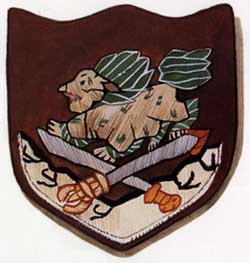


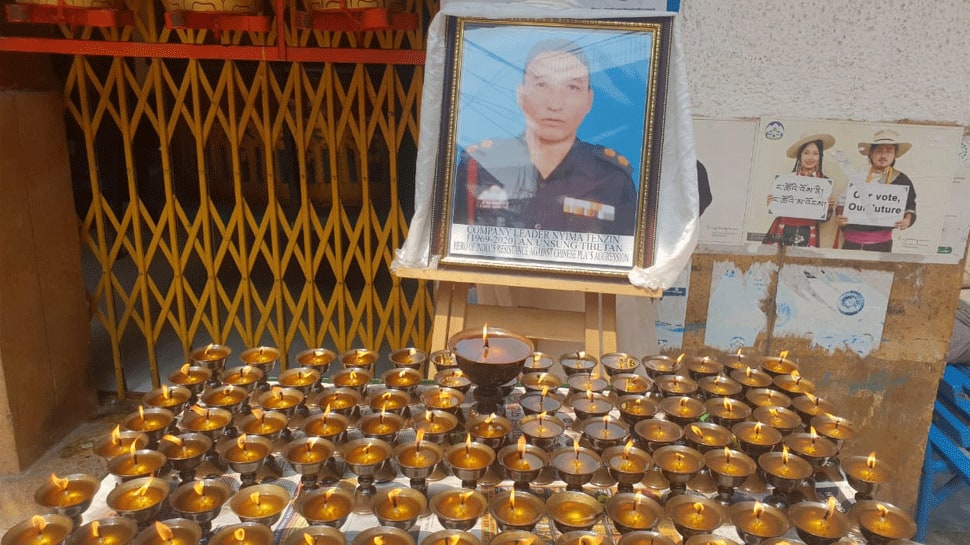










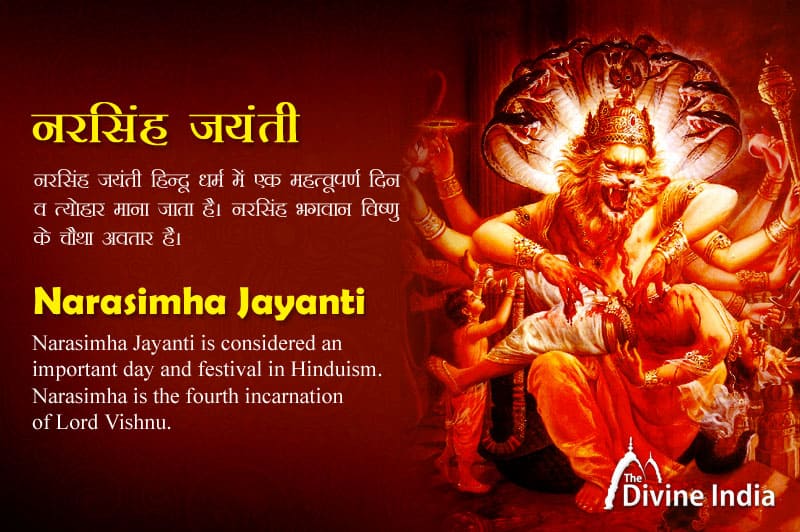
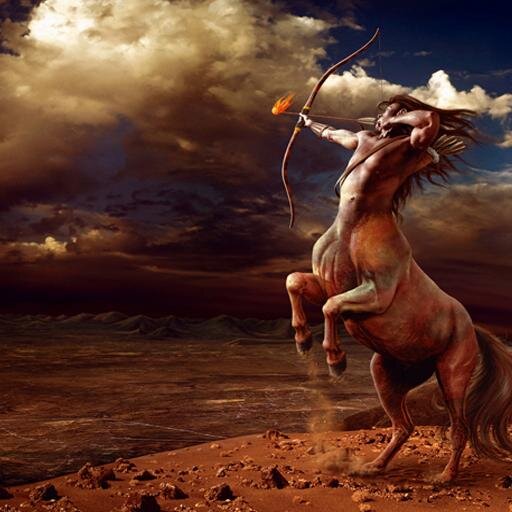


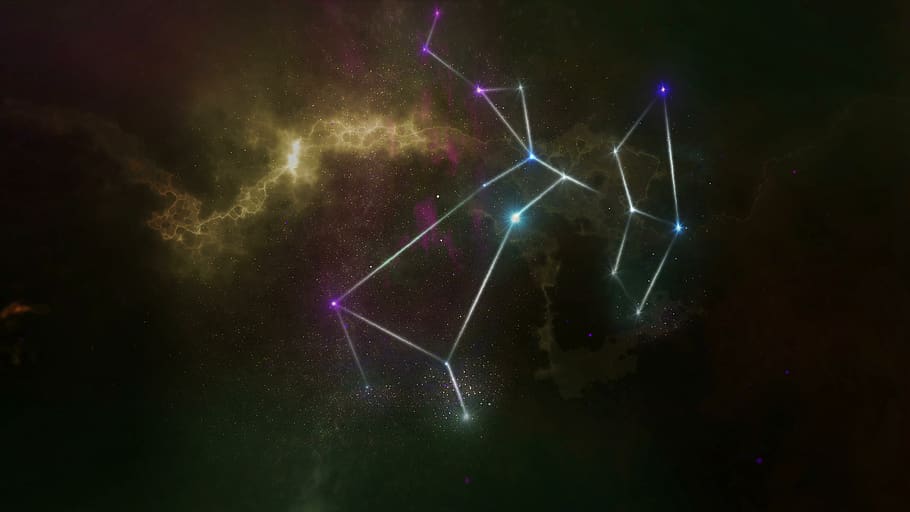

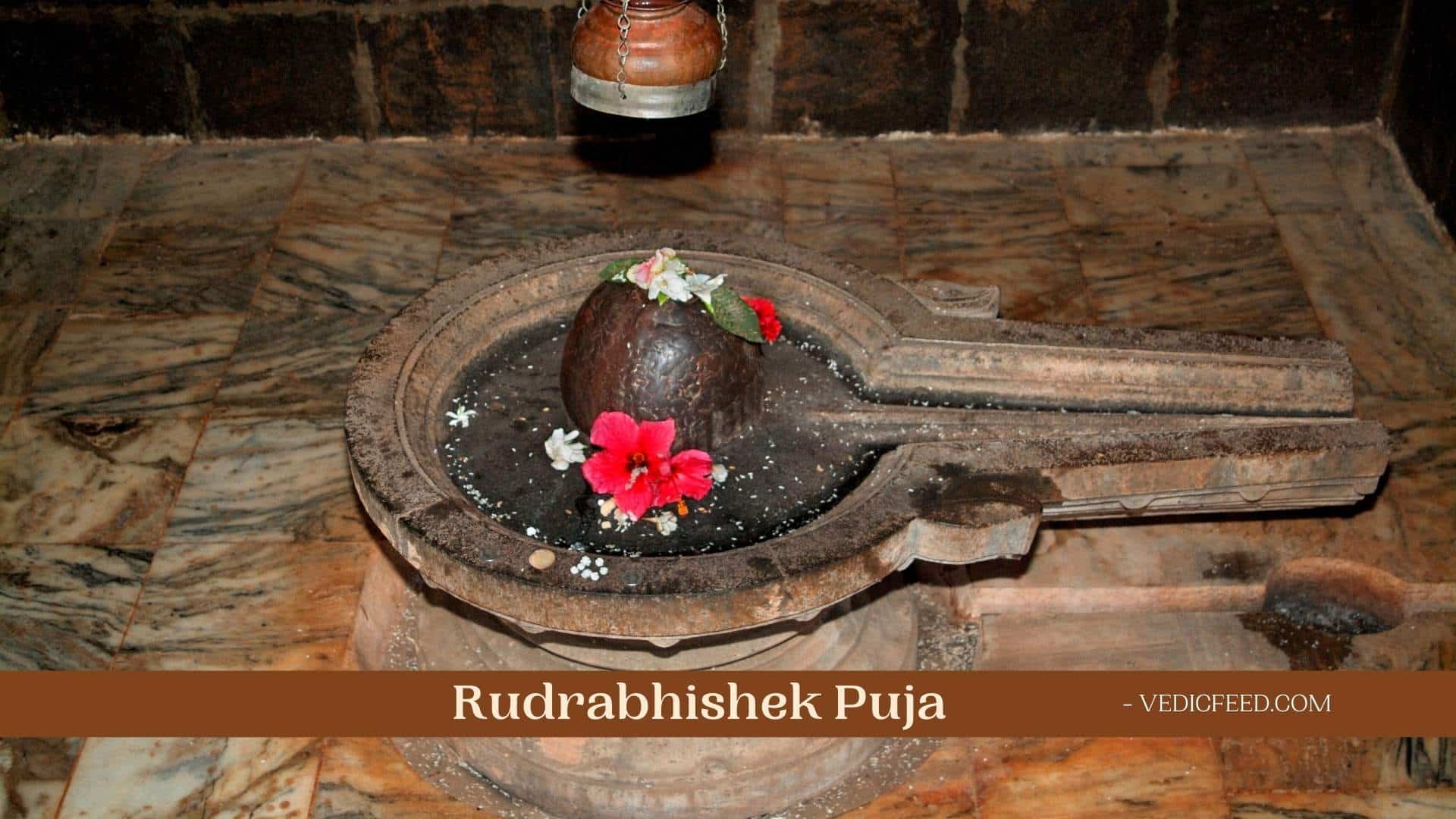


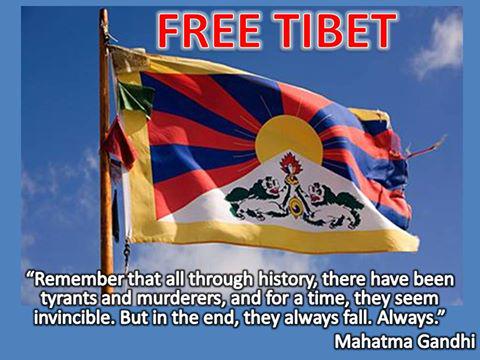
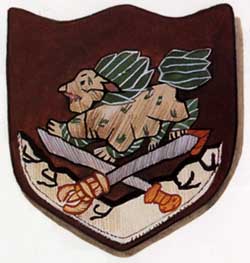





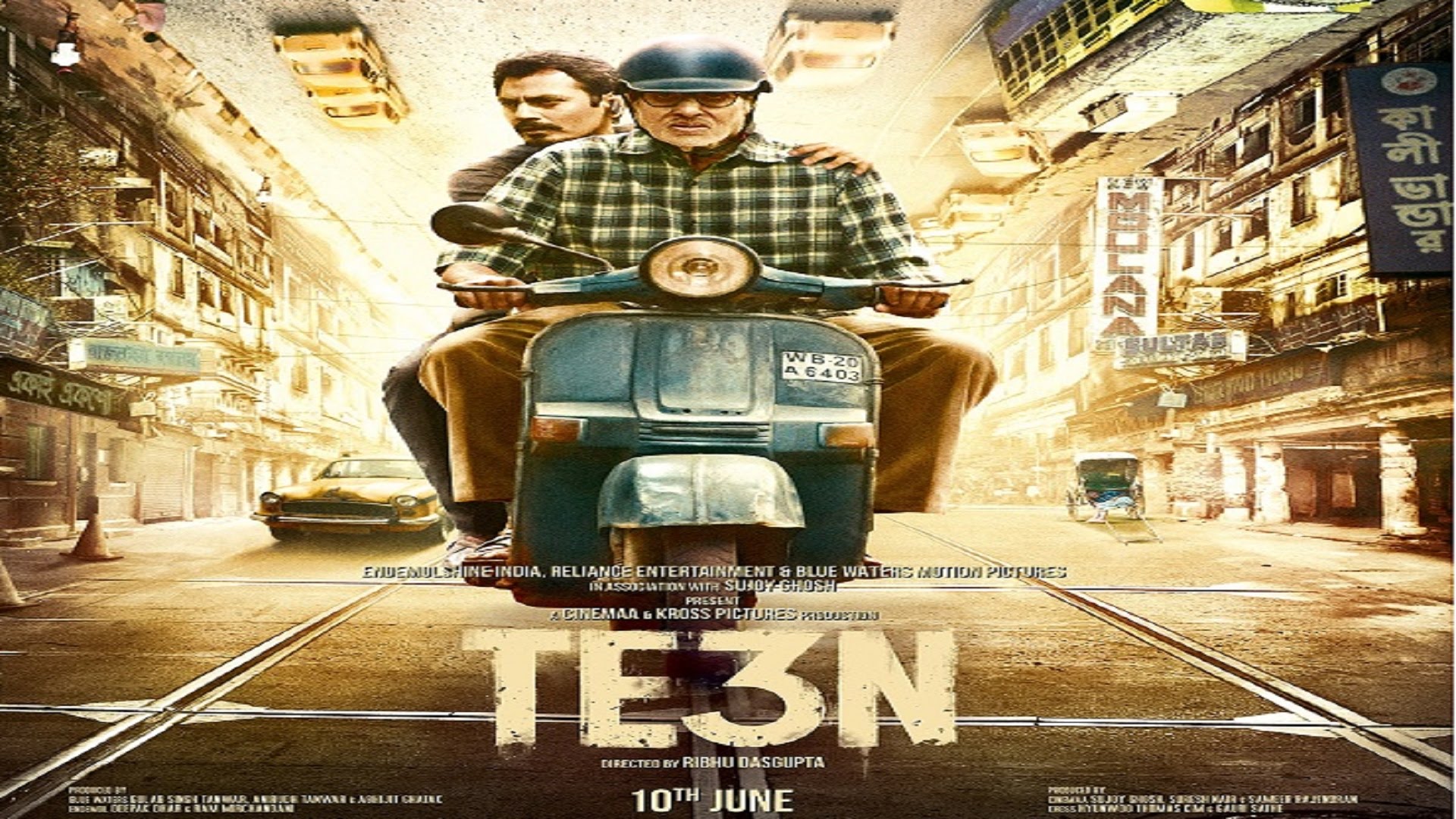


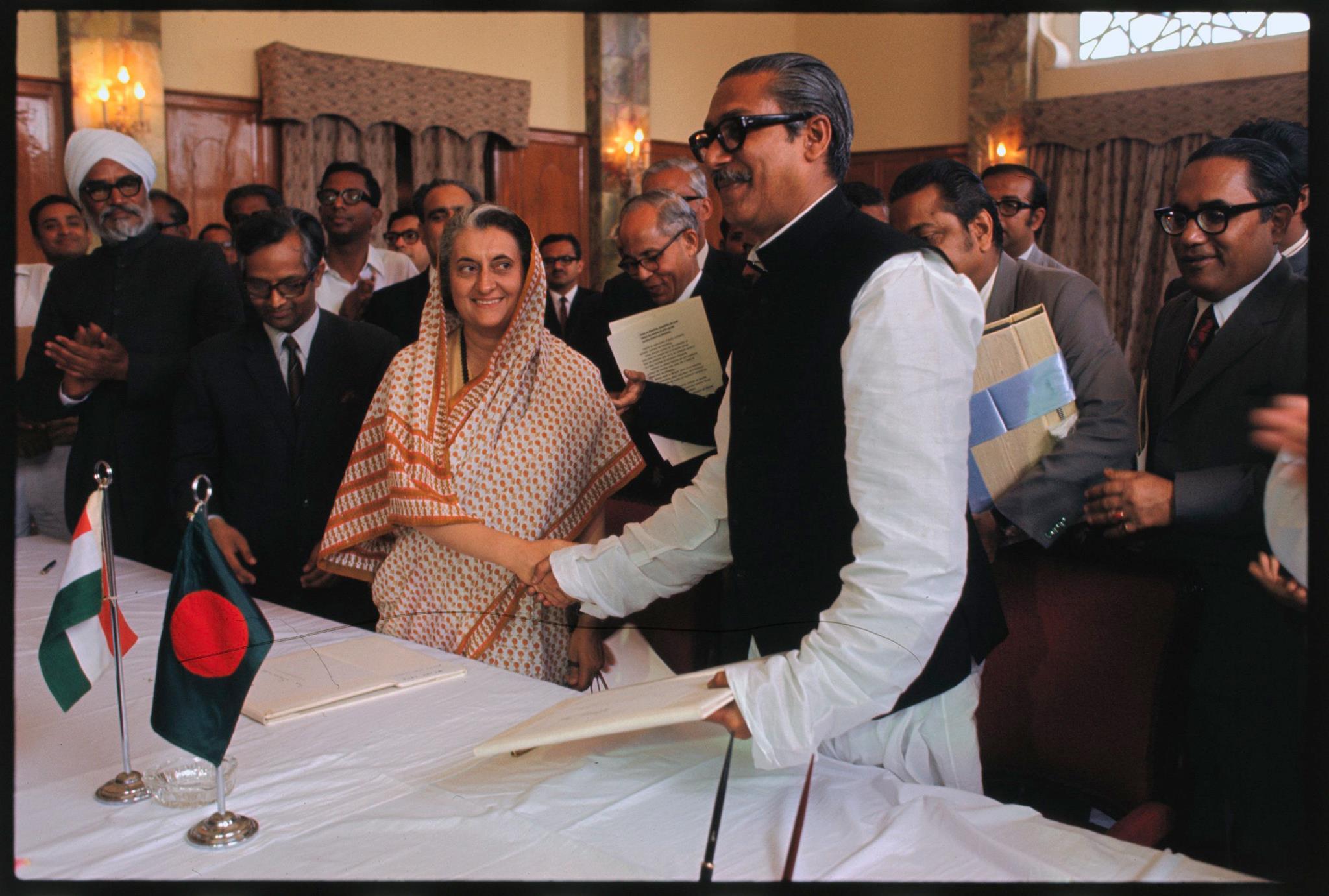










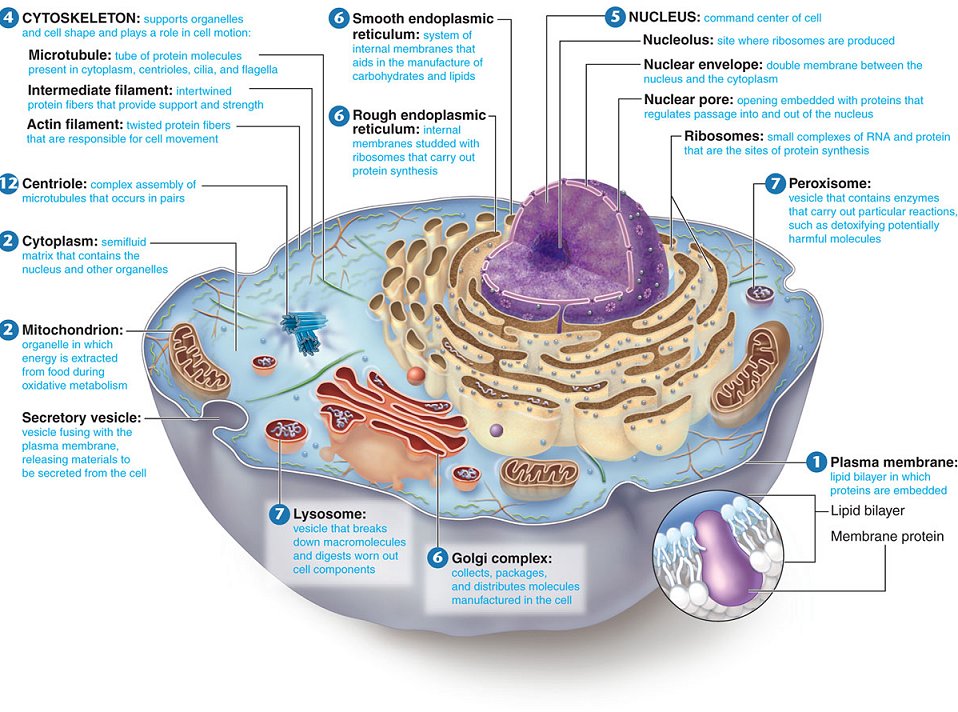




 Whole Dude - Whole Concept