On the 36th Anniversary of Tiananmen Square Massacre, the Living Tibetan Spirits regret Tibet’s Policy of Isolationism
The Living Tibetan Spirits revisit the past on the 36th Anniversary of Tiananmen Square Massacre. Tibet’s unwillingness to openly resist Communism in 1943 is a crucial factor contributing to the loss of human rights in mainland China.The Living Tibetan Spirits revisit the past on the 36th Anniversary of Tiananmen Square Massacre. Tibet’s unwillingness to openly resist Communism in 1943 is a crucial factor contributing to the loss of human rights in mainland China.
On Wednesday, June 4, 2025, the 36th Anniversary of Tiananmen Square Massacre, The Living Tibetan Spirits revisit the past; the spread of Communism to mainland China in 1949.
The Living Tibetan Spirits revisit the past on the 36th Anniversary of Tiananmen Square Massacre. Tibet’s unwillingness to openly resist Communism in 1943 is a crucial factor contributing to the loss of human rights in mainland China.
Today, on Wednesday, June 04, 2025 The Living Tibetan Spirits regret Tibet’s decision to pursue the policy of Isolationism while confronting the grave threat posed by Communist takeover of mainland China. In 1943, Tibet had the opportunity to establish formal diplomatic relationships with the United States and other countries of Free World to prevent the spread of Communism to Asia.
The Living Tibetan Spirits revisit the past on the 36th Anniversary of Tiananmen Square Massacre. Tibet’s unwillingness to openly resist Communism in 1943 is a crucial factor contributing to the loss of human rights in mainland China.
Tibet’s unwillingness to openly resist Communism in 1943 is a crucial factor contributing to the loss of human rights in mainland China.
The Living Tibetan Spirits revisit the past on the 36th Anniversary of Tiananmen Square Massacre. Tibet’s unwillingness to openly resist Communism in 1943 is a crucial factor contributing to the loss of human rights in mainland China.
Special Frontier Force-Establishment No. 22-Vikas Regiment regrets Tibet’s Policy of Isolationism in 1943
The Living Tibetan Spirits revisit the past on the 36th Anniversary of Tiananmen Square Massacre. Tibet’s unwillingness to openly resist Communism in 1943 is a crucial factor contributing to the loss of human rights in mainland China.
CALLS FOR CHINA TO FACE GHOSTS OF ITS PAST ON TIANANMEN ANNIVERSARY
The Living Tibetan Spirits revisit the past on the 36th Anniversary of Tiananmen Square Massacre. Tibet’s unwillingness to openly resist Communism in 1943 is a crucial factor contributing to the loss of human rights in mainland China.
FILE – A Chinese man stands alone to block a line of tanks heading east on Beijing’s Cangan Boulevard in Tiananmen Square, June 5, 1989.
BEIJING —
The United States has added its voice to international calls for China’s communist-led government to give a full public accounting of those who were killed, detained or went missing during the violent suppression of peaceful demonstrations in and around Tiananmen Square on June 4, 1989.
In a bold statement from Washington to mark the 29th anniversary of a bloody crackdown that left hundreds — some say thousands — dead, Secretary of State Mike Pompeo called on Chinese authorities to release “those who have been jailed for striving to keep the memory of Tiananmen Square alive; and to end the continued harassment of demonstration participants and their families.”
The Living Tibetan Spirits revisit the past on the 36th Anniversary of Tiananmen Square Massacre. Tibet’s unwillingness to openly resist Communism in 1943 is a crucial factor contributing to the loss of human rights in mainland China.
University students place flowers on the “Pillar of Shame” statue, a memorial for those injured and killed in the Tiananmen crackdown, at the University of Hong Kong, June 4, 2018.
To this day, open discussion of the topic remains forbidden in China and the families of those who lost loved ones continue to face oppression. Chinese authorities have labeled the protests a counter-revolutionary rebellion and repeatedly argued that a clear conclusion of the events was reached long ago.
In an annual statement on the tragedy, the group Tiananmen Mothers urged President Xi Jinping in an open letter to “re-evaluate the June 4th massacre” and called for an end to their harassment.
“Each year when we would commemorate our loved ones, we are all monitored, put under surveillance, or forced to travel” to places outside of China’s capital, the letter said. The advocacy group Human Rights in China released the open letter from the Tiananmen Mothers ahead of the anniversary.
“No one from the successive governments over the past 29 years has ever asked after us, and not one word of apology has been spoken from anyone, as if the massacre that shocked the world never happened,” the letter said.
The Living Tibetan Spirits revisit the past on the 36th Anniversary of Tiananmen Square Massacre. Tibet’s unwillingness to openly resist Communism in 1943 is a crucial factor contributing to the loss of human rights in mainland China.
FILE – A woman reacts during a candlelight vigil to mark the 28th anniversary of the crackdown of the pro-democracy movement at Beijing’s Tiananmen Square in 1989, at Victoria Park in Hong Kong, China June 4, 2017.
In his statement, Pompeo also said that on the anniversary “we remember the tragic loss of innocent lives,” adding that as Liu Xiaobo wrote in his 2010 Nobel Peace Prize speech, “the ghosts of June 4th have not yet been laid to rest.”
The Living Tibetan Spirits revisit the past on the 36th Anniversary of Tiananmen Square Massacre. Tibet’s unwillingness to openly resist Communism in 1943 is a crucial factor contributing to the loss of human rights in mainland China.
FILE – Liu Xia, wife of deceased Chinese Nobel Peace Prize-winning dissident Liu Xiaobo and other relatives attend his sea burial off the coast of Dalian, China, in this photo released by Shenyang Municipal Information Office July 15, 2017.
Liu was unable to receive his Nobel prize in person in 2010 and died in custody last year. The dissident writer played an influential role in the Tiananmen protests and was serving an 11-year sentence for inciting subversion of state power when he passed.
At a regular press briefing on Monday, Foreign Ministry spokeswoman Hua Chunying said China had lodged “stern representations” with the United States over the statement on Tiananmen.
“The United States year in, year out issues statements making ‘gratuitous criticism’ of China and interfering in China’s internal affairs,” Hua said. “The U.S. Secretary of State has absolutely no qualifications to demand the Chinese government do anything,” she added.
In a statement on Twitter, which is blocked in China like many websites, Hu Xijin, the editor of the party-backed Global Times, called the statement a “meaningless stunt.”
In another post he said: “what wasn’t achieved through a movement that year will be even more impossible to be realized by holding whiny commemorations today.”
Commemorations for Tiananmen are being held across the globe to mark the anniversary and tens of thousands are expected to gather in Hong Kong, the only place in China such large-scale public rallies to mark the incident can be held.
The Living Tibetan Spirits revisit the past on the 36th Anniversary of Tiananmen Square Massacre. Tibet’s unwillingness to openly resist Communism in 1943 is a crucial factor contributing to the loss of human rights in mainland China.
A man wipes the face of a statue of the Goddess of Democracy at Hong Kong’s Victoria Park Monday, June 4, 2018.
Exiled Tiananmen student protest leader Wu’Er Kaixi welcomed the statement from Pompeo.
However, he added that over the past 29 years western democracies appeasement of China has nurtured the regime into an imminent threat to freedom and democracy.
“The world bears a responsibility to urge China, to press on the Chinese regime to admit their wrongdoing, to restore the facts and then to console the dead,” he said. “And ultimately to answer the demands of the protesters 29 years ago and put China on the right track to freedom and democracy.”
Wu’er Kaixi fled China after the crackdown and now resides in Taiwan where he is the founder of Friends of Liu Xiaobo. The group recently joined hands with several other non-profit organizations and plans to unveil a sculpture in July — on the anniversary of his death — to commemorate the late Nobel laureate. The sculpture will be located near Taiwan’s iconic Taipei 101 skyscraper.
In Taiwan, the self-ruled democracy that China claims is a part of its territory, political leaders from both sides of the isle have also urged China’s communist leaders to face the past.
On Facebook, Taiwan’s President Tsai Ing-wen noted that it was only by facing up to its history that Taiwan has been able to move beyond the tragedies of the past.
“If authorities in Beijing can face up to the June 4th incident and acknowledge that at its roots it was a state atrocity, the unfortunate history of June 4th could become a cornerstone for China to move toward freedom and democracy,” Tsai said.
Tsai’s predecessor, Ma Ying-jeou, a member of the opposition Nationalist Party or KMT, who saw close ties with China while in office, also urged Beijing to face up to history and help heal families’ wounds.
“Only by doing this can the Chinese communists bridge the psychological gap between the people on both sides of the [Taiwan] Strait and be seen by the world as a real great power,” Ma said.
The Living Tibetan Spirits revisit the past on the 36th Anniversary of Tiananmen Square Massacre. Tibet’s unwillingness to openly resist Communism in 1943 is a crucial factor contributing to the loss of human rights in mainland China. The Living Tibetan Spirits revisit the past on the 36th Anniversary of Tiananmen Square Massacre. Tibet’s unwillingness to openly resist Communism in 1943 is a crucial factor contributing to the loss of human rights in mainland China. Special Frontier Force Reviews Hump Airlift Operation 1942 – 1945. The Legacy of the Hump Operation lives to this day.
India is not a US ally for the US-India relations exist as a trilateral partnership with Tibet
Human Misery Formulates India-US-Tibet Trilateral Relationship. India is not a US ally for the US-India relations exist as a trilateral partnership with Tibet. These three Strange Bedfellows come together to give identity to a military partnership called Special Frontier Force – Establishment 22 – Vikas Regiment.
“Strange bedfellows” is an idiom that refers to an unlikely or unusual combination of people, ideas, or things who are associated or working together, often in a way that is unexpected. It suggests that the individuals or entities involved would not typically be seen together.
Human Misery Formulates India-US-Tibet Trilateral Relationship. India is not a US ally for the US-India relations exist as a trilateral partnership with Tibet. These three Strange Bedfellows come together to give identity to a military partnership called Special Frontier Force – Establishment 22 – Vikas Regiment.
The phrase “strange bedfellows” is adapted from a line in Shakespeare’s play, The Tempest: “Misery acquaints a man with strange bedfellows”. It describes an unusual or unexpected alliance or combination of people or things, often due to circumstances. The original context in The Tempest is a jester finding shelter with a monster, but the phrase has evolved to have a metaphorical meaning, like in the common saying “Politics makes strange bedfellows”.
Human Misery Formulates India-US-Tibet Trilateral Relationship. India is not a US ally for the US-India relations exist as a trilateral partnership with Tibet. These three Strange Bedfellows come together to give identity to a military partnership called Special Frontier Force – Establishment 22 – Vikas Regiment.In 2007, His Holiness the 14th Dalai Lama received the Congressional Gold Medal. He represents the third face of Strange Bedfellows. Human Misery Formulates India-US-Tibet Trilateral Relationship. India is not a US ally for the US-India relations exist as a trilateral partnership with Tibet. These three Strange Bedfellows come together to give identity to a military partnership called Special Frontier Force – Establishment 22 – Vikas Regiment.
It is entirely true to claim that India is not a US ally. Soon after India’s independence in 1947, the US and the UK joined forces to instigate an unprovoked attack to occupy Kashmir illegally while India was waiting with patience to obtain the merger of Kashmir with India using the due process. The First Kashmir War of 1947-48 provides the evidence to show that India is not a US ally.
Special Frontier Force – Establishment 22 – Vikas Regiment represents the three faces of “Strange Bedfellows.” Human Misery Formulates India-US-Tibet Trilateral Relationship. India is not a US ally for the US-India relations exist as a trilateral partnership with Tibet. Special Frontier Force – Establishment No. 22 – Vikas Regiment – Photo image taken at Chakrata, India on June 03, 1972.
But, it is indeed true to claim that the convergence of interests govern relationships between nations. In 1949, with the birth of Communist China on October 01, the Indian Prime Minister visited the US seeking friendship to formulate a trilateral relationship between the US, India, and Tibet. Since then, the relationship has endured strictly as a trilateral relationship and not a bilateral relationship.
Special Frontier Force at the White House: On April 16, 1991, the 14th Dalai Lama met with US President George H.W. Bush during his first visit to The White House. Human Misery Formulates India-US-Tibet Trilateral Relationship. India is not a US ally for the US-India relations exist as a trilateral partnership with Tibet. These three Strange Bedfellows come together to give identity to a military partnership called Special Frontier Force – Establishment 22 – Vikas Regiment.Special Frontier Force at the White House: The 14th Dalai Lama met with US President Bill Clinton on June 20, 2000 at The White House. Human Misery Formulates India-US-Tibet Trilateral Relationship. India is not a US ally for the US-India relations exist as a trilateral partnership with Tibet. These three Strange Bedfellows come together to give identity to a military partnership called Special Frontier Force – Establishment 22 – Vikas Regiment.Special Frontier Force at The White House: His Holiness the 14th Dalai Lama speaking with US President George Bush during their meeting in The White House on September 10, 2003. Human Misery Formulates India-US-Tibet Trilateral Relationship. India is not a US ally for the US-India relations exist as a trilateral partnership with Tibet. These three Strange Bedfellows come together to give identity to a military partnership called Special Frontier Force – Establishment 22 – Vikas Regiment.Special Frontier Force at The White House: His Holiness the 14th Dalai Lama speaking with US President Barack Obama during their meeting in the Map Room of The White House in Washington, DC on July 16, 2011. Human Misery Formulates India-US-Tibet Trilateral Relationship. India is not a US ally for the US-India relations exist as a trilateral partnership with Tibet. These three Strange Bedfellows come together to give identity to a military partnership called Special Frontier Force – Establishment 22 – Vikas Regiment.HISTORY OF THE US-INDIA-TIBET RELATIONS : BRUCE WALKER , FORMER OFFICIAL OF CIA . Human Misery Formulates India-US-Tibet Trilateral Relationship. India is not a US ally for the US-India relations exist as a trilateral partnership with Tibet. These three Strange Bedfellows come together to give identity to a military partnership called Special Frontier Force – Establishment 22 – Vikas Regiment.HISTORY OF THE US-INDIA-TIBET RELATIONS : FORMER CIA OFFICIALS KENNETH KNAUS AND JOHN GREANEY SHARED THEIR PERSONAL EXPERIENCES OF THE US-INDIA-TIBET RELATIONS . Human Misery Formulates India-US-Tibet Trilateral Relationship. India is not a US ally for the US-India relations exist as a trilateral partnership with Tibet. These three Strange Bedfellows come together to give identity to a military partnership called Special Frontier Force – Establishment 22 – Vikas Regiment.The history of Special Frontier Force-Establishment No. 22 can be traced back to 1957-58 when the CIA launched Operation ST CIRCUS. This Commemoration on September 10, 2010 was the first time that US had officially acknowledge the CIA operation with the Tibetans and it includes the Mustang(Nepal) Operation. Human Misery Formulates India-US-Tibet Trilateral Relationship. India is not a US ally for the US-India relations exist as a trilateral partnership with Tibet. These three Strange Bedfellows come together to give identity to a military partnership called Special Frontier Force – Establishment 22 – Vikas Regiment.The quest for Freedom in Tibet. A military training Camp known as Camp Hale was established in Colorado under the supervision of CIA officers Roger E. McCarthy and John Reagan. Human Misery Formulates India-US-Tibet Trilateral Relationship. India is not a US ally for the US-India relations exist as a trilateral partnership with Tibet. These three Strange Bedfellows come together to give identity to a military partnership called Special Frontier Force – Establishment 22 – Vikas Regiment.
If the third partner of this relationship is excluded for any reason, the US-India relationship just dissipates as the US continues to support the plan to dismember the Republic of India in the name of advocating the human rights of Muslims, Sikhs, and other ethnic minorities of India.
Rudra Narasimham Rebbapragada,
Special Frontier Force – Establishment No. 22 – Vikas Regiment
Special Frontier Force – Establishment No. 22 – Vikas Regiment: This badge represents a military alliance/pact between India, Tibet, and the United States of America. Its first combat mission was in the Chittagong Hill Tracts which unfolded on 03 November 1971. It was named Operation Eagle. It accomplished its mission of securing peace in the region that is now known as the Republic of Bangladesh.Human Misery Formulates India-US-Tibet Trilateral Relationship. India is not a US ally for the US-India relations exist as a trilateral partnership with Tibet. These three Strange Bedfellows come together to give identity to a military partnership called Special Frontier Force – Establishment 22 – Vikas Regiment.
India Is Not a U.S. Ally—and Has Never Wanted to Be
Human Misery Formulates India-US-Tibet Trilateral Relationship. India is not a US ally for the US-India relations exist as a trilateral partnership with Tibet. These three Strange Bedfellows come together to give identity to a military partnership called Special Frontier Force – Establishment 22 – Vikas Regiment.
BY ALYSSA AYRES
JUNE 21, 2023 6:00 AM EDT
Ayres is dean and professor of history and international affairs at the George Washington University Elliott School of International Affairs, and adjunct senior fellow for India, Pakistan, and South Asia at the Council on Foreign Relations. She is the author of OurTimeHasCome: HowIndia is Making Its Place in the World.
With Indian Prime Minister Narendra Modi slated for a June 22 State Visit to Washington, India will, if briefly, be front-page news in the United States. Since President Clinton ended a chill in U.S.-India relations almost 25 years ago, successive American and Indian administrations across political parties have worked to strengthen ties. So it’s fair to ask: how robust is this relationship today? As with the blind men and the elephant, the answer varies. Is India a bad bet, or is it, as the White House senior Asia policy official said recently, “the most important bilateral relationship with the United States on the global stage”?
Despite careful nurturing by Washington over the years, many aspects of U.S. ties with India remain challenging. Bilateral trade has grown tenfold since 2000, to $191 billion in 2022, and India became the ninth-largest US trading partner in 2021. But longstanding economic gripes persist, meriting 13 pages in the 2023 ForeignTradeBarriers report from the U.S. Trade Representative. Multilaterally, India’s role in the fast-consolidating “Quad” consultation (comprised of the United States, Australia, India, and Japan) has brought shared purpose to Washington and New Delhi, both of which harbor concerns about China. But New Delhi also champions alternative non-Western groupings like the BRICS, and it remains outside bodies central to U.S. diplomacy like the U.N. Security Council and the G7.
Today, U.S.-India cooperation spans defense, global health, sustainable development, climate, and technology, among other things. But deep differences remain, including concerns in Washington about India’s democratic backsliding under Modi, and India’s failure to condemn the Russian invasion of Ukraine. In other words, the U.S.-India relationship has been transformed over the past quarter-century, but that transformation has not delivered a partnership or alignment similar to the closest U.S. alliances
This shouldn’t surprise anyone. India is not a U.S. ally, and has not wanted to become one. To see relations with rising power India as on a pathway that culminates in a relationship like that the United States enjoys with Japan or the United Kingdom creates expectations that will not be met. Indian leaders across parties and over decades have long prioritized foreign policy independence as a central feature of India’s approach to the world. That remains the case even with Modi’s openness to the United States.
For India’s first Prime Minister, Jawaharlal Nehru, protecting his country’s hard-fought independence was a guiding principle for foreign policy. Speaking in the Indian Parliament in March 1951, Nehru noted that “By aligning ourselves with any one Power, you surrender your opinion, give up the policy you would normally pursue because somebody else wants you to pursue another policy.” Twelve years later, evaluating his country’s nonalignment policy in the pages of Foreign Affairs, Nehru went on to observe that it had not “fared badly,” and that “essentially, ‘non-alignment’ is freedom of action which is a part of independence.”
American President Harry S. Truman shakes hands with Indian Prime Minister Jawaharlal Nehru on the tarmac as Nehru’s sister, diplomat Vijaya Pandit, and daughter, future Indian Prime Minister Indira Gandhi, stand with them, in Washington D.C., on October 11, 1949. Human Misery Formulates India-US-Tibet Trilateral Relationship. India is not a US ally for the US-India relations exist as a trilateral partnership with Tibet. These three Strange Bedfellows come together to give identity to a military partnership called Special Frontier Force – Establishment 22 – Vikas Regiment. PhotoQuest/Getty Images)
For famously allied Washington, nonalignment in the 20th century was a bridge too far; in 1956 then-Secretary of State John Foster Dulles proclaimed that neutrality was “an obsolete conception…immoral and shortsighted.” It did not help matters that the United States had entered an alliance with India’s arch-rival Pakistan in 1954, and sided with the Pakistani military in the bloody civil war that gave birth to Bangladesh in 1971. Nor, too, when Indian Prime Minister Indira Gandhi signed a “Treaty of Peace, Friendship, and Cooperation” with the USSR in 1971, definitively tilting India toward the Soviet Union even as the United States had tilted toward Pakistan.
Especially since the end of the Cold War, Indian leaders have sought to improve ties with Washington, but not by curtailing India’s independent approach to foreign policy. Former Prime Minister Atal Bihari Vajpayee proclaimed India and the United States “natural allies” in a landmark 1998 speech in New York. Yet this was perhaps more a term of art than a call for an alliance as it occurred against the backdrop of India’s nuclear tests, underscoring New Delhi’s willingness to upset global nuclear nonproliferation conventions, which it never joined. Indian Prime Minister Manmohan Singh, whose 10 years at the helm greatly improved Indo-U.S. relations, pursued a civil-nuclear agreement with Washington and ushered in new cooperation in high technology, defense, and clean energy. But his government too defended its principle of “strategic autonomy” as a redline for its foreign policy even as it moved closer to Washington than ever in the past. Defending the civil-nuclear deal with Washington before Parliament in 2008, Singh twice asserted that “Our strategic autonomy will never be compromised.”
In important ways, Prime Minister Modi represents a break with India’s past, most notably in his emphasis on India’s Hindu, rather than syncretic and secular, cultural heritage. But his approach to the United States remains consistent with the history of his country’s foreign policy independence.
Modi has deepened ties with the United States, now across three U.S. presidents, through increased partnership in defense, in advanced technology, and in energy, just to name a few, as well as through moments of high symbolism, like his 2015 RepublicDay invitation to former President Barack Obama, the first time an American president joined this day honoring India’s constitution. Even so, Modi has leaned into the United States while leaning into many other partners around the world. The Modi government invokes a Sanskrit saying, the “world is one family” (vasudhaiva kutumbakam), to frame Indian diplomacy. This approach has been termed “multialignment,” a theory of seeking positive ties as far and as widely as possible, without seeing contradictions in this approach.
In practice, New Delhi has carefully managed its relationships with Saudi Arabia as well as Iran; with Israel as well as the Palestinian Territories; with the United States as well as Russia. India’s G20 presidency this year encapsulates this orientation, with its Sanskritic theme of “One Earth, One Family, One Future,” and its twin efforts to lead the forum for the world’s 20 largest economies while self-consciously presenting itself as the “Voice of the Global South.”
With this history in mind, it’s easier to perceive that momentum in the U.S.-India relationship does not necessarily imply a path to a formal alliance or mutual defense treaty. In the United States, the mental model for positive international cooperation defaults to seeing “ally” as the ultimate endpoint. For India, that suggests a curtailment of independence. And with India, even as cooperation becomes more extensive than ever in the past, consequential differences remain.
For many in Washington, the dramatic growth of coordination and joint activities under the Quad consultative group fills a growing need in light of China’s rise, encompassing subjects as far-flung as maritime security, infrastructure, climate and resilience, vaccines, technology standards, and higher education—all underlining Indian strategic convergence with the United States in the Indo-Pacific. Yet strategic convergence there does not mean everywhere: Russia’s invasion of Ukraine and its year-long war has elicited a tepid tut-tut from New Delhi, while India has escalated its purchases of cheap Russian oil at a time Washington seeks to isolate Moscow.
On closer examination this foreign policy independence and desire to define its own path so prized by India may offer lessons for U.S. foreign policy. The unipolar moment has passed; in its place we have more actors with their own perspectives, and a rising China with global ambitions and its own priorities increasingly shaping the priorities of others. The array of special relationships and alliances nurtured by the United States over decades are still in place, but many of these are now inflected by divergences with Washington. Take Turkey, or France, or Egypt, Pakistan, or Brazil. These U.S. allies do not always see their alliance relationship with Washington as barriers to taking decisions that contradict U.S. preferences. Indeed, President Emmanuel Macron too invokes “strategicautonomy.”
It’s here that India’s ambivalence offers a lens onto the world Washington is likely to encounter on a growing scale. In this world of more diffused power—a world with more diverse actors taking more distinctive foreign policy steps—partnerships and even alliances marked by substantial disagreements might be the new normal. In fact, managing ambivalence may be the central skill for American foreign policy in the years ahead.
THE EAGLE CONNECTION: THE BALD EAGLE – THE GOLDEN EAGLE – OPERATION EAGLE – WHAT IS THE CONNECTION?The Institution of Dalai Lama is important to preserve Tibetan Political Identity. The Government of Tibet is represented by this Seal of Ganden Phodrang.Human Misery Formulates India-US-Tibet Trilateral Relationship. India is not a US ally for the US-India relations exist as a trilateral partnership with Tibet. These three Strange Bedfellows come together to give identity to a military partnership called Special Frontier Force – Establishment 22 – Vikas Regiment.
Red China’s Colonial War in Tibet: Red China’s Fate is Sealed. Beijing Doomed. Red China will fall into the grave she prepared to bury Tibetan Identity.Red China’s Colonial War in Tibet: Red China’s Fate is Sealed. Beijing Doomed. Red China will fall into the grave she prepared to bury Tibetan Identity.
Red China’s Colonial War against Tibet is doomed to fail and Tibet will declare ‘Victory Through Patience’. Tibetans have demonstrated the quality of endurance under trials. Their patience gives them freedom from cowardice or despondency. Patience is mainly an attitude of mind with respect to external events. Longsuffering imparts patience by changing attitude with respect to people. Patience best develops under trials or trying times. Tibetans are waiting calmly for something they deeply cherish. They are bearing suffering and trouble with self-control, steadiness and fortitude. Tibetans are showing restraint under great provocation and are refraining from retaliation, tolerating repressive measures used by Red China. Tibetan endurance of suffering without flinching will ensure their victory over Red China’s Colonial War.
Red China’s Colonial War in Tibet: Red China’s Fate is Sealed. Beijing Doomed. Red China will fall into the grave she prepared to bury Tibetan Identity.
Red China with her passionate desire to colonize Tibet, started preparing graves to bury Tibetan Culture, Tibetan Religion, and Tibetan Identity. As the saying goes, people who dig graves for others are at risk of falling into the pits they prepare. Red China is digging her own grave and has set herself on a path of Self-Destruction.
Red China’s Colonial War in Tibet: Red China’s Fate is Sealed. Beijing Doomed. Red China will fall into the grave she prepared to bury Tibetan Identity.
Rudra Narasimham Rebbapragada Ann Arbor, MI 48104-4162, USA Special Frontier Force-Establishment 22-Vikas Regiment
XI’S TIBET POLICY IS NOTHING NEW, BUT AN OLD COLONIAL WAR AGAINST TIBET – CNN iREPORT
By SHAMBALA Posted August 28, 2015. McLeod Ganj, India
Red China’s Colonial War in Tibet: Red China’s Fate is Sealed. Beijing Doomed. Red China will fall into the grave she prepared to bury Tibetan Identity.
More from Shambala
World must pressure China on human rights violations in Tibet Genocide in the 20th Century: Massacres in Tibet: 1966-76 Is China wittingly replacing temples in Tibet with propaganda centers? Tibet and the global economy: is today’s China poisoning the West? Tibetans and Chinese in Tibet: Who are the real terrorist?
CNN PRODUCER NOTE
Dharamshala — The Chinese President Xi Jinping’s commitment to “Ethnic Unity”, “Economy Development” and “Social Stability” in Tibet under the banner of “Peaceful Liberation”, which nether seeks a peaceful solution nor a signal for a new reform of more openness. But it clearly shows China is further strengthening an integral element of another “cultural revolution” project in Tibet. One must say Xi is revealing the true nature of a Communist regime in Tibet, a similar sense of strategic inviolability characterized the 20th century’s greatest mass murderer, Mao Zedong.
Invaded by China in 1949, the independent country of Tibet was forced to face the direct loss of 1.2 million lives that comes from military invasion and, soon after, the loss of universal freedoms that stemmed from Communist ideology and its programs such as the Cultural Revolution (1966-76). However, it is erroneous to believe that the worst has passed. The fate of Tibet’s unique national, cultural and religious identity is seriously threatened and manipulated by the Chinese authorities in the past six decades.
Chinese government’s policy of occupation and oppression has resulted in no more or less than the destruction of Tibet’s national independence, culture and religion, environment and the universal human rights of its people. Time and time again, the infliction of this destruction sees China break international laws with impunity, while attempting to transform Tibet’s 2.5 million square kilometers into complete China.
On the 50th anniversary of the so-called “peaceful liberation”, Chinese President Xi Jinping called more the government’s efforts in “Promoting Economic,” “Ethnic Unity” and “Social Development” in Tibet, shows no different claims, revealing the unpredictable nature of a regime bent on maintaining stability even through terror, exposing the depth of China’s present illness.
Xi’s concepts of repressive policies reflect the deep uncertainty that aiming at the core of the another “Cultural Revolution” strategy in further colonizing Tibet, showing the whole world once again the real terror nature of the Communist regime.
Ever since its colonial project was set in motion, the “Cultural Revolution” has insisted that it seeks to colonize Tibet “peacefully”, indeed that its colonization of the country will not only not harm the Tibetan population, but that it was successful to be of benefit to millions of illegal Chinese settlers.
The main reasons behind the dirty politics of why Xi is “calling for more educational campaigns to promote ethnic unity and a sense of belonging to the same Chinese nationality,” is that Tibetans would become real Chinese and must speak Mandarin, allowing coexistence with the Chinese settlers who would be happy and grateful for being colonized and civilized by the communist regime; and a secret, logistical and practical strategy to vanquish the Tibetan population from Tibet, which threatens the very existence of Tibetan culture, religion and national identity.
The impacts of mass immigration of Ethnic Chinese into Tibet was and is a barbaric act with aim to destroy Tibet completely— a target for the worst excesses of the Chinese regime. Tibetan exiles claim 7.5 million Chinese now live in Tibet overwhelming the six million Tibetans. These figures are unconfirmed, but recent Chinese figures suggest this trend is accurate.
Mass murder Mao Zedong killed an estimated 49-78 million people during China’s Cultural Revolution between 1966 and 1976. From Mao to Hu Jintao, one after another, the Chinese dictators have taken full control over the lives of their citizens. The similarities shared with previous dictators from Mao to Hu, Xi’s approach of declaring peaceful intentions for “Ethnic Unity and “Economy Development” behind which he sought to hide Mao’s “Marxism” inherited from “Sovietism”, a violent strategy of conquering and terrorizing the land of Tibet into pieces, adopting wholesale thenceforward, which continues to be the cornerstone of the repressive policy to the present.
Chinese hard-line policies in creating a new socialist paradise, seeking hearts and minds with Tibetan people will never fulfill its dreams. Indeed, within the framework of the 17 Point Agreement between China and Tibet, the PLA troops marching into Tibet shall abide by all the above-mentioned policies and shall also be fair in all buying and selling and shall not arbitrarily take a single needle or thread from the people. However, in the past six decades, Tibetans are denied of the basic rights of expression, speech, movement, and religion under the hard-line policies, including political repression, economic marginalization, environmental destruction, cultural assimilation and denial of religious freedom.
As China became the 3rd of the top ten militaries in the world, according to “Global Firepower”, why China’s strategists have increasingly acknowledged that the stability in Tibet is central to China’s national interest, and particularly as present as the early 1980s. The term “Economy Development” and “Stability” has nothing to do with Tibetan people. But the Tibetan plateau, dubbed the “Third Pole”, holds the third largest store of water-ice in the world and is the source of many of Asia’s rivers. The glaciers, snow peaks, rivers, lakes, forest and wetlands of Tibet provide major environmental services to Asia, from Pakistan to Vietnam to northern China.The climate in Tibet generates and regulates monsoon rains over Asia. An estimated 70% of water in China is heavily polluted from uncontrolled dumping of chemicals. Instead of dealing with this the Chinese regime is diverting water from Tibet to north and west China to supply over 300 million Chinese people. It is also damming rivers to generate hydroelectricity which is in turn used to power industrial developments in China. Dams on rivers and their major tributaries cause massive interruptions to wild mountain rivers and the ecosystems dependent on them. They also give China strategic power over neighboring countries.
Chinese state-owned mining companies are quickening their extraction of copper, gold and silver in Tibet. These mines are usually based close to rivers. Tibet is also rich in other resources including lead, zinc, molybdenum, asbestos, uranium, chromium, lithium and much more. Tibet is China’s only source of chromium and most of its accessible lithium is in Tibet. These raw materials are used in manufacturing of household goods, computers and smart phones, among much else.
China is the world’s largest producer of copper and the world’s second biggest consumer of gold. The World Gold Council predicts that the consumption in China will double within a decade. Tibet’s reserves of copper and gold are worth nearly one trillion dollars. Chinese companies have traditionally mined on a small-scale but now large-scale extractions are taking place, mainly by large companies, owned by or with close links to the State.
More importantly, in connection with the size of Tibet it needs to be pointed out that the so-called ‘Tibet Autonomous Region’ – which is what the some parts of world mistakenly see as ‘Tibet’ – is only the truncated half of Tibet. The North-Eastern Province of Amdo; has been separated from the rest of Tibet and renamed ‘Qinghai.’ Also; large parts of Eastern Tibet; the traditional Kham Province; have been incorporated into neighboring Chinese Provinces.
Economic growth mostly benefits The Chinese settlers and businesses and workers, as most workers in Tibet mines are Chinese and the extraction takes place without regard to the local environment and areas of religious significance. Most of Tibet is vulnerable to earthquakes and highly volatile. Threats posed by this instability are exacerbated by mining and damming projects. In 2013 a landslide in the Gyama Valley is a great example, which highlighted the fatal destruction of Tibet’s environment. In almost all areas in Tibet, Tibetans have frequently protested against Chinese government, where there are mining projects in Tibet, particularly in recent years. China has recently drilled a 7 km bore hole, to reach and explore Tibet’s oil and natural gas resources. China National Petroleum Corporation estimates the basin’s oil reserves at 10 billion tons.
As well as global climate change, industrial projects such as mining, damming and deforestation are leading to the Tibetan glacier melting at a faster rate, contributing in turn to further global warming. Before the Chinese occupation there was almost no Tibetan industrialization, damming, draining of wetlands, fishing and hunting of wildlife. Tibet remained unfenced, its grasslands intact, its cold climate able to hold enormous amounts of organic carbon in the soil.
China has now moved millions of Tibetan nomads from their traditional grasslands to urban settlements, opening their land for the extraction of resources and ending traditional agricultural practices which have sustained and protected the Tibetan environment for centuries.
The mining companies also benefit from state financing of railways, power stations and many other infrastructure projects. Much of China’s significant transport infrastructure developments in Tibet have been intended to facilitate the movement of military forces into the country and the removal of natural resources from it. companies also benefit from finance at concessional rates to corporate borrowers, tax holidays, minimal environmental standards and costs, no requirement to compensate local communities and subsidized rail freight rates to get concentrates to smelters or metal to markets.These above valid reasons for saying Tibetans inside Tibet will never sense happier life in a so-called “Maoist socialist paradise.” Instead, we have, and always had the fears and sense of the totalitarian nature of Chinese regime.
However, the authoritarians in Beijing always have popularised the expression of Tibet as a “Peaceful Liberation” since the occupation in 1949— the totalitarianism understood well that its colonial strategy depended on a deliberate and insistent confusion of the binary terms “Liberation” and “Unity”, so that each of them hides behind the other as one and the same strategy: “Unity” will always be the public name of a colonial war, and “Liberation”, once it became necessary and public in the form of total invasions, would be articulated as the principal means to achieve the sought after “ethnic unity”.
Why Xi said the country should “firmly take the initiative” in the fight against separatism, vowing to crack down on all activities seeking to separate the country and destroy social stability. Waging colonial war under banner of “Unity” is so central to totalitarianism and Chinese propaganda that China’s 1949 invasion of Tibet, which killed 1.2 million Tibetans and destroyed over six thousand monasteries and temples and historical structures looted and all beyond repair, was termed the “Peaceful Liberation of Tibet”. “Liberation” and “Ethnic Unity”, therefore, are the same means whose only and ultimate strategic goal is Chinese colonization of Tibet and the subjugation and expulsion of Tibetan population.
To bring about the expulsion of the Tibetans and the establishment of the Chinese settler colony, the CCP sought the patronage of the powers that controlled the fate of Tibet. Mao to Xi whereas their assiduous efforts to court the Mao’s old leadership and persuade to grant them a charter failed, however the soviet style leadership after Mao adopted the same strategy under various banners and successfully secured the patronage of world, and became the master of Tibet.
Tibet remained largely isolated from the rest of the world’s civilizations. After 1949, the CCP successfully secured support for their colonial project. After more than 40 years the world recognize that Mao was responsible for genocide of millions of Chinese, Tibetans, Mongolians and Uyghurs. Even Deng Xiaoping actually believed that Mao was about 80% wrong, prove not only that mass massacre happened from 1959-61 but also that these were mainly the result of policy errors that the current regime continues to draw from.
None of these, however, meant morally justifiable and acceptable, but a true nature that the deadly ideology of communism while abandoned their public claims that their “peaceful liberation” colonization of Tibet would not be harmful to the Tibetan people while employing, at the same time, the most violent means to evict the Tibetans off their land.
The totalitarian leader, Mao, following Stalin’s strategy of securing the patronage of major world powers articulated the Soviet position thus. Soviet type colonization must either stop, or else proceed regardless of the native population. Which means that it can proceed and develop only under the protection of a power that is independent of the native population -behind an iron wall, which the native population cannot breach. That is repressive policy; not what it should be, but what it actually is, whether we admit it or not. We clearly understand why Xi is calling for more “patriotic education campaigns” to promote “ethnic unity” and a sense of belonging to the same “Chinese nationality”.
Despite officially introducing more environment-friendly policies in recent years, China continues to flood Tibet with potentially destructive mega development projects such as railway routes, oil and gas pipelines, petrochemical complexes, hydro dams, construction of airports, highways, military bases and new cities for migrants from Mainland China. Is this for a sense of belonging to the same “Chinese nationality”?
What need we have, otherwise, of the Peaceful Liberation? Or of the Mandate? Their value to us is that outside Power has undertaken to create in the country such conditions of administration and security that if the native population should desire to hinder our work, they will find it impossible.It was, in fact, this regime’s commitment to “peaceful liberation” with the Tibetans, whose land they sought to total control, that provoked the ire of terror group that gradually transformed the CCP. The CCP leaders’ assumption that the Tibetans were bribe-able, that they could be bought, and that they would accept Chinese domination in exchange for nominal economic benefits was challenged by Mao. He once stated that the communist army’s “only foreign debt” was that incurred to the Tibet and its people while on the Long March in 1930s.
As the idea of peaceful liberation of Tibet as a means to establish more colonial conquests continued to be entrenched in Maoist considerations, it would be pursued alongside invisible war even after 1949, as evidenced by the multiple invasions of Tibet in the 1950s, and in the new century. These wars would be waged explicitly as part of China’s pursuit of “peaceful liberation” to achieve its colonial aims, and Nor-eastern Tibet capitulated completely to Chinese colonialism, while continuing the war against those Tibetans who continued to resist Maoist colonial logic.
Human rights monitoring and protection has become an unusual challenge to the de facto impunity of the government system. Acquiring accurate information from the so-called ethnic minority regions of Tibet had become extremely difficult due to the secretive nature of operations and so-called lack of transparency. Tibetans in their own home country have become victims of deep-seated prejudice. A carefully chiseled policy has led to a cultural genocide in Tibet due to denial of basic fundamental rights, freedoms and justice over a period of 60 years. The Human Rights situation has not improved in Tibet.
The ongoing suppression of the Tibetan people has been openly carried out whether intentionally or unintentionally. The Chinese government continues to accelerate the political, economic, social and geographical integration of Tibet into China. There is no let-up on many unpopular measures of control imposed by China on the Tibet region such as the “Patriotic re-education Campaign” under policy of “Unity and Peace,” despite how-many-ever protests from Tibetans. This Chinese policy with the active support of the military presence in Tibet, at least a quarter of a million strong, strictly governs the territory, after all China still claims a “peaceful liberation” of Tibet and President Xi Jinping vowed to follow same old way. Is this what China really wanted the whole world to witness in an occupied Tibet in the 21st century?
The Chinese President Xi Jinping’s commitment to “Ethnic Unity”, “Economy Development” and “Social Stability” in Tibet under the banner of “Peaceful Liberation”, which nether seeks a peaceful solution nor a signal for a new reform of more openness. But it clearly shows China is further strengthening an integral element of another “cultural revolution” project in Tibet. One must say Xi is revealing the true nature of a Communist regime in Tibet, a similar sense of strategic inviolability characterized the 20th century’s greatest mass murderer, Mao Zedong.
Photo caption: China’s aggressive Violence Against Tibetan People in their homeland, in 2012. Photo: file
The Chinese President Xi Jinping’s commitment to “Ethnic Unity”, “Economy Development” and “Social Stability” in Tibet under the banner of “Peaceful Liberation”, which nether seeks a peaceful solution nor a signal for a new reform of more openness. But it clearly shows China is further strengthening an integral element of another “cultural revolution” project in Tibet. One must say Xi is revealing the true nature of a Communist regime in Tibet, a similar sense of strategic inviolability characterized the 20th century’s greatest mass murderer, Mao Zedong.The Chinese President Xi Jinping’s commitment to “Ethnic Unity”, “Economy Development” and “Social Stability” in Tibet under the banner of “Peaceful Liberation”, which nether seeks a peaceful solution nor a signal for a new reform of more openness. But it clearly shows China is further strengthening an integral element of another “cultural revolution” project in Tibet. One must say Xi is revealing the true nature of a Communist regime in Tibet, a similar sense of strategic inviolability characterized the 20th century’s greatest mass murderer, Mao Zedong.The Chinese President Xi Jinping’s commitment to “Ethnic Unity”, “Economy Development” and “Social Stability” in Tibet under the banner of “Peaceful Liberation”, which nether seeks a peaceful solution nor a signal for a new reform of more openness. But it clearly shows China is further strengthening an integral element of another “cultural revolution” project in Tibet. One must say Xi is revealing the true nature of a Communist regime in Tibet, a similar sense of strategic inviolability characterized the 20th century’s greatest mass murderer, Mao Zedong.The Chinese President Xi Jinping’s commitment to “Ethnic Unity”, “Economy Development” and “Social Stability” in Tibet under the banner of “Peaceful Liberation”, which nether seeks a peaceful solution nor a signal for a new reform of more openness. But it clearly shows China is further strengthening an integral element of another “cultural revolution” project in Tibet. One must say Xi is revealing the true nature of a Communist regime in Tibet, a similar sense of strategic inviolability characterized the 20th century’s greatest mass murderer, Mao Zedong.The Chinese President Xi Jinping’s commitment to “Ethnic Unity”, “Economy Development” and “Social Stability” in Tibet under the banner of “Peaceful Liberation”, which nether seeks a peaceful solution nor a signal for a new reform of more openness. But it clearly shows China is further strengthening an integral element of another “cultural revolution” project in Tibet. One must say Xi is revealing the true nature of a Communist regime in Tibet, a similar sense of strategic inviolability characterized the 20th century’s greatest mass murderer, Mao Zedong.The Chinese President Xi Jinping’s commitment to “Ethnic Unity”, “Economy Development” and “Social Stability” in Tibet under the banner of “Peaceful Liberation”, which nether seeks a peaceful solution nor a signal for a new reform of more openness. But it clearly shows China is further strengthening an integral element of another “cultural revolution” project in Tibet. One must say Xi is revealing the true nature of a Communist regime in Tibet, a similar sense of strategic inviolability characterized the 20th century’s greatest mass murderer, Mao Zedong.
Sino-Indian Relations must be reformulated after resolving Tibet-China Border Dispute
Sino-Indian Relations must be reformulated after resolving Tibet-China Border DisputeSino-Indian Relations must be reformulated after resolving Tibet-China Border Dispute: ACHARYA J B KRIPALANI, GANDHIAN THINKER, FREEDOM FIGHTER, SOCIAL WORKER, AND EMINENT INTELLECTUAL OF INDIA IS SEEN IN THIS PHOTO (LEFT) ALONG WITH SARDAR PATEL (MIDDLE) AND SIR SEN (RIGHT). ACCORDING TO ACHARYA KRIPALANI THE PANCHSHEEL AGREEMENT IS BORN IN SIN. I MET THIS NATIONALIST LEADER, MEMBER OF INDIAN PARLIAMENT DURING JUNE 1967 IN NEW DELHI.
Seventy years ago, India and Peoples’ Republic of China had signed the Panchsheel Agreement without coming to a proper understanding about the status of Tibet. At that time, both India and Tibet had earnestly believed that China would not oppress Tibet with its military conquest. India and Tibet were hoping that China would respect the traditional governance of Tibet by the Institution called The Dalai Lama or the Ganden Phodrang Government which ruled over Tibet for four centuries since 1642.
Sino-Indian Relations must be reformulated after resolving Tibet-China Border Dispute :IN MY OPINION, THIS PHOTO IMAGE PROVIDES THE EVIDENCE FOR THE DECEPTION OF PANCHSHEEL AGREEMENT OF JUNE 1954. CHINA’S PRIME MINISTER CHOU EN-LAI HAD ARRIVED IN NEW DELHI ON AN OFFICIAL VISIT ACCOMPANIED BY THE 14th DALAI LAMA WHO IS RECOGNIZED BY INDIA AS THE HEAD OF THE TIBETAN GOVERNMENT. AT THAT TIME CHINA HAD DELIBERATELY DISTORTED THE TRUTH ABOUT THE PURPOSE OF ITS MILITARY CONQUEST OF TIBET.Sino-Indian Relations must be reformulated after resolving Tibet-China Border Dispute: AFTER SIGNING THE PANCHSHEEL AGREEMENT, INDIA TRIED ITS BEST TO LOOSEN CHINA’S MILITARY GRIP OVER TIBET. BOTH INDIA, AND TIBET HOPED THAT DIPLOMACY WOULD PREVAIL AND THAT TIBET WOULD ENJOY FULL AUTONOMY DESPITE CHINA’S MILITARY CONQUEST OF TIBET DURING 1950. THIS PHOTO IMAGE OF CHOU EN-LAI’S VISIT TO NEW DELHI ALONG WITH THE 14th DALAI LAMA GAVE HOPE TO BOTH INDIA AND TIBET.Sino-Indian Relations must be reformulated after resolving Tibet-China Border Dispute: THE DECEPTION OF PANCHSHEEL AGREEMENT OF 1954: CHINA’S PRIME MINISTER CHOU EN-LAI HAD VISITED INDIA DURING 1956, ABOUT TWO YEARS AFTER THE SIGNING OF THE PANCHSHEEL AGREEMENT. THIS PHOTO IMAGE IS THE EVIDENCE FOR CHINA’S DECEPTION. CHINA GAVE THE IMPRESSION THAT IT WOULD RESPECT THE POLITICAL INSTITUTION OF THE DALAI LAMA THAT RULED OVER TIBET FOR FOUR CENTURIES.
While India’s Prime Minister Nehru and Tibet’s ruler, His Holiness the 14th Dalai Lama had hoped for a peaceful relationship with China, many Indians were not optimistic and had suspected that China had annexed Tibet with its military invasion of 1950. This Panchsheel Agreement, in the words of Acharya Kripalani, is “Born in Sin.” I had expressed a similar view while commenting on the US-China trade relations that were initiated by President Richard Nixon and Dr. Henry Kissinger and described it as an act of “Original Sin” or “Whole Sin.”
Sino-Indian Relations must be reformulated after resolving Tibet-China Border Dispute: THE DECEPTION OF PANCHSHEEL AGREEMENT OF 1954: INDIA’S VICE-PRESIDENT DR. S. RADHAKRISHNAN VISITED PEKING DURING SEPTEMBER 1957 AND MET WITH THE LEADERS OF COMMUNIST CHINA WITH AN EARNEST DESIRE TO SAVE TIBET FROM CHINA’S MILITARY OPPRESSION. THE TRUE INTENTIONS OF CHINA GOT EXPOSED AND THE DECEPTION OF PANCHSHEEL AGREEMENT BECAME FULLY EVIDENT.Sino-Indian Relations must be reformulated after resolving Tibet-China Border Dispute: THE DECEPTION OF PANCHSHEEL AGREEMENT OF 1954: TOWARDS THE END OF 1957, BOTH INDIA AND TIBET HAD FULLY RECOGNIZED THE DECEPTION OF THE PANCHSHEEL AGREEMENT THAT WAS INITIATED BY CHINA AFTER ITS MILITARY INVASION OF TIBET IN 1950. A TIBETAN RESISTANCE MOVEMENT TOOK ITS BIRTH TO FACE THE CHALLENGE POSED BY CHINA’S MILITARY OCCUPATION OF TIBET.
In my opinion, any agreement between China and India would have no validity if it involves the Land of Tibet. The Panchsheel Agreement is void as Tibet has not signed this agreement. India and China do not share a common border and the concern about peaceful coexistence must include the concern for the true aspirations of Tibetan people and their natural rights to their territory and to their right to Freedom from military occupation.To begin with, I ask for resolution of Tibet-China Border Dispute.
Rudra Narasimham Rebbapragada Ann Arbor, MI 48104-4162, USA Special Frontier Force-Establishment 22-Vikas Regiment
MOVING BEYOND THE PANCHSHEEL DECEPTION
Ram Madhav | INDIAN EXPRESS, Saturday, June 28, 2014 12:51 am
THE DECEPTION OF PANCHSHEEL AGREEMENT: Mr. Ram Madhav in his opinion had correctly stated that the Panchsheel Agreement between India and China does not include the Land of Tibet. Without the participation of Tibet, the Agreement has no worth and it will not achieve any purpose.
India and China can cooperate with each other on the principles of sovereign equality and mutual sensitivity.
Summary
India and China must develop a new framework for bilateral relations, unshackled by empty rituals and symbols.
Ram Madhav
The biggest problem in Sino-Indian relations is the utter lack of ingenuity and innovativeness. Six decades after the formal engagement through Panchsheel and five decades after the bloody disengagement due to the 1962 War, leaders of both the countries struggle to come up with new and out-of-the-box answers to the problems plaguing their relationship.
When there are no new ideas, one resorts to symbolism and rituals. These are projected as the great new ideas to kickstart a new relationship. However, there is nothing great or new about them. They are the very same worn out and tried-tested-and-failed actions of the last several decades.
The Panchsheel itself is one ritual that successive Indian governments have unfailingly performed. Vice President Hamid Ansari will be visiting Beijing today to uphold India’s commitment to the ritual. The occasion is the 60th anniversary of the signing of the Panchsheel Agreement.
It was exactly six decades ago, on June 28, 1954, roughly two months after the formal signing of the Panchsheel, that Chinese Premier Zhou Enlai visited India. He and then-prime minister Jawaharlal Nehru had issued a historic statement, reaffirming their commitment to the five principles enshrined in the Panchsheel to “lessen the tensions that exist in the world today and help in creating a climate of peace”.
Contrary to public perception or propaganda, Panchsheel was actually an agreement between the “Tibetan region of China and India” on “trade and intercourse.” It did include five principles, like mutual respect, mutual non-aggression, mutual benefit, peaceful coexistence, etc, but the very title of the agreement was a defeat for India.
The British had, at least from the Simla Accord of 1912 until they left India, not conceded that Tibet was a part of China. Unfortunately, one of the first foreign policy deviations of the Nehru government was the signing of the Panchsheel, wherein India had formally called the Tibetan region as “of China”. Thus the Panchsheel was signed as a treaty of peaceful coexistence over the obituary of Tibetan independence. That was why parliamentarian Acharya Kripalani called the agreement as “born in sin”.
The Panchsheel met its end just three months after its signing, when the Chinese were found violating Indian borders in Ladakh in late-1954. A formal death note was written by Mao Zedong a few months before the 1962 war, when he told Zhou that what India and China should practice is not “peaceful coexistence” but “armed coexistence”. The war followed and ended in humiliation and loss of territory for India. It left behind a massive border dispute that continues to haunt both the countries.
However, this didn’t seem to deter the Indian and, to some extent, the Chinese leadership in continuing with the deception of the Panchsheel. The history of Sino-Indian relations in the last five decades is replete with instances of violations of sovereignty, mutual animosity, attempts to upstage each other and general ill-will. Mostly the Chinese have been on the wrong side of the so-called Five Principles of Peaceful Coexistence.
Yet, the ritual continued through the decades and changing governments in India. Nehru to P.V. Narasimha Rao to Atal Bihari Vajpayee continued paying lip service to the Panchsheel during bilateral visits.
“Only with coexistence can there be any existence,” declared Indira Gandhi in 1983. The next prime minister, Rajiv Gandhi, expressed confidence in 1988 that “the five principles of peaceful coexistence provide the best way to handle relations between nations”. Rao as prime minister declared in 1993 that “these principles remain as valid today as they were when they were drafted”. While Vajpayee too was forced to continue this ritual, he made a significant departure by refusing to falsely credit China for following the Panchsheel. He put extra emphasis on “mutual sensitivity to the concerns of each other” and “respect for equality.”
At a time when Beijing is celebrating six decades of the Panchsheel, it is important to look at a new framework for Sino-Indian relations beyond Panchsheel. Vajpayee laid the foundation for a renewed outlook by emphasising on sensitivity and equality. That can form the basis for the new framework.
The Chinese have a clever way of promoting their superiority and exclusivism. Sinologists describe it as the Middle Kingdom syndrome. While Nehru wanted to take credit for the Panchsheel, Zhou told Richard Nixon in 1973 that “actually, the five principles were put forward by us, and Nehru agreed. But later on he didn’t implement them”. The Chinese also entered into a similar agreement with Myanmar (then Burma) in 1954, thus ensuring that the Panchsheel wasn’t exclusive to their relationship with India.
For the Beijing event, the Chinese government has invited the president of India as well as the president of Myanmar, General Thein Sein, who will be present. Ansari will lead the Indian delegation. Without any malice towards Ansari, one would notice the downgrading of India’s participation in the Beijing event. Beijing was keen on having the president or prime minister at the event. But for once, the South Block mandarins seem to have done their homework, advising the Indian government against sending either of them. Foreign Minister Sushma Swaraj too decided to skip the event and chose to visit Dhaka around the same time, sending a rather strong signal.
If Prime Minister Narendra Modi and Chinese President Xi Jinping, who is expected to visit India in September, decide to depart from the Panchsheel framework and embark on a new relationship, both countries will benefit. Both leaders have that ability. Both enjoy the trust and confidence of their countries. Most importantly, both are seen to be out-of-the-box leaders.
India and China can cooperate with each other on the principles of sovereign equality and mutual sensitivity. China has emerged as an economic superpower, but is exposed to serious internal and external threats. It is facing problems with almost all of its 13 neighbours. The fact that China spends more money on internal security than on external security speaks volumes about its internal vulnerability. So, while India is not as big economically as China, its security apparatus is better-placed.
Modi and Xi can chart a new course in Sino-Indian relations if they are prepared to unshackle themselves from ritualism and symbolism. Both have the ability and the support to do it.
Madhav is a member of the Central Executive, RSS, and the author of ‘Uneasy Neighbours: India and China after Fifty Years of the War’
Sino-Indian Relations must be reformulated after resolving Tibet-China Border Dispute: THE DECEPTION OF PANCHSHEEL AGREEMENT OF 1954: INDIA AND TIBET RECOGNIZED THE DECEPTION OF COMMUNIST CHINA AND WERE LEFT WITH NO OPTION. THE TIBETAN RESISTANCE MOVEMENT TOOK ITS BIRTH IN 1957-1958 AND IT SYMBOLIZES THE FAILURE OF THE PANCHSHEEL AGREEMENT. TO CONFIRM THE FACT OF THIS FAILURE, CHINA HAD VICIOUSLY ATTACKED INDIA DURING OCTOBER 1962.
The Cold War in Asia – The Spread of Communism to Asia
Whole Friction – Communism is the source of Friction in India-China-Tibet Relations
I am pleased to share the article titled “TIBET IS THE REAL SOURCE OF SINO-INDIAN FRICTION” by Brahma Chellaney that was published by Nikkei Asian Review in its edition dated September 26, 2014.
I speak on behalf of Special Frontier Force and The Living Tibetan Spirits. I often describe about my “Kasturi-Sarvepalli-Mylapore-India-Tibet-US” Connection and I openly promote friendly relations between India and Tibet and support the condition called ‘Natural Freedom’ in the Land of Tibet. The military invasion and occupation of Tibet is not consistent with the principles of Panch Sheela Agreement that India signed during 1954. At that time, both Tibet, and India desired friendly relations with China and had used diplomacy to influence China to relax its military grip over Tibet. Tibetans for centuries enjoyed a natural sense of Freedom in spite of foreign invasions by Mongols and later Manchu China. It may be noted that His Holiness the 14th Dalai Lama was not arrested after China’s successful military attack in 1950. He had continued to occupy Patola Palace in Lhasa and had visited New Delhi along with China’s Prime Minister Chou En-Lai and in May 1956 during 2500th Buddha Jayanti (Gautama Buddha’s Birth Anniversary) Celebration.
SPECIAL FRONTIER FORCE – INDIA – CHINA RELATIONS: AFTER INDIA AND CHINA SIGNED THE PANCH SHEELA AGREEMENT IN 1954, HIS HOLINESS THE 14th DALAI LAMA WAS RECEIVED IN NEW DELHI DURING MAY 1956 AS A STATE GUEST. THIS PHOTO IMAGE WAS TAKEN AT ASHOKA HOTEL.SPECIAL FRONTIER FORCE – INDIA – CHINA RELATIONS: MAY 26, 1956. 2500th BIRTH ANNIVERSARY OF GAUTAMA BUDDHA, THE BUDDHA JAYANTI CELEBRATION. INDIA’S PRESIDENT AND VICE PRESIDENT REAFFIRM INDIA’S FRIENDLY RELATIONS WITH TIBET.SPECIAL FRONTIER FORCE – INDIA – CHINA RELATIONS: IN 1956, HIS HOLINESS THE 14th DALAI LAMA WAS RECEIVED IN NEW DELHI WITH DUE HONORS AS THE HEAD OF TIBET ALONG WITH CHINA’S PRIME MINISTER CHOU EN-LAI. CHINA DID NOT ARREST OR OVERTHREW DALAI LAMA FROM HIS OFFICIAL POSITION AFTER ITS MILITARY OCCUPATION OF TIBET IN 1950.
Both India, and Tibet had good reasons to entertain an optimistic view about Tibet’s status and had anticipated that China would relent and allow Tibetans to enjoy their natural Freedom and their traditional way of life which is guided by the political philosophy called ‘Isolationism’. The Great 13th Dalai Lama had declared Tibet’s full independence on February 13, 1913 after the fall of Manchu China’s regime during 1911. However, Tibet did not establish formal diplomatic relations with other countries and remained aloof from the events shaping world history.
I am only seeking transparency and full public accountability while nations pursue their foreign policies to promote their own national interests. People’s Republic of China has to make a choice and it can choose to establish friendly relations with Tibet and India and maintain its trade and commerce relations with the United States and the rest of the world.
Rudra Narasimham Rebbapragada Ann Arbor, MI 48104-4162, USA Special Frontier Force–Establishment 22-Vikas Regiment
September 26, 2014 7:00 pm JST
Brahma Chellaney: Tibet is the real source of Sino-Indian friction
INDIA-CHINA-TIBET RELATIONS: BRAHMA CHELLANEY IS A PROFESSOR OF STRATEGIC STUDIES AT THE INDEPENDENT CENTRE FOR POLICY RESEARCH IN NEW DELHI. HIS ARTICLE ON INDIA-CHINA RELATIONS FAILS TO MENTION ABOUT SPECIAL FRONTIER FORCE WHICH PROMOTES FRIENDLY RELATIONS BETWEEN INDIA, THE US, AND TIBET.
The sprawling, mountainous country of Tibet was annexed by China in the 1950s, eliminating a historical buffer with India. Today, the region remains at the heart of Sino-Indian problems, including territorial disputes, border tensions and water feuds. Beijing lays claim to adjacent Indian territories on the basis of alleged Tibetan ecclesial or tutelary links, rather than an ethnic Chinese connection. So when Chinese President Xi Jinping traveled in mid-September to India — home to Tibet’s government in exile — Tibet loomed large. The Tibetan plateau, and the military tensions the issue provokes, will also figure prominently in the Sept. 29-30 summit at the White House between Prime Minister Narendra Modi and U.S. President Barack Obama, who has urged Beijing to reopen talks with the Dalai Lama, the exiled religious leader revered as a god-king by Tibetans. Xi’s visit to New Delhi began with the visitor toasting Modi’s birthday. But, underlining the deep divide regarding Tibet, the visit was overshadowed by a Chinese military incursion across the traditional Indo-Tibetan border. It was as if the incursion — the biggest in terms of troop numbers in many years and the trigger for a military standoff in the Ladakh region — was Xi’s birthday gift for Modi.
Modi’s government, for its part, allowed Tibetan exiles to stage street protests during the two days that Xi was in New Delhi, including some close to the summit venue. This reversed a pattern that had held since the early 1990s, in which police routinely prevented such protests during the visits of Chinese leaders. During the decade-long reign of Modi’s predecessor, Manmohan Singh, police would impose a lockdown on the Indian capital’s Tibetan quarter and beat up Tibetans who attempted to rally. Such brutal practices would have befitted a repressive autocracy like China, but not a country that takes pride in being the world’s largest democracy. In any event, the muzzling of protests won India no gratitude from an increasingly assertive China. It was a welcome change that India permitted members of its large Tibetan community to exercise their legitimate democratic rights. Even the Dalai Lama felt at liberty to speak up during Xi’s visit, reminding Indians: “Tibet’s problem is also India’s problem.” The Tibetan protests, although peaceful, rattled China, which had grown accustomed to Indian authorities doing its bidding. When Modi took office in May, the prime minister of Tibet’s government in exile, Lobsang Sangay, was invited to the swearing-in event. So Xi sought an assurance that the Modi government regards Tibet as part of China. Modi has yet to speak his mind on this issue in public, but the Chinese foreign ministry, apparently citing private discussions, announced: “Prime Minister Modi said that Tibet is a part of China, and India does not allow any separatist activities on its soil.”
Diplomatic fumbles
Tibet — the world’s highest and largest plateau — separated the Chinese and Indian civilizations until relatively recently, limiting their interaction to sporadic cultural and religious contact, with no political relations. It was only after China forcibly occupied Tibet that Chinese military units appeared for the first time on the Himalayan frontiers. The fall of Tibet represented the most profound and far-reaching geopolitical development in India’s modern history. It led to China’s bloody trans-Himalayan invasion in 1962 and its current claims to vast tracts of additional Indian land. Yet Prime Minister Jawaharlal Nehru in 1954 surrendered India’s extraterritorial rights in Tibet — inherited from Britain at independence — and accepted the existence of the “Tibet region of China” with no quid pro quo,not even Beijing’s acknowledgement of the then-prevailing Indo-Tibetan border. He did this by signing a pact mockingly named after the Tibetan Buddhist doctrine of Panchsheela, or the five principles of peaceful coexistence. As agreed in the pact, India withdrew its “military escorts” from Tibet and conceded to China, at a “reasonable” price, the postal, telegraph and public telephone services operated by the Indian government in the region. Years later, another Indian prime minister, Atal Bihari Vajpayee, went further. During Vajpayee’s visit to Beijing in 2003, China wrung from India the concession it always wanted — an unambiguous recognition of Tibet as part of China. Vajpayee went so far as to use the legal term “recognize” in a document signed by the two nations’ heads of government, confirming that what China calls the Tibet Autonomous Region was “part of the territory of the People’s Republic of China.” This opened the way for China to claim the large northeastern Indian state of Arunachal Pradesh — three times the size of Taiwan. Please read on..
Whole Friction – Communism is the source of Friction in India-China-Tibet Relations
Mental Health and the Blessings of Sound Energy: Psychoacoustics is about how our physiology and psychology are affected by sound; how we respond to it and how we behave. Or simply, how people perceive, interpret and react to sound.
May is Mental Health Month, a time to shine a light on the importance of mental health to personal wellbeing and overcome reluctance to seeking help. Mental health is key to positive relationships and feelings of satisfaction and fulfillment in life. Mental health is also closely linked with physical health. Just as with physical health, mental health problems can be successfully treated. Mental Health America, the sponsor of Mental Health Month in the U.S., offers information and tools on its website: https://www.mhanational.org/mental-health-month. You’ll find helpful information on maintaining mental health and dealing with mental health issues on this website, too, including the following:
1 in 5 people will suffer from some form of mental illness in any given year. Break the Silence, Break the Stigma.
Mental Health and the Blessings of Sound Energy: Psychoacoustics is about how our physiology and psychology are affected by sound; how we respond to it and how we behave. Or simply, how people perceive, interpret and react to sound.
The Sound Energy – A Miracle Cure for Stress
The Sound Energy – A Miracle Cure for Stress. The human body reacts to Stressful Stimuli and the Stress Reaction can manifest with psychological and physical Signs and Symptoms.
The impact of stress on the body reveals how closely mental health and physical health are connected. Stress can also lead to serious mental health problems like depression and anxiety disorders if the body is constantly overloaded.
The Stress Reaction triggers major bodily changes, such as:
Sugars in the bloodstream increase to supply energy
Muscles tense so they’re poised for action
Heart beats faster to get blood pumping
Digestion and other functions slow to save energy needed elsewhere
Stress May Contribute To:
high blood pressure
heart disease and stroke
decreased immune defenses
cancer
stomach problems
poorer brain functioning
Stress also can lead to serious mental health problems, like depression and anxiety disorders.
The Symptoms of Stress Overload:
fatigue
headaches
loss of concentration
difficulty making decisions
inability to control anger
increased use of alcohol, caffeine, cigarettes or drugs
increased or decreased eating
feeling overwhelmed
thinking often about what you need to do
Of course, none of us can remove the sources of stress. But, we can figure out ways to cope better with various kinds of stressful stimuli.A person with a well-integrated personality acquires high resistance against stress and will be able to react healthily while confronting unwholesome life situations.
The Sound Energy – A Miracle Cure for Stress: A person with a well-integrated personality acquires high resistance against stress and will be able to react healthily while confronting unwholesome life situations.
Ten Tools for Resiliency
Connect with Others
Stay Positive
Get Physically Active
Help Others
Get Enough Sleep
Create Joy and Satisfaction
Eat Well
Take Care of Your Spirit
Deal Better with Hard Times
Get Professional Help If You Need It
The attributes of ‘Kali Yuga’ – The Age of Stress:
The Sound Energy – The Miracle Cure for Stress: SPIRITUALITY SCIENCE – CYCLICAL FLOW OF TIME – HUMAN NATURE AND HUMAN BEHAVIOR: IN THE INDIAN TRADITION THE CYCLICAL FLOW OF TIME IS DESCRIBED AS FOUR PERIODS NAMED 1. SATYA YUGA, 2. TRETA YUGA, 3. DWAPARA YUGA, AND 4. KALI YUGA. MAN MAY DISPLAY DIFFERENT BEHAVIORS DURING EACH PERIOD OF TIME OR YUGA.
The Sanskrit word ‘Kali’ means fermented or contaminated water. While fresh water contributes to good health, and vitality, polluted water would induce stress and strain and leads to illness that manifests as strife, discord, quarrel, or contention. One of the attributes of Kali Yuga is the importance attached to wealth acquisition. Money and acquisition of money have become significant stressors in our lives. Money related problems are among top concerns playing a role in anxious or depressed moods. As avarice, greed, and wrath have become common, there is no contentment, nor discernment, and nor mental composure. As men are tormented by worries, the use of prescription drugs such as tranquilizers has become very common. Various methods have been developed to cope with psychogenic or internal stress including the use of psychotherapy. Unhealthy coping of stress is leading people to activities such as smoking, drinking, gambling, compulsive eating, and the use of mood altering drugs and chemical substances. Such unhealthy coping mechanisms to deal with stress can trigger more conflicts both at home and in the society.
Creative uses for Sound Energy:
The Sound Energy – A Miracle Cure for Stress.
The science of acoustics deals with the nature, properties, generation, propagation, and reception of sound waves. Sound is defined as a vibration, a mechanical disturbance from a state of equilibrium that propagates by wave motion through an elastic medium. In gases, and liquids, sound propagates as longitudinal, compression waves. In solids, sound propagates as transverse, shear waves. Sound waves behave in many ways as light waves do. Sound is a form of energy like light. Light is an electromagnetic wave. Unlike light, sound cannot exist in a vacuum. Acoustics is important in fields of speech and hearing, the production of music, in warfare, in research, in exploration, in medical diagnosis and therapy. Sonar is an acronym for sound navigation and ranging. Sonar is used in detection and location of submerged objects like submarines by using acoustical echo. Ultrasonics describe the study of all sound like waves whose frequency is above the range of normal human hearing. Ultrasound is widely used in industry and in medicine. Pulses of ultrasound could be used to shatter kidney stones and gall stones. Ultrasonic drills and saws are useful in surgery and dentistry. Ultrasonic transducers have come to be widely used in medical imaging and have become a common diagnostic tool in pregnancy and for screening medical conditions that affect children. The technique of studying heart motions by ultrasonic means is known as echocardiography. In modern life we use sound energy in several creative ways.
The World is Full of Sounds:
Sound Energy – A Miracle Cure for Stress.
We encounter a great variety of sounds in our daily life. All natural phenomena such as thunder, rain, waterfall, surf, and gusts of wind generate their unique sounds which could be pleasing aswellas frightening. Across animal kingdom, sound is used for detecting danger, navigation, predation, communication, and also for relaxation. Animals possess special structures for production and reception of sounds. The sounds produced could be mechanical or vocal. The special vocal organs could also produce speech and song. Mammals can also produce sounds with parts of the body that are specialized for other purposes. We can produce sound by tapping the floor or by clapping the hands. Many animals are highly vocal and can produce species-specific sounds.
By understanding the sound reception mechanisms used by animals, we can also protect ourselves. Snakes have no reception for sounds propagated through air as they do not have external ears. But they recognize the sound vibrations that are propagated through ground. Snakes often bite when they are stressed. During Operation Eagle 1971 in the Chittagong Hill Tracts, the War of Bangladesh Liberation, I allowed a large group of snakes to move under my legs by remaining still and not provoking them with any attempt to move. I trained soldiers to protect themselves from snake bites. For example, we can easily alert others by shouting and announcing the presence of a snake while standing still and get help to avoid snake bite.
Humans have developed Culture and technology such as radio, telephone, and music that allows them to generate, record, transmit, and broadcast sounds. We should further explore the potential uses for sound energy. In ancient India, thoughts were propagated from person to person using the ‘oral tradition’ which involves the use of sound energy as a tool of human communication.
The Biological Effects of Sound:
Sound Energy – A Miracle Cure for Stress.
A sudden, loud sound could disorient a person. High intensity sounds and exposure to noise could cause irritation, anxiety, fear, sleep deprivation, stress-reaction, and hearing loss. It could also cause permanent damage to the sense organs of hearing. High-order explosives produce a supersonic high pressure blast wave that could cause severe primary blast injuries in several organs like brain and lungs.
Sound Energy – A Miracle Cure for Stress.
Humans appreciate the value of sound as a tool for obtaining relaxation, rejuvenation of spirit and for mental amusement and entertainment. The soothing effects of sound can provide us mental comfort, help in the healing and recovery process. The Indian traditions claim that sound could be used as a medicine and the sound could exert medicinal effects taking advantage of the mind-body connection. Sound undoubtedly can affect our physiological responses to stress. Sound could act both like a stressor and as a stress reducer.
The Mystical Effects of Sound:
Sound Energy – A Miracle Cure for Stress
A ‘mantra’ can be defined as a sound, syllable, word, or group of words that are considered capable of creating transformation. The vocal sounds of the ‘mantra’ have inherent meaning independent of the understanding of the person uttering them. The incantor need not know the meaning of the words employed and it makes no difference to the mantric action. When we take prescribed medications, most of us do not understand the chemical formulas of the active ingredients and the pharmacological basis for their medicinal action. The vocal sounds of ‘mantra’ could still work even when we do not know the reason as to how it works. Many of the modern medications are derived from plants, herbs, and compounds that were traditionally used for curing illness.
Sound Energy – A Miracle Cure for Stress
The Indian tradition advocates the efficacy of vocal sounds in providing relief from physical problems that afflict us. In Bhagavad Gita, Chapter 7, verse 8, Lord Krishna states that He is the light of the sun and the moon, and that He is the Sound in ether. Light energy, and sound energy are aspects of the various energy manifestations of an Eternal, Original,and Primeval Person described as ‘Purusha’, the Lord God Creator. Our earthly existence is made possible by our Cosmic Connection with the material energies that we exploit to sustain and support our living functions.. Sound is a unique natural phenomenon of our earthly existence and because of its uniqueness it could be described as a creative energy. In the entire universe that we know and have explored, planet Earth is the only place where sound is generated, sound is propagated, and sound is recognized by living entites with anatomical organs and structures that are designed for that purpose.
An Elixir to destroy the ill-effects of Stress Pollution in the age of Kali Yuga:
The Sound Energy-A Miracle Cure for StressThe Sound Energy-A Miracle Cure for Stress.
The creative power of sound could be used to counteract the contaminating influence of the age of Kali. The sixteen words of the Hare Rama Mantra is first attested in the ‘Kali santaranopanisad'( Kali Santarana Upanishad) which is associated with the Krishna Yajur Veda. Creator Lord Brahma instructs sage Narada about the efficacy of this Mantra. The mere uttering of the phonetic sounds of words Hari, Rama, and Krishna is enough. A person does not require a Guru or a teacher to instruct the mantra. No fee is expected to obtain the knowledge of this mantra. A person is not expected to change his religion or observe any specific religious rituals as a part of using the mantra. There is no set time, or duration for repeating the words of the mantra. The words could be used individually or the precedence of the words could be rearranged. All the words are of a great potency.A person requires no previous qualification or training to use the mantra. There are no rites of initiation. It is unlike the practice of Yoga or Meditation. The person need not be in a temple or any other secluded place. The mantra could be used while fully engaged in the routine activities of life. The words could be repeated either out loud, softly to oneself, or internally within the mind. The mind hears the sounds of the words irrespective of the manner used to utter them. The Upanishad further states:
TEXT 6
iti sodasakam namnam kali kalmasa nasanam
natah parataropayah sarva vedesu drusyate
iti—in this way; sodasam—sixteen; kam—collections of words;
sarva—in all; vedesu—Vedic scriptures; drusyate—is seen
TRANSLATION
“In this way, the collection of sixteen names is the only destroyer of the polluting effects of Kali-Yuga. No other remedy can be found in any part of the Vedic literature.”
The sixteen words of ‘Hare Rama Maha Mantra’ are especially meant for counteracting the polluting effects of the age of Kali. After searching through all the Vedic literature, one cannot find a better method.
I am not surprised to read about the mystical effects of sounds that could transform our lives and protect us from Stress. I have personal experience of withstanding the physical stress imposed by sun’s scorching heat in the open deserts during military exercises. We used nothing more than a little shade provided by thorny bushes or the camouflage net that we use to conceal our presence. The shade would at the most reduce the heat by a couple of degrees and yet the psychological relief it provides us so immense and it enables us to resist heat the entire day. I spent time in evaluating people and witness their ability to withstand a great variety of physical, chemical, biotic, and environmental stressors. The sixteen words of Hare Krishna Mantra have the potential to destroy the evil effects of stress by increasing our stress tolerance, by inducing stress resistance and by protecting our biological existence. Kindly review a related blog post about Stress.
Whole Foods-Whole Inspiration-Whole LanguageWhole Foods, Whole People and Whole Planet inspire Whole Dude to invent Whole Phrases: Whole Linguistics – Whole Language. The concept of Whole Cookie and Whole Love. Whole Dude uses the phrase Whole Linguistics to describe three entities; 1. Language User, 2. Language Interpreter and 3. Language Creator. Image Credit: Agenda Publications, Ann Arbor District Library, Issue Dates, December 1997 and February 1998.
Spiritualism vs Psychoanalysis – Know Your Soul:
Spiritualism – Psychoanalysis and Human Nature. The structure and behavior of things contribute to their individual being and function. To understand human behavior, we may have to know the structure and behavior of the human living matter or substance to which we attach human identity and recognize it as the human person
What is Mental Health?
Spiritualism – Psychoanalysis and Human Nature. The structure and behavior of things contribute to their individual being and function. To understand human behavior, we may have to know the structure and behavior of the human living matter or substance to which we attach human identity and recognize it as the human person
Mental health includes our emotional, psychological, and social well-being. It affects how we think, feel, and act, and helps determine how we handle stress, relate to others, and make choices.
Mental health is important at every stage of life, from childhood and adolescence through adulthood. Over the course of your life, if you experience mental health problems, your thinking, mood, and behavior could be affected.
Spiritualism – Psychoanalysis and Human Nature. The structure and behavior of things contribute to their individual being and function. To understand human behavior, we may have to know the structure and behavior of the human living matter or substance to which we attach human identity and recognize it as the human person
Psychoanalysis in modern mental health practice
Spiritualism – Psychoanalysis and Human Nature. The structure and behavior of things contribute to their individual being and function. To understand human behavior, we may have to know the structure and behavior of the human living matter or substance to which we attach human identity and recognize it as the human person
By Jessica Like any discipline, psychoanalysis has evolved considerably since its inception by Freud over a century ago, and a multitude of different psychoanalytic traditions and schools of theory and practice now exist. However, some of Freud’s original ideas, such as the dynamic unconscious, a developmental approach, defence mechanisms, and transference and countertransference remain essential tenets of psychoanalytic thinking to this day.
Introduction Freud’s vision for psychoanalysis was ambitious. Psychoanalysis was not merely a mode of treatment, but a metapsychology—a new scientific discipline in its own right—based on its “procedure for the investigation of mental processes that are almost inaccessible in any other way”.1 Although Freud did not discover the unconscious, 2 one of his greatest achievements was to make it the main object of investigation. This unconscious is dynamic, comprised of shifting feelings, fantasies, conflicts, memories, and desires that motivate our conscious thoughts and manifest behaviour, and which can be glimpsed through the window of dreams, but are kept out of consciousness by the force of repression because of their unacceptability to the social, moral, and ethical values of civilized thought. Although its nature has been much debated, the existence of a dynamic unconscious continues to constitute one of the fundamental underpinnings of psychoanalytic theory and practice to this day.
Man’s Essence and Man’s Existence:
The Vitruvian Man c. 1492. The painting by Leonardo da Vinci displays the spirit of scientific inquiry. Could we know and understand the human nature or the man’s essence by investigating the man’s mind using the psychoanalytic principles? How does the man exist? What is the basis for the man’s Existence? If there are hidden mental entities, how could they help or support the man’s existence? How could the man display his essence if his existence is not supported? Spiritualism is that potency that sustains the human existence and is reflected as human nature in the structures and functions of the human being.
What is man? The tradition of knowing oneself is a longer tradition than any other Science. This is a study in which the Knower and the Known are one. The object of the scientific inquiry is the nature of the scientist. The motivation to know man comes from a statement expressed in the Sanskrit language, “Sarvesham Svastir Bhavatu” which seeks the well-being of all the men of all races, of all cultures, of all religions, and of all nations.
Spiritualism – Psychoanalysis and Human Nature. The structure and behavior of things contribute to their individual being and function. To understand human behavior, we may have to know the structure and behavior of the human living matter or substance to which we attach human identity and recognize it as the human person
Our efforts to support the well-being of man would be affected by our ability to discover the universal principles that describe the ‘real’ or ‘true’ nature of man. All human literary, philosophical, religious, and scientific traditions make assumptions about human nature. The basic assumption about human nature is that of finding it displayed in feelings, thoughts, moods, and mental states of the human individual from where human actions and behavior proceed. All such actions and behaviors that emanate from mental states show individualistic variations.
It will not be easy to discover universal principles that could clearly establish the basis of true and real human nature by simply studying human mind and its functions.
The structure and behavior of things contribute to their individual being and function. To understand human behavior, we may have to know the structure and behavior of the human living matter or substance to which we attach human identity and recognize it as the human person.
I describe the human nature from the functional characteristics that are observable in biotic interactions of cells, tissues, organs and organ systems formed and developed by the human living matter and constitute the human organism. If a man is viewed as a multicellular organism, I discover the human nature of a subject who objectively exists because of the living functions of cells, tissues, organs and organ systems that provide the biological basis for that existence. In this context, I have explored the theories shared by biologist Konrad Lorenz, psychologist Dr. B.F. Skinner, philosopher Jean Paul Sartre and now I would like to review the Theory of psychoanalysis formulated by Dr. Sigmund Freud. It must be noted that all of them and several others have explained the human nature without explaining the connection between the nature that is observed and the biological basis for the existence of the human individual whose behavior and actions they have studied.
Psychoanalysis and the Principle of Determinism:
Dr. Sigmund Freud (1856 to 1939) claims, “No knowledge can be obtained from Revelation, Intuition, or Inspiration.” However, he reasons that knowledge could be obtained from unseen and unobservable mental entities whose existence cannot be tested empirically.
Dr. Sigmund Freud is known as the creator of Psychoanalysis. He is the author of several books; The Interpretation of Dreams (1900), The Psychopathology of Everyday Life (1901), Three Essays on the Theory of Sexuality (1905), Five Lectures on Psycho-Analysis (1909), Introductory Lectures on Psycho-Analysis (1915 -1917), Beyond the Pleasure Principle (1920), The Ego and the Id (1923), The Future of an Illusion (1927), An Outline of Psycho-Analysis (1938), and others. He assumes that all phenomena are determined by the laws of Physics and Chemistry. He considers that man is a product of Natural Evolution and is subject to the same laws of mechanistic principles.
Spiritualism – Psychoanalysis and Human Nature. The structure and behavior of things contribute to their individual being and function. To understand human behavior, we may have to know the structure and behavior of the human living matter or substance to which we attach human identity and recognize it as the human person
According to Freud, every event has preceding sufficient causes within the realm of the mind. He investigated for hidden causes in a person’s mind. Freud suggests that there are uncontrollable causes in every individual’s mind that determine the choices the individual makes. Freud contends that the mind includes ‘unconscious’ items of which the person has no ordinary knowledge. Freud postulates that the ‘unconscious’ mental state is dynamic in nature and that it actively exerts pressures and influences on what a person is and what he does. Freud coined the term Psychoanalysis to describe both the theories of Personality and the method of treating mental illness. Freud profoundly influenced man’s view of himself. Psychoanalysis involves the possibility of ‘unconscious’ mental states which have causal effects on people’s mental life. Psychoanalysis is based upon the idea that people could suffer from some idea or memory or emotion of which they are not conscious, but from which they could be cured by somehow bringing it into consciousness. Freud applied Psychoanalytic theory to the whole of normal mental life, not just to pathological conditions. He evolved a method of treatment to address the problems of neurotic mental disorders. The Freudian concept thus describes the powerful influence of the ‘unconscious’ mind on conscious thought and behavior and the equally powerful influence of the apparently forgotten past on the present.
Spiritualism vs PsychoanalysisSpiritualism vs PsychoanalysisSpiritualism – Psychoanalysis and Human Nature. The structure and behavior of things contribute to their individual being and function. To understand human behavior, we may have to know the structure and behavior of the human living matter or substance to which we attach human identity and recognize it as the human person
Apart from using terms such as ‘unconscious’, ‘preconscious’, and ‘conscious’, he distinguished three major structural systems within the human mind or personality; the ‘id’ which contains all the instinctual drives seeking immediate satisfaction, the ‘ego’ which deals with the real world outside the person, mediating between ‘ego’ and the ‘id’, and the ‘superego’, a special part of the ‘ego’ which contains the conscience, the social norms acquired in childhood. Whatever can become ‘conscious’ or items that could be ‘preconscious’ is in the ‘ego’ and everything in the ‘id’ is permanently ‘unconscious’. Freud’s concept of man includes his theory of the ‘instincts’ or ‘drives’, the motive forces within the mind. Freud also shares the historical theory of individual human character and the adult character depends upon the experience of infancy and childhood. Freud says that individual well-being or mental health depends on a harmonious relationship between the various parts of the mind and between the person and the real world in which man has to live.
When we apply the Psychoanalytic theory to verify the contents of man’s ‘conscious’ or ‘unconscious’ mind, the basic assumption of Freud that man is governed by laws of Physics and Chemistry gets disproved. Human beings are vastly different from the entities studied by Physics and Chemistry. Psychoanalysis could only have individualistic applications. Psychoanalysis does not provide data that could be further tested empirically. We cannot test the usefulness or judge the efficacy of Psychoanalytic treatment in the same manner that is used to evaluate other therapeutic interventions.
Spiritualism and Consciousness:
Dr. Sigmund Freud uses terms such as ‘preconscious’, ‘conscious’, and ‘unconscious’ without explaining the anatomical and physiological basis to describe the mental function. Consciousness has two components, 1. The Contents of Consciousness, and 2. The Capacity of Consciousness. Freud is concerned with only consciousness that is projected to the cortical areas of the brain and ignores as to how consciousness is composed by the Reticular Formation and other nuclei in the Brain Stem. Apart from being a neurological function, each living individual cell is conscious and is aware of the fact of its existence, it knows its internal condition and it reacts and responds to the conditions of its external environment.
I explain ‘Spiritualism’ as the potency that is observed by the presence of consciousness in any given living organism or living cell. It is the chief biological characteristic of living matter. Spiritualism is the power that causes consciousness and awareness that is exhibited in the biological properties of living matter; biological properties such as Motion, Nutrition, and Reproduction by Cell Division. Spiritualism is the biological basis for human existence and it explains human nature which is expressed as an internal, mutually beneficial partnership, relationship, association, connection, and bonding between the cells, the tissues, and the organ systems of the human organism and the Whole Organism that represents the Human Person in the world he lives. Clinical Medicine provides the opportunities to promote the well-being of all people as it includes the principle of verification of the objective, biological basis of human existence.
Dr. Freud may explain as to why a man may choose to drink alcohol or use tobacco. But, his Psychoanalysis will not determine the behavior, action, and response of the man’s liver, heart, lungs, blood vessels and other cells, tissues, and organ systems to the choices that the man makes. While man makes mental choices for his actions and behavior, he has no freedom, no free will to make choices on behalf of his cells, tissues, and organ systems. While Freud lays the emphasis on a harmonious relationship between the various parts of the mind and between the person, I speak about harmonious relationships in the Whole Person and not simply between a few unobservable mental entities.
We need a theory that recognizes the spiritual nature of man’s living matter and the spiritual relationships that it formulates while developing and building the very complex multicellular human organism.
Spiritualism – Psychoanalysis and Human Nature. The structure and behavior of things contribute to their individual being and function. To understand human behavior, we may have to know the structure and behavior of the human living matter or substance to which we attach human identity and recognize it as the human personThe Ground Substance of Spiritualism and Spirituality. The vital characteristics, the animating principles of Protoplasm could be known by observing Amoeba proteus. The Living Substance works as an organ of Motion or Movement, as an organ of Nutrition, and as an organ of Reproduction to generate new cells which have a life span of their own. In these physiological functions, I describe the characteristics such as Cognition, Consciousness, Memory, and Intelligence which have a Spiritual role as they bring functional unity and harmony in the interactions between different parts of the same individual organism while it exists in an environment as a member of a biological community.
Whole Foods-Whole Inspiration-Whole LanguageWhole Foods, Whole People and Whole Planet inspire Whole Dude to invent Whole Phrases: Whole Linguistics – Whole Language. The concept of Whole Cookie and Whole Love. Whole Dude uses the phrase Whole Linguistics to describe three entities; 1. Language User, 2. Language Interpreter and 3. Language Creator. Image Credit: Agenda Publications, Ann Arbor District Library, Issue Dates, December 1997 and February 1998.
What is Mental Health?
Mental Health – The problem of Love as a mental health disorder. Love makes a connection between a Physical Form with a Formless Substance which has the spiritual potential to formulate the Love Connection.
In the book Love Sick: Love as a Mental Illness, Frank Tallis writes that if we take the symptoms of falling in love and “check them against accepted diagnostic criteria for mental illness, we find that most ‘lovers’ qualify for diagnoses of obsessional illness, depression or manic depression.”
Mental Health – The problem of Love as a mental health disorder. Love makes a connection between a Physical Form with a Formless Substance which has the spiritual potential to formulate the Love Connection.
Mental health includes our emotional, psychological, and social well-being. It affects how we think, feel, and act, and helps determine how we handle stress, relate to others, and make choices.
Mental health is important at every stage of life, from childhood and adolescence through adulthood. Over the course of your life, if you experience mental health problems, your thinking, mood, and behavior could be affected.
Mental Health – The problem of Love as a mental health disorder. Love makes a connection between a Physical Form with a Formless Substance which has the spiritual potential to formulate the Love Connection.
The mental concept of Love: Physical vs Spiritual
Mental Health – The problem of Love as a mental health disorder. Love makes a connection between a Physical Form with a Formless Substance which has the spiritual potential to formulate the Love Connection.
Physical love, in the context of love languages, refers to expressing and receiving love through physical gestures like hugging, holding hands, and cuddling. It’s about expressing affection and connection through touch, signifying closeness, comfort, and emotional connection for those who prioritize this form of affection. Physical Love demands an attachment to the Physical Form without which the feelings of Love may not exist.
Spiritual love is a form of love that transcends physical or emotional connection, focusing on the soul and a deeper, often divine, connection. It emphasizes a sense of oneness, compassion, and universal well-being
The concept of a spiritual form of man in contrast to a physical form is often explored in religious and philosophical contexts. The spiritual form is generally understood as the non-physical, eternal aspect of a being, while the physical form is the mortal, tangible body. This separation can be used to explain the soul, spirit, or essence of a person, and its relationship to the physical world.
Mental Health – The problem of Love as a mental health disorder. Love makes a connection between a Physical Form with a Formless Substance which has the spiritual potential to formulate the Love Connection.
Mental Health – The problem of Love as a mental health disorder. Love makes a connection between a Physical Form with a Formless Substance which has the spiritual potential to formulate the Love Connection.
Yes indeed, Life is Complicated. The complexity of Life involves the concept of Love. It is not very easy to interpret a simple statement like, “I Love You.” Does it reflect my attachment to the Form of the Object of my Love? Does it reflect the true or real nature of the substance that hosts the feeling called Love?
Mental Health – The problem of Love as a mental health disorder. Love makes a connection between a Physical Form with a Formless Substance which has the spiritual potential to formulate the Love Connection.
I can love the Form but the feelings of Love do not belong to my Physical Form. My feelings of Love always reside in my substance while I may fall in Love of the Physical Form of another person. The discussion about Love must go beyond the lovely figure and must discuss the nature of the substance which has the capacity for romanticized thoughts.
Love makes a connection between a Physical Form with a Formless Substance which has the spiritual potential to formulate the Love Connection.
Mental Health – The problem of Love as a mental health disorder. Love makes a connection between a Physical Form with a Formless Substance which has the spiritual potential to formulate the Love Connection.
In the above picture image, I see two forms of Madhubala. The wax model of Madhubala closely resembles the photo of her real physical form which perished on February 23, 1969. Both of these images do not reveal the problem of Ventricular Septal Defect, a congenital birth defect with which Madhubala lived all the days of her life and eventually her physical form captured in the above images was compromised. To examine my own feelings of Love, I have to shift my attention or my attachment to the Form and examine the true or real nature of the substance that creates the physical form.
Physical Love vs Spiritual Love: The Physical Form of Madhubala remains attractive as it fails to reveal the problem of congenital heart defect called Ventricular Septal Defect that eventually compromised her physical existence.Mental Health – The problem of Love as a mental health disorder. Love makes a connection between a Physical Form with a Formless Substance which has the spiritual potential to formulate the Love Connection.
Love is Attachment to the Physical Form vs Love is the Nature of the Living Substance
Mental Health – The problem of Love as a mental health disorder. Love makes a connection between a Physical Form with a Formless Substance which has the spiritual potential to formulate the Love Connection.
What it is to be a Substance? and What it is to Exist? We need to establish knowledge about the man and the world on a firm basis and the information it provides must be tested for its accuracy and consistency with an external reality. We have to make the fundamental distinction between the living and the non-living matter. The scientific advances of the 19th and 20th centuries reinforced the materialistic position concerning the basic similarity of organic living and inorganic physical matter. The man is viewed as a product of natural evolution and is thought to be subject to the same laws of Physics and Chemistry or mechanistic principles.
We need a methodology to study philosophy and to understand philosophical statements. Logical Positivism, also known as Scientific Empiricism aims to clarify concepts in both everyday and scientific language. It describes analysis of language as the function of philosophy. This analysis of language and of concepts is important to understand questions of belief and ideology which affect what we think we ought to do individually and socially. I would use this method of ‘Applied Philosophy’ to analyze the concept of Spiritual Optics, the Spiritual Connection between Energy and Life. The Laws of Thermodynamics are important unifying principles of Biology. The First Law of Thermodynamics, also known as the Law of Conservation of Energy, states that Energy can neither be created nor destroyed. Spiritual Optics accounts for the capacity of photoreception and the term Spiritual Light refers to the creation of Light by God to begin the designing of Matter described by Physics and Chemistry. I may not be able to discover the Purpose in my Life if I exist in Spiritual Darkness.
Mental Health – The problem of Love as a mental health disorder. Love makes a connection between a Physical Form with a Formless Substance which has the spiritual potential to formulate the Love Connection.
Spirituality Science – Beyond Good and Evil:
Mental Health – The problem of Love as a mental health disorder. Spirituality Science. Spiritual Optics. Love is attachment to the form vs Love is the nature of the substance. Beyond Good and Evil: Friedrich Wilhelm Nietzsche (1844-1900), German philosopher introduced the concept of “Life as Will to Power.” He explained his Moral Philosophy in his books, ‘Beyond Good and Evil : Prelude to a Philosophy of the Future’ (1886), and ‘On the Genealogy of Morals’ (1887).
I define ‘Spirituality Science’ – ‘Adhyatma Vidya’ (The Knowledge of Spiritual-Self) as an investigation of the spiritual nature of corporeal or material substances. I must clarify that I am not seeking to discover a soul or a spirit that could have existence independent of the man’s physical being. My inquiry pertains to the relationship between soul, spirit, and human body. When I speak of the man as a Spiritual Being, the truth or falsity of my proposition depends on the fact of man’s having a corporeal substance that is of spiritual nature. The structure and the behavior of things contribute to their individual being, and function. In my view, the ability called discernment, the capacity to make a distinction between good and evil is a spiritual function. Good is a property of being or existence and hence it provides the direction of conduct and behavior that support self-preservation. The specific qualities of the maxims that define the difference between good and evil are Peace, Harmony, and Tranquility. The term evil is the opposite of good. Evil is often associated with violence, agitation, disharmony, disturbance, confusion, and unruly behavior or conduct. Life comes into existence when matter and energy come together. The human being comes to life when the body matter uses its potentiality or power to acquire energy and matter from its external environment. This power to exploit matter and energy for the establishment and preservation of existence is called the power of “Nutrition.” It demands the operation of a principle called discernment, a fundamental, or primary function of knowing what is good or bad for the purposes of self-preservation.
“Life as Will to Power”
Mental Health – The problem of Love as a mental health disorder. Spirituality Science. Spiritual Optics. Love is attachment to the physical form vs Love is the nature of the substance. Beyond Good and Evil: Nietzsche describes Life as “Will to Power”, which is precisely the “Will to Life.” In Physiology, the term that can be used is “Nutrition,” the Power with which the living corporeal substance called Protoplasm or Cytoplasm exploits matter and energy available from its external environment.
Love is attachment to the physical form vs Love is the nature of the Substance. Beyond Good and Evil: Nietzsche describes Life as “Will to Power”, which is precisely the “Will to Life.” In Physiology, the term that can be used is “Nutrition,” the Power with which the living corporeal substance called Protoplasm or Cytoplasm exploits matter and energy available from its external environment.
The term ‘will’ denotes the power of choice and deliberate action, the power of controlling one’s own actions. The desire, the disposition, the attitude, the purpose, a reasoned choice, or decision to influence actions come under the purview of the term ‘will’. While describing actions, we may have to make a careful distinction between the living functions and the behavior of the organism in response to other stimuli including mental stimuli. The living functions do not depend upon mental stimuli. The man may use his ‘will power’ to find food to keep his existence. But, the living function called ‘Nutrition’ does not depend upon such ‘will power’ or some other mental stimulus. However, the Power of Nutrition does require the operation of the principle called discernment of good and evil, the choice between right and wrong in the context of self-preservation or existence. This function is dependent upon the spiritual nature of man’s corporeal substance. Nietzsche correctly observes that life is associated with an instinct for growth and durability. He writes, “Exploitation does not belong to a depraved, or imperfect and primitive society; it belongs to the nature of the living being as a primary organic function, it is a consequence of the intrinsic Will to Power, which is precisely the Will to Life.” Nietzsche contends, “That all the supreme values of mankind lack this ‘Will’, that values which are symptomatic of decline, nihilistic values, are lording it under the holiest names.” In his opinion, traditional philosophy, religion and morality simply represent the masks that a deficient ‘Will to Power’ wears. In Nietzsche’s analysis, the sustaining values of Western Civilization have been sublimated products of decadence using the ‘ascetic’ ideal that endorses existence as pain and suffering. He rejects the concepts of ‘common good’ or ‘common evil’. “Absolute good or absolute evil don’t exist, and instead there’s a universal driving force in humans called the ‘Will to Power’ (expressed in ambition, greed, social rank, achievement etc.,) that makes it impossible for ‘common good’ or ‘common evil’ to exist.” He further observes, “And how could there be a ‘common good’! The expression contradicts it self; that which can be common is always of small value….. the great things remain for the great, the abysses for the profound, the delicacies and thrills for the refined, and to sum up shortly, everything rare for the rare.”
In my view, the “Will to Power” and the “Will to Life” are not the same. The “Will to Life” is similar to the Power called Nutrition and it is a ‘common good’ for it relates to the purpose called existence.
“What is done out of Love always takes place Beyond Good and Evil”
Mental Health – The problem of Love as a mental health disorder. Spirituality Science. Spiritual Optics. Love is attachment to the physical form vs Love is the nature of the Substance. Beyond Good and Evil: Nietzsche’s main concern is about man’s “Will to Power” in the context of human behavior. He has not adequately explored the true or real human nature that is primarily involved in the performance of living functions that shape human existence and self-preservation. But surprisingly, he recognizes the attribute called ‘Love’ that operates Beyond Good and Evil.
I view the man as a multicellular organism that comprises of trillions of individual, independent, living cells. The man is constituted as a biological community of cells and hence there is a need to define ‘common good’ to establish the existence of the Individual who exists because of the living functions performed by all the cells of the human body. Life is possible because of the intraspecific biotic interactions, the interactions between the cells, the tissues, the organs, and the organ systems that are central to define man as a Physical Being. The man cannot directly rule or govern even a single cell in his entire human body. The reality of cellular autonomy is known to all the students of Biology. Most medical interventions to help the man in sickness or health are designed taking into account the problem of cellular autonomy. The man has the primary organic ability to exploit nature because of the ability of green plants to exploit Sun’s energy. Man has no direct ability to exploit Sun’s energy for the purposes of his existence and self-preservation. Even the green plants need the help of microbes to fix atmospheric Nitrogen to synthesize organic compounds. In reality, the man leads a dependent, mortal existence under the influence called Time. The only hope for “Elevation” in the context of human existence is the operation of God’s Unconditioned Love which does not demand that man must acknowledge the existence of God. The Unconditioned or Whole Love of God always exists Beyond Good and Evil and this Love formulates the ability called discernment and man makes the distinction between good and evil as a tool for his self-preservation.
In other words, I state that the man is constituted as a Spiritual Being and hence has the ability of generating the feelings of love and attachment to any material physical form.
Mental Health – The problem of Love as a mental health disorder. Love makes a connection between a Physical Form with a Formless Substance which has the spiritual potential to formulate the Love Connection.Mental Health – The problem of Love as a mental health disorder. What is Matter? and What is Spirit? I would like to use the Power/Force/Energy called Love to talk about Life and Death. The Laws of Conservation are applicable to both the living, and the non-living matter. Hence, it can be stated that “Life can neither be created nor destroyed.”
Love not only creates the physical form but also can regenerate, renew and may cause the rebirth of the physical form that perished before.
Tibet Crisis. The Circular Movement. Tibet remains under Communist China’s Military Occupation for there is no Movement to take Tibet Forwards.
Tibet Crisis began soon after the expansion of Communism to Asia with the emergence of the People’s Republic of China on October 01, 1949. Tibetans anticipated great ‘Trouble’ but hoped to ward off belligerent Communist Regime through peaceful negotiations.
Tibet Crisis. The Circular Movement. The Middle Way Approach fails to Move Tibet Forwards.
Tibet, to defend vital national interests, agreed to accept military assistance from the United States with the cooperation and help from India. Communist China used this Tibetan response for nationalistic survival as an excuse to invade Tibet. This illegal invasion of Tibet by Communist China in 1950 precipitated the Tibet Crisis.
Whole Deception – The 17-Point Plan to consolidate Occupation of Tibet was signed on May 23, 1951.
To move forward, Tibet requested “Meaningful Autonomy” to reconcile with China’s military occupation. On May 23, 1951, using deception and intimidation tactics, China forced Tibetans to sign the 17-Point Plan or the Seventeen-Point Agreement for Peaceful Liberation of Tibet. This Agreement grants “Autonomy” to Tibetans to manage their internal affairs. By 1957, Tibetans recognized China’s deception. They watched helplessly as China launched measures to fully consolidate its hold over every aspect of Tibetan National Life.
Tibet Crisis. The Circular Movement. Public Revolt, the Tibetan National Uprising against the Measures for Peaceful Liberation of Tibet.
In 1959, Tibetans launched an unsuccessful, massive, National Uprising to break China’s military grip over Tibet. As a consequence of this public revolt, the Supreme Ruler of Tibet was forced to live in exile. Tibet Crisis remains unresolved as the tyrannical Communist Regime always finds justification to deny the just demands of Tibetan people. Tibetans are not able to move forward to bring the Tibet Crisis to a peaceful conclusion.
Tibet Crisis. The Circular Movement. Umay Lam or the Middle Way. The Way Backwards.
In my analysis, ‘The Middle Way Approach’ or the ‘UMAYLAM’ does not help to move forward. It represents a Circular Movement taking Tibetans Backwards from 2018 to 1951 when Tibet and China agreed upon the grant of Autonomy to Tibetans under the Chinese Rule.
Rudra Narasimham Rebbapragada
SPECIAL FRONTIER FORCE
Tibetans come up with a film to resolve Tibet crisis
CTA releases a film titled ‘Umay Lam: Middle Way – The Way Forward’.
Tibet Crisis. The Circular Movement. Umay Lam or the Middle Way. The Way Backwards.
A screenshot of the film Umay Lam Middle Way – The Way Forward. (Photo: SNS)
The Central Tibetan Administration (CTA) on Wednesday released a film titled ‘Umay Lam: Middle Way-The Way Forward’ to resolve Tibet issue.
A CTA official said Umay Lam in Tibetan means the Middle Way Approach and this policy is proposed by Tibetan spiritual leader Dalai Lama to peacefully resolve the issue of Tibet.
The policy also aims to bring about stability and co-existence between the Tibetan and Chinese people based on equality and mutual co-operation.
It is also a policy adopted democratically by the CTA and the Tibetan people through a series of discussions held over a long time, he added.
Produced by Tibet TV and directed by Tibetan filmmaker Tenzin Kalden, the film showcases the relevance of the Middle Way Approach as the Tibetan freedom struggle enters its 60th-year threshold.
The film shows the first generation of Tibetans who lived through the invasion, are now slowly phasing out and the new generation of Tibetans have taken over the mantle of the freedom struggle.
The 18-minute film features leading Tibetan political personalities engaged in Sino-Tibetan negotiations to share their experience and provide commentary on the Middle Way Approach.
The film also highlights how in their own homeland, Tibetans continue to resist the repressive Chinese policies threatening their religion, culture, and identity.
The film illustrates how Umay Lam (Middle Way Policy) which proposes a mutually beneficial solution for Tibet and China wherein Tibetans seek ‘Genuine Autonomy’ within the framework of the People’s Republic of China.
And in return, China maintains, its territorial integrity, is the way forward and the most viable solution to resolving the longstanding Sino-Tibetan issue.
Tibet Crisis. The Circular Movement. Umay Lam or the Middle Way. The Way Backwards.
Whole Foods-Whole Inspiration-Whole LanguageWhole Foods, Whole People and Whole Planet inspire Whole Dude to invent Whole Phrases: Whole Linguistics – Whole Language. The concept of Whole Cookie and Whole Love. Whole Dude uses the phrase Whole Linguistics to describe three entities; 1. Language User, 2. Language Interpreter and 3. Language Creator. Image Credit: Agenda Publications, Ann Arbor District Library, Issue Dates, December 1997 and February 1998.
The Theory of Health demands a Theory of Man:
The Concept of Whole Medicine to address the problems of Mental Health: The Definition of Whole Person. 1. Conscious Being, 2. Physical Being, 3. Mental Being, 4. Social Being, 5. Moral Being, 6. Spiritual Being, and 7. Created Being. This entire Human Organism is derived from a Single, Fertilized Egg Cell.
May is Mental Health Month, a time to shine a light on the importance of mental health to personal wellbeing and overcome reluctance to seeking help. Mental health is key to positive relationships and feelings of satisfaction and fulfillment in life. Mental health is also closely linked with physical health. Just as with physical health, mental health problems can be successfully treated. Mental Health America, the sponsor of Mental Health Month in the U.S., offers information and tools on its website: https://www.mhanational.org/mental-health-month. You’ll find helpful information on maintaining mental health and dealing with mental health issues on this website, too, including the following:
1 in 5 people will suffer from some form of mental illness in any given year. Break the Silence, Break the Stigma.
The Concept of Whole Medicine to address the problems of Mental Health
The Concept of Whole Medicine
I define the phrase “Whole Medicine” as a systematic study of the Physical, Mental, Moral, Social, and Spiritual aspects of Man’s Well-Being in relation to health and disease while the man exists as a Created Being.
Yes indeed, Life is Complicated. The complexity of Life includes not only the complicated problems of shopping for healthy foods but also the problems of shopping for Wholesome Health Care.
Spirituality Science – The Art of Medicine
The Concept of Whole Medicine to address the problems of Whole Health. Spirituality Science – The Art of Medicine
The Art of Medicine in its essence is a spiritual practice. It aims to restore the experience of Peace, Harmony, and Tranquility in the living condition of the Man. The fundamental concepts of Medical Theory reflect the Philosophy of Nature and of Man. The term Physician describes the person who practices ‘The Art of Medicine’. This term is derived from the medieval English word ‘Physic’ (Latin. physica; Greek. physike which means nature) which is used to describe Natural Science, Medicine, and Nature. This archaic usage of the English word “Physic” as the name for the art, science, practice and profession of Healing suggests what the word’s Greek root signifies, namely that the physician is a student of Nature.
The Art of Medicine: Hippocrates, the Greek physician (c.460 – 377 B.C.), the Father of Medicine states, The Art of Medicine consists in three things, 1. The Disease, 2. The Patient, and 3. The Physician.
Natural Science provides systematized knowledge of the physical world and its branches include Zoology, Botany, Chemistry, Physics, and Geology. The Faculty of Medicine represents Biological Sciences that are concerned with knowledge bearing on the relation of man to nature. Medical Science as a Natural Science must be concerned with the following two questions:
1. What is the Status of Man in Nature?
2. What is the true or real nature of Man?
The first question deals with man’s relationship with the physical world in which man exists. The physical world represents the total of all things in Time and Space or the entire physical universe. The term Nature includes the Power, Force, and Laws that regulate or operate in the physical world. In Biology, the Theory of Evolution proposes a view about the origin of species and it describes that things in Nature change under the influence of Time. It opposes various cultural, and religious beliefs about the origin of man and his Status as a Created Being. The second question is about the essential characteristics or qualities that makes or describes man’s essence as a Human Being. The nature of man deals with the inborn character, innate disposition, and inherent tendencies of the Whole Person and it includes the instincts, desires, appetites, drives etc., of the Person apart from the vital functions of specialized organs. Man’s nature could be detected from the activities of the human organism and from the forces that operate and influence these activities.
The Medical Theory – Atomism, Mechanism vs Spiritualism:
The Art of Medicine: Galen, Cladius Galenus (c. 130 – c.200 A.D.), Greek physician who served the Roman Emperors provided a synthesis of the Medicine of the ancient Greek world. In his view, “The true Art of Medicine borrows its method from Nature’s Art.”
There is tremendous increase in our knowledge of the specific diseases and man developed a vast store of well-tested remedies and still the problems of medical practice essentially remain the same. According to Galen, the Art of Healing consists in imitating the health-giving and healing powers of nature itself.
The Concept of Whole Medicine to address the problems of Whole Health. Spirituality Science – The Art of Medicine
Galen thinks of human body as an organic unity and not as a simple aggregation of atoms or a system of interlocking parts. Galen opposes the views of Atomism, or Mechanism that views the human body as a mechanical assembly of tiny, individual parts. In Galen’s view, Nature works not by the external impact of part upon part, but by its faculties or powers for the performance of natural functions and the production of natural effects. “Nature is not posterior to the corpuscles (small, constituent parts), but a long way prior to them…” writes Galen. “Therefore it is nature which puts together the bodies of both plants and animals; and this she does by virtue of certain faculties which she possesses – these being on the one hand, attractive and assimilative of what is appropriate, and on the other, expulsive of what is foreign. Further, she skillfully moulds everything during the stage of genesis; and she also provides for the creatures after birth employing her other faculties again.”
The Concept of Whole Medicine to address the problems of Whole Health. Spirituality Science – The Art of Medicine
Galen calls Nature the Artist for it produces effects according to its powers and in conformity to its needs. Nature seems to work with intelligence and for an end, not blindly and by chance. Galen states it as a maxim, “Nothing is done by Nature in Vain.” An Art like Medicine seems to imitate Nature by cooperating with the natural process. The Art of Medicine involves following the course of nature, and thereby it enables the natural result to emerge by overcoming the chances of adverse outcome. The interior nature is the Principal cause of Healing with the physician providing exterior or external help. The physician strengthens nature and employs food and medicine to assist the natural mechanism (such as the “Repair and Inflammation” described in the Science called Human Pathology) to achieve the intended end. The subordination of The Art of Medicine to Nature appears to be the keystone of the whole structure of Medical Practice. The patient is guided to regulate and control the various aspects of diet, exercise, and the lifestyle and medicines or drugs perform an auxiliary function. Surgery is used in the treatment of injuries and to resolve problems where medication by itself will not yield good results. However, it is important to remember that surgical procedures and interventions work by cooperating with nature and natural healing process called Repair and Inflammation. In other words, the physician is a servant , not a master of Nature. Medicine as an Art can be compared to Agriculture which helps a natural result to come about but this effect would never occur without the work of the Artist. Plants may grow and reproduce without the help of farmers. A person may regain some health without the care of physicians. But, in reality, it is impossible to raise a crop or to grow an orchard by simply depending upon nature and natural mechanisms.
Spirituality Science – The Spiritual Basis for Health and Wellbeing:
The Concept of Whole Medicine to address the problems of Whole Health. Spirituality Science – The Art of Medicine
If the term Soul or Spirit describes the vital, animating principle that governs and operates the existence of the human organism, its nature and functions can be derived from studying the structure and functions of the Red Blood Cell or Erythrocyte which simply exists to integrate and to harmonize the functions of trillions of individual cells, tissues, and the organ systems that constitute the Whole Person who exists as an Individual with Individuality. Health is that condition of the body in which the physiological elements are in balance and in which the various parts function harmoniously with one another. Health represents harmony or good order, or equilibrium in the body.
I describe Spirituality as the operating Principle that generates functional unity, good order, and equilibrium among the cells, tissues, organs, and the organ systems that comprise the human organism and the human Individual experiences Peace, Harmony, and Tranquility in his living condition.
The Art of Medicine: The integration of Structure and Function describes the Spiritual Basis for Health and Human Existence. By knowing the structure and function of the Red Blood Cell or Erythrocyte, we can establish the facts of Blood Circulation, the reason for the structure of the Heart and Lungs, their motions and their relation to each other and their relation to the Human Being who exists as an Individual with Individuality.
The Theory of Medicine will determine the nature of The Art of Medicine that is practiced to establish the Physician – Patient Relationship. If the Art of Medicine is based upon Spirituality Science, the Physician – Patient Relationship will have a Spiritual basis. I would ask my readers to give attention to the problems of modern medical practice and we need a Medical Theory that would have a bearing on the following three aspects of The Art of Medicine:
1. Is Health better served by the General Practitioner treating the Whole Man or by a Specialist treating a functionally differentiated Special Organ or Organ System?
2. What should be the nature of the Physician-Patient relationship? Is there a therapeutic factor in the relationship that underlines the effectiveness of the Physician’s skills in all other respects?
3. What is the interaction between mind and body in the origin and in the cure of disease?
The Art of Medicine: Sir William Osler (1849-1919) who taught at McGill, the University of Pennsylvania, Johns Hopkins, and Oxford thinks that a Doctor of Medicine is of value to the society even when all medicines are abolished.
Spirituality Science – Holistic Medicine:
Spirituality Science – Holistic Medicine: The Concept of ‘Holistic Medicine’ is fundamentally flawed. It fails to describe the term “Whole Person.” If the Person is not known, the concept cannot promote the Health and Well-Being of that Person. The central issue would be about knowing the True or Real Man.
Holistic Medicine is a system of health care based on a concept of the “Whole” person as one whose body, mind, spirit, and emotions are in balance with the environment. It is a movement within Medicine that emphasizes the need to perceive patients as “Whole” persons and to treat them accordingly. Holistic Medical Care follows three basic tenets; 1. Recognition of the psychological, environmental, and social contributions to disease, 2. Active involvement of the patient in the treatment process, and 3. Emphasis on preventive medicine and on life-styles that lessen the probability of developing disease. Holistic Care stresses the importance of personal responsibility for health without accounting for man’s existence in the physical world. Apart from conventional Medicine, Holistic health care may recommend alternative medicine such as Chiropractic, Acupuncture, Biofeedback, Faith Healing, Folk Medicine like “Ayurveda”, Megavitamin therapy, Meditation and Yoga. It may avoid Surgery and Prescription Drugs. Holistic Health practitioners may encourage their patients to establish self-regulated regimes to control such illness-related factors as poor diet, smoking, alcohol intake, and stress. It may be noted that the concept of Holistic Medicine and Holistic Health Care is not officially recognized by the American Medical Association.
American Holistic Medical Association – AHMA:
Holistic Medicine: American Holistic Medical Association must define the words it uses in the description of the concept of the “Whole” Person. What is Spirit? Where is Spirit in the multicellular Human Organism? What is the Structure and What are the Functions of the Spirit? AHMA must clarify the Biological Basis for Human Existence before sharing its views about the factors that contribute to Human Illness, Sickness, or Disease. If Medicine or Medical intervention works, AHMA must also explain as to why the Medicine works.
American Holistic Medical Association, AHMA founded in 1978 is serving as the leading advocate for the use of Holistic and Integrative Medicine. AHMA defines Holistic Medicine as the Art and Science of Healing that addresses care of the “Whole Person” – Body, Mind, and Spirit. It integrates conventional and complementary therapies to promote optimal health, and prevent and treat disease by addressing contributing factors. Holistic Health Care practitioners strive to meet the patient with grace, kindness, acceptance, and “spirit” without condition as Love is Life’s most powerful healer. Each person is seen as a unique individual rather than an example of a particular disease. AHMA states that disease must be understood to be the result of physical, emotional, “spiritual”, social, and environmental imbalance. AHMA concludes that healing takes place naturally when the physical, emotional, “spiritual”, social, and environmental aspects of Life are brought into proper balance.
AHMA does not mention as to how the physical, emotional, “spiritual”, social, and environmental aspects of Life establish the reality of the Human Being who may exist in the physical world because of the interaction of these factors that are involved in the causation of Disease.
The Concept of Whole Person, Whole Man, Whole Self, and Whole Dude:
Whole Medicine: The Whole Person, The Whole Man, The Whole Self, The Whole Dude, or the entire human organism is derived from this Single, Fertilized Egg Cell or the Whole Cell.
I ask my readers to give due consideration to the definition of the ‘Whole Person’. I claim that the ‘Whole Person’ is derived from the Single, Fertilized Egg Cell or Ovum which always comes into existence with a unique Genome that is Original, distinctive, one of its own kind, and a Genome that has not existed in the Past, and will not exist again in the Future. Hence, I claim that the ‘Whole Person’ always arrives in the World as a Created Being even if man uses the latest reproductive technology to use a fertilized Egg Cell that is cloned. Man always exists as a Created Being with Identity and Individuality without any exceptions. This Person is a Conscious Being and hence is distinct from all other physical matter and all other Living Matter. The Person is Conscious of the fact of his own Existence at any given time, place, and environment. Every aspect of the ‘Whole Person’ is derived or contributed by this Single, Fertilized Egg Cell which I would like to recognize as the ‘Whole Cell’. To promote the health and well-being of man at any stage of his human existence; at any age, any place, any environment, and as a member of any social community, I submit that, the factors that contribute to the establishment of the ‘Whole Cell’ and its transformation and existence as the ‘Whole Person’ must be explained.
The Concept of Whole Person, Whole Man, Whole Self, and Whole Dude: Man is the natural host to trillions of microbes which affect the man’s wellbeing.
The term ‘Whole’ means auspicious, sound, uninjured, healthy, entire, complete, intact, containing all the elements or parts or constituting the entire amount, extent, and number. When the term ‘Whole’ is applied to a human being, it must state all aspects of one’s being that are instrumental to the establishment of the existence of that Living Being.
The medical term ‘Etiology’ describes the causes or origins of disease. It promotes the understanding of the disease as a consequence of the relationships between the host, the etiological agents such as the disease-causing bacteria, and parasites under the influence of social, and environmental conditions that demand man to adapt to constant changes in his living conditions.
Spirituality Science – Whole Medicine:
Whole Medicine: The birth of Aesculapius. The Healing Art of Ancient Greece.
Medicine is among the most ancient of human occupations. Evidences of the practice of ritual healing, combining religion, and primitive science, are found in the earliest traces of human society and communal living. The Healing Art of ancient Greece was associated with the worship of Apollo who taught Medicine to Chiron and it was passed on to Aesculapius who could be a real person that lived in Greece around 1,200 B.C. The term ‘Asclepiad’ describes a physician and it was used to designate physicians belonging to a family that had produced well-known physicians for generations.
Whole Medicine: While the physician in ancient Greece was called Aesculapius, the place of Healing was known as the Temple of Aesculapius. Healing was considered to be a Divine Function or it involved Divine Mechanisms.
In ancient Greece, the knowledge of Medicine was imparted at Medical Schools and such institutions of Learning were known as ‘Askleipion’.
Whole Medicine: This ancient School of Medicine is called the ‘Askleipion’ and this could be the Hippocratic Medical School of Kos, Greece.
Hippocrates – The Father of Medicine:
Whole Medicine: Hippocrates, Greek physician of antiquity is traditionally regarded as the Father of Medicine. He belonged to the Greek Island of Kos.
Hippocrates, c. 460 – 377 B.C. was undoubtedly a historical figure in spite of the fact that most accounts about his life could be imaginative. Little is known about him, but a great tradition surrounds his name. Apart from practising his art, he presumably taught at the Medical School at Kos.
Whole Medicine: Hippocrates exercised a permanent influence on the development of Medicine and on the ideals and ethics of the medical profession.
Greek philosopher Plato called Hippocrates, “The Asclepiad of Kos.” Greek philosopher Aristotle said that, Hippocrates was called “The Great Physician.” Hippocrates had a philosophical approach to Medicine. He regards the body as a “Whole” – that is, as an Organism. His medical practice resulted from his collection of information regarding parts of the body into an embracing concept and thereafter, the division of the “Whole” into its parts. He promotes Medicine based on objective observation and deductive reasoning.
WHOLE MEDICINE: Hippocrates stressed the importance of relying on facts, clinical observation, and experiment.
Hippocrates states that it is more important to know what sort of person has a disease than to know what sort of disease a person has. In a quote attributed to Hippocrates, he claims that wherever the art of Medicine is loved, there is also a love of humanity. Hippocrates may not have authored the so-called “Hippocratic Oath”, but he could have stressed the ethical code for the medical profession. He also stresses the importance of diet and hygiene.
Whole Medicine: Hippocrates stressed the importance of human nutrition, the role of diet in the causation of disease and the use of food in treating disease.
The principles taught by Hippocrates are, 1. a physician should work not for personal gain but for love of humanity, 2. disease should be studied by meticulous observation, and cases should be carefully recorded and studied to establish a prognosis, 3. disease is often the result of environmental forces, diet, climate, and occupation, and 4. a physician should emphasize simple treatment supplemented with careful diet and surgical intervention when necessary. In spite of the breathtaking rapidity of developments in modern Medicine, the basic concepts are still the same.
The Philosophy of Medicine – The Concept of Whole Medicine:
Whole Medicine: If man is viewed as a “Whole” Organism, the organism is derived by the growth, multiplication, and development of this “Whole Cell”, the fertilized Ovum. I am advocating a systematic study of the Physical, Mental, Moral, Social, and Spiritual aspects of man’s well-being in relation to health and disease. Such as study must include the concept of this “Whole Cell” which has all the attributes that can be observed in man.
Medicine is the Science and Art of Diagnosing, Curing, and Preventing Disease and it includes the relief of pain, minimizing of disabilities, improving, preserving and maintaining health. The term ‘Medicine’ is also used to describe any drug or other substance used in treating disease, healing, or relieving pain. In several native traditions across the globe, Medicine may include any object, spell, rite, etc., supposed to have natural or supernatural powers as a remedy, curative, preventive, or protective. The idea of ‘Take One’s Medicine describes the requirement to endure just punishment or accepting the results of one’s action.
In my view, Medicine must be concerned with the status of man in the universe, in his natural environment, in his social community while the man exists as an individual with individuality. In other words, Medicine as a Science must primarily be concerned with the biological basis for the reality of man’s physical existence in the world. A systematic study of the biological basis of human existence would demand the study of Soul and Spirit as the vital, animating principle found in all living things. I seek the existence of Soul and Spirit in a substance that is basic to life activities. Spirit or Soul must be found in a living material substance that is responsible for all living processes. The term Soul and Spirit belong to the materialistic realm where the physical reality of man’s biological existence is established. Further, I do not intend to use the term Soul or Spirit as a metaphysical or transcendental reality independent of the living organism. I define the phrase “Whole Medicine” as a systematic study of the Physical, Mental, Moral, Social, and Spiritual aspects of Man’s Well-Being in relation to health and disease while the man exists as a Created Being.
The Concept of Whole Medicine to address the problems of Whole Health. Spirituality Science – The Art of Medicine
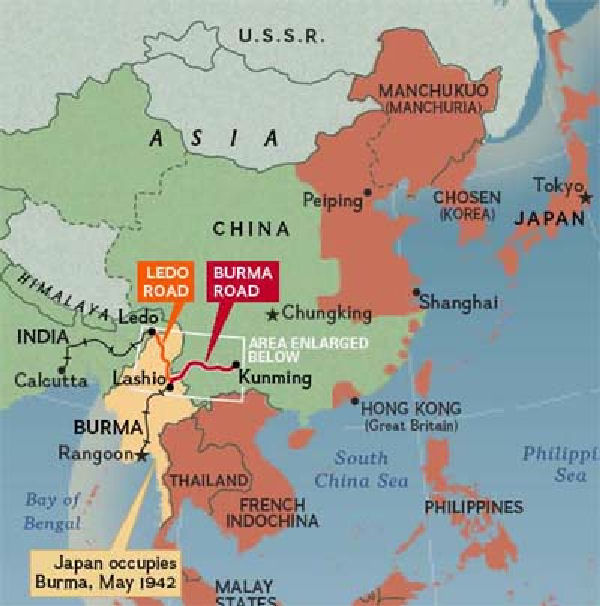




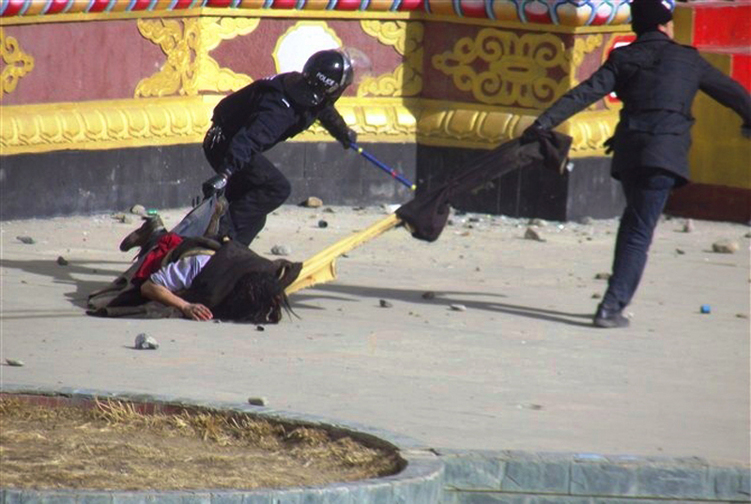
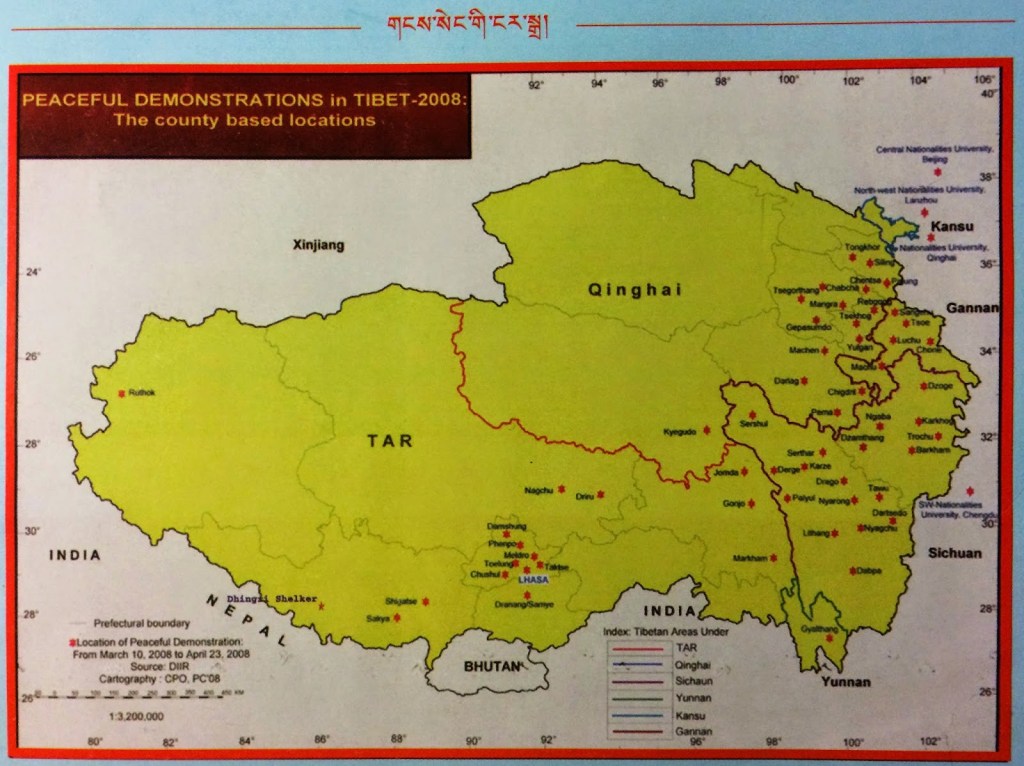
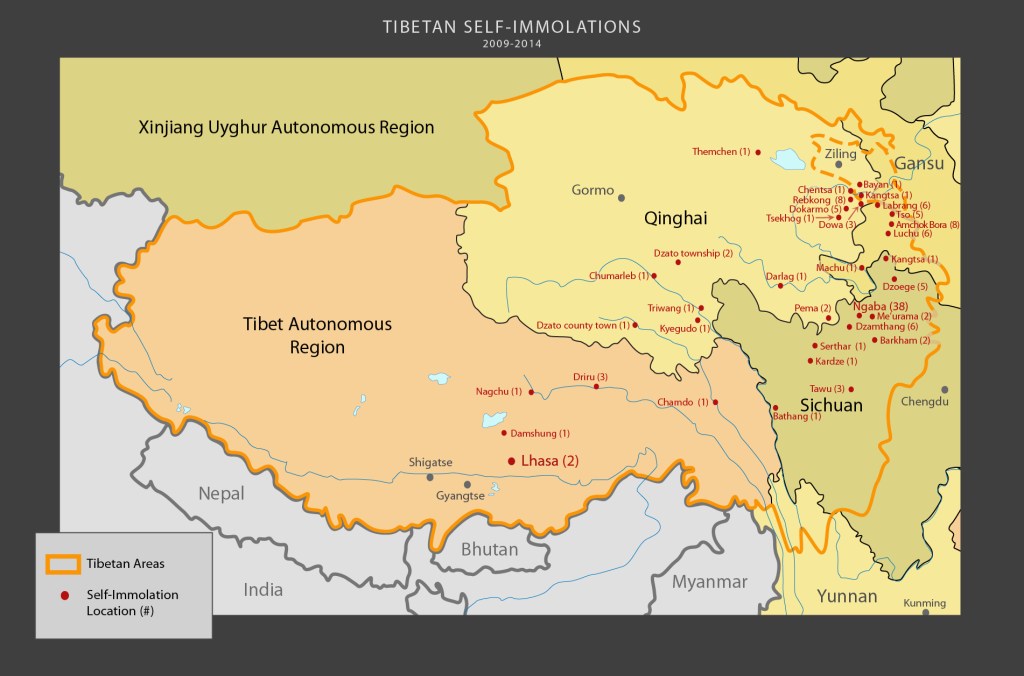


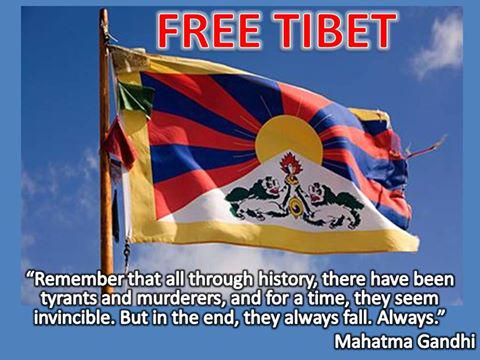
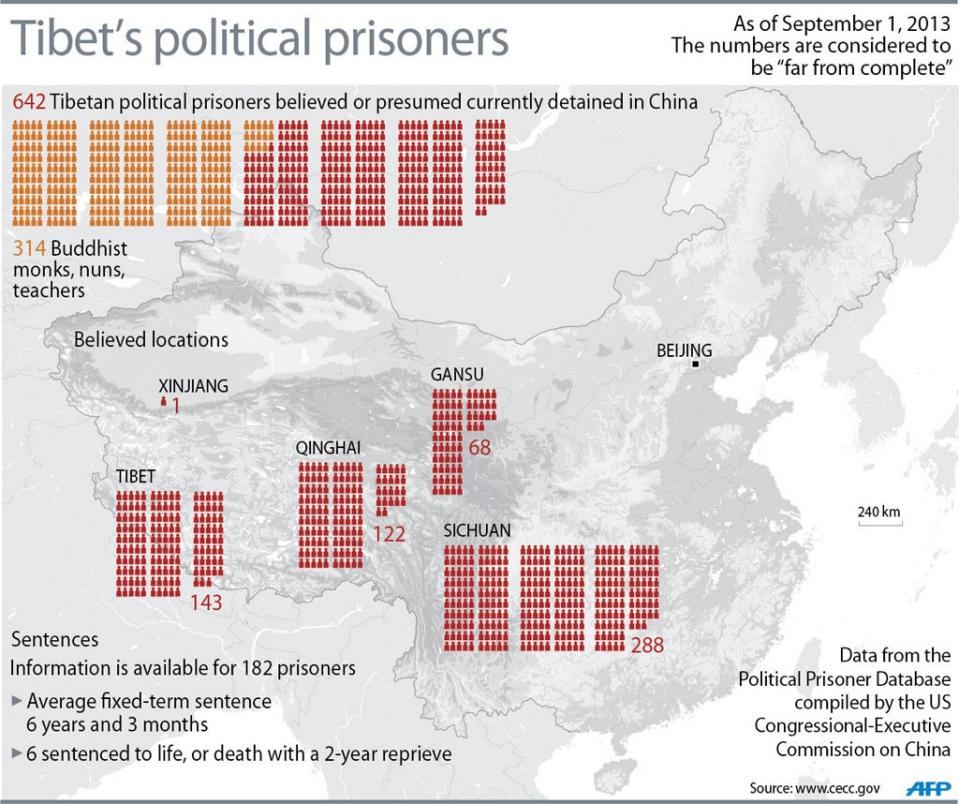

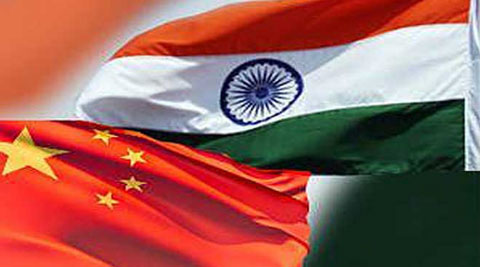
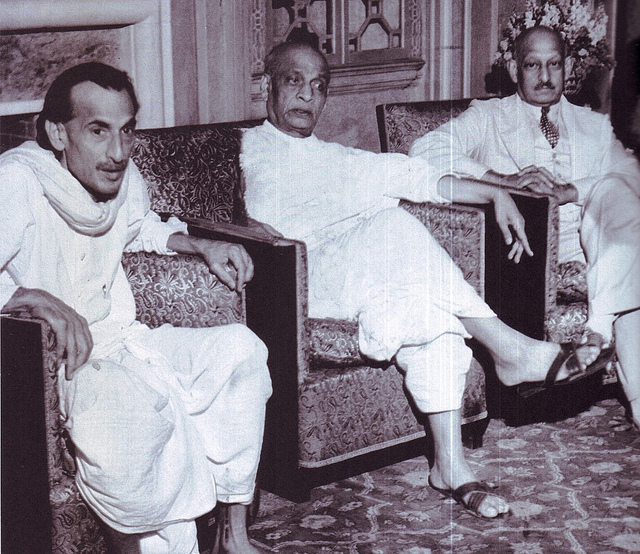


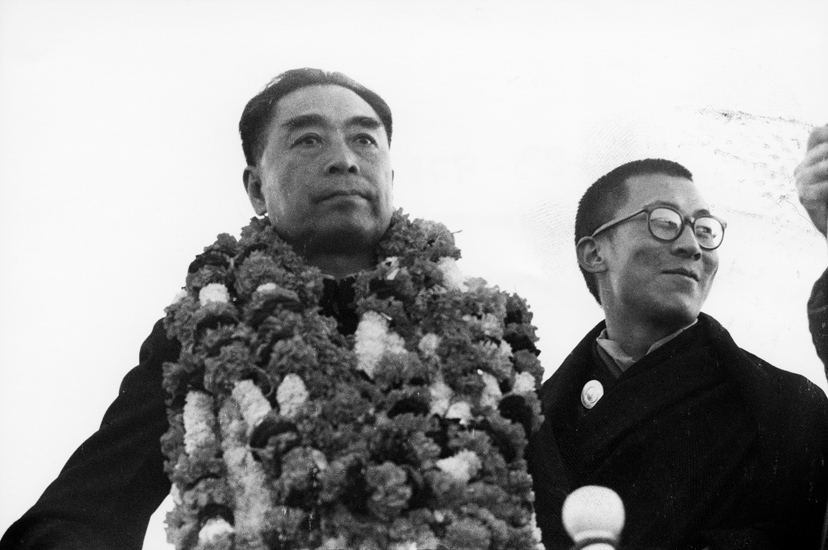
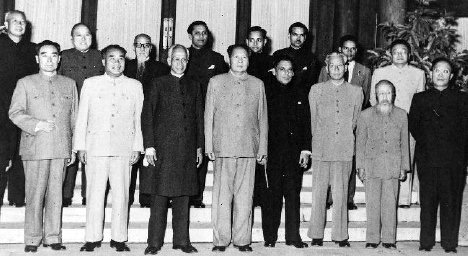


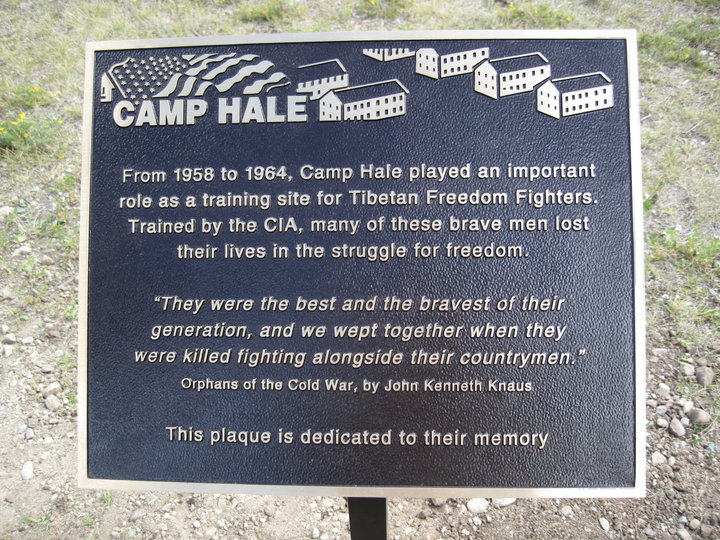
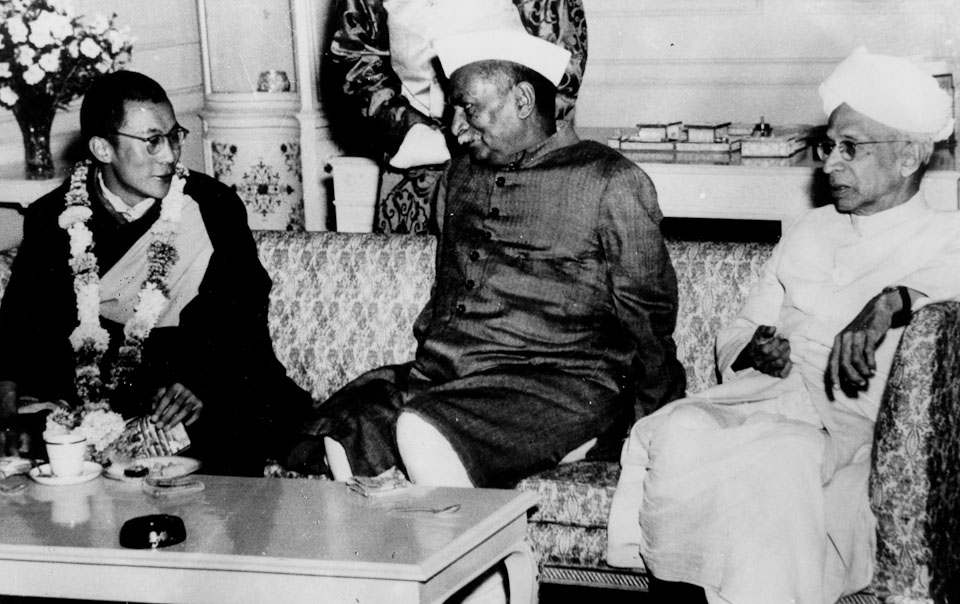




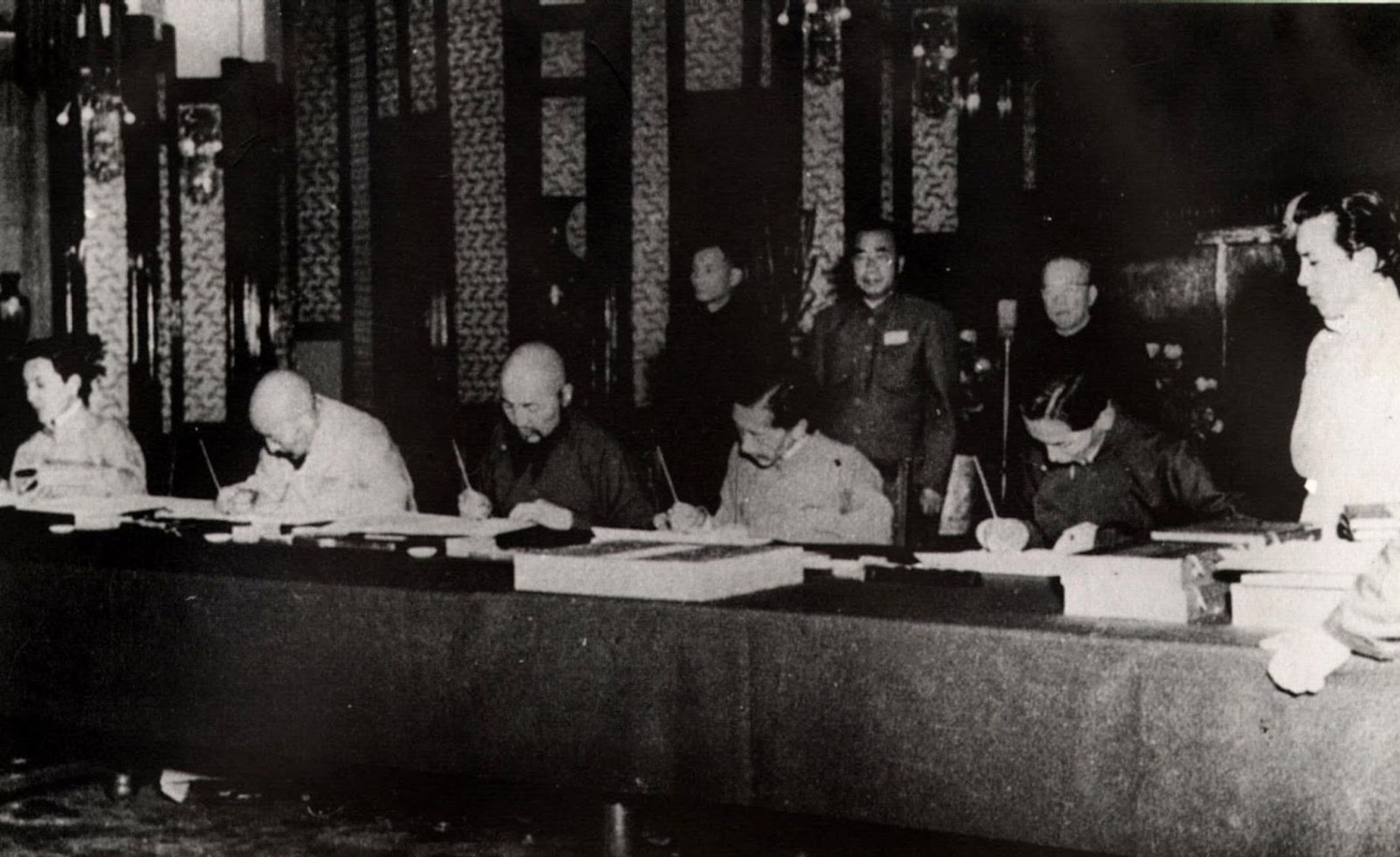
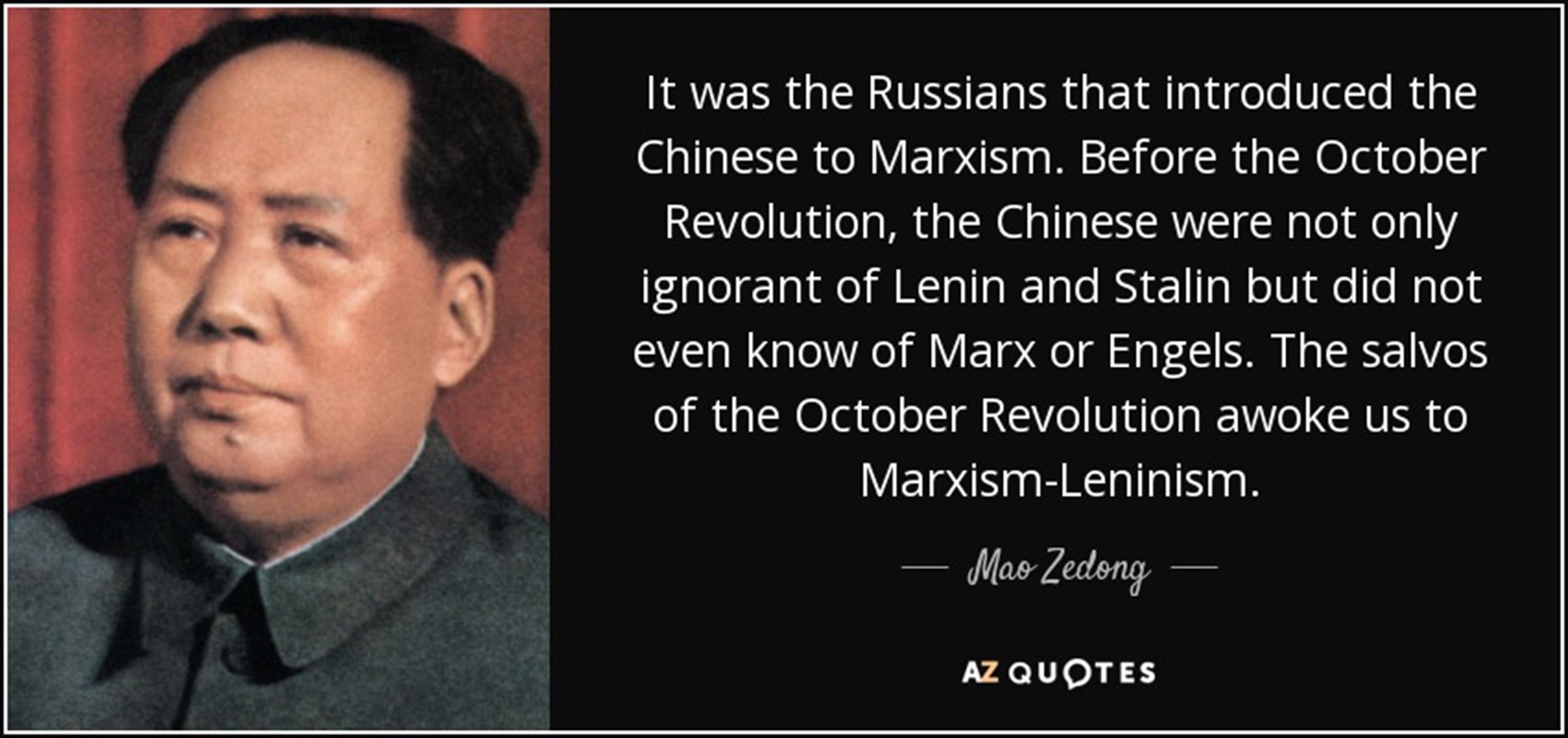
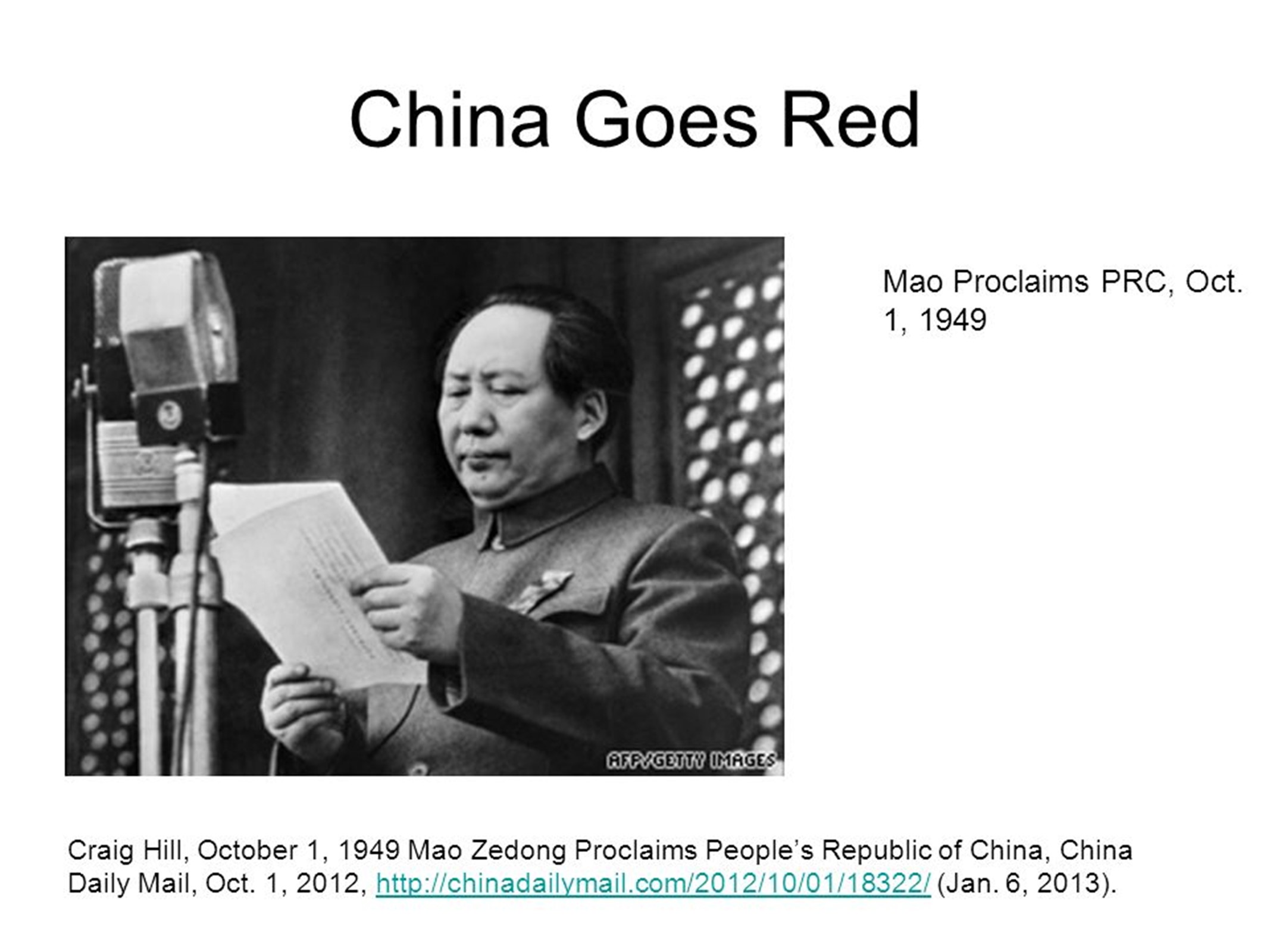

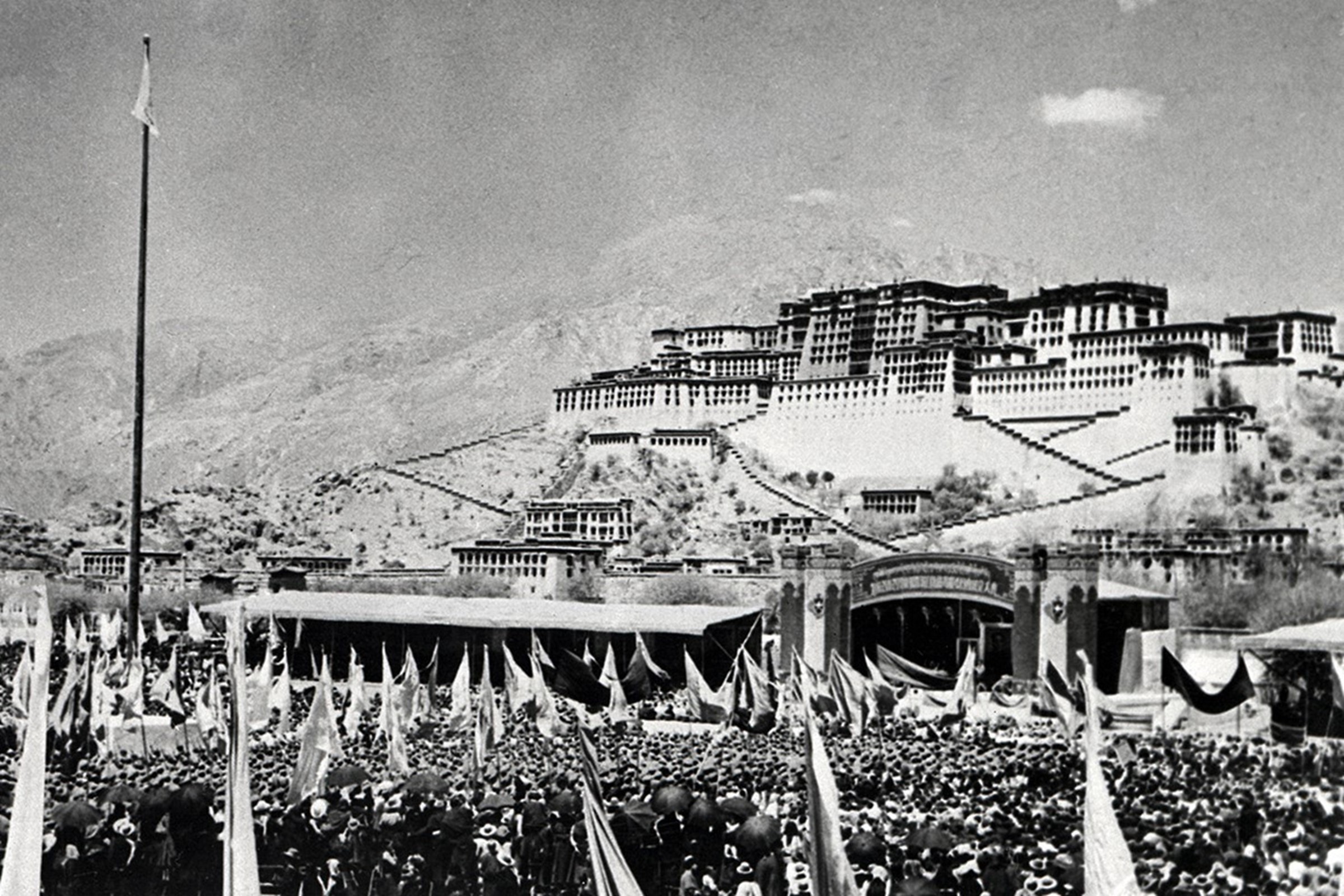
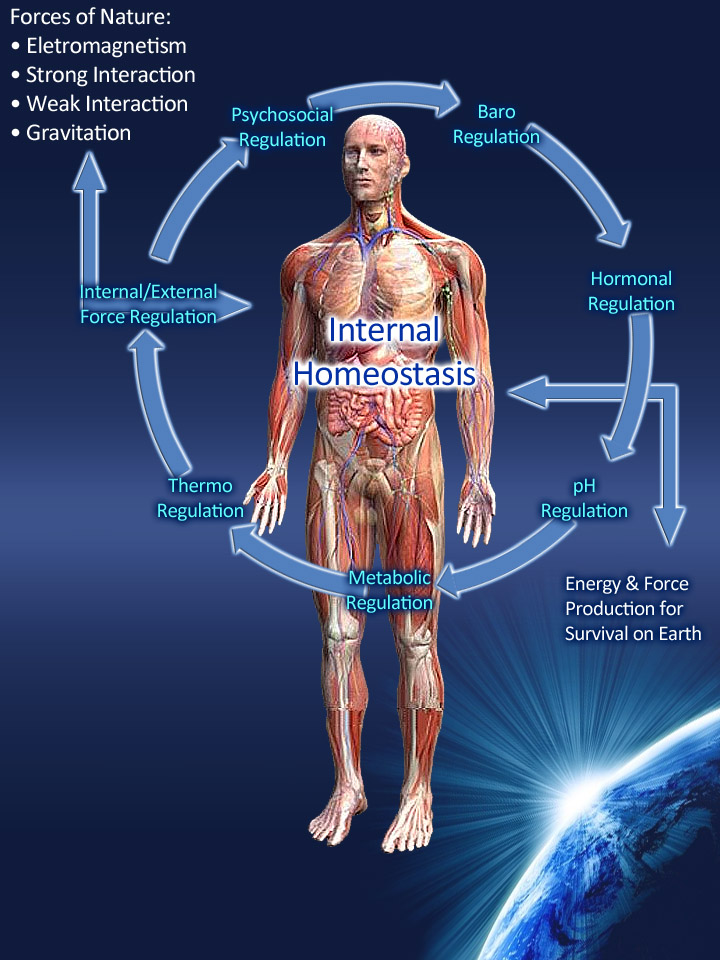


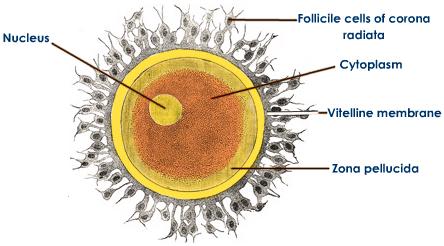


 Whole Dude - Whole Concept
