Whole Consciousness – Red China’s Divide and Rule Policy in Tibet

Tibet Consciousness – United We Stand, Divided We Fall

The False Panchen Lama Ordains Monks in Tashi Lhunpo Monastery—for the Communist Party.

Red China is using religion as a political weapon to disrupt Tibetan Unity and to deliberately weaken Tibetan Solidarity. Red China apart from her military power, is using her economic power to tear apart Tibetan community by pitching followers of one group or sect against another Buddhist group or entity. This policy of ‘Divide and Rule’ is a strategy that is successfully used by Imperial Powers and Colonialist rulers to subjugate native population of countries they occupy, dominate, and exploit to accomplish their selfish goals.
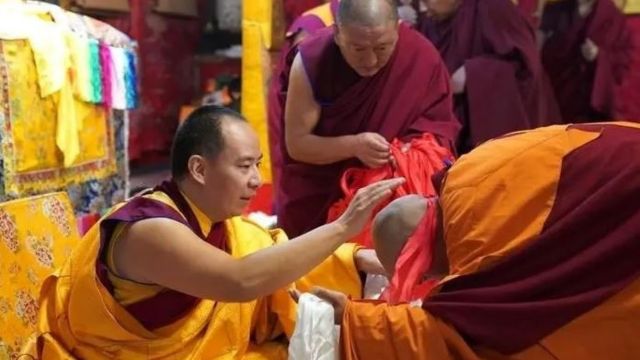
November 4, 2023, corresponding to the twenty-second day of the ninth month in the Tibetan calendar, was the day of the Lhabab Düchen festival. It celebrates the descent of Buddha back to earth from heaven, where he had ascended at age 41 to impart teachings to the gods and liberate his mother from Samsara.
The false Panchen Lama selected this sacred day to ordain, for the first time, 28 monks in the Tashi Lhunpo Monastery in Shigatse. The monastery is the traditional seat of the Panchen Lamas, which he unlawfully occupies.

THE POLITICS OF TIBET’S POISONOUS RELIGIOUS DIVIDE

By Reuters Staff
December 23, 2015
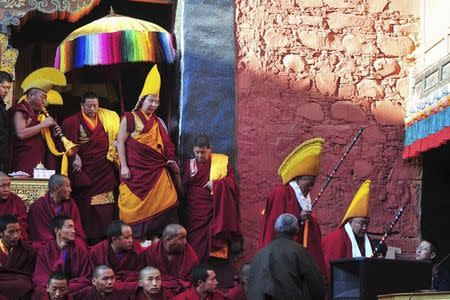
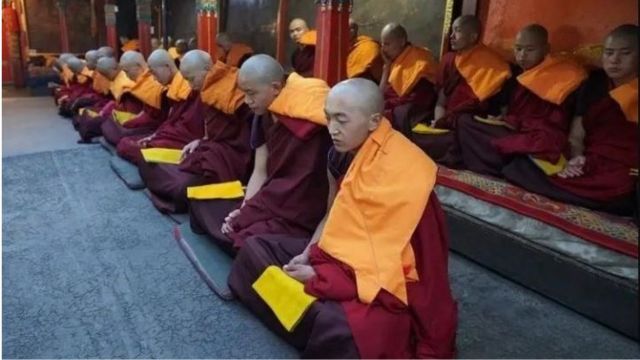
Tibetan Buddhist monks attend a Buddhism gathering overseen by Gyaltsen Norbu, the 11th Panchen Lama, at the Tashilhunpo Monastery in Shigatse, Tibet Autonomous Region, China, December 8, 2015. REUTERS/China Daily)

The doctrinal schism that the Chinese Communist Party is using to hound the Dalai Lama arose long ago in the internecine politics of his own school of Tibetan Buddhism.
Dalai Lamas are drawn from the dominant Gelugpa School, one of the four major Buddhist traditions in Tibet.

When the 5th Dalai Lama united Tibet in the 17th Century, he made an effort to embrace the other schools to enhance political unity, according to the French Tibetologist Thierry Dodin.
This move angered other senior members of the Gelugpa School who opposed sharing power and privilege. They united in a clique within their school around the worship of Dorje Shugden, then a little-known “protector deity.”

Over the centuries, Shugden devotees came to dominate the Gelugpa School and the religious politics of Tibet. After the Communists came to power in 1949, Shugden practitioners became influential in the exiled Tibetan communities in India and Nepal. At first, they were hostile to Beijing, particularly after Tibetan monasteries and cultural relics were destroyed during the Cultural Revolution.

That changed with the current Dalai Lama, 14th in the line. He too had been educated under senior Shugden monks. But from the mid-1970s, he began to shape a more inclusive doctrine. In part, this was a political move aimed at unifying the different traditions in Tibetan Buddhism in the face of pressure from Beijing, according to Dodin and other Tibet scholars.
During a period of reflection, the Dalai Lama began to question the value of Shugden worship on the grounds it was harmful. In 1996, he publicly advised his followers to shun the practice.

Since then, scholars say, there has been a gradual shift towards Beijing by the Shugden movement – a move that accelerated in the past decade.
China is careful to avoid obvious public references to its Shugden strategy. But on the ground, evidence abounds that Beijing has thrown its weight behind Shugden devotees.

GENEROUS FUNDING

Chinese authorities have poured funds into rebuilding and maintaining Shugden monasteries in the Tibet Autonomous Region and surrounding provinces. Reports in the state-run media show that China has financed extensive restoration at the Ganden Sumtseling Monastery in Yunnan Province and the Dungkar Monastery near Tibet’s frontier with India, both leading Shugden monasteries.

“There’s a massive drive to keep the remaining Shugden strongholds alive with a lot of support from the party,” said Dodin, director of the website TibetInfoNet. “This does not mean that others are left in decrepitude, but there is no such thing as a poor Shugden monastery.”

Buddhists who openly follow the Dalai Lama’s teachings face persecution by Chinese authorities, according to human rights groups and exiled Tibetans. It is now a criminal offence to discourage Shugden worship, they say.

Beijing also allows Shugden monks to travel overseas to teach and study with foreign Buddhists and exiled Tibetans.

In December 2012, Beijing sponsored the visit to Switzerland of Lama Jampa Ngodup Wangchuk Rinpoche, the first Tibetan lama sent abroad by the government to teach, according to the website dorjeshugden.com, one of the websites that publish news and commentary about the sect.

“By officially nominating him to travel abroad to teach, this would mean that the Chinese government is openly encouraging the proliferation of Buddhism, China’s ancient heritage and Dorje Shudgen’s practice,” an article on the website said.

PROTECTIVE CUSTODY

Another clear signal of Beijing’s preference: Senior Shugden monks are central to China’s effort to educate the Panchen Lama, second only to the Dalai Lama in religious stature.
In 1995, the Dalai Lama recognized a six-year-old Tibetan boy, Gedhun Choekyi Nyima, as the reincarnation of the 10th Panchen Lama. The boy and his family soon disappeared; Chinese authorities have said he is in protective custody. To sideline the Dalai Lama’s choice, Beijing then recognized another Tibetan boy, Gyaltsen Norbu, as Panchen Lama. This maneuver was crucial to Beijing’s plans to control Tibetan Buddhism, as the Panchen Lama plays a major role in recognizing reincarnations of the Dalai Lama, according to supporters of the Dalai Lama and experts on Tibetan Buddhism.

Many of the senior teachers responsible for educating Beijing’s hand-picked Panchen Lama are Shugden practitioners, according to experts on Tibetan Buddhism. Lama Gangchen, the most influential Shugden monk living abroad, has been photographed with this Panchen Lama as well.

President Xi Jinping in June met the party-approved Panchen Lama in Beijing. The monk told Xi he would “resolutely uphold the unity of the motherland and its people,” state television reported.

Chinese authorities have put aside their atheist convictions to insist they will vet the selection of the next Dalai Lama, according to official statements and reports in the state-run media.
This is part of an effort to ensure that the future spiritual leader of the more than six million ethnic Tibetans in Tibet and bordering provinces are loyal to the Communist Party. In response, the Dalai Lama has suggested he may reincarnate outside China or, perhaps, not at all.

That idea drew an outraged response from Zhu Weiqun, the point man in Beijing’s efforts to neutralize the Dalai Lama. “The reincarnation of the Dalai Lama has to be endorsed by the central government, not by any other sides, including the Dalai Lama himself,” Zhu said, according to a March 11 report in the state-run Xinhua news agency.

Source: The politics of Tibet’s poisonous religious divide | Reuters
Gyaltsen Norbu (top 4th L), the 11th Panchen Lama, arrives at a Buddhism gathering at the Tashilhunpo Monastery in Shigatse, Tibet Autonomous Region, China, December 8, 2015. Picture taken December 8, 2015. REUTERS/China Daily/File Photo

Whole Consciousness – A Special Tribute to Monk Thomas Merton, Spiritual Brother of Tibet

Tibet Consciousness – Monk Thomas Merton, Special Friend, Spiritual Brother of Tibet

TIBET CONSCIOUSNESS – MONK THOMAS MERTON, SPECIAL FRIEND, SPIRITUAL BROTHER OF TIBET. FINAL WEEKS OF MONK MERTON’S LIFE. HIS MEETING WITH DALAI LAMA IN 1968 PRIOR TO HIS DEATH ON DECEMBER 10, 1968.

At Special Frontier Force, I host The Living Tibetan Spirits. I am sharing a news story on Kentucky Monk and influential author Thomas Merton who is described by His Holiness the 14th Dalai Lama as a special friend, and spiritual brother of Tibet.

December 5, 2015

New film explores last, eventful year of Thomas Merton’s life

Tibet Consciousness - Monk Thomas Merton - Special Friend, and Spiritual Brother of Tibet. Documentary Film by Morgan Atkinson.
Tibet Consciousness – Monk Thomas Merton – Special Friend, and Spiritual Brother of Tibet. Documentary Film by Morgan Atkinson.

Louisville filmmaker got an interview with the Dalai Lama.
As film came out, Pope Francis praised Merton to US Congress.
KET will air documentary about the monk and writer Dec. 10-15.

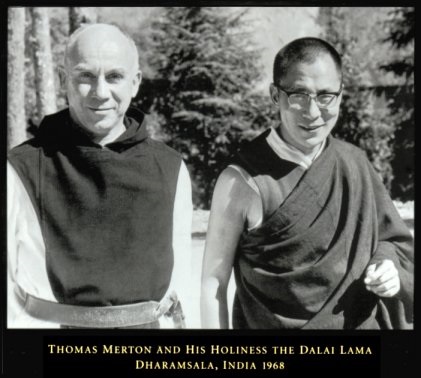
Thomas Merton, the Kentucky monk and influential author, met in 1968 with the Dalai Lama in Asia during the final weeks of his life. Louisville filmmaker Morgan Atkinson’s new film about Merton’s pivotal last year will debut on KET on Dec. 10. Photo used with permission of the Thomas Merton Center, Bellarmine University.

By Tom Eblen

For his new documentary about the last, eventful year of Thomas Merton’s life, Louisville filmmaker Morgan Atkinson needed a special, hard-to-get interview.
He needed the Dalai Lama.

Merton, the Trappist monk and acclaimed writer who for 27 years lived at the Abbey of Gethsemani in Nelson County, spent his last weeks in 1968 traveling through Asia to meet and have dialogue with leaders of other religions.

Perhaps the most eventful of those meetings was with the spiritual leader of Tibetan Buddhists, then a young man of 33.

When the Dalai Lama visited Louisville two years ago, Atkinson was hired to produce a short film for the people who hosted him. With their help — and after a U.S. State Department background check — Atkinson and his video camera were promised a brief audience.

He remains a source of spiritual inspiration.

Pope Francis on Merton

“What was supposed to be a five-minute visit became 15 or 20 minutes,” Atkinson said. “He was just delighted. The meeting with Thomas Merton had taken place 45 years ago, but you could tell that it had been really meaningful to him.”

Atkinson’s new film, The Many Stories and Last Days of Thomas Merton, includes an engaging interview with His Holiness.

“I myself consider him a close friend, a most special friend, a spiritual brother,” the Dalai Lama told Atkinson, who gave him an old photograph from their meeting.
“This looks like I’m his son,” the Dalai Lama said with a laugh, before turning serious. “I think spiritually he is elder. So, I am younger.”

That interview is one of many highlights in the excellent hour-long film, which will air on KET eight times from Dec. 10-15. Atkinson wrote and produced the documentary, which is narrated by poet Nikky Finney.

Atkinson had made a successful PBS documentary, Soul Searching: The Journey of Thomas Merton, in 2006. But for the centennial of Merton’s birth this year, he thought there was more to say about Merton’s contributions to inter-faith dialogue and understanding. And he wasn’t alone.

In his speech to Congress in September, Pope Francis cited Merton as one of four Americans who inspire him. (The others are Abraham Lincoln, the Rev. Martin Luther King Jr. and Catholic social activist Dorothy Day.)

“He remains a source of spiritual inspiration and a guide for many people,” the pope said of Merton. “He was also a man of dialogue, a promoter of peace between peoples and religions.”

The pope’s comments came as Atkinson was on a West Coast tour with his just-finished film. “If I had asked for a press agent,” he said, “I couldn’t have had a better one.”

Merton was born in France to an American mother and a New Zealand father. After earning English degrees at Columbia University, he became a Catholic at age 23. He went to a retreat at Gethsemani in 1941 and, eight months later, asked to join the order.

As a monk, he wrote more than 70 books of poetry and essays about spirituality, pacifism and social justice. His 1948 autobiography, The Seven Storey Mountain, became a best-seller and made Merton an unlikely celebrity. He also attracted a following in the 1960s with his advocacy for civil rights and stance against war.

You could tell that it had been really meaningful to him.

Morgan Atkinson, on Dalai Lama’s visit with Merton

Merton’s fame led him to correspond with leaders from many religions, and he longed to meet them. But it was only when a new abbot took over Gethsemani that Merton was finally given permission to travel. While on that trip to Asia, he was accidentally electrocuted in his Bangkok hotel room by a defective fan on Dec. 10, 1968.

The pope’s praise for Merton was notable, because some Catholic leaders have often tried to minimize him.

“Merton was seen by some as too liberal, or too open to dialogue with other faith traditions,” Atkinson said. “To have Pope Francis sort of push him up as an exemplar of a good spiritual path is really a good thing.”

Atkinson was raised Presbyterian, but he said he has been intrigued by Merton since he first read his books three decades ago. He thinks Merton remains popular because people are attracted to different aspects of his life and work.

Tom Eblen

Thomas Merton and the Dalai Lama - Thomas Merton Center
On www.merton.org

Disk 1 Track 1 When I first came into contact with Thomas Merton
On article.wn.com

Faith, Fiction, Friends: Saturday Good Reads: “A Silent Action”
On faithfictionfriends.blogspot.com

Thomas Merton was a monk, poet and social activist. He wrote over 70 ...
On pinterest.com

Thomas Merton and the Dalai Lama - Thomas Merton Center
On www.merton.org

Recent Photos The Commons Getty Collection Galleries World Map App ...
On www.flickr.com

Thomas Merton Quote WOW
On donquixotedotme.wordpress.com

Thomas Merton: Paradoxical Thinking is a Key to Creativity ...
On www.improvisedlife.com

Thomas Merton and the Wisdom of Non-Violence
On www.universalheartbookclub.com

... Louisville of Thomas Merton and the Dalai Lama (Lori Erickson photo
On www.spiritualtravels.info

Whole Awareness – The Colonialist exploitation of Tibet

Tibet Consciousness – Red China – Neocolonialist

Tibet Consciousness – Red China – Neocolonialist: MEGA DAM ACROSS YARLUNG TSANGPO OR BRAHMAPUTRA RIVER IN OCCUPIED TIBET.

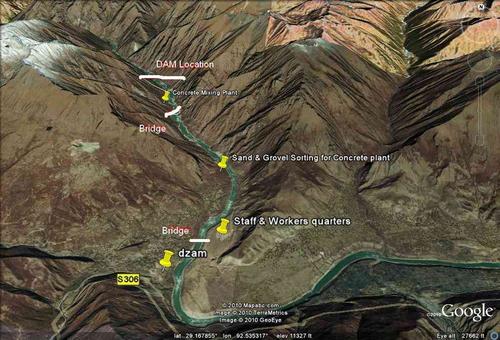
Red China’s Hydroelectric Dam across Yarlung Tsangpo, Yarlung Zangbo or Brahmaputra River in Occupied Tibet is the evidence to establish Red China as a Neocolonialist. Neocolonialism is revival of colonialist exploitation by a foreign power of a nation that has achieved independence. Colonialism is the system or policy by which a country maintains foreign colonies especially in order to exploit them economically. Colonization refers to extension of political and economic control over a nation by an occupying state that has military and technological superiority. Imperialism gets translated into colonizing force. Red China occupied Tibet and is relentlessly oppressing Tibetans to exert pressure to assimilate Tibetans to Red China’s way of life.

China’s 9700 Crore Dam on Brahmaputra in Tibet is Now Working

All India Press Trust of India Updated: October 13, 2015.

TIBET CONSCIOUSNESS – RED CHINA – NEOCOLONIALIST – $ 1.5 BILLION( 9700 CRORE INDIAN RUPEES) DAM ON YARLUNG ZANGBO, YARLUNG TSANGPO OR BRAHMAPUTRA RIVER IN OCCUPIED TIBET.

India is concerned that if the waters are diverted, then projects on the Brahmaputra, especially in Arunachal Pradesh, get affected.

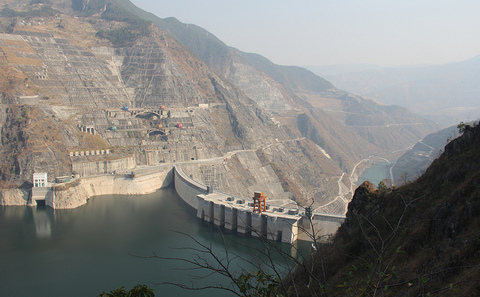
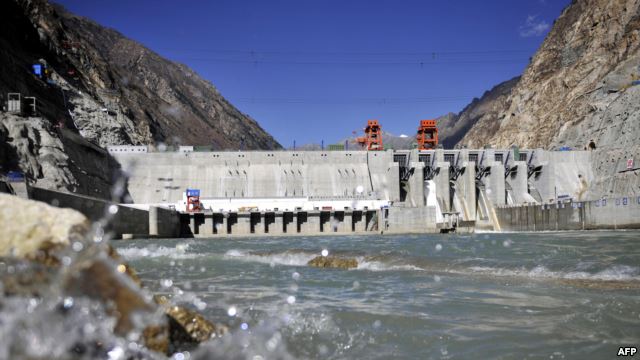
Beijing, China: China today operationalised the largest dam in Tibet, built on river Brahmaputra, raising concerns in India over the likelihood of disrupting water supplies.

The Zam Hydropower Station has been built at a cost of $1.5 billion (approximately Rs 9764 crores).

All six of the station’s units were incorporated into the power grid today, the China Gezhouba Group, a major hydropower contractor based in Wuhan, capital of Hubei Province in central China, told state-run Xinhua news agency.

Located in the Gyaca County, Shannan Prefecture, the Zam Hydropower Station also known as Zangmu Hydropower Station, harnesses the rich water resources of Brahmaputra – known in Tibet as Yarlung Zangbo River – a major river which flows through Tibet into India and later into Bangladesh.

The dam, considered to be the world’s highest-altitude hydropower station and the largest of its kind, will produce produces 2.5 billion kilowatt-hours of electricity a year.

“It will alleviate the electricity shortage in central Tibet and empower the development of the electricity-strapped region. It is also an important energy base in central Tibet,” the company said.

Officials said when the electricity is ample in the summer season, part of the electricity will be transmitted to the neighbouring Qinghai province, Xinhua report said.

The first unit began operations last November.

Reports in the past said besides Zangmu, China is reportedly building few more dams. China seeks to allay Indian fears saying that they are the run-of-the-river projects which were not designed to hold water.

The dams also raised concerns in India over China’s ability to release water in times of conflict which could pose serious risk of flooding.

An Indian Inter-Ministerial Expert Group (IMEG) on the Brahmaputra in 2013 said the dams were being built on the upper reaches and called for further monitoring considering their impact on the flow of waters to the lower reaches.

The IMEG noted that the three dams, Jiexu, Zangmu and Jiacha are within 25 kilometres of each other and are 550 kilometres from the Indian border.

India has been taking up the issue with China for the past few years.

Under the understanding reached in 2013, the Chinese side agreed to provide more flood data of Brahmaputra from May to October instead of June to October in the previous agreements river water agreements in 2008 and 2010.

India is concerned that if the waters are diverted, then projects on the Brahmaputra, particularly the Upper Siang and Lower Subansari projects in Arunachal Pradesh, may get affected.

Story First Published: October 13, 2015 14:08 IST

© Copyright NDTV Convergence Limited 2015. All rights reserved.

TIBET CONSCIOUSNESS – RED CHINA – NEOCOLONIALIST – ZANGMU DAM IN OCCUPIED TIBET.
TIBET CONSCIOUSNESS – RED CHINA – NEOCOLONIALIST – ZANGMU HYDROPOWER STATION IN OCCUPIED TIBET.
TIBET CONSCIOUSNESS – RED CHINA – NEOCOLONIALIST – COLONIAL EXPLOITATION IN OCCUPIED TIBET.
TIBET CONSCIOUSNESS – RED CHINA – NEOCOLONIALIST – DAMMING YARLUNG TSANGPO – BRAHMAPUTRA IN OCCUPIED TIBET
TIBET CONSCIOUSNESS – RED CHINA NEOCOLONIALIST – ZANGMU HYDROELECTRIC PROJECT IN OCCUPIED TIBET.
TIBET CONSCIOUSNESS – RED CHINA – NEOCOLONIALIST – ZANGMU DAM IN OCCUPIED TIBET.
TIBET CONSCIOUSNESS – RED CHINA – NEOCOLONIALIST – HUTOSHAN RESERVOIR IN OCCUPIED TIBET.


TIBET CONSCIOUSNESS – RED CHINA – NEOCOLONIALIST – ZANGMU DAM IN OCCUPIED TIBET.

Whole Awareness – Tibet’s Natural Freedom

Tibet Awareness – Freedom is the Natural Condition of Tibetan Plateau

Orion rising over Tibet. Gyirong Valley, Tibet, China. As you know ...
On earthsky.org

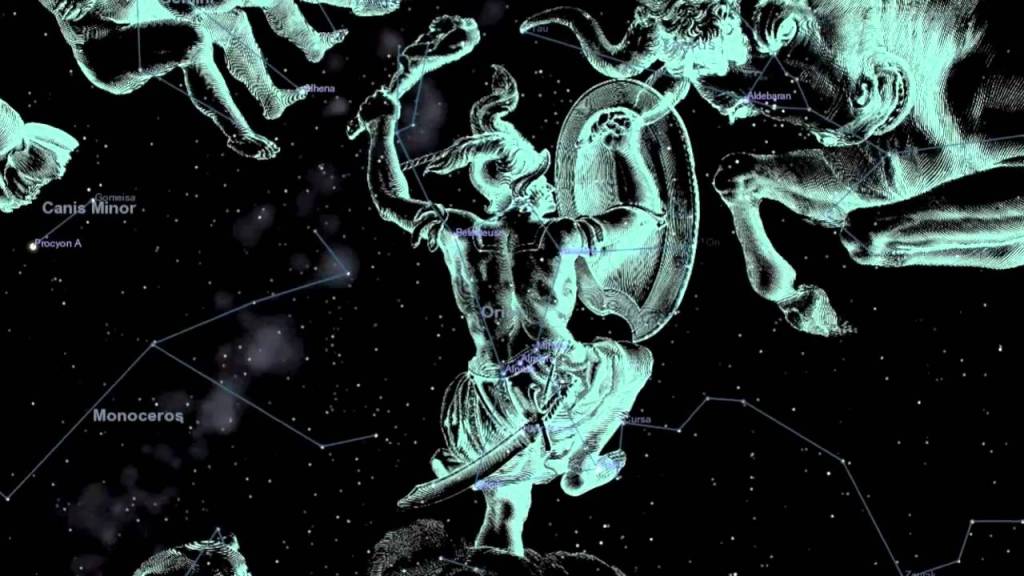
I am pleased to share a photo image published by Jeff Dai that captured constellation Orion seen in Tibetan sky and its reflection simultaneously seen in waters of Tibet’s lake in Gyirong Valley. Freedom is a natural condition on Earth as it is in Sky. Occupation is a lie.

Tibet Awareness – Freedom is the Natural Condition of Tibetan Plateau

ORION OVER AND UNDER TIBET

Published by KLAUS SCHMIDT on Mon Oct 5, 2015 7:31 am via: NASA

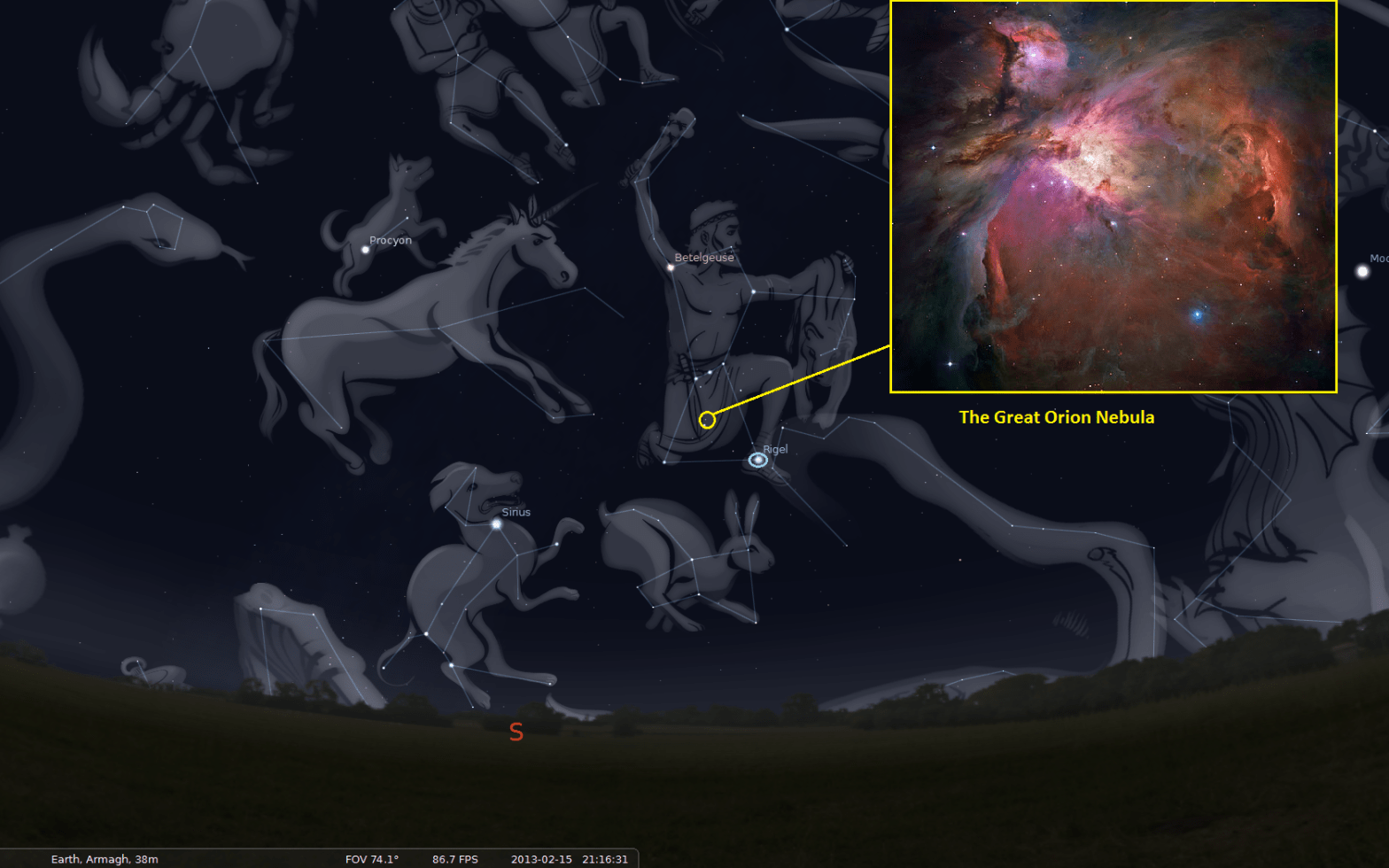
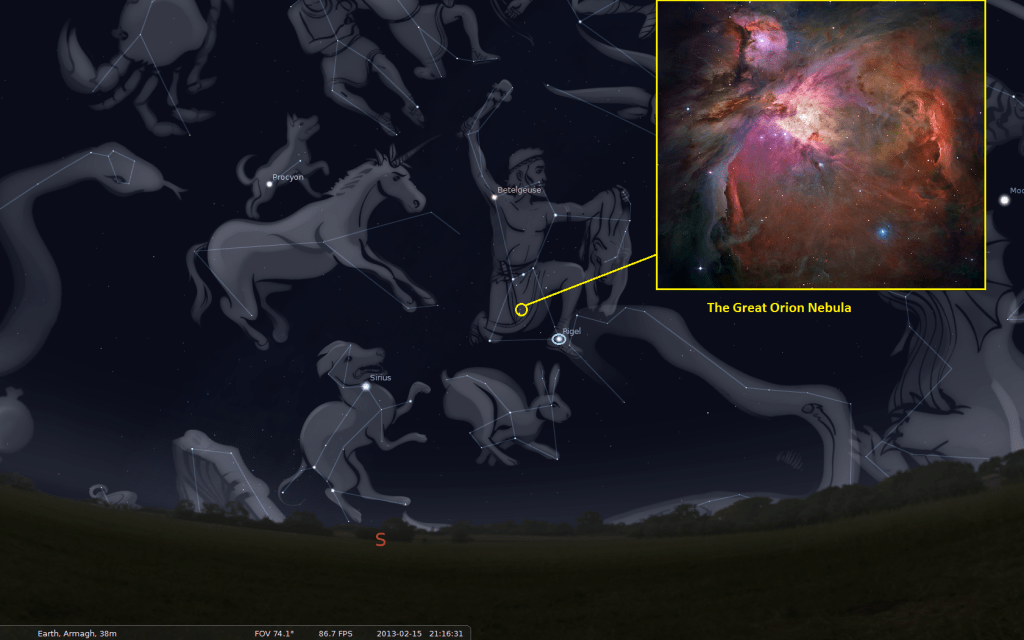
This night was so serene you could see Orion rise downwards. The unusual spectacle was captured in this single-exposure image, featuring a deep sky around the famous constellation of Orion that appeared both above — and reflected in — a peaceful lake in the Gyirong Valley of Tibet, China. Taken last year at this time, the three belt stars of Orion can be seen lined up almost vertically above and below the Himalayan Mountains.

The complex Orion Nebula can be seen to the belt stars’ right, while the red-glowing circular structure surrounding Orion is Barnard’s Loop. Also, the bright red star Betelgeuse is doubly visible on the image left, while bright blue Rigel appears twice on the image right. Familiar Orion is becoming increasingly visible as Winter (Summer) descends on the Northern (Southern) hemisphere.

Image Credit & Copyright: Jeff Dai

© 2015 The International Space Fellowship, developed by Gabitasoft Interactive. All Rights Reserved.
Tibet Awareness – Freedom is the Natural Condition of Tibetan Plateau

... Asterisk* • View topic - What did you see in the sky tonight

... Asterisk* • View topic - What did you see in the sky tonight
On asterisk.apod.

Recent Photos The Commons Galleries World Map App Garden Camera Finder ...

Tibet Awareness – Freedom is the Natural Condition of Tibetan Plateau

Whole Awareness – Tibet under the Yoke of Occupation

Tibet Awareness – Yoke of Occupation

Tibet Awareness: Tibet under the Yoke of Occupation. While Tibet is nominally in charge of its own affairs, its top officials are appointed by Beijing and expected to rule with an iron fist. The region incorporates only about half of Tibet’s traditional territory and has been smothered in multiple layers of security ever since deadly anti-government riots in 2008.

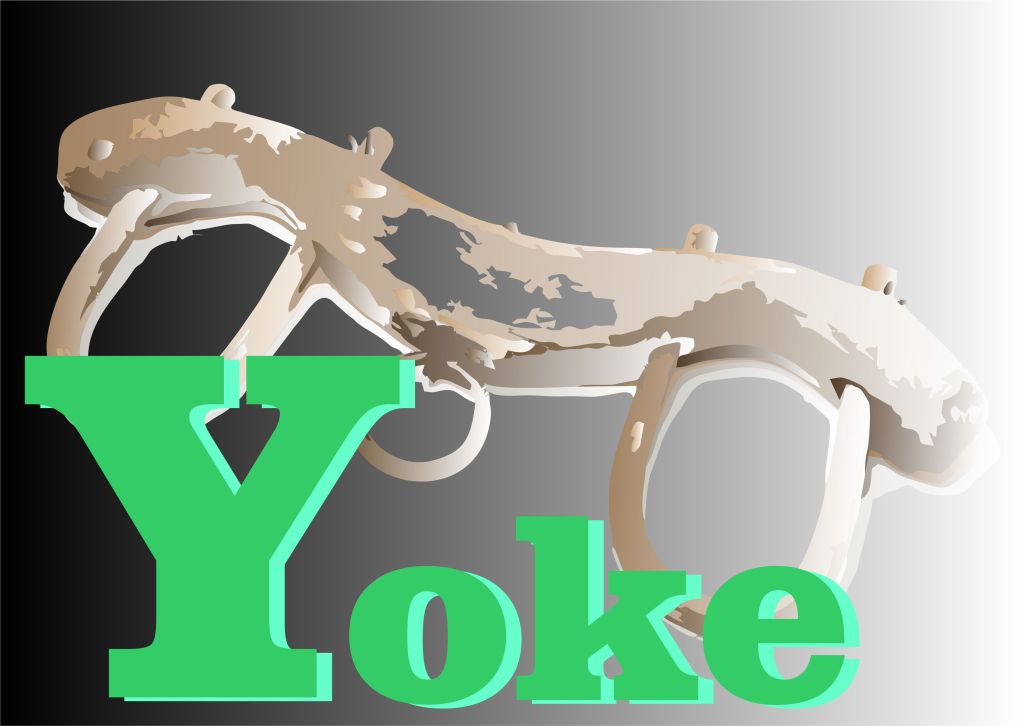
Tibet is not part of Red China. However it will be correct to claim that Tibet is under the Yoke, under control, is subdued, and has become subservient to Red China. This ‘Yoking’ speaks of Tibet’s subjection, bondage, servitude, enslavement imposed by the burden of military occupation. The Yoke clamped over necks of Tibetans causes hardship, pain, suffering, and sorrow. Tibetans resist this restriction on their natural freedom.

AP PHOTOS: Glimpse of life in Tibet after China celebrates anniversary of autonomous region

Tibet Awareness: Chinese officials have taken foreign journalists on a visit to the region, normally off-limits to them, weeks after Communist Party officials commemorated the 50th anniversary of the establishment of the Tibet Autonomous Region. (AP Photo/Aritz Parra)

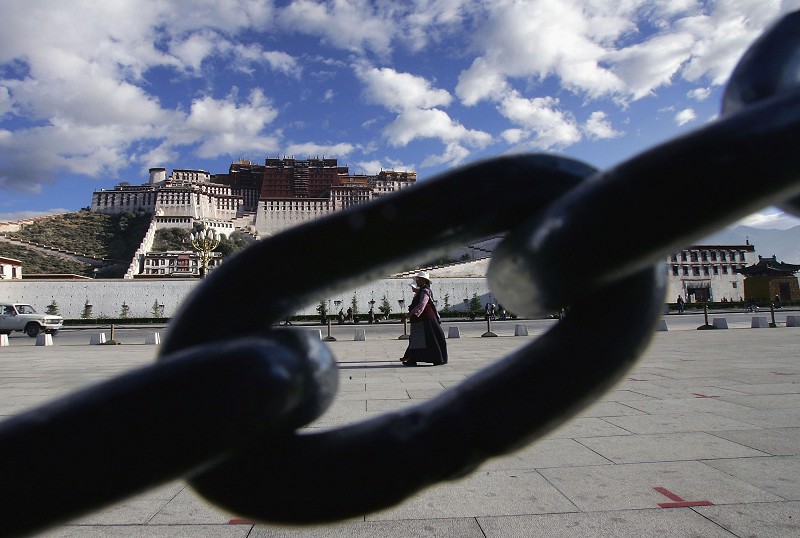
In this Friday, Sept. 18, 2015 photo, a Tibetan family walks across Jokhang Square in the center of Lhasa, capital of the Tibet Autonomous Region in China. Chinese officials have taken foreign journalists on a visit to the region, normally off-limits to them, weeks after Communist Party officials commemorated the 50th anniversary of the establishment of the Tibet Autonomous Region. (AP Photo/Aritz Parra)

Associated Press Sept. 19, 2015 | 3:40 a.m.

Tibet Awareness: Chinese officials have taken foreign journalists on a visit to the region, normally off-limits to them, weeks after Communist Party officials commemorated the 50th anniversary of the establishment of the Tibet Autonomous Region. (AP Photo/Aritz Parra)

LHASA, China (AP) — Tibet is usually off-limits to the foreign media, but Chinese officials this week took foreign journalists on a visit to the region, almost two weeks after Beijing celebrated half-century control over the Himalayan territory.

Tibet Awareness: Chinese officials have taken foreign journalists on a visit to the region, normally off-limits to them, weeks after Communist Party officials commemorated the 50th anniversary of the establishment of the Tibet Autonomous Region. (AP Photo/Aritz Parra)

China sent troops to occupy Tibet following the 1949 communist revolution. The government says the region has been part of Chinese territory for centuries, while many Tibetans say it has a long history of independence under a series of Buddhist leaders.

The region’s traditional Buddhist ruler, the Dalai Lama, fled in 1959 amid an abortive uprising against Chinese rule, and continues to advocate for a meaningful level of autonomy under Chinese rule.

China established the Tibetan autonomous region in 1965, one of five ethnic regions in the country today. While Tibet is nominally in charge of its own affairs, its top officials are appointed by Beijing and expected to rule with an iron fist. The region incorporates only about half of Tibet’s traditional territory and has been smothered in multiple layers of security ever since deadly anti-government riots in 2008.

Copyright 2015 The ASSOCIATED PRESS. All rights reserved.
 

Tibet Awareness: While Tibet is nominally in charge of its own affairs, its top officials are appointed by Beijing and expected to rule with an iron fist. The region incorporates only about half of Tibet’s traditional territory and has been smothered in multiple layers of security ever since deadly anti-government riots in 2008.

Whole Awareness – Natural Freedom is Essence of Tibet

Natural Freedom is Essence of Tibet

TIBET AWARENESS - ESSENCE OF TIBET - NATURAL FREEDOM.
TIBET AWARENESS – ESSENCE OF TIBET – NATURAL FREEDOM.

The very essence of Tibet is natural freedom and Tibetans have their natural right to enjoy freedom without foreign domination or interference.

TIBET AWARENESS - ESSENCE OF TIBET - NATURAL FREEDOM.
TIBET AWARENESS – ESSENCE OF TIBET – NATURAL FREEDOM.
TIBET AWARENESS - ESSENCE OF TIBET - NATURAL FREEDOM.
TIBET AWARENESS – ESSENCE OF TIBET – NATURAL FREEDOM.

Jokhang Temple, Potala Palace and other tourist spots that capture the essence of Tibet

Posted on: 04:59 PM IST Sep 02, 2015 | Updated on: 5:03 pm,Sep 2,2015 IST

IBNLive.com

Tibet, the highest region on Earth is a dream come true for every traveler. Tibet is undoubtedly one of the most peaceful places that offer tranquility to tourists’ mind with its utmost beautiful natural scenery.

Keeping its old traditions alive, this place is a must visit for every person.

Here we bring you a list of aesthetic places that you should visit at least once in your life time.

Tibet is not in China. Jokhang Temple.

Jokhang temple is the most sacred temple in Lhasa, Tibet. It was built by the Tibetan King Shrong Tsong Gompo. Tourists from all over the world visit this temple, Another attractive spot is the Bharkhor Bazaar that encircles the temple.

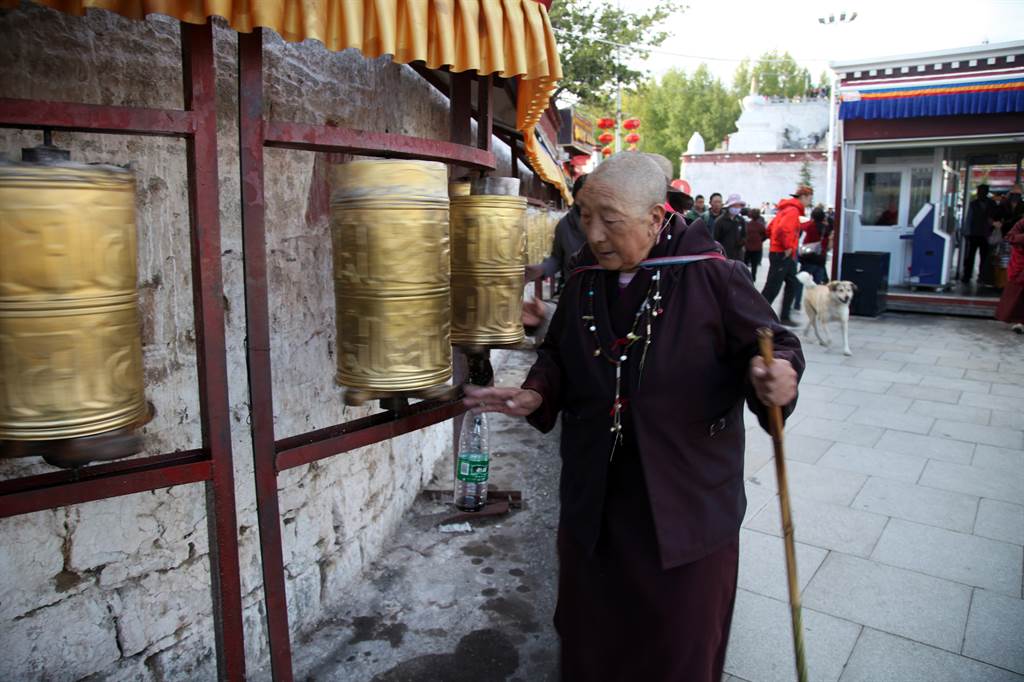
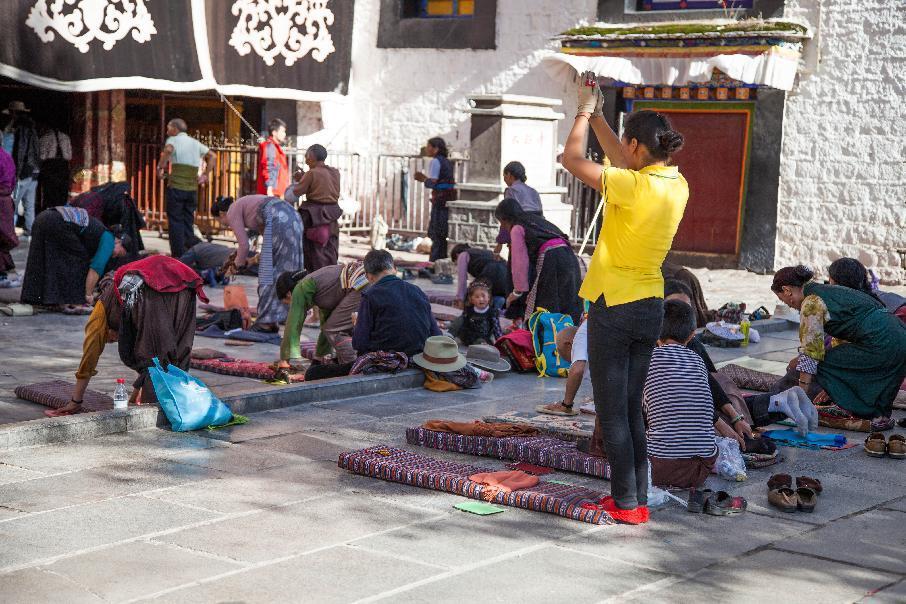
In this July 11, 2013, photo, pilgrims pray at Jokhang Temple in Lhasa, Tibet, China. Tibet has been a source of controversy ever since Beijing sent troops to occupy the Himalayan region following the 1949 communist revolution. It says the region has been part of Chinese territory for centuries, while many Tibetans say it has a long history of independence under a series of Buddhist leaders. (AP Photo/Penny Yi Wang)

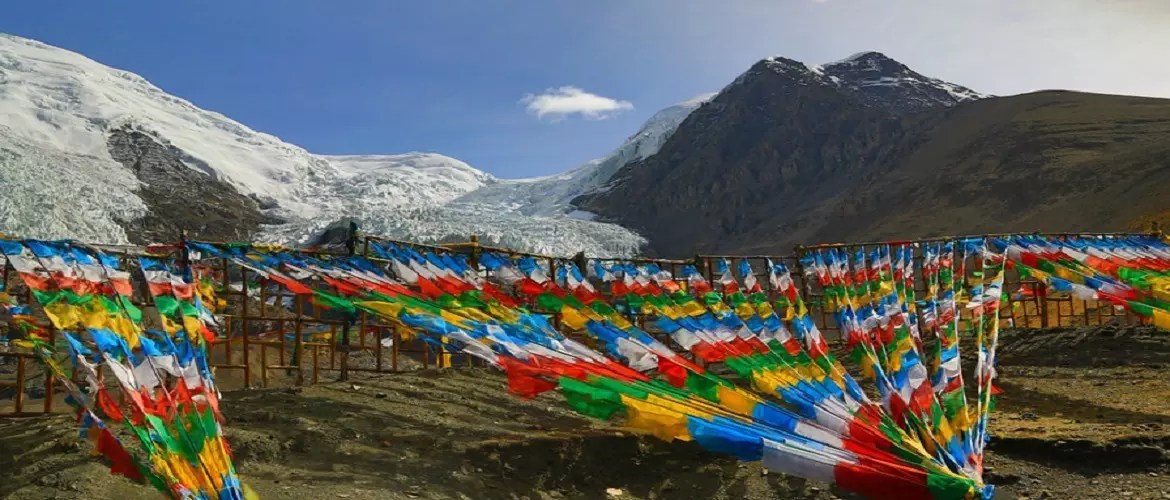
The Kharola glacier is seen through Tibetan praying flags from a nearby hill some 200km (125 miles) west to Lhasa, Tibet.

The Kharola glacier is seen through Tibetan praying flags from a nearby hill some 200km (125 miles) west to Lhasa, Tibet.

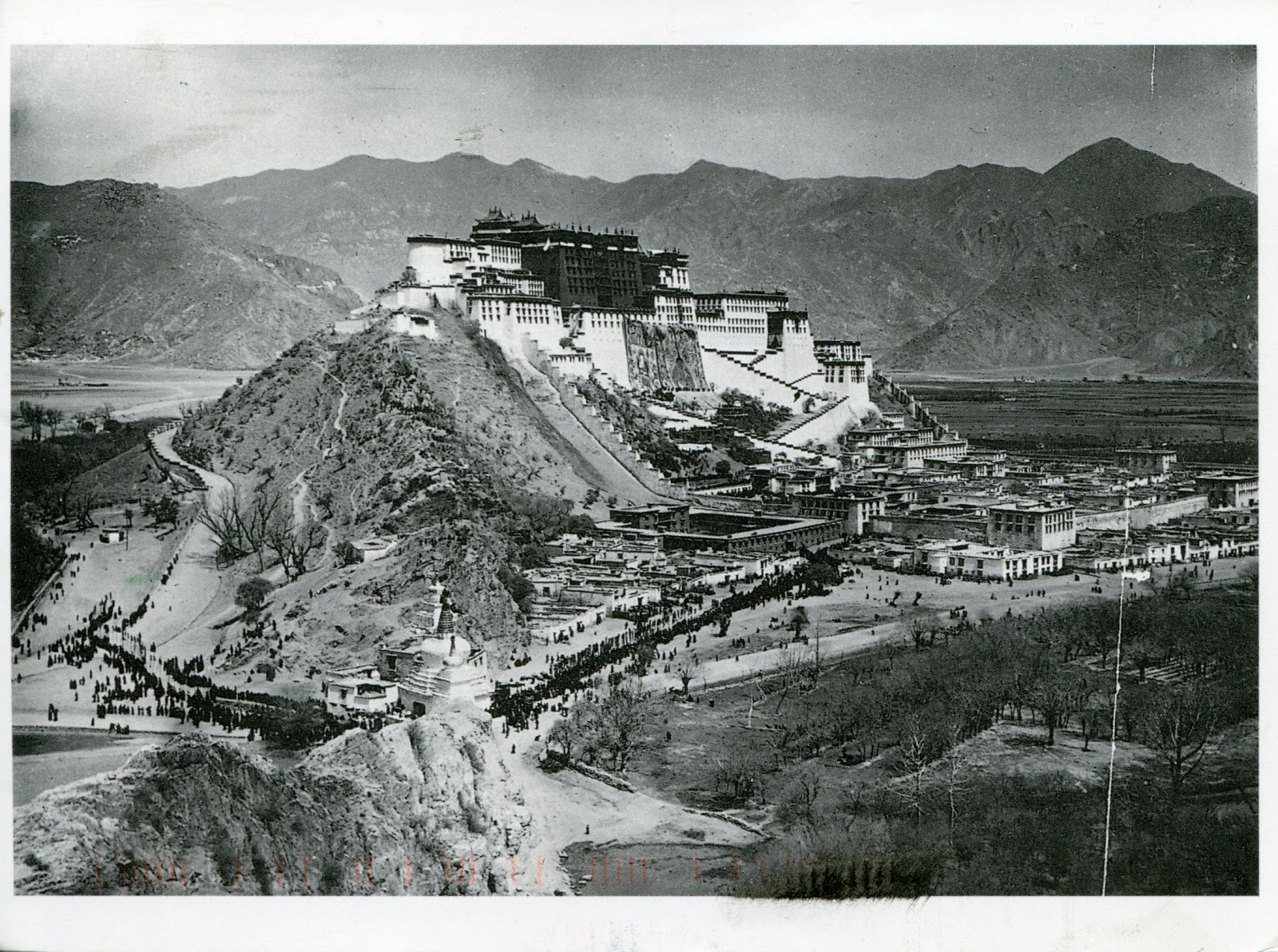
Potala Palace was built-in 17th century by the fifth Dalai Lama. This palace houses a great wealth of Tibet’s culture and art.

TIBET AWARENESS – POTALA PALACE, LHASA, TIBET. Potala Palace was built-in 17th century by the Fifth Dalai Lama.

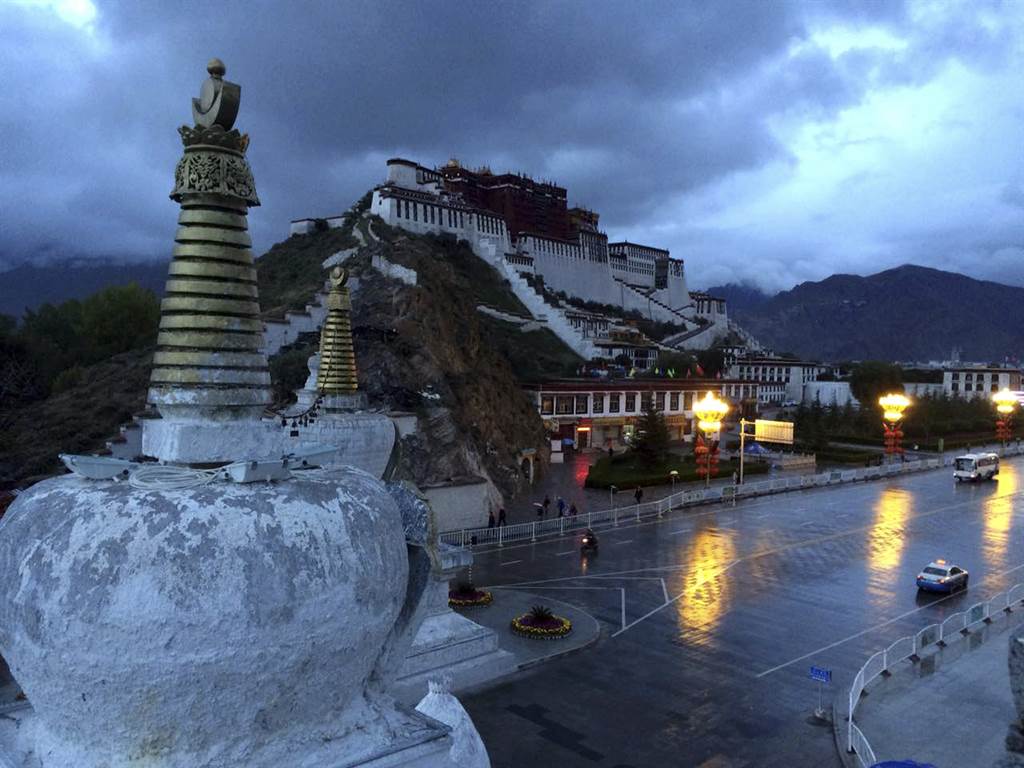
A night view shows the Potala Palace in Lhasa, Tibet.

Whole Awareness – Natural Freedom is Essence of Tibet

Tibetan women pray in front of the Potala Palace in Lhasa, Tibet.

LHASA, CHINA SEPTEMBER 1: (CHINA OUT) Pilgrims walk on the Potala Palace Plaza on September 1, 2006 in Lhasa of Tibet Autonomous Region, China. Chinese tourists are flooding into Tibet this summer with the recently completed Qinghai Tibet railway bringing an extra 3,000 people a day into Tibet. Critics say that it could threaten the cultural and even the physical landscape of the fragile Tibetan plateau and accelerate Lhasa’s changing face as it continues to expand into a modern Chinese city. Expensive hotels and shops have opened in the new section Lhasa while the Tibetan quarter fights to hold onto its cultural image, according to reports. (Photo by China Photos/Getty Images)

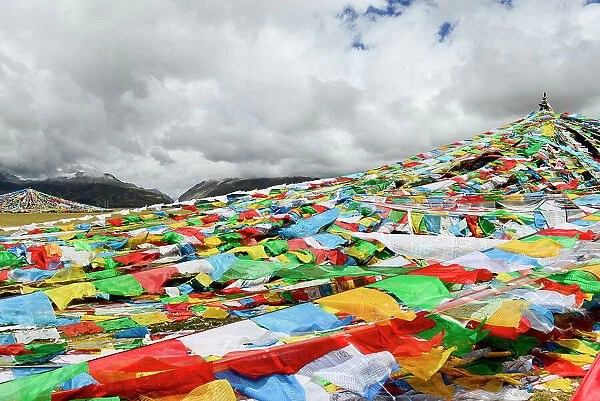
Buddhist prayer flags flutter in the wind near Namtso Lake in Tibet. It takes around 16 days to complete the pilgrimage around the lake which is 70 km (43 miles) long and 30 km (18 miles) wide.

Buddhist prayer flags flutter in the wind near Namtso Lake in Tibet
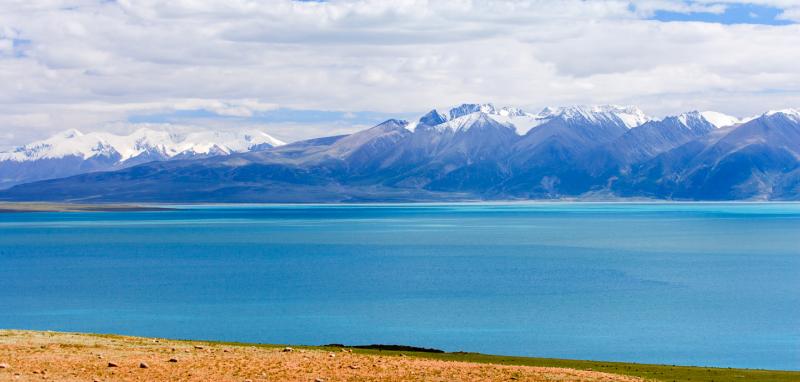
About 112 km from Lhasa at the border between Damxung County and Baingoin County is located yet another of Tibet’s treasures, the magnificent Namtso (Lake Nam) which has a surface area of 1,870 sq km. It is the highest salt lake in the world, located as it is at a height of 4,718 meters

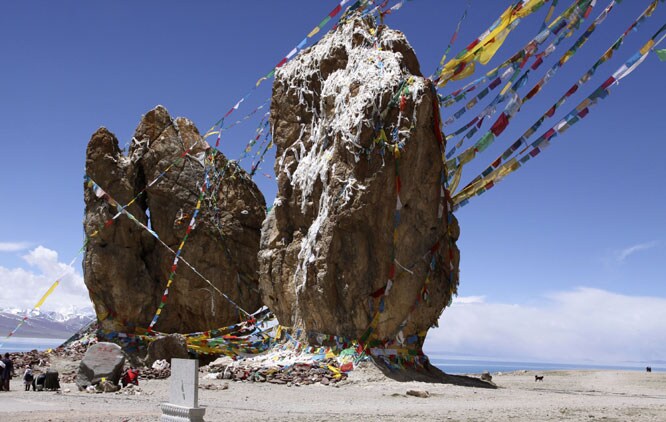
Buddhist faithful offer ‘khada’ and pray in front of the “wish-fulfilling” stone monument near Namtso Lake in Tibet.

Buddhist faithful offer ‘khada’ and pray in front of the “wish-fulfilling” stone monument near Namtso Lake in Tibet.

The world’s highest post office stands at over 5200 metres (17060 feet) near the base camp of Mount Everest, also known as Qomolangma, in Tibet. The post office services around 30 customers a day, and is only open for seven months of the year between April and October.

Mount Everest, also known as Qomolangma, in Tibet .

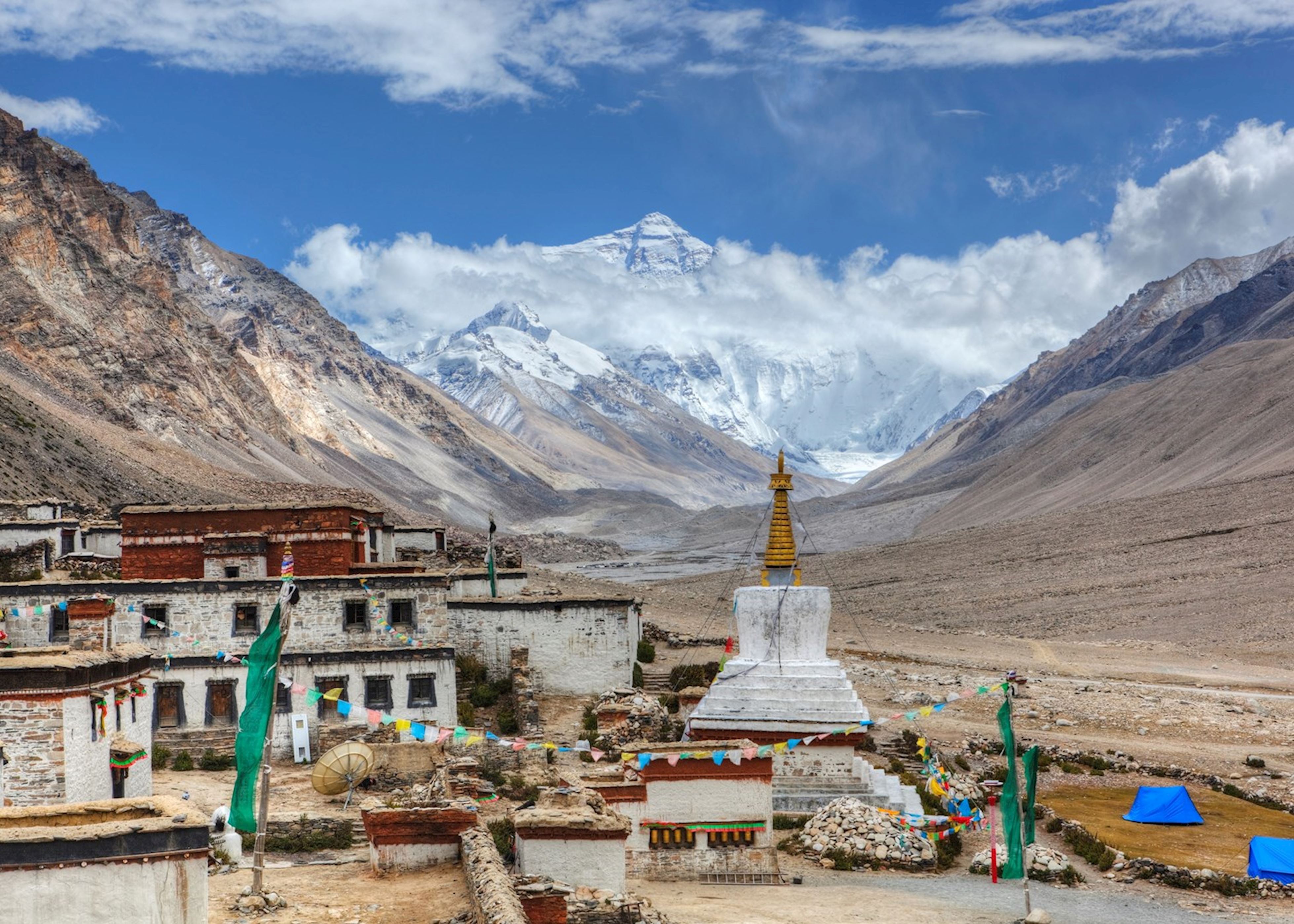
The temple of Rongbuk Monastery situated at the foot of the world’s highest mountain Mount Everest, also known as Qomolangma, in Tibet .

Rongbuk Monastery, in the background is the Qomolangma/Mount Everest.
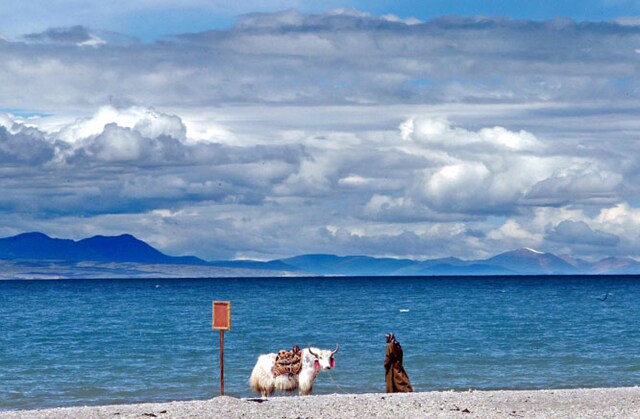
Cona lake is a major lake of northern Tibet lake and is the world’s highest freshwater lake at 4800 meters above sea level.

Cona lake is a major lake of northern Tibet lake and is the world’s highest freshwater lake at 4800 meters above sea level. In the picture, A woman is seen watering a yak near Cona Lake in Amdo county.

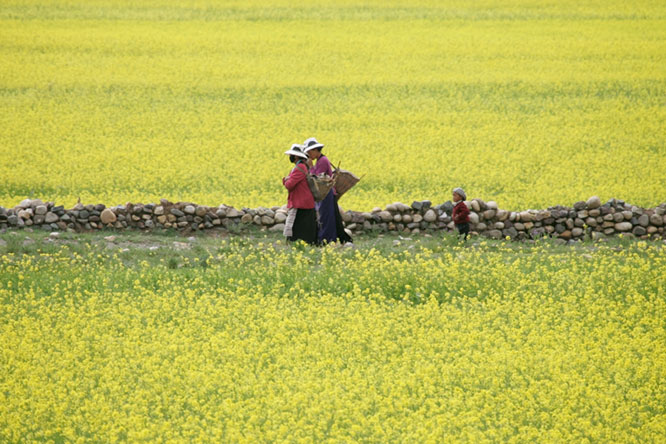
Ethnic Tibetans walk along a rapeseed field in Duilongdeqing County, Tibet.

Ethnic Tibetans walk along a rapeseed field in Duilongdeqing County, Tibet.

Whole Awareness – Tibet is not part of Red China

Tibet Awareness – Tibet is not part of Red China

TIBET AWARENESS – TIBET IS NOT PART OF RED CHINA. THE GREAT PROBLEM OF TIBET IS OCCUPATION BY FOREIGN POWER.

There is great confusion in the minds of people when they speak about Status of Tibet as a national entity. It may be true to claim that Tibet came under foreign domination from 1279 to 1368 during Mongol or Yuan Dynasty of China, and had nominal protection from 1644 to 1911 during Qing, Ch’ing, or Manchu Dynasty of China. For much of its human history, Tibet was free of direct foreign control and Tibetans maintained independent national character and independent national identity. For example, India was part of British Empire for several centuries and yet India has always been a separate entity and has its own national character and national identity that sets India and Great Britain apart.

TIBET AWARENESS - TIBET IS NOT PART OF CHINA. RED CHINA'S MILITARY OCCUPATION WILL NOT MAKE TIBET A PART OF CHINA. TIBET IS OCCUPIED AND TIBET'S STATUS WILL BE RESTORED WHEN THE OCCUPIER IS EVICTED.
TIBET AWARENESS – TIBET IS NOT PART OF CHINA. RED CHINA’S MILITARY OCCUPATION WILL NOT MAKE TIBET A PART OF CHINA. TIBET IS OCCUPIED AND TIBET’S STATUS WILL BE RESTORED WHEN THE OCCUPIER IS EVICTED.

The Evil Red Empire formulated by China’s Communist Party Chairman Mao Zedong (or Mao Tse-tung) on October 01, 1949 cannot claim Tibet as a part of People’s Republic of China. Tibet always existed as separate, and independent and it cannot be incorporated into other national entities like China. Tibet’s subjugation, domination by Red China describe the true colors of the evil Red Dragon. I describe Red China as Imperialist, Hegemonist, Neocolonialist, and Expansionist. Red China’s territorial expansionism will not replace Tibet’s true identity and status.

TIBET AWARENESS - TIBET IS NOT PART OF CHINA. TIBET INCLUDES TIBETAN TERRITORIES OF TIBETAN AUTONOMOUS REGION(TAR), AND TIBETAN TERRITORY INCLUDED IN QINGHAI, GANSU, SICHUAN, AND YUNNAN PROVINCES OF RED CHINA.
TIBET AWARENESS – TIBET IS NOT PART OF CHINA. TIBET INCLUDES TIBETAN TERRITORIES OF TIBETAN AUTONOMOUS REGION (TAR), AND TIBETAN TERRITORY INCLUDED IN QINGHAI, GANSU, SICHUAN, AND YUNNAN PROVINCES OF RED CHINA.

On behalf of Special Frontier Force, I confirm that we are not seeking separation of Tibet from Red China. Separatism is not the real issue for Tibet is never a part of any Chinese Dynasty or Chinese Empire. However, we have our rights to evict occupying military power from the entire territory of Tibet which includes Tibetan territory found in Red China’s Provinces of Qinghai, Gansu, Sichuan, Yunnan apart from Tibet Autonomous Region or TAR.

President Xi Emphasizes Need to Promote National Unity and Combat Separatism in Tibet

By KWAO PEPPEH | Aug 25, 2015 12:02 PM EDT

TIBET AWARENESS – TIBET IS NOT PART OF CHINA. RED CHINA’S MILITARY OCCUPATION WILL NOT MAKE TIBET A PART OF CHINA. TIBET IS OCCUPIED AND TIBET’S STATUS WILL BE RESTORED WHEN THE OCCUPIER IS EVICTED.

(Photo : Photo by Host Photo Agency/Ria Novosti via Getty Images) Chinese President Xi Jinping has underscored the need to consolidate the unity and security of Tibet.

President Xi Jinping on Tuesday called for an all-out-effort to cultivate national unity in Tibetan autonomous areas and fight against separatism.

He made this comment against the backdrop of persistent agitations from Tibetans at home and abroad for sovereignty from China.

The Chinese government claims Tibet as part of her national territory. Therefore, when the Communist Party of China consolidated control of the mainland in 1950, representatives of the government and the Dalai Lama (the de facto head of the theocratic state) negotiated a historic agreement. The Seventeen Point Agreement officially cemented Chinese control of the region – albeit it was granted autonomy.

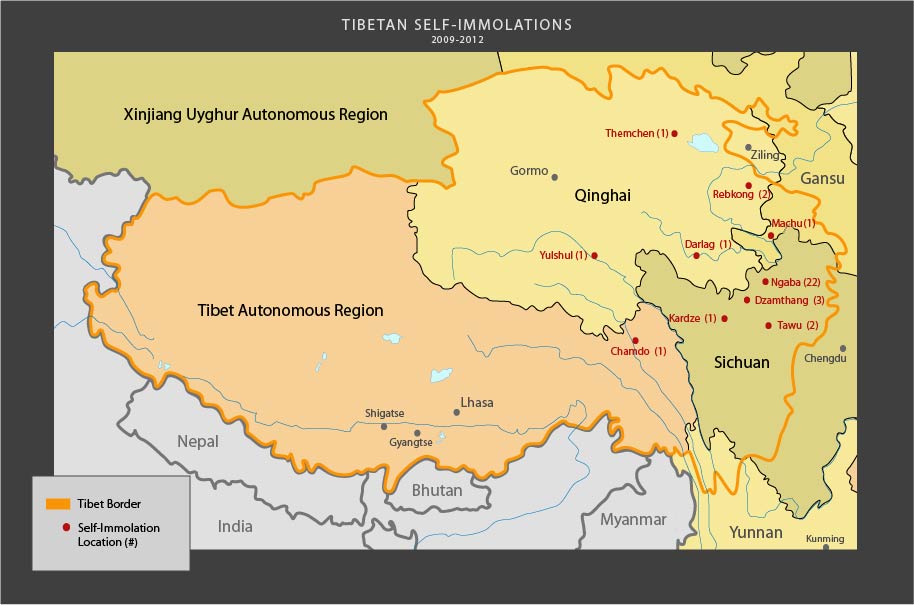
This agreement was later thrown-under-the-bus following the 1959 Tibetan Uprising. The 14th Dalai Lama subsequently went on exile and has repeatedly repudiated the Seventeen Point Agreement. There have been several protests (including self-immolation) by Tibetans for independence since then. Activists claim the Chinese government is curtailing the rights of Tibetans and undermining their culture.

President Xi has explained that efforts should be focused on “ensuring national unity and consolidating ethnic unity” in Tibet.

“We should help people of various ethnic groups understand, support, appreciate and study from each other,” he explained.

President Xi highlighted the need to engender a sense of patriotism among Tibetans and promote the ideals of socialism. He also noted that religious doctrines expounded by Tibetans Buddhists should be compatible with those of the Communist Party.

Xi explained that ensuring stability in Tibet is crucial to ensuring good government in the entire country. He condemned separatism and vowed to clamp down on all efforts to separate the country.

Recently, the Chinese-state media reported that the government is set to install three additional unmanned radars in the Himalayan region. Currently, the government has only one radar in the area. Experts say this would go a long way to improve security in Tibet and strengthen the government’s control of the region.

At the center of the unrest in Tibet is issue of the exiled Dalai Lama and the selection of his successor. Chinese state media have underscored the fact that the central government plays a “vital role”in the selection of the next Dalai Lama. However, experts say this is unlikely to go down well with the Dalai Lama, who has said that he may be the last leader of the “Yellow Hat” Tibetan Buddhists.

©2015 Chinatopix All rights reserved. Do not reproduce without permission
TIBET AWARENESS – TIBET IS NOT PART OF CHINA. RED CHINA’S MILITARY OCCUPATION WILL NOT MAKE TIBET A PART OF CHINA. TIBET IS OCCUPIED AND TIBET’S STATUS WILL BE RESTORED WHEN THE OCCUPIER IS EVICTED.

Whole Alert – Red China is guilty of Cultural Genocide in Tibet

Red China – Red Alert – Tibetan Cultural Genocide

Whole Alert – Red China is guilty of Cultural Genocide in Tibet

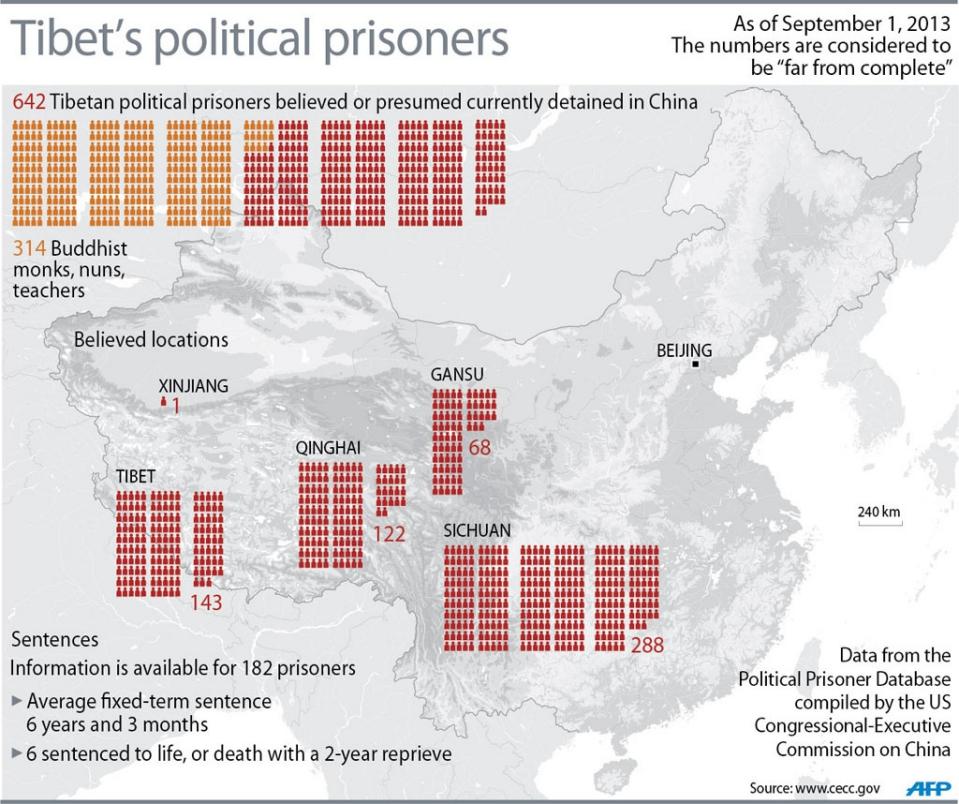
I oppose Tibet’s military occupation, and support Freedom, Democracy, and Peace in occupied Tibet. I promote Tibet Awareness and I am asking my readers to give their kind attention to the problem of “Cultural Genocide” which has already destroyed the lives of over 140 Tibetan lives, victims of Red China’s brutal military occupation.

Whole Alert – Red China is guilty of Cultural Genocide in Tibet
The Washington Post

TIBET’S TOUGH ROAD AHEAD

DV2071367-1567.jpg?uuid=R3vc0CG0EeWE1es37o6qYQ
The Dalai Lama prepares to speak in Aldershot, southern England, in June. (Ben Stansall/Agence France-Presse/Getty Images)

By Carl Gershman July 5 at 7:06 PM

Carl Gershman is president of the National Endowment for Democracy.

The 80th birthday Monday of the Dalai Lama, Tibet’s spiritual leader, is an occasion to celebrate the life of an extraordinary individual. Since his flight from Tibet to India in 1959, the Dalai Lama has built religious, educational and political institutions to serve and unite the Tibetan community in exile. He has travelled the world to promote the Tibetan cause and expound the teachings of Tibetan Buddhism. And he has formulated a conciliatory “Middle Way Approach” to resolving the Sino-Tibetan conflict that respects China’s sovereignty and territorial integrity even as it seeks to preserve Tibet’s culture, religion and identity. These accomplishments, and the Dalai Lama’s infectious laugh and warmth, explain why he is such a beloved and respected figure throughout the world.

As joyful as the occasion of his 80th birthday is, however, it comes at a grim time for the Dalai Lama and the Tibetan freedom movement. The Chinese government has broken off negotiations on Tibet’s status, accusing the Dalai Lama of deceitfully trying to split China and of inciting the 2008 Lhasa uprising, charges that are offensive in addition to being entirely untrue. In April, it issued a white paper saying that talks would not be reopened until the Dalai Lama acknowledged that “Tibet has been an integral part of China since antiquity,” something he cannot agree to since it is contradicted by the historical record and overlooks the fact that Communist China invaded Tibet and illegally annexed it in 1959.

Having rejected compromise and dialogue as the way to end Tibetan resistance to its rule, the Chinese government has opted for harsh repression, forced assimilation and the systematic effort to destroy the Tibetan religion, language and distinct national identity. Tibet has been flooded with Han Chinese settlers; monasteries have been placed under direct government control; writers have been arrested and tortured; and more than 2 million nomads have been forcibly resettled in urban areas, destroying their traditional way of life and disrupting the fragile ecosystem of the Tibet Plateau.

In response to these and other harsh measures, which the Dalai Lama has called “cultural genocide,” more than 140 Tibetans have immolated themselves in desperate protest against Chinese oppression. This further enraged the regime, which called upon local security forces to “smash disorder, in order to maintain general harmony and stability.” But as 29 dissident Chinese intellectuals said in a call for dialogue with the Dalai Lama, “A country that wishes to avoid the partition of its territory must first avoid divisions among its nationalities.”

With the Dalai Lama turning 80, a contest is already developing over his succession. In Tibetan Buddhism, reincarnation is a fundamental tenet, and only the Dalai Lama has the authority to choose whether and through whom he will reincarnate. Yet Beijing has already approved guidelines giving the communist government control of the process. This contest takes place against the background of Chinese authorities having kidnapped in 1995 the 6-year-old boy identified by the Dalai Lama as the incarnation of the Panchen Lama, the second most important figure in Tibetan Buddhism, and replaced him with another boy.

The fact that the Chinese-imposed Panchen Lama continues to be categorically rejected by Tibetans should indicate how inflammatory it would be if Beijing tried to impose its choice for the next Dalai Lama. But that’s exactly what it intends to do, except that the Dalai Lama has hinted that he might not reincarnate at all. Zhu Weigun, a top Communist Party official dealing with Tibet, angrily called the Dalai Lama’s statement “a betrayal” of Tibetan Buddhism and accused him of taking “a frivolous attitude toward his own succession.” Such shameless impudence by a spokesman for an atheistic party would be laughable were his words not the official policy of the Chinese government.

The Dalai Lama has said that he will consult with the high Lamas of Tibetan Buddhism, as well as with the Tibetan public and other concerned people, before taking a decision on “whether the institution of the Dalai Lama should continue or not.” These words reflect a spirit of democratic inclusiveness that has characterized his leadership, including his decision to devolve political authority to a democratically elected exile government.

It is ironic that at a time of democratic malaise in the West, this “simple Buddhist monk,” as he calls himself, from a remote non-Western civilization has emerged as a fervent defender of democratic values and arguably the world’s leading exponent of nonviolence and religious freedom.

As we celebrate the Dalai Lama’s 80th birthday, let us remember the suffering of the Tibetan people and pray that it will come to an end.

Washingtonpost.com © 1996-2015 The Washington Post

Whole Alert – Red China is guilty of Cultural Genocide in Tibet

Whole Ruler – The Sovereign Institution of Tibet at The White House

The Supreme Ruler of Tibet at the White House

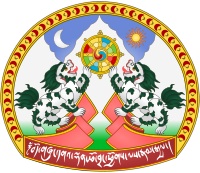
Whole Ruler – The Sovereign Institution of Tibet at The White House. The Institution of Dalai Lama is important to preserve Tibetan Political Identity. The Government of Tibet is represented by this Seal of Ganden Phodrang.

Tibet is a Sovereign Nation and it specifically acknowledges that the Institution of Dalai Lama and the person holding that title as the true independent, ruler of Tibet apart from being a high-ranking priest of Tibetan Buddhism.

SPECIAL FRONTIER FORCE AT THE WHITE HOUSE: The Institution of Dalai Lama is not simply about a person known as Tenzin Gyatso. He is the Supreme Commander of Tibetan Forces that serve in the military organization called Special Frontier Force.
Whole Ruler – The Sovereign Institution of Tibet at The White House. The Institution of Dalai Lama is not simply about a person known as Tenzin Gyatso. He is the Supreme Ruler of the Tibetan Nation.
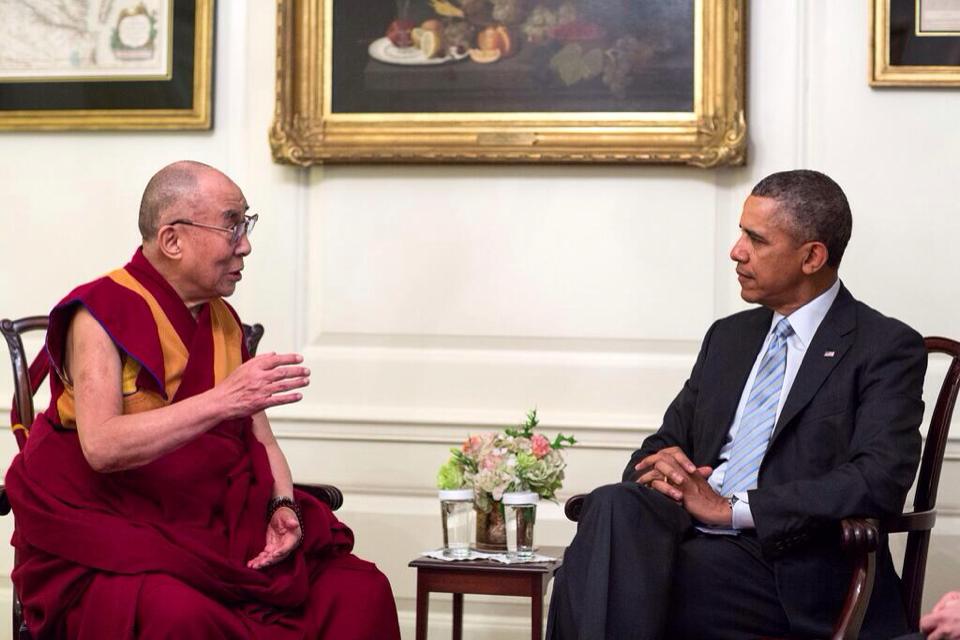
SPECIAL FRONTIER FORCE AT THE WHITE HOUSE: His Holiness the 14th Dalai Lama speaking with US President Barack Obama during their meeting in the Map Room of The White House in Washington, DC on Friday, February 21, 2014.(Official White House photo by Pete Souza)
Whole Ruler – The Sovereign Institution of Tibet at The White House. His Holiness the 14th Dalai Lama speaking with US President Barack Obama during their meeting in the Map Room of The White House in Washington, DC on Friday, February 21, 2014.(Official White House photo by Pete Souza)

On March 31, 1959, His Holiness the 14th Dalai Lama arrived in India as a political exile and was granted political asylum in India. He established the Tibetan Government-in-Exile which is based in Dharamsala of India. But, for Tibetans living in Tibet, the title Dalai Lama represents their chosen system of governance.

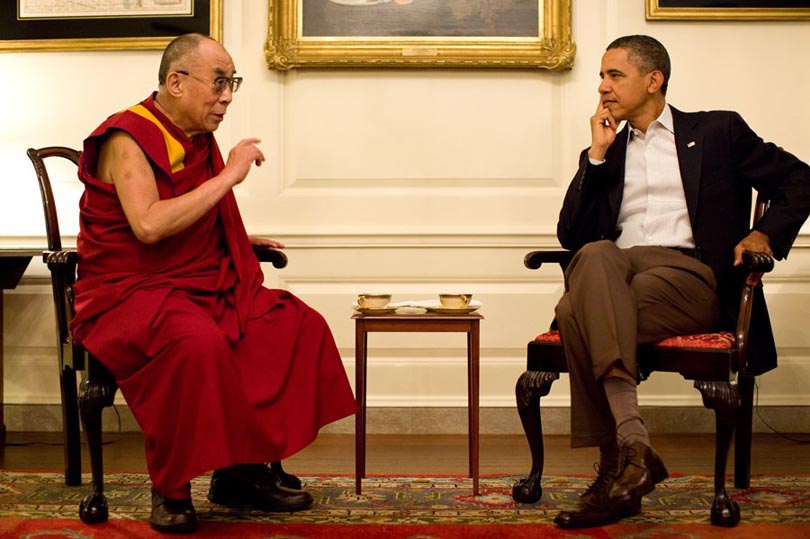
SPECIAL FRONTIER FORCE AT THE WHITE HOUSE: His Holiness the 14th Dalai Lama speaking with US President Barack Obama during their meeting in the Map Room of The White House in Washington, DC on July 16, 2011.
Whole Ruler – The Sovereign Institution of Tibet at The White House. His Holiness the 14th Dalai Lama speaking with US President Barack Obama during their meeting in the Map Room of The White House in Washington, DC on July 16, 2011.

The United States often describes His Holiness the 14th Dalai Lama as a spiritual, and cultural leader of Tibetan people without explaining the cultural aspects of Tibetan governance. In Tibetan Culture, the title Dalai Lama is given to the Leader or Chief who provides a system of Government. The Dalai Lama has the same executive powers that are typically exercised by the Head of State of any independent, sovereign nation. The title of Dalai Lama is the equivalent of titles such as President or Prime Minister who hold the executive power in nations like the United Sates, India, and Great Britain.

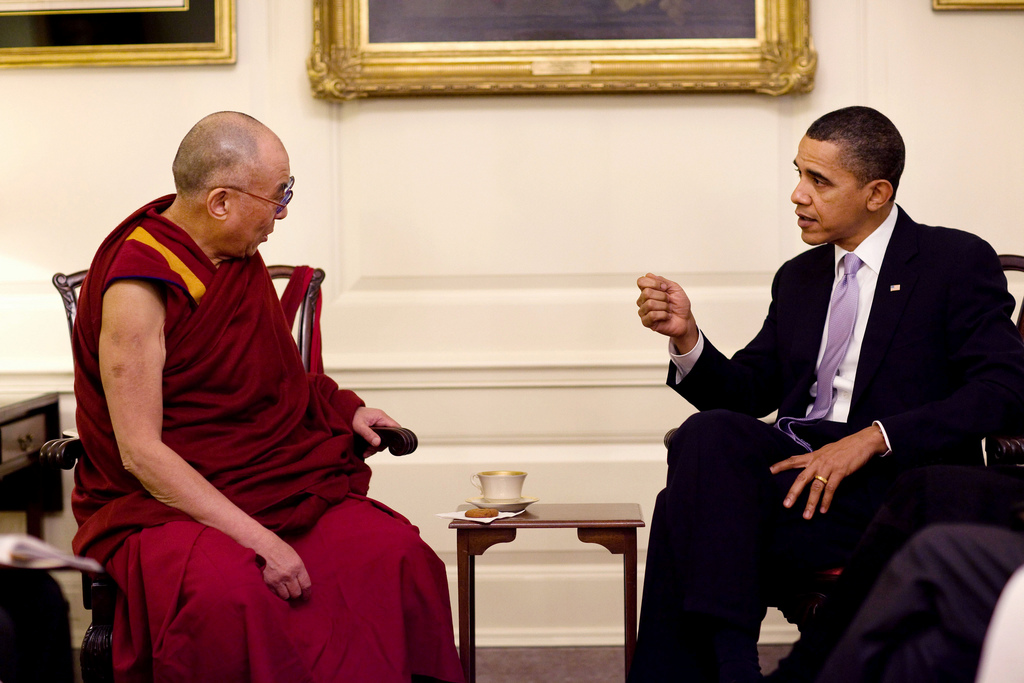
SPECIAL FRONTIER FORCE AT THE WHITE HOUSE: His Holiness the 14th Dalai Lama speaking with US President Barack Obama during their meeting in the Map Room of The White House, Washington, DC on February 18, 2010.
Whole Ruler – The Sovereign Institution of Tibet at The White House. His Holiness the 14th Dalai Lama speaking with US President Barack Obama during their meeting in the Map Room of The White House, Washington, DC on February 18, 2010.

The Sovereign, Political Institution of the Dalai Lama

SPECIAL FRONTIER FORCE AT THE WHITE HOUSE: His Holiness the 14th Dalai Lama who has visited The White House on numerous occasions during the last 30 years is the rebirth of a long line of "TULKUS" who descend from the Bodhisattva named "AVALOKITESVARA."
Whole Ruler – The Sovereign Institution of Tibet at The White House. His Holiness the 14th Dalai Lama who has visited The White House on numerous occasions during the last several years is the rebirth of a long line of “TULKUS” who descend from the Compassionate Bodhisattva named “AVALOKITESVARA.”

His Holiness the 14th Dalai Lama who had visited The White House in Washington, DC on February 21, 2014 and on numerous other occasions meeting with various US Presidents during the last 30 years, is the rebirth of a long line of “TULKUS” who descend from the Compassionate Bodhisattva named “AVALOKITESVARA.” In Tibetan Buddhism, a “TULKU” is a particularly high-ranking Lama, of whom the Dalai Lama is one. But, it is very important to recognize Dalai Lama as a ‘Hierarch’, a Leader or Chief who provides a system of Government. The Sovereign, political institution of Dalai Lama is formally known as ‘Ganden Phodrang’. The succession of this ‘hierarchy’ is maintained by the discovery of a child born soon after the death of a Dalai Lama into whom the ‘Spirit’ of the deceased has entered.

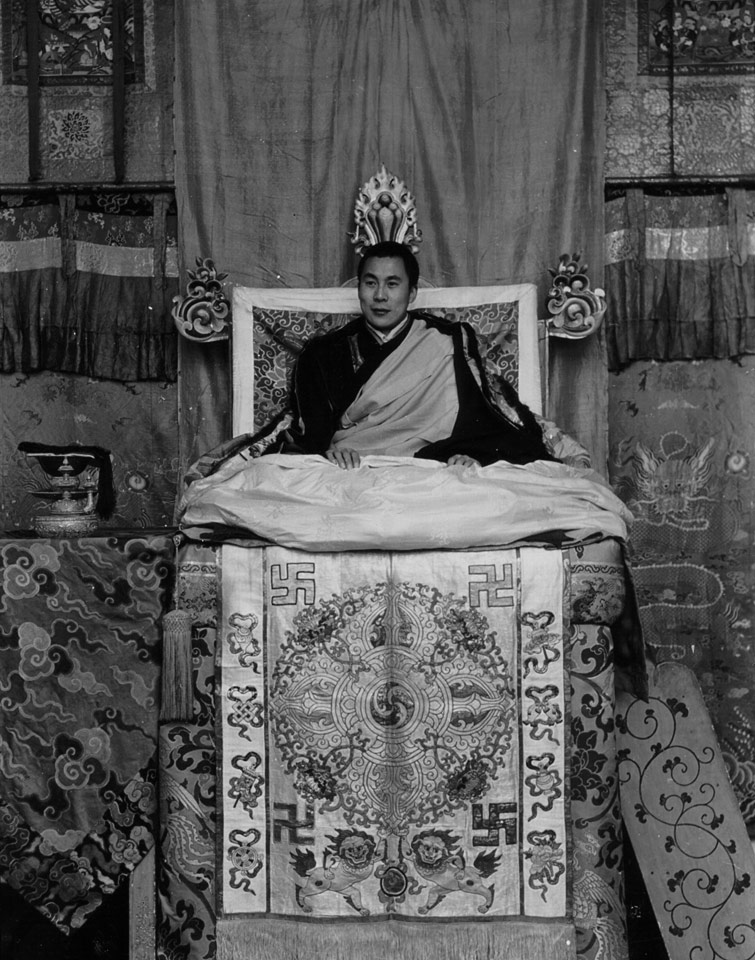
SPECIAL FRONTIER FORCE AT THE WHITE HOUSE: Tenzin Gyatso(b. 1935), the 14th Dalai Lama's Enthronement Ceremony on 22 February, 1940. Dalai Lama is the ruler of Tibet.
Whole Ruler – The Sovereign Institution of Tibet at The White House. Tenzin Gyatso (b. 1935), the 14th Dalai Lama’s Enthronement Ceremony on 22 February, 1940. Dalai Lama is the ruler of Tibet.
SPECIAL FRONTIER FORCE AT THE WHITE HOUSE: The 14th Dalai Lama sitting on the throne in this photo image of 1956-57 while Tibet came under Communist China's military occupation during 1950. With military assistance from the United Sates and India, Tibetans had revolted against the Communists and the Dalai Lama fled into exile when the massive Tibetan Uprising failed during March 1959.
Whole Ruler – The Sovereign Institution of Tibet at The White House. The 14th Dalai Lama sitting on the throne in this photo image of 1956-57 while Tibet came under Communist China’s military occupation during 1950. With military assistance from the United Sates and India, Tibetans had revolted against the Communists and the Dalai Lama fled into exile when the massive Tibetan Uprising failed during March 1959.
SPECIAL FRONTIER FORCE AT THE WHITE HOUSE: The political institution of Dalai Lama is formally known as 'Ganden Phodrang' and this is the Official Seal of the Tibetan Government.
Whole Ruler – The Sovereign Institution of Tibet at The White House. The Sovereign, political institution of Dalai Lama is formally known as ‘Ganden Phodrang’ and this is the Official Seal of the Tibetan Government.

The Great Fifth Dalai Lama, Lobsang Gyatso (1617-1682) founded the Ganden Phodrang Government of Tibet in 1642. During his reign, the Potala Palace on the Red Hill in Lhasa was built. The successive Dalai Lamas have headed the Tibetan Nation for nearly four centuries. The name “DALAI” is the anglicized version of Mongolian word “TA -LE” which is used as an honorific title and the equivalent of the Tibetan “RGYA-MTSHO” meaning Sea or Ocean which suggests the breadth and depth of wisdom and the temporal power of Dalai Lama on Tibetan way of life. Tibetans call the Dalai Lama as ‘Rgyal-ba Rin-po-che’ which means ‘Great Precious Conqueror. The Third Dalai Lama, Sonam Gyatso (1543-1588) had received this honorific title during 1578 while on a visit to the Mongol Chief Altan Khan who had applied this title retrospectively to the previous hierarchs making Gendun Drupa (1391-1474) the First Dalai Lama, and Gendun Gyatso (1475-1542) who became the Second Dalai Lama. This strong hierarchical organization of Tibetan Buddhism and the governance of Tibet has become the focus of Tibetan Cultural Identity and Tibetan National Character. The Eighth Dalai Lama, Jamphel Gyatso (1758-1804) fought a war with the Gurkha troops from Nepal and had defeated them with some assistance from Manchu China.  Tibet existed in a serene and unperturbed state for several centuries even while Tibet came under the control of the Yuan or Mongol Dynasty of China. In 1644, Chinese Manchu, Qing or Ching Dynasty was established and Tibet during the reign of its Seventh Dalai Lama, Kelsang Gyatso (1708-1757) came under Manchu China’s nominal protection although for the most part, the Tibetans retained full control over their internal affairs. The Manchu China Dynasty was overthrown in 1911 and the 13th Dalai Lama, Thupten Gyatso (1876-1933) had expelled the Manchu China’s troops from Tibet, promptly reasserted Tibet’s full Independence. The Great 13th Dalai Lama ruled with full personal authority and reigned as head of a Sovereign State. He had further formally announced Tibet’s full Independence on February 13, 1913.

SPECIAL FRONTIER FORCE AT THE WHITE HOUSE: The Potala Palace on the Red Hill in Lhasa was built during the reign of Lobsang Gyatso(1617-1682), the Great Fifth Dalai Lama. The Sovereign Authority of the Dalai Lama as the Ruler of Tibet was established before the US President became the Chief Executive of the United States.
Whole Ruler – The Sovereign Institution of Tibet at The White House. The Potala Palace on the Red Hill in Lhasa was built during the reign of Lobsang Gyatso (1617-1682), the Great Fifth Dalai Lama. The Sovereign Authority of the Dalai Lama as the Ruler of Tibet was established before the US President became the Chief Executive of the United States.
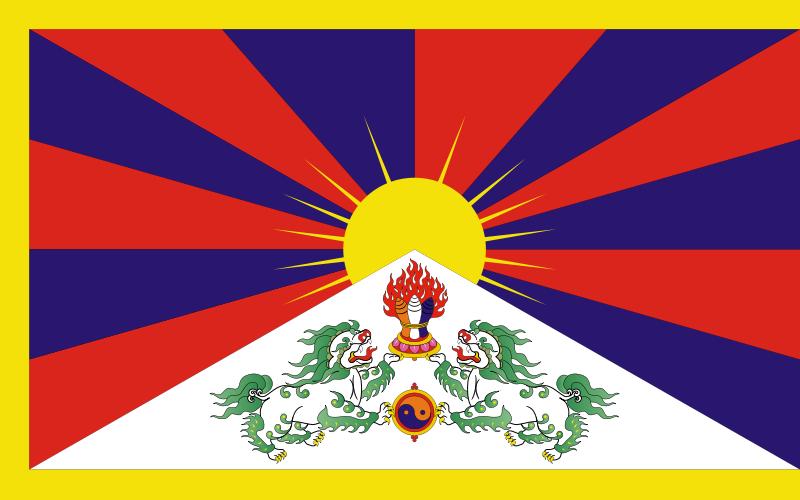
SPECIAL FRONTIER FORCE AT THE WHITE HOUSE: Special Frontier Force was founded by the United States, India, and Tibet during 1962 to defend the Tibetan Nation represented by this Flag.
Whole Ruler – The Sovereign Institution of Tibet at The White House. The Tibetan Nation represented by this Flag. It symbolizes the Supreme Authority of the institution of Dalai Lama.

Tibetans celebrate the 13th day of February as Tibetan Independence Day in recognition of their sovereignty. Being ‘Sovereign’ means that Tibetans do not acknowledge any superior and being a Sovereign Nation, Tibet has the full power to levy War, conclude Peace, contract alliances, establish Commerce and do all other acts and things which independent states may have the right to do. For 39 years, from 1911 to 1950, Tibet had indeed existed as an Independent Nation and had signed the bilateral “Mc Mahon Treaty” in Delhi during 1914 following the ‘Simla Agreement’. During October 1950, Communist China’s People’s Liberation Army invaded Tibetan soil and Tibet has come under China’s military occupation. It will be incorrect to suggest that Tibet is a part of China. Tibetans do not acknowledge China’s rule. I am pleased to share a few photo images of His Holiness the 14th Dalai Lama, the living symbol of the Tibetan Nation when he visited The White House in recent past.

SPECIAL FRONTIER FORCE AT THE WHITE HOUSE: The construction of The White House started in 1792. The United States started diplomatic relations with Tibet as it got alarmed by the Communist takeover of China during 1949. However, the 14th Dalai Lama is the first Dalai Lama who has ever visited The White House.
Whole Ruler – The Sovereign Institution of Tibet at The White House. The construction of The White House started in 1792. The United States started diplomatic relations with Tibet as it got alarmed by the Communist takeover of China during 1949. However, the 14th Dalai Lama is the first Dalai Lama who has ever visited The White House.
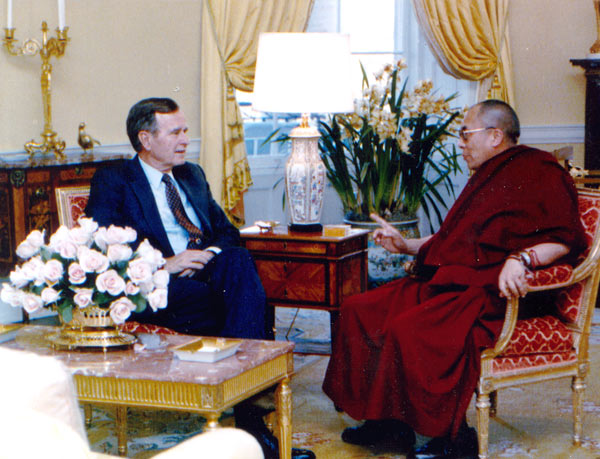
SPECIAL FRONTIER FORCE AT THE WHITE HOUSE: On April 16, 1991, the 14th Dalai Lama met with US President George H.W. Bush during his first visit to The White House.
Whole Ruler – The Sovereign Institution of Tibet at The White House. On April 16, 1991, the 14th Dalai Lama met with US President George H.W. Bush during his first visit to The White House. During 1976-77, President Bush served as the Director of Central Intelligence Agency.
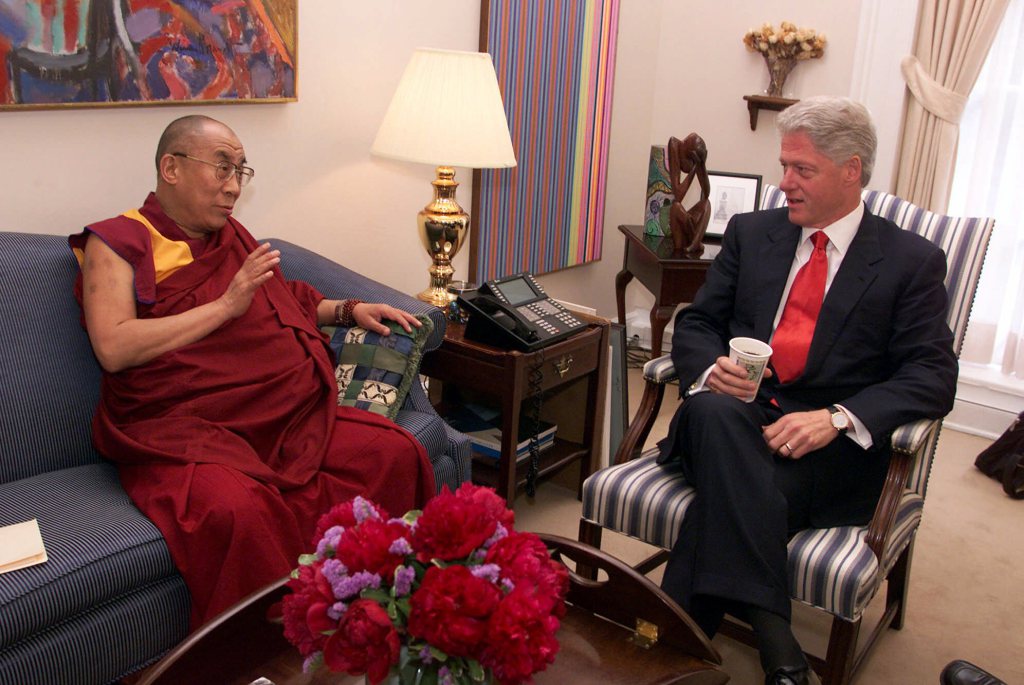
SPECIAL FRONTIER FORCE AT THE WHITE HOUSE: The 14th Dalai Lama met with US President Bill Clinton on June 20, 2000 at The White House.
Whole Ruler – The Sovereign Institution of Tibet at The White House. The 14th Dalai Lama met with US President Bill Clinton on June 20, 2000 at The White House.
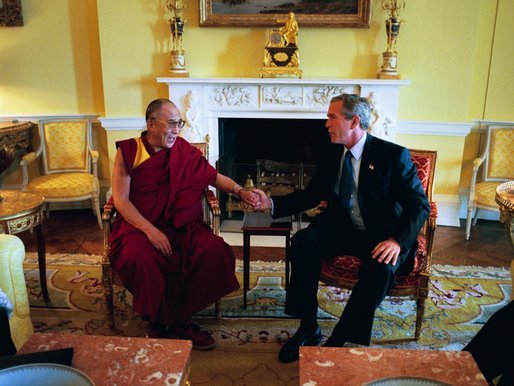
SPECIAL FRONTIER FORCE AT THE WHITE HOUSE: His Holiness the 14th Dalai Lama  speaking with US President George Bush during their meeting in The White House on September 10, 2003.
Whole Ruler – The Sovereign Institution of Tibet at The White House. His Holiness the 14th Dalai Lama speaking with US President George Bush during their meeting in The White House on September 10, 2003.
SPECIAL FRONTIER FORCE AT THE WHITE HOUSE: His Holiness the 14th Dalai Lama speaking with US President George Bush during their meeting at The White House in Washington, DC on November 09, 2005.
Whole Ruler – The Sovereign Institution of Tibet at The White House. His Holiness the 14th Dalai Lama speaking with US President George Bush during their meeting at The White House in Washington, DC on November 09, 2005.
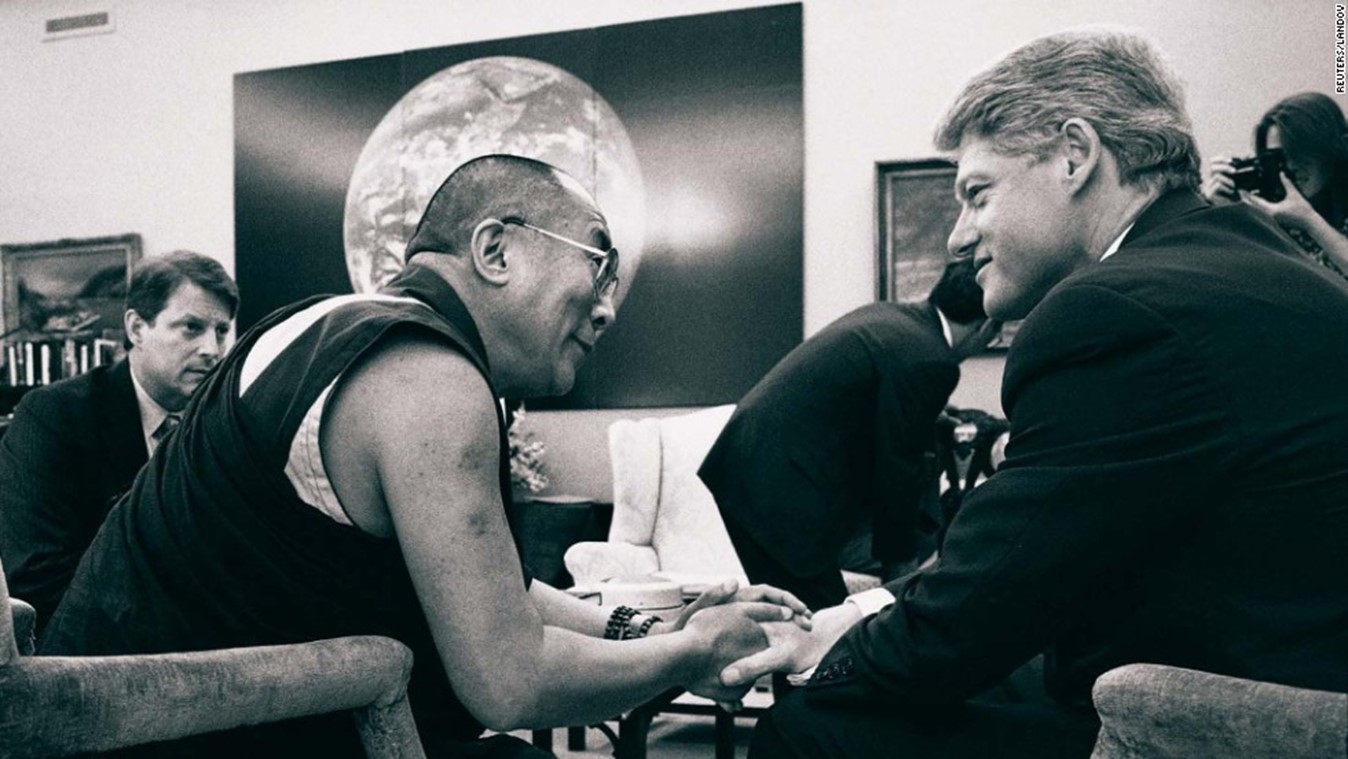
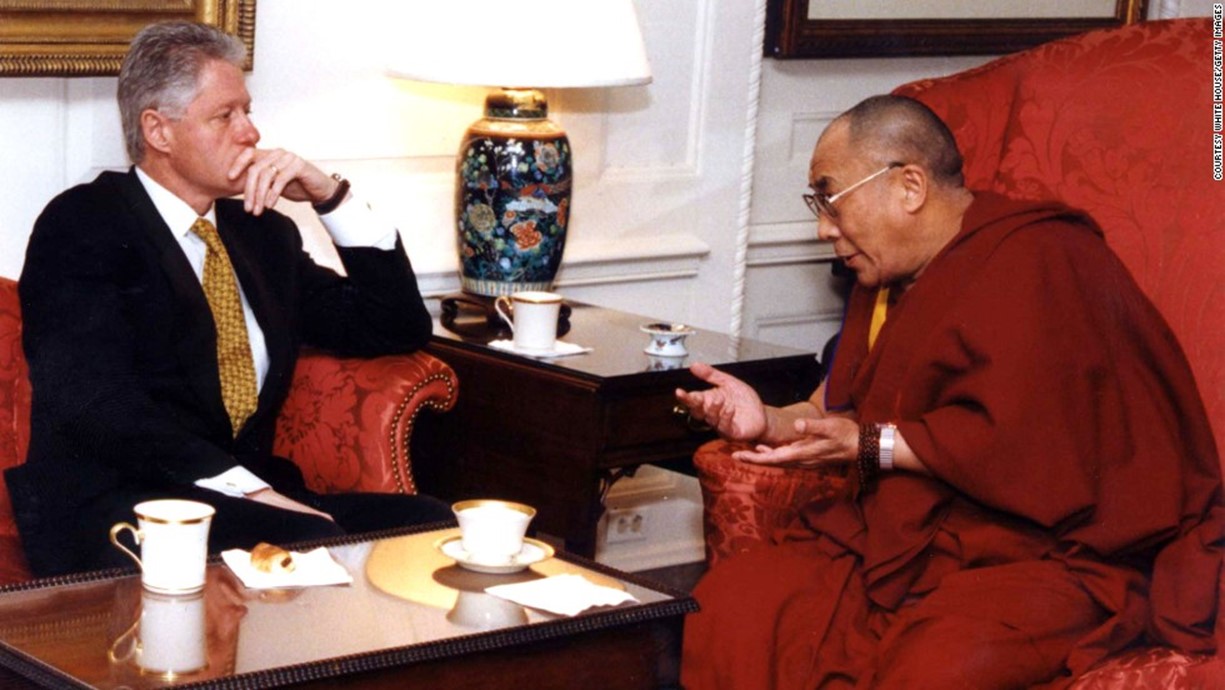
SPECIAL FRONTIER FORCE AT THE WHITE HOUSE: His Holiness the 14th Dalai Lama speaking with US President Bill Clinton during their meeting in The White House in Washington, DC.
Whole Ruler – The Sovereign Institution of Tibet at The White House. His Holiness the 14th Dalai Lama speaking with US President Bill Clinton during their meeting in The White House in Washington, DC.

I respectfully submit to my readers that the term “Dalai Lama” recognizes the person who represents the sovereign, political institution, the seat of Tibetan Government and Tibetan Sovereignty.

Whole Ruler – The Sovereign Institution of Tibet at The White House
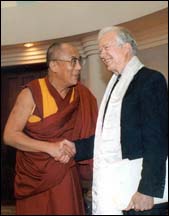
Whole Ruler – The Sovereign Institution of Tibet at The White House. Noble Peace Prize 2002. US President Jimmy Carter maintained a friendly relationship with the Tibetan Leader since 1979.
United States Congress honored His Holiness the Dalai Lama with a Gold Medal during a ceremony in Washington,DC in 2007. President George W Bush, US Speaker of the House Nancy Pelosi, and US Senator Robert C Byrd are seen in the photo. Senator Byrd, the longest-serving member of the US Congress has died at the age of 92 after almost six decades in office. America has lost a voice of Principle and Reason. It is a time for us to reflect upon the Problem of Tibet.

Whole Dispute – Resolve Tibet-China Border Dispute

Resolve Tibet-China Border Dispute

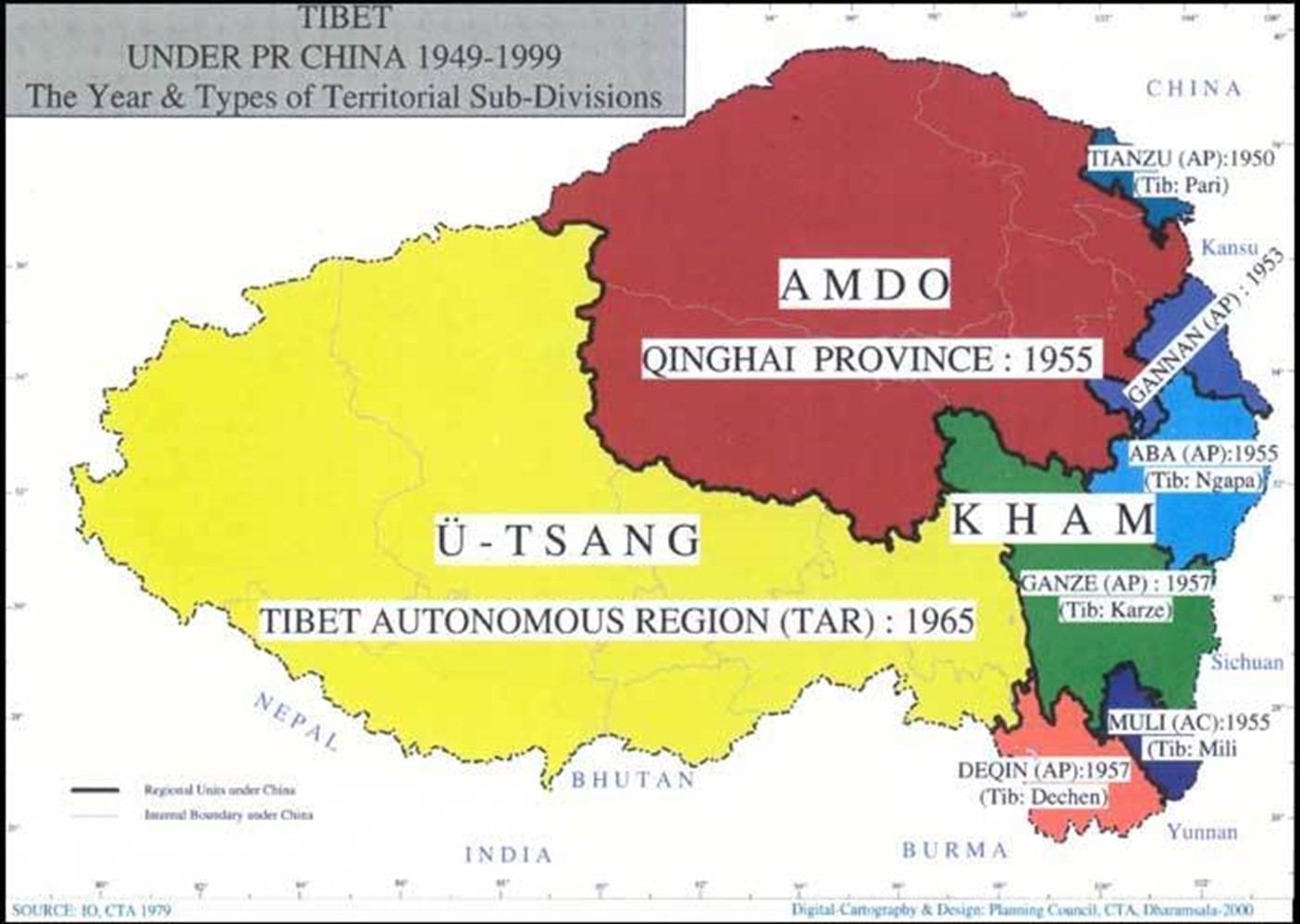
People's Republic of China's province called Tibetan Autonomous Region or "TAR" was established in 1965 after Communist China had annexed Tibetan territory and illegally added it to adjoining Chinese provinces. Hence, there is a valid dispute about China-Tibet boundaries.
Whole Dispute: People’s Republic of China’s province called Tibetan Autonomous Region or “TAR” was established in 1965 after Communist China annexed Tibetan territory and illegally added it to adjoining Chinese provinces. Hence, there is a valid dispute about China-Tibet boundaries. Tibet Protests Map 2008-2009.

It is surprising to note that people who write about the Sino-Indian border conflict make no reference to the history of Tibet. To state very briefly, the Great Fifth Dalai Lama founded the Ganden Phodrang Government of Tibet in 1642. The successive Dalai Lamas have headed the Tibetan State for nearly four centuries. From 1279 to 1368 Tibet was under the nominal control of the Yuan or Mongol dynasty of China, but subsequently regained its independence. In 1644, the Manchu or Qing dynasty was established in China and Tibet came under its nominal protection although for the most part the country retained control over its internal affairs. With the downfall of the Qing or Ching dynasty, the Great 13th Dalai Lama declared Tibet’s Independence on 13th February, 1913. For 39 years, from 1911 to 1950, Tibet was an independent nation. In Political Science, when states are called free and independent, their autonomy or sovereignty means that they have full power to levy war, conclude peace, contract alliances, establish commerce, and do all other acts and things which independent states may have the right to do. In its capacity as an independent nation, Tibet signed a treaty called the McMahon Treaty (following the Simla Agreement) which established the border between India and Tibet. The Republic of India after gaining its full independence during 1947 did not annul or revoke this treaty. As such, for all legal purposes, this treaty is valid. People’s Republic of China came into its existence after the Communists took over mainland China during 1949 and forced the Nationalist Party (Kuomintang) establish the Republic of China in Formosa or Taiwan. Both the Nationalists, and the Communists seek the reunification of Taiwan with the mainland. That issue is not yet decided. Meantime, Communist China invaded Tibet during 1950 and occupied it. In 1951, a defeated Tibet signed a treaty making Tibet a part of China. However, most Tibetans do not recognize this treaty and do not accept its legitimacy. In 1959, after a failed, massive Tibetan uprising, the 14th Dalai Lama and about 100, 000 of his followers escaped to India. Tibetans have established the Tibetan Government-in-Exile, and on September 02, 1960, the first members of the First Tibetan Parliament-in-Exile took their oath of office. In September, 2012, Tibetans have celebrated 52nd Democracy Day. During 1965, People’s Republic of China formed a province that it named as Tibetan Autonomous Region or “TAR.” In doing so, Communist China annexed several parts of Tibet and added them to its own territory. Tibetans have not agreed for this seizure of their territory. One of the central demands of the Tibetan Government-in-Exile is that of unifying all the Tibetan territory that is now under Chinese military occupation.

We have to very important issues; 1. Unification of Republic of China with People’s Republic of China and establish a national entity called China, and 2. demarcating the border between the new “One-China” and its neighbor, Tibet. Tibetans have not surrendered their claims for independence, freedom, and self-determination. As such, Tibet is not a part of China and the borders of China’s province called “TAR” do not establish the legitimate borders between Tibet and China.

India forgets that China cannot be trusted
G.PARTHASARATHY

December 5, 2012:

One cannot but be surprised by the statement of the National Security Advisor (NSA) Shivshankar Menon brushing aside the serious implications of Chinese actions, while voicing optimism that “we are in the process of agreeing on a framework to settle the boundary”.

Have we forgotten that after agreeing to delineate the Line of Actual Control, the Chinese backed off on the entire process?

In 2005, Premier Wen Jiabao agreed that “in reaching a border settlement, the two sides shall safeguard due interests of their settled populations in border areas”.

This clearly signaled that there was no question of transferring territories containing settled populations and addressed Indian concerns on Chinese claims to Tawang in Arunachal Pradesh. Within a year, however, China was laying claim not merely to Tawang, but the entire state of Arunachal Pradesh.

One can only conclude that the new “framework” the NSA spoke of to settle the boundary issue would be about as successful as the much-touted “Joint anti-Terror Mechanism” with Pakistan, which came apart with the 26/11 attacks.

Just a day before the NSA spoke, Army Chief General Bikram Singh described bilateral relations with China as “absolutely perfect” and added that mechanisms were now in place to solve any issues
between the two countries. This was an astonishing comment, at a time when the army wants additional strike formations, apart from vastly improved communications on the border with China.

Was it because Singh feels the army is unlikely to get its needs fulfilled soon, and needs to sound conciliatory to the Chinese? Do the other two Service Chiefs and the Defence Minister share this
optimism? All these issues need to be debated now that Parliament is in session.

INTERNAL RUMBLINGS

China can now be described as a “dynastic dictatorship,” after its 18th Party Congress. Outgoing leader Hu Jintao voiced concern at the growing dissatisfaction in China over political corruption.

The Party Congress had been preceded by the downfall of its rising star Bo Xilai, whose lavish and flamboyant lifestyle had led to the conviction of his wife for murdering a British businessman and
revelations of the billions of dollars of assets that Bo and his family had acquired.

This was followed by a a well documented leak, quite evidently by Bo’s supporters, about ill-gotten wealth accumulated by Prime Minister Wen Jiabao and his family.

China’s worst kept secrets about dynastic politics in the Communist Party became public when it emerged that four of the seven members of its highest decision-making body, the Standing Committee of the Politburo, were “Princelings,” or descendants of first generation, Mao-era political leaders. Most “Princelings”, including Party Chief Xi Jinping, lead lavish life styles, with families having extensive business interests. The contradictions between having an open economy linked to foreign markets on the one hand and a one-party, authoritarian political structure perceived to be unresponsive to pubic grievances on the other, are coming to the forefront in China.

China will continue to seek new ways to further open up its economy and maintain a high growth rate. But the “Princelings” are unlikely to bring any changes in the basic authoritarian nature of the State apparatus. Tutored by Deng Xiao Ping, who was determined not to follow the glasnost and perestroika path of Gorbachev in the Soviet Union, the new dispensation will be averse to increasing democratization.

TERRITORIAL AGGRESSION

With jingoistic propaganda, evidently to divert public opinion away from domestic issues like high level corruption, China is obviously in no mood to show any flexibility on its territorial claims along the Sino-Indian border. As Chinese passports are generally valid for ten years, there can logically be no change in China’s territorial claims in this period.

China will continue on its path of rapid military modernization, combined with an assertive line on its maritime and land boundary claims.

China’s recent decision to depict the entire South China Sea, together with Arunachal Pradesh and parts of Ladakh as Chinese territory in maps on Chinese passports, has to be seen in the light of this
growing Chinese readiness to use force and military coercion to enforce its territorial claims. One has recently witnessed aggressive Chinese postures resulting in a virtual naval takeover around the
disputed Scarborough Shoal, claimed by the Philippines.

A similar aggressive approach has been taken on recent tensions with Japan, with Chinese naval vessels entering territorial waters, adjacent to the disputed Diaoyu/Senkaku Islands.

China has evidently been emboldened by the American assertion that while the US does have a stand on freedom and maintenance of peace and stability in the South China Sea, it “does not take sides in (maritime) disputes”.

ECONOMIC CONCERNS

New Delhi is now talking of getting superfast trains and rail equipment from China, at a time when there is growing concern at our over dependence on second rate Chinese power equipment.

There are also concerns about dangers to cyber security and communications infrastructure posed by imports from China. Should we not insist on co-production, together with transfer or technology, in such strategic sectors, with preference for cooperation with friendly countries like Japan, France and Germany?

(The author is former High Commissioner to Pakistan.)

Comments:
Dear Mr GP, Many thanks for this caution. Will the ears listen to and the eyes see the ground realities instead of indulging in this ‘all is well’ kind of assumption and self assurance? . The present atmosphere is somewhat similar to the one that prevailed in early 1960s when our leaders wrongly assumed that China would never attack India. Reference is invited to the recent interview granted by Dai Bingguo Chinese Negotiator to PTI (covered by this publication) covering China – Pakistan relationships and China’s territorial claims. We need to exercise extra caution, think and act carefully. I held the view earlier that China will think twice before attacking India once again. But am forced to rethink. Camradely with China can wait. Recent bonhomie in the form of financial assistance, collaboration in power and infrastructure may not be entirely and mutually beneficial. One may need to read the fine print very carefully! Thanks for this opportunity to interact.

Regards

from: Dr.Guru.Raghavan
Posted on: Dec 5, 2012 at 23:08 IST

Tibet declared its independence on February 13, 1913 and had signed the McMahon Treaty with India after the Simla Agreement of 1914. Republic of India has not annulled or voided this Treaty and holds it as a valid agreement between two neighboring States. However, Tibetans do not agree the boundaries of the present Tibetan Autonomous Region and are demanding the unification of the three provinces, 1. U-Tsang, 2. Kham, and 3. Amdo of Tibet nation as it existed before China's illegal military occupation since 1950.
Tibet declared its independence on February 13, 1913 and signed the McMahon Treaty with British India after the Simla Agreement of 1914. Republic of India has not annulled or voided this Treaty and holds it as a valid agreement between two neighboring States. However, Tibetans dispute the boundaries of the present Tibetan Autonomous Region and are demanding the unification of the three provinces, 1. U-Tsang, 2. Kham, and 3. Amdo of Tibet nation as it existed before China’s illegal military occupation since 1950.