THE FUTURE OF RED CHINA WITHOUT DALAI LAMA. I HAVE NO CONCERNS FOR FUTURE OF TIBETAN BUDDHISM WITHOUT DALAI LAMA.
What will be the future of Red China without Dalai Lama??? I am not asking about the future of Tibet or Tibetan Buddhism with or without Dalai Lama. As ‘Doomsayer of Doom Dooma’, I am predicting a future event, a sudden disaster, catastrophe, apocalypse, cataclysmic event that will bring downfall of Red China and there will be no person or nation to save her.
THE FUTURE OF RED CHINA WITHOUT DALAI LAMA. BEIJING IS DOOMED.
WHAT’S THE FUTURE OF THE DALAI LAMA? NEW YORK TIMES MAGAZINE POSES THE RIGHT QUESTIONS
THE FUTURE OF RED CHINA WITHOUT DALAI LAMA. I HAVE NO CONCERNS ABOUT FUTURE OF TIBET OR OF TIBETAN BUDDHISM WITH OR WITHOUT DALAI LAMA.
JULIA DUIN, December 13, 2015
The Dalai Lama was the topic of a New York Times magazine profile recently, and unlike the laudatory sort of write-ups one usually sees about this 80-year-old religious icon, this one calls his leadership into question.
THE FUTURE OF RED CHINA WITHOUT DALAI LAMA. I PREDICT SUDDEN CATASTROPHIC DOWNFALL OF THE EVIL RED EMPIRE AFTER DALAI LAMA WITH OR WITHOUT HIS REINCARNATION.
Not only his leadership, but his legacy is questioned this time around
We’ve written about how he decided four years ago to give up his political role as head of the world’s exiled Tibetan community. The Buddhist leader will be dying sooner or later, the article says, and maybe sooner. So what will happen then to Tibetan Buddhism and the cause of free Tibet? So you get paragraphs like this:
The economic potency of China has made the Dalai Lama a political liability for an increasing number of world leaders, who now shy away from him for fear of inviting China’s wrath. Even Pope Francis, the boldest pontiff in decades, reportedly declined a meeting in Rome last December. When the Dalai Lama dies, it is not at all clear what will happen to the six million Tibetans in China. The Chinese Communist Party, though officially atheistic, will take charge of finding an incarnation of the present Dalai Lama. Indoctrinated and controlled by the Communist Party, the next leader of the Tibetan community could help Beijing cement its hegemony over Tibet. And then there is the 150,000-strong community of Tibetan exiles, which, increasingly politically fractious, is held together mainly by the Dalai Lama. The Tibetan poet and activist Tenzin Tsundue, who has disagreed with the Dalai Lama’s tactics, told me that his absence will create a vacuum for Tibetans. The Dalai Lama’s younger brother, Tenzin Choegyal, was more emphatic: ‘‘We are finished once His Holiness is gone.’’
I had forgotten the dust-up about the pope not meeting with the Buddhist leader, but a year has passed since then and they have yet to meet. The article continues on, recounting how 140 Buddhist monks and nuns have publicly set themselves on fire to protest the suppression of Tibet by China. And what does the Dalai Lama do in response?
As if in response to these multiple crises in his homeland, the Dalai Lama has embarked on some improbable intellectual journeys. In 2011, he renounced his role as the temporal leader of the Tibetan people and declared that he would focus on his spiritual and cultural commitments. Today, the man who in old photos of Tibet can be seen enacting religious rites wearing a conical yellow hat — in front of thangkas, or scrolls, swarming with scowling monsters and copulating deities — speaks of going ‘‘beyond religion’’ and embracing ‘‘secular ethics’’: principles of selflessness and compassion rooted in the fundamental Buddhist notion of interconnectedness.
Increasingly, the Dalai Lama addresses himself to a nondenominational audience and seems perversely determined to undermine the authority of his own tradition. He has intimated that the next Dalai Lama could be female. He has asserted that certain Buddhist scriptures disproved by science should be abandoned. He has suggested — frequently, during the months that I saw him — that the institution of the Dalai Lama has outlived its purpose. Having embarked in the age of the selfie on a project of self-abnegation, he is now flirting with ever-more-radical ideas. One morning at his Dharamsala residence in May this year, he told me that he may one day travel to China, but not as the Dalai Lama.
As much as this leader would like to shuck off his political obligations, the world won’t let him, the article notes. There is simply no one to take his place. Still, as a political negotiator, the article states, he has failed. But who wouldn’t? Was the Dalai Lama supposed to be a modern-day Gandhi, bringing China to its knees somehow? Rather, it’s China that is setting the conditions. The Dalai Lama very much wants to return to Tibet before he dies. By the time you’ve finished this piece, you’ll be convinced that will never happen. One thing the writer — who is an Indian intellectual and author who’s had access to the Buddhist spiritual leader for years — brings out is the ordinariness of the man. He lists a number of things the Dalai Lama will do to confound people and keep them from putting him on a pedestal. I have covered two of the DL’s appearances in the Washington, DC area. The one included an esoteric discourse on Buddhism that defied translation. But the other had quite a bit of barnyard humor, which was tough to square with a world-famous monk. I never knew if the latter was part of an earthiness that comes with being from that part of the world, or something else. The author of this piece likewise captures the oddity of the Dalai Lama, who will sometimes make weird jokes or pronouncements in public settings that make little or no sense or seem odd at best. Couple that with examples throughout the piece about how the Dalai Lama and his cause are losing traction throughout the West, and one concludes that by waiting out the Dalai Lama, the Chinese may win this battle. The piece has way more to say about politics than religion, although it does have flashes of insight like the following:
The ‘‘world picture,’’ as he saw it, was bleak. People all over the world were killing in the name of their religions. Even Buddhists in Burma were tormenting Rohingya Muslims. This was why he had turned away from organized religion, engaged with quantum physics and started to emphasize the secular values of compassion. It was no longer feasible, he said, to construct an ethical existence on the basis of traditional religion in multicultural societies.
When asked if he means to reincarnate once he dies, the Dalai Lama answers that he does not. Our GetReligioncolleague Ira Rifkin covered this pronouncement earlier this year. The institution of the Dalai Lama, the author of the magazine article points out, has reached the end of its usefulness. So what will happen with Tibet? In one sense, the article leaves you hanging. In another sense, it’s clear that the Dalai Lama has already checked out. There are a few journalistic burps in this piece, one being that the Buddha was born in Nepal, not India as the article says. And as one commentator pointed out, Tibetan Buddhism believes its leaders must reincarnate until everyone is ready for full enlightenment. So how can this Dalai Lama say he will not reincarnate? Otherwise, it raises the right questions about a man who, along with Pope Francis, is one of the world’s top spiritual leaders.
Shutterstock photos by Nadezda Murmakova and Phaendin.
THE FUTURE OF RED CHINA WITHOUT DALAI LAMA. RED CHINA’S FUTURE IS SEALED BY THIS PROPHECY.
THE FUTURE OF RED CHINA WITHOUT DALAI LAMA. BEIJING IS DOOMED. THE FUTURE OF TIBETAN BUDDHISM IS NOT AT RISK. RED CHINA IS DESTINED TO LOSE POWER AND STATUS.
THE FUTURE OF RED CHINA WITHOUT DALAI LAMA. BEIJING IS DOOMED.
The Problem of Red China – Absolute Power Corrupts Absolutely
THE PROBLEM OF RED CHINA – ABSOLUTE POWER CORRUPTS ABSOLUTELY. RED CHINA’S DICTATORIAL REGIME IS ENEMY OF LIBERTY, INDIVIDUAL RIGHTS, HUMAN FREEDOM, PEACE, DEMOCRACY AND JUSTICE
“Power corrupts, absolute power corrupts absolutely.” This statement is entirely true of Red China’s Dictatorial Regime. Red China’s use of ‘Absolute Power’ is Enemy of Liberty, Individual Rights, Human Freedom, Peace, Democracy, and Justice. There is no ‘Goodwill’ for Red China’s tyranny. I am not surprised to note that Red China cannot understand the problem of Terror. I predict the downfall of this utterly corrupt regime which is subjugating Tibet without any moral authority.
THE WASHINGTON POST
A Chinese official said the Dalai Lama supports the Islamic State. Ridiculous — and telling.
By EMILY RAUHALA
The Problem of Red China – Absolute Power Corrupts Absolutely.
Tibetan spiritual leader the Dalai Lama speaks at a peace conference in Bangalore, India. (AP/Aijaz Rahi)
It’s no secret that China’s leaders dislike the Dalai Lama. Over the years, Communist Party cadres have denounced the exiled spiritual leader as a “separatist,” a “splittist,” and a “wolf in monk’s robes.”
On Tuesday, the chairman of China’s top religious affairs committee, Zhu Weiqun, extended that war of words, telling a Chinese reporter that the Dalai Lama sympathized with the Islamic State.
“While the whole world has reached a preliminary consensus on fighting against IS and its cruel, violent behaviors, the Dalai Lama suggested listening, understanding and respecting them,” read an account of Zhu’s comments published by the Global Times, a Chinese newspaper known for its strident nationalism.
“This shows that the Dalai Lama, deep down, sympathizes or approves of ISIS.”
The interview came two days after the Dalai Lama told an Italian newspaper that dialogue was necessary to defeat extremists.
To tackle the Islamic State, “there has to be dialogue,” he told La Stampa on Monday, according to a report by the French news agency, Agence France Presse. “One has to listen, to understand, to have respect for the other person, regardless. There is no other way.” Zhu’s attempt to cast a call for dialogue as an endorsement of violence is telling — for two reasons.
First, it calls attention to the Chinese government’s ongoing effort to tarnish the Dalai Lama and, in so doing, try to nullify Tibetan demands for autonomy, religious freedom and human rights.
The Dalai Lama was born in what is today Qinghai province, moved to Lhasa as a child and, after a failed 1959 uprising against Chinese rule, fled over the Himalayas to India, where he has lived in exile ever since.
In the late 1980s, he publicly abandoned the pursuit of Tibetan independence in favor of what he calls “the Middle Way.” The strategy, which is unpopular among some Tibetans, seeks greater autonomy within the People’s Republic of China, not a new state.
But the central government insists the Dalai Lama is a determined separatist who works to divide China from abroad. They blame him — not economic, religious and cultural discrimination — for the riots that swept across the plateau in 2008, as well as more than 140 Tibetan self-immolations since 2009.
Indeed, in his interview with Global Times, Zhu reportedly said the Dalai Lama “incited” Tibetans to burn themselves to death. He called this “a form of violent extremism,” rhetorically linking public suicides in Tibetan areas to acts of terrorism committed by the Islamic State.
Second, and in a similar vein, Zhu’s comments come amid a post-Paris push to tie what is happening in China’s west to a global war on terror.
In the aftermath of the deadly attacks in Paris last month, China’s top leaders were quick to denounce the violence, but also used the moment to remind the world that, as Foreign Minister Wang Yi put it, China is “also a victim of terrorism.” There should be no “double standard” in how we think about terrorism, he said — a sentiment later echoed by Xi Jinping. The notion that the West dismisses China’s terror problem is popular here.
In 2014, attackers with knives slaughtered 29 people, and injured more than 100, in an attack at a train station in Kunming. Blocked from reporting at the scene, many foreign reporters avoided using the word “terrorism” or “terrorists” or did so quoting state media — a linguistic hedge that outraged many Chinese. The same sentiment proved salient after Paris. “In their eyes, only terrorist attacks that happen on Western soil can be called acts of terrorism,” read a China Daily editorial.
The challenge for those researching or writing about mass violence in China is that the word terrorism — tough to define in any context — is used in an extraordinary range of ways here. China’s top leaders have long warned against the “three evil forces”— terrorism, separatism and religious extremism — and use the words in almost interchangeable ways, observed Australian scholar James Leibold in a recent piece for the National Interest.
Acts of mass violence by Han Chinese are not treated as terrorism, he noted, but for Tibetan and Uighurs, a wide range of non-violent acts seem to count.
“The line between peaceful political activism and violent acts of terror is frequently blurred in China, as the sentencing of Uyghur scholar ILHAM TOHTI and the Tibetan monk TENZIN DELEK RINPOCHE on charges of terrorism and separatism suggests,” Leibold wrote.
“In Chinese discourse, terrorism is employed exclusively in reference to Tibetans and Uyghurs.”
That means that a Nobel Peace Prize winner like the Dalai Lama is an advocate, by Zhu’s count, of “forms of violent extremism.” And so is Abu Bakr al-Baghdadi.
Emily Rauhala is a China Correspondent for the Post. She was previously a Beijing-based correspondent for TIME, and an editor at the magazine’s Hong Kong office.
The Problem of Red China – Absolute Power Corrupts Absolutely. Red China Enemy of Democracy.The Problem of Red China – Absolute Power Corrupts Absolutely – Red China Enemy of Freedom.The Problem of Red China – Absolute Power Corrupts Absolutely – Red China Enemy of Justice.The Problem of Red China – Absolute Power Corrupts Absolutely – Red China Enemy of Liberty.The Problem of Red China – Absolute Power Corrupts Absolutely – Red China Enemy of Peace and Justice.The Problem of Red China – Absolute Power Corrupts Absolutely – Red China Enemy of Freedom, Liberty, Democracy, Peace, Justice and Goodwill for all men.
Tibet Consciousness – Red China’s Dictatorial Regime
TIBET CONSCIOUSNESS – RED CHINA’S DICTATORIAL REGIME. RED CHINA’S COMMUNIST PARTY CHAIRMAN MAO ZEDONG FOUNDED CHINA’S DICTATORIAL REGIME ON OCTOBER 01, 1949. Red China’s Communist Party is a dictatorial regime for this one-party governance has absolute control of political, economic, and military power giving no room for any kind of dissent.
On this Thursday, December 10, 2015, World Human Rights Day, I state that Red China is autocratic, domineering, and tyrannical for she exercises power suppressing the views of all others. Her actions are arbitrary, unreasoned, and unpredictable. Red China uses power or authority in accord only with her own will or desire. Red China’s Communist Party is a dictatorial regime for this one-party governance has absolute control of political, economic, and military power giving no room for any kind of dissent.
CHINA CRACKS DOWN ON AGGRIEVED PARTY CADRES IN XINJIANG AND TIBET
Critics say hardline stance against ‘separatism and religious extremism’ has provoked significant disquiet
Tibet Consciousness – Red China’s Dictatorial Regime.Red China’s Communist Party is a dictatorial regime for this one-party governance has absolute control of political, economic, and military power giving no room for any kind of dissent.
A paramilitary policeman stands guard in front of the Potala Palace in Lhasa, Tibet. Photograph: Damir Sagolj/Reuters
SIMON DENYER for the Washington Post
Tuesday 8 December 2015 04.32 EST Last modified on Tuesday 8 December 2015 04.34 EST
China has mounted an extraordinary set of attacks against Communist party members in the troubled western regions of Xinjiang and Tibet, with accusations of disloyalty, secret participation in religious activity, sympathy with the Dalai Lama and even support for terrorism.
The accusations reflect a hardening of the party’s stance in Buddhist Tibet and Muslim-majority Xinjiang, experts said, as well as President Xi Jinping’s determination to push for ideological purity within the party nationwide, quashing debate and dissent. But critics say they also reflect the fact that the party’s hardline approach towards crushing “the three evils of separatism, terrorism and religious extremism” in both regions has not only alienated many ordinary ethnic Tibetan and Uighur people but has also provoked significant disquiet in its own ranks. Some party officials openly criticise policies handed down from above, complained Xu Hairong, secretary of Xinjiang’s Commission for Discipline Inspection, making the unusual admission in a commentary published last month.
“Some waver on clear-cut issues of opposing ethnic division and safeguarding ethnic and national unity, and even support participating in violent terrorist attacks,” Xu wrote in his agency’s official newspaper.
“This does not mean the cadres participated in attacks,” said Nicholas Bequelin, East Asia director for Amnesty International, “but rather is the equivalent of local officials saying: ‘The central authorities are sending leaders who are so ham-fisted they have driven people to the edge and understandably they have started blowing up things.’”
With Xi taking the lead in formulating policy toward Xinjiang, “everybody has to march to the same drumbeat”, Bequelin said.
An article published last Friday on China Tibet Online, a party website, said that 355 party members had been punished in Xinjiang last year for violating “political discipline”.
The article said that one had joined a social media chat group titled “Uighur Muslim” that was meant to undermine ethnic unity, while another had reposted an interview given by the prominent Uighur intellectual Ilham Tohti, who was sentenced last year to life in prison on charges of advocating separatism.
Written by Zhao Zhao, the article said that some officials blame social problems on ethnic discrimination, thereby inciting ethnic hatred. “There is also a lack of faith in Marxism. Some grassroots party members even participate in religious activities,” he wrote, adding that this would never be allowed.
Tibet Consciousness – Red China’s Dictatorial Regime.Red China’s Communist Party is a dictatorial regime for this one-party governance has absolute control of political, economic, and military power giving no room for any kind of dissent.
A street in Urumqi, in 2009, shows the scars of riots. Photograph: Peter Parks/Getty
Critics say there is widespread economic, cultural and religious discrimination against Uighurs and Tibetans. After 2009 riots in Xinjiang’s capital, Urumqi, left at least 192 people dead, the party acknowledged that it needed to address Uighur grievances, Bequelin said.
But later, with an increase in violent attacks by Uighurs, the party changed course, asserting at a major meeting on the region in 2014 that the priorities were stability and unity rather than economic development and combating discrimination.
The imprisonment of Tohti, a moderate economist whose work had detailed the problems Uighurs face, sent a strong signal to academics and party officials alike that the debate about discrimination had been closed, Bequelin said. The party now vehemently asserts that Uighur terrorism is directed by Islamist militants based abroad and is increasingly rooted in extremist ideas picked up on the internet.
At the same time, the Communist party has been recruiting, and the number of members in Xinjiang is reported to have risen by 21,000 to 1.45 million in 2014. And that has brought other problems.
“The Chinese Communist party believes that it is witnessing a ‘crisis of faith’ in Xinjiang and Tibet in particular,” said Julia Famularo, an international securities studies fellow at Yale University.
“It has actively endeavoured to draw ever greater numbers of ethnic minorities into the party, but it now fears that these new recruits possess only superficial loyalty to the party-state,” Famularo wrote in an email. “Beijing laments that these minority party members still make clandestine visits to mosques and monasteries, and that they still have stronger ties to their own people than to the party or to China.”
In Tibet, 15 party members were investigated last year and 20 this year for violating political discipline, China Tibet Online reported, saying that some had participated in organisations supporting “Tibetan independence”.
Last month, Tibet party boss Chen Quango said the party would go after officials who held “incorrect views” on minority issues or who “profess no religious belief but secretly believe,” including those who follow the Dalai Lama or listen to religious sermons.
China accuses the Dalai Lama, the exiled spiritual leader of Tibetan Buddhists, of trying to divide the country and pry Tibet away from China. The Dalai Lama insists he only wants meaningful autonomy for the region.
This article appeared in GUARDIAN WEEKLY, which incorporates material from the Washington Post
Tibet Consciousness – Red China’s Dictatorial Regime.Red China’s Communist Party is a dictatorial regime for this one-party governance has absolute control of political, economic, and military power giving no room for any kind of dissent.Tibet Consciousness – Red China’s Dictatorial Regime. Communist Party Dictator Chairman Mao Zedong subjugated Tibet.Red China’s Communist Party is a dictatorial regime for this one-party governance has absolute control of political, economic, and military power giving no room for any kind of dissent.DOOMED HUMAN RIGHTS IN OCCUPIED TIBET – TIBETANS HAVE NO SAFE PLACE TO LIVE.Tibet Consciousness – Red China’s Dictatorial Regime. Save Tibet from One-Party Dictatorship.Red China’s Communist Party is a dictatorial regime for this one-party governance has absolute control of political, economic, and military power giving no room for any kind of dissent.
Tibet Consciousness – Monk Thomas Merton, Special Friend, Spiritual Brother of Tibet
TIBET CONSCIOUSNESS – MONK THOMAS MERTON, SPECIAL FRIEND, SPIRITUAL BROTHER OF TIBET. FINAL WEEKS OF MONK MERTON’S LIFE. HIS MEETING WITH DALAI LAMA IN 1968 PRIOR TO HIS DEATH ON DECEMBER 10, 1968.
At Special Frontier Force, I host The Living Tibetan Spirits. I am sharing a news story on Kentucky Monk and influential author Thomas Merton who is described by His Holiness the 14th Dalai Lama as a special friend, and spiritual brother of Tibet.
December 5, 2015
New film explores last, eventful year of Thomas Merton’s life
Tibet Consciousness – Monk Thomas Merton – Special Friend, and Spiritual Brother of Tibet. Documentary Film by Morgan Atkinson.
Louisville filmmaker got an interview with the Dalai Lama. As film came out, Pope Francis praised Merton to US Congress. KET will air documentary about the monk and writer Dec. 10-15.
Thomas Merton, the Kentucky monk and influential author, met in 1968 with the Dalai Lama in Asia during the final weeks of his life. Louisville filmmaker Morgan Atkinson’s new film about Merton’s pivotal last year will debut on KET on Dec. 10. Photo used with permission of the Thomas Merton Center, Bellarmine University.
By Tom Eblen
For his new documentary about the last, eventful year of Thomas Merton’s life, Louisville filmmaker Morgan Atkinson needed a special, hard-to-get interview. He needed the Dalai Lama.
Merton, the Trappist monk and acclaimed writer who for 27 years lived at the Abbey of Gethsemani in Nelson County, spent his last weeks in 1968 traveling through Asia to meet and have dialogue with leaders of other religions.
Perhaps the most eventful of those meetings was with the spiritual leader of Tibetan Buddhists, then a young man of 33.
When the Dalai Lama visited Louisville two years ago, Atkinson was hired to produce a short film for the people who hosted him. With their help — and after a U.S. State Department background check — Atkinson and his video camera were promised a brief audience.
He remains a source of spiritual inspiration.
Pope Francis on Merton
“What was supposed to be a five-minute visit became 15 or 20 minutes,” Atkinson said. “He was just delighted. The meeting with Thomas Merton had taken place 45 years ago, but you could tell that it had been really meaningful to him.”
Atkinson’s new film, The Many Stories and Last Days of Thomas Merton, includes an engaging interview with His Holiness.
“I myself consider him a close friend, a most special friend, a spiritual brother,” the Dalai Lama told Atkinson, who gave him an old photograph from their meeting. “This looks like I’m his son,” the Dalai Lama said with a laugh, before turning serious. “I think spiritually he is elder. So, I am younger.”
That interview is one of many highlights in the excellent hour-long film, which will air on KET eight times from Dec. 10-15. Atkinson wrote and produced the documentary, which is narrated by poet Nikky Finney.
Atkinson had made a successful PBS documentary, Soul Searching: The Journey of Thomas Merton, in 2006. But for the centennial of Merton’s birth this year, he thought there was more to say about Merton’s contributions to inter-faith dialogue and understanding. And he wasn’t alone.
In his speech to Congress in September, Pope Francis cited Merton as one of four Americans who inspire him. (The others are Abraham Lincoln, the Rev. Martin Luther King Jr. and Catholic social activist Dorothy Day.)
“He remains a source of spiritual inspiration and a guide for many people,” the pope said of Merton. “He was also a man of dialogue, a promoter of peace between peoples and religions.”
The pope’s comments came as Atkinson was on a West Coast tour with his just-finished film. “If I had asked for a press agent,” he said, “I couldn’t have had a better one.”
Merton was born in France to an American mother and a New Zealand father. After earning English degrees at Columbia University, he became a Catholic at age 23. He went to a retreat at Gethsemani in 1941 and, eight months later, asked to join the order.
As a monk, he wrote more than 70 books of poetry and essays about spirituality, pacifism and social justice. His 1948 autobiography, The Seven Storey Mountain, became a best-seller and made Merton an unlikely celebrity. He also attracted a following in the 1960s with his advocacy for civil rights and stance against war.
You could tell that it had been really meaningful to him.
Morgan Atkinson, on Dalai Lama’s visit with Merton
Merton’s fame led him to correspond with leaders from many religions, and he longed to meet them. But it was only when a new abbot took over Gethsemani that Merton was finally given permission to travel. While on that trip to Asia, he was accidentally electrocuted in his Bangkok hotel room by a defective fan on Dec. 10, 1968.
The pope’s praise for Merton was notable, because some Catholic leaders have often tried to minimize him.
“Merton was seen by some as too liberal, or too open to dialogue with other faith traditions,” Atkinson said. “To have Pope Francis sort of push him up as an exemplar of a good spiritual path is really a good thing.”
Atkinson was raised Presbyterian, but he said he has been intrigued by Merton since he first read his books three decades ago. He thinks Merton remains popular because people are attracted to different aspects of his life and work.
Tibet Consciousness – India – Tibet Relations. Kiren Rijiju, Union Minister of State for Home Affairs stressed historical relevance of India – Tibet Relations.
Special Frontier Force welcomes statement made by Mr. Kiren Rijiju, India’s Minister of State for Home Affairs regarding historical India – Tibet Relations.
INDIA SHOULDN’T CHANGE ITS POLITICAL PATH ON TIBET: KIREN RIJIJU
JAGRAN POST
21 Nov 2015, 18:15 Jagran Post News Desk Jagran Post Editorial | Last
Updated: 21 Nov 2015, 18:15
Himachal Pradesh: India should not change its political path when it comes to Tibet keeping in mind the long traditional relationship between the two countries, Union Minister Kiren Rijiju said on Saturday.
“India has a long tradition of relations with Tibet and its dharma gurus (religious leaders). India should not change its political path. India is the land of Gautama Buddha and the land of Mahatma Gandhi,” said Rijiju.
The minister of state for home affairs also said it was the Bharatiya Janata Party-led NDA government that decided to declare Buddha Jayanti a national holiday.
Rijiju was addressing the Tibetan community at the Palpung Sherabling Monastery on the occasion of Guru Padma Sambhava maha puja.
Veteran BJP leader and former chief minister Shanta Kumar was also present on the occasion.”After we formed the government last year, we declared Buddha Jayanti as a national holiday.
“Indians and Tibetans have a spiritual relationship. Guru Padma Sambhava went to Tibet and at a later day, Buddhism returned to India in its purest form,” said Rijiju.
Rijiju further stressed the role of religious leaders in containing the threat of violence faced by society. “Only the government and the security forces cannot stop violence. We have to depend on the dharma gurus to spread the message of peace,” he added.
Tags:
Union Minister Kiren Rijiju Kiren Rijiju on Tibet India ties India Kiren Rijiju Tibet India ties Tibet India relationship
Copyright 2014 | All Rights Reserved
Tibet Consciousness – India – Tibet Relations. Palpung Sherabling Monastery. Guru Padma Sambhava.On www.kkcw.org
Tibet Consciousness – India – Tibet Relations. Palpung Sherabling Monastery. Guru Padma Sambhava.On www.kkcw.org
Tibet Consciousness – India – Tibet Relations. Palpung Sherabling Monastery. Guru Padma Sambhava.On www.kkcw.org
Tibet Consciousness – India – Tibet Relations. Palpung Sherabling Monastery. Guru Padma Sambhava.On www.kkcw.org
Tibet Consciousness – India – Tibet Historical Relations. Guru Padma Sambhava.
Tibet Consciousness – India – Tibet Historical Relations. Guru Padma Sambhava.
Tibet Consciousness – India – Tibet Historical Relations. Guru Rinpoche Padma Sambhava.
Tibet Consciousness – India – Tibet Historical Relations. Guru Rinpoche Padma Sambhava.
Tibet Consciousness – India – Tibet Historical Relations. Statue of Guru Padma Sambhava.
Tibet Consciousness – India – Tibet Historical Relations. Guru Rinpoche Padma Sambhava.
Tibet Consciousness – India – Tibet Historical Relations. Guru Rinpoche Padma Sambhava.
Tibet Consciousness – India – Tibet Historical Relations. Guru Rinpoche Padma Sambhava.
Tibet Consciousness – India – Tibet Historical Relations. Guru Rinpoche Padma Sambhava.
Tibet Consciousness – India – Tibet Historical Relations. Guru Rinpoche Padma Sambhava.
Tibet Consciousness – India – Tibet Historical Relations. Guru Rinpoche Padma Sambhava.
TIBET EQUILIBRIUM – TIBET IS NOT IN CHINA – CHINA IS IN TIBET
TIBET EQUILIBRIUM – TIBET IS NOT IN CHINA – CHINA IS IN TIBET AS AN OCCUPYING POWER. POTALA PALACE IS MUCH OLDER THAN THE WHITE HOUSE.
US Lawmakers in a recent visit to Red China have discovered that Tibet is not in China. The problem of Power Equilibrium is explained as due to China is in Tibet as an Occupying Power.
The Spirits of Special Frontier ForceThe Spirits of Special Frontier Force, Ann Arbor, MI. At Special Frontier Force, I host ‘The Living Tibetan Spirits’ to…
TIBET EQUILIBRIUM – TIBET IS NOT IN CHINA – CHINA IS IN TIBET AS AN OCCUPYING POWER.
U.S. House of Representatives Minority Leader Nancy Pelosi, left, greets Chinese Premier Li Keqiang as she arrives for a bilateral meeting at the Zhongnanhai leadership compound in Beijing, Nov. 13, 2015
VOA News
November 14, 2015 2:56 PM
A group of U.S. Congress members has completed the first such trip to Tibet in at least seven years, saying they recognize China’s commitment to building infrastructure in the territory but remain concerned about its cultural, religious and linguistic heritage.
Nancy Pelosi, leader of the opposition Democratic Party in the House of Representatives, said she and six other party members also visited Beijing and Hong Kong. In a formal statement issued from an air base in Alaska on the way home, she said the trip’s purpose had been “to deepen understanding, increase mutual respect and further strengthen U.S.-China ties.” Pelosi, a strong critic of China’s Tibet policy who was denied permission to visit the region six years ago, noted that her congressional delegation was the first to visit Tibet since a series of protests, demonstrations and violence there in 2008.
TIBET EQUILIBRIUM – TIBET IS NOT IN CHINA – CHINA IS IN TIBET AS AN OCCUPYING POWER.
Tibet’s 1,300-year-old Potala Palace, the Dalai Lama’s traditional home, is a UNESCO World Heritage site. “The delegation recognized China’s commitment to building infrastructure across China, including in Tibet, and addressing climate change,” her statement said.
But, it said, the lawmakers expressed concerns regarding “freedom of religion and expression for the Tibetan people; the preservation of Tibet’s unique cultural, religious and linguistic heritage; and diplomatic and public access to Tibet.”
Support for Dalai Lama
Pelosi conveyed to the Chinese government officials “the strong, bipartisan support the Dalai Lama enjoys in the Congress of the United States and among the American people,” the statement said.
The U.S. delegation also visited UNESCO World Heritage sites in Tibet, including the Potala Palace, which served as the living quarters and burial site for former Dalai Lamas; and the Jokhang Temple, a sacred destination for religious pilgrims. The delegation also met and observed monks at the Sera Monastery. Pelosi has been a frequent, fierce critic of China’s human-rights record in Tibet, and has been an advocate for the Himalayan region’s spiritual leader, the Dalai Lama.
TIBET EQUILIBRIUM – TIBET IS NOT IN CHINA – CHINA IS IN TIBET AS AN OCCUPYING POWER.
FILE – U.S. House Minority Leader Nancy Pelosi of Calif., second from left, smiles during a bilateral meeting with Zhang Ping, vice chairman of China’s National People’s Congress, at the Great Hall of the People in Beijing, Nov. 12, 2015.
Chinese authorities accuse the Dalai Lama of separatism, claiming that he seeks independence for Tibet, which Beijing has ruled since 1951. The Dalai Lama insists he seeks only political autonomy.
The United States and the West have long accused Beijing of suppressing demands for greater religious and cultural freedom in Tibet.
High-level meetings
In Beijing, the delegation met with Chinese Prime Minister Li Keqiang and leaders of National People’s Congress.
The delegation and Chinese officials discussed the importance of building upon agreements reached by Presidents Barack Obama and Xi Jinping on climate change, protection of cyberspace and countering the proliferation of nuclear weapons.
Li said Friday that China and the United States have more interests in common than they have differences, and he emphasized the steady growth of the two nations’ relations. Human rights
The U.S. delegation, however, reiterated the imperative of respect for religious freedom and expression in Tibet; autonomy and democracy in Hong Kong; and respect for human and women’s rights across China,” Pelosi said.
TIBET EQUILIBRIUM – TIBET IS NOT IN CHINA – CHINA IS IN TIBET AS AN OCCUPYING POWER.
FILE – U.S. House Minority Leader Nancy Pelosi of Calif., left, speaks with Zhang Ping, vice chairman of China’s National People’s Congress, as she arrives for a bilateral meeting at the Great Hall of the People in Beijing, Nov. 12, 2015.
The delegation also expressed specific concerns related to the recent arrest and detention of human rights lawyers and activists.
At Peking University in the Chinese capital, the delegation participated in a climate change forum with students who shared their determination to address the climate crisis. In Hong Kong, the U.S. delegation met with top local officials and legislators and discussed the importance of preserving Hong Kong’s autonomy and the value of U.S.-Hong Kong bilateral relations.
The U.S. delegation included Representatives Jim McGovern of Massachusetts, Betty McCollum and Tim Walz of Minnesota, Joyce Beatty of Ohio, and Alan Lowenthal and Ted Lieu of California.
VOA’s Cindy Saine-Spang contributed to this report.
Tibet Equilibrium – China is in Tibet as an Occupying Power.
Tibet Equilibrium – China is in Tibet as an Occupying Power.
Tibet Equilibrium – China is in Tibet as an Occupying Power.
Tibet Equilibrium – Tibet not in China. China is in Tibet as an occupying Power.
Tibet Equilibrium. Tibet is not in China. China is in Tibet as an Occupying Power.
Tibet’s Right to Self-Preservation of its Land and its denizens
The Battle of Right against Might: Self-Defense. Whole Dude – Whole Leadership: Self-defense is a Right, it is a Duty, and it does not qualify as violence even when it involves killing the aggressorTIBET’S RIGHT TO SELF-PRESERVATION. TIBET HAS NATURAL RIGHT TO OPPOSE MILITARY OCCUPATION USING FORCE OR VIOLENCE FOR OCCUPATION IS ILLEGAL, IMMORAL, UNFAIR, AND UNJUST.On bhavanajagat.com
Natural Law or Dharma, the Code for righteous or virtuous conduct commands man to do whatever is required for Peace and Self-Preservation. Direction of virtuous conduct is determined by its end or goal of Self-preservation. The more each person strives and is able to preserve his own being, the more virtue does he possess. Self-Preservation is a virtue which is common to all men, and can be equally possessed by all in so far as they are of the same nature. Virtue in the context of Self-Preservation may involve use of physical force or power to achieve its objective or accomplish its purpose. The endeavor after Self- Preservation is the primary and only foundation of Virtue or Right Conduct.
Both Tibet, and India recognize the virtue of “Ahimsa” or Non-Violence as the highest principle. At the same time, use of physical force, “Himsa”, or violence is equally the highest principle when it is used in defense of the Righteous. Indian tradition stated this guiding principle:
For occupation of Tibet using military force and violence is illegal, immoral, unfair, and unjust; under Natural Law, Tibet has Right to Self-Preservation. Tibet has Natural Right to use physical force or violence to oppose occupation and in an endeavor to Self-Preservation. In Mahatma Gandhi’s words, I want world’s sympathy in this Battle of Right Against Might.
DALAI LAMA’S ADVICE TO KAMAL HAASAN
IndiaGlitz [Wednesday, November 11, 2015]
TIBET’S RIGHT TO SELF-PRESERVATION. HIS HOLINESS THE DALAI LAMA WITH ACTOR AND FILM PRODUCER KAMAL HAASAN, AND ACTRESS GAUTHAMI.
On the day of the release of his new action thriller film ‘Thoongavanam’, Ulaganayagan Kamal Haasan along with Gauthami met world-renowned Buddhist monk and spiritual leader Dalai Lama.The meeting sparked surprise for Kamal is a rationalist and kept away from spiritualism. But however the legendary’s actor’s comments issued in a press statement after the meeting seems that the meeting was mutually pleasing and delightful.Here is what Kamal had to say about his meeting with Dalai Lama:”Today (November 10) morning I met The Dalai Lamaji .Have admired his resilience and purpose. Being a fan of Gandhi ji it is not to too farfetched to become his admirer. In spite of the fact that I am rationalist and hence not spiritually bent my meeting was invigorating and felt purposeful.My lack of interest in matters of things spiritual in nature was matched by his disinterest in cinema. ‘I have not watched a single movie not even Television ” he told me with a smile.Yet he opined that I could use my craft and medium to propagate the great philosophy offered to the world by India: ahimsa.I confirmed my faith in ahimsa and said I will venture soon in that direction.For a man of his position he indulged in small talk with abandon a sign of a man who had no worldly worries.Above all he loved the company of strangers. He reminded me of Jain Tamil poetry 2000 year-old. “Everywhere is my town; All are my kin (Yaadum ooray yaavarum kayLir.)” Meanwhile ‘Thoongavanam’ directed by Kamal’s erstwhile assistant Rajsh.M.Selva has opened to phenomenally positive reviews and has been running in to packed houses.
Copyright � 2015 IndiaGlitz.com. All rights reserved.
TIBET’S RIGHT TO SELF-PRESERVATION. TIBET HAS NATURAL RIGHT TO OPPOSE MILITARY OCCUPATION USING FORCE OR VIOLENCE FOR OCCUPATION IS ILLEGAL, IMMORAL, UNFAIR, AND UNJUST.On bhavanajagat.comTIBET’S RIGHT TO SELF-PRESERVATION. TIBET HAS NATURAL RIGHT TO OPPOSE MILITARY OCCUPATION USING FORCE OR VIOLENCE FOR OCCUPATION IS ILLEGAL, IMMORAL, UNFAIR, AND UNJUST.On bhavanajagat.comTIBET’S RIGHT TO SELF-PRESERVATION. TIBET HAS NATURAL RIGHT TO OPPOSE MILITARY OCCUPATION USING FORCE OR VIOLENCE FOR OCCUPATION IS ILLEGAL, IMMORAL, UNFAIR, AND UNJUST.On bhavanajagat.comTIBET’S RIGHT TO SELF-PRESERVATION. TIBET HAS NATURAL RIGHT TO OPPOSE OCCUPATION USING FORCE OR VIOLENCE. SELF-PRESERVATION IS THE PRIMARY AND ONLY FOUNDATION OF VIRTUE.
The View of Sri Aurobindo Ghosh on Gandhi’s adherence to Non-Violence
Whole Dude – Whole Leadership: Sri Aurobindo has asked us to remember the two sentences of this well-known aphorism: “Ahimsa paramo dharmah; Dharma himsa tathaiva cha”-Non-violence or Ahimsa is the highest principle, and so is Violence or Himsa in defense of the righteous.
The method of absolute non-violence that was followed during the ‘Satyagraha’ movement should be questioned. It led to the breaking of skulls and a great deal of suffering for the freedom fighters. Two questions arise in the context of the use of non-violence: 1. Was it right and healthy for the nation to go through this kind of non-violence? and 2. Does Indian culture and spirituality enjoin this kind of non-violence?
Whole Dude – Whole Leadership: Self-defense is a Right, it is a Duty, and it does not qualify as violence even when it involves killing the aggressor
Non-violence or Ahimsa is the highest principle, and so is violence or Himsa in defense of the righteous. Sri Aurobindo had also pointed out that, “Politics is concerned with masses of mankind and not with individuals. To ask masses of mankind to act as saints, to rise to the height of divine love and practice it in relation to their adversaries or oppressors is to ignore human nature. It is to set a premium on injustice and violence by paralyzing the hand of the deliverer when raised to strike. The Gita is the best answer to those who shrink from battle as a sin, and aggression as a lowering of morality.”
Whole Dude – Whole Leadership: Self-defense is a Right, it is a Duty, and it does not qualify as violence even when it involves killing the aggressor
The sword of the warrior is as necessary to the fulfillment of justice and righteousness as the holiness of the saint. Saint Ramdas is not complete without Shivaji. To maintain justice and prevent the strong from despoiling, and the weak from being oppressed is the function for which the ‘Kshatriya’ was created. “Therefore,” says Sri Krishna in the Bhagavad Gita, “God created battle and Armor, the sword, the bow, and the dagger.”
Whole Dude – Whole Leadership: Saint Samarth Ramdas and Warrior King Shivaji are the two aspects of the leadership equation.
Self-defense is a Right, it is a Duty, and it does not qualify as violence even when it involves killing the aggressor
TIBET’S RIGHT TO SELF-PRESERVATION. HIS HOLINESS THE DALAI LAMA ENCOURAGED FILM ACTOR AND PRODUCER KAMAL HASAN TO PROMOTE THE VIRTUE OF AHIMSA OR NON-VIOLENCE.
TIBET EQUILIBRIUM – TIBETAN RESILIENCE. TIBET’S DESTINY TO LIVE AS TIBET NATION.
Tibet and its people shaped by Natural Forces that operate in its territory show evidence of Natural Adaptation. While Tibetans demonstrate their resilience while resisting forces of occupation, repression, and suppression, nations have to develop new alliances to restore Equilibrium of Power to sustain Natural Peace, Harmony, and Tranquility and counteract Red China’s Force that upsets Natural Balance. Tibet’s Destiny is to survive as Tibet Nation.
The Spirits of Special Frontier ForceThe Spirits of Special Frontier Force, Ann Arbor, MI. 813 likes · 10 talking about this. At Special Frontier Force, I host ‘The Living Tibetan Spirits’…
Plateau, Khata And Gun: Tibetan Resilience In The People’s Republic Of China – OpEd
TIBET EQUILIBRIUM – TIBET RESILIENCE . TIBET IS DESTINED TO SURVIVE AS TIBET NATION. Photo by Tito Craige.
Tibetan women checking their cell phones. Photo by Tito Craige.
By TITO CRAIGE November 6, 2015
In July of 2014, my wife and I cleared customs in the Lhasa Gonggar Airport and emerged, breathlessly, into the brilliant dryness of Tibet. We saw our last name on a placard thrust high above the crowd and towed our roller bags towards a woman in traditional Tibetan dress. She was Lhamo, our guide, and she motioned for us to bow while she threw khatas (ceremonial scarves) around our necks. Lhamo is the daughter of a family from the TAR (Tibet Autonomous Republic) and the mother of two toddlers. She learned English by studying at home and meeting foreigners. She taught us “tashi delek” (greetings), and advised us to “get used to the altitude by taking it easy.” We threw our bags into a Toyota Land Cruiser and she quietly said:
“There are two things to remember at all times. Never say the words ‘Dalai Lama’ and never take pictures of police or military.” It was then that we realized this was no Shangri La; instead, we were in a highly militarized community.
Why did I want to go? It all started in 1979 when I studied Buddhism at the Lawudo Gompa in Khumbu on the flanks of Mount. Everest. The Gompa is on the border with Tibet so Tibetan monks and lamas joined the students daily. Tibet’s border was closed to foreigners, but very porous for local folks. Our teacher, Lama Thubten Zopa Rinpoche, was only in his twenties, but he commanded the program with insight. I learned lessons in detachment and humor that have stayed with me. Ever since, I have felt a special respect for Tibetans. In the years after my seminar on Mount Everest, I have wanted to know how Tibetans were doing. After all, it has been 56 since the Plateau was taken over by the PRC. Are we hearing any of the truth in the West? In a world where Tibetans are simplistically described by the PRC and Hollywood, what do Tibetans think about themselves? Finally, I wondered if Tibetan culture is resilient enough to survive a military occupation.
For ten days in July, we visited cities, monasteries, and lakes in the TAR. We had conversations with many Tibetans and Chinese visitors. During the following week, we trekked in Tibetan communities in Yunnan, just across the border from the TAR. After the three-week visit, is it possible for me to write a comprehensive report on Tibet? No way. We only saw only a few areas of Tibet and the schedule was partly controlled by Chinese officials. Nonetheless, we had many free hours in which to explore Lhasa, Shigatse, Namtso Lake and Gyantse. Regardless of limitations, I hope this study will be like a pebble in the waters of discussions about Tibet and the PRC. (Sakya 369)
THREE ELEMENTS
In the months since our visit, a mishmash of observations has been distilled into three dynamic images: (1) Tibetans thriving on the Plateau, (2) Tibetans maintaining religious customs (i.e. represented by the khata) and (3) Tibetans co-existing with military occupation (i.e. the gun). The Plateau, averaging over 4,500 meters in altitude, affects everything, from bodily strength, to the planting of barley, to yaks and goats, and, ultimately, to culture. The khata represents the Tibetans’ link to Buddhism and the Dalai Lama. The gun, representing military checkpoints and armed encampments, places continuous pressure on Tibetans and on tourists.
PLATEAU
The latitude of Tibet is the same as Florida and Georgia, so a visitor might expect a subtropical climate. Such is not the case; in fact, the arid, frigid Tibetan Plateau, nicknamed the “Roof of the World,” is the highest plateau on Earth. It is no wonder that vast areas are practically uninhabited. From the plane, I saw no signs of human existence for most of the flight from Kunming. Later, as I hiked to the some of the highest monasteries in Tibet, I noticed that Tibetans had succeeded in exploiting their environment and they were surviving. Many tourists barely function unless they have supplemental oxygen and my wife almost died from oxygen deprivation.
Being in good physical shape, though, I thought I was ready for the thin air, but I was wrong. One day, on a steep trail leading to monastic caves, I realized that I had dropped the last tourists. Lhamo turned to me and said, “You are really strong.” It is true that I compete in ultra-distance events, but I could see short, thin women passing me at every turn. Impulsively, I turned to a nun who was carrying a bag of cement and asked how much it weighed. My plan was to help her carry it, but, to my astonishment, I could not lift the bag at all. It must have contained well over 50 kilograms. I bowed with embarrassment and murmured “thuk-je-che” (thank you).
As I look back on the Tibetans’ strength, I concluded that the nun was so strong because she had more red blood cells than low landers like me, but now there is evidence that Tibetans have a further advantage, a gene protecting them from thin air: “The prevalence of the gene variant in the Tibetan population was first reported by the team in 2010. It was attributed to natural selection and adaptation to the unusually low oxygen levels. The members of the population without this gene would most like(ly) die before reproducing, ensuring the prevalence of the gene in the surviving population.” (Singh 1)
In other words, Tibetans are a good example of natural selection. Their physiological assets have made it possible to manage high-altitude agriculture. One example is the raising of the yak and female dri. Tibetans use the yak for transportation, milk, tents, butter, clothing and meat. Barley is a another compelling example of Tibetans’ resilience in the midst of a harsh environment. Barley can be grown by almost any farmer and is the people’s food. It is nourishing, filling, and tasty. It is so omnipresent that once I was overcome with the desire to help with the harvest and attempted to cut and tie barley with a peasant.
As a way to understand the overwhelming value of barley, we should look at commentaries about what happened when barley disappeared. To a visitor today, it is inconceivable that there would ever be an absence of barley and toasted tsampa, because tsampa is on every table. But, in one of the tragedies of the Cultural Revolution, the PRC decided to end not only the production of barley, but the farmers’ agricultural labor system.
In the 1960s, “the communes themselves did not even have the authority to decide what crop to plant. The led to pressure to grow wheat instead of traditional barley…But the crops continually failed because of the extreme temperature fall at night…” (Shakya 310, 312, 313) The resulting famine led to the deaths of over hundreds of thousands of Tibetans when they were “forced to replace high-altitude barley, the staple of the traditional diet, with wheat and rice, which fared poorly in Tibet’s arid climate and thin, rocky soil.” (Powers 170)
KHATA
Some cynics say the khata has become a tourist gimmick, akin to receiving a lei when arriving in Hawaii. But the khata is a good symbol of the religiosity and reverence that permeates Tibet. Today, khatas are still signs of respect and celebration. In addition, temples, chortens, prayer wheels, mandalas, koras and rosaries provide even more evidence that Buddhism is inseparable from most Tibetans’ lives. Men and women murmur prayers while counting their rosary beads; thousands load incense in temple ovens, people prostrate themselves as they make their way around major temples. We saw police monitoring Tibetan ceremonies, but the horns, dancing and singing never paused. The khatas represent religious tenaciousness.
The PRC’s attempts to delete pictures of the Dalai Lama seem effective; his image is never seen in the market or temple and his name is suppressed online. In fact, my wife and I started a travel blog, but were unable to overcome the firewalls constructed by Chinese censors. It soon became clear that certain words led to the deletion of our posts. We changed “Dalai Lama” to “yak” and we had sporadic success with a post like this one: “The yak is everywhere and nowhere; he is respected by all.” Later, our guide pointed out that the Dalai Lama’s Buddhist ancestor is Chenrezig, the embodiment of compassion. Since Chenrezig is depicted everywhere, the Dalai Lama is everywhere.
It is a remarkable irony that, due to the Chinese colonization of Tibet, the Dalai Lama has become even more famous. Paradoxically, the PRC might have more easily attained the goal of isolating Tibetans from the Dalai Lama if they had left Tibet alone. The Dalai Lama has inspired Tibetans’ self-confidence since he is the proverbial David fighting Goliath. Sakya cites an example from 1987, when the Dalai Lama spoke to the U.S. Congress. “What struck most Tibetans was the image of the Dalai Lama being enthusiastically received in the parliament of the most powerful nation in the world.” (417)
In 2015, as the Dalai Lama turns 80, one could argue that the Tibetans’ trump card is soon to be lost. However, Shakya says that Buddhism is at the heart of the Tibetans’ world. “Buddhism had always been the core of Tibetan identity, and its clergy the epitome of ‘Tibetanness’…There had always been a strong historical sense that Tibet had been the exclusive territory of the Tibetan people. This was further strengthened by the shared mythical and religious beliefs which regarded certain geographical landmarks as sacred.” (Shakya 417, 421)
GUN
After we drove out of the Lhasa airport, we passed through our first police checkpoint, and it seemed like a normal activity in the post 9/11 era. Once we entered Lhasa proper, however, we saw checkpoints on practically every block. The standard procedure for pedestrians was to place bags on a conveyor belt and walk through a metal detector. The guards were a mix of Tibetan and Han men, some of whom were belligerent to pedestrians. My wife witnessed a guard berating a Tibetan woman and pushing her to the ground.
Checkpoints out of Lhasa are roadblocks where all traffic comes to a halt. Our Tibet permits and Chinese visas were always required and they were processed in about ten minutes. We never got used to the military’s presence, perhaps because it seemed to be larger with each successive day. By Day 4, we saw processions of armored vehicles. Some convoys had 75 vehicles and all seemed to be heading for vast encampments that rose out of the Plateau every 50-100 kilometers. We did not see buildings but rather large circles of vehicles and tents. And, with each day, the detailed instructions from the checkpoints became more preposterous. Our driver had to arrive at each checkpoint at a specific minute so as to show he drove neither too fast or too slow. Once, after driving slightly too fast, the driver had to pull over for about a half hour so as not to arrive too soon. My wife and I took the chance to “visit nature,” but we were worried that somehow our wandering away from the road might be seen as a crime. I guess we were starting to get paranoid.
One way to assess the power of military rule is to evaluate its effect on the average person. In retrospect, there was only one time that we noticed abject fear. At the Pelchor Monastery we wanted to meet the head lama because we had noticed him in several BBC video segments. Due to lucky coincidences, we found his office and told him we admired his role in the videos. At first, he looked afraid, as if he expected us to criticize or punish him. We reassured him that we had great respect for his work and his ability to seem calm and wise in a video. He smiled and we hugged each other. Nonetheless, my wife and our guide felt that the Pelchor monks seemed stricken in ways we saw in no other setting. Lhamo hypothesized that, since the monks had been the focus of a foreign media production, they must have been monitored by PRC officials. They are between a rock and hard place, having to serve the Communist Party and their traditions. Fortunately, we broke through the nervous moments with donations of soccer balls, but I doubt that the levity lasted very long.
Are the immolations signs of Tibetan despair and resignation? I do not understand all of the reasons behind the 142-plus Tibetan immolations, but I imagine that many are protests against the traumatic oppression of monastic life. Tibetans, like all of us, are “vulnerable” to the effects of stress. For Fleming, there may well be “loss or trauma and unresolved historical grief.” (50)
ANALYSIS
As described by Healy in Fleming (25) the basic question is this: does the community have the “capacity…to absorb disturbance while undergoing change so as to retain… identity that preserve(s) its distinctness”? For clues outside of observations, I turn to Sakya who argues that “the majority of Tibetans see the presence of the Chinese both as an embodiment of state power and as a malevolent force which ultimately seeks to destroy Buddhism and Tibetans (italics added).” (447) After visiting Tibet and Yunnan, I agree with Sakya. Tibetans see Han Chinese as a foreign occupation by an enemy army.
Will the religion survive? In the last 25 years, I witnessed the rebirth of the Catholic Church in the formerly communist countries of Georgia, Ukraine, Poland, Bulgaria, Romania and Yugoslavia. Cuba became a communist country in the year the Dalai Lama fled to India, but the Church is thriving and the government welcomes its renaissance. In the same sense, Buddhism will never be extricated from Tibetans. It is the soul force that explains the rigors of the Plateau and what it means to be human in a spartan world. When faced with famine, military occupation, destruction of monasteries, banning of Tibetan in schools and travel restrictions, will Tibetans eventually be crushed by PRC oppression?
Sakya writes that Tibetans are partially immune because “For the majority of Tibetans the high politics of China was remote and irrelevant.” However, Sakya sees earlier traumas that: “…haunt the Tibetan landscape. The people who lived through the period still express their incomprehension…” (347)
CONCLUSIONS
Using Fleming’s definition of cultural resilience, I believe that Tibetans will retain their identity and cultural distinctiveness. They will continue with festivals, songs, food, yaks, goats, poetry, chanting, language and a sense of humor. Tibetans will survive underneath the PRC’s heavy handed reforms while taking advantage of vast engineering improvements. Land, faith, and culture will protect Tibetans in two ways. First of all, as long as they are allowed to live on the Plateau, Tibetans will be inspired by the earth and its produce. Secondly, the PRC’s economic and political changes do not directly challenge the culture of day-to-day life. Underneath and around the guns is a thriving Tibetan Buddhist society.
What could break the will of Tibetans? A wholesale removal of Tibetans from the Plateau and a banning of Tibetan languages would threaten to destroy Tibetan culture. Certainly, the death of the Dalai Lama will alter the landscape, as writer Woeser points out: “(T)he fate of the Dalai Lama remains an open wound in the heart of every Tibetan. He is the supreme leader of Tibetan Buddhism and a living, breathing bodhisattva…But once he is deceased, hope becomes despair, hatred overcomes fear, and bereavement fans fanaticism.” (10) Pessimists may argue that the Tibetans have an impossible situation; after all, China’s economy will soon be the biggest in the world and China will be the greatest empire of this century. However, the
Tibetan David has many advantages. A highly motivated diaspora prospers under the leadership of the Dalai Lama and his internet-savvy supporters. This Dharmsala-based community transcends the physical boundaries of China. In a sense, the diaspora applies balm on the Plateau’s psychic wounds. That is a big reason there is hope in Tibet, Amdo and Kham. In the future, I believe it is crucial to answer these questions:
How do Tibetan children learn their native language when it is banned in school? How is PRC censorship being affected by social media? How are the immolations affecting PRC – Tibetan politics? What are the effects of dams and railroads in Tibet? How can monastic scrolls be safe-guarded and translated into other languages? SOURCES: Craige, Tito and Kim Craige, Fearless Plateau, video, Chapel Hill: Craigeclips, 2015.
Fleming, John and R. J. Ledogar, “Resilience: an Evolving Concept: A Review of Literature Relevant to Aboriginal Research,” Pimatisiwin, Canada: PubMed Central, Summer, 2008.
Sakya, Tsering, The Dragon in the Land of Snows, New York: Penguin, 1999. Sautman, Barry and J. T. Dreyer, Editors, Contemporary Tibet, New York: M.E. Sharpe, 2006.
Singh, Aprajita. “Tibetans Breathe Easy…” Down to Earth, a publication of Common Sense, July 3, 2014.
Powers, John and D. Templeton, Historical Dictionary of Tibet, MD: Scarecrow Press, 2012.
Woeser, Tsering and W. Lixiong, Voices from Tibet: Selected Essays and Reportage, Hong Kong: Hong Kong University Press, 2014. November 6, 2015
Copyright 2015 By EURASIA REVIEW(ISSN 2330-717x)
Please support Eurasia Review
We need your help! It’s that simple. We are entirely self-financed and our costs continue to increase. If you enjoy reading Eurasia Review please consider donating today to ensure that we are able to provide our service. We thank you in advance.
TIBET EQUILIBRIUM – TIBETAN RESILIENCE – TIBET IS DESTINED TO SURVIVE AS TIBET NATION.On www.eurasiareview.com
TIBET EQUILIBRIUM – TIBETAN RESILIENCE. TIBET IS DESTINED TO SURVIVE AS TIBET NATION. A PORTRAIT OF PERSISTANCE AND RESILIENCE.On stevemccurry.com
TIBET EQUILIBRIUM – TIBETAN RESILIENCE. TIBET IS DESTINED TO SURVIVE AS TIBET NATION. PORTRAIT OF TIBETAN CULTURAL RESILIENCE.On weekly.blog.gustavus.edu
TIBET EQUILIBRIUM – TIBETAN RESILIENCE. TIBET IS DESTINED TO SURVIVE AS TIBET NATION. PORTRAIT OF TIBETAN CULTURAL RESILIENCE.On weekly.blog.gustavus.edu
TIBET EQUILIBRIUM – TIBETAN RESILIENCE. FREEING TIBET. 50 YEARS OF STRUGGLE, RESILIENCE, AND HOPE BY JOHN B. ROBERTS
TIBET EQUILIBRIUM – TIBETAN RESILIENCE. TIBET IS DESTINED TO SURVIVE AS TIBET NATION. HUNGER STRIKE FOR TIBET. HOW LONG THE WORLD CAN SHOW INDIFFERENCE?On www.tibetanreview.net
TIBET EQUILIBRIUM – TIBETAN RESILIENCE. TIBET IS DESTINED TO SURVIVE AS TIBET NATION. A CAMPAIGN TO SAVE TIBET.On www.savetibet.org
TIBET EQUILIBRIUM – TIBETAN RESILIENCE. TIBET IS DESTINED TO SURVIVE AS TIBET NATION. CLIMATE CHANGE ON TIBETAN PLATEAU.On chimalaya.org
TIBET EQUILIBRIUM – TIBETAN RESILIENCE. TIBET IS DESTINED TO SURVIVE AS TIBET NATION. SPIRIT OF KHAM LIVES AND ENDURES.
TIBET EQUILIBRIUM – TIBETAN RESILIENCE – TIBET IS DESTINED TO SURVIVE AS TIBET NATION. TIBETAN IDENTITY AND CULTURE ENDURES.On www.resilience.org
TIBET EQUILIBRIUM – TIBETAN RESILIENCE. TIBET IS DESTINED TO SURVIVE AS TIBET NATION.On tenderlovincareblog.com
TIBET EQUILIBRIUM – TIBETAN RESILIENCE. TIBET IS DESTINED TO LIVE AS TIBET NATION. TIBETAN SPIRIT IS AWAKE AND ALERT.
TIBET EQUILIBRIUM – TIBETAN RESILIENCE. TIBET IS DESTINED TO LIVE AS TIBET NATION.
THE EVIL RED EMPIRE – CONSUMERISM AND ECONOMIC EXPANSIONISM
THE EVIL RED EMPIRE – CONSUMERISM – ECONOMIC EXPANSIONISM. RED CHINA’S SHIFT FROM COMMUNISM TO CONSUMERISM POSES A GREATER DANGER . COMMUNIST PARTY CHAIRMAN MAO ZEDONG’S DREAM OF PROLETARIAN REVOLUTION IS BURIED.
Consumerism is a theory that claims continual increase in consumption of material goods is sound economically. Red China buried her dreams of Proletarian Revolution to embrace this theory of ‘CONSUMERISM’ as a means to accomplish her goal of Economic Expansionism. People all over the world have recognized dangers posed by practice of Consumerism. What we clearly need is Consumer Protection, not only laws to safeguard interests of the buying public, but also to protect rights of workers, communities, environment, and ecological systems that sustain delicate natural equilibrium. The lives, health, and well-being of both workers and consumers is compromised by hazardous products and planet Earth is facing a major challenge to the very existence of Life. Red China’s Economic Expansionism is not sustainable and her economic collapse is simply inevitable. Red China’s Economic Meltdown is indeed a Blessing to all of us.
The Evil Red Empire. The Evil of Consumerism is far more dangerous than the Evil of Communism.
THE EVIL RED EMPIRE – CONSUMERISM – ECONOMIC EXPANSIONISM. RED CHINA’S ECONOMIC MELTDOWN IS A BLESSING TO ALL OF US.
The Evil Red Empire – Consumerism – Economic Expansionism. Red China’s Shift to Consumerism is the Driving Force causing Income Inequality.
The Evil Red Empire – Consumerism – Economic Expansionism.Red China is forcing a Culture of Consumption chasing a Mirage of Economic Prosperity.
The Evil Red Empire – Consumerism – Economic Expansionism. Self-Indulgence leads to Self-Destruction.
The Evil Red Empire – Consumerism – Economic Expansionism Plan is Fundamentally Flawed.
THE US NEWS & WORLD REPORT
IS CHINA COOKING THE BOOKS ON ECONOMIC EXPANSION?
Analysts aren’t terribly confident in the Chinese government’s economic growth data.
THE EVIL RED EMPIRE – CONSUMERISM – ECONOMIC EXPANSIONISM. RED CHINA DRIFTED FROM PROLETARIAN REVOLUTION TO PROMOTING MASS CONSUMERISM TO POWER ITS ECONOMIC ENGINE. RED CHINA’S ECONOMIC DOWNFALL IS A BLESSING TO ALL PEOPLE.
China’s government expects its economy to grow 6.5 percent each year between 2016 and 2020.
By ANDREW SOERGEL Nov. 2, 2015 | 1:10 p.m. EST
One of China’s most senior government officials over the weekend said his country’s economy should expect to see “at least 6.5 percent” gross domestic product growth each year between 2016 and 2020, despite a growing pool of evidence suggesting China is in the midst of a historic economic slowdown.
But whether Chinese GDP numbers actually paint a clear economic picture is another question entirely.
“We propose to achieve the goal of creating a ‘moderately prosperous society’ by 2020, which requires annual economic growth of at least 6.5 percent over the next five years,” Chinese Premier Li Keqiang said Sunday during a speech in Seoul, according to The Associated Press. He said the economy is operating within a “reasonable range” and that the government has “the confidence and ability” to hit its growth target of “about 7 percent” this year.
THE EVIL RED EMPIRE – CONSUMERISM – ECONOMIC EXPANSIONISM. RED CHINA PURSUING A PATH OF SELF-DESTRUCTION.
Rumors had floated around in the days and weeks leading up to Sunday’s announcement that the government would eventually lower its expansion goals for the next several years following a slew of recently underwhelming economic indicators suggesting Asia’s financial giant was beginning to cool. Exports and imports have plummeted in recent months, and the Chinese government announced in October that GDP expanded by only 6.9 percent in the third quarter – which represents the worst three-month period for the Chinese economy since the world was just emerging from the global financial crisis in 2009. But even that 6.9 percent growth – the worst China had posted in more than half a decade – sounded too good to be true. “We don’t have total confidence in the numbers, and we are surprised by the acceleration in services output given the collapse in the equity market,” a team of Bloomberg economists wrote in a research note at the time.
China’s stock market has recently strengthened, thanks in no small part to extraordinary governmental intervention. The heavy-handed Chinese government has thrown out safety net after safety net in an attempt to prevent a hard economic landing. Only a few weeks ago, China slashed its interest rates for the sixth time in less than a year.
“We continue to expect China to pull out all the stops to kick-start its economy in the coming weeks and months,” Burt White, chief investment officer at LPL Financial, wrote in a research note last week. “The [People’s Bank of China] interest rate cuts, along with selected fiscal and legislative actions in China, should further help to calm fears of a hard landing.”
THE EVIL RED EMPIRE – CONSUMERISM – ECONOMIC EXPANSIONISM. RED CHINA AND RUSSIA ARE PLOTTING TO UNDERMINE STRENGTH OF US CURRENCY.
Are China and Russia Trying to Undermine the U.S. Dollar?But some analysts have speculated that the Chinese government’s intervention could extend to the country’s economic news releases as well. A recent Wall Street Journal survey of 64 select economists found that 96 percent of respondents think China’s GDP estimates don’t “accurately reflect the state of the Chinese economy.” They likely “overstate GDP by about 2 to 3 percentage points,” said one respondent.
“A government wielding such a heavy hand in markets is surely influencing/manipulating official statistics.” said another.
Ironically, China’s own premier has previously said he’s far from confident in the country’s GDP estimates, calling them “man-made” and unreliable, according to a leaked document from 2007 obtained by WikiLeaks. He said government data releases, especially the GDP numbers, should be used “for reference only.”
“Quite frankly, we don’t believe them at all. It’s not only that they come in suspiciously close to the target, which is pre-set. They’re produced remarkably quickly and rarely revised,” Danny Gabay, director at Fathom Financial Consulting, said last month in a radio interview with the BBC.
THE EVIL RED EMPIRE – CONSUMERISM – ECONOMIC EXPANSIONISM. THE PRACTICE OF CONSUMERISM HAS NO MAGICAL POWER TO SAVE MAN.
Gabay said he recalculated economic growth “based on Premier Li’s advice, which is that the GDP data are untrustworthy and we should use alternative measures to gauge the level of activity in China like electricity use, credit growth and other domestic indicators.” He said the actual growth number is “closer to 3 percent. Not 7.3 percent.”
But even if the 6.5 percent growth target between now and 2020 seems a little optimistic, it’s a clear recognition from the Chinese government that economic expansion now is not what it once was. China enjoyed double-digit annual growth between 2003 and 2007, and 2014’s 7.4 percent jump was still significantly higher than the global average, even though it was China’s worst year in more than two and a half decades.
For comparison’s sake, the U.S. economy hasn’t grown by 7.4 percent or more in a single year since 1951. And double-digit annual growth hasn’t been seen in America since 1943.
Part of the problem is that once an economy gets to a certain size, it’s just harder to keep up the momentum, which is likely at least partially responsible for China’s gradual slowdown. It would be unreasonable to expect the Chinese economy to plug along at a double-digit pace, just as it would be unreasonable to expect the U.S. economy to suddenly grow by 10 or 12 percent for a prolonged period of time.
But China’s government is able to influence market activity in a way America’s is not, which could artificially prolong China’s still respectable levels of economic growth beyond what would happen naturally. Most expect to continue to see relatively positive GDP numbers out of China for some time, even if such releases could be filled with a little bit of hot air.
“As an economy closely linked to international markets, China cannot stay immune to the lackluster performance of the global economy,” Chinese President Xi Jinping told Reuters in an interview last month. “We do have concerns about the Chinese economy, and we are working hard to address them.”
Andrew Soergel is an Economy Reporter at U.S. News.
TIBET CONSCIOUSNESS – TIBET PROBLEM ON THE BACK BURNER
TIBET CONSCIOUSNESS – TIBET PROBLEM ON THE BACK BURNER. TIBET PROBLEM WILL NOT GO AWAY AND TIBET CAN NEVER BE FORGOTTEN. THERE IS NO BALANCE OF POWER IN SOUTHEAST ASIA WITH RED CHINA’S MILITARY DOMINATION THREATENING PEACE AND STABILITY OF WORLD.
The Problem of Balance of Power in Southeast Asia became apparent with founding of People’s Republic of China on October 01, 1949. Red China’s Communist Party Chairman Mao Zedong wasted no time to declare his ambitious ‘Expansionist’ Policy. United States along with India gave due importance to this Tibet Problem and initiated action to respond to Red China’s Military and Economic Expansionism.
TIBET ON THE BACK BURNER
TIBET CONSCIOUSNESS – TIBET PROBLEM ON THE BACK BURNER. NIXON-KISSINGER GET CREDIT FOR PLACING TIBET ON THE BACK BURNER. ENOUGH IS ENOUGH. THE TIME FOR ACTION IS NOW.
US 37th President, Richard M Nixon placed Tibet Problem on the Back Burner in pursuit of his sinful desire to befriend Mao Zedong and Zhou En-Lai totally ignoring their Crimes against Humanity. Tibet’s time in History has arrived. Tibet Problem can no longer remain on the Back Burner. The time for action is NOW.
TIBET CONSCIOUSNESS – TIBET PROBLEM ON THE BACK BURNER. IN 1971, INDIA REFUSED TO KEEP PROBLEM OF BANGLADESH ON THE BACK BURNER. INDIA TOOK UNILATERAL, DECISIVE ACTION TO RESOLVE HUMANITARIAN CRISIS IN BANGLADESH.
During 1971, Nixon-Kissinger placed the problem of Genocide in East Pakistan on the Back Burner. India refused to go along with Nixon-Kissinger and insisted that the humanitarian crisis in East Pakistan deserves a very high priority. India acted alone, and decisively resolved Bangladesh Crisis.
TIBET CONSCIOUSNESS – TIBET PROBLEM ON THE BACK BURNER. ON NOVEMBER 03, 1971, INDIAN PRIME MINISTER MRS. INDIRA GANDHI MET WITH US PRESIDENT RICHARD NIXON IN THE WHITE HOUSE. INDIA REFUSED TO KEEP BANGLADESH HUMANITARIAN CRISIS ON THE BACK BURNER AND TOOK SWIFT, DECISIVE ACTION TO INITIATE LIBERATION OF BANGLADESH USING MILITARY ACTION.
Nixon-Kissinger did not ‘NORMALIZE’ US-CHINA relations. Without Power Equilibrium in Southeast Asia, US cannot hope for normal relations with Red China.
The Spirits of Special Frontier ForceThe Spirits of Special Frontier Force, Ann Arbor, MI. At Special Frontier Force, I host ‘The Living Tibetan Spirits’…
TIBET CONSCIOUSNESS – TIBET PROBLEM ON THE BACK BURNER. INDIA AND UNITED STATES CANNOT AFFORD TO IGNORE RED CHINA’S MILITARY DOMINATION OF TIBET.
NIXON-KISSINGER – TIBET – ON THE BACK BURNER
TIBET CONSCIOUSNESS – TIBET PROBLEM ON THE BACK BURNER. IN 1971, NIXON-KISSINGER IGNORED HUMANITARIAN CRISIS IN EAST PAKISTAN LEAVING IT ON THE BACK BURNER.
NIXON-KISSINGER – TIBET – ON THE BACK BURNER. Archer Kent Blood, the US Consul General at Dacca, East Pakistan sent this “Blood Telegram” to question the US Foreign Policy that utterly failed to denounce the atrocities, the massacre of innocent, unarmed civilians, mostly Hindu minority community living in East Pakistan during 1971 by the military rulers of Pakistan. He sent this telegram as his moral duty to uphold the humanitarian principles.
TIBET CONSCIOUSNESS – TIBET PROBLEM ON THE BACK BURNER. DURING 1971-72, NIXON-KISSINGER PLACED TIBET PROBLEM ON THE BACK BURNER. THE PROBLEM IS TOO IMPORTANT AND THEY DID NOT BURY IT. THEY LEFT IT SIMMERING.
NIXON-KIISINGER – TIBET – ON THE BACK BURNER. Richard Milhous Nixon, 37th President of the United States(1969-1974), and Dr Alfred Henry Kissinger, the National Security Adviser(1969-1975) deserve to be known as Whole Villains for not responding to the problem of genocide in East Pakistan( now known as Bangladesh) during 1971. Their actions are evil, unprincipled, and make mockery of the US Constitution.
The word ‘Villain’ describes a wicked or unprincipled character in a novel, play, etc., who opposes the protagonist or hero. Villain is someone or something regarded as the cause of a problem, difficulty, injustice, or great crime. It speaks about the evil nature of a person, very bad, disagreeable, or objectionable and such a person is often characterized as a ‘scoundrel’.
I am pleased to share Ashok Malik’s review of the book “The Blood Telegram – India’s Secret War in East Pakistan” authored by Gary J. Bass. The book reveals Archer Kent Blood, the chief US diplomat in Dacca as the hero or protagonist who had suffered on account of the actions of President Nixon and Dr. Kissinger, the National Security Adviser during 1971 . The real character and nature of President Nixon and Kissinger as ‘Villains’ can be easily discerned by reading this historical story titled “The Blood Telegram.” The book talks of the courage and uprightness of Archer Blood who was a first-hand witness to the genocide in East Pakistan, oppression of Bengali speaking Pakistanis, the mass murder and elimination of Hindu minorities and the humanitarian crisis that spilled into a massive refugee problem in India. Mr. Blood meticulously reported the massacres, the bloodshed in East Pakistan and had urged the US administration to take action to stop the military dictator of West Pakistan. Mr. Blood suffered greatly for his efforts and devotion to work. He was ignored, singled out and victimized by Dr. Kissinger. Mr. Blood’s career in the US State Department was utterly ruined and destroyed. This book is the story of what Mr. Blood did and how he suffered for being true to his conscience and his calling. It must be noted that the men and women who make up the State Department or work for the Central Intelligence Agency(CIA) are often conscientious, well-meaning folks, schooled in the simplicity and goodness of small-town, middle class life in the heart of America. They are moral people, keen to use their country’s power to make the world a better place. Such conscientious people who belonged to the Central Intelligence Agency(CIA) had rendered their service at a military organization in India known as Special Frontier Force or Establishment No. 22. Both the US President Richard M. Nixon, and Dr. Henry Kissinger, the National Security Adviser must be recognized as “WholeVillains” for their actions were motivated by an unprincipled desire to befriend Communist China without any concern for its involvement in killing its own people during the “Great Leap Forward” program of 1957-58, and during the infamous “Cultural Revolution” of 1966-69. The story reveals how Nixon and Kissinger were blinded by hate for India and Indians. They had visualized Pakistan as an essential ally and gateway to Communist China and had totally ignored the problem of human suffering in the Land that took a very painful birth as Bangladesh after India’s victory in a military battle during November-December 1971.
NIXON-KISSINGER – TIBET – ON THE BACK BURNER. Gary J. Bass, Professor of Politics & International Affairs at Princeton University is the author of the book titled “The Blood Telegram.” He described the heroic role of Archer Kent Blood, the US Consul General in Dacca(Dhaka), East Pakistan during 1971.
NIXON-KISSINGER – TIBET – ON THE BACK BURNER. Archer Kent Blood(March 20, 1923 to September 03, 2004) was the US Consul General, the Chief US Diplomat in Dacca, East Pakistan during 1971.
NIXON-KISSINGER – TIBET – ON THE BACK BURNER. Massacre in East Pakistan during 1971 is fully revealed in this book. This Genocide must not be forgotten and the Villains must be exposed.
NIXON-KISSINGER – TIBET – ON THE BACK BURNER. The role of General Yahya Khan, the military ruler of Pakistan, and US President Nixon in the brutal killings of unarmed civilians in East Pakistan during 1971 is now fully revealed. This is their photo image dated October 24, 1970. In this relationship, the US has totally disregarded the value of Democracy and showed no concern for Human Dignity and ignored its traditional role of defending Human Rights.
NIXON-KISSINGER – TIBET – ON THE BACK BURNER. Mockery of the US Constitution. Dr. Henry Kissinger is the Arch Villain in this story and he is seen in this photo meeting the leader of another country while responsibility of conducting diplomacy belonged to the US State Department. Kissinger flew to China from Pakistan and had used Pakistan as a gateway to Communist China. Both of these Villains are responsible for the millions of people who died in East Pakistan during 1971. Kissinger had misused and abused his position as the National Security Adviser. In clear violation of the US Constitution, he had usurped power of the Secretary of State to conduct secretive, diplomatic negotiations with foreign leaders.
During 1971, I had served in a military organization called Establishment No. 22, or Special Frontier Force which in reality represents a military alliance/pact between India, Tibet, and the United States to contain the military threat posed by Communist China’s illegal occupation of Tibet. It must be noted that Nixon had served as Vice President for two terms 1953-1956, and 1957-1960, during the presidency of Dwight David Eisenhower. President Eisenhower and his Secretary of State John Foster Dulles continued President Truman’s policy of containing Communism. In Southeast Asia, Eisenhower supported and had employed the Central Intelligence Agency(CIA) to organize the Tibetan Resistance Movement since 1957-58. Later, President John F. Kennedy took the initiative to formulate the military alliance with India and Tibet that created the Special Frontier Force during 1962. The Central Intelligence Agency(CIA) has represented the US as our military partner and took the initial responsibility to impart the necessary military training to all personnel. Its Mission is that of fighting a war to evict China from the Land of Tibet and the men are not used for spying, or gathering intelligence as undercover agents. The CIA has used the services of this Organization to monitor the nuclear activities of Communist China as China was conducting underground nuclear tests inside Tibet. During 1971-72, in a complete reversal of its foreign policy, the United States allowed the National Security Adviser to change the course of the country and to make decisions on foreign relations without giving any role to the duly appointed Secretary of State. Kissinger used the infrastructure of US State Department to orchestrate a policy that has ignored the vital US national interests and its commitment to Democracy and Freedom. Kissinger had chosen to support Pakistan’s military dictator and had used him to gain access to the Communist Leaders in Peking that paved the way for President Nixon’s visit to China during February 1972. This book reveals as to how Nixon was baffled and annoyed by American sympathies for India and he communicated this opinion to Pakistan’s military dictator General Yahya Khan and observed that Americans could be suffering from a “physiological disorder.” Nixon and Kissinger encouraged other countries to illegally ship their US supplied weapons to Pakistan violating US laws that prohibit such transfer of military equipment. Kissinger had urged China’s Foreign Minister Chou En-Lai to open a second front and attack India to stop India from giving assistance to the people of East Pakistan. As India initiated the Liberation of Bangladesh, Nixon sent the US Seventh Fleet into Bay of Bengal without any concern about India’s logistical support to the US Army that was fighting a bloody war in Vietnam, a war in which Communist China had played a big role to ensure defeat of the US Army.
NIXON-KISSINGER – TIBET – ON THE BACK BURNER. During April 1969, Chairman Mao Tsetung had selected his Defence Minister Lin Biao as his successor and Lin became the Vice Chairman of the Communist Party. Both of them must be held accountable for the atrocities, the crimes against humanity perpetrated in the name of “Cultural Revolution” during 1966-69.
NIXON-KISSINGER – TIBET – ON THE BACK BURNER.Lin Biao Defence Minister and Communist Party Vice Chairman, the successor of Chairman Mao Tsetung was apparently assassinated by Prime Minister Chou En-lai and Chairman Mao Tsetung on September 13, 1971 as he tried to escape from the country. After his killing, most of the People’s Liberation Army’s Generals of high command were purged. It totally amazes me to know that the US National Security Adviser Henry Kissinger had requested Prime Minister Chou En-Lai to launch a military attack on India during that time to prevent India from taking military action to resolve the humanitarian crisis in East Pakistan.
During 1971, the US National Security Adviser, Dr Henry Kissinger had kept his visit to Peking as a big secret. However, at Special Frontier Force, Establishment No. 22, we were fully aware of his activities. The Central Intelligence Agency(CIA) officials who were serving at Establishment No.22 as military instructors were abruptly asked to return to the United States. Communist China had insisted that it would agree to meet Henry Kissinger and receive him in Peking only after the United States removes all its personnel from India who at that time were employed in the Special Frontier Force/Establishment No. 22. After their departure, India and Tibet had agreed to jointly launch a military action in Chittagong Hill Tracts to initiate the Liberation of Bangladesh and to stop the genocide in East Pakistan.
NIXON-KISSINGER – TIBET – ON THE BACK BURNER. On November 04, 1971, India’s Prime Minister Indira Gandhi made a final attempt to get support from President Richard Nixon to resolve the humanitarian crisis in East Pakistan. By that time, US had already decided to remove all its CIA personnel who were employed as military instructors at Special Frontier Force/Establishment No. 22. However, we began our military operation to initiate Liberation of Bangladesh without any assistance from the US personnel deputed by the CIA.
NIXON-KISSINGER – TIBET – ON THE BACK BURNER. India’s Prime Minister Indira Gandhi could not obtain any support from US President Richard Nixon during her visit to Washington D.C. on November 04, 1971. However, it did not deter Special Frontier Force/Establishment No. 22 from initiating our military action to dislodge Pakistan’s Army from East Pakistan. We began our military action on November 03, 1971, a day before this meeting.
INDIA’S SECRET WAR IN EAST PAKISTAN:
NIXON-KISSINGER – TIBET – ON THE BACK BURNER. These two leaders, the US President, the military dictator of Pakistan must be held accountable for the genocide in East Pakistan during 1971.
NIXON-KISSINGER – TIBET – ON THE BACK BURNER. Mockery of the US Constitution. The US National Security Adviser, Dr. Kissinger had misused and abused his official position to meet foreign Heads of State to formulate US foreign relations without participation of the US Secretary of State. I call this Villainous act as “Original Sin”. Both Chairman Mao Tsetung, and Prime Minister Chou En-Lai were leaders of the “Cultural Revolution” during 1966-69 and are guilty of crimes against humanity.
NIXON-KISSINGER – TIBET – ON THE BACK BURNER. “THE CRUEL BIRTH OF BANGLADESH” by Archer Kent Blood, the US Consul General in Dacca during 1971 describes the Villainy, the detestable acts of Pakistan’s military generals, and US President, and National Security Adviser.
India launched a Secret War in East Pakistan to respond to the huge humanitarian crisis which could not be resolved. United States pretended its ignorance of this whole problem. This military operation was given the code name Operation Eagle. On November 03, 1971, while India’s Prime Minister was visiting Washington D.C. in a final bid to enlist the support of President Nixon, Special Frontier Force without the US personnel moved into Chittagong Hill Tracts. President Richard Nixon had failed to endorse our military action, but we executed this military action using military equipment, field gear and rations provided by the United States. The infantry weapons and all other tools that we had used were the same as those used by the US Army in its Vietnam War. We prevailed in the battlefield and forced Pakistan’s Army to withdraw from their entrenched positions. The official war of India with Pakistan was declared by India’s Prime Minister on December 03, 1971.
Rudranarasimham Rebbapragada Ann Arbor, MI 48104-4162, USA
SERVICE INFORMATION:
R. Rudra Narasimham, B.Sc., M.B.B.S., Personal Numbers:MS-8466/MR-03277K. Rank:Lieutenant/Captain/Major. Branch:Army Medical Corps/Short Service Regular Commission(1969-1972); Direct Permanent Commission(1973-1984). Designation:Medical Officer. Unit:Establishment No.22(1971-1974)/South Column,Operation Eagle(1971-1972). Organization: Special Frontier Force. Reference: National Security Archive Electronic Briefing Book No. 79. The Tilt: The U.S. and the South Asian Crisis of 1971.
TIBET CONSCIOUSNESS – TIBET PROBLEM – ON THE BACK BURNER. NIXON-KISSINGER GET CREDIT FOR PLACING TIBET ON THE BACK BURNER. ENOUGH IS ENOUGH. THE TIME FOR ACTION IS NOW.
TIBET CONSCIOUSNESS – TIBET PROBLEM ON THE BACK BURNER. IN 1971, INDIA REFUSED TO KEEP PROBLEM OF BANGLADESH ON THE BACK BURNER. INDIA TOOK UNILATERAL, DECISIVE ACTION TO RESOLVE HUMANITARIAN CRISIS IN BANGLADESH.






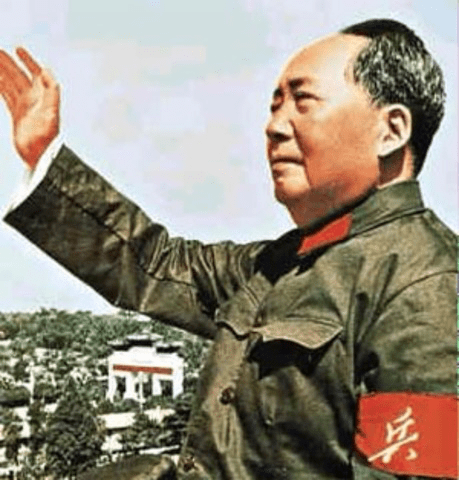
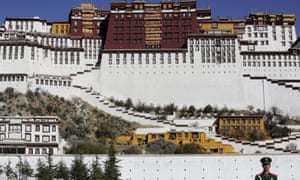
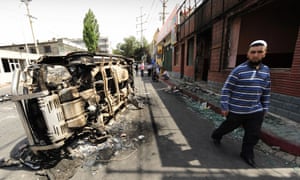

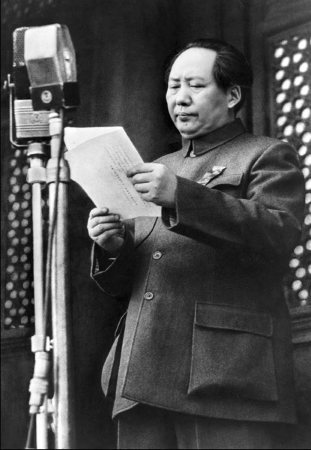

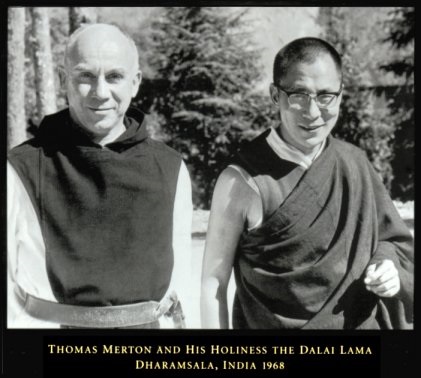


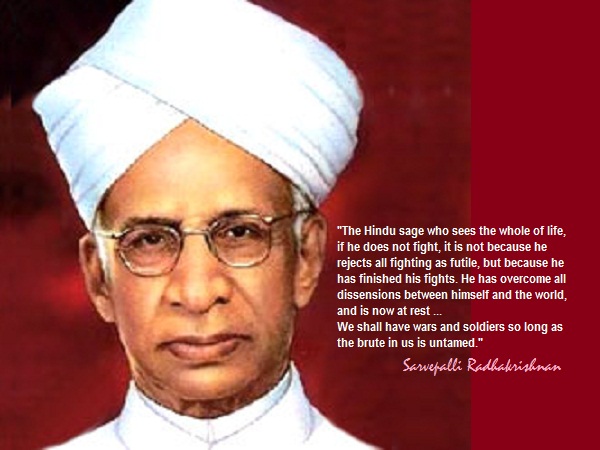


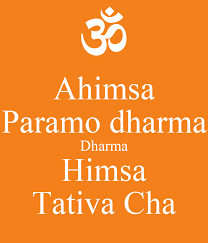

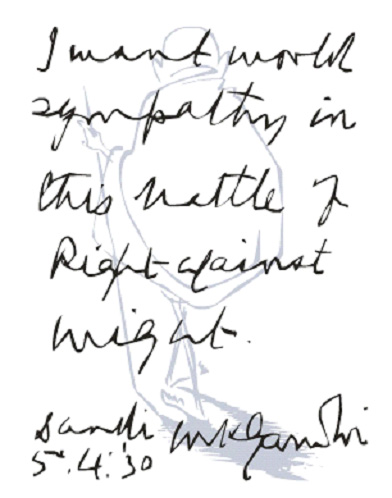
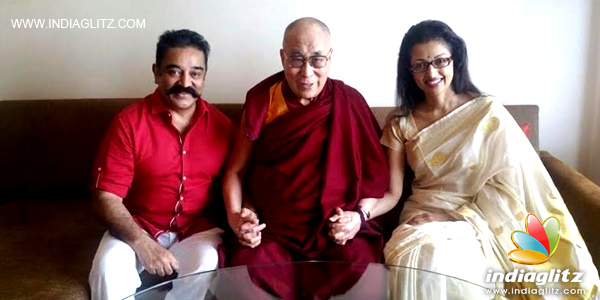


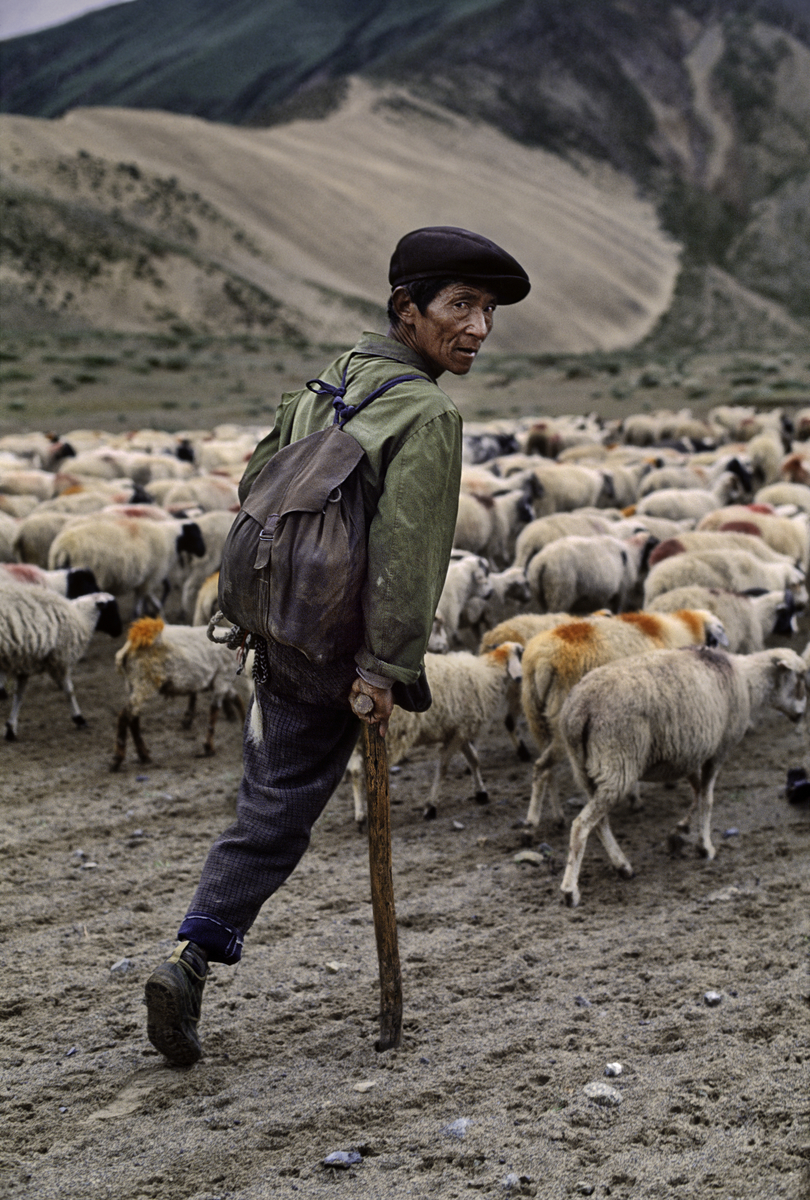




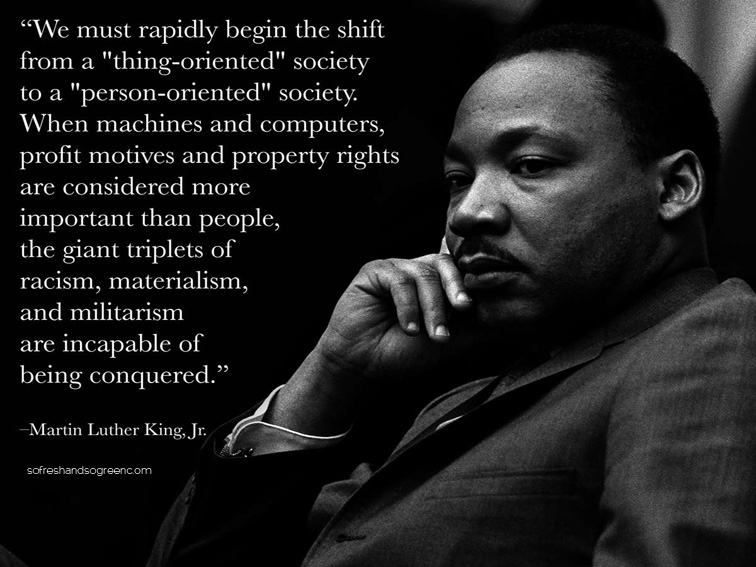
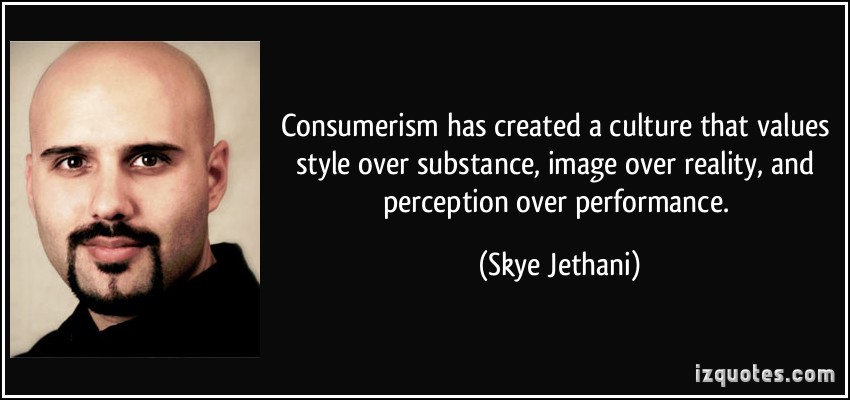






 Whole Dude - Whole Concept