“EKAM EVA ADVITIYAM” – This statement in Sanskrit language is from Chandogya Upanishad( 6:2:1 ) and it means: “I, one alone and there is no second.” The original intent of this statement is that of seeking the unity of the Objective Reality of Man known as ‘ATMA’ ( the Individual Soul ) and the Ultimate Reality known as ‘PARAMATMA’ or Supersoul. There is no Duality between the two and there is no disunity between Man and God. However, God is not an object which is under Man’s control and the views about God are subjective opinions. I am quoting this statement to find the Unity of Man in body, mind, and soul. Man’s greatest need is not only to know the world around him but also to know himself better. Man must understand what it is to be a substance and what it is to exist. We need to establish knowledge about Man on a firm basis and the information it provides must be tested for its accuracy and consistency with external reality. Dr. William James in his book, The Principles of Psychology, has observed: “True ideas are those we can assimilate, validate, corroborate, and verify.” The separation of man into body, mind, and soul is not supported by scientific study of man.
SPIRITUALISM – THE UNITY OF MAN IN BODY, MIND, AND SOUL – HUMAN LIFE AND HUMAN EXISTENCE BEGINS WITH CONCEPTION.
Man comes into existence from a single fertilized Egg Cell. This Man cannot be separated into two distinct entities like insentient material being and sentient spiritual being. The physical being and the conscious being are the same. The division of Man into a physical substance and a thinking substance or that of a physical body and a thinking mind is not valid as they have no independent existence of their own. The division of Man into physical body and an immortal, non-material or immaterial Soul is not also valid as the Soul is described as the vital, animating principle that is the chief characteristic of Life.
The Egg Cell is the source of Man’s Life. The Spiritual Nature of Man could be discovered and could be described from the biological properties, characteristics and nature of the corporeal substance found in the Egg Cell.
The Spiritual Nature of Man is not a mental function. The Spiritual Nature of Man could be discovered and could be described from the biological properties, characteristics and nature of Man’s corporeal substance found in the fertilized Egg Cell. This substance is Conscious. This Single Egg Cell grows, divides, develops, and builds the cells, the tissues, and the organ systems that constitute the Human Individual. The Spiritual Nature of the substance present in the Single, fertilized Egg Cell brings the functional unity of all the cells, tissues, and organ systems to establish the Physical Reality called Man.
Human Embryo Implantation at about six days after Conception. The Single, fertilized Egg Cell and the Human Embryo that develops from it is Conscious of its existence reflecting its Spiritual Nature.
About six days after Conception, the developing Human Embryo implants itself into maternal tissues by establish in an anatomical connection called Placenta. The implantation of Human Embryo does not involve any human thought and the Mother has no cortical awareness of the fact of implantation. The implantation demonstrates the Consciousness of the Human Embryo which is aware of the fact of its own existence. Spiritualism defines the internal, mutually beneficial relationship, partnership, association, and connection between the cells, tissues, and organ systems for the benefit of the Human Person who exists because of their living functions. The Subject that is born from the Single, fertilized Egg Cell is always a new, original, distinctive, unique, one of its own kind of Object that exists because of the innate Spiritual Nature of the material substance. Being born relates Man to the Subjective and Objective Realities of his biological existence. There is structural and functional unity between Man and his Body, Mind, and Soul. There is no Life, and there is no Human Existence if these entities are separated. Spiritualism is the potency that brings Man’s Essence and Man’s Existence to come together to provide Man the subjective and Objective Reality of his own biological existence in the physical, and material world. Man is not an embodied Soul and Man is a Living Soul.
Man comes into existence in the physical, material world as a new object. To know and understand the real or true Man, I seek the structural and functional Unity of Man in Body, Mind, and Soul.
MAN IS A SPIRITUAL BEING :
Man is a Spiritual Being – The Great Banyan Tree of Kolkata – Adhyatma Vidya – The Knowledge of the Spiritual Self.
The Banyan Tree offers the unusual appearance. It has roots that appear growing from its branches and the roots are located upwards and away from the ground; it has trunks and branches growing downwards apart from the normal branches that grow upwards and outwards. Because of its adventitious roots, Banyan Tree spreads to cover a wide area and lives for a long time. Knowing and understanding this Asvattha Tree is important to gain the Knowledge of Vedas, the Hindu Scriptures that reveal the Knowledge of the Spiritual Self or Adhyatma Vidya.
THE KNOWLEDGE OF THE BANYAN TREE :
The Hindu Scripture of The Bhagavad Gita, Chapter XV known as Purusottama Yoga speaks about the nature of the Supreme Person. It metaphorically compares the Supreme Being to the popularly known Fig Tree called Ficus benghalensis. The first verse reads as follows:Sri Bhagavan Uvacha : “Urdhva-mulam adhah-sakham Asvattham prahur avyayam, Chandamsi yasya parnani yas tam veda sa Veda vit.”The Supreme Lord Krishna said: There is a Banyan Tree which has its roots upwards and its branches down and metaphorically it is imperishable; and the Vedic hymns are its leaves. One who knows this Tree is the Knower of the Vedas( the person attains the Knowledge of the Ultimate Reality or the Supreme being). When we know the Banyan Tree and its apparent imperishable quality, we may understand the true nature of Man. Man is a spiritual being. The truth or falsity of this proposition depends on the fact of man’s having a substance that is of spiritual nature. Such a substance of spiritual kind is perceptible to the senses, is amenable to direct observation, and could be subjected to verification by experimental science. To establish the fact of man’s spiritual nature, it needs reasoning based upon scientific validity. The structure and the behavior of things contribute to their individual being and function. If man has a set of defining features based upon his structure( Human Anatomy ), function( Human Physiology ), and behavior( Human Behavioral Science ), the spiritual nature of man could be proved on theoretical and practical grounds and could be verified by scientific experiments. I am not seeking to discover a soul or spirit that could have existence independent of man’s physical being. However, it will be important to note that it is not possible to conceive of a soul or spirit if it is never associated with its human body. My purpose is that of describing the spiritual nature of human organism and of other living beings. To understand the true nature of human being, we need to ascertain the validity of Knowledge that pertains to the Spiritual Self. MAN IS A MORTAL BEING :Man’s greatest need is not only to know the world around him but also to know himself better. Man must understand what it is to be a substance and what it is to exist. Man is a physical being or thing with matter and form. The corporeal body of man is composite of two principles; matter, and form. What is called matter is potentiality, and what is called form is actuality. The corporeal substance called protoplasm becomes actuality and is recognized as a living person because of the uniqueness of its genome that operates its living functions and defines its size, shape, color, and external form or morphological appearance. However, life comes into existence only when matter or substance has the ability to acquire energy from its external environment. The human being comes to life when his corporeal substance uses its potential ability and power called ‘Nutrition’ to acquire energy and material from its environment. Life begins with fertilization, the union of sperm with egg cell, and this event called conception proceeds to develop a human being after an important event called implantation. The life journey after conception continues if there is a connection between the energy seeking embryo and its maternal energy provider. To exist means that the substance is maintaining a relationship, a partnership, a connection, or association with its source of energy. Man leads energy dependent existence deriving energy and material from nature which supports other living forms with a similar corporeal substance called protoplasm. The mortality of man must be understood as the dissolution of man’s physical form. The dissolution of living man into non-living molecules and physical elements would not alter that potentiality of protoplasm to acquire energy and material to create its own substance. Things in Nature change with Time; but what is called Nature remains unchanged even under the influence of Time. As per The Laws of Conservation of Mass and Energy as described in classical Physics, mass or energy remain constant. The potentiality of living substance to acquire energy and material to form its own kind of substance has remained unchanged or unaffected by major natural calamities and other cataclysmic events. Life forms perish and yet life continues as new life forms. During the billions of years of existence, planet Earth has experienced several minor, and major Extinction Events described in its geological history. The Science of Paleontology offers scientific evidence to support an argument based upon theoretical and practical grounds to propose that the substance called protoplasm could be eternal, immovable, immutable, and indestructible. At a fundamental level, it could be stated that man is a mortal or materialistic being who derives his physical form because of its association with an imperishable substance. During any stage of his existence, the form called man cannot be separated from the eternal nature of its substance.
Sequoia gigantea is a massive tree. A living thing has a form and has matter. We often recognize the form and give it a name. What about the “MATTER” that constitutes the substance of this Living Thing? We need to understand the ‘potentiality’ of the Matter to know the nature of the Form. The Form has no independent existence of its own. The Form lives if and only if it has Matter that is living.
WHAT IS SOUL OR SPIRIT ? :
Traditionally, man has been divided into two parts; body, and soul. In common usage, the term soul represents the immaterial aspect of a human being. Soul is further defined as that part of the individual which is considered to survive the death of the body. The term spirit is often used to describe a disembodied soul. On separation from the human body, the soul or spirit has a life of its own, a capacity for independent existence or self-subsistence which describes its immortality. THE CONCEPTIONS OF SOUL : There are a variety of conceptions about soul or spirit. Some of the traditional conceptions of soul are the following:1. Soul is the immaterial substance, form, or principle of self-motion, vitality, life force, or life in living things. The insentient body is completely distinct from the sentient soul.2. Soul describes the Doctrine of the Self, and is considered to be synonymous with the True-Self. In a human being, soul confers the Individuality and its nature of humanity.3. Soul is often described as a thinking substance and is equated with mind. The soul has knowledge of itself by reflection of its acts. The soul is the knower and it knows the physical, and mental acts of the human body where it resides.4. Soul is important to maintain, and to preserve life. Soul may not directly participate in the activities of the human body. However, the activities of the human body may have a polluting effect on soul. If the soul is tainted or contaminated by the sinful acts of the body, the soul may obtain purification by its release from the body. Some form of human effort, activity, attitude, and behavior is essential to keep the soul in its natural, pure, and perfect condition.5. The soul that has experienced the polluting effects by its association with a human body would be forced to experience perpetual reincarnation by a process called transmigration. The soul continues to reside as a prisoner in different bodies until such time it attains its original state or condition of purity and perfection.6. Soul is a transcendental or noumenal object that is real but not visible and could not be detected by human sensory perception. The human body that is visible is in fact unreal or is a product of sensory illusion. THE RELATIONSHIP BETWEEN SOUL AND HUMAN BODY : Most religions and cultures speak about soul and describe it as some incorporeal or immaterial substance/principle of human life that is distinct from the body. Despite the frequent acceptance of the existence of a soul, different religions and philosophers have developed a variety of theories as to the nature of the soul and its relationship to the human body. There are divergent views about the origin of the soul, when and how it gets implanted into the human body, and the mortality or when and if the soul dies. I would like to share the view that is attributed to Lord Krishna, the avatar or reincarnation of Hindu God Lord Vishnu. ADHYATMA VIDYA – THE BHAGAVAD GITA :The word ‘vidya’ is related to acquired knowledge derived from studies. The term ‘adhyatma’ pertains to the individual soul, atma, or atman which describes the Spiritual Self. The phrase ‘Adhyatma Vidya’ could be described the Knowledge of the Spiritual Self. The legendary Indian Sage Veda Vyasa also known as Krishna Dvaipayana was the author of the epic ‘The Mahabharata'( Great Epic of the Bharata Dynasty ). Veda Vyasa is recognized as the compiler of ancient Hindu texts known as Vedas. In the Book VI of Mahabharata, Lord Krishna had a conversation with Prince Arjuna while the warring parties of Pandavas, and Kauravas had assembled at the battlefield of Kurukshetra. Lord Krishna revealed His views about soul, human body and their relationship in “The Song of the Lord” known as ‘The Bhagavad Gita’. These poems of The Bhagavad Gita give a synopsis of the religious thought and experience of India through the ages. The Chapter X of The Bhagavad Gita is titled ‘Vibhuti-Vistara Yoga’ and it describes the divine or transcendental attributes of the Supreme Lord. In verse #39, the Lord claims, “I am the generating seed of all existences. There is no being, moving or unmoving( “Chara-acharam” ) that can exist without Me.” In verse #32, the Lord proclaims, “….of all the branches of Learning and Knowledge, I am the Knowledge of the Spiritual Self( “Adhyatma Vidya” ). In verse #22, the Lord describes the nature of His connection with the living beings that He has generated, “…. and in living beings, I am Consciousness( “Bhutanam asmi Chetana” ).” He had also clarified that Consciousness or Chetana as a different characteristic and has separated it from mind, intellect and sense perception. Mind is traditionally viewed as the major organ of sense perception, seat of thoughts, intellect, emotions, feelings, and self-ego. Chetana is associated with the characteristics of a living being. The Lord had also cited The Vedanta Sutra to make the distinction between the body, the soul, and the Supersoul. The Vedanta, the insights from Vedic Scriptures describe three manifestations of the Supreme Lord’s Energy. These are 1. Annamoya or dependence upon Food for existence, 2. Pranamoya or the manifestation of the living symptoms and life forms, and 3. Jnanamoya or the Knowledge of the distinction between the body the field of activity and the Knower who resides in the body. If a living being needs food for its existence, and performs its living functions in a state or condition called awareness or consciousness, it could be described as the manifestation of the Supreme Lord’s Energy. In Chapter VII titled ‘Paramahamsa Vijnana Yoga’ or Knowledge of the Ultimate Truth, in verse #9 Lord Krishna claims: “I am the life( “Jivanam” ) of all that lives.” He had demonstrated a connection between life and consciousness to describe the spiritual nature of Self. The Chapter XIII of The Bhagavad Gita titled ‘Kshetra – Kshetrajna Vibhaga Yoga’ deals with the dichotomy or distinction between the material body, immortal soul, and the Supersoul. It states the view that the material body is called the field of activity or Kshetra. One who knows this body, the field of activity is called the Knower of the Field or Kshetrajna. The Knower of the Field is the Owner of the body. The Supreme Lord is also the Knower of the field of activity in all bodies( verse #3 ). In this human body, there is another indwelling observer, a sanctioner, a preserver, an enjoyer, and indeed ultimate Controller called ‘Paramatama’ or Supersoul. The Supreme Lord or Paramesvaram is residing equally in all living entities( verses # 23, 27, and 28 ). Just like the Sun who illuminates the entire living world, the soul within the body illuminates the entire field of activity of the physical body by Chetana or Consciousness( verse #34 ). This view as stated suggests that consciousness is the proof or the symptom of the presence of the soul. A similar view is shared in Chapter II titled ‘Sankhya Yoga’. The imperishable or indestructible soul pervades or permeates(“tatam” ) the entire physical body( verse #7 ). What is spread all over the body? Consciousness could be described as spread over the entire body and it leads to the interpretation that the symptom of the soul’s presence is perceived as individual consciousness. The final Chapter XVIII of The Bhagavad Gita titled ‘Moksha-Opadesa Yoga’ comes to an interesting conclusion about the Single Reality that pervades all existence that is divided into innumerable forms. Verse #20 reads as follows:”Sarva bhutesu yenaikam bhavam avyayam iksate avibhaktam vibhaktesu taj jnanam viddhi Sattvikam.””Understand that Knowledge by which one undivided, imperishable( “Avyayam” )reality is seen within all diverse living entities is in the nature of goodness( Sattvikam” ). What is that undivided reality that is imperishable that connects all the diverse, living entities? THE BODY-SOUL DICHOTOMY : In the Indian tradition, the individual soul is known as Atma or Atman. The Supreme Soul or the Supersoul is known as Paramatma, Paramesvaram, or Brahman, the Ultimate Truth and the Reality.
However, the concepts about Atma or individual soul vary and Hindus belong to different schools of thought. While the concepts about individual soul are different, there is general agreement among various Indian thinkers and philosophers about the distinction between the material, insentient, and perishable human body and the immaterial, sentient, and imperishable or immortal soul. Soul is independent, and is not attached and it still requires the substance of the corporeal body. However, I am not able to draw that distinction and make that separation from the substance and its function. To describe function, I need the substance. Man lives and functions with consciousness because of the fundamental nature of the corporeal substance called protoplasm, and this substance is apparently imperishable, indestructible, and immortal. We could destroy the physical form of man and several other living forms, but man or nature and the influence of Time have not demonstrated an ability to destroy this living substance which has survived on planet Earth continuously over billions of years. Man cannot create life and man cannot destroy life. Man can only live or exist because of the spiritual nature of his corporeal substance with which he can not seek separation until the time of his death. The substance has a life of its own and continues to create new substance of its own kind and becomes visible as a living life form with a different identity or morphological appearance. Please also review my earlier post titled “Spirituality,Soul, Consciousness, and the God Connection” which is reproduced below this post.
THE STATUS OF MAN IN NATURE :
The First Book of Moses, The Old Testament Book of Genesis describes the story of Creation; in Chapter 2, verse 7, it narrates man’s creation: “And the LORD God formed man of the dust of the ground, and breathed into his nostrils the breath of life; and man became a living soul.”
The Book of Genesis, Chapter 1, verse 27:”So God created man in His own image; in the image of God He created him; male and female He created them.”
MAN IS A CREATED BEING :
Man is a created being. Spirituality explores the connection between man and his Creator. The Trimurti at Elephanta Island Cave Temples near Mumbai, India represents God as the Creator(Brahma), the Preserver(Vishnu) and the Destroyer(Shiva).
MAN IS A SPIRITUAL BEING :
The status of man in nature describes man as a created object; a new object, one of its own kind, distinctive, and unique. The principle of Creation involves the use of inspiration and imagination as opposed to the view proposed by the Theory of Evolution. The fundamental issue is about understanding man’s status in nature. Did man come into existence by gradual changes caused by random and unguided events called genetic mutations? Or, does man actually exist in nature because of his relationship with other objects present in his living environment? What defines man’s existence? What establishes the reality of man’s physical existence? Should we focus on the changing form? Alternately, should we give attention to an unchanging relationship that is a prerequisite for the existence of all life forms? If an object cannot come into its state of existence, how could that object get a shape or form? In the context of a discussion about man’s existence in nature, I state that man is a created object, and hence man exists as a Spiritual being. The term Spirituality describes the nature of this connection between man and His Creator. Soul is the immortal part of man as distinguished from his body; it is the vital principle which moves and animates all Life. Soul may represent the essence of a human being, it could be the quality which confers individuality, humanity, and the moral nature of man. I divide man into two categories; the first category is called the ‘SELF’ which represents man as a physical, mental, and social being; and the second category is called the ‘KNOWING-SELF’ which represents man as a moral, and spiritual being. These two categories function together and the functional unity of the human person is an attribute of a neurobiological function called Consciousness. Man’s physical being is represented by a changing external or morphological appearance and while the physical Identity is constantly changing, the unchanging Individuality is supported by man’s spirituality or the nature of his constant spiritual relationship.
THE ETERNAL REALITY OF SOUL’S IMMORTALITY :
Ajanta Caves near Aurangabad, Maharashtra State, India, Fresco-type wall painting – Man’s spiritual dimension describes man’s humanity, moral nature, individuality, and Consciousness.
Religious thinkers have further defined Soul as that part of the individual which partakes of divinity. People of all races, cultures and religions would like to investigate the nature of this God-Connection as they perceive the world and the universe in which they exist as a fact of Creation. I need to find evidence that would fundamentally deny the fact of Creation.
MAN IS A SOCIAL BEING :
French philosopher Auguste Comte(1798-1857) coined the term Sociology. He believed that the scientific study of social organization would make possible a reconstitution of the social order based on principles of moral progress.
Apart from being a created Physical being, man is recognized as a Social being as he displays social instincts and social behaviors in all of his activities. A rudimentary understanding of Sociology or Theories of Social Science would clarify this matter. Social instincts and Social Behaviors are seen in all animals including bacteria. At a cellular level, the social function is called ‘Association’. Man is an association of trillions of cells. Each human organ and organ system represents an association of cells that display functional subordination to perform selective tasks. Life is just impossible without social structure and organization.
MAN IS A MORAL BEING :
Man is a Spiritual being and is endowed with Moral nature. James Tissot in his painting captures the essence of man. The Book of Matthew, Chapter 27 verses 3-5 narrate the story of Apostle Judas Iscariot and his moral failing that caused the dissolution of his biological existence-“When Judas who had betrayed Him, saw that Jesus was condemned, he was seized with remorse and returned the thirty silver coins to the chief priests and the elders. “I have sinned,” he said,”for I have betrayed innocent blood.” So Judas threw the money into the temple and left. Then he went away and hanged himself.”
Man is an individual who exists in a social group. At the same time, man is a Moral being, as he displays moral behavior even when he is corrupt. Man displays the ability of Repentance for his thoughts, for his actions of commission and omission. Man has the ability to admit his sins, express remorse and may often punish himself for his sinful conduct. Man experiences grief for his actions that are sinful. Man actively searches for solutions for his sinful conduct. Man cannot sustain his biological existence if he had morally failed. A famous example would be that of Apostle Judas Iscariot, the betrayer of Jesus.
MATTER, ENERGY, AND KNOWLEDGE :
Greek philosopher Aristotle had observed that corporeal substances are composite of two principles, form and matter. What is called matter is potentiality, what is called form is actuality. The totality of things have been divided in various ways. The three fundamental distinctions are 1. the distinction between the natural and the supernatural, 2. the distinction between the material and the spiritual, and 3. the distinction between the lifeless and the living. When we make the distinction animate/inanimate, living/non-living, and inorganic/organic, a question arises about the nature of that distinction. The difference, is that one of kind or degree? The Mechanistic View claims the continuity of nature in terms of the universality of purely mechanical principles. I have defined Life as ‘Knowledge in Action’. Please view the blog post at
I define Life as organization of matter with implanted supernatural Knowledge. The establishment of supernatural Knowledge in matter describes the operation of ‘God Principle’, Spirit, or Soul. Life comes into existence when matter and energy come together with the establishment of ‘God Connection’.
LIFE AND CONSCIOUSNESS :
Amoeba proteus, unicellular, protozoan organism is conscious or aware of its own state of existence. It has the abilities of Motion, Nutrition, and Reproduction. All of its living functions are goal-oriented. It responds to its environment and survives adverse environmental conditions by a process called encystment.
The basic characteristic of a Living Cell or organism is the presence of consciousness. I recognize a cell as a Living Cell if it displays functions that characterize the presence of awareness or consciousness. The Living Cell or Living Object need not be aware or conscious of the Subject who may be investigating or observing the properties of that Object. The Living Object need to be aware of its own existence and its condition called Living. Atoms and molecules display their properties and interact according to the Laws of Physics and Chemistry. Living organic molecules show individualistic behaviors under experimental conditions that could be repeated and be verified. The Living Cell is very selective and it responds in a variable manner to physical and chemical stimuli. It can communicate or send signals to other Living Cells present in its environment. It responds according to its internal condition in relation to the environment in which it exists. The interactions of non-living physical matter are not goal-oriented. The interactions of Living matter are goal-oriented and they specifically achieve the purpose of sustaining, preserving, defending, and continuing the Living functions.
MAN IS A MORTAL, PHYSICAL BEING :
Man is a mortal being who must eventually die. When Lazarus died and was laid in a tomb for four days, Jesus performed a miracle and Lazarus came back to life from death. The Book of John, Chapter 11, narrates this event. In verses 41 and 42, Jesus said,”Father, I thank You that You have heard Me. And I know that You always hear Me, but I said this for the benefit of the people who are standing here, that they may believe that You sent Me.” The risen Lazarus had eventually died.
LIFE AND DEATH IS A CONTINUOUS PROCESS :
When does Life begins? When does Life ends? Life always comes into a state of existence from a previously existing Living Cell. Life and Death is a continuous process and is recognized by the presence of Consciousness and Individuality.
When does Life begins? When does Life ends? Every Living Cell is derived from a previously existing Living Cell. Life has not experienced the final event called DEATH. Life continues its act of Living through a function called Reproduction. A given species is considered to be totally extinct only if there is no surviving member to represent that particular species. Death is a programmed event and it gives meaning to the Identity of a Living Object. The dissolution of a single Living Object should not obscure the fact that Life is a continuous process. Life continues as Living Objects get new Identities. It is very reasonable to expect that Life would continue after the death of a given Living Object. People all over the world are a witness to that simple and direct observation. During the Life-Death continuum, the connection between the Creator and the created Living Object is manifested by the biological function called awareness or consciousness. The presence of Soul is evidenced by the presence of consciousness. As long as the Soul is functioning and is united with the physical being, the presence of consciousness could be detected and could be verified.
THE SOUL AND GOD CONNECTION :
All types of Living Cells with or without nucleus represent thermodynamically unstable systems. Without a continuous input of energy a Living Cell will degrade spontaneously into a nonliving collection of molecules. Biological existence is possible because of an association or connection, or partnership between energy seeker and energy provider.
There has been no clearly defined and universally accepted metaphysical conception of the term Soul. It is a term rarely used with precise definition in philosophy, religion, or common life. In this discussion we face the problem of using words to which no definitive meaning is attached. If I make an attempt to define the word ‘God’, you may even speculate that I may belong to a new religious order. We need to come to a consensus even if an entity called ‘God’ does not exist. We need to formulate a view, a hypothetical view about Soul and test that hypothesis by countering it with a skeptical hypothesis. The Science called Physics deals with the properties, changes, interactions, etc. of matter and energy in which energy is considered to be continuous. In the ultimate analysis, matter is a representation of its energy content. The Science called Biology deals with Life and Life processes. While Life is made up of physical matter, Life processes are not explained by simple mechanistic interactions. However, I am willing to use the principles, the methods, and the tools used by Physics. Molecular Biology explains biological events by studying the molecules within cells; the molecular basis of genetics – Nucleic Acids and its relationship to energy cycling and replication. If this universe is seen as matter and energy, I would define God as the Controller of Force/Power/Energy. All living things are essentially made up of the same kind of living matter and yet they appear to be different. Life could be attributed to ONE common principle which has the ability to be simultaneously different. Each living object comes into a state of existence as a new object, as an original object, one of its own kind, unique, and distinctive. This morphological variation is an attribute of the organic molecules that establish the phenotype or the physical identity of that living organism. Physics provides those powerful tools to see the molecules and to recognize their individualistic behavior. Life comes into existence using a creative principle, and creative mechanisms that need inspiration, and imagination apart from the use of simple mechanistic laws. If Life is governed by the Law of Individuality, I would define God as a Creative Force/Power/Energy.
Life is a condition that describes Synchronized Existence, the synchronization of activities, the connection between energy dependent life functions and its Source of Power.
A majority of these life forms that we know and have studied, have synchronized their state of existence with an event that produces alternating periods of light and darkness while that source of light is not being turned ‘on’ and ‘off’. Rather we are forced to experience the effects of an illusion. Sunrise and Sunset is the reality that governs a majority of Biological Rhythms that control the life processes. Illusion is the necessary condition for the biological existence of Life. If Earth’s rotational spin generates this illusion, God uses Force/Power/Energy to cause illusion. In the universe that exists today, to the extent we have verified; there are no two identical celestial objects that exhibit the same rotational spin. In this context, it may be said that the Force/Power/Energy called God has created Earth to provide a home to the life forms that He has created as Individuals. These life forms have the ability called reproduction and yet lack the ability of producing two identical new objects. Sexual or Asexual reproduction always results in the production of new Individuals which could be easily verified by using the Biometric Identification Technology. Even the clones, sharing identical genomes, in reality exist as individuals. This Individuality when investigated by the tools supplied by Physics, it is discovered that the organic molecules behave as Individuals and man is not able to modify that behavior. Under the same experimental conditions, the molecules behave as individuals. When we examine the nature of this biological existence, it indicates that life processes are supported by the provision of energy from an external source. The Living Cell is a thermodynamically unstable system. This means that without a continuous input of energy a Living Cell will degrade spontaneously into a nonliving collection of molecules. This lack of energy independence would direct us to define God as the Power/Force/Energy which delivers Compassion/Mercy/Grace which helps energy acquisition by energy dependent living organisms. Life forms on planet Earth exist depending upon an extraterrestrial source of energy or Cosmic Power/Force/Energy. Life exists because of its ability called ‘Association’. The act of associating, the state of being associated; the companionship, the fellowship, and the partnership is the defining feature of the State or Condition, or Act of Living. Association or partnership between energy seeker and energy provider could be described as God-Connection. Organisms that are single do not live as single cells but develop association with other single cells to form distinct Colonies. Organisms that are multicellular represent an organization of individual cells that are associated having common interests, purposes, sensations, etc., Since association has a purpose, in the context of biological existence, the association or connection, or partnership between the energy seeker, and the energy provider is a meaningful event and not a simple, mechanical, physical event governed by the Laws of Interactions between Matter and Energy. There are Four Fundamental Interactions and they do not regulate or define this Interaction between Living matter and the Cosmic Force/Power/Energy. Living matter uses and exploits energy in a creative manner to build organic molecules and to break down organic molecules. The life processes are very similar and yet the results are totally different. While using energy mostly following a similar metabolic pathway, each organism supports its identity and individuality.
WHO HAS ESTABLISHED THE CONNECTION BETWEEN AUTOTROPHS AND HETEROTROPHS? The creative mechanism to trap Solar Energy describes implanted Knowledge to formulate the connection between autotrophs and heterotrophs.
In mitochondria, many substances(food) are oxidized and ATP, the energy-storing chemical of the Cell is produced. The most important equations for living things are mutually inverse. Respiration of humans, and Cellular Respiration represents the reverse of Photosynthesis.
SOUL AND DEATH :
The idea of ‘Soul’ always comes in the context of Death. If man is immortal, we will not be spending our time and energy discussing to verify the existence of an immortal principle. The human subject has a limited life span and it arouses a sense of curiosity about the existence of something that could defy Death. I am trying to define the word ‘Soul’ in a manner to promote an understanding that ‘Soul’ is immortal if we look at man as an Association of individual living cells. We need to establish the Identity of that Individual for whose purpose or interest this Association of Individual living cells exists. If we think of Death as a final event, it is not supported by factual evidence. In this Association, death is a daily event. We simply fail to acknowledge this daily event as there is an immortal principle that is escaping this death experience. The Individual thinks that he is alive and sustains his Individuality without getting overwhelmed by the dying process that is continuous. While the human organism is changing its external appearance and identity all the time, the Individuality survives if ‘Soul’ the vital, or operating immortal principle is functioning. The issue or question about ‘transmigration’ of Soul would not arise if every living organism exists strictly as an Individual with an Individuality. As stated before,man has no choice and he must always exist as an Individual even when we use Reproductive Genetic Engineering Technology to produce identical clones with the same genome. The dissolution of matter may not change the Law of Conservation of Energy. If Soul is defined as the God Connection that gives the ability of energy acquisition, the Soul when removed from a physical object to which it has given Individuality, would operate as per the commands of the Controller of Force/Power/Energy. It provides the possibility of carrying the impressions of a previous state of existence into a new state of existence with a new identity and Individuality. During the life span of a given Individual, an association of cells in which death is a daily event, Soul is a continuous principle as its purpose and interest is to maintain Individuality of that Individual.
SOUL AND THE LIVING CELL :
I define man as a physical, mental, social, moral, and spiritual being as I define the term ‘health’ as the physical, mental, social, moral, and spiritual well-being of the man in his environment and community and not merely as absence of disease. This definition of ‘health’ would help me to provide ‘comprehensive health care’ in my role as a Primary Care physician. Specialists and Super specialists provide health care in specific areas involving an organ or an organ system.
Jean Paul Sartre had stated that Nothingness(Non-thing or Neant) is a condition of not having Being and yet it is supported by Being. Nothingness comes into the world by the Being-for-itself. The Conscious Knowing-Self or the Essence of man is preceded by the Subjective Reality of physical Existence.
I attach my ideas to some ideas expressed by others. Sartre is a well-known person. He had won the Nobel Prize for literature but declined to accept it. I may not totally agree with him and his views about consciousness. He had stated his view in a manner that people can easily understand. He makes a distinction between objective things and human consciousness. He claims that consciousness is a ‘non-thing'(‘neant’ or nothingness ) and its reality consists in standing back from things and taking a point of view on them. Because consciousness is a non-thing, it does not have any of the causal involvements that things have with other things. If you stand before a mirror, the reflection exists only if it is supported by the presence of a physical being or thing. If the physical thing is taken away, the reflected image is gone but the reflective surface retains its ability to reflect the images of things.
THE BIOLOGICAL MEMBRANE AND CONSCIOUSNESS :
The Biological Membrane is not a simple physical barrier separating the Living Cell from its environment. The Protoplasm or Cytoplasm, the Living Matter uses its Biological Membrane with a sense of awareness or consciousness which recognizes the fact of its existence and the fact of something present in its environment.
In a Living Cell, consciousness reflects its external environment and its internal condition or internal environment. The Living Cell knows, it is aware of its state, fact, and act of its Living. The Living Cell makes contact with its environment by using a cell membrane, a biological membrane, or a bio-membrane. If you carefully look at some of the functions of this membrane, you would discern that the Living Cell has consciousness or awareness of these functions. The Biological Membrane behaves in a conscious manner and it is not a simple, physical barrier between the Protoplasm, the Living Substance and its environment. If the term ‘soul’ describes a vital principle, or a source of Knowledge, it provides the information with which these functions could be performed. Some molecules and ions can freely move across this Bio-membrane and some are actively pumped in or out of the Cell that involves expenditure of energy. The Living Cell has the ability to recognize the condition of its nucleus, if the DNA is damaged, the Cell can initiate a process and cause its own dissolution.
Red Blood Cells display functional subordination to serve the purpose of the Whole Organism. Functional differentiation, and Functional Unity are important to support the existence of the Subject or Individual who is in reality an association of trillions of cells.
In multicellular organism, the consciousness works both at the level of each individual cell and to establish the functioning of the organism as an individual unit. Without functional unity, the organism cannot maintain its biological existence. Cell differentiation is the process by which the individual cells use adaptation to perform specific tasks. Red Blood Cells perform specific tasks.
THE NEURO-BIOLOGICAL ASPECTS OF CONSCIOUSNESS :
Reticular Formation of Brain Stem has connections with almost all other parts of the Central Nervous System and it helps to coordinate and integrate actions of different parts of the CNS. It is important for Behavioral Arousal, and the Capacity for Consciousness.
In the human Brain Stem, several neurons, and nuclei which are in an area called Reticular Formation are functionally adapted to compose the contents of human consciousness. The Reticular Formation gives the Capacity for Consciousness. The contents of this consciousness are read in the cortical areas of the cerebral hemispheres and described as Cortical awareness. Most philosophers, most of the psychologists, and several of the religious thinkers pay attention to this Cortical awareness and describe that as human consciousness. We tend to ignore the fact that there would be no Cortical awareness unless there is a Capacity for Consciousness. Most recently, the surgeons had removed the complete left cerebral hemisphere from a child to stop convulsive seizures. The child is alive, fully conscious, and hopefully would continue to live in future with some neurological deficits. Just like the human heart which has four different muscular chambers and each has a function of its own; we need to understand consciousness by knowing its components. We need to use separate terms to distinguish these different components. There would be confusion if a term is used without attaching a specific meaning. Cortical awareness is important and is very interesting and yet man can exist and survive with minimal cortical awareness. We have seen children with severe degrees of mental retardation, and they can keep their biological existence if they retain the ability to Compose Consciousness. I want to designate the upper Brain Stem as the Seat of Consciousness and the word consciousness itself must describe the functions of the Brain Stem which are most important for man’s biological existence. A man is clinically dead in the absence of these Brain Stem functions involved in the Capacity of Consciousness. In Clinical Medicine, the term conscious is often used to measure the degree of Arousal or Cortical awareness and hence this subject matter would remain confusing for a long time. If a subject is unconscious, I would not issue a ‘death certificate’. In Clinical Medicine, the term used is ‘Brain Death’ and when Brain Death is diagnosed, the human person for all practical purposes is dead. I would suggest that we must use the term ‘Unconscious’ specifically to indicate the Brain Death which is diagnosed by testing the Brain Stem Reflexes. If the human person is viewed as a single physical thing or object, the integration of functions is achieved at the Brain Stem( Reticular Formation), and he maintains his individuality throughout his physical existence only when this part of the brain is functioning. If you like the term individual soul or Jeeva Atma, its existence is a reflection of this function. To see a reflection, we need two things; the physical object and a reflective surface. The quality of reflecting objects may depend upon presence of Knowledge. It is not known if this particular kind of knowledge exists as organic molecules; however, it is very well understood that most of the knowledge to perform a variety of biological functions is contained in organic molecules and the most well-known group of these organic molecules are known as DNA. There are Viruses which can function with RNA. Hence, there is still a possibility of finding organic molecules that could be associated with the functional ability called consciousness, awareness, cognition, recognition, responsiveness, perception, memory, intelligence, and association. The most important aspect of ‘association’ is ‘God Connection’ and without this function of ‘association’ man cannot keep his biological existence.
Consciousness is awareness of existence, the facts that relate to the state or condition of existence. Behavioral Arousal and Cortical awareness of thoughts, feelings, and sensations is an important component of total Biological Existence.
IDENTITY AND INDIVIDUALITY :
The Eternal Reality of Soul’s Immortality is described in The Bhagavad Gita, Chapter II, verse 12. Lord Krishna spoke to the Pandava Prince Arjuna :”Na tv evaham jatu nasam na tvam neme JanadhipaH;Na chaiva na bhavisyamaH, sarve vayam ataH param.” For each of us our Individuality existed in the past and our Individuality will continue in the future without interruption. Certainly, never at any time did I not exist, nor you, nor all these Kings and certainly never shall we cease to exist in the future.
The issue of spirituality, the nature of Soul and consciousness must be explored in the context of arriving at an understanding of man’s Identity and Individuality. If man is viewed as an association of trillions of cells, we need to know the Identity of that Subject who lives because of the functions of the trillions of cells. The purpose of consciousness at cellular level is to foster functional unity of the multicellular organism and to establish it as an Individual. In a multicellular organism, cells have short lives as individuals. The Subject or the whole organism has a life span of its own and it has effects on individual cells. Multicellularity is accompanied by adaptive subordination of all cells to the requirements of the organism as a whole. To achieve proper numerical balance between functionally related cell groups, the death of many cells is necessary for other cells to reach maturity. This programmed cell death plays an important role in embryological development. Such programmed cell death events are essential if the organism as a whole is to develop its normal final form. Waves of genetically driven cell deaths are critical to the proper modeling of organs and organ systems. We need to know and understand that death of cells is a must to establish the Identity and to sustain the Individuality of the human being. The dying process helps man to understand his Individuality. The Individuality is preserved while death is a daily event at the cellular level. The phenotype or the morphological appearance of the human Subject undergoes constant change during the Life journey and yet the Individuality remains unchanged. We recognize the death of this human Subject when his Soul departs from his body. Soul may be stated as an entity which is regarded as being immortal or spiritual part of the person. The Spirit of a dead person generally refers to a principle separate from the body and leading an existence of its own. If Soul is viewed as a Non-thing or Nothingness, it comes into the world of existence by entering the physical being at its conception which becomes conscious or aware of its existence. This consciousness has also existed in a previously existing Living Egg Cell which is the Mother of Life, Energy, and Knowledge. Consciousness by its very nature is immortal, it is eternal, and it has no birth or death. We recognize the arrival and departure of the new product during the Life-Death continuum where the Individuality is unaffected by the changes that are caused by the powerful influence of Time.
Rudra N. Rebbapragada/ R. Rudra Narasimham, B.Sc., M.B.B.S.,
The Vitruvian Man c. 1492. The painting by Leonardo da Vinci displays the spirit of scientific inquiry. We must investigate the biological basis of Human Existence to know about Human Nature. The Nature is a reflection of the potency that keeps the human Object existing
What is man? The motivation for asking this question comes from a statement expressed in the Sanskrit language, “Sarvesham Swastir Bhavatu,” which seeks the well-being of all humans, of all races, of all religions, of all cultures, and of all nations. Our efforts to support the well-being of man would be affected by our understanding the ‘real’ or ‘true’ nature of man.
All human traditions, including religious, cultural, literary, philosophical, and scientific traditions make assumptions about human nature. The basic assumption about human nature is that of finding it displayed in thoughts, feelings, moods, and the actions and the behaviors that proceed from such mental states of the human individual. Human nature could be discovered by understanding the biological basis for human existence. Human nature is a reflection of that potency that keeps the human object existing. To describe human nature from mental life or mental states of an individual causes Subject-Object Dualism.
I must know human nature by knowing the characteristics of the substance that exists. The substance when it performs its functions, the characteristics of its behavior could be observed in biotic interactions, the interactions of the cells, the tissues, the organs and the organ systems that constitute the human organism. I discover human nature of a subject who objectively exists because of the functions of the cells, the tissues, organs and organ systems that provide the basis for that existence.
I coined the phrase Whole Existence to examine the complexity of Time and Life interactions. Life is always derived from previously existing Life and Life by its very nature has the ability to reproduce and perpetuate its existence displaying its inherent capacity for a future existence or future Life.
The Mortal Being called Man has to be studied giving attention to the Cyclical Flow of Time which can make it possible for Man to have a Past Life, a Present Life, and a Future Life. Whole Existence includes the former state of existence or Past Birth, and a future state of existence or Rebirth apart from the Present Birth.
Existentialism – The Philosophy of Human Existence:
Jean Paul Sartre ( 1905 – 1980 ), French novelist, playwright, and exponent of Existentialism.
The philosophical focus of Existentialism is concerned with the uniqueness of the individual human being, the meaning or purpose of human life as a subjective experience, and with the freedom of human individual. Sartre believes in the ability of every person to choose for himself his attitudes, purposes, values, and a way of life. Sartre’s thesis is that humans are essentially free, free to choose (though not free not to choose)and free to negate the given features of the world. In his novel, “Being and Nothingness” (1943), Sartre expresses an opinion that the only ‘authentic’ and genuine way of life is that freely chosen by each individual for himself. Sartre’s driving belief in Radical Freedom involves the ability to choose not only a course of action but also what one would become. According to Sartre, man is truly free, the world, whether material or social can place no constraints on him, not even to the extent of determining what would or would not be good reasons for following a given course of action. Sartre thinks that there are no transcendent or objective values set for human beings and that there is no ultimate meaning or purpose inherent in human life. Sartre insists that the only foundation for values is human freedom and that there can be no external or objective justification for the values anyone chooses to adopt.
Human Consciousness and Human Existence:
Sartre divides the being, the existing realities into two categories;1. one category is called being – in – itself (L’etre – en – soi) which comprises inanimate things such as rocks, and 2. the second category is being – for – itself (L’etre – pour – soi) which comprises beings that have feelings such as human beings. Sartre effectively excludes a vast majority of living organisms from the category that he calls being – for – itself. Sartre understands consciousness as an ability to know or be aware of feelings. His view is only partly correct. The true function of consciousness is awareness of the state, the condition, and the fact of living. Hence, this Amoeba proteus is a conscious entity while it is living in its given environment.
Sartre makes a radical distinction between consciousness (L’etre – pour – soi, being – for – itself) and non-conscious objects (L’etre – en – soi, being – in – itself). Though it is correct that human beings have emotional feelings, thoughts, and moods, the nature of consciousness is the same in all living entities. The presence or absence of feelings is of no consideration to make the fundamental distinction between inanimate and animate beings. His focus is on the opposition between objective things and human consciousness. This basic dualism is shown by the fact that consciousness necessarily has an object; it is always consciousness of something which is not itself. Consciousness makes the distinction between itself and its object. Sartre makes a conceptual connection between consciousness and nothingness. Human consciousness is a non-thing as its reality consists in standing back from things and taking a point of view on them. Because consciousness is a non-thing (Sartre’s “neant” literally means “nothingness”), it does not have any of the causal involvements that things have with other things. This means that consciousness and thus humans themselves are essentially free. In Sartre’s view, to pretend that we are not free is that of self-deception or bad faith (mauvaise foi). According to Sartre, the freedom of human consciousness is experienced by humans as a burden and it causes anguish. Sartre’s most basic point is that to be conscious is to be ‘free’. Sartre’s concept of human freedom is a simple mental entity and it involves the freedom of imagination. However, man has a very limited freedom to convert his imagination into actuality. Man lacks total freedom and has no true freedom as he does not directly rule or govern even a single cell in his body which comprises of trillions of individual, living cells which have functional autonomy and are independent entities while being part of a group.
Human Consciousness and Human Freedom:
Human Consciousness and Human Freedom – Sartre contends that we can never be just objects to be observed and accurately described. However, Biology describes man as a multicellular organism, man can view a cell from his own body and then the Subject viewing the Object and the Object that is viewed are the same and the Subject can accurately describe the Object. I observe cell structure and functions to understand human consciousness and human freedom.
I disagree with the view shared by Sartre and various others about the nature of human consciousness. The problem involves the description of consciousness as a mental function. Consciousness is a neurobiological function, and more importantly it is the basic living function. The living cell is aware or conscious of the fact of its own existence; it is conscious of itself and its internal condition, and it is conscious of its external environment and objects found in its external environment. Hence, consciousness must be described as a biological characteristic of living cells and living organisms.
Consciousness describes the nature of the substance that is living, the matter that lives and is known as living matter. The living matter is conscious of its internal condition, a condition that demands the supply of energy from an external source to keep its existence. The biological properties of motion, and nutrition come into play because of this biological characteristic called consciousness. Hence it is a vital, or animating principle of all living cells and living organisms. The living cell because of its consciousness knows its nature of energy dependent existence and uses its power of motion and nutrition to attract substances found in its external environment to perform all other living functions to support its growth and maintenance. The fact of energy dependent existence and the consciousness of that conditioned existence displays the lack of human freedom in matters that pertain to human existence.
Whole Dude – Whole Existence: The integration of Structure and Function describes the Spiritual Basis for Health and Human Existence. By knowing the structure and function of the Red Blood Cell or Erythrocyte, we can establish the facts of Blood Circulation, the reason for the structure of the Heart and Lungs, their motions and their relation to each other and their relation to the Human Being who exists as an Individual with Individuality.
A complex human living system exists because of harmonious interactions, partnership, relationship, and association between the cells, the tissues, the organs and the organ systems that constitute the human individual. These biotic interactions display behavioral characteristics such as mutual assistance, mutual cooperation, mutual tolerance, mutual subservience, mutual functional subordination to provide benefits to each other to support the survival and reproductive success of each other. There is sympathy, compassion, and understanding for the needs of each other among the participants of a biotic or biological community or association of living cells that comprise the human person. I observe the human organism and I can accurately describe that Spiritualism is the chief attribute of human existence and human nature. Man has no freedom and man has no choice other than that of existing as a Spiritual Being.
It is ironic that man has no cortical or mental awareness of the spiritual nature of his own body and the substance that lives because of its nature. By seeking awareness of the underlying spiritual nature, man will be able to live in harmony and peace within himself and with others in his environment.
I agree with the view of Sartre and suggest that man’s existence precedes his essence. Sartre has failed to contemplate upon the biological basis of human existence and hence could not describe the reality of human essence and human nature. The Subjective Reality of physical existence precedes and defines the nature of human being. Who you are (your Essence) is defined by what you do (your Existence). To know man’s essence, to describe human nature, we need a man who is existing. If there is no living, physical being called man, it would serve us no purpose to know its nature or essence. In Spiritualism, man’s essence and existence come together to establish the purpose of man in Life.
The Art of Receiving and the Art of Giving:
Ecology is the Science that deals with the relations between living organisms and their environment. Humans as individuals and as social or national groups have to make adjustments to their geographical, social, and biotic environments to live in peace and harmony. The Art of Receiving and The Art of Giving is inescapable and is inevitable consequence of human living and human life.
Sir Winston Churchill said, “You make a living by what you get. You make a life by what you give.” To add clarity to this quote, I say that human existence depends upon receiving energy from an external source. Human nature involves sharing that energy with others. The human person comprises of about 100 trillion individual, living cells and at the same time there are about 10 times 100 trillion microorganisms that inhabit the human gastrointestinal tract. There is a mutually beneficial relationship between man the host and the microbes that inhabit the gastrointestinal tract. These microbes receive a fair share of energy and material that man consumes as food and drink. This relationship persists during the entire course of man’s life. If receiving is inescapable, giving is inevitable consequence of human living and human life. Spiritualism is the potency that gives the man the ability to Receive and to Give to others.
Whole Dude – Whole Form: Greek Philosophers Plato and Aristotle – To understand Human Nature, I explore the Human Form, its actions and behavior.
What is man? The motivation to ask this question comes from a statement expressed in the Sanskrit language, ‘Sarvesham Swastir Bhavatu’, which seeks the well-being of all humans, of all races, of all cultures, of all religions, and of all nations. Our efforts to support the well-being of man would be affected by our understanding the ‘real’ or ‘true’ nature of man. Aristotle describes corporeal substances are composite of two principles, form and matter. It is important to seek proper understanding of human form and to know the truth about human nature by describing the form. Being born relates man to the Subjective Reality of his physical existence and human nature is related to the fact of man’s existence in the physical world and universe. If the Objective Reality of man is non-material, we still need to know as to what exists in the world, and as to how it exists.
Plato’s Theory of Forms – The Dualism of Body and Soul:
Whole Dude – Whole Form: What a great Scene in the history of Man? If Plato and Aristotle come together, Reason and Faith also come together. The Scene at the Athenian Academy of Plato depicts the confluence of Religion, Philosophy, and Science.
Greek philosopher Plato (427 B.C. to 347 B.C.) describes human nature by his Theory of Forms. He describes four aspects of human being; 1. The Logical Form, 2. The Epistemological Form, 3. The Moral Form, and 4. The Metaphysical Form.
The Logical Form: It describes the physical being, the physical form and its identity. Each human being has characteristic physical features using which he can be identified as a member of the genus Homo and he has very specific features that establishes his identity that is shared by all the members of a species known as Homo sapiens sapiens. Each member of this species could be further identified as an individual using the present Identification technology. This specific human individual will not exist with the same identifying features during his entire duration of his physical existence. The Logical Form of human is impermanent and is subject to change and eventual death. However, the existence of this physical form is important to support the existence of man and to know his nature. Existence precedes human nature or Essence. The Essence (Who You Are) is defined and is preceded by the Reality of Existence. The human being belongs to a social group, and always exists as an Individual with Individuality while his physical form changes and passes through various stages such as infancy, boyhood, teenage, adult and old age. The Logical Form is subject to change, decay, and death. Hence, the reality of this Form is often doubted. It must be noted that Plato has not known man as a multicellular organism and his description of the Logical Form is not based upon study of Human Anatomy and Human Physiology.
The Epistemological Form: The term epistemology deals with the Theory of Knowledge. It describes the possible kinds of knowledge and the degrees of certainty for each kind of knowledge. Plato describes the knowledge that human being can acquire through education, a process of learning from sensory experiences, and teaching imparted by others. Plato expects to obtain full knowledge of human forms through proper education. Such knowledge is important to know the Metaphysical Form of man. Self-Knowledge leads to the understanding of man’s true or real nature. The perception of impermanent, material, human body is described by Plato as only opinion or belief and he considers that such perception is not true knowledge of human form.
Plato has not given attention to knowledge that is innate or that is not acquired by the learning process. To perform the living functions in support of his existence, man uses biological information that is inherited and not knowledge that has to be acquired through learning.
The Moral Form: It describes qualities such as Courage and Justice, the observable aspects of human nature that could be described from human action and human behavior.
The Metaphysical Form: Plato claims that the Metaphysical Form is not perceivable by any of the senses. The Metaphysical Form is the real form of the human being as compared to the Logical Form which is considered to be unreal. The Metaphysical Form is not present in space or time, as it is beyond the world of changeable and destructible things. It belongs to the realm of unchanging, eternal forms. This form being true can be fully known through knowledge.
Plato’s Theory of Body-Soul Dualism:
Plato divides human being into two categories; 1. Body – a material entity, and 2. Mind or Soul – a non-material entity which can exist apart from the Body. Plato maintains that the Mind or Soul is indestructible, it existed eternally before birth and will exist eternally after death. He further describes the three parts of Soul as 1. Appetite – the seat of desires and passion such as hunger, thirst, and sexual desire, 2. Reason – the seat of discernment that chooses right from wrong and makes distinctions between good and evil, and 3. Spirit – the seat of self-assertion, self-interest, anger, indignation, and self-pride. Plato considers that the well-being of man depends upon harmonious interactions of the three aspects of the Soul. Plato thinks that such harmonious interactions would only be possible when Reason controls both Spirit and Appetite. To strike this balance and to maintain harmony, man has to obtain knowledge of the eternal, unchanging form. Plato thinks that Justice is revealed as a principle of each thing performing the function most appropriate to its nature, a principle of the proper adjudication of activity and being. The principle of Justice is revealed or discovered in the individual human Soul when each part of the Soul performs its proper and appropriate function. Plato believed that the Human Soul rules the Human Body. The Rule of Reason is required to combine the virtue of temperance with self-mastery and harmony results when all elements agree as to which should do what.
The Seven Dimensions of Human Existence:
Whole Dude – Whole Form: The Seven Dimensions of the Singularity recognized as Human Form
I describe the Seven Dimensions of the Singularity recognized as Human Form and each Form can be identified by its own behavior;1. The Physical Form as described by Human Anatomy and Human Physiology, 2. The Mental Form as described by sciences such as Psychology and Psychiatry, the Form that has intellectual and emotional aspects, 3. The Social Form as described by Social Sciences, the social aspects of man, his activities, and the structure and organization of all human institutions, apart from the social dimensions of man viewed as a multicellular organism hosting trillions of microbes, 4. The Moral Form as described by man’s power of discernment or conscience to make moral and ethical choices, 5, The Spiritual Form, the aspect that formulates harmonious interactions between the cells, the tissues, and the organs of the human body whose individual functions support the well-being of man, 6. The Creative Form, the existence of man as an Individual with Individuality without any choice of his own, and 7. The Rational Form, man’s use of the faculty of reasoning for his own existence.
Man’s existence would be at risk if any of these seven dimensions is adversely impacted. Unless we seek clear, visual images of Human Form in all its aspects, we will fail to understand man and his purpose in life.
Whole Dude – Whole Form: SPIRITUALITY SCIENCE – THE KNOWER – THE KNOWING-SELF: MAN, THE ENTIRE HUMAN ORGANISM IS DERIVED FROM A SINGLE FERTILIZED EGG CELL. HOW IS THE IDENTITY AND INDIVIDUALITY IS ESTABLISHED AND IS KNOWN IN THIS COMPLEX MULTICELLULAR ORGANISM?
Whole Dude – Whole Key: The Key to Human Nature. The Vitruvian Man c. 1492. The painting by Leonardo da Vinci displays the Spirit of Scientific Inquiry about Human Nature.
What is Man? The motivation for asking this question comes from a statement expressed in the Sanskrit language, “Sarvesham Swastir Bhavatu” which seeks the well-being of all humans of all races, of all cultures, of all religions, and of all nations. Our efforts to support the well-being of man would be affected by our understanding of the ‘real’, or ‘true’ nature of man.
Whole Dude – Whole Key: The Key to Human Nature. The integration of Structure and Function describes the Spiritual Basis for Health and Human Existence. By knowing the structure and function of the Red Blood Cell or Erythrocyte, we can establish the facts of Blood Circulation, the reason for the structure of the Heart and Lungs, their motions and their relation to each other and their relation to the Human Being who exists as an Individual with Individuality.
All human traditions including several philosophical and scientific traditions make assumptions about human nature. The basic assumption about human nature is that of finding it displayed in feelings, thoughts, moods, action, and behavior.
I study human nature from the functional characteristics that are observable in biotic interactions of cells, tissues, and organs that constitute the human organism. If man is viewed as a multicellular organism, I need to discover the human nature of this subject who lives because of the functions of the cells, tissues, and organs that provide the structural basis of the human organism.
The Key to Human Nature – Evolution vs Creation:
Whole Dude – Whole Key: The Key to Human Nature. Charles Darwin’s great contributions to Biology: “The Origin of Species by means of Natural Selection: Or the Preservation of Favoured Races in the Struggle of Life” (1859), The Descent of Man (1871), The Expression of the Emotions in Man and Animals (1872).
Man’s evolution from ape-like ancestors is thought to be the key to our true human nature. Ethology or the scientific study of animal behavior is based on the Theory of Evolution. In order to explain human condition, ethological theories of human nature appeal to the evolutionary past of man.
Whole Dude – Whole Key: The Key to Human Nature. Konrad Zacharias Lorenz (November 1903 to February 1989), Austrian Zoologist, founder of modern Ethology which involves scientific study of animal behavior by means of comparative zoological methods. He won the Nobel Prize for Physiology along with two other animal behaviorist.
Lorenz sees man as an animal who has evolved from other animals. He thinks that human behavior is subject to the same causal laws of nature as all animal behavior. Many patterns of animal behavior show “hereditary coordination” or “instinctive movements” that are innate rather than learned. The ‘instinctual’ behavior is fixed and may not be eliminated or altered by the environment. Instinct is inherited and it is essentially unlearned behavior. Some of the most important aspects of animal behavior are innate. Lorenz studied the nature of instinctive behavioral acts. The instinctual behavior is caused by a ‘drive’ which causes the behavior to appear spontaneously. The “four big-drives” are feeding, reproduction, flight, and aggression. Very often, behavior is activated by two or more basic drives. To account for an instinctive behavior pattern in a species, reference is made to its survival value it has for the genes for that behavior. To explain the existence of any particular organ or behavior pattern, Lorenz looks for its survival value for the species. In his book, “On Aggression” (1963), he explains the natural history of man’s aggressive behavior. He considers that man has an innate drive to aggressive behavior towards his own species like many other animals. Fighting and warlike behavior in man have an inborn basis. He seeks an evolutionary explanation for human innate aggressiveness or ‘Intra-Specific’ aggression which is concerned with fighting and threats between members of the same species. The most destructive aspect of human aggression is its communal nature and the fighting is not between individuals but between groups. Humans fight as groups and human beings are the only animals to indulge in mass slaughter of their own species. He explains that this innate aggressive behavior has evolved from the communal defense response of our pre-human ancestors. However, Lorenz made no scientific study of behavior displayed by apes. Among the members of Homo genus, man is the only surviving representative of the Homo sapiens species and hence it will not be easy to validate his conclusions about evolutionary origin of innate human aggressive behavior.
If aggression is viewed as a hereditary behavior which is based upon its survival value for the genes for that behavior, it must be noted that all human ancestors had perished and have gone extinct and the behavior of aggression could not be of value in defending their survival as a species.
Compassion within the Individual and between Individuals:
Compassion or sympathy (sym=together + pati=suffer) describes the emotional feelings of sorrow for the sufferings or troubles of another person or others accompanied by an urge to help. Compassion describes an understanding arising from the sameness of emotional feeling. When man recognizes pain or sorrow in the lives of others, it spontaneously arouses the emotional feelings of compassion. This understanding and the emotional response to the pain and suffering in the lives of others appears to be instinctive. Apart from the “four big-drives”, compassion is operated by an innate drive or it is a motivated behavior. Compassion and altruism (any behavior that appears to favor another individual’s chances of survival) is a response generated by human nature. Compassion acts like a physical force, power, or energy. It has the power to uplift man from physical pain and mental, or emotional pain or sorrow. The instinct of compassion comes into play and acts as a force, power, or energy when man experiences sorrow and reacts to the suffering or troubles of another man. I am also suggesting that the emotionally motivated behavior of compassion is found within individuals apart from between individuals. If my experience of pain or suffering does not elicit the emotional response of compassion from others, fortunately, I can derive the benefit of the uplifting power of compassion by simply knowing the source of compassion that exists within myself. When a person is enjoying a state of good health, we find that the cells, tissues, and organs of that human person are interacting with each other in a harmonious manner and these intraspecific biotic interactions display characteristics such as mutual assistance, mutual cooperation, mutual tolerance, and mutual functional subservience to provide a benefit to the human individual who lives because of the functions of these cells, tissues, and organs. The constituent parts of the human body interact with each other with a sense of devotion, sympathy, compassion, and understanding. We often try to find compassion in the actions performed by others in response to the pain, and suffering that we may experience. We describe compassion from the thoughts, emotional feelings, understanding, and sympathetic response that we witness in the behavior and action of others. I recognize compassion in the nature of the interactions between the cells, tissues, and organs of my body and consider that such compassion always operates to keep me the human person in good and positive health. I understand the reality of human existence and suggest that the existence is made possible because compassion is innate to human nature guiding the normal living functions both in health and sickness. I observe the operation of compassion in the wound healing mechanism that is described as ‘Inflammation and Repair’. The emotional feelings of compassion are important for the survival of man who exists to find emotional satisfaction from his living experience. The instinctive behavior of compassion supports the survival of man as it provides an emotional sense of satisfaction and contentment which contributes to the experience of joy and happiness in life.
Compassion is the Key to Human Nature:
Whole Dude – Whole Key: The Key to Human Nature could be discovered by knowing the Cell Structure and Functions. If hereditary behavior is operated by information present in genes, it must be noted that the genes have no independent existence of their own. The nucleus and the genes perform their cellular functions deriving energy from the cytoplasm or protoplasm of the cell. The biological properties, characteristics, and the biological nature of the living substance or protoplasm could account for the instinctive behavior pattern of compassion.
The biological properties, characteristics, and the biological nature of the living substance or protoplasm could account for an instinctive behavior pattern like compassion. Biological functions and characteristics such as nutrition, recognition, awareness, responsiveness, and communication with other living cells have not evolved because of their survival value for the species. At a fundamental level, certain living characteristics or nature is innate or implanted in matter at the beginning of life. The nature called compassion is implanted or innate to the living substance or matter known as protoplasm.
Special Frontier Force – The Spirit of Freedom:
On June 03, 1972, His Holiness The 14th Dalai Lama had visited Headquarters Establishment Number.22, C/O 56 APO to inspect the Tibetan soldiers who serve in the multinational military organization called Special Frontier Force. I had served as the Medical Officer at this military Establishment and my duties required the verification of mental, and physical preparedness of all the men.
While I had served in a multinational defense organization called ‘Special Frontier Force as its Medical Officer, I had a direct opportunity to study and observe the interaction of human aggression and human spirit of compassion. Human aggression as displayed by the Tibetan soldiers of this military Establishment is in response to a stimulus from the external environment to which they have been exposed. The brutal, military occupation of the Land of Tibet by People’s Liberation Army of Communist China has provided the environmental stimulus and has influenced the external behavior and action of these Tibetan men who have volunteered to fight China’s act of military aggression. Since, as a Medical Officer, I have a spiritual relationship with these Tibetan soldiers of my Unit, I can easily recognize their true spiritual nature that seeks Peace, Harmony, and Tranquility both within the person and with others present in the external environment. The human spirit seeks Freedom and it resists military occupation and repression. I could easily recognize the Spirit that makes man to use aggression to defeat the purpose of an enemy who has compromised the desire and the quest for Freedom.
Whole Dude – Whole Human: This painting the Vitruvian Man (c. 1492) by Leonardo da Vinci displays a spirit of scientific inquiry. What is Man? The understanding of human nature will help to promote man’s well-being
What is Man? The motivation for asking this question comes from a statement expressed in the Sanskrit language, ‘Sarvesham Swastir Bhavatu’ which seeks the well-being of all human beings of all races, of all nations, of all cultures, and of all religions. The term altruism describes unselfish concern for the welfare of others. It involves human behavior and actions that appear to favor another individual’s chances of survival and reproduction. The thought expressed in the Sanskrit language reveals human nature. Our efforts to support the well-being of man would be affected by our understanding the ‘real’ or ‘true’ nature of man.
All religious and cultural traditions make assumptions about human nature. The basic assumption about human nature is that of finding it displayed in feelings, thoughts, actions, and behavior.
If man is viewed as a multicellular organism, we need to discover the human nature of this subject who lives because of the functions of the trillions of cells. Hence, we need to know if human nature is displayed in the functional characteristics that are observable in biotic interactions of cells that constitute the human organism. The objective of this blog post is to explore the universal principles that determine human nature. Human cultures and religions seek to know human nature as reflected in man’s thoughts, feelings, moods, actions, and behavior. I seek the knowledge of human nature by describing the characteristics of behavior exhibited by the cells that constitute the human individual.
The Study of Man as a Living Thing:
Whole Dude – Whole Human: Greek philosopher and the founder of Biology Aristotle (384 – 322 B.C.) has observed that there is a science which investigates being as being and the attributes which belong to being in virtue of its own nature.
Greek philosopher and the founder of Biology Aristotle (384 – 322 B.C.) has observed that there is a science which investigates being as being and the attributes which belong to being in virtue of its nature. For a thing to come into being, Aristotle describes four kinds of causes, 1. Efficient Cause, 2. Formal Cause, 3. Material Cause, and 4. Final Cause, the end or purpose for which a thing exists.
Aristotle describes corporeal substances are composite of two principles, form, and matter. Matter and Form are the Material and the Formal Cause respectively of what comes to be known as a thing. The matter represents the potentiality of the livng corporeal substance and the form represents the actuality of the living thing. The structure and the behavior of things contribute to their individual being and function. Aristotle did not regard the body and soul as two separate entities as the soul is merely a set of defining features.
Whole Dude – Whole Human: In the middle of the 19th century, various biologist started to recognize the importance of Juicy or Slimy contents of the cells. Purkinje (1839) gave the name protoplasm (Gr., Protos- primitive or first, plasma- substance) to the contents of the cells. This theory states that the cell is an accumulation of living substance or protoplasm, definitely limited in space and possessing a nucleus and a cell membrane .
I proceed with my presentation keeping the basic criteria that Aristotle uses to know human nature, 1. the human form, 2. the living matter, 3. the human living thing, its nature being a function of its structure and its behavior. In case of man, the human form undergoes changes during every stage of its existence such as infancy, boyhood, youth, adult, and oldage.
The living matter or protoplasm continues to live without any apparent changes in its fundamental living properties. The biological functions or the characteristics of the living matter or protoplasm do not evolve or change because of its survival value for the species.
The living functions such as consciousness, responsiveness, recognition, communication through signalling, motion, and nutrition are innate properties of the living substance or protoplasm and are not acquired by a learning process. This innate ability of protoplasm to perform functions helps in the development of instinctive behavior that is observed in the organism. It is not surprising to observe that certain important features of human nature are innate rather than learned from experience. There are several factors involved in the development of human nature and in the formation of individual character. We need to recognize the contrast between the innate and the learned, heredity and environment, nature and nurture or social upbringing. The biological properties such as Motion, and Nutrition, the biological characteristics such as consciousness or awareness of its own condition called existence in a given environment, and the biological nature such as responsiveness, communication, and recognition of other living cells present in its external environment could account for an instinctive behavior pattern observed in all living organisms. This instinctive behavior pattern accounts for the nature of biotic interactions among members of a given biotic community.
To explain human nature, we need to study the character and behavior of man’s corporeal substance or protoplasm and view man as a terrestrial organism represented by a biotic community of trillions of individual living cells and as a natural host to trillions of microbes that inhabit man’s gastrointestinal tract.
The terms such as spirit or soul must be used by stating its defining features and we need to understand the connection between the feature and the substance that contributes to that feature of soul or spirit that is seen as the vital, animating principle found in all living things.
The Mechanist concept of Life:
Whole Dude – Whole Human: There is fundamental distinction between the lifeless and the living, animate and inanimate, living and nonliving matter. The living system cannot maintain its living functions by exclusively using the elementary laws of Physics and Chemistry.
The Mechanist Concept of Life asserts that the phenomena of life are merely processes and transformations obeying elementary laws of Physics and Chemistry. The living system is ultimately reducible to its constituent molecules and atoms. The living cell is a thermodynamically unstable system. This means that without continuous input of energy, a living cell will degrade spontaneously into a nonliving collection of molecules.
Whole Dude – Whole Human: The human nature of man is constituted by the spiritual nature of the living substance.
To maintain life an organism not only repairs or replaces (or both) its structures by a constant supply of the materials of which it is composed but also keeps its life processes in operation by a steady supply of energy. This functional activity of a living cell is called metabolism.
Whole Dude – Whole Human: The human nature of man is defined by the living substance that is the prerequisite to build the Living System.
Living systems must be supplied energy for continual synthesis of new organic molecules and to replace, or to repair broken organic molecules. The human nature of man is defined by the living substance that can creatively manipulate matter and energy it acquires from its external environment.
We need to explain this functional ability of a living system to acquire energy from its external environment. This ability is not operated by laws of Physics and Chemistry.
Whole Dude – Whole Human: The human nature of man is defined by the living substance that can creatively manipulate matter and energy it acquires from its external environment.
For example, in Physics, the force by which every mass or particle of matter including photons attracts and is attracted by every other mass or particle is called Gravitation which is the weakest of the four Fundamental Forces operating in nature. A living system does not use the force of Gravitation to attract a substance to use it for its metabolism. Physics explains the process of diffusion and the operation of Osmosis in which a solvent passes through a semipermeable membrane such as the wall of a livng cell, into a solution of higher concentration, so as to equalize concentrations on both sides of the membrane (the osmotic pressure gradient). Osmosis is a relevant biological mechanism but it does not fully account for the energy acquisition by a living cell.
How does Protoplasm acquires Energy?
Whole Dude – Whole Human: The Biological Membrane or the Plasma Membrane separates protoplasm of the cell from its environment. It allows a highly controlled exchange of matter across the barrier it poses.
The functional activity called metabolism involves a living system’s continual exchange of some of its materials with its surroundings, principally in the process of building up, repairing, or breaking the molecules of life.
The most striking characteristics of protoplasm are its vital properties of Motion, and Nutrition. By Motion is meant the property which protoplasm has of changing its shape and position by some “intrinsic power” and exhibit amoeboid movement. Ciliary movement or the vibration of hair-like processes from the surface of any cell may also be regarded as a variety of the motion with which protoplasm is endowed. Nutrition is the “power” which protoplasm has of attracting to itself the materials necessary for its growth and maintenance from surrounding matter. When any foreign particle comes in contact with the protoplasmic substance, it becomes incorporated in it, being enwrapped by one or more processes projected from the parent mass which encloses it. When thus taken up, the foreign particle may remain in the substance of the protoplasm for some time without change, or may be again extruded. The living substance called protoplasm has the “intrinsic power” of motion and uses its power to ingest and to expel foreign particles in the external environment with which it may come into contact. The Biological Membrane or the Plasma Membrane which separates protoplasm of the cell from its environment allows a highly controlled exchange of matter across the barrier it poses; some compounds are able to pass through the membrane easily, others are completely blocked. The screening effect on the substances that enter and leave the cell is perhaps the most important function of the membrane.
The actions and behavior of protoplasmic substance are dependent upon its innate “power” and may not be attributable to elementary laws of Physics and Chemistry.
Spiritualism and Human Nature:
Whole Dude – Whole Human: Red Blood Cells provide a very good example of the adaptive subordination of cells to meet the requirements of the Whole Organism. The specialized functions of tissues and organs of human body are possible because of such functional subordination.
The structural differentiation and the functional organization of various organ systems makes man a very complex living organism. This kind of specialized functions of tissues and organs is possible because of adaptive subordination of the cells to the requirements of the Whole Organism. If altruism describes any behavior that appears to favor another individuals’ chances of survival, we can easily recognize this characteristic in the functions performed by the Red Blood Cells. Each Red Blood Cell lives for a very limited life span of its own and during its short period of existence it serves the purpose of the Whole Human Organism with a sense of devotion, with the spirit of cooperation, to provide assistance to all other cells, tissues, and organs of the body in a selfless manner.
I define the term ‘Spiritualism’ as the NATURE of a relationship, a partnership, an association, or bonding between two individual living entities based upon characteristics such as compassion, sympathy, understanding, cooperation, mutual assistance, mutual tolerance, voluntary subservience to provide some benefit to the member participating in the biotic interaction.
Spiritualism is innate and is not acquired by learning experience. The very existence of the human being and to perform the characteristic living functions, man depends upon the protoplasmic substance and its innate “power” to acquire energy from its external environment.
The human form becomes the actuality that it represents by the NATURE of its spiritual association with the protoplasmic living matter. Man is a spiritual being because of the spiritual nature of his protoplasmic living substance.
Whole Dude – Whole Human: The human nature of man is determined by the spiritual nature of his living substance often described as protoplasm.
The objective of this presentation is to define ‘Spiritualism’ as an internal, mutually beneficial partnership, relationship, association, or bonding between individual living cells of the same organism, or between two different organisms. Spiritualism has to be explained in the context of biotic interactions and consciousness determines the nature and characteristics of such biotic interactions.
Dr. Heinrich Anton de Bary( 1831 - 1888 ), German Physician, Botanist, Founder of Modern Mycology, Microbiologist, Founder of Plant Pathology had coined the term 'Symbiosis'.
Dr. Heinrich Anton de Bary had coined the term ‘Symbiosis’ in 1879. It describes the living together of unlike organisms; the intimate association of two dissimilar organisms from which each organism benefits. Symbiosis ( sym – together; bios – life ) refers to various kinds of close and permanent associations between members of different species and the term could also be used to describe the nature of social relations between different human beings.
CARIBOU LICHEN - In 1866, Dr. Bary was the first to show that Lichens consist of a fungus and an alga in intimate association for mutual benefit.
WHAT IS A BIOTIC COMMUNITY? :
A biotic community is a biological or natural community consisting of two or more interacting and interdependent populations of living cells or living organisms. No species, and no individual member lives in isolation from other species or other living members in a biological community. The life of the community and of all its members, and of all organisms in it requires energy.
NO MAN IS AN ISLAND, ENTIRE OF ITSELF :
John Donne( 1572 - 1631 ), Jacobean metaphysical poet, author of Devotion Upon Emergent Occasions( 1624 ).
Ernest Hemingway’s novel “For Whom The Bell Tolls” gives this modern version of the quote from John Donne’s Meditation XVII, “Devotion Upon Emergent Occasions” : “No man is an island, entire of itself; every man is a piece of the continent a part of the main.” In this blog post I would like to examine the biological basis for human existence and understand the nature of man and the status of man as an organism existing at a given place, and given environment because of mutually beneficial biotic interactions.
WHAT ARE BIOTIC INTERACTIONS? :
Science and Spiritualism - Spiritualism represents a biotic interaction like Mutualism
Living organisms interact with each other competitively and sometimes beneficially. Some of these interactions are temporary, casual and of minor importance whereas others are permanent, vital and of major significance. Many interactions are highly specialized and complicated involving adaptive changes in structure, function, behavior, and ecology. Some interactions create negative effects on the interactants, reducing survival or reproductive success; other interactions produce effects increasing survival or reproductive success. In some cases, members of an interaction are apparently unaffected. Biotic interactions could be divided into two categories; a. Intraspecific Interactions; interactions between the individual living cells that comprise the same multicellular orgainsm, or interactions between members of the same species, and b. Interspecific Interactions; interactions between members of two or more different species. The biotic interactions may involve nutritional benefits, support of other metabolic functions, space in which to live, shelter, or protection, transport, or reproductive capability. Biotic interactions are significant not only because they influence individual species but also because they constitute the principal stabilizing, connective linkages among the various species contained in a biotic community. Individual members of any given species in a biological community persist in relative harmony because of biotic interactions despite individual gains and losses. As a consequence of this web of interactions, the biotic community as a whole persists with all of its members ultimately contributing to its continuation. The consequences of biotic interactions could be positive, negative, or neutral. Mutualism is an association of two different species that result in mutual benefit or gain. Facultative Mutualism or Protocooperation involves facultative interactions between plants and animals in ways that are general and indirect but beneficial to both species. The interactions that occur between soil bacteria and fungi and between them and higher plants growing in the soil are Protocooperative. In the zone of plant roots, soil bacteria and fungi interact with each other, some producing nutrients or metabolites required by others and all obtaining nutrients ultimately from root exudates and decaying organic matter. Plants benefit from the actions of this microflora by acquiring needed minerals, and nitrogen compounds. The important association of nitrifying bacteria in the process called Nitrogen Fixation, the extraction of Nitrogen from the environment by the roots of leguminous plants is well-known. Collectively all microflora and higher plants, with associated soil fauna, participate in determining soil composition, soil structure, and soil fertility. Man exists in nature as a terrestrial organism because of these biotic interactions that transform the characteristics of soil and its ability to support life. Biotic communities that are based on Obligative Mutualism are characterized by stable, persistent, and interdependent associations between species. Coexistence in a given habitat is always required as this association is mandatory for the survival of each participant. This kind of association is perpetrated from one generation to the next. To guarantee the coexistence of the partners, the species involved show relationships based upon structure, behavior, and life history. In lichens, the fungal member penetrates algal cells with feeding tubes or haustoria, thus effecting an intimate physical interconnection. This nutrient exchange helps the algal cells to develop resistance to drying or to extreme temperatures. Commensalism is an association in which one member benefits while the other remains unaffected. Physical Commensalism involves the need for living space and the examples are provided by woody plants that physically support numerous orchids and ferns. Nutritional Commensalism is well illustrated by the many organisms found in the alimentary tracts of man and other higher animals. Such microbial gut flora use host waste products for food and acquire water and a suitable climate in which to live. No harm is done to the hosts. In Parasitism, the smaller organism benefits at the expense of the larger organism. Both plants and animals are attacked by parasites. Many parasites cause disease and death of the host organism. Parasitism constitutes a considerable burden on a host population. Many disease causing organisms are parasites carried from host to host by some other organism; for example Malaria is caused by a protozoan parasite transmitted by mosquitoes. In such situations, the biotic interactions involve three necessarily coexisting species: the pathogen, the carrier or vector species, and the host. An intermediate host interposed between the target host and parasite adds ecological complications to host-parasite interactions: the parasite, host, and intermediate host must all be present in the same community in suitable numbers at the same time. Consumption describes organisms eating organims. It is the most important class of biotic interactions. Herbivory describes animals eating plants. Predation refers to a large or strong animal that consumes a small or weak animal. Scavengers eat or consume dead or decaying organisms and organic material. Consumption is the basic food association( trophic link ) through which the composition dynamics and variation of biological community’s structure takes place. All organisms form links in the community food chains and food webs, the nutritional pathways characteristic of given biological community. Amensalism is an association between organisms of two different species in which one is inhibited or destroyed and the other is unaffected. There are two basic modes of Amensalism; 1. Competition occurs when two species utilize a common, limited resource such as food, space, and water, and in doing so, one species interferes with, injures, or deprives the other species. Competition may involve a larger or stronger organism that excludes a smaller or weaker one from living space or deprives it of food; Intraspecific Competition occurs when competitors are of the same species. Competitive interactions may lead to Competitive Exclusion or Competitive Displacement, and 2. Antibiosis, in which one organism is unaffected but the other is damaged or killed by a chemical secretion. The classic example of Antibiosis is the discovery of Penicillin antibiotic by Dr. Alexander Fleming who had observed that the bread mold Penicillium notatum had effects upon the growth of colonies of bacteria. Mutual Antagonism occurs when a biotic interaction between two species results in harm or death to both.
INTERACTIONS WITHIN A SPECIES : THE ROLE OF NEGATIVE INTERACTIONS :
Intraspecific Competition provides the ultimate force limiting the abundance of a species in a community. Natural enemies could be present or absent but others of the same species are always present providing the Competition that insures against over exploitation of available resources and the irreversible destruction of a community due to overpopulation. Fighting and territorial defense are some of the overt methods by which Competition manifests itself. Territoriality, the dividng up of resources, mostly space, is a common means of defense against overcrowding. Instead of involving individuals against individuals, it involves groups of individuals. It also produces the response of migration of individuals and mass flight of large groups of individuals. Competitive Intraspecific Interactions between humans and Mutual Antagonism among human social groups may endanger human existence.
THE ROLE OF POSITIVE INTRASPECIFIC INTERACTIONS :
Man’s life journey begins as an Embryo which gets implanted into the maternal tissues by about 6 days after its conception. Thus, mother is the source of Food and Energy to establish human life. Man has no existence in the absence of this positive Intraspecific Interaction between Embryo and Mother.
Man’s life journey begins with conception and implantation of the embryo into maternal tissues about six days after conception. The prolonged period of gestation, the anatomical connection between developing fetus and mother, the psychological bonding and the extended period of dependence of newborn and the role of parental care reveal the importance of Positive Intraspecific Interactions for human existence. Numerous interactions among individuals of the same species lead to the development of social groups. Parental Care and protection provides the basis for many aggregations of like individuals, and social units like families.
Tropical Orchids provide an example of Physical CommensalismA medical historian described the proboscis of the female Anopheline Mosquito:"Down this tiny tube crept microscopic poison which swept away two of the mightiest empires( of Greece and Rome ) the world has ever seen." Half the morbidity of the human race until very recently was due to Malaria transmitted by bites of female Anopheles Mosquito.
A tapeworm is a ribbon like parasitic flatworm that belongs to the Class Cestoda. The Pork Tapeworm or Taenia solium grows upto 33 feet long and lives in human small intestine which is about 20 feet long. I had dissected a human cadaver in which I found the Pork Tapeworm tightly coiled in the entire extent of the small intestine contributing to the death of my human anatomy specimen.
A medical historian described the proboscis of the female Anopheline Mosquito:"Down this tiny tube crept microscopic poison which swept away two of the mightiest empires( of Greece and Rome ) the world has ever seen." Half the morbidity of the human race until very recently due to Malaria transmitted by bites of female Anopheles Mosquito.
MAN’S BIOLOGICAL EXISTENCE AS THE HOST OF A BIOTIC COMMUNITY :
Escherichia Coli – Example of microbial flora of human gastrointestinal tract. Man exists as a natural host to a biotic community of trillions of microorganisms.
Man exists in nature as a natural host to a biotic community of trillions of microorganisms. At birth, the stomach and gastrointestinal tract are usually sterile. With the first intake of food and contact with other humans present in the environment, bacteria commence the colonization of infant’s digestive tract. These microorganisms perform functions beneficial to the host. The microbes are provided with a protected place to live and their environment is rich in nutrients. This mutual beneficial, symbiotic relationship is always present during the entire course of life after birth. The human body consists of about 100 trillion cells and it carries about ten times as many microbes in the intestines. The microbial flora include enteric bacteria, bacteroides, enterococci, lactobacilli, and clostridia. The small intestine contains low numbers of bacteria, about 100,000 to 10 million bacteria per milliliter of fluid. In the large intestine, the bacterial members can reach 100 billion per milliliter of fluid. It is estimated that these gut flora have around 100 times as many genes in aggregate as there are in the human genome. The metabolic activities performed by these bacteria resemble those of an internal organ of human body. The microbes are important to the health of humans. These bacteria are useful for efficient processing of food, absorption of water, absorption of nutrients like Magnesium, Calcium, and Iron. They perform a variety of useful functions such as synthesis of essential vitamins like Biotin, Vitamin K and production of short-chain fatty acids. The gut flora may produce hormones to direct the host to store fat. They train the host immune system to respond only to pathogens and thereby prevent the growth of harmful, pathogenic bacteria. They stimulate increased growth of human gut cells and also stimulate the growth of indigenous bacteria. Gut flora have enzymes that human cells lack for breaking down complex sugars called polysaccharides. The gut flora help in the digestion of unutilized energy substrates and may contribute upto 60 percent of the weight of the feces for human excretory function. Microbial flora of the gut can influence the phenomenon known as “Oral Tolerance” which may reduce an overreactive immune response like those found in allergies and auto-immune disease. Gut flora play a major role in metabolizing dietary carcinogens and hence have a role in prevention of cancer. Human existence demands the play of these biotic interactions for its own benefit and for the benefit of the biotic community as its natural host.
SPIRITUALISM – THE NATURE OF SPIRITUAL INTERACTIONS :
Sweetness is the name of this Biotic Interaction. This Interaction has the characteristics of Spiritualism or Spiritual Interaction.
The term ‘spiritual’ describes the nature of a relationship, partnership, an association, or bonding between two living entities based upon the characteristics such as compassion, sympathy, cooperation, mutual assistance, tolerance, voluntary subservience, devotion, and functional subordination to provide some benefit to the members participating in the biotic interaction at a given place and in a given environment. Depending upon the size, complexity, and structure and functions of the Whole Organism, Spiritual Biotic Interactions and Spiritual Relationships are also based upon thoughts and feelings of sympathy and compassion that are attributes of mental functions and emotional makeup of the partners interacting. The Spiritual nature of biotic interactions is a reflection of the Spiritual nature of the Creator of the living entities who has provided the different modes of interactions using inspiration and imagination. Hence, Spiritualism as a biotic interaction describes an internal, mutually beneficial partnership between individual cells of the human organism and the Whole Organism that represents it as a Human Individual.
THE STATUS OF MAN IN NATURE :
The First Book of Moses, The Old Testament Book of Genesis describes the story of Creation; in Chapter 2, verse 7, it narrates man’s creation: “And the LORD God formed man of the dust of the ground, and breathed into his nostrils the breath of life; and man became a living soul.”
The Book of Genesis, Chapter 1, verse 27:"So God created man in His own image; in the image of God He created him; male and female He created them."
MAN IS A CREATED BEING :
Man is a created being as he always exists as one of its own kind of unique, original, and distinctive object. Man always arrives from a previously existing egg cell and yet his genome has not existed before, and would not exist again. Man exists as an object that is created using the powers of inspiration and imagination that keeps man as an Individual with Individuality.
MAN IS A SPIRITUAL BEING :
The status of man in nature describes man as a created object; a new object, one of its own kind, distinctive, and unique. The principle of Creation involves the use of inspiration and imagination as opposed to the view proposed by the Theory of Evolution. The fundamental issue is about understanding man’s status in nature. Did man come into existence by gradual changes caused by random and unguided events called genetic mutations? Or, does man actually exist in nature because of his relationship with other objects present in his living environment? What defines man’s existence? What establishes the reality of man’s physical existence? Should we focus on the changing form? Alternately, should we give attention to an unchanging relationship that is a prerequisite for the existence of all life forms? If an object cannot come into its state of existence, how could that object get a shape or form? In the context of a discussion about man’s existence in nature, I state that man is a created object, and hence man exists as a Spiritual being. The term Spirituality describes the nature of this connection between man and His Creator. Soul is the immortal part of man as distinguished from his body; it is the vital principle which moves and animates all Life. Soul may represent the essence of a human being, it could be the quality which confers individuality, humanity, and the moral nature of man. I divide man into two categories; the first category is called the ‘SELF’ which represents man as a physical, mental, and social being; and the second category is called the ‘KNOWING-SELF’ which represents man as a moral, and spiritual being. These two categories function together and the functional unity of the human person is an attribute of a neuro-biological function called Consciousness. Man’s physical being is represented by a changing external or morphological appearance and while the physical Identity is constantly changing, the unchanging Individuality is supported by man’s spirituality or the nature of his constant spiritual relationship.
THE ETERNAL REALITY OF SOUL’S IMMORTALITY :
Ajanta Caves near Aurangabad, Maharashtra State, India, Fresco-type wall painting- Man’s spiritual dimension describes man’s humanity, moral nature, individuality, and Consciousness.
Religious thinkers have further defined Soul as that part of the individual which partakes of divinity. People of all races, cultures and religions would like to investigate the nature of this God-Connection as they perceive the world and the universe in which they exist as a fact of Creation. I need to find evidence that would fundamentally deny the fact of Creation.
MAN IS A SOCIAL BEING :
French philosopher Auguste Comte(1798-1857) coined the term Sociology. He believed that the scientific study of social organization would make possible a reconstitution of the social order based on principles of moral progress.
Apart from being a created Physical being, man is recognized as a Social being as he displays social instincts and social behaviors in all of his activities. A rudimentary understanding of Sociology or Theories of Social Science would clarify this matter. Social instincts and Social Behaviors are seen in all animals including bacteria. At a cellular level, the social function is called ‘Association’. Man is an association of trillions of cells. Each human organ and organ system represents an association of cells that display functional subordination to perform selective tasks. Life is just impossible without social structure and organization.
MAN IS A MORAL BEING :
Man is a Spiritual being and is endowed with Moral nature. James Tissot in his painting captures the essence of man. The Book of Matthew, Chapter 27 verses 3-5 narrate the story of Apostle Judas Iscariot and his moral failing that caused the dissolution of his biological existence-"When Judas who had betrayed Him, saw that Jesus was condemned, he was seized with remorse and returned the thirty silver coins to the chief priests and the elders. "I have sinned," he said,"for I have betrayed innocent blood." So Judas threw the money into the temple and left. Then he went away and hanged himself."
Man is an individual who exists in a social group. At the same time, man is a Moral being, as he displays moral behavior even when he is corrupt. Man displays the ability of Repentance for his thoughts, for his actions of commission and omission. Man has the ability to admit his sins, express remorse and may often punish himself for his sinful conduct. Man experiences grief for his actions that are sinful. Man actively searches for solutions for his sinful conduct. Man cannot sustain his biological existence if he had morally failed. A famous example would be that of Apostle Judas Iscariot, the betrayer of Jesus.
MATTER, ENERGY, AND KNOWLEDGE :
Greek philosopher Aristotle had observed that corporeal substances are composite of two principles, form and matter. What is called matter is potentiality, what is called form is actuality. The totality of things have been divided in various ways. The three fundamental distinctions are 1. the distinction between the natural and the supernatural, 2. the distinction between the material and the spiritual, and 3. the distinction between the lifeless and the living. When we make the distinction animate/inanimate, living/non-living, and inorganic/organic, a question arises about the nature of that distinction. The difference, is that one of kind or degree? The Mechanistic View claims the continuity of nature in terms of the universality of purely mechanical principles. I have defined Life as ‘Knowledge in Action’. Please view the blog post at http://bhavanajagat.wordpress.com/2010/08/05/what-is-life-life-is-knowledge-in-action/
I define Life as organization of matter with implanted supernatural Knowledge. The establishment of supernatural Knowledge in matter decribes the operation of ‘God Principle’, Spirit, or Soul. Life comes into existence when matter and energy come together with the establishment of ‘God Connection’.
LIFE AND CONSCIOUSNESS :
Amoeba proteus, unicellular, protozoan organism is conscious or aware of its own state of existence. It has the abilities of Motion, Nutrition, and Reproduction. All of its living functions are goal-oriented. It responds to its environment and survives adverse environmental conditions by a process called encystment.
The basic characteristic of a Living Cell or organism is the presence of consciousness. I recognize a cell as a Living Cell if it displays functions that characterize the presence of awareness or consciousness. The Living Cell or Living Object need not be aware or conscious of the Subject who may be investigating or observing the properties of that Object. The Living Object need to be aware of its own existence and its condition called Living. Atoms and molecules display their properties and interact according to the Laws of Physics and Chemistry. Living organic molecules show individualistic behaviors under experimental conditions that could be repeated and be verified. The Living Cell is very selective and it responds in a variable manner to physical and chemical stimuli. It can communicate or send signals to other Living Cells present in its environment. It responds according to its internal condition in relation to the environment in which it exists. The interactions of non-living physical matter are not goal-oriented. The interactions of Living matter are goal-oriented and they specifically achieve the purpose of sustaining, preserving, defending, and continuing the Living functions.
MAN IS A MORTAL, PHYSICAL BEING :
Man is a mortal being who must eventually die. When Lazarus died and was laid in a tomb for four days, Jesus performed a miracle and Lazarus came back to life from death. The Book of John, Chapter 11, narrates this event. In verses 41 and 42, Jesus said,"Father, I thank You that You have heard Me. And I know that You always hear Me, but I said this for the benefit of the people who are standing here, that they may believe that You sent Me." The risen Lazarus had eventually died.
When does Life begins? When does Life ends? Life always comes into a state of existence from a previously existing Living Cell. Life and Death is a continuous process and is recognized by the presence of Consciousness and Individuality.
When does Life begins? When does Life ends? Every Living Cell is derived from a previously existing Living Cell. Life has not experienced the final event called DEATH. Life continues its act of Living through a function called Reproduction. A given species is considered to be totally extinct only if there is no surviving member to represent that particular species. Death is a programmed event and it gives meaning to the Identity of a Living Object. The dissolution of a single Living Object should not obscure the fact that Life is a continuous process. Life continues as Living Objects get new Identities. It is very reasonable to expect that Life would continue after the death of a given Living Object. People all over the world are a witness to that simple and direct observation. During the Life-Death continuum, the connection between the Creator and the created Living Object is manifested by the biological function called awareness or consciousness. The presence of Soul is evidenced by the presence of consciousness. As long as the Soul is functioning and is united with the physical being, the presence of consciousness could be detected and could be verified.
THE SOUL AND GOD CONNECTION :
All types of Living Cells with or without nucleus represent thermodynamically unstable systems. Without a continuous input of energy a Living Cell will degrade spontaneously into a nonliving collection of molecules. Biological existence is possible because of an association or connection, or partnership between energy seeker and energy provider.
There has been no clearly defined and universally accepted metaphysical conception of the term Soul. It is a term rarely used with precise definition in philosophy, religion, or common life. In this discussion we face the problem of using words to which no definitive meaning is attached. If I make an attempt to define the word ‘God’, you may even speculate that I may belong to a new religious order. We need to come to a consensus even if an entity called ‘God’ does not exist. We need to formulate a view, a hypothetical view about Soul and test that hypothesis by countering it with a skeptical hypothesis. The Science called Physics deals with the properties, changes, interactions, etc. of matter and energy in which energy is considered to be continuous. In the ultimate analysis, matter is a representation of its energy content. The Science called Biology deals with Life and Life processes. While Life is made up of physical matter, Life processes are not explained by simple mechanistic interactions. However, I am willing to use the principles, the methods, and the tools used by Physics. Molecular Biology explains biological events by studying the molecules within cells; the molecular basis of genetics – Nucleic Acids and its relationship to energy cycling and replication. If this universe is seen as matter and energy, I would define God as the Controller of Force/Power/Energy. All living things are essentially made up of the same kind of living matter and yet they appear to be different. Life could be attributed to ONE common principle which has the ability to be simultaneously different. Each living object comes into a state of existence as a new object, as an original object, one of its own kind, unique, and distinctive. This morphological variation is an attribute of the organic molecules that establish the phenotype or the physical identity of that living organism. Physics provides those powerful tools to see the molecules and to recognize their individualistic behavior. Life comes into existence using a creative principle, and creative mechanisms that need inspiration, and imagination apart from the use of simple mechanistic laws. If Life is governed by the Law of Individuality, I would define God as a Creative Force/Power/Energy.
Life is a condition that describes Synchronized Existence, the synchronization of activities, the connection between energy dependent life functions and its Source of Power.
A majority of these life forms that we know and have studied, have synchronized their state of existence with an event that produces alternating periods of light and darkness while that source of light is not being turned ‘on’ and ‘off’. Rather we are forced to experience the effects of an illusion. Sunrise and Sunset is the reality that governs a majority of Biological Rhythms that control the life processes. Illusion is the necessary condition for the biological existence of Life. If Earth’s rotational spin generates this illusion, God uses Force/Power/Energy to cause illusion. In the universe that exists today, to the extent we have verified; there are no two identical celestial objects that exhibit the same rotational spin. In this context, it may be said that the Force/Power/Energy called God has created Earth to provide a home to the life forms that He has created as Individuals. These life forms have the ability called reproduction and yet lack the ability of producing two identical new objects. Sexual or Asexual reproduction always results in the production of new Individuals which could be easily verified by using the Biometric Identification Technology. Even the clones, sharing identical genomes, in reality exist as individuals. This Individuality when investigated by the tools supplied by Physics, it is discovered that the organic molecules behave as Individuals and man is not able to modify that behavior. Under the same experimental conditions, the molecules behave as individuals. When we examine the nature of this biological existence, it indicates that life processes are supported by the provision of energy from an external source. The Living Cell is a thermodynamically unstable system. This means that without a continuous input of energy a Living Cell will degrade spontaneously into a nonliving collection of molecules. This lack of energy independence would direct us to define God as the Power/Force/Energy which delivers Compassion/Mercy/Grace which helps energy acquisition by energy dependent living organisms. Life forms on planet Earth exist depending upon an extraterrestrial source of energy or Cosmic Power/Force/Energy. Life exists because of its ability called ‘Association’. The act of associating, the state of being associated; the companionship, the fellowship, and the partnership is the defining feature of the State or Condition, or Act of Living. Association or patnership between energy seeker and energy provider could be described as God-Connection. Organisms that are single do not live as single cells but develop association with other single cells to form distinct Colonies. Organisms that are multicellular represent an organization of individual cells that are associated having common interests, purposes, sensations, etc., Since association has a purpose, in the context of biological existence, the association or connection, or partnership between the energy seeker, and the energy provider is a meaningful event and not a simple, mechanical, physical event governed by the Laws of Interactions between Matter and Energy. There are Four Fundamental Interactions and they do not regulate or define this Interaction between Living matter and the Cosmic Force/Power/Energy. Living matter uses and exploits energy in a creative manner to build organic molecules and to break down organic molecules. The life processes are very similar and yet the results are totally different. While using energy mostly following a similar metabolic pathway, each organism supports its identity and individuality.
WHO HAS ESTABLISHED THE CONNECTION BETWEEN AUTOTROPHS AND HETEROTROPHS? The creative mechanism to trap Solar Energy describes implanted Knowledge to formulate the connection between autotrophs and heterotrophs.
In mitochondria, many substances(food) are oxidized and ATP, the energy-storing chemical of the Cell is produced. The most important equations for living things are mutually inverse. Respiration of humans, and Cellular Respiration represents the reverse of Photosynthesis.
SOUL AND DEATH :
The idea of ‘Soul’ always comes in the context of Death. If man is immortal, we will not be spending our time and energy discussing to verify the existence of an immortal principle. The human subject has a limited life span and it arouses a sense of curiosity about the existence of something that could defy Death. I am trying to define the word ‘Soul’ in a manner to promote an understanding that ‘Soul’ is immortal if we look at man as an Association of individual living cells. We need to establish the Identity of that Individual for whose purpose or interest this Association of Individual living cells exists. If we think of Death as a final event, it is not supported by factual evidence. In this Association, death is a daily event. We simply fail to acknowledge this daily event as there is an immortal principle that is escaping this death experience. The Individual thinks that he is alive and sustains his Individuality without getting overwhelmed by the dying process that is continuous. While the human organism is changing its external appearance and identity all the time, the Individuality survives if ‘Soul’ the vital, or operating immortal principle is functioning. The issue or question about ‘transmigration’ of Soul would not arise if every living organism exists strictly as an Individual with an Individuality. As stated before,man has no choice and he must always exist as an Individual even when we use Reproductive Genetic Engineering Technology to produce identical clones with the same genome. The dissolution of matter may not change the Law of Conservation of Energy. If Soul is defined as the God Connection that gives the ability of energy acquisition, the Soul when removed from a physical object to which it has given Individuality, would operate as per the commands of the Controller of Force/Power/Energy. It provides the possibility of carrying the impressions of a previous state of existence into a new state of existence with a new identity and Individuality. During the life span of a given Individual, an association of cells in which death is a daily event, Soul is a continuous principle as its purpose and interest is to maintain Individuality of that Individual.
SOUL AND THE LIVING CELL :
I define man as a physical, mental, social, moral, and spiritual being as I define the term ‘health’ as the physical, mental, social, moral, and spiritual well-being of the man in his environment and community and not merely as absence of disease. This definition of ‘health’ would help me to provide ‘comprehensive health care’ in my role as a Primary Care physician. Specialists and Super specialists provide health care in specific areas involving an organ or an organ system.
Jean Paul Sartre had stated that Nothingness(Non-thing or Neant) is a condition of not having Being and yet it is supported by Being. Nothingness comes into the world by the Being-for-itself. The Conscious Knowing-Self or the Essence of man is preceded by the Subjective Reality of physical Existence.
I attach my ideas to some ideas expressed by others. Sartre is a well-known person. He had won the Nobel Prize for literature but declined to accept it. I may not totally agree with him and his views about consciousness. He had stated his view in a manner that people can easily understand. He makes a distinction between objective things and human consciousness. He claims that consciousness is a ‘non-thing'(‘neant’ or nothingness ) and its reality consists in standing back from things and taking a point of view on them. Because consciousness is a non-thing, it does not have any of the causal involvements that things have with other things. If you stand before a mirror, the reflection exists only if it is supported by the presence of a physical being or thing. If the physical thing is taken away, the reflected image is gone but the reflective surface retains its ability to reflect the images of things.
THE BIOLOGICAL MEMBRANE AND CONSCIOUSNESS :
The Biological Membrane is not a simple physical barrier separating the Living Cell from its environment. The Protoplasm or Cytoplasm, the Living Matter uses its Biological Membrane with a sense of awareness or consciousness which recognizes the fact of its existence and the fact of something present in its environment.
In a Living Cell, consciousness reflects its external environment and its internal condition or internal environment. The Living Cell knows, it is aware of its state, fact, and act of its Living. The Living Cell makes contact with its environment by using a cell membrane, a biological membrane, or a bio-membrane. If you carefully look at some of the functions of this membrane, you would discern that the Living Cell has consciousness or awareness of these functions. The Biological Membrane behaves in a conscious manner and it is not a simple, physical barrier between the Protoplasm, the Living Substance and its environment. If the term ‘soul’ describes a vital principle, or a source of Knowledge, it provides the information with which these functions could be performed. Some molecules and ions can freely move across this Bio-membrane and some are actively pumped in or out of the Cell that involves expenditure of energy. The Living Cell has the ability to recognize the condition of its nucleus, if the DNA is damaged, the Cell can initiate a process and cause its own dissolution.
Red Blood Cells display functional subordination to serve the purpose of the Whole Organism. Functional differentiation, and Functional Unity are important to support the existence of the Subject or Individual who is in reality an association of trillions of cells.
In multicellular organism, the consciousness works both at the level of each individual cell and to establish the functioning of the organism as an individual unit. Without functional unity, the organism cannot maintain its biological existence. Cell differentiation is the process by which the individual cells use adaptation to perform specific tasks. Red Blood Cells perform specific tasks.
THE NEURO-BIOLOGICAL ASPECTS OF CONSCIOUSNESS :
Reticular Formation of Brain Stem has connections with almost all other parts of the Central Nervous System and it helps to coordinate and integrate actions of different parts of the CNS. It is important for Behavioral Arousal, and the Capacity for Consciousness.
In the human Brain Stem, several neurons, and nuclei which are in an area called Reticular Formation are functionally adapted to compose the contents of human consciousness. The Reticular Formation gives the Capacity for Consciousness. The contents of this consciousness are read in the cortical areas of the cerebral hemispheres and described as Cortical awareness. Most philosophers, most of the psychologists, and several of the religious thinkers pay attention to this Cortical awareness and describe that as human consciousness. We tend to ignore the fact that there would be no Cortical awareness unless there is a Capacity for Consciousness. Most recently, the surgeons had removed the complete left cerebral hemisphere from a child to stop convulsive seizures. The child is alive, fully conscious, and hopefully would continue to live in future with some neurological deficits. Just like the human heart which has four different muscular chambers and each has a function of its own; we need to understand consciousness by knowing its components. We need to use separate terms to distinguish these different components. There would be confusion if a term is used without attaching a specific meaning. Cortical awareness is important and is very interesting and yet man can exist and survive with minimal cortical awareness. We have seen children with severe degrees of mental retardation, and they can keep their biological existence if they retain the ability to Compose Consciousness. I want to designate the upper Brain Stem as the Seat of Consciousness and the word consciousness itself must describe the functions of the Brain Stem which are most important for man’s biological existence. A man is clinically dead in the absence of these Brain Stem functions involved in the Capacity of Consciousness. In Clinical Medicine, the term conscious is often used to measure the degree of Arousal or Cortical awareness and hence this subject matter would remain confusing for a long time. If a subject is unconscious, I would not issue a ‘death certificate’. In Clinical Medicine, the term used is ‘Brain Death’ and when Brain Death is diagnosed, the human person for all practical purposes is dead. I would suggest that we must use the term ‘Unconscious’ specifically to indicate the Brain Death which is diagnosed by testing the Brain Stem Reflexes. If the human person is viewed as a single physical thing or object, the integration of functions is achieved at the Brain Stem( Reticular Formation), and he maintains his individuality throughout his physical existence only when this part of the brain is functioning. If you like the term individual soul or Jeeva Atma, its existence is a reflection of this function. To see a reflection, we need two things; the physical object and a reflective surface. The quality of reflecting objects may depend upon presence of Knowledge. It is not known if this particular kind of knowledge exists as organic molecules; however, it is very well understood that most of the knowledge to perform a variety of biological functions is contained in organic molecules and the most well-known group of these organic molecules are known as DNA. There are Viruses which can function with RNA. Hence, there is still a possibility of finding organic molecules that could be associated with the functional ability called consciousness, awareness, cognition, recognition, responsiveness, perception, memory, intelligence, and association. The most important aspect of ‘association’ is ‘God Connection’ and without this function of ‘association’ man cannot keep his biological existence.
Consciousness is awareness of existence, the facts that relate to the state or condition of existence. Behavioral Arousal and Cortical awareness of thoughts, feelings, and sensations is an important component of total Biological Existence.
IDENTITY AND INDIVIDUALITY :
The Eternal Reality of Soul's Immortality is described in The Bhagavad Gita, Chapter II, verse 12. Lord Krishna spoke to the Pandava Prince Arjuna :"Na tv evaham jatu nasam na tvam neme JanadhipaH;Na chaiva na bhavisyamaH, sarve vayam ataH param." For each of us our Individuality existed in the past and our Individuality will continue in the future without interruption. Certainly, never at any time did I not exist, nor you, nor all these Kings and certainly never shall we cease to exist in the future.
The issue of spirituality, the nature of Soul and consciousness must be explored in the context of arriving at an understanding of man’s Identity and Individuality. If man is viewed as an association of trillions of cells, we need to know the Identity of that Subject who lives because of the functions of the trillions of cells. The purpose of consciousness at cellular level is to foster functional unity of the multicellular organism and to establish it as an Individual. In a multicellular organism, cells have short lives as individuals. The Subject or the whole organism has a life span of its own and it has effects on individual cells. Multicellularity is accompanied by adaptive subordination of all cells to the requirements of the organism as a whole. To achieve proper numerical balance between functionally related cell groups, the death of many cells is necessary for other cells to reach maturity. This programmed cell death plays an important role in embryological development. Such programmed cell death events are essential if the organism as a whole is to develop its normal final form. Waves of genetically driven cell deaths are critical to the proper modeling of organs and organ systems. We need to know and understand that death of cells is a must to establish the Identity and to sustain the Individuality of the human being. The dying process helps man to understand his Individuality. The Individuality is preserved while death is a daily event at the cellular level. The phenotype or the morphological appearance of the human Subject undergoes constant change during the Life journey and yet the Individuality remains unchanged. We recognize the death of this human Subject when his Soul departs from his body. Soul may be stated as an entity which is regarded as being immortal or spiritual part of the person. The Spirit of a dead person generally refers to a principle separate from the body and leading an existence of its own. If Soul is viewed as a Non-thing or Nothingness, it comes into the world of existence by entering the physical being at its conception which becomes conscious or aware of its existence. This consciousness has also existed in a previously existing Living Egg Cell which is the Mother of Life, Energy, and Knowledge. Consciousness by its very nature is immortal, it is eternal, and it has no birth or death. We recognize the arrival and departure of the new product during the Life-Death continuum where the Individuality is unaffected by the changes that are caused by the powerful influence of Time.
Dr. R. Rudra Narasimham, B.Sc., M.B.B.S.,
Kurnool Medical College, Kurnool, Andhra Pradesh, India,
Whole Dude – Whole Science: Dr. Oliver Wendell Holmes, Professor of Anatomy and Physiology, Dean of the Harvard Medical School 1847-1882. “To live is to function and that is all there is in living.” Life is defined by the nature of its living functions. Consciousness is the absolute characteristic of all living functions and so I define Life as “Knowledge in Action.”
Dr. Oliver Wendell Holmes, Professor of Anatomy and Physiology, Dean of the Harvard Medical School 1847-1882, says, “To live is to function and that is all there is in living.” Life is defined by the nature of its living functions. Consciousness is the absolute characteristic of all living functions and so I define Life as “Knowledge in Action.”
What is Consciousness?
Whole Dude-Whole Science: Why is this baby crying? Is it hunger? Is it thirst? Is it a wet diaper? Is it earache? Is it fever? Is it too hot? Is it too cold? Is it gripes or colic? Is it to get attention? Is it Consciousness? The baby is aware of something. The baby is aware of its existence in an environment and is also aware of its internal condition.
Consciousness is described as a state of knowing, or awareness, or recognizing the existence, truth, or fact of ‘something’. What is that ‘something’ that is known or recognized by Consciousness? I propose to explore the contents of Consciousness to answer the question of what is Consciousness?
Consciousness is a Sense Experience:
Whole Dude-Whole Science: What is Consciousness? Is it awareness of Sense Perception? Is it awareness of Thought? Is it awareness of Mood and Feeling? Is it awareness of Existence? Can there be any Perception without Existence? What is that Exists and Knows that it Exists?Whole Dude-Whole Science: The Neural Correlates of Consciousness defined by Mormann & Koch explores Consciousness as a sense experience. It fails to understand the Totality of Consciousness.
Consciousness is generally viewed as a form of relationship or act of the mind towards objects in nature. Consciousness has been described as a continuous field or stream of mental sense-data. Some biologists and neurophysiologists view Consciousness as a brain function and describe it as an exclusive function of the nerve cells; neuronal and axonal function. Dr. Florian Mormann and Dr. ChristofKoch have defined Neural Correlates of Consciousness (Florian Mormann & Christof Koch (2007) NCC, Scholarpedia 2(12):1740 ) as the minimal neuronal mechanisms jointly sufficient for any one specific conscious percept. Further, Mormann & Koch state that, “Consciousness is a puzzling, state-dependent property of certain types of complex, biological, adaptive, and highly connected systems. A Science of Consciousness must strive to explain the exact relationship between phenomenal, mental states and brain states.” They have posed the question: ” What is the nature of the relationship between the immaterial, conscious mind and its physical basis in the electro-chemical interactions in the body?
The answer to the above question is very simple. Consciousness is related to a material substance that is called Protoplasm and electro-chemical interactions in the body describe the properties of this living substance or material. The brain cells and all other cells have the same basic features; they are constituted by Protoplasm which has a Biological Membrane to define the limits of the Cell. Mormann & Koch also erroneously suggest that, “Only a few particular systems can experience anything, why they are Conscious and other systems such as the enteric nervous system or the immune system are not Conscious.” The enteric nervous system does in fact provide a wide range of Conscious experiences. A baby would respond with a cry when it experiences gripes or colic. In the practice of Clinical Medicine, the evaluation of pain as a symptom and as a diagnostic clinical sign plays a very significant role. The pain experienced by an individual with gastrointestinal, or genitourinary problems, or from inflammation of tissues and organs, and from problems with skeleton and musculature is registered by Consciousness. The immune system behaves in a Conscious manner and displays specificity, selectivity, and memory. A Living Cell is a highly complex, biological, adaptive, and highly connected system known in Natural Science. A simple understanding of various cell functions would explain this issue. For example, mitochondria are organelles found within most cells which provide the cells with energy. Extensive protein translocation occurs in mitochondria where about one thousand different polypeptides are imported from the cytosol. This event is orchestrated by distinct translocation machineries in the outer and the inner mitochondrial membranes. Mitochondria display functional awareness and perform the task of oxidising sugars and fats in a deliberate, and sequential manner that involves the use of different enzymes to facilitate each chemical reaction.
Consciousness is a Physical or Body Experience – The Concept of Homeostasis:
Whole Dude-Whole Science: SPIRITUALITY SCIENCE – WHOLE DYNAMICS – WHOLE EQUILIBRIUM: IN MAN, HEALTH IS RELATIVE EQUILIBRIUM OF BODY FORM AND FUNCTION WHICH RESULTS FROM ITS SUCCESSFUL DYNAMIC ADJUSTMENT TO FORCES TENDING TO DISTURB IT.
Apart from thoughts, intellect, feelings, moods, and perception of various sensory information, man is aware of the fact of and the state or condition of his physical existence. Man is aware or Conscious of hunger, thirst, and sexual drive. Man is aware of vital functions like respiration, and circulation. Man is alerted and often reacts with a sense of fear when these vital functions are disturbed or threatened in a significant manner. Consciousness or awareness includes awareness of bodily functions such as appetite, lack of appetite, nausea, vomiting sensation, deglutition (the act of swallowing food and drink), satiation, and the functions of excretion and the associated sensations like the fullness of the bladder, and rectum. The human organism has awareness of its internal condition such as the state of hydration, water and electrolyte balance, and acid/base balance. The chemical events collectively called “metabolism” require the concentration of hydrogen ions and electrolytes to remain within narrow limits in the tissue cells and in the fluids which bathes them. Body responds to both volume changes and changes in the osmotic pressure of the body fluids. Life is possible only if the hydrogen ion concentration of bodyfluid is kept within a narrow range. In health, a blood hydrogen ion concentration of 36-44 nmol/liter or pH 7.37 – 7.45 is maintained by several closely integrated but widely differing mechanisms.
Whole Dude-Whole Science: SPIRITUALITY SCIENCE – WHOLE DYNAMICS – WHOLE EQUILIBRIUM: TO DESCRIBE EQUILIBRIUM AS APPLIED TO MAN, THE FACT OF BEING AT PHYSICAL REST OR IN A STATE OF MOTION IN THE GIVEN EXTERNAL ENVIRONMENT ARE LESS RELEVANT COMPARED TO THE REQUIREMENT OF “HOMEOSTASIS” AS DEFINED BY FRENCH PHYSICIAN CLAUDE BERNARD.
19th century French physiologist Claude Bernard had defined “Homeostasis” as “all the vital mechanisms, varied as they are, have only one object; that of preserving constant the conditions of life.” All living things maintain a constant internal environment or Internal Milieu. Living cells and organisms are aware or Conscious of the environment in which they exist as well as the state of their own internal environment making possible to witness this phenomenon of Homeostasis.
Consciousness is a Cellular Experience:
All the solid tissues in the human body consist of cells that are essentially similar to an Ovum.
Dr. Oliver Wendell Holmes, the former Dean of Harvard Medical School had defined Life by stating that, “To live is to function and that is all there is in living.” Who or what is the subject who lives because of its living functions? Consciousness is a cellular experience of the cells of the brain and the body. It is an experience shared by the Whole Organism. It is an experience shared by all the living cells. The living functions of cells include uptake and conversion of nutrients, synthesis of new molecules, production of energy, and regulation and coordination of metabolic sequences apart from the function of reproduction by asexual cell division. All the solid tissues in the human body can be shown to consist largely of similar cells, differing it is true, but that are essentially similar to an ovum. The most significant feature of similarity between the cells is the presence of a soft, gelatinous, semi-fluid, granular material inside the cell. This substance known as Protoplasm is similar to that found in the ovum or the egg cell. This viscous, translucent, colloidal substance is enclosed in a membrane called Plasma Membrane or Biological Membrane. A small, spherical body called nucleus is embedded in the protoplasm. The protoplasm could be differentiated into cytoplasm/cytosol, and nucleoplasm based upon its location. Cytoplasm refers to protoplasm located outside the nucleus. Nucleoplasm refers to the protoplasm located inside the nucleus. The two essential features of any living cell in the human body are that of the presence of protoplasm and the nucleus. The most striking characteristics of protoplasm are its vital properties of “Motion”, and “Nutrition.” Protoplasm has the intrinsic power to change its shape and position and the motion is described as amoeboid movement as the motion is similar to the motion that is observed in Amoeba proteus. Nutrition is the power which protoplasm has of attracting or drawing the materials that are necessary for its growth and maintenance from surrounding matter/environment. Nutrition is not a passive, unguided, and physical event. The Biological Membrane or the Plasma Membrane allows a highly controlled exchange of matter across the barrier it poses; some compounds are able to pass through the Membrane easily, others are completely blocked. The Biological Membrane helps to maintain cell’s internal environment or constant interior milieu in which intracellular reactions occur. To maintain life, the cell not only repairs or replaces, (or both) its structures by continual synthesis of new organic molecules. This is characteristic of functional awareness or Consciousness that is at work at the cellular level. The human organism uses a repair process and it is described as Inflammation and Repair. Wound healing, and hemostasis (or blood leakage or bleeding from an injured blood vessel is controlled) are natural mechanisms operated by Cellular Consciousness. Human existence is possible because of this valuable and protective healing process which comes into immediate play after an injury or damage. Similarly, the human organism defines its identity and defends its existence by deploying unique protein molecules such as the antibodies. Antibodies recognize their antigens or foreign protein molecules with high affinity and extreme selectivity. The ability to develop specific immunity to infection is only one consequence of a wider capacity in the individual to recognize and to specifically respond to the foreignness of an extensive range of biological substances that are not normally present in the body of that individual. The adaptive immune system remembers that particular infectious agent and can prevent it causing disease later. The immune system consists of a variety of molecules and cells that are distributed throughout the body. They play an important role in inflammation, tissue damage and repair, the killing of bacteria, viruses, and tumor cells. Cellular Consciousness defends human existence.
Consciousness is a Social Experience:
Whole Dude-Whole Science: SPIRITUALITY SCIENCE: THE DEFINITION OF WHOLE PERSON. 1. CONSCIOUS BEING, 2. PHYSICAL BEING, 3. MENTAL BEING, 4. SOCIAL BEING, 5. MORAL BEING, and 6. SPIRITUAL BEING. This entire Human Organism is derived from a Single, Fertilized Egg Cell.
Sociology lays claim to the whole of human life beyond the biological level because virtually all human activities possess a social aspect. Consciousness can be viewed as the capacity in an individual to form harmonious relations with others and to participate in or contribute constructively to changes in the social environment. Man is a social being and he is aware of the social structures and the social organization that he is part of. Parental instincts and social instincts describe an aspect of social behavior exhibited by all animals. Animals exhibit social behaviors and form parental societies to care for their offspring. Bacteria come together to live as colonies. At cellular level, the social aspect of Consciousness is reflected by the cell’s abilities such as association, cooperation, communication using signaling molecules, recognition, and functional subordination in its interactions with other living cells present in its environment. In an Ecological System, the Consciousness plays the role to establish the interrelatedness, the interdependence, and the interconnectedness.
Consciousness is a Moral Experience:
Consciousness is the attribute of a conscientious person. Conscious behavior is often described as conscientious action that is scrupulous, characterized by or done with careful attention. Conscience describes awareness of one’s own acts and the application of knowledge to discern an act as right or wrong, good or evil, selfish or altruistic. Man has the intrinsic ability to recognize his acts of transgression or sinful conduct. Man is a creature with conscience and hence exists as a moral being.
Consciousness is a Spiritual Experience:
Whole Dude – Whole Science: The Consciousness begins at conception. THE GROWTH AND DEVELOPMENT OF THE HUMAN EMBRYO AND FETUS IS INFLUENCED BY TIME AND ITS EFFECTS ON THE MECHANISMS THAT OPERATE AND CONTROL THE AGING PHENOMENON. HUMAN EMBRYO, SIX DAYS ATER CONCEPTION IS READY FOR IMPLANTATION IN ITS MOTHER’S WOMB.
The word spiritual is often used to describe the fact of having a relationship based on sympathy of thought or feeling. Consciousness has a spiritual function as it establishes a relationship between the energy dependent living cell and its energy provider. The living cell is a thermodynamically unstable system. This means that without continuous input of energy, a cell will degrade spontaneously into a nonliving collection of molecules. The life’s journey of the human organism begins as a single cell, that of a fertilized egg cell. This single fertilized egg cell is Conscious of its existence, is Conscious of its energy dependence and it promptly connects itself to its energy provider. Human life begins to move forward when this egg cell implants itself into the maternal tissue and the biological mother has no cortical awareness of this implantation. Cortical awareness does not describe the Totality of Consciousness. The Science of Consciousness must describe the mental, the sensory, the physical, the cellular, the social, the moral, and the spiritual aspects of Consciousness.
Consciousness is awareness of Existence in an Environment:
Whole Dude-Whole Science: Amoeba proteus – Is this organism aware of its own existence in an environment? Is it aware of what goes on around it and what goes on within it?
Consciousness describes the condition of an individual; the condition of knowing, awareness, or recognizing the fact, the state, and the act of existence or living in a given environment. Thus, Consciousness is a natural principle that could explain what an individual knows and experiences about the world around one and inside one. There are two aspects of Consciousness that is registered subjectively by an individual; 1. Consciousness is a state of knowing or awareness of what goes on around an individual, and 2. Consciousness is a state of knowing or awareness of what goes on within the individual. Who is this individual who has the ability to know and be aware of its external and internal environment? The term environment refers to all the conditions, circumstances, and influences surrounding, and affecting the existence of a given individual, or group of individuals. The individual is a living organism and the organism could be unicellular or multicellular.
Consciousness and Material Substance:
Whole Dude – Whole Science: Consciousness is an absolute attribute of Life; it is the fundamental characteristic of living matter or living substance described as Protoplasm, Cytoplasm, Cytosol, Nucleoplasm, and etc.,
Consciousness is an absolute attribute of Life; it is the fundamental characteristic of living matter or living substance described as Protoplasm or Cytoplasm, the essential living matter or material substance of all animal, and plant cells. Wherever Protoplasm is found, irrespective of the size, shape, and form of the cell or of the living organism, the contents of its Consciousness could be discovered.
Consciousness – The Law of Individuality and Creation:
Whole Dude-Whole Science: Identity and Individuality are the two sides of the same Coin. The genome establishes the Identity, and Consciousness establishes the Individuality of a Living Cell or of a Living Organism.
The contents of Consciousness vary from individual to individual. There are individualistic variations in the contents of Consciousness. There can never be two identical living individuals. Even when the cells are cloned and have the same or identical genomes, the state, or condition of Protoplasm that is Conscious is never identical. With the same genome, or different genomes, the living cells can only exist or live as individuals and they have no other choice. The living substance is the same, and the nature of Consciousness is the same and yet the contents of Consciousness are not the same. This Individualistic variation of Consciousness is the characteristic of what I describe as ‘The Law of Individuality and Creation’.
The Principles of Consciousness:
Whole Dude-Whole Science: Consciousness is the natural, vital principle that moves and animates all Life. The Living Cell knows the fact of its existence, it knows as to where it exists, and knows as to how it is existing.
Consciousness is the natural principle, the vital principle that moves and animates all Life. It has a set of defining features; it is the principle by which a living cell or organism knows the fact of its own existence, it knows as to where it exists, and knows as to how it is existing. Cognition is described as the act of knowing. Cognitive Science involves the study of all human activities related to Knowledge. These activities include attention, creativity, memory, perception, problem solving, thinking, and the use of language. Cognition is the process involved in knowing, or the act of knowing which includes awareness and judgment. The nature of cognition, the relationship between the knowing mind and external reality, is applicable in the study of living functions that are characteristic of the living substance or material called Protoplasm. These functions at cellular level that require cognition include nutrition, reproduction, metabolism, and association with other living cells present in the immediate environment. The human brain is often viewed as the Seat of Knowledge. Human brain’s ability to acquire, process, store, and use of information is essentially a function of the cytoplasm of the brain cells. Cognitive functions like perception and memory would establish Protoplasm as the Seat of Knowledge.
Consciousness in the Human Multicellular Organism:
Whole Dude-Whole Science: The Human Organism is an association of trillions of individual living cells. Consciousness serves the purpose of Functional Unity and all the cells display adaptive functional subordination to serve the purpose of the Whole Organism or the Individual. There are two distinct aspects of human Consciousness;1. The Capacity for Consciousness, and 2. The Contents of Consciousness.
There are two distinct aspects of human Consciousness namely the Capacity for Consciousness and the Contents of Consciousness. When Consciousness is viewed as a psychological or strictly as a mental function, it is represented by the Contents of Consciousness which is a function of the Cerebral Cortex. When Consciousness is understood as a biological or living function, it is represented by the aspect of Capacity for Consciousness. The upper brain-stem, the neural structures like the Reticular Formation, and Thalamus function to compose the contents of Consciousness and project the contents to the cerebral hemispheres via the tracts of the Ascending Reticular Activating System. The integrity of these neurons and neural connections is important to maintain the alertness, and Arousal State of the Whole Organism in its relationship to its environment and internal maintenance of coordination of various living functions.
The grading of Consciousness in Clinical Medicine:
Whole Dude-Whole Science: The reaction of pupil to light beam is often tested in the neurological evaluation of Consciousness in the practice of Clinical Medicine.
Apart from philosophers, psychologists, psychics, theologians and others, the term Consciousness is frequently used by the practitioners of Clinical Medicine. It is a useful term with several practical applications in the management of individuals with a variety of conditions that impact the neural functions, particularly the Arousal. In medical practice, the assessment and grading of Consciousness serves the purpose of being good predictor of the eventual long-term outcome or prognosis of the underlying disease or medical condition.
Whole Dude-Whole Science: In Clinical Medicine, the medical practitioner evaluates the Level of Arousal or Alertness of his patient.
In Clinical Medicine, the medical practitioner evaluates the Level of Arousal or Alertness of his patient. The different levels of Consciousness are:
a. alert or awake, fully Conscious and fully Oriented to person, place, and time. This Orientation represents the normal operation of Higher Intellectual Functions. A person who is Conscious, but is under the influence of alcohol or other psychotropic drugs, neural stimulants or depressants may not be fully oriented.
b. phase of automatism – the person is not fully alert as in Sleep-walking, or recovering from the effects of anesthesia.
c. Lethargic – drowsy, sleepy, but easily arousable.
d. Delirium – a state of mental confusion, a toxic condition, altered physical, and mental state or condition.
e. Stupor – semiconscious, responsive only to painful stimuli.
f. Coma – Unconscious or not responsive to painful stimuli.
Similarly, the Edinburgh method of grading Consciousness is:
Grade 0 – Fully Conscious
Grade 1 – drowsy but responsive to vocal command.
Grade 2 – Unconscious but responsive to minimal painful stimuli.
Grade 3 – Unconscious but just responsive to strong painful stimuli.
Grade 4 – Unconscious with no response to verbal commands and all other painful stimuli.
The Glasgow Coma Scale (GCS ) is universally used in the assessment of the head injury victim. This Scale measures and provides a score that ranges from 3 to 15 points by evaluating three kinds of responses from the patient.
1. Eye Opening: Spontaneous eye opening=4; Eye opening in response to command=3; Eye opening in response to painful stimuli=2; and no response of eye opening=1.
2. Motor Response: Obeys commands=6; Localizes pain=5; Shows flexion( decorticate ) response to pain=3; Shows extension ( decerebrate ) response to pain=2; and no response( no reflex muscular activity )=1.
3. Vocal Response: Oriented to person, place, and time=5; Confused=4; Shows inappropriate speech=3; Makes incomprehensible sounds=2; and no vocal sounds=1.
Such neurological evaluations are repeated periodically to record significant changes in the medical condition of the patient. However, it must be noted that Clinical Medicine always evaluates the totality of all living functions and the medical usage of the terms Conscious and Unconscious represent a careful interpretation in the context of the medical condition of the patient.
The Totality of Consciousness:
The Science of Consciousness must explore and investigate the entire contents of Consciousness. By understanding the nature of experience provided by the Totality of Consciousness, the condition, the state, or the act of being Conscious could be explained.
Consciousness is a Mental Experience:
Whole Dude – Whole Science. What is Consciousness? It is not a mental function but includes the experience of mental activities.
The term consciousness is most widely used as meaning ” attention to the contents or workings of one’s own mind.” English philosopher John Locke defined Consciousness as a psychological condition; it is described as the perception of what passes in a man’s own mind. In Indian tradition, mental activities are of four kinds and collectively constitute what is named as “ANTAHKARANAM”; these are : 1. “MANAS”- the seat of thoughts, 2. “BUDDHI” or intellect and knowledge, 3. “CHITTA” or the seat of emotions such as Kindness and Love, and 4. “AHAMKARA” or self-ego. The mental experience or knowing of these activities of thoughts, intellect, moods, feelings, and self-ego describe Consciousness as a mental experience. Using this view, many philosophers, religious thinkers, and mystics have shared their experience of different levels of Consciousness and have given names to the higher levels or states of Consciousness. Terms such as Pure Consciousness, Cosmic Consciousness, and Super Consciousness may describe some kind of mental experience and such terms may not add any information to understand the Totality of Consciousness and its experience.
Whole Dude – Whole Science: The Neural Correlates of Consciousness defined by Mormann & Koch basically ignores the existence of specific Conscious percept like NUTRITION by which the Living Organism shows its awareness of Energy dependence for its existence or living.
Whole Dude – Whole Confluence: SPIRITUALITY SCIENCE – THE DOCTRINE OF CREATION: ARISTOTLE, THE FATHER OF SCIENCE – “THERE IS A SCIENCE WHICH INVESTIGATES BEING AS BEING AND THE ATTRIBUTES WHICH BELONG TO BEING IN VIRTUE OF ITS OWN NATURE.”
Aristotle – The Father of Highest Science, First Philosophy, and Theology:
Whole Dude – Whole Confluence: ARISTOTLE- born 384 BC and died 322 BC. His Metaphysics brings about the convergence of Philosophy, Religion, and Science.
It gives me a great pleasure to dedicate this blog post to the memory of Aristotle. He surveyed the whole field of human knowledge as it was known in his day. He was at the Athenian Academy of Plato for 20 years. In 335 BC, he opened the Lyceum in Athens, a Center for speculation and research in every department of human inquiry. He became an authority for all philosophers, especially in Logic and in Natural Sciences. Logic, the theory of formal truth and validity originated in reflections on the practice of Dialectic introduced by Plato. For scientific knowledge, we need to know the governing principles of a subject and deduction from these principles provides not only the knowledge that something is true, but also the reason as to why it is true. Aristotle is recognized as the Father of Science and he defined Science as a deductive system based on evident axioms.
Aristotle’s Metaphysics – First Philosophy, Highest Science, and Theology:
Whole Dude – Whole Confluence: What a great Scene in the history of Man? If Plato and Aristotle come together, Reason and Faith also come together. The Scene at the Athenian Academy of Plato depicts the confluence of Religion, Philosophy, and Science.
Aristotle’s Metaphysics, and Plato’s Dialectic describe a method or inquiry that deals with the nature and relation of things – What each is, how it differs from others, what common qualities all have, to what kind each belongs, and in what rank each stands in its kind and whether its being is real-being, and how many beings there are, and how many non-beings to be distinguished from beings.
Metaphysics is concerned with the primary axioms, the universal principles applicable to all existence, and the transcendental properties of being. Aristotle claimed, “There is a Science which investigates being as being and the attributes which belong to being in virtue of its own nature.”
The First Philosophy described by Aristotle speculates about being and its subject matter includes all existing things as existing, and involves not only the question how anything which exists, exists (i.e., the properties of being), but also the question whether certain things, whose existence can be questioned, do in fact exist. In the words of Francis Bacon we can make a distinction between Physics and Metaphysics. Bacon stated that Physics inquires into efficient and material causes; Metaphysics inquires into formal and final causes. For Aristotle, Science means the demonstration of universal and necessary conclusions from self-evident principles. The modern conception of Science is that it represents knowledge founded upon experiment and extended observation. For example, Issac Newton in his book ‘OPTICS’ proposed to explain the properties of Light by using reason and experiments.
Man’s Essence – ‘Know thyself’:
Whole Dude – Whole Confluence: Know thyself.
The tradition of knowing oneself is the oldest established tradition in the history of man and it is a longer tradition than any other science. “Know thyself” describes a study in which the Knower and the Known are One; the object of the Science is the Nature of the Scientist. In the Indian tradition, “PURUSHA” is the Man or the Knower, and his body or “KSHETRA” is the object of Inquiry, and the Knowledge that is discovered is known as “Kshetra Jnana.”
Whole Dude – Whole Confluence: What is Man’s Essence? This tradition of Knowing Oneself is a longer tradition than any other Science. Socrates tells his friends gathered in the prison cell where he is to drink the hemlock, “True phlosophers are ever seeking to release the SOUL and are always occupied in the practice of dying.”
Aristotle – Natural Science and The Science of Soul:
Whole Dude – Whole Confluence: What is Soul? Can Science investiagte or inquire about the existence of Soul? Does this organism known as Amoeba proteus has a Soul? What is its animating Principle?
Soul is the vital principle which moves and animates all life. Aristotle describes corporeal substances are composite of two principles; form and matter. What is called matter is potentiality, what is called form is actuality. In the above image of Amoeba proteus, its matter is constituted by its protoplasm, the living substance, and its actuality is recognized by the scientist when he observes its form. The existence of Amoeba proteus is known to man as it is made of two principles, the form, and the matter. The Natural Sciences are concerned with natural objects that are characterized by the fact that they are subject to change. Change is therefore the basic phenomenon. Matter and Forms are the Material and the Formal Cause respectively, of what comes to be.
Aristotle distinguishes four kinds of Causes. For example, a Building or a Thing comes into being because of the Builder, or the Creator known as Efficient Cause. Formal Cause describes the Structure by virtue of which it is the Building or the Thing. Material Cause describes the matter such as stones or wood that has received the Structure. The end or purpose for which the structure, the Building or the Thing exists is known as the Final Cause. A building or a house provides a place of safety for the man who lives there. The purpose or the end of a life form is to sustain its state of living.
Aristotle calls the forms of living things as “Souls”. “The soul is in some sense the principle of animal life.” As per Aristotle, “the study of the Soul falls within the Science of Nature.” The Greek inquiry into the soul extends beyond man, to all living things. So, it is relevant to investigate or inquire about the Soul that describes the Form known to us as Amoeba proteus.
Aristotle’s Treatise – “On the Soul”: The establishment of Spirituality Science: The Confluence of Inspired Knowledge, Speculative Knowledge, and Inferential Knowledge:
Whole Dude – Whole Confluence: Lord Rama and Spirituality Science. The Lord provides inspired knowledge, philosophy provides the speculative knowledge and Medical Science and other Natural Sciences provide the inferential knowledge to explore and investigate the connection between man and his Creator.
For Aristotle, the Soul rather than Man is the object of Science. He described three kinds of Souls: 1. Vegetative (plants), 2. Sensitive (animals), and 3. Rational (human beings). He believed that the Soul is merely a set of defining features. He did not regard the Body and the Soul as two separate things that mysteriously combine to form an organism.
If Soul is defined as the Immortal part of Man as distinguished from his Body, that kind of definition would suggest that Man is composed of two kinds of substances; a corporeal substance, and a non-corporeal substance. In my discussion on this subject, I tend to agree with Aristotle and suggest that Man is composed of one kind of substance and Man may not be divided into Body and Soul. However, I would like to discuss the issue of Man’s Essence, his Identity and Individuality in relation to Soul after this review of Aristotle’s ideas about material and immaterial substances. Aristotle tells us that to understand Substance, it would be necessary to consider immaterial substantial forms, like Soul and God. Only then can Man understand what it is to be a Substance, and what it is to Exist. He further described two parts of Man’s Soul; the intellectual virtue corresponds to the rational part of the Soul, and the moral virtues such as justice, courage, and generosity belong to the irrational part of the Soul which is subject to reason and has reasonable desires and feelings.
I divide Man into two categories and have described Man as the Self and the Knowing-Self.The first category describes Man as a Physical, Mental, and Social being, and the second category describes Man as a Moral, and Spiritual being. The study of Metaphysics eventually becomes the study of immaterial substance, immortality, and God.
Spirituality Science – The Convergence of Religion, Philosophy, and Science:
Whole Dude – Whole Confluence: The Bhagavad Gita is the source of Inspired Knowledge, my internal reflection is the source of Speculative Knowledge, and the Medical Science and Natural Science is the source of Inferential Knowledge to establish Spirituality Science as a method of Inquiry to investigate man’s relationship, partnership, association, and connection with his Creator.
Aristotle tried to define and establish a branch of Science which contributes Wisdom to deal with the first causes and the principles of all things. “There are other theoretical sciences, such as Physics and Mathematics which investigate causes or deal with principles, but they do not reach to the highest causes or first principles, nor do they take all things in their most universal aspect as the object of their inquiry. Physics deals with material things in motion; and the Mathematician investigates abstractions.” He claimed that Mathematics could be certain without telling us anything about Reality. He states that, “If there is something which is eternal and immovable and separated from matter, clearly the knowledge of it belongs to a theoretical science, not however to Physics nor to Mathematics, but to a science prior to both.” He gives two names to the highest of theoretical sciences. He denominated it both from the position it occupies in relation to all other disciplines and in terms of the kind of substance which it alone investigates. A substance which is formed by Nature will be explored by Natural Science. If there is an immovable, immutable, immaterial, or eternal substance, the Science of that substance is the highest Science and it deserves to be called “Theology” as well as “First Philosophy”.
Whole Dude – Whole Confluence. The integration of Science, Philosophy, and Religion.
I propose to study and investigate the immaterial substance or principle and name the Science of that Substance/Principle as “Spirituality Science”. If Divine is present everywhere at the same time, the Divine is present in both material and immaterial substances.
Whole Dude – Whole Confluence. The integration of Science, Philosophy, and Religion.
Conception – Does it begin with Fertilization, the union of Sperm and Egg?
Whole Dude – Whole Beginning.
“Before I formed you in the womb I knew you”
Whole Dude – Whole Beginning
There is no universal understanding about the beginning of human life. When does human life begins ? There are several moral and ethical issues that involve the manner in which we define the beginning of human life. The society is totally polarized about woman’s reproductive rights, the right to abortion and about destruction of human embryos for purposes of scientific research. The moral and ethical validity of abortion and the embryonic stem cell research depend upon our understanding of the origin of human life. People who endorse the choice of abortion, and the scientists who conduct research upon cells derived from the early stages of embryonic development claim that the human individual begins later in the fetal stage of development when the fetus displays clearly visible features of being a human individual. They are opposed by people who believe that life begins at conception, when the union of the male gamete with a set of 23 chromosomes with a mature female gamete with a set of 23 chromosomes takes place which results in the formation of a fertilized egg with a set of 46 chromosomes. The newly formed genome is unique and has a new identity of its own and such genome has not existed before and the same genome would not be formed again as each genome displays individualistic variations. This process called conception creates and brings forth a new being.
Whole Dude – Whole Beginning
Human culture informs us that the human entity is known to the Creator even before it has formed in the womb and much before the individual is born. Since conception appears to be an act of creation, it should be preceded by a creative thought. The fact that the human life begins with a creative thought is stated repeatedly in several religious traditions. In the Old Testament Book of Genesis, chapter 1, verse 26, God said, “Let us make man in our image, in our likeness” and the thought to create man was expressed before the act of creation. The fact that God is involved in the process of conception is stated when God had promised to Abraham that he would father a son when he was nearing the age of 100 and his wife Sarah was at the age of 90. The Book of Genesis, chapter 17, verse 16 reads, “I will bless her and will surely give you a son by her.” Similarly, the Old Testament Book of Isaiah, chapter 44, verse 2 reads, This is what the Lord says “He who made you, who formed you in the womb,” and in the Book of Jeremiah, chapter 1, verses 4 and 5 read, The word of the Lord came to me, saying, “Before I formed you in the womb I knew you, before you were born I set you apart;”
Whole Dude – Whole Beginning.
The birth of Jesus foretold to Virgin Mary:
Whole Dude – Whole Beginning: Human Life begins after a Creative thought. Mother Mary was informed about the fact of Immaculate Conception before she gave birth to Jesus.
The idea of ‘Immaculate Conception’ is the corner-stone of Christian belief and is described in the New Testament Book of Luke, chapter 1, verses 30 and 31 which read, But the angel said to her, “Do not be afraid, Mary, you have found favor with God. You will be with child and give birth to a son, and you are to give Him the name Jesus.” The idea that a virgin could conceive is also stated in the Book of Matthew, chapter 1, verse 23 which reads, The virgin will be with child and will give birth to a son, and they will call Him Immanuel which means, “God with us.” It clearly demonstrates that conception is not an accidental event but is pre-planned and is predetermined according to the will of the Creator. This idea that conception is a pre-planned event is also stated in the Book of Luke, chapter 1, verses 36 and 37 which read ” Now indeed, Elizabeth your relative has also conceived a son in her old age; and this is now the sixth month for her who was called barren. For with God nothing will be impossible.” The son of Elizabeth is known as ‘John the Baptist’ and his crucial role was also foretold.
The Indian tradition about Beginning of Human Life:
Whole Dude – Whole Beginning: Human Birth is an act of Creation. It is a Divine Phenomenon. This Individuality has existed before in the past and would not cease from its existence and would continue to exist in the future. Man exists in nature as a Created Being and his Individuality remains unchanged during the entire process of Life’s Journey during the different stages of its existence
Srimad Bhagavatam also known as Bhagavata Purana in the Seventh Canto narrates the story of Prahlada. His birth was foretold and most interestingly, Prahlada had acquired the knowledge of God while he was still in his mother’s womb and he had shared this knowledge of God with others without receiving any further instructions or learning after his physical birth. Human life originates as a creative thought and the thought leads to creative action which results in conception, a new beginning.
The moral implications of Creation:
Whole Dude – Whole Beginning: The Human Egg Cell is conscious of its state of existence. It is goal-oriented and it serves the purpose of the Whole Organism(Mother) and displays functional subordination. If the Egg Cell is not fertilized, it has no further purpose, and it gets expelled from the body. It displays no tendency towards implantation or getting embedded into the maternal tissue to continue its existence.Whole Dude – Whole Beginning: The Human Ovum after fertilization begins its new state of Existence and the fertilized Egg Cell known as Zygote is Conscious or aware of the fact of its Existence. It is goal-oriented and it serves the purpose of the new Whole Organism( Baby).Being aware of its energy dependence, it penetrates, implants, and embeds itself into the maternal tissues to obtain energy for its own growth and further development. While being attached to its Mother by developing a structure known as Placenta, the developing Embryo develops for its own purpose to establish its Identity and Individuality.
If man is created, it implies the operation of a creative force or energy which was set in motion by a creative thought and hence man’s beginning becomes the expression of a creative will. The destruction of human embryo for scientific research and the killing of human fetus before birth would be viewed as acts of disobedience of that creative will which caused the human existence.
Whole Dude – Whole Beginning: The Immaculate Conception.
Humans have different concepts about time. Physicists view time and space as building blocks of this universe. Time is described as the fourth dimension of a three dimensional space.
Natural scientist Charles Darwin had stated that things in nature change with time. Does time exert a force entirely of its own to change things in nature? If time is viewed as a power, or a force, who controls this force and what are the laws that operate this force? Time influences, changes, transforms, and eventually dissolves both animate and inanimate objects of this universe. Time with its power of dissolution would eventually compel us to investigate, and to explore the concept of Absolute and Unchanging Reality.
The Laws of Conservation of classical Physics explain the Laws of Conservation of Mass, Energy, and Momentum. Mass and Energy cannot be created or destroyed. There is an unchanging aspect of Nature.
Planet Earth is in existence for billions of years and life has been established a long time ago. During this long history of this planet, several life forms lived and several perished. Earth witnessed several major and minor extinction events. While these changes are happening under the influence of time, the living substance known as protoplasm continues to be the same. All living entities have protoplasm which has the same basic characteristics and composition. A living thing has matter and form. The form describes its actuality and the form is recognized because it is shaped by its matter which represents the potentiality.
The potentiality of protoplasm has remained unchanged under the influence of time and it remains constant as long as it can acquire energy from its external environment and is connected to its energy provider.
Whole Dude – Whole Time: SPIRITUALITY SCIENCE – ESSENCE – IDENTITY – UNITY – EXISTENCE: MAN’S EXISTENCE IS GOVERNED BY THE ETERNAL LAW OF AGING. MAN EXISTS WHILE HE PASSES THROUGH VARIOUS STAGES SUCH AS BOYHOOD, YOUTH, ADULTHOOD, AND OLDAGE THAT IS ASSOCIATED WITH CHANGES IN FORM AND APPEARANCE UNDER THE INFLUENCE OF TIME.
Under the influence of time, man who comes into a state of existence called life passes through various stages of that existence from that of embryo, fetus, infancy, boyhood, teenage, manhood, and old age. Man’s morphological appearance or phenotype keeps changing because of the effects of time and yet his individuality remains unchanged.
Whole Dude – Whole Time: Sidereal Time is, time measured with respect to the Celestial Sphere.


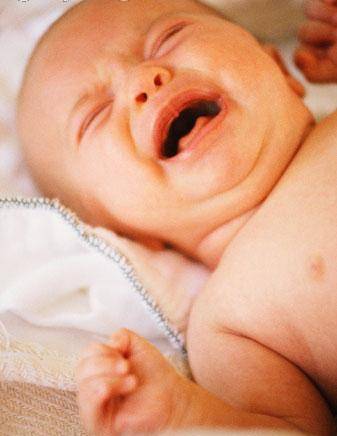
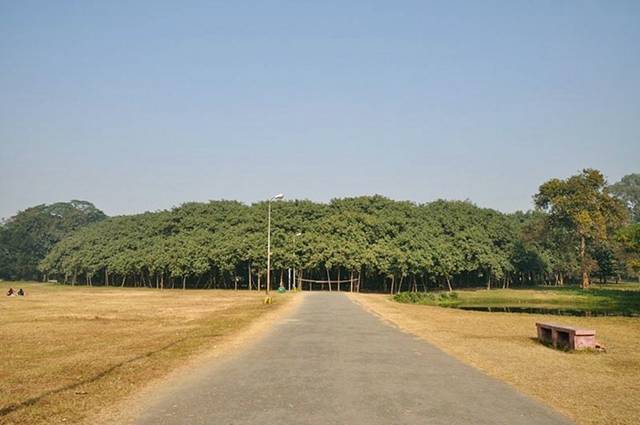


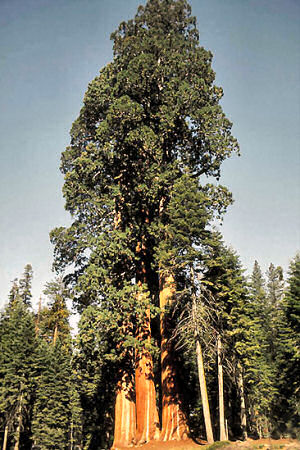
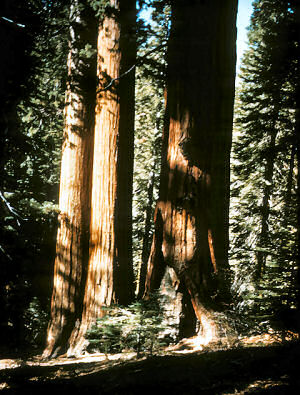
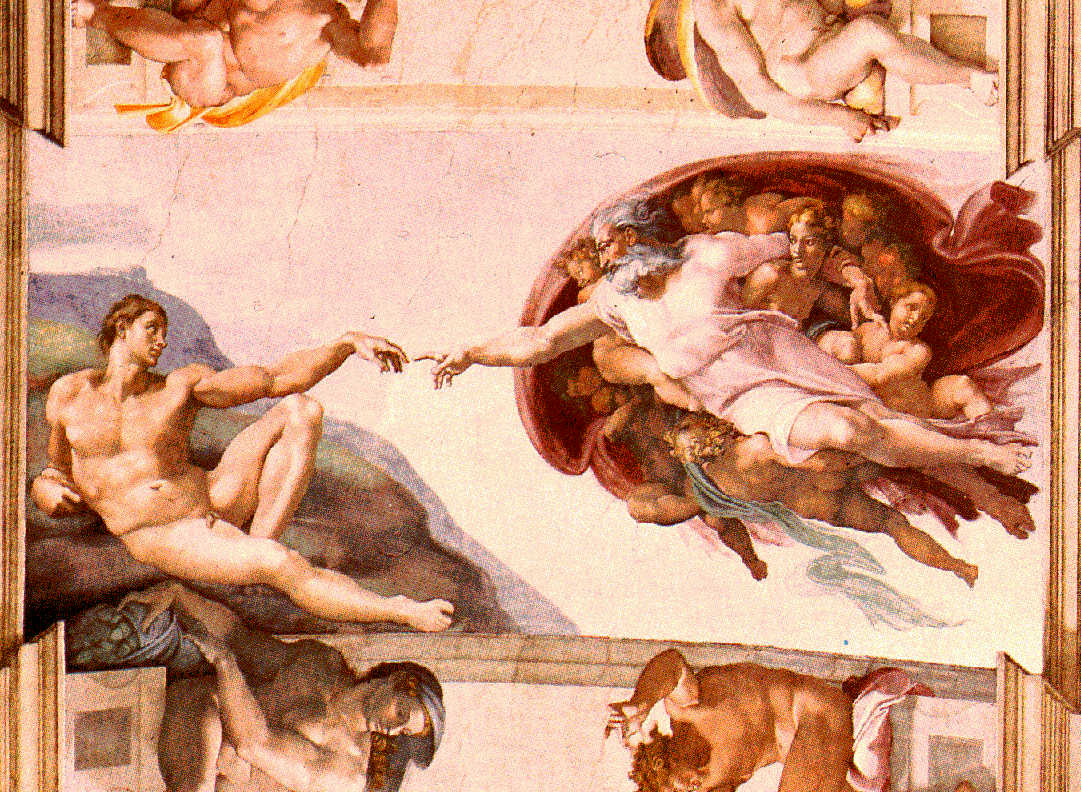
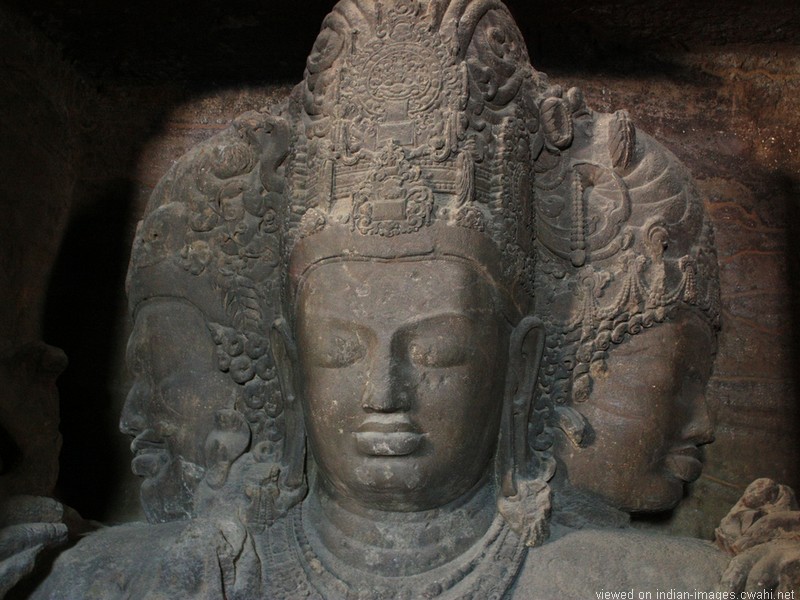


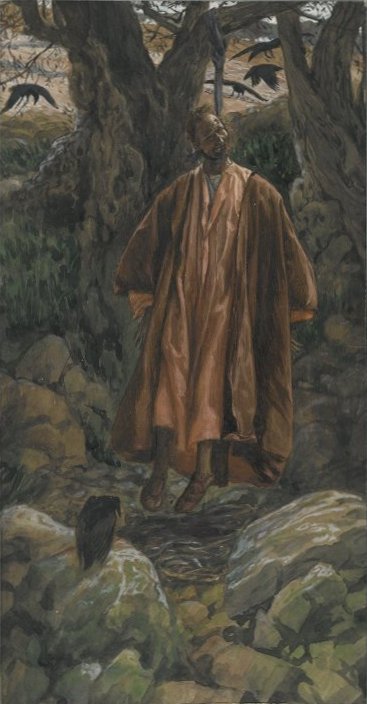


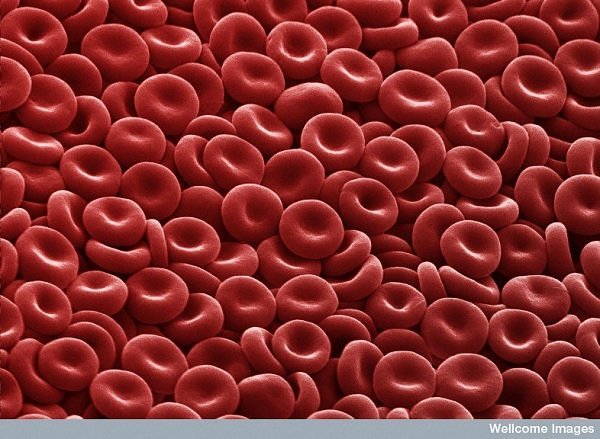


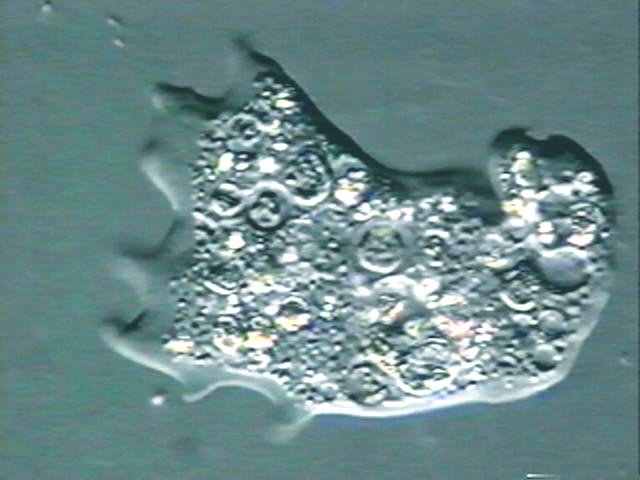
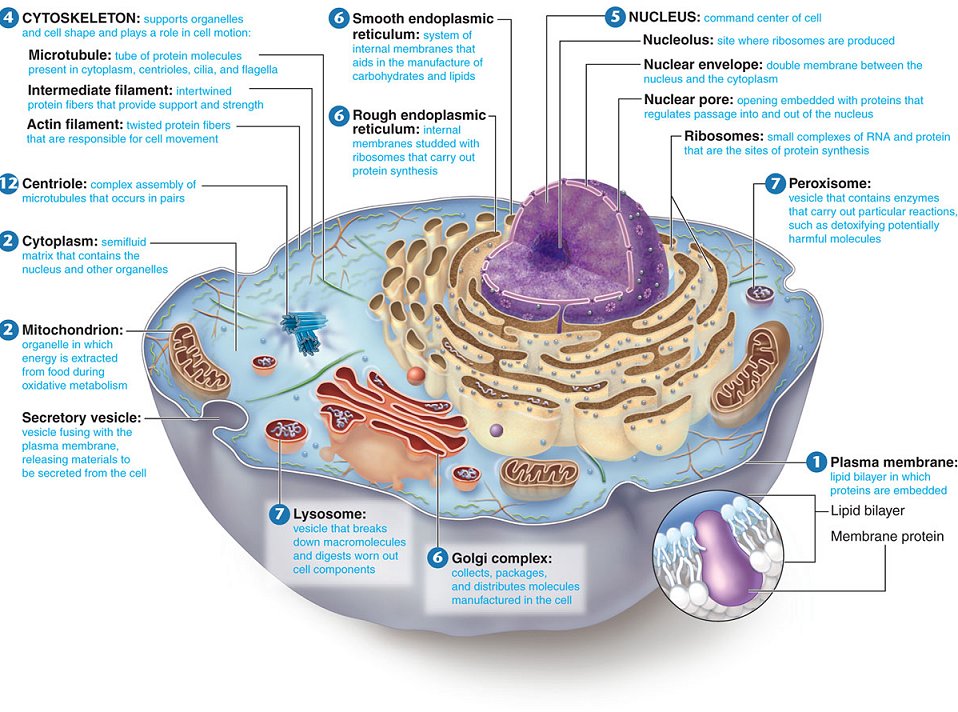


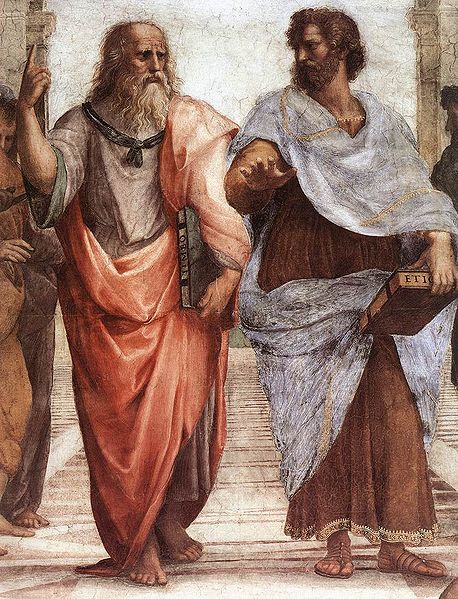
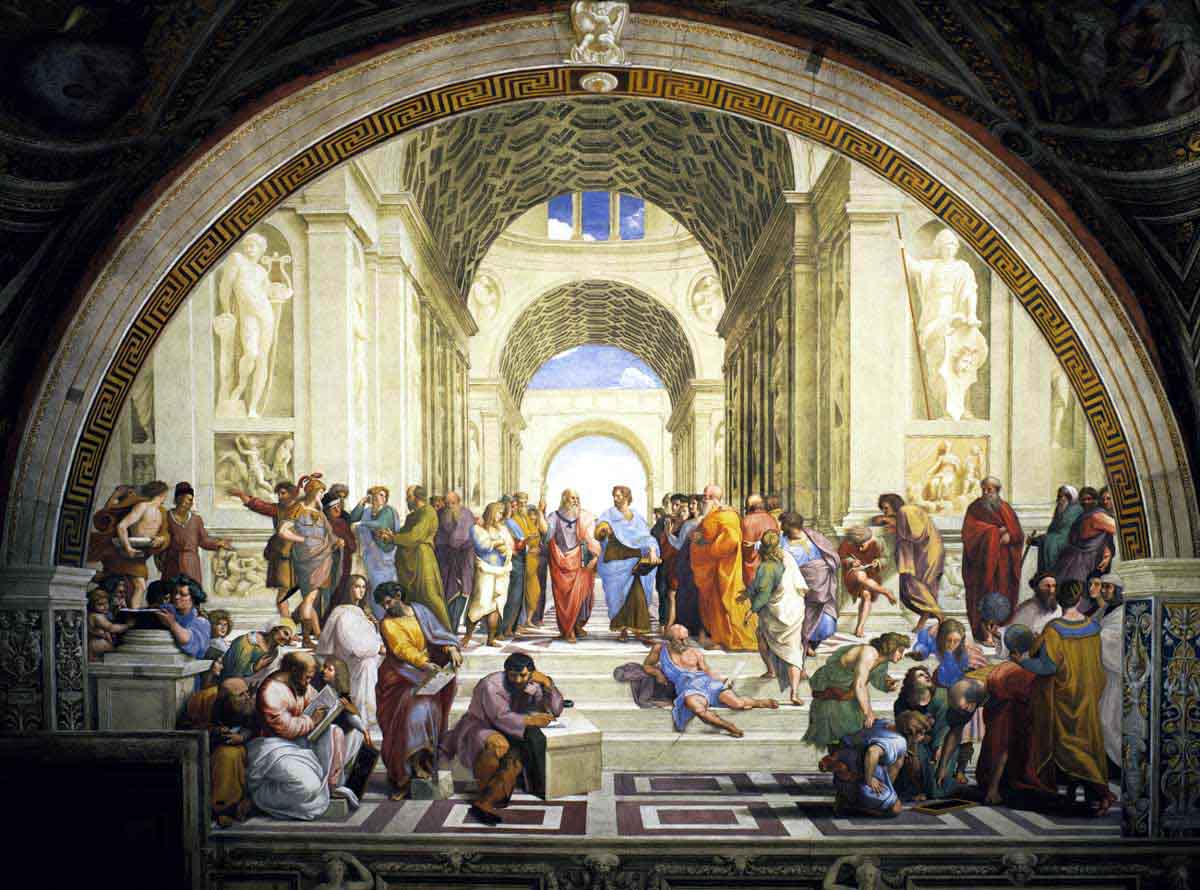

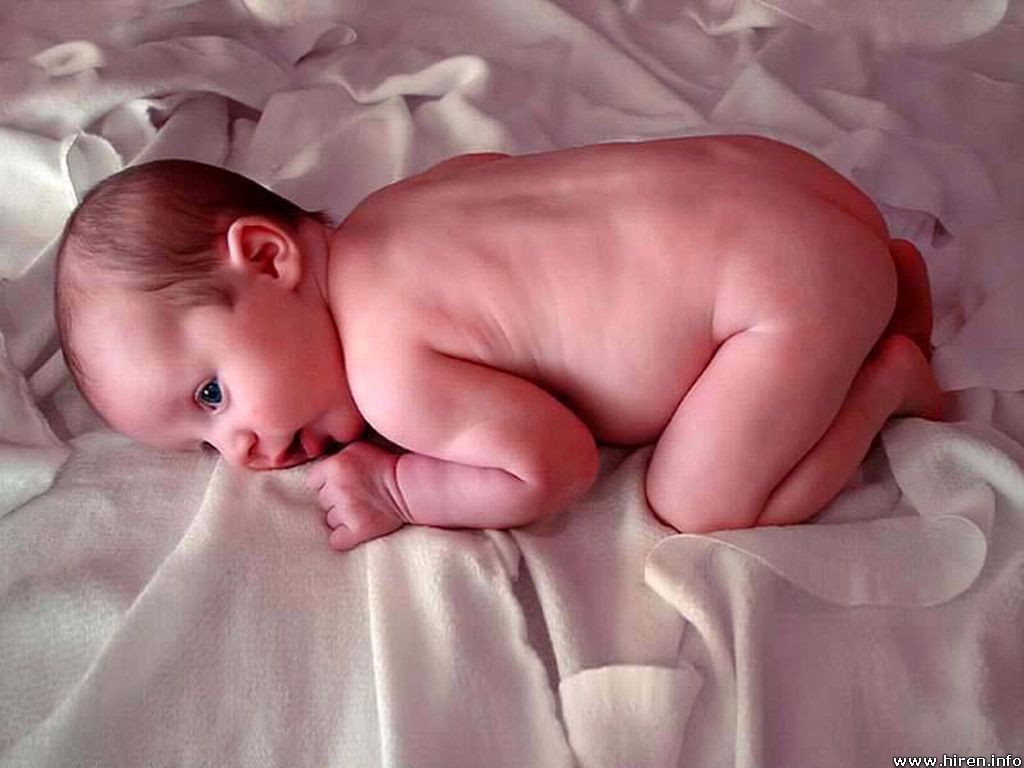


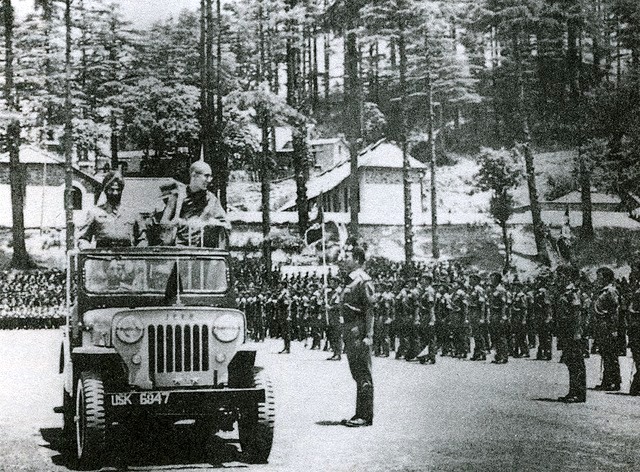


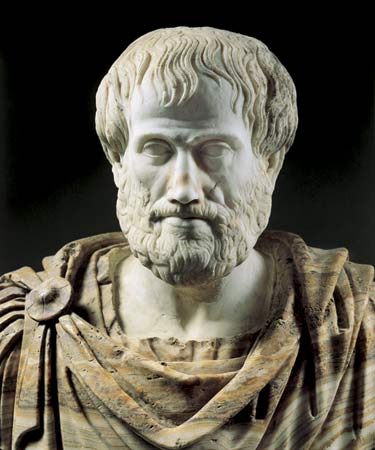
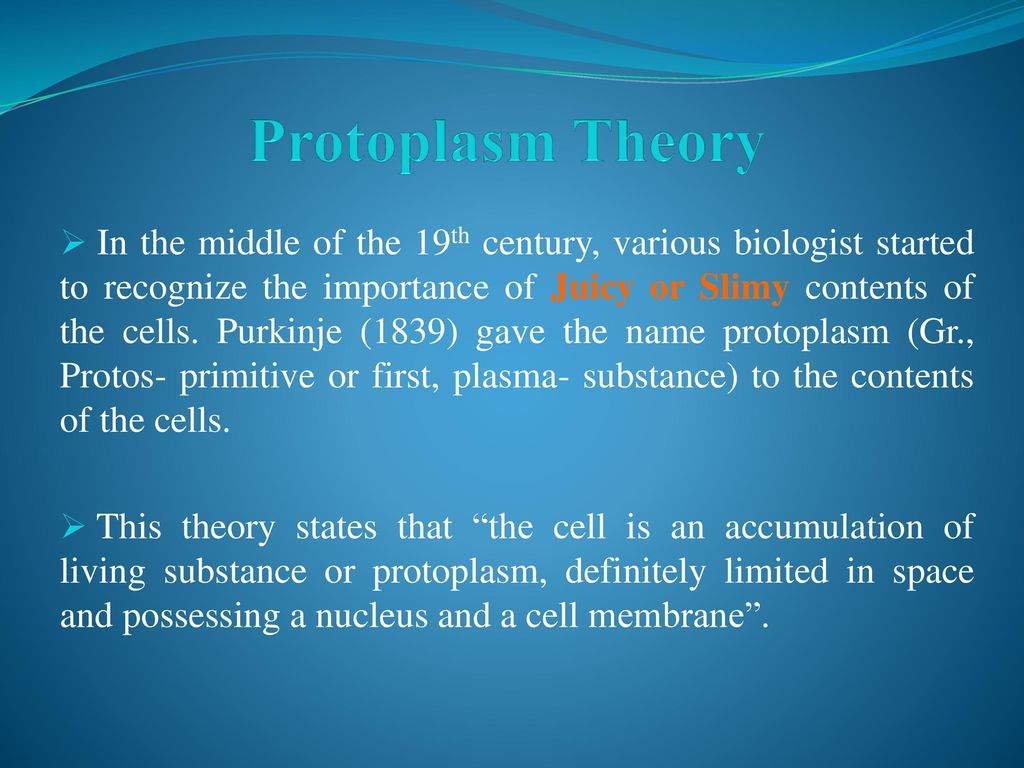


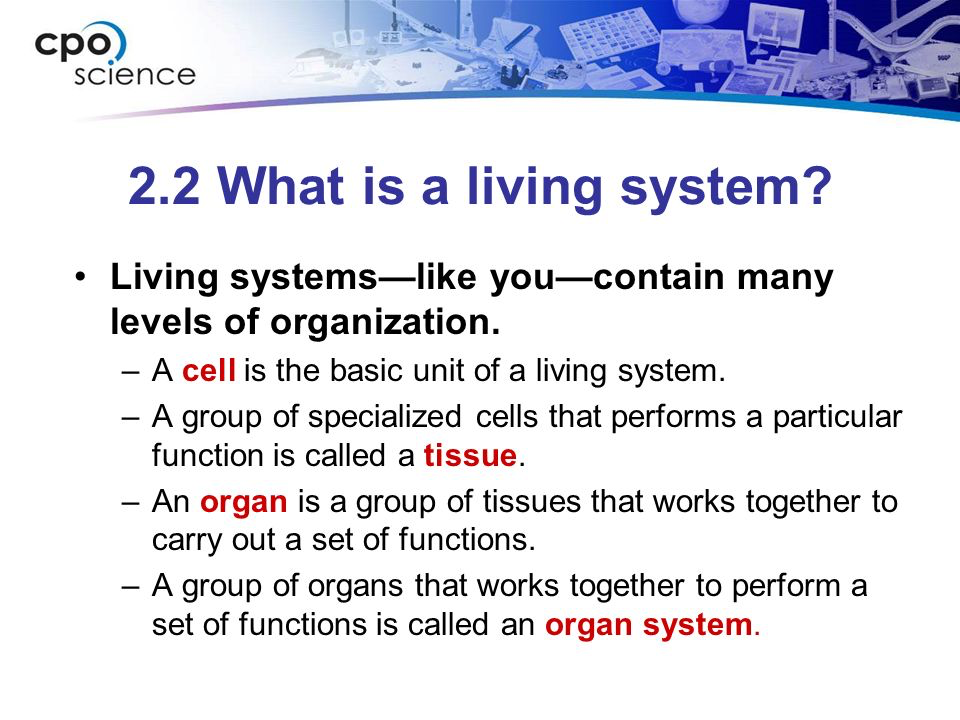
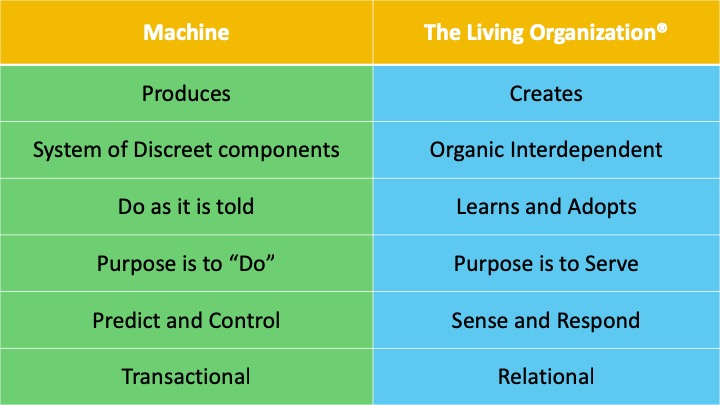
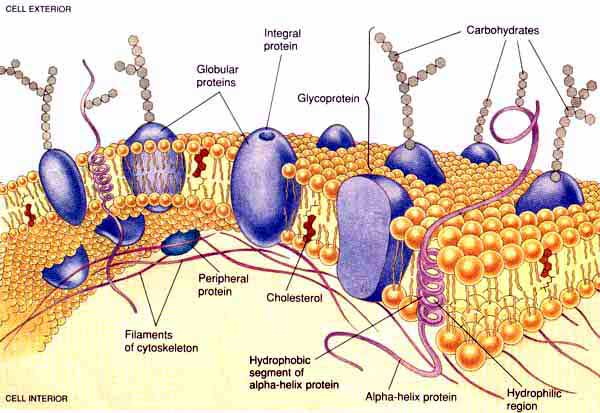




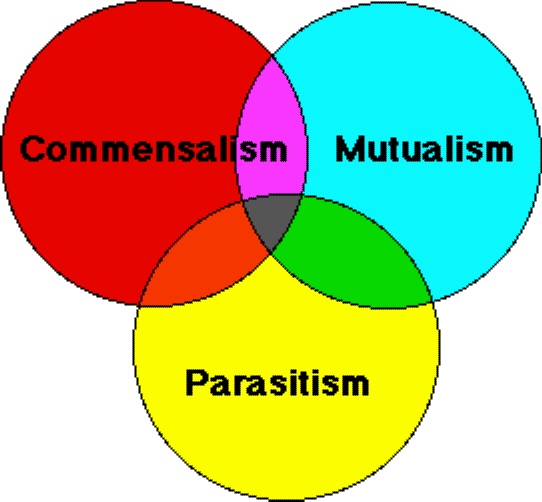





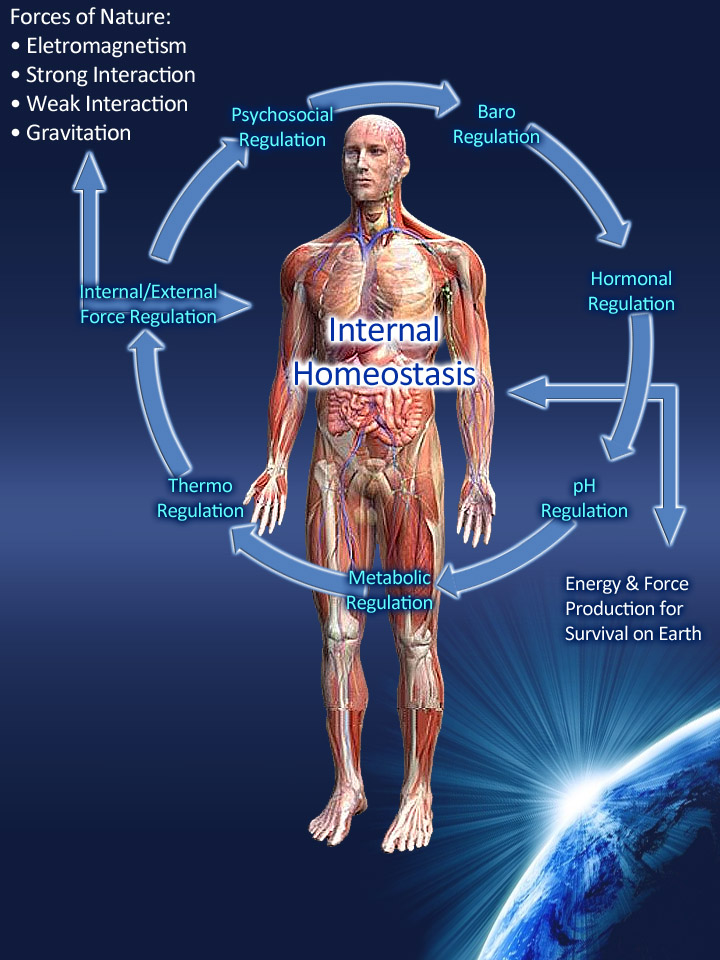
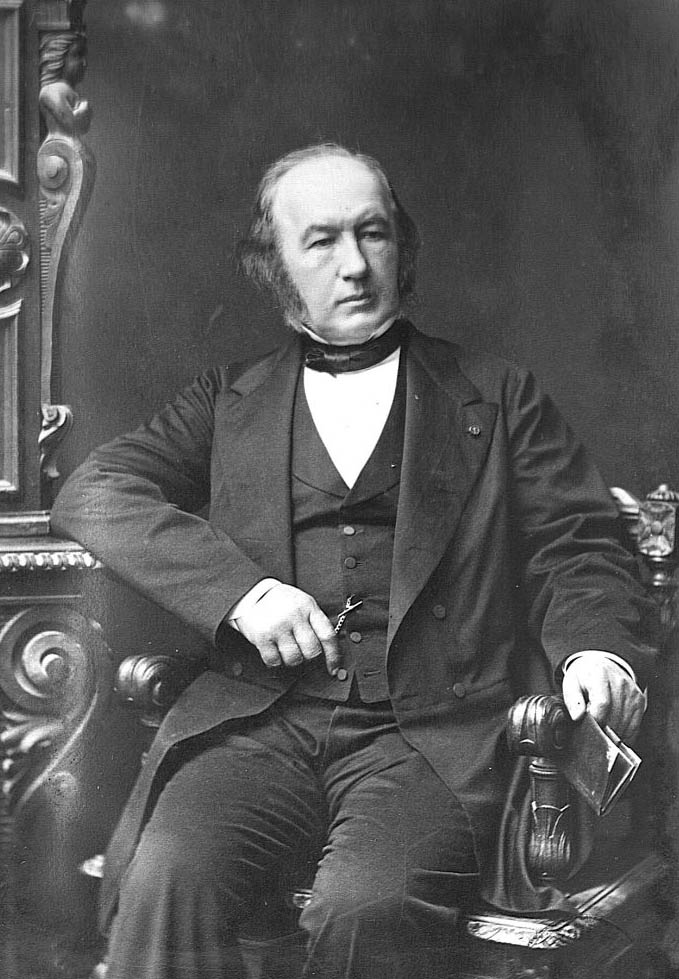


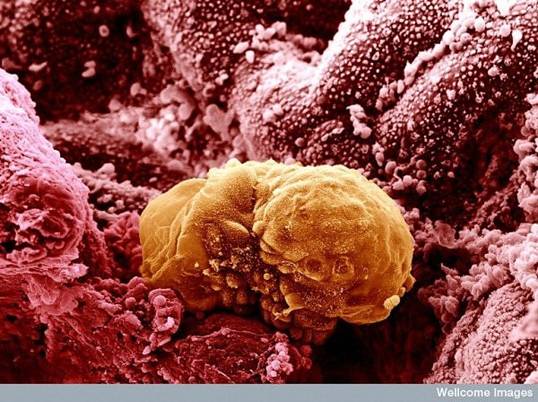


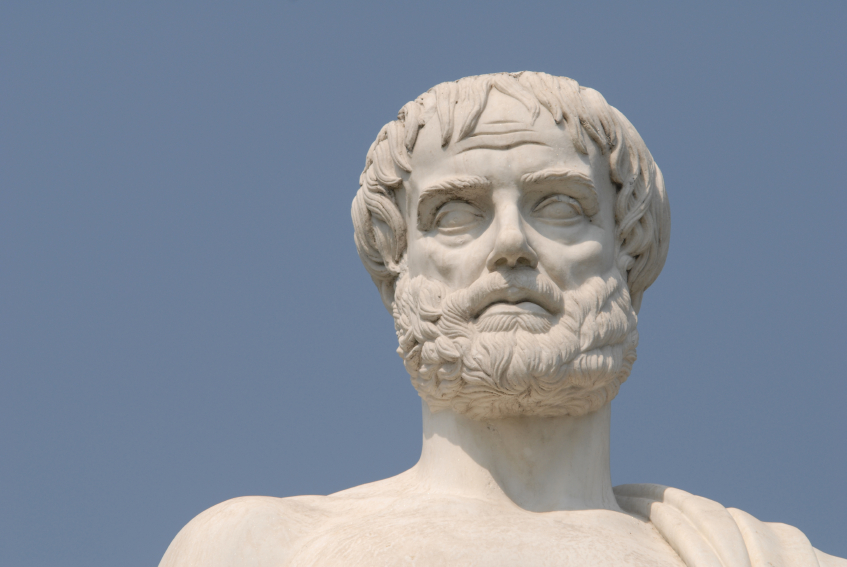
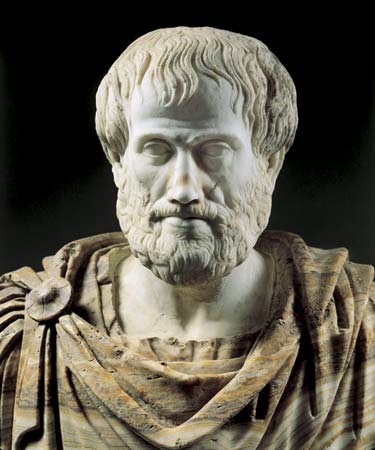


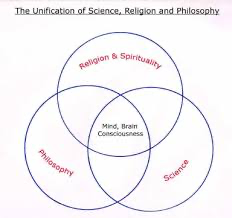


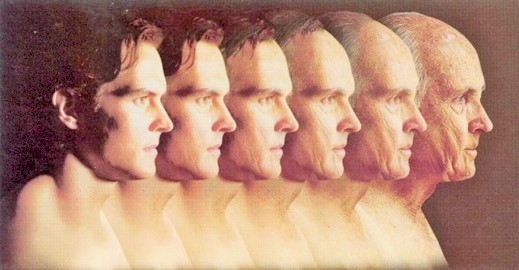
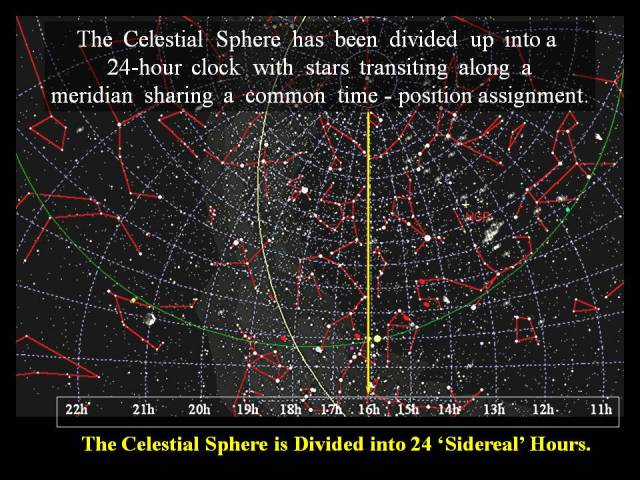
 Whole Dude - Whole Concept