Tibet Awareness – Tibet is the Core Issue for the World Community of Nations
There should be no border dispute between India and the People’s Republic of China as they do not share a common border. The problem of China’s military occupation of Tibet should be addressed by the global community of nations to secure Peace, Security, and Justice in South Asia. To resolve the Great Problem of Tibet, we must resolve Tibet-China Border dispute.
There should be no border dispute between India and the People’s Republic of China as they do not share a common border. The problem of China’s military occupation of Tibet should be addressed by the global community of nations to secure Peace, Security, and Justice in South Asia. To resolve the Great Problem of Tibet, We must Resolve Tibet-China Border dispute
Rudra Narasimham Rebbapragada
Special Frontier Force-Establishment 22-Vikas Regiment
TIBET’S MILITARY OCCUPATION – THE GREAT TIBET PROBLEM: Historically Tibet came under military conquests by Mongol China and Manchu China and yet retained its independent way of living without any problem. The Evil Red Empire formulated by Red China’s Communist Party Chairman Mao Zedong unleashed a different kind of beast to rule over the lives of Tibetans.
Tibet should be one of the core issues for India, says Lobsang Sangay, the head of Tibetan Government-in-Exile
Tibet should be one of the core issues for India as China is trying to “influence” all of its neighbors, Lobsang Sangay, the head of the Tibetan government in exile has said.
There should be no border dispute between India and the People’s Republic of China as they do not share a common border. The problem of China’s military occupation of Tibet should be addressed by the global community of nations to secure Peace, Security, and Justice in South Asia. To resolve the Great Problem of Tibet, we must resolve Tibet-China Border dispute.
Tibet should be one of the core issues for India, says Lobsang Sangay (Reuters)
Tibet should be one of the core issues for India as China is trying to “influence” all of its neighbours, Lobsang Sangay, the head of the Tibetan government in exile has said. China insists Tibet has been part of its territory for centuries, but many Tibetans say they were essentially independent for most of that time. The Dalai Lama fled to India in 1959 amid an abortive uprising against Chinese rule in his Himalayan homeland.
Sangay, who is currently here, has met several senior US administration officials, congressmen and senators and members of the think-tank community like the Hudson Institute. Explaining his quest for India making “Tibet a core issue”, Harvard educated Sangay said that after the occupation of Tibet, the People’s Liberation Army has now moved near the border of India.
“Now they are influencing all of India’s neighbours, from Pakistan, to Sri Lanka, Bangladesh and Nepal. It is a reality now,” he said in an interview to PTI.
India and Tibet have had historically, cultural and civilizational ties for hundreds of years, he said, adding Tibet is the source of water for India and South Asia. “For these reasons, Tibet is very important for not just India, for whole of South Asia and ASEAN countries too. Hence, Tibet should be one of the core issues for India,” Sangay said.
“China has already said Tibet is one of the core issues. So, India should also table Tibet as one of the core issues and address this issue with Tibetan people in mind,” he said. Responding to a question, Sangay said that the people of Tibet are following the middle way approach by seeking “genuine autonomy within the framework of the Chinese constitution”. “This is the reasonable moderate line,” he said.
For that there should be a dialogue between the envoys of the Dalai Lama and the Chinese Government, he said. He sought the revival of a dialogue that happened between 2002 to 2010. “We think, that kind of dialogue will lead to the resolution of the Tibetan issue,” he said.
The Cold War in Asia – Lessons of Covert Action in Tibet
The Cold War in Asia. Lessons of Covert Action in Tibet.
The Cold War in Asia represents the security threat posed by the spread of Communism to mainland China. Because of my lifetime affiliation with the military organization called Special Frontier Force, I can review the covert action in Tibet to draw some lessons.
Whole Dude – Whole Secret: The CIA covert operations inside Tibet led to the creation of a military organization called Establishment Number. 22, or Special Frontier Force which was formed in 1962 during the presidency of John F. Kennedy
In my analysis, the US, India, and Tibet lack the intelligence capabilities to conduct a successful covert action in Tibet. In 1959, Tibet National Uprising failed for the CIA underestimated the enemy’s capabilities both in terms of intelligence and the use of military power to crush civilian uprising or rebellion. In 1962, the CIA again failed to know the enemy’s war preparation and the attack across the Himalayan Frontier came as a rude surprise.
Establishment No. 22 – Operation Eagle: This badge represents a military alliance/pact between India, Tibet, and the United States of America. Its first combat mission was in the Chittagong Hill Tracts which unfolded on 03 November 1971. It was named Operation Eagle. It accomplished its mission of securing peace in the region that is now knownas Republic of Bangladesh.
I directly ask the CIA to improve its intelligence capabilities to respond to the security challenge posed by the spread of Communism to mainland China. The United States fought wars in Korea and Vietnam without testing the enemy’s military capabilities. To fight against the enemy, the United States must recognize the face of the enemy. No covert action will succeed without knowing your enemy.
Rudra Narasimham Rebbapragada
Special Frontier Force-Establishment 22-Vikas Regiment
TIBET AWARENESS – PROJECT CIRCUS. The quest for Freedom in Tibet. A military training Camp known as Camp Hale was established in Colorado under the supervision of CIA officers Roger E. McCarthy and John Reagan.Whole Dude – Whole Secret: The CIA Tibet Operation.Whole Dude – Whole Agency: Allen Welsh Dulles shaped the history of the Central Intelligence Agency. During World War II, he had served in the Office of Strategic Services(1942-1945), and when CIA formed in 1951, he served as Deputy Director under General Walter Bedell Smith. He was appointed the Director by President Dwight D. Eisenhower during January 1953.Whole Dude-Whole Master: November 29, 1961. President John F. Kennedy welcomes the 6th Director of CIA, John Alexander McCone.Richard McGarrah Helms(March 30, 1913 – October 22, 2002) was the chief architect of the legislation that created the Central Intelligence Agency during 1947. He had served in CIA in various positions and was its Director from June 1966 to February 1973. The 1962 India-China War was the consequence of a failed CIA mission inside Tibet.
Between 1950 and 1972, the Central Intelligence Agency (CIA), in close cooperation with the Departments of State (DoS) and Defense (DoD), conducted a comprehensive covert action campaign in support of Tibetan resistance movements fighting against Communist Chinese occupation of their homeland. The campaign consisted of “political action, propaganda, paramilitary, and intelligence operations” intended to internally weaken and undermine the expansionist ambitions of the People’s Republic of China (PRC).[i] Following the October 1950 invasion of Tibet by the PRC, the CIA’s Special Activities Division (SAD) inserted teams into Tibet to train, advise, and assist Tibetans who were already fighting the Communists.[ii]
A number of Tibetan resistance fighters were specially selected and exfiltrated to the Pacific island of Saipan and Camp Hale in Colorado to undergo training in demolitions, clandestine communication, and other critical skills.[iii] Operating out of neighboring Nepal and India, SAD-directed teams of Tibetan rebels waged a ceaseless campaign against the Chinese that tied down significant PRC troop strength, strengthened international opposition to Chinese atrocities against Tibetans, and prevented the PRC from effectively pursuing its regional ambitions in South Asia to further spread its communist ideology.[iv] The CIA continued to support the Tibetan resistance until 1972 when U.S. President Richard Nixon changed course and decided to normalize relations with the PRC.[v]
Though the CIA’s Tibetan covert action campaign never successfully ousted the Chinese Communists, the campaign was quite successful in accomplishing the U.S.’s limited objectives. Through its covert action campaign, the U.S. sought to internally weaken the PRC through sustained attrition and distraction in order to prevent the Chinese from spreading their brand of communism across South Asia – specifically India.[vi] The CIA’s covert action campaign succeeded in three ways: it depleted the PRC’s already limited resources, which further weakened the state; it undermined the PRC’s international standing and limited its regional influence, and it prevented the expansion of the PRC’s borders.[vii]
Specifically, the CIA’s covert action campaign forced the PRC to commit vast numbers of troops and resources to pacify Tibet, which delayed a number of other critical initiatives that the young communist state sought to pursue. In 1959, the CIA estimated that the PRC had over 60,000 soldiers deployed just to subjugate Tibet, a force that required 256 tons of supplies daily to sustain. [viii] The PRC, which had just successfully ended its own civil war in 1949, saw its military stretched incredibly thin by its Tibetan occupation. This strain likely undermined the ability of the Chinese government in Beijing to effectively consolidate full control over the expansive country, further encumbering efforts to pursue its strategic ambitions.
Adding to the PRC’s frustrations was the widespread international condemnation resulting from the increasingly brutal pacification campaign that China felt compelled to undertake to try and quell the Tibetan rebellion.[ix] Much of this international focus was (and still is) cultivated by Tenzin Gyatso, the 14thDalai Lama and the spiritual leader of the majority of Tibet’s Buddhists. During a particularly violent 1959 revolt, The Dalai Lama fled from Tibet with over 100,000 of his followers, escaping with the help of the CIA to India where he established a Tibetan “government in exile”.[x] This government has been a constant thorn in the PRC’s side, with the Dalai Lama and his disciples incessantly lobbying the international community for Tibetan rights and autonomy from China.[xi] The sustained focus on Chinese atrocities against the Tibetans significantly undermined the PRC’s regional standing and efforts to strengthen ties with neighbors.
Finally, the CIA’s covert action campaign was successful in its primary objective of preventing the spread of communism across South Asia. Mao Tsetung, the chairman of the PRC’s Communist Party, was convinced during an extended stay in the Soviet Union between 1949 and 1950 to undertake the leadership role in “liberating” Asia for the cause of global communism.[xii] However, the PRC’s inability to fully control Tibet, largely due to the CIA’s covert action campaign that sustained indigenous resistance, denied China the use of key terrain that might have enabled military action against India or even the Middle East.[xiii] The covert action campaign thus protected the U.S. or its allies from the need to fight a major land conflict in South Asia against the military forces of the PRC.
The CIA achieved a significant victory for the U.S. with a minimal commitment of American resources: total expenditures per year amounted to roughly $1.7 million dollars.[xiv] However, it is important to note that the CIA’s covert action campaign cost tens of thousands of Tibetans their lives, and the supported resistance encouraged violent oppression from the Chinese occupiers. Further, when relations between the U.S. and China normalized under President Nixon, many Tibetans and even a few CIA SAD officers saw the abrupt decision in 1972 to cease support of the Tibetan resistance as tantamount to betrayal.[xv] The Dalai Lama described this sentiment with some bitterness in a 1998 interview, saying that the CIA had aided his cause, “not because they cared about Tibetan independence, but as part of their worldwide efforts to destabilize all Communist governments.”[xvi] Despite such accusations of duplicity, the CIA achieved its stated objectives through this covert action campaign.
The CIA’s efforts in Tibet were successful because the objectives of the covert action campaign were reasonably limited and achievable with the resources available. While the Tibetans themselves may have nursed illusions of eventually driving all Chinese occupiers from their homeland, it is clear from the available records that the CIA and the political leadership in Washington were content to simply destabilize China and frustrate the Communists’ designs to spread their ideology throughout Asia.[xvii] Once the political winds changed and relations started to improve between the U.S. and China, the continuation of support to the Tibetan resistance was no longer in the best interests of the U.S. The U.S. successfully achieved its objectives through this covert action campaign because those objectives were achievable without escalating into a wider conflict.
Other successful covert actions, such as the SAD-spearheaded coups that toppled the governments of Mohammed Mossadegh of Iran in 1953[xviii] and Jacobo Arbenz of Guatemala in 1954[xix] are thought by historians to have given the CIA and subsequent U.S presidents an overly optimistic opinion of the potential for covert action to achieve outsized objectives. This overconfidence likely led to the 1961 “Bay of Pigs” invasion in Cuba, which was a tremendous failure because its objectives were overly ambitious and unachievable given the limited resources that the U.S. committed.[xx] Rather than be greeted as liberators and reinforced by masses of Cubans dissidents flocking to their cause, the US-backed Cuban rebel forces were quickly overwhelmed. The most important lesson that covert action practitioners and policymakers who consider the use of covert action should take from the highly effective campaign in Tibet is that such campaigns must be reasonably limited in their objectives to maximize the chances of success.
The Cold War in Asia. Lessons from Covert Action in Tibet.
The Cold War in Asia – The US Strategy Putting Communist China ahead of Tibet totally Failed
Whole Strategy – “America First, Tibet on the Back Burner” Strategy totally FailedWhole Strategy – “America First, Tibet on the Back Burner” Strategy totally Failed
The Cold War in Asia began with the spread of Communism to mainland China. It is no surprise if President Trump thinks of China as a ‘Security Threat’. However, American infatuation with Communist China is not over. Americans are not yet ready to come to grips with realities of world dominated by Socialism with Chinese Characteristics. “America First – Tibet on The Back Burner” Strategy has totally failed.
Whole Strategy – “America First, Tibet on the Back Burner” Strategy totally Failed
Rudra Narasimham Rebbapragada Special Frontier Force-Establishment 22-Vikas Regiment
The Cold War in Asia began with the spread of Communism to mainland China. It is no surprise if President Trump thinks of China as a ‘Security Threat’. However, American infatuation with Communist China is not over. Americans are not yet ready to come to grips with realities of world dominated by Socialism with Chinese Characteristics. “America First – Tibet on The Back Burner” Strategy has totally failed.
China condemns the US Cold War Mentality on National Security
The Cold War in Asia began with the spread of Communism to mainland China. It is no surprise if President Trump thinks of China as a ‘Security Threat’. However, American infatuation with Communist China is not over. Americans are not yet ready to come to grips with realities of world dominated by Socialism with Chinese Characteristics. “America First – Tibet on The Back Burner” Strategy has totally failed.
Image copyright Getty Images Image caption Chinese President Xi Jinping has enjoyed a cordial relationship with Donald Trump.
China has condemned the “Cold War mentality” of the White House after the publication of a new US national security policy. The document labels China and Russia as “rival powers” and lays out a number of potential threats they pose. The new strategy said Beijing and other governments were determined to challenge American power. But China’s foreign ministry criticized the strategy report, saying Washington should “abandon outdated notions.” Spokeswoman Hua Chunying said: “No country or report will succeed in distorting facts or deploying malicious slander. “We urge the US side to stop intentionally distorting China’s strategic intentions and to abandon outdated ideas of Cold War mentality and the zero-sum game.” Russia also responded to the new strategy by saying it “cannot accept” that it is treated as a threat.It also criticized what it said was the “imperialist character” of the document.
Trump’s pragmatic view of troubled world
The Cold War in Asia began with the spread of Communism to mainland China. It is no surprise if President Trump thinks of China as a ‘Security Threat’. However, American infatuation with Communist China is not over. Americans are not yet ready to come to grips with realities of world dominated by Socialism with Chinese Characteristics. “America First – Tibet on The Back Burner” Strategy has totally failed.
In the new US national security strategy, China and Russia are said to “challenge American power, influence and interests, attempting to erode American security and prosperity”. “They are determined to make economies less free and less fair, to grow their militaries, and to control information and data to repress their societies and expand their influence.”
The Cold War in Asia began with the spread of Communism to mainland China. It is no surprise if President Trump thinks of China as a ‘Security Threat’. However, American infatuation with Communist China is not over. Americans are not yet ready to come to grips with realities of world dominated by Socialism with Chinese Characteristics. “America First – Tibet on The Back Burner” Strategy has totally failed.
The new national security strategy contains a range of claims about China, including: China and Russia “are developing advanced weapons and capabilities” that could threaten the US. Competitors such as China “steal US intellectual property valued at hundreds of billions of dollars” China and Russia are investing in the developing world “to expand influence and gain competitive advantages” over the US. In Europe, China is gaining a foothold “by expanding its unfair trade practices and investing in key industries.” China also “seeks to pull the [Central America] region into its orbit through state-led investments and loans.” Some of the claims have been made before, but the new document casts them as part of a battle for dominance.
Analysis: Friends or rivals?
The BBC’s Robin Brant in Shanghai First at his golf club in Florida, then at the Forbidden City in Beijing, President Trump has taken every opportunity to say how close a friendship he’s built with his Chinese counterpart Xi Jinping. But now the official version is rivals – not friends. The classification sends a clear message about America’s changing stance towards a rising China, a China that’s made no secret of its plan to significantly expand its navy, assert more regional authority and expand its influence further abroad through a massive state-backed investment push. Economic rivalry is crucial to this dynamic. The Trump administration is investigating China for what it alleges is the dumping of artificially cheap aluminum products on US markets. It has threatened to do the same on steel exports. Ahead of the document’s publication, there were reports that the National Security Strategy would classify China as an economic “aggressor”, but that did not appear in the final version. Strategy documents are often released with little ceremony, but President Trump appeared at a special event to mark the release of the new strategy.In a speech about his new strategy, Mr. Trump said the US faced a new era of competition, and that China and Russia were the primary threats to US economic dominance.But, he said, the US must attempt to build a “great partnership with them”. Mr. Trump described “four pillars” to his new plan: protecting the homeland, promoting American prosperity, demonstrating peace through strength and advancing American influence. The 68-page document, which White House officials began work on 11 months ago, suggests a return to Mr. Trump’s campaign promise of “America First.”
The Cold War in Asia began with the spread of Communism to mainland China. It is no surprise if President Trump thinks of China as a ‘Security Threat’. However, American infatuation with Communist China is not over. Americans are not yet ready to come to grips with realities of world dominated by Socialism with Chinese Characteristics. “America First – Tibet on The Back Burner” Strategy has totally failed.
In his speech, Mr. Trump referred to his election victory, saying that in 2016 voters chose to “Make America Great Again.”Previous American leaders had “drifted” and “lost sight of America’s destiny” he said, standing before a backdrop of American flags. “Now less than one year later I am proud to report that the entire world has heard the news and has seen the signs,” he said. “America is coming back and America is coming back strong.” He also outlined his campaign promise to build a wall on the border with Mexico, as well as reform of the immigration visa system. The new policy stresses economic security but does not recognize climate change as a national security threat.His predecessor, Barack Obama, in 2015 declared climate change an “urgent and growing threat to our national security”.
The Cold War in Asia began with the spread of Communism to mainland China. It is no surprise if President Trump thinks of China as a ‘Security Threat’. However, American infatuation with Communist China is not over. Americans are not yet ready to come to grips with realities of world dominated by Socialism with Chinese Characteristics. “America First – Tibet on The Back Burner” Strategy has totally failed.
Communist Expansionism in Asia – Unfinished Korea-Vietnam War
Communist Expansionism in Asia – Unfinished Korea-Vietnam War
Democracy, Freedom, Peace, and Justice in Asia are threatened by Communist Expansionism in Asia. United States tried hard to prevent the spread of Communism to mainland China. Having failed to do so, the United States fought battles in Korea and Vietnam but again failed for Korea and Vietnam are not real enemies posing the threat. The United States has yet to fight a War to evict Communist China from Tibet, the very first victim of the spread of Communism to mainland China. I coined the phrase Unfinished Korea-Vietnam War as the real purpose of this War is to contain Communist Expansionism in Asia.
The problem threatening Peace in Asia cannot be resolved by imposing UN sanctions on North Korea. Communist China’s Expansionism in all directions, including Tibet, and South China Sea must be challenged and contained simultaneously. US cannot win this battle without Knowing the Enemy.
Communist Expansionism in Asia – Unfinished Korea-Vietnam War
Rudra Narasimham Rebbapragada
Doom Dooma Doomsayer
Communist Expansionism in Asia – Unfinished Korea-Vietnam War
TO STOP KIM JONG-UN, CHINA NEEDS A BIG PRIZE: THE SOUTH CHINA SEA
Without any doubt, China can stop Kim Jong-Un’s missile tests. Once and for all, and save a lot of trouble for America and its allies—and for Asian market investors.
But to do that, China needs a big prize, the South China Sea. All of it, so Beijing can write its own navigation rules, exploit all the riches that are hidden beneath, and satisfy the nationalistic sentiment it has nurtured.
Communist Expansionism in Asia – Unfinished Korea-Vietnam War Communist Expansionism in Asia – Unfinished Korea-Vietnam War
The Korean Peninsula is far away from the South China Sea. But the on-going crisis in the Korean Peninsula isn’t independent from what’s going on in the South China Sea, as there is a key player behind each conflict: China.
In fact, Kim Jong-Un has emerged as China’s decoy in South China Sea disputes. As the world is fixated on Kim’s nuclear tests and missiles launches, China continues the building of artificial islands in the South China Sea, bullying every neighboring country that dares to challenge its ambitions to dominate the vast waterway. Like threatening the Philippines with all-out war should it enforce an international arbitration ruling, which confirmed that China has no historic title over the waters of the South China Sea.
China also told Vietnam and India to stop searching for oil in the region, or else risk an attack on the oil and gas bases. And it has demanded that Indonesia rescind its decision to rename its maritime region in the southwest part of the South China Sea as the “North Natuna Sea,” asserting its own sovereignty in the area.
But it hasn’t stopped there. It further demanded that America’s close Asian ally, Japan, stay away from its “own” South China Sea.
Meanwhile, bilateral trade between China and North Korea has increased by nearly 20% last year, as Apostolos Pittas, adjunct professor of economics at Long Island University Post notes.
So far, Asian markets have been responding more to the Korean Peninsula crisis, losing a couple of percentage points any time Kim fires a missile and less on China’s South China Sea bullying.
That’s why China has no real intention of taming Kim’s ambitions — unless America and its allies are prepared to let Beijing take control over the entire South China Sea, and step up its bullying tactics.
Are they prepared to pay this big a price?
Red China Expansionism South China SeaCommunist Expansionism in Asia – Unfinished Korea-Vietnam War THE EVIL RED EMPIRE – NUCLEAR EXPANSIONISM – NUCLEAR STRATEGY .Communist Expansionism in Asia – Unfinished Korea-Vietnam War Communist Expansionism in Asia – Unfinished Korea-Vietnam War Communist Expansionism in Asia – Unfinished Korea-Vietnam War red china red alert economic espionageCommunist Expansionism in Asia – Unfinished Korea-Vietnam War People’s Republic of China wants to legalize its military occupation of Tibet and other territories taking full advantage of its military and economic strength.
It is interesting to learn that some Red China’s Communist Party members are willing to Stand Up for Tibet. My primary concern is about people who live in Free World. I ask ‘Free World’ to Stand Up for Tibet to secure the Blessings of Freedom, Democracy, Peace, and Justice in Occupied Tibet.
Special Frontier Force – The Doctrine of Tibetan Resistance: The tools of Tibetan Resistance are 1. Patience, 2. Persistence, and 3. Perseverance. Man opposes the reign of force by standing firm or by working against the force without yielding. To oppose and to withstand a force, man needs the virtues of Temperance, Tolerance, and Tranquility to remain calm, unperturbed to maintain “Inner Peace” while reacting to an external force. The virtue of Perseverance triumphs for it preserves the “Inner Peace” while the external reality is described by Violence or War.
UNITED STATES SUPPORTS TIBET’S FREEDOM: FOR MAN IS BORN FREE, MAN HAS A NATURAL RIGHT TO FREEDOM. UNITED STATES OPPOSES MILITARY OCCUPATION THAT DESTROYED TIBET’S NATURAL FREEDOM.
Rudra Narasimham Rebbapragada Ann Arbor, MI 48104-4162 USA Special Frontier Force-Establishment 22-Vikas Regiment
THE WASHINGTON POST
China accuses party members of support for Dalai Lama and even terrorism
Whole Support – Stand Up for Tibet
The Dalai Lama speaks at a conference in New Delhi in November. (Tsering Topgyal/AP) By SIMON DENYER December 4 at 6:10 AM
BEIJING — China has mounted an extraordinary set of attacks against Communist Party members in the troubled western regions of Xinjiang and Tibet, with accusations of disloyalty, secret participation in religious activity, sympathy with the Dalai Lama and even support for terrorism.
The accusations reflect a hardening of the party’s stance in Buddhist Tibet and in Muslim- majority Xinjiang, experts said, as well as President Xi Jinping’s determination to push for ideological purity within the party nationwide, quashing debate and dissent.
But critics say they also reflect the fact that the party’s hard-line approach toward crushing “the three evils of separatism, terrorism and religious extremism” in both regions has not only alienated many ordinary ethnic Tibetan and Uighur people but has also provoked significant disquiet in its own ranks.
Some party officials openly criticize policies handed down from above, complained Xu Hairong, secretary of Xinjiang’s Commission for Discipline Inspection, making the unusual admission in a commentary published last month.
“Some waver on clear-cut issues of opposing ethnic division and safeguarding ethnic and national unity, and even support participating in violent terrorist attacks,” Xu wrote in his agency’s official newspaper.
“This does not mean the cadres participated in attacks,” said Nicholas Bequelin, East Asia director for Amnesty International, “but rather is the equivalent of local officials saying: ‘The central authorities are sending leaders who are so ham-fisted they have driven people to the edge and understandably they have started blowing up things.’ ”
With Xi taking the lead in formulating policy toward Xinjiang, “everybody has to march to the same drumbeat,” Bequelin said.
An article published Friday on China Tibet Online, a party Web site, said 355 party members had been punished in Xinjiang last year for violating “political discipline.” The article said that one had joined a social media chat group titled “Uighur Muslim” that was meant to undermine ethnic unity, while another had reposted an interview given by prominent Uighur intellectual Ilham Tohti, who was sentenced last year to life in prison on charges of advocating separatism.
Written by Zhao Zhao, the article said that some officials blame social problems on ethnic discrimination, thereby inciting ethnic hatred. “There is also a lack of faith in Marxism. Some grass-roots party members even participate in religious activities,” he wrote, adding that this would never be allowed.
Critics say there is widespread economic, cultural and religious discrimination against Uighurs and Tibetans.
After 2009 riots in Xinjiang’s capital, Urumqi, left at least 192 people dead, the party acknowledged that it needed to address Uighur grievances, Bequelin said. But later, with an increase in violent attacks by Uighurs, the party changed course, asserting at a major meeting on the region in 2014 that the priorities were stability and unity rather than economic development and combating discrimination.
The imprisonment of Tohti, a moderate economist whose work had detailed the problems Uighurs face, sent a strong signal to academics and party officials alike that the debate about discrimination had been closed, Bequelin said. The party now vehemently asserts that Uighur terrorism is directed by Islamist militants based abroad and is increasingly rooted in extremist ideas picked up on the Internet.
At the same time, the Communist Party has been recruiting, and the number of members in Xinjiang is reported to have risen by 21,000 to 1.45 million in 2014. And that has brought other problems.
“The Chinese Communist Party believes that it is witnessing a ‘crisis of faith’ in Xinjiang and Tibet in particular,” said Julia Famularo, an International Securities Studies Fellow at Yale University.
“It has actively endeavored to draw ever greater numbers of ethnic minorities into the party, but it now fears that these new recruits possess only superficial loyalty to the party-state,” Famularo wrote in an e-mail. “Beijing laments that these minority party members still make clandestine visits to mosques and monasteries, and that they still have stronger ties to their own people than to the party or to China.”
In Tibet, 15 party members were investigated last year and 20 this year for violating political discipline, China Tibet Online reported, saying that some had participated in organizations supporting “Tibetan independence.”
Last month, Tibet party boss Chen Quango said the party would go after officials who held “incorrect views” on minority issues or who “profess no religious belief but secretly believe,” including those who follow the Dalai Lama or listen to religious sermons.
China accuses the Dalai Lama, the exiled spiritual leader of Tibetan Buddhists, of trying to divide the country and pry Tibet away from China. The Dalai Lama insists he only wants meaningful autonomy for the region.
Xu Yangjingjing contributed to this report.
Simon Denyer is The Post’s bureau chief in China. He served previously as bureau chief in India and as a Reuters bureau chief in Washington, India and Pakistan.
Whole Support – Stand Up for TibetWhole Support – Stand Up for TibetSpecial Frontier Force – The Doctrine of Tibetan Resistance: The tools of Tibetan Resistance are 1. Patience, 2. Persistence, and 3. Perseverance. Man opposes the reign of force by standing firm or by working against the force without yielding. To oppose and to withstand a force, man needs the virtues of Temperance, Tolerance, and Tranquility to remain calm, unperturbed to maintain “Inner Peace” while reacting to an external force. The virtue of Perseverance triumphs for it preserves the “Inner Peace” while the external reality is described by Violence or War.
Doomed American China Fantasy – The Cold War in Asia
DOOMED AMERICAN CHINA FANTASY – THE COLD WAR IN ASIA 1949 TO 2025. THE SPREAD OF COMMUNISM IN ASIA.
The Cold War in Asia is the product of Communism that spread from Europe to Asia. Nixon-Kissinger in 1971-72 initiated Policy of Doomed American China Fantasy without concern for lessons learned in Korean Peninsula and Vietnam. There is no hope and there is no future for America’s China Fantasy as Communist Party in China survives unchanged and unaffected by changing fortunes of the US Political Parties.
Rudra Narasimham Rebbapragada
DOOM DOOMA DOOMSAYER
Doomed American China Fantasy – The Cold War in Asia 1949 to 2025Doomed American China Fantasy – The Cold War in Asia 1949 to 2025Doomed American China Fantasy – The Cold War in Asia 1949 to 2025
AMERICA’S CHINA FANTASY
DOOMED AMERICAN CHINA FANTASY – THE COLD WAR IN ASIA 1949 TO 2025. THE SPREAD OF COMMUNISM IN ASIA.. President Nixon’s Doomed Journey to Peking in February 1972.
America has been operating with the wrong paradigm for China. Day after day, U.S. officials carry out policies based upon premises about China’s future that are at best questionable and at worst downright false.
The mistake lies in the very assumption that political change — and with it, eventually, democracy — is coming to China, that China’s political system is destined for far-reaching liberalization. Yet the Bush administration hasn’t thought much about what it might mean for the United States and the rest of the world to have a repressive one-party state in China three decades from now. For while China will certainly be a richer and more powerful country in 30 years, it could still be an autocracy of one form or another. Its leadership (the Communist Party, or whatever else it calls itself in the future) may not be willing to tolerate organized political opposition any more than it does today.
That is a prospect with profound implications for the United States and the rest of the world. And it is a prospect that our current paradigm of an inevitably changing China cannot seem to envision.
The notion of a China on the road to political liberalization has taken hold in the United States because it has served certain specific interests within American society. At first, in the late 1970s and the 1980s, this idea benefited the U.S. national-security establishment. At the time, the United States was seeking close cooperation with China against the Soviet Union, so that the Soviet Union would have to worry simultaneously about both countries; the Pentagon wanted to make sure the Soviet Union tied down large numbers of troops along the Sino-Soviet border that might otherwise have been deployed in Europe. Amid the ideological struggles of the Cold War, though, cooperation with China’s Communist regime was politically touchy in Washington. And so the notion that China was in the process of opening up its political system helped smooth the way with Congress and the American public.
In the 1990s, after the Soviet collapse, the idea of a politically changing China attracted a new constituency, one even more powerful than the Pentagon: the business community. As trade and investment in China became ever more important, American companies found themselves repeatedly beset with questions about why they were doing business with such a repressive regime. The paradigm of inevitable change offered multinational corporations the answer they needed. Not only was China destined to open up its political system, but trade, the theology held, would be the key that would unlock the door. It would lead to political liberalization and to democracy, with or without the support of the Chinese leadership. Accordingly, no one outside China needs to do anything, or even think much about the subject. Why bother to protest a crackdown or urge China to allow political opposition if you know that democracy, by the inexorable laws of history, is coming anyway?
The trouble is, the entire paradigm may turn out to be wrong.
What should the U.S. strategy be for dealing with China’s Leninist regime? If you ask our established political leaders, foreign-policy experts, or sinologists what the United States should do about China, you will undoubtedly get some version or another of this approach. It is called the strategy of “integration.”
The United States, the thinking goes, should try to integrate the Chinese leadership into the international community. It should seek to help China gain admission into the world’s leading international organizations. According to this logic, the nature of the Chinese regime will change after China becomes a member of international bodies such as the World Trade Organization, which it has now joined. China’s Communist Party leadership will gradually behave more like other governments; it will become more open in dealing with the Chinese people and with the rest of the world. Richard Haas, the president of the Council on Foreign Relations, has written of “the existing opportunity to integrate China into a U.S.-led world order.”
This strategy of integration dates back to the Clinton administration. In 1994, President Clinton abandoned his attempt to use trade as a lever for improving human rights in China, then needed to divert attention away from this embarrassing reversal. He did not wish to concede that that he had just downgraded the cause of human rights in China; instead, he sought a new, positive-sounding description of his policy. “Integration” gradually became the label of choice, invoked by the president and his top advisers in press conference after press conference. Integration became, above all, the justification for unrestricted trade with China. “We believe it’s the best way to integrate China further into the family of nations and to secure our interests and our ideals,” declared Clinton in one typical speech.
George W. Bush and his advisers, without ever admitting they were doing so, have perpetuated most of the essentials of Clinton’s China policy, including the avowed commitment to integration. When Secretary of State Condoleezza Rice gives a speech about China, she sooner or later calls for integrating China into the international community.
“Integration” has thus become another catchphrase like “engagement,” the earlier slogan for America’s China policy, which originated somewhat earlier, during the administration of George Bush Senior. With both words, however, the suggestion is the same: that is, with enough engagement, with sufficiently vigorous integration, the United States may succeed in altering the nature of the Chinese regime — although it is not clear exactly how this is supposed to happen. In a way, the American approach is a bit patronizing to China: It sounds as if the United States is a weary, experienced trainer bringing China to a diplomatic version of obedience school.
The fundamental problem with this strategy of integration is that it raises the obvious question: Who’s integrating whom? Is the United States now integrating China into a new international economic order based upon free-market principles? Or is China now integrating the United States into a new international political order where democracy is no longer favored, and where a government’s continuing eradication of all organized political opposition is accepted or ignored?
This is not merely a government issue. Private companies — including Internet firms like Yahoo, Google, and Microsoft — often use slogans like “engagement” and “integration” to explain why they have decided to do business in China despite Chinese rules and laws that allow continuing censorship. “I think [the Internet] is contributing to Chinese political engagement,” Bill Gates told one business gathering. Yet if Microsoft is altering its rules to accommodate China, once again the question is: Who’s changing whom?
Will it have been a success for the U.S. policy of integration if, 30 years from now, the world ends up with a Chinese regime that is still a deeply repressive one-party state but is nevertheless a member of the international community in good standing? If so, that same China will serve as a model for dictators, juntas, and other undemocratic governments throughout the world — and in all likelihood, it will be a leading supporter of these regimes. Pick a dictator anywhere today and you’ll likely find that the Chinese regime is supporting him. It has rewarded Robert Mugabe, the thug who rules Zimbabwe, with an honorary professorship, and his regime with economic aid and, reportedly, new surveillance equipment. It has been the principal backer of the military regime in Burma. And when Uzbek President Islam Karimov ordered a murderous crackdown on demonstrators in 2005, China rushed to defend him.
If China maintains its current political system over the next 30 years, then its resolute hostility to democracy will have an impact in places like Egypt, Syria, and Saudi Arabia. A permanently authoritarian China could also undermine Russia’s already diminishing commitment to democracy.
Thus, when America’s leading officials and CEOs speak so breezily of integrating China into the international community, listeners should ask: If China remains unchanged, what sort of international community will that be? Will it favor the right to dissent? Will it protect freedom of expression? Or will it simply protect free trade and the right to invest?
But wait, say the defenders of America’s existing China policy. We believe in democracy, too. There is no real disagreement here on our ultimate goals. This is all just a question of tactics. The strategy of integration (or of engagement) is designed to change China’s political system and, over the long term, to end China’s one-party state.
These arguments sound in some ways similar to claims made by the Chinese regime itself. Because Chinese Communist Party leaders don’t like to acknowledge that they intend to maintain their monopoly on power, they sometimes tell visitors that they, too, believe in democracy, that this is the ultimate goal for China, and that it is all merely a question of timing. These claims are designed for the hopelessly gullible; by its actions, day after day, the regime makes clear its tenacious hostility to the idea of political pluralism in China.
Generally, the U.S. proponents of a strategy of integration are not so cynical. To be sure, a few of them may be antidemocratic; there have always been Americans who admire, even revere, the simplicity and convenience of autocracy. However, other proponents of integration seem to believe quite sincerely that if the United States continues its current approach toward China, Chinese leaders eventually will be willing to abandon the monopoly on political power they have maintained since 1949. Yet these same proponents fail to explain how or why, given the current U.S. strategy, China’s political system will change.
The examples of reforms that they have invoked so far have served to divert attention away from the core issue of China’s one-party state. The promotion of village elections has proved to be largely unsuccessful, both because the Chinese leadership can confine this experiment exclusively to the villages and because in the villages themselves, authorities have resorted to a variety of methods, including the use of violence, to forestall democracy.
Nor is there evidence that the American promotion of the rule of law will by itself transform the political system. So long as there is no independent judiciary and China remains a one-party regime in which judges are selected by the Communist Party, promoting the rule of law won’t bring about fundamental change. Instead, it simply may lead to a more thoroughly legalized system of repression. Indeed, those lawyers in China who attempt to use the judicial system to challenge the Communist Party or to defend the rights of political dissidents have themselves been subject to persecution, including the loss of their jobs or even time in prison.
The strongest impetus for establishing the rule of law comes from the corporations and investors who are putting their money into China. They need bona fide procedures for resolving financial disputes, just as companies and investors require everywhere else in the world. It is in the interest of the Chinese regime to keep the investment dollars, euros, and yen flowing into the country, and so Chinese officials are willing to establish some judicial procedures for the foreign companies. However, the result could well be a Chinese legal system that offers special protection for foreign investors but not to ordinary Chinese individuals, much less to targets of the regime such as political dissidents or Tibetan activists.
And that raises the larger question about America’s current strategy of integration: Whom does it benefit? Above all, it enriches the elites in both China and the United States. The strategy is good for the American business community, which gets to trade with China and invest in China, and for the new class emerging in Chinese cities — the managers and entrepreneurs, many of them former party cadres or the relatives of cadres — that is getting rich from the booming trade and investment in its country. But it has not been nearly so beneficial for working-class Americans — particularly the tens of thousands who have lost their jobs in the United States as the end result of this “integration” policy.
The American people were told many years ago that bringing China into the international economic system would help change the Chinese political system. Now, American workers may well wonder whether this argument was merely a cruel hoax. Nor has the strategy of integration been such a blessing for ordinary Chinese. To be sure, China as a whole is more prosperous than it has ever been, but this new prosperity is enjoyed mostly by the urban middle class, not by the country’s overworked, underpaid factory laborers or by the hundreds of millions of peasants in the countryside.
Indeed, it is precisely because the regime knows how restive and disenchanted the Chinese people are that it refuses to open up to any form of democracy. The Chinese leaders know that they could be thrown out of office if there were free and open elections. Democracy, or even an organization calling for future democracy, is a threat to the existing political and economic order in China. That is why the regime continues to repress all forms of organized dissent and political opposition. It is also why China’s new class of managers and executives, who profit from keeping wages low, support the regime in its ongoing repression.
A few years ago, the New York Times columnist Nicholas D. Kristof gave voice to one of the most common American misconceptions about China’s political future. Reflecting on how China had progressed and where it was headed, Kristof wrote, “[Hard-liners] knew that after the Chinese could watch Eddie Murphy, wear tight pink dresses and struggle over what to order at Starbucks, the revolution was finished. No middle class is content with more choices of coffees than of candidates on a ballot.”
Once people are eating at McDonald’s or wearing clothes from The Gap, American writers rush to proclaim that these people are becoming like us, and that their political system is therefore becoming like ours. But will the newly enriched, Starbucks-sipping, condo-buying, car-driving denizens of China’s largest cities in fact become the vanguard for democracy in China? Or is it possible that China’s middle-class elite will either fail to embrace calls for a democratic China or turn out to be a driving force in opposition to democracy?
China’s emerging urban middle class, after all, is merely a small proportion of the country’s overall population — far smaller than its counterparts in Taiwan or South Korea. There are an estimated 800 million to 900 million Chinese peasants — most of them living in rural areas, although 100 million or more are working or trying to find jobs as migrants on the margins of Chinese cities. If China were to have nationwide elections, and if peasants were to vote their own interests, then the urban middle class would lose. The margin would not be close. On an electoral map of China, the biggest cities — Shanghai, Beijing, Tianjin, Guangzhou, and the others — might look something like the small gold stars on the Chinese flag: They would be surrounded by a sea of red. Add together the populations of China’s 10 largest cities and you get a total of some 62 million people. That number is larger than the population of France or Britain or Italy. But it is still only about 5 percent of China’s overall population of 1.3 billion.
If you are a multinational company trying to sell consumer products, then the rapid rise in spendable income in China’s largest cities is of staggering importance. When it comes to any national elections, however, that new Chinese middle class is merely a drop in the bucket. Those in China’s urban avant-garde have every reason to fear that they would be outvoted.
China’s urban residents have an even greater reason to fear democracy: The Communist Party has not exactly been evenhanded in its treatment of urban residents vis-à-vis peasants. On the contrary: Its policies have strongly favored the cities over the countryside. This is why there has been a wave of protests in the countryside, arising out of land seizures, local taxes, disputes over village elections, and similar controversies. It is also why the Chinese regime has been, in recent years, particularly fearful of mass movements that might sweep through the countryside and undermine the Communist Party’s control. Looking at Falun Gong, the quasi-religious movement that began to take hold during the 1990s, the Chinese leadership was haunted by a specter from the past: the Taiping Rebellion, which swept out of middle China in the 19th century and shook the Qing Dynasty to its foundations.
What lies behind the Chinese Communist Party’s monopoly on power and its continuing repression of dissent? The answer usually offered is the Communist Party itself — that the party and its more than 70 million members are clinging to their own power and privileges. This is certainly part of the answer, but not all of it. As China’s economy has thrived in recent years, strong economic and social forces have also emerged in Chinese society that will seek to protect the existing order and their own economic interests. The new middle class in Chinese cities is coming to favor the status quo nearly as much as does the Communist Party itself.
Why do we assume that what follows the Chinese Communist Party’s eventual fall will necessarily be political liberalization or democracy? One can envision other possibilities. Suppose, for example, that the party proves over the next decade to be no better at combating the country’s endemic corruption than it has been over the past decade. Public revulsion over this corruption reaches the point where the Chinese people take to the streets; leaders find they cannot depend on troops to quell these demonstrations; the Communist Party finally gives way. Even then, would the result be Chinese democracy? Not necessarily. China’s urban middle class might choose to align itself with the military and the security apparatus to support some other form of authoritarian regime, arguing that it is necessary to do so in order to keep the economy running.
The underlying premise of the U.S. integration strategy is that we can put off the question of Chinese democracy. But two or three decades from now, it may be too late. By then, China will be wealthier, and the entrenched interests opposing democracy will probably be much stronger. By then, China will be so thoroughly integrated into the world financial and diplomatic systems that, because of the country’s sheer commercial power, there will be no international support for any movement to open up China’s political system.
What should the United States do to encourage democratic change in China? A detailed list of policies can emerge only after we first rid ourselves of the delusions and the false assumptions upon which our China policy has long been based.
Above all, we have to stop taking it for granted that China is heading inevitably for political liberalization and democracy. President Bush has continued to repeat the American mantra about China, every bit as much as did his predecessors. “As China reforms its economy, its leaders are finding that once the door to freedom is opened even a crack, it cannot be closed,” Bush declared in one typical speech. Such words convey a heartwarming sense of hopefulness about China, but they do not match the reality of China itself, where doors are regularly opened by more than a crack and then closed again.
America’s political and corporate leaders also need to stop spreading the lie that trade will bring an end to China’s one-party political system. This fiction has been skillfully employed, over and over again, to help win the support of Congress and the American public for approval of trade with China. Trade is trade; its benefits and costs are in the economic sphere. It is not a magic political potion for democracy, nor has it brought an end to political repression or to the Chinese Communist Party’s monopoly on power, and there is not the slightest reason to think it will do so in the future. In fact, it is possible that our trade with China is merely helping the autocratic regime to become richer and more powerful.
America’s current China policy amounts to an unstated bargain: We have abandoned any serious attempt to challenge China’s one-party state, and in exchange we have gotten the right to unfettered commerce with China.
What we need now, above all, are political leaders who are willing to challenge America’s stale logic and phraseology concerning China. We need politicians who will call attention to the fact that America has been carrying out a policy that benefits U.S. and Chinese business interests far more than it helps ordinary working people in either country.
The reexamination should apply to both U.S. political parties and to both poles of the ideological spectrum. On the Democratic left, we need people who will question the assumptions that it is somehow “progressive” to say that democracy doesn’t matter or that it will automatically come to China some day. Such views aren’t in the least bit progressive, liberal, or enlightened. Rather, they were developed by the Clinton administration to justify policies that would enable Bill Clinton to win corporate support. During the 1990s, there were other views concerning China within the Democratic Party — those of Nancy Pelosi, for example, and George Mitchell, who took strong stands on behalf of human rights in China. The Democrats rejected those alternative approaches a decade ago. They would do well to reexamine them now.
Within the Republican Party, we need political leaders willing to challenge the Business Roundtable mentality that has dominated the party’s thinking on China for so long. If Republicans really care about political freedom, then why should they allow U.S. policy toward China to be dominated by corporate interests while the world’s most populous country is governed by a single party that permits no political opposition? President Bush has been able to conceal his business-oriented approach to China behind a facade of hawkish rhetoric. Republicans should not allow this to happen again.
Once the United States finally recognizes that China is not moving inevitably toward democracy, we can begin to decide what the right approach should be. On the one hand, it’s possible that America may seek new measures to goad the Chinese leadership toward democratic change. America also might want to reconsider its doctrinaire adherence to free trade in dealing with China. On the other hand, it’s possible that the American people may decide that there’s absolutely nothing that the United States can or should do about a huge, permanently undemocratic, enduringly repressive China. Such an entity, a Chinese autocracy persisting into the mid-21st century, would cause large problems for U.S. policy elsewhere in the world. Nevertheless, after weighing the costs and benefits of trying to push for democracy in China, the United States could opt for a policy of sheer acceptance of the existing order.
The American people are not being given such options now, however, because the choices are not being laid out. American politicians of both parties talk regularly as if liberalization and democracy are on the way in China. But what if China remains an autocracy? At the moment, that possibility seems to be outside our public discourse. We need to change that in order to figure out what we want to do.
It would be heartening if China’s leaders proceed along the lines that America’s political leaders predict. It would be wonderful if China opens up, either gradually or suddenly, to a new political system in which the country’s 1.3 billion people are given a chance to choose their own leaders. While wishing for such an outcome, however, I will not hold my breath.
James Mann, from whose new book, The China Fantasy, this article is adapted, is author-in-residence at Johns Hopkins University’s School of Advanced International Studies.
DOOMED AMERICAN CHINA FANTASY – THE COLD WAR IN ASIA 1949 TO 2025. THE SPREAD OF COMMUNISM IN ASIA.Doomed American Fantasy – The Cold War in Asia 1949 to 2025. Communist Party of People’s Republic of China remains unaffected and unchanged by changing fortunes of the US Political Parties.
America’s China Fantasy from its very beginning in 1971-72 is destined to fail. Doomed American Fantasy – Read The Writing On The Made in China Label – Wake Up Call For America.
I was serving in Doom Dooma, Tinsukia District, Assam, India and a witness to the foreign policy initiative of the US President Richard M. Nixon in 1971-72 with which the Americans began to chase the illusion called ‘China Fantasy’. The American plan is doomed from its very inception for it involved the backstabbing of Tibet and overlooking the evil actions of the Communist regime in China.
America’s China Fantasy from its very beginning in 1971-72 is destined to fail.
China is our greatest foreign policy issue. But neither Trump nor Biden have it right.
Xi Jinping’s China is fundamentally different from the past. Neither Donald Trump’s nor Joe Biden’s approach fully responds to that new reality.
Robert Robb, Arizona Republic
The most important foreign policy issue for the next American president will undoubtedly be relations with China. Unfortunately, neither Donald Trump nor Joe Biden have an approach grounded in reality, with a clear-eyed view of our national interests.
Ever since economic reforms were launched by Deng Xiaoping in the late 1980s, the bipartisan consensus was that the best approach to China was engagement. As China grew more prosperous and less insulated, the thinking went, economic liberalization could lead to political liberalization as well. Or, at a minimum, China could be a non-threatening participant in the world’s economy and affairs.
This was not as naive an expectation, or at least hope, as sometimes depicted today. There were examples of countries with authoritarian systems of state capitalism evolving into democracies with true market economies. South Korea is the most obvious example.
Indeed, a “peaceful rise” of China was one of Deng’s objectives. And that was the approach taken by his successors until current China strongman Xi Jinping.
Trump is using Biden’s support for China joining the World Trade Organization in 2001 against him. But, at the time, that was a prudent move and consistent with American interests as they were then perceived.
Xi’s China is different now
All this changed with Xi, who has jettisoned much of Deng’s approach to China’s development.
Deng believed in communal and rotating leadership. Xi has had himself appointed authoritarian-in-chief for life.
Xi is remaking China to return the Communist Party as the central focus of all life in the country. The government is to serve the party. And private businesses are to serve the government.
Markets are still used to allocate resources more efficiently than heavy-handed central planning. But there are no such things as truly private businesses in Xi’s China. Their ultimate purpose is to serve the interests of the party.
A “peaceful rise” has been abandoned. The purpose of trade is no longer principally to improve living standards. It is to increase the reach and leverage of the government and party. Militarily and diplomatically, China is seeking to dominate its region and intimidate other countries in the Asia-Pacific.
With Xi’s China, the expectations or hopes that underlay the engagement approach are a lost cause. External engagement isn’t going to change Xi’s China. Only domestic political upheaval that rejects Xi Thought will do that. And that doesn’t appear to be on the horizon.
The US should do 2 things differently
The reality of Xi’s China warrants an abandonment of the engagement approach. There should be two strategic objectives to a new approach to China.
►First, insulate the American economy from China to the maximum extent possible. Among foreign policy boffins, this is referred to as “decoupling.”
►Second, increase the military and diplomatic capacity of China’s neighbors, so every regional conflict involving China doesn’t automatically become a conflict with the United States. Our current role as the de facto security guarantor in the region isn’t in our best interests.
What Trump gets wrong on tariffs
Tariffs are one tool that could be used in decoupling. Trump has famously declared himself to be Tariff Man. And his administration currently has tariffs in place on roughly $370 billion worth of Chinese goods.
But decoupling isn’t the true strategic objective of Trump and his tariffs. Trump believes that the score between countries is kept by the balance of trade. The purpose of Trump’s tariffs is to serve as leverage to get China to purchase more American goods. Indeed, he reduced some tariffs and pulled the plug on others in exchange for a Chinese promise to do exactly that.
Biden gets engagement wrong
In an essay for Foreign Affairs magazine, Biden makes clear that he still believes in the engagement approach.
The principal problem with Trump’s approach, according to Biden, is that it is unilateral. Biden promises to create a coalition with allies to pressure China to change troublesome behavior in trade. But to continue cooperation with China on things where, as Biden puts it, “our interests converge.” He specifically mentions climate change, nonproliferation and global health security.
There is no such get-tough-on-China coalition to be had. There’s some spine in China’s neighbors. But none in the European Union, whose trade leverage would be necessary to get China’s full attention.
Trump’s instinct is to reduce the exposure of the U.S. to regional conflicts elsewhere. But he has no strategic vision about getting from here to there.
In his essay, Biden doubles down on the commitment to be the region’s security guarantor, a role whose risks vastly exceed the benefits to the United States.
Trump’s erraticism or Biden’s return to unproductive engagement. Sadly, that’s the choice.
Robert Robb is an editorial columnist for The Arizona Republic and azcentral.com, where this column originally appeared. Follow him on Twitter: @RJRobb
America’s China Fantasy from its very beginning in 1971-72 is destined to fail.
A LESSON FOR LIFE – HOW TO KEEP CHINA AWAY? CHINA’S OCCUPATION IS NOT PERMANENT.
Tibetans need lessons in patience and perseverance to keep their lives while the World struggles to find ways to keep China away. What can’t be cured must endured. China’s Occupation is not permanent. I am hopeful that a cure can be discovered to treat the sickness called ‘Trouble in Tibet’ caused by ‘China in Tibet’. The following are some of the lessons taught by the Supreme Ruler of Tibet:
Nothing is Permanent
Keep Smiling
Love and Compassion will restore Peace
Judge your Success by what you give up to regain your Freedom
Start your Struggle now without expecting that you may win.
What you can’t get by your Struggle may come as a Stroke of Luck
Keep your Peace and be Kind to your Family and Friends
Keep your Unity and do not let disputes weaken your Community
Keep control on your Mind to defeat the Enemy who controls your Body
You and the Enemy have the same human potential, you just need the Will Power to change things
Money and Power are not sufficient, you need a Heart to win the Struggle
You have to show Compassion to uplift yourself and Struggle to uplift others from their Misery
The Selfish Desire to seek Freedom from Enemy is indeed Wise
Remember that Mighty Empires have Fallen because of the bites of tiny Mosquito
In your Struggle against your Enemy, the Enemy is your Best Teacher.
When you Struggle, Look at the Positive side. Your Enemy will not live forever.
Rudra Narasimham Rebbapragada Ann Arbor, MI 48104-4162 USA Special Frontier Force – Establishment 22 – Vikas Regiment
TIMELESS LIFE LESSONS FROM THE DALAI LAMA
A LESSON FOR LIFE – HOW TO KEEP CHINA AWAY? CHINA’S OCCUPATION IS NOT PERMANENT.
The Dalai Lama is a monk of the Gelug or “Yellow Hat” School of Tibetan Buddhism, the newest of the Schools of Tibetan Buddhism founded by Je Tsongkhapa. The 14th and current Dalai Lama is Tenzin Gyatso.
A LESSON FOR LIFE – HOW TO KEEP CHINA AWAY? CHINA’S OCCUPATION IS NOT PERMANENT. KEEP SMILING.A LESSON FOR LIFE – HOW TO KEEP CHINA AWAY? CHINA’S OCCUPATION IS NOT PERMANENT.. LOVE AND COMPASSION WILL EVICT CHINA FROM TIBET TO RESTORE WORLD PEACE.A LESSON FOR LIFE – HOW TO KEEP CHINA AWAY? CHINA’S OCCUPATION IS NOT PERMANENT. FREEDOM DEMANDS STRUGGLE AND SACRIFICE.A LESSON FOR LIFE – HOW TO KEEP CHINA AWAY? CHINA’S OCCUPATION IS NOT PERMANENT. START YOUR FIGHT NOW EVEN IF YOU CAN’T WIN THE BATTLE DURING YOUR LIFETIME.A LESSON FOR LIFE – HOW TO KEEP CHINA AWAY? KEEP PRAYING. MIRACLES WILL HAPPEN.A LESSON FOR LIFE – HOW TO KEEP CHINA AWAY? CHINA’S OCCUPATION IS NOT PERMANENT. KEEP PRAYING, MIRACLES WILL HAPPEN.A LESSON FOR LIFE – HOW TO KEEP CHINA AWAY? CHINA’S OCCUPATION IS NOT PERMANENT.A LESSON FOR LIFE – HOW TO KEEP CHINA AWAY? FIRST SECURE FREEDOM OF YOUR OWN MIND TO FIGHT ENEMY WHO OCCUPIES YOUR MIND.A LESSON FOR LIFE – HOW TO KEEP CHINA AWAY? TIBETANS HAVE SAME HUMAN POTENTIAL LIKE ALL OTHERS. HAVE WILL POWER TO DEFEAT YOUR ENEMY.A LESSON FOR LIFE – HOW TO KEEP CHINA AWAY? CHINA’S OCCUPATION IS NOT PERMANENT. LOVE YOURSELF TO LOVE OTHER TIBETANS SUFFERING UNDER OCCUPATION. A LESSON FOR LIFE – HOW TO KEEP CHINA AWAY? CHINA’S OCCUPATION IS NOT PERMANENT. IT IS NOT SELFISH TO DEMAND FREEDOM FROM OCCUPATION.A LESSON FOR LIFE – HOW TO KEEP CHINA AWAY? APART FROM MONEY AND PHYSICAL POWER, YOU NEED A STRONG HEART TO CURE THE TROUBLE IN TIBET. A LESSON FOR LIFE – HOW TO KEEP CHINA AWAY? CHINA’S OCCUPATION IS NOT PERMANENT. MIGHTY ARMIES OF ANCIENT ROME WERE VANQUISHED BY TINY MOSQUITO BITES.A LESSON FOR LIFE – HOW TO KEEP CHINA AWAY? LEARN FROM YOUR ENEMY THE ART OF WARFARE. KNOW ENEMY’S MIND.A LESSON FOR LIFE – HOW TO KEEP CHINA AWAY? MAKE THE EFFORT TO WIN BACK YOUR FREEDOM. NO ENEMY WILL LAST FOREVER.
Tibet Equilibrium – The Future of the Evil Power in Occupied Tibet
THE FUTURE OF RED CHINA’S EVIL POWER IN OCCUPIED TIBET – I SHARE THE PROPHECY OF BEIJING’S DOOM.TIBET EQUILIBRIUM – BALANCE OF POWER – THE FUTURE OF RED CHINA’S EVIL POWER. DOOMSAYER OF DOOM DOOMA SHARES PROPHECY OF ISAIAH 47:10 & 11.
Red China wants to sustain her military occupation of Tibet by controlling and manipulating Tibetan cultural practices that play a role in the selection of the next Dalai Lama. In my analysis, the future of Red China’s Evil Power is already decided by prophecy shared by Prophet Isaiah in The Old Testament Book, Isaiah, Chapter 47, verses 10 and 11:
“You have trusted in your wickedness and have said, ‘No one sees me.’ Your wisdom and knowledge mislead you when you say to yourself, ‘I am, and there is none beside me.’
Disaster will come upon you, and you will not know how to conjure it away. A calamity will fall upon you that you cannot ward off with a ransom; a catastrophe you cannot foresee will suddenly come upon you.”
At Special Frontier Force, I am known as ‘Doomsayer of Doom Dooma’ for I predict Beijing’s Doom. There is no one to save Red China when this catastrophe suddenly comes upon her.
Rudra Narasimham Rebbapragada Ann Arbor, MI 48104-4162 USA
BROWN POLITICAL REVIEW
RULE BY REINCARNATION : CHINA AND THE NEXT DALAI LAMA
BY MILI MITRA, NOVEMBER 1, 2015
TIBET EQUILIBRIUM – BALANCE OF POWER – FUTURE OF RED CHINA’S EVIL POWER. RED CHINA WANTS TO PERPETUATE HER RULE OVER TIBET BY CONTROLLING AND MANIPULATION REINCARNATION OF DALAI LAMA. BEIJING IS DOOMED FOR HER INTENTIONS ARE EVIL.
In the last decade, China has become a juggernaut in international politics. It is undoubtedly the dominant force in Asia and faces scant challenge from other regional powers. However, Beijing still faces internal opposition from dissidents, especially in Xinjiang Province and Tibet. The autonomous region of Tibet in particular is known for its robust and lasting resistance to Chinese rule. The Chinese Communist Party (CCP) has attempted to control the region since 1951. Now, China’s most recent efforts have taken an unexpected form: They are relying on the reincarnation of the Dalai Lama. Beijing seems to subscribe to the belief that a more cooperative Dalai Lama would help undercut Tibetan opposition and gain hegemony over the region. Needless to say, this plan is as unrealistic as it is absurd.
Beijing’s historical relationship with Tibet is conflicted and troubled. Tibet was incorporated into CCP-led China in 1951. CCP leader Mao Zedong wished to unite China after a turbulent century of weak Qing emperors, feuding warlords and the Japanese invasion. In October 1950, the Chinese army crossed into Tibet and defeated its Tibetan counterparts. Tenzin Gyatso, the current Dalai Lama, sent representatives to Beijing to negotiate, leading to the signing of the 17-Point Agreement for the Peaceful Liberation of Tibet. The pact made Tibet a part of China but gave it a measure of autonomy. There was some oversight from the national government, but the Tibetan government had more power than any other provincial government.
The Tibetan aristocracy and government were funded in part by China. The CCP also funded the development of infrastructure and organized land reforms. It seemed to be a mutually beneficial treaty, but many of these advantages failed to materialize for Tibet due to Chinese duplicity. Despite these promises, the CCP remained uncomfortable with Tibet’s partial autonomy and unique cultural heritage. Chinese leaders feared that Tibetan spirituality — and indeed, loyalty to the Dalai Lama — would undermine their own power. They endeavored to dilute the local culture, a process now known as the “Sinicization of Tibet.” Rituals and traditions are integral to Tibetan society, but the Chinese government worked to suppress local festivals and religious customs.
To counter the dominance of Tibetan Buddhists in the region, Beijing also sent thousands of Han Chinese, the largest ethnic group in the country, to intermarry with Tibetans. As one would expect, these decisions only exacerbated cultural tensions. Overall, the CCP’s overbearing attempts to control Tibet won them few supporters and antagonized the majority of the local population. Ultimately, the Tibetan people tired of these oppressive tactics and launched the 1959 Tibetan Uprising. The rebellion failed, resulting in at least 10,000 deaths and the exile of the Dalai Lama to northern India.
Ever since, China’s rule in Tibet has been fraught with instability and local opposition. The Chinese government has tried a variety of tactics to win Tibetan support but has finally come to the conclusion that it needs the support of the Dalai Lama. And since it can’t win the approval of the current Dalai Lama, it wants to collaborate with his next incarnation. This plan may sound far-fetched, but China’s schemes are based on a shrewd — if misguided — premise. Beijing has long realized that the Dalai Lama holds an unparalleled sway over the Tibetan people, even in exile. His influence as a spiritual and political leader cannot be overstated. The current Dalai Lama would never agree to cooperate with Beijing; he has long demanded Tibetan independence and is a figurehead for dissidents in the region. Even in exile, the Dalai Lama is an omnipresent figure in the Tibetan cultural and political consciousness. But as he ages, the Chinese government believes his successor might be more compliant.
Since China can’t win the approval of this Dalai Lama, they want to collaborate with his next incarnation.
In fact, China is reluctant to leave this to chance. The boy selected to be the next Dalai Lama will be reared in Tibetan Buddhist traditions and will likely feel the same way as the present Dalai Lama. To ensure that the next spiritual leader will align with its goals, Beijing wishes to oversee the selection process; in other words, it wants to select a Dalai Lama more sympathetic to its goals. In a morbid twist, it sees the Dalai Lama’s passing as an opportunity to instate a puppet leader, a figurehead who would be raised in Beijing and taught to adhere to the party line.
The process to identify the next Dalai Lama is complex and intriguing. A group of senior monks, called High Lamas of the Gelugpa tradition, and the Tibetan government are responsible for identifying their next spiritual leader. The search begins with the High Lamas interpreting their dreams or visions. If the previous Dalai Lama was cremated, as is generally the case, the smoke from his cremation might indicate the direction in which they should look. They then use these signals to find boys born around the time of death of the previous leader. The boys are then asked to identify objects that belonged to the former Dalai Lama. If several boys are found who satisfy the conditions, as is typically the case, they consult the servants of the former Dalai Lama. In the rare case when there are still multiple boys that pass all these tests, they place the names in an urn and hold a public draw.
The Dalai Lama — along with the majority of Tibetans — believes that Beijing’s involvement in the selection process would undermine the sanctity of the religion and lead to further conflict. This is substantiated by a similar case in 1995: the selection of the Panchen Lama. The Panchen Lama is the second highest ranking in Tibetan Buddhism and is “found” in much the same way as the Dalai Lama. The committee of high monks had selected a candidate, Gedhun Choekyi Nyima, and the Dalai Lama endorsed their decision. However, the Chinese government insisted on holding a draw after which Gyaincain Norbu was chosen as the 11th Panchen Lama. Gedhun Choekyi Nyima was immediately taken away by Chinese officials and has been missing ever since. Tibetans were horrified by the Chinese ploy and have refused to accept Gyaincain Norbu as the Panchen Lama. There are still calls from the international community to free Gedhun Choekyi Nyima, but China has disregarded these requests. As a result of Chinese intervention, Tibet’s “true” Panchen Lama has not been seen in over 20 years.
Perhaps with an eye on the past, the current Dalai Lama once again chose to defy the Chinese government. He has announced that he will consider whether he will reincarnate and continue the tradition in 2024. As he told the BBC, he would rather have no Dalai Lama than a “stupid” one. He went on to explain that it might be better to dissolve the influential position rather than to wait for a future Dalai Lama who could “disgrace” himself. His comments imply that he is aware of the prospect of Chinese intervention in selecting his successor and is reluctant to leave his legacy in such hands. He also acknowledged that his role might become less relevant in time. In response, Beijing has hit out at his statements, claiming his attitude was “frivolous.” Not one to shy away from a war of words, the Dalai Lama pointed out, “Chinese officials [seem] more concerned with the future Dalai Lama than me.” The Chinese government’s fixation with the next Dalai Lama is certainly questionable, but it is wrong to assume that the Dalai Lama has not given the matter much thought. He is a shrewd political player and knows how to bring out the worst in the Communist Party. There are several possible motivations behind the Dalai Lama weighing whether or not to reincarnate. Some see it as a means of ensuring the position’s prestige and spiritual authority is not tainted by dirty politics. Others, including Jia Xiudong of the China Institute of International Studies in Beijing, believe he is “playing a political game.” They see his announcement as a way to put pressure on China and ensure that it respects Tibetan traditions and autonomy.
Nonetheless, the Chinese government has emerged from this episode looking ridiculous — a common outcome in their dealings with the Dalai Lama. Regardless of whether the Dalai Lama decides to reincarnate or not, it will be interesting to see how the Free Tibet movement — and indeed, Tibet-China relations — progresses without the Dalai Lama leading the international conversation. Despite his apparent humility, he has shaped Tibetan identity over the last half-century and has become virtually synonymous with the Free Tibet movement. His passing would leave a power vacuum in Tibetan politics for at least a decade, simultaneously making the region more vulnerable to Chinese influence and more volatile to shocks and triggers.
If Beijing wants to maintain regional peace, it should tread very carefully in its positions with the current and future Dalai Lama. A senior Obama Administration official predicted that this process of transition would be reminiscent of the Avignon Papacy, a period of conflict between different Catholic authorities that almost destabilized all of Europe in the fourteenth century. If Beijing intervenes and selects its own candidate, it will likely cause widespread dissent and conflict in Tibet. The Tibetan people are wary of Chinese involvement and will distrust any decision in which Beijing has the upper hand. The Communist Party might believe that they would reduce hostility by choosing a cooperative Dalai Lama, but their intrusion could quite well incite outright rebellion. Either way, the selection of the next Dalai Lama, if it takes place at all, will undoubtedly be a dramatic turning point in Tibetan history. All we can do is wait and watch as the spectacle unfolds.
Copyright 2015 Brown Political Review
TIBET EQUILIBRIUM – BALANCE OF POWER – FUTURE OF RED CHINA’S EVIL POWER. BEIJING IS DOOMED. NO ONE INCLUDING THE NEXT DALAI LAMA CAN SAVE RED CHINA.TIBET EQUILIBRIUM – BALANCE OF POWER – FUTURE OF RED CHINA’S EVIL POWER. BEIJING IS DOOMED. BODHISATTVA AVALOKITESVARA IS UNWILLING TO SAVE RED CHINA FOR SHE IS EVIL.Tibet Consciousness – Red China Slays Tibet with the Sword – Red China Must be Killed with the Sword. No Exceptions to the Golden Rule – The Book of Revelation 13:10THE FUTURE OF RED CHINA’S EVIL POWER IN OCCUPIED TIBET – I SHARE THE PROPHECY OF BEIJING’S DOOM.THE FUTURE OF RED CHINA’S EVIL POWER IN OCCUPIED TIBET – I SHARE THE PROPHECY OF BEIJING’S DOOM.THE FUTURE OF RED CHINA’S EVIL POWER IN OCCUPIED TIBET – I SHARE THE PROPHECY OF BEIJING’S DOOM.THE FUTURE OF RED CHINA’S EVIL POWER IN OCCUPIED TIBET – I SHARE THE PROPHECY OF BEIJING’S DOOM.
TIBET EQUILIBRIUM – BALANCE OF POWER IN OCCUPIED TIBET. THE GREAT TIBET PROBLEM WILL EXIST UNTIL THE BALANCE OF POWER IS RESTORED IN OCCUPIED TIBET.TIBET EQUILIBRIUM – BALANCE OF POWER IN TIBET. US PRESIDENT DWIGHT DAVID EISENHOWER WITH INDIAN PRESIDENT DR BABU RAJENDRA PRASAD AT RASHTRAPATI BHAVAN, NEW DELHI. TIBET, INDIA, AND THE US WORK TOGETHER TO RESTORE BALANCE OF POWER IN OCCUPIED TIBET. PHOTO TAKEN IN DECEMBER 1959.
Balance of Power refers to the distribution of military and economic power among nations that is sufficiently even to keep any one of them from being too strong or dangerous. The term ‘Balance’ describes a state of equilibrium or equipoise, equality in power between two nations. Red China’s economic and military power is far greater than power of Tibet and hence there is no equilibrium in Tibet. Red China’s overwhelming economic and military power has serious consequences to all nations in her neighborhood. To restore this Balance of Power, Tibet has willingly joined a larger group by allying with India, and the United States. Special Frontier Force is a military organization that represents Tibet’s alliance with India and USA. While Red China demands “stability” in Occupied Tibet, Tibet and the alliance partners reject Red China’s demand for it will not resolve the problem of Balance of Power. To the same extent, Red China has rejected Tibet’s demand for meaningful autonomy or “Middle Way” as a means to restore Tibet Equilibrium.
Most of my readers know that CIA takes orders from the Executive Branch of Power called US Presidency. The other two branches of Power are known as the US Congress (Legislative Power) and the US Supreme Court (Judicial Power) and the Balance of Power between these three branches is maintained by the US Constitution. CIA has no external source of funding for its activities. The US Congress approves National Budget for funding requests submitted by the Executive Branch. Hotel Mount Annapurna in Nepal that supported CIA operation, was funded by US President Richard M Nixon and American citizens, the taxpayers who provide funds to the Government for further use as allocated by a Budget plan duly approved by representatives of elected by people and signed into a Law by the US President. I categorically affirm that all CIA operations to help Tibetan freedom fighters are funded by the US Congress and Budget Laws signed by the US President. I thank US President Dwight David Eisenhower and the US Congress for supporting Tibetan Resistance Movement to counteract Red China’s Evil Power.
Rudra Narasimham Rebbapragada Ann Arbor, MI 48104-4162 USA Special Frontier Force-Establishment 22-Vikas Regiment
The CIA’s Secret Himalayan Hotel for Tibetan Guerillas
TIBET EQUILIBRIUM – BALANCE OF POWER IN TIBET. I THANK US PRESIDENT DWIGHT DAVID EISENHOWER AND THE US CONGRESS FOR THEIR SUPPORT TO RESTORE BALANCE OF POWER IN OCCUPIED TIBET. Photo. Nolan Peterson. The Daily Signal.
TIBET EQUILIBRIUM – BALANCE OF POWER IN TIBET. HOTEL MOUNT ANNAPURNA IN NEPAL OPENED IN 1973, WITH FUNDING SANCTIONED BY US PRESIDENT RICHARD M NIXON.
The Hotel Mount Annapurna was opened in 1973 as part of a CIA program to rehabilitate former Tibetan guerillas. (Photo: Nolan Peterson/The Daily Signal)
POKHARA, Nepal—It’s been 43 years since the CIA cut off support to the Tibetan guerillas that the agency trained and armed to fight a covert war against China. Yet, a monument to the CIA’s secret war in Tibet is still standing in Pokhara, Nepal.
The former Hotel Mount Annapurna building sits on a quiet side street off the Pokhara airport. Established in 1972 with CIA funds, the hotel was meant to give former Tibetan resistance fighters based in Nepal’s nearby Mustang region a livelihood and a future as they laid down their arms and transitioned to life as refugees.
Tibetan guerillas and their families ran the hotel until it closed in 2010. Today, the Hotel Mount Annapurna building is a nursing school. The aging concrete structure with 1960s lines looks tired and nondescript. Paint is peeling off the exterior walls. The once lush and well manicured landscaping is overgrown and wilted. This relic of the CIA’s secret Cold War guerilla campaign in Tibet is now locked behind a rusting metal gate and easily overlooked. It is in a part of town into which tourists rarely venture.
The area around the Pokhara airport was prime real estate in the 1970s. But business slowly dried up as Pokhara’s tourism center of gravity shifted to the Phewa Lake shoreline to accommodate waves of hippies and trekkers. The Lodrik Welfare Fund—an NGO that former Tibetan resistance fighters created in 1983 to provide welfare for veterans and their families—currently owns the property and rents it out to the Gandaki Medical College.
TIBET EQUILIBRIUM – BALANCE OF POWER IN TIBET. HOTEL MOUNT ANNAPURNA WAS FUNDED BY US PRESIDENT RICHARD M NIXON in 1973. NOW IS RENTED TO A MEDICAL SCHOOL. Photo. Nolan Peterson. The Daily Signal.
The former hotel is now a nursing school. (Photo: Nolan Peterson/The Daily Signal)
“This used to be the best spot, but we shut down because there was no business,” said Tsultrim Gyatso, chairman of the Lodrik Welfare Fund and former manager of the Hotel Mount Annapurna. His father was a Mustang resistance fighter. Gyatso was born in Pokhara in 1972. He worked at the Hotel Mount Annapurna from 1989 to 2010 and was the hotel’s manager at the time it shut down.
Gyatso currently works next door to the former hotel property out of the same offices that were a command center for the Mustang resistance in the 1960s and 1970s—the office he works in was opened in 1962 for the resistance movement. “My father worked in this very office when he was an intelligence officer for the resistance,” Gyatso said.
OVERLOOKED LEGACY
Today there are few visible clues to the former hotel’s guerilla heritage. In the lobby there is a framed poster of Mt. Kailas (the most holy mountain in Tibet), which is hanging next to a painting of the hotel in its glory days. There is also a painted mural on the wall of the main stairwell, the imagery of which pays homage to the fighting spirit of Tibet’s resistance fighters.
The security guard at the gate offered a confused look when asked about the building’s Cold War history. Younger shop owners on the adjacent street shrugged their shoulders politely and said they knew nothing about Tibetan resistance fighters. A few older shop owners, however, acknowledged the hotel used to be run by “Khampas”—a reference to Tibet’s Kham region, which is known for its warriors and bandits and was the birthplace of Tibet’s guerilla campaign after the 1950 Chinese invasion.
Those who knew about the hotel’s past, however, were reluctant to talk about it. Questions about the CIA and Tibetan resistance movement spurred worried looks and anxious body language. One older shop owner, a Sherpa from the Solukhumbu region near Mt. Everest, offered an explanatory hint when he claimed pressure from Maoist rebels during Nepal’s civil war (1996-2006) forced the hotel to shut down. As proof, he pointed to Maoist graffiti on a wall across from the hotel’s entrance. “They’re bullies,” the old Sherpa said, speaking about Maoist rebels. “And they didn’t get along with the Khampas.”
Maoist rebel graffiti outside the former Hotel Mount Annapurna. (Photo: Nolan Peterson/The Daily Signal)
Gyatso disputes the claim, however, and insists that a struggling bottom line forced the hotel’s closure. “We have a friendly relationship with the Maoists,” Gyatso said. “Some of them stayed in the hotel. I know many old Tibetans think communists are the enemy, but we never had a problem with them.”
Gyatso did acknowledge, however, that Communist labor unions contributed to the hotel’s demise. The hotel initially employed only Tibetans, but pressure from unions spurred the hotel to ultimately employ a mix of Tibetans and Nepalese. At its height, the hotel had about 40 employees. But as business tapered in the 1990s and early 2000s, Gyatso said the unions tied his hands when he tried to streamline staff and cut down on expenses.
“The Unified Marxist-Leninist Party workers union gave us a lot of trouble,” he said. “They demanded a lot and basically put us out of business.”
The Lodrik Welfare Fund is an evolution of the Mustang resistance bureaucracy, which is now dedicated to welfare, not armed insurgency. While the hotel was operational, it generated revenue for the Lodrik Welfare Fund to finance schools and public works for Tibetan refugees around Pokhara and to provide benefits for Tibetan resistance veterans. Now only a thin slice of revenue from the building’s rent goes toward the NGO’s welfare projects. The majority of funding comes from foreign sponsors—many of whom are anonymous Americans.
The CIA did not immediately respond to a request for comment on whether it was still providing any support for the veterans of the Mustang resistance living around Pokhara. But Gyatso said there was no ongoing U.S. government support for the guerilla fighter veterans or their descendants.
“There’s no official U.S. support,” Gyatso said. “But of course the U.S. should help us. They used us to fight China for them and then they dropped us on the spot. They should do something for us.”
NO MORE BAD BLOOD
The CIA began training and arming Tibetan guerillas in 1957. Initially, the Tibetan resistance fighters, called the Chushi-Gangdruk, were based inside Tibet. But in the 1960s groups of fighters also set up bases in Nepal’s Mustang region, from which they conducted raids across the border into China.
The Mustang resistance, as the Nepal-based fighters came to be known, were supported by CIA funds until 1972, when President Richard Nixon normalized relations with China and the CIA’s Tibetan operation (in Nepal) ended. The Mustang resistance continued without U.S. support until 1974, when Nepal, bowing to pressure from China, sent soldiers into the arid Himalayan region to root out the Tibetan guerillas.
The Hotel Mount Annapurna was the CIA’s olive branch to the Mustang fighters, attempting to give the former guerrillas (many of whom had no education or professional skills beyond soldiering) a chance to make a livelihood as they transitioned to (their former) life as refugees.
TIBET EQUILIBRIUM – BALANCE OF POWER IN TIBET. TSULTRIM GYATSO, FORMER MANAGER OF HOTEL MOUNT ANNAPURNA FUNDED BY US PRESIDENT RICHARD M. NIXON. Photo. Nolan Peterson. The Daily Signal.
Tsultrim Gyatso, chairman of the Lodrik Welfare Fund and former manager of the Hotel Mount Annapurna. (Photo: Nolan Peterson/The Daily Signal)
“After surrender, it took at least 15 years before the soldiers could finally reintegrate into normal life,” Gyatso said. “The CIA was good in the beginning, but they abandoned us.”
Today, resistance fighter veterans and their descendants still do not have Nepalese citizenship, and most do not have paperwork identifying them as refugees—making it impossible to travel abroad, get a driver’s license, open a bank account or start a business. They live in refugee camps around Pokhara and are largely dependent on welfare for their survival. “Babies don’t even have birth certificates,” Gyatso said. “We just need a paper to identify ourselves so we can work.”
The Mustang resistance raids ultimately did little to seriously damage China’s occupation of Tibet, but the intelligence Tibetan fighters gathered was sometimes of great value to the United States. A raid on a Chinese convoy in 1961, for example, killed a Chinese regimental commander and provided the CIA with what it later referred to as the “bible” on Chinese military intelligence.
A faction of Mustang resistance fighters under the command of Baba Yeshi collaborated with Nepal in 1974 by giving up their compatriots’ positions, clearing the way for an operation that killed many Tibetan guerillas, including their CIA-trained commander, General Gyato Wangdu. Yeshi’s Tibetan collaborators went on to create prosperous carpet-making enterprises in Kathmandu. And unlike the descendants of the Mustang resistance fighters around Pokhara, the descendants of the Tibetan collaborators enjoy Nepalese citizenship, according to Gyatso.
Yet, Gyatso added, there is no more bad blood between the descendants of the Mustang resistance and those who betrayed them. “There are no more divides between factions of the Mustang resistance,” Gyatso said. “We are all Tibetan. The history is there, yes. But we are all against the Chinese. Bad things happened, and His Holiness (the Dalai Lama) has forgiven them.”
Nolan Peterson, a former special operations pilot and a combat veteran of Iraq and Afghanistan, is The Daily Signal’s foreign correspondent based in Ukraine.
TIBET EQUILIBRIUM – BALANCE OF POWER IN OCCUPIED TIBET. US PRESIDENT DWIGHT DAVID EISENHOWER APPROVED FUNDING OF TIBETAN RESISTANCE MOVEMENT WITH INDIA AND TIBET AS US PARTNERS.TIBET EQUILIBRIUM – BALANCE OF POWER IN TIBET. 34th US PRESIDENT DWIGHT DAVID EISENHOWER SANCTIONED FUNDS FOR SUPPORTING TIBETAN RESISTANCE MOVEMENT TO RESTORE BALANCE OF POWER IN TIBET.TIBET EQUILIBRIUM – BALANCE OF POWER IN OCCUPIED TIBET. RED CHINA’S ECONOMIC AND MILITARY POWER IMPOSES A HUGE IMBALANCE OF POWER IN SOUTHEAST ASIA. US PRESIDENT DWIGHT DAVID EISENHOWER TOOK EXECUTIVE ACTION TO CORRECT THIS IMBALANCE.TIBET EQUILIBRIUM – BALANCE OF POWER IN OCCUPIED TIBET. A SPECIAL TRIBUTE TO 34th US PRESIDENT DWIGHT DAVID EISENHOWER FOR HIS PARTNERSHIP WITH TIBET AND INDIA TO RESTORE BALANCE OF POWER IN TIBET.Photo by Bachrach. 1952.TIBET EQUILIBRIUM – BALANCE OF POWER IN OCCUPIED TIBET. THE GREAT TIBET PROBLEM WILL EXIST UNTIL THE BALANCE OF POWER IS RESTORED IN OCCUPIED TIBET.





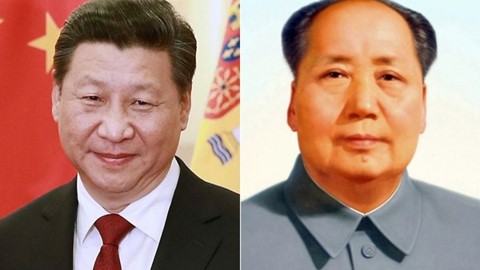



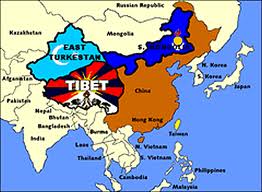

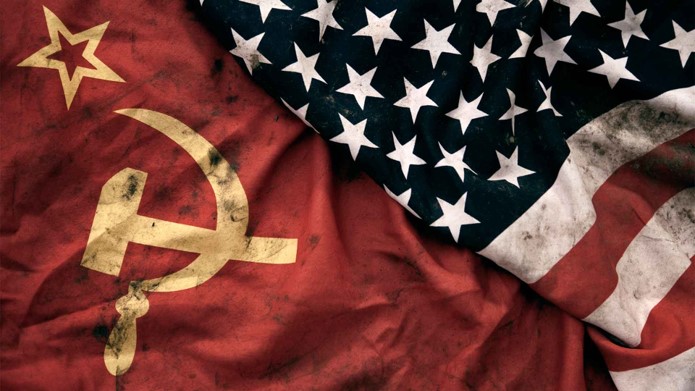

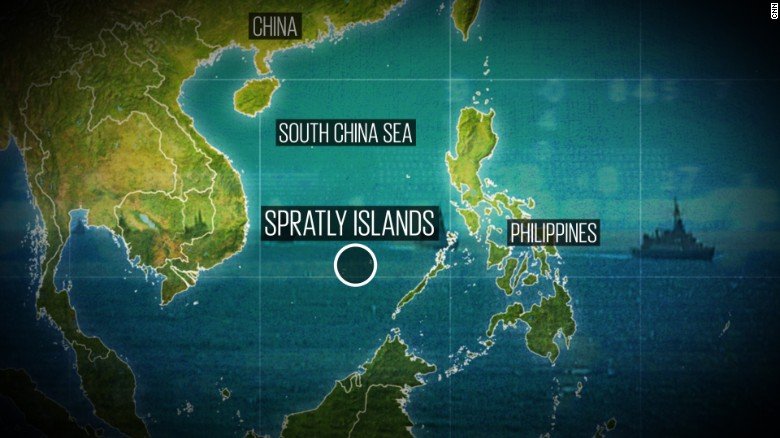

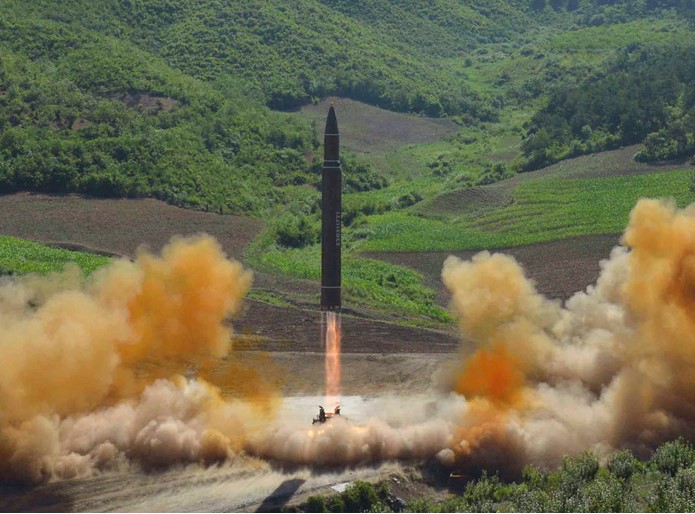

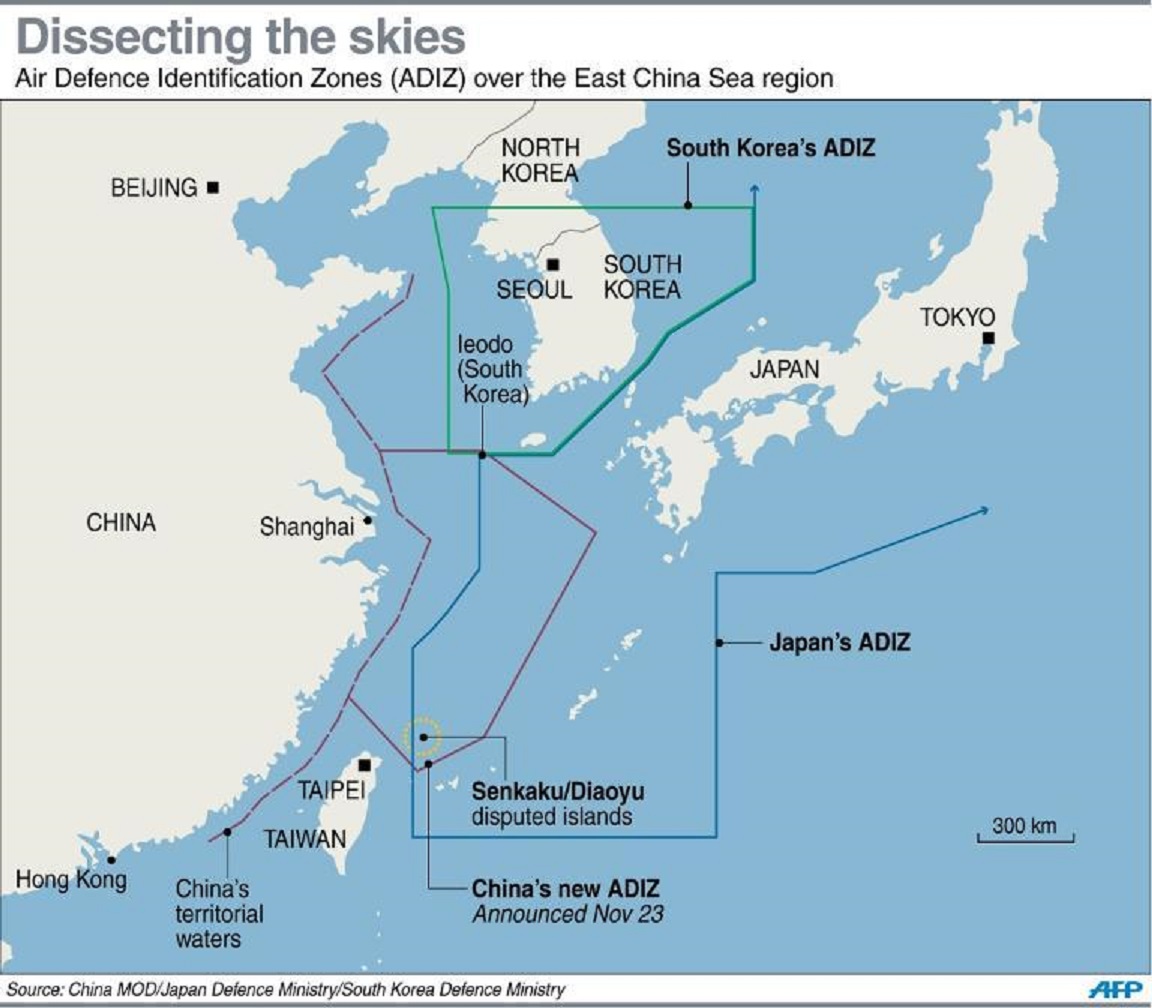
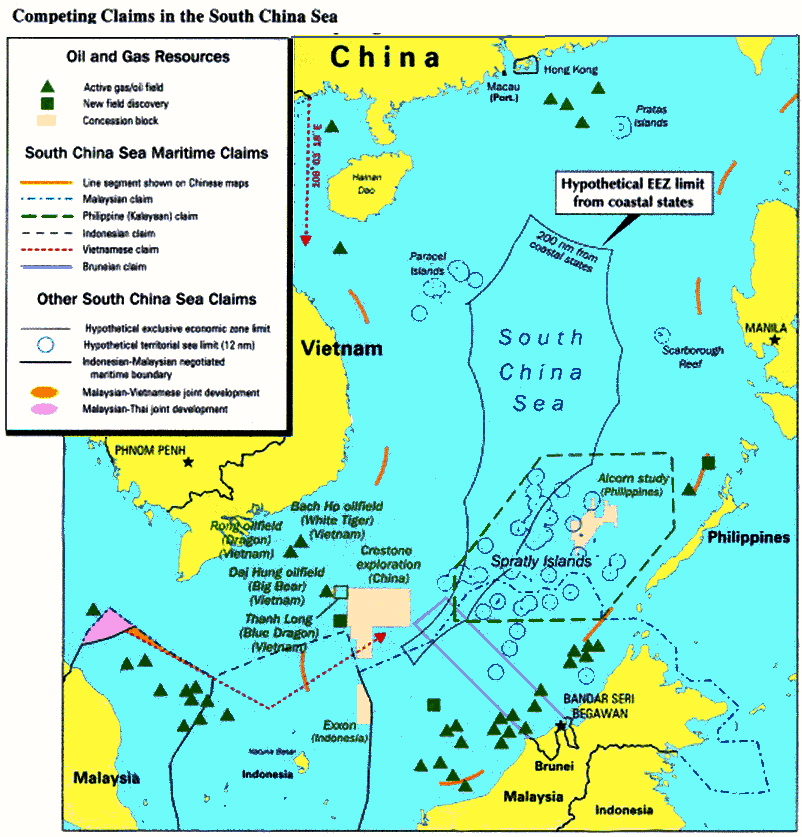
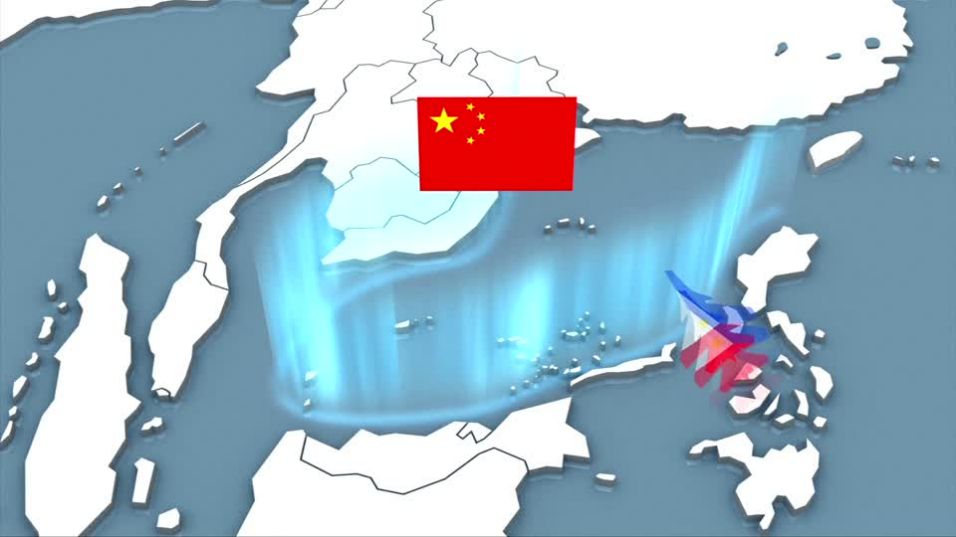





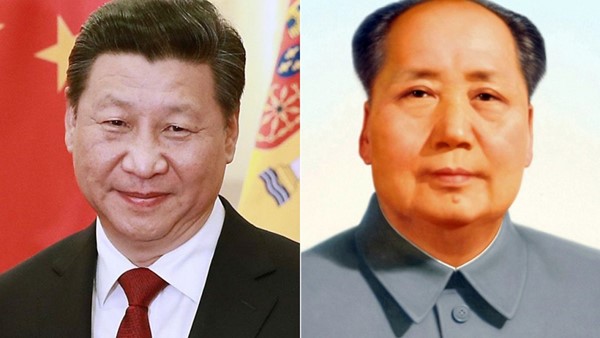
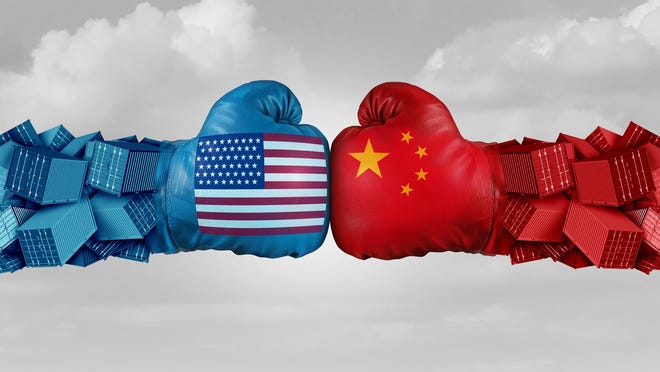

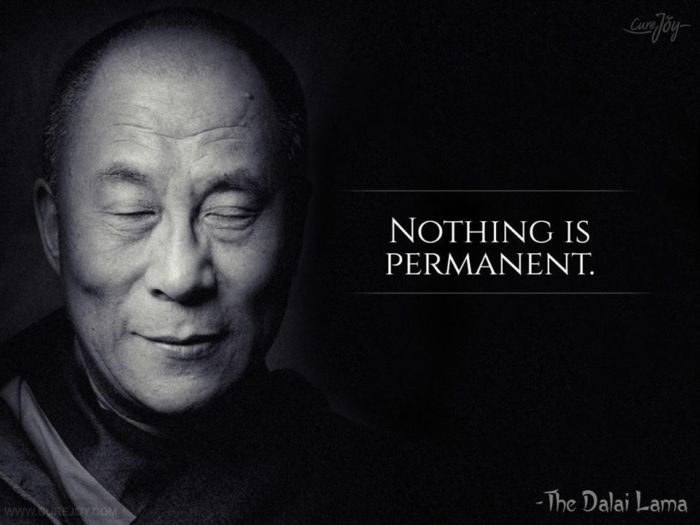

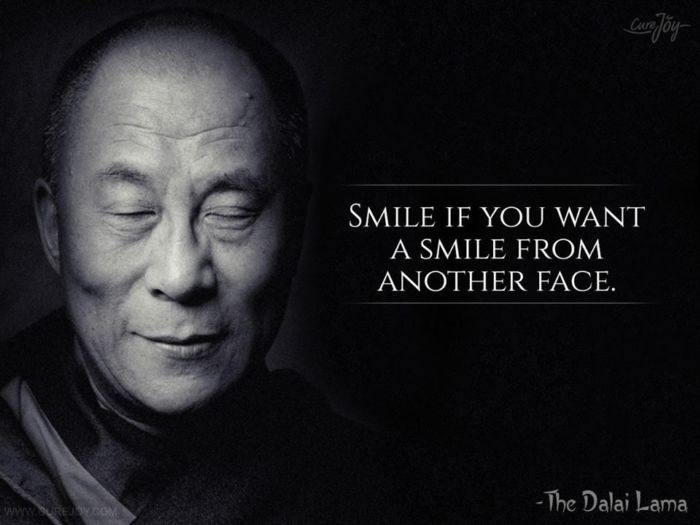

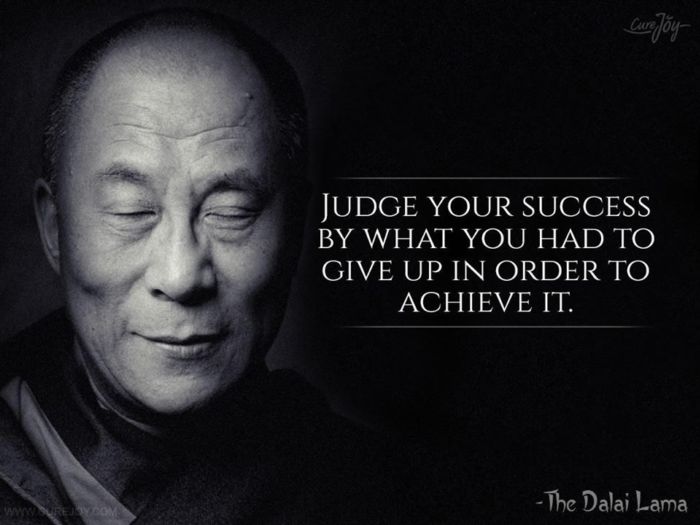








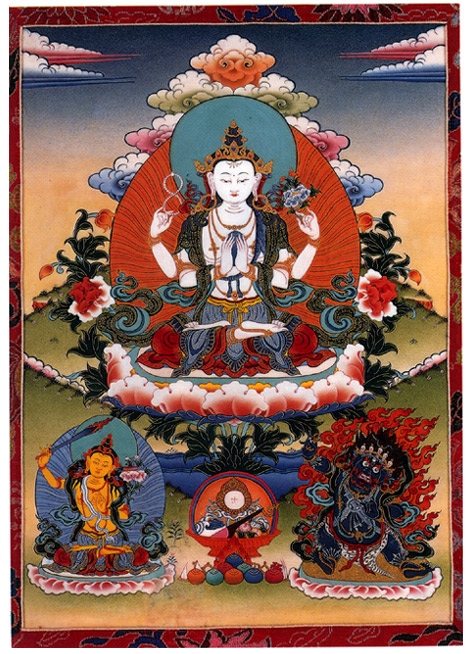



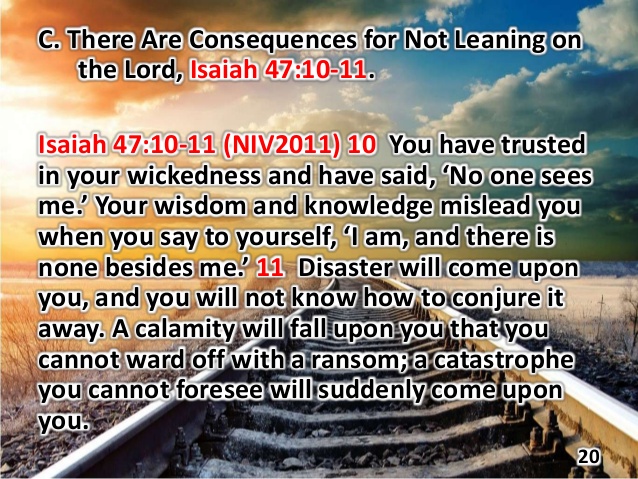


 Whole Dude - Whole Concept