DOOMED AMERICAN CHINA FANTASY – ONE BELT, ONE ROAD TO OPPRESSION

DOOMED AMERICAN CHINA FANTASY – ONE BELT, ONE ROAD TO OPPRESSION

DOOMED AMERICAN CHINA FANTASY – ONE BELT, ONE ROAD TO OPPRESSION.

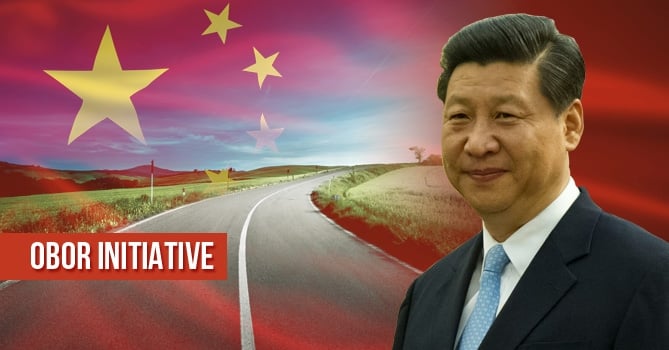
America’s participation in Red China’s One Belt, One Road Initiative accomplishes continued Occupation, Oppression, and Suppression in Tibet undermining American core values of Freedom, Peace, Democracy, and Natural Justice.

Rudranarasimham Rebbapragada
Ann Arbor, MI 48104-4162 USA
SPECIAL FRONTIER FORCE


Doomed American China Fantasy – One Belt, One Road to Oppression.


http://m.dailyhunt.in/news/india/english/oneindia-epaper-oneindia/us+u+turn+on+china+puts+india+in+a+fix-newsid-67592793?ss=twt&s=wi

US U-turn on China puts India in a fix

Doomed American China Fantasy – One Belt, One Road to Oppression.

In a step which could see India put under tremendous pressure, the United States of America has decided to take a U-Turn from its initial position and is set to participate in China’s One Belt, One Road (OBOR) initiative, being organised in Beijing.

The event, is to showcase and build momentum for its new 21st-century silk route, both land and maritime, and other similar initiatives which would lead to increasing connectivity with Asian and European countries and solidify its place in the world as a major trading partner.
In India, along with concerns over its sovereignty, it is also seen as a continuation of Chinese strategy of ‘strings of pearls’ which China uses to flex its muscle in India’s neighbourhood.

The step of the US has put India in a dilemma as the change in its stance is early signal that the Trump administration is reframing the US-China relationship, according to Jagannath Panda, from the Institute for Defense Studies and Analysis, New Delhi.

India, which is still undecided on whether to send its representatives to the event to be held this Sunday and Monday, maintains that China has not built an environment of trust to carry out the belt and road projects.

The country’s concerns on the Chinese project stem from what it perceives to be a lack of regard shown to issues raised by it that projects which are part of OBOR impinge its sovereignty.

For example, the China-Pakistan Economic Corridor, which is a part of the larger project, by which China is set to link the Xinjiang province with the Gwadar port in Pakistan and is to be built-in Balochistan, passes through Gilgit-Baltistan region which India claims as its own.

Concerns such as these have led to the serious thoughts whether to send representatives to the event or not and if yes, officials of what level are to attend. Reports have claimed that the country may be represented by junior embassy level officials.
The thinking is that even if it does not attend, it may not lead to any immediate material loss to it as OBOR is not a membership-based organisation, and may even get India praise in certain quarters for taking a principled stand.

Other than officials, academics from India may be present at the meet which is to see representation from over 50 countries including organisations such the World Bank.

The US has now decided to send senior representation to the event, with an inter-agency delegation led by Matthew Pottinger, a top adviser to the Trump administration and National Security Council senior director for East Asia to take part.

But many see it to be a trade-off between the country and China after the latter’s commitment to buy American beef as part of the Donald Trump’s 100-day plan’ agreement, and in return, the US will not only attend the event but also allow Chinese banks to expand their operation in the US.

The decision seems to be a direct result of the meeting between Trump and the Chinese President Xi Jinping when the Chinese leader visited the US last month. Chinese vice-finance minister Zhu Guangyao is reported to have said, ‘We welcome all countries to attend. And we welcome the United States’ attendance as the world’s largest economy.’

Out of the representatives of different countries, head of state’s of more than 29 countries are to be present for the programme. And now with the entry of the US into the fray, along with countries like Britain and Germany, China’s dominant position in the programme may be somewhat diluted.

Other countries that are taking part include Japan and South Korea, which have military differences with China, as well as other countries engaged in territorial disputes with China over the South China Sea issue, including Vietnam and Indonesia. Pakistan, Nepal and Sri Lanka will also take part.

China may be put under pressure on the issue of transparency as other developed countries may ask for more details related to its plans, and whether it would follow internationally accepted standards on environment and labour in the projects which include six economic corridors but have not seen any reliable map made available.

According to reports, Tom Miller, author of a recent book, China’s Asian Dream, said, ‘What actually gets built will depend on what deals Chinese companies or the government make with other countries, abroad or on the deals that the Chinese government makes with other governments abroad, and no one knows exactly what those are going to be.’

OneIndia News

Doomed American China Fantasy – One Belt, One Road to Oppression. On tibettruth.com
Doomed American China Fantasy – One Belt, One Road to Oppression. On forcechange.com


TIBET OCCUPATION – UNFORGOTTEN MEMORY – WORLD HISTORY’S WORST CRIME

TIBET OCCUPATION – UNFORGOTTEN MEMORY – WORLD HISTORY’S WORST CRIME AGAINST HUMANITY
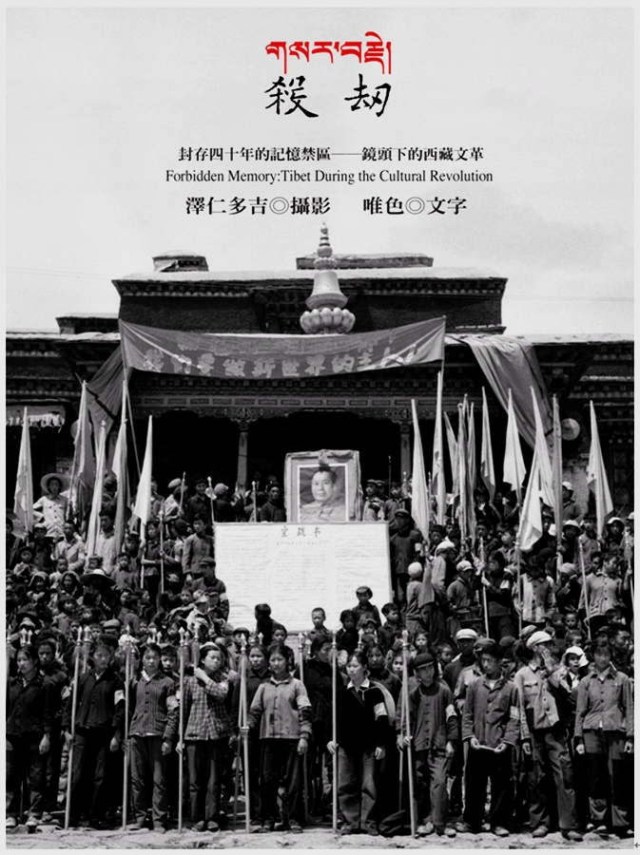
... 书奖)(Forbidden Memory:Tibet During the Cultural Revolution
Tibet Occupation – Unforgotten Memory – Crime Against Humanity. Thank You Tsering Woeser.
Evil Red Empire’s Tibet Occupation ranks as World History’s Worst Crime Against Humanity. I seek the appointment of an International War Crimes Tribunal to fully investigate Red China’s Tibet Occupation and the atrocities of ‘Cultural Revolution’ as Crimes Against Humanity. I warmly appreciate Ms. Tsering Woeser’s efforts to expose these Crimes.
 
 Rudranarasimham Rebbapragada
Ann Arbor, MI 48104-4162 USA
 
THE NEW YORK TIMES


The Cultural Revolution in Tibet: A Photographic Record

SINOSPHERE

By LUO SILING, OCT. 3, 2016
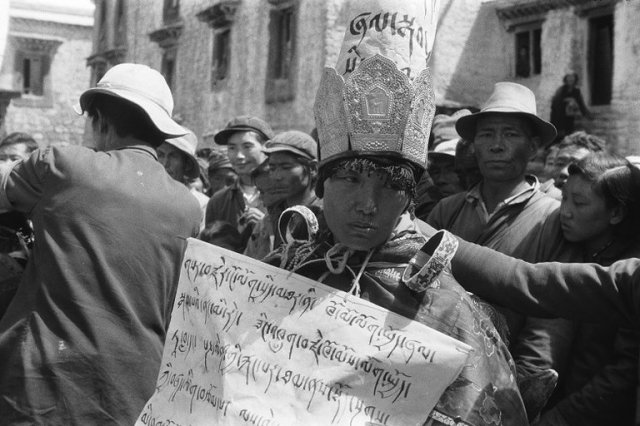
 
Tibet Occupation – Unforgotten Memory – Crime Against Humanity.


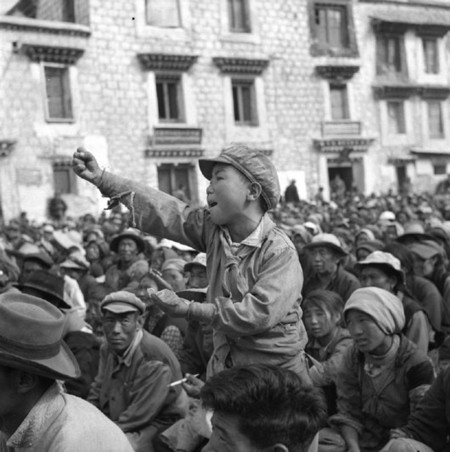
Tsering Woeser’s father, an officer in the People’s Liberation Army in Lhasa when the Cultural Revolution broke out in 1966, photographed many public attacks on Tibet’s old ruling class and religious leaders. Here, a Buddhist nun wears a sign labeling her as a counterrevolutionary. Credit Tsering Dorje

In 1999, the Tibetan writer Tsering Woeser came across Wang Lixiong’s book “Sky Burial: The Fate of Tibet.” On finishing it, she sent Mr. Wang photographs taken by her father, who was with the People’s Liberation Army when it entered Tibet in the 1950s and documented the early years of the Cultural Revolution in Lhasa in the 1960s. Mr. Wang wrote back, saying, “It’s not for me, as a non-Tibetan, to use these photos to reveal history. That task can only be yours.”

Ms. Woeser began tracking down and interviewing people who appeared in the photos. This resulted in two books published by Locus in Taiwan in 2006: “Forbidden Memory: Tibet During the Cultural Revolution,” based on her father’s photographs, and “Tibet Remembered,” an oral history narrated by 23 people who appear in them. Meanwhile, Ms. Woeser had begun taking her own photos, using her father’s camera, of the places he photographed. Many were included in a new edition of “Forbidden Memory,” published this year on the 50th anniversary of the start the Cultural Revolution.


The Cultural Revolution in Tibet: A Photographic Record - The New York ...
Tibet Occupation – Unforgotten Memory – Crime Against Humanity. Tsering Dorje before the Potala Palace in 1969.
Tsering Dorje standing before the Potala Palace in Lhasa in 1969, in a photograph provided by his daughter, Tsering Woeser.


Ms. Woeser was born in Lhasa in 1966 to a Tibetan mother and her father, Tsering Dorje, who was half Tibetan and half Han, the dominant ethnicity in China. But in 1970, her father, who had served as deputy commander of the Lhasa military district, was transferred to Sichuan Province. It wasn’t until 1990 that Ms. Woeser returned to Lhasa, where she became editor of the journal “Tibetan Literature.” In 2003, she published “Notes on Tibet,” a collection of essays and short stories that was soon banned by the Chinese government. She is now a freelance writer and poet based in Beijing with Mr. Wang, whom she married in 2004. In an interview, she discussed what she learned from her father’s photographs of Tibet’s experience of the Cultural Revolution.

How did your father manage to take these photos?

In 1950, Mao Zedong ordered the People’s Liberation Army into Tibet, and on the way it passed through my father’s hometown, Derge, which is in the present-day Garze Tibetan Autonomous Prefecture in Sichuan. At the time my father, who was only 13, was sent away by his Han father to enlist in the P.L.A. His mother was a local Tibetan. During the Cultural Revolution, my father served as an officer in the political department of the Tibet Military District. I suppose he was able to take photos because of his privileges as a P.L.A. officer.

It’s curious, however, that for all the photos that my father took, he was able to keep the photos and negatives. This certainly could not have happened if the army had assigned him to take the photos. This indicates that my father’s activity was not commissioned by the military.
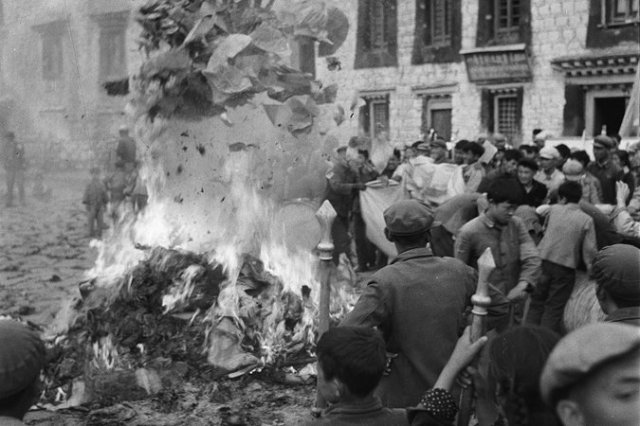
Tibet Occupation – Unforgotten Memory – Crime Against Humanity


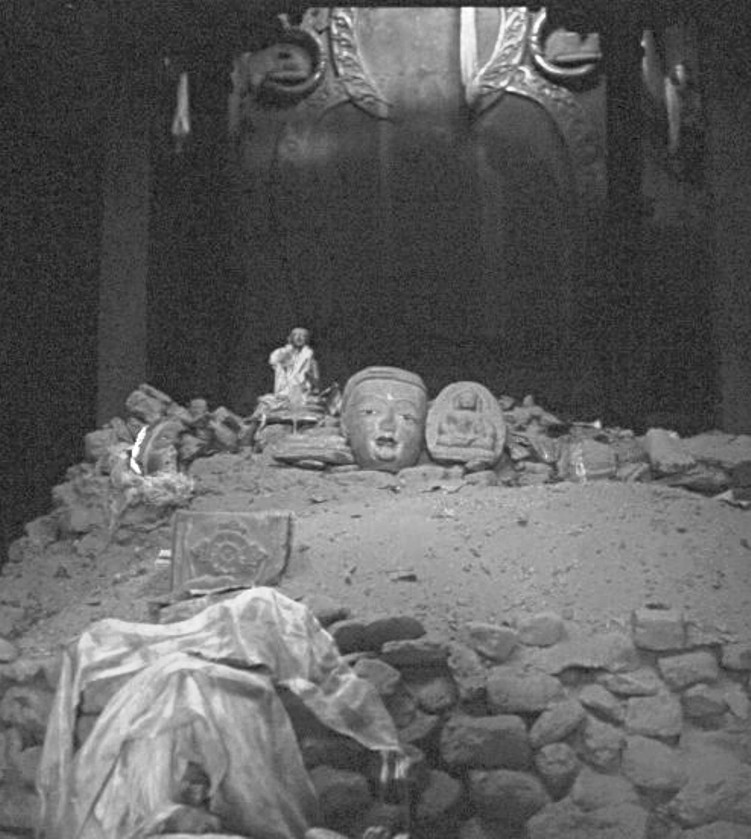
On Aug. 24, 1966, in Lhasa, Buddhist scriptures were burned as part of the campaign against the “Four Olds” – old customs, old culture, old habits, old ideas. Credit Tsering Dorje


Very few people had cameras then, and even fewer had the chance to take photos of public events. There were several media agencies active in Tibet then. They produced lots of documentaries, photos and reports. And yet in the newspapers and posters from then you can’t find any photos of ruined temples or “struggle sessions” against “counterrevolutionary monsters and demons.” I’ve looked at all the issues of Tibet Daily from 1966 to 1970 but can find no such photos.

What do your father’s photos show?

Mostly mass meetings and “incidents.” By mass meetings I mean large-scale gatherings such as the celebration by tens of thousands of Chairman Mao’s launching of the Cultural Revolution. Incidents include the destruction of temples and struggles against “monsters and demons.” The photos contain many identifiable figures including the Communist leaders of Tibet, the founder of the Tibetan Red Guards, individual Red Guards, as well as nobles, clergy and officials of the old Tibet society who were targeted in “struggle sessions.” In my investigations most of my efforts were focused on these people, because it’s through them that the photos have their greatest value. Over six years, I interviewed about 70 people in the photos.

How do your photographs and your father’s, taken in the same locations, differ?

In 1966 and 1967, my father took photos of mass meetings and rallies of Red Guards and the P.L.A. in front of the Potala Palace. In 2012, when I went to the same place to take photos, two self-immolations by Tibetans had taken place in Lhasa that May. As a result, the government tightened its policy of ethnic segregation and took more security measures against Tibetans, especially those from outside Lhasa. The measures were first implemented in March 2008, when protests broke out across the Tibetan region, and became more severe in 2012. As I took my photos, I noticed a curious phenomenon: the palace square was filled with men in black. They had umbrellas on their backs, which they would use to block people from taking pictures if an incident broke out. They lined up in rows and monitored the people passing by. They prohibited anyone from sitting in the square.

The Cultural Revolution in Tibet: A Photographic Record - The New York ...
Tibet Occupation – Unforgotten Memory – Crime Against Humanity. Tsering Woeser in Lhasa with her father’s camera.
Tsering Woeser, with her father’s camera, in Lhasa in 2013. Credit Pazu Kong


Another example: In 2014, I was standing where my father had taken photos in front of the Jokhang Temple. What did he see back then? Red Guards trying to hang Chairman Mao’s portrait on the roof of the temple, where the Chinese flag was also planted. Though I didn’t see any Mao portraits there, the flag was waving in the same place. Also, there were quite a few believers kneeling and praying, as well as a crowd of tourists fascinated by their actions. On the roof of a house diagonally across from the temple there were sharpshooters from the armed police. Ever since 2008, sharpshooters have been deployed on the roofs of buildings around the temple.

Comparing today with the Cultural Revolution, there were no believers kneeling back then, and the temple was ruined, while today the temple offers a bustling scene where believers may freely worship. But these are only superficial differences. Religious worship is still strictly controlled. Furthermore, there is now commercialized tourism, with gawking tourists who treat Tibetans like exotic decorations and Lhasa as a theme park.

Who was the founder of the Lhasa Red Guards?

Tao Changsong, born in Yangzhou, Jiangsu Province. In 1960, he graduated from East China Normal University and volunteered to move to Tibet, where he became a teacher of Chinese at Lhasa Middle School. During the Cultural Revolution he was the main force behind the creation of the Lhasa Red Guards, as well as commander of the Lhasa Revolutionary Rebels Headquarters. When the Revolutionary Committee of the Tibet Autonomous Region was formed, he became its deputy director, a position equivalent to vice chairman of the Tibet Autonomous Region today. He also went to Beijing many times and met with Zhou Enlai, Jiang Qing and other key members of the Central Revolutionary Committee. In 2001, I interviewed him twice. I didn’t show him my father’s photos, assuming he might not tell me the story if he saw them, since he appears in one. It shows him at the Dalai Lama’s summer palace, the Norbulingka, leading a team of Red Guards hanging up a poster on which is written “People’s Park.”

The Cultural Revolution in Tibet: A Photographic Record - The New York ...
Tibet Occupation – Unforgotten Memory – Crime Against Humanity.
A public rally in Lhasa to force “monsters and demons” to confess their failings. Credit Tsering Dorje


There were two “rebel factions” in Lhasa during the Cultural Revolution. One was the Revolutionary Rebels Headquarters. The other was the Great Alliance of Proletarian Revolutionaries Command, or Great Alliance Command for short. The two fought each other for power. In the later period of the Cultural Revolution, the Headquarters faction lost ground, while the other faction achieved total control, and retained it even after the Cultural Revolution [which ended in 1976]. Headquarters members were purged from the party. Tao Changsong was investigated on suspicion of belonging to the “three types of people” – “people who followed the Lin Biao-Jiang Qing counterrevolutionary faction,” “people with a strong factionalist bent” and “people who engaged in looting and robbery.” After the mid-1980s, he worked at the Tibetan Academy of Social Sciences and served as assistant editor of the journal “Tibet Studies” and as deputy director of the Modern Tibetan Research Institute. Now he’s retired and lives in Chengdu and Lhasa, where he is in good standing with the government.

Mr. Tao is a lively talker with a sharp memory. He also showed his cautious side when he began having difficulty answering my questions about the Red Guards’ campaign against the “Four Olds” at the Jokhang Temple. The statement in his account that left the deepest impression on me concerned the P.L.A.’s crackdown on “second rebels” [Tibetans who revolted in 1969]. He said: “The Tibetans are too simple-minded. If you execute them they say, ‘Thank you.’ If you give them 200 renminbi they also say, ‘Thank you.’ ”

Tibet was an exception to the general practice of purging the “three types of people” after the Cultural Revolution. In Tibet there were few purges of that kind. When Hu Yaobang came to Lhasa in 1980, he put an end to the purging of the “three types.” Why? Because there were many Tibetans among them. Hu thought if you purged them, the party wouldn’t be able to find reliable agents among local Tibetans. So the party couldn’t purge them. And some of them not only were shielded from purges but even received promotions. As a result, the people who rose in power during the Cultural Revolution still dominate Tibet, whether Tibetan or Han.

Tibet Occupation – Unforgotten Memory – Crime Against Humanity.


Two Red Guards in Lhasa in 1966. Credit Tsering Dorje


Tell us about the people in the photographs who were victims of the struggle sessions.

There were about 40 of them. They belonged to a variety of professions in the old Tibet: monks, officials, merchants, physicians, officers, estate overlords and so on. The settings included struggle sessions at mass assemblies, in the streets and at local neighborhood committees that methodically conducted their sessions by turns. The time frame was from August to September 1966. After that, the division between the factions led each to conduct its own separate struggle sessions. The people attacked in these sessions were incorporated into the “monsters and demons” unit, where they were ordered to attend long-term labor and study sessions at their assigned neighborhood committee.

What’s most interesting about these victims is that most were members of the upper class whom the Communist Party from the 1950s to the eve of the Cultural Revolution had designated as “targets to be won over.” And since they did not follow the Dalai Lama and flee the country during the 1959 uprising, the party rewarded them with many privileges. In other words, they were partners of the party. One of them, a monk, even served as an informant for the military.

But after the Cultural Revolution began they were labeled “monsters and demons” and suffered humiliating attacks. In the end they were overtaken by madness, illness and death. Some died during the Cultural Revolution, others afterward. Most of the victims died. Of the few who survived, some went abroad. Some, however, remained in Tibet, where they took up the party’s offer and joined the system to regain their high status. Today these people are found in the Chinese People’s Political Consultative Conference, the National People’s Congress and the Buddhist Association, where they fulfill ceremonial functions needed by the party.
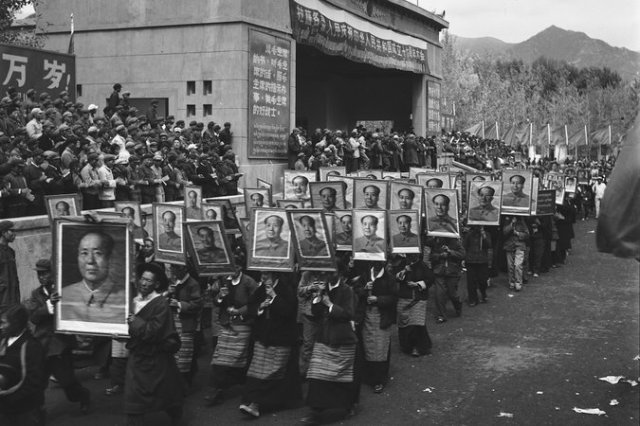
Tibet Occupation – Unforgotten Memory – Crime Against Humanity.


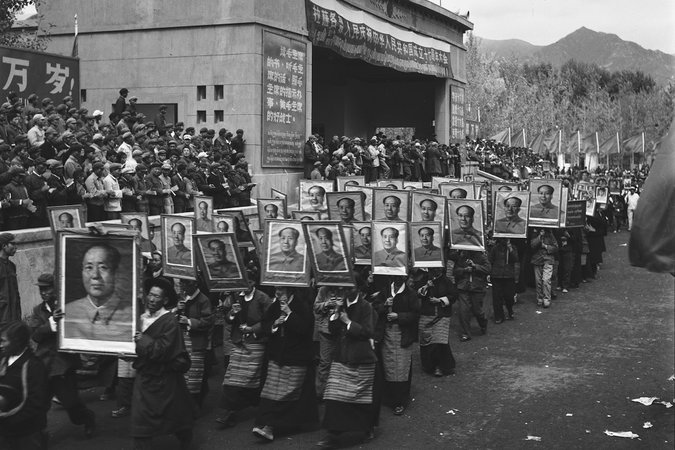
A National Day celebration on Oct. 1, 1966, in Lhasa marking the anniversary of the founding of the People’s Republic of China. Credit Tsering Dorje


Given the fate of most of the victims, the people I interviewed were mostly their relatives, or in some cases the disciples of victimized monks. They told me so many stories.

Such as?

Tibet Occupation – Unforgotten Memory – Crime Against Humanity.
Sampho Tsewang Rinzin, from one of the most renowned noble families in Tibet. Sampho began working with the Party in the 1950s and benefited from that. But he was cruelly struggled against during the Cultural Revolution, as you can see in the photos. The Red Guards who were beating him made him wear the uniform of a Senior Minister in the Tibetan Government, which as much as it made him look splendid, brought him so much humiliation and stripped him of all dignity, so that in the end he was sobbing in front of everyone. He died soon after this.
Then there was the “female living Buddha” – an erroneous term; we call them rinpoche – Samding Dorje Phagmo Dechen Chodron. Historically there have been very few female living Buddhas in Tibet. She was the most famous. In 1959 she followed the Dalai Lama and escaped to India. But she was persuaded by party cadres to return to Tibet and was held up as a patriot who had “resolved to shun the darkness and embrace the light.” She even met with Mao. After the Cultural Revolution started she was labeled a “monster and demon” and humiliated at struggle sessions.

 
The Female Living Buddha and her parents were
Tibet Occupation – Unforgotten Memory – Crime Against Humanity.

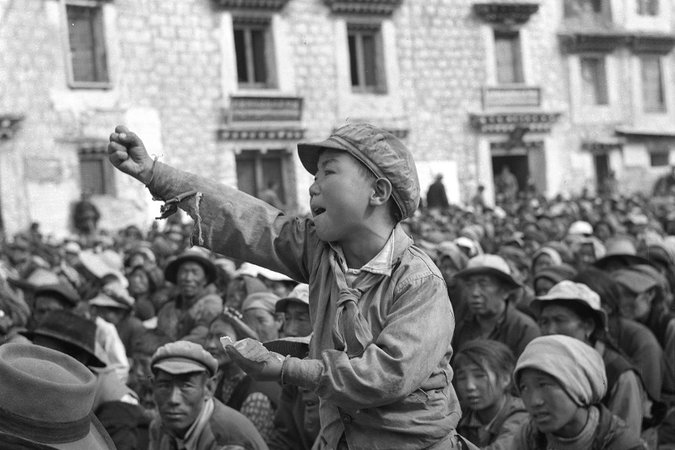
Ngawang Gelek, a member of the Little Red Guards, which replaced the Young Pioneers children’s organization during the Cultural Revolution, at a rally in Lhasa. He later became a militia commander and eventually a devout Buddhist. Credit Tsering Dorje.
 
In the photo where she is shown being beaten, she was only 24. She was weak then, because she had recently given birth to her third child. Her husband was the son of the great Lhasa nobleman Kashopa. The couple eventually divorced. It was her ex-husband who told me about her experiences as well as those of her parents after I showed him the photos.

Today, Dorje Phagmo is vice chairwoman of the Tibetan Autonomous Region and a member of the Chinese People’s Political Consultative Conference Standing Committee. She often appears on television attending various conferences.

Did you interview the Red Guards in the photos?

In one of my father’s photos there is a female activist, a quite vicious one during the Cultural Revolution. She once led a team to ransack a house where she not only seized the owner’s property but set fire to manuscripts bequeathed to the owner by the great Tibetan scholar Gendun Choephel. A Tibetan scholar called this a major crime against Tibetan history and culture. Later this woman became party secretary at the Wabaling neighborhood committee. When I found her there, she looked quite insignificant. As soon as I brought up the Cultural Revolution, her facial expression immediately changed. She refused to give an interview or let me take her photo.

There was also a former monk I interviewed who had smashed Buddhist stupas and burned scriptures during the Cultural Revolution. Afterward, he volunteered to be a janitor at the Jokhang Temple and worked there for 17 years. He told me: “If it weren’t for the Cultural Revolution, I think I would have lived my entire life as a good monk. I would have worn monk’s robes. The temples would still be there. Inside the temples I would have devotedly read scriptures. But the Cultural Revolution came. The robes could no longer be worn. Though I have never looked for a woman or abandoned monastic life, I am not fit to wear the robes again. This is the most painful thing in my life.”

Follow Luo Siling on Twitter @luosiling.

This article was adapted from a three-part interview in the Chinese-language site of The New York Times.

© 2016 The New York Times Company


Cultural Revolution and its effects: Tsaparang, LhakangMarpo / Lhasa ...
Tibet Occupation – Unforgotten Memory – Crime Against Humanity.

 
on Tibet
TIBET OCCUPATION – UNFORGOTTEN MEMORY – CRIME AGAINST HUMANITY. AUTHOR OF FORBIDDEN MEMORY – CULTURAL REVOLUTION IN TIBET Ms. TSERING WOESER.


... titled 'Revisiting the cultural revolution in Tibet' held [Video
TIBET OCCUPATION – UNFORGOTTEN MEMORY – CRIME AGAINST HUMANITY

 
photos_uncategorized_2007_04_13_tibet_cultural_revolution_2-tm
TIBET OCCUPATION – UNFORGOTTEN MEMORY – CRIME AGAINST HUMANITY


Whole Trouble – Stop the Cultural Genocide in Tibet

Trouble in Tibet – Stop the Cultural Genocide

TROUBLE IN TIBET - STOP THE CULTURAL GENOCIDE.
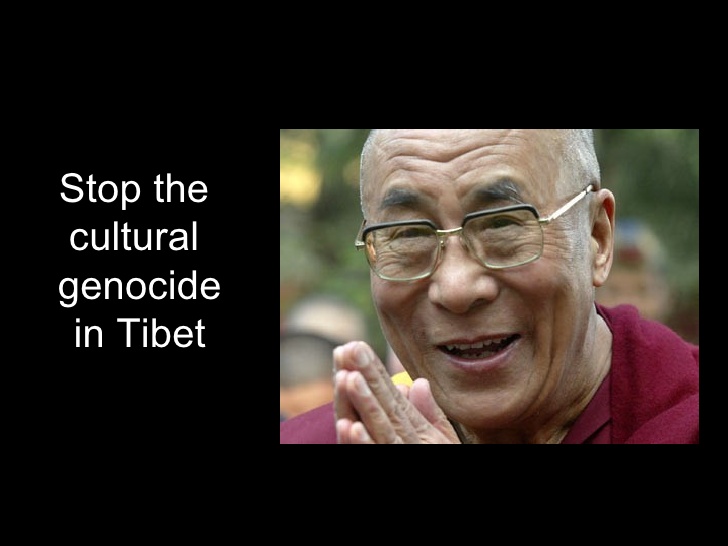
TROUBLE IN TIBET – STOP THE CULTURAL GENOCIDE. Disorienting social and economic change is under way in Tibet. The exiled Dalai Lama accuses China of “cultural genocide” (monasteries are being harassed, and in some parts of the plateau Chinese-language education erodes traditional ways).

The Exiled Supreme Ruler of Tibet His Holiness the 14th Dalai Lama expressed deep concern about Cultural Genocide in Occupied Tibet.

TROUBLE IN TIBET – STOP THE CULTURAL GENOCIDE: Disorienting social and economic change is under way in Tibet. The exiled Dalai Lama accuses China of “cultural genocide” (monasteries are being harassed, and in some parts of the plateau Chinese-language education erodes traditional ways).

UNPACIFIED PLATEAU: TIBET

Disorienting social and economic change is under way in Tibet. The exiled Dalai Lama accuses China of “cultural genocide” (monasteries are being harassed, and in some parts of the plateau Chinese-language education erodes traditional ways).

Government infrastructure investment in the Tibetan Autonomous Region has spurred mass tourism, but Tibetan resentment at missing out on tourism – and construction-related jobs was a big cause of rioting in Lhasa and elsewhere in 2008. Nor do the 6 million Tibetans (seen as troublemakers by China) migrate much to places with more opportunities: only around 1% have settled outside the plateau. The few private-sector jobs in Tibet mostly go to Han Chinese, so educated Tibetans mostly work for the government. The Chinese name for Tibet, Xizang, means “western treasure house” but Tibetans have little share in its spoils.

Disorienting social and economic change is under way in Tibet. The exiled Dalai Lama accuses China of “cultural genocide” (monasteries are being harassed, and in some parts of the plateau Chinese-language education erodes traditional ways).

Whole Trouble – A Total Wake-Up Call for Regime Change in Tibet

Trouble in Tibet – Regime Change through Meditation

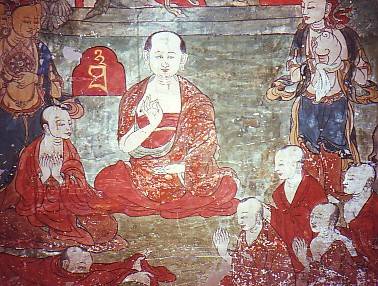
Whole Trouble – A Total Wake-Up Call for Regime Change in Tibet. How to change the Regime in Occupied Tibet? The Role of Meditation. The Great Masters of Nalanda. Acharya Kamalashila explained Three Stages of Meditation.

The problem of military occupation in Tibet needs resolution which demands a ‘Regime Change’. If military occupation poses problem, it exists outside the mind of a person experiencing the problem of occupation. Meditation may bring about some change in electrical activity of the brain and that change in activity can only be experienced by the person who practices meditation. However, there is no reason to suggest or expect any change in electrical activity of brain of a person who imposes the burden called military occupation. Can I hope to change the mental activity of Red China’s President through the practice of very rigorous meditation?

Meditation helps to bring Regime Change if the practitioner of meditation takes full advantage of changes in the electrical activity of his brain induced by the practice of meditation to perform specific physical actions to vacate the problem of occupation by evicting the Occupier.

Trouble in Tibet – Regime Change through Meditation. Can I hope to change the mental activity of Red China’s President through the practice of very rigorous meditation?

“Since you cannot tame the minds of others, until you have tamed your own, begin by taming your own mind.” – Acharya Atisha.

Neuroscientist Richie Davidson Says Dalai Lama Gave Him ‘a Total Wake-Up Call’ that Changed His Research Forever

By Lauren Effron

Jul 27, 2016, 2:00 PM ET

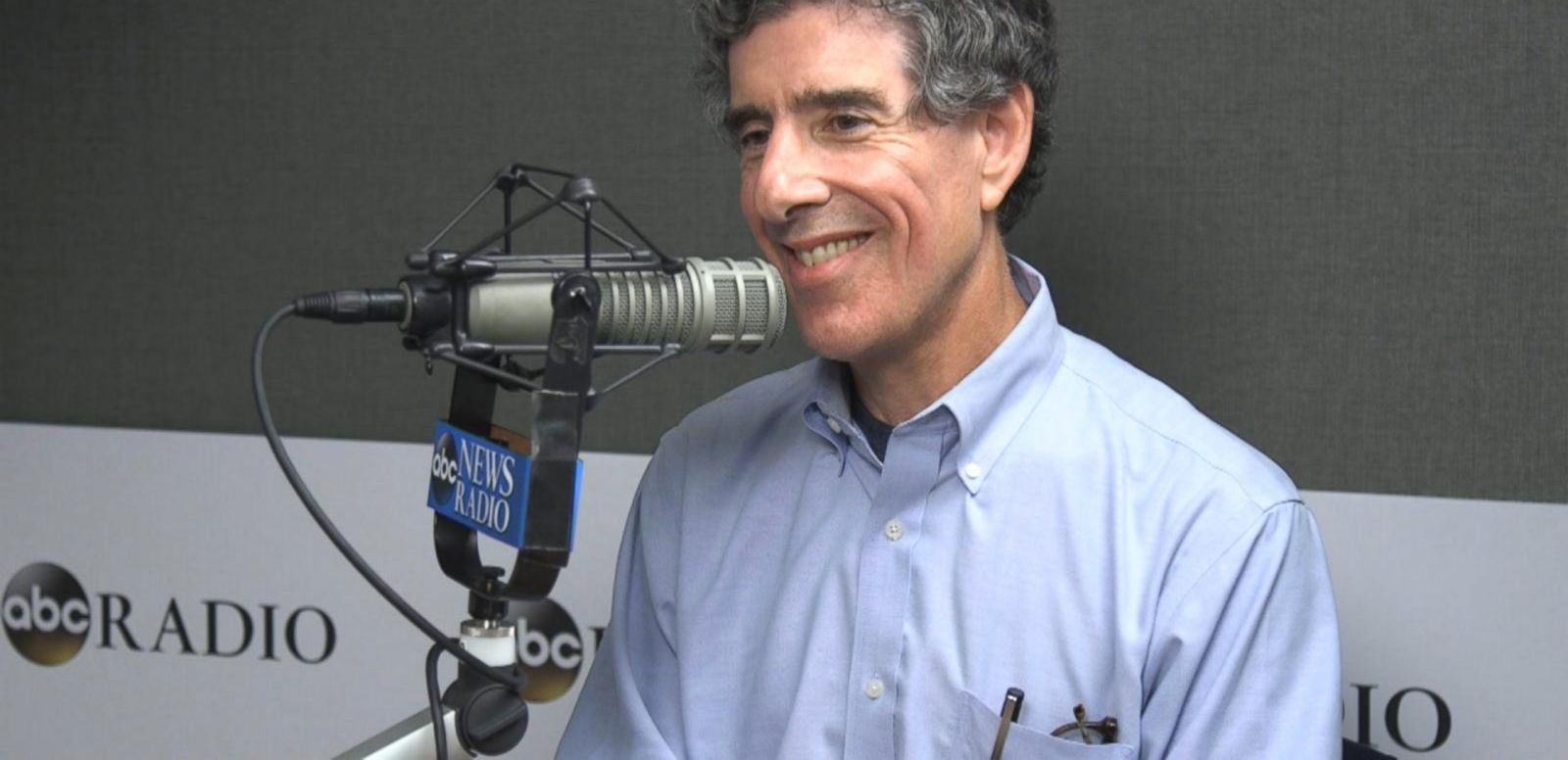
TROUBLE IN TIBET – REGIME CHANGE THROUGH MEDITATION. Dr. RICHIE DAVIDSON, NEUROSCIENTIST INVESTIGATES EFFECTS OF MEDITATION ON HUMAN BRAIN.

Dr. Richie Davidson, a neuroscientist at the University of Wisconsin-Madison, has been meditating for more than 40 years, but it was the Dalai Lama himself who convinced him to dedicate his life to researching the effects of meditation on the brain.

“He challenged me, saying, ‘You’ve been using the tools of modern neuroscience to mostly study anxiety, depression and fear, all these negative feelings. Why can’t you use these same tools to study qualities like kindness and compassion and equanimity?’ And I didn’t have a very good answer for him,” Davidson said. “It was a total wake-up call for me and really was a pivotal catalyst.”

Davidson, who founded the Center for Healthy Minds, met the Dalai Lama in 1992 and has since gone on to conduct multiple studies on mindfulness, compassion and cognitive therapy training. He talked about his research and personal meditation practice with ABC News’ Dan Harris for his “10% Happier” live stream/podcast show.

Early in his career, Davidson said he “became a closet meditator and didn’t talk to any of my colleagues about my interest in meditation … [the Dalai Lama] played a major role in me coming out of the closet and encouraging serious scientific research in this area.”

His relationship with His Holiness led to Davidson and his colleagues to conduct a study a few years ago looking at the brain scans of Buddhist monks as they meditated. The Dalai Lama had granted permission for his monks to have their brains studied at the University of Wisconsin-Madison, home to one of the most renowned brain labs in the world.

Davidson’s team flew in monks from Tibet and Nepal for the study and asked them to meditate while undergoing EEG, MRI and FMRI (functional magnetic resonance imaging) scans. When they first looked at the scans, Davidson said the results were so shocking, he thought the equipment was malfunctioning.

“What we saw in these individuals, not a burst of gamma, but a long duration [of activity] for minutes while they were meditating, which is crazy,” Davidson said. “This had never been seen in a human brain before.” Typically in an “untrained mind,” Davidson said, a burst of activity would last for about one second, but the monks could sustain it.
“And [they] can turn it on pretty much at will,” he said. “Any of us can have it and we may not be able to sustain it, that’s the difference … a thought will come into our mind and we’ll get lost in it for a few minutes, and so the ability to sustain it I think really requires much more practice.”

As a scientist, Davidson has been criticized in the past for his close relationship with the Dalai Lama, a religious figure. Davidson also has been questioned about whether he is biased toward a certain outcome in his research because he has been practicing meditation for decades. But Davidson argued that his personal practice and the Dalai Lama’s support are beneficial to his work.

“I understand the concern and really my push back is simply that we are trying to do the science at the highest possible level with the most integrity,” Davidson said. “And I actually believe that if you’re going to study meditation scientifically then you’ve got to meditate yourself…. It would be like telling a cardiologist that they can’t do any physical exercise for the rest of their active career because they’re biased.”

Every morning, Davidson said he will do a period of meditation and then take two to three minutes to scan his calendar for meetings. Then for a few seconds, Davidson said he pauses to reflect on how he can bring “the right stuff” to each meeting in order to “be present and be most helpful.”

“I can go through a day where I have 10 straight hours of meetings and at the end of that period feel totally nourished and refreshed,” he said.

His advice for those who want to start meditating was to commit to a daily practice for at least 30 days, but set a reasonable amount of time.

“There are published studies which show as little as eight minutes of meditation can actually produce a measurable objective change, but again it says nothing about how long these changes will last,” Davidson said. “It doesn’t matter how small that number is, but do it every day.”

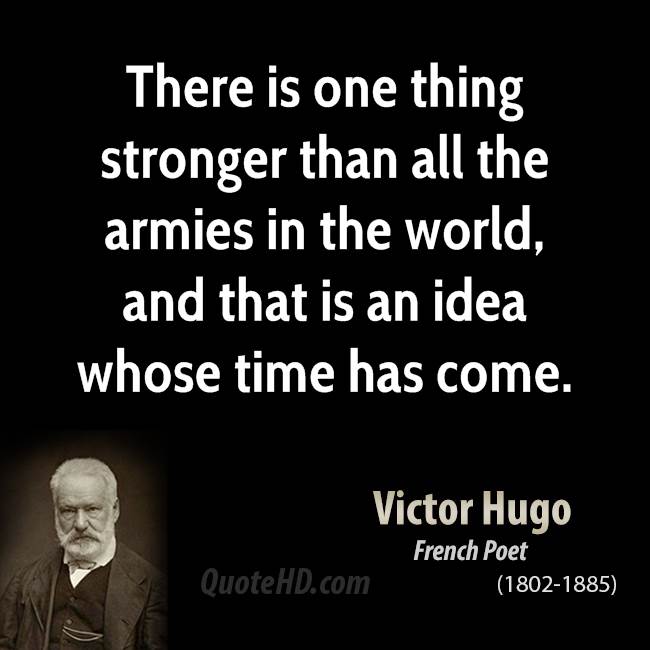
Whole Trouble – A Total Wake-Up Call for Regime Change in Tibet. How to change the Regime in Occupied Tibet? Tibetan Resistance: The Doctrine and the Philosophy of Tibetan Resistance to China’s War of Occupation is based on the Force or Power of an Idea that concludes that the Enemy has no Power over your Mind and the Enemy cannot exercise authority over your Mind. Resistance begins when man sets his Mind Free. Resistance is Freedom in Action without any sense of Fear.
Whole Trouble – A Total Wake-Up Call for Regime Change in Tibet. How to change the Regime in Occupied Tibet? Tibetan Resistance: The Doctrine and the Philosophy of Tibetan Resistance to China’s War of Occupation is based on the Force or Power of an Idea that concludes that the Enemy has no Power over your Mind and the Enemy cannot exercise authority over your Mind. Resistance begins when man sets his Mind Free. Resistance is Freedom in Action without any sense of Fear. Great Masters of Nalanda. Acharya Atisha.

Whole Trouble – The Legacy of the Biggest Mass Murderer of the World

Trouble in Tibet – The Legacy of the Biggest Mass Murderer of the World

TROUBLE IN TIBET – LEGACY OF THE BIGGEST MASS MURDERER OF THE WORLD.

Trouble in Tibet stands for Legacy of the Biggest Mass Murderer of the world. It is not a past historical event. His Legacy is alive today for the Monster that he created lives in pursuit of the Doctrine of Expansionism.

The Washington Post

Remembering the biggest mass murder in the history of the world

BY ILYA SOMIN AUGUST 03

Victims of the Great Leap Forward.
Remembering the biggest mass murder in the history of the world. Chinese peasants suffering from the effects of the Great Leap Forward.

Chinese peasants suffering from the effects of the Great Leap Forward.

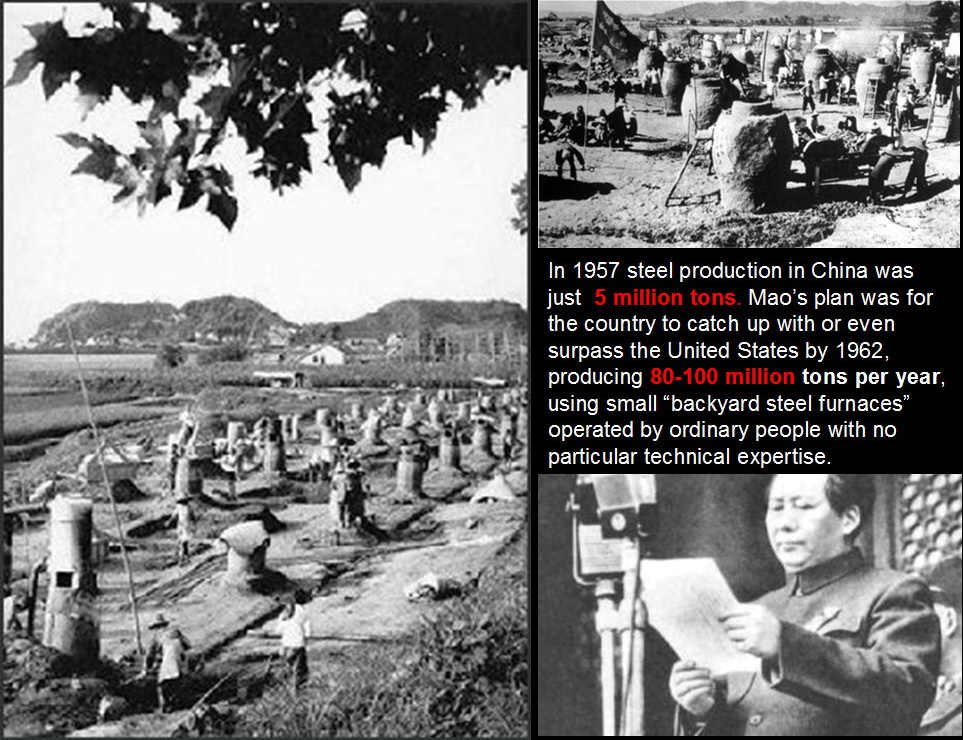
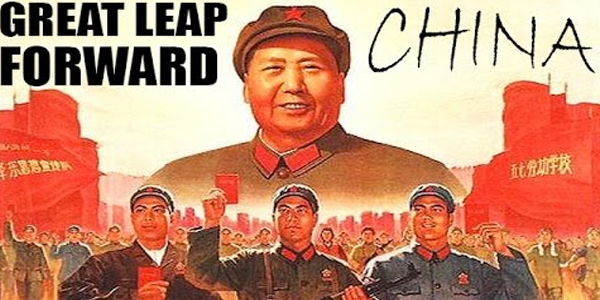
Who was the biggest mass murderer in the history of the world? Most people probably assume that the answer is Adolf Hitler, architect of the Holocaust. Others might guess Soviet dictator Joseph Stalin, who may indeed have managed to kill even more innocent people than Hitler did, many of them as part of a terror famine that likely took more lives than the Holocaust. But both Hitler and Stalin were outdone by Mao Zedong. From 1958 to 1962, his Great Leap Forward policy led to the deaths of up to 45 million people – easily making it the biggest episode of mass murder ever recorded.
Historian Frank Dikötter, author of the important book Mao’s Great Famine recently published an article in History Today, summarizing what happened:

Mao thought that he could catapult his country past its competitors by herding villagers across the country into giant people’s communes. In pursuit of a Utopian paradise, everything was collectivised. People had their work, homes, land, belongings and livelihoods taken from them. In collective canteens, food, distributed by the spoonful according to merit, became a weapon used to force people to follow the party’s every dictate. As incentives to work were removed, coercion and violence were used instead to compel famished farmers to perform labour on poorly planned irrigation projects while fields were neglected.

A catastrophe of gargantuan proportions ensued. Extrapolating from published population statistics, historians have speculated that tens of millions of people died of starvation. But the true dimensions of what happened are only now coming to light thanks to the meticulous reports the party itself compiled during the famine….
What comes out of this massive and detailed dossier is a tale of horror in which Mao emerges as one of the greatest mass murderers in history, responsible for the deaths of at least 45 million people between 1958 and 1962. It is not merely the extent of the catastrophe that dwarfs earlier estimates, but also the manner in which many people died: between two and three million victims were tortured to death or summarily killed, often for the slightest infraction. When a boy stole a handful of grain in a Hunan village, local boss Xiong Dechang forced his father to bury him alive. The father died of grief a few days later. The case of Wang Ziyou was reported to the central leadership: one of his ears was chopped off, his legs were tied with iron wire, a ten kilogram stone was dropped on his back and then he was branded with a sizzling tool – punishment for digging up a potato.

The basic facts of the Great Leap Forward have long been known to scholars. Dikötter’s work is noteworthy for demonstrating that the number of victims may have been even greater than previously thought, and that the mass murder was more clearly intentional on Mao’s part, and included large numbers of victims who were executed or tortured, as opposed to “merely” starved to death. Even the previously standard estimates of 30 million or more,would still make this the greatest mass murder in history.

While the horrors of the Great Leap Forward are well known to experts on communism and Chinese history, they are rarely remembered by ordinary people outside China, and has had only a modest cultural impact. When Westerners think of the great evils of world history, they rarely think of this one. In contrast to the numerous books, movies, museums, and and remembrance days dedicated to the Holocaust, we make little effort to recall the Great Leap Forward, or to make sure that society has learned its lessons. When we vow “never again,” we don’t often recall that it should apply to this type of atrocity, as well as those motivated by racism or antisemitism.

The fact that Mao’s atrocities resulted in many more deaths than those of Hitler does not necessarily mean he was the more evil of the two. The greater death toll is partly the result of the fact that Mao ruled over a much larger population for a much longer time. I lost several relatives in the Holocaust myself, and have no wish to diminish its significance. But the vast scale of Chinese communist atrocities puts them in the same general ballpark. At the very least, they deserve far more recognition than they currently receive.

I. Why We so Rarely Look Back on the Great Leap Forward

What accounts for this neglect? One possible answer is that the most of the victims were Chinese peasants – people who are culturally and socially distant from the Western intellectuals and media figures who have the greatest influence over our historical consciousness and popular culture. As a general rule, it is easier to empathize with victims who seem similar to ourselves.

But an even bigger factor in our relative neglect of the Great Leap Forward is that it is part of the general tendency to downplay crimes committed by communist regimes, as opposed to right-wing authoritarians. Unlike in the days of Mao, today very few western intellectuals actually sympathize with communism. But many are reluctant to fully accept what a great evil it was, fearful – perhaps – that other left-wing causes might be tainted by association.

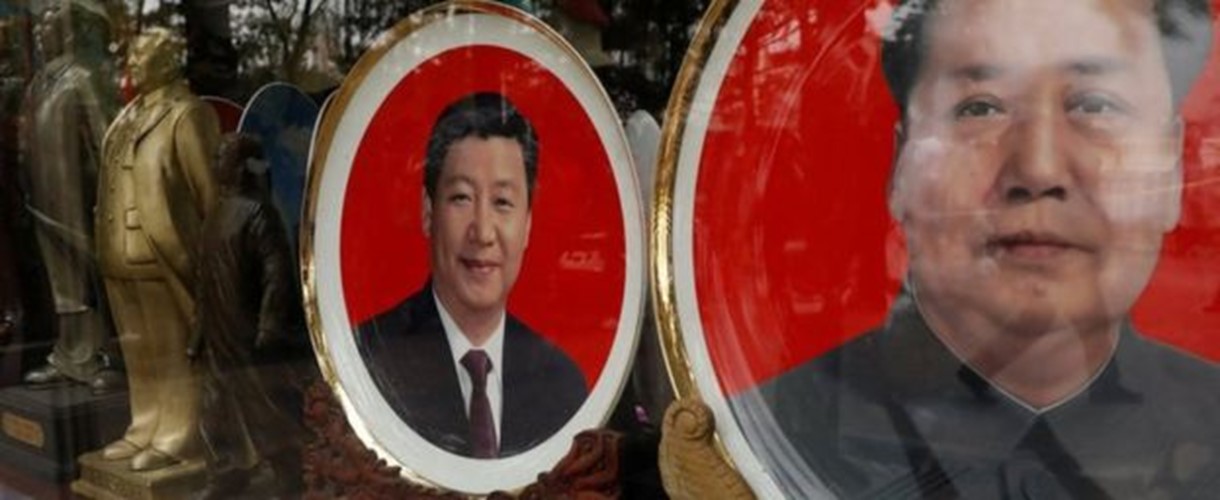
The social-political movement launched in May 1966 by Mao Zedong followed a botched industrialization campaign where millions starved. It’s a sensitive period in modern China’s history. That’s why this museum filled with relics from China’s “Red Era”, is one of a kind. From busts to badges, plates to posters – Chairman Mao and his vision are everywhere. (Reuters)

In China, the regime has in recent years admitted that Mao made “mistakes” and allowed some degree of open discussion about this history. But the government is unwilling to admit that the mass murder was intentional and continues to occasionally suppress and persecute dissidents who point out the truth.

This reluctance is an obvious result of the fact that the Communist Party still rules China. Although they have repudiated many of Mao’s specific policies, the regime still derives much of its legitimacy from his legacy. I experienced China’s official ambivalence on this subject first-hand, when I gave a talk about the issue while teaching a course as a visiting professor at a Chinese University in 2014.

II. Why it Matters.

For both Chinese and westerners, failure to acknowledge the true nature of the Great Leap Forward carries serious costs. Some survivors of the Great Leap Forward are still alive today. They deserve far greater recognition of the horrible injustice they suffered. They also deserve compensation for their losses, and the infliction of appropriate punishment on the remaining perpetrators.

In addition, our continuing historical blind spot about the crimes of Mao and other communist rulers, leads us to underestimate the horrors of such policies, and makes it more likely that they might be revived in the future. The horrendous history of China, the USSR, and their imitators, should have permanently discredited socialism as completely as fascism was discredited by the Nazis. But it has not – so far – fully done so.

Just recently, the socialist government of Venezuela imposed forced labor on much of its population. Yet most of the media coverage of this injustice fails to note the connection to socialism, or that the policy has parallels in the history of the Soviet Union, China, Cuba, and other similar regimes. One analysis even claims that the real problem is not so much “socialism qua socialism,” but rather Venezuela’s “particular brand of socialism, which fuses bad economic ideas with a distinctive brand of strongman bullying,” and is prone to authoritarianism and “mismanagement.” The author simply ignores the fact that “strongman bullying” and “mismanagement” are typical of socialist states around the world. The Scandinavian nations – sometimes cited as examples of successful socialism- are not actually socialist at all, because they do not feature government ownership of the means of production, and in many ways have freer markets than most other western nations.

Venezuela’s tragic situation would not surprise anyone familiar with the history of the Great Leap Forward. We would do well to finally give history’s largest episode of mass murder the attention it deserves.


Somin_Ilya_90x90.jpg&w=180&h=180
Ilya Somin is Professor of Law at George Mason University. His research focuses on constitutional law, property law, and popular political participation. He is the author of “The Grasping Hand: Kelo v. City of New London and the Limits of Eminent Domain” and “Democracy and Political Ignorance: Why Smaller Government is Smarter.”

1163

© 1996-2016 The Washington Post On http://www.glogster.comOn http://www.telegraph.co.uk

Trouble in Tibet – The Legacy of the Biggest Mass Murderer of the World.

Whole Tyrant – The Problem of Transparency in Communist Governance

Red China – The Problem of Transparency in Communist Governance

Red China – The Problem of Transparency in Communist Governance

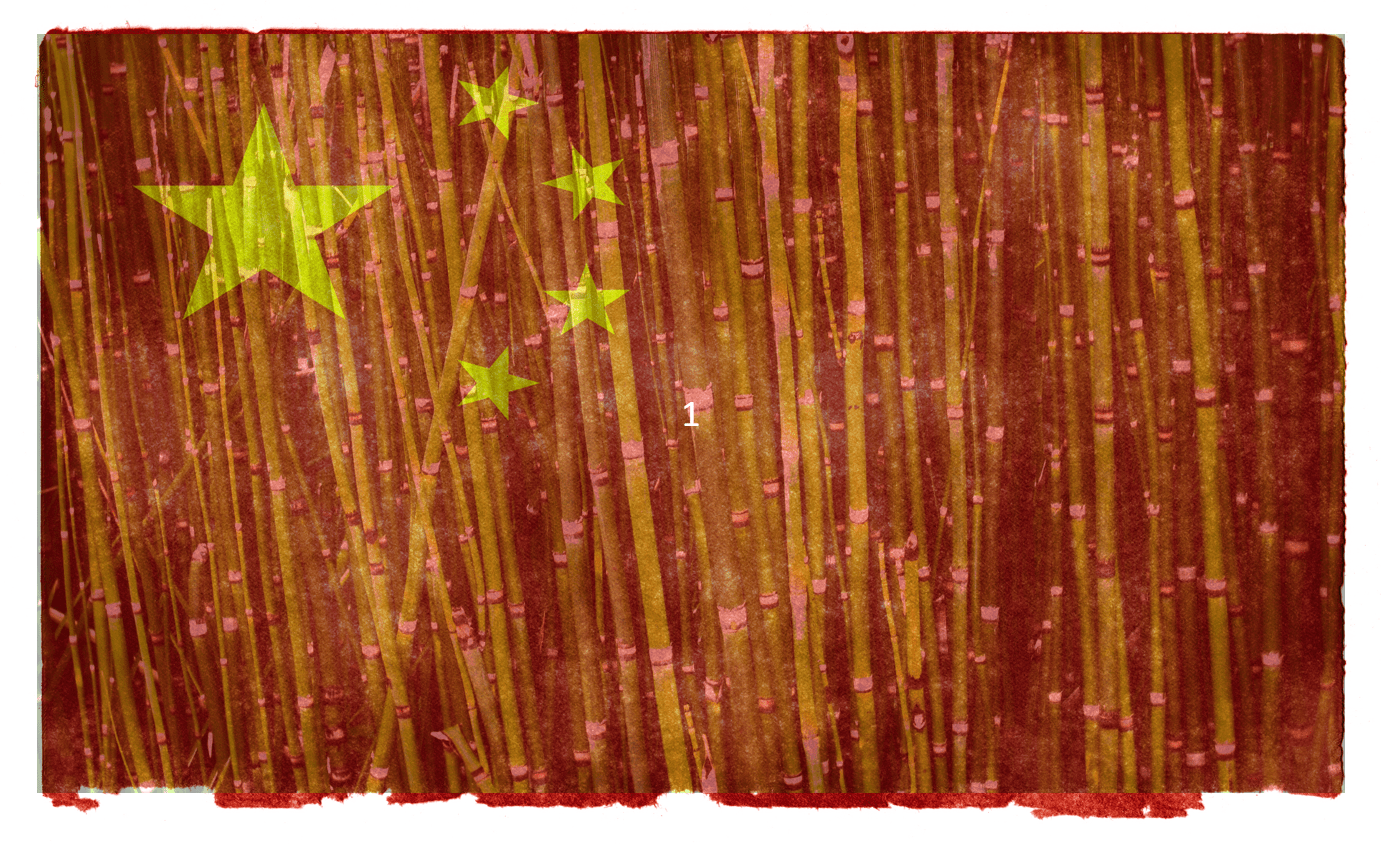
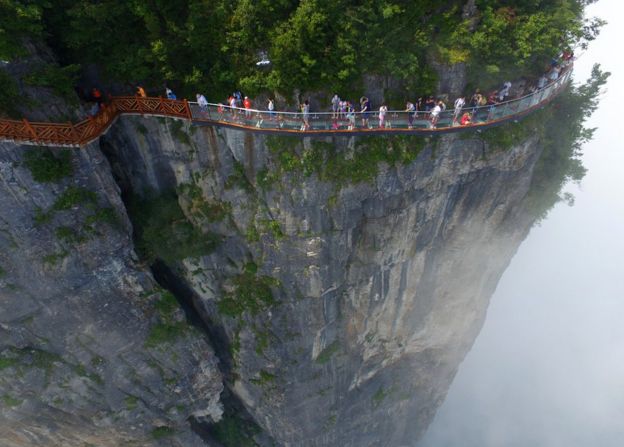
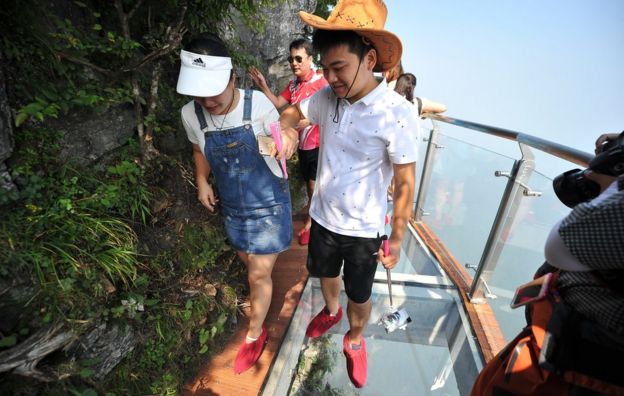
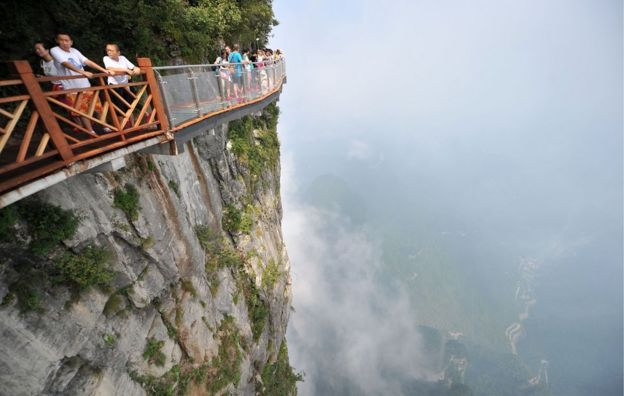
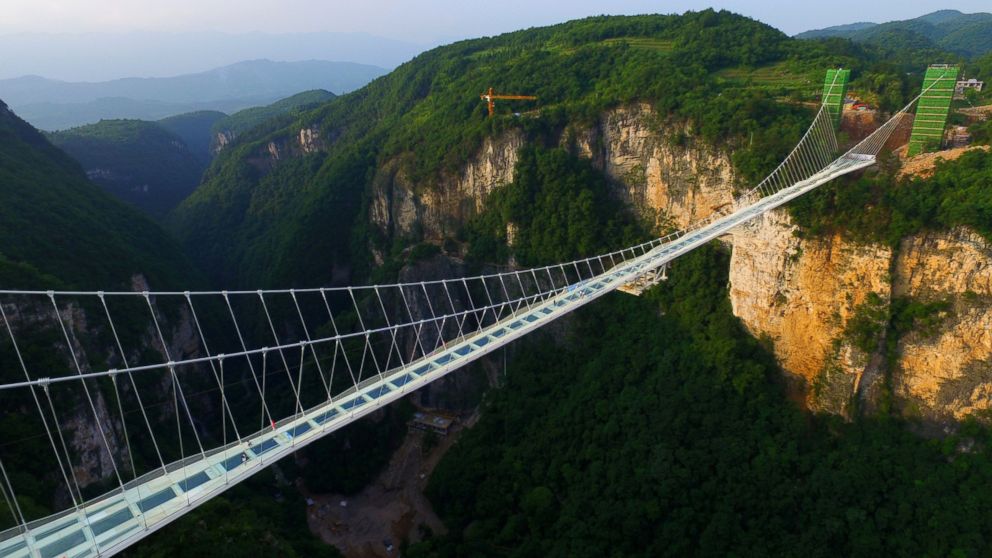
Communist China showcases her technological advancement by erecting structures such as Glass Walkway in Tianmen Mountain. Such use of technology is not resolving the problem of transparency in Communist Governance. In fact, the Glass Walkway symbolizes the lack of transparency of the dictatorial regime in Beijing. Red China must remove the Bamboo Curtain to reveal the full range of its oppressive measures to destroy Tibetan Culture and Identity.

TROUBLE IN TIBET - TRANSPARENCY IN COMMUNIST GOVERNANCE.  MOUNTAIN SYMBOLIZES PROBLEM.
Red China – The Problem of Transparency in Communist Governance: The Glass Walkway in Tianmen Mountain symbolizes the lack of transparency of the dictatorial regime in Beijing.

Glass walkway opens in Tianmen mountain, China

Red China – The Problem of Transparency in Communist Governance: The Glass Walkway in Tianmen Mountain symbolizes the lack of transparency of the dictatorial regime in Beijing.

This terrifying construction is part of the latest addition to China’s glass bridge craze.

Red China – The Problem of Transparency in Communist Governance: The Glass Walkway in Tianmen Mountain symbolizes the lack of transparency of the dictatorial regime in Beijing.

The Coiling Dragon path is in Zhangjiajie National Forest Park in Hunan province, and a new section opened to tourists on Monday.

Red China – The Problem of Transparency in Communist Governance: The Glass Walkway in Tianmen Mountain symbolizes the lack of transparency of the dictatorial regime in Beijing.

The 100-m walkway has 99 turns around the side of the sheer cliff face of Tianmen Mountain. For those immune to the terror of a vertical drop, it’s a perfect photo opp.

Red China – The Problem of Transparency in Communist Governance: The Glass Walkway in Tianmen Mountain symbolizes the lack of transparency of the dictatorial regime in Beijing.

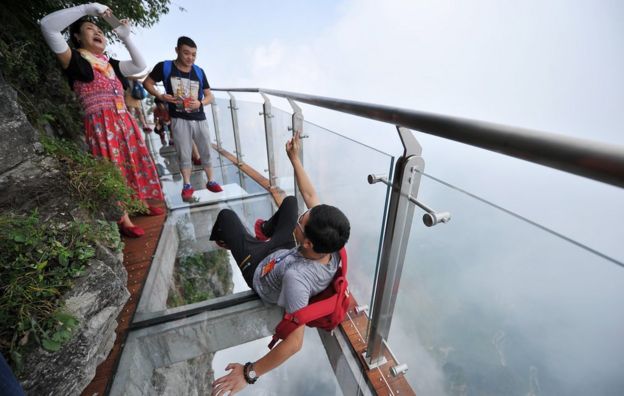
Reassuringly some tourists, in their protective shoes, appeared more keen to cling to the walls and just get it over with.

Red China – The Problem of Transparency in Communist Governance: The Glass Walkway in Tianmen Mountain symbolizes the lack of transparency of the dictatorial regime in Beijing.

Braver tourists can enjoy spectacular views across the Hunan countryside. No, we’re not sure how this picture was taken either.

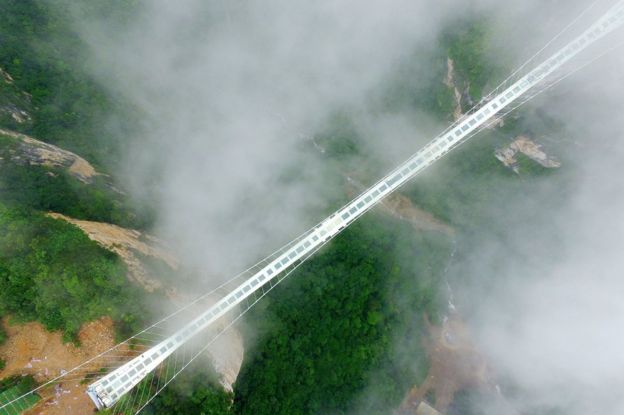
The Zhangjiajie park already offers tourists this – at 430 m (1,410 ft) and suspended over a 300 m-deep valley it is billed as the world’s longest glass bridge.

Glass Bridge in Zhangjiajie National Forest Park, Hunan Province. Red China – The Problem of Transparency in Communist Governance: The Glass Walkway in Tianmen Mountain symbolizes the lack of transparency of the dictatorial regime in Beijing. Glass Bridge in Zhangjiajie National Forest Park Showcases Unsafe Face of Communist Governance.

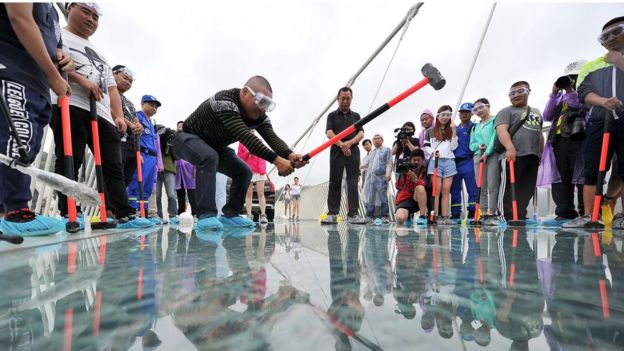
To assuage fears about safety, in June the park authorities deliberately cracked the glass then drove a car full of people over it. It was fine.

Red China – The Problem of Transparency in Communist Governance: The Glass Walkway in Tianmen Mountain symbolizes the lack of transparency of the dictatorial regime in Beijing. Sledgehammer Red Dragon to Crack Open its Secrets. Glass Bridge in Zhangjiajie National Forest Park, Hunan Province. Glass Bridge Showcases Unsafe Communist Governance.

And for good measure, they hit it with a sledgehammer.

Red China – The Problem of Transparency in Communist Governance: The Glass Walkway in Tianmen Mountain symbolizes the lack of transparency of the dictatorial regime in Beijing. Glass Bridge in Zhangjiajie National Forest Park Showcases Unsafe Face of Communist Governance.
stime=1470202722
Red China – The Problem of Transparency in Communist Governance: The Glass Walkway in Tianmen Mountain symbolizes the lack of transparency of the dictatorial regime in Beijing. Glass Bridge in Zhangjiajie National Forest Park Showcases Unsafe Face of Communist Governance.

BLACK DAY IN THE U.S. HISTORY – JULY 15, 1971

BLACK DAY IN THE U.S. HISTORY – JULY 15, 1971

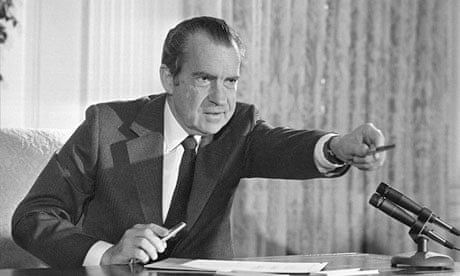
BLACK DAY IN THE U.S. HISTORY - JULY 15, 1971. PRESIDENT NIXON'S DESPICABLE DECISION TO BEFRIEND ENEMY WHILE FIGHTING WAR.
BLACK DAY IN THE U.S. HISTORY – JULY 15, 1971. PRESIDENT NIXON’S DESPICABLE DECISION TO BEFRIEND ENEMY WHILE FIGHTING WAR.

On behalf of Special Frontier Force, I record July 15, 1971 as ‘Black Day’ in the U.S. History. While the U.S. engaged in bloody war in Vietnam to contain Communism, President Richard M. Nixon announced his plan to befriend the Enemy that his Armed Forces were fighting against. The Enemy at that time was implementing a horrific program called ‘Cultural Revolution’ which in reality constitutes Crimes Against Humanity. This despicable act of surrender ensured the most humiliating defeat ever suffered by the U.S. in its entire history.

Rudranarasimham Rebbapragada

Ann Arbor, MI 48104-4162 USA
SPECIAL FRONTIER FORCE


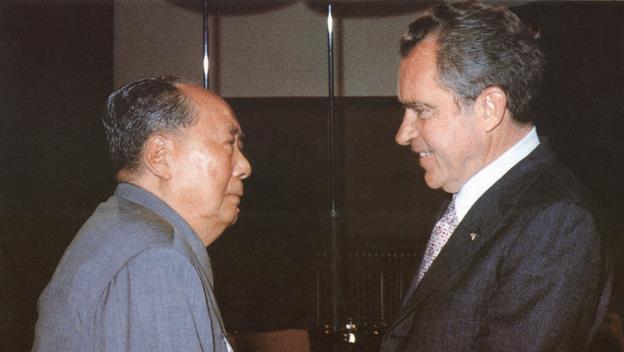
BLACK DAY IN THE U.S. HISTORY – JULY 15, 1971. PRESIDENT NIXON ANNOUNCED THIS MEETING WITH COMMUNIST PARTY CHAIRMAN GUILTY OF CRIMES AGAINST HUMANITY.

In a This Day in History video, learn that on July 15, 1971, Richard Nixon stunned the nation by stating that he would visit communist China. Nixon was a product of the Cold War and spent his career bad-mouthing everything red China did or said. But, Nixon wanted a second term and his polls were down; he hoped China would put pressure on their allies, the North Vietnamese, to end the war. Unfortunately, there was no immediate gain from the trip and the Vietnam War went on for another year and a half.


Nixon announces visit to communist China

Author: History.com Staff http://www.history.com/this-day-in-history/nixon-announces-visit-to-communist-china Publisher: A+E Networks

During a live television and radio broadcast, President Richard Nixon stuns the nation by announcing that he will visit communist China the following year. The statement marked a dramatic turning point in U.S.-China relations, as well as a major shift in American foreign policy.

Nixon was not always so eager to reach out to China. Since the Communists came to power in China in 1949, Nixon had been one of the most vociferous critics of American efforts to establish diplomatic relations with the Chinese. His political reputation was built on being strongly anti-communist, and he was a major figure in the post-World War II Red Scare, during which the U.S. government launched massive investigations into possible communist subversion in America.

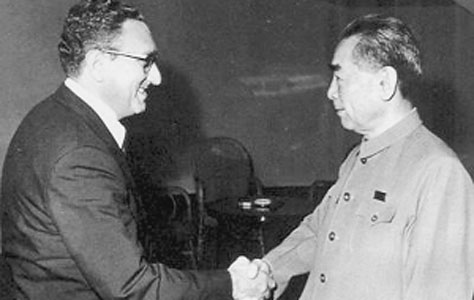
By 1971, a number of factors pushed Nixon to reverse his stance on China. First and foremost was the Vietnam War. Two years after promising the American people “peace with honor,” Nixon was as entrenched in Vietnam as ever. His national security advisor, Henry Kissinger, saw a way out: Since China’s break with the Soviet Union in the mid-1960s, the Chinese were desperate for new allies and trade partners. Kissinger aimed to use the promise of closer relations and increased trade possibilities with China as a way to put increased pressure on North Vietnam–a Chinese ally–to reach an acceptable peace settlement. Also, more importantly in the long run, Kissinger thought the Chinese might become a powerful ally against the Soviet Union, America’s Cold War enemy. Kissinger called such foreign policy ‘realpolitik,’ or politics that favored dealing with other powerful nations in a practical manner rather than on the basis of political doctrine or ethics.

Nixon undertook his historic “journey for peace” in 1972, beginning a long and gradual process of normalizing relations between the People’s Republic of China and the United States. Though this move helped revive Nixon’s sagging popularity, and contributed to his win in the 1972 election, it did not produce the short-term results for which Kissinger had hoped. The Chinese seemed to have little influence on North Vietnam’s negotiating stance, and the Vietnam War continued to drag on until U.S. withdrawal in 1973. Further, the budding U.S.-China alliance had no measurable impact on U.S.-Soviet relations. But, Nixon’s visit did prove to be a watershed moment in American foreign policy–it paved the way for future U.S. presidents to apply the principle of realpolitik to their own international dealings.

Nixon Announces His Resignation Nixon’s Secret Plan to End the Vietnam War Richard Nixon’s Farewell Speech Inaugural Address: Richard Nixon 1970s Richard Nixon’s Resignation Speech Richard Nixon’s Impeachment Investigation Nixon Addresses “Silent Majority”

More on This Topic

audio Play video Nixon Discusses Forthcoming Trip to China Nixon Returns From China Cultural Revolution Ping-Pong Diplomacy in China How Ping-Pong Diplomacy Thawed the Cold War Senator Nixon Takes Tough Stand on Communism Major Milestones in U.S.-China Relations Détente Kissinger on Importance of Strong Foreign Policy Nixon on the Vietnam War

© 2016, A&E Television Networks, LLC. All Rights Reserved.


BLACK DAY IN THE U.S. HISTORY – JULY 15, 1971. National Security Affairs Adviser Dr. Henry A. Kissinger ( not U.S. Secretary of State at that time) with Communist China’s Prime Minister Zhou En-Lai in July 1971.

Black Day in the U.S. History – July 15, 1971. Crimes Against Humanity. Nixon’s Treason in Vietnam.

BLACK DAY IN THE U.S. HISTORY – JULY 15, 1971. PRESIDENT NIXON ANNOUNCES THAT HE WILL VISIT ENEMY. NIXON’S VIETNAM TREASON.

Black Day in the U.S. History – July 15, 1971. Nixon’s Vietnam Treason.

Black Day in the U.S. History – July 15, 1971. Nixon’s Vietnam Treason.


Black Day in the U.S. History – July 15, 1971. President Nixon-Kissinger Treason in Vietnam.


TIBET – THE BURNING QUESTION

TIBET – THE BURNING QUESTION

TIBET – THE BURNING QUESTION – IT IS NOT ABOUT SELF-IMMOLATION. THE BURNING ISSUE IS DEATH OF MILITARY OCCUPATION.

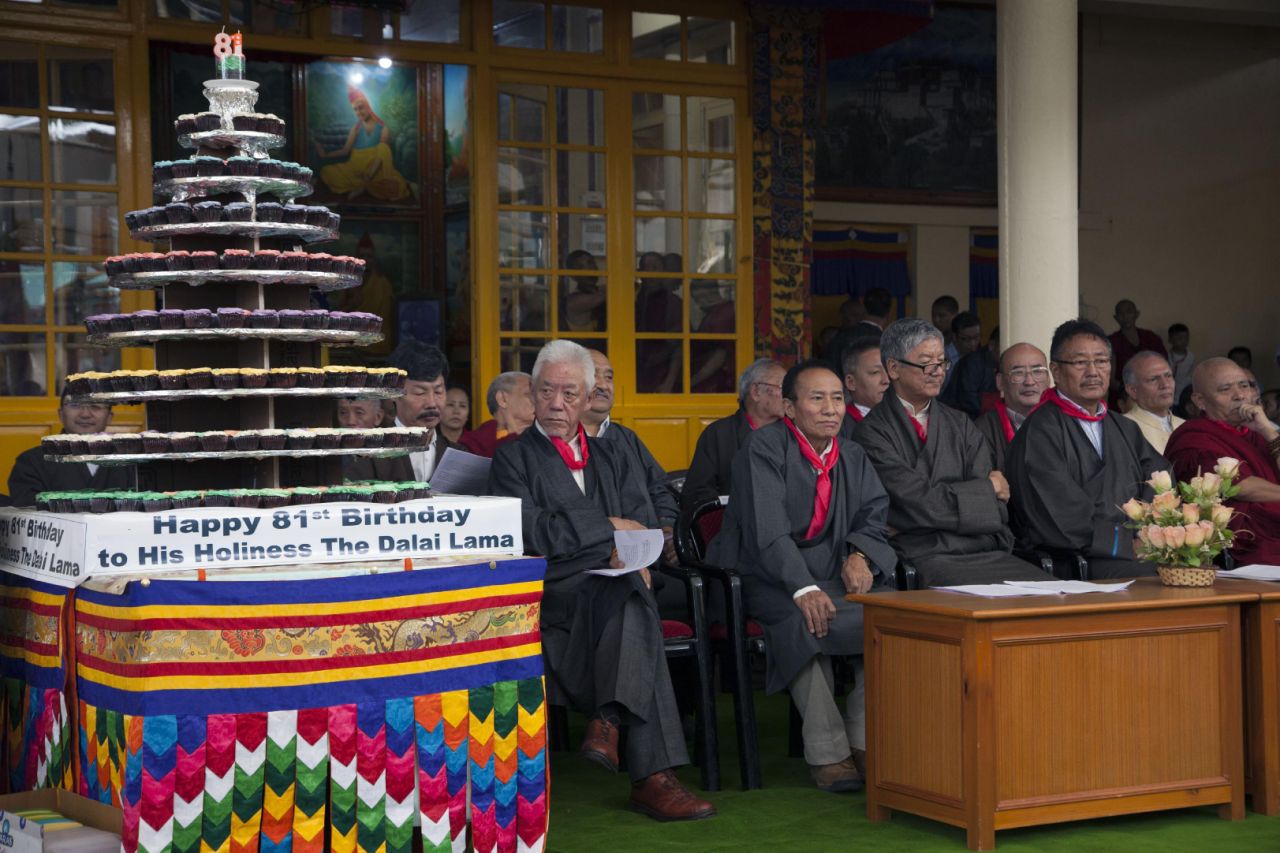
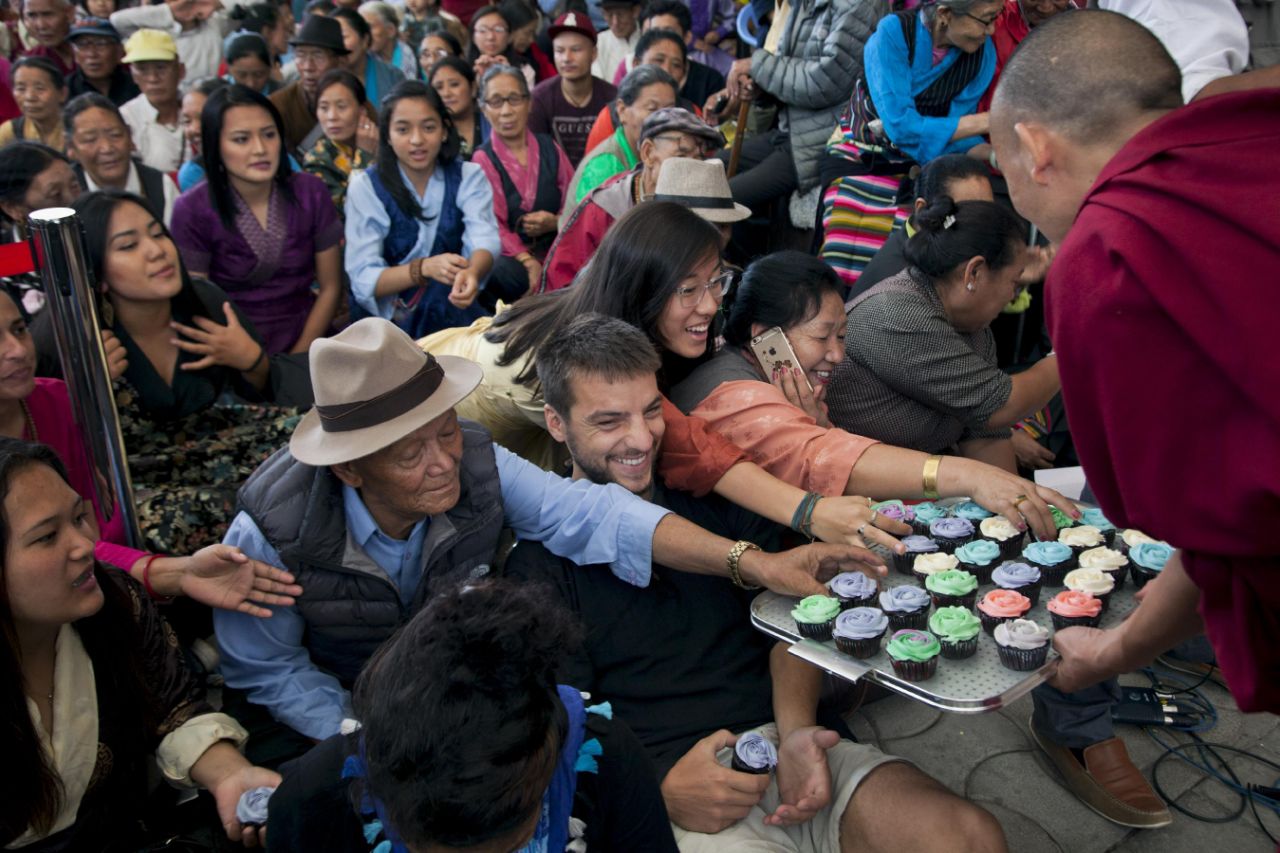
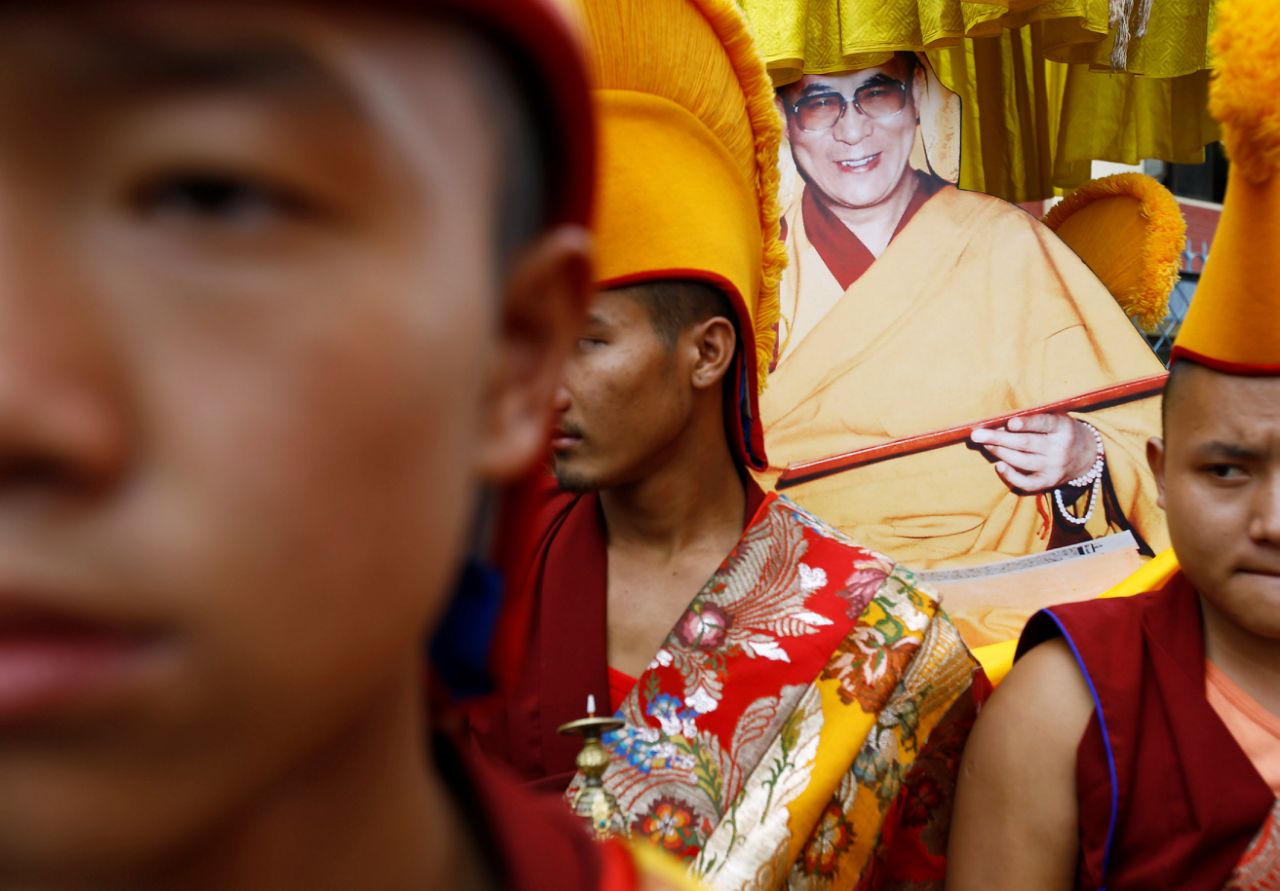
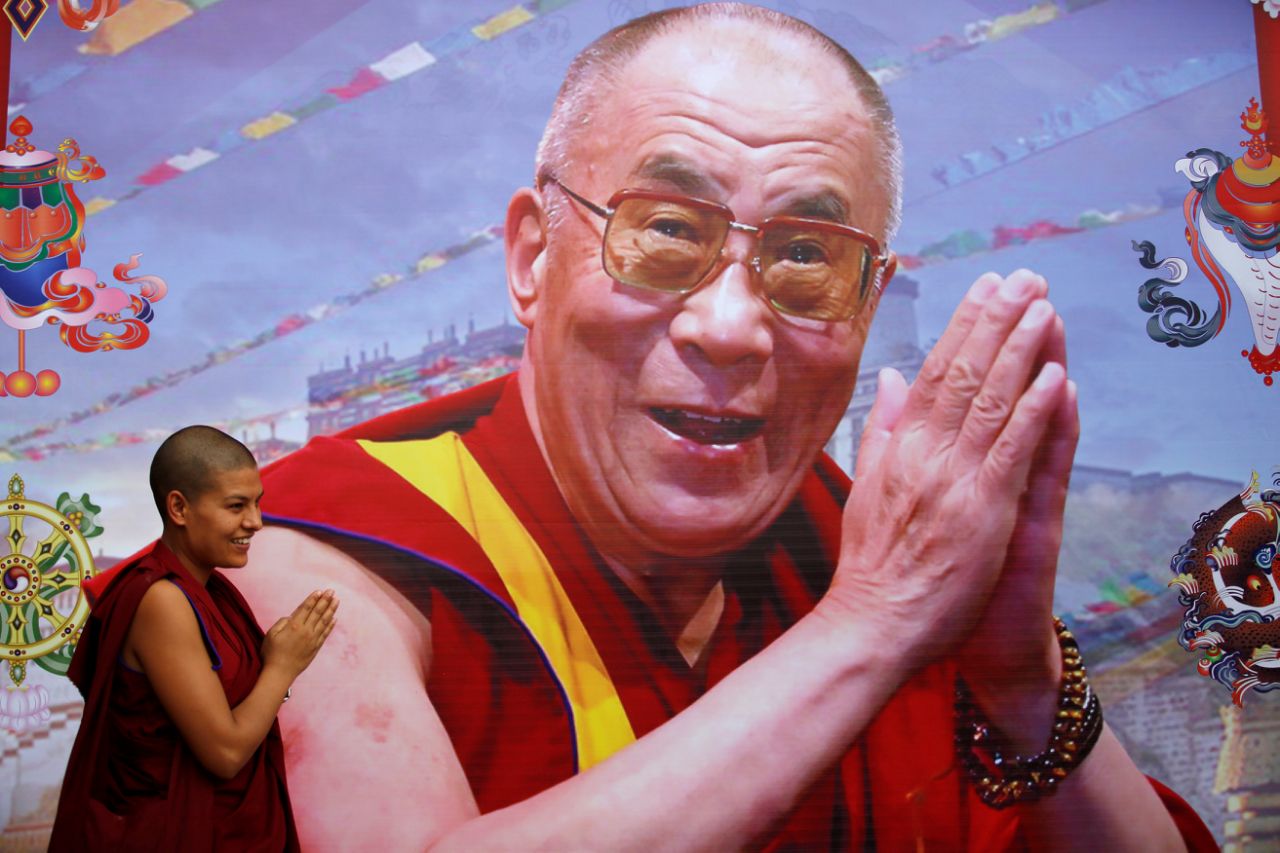
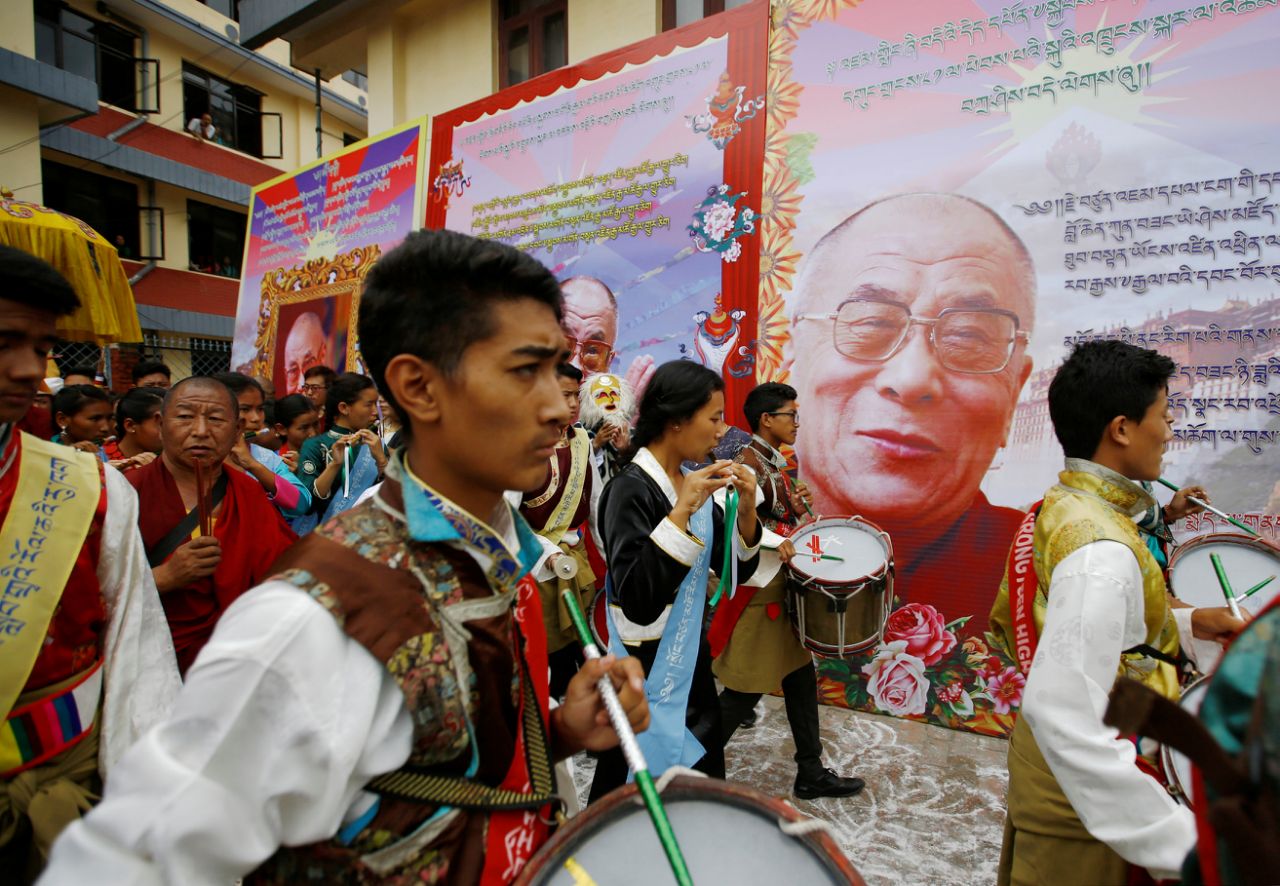
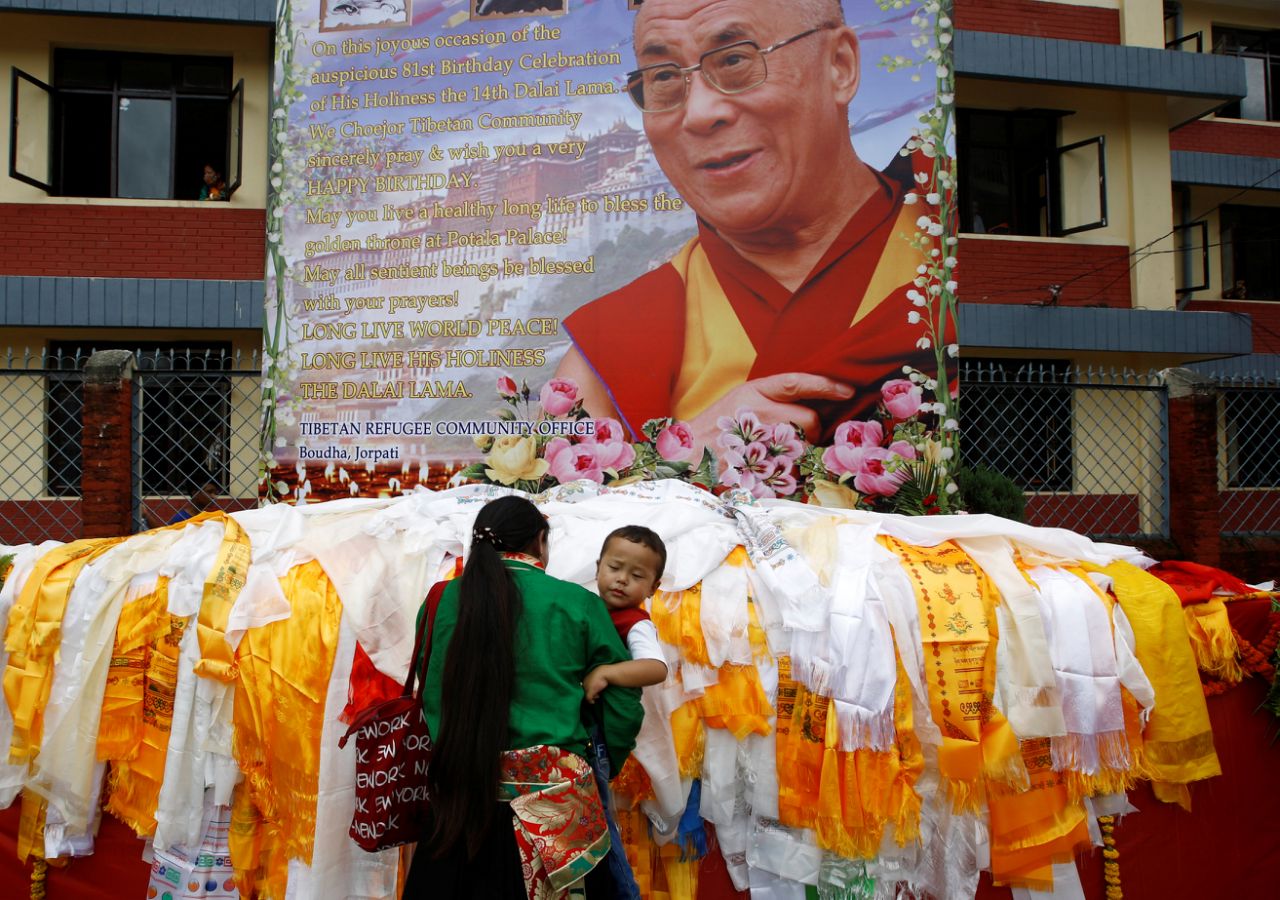
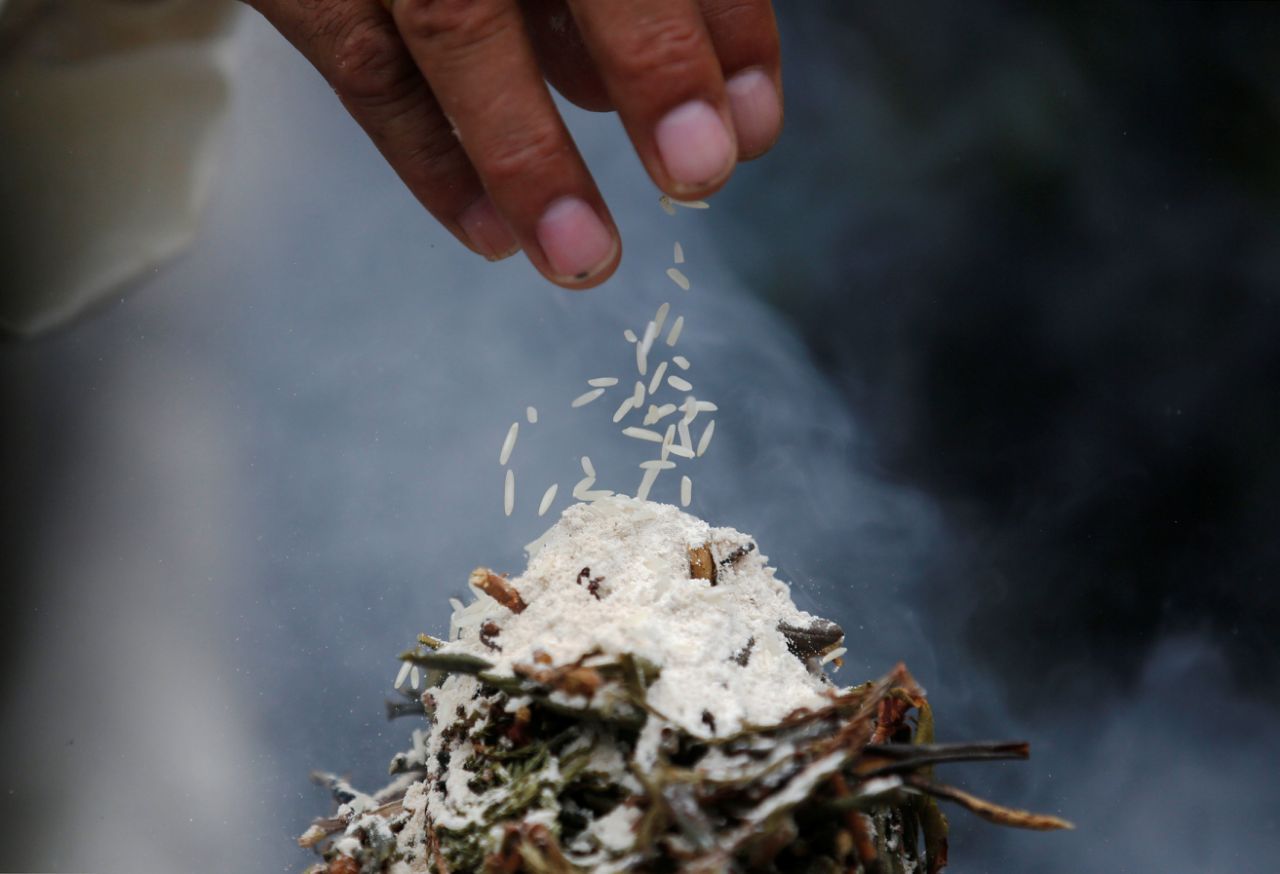
Tibetans have celebrated His Holiness the Dalai Lama’s 81st birthday. In recent times, Tibetans have displayed a sense of restraint as they share a sense of optimism about ‘The Burning Question’ that occupies their minds. Red China’s military occupation is ‘The Burning Question’ and international community is willing to take up this issue as they confront Red China’s Maritime Expansionism.

Rudranarasimham Rebbapragada
Ann Arbor, MI 48104-4162 USA
SPECIAL FRONTIER FORCE

Tibetans, Do Not Burn Thyselves July 15, 2016

TIBET – THE BURNING QUESTION – DEATH OF OCCUPATION IS THE BURNING ISSUE.

Tibetans aren’t self-immolating as much anymore. Isn’t that a good thing?

One afternoon in 2009, a monk holding his national flag lit himself on fire — and ignited a raging conflagration in one of the most muffled parts of the world: Tibetans burning themselves in protest of Chinese occupation. More than 140 Tibetans burned themselves in protest over the ensuing years, advocacy groups say. The youngest was 15.

The burnings peaked in 2012, but they could easily return in a climate where suicide bombers otherwise hold the franchise on self-harm as public protest. No, I’m not comparing self-immolation, which is by nature a solely self-harming physical act, to violent jihadism, which seeks to harm nonbelievers, the more the better. But there is a whiff of something similar, metaphorically and emotionally: ideologies that tell vulnerable people their lives — and deaths — have purpose. That is wrong. Someone should call for the Tibetan people to halt their burnings and turn to other forms of protest.

The ideal person would be the Dalai Lama. He never has. Though we couldn’t grab His Holiness’ time for an interview through spokespeople, he’s articulated his reasons before: He worries China will use the protests against him, painting him as approving of them. He didn’t want to devalue the lives of those who had self-immolated. If not him, then perhaps another prominent monk.

To be sure, we’re outside Tibet and cannot empathize with the conditions there. (The Dalai Lama is himself exiled in India. Even his image is banned in his homeland.) But it’s worth noting that self-immolation is “a new element in the vocabulary of Tibetan activism,” says Robert Barnett, director of modern Tibet studies at Columbia University. Indeed, he argues there’s no grounding for the practice in Buddhism. It was in fact modeled off of Chinese protest practices, not the 1960s Vietnam immolations, as is often thought, Barnett says.

Those who self-immolate in protest see it as “self-sacrifice to express their feelings,” says Tibetan BuchangTsering, vice president of the International Campaign for Tibet. He says that when the count of burnings hit 104 in 2013, the Chinese government was forced to respond. Alistair Currie, of London-based Free Tibet, says participants may believe that a high number of immolations would force the international community’s hand.

Clearly, though, that’s not been the case. It may be a good sign that the self-immolations are down in count these days — Free Tibet counts only two this year — but it also may be a symbol of resignation to China, says Barnett. Can Tibetans use the abatement of such protests to speak in other voices? Perhaps that is a privilege belonging only to the diaspora; after all, we can’t hear those from within China. “Is this [self-immolation] the best way for people to do something? I don’t think so,” says Tsering. “I don’t call that as a protest — it’s an assertion of their rights.” Tsering believes instead in using China’s system against it, arguing for Tibetans’ rights within the Chinese constitution — for instance, to preserve the language.

Coming up is the Dalai Lama’s birthday. Currie says the stateless nation will spend its time celebrating, not discussing protest. Maybe though, just maybe, the occasion could gift His Holiness with something different. I speak with privilege. Perhaps I’m wrong.

TIBET – THE BURNING QUESTION. IT IS NOT SELF-IMMOLATION. IT IS ABOUT DEATH OF MILITARY OCCUPATION.


TIBET – THE BURNING QUESTION – WHAT OCCUPIES MINDS OF TIBETANS? OCCUPATION BY FOREIGN POWER.

TIBET – THE BURNING QUESTION – OCCUPATION BY FOREIGN POWER.

TIBET – THE BURNING QUESTION – OCCUPATION BY FOREIGN POWER


Whole Trouble – The Walk for Talks – How to get Red China to Walk to the Conference Table?

Trouble in Tibet – Red China’s Road Block

Trouble in Tibet – Walk The Talk – Red China’s Road Block. Peaceful Conflict Resolution in Occupied Tibet is impossible while Red China erects Road Block halting The Walk for Talks.

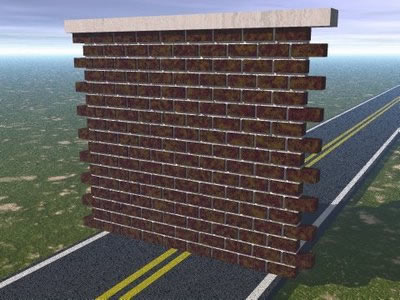
The Road Map for Peace and Reconciliation in Occupied Tibet is presented as “Umaylam” or Middle Way Approach. However, Red China is unwilling to talk or negotiate with the Dalai Lama on the issue of introducing ‘Meaningful Autonomy’ in Occupied Tibet. While it is commendable to recommend ‘Talk’ as a tool for Peaceful Conflict Resolution, how to get Red China to Walk to The Conference Table? If China refuses to Talk, How to Walk The Talk on Peaceful Conflict Resolution? Peaceful Conflict Resolution in Occupied Tibet is impossible while Red China erects Road Block halting The Walk for Talks.

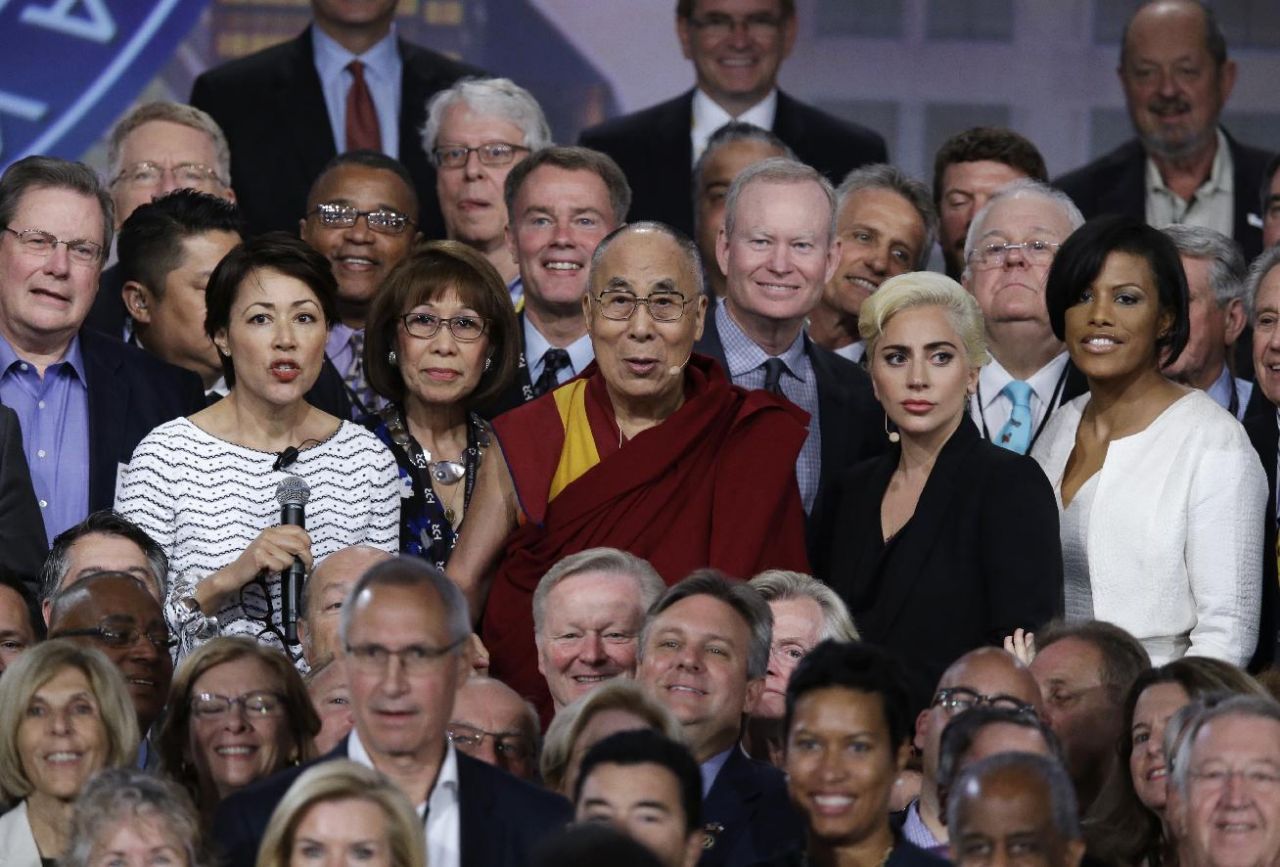
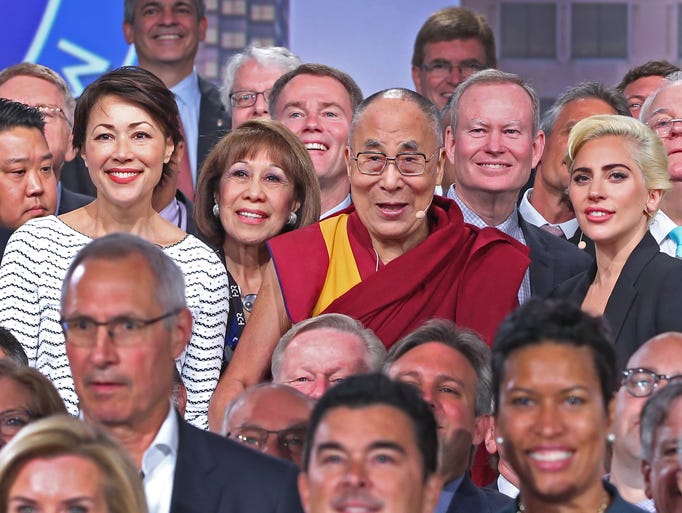
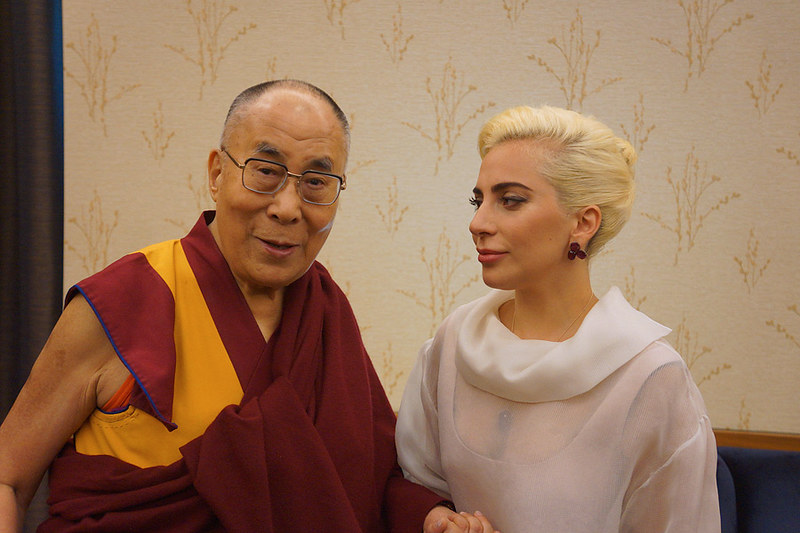
Trouble in Tibet – Walk The Talk – Red China’s Road Block. Dalai Lama and Lady Gaga talked about the role of compassion to resolve conflicts in changing world. If China is Unwilling to Talk, How to Walk The Talk on Peaceful Conflict Resolution?

OUR OPINION: GOOD ADVICE FROM THE DALAI LAMA WE SHOULD ALL FOLLOW

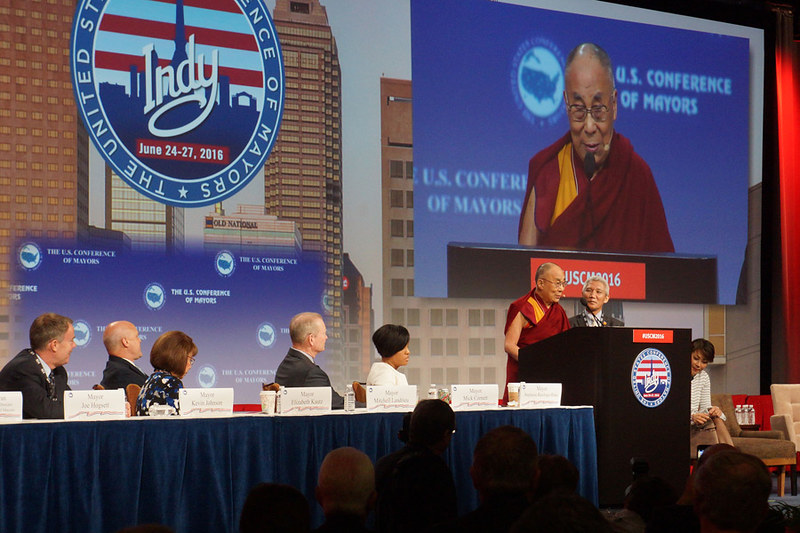
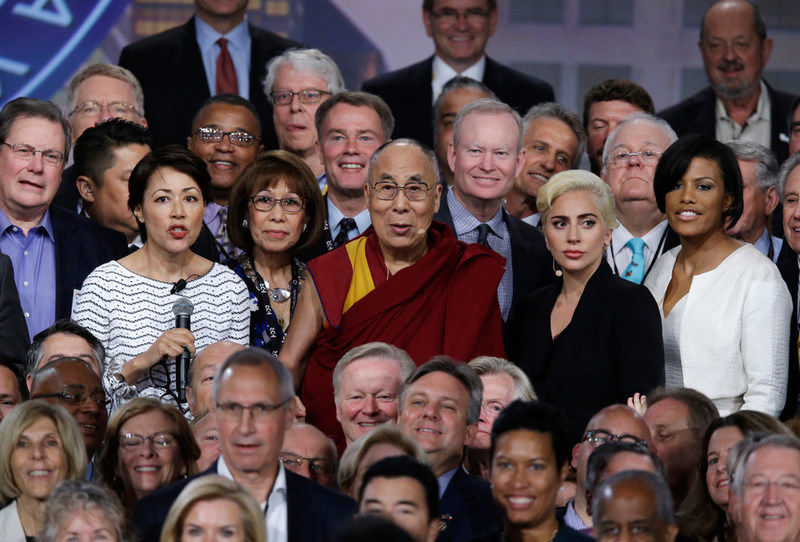
Trouble in Tibet – Walk The Talk – Red China’s Road Block. The Dalai Lama and Lady Gaga at the U.S. Conference of Mayors in Indianapolis. If China is Unwilling to Talk, how to Walk The Talk on Peaceful Conflict Resolution?

The Dalai Lama and Lady Gaga pose for a photo with mayors attending the U.S. Conference of Mayors in Indianapolis on Sunday. 

The message was simple, but in the midst of a presidential campaign filled with mean tweets, name-calling and a general air of nastiness, it sounded downright revolutionary and refreshing.

Be kind. Practice compassion.

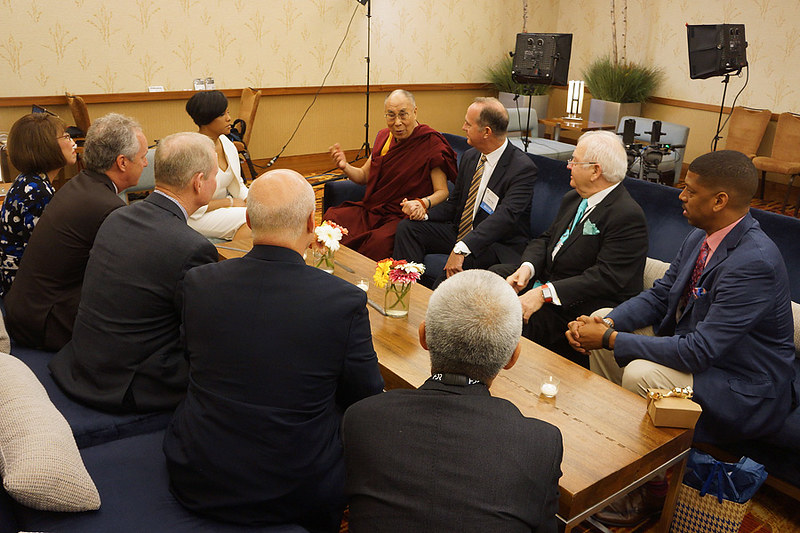
That was a theme of the keynote address delivered by the Dalai Lama Sunday at the U.S. Conference of Mayors annual meeting in Indianapolis. According to an Indianapolis Star report, in a discussion that followed the address, the Buddhist leader, along with entertainer Lady Gaga and philanthropist Philip Anschuwitz, talked to more than 200 of the nation’s city mayors about the importance of being kind in a violent and angry world.

He said that people are compassionate by nature, and that enemies can be the best of friends.He also noted that the time has come for America to be the leading nation in the promotion of human compassion, human love in order to achieve compassionate world.

While there are compassionate people to be found in communities such as ours, there is no denying that the national discourse has deteriorated over the years. That’s thanks in no small part to a Congress where inflexibility is prized, demonizing the opposition plays well and failure to compromise on such mammoth challenges as immigration reform is the norm. And four months from the election of a new president, things are certain to get even uglier and more divisive.

In a panel discussion short on policy proposals and heavy on philosophy, the Dalai Lama called the 20th century the century of violence,and suggested that the 21st century should be one of talk.

That sounds good to us. Now if only he can get certain folks in Washington, D.C. and on the campaign trail to listen.

 © Copyright 2016 SouthBendTribune.com, 225 West Colfax Ave South Bend, IN

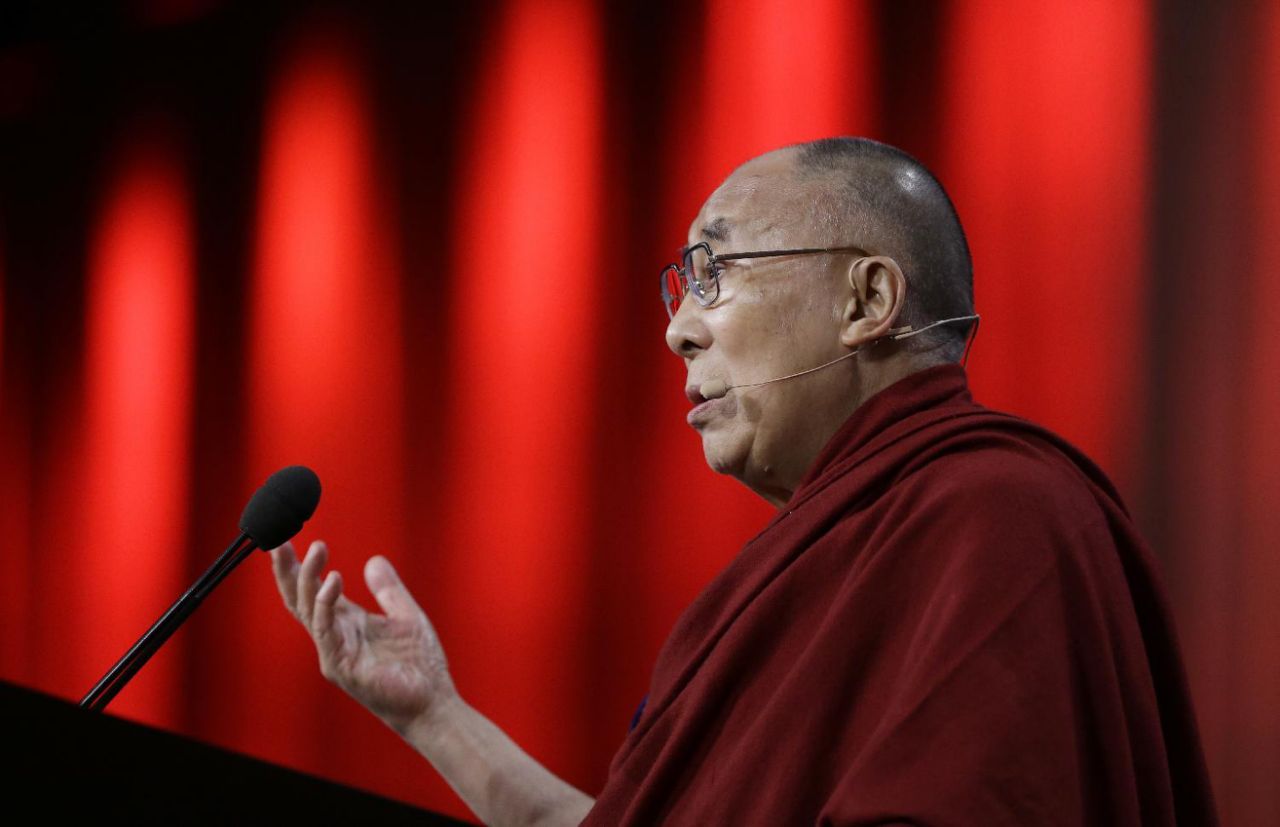
Trouble in Tibet – Walk The Talk – Red China’s Road Block. His Holiness the Dalai Lama at the U.S. Conference of Mayors in Indianapolis. If China is Unwilling to Talk, How to Walk The Talk on Peaceful Conflict Resolution?
Trouble in Tibet – Walk The Talk – Red China’s Road Block. His Holiness the Dalai Lama and Lady Gaga talked about Compassion at the U.S. Conference of Mayors in Indianapolis. How to get Red China to the Conference Table?
Trouble in Tibet – Walk The Talk – Red China’s Road Block. His Holiness the Dalai Lama at the U.S. Conference of Mayors in Indianapolis. How to get Red China to The Conference Table?
Trouble in Tibet - Walk The Talk - Red China's Road Block. His Holiness the Dalai Lama, Lady Gaga, and the U.S. Mayors held Talks at the U.S. Conference of Mayors in Indianapolis. The Talks are Over. Who is going to Walk The Talk???
Trouble in Tibet – Walk The Talk – Red China’s Road Block. His Holiness the Dalai Lama, Lady Gaga, and the U.S. Mayors held Talks at the U.S. Conference of Mayors in Indianapolis. The Talks are Over. Who is going to Walk The Talk?

Whole Trouble – Which type of force can evict Red China?

Trouble in Tibet – Which type of force can evict Red China?

Trouble in Tibet – Which type of force can evict Red China?

Tibetans under the Spiritual Leadership of His Holiness the Dalai Lama have shared their Road Map for Peace and Reconciliation in Occupied Tibet. However, Red China is adamantly refusing to talk to Tibetans to secure a Peaceful Resolution of Conflict in Tibet. In my analysis, Compassion can act as Physical Force and evict China from Occupied Tibetan territories without causing Pain and Suffering to members of People’s Liberation Army. Compassion exerts influence in Physical World without causing injury or illness.

VOA

TROUBLE IN TIBET – WHICH TYPE OF FORCE CAN EVICT CHINA? DALAI LAMA OPENS CALIFORNIA TEMPLE WITH MESSAGE OF COMPASSION.

DALAI LAMA OPENS CALIFORNIA TEMPLE WITH MESSAGE OF COMPASSION

Trouble in Tibet – Which Type of Force Can Evict China? Dalai Lama Opens California Temple with Message of Compassion.

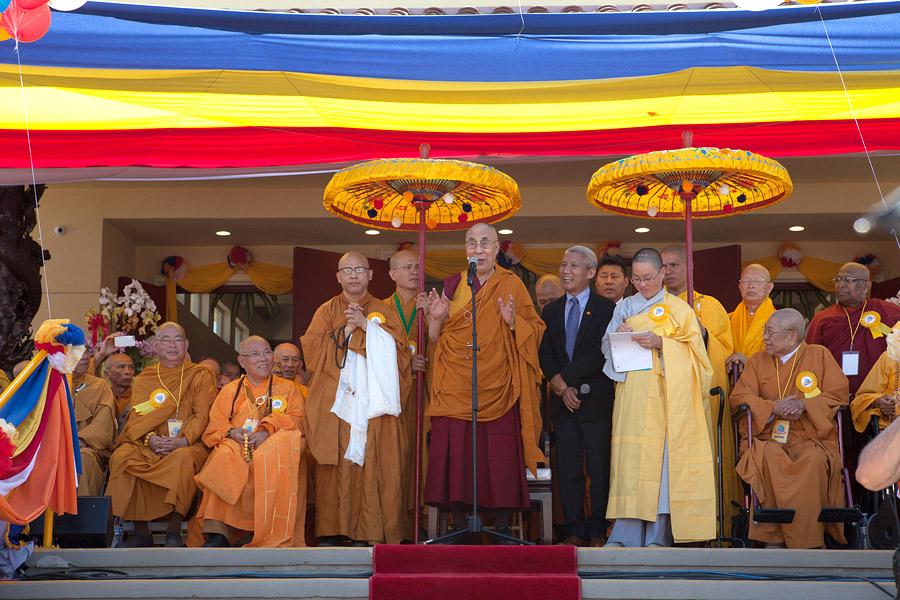
The Dalai Lama prays at the Dieu Ngu Temple in Westminster, Calif., June 18, 2016.

MIKE O’SULLIVAN

June 18, 2016 8:15 PM

WESTMINSTER, CALIFORNIA—

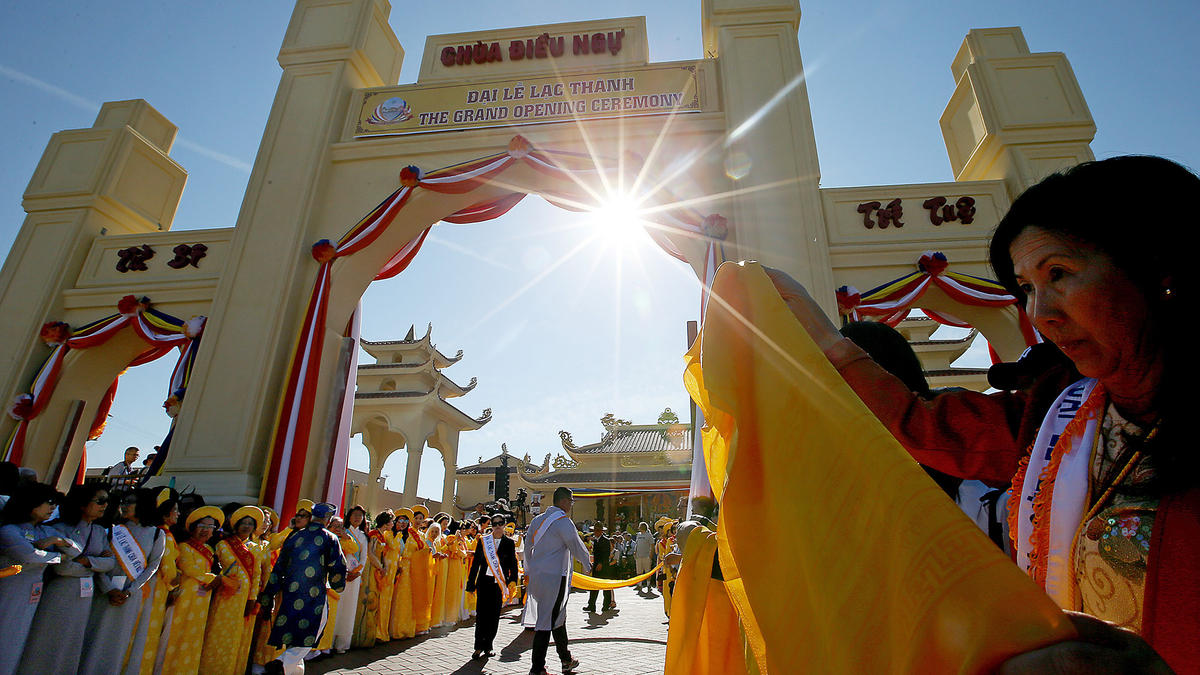
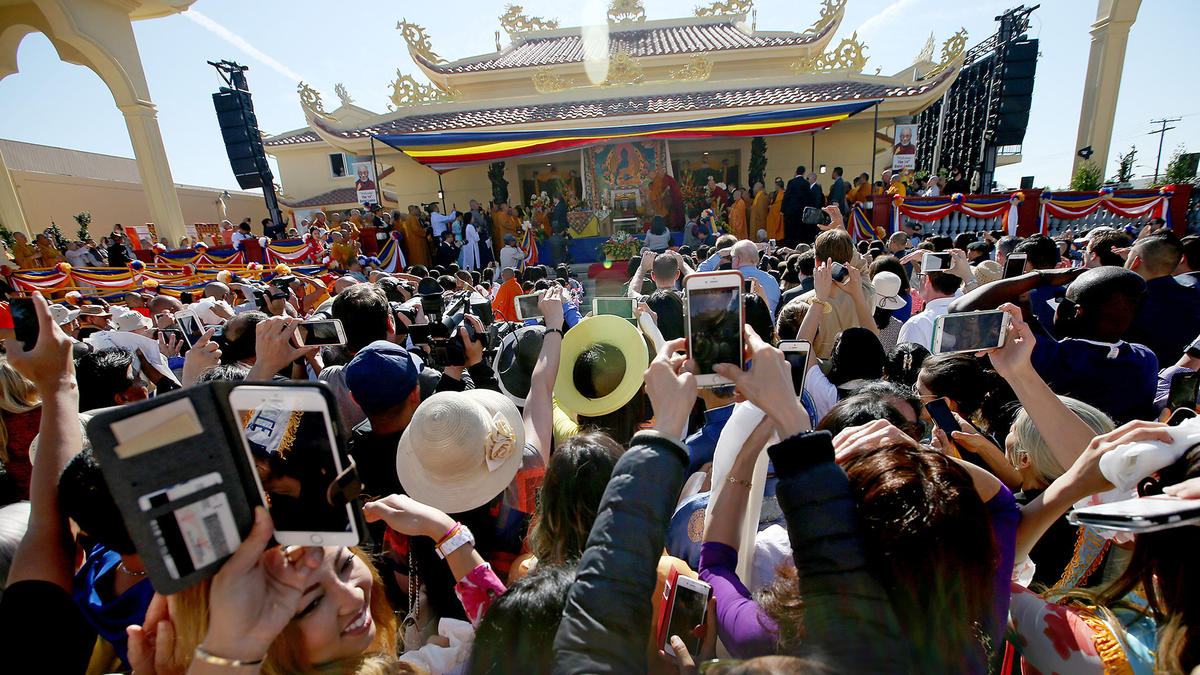
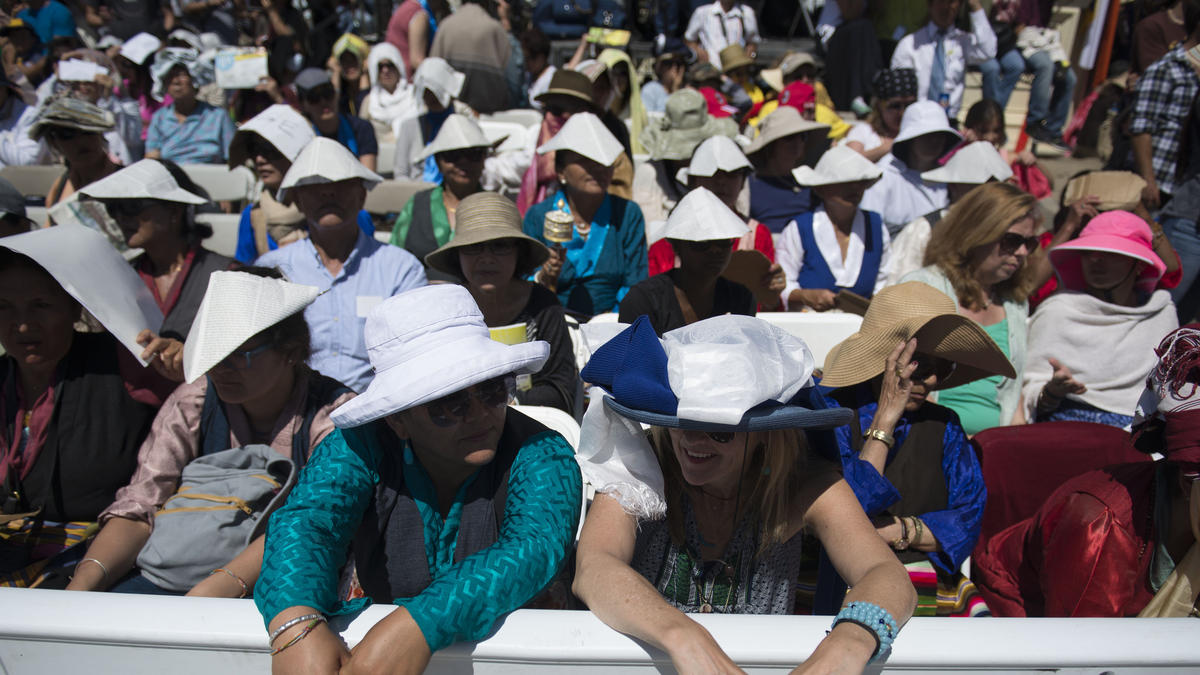
Thousands of people, many of them Buddhists who left Vietnam decades ago and came to the U.S. to live, have flocked to the Southern California neighborhood known as Little Saigon to welcome the Dalai Lama, the exiled Tibetan spiritual leader, who is dedicating a new temple there.

At a religious teaching session Saturday that drew many visitors, the 80-year-old Dalai Lama said the world needs more compassion in a time of violence.

Canadian Lyane Pellerin, who has attended many talks by the Dalai Lama in the past, agreed, saying, “We certainly do need more peace talks and kindness, understanding and dialogue.”

Trouble in Tibet – Which Type of Force Can Evict China? Dalai Lama Opens California Temple with Message of Compassion.

The Dalai Lama will dedicate the $6 million Dieu Ngu Temple on Saturday. (M. O’Sullivan/VOA)

Thousands of people gathered outside the Dieu Ngu Temple early Saturday, waiting for the gates to open at 6 a.m. The Dalai Lama will dedicate the temple Sunday.

“Just to be in the presence of the Dalai Lama is a wonderful thing,” said Wanda Matjas, one of those who turned out at dawn.

‘A WISE, WISE MAN’

Vietnamese-American Annie Hoang said she came to hear the revered Tibetan monk’s spiritual message.

“I’ve loved the Dalai Lama,” she said. “I think that he’s such a wise, wise man, and he represents such great knowledge, and everything that I’ve always wanted.”

The Dalai Lama’s presence is an important boost for the Dieu Ngu Temple, a $6 million project that marks a milestone of growth for the Vietnamese Buddhist community. Vietnamese immigrants — Buddhists, Catholics and others — have built their community over the past four decades in Southern California, where they arrived in search of political and religious freedom.

Trouble in Tibet – Which Type of Force Can Evict China? Dalai Lama Opens California Temple with Message of Compassion.

“I remember when we started building this,” Jessica Ha says of the Dieu Ngu Temple.
“Our monks’ biggest dream was to have the Dalai Lama come and talk.” (M. O’Sullivan/VOA)
The temple was founded in a Little Saigon home in 2008 and later moved to a warehouse as it grew. Monks and temple members spearheaded the drive to raise funds for the new structure, which features traditional architecture.

“I remember when we started building this,” said Jessica Ha, whose parents are longtime members. “Our monks’ biggest dream was to have the Dalai Lama come and talk, and it’s happening! Good things come to really good people, and this is it.”

DRAWN TO PHILOSOPHY

The Dalai Lama always draws interest from non-Asians.

Trouble in Tibet – Which Type of Force Can Evict China? Dalai Lama Opens California Temple with Message of Compassion.

Temple visitor Eve Moon says her family was drawn to “Buddhist philosophy and the Dalai Lama’s message, and in general, humanitarianism and peace.” (M. O’Sullivan/VOA)


“I was raised by parents who traveled the world and a Vietnam vet father that didn’t know where home was anymore,” said visitor Eve Moon. She said her family was drawn to “Buddhist philosophy and the Dalai Lama’s message, and in general, humanitarianism and peace.”

Buddhists from many traditions — Chinese and Southeast Asian, among others — came to the temple. They included Czech visitor Martin Vitovic, who embraces the Dalai Lama’s teachings. He said he’d been interested in the Tibetan’s message for “about three years, and I want to see him.”

Vietnamese-American Buddhists said the Dalai Lama inspired listeners with his message, and they felt his visit also drew attention to California’s Little Saigon and its imposing new temple.

Trouble in Tibet – Which Type of Force Can Evict China? Dalai Lama Opens California Temple with Message of Compassion.
Trouble in Tibet - Which Type of Force Can Evict China? Dalai Lama Opens California Temple With Message of Compassion.
Trouble in Tibet – Which Type of Force Can Evict China? Dalai Lama Opens California Temple With Message of Compassion.
Trouble in Tibet - Which Type of Force Can Evict China? Dalai Lama Opens California Temple With Message of Compassion.
Trouble in Tibet – Which Type of Force Can Evict China? Dalai Lama Opens California Temple With Message of Compassion.
Trouble in Tibet - Which Type of Force Can Evict China? Dalai Lama Opens California Temple With Message of Compassion.
Trouble in Tibet – Which Type of Force Can Evict China? Dalai Lama Opens California Temple With Message of Compassion.
Trouble in Tibet - Which Type of Force Can Evict China? Dalai Lama opens California Temple With Message of Compassion.
Trouble in Tibet – Which Type of Force Can Evict China? Dalai Lama opens California Temple With Message of Compassion.
Tibetans under the Spiritual Leadership of His Holiness the Dalai Lama have shared their Road Map for Peace and Reconciliation in Occupied Tibet. However, Red China is adamantly refusing to talk to Tibetans to secure a Peaceful Resolution of Conflict in Tibet. In my analysis, Compassion can act as Physical Force and evict China from Occupied Tibetan territories without causing Pain and Suffering to members of People’s Liberation Army. Compassion exerts influence in Physical World without causing injury or illness.