TIBET AWARENESS – RED CHINA – HEGEMONIST – CHINESE PREMIER DENG XIAOPING IN HIS SPEECH AT UN GENERAL ASSEMBLY DELIBERATELY, PURPOSEFULLY LIED ABOUT RED CHINA’S HEGEMONIST POLICY.
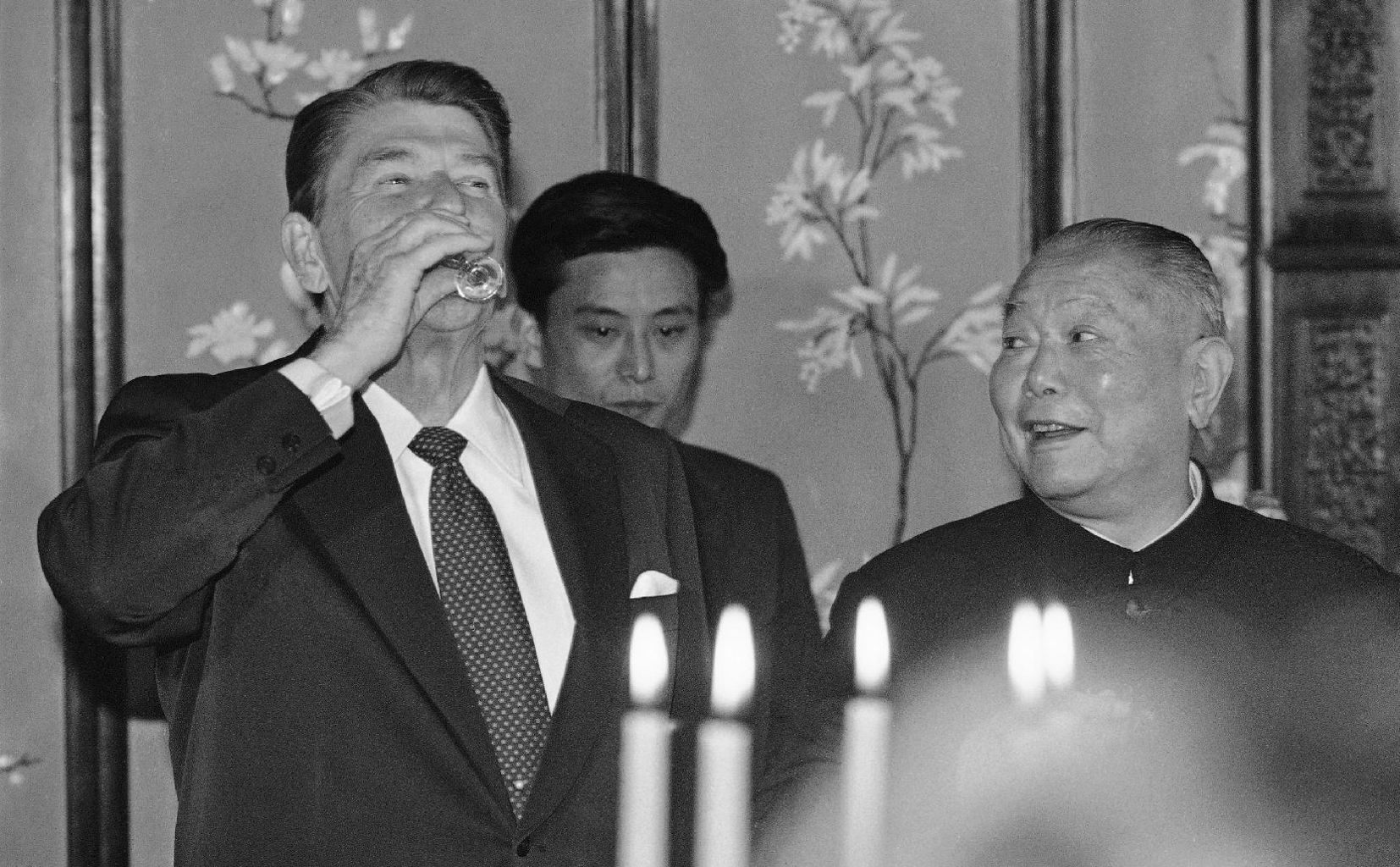
Chinese Premier Deng Xiaoping in 1974 during his maiden appearance at United Nations General Assembly assured UN members that China is not and never will be a superpower or seek dominance over others. Deng Xiaoping carefully avoided using the term “Hegemon” while describing Communist China’s state policy. Hegemonism is the policy or practice of a nation in aggressively expanding its influence over other countries. Hegemony refers to dominance of one nation over others. Tibet is the first victim of Red China’s Hegemonist Policy.
Tracing China’s long, convoluted relationship with the UN
BEIJING (AP) — China’s President Xi Jinping is poised to address the U.N. General Assembly for the first time on Monday. Here are some milestones in China’s long, convoluted relationship with the world body:
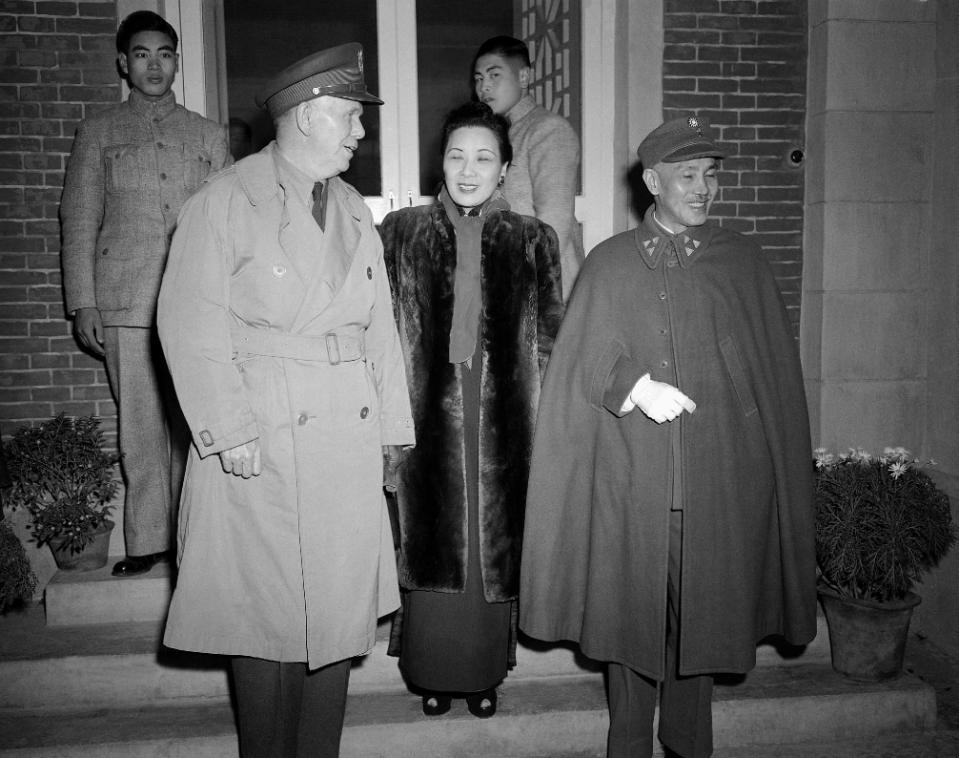
1945 — The Republic of China, led by Chiang Kai-shek, becomes the first nation to sign the U.N. charter. As one of the victors in World War II, China assumes one of five permanent seats on the U.N. Security Council over the objections of some world leaders, including Britain’s Winston Churchill. Chinese representatives also help draft and sign the Universal Declaration of Human Rights.
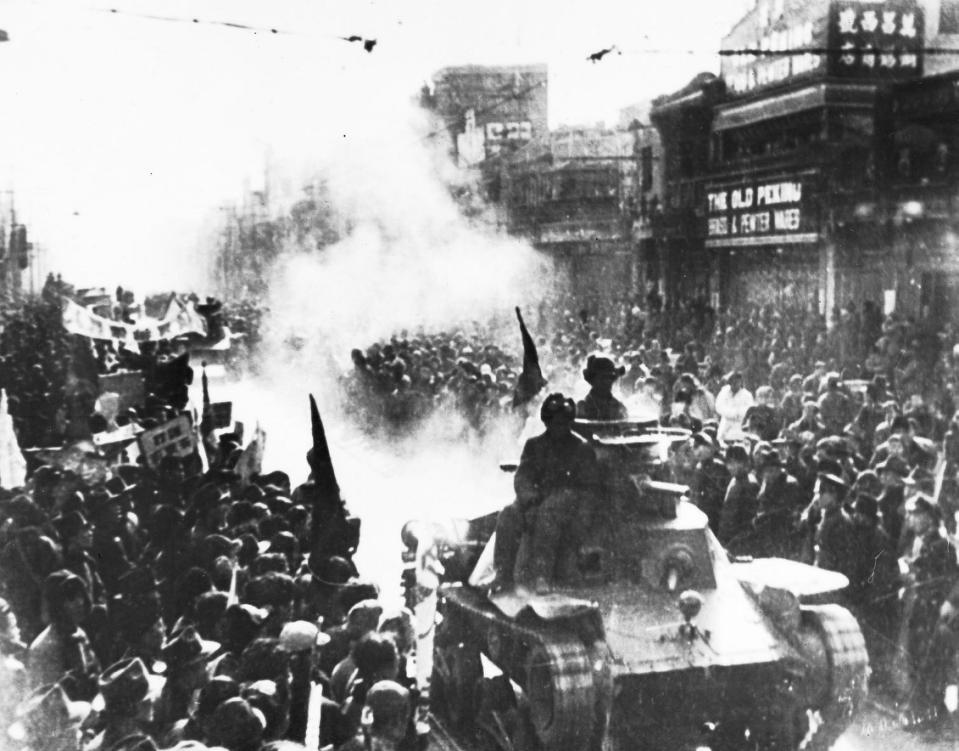
1949 — Chiang’s Nationalists lose the Chinese civil war to Mao Zedong’s Communists and retreat from the Chinese mainland to the island of Taiwan. The Republic of China, however, retains China’s Security Council seat with the key backing of the U.S. in order to restrain Mao’s ally, the Soviet Union, as the Cold War unfolds.
1950 — The Korean War breaks out. With Soviet encouragement, Chinese forces are sent to bolster North Korea’s military. The Security Council recognizes North Korea’s attack on the South as an invasion and dispatches a 21-nation force led by the U.S. to repulse the aggression. U.N. forces frequently fight against Chinese troops until the signing of an armistice in 1953.
1950s and 1960s — Mao’s People’s Republic of China attempts repeatedly to replace the ROC as the legitimate representative of China at the U.N. However, with Washington’s strong support, the Republic of China manages to hang on even as support in the General Assembly steadily erodes.
1971 — Amid a thaw in relations between Beijing and Washington, the People’s Republic of China secures the votes of 26 newly independent African nations and finally prevails in its campaign to win the China seat. Passed on the 21st attempt, U.N. Resolution 2758 expels the representatives of Chiang Kai-shek from the body, effectively casting Taiwan into the diplomatic wilderness.
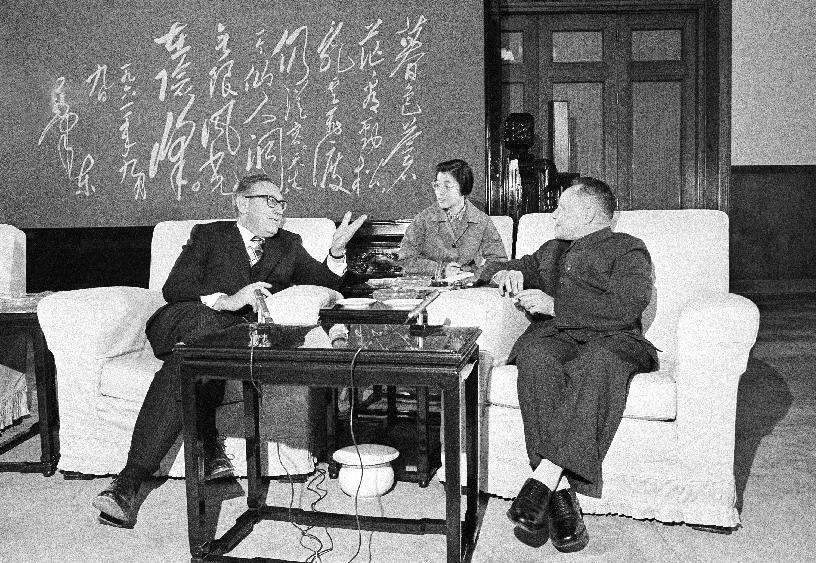
1974 — Soon-to-be paramount leader Deng Xiaoping becomes the first major Chinese politician to address the General Assembly. In his speech, Deng assures the body that China is not and never will be a superpower or seek dominance over others (replacing “hegemon”), assertions increasingly at odds with China’s rising global influence in the 21st century.
1991 — The Republic of China applies to join the U.N. separately from mainland China as the representative of Taiwan and its related islands, saying that Resolution 2758 was irrelevant to Taipei’s status. The move is fiercely condemned by China and is never included in the General Assembly’s agenda or put to a formal vote.
1992 — Having dropped its objections to U.N. peacekeeping on grounds of non-intervention, China sends its first contribution in the form of an engineering company to join in a mission in Cambodia. In subsequent years, China becomes far and away the biggest contributor of personnel to peacekeeping operations among the five permanent Security Council, with more than 3,000 troops and police committed as of this year.
2013 — China is granted a seat on the U.N. human rights council despite frequent criticisms of its authoritarian political system and heavy restrictions on civil liberties. Opponents say that move not only provides cover for China’s detention of political opponents and other abuses, but also allows it to suppress all U.N. human rights initiatives and attempts to hold rights violators accountable.
Copyright 2015 The Associated Press. All rights reserved. This material may not be published, broadcast, rewritten or redistributed.
Yahoo – ABC News Network
Tibet is the first victim of Red China’s Hegemonist Policy.
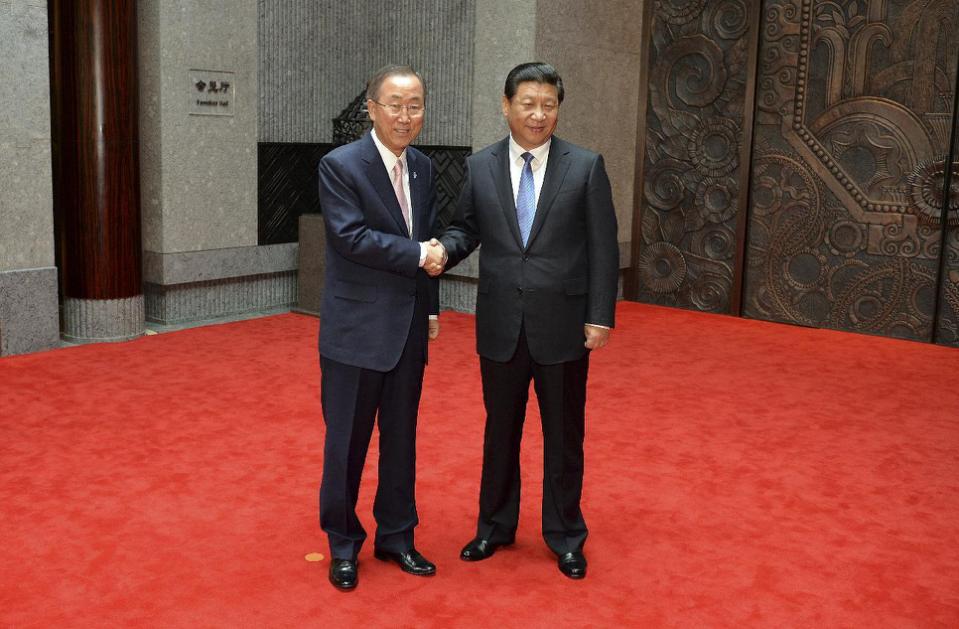
FILE In this May 2, 1949 file photo, a column of Chinese Communist light tanks enter the streets of Peking, which are filled with people watching the conquerors pass. In 1949, Chiang Kai sheks Nationalists lost the Chinese civil war to Mao Zedongs Communists and retreat from the Chinese mainland to the island of Taiwan. The Republic of China, however, retained Chinas Security Council seat with the key backing of the U.S. in order to restrain Maos ally, the Soviet Union, as the Cold War unfolds. (AP Photo, File)FILE In this Dec. 22, 1945 file photo, Gen. George C. Marshall, left, special envoy of U.S. President Harry Truman to China with rank of ambassador, poses with Generalissimo Chiang Kai Shek, right, and Madame Chiang at Chiang’s Nanking home shortly after his arrival in Nanjing. In 1945 the Republic of China, led by Chiang Kai shek, became the first nation to sign the U.N. charter. As one of the victors in World War II, China assumed one of five permanent seats on the U.N. Security Council over the objections of some world leaders, including Britains Winston Churchill. Chinese representatives also helped draft and sign the Universal Declaration of Human Rights. (AP Photo, File)FILE In this Nov. 27, 1974 file photo, Chinese Premier Deng Xiaoping, right, listens to U.S. Secretary of State Henry Kissinger, left, during their meeting in Beijing. In 1974, soon to be paramount leader Deng became the first major Chinese politician to address the General Assembly. In his speech, Deng assured the body that China is not and never will be a superpower or seek dominance over others (replacing hegemon), assertions increasingly at odds with Chinas rising global influence in the 21st century. (AP Photo, File)FILE In this May 19, 2014 file photo, Chinese President Xi Jinping, right, shakes hands with United Nations Secretary General Ban Ki moon, left, as they pose for photos on the eve of the fourth Conference on Interaction and Confidence Building Measures in Asia (CICA) summit at the Xijiao State Guesthouse in Shanghai, China. Chinas President Xi is poised to address the U.N. General Assembly for the first time on Monday, Sept. 28, 2015. (Mark Ralston/Pool Photo via AP, File)
Tibet is the first victim of Red China’s Hegemonist Policy.
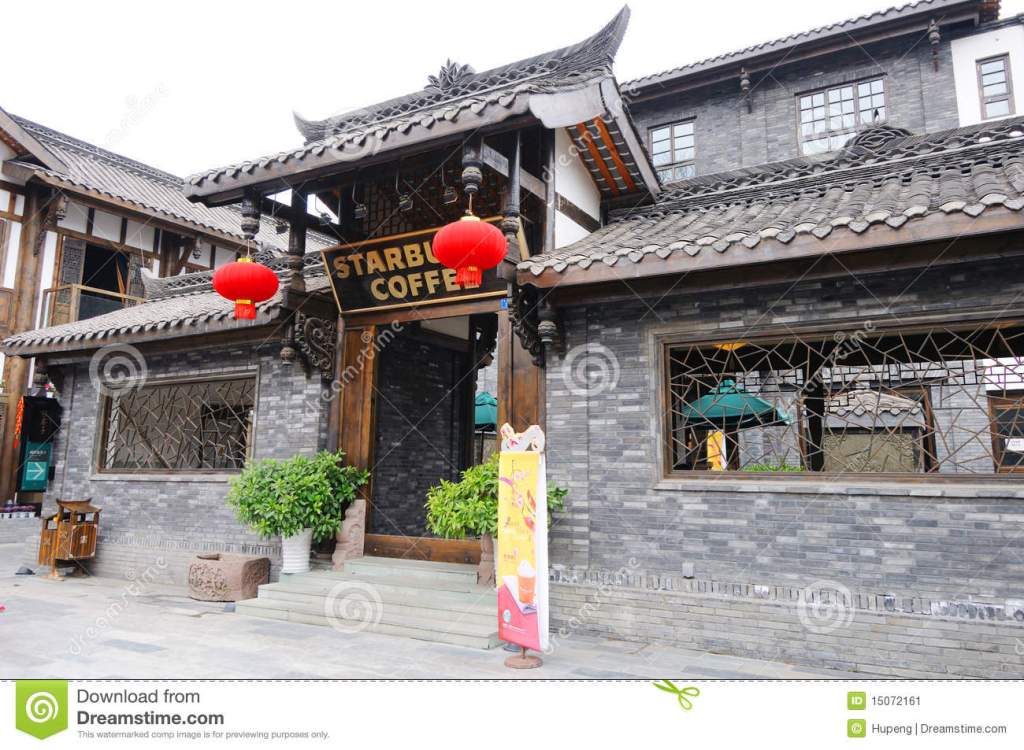
Tibet Awareness – Starbucks Opens Up Shops on the Tibetan Plateau
Whole Dream – Starbucks Coffee Tastes Better if there is Freedom in the Air. I would be happy to sip a cup of hot, freshly brewed Starbucks coffee to begin my day in Lhasa on a bright note. The Coffee is going to taste better when there is Freedom in the thin air of Tibetan Plateau.
Any mountain climber will be able to describe the shortness of breath that normally comes with altitude. It’s not that the air has a lower percentage of oxygen – it’s around 21% wherever you stand in the world. But air pressure decreases the further you walk or fly from the sea’s surface, allowing the gas molecules to spread out in all directions, and a lung can only stretch so far to compensate. The Tibetan plateau is one of the highest regions on Earth. It has an average elevation of ∼4,000 m, a barometric pressure of <500 mmHg, and an ambient partial pressure of oxygen (Po2) of 80 mmHg. At more than 4,000m (13,000ft) above Sea Level, each breath contains around a third less oxygen than the same breath far below. At this altitude, the oxygen level in the air is roughly 60% of what is found at sea level, meaning people breathe in considerably less oxygen with each breath. Low oxygen levels can cause various health issues including nausea, dizziness, headaches, fatigue, and in severe cases, altitude sickness.
I am sharing this story published by Brandchannel with the hope generated by my prediction of Red China’s sudden downfall. There is a chance that I may be attending festivities in Lhasa to celebrate Tibet’s Liberation from Communist occupation. I would be happy to sip a cup of hot, freshly brewed Starbucks coffee to begin my day in Lhasa on a bright note. The Coffee is going to taste better when there is Freedom in the thin air of Tibetan Plateau.
BRANDCHANNEL:
Starbucks Opens Up Shops on the Tibetan Plateau
Posted September 15, 2015 by MARK J. MILLER
A trip to Tibet has long been considered a journey one takes when seeking internal peace. Escaping Western creature comforts can help an individual reprioritize what life is all about.
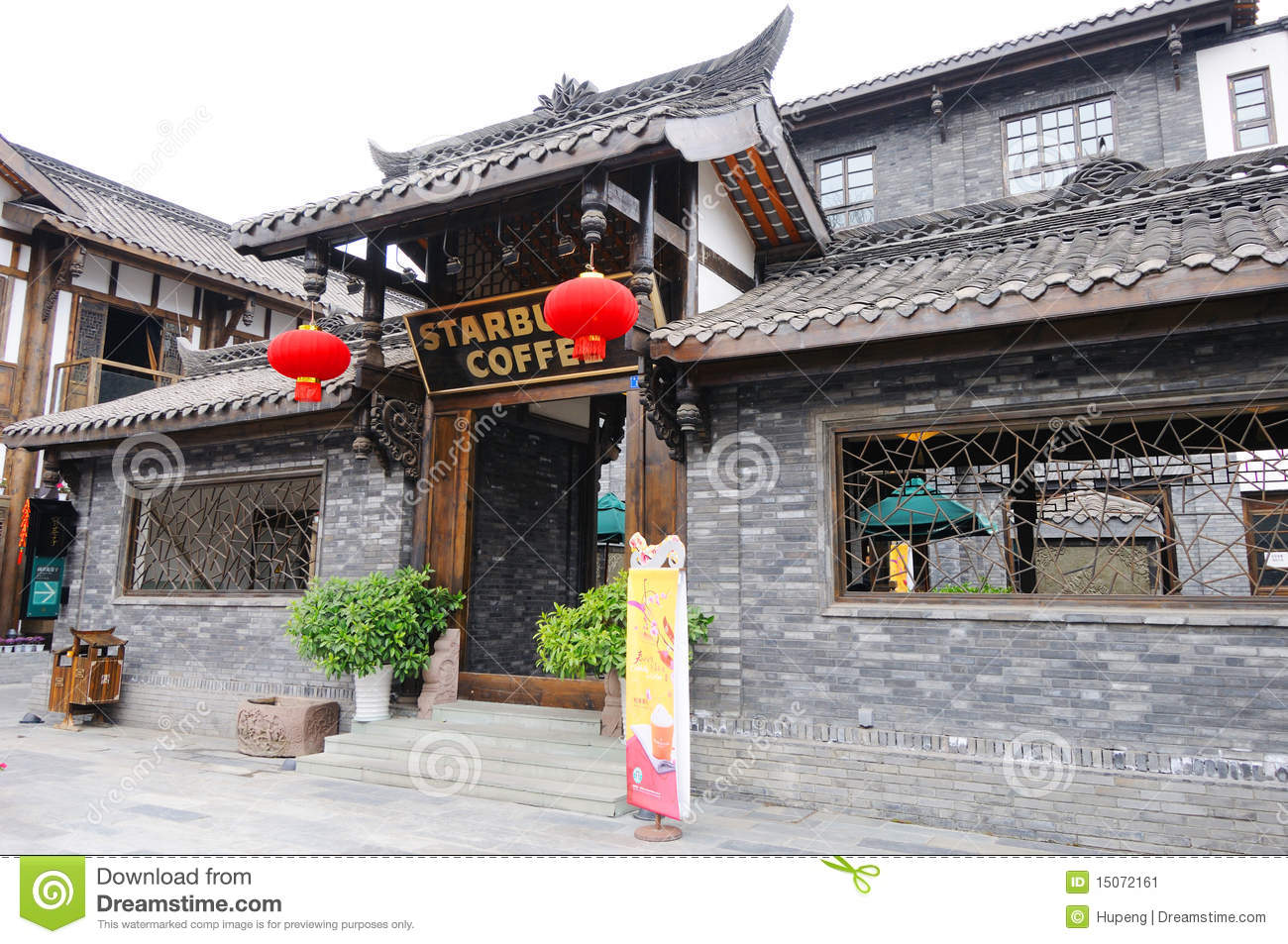
That image may still be true, but Starbucks is inching closer to getting its caffeine and sugar into the country. On Friday, it opened two locations on the Tibetan Plateau over the border in the northern Chinese city of Xining.
The locations are strangely only 300 meters away from each other in a city of 2.2 million people. “Young people are very excited by the Starbucks,” student Padma Yangkyi told the Xinhua News Agency. “The fondness for traditional buttered tea and Tibetan opera doesn’t weaken our love for coffee and pop songs.”
China now has about 1,700 Starbucks, passing Canada as the country with the second-most locations outside the US, according to Quartz. The plan is to double that number in the next five years.
It isn’t clear when Starbucks will get to Tibet proper but it seems inevitable. The Australian reports that new Sinopec gas stations have popped up, there’s a shiny new Tibet Tiandi Green Barley brewery, and China is pumping “capital into the area, funding new infrastructure and providing subsidies and assistance, including free education, to many of its population.”
A railway opened in 2006 that brings travelers from Qinghai, Tibet, saw 15 million tourists last year, up 20 percent from 2013. Where the people go, Starbucks will surely follow.
I would be happy to sip a cup of hot, freshly brewed Starbucks coffee to begin my day in Lhasa on a bright note. The Coffee is going to taste better when there is Freedom in the thin air of Tibetan Plateau.I would be happy to sip a cup of hot, freshly brewed Starbucks coffee to begin my day in Lhasa on a bright note. The Coffee is going to taste better when there is Freedom in the thin air of Tibetan Plateau.I would be happy to sip a cup of hot, freshly brewed Starbucks coffee to begin my day in Lhasa on a bright note. The Coffee is going to taste better when there is Freedom in the thin air of Tibetan Plateau.I would be happy to sip a cup of hot, freshly brewed Starbucks coffee to begin my day in Lhasa on a bright note. The Coffee is going to taste better when there is Freedom in the thin air of Tibetan Plateau.
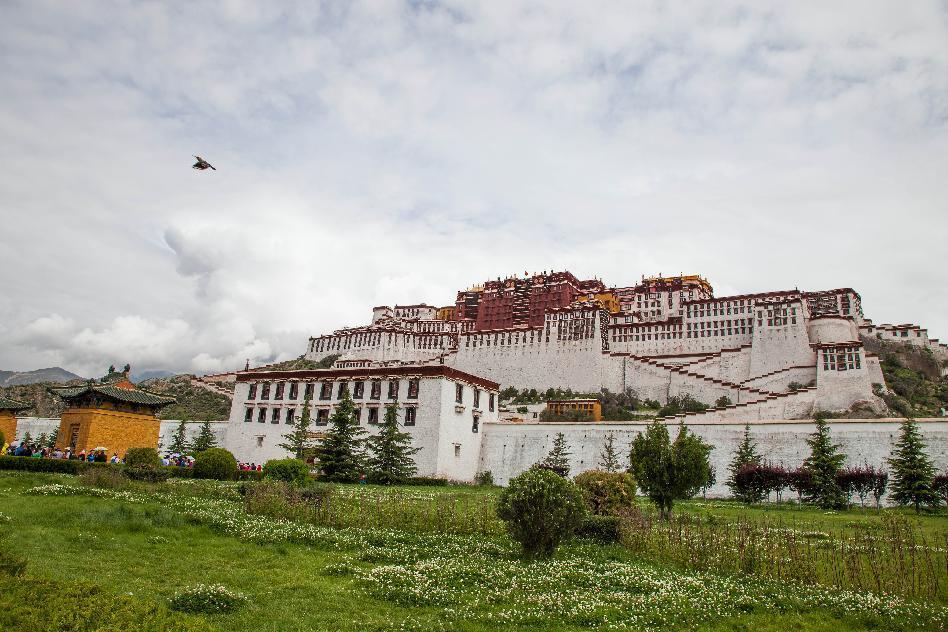
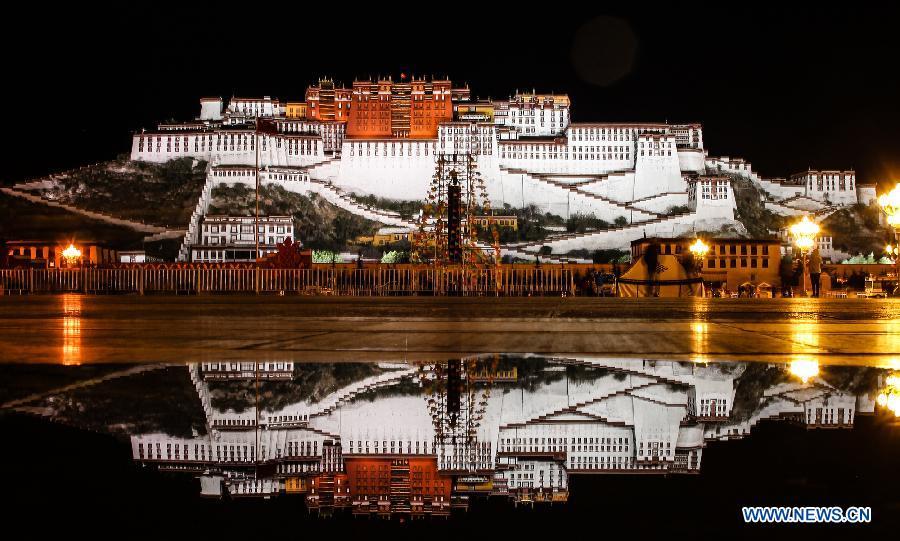
Tibet Awareness – The Reality of Potala Palace, Lhasa, Tibet
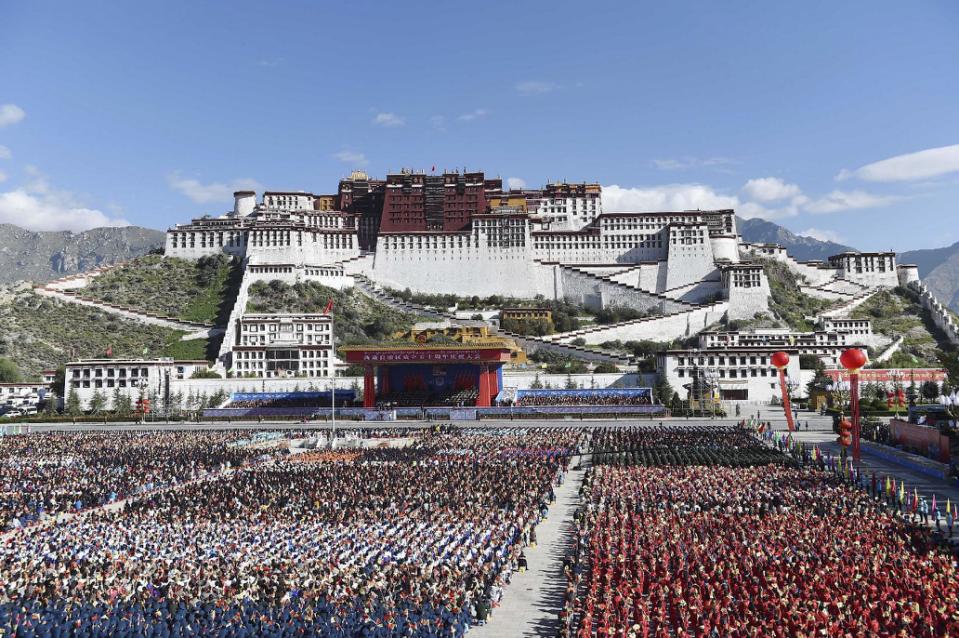
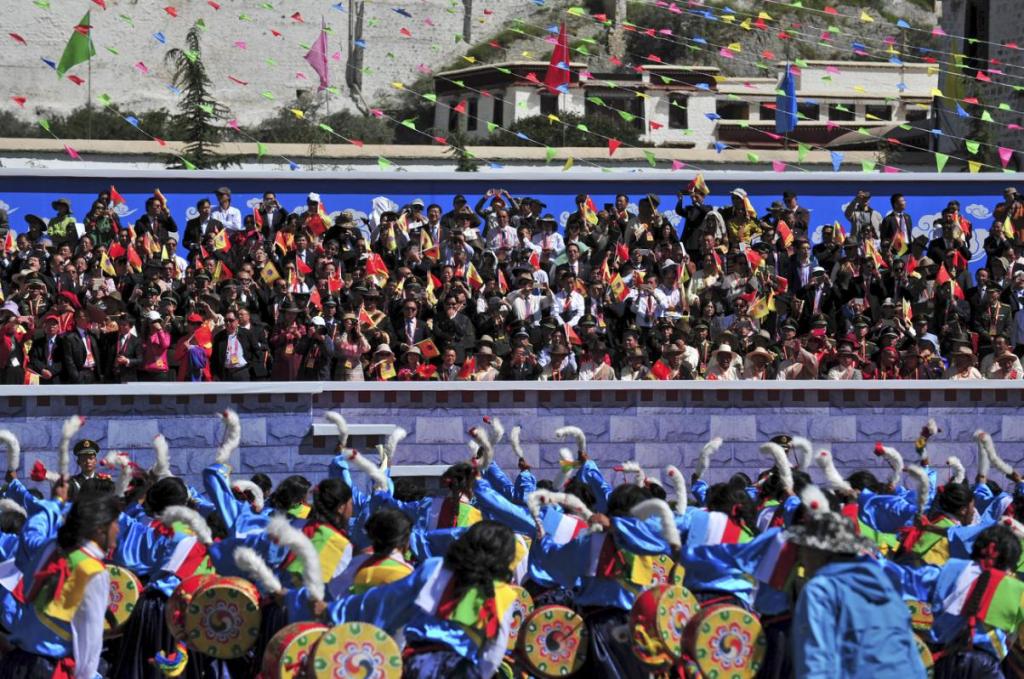
Tibet Awareness – The Yoke of Occupation. Potala Palace, Lhasa, Tibet. China Showcases 50 Years of hold on Tibet with Big Parade.
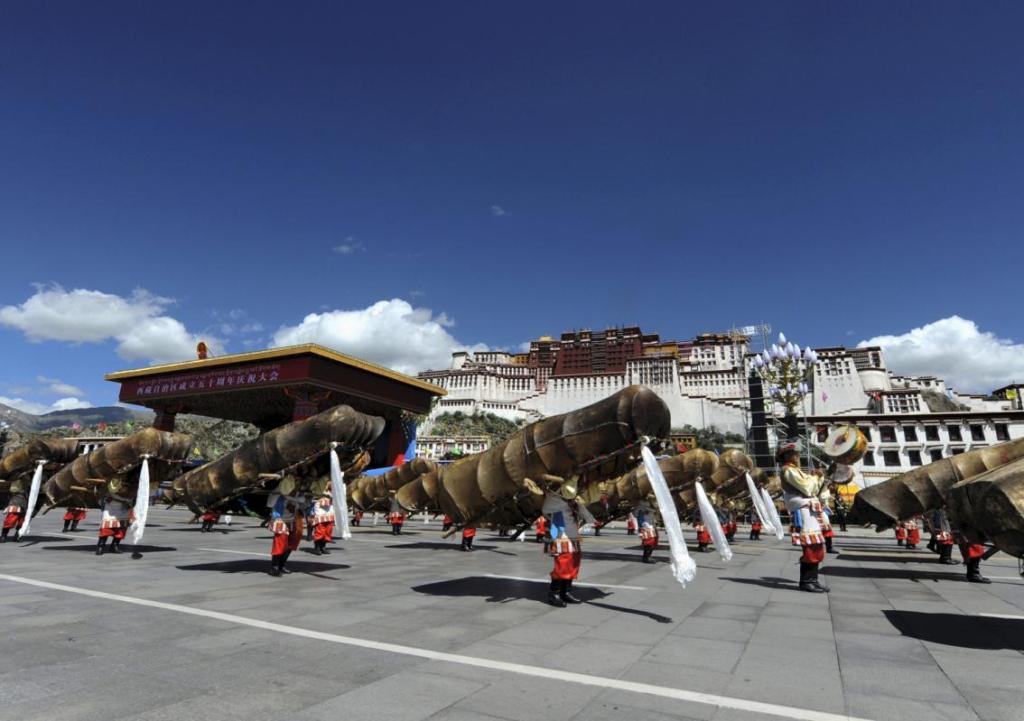
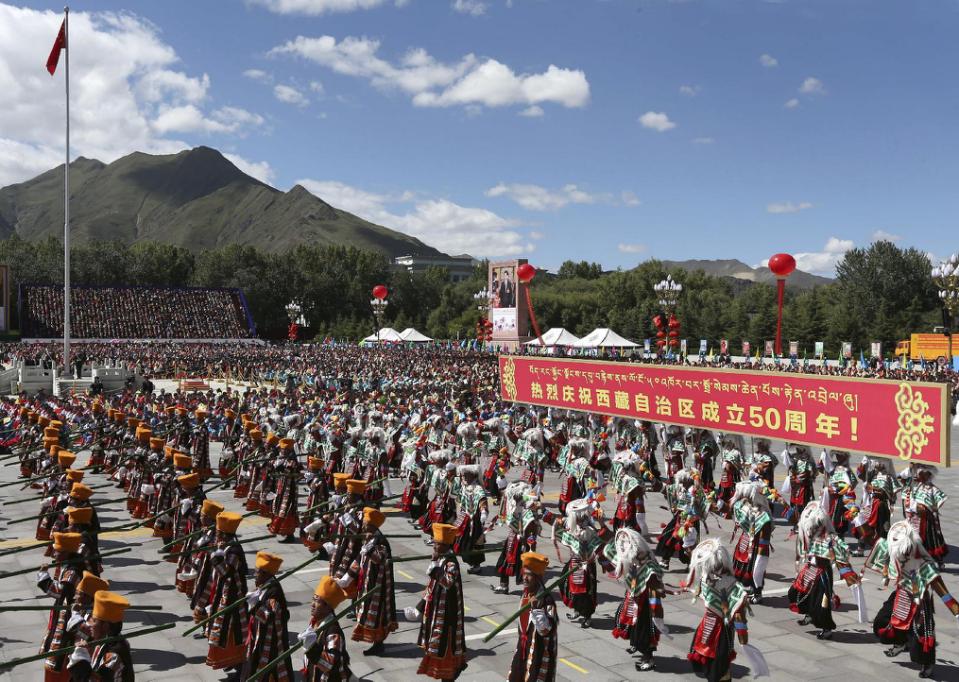
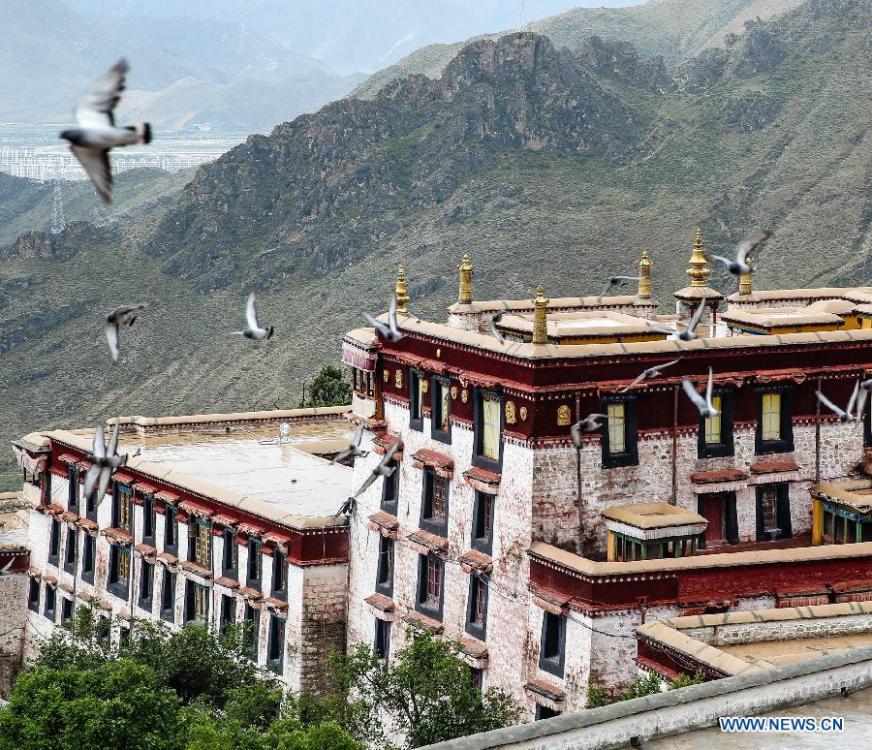
On Tuesday, September 08, 2015, Red China hosted a ceremony in the square of Potala Palace, Lhasa, Tibet to celebrate formation of Tibet Autonomous Region or TAR on September 01, 1965. This celebration does not change the reality of Potala Palace. It stands as a proud symbol of Tibetan Independence and Tibetan Sovereignty. Potala Palace like the White House can only represent one form of national government. As long as the name ‘Potala Palace’ survives, it stands for a political institution called Ganden Phodrang.
CHINA SHOWCASES 50 YEARS OF HOLD ON TIBET WITH BIG PARADE
THE HINDU
BEIJING, September 8, 2015 Updated: September 8, 2015 18:38 IST
CHINA SHOWCASES 50 YEARS OF HOLD ON TIBET WITH BIG PARADE
PTI
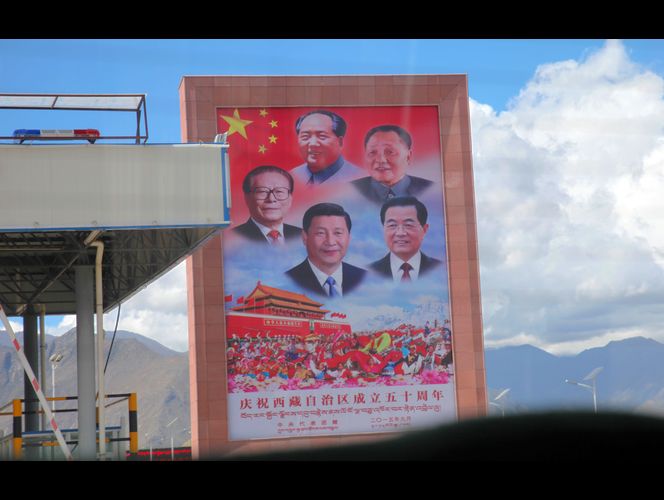
CHINA SHOWCASES 50 YEARS OF HOLD ON TIBET WITH BIG PARADE. Performers carry a giant Chinese national emblem (right) and pictures of Chinese government leaders including President Xi Jinping, former leaders Hu Jintao, Jiang Zemin, Deng Xiaoping and Mao Zedong, during the celebration event at the Potala Palace marking the 50th anniversary of the founding of the Tibet Autonomous Region, in Lhasa, Tibet Autonomous Region, China, on Tuesday.
REUTERS
Performers carry a giant Chinese national emblem (right) and pictures of Chinese government leaders including President Xi Jinping, former leaders Hu Jintao, Jiang Zemin, Deng Xiaoping and Mao Zedong, during the celebration event at the Potala Palace marking the 50th anniversary of the founding of the Tibet Autonomous Region, in Lhasa, Tibet Autonomous Region, China, on Tuesday.
V GEETANATH
B RISHIKESH BAHADUR DESAI
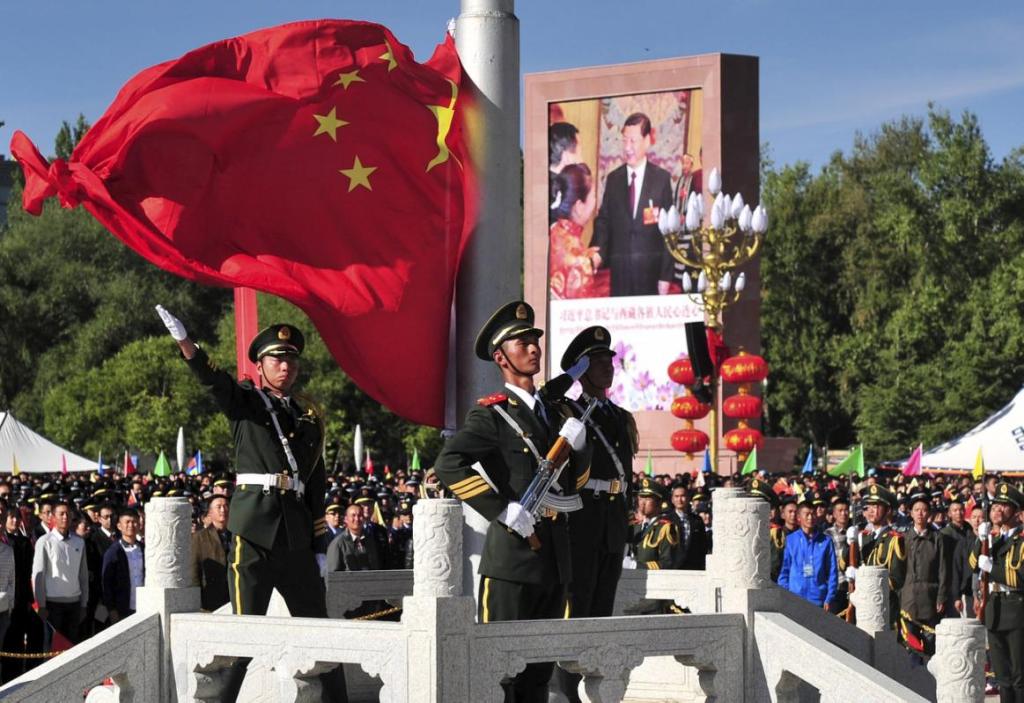
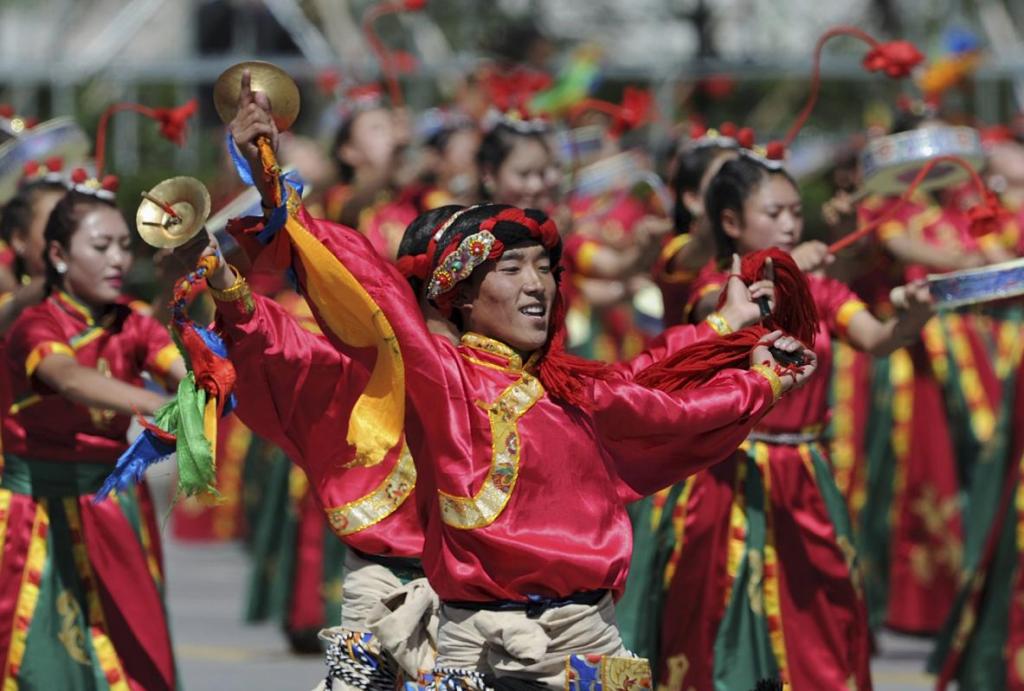
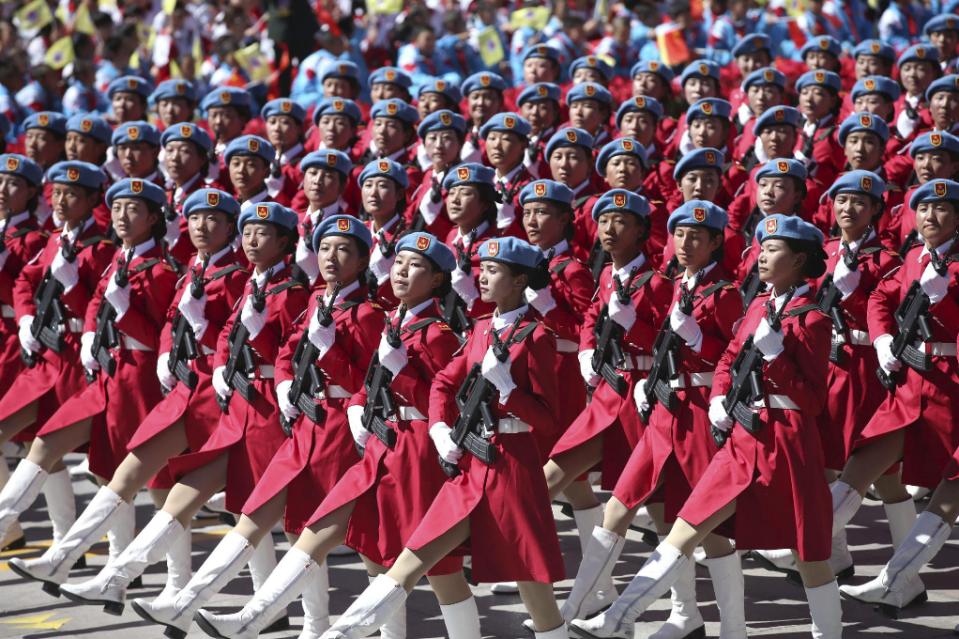
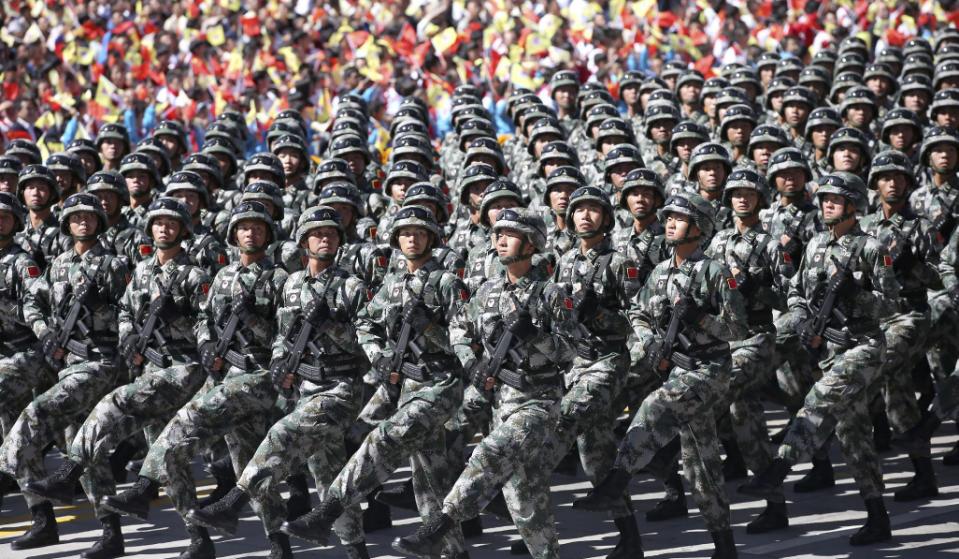
China on Tuesday marked 50 years of Tibet’s amalgamation with the Communist giant, holding a grand parade in Lhasa showcasing its grip on the strategic Himalayan region even as it adopted a tough stance against the Dalai Lama, Tibetan religious leader, calling for a crackdown on “separatist forces.” A big meeting followed by a grand parade was held in front of the Potala Palace, traditional home of the Dalai Lama from where he fled to India in 1959, attended among others by senior official of the ruling Communist Party of China (CPC), Yu Zhengsheng, to mark 50 years of Tibet being declared as an autonomous province of China.
China’s claim
China says Tibet became a part of the country by “peaceful liberation” when Chinese troops invaded the Himalayan plateau in 1950 establishing Beijing’s control over it. The Tibet Autonomous Region was founded on September 1, 1965, after the establishment of the regional People’s Congress, the local legislature. Addressing the colourful ceremony, Mr. Yu, who is in-charge of minorities in China, stressed the legality of crackdown on separatists, the official characterisation of supporters of the Dalai Lama including Buddhist monks.
High-handedness charge
Overseas Tibetan groups accused the Chinese authorities of high-handed methods in dealing with those supporting the Dalai Lama, widely regarded as the spiritual head of Tibetan Buddhism.
Over 130 Tibetans, including monks, have committed self immolations in the recent years demanding the return of the Dalai Lama to Tibet. Calling for “strict adherence to the law in managing religious affairs in Tibet,” Mr. Yu said “law-based governance is fundamental to the long-term stability of Tibet.”
Policing of separatism
In a nationally telecast ceremony, Mr. Yu said policing of separatism must also be done legally while asserting that the crackdown on separatists would continue, scotching any hopes of reconciliation with the Dalai Lama under the new leadership headed by President Xi Jinping. Law-based governance in Tibet was also highlighted in a speech by Mr. Xi last month, state-run Xinhua news agency reported. Referring to security of Tibet which formed part of the India-China border, Mr. Yu also said: “Border areas must be well managed to successfully govern the country, and stability in Tibet is paramount to the management of these areas.”
Tibet Awareness – The Yoke of Occupation. Potala Palace, Lhasa, Tibet. China Showcases 50 Years of hold on Tibet with Big Parade.Tibet Awareness – The Yoke of Occupation. Potala Palace, Lhasa, Tibet. China Showcases 50 Years of hold on Tibet with Big Parade.Tibet Awareness – The Yoke of Occupation. Potala Palace, Lhasa, Tibet. China Showcases 50 Years of hold on Tibet with Big Parade.Tibet Awareness – The Yoke of Occupation. Potala Palace, Lhasa, Tibet. China Showcases 50 Years of hold on Tibet with Big Parade.Tibet Awareness – The Yoke of Occupation. Potala Palace, Lhasa, Tibet. China Showcases 50 Years of hold on Tibet with Big Parade.Tibet Awareness – The Yoke of Occupation. Potala Palace, Lhasa, Tibet. China Showcases 50 Years of hold on Tibet with Big Parade.Tibet Awareness – The Yoke of Occupation. Potala Palace, Lhasa, Tibet. China Showcases 50 Years of hold on Tibet with Big Parade.Tibet Awareness – The Yoke of Occupation. Potala Palace, Lhasa, Tibet. China Showcases 50 Years of hold on Tibet with Big Parade.Tibet Awareness – The Yoke of Occupation. Potala Palace, Lhasa, Tibet. China Showcases 50 Years of hold on Tibet with Big Parade.Tibet Awareness – The Yoke of Occupation. Potala Palace, Lhasa, Tibet. China Showcases 50 Years of hold on Tibet with Big Parade.Tibet Awareness – The Yoke of Occupation. Potala Palace, Lhasa, Tibet. China Showcases 50 Years of hold on Tibet with Big Parade.Tibet Awareness – The Yoke of Occupation. Potala Palace, Lhasa, Tibet. China Showcases 50 Years of hold on Tibet with Big Parade.
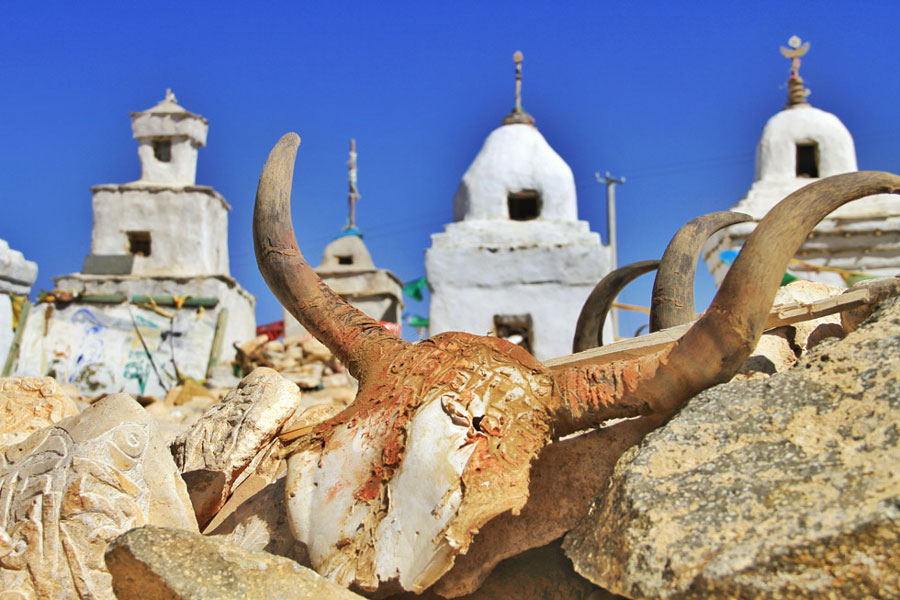
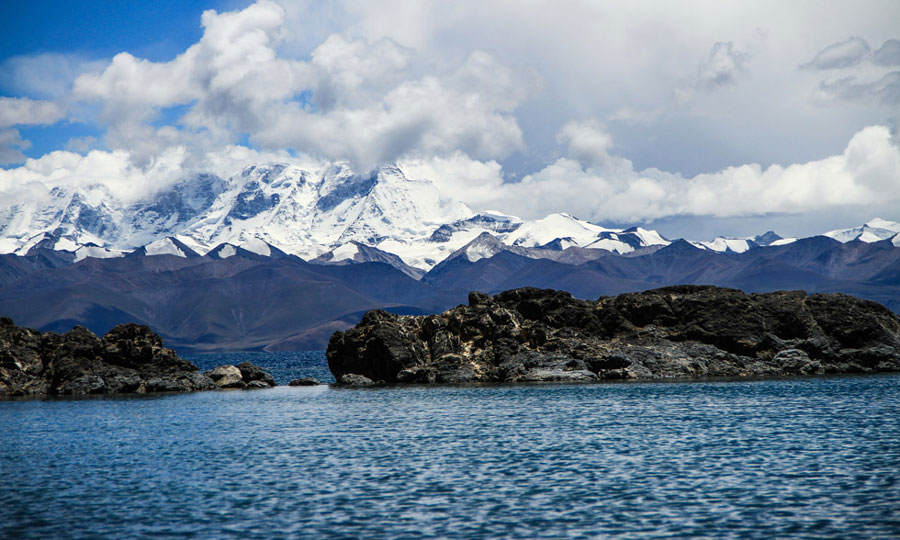
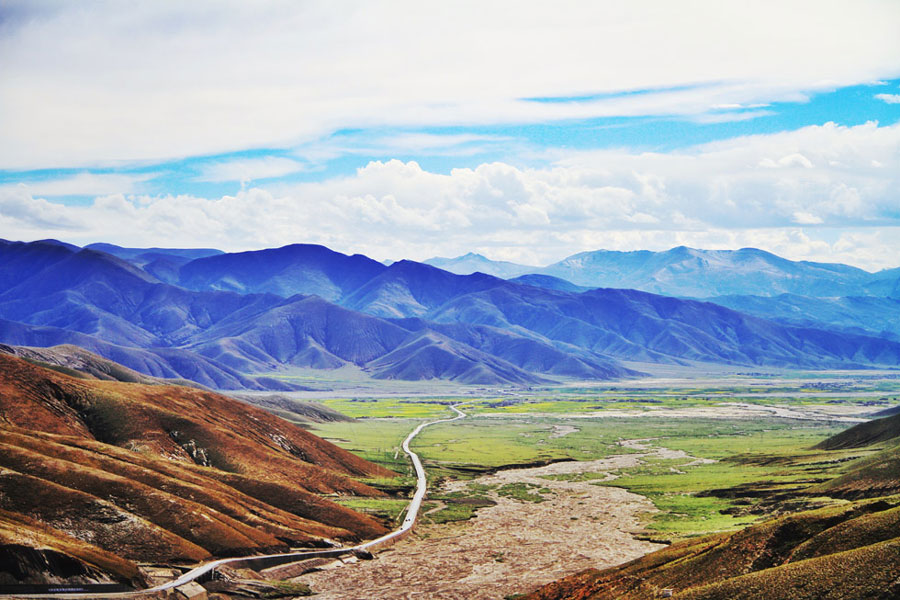
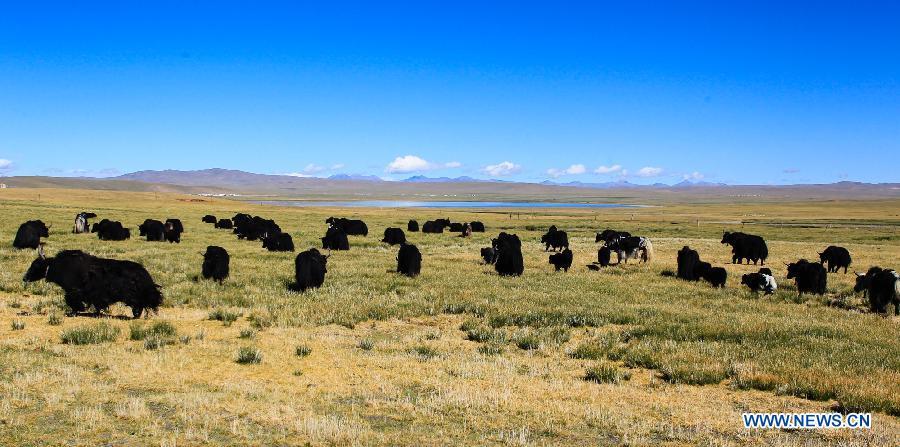
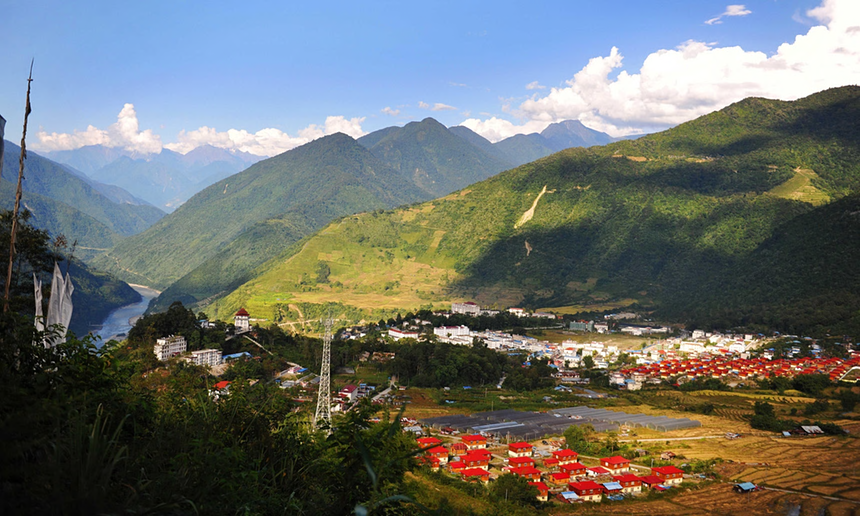
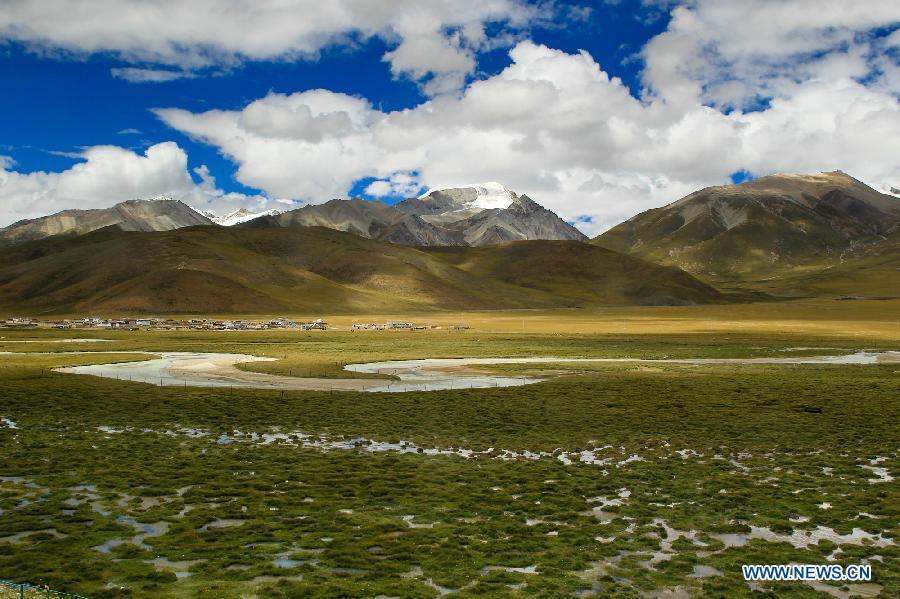
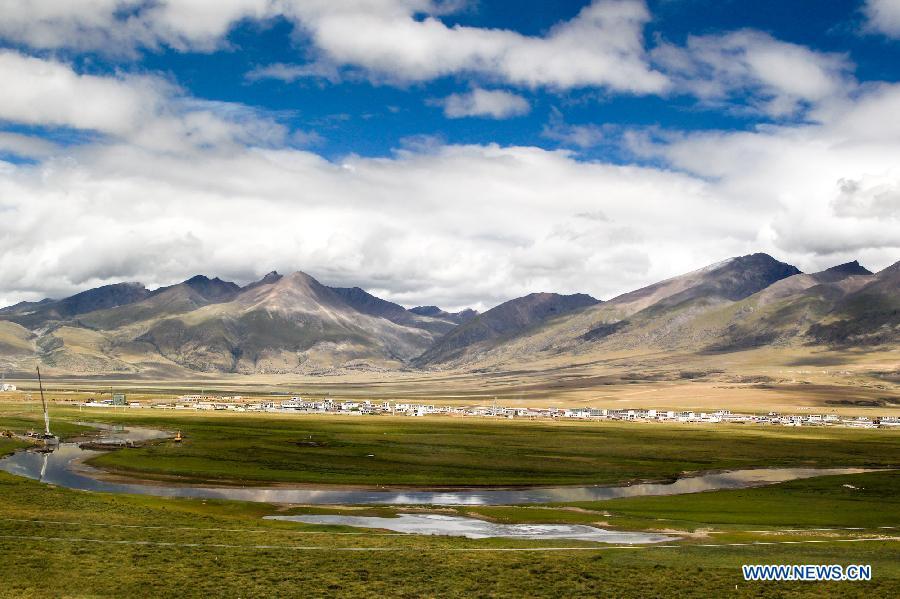
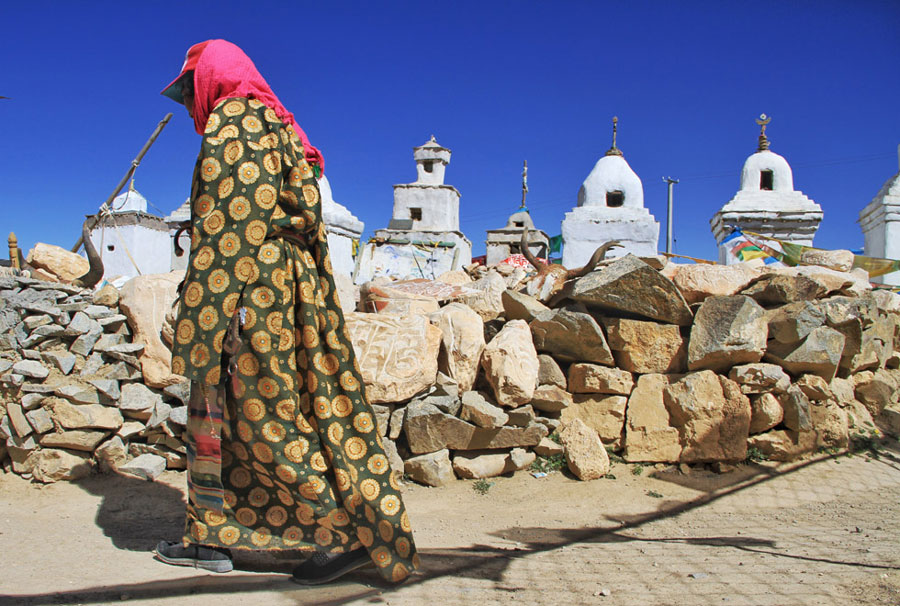
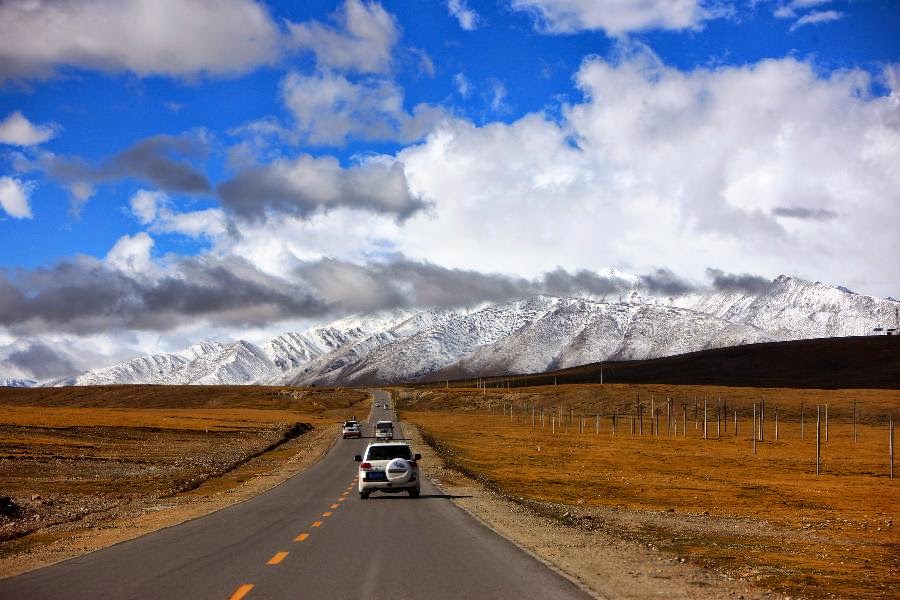
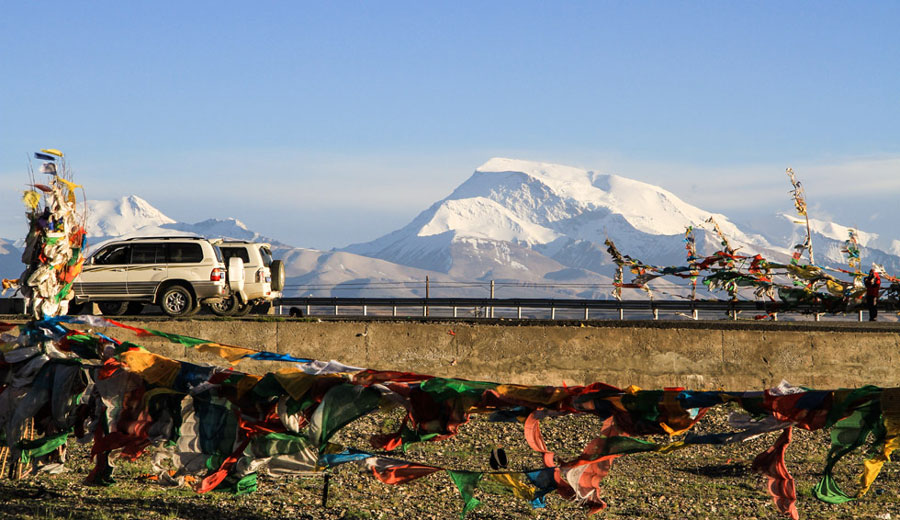
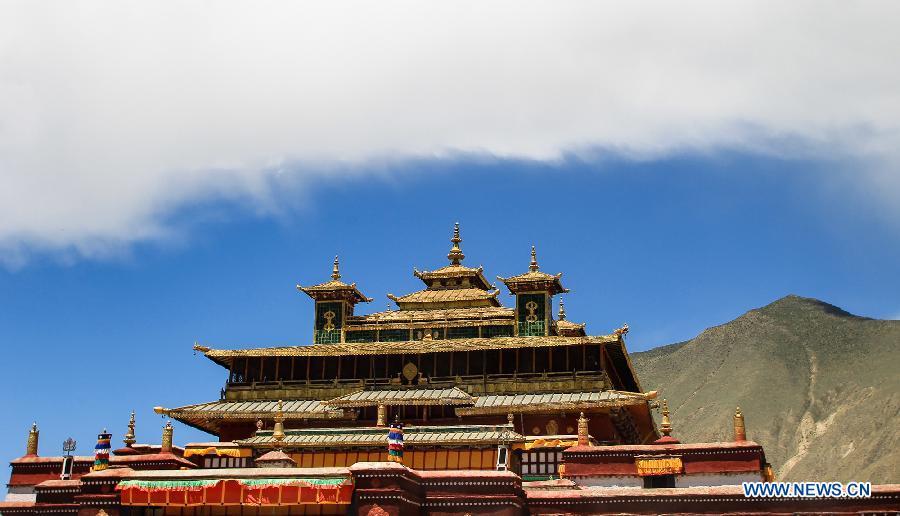
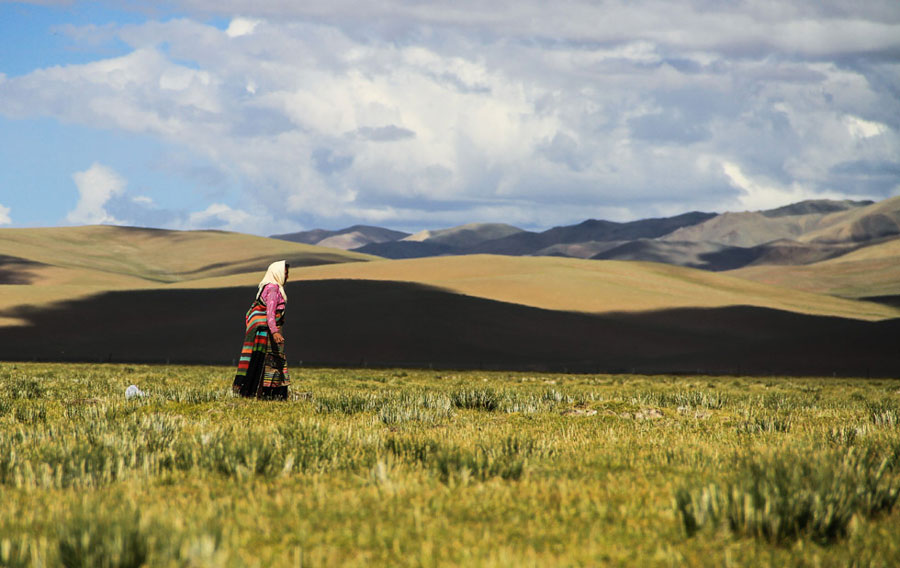
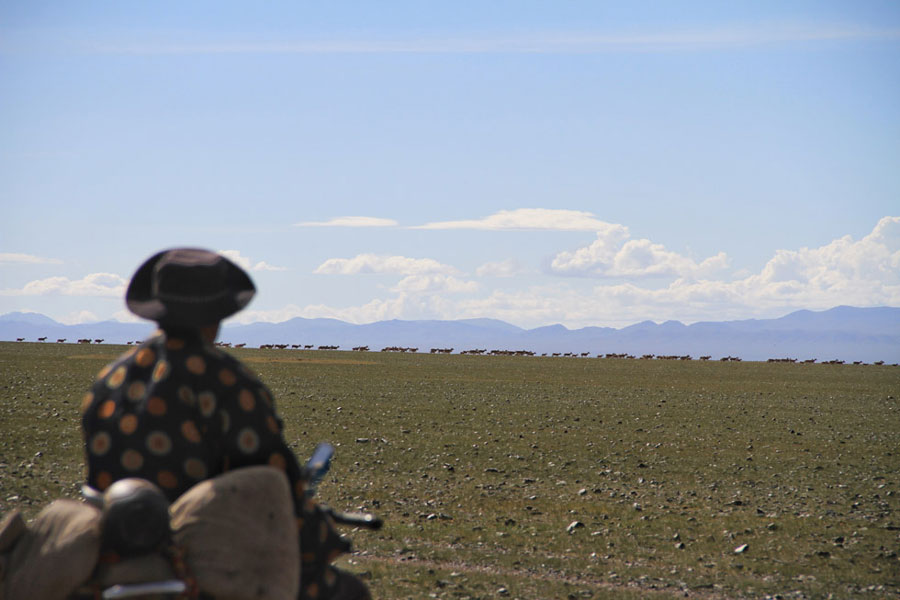
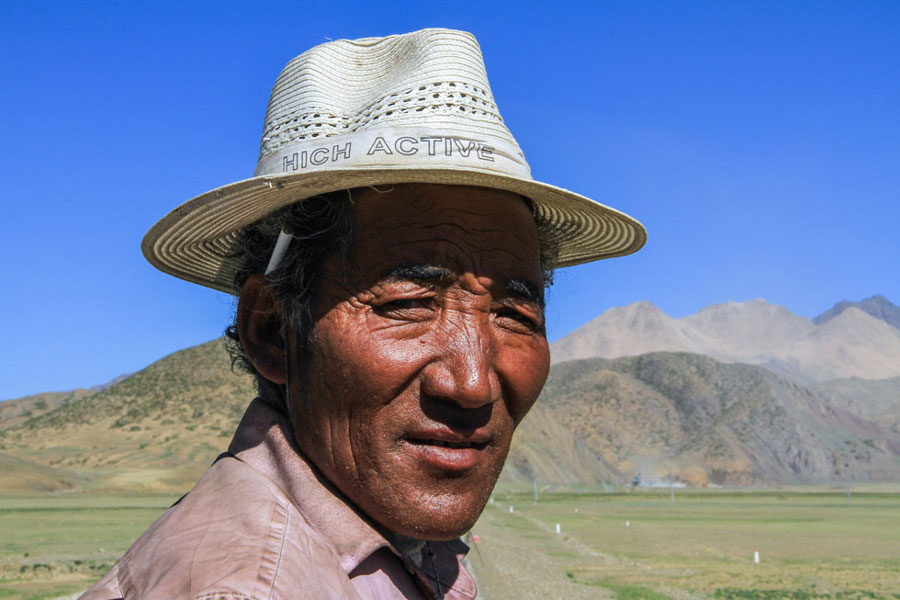
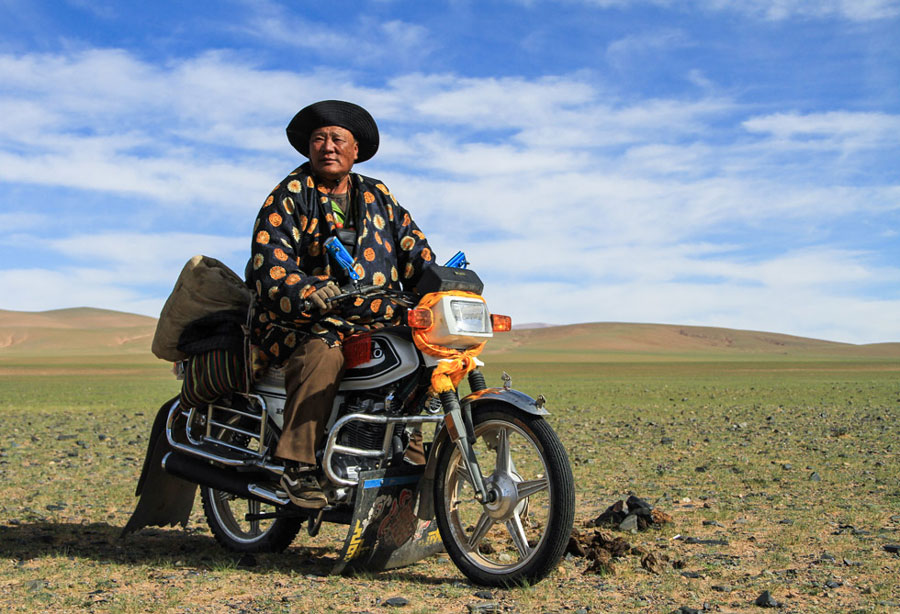
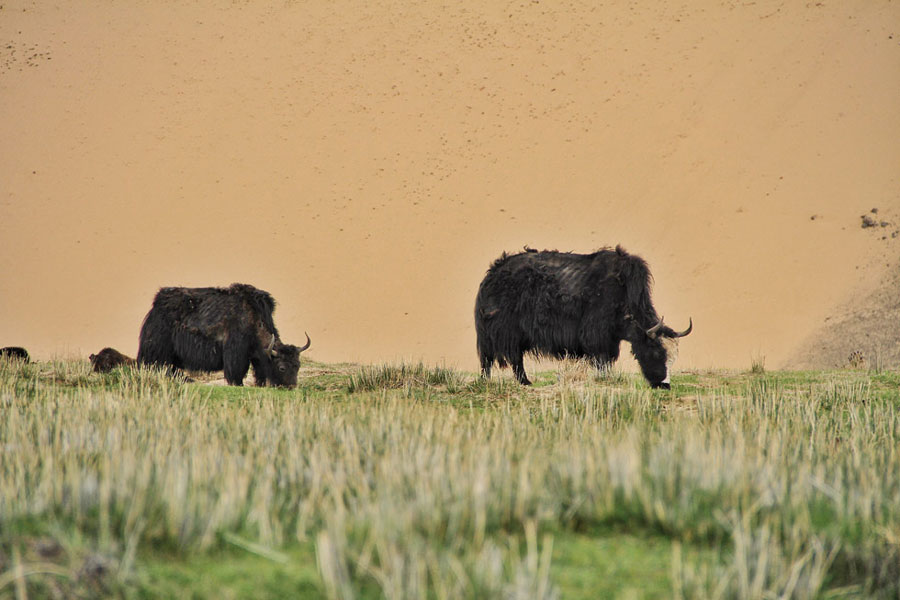
TIBET AWARENESS – POTALA PALACE, LHASA, TIBET – TIBET IS UNDER OCCUPATION. Red China has been using photo images of Tibet to promote Tibetan Tourism which fails to acknowledge Tibet’s Independence and Tibetans’ Right to Natural Freedom.
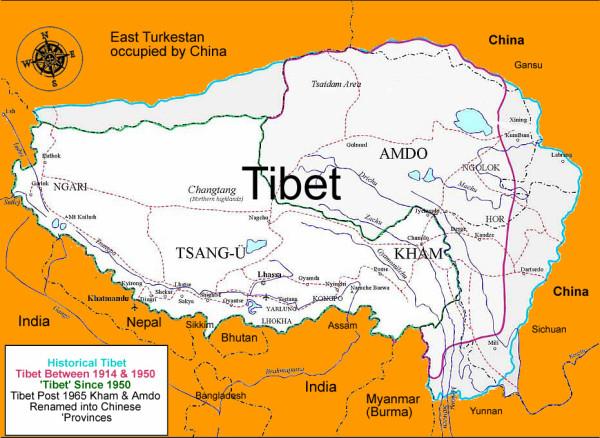
On September 01, 2015, Red China is celebrating a historical event that scars the beauty of Tibetan landscape. Red China brutally carved out a province that she calls Tibetan Autonomous Region or TAR where Tibetans have no autonomy and are denied Right to Self-Determination. Tibet has a total area of 965, 000 square miles and as such in terms of size, Tibet is world’s tenth largest nation.
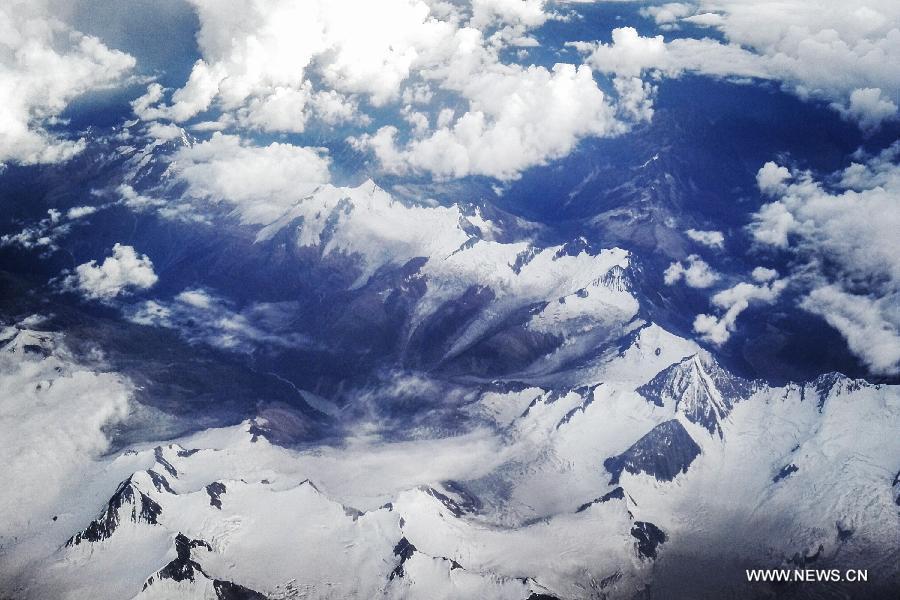
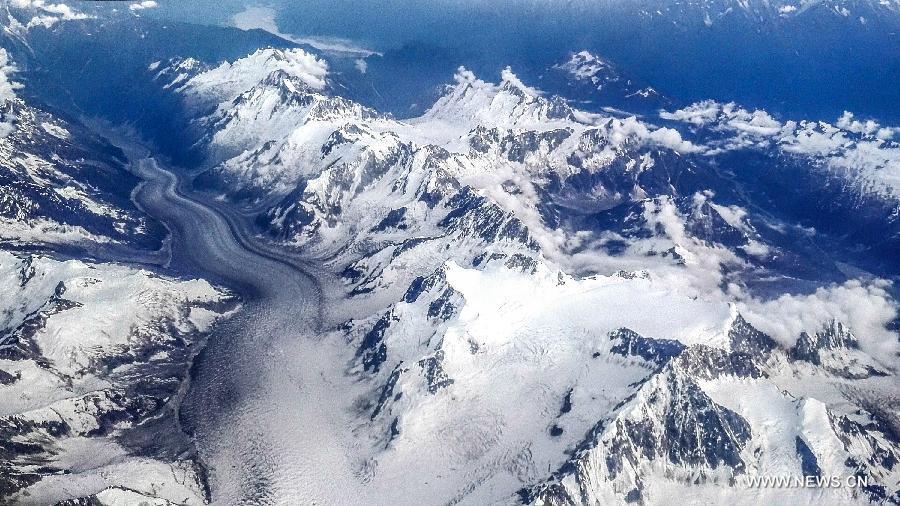
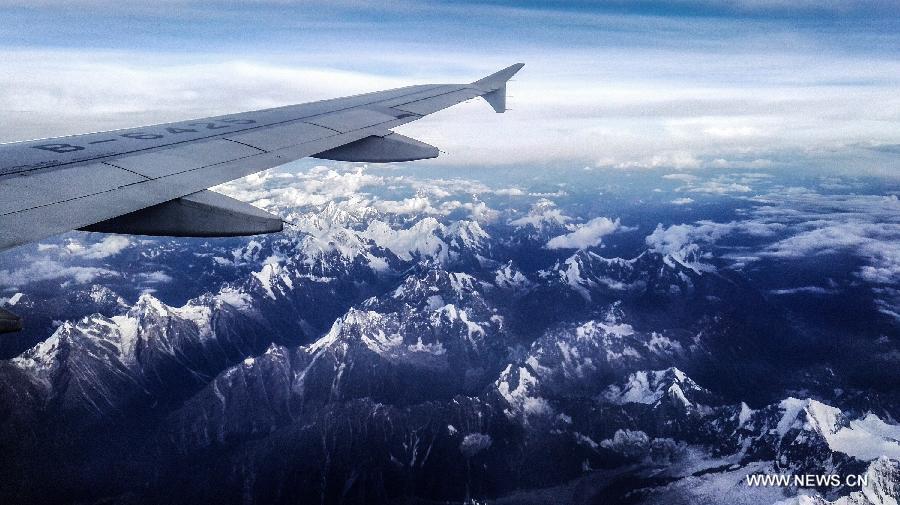
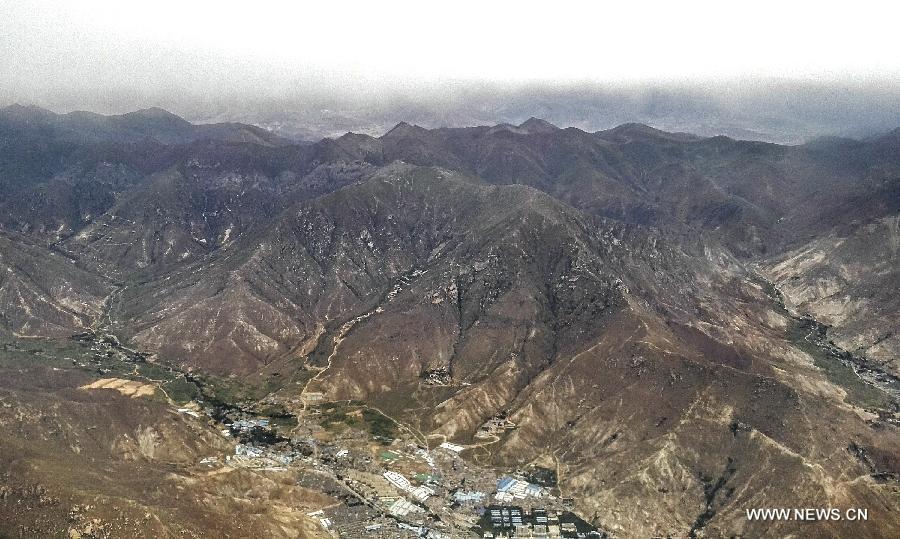
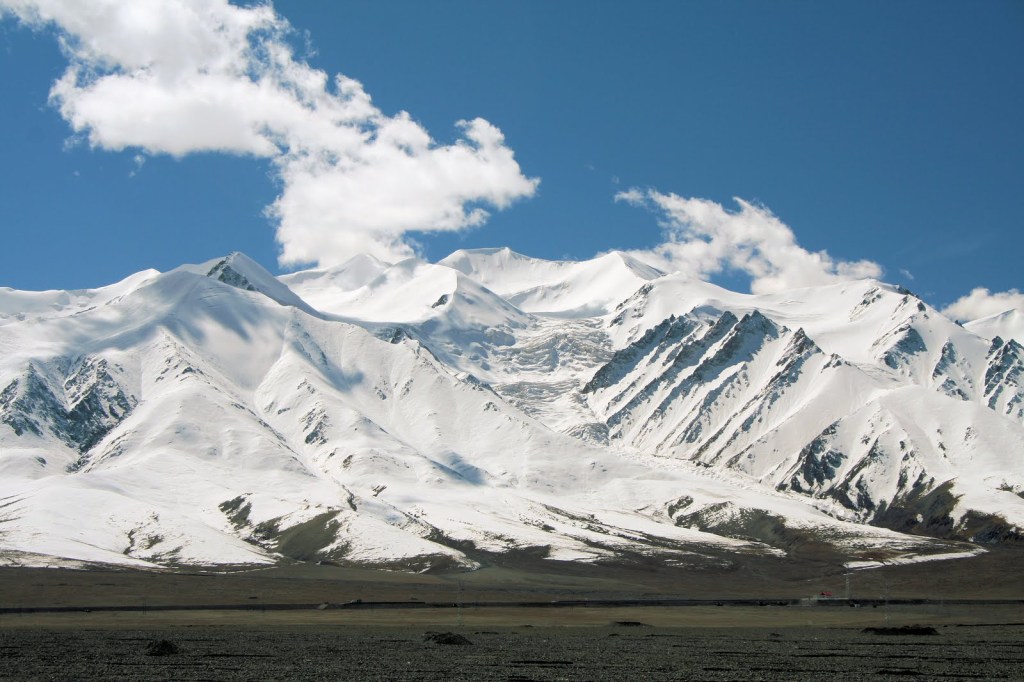
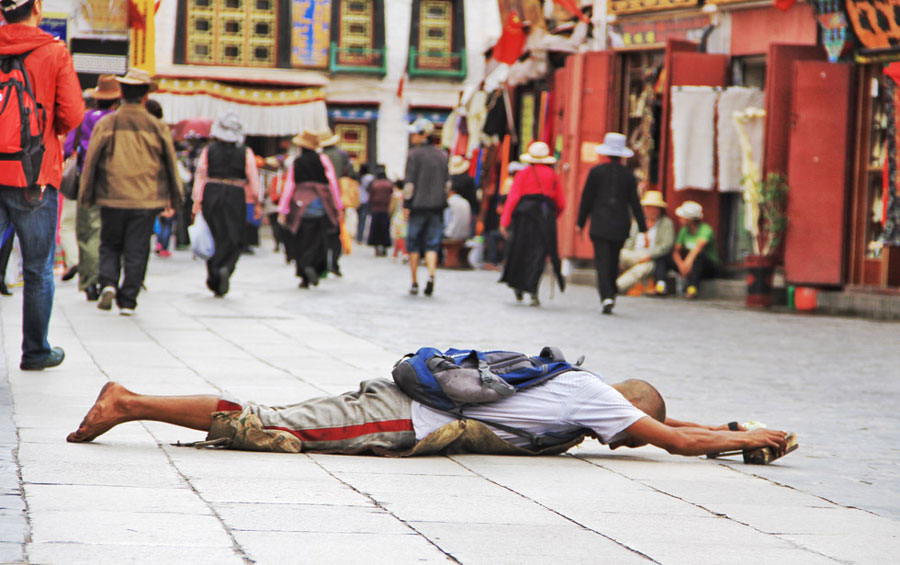
I am sharing a few photo images of Tibet, its landscape and its people. Red China has been using photo images of Tibet to promote Tibetan Tourism which fails to acknowledge Tibet’s Independence and Tibetans’ Right to Natural Freedom.
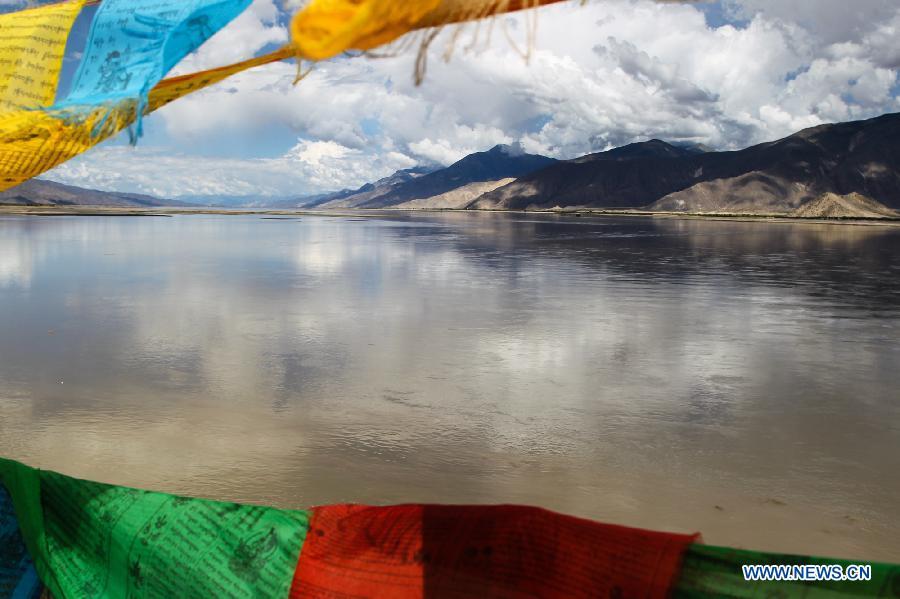
TIBET AWARENESS – TIBET IS UNDER OCCUPATION. QINGHAI. TIBET PLATEAU.Red China has been using photo images of Tibet to promote Tibetan Tourism which fails to acknowledge Tibet’s Independence and Tibetans’ Right to Natural Freedom.TIBET AWARENESS – TIBET IS UNDER OCCUPATION. QINGHAI – TIBET PLATEAU.Red China has been using photo images of Tibet to promote Tibetan Tourism which fails to acknowledge Tibet’s Independence and Tibetans’ Right to Natural Freedom.TIBET AWARENESS – TIBET IS UNDER OCCUPATION. QINGHAI TIBET PLATEAU.Red China has been using photo images of Tibet to promote Tibetan Tourism which fails to acknowledge Tibet’s Independence and Tibetans’ Right to Natural Freedom.TIBET AWARENESS – TIBET IS UNDER OCCUPATION. QINGHAI. TIBET. Red China has been using photo images of Tibet to promote Tibetan Tourism which fails to acknowledge Tibet’s Independence and Tibetans’ Right to Natural Freedom.Red China has been using photo images of Tibet to promote Tibetan Tourism which fails to acknowledge Tibet’s Independence and Tibetans’ Right to Natural Freedom.Red China has been using photo images of Tibet to promote Tibetan Tourism which fails to acknowledge Tibet’s Independence and Tibetans’ Right to Natural Freedom.Red China has been using photo images of Tibet to promote Tibetan Tourism which fails to acknowledge Tibet’s Independence and Tibetans’ Right to Natural Freedom.Red China has been using photo images of Tibet to promote Tibetan Tourism which fails to acknowledge Tibet’s Independence and Tibetans’ Right to Natural Freedom.Red China has been using photo images of Tibet to promote Tibetan Tourism which fails to acknowledge Tibet’s Independence and Tibetans’ Right to Natural Freedom.Red China has been using photo images of Tibet to promote Tibetan Tourism which fails to acknowledge Tibet’s Independence and Tibetans’ Right to Natural Freedom.Red China has been using photo images of Tibet to promote Tibetan Tourism which fails to acknowledge Tibet’s Independence and Tibetans’ Right to Natural Freedom.Red China has been using photo images of Tibet to promote Tibetan Tourism which fails to acknowledge Tibet’s Independence and Tibetans’ Right to Natural Freedom.Red China has been using photo images of Tibet to promote Tibetan Tourism which fails to acknowledge Tibet’s Independence and Tibetans’ Right to Natural Freedom.Red China has been using photo images of Tibet to promote Tibetan Tourism which fails to acknowledge Tibet’s Independence and Tibetans’ Right to Natural Freedom.Red China has been using photo images of Tibet to promote Tibetan Tourism which fails to acknowledge Tibet’s Independence and Tibetans’ Right to Natural Freedom.Red China has been using photo images of Tibet to promote Tibetan Tourism which fails to acknowledge Tibet’s Independence and Tibetans’ Right to Natural Freedom.Red China has been using photo images of Tibet to promote Tibetan Tourism which fails to acknowledge Tibet’s Independence and Tibetans’ Right to Natural Freedom.Red China has been using photo images of Tibet to promote Tibetan Tourism which fails to acknowledge Tibet’s Independence and Tibetans’ Right to Natural Freedom.Red China has been using photo images of Tibet to promote Tibetan Tourism which fails to acknowledge Tibet’s Independence and Tibetans’ Right to Natural Freedom.Red China has been using photo images of Tibet to promote Tibetan Tourism which fails to acknowledge Tibet’s Independence and Tibetans’ Right to Natural Freedom.Red China has been using photo images of Tibet to promote Tibetan Tourism which fails to acknowledge Tibet’s Independence and Tibetans’ Right to Natural Freedom.Red China has been using photo images of Tibet to promote Tibetan Tourism which fails to acknowledge Tibet’s Independence and Tibetans’ Right to Natural Freedom.Red China has been using photo images of Tibet to promote Tibetan Tourism which fails to acknowledge Tibet’s Independence and Tibetans’ Right to Natural Freedom.Red China has been using photo images of Tibet to promote Tibetan Tourism which fails to acknowledge Tibet’s Independence and Tibetans’ Right to Natural Freedom.Red China has been using photo images of Tibet to promote Tibetan Tourism which fails to acknowledge Tibet’s Independence and Tibetans’ Right to Natural Freedom.Red China has been using photo images of Tibet to promote Tibetan Tourism which fails to acknowledge Tibet’s Independence and Tibetans’ Right to Natural Freedom.Red China has been using photo images of Tibet to promote Tibetan Tourism which fails to acknowledge Tibet’s Independence and Tibetans’ Right to Natural Freedom.Red China has been using photo images of Tibet to promote Tibetan Tourism which fails to acknowledge Tibet’s Independence and Tibetans’ Right to Natural Freedom.
RED DRAGON – RED CHINA – DICTATORIAL REGIME: RED CHINA IS AUTOCRATIC, DOMINEERING, AND TYRANNICAL. RED CHINA’S MAO TSE-TUNG RULED OVER CHINA AS A DICTATOR AND THE COMMUNIST PARTY OF CHINA INHERITED HIS LEGACY.
Red China is autocratic, domineering, and tyrannical for she exercises power suppressing the views of other nations. Her actions are arbitrary, unreasoned, and unpredictable. Red China uses power or authority in accord only with her own will or desire. Red China’s Communist Party is a dictatorial regime that created territorial disputes with Tibet and all other regional neighbors to dominate them with her superior military power.
RED DRAGON – RED CHINA – DICTATORIAL REGIME: RED CHINA IS AUTOCRATIC, DOMINEERING, AND TYRANNICAL. RED CHINA’S MAO TSE-TUNG RULED OVER CHINA AS A DICTATOR AND THE COMMUNIST PARTY OF CHINA INHERITED HIS LEGACY.
ValueWalk
BRINDA BANERJEE
HERE’S THE LATEST ON THE SOUTH CHINA SEA ISSUE
The Philippines has confirmed that it will meet the United States’ appeals to resolve the South China Sea dispute. Following a regional security conference organized at Kuala Lampur, Albert del Rosario, the Secretary of Foreign Affairs of the Philippines, stated that, “As a means of de-escalating tensions in the region, the Philippines fully supports and will pro-actively promote the call of the United States on the ‘three halts’- a halt in reclamation, halt in construction and a halt in aggressive actions that could further heighten tensions.”
RED DRAGON – RED CHINA – DICTATORIAL REGIME. RED CHINA CREATED TERRITORIAL DISPUTES WITH ALL OF HER REGIONAL NEIGHBORS FOR SHE IS EVIL POWER.
The Foreign Affairs Secretary was quick to add that the Philippines would only observe these commitments if other claimants in the South China Sea dispute, including China, agree to do the same.
The South China Sea Issue
The South China Sea issue is one of the most compelling examples of maritime geopolitical disputes in the modern-day, with several nation-states laying claim over the sea. The claimants include Brunei, China, Malaysia, the Philippines, Taiwan and Vietnam.
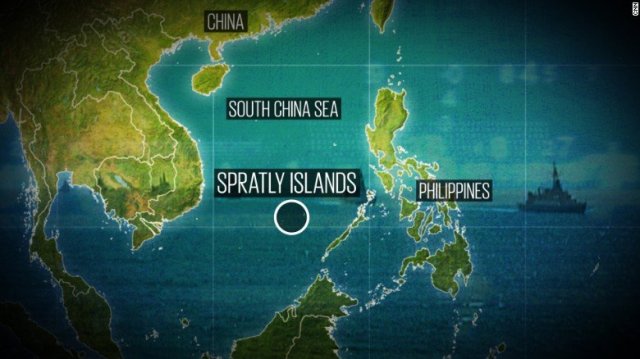
The Spratly Islands – at the heart of the dispute, are a collection of 750 islands, reefs, cays and atolls in the South China Sea. The region is rich in extensive natural gas and oil reserves and is recognized for the fishing opportunities it offers. The islands enjoy a strategic location in Northeast Asia’s most prominent maritime commerce routes; the waterway facilitates international sea-borne trade worth $5 trillion every year.
It is widely acknowledged that authority over the islands will allow the controlling party unprecedented clout over any and all maritime activity in the region. As such, whoever controls the South China Sea will enjoy a monopoly over resources, commerce, military influence and geopolitical power in the region.
Tensions came to a head in 2014 when China began construction artificial islands in the sea. China has staked a claim over 3000 acres in the region, over the course of the last one-and-a-half years. The figure far outstrips the comparatively paltry 100 acres that have been reclaimed by Malaysia, the Philippines, Taiwan and Vietnam spread over four decades.
U.S. Concerns Over South China Sea ‘Militarization’
The United States remains opposed to the South China Sea island building project over the threat it poses to peace and security in the region. The South China Sea has become a severely disputed region, with numerous claimants, and the United States is concerned that any move to further these declarations will escalate hostilities.
Even as the primary players continue to debate the economic and trade repercussions of China establishing control over the entire sea, Washington’s reservations are rooted along security and military lines. The construction of military structures on the islands creates a severe threat to stability in the region an issue that has become a priority matter ever since the proposed use of the South Johnson Reef as a Chinese air base has come to light. Both the United States and Japan have formally expressed reservations over the possibility of China establishing maritime monopoly in the region.
U.S. Calls For ‘Three Halts’
In a bid to stabilize the situation and prevent the militarization of what is primarily a political and diplomatic conflict as yet, the United States has called for all the disputants in the South China Sea issue to observe ‘three halts’:
The stoppage of building infrastructure and islands in the sea. A stop to repossessing and reoccupying different islands in the sea. Desisting from any provocative action that carries the potential to exacerbate the conflict.Washington is committed to helping all the involved actors contain the conflict and solve the same through diplomatic channels.
The Chinese Position
Beijing maintains that China’s activities in the South China Sea fall within the purview of the country’s sovereign territorial rights. Asked to comment on the issue in March 2015, Foreign Ministry Spokesperson Hua Chunying said, “China’s normal construction activities on our own islands and in our own waters are lawful, reasonable and justifiable”. In the months since, China has offered greater insight into its actions in the region, claiming that the work on the islands was aimed at improving the livings conditions of those already inhabiting the islands. In a statement in April 2015, Ms. Chunying asserted that China has worked on the garrisons on the islands with a view to “Optimizing their functions, improving the living and working conditions of personnel stationed there, better safeguarding territorial sovereignty and maritime rights and interests, as well as better performing China’s international responsibility and obligation in maritime search and rescue, disaster prevention and mitigation, marine science and research, meteorological observation, environmental protection, navigation safety, fishery production service and other areas.”
By way of these explanations, Beijing has sought to establish its historical claim to the islands, stressing the existence of its structures and properties in the region prior to the dispute becoming an international issue. Beijing has also emphasized its intention to use the islands for public benefit, advancement and security.
In the time since, Chinese Foreign Minister Wang Yi, speaking at the recent bilateral talks, has shared that the general situation in the region is stable and that China is ready to work with all the concerned parties vis-a-vis regional peace and stability. Wang has asked that the dispute be resolved peacefully through negotiations and consultations.
International Law And Island Building
Under the United Nations Convention on the Law of the Sea (UNCLOS), countries must abide by the maritime jurisdiction awarded to them as per international law and recognise the rights of other countries over their portions of the world’s oceans. As such, countries cannot lay claims to the islands, marine life, natural resources and trade activities in the waters belonging to another country. The convention also stipulates that submerged entities that cannot sustain human habitation or economic activities will not be recognized as exclusive economic zones. This means that even if China were to establish its claim on the Spratly Islands,it would still control only 12 nautical miles of territorial waters without any exclusive economic privileges over at the same.
Other states in the region have recognized a catch in the aforementioned law: if any of the submerged entities are converted into islands capable of and characterized by human habitation, the UNCLOS stipulations would cease to apply. This realization has served as the primary driving force for the other states’ opposition to China’s construction of manmade islands on submerged bodies in the South China Sea.
The Chinese constructions are also in direct violation of the 2002 Declaration on the Conduct of Parties in the South China Sea. As per the treaty, the signees are to desist from engaging in any actions that carry the potential to escalate tensions amongst them. The agreement parties, of which China is one, have also vowed to refrain.
About the author
Brinda Banerjee is a researcher working on security, armed conflict and military policies.
BRINDA BANERJEE
Brinda Banerjee is a researcher working on security, armed conflict and military policies. She holds a Bachelor’s in Journalism (with Honors), a Master’s in Peace and Conflict Studies and is currently pursuing her Ph.D. in state responses to internal conflict. Brinda writes extensively about current events, conflict resolution and geopolitical dynamics in the modern world.
RED DRAGON – RED CHINA – DICTATORIAL REGIME. RED CHINA CREATED TERRITORIAL DISPUTES WITH ALL OF HER REGIONAL NEIGHBORS FOR SHE IS EVIL POWER.RED DRAGON – RED CHINA – DICTATORIAL REGIME. RED CHINA CREATED TERRITORIAL DISPUTES WITH ALL OF HER REGIONAL NEIGHBORS FOR SHE IS EVIL POWER.Red China Expansionism South China Sea. RED DRAGON – RED CHINA – DICTATORIAL REGIME. RED CHINA CREATED TERRITORIAL DISPUTES WITH ALL OF HER REGIONAL NEIGHBORS FOR SHE IS EVIL POWER.RED DRAGON – RED CHINA – DICTATORIAL REGIME. RED CHINA CREATED TERRITORIAL DISPUTES WITH ALL OF HER REGIONAL NEIGHBORS FOR SHE IS EVIL POWER.
Red Dragon – Red China – Real Evil Face: Cultural Genocide, and Ecocide, deliberate destruction of Tibet’s delicate Ecological Systems.
I am fully aware of Red China’s darkest side and I have seen her real ‘evil’ face, the face that had driven thousands of innocent Tibetans to seek protection in India and to live in exile.
Red Dragon – Red China – Real Evil Face: Cultural Genocide, and Ecocide, deliberate destruction of Tibet’s delicate Ecological Systems.
MELTDOWN IN TIBET
BY T R RAMACHANDRAN August 09, 2015
Red Dragon – Red China – Real Evil Face: Cultural Genocide, and Ecocide, deliberate destruction of Tibet’s delicate Ecological Systems.
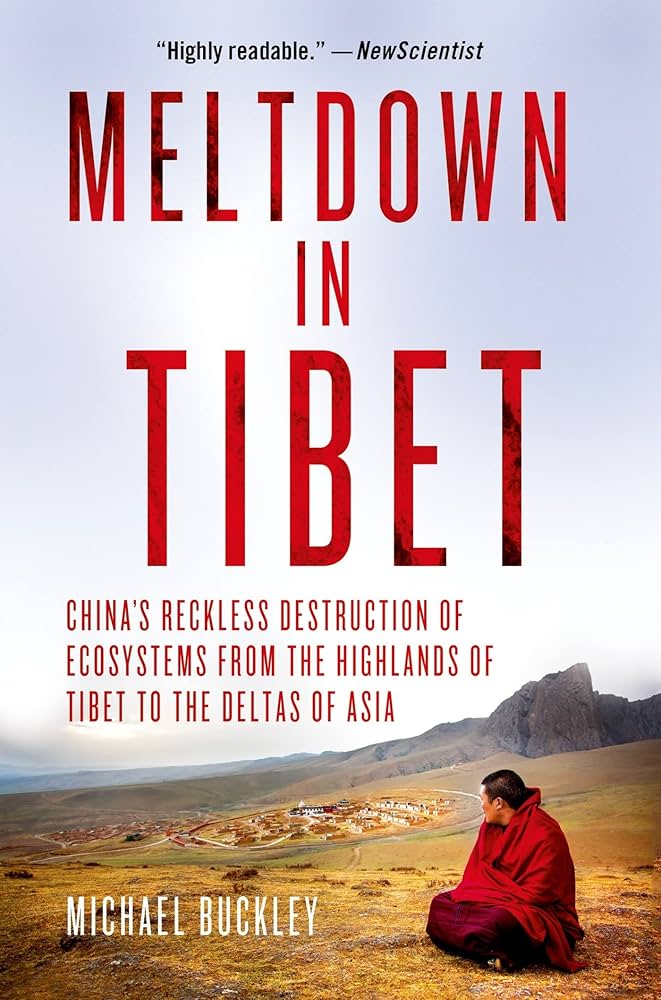
In Meltdown in Tibet, Michael Buckley turns the spotlight on the darkest side of China’s emergence as a global super power.
Canadian adventure travel writer and environmentalist Michael Buckley has blown the lid of China’s ecocide of the fragile, high altitude environment of Tibet. The scenario is frightening which can severely impact the Indian subcontinent and countries in Southeast Asia. Even the Spiritual head of the Tibetans, His Holiness the Dalai Lama is deeply concerned. He drew pointed attention to this book and observed it “should be part of a wake-up call to the international community and China to seriously assess the ecological and environmental conditions on the Tibetan plateau and take remedial measures before it is too late”. The author warns that the Himalayan snow caps are in meltdown mode due to climate change accelerated by a rain of black soot from massive burning of coal and other fuels in both China and India.
Tibetans have experienced waves of genocide since the 1950s. Now they are facing ecocide with the reckless destruction of their fragile, high altitude environment. It is widely believed there is urgent need for an International Law to protect downstream nations — something the United Nations agreed a decade ago but has never acted on it. The health of all the rivers in Tibet are of vital concern to all the nations of Asia. Bhutan is light years ahead of its Asian neighbours in its environmental vision. The quixotic nation has become the environmental innovator of Asia. The mighty rivers of Tibet are being dammed extensively by Chinese engineering consortiums for the mainland’s thrust for power. The land is being relentlessly mined to feed China’s industrial complex. Massive engineering projects are diverting water from Tibet’s abundant rivers to water starved regions of China. Simply put the global supply of fresh water is dwindling at an alarming rate. This will lead to major tension between nations over shared water resources. The rivers of Tibet are so important to Southeast Asia and the Indian subcontinent.
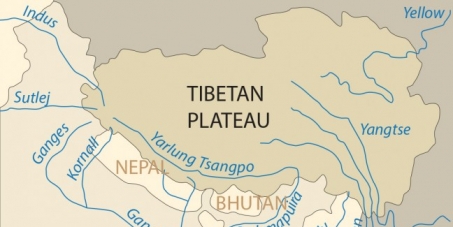
The Tibetan plateau is the source of the major rivers of this vast region stretching all the way from the coast of China in the East to Pakistan in the West. Ninety per cent of the run off from Tibetan rivers flows downstream into China, Vietnam, Cambodia, Laos, Thailand, Burma, Bangladesh, India, Nepal, Bhutan and Pakistan. At the tail end of these same rivers lie the world’s largest deltas. One way or another close to two billion people rely on Tibet’s waters — for drinking, for agriculture, for fishing, for industry.
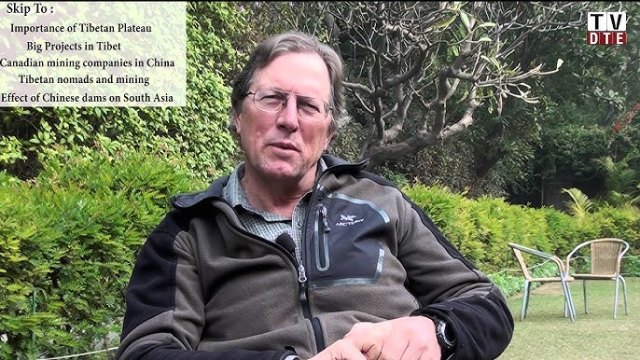
Red Dragon – Red China – Real Evil Face: Cultural Genocide, and Ecocide, deliberate destruction of Tibet’s delicate Ecological Systems. Author Michael Buckley with His Holiness the Dalai Lama.
Meltdown In Tibet
Michael Buckley
Publisher: Pan Macmillan
Pages: 248; Price: Rs 499
Water not oil is becoming the world’s most important resource. Though we live in a planet covered by water, very little of it is accessible. More than 90 per cent is sea water which is too salty. Roughly two per cent of the water resources is locked in ice and snow. That leaves a paltry one per cent to supply drinking water, grow crops, run factories, cool power plants, and handle all the other roles that water plays. It is possible that half of the paltry one per cent is polluted or contaminated water, which is not usable. As non-renewable ground resource are used up, the global supply of water is dwindling at an alarming rate. This had the portends of leading to great tensions between nations over shared water resources. Tibet is often referred to as the “Third Pole” because it is the third largest source of water locked in ice and snow.
It is unique in the world as a mass provider of water via rivers to a dozen countries downstream. It is the source of major headwaters for the rivers of Asia and the Himalayas, and additionally provides key tributaries or feeders for other major rivers such as the Ganges. There is no parallel to this situation anywhere in the world. Tibetan glaciers are melting rapidly, and its lakes are drying up. This plateau is under siege from climate change factors, but instead of seeking ways to minimise the impact of all this, China is aggravating the situation. Chinese hydro consortiums are blocking the flow of waters. Extensive mining is degrading the land with high potential of rivers being polluted downstream. The grasslands of Tibet are being encroached upon by desert. Ultimately this will become a global problem because there are no boundaries when it comes to environmental impact.
The massive clear cutting of forests in Tibet and expanding desertification of grasslands have severely impacted regional ecosystems and may influence extreme weather patterns in Asia. Tibet sits on the largest permafrost layer outside the North and the South Poles. “We have only one Tibet. There are no backups, no second chances. If the water resources of the Tibetan plateau should be blocked or diverted, or become polluted, then Asia will tumble into chaos. In his Preface to the book, His Holiness the Dalai Lama warned that pursuing economic development at the expense of the ecological balance will lead to drastic and unforseen consequences.
In the case of China, many environmental experts consider the economic accomplishments are already exerting a heavy environmental price. They bemoan the threat of China’s disappearing lakes, shrinking and increasingly polluted rivers and smog filled skies that will have long-term consequences for public health. The ability to breathe clean air and drink clean water is a human right. “But it is a right threatened by focussing only on economic development that pays inadequate attention to ecological well-being,” the Dalai Lama observed. His Holiness had no doubt that this is a wake up call to the international community and China to seriously assess ecological and environmental conditions on the Tibetan plateau and take remedial measures before it is too late.
Tagged with: Adventure writer, book review, environmentalist, Michael Buckley, Tibet, Tibet Meltdown
The Free Press Journal is one of the oldest English Daily newspapers from Mumbai with a heritage of more than 80 years. And yet, The Free Press Journal is a contemporary paper and rooted in current urban realities.
The mighty rivers of Tibet are being dammed extensively by Chinese engineering consortiums for the mainland’s thrust for power. The land is being relentlessly mined to feed China’s industrial complex. Massive engineering projects are diverting water from Tibet’s abundant rivers to water starved regions of China. Simply put the global supply of fresh water is dwindling at an alarming rate. This will lead to major tension between nations over shared water resources. The rivers of Tibet are so important to Southeast Asia and the Indian subcontinent.
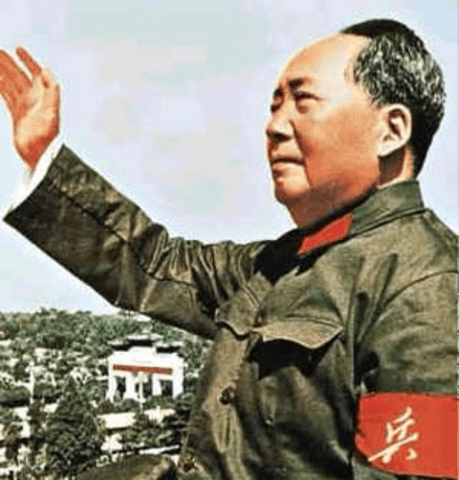
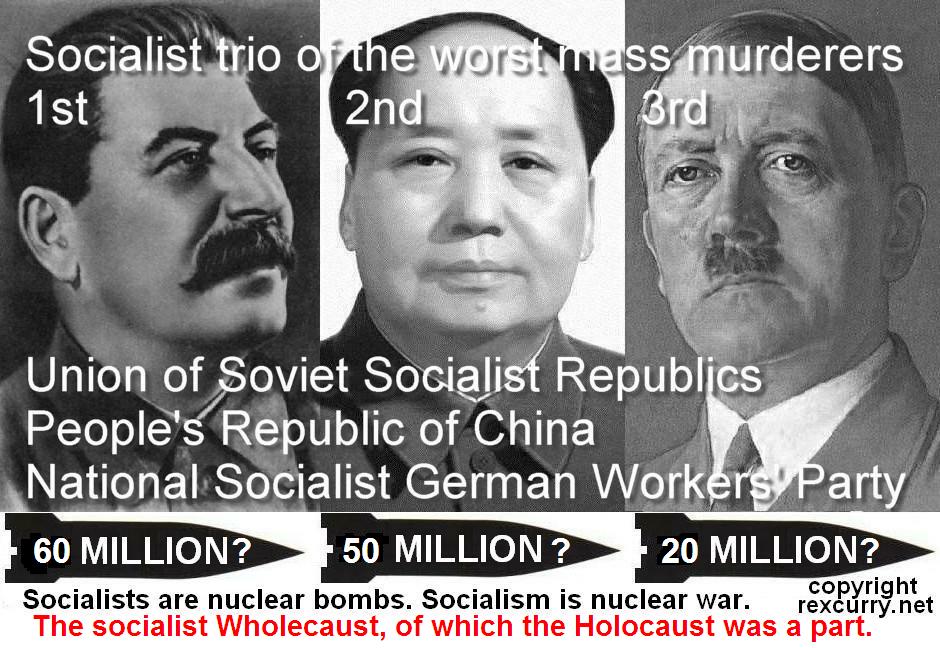
Red China’s Communist Party Chairman Mao Zedong formulated his plan for creation of Evil Red Empire because of his insatiable desire for power and influence over the lives of all other nations in Southeast Asia.
Analysis: South China Sea dispute pits power-hungry China against weaker regional neighbours
By South-East Asia correspondent SAMANTHA HAWLEY
Updated June 21, 2014 11:53:05
Photo: China and Vietnam are now in the depths of the most serious deterioration of relations since the 1970s. (Wikipedia Commons, File Image)
The dispute over the South China Sea pits China against its smaller, weaker regional neighbours.
Vietnam is one of them, and right now there is a concerning flash point that could have deep, significant implications for the region.
Around Vietnam you find propaganda billboards denouncing China’s actions after it built a billion-dollar oil rig about 200 nautical miles off the Vietnamese coast.
It is condemnation that spilled out onto the streets in the most significant protests seen in the one-party state for many years.
Chinese nationals were forced to flee the country as their businesses were burned to the ground. Beijing says at least four of its nationals were killed.
The oil rig sits about 30 kilometres south of the Paracel Islands, which China says it has irrefutable sovereignty over, along with the Spratly Islands to south.
Vietnam says the islands and the seas around them belong to it, and so the two communist nations are now in the depths of the most serious deterioration of relations since the 1970s.
Vietnam is accusing China of bullying tactics as it tries to force its ships out of the area; China says its smaller neighbour is taunting it, and Beijing has warned its tolerance is low.
In one case Vietnam says a fishing boat was sunk after being rammed by the Chinese.
Beijing rejects the allegation, and accuses Vietnam of sabotage.
China says its boats have been rammed by Vietnam more than 1,000 times and has now gone to the United Nations to try to have the case heard.
Vietnam says there are almost 120 Chinese ships stationed around the oil rig, including warships, but says it will not send military assets to the disputed seas.
It does not want to provoke unwanted hostility from Beijing.
Is China’s stance more a show of strength than oil drilling exercise?
There is a question mark over whether China is actually drilling for oil, or even if there is oil below the sea bed, or whether this is much more about military positioning and a show of strength.
Vietnam has the support of the Philippines, which has its own territorial dispute with China.
Troops from the two nations recently gathered on one of the contested islands to play a game of volleyball, a move condemned by China.
Beijing says Vietnam has been forcibly and illegally disrupting operations on the rig.
Several other countries have territorial claims over the waters, including Malaysia, Taiwan and Brunei.
China claims to have sovereignty over more than 90 per cent of the resource-rich ocean.
Taking a journey close to the Chinese oil rig, you see first-hand the very real tensions at sea.
According to the Vietnamese, just 10 of its coast guard boats are now stationed in the area. One of them is the Coast Guard ship 8003.
With about 40 crew on board, it has been patrolling waters adjacent to the oil rig since May.
Twice a day it ventures closer to within eight nautical miles of the rig and via loudspeaker warns China it is breaching Vietnamese sovereignty and breaking international law and orders them to leave.
In turn, the Chinese chase the ships out of the area, in what looks like a bullfight at sea.
An up-close observation of the tensions provides an appreciation of a maritime power play where the most powerful nation is winning. And it’s not Vietnam.
Vietnam, China, Malaysia have eyes on the prize
Explore the conflicting territorial claims in the South China Sea
cell-slides Rich in resources and traversed by a quarter of global shipping, the South China Sea is the stage for several territorial disputes that threaten to escalate tensions in the region.At the heart of these disputes are a series of barren islands in two groups – the Spratly Islands, off the coast of the Philippines, and the Paracel Islands, off the coasts of Vietnam and China. Both chains are essentially uninhabitable, but are claimed by no fewer than seven countries, eager to gain control of the vast oil and gas fields below them, as well as some of the region’s best fishing grounds.Indonesia, Malaysia and Brunei have made claims to part of the Spratlys based on the internationally recognised Exclusive Economic Zone (EEZ), which extends 200 hundred nautical miles from a country’s coastline. Based on the EEZ, the Philippines has the strongest claim on the Spratlys and their resources, with its EEZ covering much of the area. However the lure of resources, and prospect of exerting greater control over shipping in the region, means that greater powers are contesting the Philippines’ claims. China has made extensive sovereignty claims on both the Spratlys and the Paracels to the north, based largely on historic claims outlined in a map from the middle part of the 20th Century known as the ‘Nine Dash Map’.Taiwan also makes claims based on the same map, as it was created by the nationalist Kuomintang government, which fled to Taiwan after the communists seized power in China. Vietnam also claims the Spratlys and the Paracels as sovereign territory, extending Vietnam’s EEZ across much of the region and bringing it into direct conflict with China.There have been deadly protests in Vietnam over China’s decision to build an oil rig off the Paracels.One Chinese worker in Vietnam was killed and a dozen injured in riots targeting Chinese and Taiwanese owned factories, prompting 3,000 Chinese nationals to flee the country. EEZ can only be imposed based on boundaries of inhabitable land, and this has prompted all the countries making claims on the region to station personnel, and in some cases build military bases out of the water, to bolster their claim.Building and protecting these structures has resulted in a series of stand-offs between countries in the region, each with the potential to escalate.China has been leading the charge with these installations, and has deployed vessels to the region to protect their interests. Chinese coast guard vessels have used a water cannon on Vietnamese vessels, as well as blockading an island where the Philippines has deployed military personnel.
This service may include material from Agence France-Presse (AFP), APTN, Reuters, AAP, CNN and the BBC World Service which is copyright and cannot be reproduced.
AEST = Australian Eastern Standard Time which is 10 hours ahead of UTC (Greenwich Mean Time)
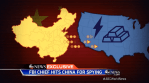
RED CHINA – RED ALERT – CHINA THE MAIN ECONOMIC ESPIONAGE THREAT TO UNITED STATES
Red China’s spying is not limited to stealing military secrets. Red China poses most serious threat to Americans because Red China is stealing Intellectual Property, and is causing economic loss of hundreds of billions dollars. Military can defend vital national security interests in spite of Enemy’s spying. The loss of Trade Secrets robs economic vitality and productivity of United States and it is not easy to defend economic interests as Enemy robs, steals, and plunders without firing a bullet.
CHINA THE MAIN ECONOMIC ESPIONAGE THREAT TO US: FBI
By PTI | 26 Jul, 2015, 02.44PM IST
Coleman said there has been a 53 per cent increase in economic espionage
cases, or the theft of trade secrets leading to the loss of hundreds of
billions of dollars.
WASHINGTON: The US has witnessed a 53 per cent spike in economic espionage
cases aimed at American firms, with a vast majority of the perpetrators
originating from China with ties to the government, the FBI said.
The head of the Federal Bureau of Investigation’s counterintelligence
division, Randall Coleman, said there has been a 53 per cent increase in
economic espionage cases, or the theft of trade secrets leading to the loss
of hundreds of billions of dollars, over the past year.
Coleman said at a recent briefing that state-sanctioned corporate theft by
China is at the core of the problem.
Coleman said that China is the most predominant threat facing the US from
the standpoint of economic espionage.
He cited examples of large corporations successfully targeted in the past
such as DuPont, Lockheed Martin and Valspar, who have since worked with the
FBI to further safeguard their intellectual property.
To highlight this growing threat to the US economy, the FBI has launched a
nationwide campaign intended to warn industry leaders of the danger they
face from foreign actors. But the FBI not only considers this a threat to
American economic prosperity, but to its physical security as well.
“Economic security is national security,” said Bill Evanina, the head of the
National Counterintelligence and Security Center and one of the agents
leading the charge in stemming the threat to corporations. Many of the tools
used are the same as the ones used to track terrorists, he said.
Half of the 165 private companies that participated in a survey conducted by
the FBI have claimed to be victims of economic espionage or theft of trade
secrets, and 95 per cent of those attempts originated from individuals
associated with the Chinese government, CNN reported.
One of the most concerning means of obtaining sensitive industry secrets is
through the use of “insider threats,” or employees who are familiar with the
inner workings of a particular technology being recruited by foreign agents
in exchange for large amounts of cash.
The FBI continues to see spear phishing attempts, when an email or link
appears legitimate but is in fact a bogus message intended on tricking
recipients into offering up personal information. Social media and sites
like LinkedIn are also being utilised in economic espionage where potential
recruits can be found and contacted based on relevant knowledge and work
experience, officials said.
“The Chinese government plays a significant role” in economic espionage,
Evanina said. “The playing field is not level” when a single company faced
with relentless targeting by individuals or entities who have the backing of
a foreign government, he said.
Other big targets for economic spies are specifications for US military
technology and proprietary information on everything from superconductors to
seed-and-grain hybrids.
“It’s across the board,” said Dean Chappell, a section chief in the FBI’s
counterintelligence division. “It’s not high-end avionics for military
aircraft; it’s not joint strike fighter stuff. It’s all of the things that
we see every day.”
In a change from more traditional modes of economic espionage, such spies
are appearing as non-traditional actors, serving as insider threats within
organisations and institutions, officials say.
William Evanina, head of the National Counterintelligence and Security
Center, said such individuals have been observed in the US serving as
professors, engineers, travelling students and businessmen.
Officials also warn of cyber tactics used to hijack intellectual property
and trade secrets.
In particular, actors, predominantly from China, are known to employ mass
spear-phishing campaigns to coax employees inside companies into clicking
tainted links or attachments, Fox News reported.
If successful, the actor could get critical data off of the organisation’s
computer network.
China in particular has been publicly outed on multiple occasions by the
Obama administration for its efforts geared toward breaching private sector
interest.
US economists blame China for contributing to an increasingly uneven playing
field on the world economic scene.
“To sustain its phenomenal growth rate, China must employ cyberattacks to
steal information,” said Scott Borg, director and chief economist of US
Cyber Consequences Unit, a non- profit research institute.
“Cyberattacks stealing competitively important business information are a
fundamental part of the national economic development strategy of China. For
this reason, getting China to moderate this behaviour will be extremely
difficult,” Borg said.
As a result, The FBI has announced a nationwide awareness campaign and
continues to develop relationships within U.S. industry.
The agency has provided over 1,300 in-person briefings on the economic
espionage threat to companies and industry leaders over the past year, using
a FBI-produced video entitled ‘The Company Man: Protecting America’s
Secrets’, as a training tool.
READ MORE ON » Valspar | US economy | US | united states | Randall Coleman |
obama administration | National Counterintelligence and Security Center
The Economic Times
If United States is not “NEUTRAL” in South China Sea Disputes, it demands action to join the dispute for its complete resolution. Red China is unwilling to settle her territorial dispute with Tibet and the same unwillingness is clearly displayed in her attitude that is manifested as South China Sea Disputes. Red China has become very assertive and is very confident of her military and economic power. Red China ignores pronouncements made by diplomats for she truly believes that no one can fight against her. At Special Frontier Force, we express a willingness, a readiness, a preparedness to fight against Red China for we think that is the right thing to do and for we believe it is ‘The Battle of Right Against Might’.
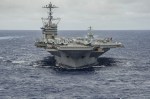
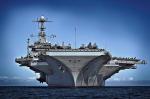
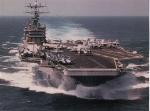
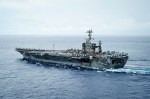
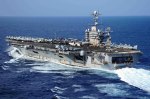
The Nimitz-class aircraft carrier USS George Washington underway in the South China Sea.
Image Credit: U.S. Navy Photo
US Not ‘Neutral’ in South China Sea Disputes: Top US Diplomat
America’s top diplomat for East Asia clarifies the country’s outlook in a keynote speech.
By PRASHANTH PARAMESWARAN for The Diplomat
July 22, 2015
The United States is not neutral when it comes to following international law in the South China Sea and will come down forcefully to ensure that all parties adhere to the rules, Washington’s top diplomat for East Asia said Tuesday.
The United States has repeatedly said that while it takes no position on competing sovereignty claims over disputed land features in the South China Sea, it does want these maritime claims to be advanced in accordance with international law and without the use of coercion. That hedged position has led some to incorrectly read the U.S. stance on the issue as being ‘neutral,’ with China in particular accusing Washington of ‘taking sides.’
But in response to a question by a Chinese participant on perceived U.S. ‘neutrality’ in the South China Sea, U.S. Assistant Secretary of State Daniel Russel firmly clarified at a think tank conference in Washington, D.C. that this neutrality only extended to the competing claims, rather than the way in which the disputes were resolved.
“We are not neutral when it comes to adhering to international law. We will come down forcefully when it comes to following the rules,” Russel said during a keynote speech delivered at the Center for Strategic and International Studies.
In this vein, Russel said in his speech that the United States was currently encouraging relevant parties in the South China Sea to create the atmosphere and conditions necessary to manage the disputes peacefully, diplomatically and lawfully despite escalating tensions there partly caused by China’s assertive actions.
“We’re pushing the parties to revive the spirit of cooperation,” Russel said.
The focus, Russel said, would be on lowering the temperature and creating the breathing room necessary to pursue peaceful paths toward resolving disputes, such as negotiations and arbitration. He encouraged all actors – not just China – to cease actions that run contrary to this spirit, including reclaiming land, building facilities and militarizing features. Beijing has been engaging in an extensive land reclamation activities in the South China Sea to the alarm of claimants and outside actors.
Russel said that U.S. Secretary of State John Kerry would push for progress on this front at the upcoming ASEAN Regional Forum, which will be held next month in Malaysia, this year’s chair of the Association of Southeast Asian Nations.
“He’ll push for progress. This is an important priority,” Russel said.
On the first peaceful path to resolving disputes – bilateral negotiations – Russel acknowledged it was challenging to pursue this course under the current atmosphere. While not directly mentioning China by name, he noted that “absolutist” statements by certain countries that their claims were “indisputable” made going down this path even more challenging.
But he also said that there were several cases in the region where this had worked, including between Indonesia and the Philippines, Malaysia and Singapore, and Bangladesh and Myanmar.
“Hey, it can be done,” Russel argued.
On the second path – arbitration – Russel specifically referenced the Philippines ongoing case against China at the United Nations Permanent Court of Arbitration at The Hague. He stressed that regardless of the outcome, both Beijing and Manila had to abide by the court’s legally binding decision as they were both signatories to the United Nations Convention on the Law of the Sea (UNCLOS).
“In keeping with the law, both China and the Philippines are obligated to follow the decision whether they like it or not,” Russel said.
In the meantime, Russel said that the United States would safeguard its own interests in various ways, including honoring its alliances and security commitments and aiding the development of effective regional organizations. This included taking steps such as investing in maritime domain awareness for coastal states and carrying out freedom of navigation operations in the South China Sea.
“We the United States are obligated to protect U.S. interests,” Russel said.
Summarizing the essence of the U.S. position on the South China Sea disputes, Russel reiterated that it was not about rocks but about rules for the Asia-Pacific region.
“It’s really not about the rocks and the shoals. It’s about rules. It’s about the kind of neighborhood we all want to live in,” he said.
140923 N ZS026 543
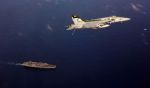
PACIFIC OCEAN (Sept. 23, 2014) The Nimitz class aircraft carrier USS George Washington (CVN 73) is underway in formation at the conclusion of Valiant Shield 2014. The U.S. only exercise integrates Navy, Air Force, Army, and Marine Corps assets and offers real world joint operational experience to develop capabilities that provide a full range of options to defend U.S. interests and those of its allies and partners. (U.S. Navy photo by Mass Communication Specialist 1st Class Trevor Welsh/Released)
uss george washington herb paynter
uss george washington f a 18e superhornet fighter plane
uss george washington
uss george washington uzak gemisi
us navy aircraft carrier
us not neutral in south china sea 1
us not neutral in south china sea 2
us not neutral in south china sea uss george washington
Red China – Red Alert – The policy of Brinkmanship
RED DRAGON – RED CHINA – RED ALERT – BRINKMANSHIP – MILITARY DOMINANCE : AN IMMINENT THREAT TO PEACE AND SECURITY OF ALL NATIONS.
The term ‘brink’ means the edge, especially at the top of a steep place. Very often ‘brink’ is used figuratively such as “At the brink of War.” Brinkmanship refers to the policy of pursuing a hazardous course of action to the brink of catastrophe. Red China’s Policy of Economic Expansionism draws support from her Policy of Military Expansionism. Red China’s pursuit of world’s territories, and natural resources is accompanied by her aggressive expansion of political influence over other nations to cause nations to become subservient to Red China’s ambitions. Red China’s Policy of ‘Brinkmanship’ has to be exposed, has to be effectively contained and has to be resisted at every place apart from South China Sea where the dispute is receiving attention of news media.
5 MILLION REASONS CHINA MAY BE DRAWN INTO GLOBAL CONFLICTS
By DAVID TWEED
BLOOMBERG
With five million offshore citizens to protect and billions of investment dollars at stake, China is rethinking its policy of keeping out of other countries’ affairs.
China has long made loans conditional on contracts for its companies. In recent years it has sent an army of its nationals to work on pipelines, roads and dams in such hot spots as South Sudan, Yemen and Pakistan. Increasingly, it has to go across borders to protect or rescue them.
That makes it harder to stick to the policy espoused by then-premier Zhou Enlai in 1955 of not interfering in “internal” matters, something that has seen China decline to back international sanctions against Russia over Ukraine or the regime of Syrian President Bashar al-Assad.
As President Xi Jinping’s “Silk Road” program of trade routes gets under way, with infrastructure projects planned across Central Asia, the Indian Ocean and the Middle East to Europe, China’s footprint abroad will expand from the $108 billion that firms invested abroad in 2013, up from less than $3 billion a decade earlier.
That is forcing China to take a more proactive approach to securing its interests and the safety of its people. With more engagement abroad there’s a risk that China, an emerging power with a military to match, is sucked into conflicts and runs up against the U.S. when tensions are already flaring over China’s disputed claims in the South China Sea.
“It is going to be a long, hard haul,” said Kerry Brown, director of the University of Sydney’s China Studies Centre. “You either have disruption as a new power rips up the rule book and causes bedlam or you’ve got a gradual transition where China is ceded more space but also expected to have more responsibility.”
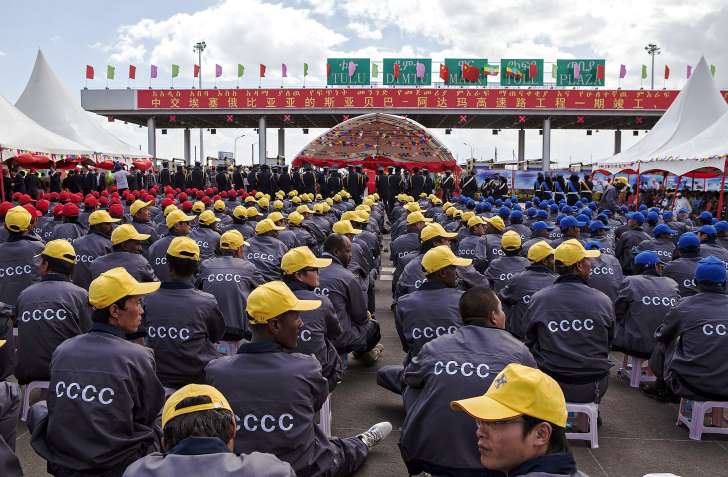
RED CHINA – RED ALERT – BRINKMANSHIP : RED CHINA IS INVESTING BILLIONS OF DOLLARS AND DISPATCHING MILLIONS OF CHINESE WORKERS TO FURTHER ITS EXPANSIONIST POLICY THAT MAKES CONFLICTS WITH OTHER NATIONS INEVITABLE. IN THIS PHOTO IMAGE, ETHIOPIAN AND CHINESE CONSTRUCTION WORKERS SEEN WAITING NEAR CHINA COMMUNICATION CONSTRUCTION COMPANY BUILDING ADDIS ABABA – ADAMA TOLL ROAD.
For more than a half century China stuck to Zhou’s policy predicated on non-interference and respect for the sovereignty of others. The policy partly reflected a focus on domestic stability and economic development by governments that lacked the means or interest to play a more active role offshore. It also led President Barack Obama to last year describe China’s leaders as “free riders” while others carried the global security burden.
China’s greater involvement in projects around the world comes along its military expansion, as it seeks to project its power abroad and challenge decades of U.S. dominance of the global economic and strategic order. U.S. policymakers are debating whether to find ways to accommodate China’s rise or to seek to contain it. As China’s policy evolves its leaders are dipping their toe into areas once considered taboo, including the practice of dealing only with a country’s leaders.
Myanmar Meeting
Xi met Myanmar opposition leader Aung San Suu Kyi in Beijing on June 11 to lay the foundation for improved ties ahead of a November election in Myanmar, and there are reports China has hosted peace talks between the Afghan government and Taliban.
On June 9 China called for a cease-fire in Yemen, during a teleconference between China’s ambassador Tian Qi and the United Nations envoy to Yemen, according to a posting on the website of China’s embassy.
China sent naval vessels into Yemen’s waters in April to rescue 629 Chinese citizens and 279 foreign nationals from escalating violence, the first time the People’s Liberation Army helped other countries evacuate their citizens.
“Protection of nationals and interests abroad particularly with big new projects like the Silk Road in the works, is likely to be long-term very significant for China’s evolution as a great power,” said Jonas Parello-Plesner, a diplomat at the Danish embassy in Washington, DC. “How China behaves in other parts of world will be a litmus test on its road to great power status.”
Five Million
Chinese investment abroad picked up from 2002 after then Premier Jiang Zemin championed a “going out” policy, even as he repeated China would not meddle in the internal affairs of other countries.
Parello-Plesner and Mathieu Duchatel, who co-wrote “China’s Strong Arm: Protecting Citizens and Assets Abroad” estimate there are five million workers offshore, based on research and interviews with officials, a figure that’s about five times larger than that given by the Ministry of Commerce.
The official data reflect a lack of systemic consular registration and the absence of formal reporting by subcontractors sending workers abroad, according to Parello- Plesner and Duchatel, who estimate about 80 Chinese nationals were killed overseas between 2004 and 2014. Duchatel is a Beijing-based senior researcher at the Stockholm International Peace Research Institute.
‘Greater Range’
“There are now several countries that – in terms of the number of Chinese citizens there – are ‘too big to fail’,” said Parello-Plesner. “The business-oriented ‘going-out’ strategy now has to be squared with broader strategic calculations.”
China’s foreign-policy evolution is becoming institutionalized. The concept of protecting nationals was added to the priority list at the 18th Communist Party Congress in 2012. The PLA’s role in protecting China’s interests abroad was enshrined in the 2013 Defense White Paper for the first time.
This year’s Defense White paper went further, noting the “national security issues facing China encompass far more subjects, extend over a greater range, and cover a longer time span than at any time in the country’s history.”
“While China is not likely to publicly drop the non – interference principle what we’ll see is increasing fluctuation in how it is applied — or not applied,” said Alexander Sullivan, an associate fellow at the Center for a New American Security in Washington.
South Sudan
“The departures from this policy that we have seen thus far have been driven generally by commercial and resource interests that for one reason or another come under threat.” Sullivan said Sudan and South Sudan have been a testing ground for China policy. After the outbreak of civil war in South Sudan, China persuaded other members of the Security Council in May last year to extend the United Nations peacekeeping mandate to South Sudan, where China National Petroleum Corp. has oilfield investments. China has sent 700 troops to join that mission.
China’s biggest overseas intervention was in Libya in 2011, when 35,000 workers were transported out at the start of the uprising against Muammar Qaddafi’s regime, mostly by air and sea.
As the trade route projects get under way, Pakistan will pose one of the biggest risks to the security of Chinese workers. The first investment of China’s $40 billion Silk Road infrastructure fund is $1.65 billion for the Karot dam on the Jhelum river in northern Pakistan.
Pakistan Force
Before announcing the project, Pakistan agreed to train a 10,000-strong security force to protect Chinese nationals building a $45 billion economic corridor from China to the deep – water port of Gwadar on the Arabian Sea. The route runs through Baluchistan, a thinly populated Pakistan province where an insurgency has killed thousands.
“Chinese foreign policy is taking a bigger role in global problem solving,” said Pang Zhongying, dean of the Institute of International Affairs at Sun Yat-sen University in Guangzhou. “The Silk Road is in essence bringing a lot of foreign policy changes but we still know little about its prospects.”
–With assistance from Kamran Haider in Islamabad and Daniel Petrie in Sydney.
RED DRAGON – RED CHINA – RED ALERT – BRINKMANSHIP – MILITARY DOMINANCE : AN IMMINENT THREAT TO PEACE AND SECURITY OF ALL NATIONS.