“The Crusade for Peace through Freedom” is due since March 10, 1959
US President Barack Obama was the guest of honor at India’s celebration of its 66th Republic Day on Monday, January 26, 2015. This is the first time in the history of Republic of India, the US President is the guest of honor at the Republic Day ParadeUS President Barack Obama was the guest of honor at India’s celebration of its 66th Republic Day on Monday, January 26, 2015. This is the first time in the history of Republic of India, the US President is the guest of honor at the Republic Day Parade
US President Barack Obama was the guest of honor at India’s celebration of its 66th Republic Day on Monday, January 26, 2015. This is the first time in the history of Republic of India, the US President is the guest of honor at the Republic Day Parade. There is a palpable sense of warmth, friendship, and cordiality between President Obama and India’s Prime Minister Narendra Modi.
US President Barack Obama was the guest of honor at India’s celebration of its 66th Republic Day on Monday, January 26, 2015. This is the first time in the history of Republic of India, the US President is the guest of honor at the Republic Day Parade
Travels of the US Presidents to India:
Dwight D. Eisenhower, New Delhi, Agra. Met with President Prasad and Prime Minister Nehru. Addressed Parliament.December 9–14, 1959.
Richard M. Nixon, New Delhi, State visit; met with Acting President Hidayatullah. July 31–August 1, 1969.
Jimmy Carter, New Delhi, Daulatpur-Nasirabad. Met with President Reddy and Prime Minister Desai. Addressed Parliament. January 1–3, 1978.
William J. Clinton, New Delhi, Agra, Jaipur, Hyderabad, Bombay. Met with President Narayanan; signed Joint Statement on Energy and the Environment; addressed the Indian Parliament. March 19–25, 2000.
George W. Bush, New Delhi, Hyderabad. Met with Prime Minister Singh. Signed nuclear cooperation agreement. March 1–3, 2006.
Barack Obama, Mumbai, New Delhi. Attended U.S.-India Business and Entrepreneurship Summit in Mumbai. Met with Prime Minister Singh and President Patil. Addressed the Indian Parliament. November 6–9, 2010.
Barack Obama, New Delhi. Met with President Pranab Mukherjee and Prime Minister Narendra Modi. January 24–27, 2015.
Donald J. Trump, New Delhi. Met with Prime Minister Narendra Modi. February 24–25, 2020.
Joseph R. Biden, New Delhi. Met with Prime Minister Narendra Modi and attended the G20 Leaders’ Summit. September 7–10, 2023.
US President Barack Obama was the guest of honor at India’s celebration of its 66th Republic Day on Monday, January 26, 2015. This is the first time in the history of Republic of India, the US President is the guest of honor at the Republic Day Parade
On behalf of Special Frontier Force, I admit that India and the United States are not marching towards the goal of winning Peace through Freedom, a journey that these two nations started during 1950s. I would like to share the memories of the historical Five-Day visit to India by 34th US President Dwight David Eisenhower from 09 December to 14 December 1959.
India’s Prime Minister Narendra Modi (L) and U.S. President Barack Obama watch India’s Republic Day parade in the rain together from their review stand in New Delhi January 26, 2015. REUTERS/Stephen Crowley/Pool (INDIA Tags: POLITICS)
US President Obama, and Indian Prime Minister Narendra Modi have failed to mention the Great Problem of Tibet which gave the stimulus for formulating friendly relations between the US and India. Even if the word Tibet is not mentioned during President Obama’s visit to India, I most positively assert that Tibet remains the central focus of India’s relationship with the United States.
India’s Prime Minister Narendra Modi (R) presents a reproduction of telegram sent by U.S. to the Indian Constituent Assembly in 1946, to U.S. President Barack Obama during their meeting in New Delhi January 25, 2015. In a glow of bonhomie, Obama and Indian Prime Minister Narendra Modi worked on a series of bilateral agreements at a summit on Sunday that both sides hope will establish an enduring strategic partnership. REUTERS/India’s Press Information Bureau/Handout via Reuters.
US Presidents who met with His Holiness the 14th Dalai Lama
Special Frontier Force at The White House: On April 16, 1991, the 14th Dalai Lama met with US President George H.W. Bush during his first visit to The White House. President George H.W. Bush served at the Director of the US CIA.
Four U.S. presidents—George H.W. Bush, Bill Clinton, George W. Bush, and Barack Obama—have met with His Holiness the 14th Dalai Lama, with the first official meeting occurring in 1991 during the elder Bush’s presidency.
Subsequent meetings have taken place at the White House, including two with Obama in 2010 and 2011.
George H.W. Bush: The first U.S. president to meet with the Dalai Lama during his presidency, in April 1991.
Bill Clinton: Met with the Dalai Lama at the White House in June 2000 and also met with him in November 1998.
George W. Bush: Met with the Dalai Lama multiple times during his presidency, starting in May 2001, with other meetings in 2003, 2005, and 2007. He also met with the Dalai Lama at the George W. Bush Presidential Center after leaving office.
Barack Obama: Met with the Dalai Lama twice in the Map Room of the White House, in February 2010 and July 2011.
The military occupation of Tibet poses the greatest danger to Peace, Freedom, Democracy, and Human Rights in the world. The problem will not go away and the real solution for the military occupation of Tibet is the Eviction of Military Occupier from the territories of Tibet.
US President Barack Obama meets Indian President Pranab Mukherjee at Rashtrapati Bhavan
US President Barack Obama was the guest of honor at India’s celebration of its 66th Republic Day on Monday, January 26, 2015. This is the first time in the history of Republic of India, the US President is the guest of honor at the Republic Day ParadeUS President Barack Obama was the guest of honor at India’s celebration of its 66th Republic Day on Monday, January 26, 2015. This is the first time in the history of Republic of India, the US President is the guest of honor at the Republic Day ParadeUS President Barack Obama was the guest of honor at India’s celebration of its 66th Republic Day on Monday, January 26, 2015. This is the first time in the history of Republic of India, the US President is the guest of honor at the Republic Day ParadeUS President Barack Obama was the guest of honor at India’s celebration of its 66th Republic Day on Monday, January 26, 2015. This is the first time in the history of Republic of India, the US President is the guest of honor at the Republic Day ParadeUS President Barack Obama was the guest of honor at India’s celebration of its 66th Republic Day on Monday, January 26, 2015. This is the first time in the history of Republic of India, the US President is the guest of honor at the Republic Day Parade
India and the United States joined hands to secure Peace and Freedom in the Occupied Land of Tibet . The military organization called Special Frontier Force ( also known as Establishment 22) truly represents the legacy of President Eisenhower who captivated the hearts of Indian people with his call for a Crusade for Peace through Freedom. We have yet to fight this Battle to secure Peace, Freedom, Democracy, and Justice in the Land of Tibet.
India and the United States joined hands to secure Peace and Freedom in the Occupied Land of Tibet . The military organization called Special Frontier Force ( also known as Establishment 22) truly represents the legacy of President Eisenhower who captivated the hearts of Indian people with his call for a Crusade for Peace through Freedom. We have yet to fight this Battle to secure Peace, Freedom, Democracy, and Justice in the Land of Tibet.On behalf of Special Frontier Force, I admit that India and the United States are not marching towards the goal of winning Peace through Freedom, a journey that these two nations started during 1950s. I would like to share the memories of the historical Five-Day visit to India by 34th US President Dwight David Eisenhower from 09 December to 14 December 1959. On behalf of Special Frontier Force, I admit that India and the United States are not marching towards the goal of winning Peace through Freedom, a journey that these two nations started during 1950s. I would like to share the memories of the historical Five-Day visit to India by 34th US President Dwight David Eisenhower from 09 December to 14 December 1959. On behalf of Special Frontier Force, I admit that India and the United States are not marching towards the goal of winning Peace through Freedom, a journey that these two nations started during 1950s. I would like to share the memories of the historical Five-Day visit to India by 34th US President Dwight David Eisenhower from 09 December to 14 December 1959. On behalf of Special Frontier Force, I admit that India and the United States are not marching towards the goal of winning Peace through Freedom, a journey that these two nations started during 1950s. I would like to share the memories of the historical Five-Day visit to India by 34th US President Dwight David Eisenhower from 09 December to 14 December 1959. On behalf of Special Frontier Force, I admit that India and the United States are not marching towards the goal of winning Peace through Freedom, a journey that these two nations started during 1950s. I would like to share the memories of the historical Five-Day visit to India by 34th US President Dwight David Eisenhower from 09 December to 14 December 1959. On behalf of Special Frontier Force, I admit that India and the United States are not marching towards the goal of winning Peace through Freedom, a journey that these two nations started during 1950s. I would like to share the memories of the historical Five-Day visit to India by 34th US President Dwight David Eisenhower from 09 December to 14 December 1959. On behalf of Special Frontier Force, I admit that India and the United States are not marching towards the goal of winning Peace through Freedom, a journey that these two nations started during 1950s. I would like to share the memories of the historical Five-Day visit to India by 34th US President Dwight David Eisenhower from 09 December to 14 December 1959. On behalf of Special Frontier Force, I admit that India and the United States are not marching towards the goal of winning Peace through Freedom, a journey that these two nations started during 1950s. I would like to share the memories of the historical Five-Day visit to India by 34th US President Dwight David Eisenhower from 09 December to 14 December 1959. On behalf of Special Frontier Force, I admit that India and the United States are not marching towards the goal of winning Peace through Freedom, a journey that these two nations started during 1950s. I would like to share the memories of the historical Five-Day visit to India by 34th US President Dwight David Eisenhower from 09 December to 14 December 1959. HISTORY OF THE US-INDIA-TIBET RELATIONS: Crusade for Peace through Freedom in Occupied Tibet. The US President’s visit to India In December 1959.On behalf of Special Frontier Force, I admit that India and the United States are not marching towards the goal of winning Peace through Freedom, a journey that these two nations started during 1950s. I would like to share the memories of the historical Five-Day visit to India by 34th US President Dwight David Eisenhower from 09 December to 14 December 1959. On behalf of Special Frontier Force, I admit that India and the United States are not marching towards the goal of winning Peace through Freedom, a journey that these two nations started during 1950s. I would like to share the memories of the historical Five-Day visit to India by 34th US President Dwight David Eisenhower from 09 December to 14 December 1959. On behalf of Special Frontier Force, I admit that India and the United States are not marching towards the goal of winning Peace through Freedom, a journey that these two nations started during 1950s. I would like to share the memories of the historical Five-Day visit to India by 34th US President Dwight David Eisenhower from 09 December to 14 December 1959. On behalf of Special Frontier Force, I admit that India and the United States are not marching towards the goal of winning Peace through Freedom, a journey that these two nations started during 1950s. I would like to share the memories of the historical Five-Day visit to India by 34th US President Dwight David Eisenhower from 09 December to 14 December 1959. On behalf of Special Frontier Force, I admit that India and the United States are not marching towards the goal of winning Peace through Freedom, a journey that these two nations started during 1950s. I would like to share the memories of the historical Five-Day visit to India by 34th US President Dwight David Eisenhower from 09 December to 14 December 1959. On behalf of Special Frontier Force, I admit that India and the United States are not marching towards the goal of winning Peace through Freedom, a journey that these two nations started during 1950s. I would like to share the memories of the historical Five-Day visit to India by 34th US President Dwight David Eisenhower from 09 December to 14 December 1959. On behalf of Special Frontier Force, I admit that India and the United States are not marching towards the goal of winning Peace through Freedom, a journey that these two nations started during 1950s. I would like to share the memories of the historical Five-Day visit to India by 34th US President Dwight David Eisenhower from 09 December to 14 December 1959.
The military occupation of Tibet poses the greatest danger to Peace, Freedom, Democracy, and Human Rights in the world. The problem will not go away and the real solution for the military occupation of Tibet is the Eviction of Military Occupier from the territories of Tibet.
On behalf of Special Frontier Force, I admit that India and the United States are not marching towards the goal of winning Peace through Freedom, a journey that these two nations started during 1950s. I would like to share the memories of the historical Five-Day visit to India by 34th US President Dwight David Eisenhower from 09 December to 14 December 1959. The History of the US-India-Tibet Relations. Crusade for Peace through Freedom in Occupied Tibet.The military occupation of Tibet poses the greatest danger to Peace, Freedom, Democracy, and Human Rights in the world. The problem will not go away and the real solution for the military occupation of Tibet is the Eviction of Military Occupier from the territories of Tibet.APRIL 22, 1961. CAMP DAVID, MARYLAND: The History of the US-India-Tibet Relations. Crusade for Peace through Freedom in Occupied Tibet. The military occupation of Tibet poses the greatest danger to Peace, Freedom, Democracy, and Human Rights in the world. The problem will not go away and the real solution for the military occupation of Tibet is the Eviction of Military Occupier from the territories of Tibet.Whole Values: Whole Dude at Whole Foods demands the upholding of American Values to defend Personal Liberty, Human Rights, and the Dignity of Man.
September 05 – Dr Sarvepalli Radhakrishnan’s Birthday – Reflections on my Mylapore, Madras, Chennai Family Connections
September 05. Dr Sarvepalli Radhakrishnan’s birthday. My reflections on Madras – Tibet – US Family Connections.
September 05, Dr Sarvepalli Radhakrishnan’s birthday is celebrated as Teacher’s Day in India. On Friday, September 05, 2025, I want to share my reflections on my Mylapore, Madras, Chennai Family Connections. This relationship connects several important events of my life’s journey. For I believe in the doctrine of predestination, I can trace my life’s journey as a series of predetermined events.
In my analysis, time and the place are of equal importance in the formulation of predetermined events. I shall discuss the role of time and place in the context of three issues; 1. Birth Place, 2. Relationships, for example, Radhakrishnan worked in Presidency College, Madras where my father studied and worked, and 3. Final Destination.
My Birthplace
September 05. Dr Sarvepalli Radhakrishnan’s birthday. My reflections on Madras – Tibet – US Family Connections.
Mylapore, Madras, Chennai, my birthplace predetermined my connection to Radhakrishnan as well as my connection to my wife who is also born on the fifth day of September.
September 05. Dr Sarvepalli Radhakrishnan’s birthday. My reflections on Madras – Tibet – US Family Connections.
Radhakrishnan studied in Madras Christian College and later worked in Presidency College, Madras. My wife talks about Madras Christian College for her father, and four of her brothers studied there. In February 1973, just after I got married, I visited Madras Christian College along with my wife to meet her younger brother who was studying there for his Master of Science degree.
September 05. Dr Sarvepalli Radhakrishnan’s birthday. My reflections on Madras – Tibet – US Family Connections.
My father studied in Presidency College, Madras and later worked there during my early childhood years spent in Mylapore. Apart from Radhakrishnan, his son, Sarvepalli Gopal also worked in Presidency College.
My Relationships
September 05. Dr Sarvepalli Radhakrishnan’s birthday. My reflections on Madras – Tibet – US Family Connections. My birth Star: Moola Nakshatra predestined my relationships.
In October 1962, my connection to Radhakrishnan was shaped by Communist China’s attack on India across the Himalayan Frontier. On one hand the Spirit of Nationalism inspired me to serve in the Indian Army, and on the other hand, it profoundly influenced my thinking about choosing a life partner. At the same time, the 1962 India-China War prepared a very special place to render my military service while I am still a college student. In September 1969, I was granted the Short Service Regular Commission to serve in the Indian Army Medical Corps. My educational career prepared me for this role as well as giving me the opportunity to find a partner who accepted my passion to serve in the Olive-Green military uniform. I got married in January 1973 while I was serving in D Sector, Establishment 22 and was stationed at Doom Dooma, Tinsukia District, Assam.
Special Frontier Force is known by the study of its military mission
Special Frontier Force-Establishment No. 22-Vikas Regiment: This badge represents a military alliance/pact between India, Tibet, and the United States of America. Its first combat mission was in the Chittagong Hill Tracts which unfolded on 03 November 1971. It was named Operation Eagle. It accomplished its mission of securing peace in the region that is now known as Republic of Bangladesh.The History of Special Frontier Force-Establishment No. 22-Vikas Regiment: “AHIMSA PARAMO DHARMAH; DHARMA HIMSA TATHIVA CHA.” Both India and Tibet recognize Non-Violence or Ahimsa as the highest principle. The military organization, Special Frontier Force-Establishment No. 22-Vikas Regiment represents the second part of the statement; Violence or Himsa is equally the highest principle when it is necessary to defend the righteous.
The military organization which is known as Special Frontier Force-Establishment No. 22-Vikas Regiment came into its existence during the presidency of Dr. Sarvepalli Radhakrishnan, the second President of the Republic of India, 13 May 1962 to 13 May 1967. While Special Frontier Force is a product of Cold War Era secret diplomacy, I share my personal story, the events from early childhood, that shaped the rest of my life and has formulated my bonding with this Organization and my desire to accomplish its military mission.
The military organization which is known as Special Frontier Force-Establishment No. 22-Vikas Regiment came into its existence during the presidency of Dr. Sarvepalli Radhakrishnan, the second President of the Republic of India, 13 May 1962 to 13 May 1967
Dr Sarvepalli Radhakrishnan belonged to Mylapore, Madras City (Chennai) and his daughter, Rukmini was married to the younger brother of my maternal grandfather, Dr. Kasturi. Narayana Murthy, M.D., who lived at 2/37 Kutchery Road in Mylapore. I was born in my grandfather’s residence. While I lived in Mylapore and later during my regular summer vacations spent in Madras City, I used to visit Dr. Radhakrishnan’s daughter’s residence daily. At that time, Dr. Radhakrishnan served as the first Vice President of India (1952-1962). I clearly remember the celebration of 2500th Birth Anniversary of Gautama Buddha on May 24, 1956, while I was in Mylapore, Madras City (Chennai). In India’s capital City of New Delhi, the celebration was attended by His Holiness the 14th Dalai Lama and the 10th Panchen Lama Rinpoche. The Institution of Dalai Lama is the central focus of Tibetan Cultural Identity and Tibetan national character.
Dr. Sarvepalli Radhakrishnan and the history of Special Frontier Force-Establishment No. 22-Vikas Regiment: In India, school children celebrate Dr. Radhakrishnan’s birthday (05 September) as Teacher’s Day and every year that I spent as a student, I had a special reason to remember my family connection with his daughter and the Indian President. He correctly predicted the need for military action to fight injustice and during his Presidency, India bravely resisted the Chinese aggression and thousands of Indian Army soldiers gave their precious lives to defend India. It inspired me to serve in the Indian Armed Forces to continue the task of opposing, and resisting the threat posed by Communist China.
India – Tibet Relations From 1950 to 1962:
The history of Special Frontier Force-Establishment No. 22-Vikas Regiment: The Celebration of 2500th Anniversary of the birth of Gautama Buddha (Buddha Jayanti) in New Delhi on May 24, 1956 displays the historical connection between India, and Tibet. Prime Minister Nehru, President Rajendra Prasad, the 14th Dalai Lama, and the 10th Panchen Lama, Rinpoche are seen in this photo image. Because of Gautama Buddha, India, and Tibet are natural allies. But, the complex, political, and military relationship developed as a reaction to the People’s Republic of China’s invasion of Tibet in 1950.The History of Special Frontier Force-Establishment No. 22-Vikas Regiment: The President of India Babu Rajendra Prasad with the visiting His Holiness the 14th Dalai Lama, and Panchen Lama Rinpoche. India, and Tibet, during 1956 tried to resolve the crisis imposed by China using peaceful, diplomatic negotiations.The History of Special Frontier Force-Establishment No. 22-Vikas Regiment: The military occupation of Tibet by Communist China shaped the historical, cultural, religious relationship between India, and Tibet. It commenced an entirely new era in which both India and Tibet are driven by the same kind of security concerns. Prime Minister Chou En-Lai represents the face of that danger that forced Prime Minister Nehru to know and appreciate the nature of Tibetan Nation as represented by the 14th Dalai Lama and the 10th Panchen Lama Rinpoche.
India achieved its full independence from the British rule on August 15, 1947. India became the Republic of India on January 26, 1950. Dr. Babu Rajendra Prasad became the first President of the Republic of India. The first general elections were held in 1952, and Dr. Sarvepalli Radhakrishnan, who was at that time-serving as India’s ambassador to the Soviet Union, was elected as the first Vice President and he served a second term as the Vice President from 1957 to 1962. India witnessed a major military threat to its Himalayan frontier when the People’s Republic of China sent its army during October 1950 to occupy Tibet while Tibetans had no ability to resist such a massive, military invasion of their territory. Tibet tried to resolve the issue using diplomacy. Tibet requested India to bring the issue to the attention of the United Nations to adopt a resolution against the Communist invasion. At that time Tibet was still following the policy of political isolationism, and neutralism and was not recognized by the United Nations as a member nation. The United States was fighting the Korean War and was fully interested in preventing the spread of Communism in Asia. However, Tibet did not request for direct, US military intervention. India did not have the necessary military force of its own to intervene inside Tibet. At the same time, India also actively pursued its own policy of political neutralism that is known as the Nonaligned Movement to reduce the political tensions caused by the Cold War. India thought that the crisis in Tibet could be resolved by directly negotiating with China without involving the United Nations and without antagonizing its security interests in defending Kashmir from military aggression by Pakistan and its allies in the West. During 1951 Communist China had imposed a 17-Point Agreement on Tibet while Tibetans had no capacity to defend their rights; the Agreement of the Central People’s Government and the Local Government of Tibet on 23rd May 1951 to take measures for the “Peaceful Liberation of Tibet.” China started quoting this agreement to justify its illegal and unjust military occupation of Tibet. It must be clearly understood that the Great Fifth Dalai Lama founded the “Ganden Phodrang” Government of Tibet in 1642. The successive Dalai Lamas have headed the Tibetan State for nearly four centuries. Towards the end of the Qing Dynasty or Ching Dynasty, the Great 13th Dalai Lama declared Tibet’s Independence from Manchu China. From 1911 to 1950 – 39-Years, Tibet was an independent Nation before the creation of this political entity called The People’s Republic of China.
Tibet tried its very best to appease the Communist Party Chairman Mao Tse-Tung until 1954-1955. China took full political, and military advantage of Tibet’s isolationism and took every possible measure to deny the freedom that Tibetans had enjoyed for several centuries in spite of sporadic foreign invasions by the Mongols, and later by the Manchus. In the past, the foreign rulers of Tibet did not intervene in Tibet’s internal affairs and their traditional style of governance through the institution of the Dalai Lama or the “Ganden Phodrang” Government continued for four centuries.
The history of Special Frontier Force-Establishment No. 22-Vikas Regiment: The photo image of His Holiness the 14th Dalai Lama in Peking. Tibet tried its very best to appease the Communist Party Chairman Mao Tse-Tung until 1954-1955. China took full political, and military advantage of Tibet’s isolationism and took every possible measure to deny the freedom that Tibetans had enjoyed for several centuries in spite of sporadic foreign invasions by the Mongols, and later by the Manchus. In the past, the foreign rulers of Tibet did not intervene in Tibet’s internal affairs and their traditional style of governance through the institution of the Dalai Lama or the “Ganden Phodrang” Government continued for four centuries.The History of Special Frontier Force-Establishment No. 22-Vikas Regiment: His Holiness the 14th Dalai Lama with India’s President and Vice President. Both India and Tibet had strongly desired to resolve the conflict with communist China using diplomacy. The existence of an autonomous Tibetan nation serves the best interests of Indian national security.
Both India and Tibet had strongly desired to resolve the conflict with communist China using diplomacy. The existence of an autonomous Tibetan nation serves the best interests of Indian national security.India and Tibet had no intentions to formulate a military alliance/pact in response to China’s military occupation. They had expected that China would consent to release its military grip and allow full autonomy.
The History of Special Frontier Force-Establishment No. 22-Vikas Regiment: India and Tibet had no intentions to formulate a military alliance/pact in response to China’s military occupation. They had expected that China would consent to release its military grip and allow full autonomy. A banquet held in Ashoka Hotel, New Delhi in 1956 to honor the visiting Head of State, the 14th Dalai Lama of Tibet who is seen seated between Prime Minister Jawaharlal Nehru and his daughter Ms. Indira Gandhi.
India desired to promote international peace and tried to avoid armed conflicts. The burden imposed by China’s military occupation of Tibet was viewed with concern, but India tried the use of diplomacy and avoid war.India and Tibet tried to cultivate a friendly relationship with China and its failure was caused by China’s policy of Expansionism.
The photo images of Prime Minister Chou En-Lai, Prime Minister Jawaharlal Nehru, and the 14th Dalai Lama demonstrate the desire of India to promote peaceful co-existence. These efforts towards peaceful co-existence with Communist China had utterly failed during 1957-58. Establishment No. 22 represents the failure of India’s peace initiative. The military occupation of Tibet is not a friendly posture and China could not be trusted as a friend.
The History of Special Frontier Force-Establishment No. 22-Vikas Regiment: Both India and Tibet desired friendly and peaceful relations with China. Prime Minister Chou En-Lai is seen here with the 14th Dalai Lama, Indian Prime Minister Jawaharlal Nehru, and his daughter Ms. Indira Gandhi during his visit to New Delhi in 1956. These efforts towards peaceful co-existence with Communist China had utterly failed during 1957-58.The history of Special Frontier Force-Establishment No. 22-Vikas Regiment: India and Tibet tried to cultivate a friendly relationship with China and its failure was caused by China’s policy of Expansionism. Prime Minister Chou En-Lai’s visit to New Delhi in 1956.The History of Special Frontier Force-Establishment No. 22-Vikas Regiment: India desired to promote international peace and tried to avoid armed conflicts. The burden imposed by China’s military occupation of Tibet was viewed with concern, but India tried the use of diplomacy and avoid war. A ceremony to honor Prime Minister Chou En-Lai, and the 14th Dalai Lama during their visit to New Delhi in 1956.The History of Special Frontier Force-Establishment No. 22-Vikas Regiment: The photo images of Prime Minister Chou En-Lai, Prime Minister Jawaharlal Nehru, and the 14th Dalai Lama demonstrate the desire of India to promote peaceful co-existence. Establishment No. 22 represents the failure of India’s peace initiative. The military occupation of Tibet is not a friendly posture and China could not be trusted as a friend.
While Tibet tried its very best to please the Communist leaders of China, India had also pursued a similar policy to befriend China to address the problem of the military threat posed by the military occupation of Tibet. The “Panchsheela” Agreement of 1954 between India and People’s Republic of China recognizes Chinese sovereignty over Tibet, and India agreed to withdraw its very small, military presence in Tibet. India believed that China would grant full autonomy to Tibet and preserve the political, and cultural institutions of Tibet.
It must be noted that Tibet did not recognize or endorse the Panchsheela Agreement made by India and China.
The history of Special Frontier Force-Establishment No. 22-Vikas Regiment: Chinese Prime Minister Zhou En-Lai visited New Delhi, India in June 1954 after his initiative called the Five Principles of Peaceful Coexistence (PANCHSHEEL). The first President of India, Rajendra Prasad (first right), Vice President Radhakrishnan third right, and India’s Prime Minister Jawaharlal Nehru is at the far left.
Indian Vice President Dr. Radhakrishnan made an unsuccessful attempt to resolve the problem of the military occupation of Tibet. He visited Peking during September/October 1957 and met with various Communist Party leaders including Chairman Mao Tse-Tung, and President Liu Shao-Chi (Liu Shaoqi), and Party General Secretary Teng Hsiao-Ping (Deng Xiaoping).Indian Vice President Radhakrishnan could not get any concessions from the Communist leaders. China had determined to pursue a policy of Expansionism and had tripled the size of its country using its superior military power.
The history of Special Frontier Force-Establishment No. 22- Vikas Regiment: Indian Vice President Dr. Radhakrishnan made an unsuccessful attempt to resolve the problem of the military occupation of Tibet. He visited Peking during September 1957 and met with various Communist Party leaders including Chairman Mao Tse-Tung, and President Liu Shao-Chi (Liu Shaoqi), and Party General Secretary Teng Hsiao-Ping (Deng Xiaoping).The history of Special Frontier Force-Establishment No. 22- Vikas Regiment: Indian Vice President Radhakrishnan visited Peking during September/October 1957 and could not get any concessions from the Communist leaders. China had determined to pursue a policy of Expansionism and had tripled the size of its country using its superior military power.
The Origin of Special Frontier Force – Establishment No. 22:
The need for the use of military force became inevitable after China made it abundantly clear that it would not negotiate its military occupation of Tibet and would not allow the traditional form of Tibetan Government as represented by the Institution of the Dalai Lama. The Tibetan Resistance Movement began with a very modest attempt to train some Tibetan nationals to fight the Chinese People’s Liberation Army that occupied Tibet.
1957 was a turning point. India had recognized that its foreign policy of political neutralism was of no use and had started depending upon the United States to address the military threat posed by China’s occupation of Tibet. But, the effort was too modest and both India and the United States had grossly underestimated the strength of the People’s Liberation Army. Camp Hale at Colorado represents one aspect of CIA operation and had been called ST CIRCUS.
The history of Special Frontier Force-Establishment No. 22- Vikas Regiment: 1957 was a turning point. India had recognized that its foreign policy of political neutralism was of no use and had started depending upon the United States to address the military threat posed by China’s occupation of Tibet. But, the effort was too modest and both India and the United States had grossly underestimated the strength of the People’s Liberation Army. Camp Hale at Colorado represents one aspect of CIA operation and had been called ST CIRCUS.The history of Special Frontier Force-Establishment No. 22-Vikas Regiment can be traced back to 1957-58 when the CIA launched Operation ST CIRCUS. This Commemoration on September 10, 2010, was the first time that the US had officially acknowledge the CIA operation with the Tibetans and it includes the Mustang (Nepal) Operation.
During 1957 it became very clear that Communist China would not relax its military grip over Tibet, and the hopes for limited Tibetan autonomy evaporated. Both India, and Tibet had agreed to seek American military intervention, and it must be believed that India only wanted a covert, military operation to build and establish a Tibetan Resistance Movement to challenge and overthrow the Chinese military regime in Tibet. The climax of this Tibetan Resistance was during March 1959, and China using its vastly superior military power easily crushed this Tibetan Uprising. His Holiness the 14th Dalai Lama had no choice; he and his close followers fled Tibet to seek political asylum in India.
The arrival of His Holiness the 14th Dalai Lama in India to seek political asylum represents the failure of CIA’s covert operation inside Tibet. CIA had grossly underestimated the intelligence capabilities of Communist China.
The history of Special Frontier Force-Establishment No. 22-Vikas Regiment: The arrival of His Holiness the 14th Dalai Lama in India to seek political asylum represents the failure of CIA’s covert operation inside Tibet. CIA had grossly underestimated the intelligence capabilities of Communist China.
India received His Holiness the 14th Dalai Lama with due dignity reflecting India’s belief that the Dalai Lama is the traditional Head of Tibet, an autonomous nation.
The military tyranny imposed by Communist China’s occupation had forced Tibet to break-free from its traditional policy of political isolationism and it is not a big surprise if Tibet finds India as its natural ally.
The history of Special Frontier Force-Establishment No. 22: The Journey of a political refugee. His Holiness the 14th Dalai Lama arrived in India on 31 March 1959 and was presented a Guard of Honor by the Assam Rifles in the Tawang Sector of the North East Frontier Agency which is renamed as Arunachal Pradesh.The history of Special Frontier Force-Establishment No. 22-Vikas Regiment: Indian President Babu Rajendra Prasad received His Holiness the 14th Dalai Lama with due dignity reflecting India’s belief that the Dalai Lama is the traditional Head of Tibet, an autonomous nation.The history of Special Frontier Force-Establishment No. 22-Vikas Regiment: The military tyranny imposed by Communist China’s occupation had forced Tibet to break-free from its traditional policy of political isolationism and it is not a big surprise to find India as its natural ally. Vice President Radhakrishnan is seen with His Holiness the 14th Dalai Lama.
The 1962 India – China War:
The History of Special Frontier Force-Establishment No. 22-Vikas Regiment: Prior to the 1962 India-China War, the Tibetan Resistance Movement had no permanent base in India. The War had forced India to strengthen the Tibetan Resistance Movement and provide it a permanent base within Indian territory. Indian Armed Forces played a major role in training the members of Special Frontier Force with financial, and technical assistance provided by the United States.
I must admit that the Chinese brutal attacks across the Himalayan frontier during October 1962 came as a shocking surprise to me and to most people all over India. To some extent, India, Tibet, and the United States had lacked the intelligence capabilities to know the intentions and the capabilities of their enemy. The costs of this 1962 War would be known if China takes courage and openly admits the numbers of its soldiers wounded, and killed in action. China paid a heavy price and had utterly failed to obtain legitimacy for its military occupation of Tibet.
The history of Special Frontier Force-Establishment No. 22-Vikas Regiment: The 1962 War between India and China paved the way towards a better understanding of India’s security concerns and the need for military alliance/pact with a friendly power like the United States to meet the challenge posed by Communist China. I appreciate Prime Minister Jawaharlal Nehru for his idealistic views and aspiration to be known as a peacemaker. He finally recognized the need for a strong, well-equipped Army.
The 1962 War of Aggression launched by Communist China had a decisive influence on my personal life. I was a college student, and I was in the first year of my 3-year Bachelor of Science degree course. I felt a strong urge to join India’s Armed Forces to specifically address the military threat posed by China. The 1962 War was a conflict imposed by China to teach India a lesson. Later, official documents released by China describe that Chairman Mao Tse-Tung took punitive action to teach a lesson to India when it launched a massive war of retribution attacking Indian Army positions across the entire Himalayan frontier in October 1962. Chairman Mao Tse-Tung was angered by the support extended by India to Tibet to counter the military occupation. Chairman Mao resented India’s role in helping the covert operation of the Central Intelligence Agency and had called it an “Imperialist” conspiracy or plot against China. China had utterly failed to achieve its objectives and the War ended when China declared a unilateral ceasefire on November 21, 1962, and withdrew from the captured Himalayan territory. It should be noted that India did not request China to declare this ceasefire. India did not promise that it will withhold the support that it extends to the Tibetan Government-in-Exile. The Secret White House Recordings of the US President John F Kennedy reveal that Kennedy had threatened to nuke China in 1962 and I must say that the threat achieved its purpose and had forced China to stop its military aggression and withdraw unilaterally without demanding any concessions from India, or Tibet.
The Birth of Special Frontier Force-Establishment No. 22:
The History of Special Frontier Force-Establishment No. 22-Vikas Regiment: The People’s Republic of China could not alter the course of India’s foreign policy. The 1962 War launched by China ended very abruptly when China declared a unilateral ceasefire and withdrew from the captured territory on November 21, 1962. President Kennedy played a decisive role by threatening to “NUKE” China.
President John F. Kennedy immediately responded to the Chinese attack on India. Apart from delivery of arms and ammunition, and other military supplies, American aircraft carried out photo missions over the Indo-Tibetan border. In a meeting held on November 19, 1962 at the White House, President Kennedy, Dean David Rusk (Secretary of State), Averell Harriman (Assistant Secretary of State for Far Eastern Affairs), Robert McNamara (Secretary of Defense), General Paul Adams (Chief of the US Strike Command), John Kenneth Galbraith (US Ambassador to India), John A McCone (Director of Central Intelligence Agency), Desmond Fitzgerald (the Far Eastern CIA Chief), James Critchfield (the Near East CIA Chief), John Kenneth Knaus (CIA’s Tibet Task Force), and David Blee (CIA Station Chief in New Delhi) had decided upon a military aid package in support of the newly created military organization in India which was initially named as Establishment No. 22 and later the name Special Frontier Force was added to describe the location of its headquarters in New Delhi.
The History of Special Frontier Force-Establishment No. 22-Vikas Regiment: In the Cold War Era of Silence and Secrecy, India was fortunate to find the Assistant Secretary of State for Far Eastern Affairs, Averell Harriman who played a crucial role in developing the military response to the 1962 War.The History of Special Frontier Force-Establishment No. 22-Vikas Regiment: John Kenneth Galbraith, the US Ambassador to India played a very helpful role to bring India, and the United States to come together on mutual security concerns and to build a personal relationship between the leaders. This photo image is from 1961 taken during Prime Minister Nehru’s visit to Washington D.C.The history of Special Frontier Force-Establishment No. 22-Vikas Regiment: President Radhakrishnan visiting Indian Army units during the 1962 India-China War. India withstood the attack by Communist China and it soon recovered from its wounds and regained its full confidence to engage China on the battlefield.The history of Special Frontier Force-Establishment No. 22-Vikas Regiment: President Radhakrishnan with Officers of Indian Army during the 1962 India-China War. India understood the need for better preparedness to fight future wars and decided to maintain its support to His Holiness the 14th Dalai Lama, the Head of Tibetan nation who was granted political asylum in India.The History of Special Frontier Force-Establishment No. 22-Vikas Regiment: President Radhakrishnan is seen speaking to news reporters during the 1962 War. India was not deterred by Chinese aggression and had boldly continued the support it extended to the Tibetan Government-in-Exile.
The 1962 India-China War, a military conflict that was initiated by China accomplished the exact opposite of what China had planned to accomplish.
1. India became more firmly aligned with the United States discarding its original policy of political neutralism.
2. The level of cooperation between the Central Intelligence Agency and India’s Research and Analysis Wing (RAW-The Intelligence Bureau of India) became greatly enhanced.
3. India started increasing its own defense-preparedness and strengthened its military capabilities to fight a future war with China.
4. India was not deterred by the Chinese attack and decided to substantially increase its involvement with the Tibetan Resistance Movement. India made the commitment to provide a permanent base to the Tibetan Resistance Movement apart from hosting the Tibetan Government-in-Exile.
5. India, Tibet, and the United States joined together in a military alliance/pact leading to the creation of the military organization called the Establishment No. 22 which is later formally named The Special Frontier Force to describe its official Headquarters in New Delhi.
President Radhakrishnan’s Historic Visit to The United States on June 03/04, 1963:
The History of Special Frontier Force-Establishment No. 22-Vikas Regiment is linked to the presidency of John F. Kennedy.
After the conclusion of the 1962 War with China, Prime Minister Jawaharlal Nehru’s personal health demanded a serious attention and President Radhakrishnan performed the historical journey to the United States on June 03/04 to meet the US President John F. Kennedy to express India’s solidarity with the United States in promoting Peace and Democracy, and the visit displays the trust, and confidence placed by India in the future of their mutual military assistance, and cooperation. I am happy to share several photo images of that visit.
President John F. Kennedy is known to me for he founded the military organization called the Special Frontier Force-Establishment No. 22-Vikas Regiment, in 1962 to secure Freedom, Democracy, Peace, and Justice in the occupied Land of Tibet. President Kennedy acted as a ‘True Neighbor’ of Tibet when he acted with compassion after recognizing the plight of helpless Tibetan people. The United States must reflect its true national values in the manner in which it treats its alien residents.September 05. Dr Sarvepalli Radhakrishnan’s birthday. Reflections on my Madras – Tibet – US Family Connections.September 05. Dr Sarvepalli Radhakrishnan’s birthday. Reflections on my Madras – Tibet – US Family Connections.The History of Special Frontier Force-Establishment No. 22-Vikas Regiment: June 03/04, 1963. The historic visit by President Radhakrishnan to affirm India’s friendly relationship with the United States in their policy towards China.The History of Special Frontier Force-Establishment No. 22-Vikas Regiment: June 03/04, 1963. President Radhakrishnan’s visit affirms the appreciation for American support during the 1962 India-China War.September 05. Dr Sarvepalli Radhakrishnan’s birthday. Reflections on my Madras – Tibet – US Family Connections.September 05. Dr Sarvepalli Radhakrishnan’s birthday. Reflections on my Madras – Tibet – US Family Connections.September 05. Dr Sarvepalli Radhakrishnan’s birthday. Reflections on my Madras – Tibet – US Family Connections.The History of Special Frontier Force-Establishment No. 22-Vikas Regiment: June 03, 1963, Indian President Radhakrishnan by his visit acknowledges the India-Tibet-US military alliance/pact to oppose the military threat posed by China.The History of Special Frontier Force – Establishment No. 22-Vikas RegimentSeptember 05. Dr Sarvepalli Radhakrishnan’s birthday. Reflections on my Madras – Tibet – US Family Connections.September 05. Dr Sarvepalli Radhakrishnan’s birthday. Reflections on my Madras – Tibet – US Family Connections.September 05. Dr Sarvepalli Radhakrishnan’s birthday. Reflections on my Madras – Tibet – US Family Connections.
I met President Radhakrishnan at his Mylapore residence after his retirement during 1967. At that time, both of us were not aware that the very first posting of my career in the Indian Armed Forces would be that of Special Frontier Force-Establishment No. 22 that was created during his presidency. In India, Dr. Sarvepalli Radhakrishnan is recognized as a teacher, philosopher, and a statesman. He is never described as the Supreme Commander of the Indian Armed Forces. I was granted Commission to serve in the Indian Army at the pleasure of the President of India, and my posting order to serve as a Medical Officer in Establishment No. 22 – Special Frontier Force was issued under the authority of the Ministry of Defence which functions under the powers sanctioned by the President of India.
The history of Special Frontier Force-Establishment No. 22-Vikas Regiment: This photo image shows Vice President Radhakrishnan at his New Delhi residence during 1960. The events from 1957 to 1962 shaped Indian foreign policy and it paved the way for alignment with the United States to oppose the military threat posed by the People’s Republic of China. I met President Radhakrishnan at his Mylapore, Madras(Chennai) residence after completion of his term of presidency in 1967. He prefers to read while relaxing in his bed. This is the image, I still carry in my memory.The history of Special Frontier Force-Establishment No. 22-Vikas Regiment: This is a photo image taken at Sarasawa airfield that proudly displays the National Flag of Tibet. Special Frontier Force is a living military organization that is facing its future with hope and encouragement from the United States, India, and Tibet.
THE EVIL RED EMPIRE – RED CHINA – IMPERIAL POWER – A GLOBAL THREAT TO PEACE : RED CHINA’S $ 1 BILLION HAIYANG – SHIYOU OIL RIG 981 .
During 1970-71, Nixon-Kissinger changed direction of US Foreign Policy that has consistently addressed the problem of Communism and the threat it posed to World Peace. Nixon-Kissinger utterly failed to evaluate dangers posed by Red China’s Expansionist Policy which is extending Chinese territory by conquering her weak neighbors like Tibet. Red China is using her economic and military power in forming and maintaining an Empire to control natural resources and thereby dominate world markets.
Red China’s Expansionism is imposing a severe stress and strain as weaker nations like Vietnam, and Philippines have to increase their defense spending in an attempt to safeguard their national interests.
Rudra Narasimham Rebbapragada Ann Arbor, MI 48104-4162, USA Special Frontier Force-Establishment 22-Vikas Regiment
THE $1 BILLION CHINESE OIL RIG THAT HAS VIETNAM IN FLAMES
Protests spurred by the planned construction of a Chinese oil rig in a disputed area of the South China Sea escalated Tuesday into Wednesday in Binh Duong province, Vietnam. (Sarah Parnass/The Washington Post)
Early Wednesday, protesters began looting and burning factories at industrial parks near Ho Chi Minh City, in what is being called the worst outbreak of public disorder in Vietnam for years. Up to 20,000 people had been involved in relatively peaceful protests on Tuesday in Binh Duong province, according to the Associated Press, but smaller groups of men later ran into foreign-owned factories and caused mayhem.
Although some of the factories were owned by companies from Taiwan and South Korea, they were not thought to be the real target of the protesters’ anger.
Red China’s Expansionism is imposing a severe stress and strain as weaker nations like Vietnam, and Philippines have to increase their defense spending in an attempt to safeguard their national interests.
(Laris Karklis / The Washington Post)
That prize belongs to China and its now-infamous “nine-dash line.”
The protests were sparked when Beijing deployed an oil rig in waters claimed by Vietnam on May 1. The Haiyang Shiyou 981 now sits about 70 miles inside the exclusive economic zone (EEZ) that extends 200 miles from the Vietnamese shore as part of the 1982 U.N. Convention on the Law of the Sea.
The problem is that China doesn’t really care about Vietnam’s EEZ. What matters to Beijing is the nine-dash line: A loosely defined maritime claim based on historical arguments which China uses to claim much of the land mass in the South China Sea. That nine-dash line (which, as the name implies, looks like nine dashes on a map) runs remarkably close to Vietnam’s shoreline, and though its nature is imprecise, Beijing seems to claim economic rights within the line.
Beijing has been using maps featuring the line since the 1950s, but it was only in the late 1960s that the issue really became a problem, after a U.N. report concluded that the area has large hydrocarbon deposits.
It has caused big rifts between China and Vietnam, which have a complicated relationship at the best of times. In 1974, after attempts by the South Vietnamese government to expel Chinese fishing ships, the Chinese navy seized the historically unoccupied Paracel Islands after a short battle and has held them since, despite a 1988 skirmish that left more than 70 Vietnamese soldiers dead. China later built a city on the largest island in the archipelago, long claimed by Vietnam, and it appears to claim an EEZ around the islands which includes the location of the Haiyang Shiyou 981.
The nine-dash line isn’t a problem just for Vietnam. Going by its U-shaped curve, the larger group of the Spratly Islands also falls within Chinese territory, despite competing claims by the Philippines, Brunei, Malaysia, Taiwan and Vietnam. The 200 or so mostly uninhabitable islands and rocks also are thought to be rich in oil and gas. In addition, China has a serious maritime dispute with Japan in the East China Sea.
Red China’s Expansionism is imposing a severe stress and strain as weaker nations like Vietnam, and Philippines have to increase their defense spending in an attempt to safeguard their national interests.
A Chinese coast guard ship is seen near the Chinese oil rig Haiyang Shiyou 981 in the South China Sea, about 130 miles off Vietnam’s shore. (Nguyen Minh/Reuters)
Vietnam and China had shown some signs of rapprochement in recent years, signing an agreement in 2011 aimed at solving the South China Sea Disputes and Hanoi had already offered the waters near where the rig is sitting for exploration by energy companies. However, with the arrival of the oil rig – said to have cost $1 billion to produce – relations are looking their worst in years. The timing of the move is worth noting, coming shortly after President Obama’s trip to Asia and just before a recent meeting of the Association of Southeast Asian Nations.
It’s a big problem for Vietnam, which is largely impotent in any battle against China. As a recent Washington Post Editorial noted, Vietnam lacks strong military ties with the United States and is ruled by a powerful Communist Party that includes a strong pro-Beijing faction. It can’t hope to compete with China’s navy, and Chinese President Xi Jinping has made it clear that he would use military strength to protect what he views as Chinese territory: A graphic example of that is the videos posted online last week that appeared to show the oil rig’s Chinese escort ramming and shooting water cannons at Vietnamese boats trying to stop the flotilla.
The protests within Vietnam seem to be a result of that impotence. Although unauthorized protests are rarely tolerated in Vietnam, the anti-China demonstrations seem to have the government’s blessing. The AP reports that signs have been handed out at protests that read : “We entirely trust the party, the government and the people’s army.” It is unclear whether the violence Wednesday morning was part of the plan, however, and Hanoi may find itself torn between two difficult choices – facing the military and economic wrath of China or its own increasingly furious domestic audience.
CORRECTION: An earlier version of this post incorrectly described the basis for China’s territorial claim there. China asserts sovereignty over land features in South China Sea that lie within a so-called nine dash line on Chinese maps; it does not assert a claim to all waters within that line. China’s assertion of a right to deploy the oil rig in its current location appears to be based a Chinese claim to the nearby Paracel Islands, not the waters themselves. The article also incorrectly stated the islands were historically unoccupied; in fact, they were once sparsely populated.
Adam Taylor writes about foreign affairs for The Washington Post. Originally from London, he studied at the University of Manchester and Columbia University.
The Washington Post
Red China’s Expansionism is imposing a severe stress and strain as weaker nations like Vietnam, and Philippines have to increase their defense spending in an attempt to safeguard their national interests.
TIBET EQUILIBRIUM – BALANCE OF POWER IN OCCUPIED TIBET. THE GREAT TIBET PROBLEM WILL EXIST UNTIL THE BALANCE OF POWER IS RESTORED IN OCCUPIED TIBET.TIBET EQUILIBRIUM – BALANCE OF POWER IN TIBET. US PRESIDENT DWIGHT DAVID EISENHOWER WITH INDIAN PRESIDENT DR BABU RAJENDRA PRASAD AT RASHTRAPATI BHAVAN, NEW DELHI. TIBET, INDIA, AND THE US WORK TOGETHER TO RESTORE BALANCE OF POWER IN OCCUPIED TIBET. PHOTO TAKEN IN DECEMBER 1959.
Balance of Power refers to the distribution of military and economic power among nations that is sufficiently even to keep any one of them from being too strong or dangerous. The term ‘Balance’ describes a state of equilibrium or equipoise, equality in power between two nations. Red China’s economic and military power is far greater than power of Tibet and hence there is no equilibrium in Tibet. Red China’s overwhelming economic and military power has serious consequences to all nations in her neighborhood. To restore this Balance of Power, Tibet has willingly joined a larger group by allying with India, and the United States. Special Frontier Force is a military organization that represents Tibet’s alliance with India and USA. While Red China demands “stability” in Occupied Tibet, Tibet and the alliance partners reject Red China’s demand for it will not resolve the problem of Balance of Power. To the same extent, Red China has rejected Tibet’s demand for meaningful autonomy or “Middle Way” as a means to restore Tibet Equilibrium.
Most of my readers know that CIA takes orders from the Executive Branch of Power called US Presidency. The other two branches of Power are known as the US Congress (Legislative Power) and the US Supreme Court (Judicial Power) and the Balance of Power between these three branches is maintained by the US Constitution. CIA has no external source of funding for its activities. The US Congress approves National Budget for funding requests submitted by the Executive Branch. Hotel Mount Annapurna in Nepal that supported CIA operation, was funded by US President Richard M Nixon and American citizens, the taxpayers who provide funds to the Government for further use as allocated by a Budget plan duly approved by representatives of elected by people and signed into a Law by the US President. I categorically affirm that all CIA operations to help Tibetan freedom fighters are funded by the US Congress and Budget Laws signed by the US President. I thank US President Dwight David Eisenhower and the US Congress for supporting Tibetan Resistance Movement to counteract Red China’s Evil Power.
Rudra Narasimham Rebbapragada Ann Arbor, MI 48104-4162 USA Special Frontier Force-Establishment 22-Vikas Regiment
The CIA’s Secret Himalayan Hotel for Tibetan Guerillas
TIBET EQUILIBRIUM – BALANCE OF POWER IN TIBET. I THANK US PRESIDENT DWIGHT DAVID EISENHOWER AND THE US CONGRESS FOR THEIR SUPPORT TO RESTORE BALANCE OF POWER IN OCCUPIED TIBET. Photo. Nolan Peterson. The Daily Signal.
TIBET EQUILIBRIUM – BALANCE OF POWER IN TIBET. HOTEL MOUNT ANNAPURNA IN NEPAL OPENED IN 1973, WITH FUNDING SANCTIONED BY US PRESIDENT RICHARD M NIXON.
The Hotel Mount Annapurna was opened in 1973 as part of a CIA program to rehabilitate former Tibetan guerillas. (Photo: Nolan Peterson/The Daily Signal)
POKHARA, Nepal—It’s been 43 years since the CIA cut off support to the Tibetan guerillas that the agency trained and armed to fight a covert war against China. Yet, a monument to the CIA’s secret war in Tibet is still standing in Pokhara, Nepal.
The former Hotel Mount Annapurna building sits on a quiet side street off the Pokhara airport. Established in 1972 with CIA funds, the hotel was meant to give former Tibetan resistance fighters based in Nepal’s nearby Mustang region a livelihood and a future as they laid down their arms and transitioned to life as refugees.
Tibetan guerillas and their families ran the hotel until it closed in 2010. Today, the Hotel Mount Annapurna building is a nursing school. The aging concrete structure with 1960s lines looks tired and nondescript. Paint is peeling off the exterior walls. The once lush and well manicured landscaping is overgrown and wilted. This relic of the CIA’s secret Cold War guerilla campaign in Tibet is now locked behind a rusting metal gate and easily overlooked. It is in a part of town into which tourists rarely venture.
The area around the Pokhara airport was prime real estate in the 1970s. But business slowly dried up as Pokhara’s tourism center of gravity shifted to the Phewa Lake shoreline to accommodate waves of hippies and trekkers. The Lodrik Welfare Fund—an NGO that former Tibetan resistance fighters created in 1983 to provide welfare for veterans and their families—currently owns the property and rents it out to the Gandaki Medical College.
TIBET EQUILIBRIUM – BALANCE OF POWER IN TIBET. HOTEL MOUNT ANNAPURNA WAS FUNDED BY US PRESIDENT RICHARD M NIXON in 1973. NOW IS RENTED TO A MEDICAL SCHOOL. Photo. Nolan Peterson. The Daily Signal.
The former hotel is now a nursing school. (Photo: Nolan Peterson/The Daily Signal)
“This used to be the best spot, but we shut down because there was no business,” said Tsultrim Gyatso, chairman of the Lodrik Welfare Fund and former manager of the Hotel Mount Annapurna. His father was a Mustang resistance fighter. Gyatso was born in Pokhara in 1972. He worked at the Hotel Mount Annapurna from 1989 to 2010 and was the hotel’s manager at the time it shut down.
Gyatso currently works next door to the former hotel property out of the same offices that were a command center for the Mustang resistance in the 1960s and 1970s—the office he works in was opened in 1962 for the resistance movement. “My father worked in this very office when he was an intelligence officer for the resistance,” Gyatso said.
OVERLOOKED LEGACY
Today there are few visible clues to the former hotel’s guerilla heritage. In the lobby there is a framed poster of Mt. Kailas (the most holy mountain in Tibet), which is hanging next to a painting of the hotel in its glory days. There is also a painted mural on the wall of the main stairwell, the imagery of which pays homage to the fighting spirit of Tibet’s resistance fighters.
The security guard at the gate offered a confused look when asked about the building’s Cold War history. Younger shop owners on the adjacent street shrugged their shoulders politely and said they knew nothing about Tibetan resistance fighters. A few older shop owners, however, acknowledged the hotel used to be run by “Khampas”—a reference to Tibet’s Kham region, which is known for its warriors and bandits and was the birthplace of Tibet’s guerilla campaign after the 1950 Chinese invasion.
Those who knew about the hotel’s past, however, were reluctant to talk about it. Questions about the CIA and Tibetan resistance movement spurred worried looks and anxious body language. One older shop owner, a Sherpa from the Solukhumbu region near Mt. Everest, offered an explanatory hint when he claimed pressure from Maoist rebels during Nepal’s civil war (1996-2006) forced the hotel to shut down. As proof, he pointed to Maoist graffiti on a wall across from the hotel’s entrance. “They’re bullies,” the old Sherpa said, speaking about Maoist rebels. “And they didn’t get along with the Khampas.”
Maoist rebel graffiti outside the former Hotel Mount Annapurna. (Photo: Nolan Peterson/The Daily Signal)
Gyatso disputes the claim, however, and insists that a struggling bottom line forced the hotel’s closure. “We have a friendly relationship with the Maoists,” Gyatso said. “Some of them stayed in the hotel. I know many old Tibetans think communists are the enemy, but we never had a problem with them.”
Gyatso did acknowledge, however, that Communist labor unions contributed to the hotel’s demise. The hotel initially employed only Tibetans, but pressure from unions spurred the hotel to ultimately employ a mix of Tibetans and Nepalese. At its height, the hotel had about 40 employees. But as business tapered in the 1990s and early 2000s, Gyatso said the unions tied his hands when he tried to streamline staff and cut down on expenses.
“The Unified Marxist-Leninist Party workers union gave us a lot of trouble,” he said. “They demanded a lot and basically put us out of business.”
The Lodrik Welfare Fund is an evolution of the Mustang resistance bureaucracy, which is now dedicated to welfare, not armed insurgency. While the hotel was operational, it generated revenue for the Lodrik Welfare Fund to finance schools and public works for Tibetan refugees around Pokhara and to provide benefits for Tibetan resistance veterans. Now only a thin slice of revenue from the building’s rent goes toward the NGO’s welfare projects. The majority of funding comes from foreign sponsors—many of whom are anonymous Americans.
The CIA did not immediately respond to a request for comment on whether it was still providing any support for the veterans of the Mustang resistance living around Pokhara. But Gyatso said there was no ongoing U.S. government support for the guerilla fighter veterans or their descendants.
“There’s no official U.S. support,” Gyatso said. “But of course the U.S. should help us. They used us to fight China for them and then they dropped us on the spot. They should do something for us.”
NO MORE BAD BLOOD
The CIA began training and arming Tibetan guerillas in 1957. Initially, the Tibetan resistance fighters, called the Chushi-Gangdruk, were based inside Tibet. But in the 1960s groups of fighters also set up bases in Nepal’s Mustang region, from which they conducted raids across the border into China.
The Mustang resistance, as the Nepal-based fighters came to be known, were supported by CIA funds until 1972, when President Richard Nixon normalized relations with China and the CIA’s Tibetan operation (in Nepal) ended. The Mustang resistance continued without U.S. support until 1974, when Nepal, bowing to pressure from China, sent soldiers into the arid Himalayan region to root out the Tibetan guerillas.
The Hotel Mount Annapurna was the CIA’s olive branch to the Mustang fighters, attempting to give the former guerrillas (many of whom had no education or professional skills beyond soldiering) a chance to make a livelihood as they transitioned to (their former) life as refugees.
TIBET EQUILIBRIUM – BALANCE OF POWER IN TIBET. TSULTRIM GYATSO, FORMER MANAGER OF HOTEL MOUNT ANNAPURNA FUNDED BY US PRESIDENT RICHARD M. NIXON. Photo. Nolan Peterson. The Daily Signal.
Tsultrim Gyatso, chairman of the Lodrik Welfare Fund and former manager of the Hotel Mount Annapurna. (Photo: Nolan Peterson/The Daily Signal)
“After surrender, it took at least 15 years before the soldiers could finally reintegrate into normal life,” Gyatso said. “The CIA was good in the beginning, but they abandoned us.”
Today, resistance fighter veterans and their descendants still do not have Nepalese citizenship, and most do not have paperwork identifying them as refugees—making it impossible to travel abroad, get a driver’s license, open a bank account or start a business. They live in refugee camps around Pokhara and are largely dependent on welfare for their survival. “Babies don’t even have birth certificates,” Gyatso said. “We just need a paper to identify ourselves so we can work.”
The Mustang resistance raids ultimately did little to seriously damage China’s occupation of Tibet, but the intelligence Tibetan fighters gathered was sometimes of great value to the United States. A raid on a Chinese convoy in 1961, for example, killed a Chinese regimental commander and provided the CIA with what it later referred to as the “bible” on Chinese military intelligence.
A faction of Mustang resistance fighters under the command of Baba Yeshi collaborated with Nepal in 1974 by giving up their compatriots’ positions, clearing the way for an operation that killed many Tibetan guerillas, including their CIA-trained commander, General Gyato Wangdu. Yeshi’s Tibetan collaborators went on to create prosperous carpet-making enterprises in Kathmandu. And unlike the descendants of the Mustang resistance fighters around Pokhara, the descendants of the Tibetan collaborators enjoy Nepalese citizenship, according to Gyatso.
Yet, Gyatso added, there is no more bad blood between the descendants of the Mustang resistance and those who betrayed them. “There are no more divides between factions of the Mustang resistance,” Gyatso said. “We are all Tibetan. The history is there, yes. But we are all against the Chinese. Bad things happened, and His Holiness (the Dalai Lama) has forgiven them.”
Nolan Peterson, a former special operations pilot and a combat veteran of Iraq and Afghanistan, is The Daily Signal’s foreign correspondent based in Ukraine.
TIBET EQUILIBRIUM – BALANCE OF POWER IN OCCUPIED TIBET. US PRESIDENT DWIGHT DAVID EISENHOWER APPROVED FUNDING OF TIBETAN RESISTANCE MOVEMENT WITH INDIA AND TIBET AS US PARTNERS.TIBET EQUILIBRIUM – BALANCE OF POWER IN TIBET. 34th US PRESIDENT DWIGHT DAVID EISENHOWER SANCTIONED FUNDS FOR SUPPORTING TIBETAN RESISTANCE MOVEMENT TO RESTORE BALANCE OF POWER IN TIBET.TIBET EQUILIBRIUM – BALANCE OF POWER IN OCCUPIED TIBET. RED CHINA’S ECONOMIC AND MILITARY POWER IMPOSES A HUGE IMBALANCE OF POWER IN SOUTHEAST ASIA. US PRESIDENT DWIGHT DAVID EISENHOWER TOOK EXECUTIVE ACTION TO CORRECT THIS IMBALANCE.TIBET EQUILIBRIUM – BALANCE OF POWER IN OCCUPIED TIBET. A SPECIAL TRIBUTE TO 34th US PRESIDENT DWIGHT DAVID EISENHOWER FOR HIS PARTNERSHIP WITH TIBET AND INDIA TO RESTORE BALANCE OF POWER IN TIBET.Photo by Bachrach. 1952.TIBET EQUILIBRIUM – BALANCE OF POWER IN OCCUPIED TIBET. THE GREAT TIBET PROBLEM WILL EXIST UNTIL THE BALANCE OF POWER IS RESTORED IN OCCUPIED TIBET.
India is not a US ally for the US-India relations exist as a trilateral partnership with Tibet
Human Misery Formulates India-US-Tibet Trilateral Relationship. India is not a US ally for the US-India relations exist as a trilateral partnership with Tibet. These three Strange Bedfellows come together to give identity to a military partnership called Special Frontier Force – Establishment 22 – Vikas Regiment.
“Strange bedfellows” is an idiom that refers to an unlikely or unusual combination of people, ideas, or things who are associated or working together, often in a way that is unexpected. It suggests that the individuals or entities involved would not typically be seen together.
Human Misery Formulates India-US-Tibet Trilateral Relationship. India is not a US ally for the US-India relations exist as a trilateral partnership with Tibet. These three Strange Bedfellows come together to give identity to a military partnership called Special Frontier Force – Establishment 22 – Vikas Regiment.
The phrase “strange bedfellows” is adapted from a line in Shakespeare’s play, The Tempest: “Misery acquaints a man with strange bedfellows”. It describes an unusual or unexpected alliance or combination of people or things, often due to circumstances. The original context in The Tempest is a jester finding shelter with a monster, but the phrase has evolved to have a metaphorical meaning, like in the common saying “Politics makes strange bedfellows”.
Human Misery Formulates India-US-Tibet Trilateral Relationship. India is not a US ally for the US-India relations exist as a trilateral partnership with Tibet. These three Strange Bedfellows come together to give identity to a military partnership called Special Frontier Force – Establishment 22 – Vikas Regiment.In 2007, His Holiness the 14th Dalai Lama received the Congressional Gold Medal. He represents the third face of Strange Bedfellows. Human Misery Formulates India-US-Tibet Trilateral Relationship. India is not a US ally for the US-India relations exist as a trilateral partnership with Tibet. These three Strange Bedfellows come together to give identity to a military partnership called Special Frontier Force – Establishment 22 – Vikas Regiment.
It is entirely true to claim that India is not a US ally. Soon after India’s independence in 1947, the US and the UK joined forces to instigate an unprovoked attack to occupy Kashmir illegally while India was waiting with patience to obtain the merger of Kashmir with India using the due process. The First Kashmir War of 1947-48 provides the evidence to show that India is not a US ally.
Special Frontier Force – Establishment 22 – Vikas Regiment represents the three faces of “Strange Bedfellows.” Human Misery Formulates India-US-Tibet Trilateral Relationship. India is not a US ally for the US-India relations exist as a trilateral partnership with Tibet. Special Frontier Force – Establishment No. 22 – Vikas Regiment – Photo image taken at Chakrata, India on June 03, 1972.
But, it is indeed true to claim that the convergence of interests govern relationships between nations. In 1949, with the birth of Communist China on October 01, the Indian Prime Minister visited the US seeking friendship to formulate a trilateral relationship between the US, India, and Tibet. Since then, the relationship has endured strictly as a trilateral relationship and not a bilateral relationship.
Special Frontier Force at the White House: On April 16, 1991, the 14th Dalai Lama met with US President George H.W. Bush during his first visit to The White House. Human Misery Formulates India-US-Tibet Trilateral Relationship. India is not a US ally for the US-India relations exist as a trilateral partnership with Tibet. These three Strange Bedfellows come together to give identity to a military partnership called Special Frontier Force – Establishment 22 – Vikas Regiment.Special Frontier Force at the White House: The 14th Dalai Lama met with US President Bill Clinton on June 20, 2000 at The White House. Human Misery Formulates India-US-Tibet Trilateral Relationship. India is not a US ally for the US-India relations exist as a trilateral partnership with Tibet. These three Strange Bedfellows come together to give identity to a military partnership called Special Frontier Force – Establishment 22 – Vikas Regiment.Special Frontier Force at The White House: His Holiness the 14th Dalai Lama speaking with US President George Bush during their meeting in The White House on September 10, 2003. Human Misery Formulates India-US-Tibet Trilateral Relationship. India is not a US ally for the US-India relations exist as a trilateral partnership with Tibet. These three Strange Bedfellows come together to give identity to a military partnership called Special Frontier Force – Establishment 22 – Vikas Regiment.Special Frontier Force at The White House: His Holiness the 14th Dalai Lama speaking with US President Barack Obama during their meeting in the Map Room of The White House in Washington, DC on July 16, 2011. Human Misery Formulates India-US-Tibet Trilateral Relationship. India is not a US ally for the US-India relations exist as a trilateral partnership with Tibet. These three Strange Bedfellows come together to give identity to a military partnership called Special Frontier Force – Establishment 22 – Vikas Regiment.HISTORY OF THE US-INDIA-TIBET RELATIONS : BRUCE WALKER , FORMER OFFICIAL OF CIA . Human Misery Formulates India-US-Tibet Trilateral Relationship. India is not a US ally for the US-India relations exist as a trilateral partnership with Tibet. These three Strange Bedfellows come together to give identity to a military partnership called Special Frontier Force – Establishment 22 – Vikas Regiment.HISTORY OF THE US-INDIA-TIBET RELATIONS : FORMER CIA OFFICIALS KENNETH KNAUS AND JOHN GREANEY SHARED THEIR PERSONAL EXPERIENCES OF THE US-INDIA-TIBET RELATIONS . Human Misery Formulates India-US-Tibet Trilateral Relationship. India is not a US ally for the US-India relations exist as a trilateral partnership with Tibet. These three Strange Bedfellows come together to give identity to a military partnership called Special Frontier Force – Establishment 22 – Vikas Regiment.The history of Special Frontier Force-Establishment No. 22 can be traced back to 1957-58 when the CIA launched Operation ST CIRCUS. This Commemoration on September 10, 2010 was the first time that US had officially acknowledge the CIA operation with the Tibetans and it includes the Mustang(Nepal) Operation. Human Misery Formulates India-US-Tibet Trilateral Relationship. India is not a US ally for the US-India relations exist as a trilateral partnership with Tibet. These three Strange Bedfellows come together to give identity to a military partnership called Special Frontier Force – Establishment 22 – Vikas Regiment.The quest for Freedom in Tibet. A military training Camp known as Camp Hale was established in Colorado under the supervision of CIA officers Roger E. McCarthy and John Reagan. Human Misery Formulates India-US-Tibet Trilateral Relationship. India is not a US ally for the US-India relations exist as a trilateral partnership with Tibet. These three Strange Bedfellows come together to give identity to a military partnership called Special Frontier Force – Establishment 22 – Vikas Regiment.
If the third partner of this relationship is excluded for any reason, the US-India relationship just dissipates as the US continues to support the plan to dismember the Republic of India in the name of advocating the human rights of Muslims, Sikhs, and other ethnic minorities of India.
Rudra Narasimham Rebbapragada,
Special Frontier Force – Establishment No. 22 – Vikas Regiment
Special Frontier Force – Establishment No. 22 – Vikas Regiment: This badge represents a military alliance/pact between India, Tibet, and the United States of America. Its first combat mission was in the Chittagong Hill Tracts which unfolded on 03 November 1971. It was named Operation Eagle. It accomplished its mission of securing peace in the region that is now known as the Republic of Bangladesh.Human Misery Formulates India-US-Tibet Trilateral Relationship. India is not a US ally for the US-India relations exist as a trilateral partnership with Tibet. These three Strange Bedfellows come together to give identity to a military partnership called Special Frontier Force – Establishment 22 – Vikas Regiment.
India Is Not a U.S. Ally—and Has Never Wanted to Be
Human Misery Formulates India-US-Tibet Trilateral Relationship. India is not a US ally for the US-India relations exist as a trilateral partnership with Tibet. These three Strange Bedfellows come together to give identity to a military partnership called Special Frontier Force – Establishment 22 – Vikas Regiment.
BY ALYSSA AYRES
JUNE 21, 2023 6:00 AM EDT
Ayres is dean and professor of history and international affairs at the George Washington University Elliott School of International Affairs, and adjunct senior fellow for India, Pakistan, and South Asia at the Council on Foreign Relations. She is the author of OurTimeHasCome: HowIndia is Making Its Place in the World.
With Indian Prime Minister Narendra Modi slated for a June 22 State Visit to Washington, India will, if briefly, be front-page news in the United States. Since President Clinton ended a chill in U.S.-India relations almost 25 years ago, successive American and Indian administrations across political parties have worked to strengthen ties. So it’s fair to ask: how robust is this relationship today? As with the blind men and the elephant, the answer varies. Is India a bad bet, or is it, as the White House senior Asia policy official said recently, “the most important bilateral relationship with the United States on the global stage”?
Despite careful nurturing by Washington over the years, many aspects of U.S. ties with India remain challenging. Bilateral trade has grown tenfold since 2000, to $191 billion in 2022, and India became the ninth-largest US trading partner in 2021. But longstanding economic gripes persist, meriting 13 pages in the 2023 ForeignTradeBarriers report from the U.S. Trade Representative. Multilaterally, India’s role in the fast-consolidating “Quad” consultation (comprised of the United States, Australia, India, and Japan) has brought shared purpose to Washington and New Delhi, both of which harbor concerns about China. But New Delhi also champions alternative non-Western groupings like the BRICS, and it remains outside bodies central to U.S. diplomacy like the U.N. Security Council and the G7.
Today, U.S.-India cooperation spans defense, global health, sustainable development, climate, and technology, among other things. But deep differences remain, including concerns in Washington about India’s democratic backsliding under Modi, and India’s failure to condemn the Russian invasion of Ukraine. In other words, the U.S.-India relationship has been transformed over the past quarter-century, but that transformation has not delivered a partnership or alignment similar to the closest U.S. alliances
This shouldn’t surprise anyone. India is not a U.S. ally, and has not wanted to become one. To see relations with rising power India as on a pathway that culminates in a relationship like that the United States enjoys with Japan or the United Kingdom creates expectations that will not be met. Indian leaders across parties and over decades have long prioritized foreign policy independence as a central feature of India’s approach to the world. That remains the case even with Modi’s openness to the United States.
For India’s first Prime Minister, Jawaharlal Nehru, protecting his country’s hard-fought independence was a guiding principle for foreign policy. Speaking in the Indian Parliament in March 1951, Nehru noted that “By aligning ourselves with any one Power, you surrender your opinion, give up the policy you would normally pursue because somebody else wants you to pursue another policy.” Twelve years later, evaluating his country’s nonalignment policy in the pages of Foreign Affairs, Nehru went on to observe that it had not “fared badly,” and that “essentially, ‘non-alignment’ is freedom of action which is a part of independence.”
American President Harry S. Truman shakes hands with Indian Prime Minister Jawaharlal Nehru on the tarmac as Nehru’s sister, diplomat Vijaya Pandit, and daughter, future Indian Prime Minister Indira Gandhi, stand with them, in Washington D.C., on October 11, 1949. Human Misery Formulates India-US-Tibet Trilateral Relationship. India is not a US ally for the US-India relations exist as a trilateral partnership with Tibet. These three Strange Bedfellows come together to give identity to a military partnership called Special Frontier Force – Establishment 22 – Vikas Regiment. PhotoQuest/Getty Images)
For famously allied Washington, nonalignment in the 20th century was a bridge too far; in 1956 then-Secretary of State John Foster Dulles proclaimed that neutrality was “an obsolete conception…immoral and shortsighted.” It did not help matters that the United States had entered an alliance with India’s arch-rival Pakistan in 1954, and sided with the Pakistani military in the bloody civil war that gave birth to Bangladesh in 1971. Nor, too, when Indian Prime Minister Indira Gandhi signed a “Treaty of Peace, Friendship, and Cooperation” with the USSR in 1971, definitively tilting India toward the Soviet Union even as the United States had tilted toward Pakistan.
Especially since the end of the Cold War, Indian leaders have sought to improve ties with Washington, but not by curtailing India’s independent approach to foreign policy. Former Prime Minister Atal Bihari Vajpayee proclaimed India and the United States “natural allies” in a landmark 1998 speech in New York. Yet this was perhaps more a term of art than a call for an alliance as it occurred against the backdrop of India’s nuclear tests, underscoring New Delhi’s willingness to upset global nuclear nonproliferation conventions, which it never joined. Indian Prime Minister Manmohan Singh, whose 10 years at the helm greatly improved Indo-U.S. relations, pursued a civil-nuclear agreement with Washington and ushered in new cooperation in high technology, defense, and clean energy. But his government too defended its principle of “strategic autonomy” as a redline for its foreign policy even as it moved closer to Washington than ever in the past. Defending the civil-nuclear deal with Washington before Parliament in 2008, Singh twice asserted that “Our strategic autonomy will never be compromised.”
In important ways, Prime Minister Modi represents a break with India’s past, most notably in his emphasis on India’s Hindu, rather than syncretic and secular, cultural heritage. But his approach to the United States remains consistent with the history of his country’s foreign policy independence.
Modi has deepened ties with the United States, now across three U.S. presidents, through increased partnership in defense, in advanced technology, and in energy, just to name a few, as well as through moments of high symbolism, like his 2015 RepublicDay invitation to former President Barack Obama, the first time an American president joined this day honoring India’s constitution. Even so, Modi has leaned into the United States while leaning into many other partners around the world. The Modi government invokes a Sanskrit saying, the “world is one family” (vasudhaiva kutumbakam), to frame Indian diplomacy. This approach has been termed “multialignment,” a theory of seeking positive ties as far and as widely as possible, without seeing contradictions in this approach.
In practice, New Delhi has carefully managed its relationships with Saudi Arabia as well as Iran; with Israel as well as the Palestinian Territories; with the United States as well as Russia. India’s G20 presidency this year encapsulates this orientation, with its Sanskritic theme of “One Earth, One Family, One Future,” and its twin efforts to lead the forum for the world’s 20 largest economies while self-consciously presenting itself as the “Voice of the Global South.”
With this history in mind, it’s easier to perceive that momentum in the U.S.-India relationship does not necessarily imply a path to a formal alliance or mutual defense treaty. In the United States, the mental model for positive international cooperation defaults to seeing “ally” as the ultimate endpoint. For India, that suggests a curtailment of independence. And with India, even as cooperation becomes more extensive than ever in the past, consequential differences remain.
For many in Washington, the dramatic growth of coordination and joint activities under the Quad consultative group fills a growing need in light of China’s rise, encompassing subjects as far-flung as maritime security, infrastructure, climate and resilience, vaccines, technology standards, and higher education—all underlining Indian strategic convergence with the United States in the Indo-Pacific. Yet strategic convergence there does not mean everywhere: Russia’s invasion of Ukraine and its year-long war has elicited a tepid tut-tut from New Delhi, while India has escalated its purchases of cheap Russian oil at a time Washington seeks to isolate Moscow.
On closer examination this foreign policy independence and desire to define its own path so prized by India may offer lessons for U.S. foreign policy. The unipolar moment has passed; in its place we have more actors with their own perspectives, and a rising China with global ambitions and its own priorities increasingly shaping the priorities of others. The array of special relationships and alliances nurtured by the United States over decades are still in place, but many of these are now inflected by divergences with Washington. Take Turkey, or France, or Egypt, Pakistan, or Brazil. These U.S. allies do not always see their alliance relationship with Washington as barriers to taking decisions that contradict U.S. preferences. Indeed, President Emmanuel Macron too invokes “strategicautonomy.”
It’s here that India’s ambivalence offers a lens onto the world Washington is likely to encounter on a growing scale. In this world of more diffused power—a world with more diverse actors taking more distinctive foreign policy steps—partnerships and even alliances marked by substantial disagreements might be the new normal. In fact, managing ambivalence may be the central skill for American foreign policy in the years ahead.
THE EAGLE CONNECTION: THE BALD EAGLE – THE GOLDEN EAGLE – OPERATION EAGLE – WHAT IS THE CONNECTION?The Institution of Dalai Lama is important to preserve Tibetan Political Identity. The Government of Tibet is represented by this Seal of Ganden Phodrang.Human Misery Formulates India-US-Tibet Trilateral Relationship. India is not a US ally for the US-India relations exist as a trilateral partnership with Tibet. These three Strange Bedfellows come together to give identity to a military partnership called Special Frontier Force – Establishment 22 – Vikas Regiment.
A pilgrim in search of a free nation. I am a refugee and who is my refuge?
On Monday, May 12, 2025, I am searching for possibilities within, not contrary to God’s Will. For I give shelter to the Living Tibetan Spirits in my consciousness, I exist as a slave in a free country. I consciously experience the problem of occupation, the lack of independent existence.
On Monday, May 12, 2025, I am searching for possibilities within, not contrary to God’s Will. For I give shelter to the Living Tibetan Spirits in my consciousness, I exist as a slave in a free country. I consciously experience the problem of occupation, the lack of independent existence.
On Monday, May 12, 2025, I am searching for possibilities within, not contrary to God’s Will. For I give shelter to the Living Tibetan Spirits in my consciousness, I exist as a slave in a free country. I consciously experience the problem of occupation, the lack of independent existence.On Monday, May 12, 2025, I am searching for possibilities within, not contrary to God’s Will. For I give shelter to the Living Tibetan Spirits in my consciousness, I exist as a slave in a free country. I consciously experience the problem of occupation, the lack of independent existence.
Buddha Purnima, is an auspicious day that marks the birth anniversary of Gautam Buddha, the founder of Buddhism. It is believed that this was also the day he attained enlightenment. Buddha Purnima falls on a full moon night, usually between April and May. This year it will be observed on Monday, May 12. Also known as Buddha Jayanti or Vaisakhi Buddha Purnima or Vesak.
On Monday, May 12, 2025, I am searching for possibilities within, not contrary to God’s Will. For I give shelter to the Living Tibetan Spirits in my consciousness, I exist as a slave in a free country. I consciously experience the problem of occupation, the lack of independent existence.
Buddha Purnima is based on the Asian lunisolar calendar. It is celebrated with great fervour in India, Sri Lanka, Nepal, Bhutan, Tibet and numerous other South East Asian countries including Thailand, China, Korea, Laos, Vietnam, Mongolia, Cambodia and Indonesia.
What is the difference between refuge and refugee?
On Monday, May 12, 2025, I am searching for possibilities within, not contrary to God’s Will. For I give shelter to the Living Tibetan Spirits in my consciousness, I exist as a slave in a free country. I consciously experience the problem of occupation, the lack of independent existence.
As nouns the difference between refuge and refugee is that refuge being a state of safety, protection or shelter while refugee is a person seeking refuge in a foreign country out of fear of political persecution or the prospect of such persecution in his home country, i.e., a person seeking a political asylum. Some persons who need safety, protection or shelter may live in a foreign country without applying for political asylum.
My Musings on Buddha Purnima. I am a Refugee. Who is my Refuge?On Monday, May 12, 2025, I am searching for possibilities within, not contrary to God’s Will. For I give shelter to the Living Tibetan Spirits in my consciousness, I exist as a slave in a free country. I consciously experience the problem of occupation, the lack of independent existence.On Monday, May 12, 2025, I am searching for possibilities within, not contrary to God’s Will. For I give shelter to the Living Tibetan Spirits in my consciousness, I exist as a slave in a free country. I consciously experience the problem of occupation, the lack of independent existence.
On May 24, 1956, I was in Mylapore, Madras, Chennai, India. I went to the Indian Posts & Telegraphs Office on Kutchery Street to buy the First Day Cover issued in celebration of 2500th Buddha Jayanti.
On Monday, May 12, 2025, I am searching for possibilities within, not contrary to God’s Will. For I give shelter to the Living Tibetan Spirits in my consciousness, I exist as a slave in a free country. I consciously experience the problem of occupation, the lack of independent existence.
On that Day, I was not aware that I would fail to see the brightness of the Full Moon on Monday, May 12, 2025. I see darkness. I see gloom. I learned the art of controlling my mind. I learned the art of self-discipline. Yet, I do not experience freedom while living in a free country.
On Monday, May 12, 2025, I am searching for possibilities within, not contrary to God’s Will. For I give shelter to the Living Tibetan Spirits in my consciousness, I exist as a slave in a free country. I consciously experience the problem of occupation, the lack of independent existence.
My Life’s Journey began in Mylapore, Madras, Chennai, India. Amongst other places, my Service in the Indian Army Medical Corps took me to Establishment-22 at Chakrata, Dehradun District, Uttarakhand on September 22, 1971. After successful execution of a military operation in the Chittagong Hill Tracts during October 1971 to January 1972, I was posted Delta Sector of Vikas Regiment. I performed this Journey in a transport plane shared by the US and landed in a US built airfield in Doom Dooma, Tinsukia District, Assam, India during February 1972 prior to the US President Richard M Nixon’s visit to Peking. While I was serving in D Sector, Establishment-22 in Doom Dooma, I got married in January 1973. I served in Vikas Regiment during the presidency of Richard Nixon and Gerald Ford. Eventually, I arrived in Ann Arbor, Michigan in 1986 without knowing that the US President Gerald Ford lived in Ann Arbor as a student. It’s not the end of the story. It’s the beginning of my journey as a slave in a free country.
On Monday, May 12, 2025, I am searching for possibilities within, not contrary to God’s Will. For I give shelter to the Living Tibetan Spirits in my consciousness, I exist as a slave in a free country. I consciously experience the problem of occupation, the lack of independent existence.
I find myself living and surviving inside the belly of a Big Fish or a Great Whale. Prophet Jonah survived his ordeal just for three days and three nights. The Son of Man remained in the heart of the earth just for three days, and three nights. For me the end is not in sight for I am living under a very dark shadow, inside the belly of a Big Fish or a Great Whale without the hope of seeing light at the end of the tunnel.
On Monday, May 12, 2025, I am searching for possibilities within, not contrary to God’s Will. For I give shelter to the Living Tibetan Spirits in my consciousness, I exist as a slave in a free country. I consciously experience the problem of occupation, the lack of independent existence.
In my analysis, I am a person in need of Refuge, Shelter, or Protection. I performed my Life Journey under shadow, the darkness of secrecy seeking a false sense of security. I need to break the shackles of secrecy to declare that I am a Refugee. As I am trapped, I can’t go to the Buddha for refuge, I can’t go the Dhamma for refuge, and I can’t go the Sangha for refuge. Who is my Refuge? To Whom, I should address my Petition? If I have no refuge, I ask God to take this cup of agony from me.
On Monday, May 12, 2025, I am searching for possibilities within, not contrary to God’s Will. For I give shelter to the Living Tibetan Spirits in my consciousness, I exist as a slave in a free country. I consciously experience the problem of occupation, the lack of independent existence.
On Monday, May 12, 2025, I am searching for possibilities within, not contrary to God’s Will. If I have no refuge, I ask God to take this cup away from me.
On Monday, May 12, 2025, I am searching for possibilities within, not contrary to God’s Will. For I give shelter to the Living Tibetan Spirits in my consciousness, I exist as a slave in a free country. I consciously experience the problem of occupation, the lack of independent existence.
Buddha Purnima: Significance of Buddha’s Teachings
On Monday, May 12, 2025, I am searching for possibilities within, not contrary to God’s Will. For I give shelter to the Living Tibetan Spirits in my consciousness, I exist as a slave in a free country. I consciously experience the problem of occupation, the lack of independent existence.
Buddha Purnima : Significance of Buddha’s Teachings
Buddha Purnima or Buddha Jayanti is celebrated with great enthusiasm among the Buddhist community as it is one of their most important and sacred festivals. The festival also known as Vesak as it is observed on a full moon in the month Vaisakha, marks the birth of Buddha, the day of his enlightenment as well as the day he entered nirvana and left his human body form.
On Monday, May 12, 2025, I am searching for possibilities within, not contrary to God’s Will. For I give shelter to the Living Tibetan Spirits in my consciousness, I exist as a slave in a free country. I consciously experience the problem of occupation, the lack of independent existence.
This year, Buddha Purnima falls on May 12, which is a Monday.
However, it should be noted that different Buddhist communities may celebrate Buddha Purnima on different dates provided there are two full moons in the month of May.
The significance of this day can be understood by the events it upholds. Legend has it that Buddha’s wife Yashodhara, his first disciple Ananda and the Bodhi tree, the holy place under which Buddha attained enlightenment were all born or created on this very day. It is also believed that on this day Gautam Buddha chose to preach his first sermon in Varanasi or Banaras in India.
By the evidence found in history, Gautam Buddha was born between sixth and fourth century BCE.
Buddha was a firm believer of Karuna (meaning compassion) and Ahimsa (meaning non-violence). He spent his life searching for peace and truth. He believed that the material pleasures held little significance in life, and dedicated his life to spirituality and religion.
Since Buddha was born in a Hindu family, the festival holds a lot of significance for the Hindu community. In Hinduism, Lord Buddha is believed to be the ninth avatar of Lord Vishnu. Therefore, Buddha Purnima is an auspicious day for devotees of Lord Vishnu and is observed with full fervor in India.
Buddha Purnima has a lot of astrological significance as well. Buddha was born with Cancer Ascendant and Moon in Libra, and with the Sun positioned in the mighty Mars. In His Horoscope, the Moon is also aspected by five planets-Sun, Jupiter, Venus, Mars, and Saturn, and these made Him mentally strong.
On Monday, May 12, 2025, I am searching for possibilities within, not contrary to God’s Will. For I give shelter to the Living Tibetan Spirits in my consciousness, I exist as a slave in a free country. I consciously experience the problem of occupation, the lack of independent existence.
In Buddhism, it is believed that for you to be able to enjoy good health, bring happiness to your family, and enjoy peace in life, you must first master control over your mind. In Hinduism, devotees of Lord Ganesh practice a similar belief; that by gaining control over one’s mind, one can find the way to enlightenment. Astrologers believe that to gain control of your mind, you should strengthen the Moon in your horoscope.
How to Celebrate Buddha Purnima
On Monday, May 12, 2025, I am searching for possibilities within, not contrary to God’s Will. For I give shelter to the Living Tibetan Spirits in my consciousness, I exist as a slave in a free country. I consciously experience the problem of occupation, the lack of independent existence.
If you want to achieve mental peace and bliss this Vesak, you should follow Buddha’s “Eightfold path”. It is the only true way to celebrate the festival.
According to Buddha, the Eightfold path included-
Having the Right View or Understanding, by knowing the truth,
Having the Right Intention, by freeing your mind of bad thoughts,
Having the Right Speech, which does not hurt others,
Having the Right Action, by working for the good of others,
Having the Right Livelihood, by maintaining an ethical standard in life,
Having the Right Effort, by resisting evil,
Having the Right Mindfulness, by practicing meditation,
Having the Right Concentration, by controlling your thoughts.
It is believed that by following this path, you can be free from your sufferings, bring harmony and peace, and even bring in more positivity and optimism in your life.
For those who may be suffering from malefic effects of Planet Saturn, following the Eightfold Path can help you release mental pressure and also boost confidence in your life.
Devotees celebrate the festival by serving others and feeding the hungry while they themselves keep a fast and do charitable work.
On Monday, May 12, 2025, I am searching for possibilities within, not contrary to God’s Will. For I give shelter to the Living Tibetan Spirits in my consciousness, I exist as a slave in a free country. I consciously experience the problem of occupation, the lack of independent existence.
Lanterns are also a special part of the celebrations. Mostly seen in Sri Lanka and South Korea, people light colorful electric lanterns, which signifies happiness and enlightenment. Happiness is believed to be the result of the individual becoming more mindful in their life.
On Monday, May 12, 2025, I am searching for possibilities within, not contrary to God’s Will. For I give shelter to the Living Tibetan Spirits in my consciousness, I exist as a slave in a free country. I consciously experience the problem of occupation, the lack of independent existence.
On Monday, May 12, 2025, I am searching for possibilities within, not contrary to God’s Will. If I have no refuge, I ask God to take this cup away from me.
On Monday, May 12, 2025, I am searching for possibilities within, not contrary to God’s Will. For I give shelter to the Living Tibetan Spirits in my consciousness, I exist as a slave in a free country. I consciously experience the problem of occupation, the lack of independent existence.
Whole Dude – Whole Vikas – Whole Journey: My reflections on Mylapore, Madras, Chennai Family Connections
Yes Indeed, Life is Complicated. The complexity of Life is about the nature of the man’s life journey. How would I know if every move I make has been predestined? How could I make this journey from Mylapore, Madras to Ann Arbor, Michigan? Do I have the free will to make the choices for the moves I choose? My Birthplace: Who chooses the Date, the Time, and the Place of Birth and Death?
Reflections on my Mylapore, Madras, Chennai Family Connections
Whole Dude – Whole Vikas – Whole Journey: My reflections on Mylapore, Madras, Chennai Family Connections. I was born in Mylapore at my maternal grandfather’s residence on Kutchery Street with Santhome Cathedral on the east and the Kapaleeswarar Temple on the west. My national identity is derived from a mansion located on Royapettah High Road in Mylapore.
Dr Sarvepalli Radhakrishnan (05 September 1888 to 17 April 1975), the second President of the Republic of India is known to me from my early childhood.
Whole Dude – Whole Vikas – Whole Journey: My reflections on Mylapore, Madras, Chennai Family Connections. I was born in Mylapore at my maternal grandfather’s residence on Kutchery Street with Santhome Cathedral on the east and the Kapaleeswarar Temple on the west. My national identity is derived from a mansion located on Royapettah High Road in Mylapore.
Dr Sarvepalli Radhakrishnan belonged to Mylapore, Madras City (Chennai) and his residence was on Royapettah High Road which is renamed as Dr Radhakrishnan Salai. His daughter, Rukmini was married to the younger brother of my maternal grandfather, Her residence was near Luz Corner, Mylapore. My grandfather, Dr. Kasturi. Narayana Murthy, M.D., lived at 2/37 Kutchery Street in Mylapore. I was born in my grandfather’s residence. There are four dimensions of my Identity shaped by my birthplace, the neighborhood where I was born. These are my personal identity, the choice of my personal name associated with a Temple in my neighborhood, my national identity associated with a mansion that I visited as a child, and my social identity associated with the celebration of Buddha Jayanti as a kid and the marital identity shaped by the Cathedral very close to my birthplace which predetermined my choice to accept a Church Wedding at age 25.
Whole Dude – Whole Vikas – Whole Journey: My reflections on Mylapore, Madras, Chennai Family Connections. I was born in Mylapore at my maternal grandfather’s residence on Kutchery Street with Santhome Cathedral on the east and the Kapaleeswarar Temple on the west. My national identity is derived from a mansion located on Royapettah High Road in Mylapore.Whole Dude – Whole Vikas – Whole Journey: My reflections on Mylapore, Madras, Chennai Family Connections. I was born in Mylapore at my maternal grandfather’s residence on Kutchery Street with Santhome Cathedral on the east and the Kapaleeswarar Temple on the west. Luz Corner, Mylapore.
While I lived in Mylapore and later during my regular summer vacations spent in Madras City, I used to visit Dr. Radhakrishnan’s daughter’s residence daily. At that time, Dr. Radhakrishnan served as the first Vice President of India (1952-1962).
Whole Dude – Whole Vikas – Whole Journey: My reflections on Mylapore, Madras, Chennai Family Connections. I was born in Mylapore at my maternal grandfather’s residence on Kutchery Street with Santhome Cathedral on the east and the Kapaleeswarar Temple on the west. My national identity is derived from a mansion located on Royapettah High Road in Mylapore.Whole Dude – Whole Vikas – Whole Journey: My reflections on Mylapore, Madras, Chennai Family Connections. I was born in Mylapore at my maternal grandfather’s residence on Kutchery Street with Santhome Cathedral on the east and the Kapaleeswarar Temple on the west. My national identity is derived from a mansion located on Royapettah High Road in Mylapore.Whole Dude – Whole Vikas – Whole Journey: My reflections on Mylapore, Madras, Chennai Family Connections. I was born in Mylapore at my maternal grandfather’s residence on Kutchery Street with Santhome Cathedral on the east and the Kapaleeswarar Temple on the west. My national identity is derived from a mansion located on Royapettah High Road in Mylapore.Whole Dude – Whole Vikas – Whole Journey: My reflections on Mylapore, Madras, Chennai Family Connections. I was born in Mylapore at my maternal grandfather’s residence on Kutchery Street with Santhome Cathedral on the east and the Kapaleeswarar Temple on the west. My national identity is derived from a mansion located on Royapettah High Road in Mylapore.Whole Dude – Whole Vikas – Whole Journey: My reflections on Mylapore, Madras, Chennai Family Connections. I was born in Mylapore at my maternal grandfather’s residence on Kutchery Street with Santhome Cathedral on the east and the Kapaleeswarar Temple on the west. My national identity is derived from a mansion located on Royapettah High Road in Mylapore.Whole Dude – Whole Vikas – Whole Journey: My reflections on Mylapore, Madras, Chennai Family Connections. I was born in Mylapore at my maternal grandfather’s residence on Kutchery Street with Santhome Cathedral on the east and the Kapaleeswarar Temple on the west. My national identity is derived from a mansion located on Royapettah High Road in Mylapore.Whole Dude – Whole Vikas – Whole Journey: My reflections on Mylapore, Madras, Chennai Family Connections. I was born in Mylapore at my maternal grandfather’s residence on Kutchery Street with Santhome Cathedral on the east and the Kapaleeswarar Temple on the west. My national identity is derived from a mansion located on Royapettah High Road in Mylapore.Whole Dude – Whole Vikas – Whole Journey: My reflections on Mylapore, Madras, Chennai Family Connections. I was born in Mylapore at my maternal grandfather’s residence on Kutchery Street with Santhome Cathedral on the east and the Kapaleeswarar Temple on the west. My national identity is derived from a mansion located on Royapettah High Road in Mylapore. A view of Marina Beach, Mylapore.
I clearly remember the celebration of 2500th Birth Anniversary of Gautama Buddha on May 24, 1956, while I was in Mylapore, Madras City (Chennai).
Whole Dude – Whole Vikas – Whole Journey: My reflections on Mylapore, Madras, Chennai Family Connections. I was born in Mylapore at my maternal grandfather’s residence on Kutchery Street with Santhome Cathedral on the east and the Kapaleeswarar Temple on the west. My national identity is derived from a mansion located on Royapettah High Road in Mylapore. My Musings on Buddha Purnima. I am a Refugee. Who is my Refuge?Whole Dude – Whole Vikas – Whole Journey: My reflections on Mylapore, Madras, Chennai Family Connections. I was born in Mylapore at my maternal grandfather’s residence on Kutchery Street with Santhome Cathedral on the east and the Kapaleeswarar Temple on the west. My national identity is derived from a mansion located on Royapettah High Road in Mylapore. My Musings on Buddha Purnima. I am a Refugee. Who is my Refuge?
In India’s capital City of New Delhi, the celebration of Buddha Jayanti was attended by His Holiness the 14th Dalai Lama and the 10th Panchen Lama Rinpoche. The Institution of Dalai Lama is the central focus of Tibetan Cultural Identity and Tibetan national character.
I want to share my reflections on my Mylapore, Madras, Chennai Family Connections. This relationship connects several important events of my life’s journey. For I believe in the doctrine of predestination, I can trace my life’s journey as a series of predetermined events.
In my analysis, the time and the place are of equal importance in the formulation of predetermined events. I shall discuss the role of time and place in the context of three issues; 1. Birth Place, 2. Relationships, for example, Radhakrishnan worked in Presidency College, Madras where my father studied and worked, and 3. The Final Destination.
My Birthplace: Who chooses the Date, the Time, and the Place of Birth and Death?
Whole Dude – Whole Vikas – Whole Journey: My reflections on Mylapore, Madras, Chennai Family Connections. I was born in Mylapore at my maternal grandfather’s residence on Kutchery Street with Santhome Cathedral on the east and the Kapaleeswarar Temple on the west.Whole Dude – Whole Vikas – Whole Journey: My reflections on Mylapore, Madras, Chennai Family Connections. I was born in Mylapore at my maternal grandfather’s residence on Kutchery Street with Santhome Cathedral on the east and the Kapaleeswarar Temple on the west.Whole Dude – Whole Vikas – Whole Journey: My reflections on Mylapore, Madras, Chennai Family Connections. I was born in Mylapore at my maternal grandfather’s residence on Kutchery Street with Santhome Cathedral on the east and the Kapaleeswarar Temple on the west.Whole Dude – Whole Vikas – Whole Journey: My reflections on Mylapore, Madras, Chennai Family Connections. I was born in Mylapore at my maternal grandfather’s residence on Kutchery Street with Santhome Cathedral on the east and the Kapaleeswarar Temple on the west.Whole Dude – Whole Vikas – Whole Journey: My reflections on Mylapore, Madras, Chennai Family Connections. I was born in Mylapore at my maternal grandfather’s residence on Kutchery Street with Santhome Cathedral on the east and the Kapaleeswarar Temple on the west.Whole Dude – Whole Vikas – Whole Journey: My reflections on Mylapore, Madras, Chennai Family Connections. I was born in Mylapore at my maternal grandfather’s residence on Kutchery Street with Santhome Cathedral on the east and the Kapaleeswarar Temple on the west.Whole Dude – Whole Vikas – Whole Journey: My reflections on Mylapore, Madras, Chennai Family Connections. I was born in Mylapore at my maternal grandfather’s residence on Kutchery Street with Santhome Cathedral on the east and the Kapaleeswarar Temple on the west. This landmark Temple of Kapaleeswarar binds me to my birthplace of Mylapore, Madras (Chennai). The Presiding Deity of this Temple is chosen as my personal Protector and hence I am given the name of “RUDRA.”Whole Dude – Whole Vikas – Whole Journey: My reflections on Mylapore, Madras, Chennai Family Connections. I was born in Mylapore at my maternal grandfather’s residence on Kutchery Street with Santhome Cathedral on the east and the Kapaleeswarar Temple on the west.Kapaleeswarar temple in Mylapore, Madras. A view of the eastern Gopuram from inside the temple. My personal name was decided under the influence of the Date, the Time, and the Place of my birth. What’s in a Name?The Rudra Dimension of ShivaWhat’s in a Name? NarasimhaWhole Dude – Whole Vikas – Whole Journey: My reflections on Mylapore, Madras, Chennai Family Connections. I was born in Mylapore at my maternal grandfather’s residence on Kutchery Street with Santhome Cathedral on the east and the Kapaleeswarar Temple on the west.The Making of a Whole Name for the Whole Person. The Choice of the Name is predestined by the Science of Light called Jyotish. My birth sign: SagittariusMy birth Star: MoolaSagittarius constellationMoola Star of SagittariusKey Themes of Moola Birth StarWhole Dude – Whole Vikas – Whole Journey: My reflections on Mylapore, Madras, Chennai Family Connections. I was born in Mylapore at my maternal grandfather’s residence on Kutchery Street with Santhome Cathedral on the east and the Kapaleeswarar Temple on the west.The Making of a Whole Name for the Whole Person. The choice of Name is predestined by the Science of Light called Jyotish.Whole Dude – Whole Vikas – Whole Journey: My reflections on Mylapore, Madras, Chennai Family Connections. I was born in Mylapore at my maternal grandfather’s residence on Kutchery Street with Santhome Cathedral on the east and the Kapaleeswarar Temple on the west.What’s in a Name? The making of a Whole Name for the Whole Person. The choice of the Name is predestined by the Science of Light called Jyotish.Whole Dude – Whole Vikas – Whole Journey: My reflections on Mylapore, Madras, Chennai Family Connections. I was born in Mylapore at my maternal grandfather’s residence on Kutchery Street with Santhome Cathedral on the east and the Kapaleeswarar Temple on the west. Even Lord Narasimha’s mystical appearance out of a pillar was decided under the influence of the Date, the Time, and the Place predetermined for the killing of the Demon King Hiranyakashipu.
Mylapore, Madras, Chennai, my birthplace predetermined my connection to Radhakrishnan as well as my connection to my wife who is also born on the fifth day of September.
Whole Dude – Whole Vikas – Whole Journey: My reflections on Mylapore, Madras, Chennai Family Connections. I was born in Mylapore at my maternal grandfather’s residence on Kutchery Street with Santhome Cathedral on the east and the Kapaleeswarar Temple on the west. My marital identity is shaped by the Cathedral very close to my birthplace which predetermined my choice to accept a Church Wedding at age 25. Whole Dude – Whole Vikas – Whole Journey: My reflections on Mylapore, Madras, Chennai Family Connections. I was born in Mylapore at my maternal grandfather’s residence on Kutchery Street with Santhome Cathedral on the east and the Kapaleeswarar Temple on the west. My marital identity is shaped by the Cathedral very close to my birthplace which predetermined my choice to accept a Church Wedding at age 25. Whole Dude – Whole Vikas – Whole Journey: My reflections on Mylapore, Madras, Chennai Family Connections. I was born in Mylapore at my maternal grandfather’s residence on Kutchery Street with Santhome Cathedral on the east and the Kapaleeswarar Temple on the west. My marital identity is shaped by the Cathedral very close to my birthplace which predetermined my choice to accept a Church Wedding at age 25.Whole Dude – Whole Vikas – Whole Journey: My reflections on Mylapore, Madras, Chennai Family Connections
Radhakrishnan studied in Madras Christian College and later worked in Presidency College, Madras. My wife talks about Madras Christian College for her father, and four of her brothers studied there. In February 1973, just after I got married, I visited Madras Christian College along with my wife to meet her younger brother who was studying there for his Master of Science degree.
Whole Dude – Whole Vikas – Whole Journey: My reflections on Mylapore, Madras, Chennai Family Connections
My father studied in Presidency College, Madras and later worked there during my early childhood years spent in Mylapore. Apart from Radhakrishnan, his son, Sarvepalli Gopal also worked in Presidency College.
My Relationships
Whole Dude – Whole Vikas – Whole Journey: My reflections on Mylapore, Madras, Chennai Family Connections. My birth Star: Moola Nakshatra predestined my relationships.
In October 1962, my connection to Radhakrishnan was shaped by Communist China’s attack on India across the Himalayan Frontier. On one hand the Spirit of Nationalism inspired me to serve in the Indian Army, and on the other hand, it profoundly influenced my thinking about choosing a life partner. At the same time, the 1962 India-China War prepared a very special place to render my military service while I am still a college student. In September 1969, I was granted the Short Service Regular Commission to serve in the Indian Army Medical Corps. My educational career prepared me for this role as well as giving me the opportunity to find a partner who accepted my passion to serve in the Olive-Green military uniform. I got married in January 1973 while I was serving in D Sector, Establishment 22 and was stationed at Doom Dooma, Tinsukia District, Assam. My journey from Mylapore to Chakrata, from Chakrata to Doom Dooma, from Doom Dooma to Ann Arbor, USA was predestined and cannot be explained as personal choices I made.
Vikas Regiment of Special Frontier Force is known by the study of its military mission
Special Frontier Force-Establishment No. 22-Vikas Regiment: This badge represents a military alliance/pact between India, Tibet, and the United States of America. Its first combat mission was in the Chittagong Hill Tracts which unfolded during October 1971. It was named Operation Eagle. It accomplished its mission of securing peace in the region that is now known as Republic of Bangladesh.The History of Special Frontier Force-Establishment No. 22-Vikas Regiment: “AHIMSA PARAMO DHARMAH; DHARMA HIMSA TATHIVA CHA.” Both India and Tibet recognize Non-Violence or Ahimsa as the highest principle. The military organization, Special Frontier Force-Establishment No. 22-Vikas Regiment represents the second part of the statement; Violence or Himsa is equally the highest principle when it is necessary to defend the righteous.
The military organization which is known as Special Frontier Force-Establishment No. 22-Vikas Regiment came into its existence during the presidency of Dr. Sarvepalli Radhakrishnan, the second President of the Republic of India, 13 May 1962 to 13 May 1967. While Special Frontier Force is a product of Cold War Era secret diplomacy, I share my personal story, the events from early childhood, that shaped the rest of my life and has formulated my bonding with this Organization and my desire to accomplish its military mission.
The military organization which is known as Special Frontier Force-Establishment No. 22-Vikas Regiment came into its existence during the presidency of Dr. Sarvepalli Radhakrishnan, the second President of the Republic of India, 13 May 1962 to 13 May 1967Dr. Sarvepalli Radhakrishnan and the history of Special Frontier Force-Establishment No. 22-Vikas Regiment: In India, school children celebrate Dr. Radhakrishnan’s birthday (05 September) as Teacher’s Day and every year that I spent as a student, I had a special reason to remember my family connection with his daughter and the Indian President. He correctly predicted the need for military action to fight injustice and during his Presidency, India bravely resisted the Chinese aggression and thousands of Indian Army soldiers gave their precious lives to defend India. It inspired me to serve in the Indian Armed Forces to continue the task of opposing, and resisting the threat posed by Communist China.
India – Tibet Relations From 1950 to 1962:
The history of Special Frontier Force-Establishment No. 22-Vikas Regiment: The Celebration of 2500th Anniversary of the birth of Gautama Buddha (Buddha Jayanti) in New Delhi on May 24, 1956 displays the historical connection between India, and Tibet. Prime Minister Nehru, President Rajendra Prasad, the 14th Dalai Lama, and the 10th Panchen Lama, Rinpoche are seen in this photo image. Because of Gautama Buddha, India, and Tibet are natural allies. But, the complex, political, and military relationship developed as a reaction to the People’s Republic of China’s invasion of Tibet in 1950.The History of Special Frontier Force-Establishment No. 22-Vikas Regiment: The President of India Babu Rajendra Prasad with the visiting His Holiness the 14th Dalai Lama, and Panchen Lama Rinpoche. India, and Tibet, during 1956 tried to resolve the crisis imposed by China using peaceful, diplomatic negotiations.The History of Special Frontier Force-Establishment No. 22-Vikas Regiment: The military occupation of Tibet by Communist China shaped the historical, cultural, religious relationship between India, and Tibet. It commenced an entirely new era in which both India and Tibet are driven by the same kind of security concerns. Prime Minister Chou En-Lai represents the face of that danger that forced Prime Minister Nehru to know and appreciate the nature of Tibetan Nation as represented by the 14th Dalai Lama and the 10th Panchen Lama Rinpoche.
India achieved its full independence from the British rule on August 15, 1947. India became the Republic of India on January 26, 1950. Dr. Babu Rajendra Prasad became the first President of the Republic of India. The first general elections were held in 1952, and Dr. Sarvepalli Radhakrishnan, who was at that time-serving as India’s ambassador to the Soviet Union, was elected as the first Vice President and he served a second term as the Vice President from 1957 to 1962. India witnessed a major military threat to its Himalayan frontier when the People’s Republic of China sent its army during October 1950 to occupy Tibet while Tibetans had no ability to resist such a massive, military invasion of their territory. Tibet tried to resolve the issue using diplomacy. Tibet requested India to bring the issue to the attention of the United Nations to adopt a resolution against the Communist invasion. At that time Tibet was still following the policy of political isolationism, and neutralism and was not recognized by the United Nations as a member nation. The United States was fighting the Korean War and was fully interested in preventing the spread of Communism in Asia. However, Tibet did not request for direct, US military intervention. India did not have the necessary military force of its own to intervene inside Tibet. At the same time, India also actively pursued its own policy of political neutralism that is known as the Nonaligned Movement to reduce the political tensions caused by the Cold War. India thought that the crisis in Tibet could be resolved by directly negotiating with China without involving the United Nations and without antagonizing its security interests in defending Kashmir from military aggression by Pakistan and its allies in the West. During 1951 Communist China had imposed a 17-Point Agreement on Tibet while Tibetans had no capacity to defend their rights; the Agreement of the Central People’s Government and the Local Government of Tibet on 23rd May 1951 to take measures for the “Peaceful Liberation of Tibet.” China started quoting this agreement to justify its illegal and unjust military occupation of Tibet. It must be clearly understood that the Great Fifth Dalai Lama founded the “Ganden Phodrang” Government of Tibet in 1642. The successive Dalai Lamas have headed the Tibetan State for nearly four centuries. Towards the end of the Qing Dynasty or Ching Dynasty, the Great 13th Dalai Lama declared Tibet’s Independence from Manchu China. From 1911 to 1950 – 39-Years, Tibet was an independent Nation before the creation of this political entity called The People’s Republic of China.
Tibet tried its very best to appease the Communist Party Chairman Mao Tse-Tung until 1954-1955. China took full political, and military advantage of Tibet’s isolationism and took every possible measure to deny the freedom that Tibetans had enjoyed for several centuries in spite of sporadic foreign invasions by the Mongols, and later by the Manchus. In the past, the foreign rulers of Tibet did not intervene in Tibet’s internal affairs and their traditional style of governance through the institution of the Dalai Lama or the “Ganden Phodrang” Government continued for four centuries.
The history of Special Frontier Force-Establishment No. 22-Vikas Regiment: The photo image of His Holiness the 14th Dalai Lama in Peking. Tibet tried its very best to appease the Communist Party Chairman Mao Tse-Tung until 1954-1955. China took full political, and military advantage of Tibet’s isolationism and took every possible measure to deny the freedom that Tibetans had enjoyed for several centuries in spite of sporadic foreign invasions by the Mongols, and later by the Manchus. In the past, the foreign rulers of Tibet did not intervene in Tibet’s internal affairs and their traditional style of governance through the institution of the Dalai Lama or the “Ganden Phodrang” Government continued for four centuries.The History of Special Frontier Force-Establishment No. 22-Vikas Regiment: His Holiness the 14th Dalai Lama with India’s President and Vice President. Both India and Tibet had strongly desired to resolve the conflict with communist China using diplomacy. The existence of an autonomous Tibetan nation serves the best interests of Indian national security.
Both India and Tibet had strongly desired to resolve the conflict with communist China using diplomacy. The existence of an autonomous Tibetan nation serves the best interests of Indian national security.India and Tibet had no intentions to formulate a military alliance/pact in response to China’s military occupation. They had expected that China would consent to release its military grip and allow full autonomy.
The History of Special Frontier Force-Establishment No. 22-Vikas Regiment: India and Tibet had no intentions to formulate a military alliance/pact in response to China’s military occupation. They had expected that China would consent to release its military grip and allow full autonomy. A banquet held in Ashoka Hotel, New Delhi in 1956 to honor the visiting Head of State, the 14th Dalai Lama of Tibet who is seen seated between Prime Minister Jawaharlal Nehru and his daughter Ms. Indira Gandhi.
India desired to promote international peace and tried to avoid armed conflicts. The burden imposed by China’s military occupation of Tibet was viewed with concern, but India tried the use of diplomacy and avoid war.India and Tibet tried to cultivate a friendly relationship with China and its failure was caused by China’s policy of Expansionism.
The photo images of Prime Minister Chou En-Lai, Prime Minister Jawaharlal Nehru, and the 14th Dalai Lama demonstrate the desire of India to promote peaceful co-existence. These efforts towards peaceful co-existence with Communist China had utterly failed during 1957-58. Establishment No. 22 represents the failure of India’s peace initiative. The military occupation of Tibet is not a friendly posture and China could not be trusted as a friend.
The History of Special Frontier Force-Establishment No. 22-Vikas Regiment: Both India and Tibet desired friendly and peaceful relations with China. Prime Minister Chou En-Lai is seen here with the 14th Dalai Lama, Indian Prime Minister Jawaharlal Nehru, and his daughter Ms. Indira Gandhi during his visit to New Delhi in 1956. These efforts towards peaceful co-existence with Communist China had utterly failed during 1957-58.The history of Special Frontier Force-Establishment No. 22-Vikas Regiment: India and Tibet tried to cultivate a friendly relationship with China and its failure was caused by China’s policy of Expansionism. Prime Minister Chou En-Lai’s visit to New Delhi in 1956.The History of Special Frontier Force-Establishment No. 22-Vikas Regiment: India desired to promote international peace and tried to avoid armed conflicts. The burden imposed by China’s military occupation of Tibet was viewed with concern, but India tried the use of diplomacy and avoid war. A ceremony to honor Prime Minister Chou En-Lai, and the 14th Dalai Lama during their visit to New Delhi in 1956.The History of Special Frontier Force-Establishment No. 22-Vikas Regiment: The photo images of Prime Minister Chou En-Lai, Prime Minister Jawaharlal Nehru, and the 14th Dalai Lama demonstrate the desire of India to promote peaceful co-existence. Establishment No. 22 represents the failure of India’s peace initiative. The military occupation of Tibet is not a friendly posture and China could not be trusted as a friend.
While Tibet tried its very best to please the Communist leaders of China, India had also pursued a similar policy to befriend China to address the problem of the military threat posed by the military occupation of Tibet. The “Panchsheela” Agreement of 1954 between India and People’s Republic of China recognizes Chinese sovereignty over Tibet, and India agreed to withdraw its very small, military presence in Tibet. India believed that China would grant full autonomy to Tibet and preserve the political, and cultural institutions of Tibet.
It must be noted that Tibet did not recognize or endorse the Panchsheela Agreement made by India and China.
The history of Special Frontier Force-Establishment No. 22-Vikas Regiment: Chinese Prime Minister Zhou En-Lai visited New Delhi, India in June 1954 after his initiative called the Five Principles of Peaceful Coexistence (PANCHSHEEL). The first President of India, Rajendra Prasad (first right), Vice President Radhakrishnan third right, and India’s Prime Minister Jawaharlal Nehru is at the far left.
Indian Vice President Dr. Radhakrishnan made an unsuccessful attempt to resolve the problem of the military occupation of Tibet. He visited Peking during September/October 1957 and met with various Communist Party leaders including Chairman Mao Tse-Tung, and President Liu Shao-Chi (Liu Shaoqi), and Party General Secretary Teng Hsiao-Ping (Deng Xiaoping).Indian Vice President Radhakrishnan could not get any concessions from the Communist leaders. China had determined to pursue a policy of Expansionism and had tripled the size of its country using its superior military power.
The history of Special Frontier Force-Establishment No. 22- Vikas Regiment: Indian Vice President Dr. Radhakrishnan made an unsuccessful attempt to resolve the problem of the military occupation of Tibet. He visited Peking during September 1957 and met with various Communist Party leaders including Chairman Mao Tse-Tung, and President Liu Shao-Chi (Liu Shaoqi), and Party General Secretary Teng Hsiao-Ping (Deng Xiaoping).The history of Special Frontier Force-Establishment No. 22- Vikas Regiment: Indian Vice President Radhakrishnan visited Peking during September/October 1957 and could not get any concessions from the Communist leaders. China had determined to pursue a policy of Expansionism and had tripled the size of its country using its superior military power.
The Origin of Vikas Regiment of Special Frontier Force – Establishment No. 22:
The history of Special Frontier Force-Establishment No. 22- Vikas Regiment: 1957 was a turning point. India had recognized that its foreign policy of political neutralism was of no use and had started depending upon the United States to address the military threat posed by China’s occupation of Tibet. But, the effort was too modest and both India and the United States had grossly underestimated the strength of the People’s Liberation Army. Camp Hale at Colorado represents one aspect of CIA operation and had been called ST CIRCUS.
The need for the use of military force became inevitable after China made it abundantly clear that it would not negotiate its military occupation of Tibet and would not allow the traditional form of Tibetan Government as represented by the Institution of the Dalai Lama. The Tibetan Resistance Movement began with a very modest attempt to train some Tibetan nationals to fight the Chinese People’s Liberation Army that occupied Tibet.
1957 was a turning point. India had recognized that its foreign policy of political neutralism was of no use and had started depending upon the United States to address the military threat posed by China’s occupation of Tibet. But, the effort was too modest and both India and the United States had grossly underestimated the strength of the People’s Liberation Army. Camp Hale at Colorado represents one aspect of CIA operation and had been called ST CIRCUS.
The history of Special Frontier Force-Establishment No. 22-Vikas Regiment can be traced back to 1957-58 when the CIA launched Operation ST CIRCUS. This Commemoration on September 10, 2010, was the first time that the US had officially acknowledge the CIA operation with the Tibetans and it includes the Mustang (Nepal) Operation.
During 1957 it became very clear that Communist China would not relax its military grip over Tibet, and the hopes for limited Tibetan autonomy evaporated. Both India, and Tibet had agreed to seek American military intervention, and it must be believed that India only wanted a covert, military operation to build and establish a Tibetan Resistance Movement to challenge and overthrow the Chinese military regime in Tibet. The climax of this Tibetan Resistance was during March 1959, and China using its vastly superior military power easily crushed this Tibetan Uprising. His Holiness the 14th Dalai Lama had no choice; he and his close followers fled Tibet to seek political asylum in India.
The arrival of His Holiness the 14th Dalai Lama in India to seek political asylum represents the failure of CIA’s covert operation inside Tibet. CIA had grossly underestimated the intelligence capabilities of Communist China.
The history of Special Frontier Force-Establishment No. 22-Vikas Regiment: The arrival of His Holiness the 14th Dalai Lama in India to seek political asylum represents the failure of CIA’s covert operation inside Tibet. CIA had grossly underestimated the intelligence capabilities of Communist China.
India received His Holiness the 14th Dalai Lama with due dignity reflecting India’s belief that the Dalai Lama is the traditional Head of Tibet, an autonomous nation.
The military tyranny imposed by Communist China’s occupation had forced Tibet to break-free from its traditional policy of political isolationism and it is not a big surprise if Tibet finds India as its natural ally.
The history of Special Frontier Force-Establishment No. 22: The Journey of a political refugee. His Holiness the 14th Dalai Lama arrived in India on 31 March 1959 and was presented a Guard of Honor by the Assam Rifles in the Tawang Sector of the North East Frontier Agency which is renamed as Arunachal Pradesh.The history of Special Frontier Force-Establishment No. 22-Vikas Regiment: Indian President Babu Rajendra Prasad received His Holiness the 14th Dalai Lama with due dignity reflecting India’s belief that the Dalai Lama is the traditional Head of Tibet, an autonomous nation.The history of Special Frontier Force-Establishment No. 22-Vikas Regiment: The military tyranny imposed by Communist China’s occupation had forced Tibet to break-free from its traditional policy of political isolationism and it is not a big surprise to find India as its natural ally. Vice President Radhakrishnan is seen with His Holiness the 14th Dalai Lama.
The 1962 India – China War:
The History of Special Frontier Force-Establishment No. 22-Vikas Regiment: Prior to the 1962 India-China War, the Tibetan Resistance Movement had no permanent base in India. The War had forced India to strengthen the Tibetan Resistance Movement and provide it a permanent base within Indian territory. Indian Armed Forces played a major role in training the members of Special Frontier Force with financial, and technical assistance provided by the United States.
I must admit that the Chinese brutal attacks across the Himalayan frontier during October 1962 came as a shocking surprise to me and to most people all over India. To some extent, India, Tibet, and the United States had lacked the intelligence capabilities to know the intentions and the capabilities of their enemy. The costs of this 1962 War would be known if China takes courage and openly admits the numbers of its soldiers wounded, and killed in action. China paid a heavy price and had utterly failed to obtain legitimacy for its military occupation of Tibet.
The history of Special Frontier Force-Establishment No. 22-Vikas Regiment: The 1962 War between India and China paved the way towards a better understanding of India’s security concerns and the need for military alliance/pact with a friendly power like the United States to meet the challenge posed by Communist China. I appreciate Prime Minister Jawaharlal Nehru for his idealistic views and aspiration to be known as a peacemaker. He finally recognized the need for a strong, well-equipped Army.
The 1962 War of Aggression launched by Communist China had a decisive influence on my personal life. I was a college student, and I was in the first year of my 3-year Bachelor of Science degree course. I felt a strong urge to join India’s Armed Forces to specifically address the military threat posed by China. The 1962 War was a conflict imposed by China to teach India a lesson. Later, official documents released by China describe that Chairman Mao Tse-Tung took punitive action to teach a lesson to India when it launched a massive war of retribution attacking Indian Army positions across the entire Himalayan frontier in October 1962. Chairman Mao Tse-Tung was angered by the support extended by India to Tibet to counter the military occupation. Chairman Mao resented India’s role in helping the covert operation of the Central Intelligence Agency and had called it an “Imperialist” conspiracy or plot against China. China had utterly failed to achieve its objectives and the War ended when China declared a unilateral ceasefire on November 21, 1962, and withdrew from the captured Himalayan territory. It should be noted that India did not request China to declare this ceasefire. India did not promise that it will withhold the support that it extends to the Tibetan Government-in-Exile. The Secret White House Recordings of the US President John F Kennedy reveal that Kennedy had threatened to nuke China in 1962 and I must say that the threat achieved its purpose and had forced China to stop its military aggression and withdraw unilaterally without demanding any concessions from India, or Tibet.
The Birth of Vikas Regiment of Special Frontier Force-Establishment No. 22:
The History of Special Frontier Force-Establishment No. 22-Vikas Regiment: The People’s Republic of China could not alter the course of India’s foreign policy. The 1962 War launched by China ended very abruptly when China declared a unilateral ceasefire and withdrew from the captured territory on November 21, 1962. President Kennedy played a decisive role by threatening to “NUKE” China.
President John F. Kennedy immediately responded to the Chinese attack on India. Apart from delivery of arms and ammunition, and other military supplies, American aircraft carried out photo missions over the Indo-Tibetan border. In a meeting held on November 19, 1962 at the White House, President Kennedy, Dean David Rusk (Secretary of State), Averell Harriman (Assistant Secretary of State for Far Eastern Affairs), Robert McNamara (Secretary of Defense), General Paul Adams (Chief of the US Strike Command), John Kenneth Galbraith (US Ambassador to India), John A McCone (Director of Central Intelligence Agency), Desmond Fitzgerald (the Far Eastern CIA Chief), James Critchfield (the Near East CIA Chief), John Kenneth Knaus (CIA’s Tibet Task Force), and David Blee (CIA Station Chief in New Delhi) had decided upon a military aid package in support of the newly created military organization in India which was initially named as Establishment No. 22 and later the name Special Frontier Force was added to describe the location of its headquarters in New Delhi.
The History of Special Frontier Force-Establishment No. 22-Vikas Regiment: In the Cold War Era of Silence and Secrecy, India was fortunate to find the Assistant Secretary of State for Far Eastern Affairs, Averell Harriman who played a crucial role in developing the military response to the 1962 War.The History of Special Frontier Force-Establishment No. 22-Vikas Regiment: John Kenneth Galbraith, the US Ambassador to India played a very helpful role to bring India, and the United States to come together on mutual security concerns and to build a personal relationship between the leaders. This photo image is from 1961 taken during Prime Minister Nehru’s visit to Washington D.C.The history of Special Frontier Force-Establishment No. 22-Vikas Regiment: President Radhakrishnan visiting Indian Army units during the 1962 India-China War. India withstood the attack by Communist China and it soon recovered from its wounds and regained its full confidence to engage China on the battlefield.The history of Special Frontier Force-Establishment No. 22-Vikas Regiment: President Radhakrishnan with Officers of Indian Army during the 1962 India-China War. India understood the need for better preparedness to fight future wars and decided to maintain its support to His Holiness the 14th Dalai Lama, the Head of Tibetan nation who was granted political asylum in India.The History of Special Frontier Force-Establishment No. 22-Vikas Regiment: President Radhakrishnan is seen speaking to news reporters during the 1962 War. India was not deterred by Chinese aggression and had boldly continued the support it extended to the Tibetan Government-in-Exile.
The 1962 India-China War, a military conflict that was initiated by China accomplished the exact opposite of what China had planned to accomplish.
1. India became more firmly aligned with the United States discarding its original policy of political neutralism.
2. The level of cooperation between the Central Intelligence Agency and India’s Research and Analysis Wing (RAW-The Intelligence Bureau of India) became greatly enhanced.
3. India started increasing its own defense-preparedness and strengthened its military capabilities to fight a future war with China.
4. India was not deterred by the Chinese attack and decided to substantially increase its involvement with the Tibetan Resistance Movement. India made the commitment to provide a permanent base to the Tibetan Resistance Movement apart from hosting the Tibetan Government-in-Exile.
5. India, Tibet, and the United States joined together in a military alliance/pact leading to the creation of the military organization called the Establishment No. 22 which is later formally named The Special Frontier Force to describe its official Headquarters in New Delhi.
President Radhakrishnan’s Historic Visit to The United States on June 03/04, 1963:
The History of Special Frontier Force-Establishment No. 22-Vikas Regiment is linked to the presidency of John F. Kennedy.
After the conclusion of the 1962 War with China, Prime Minister Jawaharlal Nehru’s personal health demanded a serious attention and President Radhakrishnan performed the historical journey to the United States on June 03/04 to meet the US President John F. Kennedy to express India’s solidarity with the United States in promoting Peace and Democracy, and the visit displays the trust, and confidence placed by India in the future of their mutual military assistance, and cooperation. I am happy to share several photo images of that visit.
President John F. Kennedy is known to me for he founded the military organization called the Special Frontier Force-Establishment No. 22-Vikas Regiment, in 1962 to secure Freedom, Democracy, Peace, and Justice in the occupied Land of Tibet. President Kennedy acted as a ‘True Neighbor’ of Tibet when he acted with compassion after recognizing the plight of helpless Tibetan people. The United States must reflect its true national values in the manner in which it treats its alien residents.Whole Dude – Whole Vikas – Whole Journey: My reflections on Mylapore, Madras, Chennai Family ConnectionsWhole Dude – Whole Vikas – Whole Journey: My reflections on Mylapore, Madras, Chennai Family ConnectionsThe History of Special Frontier Force-Establishment No. 22-Vikas Regiment: June 03/04, 1963. The historic visit by President Radhakrishnan to affirm India’s friendly relationship with the United States in their policy towards China.The History of Special Frontier Force-Establishment No. 22-Vikas Regiment: June 03/04, 1963. President Radhakrishnan’s visit affirms the appreciation for American support during the 1962 India-China War.Whole Dude – Whole Vikas – Whole Journey: My reflections on Mylapore, Madras, Chennai Family ConnectionsWhole Dude – Whole Vikas – Whole Journey: My reflections on Mylapore, Madras, Chennai Family ConnectionsWhole Dude – Whole Vikas – Whole Journey: My reflections on Mylapore, Madras, Chennai Family ConnectionsThe History of Special Frontier Force-Establishment No. 22-Vikas Regiment: June 03, 1963, Indian President Radhakrishnan by his visit acknowledges the India-Tibet-US military alliance/pact to oppose the military threat posed by China.The History of Special Frontier Force – Establishment No. 22-Vikas RegimentWhole Dude – Whole Vikas – Whole Journey: My reflections on Mylapore, Madras, Chennai Family ConnectionsWhole Dude – Whole Vikas – Whole Journey: My reflections on Mylapore, Madras, Chennai Family ConnectionsWhole Dude – Whole Vikas – Whole Journey: My reflections on Mylapore, Madras, Chennai Family Connections
I met President Radhakrishnan at his Mylapore residence after his retirement during 1967. At that time, both of us were not aware that the very first posting of my career in the Indian Armed Forces would be that of Special Frontier Force-Establishment No. 22 that was created during his presidency. In India, Dr. Sarvepalli Radhakrishnan is recognized as a teacher, philosopher, and a statesman. He is never described as the Supreme Commander of the Indian Armed Forces. I was granted Commission to serve in the Indian Army at the pleasure of the President of India, and my posting order to serve as a Medical Officer in Establishment No. 22 – Special Frontier Force was issued under the authority of the Ministry of Defence which functions under the powers sanctioned by the President of India.
The history of Special Frontier Force-Establishment No. 22-Vikas Regiment: This photo image shows Vice President Radhakrishnan at his New Delhi residence during 1960. The events from 1957 to 1962 shaped Indian foreign policy and it paved the way for alignment with the United States to oppose the military threat posed by the People’s Republic of China. I met President Radhakrishnan at his Mylapore, Madras(Chennai) residence after completion of his term of presidency in 1967. He prefers to read while relaxing in his bed. This is the image, I still carry in my memory.The history of Special Frontier Force-Establishment No. 22-Vikas Regiment: This is a photo image taken at Sarasawa airfield that proudly displays the National Flag of Tibet. Special Frontier Force is a living military organization that is facing its future with hope and encouragement from the United States, India, and Tibet.Whole Dude – Whole Vikas – Whole Journey: My reflections on Mylapore, Madras, Chennai Family Connections
Special Frontier Force is known by the study of its military mission
Special Frontier Force-Establishment No. 22-Vikas Regiment: This badge represents a military alliance/pact between India, Tibet, and the United States of America. Its first combat mission was in the Chittagong Hill Tracts which unfolded on 03 November 1971. It was named Operation Eagle. It accomplished its mission of securing peace in the region that is now known as Republic of Bangladesh.The History of Special Frontier Force-Establishment No. 22-Vikas Regiment: “AHIMSA PARAMO DHARMAH; DHARMA HIMSA TATHIVA CHA.” Both India and Tibet recognize Non-Violence or Ahimsa as the highest principle. The military organization, Special Frontier Force-Establishment No. 22-Vikas Regiment represents the second part of the statement; Violence or Himsa is equally the highest principle when it is necessary to defend the righteous.
The military organization which is known as Special Frontier Force-Establishment No. 22-Vikas Regiment came into its existence during the presidency of Dr. Sarvepalli Radhakrishnan, the second President of the Republic of India, 13 May 1962 to 13 May 1967. While Special Frontier Force is a product of Cold War Era secret diplomacy, I share my personal story, the events from early childhood, that shaped the rest of my life and has formulated my bonding with this Organization and my desire to accomplish its military mission.
The military organization which is known as Special Frontier Force-Establishment No. 22-Vikas Regiment came into its existence during the presidency of Dr. Sarvepalli Radhakrishnan, the second President of the Republic of India, 13 May 1962 to 13 May 1967
Dr Sarvepalli Radhakrishnan belonged to Mylapore, Madras City (Chennai) and his daughter, Rukmini was married to the younger brother of my maternal grandfather, Dr. Kasturi. Narayana Murthy, M.D., who lived at 2/37 Kutchery Road in Mylapore. I was born in my grandfather’s residence. While I lived in Mylapore and later during my regular summer vacations spent in Madras City, I used to visit Dr. Radhakrishnan’s daughter’s residence daily. At that time, Dr. Radhakrishnan served as the first Vice President of India (1952-1962). I clearly remember the celebration of 2500th Birth Anniversary of Gautama Buddha on May 24, 1956, while I was in Mylapore, Madras City (Chennai). In India’s capital City of New Delhi, the celebration was attended by His Holiness the 14th Dalai Lama and the 10th Panchen Lama Rinpoche. The Institution of Dalai Lama is the central focus of Tibetan Cultural Identity and Tibetan national character.
Dr. Sarvepalli Radhakrishnan and the history of Special Frontier Force-Establishment No. 22-Vikas Regiment: In India, school children celebrate Dr. Radhakrishnan’s birthday (05 September) as Teacher’s Day and every year that I spent as a student, I had a special reason to remember my family connection with his daughter and the Indian President. He correctly predicted the need for military action to fight injustice and during his Presidency, India bravely resisted the Chinese aggression and thousands of Indian Army soldiers gave their precious lives to defend India. It inspired me to serve in the Indian Armed Forces to continue the task of opposing, and resisting the threat posed by Communist China.
India – Tibet Relations From 1950 to 1962:
The history of Special Frontier Force-Establishment No. 22-Vikas Regiment: The Celebration of 2500th Anniversary of the birth of Gautama Buddha (Buddha Jayanti) in New Delhi on May 24, 1956 displays the historical connection between India, and Tibet. Prime Minister Nehru, President Rajendra Prasad, the 14th Dalai Lama, and the 10th Panchen Lama, Rinpoche are seen in this photo image. Because of Gautama Buddha, India, and Tibet are natural allies. But, the complex, political, and military relationship developed as a reaction to the People’s Republic of China’s invasion of Tibet in 1950.The History of Special Frontier Force-Establishment No. 22-Vikas Regiment: The President of India Babu Rajendra Prasad with the visiting His Holiness the 14th Dalai Lama, and Panchen Lama Rinpoche. India, and Tibet, during 1956 tried to resolve the crisis imposed by China using peaceful, diplomatic negotiations.The History of Special Frontier Force-Establishment No. 22-Vikas Regiment: The military occupation of Tibet by Communist China shaped the historical, cultural, religious relationship between India, and Tibet. It commenced an entirely new era in which both India and Tibet are driven by the same kind of security concerns. Prime Minister Chou En-Lai represents the face of that danger that forced Prime Minister Nehru to know and appreciate the nature of Tibetan Nation as represented by the 14th Dalai Lama and the 10th Panchen Lama Rinpoche.
India achieved its full independence from the British rule on August 15, 1947. India became the Republic of India on January 26, 1950. Dr. Babu Rajendra Prasad became the first President of the Republic of India. The first general elections were held in 1952, and Dr. Sarvepalli Radhakrishnan, who was at that time-serving as India’s ambassador to the Soviet Union, was elected as the first Vice President and he served a second term as the Vice President from 1957 to 1962. India witnessed a major military threat to its Himalayan frontier when the People’s Republic of China sent its army during October 1950 to occupy Tibet while Tibetans had no ability to resist such a massive, military invasion of their territory. Tibet tried to resolve the issue using diplomacy. Tibet requested India to bring the issue to the attention of the United Nations to adopt a resolution against the Communist invasion. At that time Tibet was still following the policy of political isolationism, and neutralism and was not recognized by the United Nations as a member nation. The United States was fighting the Korean War and was fully interested in preventing the spread of Communism in Asia. However, Tibet did not request for direct, US military intervention. India did not have the necessary military force of its own to intervene inside Tibet. At the same time, India also actively pursued its own policy of political neutralism that is known as the Nonaligned Movement to reduce the political tensions caused by the Cold War. India thought that the crisis in Tibet could be resolved by directly negotiating with China without involving the United Nations and without antagonizing its security interests in defending Kashmir from military aggression by Pakistan and its allies in the West. During 1951 Communist China had imposed a 17-Point Agreement on Tibet while Tibetans had no capacity to defend their rights; the Agreement of the Central People’s Government and the Local Government of Tibet on 23rd May 1951 to take measures for the “Peaceful Liberation of Tibet.” China started quoting this agreement to justify its illegal and unjust military occupation of Tibet. It must be clearly understood that the Great Fifth Dalai Lama founded the “Ganden Phodrang” Government of Tibet in 1642. The successive Dalai Lamas have headed the Tibetan State for nearly four centuries. Towards the end of the Qing Dynasty or Ching Dynasty, the Great 13th Dalai Lama declared Tibet’s Independence from Manchu China. From 1911 to 1950 – 39-Years, Tibet was an independent Nation before the creation of this political entity called The People’s Republic of China.
Tibet tried its very best to appease the Communist Party Chairman Mao Tse-Tung until 1954-1955. China took full political, and military advantage of Tibet’s isolationism and took every possible measure to deny the freedom that Tibetans had enjoyed for several centuries in spite of sporadic foreign invasions by the Mongols, and later by the Manchus. In the past, the foreign rulers of Tibet did not intervene in Tibet’s internal affairs and their traditional style of governance through the institution of the Dalai Lama or the “Ganden Phodrang” Government continued for four centuries.
The history of Special Frontier Force-Establishment No. 22-Vikas Regiment: The photo image of His Holiness the 14th Dalai Lama in Peking. Tibet tried its very best to appease the Communist Party Chairman Mao Tse-Tung until 1954-1955. China took full political, and military advantage of Tibet’s isolationism and took every possible measure to deny the freedom that Tibetans had enjoyed for several centuries in spite of sporadic foreign invasions by the Mongols, and later by the Manchus. In the past, the foreign rulers of Tibet did not intervene in Tibet’s internal affairs and their traditional style of governance through the institution of the Dalai Lama or the “Ganden Phodrang” Government continued for four centuries.The History of Special Frontier Force-Establishment No. 22-Vikas Regiment: His Holiness the 14th Dalai Lama with India’s President and Vice President. Both India and Tibet had strongly desired to resolve the conflict with communist China using diplomacy. The existence of an autonomous Tibetan nation serves the best interests of Indian national security.
Both India and Tibet had strongly desired to resolve the conflict with communist China using diplomacy. The existence of an autonomous Tibetan nation serves the best interests of Indian national security.India and Tibet had no intentions to formulate a military alliance/pact in response to China’s military occupation. They had expected that China would consent to release its military grip and allow full autonomy.
The History of Special Frontier Force-Establishment No. 22-Vikas Regiment: India and Tibet had no intentions to formulate a military alliance/pact in response to China’s military occupation. They had expected that China would consent to release its military grip and allow full autonomy. A banquet held in Ashoka Hotel, New Delhi in 1956 to honor the visiting Head of State, the 14th Dalai Lama of Tibet who is seen seated between Prime Minister Jawaharlal Nehru and his daughter Ms. Indira Gandhi.
India desired to promote international peace and tried to avoid armed conflicts. The burden imposed by China’s military occupation of Tibet was viewed with concern, but India tried the use of diplomacy and avoid war.India and Tibet tried to cultivate a friendly relationship with China and its failure was caused by China’s policy of Expansionism.
The photo images of Prime Minister Chou En-Lai, Prime Minister Jawaharlal Nehru, and the 14th Dalai Lama demonstrate the desire of India to promote peaceful co-existence. These efforts towards peaceful co-existence with Communist China had utterly failed during 1957-58. Establishment No. 22 represents the failure of India’s peace initiative. The military occupation of Tibet is not a friendly posture and China could not be trusted as a friend.
The History of Special Frontier Force-Establishment No. 22-Vikas Regiment: Both India and Tibet desired friendly and peaceful relations with China. Prime Minister Chou En-Lai is seen here with the 14th Dalai Lama, Indian Prime Minister Jawaharlal Nehru, and his daughter Ms. Indira Gandhi during his visit to New Delhi in 1956. These efforts towards peaceful co-existence with Communist China had utterly failed during 1957-58.The history of Special Frontier Force-Establishment No. 22-Vikas Regiment: India and Tibet tried to cultivate a friendly relationship with China and its failure was caused by China’s policy of Expansionism. Prime Minister Chou En-Lai’s visit to New Delhi in 1956.The History of Special Frontier Force-Establishment No. 22-Vikas Regiment: India desired to promote international peace and tried to avoid armed conflicts. The burden imposed by China’s military occupation of Tibet was viewed with concern, but India tried the use of diplomacy and avoid war. A ceremony to honor Prime Minister Chou En-Lai, and the 14th Dalai Lama during their visit to New Delhi in 1956.The History of Special Frontier Force-Establishment No. 22-Vikas Regiment: The photo images of Prime Minister Chou En-Lai, Prime Minister Jawaharlal Nehru, and the 14th Dalai Lama demonstrate the desire of India to promote peaceful co-existence. Establishment No. 22 represents the failure of India’s peace initiative. The military occupation of Tibet is not a friendly posture and China could not be trusted as a friend.
While Tibet tried its very best to please the Communist leaders of China, India had also pursued a similar policy to befriend China to address the problem of the military threat posed by the military occupation of Tibet. The “Panchsheela” Agreement of 1954 between India and People’s Republic of China recognizes Chinese sovereignty over Tibet, and India agreed to withdraw its very small, military presence in Tibet. India believed that China would grant full autonomy to Tibet and preserve the political, and cultural institutions of Tibet.
It must be noted that Tibet did not recognize or endorse the Panchsheela Agreement made by India and China.
The history of Special Frontier Force-Establishment No. 22-Vikas Regiment: Chinese Prime Minister Zhou En-Lai visited New Delhi, India in June 1954 after his initiative called the Five Principles of Peaceful Coexistence (PANCHSHEEL). The first President of India, Rajendra Prasad (first right), Vice President Radhakrishnan third right, and India’s Prime Minister Jawaharlal Nehru is at the far left.
Indian Vice President Dr. Radhakrishnan made an unsuccessful attempt to resolve the problem of the military occupation of Tibet. He visited Peking during September/October 1957 and met with various Communist Party leaders including Chairman Mao Tse-Tung, and President Liu Shao-Chi (Liu Shaoqi), and Party General Secretary Teng Hsiao-Ping (Deng Xiaoping).Indian Vice President Radhakrishnan could not get any concessions from the Communist leaders. China had determined to pursue a policy of Expansionism and had tripled the size of its country using its superior military power.
The history of Special Frontier Force-Establishment No. 22- Vikas Regiment: Indian Vice President Dr. Radhakrishnan made an unsuccessful attempt to resolve the problem of the military occupation of Tibet. He visited Peking during September 1957 and met with various Communist Party leaders including Chairman Mao Tse-Tung, and President Liu Shao-Chi (Liu Shaoqi), and Party General Secretary Teng Hsiao-Ping (Deng Xiaoping).The history of Special Frontier Force-Establishment No. 22- Vikas Regiment: Indian Vice President Radhakrishnan visited Peking during September/October 1957 and could not get any concessions from the Communist leaders. China had determined to pursue a policy of Expansionism and had tripled the size of its country using its superior military power.
The Origin of Special Frontier Force – Establishment No. 22:
The need for the use of military force became inevitable after China made it abundantly clear that it would not negotiate its military occupation of Tibet and would not allow the traditional form of Tibetan Government as represented by the Institution of the Dalai Lama. The Tibetan Resistance Movement began with a very modest attempt to train some Tibetan nationals to fight the Chinese People’s Liberation Army that occupied Tibet.
1957 was a turning point. India had recognized that its foreign policy of political neutralism was of no use and had started depending upon the United States to address the military threat posed by China’s occupation of Tibet. But, the effort was too modest and both India and the United States had grossly underestimated the strength of the People’s Liberation Army. Camp Hale at Colorado represents one aspect of CIA operation and had been called ST CIRCUS.
The history of Special Frontier Force-Establishment No. 22- Vikas Regiment: 1957 was a turning point. India had recognized that its foreign policy of political neutralism was of no use and had started depending upon the United States to address the military threat posed by China’s occupation of Tibet. But, the effort was too modest and both India and the United States had grossly underestimated the strength of the People’s Liberation Army. Camp Hale at Colorado represents one aspect of CIA operation and had been called ST CIRCUS.The history of Special Frontier Force-Establishment No. 22-Vikas Regiment can be traced back to 1957-58 when the CIA launched Operation ST CIRCUS. This Commemoration on September 10, 2010, was the first time that the US had officially acknowledge the CIA operation with the Tibetans and it includes the Mustang (Nepal) Operation.
During 1957 it became very clear that Communist China would not relax its military grip over Tibet, and the hopes for limited Tibetan autonomy evaporated. Both India, and Tibet had agreed to seek American military intervention, and it must be believed that India only wanted a covert, military operation to build and establish a Tibetan Resistance Movement to challenge and overthrow the Chinese military regime in Tibet. The climax of this Tibetan Resistance was during March 1959, and China using its vastly superior military power easily crushed this Tibetan Uprising. His Holiness the 14th Dalai Lama had no choice; he and his close followers fled Tibet to seek political asylum in India.
The arrival of His Holiness the 14th Dalai Lama in India to seek political asylum represents the failure of CIA’s covert operation inside Tibet. CIA had grossly underestimated the intelligence capabilities of Communist China.
The history of Special Frontier Force-Establishment No. 22-Vikas Regiment: The arrival of His Holiness the 14th Dalai Lama in India to seek political asylum represents the failure of CIA’s covert operation inside Tibet. CIA had grossly underestimated the intelligence capabilities of Communist China.
India received His Holiness the 14th Dalai Lama with due dignity reflecting India’s belief that the Dalai Lama is the traditional Head of Tibet, an autonomous nation.
The military tyranny imposed by Communist China’s occupation had forced Tibet to break-free from its traditional policy of political isolationism and it is not a big surprise if Tibet finds India as its natural ally.
The history of Special Frontier Force-Establishment No. 22: The Journey of a political refugee. His Holiness the 14th Dalai Lama arrived in India on 31 March 1959 and was presented a Guard of Honor by the Assam Rifles in the Tawang Sector of the North East Frontier Agency which is renamed as Arunachal Pradesh.The history of Special Frontier Force-Establishment No. 22-Vikas Regiment: Indian President Babu Rajendra Prasad received His Holiness the 14th Dalai Lama with due dignity reflecting India’s belief that the Dalai Lama is the traditional Head of Tibet, an autonomous nation.The history of Special Frontier Force-Establishment No. 22-Vikas Regiment: The military tyranny imposed by Communist China’s occupation had forced Tibet to break-free from its traditional policy of political isolationism and it is not a big surprise to find India as its natural ally. Vice President Radhakrishnan is seen with His Holiness the 14th Dalai Lama.
The 1962 India – China War:
The History of Special Frontier Force-Establishment No. 22-Vikas Regiment: Prior to the 1962 India-China War, the Tibetan Resistance Movement had no permanent base in India. The War had forced India to strengthen the Tibetan Resistance Movement and provide it a permanent base within Indian territory. Indian Armed Forces played a major role in training the members of Special Frontier Force with financial, and technical assistance provided by the United States.
I must admit that the Chinese brutal attacks across the Himalayan frontier during October 1962 came as a shocking surprise to me and to most people all over India. To some extent, India, Tibet, and the United States had lacked the intelligence capabilities to know the intentions and the capabilities of their enemy. The costs of this 1962 War would be known if China takes courage and openly admits the numbers of its soldiers wounded, and killed in action. China paid a heavy price and had utterly failed to obtain legitimacy for its military occupation of Tibet.
The history of Special Frontier Force-Establishment No. 22-Vikas Regiment: The 1962 War between India and China paved the way towards a better understanding of India’s security concerns and the need for military alliance/pact with a friendly power like the United States to meet the challenge posed by Communist China. I appreciate Prime Minister Jawaharlal Nehru for his idealistic views and aspiration to be known as a peacemaker. He finally recognized the need for a strong, well-equipped Army.
The 1962 War of Aggression launched by Communist China had a decisive influence on my personal life. I was a college student, and I was in the first year of my 3-year Bachelor of Science degree course. I felt a strong urge to join India’s Armed Forces to specifically address the military threat posed by China. The 1962 War was a conflict imposed by China to teach India a lesson. Later, official documents released by China describe that Chairman Mao Tse-Tung took punitive action to teach a lesson to India when it launched a massive war of retribution attacking Indian Army positions across the entire Himalayan frontier in October 1962. Chairman Mao Tse-Tung was angered by the support extended by India to Tibet to counter the military occupation. Chairman Mao resented India’s role in helping the covert operation of the Central Intelligence Agency and had called it an “Imperialist” conspiracy or plot against China. China had utterly failed to achieve its objectives and the War ended when China declared a unilateral ceasefire on November 21, 1962, and withdrew from the captured Himalayan territory. It should be noted that India did not request China to declare this ceasefire. India did not promise that it will withhold the support that it extends to the Tibetan Government-in-Exile. The Secret White House Recordings of the US President John F Kennedy reveal that Kennedy had threatened to nuke China in 1962 and I must say that the threat achieved its purpose and had forced China to stop its military aggression and withdraw unilaterally without demanding any concessions from India, or Tibet.
The Birth of Special Frontier Force-Establishment No. 22:
The History of Special Frontier Force-Establishment No. 22-Vikas Regiment: The People’s Republic of China could not alter the course of India’s foreign policy. The 1962 War launched by China ended very abruptly when China declared a unilateral ceasefire and withdrew from the captured territory on November 21, 1962. President Kennedy played a decisive role by threatening to “NUKE” China.
President John F. Kennedy immediately responded to the Chinese attack on India. Apart from delivery of arms and ammunition, and other military supplies, American aircraft carried out photo missions over the Indo-Tibetan border. In a meeting held on November 19, 1962 at the White House, President Kennedy, Dean David Rusk (Secretary of State), Averell Harriman (Assistant Secretary of State for Far Eastern Affairs), Robert McNamara (Secretary of Defense), General Paul Adams (Chief of the US Strike Command), John Kenneth Galbraith (US Ambassador to India), John A McCone (Director of Central Intelligence Agency), Desmond Fitzgerald (the Far Eastern CIA Chief), James Critchfield (the Near East CIA Chief), John Kenneth Knaus (CIA’s Tibet Task Force), and David Blee (CIA Station Chief in New Delhi) had decided upon a military aid package in support of the newly created military organization in India which was initially named as Establishment No. 22 and later the name Special Frontier Force was added to describe the location of its headquarters in New Delhi.
The History of Special Frontier Force-Establishment No. 22-Vikas Regiment: In the Cold War Era of Silence and Secrecy, India was fortunate to find the Assistant Secretary of State for Far Eastern Affairs, Averell Harriman who played a crucial role in developing the military response to the 1962 War.The History of Special Frontier Force-Establishment No. 22-Vikas Regiment: John Kenneth Galbraith, the US Ambassador to India played a very helpful role to bring India, and the United States to come together on mutual security concerns and to build a personal relationship between the leaders. This photo image is from 1961 taken during Prime Minister Nehru’s visit to Washington D.C.The history of Special Frontier Force-Establishment No. 22-Vikas Regiment: President Radhakrishnan visiting Indian Army units during the 1962 India-China War. India withstood the attack by Communist China and it soon recovered from its wounds and regained its full confidence to engage China on the battlefield.The history of Special Frontier Force-Establishment No. 22-Vikas Regiment: President Radhakrishnan with Officers of Indian Army during the 1962 India-China War. India understood the need for better preparedness to fight future wars and decided to maintain its support to His Holiness the 14th Dalai Lama, the Head of Tibetan nation who was granted political asylum in India.The History of Special Frontier Force-Establishment No. 22-Vikas Regiment: President Radhakrishnan is seen speaking to news reporters during the 1962 War. India was not deterred by Chinese aggression and had boldly continued the support it extended to the Tibetan Government-in-Exile.
The 1962 India-China War, a military conflict that was initiated by China accomplished the exact opposite of what China had planned to accomplish.
1. India became more firmly aligned with the United States discarding its original policy of political neutralism.
2. The level of cooperation between the Central Intelligence Agency and India’s Research and Analysis Wing (RAW-The Intelligence Bureau of India) became greatly enhanced.
3. India started increasing its own defense-preparedness and strengthened its military capabilities to fight a future war with China.
4. India was not deterred by the Chinese attack and decided to substantially increase its involvement with the Tibetan Resistance Movement. India made the commitment to provide a permanent base to the Tibetan Resistance Movement apart from hosting the Tibetan Government-in-Exile.
5. India, Tibet, and the United States joined together in a military alliance/pact leading to the creation of the military organization called the Establishment No. 22 which is later formally named The Special Frontier Force to describe its official Headquarters in New Delhi.
President Radhakrishnan’s Historic Visit to The United States on June 03/04, 1963:
President John F. Kennedy is known to me for he founded the military organization called the Special Frontier Force-Establishment No. 22-Vikas Regiment, in 1962 to secure Freedom, Democracy, Peace, and Justice in the occupied Land of Tibet. President Kennedy acted as a ‘True Neighbor’ of Tibet when he acted with compassion after recognizing the plight of helpless Tibetan people. The United States must reflect its true national values in the manner in which it treats its alien residents.
After the conclusion of the 1962 War with China, Prime Minister Jawaharlal Nehru’s personal health demanded a serious attention and President Radhakrishnan performed the historical journey to the United States on June 03/04 to meet the US President John F. Kennedy to express India’s solidarity with the United States in promoting Peace and Democracy, and the visit displays the trust, and confidence placed by India in the future of their mutual military assistance, and cooperation. I am happy to share several photo images of that visit.
The History of Special Frontier Force-Establishment No. 22-Vikas Regiment: June 03/04, 1963. The historic visit by President Radhakrishnan to affirm India’s friendly relationship with the United States in their policy towards China.The History of Special Frontier Force-Establishment No. 22-Vikas Regiment: June 03/04, 1963. President Radhakrishnan’s visit affirms the appreciation for American support during the 1962 India-China War.The History of Special Frontier Force-Establishment No. 22-Vikas Regiment: June 03, 1963, Indian President Radhakrishnan by his visit acknowledges the India-Tibet-US military alliance/pact to oppose the military threat posed by China.The History of Special Frontier Force – Establishment No. 22-Vikas RegimentThe History of Special Frontier Force-Establishment No. 22-Vikas Regiment is linked to the presidency of John F. Kennedy.
I met President Radhakrishnan at his Mylapore residence after his retirement during 1967. At that time, both of us were not aware that the very first posting of my career in the Indian Armed Forces would be that of Special Frontier Force-Establishment No. 22 that was created during his presidency. In India, Dr. Sarvepalli Radhakrishnan is recognized as a teacher, philosopher, and a statesman. He is never described as the Supreme Commander of the Indian Armed Forces. I was granted Commission to serve in the Indian Army at the pleasure of the President of India, and my posting order to serve as a Medical Officer in Establishment No. 22 – Special Frontier Force was issued under the authority of the Ministry of Defence which functions under the powers sanctioned by the President of India.
The history of Special Frontier Force-Establishment No. 22-Vikas Regiment: This photo image shows Vice President Radhakrishnan at his New Delhi residence during 1960. The events from 1957 to 1962 shaped Indian foreign policy and it paved the way for alignment with the United States to oppose the military threat posed by the People’s Republic of China. I met President Radhakrishnan at his Mylapore, Madras(Chennai) residence after completion of his term of presidency in 1967. He prefers to read while relaxing in his bed. This is the image, I still carry in my memory.The history of Special Frontier Force-Establishment No. 22-Vikas Regiment: This is a photo image taken at Sarasawa airfield that proudly displays the National Flag of Tibet. Special Frontier Force is a living military organization that is facing its future with hope and encouragement from the United States, India, and Tibet.
The Train of Thoughts: On 19th January, 2024, My Memory Train Keeps On Rolling
HISTORY OF THE US-INDIA-TIBET RELATIONS : SEPTEMBER 04, 1959 .Personal Number: MS-8466. Rank: Captain. Name: R Rudra Narasimham, Branch: Army Medical Corps/Short Service Regular Commission. Unit: Headquarters Establishment Number. 22, C/O 56 APO. Designation: Medical Officer from September 22, 1971 to December 18, 1974. Organization: SPECIAL FRONTIER FORCE.Whole Dude – Whole Train: The Train of Thoughts. The Rudi-Grant Connection rides on the Memory TrainWhole Dude – Whole Train: The Train of Thoughts. On January 19, 2024 My Memory Train Keeps on Rolling. My connection to Indian Prime Minister Indira Gandhi.
Mylapore, Madras, Chennai is my birthplace. Ever since my birth in Chennai, my life journey rolled on locomotive trains and carriages built in Perambur, Chennai.
Whole Dude – Whole Train: The Train of Thoughts. On January 19, 2024 My Memory Train Keeps on Rolling. My connection to Indian Prime Minister Indira Gandhi
Indian Railways celebrated the 75th Anniversary of Independence Day in 2022 by offering rides in the Memory Train built in Perambur.
Whole Dude – Whole Train: The Train of Thoughts. On January 19, 2024 My Memory Train Keeps on Rolling. My connection to Indian Prime Minister Indira GandhiWhole Dude – Whole Train: The Train of Thoughts. On January 19, 2024 My Memory Train Keeps on Rolling. My connection to Indian Prime Minister Indira Gandhi
My Memory Train keeps on rolling. I am happy to share the Train of Thoughts, the memory of India’s first woman Prime Minister.
Whole Dude – Whole Train: The Train of Thoughts. January 19 brings back the memories of my connection to Indian Prime Minister Indira Gandhi.Whole Dude – Whole Train: The Train of Thoughts. January 19 brings back the memories of my connection to Indian Prime Minister Indira GandhiWhole Dude – Whole Train: The Train of Thoughts. On January 19, 1966, Indira Gandhi became the third Prime Minister of India. She married Feroze Gandhy or Feroze Gandhi born into a Parsi family. Feroze Gandhi was a Member of India’s First Parliament and had won elections to the Parliament in 1952 and 1957 from Rai Bareilly Constituency in Uttar Pradesh State. January 19 brings back the memories of my connection to Indian Prime Minister Indira Gandhi.Whole Dude – Whole Train: The Train of Thoughts. January 19 brings back the memories of my connection to Indian Prime Minister Indira Gandhi.
On January 19, 1966 I was a student at Kurnool Medical College, Kurnool, Andhra Pradesh, India. The appointment of Indira Gandhi as Prime Minister delighted my nationalist sentiment. I immediately sent her a letter of congratulations. She graciously responded to the same. During June 1967, I had the opportunity to meet her at her official residence in New Delhi along with a group of college students participating in a National Student Seminar on National Integration. I was granted Short Service Regular Commission in the Indian Army Medical Corps in the rank of Second Lieutenant during September 1969 while I was still studying in Kurnool Medical College. My career in the Indian Army Medical Corps began in 1969 and concluded on January 10, 1984, during the years she was Prime Minister of India.
Whole Dude – Whole Train: The Train of Thoughts. Prime Minister Indira Gandhi with Sheikh Mujib -ur-Rehman, Prime Minister of Bangladesh at the Palam airport, prior to latter’s departure on April 11, 1974. January 19 brings back the memories of my connection to Indian Prime Minister Indira Gandhi. From 1971 to 1974, apart from initiating the Liberation of Bangladesh with military action in the Chittagong Hill Tracts, I took part in the effort to train Bangladeshi nationals to provide personal protection to Bangladesh Prime Minister.Whole Dude – Whole Train: The Train of Thoughts. January 19 brings back the memories of my connection to Indian Prime Minister Indira Gandhi.
INDIRA GANDHI BECOMES INDIAN PRIME MINISTER – JANUARY 19, 1966
Following the death of Indian Prime Minister Lal Bahadur Shastri, Indira Gandhi becomes head of the Congress Party and thus Prime Minister of India. She was India’s first female head of government and by the time of her assassination in 1984 was one of its most controversial.
Gandhi was the daughter of Jawaharlal Nehru, the first Prime Minister of the independent Republic of India. She became a national political figure in 1955, when she was elected to the executive body of the Congress Party. In 1959, she served as president of the party and in 1964 was appointed to an important post in Lal Bahadur Shastri’s ruling government. Soon after becoming Prime Minister, Gandhi was challenged by the right wing of the Congress Party, and in the 1967 election she won only a narrow victory and thus had to rule with a deputy prime minister.
In 1971, she won a resounding reelection victory over the opposition and became the undisputed leader of India. That year, she ordered India’s invasion of Pakistan in support of the creation of Bangladesh, which won her greater popularity and led her New Congress Party to a landslide victory in national elections in 1972.
During the next few years, she presided over increasing civil unrest brought on by food shortages, inflation, and regional disputes. Her administration was criticized for its strong-arm tactics in dealing with these problems. Meanwhile, charges by the Socialist Party that she had defrauded the 1971 election led to a national scandal. In 1975, the High Court in Allahabad convicted her of a minor election infraction and banned her from politics for six years. In response, she declared a state of emergency throughout India, imprisoned thousands of political opponents, and restricted personal freedoms in the country. Among several unpopular programs during this period was the forced sterilization of men and women as a means of controlling population growth.
In 1977, long-postponed national elections were held, and Gandhi and her party were swept from office. The next year, Gandhi’s supporters broke from the Congress Party and formed the Congress (I) Party, with the “I” standing for “Indira.” Later in 1978, she was briefly imprisoned for official corruption. Soon after the ruling Janata Party fell apart, the Congress (I) Party, with Indira as its head, won a spectacular election victory in 1980, and Gandhi was again Prime Minister.
In the early 1980s, several regional states intensified their call for greater autonomy from New Delhi, and the Sikh secessionist movement in Punjab resorted to violence and terrorism. In 1984, the Sikh leaders set up base in their sacred Golden Temple in Amritsar. Gandhi responded by sending the Indian army in, and hundreds of Sikhs were killed in the government assault. In retaliation, Sikh members of Gandhi’s own bodyguard gunned her down on the grounds of her home on October 31, 1984. She was succeeded by her son, Rajiv Gandhi.
Whole Dude – Whole Train: The Train of Thoughts. On completion of my military training and medical internship in 1971, I was sent on deputation to serve in Special Frontier Force,Establishment No. 22-Vikas Regiment, a multinational defense alliance/pact which is supervised by the Prime Minister and the Cabinet Secretariat/The Directorate General of Security. January 19 brings back the memories of my connection to Indian Prime Minister Indira GandhiWhole Dude – Whole Train: The Train of Thoughts. January 19 brings back the memories of my connection to Indian Prime Minister Indira Gandhi.Whole Dude – Whole Train: The Train of Thoughts. January 19 brings back the memories of my connection to Indian Prime Minister Indira Gandhi.Whole Dude – Whole Train: The Train of Thoughts. January 19 brings back the memories of my connection to Indian Prime Minister Indira Gandhi.Whole Dude – Whole Train: The Train of Thoughts. January 19 brings back the memories of my connection to Indian Prime Minister Indira GandhiWhole Dude – Whole Train: The Train of Thoughts. January 19 brings back the memories of my connection to Indian Prime Minister Indira Gandhi. The Nehru Legacy Lives.Whole Dude – Whole Train: The Train of Thoughts. January 19 brings back the memories of my connection to Indian Prime Minister Indira Gandhi. I am a witness to the sentiment shared by Prime Minister Indira Gandhi.Whole Dude – Whole Train: The Train of Thoughts. On January 19, 2024 My Memory Train Keeps on Rolling. My connection to Indian Prime Minister Indira GandhiWhole Dude – Whole Train: The Train of Thoughts. On January 19, 2024 My Memory Train Keeps on Rolling. My connection to Indian Prime Minister Indira GandhiWhole Dude – Whole Train: The Train of Thoughts. On January 19, 2024 My Memory Train Keeps on Rolling. My connection to Indian Prime Minister Indira GandhiWhole Dude – Whole Train: The Train of Thoughts. This post is presented by the Rudi-Grant Connection
The History of Special Frontier Force – Establishment No. 22 – Vikas Regiment: “AHIMSA PARAMO DHARMA; DHARMA HIMSA TATHIVA CHA.” Both India and Tibet recognize Non-Violence or Ahimsa as the highest principle. The military organization, Special Frontier Force-Establishment No. 22-Vikas Regiment represents the second part of the statement; Violence or Himsa is equally the highest principle when it is necessary to defend the righteous.November 14 – The Birth Anniversary of Special Frontier Force – Establishment 22 – Vikas Regiment. AHIMSA PARAMO DHARMA; DHARMA HIMSA TATHIVA CHA.” Both India and Tibet recognize Non-Violence or Ahimsa as the highest principle. The military organization, Special Frontier Force-Establishment No. 22-Vikas Regiment represents the second part of the statement; Violence or Himsa is equally the highest principle when it is necessary to defend the righteous.
The military organization which is known as Special Frontier Force – Establishment No. 22 – Vikas Regiment came into its existence during the presidency of Dr. Sarvepalli Radhakrishnan, the second President of the Republic of India, 13 May 1962 to 13 May 1967.
India’s first Prime Minister Jawaharlal Nehru was the architect of Special Frontier Force – Establishment No. 22 – Vikas Regiment: “AHIMSA PARAMO DHARMA; DHARMA HIMSA TATHIVA CHA.” Both India and Tibet recognize Non-Violence or Ahimsa as the highest principle. The military organization, Special Frontier Force-Establishment No. 22-Vikas Regiment represents the second part of the statement; Violence or Himsa is equally the highest principle when it is necessary to defend the righteous.
India’s first Prime Minister, Jawaharlal Nehru is the architect of this military organization and hence the 14th Day of November, his birthday is linked to the birth of this organization. While Special Frontier Force is a product of Cold War Era secret diplomacy, I would like to share my personal story, the events from early childhood, that shaped the rest of my life and has formulated my bonding with this Organization and my desire to accomplish its military mission.
September 05. Dr. Sarvepalli Radhakrishnan’s birthday. The history of Special Frontier Force-Establishment No. 22-Vikas Regiment: “AHIMSA PARAMO DHARMA; DHARMA HIMSA TATHIVA CHA.” Both India and Tibet recognize Non-Violence or Ahimsa as the highest principle. The military organization, Special Frontier Force-Establishment No. 22-Vikas Regiment represents the second part of the statement; Violence or Himsa is equally the highest principle when it is necessary to defend the righteous.
Dr. Sarvepalli Radhakrishnan belonged to Mylapore, Madras City (Chennai) and his daughter, Rukmini was married to the younger brother of my maternal grandfather, Dr. Kasturi. Narayana Murthy, M.D., who lived at 2/37 Kutchery Road in Mylapore. I was born at 2/37 Kutchery Road, Mylapore, my grandfather’s residence. While I lived in Mylapore and later during my regular summer vacations spent in Madras City, I used to visit Dr. Radhakrishnan’s daughter’s residence daily. At that time, Dr. Radhakrishnan served as the first Vice President of India (1952-1962). I clearly remember the celebration of 2500th Birth Anniversary of Gautama Buddha on May 24, 1956, while I was in Mylapore, Madras City (Chennai), and in India’s capital of New Delhi, the celebration was attended by His Holiness the 14th Dalai Lama and the 10th Panchen Lama Rinpoche. The Institution of Dalai Lama is the central focus of Tibetan Cultural Identity and Tibetan national character.
Dr. Sarvepalli Radhakrishnan and the history of Special Frontier Force -Establishment No. 22 – Vikas Regiment: In India, school children celebrate Dr. Radhakrishnan’s birthday(05 September) as Teacher’s Day and every year that I spent as a student, I had a special reason to remember my family connection with his daughter and the Indian President. He had correctly predicted the need for military action to fight injustice and during his Presidency, India bravely resisted the Chinese aggression and thousands of Indian Army soldiers gave their precious lives to defend India. It inspired me to serve in the Indian Armed Forces to continue the task of opposing, and resisting the threat posed by Communist China.
India – Tibet Relations From 1950 to 1962:
The history of Special Frontier Force – Establishment No. 22 – Vikas Regiment: The Celebration of 2500th Anniversary of the birth of Gautama Buddha (Buddha Jayanti) in New Delhi on May 24, 1956 displays the historical connection between India, and Tibet. Prime Minister Nehru, President Rajendra Prasad, the 14th Dalai Lama, and the 10th Panchen Lama, Rinpoche are seen in this photo image. Because of Gautama Buddha, India, and Tibet are natural allies. But, the complex, political, and military relationship developed as a reaction to the People’s Republic of China’s invasion of Tibet in 1950.The History of Special Frontier Force – Establishment No. 22 – Vikas Regiment: The President of India Babu Rajendra Prasad with the visiting His Holiness the 14th Dalai Lama, and Panchen Lama Rinpoche. India, and Tibet, during 1956 tried to resolve the crisis imposed by China using peaceful, diplomatic negotiations.The History of Special Frontier Force – Establishment No. 22 – Vikas Regiment: The military occupation of Tibet by Communist China had shaped the historical, cultural, religious relationship between India, and Tibet. It commenced an entirely new era in which both India and Tibet are driven by the same kind of security concerns. Prime Minister Chou En-Lai represents the face of that danger that forced Prime Minister Nehru to know and appreciate the nature of Tibetan Nation as represented by the 14th Dalai Lama and the 10th Panchen Lama Rinpoche.
India had achieved its full independence from British rule on August 15, 1947. India became the Republic of India on January 26, 1950. Dr. Babu Rajendra Prasad became the first President of the Republic of India. The first general elections were held in 1952, and Dr. Sarvepalli Radhakrishnan, who was at that time-serving as India’s ambassador to the Soviet Union, was elected as the first Vice President and he had served a second term as the Vice President from 1957 to 1962. India witnessed a major military threat to its Himalayan frontier when the People’s Republic of China sent its army during October 1950 to occupy Tibet while Tibetans had no ability to resist such a massive, military invasion of their territory. Tibet tried to resolve the issue using diplomacy. Tibet requested India to bring the issue to the attention of the United Nations to adopt a resolution against the Communist invasion. At that time Tibet was still following the policy of political isolationism, and neutralism and was not recognized by the United Nations as a member nation. The United States was fighting the Korean War and was fully interested in preventing the spread of Communism in Asia. However, Tibet did not request direct, US military intervention. India did not have the necessary military force of its own to intervene inside Tibet. At the same time, India had also actively pursued its own policy of political neutralism that is known as the Nonaligned Movement to reduce the political tensions caused by the Cold War. India thought that the crisis in Tibet could be resolved by directly negotiating with China without involving the United Nations. During 1951 Communist China had imposed a 17-Point Agreement on Tibet while Tibetans had no capacity to defend their rights; the Agreement of the Central People’s Government and the Local Government of Tibet on 23rd May 1951 to take measures for the “Peaceful Liberation of Tibet.” China started quoting this agreement to justify its illegal and unjust military occupation of Tibet. It must be clearly understood that the Great Fifth Dalai Lama founded the “Ganden Phodrang” Government of Tibet in 1642. The successive Dalai Lamas have headed the Tibetan State for nearly four centuries. Towards the end of the Qing Dynasty or Ching Dynasty, the Great 13th Dalai Lama declared Tibet’s Independence from Manchu China. From 1911 to 1950 – 39-Years, Tibet was an independent Nation before the creation of this political entity called The People’s Republic of China.
The history of Special Frontier Force – Establishment No. 22 – Vikas Regiment: The photo image of His Holiness the 14th Dalai Lama in Peking. Tibet tried its very best to appease the Communist Party Chairman Mao Tse-Tung until 1954-1955. China took full political, and military advantage of Tibet’s isolationism and took every possible measure to deny the freedom that Tibetans had enjoyed for several centuries in spite of sporadic foreign invasions by the Mongols, and later by the Manchus. In the past, the foreign rulers of Tibet did not intervene in Tibet’s internal affairs and their traditional style of governance through the institution of the Dalai Lama or the “Ganden Phodrang” Government continued for four centuries.The History of Special Frontier Force – Establishment No. 22 – Vikas Regiment: His Holiness the 14th Dalai Lama with India’s President and Vice President. Both India and Tibet had strongly desired to resolve the conflict with communist China using diplomacy. The existence of an autonomous Tibetan nation serves the best interests of Indian national security.The History of Special Frontier Force – Establishment No. 22 – Vikas Regiment: India and Tibet had no intentions to formulate a military alliance/pact in response to China’s military occupation. They had expected that China would consent to release its military grip and allow full autonomy. A banquet held in Ashoka Hotel, New Delhi in 1956 to honor the visiting Head of State, the 14th Dalai Lama of Tibet who is seen seated between Prime Minister Jawaharlal Nehru and his daughter Ms. Indira Gandhi.The History of Special Frontier Force – Establishment No. 22 – Vikas Regiment: Both India and Tibet desired friendly and peaceful relations with China. Prime Minister Chou En-Lai is seen here with the 14th Dalai Lama, Indian Prime Minister Jawaharlal Nehru, and his daughter Ms. Indira Gandhi. These efforts towards peaceful co-existence with Communist China had utterly failed during 1957-58.The history of Special Frontier Force – Establishment No. 22 – Vikas Regiment: India and Tibet tried to cultivate a friendly relationship with China and its failure was caused by China’s policy of Expansionism.The History of Special Frontier Force – Establishment No. 22 – Vikas Regiment: India desired to promote international peace and tried to avoid armed conflicts. The burden imposed by China’s military occupation of Tibet was viewed with concern, but India tried the use of diplomacy and avoid war. A ceremony to honor Prime Minister Chou En-Lai, and the 14th Dalai Lama during their visit to New Delhi in 1956.The History of Special Frontier Force – Establishment No. 22 – Vikas Regiment: The photo images of Prime Minister Chou En-Lai, Prime Minister Jawaharlal Nehru, and the 14th Dalai Lama demonstrate the desire of India to promote peaceful co-existence. Establishment No. 22 represents the failure of India’s peace initiative. The military occupation of Tibet is not a friendly posture and China could not be trusted as a friend.
While Tibet tried its very best to please the Communist leaders of China, India had also pursued a similar policy to befriend China to address the problem of the military threat posed by the military occupation of Tibet. The “Panchsheela” Agreement of 1954 between India and the People’s Republic of China recognized Chinese sovereignty over Tibet, and India had agreed to withdraw its very small, military presence in Tibet. India believed that China would grant full autonomy to Tibet and preserve the political, and cultural institutions of Tibet. It must be noted that Tibet had not recognized or endorsed the agreement made by India and China.
The history of Special Frontier Force – Establishment No. 22 – Vikas Regiment: Chinese Prime Minister Zhou Enlai visited New Delhi, India in June 1954 after his initiative called the Five Principles of Peaceful Coexistence (PANCHSHEEL). The first President of India, Rajendra Prasad (first right), Vice President Radhakrishnan third right, and India’s Prime Minister Jawaharlal Nehru is at the far left.The history of Special Frontier Force – Establishment No. 22 – Vikas Regiment: Indian Vice President Dr. Radhakrishnan made an unsuccessful attempt to resolve the problem of the military occupation of Tibet. He had visited Peking during September 1957 and met with various Communist Party leaders including Chairman Mao Tse-Tung, and President Liu Shao-Chi (Liu Shaoqi), and Party General Secretary Teng Hsiao-Ping (Deng Xiaoping).The history of Special Frontier Force – Establishment No. 22 – Vikas Regiment: Indian Vice President Radhakrishnan had visited Peking during September/October 1957 and could not get any concessions from the Communist leaders. China had determined to pursue a policy of Expansionism and had tripled the size of its country using its superior military power.6 November 1961: President John F. Kennedy and Prime Minister Jawaharlal Nehru arriving at Andrews Air Force Base and being greeted by Vice President Lyndon B. Johnson and Lady Bird Johnson, Secretary of State Dean Rusk and Mrs. Rusk, General Lyman Lemnitzer, and embassy staff members. United States Ambassador to India John Kenneth Galbraith also attends. President Kennedy and Prime Minister Nehru make addresses on a speaker’s stand, inspect troops, go through a reception line, and board a U.S. Army helicopter.November 1961. The History of Special Frontier Force – Establishment No. 22 – Vikas Regiment: “AHIMSA PARAMO DHARMA; DHARMA HIMSA TATHIVA CHA.” Both India and Tibet recognize Non-Violence or Ahimsa as the highest principle. The military organization, Special Frontier Force-Establishment No. 22-Vikas Regiment represents the second part of the statement; Violence or Himsa is equally the highest principle when it is necessary to defend the righteous.November 1961. The History of Special Frontier Force – Establishment No. 22 – Vikas Regiment: “AHIMSA PARAMO DHARMA; DHARMA HIMSA TATHIVA CHA.” Both India and Tibet recognize Non-Violence or Ahimsa as the highest principle. The military organization, Special Frontier Force-Establishment No. 22-Vikas Regiment represents the second part of the statement; Violence or Himsa is equally the highest principle when it is necessary to defend the righteous.November 1961. The History of Special Frontier Force – Establishment No. 22 – Vikas Regiment: “AHIMSA PARAMO DHARMA; DHARMA HIMSA TATHIVA CHA.” Both India and Tibet recognize Non-Violence or Ahimsa as the highest principle. The military organization, Special Frontier Force-Establishment No. 22-Vikas Regiment represents the second part of the statement; Violence or Himsa is equally the highest principle when it is necessary to defend the righteous.November 1961. The History of Special Frontier Force – Establishment No. 22 – Vikas Regiment: “AHIMSA PARAMO DHARMA; DHARMA HIMSA TATHIVA CHA.” Both India and Tibet recognize Non-Violence or Ahimsa as the highest principle. The military organization, Special Frontier Force-Establishment No. 22-Vikas Regiment represents the second part of the statement; Violence or Himsa is equally the highest principle when it is necessary to defend the righteous.November 1961. The History of Special Frontier Force – Establishment No. 22 – Vikas Regiment: “AHIMSA PARAMO DHARMA; DHARMA HIMSA TATHIVA CHA.” Both India and Tibet recognize Non-Violence or Ahimsa as the highest principle. The military organization, Special Frontier Force-Establishment No. 22-Vikas Regiment represents the second part of the statement; Violence or Himsa is equally the highest principle when it is necessary to defend the righteous.November 1961. The History of Special Frontier Force – Establishment No. 22 – Vikas Regiment: “AHIMSA PARAMO DHARMA; DHARMA HIMSA TATHIVA CHA.” Both India and Tibet recognize Non-Violence or Ahimsa as the highest principle. The military organization, Special Frontier Force-Establishment No. 22-Vikas Regiment represents the second part of the statement; Violence or Himsa is equally the highest principle when it is necessary to defend the righteous.November 1961. The History of Special Frontier Force – Establishment No. 22 – Vikas Regiment: “AHIMSA PARAMO DHARMA; DHARMA HIMSA TATHIVA CHA.” Both India and Tibet recognize Non-Violence or Ahimsa as the highest principle. The military organization, Special Frontier Force-Establishment No. 22-Vikas Regiment represents the second part of the statement; Violence or Himsa is equally the highest principle when it is necessary to defend the righteous.November 1961. The History of Special Frontier Force – Establishment No. 22 – Vikas Regiment: “AHIMSA PARAMO DHARMA; DHARMA HIMSA TATHIVA CHA.” Both India and Tibet recognize Non-Violence or Ahimsa as the highest principle. The military organization, Special Frontier Force-Establishment No. 22-Vikas Regiment represents the second part of the statement; Violence or Himsa is equally the highest principle when it is necessary to defend the righteous.
The Origin of Special Frontier Force -Establishment No. 22 – Vikas Regiment:
The history of Special Frontier Force – Establishment No. 22 – Vikas Regiment: 1957 was a turning point. India had recognized that its foreign policy of political neutralism was of no use and had started depending upon the United States to address the military threat posed by China’s occupation of Tibet. But, the effort was too modest and both India and the United States had grossly underestimated the strength of the People’s Liberation Army. Camp Hale at Colorado represents one aspect of CIA operation and had been called ST CIRCUS.
The need for the use of military force became inevitable after China made it abundantly clear that it would not negotiate its military occupation of Tibet and would not allow the traditional form of Tibetan Government as represented by the Institution of the Dalai Lama. The Tibetan Resistance Movement began with a very modest attempt to train some Tibetan nationals to fight the Chinese People’s Liberation Army that occupied Tibet.
The history of Special Frontier Force – Establishment No. 22 – Vikas Regiment can be traced back to 1957-58 when the CIA launched Operation ST CIRCUS. This Commemoration on September 10, 2010, was the first time that the US had officially acknowledge the CIA operation with the Tibetans and it includes the Mustang(Nepal) Operation.
In 1957 it became very clear that Communist China would not relax its military grip over Tibet, and the hopes for limited Tibetan autonomy evaporated. Both India, and Tibet had agreed to seek American military intervention, and it must be believed that India had only wanted a covert, military operation to build and establish a Tibetan Resistance Movement to challenge and overthrow the Chinese military regime in Tibet. The climax of this Tibetan Resistance was during March 1959, and China using its vastly superior military power had easily crushed this Tibetan Uprising. His Holiness the 14th Dalai Lama had no choice; he and his close followers fled Tibet to seek political asylum in India.
The history of Special Frontier Force – Establishment No. 22 – Vikas Regiment: The arrival of His Holiness the 14th Dalai Lama in India to seek political asylum represents the failure of CIA’s covert operation inside Tibet. CIA had grossly underestimated the intelligence capabilities of Communist China.The history of Special Frontier Force – Establishment No. 22 – Vikas Regiment: The Journey of a political refugee. His Holiness the 14th Dalai Lama had arrived in India on 31 March 1959 and was presented a Guard of Honor by the Assam Rifles in the Tawang Sector of the North-East Frontier Agency which is renamed as Arunachal Pradesh.The History of Special Frontier Force – Establishment No. 22 – Vikas Regiment: “AHIMSA PARAMO DHARMA; DHARMA HIMSA TATHIVA CHA.” Both India and Tibet recognize Non-Violence or Ahimsa as the highest principle. The military organization, Special Frontier Force-Establishment No. 22-Vikas Regiment represents the second part of the statement; Violence or Himsa is equally the highest principle when it is necessary to defend the righteous. HISTORY OF THE US-INDIA-TIBET RELATIONS: SEPTEMBER 04, 1959 .The history of Special Frontier Force – Establishment No. 22 – Vikas Regiment: Indian President Babu Rajendra Prasad had received His Holiness the 14th Dalai Lama with due dignity reflecting India’s belief that the Dalai Lama is the traditional Head of Tibet, an autonomous nation.The history of Special Frontier Force – Establishment No. 22 – Vikas Regiment: The military tyranny imposed by Communist China’s occupation had forced Tibet to break-free from its traditional policy of political isolationism and it is not a big surprise to find India as its natural ally. Vice President Radhakrishnan is seen with His Holiness the 14th Dalai Lama.
The 1962 India – China War:
The History of Special Frontier Force – Establishment No. 22 – Vikas Regiment: Prior to the 1962 India-China War, the Tibetan Resistance Movement had no permanent base in India. The War had forced India to strengthen the Tibetan Resistance Movement and provide it a permanent base within Indian territory. Indian Armed Forces played a major role in training the members of Special Frontier Force with financial, and technical assistance provided by the United States.The History of Special Frontier Force – Establishment No. 22 – Vikas Regiment: “AHIMSA PARAMO DHARMA; DHARMA HIMSA TATHIVA CHA.” Both India and Tibet recognize Non-Violence or Ahimsa as the highest principle. The military organization, Special Frontier Force-Establishment No. 22-Vikas Regiment represents the second part of the statement; Violence or Himsa is equally the highest principle when it is necessary to defend the righteous. The 1962 India- China War. Indian Army troops in NEFA (Arunachal Pradesh)
I must admit that the Chinese brutal attacks across the Himalayan frontier during October 1962 came as a shocking surprise to me and to most people all over India. To some extent, India, Tibet, and the United States had lacked the intelligence capabilities to know the intentions and the capabilities of their enemy. The costs of this 1962 War would be known if China takes courage and openly admits the numbers of its soldiers wounded, or killed in action. China paid a heavy price and had utterly failed to obtain legitimacy for its military occupation of Tibet.
The history of Special Frontier Force – Establishment No. 22 – Vikas Regiment: The 1962 War between India and China paved the way towards a better understanding of India’s security concerns and the need for military alliance/pact with a friendly power like the United States to meet the challenge posed by Communist China. I appreciate Prime Minister Jawaharlal Nehru for his idealistic views and aspiration to be known as a peacemaker. He finally recognized the need for a strong, well-equipped Army.
The 1962 War of Aggression launched by Communist China had a decisive influence on my personal life. I was a college student, and I was in the first year of my 3-year Bachelor of Science degree course. I felt a strong urge to join India’s Armed Forces to specifically address the military threat posed by China. The 1962 War was a conflict imposed by China to teach India a lesson. Later, official documents released by China describe that Chairman Mao Tse-Tung took punitive action to teach a lesson to India when it launched a massive war of retribution attacking Indian Army positions across the entire Himalayan frontier in October 1962. Chairman Mao Tse-Tung was angered by the support extended by India to Tibet to counter the military occupation. Chairman Mao had resented India’s role in helping the covert operation of the Central Intelligence Agency and had called it an “Imperialist” conspiracy or plot against China. China had utterly failed to achieve its objectives and the War ended when China declared a unilateral ceasefire on November 21, 1962, and withdrew from the captured Himalayan territory. It should be noted that India did not request China to declare this ceasefire. India did not promise that it will withhold the support that it extends to the Tibetan Government-in-Exile. The Secret White House Recordings of the US President John F Kennedy reveal that Kennedy had threatened to nuke China in 1962 and I must say that the threat achieved its purpose and had forced China to stop its military aggression and withdraw unilaterally without demanding any concessions from India, or Tibet.
The Birth of Special Frontier Force -Establishment No. 22 -Vikas Regiment:
November 14 – Birth Anniversary of Special Frontier Force – Establishment No. 22 – Vikas Regiment: I served in this military organization from September 22, 1971 to December 18, 1974. I was not a mercenary working for a foreign government or Agency. I was fully involved and was prepared to defend the legitimate border between India and Tibet as established by the McMahon Treaty and the Simla Agreement of 1914 between India and Tibet. We as an organization defended our own territory to defend our natural rights. We were fully ready to conduct offensive operations against our Enemy if the Enemy attacks us during the conduct of our military mission.
President John F. Kennedy immediately responded to the Chinese attack on India. Apart from the delivery of arms and ammunition, and other military supplies, American aircraft carried out photo missions over the Indo-Tibetan border. In a meeting held on November 19, 1962 at the White House, President Kennedy, Dean David Rusk(Secretary of State), Averell Harriman(Assistant Secretary of State for Far Eastern Affairs), Robert McNamara(Secretary of Defense), General Paul Adams(Chief of the US Strike Command), John Kenneth Galbraith(US Ambassador to India), John A McCone(Director of Central Intelligence Agency), Desmond Fitzgerald(the Far Eastern CIA Chief), James Critchfield(the Near East CIA Chief), John Kenneth Knaus(CIA’s Tibet Task Force), and David Blee(CIA Station Chief in New Delhi) had decided upon a military aid package in support of the newly created military organization in India which was initially named as Establishment No. 22 and later the name Special Frontier Force was added to describe the location of its headquarters in New Delhi.
The History of Special Frontier Force – Establishment No. 22 – Vikas Regiment: In the Cold War Era of Silence and Secrecy, India was fortunate to find the Assistant Secretary of State for Far Eastern Affairs, Averell Harriman who played a crucial role in developing the military response to the 1962 War.The History of Special Frontier Force – Establishment No. 22 – Vikas Regiment: John Kenneth Galbraith, the US Ambassador to India played a very helpful role to bring India, and the United States to come together on mutual security concerns and to build a personal relationship between the leaders. This photo image is from 1961 taken during Prime Minister Nehru’s visit to Washington D.C.9 November 1961 Prime Minister of India Jawaharlal Nehru (white hat) departs the White House following a meeting with President John F. Kennedy (at right, with back to camera). Also pictured: Indian Ambassador to the United States, B.K. Nehru (behind President Kennedy); United Press International (UPI) photographer, James K. W. Atherton (far left). West Wing Entrance, White House, Washington, D.C.The History of Special Frontier Force – Establishment No. 22 – Vikas Regiment: the People’s Republic of China could not alter the course of India’s foreign policy. The 1962 War launched by China ended very abruptly when China declared a unilateral ceasefire and withdrew from the captured territory on November 21, 1962. President Kennedy played a decisive role by threatening to “NUKE” China.
The 1962 India-China War, a military conflict that was initiated by China had accomplished the exact opposite of what China had planned to accomplish.
1. India became more firmly aligned with the United States discarding its original policy of political neutralism.
2. The level of cooperation between the Central Intelligence Agency and India’s Research and Analysis Wing(RAW-The Intelligence Bureau of India) became greatly enhanced.
3. India started increasing its own defense-preparedness and had strengthened its military capabilities to fight a future war with China.
4. India was not deterred by the Chinese attack and had decided to substantially increase its involvement with the Tibetan Resistance Movement. India made the commitment to provide a permanent base to the Tibetan Resistance Movement apart from hosting the Tibetan Government-in-Exile.
5. India, Tibet, and the United States joined together in a military alliance/pact leading to the creation of the military organization called the Establishment No. 22 which is later formally named The Special Frontier Force to describe its official Headquarters in New Delhi.
The history of Special Frontier Force – Establishment No. 22 – Vikas Regiment: President Radhakrishnan visiting Indian Army units during the 1962 India-China War. India had withstood the attack by Communist China and it soon recovered from its wounds and regained its full confidence to engage China on the battlefield.The history of Special Frontier Force – Establishment No. 22 – Vikas Regiment: President Radhakrishnan with Officers of Indian Army during the 1962 India-China War. India understood the need for better preparedness to fight future wars and had decided to maintain its support to His Holiness the 14th Dalai Lama, the Head of Tibetan nation who was granted political asylum in India.The History of Special Frontier Force – Establishment No. 22 – Vikas Regiment: “AHIMSA PARAMO DHARMA; DHARMA HIMSA TATHIVA CHA.” Both India and Tibet recognize Non-Violence or Ahimsa as the highest principle. The military organization, Special Frontier Force-Establishment No. 22-Vikas Regiment represents the second part of the statement; Violence or Himsa is equally the highest principle when it is necessary to defend the righteous.
President Radhakrishnan’s historic visit to the United States on June 03/04 1963:
The History of Special Frontier Force – Establishment No. 22 – Vikas Regiment: “AHIMSA PARAMO DHARMA; DHARMA HIMSA TATHIVA CHA.” Both India and Tibet recognize Non-Violence or Ahimsa as the highest principle. The military organization, Special Frontier Force-Establishment No. 22-Vikas Regiment represents the second part of the statement; Violence or Himsa is equally the highest principle when it is necessary to defend the righteous.The History of Special Frontier Force – Establishment No. 22 – Vikas Regiment: “AHIMSA PARAMO DHARMA; DHARMA HIMSA TATHIVA CHA.” Both India and Tibet recognize Non-Violence or Ahimsa as the highest principle. The military organization, Special Frontier Force-Establishment No. 22-Vikas Regiment represents the second part of the statement; Violence or Himsa is equally the highest principle when it is necessary to defend the righteous.
After the conclusion of the 1962 War with China, as Prime Minister Nehru’s personal health demanded serious attention, President Radhakrishnan performed the historical journey to the United States on June 03/04 to meet the US President John F. Kennedy to express India’s solidarity with the United States in promoting Peace and Democracy. The visit displays the trust, and confidence placed by India in the future of their mutual military assistance, and cooperation. I am happy to share several photo images of that visit.
The History of Special Frontier Force – Establishment No. 22 – Vikas Regiment: “AHIMSA PARAMO DHARMA; DHARMA HIMSA TATHIVA CHA.” Both India and Tibet recognize Non-Violence or Ahimsa as the highest principle. The military organization, Special Frontier Force-Establishment No. 22-Vikas Regiment represents the second part of the statement; Violence or Himsa is equally the highest principle when it is necessary to defend the righteous.The History of Special Frontier Force – Establishment No. 22 – Vikas Regiment: “AHIMSA PARAMO DHARMA; DHARMA HIMSA TATHIVA CHA.” Both India and Tibet recognize Non-Violence or Ahimsa as the highest principle. The military organization, Special Frontier Force-Establishment No. 22-Vikas Regiment represents the second part of the statement; Violence or Himsa is equally the highest principle when it is necessary to defend the righteous.The History of Special Frontier Force – Establishment No. 22 – Vikas Regiment: “AHIMSA PARAMO DHARMA; DHARMA HIMSA TATHIVA CHA.” Both India and Tibet recognize Non-Violence or Ahimsa as the highest principle. The military organization, Special Frontier Force-Establishment No. 22-Vikas Regiment represents the second part of the statement; Violence or Himsa is equally the highest principle when it is necessary to defend the righteous.The History of Special Frontier Force – Establishment No. 22 – Vikas Regiment: “AHIMSA PARAMO DHARMA; DHARMA HIMSA TATHIVA CHA.” Both India and Tibet recognize Non-Violence or Ahimsa as the highest principle. The military organization, Special Frontier Force-Establishment No. 22-Vikas Regiment represents the second part of the statement; Violence or Himsa is equally the highest principle when it is necessary to defend the righteous.The History of Special Frontier Force – Establishment No. 22 – Vikas Regiment: June 03/04, 1963. The historic visit by President Radhakrishnan to affirm India’s friendly relationship with the United States in their policy towards China.The History of Special Frontier Force – Establishment No. 22 – Vikas Regiment: June 03/04, 1963. President Radhakrishnan’s visit affirms the appreciation for American support during the 1962 India-China War.The History of Special Frontier Force – Establishment No. 22 – Vikas Regiment: June 03, 1963, Indian President Radhakrishnan by his visit acknowledges the India-Tibet-US military alliance/pact to oppose the military threat posed by China.The History of Special Frontier Force-Establishment No. 22-Vikas Regiment. President of India’s visit of June 03/04, 1963.The History of Special Frontier Force – Establishment No. 22 – Vikas Regiment: “AHIMSA PARAMO DHARMA; DHARMA HIMSA TATHIVA CHA.” Both India and Tibet recognize Non-Violence or Ahimsa as the highest principle. The military organization, Special Frontier Force-Establishment No. 22-Vikas Regiment represents the second part of the statement; Violence or Himsa is equally the highest principle when it is necessary to defend the righteous.The History of Special Frontier Force – Establishment No. 22 – Vikas Regiment: “AHIMSA PARAMO DHARMA; DHARMA HIMSA TATHIVA CHA.” Both India and Tibet recognize Non-Violence or Ahimsa as the highest principle. The military organization, Special Frontier Force-Establishment No. 22-Vikas Regiment represents the second part of the statement; Violence or Himsa is equally the highest principle when it is necessary to defend the righteous.The History of Special Frontier Force – Establishment No. 22 – Vikas Regiment is linked to the presidency of John F. Kennedy.
I met President Radhakrishnan at his Mylapore residence after his retirement during 1967. At that time, both of us were not aware that the very first posting of my career in Indian Armed Forces would be that of Special Frontier Force-Establishment No. 22 that was created during his presidency. In India, Dr. Sarvepalli Radhakrishnan is recognized as a teacher, philosopher, and statesman. He is never described as the Supreme Commander of the Indian Armed Forces. I was granted Commission to serve in the Indian Army at the pleasure of the President of India, and my posting order to serve as a Medical Officer in Establishment No. 22 – Special Frontier Force was issued under the authority of the Ministry of Defence which functions under the powers sanctioned by the President of India.
The history of Special Frontier Force – Establishment No. 22- Vikas Regiment: This photo image shows Vice President Radhakrishnan at his New Delhi residence during 1960. The events from 1957 to 1962 had shaped Indian foreign policy and it paved the way for alignment with the United States to oppose the military threat posed by the People’s Republic of China. I met President Radhakrishnan at his Mylapore, Madras (Chennai) residence after completion of his term of presidency in 1967. He prefers to read while relaxing in his bed. This is the image, I still carry in my memory.The history of the Special Frontier Force – Establishment No. 22 – Vikas Regiment: This is a photo image taken at Sarasawa airfield that proudly displays the National Flag of Tibet. Special Frontier Force is a living military organization that is facing its future with hope and encouragement from the United States, India, and Tibet.THE SPIRITS OF SPECIAL FRONTIER FORCE: WE ARE OPENLY SHARING THIS PHOTO ILLEGALLY OBTAINED BY A CHINESE SPY. THE PHOTO WAS TAKEN AT CHAKRATA ON 03 JUNE, 1972 WHILE HIS HOLINESS THE 14th DALAI LAMA WAS PRESENTED A GUARD OF HONOR BY MAJOR GENERAL SUJAN SINGH UBAN, AVSM, INSPECTOR GENERAL, SPECIAL FRONTIER FORCE. MY INDIAN ARMY CAREER BEGAN AT THIS LOCATION AND I WILL CONTINUE TO FIGHT FOR FREEDOM AND DEMOCRACY IN THE OCCUPIED LAND OF TIBET.November 14 – The Birth Anniversary of Special Frontier Force – Establishment No. 22 – Vikas Regiment. The History of Special Frontier Force – Establishment No. 22 – Vikas Regiment: “AHIMSA PARAMO DHARMA; DHARMA HIMSA TATHIVA CHA.” Both India and Tibet recognize Non-Violence or Ahimsa as the highest principle. The military organization, Special Frontier Force-Establishment No. 22-Vikas Regiment represents the second part of the statement; Violence or Himsa is equally the highest principle when it is necessary to defend the righteous.THE SPECIAL FRONTIER FORCE-ESTABLISHMENT NO. 22 – VIKAS REGIMENT – OLD FLAMES NEVER DIE – THE LIVING NEHRU LEGACY: I AM WITNESS TO THE LIVING LEGACY OF PRIME MINISTER JAWAHARLAL NEHRU. I GRATEFULLY ACKNOWLEDGE HIS TIRELESS EFFORTS TO FOSTER FRIENDLY RELATIONS BETWEEN INDIA, TIBET, AND THE UNITED STATES.
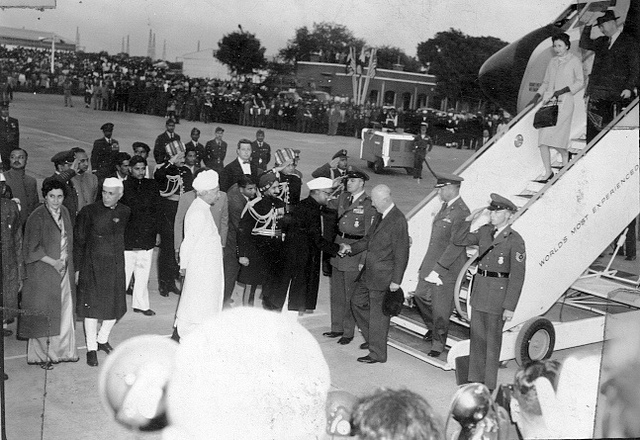


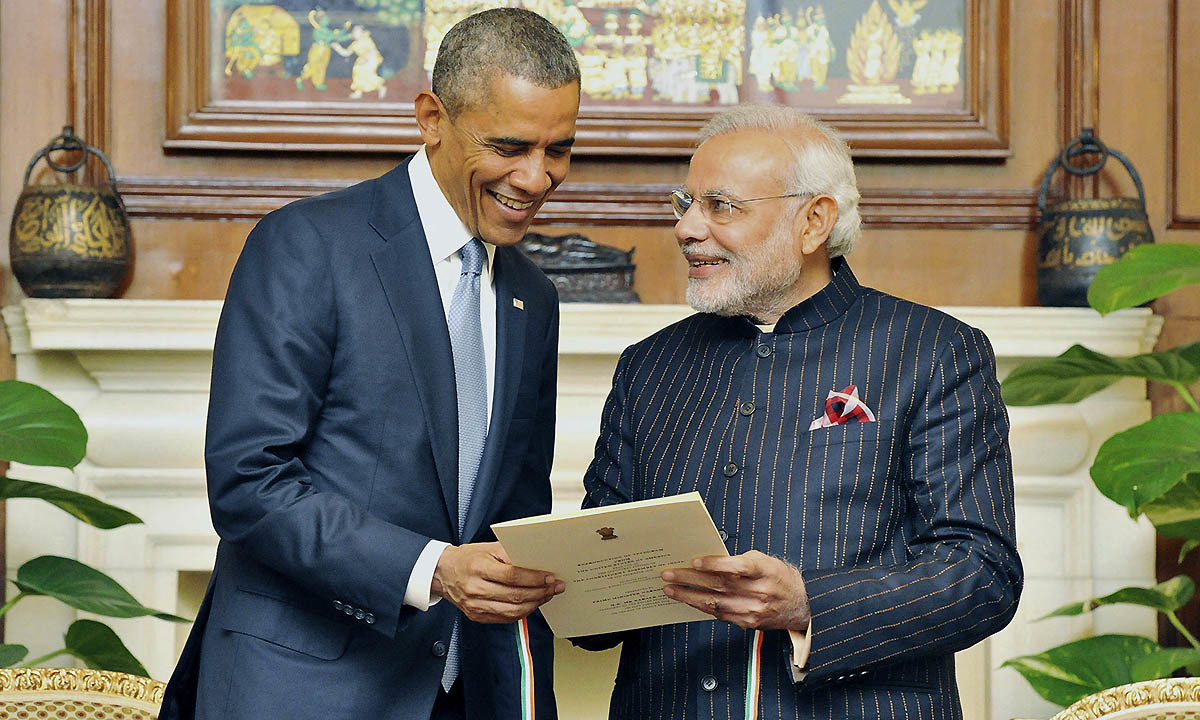
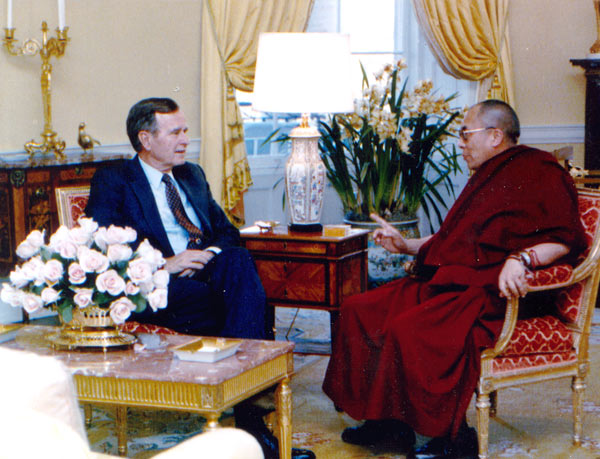

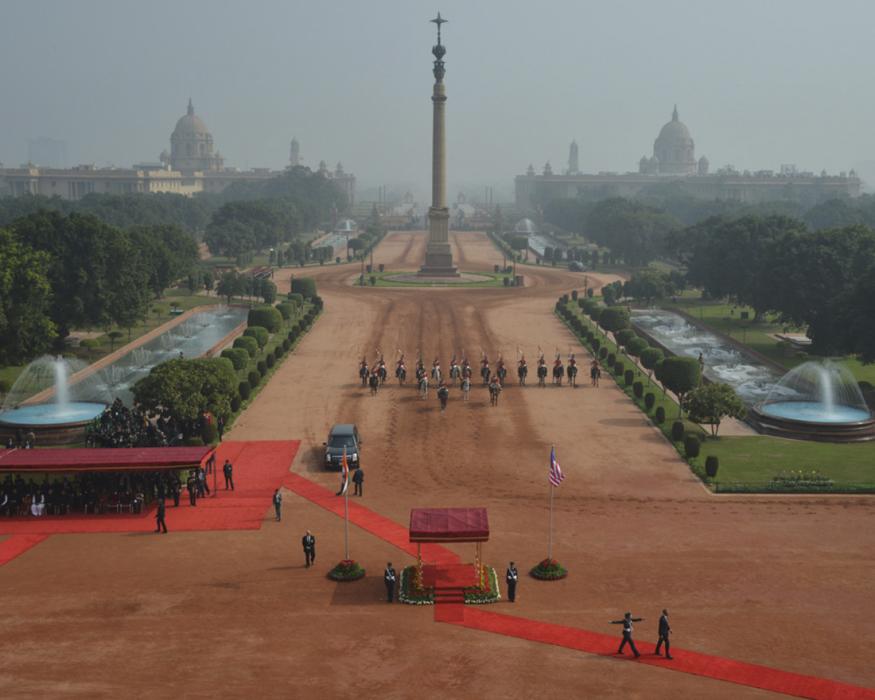


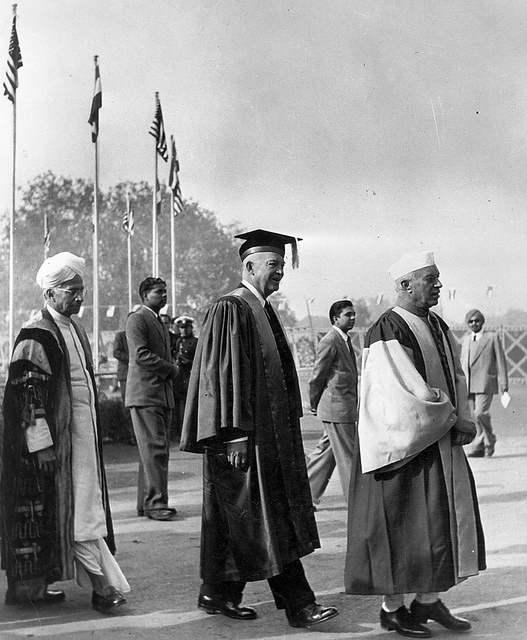

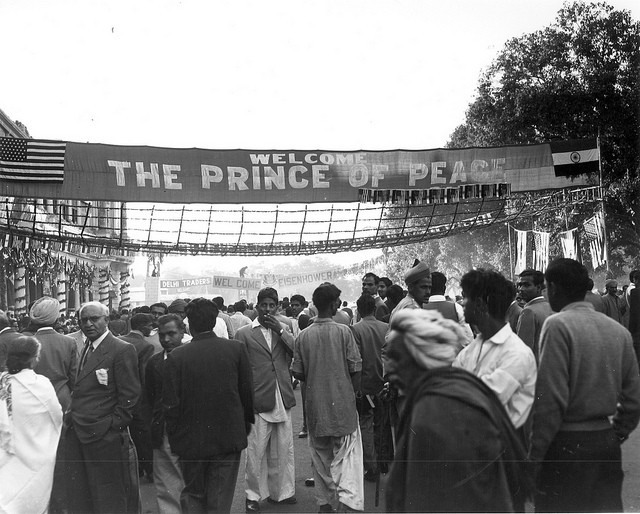
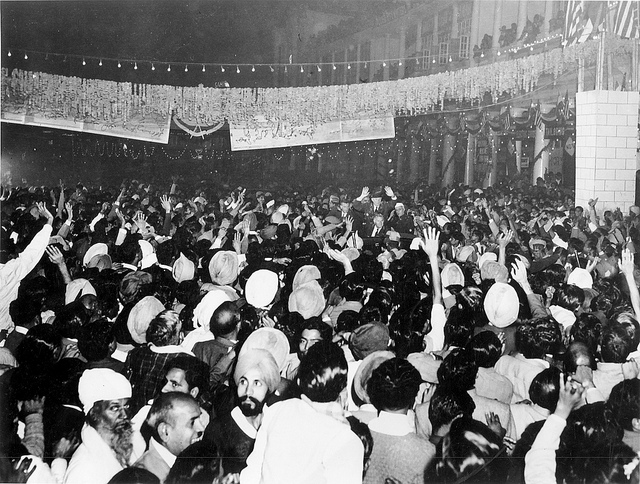
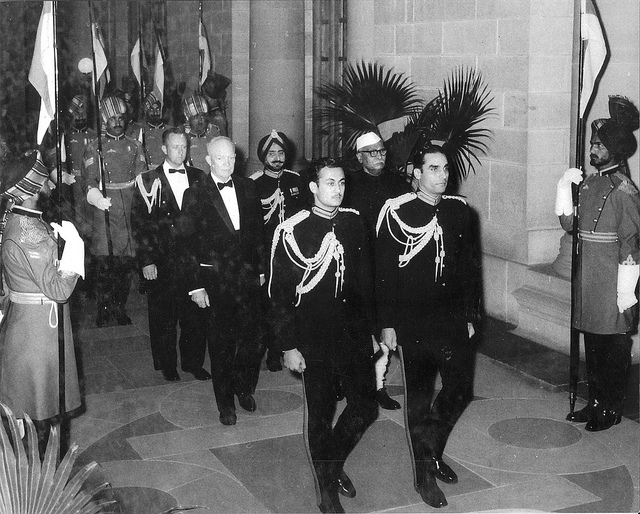

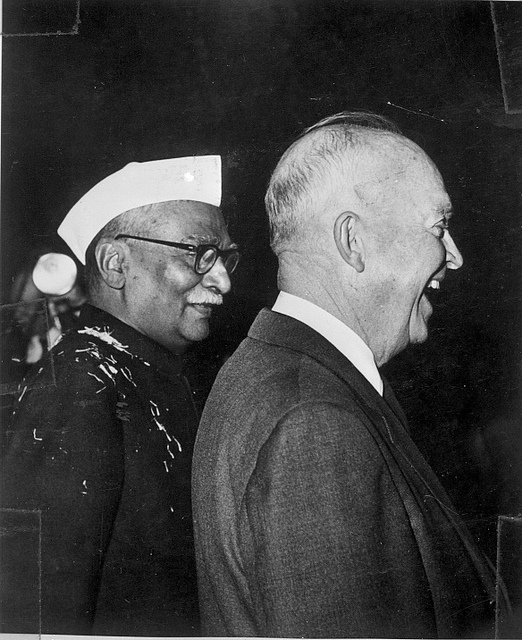


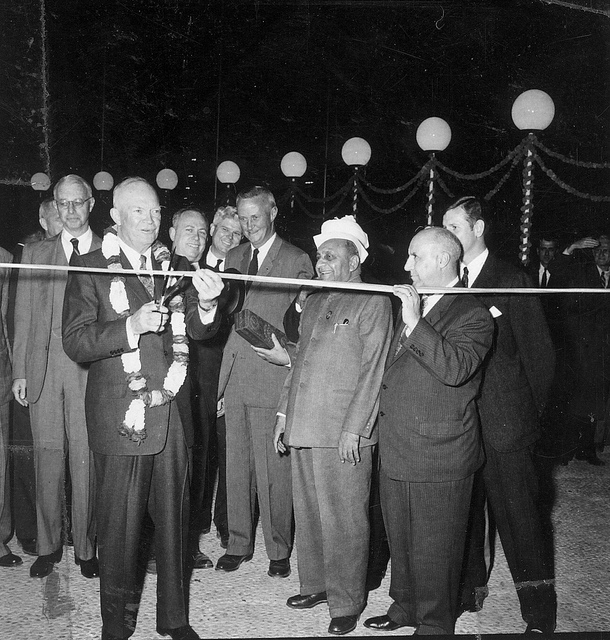
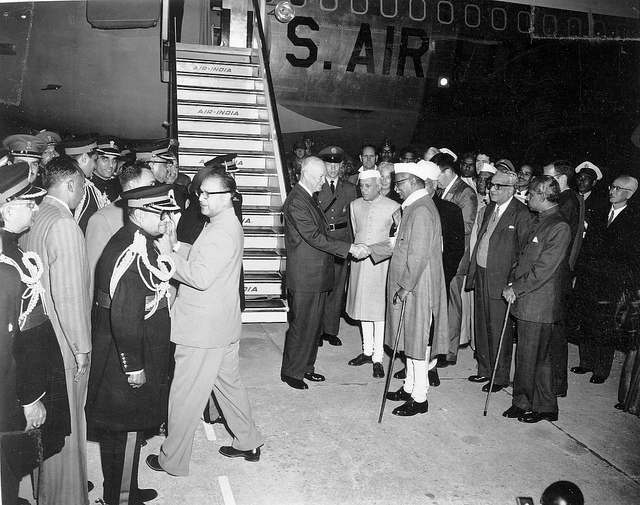














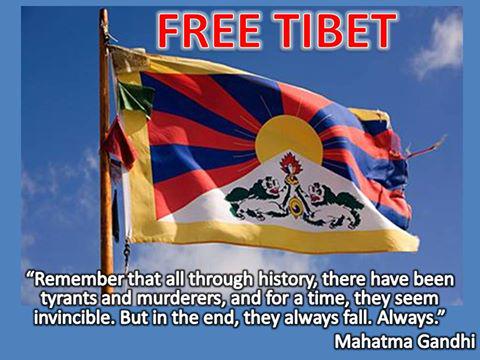


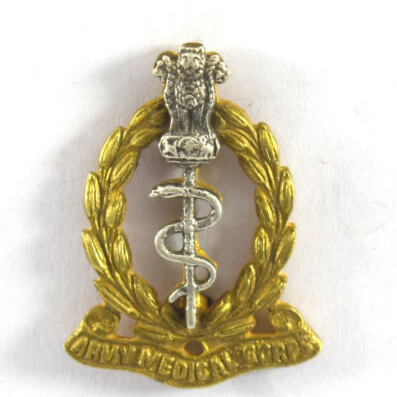


 Whole Dude - Whole Concept