Excerpt: The author emphasizes his deep connection with India, the land of Gautama Buddha and the profound influence of Buddhism on Indian culture, identity, and national symbols. This article advocates for the freedom of Tibet, currently occupied by China, highlighting the spiritual, historical, and cultural ties India has with Tibet through Buddhism. The author also calls on the United States to uphold democratic values and support Tibetan freedom. He illustrates his commitment to this cause by sharing his first-hand experiences with Tibetan Buddhists, his participation in a challenging trek to support them, and his published essay criticizing the prioritization of economic ties over human rights.
Whole Dude – Whole Noble: India – The Land of Gautama Buddha. SIDDHARTHA – GAUTAMA BUDDHA (c. 563 to c. 483 BC):”Whatever is born, produced, conditioned, contains within itself the nature of its own dissolution.” Photo by Noelli from Flickr site. http://www.dalekoniedaleko.pl
I belong to ‘The Land of Gautama Buddha’ and I whole heartedly pledge my support to His Holiness the 14th Dalai Lama and to the people of his Land. I firmly believe that we should seek and give our support for a Free Tibet and evict the Occupier of Tibet.
Whole Dude – Whole Noble: India – The Land of Gautama Buddha.
Buddham Saranam Gachhami
Dhammam Saranam Gachhami
Sangham Saranam Gachhami
Whole Dude – Whole Noble: India – The Land of Gautama Buddha
This entry is dedicated to the loving memory of those brave men who sacrificed their lives while nurturing fond hopes to win freedom for Tibet and they cherished a dream to preserve the Tibetan Identity.
Whole Dude – Whole Noble: For India is the Land of Gautama Buddha, we have a duty to defend Tibetan Identity.
Both Telengana and Andhra Pradesh record the influence of Buddha on our hearts and minds. Acharya Nagarjuna, another great Teacher lived in Nalgonda District. India is the blessed Land where Lord Gautama Buddha had lived and preached. His great compassion and noble qualities made a great impact on our character and our identity as Indians.The symbols such as the National Flag and the National Emblem that we have chosen to represent us speak volumes about the long-lasting influence of the Buddhist preachings.
Whole Dude – Whole Noble: India – The Land of Gautama Buddha. The national flag of India is popularly known as ‘TIRANGA’ or ‘TRICOLOR’. The Saffron or subdued Orange represents Courage, Sacrifice, and the Spirit of Renunciation. The White represents Purity, Peace, and Truth. The Green stands for Fertility, Prosperity, and Faith. The Blue Chakra, the 24-spoked Wheel symbolizes the Wheel of Life in Movement and Death in stagnation. It is the same as the DHARMA CHAKRA or the Wheel of Law found in the Saranath Lion Capital of Emperor Ashoka the Great.Whole Dude – Whole Noble: INDIA – THE LAND OF GAUTAMA BUDDHA: INDIA’S NATIONAL EMBLEM PROCLAIMS THE OFFICIAL MOTTO OF INDIA, “SATYA MEVA JAYATE,” TRUTH ALONE TRIUMPHS.
I had the good fortune to visit Buddhist temples known as Gompas and got acquainted with the Buddhist religious traditions for over four years while I lived with Tibetan Buddhists. I had also visited Tibetan Camps in Bylakuppe and Mundgod in the State of Karnataka.
Whole Dude – Whole Noble: India – The Land of Gautama Buddha. Godparents or Buddhist Temple in Bylakuppe, near Mysuru City, Karnataka
In December 1974, when I arrived in Secunderabad, I thought that I am posted to a military station away from my camp life with Buddhists.The motto of our military formation in Secunderabad is “BASH ON REGARDLESS.” I reached Secunderabad from the Himalayan frontier with the hope that I could bring my wife and my daughter from Kadapa where they had been living while I was serving at a field location where families are not permitted to live. As I arrived at my new Unit, the first thing that I was told was that I need to immediately proceed on a military training exercise and that I am not allowed to bring my family to Secunderabad as my services are urgently needed for the exercise.I dutifully took my place in a military convoy and after a few hours my vehicle went past the government quarters where my parents lived while my father worked as Principal of the Nagarjuna Government Arts College in Nalgonda.
Whole Dude – Whole Noble: India – The Land of Gautama Buddha. Acharya Nagarjuna of Nalgonda District, Telengana, India
I reached the exercise location near Nagarjuna Sagar and that was my first visit to that area even though I had lived in Andhra Pradesh for a fairly long time.I took the opportunity to visit the historical site of Acharya Nagarjuna’s ‘Vihara’.
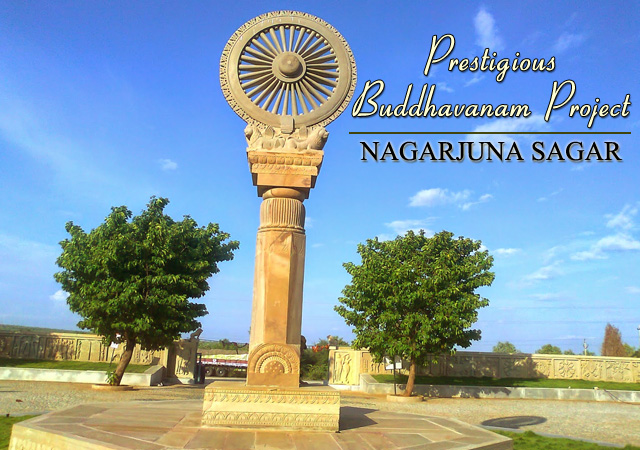
Whole Dude – Whole Noble: India – The Land of Gautama Buddha. Nagarjuna Sagar, Nagarjuna Konda, Nagarjuna Vihara, Buddha Vanam, Nalgonda District.
Prince Siddhartha left his wife and infant son in the middle of the night and abandoned his life of comfort in a royal palace as he desired to find the “Truth.” I had no intention to travel in the foot steps of Gautama Buddha, but I chose to stay away from my family if that could help His followers to reclaim their lost possessions and preserve their identity. Even today when I look back, I do not regret the time I spent away from my family and my mission to support Tibetan Buddhists was indeed a serious one. I was willing to put my life on-line if that could make a difference in the lives of those Buddhists who needed my services. I want to share the following essay which was published in ‘The Ann Arbor News’ on Thursday,October 14,1999 and hopefully this essay may convey you the passion with which I had served to support the followers of Gautama Buddha:
Don’t neglect Tibet for the sake of making money in China:
Don’t Neglect Tibet For the Sake of Making Money in China.
The United States-China relationship has naturally come under a critical review because of the nuclear espionage charges.It is irrelevant if China has actually benefited from the sensitive information that the U.S. has lost. What is far more important is the fact that the U.S. has lost its ability to keep sensitive information secure.
Presidential candidate George W.Bush has very correctly pointed out that the U.S. needs to prepare against a potential military threat that China might pose.
A review of the U.S.-China bilateral relationship should take us back 30 years to the time it actually began. The relationship,from the beginning,has no solid foundation. In spite of the huge trade and commerce relationship that the U.S. built up with China over these years, there is a basic lack of trust.
The reason for this mistrust is political. The Chinese political system derives its strength from the ideology of communism. The U.S. essentially adheres to the values of democracy, freedom and liberty.
China, as of today, is not a free society.Its political philosophy does not inspire us and is not trustworthy.Whatever the U.S. business investments may be,whatever the market reforms that China has introduced in recent times may be, there is a huge gap in terms of our political ideologies.
Communism and democracy cannot become good partners in a bilateral relationship.
The reason that I believe would end the U.S.-China bilateral relationship is the problem of Tibet.
The identity of Tibetan people could not be destroyed by all these years of Chinese oppression.The passion of Tibetan people for their freedom could not be subdued by prolonged, brutal occupation. Tibetan people are brave and courageous. They are willing to pay the price to regain their land and liberate it. They have the strength, will power and commitment to achieve this goal.
I witnessed this fact when I marched with hundreds of Tibetans through dense inhospitable forests for three months some years ago.
This was not a camping expedition.We had sick people and severely injured people who were sent to hospitals.We had beautiful people who lost their lives in those remote forests and they lay buried or cremated there. Their sacrifices are etched into my memory.
The only reason for taking that risk to suffer loss of life is the issue of winning back Tibetan freedom.
I also had an opportunity to speak with hundreds of Tibetan boys. Each one of them had a clear idea of their national identity and a compelling desire to win their freedom even if they had to pay for it with their lives.
The U.S. should understand that the issue of Tibet is not going to fade away.
When China occupied Tibet, the U.S. sent its citizens to help these people to plan their resistance.The U.S. sent tons and tons of supplies to aid their struggle. U.S. did not cover itself in glory when it withdrew this support it gave to Tibetans. The U.S. personnel were withdrawn and the aid dried up. That was an intensely painful moment for people like me who were then living with Tibetan people.
All of us had an understanding of the event that led the U.S. to backstab the Tibetan people. The U.S. sacrificed the freedom of the Tibetan people in its quest for establishing bilateral ties with communist China.
Thirty years after this betrayal, the United States should reevaluate the basic principles for which it stands today. The U.S. flag has been always a symbol of freedom. The issue is not that of containment of China. The issue is not that of engagement of China. The real issue is that of the freedom of the Tibetan people. We need to stand up for our own fundamental values and do the right thing.
Whole Dude – Whole Noble: India, the Land of Gautama Buddha must secure Peace, Freedom, and Justice in Occupied Tibet.Whole Dude – Whole Noble: India – The Land of Gautama Buddha.
Revisiting the First Kashmir War of October 22, 1947
Kashmir stands as the witness of the Everlasting Saga of Indo -Soviet Friendship. Revisiting the First Kashmir War of October 22, 1947. Former Governor of Jammu & Kashmir Lieutenant General S K Sinha (Retd) was among the first Army-men of the Indian Army to enter Kashmir on 27 October 1947.
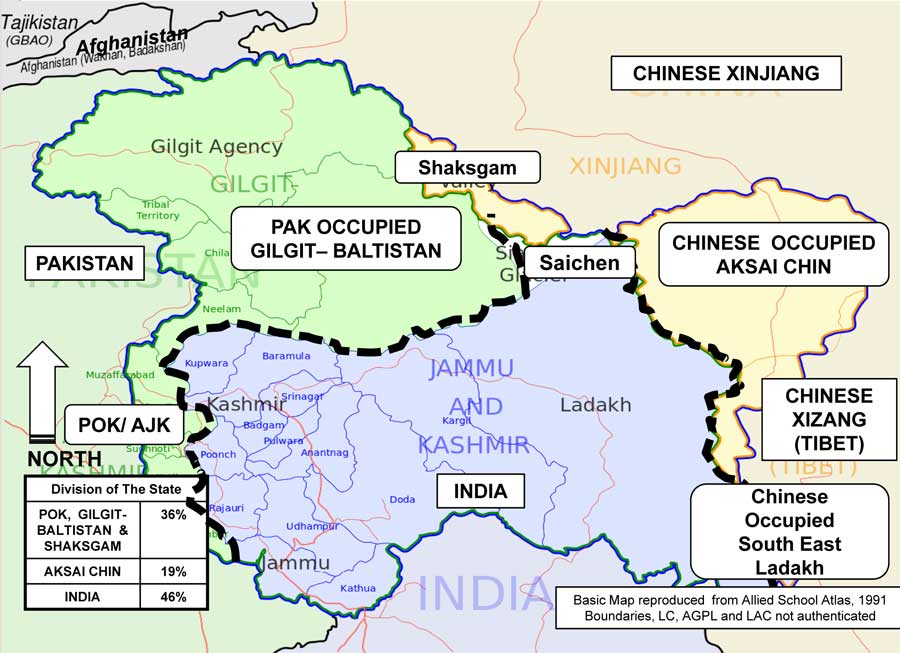
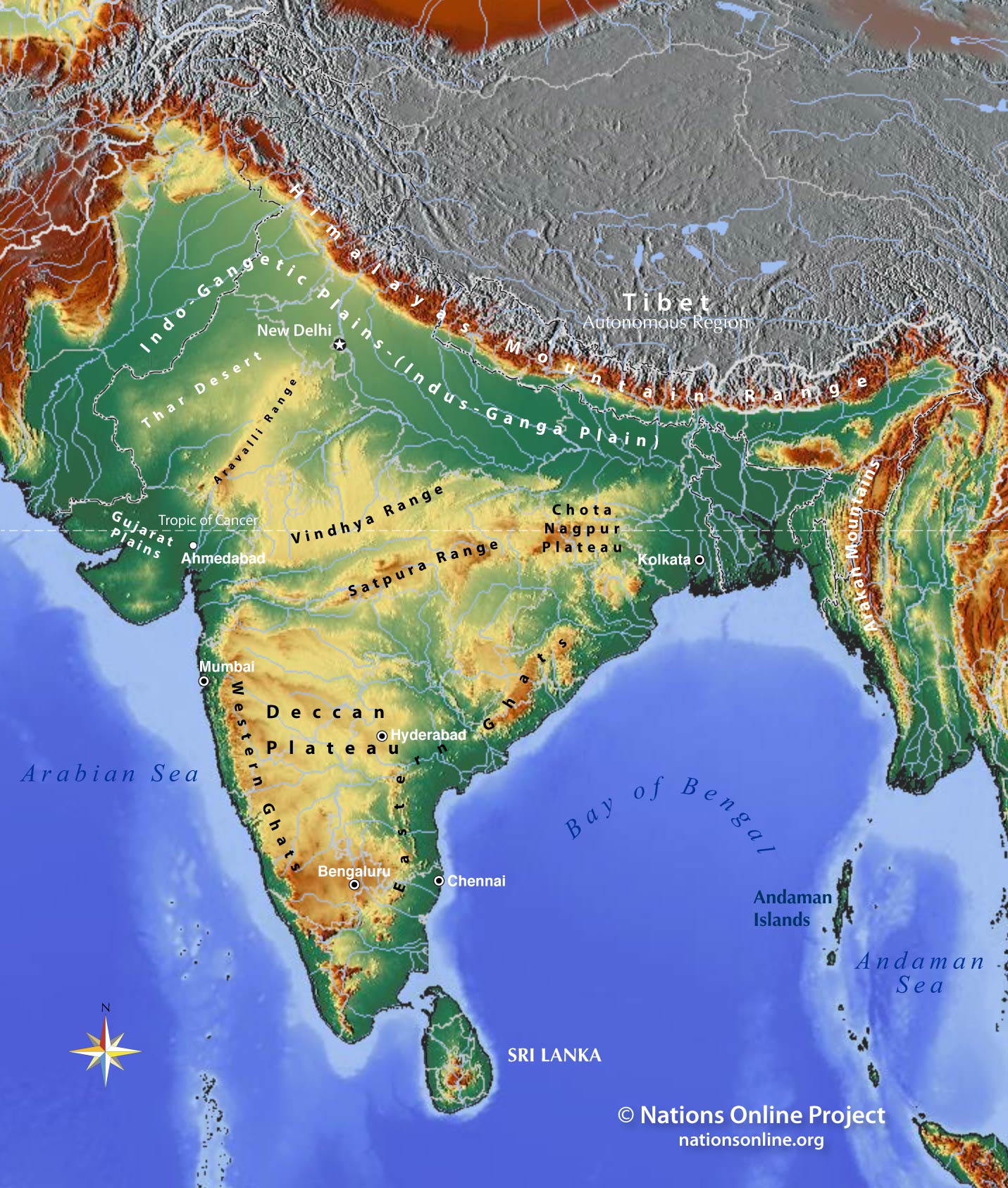
The landmass that we call the Republic of India has its own history. It moved across ocean to join Laurasia, a historical event that created the Himalaya Mountain range. Man has no right to create political boundaries and establish his domain in Earthly realm. In fact, God, the LORD Creator is the true owner of Land, Sea, and Air. Man cannot rule or govern his own body for the cells of his body enjoy cellular autonomy. Having said this, I submit, Republic of India’s duty demands defense of Indian Landmass from Kashmir to Kanyakumari to preserve its historical identity.
In 1947, India Deliberately Let Muzaffarabad: Lieutenant General S K Sinha (Retd)
Published on February 01, 2016.
Kashmir stands as the witness of the Everlasting Saga of Indo -Soviet Friendship
Former Governor of Jammu & Kashmir Lieutenant General S K Sinha (Retd) was among the first Army-men of the Indian Army to enter Kashmir on 27 October 1947. As a Major he was assigned the plan to plan and oversee the conduct of operations and also given the task of controlling airlift of troops from Delhi to Srinagar. Hence he is not only an eyewitness of the political and war happenings of 1947, but also performed an important role to shape them. Q. As an Army officer, in which areas you remained posted and for how long? A. From 1947 to 1949 I was posted with Tactical Headquarters Western Command, first at Jammu and then Srinagar when Lt Gen KM Carriappa took over as Army Commander from Lt Gen Sir Dudley Russell in January 1948. During this period I accompanied the Army Commander visiting forward areas where battles were taking place both in Jammu and in the Valley. I remained in Kashmir from 1947 to 1949 when cease fire came into effect on 1st January 1949. I returned to Delhi in 1949 and periodically visited Jammu and Kashmir on tour with successive Army Commanders as part of normal duty as GSO 2 (Operations). In July 1949 I went to Karachi as Secretary of Indian delegation to delineate the Cease Fire line in Kashmir. My total tenure in Jammu and Kashmir during my Army career was 10 years. As a Company Commander I served on a piquet in Gurez Valley, then in Jammu for three years, then three years in Ladakh as a Battalion Commander and after a few years as a Maj Gen commanding a Division in Akhnoor for one year. Subsequently after a long gap I got opportunity to serve people of J&K again when I was Governor of the State for five years from 2003 to 2008. Q. What date and time you landed in Kashmir? A. I landed at Srinagar grass landing ground at about noon on 27 October 1947. It was actually an airstrip amid a grassland made for personal plane of the Maharaja. I returned to Delhi later in the afternoon on that very date. Q. What was your age at the time? A. I was 21 years 10 months old. Q. Tell something about your company/regiment and what was your rank? A. I was in the rank of Major serving in the newly raised Headquarters Delhi and East Punjab Command (later Headquarters Western Command). I was GSO 2 (Operations) in Command with a skeleton staff of only 12 officers with rest all British. Lt Gen Sir Dudley Russel was the Army Commander. At that time both Indian and Pakistan Armies had number of British Officers serving in the two Armies, most of them in India were in the process of departing. The two Armies then had separate British Chiefs. No British Officer of either Army was allowed to visit Kashmir theatre for obvious reasons. Lt Gen Russell asked me to act as his eyes and ears. My responsibility in my appointment was to plan and oversee the conduct of operations as directed by my British superiors. I was also given the task of controlling airlift of troops from Safdarjang airport to Srinagar in requisitioned civilian Dakotas. Q. Those days what was the number of soldiers flown to Srinagar? A. We flew in 800 sorties of Dakotas in 15 days. 5000 troops with stores and equipments were flown into last the winter. I was shuttling between Delhi and Srinagar, often overstaying nights in Srinagar. On the first day we could fly in only 12 sorties due to non availability of aircraft. On 27 October 1947 our total strength in Srinagar was 600 troops and the enemy was reported to be 5000 to 10000 led by Maj Gen Akbar Khan of Pakistan Army. Q. If Indian Army’s was lesser in number than raiders, then why didn’t they succeed to capture Srinagar? A. They were engaged in rape, massacre and loot in Baramulla. Thus they lost the opportunity of capturing Srinagar which had no defences at that time. This is narrated by Maj Gen Akbar Khan in his book Raiders over Kashmir and also by me in my book Operation Rescue written in 1952. Q. Where you went after landing? A. As I said earlier that on 27 October 1947 I was at Srinagar landing ground for only a couple of hours. On the second day I went to Pattan where our troops had withdrawn after contacting the enemy at Baramulla. Lt Col Dewan Ranjit Rai, commanding the first lot of troops was killed at Baramulla after contact with the enemy. Q. Who were the local Kashmiris you met and what did they say? A. On first few days I met only local civilians wanting to sell apples in packed boxes at the airport at distress rates to be taken to Delhi in returning empty Dakotas. After a couple of days when we had withdrawn further from Pattan to Shelatang on the outskirts of Srinagar and the front had been stabilised I had to go to Srinagar city on 5 or 6 November 1947. There was no habitation between the landing ground and Zero bridge at that time. I met National Conference workers with lathis in their hands shouting the slogan Hamlewar Hoshiyar, Hum Kashmiri Hindu, Sikh, Muslman tyar. There was no communal tension nor communal violence in Srinagar when the rest of the Sub Continent was caught in the Partition holocaust. The Maharaja and senior officials had fled to Jammu. Q. Is it true that there was resistance by some locals so army convoys on way to Uri hoisted Pakitani flags on the vehicles? A. This is utter nonsense and total false propaganda. The only people we encountered between Baramulla and Uri were withdrawing enemy forces in disarray. At Baramulla, on 7 November 1947, we saw the body of Maqbool Sherwani nailed to a Cross just ahead of the Baramulla Convent. There were bodies of Nurses from the hospital in the well and also that of Lt Col Dikes and his wife who had come to Baramulla for a holiday from Naushera in Pakistan. The first notable Kashmiri I happened to meet was Sheikh Abdullah who had just been appointed Administrator of Jammu and Kashmir. Q. There was killing of civilians by Army at Ram Bagh? Why did army fire on civilian? A. I am not aware of this incident and I doubt the veracity of this. Q. Its said that Nehru has said or written in some book that India had asked its Army not to cross Uri. Is it true? A. I am not aware of it. What I know is that on 14 November 1947 when we reached Uri, our Army Commander, Lt Gen Sir Dudley Russell recommended to Army Headquarters at Delhi that we should pursue the fleeing enemy to Muzafarabad and seal the two bridges at Domel and Kohala and completely clear the Valley of the enemy. The British Military leadership at Delhiu comprised Mountbatten, the Viceroy, General Sir Rob Lockhart, the Army Chief and Lt Gen Sir Archibald Nye, British High Commissioner at Delhi. I believe they advised Nehru that advance to Muzaffarabad may lead to a full blown war between two Commonwealth countries, India and Pakistan. The United Nations was seized of the Kashmir problem and will resolve the issue peacefully. We also heard that Sheikh Abdullah for political reasons did not want the Army to proceed to Muzafarabad because that was a non Kashmiri speaking region where he did not have much political following. Q. What directions where you given in the field? A. In the field we got orders not to advance beyond Uri and instead proceed South to Poonch where 30000 Hindu and Sikh refugees were besieged by the enemy forces. Q. In your view, if Army was allowed to proceed ahead of Uri, what would have happened? A. Situation would have been totally different. We would have reached Muzaffarabad and cleared it of the attackers and taken it in our control. We were having a big battle advantage. Enemy was fleeing and we could have sealed the two important bridges of Domail and Kohala. Not allowing its Army to go ahead of Uri chasing the enemy was a battle blunder of India. We lost an important opportunity. If Indian army was allowed to advance beyond Uri, then Muzaffarabad would not have been under control of Pakistan Q. You have been an Army General. Why Army has failed to completely crush militancy in J&K? A. In the old days armies of Atilla, Chingiz Khan or Timur did not allow militancy to erupt by carrying out wholesale massacres. No Army in the present age can completely crush militancy. The US failed to do so in Vietnam, Pakistan in Baluchistan, China in Tibet, French in Algeria and so on despite using air power, machine gun and artillery. There has not been a single instance in 25 years in which Indian Army has used any of these heavy weapons causing indiscriminate killing of civilians. Nawab Mohammad Bugti, the veteran separatist leader was killed in a well planned attack on his location by Pakistan Air Force while veteran Kashmiri separatist leader, refused visa for treatment by the US, had been provided best available medical treatment in Mumbai and recovered from serious complicated operations. No doubt there have been some serious cases of human rights violations in Jammu and Kashmir which are inevitable in such operations. The guilty have been proceeded against and till my time in Kashmir nearly one hundred Army personnel found guilty were dismissed and given prison sentences from 2 to 14 years depending upon the gravity of the crime. Most allegations against the Army were found false or exaggerated. The human rights record of the Indian Army in such operations has been much better than any other employed in such operations. Q. What you think can be a possible solution to Kashmir issue? A. Pakistan claims that Kashmir is its jugular vein and for India, Kashmir is its soul. India’s legal claim to Kashmir was recognized in the UN Resolution of 13 August 1948 which required Pakistan to withdraw all its forces from Kashmir and allowed to retain her forces till the plebiscite which was not allowed to be held by Pakistan. The Indian Parliament has passed a unanimous resolution to recover the whole of the Sate as it stood on 22 October 1947 without legal justification invaded Jammu and Kashmir. India has been repeatedly reiterating that the whole of Jammu and Kashmir is an integral part of India. Notwithstanding all this, my own personal view is that we should recognize the LOC as international border and both sides develop cordial neighbourly relations. Zulfiqar Ali Bhutto during Shimla Accord had given verbal assurance to that effect when the term Cease Fire Line was changed to Line of Control. The latter is more indicative of a permanent solution. The four point out of box solution proposed by Parvez Musharraf was also a move in that direction and so was the call of Atal Beharee Vajpayee to settle the Kashmir issue in Insaniyat Ke Daire Me.
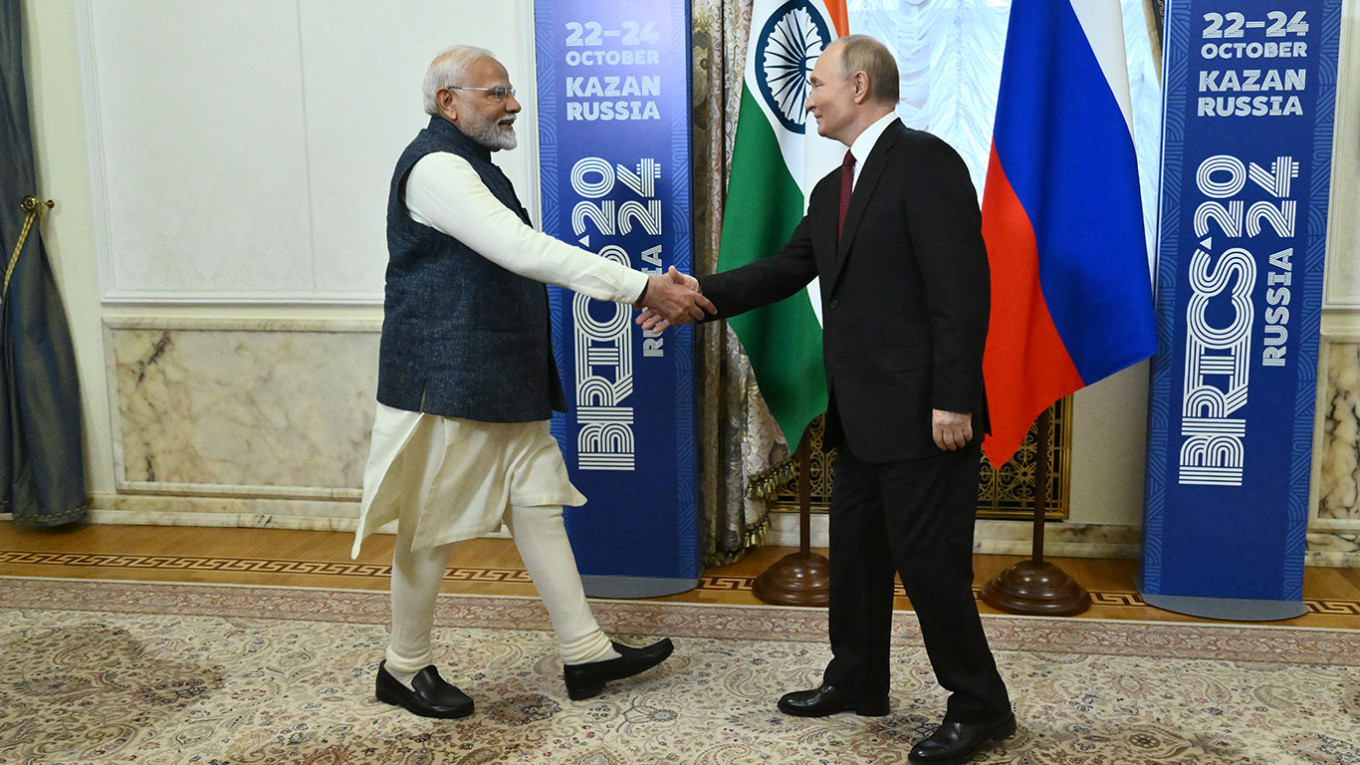
October 22, 2024 – A very good reason to celebrate Indo-Soviet Friendship
Kashmir stands as the witness of the Everlasting Saga of Indo -Soviet FriendshipOctober 22, 2024 – A very good reason to celebrate Indo-Soviet Friendship
Kashmir stands as the witness of the Everlasting Saga of Indo -Soviet Friendship
October 22, 2024 – A very good reason to celebrate Indo-Soviet Friendship
I ask my readers to understand the US Policy on Kashmir. The US Policy is revealed by the fact that no President of the United States visiting India had visited Kashmir.
Kashmir. The everlasting saga of Indo-Soviet Friendship.In 1955, Jawaharlal Nehru spent 16 days in the USSR, covering some 13,000km, on his first official tour to the country as the prime minister of India
In 1955, Jawaharlal Nehru spent 16 days in the USSR, covering some 13,000km, on his first official tour to the country as the prime minister of India
Kashmir. The everlasting saga of Indo-Soviet Friendship. Jawaharlal Nehru and Indira Gandhi at the Rustavi Metallurgical Plant in 1955 (Rustavi, Georgia USSR)
Jawaharlal Nehru and Indira Gandhi at the Rustavi Metallurgical Plant in 1955 (Rustavi, Georgia USSR)
After India’s independence from the British Rule, Kashmir stands as a true witness of the glorious saga of Indo-Soviet Friendship over the last seven decades.
In June 1955, Nehru visited USSR. During the visit, a joint communique was issued, which emphasized on international peace, the security of small states. Both the Prime Ministers of India and USSR felt that “it is essential to dispel fear in all possible ways.
Kashmir. The everlasting saga of Indo-Soviet Friendship. Nikita Sergeyevich Khrushchev speaking at the reception held in honor of visiting Soviet delegation at Srinagar.
Nikita Sergeyevich Khrushchev speaking at the reception held in honor of visiting Soviet delegation at Srinagar.
The visit of the Soviet leaders, Khrushchev and Bulganin to India in November-December 1955 laid the foundation of a new era in Indo- Soviet relationship. Besides Delhi, the Soviet leaders visited Calcutta, Madras, Agra, Coimbatore, and Srinagar. Crowds greeted them with thunderous applause.
Khrushchev assured Indian leadership that USSR would ever come forward to help India at times of difficulties. Speaking at a luncheon given in their honor at the Agra Circuit House by the Governor of Uttar Pradesh, KM Munshi on November 20, 1955, he stressed that “Soviet people were not just fair-weather friends of India but their friendship would last forever even when the weather frowns or the storm blows strong”.
“Let it be known to the world”, he added, “that the friendship between the two people would continue to grow even at times of difficulties and crises”. Bulganin echoed the same rhetoric in his reply to the civic address given by Coimbatore Municipal Council on November 27, 1955. He concluded his speech with “long live the great republic of India. Long live the people of India. Long live the friendship between the people of India and the Soviet Union, Hind-Russi Bhai Bhai and Hind-Russia Sahodare.” (The Hindu, November 28, 1955)
Kashmir. The everlasting saga of Indo-Soviet Friendship. Bakshi Ghulam Mohammad showing members of visiting Soviet delegation examining Kashmir handicrafts in Srinagar. The delegation included NA Bulganin, USSR Prime Minister, Khrushchev, Member, Presidium of the Soviet and many others
Bakshi Ghulam Mohammad showing members of visiting Soviet delegation examining Kashmir handicrafts in Srinagar. The delegation included NA Bulganin, USSR Prime Minister, Khrushchev, Member, Presidium of the Soviet and many others
The Soviet leaders expressed the support to the Indian stand on the Kashmir issue explicitly during the course of talks and speeches.
Speaking at the reception given by Bakshi Ghulam Mohammad, Prime Minister of Kashmir, in honor of visiting Soviet dignitaries on December 10, 1955, Khrushchev expressed the unequivocal support to the Indian stand on Kashmir.
“Kashmir is one of the states of the Republic of India that has been decided by the people of Kashmir,” he said. “It is a question that the people themselves have decided”. He viewed the Kashmir problem as an imperialist design and severely criticized the “divide and rule” policy of the imperialist powers. He held the view that the Kashmir problem emerged because some states tried to take advantage of the situation to foment animosity between India and Pakistan- countries recently emancipated from colonial oppression.
They reiterated the same on December 14, 1955, in a press conference in Delhi. Bulganin said, “As for Kashmir during our visit there we saw how greatly the Kashmirians rejoice in their national liberation, regarding their territory as an integral part of India”.
On their return to Moscow in the last week of December, they submitted their reports on the visit to the Supreme Soviet of the USSR. In his report, Bulganin argued that “on the pretext of supporting Pakistan on the Kashmir question certain countries are trying to entrench themselves in this part of India in order to threaten and exert pressure on areas in the vicinity of Kashmir. The attempt was made to sever Kashmir from India artificially and convert it into a foreign military base.”
But, Bulganin said, the people of Kashmir are emphatically opposed to this imperialist policy. “The issue has been settled by the Kashmiris themselves; they regarded themselves as an integral part of India. We became profoundly convinced of this during our meetings with the people in Srinagar, and in our conversations with the Prime Minister of Kashmir, G M Bakshi, and his colleagues”. Further, he said, “The Soviet government supports India’s policy in relations to the Kashmir issue because it fully accords with the interests of peace in this part of Asia. We declared this when we were in Kashmir; we reaffirmed our declaration at a press conference in Delhi on December 14 and we declare it today”.
Khrushchev in his speech said, “in Kashmir, we were convinced that its people regarded its territory as an inalienable part of the Republic of India. This question has been irrevocably decided by the people of Kashmir”
In pursuit of this policy, the Soviet Union opposed the draft resolution co-sponsored by Great Britain, the US, Australia, and Canada on February 14, 1957. The resolution was unacceptable to India. The resolution noted the importance the Security Council “attached to the demilitarization of the state of Jammu and Kashmir preparatory to the holding of a plebiscite”, and “Pakistan’s proposal for the use of a temporary United Nations force in connection with demilitarization”. The Security Council held “that the use of such a force deserved consideration”. (Year Book of the United Nations, 1957 pp 81) The Security Council authorized its president, Gunnar Jarring to visit India and Pakistan to bring about demilitarization or further the settlement of the dispute.
Kashmir. The everlasting saga of Indo-Soviet Friendship. Prime Minister of Kashmir Bakhshi took the visiting USSR leaders in a huge boat procession in the river Jhelum. Thousands of people were on either side of the river banks to greet them in December 1955.
Prime Minister of Kashmir Bakhshi took the visiting USSR leaders in a huge boat procession in the river Jhelum. Thousands of people were on either side of the river banks to greet them in December 1955.
On February 18, 1957, the Soviet delegate, Sobolev, proposed amendments to the above-mentioned resolution. He argued “the situation in Kashmir has changed considerably since 1948 when the Security Council had first called for a plebiscite. The people of Kashmir had settled the question themselves and now considered their territory an integral part of India”. (UN Security Council Official Records, 12th session, 768thmeeting, February 14, 1957) In his resolution, the Soviet delegate deleted the reference to “the use of a temporary UN force in connection with demilitarization” in Kashmir. After his amendments were rejected by the other Security Council members on February 20, 1957, Sobolev vetoed the Western-sponsored resolution. He justified the veto by alleging that the resolution, as it stood, favored Pakistan. (Security Council Official Records, 773rd meeting, February 20, 1957) He told the Security Council that in his government’s opinion the Kashmir question had in fact already been settled by the people of Kashmir.
In March 1959, a Soviet delegation led by A Andrew visited Kashmir to demonstrate that the Soviet Union regarded Kashmir as an Indian state. Shortly after his arrival in Srinagar, Andrew described Kashmir as “the most beautiful place of the world” and reiterated that the Soviet Union regarded “Jammu and Kashmir as an integral part of the Indian Republic”. Pointing out that Kashmir “is not far from the Southern frontier of the Soviet Union” he declared that, “in your struggle, we are your comrades”. (Security Council Official Records, 773rd meeting, February 20, 1957, pp 46.)
Next month Indian leader Karan Singh was received by leading Soviet leaders including Khrushchev in Moscow. Khrushchev welcomed the guest from “friendly India” and reiterated the Soviet support to the Indian policy in Kashmir. Karan Singh thanked Soviet leader for his unequivocal support to India and said that the Soviet policy towards Kashmir was well known.
When the UN Security Council met on April 27, 1962, to discuss the Kashmir issue, Soviet delegate, Platen Morozov, gave India total and unequivocal support. In his speech, Morozov declared, “the question of Kashmir, which is one of the states of the Republic of India and forms an integral part of India, has been decided by the people of Kashmir themselves. The people of Kashmir have decided this matter in accordance with the principle of democracy and in the interest of strengthening relations between the people of this region.”
Kashmir. The everlasting saga of Indo-Soviet Friendship. Russian premier Kosygin with his counterparts from India and Pakistan at Tasknet – Ayub Khan and Lal Bahadur Shastri.
Russian premier Kosygin with his counterparts from India and Pakistan at Tasknet – Ayub Khan and Lal Bahadur Shastri.
When the Security Council met again on June 21, 1962, the representative of Ireland, supported by the British representative, introduced a resolution. It was quite clear, according to Morozov, the ‘principal aim’ of the draft resolution was holding of a plebiscite and this would be nothing but ‘flagrant interference’ in the domestic affairs of India. (Year Book of the United Nations, 1962 pp 130)
Morozov urged the Council to reject the Irish resolution insisting it was basically in line with US dictates. When the Irish resolution was put to vote on June 23, 1962, the Soviet representative vetoed it. He declared that the question of holding a plebiscite in Kashmir was ‘dead and outdated’ and the Kashmir question had been solved ‘once for all’.
USSR supported Indian stand on Kashmir at various fora. It also supported Nehru’s decision to withdraw the special status to J&K and to integrate the state into the Indian Union. At a reception at Rumanian embassy in Moscow, Khrushchev declared that the Soviet Union extends its ‘full support’ to the integration of Kashmir to the Indian Republic, insisting his attitude towards Kashmir remains unchanged.
Kashmir. The everlasting saga of Indo-Soviet Friendship. Sadar-i-Riyasat, Dr. Karan Singh, his wife and Indira Gandhi with the visiting USSR delegation in Srinagar.
Sadar-i-Riyasat, Dr. Karan Singh, his wife and Indira Gandhi with the visiting USSR delegation in Srinagar.
When the Kashmir question came before the Security Council in February 1964, the Soviet representative, Federenko, reiterated his country’s view that the question of Kashmir had already been settled ‘once for all’. He also supported the Indian contention that a Security Council resolution would aggravate the situation and thought that the Indian proposal for a ministerial meeting to discuss the communal question and no-war treaty constituted a ‘realistic approach’ in the interests of peace in Asia and the whole world. (Year Book of The United Nations, 1964 pp 131)
After the unexpected departure of Khrushchev from the Soviet political scene, it appeared that USSR attitude towards Kashmir issue underwent change. However, the Soviet envoy to India, Benediktov assured New Delhi in October 1964 that the Soviet attitude towards Kashmir had remained unchanged. During her visit to Moscow, Indian Prime Minister, Indira Gandhi was assured by the new Soviet Prime Minister Alexi Kosygin that the Soviet support for India’s policy in Kashmir had remained unchanged and that Moscow regarded “Kashmir as an integral part of India”. (Patriot, 24 October 1964)
Kashmir. The everlasting saga of Indo-Soviet Friendship. My special thanks to Dr. Debidatta Aurobinda Mahapatra for his article.
My special thanks toDr. Debidatta Aurobinda Mahapatra for his article.
At the UN Security Council, where this matter was raised several times, Soviet delegate attempted to maintain a non-partisan view, though he referred to the Indian state of J&K. He blamed the current conflict on those ‘forces which are trying to disunite and set against each other the states that have liberated themselves from the colonial yoke’ and those ‘which are pursuing the criminal policy of dividing peoples so as to achieve their imperialist and expansionist aims’. The friendship with USSR nevertheless stood in good stead when it came to the support of India on points of objection that India raised. On October 25, 1965, the Indian Foreign Minister, Swaran Singh objected to Pakistan Foreign Minister, ZA Bhutto’s reference to the internal situation in Kashmir and held that it was India’s internal affairs. He held that the opposite view was a deviation from the agreed agenda and thus walked out in protest. USSR had shown support to the Indian interpretation that the Council’s deliberations should be only on “questions directly connected with the settlement of the armed conflict, i.e. complete ceasefire and withdrawal of armed personnel. It had also abstained from voting on the resolution adopted by the Council on November 5, 1965. (Year Book of the United Nations, 1965, pp 171) The resolutions failed to resolve the crisis.
Kashmir. The everlasting saga of Indo-Soviet Friendship. Visiting USSR delegation with Prime Minister Bakhshi’s cabinet with Sadar-i-Riyasat seen in the center.
Visiting USSR delegation with Prime Minister Bakhshi’s cabinet with Sadar-i-Riyasat seen in the center.
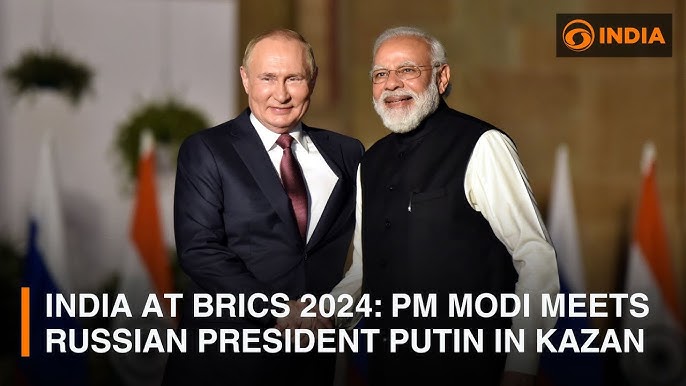
I thank Russian Prime Minister Vladimir Putin and the people of Russia for their consistent support to India in defending Kashmir.
October 22, 2024 – A very good reason to celebrate Indo-Soviet Friendship
Russia Backs India On J&K Move, Says Change In Status Within Constitution
October 22, 2024 – A very good reason to celebrate Indo-Soviet Friendship
Moscow said that the “change in the status of the state of Jammu and Kashmir and its division into two Union Territories has been carried out within the framework of the Constitution of the Republic of India.”
Kashmir. The everlasting saga of Indo-Soviet Friendship.
Russia is a consistent supporter of the normalization of relations between India and Pakistan.
Russia has backed India’s moves on Jammu and Kashmir, saying that the changes are within the framework of the Indian Constitution, even as it urged India and Pakistan to maintain peace.
In response to a question during its press briefing on Friday, the Ministry of Foreign Affairs of Russia said Moscow expects that India and Pakistan “will not allow aggravation of the situation in the region due to the change by New Delhi in the status of the state of Jammu and Kashmir”.
Moscow said that the “change in the status of the state of Jammu and Kashmir and its division into two Union Territories has been carried out within the framework of the Constitution of the Republic of India”.
It hoped that the two sides will “not allow a new aggravation of the situation in the region as a result of the decisions”.
Russia is a consistent supporter of the normalization of relations between India and Pakistan.
“We hope that the differences between them will be resolved by political and diplomatic means on a bilateral basis in accordance with the provisions of the Shimla Agreement of 1972 and the Lahore Declaration of 1999,” the Foreign Office said.
Relations between India and Pakistan have been tensed ever since New Delhi revoked the special status of Jammu and Kashmir and divided it into two Union Territories — J&K and Ladakh earlier this week, in order to bring in faster development and security to the state.
(This story has not been edited by NDTV staff and is auto-generated from a syndicated feed.)
Kashmir. The enduring saga of Indo-Soviet Friendship.
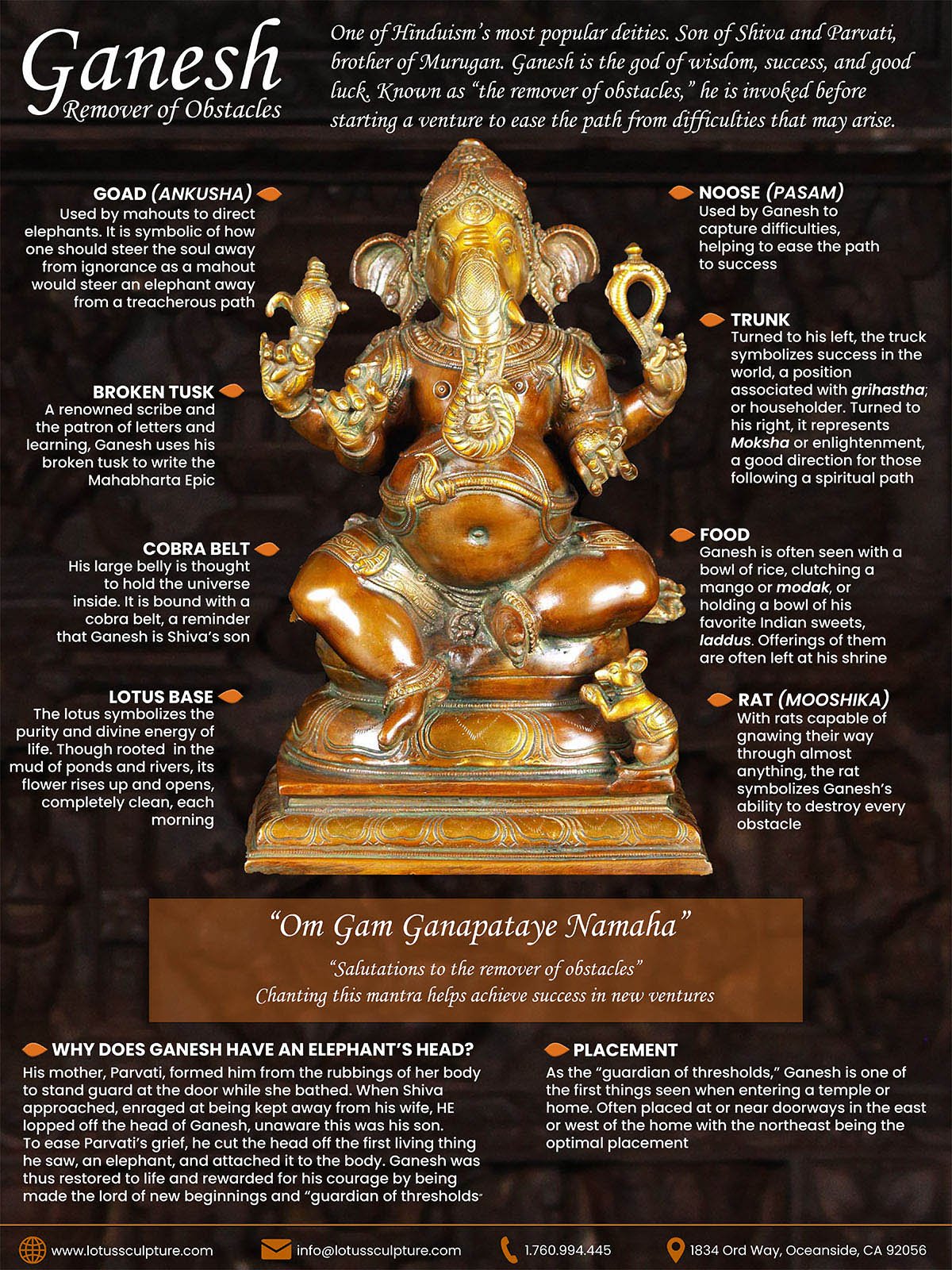
Whole Humility – The celebration of Ganesh Chaturthi. A Prayer to Lord Ganesha for Success through Obedience and Humility.
Excerpt: Indians worship Lord Ganesha to seek success with a sense of humility.While exploring the thoughts, ideas, and mental concepts that originated in the Land of India, I seek a creative inspiration from Lord Rama who had inspired poet Bammera Potana.
Whole Dude – Whole Humility: A Prayer to Lord Ganesha for Success with Humility.
Lord Ganesha is unique among all deities. He has a human form with the head of an Asian elephant. Like the elephant which can grasp objects with its trunk, the entire realm of knowledge is in His grasp. In brilliance, He outshines Sun (Surya) and His radiant appearance can illuminate the entire universe. His body is so huge, it can accommodate the entire creation.
Whole Dude – Whole Humility: A Prayer to Lord Ganesha for Success with Humility.
Lord Ganesha is worshiped to remove obstacles. He removes obstacles when we contemplate actions that promote our well-being and brings us the goodwill of others and the actions should have no evil design or purpose. Lord Ganesha removes obstacles and paves the way for accomplishment and success in human endeavors. The notion that success is the result of divine sanction rather than being entirely due to personal effort, would let us reach our goals with a sense of modesty and humility.
Whole Dude – Whole Humility: PRAYER TO LORD GANESHA – SUCCESS THROUGH OBEDIENCE AND HUMILITY.
The primary goals for man have been described as Dharma, Artha, Kama, and Moksha. Dharma (right conduct)is not only a goal but also is the way. The other three goals should only be reached following the way of Dharma. To prepare for the journey on the path of Dharma, the traveler finds direction from a sense of humility. The radiant and immense personality of Ganesha endows us with humility. Having reached the goals of Artha (personal wealth, social status and position), and Kama (fulfillment of desires, progeny, and family), we inevitably encounter with the consequences of the powerful effects of time. The following verse from ‘ Bhaja Govindam’ sets us on a mission to seek the fourth goal of human existence.
Whole Dude – Whole Humility: A Prayer to Lord Ganesha for Success with Humility.
The fear that time would dissolve everything we possess would help us to overcome arrogance that may be associated with acquiring wealth, family and being youthful in age.
Sooner or later, we set our sights for the fourth goal and it will not be very easy to visualize the final destination. To achieve Moksha or Mukti, to reach the shore of liberation and conclude the journey across the ocean of Samsara, a person endowed with humility would be able to say the following prayer and get the needed help.
Whole Dude – Whole Humility: A prayer to Lord Ganesha for Success with Humility. The flow of Time remains a Mystery. Man is conditioned to experience the aging process as if Time flows in a Straight Line like an Arrow.
Human existence is permanently bound to the illusion that shapes the sensory experience of Sunrise and Sunset. Sun shines with all His radiance all the time. The living entities exist in an illusion state which helps them to mark their existence by the alternating periods of light and darkness. We do not have the biological ability to detect the spin of the Earth and we have synchronized our existence with Sunrise and Sunset and this biological rhythm, known as Solar Rhythm, Circadian Rhythm, or Diurnal Rhythm, manages several of our biological functions.
Whole Dude – Whole Humility: The Grandfather Clock – The division of the day into hours, minutes, and seconds helps us to recognize the passage of time. We have no sensory perception of Earth’s spin that gives us alternate periods of light and darkness.
It is not easy to comprehend the Ultimate Reality when the existence is synchronized with an illusion. Time’s Power of Dissolution would eventually compel us to investigate and to explore the concept of Absolute and Unchanging Reality. A prayer to Lord Ganesha would endow us with humility that we need to achieve the four primary goals and gives us success in life.
MENTORSHIP: Bammera Potana, the well-known Telugu poet while translating the epic poem of Bhagavatam from the Sanskrit language into Telugu stated that he would narrate the story of Bhagavatam using imagination and inspiration entirely provided by Lord Rama:
Whole Dude – Whole Humility: A Prayer to Lord Ganesha for Success with Humility under the mentorship of poet Bammera Potana.Whole Dude – Whole Humility: A Prayer to Lord Ganesha for Success with Humility under the mentorship of poet Bammera Potana.
I would like to narrate my story, describe my ideas, and share my thoughts drawing inspiration from Lord Rama. My endeavor is to destroy the state of conditioned existence called ‘Bhava’, and get over the fear of ‘Samsara’, a journey of the embodied soul across uncharted sea which constantly evokes a sense of fear of the unknown.
Whole Dude – Whole Humility: A Prayer to Lord Ganesha for Success with Humility under the mentorship of Poet Bammera Potana.
Maharishi Valmiki, Adikavi, Prime Poet, had no formal education. He was totally inspired to narrate the Story of Lord Rama called RAMAYANA. Telugu Poet Bammera Potana who also had no formal education translated the epic poem known as Bhagavatam from Sanskrit into Telugu and displayed his immense powers of creativity. He not only dedicated his work to Lord Rama but also acknowledged that every word that he used was inspired by Lord Rama. For my humble endeavor, I seek the same inspiration.
Whole Humility – The celebration of Ganesh Chaturthi. A Prayer to Lord Ganesha for Success through Obedience and Humility.
Anyatha sharanam nasti, tvameva sharanam mamah
Tasmat karunya bhavena, kshamasva Parameshvara.
I have no other refuge, Thou art my sole refuge, Out of a sense of compassion, protect me, O Supreme Lord!
Whole Dude – Whole Humility: A prayer to Lord Ganesha for Success with Humility.Whole Dude – Whole Humility: A Prayer to Lord Ganesha for Success with Humility. THE MAN’S EXISTENCE IS SHAPED BY FLAT EARTH WITH ARCHED DOME EXPERIENCE. THE REALITIES OF EARTH’S SHAPE AND MOTIONS ARE OVERPOWERED BY THE INFLUENCE CALLED ILLUSION.
Bharat Darshan: Saturday, September 07, 2024, The celebration of Ganesh Chaturthi. A Prayer to Lord Ganesha for Success through Obedience and Humility.
University of Michigan and Michigan Medicine must learn that there is no human race called Indian
Whole Aryan – There is no Human Race called Indian: Michigan Medicine and University of Michigan reveal their ignorance of the term called Race. There is no Race of People called Indian. However, several Indians, Iranians and Germans celebrate their Aryan Race heritage. I ask Michigan Medicine and University of Michigan to share its educational experience and publish its Theory of Man
Excerpt: The Michigan Medicine AHEAD study is examining the efficacy of a medication aimed at preventing Alzheimer’s Disease in individuals at increased risk of developing the disease. The study has, however, faced criticism regarding its focus on years of schooling and its lack of a research protocol to verify the identity and individuality of the human organism. Critics assert that biological processes like the flow of biological information and protein synthesis are not influenced by education level and that individuality should not be tied to factors such as race and ethnicity. The conceptualization of “life as knowledge in action” and that it is an interplay of cellular function and knowledge must be explored.
Whole Aryan – There is no Human Race called Indian: Michigan Medicine asks, “What is your Race?” I ask Michigan Medicine and University of Michigan to share its educational experience and publish its Theory of Man. I categorically claim that there is no human race called Indian.
The AHEAD Study is researching the safety and effectiveness of an investigational medication in people who might be at increased risk for developing memory loss associated with Alzheimer’s Disease. The study is looking for participants age 55-80 years old, who have generally normal memory function in daily life, and who are not being treated for memory problems. For individuals age 55-64 years old, an additional risk factor is required, such as a parent or sibling with Alzheimer’s Disease or previous biomarker testing showing increased risk for developing Alzheimer’s Disease. This study sees participants in Ann Arbor. Contact Lauren Mackenzie at spearsl@med.umich.edu or 734-232-2415.
Whole Aryan – There is no Human Race called Indian: Michigan Medicine asks, “What is your Race?” There is no human race called Indian. I ask Michigan Medicine and University of Michigan to share its educational experience and publish its Theory of Man.
On Tuesday, December 05, 2023, at the Michigan Clinical Research Unit (MCRU) at the Cardiovascular Center (CVC), I was interviewed for participating in the AHEAD Study and I completed the Stage 1A of the Screening process. I am asked to provide information about the most important occupation of my life, my sexual orientation, my race and ethnicity in the context of my place of birth and the country of origin, the total number of years I spent in the School to register my personal identity for participation in the Medical Research Project.
Whole Aryan – There is no Human Race called Indian: Michigan Medicine asks, “What is your Race?” There is no human race called Indian. I ask Michigan Medicine and University of Michigan to share its educational experience and publish its Theory of Man.
The AHEAD Study Research Protocol has not identified the basis for discovering the identity of a multicellular human organism. I can answer the questions I am asked. Do I have the ability to communicate my answers to the cells of my own body and reflect that identity in the living functions they perform to keep me alive?
Whole Aryan – There is no Human Race called Indian: University of Michigan and Michigan Medicine must learn that there is no human race called Indian
There is no racial or ethnic identity described as American or European. For the same reason, there is no racial or ethnic identity that can be construed as Asian/Indian. India has over a billion human population. No person uses the terms Asian/Indian and Non-Hispanic if they are asked to describe their identity. However, many Indians respectfully acknowledge their racial heritage using the term Aryan. This identity is equally shared by Persians and Germans to varying extents
The differences between race and ethnicity – and why they’re so hard to define
By Harmeet Kaur, CNN
Updated 8:07 AM EDT, Tue May 30, 2023
CNN —
Whole Aryan – There is no Human Race called Indian: The differences between race and ethnicity – and why they’re so hard to define
If you’ve ever filled out a Census form, a college application or a patient questionnaire at the doctor’s office, you’ve probably been asked to identify your race and ethnicity.
Governments, workplaces and educational institutions often collect data on these categories to determine things like which programs require funding, what disparities exist between different groups and when civil rights violations are occurring.
But you might have also felt that checking a box on a form requires you to define yourself in ways that don’t necessarily align with your own identity.
If it seems like the distinctions between race and ethnicity are confusing, unsatisfying or unclear, you’re onto something. These categories are messy and lack concrete definitions. Their meanings have evolved over time and can shift depending on the context.
“It’s not like there is some truthful race and truthful ethnicity out there, and that we bestow it on the population,” said Tomás Jiménez, a sociology professor at Stanford University who studies race and ethnicity. “It comes from an observation of how people use these ways of categorizing themselves and each other.”
Put another way, race and ethnicity are social and political constructs. Still, they carry enormous consequences in the US, Jiménez and other scholars say. Here’s how to make sense of them.
Race and ethnicity, defined (sort of)
In US parlance, race refers to a group of people who share physical traits – such as skin color, hair texture or eye shape – based on some common ancestry. That common ancestry is broadly related to geography, said Grace Kao, a professor of sociology at Yale University. (For example, White people can generally trace their roots back to Europe, while Black people can generally trace their roots to Africa.)
The US Office of Management and Budget, which determines the racial categories used by the Census Bureau and other federal agencies, currently outlines five racial groups: American Indian or Alaska Native, Asian, Black or African American, Native Hawaiian or Other Pacific Islander, and White.
Ethnicity, meanwhile, refers to a group of people who share a common history and culture. It sometimes (but not always) correlates to national origin – for example, a person might be categorized as racially Asian and ethnically Chinese. But this understanding of ethnicity would not apply in other parts of the world. In China, for example, a person’s ethnicity would be described using more specific terms. There are 56 officially recognized ethnic groups in the country, including the Han people, the Mongols and the Uyghurs.
Census forms and other questionnaires rely on self-identification to determine a person’s race and ethnicity. But people make assumptions and assessments about others’ racial and ethnic identities all the time, and individuals don’t have control over how they’re perceived. Nancy López, a professor of sociology at the University of New Mexico, refers to this phenomenon as “street race” – the race that people see you as when you’re out in public.
“When you show up to look for an apartment, people are not asking you ‘What’s your ancestry?’” López said. “They just take a look at you and decide, ‘We want people who look like you living next to us or we don’t.’”
One way to understand street race is through the way Blackness is characterized in the US. Someone can have a Black parent and a White parent, but if they have a certain skin tone and hair texture, they will likely be perceived as solely Black (a legacy of the one-drop rulethat classified anyone with known African ancestry as Black).
Kao pointed to her own identity as an Asian American woman as another example. People might assume upon looking at her that she doesn’t speak English or that she’s an immigrant. But she said her husband, who is White and from Canada, doesn’t face those kinds of assumptions.
“That speaks to how important race is,” she said. “It’s not something we can just pretend doesn’t exist, because it affects everything in terms of our daily lives.”
Examples of how race and ethnicity overlap
Despite their importance in our society, the categories of race and ethnicity are far from fixed.
Merriam-Webster’s dictionary entry shows that race has previously been understood as “a group of people sharing a common cultural, geographical, linguistic, or religious origin or background,” “the descendants of a common ancestor” and “a group of people sharing some habit or characteristic (such as profession or belief).” During the late 19th and early 20th centuries, for example, groups such as the Irish, Italians and Jews were referred to in the US as separate races. Today, members of those groups would largely be classified as White in the US.
The US Census is another useful case study in the malleability of race.
Beginning in 1870, the government added Chinese under a category labeled “color” to describe all East Asians. The “color” category was later renamed as “race,” and Japanese was added in 1890. Later iterations of the form used the term Hindu to describe South Asians (despite the fact that most South Asian migrants at the time were Sikh and Muslim), according to the Pew Research Center.
Mexican was included as a racial category on the 1930 census. But Mexican American groups at the time didn’t want Mexicans to be counted as a separate race, fearing that would affect how certain populations are counted. might be targeted by the government. It would be 40 years before the government tried to count the Latino population again, this time asking about origin separately from race. Though the wording of the question has since evolved, the census continues to categorize Hispanic and Latino as an ethnic identity rather than a racial one.
The five racial categories that are listed on the census today – American Indian or Alaska Native, Asian, Black or African American, Native or Other Pacific Islander, and White – have been in place since 1997. But there has long been debate about whether those are sufficient, and the Biden administration is currently proposing changes to the 2030 census that would affect how certain populations are counted.
Whole Aryan – There is no Human Race called Indian: The differences between race and ethnicity – and why they’re so hard to define
The proposal would combine the race and ethnicity questions into one. That means instead of being asked about Hispanic or Latino origin separately from race, respondents would see a box for “Hispanic or Latino” alongside such categories as “Black,” “White” and “American Indian or Alaska Native.” Respondents would be able to select multiple categories from the list. Several Latino civil rights organizationssupport the change – many Latinos currently check the “some other race” box, and there have been concerns about whether the population is being adequately counted.
Others, including Afro-Latino scholars such as López, argue that combining race and ethnicity into one category on the census would lump together a highly diverse population and make it more difficult to understand racial inequities in housing, employment and other arenas. There are White, Black and Indigenous Latinos, López said. She instead proposes that the Census add a category such as “brown” to capture the specific experiences that Latinos of mixed ancestry experience.
Under the proposed changes to the 2030 Census, “Middle Eastern or North African” would also be added as a category – the government currently classifies those of Middle Eastern or North African (MENA) descent as White, although many Arab Americans have said that does not reflect their reality.
Kao said such debates over how groups are categorized illustrate just how complicated these categories are.
“Everything is messy,” she added. “If we were talking five years from now or 10 years from now, it could be totally different.”
Why race and ethnicity are important
Jiménez thinks about the categories of race and ethnicity as “claims that we make about who’s in and who’s out.”
In the case of race, Jiménez says, society has ascribed meaning to certain physical features and created a hierarchy around them that informs who is treated with respect and dignity and who has access to wealth, education and other resources. But race isn’t an innate biological classification – anthropologists and geneticists who have studied these questions have found that there is no set of physical or behavioral traits that corresponds to all of the people in a given race. Our understanding of race is instead a product of colonization, the transatlantic slave trade and migration patterns, scholars say.
“Our modern conception of race is one that is European, and it immediately puts Europeans or Whites at the top of the hierarchy,” Kao said. “You can argue that if you have racial groups, you don’t need to have a hierarchy. We can say the world is divided into these populations and not assume that one is superior to the other. But that’s not the way our racial categories have formed.”
Ethnicity can be similarly squishy, Jiménez said. There are certain markers that we typically use to determine whether someone is part of an ethnic group, like where their family is from, what foods they eat or what language they speak. Still, a person with Puerto Rican parents who doesn’t speak Spanish might be seen by others in the community as “not Latino enough” just as a person with one Iranian parent might be seen as “not Persian enough.”
To complicate matters, ethnicity is sometimes conflated with political states that may not have existed in their current form a few hundred years ago. For example, Jiménez points out, Italian is widely considered an ethnicity in the US today. But some earlier Italian immigrants might not have described themselves as Italian given regional differences within the population, he added.
“The fact that the boundaries move around… (and) the fact that those change over time all speak to the fact that we’re making this up collectively,” Jiménez said.
Given that these categories are social constructions, it might be tempting to suggest that we do away with them all together. On an individual level, these classifications can feel limiting, Kao said – no one wants to feel constrained by stereotypes or perceptions that others have of them because of their racial or ethnic identity. But at the same time, race – and ethnicity to a degree – has very real implications in our society, and understanding it is imperative to discern where disparities are occurring and how they might be addressed.
That, Jiménez said, is the paradox of these socially constructed categories.
“It is something that frustrates us,” he said. “It’s also in some ways a requirement if we are to get to a place where these categories matter less and less – in ways that affect us negatively.”
Whole Aryan – There is no Human Race called Indian: University of Michigan and Michigan Medicine must learn that there is no human race called Indian
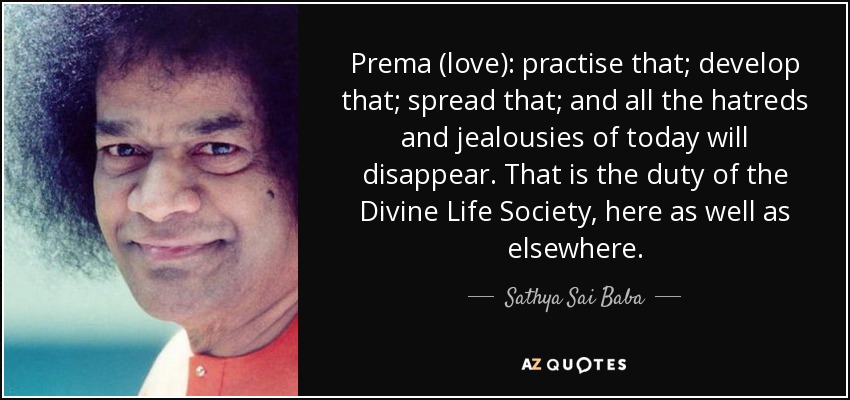
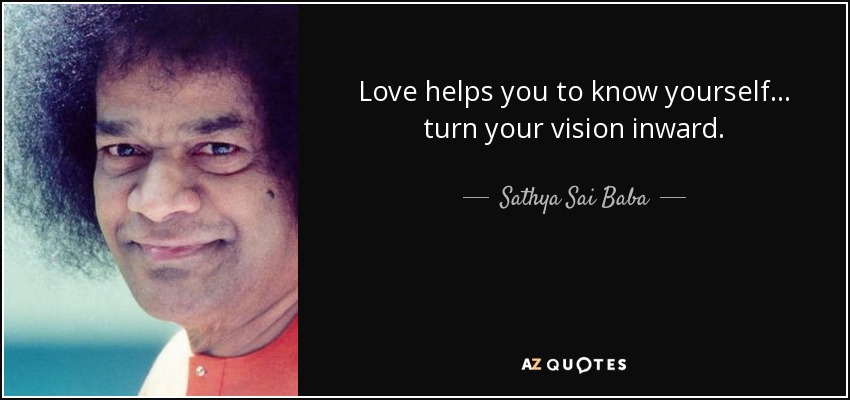
Bharat Darshan defines Indian Identity- What is Prema (Love)? Sri Satya Sai Baba describes the man as an embodiment of PREMA (Love) and it appears that he was inspired by The New Testament Books of Holy Bible which define God as Love and directs man to Love God and to Love one another.
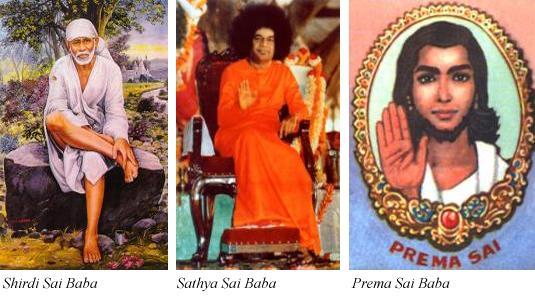
Indian saint Sri Satya Sai Baba describes man as an embodiment of PREMA (Love) and it appears that he drew inspiration from the Books of Holy Bible which define God as Love and directs man to Love God and to Love one another. He further asserts that he would be known as Prema Sai (Sai, the embodiment of Divine Love) in his next reincarnation.
Bharat Darshan defines Indian Identity- What is Prema (Love)? Sri Satya Sai Baba describes the man as an embodiment of PREMA (Love) and it appears that he was inspired by The New Testament Books of Holy Bible which define God as Love and directs man to Love God and to Love one another.
Love is a powerful emotion felt for another person manifesting itself in deep affection, devotion or sexual desire. If love is viewed as fondness or affection it may include or based in part on sexual attraction which is related to libido (sexual urge or instinct), and lust (a desire to gratify the senses or bodily appetite that seeks unrestrained gratification).
Love implies feelings that are attached to relationships or objects and assumes various forms such as sexual love, brotherly love, and love of God. The attachment may be felt for inanimate things as well as people, or ideas, or expressed as an abstraction. There are many different kinds of love; different in object, different in tendency, and different in expression.
The problem of the kinds of love is further complicated by the need to differentiate and relate love and desire. The category of love known as sexual love has the tendency to desire possession of the object that is loved. The tendency of desire is acquisitive. Sexual love is a love born of desire, and the drive of desire continues until it is satisfied by possession of the loved object. Physical possession is the basis for the satisfaction of sexual desire, sexual appetite, or sexual hunger, or sexual thirst. The other forms of love do not tend to possess the object loved but seek to benefit the object that is loved. Love is selfish when it acts like hunger, thirst, or appetite which need to be satisfied for the benefit of the person expressing that love.
Bharat Darshan defines Indian Identity- What is Prema (Love)? Sri Satya Sai Baba describes the man as an embodiment of PREMA (Love) and it appears that he was inspired by The New Testament Books of Holy Bible which define God as Love and directs man to Love God and to Love one another.
Love is altruistic when it acts for the good or the benefit of the beloved. Conjugal love may include a combination of selfishness and altruism. The ancient languages have three distinct words for the main types of love; Eros, Philia, and Agape in Greek language; Amor, Amicita or Dilectio, and Caritas in Latin language. However, English language has no such distinct words and hence it becomes necessary to use such phrases as “sexual love”, “love of friendship”, and “love of charity” in order to indicate plainly that love is common to all three, and to distinguish the three meanings.
The idea of love expressed in Biblical Scriptures makes no distinction between Amor, Dilectio, and Caritas.
Whole Dude – Whole Love. What is Love?
For example, in The Gospel according to Saint Matthew, Chapter 22, verses 37, 38, and 39 Jesus proclaims the Great Commandments while endorsing the Laws of Moses: Jesus said unto him, “Thou shalt love the Lord thy God with all thy heart, and with all thy soul, and with all thy mind. This is the first and great commandment. And the second is like unto it. Thou shalt love thy neighbor as thyself.”
Jesus brings unity between the idea of self-love, love of God, and the love of one another without making distinction between the three different kinds of love. Jesus does not specify if man should wish and expect to be loved in return. Jesus did not attach any purpose to this act of love, and did not describe the nature of desire, the attachment, and the gratification that may operate the Love Commandment.
THE ORIGIN OF LOVE:
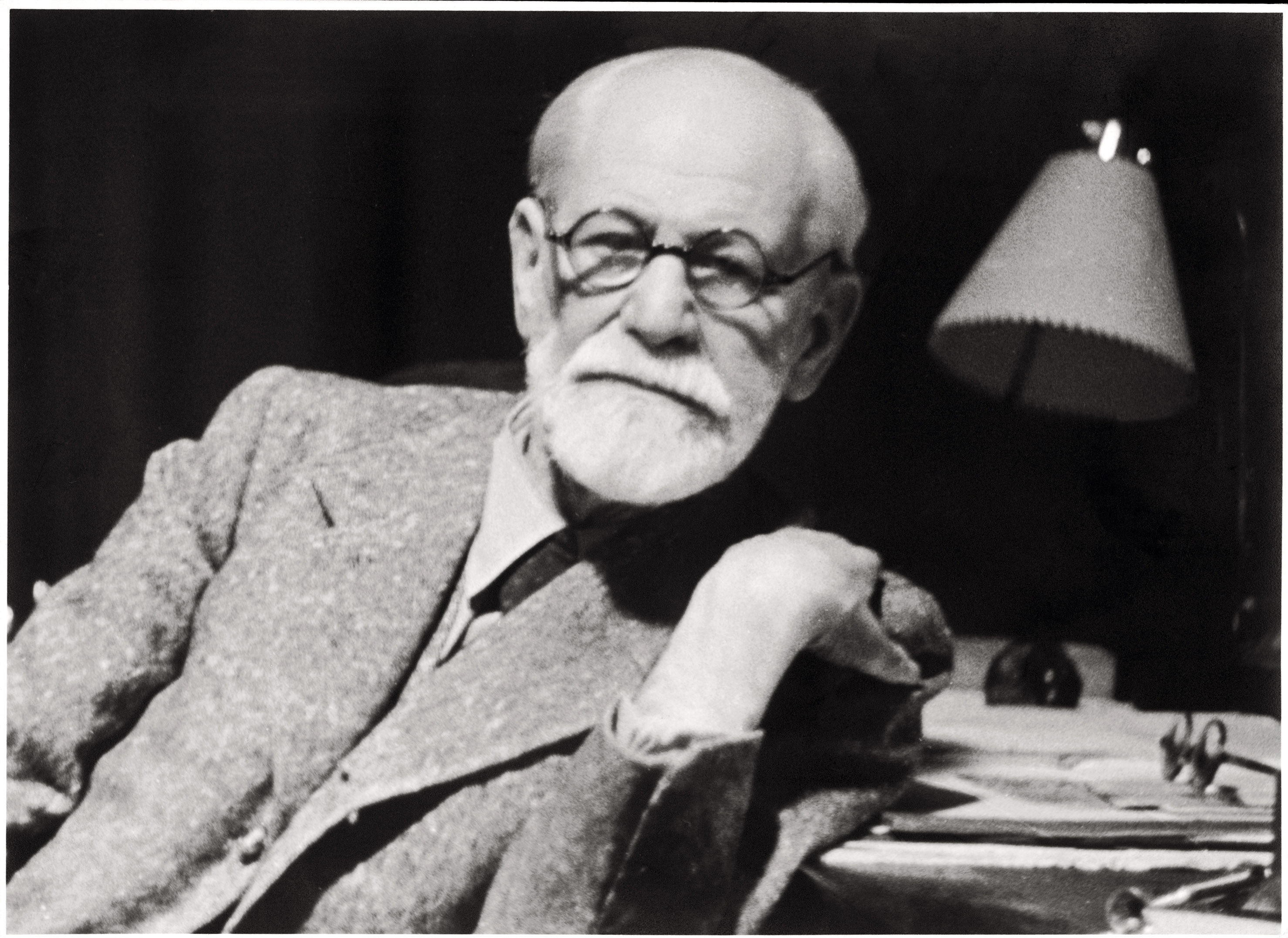
Sigmund Freud places the origin of Love in sexual instincts and he claims that the many varieties or categories of Love are simply the forms which love takes as the libido fixes upon various objects.
Sigmund Freud’s theory places the origin of love in the sexual instincts, and so for him the many varieties of love are simply the forms which love takes as the ‘LIBIDO’ fixes upon various objects. He states, “The nucleus of what we mean by love naturally consists …… in sexual love with sexual union as its aim. We do not separate from this; on the one hand, self-love, and on the other, love for parents and children, friendship and love for humanity in general, and also devotion to concrete objects and to abstract ideas….. All these tendencies are an expression of the same instinctive activities…. They differ from sexual love only because they are diverted from its aim or prevented from reaching it, though they always preserve enough of their original nature to keep their identity recognizable.” If love is the passion of the sexual instinct, temperance is an inadequate restraint. Neither reason nor law is adequate to the task of subduing the nature of the sexual instinct. Sexual instinct is a very powerful biological instinct and it profoundly influences human behavior. Hence it becomes necessary to transform sexual love either by repressing it, or sublimating it, or mixing it with tenderness or kindness. In that context, friendship, charity or compassion, and devotion to God could be stated as transformations of sexual love. Sexual instincts are inhibited or actually repressed in the expression of brotherly love, or feelings of deep affection for children and others where the relationship should not be based upon feelings of sexual attraction.
THE COMPLEXITY OF LOVE:
Bharat Darshan defines Indian Identity- What is Prema (Love)? Sri Satya Sai Baba describes the man as an embodiment of PREMA (Love) and it appears that he was inspired by The New Testament Books of Holy Bible which define God as Love and directs man to Love God and to Love one another.
Love is a very complex emotional instinct and it is complex as it may not always provide a sense of joy or happiness. There is a fact about love; love frequently turns into its opposite, hate. Sometimes there is love and hate of the same object; sometimes love inspires hate, and love may also cause jealousy, anger, and fear. Love seems to be the primal passion, generating all the others according to the oppositions of pleasure and pain and by relation of cause and effect. The individual’s experience of love is extremely variable and it includes the operation of both positive and negative impulses.
The Indian tradition has carefully examined this complex instinctual behavior and it instructs people to understand the three major distinctions or categories of love and to apply a sense of restraint, or that of repression. It brings love under the purview of morality, the code of Right Conduct or Dharma. Indian Culture does not provide the linguistic tools to express feelings associated with sexual passion without using temperance. There is no linguistic equivalent in classical Indian languages to profess love. The terms and words that Indians use have specific meaning attached to them.
LOVE vs PREMA:
Bharat Darshan defines Indian Identity- What is Prema (Love)? Sri Satya Sai Baba describes the man as an embodiment of PREMA (Love) and it appears that he was inspired by The New Testament Books of Holy Bible which define God as Love and directs man to Love God and to Love one another.
Love is not a universal term and this idea is not expressed in Indian tradition and classical literature.
Bharat Darshan defines Indian Identity- What is Prema (Love)? Sri Satya Sai Baba describes the man as an embodiment of PREMA (Love) and it appears that he was inspired by The New Testament Books of Holy Bible which define God as Love and directs man to Love God and to Love one another.
The word “Love” appears repeatedly in the Bible, in several different editions of Bible. I am not a language expert and I believe that people who translated Bible have exercised great care to convey the meaning of love. Many editions of Bible have further clarified the meaning of Love in their glossary section or Bible dictionary and define Love as a deep sense of affection, devotion for someone or something and they very carefully exclude sexual desire and sexual passion. In English speaking world, and in English literature, the word Love is used to describe desire, libido, lust, and passion based upon sexual attraction. So, Love is a generic term and it may not always mean brotherly love and goodwill.
Indian Culture has erected subtle barriers and has not provided linguistic tools to use the word Love as we like. It separates Love into various categories and sets them apart. The feelings of affection, or fondness that are associated with sexual attraction are specifically known as ‘Kama’ and intense sexual passion or desire is called ‘Moha’. Any intense or passionate desire could be called Kama and to act under its influence could be stated as Moha. My love for God could only be expressed in terms of Bhakti or Devotion, and the desire could be called Preet. The desire called Preeti or Preet is a legitimate desire. It is also called “Ishta.” I am allowed to seek or desire certain things in my life and that desire is subject to the rule of Good Conduct or Dharma. I can express the sentiment of Preet only when, and where such desire is allowed to be stated in a legitimate manner, and is acceptable to tradition and established conventions and social norms. If I entertain thoughts of sexual attraction about my attractive and rich neighbor, I am not allowed to express my feelings as Preet. It can not be called “Ishta”. I can call it Kama or Moha. In the epic poem of Ramayana, when King Ravana, the King of Lanka desired to marry Princess Sita and had attended her ‘Swayamvara’, his desire was legitimate as he intended to seek the gratification of the feelings of sexual attraction through rightful conduct called marriage. But, when he abducted her while she was lawfully married to Prince Rama, that desire and sexual attraction represents an impulsive action of Moha, and Kama. King Ravana was not entitled to express his Love for Sita if it is formulated by Kama, and intense sexual passion known as lust or Moha. Similarly, a man can express his love or Preet for a woman in a respectful or legitimate manner and to seek a valid relationship based upon trust, respect, and commitment. If the relationship is illegal, it can not be called Preet. A father’s love, or mother’s love, or brother’s love is described as “Vatsalya,” a natural sense of affection and fondness which is not related to sexual attraction or desire. The word “Prema” or “Prem” is used to describe the feelings of affection, fondness, Friendship (Sneha or Maitri)), Kindness (Daya, or Karuna), Compassion (Krupa), Happiness, Joy (Ananda) that have no direct relationship to the satisfaction of sexual desires and passions. The deep sense of affection between husband and wife is often called “Anurag” which indicates an intimate friendship. I can not literally translate this word Love into any of the Indian languages as such expression is not allowed without stating the nature of its contents.
Whole Dude – Whole Love. What is Love?
The Commandment of Jesus to Love your neighbor as thyself cannot be easily expressed in Indian languages. Jesus has not stated that idea in terms of Friendship (Sneha), Kindness (Daya), or giving Happiness (Ananda). Only when, and if those qualities of friendship, kindness, and giving joy or happiness are specifically included; Jesus could Command others to express Love or Prema to another person.
Whole Dude – Whole Love. What is Love?
However, in the Indian tradition, the deep sense of affection or fondness of God is stated as Bhakti or Devotion.
Whole Dude – Whole Love. What is Love? The Mystical Relationship between Poet Meerabai and Lord Krishna.
16th century Hindu Saint Meerabai (1498 AD to 1547 AD) reveals her deep sense of affection and adoration of Lord Krishna in songs and actions which still captivates the attention of people who learn about her thoughts and feelings. Her passionate feelings expressed in sweet and endearing words cannot be captured by the term Love.
Whole Dude – Whole Love. What is Love? In the Indian tradition, the Love of God is described in an unique manner always imparting a divine sensation or an experience of Sweetness.
Jayadeva in his famous Ashtapadi, Gita Govinda gives an enchanting description of Lord Krishna’s creative activities in Brindavan (Vrindavan) and he depicts the intense erotic feelings of the young maidens as a product of their supreme devotion to the Lord. I can not use the word Love to describe the sexual passions of the Gopis or the young maidens of Brindavan.
Bharat Darshan defines Indian Identity- What is Prema (Love)? Sri Satya Sai Baba describes the man as an embodiment of PREMA (Love) and it appears that he was inspired by The New Testament Books of Holy Bible which define God as Love and directs man to Love God and to Love one another.
SELF-LOVE AND NARCISSISM:
Bharat Darshan defines Indian Identity- What is Prema (Love)? Sri Satya Sai Baba describes the man as an embodiment of PREMA (Love) and it appears that he was inspired by The New Testament Books of Holy Bible which define God as Love and directs man to Love God and to Love one another.
My concern is not about Prema or Love. My concern is about self-love, a man’s love of himself. In psychology the word ‘Narcissim’ is used to describe excessive self-love. In my medical practice, I have not encountered such narcissistic tendencies among people of Indian origin. The Indian tradition has erected barriers and would not easily let us identify ourselves with the physical-self. The Indian tradition repeatedly instructs us about our Essence and true Identity and reminds us not to get attached to the physical-self. If I have no feelings of attachment to my physical-self, I can not really love myself. If I can not truly love myself, I can not also love my neighbor in the same manner, or to a same degree of my self-love. If man is not expected to love himself, the issue of loving the neighbor is redundant.
Bharat Darshan defines Indian Identity- What is Prema (Love)? Sri Satya Sai Baba describes the man as an embodiment of PREMA (Love) and it appears that he was inspired by The New Testament Books of Holy Bible which define God as Love and directs man to Love God and to Love one another.Whole Dude – Whole Love: What is Love? GERMAN PHILOSOPHER FRIEDRICH WILHELM NIETZSCHE (1844-1900) HAD STATED: “WHAT IS DONE OUT OF LOVE ALWAYS TAKES PLACE BEYOND GOOD AND EVIL.” GOD’S LOVE FOR MAN IS UNCONDITIONED.Whole Dude – Whole Love: What is Love?
“Prema Sai will be born in Doddamalur”
The Times of India has published a news story about the likely reincarnation of Satya Sai Baba as “Prema Sai Baba.
Whole Dude – Whole Love: What is Love? Indian Saint Sri Sathya Sai Baba announced his plans for his reincarnation as an embodiment of Love called Prema Sai Baba.
M B Maramkal & K R Rajendra Kumar, TNN | Times of India, Apr 28, 2011, 05.52am IST
DODDAMALUR (Mandya): Will the reincarnation be reality or not? Whatever happens, the tiny village of Doddamalur, off the Bangalore-Mysore highway, will definitely be in the news in the coming years, with scores of stories doing the rounds here over the reincarnation of Sathya Sai Babaas Prema Sai.
What has lent credence to claims of people of the Vaishnava sect temples of Aprameya (Vishnu) and Ambegalu Krishna (toddler Krishna) is based on a book `Sri Sathya Sai — Anandasai’ authored by one Swami, an ardent devotee of Sai Baba. In that, he claims that the godman, during his visit to Doddamalur, had told him that Sai Baba had three avatars in kalyug, and of them, he is the second avatar (reincarnation) of Shirdi Sai Baba. The third will be Prema Sai and he will be born in this village. He also claims that Baba, during his visit in the ’60s, showed a small house where he will be born.
However, confusion prevails among people who are making claims of Baba’s reincarnation in the village. According to Ramadas, who runs a Krishna charitable trust, Prema Sai will be born in this village after 2023, as predicted by Sathya Sai Baba. Ramadas said Baba had predicted that his personal assistant, Narayan Kasturi, who died long ago, will reincarnate himself as a woman in a village near Bhadravathi, marry a person from this village and give birth to Prema Sai. “Today you are my assistant, in the next life you will be my mother,” Sai Baba is supposed to have said.
Doddamalur, located on the banks of the river Kanva, will be called Gunaparthy after the reincarnation, said Raghav, an aged villager, disclosing that the soil and water of the village have curative powers. The village will be called Gun (cure) parthy (place) in the years to come.
WHY DID BABA CHOOSE THIS VILLAGE?
Villagers who are well-versed with its history claim that Baba was carried away by the religious history and mythological importance of this village. People say a Kanva sage did tapasya (penance) here and it was an agrahara (Brahmin settlement) in medieval history. It is said that saint Purandaradasa visited the Aprameya and Krishna temples here and presented a kirtana (discourse) on this village and temples. Baba was enamoured by the historic significance of this village.
“My impression about this story is, Sri Satya Sai Baba has attempted to import a foreign idea to the Land of Bharat without fully understanding the subtle cultural barriers that exist in the Land. The notion of Prema could only be expressed in terms of Friendship (lack of animosity), kindness and goodwill, and that of giving happiness to others. It can not be related to the idea of Love. The theory of reincarnation is not the issue. The issue is about the idea itself. He has to attach meaning to the word “Prema” that he used and distinguish it from the word “Love” that is used in English language.
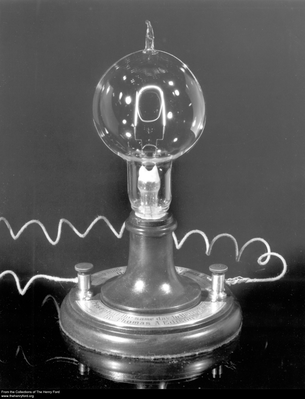
Defining Indian Identity – The Light Bulb Connection
Bharat Darshan discovers Indian Identity by turning on the Light Bulb
Deepam Jyoti Param Brahma,
Deepam sarva tamopaham,
Deepena Saadhyate Sarvam,
Sandhyadeepam Namostute.
Bharat Darshan discovers Indian Identity by turning on the Light Bulb. Deepam Jyoti Param Brahma – Light and Ultimate Reality. Indian Tradition recognizes ‘Light’ as the manifestation of Ultimate Reality known as Param Brahma and Indians worship all sources of light including that of a light bulb.Bharat Darshan discovers Indian Identity by turning on the Light Bulb. Deepam Jyoti Param Brahma – Light and Ultimate Reality. Indian Tradition recognizes ‘Light’ as the manifestation of Ultimate Reality known as Param Brahma and Indians worship all sources of light including that of a light bulb. Thomas Alva Edison – A Great Inventor of Modern Times. His invention connected me to my Indian Identity.
Firstly, I want to give my thanks to Mr.Thomas Alva Edison, the great American inventor. He is most famous for his development of the first commercially practical incandescent lamp (1879). Perhaps his greatest contribution, however was the development of the world’s first central-electric-light-power station. We owe him thanks for making the human existence pleasant and comfortable.
Thomas Edison’s bright idea
Bharat Darshan discovers Indian Identity by turning on the Light Bulb. Deepam Jyoti Param Brahma – Light and Ultimate Reality. Indian Tradition recognizes ‘Light’ as the manifestation of Ultimate Reality known as Param Brahma and Indians worship all sources of light including that of a light bulb. The invention of Light Bulb in the City of New York..Bharat Darshan discovers Indian Identity by turning on the Light Bulb. Deepam Jyoti Param Brahma – Light and Ultimate Reality. Indian Tradition recognizes ‘Light’ as the manifestation of Ultimate Reality known as Param Brahma and Indians worship all sources of light including that of a light bulb.Bharat Darshan discovers Indian Identity by turning on the Light Bulb. Deepam Jyoti Param Brahma – Light and Ultimate Reality. Indian Tradition recognizes ‘Light’ as the manifestation of Ultimate Reality known as Param Brahma and Indians worship all sources of light including that of a light bulb.
On January 27, 1880, Thomas Edison received a patent for an electric lamp using ‘a carbon filament or strip coiled and connected to platina contact wires.’ This wasn’t exactly the first light bulb, but it was the first practical and inexpensive one, a key technological innovation that introduced a new era. To mark the day, we’re looking at the bright lights of New York City and its surrounding area, as seen from the International Space Station.
Edison moved to New York in 1869 and did much of his work in nearby West Orange, New Jersey. He started the Edison Electric Illuminating Company of New York to supply electricity (and help sell light bulbs). It would eventually merge with several gas companies to form Con Edison, which supplies power to New York City to this day.
I also give my thanks to Nikola Tesla who is indeed the Genius Who Lit the World.
Bharat Darshan discovers Indian Identity by turning on the Light Bulb. Deepam Jyoti Param Brahma – Light and Ultimate Reality. Indian Tradition recognizes ‘Light’ as the manifestation of Ultimate Reality known as Param Brahma and Indians worship all sources of light including that of a light bulb. While speaking about Light and Electricity, I also pay my homage to Nikola Tesla, The Genius Who Lit the World.
What is this ‘Light Bulb’ connection that may define the Indian Identity?
I grew up in India. People visit a variety of temples to worship and to seek the presence of God.They do that at homes as well.When I was a boy, one of my early observations was that, in the evening hours as it gets dark after the sunset, when I flip the switch to turn the light on, my mother would pay respects to the light bulb. It is almost like a reflex behavior. I had asked my mother about it.The instant the light bulb comes to life, it becomes a source of light and being a source of light, it would represent God. My mother had told me that she would be reminded of God’s presence when the light bulb is switched on. My grandmother had also done the same thing.We worship the light bulb as it gives us the awareness and makes us conscious of the reality of God.
All living entities are ‘CONSCIOUS’ and are aware of their existence and their living environment. Living Entities are also ‘CONSCIOUS’ of the Creator. The legend at Sri Kalahasti establishes the awareness of creatures like a spider, a snake, and an elephant and their desire to seek the LORD.
Light and Consciousness:
Light or Jyoti in the Sanskrit language represents the Eternal Reality. Jyoti is our conscious, its our awareness and it connects us to the Creator.This consciousness permeates all living entities. Consciousness is a function which enables a living organism to be aware of its own state of existence and to maintain that state of existence. Living organisms are aware of their need for an external source of energy to sustain their state of existence. Living organisms exist as ‘Energy Seekers’ and to exist they need connection with a ‘Energy Provider’. Consciousness is a biological function which establishes the connection between ‘Energy Seeker’ and ‘Energy Provider’. Because of this awareness, all entities would recognize and respond to their Creator, the Prime Source of Energy and the Controller of Energy.
It is not just humans who possess the awareness of God. In India, in the State of Andhra Pradesh, there is a beautiful town known as SriKalahasti. According to legend, at this place, a spider, a snake, an elephant, and a man worshiped Lord Shiva with an excellent sense of devotion.
In almost every Indian home a lamp is lit daily before the altar of the Lord. In some houses it is lit at dawn, in some, twice a day – at dawn and dusk and in a few it is maintained continuously (akhanda deepa). All auspicious functions and moments like daily worship, rituals and festivals and even many social occasions like inaugurations commence with the lighting of the lamp, which is often maintained right through the occasion.
Indians light up a lamp as a ritual to worship a deity of their choice. In several parts of the world and in various cultural traditions, the use of light is prevalent and is a part of ritualistic worship. In the Land of India, light is not only used as part of a ritual but also is directly worshiped with the belief that light represents God. Light is also worshiped in a personal form known as Jyoti, the sister of Skanda and the daughter of Lord Shiva and Mother Parvati.
Deepam, Jtoyhi, or Light represents God. The personification of light is Goddess Jyoti. Bharat Darshan discovers Indian Identity by turning on the Light Bulb. Deepam Jyoti Param Brahma – Light and Ultimate Reality. Indian Tradition recognizes ‘Light’ as the manifestation of Ultimate Reality known as Param Brahma and Indians worship all sources of light including that of a light bulb.Bharat Darshan discovers Indian Identity by turning on the Light Bulb. Deepam Jyoti Param Brahma – Light and Ultimate Reality. Indian Tradition recognizes ‘Light’ as the manifestation of Ultimate Reality known as Param Brahma and Indians worship all sources of light including that of a light bulb.
The above is a prayer to lead us towards Right Conduct, to lead us from darkness towards Light (Eternal Reality) and to lead us from death towards Eternal Life.
It is easy and simple to know the Indian Identity. Flip that light switch and let the ‘Light Bulb’ connect you to the Reality.
The First Book of Moses called GENESIS, Chapter 1, verses 2, and 3 describe the creation of Light : Then God said, “Let there be light”; and there was light. If light was not created, the physical matter could have simply existed as dark matter. I describe luminosity, the quality of giving off light as an event of creation.
Essence and Existence:
Man, the multicellular organism exists as a physical, mental, social, moral, spiritual, and rational being. Man’s existence is conditioned by the subjective reality called alternating periods of light and darkness known as day and night, and the unconditioned reality is that of Sun who shines with the same brightness all the time while man experiences Sun rise and Sunset.
Bharat Darshan discovers Indian Identity by turning on the Light Bulb. Deepam Jyoti Param Brahma – Light and Ultimate Reality. Indian Tradition recognizes ‘Light’ as the manifestation of Ultimate Reality known as Param Brahma and Indians worship all sources of light including that of a light bulb.Defining Indian Identity – The Light Bulb Connection to the Reality of existence. Indians celebrate the festival of “KARTHIGAI DEEPAM” . “KARTHIKAI DEEPAM” OR ‘KARTIKA DEEPAM’. Should man search inwards or search outwards to find God? I can search if and only if my existence is supported. For my existence, I depend upon the ability of plants called photo-reception.Defining Indian Identity – The Light Bulb Connection
Defining Indian Identity – The Light Bulb ConnectionDefining Indian Identity – The Light Bulb Connection to the Reality of Existence.
Earthly Existence is synchronized by the creation of Day and Night
Earthly Existence is Synchronized by the Creation of Day and Night. The Vitruvian Man c.1492. The painting by Leonardo da Vinci displays the spirit of scientific inquiry. The term Self-Realization describes complete fulfillment or full development of the Self and Man is not complete without full development of God-Connection. God-Realization is not about Faith or Belief in God. It is about understanding the connection between Man, the Energy Consumer, and God, the Energy Controller.
The Man’s Experience of Life in the Natural World
What it is to be a Substance? and What it is to Exist? We need to establish knowledge about the man on a firm basis and the information it provides must be tested for its accuracy and consistency with an external reality. We have to make the fundamental distinction between the living and the non-living matter. The scientific advances of the 19th and 20th centuries reinforced the materialistic position concerning the basic similarity of organic living and inorganic physical matter. The man is viewed as a product of natural evolution and is thought to be subject to the same laws of Physics and Chemistry or mechanistic principles.
We need a methodology to study philosophy and to understand philosophical statements. Logical Positivism, also known as Scientific Empiricism aims to clarify concepts in both everyday and scientific language. It describes analysis of language as the function of philosophy. This analysis of language and of concepts is important to understand questions of belief and ideology which affect what we think we ought to do individually and socially. I would use this method of ‘Applied Philosophy’ to analyze the concept of Spiritual Optics, the Spiritual dimension of the Man’s experience of Life in the Natural World.
The Beginning. The Story of Creation
Earthly Existence is Synchronized by the Creation of Day and Night.Earthly Existence is Synchronized by the Creation of Day and Night.
The Holy Bible, The Old Testament, Book of Genesis, Chapter 1 (verses 1,3,4,5,14 and 15) describes the creation of day and night.
In the beginning God created the heavens and the earth.
And God said, “Let there be light,” and there was light.
God saw that the light was good, and He separated the light from the darkness.
God called the light “day,” and the darkness He called “night.” And there was evening, and there was morning – the first day.
And God said, “Let there be lights in the expanse of the sky to separate the day from the night, and let them serve as signs to mark seasons and days and years, and let them be lights in the expanse of the sky to give light on the earth.”
Earthly Existence is Synchronized by the Creation of Day and Night. .Are We Living in a Designer Universe? The Geocentric Model describes the Design Effect. Video Credit: NASA, Animation: James O’Donoghue (JAXA)
Explanation: How does your favorite planet spin? Does it spin rapidly around a nearly vertical axis, or horizontally, or backwards? The featured video animates NASA images of all eight planets in our Solar System to show them spinning side-by-side for an easy comparison. In the time-lapse video, a day on Earth — one Earth rotation — takes just a few seconds. Jupiter rotates the fastest, while Venus spins not only the slowest (can you see it?), but backwards. The inner rocky planets, across the top, most certainly underwent dramatic spin-altering collisions during the early days of the Solar System. The reasons why planets spin and tilt as they do remains a topic of research with much insight gained from modern computer modeling and the recent discovery and analysis of hundreds of exoplanets: planets orbiting other stars.
Earthly Existence is Synchronized by the Creation of Day and Night. The First Book of Moses called GENESIS, Chapter 1, verse 4 :”And God saw the light, that it was good; and God divided the light from the darkness.”
Different planets have different rates of rotation. We use Earth’s spin to define coordinate systems for locating objects both on the ground and the sky. The timekeeping system that we use is related to the rotation of the Earth. My human existence in this Universe is synchronized with the rotational spin of the Earth. The spin gives me alternating periods of light and darkness known as Day and Night while the Sun is shining all the time.
Synchronization of the External and Internal Environment of the Living Things
Earthly Existence is Synchronized by the Creation of Day and Night. The First Book of Moses called GENESIS, Chapter 1, verse 14: Then God said,”Let there be lights in the firmament of the heavens to divide the day from the night; and let them be for signs and seasons, and for days and years;”
The Biological Clock – Every living system studied behaves as if it contains a highly dependable clock. The specialized properties of this clock suggest that it involves some unique biological mechanism indissociable from life itself.
Biological Clock is an internal-timing mechanism to synchronize biological functions.
The Biological Clock is a self-sustained internal timing mechanism that controls cyclic patterns, or rhythms, of a living organism. All organisms have this ability to synchronize their existence to events in both their internal or external environment. Because of this internal timing, certain physiological and behavioural events vary in intensity. Such time-dependent variability is expressed as a rhythm, or oscillation, with a frequency equal to that of the underlying biological clock. Biological clocks time the Solar day, the period of the Earth’s rotation relative to the Sun.
Earthly Existence is Synchronized by the Creation of Day and Night. THE ETERNAL LAW OF AGING: THE EPIGENETIC CLOCK, HORVATH’S CLOCK IS A BIOLOGICAL CLOCK TO MEASURE THE AGE OF MOST HUMAN TISSUES, CELL TYPES, AND ORGANS IN THE SAME INDIVIDUAL WHICH CAN HELP IN PREDICTING THE AGING PROCESS.
The Biological Rhythm – Biological Rhythms represent the periodic biological fluctuation in an organism that corresponds to and is in response to periodic environmental change. The most important example of such environmental change is that of the cyclical variations in the relative position of the Earth to the Sun and the immediate effect of this variation is that of night alternating with day or the change from darkness to light. Biological Rhythms that occur once a day are called Circadian(Latin circa:”about,” di: “day,”), Solar day, diel, daily, diurnal(day-active), or nycthemeral rhythm. Circadian rhythms are the most pervasive rhythms regulating many events for every day in the lives of most living organisms. Circadian rhythms are synchronized to an external time-giving stimulus. The external stimulus that is important for most living organisms is that of Sun rise and Sun set, the daily light-dark cycle determined by Earth’s rotation.
The Day Active or Diurnal Rhythm Regulating the Man
Earthly Existence is Synchronized by the Creation of Day and Night: THE HUMAN ORGANISM RUNS ITS LIVING FUNCTIONS AS IF OPERATED BY A PRECISE TIMEKEEPING DEVICE OR BIOLOGICAL CLOCK. MAN’S EXPERIENCE OF TIME IS RELATED TO SUN’S APPARENT MOTIONS IN THE SKY. MAN KNOWS THE REALITY OF TIME BECAUSE OF AN ILLUSION THAT CAUSES DAY AND NIGHT GIVING MAN THE PERCEPTION OF SUN’S APPARENT MOTION WHILE CONCEALING THE REALITY OF SUN’S MOTION IN THE MILKY WAY GALAXY.
Within the 24-hour cycle (circadian), a person usually sleeps approximately 8 hours and is awake 16 hours. In man, the daily alteration of sleep and wakefulness is accompanied by many changes, including activities of the nervous and endocrine systems and the liver and kidneys. Daily variations occur in body temperature, in heart and respiratory rates, and in blood pressure and composition of the blood.There are daily variations in chemical syntheses and in cell divisions.
Earthly Existence is Synchronized by the Creation of Day and Night: There are two kinds of biological responses or rhythms. 1. The activities like Sleep and Wakefulness are related to the fluctuations of physical environment such as darkness, and light, or night and day variation, and 2. The rhythms such as heartbeat, and respiratory rate occur without external geophysical correlates as a consequence of the movements of the Earth.
During the wakeful hours, mental and physical functions are most active and tissue-cell growth increases. During sleep, voluntary muscle activities nearly disappear and there is a decrease in metabolic rate, respiration, heart rate, and blood pressure. The activity of digestive system increases during the resting period, but that of the urinary system decreases. Hormones secreted by the body, such as the stimulant epinephrine(adrenaline) are released in maximal amounts about two hours before awakening so that the body is prepared for activity.
Earthly Existence is Synchronized by the Creation of Day and Night. The Eternal Law of Aging: HUMAN EXISTENCE IS SYNCHRONIZED WITH DAILY CHANGES IN THE EXTERNAL ENVIRONMENT IN RESPONSE TO DAYLIGHT OR DARK.
If a person tries to break the circadian rhythm by ignoring sleep for a number of days, psychological disorders begin to arise.
The Laws of Nature
Earthly Existence is Synchronized by the Creation of Day and Night. THE ETERNAL LAW OF AGING: THERE ARE SEVERAL THEORIES ABOUT SENESCENCE. APART FROM THE MEASUREMENT OF CHRONOLOGICAL AGE, IT WOULD BE VERY USEFUL TO ASSESS AND MEASURE THE BIOLOGICAL AGE OF THE HUMAN ORGANISM AS THAT WOULD HELP TO PREDICT AGE-RELATED CHANGES IN THE STRUCTURE AND FUNCTION AND INVENT INTERVENTION MECHANISMS TO REDIRECT OR REGULATE THE AGING PROCESS.
Diverse aspects of human physiology and behaviour show that human existence is synchronized with the Laws of Nature. When we live in accordance with the law, we get a chance to know the provider of the law.
Earthly Existence id Synchronized by the Creation of Day and Night. MAN’S EXISTENCE IS SHAPED BY FLAT EARTH WITH ARCHED DOME EXPERIENCE.
Bharat Darshan Defines Indian Identity. The Land of Karma.
The Sanskrit word Karma describes the totality of a person’s actions in any one of the successive states of that person’s existence. The ‘Law of Karma’ governs all action and its inevitable consequences on the doer. The ‘Law of Karma’ determines the consequences on the doer not only during the course of his current existence but also during the course of the next successive states of future existence.
Because of this deep-rooted belief in the inevitability of consequences on the doer, the Land of Bharat or India is identified as Karma Kshetra or Karma Bhumi, the Land where the Law of Karma is enforced upon all living and non-living entities.
The Law of Karma and its relationship to Fate or Destiny
Defining Indian Identity. The Law of Karma. A ceiling decoration from a Jain temple in Ranakpur, Rajasthan, India. The knots represent the interlinking notion of karma.
In whichever manner an individual chooses to act, the action may have been predetermined by his past Karma. In this sense, Karma could be described as the root cause of any action or event. The word Fate or Destiny is described in the Sanskrit language as Daivam, Bhagyam, Niyati, and Vidhi. Fate or Destiny is the Power or Divine Agency that determines the outcome of events before they actually occur. Fate or Destiny determines what happens or has happened to a person during his past, present, or future existence.
Very often, people are confused about the relationship between the concept of Karma and the concept of Daivam, or Vidhi which is popularly described as Fate or Destiny. People may invoke the concept of Fate or Destiny to explain when something inexplicable and unexpected happens in one’s life.
The belief in a Supreme Being and the belief in God as the Prime Cause, and the concept of God’s Supreme Will are slightly different from the concept of the Power or the Divine Agency represented by Daivam or Vidhi. God will not contrive the actions of an individual for His own benefit. God has the intrinsic ability to execute His own Plans. It is the individual’s Karma (from present and past stages of existence) that determines his own Fate or Destiny in the next and subsequent stages of existence.
The Power or the Agency of Fate or Destiny is not operated by the individual but by a Divine Strategy. The individual has no control over the Divine Strategy. A person can exercise control over his own actions but cannot modify the manner in which the consequences for his actions manifest. The consequences for the actions in one’s own life may manifest at an unknown time, in an unexpected manner strictly according to the Divine Strategy, the Power or Agency that administers Fate or Destiny. Karma literally writes the Fate or Destiny of an individual and yet they may not be used as synonyms. However, it would be correct to attribute any inexplicable event to the doings of Karma or Fate/Destiny.
Defining Indian Identity. The Land of Karma. The Divine Witness, Karma Sakshi of the actions and the consequences of actions during lifetime.
Since most living entities are dependent upon Sun for their existence, the Sun God or Lord Surya is also known as ‘Karma Sakshi’ which means that Sun is a Witness to all of our actions (Karma) during our lifetime. In the ‘Afterlife’, an individual could be judged and punished for his actions by a divine entity known as Lord Yama, Yama Dharmaraj or Karmakar, the Lord of Death and Justice who imposes punishment strictly according to the individual’s account of Karma.
Defining Indian Identity. The Land of Karma. In the Indian tradition, the Final Rites of Passage is called KARMA, or the Final Action, Antya Kriya.
The idea or concept of Karma is firmly associated with the idea or concept of Samsara and the belief that a living entity has existed in the past, and would continue to exist in the future and death is viewed as a transition from one stage of existence to the next.
The attributes of Karma
Karma encompasses all actions performed by the five organs of Karma known as ‘Karma Indriya’. These are identified as hands, feet, speech (Vak), Payu, and Upastha. The last two describe bodily functions associated with excretion and reproduction.
In the West also there are stringent laws to protect people from offensive behavior that involve the use of the organs of excretion and reproduction. Lewd public behavior is prohibited by law.
Defining Indian Identity. The Land of Karma. The Cyclical Flow of Action, the performance of one’s own duties called Dharma, the Law of Right Conduct, and the Law of Cause and Effect. The man can never totally abstain from the performance of actions.
Karma describes a variety of activities. It includes occupational duties and work, rituals and ceremonies particularly in the context of death and mourning, the last rites, the rituals of sacrifice such as Havan or Yajna, the interest paid on a loan or debt, the struggle or effort to safeguard existence (Yatana), the good deeds (Punya), and also the sinful activities (Papa). An individual is expected to exercise control on his Organs of Karma and this attitude of self-restraint is described as Indriya Nigraha. An individual has no foreknowledge of his own Fate/Destiny and the only manner by which he may shape the future events is by choosing appropriate Karma according to the Laws of Right Conduct described in the Sanskrit language as Dharma.
The Mechanisms of Karma
Defining Indian Identity. The Land of Karma. The newborn always arrives with a Credit Balance in the individualized Karma Bank Account.
Karma operates like a Bank Account. An individual entity, the newborn arrives with a Credit Balance of Karma known as Sa Beeja Karma or Sanchita Karma. This Credit Balance represents the Account Balance that is carried Forward from the individual’s previous existence. An individual’s physical existence may end with death, and the Karma Account would not be permanently closed and the Balance is carried Forward and represents the Beginning Balance with which an individual begins a new journey in the cycle of Life-Death-and Life. Whenever, an individual actually experiences the consequences of his past Karma, the Karma that is withdrawn from the Karma Bank Account is called as Prarabdha Karma. The individual actually tastes the Fruits of this Karma and hence it is also known as Karma Phal. The taste of the Fruit depends upon the nature of Karma that is being consumed by the individual. The experience of Prarabdha Karma has direct consequences as it affects the human body in its present state of existence. The individual has no choice in matters concerning this Withdrawal. The individual cannot control the Amount of Withdrawal, the Time of Withdrawal and the effects of the Withdrawal. The Authority which administers the Bank Account makes all the decisions in the manner a Karma Account is operated. The individual during the course of his existence would be continuously replenishing his Karma Bank Account. This Credit Balance in the Karma Account is known as Agami Karma (Kriyamana Karma). This Balance is not yet Withdrawn and is held in store until such time the individual gets a chance to experience its Fruits. Agami Karma represents an individual’s Predestination of which the individual has no foreknowledge. It is not exactly ordained by God. It is only operated by a Divine Strategy which chooses its own Plan to deliver this Agami Karma to the individual from his own Credit Balance. When the Karma Bank Account’s Balance becomes Zero, or nil balance the individual is promptly released from the shackles and entanglements of Karma. Such Liberated Individual Entity is described as Jivanmukta, a person who attained his total independence from the bondage of Samsara, the Cycle of Life-Death- and Life.
The Purpose of Life and Human Existence is ultimately that of eliminating the Balance in the Karma Bank Account and a Zero Balance is a Goal to be obtained. The idea of Liberation (Moksha) or Salvation is neither a reward nor a punishment. It should not be confused with the concept of Heaven and Hell where the individuals may receive rewards or punishment after the Day of Judgment. The concept of Liberation requires that there should be no Credit (Positive Karma), or Debit (Negative Karma ) Balance in the Karma Bank Account.
Defining Indian Identity. The Land of Karma.
It may not be easy to empty the Karma Bank Account as the individual could only make deposits into his Account and the Account is withdrawn under a Plan operated by Daivam. Adi Shankaracharya describes the Identity of True or Real Self. Self-Knowledge is the key to obtain Release or Vimochan or Mukti from the entanglements of Karma and the act of Liberation called Moksha.
Shankara asserts that the Five Organs of Karma known as Vak (organs of Speech ), Panee (Hands), Pada (Feet), Upastha (organs of reproduction), and Payu (organ of excretion) do not describe his true Identity.
Defining Indian Identity. The Land of Karma.
Who Can Oppose Destiny?
Who can resist Fate? The epic poem of Ramayana very explicitly states that human entities are Weak (Durbala) and should not attempt to challenge or fight against Fate/Destiny. Since Fate is the work of Divine Strategy, we need to humble ourselves, exhibit an attitude of humility, and seek Divine Grace, Mercy and Compassion to deal with the doings of Fate.
In the story of Ramayana, all the central characters willingly submit themselves to the Power of Daivam, the Agency that operates Fate/Destiny. To illustrate this point of view, I shall quote from Valmiki Ramayana, Book VI, Yuddha Kanda – The Book of War, Chapter (Sarga) 113, verses 30 to 47. It describes the scene after the killing of King Ravana of Lanka who had earlier abducted Princess Seetha and held her captive in a grove known as Ashoka Vana. Prince Rama dispatches Hanuman to give Princess Seetha the message about His victory in the War. After having delivered the message, Hanuman seeks the permission of Princess Seetha to kill the notorious female-demons, the servant-maids of King Ravana who were frightening her during her prolonged captivity. In her response to Hanuman, Princess Seetha claims that the servant-maids were only acting in obedience to the orders of their King and hence should not be targeted with anger. She also further explains that she was only reaping the consequences of her misfortunes on an account of misdeed she may have committed in the past and states, ” The Fruits of one’s own making is indeed experienced in one’s life.” In verse number 42, Princess Seetha asks Hanuman to refrain from talking in that manner (about angry retaliation) and instructs him: “This indeed is a great Divine Strategy. It was ordained that this type of situation (her captivity) is to be obtained by Me, due to the application of Fate. Feeble as I am in these matters (about counteracting the Power of Fate), I shall grant protection from retaliation to the servant-maids of Ravana here.”
MaivaM vada Mahaabaaho Daivii hye Shaa paraa gatiH,
PraaptavyaM tu dashaa yog Anmayaitaditi nishchitam
Mahaabaaho=O’ the Great Armed (Hanuman), maa vada= do not speak, evam=like this, eshaa= this, paraa hi= it is indeed great, Daivii gatiH= Divine Strategy, Nishchitam= it was decided, iti=that, idam= this situation, praaptavyam=is to be obtained, ma yaa= by me, durbalaa= feeble, aham=(as) I am, marshayaami=giving protection from retaliation,daasiinaam= the servant-maids, Raavanaasya= of Ravana, iha=here.
It is very interesting to note that Princess Seetha specifically using the phrase “Mahaa baaho” to glorify the physical prowess of Hanuman who merely asked for her permission to punish the female demons and it is absolutely clear that no physical effort is truly required on her part to execute that punishment. And yet, she claims that she will not consider punishing the servant-maids just because of her own physical weakness. In saying so, she is actually suggesting to Hanuman that he must also consider himself to be physically feeble and should not engage in any action with an intention to counteract the doings of Fate. Princess Seetha delivers a clear message to all living entities and reminds all of us to realize the ineffectiveness of our physical abilities and the Superiority of the Divine Power which operates Fate/Destiny. In her concluding remarks, Princess Seetha further instructs that it is incorrect to respond to evil with evil. No evil is to be done, even to those cruel persons of sinful deeds, who take pleasure to harm others and continue to perpetuate their sinful acts. Kindness is to be shown by a noble person either towards a sinner or to a virtuous person or even to a person who deserves death, for, there is none who never commits a wrong. Virtuous persons value good conduct as an ornament. A superior person does not take into account the sin of those who have committed an offense or a transgression.
The epic poem of Ramayana firmly establishes the concept of Karma and the inescapable consequences of Karma and the role played by Daivam, the Divine Power which is manifested as Fate/Destiny and supports an attitude of humility and submission to the Divine Strategy.
The Secular Aspects of Indian Identity
Defining Indian Identity. The Land of Karma.
The ideas and concepts that originated in the Land of Bharat or India are secular. None of the concepts demand that the individual must worship any particular God. While embracing these ideas and concepts, Indians are free to worship a God of their own choice. Apart from a Divine Entity, Indians are free to choose a living entity or even a physical entity for an act of Worship and Devotion.
The ideas or concepts of Karma, Fate/Destiny, Satya (Truth), Dharma (Right Conduct), Samsara, Mukti, Moksha (Liberation) are not attached to any particular God. The ideas of Karma and Fate/Destiny do not demand absolute Faith in a particular God. The idea of Karma describes the activities of an individual and its consequences upon the individual. God is not involved in this idea. The idea of Fate/Destiny involves an unknown Supernatural Power or Agency and the Strategy used by this Agency. God does not contrive or conspire to cause an unfortunate event. In the epic poem of Ramayana, Prince Rama and Princess Seetha being reincarnations of Lord Vishnu and Goddess Lakshmi arrived upon planet Earth for their earthly existence without any Credit Balance of Karma and the mechanisms of Karma are not responsible for unfortunate incidents in their lives. They behave and act like ordinary mortals and hence we should not be surprised by Princess Seetha’s remarks about any misdeed she may have committed in her prior life as an explanation for the sufferings she endures. The entire Story is set into motion by a Divine Strategy and the principal players are not directly aware of that Strategy which would unfold in their lives with direct physical consequences. Ordinary mortals would be better off by contemplating upon their misdeeds and seek redemption and obtain protection from the Sovereign Energy/Power/Force of Mercy, Grace, and Compassion described as Krupa.
The idea of Karma helps us to accept a sense of personal responsibility for any action that we perform, shapes our attitudes, controls our behavior, and strengthens our character. God is involved in all the actions performed by the man but God is not held accountable for the actions of the man. God constituted the man as a moral and rational being who has the ability to review his actions even if the choices are predestined.
Defining Indian Identity. The Land of Karma. January 21 is Squirrel Appreciation Day. My reflections on “Chakrata Karma” with the help of a Squirrel Story.
The Celebration of Maternal Cytoplasmic Inheritance
Happy Mother’s Day, Sunday, May 12, 2024. The celebration of maternal cytoplasmic inheritance.
Excerpt: This piece pays tribute to Mother’s Day 2024, focusing on the significance of maternal cytoplasmic inheritance in human creation and existence. The author extols the divine principles of fatherhood and motherhood, which shape life through a three-fold inheritance: the human genome, cytoplasmic inheritance, and the inheritance of the physical and social environment. The author emphasizes the role of the mother cell in bequeathing life, energy, and knowledge, via the mitochondria – the cellular powerhouse. The mother cell also carries unique attributes that, in combination with paternal genes, ensure every human being displays their distinct individuality. The cell’s functionality in acquiring and distributing energy, and its cytoplasmic intelligence, are ascribed to maternal cytoplasmic inheritance.
Happy Mother’s Day, Sunday, May 12, 2024. The celebration of maternal cytoplasmic Inheritance.
To celebrate Mother’s Day on Sunday, May 12, 2024, I account for my human existence using the phrase Whole Inheritance which includes the contributions of the Divine Principle, the Father Principle, and the Mother Principle. The term inheritance must include the inheritance of Matter and Knowledge from Mother apart from the genome as the fact of existence needs the support from an external environment at any given time and place.
Happy Mother’s Day, Sunday, May 12, 2024. The celebration of maternal cytoplasmic Inheritance.
The Divine Principle ensures the creation of the newborn who arrives in a physical and social environment to exist as an Individual with Individuality, an original, one of its own kind of object without any exceptions.
Happy Mother’s Day, Sunday, May 12, 2024. The celebration of maternal cytoplasmic inheritance. THE ENTIRE HUMAN ORGANISM IS DERIVED FROM A SINGLE FERTILIZED EGG CELL. HOW IS THE IDENTITY AND INDIVIDUALITY IS ESTABLISHED AND IS KNOWN IN THIS COMPLEX MULTICELLULAR ORGANISM?Happy Mother’s Day, Sunday, May 12, 2024. The celebration of maternal cytoplasmic Inheritance.
The Celebration of Maternal Cytoplasmic Inheritance
The establishment of human existence primarily involves three kinds of inheritance. 1. The Inheritance of the Human Genome, 2. The Cytoplasmic Inheritance which includes the inheritance of cytoplasm and its organelles, the Cell Membrane or Biological Membrane, and 3. The Inheritance of Physical and Social Environment that supports the existence
Happy Mother’s Day, Sunday, May 12, 2024. The celebration of maternal cytoplasmic inheritance. The Human Genome is just one dimension of the 3-dimensional inheritance.Happy Mother’s Day, Sunday, May 12, 2024. The celebration of maternal cytoplasmic Inheritance. The Divine attribute of Motherhood is the Maternal Cytoplasmic Inheritance. Happy Mother’s Day, Sunday, May 12, 2024. The celebration of maternal cytoplasmic Inheritance.
The Inheritance of Cell or Biological Membrane:
Living cells have a corporeal substance called Protoplasm that has the ability of Spiritual Biotic Interactions. The Biological Membrane or Cell Membrane separates the cell from its environment and other living cells present in the environment. Cells use unique proteins, biological molecules and receptor sites to recognize the other living cells and use chemical signals to facilitate the interactions. Such interactions between living cells have the characteristics of consciousness or awareness.
The Functions of Biological Membrane:
1. Protection: It protects the cell from its surroundings or extracellular environment. Plant cell possess wall over the plasma membrane for extra protection and support.
2. Holding cell contents: Plasma membranes hold the semi fluid protoplasmic contents of the cell intact; thus keeping the individuality of the cell.
3. Selective Permeability: Cell membrane allows only selected or specific substances to enter into the cell and are impermeable to others.
Gases like O2 and CO2 can diffuse rapidly in solution through membranes.
Small compounds like H2O and methane can easily pass through where as sugars, amino acids and charged ions are transported with the help of transport proteins.
The size of the molecules which can pass through the plasma membrane is 1-15 A0. This property is responsible for keeping a cell ‘as a cell’, an individual unit.
4. Shape: It maintains form and shape of the cell. It serves as site of anchorage or attachment of the cytoskeleton; thus providing shape to the cell (especially in animal cells without cell wall).
5. Organelles: Cell membrane delimits or covers all sub-cellular structures or organelles like nucleus, mitochondria, plastids, Golgi apparatus, endoplasmic reticulum, microbodies etc. thus protecting them form the surroundings and also helps in maintaining a constant internal environment.
6. Compartmentalization: Cell membrane separate the cells from their external environment and cell organelle from cytosol. It help the cells and their organelles to have their own microenvironments, structural and functional individuality.
7. Cell Recognition: With the help of glycolipids and glycoproteins on its surface, cell membranes are able to differentiate similar cells from dissimilar ones, foreign substances and cells own materials. Cell recognition is useful for tissue formation and defence against microbes.
8. Antigens: Cell membranes possess antigens which determine blood grouping, immune response, acceptance or rejection of a transplant (graft rejection by MHC’s on plasma membrane).
9. Microvilli: They are microscopic finger like projections of plasma membrane present on some cells like intestinal epithelial cells, which are involved in a wide variety of functions, including increasing surface area for absorption, secretion, cellular adhesion etc.
10. Sheaths of cilia and flagella: Cilia and flagella are projections from the cell; made up of microtubules which are covered by an extension of the plasma membrane.
11. Cytoplasmic bridges in plasmodesmata and gap junctions: Plasmodesmata in plant cells and gap junctions in animal cells; meant for intercellular transport and communication, form cytoplasmic bridges between adjacent cells through plasma membrane.
12. Endocytosis and Exocytosis: Bulk intake of materials or endocytosis occurs through development of membrane vesicles or invagination and engulfing by plasma membrane.
Exocytosis: It is reverse of endocytosis that provides for releasing waste products and secretory materials ot of the cells with the help of plasma membrane.
13. Impulse transmission in neurons: The transmission of a nerve impulse along a neuron from one end to the other occurs as a result of electrical changes across the plasma membrane of the neuron
14. Cell metabolism: Cell membranes control cell metabolism through selective permeability and retentivity of substances in a cell.
15. Electron transport chain in bacteria: In bacteria; Electron transport chain is located in cell membrane.
16. Osmosis through cell membrane: It is movement of solvent molecules (generally water) from the region of less concentrated solution to the region of high concentrated solution through a semi permeable membrane. Here the semi permeable membrane that helps in osmosis is the cell membrane. Eg: Root cells take up water from the soil by osmosis
17. Carrier proteins for active transport: They occur in the cell membranes and control active transport of substances. Example, GLUT1 is a named carrier protein found in almost all animal cell membranes that transports glucose across the bilayer or plasma membrane.
18. Plasma Membrane enzymes: Many enzymes are present on the plasma membrane with wide variety of catalytic activity. Example: Red blood cell plasma membranes contain a number of enzymes such as ATPases, anion transport protein, glyceraldehyde 3-phosphate dehydrogenase, protein kinases, adenylate cyclase, acetylcholinesterase.
19. Cell Membrane Receptors: Receptor on the plasma membrane performs signal transduction, converting an extracellular signal into an intra-cellular signal. Membrane possess receptors for hormones, neurotransmitters, antibodies and several other biochemicals.
20. Plasma membrane assisted Cell movements: Undulation and pseudopodia are cell membrane phenomenon involved in cell movement. Amoeba, macrophages and WBCs move with the helps of temporary organelles like pseudopodia. Pseudopods are temporary cytoplasmic projections of the cell membrane in certain unicellular protists such as Amoeba. Some mammalian cells such as fibroblasts can move over a solid surface by wave like undulations of the plasma membrane.
The Divine Principle has to be both male and female and in this article, I present the feminine aspect of Divine Principle as “Whole Angel”, the harmonious blending or coming together of Angel of Beauty, Angel of Mercy, and Angel of Knowledge. My understanding of Mother and Motherhood comes from the study of the building blocks of Life. The most important building block of human life is the fertilized Egg Cell.
Happy Mother’s Day, Sunday, May 12, 2024. The celebration of maternal cytoplasmic Inheritance. The newborn baby upon separation from its mother begins life as an independent living entity by initiation of its vital, living functions such as Respiration and Circulation. To survive in physical world, the baby needs the ability to breathe on its own and circulate the vital supply of Oxygen to all tissues and organs of the entire body.HAPPY MOTHER’S DAY, Sunday, May 12, 2024. The celebration of maternal cytoplasmic inheritance. THE DIVINE ATTRIBUTE OF MOTHERHOOD IS THE MATERNAL CYTOPLASMIC INHERITANCE. I DESCRIBE THE CONCEPT OF “WHOLE ANGEL” AS THE HARMONIOUS BLENDING OR COMING TOGETHER OF ANGEL OF BEAUTY, ANGEL OF MERCY, AND ANGEL OF KNOWLEDGE .
The Father and the Mother – The Principles governing Life:
Happy Mother’s Day, Sunday, May 12, 2024. The celebration of maternal cytoplasmic inheritance
Father is described as the male parent, an ancestor, an originator, and as a Controller. Very often, in the Land of India, God is considered as both the Father and the Mother of all life forms. Mother is described as the female parent and something that is regarded as a ‘Source’. In the Indian tradition, Father may be viewed as the ‘Prime Cause’ and Mother is the Source of ‘Prime Energy’. Mother is the source of energy in performance of all kinds of actions and in accomplishment of all kinds of work. The Mother Principle represents the Endeavor/Work/Effort that makes action possible. If Life is defined as function at the level of biological molecules, Mother represents the Source or the Origin of these organic molecules; Mother is the Source of Energy for the synthesis of these organic molecules; and Mother is the Source of Knowledge that provides the ability of recognition and the ability to use the molecules in a sequential manner to manage the biochemical reactions of these organic molecules to function as Life.
Angel of Beauty – Mother – Source of Life:
Happy Mother’s Day, Sunday, May 12, 2024. The celebration of maternal cytoplasmic inheritance. The Divine attribute of Motherhood is the Maternal Cytoplasmic Inheritance.Goddess Laxmi is the Divine Provider of Life, Food, and Well-being.
The complex, multicellular human organism begins as a single cell. That single cell is the source of life, energy, and knowledge.
Happy Mother’s Day, Sunday, May 12, 2024. The celebration of maternal cytoplasmic inheritance. The Divine attribute of Motherhood is the Maternal Cytoplasmic Inheritance. The Biological Dictum states “EX OVO OMNIA” – Everything comes from the Egg.Happy Mother’s Day, Sunday, May 12, 2024. The celebration of maternal cytoplasmic inheritance. The Divine attribute of Motherhood is the Maternal Cytoplasmic Inheritance.The Biological Dictum – “OMNIS CELLULA E CELLULA” means all cells from (previously existing) cells.Happy Mother’s Day, Sunday, May 12, 2024. The celebration of maternal cytoplasmic inheritance. The Divine attribute of Motherhood is the Maternal Cytoplasmic Inheritance of Life, Energy, and Knowledge.The Law of Biogenesis states that organisms arise only by the reproduction of other organisms. This cell known as Oocyte develops into Human Ovum or Egg Cell which begins the life of a new human organism after an event called Fertilization.
I, as a human organism exist in this world as I arrived from a previously existing ‘Mother Cell’. By repeated cell growth and cell division or replication known as ‘Mitosis’, the human organism grows and develops into a form containing thousands of billions of cells. This process of development is called ‘Morphogenesis’ which involves not only cell growth but differentiation into specialized types of cells. All the tissues and organs of which the human body is composed have originally developed from a microscopic cell known as ‘Ovum’ or the ‘Egg Cell’. This Ovum or Egg Cell may be regarded as a perfect cell and could be described as ‘Mother Cell’. All the solid tissues in the human body can be shown to consist largely of similar cells; it is true that they may differ, but they are essentially similar to an Ovum. The Ovum is a reproductive cell that is adapted to meet the nutritional requirements of the early developmental stages of the embryo. It is always a large cell because it contains sufficient cytoplasmic substance for the development of a self-sufficient embryo. Some of the substance which is packaged in yolk particles contains cell components; typically an Ovum contains sufficient quantities of components for many cells. Thus the Ovum need not grow as it divides; as the nuclei divide, the cytoplasm subdivides until the Ovum consists of a large number of normal-sized cells. By contrast, the male reproductive cells known as ‘Spermatozoa’ contain very little cytoplasm and they cannot further divide into new cells.
THE Source OF Life – Protoplasm:
Happy Mother’s Day, Sunday, May 12, 2024. The celebration of maternal cytoplasmic inheritance. The Divine attribute of Motherhood is the Maternal Cytoplasmic Inheritance of Life, Energy, and Knowledge.There is similarity between the cells of a man and that of his Mother Cell or Egg Cell called Ovum.Happy Mother’s Day, Sunday, May 12, 2024. The celebration of maternal cytoplasmic inheritance.Happy Mother’s Day, Sunday, May 12, 2024. The celebration of maternal cytoplasmic inheritance.Happy Mother’s Day, Sunday, May 12, 2024. The celebration of maternal cytoplasmic inheritance.
The most significant feature of the similarity between the cells of a man and that of the ‘Mother Cell’ from which he had arrived is presence of a soft gelatinous, semi-fluid, granular material inside the cell. This substance known as ‘Protoplasm’ is similar to that found in the Ovum. The Ovum consists of this viscous, translucent, colloidal substance enclosed in a membrane called Plasma Membrane. A small spherical body called nucleus is embedded in the protoplasm. The protoplasm could also be differentiated into cytoplasm and nucleoplasm based upon its location. Cytoplasm refers to protoplasm located outside the nucleus. Nucleoplasm refers to protoplasm located inside the nucleus. The two essential features of any living cell in the human body are that of presence of protoplasm and the nucleus.
The most striking characteristics of protoplasm are its vital properties of “Motion” and “Nutrition”. Protoplasm has the intrinsic power to change its shape and position. Motion of protoplasm is called ‘amoeboid movement’ as it resembles the movements observed in the Amoeba proteus animalcule. Nutrition is the power which protoplasm has of attracting itself the materials necessary for its growth and maintenance from surrounding matter and environment. The Egg Cell or the Ovum is the Source or the Mother of Life. This living matter, living substance, or corporeal material has divine attributes. It is conscious, it is aware, and it performs cognitive functions to sustain its own living condition.
Heredity is the sum of all biological processes by which particular characteristics are transmitted from parents to their offspring. A child inherits a genetic constitution from its biological parents. This hereditary endowment, the total of the genes that the child has received from both parents is called the genotype. The genotype of an individual is formed from the constituents of the genotypes of his parents. The genotype in a fertilized Egg Cell influences the developmental pattern of the child. Progeny is not exact duplicates of their parents and usually vary in many traits. Heredity and Variation are two sides of the same coin. The outward appearance of an organism is called the phenotype. The same individual shows different phenotypes in childhood, in adulthood, and in old age. The genotype, on the other hand, does not change during an individual’s life. Each cell in the human body contains the same total genetic information that was present in the fertilized Egg. However, the cells are not identical. In different types of cells, groups of genes are controlled (in effect switched on and off) by various biochemical processes, so that each cell manufactures the proteins and structures needed for it to function. Cells are regulated by the DNA in the nucleus and by the transfer of selected portions of the DNA information to the cytoplasm through the intermediate molecules of ‘Messenger RNA’. It is estimated that, on average, only about 10 percent of the genes of any cell are functional; selection of functional genes varies with the type of cell. This biological phenomenon of selective gene functioning may contribute to what I term as ‘The Law of Individuality’. Deoxyribonucleic acid or DNA accounts for the ability of all living matter to replicate itself exactly and to transmit genetic information from parent to offspring. The child maintains its individuality by selectively switching the inherited DNA on and off. The Law of Individuality applies to all living organisms. Despite the basic biological, chemical, and physical similarities found in all living things, diversity of life exists not only among and between species but also within every natural population.
The Mother Cell is the Source of Life for its child and yet the child comes into existence as a brand new and original product with its own Identity and Individuality. The Mother Cell does not manufacture the new multicellular organism called child. A child is always a created object even when it derives its life from a Mother Cell.
Happy Mother’s Day, Sunday, May 12, 2024. The celebration of maternal cytoplasmic inheritance. The Divine attribute of Motherhood is the Maternal Cytoplasmic Inheritance.The Divine Phenomenon – A child always comes into existence as a created object even when it derives its life from a Mother Cell.
Angel of Mercy, Grace, and Compassion – Mother – Source of Energy:
Happy Mother’s Day, Sunday, May 12, 2024. The celebration of maternal cytoplasmic inheritance. The Divine Source of Energy.
To maintain life an organism not only repairs or replaces (or both) its structures by a constant supply of the materials of which it is composed but also keeps its life processes in operation by a steady supply of energy.
Living systems must be supplied energy for continual synthesis of new organic molecules and to replace or to repair broken organic molecules. This functional activity; the processes of synthesis and breakdown of organic molecules by a living cell, is known as metabolism. Metabolism involves a living system’s continual exchange of some of its materials with its surroundings, principally in the process of building up or destroying its protoplasm. growth involves a higher rate of synthesis of protoplasm than a rate of breakdown of that matter.
Organisms acquire energy for their metabolism by two general methods and could be classified as autotrophs or self feeders and heterotrophs or feeders of other organisms. Plants are known as Photoautotrophs as they acquire useful free energy from the energy of Sunlight. In a process known as Photosynthesis, plants use Sunlight to break water into Oxygen and Hydrogen. Hydrogen is then combined with Carbon dioxide to produce such energy-rich molecules as Adenosine triphosphate (ATP) and carbohydrates and the Oxygen is released back into the atmosphere. Humans and most other animals are known as heterotrophs – these organisms acquire energy by the controlled breakdown of pre-existing organic molecules (food) supplied by other organisms. Humans utilize the atmospheric Oxygen (released by plant life) to combine chemically with organic matter (food) they have eaten and release Carbon dioxide and water as waste products. Metabolic processes do not occur in one step. It is not similar to burning sugar in air.
The glucose, a simple sugar is broken down by a series of successive and coordinated steps, each mediated by a particular and specific enzyme. The human organism extracts useful energy by a metabolic process described as Oxidation-Reduction Reactions. The glucose is broken down in a series of about 71 enzymatically catalyzed steps. The first 11 of these biochemical reactions do not involve the use of Oxygen. These Oxidation-Reduction Reactions occur in intracellular organelles known as Mitochondria in the cytoplasm of cells.
Mitochondria – The Powerhouse of Cells:
Happy Mother’s Day, Sunday, May 12, 2024. The celebration of maternal cytoplasmic inheritance. The Divine attribute of Motherhood is the Maternal Cytoplasmic Inheritance.In Mitochondria, many substances are oxidized and ATP, the energy-storing chemical of the cell is produced. This energy is utilized in a variety of cellular functions and activities.
Mitochondria are typically sausage-shaped particles about 0.5 to one micron wide and about 5 to 10 microns long. They are surrounded by an outer unit membrane which controls the passage of material into and out of the mitochondria and govern their internal environment. The inner membrane is the site of the respiratory functions that make the mitochondria the so-called Powerhouse of the Cell. The inner membrane is folded repeatedly into shelf like folds called cristae which contain the enzymes that play an essential role in conversion of the energy of foodstuffs into the energy used for cellular activities.
Mitochondria and Chloroplasts – A Divine Source for Energy Acquisition:
Happy Mother’s Day, Sunday, May 12, 2024. The celebration of maternal cytoplasmic inheritance. The Divine attribute of Motherhood is the Maternal Cytoplasmic Inheritance. Both Mitochondria and the Chloroplasts are semi-independent and self-reproducing parts of the Living Cells. It is a Divine Mechanism to provide Energy for Metabolism the characteristic of Living Matter.Happy Mother’s Day, Sunday, May 12, 2024. The celebration of maternal cytoplasmic inheritance. The Divine attribute of Motherhood is the Maternal Cytoplasmic Inheritance.The Mitochondria have a degree of “AUTONOMY” and they are unlike the other components of cells.
Mitochondria and Chloroplasts found in the green plant cells perform the same fundamental processes. The Chloroplasts contain the green colored pigment known as Chlorophyll. The Chloroplasts convert the energy of Sunlight into energy-rich ATP and use ATP to convert Carbon into specific organic substances. The most important equations for living things are mutually inverse. Respiration of human organisms represents the reverse of Photosynthesis of Green Plants. Both Mitochondria and the Chloroplasts are semi-independent and self-reproducing parts of the living cells. They have a degree of autonomy and they are unlike the other components of cells. Mitochondria contain DNA in the form of a Chromosome arranged in a ring. The DNA of Mitochondria has different distribution of bases from that of the DNA found in the Chromosomes present in the nucleus. Mitochondria carry the genes for their own replication and for the enzymes found in them. They can synthesize some of their own proteins and reproduce by themselves. In one respect the mitochondria function as the parts of the cells and in another respect, they behave like independent organisms that reproduce on their own.
The Mother Cell is the source of Mitochondria found in all the cells of my human body. During the Growth and Development of Human Embryo and Fetus, all the newly formed cells contain Mitochondria derived from the Egg Cell. Hence, mother as a biological parent represents the Source of Energy for all the Living Functions and activities of her children. I cannot move a muscle in my body without drawing energy supplied by the maternal Mitochondria which continue to live and replicate establishing my mother as the Source of Energy for my existence during my entire Life’s Journey.
Angel of Knowledge – Mother – Source of Knowledge:
Happy Mother’s Day, Sunday, May 12, 2024. The celebration of maternal cytoplasmic inheritance. The Divine attribute of Motherhood is the Maternal Cytoplasmic Inheritance. Goddess Sarasvati is the Divine Mother of Knowledge. Indian Tradition recognizes Mind, and Intellect as aspects of Material Energies. Life functions with Knowledge implanted into Living Organisms which display the characteristics of awareness, responsiveness, alertness, and consciousness.
Life is the state of an individual characterized by the capacity to perform certain functional activities including the ability of responsiveness. Life is further characterized by presence of complex transformation of organic molecules and by organization of such molecules into the successively larger units of protoplasm, cells, organs, and tissues. Hence, I have defined Life as “Knowledge in Action.”
Responsiveness represents the ability of an organism to change in response to alteration in its environment. Responsiveness, alertness, awareness, and consciousness separates living from nonliving matter and defines life’s underlying principle. Living cells are aware or conscious of the environment in which they exist as well as the state of their own internal environment. The one very important part of environment of a cell is other cells. The ability called awareness and responsiveness is important for recognition, association, and cooperation between cells. Cells function together by exchanging chemical signals.
THE Cytoplasmic or Maternal Inheritance:
Happy Mother’s Day, Sunday, May 12, 2024. The celebration of maternal cytoplasmic Inheritance. Mitochondria are inherited from maternal cytoplasm.
Deoxyribonucleic acid or DNA accounts for the ability of all living matter to replicate itself exactly and to transmit genetic information from parent to offspring. While offspring inherit a genetic constitution and hereditary traits from both parents, some characteristics are inherited through the maternal line only. For example, there are no Chlorophyll containing Chloroplasts in pollen grains of (male) flowers. The act of Pollination does not contribute this most important characteristic known as Chloroplasts. Chloroplasts are found only in the Egg Cells of (female) flowers. Similarly, humans inherit the Powerhouses called Mitochondria only from Maternal cytoplasm. A Cytoplasmic Inheritance is entirely Maternal. Human functions that involve Sensory Perception, Mental Cognition, Learning, and the functions of Memory and Consciousness should be viewed as functions of the cytoplasm. Cytoplasm represents the Seat of Knowledge. Man begins Life as a single cell with its cytoplasm. The cell grows and divides while building more of its cytoplasm. Knowledge is the Fact of Knowing, the State of Knowing, and the Act of Knowing a range of information. The Mother or the Source of Knowledge is the Maternal Cytoplasm inherited from the Egg Cell, Ovum, or the Mother Cell.
Happy Mother’s Day, Sunday, May 12, 2024. The celebration of maternal cytoplasmic inheritance.Happy Mother’s Day, Sunday, May 12, 2024. The celebration of maternal cytoplasmic inheritance
The Discovery of Whole Joy, Whole Bliss, and Whole Satisfaction
The Discovery of Bliss on Akshaya Tritiya
The festival of Akshaya Tritiya is celebrated by Hindus and Jains around the world. Also known as Akti or Akha Teej, this day is believed to be one of the most auspicious occasions. This year, it falls on Friday, May 10.
The Discovery of Bliss on Akshaya Tritiya.
According to the Hindu calendar, Akshaya Tritiya falls on the third tithi called Tadiya (lunar day) of Shukla Paksha of the Vaisakha month. Going by the Gregorian calendar, it falls somewhere around April and May.
The Discovery of Bliss on Akshaya Tritiya. Friday, May 10, 2024 is the third day of the Waxing Crescent phase of the Moon in the Second Month of Vaisaka of Hindu Calendar.
One of the most important rituals includes worshipping Lord Vishnu on this day. For Hindus, the Sanskrit meaning of Akshaya Tritiya, the two words, holds a lot of importance. “Akshaya” means “never diminishing” and the term “Tritiya” signifies the third day of the illuminated half of Vaisakha month.
History and significance
The Discovery of Bliss on Akshaya Tritiya
People celebrate Akshaya Tritiya to bring good luck to their lives. As per common belief, buying gold and properties on this day brings prosperity and wealth in the future.
The Discovery of Bliss on Akshaya Tritiya.
Going by mythology, it is believed that a number of events took place on Akshaya Tritiya, making it an auspicious day.
The Discovery of Bliss on Akshaya Tritiya
As per one legend, on Akshaya Tritiya, Treta Yuga, the second of the four yugas, started and the sixth incarnation of Lord Vishnu, Parshuram, was born.
The Discovery of Bliss on Akshaya Tritiya.
Also, it is considered that Maharishi Ved Vyasa, the author of Mahabharata, started narrating the epic to Lord Ganesh on this day.
The Discovery of Bliss on Akshaya Tritiya.
It was on this occasion that Lord Krishna met his childhood friend Sudama.
The Discovery of Bliss on Akshaya Tritiya.
As per Hindu tradition, the river Ganga descended on Earth from heaven on Akshaya Tritiya.
The Discovery of Bliss on Akshaya Tritiya.
THE STORY OF AKSHAYA PATRA:
Akshaya Patra. Discover Bliss From an Empty Pot.
DHARMA RAJA, THE ELDEST OF PANDAVA PRINCES RECEIVING “AKSHAYA PATRA” FROM ‘SURYA BHAGAWAN’
The word ‘Akshaya Patra’ in Sanskrit language means an inexhaustible vessel. This pot could supply delicious meals in an endless manner. This story is found in the Indian Epic poem of Mahabharata. Akshaya Patra was a divine gift given to Dharmaraj by the Sun god, Surya. The pot was given to help the princely family of Pandavas to tide over their difficulties while they spent twelve years in the forest. They had to spend time in exile after losing their kingdom in a game of dice. Akshaya Patra would provide meals so that the Pandava family could keep up with the Indian traditions of hospitality.Also keeping in line with the tradition, each day Akshaya Patra would serve the final and last meal to the hostess. The hostess, Draupadi was very mindful of her traditional role and each day she would feed all the guests, all the dependents, all the family members and would then take the last meal.
THE DISCOVERY OF BLISS FROM AN EMPTY POT:
Akshaya Patra. Discover the Bliss From an Empty Pot.
As per the story from Mahabharata, one evening, Princess Draupadi finds herself in a troubled situation. A Hindu sage by the name of Durvasa with a large entourage of his disciples arrives at the forest abode of Pandava princes after hostess Draupadi took the last meal from Akshaya Patra. Since the pot cannot serve any more food, she prays to Lord Krishna seeking help to feed her guests. Lord Krishna appears before her and asks her to feed Him from Akshaya Patra. Draupadi regretfully answers that the pot is empty. He directs her to take a closer look. Princess Draupadi carefully reexamines the pot and discovers a single grain of rice that remained stuck in the pot. As instructed, she feeds the last grain from the pot to Lord Krishna and now the pot gets truly empty. However, Lord Krishna derived His satiation, complete satisfaction when the last grain from the pot got removed. Along with Lord Krishna’s experience of full satisfaction from eating a morsel of food, the entire party of guests experience full satiation and inform Princess Draupadi that she need not serve them any meal. Thus Princess Draupadi escapes from the duty of the hospitality tradition of actually feeding them that evening.
Discovery of Bliss on Akshaya Tritiya.
I am speaking of this story about Akshaya Patra to understand the concept about emptying the mind to discover pure consciousness. In Indian literature and idiom, the mind is often compared to a vessel or a pot. When all thoughts (or desires) are taken out of the mind, what would remain in the mind is like that single grain of rice that Draupadi discovered in the otherwise empty Akshaya Patra. In my analysis, this last grain of food represents the desire or attachment to life. When the desire or attachment to life is surrendered, the man attains the state of pure consciousness which discovers its unity with the Divine consciousness to provide the experience of Pure Bliss and Joy. Lord Krishna could have easily provided a hearty meal to the entire party of guests. He did not choose to provide happiness through gratification of the physical needs of the body. The pot, if seen as the representation of the mind, the mind gets truly emptied when the last grain or desire, or craving, or attachment is removed from it. Lord Krishna demonstrates that there is no need to fill-up the pot to feed our desires. He delivered Joy, Bliss, and the experience of perfect satisfaction after emptying the pot. Just like the empty Akshaya Patra that provided Bliss, when the last grain of desire or attachment is removed from the mind and given in offering to the Lord, the Lord would provide all that you may need without the physical gratification of the senses. Man at any given age, under all given circumstances, in good health, or ill-health exists in this physical world because of ‘God-Connection’, the Connection between man, the energy seeker, and God, the energy provider. When the God-Connection is recognized, the man experiences a sense of satisfaction, mental satiation, and he would have no desires to be gratified.
Bharat Darshan Discovers Bliss on Akshaya Tritiya.
Bharat Darshan Asks You to Look Before You Leap. What is Prudence?
Prudence has a role in all the concerns of life. The right end, whether that be the goal of personal happiness or the common good of society, or the performance of one’s duties, cannot be achieved unless the means to it are rightly chosen. Prudence can be acquired through learning to take sufficient counsel and to deliberate enough before taking any action. The habit of prudent action can be gained by a remembrance of the past experience, by the understanding of what is present, and providing for the future by resolving thoughts and making decisions and commanding their execution.
Lord Hanuman’s Leap – Prudence is Indispensable to Good Human Life
Lord Hanuman’s Leap of Faith – A Lesson in the virtue of Prudence
The Indian epic poem of ‘RAMAYANA‘ describes life journey of Lord Rama, the Prince of the Ayodhya Kingdom who was exiled to live in the forest. The story narrates the abduction of His wife, Princess Sita. While searching the forest to find Sita, Lord Rama befriends the ‘VANARA’ or Monkey Forces of Kishkindha Kingdom. The Vanara King Sugriva in an effort to find Sita dispatched his forces in all directions with very strict orders to report back within a month. The search party that proceeded southwards eventually reach the southern sea-shore at the end of their appointed time for reporting back to the King. While they were feeling anxious about their delayed mission, they receive a vital clue about Sita held captive in the island kingdom of Lanka ruled by the demon King Ravana. The search party now gets fearful about the course of action they have to choose. They seek counsel from the eldest member of their party. They decide against returning home with secondhand information about Princess Sita’s whereabouts. After due deliberation, they choose to physically verify the accuracy of the information about Princess Sita’s presence in the island. The action that they selected requires crossing the sea, entering an enemy kingdom, searching diligently tightly guarded places, and returning safely crossing the sea one more time. In the context of this story, as there is no land bridge to reach the island, the safest way to get there is to jump across the sea in one leap. The party’s elder leader recommends entrusting Hanuman with this difficult and challenging mission. The choice of Hanuman is prudent because of His strength, courage, intelligence, and other special abilities like changing of body size at His discretion.
The story describes that Hanuman stood on a hill by the name of Mahendra to gain advantage for the proposed leap. He looks at the sea and directs His mind towards the island of Lanka. He is sure about His devotion to Lord Rama and He is certain about His desire to fulfil Lord Rama’s purpose. He said to Himself: “I shall search and find Sita. I shall fly in the sky and cross the sea.” However, He undertakes this mission with a sense of absolute modesty and humility. He offers worship and prayers to God and to all creation before He leaps into the sky with a roar of triumph. With that leap, Hanuman’s role in the story of Ramayana reaches heroic proportions and continues to be very exalted till the end of the story.
The Quality of Prudence
Bharat Darshan Asks You to Look Before You Leap. What is Prudence?
The quality of prudence is most concerned with action. Prudence is a product of experience and a possession of reason. The maxims of prudence are counsel, deliberation, and judgment. A prudent man knows how to deliberate or calculate well about things to be done. He evaluates the negative as well as the positive consequences of his actions. Prudence also shapes the character of the person. Use of unjust or dishonest means to achieve the end or goal set for oneself is not prudence. ‘ One cannot have prudence unless one has the moral virtues; since prudence is the right reason about things to be done, to which end man is rightly disposed by moral virtue’. The choice of the best means is as important as the election of the right end. The clever thief who plans and executes a successful robbery exhibits no prudence but its counterfeit called cunning. The rightness of the means requires not merely that they are adapted to an end, but that the end itself be right.
Bharat Darshan Asks You to Look Before You Leap. What is Prudence?
Prudence has a role in all the concerns of life. The right end, whether that be the goal of personal happiness or the common good of society, or the performance of one’s duties, cannot be achieved unless the means to it are rightly chosen. Prudence can be acquired through learning to take sufficient counsel and to deliberate enough before taking any action. The habit of prudent action can be gained by a remembrance of the past experience, by the understanding of what is present, and providing for the future by resolving thoughts and making decisions and commanding their execution.
A Prayer to Lord Hanuman
Bharat Darshan Asks You to Look Before You Leap. What is Prudence?
Having known that my human body is deficient of intelligence, I call upon Pavan Kumar (Son of Wind God or Vayu) asking Him to grant me strength, intelligence, and true knowledge to dissolve all of my blemishes which cause pain and misery.
Bharat Darshan Asks You to Look Before You Leap. What is Prudence?