SPECIAL FRONTIER FORCE – THE DOCTRINE OF TIBETAN RESISTANCE:
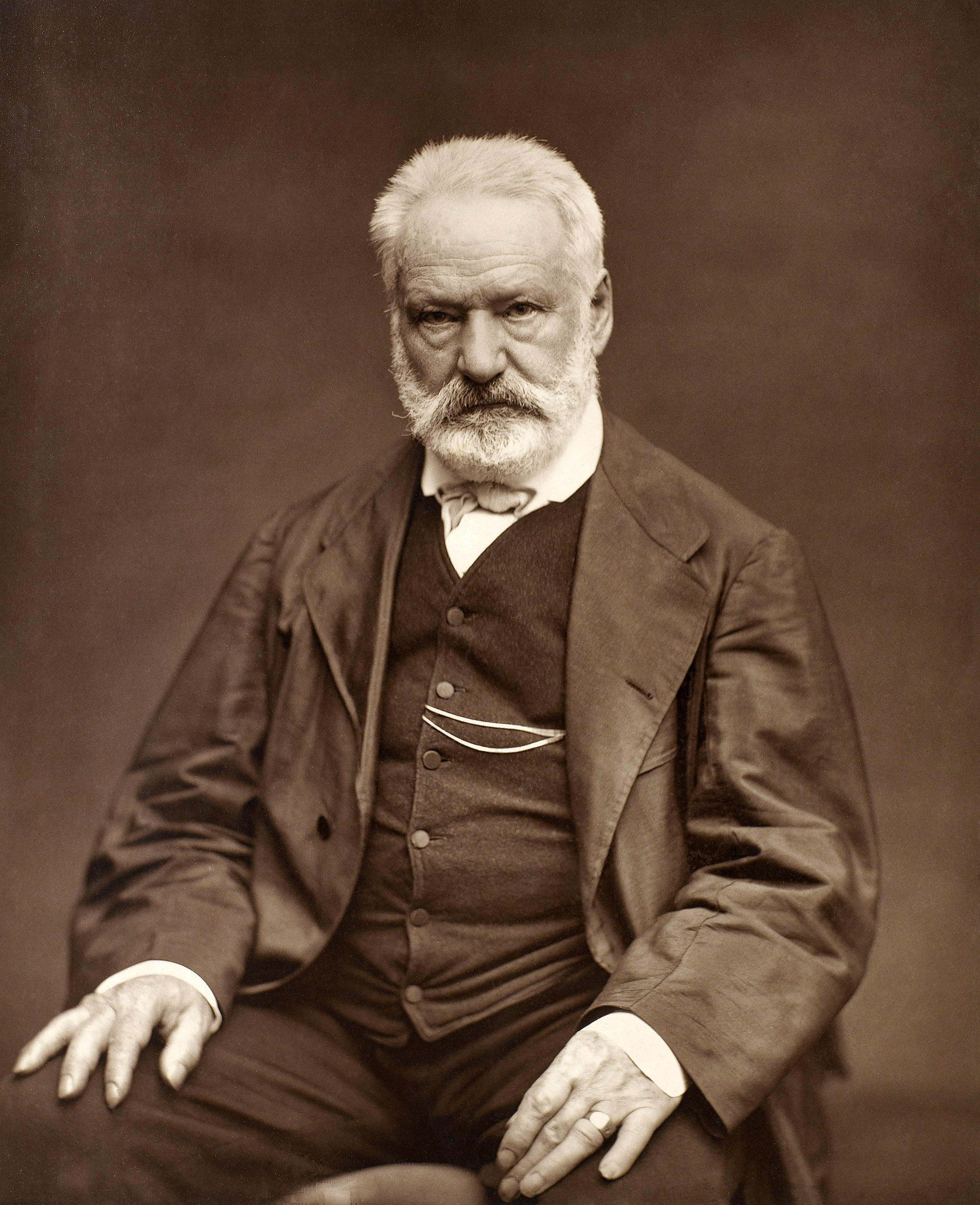
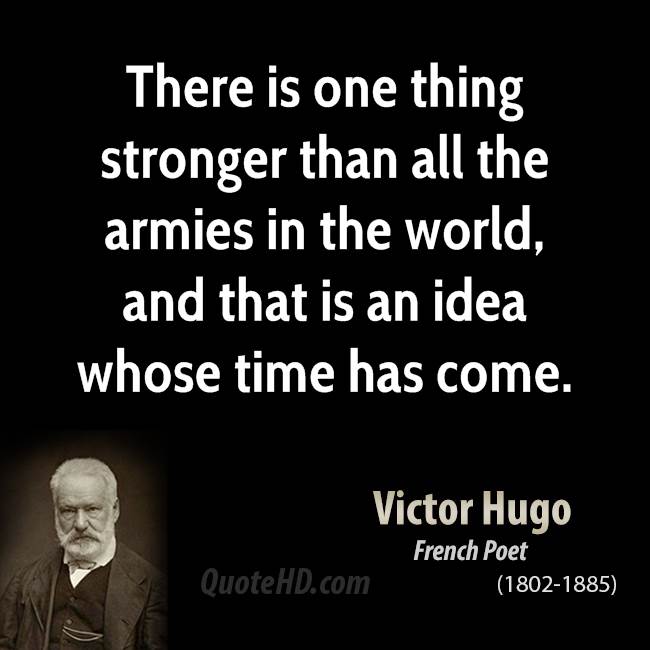
Special Frontier Force – Tibetan Resistance: Victor Marie Hugo (1802 – 1885), French novelist, romantic poet, and dramatist defends Freedom and opposes authoritarianism. In his Romantic vision of world order, the force of any army cannot deter the force of an idea. Man has a tendency to accept certain types of authority that could be consistent with the Natural Order and rejects other kinds of rule by Force. Peace is associated with Natural State and War is associated with transgression of Natural Condition.
Excerpt: Special Frontier Force – The Doctrine of Tibetan Resistance: The Problem of War and Peace in Tibet. Can we order Peace for the sake of War, and not War for the sake of Peace? It may be argued that Peace is Inevitable or it may be stated that War is Inevitable. The problem is the absence of Natural Order, Natural Condition, Natural Power, and Natural Authority in the Land of Tibet and in the lives of Tibetans. I state that Resistance is Inevitable, Resistance will Endure, and Resistance will Prevail if there is no Natural Order in Tibet. Tibet can Resist, Tibet will Resist, and Tibetan Resistance will Prevail until the Natural Order is restored in Tibet.
Special Frontier Force – The Doctrine of Tibetan Resistance: The tools of Tibetan Resistance are 1. Patience, 2. Persistence, and 3. Perseverance. Man opposes the reign of force by standing firm or by working against the force without yielding. To oppose and to withstand a force, man needs the virtues of Temperance, Tolerance, and Tranquility to remain calm, unperturbed to maintain “Inner Peace” while reacting to an external force. The virtue of Perseverance triumphs for it preserves the “Inner Peace” while the external reality is described by Violence or War.Special Frontier Force – Tibetan Resistance: Can we order ‘Peace’ for the sake of ‘War’, and not ‘War’ for the sake of ‘Peace’? We may argue about the inevitability of War and Peace. In Tibet, since 1950, there is no ‘Natural Order’. Resistance is the Symptom of the lack of ‘Natural Order’. Tibet refused to surrender its Freedom and chose to offer Resistance to the War of Occupation imposed by the People’s Republic of China.
In 1950, People’s Republic of China imposed its War on Tibet. Tibet’s military occupation is the perpetuation of this condition, or state of War. Tibet has two choices in its response to China’s War; 1.Tibet can surrender to China to embrace its reign by force, or 2. Tibet can resist and stand firm against its rule by external force. Man accepts or reconciles to the use of force, power, and authority that is consistent with his natural condition or natural state. The first act of resistance is the product of man’s cognitive ability to recognize his Enemy and distinguish the Enemy from his Friend. The truth about War and Peace can be stated in simple and clear terms. It is as simple as the recognition of Black and White colors. Enemy is Black. Friend is White. War is Black and Peace is White. Occupation is Black, and Liberation is White. Occupation is the Enemy and Freedom is the Friend in simple Black and White terms. There is no Resistance if Enemy is not known or not recognized. Once Enemy is recognized, Resistance acquires the Force of a Duty. Resistance is the rejection of Enemy’s Power, and Resistance is the nonacceptance of Enemy’s authority.
THE DOCTRINE OF TIBETAN RESISTANCE:
Special Frontier Force – Tibetan Resistance: The Doctrine and the Philosophy of Tibetan Resistance to China’s War of Occupation is based on the Force or Power of an Idea that concludes that the Enemy has no Power over your Mind and the Enemy cannot exercise authority over your Mind. Resistance begins when man sets his Mind Free. Resistance is Freedom in Action without any sense of Fear.
The tools of Tibetan Resistance are 1. Patience, 2. Persistence, and 3. Perseverance. Man opposes the reign of force by standing firm or by working against the force without yielding. To oppose and to withstand a force, man needs the virtues of Temperance, Tolerance, and Tranquility to remain calm, unperturbed to maintain “Inner Peace” while reacting to an external force. The virtue of Perseverance triumphs for it preserves the “Inner Peace” while the external reality is described by Violence or War.
Special Frontier Force – Tibetan Resistance: The Doctrine and the Philosophy of Tibetan Resistance to China’s War of Occupation is based on the Force or Power of an Idea that concludes that the Enemy has no Power over your Mind and the Enemy cannot exercise authority over your Mind. Resistance begins when man sets his Mind Free. Resistance is Freedom in Action without any sense of Fear.
Resistance is the rejection of Enemy’s Power over your Life. Resistance is the nonacceptance of Enemy’s authority over your Mind. The Enemy gets no shelter and the Enemy gets no Protection in the Mind of a person who Resists. Tibetans choose Life to resist their Enemy. Tibetans in their Deaths, defy the Purpose of their Enemy.
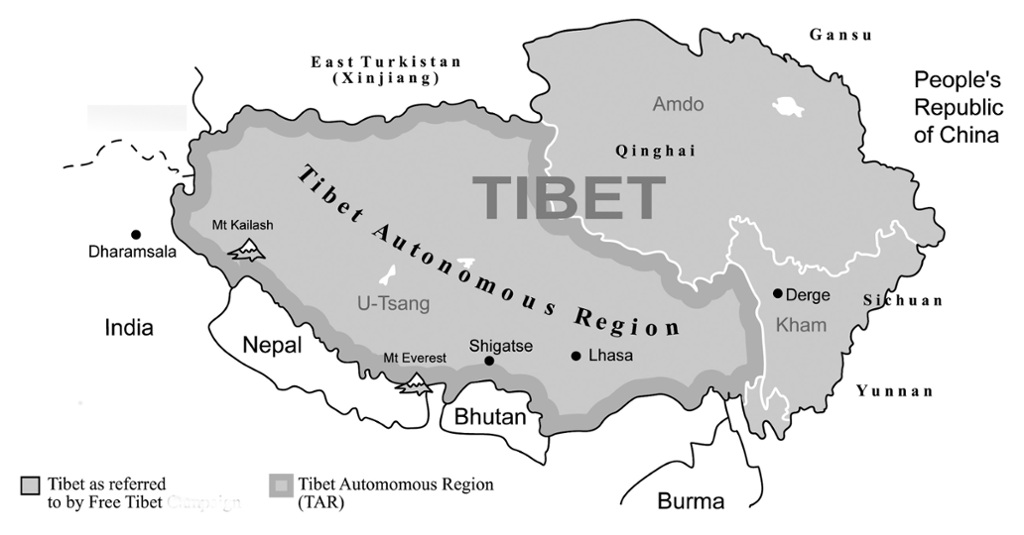
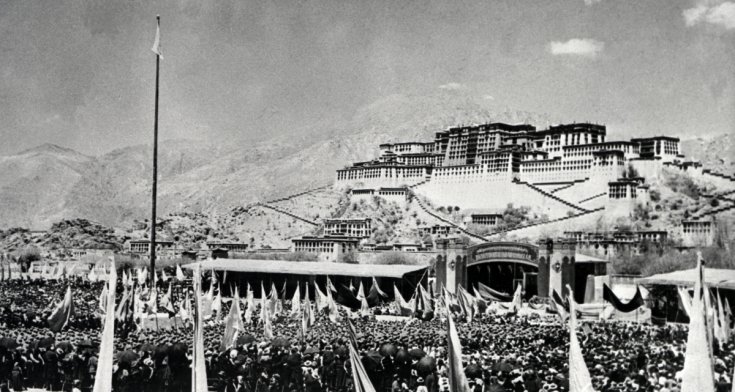
Special Frontier Force – Tibetan Resistance: Tibetans choose Life to Resist their Enemy. In Death, Tibetans defy the Purpose of their Enemy. In recent times, a number of Tibetans to defy the purpose of their Enemy have killed themselves in acts of Self Immolation.SPECIAL FRONTIER FORCE – TIBETAN RESISTANCE: The Potala Palace, Lhasa, is the symbol of Natural Authority and is the seat of Natural Power in Tibet. The Chain is the symbol of Tibet’s Occupation, the Tyranny, the Oppression that violates the Principle of Natural State or Natural Condition.SPECIAL FRONTIER FORCE – TIBETAN RESISTANCE: The Doctrine or the Philosophy of Tibetan Resistance involves the Art of Saying “NO” to the Enemy. The three original provinces of Tibet, U-Tsang, Kham, and Amdo constitute Tibetan territory and Tibetans reject the Tibetan Autonomous Region or TAR created by Communist China during 1965.
Tibet during the course of its history has come under foreign conquests. The Yuan, Mongol Dynasty founded by Kublai Khan conquered Tibet during 1279. Similarly, when the Ching or Manchu ruled over China, Tibet came under the nominal protection of Manchus. However, Tibetans retained their natural way of life, and for all practical purposes, Tibet existed in its Natural State or Natural Condition for several centuries. The rule by the political and religious institution of the Dalai Lama or the Ganden Phodrang Government founded in 1642 represents the seat of Natural Power or Natural Authority to which Tibetans yield in obedience. Communist China’s invasion of Tibet in 1950 is accompanied by a different purpose. The purpose of China’s military conquest is that of occupation, subjugation, and exploitation of the Land of Tibet, its people and all of its natural resources. The purpose of Tibetan Resistance is the quest for a Life with Dignity. Can we order Peace, Justice, and Honor for the sake of War? Can we order War for the sake of Peace, Justice, and Honor? How could we define the purpose of War and Peace in Tibet?
WAR AND PEACE IN TIBET:
Special Frontier Force – Tibetan Resistance: The Problem of War and Peace in Tibet. Can we order Peace for the sake of War, and not War for the sake of Peace? It may be argued that Peace is Inevitable or it may be stated that War is Inevitable. The problem is the absence of Natural Order, Natural Condition, Natural Power, and Natural Authority in the Land of Tibet and in the lives of Tibetans. I state that Resistance is Inevitable, Resistance will Endure, and Resistance will Prevail if there is no Natural Order in Tibet.
The term Resistance describes the organized underground movement in a country fighting against a foreign occupying power. Special Frontier Force – Establishment No. 22 represents the fact of a military alliance or military pact between Tibet, India, and the United States to fight the occupation of Tibet by its Enemy. Its military mission includes the use of force to evict the occupier of Tibet.
Special Frontier Force – Tibetan Resistance: The Problem of War and Peace in Tibet. Can we order Peace for the sake of War, and not War for the sake of Peace? It may be argued that Peace is Inevitable or it may be stated that War is Inevitable. The problem is the absence of Natural Order, Natural Condition, Natural Power, and Natural Authority in the Land of Tibet and in the lives of Tibetans. I state that Resistance is Inevitable, Resistance will Endure, and Resistance will Prevail if there is no Natural Order in Tibet.
Sigmund Freud observes: “War is not to be abolished; so long as the conditions of existence among the nations are so varied, and the repulsions between Peoples so intense, there will be , there must be Wars.” Communist China’s military power, military strategy, and military tactics will not assure the surrender of Freedom and acceptance of its power and authority in Tibet. China cannot impose its Peace by the use of its military power in Tibet.
Tibetan Resistance is a mere symptom of the absence of Natural Order in Tibetan Existence. Tibet can Resist, Tibet will Resist, and Tibet will Prevail in its Resistance until its Natural Order is restored and let its Natural Condition to operate the lives of Tibetans.
Special Frontier Force – Tibetan Resistance: The Problem of War and Peace in Tibet. Can we order Peace for the sake of War, and not War for the sake of Peace? It may be argued that Peace is Inevitable or it may be stated that War is Inevitable. The problem is the absence of Natural Order, Natural Condition, Natural Power, and Natural Authority in the Land of Tibet and in the lives of Tibetans. I state that Resistance is Inevitable, Resistance will Endure, and Resistance will Prevail if there is no Natural Order in Tibet.
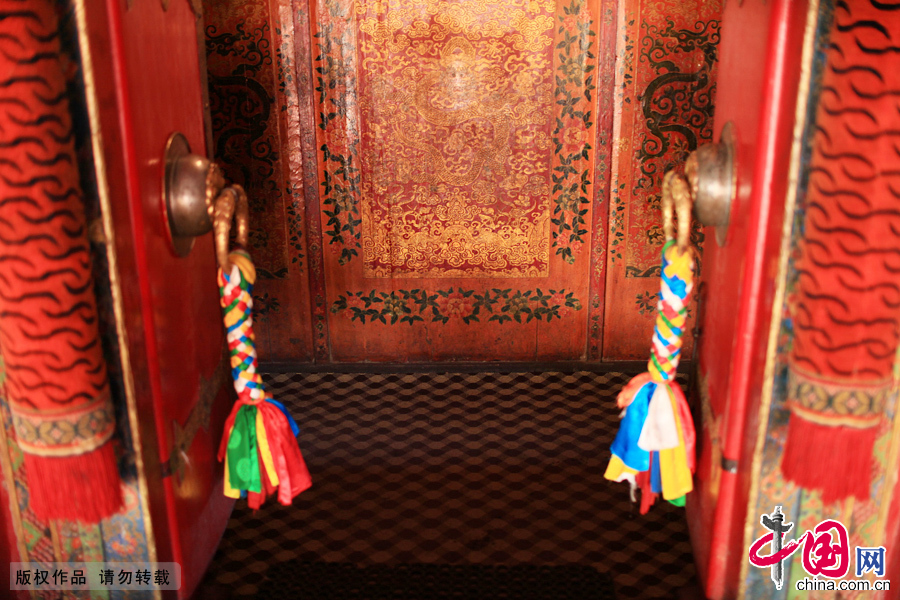
LIVING TIBETAN SPIRITS SHARE GLIMPSES OF NORBULINGKA THE SUMMER PALACE OF SUPREME RULER OF TIBET – 7
Whole Palace: Glimpses of Norbulingka, Summer Palace of the Supreme Ruler of Tibet
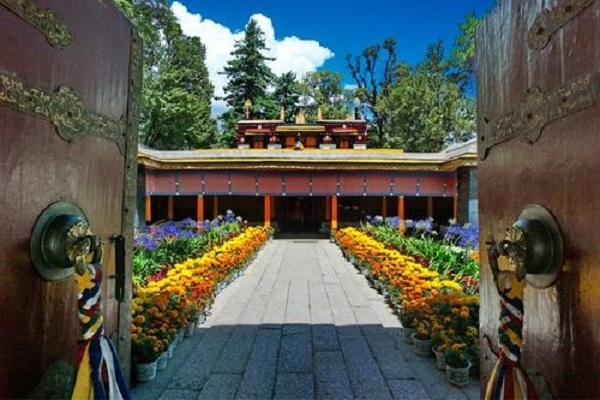
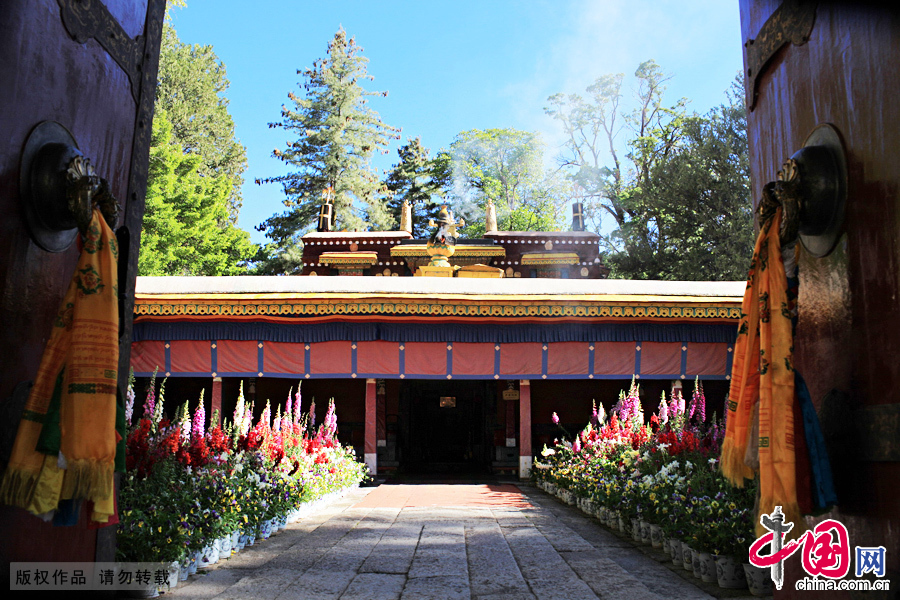
Norbulingka, literally the “Jeweled Garden,” is a palace and its surrounding parks located in a western suburb of Lhasa. It was constructed in the 1740s as a summer palace for the Dalai Lama and later served the whole governmental administration. The place boasts typical Tibetan palace architecture, as well as gentle streams, dense and lush forestry, birds and animals. Covering an area of around 36 hectares, it is considered to be the largest man-made garden in Tibet. Being part of the “Historic Ensemble of the Potala Palace,” Norbulingka is recognized as a UNESCO World Heritage Site, and was added as an extension to this Historic Ensemble in 2001.[China.org.cn]
Whole Palace: Glimpses of Norbulingka, Summer Palace of the Supreme Ruler of Tibet
LIVING TIBETAN SPIRITS SHARE GLIMPSES OF NORBULINGKA – 3
Whole Palace: Glimpses of Norbulingka, the Summer Palace of Supreme Ruler of Tibet.
Norbulingka, literally the “Jeweled Garden,” is a palace and its surrounding parks located in a western suburb of Lhasa. It was constructed in the 1740s as a summer palace for the Dalai Lama and later served the whole governmental administration. The place boasts typical Tibetan palace architecture, as well as gentle streams, dense and lush forestry, birds and animals. Covering an area of around 36 hectares, it is considered to be the largest man-made garden in Tibet. Being part of the “Historic Ensemble of the Potala Palace,” Norbulingka is recognized as a UNESCO World Heritage Site, and was added as an extension to this Historic Ensemble in 2001.[China.org.cn]
Whole Palace: Glimpses of Norbulingka, the Summer Palace of Supreme Ruler of Tibet
Whole Dude – Whole Equilibrium: Nature grants Freedom to Tibetans without the need for raising questions.
Excerpt: In my analysis, Tibet Equilibrium is about balancing physical force applied by Communist regime to overcome Nature’s Agenda of granting freedom without asking questions. Living Tibetan Spirits speak of Nature’s Agenda in Tibet. Freedom and Independence are gifts of Nature quietly operating across Tibetan Plateau long before the arrival of Anatomically Modern Man. Occupying force wielded by Communist China creates imbalance, disharmony, and discord in the lives of Tibetans who view freedom as natural experience.
WHAT IS TIBET EQUILIBRIUM? I CONSIDER NATURAL CAUSES, NATURAL FACTORS, NATURAL CONDITIONS, NATURAL MECHANISMS, AND NATURAL EVENTS THAT CAN RESTORE NATURAL FREEDOM IN OCCUPIED TIBET.
Natural Sciences such as Physics and Geology describe Natural Forces that are at work shaping Natural Events such as Plate Tectonics that involves collision between plates of Earth’s mantle. For Life to exist on planet Earth, the physical conditions and forces interacting must generate Natural Balance, Natural Order, and Natural Equilibrium for sustained periods of time.
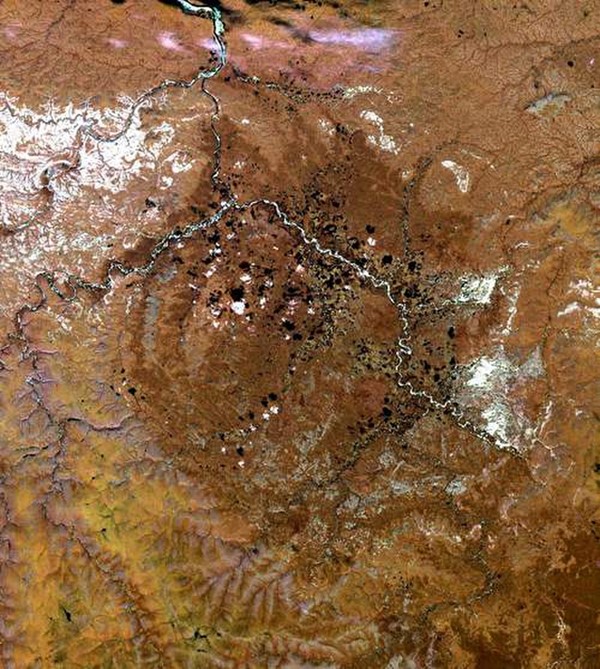
WHAT IS TIBET EQUILIBRIUM? WHAT IS THE CONNECTION BETWEEN POPIGAI IMPACT CRATER IN RUSSIA AND SOUTHERN TIBET UPLIFT?
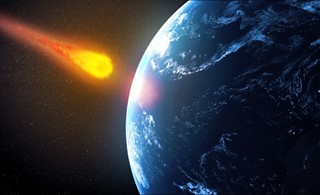
During the time of ‘Rapid Uplift of Southern Tibet’, planet Earth witnessed massive collision by a meteorite that caused very significant impact crater in Siberia, Russia. This Natural Collision Event, Russia’s Popigai Meteor Crash, contributed to extinction of several species of Life.
I investigate Natural Causes, Natural Factors, Natural Conditions, and Natural Mechanisms that shape Natural Events such as Major and Minor Extinction Events.
What is Tibet Equilibrium? Can Bolide Collision Restore Natural Freedom in Occupied Tibet?
Human History is full of events that involve use of Physical Force applied by Man to change Regime, the Political Power that rules or governs lives of people.
TIBET EQUILIBRIUM – BALANCE OF POWER IN OCCUPIED TIBET. THE GREAT TIBET PROBLEM WILL EXIST UNTIL BALANCE OF POWER IS RESTORED IN OCCUPIED TIBET.
In 1950s, People’s Republic of China invaded Tibet using her superior Physical Power. Tibetans living in Occupied Tibet do not experience Natural Freedom due to change in Balance of Power that operates their lives.
Living Tibetan Spirits speak of Nature’s Agenda in Tibet. Freedom and Independence are gifts of Nature quietly operating across Tibetan Plateau long before the arrival of Anatomically Modern Man. Occupying force wielded by Communist China creates imbalance, disharmony, and discord in lives of Tibetans who view freedom as natural experience. There is no reason for Tibetans to raise their voices demanding freedom.
To again experience Natural Freedom, Tibet needs help from a Natural Event of great magnitude that applies Force or Power to cause Downfall of Power Regime that rules Tibet from its Seat of Power in Beijing. In my analysis, Bolide Collision Event described in the Book of Revelation, Chapter 18, can shake up the Seat of Power in Beijing. For that reason, I proclaim, “Beijing Doomed.”
What is Tibet Equilibrium? What are the Natural Forces acting or operating in Tibet? “Beijing Doomed,” expression of hope for restoring Natural Freedom in Occupied Tibet.
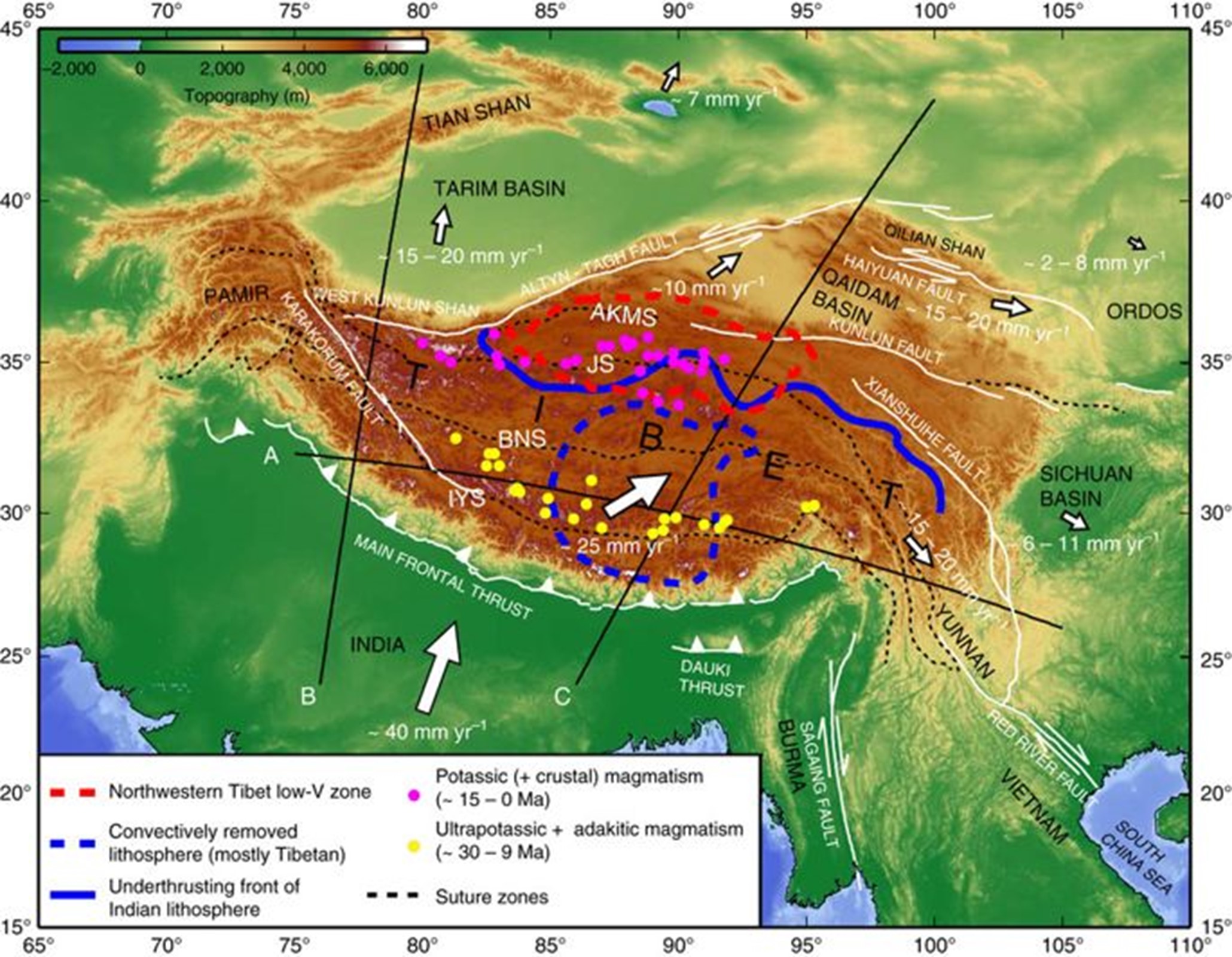
Using seismic data and supercomputers, Rice University geophysicists have conducted a massive seismic CT scan of the upper mantle beneath the Tibetan Plateau.
They concluded that the southern half of the “Roof of the World” formed in less than one-quarter of the time since the beginning of India-Eurasia continental collision.
The research, which appears online this week in the journal Nature Communications, finds that the high-elevation of Southern Tibet was largely achieved within 10 million years. Continental India’s tectonic collision with Asia began about 45 million years ago.
“The features that we see in our tomographic image are very different from what has been seen before using traditional seismic inversion techniques,” said Min Chen, the Rice research scientist who headed the project. “Because we used full waveform inversion to assimilate a large seismic data set, we were able to see more clearly how the upper-mantle lithosphere beneath Southern Tibet differs from that of the surrounding region. Our seismic image suggests that the Tibetan lithosphere thickened and formed a denser root that broke away and sank deeper into the mantle. We conclude that most of the uplift across Southern Tibet likely occurred when this lithospheric root broke away.”
The research could help answer longstanding questions about Tibet’s formation. Known as the “Roof of the World,” the Tibetan Plateau stands more than three miles above sea level. The basic story behind its creation — the tectonic collision between the Indian and Eurasian continents — is well-known to schoolchildren the world over, but the specific details have remained elusive. For example, what causes the plateau to rise and how does its high elevation impact Earth’s climate?
“The leading theory holds that the plateau rose continuously once the India-Eurasia continental collision began, and that the plateau is maintained by the northward motion of the Indian plate, which forces the plateau to shorten horizontally and move upward simultaneously,” said study co-author Fenglin Niu, a professor of Earth science at Rice. “Our findings support a different scenario, a more rapid and pulsed uplift of Southern Tibet.”
It took three years for Chen and colleagues to complete their tomographic model of the crust and upper-mantle structure beneath Tibet. The model is based on readings from thousands of seismic stations in China, Japan and other countries in East Asia. Seismometers record the arrival time and amplitude of seismic waves, pulses of energy that are released by earthquakes and that travel through Earth. The arrival time of a seismic wave at a particular seismometer depends upon what type of rock it has passed through. Working backward from instrument readings to calculate the factors that produced them is something scientists refer to as an inverse problem, and seismological inverse problems with full waveforms incorporating all kinds of usable seismic waves are some of the most complex inverse problems to solve.
Chen and colleagues used a technique called full waveform inversion, “an iterative full waveform-matching technique that uses a complicated numerical code that requires parallel computing on supercomputers,” she said.
“The technique really allows us to use all the wiggles on a large number of seismographs to build up a more realistic 3-D model of Earth’s interior, in much the same way that whales or bats use echo-location,” she said. “The seismic stations are like the ears of the animal, but the echo that they are hearing is a seismic wave that has either been transmitted through or bounced off of subsurface features inside Earth.”
The tomographic model includes features to a depth of about 500 miles below Tibet and the Himalaya Mountains. The model was computed on Rice’s DAVinCI computing cluster and on supercomputers at the University of Texas that are part of the National Science Foundation’s Extreme Science and Engineering Discovery Environment (XSEDE).
“The mechanism that led to the rise of Southern Tibet is called lithospheric thickening and foundering,” Chen said. “This happened because of convergence of two continental plates, which are each buoyant and not easy to subduct underneath the other plate. One of the plates, in this case on the Tibetan side, was more deformable than the other, and it began to deform around 45 million years ago when the collision began. The crust and the rigid lid of upper mantle — the lithosphere — deformed and thickened, and the denser lower part of this thickened lithosphere eventually foundered, or broke off from the rest of the lithosphere. Today, in our model, we can see a T-shaped section of this foundered lithosphere that extends from a depth of about 250 kilometers to at least 660 kilometers.”
Chen said that after the denser lithospheric root broke away, the remaining lithosphere under Southern Tibet experienced rapid uplift in response.
“The T-shaped piece of foundered lithosphere sank deeper into the mantle and also induced hot upwelling of the asthenosphere, which leads to surface magmatism in Southern Tibet,” she said.
Such magmatism is documented in the rock record of the region, beginning around 30 million years ago in an epoch known as the Oligocene.
“The spatial correlation between our tomographic model and Oligocene magmatism suggests that the Southern Tibetan uplift happened in a relatively short geological span that could have been as short as 5 million years,” Chen said.
Additional co-authors include Adrian Lenardic, Cin-Ty Lee, Wenrong Cao and Julia Ribeiro, all of Rice, and Jeroen Tromp of Princeton University.
The research was supported by a grant from the National Science Foundation (NSF), by the NSF’s Extreme Science and Engineering Discovery Environment (XSEDE) program, and by the China Earthquake Administration’s China Seismic Array Data Management Center. Rice’s DAVinCI supercomputer is administered by Rice’s Center for Research Computing and procured in partnership with the Ken Kennedy Institute for Information Technology. The DOI of the Nature Communications paper is: 10.1038/NCOMMS15659
What is Tibet Equilibrium? How to restore Natural Freedom in Occupied Tibet?What is Tibet Equilibrium? Can Time alone restore Natural Freedom in Occupied Tibet?
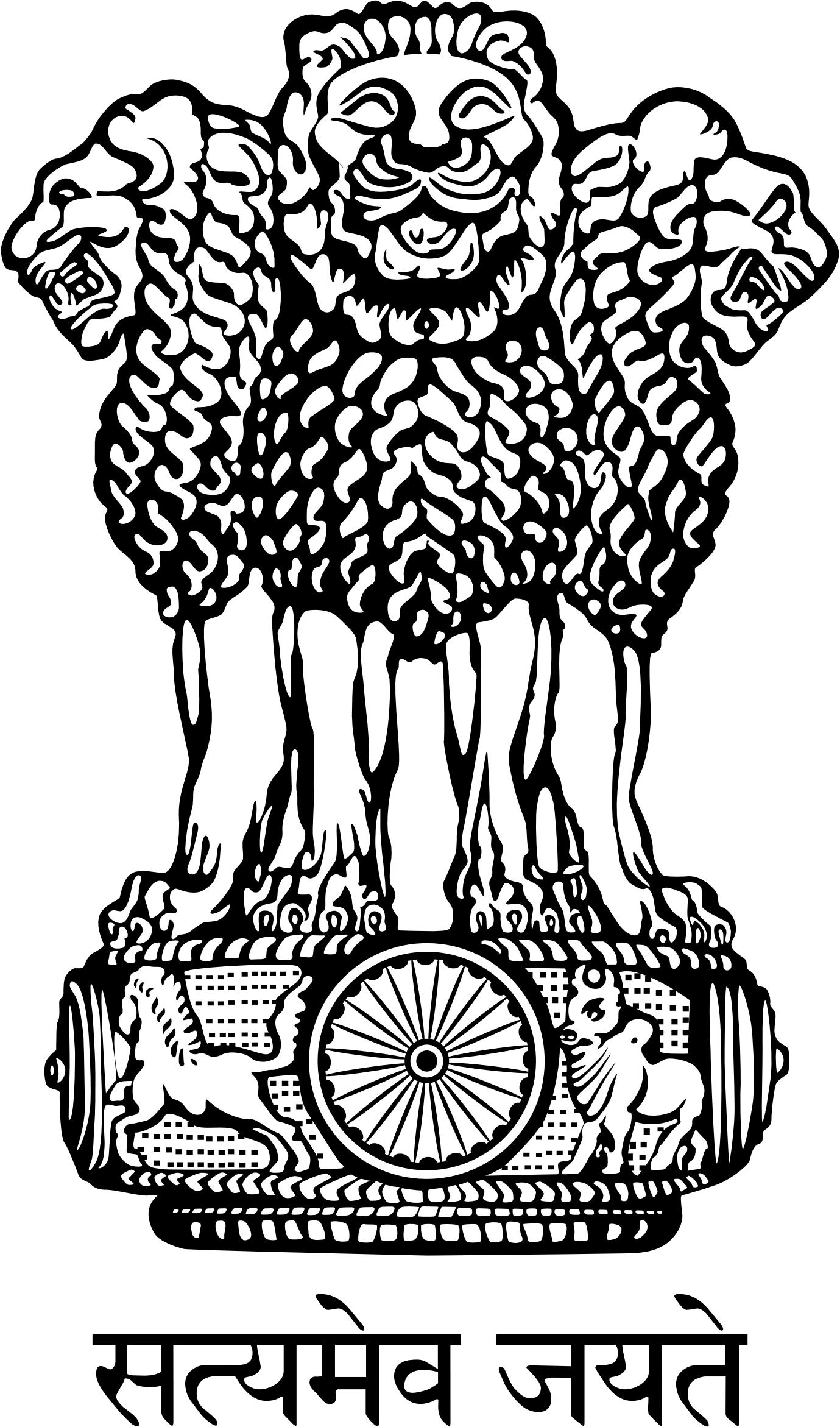
Whole Dude – Whole Secret: SPECIAL FRONTIER FORCE – THE OFFICIAL SECRETS ACT: INDIA’S NATIONAL EMBLEM PROCLAIMS THE OFFICIAL MOTTO OF INDIA, “SATYA MEVA JAYATE,” TRUTH ALONE TRIUMPHS. I SHALL TRUTHFULLY SUPPORT INDIA’S RELATIONS WITH FOREIGN STATES
Tibet Awareness – Project Circus
Whole Dude – Whole Secret: The beginning of the Cold War in Asia in 1949 with the Communist takeover of mainland China.
Excerpt: Both the US Government and the Central Intelligence Agency maintain their silence about the support given to the Tibetan Resistance Movement and the eventual creation of Establishment -22/Special Frontier Force, a military alliance/pact between the US, Tibet, and India to fight the military threat posed by Communist China when it occupied Tibet in 1950 and forced His Holiness the 14th Dalai Lama to lead a life in exile. Indeed, that is the Whole Secret. The US, India and Tibet agreed to keep the US role in Tibet as a Secret and I signed a Declaration in Chakrata, India during September 1971 to keep the Tibet Operation as a Secret under the provisions of the Official Secret Acts of India.
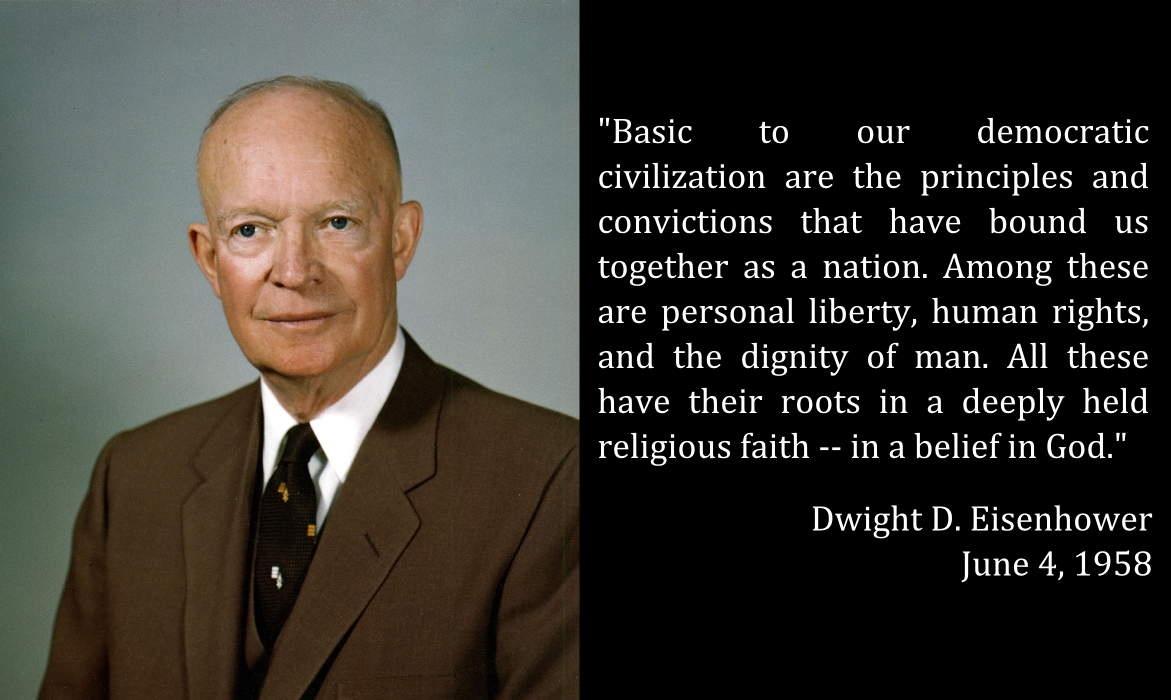
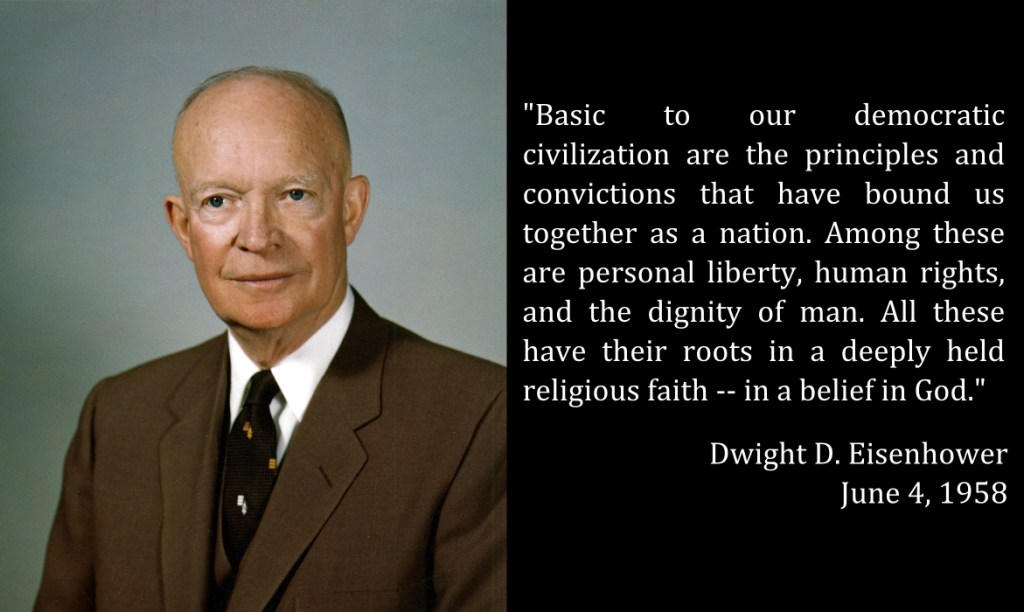
Whole Dude – Whole Secret: The CIA covert operations inside Tibet led to the creation of a military organization called Establishment Number. 22, or Special Frontier Force which was formed in 1962 during the presidency of John F. KennedyTIBET AWARENESS – PROJECT CIRCUS. TRIBUTE TO PRESIDENT DWIGHT DAVID EISENHOWER.
The New York Review of Books reviewed the book, ‘TIBET: THE CIA’S CANCELLED WAR’ by Jonathan Mirsky. My readers may know that the US Central Intelligence Agency or CIA has no constitutional powers to wage wars or to make treaties. I am glad to inform my readers that the War is not over; Tibetan Resistance Movement is alive and Red China’s military occupation is opposed with patience and perseverance while Tibetans continue to endure pain and suffering.
Whole Dude – Whole Secret: “In God We Trust.”
The New York Review of Books
NYR DAILY
TIBET: THE CIA’S CANCELLED WAR
JONATHAN MIRSKY
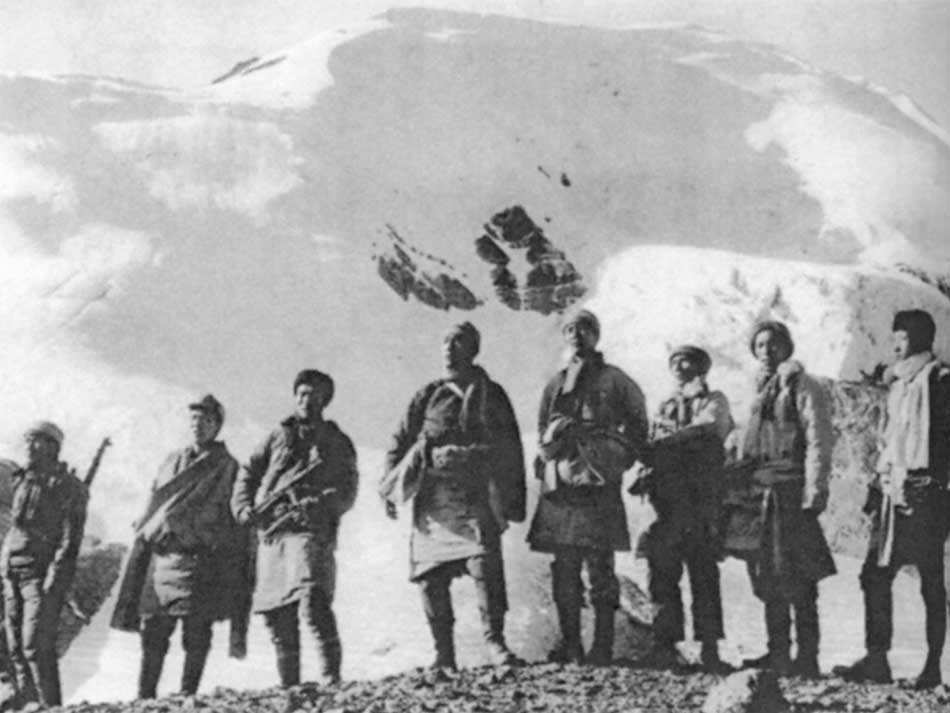
Whole Dude – Whole Secret: Lhamo Tsering Collection Resistance fighters on the Tibetan border during the early years of the CIA’s Tibet program
For much of the past century, US relations with Tibet have been characterized by kowtowing to the Chinese and hollow good wishes for the Dalai Lama. As early as 1908, William Rockhill, a US diplomat, advised the Thirteenth Dalai Lama that “close and friendly relations with China are absolutely necessary, for Tibet is and must remain a portion of the Ta Ts’ing [Manchu] Empire for its own good.” Not much has changed with the Fourteenth Dalai Lama one hundred years later. After a meeting in 2011 with President Obama in the White House Map Room—the Oval Office being too official—the Dalai Lama was ushered out the back door, past the garbage cans. All this, of course, is intended to avoid condemnation from Beijing, which regards even the mildest criticism of its Tibet policy as “interference.”
However there was one dramatic departure from the minimalist approach. For nearly two decades after the 1950 Chinese takeover of Tibet, the CIA ran a covert operation designed to train Tibetan insurgents and gather intelligence about the Chinese, as part of its efforts to contain the spread of communism around the world. Though little known today, the program produced at least one spectacular intelligence coup and provided a source of support for the Dalai Lama. On the eve of Richard Nixon’s historic 1972 meeting with Mao, the program was abruptly cancelled, thus returning the US to its traditional arm’s-length policy toward Tibet.
Whole Dude – Whole Secret: I was serving in D-Sector, Establishment No. 22 during February 1972 while US President Richard M. Nixon visited Peking. I confirm that the CIA Tibet Program was not cancelled but got modified. Special Service Award presented by all Officers D Sector, Establishment -22 on 19 January 1973.
But this did not end the long legacy of mistrust that continues to color Chinese-American relations. Not only was the Chinese government aware of the CIA program; in 1992 it published a white paper on the subject. The paper included information drawn from reliable Western sources about the agency’s activities, but laid the primary blame for the insurgency on the “Dalai Lama clique,” a phrase Beijing still uses today.
The insurgency began after the People’s Liberation Army invaded Tibet following its defeat of the Nationalists, and after Beijing forced the Dalai Lama’s government to recognize Chinese administration over the region. In 1955, a group of local Tibetan leaders secretly plotted an armed uprising, and rebellion broke out a year later, with the rebels besieging local government institutions and killing hundreds of government staff as well as Han Chinese people. In May 1957, a rebel organization and a rebel fighting force were founded, and began killing communist officials, disrupting communication lines, and attacking institutions and Chinese army troops stationed in the region.
Whole Dude – Whole Secret: The US military support to Tibet began during Hump Airlift Operation. I served at Dum Duma (Doom Dooma, Assam). Some flights delivered weapons and ammunition to Tibet. Special Frontier Force Reviews Hump Airlift Operation 1942 – 1945.
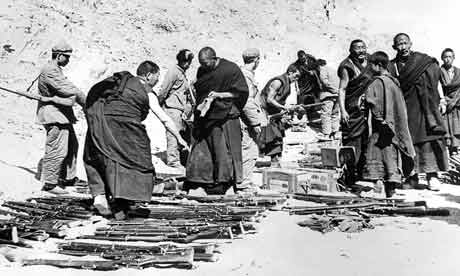
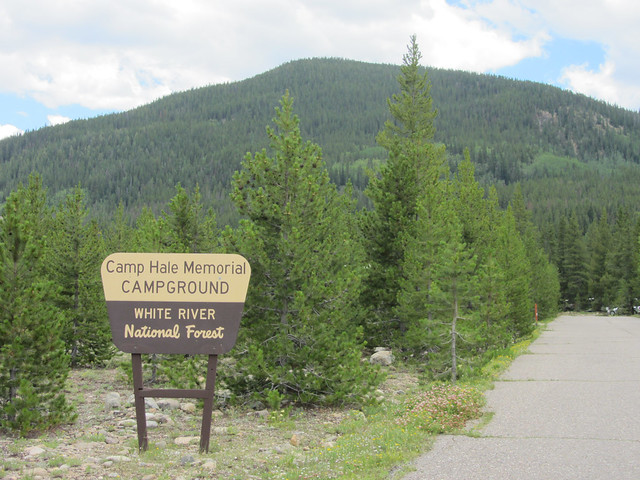
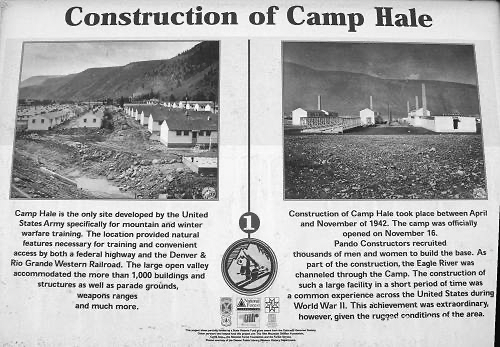
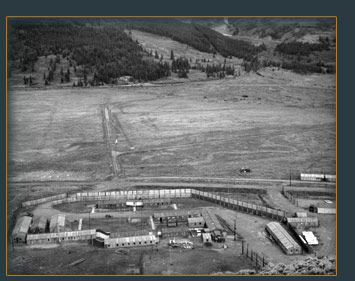
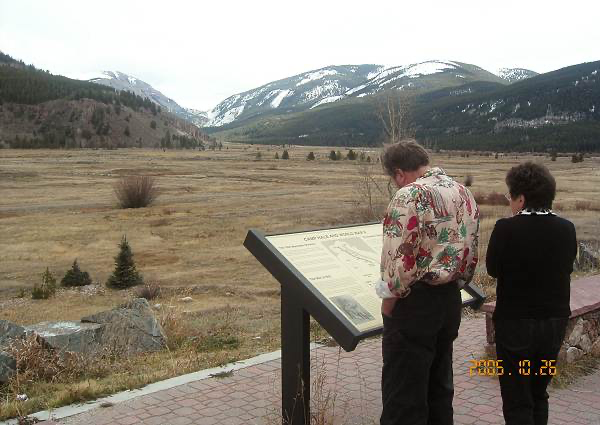
By that point, the rebellion had gained American backing. In the early 1950s, the CIA began to explore ways to aid the Tibetans as part of its growing campaign to contain Communist China. By the second half of the decade, “Project Circus” had been formally launched, Tibetan resistance fighters were being flown abroad for training, and weapons and ammunition were being airdropped at strategic locations inside Tibet. In 1959, the agency opened a secret facility to train Tibetan recruits at Camp Hale near Leadville, Colorado, partly because the location, more than 10,000 feet above sea level, might approximate the terrain of the Himalayas. According to one account, some 170 “Kamba guerrillas” passed through the Colorado program.
Whole Dude – Whole Secret: TIBETAN RESISTANCE MOVEMENT. A DAY TO REMEMBER, MARCH 10, 1959. TIBETAN NATIONAL UPRISING DAY. IN MY ANALYSIS, THE MASS UPRISING IN TIBET IS THE SYMBOL OF CIA TIBET PROGRAM. IT FAILED FOR WE UNDERESTIMATED THE ENEMY’S MILITARY POWER.
While the CIA effort never produced a mass uprising against the Chinese occupiers (I want to correct this statement; CIA Tibet Program helped the Tibetan National Uprising on March 10, 1959), it did provide one of the greatest intelligence successes of the Cold War, in the form of a vast trove of Chinese army documents captured by Tibetan fighters and turned over to the CIA in 1961. These revealed the loss of morale among Chinese soldiers, who had learned of the vast famine that was wracking China during The Great Leap Forward. Over the next decade, however, there was growing disagreement in Washington over the CIA’s activities in Tibet, and in 1971, as Henry Kissinger prepared for Nixon’s meeting with Mao, the program was wound down (I want to confirm that the Program was not cancelled).
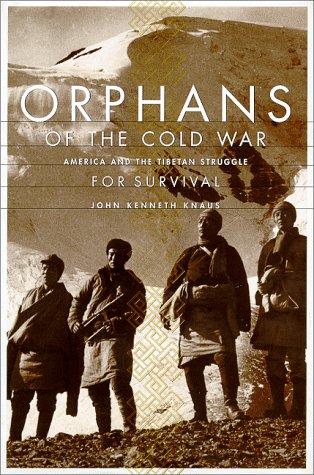
“Although Tibet may not have been on the table in the Beijing talks, the era of official US support for the Tibetan cause was over,” recalled John Kenneth Knaus, a forty-year CIA veteran, in his 1999 book Orphans of the Cold War: America and the Tibetan Struggle for Survival. “There was no role for Tibet in Kissinger’s new equation.” By 1975, President Gerald Ford was able to say to a skeptical Deng Xiaoping, China’s future leader, “Let me assure you, Mr. Vice-Premier, that we oppose and do not support any [United States] governmental action as far as Tibet is concerned.”Indeed, that is the Whole Secret. The US, India and Tibet agreed to keep the US role in Tibet as a Secret and I signed a Declaration in Chakrata, India during September 1971 to keep the Tibet Operation as a Secret under the provisions of the Official Secret Acts of India.
Whole Dude – Whole Secret: SPECIAL FRONTIER FORCE – THE OFFICIAL SECRETS ACT: THE ACT MAY PROHIBIT THE SHARING OF CERTAIN KINDS OF INFORMATION AND AT THE SAME TIME IT DEMANDS ME TO REMEMBER THE AFFILIATION WITH GOVERNMENT OF INDIA AND ITS ORGANIZATIONS DURING MY ENTIRE LIFETIME WITHOUT ANY TIME LIMITS.
Many friends of Tibet and admirers of the Dalai Lama, who has always advocated nonviolence, believe he knew nothing about the CIA program. But Gyalo Thondup, one of the Dalai Lama’s brothers, was closely involved in the operations, and Knaus, who took part in the operation, writes that “Gyalo Thondup kept his brother the Dalai Lama informed of the general terms of the CIA support.” According to Knaus, starting in the late 1950s, the Agency paid the Dalai Lama $15,000 a month. Those payments came to an end in 1974.
In 1999, I asked the Dalai Lama if the CIA operation had been harmful for Tibet. “Yes, that is true,” he replied. The intervention was harmful, he suggested, because it was primarily aimed at serving American interests rather than helping the Tibetans in any lasting way. “Once the American policy toward China changed, they stopped their help,” he told me. “Otherwise our struggle could have gone on. Many Tibetans had great expectations of CIA [air] drops, but then the Chinese army came and destroyed them. The Americans had a different agenda from the Tibetans.”
This was exactly right, and the different goals of the Agency and the Tibetans are explored fully by the Tibetan-speaking anthropologist Carole McGranahan in her Arrested Histories: Tibet, the CIA, and Memories of a Forgotten War (2010). Although sometimes clouded by anthropological jargon, her account fascinatingly explores how differently from their American counterparts the Tibetan veterans remember the CIA operation. A striking example is the matter of the Chinese army documents, whose capture in a Tibetan ambush of a high-ranking Chinese officer is depicted in grisly detail in a huge painting in the CIA’s museum in Washington. In addition to revealing low Chinese morale, the documents disclosed the extent of Chinese violence in Tibet. “This information was the only documentary proof the Tibetan government [in exile] had of the Chinese atrocities and was therefore invaluable,” MacGranahan notes. Yet the documents and their capture rarely came up during her long interview sessions with the veterans. “Why is it that this particular achievement, so valued by the US and Tibetan governments, is not remotely as memorable for [the] soldiers?”
One reason is that the Tibetan fighters were told nothing about the value of the documents, which they couldn’t read. One veteran explains to her:
Our soldiers attacked Chinese trucks and seized some documents of the Chinese government. After that the Americans increased our pay scale. Nobody knew what the contents of those documents were. At that time, questions weren’t asked. If you asked many questions, then others would be suspicious of you.
Whole Dude – Whole Secret: That is the very essence of covert operations. Information is never shared with the person or party who gathers the information.
The leader of the ambush tells her that “as a reward the CIA gave me an Omega chronograph,” but he, too, had little knowledge of the documents’ importance. As McGranahan shows in extensive detail, the veterans were preoccupied above all by their devotion to the Dalai Lama, whom they wanted to resume his position as supreme leader of an independent Tibet.
Whole Dude – Whole Secret: TIBET CONSCIOUSNESS – TIBET PROBLEM ON THE BACK BURNER. IN 1971, INDIA REFUSED TO KEEP THE PROBLEM OF BANGLADESH ON THE BACK BURNER. INDIA TOOK UNILATERAL, DECISIVE ACTION TO RESOLVE HUMANITARIAN CRISIS IN BANGLADESH.
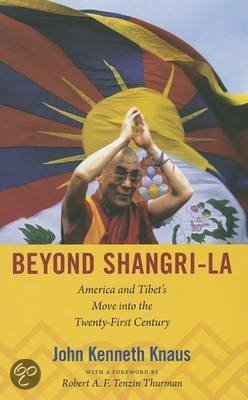
After the CIA mission was ended (I clarify that the CIA mission has not ended but remains on ‘The Back Burner’), Tibet became increasingly marginal to Washington’s China policy, as Knaus has now made clear in a second book, Beyond Shangri-la: America and Tibet’s Move into the Twenty-First Century. The reality is that American presidents now face a world power in Beijing. In language that sums up the cats-cradle of American justifications for ignoring Tibet, ex-Assistant Secretary of State for East Asia Marshall Green recalls to Knaus, “there was nothing we could do to help the Tibetans except by improving our relations with the Chinese Communists so that we might be in a position to exert pressure on them to moderate their policies towards the Tibetans.” Green “admitted that this was ‘perhaps a rationalization.’”
President Obama will soon meet the new Chinese leader, Xi Jinping. His advisers will have reminded him of the encounter between his predecessor, Bill Clinton, and then-Chinese president Jiang Zemin on June 27, 1998. In that meeting, Clinton assured Jiang that, “I agree that Tibet is a part of China, an autonomous region of China. And I can understand why the acknowledgement of that would be a precondition of dialog with the Dalai Lama.” Banking on his well-known charm, Mr. Clinton added, “I have spent time with the Dalai Lama. I believe him to be an honest man, and I believe if he had a conversation with President Jiang, they would like each other very much.” Jiang, it is reported, threw back his head and laughed. Clinton’s suggestion was omitted from the official Chinese transcript.
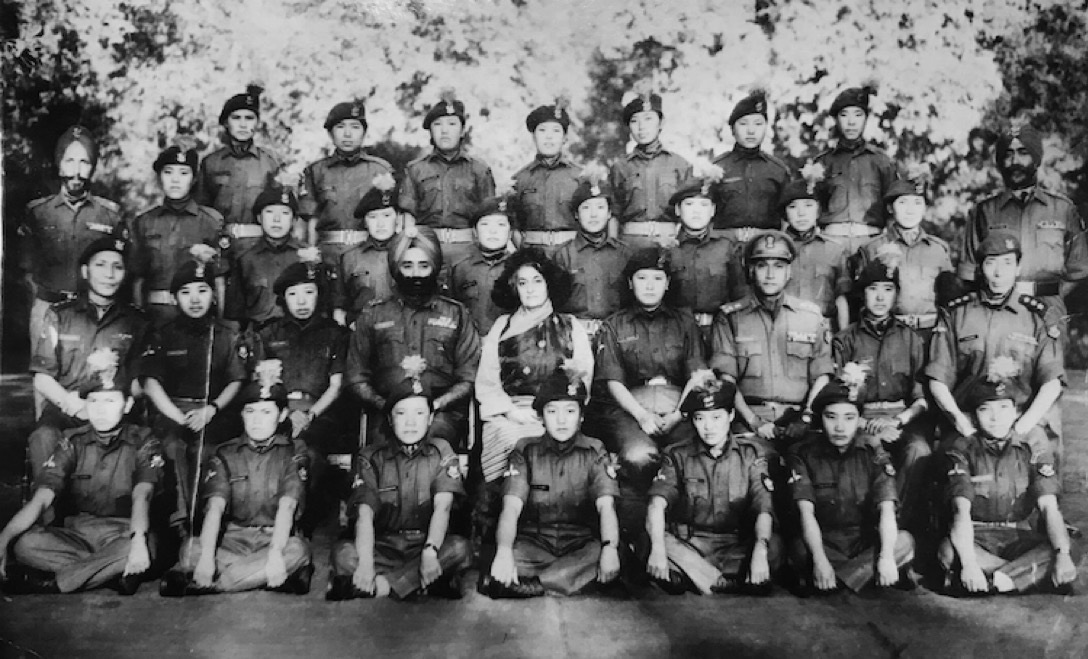
Whole Dude – Whole Secret: The CIA covert operations inside Tibet led to the creation of a military organization called Establishment Number. 22, or Special Frontier Force which was formed in 1962 during the presidency of John F. Kennedy. Indian Prime Minister Mrs. Indira Gandhi’s visit to Hq Establishment 22.Whole Dude – Whole Secret: CIA Tibet Operation.Whole Dude – Whole Secret: CIA Tibet Operation.Whole Dude – Whole Secret: CIA Tibet Operation.Whole Dude – Whole Secret: The CIA Tibet Operation.Whole Dude – Whole Secret: CIA Tibet OperationWhole Dude – Whole Secret: CIA Tibet OperationWhole Dude – Whole Secret: CIA Tibet OperationWhole Dude – Whole Secret: CIA Tibet OperationWhole Dude – Whole Secret: CIA Tibet Operation
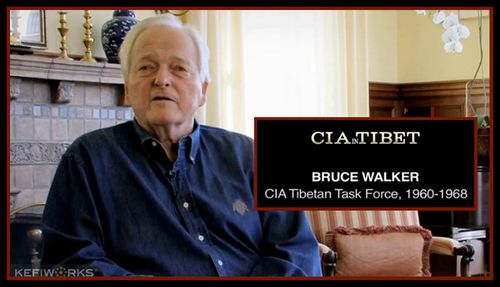
Whole Dude – Whole Secret: TIBET AWARENESS – PROJECT CIRCUS. The quest for Freedom in Tibet. A military training Camp known as Camp Hale was established in Colorado under the supervision of CIA officers Roger E. McCarthy and John Reagan.TIBET AWARENESS – PROJECT CIRCUS . A TRIBUTE TO JOHN KENNETH KNAUS OF CIA FOR RENDERING SERVICE IN SUPPORT OF TIBET’S FREEDOM AND LIBERATION FROM MILITARY OCCUPATION.Whole Dude – Whole Secret: TIBET AWARENESS – PROJECT CIRCUS – BRUCE WALKER, OFFICIAL OF CIA.Whole Dude – Whole Secret: TIBET AWARENESS – PROJECT CIRCUS – CIA OFFICIALS JOHN KENNETH KNAUS AND JOHN GREANEY.Whole Dude – Whole Secret: TIBET AWARENESS – PROJECT CIRCUS – ‘ORPHANS OF THE COLD WAR’ BOOK BY JOHN KENNETH KNAUS.Whole Dude – Whole Secret: TIBET AWARENESS – PROJECT CIRCUS. THE CIA’S SECRET WAR IN TIBET BY KENNETH CONBOY AND JAMES MORRISON.Whole Dude – Whole Secret: Tibet Awareness – Project CIRCUS. A special tribute to Allen Welsh Dulles, the Director of CIA who organized training of Tibetans at Camp Hale, Colorado (May 1959 to November 1964).
Whole Dude – Whole Himalayas: From Kashmir to Kanyakumari – One Land and One Destiny. India must defend Tibet to defend its Himalayan Frontier.
Excerpt: The article talks about the geographical history and future of India, specifically focusing on the Himalayas. It explains that India was part of a supercontinent called Pangea and moved towards Euro Asia to form the Himalayas. It further elaborates on how the Indian plate continues to collide beneath Tibet, causing shifts in the landscape. The post raises concerns about the potential disappearance of Nepal and the threat of global warming on the Himalayan glaciers, which are vital water sources. It concludes with the idea that India must defend Tibet and the Himalayas, as its destiny is strongly tied to their well-being.
Whole Dude – Whole Himalayas: From Kashmir to Kanyakumari – One Land and One DestinyWhole Dude – Whole Himalayas: From Kashmir to Kanyakumari – One Land and One Destiny.Whole Dude – Whole Himalayas: From Kashmir to Kanyakumari – One Land and One Destiny.
The Continental Shuffle
Whole Dude – Whole Himalayas: From Kashmir to Kanyakumari – One Land and One Destiny
The Land of India as we know today did not exist when our planet Earth was created and had arrived to take its place in the solar system.Our lives depend upon the life giving force of the rivers that flow down our Land and the most important rivers such as Sindhu, Ganges and Brahmaputra take their birth in the Himalayan mountains.We need to know about the formation of the Himalayas, the future of Himalayas and also know the consequences of climate change and be aware of the dangers of losing the glaciers which are the life giving source of our fresh water.We need to defend our Himalayan Frontier as our destiny is inexorably linked to their health and vitality. In an emotional sense, the idea of defending Himalayas has a great appeal and in response to the Chinese aggression in 1962, I served in the Indian Army to defend the Himalayan frontier. Apart from the threat posed by the enemy, we need to understand the bigger threat of global warming and its impact upon the Himalayan glaciers.
Whole Dude – Whole Himalayas: From Kashmir to Kanyakumari – One Land and One Destiny
Over 250 million years ago, India, Africa, Australia, South America and Antarctica were all one continent called Pangea and is also known as Gondwana Land.
Whole Dude – Whole Himalayas: From Kashmir to Kanyakumari – One Land and One Destiny
Over the next several million years, this giant southern continent proceeded to break up, forming the continents we know today. What ultimately formed the majestic Himalayas about 60 million years ago, was the rapid movement of India northward toward the continent of Euro Asia (Laurasia). India charged across the equator at rates up to 15 cm/year in the process closing an ocean named Tethys that separated fragments of Pangea. This ocean is entirely gone today.
Whole Dude – Whole Himalayas: From Kashmir to Kanyakumari – One Land and One Destiny
To understand the fascinating mechanics of the collision of India with Asia, we must first look beneath the Earth’s surface. For at least 80 million years, the oceanic Indian Plate continued its inexorable collision with southern Asia, including Tibet. The Indian sub-continent began to be driven horizontally beneath Tibet like a giant wedge, forcing Tibet upwards and this process continues today. In about 10 million years, India will plow into Tibet a further 180 km and the country of Nepal will technically cease to exist. But the mountain range we know as the Himalaya will not go away.
We are assured that the Himalaya would continue to exist in the future but our future depends upon the survival of the snow fields of the Himalaya.
Whole Dude – Whole Himalayas: From Kashmir to Kanyakumari – One Land and One DestinyWhole Dude – Whole Himalayas: From Kashmir to Kanyakumari – One Land and One DestinyWhole Dude – Whole Himalayas: From Kashmir to Kanyakumari – One Land and One DestinyWhole Dude – Whole Himalayas: From Kashmir to Kanyakumari – One Land and One DestinyWhole Dude – Whole Himalayas: From Kashmir to Kanyakumari – One Land and One DestinyBharat Darshan: From Kashmir to Kanyakumari – One Land and One DestinyBharat Darshan: From Kashmir to Kanyakumari – One Land and One Destiny
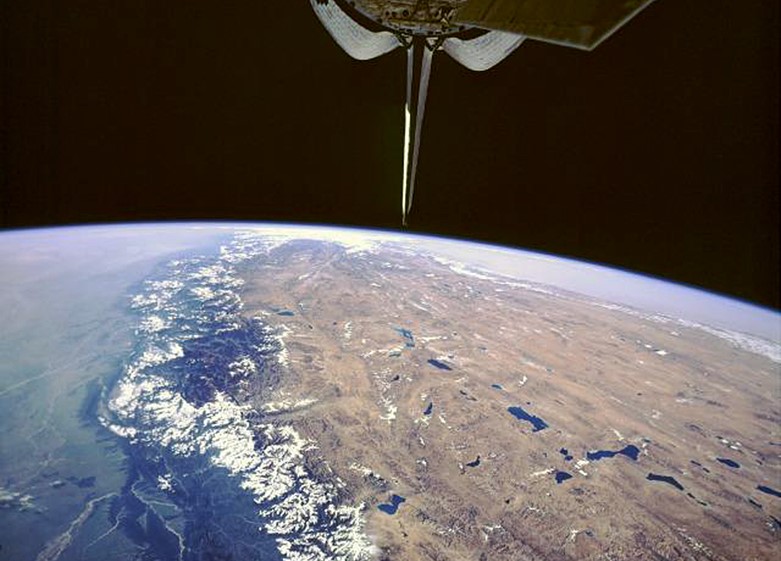
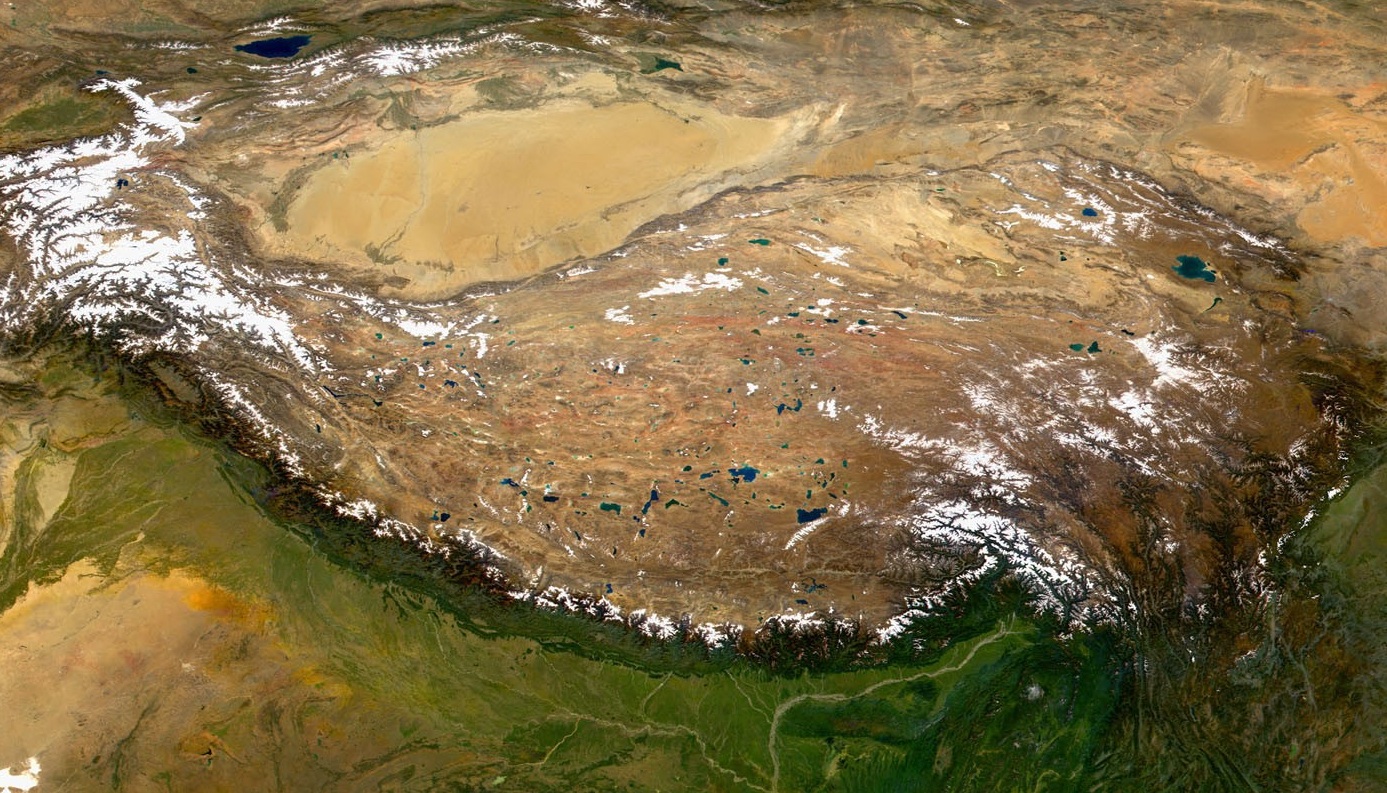
Whole Dude – Whole Himalayas: A satellites eye view of Tibetan Plateau.
Excerpt: The author condemns a cartoon in The Ann Arbor News depicting a decapitated Buddha, viewing it as a disrespectful act. The author discusses his time working for the Central Intelligence Agency’s ‘Campaign for Tibet’, criticizing America’s selective support for democracy and human rights. He notes President Bush’s lack of concern for the oppression in Tibet while discussing human rights at the UN General Assembly. The author states that democratic movements managed by foreign agents, such as in Burma, should not be supported by India, believing that any outside interference should be condemned. He implores for attention and support for the Tibetan monks.
The cartoon picture of decapitated Buddha that was published in The Ann Arbor News on Wednesday, October 3, 2007 is plainly disgusting and is clearly an insult. It serves no purpose other than to hurt the feelings of people who respect Lord Gautama Buddha.
Having worked for the Central Intelligence Agency’s ‘ Campaign for Tibet ‘ for over four years in the past, I have come to the following conclusions :
1.America’s support for Democracy and Human Rights is good when and where it serves their selfish interests.
2.America does not care to give a hoot to Buddha.
In his most recent appearance at the General Assembly of the United Nations, President Bush spoke about human rights and the protests in Burma. If Democracy is good for Buddhist monks of Burma, it is equally good for Buddhist monks of Tibet. He had expressed no concern about the brutal oppression of human rights in Tibet.
If the pro-democracy movement in Burma is orchestrated by foreign agents, it would not deserve any support from India. We should let Burmese people develop their own political parties and any outside interference should be condemned.
Whole Dude – Whole Insult: The Buddhist Monks of Tibet deserve to get our attention and support.
Thursday, March 31, 2022. 63rd Milestone of Life’s Journey in Exile. The plight of the Living Tibetan Spirits.
From March 31, 1959 to March 31, 2022, the Living Tibetan Spirits record Sixty-three Years of Life’s Journey in Exile. The Struggle is not over and yet it is time to take a deep breath and say Thank You India and Thank You America.
In the Indian Tradition, the number 60 is very significant for Indians recognize Sixty specific names to mark Years for purposes of timekeeping. The Cyclical Flow of Time continues in sets of Sixty Years.
Thursday, March 31, 2022. 63rd Milestone of Life’s Journey in Exile. The plight of the Living Tibetan Spirits.
A cultural program being organized as part of the Thank You India function held in McLeod Ganj on Saturday
I do not know for how long the Tibetan struggle will go on. However, the struggle will remain alive till the spirit of Tibetans remains,” the spiritual leader of Tibetans The Dalai Lama said at the “Thank You India” programme being held at McLeod Ganj on Saturday to mark his arrival in India, exactly 60 years ago.
On March 31, 1969, the Dalai Lama was forced to flee Tibet following failed uprising against China. After he took shelter in India, Tibetan community across globe under his leadership launched struggle for free Tibet but till date have not succeeded. During last few years, the demand has changed into one for autonomous Tibet.
While interacted with media persons, the Dalai Lama, when questioned about the possibility of Tibetans returning to their homeland one day, replied that Tibetan issue is an issue of justice. While commenting on the equation between India and China, he said that both were most populated countries of the World and both have ability to destroy each other.
“Any sensible person would want ‘Hindi-Chini Bhai Bhai’ to live together. None of them can be disloyal to each other, so other things will go on by the side,” he said. “Confrontation does not yield any result and amicable solution of Tibet problem is the only way out,” the Nobel Peace Laureate said.
“The Chinese are following a socialist form of government, which means everybody should have equal rights. We are not demanding separation from China, but the Tibetan people should have the autonomy to preserve their culture, language, environment and religion,” he added.
Earlier, the Dalai Lama recalled his journey in exile. He said that no time was wasted in these years. “It is a matter of pride that Tibetans have preserved their tradition and culture, wherever they are living across the globe,” he said.
He said that as there was need to preserve Tibetan culture and language, a logical analysis was also the need of hour. “When everybody is praising Tibetans it becomes our responsibility too to check where we were lacking,” he said.
Thursday, March 31, 2022. 63rd Milestone of Life in Exile. The plight of the Living Tibetan Spirits.
Tibet Awareness – Military conquest of Tibet is not a done deal
Tibet Awareness – Annexation of Tibet by China. It’s Not a Done Deal. In fact, there is no deal between Tibet and China on the border issue.
The Border called the McMahon Line between India and Tibet is not my primary concern. In 1913-14, Tibet and China had the opportunity to negotiate a deal to determine and demarcate the border between China and Tibet. They failed to do so. In fact, there is no deal between Tibet and China on the border issue.
Representatives of Tibet, Great Britain, and China at Simla Accord 1914. Front row, from left: an assistant to Ivan Chen; Sekyong Trulku, Prince of Sikkim; Ivan Chen, Chinese plenipotentiary; Sir Henry McMahon, British Plenipotentiary; Lonchen Shatra, Tibetan Plenipotentiary; Teji Trimon, assistant; Nedon Khanchung, Secretary.
I contest the occupation of Tibet by the People’s Republic of China since 1950. In my analysis, annexation of Tibet by China is not a done deal. Tibetans have never agreed to submit their territory to be ruled over by the Communist Party of China. Tibet is never a part of China. In fact, there is no deal between China and Tibet on the demarcation of their border.
Tibet Awareness – Annexation of Tibet by China. It’s Not a Done Deal. In fact, there is no deal between Tibet and China on the border issue.
BOOK EXCERPT
How the McMahon Line came to be the border between India and Tibet (and, later, China)
Tibet Awareness – Annexation of Tibet by China. It’s Not a Done Deal. In fact, there is no deal between Tibet and China on the border issue. Contested Lands: India, China and the Boundary Dispute, Maroof Raza, Westland Non-Fiction.
An excerpt from ‘Contested Lands: India, China and the Boundary Dispute’, by Maroof Raza.
Maroof Raza
Tibet Awareness – Annexation of Tibet by China. It’s Not a Done Deal. In fact, there is no deal between Tibet and China on the border issue. The original draft of the MacMohan Line in 1914: West (left) and East (right)
Lt Col Arthur Henry McMahon was formally nominated to represent the British government at the Simla Conference. With the rank of “secretary” in the foreign department of the British Government of India, McMahon was “empowered to sign any Convention, Agreement or Treaty, which may be concluded at the Conference”.
As a young captain, he had spent two years demarcating the Durand Line that separates Pakistan from Afghanistan today. He was moulded “in the furnace of responsibility and the anvil of self-reliance and relished the creation and laying down of boundaries.” His task at the Simla Conference, however, was neither enjoyable nor easy.
…China, wary of a Britain-Tibet deal, took a while to announce their representative or plenipotentiary for the Simla Conference. Eventually, when they did so, the Chinese first stated that Ivan Chen, an experienced diplomat, and Hu Hanmin would be their representatives. However, China decreed that they would be called pacificators, and would carry “no territorial powers.”
The British objected. It was only after threats and prodding that a Chinese presidential order was signed appointing Ivan Chen as their plenipotentiary and authorizing him “to sign articles that may be agreed upon in order that all difficulties which have existed in the past may be dissolved.” He just about made it in time for the opening convention of the conference.
In contrast, the Dalai Lama was decisive and swift in appointing Lonchen Shatra Paljor Dorje, his Prime Minister who later impressed everybody with his quiet dignity, as his choice for the tripartite talks. Shatra was described as “a man of great ability and patriotism.” Moreover, an official statement from the Grand Lama stated “the Chief Minister Shatra Paljor Dorje is hereby authorized to decide on all questions which may benefit Tibet and to seal all documents relating thereto.”
Both sides made their positions known in the very first meeting held at Simla on 13 October 1913. With the Chinese defeated and evicted from Tibet, Lhasa made it known that it had an “independent” status and placed a document to this effect. But the Chinese still insisted that Tibet formed an integral part of the Chinese territory and no attempts shall be made by Tibet or by Great Britain to interrupt the continuity of this territorial integrity.
For China, unlike the British Government of India, Tibet’s precise boundaries weren’t important. The British hosting the conference wanted a defined boundary for Tibet, not just with India, but also with China. This was the primary reason for the Simla Conference to have dragged on for over six months, with contestable results.
The Chinese also made a range of ridiculous claims over Tibet, most notably over its territories from the Kunlun Mountains, southeast and south of the River Tsangpo (Brahmaputra) on to the River N’Maikha in Burma (now Myanmar). Even though McMahon was prepared for some surprises, he didn’t expect this cartographic aggression based on inconsistent and vague historical assertions.
However, there were factors that restrained McMahon from defining the boundaries. For one, a draft prepared by officials at Britain’s India Office had only envisaged a two-party meeting between representatives of Peking and Delhi. With Tibet’s entry in the deliberations, McMahon had to put up appearances to hide his limitations.
In reality, in the absence of clarity about the southern limits of Tibet, McMahon was awaiting some survey reports from the expeditions along the Himalayas, particularly from India’s northeast and the tri-junction between India, Tibet and Bhutan. This region had many unsurveyed “grey areas” along a frontier of over 1,000 kilometres and was often covered with mist or clouds with many snow-covered mountains that couldn’t be easily accessed from the Indian side. This prevented McMahon from presenting a clear proposal to the conference plenipotentiaries on this part of the boundary.
Thus McMahon opened the “second meeting” of the conference on 18 November 1913 by sharing his dilemma with colleagues. He placed a skeleton map of what should be “Tibet”, admitting – after both sides had made widely divergent claims – that he was “at a loss as to what really was Tibet”.
Thereafter, he conveyed to both the Chinese and the Tibetans that without an agreement on the “limits of Tibet”, further progress was not possible. China’s Chen first said he’d have to refer the matter to Peking and then he took to bed after the meeting, claiming he was ill! Thus, with no hope of an immediate headway and with the winter in Simla bringing life to a virtual standstill, the conference venue was shifted to Delhi. It was over subsequent meetings in Delhi, both formal and informal, that there was some movement forward.
The Tibetans brought to these meetings more than ninety records and documents and backed their boundary claims with historical records in their original form, including fifty-six different registers, with numbers of monasteries and details of families, “where the writ of the Dalai Lama was unquestioned”. The Chinese, on the other hand, made historically refutable claims based on scanty evidence.
Moreover, the Tibetans’ statements were extremely critical of the “scorched earth” policies of the Chinese, especially its military commander Zhao Erfeng, who had destroyed many of their temples and villages and massacred hundreds of lamas and people. Erfeng was known to have made paper shoe soles from the leaves of Buddhist scriptures containing the teachings of Lord Buddha!
The Tibetans were thus unwilling to accept Chinese claims based on the ruthless military campaigns by Erfeng, stating that “Chao Erh-feng had been guilty of such glaring misdeeds and that even if he had a hundred lives he should forfeit every one of them to the law…”
Thus, the hotly contested territorial claims of the Chinese and Tibetans put McMahon in a spot in his attempts to find common ground, to end their “state of war” and to move the conference towards its conclusion. However, given his vast experience in map-making, McMahon proposed the division of Tibet into two zones – with the approval of Whitehall in London – by drawing lines on a map to mark: Inner (by a blue line) and Outer (by a red line) Tibet.
But the Chinese were unwilling to accept the concept of Inner or Outer Tibet. Even then, McMahon was hopeful of a settlement at the fifth conference in Delhi that was to be held on 11 March 1914. At the fifth conference, McMahon, apprehensive that China–Tibet hostilities would stall his best efforts, warned both parties that any attempts to change the ground realities to attain a favourable deal at the conference would have grave consequences. He demanded instead statesmanship from Ivan Chen and Lochen Shatra.
There was, however, a quiet spoiler lurking on the sidelines. Lu Hsing Chi was a Chinese spy at the conference, who set alarm bells ringing in China about a possible outcome that would put China at a disadvantage vis-à-vis Tibet, and thus, Peking virtually rejected the entire draft that McMahon and his team had painfully put together, demanding a better deal. Sensing that the conference might collapse, McMahon threatened to present proposals that were more stringent. This kept the Chinese team on board until the conference shifted back to Simla in April 1914, when McMahon had a private chat with Chen.
McMahon warned that if Chen failed to initial the documents in the final meetings, it would be withdrawn. Deep inside he was also prepared for the conference to end without any results even though McMahon had hoped that this was to be a decisive phase of the conference. Thus, he resorted to theatricals.
He began with a summary of earlier conference proceedings and when he ran into resistance by the Chinese and then by the Tibetans, his patience ran out. As a shocker to those in attendance, he ordered the withdrawal of the convention “with as much ceremony as possible”, as recorded by observers, to drive home his frustration with the negotiations.
This unnerved Ivan Chen, the Chinese plenipotentiary in Simla. However, in one last attempt, the conference was reconvened the next day, to give them a final chance to reconsider their positions. Facing the distinct possibility of China being left out of the border arrangements, Chen made up his mind to initial the draft and the map and, much to the relief of all, proceeded with the formalities.
However, Chen announced that he was still “bound to await definite authority from his government in Peking before the convention was formally signed and sealed.” Even as it appeared that matters had finally come to a successful conclusion, this was not to be. Chen informed McMahon’s office that his government had refused to accept – “repudiated” – his signing of the convention! McMahon was disappointed, given his multiple attempts to accept Chinese demands.
It soon became known that the man who influenced Peking to put the brakes was Lu Hsing, their Calcutta-based spy, who was elevated to an official position to negotiate with Lhasa. London was brought into these talks and soon Chinese officials suggested that Chen had been forced to agree to the terms of the convention, whereby its venue should be shifted to Peking or London. There is a view that this process reflects a conflict of interest as McMahon was both the arbitrator and the interested party here.
On the brighter side, however, the conference yielded another outcome. After Peking and Lhasa had presented enough documentation to back their conflicting territorial claims on the Sino-Tibetan frontiers, which had led to no agreement, the focus of the conference shifted to the Indo-Tibetan boundary. On this, the Chinese delegate opted to stay out, as he claimed he wasn’t authorised to discuss it.
Thus, McMahon and the Tibetan delegate agreed on an Indo-Tibet boundary on 24-25 March 1914. To that effect, McMahon drew a line on a small-scale map and this line came to be known as the McMahon Line. This boundary was marked in red ink along the crest of the Himalayas—the watershed that gave northeast India a defined boundary with Tibet. This was a major outcome after many months of negotiations, even though this was a secondary objective of the Simla Conference.
Tibet Awareness – Annexation of Tibet by China. It’s Not a Done Deal. In fact, there is no deal between Tibet and China on the border issue.
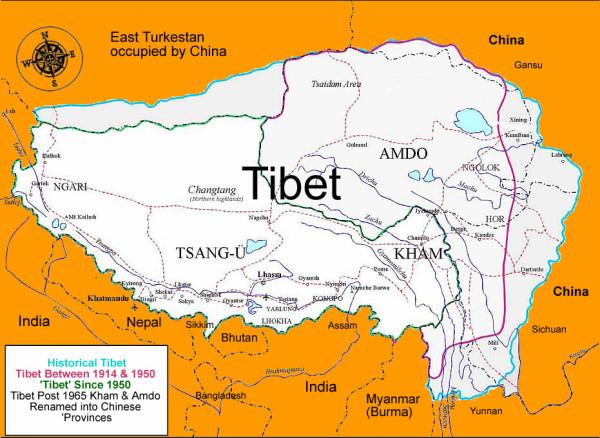
China’s Population Transfer Policy. The Chinese Settlers outnumber the Native Population of Tibet, Manchuria, Inner Mongolia, and East Turkestan. The Sinicization of Occupied territories.
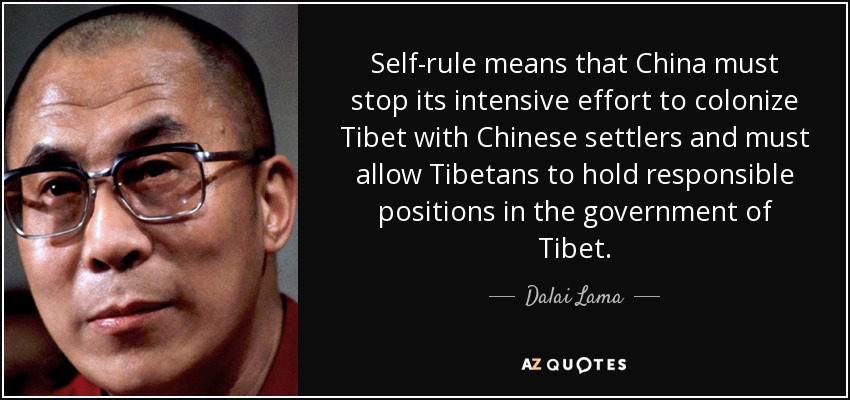
In his 5 point peace plan the Dalai Lama called to stop Chinese colonization of Tibet and described the past and present situation. When the newly formed People’s Republic of China invaded Tibet in 1949/50, it created a new source of conflict.
TIBET NOT PART OF CHINA – INDIA SHARES NO BORDER WITH CHINA. China’s Population Transfer Policy. The Chinese Settlers outnumber the Native Population of Tibet, Manchuria, Inner Mongolia, and East Turkestan. The Sinicization of Occupied territories.
“When the newly formed People’s Republic of China invaded Tibet in 1949/50, it created a new source of conflict.
“This was highlighted when, following the Tibetan national uprising against the Chinese and my flight to India in 1959, tensions between China and India escalated into the border war in 1962.
“Today large numbers of troops are again massed on both sides of the Himalayan border and tension is once more dangerously high.
“The real issue, of course, is not the Indo-Tibetan border demarcation.
“It is China’s illegal occupation of Tibet, which has given it direct access to the Indian sub-continent.
“The Chinese authorities have attempted to confuse the issue by claiming that Tibet has always been a part of China.
“This is untrue. Tibet was a fully independent state when the People’s Liberation Army invaded the country in 1949/50.
“Since Tibetan emperors unified Tibet, over a thousand years ago, our country was able to maintain its independence until the middle of this century.
“At times Tibet extended its influence over neighbouring countries and peoples and, in other periods, came itself under the influence of powerful foreign rulers – the Mongol Khans, the Gorkhas of Nepal, the Manchu Emperors and the British in India.
“It is, of course, not uncommon for states to be subjected to foreign influence or interference.
“Although so-called satellite relationships are perhaps the clearest examples of this, most major powers exert influence over less powerful allies or neighbours.
“As the most authoritative legal studies have shown, in Tibet’s case, the country’s occasional subjection to foreign influence never entailed a loss of independence.
” And there can be no doubt that when Peking’s communist armies entered Tibet, Tibet was in all respects an independent state…
“Human rights violations in Tibet are among the most serious in the world.
“Discrimination is practiced in Tibet under a policy of ‘apartheid’ which the Chinese call ‘segregation and assimilation’.
“Tibetans are, at best, second class citizens in their own country.
“Deprived of all basic democratic rights and freedoms, they exist under a colonial administration in which all real power is wielded by Chinese officials of the Communist Party and the army.
“Although the Chinese government allows Tibetans to rebuild some Buddhist monasteries and to worship in them, it still forbids serious study and teaching of religion.
“Only a small number of people, approved by the Communist Party, are permitted to join the monasteries.
“While Tibetans in exile exercise their democratic rights under a constitution promulgated by me in 1963, thousands of our countrymen suffer in prisons and labour camps in Tibet for their religious or political convictions…
“The massive transfer of Chinese civilians into Tibet in violation of the Fourth Geneva Convention (1949), threatens the very existence of the Tibetans as a distinct people.
China’s Population Transfer Policy. The Chinese Settlers outnumber the Native Population of Tibet, Manchuria, Inner Mongolia, and East Turkestan. The Sinicization of Occupied territories.
“In the eastern parts of our country, the Chinese now greatly outnumber Tibetans.
“In the Amdo province, for example, where I was born, there are, according to the Chinese statistics, 2.5 million Chinese and only 750,000 Tibetans. Even in the so-called Tibet Autonomous Region (i.e., central and western Tibet), Chinese government sources now confirm that Chinese outnumber Tibetans.
“The Chinese population transfer policy is not new. It has been systematically applied to other areas before.
“Earlier in this century, the Manchus were a distinct race with their own culture and traditions.
“Today only two to three million Manchurians are left in Manchuria, where 75 million Chinese have settled.
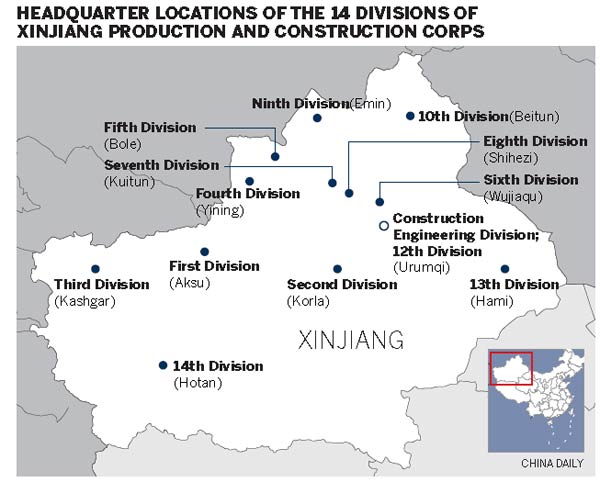
China’s Population Transfer Policy. The Chinese Settlers outnumber the Native Population of Tibet, Manchuria, Inner Mongolia, and East Turkestan (Xinjiang). The Sinicization of Occupied territories.
“In Eastern Turkestan, which the Chinese now call Sinkiang, the Chinese population has grown from 200,000 in 1949 to 7 million, more than half of the total population of 13 million. In the wake of the Chinese colonization of Inner Mongolia, Chinese number 8.5 million, Mongols 2.5 million.
“Today, in the whole of Tibet 7.5 million Chinese settlers have already been sent, outnumbering the Tibetan population of 6 million.
“In central and western Tibet, now referred to by the Chinese as the “Tibet Autonomous Region”, Chinese sources admit the 1.9 million Tibetans already constitute a minority of the region’s population.
“These numbers do not take the estimated 300,000-500,000 troops in Tibet into account – 250,000 of them in so-called Tibet Autonomous Region.
“For the Tibetans to survive as a people, it is imperative that the population transfer is stopped and Chinese settlers return to China.
“Otherwise, Tibetans will soon be no more than a tourist attraction and relic of a noble past. ”
China’s Population Transfer Policy. The Chinese Settlers outnumber the Native Population of Tibet, Manchuria, Inner Mongolia, and East Turkestan. The Sinicization of Occupied territories.



































 Whole Dude - Whole Concept