Whole Trouble – Troubles of Tibet – Red China’s Cyberspace Expansionism
In my analysis, Communist China’s Beidou Satellite Navigation Network may succeed in the invasion of Tibetan Cyberspace but will utterly fail in defending China from an attack from Heavenly Domain.
Rudra Narasimham Rebbapragada
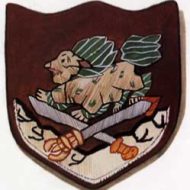
SPECIAL FRONTIER FORCE
Red China – Evil Empire-Isaiah 47: 10 and 11
Big data system keeps real-time track of visitors in Tibet – Global Times
Whole Trouble – Troubles of Tibet – Red China’s Cyberspace Expansionism
Whole Trouble – Troubles of Tibet – Red China’s Cyberspace Expansionism
A Tibetan opera competition held in a park during the traditional Shoton Festival in Lhasa, Tibet Autonomous Region, on August 12, 2018, attracts numerous Tibetan people and tourists from home and abroad. Photo: VCG
Whole Trouble – Troubles of Tibet – Red China’s Cyberspace Expansionism
Tibet University installs a real-time monitoring electronic screen which can display the number of tourists in a given period and the specific number at any tourist attraction. Photo: Courtesy of Nyima Tashi
Whole Trouble – Troubles of Tibet – Red China’s Cyberspace Expansionism
This big data screen made its debut at this year’s Tourism and Culture Expo that kicked off in Lhasa, the capital of Tibet, in early September. The screen shows the distribution of Tibet’s natural resources including lakes, lands and rare wild species. Photo: Courtesy of Wang Sheng
As China enters the era of big data, a key university in Southwest China’s Tibet Autonomous Region is using this technical method to monitor the flow of tourists.
Analysts said the move will not only boost the tourism industry but also help safeguard regional stability and promote national unity.
Tibet University, the largest university in the region with an internationally renowned department of Tibetan studies, has established a big data center based on tourism information.
The center was jointly built by the university’s information and technology school and Beijing-based Wiseweb Technology Company, one of China’s leading companies that provide big data smart software and services. It was officially launched in early September.
Nyima Tashi, dean of the school, told the Global Times on Friday that the center aims to provide data support for the regional government to boost the local tourism industry and further accelerate the region’s openness to the world.
Nyima said the school installed a real-time monitoring electronic screen which could display the number of tourists in a given period and the specific number at any tourist attraction.
Moreover, it can show the background information of local tourist attractions and exhibit any trends of changing tourist preferences.
“In near future, the screen could also show more information about tourists, such as the origin of domestic and overseas tourists and their preferences of scenic spots, as long as the information does not invade personal privacy,” Nyima noted.
The big data screen made its debut at this year’s tourism and culture expo that kicked off in Lhasa, the capital of Tibet, in early September.
Wang Sheng, deputy manager of Wiseweb, told the Global Times on Thursday that the data aims to provide a reference for the regional government to monitor tourism market dynamics.
For example, the screen could display important events held in Tibet, ticket information, and the number of tourists in different scenic spots, he said.
“The real-time monitoring could give a warning to the government on negative social events,” Wang noted.
According to Wang, some data is captured from open sources on the internet while other data is purchased from tourist companies. For the next step, the company will obtain more data from different levels of government. “Possibly, the screen will show more information about overseas tourists,” said Wang.
The big data center impressed foreign visitors. Han Woo-duck, director of South Korea Central Daily China Institute, said in an article published on its website on September 18 that what marveled him most during his four-day visit to Tibet was not the Potala Palace or the Jokhang Monastery, but the big data center at Tibet University.
Han said the university’s staff led him to the center, and the changing data on the screen, shown as pie charts and bar graphs, could demonstrate the changes of tourists in real-time.
“It means that the Tibet University, in the deep heart of China, is building up a big data center. It marks a clear comparison with South Korea, where there is not any real-time information about the number of tourists in scenic spots or the major gathering spots of overseas tourists,” Han said in the article.
Tibet received a record 25.6 million domestic and foreign tourists in 2017, up 10.6 percent compared with the previous year, the Xinhua News Agency reported in January, citing regional authorities.
Tourism has become one of the pillar industries in the region. Tourism revenue during 2017 reached 37.9 billion yuan ($5.9 billion), with a year-on-year increase of 14.7 percent. Statistics showed that for the past five years, total tourism revenue in the region topped 130 billion yuan, said Xinhua.
Due to special ethnic traditions and environmental protection concerns, overseas tourists must get a permit from the regional tourist bureau before entering into Tibet.
From January to April, Tibet received nearly 40,000 foreign tourists, up 50.5 percent compared with the previous year.
“A big data system incorporating tourism information will help local governments manage the industry in a more orderly way and avoid accidents,” Xiong Kunxin, a professor of ethnic studies at the Minzu University of China in Beijing, told the Global Times on Friday.
In addition to sharing the beautiful scenery and cultural heritage with the outside world, developing tourism in Tibet is also an important move to safeguard regional stability, promote national unity, and guard against separatist forces, said Xiong.
Whole Trouble – Troubles of Tibet – Red China’s Cyberspace Expansionism
TIBET CONSCIOUSNESS – GLOBAL WARMING: GRASSLANDS FAIL TO THRIVE DUE TO WARMING AND LACK OF PRECIPITATION.
It is with a sense of deep pain I share an article titled “TROUBLE IN TIBET” published by NATURE, international weekly Journal of Science. Tibetans are paying a heavy price for Tibetan Plateau shoulders the burden of environmental degradation contributed by Red China’s industrial growth and advancement. Red China is responsible for reckless land management policies and for disrupting traditional lifestyles of Tibetan nomads.
Trouble in Tibet troubles my heart. I have several serious concerns about Tibet, the Land, the people, and the Government. The Institution of Dalai Lama is Tibet’s Government and it was forced into exile in March, 1959. Tibetans living in exile have the opportunity to participate in elections and choose their own representatives who run Tibetan Government-in-Exile. Tibetans living in occupied Tibet have no access to Government that represents Tibetan people. The global community of nations should not waste any more time and take action to uplift Tibetans from their troubles.
Rudra Narasimham Rebbapragada Ann Arbor, MI 48104-4162 USA SPECIAL FRONTIER FORCE
Rapid changes in Tibetan grasslands are threatening Asia’s main water supply and the livelihood of nomads.
JANE QIU 13 January 2016
TIBET CONSCIOUSNESS – TIBET IN TROUBLE. TIBETAN GRASSLANDS ARE DISAPPEARING RAPIDLY AND RED CHINA IS ACCOUNTABLE FOR THIS ENVIRONMENTAL CATASTROPHE.
Photo Credit. Kevin Frayer/Getty
A group of young Tibetan monks huddles on a degraded pasture on the Tibetan Plateau.
In the northern reaches of the Tibetan Plateau, dozens of yaks graze on grasslands that look like a threadbare carpet. The pasture has been munched down to bare soil in places, and deep cracks run across the snow-dusted landscape. The animals’ owner, a herder named Dodra, emerges from his home wearing a black robe, a cowboy hat and a gentle smile tinged with worry.
“The pastures are in a bad state and lack the kind of plants that make livestock strong and grow fat,” says Dodra. “The yaks are skinny and produce little milk.” His family of eight relies on the yaks for most of its livelihood — milk, butter, meat and fuel. Dodra was forced to give up half of his animals a decade ago, when the Chinese government imposed strict limits on livestock numbers. Although his family receives financial compensation, nobody knows how long it will last.
“We barely survive these days,” he says. “It’s a hand-to-mouth existence.” If the grasslands continue to deteriorate, he says, “we will lose our only lifeline”.
The challenges that face Dodra and other Tibetan herders are at odds with glowing reports from Chinese state media about the health of Tibetan grasslands — an area of 1.5 million square kilometres — and the experiences of the millions of nomads there. Since the 1990s, the government has carried out a series of policies that moved once-mobile herders into settlements and sharply limited livestock grazing. According to the official account, these policies have helped to restore the grasslands and to improve standards of living for the nomads.
But many researchers argue that available evidence shows the opposite: that the policies are harming the environment and the herders. “Tibetan grasslands are far from safe,” says Wang Shiping, an ecologist at the Chinese Academy of Sciences’ (CAS) Institute of Tibetan Plateau Research (ITPR) in Beijing. “A big part of the problem is that the policies are not guided by science, and fail to take account of climate change and regional variations.”
The implications of that argument stretch far beyond the Tibetan Plateau, which spans 2.5 million square kilometres — an area bigger than Greenland — and is mostly controlled by China. The grasslands, which make up nearly two-thirds of the plateau, store water that feeds into Asia’s largest rivers. Those same pastures also serve as a gigantic reservoir of carbon, some of which could escape into the atmosphere if current trends continue. Degradation of the grasslands “will exacerbate global warming, threaten water resources for over 1.4 billion people and affect Asian monsoons”, says David Molden, director general of the International Centre for Integrated Mountain Development (ICIMOD) in Kathmandu, Nepal.
Such concerns propelled me to make a 4,700-kilometre journey last year from Xining, on the northeastern fringe of the plateau, to Lhasa in the Tibetan heartland (see ‘TREK ACROSS TIBET’). Meeting with herders and scientists along the way, I traversed diverse landscapes and traced the Yellow and Yangtze Rivers to their sources. The trip revealed that Tibetan grasslands are far less healthy than official government reports suggest, and scientists are struggling to understand how and why the pastures are changing.
TIBET CONSCIOUSNESS – TIBET IN TROUBLE. TIBETAN GRASSLANDS FACING RAPID DECLINE; CHINESE MISMANAGEMENT CAUSED ENVIRONMENTAL DISASTER.
Fenced in
It began to drizzle soon after we set off from the city of Xining on a stretch of newly built highway along the Yellow River. As our Land Cruiser climbed onto a 3,800-metre-high part of the plateau, the vista opened to reveal rolling hills blanketed by a thick layer of alpine meadow, resembling a gigantic golf course. We passed herds of sheep and yaks, white tents and nomads in colourful robes — along with barbed-wired fences that cut the rangeland into small blocks.
This part of the Tibetan Plateau, in a region known as Henan county, is blessed with abundant monsoonal rains every summer. The herders who live here are able to maintain healthy livestock and can make a decent living. “We have plenty to go around, and the livestock are well taken care of,” says herder Gongbu Dondrup.
But life has been different since the government began to fence up grasslands around a decade ago, says Dondrup. Before that, he took his herd to the best pastures at high elevations in the summer, and then came back down in the winter. Now, he must keep the yaks in an 80-hectare plot that the government assigned to his family. The pasture looks worn, and he is being pressed by the government to further downsize his herd. “I don’t know how long it can keep us going,” he says.
The fencing initiative is the latest of a string of Chinese grassland policies. After annexing Tibet in 1950, the young revolutionary Chinese republic turned all livestock and land into state properties. Large state farms competed with each other to maximize production, and livestock numbers on the plateau doubled over two decades, reaching nearly 100 million by the late 1970s. But in the 1980s, as China moved towards a market-based economy, Beijing swung to the other extreme: it privatized the pastures and gave yaks back to individual households, hoping that the move would push Tibetans to better manage their land and so boost its productivity.
Despite the privatization, nomads continued to use the rangeland communally — often in groups led by village elders. Then the government began to limit herds, and it built fences to separate households and villages. “This has totally changed the way livestock are traditionally raised on the plateau, turning a mobile lifestyle into a sedentary existence,” says Yang Xiaosheng, director of Henan county’s rangeland-management office.
The fencing policy does have merits when applied in moderation, says Yönten Nyima, a Tibetan policy researcher at Sichuan University in Chengdu. Because an increasing number of nomads now lead a settled life — at least for parts of the year — it helps to control the level of grazing in heavily populated areas, he says. “Fencing is an effective way to keep animals out of a patch of meadow.” Many herders also say that it makes life much easier: they do not have to spend all day walking the hills to herd their yaks and sheep, and if they go away for a few days, they don’t worry about the animals running off.
But the convenience comes at a cost, says Cao Jianjun, an ecologist at Northwest Normal University in Lanzhou. Fenced pastures often show signs of wear after a few years. In a 2013 study, Cao and his colleagues measured growth of the sedge species preferred by livestock in two scenarios: enclosed pastures and much larger patches of land jointly managed by up to 30 households. Despite similar livestock densities in both cases, the sedge grew twice as fast in the larger pastures, where animals could roam and plants had more opportunity to recover1. That matches the experience of Henan county herders, who say that their land sustains fewer animals than it has in the past.
Water worries
The future of the grasslands looked even bleaker as we left relatively well-to-do Henan county and ventured into the much higher, arid territory to the west. After 700 kilometres, we reached Madoi county, also known as qianhu xian (‘county of a thousand lakes’), where the Yellow River begins. Although this region gets only 328 millimetres of rain on average each year, about half of what Henan receives, Madoi was once one of the richest counties on the plateau — famous for its fish, high-quality livestock and gold mines.
Now, the wetlands are drying up and sand dunes are replacing the prairies, which means that less water flows into the Yellow River. Such changes on the plateau have contributed to recurring water shortages downstream: the Yellow River often dries up well before it reaches the sea, an event not recorded before 1970.
In 2000, China sought to protect this region, along with adjacent areas that give rise to the Yangtze and Mekong Rivers, by establishing the Sanjiangyuan (or Three-Rivers’ Headwaters) National Nature Reserve, an area nearly two-thirds the size of the United Kingdom.
Nearly one-tenth of the reserve area falls into core zones in which all activities, including herding, are prohibited. The government spends hundreds of millions of US dollars each year on moving nomads out of those core areas, constructing steel meshes to stabilize the slopes and planting artificially bred grass species to restore the eroded land. Outside the core regions, officials have banned grazing on ‘severely degraded grasslands’, where vegetation typically covers less than 25% of the ground. Land that is ‘moderately degraded’, where vegetation coverage measures 25–50%, can be grazed for half of the year.
TIBET CONSCIOUSNESS – TIBET IN TROUBLE. TIBETAN PLATEAU GRASSLANDS REPLACED BY DRY, BARREN LAND.
Jonas Bendiksen/Magnum
Near the headwaters of the Yellow River, lush grasslands have given way to sand dunes.
Such policies — and related initiatives to limit livestock numbers and fence off areas of pasture — have not been easy on the herders, says Guo Hongbao, director of the livestock-husbandry bureau in Nagchu county in the southern Tibetan Plateau. “The nomads have made sacrifices for protecting the grasslands,” he says. But he also says that the strategies have paid off. Guo and other officials point to satellite studies showing that the plateau has grown greener in the past three decades2. This increase in vegetation growth, possibly the result of a combination of grazing restrictions and climate change, “has had a surprisingly beneficial effect on climate by dampening surface warming”, says Piao Shilong, a climate modeller at Peking University.
But ecologists say that such measurements look only at surface biomass and thus are not a good indicator of grassland health. “Not all vegetation species are equal,” says Wang. “And satellites can’t see what’s going on underground.”
This is particularly important in the case of the sedge species that dominate much of the Tibetan Plateau, and that are the preferred food of livestock. These species, part of the Kobresia genus, grow only 2 centimetres above the surface and have a dense, extensive root mat that contains 80% of the total biomass. Studies of pollen in lake sediments show that Kobresia and other dominant sedges emerged about 8,000 years ago, when early Tibetans began burning forests to convert them to grasslands for livestock3. The prehistoric grazing helped to create the thick root mat that blankets the vast plateau and that has stored 18.1 billion tonnes of organic carbon.
But Kobresia plants are being driven out by other types of vegetation, and there is a risk that the locked-up carbon could be released and contribute to global warming. Every now and then on the trip to Lhasa, we passed fields blooming with the beautiful red and white flowers of Stellera chamaejasme, also known as wolf poison. “It’s one of a dozen poisonous species that have increasingly plagued China’s grasslands,” says Zhao Baoyu, an ecologist at the Northwest Agriculture and Forestry University in Yangling. Zhao and his colleagues estimated that poisonous weeds have infested more than 160,000 square kilometres of the Tibetan grasslands, killing tens of thousands of animals a year4.
Herders also report seeing new grass species and weeds emerge in recent years. Although most are not toxic, they are much less nutritious than Kobresia pastures, says Karma Phuntsho, a specialist on natural-resource management at ICIMOD. “Some parts of the plateau may seem lush to an untrained eye,” he says. “But it’s a kind of ‘green desertification’ that has little value.”
In one unpublished study of the northeastern Tibetan Plateau, researchers found that Kobresia pastures that had gone ungrazed for more than a decade had been taken over by toxic weeds and much taller, non-palatable grasses: the abundance of the sedge species had dropped from 40% to as low as 1%. “Kobresia simply doesn’t stand a chance when ungrazed,” says Elke Seeber, a PhD student at the Senckenberg Natural History Museum in Görlitz, Germany, who conducted the field experiment for a project supported by the German Research Foundation (DFG).
“The policies are not guided by science, and fail to take account of climate change and regional variations.”
The changes in vegetation composition have important implications for long-term carbon storage, says project member Georg Guggenberger, a soil scientist at Leibniz University of Hanover in Germany. In moderately grazed Kobresia pastures, up to 60% of the carbon that is fixed by photosynthesis went into the roots and soil instead of the above-ground vegetation — three times the amount seen in ungrazed plots5. This underground organic carbon is much more stable than surface biomass, which normally decomposes within a couple of years and releases its stored carbon into the air. So a shift from Kobresia sedge to taller grasses on the plateau will ultimately release a carbon sink that has remained buried for thousands of years, says Guggenberger.
Critics of the grazing restrictions in Tibet say that the government has applied them in a blanket way, without proper study and without taking on board scientific findings. In some cases, they make sense, says Tsechoe Dorji, an ecologist at the ITPR’s Lhasa branch, who grew up in a herder family in western Tibet. “A total grazing ban can be justified in regions that are severely degraded”, he says, but he objects to the simple system used by the government to classify the health of the grasslands. It only considers the percentage of land covered by vegetation and uses the same threshold for all areas, without adjusting for elevation or natural moisture levels.
“Pastures with 20% vegetation cover, for instance, could be severely degraded at one place but totally normal at another,” says Dorji. This means that some of the grasslands that are classified as severely degraded are actually doing fine — and the grazing ban is actually hurting the ecosystem. “Having a sweeping grazing policy regardless of geographical variations is a recipe for disasters,” he says.
Fast forward
China’s grazing policy is only one of several factors responsible for such damaging changes, say the researchers. Pollution, global warming and a rash of road-building and other infrastructure-construction projects have all taken a toll on the grasslands.
Ten days after leaving Xining, we caught a glimpse of Tibet’s future when we arrived at Nam Tso, a massive glacial lake in the southern part of the plateau. Here Dorji and Kelly Hopping, a graduate student at Colorado State University in Fort Collins, have been turning the clock forward by surrounding small patches of grassland with open-topped plastic chambers that artificially raise the temperature. These experiments are important because Tibet is a hotspot in terms of climate change; the average temperature on the plateau has soared by 0.3–0.4 °C per decade since 1960 — about twice the global average. In trials over the past six years, they found that Kobresia pygmaea, the dominant sedge species, develops fewer flowers and blooms much later under warming conditions6. Such changes, says Dorji, “may compromise its reproductive success and long-term competitiveness”.
“Having a sweeping grazing policy regardless of geographical variations is a recipe for disasters.”
At the experimental site, the artificially warmed pastures have been taken over by shrubs, lichens, toxic weeds and non-palatable grass species, says Hopping. But when the researchers added snow to some heated plots, Kobresia did not lose out to the other plants, which suggests that the loss of soil moisture might be driving the shift in species. Higher temperatures increase evaporation, which can be especially potent at high elevations. “This is not good news for species with shallow roots”, such as the Kobresia favoured by livestock, she says. Piao says that “this interplay between temperature and precipitation illustrates the complexity of ecosystem responses to climate change”. But researchers have too little information at this point to build models that can reliably predict how global warming will affect the grasslands, he says. To fill that gap, Wang and his colleagues started a decade-long experiment in 2013 at Nagchu, where they are using heat lamps to warm patches of grassland by precise amounts, ranging from 0.5 °C to 4 °C. They are also varying the amount of rainfall on the plots, and they are measuring a host of factors, such as plant growth, vegetation composition, nutrient cycling and soil carbon content. They hope to improve projections for how the grasslands will change — and also to determine whether there is a tipping point that would lead to an irreversible collapse of the ecosystem, says Piao.
Plateau prognosis
A fortnight into the trip, we finally arrived at the outskirts of Lhasa. At the end of the day, herders were rounding up their sheep and yaks in the shadows cast by snow-capped peaks. They and the other pastoralists across the plateau will have a difficult time in coming decades, says Nyima. Climate change was not a consideration when grassland polices were conceived over a decade ago, and so “many pastoralists are ill prepared for a changing environment”, he says. “There is a pressing need to take this into account and identify sound adaptation strategies.”
As a start, researchers would like to conduct a comprehensive survey of plant cover and vegetation composition at key locations across different climate regimes. “The information would form the baseline against which future changes can be measured,” says Wang. Many scientists would also support changes to the grazing ban and fencing policies that have harmed the grasslands. Dorji says that the government should drop the simplistic practice of ‘one policy fits all’ across the plateau and re-evaluate whether individual regions are degraded enough to merit a ban on grazing. “Unless the pastures are severely degraded, moderate grazing will help to restore the ecosystems,” he says.
But scientists are not banking on such reforms happening soon. Policies in Tibet are driven less by scientific evidence than by bureaucrats’ quest for power and funds, says a Lhasa-based researcher who requests anonymity for fear of political repercussions. Local officials often lobby Beijing for big investments and expensive projects in the name of weiwen (meaning ‘maintaining stability’). Because resistance to Chinese control over Tibet continues to flare up, the government is mostly concerned with maintaining political stability, and it does not require local officials to back up plans with scientific support, says the researcher. “As long as it’s for weiwen, anything goes.”
But officials such as Guo say that their policies are intended to help Tibet. “Although there is certainly room for improvement in some of the policies, our primary goals are to promote economic development and protect the environment,” he says.
Far away from Lhasa, herders such as Dodra say that they are not seeing the benefits of government policies. After we finish our visit at his home, Dodra’s entire family walks us into the courtyard — his mother in-law spinning a prayer wheel and his children trailing behind. It has stopped snowing, and the sky has turned a crystal-clear, cobalt blue. “The land has served us well for generations,” says Dodra as he looks uneasily over his pasture. “Now things are falling apart — but we don’t get a say about how best to safeguard our land and future.”
Journal name: Nature Volume: 529, Pages: 142–145 Date published: (14 January 2016) DOI: doi :10.1038/529142a A related story at SciDev.Net explores how climate change will affect Tibetan herders.
References
Cao, J., Yeh, E. T., Holden, N. M., Yang, Y. & Du, G. J. Arid Environ. 97, 3–8 (2013). Article Shen, M. et al. Proc. Natl Acad. Sci. USA 112, 9299–9304 (2015). Article PubMed ChemPort Miehe, G. et al. Quat. Sci. Rev. 86, 190–209 (2014). Article Lu, H., Wang, S. S., Zhou, Q. W., Zhao, Y. N. & Zhao, B. Y. Rangeland J. 34, 329–339 (2012). Article Hafner, S. et al. Glob. Chang. Biol. 18, 528–538 (2012). Article Dorji, T. et al. Glob. Chang. Biol. 19, 459–472 (2013). Article PubMed
Related stories and links
From nature.com
Droughts threaten high-altitude Himalayan forests 27 January 2015 Tibetan plateau gets wired up for monsoon prediction 01 October 2014 Double threat for Tibet 19 August 2014 Floods spur mountain study 04 September 2013 Thawing permafrost reduces river runoff 06 January 2012 China: The third pole 23 July 2008 Nature Geoscience Nature Climate Change
From elsewhere
Third Pole Environment International Centre for Integrated Mountain Development Institute of Tibetan Plateau Research
Author information
Affiliations
Jane Qiu is a freelance writer in Beijing. Her trip across the Tibetan Plateau was supported by the SciDev.Net Investigative Science Journalism Fellowship for the Global South, which was funded by a grant from the International Development Research Centre, Ottawa, Canada.
TIBET CONSCIOUSNESS – TIBET IN TROUBLE. SUGE LA PASS AT 5440 METERS IN ELEVATION. GRASSLANDS DESTROYED.
TIBET CONSCIOUSNESS – TROUBLE IN TIBET. PLATEAU GRASSLANDS DISAPPEARING AT RAPID PACE.
TIBET CONSCIOUSNESS – TIBET IN TROUBLE. YAKS GRAZING ON THE TIBETAN PLATEAU. GRASSLANDS DISAPPEARING DUE TO MANAGEMENT FAILURE.TIBET CONSCIOUSNESS – TIBET IN TROUBLE. GRASSLANDS OF TIBETAN PLATEAU IN SERIOUS TROUBLE.
Tibet is in deep trouble; the trouble called ‘Climate Change’ is no Secret, the trouble caused by Communist Regime occupying Tibet is indeed the bigger of the two troubles confronting Tibet. Regime Change in Tibet will resolve the problem of ‘Climate Change’.
Tibet is in deep trouble; the trouble called ‘Climate Change’ is no Secret, the trouble caused by Communist Regime occupying Tibet is indeed the bigger of the two troubles confronting Tibet. Regime Change in Tibet will resolve the problem of ‘Climate Change’.
Rudra Narasimham Rebbapragada Ann Arbor, MI 48104-4162 USA SPECIAL FRONTIER FORCE
Tibet is in deep trouble; the trouble called ‘Climate Change’ is no Secret, the trouble caused by Communist Regime occupying Tibet is indeed the bigger of the two troubles confronting Tibet. Regime Change in Tibet will resolve the problem of ‘Climate Change’.
EURASIA REVIEW – A JOURNAL OF ANALYSIS AND NEWS
NEW METHOD UNLOCKS CLIMATE CHANGE SECRETS FROM TIBETAN ICE
ISSN 2330-717x
The Qinghai-Tibetan Plateau lies between the Himalayan range to the south and the Kunlun Range to the north. Map by Lencer, Wikipedia Commons.
The Qinghai-Tibetan Plateau lies between the Himalayan range to the south and the Kunlun Range to the north. Map by Lencer, Wikipedia Commons.
By EURASIA REVIEW December 19, 2015
Identifying forest fire molecules in the Tibetan ice could give us an insight into how human activity is contributing to climate change and melting glaciers. A new study published in Talanta presents a method to help scientists identify forest fire molecules in Tibet.
The researchers behind the new method, from the Institute of Tibetan Plateau Research in China, say their work will enable scientists to spot the molecules produced by burning forests more easily. This will help them understand the history of fires in the region, adding to the picture of how humans are contributing to climate change.
The Tibetan Plateau is one of the cleanest regions in the world. It is a huge area, covering around 1000km north to south and 2500km west to east, in western China and India. The glaciers supply water to people in surrounding countries and are critical for people’s survival. However, they’re retreating at an alarming rate, putting the water supply in jeopardy for more than 1 billion people.
Climbing temperatures are contributing to the disappearance of the glaciers. But previous research has also pointed to molecules in the air called carbonaceous aerosols as another cause of the glaciers melting. Carbonaceous aerosols are commonly produced by burning fossil fuels. However, almost half of the carbonaceous aerosols in south Asia are produced when people burn biomass, such as trees.
Studying the aerosols trapped in the ice of the glaciers can give scientists insights into the history of biomass burning and how it is related to climate change and glacial melting. For the new study, the researchers developed a method to help scientists identify a molecule called levoglucosan, which can identify carbonaceous aerosols that came from biomass burning. Researchers often look for levoglucosan in snow and ice in Antarctica and the Arctic. However, ice from the Tibetan Plateau contains many more complex molecules, such as sugar and sugar alcohol, making it much harder to spot the levoglucosan.
“Carbonaceous aerosols can tell the story of biomass burning in a region, helping us understand more about how human activity has shaped glaciers over time,” explained Mr. Chao You, lead author of the study from the Institute of Tibetan Plateau Research. “But it’s quite difficult to identify the molecules that tell us when these aerosols were released, so we wanted to come up with a better method to use in Tibet.”
Usually, researchers use a technique called High Performance Liquid Chromatography (HPLC) to identify levoglucosan in snow and ice samples. However, because of the insoluble particles in the Tibetan ice, using this method without pre-treating the samples can actually harm the system. Furthermore, levoglucosan is present at such low concentrations in the Tibetan ice that standard methods often can’t identify the molecules.
Mr. You and his colleagues developed a method that can detect levoglucosan at tiny concentrations in snow and ice samples. The researchers first melted the ice, filtered it and mixed it with acetonitrile. They then analyzed the mixture using chemistry analysis called ultra-performance liquid chromatography combined with triple tandem quadrupole mass spectrometry. They then analyzed the levoglucosan in the sample.
The method is very sensitive: the team could identify levoglucosan at a concentration of only 110 nanograms per liter of ice. They could use the method with small samples of only 0.5ml. Also, the method is not just suitable for Tibetan ice, but for samples from any low and middle latitude glaciers around the world.
“I am interested in finding more evidence of biomass burning in Tibetan glacier snow and ice. To do this, we improved and tested this new method for identifying levoglucosan quickly and accurately in Tibetan ice and snow,” explained Mr. You. “Our method can reveal more detailed information about the environmental process and changes that happened in Tibetan glaciers.”
This research was supported by the National Scientific Foundation of China.
Copyright 2015 | By Eurasia Review(ISSN 2330-717x)
Tibet is in deep trouble; the trouble called ‘Climate Change’ is no Secret, the trouble caused by Communist Regime occupying Tibet is indeed the bigger of the two troubles confronting Tibet. Regime Change in Tibet will resolve the problem of ‘Climate Change’.
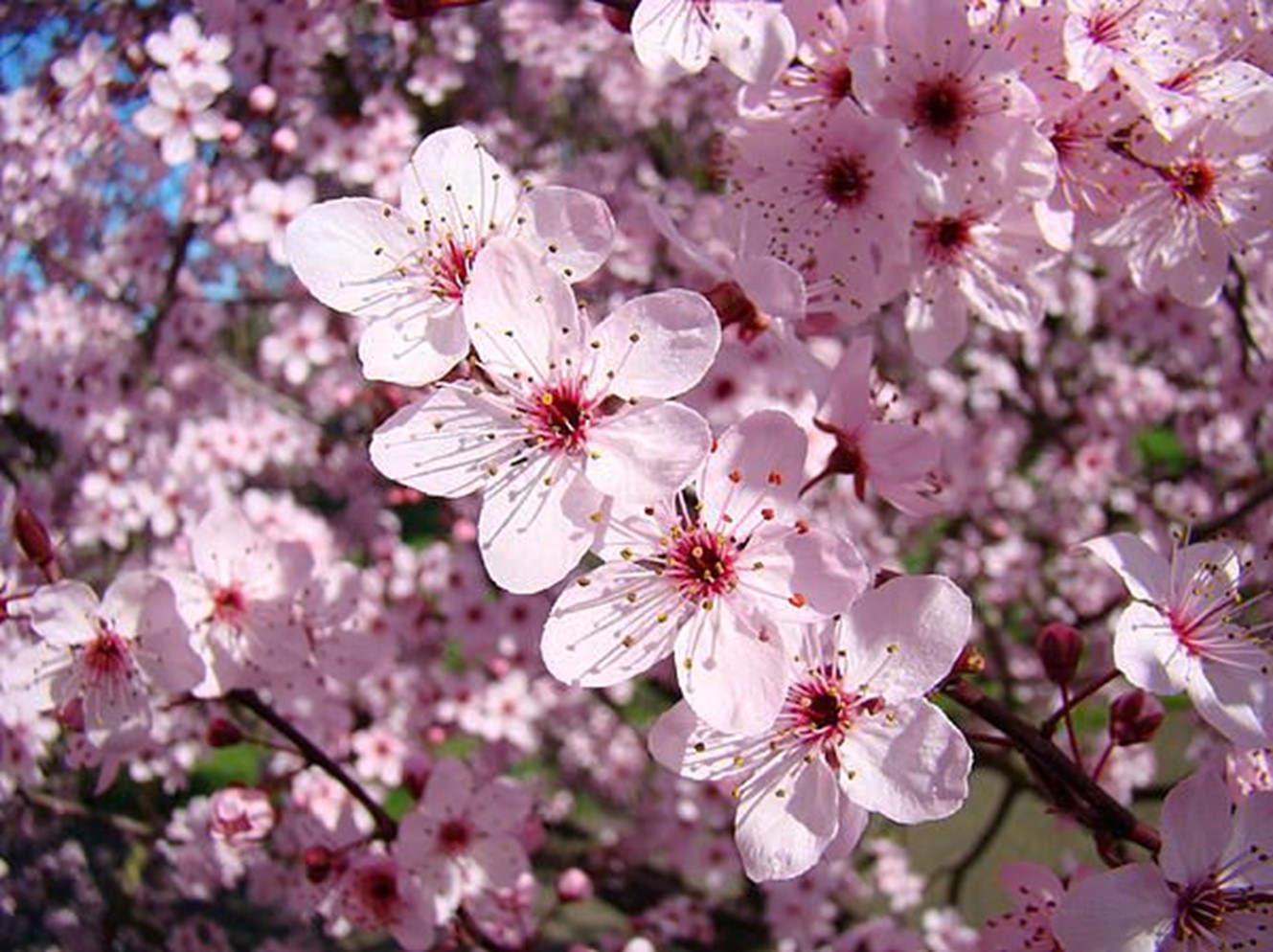
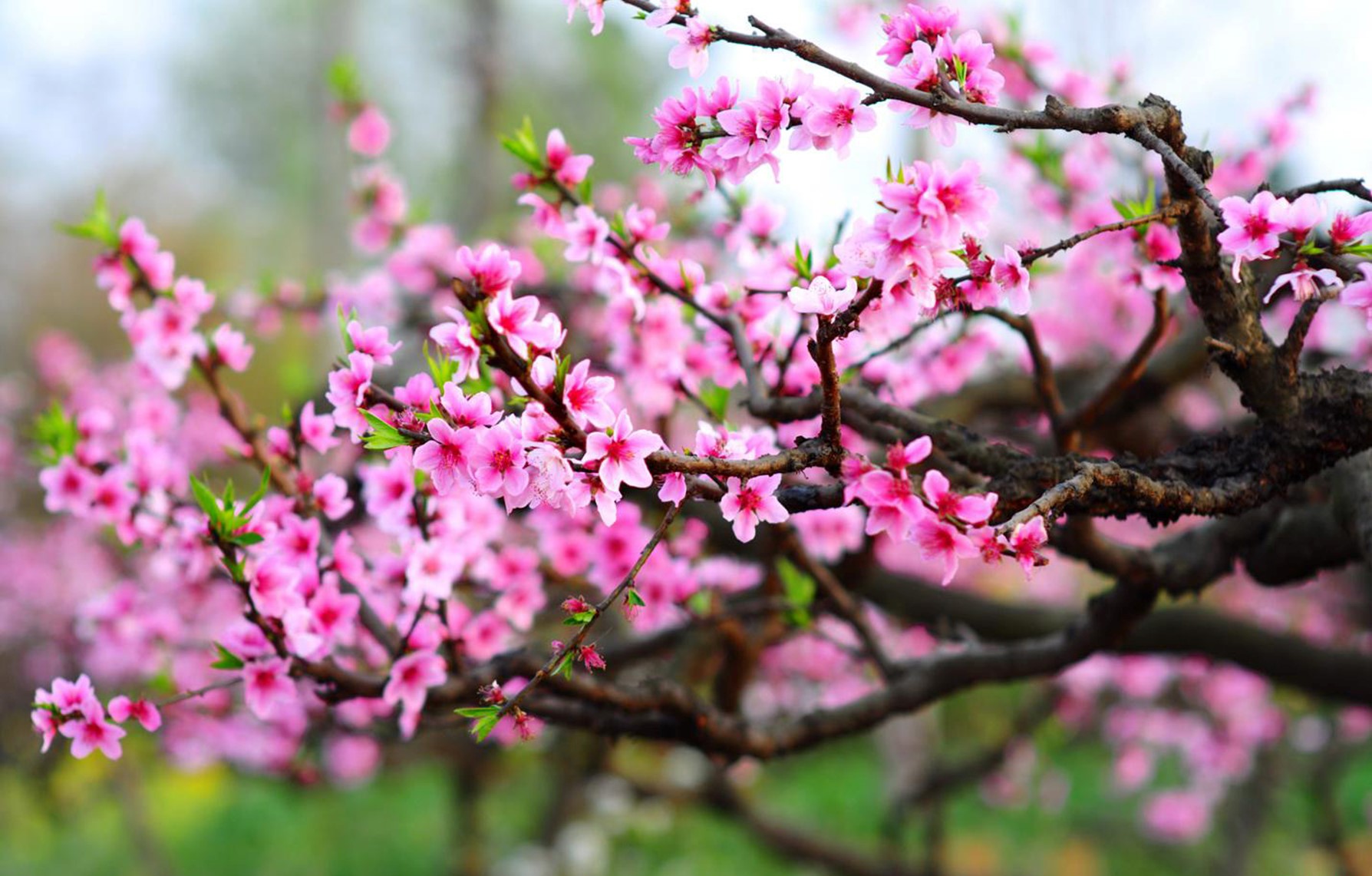
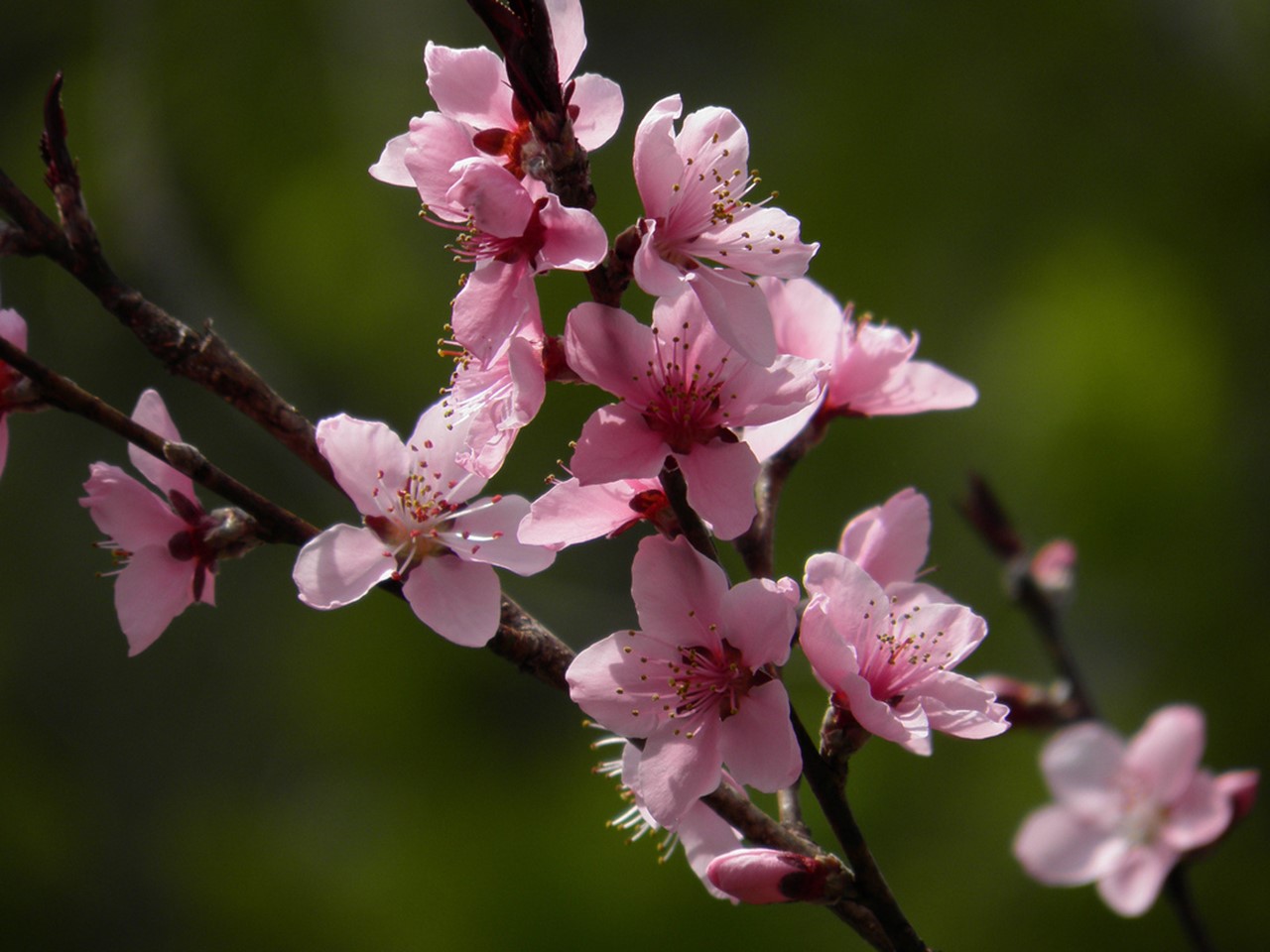
Peach Blossoms – Prayer for Freedom to Blossom in Tibet
Tibetans need courage and freedom to be the people they were made to be. They need humility to lay aside progress or development granted by occupation. I ask the Lord of Compassion to give wings to Tibetans and they shall fly to experience the Joy of Freedom.
Tibetans need courage and freedom to be the people they were made to be. They need humility to lay aside progress or development granted by occupation. I ask the Lord of Compassion to give wings to Tibetans and they shall fly to experience the Joy of Freedom.
Tibetans need courage and freedom to be the people they were made to be. They need humility to lay aside progress or development granted by occupation. I ask the Lord of Compassion to give wings to Tibetans and they shall fly to experience the Joy of Freedom.
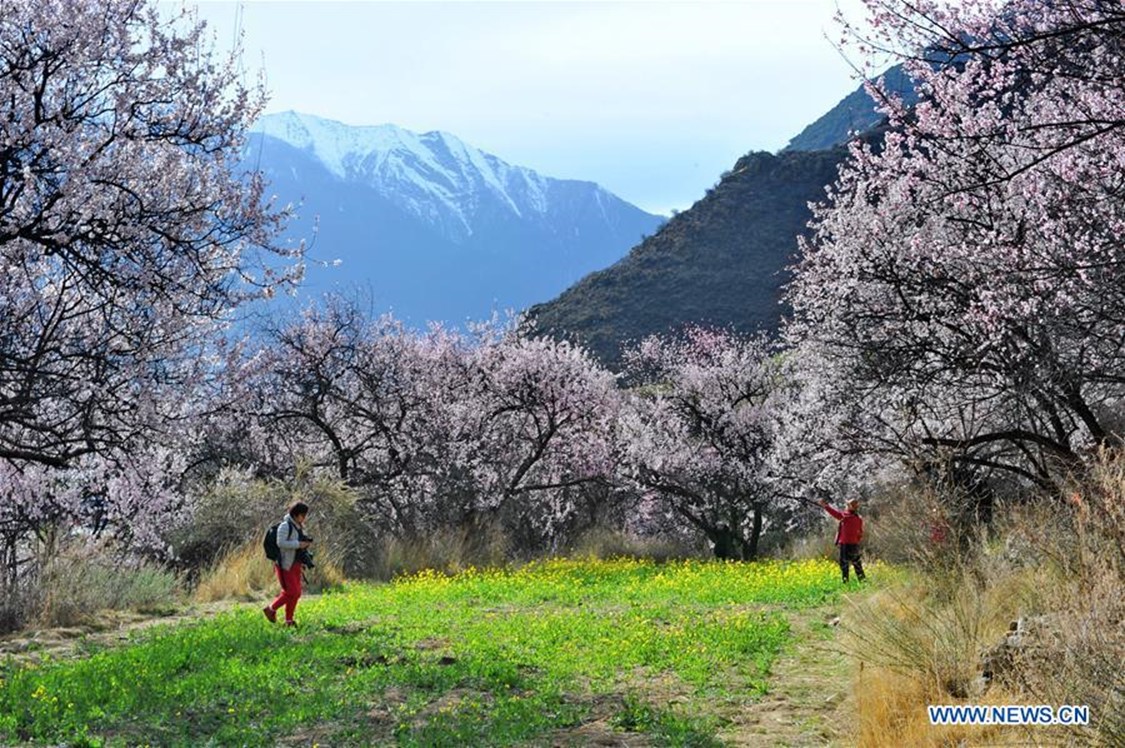
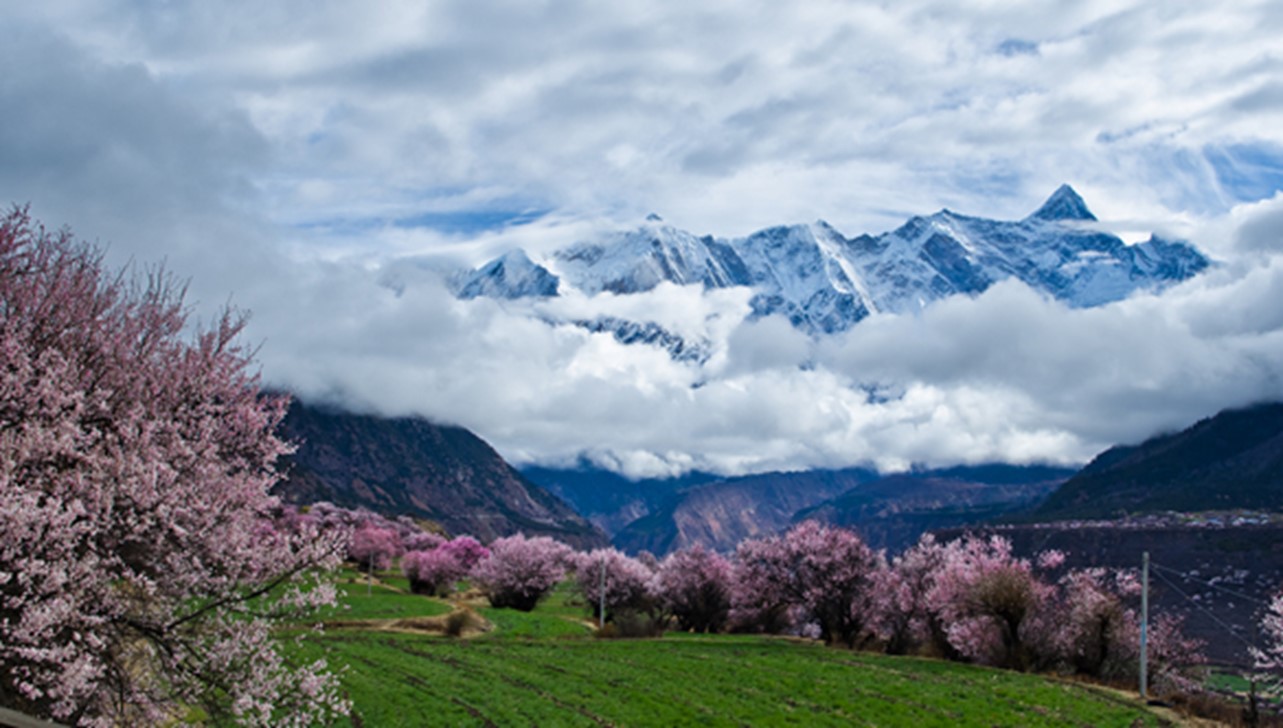
Photo taken on March 27, 2018 shows peach blossoms at the Gala peach blossom scenic area in the Baiyi district of Nyingchi, Tibet. [Photo/Xinhua]
Tibetans need courage and freedom to be the people they were made to be. They need humility to lay aside progress or development granted by occupation. I ask the Lord of Compassion to give wings to Tibetans and they shall fly to experience the Joy of Freedom.Tibetans need courage and freedom to be the people they were made to be. They need humility to lay aside progress or development granted by occupation. I ask the Lord of Compassion to give wings to Tibetans and they shall fly to experience the Joy of Freedom.Tibetans need courage and freedom to be the people they were made to be. They need humility to lay aside progress or development granted by occupation. I ask the Lord of Compassion to give wings to Tibetans and they shall fly to experience the Joy of Freedom.Tibetans need courage and freedom to be the people they were made to be. They need humility to lay aside progress or development granted by occupation. I ask the Lord of Compassion to give wings to Tibetans and they shall fly to experience the Joy of Freedom.Tibetans need courage and freedom to be the people they were made to be. They need humility to lay aside progress or development granted by occupation. I ask the Lord of Compassion to give wings to Tibetans and they shall fly to experience the Joy of Freedom.Tibetans need courage and freedom to be the people they were made to be. They need humility to lay aside progress or development granted by occupation. I ask the Lord of Compassion to give wings to Tibetans and they shall fly to experience the Joy of Freedom.Tibetans need courage and freedom to be the people they were made to be. They need humility to lay aside progress or development granted by occupation. I ask the Lord of Compassion to give wings to Tibetans and they shall fly to experience the Joy of Freedom.Tibetans need courage and freedom to be the people they were made to be. They need humility to lay aside progress or development granted by occupation. I ask the Lord of Compassion to give wings to Tibetans and they shall fly to experience the Joy of Freedom.Tibetans need courage and freedom to be the people they were made to be. They need humility to lay aside progress or development granted by occupation. I ask the Lord of Compassion to give wings to Tibetans and they shall fly to experience the Joy of Freedom.Tibetans need courage and freedom to be the people they were made to be. They need humility to lay aside progress or development granted by occupation. I ask the Lord of Compassion to give wings to Tibetans and they shall fly to experience the Joy of Freedom.Tibetans need courage and freedom to be the people they were made to be. They need humility to lay aside progress or development granted by occupation. I ask the Lord of Compassion to give wings to Tibetans and they shall fly to experience the Joy of Freedom.Tibetans need courage and freedom to be the people they were made to be. They need humility to lay aside progress or development granted by occupation. I ask the Lord of Compassion to give wings to Tibetans and they shall fly to experience the Joy of Freedom.Tibetans need courage and freedom to be the people they were made to be. They need humility to lay aside progress or development granted by occupation. I ask the Lord of Compassion to give wings to Tibetans and they shall fly to experience the Joy of Freedom.Tibetans need courage and freedom to be the people they were made to be. They need humility to lay aside progress or development granted by occupation. I ask the Lord of Compassion to give wings to Tibetans and they shall fly to experience the Joy of Freedom.Tibetans need courage and freedom to be the people they were made to be. They need humility to lay aside progress or development granted by occupation. I ask the Lord of Compassion to give wings to Tibetans and they shall fly to experience the Joy of Freedom.Tibetans need courage and freedom to be the people they were made to be. They need humility to lay aside progress or development granted by occupation. I ask the Lord of Compassion to give wings to Tibetans and they shall fly to experience the Joy of Freedom.Tibetans need courage and freedom to be the people they were made to be. They need humility to lay aside progress or development granted by occupation. I ask the Lord of Compassion to give wings to Tibetans and they shall fly to experience the Joy of Freedom.Tibetans need courage and freedom to be the people they were made to be. They need humility to lay aside progress or development granted by occupation. I ask the Lord of Compassion to give wings to Tibetans and they shall fly to experience the Joy of Freedom.Tibetans need courage and freedom to be the people they were made to be. They need humility to lay aside progress or development granted by occupation. I ask the Lord of Compassion to give wings to Tibetans and they shall fly to experience the Joy of Freedom.Tibetans need courage and freedom to be the people they were made to be. They need humility to lay aside progress or development granted by occupation. I ask the Lord of Compassion to give wings to Tibetans and they shall fly to experience the Joy of Freedom.Tibetans need courage and freedom to be the people they were made to be. They need humility to lay aside progress or development granted by occupation. I ask the Lord of Compassion to give wings to Tibetans and they shall fly to experience the Joy of Freedom.
Waiting for the Tibetan Spring with Optimism shared by Richard Gere
WORLD PARLIAMENTARIANS CONVENTION ON TIBET HELD IN OTTAWA, CANADA, 2012. Carl Gershman, President of the National Endowment for Democracy, Washington, DC, Professor Jayadeva Ranade, Distinguished Fellow with the Centre for Air Power Studies, New Delhi, with Richard Gere, Chairman of the International Campaign for Tibet.
Richard Gere shared his sense of optimism and expressed his hope for a Tibetan Spring and encouraged Tibetan supporters to wait with patience. At Special Frontier Force, I recognize Patience and Perseverance as part of our military strategy.
If not Tibetan Spring, I am waiting for a Red China “Meltdown” that would eventually lead to the Tibetan Spring. The term ‘meltdown’ describes a situation in which a rapid rise in the power level of a nuclear reactor, as from a defect in the cooling system, results in the melting of the fuel rods and the release of dangerous radiation and may cause the core to sink into the earth. ‘Meltdown’ also refers to a sudden decline or breakdown in a situation or condition. I am really impressed by Red China’s expanding military, economic, and political power. At the same time, I recognize inherent weakness of Red China’s Expansionism. In my analysis, there is no person, and there is no national entity that can save Red China from a catastrophic ‘Meltdown’, a sudden decline, a rapid breakdown of her Evil Power.
Rudra Narasimham Rebbapragada Ann Arbor, MI 48104-4162, USA
Special Frontier Force, Establishment 22, Vikas Regiment
Richard Gere: ‘There Will Be a Tibetan Spring Eventually,’ We Have to Be Patient
Richard Gere: ‘There Will Be a Tibetan Spring Eventually,’ We Have to Be Patient
July 4, 2015 | 09:21AM PT
‘I am welcomed by the Chinese people, but not by the Chinese government’
LEO BARRACLOUGH
KARLOVY VARY, Czech Republic — Richard Gere predicted a Tibetan Spring at a press conference on Saturday at the Czech Republic’s Karlovy Vary Film Festival. The actor, who received the festival’s Crystal Globe for outstanding contribution to world cinema on Friday, was addressing a question regarding Chinese control of Tibet, which it has occupied since an invasion in 1950.
Gere is a follower of the Dalai Lama, the India-based spiritual leader of Tibet, and an advocate for the liberation of Tibet. He disputed a suggestion from a journalist that he was not welcome in China. “I am welcomed by the Chinese people, but not by the Chinese government. I haven’t been able to (visit China) since 1993. But you guys can understand that. The Czech Republic understands Communism very well,” he said.
Gere rejected the suggestion that there were negotiations going on behind the scenes that would lead to an improvement in relations between the Tibetan Buddhists in exile and the Chinese government.
He was asked what would happen when the Dalai Lama, who is 80 years old on July 6, dies and the Tibetan Buddhists sought out the next Dalai Lama. Gere referred to an episode in Tibetan history when the Panchen Lama, the second-highest Tibetan lama, spoke out against the Chinese treatment of Tibetans in 1989, and died in “mysterious” circumstances soon thereafter. When the Panchen Lama’s successor, a 6-year-old boy, was named by the Tibetan Buddhists, he was “kidnapped” by the Chinese Communist authorities, Gere said, and “has not been seen since.” The Chinese then selected their own Panchen Lama, whom the Tibetans regard as “bogus,” Gere said. This scenario could be repeated when the Dalai Lama dies, Gere claimed.
“There is a fear — which is based in reality — that the Chinese will try to co-opt the next incarnation of the Dalai Lama. In fact the Chinese Communist Party has said that it is only up to the Chinese to decide who the Dalai Lama will incarnate as,” he said. “So there is a drama going on now about who will decide who is the next Dalai Lama.”
He continued: “The Dalai Lama has said: ‘Well, first of all, he is not going to incarnate inside of China if it is still controlled by the Chinese Communists.’ In any event it is up to him where he, and how he incarnates, not the Chinese Communists, so there is this absurd line of reasoning and declarations from the Communist Party.”
Gere added that the Czechs, because of their experience of living under Communism, could identify with such “absurdity.” “You have such experience with the absurdities of a Communist party, so you’ll understand the position of the Tibetans quite well. It will change eventually as it changed here, and there will be a Prague Spring in Tibet,” he said, referring to the anti-communist uprising in Czechoslovakia in 1968, that was unsuccessful, and the Velvet Revolution in 1989, which ended communist rule in the country. “Things will change,” Gere said. “We have to be patient and we have to keep Tibetan culture alive in the meantime, because the Chinese are doing their best to completely eradicate it.”
The Dalai Lama, shown here speaking to the Wisconsin Legislature in 2013, will be back in Madison on March 9, 2016 to participate in a gathering billed as “The World We Make.”
As of today, our World is in awful shape. Actually, we did not make this World. Just as in the case of Tibet, troubles are imposed upon innocent people who simply mind their own business without causing inconvenience to others. There is no choice other than that of remaking this World to give Peace and Justice to all people.
Rudra Narasimham Rebbapragada Ann Arbor, MI 48104-4162 USA Special Frontier Force, Establishment 22, Vikas Regiment
THE CAP TIMES
Madison, Wisconsin
Bill Berry: Wake up, Wisconsin, to impact of Dalai Lama, climate change
BILL BERRY | state columnist Jan 25, 2016 JOHN HART – State Journal
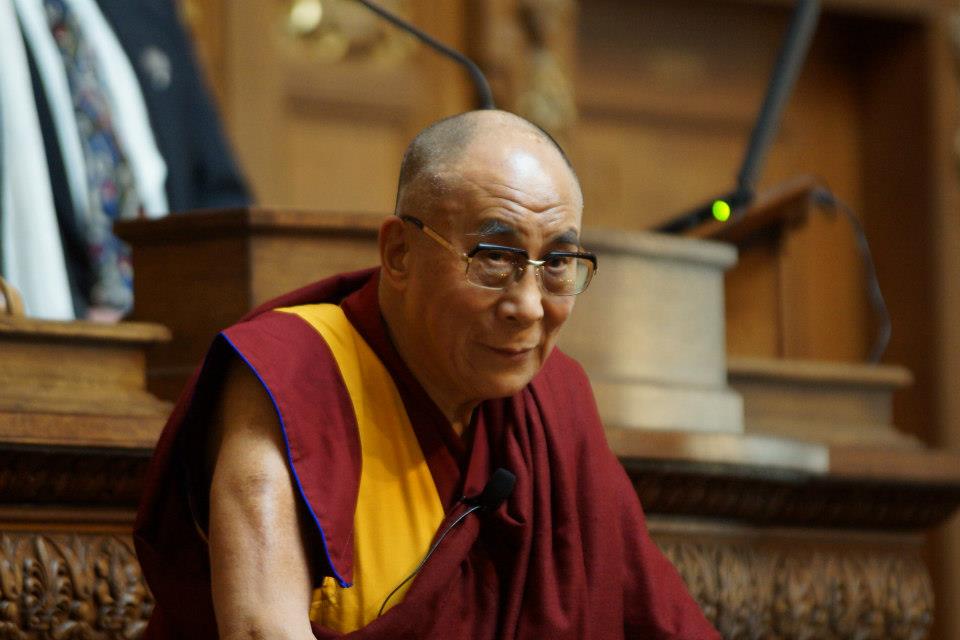
The Dalai Lama, shown here speaking to the Wisconsin Legislature in 2013, will be back in Madison on March 9 to participate in a gathering billed as “The World We Make.”An international spiritual leader, the Dalai Lama has worked for decades to building better understanding among the scientific and spiritual communities. John Hart/State Journal111
News that didn’t but should have stopped the presses as we came out of post-Christmas hibernation:
Welcome back: The Dalai Lama will make his 10th visit to Madison come March 9, as reported last week in Madison media. Beyond the Madison market, chances are the word won’t get out much on the visit from this international spiritual, ethical and moral leader. Its too bad. His international impact is immense. He’ll participate in a Capitol Theater event billed as The World We Make, a gathering of world leaders in science, health care and the media, according to its sponsor, the Center for Healthy Minds at UW-Madison. Among his many accomplishments, the Dalai Lama has been able to build better understanding among the scientific and spiritual communities.
The connection between the Dalai Lama and UW-Madison is well known in the Madison area. Outstate, not so much. But people might like to know that the connection has led to vibrant research on the healthy mind at the center, headed by Richard Davidson, and elsewhere on the UW campus. The simple idea that we can learn about humans by studying the healthy mind is transformational. Its also part of a vibrant body of research that stretches well beyond the Madison campus.
Bill Berry of Stevens Point writes a semimonthly column for The Capital Times. billnick
About the columnist
Bill Berry is a self-employed writer and editor who contributes to state and national publications. His Capital Times columns cover an array of topics, but he specializes in conservation, agriculture and sustainable land use.
Tibet Awareness – The Third Pole of Earth is vanishing – A Recipe for Disaster
Whole Awareness – Less Snow and Less Freedom in Tibet – A Recipe for Disaster
A report published in Climate Dynamics suggests that less snow in Tibet means more heatwaves in Europe. How about less Freedom in Tibet? What repercussions it would have on rest of the world? As Doomsayer of Doom Dooma, I predict that less ‘Freedom’ in Tibet is a recipe for a great disaster. A calamity, a catastrophe, and a disaster will strike Red China forcing her out of Tibet.
Rudra Narasimham Rebbapragada Ann Arbor, MI 48104-4162, USA Special Frontier Force. Establishment 22. Vikas Regiment
Less snow in Tibet means more heatwaves in Europe
Worsening heatwaves in Europe and north-east Asia are to thinner snow cover on the Tibetan Plateau, highlighting its key role in global weather systems, a study by Chinese scientists finds
TIBET AWARENESS – GLOBAL WARMING – CLIMATE ACTION. RED CHINA REFUSES TO ACCEPT THE CAUSE OF GLOBAL WARMING. RED CHINA IS USING DECEPTION AND PROPAGANDA INSTEAD OF ADDRESSING CORE ISSUES.
Chinese scientists found that reduced snow cover on the Tibetan Plateau triggers high pressure over southern Europe and northeast Asia, reducing cloud formation and pushing up temperatures.
Wednesday 7 October 2015
Recent summer heatwaves in Europe and northeast Asia have caused massive water shortages and a large number of deaths. But the mechanism behind these extreme weather events is not fully understood.
Scientists at China’s Nanjing University of Information Science and Technology now say that decreasing snow cover in the Tibetan Plateau could be playing an important role. Professor Wu Zhiwei and her team used monthly snow cover and air temperature data from the past fifty years to build a global circulation model.
Their findings show that reduced snow cover on the Tibetan Plateau triggers high pressure over southern Europe and northeast Asia, reducing cloud formation and pushing up temperatures. Warmer and drier conditions in turn further inhibit cloud formation, intensifying local heat waves, says their paper, published recently in Climate Dynamics. With further snow loss projected in the future, “Tibetan Plateau snow cover may play an increasingly significant role in shaping the Eurasian heat waves in the next decades,” the Chinese scientists conclude.
Summer snow cover on the Tibetan plateau has already decreased significantly over the past 50 years with rising levels of global greenhouse gases. The region is warming at almost three times the global average.
Global climate connections
As climate models grow more sophisticated and complex, scientists have identified a set of long-distance atmospheric connections – or “teleconnections” – linking climate and weather in regions that are far apart.
These teleconnections also explain why rising sea temperatures in the Pacific Ocean affect summer rainfall in North America and why there are major global climate anomalies when an EL NINO occurs.
The findings are significant for southern Europe and north-east Asia, where heatwaves have become more frequent and more severe over the past decades. In 2003 Europe was caught off guard as sweltering temperatures brought the hottest summer since records began, leading to 70,000 deaths. In July – August 2010, another heat wave caused an estimated 56,000 deaths in western Russia.
In northern China heatwaves have led to major drinking water shortages for over half a billion people.
Tibet – the weather maker
Scientists agree that as the largest and highest plateau in the world, Tibet plays a key role in the global climate system. But many of the details remain a mystery. The authors of the paper acknowledge their findings contain a number of caveats – including the lack of high quality and long-term climate data for the Tibetan Plateau. The plateau and the Hindu Kush Himalayas are together often called the third pole because they hold the world’s largest stock of ice outside the poles. The plateau’s remoteness, high altitude and harsh conditions mean that even basic weather stations are few. Satellite data only exists from the 1970s and is plagued by errors because of the lack of calibration from ground observations.
Earlier studies have shown how heavy snowfall over the Tibetan Plateau can both weaken and prolong the duration of the summer monsoon system in the region. Another study linked greater winter snow cover in Tibet with warmer winters in Canada.
The Nanjing study adds fresh insights: “The findings in this paper are very important for understanding the causes to the increased frequency of heatwaves in Eurasia,” said Wen Zhou from the Guy Carpenter Asia-Pacific Climate Impact Centre, City University of Hong Kong. She is leading a separate team to study the influence of high summer temperatures in southeast China on the Asian monsoons.
Plugging the gap
China is trying to fill this data gap. Last year, government institutions launched a US $49-million initiative to wire up the plateau with sensors in an unprecedented attempt to understand its influence on climate — especially the Asian monsoons.
The Chinese effort could help to predict extreme weather — both in Asia and as far afield as North America — and give scientists a steer on how climate change affects these events.
The China Meteorological Administration and the National Natural Science Foundation of China has set up sensors on high towers and in the soil to monitor temperature and moisture and cloud formation, as well as deploying sensors mounted on weather balloons and unmanned aerial vehicles.
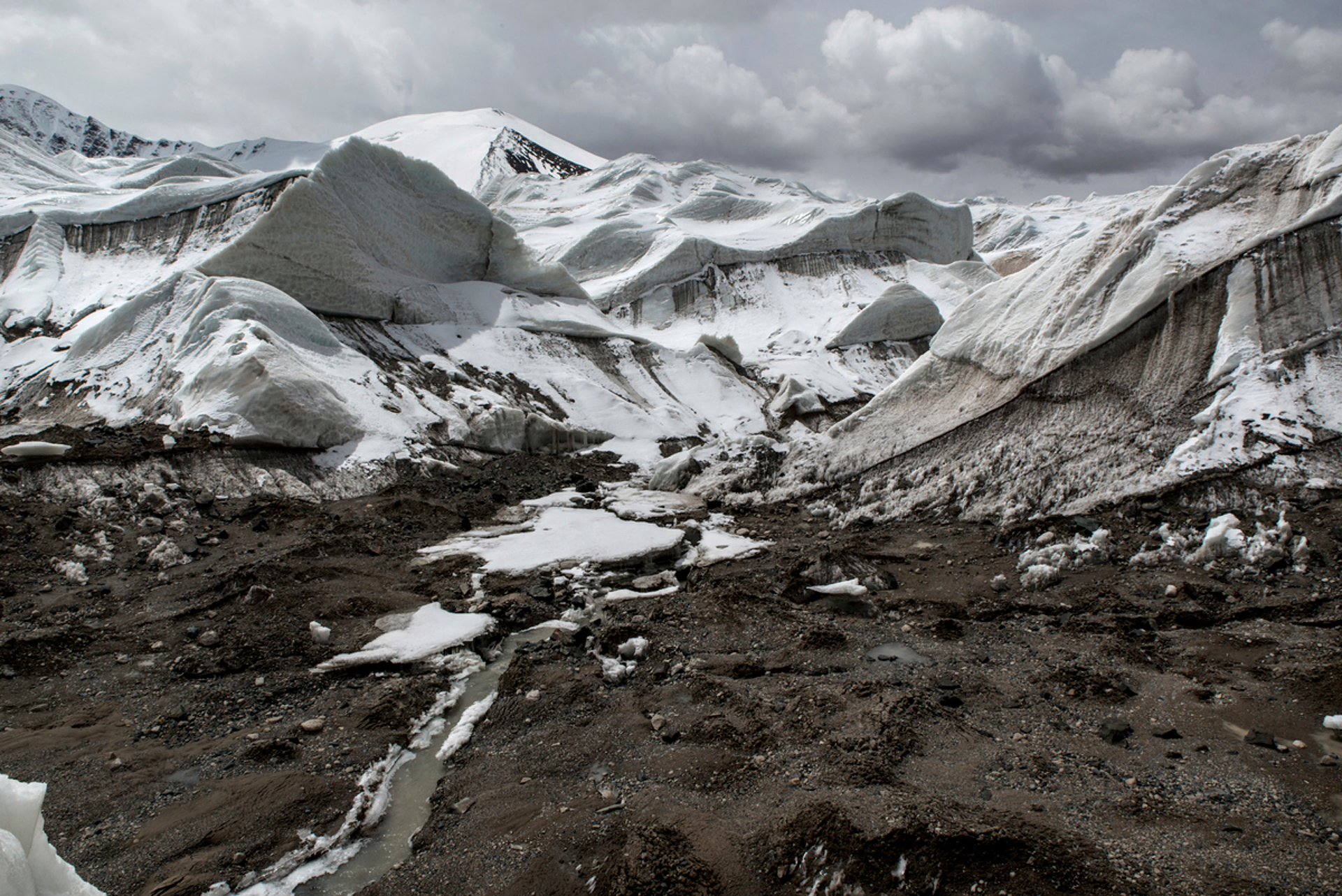
Whole Awareness – Less Snow and Less Freedom in Tibet – A Recipe for DisasterWhole Awareness – Less Snow and Less Freedom in Tibet – A Recipe for DisasterWhole Awareness – Less Snow and Less Freedom in Tibet – A Recipe for DisasterTIBET AWARENESS – LESS SNOW AND LESS FREEDOM IN TIBET – A RECIPE FOR DISASTER. MELTING GLACIERS OF TIBET.TIBET AWARENESS – LESS SNOW AND LESS FREEDOM IN TIBET – A RECIPE FOR DISASTER. GLACIERS IN TIBET MELTING. CONSEQUENCE OF COLONIALISTIC EXPLOITATION BY RED CHINA.TIBET AWARENESS – LESS SNOW AND LESS FREEDOM IN TIBET – A RECIPE FOR DISASTER. EFFECTS OF POLLUTION, GLOBAL WARMING IN TIBET.TIBET AWARENESS – LESS SNOW AND LESS FREEDOM IN TIBET – A RECIPE FOR DISASTER. CLIMATE CHANGE IS SYMPTOM OF TIBET’S MILITARY OCCUPATION.TIBET AWARENESS – LESS SNOW AND LESS FREEDOM IN TIBET – A RECIPE FOR DISASTER. TIBETAN PLATEAU GLACIERS MELTING RAPIDLY AFTER THE LOSS OF FREEDOM.TIBET AWARENESS – LESS SNOW AND LESS FREEDOM IN TIBET – A RECIPE FOR DISASTER. GLACIERS IN TIBET MELTING.Whole Awareness – Less Snow and Less Freedom in Tibet – A Recipe for DisasterWhole Awareness – Less Snow and Less Freedom in Tibet – A Recipe for DisasterWhole Awareness – Less Snow and Less Freedom in Tibet – A Recipe for DisasterWhole Awareness – Less Snow and Less Freedom in Tibet – A Recipe for DisasterWhole Awareness – Less Snow and Less Freedom in Tibet – A Recipe for DisasterWhole Awareness – Less Snow and Less Freedom in Tibet – A Recipe for Disaster
Whole Hope – Tibet’s March of Living Hope – In March 1959, Tibetans marched with a sense of Hope.
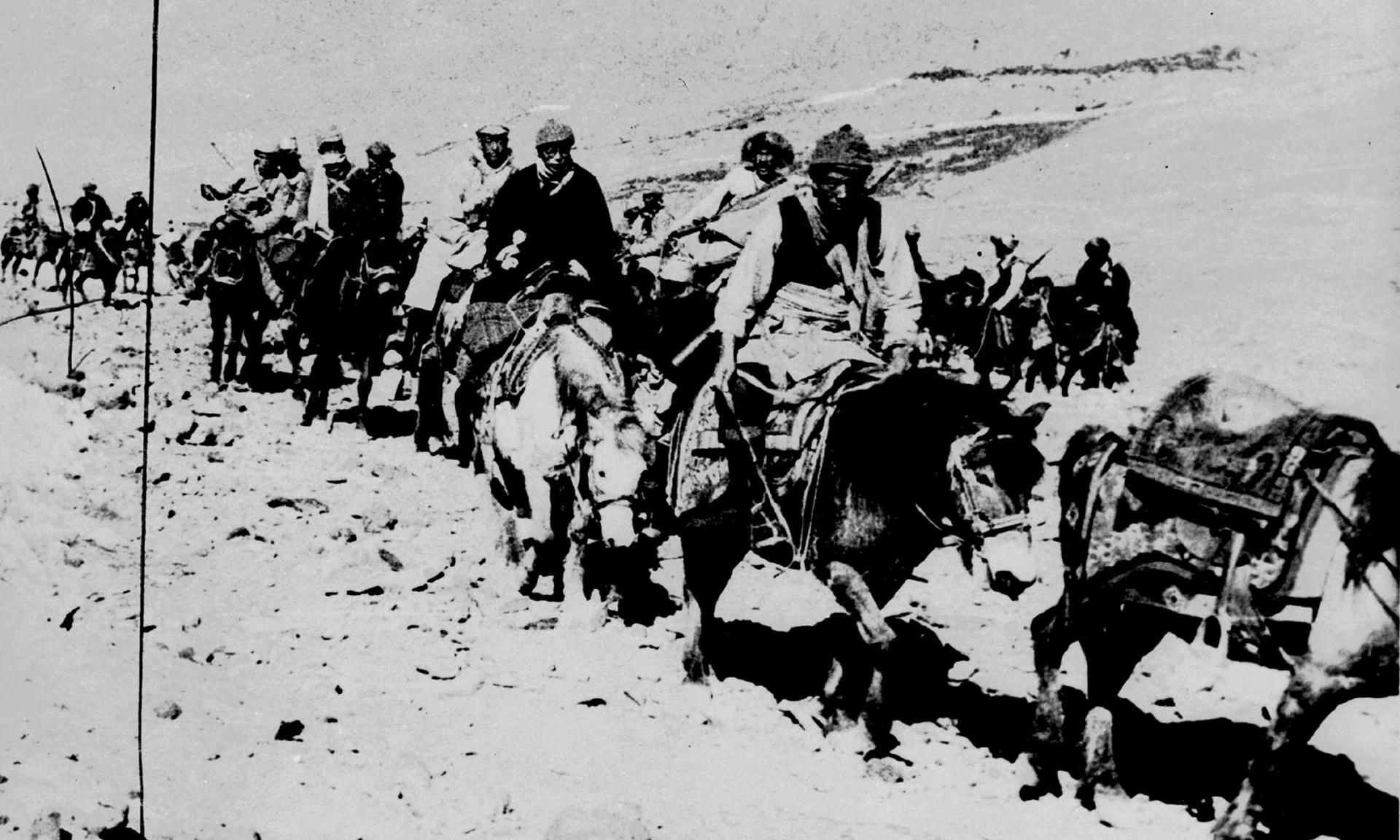
‘Trouble in Tibet’ dates back to 1950 and Tibetans began their very long “March of Living Hope” in March 1959 following National Uprising against Red China’s military occupation. Tibetan Journey is far from over. If words can give any comfort, I ask Tibetans to continue this Journey with Patience and Perseverance until their “March of Living Hope” reaches its final destination.
Whole Hope – Tibet’s March of Living Hope – In March 1959, Tibetans marched with a sense of Hope.
“March of Living Hope” – Remarks by the US President at National Prayer Breakfast:
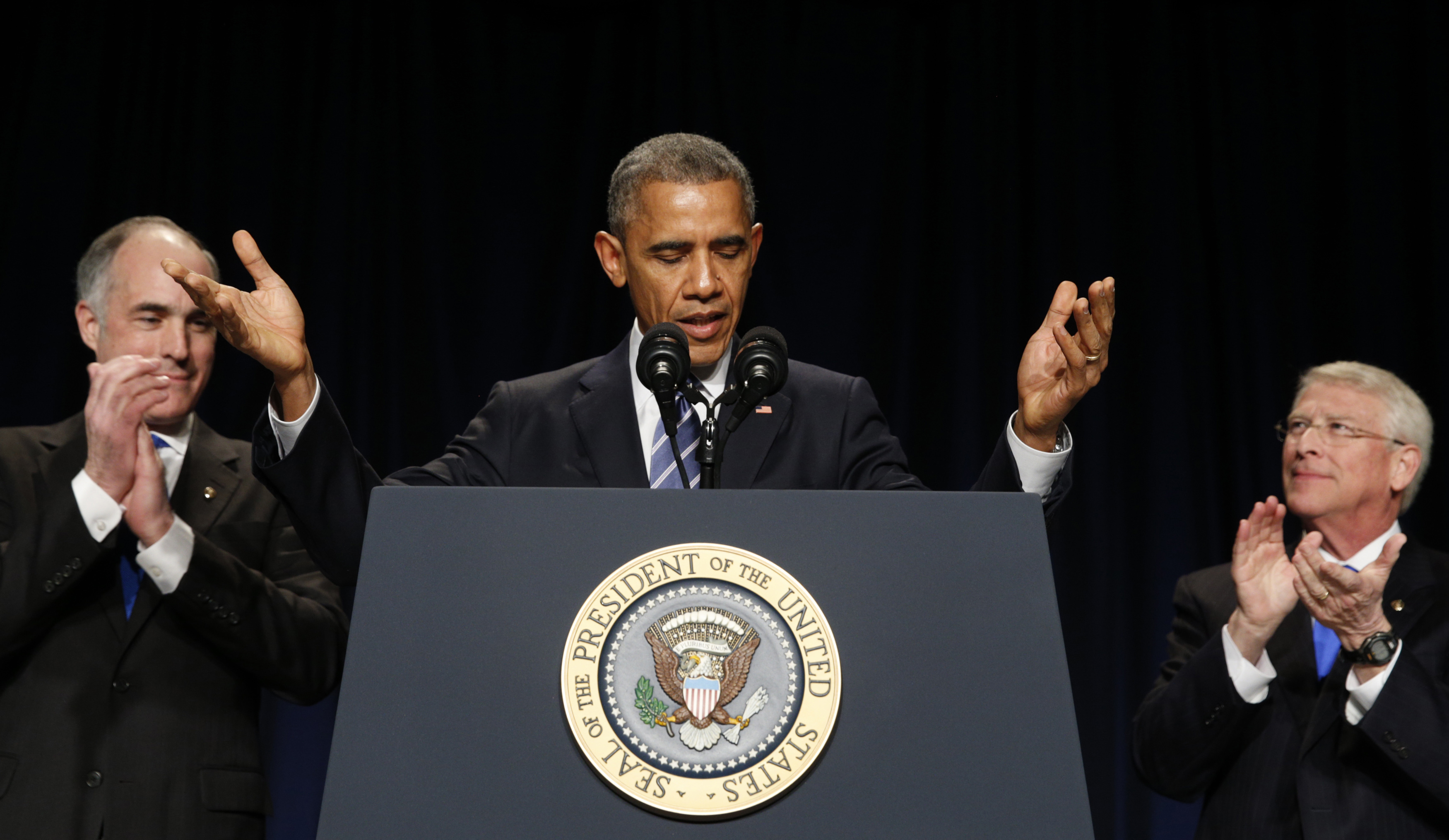
U.S. President Barack Obama takes the stage to speak at the National Prayer Breakfast in Washington, February 5, 2015. Flanking Obama are Pennsylvania Senator Robert Casey (L) and Mississippi Senator Roger Wicker. REUTERS/Kevin Lamarque
On behalf of Special Frontier Force I thank The White House (whitehouse.gov) for sharing with me ‘Remarks by the President at National Prayer Breakfast’. We join the President in this “March of Living Hope” to resolve ‘Trouble in Tibet’.
Rudra Narasimham Rebbapragada
Ann Arbor, MI 48104-4162 USA SPECIAL FRONTIER FORCE
THE WHITE HOUSE PRESIDENT BARACK OBAMA
The White House Office of the Press Secretary For Immediate Release February 05, 2015 Remarks by the President at National Prayer Breakfast Washington Hilton Washington, D.C. 9:13 A.M. EST
THE PRESIDENT: Thank you. Well, good morning. Giving all praise and honor to God. It is wonderful to be back with you here. I want to thank our co-chairs, Bob and Roger. These two don’t always agree in the Senate, but in coming together and uniting us all in prayer, they embody the spirit of our gathering today. I also want to thank everybody who helped organize this breakfast. It’s wonderful to see so many friends and faith leaders and dignitaries. And Michelle and I are truly honored to be joining you here today. I want to offer a special welcome to a good friend, His Holiness the Dalai Lama — who is a powerful example of what it means to practice compassion, who inspires us to speak up for the freedom and dignity of all human beings. (Applause.) I’ve been pleased to welcome him to the White House on many occasions, and we’re grateful that he’s able to join us here today. (Applause.) There aren’t that many occasions that bring His Holiness under the same roof as NASCAR. (Laughter.) This may be the first. (Laughter.) But God works in mysterious ways. (Laughter.) And so I want to thank Darrell for that wonderful presentation. Darrell knows that when you’re going 200 miles an hour, a little prayer cannot hurt. (Laughter.) I suspect that more than once, Darrell has had the same thought as many of us have in our own lives — Jesus, take the wheel. (Laughter.) Although I hope that you kept your hands on the wheel when you were thinking that. (Laughter.) He and I obviously share something in having married up. And we are so grateful to Stevie for the incredible work that they’ve done together to build a ministry where the fastest drivers can slow down a little bit, and spend some time in prayer and reflection and thanks. And we certainly want to wish Darrell a happy birthday. (Applause.) Happy birthday.I will note, though, Darrell, when you were reading that list of things folks were saying about you, I was thinking, well, you’re a piker. I mean, that — (laughter.) I mean, if you really want a list, come talk to me. (Laughter.) Because that ain’t nothing. (Laughter.) That’s the best they can do in NASCAR? (Laughter.) Slowing down and pausing for fellowship and prayer — that’s what this breakfast is about. I think it’s fair to say Washington moves a lot slower than NASCAR. Certainly my agenda does sometimes. (Laughter.) But still, it’s easier to get caught up in the rush of our lives, and in the political back-and-forth that can take over this city. We get sidetracked with distractions, large and small. We can’t go 10 minutes without checking our smartphones — and for my staff, that’s every 10 seconds. And so for 63 years, this prayer tradition has brought us together, giving us the opportunity to come together in humility before the Almighty and to be reminded of what it is that we share as children of God. And certainly for me, this is always a chance to reflect on my own faith journey. Many times as President, I’ve been reminded of a line of prayer that Eleanor Roosevelt was fond of. She said, “Keep us at tasks too hard for us that we may be driven to Thee for strength.” Keep us at tasks too hard for us that we may be driven to Thee for strength. I’ve wondered at times if maybe God was answering that prayer a little too literally. But no matter the challenge, He has been there for all of us. He’s certainly strengthened me “with the power through his Spirit,” as I’ve sought His guidance not just in my own life but in the life of our nation.
Now, over the last few months, we’ve seen a number of challenges — certainly over the last six years. But part of what I want to touch on today is the degree to which we’ve seen professions of faith used both as an instrument of great good, but also twisted and misused in the name of evil. As we speak, around the world, we see faith inspiring people to lift up one another — to feed the hungry and care for the poor, and comfort the afflicted and make peace where there is strife. We heard the good work that Sister has done in Philadelphia, and the incredible work that Dr. Brantly and his colleagues have done. We see faith driving us to do right. But we also see faith being twisted and distorted, used as a wedge — or, worse, sometimes used as a weapon. From a school in Pakistan to the streets of Paris, we have seen violence and terror perpetrated by those who profess to stand up for faith, their faith, professed to stand up for Islam, but, in fact, are betraying it. We see ISIL, a brutal, vicious death cult that, in the name of religion, carries out unspeakable acts of barbarism terrorizing religious minorities like the Yezidis, subjecting women to rape as a weapon of war, and claiming the mantle of religious authority for such actions.
We see sectarian war in Syria, the murder of Muslims and Christians in Nigeria, religious war in the Central African Republic, a rising tide of anti-Semitism and hate crimes in Europe, so often perpetrated in the name of religion.
So how do we, as people of faith, reconcile these realities — the profound good, the strength, the tenacity, the compassion and love that can flow from all of our faiths, operating alongside those who seek to hijack religious for their own murderous ends?
SPECIAL FRONTIER FORCE AT NATIONAL PRAYER BREAKFAST : HIS HOLINESS THE 14TH DALAI LAMA, THE EXILED TIBETAN LEADER WITH MS. VALERIE JARRETT, SENIOR ADVISER TO PRESIDENT BARACK OBAMA AT NATIONAL PRAYER BREAKFAST HELD AT WASHINGTON HILTON ON THURSDAY FEBRUARY 05, 2015.
So this is not unique to one group or one religion. There is a tendency in us, a sinful tendency that can pervert and distort our faith. In today’s world, when hate groups have their own Twitter accounts and bigotry can fester in hidden places in cyberspace, it can be even harder to counteract such intolerance. But God compels us to try. And in this mission, I believe there are a few principles that can guide us, particularly those of us who profess to believe.
And, first, we should start with some basic humility. I believe that the starting point of faith is some doubt — not being so full of yourself and so confident that you are right and that God speaks only to us, and doesn’t speak to others, that God only cares about us and doesn’t care about others, that somehow we alone are in possession of the truth.
Our job is not to ask that God respond to our notion of truth — our job is to be true to Him, His word, and His commandments. And we should assume humbly that we’re confused and don’t always know what we’re doing and we’re staggering and stumbling towards Him, and have some humility in that process. And that means we have to speak up against those who would misuse His name to justify oppression, or violence, or hatred with that fierce certainty. No God condones terror. No grievance justifies the taking of innocent lives, or the oppression of those who are weaker or fewer in number.
And so, as people of faith, we are summoned to push back against those who try to distort our religion — any religion — for their own nihilistic ends. And here at home and around the world, we will constantly reaffirm that fundamental freedom — freedom of religion — the right to practice our faith how we choose, to change our faith if we choose, to practice no faith at all if we choose, and to do so free of persecution and fear and discrimination.
There’s wisdom in our founders writing in those documents that help found this nation the notion of freedom of religion, because they understood the need for humility. They also understood the need to uphold freedom of speech, that there was a connection between freedom of speech and freedom of religion. For to infringe on one right under the pretext of protecting another is a betrayal of both.
But part of humility is also recognizing in modern, complicated, diverse societies, the functioning of these rights, the concern for the protection of these rights calls for each of us to exercise civility and restraint and judgment. And if, in fact, we defend the legal right of a person to insult another’s religion, we’re equally obligated to use our free speech to condemn such insults — (applause) — and stand shoulder-to-shoulder with religious communities, particularly religious minorities who are the targets of such attacks. Just because you have the right to say something doesn’t mean the rest of us shouldn’t question those who would insult others in the name of free speech. Because we know that our nations are stronger when people of all faiths feel that they are welcome, that they, too, are full and equal members of our countries.
So humility I think is needed. And the second thing we need is to uphold the distinction between our faith and our governments. Between church and between state. The United States is one of the most religious countries in the world — far more religious than most Western developed countries. And one of the reasons is that our founders wisely embraced the separation of church and state. Our government does not sponsor a religion, nor does it pressure anyone to practice a particular faith, or any faith at all. And the result is a culture where people of all backgrounds and beliefs can freely and proudly worship, without fear, or coercion — so that when you listen to Darrell talk about his faith journey you know it’s real. You know he’s not saying it because it helps him advance, or because somebody told him to. It’s from the heart.
That’s not the case in theocracies that restrict people’s choice of faith. It’s not the case in authoritarian governments that elevate an individual leader or a political party above the people, or in some cases, above the concept of God Himself. So the freedom of religion is a value we will continue to protect here at home and stand up for around the world, and is one that we guard vigilantly here in the United States.
Last year, we joined together to pray for the release of Christian missionary Kenneth Bae, held in North Korea for two years. And today, we give thanks that Kenneth is finally back where he belongs — home, with his family. (Applause.)
Last year, we prayed together for Pastor Saeed Abedini, detained in Iran since 2012. And I was recently in Boise, Idaho, and had the opportunity to meet with Pastor Abedini’s beautiful wife and wonderful children and to convey to them that our country has not forgotten brother Saeed and that we’re doing everything we can to bring him home. (Applause.) And then, I received an extraordinary letter from Pastor Abedini. And in it, he describes his captivity, and expressed his gratitude for my visit with his family, and thanked us all for standing in solidarity with him during his captivity.
And Pastor Abedini wrote, “Nothing is more valuable to the Body of Christ than to see how the Lord is in control, and moves ahead of countries and leadership through united prayer.” And he closed his letter by describing himself as “prisoner for Christ, who is proud to be part of this great nation of the United States of America that cares for religious freedom around the world.” (Applause.)
We’re going to keep up this work — for Pastor Abedini and all those around the world who are unjustly held or persecuted because of their faith. And we’re grateful to our new Ambassador-at-Large for International Religious Freedom, Rabbi David Saperstein — who has hit the ground running, and is heading to Iraq in a few days to help religious communities there address some of those challenges. Where’s David? I know he’s here somewhere. Thank you, David, for the great work you’re doing. (Applause.)
Humility; a suspicion of government getting between us and our faiths, or trying to dictate our faiths, or elevate one faith over another. And, finally, let’s remember that if there is one law that we can all be most certain of that seems to bind people of all faiths, and people who are still finding their way towards faith but have a sense of ethics and morality in them — that one law, that Golden Rule that we should treat one another as we wish to be treated. The Torah says “Love thy neighbor as yourself.” In Islam, there is a Hadith that states: “None of you truly believes until he loves for his brother what he loves for himself.” The Holy Bible tells us to “put on love, which binds everything together in perfect harmony.” Put on love.
Whatever our beliefs, whatever our traditions, we must seek to be instruments of peace, and bringing light where there is darkness, and sowing love where there is hatred. And this is the loving message of His Holiness, Pope Francis. And like so many people around the world, I’ve been touched by his call to relieve suffering, and to show justice and mercy and compassion to the most vulnerable; to walk with The Lord and ask “Who am I to judge?” He challenges us to press on in what he calls our “march of living hope.” And like millions of Americans, I am very much looking forward to welcoming Pope Francis to the United States later this year. (Applause.)
His Holiness expresses that basic law: Treat thy neighbor as yourself. The Dalai Lama — anybody who’s had an opportunity to be with him senses that same spirit. Kent Brantly expresses that same spirit. Kent was with Samaritan’s Purse, treating Ebola patients in Liberia, when he contracted the virus himself. And with world-class medical care and a deep reliance on faith — with God’s help, Kent survived. (Applause.)
And then by donating his plasma, he helped others survive as well. And he continues to advocate for a global response in West Africa, reminding us that “our efforts needs to be on loving the people there.” And I could not have been prouder to welcome Kent and his wonderful wife Amber to the Oval Office. We are blessed to have him here today — because he reminds us of what it means to really “love thy neighbor as thyself.” Not just words, but deeds.
Each of us has a role in fulfilling our common, greater purpose — not merely to seek high position, but to plumb greater depths so that we may find the strength to love more fully. And this is perhaps our greatest challenge — to see our own reflection in each other; to be our brother’s keepers and sister’s keepers, and to keep faith with one another. As children of God, let’s make that our work, together.
As children of God, let’s work to end injustice — injustice of poverty and hunger. No one should ever suffer from such want amidst such plenty. As children of God, let’s work to eliminate the scourge of homelessness, because, as Sister Mary says, “None of us are home until all of us are home.” None of us are home until all of us are home.
As children of God, let’s stand up for the dignity and value of every woman, and man, and child, because we are all equal in His eyes, and work to send the scourge and the sin of modern-day slavery and human trafficking, and “set the oppressed free.” (Applause.)
If we are properly humble, if we drop to our knees on occasion, we will acknowledge that we never fully know God’s purpose. We can never fully fathom His amazing grace. “We see through a glass, darkly” — grappling with the expanse of His awesome love. But even with our limits, we can heed that which is required: To do justice, and love kindness, and walk humbly with our God.
I pray that we will. And as we journey together on this “march of living hope,” I pray that, in His name, we will run and not be weary, and walk and not be faint, and we’ll heed those words and “put on love.”
May the Lord bless you and keep you, and may He bless this precious country that we love.
Thank you all very much. (Applause.)
END 9:37 A.M. EST
SPECIAL FRONTIER FORCE AT NATIONAL PRAYER BREAKFAST : PRESIDENTIAL PRAYER BREAKFAST WAS RENAMED AS NATIONAL PRAYER BREAKFAST IN 1970. SINCE 1980s THE EVENT IS HELD AT WASHINGTON HILTON AT 1919 CONNECTICUT AVENUE.SPECIAL FRONTIER FORCE AT NATIONAL PRAYER BREAKFAST :SPECIAL FRONTIER FORCE AT NATIONAL PRAYER BREAKFAST :SPECIAL FRONTIER FORCE AT NATIONAL PRAYER BREAKFAST :SPECIAL FRONTIER FORCE AT NATIONAL PRAYER BREAKFAST : HIS HOLINESS THE 14TH DALAI LAMA, THE EXILED TIBETAN LEADER WITH MS. VALERIE JARRETT, SENIOR ADVISER TO PRESIDENT BARACK OBAMA AT NATIONAL PRAYER BREAKFAST HELD AT WASHINGTON HILTON ON THURSDAY FEBRUARY 05, 2015.
TIBETAN RESISTANCE MOVEMENT – A DAY TO REMEMBER – MARCH 10, 1959
TIBETAN RESISTANCE MOVEMENT – A DAY TO REMEMBER – MARCH 10, 1959.
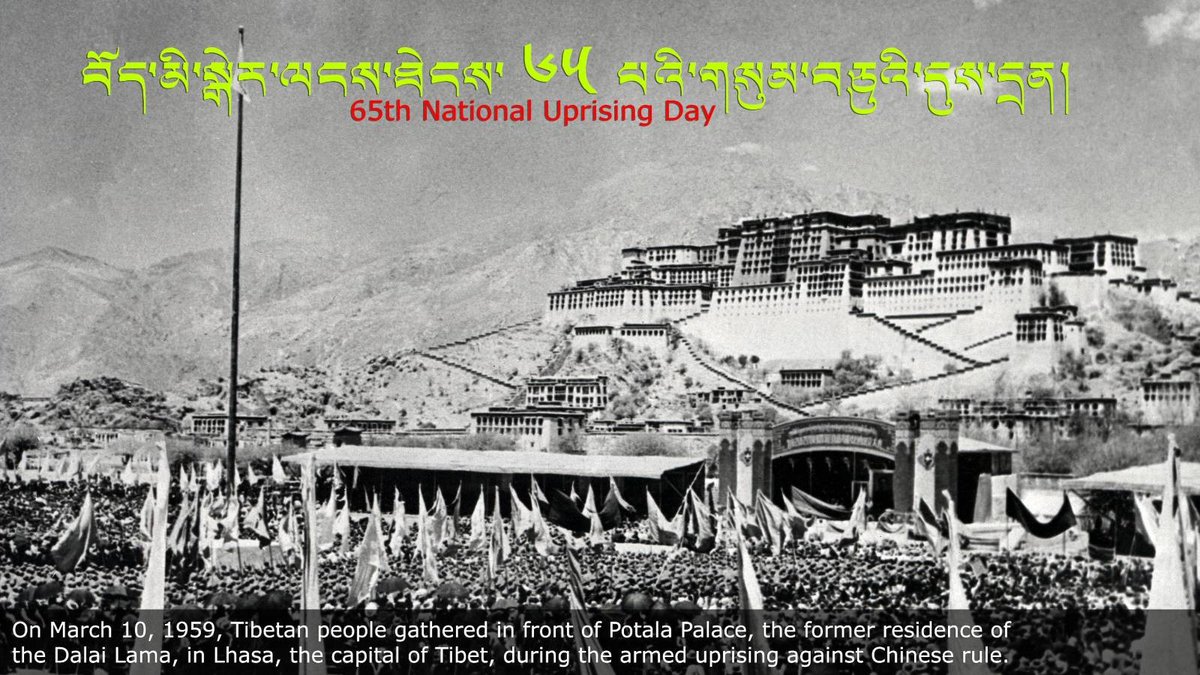
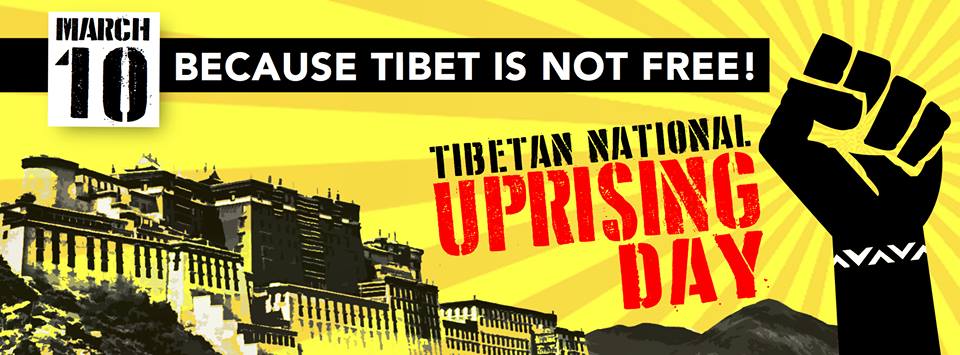
Tibetans remember March 10, 1959 as Tibetan National Uprising Day. Tibetans are not asking for “SEPARATION” from Red China. Tibetans claim that Tibet is Never Part of China. The issue of concern is illegal Occupation of Tibet. The purpose of Tibetan Resistance Movement is that of resisting illegal Occupation and to Evict Occupier of Tibet.
Tibetan Resistance Movement. A Day to Remember, March 10, 1959.
TIBETAN RESISTANCE MOVEMENT. A DAY TO REMEMBER, MARCH 10, 1959. TIBETAN NATIONAL UPRISING DAY.
Author History.com Staff
On this day in 1959, Tibetans band together in revolt, surrounding the summer palace of the Dalai Lama in defiance of Chinese occupation forces.
China’s occupation of Tibet began nearly a decade before, in October 1950, when troops from its People’s Liberation Army (PLA) invaded the country, barely one year after the Communists gained full control of mainland China. The Tibetan government gave into Chinese pressure the following year, signing a treaty that ensured the power of His Holiness the Dalai Lama, the country’s spiritual leader, over Tibet’s domestic affairs. Resistance to the Chinese occupation built steadily over the next several years, including a revolt in several areas of eastern Tibet in 1956. By December 1958, rebellion was simmering in Lhasa, the capital, and the PLA command threatened to bomb the city if order was not maintained.
The March 1959 uprising in Lhasa was triggered by fears of a plot to kidnap the Dalai Lama and take him to Beijing. When Chinese military officers invited His Holiness to visit the PLA headquarters for a theatrical performance and official tea, he was told he must come alone, and that no Tibetan military bodyguards or personnel would be allowed past the edges of the military camp. On March 10, 300,000 loyal Tibetans surrounded Norbulingka Palace, preventing the Dalai Lama from accepting the PLA’s invitation. By March 17, Chinese artillery was aimed at the palace, and the Dalai Lama was evacuated to neighboring India. Fighting broke out in Lhasa two days later, with Tibetan rebels hopelessly outnumbered and outgunned. Early on March 21, the Chinese began shelling Norbulingka, slaughtering tens of thousands of men, women and children still camped outside. In the aftermath, the PLA cracked down on Tibetan resistance, executing the Dalai Lama’s guards and destroying Lhasa’s major monasteries along with thousands of their inhabitants.
China’s stranglehold on Tibet and its brutal suppression of separatist activity has continued in the decades following the unsuccessful uprising. Tens of thousands of Tibetans followed their leader to India, where the Dalai Lama has long maintained a government-in-exile in the foothills of the Himalayas.
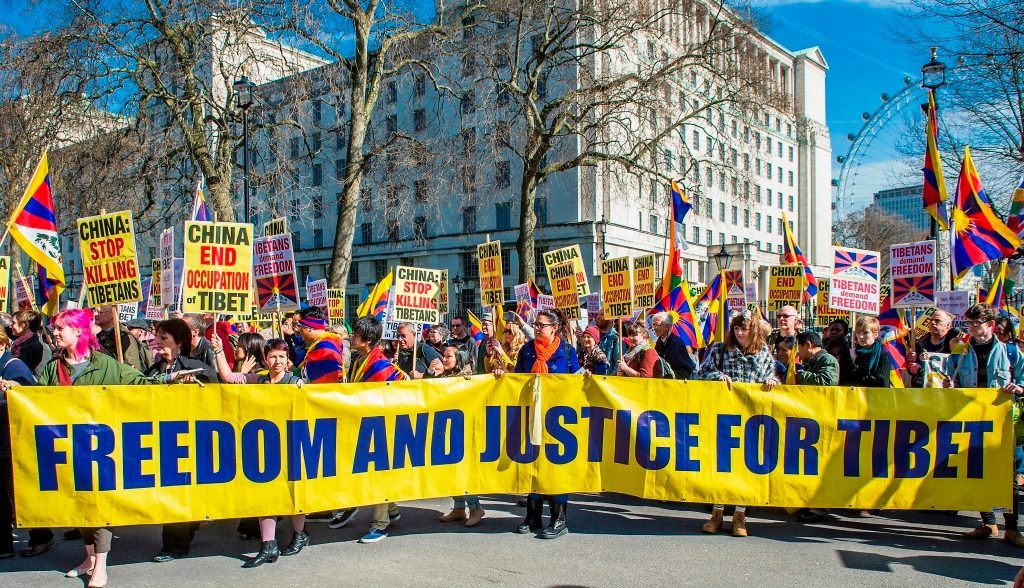
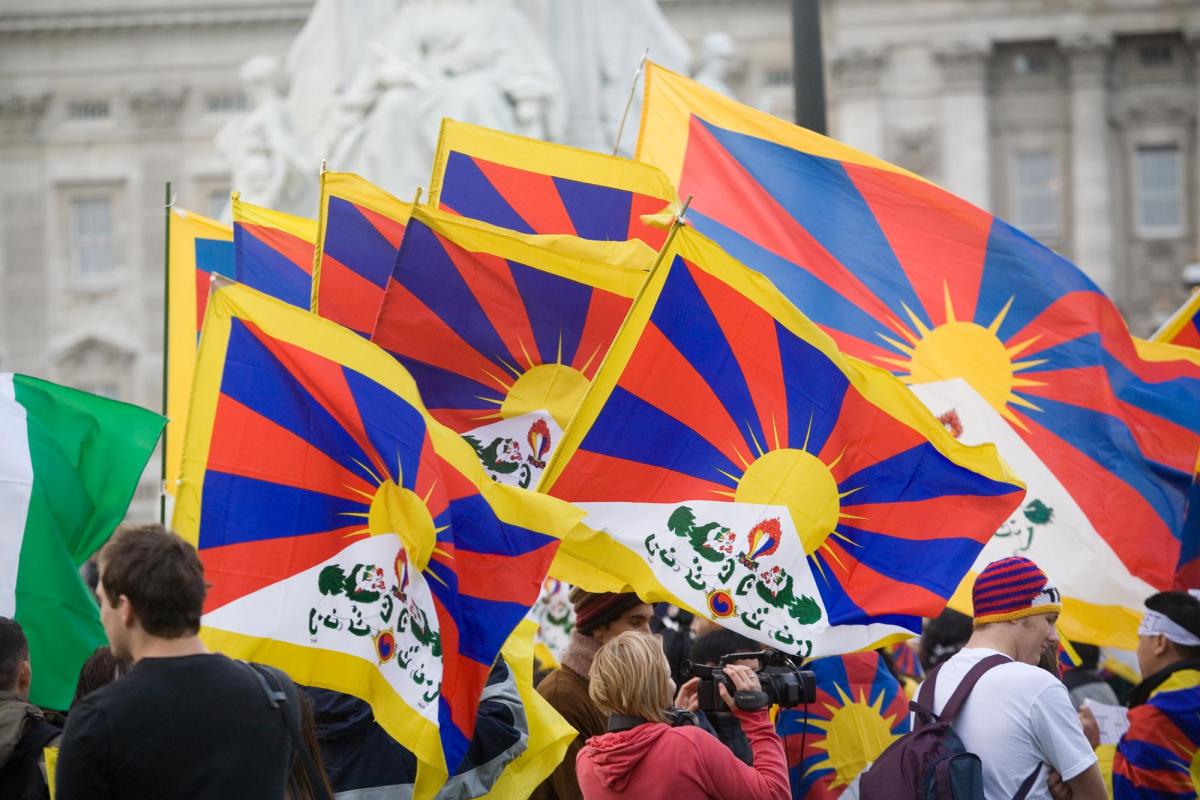
WORLD TIBET DAY IS OBSERVED ON MONDAY, JULY 06, 2015. FREE TIBET – LONDON PROTEST ON MARCH 10, 2015.
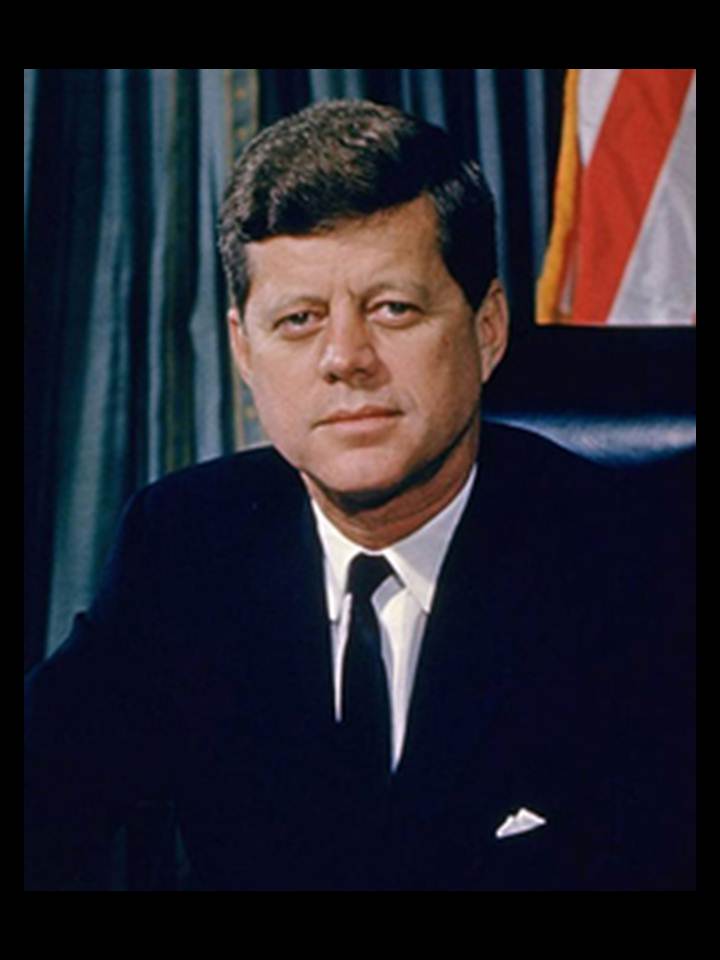
Special Frontier Force Pays Tribute to President John F. Kennedy
The History of Special Frontier Force-Establishment No. 22: People’s Republic of China could not alter the course of India’s foreign policy. The 1962 War launched by China ended very abruptly when China declared unilateral ceasefire and withdrew from the captured territory on November 21, 1962. President Kennedy played a decisive role by threatening to “NUKE” China.
While sharing an interesting story titled Cold War Camelot published by The Daily Beast which includes excerpts from the book JFK’s Forgotten CIA Crisis by Bruce Riedel, I take the opportunity to pay tribute to President John F. Kennedy for supporting the Tibetan Resistance Movement initiated by President Dwight David Eisenhower. Both Tibet, and India do not consider Pakistan as a partner in spite of the fact of Pakistan permitting the use of its airfields in East Pakistan. Red China has formally admitted that she had attacked India during October 1962 to teach India a lesson and to specifically discourage India from extending support to Tibetan Resistance Movement. Red China paid a huge price. She is not able to truthfully disclose the human costs of her military aggression in 1962. She failed to achieve the objectives of her 1962 War on India. President Kennedy threatened to “Nuke” China and forced her to declare unilateral cease-fire on November 21, 1962. China withdrew from territories she gained using overwhelming force. People’s Liberation Army (PLA) sustained massive casualties and their brief victory over India did not give them any consolation. Red China’s 1962 misadventure forged a stronger bonding between Tibet, India, and the United States.
Special Frontier Force, a military organization in India was established during the Cold War Era while the US fought wars in the Korean Peninsula and Vietnam. In my view, Special Frontier Force is the relic of Unfinished Vietnam War, America’s War against the spread of Communism in South Asia.
On behalf of Special Frontier Force, I feel honored to share John F Kennedy’s Legacy. Due to Cold War Era secret diplomacy, Kennedy’s role in Asian affairs is not fully appreciated both in the US and India. In 1962, during the presidency of Dr. Sarvepalli Radhakrishnan, the second President of Republic of India, Kennedy joined hands with India and Tibet to transform the Tibetan Resistance Movement into a regular fighting force.
Special Frontier Force, a military organization in India was established during the Cold War Era while the US fought wars in the Korean Peninsula and Vietnam. In my view, Special Frontier Force is the relic of Unfinished Vietnam War, America’s War against the spread of Communism in South Asia.
Cold War Camelot
SPECIAL FRONTIER FORCE PAYS TRIBUTE TO PRESIDENT JOHN K. KENNEDY. SUPPORTING TIBET WAS PRESIDENT KENNEDY’S MAIN REASON FOR HOSTING A STATE DINNER AT MOUNT VERNON ON JULY 11, 1961.
Bruce Riedel
11.08.1512:01 AM ET
JFK’s Forgotten CIA Crisis
During a spectacular dinner at Mount Vernon, Kennedy pressed Pakistan’s leader for help with a sensitive spy operation against China.
At Mount Vernon
The magic of the Kennedy White House, Camelot, had settled in at Mount Vernon. It was a dazzling evening, a warm July night, but a cool breeze came off the Potomac River and kept the temperature comfortable. It was Tuesday, July 11, 1961, and the occasion was a state dinner for Pakistan’s visiting president, General Ayub Khan, the only time in our nation’s history that George Washington’s home has served as the venue for a state dinner.
President John F. Kennedy had been in office for less than six months, but his administration had already been tarnished by the failed CIA invasion of Cuba at the Bay of Pigs and a disastrous summit with Soviet leader Nikita Khrushchev in Vienna, Austria. Ayub Khan wrote later that the president was “under great stress.” The Kennedy administration was off to a rocky start: It needed to show some competence.
The idea of hosting Ayub Khan at Mount Vernon came from Kennedy’s wife, Jacqueline Bouvier Kennedy, who was inspired by a dinner during the Vienna summit held a month earlier at the Schönbrunn Palace, the rococo-style former imperial palace of the Hapsburg monarchy built in the seventeenth century. Mrs. Kennedy was impressed by the opulence and history displayed at Schönbrunn and at a similar dinner held on the same presidential trip at the French royal palace of Versailles. America had no royal palaces, of course, but it did have the first president’s mansion just a few miles away from the White House on a bluff overlooking the Potomac River. The history of the mansion and the fabulous view of the river in the evening would provide a very special atmosphere for the event.
On June 26, 1961, the First Lady visited Mount Vernon privately and broached the idea with the director of the Mount Vernon Ladies’ Association, which manages the estate. It was a challenging proposal. The old mansion was too small to host an indoor dinner so the event would have to take place on the lawn. The mansion had very little electricity in 1961 and was a colonial antique, without a modern kitchen or refrigeration, so that the food would have to be prepared at the White House and brought to the estate and served by White House staff. But the arrangements were made, with the Secret Service and Marine Corps providing security, and the U.S. Army’s Third Infantry Regiment from Fort Myers providing the colonial fife and drum corps for official presentation of the colors. The National Symphony Orchestra offered the after-dinner entertainment. Tiffany and Company, the high-end jewelry company, provided the flowers and decorated the candlelit pavilion in which the guests dined.
The guests arrived by boat in a small fleet of yachts led by the presidential yacht, Honey Fitz, and the secretary of the navy’s yacht, Sequoia. They departed from the Navy Yard in Washington and sailed the fifteen miles down river to Mount Vernon past National Airport and Alexandria, Virginia; the trip took an hour and fifteen minutes. On arrival the most vigorous guests, such as the president’s younger brother, Attorney General Robert Kennedy, climbed the hill to the mansion on foot, but most took advantage of the limousines the White House provided.
Brookings Institution
The guest list was led by President Ayub Khan and his daughter, Begum Nasir Akhtar Aurangzeb, and included the Pakistani foreign minister and finance minister, as well as Pakistan’s ambassador to the United States, Aziz Ahmed, and various attaches from the embassy in Washington. Initially the ambassador was upset that the dinner would not be in the White House, fearing it would be seen as a snub. The State Department convinced Ahmed that having it at Mount Vernon was actually a benefit and would generate more publicity and distinction. The Americans invited to the dinner were the elite of the new administration. In addition to the president, attorney general, and vice president and their wives, Secretary of State Dean Rusk, Secretary of Defense Robert McNamara, Secretary of the Navy John Connally, Chairman of the Joint Chiefs of Staff Lyman Lemnitzer, and their wives joined the party. Six senators, including J. W. Fulbright, Stuart Symington, Everett Dirksen, and Mike Mansfield were joined by the Speaker of the House and ten congressmen, including a future president, Gerald Ford, and their wives. The U.S. ambassador to Pakistan, William Roundtree; the chief of the United States Air Force, General Curtis Lemay; Assistant Secretary of State Phillip Talbott; Peace Corps Director Sargent Shriver; and the president’s military assistant, Maxwell Taylor, were also in attendance. Walter Hoving, chairman of Tiffany, and Mrs. Hoving, and a half-dozen prominent Pakistani and American journalists, such as NBC correspondent Sander Vanocur, attended from outside the government. In total more than 130 guests were seated at sixteen tables.
Perhaps the guest most invested in the evening, however, was the director of the Central Intelligence Agency, Allen W. Dulles. The Kennedys had long been friends of Allen Dulles. A few years before the dinner Mrs. Kennedy had given him a copy of Ian Fleming’s James Bond novel, From Russia, with Love, and Dulles, like JFK, became a big fan of 007. Dulles was also a holdover from the previous Republican administration. He had been in charge of the planning and execution of the Bay of Pigs fiasco that had tarnished the opening days of the Kennedy administration, but Dulles still had the president’s ear on sensitive covert intelligence operations, including several critical clandestine operations run out of Pakistan with the approval of Field Marshal Ayub Khan.
Before sitting down for dinner just after eight o’clock, the guests toured the first president’s home and enjoyed bourbon mint juleps or orange juice. Both dressed in formal attire for the occasion, Kennedy took Ayub Khan for a walk in the garden alone. At that time, the CIA was running two very important clandestine operations in Pakistan. One had already made the news a year earlier when a U-2 spy plane had been shot down over the Soviet Union by Russian surface-to-air missiles; this plane had started its top-secret mission, called Operation Grand Slam, from a Pakistani Air Force air base in Peshawar, Pakistan. The U-2 shoot down had wrecked a summit meeting between Khrushchev and President Eisenhower in Paris in 1960 when Ike refused to apologize for the mission. The CIA had stopped flying over the Soviet Union, but still used the base near Peshawar for less dangerous U-2 operations over China.
The history of Special Frontier Force-Establishment No. 22: 1957 was a turning point. India had recognized that its foreign policy of political neutralism was of no use and had started depending upon the United States to address the military threat posed by China’s occupation of Tibet. But, the effort was too modest and both India and the United States had grossly underestimated the strength of the People’s Liberation Army.
The second clandestine operation also dated from the Eisenhower administration, but was still very much top-secret. The CIA was supporting a rebellion in Communist China’s Tibet province from another Pakistani Air Force air base near Dacca in East Pakistan (what is today Bangladesh). Tibetan rebels trained by the CIA in Colorado were parachuted into Tibet from CIA transport planes that flew from that Pakistani air base, as were supplies and weapons. U-2 aircraft also landed in East Pakistan after flying over China to conduct photo reconnaissance missions of the communist state.
Ayub Khan had suspended the Tibet operation earlier that summer. The Pakistani president was upset by Kennedy’s decision to provide more than a billion dollars in economic aid to India. Pakistan believed it should be America’s preferred ally in South Asia, not India, and shutting down the CIA base for air drops to Tibet was a quiet way to signal displeasure at Washington without causing a public breakdown in the U.S.-Pakistan relationship. Ayub Khan wanted to make clear to Kennedy that an American tilt toward India at Pakistan’s expense would have its costs. In his memoirs, Khan later wrote that he sought to press Kennedy not to “appease India.”
Before the Mount Vernon dinner, Allen Dulles had asked Kennedy to meet alone with Ayub Khan, thinking that perhaps a little Kennedy charm and the magic of the evening would change his mind. The combination worked; the Pakistani dictator told Kennedy he would allow the CIA missions over Tibet to resume from the Pakistani Air Force base at Kurmitula outside of Dacca.
Ayub Khan did get a quid pro quo for this decision later in his visit: Kennedy promised that, even if China attacked India, he would not sell arms to India without first consulting with Pakistan. However, when China did invade India the following year, Kennedy ignored this promise and provided critical aid to India, including arms, without consulting Ayub Khan, who was deeply disappointed.
The main course for dinner was poulet chasseur served with rice and accompanied by Moët and Chandon Imperial Brut champagne (at least for the Americans), followed by raspberries in cream for dessert. President Kennedy hosted a table at which sat Begum Aurangzeb, who wore a white silk sari. Khan enjoyed the beauty of a Virginia summer evening with America’s thirty-one-year-old First Lady; he sat next to Jackie, who wore a Oleg Cassini sleeveless white organza and lace evening gown sashed at the waist in Chartreuse silk. In his toast the Pakistani leader warned that “any country that faltered in Asia, even for only a year or two, would find itself subjugated to communism.” In turn Kennedy hailed Ayub Khan as the George Washington of Pakistan. After midnight the guests were driven back to Washington down the George Washington Parkway.
The CIA operation in Tibet had its detractors in the Kennedy White House, including Kennedy’s handpicked ambassador to India, John Kenneth Galbraith, who called it “a particularly insane enterprise” involving “dissident and deeply unhygienic tribesmen” that risked an unpredictable Chinese response. However, the operation did produce substantial critical intelligence on the Chinese communist regime from captured documents seized by the Tibetans at a time when Washington had virtually no idea what was going on inside Red China. The U-2 flights from Dacca were even more important to the CIA’s understanding of China’s nuclear weapon development at its Lop Nor nuclear test facility.
But Galbraith was in the end correct to be skeptical. The operation did have an unpredicted outcome: The CIA operation helped persuade Chinese leader Mao Zedong to invade India in October 1962, an invasion that led the United States and China to the brink of war and began a Sino-India rivalry that continues today. It also created a Pakistani-Chinese alliance that still continues. The contours of modern Asian grand politics thus were drawn in 1962. The dinner at Mount Vernon was a spectacular social success for the Kennedys, although they received some predictable criticism from conservative newspapers over its cost. It was also a political success for both Kennedy and the CIA, keeping the Tibet operation alive. As an outstanding example of presidential leadership in managing and executing covert operations at the highest level of government, it is an auspicious place to begin an examination of JFK’s forgotten crisis.
From JFK’s FORGOTTEN CRISIS: TIBET, THE CIA, AND THE SINO-INDIAN WAR,by Bruce Riedel, Brookings Institution Press, November 6, 2015.
SPECIAL FRONTIER FORCE PAYS TRIBUTE TO PRESIDENT JOHN F. KENNEDY FOR HIS SUPPORT TO TIBET. DINNER HOSTED AT PRESIDENT GEORGE WASHINGTON’S MOUNT VERNON ESTATE ON JULY 11, 1961.On www.mountvernon.orgSPECIAL FRONTIER FORCE PAYS TRIBUTE TO PRESIDENT JOHN F. KENNEDY WHO HOSTED STATE DINNER AT GEORGE WASHINGTON’S MOUNT VERNON ESTATE ON JULY 11, 1961 TO GET SUPPORT FOR TIBET OPERATIONS FROM PRESIDENT AYUB KHAN OF PAKISTAN.SPECIAL FRONTIER FORCE PAYS TRIBUTE TO PRESIDENT JOHN F. KENNEDY. A STATE DINNER HOSTED ON JULY 11, 1961 WAS USED TO GET SUPPORT FOR TIBET OPERATIONS FROM PRESIDENT AYUB KHAN OF PAKISTAN.On www.jfklibrary.orgSPECIAL FRONTIER FORCE PAYS TRIBUTE TO PRESIDENT JOHN F. KENNEDY FOR ENLISTING SUPPORT FOR TIBET OPERATIONS DURING THIS DINNER AT MOUNT VERNON ON JULY 11, 1961. On www.jfklibrary.orgSPECIAL FRONTIER FORCE PAYS TRIBUTE TO PRESIDENT JOHN F. KENNEDY FOR ENLISTING SUPPORT FOR TIBET OPERATIONS DURING THIS DINNER AT MOUNT VERNON ON JULY 11, 1961.On www.jfklibrary.orgSPECIAL FRONTIER FORCE PAYS TRIBUTE TO PRESIDENT JOHN F. KENNEDY FOR ENLISTING SUPPORT FOR TIBET OPERATIONS DURING DINNER AT MOUNT VERNON ON JULY 11, 1961.On www.jfklibrary.orgSPECIAL FRONTIER FORCE PAYS TRIBUTE TO PRESIDENT JOHN F. KENNEDY FOR ENLISTING SUPPORT FOR TIBET OPERATIONS DURING DINNER AT MOUNT VERNON ON JULY 11, 1961.On www.jfklibrary.orgSPECIAL FRONTIER FORCE PAYS TRIBUTE TO PRESIDENT JOHN F. KENNEDY FOR ENLISTING SUPPORT FOR TIBET OPERATIONS DURING DINNER AT MOUNT VERNON ON JULY 11, 1961.On www.jfklibrary.orgSPECIAL FRONTIER FORCE PAYS TRIBUTE TO PRESIDENT JOHN F. KENNEDY FOR ENLISTING SUPPORT FOR TIBET OPERATIONS DURING DINNER AT MOUNT VERNON ON JULY 11, 1961.On www.jfklibrary.orgSPECIAL FRONTIER FORCE PAYS TRIBUTE TO PRESIDENT JOHN F. KENNEDY FOR ENLISTING SUPPORT FOR TIBET OPERATIONS DURING DINNER AT MOUNT VERNON ON JULY 11, 1961.On www.jfklibrary.orgSPECIAL FRONTIER FORCE PAYS TRIBUTE TO PRESIDENT JOHN F. KENNEDY FOR GETTING PAKISTAN’S SUPPORT FOR TIBET OPERATIONS DURING DINNER AT MOUNT VERNON ON JULY 11, 1961.On www.jfklibrary.orgSPECIAL FRONTIER FORCE PAYS TRIBUTE TO PRESIDENT JOHN F. KENNEDY FOR GETTING PAKISTAN’S SUPPORT FOR TIBET OPERATIONS DURING DINNER AT MOUNT VERNON ON JULY 11, 1961.On www.mountvernon.orgSPECIAL FRONTIER FORCE PAYS TRIBUTE TO PRESIDENT JOHN F. KENNEDY FOR GETTING PAKISTAN’S SUPPORT FOR TIBET OPERATIONS DURING DINNER AT MOUNT VERNON ON JULY 11, 1961. On www.jfklibrary.org