Whole Review – Movie TE3N Reveals My Tibet Connection by grouping four photo images in a single screenshot

MOVIE TE3N REVEALS MY TIBET CONNECTION

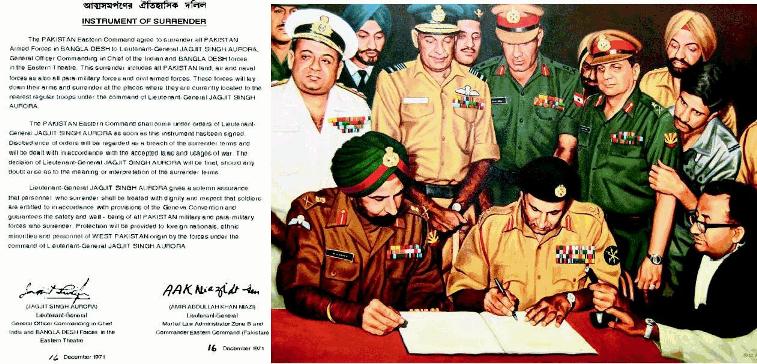
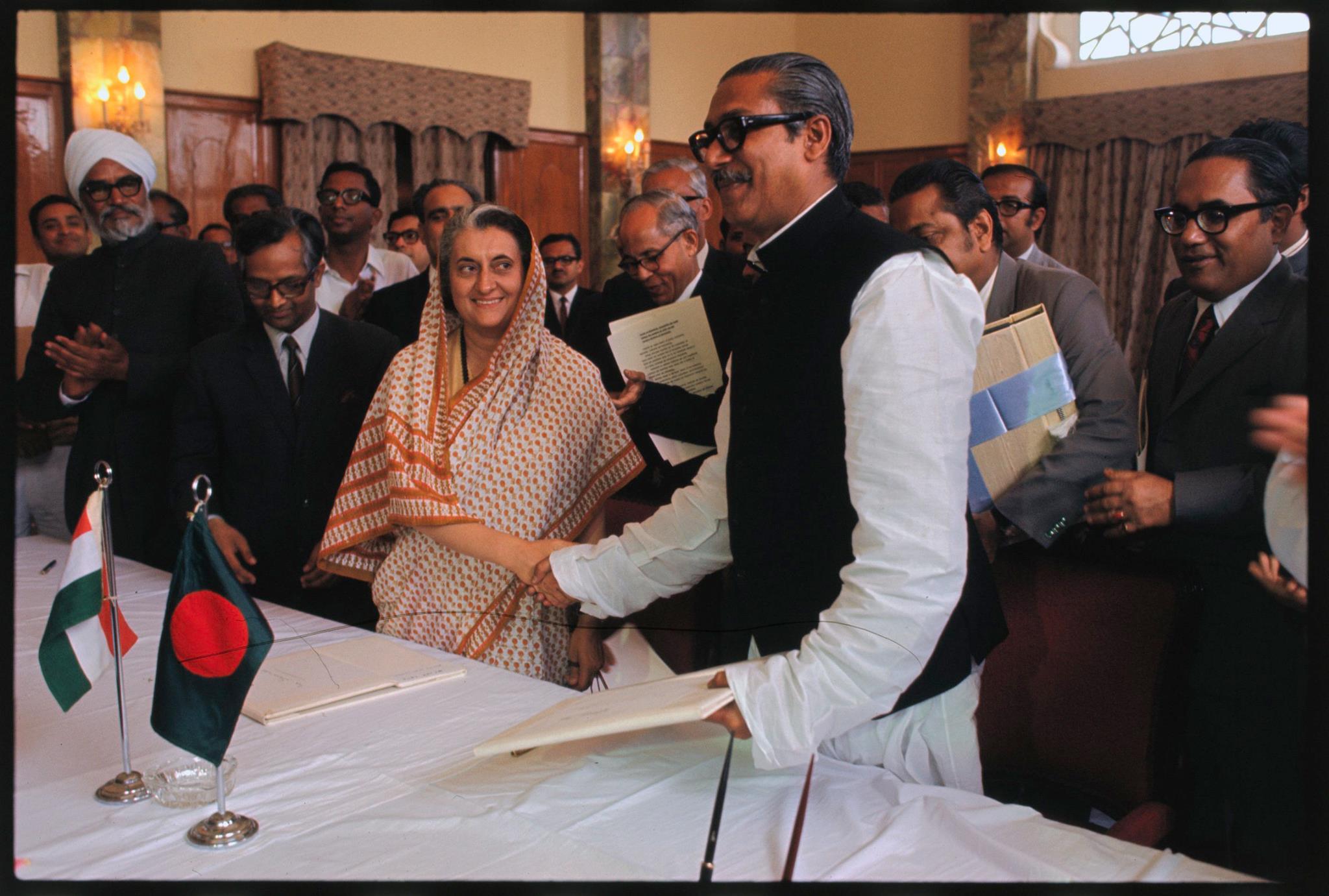
Whole Review – Movie TE3N Reveals My Tibet Connection by grouping four photo images in a single screenshot: SURRENDER AGREEMENT SIGNED IN DHAKA ON DECEMBER 16, 1971.
Whole Review – Movie TE3N Reveals My Tibet Connection by grouping four photo images in a single screenshot: LIBERATION OF BANGLADESH ON DECEMBER 16, 1971.
Whole Review – Movie TE3N Reveals My Tibet Connection by grouping four photo images in a single screenshot: Pakistan Surrenders on December 16, 1971.
Movie TE3N Reveals my Tibet Connection by using Four Photo images grouped together in a single screenshot. Liberation of Bangladesh on December 16, 1971.
Movie TE3N Reveals my Tibet Connection by grouping four photo images in a single screenshot. Surrender Agreement in Dhaka on December 16, 1971.
TE3N Movie Reviews my Tibet Connection by grouping together four photo images. Pakistan surrenders in Dhaka on December 16, 1971.

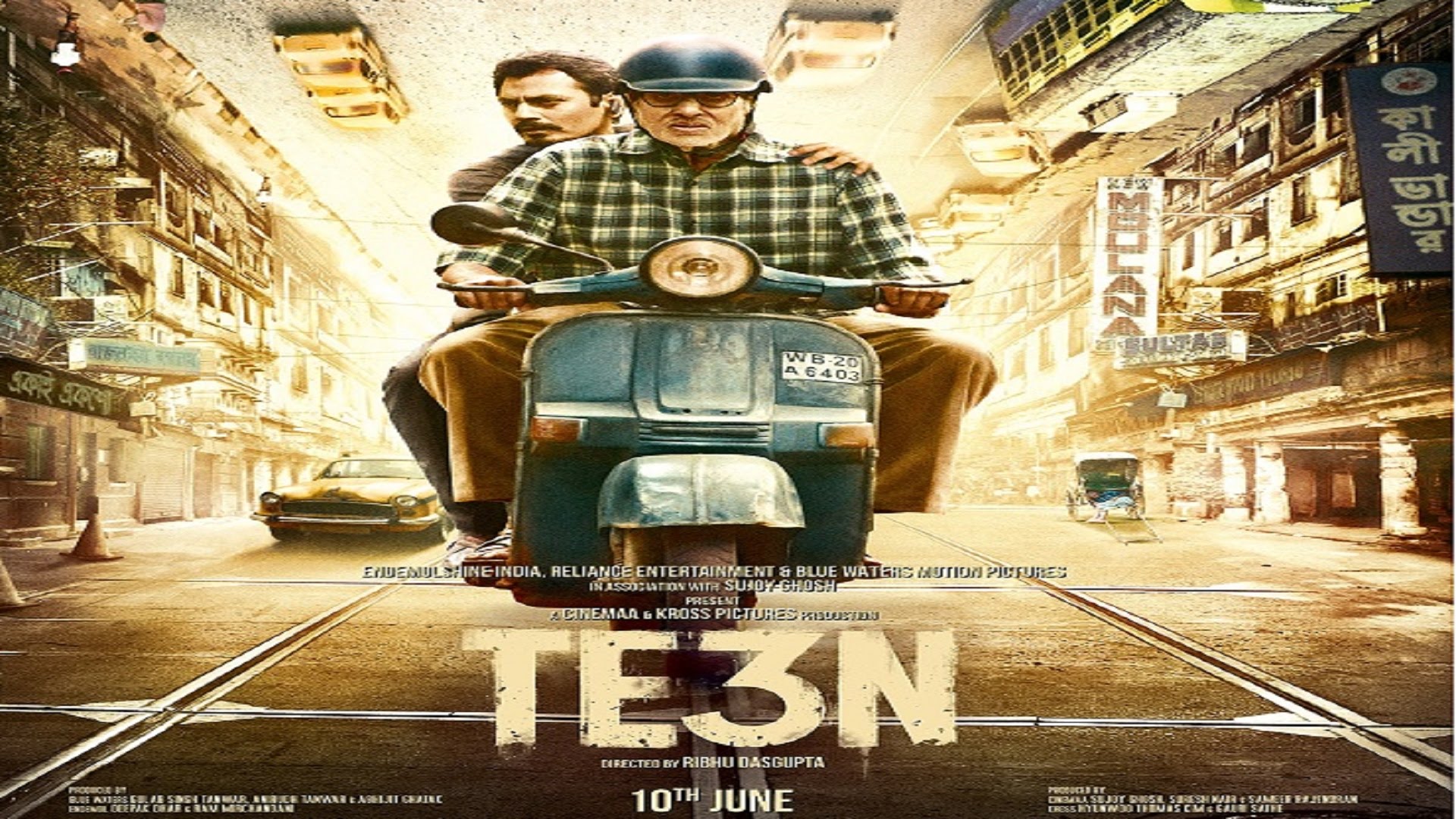
TE3N Movie Producer Sujoy Ghosh and Director Ribhu Das Gupta imaginatively created a screenshot grouping four different photo images to describe my Tibet Connection; These are,

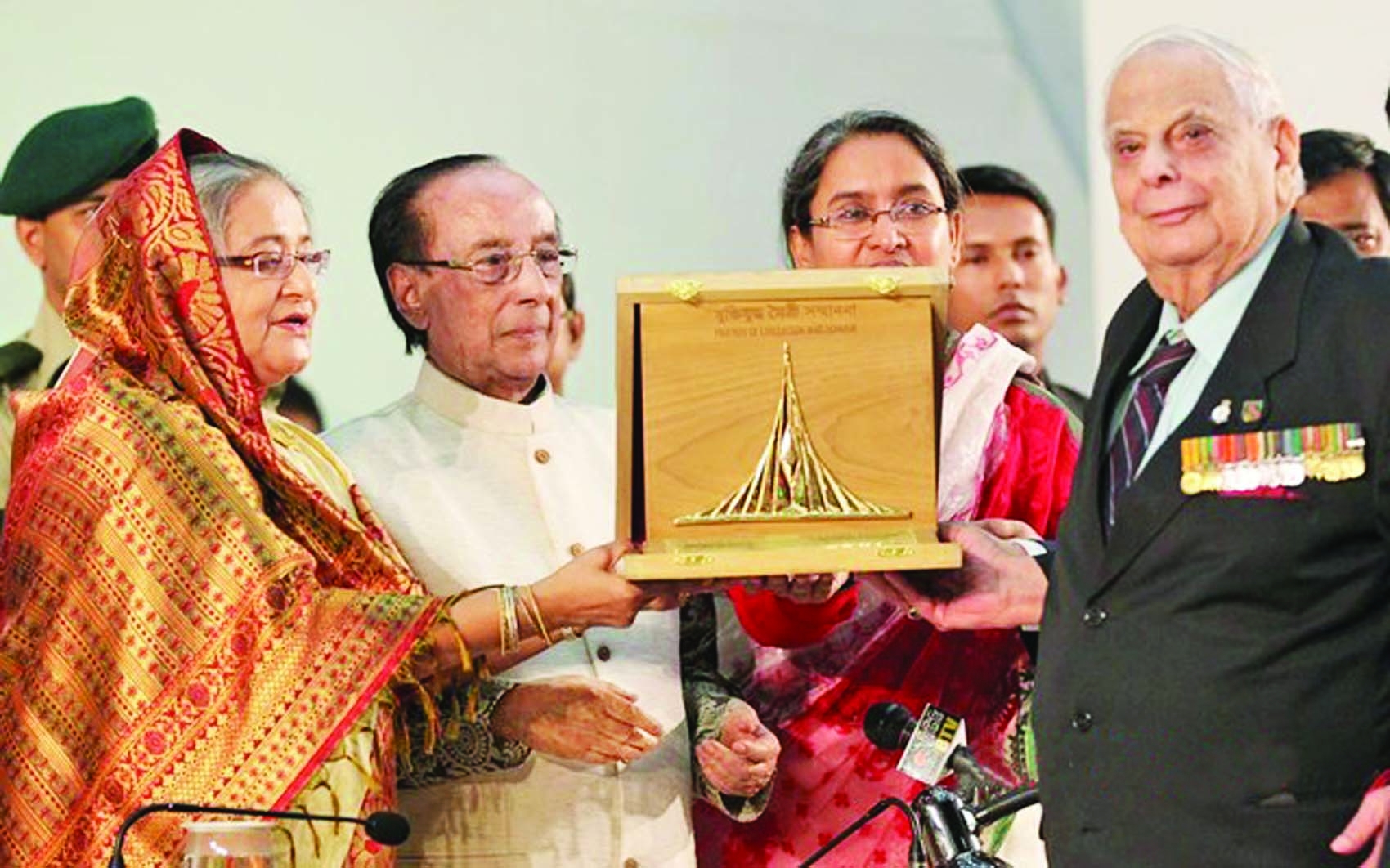
1. Surrender Agreement signed in Dhaka on December 16, 1971 leading to creation of independent nation of Bangladesh,

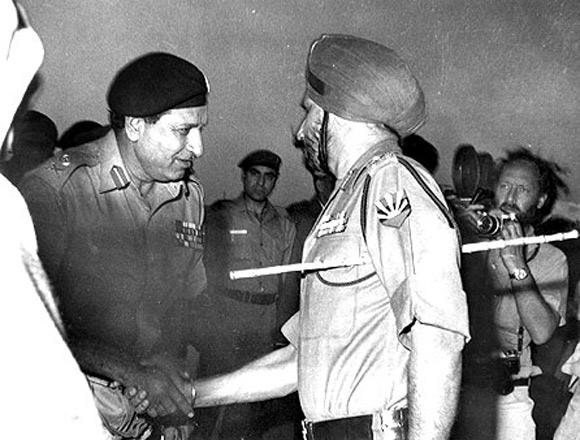
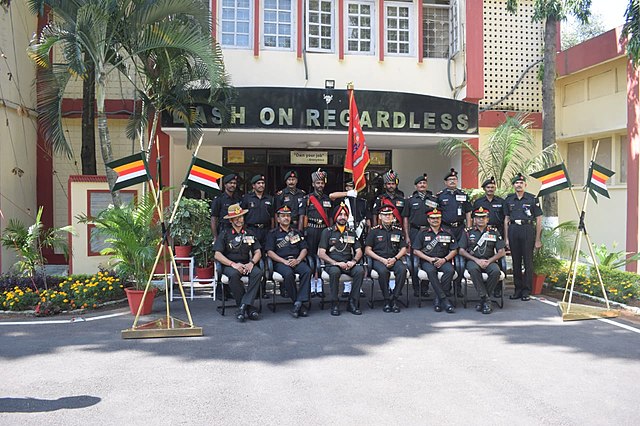
Lieutenant General Dalbir Singh AVSM VSM, General Officer-in-Command, Eastern Command of Indian Army had served as the Inspector General of Special Frontier Force prior to his promotion to the rank of Lieutenant General. He served in the rank of Brigadier during the 1971 War but Movie TE3N chose this photo image.

2. Lieutenant General Dalbir Singh Suhag, General Officer Commanding-in-Chief, Headquarters Eastern Command, Kolkata, who actually participated in the 1971 War while serving in the rank of Brigadier,
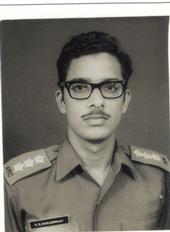
TE3N Movie Reviews my Tibet Connection by grouping four photo images in a single screenshot. My Indian Army Picture ID photo image of 1972 taken at Doom Dooma, Tinsukia District, Assam, India. In reality, I participated in the 1971 War wearing the badges of rank of Lieutenant and not Captain

3. My Indian Army Picture ID photo image of 1972 taken in Doom Dooma while I was posted to D Sector, Establishment 22 after the 1971 War, and

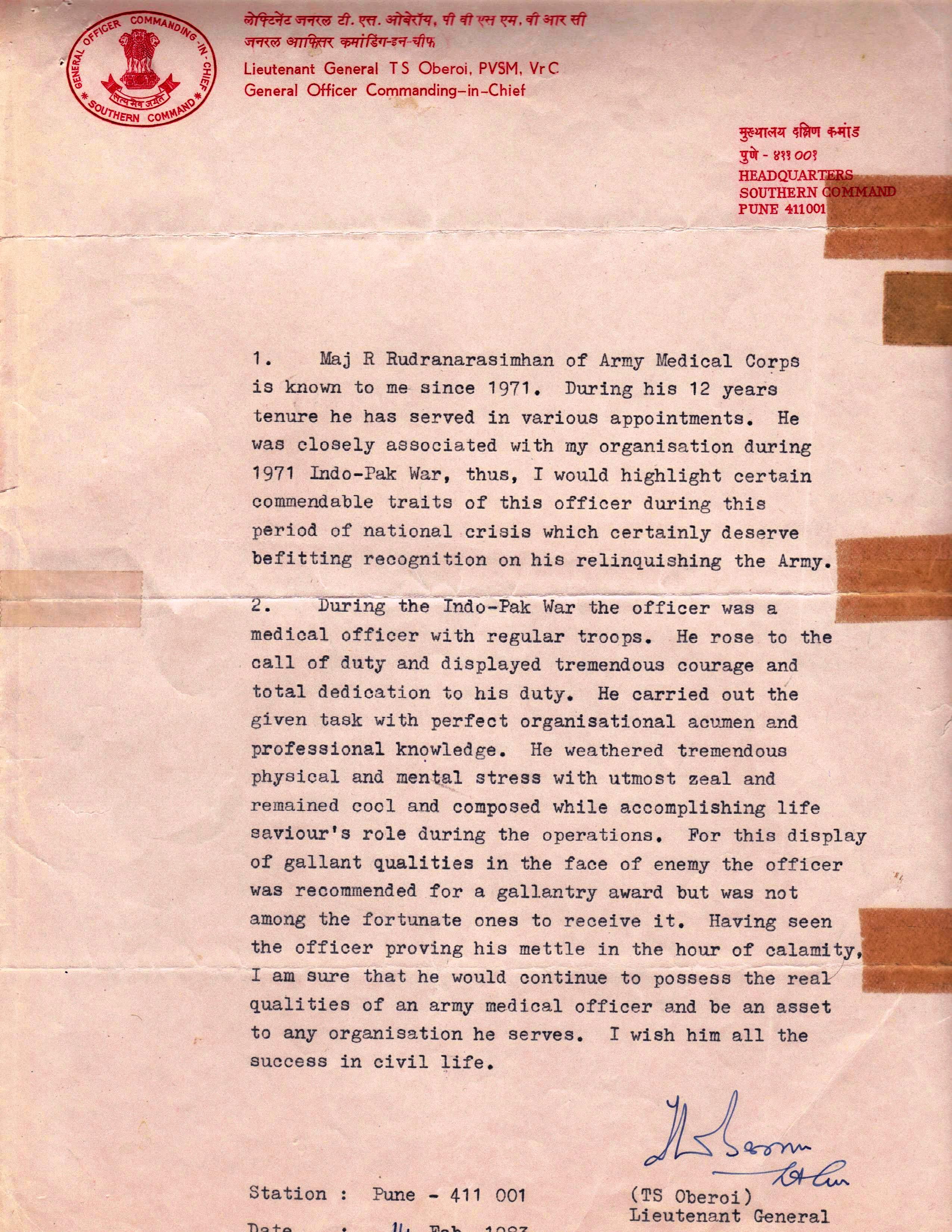
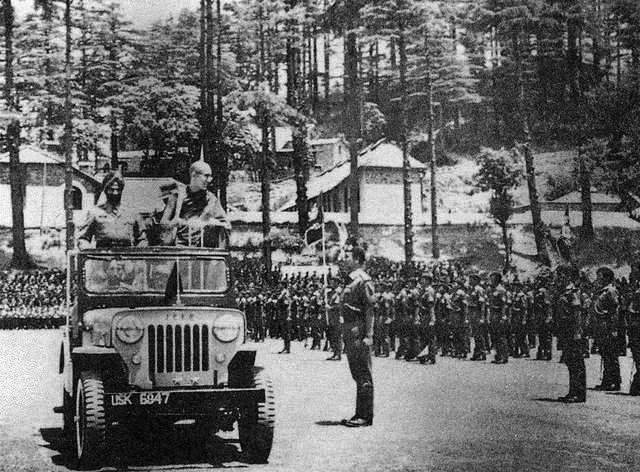
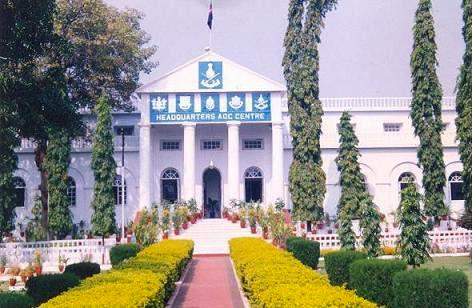
Lieutenant General T S Oberoi, the Southern Army Commander during 1983, the former Inspector General of Special Frontier Force is seen in this photo wearing a helmet. The photo was taken during 1982 while he visited Army Service Corps Centre, Bangalore. In reality, he served as my Brigade Commander during the 1971 War.

4. Lieutenant General Thirath Singh Oberoi PVSM VrC, General Officer Commanding-in-Chief, Headquarters Southern Command Pune while he visited Army Service Corps Centre in Bangalore in 1982. In reality, T S Oberoi served in the rank of Brigadier during the 1971 War.

Photo images 2, 3, and 4 are related for they relate to our military service at Special Frontier Force, Establishment 22 now known as Vikas Regiment. In November 1971, Special Frontier Force initiated Liberation of Bangladesh with military action in the Chittagong Hill Tracts and so, these images relate to the photo image of the Surrender Agreement signed in Dhaka on December 16, 1971.

Beijing is Doomed – Revelation Unsealed

TE3N Movie explores my Tibet Connection. Beijing is Doomed – Revelation Unsealed. Strike by Heavenly Object.

I kept silent about my participation in Operation Eagle, Bangladesh Ops for a very long time and none of you heard that word from me until 2010 when I started my demand for gallantry award after His Holiness the Dalai Lama’s visit to Ann Arbor, Michigan on March 03/04, 2008. I did not invite him to visit Ann Arbor, and I had no time to meet him. I read news media coverage, particularly the story published by The Ann Arbor News of this event. Prior to this date, I did not speak or write about him. I realized that the time has come to describe my Tibet Connection. If I had really cared about getting Gallantry Award, I would have reacted in January 1972 when my Unit Commander informed me that the Indian Army Medical Directorate did not forward my gallantry award citation on time to Army Headquarters, MS Branch. The citation was not lost. It was not sent in time for its consideration. I raised the issue in 2010, for it is important to disclose my Tibet Connection.

I want to receive Gallantry Award recommended in 1971 War. However, it is not an acknowledgment of my service in Indian Army. The award was recommended by my Unit Commander who knew that I deliberately chose to enter Enemy territory without carrying my service weapon. Under Army Act, the refusal to carry personal weapon, the concealing or disposal of personal weapon, or not using weapon against Enemy are punishable offenses. My Unit (South Column, Op Eagle, Establishment 22 – Special Frontier Force) is not subject to Army Act. They have not threatened to discipline me. Rather, they have shown appreciation for my determination to work without my personal weapon. I made that decision because of my Tibet Connection.

While most of you may have read about speeches or quotes from speeches given by the Dalai Lama, may not be knowing about an assurance the Dalai Lama has given to his followers. Dalai Lama lives on the hope that China’s Communist Regime would experience sudden downfall. Many in the Tibetan Exile community share this hope as they believe or have faith in his words. I acknowledge my Tibet Connection, but I am not follower of the Dalai Lama. So, I had to investigate his statement and subject it to my rational analysis, a scientific method which I call Devotional Inquiry. I use the term Devotion not in the context of any kind of worship service or prayerful thought. I don’t look inwards. I look for answers examining the reality of external world.

For example, many Christians believe in the Future Coming of Christ or Advent. This hope comes from The New Testament Book of Revelation. Over 2,000 years have passed, many believers lived and died and yet the prophecy has not come true. I looked at various possibilities to account for Dalai Lama’s hope for the sudden, unexpected downfall of China. He has not shared or further explained the mechanism to trigger a sudden downfall of Communist China. World War II came to an abrupt stop when US bombed Hiroshima and Nagasaki. Japan surrendered in August 1945. I ruled out the possibility of China surrendering in World War III. Regimes have changed after public revolts like American Revolution, French Revolution, Red Revolution, and October Revolution of China. In fact, Tibet formally declared Full Independence on February 13, 1913 after the downfall of Manchu China following 1911 Revolution. We have seen some protests in China during 1989, protests in Hong Kong, and signs of severe labor unrest in China. But, I am not expecting a Great Proletarian Revolution to cause China’s downfall. If not political unrest, I considered the possibility of economic meltdown and severe or Great Depression. It is a good possibility as their Communist – Capitalist Economy will fail and is currently failing.

Historically, we have records of great empires rising and falling. People have given a variety of reasons to account for rise and fall of empires. Diseases like Malaria may account for fall of Roman Empire. Apart from health and sickness, people have cultural beliefs. Jews may believe in Messiah, Christians believe in the Kingdom of Heaven, Buddhists believe in Reincarnation of Compassionate Buddha (Maitreya), and Hindus may believe in Reincarnation of Lord Vishnu to change World Order to restore Peace and Justice.

Being student of Biology, I looked at Natural Causes and Natural Mechanisms that can significantly impact life on Earth. Natural calamities like floods, earthquakes, and hurricanes can have devastating effect. But, most major and minor mass extinction events have extraterrestrial causes such as Radiation or impact or collision by celestial objects like comets or asteroids. Planet Earth experienced several such collision events. At K-T Junction, about 65 million years ago, the entire Dinosaur population got wiped out while Life on Earth continued to multiply. In most recent times, during Geological Epoch called Holocene, entire species of Hominin Family got wiped out with the exception of Anatomically Modern Man leaving no surviving prehistoric man such as Neanderthal, Denisova, or Cro-Magnon. But, in terms of Science, these are all random, unguided events that can be interpreted as accidents and are not purposeful actions.

I account for human life as series of guided, goal-oriented, sequential, purposeful actions which demand synchronization with events in external environment such as periods of light and darkness, and Conservation of Mass, Energy, and Momentum. While planet Earth is spinning at great speed and is moving all the time, I sleep and get up in Ann Arbor as if Earth is a stationary object. I am not predicting a random, spontaneous event or natural calamity that may cause sudden downfall of China.

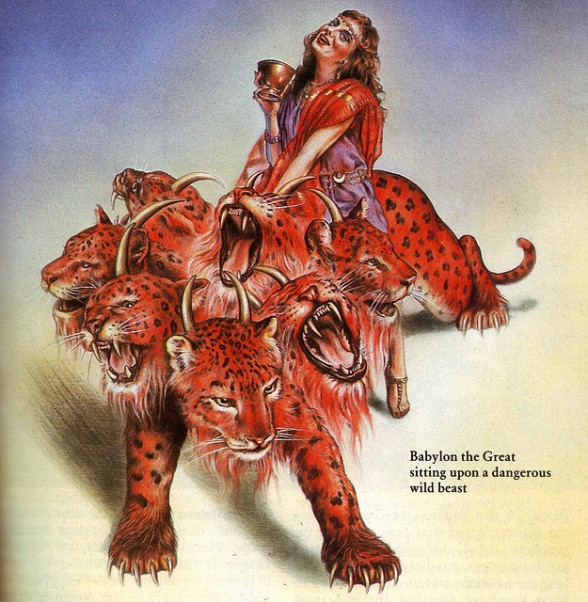
I looked at Book of Revelation written by Prophet John who most Christian theologians think of as Apostle John, one of Jesus Christ’s Twelve Disciples. Apparently, he wrote this Book while imprisoned in a small island far away from Babylon. But, that is not important. Historical Babylonian Empire had fallen several centuries before birth of Jesus Christ. There was no Evil Babylon when John wrote his Revelation Prophecy. Babylon is thought of a ‘code’ name for some unknown Evil Empire. Some think, that the term ‘Evil Empire’ or ‘Babylon’ may refer to Rome or even China in the East which was not a great empire at the time of writing that Book.

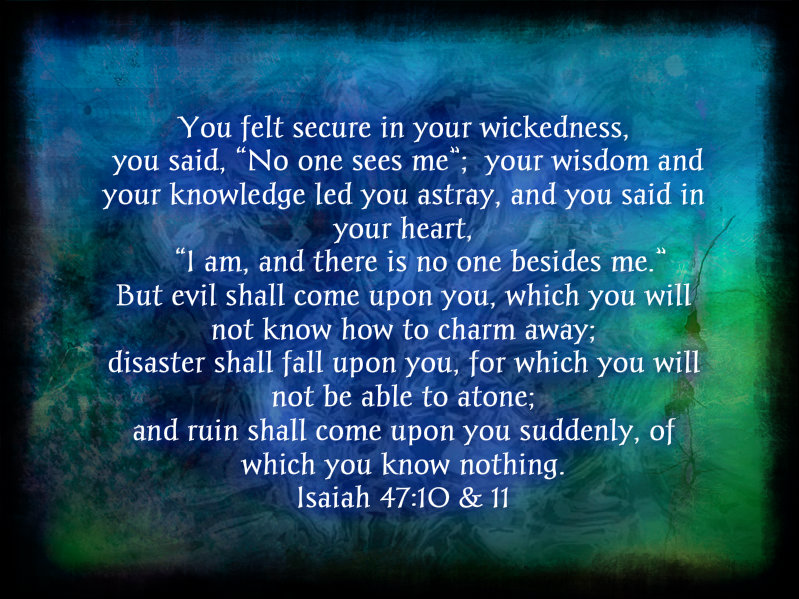
Chapter 18, Book of Revelation, that describes sudden downfall of Babylon was inspired by The Old Testament Book of Isaiah, a Hebrew Prophet. His prophecy came true when Persian Emperor Cyrus defeated and vanquished Babylon and graciously permitted rebuilding of Second Temple in Jerusalem long before the birth of Jesus Christ. So John has no reason to make prophecy about Babylon while he lived during the lifetime of Jesus and His Crucifixion.

I accept the scenario described in Chapter 18, Book of Revelation. I am not claiming a new prophetic vision. I am simply unsealing the mystery of Babylon. When I state, “Beijing is Doomed,” I am not visualizing natural accident or natural calamity. China’s downfall will come by guided, goal-oriented, purposeful, sequential actions following its strike by a heavenly object such as asteroid, large stone which will collide with China’s largest City of Shanghai.

Doomsayer of Doom Dooma – Revelation – Photo Image in Bollywood Movie – TE3N
TE3N MOVIE EXPLORES MY TIBET CONNECTION BY GROUPING TOGETHER FOUR PHOTO IMAGES IN A SINGLE SCREENSHOT.

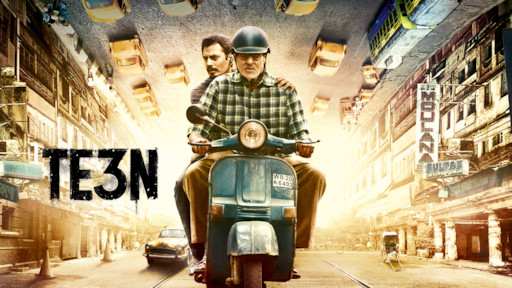
TE3N is a suspense thriller set in Kolkata. Industry’s best actors Amitabh Bachchan, Vidya Balan and Nawazuddin Siddiqui coming together in one film.

Story in detail:

It’s been 8 years since John Biswas (Amitabh Bachchan) lost his granddaughter, Angela, in a tragic kidnapping incident that scarred him & his wife Nancy forever. But eight years later, while the world has moved, John hasn’t given up his relentless quest for justice.

He continues to visit the police station where he’s shunned & ignored every day. The only person whose help he seeks is Martin Das (Nawazuddin Siddiqui), an ex-cop turned priest who has one thing in common with John – the death of Angela had a life altering impact on both men.

But then, 1 day, 8 years after that tragic incident, there’s another kidnapping & everything about it echoes of similarity with the kidnapping of Angela. Father Martin is once again dragged into the investigation by cop Sarita Sarkar (Vidya Balan).

Doomsayer of Doom Dooma – Beijing is Doomed: In 1972, a Chinese spy who infiltrated my military camp in Doom Dooma sent my photo image to Peking (Beijing).

It comes as a big surprise to find my stolen Indian Army Photo ID image from 1972 is revealed in a brief screenshot of this Movie.

Doomsayer of Doom Dooma – Revelation

TE3N Movie explores my Tibet Connection. Beijing is Doomed.

I use my Indian Army Photo ID image of 1972 to describe my connection with City of Doom Dooma, Tinsukia District, Assam, India. I unsealed the prophecy shared by Book of Revelation, Chapter 18 that gives detailed account of sudden, unexpected, downfall of Evil Empire in one single day.

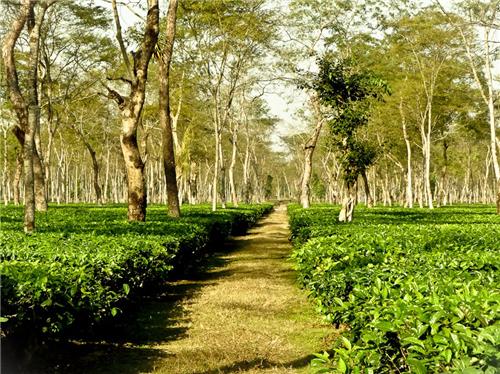
TE3N Movie explores my Tibet Connection using photo image taken at Doom Dooma in 1972. Beijing is Doomed.
TE3N Movie explores my Tibet Connection using single screenshot of photo image taken at Doom Dooma, Tinsukia District, Assam. Beijing is Doomed.
TE3N Movie explores my Tibet Connection. Beijing is Doomed.
TE3N Movie explores my Tibet Connection. Beijing is Doomed. Mystery of Revelation 18: 1-24 Unsealed.
TE3N Movie explores my Tibet Connection. Mystery of Babylon Unsealed. Beijing is Doomed.

My Indian Army Photo ID image taken in 1972 at Doom Dooma serves just one purpose; it unseals Revelation Prophecy and it helps me to announce, “BEIJING IS DOOMED.”

Whole Review – Movie TE3N Reveals My Tibet Connection by grouping four photo images in a single screenshot. Special Service Award presented by all Officers D Sector, Establishment 22, at Doom Dooma, Tinsukia District, Assam, India.

Whole Dude – Whole Service – Whole Seva

Military Service at D Sector, Vikas Regiment is not regulated by Army Act, Army Rules and Defence Service Regulations

Sainya Seva Medal – Service Award without Service Weapon: Special Service Award, a Silver Plate presented by all Officers, D-Sector, Establishment 22 in appreciation of my Service in the North East Frontier Agency/Arunachal Pradesh in January 1973. Vikas Regiment, D Sector, Establishment-22 Special Service Award: I participated in military operations without carrying my Service Weapon for my Service at D Sector, Vikas Regiment, Establishment-22 is not regulated by Army Act, Army Rules and Defence Service Regulations which have remained unchanged over the decades.

Excerpt: I love the Service Award I earned at Doom Dooma without using any Service Weapon. I love Doom Dooma for the opportunity it gave to me to demonstrate my commitment to serve the men who serve our country without any concern for my personal safety. I participated in military operations without carrying my Service Weapon for my Service at D Sector, Vikas Regiment, Establishment-22 is not regulated by Army Act, Army Rules and Defence Service Regulations which have remained unchanged over the decades.

Vikas Regiment, D Sector, Establishment-22 Special Service Award: I participated in military operations without carrying my Service Weapon for my Service at D Sector, Vikas Regiment, Establishment-22 is not regulated by Army Act, Army Rules and Defence Service Regulations which have remained unchanged over the decades.

SAINYA  SEVA MEDAL

Sainya Seva Medal. Service Award without Service Weapon. Vikas Regiment, D Sector, Establishment-22 Special Service Award: I participated in military operations without carrying my Service Weapon for my Service at D Sector, Vikas Regiment, Establishment-22 is not regulated by Army Act, Army Rules and Defence Service Regulations which have remained unchanged over the decades.

The Government of India awards Sainya Seva  Medal to Service Personnel serving in Indian Armed Forces in recognition of ‘non-operational’ services under conditions of special hardship and severe climate. The bar or clasp shows the words ” NEFA ” in Hindi. To qualify for this award, an aggregate of one- year service in the North-East Frontier Agency (NEFA) is required. The Medal shows an image of Nanda Devi Himalayan mountain peak with a bamboo stand in the foreground.

REMEMBERING A WAR:THE 1962 INDIA-CHINA WAR: This is a photo image taken at D Desctor, Vikas Regiment in 1972, ten years after the 1962 War, while I proudly served the Nation in the North East Frontier Agency. Vikas Regiment, D Sector, Establishment-22 Special Service Award: I participated in military operations without carrying my Service Weapon for my Service at D Sector, Vikas Regiment, Establishment-22 is not regulated by Army Act, Army Rules and Defence Service Regulations which have remained unchanged over the decades.

I am proud of my military service in North East Frontier Agency (renamed Arunachal Pradesh) for several reasons. These are;

Special Frontier Force – Sainya Seva Medal – Service Award without Service Weapon. Vikas Regiment, D Sector, Establishment-22 Special Service Award: I participated in military operations without carrying my Service Weapon for my Service at D Sector, Vikas Regiment, Establishment-22 is not regulated by Army Act, Army Rules and Defence Service Regulations which have remained unchanged over the decades.

In 1962, Communist China’s War of  Aggression across Himalayan Frontier motivated me to Resist, to Oppose and to Fight against Red China’s military threat posed from Occupied Tibet. 54 Years after the 1962 War, India is unwilling to part with her territory. India lost control of her territory in the Ladakh region as Tibet still remains under Chinese occupation.

REMEMBERING THE 1962 INDIA – CHINA WAR: The McMahon Line in India’s North East Frontier Agency or the State of Arunachal Pradesh. Vikas Regiment, D Sector, Establishment-22 Special Service Award: I participated in military operations without carrying my Service Weapon for my Service at D Sector, Vikas Regiment, Establishment-22 is not regulated by Army Act, Army Rules and Defence Service Regulations which have remained unchanged over the decades.

Fortunately, in the North-East Himalayan Sector, India retains control over territory which we initially lost in the 1962 War. In 1972, I was very glad to serve in this area for one complete year and I could personally witness the fact that India is fully prepared to fight against Red China one more time. We are willing to do our best to keep ‘NEFA’ (Arunachal Pradesh) under our control whatever may be the Chinese threats protests, and claims to territory she calls “Southern Tibet.” China, apart from the illegal military occupation of Tibet, claims Indian territory publishing maps showing international borders. In recent years, China refused to issue a visa to an Officer of the Indian Administrative Service who had earlier served in this region.

Special Frontier Force – Sainya Seva Medal – Service Award without Service Weapon. Vikas Regiment, D Sector, Establishment-22 Special Service Award: I participated in military operations without carrying my Service Weapon for my Service at D Sector, Vikas Regiment, Establishment-22 is not regulated by Army Act, Army Rules and Defence Service Regulations which have remained unchanged over the decades.

The tensions still exist and I am glad for we are better prepared now and if war is inevitable, we welcome that challenge. To serve in NEFA, I was stationed at Doom Dooma, Tinsukia District, Assam. When I first arrived in Doom Dooma to join my Unit, the first thing that I was told by my Unit Adjutant was, ” Rudra, if you need a copy of your most recent photo, ask the Chinese Intelligence, and they could provide you one.” The Chinese Intelligence operatives or spies keep tabs on each Officer who is entering this area while keeping a close watch on our movements.
To my utter surprise, my Indian Army Picture ID Card stolen during 1972 resurfaces in the Indian Movie titled TE3N. Doomsayer of Doom Dooma earns Sainya Seva Medal – Service Award Without Service Weapon. Vikas Regiment, D Sector, Establishment-22 Special Service Award: I participated in military operations without carrying my Service Weapon for my Service at D Sector, Vikas Regiment, Establishment-22 is not regulated by Army Act, Army Rules and Defence Service Regulations which have remained unchanged over the decades.

We are neither threatened nor intimidated by this kind of Chinese surveillance. We want to assure China that we will not be deterred by their superior Intelligence capabilities.

Special Frontier Force – Sainya Seva Medal. Service Award without Service Weapon. Vikas Regiment, D Sector, Establishment-22 Special Service Award: I participated in military operations without carrying my Service Weapon for my Service at D Sector, Vikas Regiment, Establishment-22 is not regulated by Army Act, Army Rules and Defence Service Regulations which have remained unchanged over the decades.

I arrived in Doom Dooma without my Service Weapon issued by Indian Army as I am expected to participate in operations not known to Indian Army and not regulated by Army Act, Army Rules and Defence Service Regulations.

Special Frontier Force – Sainya Seva Medal – Service Award without Service Weapon. Doomed Gun of Doom Dooma. Vikas Regiment, D Sector, Establishment-22 Special Service Award: I participated in military operations without carrying my Service Weapon for my Service at D Sector, Vikas Regiment, Establishment-22 is not regulated by Army Act, Army Rules and Defence Service Regulations which have remained unchanged over the decades.
Vikas Regiment, D Sector, Establishment-22 Special Service Award: I participated in military operations without carrying my Service Weapon for my Service at D Sector, Vikas Regiment, Establishment-22 is not regulated by Army Act, Army Rules and Defence Service Regulations which have remained unchanged over the decades.

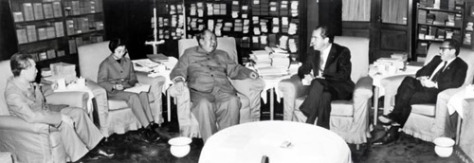
My Unit in Doom Dooma is fully armed and equipped by the United States. While I arrived in Doom Dooma, US President Richard M. Nixon arrived in Peking seeking Communist Party Chairman Mao Zedong’s hand in friendship.

Special Frontier Force – Sainya Seva Medal – Service Award without Service Weapon. Richard Nixon Visits China. The Last Week of February 1972 My Life Doomed. Vikas Regiment, D Sector, Establishment-22 Special Service Award: I participated in military operations without carrying my Service Weapon for my Service at D Sector, Vikas Regiment, Establishment-22 is not regulated by Army Act, Army Rules and Defence Service Regulations which have remained unchanged over the decades.

I was not amused. I had no choice, no alternative for providing Military Service using the US Infantry Weapon for my personal protection. At Doom Dooma, I am predestined to oppose Red China without access to any Service Weapon. I moved around in NEFA performing military tasks sanctioned by my Unit without carrying any Military Weapon.

Indian Army’s Commitment to its Men:

Vikas Regiment, D Sector, Establishment-22 Special Service Award: I participated in military operations without carrying my Service Weapon for my Service at D Sector, Vikas Regiment, Establishment-22 is not regulated by Army Act, Army Rules and Defence Service Regulations which have remained unchanged over the decades.

In the Indian Army, we take pride in looking after our men and very often we stretch ourselves to do our best to safeguard the welfare of our men even under the most difficult circumstances. And we maintain this attitude while extending help to others who may not be members of our Service.

I remember my visit to a Forward Company location when a Sub-Inspector of Police came to me asking for medical attention. He belonged to the Central Reserve Protection Force and was dispatched to this difficult area without any prior health screening. I will not be surprised if the same thing is happening today. We deploy police personnel to work in remote areas and we do not care and value their services. This Police Officer was not medically fit to serve in this area and no attempt was made to ascertain his physical fitness to perform the task for which he was sent. Fortunately, he survived the long trek and the very difficult and physically challenging climb to reach the Village where I am camping. The Village has a Government Clinic and as there was no Doctor posted at the Clinic, I was voluntarily providing services to all civilians residing in that area.

I examined him and found his blood pressure to be very high and he was at great risk of suffering from a stroke which could be fatal or cause paralysis. Apparently, he had undiagnosed high blood pressure for a long time and I could also find evidence that his kidneys were already damaged. To bring his blood pressure under control, he needed immediate hospital treatment and required emergency medical evacuation.

His Police Department never cared to inquire about his well-being before giving him the posting order. Whereas in the Armed Forces, we routinely interview the men and get them medically examined before they are sent to difficult areas.

I prepared a note about his medical condition and the Signal Company Operators immediately dispatched this message. Within minutes, my request for Emergency Medical Evacuation was approved. Doom Dooma Air Force Station was asked to send a helicopter. After a short while, I received a call from the helicopter pilot who spoke to me on his radio and informed me that he was sitting in his helicopter and was ready to take off as soon as the weather permits. That was a particularly, rainy and cloudy day with very poor visibility and the mission was really challenging. The pilot had assured me that he would fly in spite of all odds and would pick up my patient. The control tower was closely monitoring the clouds and they were waiting for a window of opportunity to make this trip while the cloud system moves through the mountain valley. He had asked me to keep the patient ready at the helipad and that he would not be able to spend even an extra minute on the ground. 

Special Frontier Force – Sainya Seva Medal – Service Award without Service Weapon. Mi- 4 Helicopter provided airlift service for our operations in NEFA (Arunachal Pradesh) Vikas Regiment, D Sector, Establishment-22 Special Service Award: I participated in military operations without carrying my Service Weapon for my Service at D Sector, Vikas Regiment, Establishment-22 is not regulated by Army Act, Army Rules and Defence Service Regulations which have remained unchanged over the decades.

Instantly, the whole scenario at my Company location got transformed. The day started on a very dull note. It was raining and there was dense fog. Suddenly, everybody got busy. As per standing orders, armed men were sent to secure our landing strip, weather signs were posted, the helipad was marked with fresh paint. Equipment for Fire-Fighting and Smoke Signaling were positioned on the ground. We erected a small shelter for the patient to rest while awaiting evacuation. A Sub-Inspector of Police suddenly became the focus of attention literally transforming him into a ‘VIP’ or Very Important Person. He was worried about his senior officers who dispatched him to this station. He was concerned that he might offend them by leaving his duty station without their prior permission. I reassured him and told him that the Indian Army would accept total responsibility for sending him to the hospital. I informed him that we value him and care for his well-being and that we would not expect any person to perform duty when their personal health is at risk. 

The pilot made the bold trip as promised and safely transported him to Service Hospital at Air Force Station, Jorhat. The Sub-Inspector of Police told me that he would never forget this particular day of his life on which he could directly experience the sense of urgency with which we acted and treated him as if he is the most precious thing on earth.

I love the Service Award I earned at Doom Dooma without using any Service Weapon. I love Doom Dooma for the opportunity it gave to me to demonstrate my commitment to serve the men who serve our country without any concern for my personal safety.

Doomsayer of Doom Dooma Earns Bharat Sarkar, Indian Army Sainya Seva Medal -Service Award for Military Service Without Military Service Weapon. Vikas Regiment, D Sector, Establishment-22 Special Service Award: I participated in military operations without carrying my Service Weapon for my Service at D Sector, Vikas Regiment, Establishment-22 is not regulated by Army Act, Army Rules and Defence Service Regulations which have remained unchanged over the decades.
Doomsayer of Doom Dooma Earns Sainya Seva Medal – Service Award Without Service Weapon. Vikas Regiment, D Sector, Establishment-22 Special Service Award: I participated in military operations without carrying my Service Weapon for my Service at D Sector, Vikas Regiment, Establishment-22 is not regulated by Army Act, Army Rules and Defence Service Regulations which have remained unchanged over the decades.
Doomsayer of Doom Dooma Earns Sainya Seva Medal – Service Award Without Service Weapon. Walong War Memorial. Vikas Regiment, D Sector, Establishment-22 Special Service Award: I participated in military operations without carrying my Service Weapon for my Service at D Sector, Vikas Regiment, Establishment-22 is not regulated by Army Act, Army Rules and Defence Service Regulations which have remained unchanged over the decades.
During 1962 Chinese aggression Indian Army had valiantly resisted the enemy’s attack in a historical battle at Namti Plains, near Walong, Arunachal Pradesh. Vikas Regiment, D Sector, Establishment-22 Special Service Award: I participated in military operations without carrying my Service Weapon for my Service at D Sector, Vikas Regiment, Establishment-22 is not regulated by Army Act, Army Rules and Defence Service Regulations which have remained unchanged over the decades.
Special Frontier Force – Lohit River: “WALONG WILL NEVER FALL AGAIN.” Vikas Regiment, D Sector, Establishment-22 Special Service Award: I participated in military operations without carrying my Service Weapon for my Service at D Sector, Vikas Regiment, Establishment-22 is not regulated by Army Act, Army Rules and Defence Service Regulations which have remained unchanged over the decades.
Special Frontier Force – Sainya Seva Medal – Service Award without Service Weapon. Vikas Regiment, D Sector, Establishment-22 Special Service Award: I participated in military operations without carrying my Service Weapon for my Service at D Sector, Vikas Regiment, Establishment-22 is not regulated by Army Act, Army Rules and Defence Service Regulations which have remained unchanged over the decades.
Special Frontier Force – Sainya Seva Medal – Service Award without Service Weapon. Vikas Regiment, D Sector, Establishment-22 Special Service Award: I participated in military operations without carrying my Service Weapon for my Service at D Sector, Vikas Regiment, Establishment-22 is not regulated by Army Act, Army Rules and Defence Service Regulations which have remained unchanged over the decades

Whole Dude – Whole Review – Whole Affiliation

Movie TE3N Reveals My lifetime affiliation with Vikas Regiment

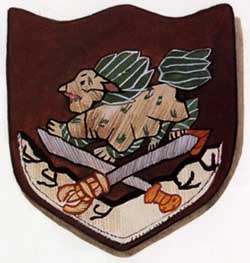
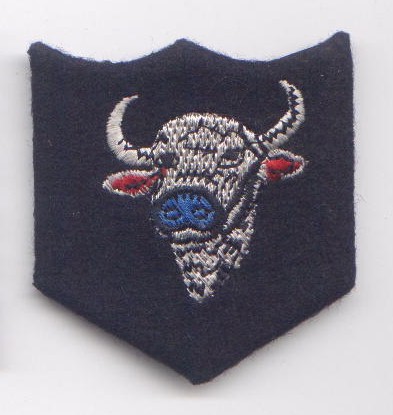
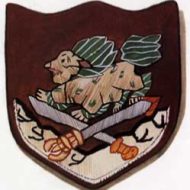
TE3N Movie on Netflix.com reveals my lifetime affiliation with Vikas Regiment also known as Establishment No. 22, Special Frontier Force.: This badge depicting the Snow Lion represents a military alliance/pact between India, Tibet, and the United States of America. Its first combat mission was in the Chittagong Hill Tracts which unfolded during October 1971. It was named Operation Eagle. It accomplished its mission of securing peace in the region that is now known as Republic of Bangladesh.

I served in Special Frontier Force- Headquarters Establishment No. 22-Vikas Regiment from September 22, 1971, to December 10, 1974. My affiliation with Vikas Regiment survives to this date as I host ‘The Living Tibetan Spirits’ in my consciousness since 1971 Bangladesh Ops (India-Pakistan War of 1971 that lead to the Liberation of Bangladesh). Because of my affiliation with Vikas Regiment, my Indian Army Picture ID photo image of 1972 appears in a scene in the TE3N movie of 2016.

I have three reasons why I reside in the United States since July 1986.

TE3N Movie Review – Indian Army vs Special Frontier Force. Army Act 1950 did not govern my Military Conduct during 1971 Bangladesh Ops for the Act does not govern Special Frontier Force.

My first reason to reside in the United States is that of staying away from India, the country of my origin.

TE3N Movie on Netflix.com REVEALS THE DARKEST FEAR OF MY LIFE
THE TE3N MOVIE OF 2016 ON NETFLIX.com REVEALS MY LIFETIME AFFILIATION WITH VIKAS REGIMENT SINCE 1971.

My second reason to reside in the United States is that of staying away from the military organization called Special Frontier Force which is also popularly known as Establishment No. 22 which is renamed as Vikas Regiment.

TE3N MOVIE ON NETFLIX.com REVEALS THE DARKEST FEAR OF MY LIFE
THE TE3N MOVIE OF 2016 ON NETFLIX.com REVEALS MY LIFETIME AFFILIATION WITH VIKAS REGIMENT SINCE 1971

The third reason for residing in the United States is that of my Enemy keeping me under surveillance while the Government of India denies me my right to Self-Defense.

TE3N MOVIE REVIEW - TRANSPARENCY AND PUBLIC ACCOUNTABILITY. TE3N DVD DISTRIBUTED BY RELIANCE ENTERTAINMENT.
TE3N MOVIE OF 2016. THE TE3N MOVIE DVD IS DISTRIBUTED BY RELIANCE ENTERTAINMENT AND NETFLIX.com. IT REVEALS MY LIFETIME AFFILIATION WITH VIKAS REGIMENT SINCE 1971

In the interests of promoting transparency and public accountability in governance by either Public or Private entities, I am sharing the contents of my electronic communication with Reliance Entertainment.

THE TE3N MOVIE OF 2016 REVEALS MY LIFETIME AFFILIATION WITH VIKAS REGIMENT SINCE 1971.

TE3N Pre-recorded DVD – Photo Images.

Dear Sir,

1. On behalf of Special Frontier Force, I am pleased to inform you that a few photo images included in the screenshot of Section.15 of TE3N Pre-recorded DVD, PKD: July/2016 belong to our military organization, people currently affiliated to the organization under terms and conditions established by Government of India.

2. The Movie TE3N is the remake of a South Korean film, and inclusion of the photo images of personnel affiliated to Special Frontier Force is of interest. My organization would like to mention that the Movie Production Team made the decision to use these images giving general public or viewers a mistaken notion about our identity. Special Frontier Force represents a military organization distinct from the Indian Army while it draws Indian Army personnel apart from other nationals.

3. I warmly appreciate artistic freedom exercised by Producer Sujoy Ghosh and Director Ribhu Dasgupta in producing Movie TE3N.

Thanking You,

Yours Sincerely,

Rudra Narasimham Rebbapragada
Ann Arbor, MI 48104-4162 USA
SPECIAL FRONTIER FORCE-ESTABLISHMENT No. 22-VIKAS REGIMENT

TE3N MOVIE REVIEW - TRANSPARENCY AND PUBLIC ACCOUNTABILITY. TE3N DVD DISTRIBUTED BY RELIANCE ENTERTAINMENT.
TE3N MOVIE OF 2016. THE TE3N MOVIE DVD DISTRIBUTED BY RELIANCE ENTERTAINMENT REVEALS MY AFFILIATION WITH VIKAS REGIMENT.
TE3N MOVIE OF 2016. THE MOVIE IMAGE OF MS-8466 CAPTAIN R R NARASIMHAM, AMC REVEALS MY AFFILIATION WITH VIKAS REGIMENT.
TE3N MOVIE OF 2016. INDIA-PAKISTAN WAR, THE BANGLADESH OPs, OPERATION EAGLE, 1971-72 REVEALS MY AFFILIATION WITH VIKAS REGIMENT SINCE 1971.
TE3N MOVIE OF 2016. OPERATION EAGLE, 1971 INDIA – PAKISTAN WAR, BANGLADESH OPs REVEAL MY AFFILIATION WITH VIKAS REGIMENT.
TE3N Movie of 2016 reveals my affiliation with Vikas Regiment. The1972 Indian Army Picture ID Image of MS-8466 Captain R R Narasimham, AMC
TE3N MOVIE OF 2016 REVEALS MY AFFILIATION WITH VIKAS REGIMENT. SPECIAL FRONTIER FORCE CELEBRATES ITS PARTNERSHIP WITH INDIAN ARMED FORCES.

Whole Dude – Whole Failure

The assassination of Bangladesh Prime Minister Sheikh Mujibur Rahman on August 15, 1975.

A rare family photograph of Bangbandhu Sheikh Mujibur Rahman, where he sits in the middle with his youngest Sheikh Rissell on his lap, Sheikh Kamal on the very left, Sheikh Rehana, second from left, spouse Begum Fazilatunnesa Mujib, on Bangbandhu’ right, Sheikh Jamal, fifth from left, and incumbent Bangladesh Prime Minister Sheikh Hasina on the very right

I returned to Chakrata, India during the last week of January 1972 after the successful conclusion of Operation Eagle that initiated the Liberation of Bangladesh with military action in the Chittagong Hill Tracts. During February 1972, I had the opportunity to take part in the training of a National Security Force (Jatiyo Rakkhi Bahini) whose mission was very clear from the beginning. There was an utter sense of urgency and earnestness to defend the personal life of Bangabandhu Bangladesh Prime Minister Sheikh Mujibur Rahman as our intelligence information discovered a plot getting brewed by a few Bangladesh Army Officers who were not satisfied with Bangabandhu’s vision for a modern, democratic nation of Bangladesh. In February 1972, the training of the National Defence Force (Jatiyo Rakkhi Bahini) commenced in Establishment 22, near Chakrata. I have direct personal insight of the training of Mujib Bahini before the 1971 War and of JRB in 1972 after the War.

Indira Gandhi’s paramount concern at that moment of time was figuring out how to get Bangladesh leader Sheikh Mujibur Rahman back to his country alive and well.
She was prepared to pay any price to save his life. This much the prime minister confided to at least one member of her so called ‘kitchen Cabinet’. That person was Ram Nath Kao.the RAW chief.

Bangabandhu, Father of the Nation, Bangladesh Prime Minister Sheikh Mujibur Rahman had twice ignored India’s alert against the bloody putsch, saying the plotters were his “own children” who will not harm him.

Over seven months before the ‘Bangabandhu’ was assassinated along with most of his family members in the August 15, 1975 carnage, a former top Research and Analysis Wing (RAW) official had met him here to warn him against the conspirators.

“These are my own children and they will not harm me,” the Bangladesh leader had told Rameshwar Nath Kao, founder of the India’s external intelligence agency, who meet him in December, 1974 with the approval of the then Indian Prime Minister Mrs. Indira Gandhi.

Referring to the book “Inside R&AW” by Asoka Raina, the report said Rahman had dismissed the concern with a wave of his hand. Kao did not argue but said the Indian information was reliable and he would send him more details of the plot.

He subsequently sent a senior RAW officer to Dhaka in March, 1975 who gave Rahman exact details of the units and ranks of the serving and dismissed officers who were hatching the plot to overthrow his post-independence government.

“But again, he (Bangabandhu) was not convinced,” it said.

.Prime Minister Sheikh Mujibur Rahman welcoming Indian Prime Minister Mrs. Indira Gandhi on March 17, 1972 at Dhaka Airport.
Prime Minister Mrs Indira Gandhi interacting with Sheikh Mujibur Rahman on 07 Feb 1972 at Raj Bhavan, Calcutta (Kolkata)
Prime Minister Indira Gandhi with Prime Minister Sheikh Mujibur Rahman (March 1972)
Bangabandhu Bangladesh Prime Minister Sheikh Mujibur Rahman with Indian Prime Minister Mrs. Indira Gandhi (March 1972).
A smiling Bangabandhu Sheikh Mujibur Rahman during the signing of Mujib-Indira treaty (May 16, 1974).

I returned to Chakrata, India during the last week of January 1972 after the successful conclusion of Operation Eagle that initiated the Liberation of Bangladesh with military action in the Chittagong Hill Tracts. During February 1972, I had the opportunity to take part in the training of a National Security Force (Jatiyo Rakkhi Bahini) whose mission was very clear from the beginning. There was an utter sense of urgency and earnestness to defend the personal life of Bangabandhu Bangladesh Prime Minister Sheikh Mujibur Rahman as our intelligence information discovered a plot getting brewed by a few Bangladesh Army Officers who were not satisfied with Bangabandhu’s vision for a modern, democratic nation of Bangladesh. In February 1972, the training of the National Defence Force (Jatiyo Rakkhi Bahini) commenced in Establishment 22, near Chakrata. I have direct personal insight of the training of Mujib Bahini before the 1971 War and of JRB in 1972 after the War.

In my analysis, India had prior information of the assassination plot. India diligently shared the intelligence information with Bangladesh Prime Minister. The choice to act upon the intelligence information was entirely left in the hands of Bangladesh Prime Minister. Indian Prime Minister Mrs. Indira Gandhi took utmost care to get his release from the military prison in West Pakistan and played a critical role to avoid the death sentence imposed on him. At the same time, India treated the new independent nation with grace and respect giving Bangladesh to discover its own destiny without external influence.

Rudra Narasimham Rebbapragada

Special Frontier Force-Establishment No. 22-Vikas Regiment

Jatiyo Rakkhi Bahini (JRB) – from law enforcers to Sheikh Mujib’s private army

Sheikh Mujib’s hatred for all things military

Sheikh Mujib had an understandable hatred for all things military. He had suffered grievously at the hands of Pakistan’s two military dictators, Field Marshall Ayub Khan and General Yahya Khan. Ayub had arrested Sheikh Mujib on 7 October 1958, the day he seized power. During the next 10-and-half-years of Ayub’s dictatorship Sheikh Mujib had been jailed for long periods in solitary confinement. Then in 1968, while once more in detention for political activity, he was made the principle accused in the notorious Agartala Conspiracy trial in Dhaka. The charge conspiring with India for the secession of East Pakistan. It was a capital offence and Mujib only escaped the gallows because a countryside upsurge against Ayub in 1968 forced him to drop the charges and bring Mujib to the conference table.

While a prisoner of General Yahya Khan in 1971 during the Bangladesh independence struggle, Sheikh Mujib had had an even closer brush with death. According to Sheikh Mujib, he had been tried by a military court and found guilty of treason and sedition. He was to be executed on 15 December 1971, a day before Pakistan surrendered to Bangladesh in Dhaka. Fortunately for him the ceasefire was ordered that night and he was smuggled away to safety by the prison jailor.

Sheikh Mujib carried his hatred of the army with him to the grave. This attitude was shared by his ministers and other senior Awami Leaguers who had also escaped death at the hands of the Pakistan army in 1971.To their [senior Awami Leaguers] basic hostility of things military was added, after independence, the fear that the Bangladesh army might try to supplant them. This anxiety was grounded in the fact that the Bengali military men had been in the thick of the fighting during the independence movement while the Awami Leaguers stayed safely in Calcutta out of the line of fire. As such it would have been understandable if the army men with the other freedom fighters had insisted on positions of influence in the new state. The army as an institution at least did not make this demand. It was content to let Mujib rule and in the first two years of independence gave him loyalty and support.

Anthony Mascarenhas, journalist who wrote the groundbreaking ‘Genocide’ article in 1971 & author of “Bangladesh: A Legacy of Blood” (1986)

Mujib and his ministers, however, from the very start deliberately emasculated [made efforts to weaken] the role of the Defence Forces. Before he was one month in office Mujib took the first step in this direction by signing a 25 year Treaty of Friendship and Mutual Assistance with India. The Indian army had helped to create Bangladesh and it was to India that Mujib now looked to protect it from external aggression. The treaty thus obviated the need for an effective fighting force and the country’s defence establishment was reduced to a police-keeping and largely ceremonial role.I don’t want to create another monster like the one we had in Pakistan.

Sheikh Mujib told Anthony Mascarenhas in February 1974 that he was against a powerful military force

Nevertheless, in independent Bangladesh Prime Minister Sheikh Mujib took initiatives to establish military academies for building skilled and ideal armed forces in the country. He inaugurated the Military Academy in Comilla Cantonment in 1974. However, with the administration of the country at its infancy and his personal dislike for all things military, Sheikh Mujib remained reluctant to dispense too much power to the army and maintained a cautious approach throughout his reign.When you play with gentlemen, you play like a gentleman. But when you play with bastards, make sure you play like a bigger bastard. Otherwise you will lose. Don’t forget I have had good teachers.

Sheikh Mujib allegedly remarked to Anthony Mascarenhas during a poker game on a night train from the Grand Canyon to Los Angeles

Creation of JRB

In early 1972, the government announced the formation of an elite paramilitary force named the Jatiyo Rakkhi Bahini (National Defence Force), or JRB for short. The Jatiyo Rakkhi Bahini Order, 1972 (President’s Order no. 21 of 1972) was promulgated on 7 March 1972 – on the first anniversary of Sheikh Mujib’s famous Ebarer Sangram speech – with a retroactive effect from 1 February 1972.

The idea for the JRB is believed to have resulted from a discussion between the top leaders of Mujib Bahini (also known as Bangladesh Liberation Force or BLF) and Sheikh Mujibur Rahman. The leaders made Sheikh Mujib realise that the fruit of the labour during the independence war could be undone by anti-revolutionary forces within the young volatile nation. It was a view also shared by Tajuddin Ahmad. He advised Sheikh Mujib that the 100,000 trained and armed common people that had participated as muktijuddhas (freedom fighters) during the Swadhinata Juddho (Independence War) should come under national service and a paramilitary force should be formed for them.

Sheikh Mujib was also aware of the growing threat of coup from the military. To combat these, Sheikh Mujib formed the new elite force to provide security for the people after initially rejecting the idea. The task force was formed without any consultation in the cabinet.

So about 110,000 government certified freedom fighters, at the very outset of the independence, felt ignored and excluded from the reconstruction of the new country. Though Sheikh Mujib offered the freedom fighters to join the armed forces, only 8,000 turned up – mostly young Mujib Bahini members and other loyal cadres – and they were absorbed in the Jatiyo Rakkhi Bahini.

Indian link

Jatiyo Rakkhi Bahini was actively deployed just after the Indian Army left Bangladesh on 17 March 1972. The force was trained and brought up by Indian Major General Sujan Singh Uban from Research and Analysis Wing (RAW) as per the request of Sheikh Mujibur Rahman. General Uban, had also trained the Mujib Bahini in India during the 1971 Bangladesh Liberation War and accompanied Sheikh Moni to Bangladesh.

The basic training of the force was not provided by the Bangladesh Army but instead given in India, by Indian Army. Any additional special training were also provided by India in the Indian Military Academy of Dehradun. The JRB troops were armed with Indian assault rifles, heavy machine guns, steel helmet, and leather boots. Jeeps and trucks were imported from India and their olive green-coloured uniform was similar to that of the Border Security Force 66 of the Indian Army.

The JRB was led by Brigadier General A. N. M. Nuruzzaman who was appointed as the Director General while Major Anwarul Alam Shahid (Training), Lieutenant Colonel Abul Hasan Khan (Administration), Lieutenant Colonel Sarwar (Operations), Lieutenant Colonel Sabihuddin (Signals) and Lieutenant Colonel Azizul Islam (Zonal Head Quarter of Chittagong) were his five deputies.

Brigadier Nuruzzaman was a Sector 3 (Brahmanbaria and parts of Sylhet) Commander during 1971 Liberation War.The raising of a new paramilitary force, JRB having exclusive allegiance to Sheikh Mujib proved morally and politically disastrous. JRB became the target of anti-Mujib campaign.

At the height of its influence in 1975 JRB was 25,000 member strong and plans were put in place for it to grow to an astronomical 130,000 by the end of 1980 – that’s more than the number of muktijuddhas who fought in the Swadhinata Juddho. These troops would have been distributed to every district under the authority of the 60 District Governors. To finance this force, Sheikh Mujib used the major part of the 13% of public expenditures allocated to defence, and recruitment of new soldiers in the army was almost stopped. When the Rakkhi Bahini was raised to 25,000 men with basic military training and modern automatic weapons, the discontent amongst some army men turned into antagonism. All these discrimination created rift between the two forces.The Jatiyo Rakkhi Bahini, which roughly translated means National Security Force, was an elite para-military force whose members had to take oaths of personal loyalty to Bangabandhu Sheikh Mujibur Rahman.

Bangabandhu Sheik Mujibur Rahman with Major General Sujan Singh Uban, Inspector General Special Frontier Force. In February 1972, the training of the National Defence Force (Jatiyo Rakkhi Bahini) commenced in Establishment 22, near Chakrata. I have direct personal insight of the training of Mujib Bahini before the 1971 War and of JRB in 1972 after the War.

Whole Dude – Whole Citation

1971 WAR SERVICE – OPEN LETTER TO GOVERNMENT OF INDIA – RELEASE OP EAGLE CITATION

OPERATION EAGLE – OPEN LETTER TO SHRI. NARENDRA DAMODARDAS MODI, THE 15th PRIME MINISTER OF INDIA. RELEASE 1971 WAR SERVICE CITATION.
OPERATION EAGLE – OPEN LETTER TO GOVERNMENT OF INDIA – RELEASE 1971 WAR SERVICE CITATION. PRIME MINISTER OF INDIA’S OFFICE(PMO), SOUTH BLOCK, RAISINA HILL, NEW DELHI. 
OPERATION EAGLE - OPEN LETTER TO SHRI. NARENDRA DAMODARDAS MODI, THE 15th PRIME MINISTER OF INDIA.
OPERATION EAGLE – OPEN LETTER TO SHRI. NARENDRA DAMODARDAS MODI, THE 15th PRIME MINISTER OF INDIA. RELEASE 1971 WAR SERVICE CITATION.
OPERATION EAGLE - OPEN LETTER TO GOVERNMENT OF INDIA. SHRI. NARENDRA DAMODARDAS MODI IS DULY APPOINTED AS THE 15th PRIME MINISTER OF INDIA ON MAY 26, 2014.
OPERATION EAGLE – OPEN LETTER TO GOVERNMENT OF INDIA. SHRI. NARENDRA DAMODARDAS MODI IS DULY APPOINTED AS THE 15th PRIME MINISTER OF INDIA ON MAY 26, 2014. RELEASE 1971 WAR SERVICE CITATION.

Special Frontier Force – Operation Eagle – 1971 Bangladesh Ops-Gallantry Award:

OPERATION EAGLE IS THE CODE NAME FOR MILITARY ACTION THAT INITIATED THE LIBERATION OF BANGLADESH ON NOVEMBER 03, 1971 WITH STRIKES ON THE ENEMY MILITARY POSTS IN CHITTAGONG HILL TRACTS.
OPERATION EAGLE IS THE CODE NAME FOR MILITARY ACTION THAT INITIATED THE LIBERATION OF BANGLADESH ON NOVEMBER 03, 1971 WITH STRIKES ON THE ENEMY MILITARY POSTS IN THE CHITTAGONG HILL TRACTS. RELEASE 1971 WAR SERVICE CITATION.

February 06, 2016

From:

Personal Number. MR-03277K, Rank.  Major,  AMC/DPC,

Rudra Narasimham, Rebbapragada, B.Sc., M.B.B.S.,

Ann Arbor, MI  48104-4162

United States of America.

To:

Shri. Narendra Damodardas Modi,

Honourable Prime Minister of India,

The Prime Minister’s Office(PMO),

South Block, Raisina Hill,

New Delhi – 110 101.

Subject:- Operation Eagle – Military Operation in the Chittagong Hill Tracts – India-Pakistan War of 1971 – “The Past is Never Dead.” – Regarding.

Reference:- Government of India Ministry of Defence Letter No. 3533/2009/D(Cer) dated 2nd/3rd  December, 2009.

Operation Eagle – Military Operation in Chittagong Hill Tracts in 1971 -“The Past is Never Dead.” I am asking release of 1971 War Service Citation to get due recognition as per Battle Plan approved by the Prime Minister of India. 

 Honorable Prime Minister of India,

1. Using the famous words of Nobel Laureate William Faulkner, I would submit to you, “The Past is Never Dead… It’s not even Past.”

2. I,  R. Rudra Narasimham, Personal Number. MS-8466, Rank. Captain, R. R. Narasimham, AMC/SSC, was posted to Headquarters Establishment No. 22 C/O 56 APO (Est No. 22 ) as Medical Officer with effect from 22 September 1971. 

3. At Est No. 22, I was issued written orders to take part in military Operation Eagle (Op Eagle). The Battle Plan was approved by Prime Minister Mrs. Indira Gandhi. In other words, Op Eagle derived legal authority for it was duly sanctioned by the Government of India. I acted in obedience to the orders issued by my immediate superior Officers as the military plan is sanctioned by the Cabinet Secretariat, Government of India. Kindly ask me if I have to provide any other information about Op Eagle and its legal status as an Official act of War.

4. The Op Eagle battle plan included the use of helicopter flights from India for airlifting of battle casualties from the Chittagong Hill Tracts to the Field Hospital, Lungleh, Mizoram.

5. For the conduct of military operations, I was posted to ‘South Column’ Unit commanded by Lieutenant Colonel B K Narayan. Under his Command, my Unit penetrated enemy territory. We launched an offensive attack on an entrenched enemy post at about 40 miles distance from a Border Security Force Post in Indian territory. As the Unit Medical Officer, my duties and responsibilities were that of treating and holding battle casualties at my Unit location in the Chittagong Hill Tracts. The Force Headquarters of Op Eagle was assigned the duty and responsibility of evacuation of battle casualties from the Unit location to the Field Hospital.

6. During the initial phase of Op Eagle, Prime Minister Indira Gandhi withheld her permission for the use of helicopter flight from India to the Unit Battlefield location in the Chittagong Hill Tracts.

7. Apart from the helicopter airlift, Brigadier T S Oberoi, Brigade Commander at the Force Headquarters, Op Eagle had no alternate or contingency plan for immediate and safe evacuation of battle casualties from the Chittagong Hill Tracts to the Field Hospital. Lack of planned airlift support imposed sudden, unexpected challenge. I accepted this challenge and went beyond the call of my duty and executed the difficult task of this casualty evacuation after we seized an enemy position in a fierce battle.

8. Prime Minister Indira Gandhi, when briefed about this battle casualty evacuation problem, gave permission for helicopter flights from India to the Chittagong Hill Tracts on Day 5 of Op Eagle after I successfully completed my task.

9. My actions to perform the duties of Medical Officer during Op Eagle clearly show that I took the initiative to respond in a timely manner at a critical juncture, went Beyond the Call of Duty, and  performed my tasks without sense of fear and without concern for my personal safety inside enemy territory where we faced the threat of enemy retaliation and the threat posed by Mizo rebels who operated on both sides of  India-Pakistan border. To put this in proper perspective, I have to mention that this battle casualty evacuation on Day 3/4 involved a physically challenging march of over 80 miles within 24 hours across remote, roadless, hilly, forest terrain. Kindly let me know if any other Army Medical Corps Officer performed a similar task during Indian Army military operations. For the first time in the history of Indian Army Medical Corps, I provided medical care and comfort as a Medical Officer, in addition, I performed nursing duties which are expected of AMC Nursing Assistant and Ambulance Assistant during battle casualty evacuation. As my Unit was still engaged in defending the just captured enemy post, the AMC Nursing Assistants remained on their duty and could not be spared for battle casualty evacuation. 

10. My Unit Commander, Lieutenant Colonel B K Narayan initiated a citation that recommended grant of Gallantry Award – “Vir Chakra” to recognize my gallant action deep inside the enemy territory; the citation was approved and recommended by Brigade Commander, Brigadier T S Oberoi, VrC, and by Formation Commander, Major General Sujan Singh Uban, Inspector General of Special Frontier Force.

11. Kindly direct the Under Secretary (Cer), Ministry of Defence to publicly release this citation recommending the grant of Gallantry Award during my 1971 War Service.

Thanking You,

Yours Faithfully,

R. Rudra Narasimham, B.Sc., M.B.B.S.,

SPECIAL FRONTIER FORCE

MS-8466 CAPTAIN R R NARASIMHAM AMC/SSC – OPERATION EAGLE-GALLANTRY AWARD
Operation Eagle – Gallantry Award: Service Number IC-22805 Major Survendra Singh Negi, The Grenadiers, served as a Company Commander, South Column, Operation Eagle, Bangladesh Ops, the Chittagong Hill Tracts.
Operation Eagle – Gallantry Award: Flight Lieutenant Parvez Rustom Jamasji, Indian Air Force Helicopter Pilot provided airlift to the battle casualties in the conduct of Operation Eagle, Bangladesh Ops in the Chittagong Hill Tracts.
Southern Army Commander General T S Oberoi had served as the Commandant of Headquarters Establishment Number.22 during Operation Eagle in the rank of Brigadier and was promoted to the rank of Major General and had served as the Inspector General of Special Frontier Force after the successful accomplishment of Operation Eagle 1971-72.


Whole Dude – Whole Jew

The Spirit of a Jew – The Birth of a Nation

The Spirit of a Jew-The Birth of Bangladesh. I am able to recognize his Spirit as I had served in the same military operation and participated in military action in the Chittagong Hill Tracts. My Unit Adjutant Captain Kottayam Chacko Kurien ( Emergency Commission Officer who had earlier served in the Indian Army in the 1962 India-China War), a Kochi Jew had enriched my experience and understanding of Jewish Spirit.

Excerpt: While Major General Jack Farj Rafael Jacob was the Chief of Staff at the Eastern Army Headquarters, the only other Jew in the Liberation War of Bangladesh was the Adjutant of my Unit.The Adjutant, Captain.Kottayam Chacko Kurien is a Kerala Jew. The Jews of Kerala were the first members of Jewish community to arrive in India and their migration dates back to the biblical times,starting with the Roman destruction of Jerusalem in 70 A.D. and even the earlier period of their Babylonian Exile.There is evidence to prove that there was a Jewish community in India prior to the arrival of Saint Thomas in 52 A.D.Since I had participated in the 1971 War without my personal weapon, Captain Kurien was also assigned the responsibility of defending me. He took that task with a sense of cheer and true to his spirit of a Jew, he had solemnly announced that I would be the last person to get killed (by the enemy) in my Unit and had assured me that I should have no concerns for being unarmed.

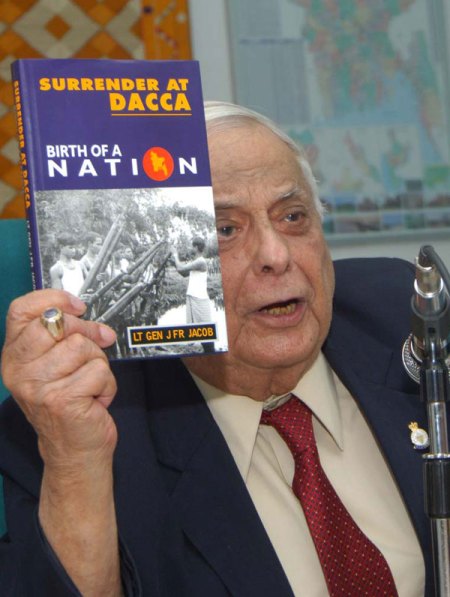
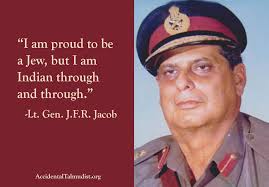
Lieutenant General Jack Farj Rafael Jacob, PVSM, The Architect of Surrender at Dacca on December 16, 1971

The Spirit of a Jew-The Birth of Bangladesh. I am able to recognize his Spirit as I had served in the same military operation and participated in military action in the Chittagong Hill Tracts. My Unit Adjutant Captain Kottayam Chacko Kurien ( Emergency Commission Officer who had earlier served in the Indian Army in the 1962 India-China War), a Kochi Jew had enriched my experience and understanding of Jewish Spirit.

The Birth of a Nation – The Birth of Bangladesh in 1971

The Spirit of a Jew-The Birth of Bangladesh. I am able to recognize his Spirit as I had served in the same military operation and participated in military action in the Chittagong Hill Tracts. My Unit Adjutant Captain Kottayam Chacko Kurien ( Emergency Commission Officer who had earlier served in the Indian Army in the 1962 India-China War), a Kochi Jew had enriched my experience and understanding of Jewish Spirit.

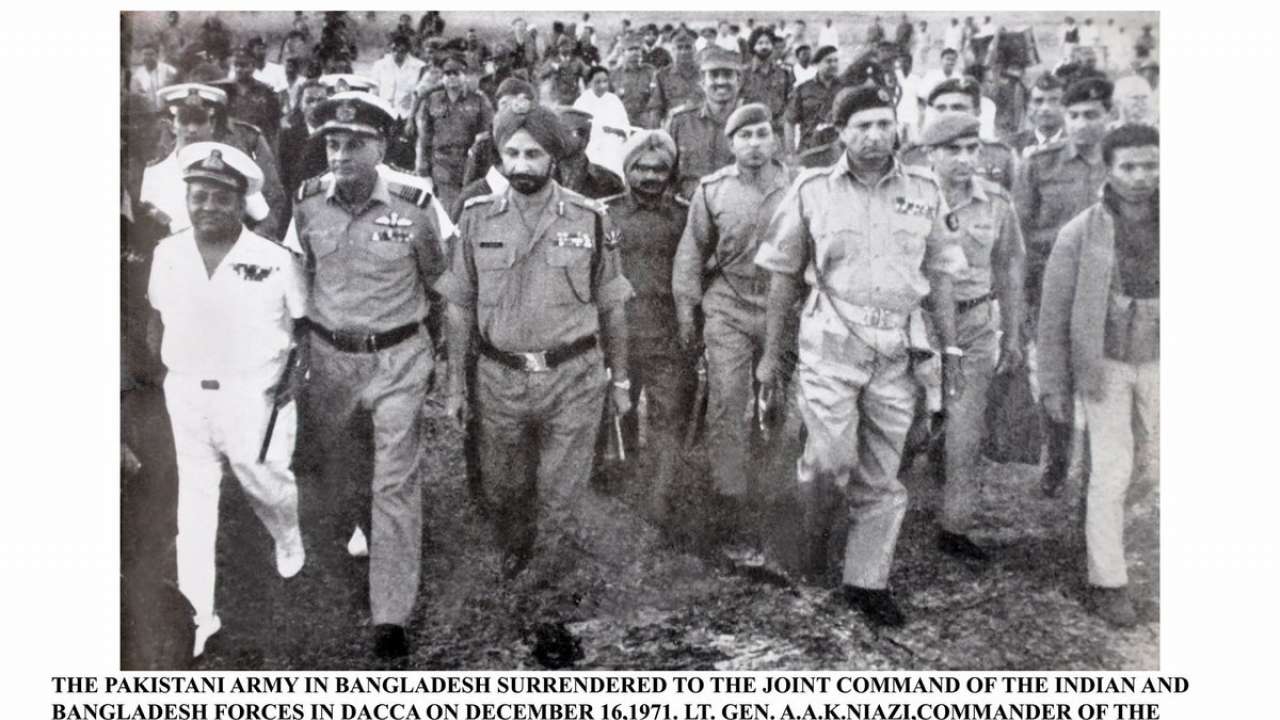
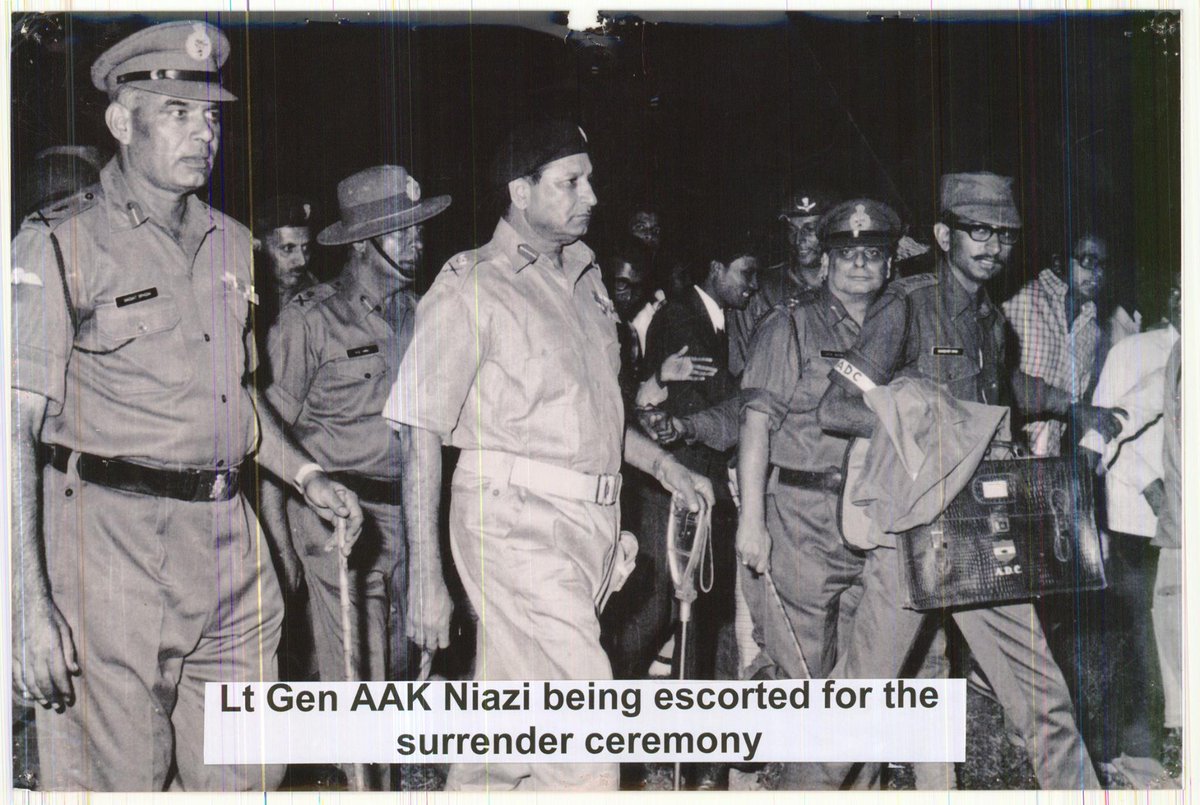
Bangladesh declared its independence from Pakistani rule on March 25, 1971 but the Liberation was accomplished on 16th December, 1971 at 4.30 p.m. when the Pakistani army commander Lt General. A. A. K. Niazi signed the surrender document before people of Dhaka (Dacca) at Dhaka’s ‘Racecourse Maidan’ which is now known as ‘Suhrawardy Udyan’.

The Spirit of a Jew-The Birth of Bangladesh. I am able to recognize his Spirit as I had served in the same military operation and participated in military action in the Chittagong Hill Tracts. My Unit Adjutant Captain Kottayam Chacko Kurien ( Emergency Commission Officer who had earlier served in the Indian Army in the 1962 India-China War), a Kochi Jew had enriched my experience and understanding of Jewish Spirit.

Major General J F R Jacob, Chief of Staff of Indian Eastern Army had drafted the “instrument of surrender.” Earlier on that day of surrender, General Jacob had arrived to meet General Niazi who had actually wanted to discuss “only a ceasefire under the U.N. “The credit of arranging this modern history’s only public surrender by a vanquished force goes to this Jewish General of Indian Army. General Jacob’s Hebrew name is Yaacov Rafael, a ‘Baghdadi’ Jew and the family had arrived in Calcutta about 200 years ago.

The Spirit of a Jew-The Birth of Bangladesh. I am able to recognize his Spirit as I had served in the same military operation and participated in military action in the Chittagong Hill Tracts. My Unit Adjutant Captain Kottayam Chacko Kurien ( Emergency Commission Officer who had earlier served in the Indian Army in the 1962 India-China War), a Kochi Jew had enriched my experience and understanding of Jewish Spirit.

About 36 years after the surrender ceremony, a 11-member delegation of Indian war veterans led by General Jacob were invited to Bangladesh to witness the 37th Independence Day celebrations on March 26, 2008. Some of the historical events are described by General Jacob in his book titled ‘SURRENDER AT DACCA: BIRTH OF A NATION’ and the book was published by Manohar Publishers in the year 2001.

The Spirit of a Jew-The Birth of Bangladesh. I am able to recognize his Spirit as I had served in the same military operation and participated in military action in the Chittagong Hill Tracts. My Unit Adjutant Captain Kottayam Chacko Kurien ( Emergency Commission Officer who had earlier served in the Indian Army in the 1962 India-China War), a Kochi Jew had enriched my experience and understanding of Jewish Spirit.

It is very interesting to note that General Jacob in an interview at Dacca had given some appreciation to the military operation in the Chittagong Hill Tracts and the Liberation of Chittagong by Forces which operated outside the jurisdiction of Indian Army’s Eastern Command.

The Spirit of a Jew

The Spirit of a Jew-The Birth of Bangladesh. I am able to recognize his Spirit as I had served in the same military operation and participated in military action in Chittagong Hill Tracts. My Unit Adjutant Captain Kottayam Chacko Kurien( Emergency Commission Officer who had earlier served in Indian Army), a Kochi Jew had enriched my experience and understanding of Jewish Spirit.

General Jacob joined the British Indian Army (Artillery) in 1942 because of his concerns about the persecution of Jews by the Nazis. Very interestingly, his first assignment during the World War II was in Iraq from where his ancestors had migrated to India. He had also served in Africa, Burma, and Sumatra during World War II. He had retired in 1978 after serving as the Commander of India’s Eastern Army. He was instrumental in saving the lives of many Pakistani service personnel, civilian staff, paramilitary forces and their families by successfully negotiating the modalities of the surrender at Dacca. The surrender had ensured that the prisoners would be treated with Dignity and Respect that they are entitled to under the Geneva Conventions of 1948. It guaranteed the safety and wellbeing of all who surrender. Much attention was given to safely remove the non-combatants and the soldiers were particularly protected from reprisal attacks by the victorious Bangla freedom fighters (Mukti Bahini).

The Spirit of a Jew-The Birth of Bangladesh. I am able to recognize his Spirit as I had served in the same military operation and participated in military action in the Chittagong Hill Tracts. My Unit Adjutant Captain Kottayam Chacko Kurien ( Emergency Commission Officer who had earlier served in the Indian Army in the 1962 India-China War), a Kochi Jew had enriched my experience and understanding of Jewish Spirit.

While Major General Jacob was the Chief of Staff at the Eastern Army Headquarters, the only other Jew in the Liberation War of Bangladesh was the Adjutant of my Unit.The Adjutant, Captain.Kottayam Chacko Kurien is a Kerala Jew. The Jews of Kerala were the first members of Jewish community to arrive in India and their migration dates back to the biblical times,starting with the Roman destruction of Jerusalem in 70 A.D. and even the earlier period of their Babylonian Exile.There is evidence to prove that there was a Jewish community in India prior to the arrival of Saint Thomas in 52 A.D.Since I had participated in the 1971 War without my personal weapon, Captain Kurien was also assigned the responsibility of defending me. He took that task with a sense of cheer and true to his spirit of a Jew, he had solemnly announced that I would be the last person to get killed (by the enemy) in my Unit and had assured me that I should have no concerns for being unarmed.

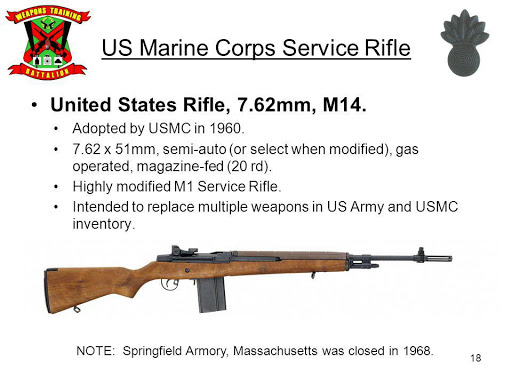
Operation Eagle. The military action to initiate the Liberation of Bangladesh involved the use of this US Marine Corps Service Rifle. The Spirit of a Jew-The Birth of Bangladesh. I am able to recognize his Spirit as I had served in the same military operation and participated in military action in the Chittagong Hill Tracts. My Unit Adjutant Captain Kottayam Chacko Kurien ( Emergency Commission Officer who had earlier served in the Indian Army in the 1962 India-China War), a Kochi Jew had enriched my experience and understanding of Jewish Spirit.

As we moved in, it did not take too long for an alert enemy patrol to spot our movement and they opened an intense barrage of gun fire. Captain. Kurien quickly dug up a trench and had asked me to take cover till things cool down. It was a very dark night, we responded with great restraint, and as we waited with our own attack plan, we allowed the enemy patrol to think that we were beaten back. As I was in good company, I could totally focus on my primary task of giving medical support to the men without any other concern about my personal safety. In the same operational zone, several miles away, a doctor had a very rough experience for lack of proper understanding of his role and for not trusting the men whom he was to support.

The Spirit of a Jew-The Birth of Bangladesh. I am able to recognize his Spirit as I had served in the same military operation and participated in military action in the Chittagong Hill Tracts. My Unit Adjutant Captain Kottayam Chacko Kurien ( Emergency Commission Officer who had earlier served in the Indian Army in the 1962 India-China War), a Kochi Jew had enriched my experience and understanding of Jewish Spirit.

Having taken part in the military operation of 1971 to Liberate Bangladesh, I would give credit to the Indian Air Force who clinched the victory and the surrender by the Pakistani forces.Indian ground forces could rapidly advance towards Dacca and Chittagong as they never came under an air strike by Pakistan.General Jacob in his book had claimed that the Eastern Army had prepared a better operational plan but the facts are the ground assault can not proceed without air support and the coordinated support for the attack is planned at the Army Headquarters in New Delhi rather than at Kolkata where the Eastern Army Command is based. Indian Air Force dominated the air space and they were able to hit any enemy target with great precision and with the display of their air superiority and power, Pakistani General Niazi had no chance of protecting his ground forces and took the wise course of ending the battle and over 93,000 people eventually returned to Pakistan.

The Spirit of a Jew-The Birth of Bangladesh. I am able to recognize his Spirit as I had served in the same military operation and participated in military action in the Chittagong Hill Tracts. My Unit Adjutant Captain Kottayam Chacko Kurien ( Emergency Commission Officer who had earlier served in the Indian Army in the 1962 India-China War), a Kochi Jew had enriched my experience and understanding of Jewish Spirit.

How Lt General JFR Jacob secured Pakistan’s surrender in 1971 

The Spirit of a Jew-The Birth of Bangladesh. I am able to recognize his Spirit as I had served in the same military operation and participated in military action in the Chittagong Hill Tracts. My Unit Adjutant Captain Kottayam Chacko Kurien ( Emergency Commission Officer who had earlier served in the Indian Army in the 1962 India-China War), a Kochi Jew had enriched my experience and understanding of Jewish Spirit.

Excerpted from Lt Gen JFR Jacob’s autobiography “An Odyssey in War and Peace: An Autobiography” published in 2011

The Spirit of a Jew-The Birth of Bangladesh. I am able to recognize his Spirit as I had served in the same military operation and participated in military action in the Chittagong Hill Tracts. My Unit Adjutant Captain Kottayam Chacko Kurien ( Emergency Commission Officer who had earlier served in the Indian Army in the 1962 India-China War), a Kochi Jew had enriched my experience and understanding of Jewish Spirit.

On the morning of 16 December, Manekshaw phoned me and said, “Jake, go and get a surrender.” I asked him if I should negotiate the surrender on the basis of the draft sent to him some days earlier. He replied, “You know what to do; just go.”

I then mentioned that Niazi had invited me for lunch, and informed Aurora. I met Mrs Bhanti Aurora outside the office, and she told me that she was going to Dacca as her place was beside her husband. I returned to Aurora and asked him if he was taking his wife with him. He replied in the affirmative. I said it was risky taking her there, to which he replied that it would be my responsibility to ensure her safety!

I proceeded to Dacca accompanied by a staff officer. I took my draft of the Instrument of Surrender, which was yet to be confirmed by Army HQ. I changed helicopters at Jessore to save refuelling time. An officer ran up to me handing over a signal message from Army HQ. I expected that the message would confirm the draft I was carrying with me. It read: “Government of India has approved of General Jacob having lunch with Gen. Niazi.” I proceeded on to Dacca.

On landing at Dacca, I was met by the representatives of the UN, Marc Henry, Kelly, and others. They told me that they were accompanying me to take over the government and to arrange the withdrawal of the Pakistan military, paramilitary, and Pakistani civilians. I thanked them but declined their offer. Fighting was going on in Dacca between the Mukti Bahini and the Pakistan Army.

The Pakistanis had sent me a staff car. The chief of staff of Pakistan’s Eastern Command accompanied me in the car to the headquarters of Eastern Command. We had barely proceeded a few hundred yards when a group of freedom fighters blocking the road fired at the car. I jumped out exclaiming “Indian army”.

Seeing my olive green Indian Army uniform they stopped firing but wanted to kill the Pakistani Chief of Staff. I reasoned with them, trying to persuade them to allow us to proceed. They reluctantly agreed.

I entered Niazi’s office. Present there were the seniormost Pakistani army, navy, and air force officers, as also some other senior military officers. I was shocked to see Maj. Gen. Nagra seated on the sofa with his arm around Niazi engaged in cracking bawdy jokes in Punjabi. Siddiq Salik in his book Witness to Surrender (1977) wrote that the jokes were unprintable!

We had moved Nagra just a few days earlier to replace Maj Gen Gurbax Singh, who was in command of the force that was moving to capture Dacca, but was wounded. Nagra had known Niazi from before when he was posted as military advisor to our High Commission in Islamabad.

The ceasefire had taken effect at 1700 hours on 15 December. On the morning of 16 December, Nagra, who was some 30 miles outside Dacca with elements of 95 Mountain Brigade and 2 Para, well after the ceasefire went into force, sent a message to Niazi to send his representative. Niazi was at a loss to understand this message as he was expecting me. Nagra, flying a white flag, was escorted to Niazi’s headquarters. I saw the three jeeps with white flags parked outside.

I called Nagra outside, gave him a sharp dressing down for disgraceful conduct unbecoming of a general officer. I told him to send some troops into Dacca, to the airfield and Intercontinental Hotel to protect the officials there. I also instructed him to arrange a table and two chairs at the Race Course for signature of the Instrument of Surrender, as also to provide a detachment for a joint guard of honour. I told him to leave behind a jeep for me.

I re-entered the building. The draft Instrument of Surrender was read out. Niazi, with tears rolling down his cheeks, said: “Who said I am surrendering? You have only come to discuss a ceasefire and withdrawal as proposed by me.” The service chiefs present also voiced their objections. Rao Farman Ali objected to surrendering to a “Joint Command”.

Time was running out so I called Niazi aside. I told him that if he did not surrender I could not take responsibility for the safety of their families and ethnic minorities but if he did I would ensure their protection. I asked him to reconsider, again reminding him that if he did not surrender I would not be responsible for the safety of their families. I then added that I would give him 30 minutes to reconsider and if he did not I would order the resumption of hostilities and the bombing of Dacca. I then walked out to be met by the press.

I was extremely worried. Niazi had 26,400 troops in Dacca, we had about 3,000 some 30 miles out. I was in a quandary as what to do in the event of his refusing. Aurora and his entourage were expected to land in an hour or two and the ceasefire was to expire shortly. I had nothing in hand.

After 30 minutes I walked into the office to be met by a deathly silence, my draft surrender document lying on the table. I asked Niazi if he accepted this document, to which he did not reply. I repeated the enquiry thrice. He still did not respond.

I then picked up the document, holding it high, and said, “I take it as accepted.” Tears rolled down Niazi’s cheeks, there were glares from those present.

The Spirit of a Jew-The Birth of Bangladesh. I am able to recognize his Spirit as I had served in the same military operation and participated in military action in the Chittagong Hill Tracts. My Unit Adjutant Captain Kottayam Chacko Kurien ( Emergency Commission Officer who had earlier served in the Indian Army in the 1962 India-China War), a Kochi Jew had enriched my experience and understanding of Jewish Spirit.

I called Niazi aside and then told him that I had arranged for the signing to take place at the Race Course in public. He objected strongly. I then told him that he would have to surrender his sword. He said that he did not have a sword but would surrender his revolver.

At around 1500 hours, I asked Niazi to accompany me to the airport. As Nagra had not left a jeep for me, I sat with Niazi in his staff car. The Mukti Bahini fighters jumped on the car and it was with some difficulty that we reached the airport. Fortunately, en route we stopped a jeep with two of our paratroopers who were sightseeing. I asked them to follow us.

Around 1630 hours Aurora and his entourage arrived in a fleet of five M14 and four Allouette helicopters. Aurora was accompanied by his wife and the Cs-in-C of Navy and IAF Commands. Lt Gen. Sagat Singh and some of his divisional commanders also alighted, as did Wing Commander Khondker. Osmani, unfortunately was not there; the helicopter in which he had been traveling having been shot at and damaged.

I had planned to travel in the last car with Aurora and Niazi, but Aurora asked me to make way for his wife, who then took her place by her husband’s side. The ADC, who was carrying the papers to be signed, and I had to hitch our way on a truck to the Race Course.

Though there was very little time for any preparations, the ceremony went off reasonably well. After inspecting the guard of honour, Aurora and Niazi sat at the table and signed the Instrument of Surrender. I glanced at the documents and was aghast to see the heading which read “Instrument of Surrender – to be signed at 1631 IST [Indian Standard Time]”. I looked at my watch, which showed that the time was 1655 hours. The documents they brought to be signed had to be re-signed by both in Calcutta some two weeks later!

Niazi removed his epaulette, took out his revolver and handed it to Aurora; tears rolled down his cheeks. It was getting dark. The crowd at the Race Course began shouting and there were threats to lynch Niazi; anti-Pakistani slogans and abuses resounded. They then moved towards Niazi. The senior officers present formed a cordon around him and whisked him off in one of our jeeps.

Sometime later, when I examined the revolver that Niazi had surrendered, I realized that it could not have been Niazi’s. e barrel was choked with muck and had not been cleaned for some considerable time, the lanyard was frayed and dirty. This could not have been the personal weapon of a commanding general. Niazi had probably taken it from one of the military policemen and surrendered it as his personal weapon. I could not help feeling that in a small way Niazi had got some of his own back.

The Spirit of a Jew-The Birth of Bangladesh. I am able to recognize his Spirit as I had served in the same military operation and participated in military action in the Chittagong Hill Tracts. My Unit Adjutant Captain Kottayam Chacko Kurien ( Emergency Commission Officer who had earlier served in the Indian Army in the 1962 India-China War), a Kochi Jew had enriched my experience and understanding of Jewish Spirit.

Whole Dude – Whole Measurement

Indian Independence – A Measure of my Life

India’s First Independence Day celebration on August 15, 1947 has become a measure of my life.

I record major events of my life in relation to India’s independence on August 15, 1947. The Father of the Nation, Mahatma Gandhi was assassinated on January 30, 1948 and my life’s journey became associated with the story of this young nation. 

India’s First Independence Day celebration on August 15, 1947 has become a measure of my life.

25th INDEPENDENCE ANNIVERSARY MEDAL – 1972 

India’s First Independence Day celebration on August 15, 1947 has become a measure of my life. 25th Independence Anniversary Medal. Indian Independence-A Measure of my Life.

This medal was awarded to commemorate the twenty-fifth anniversary of Indian independence in 1972. The medal was awarded to all members of the armed forces, paramilitary forces, and police forces who were serving on 15 August 1972. This medal gives me an opportunity to remember the twenty-fifth year of my life. I was then serving in Indian Army in the rank of a Captain and was posted at a unit located in the North-East Frontier Agency which is now known as the State of Arunachal Pradesh. We all had a very good reason to rejoice on that day. India had scored a major victory in the India-Pakistan War of 1971 and we took pride in the fact that we had a role in shaping that epic event in India’s military history.

Operation Eagle 1971-72 – The Chittagong Hill Tracts – Liberation War of Bangladesh:

India’s First Independence Day celebration on August 15, 1947 has become a measure of my life. OPERATION EAGLE 1971-1972. THE MILITARY VICTORY IN THE CHITTAGONG HILL TRACTS-THE CELEBRATION OF 25th INDEPENDENCE ANNIVERSARY
India’s First Independence Day celebration on August 15, 1947 has become a measure of my life. Operation Eagle 1971-72, the India-Pakistan War of 1971 and the Liberation of Bangladesh are very significant achievements of Prime Minister Indira Gandhi. As I was then serving in Special Frontier Force, Establishment No. 22 (Vikas Regiment) under the Cabinet Secretariat, I had direct and personal understanding of Prime Minister’s Foreign Policy initiatives. She approved our military Operation in the Chittagong Hill Tracts. In the conduct of this clandestine military operation, we faced a very critical moment and it demanded the Prime Minister’s approval for deploying aircraft in enemy territory, a decision that she alone can make. While awaiting her decision, I carried out a difficult war casualty evacuation mission to overcome the challenge posed by the lack of airlift facility. The importance of this situation could be understood as it required the Prime Minister’s intervention. I am now asking the Government of India to recognize my GALLANT response in enemy’s territory without any concern for my personal safety.
India’s First Independence Day celebration on August 15, 1947 has become a measure of my life. Lieutenant Governor of Andaman & Nicobar Islands(December 1985 to December 1989) – Lieutenant General (Retd) TS Oberoi, PVSM, VrC., former General Officer Commanding-in-Chief, Headquarters Southern Command, Pune, former Inspector General, Special Frontier Force, former Commandant, Headquarters Establishment No. 22. He is the tall person in this photo wearing dark brown turban. I knew him since 1971. Under his able leadership, the Liberation of Bangladesh commenced during November 1971. Apart from his military wisdom, he took a good care of all men under his Command. While I was proceeding to the Chittagong Hill Tracts, he individually greeted all the members of my team and delayed the departure of aircraft to make sure that a hot breakfast was served to all the men boarding the aircraft. He paid personal attention to all the aspects of the military mission to secure the well-being of men apart from achieving success in accomplishing the military task. The sense of warmth he radiated is easily felt when we meet him in person. His grandson provided me the link to this photo. Photo Credit – Trishna-Ajay-Picasa Web Album.
India’s First Independence Day celebration on August 15, 1947 has become a measure of my life. The remarks made by Lieutenant Colonel B K Narayan of Special Frontier Force on May 13, 1972 in my Annual Confidential Report for 1971-72 are as follows:”A very conscientious and Tough MO who worked hard during the Bangladesh Ops. He did very well and showed Maturity which was beyond the call of duty. I have recommended this Officer for a gallantry award for which he deserves eminently. He is physically Tough and cheerful. Is a fresh entrant with less than 2 years of Service and yet he displayed capability and confidence.
India’s First Independence Day celebration on August 15, 1947 has become a measure of my life. OPERATION EAGLE 1971-72. Remarks of Former Inspector General of Special Frontier Force, Lieutenant General T S Oberoi, PVSM, VrC, General Officer Commanding-in-Chief,Headquarters Southern Command Pune 411001.He remarked about my participation in the India-Pakistan War of 1971
India’s First Independence Day celebration on August 15, 1947 has become a measure of my life. OPERATION EAGLE 1971-1972. THE MILITARY VICTORY IN THE CHITTAGONG HILL TRACTS-THE CELEBRATION OF 25th INDEPENDENCE ANNIVERSARY. Special Service Award by all Officers, D – Sector, Establishment 22 on 19 January 1973.

Dr. R. Rudra Narasimham, B.Sc., M.B.B.S.,

Personal Number – MR-03277K Major AMC/DPC

MS-8466 Captain AMC/SSC

Medical Officer South Column, Operation Eagle

Headquarters Establishment No. 22  C/O  56  APO

Whole Dude – Whole Misfortune

Richard Nixon’s flight to Peking on February 21, 1972 changed the World for Worse. The Most Unfortunate Week in the US History

The most unfortunate week in the US history-February 21-27, 1972.

While the US troops fight the biggest battle on February 25, 1972, near Saigon in Vietnam, the US President Richard Nixon spent time in Peking befriending the adversary, giving care and comfort to the Enemy while Americans bled on the battlefield.

Monday, February 21, 1972


At 7 a.m., Guam time, the President and Mrs. Nixon left Guam International Airport for Shanghai, their first stop in the People’s Republic of China. They arrived, after a 4-hour flight, at Hung Chiao (Rainbow Bridge) Airport, Shanghai, at 9 a.m., China time, where they were greeted by officials of the People’s Republic, headed by Vice Minister of Foreign Affairs Ch’iao Kuan-hua. After refreshments and a tour of the terminal, the Presidential party again boarded the Spirit of ’76, accompanied by Vice Minister Ch’iao, Chang Wen Chen and Wang Hai-jun of the Foreign Ministry, a Chinese navigator, radio operator, and three interpreters, for the final leg of the flight to Peking.

At about 11:30 a.m., China time, the party arrived at Capital Airport near Peking. Premier Chou En-lai greeted the President and members of his party, stood with the President for the playing of the national anthems of the two countries, and accompanied the President in a review of the troops.

The Premier then accompanied the President in a motorcade to Peking, to Tiao Yu Tai (Angling Terrace), the guest house where the President and Mrs. Nixon would stay during their visit.

In the afternoon, the President met for an hour with Chairman Mao Tse-tung at the Chairman’s residence and for an hour with Premier Chou and other officials in plenary session at the Great Hall of the People.

The President and Mrs. Nixon were guests of Premier Chou at a banquet in the Great Hall of the People in the evening.

Tuesday, February 22, 1972

After a morning of staff meetings and attention to other White House business, the President met for 4 hours with Premier Chou in the Great Hall.

The First Lady visited the kitchen of the Peking Hotel, where she toured food preparation and cooking areas, and talked with cooks and helpers. She was accompanied by Mme. Lin Chia-mei, wife of Vice Premier Li Hsien Nien, Mme. Chi Peng-fei, wife of the Minister of Foreign Affairs, and Sun Hsin-mang, head of the revolutionary committee of the hotel. During the tour, Mrs. Nixon told reporters of plans for the People’s Republic to present to the people of America two giant pandas, in appreciation for the two musk oxen which were to be given to the Peking Zoo on behalf of the people of the United States.

In the afternoon, Mrs. Nixon visited the Sununer Palace, an imperial residence and garden during the Ching Dynasty. She toured rooms used by the Empress Tzu Hsi and walked in the gardens, viewing the lake Kunming and Longevity Hill. She then went to the Peking Zoo and saw the zoo’s pandas.

In the evening, the President and First Lady attended a cultural program with Premier and Madame Chou and Chiang Ch’ing, the wife of Chairman Mao Tse-tung. They saw a performance of the ballet, “The Red Detachment of Women.”

Wednesday, February 23, 1972


The President and Premier Chou met in the afternoon for four hours of discussions at the guest house where the President was staying.

The First Lady visited the Evergreen People’s Commune on the west edge of Peking. In her hour-long tour, she visited the commune’s clinic, where she observed acupuncture treatments, second- and third-grade classrooms, a commune home, agricultural areas and greenhouses, and a dri goods store.

In the afternoon, Mrs. Nixon visited the Peking Glassware Factory and talked with workers making glass flowers and animals.

In the evening, with Premier Chou En-lai, the President and Mrs. Nixon attended a public exhibition of gymnastics, badminton, and table tennis at the Capital Gymnasium.

Thursday, February 24, 1972

The President and Mrs. Nixon, accompanied by Vice Premier Li Hsien-nien, drove 35 miles north of Peking to visit the Ba Da Ling portion of the Great Wall of China, and then the tombs of the emperors of the Ming Dynasty.

In the afternoon, the President and Premier Chou met again for three hours of discussion. The President and Mrs. Nixon later attended an informal private dinner hosted by Premier Chou in the Great Hall.

Friday, February 25, 1972

In the morning, the President and Mrs. Nixon went to the Forbidden City, the site in Peking of the residence of the emperors for some 8oo years prior to the early 20th century. They were accompanied by Marshal Yeh Chien-ying, Vice Chairman of the Military Affairs Commission.

In the afternoon, the President met again with Premier Chou for an hour.

The First Lady toured the Peking Children’s Hospital.

Marking the final evening of their Peking, stay, the President and the First Lady hosted a banquet honoring Premier Chou and other Chinese officials in the Great Hall.

Saturday, February 26, 1972


At the Peking Airport, the President and Premier Chou and other officials of the United States and the People’s Republic met in plenary session for approximately one hour.

The President and the First Lady, with Premier Chou, then boarded the Premier’s plane for the flight to Hangzhou, People’s Republic of China. From Hangzhou Airport, they drove to a guest house on West Lake, a park and recreational site. where they were to spend the night.

In the afternoon, they joined in a walking tour of Flower Fort Park and a boat tour of West Lake, stopping briefly at the Island of Three Towers Reflecting the Moon. Mrs. Nixon also visited the Temple of the Great Buddha.

They were entertained in the evening at a banquet given by the Chekiang Province Revolutionary Committee.

Sunday, February 27, 1972


With Premier Chou, the President and the First Lady flew in the Premier’s plane from Hangzhou Airport to Shanghai. From Shanghai Airport, they motorcaded to the Shanghai Industrial Exhibition, where, with Premier Chou, they toured exhibits of heavy machinery and electronic equipment, handicrafts, surgical techniques, textiles, light industry, musical instruments, toys, and arts and crafts.

Mrs. Nixon also visited the Shanghai Municipal Children’s Palace, where she watched demonstrations of dancing, gymnastics, a puppet show, theatrics, swordplay, and art by students at the center. Her guide was Chang Hong, a fifth-grade student.

In the late afternoon, the joint communique agreed upon by the President and Premier Chou was released.

In the evening, the President and First Lady were guests at a banquet in the Shanghai Exhibition Hall hosted by the Shanghai Municipal Revolutionary Committee. Premier Chou and Committee Chairman Chang Ch’un-ch’iao then accompanied the President and Mrs. Nixon to a cultural program of acrobatics in the Exhibition Hall.

Monday, February 28, 1972

Premier Chou visited with the President for an hour at the Ching Kiang guest house and then accompanied the Presidential party to the airport for official farewells before the takeoff for the return flight at 10 a.m.

Crossing the International Date Line, the Spirit of ’76 arrived at Elmendorf Air Force Base, Anchorage, Alaska, at midnight on Sunday, February 27, Alaska time. The President and the First Lady spent the night at the residence of the Commanding General and left for the final leg of the flight to Washington at 9:40 a.m. on Monday, February 28, Alaska time.

The official party arrived at Andrews Air Force Base near Washington at 9:15 p.m, E.S.T.

U.S. troops fight the biggest battle in nearly a year

The most unfortunate week in the US history-February 21-27, 1972. Black Day to Freedom. Vietnamese soldiers survey the ruins of An Loc during a lull in the two-month battle for the province town in Vietnam on June 28, 1972. The North Vietnamese used armor in the siege of the major rubber town, but failed to take An Loc.

U.S. troops clash with North Vietnamese forces in a major battle 42 miles east of Saigon, the biggest single U.S. engagement with an enemy force in nearly a year. The five-hour action around a communist bunker line resulted in four dead and 47 wounded, almost half the U.S. weekly casualties.

The most unfortunate week in the US history-February 21-27, 1972. Black Day to Freedom
The most unfortunate week in the US history-February 21-27, 1972. BLACK DAY TO FREEDOM
The most unfortunate week in the US history-February 21-27, 1972. TIBET CONSCIOUSNESS – HOPE FOR FREEDOM. US PRESIDENT NIXON’S VISIT TO COMMUNIST CHINA IS BLACK DAY TO FREEDOM.
The most unfortunate week in the US history-February 21-27, 1972. BLACK DAY TO FREEDOM – JULY 15, 1971. US PRESIDENT RICHARD M NIXON ANNOUNCES HIS TRIP TO COMMUNIST CHINA. NIXON-KISSINGER DECISION TO BACKSTAB TIBET TO PLAY A DIRTY SINFUL GAME IN THE NAME OF “REALPOLITIK.”
The most unfortunate week in the US history-February 21-27, 1972.

RICHARD NIXON’S FLIGHT TO PEKING. THE WEEK THAT CHANGED THE WORLD FOR WORSE. 

Richard Nixon Visits Peking. The Week That Doomed My World. The most unfortunate week in the US history-February 21-27, 1972

My arrival at the US built airfield in Doom Dooma, Tinsukia District, Assam, India during the Week of February 1972 marks an event that Doomed my World.  

Richard Nixon Visits Peking. The Week That Doomed My World. The most unfortunate week in the US history-February 21-27, 1972
Black Day to Freedom – Whole Villain – Nixon – Mao cartoon. The most unfortunate week in the US history-February 21-27, 1972

I live in the United States, the Leader of the Free World, a Free Nation which gives me no sense of hope for my future Life. I constantly experience the Misery, the Despair, the Frustration, the Disappointment, the Pain, and the Feelings of Hopelessness that describe the lives of Tibetans living in Occupied Tibet. 

Richard Nixon visits Peking 

The Year 1972   

President Richard Nixon visits the People’s Republic of China. After arriving in Peking, the president announced that his breakthrough visit to China is “The week that changed the world.” In meeting with Nixon, Prime Minister Zhou Enlai urged early peace in Vietnam but did not endorse North Vietnam’s political demands. North Vietnamese officials and peace negotiators took a dim view of Nixon’s trip, fearing that China and the United States would make a deal behind their backs. Nixon’s promise to reduce the U.S. military presence on Taiwan seemed to confirm North Vietnam’s fears of a Chinese-American sellout-trading U.S. military reduction in Taiwan for peace in Vietnam.

Despite Hanoi’s fears, China continued to supply North Vietnam levels of aid that had increased significantly in late 1971. This aid permitted the North Vietnamese to launch a major new offensive in March 1972. 

1972 

Richard Nixon makes the first U.S. presidential visit to Peking 

President Richard M. Nixon arrives in Peking, the capital of the People’s Republic of China, on the first presidential visit to the world’s most populous nation. The U.S. federal government had formally opposed China’s communist government since it took power in 1949, 

1848 

Karl Marx publishes the Communist Manifesto 

On February 21, 1848, The Communist Manifesto, written by Karl Marx with the assistance of Friedrich Engels, is published in London by a group of German-born revolutionary socialists known as the Communist League. 

Vietnam War 

1970 

Kissinger begins secret negotiations with North Vietnamese 

National Security Advisor Henry Kissinger begins secret peace talks with North Vietnamese representative Le Duc Tho, the fifth-ranking member of the Hanoi Politburo, at a villa outside Paris. 

1972 

Nixon arrives in Peking for talks 

In an amazing turn of events, President Richard Nixon takes a dramatic first step toward normalizing relations with the communist People’s Republic of China (PRC) by traveling to Peking for a week of talks.  

Richard Nixon Visits Peking. The Week My World Doomed. The most unfortunate week in the US history-February 21-27, 1972
The most unfortunate week in the US history-February 21-27, 1972. The Vietnam War Memorial reminds me of the Unfinished Korea-Vietnam War.


Whole Dude – Whole Heritage

My Buddhist Heritage – My Nagarjuna Connection

Whole Dude – Whole Heritage: My Service in Indian Army helped me to learn about my Buddhist Heritage. My Nagarjuna Connection

I was posted to 54 Infantry Division (popularly known as Bison Division) in December 1974 on completion of my service on deputation to Special Frontier Force (Establishment 22). My Indian Army Service helped me to learn about my Buddhist Heritage and to discover my Nagarjuna Connection.

Whole Dude – Whole Heritage: My Service in Indian Army helped me to learn about my Buddhist Heritage. My Nagarjuna Connection. The Shoulder Badge of Special Frontier Force – Establishment. I served in this organization from September 22, 1971 to December 18, 1974.
Whole Dude – Whole Heritage: My Service in Indian Army helped me to learn about my Buddhist Heritage. My Nagarjuna Connection. I served in Special Frontier Force – Establishment 22 from September 22, 1971 to December 18, 1974.
Whole Dude – Whole Heritage: My Service in Indian Army helped me to learn about my Buddhist Heritage. My Nagarjuna Connection. The Shoulder Badge of 54 Infantry Division. I served in Bison Division from December 1974 to May 1976.
Whole Dude – Whole Heritage: My Service in Indian Army helped me to learn about my Buddhist Heritage. My Nagarjuna Connection. I served in 54 Infantry Division from December 1974 to May 1976.

My very first assignment at Bison Division gave me the opportunity to participate in a military training exercise near Nagarjuna Sagar Dam from December 1974 to January 1975. I visited Nagarjuna Sagar again during 1979 while I served as Senior Regimental Medical Officer, Army Ordnance Corps Centre, Secunderabad.

Whole Dude – Whole Heritage: My Service in Indian Army helped me to learn about my Buddhist Heritage. My Nagarjuna Connection. I served in Army Ordnance Corps Centre, Secunderabad from December 1978 to January 1984.

His Holiness the 14th Dalai Lama gave 4-Day Teaching on Nagarjuna’s The Precious Garland of the Middle Way Path. I am pleased to share my connection with Acharya Nagarjuna who lived and preached in Nalgonda District of Andhra Pradesh/Telangana, India. My father served as Principal of Nagarjuna Government College, Nalgonda during 1965-67.

Tibet Awareness – My Nagarjuna Connection. His Holiness the Dalai Lama’s Teachings on Nagarjuna’s The Precious Garland of the Middle Way. His Holiness the Dalai Lama on the first day of teachings for South East Asian devotees at Tsuglagkhang, Dharamshala, 29 August 2016.

August 29, 2016
By Staff Writer

DHARAMSHALA: His Holiness the Dalai Lama today began a four-day teaching on Chapter II of Nagarjuna’s The Precious Garland of the Middle Way (uma rinchen trengwa) at the request of a group from Asia including Indonesia, Korea, Malaysia, Singapore, Thailand and Vietnam at the Tsuglagkhang. Over 5000 devotees from 57 countries had come to attend the teaching, of which 1200 were Buddhist monks and nuns. The remaining include devotees from Mainland China, India and local Tibetans along with 1500 from south east Asian countries of Singapore, Malaysia, Vietnam, Thailand and Indonesia.

The teaching began with a recitation of Sherab Nyingpo or Heart Sutra in different languages. His Holiness the Dalai Lama greeted all the devotees who come from different part of the world.

Emphasising the importance of Moral Ethics, His Holiness said: “Years of discussions with many scholars and educationist friends have led to the decision of coming up with a curriculum on moral ethics without touching any religious aspect.” His Holiness even mentioned a few Universities in western countries that have started a curriculum on it and suggested the practice of compassion and sense of oneness of humanity.

Tibet Awareness – My Nagarjuna Connection. His Holiness the Dalai Lama’s Teachings on Nagarjuna’s The Precious Garland of the Middle Way. His Holiness the Dalai Lama being led to the Teaching venue by a representative of the South East Asian devotees, 29 August 2016. 

His Holiness added that friendship is built on trust, and that trust can only be gained through love and compassion in the absence of pride, jealousy and malicious thoughts. “We should all keep our identity and religion aside and consider ourselves humans first. At the fundamental level, we all seven billion human beings are the same wishing for a happy life,” he said.
“It is matter of great sadness and loss if religion becomes a tool of these negative afflictions,” His Holiness noted.
The teachings will continue for the next three days culminating in a long life empowerment on the final day of the teaching on 1 September.

Tibet Awareness – My Nagarjuna Connection. His Holiness the Dalai Lama’s Teachings on Nagarjuna’s The Precious Garland of the Middle Way.

Devotees from 57 countries including Indonesia, Malaysia, Singapore, Thailand, Vietnam, South Korea, at the teaching.

Tibet Awareness – My Nagarjuna Connection. His Holiness the Dalai Lama’s Teachings on Nagarjuna’s The Precious Garland of the Middle Way. Members of Tibetan public at the four-day teaching on Nagarjuna’s Precious Garland of the Middle Way at Tsuglagkhang on 29 August 2016.

Members of Tibetan public at the four-day teaching on Nagarjuna’s Precious Garland of the Middle Way at Tsuglagkhang on 29 August 2016.

2016 Central Tibetan Administration

Whole Dude – Whole Heritage: My Service in Indian Army helped me to learn about my Buddhist Heritage. My Nagarjuna Connection.
Tibet Awareness - My Nagarjuna Connection. Nagarjuna Sagar Dam across Krishna River in Nalgonda District, India.
Whole Dude – Whole Heritage: My Nagarjuna Connection. Nagarjuna Sagar Dam across Krishna River in Nalgonda District, Telangana, India.
Tibet Awareness - My Nagarjuna Connection. Nandikonda near Nagarjuna Sagar, India.
Whole Dude – Whole Heritage: My Nagarjuna Connection. Nandi Konda near Nagarjuna Sagar, India.
Tibet Awareness - My Nagarjuna Connection. Nagarjuna Konda near Nagarjuna Sagar, India.
Whole Dude – Whole Heritage: My Nagarjuna Connection. Nagarjuna Konda near Nagarjuna Sagar, India.
Whole Dude – Whole Heritage: My Service in Indian Army helped me to learn about my Buddhist Heritage. My Nagarjuna Connection.
Tibet Awareness - My Nagarjuna Connection. Buddha Vanam near Nagarjuna Sagar, India.
Whole Dude – Whole Heritage: My Nagarjuna Connection. Buddha Vanam near Nagarjuna Sagar, India.
Tibet Awareness - My Nagarjuna Connection. Buddha statue near Nagarjuna Sagar, India.
Whole Dude – Whole Heritage: My Nagarjuna Connection. Buddha statue near Nagarjuna Sagar, India.
Tibet Awareness - My Nagarjuna Connection. Buddhist Stupas near Nagarjuna Sagar, India.
Whole Dude – Whole Heritage: My Nagarjuna Connection. Buddhist monuments  ‘Stupas’ near Nagarjuna Sagar, India.
Tibet Awareness - My Nagarjuna Connection. Ettipotala Waterfall near Nagarjuna Sagar, India.
Whole Dude – Whole Heritage: My Nagarjuna Connection. Ethipothala Waterfall near Nagarjuna Sagar, India.
TIBET AWARENESS - NAGARJUNA CONNECTION.
Whole Dude – Whole Heritage: My Service in Indian Army helped me to learn about my Buddhist Heritage. My Nagarjuna Connection.
TIBET AWARENESS - NAGARJUNA CONNECTION. NAGARJUNI KONDA ART EXHIBIT.
Whole Dude – Whole Heritage: My Service in Indian Army helped me to learn about my Buddhist Heritage. My Nagarjuna Connection.
TIBET AWARENESS - NAGARJUNA CONNECTION.
Whole Dude – Whole Heritage: My Service in Indian Army helped me to learn about my Buddhist Heritage. My Nagarjuna Connection.
TIBET AWARENESS - NAGARJUNA CONNECTION.
Whole Dude – Whole Heritage: My Service in Indian Army helped me to learn about my Buddhist Heritage. My Nagarjuna Connection.
Tibet Awareness - Nagarjuna Connection.
Whole Dude – Whole Heritage: My Service in Indian Army helped me to learn about my Buddhist Heritage. My Nagarjuna Connection.
Tibet Awareness - Nagarjuna Connection.
Whole Dude – Whole Heritage: My Service in Indian Army helped me to learn about my Buddhist Heritage. My Nagarjuna Connection.
Tibet Awareness - Nagarjuna Connection
Whole Dude – Whole Heritage: My Service in Indian Army helped me to learn about my Buddhist Heritage. My Nagarjuna Connection.
Tibet Awareness - Nagarjuna Connection
Whole Dude – Whole Heritage: My Service in Indian Army helped me to learn about my Buddhist Heritage. My Nagarjuna Connection.
Tibet Awareness- Nagarjuna Connection.
Whole Dude – Whole Heritage: My Service in Indian Army helped me to learn about my Buddhist Heritage. My Nagarjuna Connection.
Tibet Awareness - Nagarjuna Connection.
Whole Dude – Whole Heritage: My Service in Indian Army helped me to learn about my Buddhist Heritage. My Nagarjuna Connection.
Tibet Awareness - Nagarjuna Connection.
Whole Dude – Whole Heritage: My Service in Indian Army helped me to learn about my Buddhist Heritage. My Nagarjuna Connection.
Tibet Awareness - Nagarjuna Connection.
Whole Dude – Whole Heritage: My Service in Indian Army helped me to learn about my Buddhist Heritage. My Nagarjuna Connection.
Tibet Awareness - Nagarjuna Connection.
Whole Dude – Whole Heritage: My Service in Indian Army helped me to learn about my Buddhist Heritage. My Nagarjuna Connection.
Tibet Awareness - Nagarjuna Connection.
Whole Dude – Whole Heritage: My Service in Indian Army helped me to learn about my Buddhist Heritage. My Nagarjuna Connection.
Tibet Awareness - Nagarjuna Connection.
Whole Dude – Whole Heritage: My Service in Indian Army helped me to learn about my Buddhist Heritage. My Nagarjuna Connection.
Tibet Awareness - Nagarjuna Connection.
Whole Dude – Whole Heritage: My Service in Indian Army helped me to learn about my Buddhist Heritage. My Nagarjuna Connection.
Tibet Awareness - Nagarjuna Connection - SriParvata Arama - Hill Colony, Nagarjuna Sagar, India.
Whole Dude – Whole Heritage: My Service in Indian Army helped me to learn about my Buddhist Heritage. My Nagarjuna Connection. SriParvata Arama – Hill Colony, Nagarjuna Sagar, India
Tibet awareness - My Nagarjuna Connection.
Whole Dude – Whole Heritage: My Service in Indian Army helped me to learn about my Buddhist Heritage. My Nagarjuna Connection.

Whole Dude – Whole Award -November 1971

Special Frontier Force – Establishment 22 – Operation Eagle – Grant of Gallantry Award

Special Frontier Force – Establishment 22 – Operation Eagle – Grant of Gallantry Award: An open letter to President of India about the sanction of Gallantry Award for participation in Special Frontier Force Operation Eagle during Liberation of Bangladesh 1971-72: OPERATION EAGLE IS THE CODE NAME FOR MILITARY ACTION THAT INITIATED THE LIBERATION OF BANGLADESH ON NOVEMBER 03, 1971 WITH STRIKES ON THE ENEMY MILITARY POSTS IN THE CHITTAGONG HILL TRACTS.

Excerpt: Special Frontier Force – Operation Eagle – Bangladesh Liberation War of 1971-72. Sanction of Gallantry Award. It must be clearly noted that the eligibility criteria for the grant of military awards, decorations and honours were included in the Battle Plan of Operation Eagle which was duly approved and sanctioned by the Prime Minister of India.

Special Frontier Force – Establishment 22 – Operation Eagle – Grant of Gallantry Award: An open letter to President of India about the sanction of Gallantry Award for participation in Special Frontier Force Operation Eagle during Liberation of Bangladesh 1971-72. Special Service Award Presented by Establishment – 22
Establishment No. 22 – Operation Eagle: The Shoulder Badge of Special Frontier Force. Its first combat mission was in the Chittagong Hill Tracts which unfolded on 03 November 1971. It was named Operation Eagle. It accomplished its mission of securing peace in the region that is now knownas Republic of Bangladesh.
Operation Eagle – Gallantry Award: Flight Lieutenant Parvez Rustom Jamasji, Indian Air Force Helicopter Pilot provided airlift to the battle casualties in the conduct of Operation Eagle, Bangladesh Ops in the Chittagong Hill Tracts.
Operation Eagle – Gallantry Award: Service Number IC-22805 Major Survendra Singh Negi, The Grenadiers, served as a Company Commander, South Column, Operation Eagle, Bangladesh Ops, the Chittagong Hill Tracts.

Government of India, Department of Administrative Reforms & Public Grievances Portal to receive Petitions and Grievances: www.pgportalgov.in/

Registration Number: DARPG/E/2013/82597

Name of Complainant:Rebbapragada Pratap Narayan

Date of Receipt: 07 September 2013

Received by: Department of Administrative Reforms and Public Grievances

Officer Name: Ms. Shailja Joshi

Officer Designation: Deputy Secretary

Contact Address: 5th Floor, Sardar Patel Bhawan, New Delhi – 110 001

Contact Number: 011 23360208

e-mail: dirpg-arpg@nic.in

Grievance Description:

1. My younger brother, Service Number: MS-8466/MR-03277K, Name:R. Rudra Narasimham (or R. R. Narasimham) served as Medical Officer in the Army Medical Corps from 26 July 1970 to 10 January 1984 after the grant of Short Service Commission (September 1969) and Direct Permanent Commission (March 1973). He served in the rank of Lieutenant/Captain at Establishment No. 22/Special Frontier Force from 22 September 1971 to 18 December 1974.

2. He had served under the command of Major General Sujan Singh Uban, Inspector General Special Frontier Force and took part in Operation Eagle from November 1971 to January 1972. Operation Eagle had initiated the Liberation of Bangladesh with military action in the Chittagong Hill Tracts. The Brigade Commander of Operation Eagle was Brigadier T S Oberoi, the Commandant, Establishment No. 22. The Chief Staff Officer was Colonel Iqbal Singh. My brother served in the South Column Unit that was commanded by Lieutenant Colonel BK Narayan. During November 1971, his Unit had attacked and captured an enemy post defended by regular troops of Pakistan’s Army. In this Infantry attack, my brother was at the front line marching with the men. The two Company Commanders, Major Savendra Singh Negi (Grenadiers), and Major G B Velankar (SFF-EST No. 22, a Civilian Officer) who led the assault on the enemy position were awarded the Gallantry Award of Vir Chakra. My brother who took part in this action with the men of these two Company Commanders was also recommended to receive the Gallantry Award of Vir Chakra. The citation for the grant of this Gallantry Award was initiated by Lieutenant Colonel BK Narayan, it was seen by Colonel Iqbal Singh, the Chief Staff Officer, it was reviewed and recommended by Brigadier T S Oberoi and it was finally approved by Major General Sujan Singh Uban, IG SFF who had recommended it and sent it directly to the Director of Medical Services, DMS (Army), Medical Directorate, New Delhi for favour of sending the citation to the MS Branch, Army Hq for their necessary action to sanction the Gallantry Award.

3. It must be clearly noted that the eligibility criteria for the grant of military awards, decorations and honours were included in the Battle Plan of Operation Eagle which was duly approved and sanctioned by the Prime Minister of India.

The Prime Minister’s Office (PMO) and the Cabinet Secretariat are fully aware of the terms and conditions for the grant of awards to members who took part in Operation Eagle. My brother is requesting that the Gallantry Award to be granted as approved and recommended by the Inspector General of Special Frontier Force. My brother applied for Direct Permanent Commission during September 1972 and his application for AMC Examination held in September 1972 includes the remarks of recommendation signed by Colonel Iqbal Singh who had mentioned the citation, and had substantially quoted the citation giving the full details of my brother’s gallant response in the face of enemy action. This application for Permanent Regular Commission in the Army Medical Corps is archived at the Medical Personnel Records Section (Officers)/ MPRS(O), Office of the DGAFMS, Ministry of Defence, New Delhi.

4. If you need any further information, kindly write to me and I will be happy to provide the same.

Current Status: Received the Grievance

Grievance Status for registration number: DARPG/E/2013/82597 

Grievance Concerns To 

Name Of Complainant 

R Pratap Narayan

Date of Receipt 

07/09/2013 

Received By Ministry/Department 

Administrative Reforms and Public Grievances – Nodal Agency

Grievance Description 

1. My younger brother, Service Number: MS-8466/MR-03277K, Name:R. Rudra Narasimham (or R. R. Narasimham) served as Medical Officer in the Army Medical Corps from 26 July 1970 to 10 January 1984 after the grant of Short Service Commission (September 1969) and Direct Permanent Commission (March1973). He served in the rank of Lieutenant/Captain at Establishment No. 22/Special Frontier Force from 22 September 1971 to 18 December 1974.

2. He had served under the command of Major General Sujan Singh Uban, Inspector General Special Frontier Force and took part in Operation Eagle from November 1971 to January 1972. Operation Eagle had initiated the Liberation of Bangladesh with military action in the Chittagong Hill Tracts. The Brigade Commander of Operation Eagle was Brigadier T S Oberoi, the Commandant, Establishment No. 22. The Chief Staff Officer was Colonel Iqbal Singh. My brother served in the South Column Unit that was commanded by Lieutenant Colonel BK Narayan. During November 1971, his Unit had attacked and captured an enemy post defended by regular troops of Pakistan’s Army. In this Infantry attack, my brother was at the front line marching with the men. The two Company Commanders, Major Savendra Singh Negi (Grenadiers), and Major G B Velankar (SFF-EST No. 22, a Civilian Officer) who led the assault on the enemy position were awarded the Gallantry Award of Vir Chakra. My brother who took part in this action with the men of these two Company Commanders was also recommended to receive the Gallantry Award of Vir Chakra. The citation for the grant of this Gallantry Award was initiated by Lieutenant Colonel BK Narayan, it was seen by Colonel Iqbal Singh, the Chief Staff Officer, it was reviewed and recommended by Brigadier T S Oberoi and it was finally approved by Major General Sujan Singh Uban, IG SFF who had recommended it and sent it directly to the Director of Medical Services, DMS (Army), Medical Directorate, New Delhi for favour of sending the citation to the MS Branch, Army Hq for their necessary action to sanction the Gallantry Award.

3. It must be clearly noted that the eligibility criteria for the grant of military awards, decorations and honours were included in the Battle Plan of Operation Eagle which was duly approved and sanctioned by the Prime Minister of India. The Prime Minister’s Office(PMO) and the Cabinet Secretariat are fully aware of the terms and conditions for the grant of awards to members who took part in Operation Eagle. My brother is requesting that the Gallantry Award to be granted as approved and recommended by the Inspector General of Special Frontier Force. My brother applied for Direct Permanent Commission during September 1972 and his application for AMC Examination held in September 1972 includes the remarks of recommendation signed by Colonel Iqbal Singh who had mentioned the citation, and had substantially quoted the citation giving the full details of my brother’s gallant response in the face of enemy action. This application for Permanent Regular Commission in Army Medical Corps is archived at the Medical Personnel Records Section(Officers)/ MPRS(O), Office of the DGAFMS, Ministry of Defence, New Delhi.

4. If you need any further information, kindly write to me and I will be happy to provide the same.

Current Status 

Case Disposed of   

Date of Action 

11/03/2016 

Remarks 

Redressed vide DGMS (Army)/DGMS-3D (Comp) vide their letter No B/74303/MOD/475/2013/DGMS-3D (Comp) dt 01 Sep 2014

Reply Document 

Telephone: 23093735
B/74303/MOD/475/2013/DGMS-3D(Comp)
Shri R Pratap Narayan
F/o MR-03277K Ex AMC Offr R R Narasimham

Vamsi Residency, Sri Ram Nagar Colony,
Puppalaguda, Manikonda Hyderabad – 500089

Dte Gen of Med Services (Army) Adiutant General’s Branch
Integrated HQ of MOD (Army) L” Block, New Delhi- 110001
01 Sep 2014


DISPOSALOFCOMPLAINT/PETITIONS: MR-03277K EX AMC OFFR RR NARASIMHAM


1 Refer to your petition dt 07 Sep 2013.
2 In this regard, it is intimated that no record is available with this Dte Gen regarding grant of gallantry award or proposal for grant of the same in r/o MR-03277K EX AMC Offr R R Narasimham.

This is for vour info please.

(Y S Reddy)

Lt Col

OIC Complaint Cell for DGMS (Army)

Copy to :- MoD/D(Med)
0/o DGAFMS (Complaint Cell)
for info and closing the dy entry please wrt ID Note number 20(1)/2013/D(Medical) dt 12 Nov 2013.
for info and closing the dy entry please wrt your office Note No 44712/DGAFMS/Addl DGAFMS/HR/147/2013 dt 26 Dec 2013 and 44712/DGAFMS/Addl DGAFMS/HR/
141/2013 dt 26 Dec 2013.

It must be clearly noted that the eligibility criteria for the grant of military awards, decorations and honours were included in the Battle Plan of Operation Eagle which was duly approved and sanctioned by the Prime Minister of India.
Special Frontier Force – Establishment 22 – Operation Eagle – Grant of Gallantry Award: An open letter to President of India about the sanction of Gallantry Award for participation in Special Frontier Force Operation Eagle during Liberation of Bangladesh 1971-72.