Tibet Awareness – Full Independence is the Only Solution
For all practical purposes, Full Independence of Tibet is the only solution for Tibet issue.
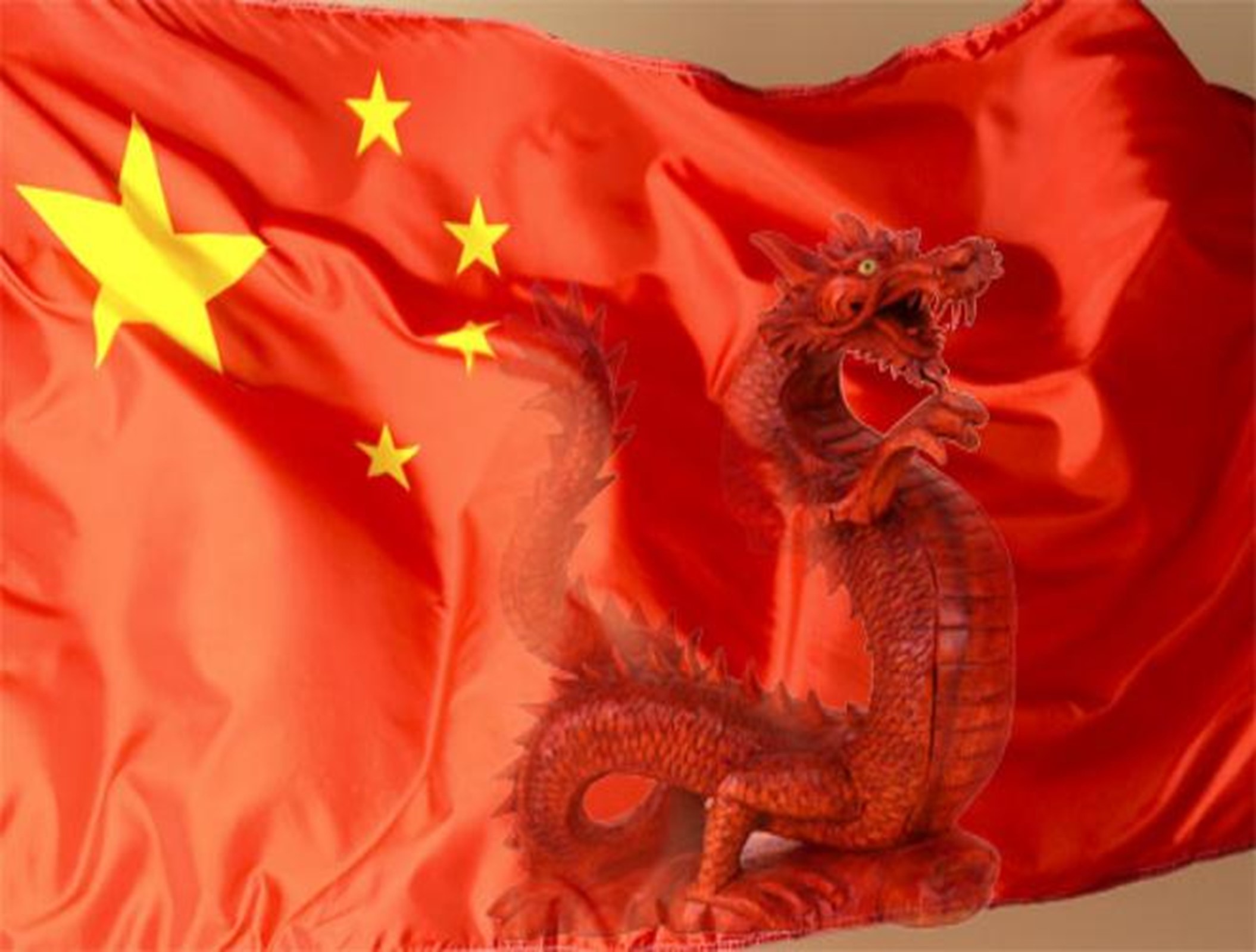
For all practical purposes, Full Independence of Tibet is the only solution for Tibet issue. Red China is opposed to relaxing its military grip and is promising to continue ruling Tibet with Iron Fist without conceding a genuine demand of meaningful autonomy for Tibet. United Front Work Department of the Communist Party of China Central Committee held 6th Tibet Work Forum in Beijing on August 24-25, 2015. It announced, “The Central Government neither did in the past, nor now or in the future will ever accept the Middle Way solution to the Tibet issue.” Red China’s President Xi Jinping repeated the same statement confirming that the ‘Middle Way’ proposed by the Dalai Lama group will never be accepted.
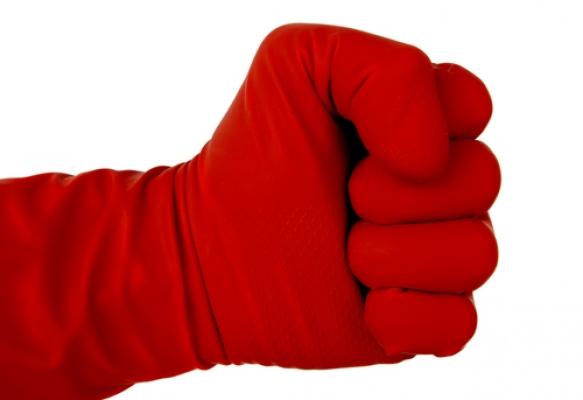
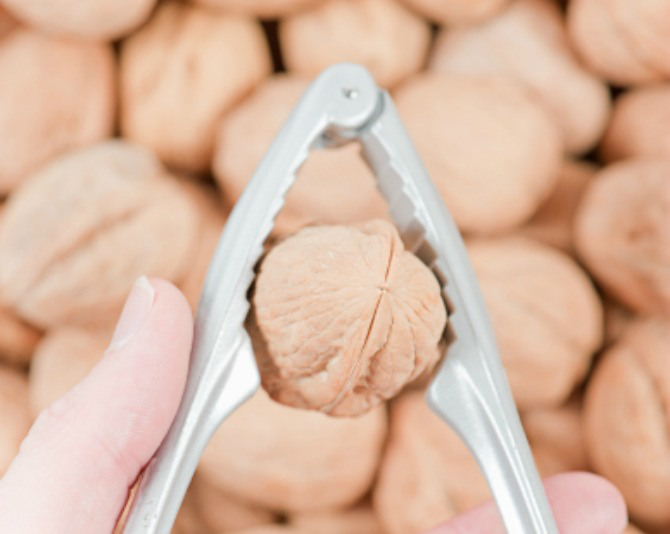
Tibet’s Full Independence is achieved by cracking those knuckles of Red China’s Iron Fist. I coined the phrase “Whole Separatism” to assert my Whole Determination to crack open all the Knuckles of Red China’s Iron Fist.
The phrase ‘Tibet Separatism’ is not acceptable as Tibet is never a part of China despite the military conquests of the past Chinese Emperors. However, it must be acknowledged that China subjugates Tibet with her Iron Fist. Tibet’s Full Independence is achieved by cracking those knuckles of Red China’s Iron Fist. I coined the phrase “Whole Separatism” to assert my Whole Determination to crack open and “separate” all the Knuckles of Red China’s Iron Fist.
Tibet’s Full Independence is achieved by cracking those knuckles of Red China’s Iron Fist. I coined the phrase “Whole Separatism” to assert my Whole Determination to crack open all the Knuckles of Red China’s Iron Fist.
Rudra Narasimham Rebbapragada Ann Arbor, MI 48104-4162, USA Special Frontier Force-Establishment 22-Vikas Regiment
Tibet’s Full Independence is achieved by cracking those knuckles of Red China’s Iron Fist. I coined the phrase “Whole Separatism” to assert my Whole Determination to crack open all the Knuckles of Red China’s Iron Fist.
China’s Xi vows unceasing fight against Tibet separatism | Reuters
REUTERS
Edition: U.S.
World | Wed Aug 26, 2015 12:11am EDT
BEIJING | By BEN BLANCHARD
Tibet’s Full Independence is achieved by cracking those knuckles of Red China’s Iron Fist. I coined the phrase “Whole Separatism” to assert my Whole Determination to crack open all the Knuckles of Red China’s Iron Fist.
Chinese President Xi Jinping applauds during the opening ceremony of the 15th IAAF World Championships at the National Stadium in Beijing, China August 22, 2015. Reuters/Damir Sagolj
BEIJING China will wage an unceasing fight against separatism in its restive mountainous region of Tibet, President Xi Jinping said, as the government repeated it would never accept exiled Tibetan spiritual leader the Dalai Lama’s genuine autonomy proposals.
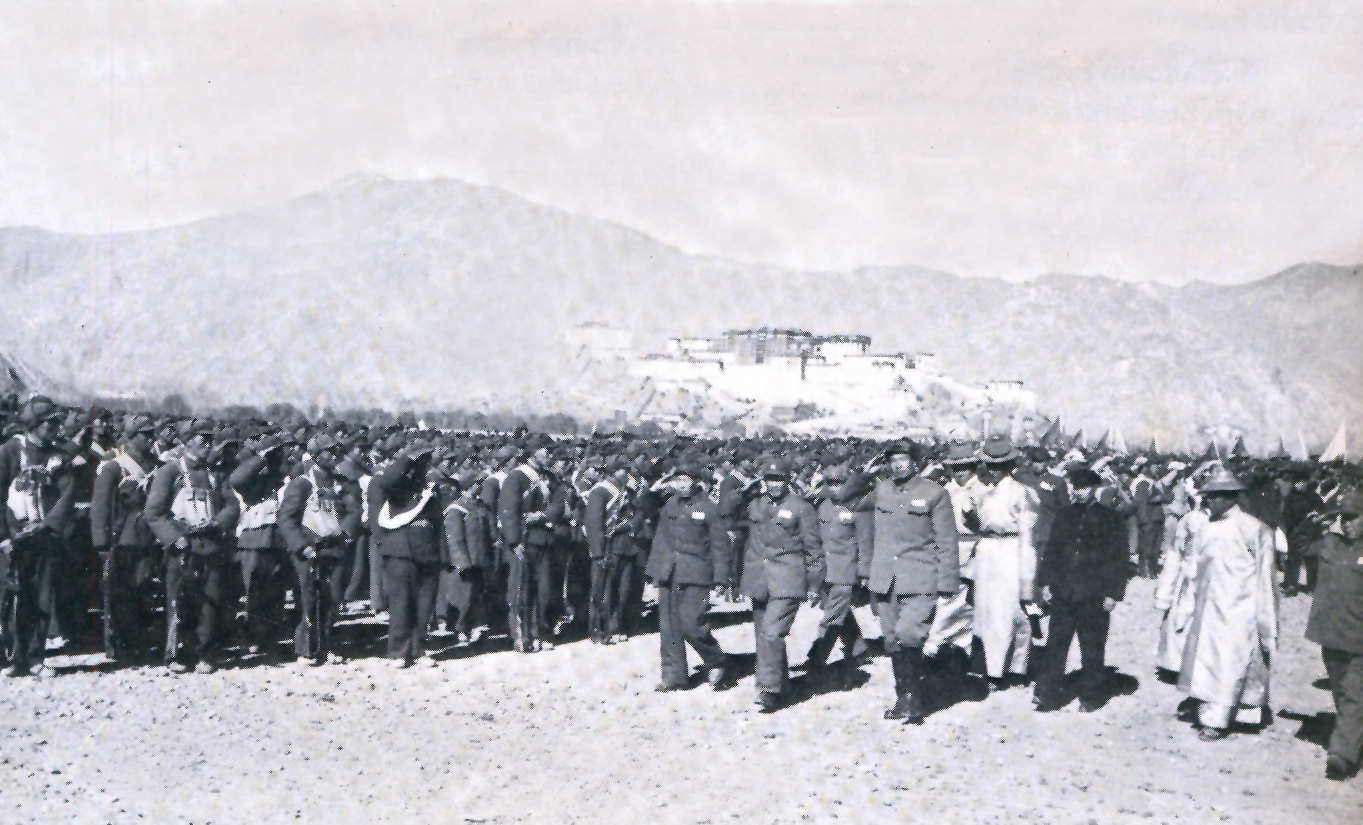
This year marks several sensitive anniversaries for the remote region that China has ruled with an iron fist since 1950, when Communist troops marched in and took control in what Beijing calls a “peaceful liberation”.
It is 50 years since China established what it calls the Tibet Autonomous Region and the 80th birthday of Tibetan spiritual leader the Dalai Lama, who has lived in exile in India since fleeing Tibet in 1959 following an abortive uprising.
At a two-day conference this week of the senior leadership about Tibet, only the sixth ever held, Xi repeated the government’s standard opposition to Tibetan independence, saying he would fight an “an unswerving anti-separatism battle”, state media said in comments reported late on Tuesday. “We should fight against separatist activities by the Dalai group,” Xi was quoted as saying.
The Dalai Lama denies seeking independence, saying he only wants genuine autonomy for Tibet, something he calls the Middle Way and which Beijing believes is merely a smokescreen for independence, arguing Tibet already has real autonomy.
An accompanying commentary published by the United Front Work Department, which has led unsuccessful on-off talks with the Dalai Lama’s envoys, said the government had not accepted, and would never accept, the Middle Way.
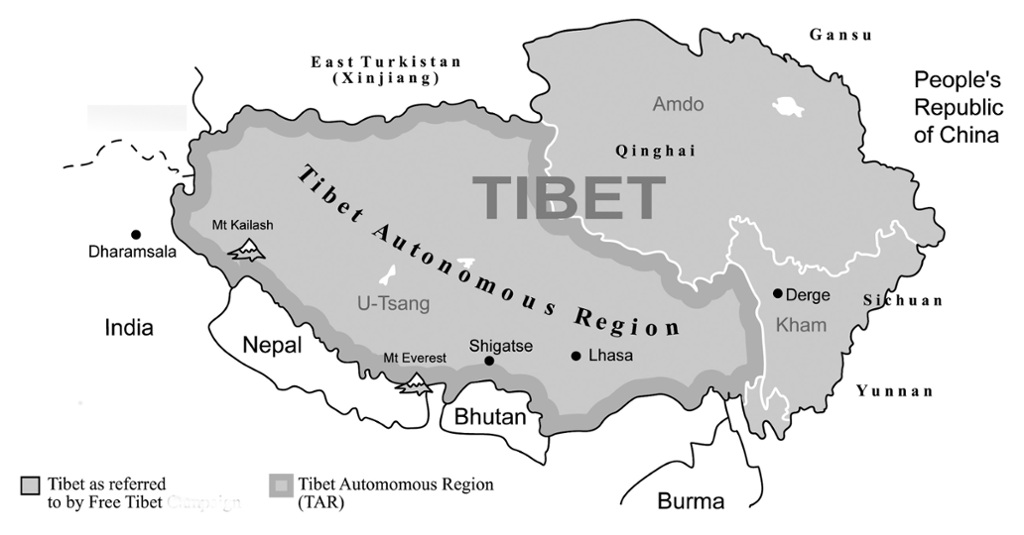
The Middle Way seeks to cleave off one-quarter of China, as it would include historic parts of Tibet in neighboring Chinese provinces, the commentary, carried on the department’s WeChat account, said. “The so-called ‘Middle Way’ is in essence a splittist political demand,” it said.
Activists say China has violently tried to stamp out religious freedom and culture in Tibet. China rejects the criticism, saying its rule has ended serfdom and brought development to a backward region.
Xi called for efforts to promote “patriotism among the Tibetan Buddhist circle and effectively manage monasteries in the long run, encouraging interpretations of religious doctrines that are compatible with a socialist society”, state media said.
There should also be more campaigns to promote ethnic unity and promote a sense “of belonging to the same Chinese nationality”, he added. Tibet remains under heavy security, with visits by foreign media tightly restricted, making an independent assessment of the situation difficult.
(Reporting by Ben Blanchard; Editing by Clarence Fernandez)
Tibet’s Full Independence is achieved by cracking those knuckles of Red China’s Iron Fist. I coined the phrase “Whole Separatism” to assert my Whole Determination to crack open all the Knuckles of Red China’s Iron Fist.Tibet’s Full Independence is achieved by cracking those knuckles of Red China’s Iron Fist. I coined the phrase “Whole Separatism” to assert my Whole Determination to crack open all the Knuckles of Red China’s Iron Fist.Tibet’s Full Independence is achieved by cracking those knuckles of Red China’s Iron Fist. I coined the phrase “Whole Separatism” to assert my Whole Determination to crack open all the Knuckles of Red China’s Iron Fist. Tibet’s Full Independence is achieved by cracking those knuckles of Red China’s Iron Fist. I coined the phrase “Whole Separatism” to assert my Whole Determination to crack open all the Knuckles of Red China’s Iron Fist.
To celebrate observance of World Human Rights Day on December 10, 2024, I speak about Tibet’s yoking with Red China. This yoking, coming together, or joining of Red China with Tibet speaks of Subjection, Bondage, Servitude, Enslavement, Hardship, Burden, Trouble, Pain, Suffering, Sorrow, and Misery. Tibetans resist this burden imposed upon their Natural Freedom. Tibet is under Control, and Tibet is Subdued under burden imposed by Red China’s Yoke. We need to help Tibet to make it a safe place for Tibetans to live reaping the Blessings of Peace, Freedom and Justice granted by Mother Nature.
Tibet Awareness on World Human Rights DayTibet Awareness on World Human Rights DayTibet Awareness on World Human Rights DayTibet Awareness on World Human Rights DayTibet Awareness on World Human Rights DayTibet Awareness on World Human Rights DayTibet Awareness on World Human Rights Day
Tibetans View Freedom as a Natural Condition, a Natural Law of their Land
Tibet Awareness. Military Power Seized Tibetan Freedom.
In my analysis, the Tibetan Resistance Movement can only be described as the Struggle for Natural Freedom. Tibetans resist military occupation of Tibet by a foreign invader for occupation totally undermines the Tibetan National Experience of Natural Freedom that defines the Land and its denizens. Freedom is not viewed as a Political Right. Tibetans cherish Freedom as a Nature’s Gift which no man has the power to trample upon.
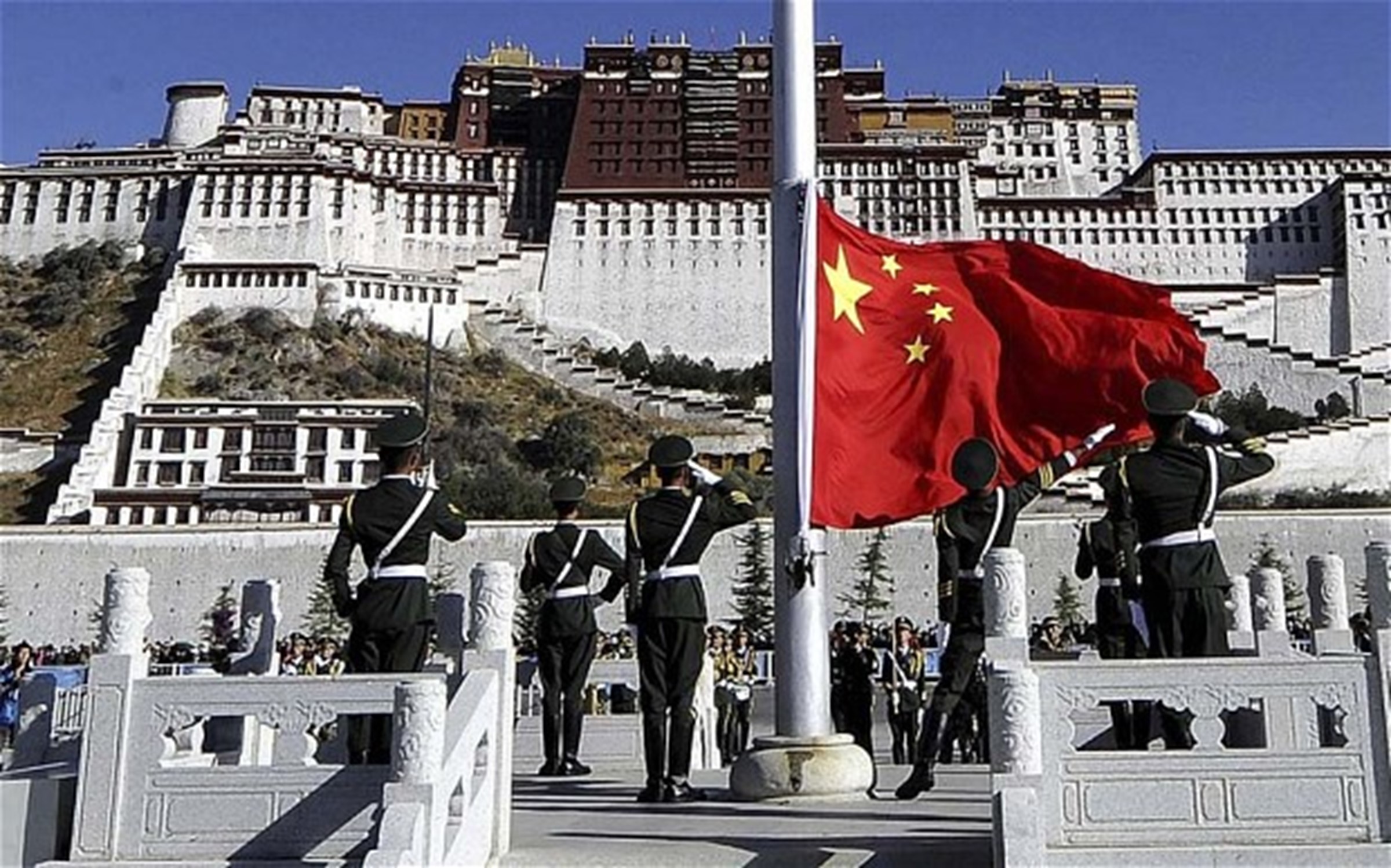
Tibet Awareness. Military Power Seized Tibetan Freedom. A PLA air defense unit of the Tibet Military Command has recently held a drill at an area, 4,500 meters above the sea level, in Occupied Tibet. The live-fire drill aimed to improve air defense preparedness in complex weather conditions. (Photo: China News Service/Zhu Jian)Tibet Awareness. Military Power Seized Tibetan Freedom. A PLA air defense unit of the Tibet Military Command has recently held a drill at an area, 4,500 meters above the sea level, in Occupied Tibet. The live-fire drill aimed to improve air defense preparedness in complex weather conditions. (Photo: China News Service/Zhu Jian)Tibet Awareness. Military Power Seized Tibetan Freedom. A PLA air defense unit of the Tibet Military Command has recently held a drill at an area, 4,500 meters above the sea level, in Occupied Tibet. The live-fire drill aimed to improve air defense preparedness in complex weather conditions. (Photo: China News Service/Zhu Jian)Tibet Awareness. Military Power Seized Tibetan Freedom. A PLA air defense unit of the Tibet Military Command has recently held a drill at an area, 4,500 meters above the sea level, in Occupied Tibet. The live-fire drill aimed to improve air defense preparedness in complex weather conditions. (Photo: China News Service/Zhu Jian)Tibet Awareness. Military Power Seized Tibetan Freedom. A PLA air defense unit of the Tibet Military Command has recently held a drill at an area, 4,500 meters above the sea level, in Occupied Tibet. The live-fire drill aimed to improve air defense preparedness in complex weather conditions. (Photo: China News Service/Zhu Jian)Tibet Awareness. Military Power Seized Tibetan Freedom. A PLA air defense unit of the Tibet Military Command has recently held a drill at an area, 4,500 meters above the sea level, in Occupied Tibet. The live-fire drill aimed to improve air defense preparedness in complex weather conditions. (Photo: China News Service/Zhu Jian)Tibet Awareness. Military Power Seized Tibetan Freedom. A PLA air defense unit of the Tibet Military Command has recently held a drill at an area, 4,500 meters above the sea level, in Occupied Tibet. The live-fire drill aimed to improve air defense preparedness in complex weather conditions. (Photo: China News Service/Zhu Jian)Tibet Awareness. Military Power Seized Tibetan Freedom. A PLA air defense unit of the Tibet Military Command has recently held a drill at an area, 4,500 meters above the sea level, in Occupied Tibet. The live-fire drill aimed to improve air defense preparedness in complex weather conditions. (Photo: China News Service/Zhu Jian)Tibet Awareness. Military Power Seized Tibetan Freedom. A PLA air defense unit of the Tibet Military Command has recently held a drill at an area, 4,500 meters above the sea level, in Occupied Tibet. The live-fire drill aimed to improve air defense preparedness in complex weather conditions. (Photo: China News Service/Zhu Jian)Tibet Awareness. Military Power Seized Tibetan Freedom in 1950-51.Tibetans Struggle for Natural Freedom.
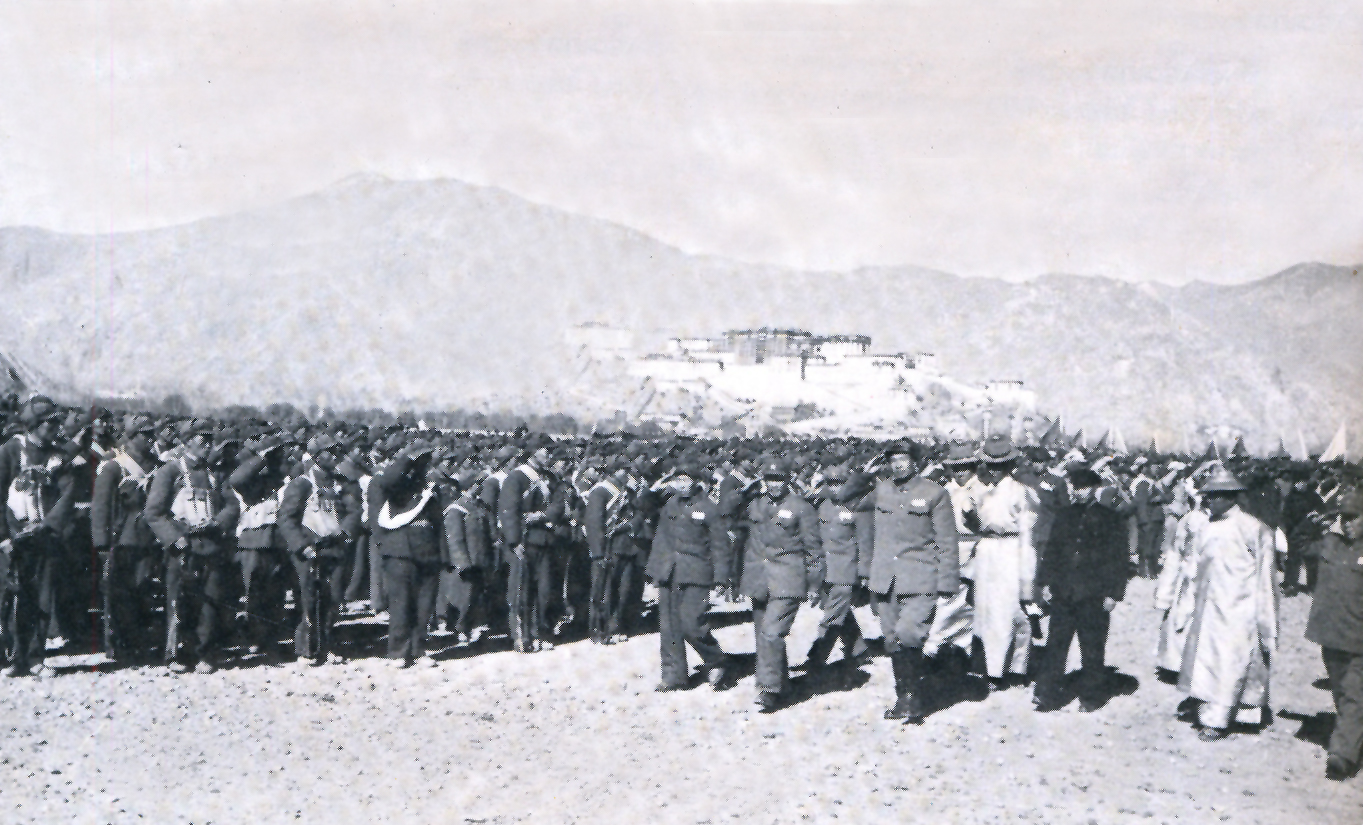
TIBET UNDER SUBJUGATION BY THE PEOPLE’S LIBERATION ARMY
Whole Subjugation: Tibet in Trouble. Tibet is under subjugation by the People’s Liberation Army.
Tibet is under subjugation by the People’s Liberation Army. There is no indication to suggest the slackening of China’s military grip over Tibet. I am sharing a story titled ‘Tibet in Turmoil Again’ published in The Tribune, Ambala.
Whole Subjugation: Tibet in Trouble. Tibet is under subjugation by the People’s Liberation Army.
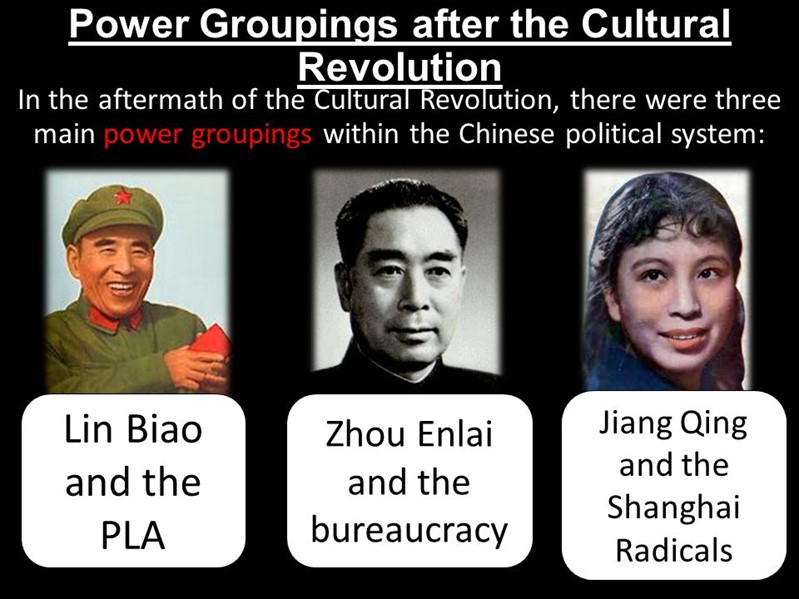
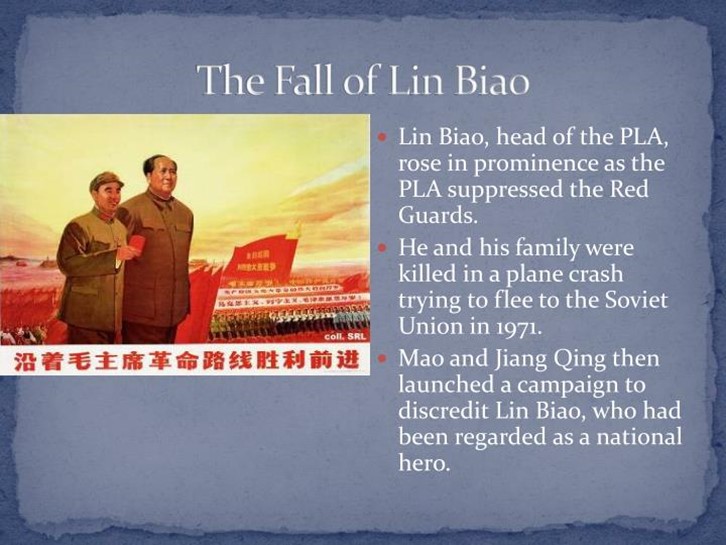
There was indeed a great turmoil in the People’s Liberation Army during 1971 which resulted in the murder of Defense Secretary Lin Biao on September 13, 1971 while he tried to escape from China.
Whole Subjugation: Tibet in Trouble. Tibet is under subjugation by the People’s Liberation Army.Whole Subjugation: Tibet in Trouble. Tibet is under subjugation by the People’s Liberation Army.
China’s military grip continues to suffocate Tibetans and the story about rivalry between Red Guard factions gives me no comfort.
China’s military grip continues to suffocate Tibetans and the story about rivalry between Red Guard factions gives me no comfort.
Posted at: Jul 12, 2019, 6:44 AM; last updated: Jul 12, 2019, 6:44 AM (IST)AMBALA, SATURDAY, JULY 12, 1969
HONG KONG, July 11 (AP)—Tibet is in turmoil again as rival Red Guard factions battle each other and hostility spreads among Army troops, Tibetan leaders, military commanders, revolutionary committees and mass organisations, a Hong Kong newspaper reported yesterday. The anti-Communist Chinese language organ “Tin Tin Yatpo”, attributing its report to “well-informed exclusive sources”, said all signs point to a further deteriorating situation in that vital region bordering India.
The paper said two powerful rival Red Guard organizations — the “Great Alliance Headquarters” and the “Lhasa Revolutionary Rebels’ Headquarters’— are battling each other. Both are opposed to the Maoist Tibet Revolutionary Committee. The Lhasa organization is trying to seize power in Tibet.
Whole Subjugation: Tibet in Trouble. Tibet is under subjugation by the People’s Liberation Army.
Whole Struggle – Tibet Struggles for Natural Freedom.
In my analysis, the Tibetan Resistance Movement can only be described as the Struggle for Natural Freedom. Tibetans resist military occupation of Tibet by a foreign invader for occupation totally undermines the Tibetan National Experience of Natural Freedom that defines the Land and its denizens. Freedom is not viewed as a Political Right. Tibetans cherish Freedom as a Nature’s Gift which no man has the power to trample upon.
Whole Struggle – Tibet Struggles for Natural Freedom.
Dalai Lama Says Tibet Issue Is No Longer Struggle For Political Independence
Whole Struggle – Tibet Struggles for Natural Freedom.
Tibet Issue “No Longer Struggle for Political Independence”: Dalai Lama
Political independence is mainly meant for the happiness of the people, but does it alone guarantee happiness, the Dalai Lama asked.
All India | Press Trust of India | Updated: July 04, 2019 20:11 IST
New Delhi:
The Tibetan issue is no longer a struggle for political independence, the Dalai Lama has said, asserting that there is a need to focus on preservation of Tibet’s cultural, religious and linguistic identity.
Political independence is mainly meant for the happiness of the people, but does it alone guarantee happiness, the Tibetan spiritual leader asked.
“There is a growing feeling among the top leaders in China that their policies have not been able to solve the Tibet issue in the last 70 years. So, they should follow a more realistic approach. Even though Tibet was an independent country, politically China occupies Tibet today,” he told news magazine ”The Week” in an interview.
“Under the given circumstances, I have been saying for some time now that there is a need to focus on preservation of Tibetan culture, religion and identity. It is no longer a struggle for political independence,” he said.
The 14th Dalai Lama left Tibet in 1959 to escape Chinese occupation and has been keeping China on tenterhooks about his successor.
In April this year, at a global conference, he had said people from Tibet have been seeking a mutually acceptable solution to the Tibetan issue with China since 1974 but Beijing considers him a “splittist” though he isn’t one.
The spiritual leader, who turns 84 soon, had said he preferred Tibet remaining with China, with “some kind of a reunion”.
In the interview, given in Himachal Pradesh’s McLeodganj, the Dalai Lama also said if the Tibetan people can preserve their thousands of years old cultural heritage, religion and identity, it will bring them inner peace and happiness.
“For this, I really admire the Indian Union for its unity in diversity. In a similar way, the People’s Republic of China and Tibet can coexist keeping Tibet’s cultural, linguistic and religious identity,” he said.
On a question, about his successor, he said, “I can only be concerned about this life; the next is not my concern. What is important are the teachings, the institution of the Dalai Lama comes after that.
“If reincarnation was so important, then why did the Buddha not have a reincarnation,” adding, “sometimes, I also feel the Lama institution has some connection with the feudal system and is not relevant today”.
The Tibetan spiritual leader recently apologized for his comment on women in a BBC interview, with his office in Dharamshala saying he has always opposed their objectification.
Responding to a question on whether his reincarnation could be a woman, the Nobel Peace Prize winner had joked that she should be attractive.
On a question on India, he said, the rich people in India should pay more attention to the study of Indian philosophy and texts “rather than just uttering ”Ram Ram” and doing puja”.
“It is better to create small libraries and learn about ancient Indian philosophy and psychology than just praying without any knowledge and performing rituals without understanding them,” he said.
On his association with prime minister Jawaharlal Nehru, he said, “Pandit was very kind to me; he advised me under difficult circumstances. I followed his advice, and it was very practical. I came to India in 1956, during Buddha Jayanti. At that time, many Tibetan officials told me that I should stay in India and not return”.
He said, he returned to Tibet in 1957. “I tried my best (to maintain peace with the Chinese), but after some time… there (were) uprisings. In 1959, things went out of control and I decided to escape from Tibet,” the Dalai Lama added.
“I am grateful to the Indian government (and leaders such as) Nehru, Indira Gandhi, Morarji Desai, Narasimha Rao and the (later) generation of leaders, and also Indian officials who have been very sympathetic towards Tibet,” he said.
Today, India and Tibet are very close not only for political or economic reasons, but also spiritually and emotionally, he added.
On China calling him a separatist, and his 60th year of exile in India, he said, “Let them (Chinese) say I am a separatist. That will be helpful as I will continue to live in India peacefully”.
“If they sincerely ask me to return – although on many occasions to some Chinese individuals I mentioned that I prefer freedom – and if I return to China, I (will be) put in a big house with no freedom. There is no use. I am happy to live in India for the rest of my life,” the Dalai Lama said.
“Among all civilizations, whether it is Chinese or Egyptian, it is the Indus Valley civilization that has produced the best thinkers and philosophers. I consider Buddhism and Hinduism as twin brother and sister. India’s civilization is something wonderful and should be known for its contribution to the world,” he asserted.
Whole Struggle – Tibet Struggles for Natural Freedom.
Red China’s Journey from Imperialism to Neocolonialism
Red China’s Journey from Imperialism to Neocolonialism
Tibet escaped from the clutches of Qing Empire during 1911-12 to declare full independence on February 13, 1913. From the ashes of the Qing Empire, Red China emerged as the new Imperialistic Power on October 01, 1949 when the Communists took over mainland China defeating the Nationalists. For Tibet, the new era of political domination, cultural subjugation, and colonialist exploitation began with Red China’s military invasion in 1950.
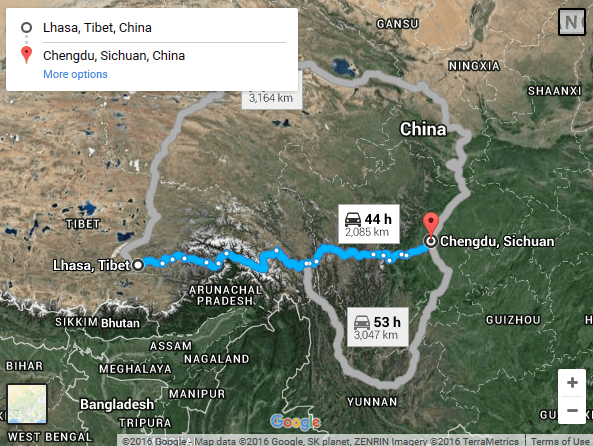
The railway construction projects across the Tibetan Plateau are mere symptoms of Neocolonialism, a facet of Red China’s Doctrine of Expansionism.
Red China’s Journey from Imperialism to Neocolonialism.
CHINA TO STRENGTHEN RAILWAY CONSTRUCTION IN OCCUPIED TIBET
Red China’s Journey from Imperialism to Neocolonialism.
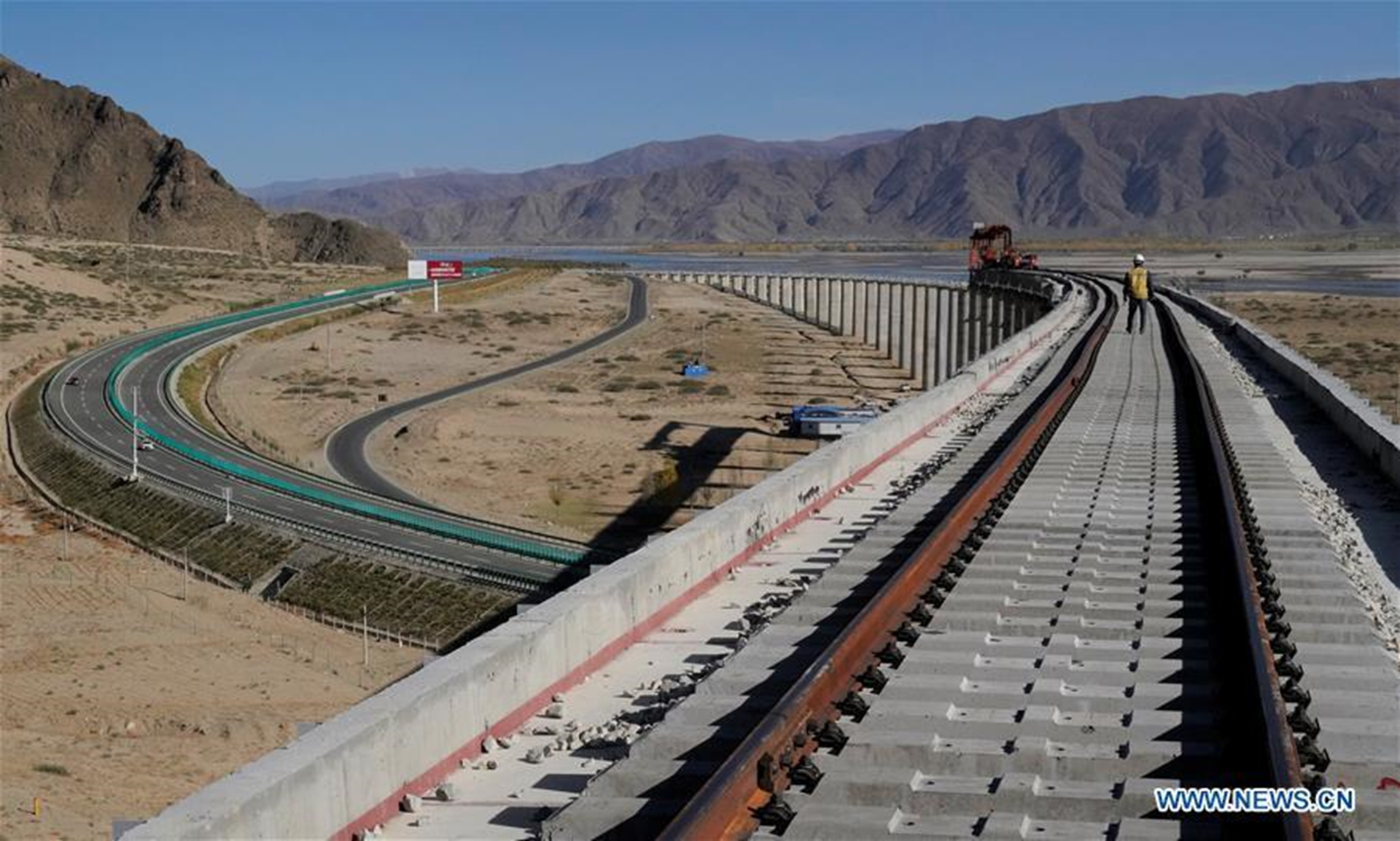
Staff members work at the construction site of the Lhasa-Nyingchi section of the Sichuan-Tibet Railway in Occupied Tibet, on Nov. 26, 2018. In 2018, an investment of 4.2 billion yuan (623 million U.S. dollars) was made in railway construction in the region. (Xinhua/Purbu Zhaxi)
Red China’s Journey from Imperialism to Neocolonialism.
Staff members work at the construction site of the Lhasa-Nyingchi section of the Sichuan-Tibet Railway in Occupied Tibet, on Nov. 26, 2018. In 2018, an investment of 4.2 billion yuan (623 million U.S. dollars) was made in railway construction in the region. (Xinhua/Purbu Zhaxi)
Red China’s Journey from Imperialism to Neocolonialism.
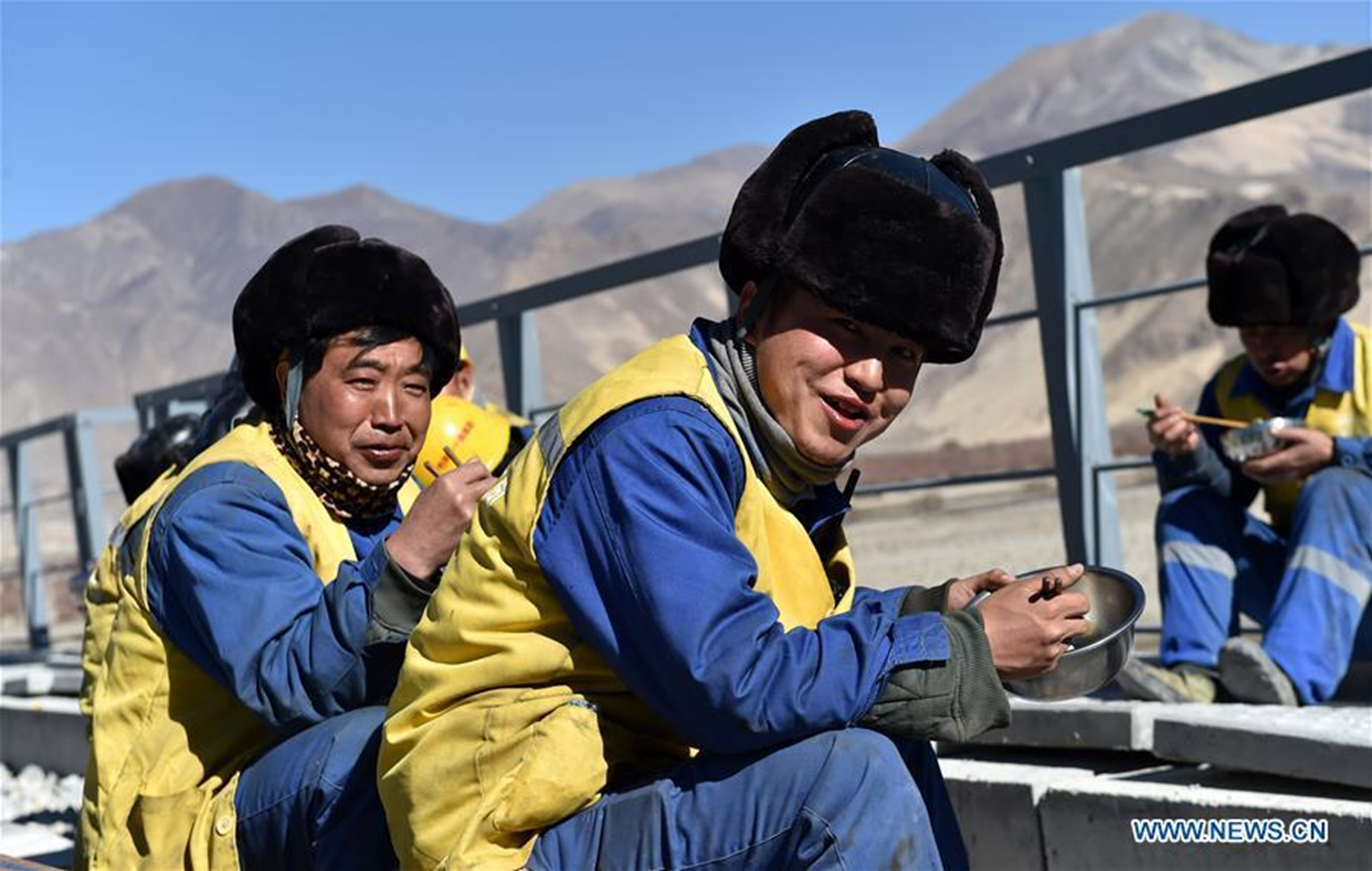
Workers have lunch at the construction site of the Lhasa-Nyingchi section of the Sichuan-Tibet Railway in Occupied Tibet, on Nov. 26, 2018. In 2018, an investment of 4.2 billion yuan (623 million U.S. dollars) was made in railway construction in the region. (Xinhua/Chogo)
Red China’s Journey from Imperialism to Neocolonialism.
Workers at the construction site of the Lhasa-Nyingchi section of the Sichuan-Tibet Railway in Occupied Tibet, on Nov. 26, 2018. In 2018, an investment of 4.2 billion yuan (623 million U.S. dollars) was made in railway construction in the region. (Xinhua/Chogo)
Red China’s Journey from Imperialism to Neocolonialism.
Photo taken on Dec. 23, 2018, shows the construction site of the Lhasa-Nyingchi section of the Sichuan-Tibet Railway in Occupied Tibet. In 2018, an investment of 4.2 billion yuan (623 million U.S. dollars) was made in railway construction in the region. (Xinhua/Purbu Zhaxi)
Red China’s Journey from Imperialism to Neocolonialism.
Whole Separatism: Tibet Separatism is just a Natural Phenomenon.
In my analysis, Tibet Separatism is just a natural phenomenon for it is entirely derived from the actions of various Natural Forces acting over thousands of years to create the separate Tibetan Identity which refuses to merge with identities of other foreign nationalities. Tibetan Identity will always exist as a ‘Separate’ Identity and no man will be able to wipe it out by building roads, bridges, railways, airports to plunder the natural resources of Tibetan Plateau.
Tibetan Separatism does not constitute any kind of political activity. In fact, Tibetan Separatism represents the reality of Independence granted by the works of Mother Nature.
Tibetan Separatism does not constitute any kind of political activity. In fact, Tibetan Separatism represents the reality of Independence granted by the works of Mother Nature.
Dalai Lama a political exile, engaged in separatist activities: China | world news | Hindustan Times
China insists Tibet has been part of its territory for centuries, but many Tibetans claim they were essentially independent for most of that time
Whole Separatism: Tibet Separatism is just a Natural Phenomenon.
Tibetan spiritual leader Dalai Lama interacts with the leaders of the United States Institute of Peace (USIP) at his residence, in Dharamshala, Himachal Pradesh, on October 24, 2018. (HT File Photo)
China on Tuesday hit out at the Dalai Lama who is on a visit to Japan, saying that countries should not facilitate the Tibetan spiritual leader’s “separatist activities”.
On the Dalai Lama’s reported comments that China and Tibet should co-exist and prosper together, Chinese foreign ministry spokesman Geng Shuang said here that the Tibet issue is an internal matter of Beijing.
“As for the Dalai Lama’s speech, it is not up to me to answer this question. I can tell you that the 14th Dalai Lama is a political exile and he is engaged in separatist activities,” he said.
“We hope the relevant parties will not provide facilitation for his separatist activities,” he said.
China insists Tibet has been part of its territory for centuries, but many Tibetans claim they were essentially independent for most of that time. The Dalai Lama fled to India in 1959 amid an abortive uprising against Chinese rule in his Himalayan homeland.
The Dalai Lama is on a 10-day teaching tour of Japan. China routinely objects to his foreign visits.
First Published: Nov 20, 2018 18:24 IST
Whole Separatism: Tibet Separatism is just a Natural Phenomenon.
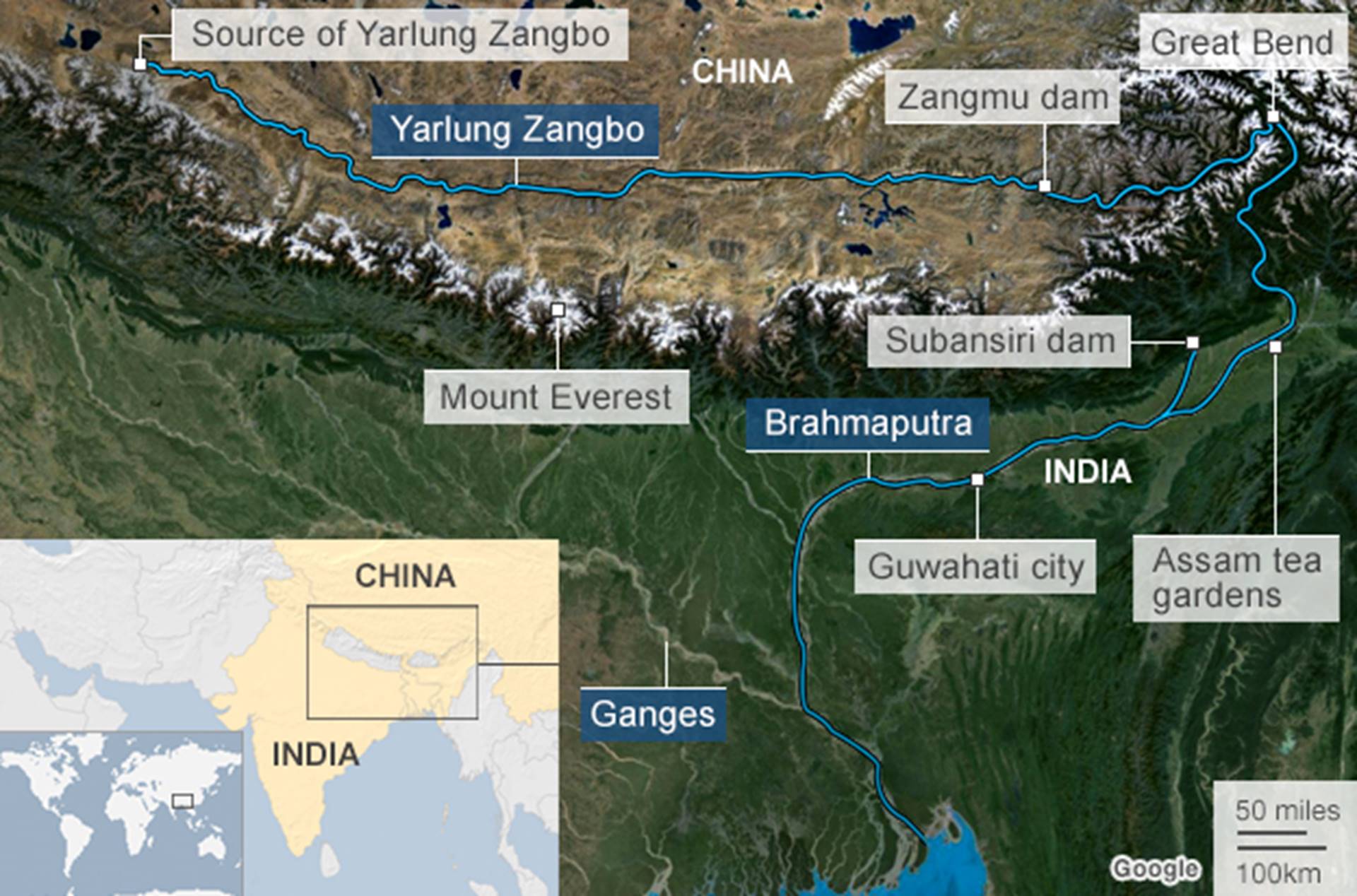
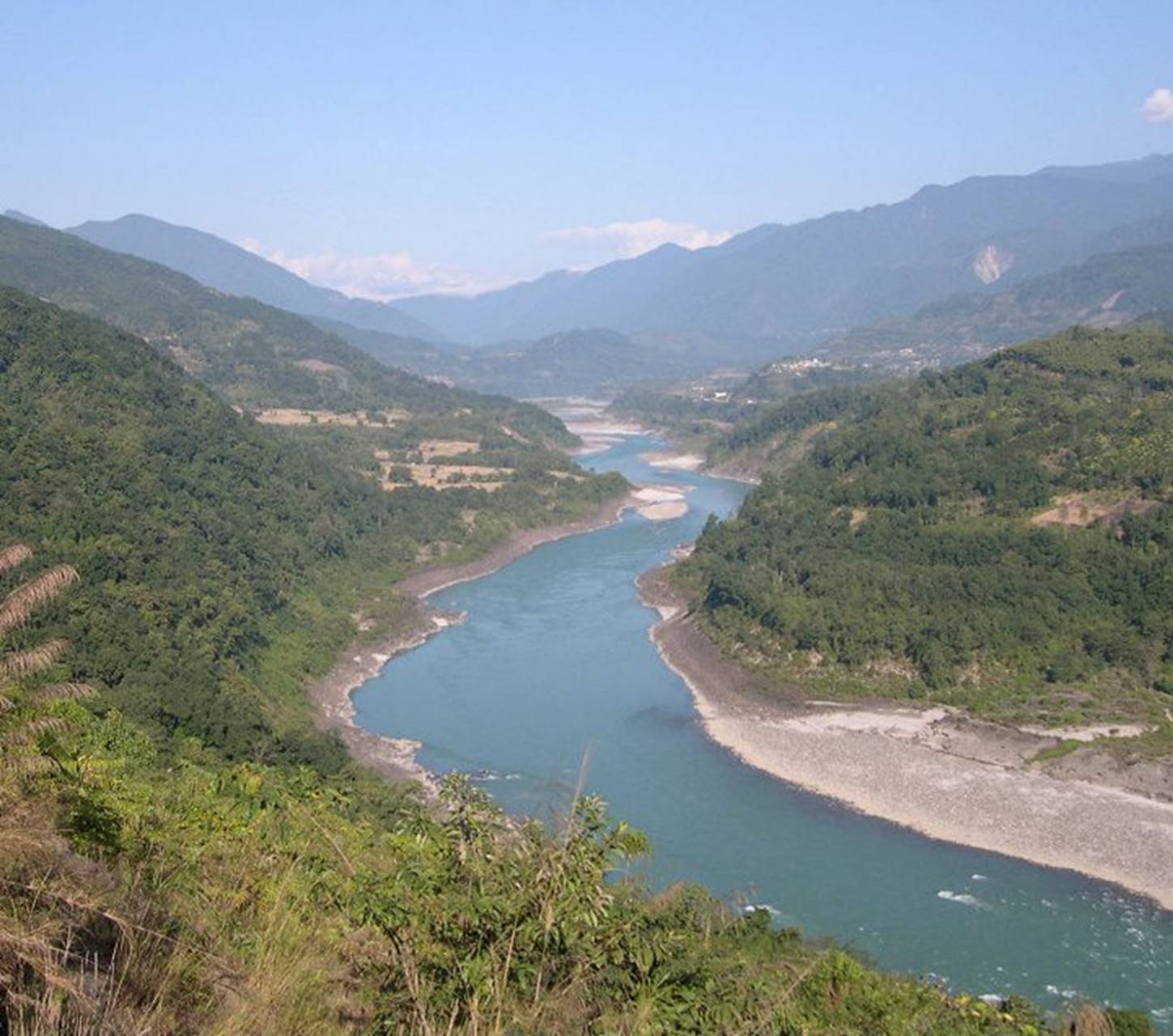
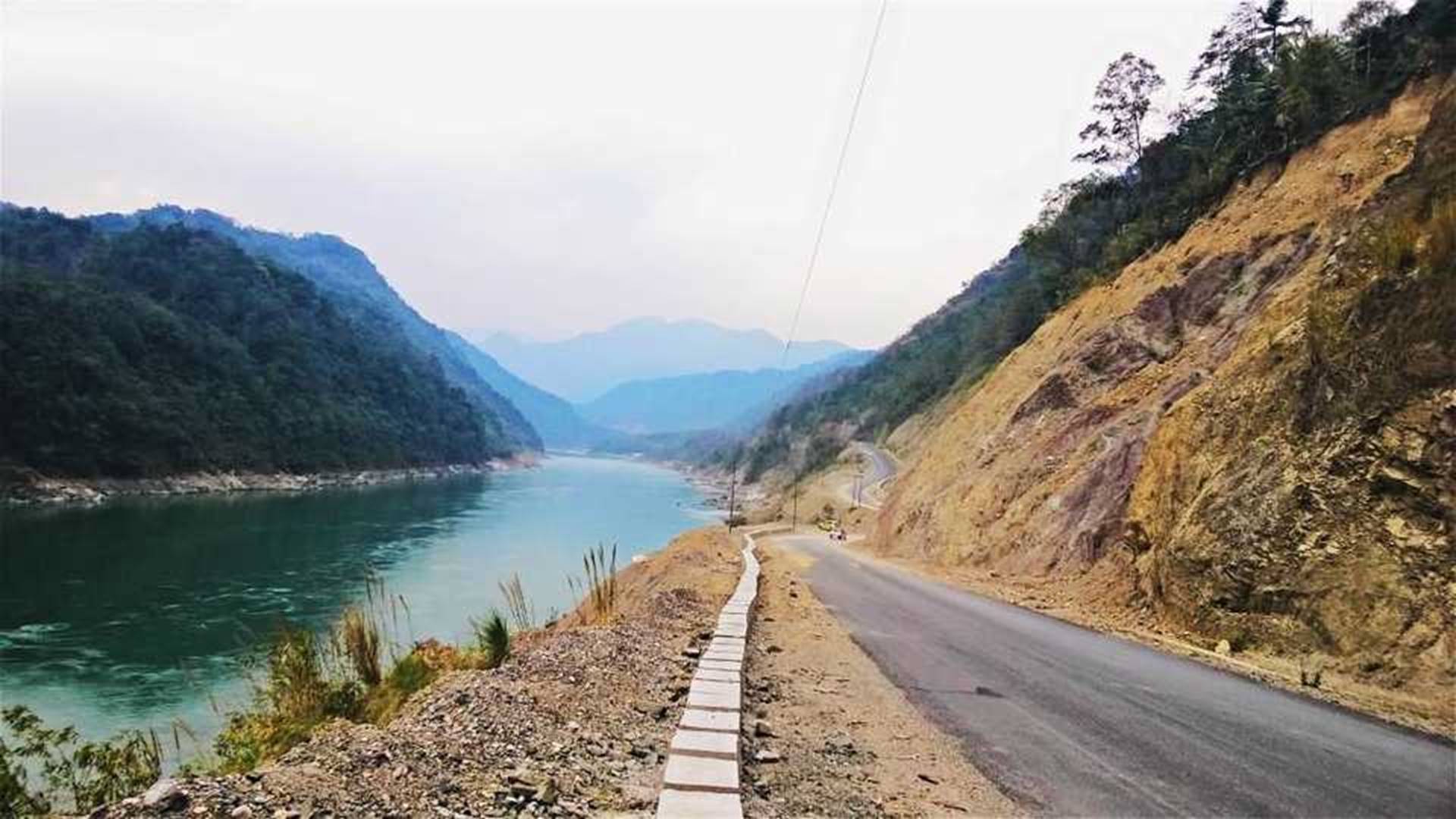
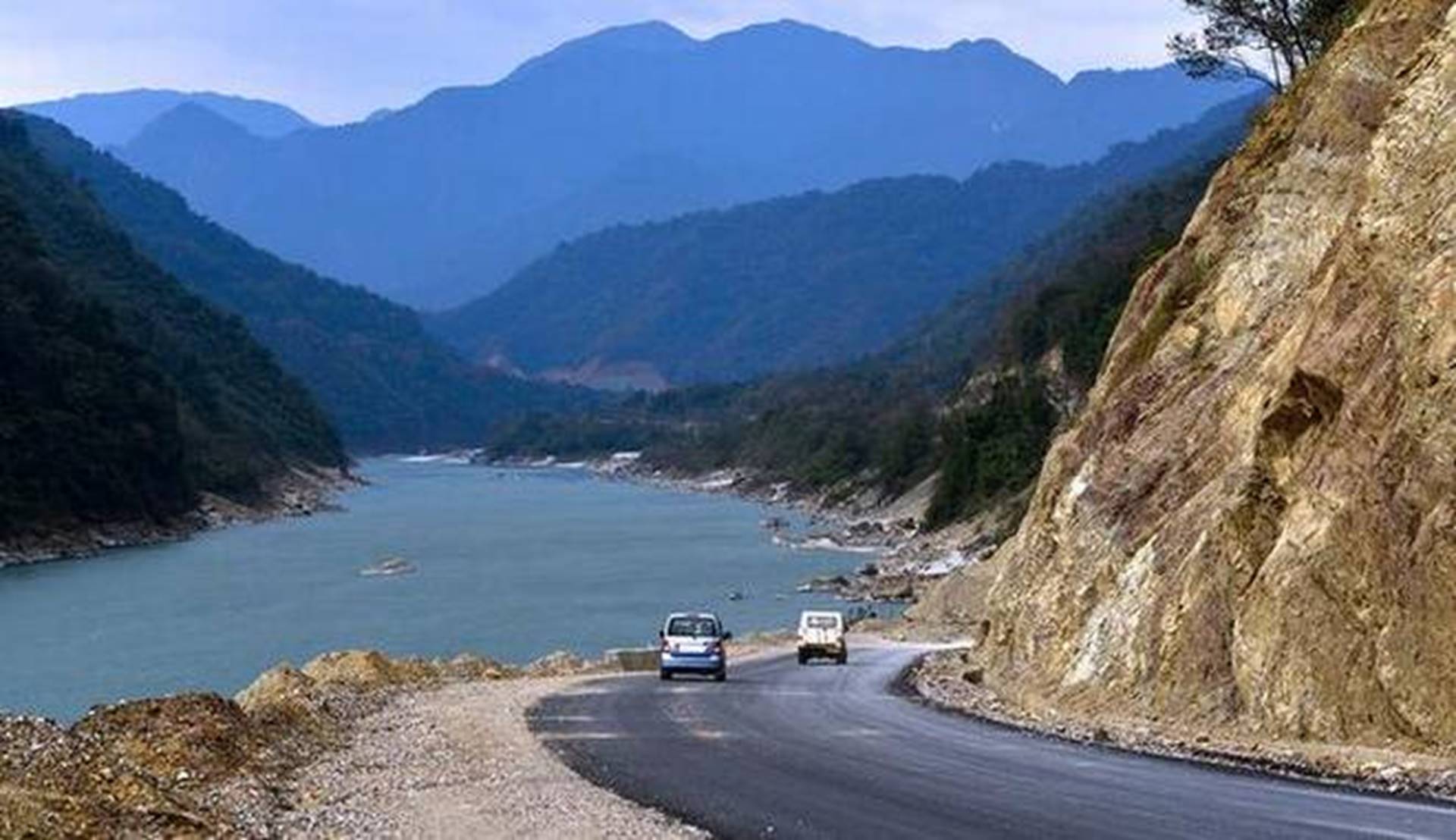
The woes of Tsangpo-Brahmaputra River – Upstream Occupation and Downstream Worries
The Woes of Tsangpo-Brahmaputra River. The Upstream Occupation and the Downstream Worries.
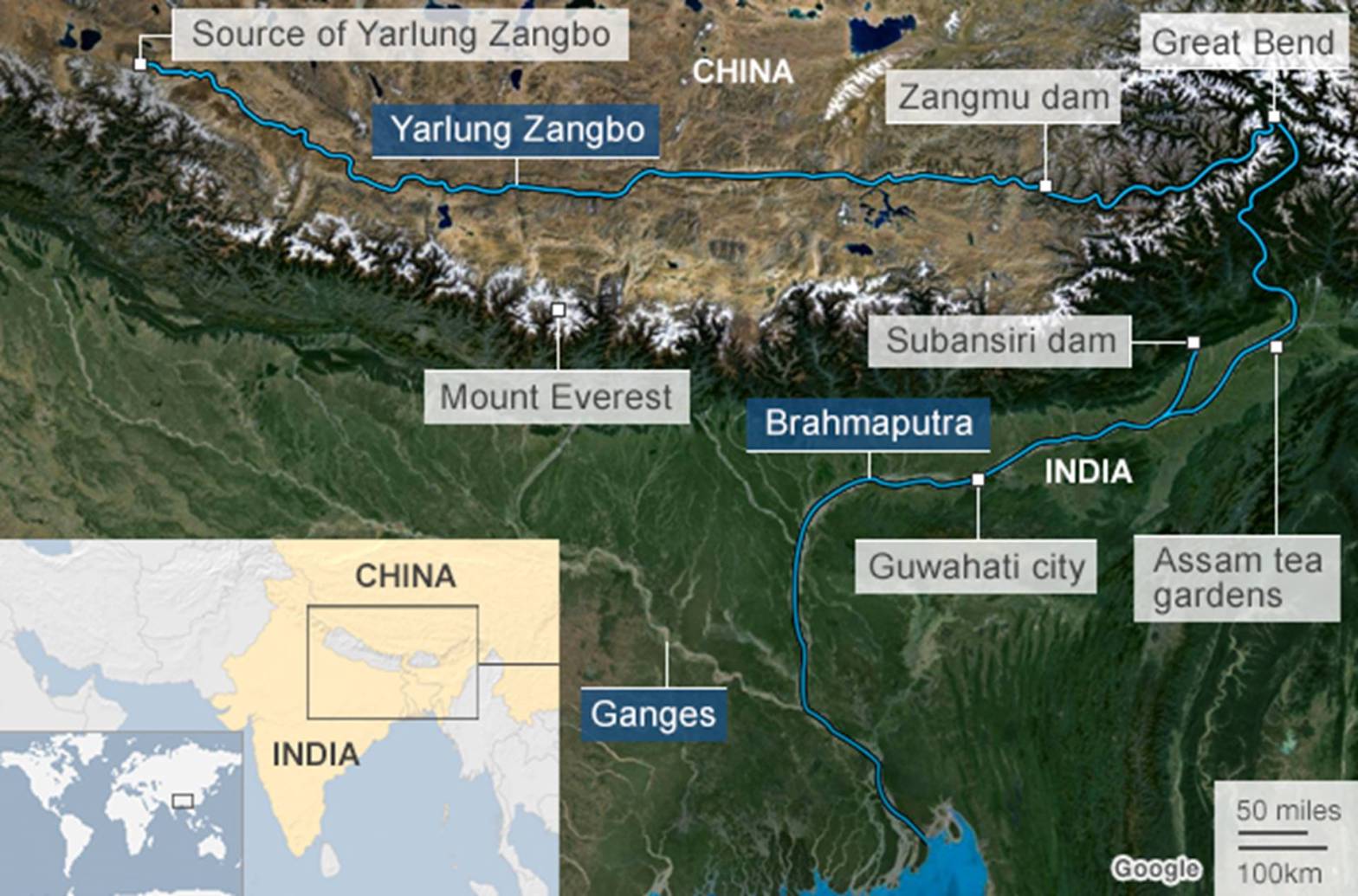
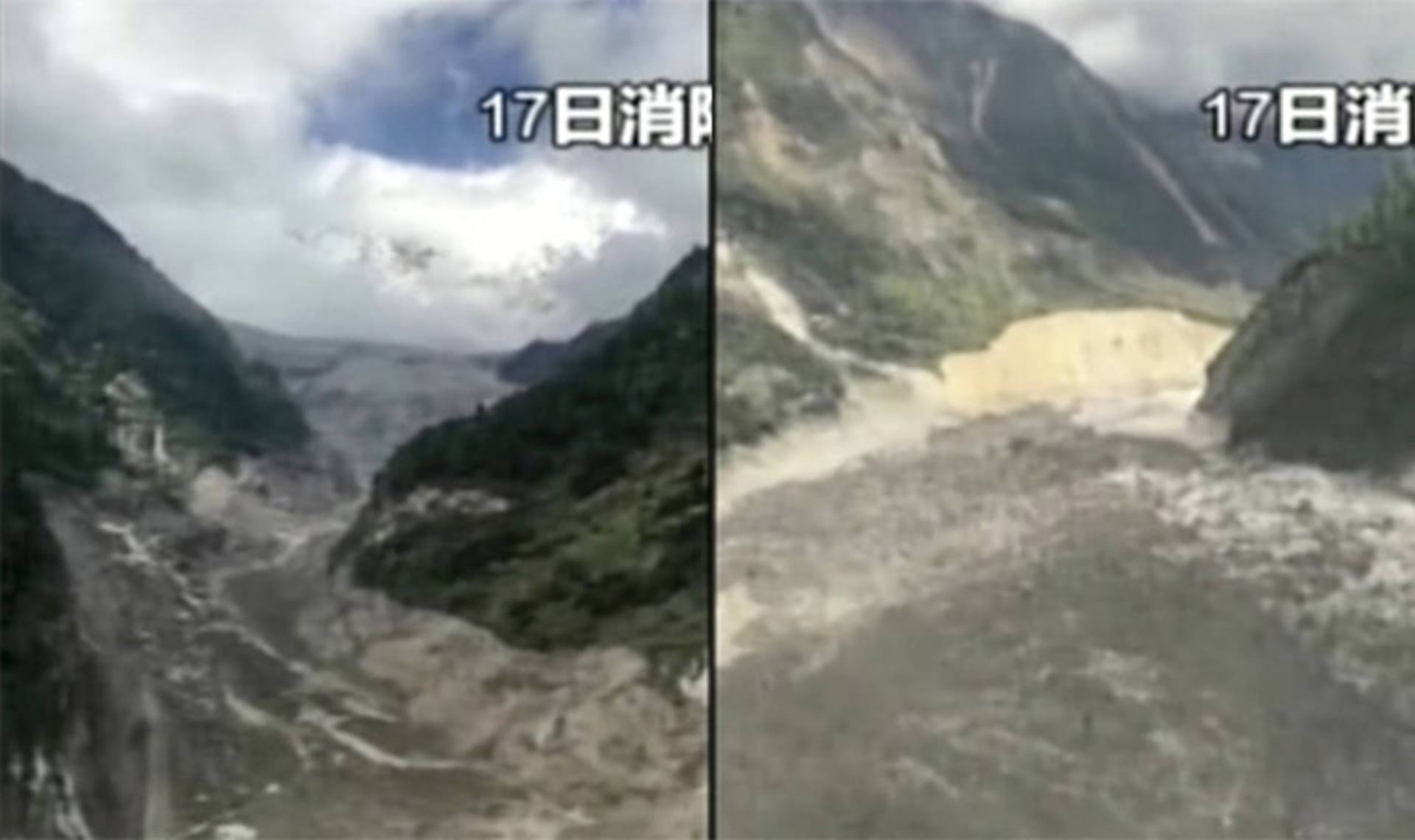
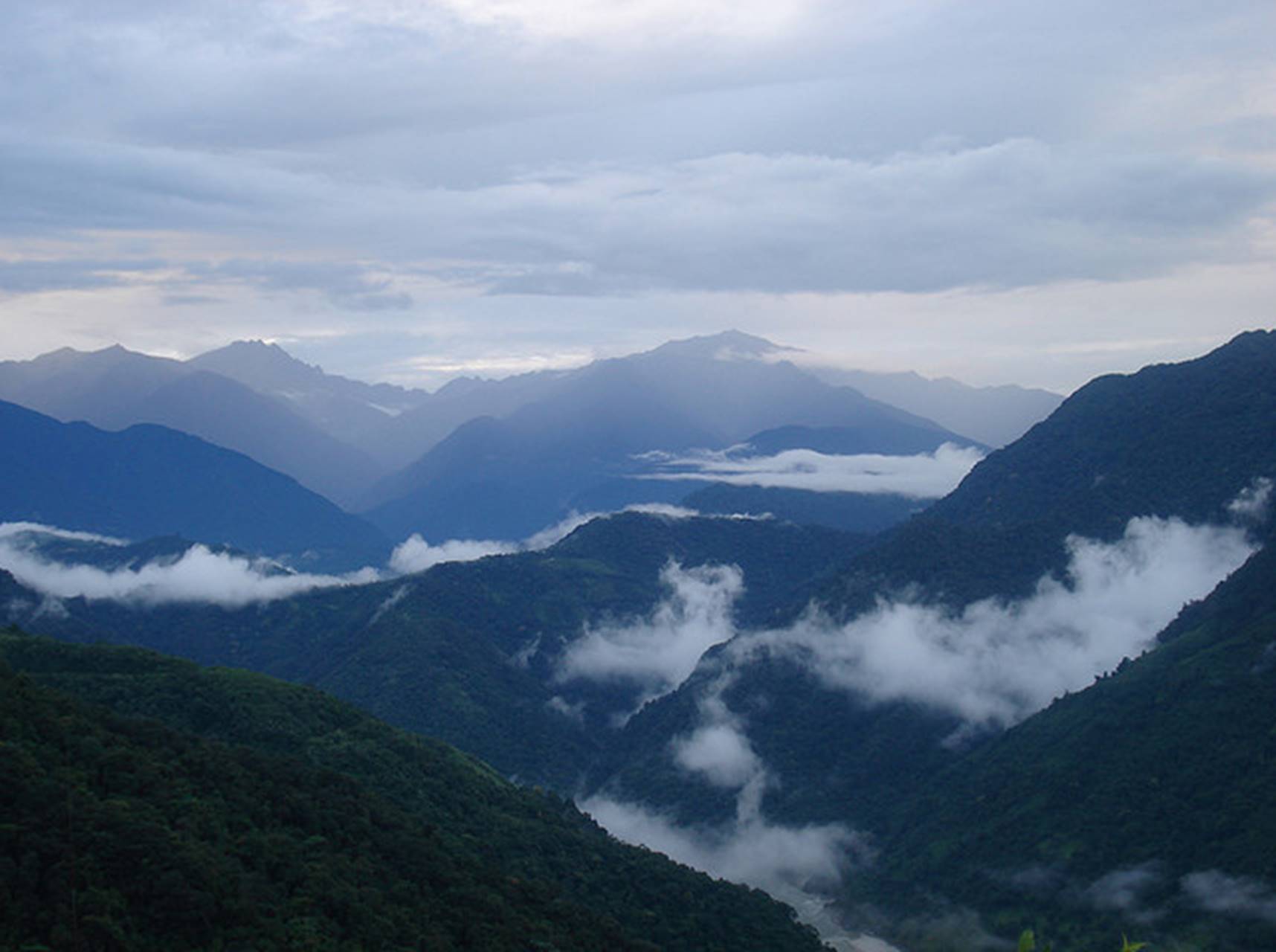
The woes of Yarlung Tsangpo-Brahmaputra River describe the tragedy of upstream occupation causing the downstream worries. The massive landslide in Tibet blocking Yarlung Tsangpo River symbolizes the woes of military conquest of Tibet and its colonization by Communist China.
The Woes of Tsangpo-Brahmaputra River. The Upstream Occupation and the Downstream Worries.
China orders evacuations after landslide blocks Tibet River
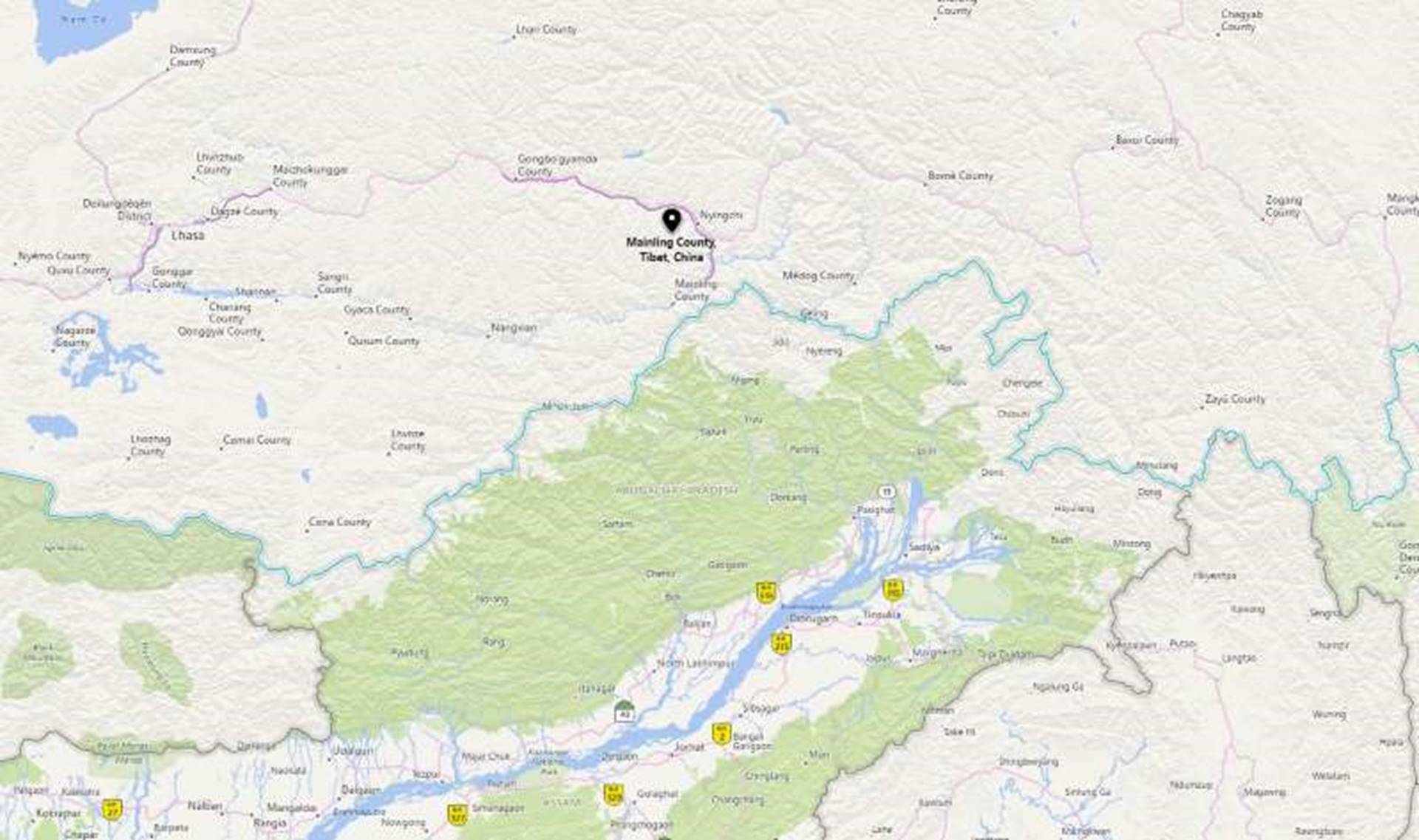
A barrier lake was formed on the Yarlung Tsangpo, the headwater of India’s Brahmaputra River, following the Wednesday morning collapse of a cliff in the deep valley through which the river flows, the local emergency response bureau said in a report carried by state media.
No deaths or injuries have been reported and the bureau said China has been keeping India updated on the blockage, which could potentially affect water levels in lower regions.
The landslide struck near a village in Menling County and water in the lake had risen to a height of 40 meters (131 feet) by Thursday, the bureau said.
With its towering peaks and glaciers, Tibet is the source of numerous Asian rivers, adding to China’s strategic influence over its southern neighbors. Fast-rising temperatures have caused those glaciers to melt at an increasing pace, throwing a shadow over future water resources for China and other Asian nations.
The Woes of Tsangpo-Brahmaputra River. The Upstream Occupation and the Downstream Worries.
Though there were no reports of deaths or injuries after the landslide, it is the second landslide that has rocked the Tibet. A massive landslide hit Derge in the Traditional Tibetan province of Kham and completely blocked the Dri Chu river earlier this week on Oct 11.
Landslide and flooding of villages in Tibet are linked to Chinese construction projects, the London-based advocacy group Free Tibet said on Oct 15 after the landslide that cut off Drichu.
“Chinese authorities have been conducting excessive mining, development and dam construction projects in the area which, according to the local population, are directly linked to the increased occurrences of flooding, particularly in the regions of Karze and Ngawa. Chinese sources claim these incidents are natural and unrelated,” Free Tibet stated
The group further noted that of late, China’s exploitation of Tibet’s natural resources has gathered pace significantly.
The ill-advised developmental projects being carried out in Tibet by the Chinese regime at the cost of the fragile Tibetan environment.
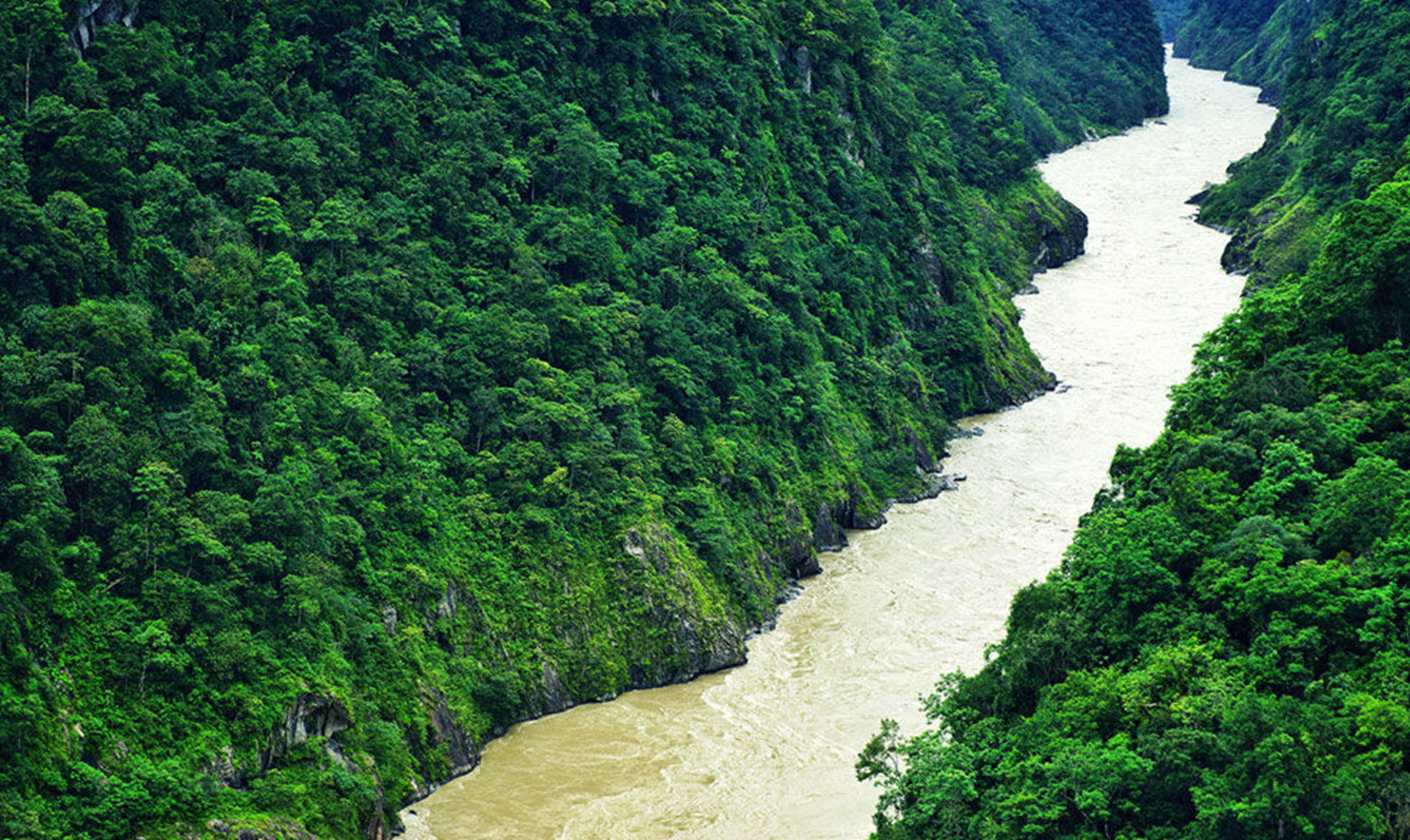
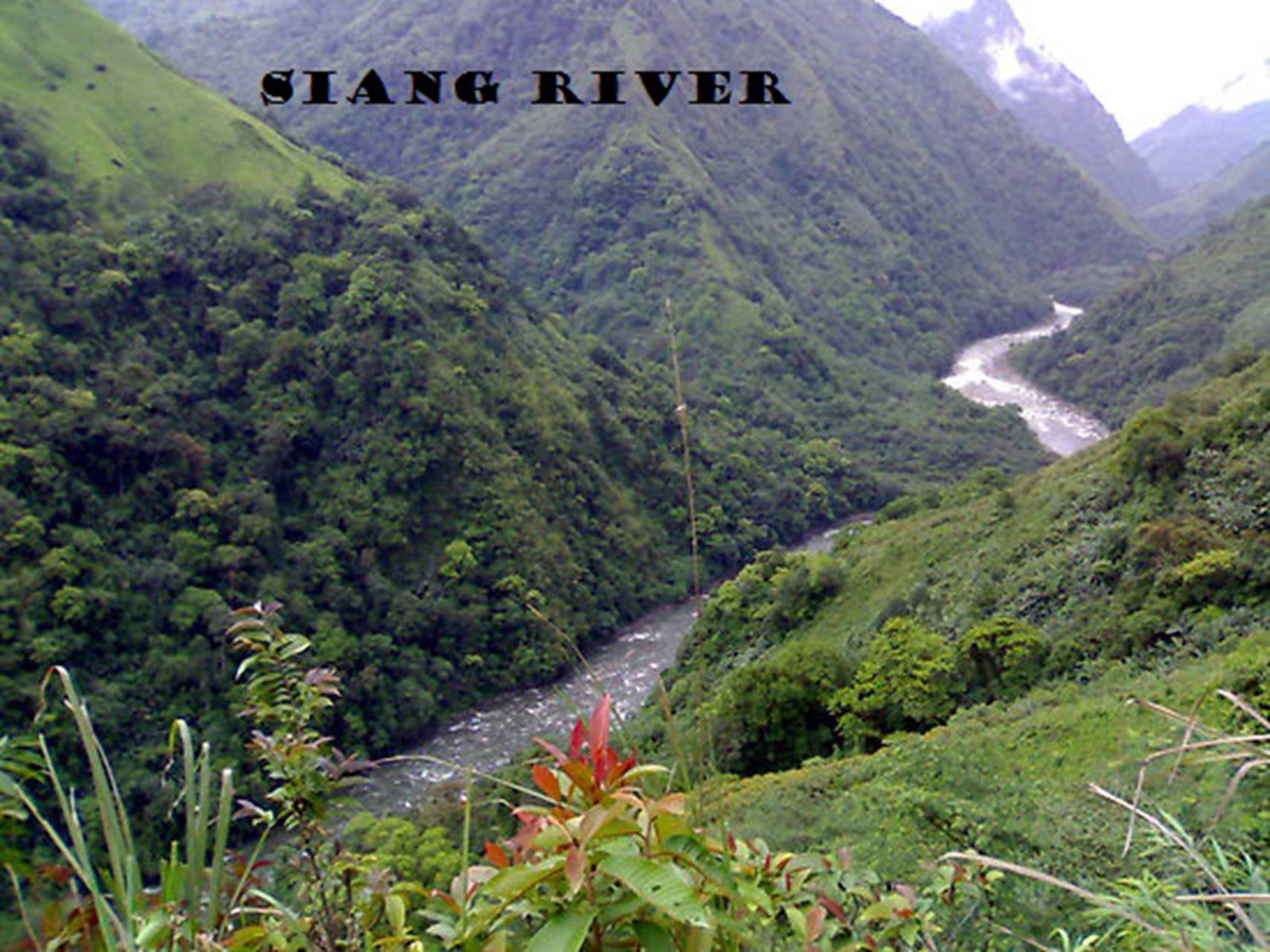
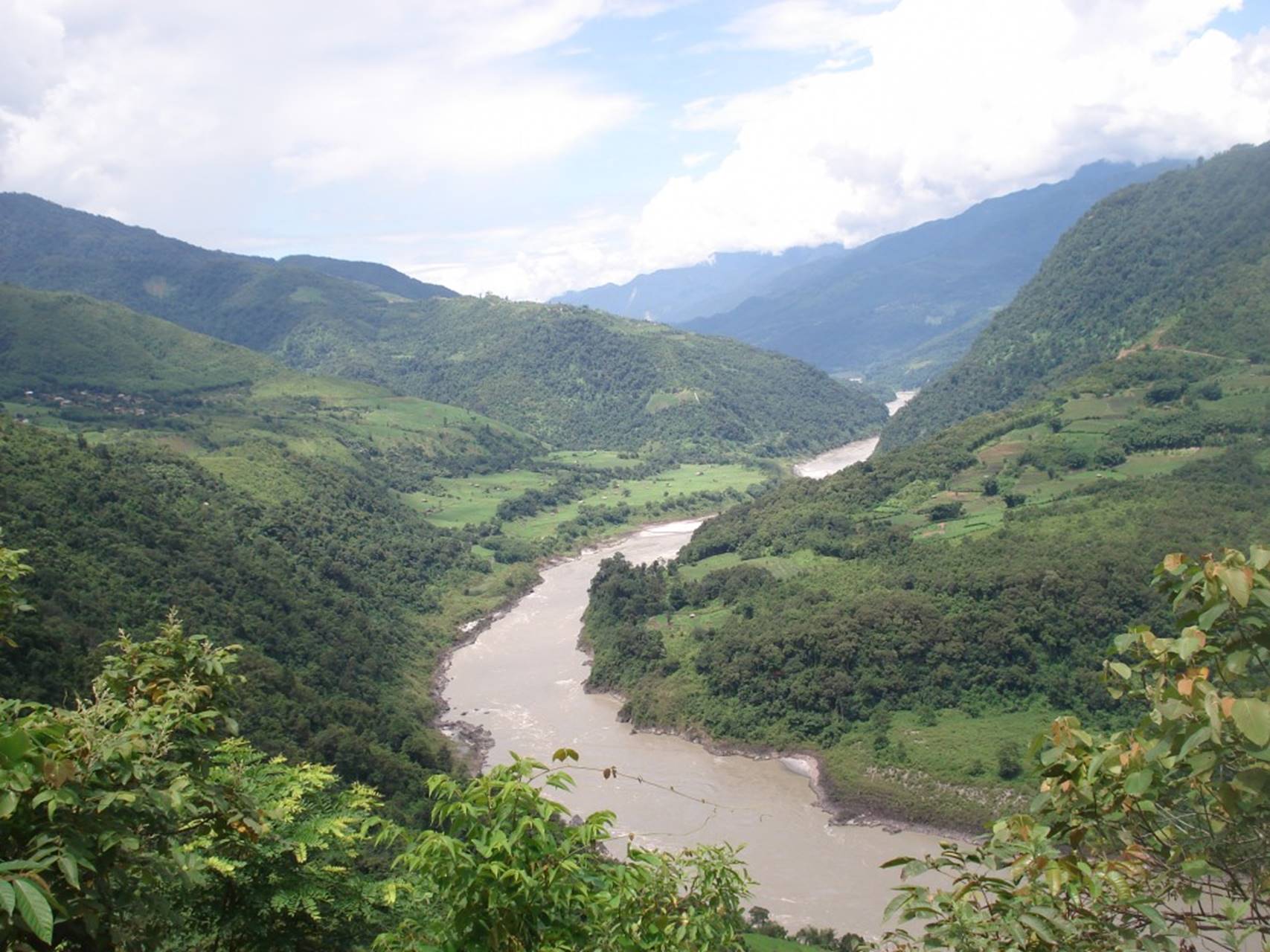
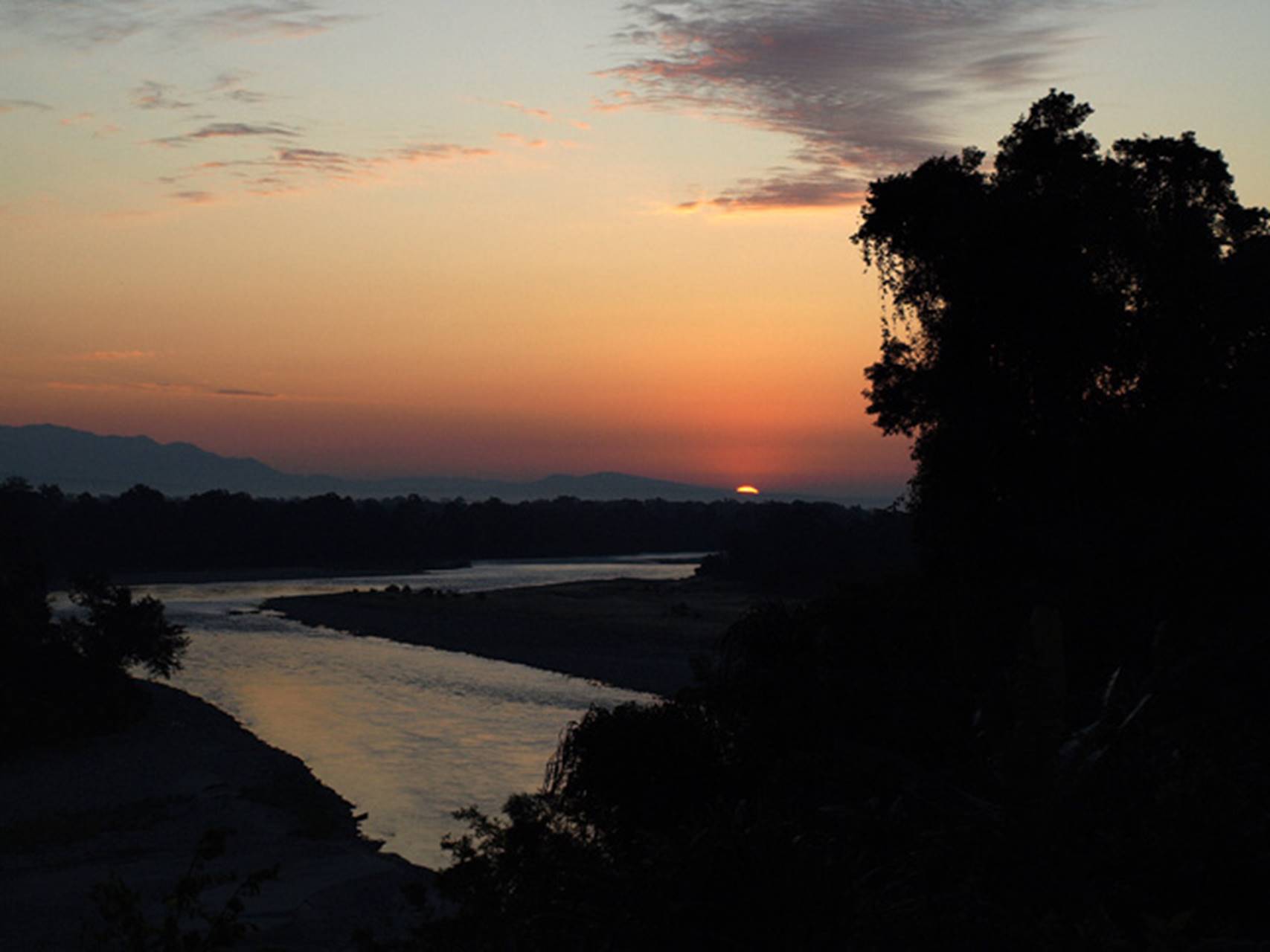
The Woes of Tsangpo-Brahmaputra River. The Upstream Occupation and the Downstream Worries. View of Siang District, Arunachal Pradesh, India.The woes of Tsangpo-Brahmaputra River – Upstream Occupation and Downstream WorriesThe woes of Tsangpo-Brahmaputra River – Upstream Occupation and Downstream WorriesThe woes of Tsangpo-Brahmaputra River – Upstream Occupation and Downstream WorriesThe woes of Tsangpo-Brahmaputra River – Upstream Occupation and Downstream WorriesThe woes of Tsangpo-Brahmaputra River – Upstream Occupation and Downstream WorriesThe Woes of Tsangpo-Brahmaputra River. The Upstream Occupation and the Downstream Worries. Siang River near Pasighat, Siang District, Arunachal Pradesh, India.
Tibetan Resistance Movement is not about Separatism
Tibetan Resistance Movement is not about Separatism. It is about the Occupation of Tibet by The Evil Red Empire. Red China expanded her territory through military conquest and occupation.
On behalf of Living Tibetan Spirits, I declare that The Tibetan Resistance Movement is not about Separatism. For centuries, Chinese Emperors ruled over Tibet without physically occupying Tibet. In other words, Tibetans enjoyed full freedom during the centuries of rule by foreigners. Tibetans resist the physical occupation of their territories. The issue is not that of separating Tibet from China. The issue is that of evicting the Occupier from Tibetan Soil.
Tibetan Resistance Movement is not about Separatism. It is about the Occupation of Tibet by The Evil Red Empire.
CHINA LEADER CALLS FOR ‘ANTI-SEPARATISM EFFORTS’ IN TIBET
Tibetan Resistance Movement is not about Separatism. It is about the Occupation of Tibet by The Evil Red Empire.
The Associated Press
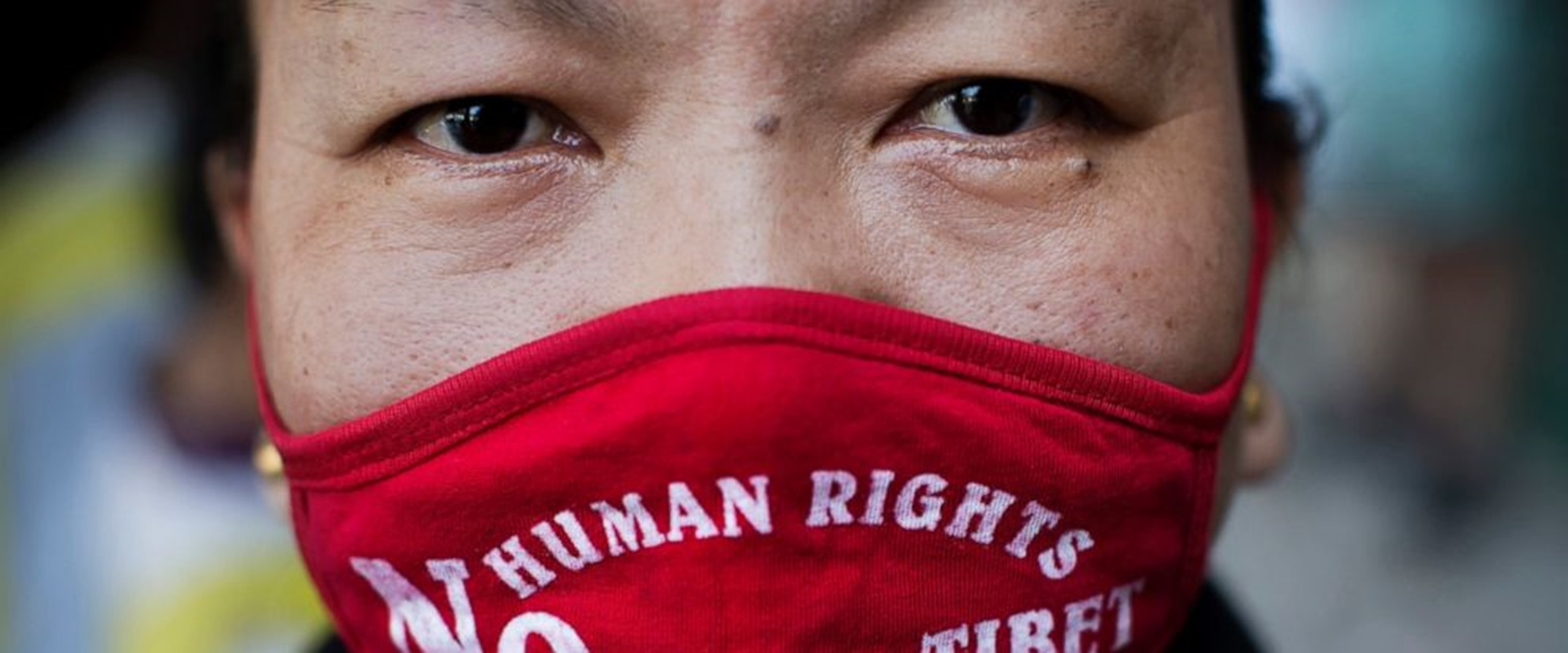
FILE – In this Sept. 17, 2014, file photo, an Exile Tibetan woman wears a mask during a protest to highlight Chinese control over Tibet, coinciding with the visit of Chinese President Xi Jinping in New Delhi, India. (AP Photo/Bernat Armangue, File)
A top Chinese leader has called for “advancing anti-separatism efforts” in Tibet, in a sign of continued high-pressure tactics in the Himalayan region.
Wang Yang, the ruling Communist Party’s No. 4 ranking official, was quoted Monday in state media as stressing the importance of tight control over Tibet’s Buddhist institutions, urging “preparedness and precautions for danger in times of safety.”
Religious figures must “be courageous to battle all separatist elements” in the name of preserving national unity and social stability, Wang was quoted as saying in Tibet’s regional capital of Lhasa during a visit there on Sunday.
Beijing’s forces occupied Tibet shortly after the 1949 communist revolution and security there has been ratcheted up significantly in the decade since anti-government protests spread through Tibetan areas in 2008.
The tactics in Tibet are largely aimed at reducing the influence of the region’s spiritual leader, the Dalai Lama, who lives in exile in India. China claims Tibet has been part of its territory for more than seven centuries and regards the Dalai Lama as a dangerous separatist.
Many Tibetans insist they were essentially independent for much of that time.
Wang has broad responsibility for religious policy as head of the government’s top political advisory body. In his comments Sunday, he also echoed Beijing’s calls for the Sinicization of religion, shorthand for adherence to the dictates of the officially atheist party.
Among recent tightening security measures in Tibet, students were required to sign agreements to “not take part in any form of religious activity” during the summer school holidays.
Young Tibetan monks have also reportedly been forced to leave one of the biggest monasteries in a Tibetan region of western China as part of a drive to replace monastic life with secular education.
Recent months have also seen sweeping crackdowns on traditional Muslim culture among the Uighur ethnic minority group in the northwestern region of Xinjiang and among Christians in eastern China.
Tibetan Resistance Movement is not about Separatism. It is about the Occupation of Tibet by The Evil Red Empire.
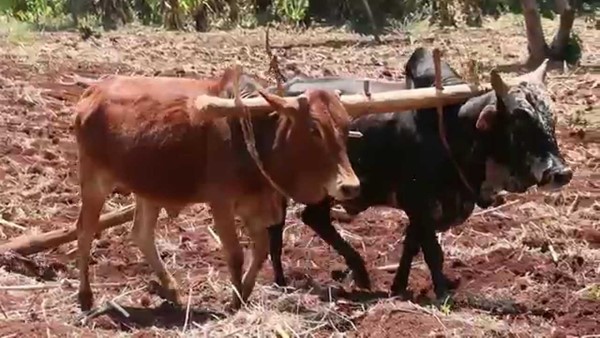
TIBET AWARENESS – UNEQUAL YOKING. TIBET IS SUBJECT TO BURDEN IMPOSED BY UNEQUAL YOKING WITH A MONSTROUS BEAST, UNEQUAL IN SIZE AND POWER.
Red China, using military force, yoked with Tibet. To perform farm work, farmers generally use two animals of same type, size, and strength to get work done without imposing unequal burden on animals yoked together. Red China is a huge, monstrous beast, and her Unequal Yoking with Tibet imposes burden called Subjection, Bondage, Servitude, Enslavement, Hardship, Trouble, Pain, and Suffering upon Tibetans.
TIBET AWARENESS – UNEQUAL YOKING. TIBET IS SUBJECT TO BURDEN IMPOSED BY UNEQUAL YOKING WITH A MONSTROUS BEAST, UNEQUAL IN SIZE AND POWER.
Tibet is under the Yoke of Burden, Control, Subjugation to become subservient to Red China’s Doctrine of Neocolonialism.
THINGS THAT SURPRISED ME ABOUT TIBET – FUN AND INTERESTING FACTS
Tibet Awareness – Unequal Yoking. The Burden of Military Occupation.
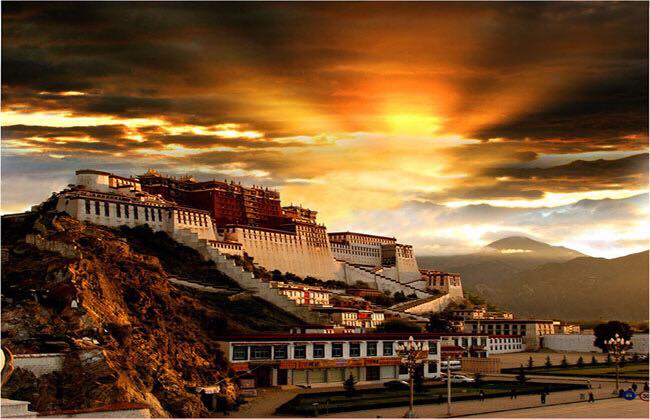
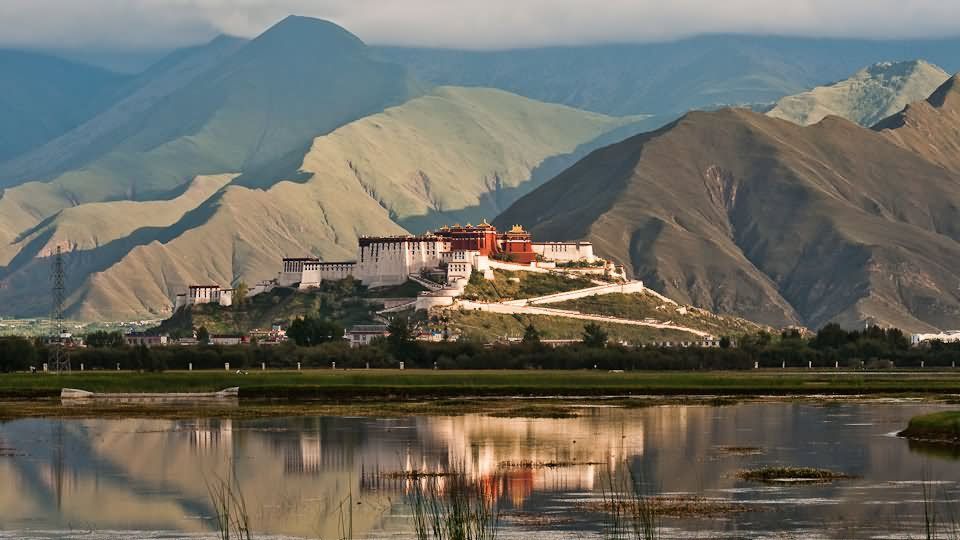
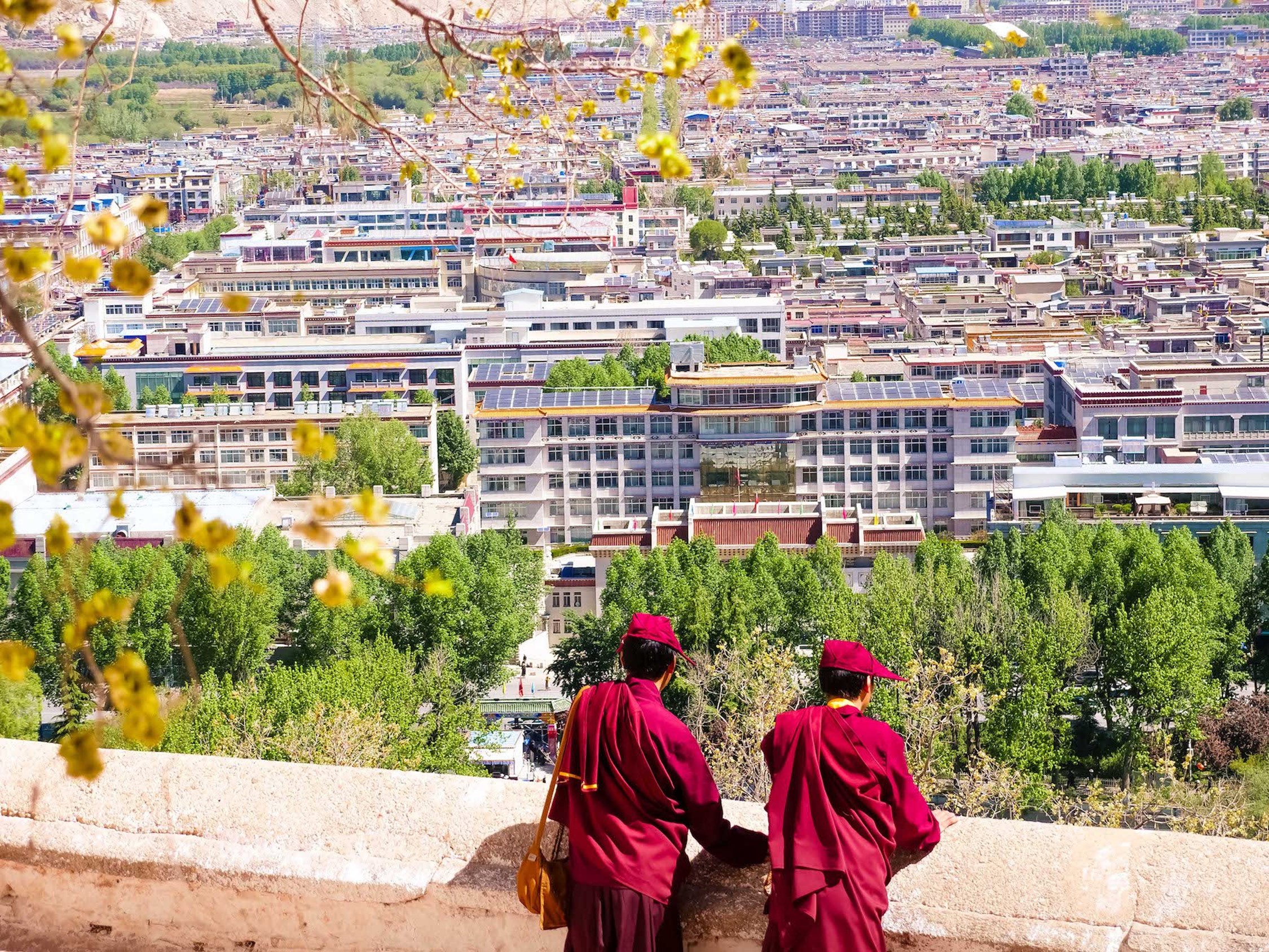
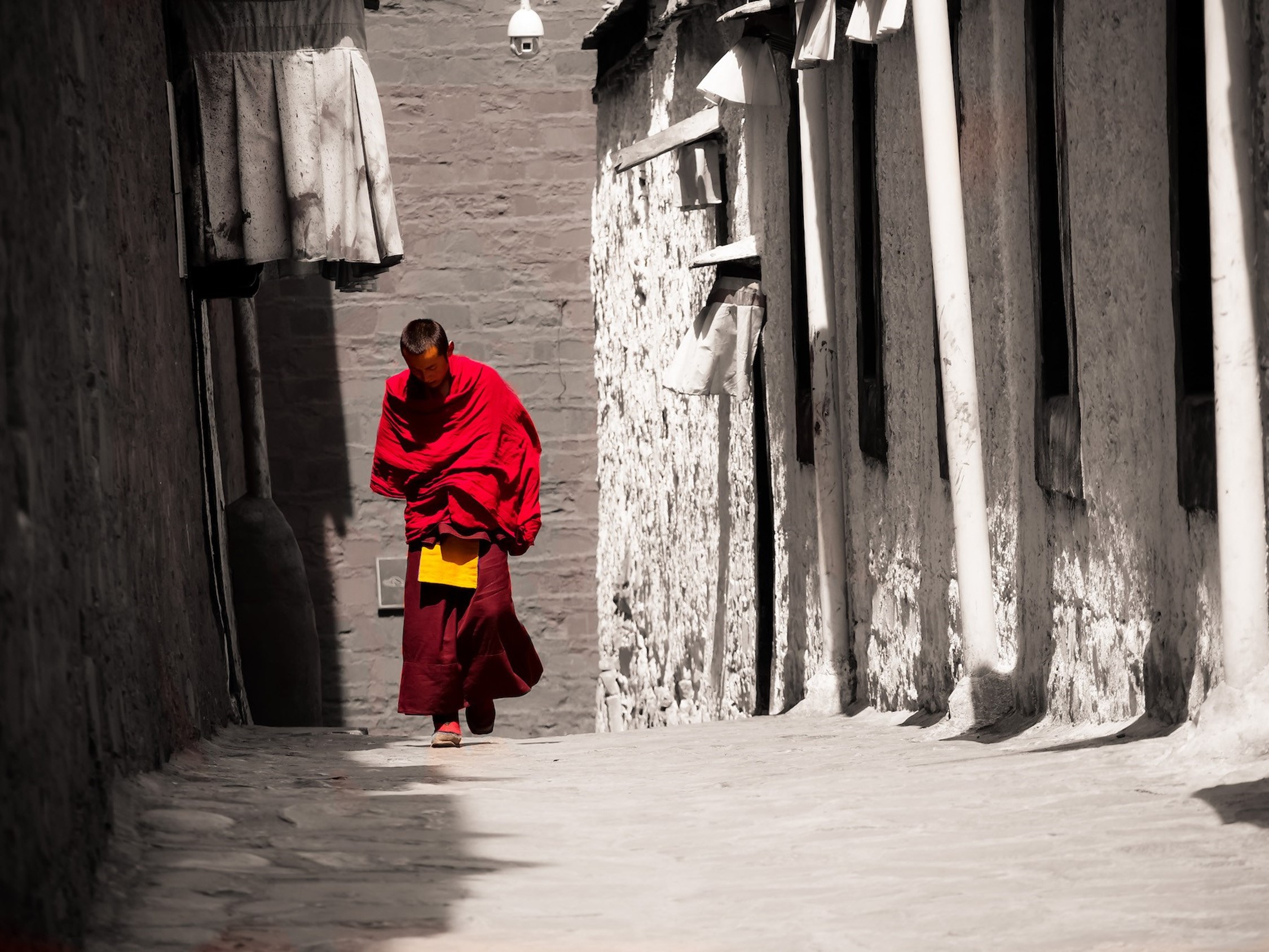
The country at the roof of the world, was very different from what I expected. Tibet, often considered the spiritual center of the world has more Buddhist monks, stupas and gods than any other place, yet it was anything but the peaceful and calm realm I had envisioned. Not that the available online resources lie about it, but more that there is a general lack of information beyond the Dalai Lama and the Chinese-Tibetan political situation, so my mind veered towards red-robed monks and the magical image of the Potala Palace. The list of things that surprised me about Tibet is quite long, but I will attempt to highlight the most relevant, the top 17 things that most people don’t know about Tibet or that will surprise any traveler to the oft-called Shangri-la.
1. Tibet facts – Tibet is developed and it has incredible infrastructure
Tibet Awareness – Unequal Yoking. Red China’s Subjugation of Tibet.
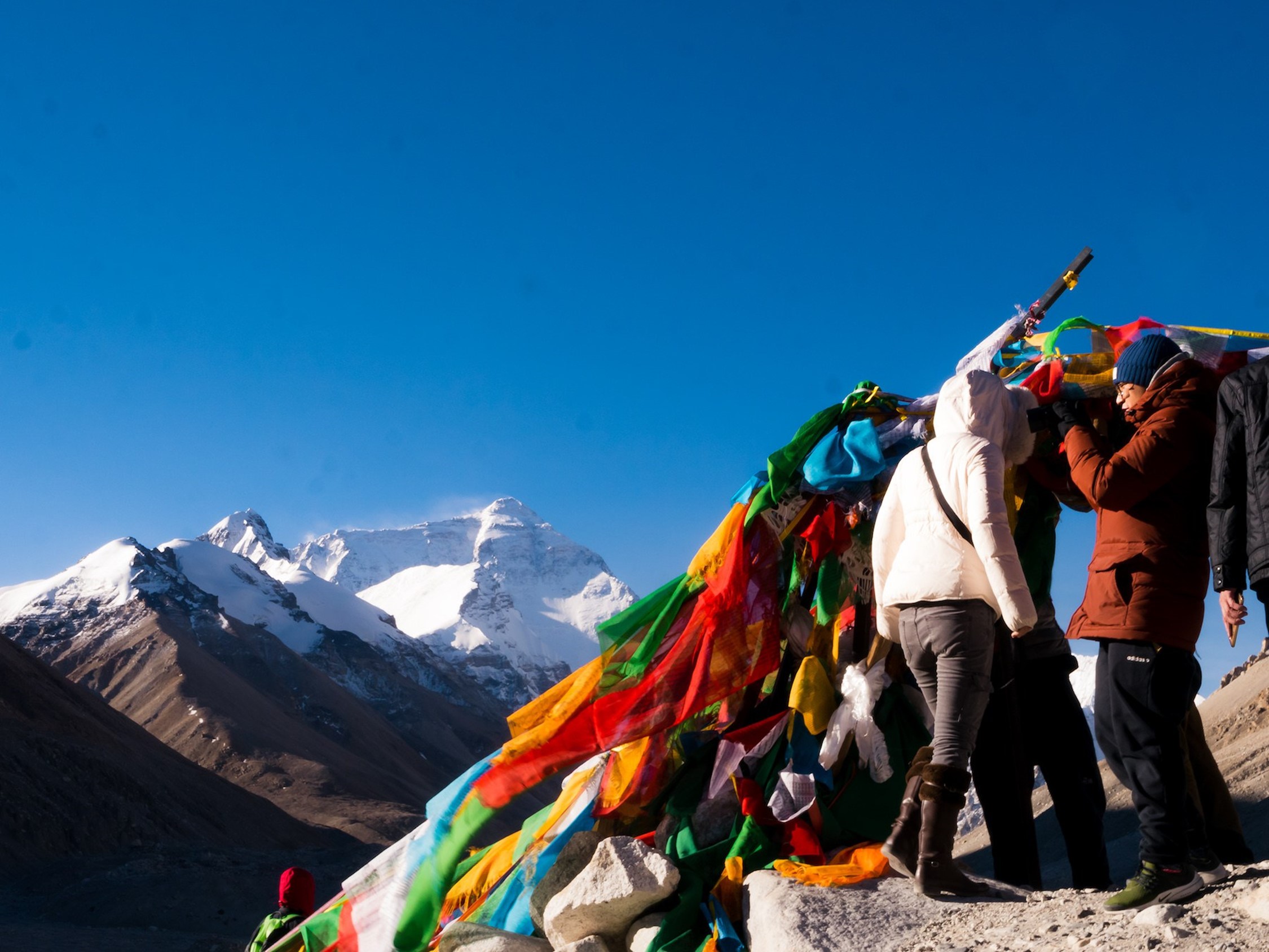
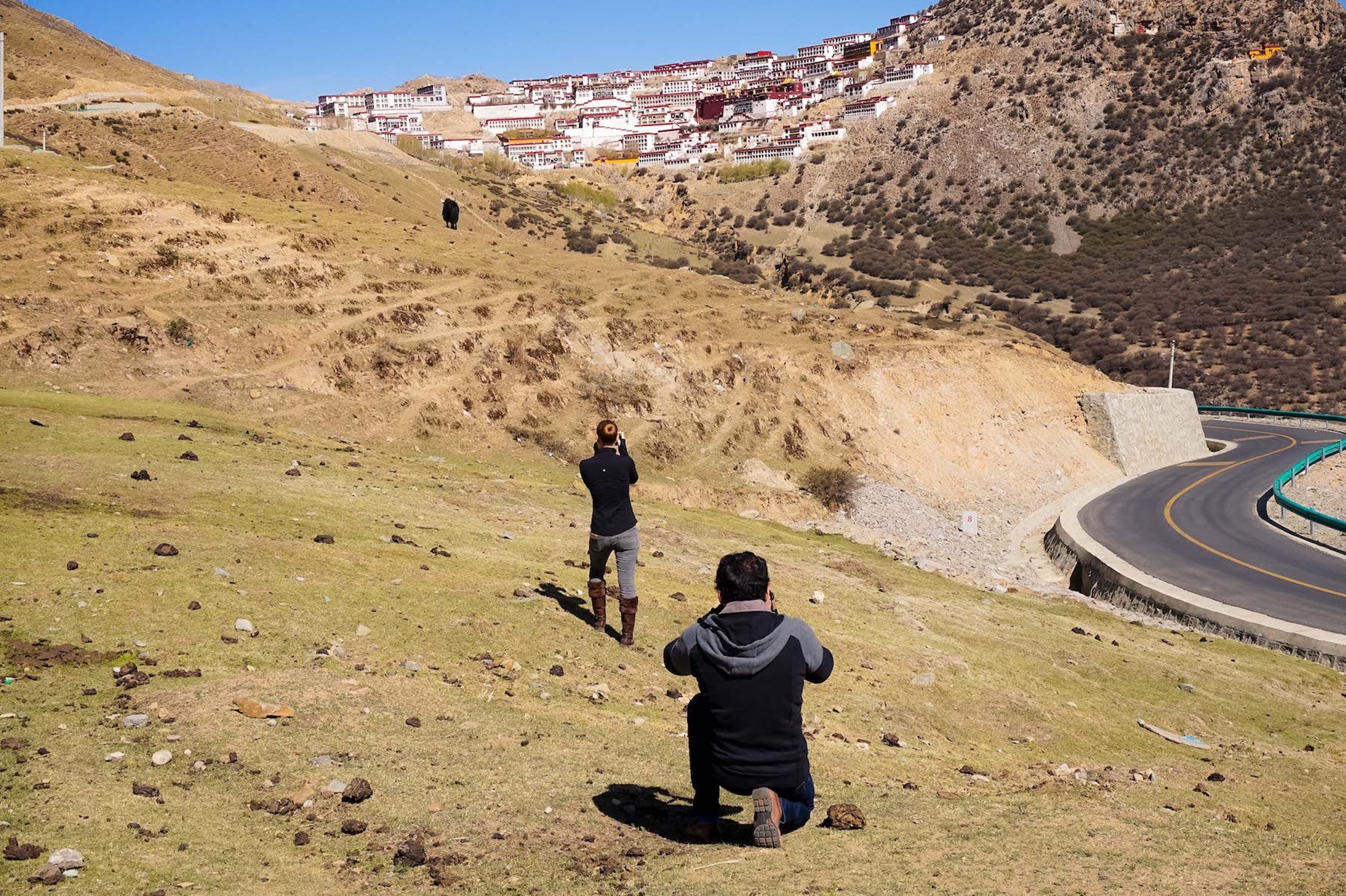
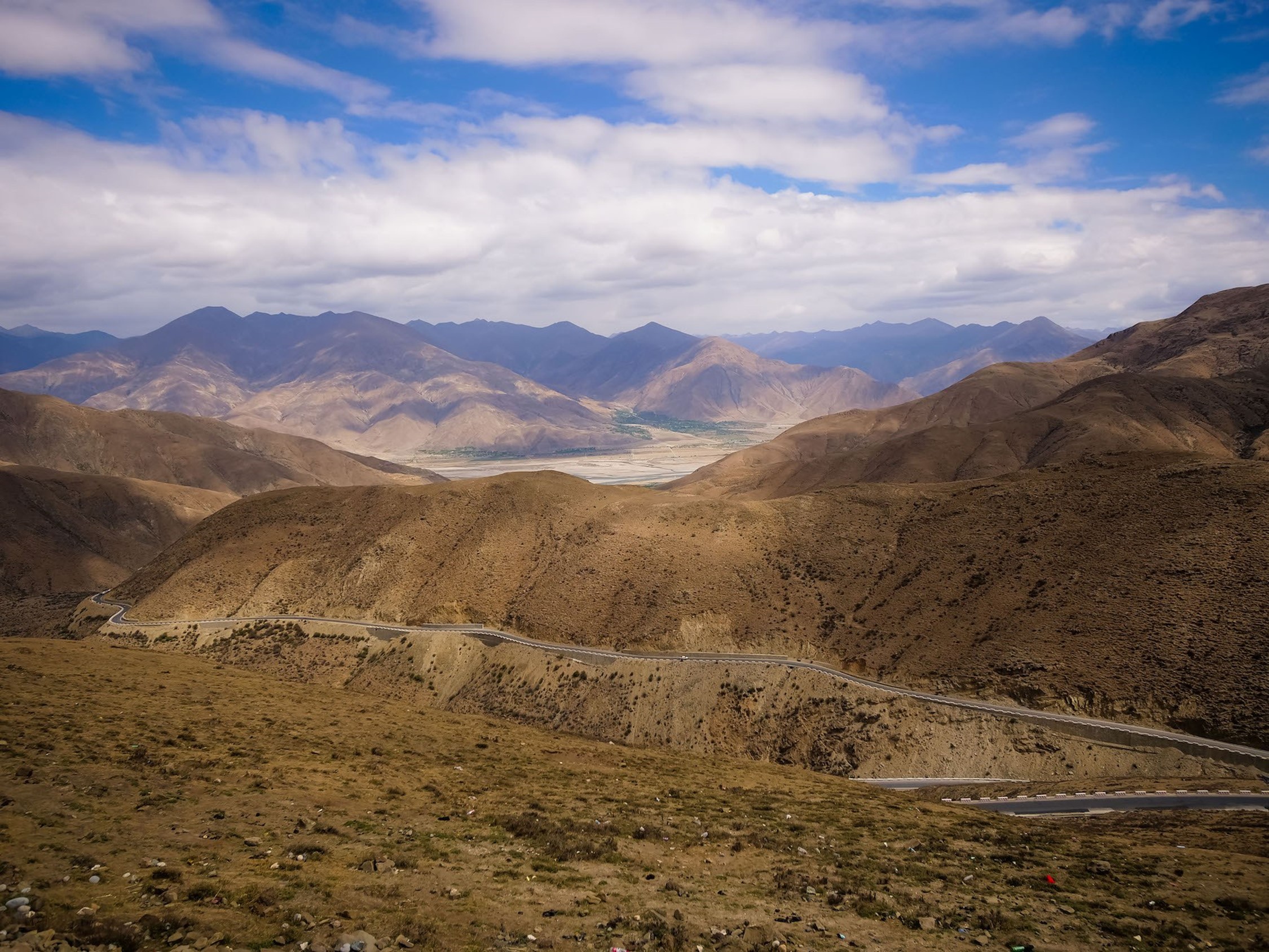
I visited with the utopian idea in my head that Tibet was going to be a peaceful and isolated place resembling Bhutan. But Tibet, or the Tibetan Autonomous Region, is a Chinese occupied territory that became part of China in 1950 and, as a result, for good or for bad, infrastructure has developed dramatically. Even the road that leads to the world’s highest mountain, Everest, is paved almost all the way, a far cry from the 9-14 day trek from Lukla Airport (the world’s most dangerous airport) to reach the Nepalese equivalent. In fact, we drove all the way to 5,200m to the tourist Everest Base Camp. Roads throughout the country are smooth and paved, including the Friendship Highway that links Shanghai with Kathmandu and runs for 5,900km, practically crossing Tibet.
Countless electricity lines crisscross the arid landscapes, at times, several electricity posts slashed my photographs. Even the most remote of villages have electricity and solar panels. Why? Tibet is China’s richest province, with deep reserves of gold, copper and other precious and valuable resources and infrastructure is essential to mine and exploit this natural wealth. As our train to Lhasa glided through the middle of nowhere, high up in the Tibetan Plateau, the lights of trucks carrying minerals to processing factories provided a continuous source of light in the darkest of nights. Those factories lit the horizon in sudden outbursts. Next to them, nomad villages built to accommodate the workers supporting the factories sprung as if mushrooming from the rocks and sand. There were many, and we were to see even more across Tibet.
2. Tibet facts – The issue of the Dalai Lama and the Panchen Lama
Tibet Awareness – Unequal Yoking. The Great Problem of Tibet.
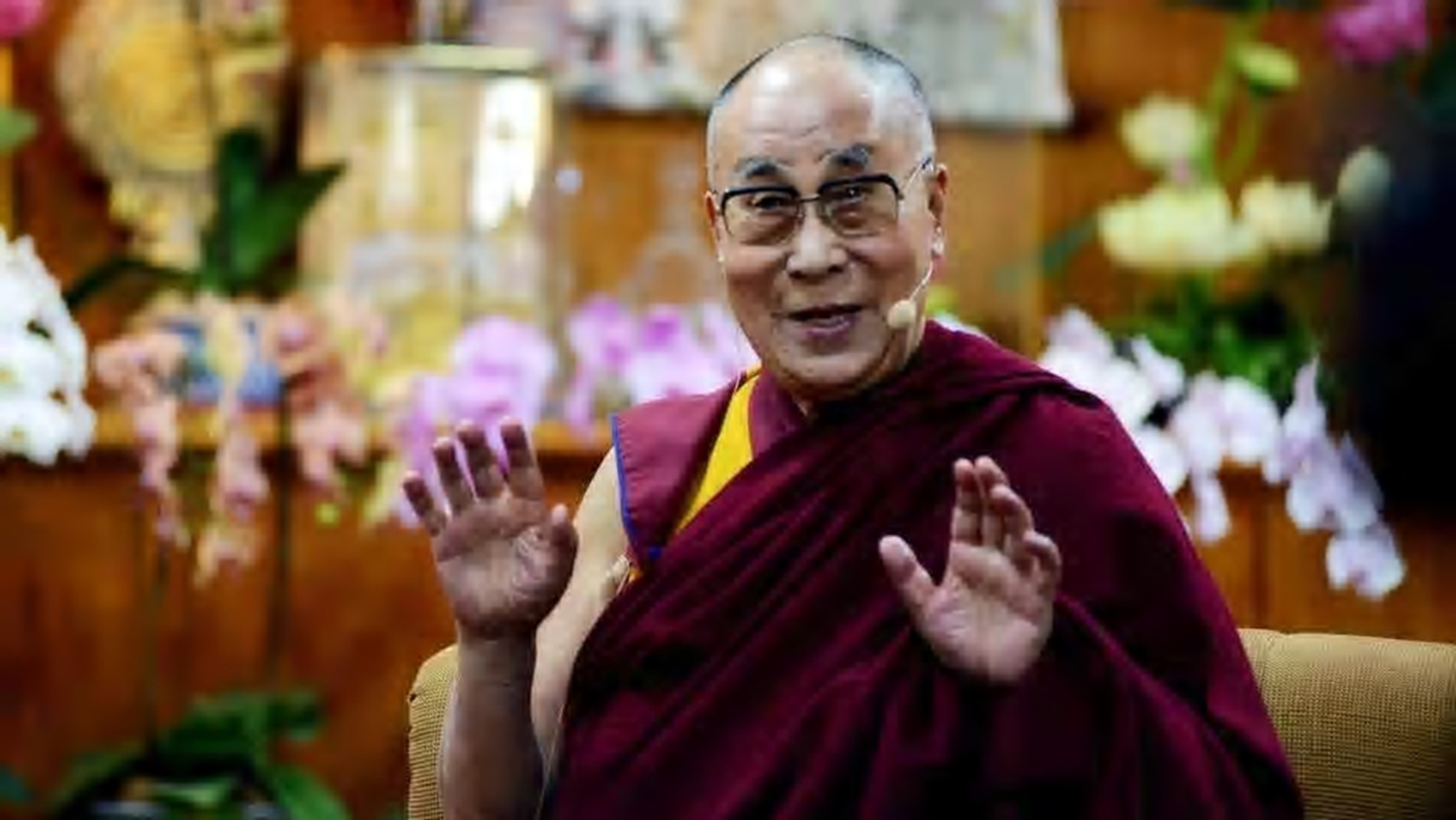
The 14th Dalai Lama left Tibet after disagreement with the Chinese government about his successor, which made it too dangerous for him to stay and has lived in exile in Dharamsala, India, ever since. This shows his opposition to the occupation and his demands for true autonomy (not independence) for Tibet. The Chinese government recognizes Buddhism, a religion that is widely spread in the country despite communism, but nominated their own Panchen Lama, the successor to the Dalai Lama, in 1995, six years after the death of the previous Panchen Lama, following a traditional process using a golden urn that was used for the 10th, 11th and 12th Dalai Lamas. Their choice did not match that of the current Dalai Lama, whose successor has been kept in an unknown location in China ever since.
The Panchen Lama nominated by the Chinese Government has been receiving education in Buddhism and Tibetan culture since his enthronement at the Panchen Lama’s seat in Xigatse. His photograph can be seen across Tibet whereas having a photo of the 14th Dalai Lama is illegal and can carry fines or imprisonment. Tibetans often claim this misalignment about who the next Dalai Lama will be as the main attempt by the Chinese to eradicate Tibetan culture and identity.
3. Tibet facts – The highest country on the planet
Tibet Awareness – Unequal Yoking. Natural Freedom violated by Unnatural Occupation.
When I visited Bhutan I thought I was high. High on life, high on spirituality and high up in the mountains! One of the country’s nickname, “The Kingdom in the clouds”, clearly reflects its high altitude, with the capital at 2,300m and several peaks above 7,000m. Bhutan ranks as the highest country in the world when average altitudes are taken, despite some of the lowest parts are almost at sea level.
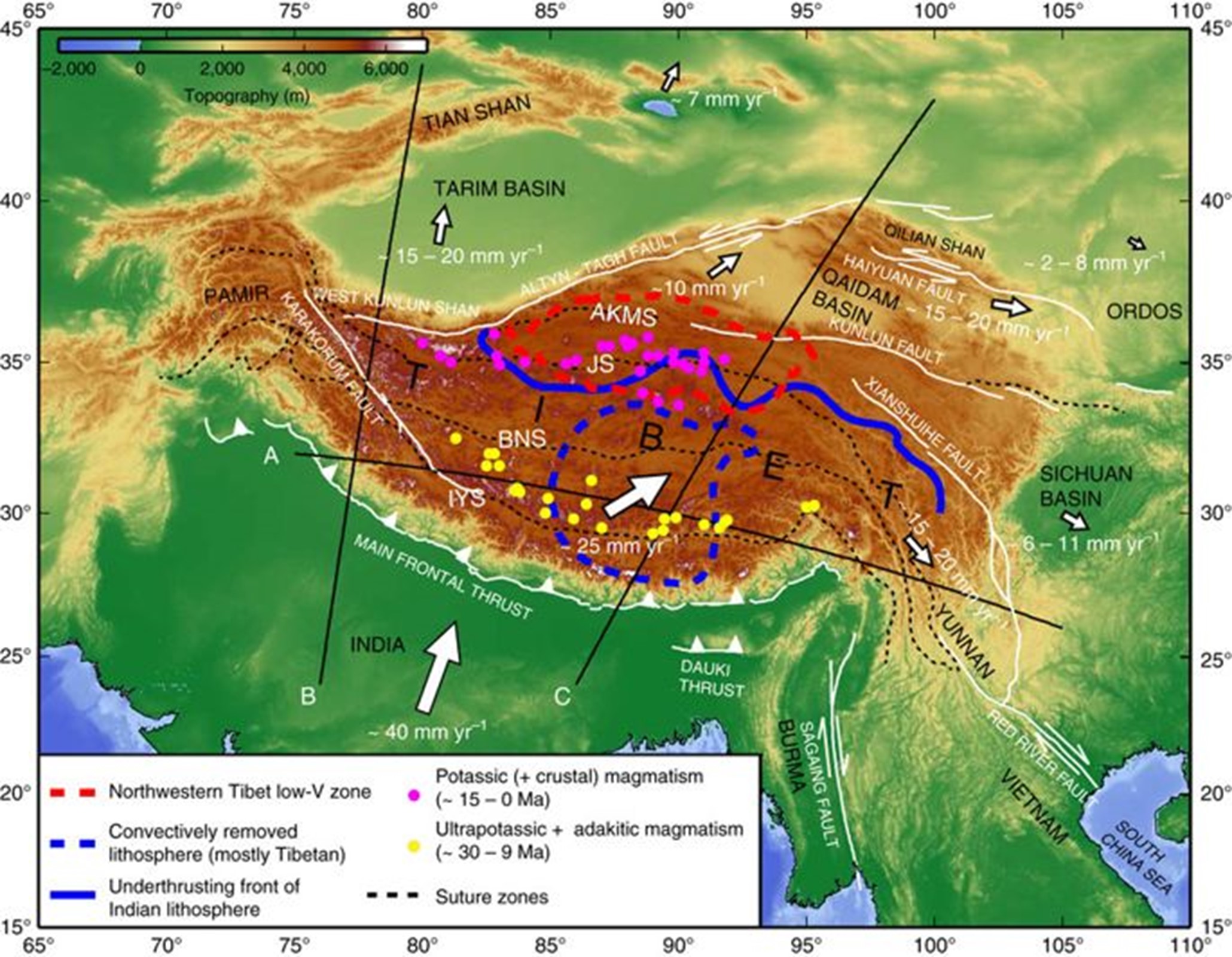
But that is just because Tibet is not officially recognized as a country by the UN because of Chinese veto, so it is just a region of China. Before Chinese occupation, Lhasa was the highest capital in the world as per the Guinness World Book of Records, but La Paz in Bolivia has taken that prize since Tibet became a part of China.
What makes Tibet’s altitude extra special is that, not only does it have the highest mountain in the world (Mount Everest), but also the highest average altitudes at 4,575m above sea level, the highest road, the highest toilet, the highest town (Whenzuan), the highest monastery and the highest train. Everything in Tibet is made of superlatives. We drove up mountain passes that are at 5,200m, we used the highest toilet in the world, located on the same mountain pass top, we took the train to Lhasa, which climbs to 4,500m and visited the world’s highest monastery, Rongbuk, at the foot of Everest Base Camp. Altitude is an undetachable synonym with Tibet.
4. Tibet facts – 40% less oxygen
Tibet Awareness – Unequal Yoking. Natural Conditions, Natural Factors, Natural Mechanisms, and Natural Events produce Natural Freedom in Tibet.
Tibet’s high altitude is the cause for the traveler’s worst nightmare: Altitude sickness. Because it is so high, the pressure is lower giving the sensation that there is less oxygen. I have extensively covered the topic of altitude sickness, because we felt it and felt it badly, but what I found most interesting is that it is not possible to descend in Tibet, the lowest altitude is already a whooping 3,500m above sea level.
5. Tibet facts – Permits, permits, permits
Tibet Awareness – Unequal Yoking.
Getting to Tibet is not particularly difficult. Travel restrictions have been lifted and you can go on a small private tour like I did with WildChina, without issues. It was a similar process to that for North Korea. You cannot travel independently, but you can pretty much visit anything as long as you are entering with a tour company. And, unlike North Korea, you can freely wander the streets or explore anything without a chaperon.
However, visiting Tibet does require a lot of planning ahead. You will need a Chinese visa first, which is required by almost all citizens and can take up to two weeks to process depending on your country of residence and which can be very costly (US$100 in Singapore). With a photocopy of that in hand, the travel agent will apply for a Tibetan permit which will be linked to your detailed itinerary. The permit can take anything from a week to 3 weeks so you should start the entire process about two months ahead to ensure everything is done on time as the processing timelines vary vastly from country to country (e.g. one of my friends took 2 weeks for the Chinese visa and 3 days for the Permit whereas I took 3 days for the visa and 3 weeks for the permit).
The permit is your passport into the Tibetan Autonomous Region and will be checked and rechecked a million times throughout the trip. Your guide will keep the permit with him or her throughout your stay. Every time you reach a new village the guide will be registering you, even for just one night, with the local Police, so your whereabouts are being monitored at all times. There were also 20 road checks through our 9 day journey and we were thoroughly scrutinized at the train station and airport before boarding. If you plan to visit Everest Base Camp, then you will need an additional permit and to go through a Military check-point at the park’s entry.
6. Tibet facts – Big Brother is watching
Tibet Awareness – Unequal Yoking.
The controls of visitors extend to the cars as well. All cars that take tourists around the country are owned by the government and kitted with two cameras and a radio system that communicates a central office to all the drivers. The cameras are constantly monitoring the driver and making sure that he is not doing anything against the Chinese rules. Every time the speed went above the marked limit, a message came through on the radio speakers to slow down. The speakers also shared a regular amount of updates and reminders about safety on the road. It was a constant reminder that our every move was being watched.
7. Tibet facts – Cold and high, but without snow
Tibet Awareness – Unequal Yoking.
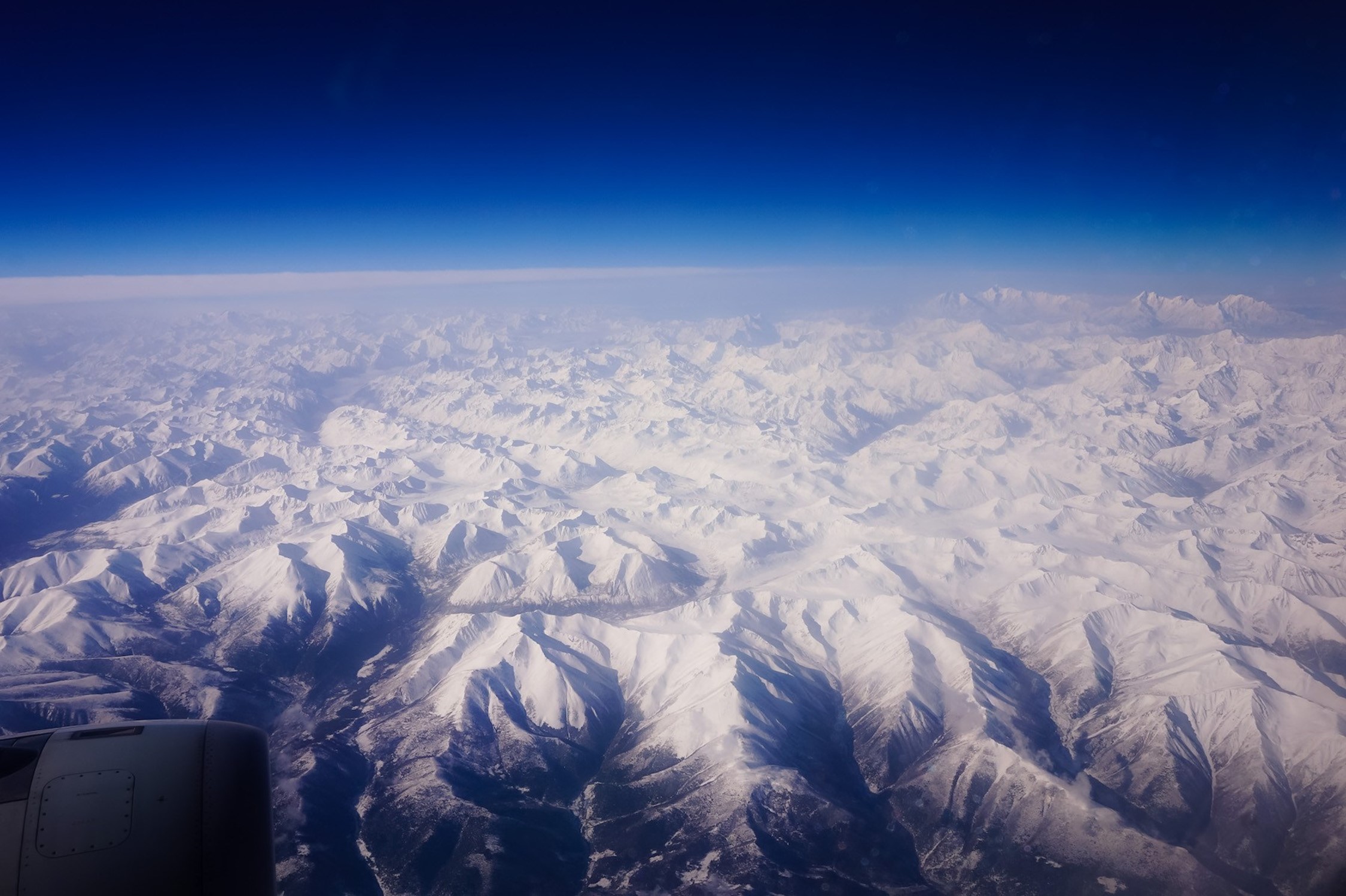
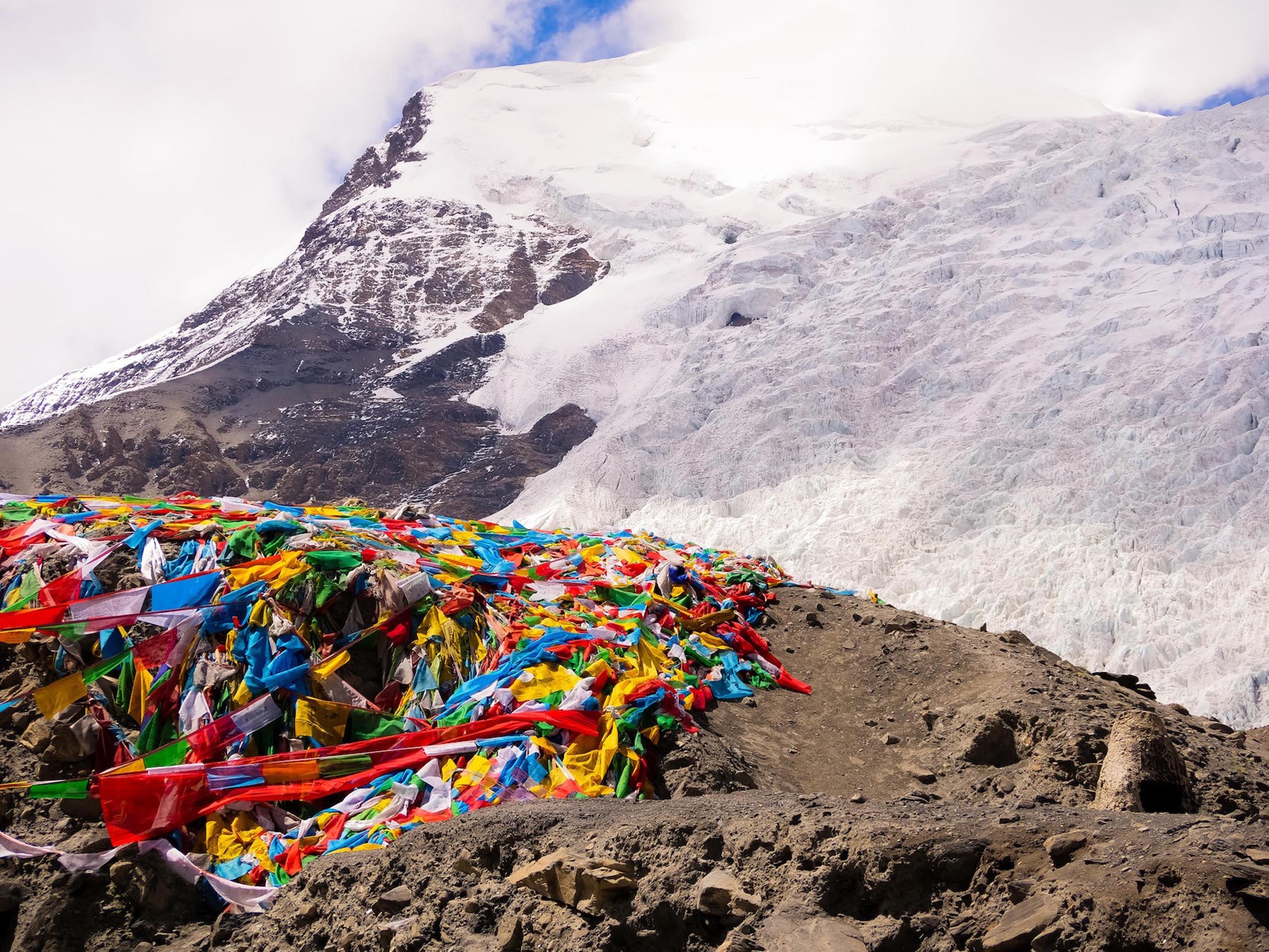
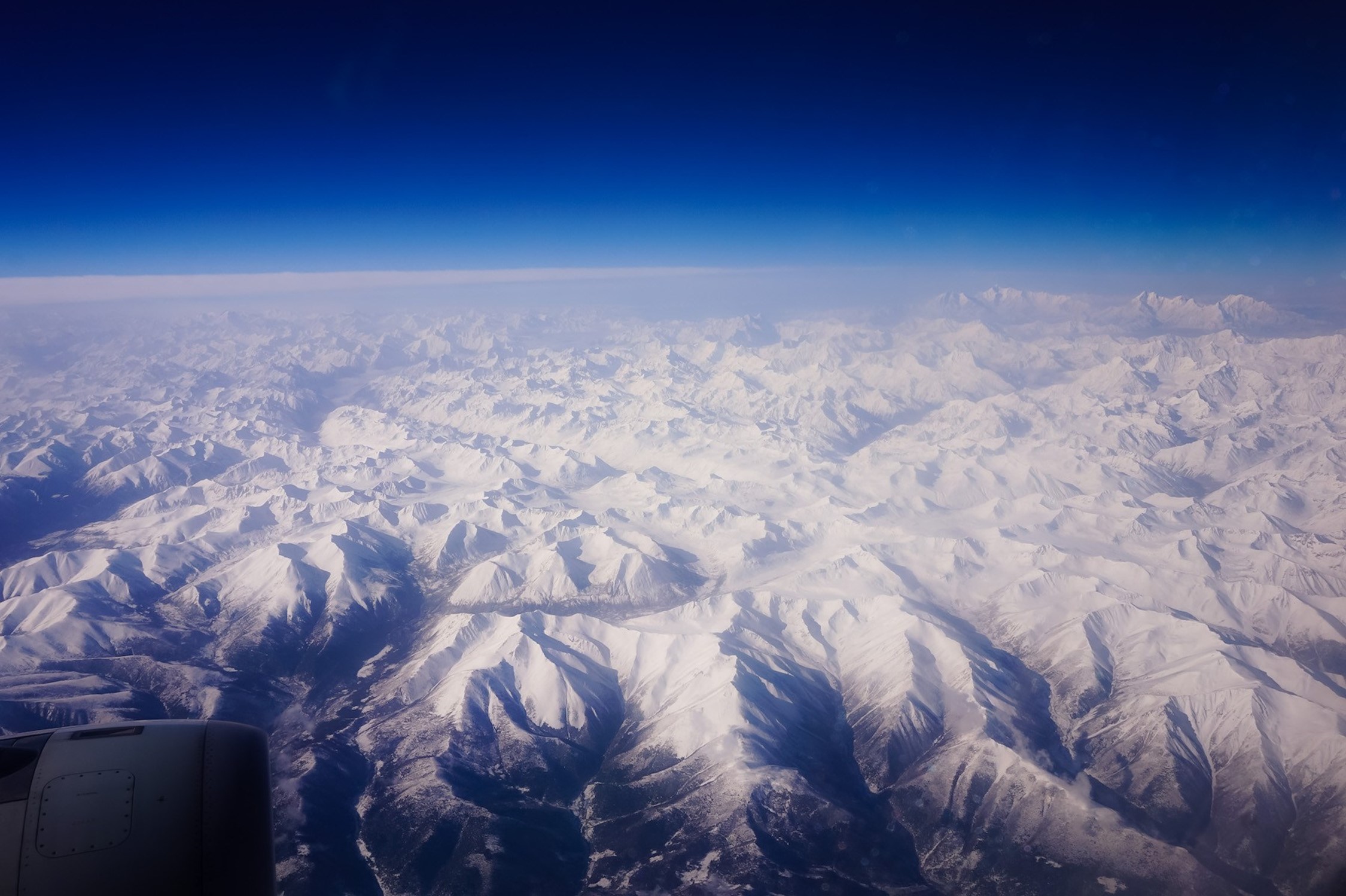
I was expecting the landscapes to be rocky, mountainous and majestic and for the snow to cap all mountain tops but Tibetan landscapes are rather brown and grey with very little snow. In fact, although we saw some snowflakes as we traversed the highest pass, at 5,200m, the majority of the mountains were devoid of that delicate white veil that tops other mountain ranges. Our guide confirmed that it does snow very little in Tibet and that pretty much all the snow we were seeing was permanent. The glaciers, receding as a result of global warming, were also perennial. The lack of snow is caused by the high Himalayan mountains that stop the clouds from emptying their bowels and providing rain or snow.
8. Tibet facts – Tibet was not always a peaceful nation
Tibet Awareness – Unequal Yoking.
I associated Tibet with peace, not least because the Dalai Lama has been an example of opposition to the Chinese occupation, something which got him the Nobel Peace Prize. But Tibet’s past wasn’t always as spiritual and peaceful as Buddhism advocates. Tibetan Kings fought and defended Tibet from assailants for centuries. Remnants of Medieval fortresses, city walls and castles can be seen across the country. Unlike Bhutan, who was never occupied by an international power, the English had several incursions in Tibet, as did the Mongols, Indians, Afghans, Nepali and various Chinese dynasties. So monks, and the Tibetan Kings, were a fearless army defending their territory since the 17th century until the Chinese occupation in the 1950s.
9. Tibet facts – Yak meat, yak butter, yak hair
Tibet Awareness – Unequal Yoking.
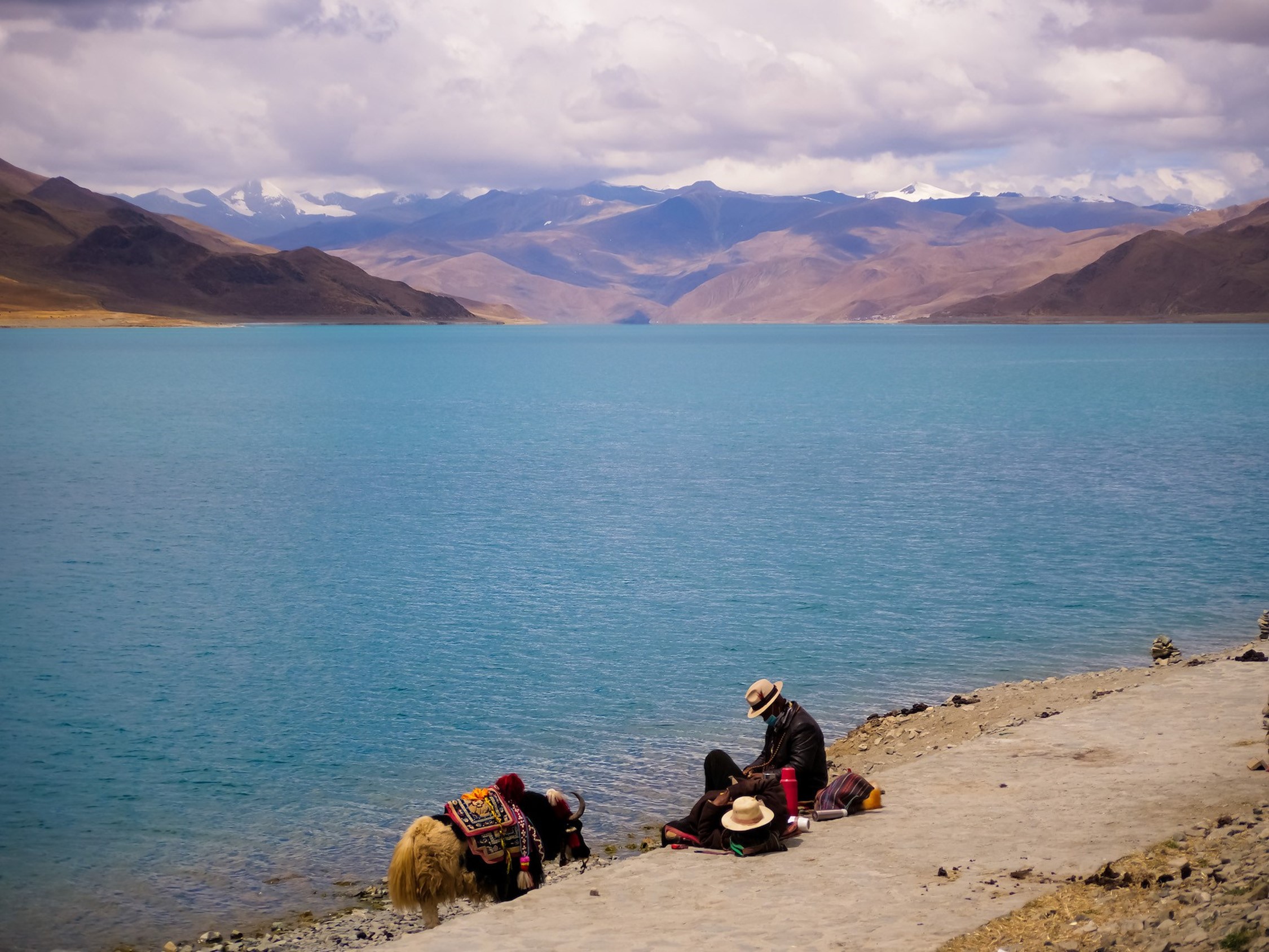
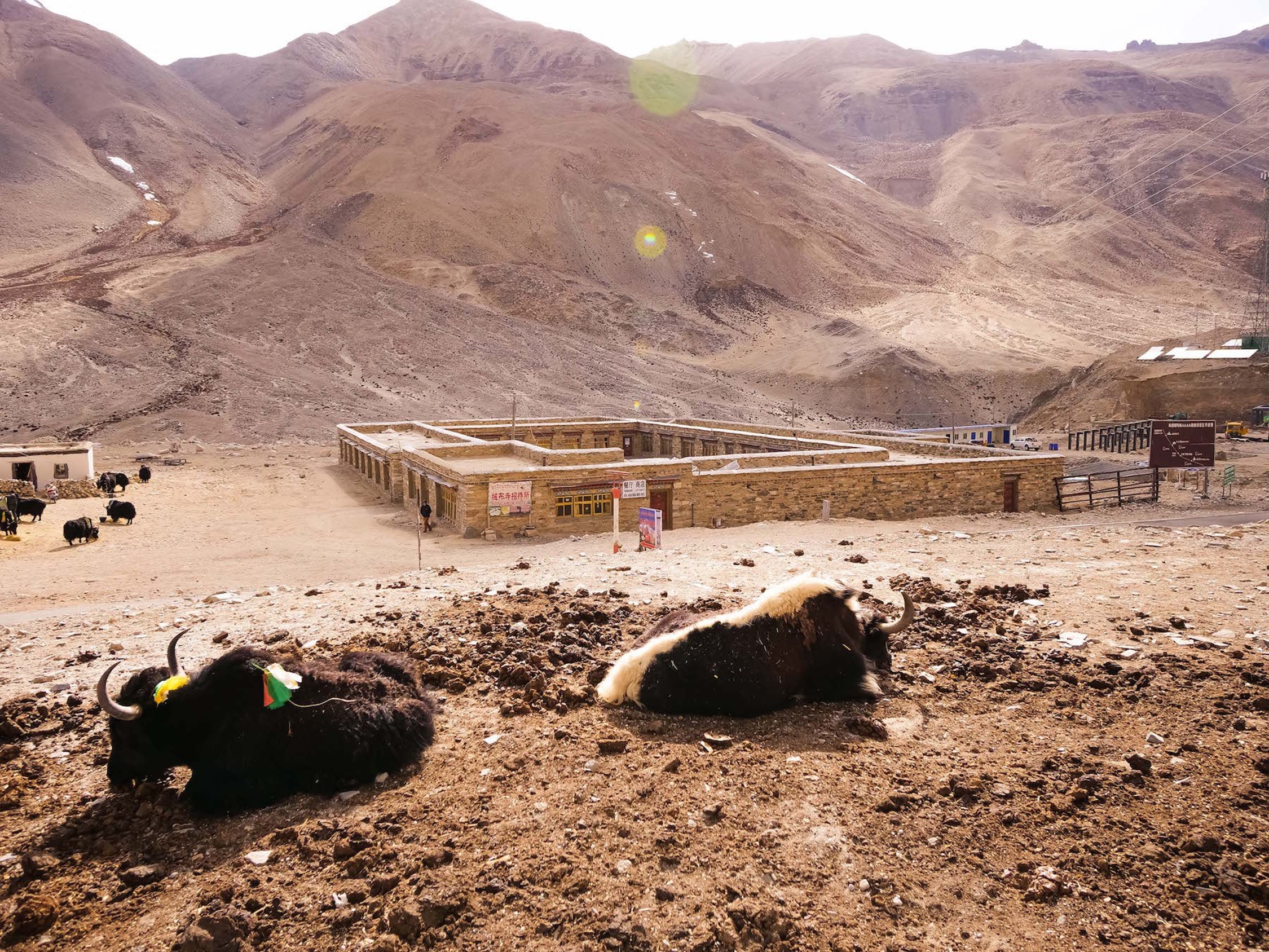
Tibet’s high altitudes and harsh conditions make life extremely hard and yaks are the lifeline for most Tibetans. Yak meat, leaner and lighter than beef, is ever present. Yaks are also used for milk and butter and their hair is used to make rugs and clothes, even to weave the cover ups that protect the Potala Palace – delicate paintings and carvings from the sun. Even yak dung is collected and dried to be used as fuel in the winter months. However, yaks are an endangered species and most of the animals seen roaming the fields are actually a blend between yak and cow.
10. Tibet facts – Photos of the Dalai Lama are illegal
Tibet Awareness – Unequal Yoking.
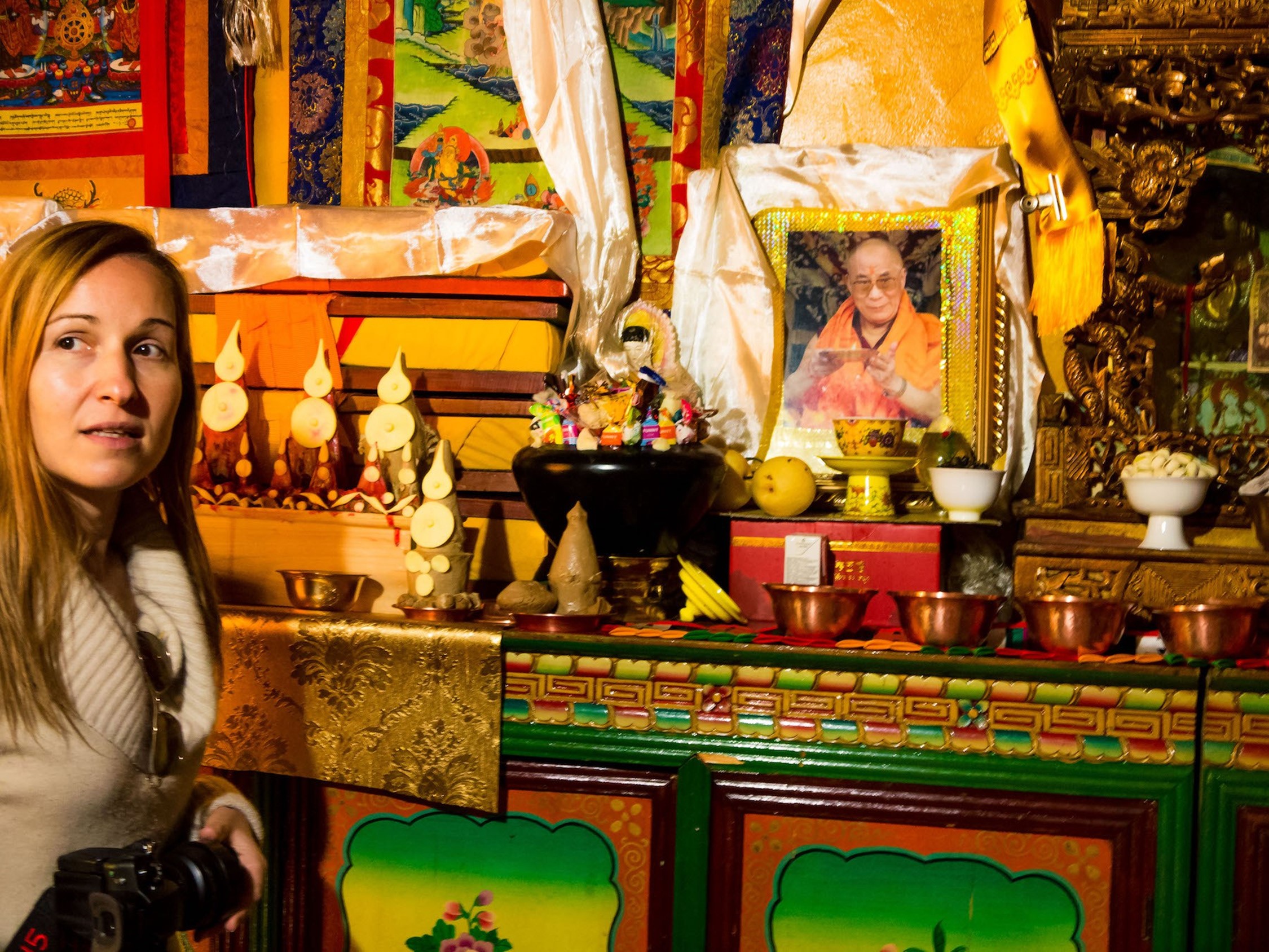
Almost everyone has a clear image in their heads of the current Dalai Lama. However, carrying or having his photo in Tibet could lead to imprisonment and punishment. None of the houses or temples we visited had any. Instead, the Panchen Lama, nominated by the Chinese Government, is to be displayed in homes and businesses. The prohibition extends to the Tibetan Flag, which does not fly anywhere in the country. Bright Chinese flags are hung on rooftop of houses, next to the colorful prayer flags.
11. Tibet facts – Shangri-la is the result of a misspelling
Tibet Awareness – Unequal Yoking.
Tibet is often referred to as the Shangri-la. The word has no meaning in Tibetan, although La does mean mountain pass and is attached to the end of all passes in Tibet. The word was first coined by the writer of the most famous novel about Tibet, Lost Horizon, in 1933. James Hilton probably misunderstood the word Shambala, which has a similar meaning in Tibetan Buddhism, and wrote Shangri-la instead. Since then, the word has been assimilated to a mythical place somewhere high in the mountains, a Heaven of sorts, a paradise on Earth, and is even the brand name of a luxury hotel chain whose eponymous Lhasa hotel I stayed at during my visit.
12. Tibet facts – The prostrations
Tibet Awareness – Unequal Yoking.
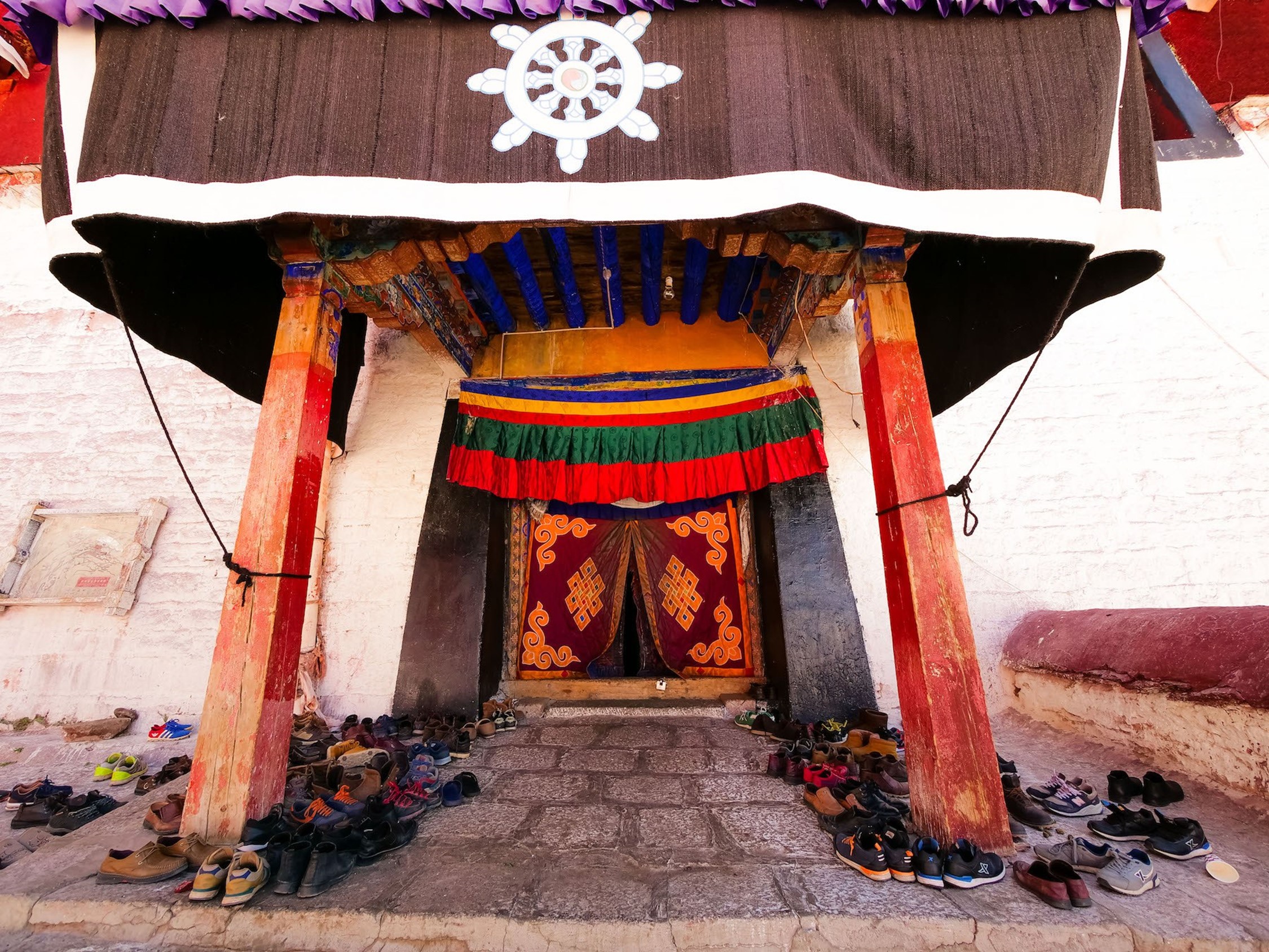
I had seen some images of devout Buddhists prostrating in key Buddhist temples and landmarks but nothing could prepare me for the absolute devotion and extreme prostrations that some engage in. Some people would spend their entire day prostrating and praying, continuously kneeling down and lying flat on the floor then standing up again. Most will be dressed appropriately, with hand and knee protection to allow them to glide. At some particularly holy places, like in front of the Jokhang Monastery or the Potala Palace, some extreme devotees would prostrate in the middle of the pavement and receive donations from passers-by.
13. Tibet facts – The toilets
I cannot talk about things which surprised me about Tibet and not mention the toilets. Although there are public toilets across the cities and main road stops, they smelled so bad and were so dirty at times that we opted for the nature toilet: behind a rock (because there are no trees in the mountains). Bringing wet wipes and tissue is not enough, one needs to bring a sort of perfume to put a couple of drops under the nose to enter some of the public toilets. All of Tibet’s toilets, barring the hotels, are squat toilets consisting of a hole on the floor with a drop which may sometimes not be very long. There are no doors to the public toilets which often times will have more than one hole next to each other. You may do your thing next to someone who is doing her thing, in the open. And if that was not enough, many people miss and the toilets are never cleaned. You get the picture. This remained the main topic of discussion among my group, a source of constant jokes and laughter, as we hunted for the cleanest, least smelling holes. I will leave it there.
14. Tibet facts – Kora
Tibet Awareness – Unequal Yoking.
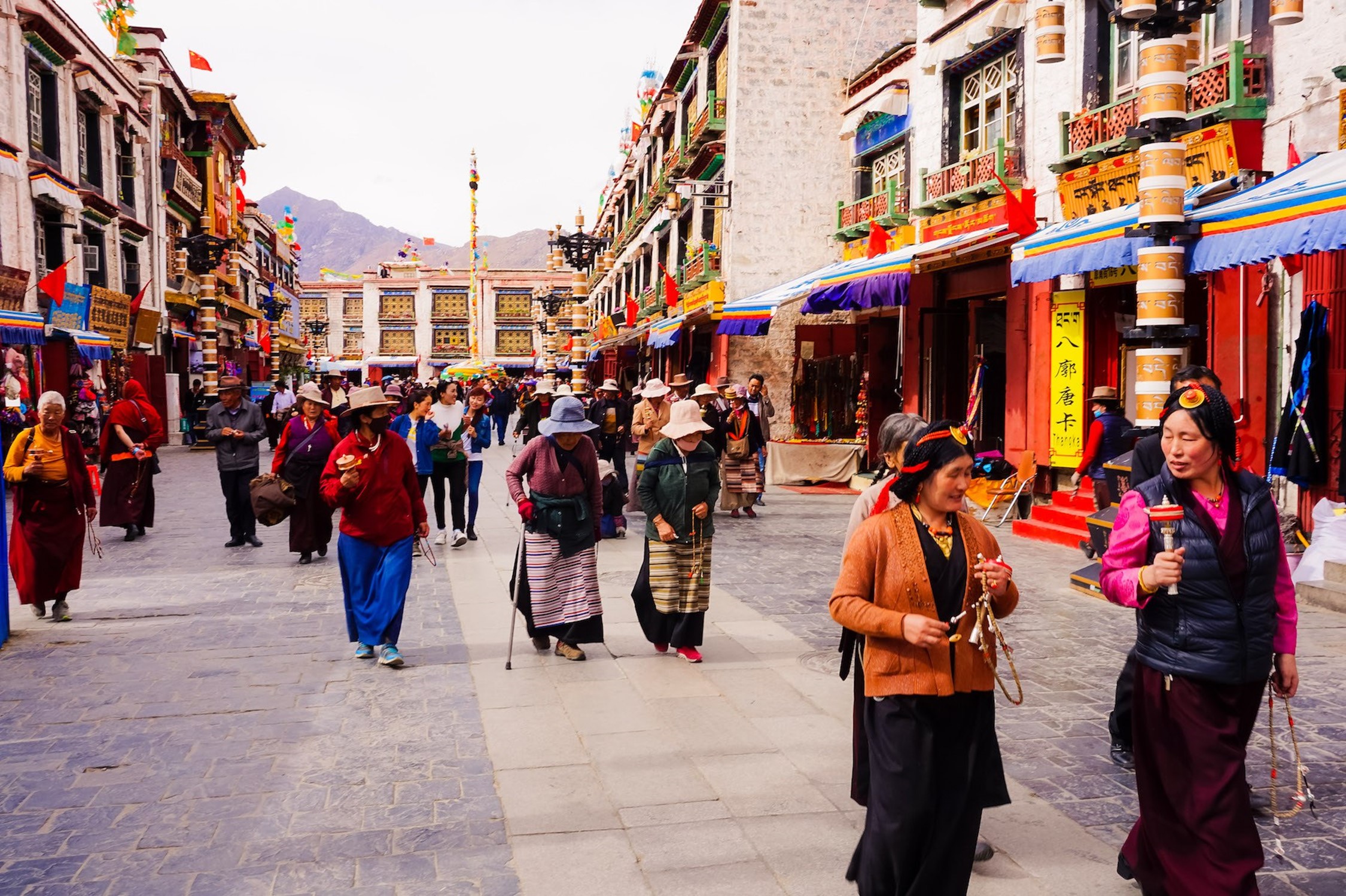
Tibetans go on walking and praying pilgrimages around main landmarks and monasteries. Much like the Camino de Santiago or the trip to Mecca, only shorter and more frequent. These walks are called Kora and can be taken around any monastery. The most common one is the one in Lhasa, around the Potala Palace or the Sera Monastery. Locals pray as they walk around, many of them will spin prayer wheels like in Bhutan. Some of the Kora can take up to a full day and the elderly may repeat them every day.
15. Tibet facts – Temple smell
Tibet Awareness – Unequal Yoking.
All temples and monasteries in Tibet have the same common smell of yak butter used in the butter lamps and fresh incense also burned across the country in houses and burners that can be found in public places.
16. Tibet facts – Paying for photographs
Tibet Awareness – Unequal Yoking.
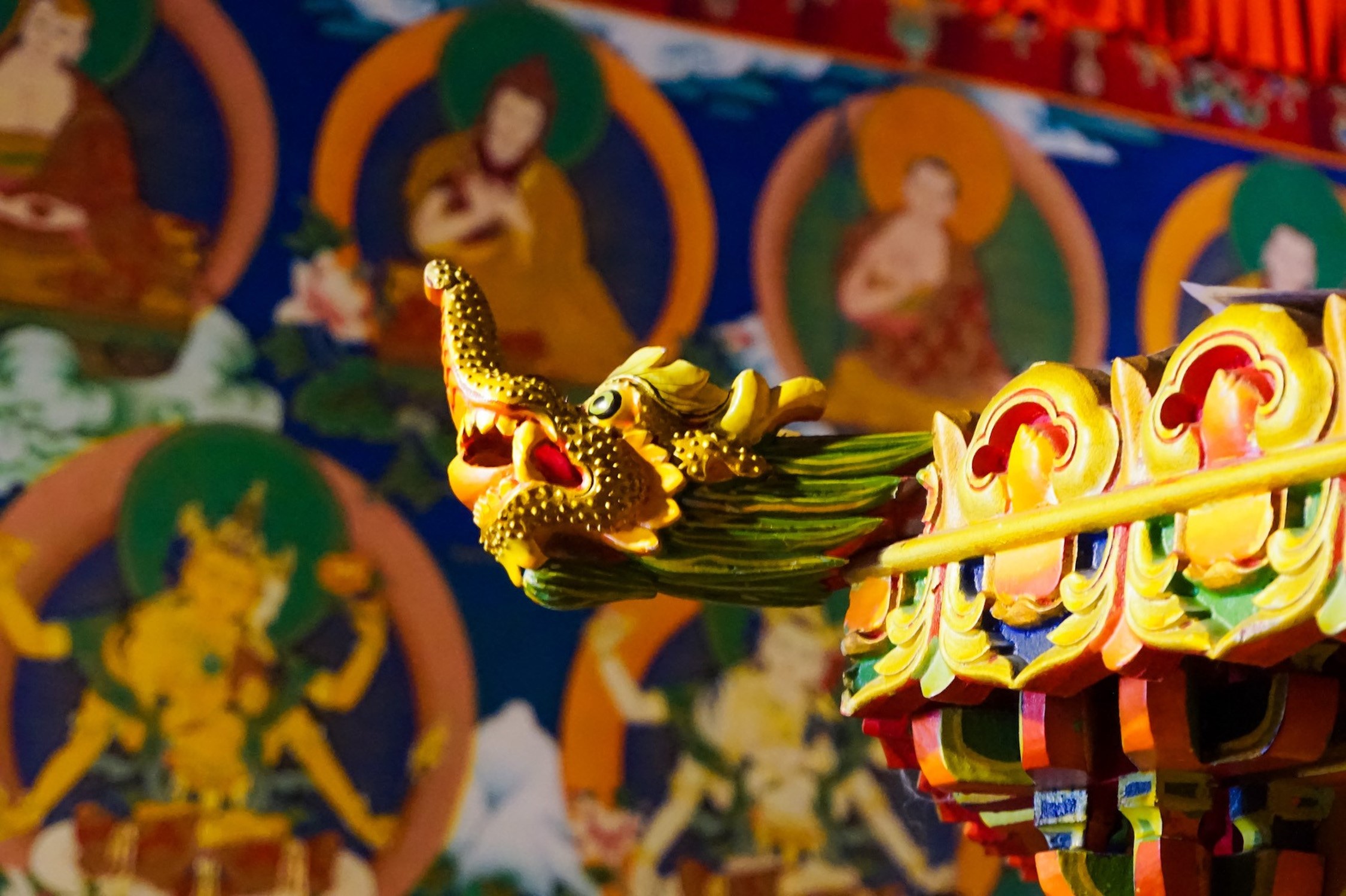
In Bhutan taking photos of temples and monasteries is simply not allowed. The interiors of the Buddhist buildings are usually covered from floor to ceiling with paintings and offerings in bright colors and gold and they are incredible to see and experience and provide a deep sense of spirituality. In Tibet you can photograph almost every landmark and interior as long as you pay a donation. At first we were surprised but relaxed as the money seemed more like a voluntary donation which we diligently dropped in bowls. But in some monasteries the monks would chase us for the donation, making us drop cameras for those who did not pay to avoid any photos being taken, and the initially innocuous amount started to amount to a small fortune as some temples started to ask for up to US$350 per hall for video, like in Shigatse. At US$2-4 per hall and an average of 3-5 halls worthwhile per monasteries I probably spent upwards of US$100 in photo donations, on top of the entry tickets. Considering these were religious places that were already filled with pilgrim donations (and stacks of money were stuffed inside God’s enclosures), the additional donation started to feel a bit much.
17. Tibet facts – Commercialized Everest Base Camp
Tibet Awareness – Unequal Yoking.
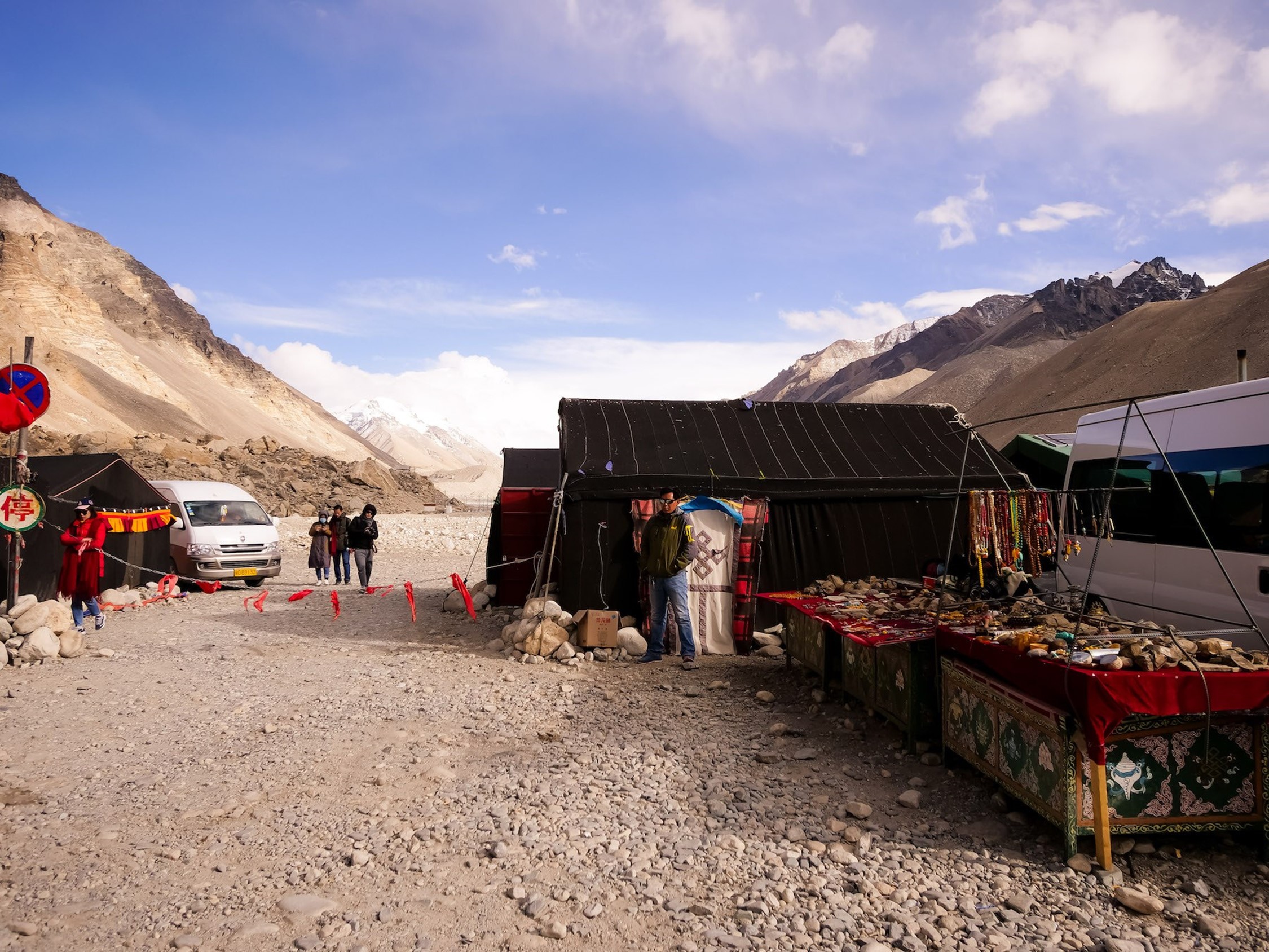
I can speak for myself, who paid a handsome amount to take a helicopter to the Nepali Base Camp well before this was a commercial venture offered to tourists. But on the Tibetan side, thanks to very good infrastructure, the Base Camp has been commercialized extensively. We slept 8km from the climber’s Base Camp in a tourist tented camp which advertised free WiFi and was filled with souvenir stalls albeit it offered very basic accommodation at sub-zero temperatures without heating. The Chinese government has announced plans to build a resort, museum and helipad a few kilometers from Base Camp, in Gangkar, to offer greater comfort and drive more tourism dollars into the country, although most visitors to Tibet are still local Chinese from other provinces. Serious trekkers no longer consider Everest a hard climb since so many people are attempting and reaching the summit every year. I can tell you the acclimatization to 5,200m was very tough.
18. Tibet facts – Speed limits
Tibet Awareness – Unequal Yoking.
We regularly saw cars stopped in the middle of the road. The Chinese authorities control speed limits in a very comical and questionable way: By putting road controls and checking how long it took you to get from one to the next. The speed limits on the road are low, about 35 km/h for many roads, making the trips longer than they should take given the great infrastructure. I already discussed before that the tourism vehicles cannot surpass the speed limit and if you do, the driver gets an announcement through the radio system. But, in addition, most roads have controls. You will get a stamp on a paper with the time you crossed the previous one and the policeman will check that it took you the stipulated amount of time to cover the distance. This was not an issue for us because we were not in a rush and were making plenty of photo stops. But the locals had to stop by the side of the road to waste some time before going through controls or speed cameras.































 Whole Dude - Whole Concept