Red Dragon – Red China – Real Evil Face
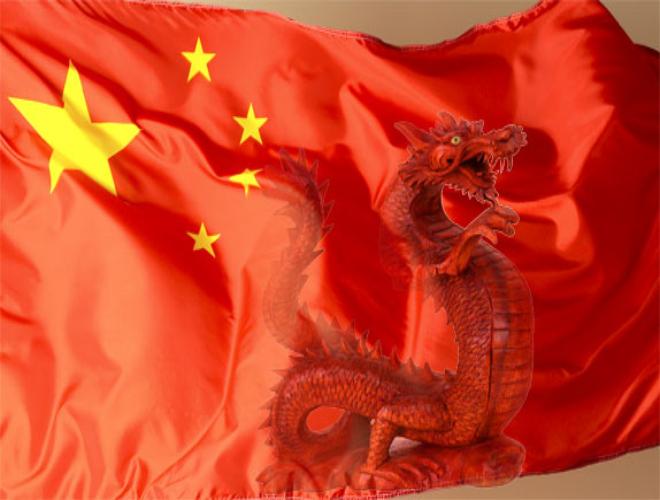
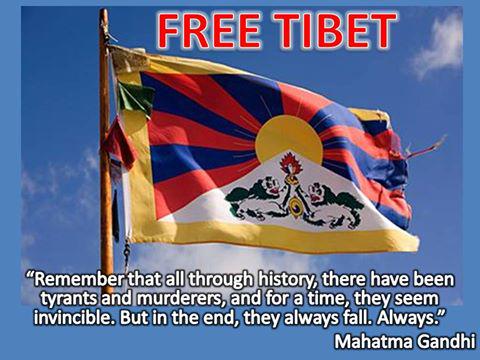
I am fully aware of Red China’s darkest side and I have seen her real ‘evil’ face, the face that had driven thousands of innocent Tibetans to seek protection in India and to live in exile.

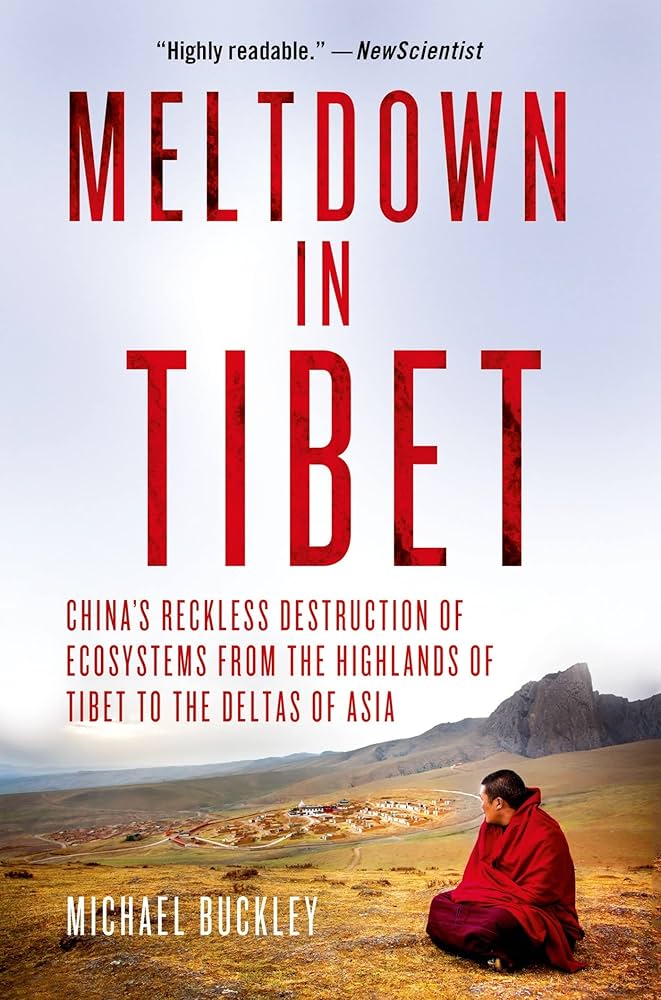
MELTDOWN IN TIBET
BY T R RAMACHANDRAN August 09, 2015
In Meltdown in Tibet, Michael Buckley turns the spotlight on the darkest side of China’s emergence as a global super power.
Canadian adventure travel writer and environmentalist Michael Buckley has blown the lid of China’s ecocide of the fragile, high altitude environment of Tibet. The scenario is frightening which can severely impact the Indian subcontinent and countries in Southeast Asia. Even the Spiritual head of the Tibetans, His Holiness the Dalai Lama is deeply concerned. He drew pointed attention to this book and observed it “should be part of a wake-up call to the international community and China to seriously assess the ecological and environmental conditions on the Tibetan plateau and take remedial measures before it is too late”. The author warns that the Himalayan snow caps are in meltdown mode due to climate change accelerated by a rain of black soot from massive burning of coal and other fuels in both China and India.
Tibetans have experienced waves of genocide since the 1950s. Now they are facing ecocide with the reckless destruction of their fragile, high altitude environment. It is widely believed there is urgent need for an International Law to protect downstream nations — something the United Nations agreed a decade ago but has never acted on it. The health of all the rivers in Tibet are of vital concern to all the nations of Asia. Bhutan is light years ahead of its Asian neighbours in its environmental vision. The quixotic nation has become the environmental innovator of Asia.
The mighty rivers of Tibet are being dammed extensively by Chinese engineering consortiums for the mainland’s thrust for power. The land is being relentlessly mined to feed China’s industrial complex. Massive engineering projects are diverting water from Tibet’s abundant rivers to water starved regions of China. Simply put the global supply of fresh water is dwindling at an alarming rate. This will lead to major tension between nations over shared water resources. The rivers of Tibet are so important to Southeast Asia and the Indian subcontinent.
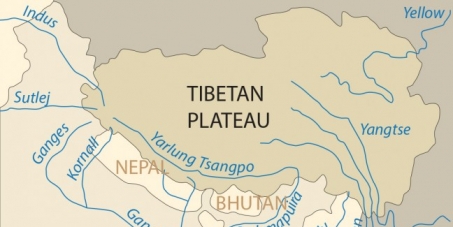
The Tibetan plateau is the source of the major rivers of this vast region stretching all the way from the coast of China in the East to Pakistan in the West. Ninety per cent of the run off from Tibetan rivers flows downstream into China, Vietnam, Cambodia, Laos, Thailand, Burma, Bangladesh, India, Nepal, Bhutan and Pakistan. At the tail end of these same rivers lie the world’s largest deltas. One way or another close to two billion people rely on Tibet’s waters — for drinking, for agriculture, for fishing, for industry.
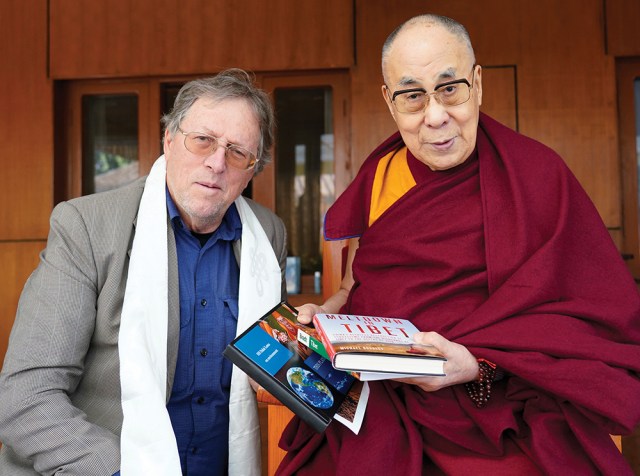
Meltdown In Tibet
Michael Buckley
Publisher: Pan Macmillan
Pages: 248; Price: Rs 499
Water not oil is becoming the world’s most important resource. Though we live in a planet covered by water, very little of it is accessible. More than 90 per cent is sea water which is too salty. Roughly two per cent of the water resources is locked in ice and snow. That leaves a paltry one per cent to supply drinking water, grow crops, run factories, cool power plants, and handle all the other roles that water plays. It is possible that half of the paltry one per cent is polluted or contaminated water, which is not usable. As non-renewable ground resource are used up, the global supply of water is dwindling at an alarming rate. This had the portends of leading to great tensions between nations over shared water resources. Tibet is often referred to as the “Third Pole” because it is the third largest source of water locked in ice and snow.
It is unique in the world as a mass provider of water via rivers to a dozen countries downstream. It is the source of major headwaters for the rivers of Asia and the Himalayas, and additionally provides key tributaries or feeders for other major rivers such as the Ganges. There is no parallel to this situation anywhere in the world. Tibetan glaciers are melting rapidly, and its lakes are drying up. This plateau is under siege from climate change factors, but instead of seeking ways to minimise the impact of all this, China is aggravating the situation.
Chinese hydro consortiums are blocking the flow of waters. Extensive mining is degrading the land with high potential of rivers being polluted downstream. The grasslands of Tibet are being encroached upon by desert. Ultimately this will become a global problem because there are no boundaries when it comes to environmental impact.
The massive clear cutting of forests in Tibet and expanding desertification of grasslands have severely impacted regional ecosystems and may influence extreme weather patterns in Asia. Tibet sits on the largest permafrost layer outside the North and the South Poles. “We have only one Tibet. There are no backups, no second chances. If the water resources of the Tibetan plateau should be blocked or diverted, or become polluted, then Asia will tumble into chaos. In his Preface to the book, His Holiness the Dalai Lama warned that pursuing economic development at the expense of the ecological balance will lead to drastic and unforseen consequences.
In the case of China, many environmental experts consider the economic accomplishments are already exerting a heavy environmental price. They bemoan the threat of China’s disappearing lakes, shrinking and increasingly polluted rivers and smog filled skies that will have long-term consequences for public health. The ability to breathe clean air and drink clean water is a human right. “But it is a right threatened by focussing only on economic development that pays inadequate attention to ecological well-being,” the Dalai Lama observed. His Holiness had no doubt that this is a wake up call to the international community and China to seriously assess ecological and environmental conditions on the Tibetan plateau and take remedial measures before it is too late.
Tagged with: Adventure writer, book review, environmentalist, Michael Buckley, Tibet, Tibet Meltdown
The Free Press Journal is one of the oldest English Daily newspapers from Mumbai with a heritage of more than 80 years. And yet, The Free Press Journal is a contemporary paper and rooted in current urban realities.
Copyright © 2015 . All Rights Reserved.