Tibetans are celebrating His Holiness the 14th Dalai Lama’s 80th birthday with a photography exhibition, ‘Dalai Lama in Frames’ at Centre Atrium, India Habitat Centre, New Delhi. Dalai Lama relinquished his temporal powers and Tibetan Exile community have a parliament and a Prime Minister to attend to affairs of Tibetan Government in Exile.
Tibetans in Occupied Tibet continue to claim Dalai Lama as the Supreme Ruler of Tibet for they have no opportunity to elect their own representatives. Until Democracy is introduced into Tibet, Tibetans have no choice; His Holiness the Dalai Lama will remain the sole representative of Tibetans.
Rudra Narasimham Rebbapragada Ann Arbor, MI 48104-4162 USA Special Frontier Force-Establishment 22-Vikas Regiment
Shweta Sharma, Dec 29, 2015, DHNS Photo exhibit His Holiness The Dalai Lama turned 80 this year. In Tibetan custom, especially in Amdo, the north eastern part of Tibet, where he was born, family members celebrate the 80th year of one’s birth with great joy. Extending this celebration to the national capital, the Foundation for Universal Responsibility of His Holiness The Dalai Lama (FURHHDL) put together ‘Dalai Lama in Frames’ a photography exhibition based on his life and activities.
“The main idea behind organising this exhibition is to showcase the life and activities of His Holiness the Dalai Lama in visual form. If you check his schedule, you can see that he travels extensively to different parts of the world engaging in talks, teachings, festivals. Even in India, he travels to various parts of the country meeting people, students, and children and participating in many meetings and gatherings,” Thupten Tsewang, director (administration), general manager (programmes), FURHHDL, tells Metrolife.
The exhibition shows the Dalai Lama’s life in pictures through the lens of Tenzin Choejor, his official photographer. So, in one image the Tibetan spiritual leader can be seen with Mahendra Singh Dhoni, captain of Indian cricket team, at Dharamsala (2014); in another picture he is seen offering prayers at the Gupt-Ganga Temple in Srinagar (2012); while another image shows him blessing the patients at Tahirpur Leprosy Complex in New Delhi (2014).
“We did not have any strict system of selecting the images. However, we have tried our best to select those images which depict his genuine effort of reaching out to people of different backgrounds and circumstances,” Tsewang says.
He adds that the images are broadly based on the three main commitments of His Holiness. “Firstly, images such as his engagement with various religious leaders (depict his efforts) to promote religious harmony in the world. (His images) with students, children, patients, politicians, business people depict his efforts of reaching out to people of various backgrounds to engage and promote human values. Thirdly, engaging with Tibetans and Buddhists (depict his effort) to preserve Tibet’s Buddhist culture, a culture of peace and non-violence,” he says.
The exhibition is on at the Centre Atrium, India Habitat Centre until December 31.
Copyright 2014, The Printers (Mysore) Private Ltd., 75, M.G Road, Post Box 5331, Bengaluru – 560001
Tel: +91 (80) 25880000 Fax No. +91 (80) 25880523
Tibet Consciousness – The Supreme Ruler of Tibet.Lhasa, Potala und Medizinberg von Osten. My Prayers to Lhasa River.
The Great Problem of Tibet is on the Back Burner. My hope for Tibet’s Future comes from the Biblical Prophesy.
During the month of March, Tibet Awareness Month, I regret to report that The Great Problem of Tibet is still on the Back Burner. But, I am adamantly hopeful for the word Evil means Doom, Apocalypse, Calamity, Cataclysm, and Disaster. The global attention for Tibet has shrunk but the Evil Red Empire could be rushing ahead to meet its unavoidable Fate. My hope comes from a Biblical Prophesy.
The Great Problem of Tibet is on the Back Burner. My hope for Tibet’s Future comes from the Biblical Prophesy.
How China has shrunk global attention for Tibet and the Dalai Lama — Quartz
The global attention for Tibet has shrunk but the Evil Red Empire could be rushing ahead to meet its unavoidable Fate. My hope comes from a Biblical Prophesy.
March is a sensitive month in Tibet. In 1959, an uprising led to a bloody crackdown by Chinese forces, culminating in the 23-year-old Dalai Lama’s escape to India on March 17, where he arrived after two weeks of apprehension over his fate. Protests marking the Tibetan revolt were put down in 1989, and most recently in 2008, months before China was set to showcase itself to the world with the opening of the Beijing Olympics.
It’s hard to imagine such acts of defiance taking place today. In 2011, Beijing further tightened its chokehold on the autonomous region under the leadership of new Tibet Communist Party secretary Chen Quanguo (paywall), who implemented a vast array of security measures, including the incarceration and “re-education” of those who had returned from listening to the Dalai Lama’s teachings in India. Tibetans were also forced to adapt their culture to party ideology and to learn how to “revere” science, part of Beijing’s ongoing propaganda campaign that portrays its rule in Tibet as a benevolent exercise in modernization and anti-feudalism. Ten years ago today (March 28), the Chinese instituted Serfs’ Emancipation Day as a holiday to celebrate its program.
The global attention for Tibet has shrunk but the Evil Red Empire could be rushing ahead to meet its unavoidable Fate. My hope comes from a Biblical Prophesy.
Reuters
Smoke rises from burning buildings below the Potala Palace in the Tibetan capital Lhasa during protests on March 14, 2008.
“To some extent, China has been very successful in dealing with Tibet,” said Tsering Shakya, an academic at the University of British Columbia in Vancouver.
Beijing is applying the Tibet model to another minority considered to pose a danger to the state. In 2016, Chen became party secretary in the Xinjiang region of northwest China, where his Tibetan policies are largely seen as the foundation for repression of the Uyghur minority. Large-scale re-education camps hold hundreds of thousands of Muslims as Uyghur cultural and religious practices face systematic erosion.
From Kundun to Rock Dog
Advocates hope that growing international awareness over Xinjiang will help rekindle the world’s attention toward Tibet, which has dwindled amid the Chinese Communist Party’s relentless efforts to reshape the global conversation about the region.
Perhaps the starkest manifestation of that is in the arts. Tibet, once a cause célèbre in Hollywood as the subject of films such as Kundun and Seven Years in Tibet—in which Brad Pitt played the role of an Austrian mountaineer who tutored the young Dalai Lama—is today almost nowhere to be seen on screen. Actor Richard Gere, one of the most well-known celebrities to support Tibetan independence, said in 2017 that he has been shut out of major productions because of his outspokenness.
The global attention for Tibet has shrunk but the Evil Red Empire could be rushing ahead to meet its unavoidable Fate. My hope comes from a Biblical Prophesy.
Reuters/Yuri Gripas
Nancy Pelosi talks to Richard Gere at a memorial event for Kasur Gyari, former special envoy of the Dalai Lama to the US, March 12, 2019.
When Tibet is still visible, said Seagh Kehoe at the University of Leicester, it is often in a watered-down and totally depoliticized fashion, as in the animated Rock Dog, a 2016 joint US-China production about a Tibetan mastiff who becomes a music star. Self-censorship over Tibet can be seen at work in London as well, with a West End theater suspending performance of a play about Tibet last year reportedly at the urging of the British Council, the UK’s international cultural organization, which is partly government funded. Following accusations of censorship by its playwright and apologies by the theater, Pah-la is now due to be staged next month.
Shaping the narrative on campus
Universities are another important battleground in Beijing’s attempt to mold its narrative. Campus activism in an earlier era was generally pro-Tibetan. That’s changing today with the ballooning number of Chinese students abroad—over 600,000 now compared with fewer than 50,000 in the late 1990s.
Chinese authorities “see overseas students as allies in their ongoing efforts to counter regime opponents” including groups sympathetic to Tibet, Xinjiang, Taiwan, and the Falun Gong, according to a report (pdf) last year by the Wilson Center, a Washington, DC-based think tank. The report detailed attempts by Chinese officials to put pressure on institutions to cancel invitations to the Dalai Lama and to bring more Chinese delegations to US universities to espouse the Communist Party’s line on Tibet.
Chemi Lhamo, a Tibetan student who was elected last month as a student president at the University of Toronto, received thousands of threatening Instagram messages from Chinese students. The student union decided to close her office out of concern for her safety. Chinese officials in Canada denied having anything to do with the incident or a case in which an Uyghur speaker was disrupted by Chinese students at McMaster University who had reportedly sought advice (paywall) from the consulate in Toronto. Chinese diplomats in Canada have praised the actions of students in both instances as being “patriotic.”
“Slow violence” gets less attention
Draconian restrictions on travel by Tibetans, foreign diplomats and journalists have made getting disseminating information from the region immensely more difficult.
Ever-tightening security has eliminated visible, large-scale displays of protest. The “optics of urgency” spotlighting the Xinjiang situation, such as satellite photos of camps and reporting by journalists on the ground, are missing from the Tibet narrative, wrote Gerald Roche, an anthropologist at La Trobe University in Melbourne. The “slow violence” that characterizes the plight of Tibet today, Roche added, makes it harder to get global attention.
Ahead of the 60th anniversary of the uprisings in Tibet, Chinese authorities further tightened control, restricting even foreign tourists from traveling there. Meanwhile, a white paper from China’s State Council on Tibet released yesterday (March 27) boasted of “democratic reform” over the past six decades, including a chapter titled “The People Have Become Masters of Their Own Affairs.”
During the month of March, Tibet Awareness Month, I regret to report that The Great Problem of Tibet is still on the Back Burner. But, I am adamantly hopeful for the word Evil means Doom, Apocalypse, Calamity, Cataclysm, and Disaster. The global attention for Tibet has shrunk but the Evil Red Empire could be rushing ahead to meet its unavoidable Fate. My hope comes from a Biblical Prophesy.
Reuters/Thomas Peter
Armed police attempt to prevent a photographer from taking pictures at the entrance to the village of Taktser, known in Chinese as Hongya, where the Dalai Lama was born in 1935, Qinghai province, China March 9, 2019.
Dramatic protests have continued. Since 2009, Tibetans have been self-immolating as a form of protest, with the act spreading from nuns and monks to laypeople. The International Campaign for Tibet’s latest count of self-immolations totals 155, with the last of the three known to have occurred in 2018 taking place in December. International media coverage, however, has largely disappeared. “We have some 150 cases of self-immolation, but for all, I know it could be 300,” said Kevin Carrico at Monash University in Australia. “Even for people who pay attention to this situation, we don’t really know what’s happening.”
The debate over the next Dalai Lama
Sophie Richardson, China director at Human Rights Watch in Washington, said that spotlighting China’s human-rights abuses in Xinjiang can reinforce mutual support between diaspora Uyghur and Tibetan groups. There’s a common “core pathology” underlining Beijing’s actions in both places, including the “erasing of cultural identities and practices,” she said. Lhamo, the Tibetan student, told Quartz that a growing focus of her activism now involves building ties and sharing information with Uyghurs, Taiwanese, and the Falun Gong.
Advocacy groups have also welcomed renewed pressure by the US on Beijing. Congress passed the Tibet Reciprocal Act in December, which denies entry to the US any Chinese official who blocks Americans from going to Tibet. Matteo Mecacci, a former lawmaker in Italy and president for the International Campaign for Tibet, said the bill signals “enduring, bipartisan support for Tibet” in the US. The law requires annual reports detailing access to Tibet for Americans, with the first published this week.
The Dalai Lama smiles as he sits on his chair at the Tsuglakhang temple in Dharmsala, India, Feb. 27, 2019.
AP Photo/Ashwini Bhatia
The Dalai Lama smiles as he sits on his chair at the Tsuglakhang temple in Dharmsala, India, Feb. 27, 2019.
The fight over the Dalai Lama’s succession—and China’s obsessive control over it—could also return Tibet to headlines in the coming years.
Amid a flurry of attention this month marking the leader’s 60th anniversary in exile in Dharamsala, the 83-year-old Dalai Lama said in an interview that his next incarnation could be found in India, adding that Beijing is likely to appoint its own successor whom “nobody will trust.” Beijing, which consistently maintains that the Dalai Lama is a separatist, promptly reiterated that the selection of the next Tibetan spiritual leader must follow Chinese law.
During the month of March, Tibet Awareness Month, I regret to report that The Great Problem of Tibet is still on the Back Burner. But, I am adamantly hopeful for the word Evil means Doom, Apocalypse, Calamity, Cataclysm, and Disaster. The global attention for Tibet has shrunk but the Evil Red Empire could be rushing ahead to meet its unavoidable Fate. My hope comes from a Biblical Prophesy.
Revisiting the First Kashmir War of October 22, 1947
Kashmir stands as the witness of the Everlasting Saga of Indo -Soviet Friendship. Revisiting the First Kashmir War of October 22, 1947. Former Governor of Jammu & Kashmir Lieutenant General S K Sinha (Retd) was among the first Army-men of the Indian Army to enter Kashmir on 27 October 1947.
The landmass that we call the Republic of India has its own history. It moved across ocean to join Laurasia, a historical event that created the Himalaya Mountain range. Man has no right to create political boundaries and establish his domain in Earthly realm. In fact, God, the LORD Creator is the true owner of Land, Sea, and Air. Man cannot rule or govern his own body for the cells of his body enjoy cellular autonomy. Having said this, I submit, Republic of India’s duty demands defense of Indian Landmass from Kashmir to Kanyakumari to preserve its historical identity.
In 1947, India Deliberately Let Muzaffarabad: Lieutenant General S K Sinha (Retd)
Published on February 01, 2016.
Kashmir stands as the witness of the Everlasting Saga of Indo -Soviet Friendship
Former Governor of Jammu & Kashmir Lieutenant General S K Sinha (Retd) was among the first Army-men of the Indian Army to enter Kashmir on 27 October 1947. As a Major he was assigned the plan to plan and oversee the conduct of operations and also given the task of controlling airlift of troops from Delhi to Srinagar. Hence he is not only an eyewitness of the political and war happenings of 1947, but also performed an important role to shape them. Q. As an Army officer, in which areas you remained posted and for how long? A. From 1947 to 1949 I was posted with Tactical Headquarters Western Command, first at Jammu and then Srinagar when Lt Gen KM Carriappa took over as Army Commander from Lt Gen Sir Dudley Russell in January 1948. During this period I accompanied the Army Commander visiting forward areas where battles were taking place both in Jammu and in the Valley. I remained in Kashmir from 1947 to 1949 when cease fire came into effect on 1st January 1949. I returned to Delhi in 1949 and periodically visited Jammu and Kashmir on tour with successive Army Commanders as part of normal duty as GSO 2 (Operations). In July 1949 I went to Karachi as Secretary of Indian delegation to delineate the Cease Fire line in Kashmir. My total tenure in Jammu and Kashmir during my Army career was 10 years. As a Company Commander I served on a piquet in Gurez Valley, then in Jammu for three years, then three years in Ladakh as a Battalion Commander and after a few years as a Maj Gen commanding a Division in Akhnoor for one year. Subsequently after a long gap I got opportunity to serve people of J&K again when I was Governor of the State for five years from 2003 to 2008. Q. What date and time you landed in Kashmir? A. I landed at Srinagar grass landing ground at about noon on 27 October 1947. It was actually an airstrip amid a grassland made for personal plane of the Maharaja. I returned to Delhi later in the afternoon on that very date. Q. What was your age at the time? A. I was 21 years 10 months old. Q. Tell something about your company/regiment and what was your rank? A. I was in the rank of Major serving in the newly raised Headquarters Delhi and East Punjab Command (later Headquarters Western Command). I was GSO 2 (Operations) in Command with a skeleton staff of only 12 officers with rest all British. Lt Gen Sir Dudley Russel was the Army Commander. At that time both Indian and Pakistan Armies had number of British Officers serving in the two Armies, most of them in India were in the process of departing. The two Armies then had separate British Chiefs. No British Officer of either Army was allowed to visit Kashmir theatre for obvious reasons. Lt Gen Russell asked me to act as his eyes and ears. My responsibility in my appointment was to plan and oversee the conduct of operations as directed by my British superiors. I was also given the task of controlling airlift of troops from Safdarjang airport to Srinagar in requisitioned civilian Dakotas. Q. Those days what was the number of soldiers flown to Srinagar? A. We flew in 800 sorties of Dakotas in 15 days. 5000 troops with stores and equipments were flown into last the winter. I was shuttling between Delhi and Srinagar, often overstaying nights in Srinagar. On the first day we could fly in only 12 sorties due to non availability of aircraft. On 27 October 1947 our total strength in Srinagar was 600 troops and the enemy was reported to be 5000 to 10000 led by Maj Gen Akbar Khan of Pakistan Army. Q. If Indian Army’s was lesser in number than raiders, then why didn’t they succeed to capture Srinagar? A. They were engaged in rape, massacre and loot in Baramulla. Thus they lost the opportunity of capturing Srinagar which had no defences at that time. This is narrated by Maj Gen Akbar Khan in his book Raiders over Kashmir and also by me in my book Operation Rescue written in 1952. Q. Where you went after landing? A. As I said earlier that on 27 October 1947 I was at Srinagar landing ground for only a couple of hours. On the second day I went to Pattan where our troops had withdrawn after contacting the enemy at Baramulla. Lt Col Dewan Ranjit Rai, commanding the first lot of troops was killed at Baramulla after contact with the enemy. Q. Who were the local Kashmiris you met and what did they say? A. On first few days I met only local civilians wanting to sell apples in packed boxes at the airport at distress rates to be taken to Delhi in returning empty Dakotas. After a couple of days when we had withdrawn further from Pattan to Shelatang on the outskirts of Srinagar and the front had been stabilised I had to go to Srinagar city on 5 or 6 November 1947. There was no habitation between the landing ground and Zero bridge at that time. I met National Conference workers with lathis in their hands shouting the slogan Hamlewar Hoshiyar, Hum Kashmiri Hindu, Sikh, Muslman tyar. There was no communal tension nor communal violence in Srinagar when the rest of the Sub Continent was caught in the Partition holocaust. The Maharaja and senior officials had fled to Jammu. Q. Is it true that there was resistance by some locals so army convoys on way to Uri hoisted Pakitani flags on the vehicles? A. This is utter nonsense and total false propaganda. The only people we encountered between Baramulla and Uri were withdrawing enemy forces in disarray. At Baramulla, on 7 November 1947, we saw the body of Maqbool Sherwani nailed to a Cross just ahead of the Baramulla Convent. There were bodies of Nurses from the hospital in the well and also that of Lt Col Dikes and his wife who had come to Baramulla for a holiday from Naushera in Pakistan. The first notable Kashmiri I happened to meet was Sheikh Abdullah who had just been appointed Administrator of Jammu and Kashmir. Q. There was killing of civilians by Army at Ram Bagh? Why did army fire on civilian? A. I am not aware of this incident and I doubt the veracity of this. Q. Its said that Nehru has said or written in some book that India had asked its Army not to cross Uri. Is it true? A. I am not aware of it. What I know is that on 14 November 1947 when we reached Uri, our Army Commander, Lt Gen Sir Dudley Russell recommended to Army Headquarters at Delhi that we should pursue the fleeing enemy to Muzafarabad and seal the two bridges at Domel and Kohala and completely clear the Valley of the enemy. The British Military leadership at Delhiu comprised Mountbatten, the Viceroy, General Sir Rob Lockhart, the Army Chief and Lt Gen Sir Archibald Nye, British High Commissioner at Delhi. I believe they advised Nehru that advance to Muzaffarabad may lead to a full blown war between two Commonwealth countries, India and Pakistan. The United Nations was seized of the Kashmir problem and will resolve the issue peacefully. We also heard that Sheikh Abdullah for political reasons did not want the Army to proceed to Muzafarabad because that was a non Kashmiri speaking region where he did not have much political following. Q. What directions where you given in the field? A. In the field we got orders not to advance beyond Uri and instead proceed South to Poonch where 30000 Hindu and Sikh refugees were besieged by the enemy forces. Q. In your view, if Army was allowed to proceed ahead of Uri, what would have happened? A. Situation would have been totally different. We would have reached Muzaffarabad and cleared it of the attackers and taken it in our control. We were having a big battle advantage. Enemy was fleeing and we could have sealed the two important bridges of Domail and Kohala. Not allowing its Army to go ahead of Uri chasing the enemy was a battle blunder of India. We lost an important opportunity. If Indian army was allowed to advance beyond Uri, then Muzaffarabad would not have been under control of Pakistan Q. You have been an Army General. Why Army has failed to completely crush militancy in J&K? A. In the old days armies of Atilla, Chingiz Khan or Timur did not allow militancy to erupt by carrying out wholesale massacres. No Army in the present age can completely crush militancy. The US failed to do so in Vietnam, Pakistan in Baluchistan, China in Tibet, French in Algeria and so on despite using air power, machine gun and artillery. There has not been a single instance in 25 years in which Indian Army has used any of these heavy weapons causing indiscriminate killing of civilians. Nawab Mohammad Bugti, the veteran separatist leader was killed in a well planned attack on his location by Pakistan Air Force while veteran Kashmiri separatist leader, refused visa for treatment by the US, had been provided best available medical treatment in Mumbai and recovered from serious complicated operations. No doubt there have been some serious cases of human rights violations in Jammu and Kashmir which are inevitable in such operations. The guilty have been proceeded against and till my time in Kashmir nearly one hundred Army personnel found guilty were dismissed and given prison sentences from 2 to 14 years depending upon the gravity of the crime. Most allegations against the Army were found false or exaggerated. The human rights record of the Indian Army in such operations has been much better than any other employed in such operations. Q. What you think can be a possible solution to Kashmir issue? A. Pakistan claims that Kashmir is its jugular vein and for India, Kashmir is its soul. India’s legal claim to Kashmir was recognized in the UN Resolution of 13 August 1948 which required Pakistan to withdraw all its forces from Kashmir and allowed to retain her forces till the plebiscite which was not allowed to be held by Pakistan. The Indian Parliament has passed a unanimous resolution to recover the whole of the Sate as it stood on 22 October 1947 without legal justification invaded Jammu and Kashmir. India has been repeatedly reiterating that the whole of Jammu and Kashmir is an integral part of India. Notwithstanding all this, my own personal view is that we should recognize the LOC as international border and both sides develop cordial neighbourly relations. Zulfiqar Ali Bhutto during Shimla Accord had given verbal assurance to that effect when the term Cease Fire Line was changed to Line of Control. The latter is more indicative of a permanent solution. The four point out of box solution proposed by Parvez Musharraf was also a move in that direction and so was the call of Atal Beharee Vajpayee to settle the Kashmir issue in Insaniyat Ke Daire Me.
October 22, 2024 – A very good reason to celebrate Indo-Soviet Friendship
Kashmir stands as the witness of the Everlasting Saga of Indo -Soviet FriendshipOctober 22, 2024 – A very good reason to celebrate Indo-Soviet Friendship
Kashmir stands as the witness of the Everlasting Saga of Indo -Soviet Friendship
October 22, 2024 – A very good reason to celebrate Indo-Soviet Friendship
I ask my readers to understand the US Policy on Kashmir. The US Policy is revealed by the fact that no President of the United States visiting India had visited Kashmir.
Kashmir. The everlasting saga of Indo-Soviet Friendship.In 1955, Jawaharlal Nehru spent 16 days in the USSR, covering some 13,000km, on his first official tour to the country as the prime minister of India
In 1955, Jawaharlal Nehru spent 16 days in the USSR, covering some 13,000km, on his first official tour to the country as the prime minister of India
Kashmir. The everlasting saga of Indo-Soviet Friendship. Jawaharlal Nehru and Indira Gandhi at the Rustavi Metallurgical Plant in 1955 (Rustavi, Georgia USSR)
Jawaharlal Nehru and Indira Gandhi at the Rustavi Metallurgical Plant in 1955 (Rustavi, Georgia USSR)
After India’s independence from the British Rule, Kashmir stands as a true witness of the glorious saga of Indo-Soviet Friendship over the last seven decades.
In June 1955, Nehru visited USSR. During the visit, a joint communique was issued, which emphasized on international peace, the security of small states. Both the Prime Ministers of India and USSR felt that “it is essential to dispel fear in all possible ways.
Kashmir. The everlasting saga of Indo-Soviet Friendship. Nikita Sergeyevich Khrushchev speaking at the reception held in honor of visiting Soviet delegation at Srinagar.
Nikita Sergeyevich Khrushchev speaking at the reception held in honor of visiting Soviet delegation at Srinagar.
The visit of the Soviet leaders, Khrushchev and Bulganin to India in November-December 1955 laid the foundation of a new era in Indo- Soviet relationship. Besides Delhi, the Soviet leaders visited Calcutta, Madras, Agra, Coimbatore, and Srinagar. Crowds greeted them with thunderous applause.
Khrushchev assured Indian leadership that USSR would ever come forward to help India at times of difficulties. Speaking at a luncheon given in their honor at the Agra Circuit House by the Governor of Uttar Pradesh, KM Munshi on November 20, 1955, he stressed that “Soviet people were not just fair-weather friends of India but their friendship would last forever even when the weather frowns or the storm blows strong”.
“Let it be known to the world”, he added, “that the friendship between the two people would continue to grow even at times of difficulties and crises”. Bulganin echoed the same rhetoric in his reply to the civic address given by Coimbatore Municipal Council on November 27, 1955. He concluded his speech with “long live the great republic of India. Long live the people of India. Long live the friendship between the people of India and the Soviet Union, Hind-Russi Bhai Bhai and Hind-Russia Sahodare.” (The Hindu, November 28, 1955)
Kashmir. The everlasting saga of Indo-Soviet Friendship. Bakshi Ghulam Mohammad showing members of visiting Soviet delegation examining Kashmir handicrafts in Srinagar. The delegation included NA Bulganin, USSR Prime Minister, Khrushchev, Member, Presidium of the Soviet and many others
Bakshi Ghulam Mohammad showing members of visiting Soviet delegation examining Kashmir handicrafts in Srinagar. The delegation included NA Bulganin, USSR Prime Minister, Khrushchev, Member, Presidium of the Soviet and many others
The Soviet leaders expressed the support to the Indian stand on the Kashmir issue explicitly during the course of talks and speeches.
Speaking at the reception given by Bakshi Ghulam Mohammad, Prime Minister of Kashmir, in honor of visiting Soviet dignitaries on December 10, 1955, Khrushchev expressed the unequivocal support to the Indian stand on Kashmir.
“Kashmir is one of the states of the Republic of India that has been decided by the people of Kashmir,” he said. “It is a question that the people themselves have decided”. He viewed the Kashmir problem as an imperialist design and severely criticized the “divide and rule” policy of the imperialist powers. He held the view that the Kashmir problem emerged because some states tried to take advantage of the situation to foment animosity between India and Pakistan- countries recently emancipated from colonial oppression.
They reiterated the same on December 14, 1955, in a press conference in Delhi. Bulganin said, “As for Kashmir during our visit there we saw how greatly the Kashmirians rejoice in their national liberation, regarding their territory as an integral part of India”.
On their return to Moscow in the last week of December, they submitted their reports on the visit to the Supreme Soviet of the USSR. In his report, Bulganin argued that “on the pretext of supporting Pakistan on the Kashmir question certain countries are trying to entrench themselves in this part of India in order to threaten and exert pressure on areas in the vicinity of Kashmir. The attempt was made to sever Kashmir from India artificially and convert it into a foreign military base.”
But, Bulganin said, the people of Kashmir are emphatically opposed to this imperialist policy. “The issue has been settled by the Kashmiris themselves; they regarded themselves as an integral part of India. We became profoundly convinced of this during our meetings with the people in Srinagar, and in our conversations with the Prime Minister of Kashmir, G M Bakshi, and his colleagues”. Further, he said, “The Soviet government supports India’s policy in relations to the Kashmir issue because it fully accords with the interests of peace in this part of Asia. We declared this when we were in Kashmir; we reaffirmed our declaration at a press conference in Delhi on December 14 and we declare it today”.
Khrushchev in his speech said, “in Kashmir, we were convinced that its people regarded its territory as an inalienable part of the Republic of India. This question has been irrevocably decided by the people of Kashmir”
In pursuit of this policy, the Soviet Union opposed the draft resolution co-sponsored by Great Britain, the US, Australia, and Canada on February 14, 1957. The resolution was unacceptable to India. The resolution noted the importance the Security Council “attached to the demilitarization of the state of Jammu and Kashmir preparatory to the holding of a plebiscite”, and “Pakistan’s proposal for the use of a temporary United Nations force in connection with demilitarization”. The Security Council held “that the use of such a force deserved consideration”. (Year Book of the United Nations, 1957 pp 81) The Security Council authorized its president, Gunnar Jarring to visit India and Pakistan to bring about demilitarization or further the settlement of the dispute.
Kashmir. The everlasting saga of Indo-Soviet Friendship. Prime Minister of Kashmir Bakhshi took the visiting USSR leaders in a huge boat procession in the river Jhelum. Thousands of people were on either side of the river banks to greet them in December 1955.
Prime Minister of Kashmir Bakhshi took the visiting USSR leaders in a huge boat procession in the river Jhelum. Thousands of people were on either side of the river banks to greet them in December 1955.
On February 18, 1957, the Soviet delegate, Sobolev, proposed amendments to the above-mentioned resolution. He argued “the situation in Kashmir has changed considerably since 1948 when the Security Council had first called for a plebiscite. The people of Kashmir had settled the question themselves and now considered their territory an integral part of India”. (UN Security Council Official Records, 12th session, 768thmeeting, February 14, 1957) In his resolution, the Soviet delegate deleted the reference to “the use of a temporary UN force in connection with demilitarization” in Kashmir. After his amendments were rejected by the other Security Council members on February 20, 1957, Sobolev vetoed the Western-sponsored resolution. He justified the veto by alleging that the resolution, as it stood, favored Pakistan. (Security Council Official Records, 773rd meeting, February 20, 1957) He told the Security Council that in his government’s opinion the Kashmir question had in fact already been settled by the people of Kashmir.
In March 1959, a Soviet delegation led by A Andrew visited Kashmir to demonstrate that the Soviet Union regarded Kashmir as an Indian state. Shortly after his arrival in Srinagar, Andrew described Kashmir as “the most beautiful place of the world” and reiterated that the Soviet Union regarded “Jammu and Kashmir as an integral part of the Indian Republic”. Pointing out that Kashmir “is not far from the Southern frontier of the Soviet Union” he declared that, “in your struggle, we are your comrades”. (Security Council Official Records, 773rd meeting, February 20, 1957, pp 46.)
Next month Indian leader Karan Singh was received by leading Soviet leaders including Khrushchev in Moscow. Khrushchev welcomed the guest from “friendly India” and reiterated the Soviet support to the Indian policy in Kashmir. Karan Singh thanked Soviet leader for his unequivocal support to India and said that the Soviet policy towards Kashmir was well known.
When the UN Security Council met on April 27, 1962, to discuss the Kashmir issue, Soviet delegate, Platen Morozov, gave India total and unequivocal support. In his speech, Morozov declared, “the question of Kashmir, which is one of the states of the Republic of India and forms an integral part of India, has been decided by the people of Kashmir themselves. The people of Kashmir have decided this matter in accordance with the principle of democracy and in the interest of strengthening relations between the people of this region.”
Kashmir. The everlasting saga of Indo-Soviet Friendship. Russian premier Kosygin with his counterparts from India and Pakistan at Tasknet – Ayub Khan and Lal Bahadur Shastri.
Russian premier Kosygin with his counterparts from India and Pakistan at Tasknet – Ayub Khan and Lal Bahadur Shastri.
When the Security Council met again on June 21, 1962, the representative of Ireland, supported by the British representative, introduced a resolution. It was quite clear, according to Morozov, the ‘principal aim’ of the draft resolution was holding of a plebiscite and this would be nothing but ‘flagrant interference’ in the domestic affairs of India. (Year Book of the United Nations, 1962 pp 130)
Morozov urged the Council to reject the Irish resolution insisting it was basically in line with US dictates. When the Irish resolution was put to vote on June 23, 1962, the Soviet representative vetoed it. He declared that the question of holding a plebiscite in Kashmir was ‘dead and outdated’ and the Kashmir question had been solved ‘once for all’.
USSR supported Indian stand on Kashmir at various fora. It also supported Nehru’s decision to withdraw the special status to J&K and to integrate the state into the Indian Union. At a reception at Rumanian embassy in Moscow, Khrushchev declared that the Soviet Union extends its ‘full support’ to the integration of Kashmir to the Indian Republic, insisting his attitude towards Kashmir remains unchanged.
Kashmir. The everlasting saga of Indo-Soviet Friendship. Sadar-i-Riyasat, Dr. Karan Singh, his wife and Indira Gandhi with the visiting USSR delegation in Srinagar.
Sadar-i-Riyasat, Dr. Karan Singh, his wife and Indira Gandhi with the visiting USSR delegation in Srinagar.
When the Kashmir question came before the Security Council in February 1964, the Soviet representative, Federenko, reiterated his country’s view that the question of Kashmir had already been settled ‘once for all’. He also supported the Indian contention that a Security Council resolution would aggravate the situation and thought that the Indian proposal for a ministerial meeting to discuss the communal question and no-war treaty constituted a ‘realistic approach’ in the interests of peace in Asia and the whole world. (Year Book of The United Nations, 1964 pp 131)
After the unexpected departure of Khrushchev from the Soviet political scene, it appeared that USSR attitude towards Kashmir issue underwent change. However, the Soviet envoy to India, Benediktov assured New Delhi in October 1964 that the Soviet attitude towards Kashmir had remained unchanged. During her visit to Moscow, Indian Prime Minister, Indira Gandhi was assured by the new Soviet Prime Minister Alexi Kosygin that the Soviet support for India’s policy in Kashmir had remained unchanged and that Moscow regarded “Kashmir as an integral part of India”. (Patriot, 24 October 1964)
Kashmir. The everlasting saga of Indo-Soviet Friendship. My special thanks to Dr. Debidatta Aurobinda Mahapatra for his article.
My special thanks toDr. Debidatta Aurobinda Mahapatra for his article.
At the UN Security Council, where this matter was raised several times, Soviet delegate attempted to maintain a non-partisan view, though he referred to the Indian state of J&K. He blamed the current conflict on those ‘forces which are trying to disunite and set against each other the states that have liberated themselves from the colonial yoke’ and those ‘which are pursuing the criminal policy of dividing peoples so as to achieve their imperialist and expansionist aims’. The friendship with USSR nevertheless stood in good stead when it came to the support of India on points of objection that India raised. On October 25, 1965, the Indian Foreign Minister, Swaran Singh objected to Pakistan Foreign Minister, ZA Bhutto’s reference to the internal situation in Kashmir and held that it was India’s internal affairs. He held that the opposite view was a deviation from the agreed agenda and thus walked out in protest. USSR had shown support to the Indian interpretation that the Council’s deliberations should be only on “questions directly connected with the settlement of the armed conflict, i.e. complete ceasefire and withdrawal of armed personnel. It had also abstained from voting on the resolution adopted by the Council on November 5, 1965. (Year Book of the United Nations, 1965, pp 171) The resolutions failed to resolve the crisis.
Kashmir. The everlasting saga of Indo-Soviet Friendship. Visiting USSR delegation with Prime Minister Bakhshi’s cabinet with Sadar-i-Riyasat seen in the center.
Visiting USSR delegation with Prime Minister Bakhshi’s cabinet with Sadar-i-Riyasat seen in the center.
I thank Russian Prime Minister Vladimir Putin and the people of Russia for their consistent support to India in defending Kashmir.
October 22, 2024 – A very good reason to celebrate Indo-Soviet Friendship
Russia Backs India On J&K Move, Says Change In Status Within Constitution
October 22, 2024 – A very good reason to celebrate Indo-Soviet Friendship
Moscow said that the “change in the status of the state of Jammu and Kashmir and its division into two Union Territories has been carried out within the framework of the Constitution of the Republic of India.”
Kashmir. The everlasting saga of Indo-Soviet Friendship.
Russia is a consistent supporter of the normalization of relations between India and Pakistan.
Russia has backed India’s moves on Jammu and Kashmir, saying that the changes are within the framework of the Indian Constitution, even as it urged India and Pakistan to maintain peace.
In response to a question during its press briefing on Friday, the Ministry of Foreign Affairs of Russia said Moscow expects that India and Pakistan “will not allow aggravation of the situation in the region due to the change by New Delhi in the status of the state of Jammu and Kashmir”.
Moscow said that the “change in the status of the state of Jammu and Kashmir and its division into two Union Territories has been carried out within the framework of the Constitution of the Republic of India”.
It hoped that the two sides will “not allow a new aggravation of the situation in the region as a result of the decisions”.
Russia is a consistent supporter of the normalization of relations between India and Pakistan.
“We hope that the differences between them will be resolved by political and diplomatic means on a bilateral basis in accordance with the provisions of the Shimla Agreement of 1972 and the Lahore Declaration of 1999,” the Foreign Office said.
Relations between India and Pakistan have been tensed ever since New Delhi revoked the special status of Jammu and Kashmir and divided it into two Union Territories — J&K and Ladakh earlier this week, in order to bring in faster development and security to the state.
(This story has not been edited by NDTV staff and is auto-generated from a syndicated feed.)
Kashmir. The enduring saga of Indo-Soviet Friendship.
The US-India-Tibet Relations complicated by Pakistan’s military invasion of Kashmir
Whole Problem -Defense of Kashmir complicates the problem of military occupation of Tibet
Communist China apart from its illegal military occupation of Tibet during 1949-50, had illegally occupied Indian territory in the Aksai Chin region of Ladakh Province in the State of Jammu and Kashmir prior to its sudden, military attack during 1962 all along the Himalayan Frontier. India’s Prime Minister Jawahar Lal Nehru failed to request military assistance from the United States to oppose this military occupation and land grab by Communist China due to concerns over the US support for Pakistan’s aggression in Kashmir.
The United States was willing to check Communist China’s expansionist policy, but, unfortunately, India could not take advantage of the US policy for the US simultaneously supports Pakistan’s occupation of Kashmir.
On behalf of Special Frontier Force, I confirm Special Frontier Force’s deployment in Ladakh Province to defend Jammu and Kashmir. In the context of role of foreign powers in Kashmir, it is important to recognize Special Frontier Force as a military organization in which the U.S., India, and Tibet participate as allies. It may be noted that Special Frontier Force had a role in India’s Kargil War.
It is of interest to note that United Kingdom and the United States simultaneously extend military and economic aid to Pakistan in support of its illegal political and military campaigns to annex Jammu and Kashmir. If not United Kingdom, the United States is playing on both sides of fence of parties involved in this dispute.
Both United States and United Kingdom need cooperation of India to contain Communist China’s Expansionist Doctrine. China’s Maritime Expansionism poses direct challenge to Japan, Philippines, Taiwan, Vietnam, Indonesia, Malaysia. China’s Expansionism needs to be addressed in comprehensive manner. There is no choice other than that of addressing the issue of China’s military occupation of Tibet; the first victim of China’s Expansionism. Pakistan cannot be trusted and cannot be counted as ally in any initiative that aims to Checkmate China’s Expansionism. Supplying sophisticated military hardware to Pakistan has not helped the United States. Pakistan shared designs of US military equipment with China helping China to advance her fighting capabilities. China manipulates Pakistan’s Nuclear and Missile Programs and for that reason Pakistan has to be counted as serious Security Risk.
Pakistan with her role in Balochistan, and Afghanistan created more enemies for the United States. The War against Soviet Expansionism got transformed into War on Terrorism as Pakistan used Afghan Campaign to make profits for her military bosses.
India from the beginning tried for peaceful resolution of Kashmir issue following the guidelines given by United Kingdom when it granted Independence to Pakistan and India in 1947. United States and United Kingdom made huge financial investment in Pakistan and as of today, it failed to promote Democracy, Peace, and Justice in South and Central Asia.
Whole Problem -Defense of Kashmir complicates the problem of military occupation of Tibet. Special Frontier Force Defends Jammu and Kashmir in Partnership With Indian Army. Siachen.
Jammu and Kashmir burning? Jammu and Kashmir burning? Media and trouble makers thrive on mischief. Everyday, Kashmir is in the news, and its usually portrayed maliciously.
JAMMU AND KASHMIR BURNING?
Media and trouble makers thrive on mischief. Everyday, Kashmir is in the news, and its usually portrayed maliciously by many of these elements that India is inhuman, steeped in illegality and is evil.
First the facts. As per international law, all of Jammu and Kashmir is integral part of India. This was effected by the treaty of accession signed between the Maharajah of Kashmir and India on 27th Oct 1947. 1. Jammu, Kashmir and Ladakh consists of 22 districts, separatist are present only in 5 districts – which represents a mere 15% of the state, and they are all Sunni Muslim. The voices and faces you see on television like Omar Abdullah, Mehbooba Mufti, Yasin Malik, Shabbir Shah, Gilani, Asiya Andrabi and Lone are from this region and sect. 2. The state has 12% Shia Muslims, 12-14% Gujjar Muslims and 8% Pahadi Rajput Muslims. It also has significant population of Sufis, Christians, Sikhs, Buddhists and Hindus. None of these communities have any separatist demands. 3. The larger two of the three regions of the state consisting of Jammu and Ladakh covering an area of 85,000 square kilometers are not Muslim majority areas, and there has never been any demand of separatism. 4. When terrorist Afzal Guru was hanged, the media made it appear as if the entire state was out on the streets. The reality was that out of 22 districts, there was not a single demonstration in 17 districts and only 5 districts in the Valley saw staged demonstrations. 5. Poonch has 90% and Kargil 90% Muslims, but there was no protest in these areas. 6. Our perception about Jammu and Kashmir is that a battle between nationalism and separatism is going on for the past 68 years. Nationalism has neither been lost nor will it, because in most areas of the state, majority of the people are nationalists. 7. The only legal dispute tenable under international law is, How India should get back areas that are under the illegal occupation of Pakistan and China?
‘Separatism’, ‘dispute’ and ‘autonomy’ are three myths raised by Pakistan and her agents within Kashmir and other parts of India The State should be considered as one entity like Jammu (with maximum of the ground area), Ladakh and only thereafter Kashmir. Pakistan and India baiters have been harping on United Nations Security Council Resolution 47. The resolution identifies Pakistan as an occupying force and states that in order to bring peace and harmony, the following steps will be undertaken in sequence.
1. First Pakistan must demilitarize and withdraw ALL its military forces and nationals used for the purpose of fighting from Kashmir. 2. Subsequently India must demilitarize Kashmir 3. A plebiscite may be held to determine the will of the people of Kashmir. Since Pakistan failed to demilitarize, the entire process of normalization went into a tailspin. That was in 1947, it is now 2016. In November 2010 the United Nations removed Jammu and Kashmir from its list of disputed territories.This UN Resolution is thus dead. Secondly, the resolution was passed by United Nations Security Council under chapter VI of UN Charter.Resolutions passed under Chapter VI of UN charter are considered non binding and have no mandatory enforceability. Since the government and the armed forces do not speak on the issue, the reporting is left mainly to separatist leaders and politicians, Jihadi terrorists, and the media. That most of these people and organizations who owe their loyalty and livelihood to foreigners, the reports will unjustifiably portray India in a bad light. Muslim Pakistan’s national identity is defined by a single dimension of being anti India and the destruction of secular India. Fake issues and imaginary threats from India are constantly raked up to provide justification for the Pakistan army to control the reins of power.
Pakistan has lost all the wars they have waged against India. Pakistan claims concern for Muslim brothers in Kashmir, while simultaneously abducting, torturing and exterminating large number of Baluchis,and Pashtuns, shows its desire for conflict with India. Pakistan because of its terrorist activities and toxic behavior, is on very bad terms and in conflict with all its neighbors be it India, Afghanistan or Bangladesh. The Pakistani leadership and Army have bankrupted and impoverished Pakistan by wasting money and resources on useless confrontations. Pakistan is using Kashmir merely as an issue to harm India by waging a proxy war using terrorism, with the hope of bleeding India with a thousand cuts. In spite of Pakistan’s best efforts, Kashmir will always remain an integral part of India, and we will grow stronger with time. Write and Posted: Aug 2016 – by Gurvinder Singh
Whole Problem -Defense of Kashmir complicates the problem of military occupation of TibetWhole Problem -Defense of Kashmir complicates the problem of military occupation of TibetWhole Problem -Defense of Kashmir complicates the problem of military occupation of TibetWhole Problem -Defense of Kashmir complicates the problem of military occupation of TibetWhole Problem -Defense of Kashmir complicates the problem of military occupation of TibetWhole Problem -Defense of Kashmir complicates the problem of military occupation of TibetWhole Problem -Defense of Kashmir complicates the problem of military occupation of TibetWhole Problem -Defense of Kashmir complicates the problem of military occupation of TibetWhole Problem -Defense of Kashmir complicates the problem of military occupation of Tibet. Special Frontier Force Defends Jammu and Kashmir in Partnership with Indian Army. Siachen.
India-Tibet-US Relations Complicated by Pakistan’s Invasion of Kashmir on 22 October 1947
The Kashmir issue poses a great danger severely undermining India’s ability to exercise full freedom to formulate an independent Tibet Policy. India needs the support of the United States to counter China’s military superiority and at the same time, India has to balance the US involvement in Kashmir in support of Pakistan’s aggression. Meeting between Indian Prime Minister Jawaharlal Nehru and US President Harry Truman in 1949.
In my analysis, India-Tibet relations from the very beginning were impacted by Pakistan’s invasion of Kashmir in October 1947. The United States was willing to check Communist China’s expansionist policy, but, unfortunately, India could not take advantage of the US policy for the US simultaneously supports Pakistan’s occupation of Kashmir
The Kashmir issue poses a great danger severely undermining India’s ability to exercise full freedom to formulate an independent Tibet Policy. India needs the support of the United States to counter China’s military superiority and at the same time, India has to balance the US involvement in Kashmir in support of Pakistan’s aggression.
Book Review: Tibet: When the Gods Spoke by Claude Arpi
The History of Special Frontier Force-Establishment No. 22: The military occupation of Tibet by Communist China had shaped the historical, cultural, religious relationship between India, and Tibet. It commenced an entirely new era in which both India, and Tibet are driven by the same kind of security concerns. Prime Minister Chou En-Lai represents the face of that danger that forced Prime Minister to know and appreciate the nature of Tibetan Nation as represented by the 14th Dalai Lama, and the 10th Panchen Lama Rinpoche.
Claude Arpi shows that the 1954 Panchsheel Agreement’s guiding principle of non-interference in and respect for each other’s territorial integrity left China to do in Tibet whatever it willed
BOOKS Updated: Aug 17, 2019 10:10 IST
572pp, Rs1,650; United Service Institution & Vij Books
Thubten Samphel
Hindustan Times
The History of Special Frontier Force-Establishment No. 22: India desired to promote international peace and tried to avoid armed conflicts. The burden imposed by China’s military occupation of Tibet was viewed with concern, but India tried the use of diplomacy and avoid war. A ceremony to honor Prime Minister Chou En-Lai , and the 14th Dalai Lama during their visit to New Delhi.
In the run-up to signing the Panchsheel agreement: Jawaharlal Nehru with Zhou Enlai, the first Premier of the People’s Republic of China (both center) at Palam Airport on 25 June 1954. (HT Photo)
Claude Arpi’s third volume on relations between India and Tibet covers the deepening Chinese penetration of the plateau and Beijing’s administrative and military consolidation there. The freehand given to China in its consolidation in Tibet was made possible when the two Asian giants signed the Panchsheel Agreement on Tibet in 1954. This was the document with which India withdrew its effective presence in Tibet in the form of two trade agencies and military escorts, though India’s mission in Lhasa operated as before. The agreement’s guiding principle of non-interference in and respect for each other’s territorial integrity left China to do in Tibet whatever it willed. Beijing imposed land ‘reforms’ and new leadership and administrative structure that led to the 1959 uprising against Chinese rule.
Digging deep into India’s national archival treasure trove, Claude Arpi has pulled out a real gem. This gem is the assessment of the various Indian officers, and of the character and motives of those figures, both political and spiritual, within the Tibetan leadership structure. The comments by India’s Tibet hands include the urgent need for Tibet to reform its social structure, making it fair and just for all Tibetans. This Indian examination of the strength and weakness of the Tibetan leadership came for closer scrutiny when the Dalai and Panchen Lamas visited India in 1956 for the Buddha Jayanti commemorations.
These lengthy and fascinating reports were submitted to New Delhi by Apa Pant, the political officer based in Gangtok, who dealt with affairs of Tibet, Bhutan and Sikkim, PN Menon, the former Indian consul general in Lhasa, and PN Luthra, special officer of border areas in the Ministry of External Affairs.
Apa Pant was convinced that “Old Tibet cannot fight new dynamic China.” He suggested that “In Tibet, unless the high monks, thinkers, and saints start seriously the re-organizing of the whole social and economic structure which is today based on privileges and is corrupt, there is no point in calling Tibet a Buddhist land…”
Apa Pant also suggested that “The Chinese have also a doctrine of social revolution and change which they are certain will help the common man. The Tibetans shall have to have an equally powerful dynamic policy of social change.”
Apa Pant made this fearful prediction. With China creating the conditions for the settlement of Tibet by Chinese migrants, “Tibet, as we know it today, will be annihilated, the process for its complete absorption into China (has) started.”
Colonel PN Luthra was assigned to the Panchen Lama’s party in its travels throughout India. About China’s designs on Tibet, the astute colonel has this to say. China, he wrote, “was eating Tibet like an artichoke, leaf by leaf.”
As for the time he spent with the Panchen Lama, Luthra wrote, “At a certain stage of the tour, it became possible to freely and frankly discuss any matter, however delicate, with the Panchen Lama himself or some of his principal associates.” Luthra was impressed by the Panchen Lama’s ability to recognize faces. He was, Luthra wrote, careful to “recognize the humbler staff such as motor drivers and dispatch-riders.” The Panchen Lama told Luthra that he did not believe in the “superstitious practices of Tibetan society. The Dalai Lama’s consultation with his oracle to decide the date of his departure to India had caused the Panchen Lama much amusement.” Luthra wrote, “I once asked the Panchen Lama what it felt like to be the incarnation of Amitabha. He replied that he had no such consciousness nor does he possess any supernatural powers. He struck me as a man without pretensions.”
According to Luthra, despite the traditional rivalry between Lhasa and Shigatse and the court politics of the two Lamas, “There seems to exist personal friendly accord as one would imagine between two youths who have so much in common… I have seen them cutting jokes, thumping each other’s backs and exchanging warm greetings.”
In 1959 when the Tibetan people rose up against Chinese rule in Tibet, the Dalai Lama along with an estimated 87,000 Tibetans fled Tibet to India, Nepal, and Bhutan. The Panchen Lama chose to remain in Tibet. In 1962, the Panchen Lama after extensive research and tour of all Tibet submitted the 70,000-character petition to the Chinese Communist Party, laying bare the Party’s disastrous mistakes on the plateau, nearly falling short of accusing the Party of genocide. Mao Zedong called the Panchen Lama’s constructive criticism “a poisoned arrow” aimed at the Party. For this, the Panchen Lama spent 14 long years in prison. After Mao’s death in 1976, he was released. In 1989, he confided publicly to the Tibetan people that Tibet had lost more than it gained under Chinese rule. That year under mysterious circumstances, the Panchen Lama died.
The third major voice to offer his commentary on the Tibetan political scene is that of PN Menon. He spent two years as India’s consul general in Tibet. In 1956 he was assigned to the Dalai Lama’s party. According to Menon, the weakness of the Tibetan struggle was “the real lack of a sense of unity and political consciousness in the way we understand it. At times the conflicting advice seemed to make the Dalai Lama rather confused…” But according to Menon, the Tibetan leader’s basic common sense seemed to “guide him away from the pitfalls of some of the advice offered.”
Contemporary and future generation of researchers of this period of Tibet’s relations with India will remain grateful to Claude Arpi for making these documents accessible. They will appreciate his bringing alive, loud and clear, the sterling character of these India’s frontier officials and their insights into the ominous events unfolding in overwhelmed and beleaguered Tibet.
Thubten Samphel is an independent researcher and a former director of the Tibet Policy Institute
First Published: Aug 16, 2019, 18:31 IST
The Kashmir issue poses a great danger severely undermining India’s ability to exercise full freedom to formulate an independent Tibet Policy. India needs the support of the United States to counter China’s military superiority and at the same time, India has to balance the US involvement in Kashmir in support of Pakistan’s aggression.
Special Frontier Force Defends Jammu and Kashmir. India’s Tibet Policy is always shaped by security concerns over foreign aggressors in Kashmir. The United States was willing to check Communist China’s expansionist policy, but, unfortunately, India could not take advantage of the US policy for the US simultaneously supports Pakistan’s occupation of Kashmir
Communist China apart from its illegal military occupation of Tibet during 1949-50, had illegally occupied Indian territory in the Aksai Chin region of Ladakh Province in the State of Jammu and Kashmir prior to its sudden, military attack during 1962 all along the Himalayan Frontier. India’s Prime Minister Jawahar Lal Nehru failed to request military assistance from the United States to oppose this military occupation and land grab by Communist China due to concerns over the US support for Pakistan’s aggression in Kashmir.
The United States was willing to check Communist China’s expansionist policy, but, unfortunately, India could not take advantage of the US policy for the US simultaneously supports Pakistan’s occupation of Kashmir.
Irked by China, India signals turnaround on Dalai Lama
As Beijing keeps riling New Delhi with J&K rants, India invites 84-year-old Tibetan leader to deliver prestigious lecture instituted in memory of its second President.
India’s Tibet Policy is always shaped by security concerns over foreign aggressors in Kashmir. As Beijing keeps riling New Delhi with J&K rants, India invites 84-year-old Tibetan leader to deliver prestigious lecture instituted in memory of its second President.
The government has given its nod to an autonomous institution funded by its Ministry of Human Resource Development that is housed in the summer retreat of President of India to invite Dalai Lama to deliver a lecture next Thursday – a move, which is likely to rile China.
The Indian Institute of Advanced Studies (IIAS) housed at Rashtrapati Nivas in Shimla has invited Dalai Lama to deliver a lecture instituted in memory of eminent educationist and philosopher Dr. Sarvepalli Radhakrishnan, who had served as the first Vice President and second President of India.
New Delhi’s nod to the institution to invite Dalai Lama to deliver lecture signaled a subtle shift in its approach on engaging with the exiled Tibetans and it came about 20 months after the Cabinet Secretariat in February 2018 advised senior leaders and the functionaries of the government to stay away from events attended by Dalai Lama and other leaders of the global campaign to free Tibet from “repressive rule” of China.
Dalai Lama will deliver the 24th annual Radhakrishnan Memorial Lecture at the India International Centre in New Delhi on Thursday. Vinay Sahasrabuddhe, a member of Parliament of the ruling Bharatiya Janata Party (BJP) and the Director-General of the Indian Council of Cultural Relations (ICCR) will be the Guest of Honor at the event, according to an invitation circulated by the IAAS.
New Delhi’s ties with Beijing came under stress once again after China joined Pakistan to oppose India’s August 5 decision to strip Jammu and Kashmir of its special status and reorganize the state into two Union Territories.
China is concerned over the implication of the Modi government’s move on Jammu and Kashmir on its protracted boundary dispute with India. The Chinese government perceived it as New Delhi’s “unilateral” move to change the status quo in the disputed territory and to strengthen its claim – not only on areas of Kashmir under occupation of Pakistan, but also on 5180 sq km of areas ceded by Pakistan to China in 1963 as well as on Aksai Chin – a disputed territory between India and China.
Though Modi hosted Xi for the second “informal summit” at a seaside resort near Chennai on October 11 and 12, China’s opposition to India’s decisions on Jammu and Kashmir cast a shadow over the meeting.
India, in fact, raised its pitch to re-assert claim over its territories illegally occupied by China, after the communist country on October 31 described the reorganization of Jammu and Kashmir as “unlawful”.
Whole Problem – India’s Tibet Policy is shaped by foreign aggressors in Kashmir. Communist China apart from its illegal military occupation of Tibet during 1949-50, had illegally occupied Indian territory in the Aksai Chin region of Ladakh Province in the State of Jammu and Kashmir prior to its sudden, military attack during 1962 all along the Himalayan Frontier. India’s Prime Minister Jawahar Lal Nehru failed to request military assistance from the United States to oppose this military occupation and land grab by Communist China due to concerns over the US support for Pakistan’s aggression in Kashmir.
Whole Problem – The Problem of Kashmir undermines India-Tibet-US Relations. The Disputed Territory: Shown in green is the Kashmiri region under Pakistani occupation. The orange-brown region represents Indian-controlled Jammu and Kashmir while the Aksai Chin is under Chinese occupation. The entire territory is the Indian Union State of Jammu and Kashmir. The United States was willing to check Communist China’s expansionist policy, but, unfortunately, India could not take advantage of the US policy for the US simultaneously supports Pakistan’s occupation of Kashmir.
The United States was willing to check Communist China’s expansionist policy, but, unfortunately, India could not take advantage of the US policy for the US simultaneously supports Pakistan’s occupation of Kashmir.
Whole Problem – The Problem of Kashmir undermines India-Tibet-US Relations.The United States was willing to check Communist China’s expansionist policy, but, unfortunately, India could not take advantage of the US policy for the US simultaneously supports Pakistan’s occupation of Kashmir.
The United States was willing to check Communist China’s expansionist policy, but, unfortunately, India could not take advantage of the US policy for the US simultaneously supports Pakistan’s occupation of Kashmir.
Whole Problem – The Problem of Kashmir undermines India-Tibet-US Relations. Service Award presented by all Officers D Sector, Establishment 22, Special Frontier Force, Vikas Regiment.
The United States was willing to check Communist China’s expansionist policy, but, unfortunately, India could not take advantage of the US policy for the US simultaneously supports Pakistan’s occupation of Kashmir.
Whole Problem – The Problem of Kashmir undermines India-Tibet-US Relations. Communist China apart from its illegal military occupation of Tibet during 1949-50, had illegally occupied Indian territory in Aksai Chin Region of Ladakh Province in the State of Jammu and Kashmir prior to its sudden, military attack during 1962 all along the Himalayan Frontier. India’s Prime Minister Jawaharlal Nehru could not request military assistance from the United States as the US considers Kashmir as the territory entitled to Pakistan. The United States was willing to check Communist China’s expansionist policy, but, unfortunately, India could not take advantage of the US policy for the US simultaneously supports Pakistan’s occupation of Kashmir.
The United States was willing to check Communist China’s expansionist policy, but, unfortunately, India could not take advantage of the US policy for the US simultaneously supports Pakistan’s occupation of Kashmir.
Whole Problem – The Problem of Kashmir undermines India-Tibet-US Relations The McMahon Line in India’s North-East Frontier Agency or the State of Arunachal Pradesh. India’s Prime Minister Jawaharlal Nehru could not request military assistance from the United States as the US considers Kashmir as the territory entitled to Pakistan. The United States was willing to check Communist China’s expansionist policy, but, unfortunately, India could not take advantage of the US policy for the US simultaneously supports Pakistan’s occupation of Kashmir.
The United States was willing to check Communist China’s expansionist policy, but, unfortunately, India could not take advantage of the US policy for the US simultaneously supports Pakistan’s occupation of Kashmir.
Whole Problem – The Problem of Kashmir undermines India-Tibet-US Relations: India’s Spiritual response to the plight of Tibetans is the real cause of the 1962 India-China War. In this photo image dated September 04, 1959, Indira Gandhi, daughter of India’s Prime Minister Jawaharlal Nehru is seen with His Holiness Dalai Lama. I take absolute pride at this moment and if War is the price to defend Tibet and its Dignity, as an Indian, I am happy to pay the price. The United States was willing to check Communist China’s expansionist policy, but, unfortunately, India could not take advantage of the US policy for the US simultaneously supports Pakistan’s occupation of Kashmir.
The United States was willing to check Communist China’s expansionist policy, but, unfortunately, India could not take advantage of the US policy for the US simultaneously supports Pakistan’s occupation of Kashmir.
Whole Problem – The Problem of Kashmir undermines India-Tibet-US Relations: During 1962, I was a student at Giriraj Government Arts College, Nizamabad, Andhra Pradesh, India. The entire student community joined together to voice their protest against Communist China’s act of brutal aggression. We raised donations to support the National Defense Fund and people across the entire Nation united to express their Love to the members of Indian Armed Forces who were fighting the battle. By 1971, I had finished my military training and was posted to a Unit that defends the Himalayan Frontier along the McMahon Line.Whole Problem – The Problem of Kashmir undermines India-Tibet-US Relations: There is a legitimate border between India and Tibet. As far as Communist China is concerned, I would ask Indian people to define their territory by accepting the challenge posed by Communist China’s illegal occupation of Tibet.The United States was willing to check Communist China’s expansionist policy, but, unfortunately, India could not take advantage of the US policy for the US simultaneously supports Pakistan’s occupation of Kashmir.
The United States was willing to check Communist China’s expansionist policy, but, unfortunately, India could not take advantage of the US policy for the US simultaneously supports Pakistan’s occupation of Kashmir.
Whole Problem – The Problem of Kashmir undermines India-Tibet-US Relations.REMEMBERING THE 1962 INDIA–CHINA WAR: I remember visiting and paying my respects at the War Memorial erected at WALONG in remembrance of the Battle fought at Namtifield or Namti Plains, near Walong, Arunachal Pradesh (North-East Frontier Agency of Indian Union). Deputy Commissioner Bernard S Dougal paid his tribute in the following verse: The Sentinel hills that round us stand Bear witness that we loved our Land; Amidst shattered rocks and flaming Pine, We fought and died on Namti Plain. O’ Lohit gently by us glide, Pale stars above us softly shine, As we sleep here in sun and rain.Whole Problem – The Problem of Kashmir undermines India-Tibet-US Relations.The United States was willing to check Communist China’s expansionist policy, but, unfortunately, India could not take advantage of the US policy for the US simultaneously supports Pakistan’s occupation of Kashmir.
The United States was willing to check Communist China’s expansionist policy, but, unfortunately, India could not take advantage of the US policy for the US simultaneously supports Pakistan’s occupation of Kashmir.
THE GREAT LESSON LEARNED FROM THE 1962 INDIA–CHINA WAR:
Whole Problem – The Problem of Kashmir undermines India-Tibet-US Relations:”AHIMSA PARAMO DHARMA; DHARMA HIMSA TATHAIVA CHA” – Non-Violence is the highest principle, and so is Violence( use of Force or HIMSA ) in defense of the Righteous. I am not opposed to using force or violence to defend this Flag of Tibet and restore the true Tibetan Identity and its Independence. The United States was willing to check Communist China’s expansionist policy, but, unfortunately, India could not take advantage of the US policy for the US simultaneously supports Pakistan’s occupation of Kashmir.
In 1962, Communist China used a massive force of Peoples’ Liberation Army to attack India all across the Himalayan frontier. Prime Minister Nehru is often blamed for China’s evil actions. On account of Kashmir, Nehru did not join the United States camp that may have prevented this attack. The United States was willing to check Communist China’s expansionist policy, but, unfortunately, India could not take advantage of the US policy for the US simultaneously supports Pakistan’s occupation of Kashmir.
Kashmir is India’s Achilles heel. India-Tibet relations remain compromised as Pakistan’s occupation of Kashmir remains undeterred. The United States was willing to check Communist China’s expansionist policy, but, unfortunately, India could not take advantage of the US policy for the US simultaneously supports Pakistan’s occupation of Kashmir.
Living Tibetan Spirits Welcome The Resolve Tibet Act
Whole Dude – Whole Resolve – Whole Eviction: Tibet Consciousness – Tibet Problem on the Back Burner for over 70 years.
I am not a “Separatist.” I am not seeking the Separation of Tibet from China. Tibet is not and has never been a part of China. Separation is not the issue. Tibet is seeking its own existence and its own identity. Tibet is not asking for a new identity or creation of a new state from Chinese territory. Tibet is not demanding a surgical operation to carve out a new nation from an existing nation known as People’s Republic of China. The Problem of Tibet simply relates to the military occupation of the Land of Tibet by China. This Problem could be resolved by the Eviction of the Occupier. It is just to demand such eviction of an illegal occupier. Military occupation is the cause of this Problem of Tibet and eviction of this military force is the resolution that I want in Tibet.
Whole Dude – Whole Resolve – Whole Eviction: Tibet Consciousness – Tibet Problem on the Back Burner for over 70 years.
Resolve Tibet Act: Bipartisan Legislation Enhancing U.S. Support for Tibet Passes Congress
Whole Dude – Whole Resolve – Whole Eviction: Tibet Consciousness – Tibet Problem on the Back Burner for over 70 years.
Resolve Tibet Act Helps Counter Chinese Government Misinformation about Tibet; Pushes for Negotiation Between Chinese Government and the Dalai Lama to End Longstanding Dispute
Whole Dude – Whole Resolve – Whole Eviction: Tibet Consciousness – Tibet Problem on the Back Burner for over 70 years.
Washington, June 12, 2024
Whole Dude – Whole Resolve – Whole Eviction: Tibet Consciousness – Tibet Problem on the Back Burner for over 70 years.
WASHINGTON—The House has passed a bipartisan bill introduced by U.S. Representatives Jim McGovern (D-MA) and Michael McCaul (R-TX) and Senators Jeff Merkley (D-OR) and Todd Young (R-IN) to enhance U.S. support for Tibet and promote dialogue between the People’s Republic of China and the Dalai Lama toward a peaceful resolution of the long-standing dispute between Tibet and China.
Whole Dude – Whole Resolve – Whole Eviction: Tibet Consciousness – Tibet Problem on the Back Burner for over 70 years.
The Resolve Tibet Act first passed the House last February, clearing the Senate last month before today’s final procedural vote. It now goes to President Biden, who is expected to sign it into law.
Whole Dude – Whole Resolve – Whole Eviction: Tibet Consciousness – Tibet Problem on the Back Burner for over 70 years.
The Resolve Tibet Act enhances U.S. support for Tibet— empowering State Department officials to actively and directly counter disinformation about Tibet from the Chinese government, rejecting false claims that Tibet has been part of China since “ancient times,” pushing for negotiations without preconditions between the Chinese government and the Dalai Lama or his representatives or the democratically elected leaders of the Tibetan community, and affirming the State Department’s responsibility to coordinate with other governments in multilateral efforts toward the goal of a negotiated agreement on Tibet.No formal dialogue between Tibetan and Chinese authorities has happened since 2010, and Chinese officials continue to make unreasonable demands of the Dalai Lama as a condition for further dialogue.
Whole Dude – Whole Resolve – Whole Eviction: Tibet Consciousness – Tibet Problem on the Back Burner for over 70 years.
“Let the overwhelming passage of our strong, bipartisan bill be a clear message to the Tibetan people: America stands with you on the side of human dignity, and we support you in your quest to secure the basic rights to which you are entitled under international law,” said Ranking Member McGovern.
Whole Dude – Whole Resolve – Whole Eviction: Tibet Consciousness – Tibet Problem on the Back Burner for over 70 years.
“The People’s Republic of China has systematically denied Tibetans the right to self-determination and continues to deliberately erase Tibetan religion, culture, and language. The ongoing oppression of the Tibetan people is a grave tragedy, and our bill provides further tools that empower both America and the international community to stand up for justice and peace.”
“Tibetans, like all people, have the right to religious freedom – which includes freedom from CCP surveillance, censorship, and detention,” said House Foreign Affairs Committee Chairman Michael McCaul.
“If the CCP truly does respect ‘sovereignty’ as it claims to do then it will engage in peaceful dialogue with the Tibetans to resolve this conflict, not force the Tibetans to accept a CCP proposal. Passing this bipartisan bill demonstrates America’s resolve that the CCP’s status quo in Tibet is not acceptable.”
“The people of Tibet deserve to be in charge of their own future, and, today, Congress has voted to stand with Tibetans in their struggle for freedom and self-determination,” said Senator Merkley, co-chair of the Congressional-Executive Commission on China.
Whole Dude – Whole Resolve – Whole Eviction: Tibet Consciousness – Tibet Problem on the Back Burner for over 70 years.
“The Promoting a Resolution to the Tibet-China Dispute Act helps counter misinformation from the Chinese government about Tibet and pushes for negotiations between the People’s Republic of China and Tibet to end this longstanding dispute. I look forward to President Biden swiftly signing this bill into law—the people of Tibet cannot wait any longer.”
“Our bipartisan bill will refresh U.S. policy towards Tibet and push for negotiations that advance freedom for the Tibetan people and a peaceful resolution to the CCP’s conflict with the Dalai Lama,” said Senator Young. “Congressional passage of this legislation further demonstrates America’s resolve that the CCP’s status quo – both in Tibet and elsewhere – is not acceptable. I look forward to this important effort becoming law and working with my colleagues and the Administration to ensure swift and effective implementation.”
Whole Dude – Whole Resolve – Whole Eviction: Tibet Consciousness – Tibet Problem on the Back Burner for over 70 years.
THE LAND OF TIBET – “THE ROOF OF THE WORLD” :
Whole Dude – Whole Resolve – Whole Eviction: Tibet Consciousness – Tibet Problem on the Back Burner for over 70 years. In size Tibet is as large as three States of Texas combined. It is surrounded by four of the world’s ten highest mountains. It is home to about six million Tibetan people. Communist China’s military occupation has changed the population composition of this Land.Whole Dude – Whole Resolve – Whole Eviction: Tibet Consciousness – Tibet Problem on the Back Burner for over 70 years. All the major rivers of Asia have their origin in Tibet.Whole Dude – Whole Resolve – Whole Eviction: Tibet Consciousness – Tibet Problem on the Back Burner for over 70 years. Bos grunniens, a long-haired, stocky, wild ox of Tibet is often domesticated as a beast of burden, for its milk, meat, and its butter which is used to light the butter lamps in Gompas, Tibetan Places of Worship.
Tibet is the highest plateau in the world and it came into existence when the landmass of India joined the Asian landmass. All the major rivers of Asia have their origin in Tibet. These rivers support the lives of about 2 billion human beings. The ecology of Tibet is critical in view of global warming and scarcity of water. It has been recorded and found that the rate of warming is faster in Tibet. The mountains are experiencing less snowfall, and the glaciers that feed the rivers are melting and fading away. The extraction of mineral resources, the exploitation of natural resources like forests, and hunting of unique, native animals, the construction of dams and barriers across rivers flowing in Tibet pose dangers to fragile Tibetan ecology. The problem of Tibet is not merely an environmental issue.
What is the Problem of Tibet?
Whole Dude – Whole Resolve – Whole Eviction: Tibet Consciousness – Tibet Problem on the Back Burner for over 70 years. The United States Congress honored His Holiness The 14th Dalai Lama with a Gold Medal during a ceremony in Washington,DC in 2007. President George W Bush, US Speaker of the House Nancy Pelosi, and US Senator Robert C Byrd are seen in the photo. Senator Byrd, the longest-serving member of the US Congress has died at the age of 92 after almost six decades in office. America has lost a voice of Principle and Reason. It is a time for us to reflect upon the Problem of Tibet.
Historically, Tibet has existed in a serene and unperturbed state for several centuries. Tibetan people are naturally born free and maintained their traditional sense of Freedom in spite of invasions by foreign forces. In October 1950, Communist China’s People’s Liberation Army invaded Tibetan soil and occupied it. This military occupation of Tibet poses a direct threat to Tibetan way of life; a direct threat to Tibetan Culture, Tibetan Religion, Tibetan Language, and the ethnic composition of the people of this Land. The problem of Tibet is not simply a concern about Human Rights and Religious Freedom. The Problem of Tibet involves Human Freedom and Human Dignity. Military occupation of Tibet is the very opposite of Human Freedom and Human Dignity.
The Resolution of the Problem of Tibet:
Whole Dude – Whole Resolve – Whole Eviction: Tibet Consciousness – Tibet Problem on the Back Burner for over 70 years. The Flag of Tibet symbolizes the Resolution of the Problem of Tibet. Tibetans have the natural Right to Human Freedom and to live in Dignity.
I am not a “Separatist.” I am not seeking the Separation of Tibet from China. Tibet is not and has never been a part of China. Separation is not the issue. Tibet is seeking its own existence and its own identity. Tibet is not asking for a new identity or creation of a new state from Chinese territory. Tibet is not demanding a surgical operation to carve out a new nation from an existing nation known as People’s Republic of China. The Problem of Tibet simply relates to the military occupation of the Land of Tibet by China. This Problem could be resolved by the Eviction of the Occupier. It is just to demand such eviction of an illegal occupier. Military occupation is the cause of this Problem of Tibet and eviction of this military force is the resolution that I want in Tibet.
Whole Dude – Whole Resolve – Whole Eviction: Tibet Consciousness – Tibet Problem on the Back Burner for over 70 years.Whole Dude – Whole Resolve – Whole Eviction: Tibet Consciousness – Tibet Problem on the Back Burner for over 70 years.
JULY 12, 2024
Statement from President Joe Biden on S. 138, the “Promoting a Resolution to the Tibet-China Dispute Act.”
Today, I have signed into law S. 138, the “Promoting a Resolution to the Tibet-China Dispute Act” (the “Act”). I share the Congress’s bipartisan commitment to advancing the human rights of Tibetans and supporting efforts to preserve their distinct linguistic, cultural, and religious heritage. My Administration will continue to call on the People’s Republic of China to resume direct dialogue, without preconditions, with the Dalai Lama, or his representatives, to seek a settlement that resolves differences and leads to a negotiated agreement on Tibet. The Act does not change longstanding bipartisan United States policy to recognize the Tibet Autonomous Region and other Tibetan areas of China as part of the People’s Republic of China –- a policy decision that falls within my authority to recognize foreign states and the territorial bounds of such states.
JOSEPH R. BIDEN JR.
THE WHITE HOUSE, JULY 12, 2024
Whole Dude – Whole Resolve – Whole Eviction: Tibet Consciousness – Tibet Problem on the Back Burner for over 70 years.
Colonization of Tibet poses risks to all living downstream
Colonization of Tibet poses risks to all living Downstream.
The major rivers of Asia take origin in Tibet. People living downstream are facing increasing risks as the rivers are drying up due to Communist China’s colonization of Tibet.
Colonization of Tibet poses risks to all living Downstream.
Arunachal Pradesh: Authorities warn of flash floods in East Siang as landslide blocks river in Tibet
Over 6,000 people were evacuated from Tibet’s Menling County after the landslide led to the formation of a barrier lake.
Colonization of Tibet poses risks to all living Downstream.
Sections of the Siang river in Arunachal Pradesh dried up due to landslide upstream | HT photo
The Arunachal Pradesh government has warned of flash floods downstream of the Siang River after China informed India that a landslide has blocked a section of the river in the Tibet region, The Times of India reported on Friday.
The Yarlung Tsangpo is the upper stream of the Brahmaputra river. It is known as the Siang river once it enters Arunachal Pradesh and the Brahmaputra when it enters Assam.
The East Siang district administration has asked people not to venture near the Siang river and asked them to stay alert. The water level in the Siang river has reduced due to the landslide blocking the flow of water. The landslide has led to the formation of a lake and there are fears of large-scale floods downstream if the lake breaches, reported the Hindustan Times.
“We got a report from the Central Water Commission about the landslide in Tibet,” said Deputy Commissioner of Upper Siang district Duly Kamduk. “The water level in Siang river has gone down by around 2 meters at Tuting in Arunachal Pradesh.”
A statement issued by the East Siang district administration asked people living on the banks of the river in Jarku, Paglek, SS Mission, Jarkong, Banskota, Berung, Jampani, Sigar, Ralling, Borguli, Seram, Kongkul, Namsing, Mer, Gadum not to remove driftwood, tree barks on the banks of the river as these will serve as a natural flood control mechanism, reported Northeast Today.
Meanwhile, in China, over 6,000 people were evacuated after a barrier lake was formed following the landslide in the Yarlung Tsangpo River in Tibet’s Menling County, reported Xinhua. The amount of water in the lake is above 300 million cubic meters.
In August, several people were airlifted from Assam’s Dhemaji district as Siang river got flooded due to heavy rainfall in the Chinese portion.
Colonization of Tibet poses risks to all living Downstream.Colonization of Tibet poses risks to all living Downstream.Colonization of Tibet poses risks to all living Downstream.Colonization of Tibet poses risks to all living Downstream
The Problem of Red China – Absolute Power Corrupts Absolutely
THE PROBLEM OF RED CHINA – ABSOLUTE POWER CORRUPTS ABSOLUTELY. RED CHINA’S DICTATORIAL REGIME IS ENEMY OF LIBERTY, INDIVIDUAL RIGHTS, HUMAN FREEDOM, PEACE, DEMOCRACY AND JUSTICE
“Power corrupts, absolute power corrupts absolutely.” This statement is entirely true of Red China’s Dictatorial Regime. Red China’s use of ‘Absolute Power’ is Enemy of Liberty, Individual Rights, Human Freedom, Peace, Democracy, and Justice. There is no ‘Goodwill’ for Red China’s tyranny. I am not surprised to note that Red China cannot understand the problem of Terror. I predict the downfall of this utterly corrupt regime which is subjugating Tibet without any moral authority.
THE WASHINGTON POST
A Chinese official said the Dalai Lama supports the Islamic State. Ridiculous — and telling.
By EMILY RAUHALA
The Problem of Red China – Absolute Power Corrupts Absolutely.
Tibetan spiritual leader the Dalai Lama speaks at a peace conference in Bangalore, India. (AP/Aijaz Rahi)
It’s no secret that China’s leaders dislike the Dalai Lama. Over the years, Communist Party cadres have denounced the exiled spiritual leader as a “separatist,” a “splittist,” and a “wolf in monk’s robes.”
On Tuesday, the chairman of China’s top religious affairs committee, Zhu Weiqun, extended that war of words, telling a Chinese reporter that the Dalai Lama sympathized with the Islamic State.
“While the whole world has reached a preliminary consensus on fighting against IS and its cruel, violent behaviors, the Dalai Lama suggested listening, understanding and respecting them,” read an account of Zhu’s comments published by the Global Times, a Chinese newspaper known for its strident nationalism.
“This shows that the Dalai Lama, deep down, sympathizes or approves of ISIS.”
The interview came two days after the Dalai Lama told an Italian newspaper that dialogue was necessary to defeat extremists.
To tackle the Islamic State, “there has to be dialogue,” he told La Stampa on Monday, according to a report by the French news agency, Agence France Presse. “One has to listen, to understand, to have respect for the other person, regardless. There is no other way.” Zhu’s attempt to cast a call for dialogue as an endorsement of violence is telling — for two reasons.
First, it calls attention to the Chinese government’s ongoing effort to tarnish the Dalai Lama and, in so doing, try to nullify Tibetan demands for autonomy, religious freedom and human rights.
The Dalai Lama was born in what is today Qinghai province, moved to Lhasa as a child and, after a failed 1959 uprising against Chinese rule, fled over the Himalayas to India, where he has lived in exile ever since.
In the late 1980s, he publicly abandoned the pursuit of Tibetan independence in favor of what he calls “the Middle Way.” The strategy, which is unpopular among some Tibetans, seeks greater autonomy within the People’s Republic of China, not a new state.
But the central government insists the Dalai Lama is a determined separatist who works to divide China from abroad. They blame him — not economic, religious and cultural discrimination — for the riots that swept across the plateau in 2008, as well as more than 140 Tibetan self-immolations since 2009.
Indeed, in his interview with Global Times, Zhu reportedly said the Dalai Lama “incited” Tibetans to burn themselves to death. He called this “a form of violent extremism,” rhetorically linking public suicides in Tibetan areas to acts of terrorism committed by the Islamic State.
Second, and in a similar vein, Zhu’s comments come amid a post-Paris push to tie what is happening in China’s west to a global war on terror.
In the aftermath of the deadly attacks in Paris last month, China’s top leaders were quick to denounce the violence, but also used the moment to remind the world that, as Foreign Minister Wang Yi put it, China is “also a victim of terrorism.” There should be no “double standard” in how we think about terrorism, he said — a sentiment later echoed by Xi Jinping. The notion that the West dismisses China’s terror problem is popular here.
In 2014, attackers with knives slaughtered 29 people, and injured more than 100, in an attack at a train station in Kunming. Blocked from reporting at the scene, many foreign reporters avoided using the word “terrorism” or “terrorists” or did so quoting state media — a linguistic hedge that outraged many Chinese. The same sentiment proved salient after Paris. “In their eyes, only terrorist attacks that happen on Western soil can be called acts of terrorism,” read a China Daily editorial.
The challenge for those researching or writing about mass violence in China is that the word terrorism — tough to define in any context — is used in an extraordinary range of ways here. China’s top leaders have long warned against the “three evil forces”— terrorism, separatism and religious extremism — and use the words in almost interchangeable ways, observed Australian scholar James Leibold in a recent piece for the National Interest.
Acts of mass violence by Han Chinese are not treated as terrorism, he noted, but for Tibetan and Uighurs, a wide range of non-violent acts seem to count.
“The line between peaceful political activism and violent acts of terror is frequently blurred in China, as the sentencing of Uyghur scholar ILHAM TOHTI and the Tibetan monk TENZIN DELEK RINPOCHE on charges of terrorism and separatism suggests,” Leibold wrote.
“In Chinese discourse, terrorism is employed exclusively in reference to Tibetans and Uyghurs.”
That means that a Nobel Peace Prize winner like the Dalai Lama is an advocate, by Zhu’s count, of “forms of violent extremism.” And so is Abu Bakr al-Baghdadi.
Emily Rauhala is a China Correspondent for the Post. She was previously a Beijing-based correspondent for TIME, and an editor at the magazine’s Hong Kong office.
The Problem of Red China – Absolute Power Corrupts Absolutely. Red China Enemy of Democracy.The Problem of Red China – Absolute Power Corrupts Absolutely – Red China Enemy of Freedom.The Problem of Red China – Absolute Power Corrupts Absolutely – Red China Enemy of Justice.The Problem of Red China – Absolute Power Corrupts Absolutely – Red China Enemy of Liberty.The Problem of Red China – Absolute Power Corrupts Absolutely – Red China Enemy of Peace and Justice.The Problem of Red China – Absolute Power Corrupts Absolutely – Red China Enemy of Freedom, Liberty, Democracy, Peace, Justice and Goodwill for all men.


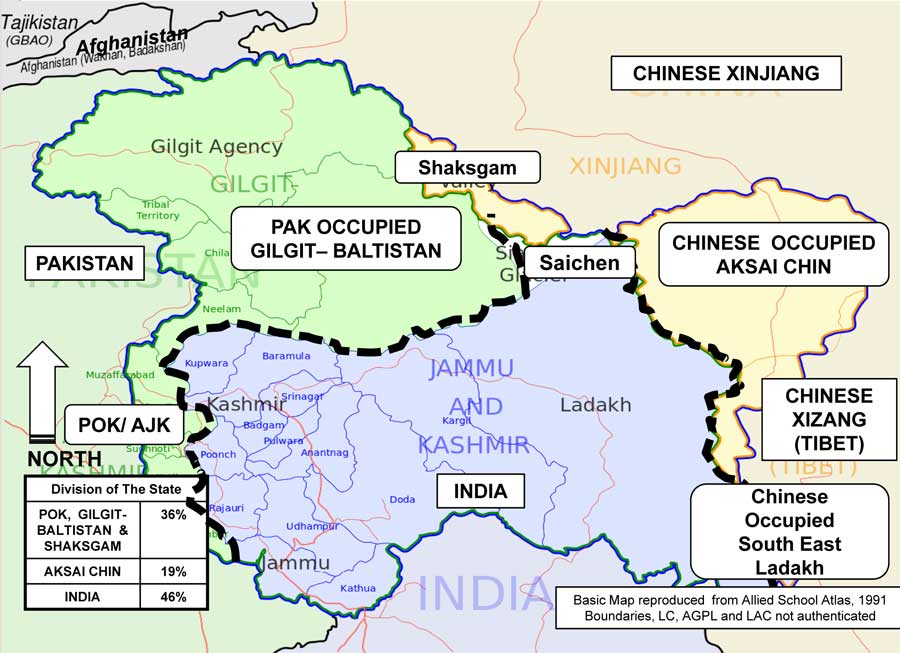


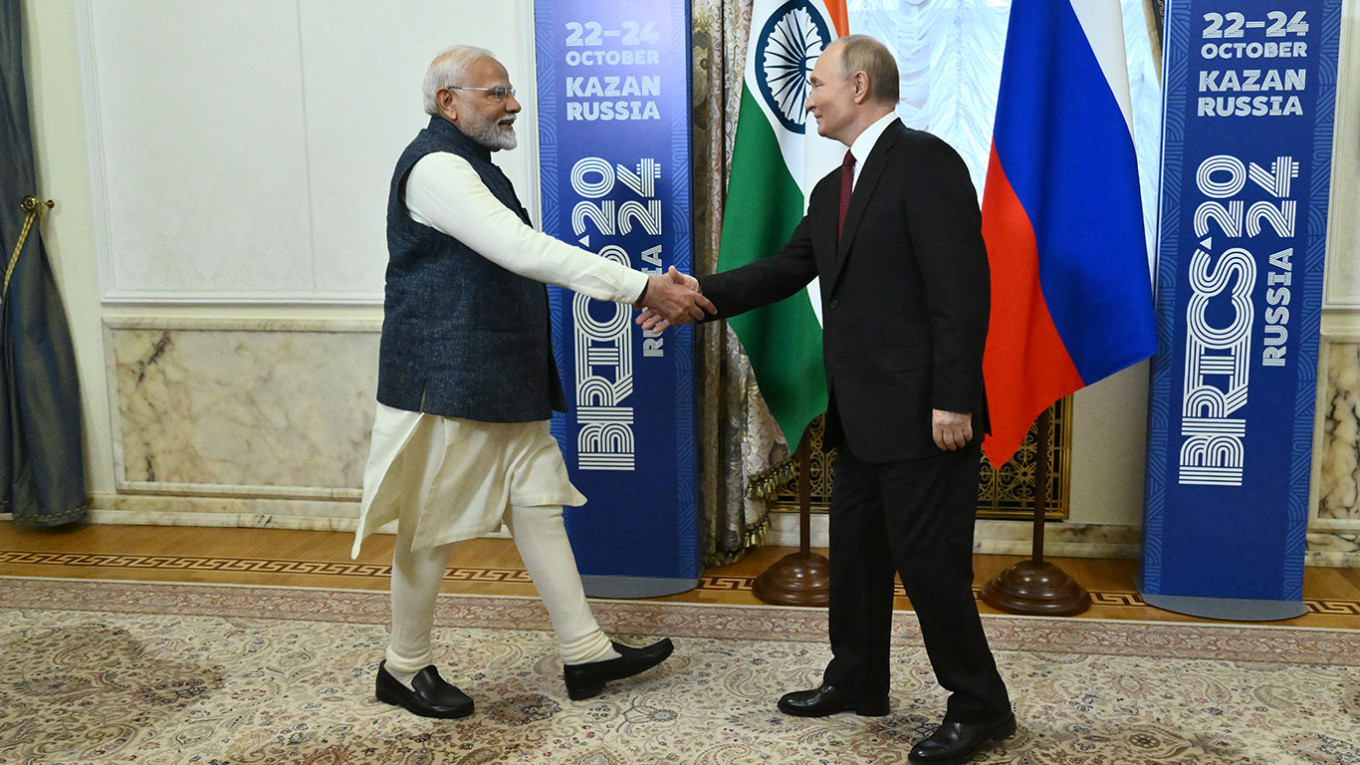


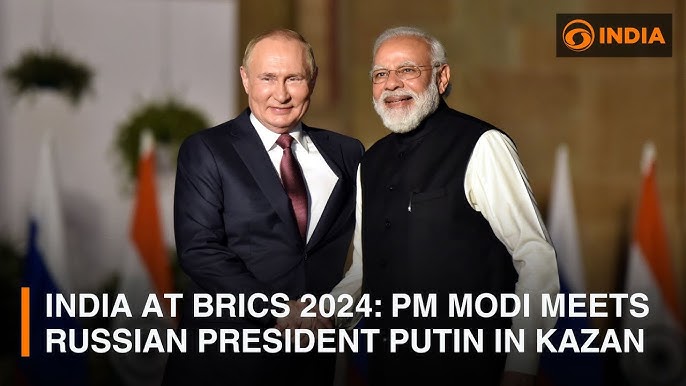


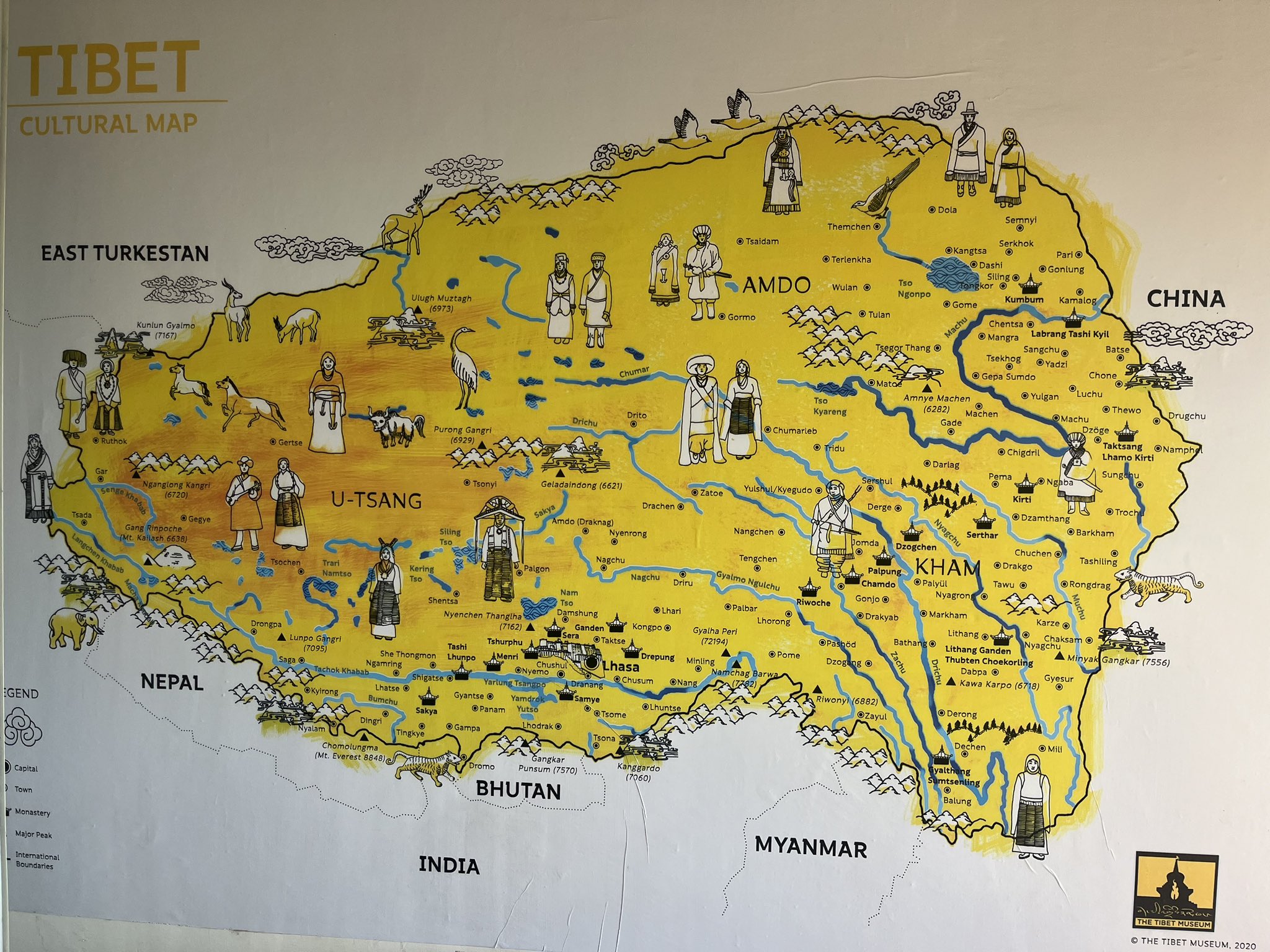

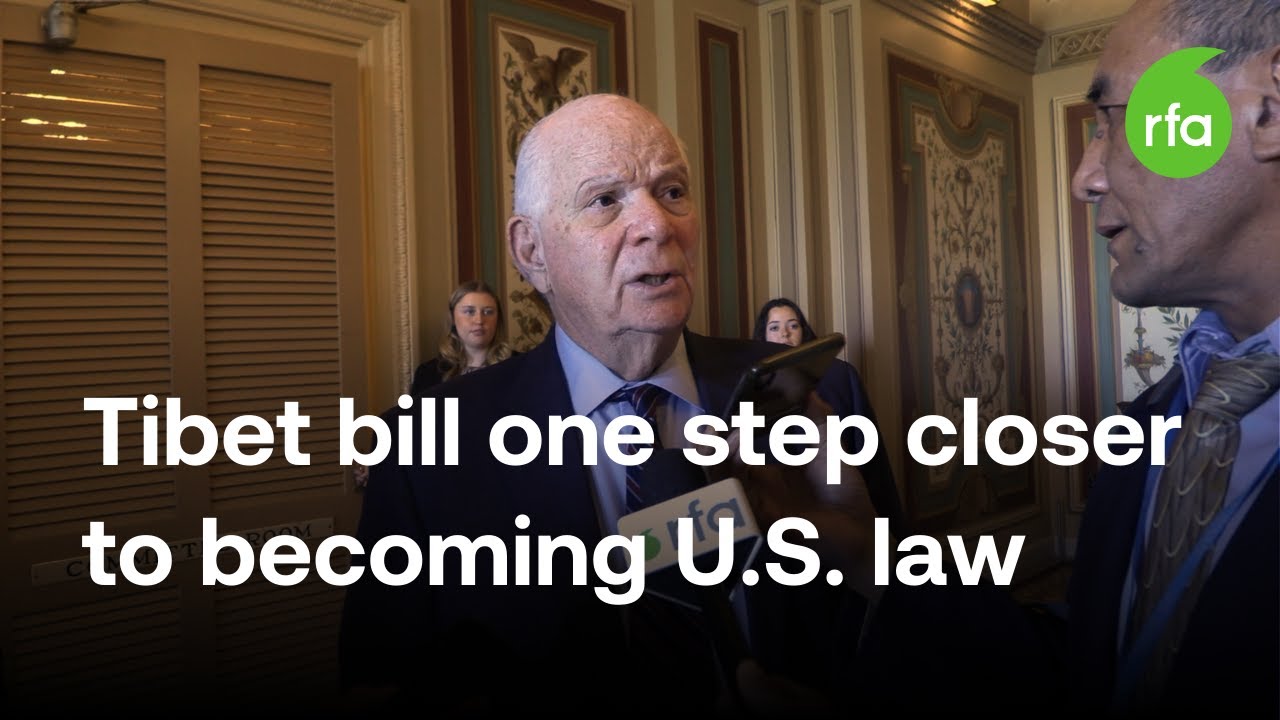
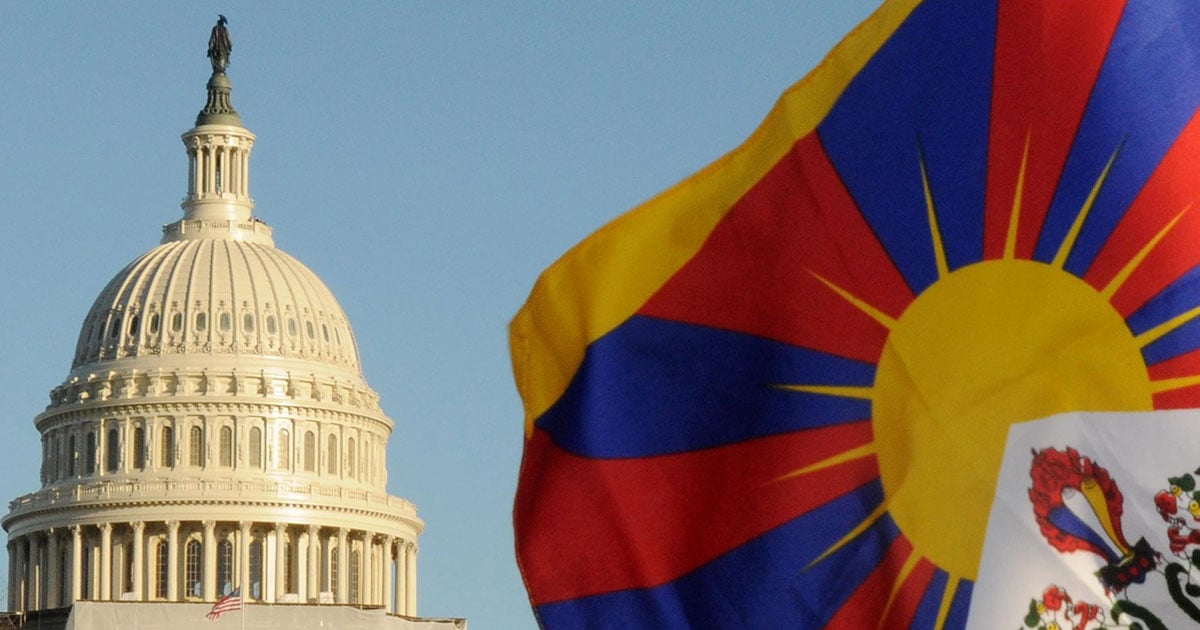
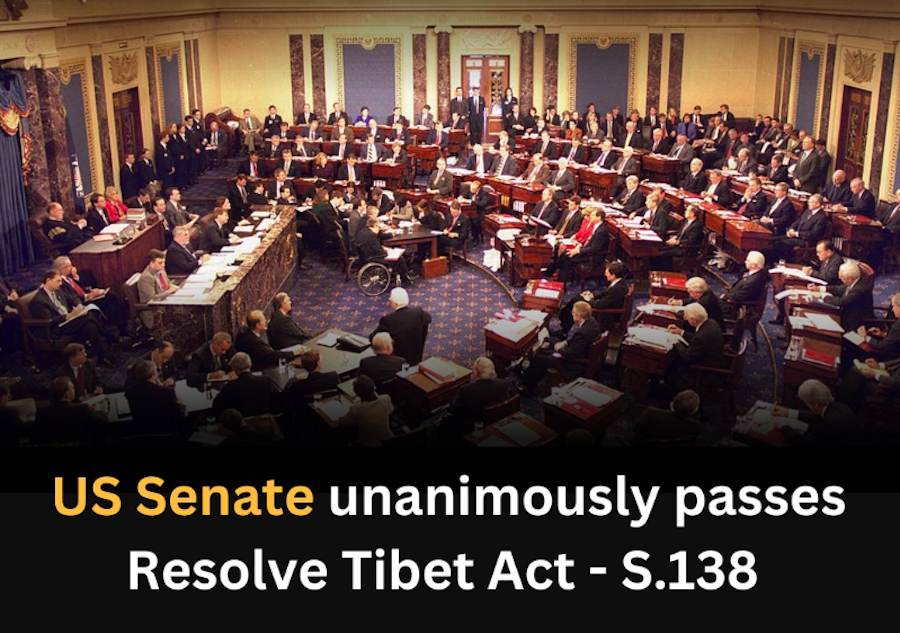
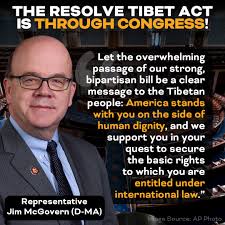
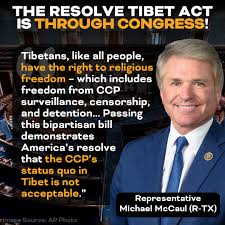
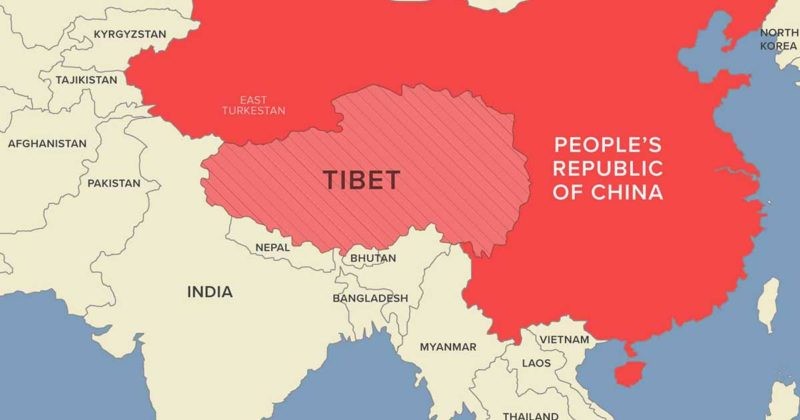


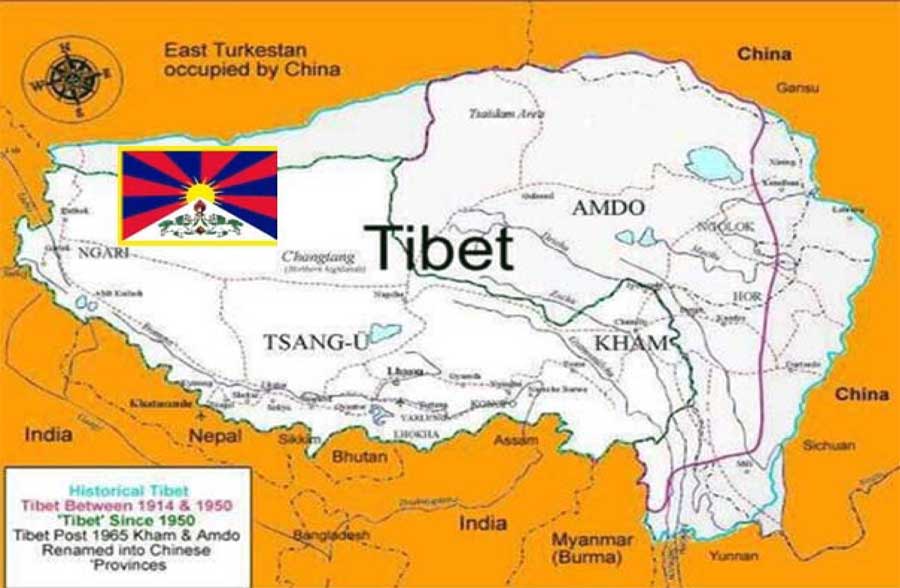
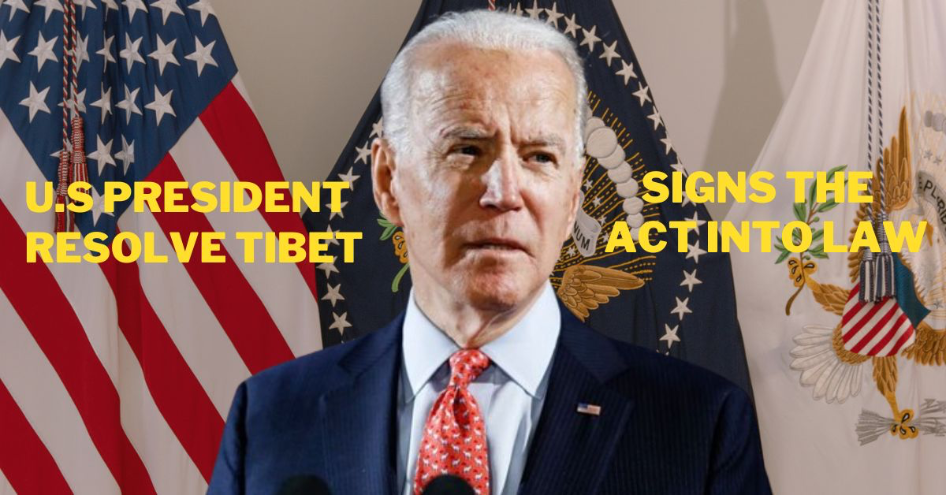
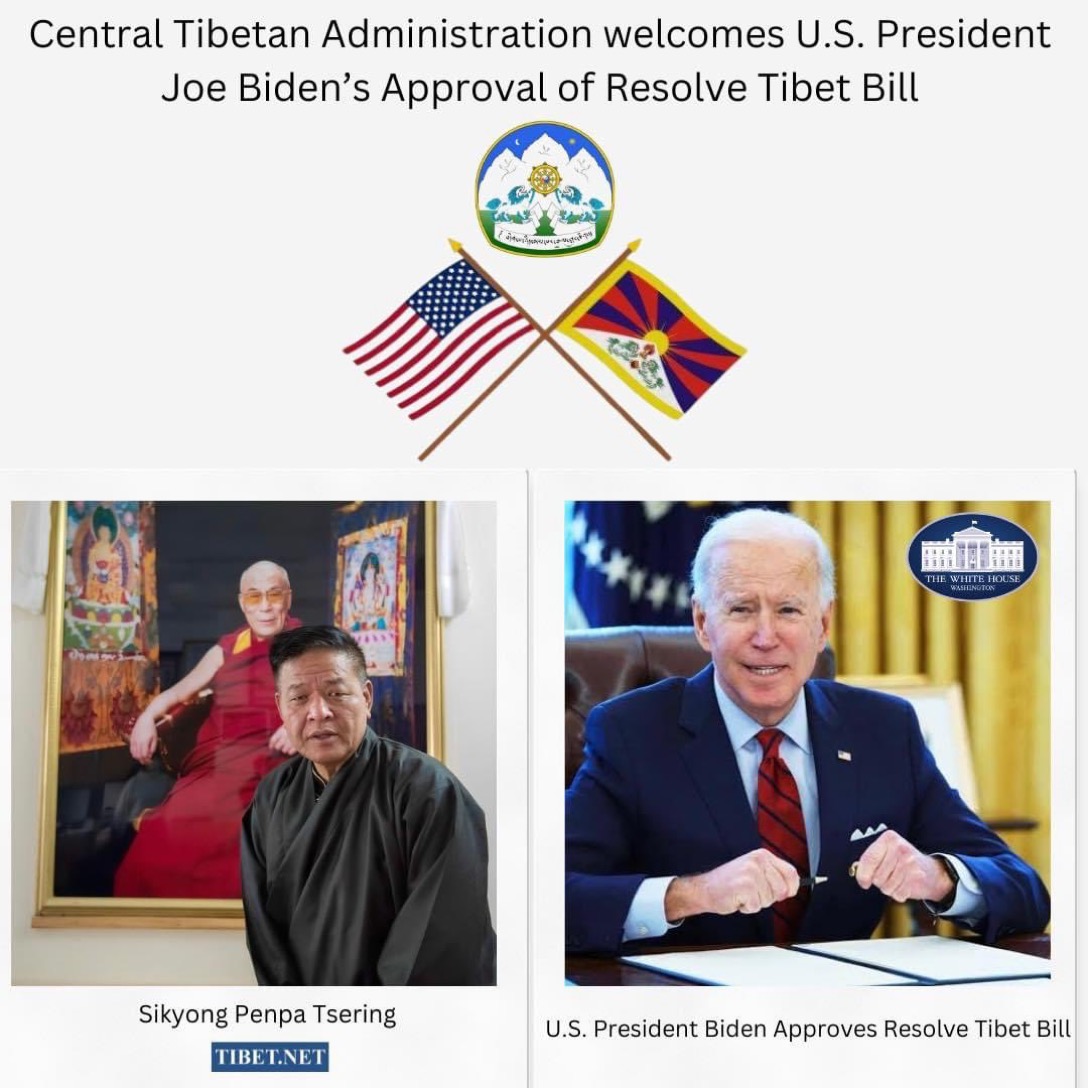


 Whole Dude - Whole Concept