THE TIBET QUESTION – UNITY OF TIBETAN TERRITORY

THE TIBET QUESTION – UNITY OF TIBETAN TERRITORY
The Tibet Question – Unity of Tibetan Territory is Most Important.

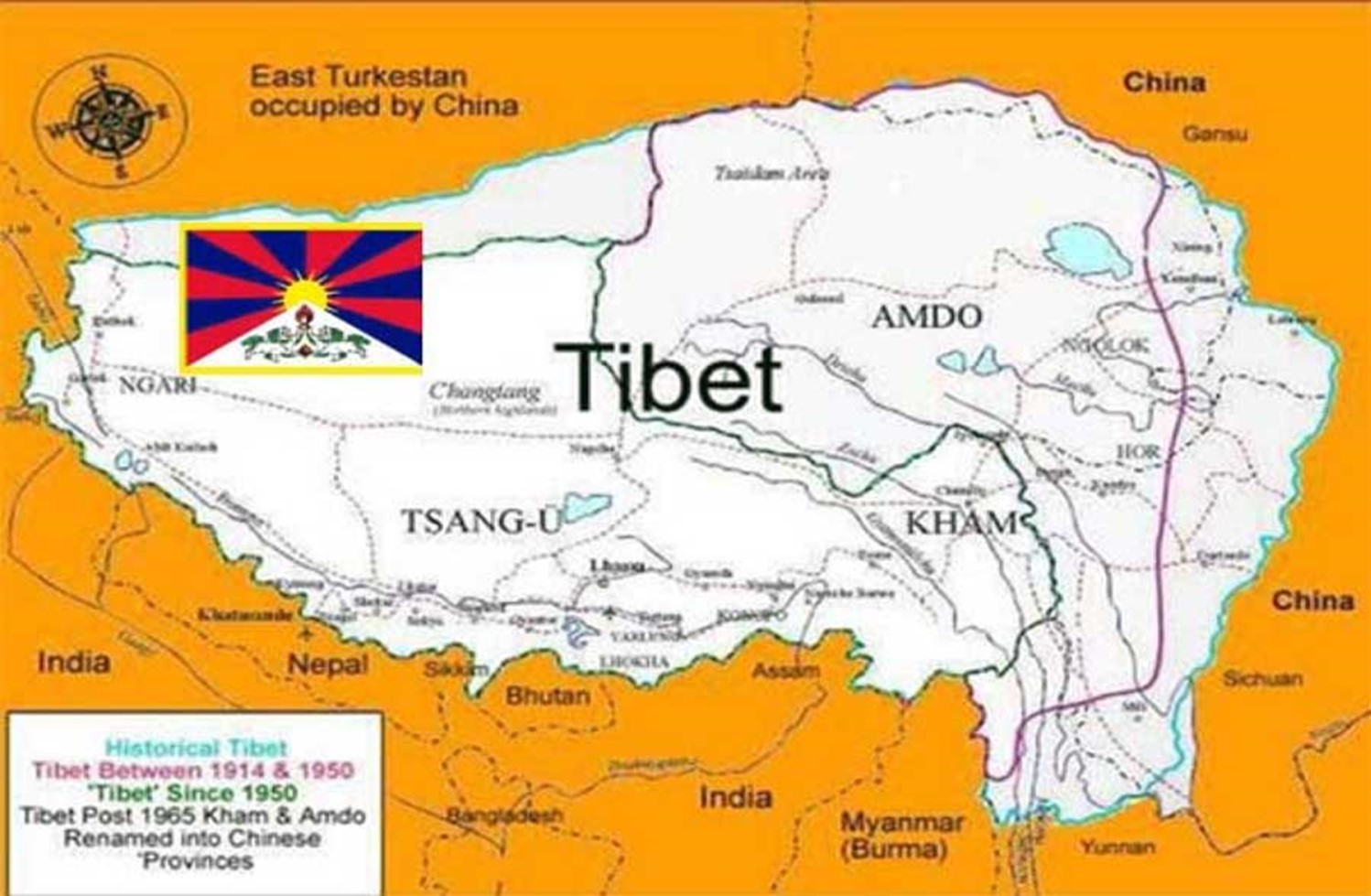
Living Tibetan Spirits demand Unity of entire Tibetan territory as the first step to resolve problem called ‘The Tibet Question’. During 1974, Special Frontier Force dispatched me to visit Bylakuppe and I spent over four weeks of time speaking to Tibetan children. Tibetans fully understand the boundaries of Tibet and there must be no compromise on this issue.

Rudranarasimham Rebbapragada

SPECIAL FRONTIER FORCE

UNITY OF THREE PROVINCES OF TIBET IS MOST IMPORTANT: HIS HOLINESS THE DALAI LAMA IN BYLAKUPPE

Clipped from: http://tibet.net/2017/12/unity-of-three-provinces-of-tibet-is-most-important-his-holiness-the-dalai-lama-in-bylakuppe/

The Tibet Question – Unity of Tibetan Territory is Most Important.

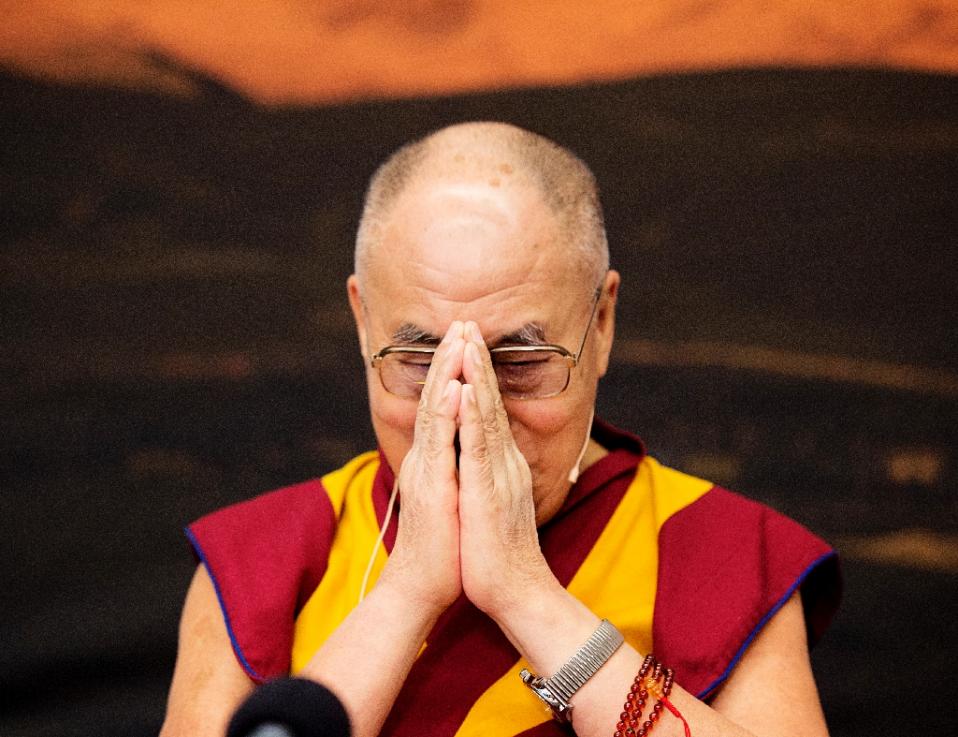
His Holiness the Dalai Lama addressing recently arrived Tibetan pilgrims from Tibet and Tibetan teachers gathered for a workshop on Secular Ethics in the Sera Lachi Assembly Hall in Bylakuppe, Karnataka, India on 22 December 2017. Photo/Tenzin Phende/DIIR

Bylakuppe: His Holiness the Dalai Lama gave an audience to new arrivals from Tibet and  a group of Tibetan teachers gathered for Secular ethics workshop on Friday morning.

“Tibetans in Tibet are the real masters of the country. Despite facing immense hardship, you have kept your spirits up. In 1959, the whole of Tibet was thrown into turmoil. There is a story that after the bombardment of Lhasa, Mao Zedong asked what happened to the Dalai Lama. When he heard that I had escaped to India, he is said to have replied, ‘Then we’ve lost.'”

“The Chinese authorities thought the issue of Tibet would simply fade away, but even after 58 years it hasn’t. In 1959, many countries had no idea about Tibet; they do now,” His Holiness said, urging them to uphold the spirit.

“What is important,” he said, “is that all three provinces of Tibet remain united, standing together in solidarity,” His Holiness told the gathering.

“Tibetans should pride themselves of its thousand millennium old cultural heritage, rooted in the profound Nalanda teachings.”

The Tibet Question – Unity of Tibetan Territory is Most Important.

His Holiness the Dalai Lama and President Dr Lobsang Sangay, Central Tibetan Administration arrives at the Sera Lachi Assembly hall to meet the Tibetan pilgrims from Tibet and participants of the workshop on Secular ethics. Photo/Tenzin Phende/DIIR

“We started appealing to the UN late 1959, but, as Pandit Nehru advised me, the USA will not go to war with China over Tibet. We concluded that eventually we would have to deal with the Chinese government. Until now the Chinese policy has been to denigrate the Tibetan people and their culture, nevertheless we remain hopeful of being able to preserve our culture and values within the People’s Republic of China” he added.

His Holiness emphasized “Tibetan language is the key to hold Tibetan alive and unity. Nothing can exterminate Tibetan language which started more than 1000 years ago.”

His Holiness briefly explained about Middle way approach and its appreciation from Chinese intellects.

The Tibet Question – Unity of Tibetan Territory is Most Important.

President of Central Tibetan Administration, Dr Lobsang Sangay addressing recently arrived Tibetan pilgrims from Tibet and Tibetan teachers gathered for a workshop on Secular Ethics in the Sera Lachi Assembly Hall in Bylakuppe, Karnataka, India on 22 December 2017. Photo/Tenzin Phende/DIIR

President Dr Lobsang Sangay, Central Tibetan Administration also addressed the new arrivals and the participants of the workshop on Secular ethics.

In his talk, he emphasized that Middle Way is best approach to have win-win situation and expressed hope for positive changes to take place within China. “The present situation inside Tibet is indeed sad and unfortunate, but I am hopeful that in time, changes will take place within China.”

“We are seeking genuine autonomy for Tibet through non-violence and Chinese government can’t say no to this as it does not contradict China’s sovereignty and One China Policy,” he said.

Enumerating the practicality of Middle Way Approach, under the prevailing situation inside Tibet and exile, Dr Sangay highlighted the widespread support and appreciation expressed by world leaders for the policy envisioned by His Holiness the Dalai Lama.

The Tibet Question – Unity of Tibetan Territory is Most Important.

President of Central Tibetan Administration, Dr Lobsang Sangay addressing recently arrived Tibetan pilgrims from Tibet and Tibetan teachers gathered for a workshop on Secular Ethics in the Sera Lachi Assembly Hall in Bylakuppe, Karnataka, India on 22 December 2017. Photo/Tenzin Phende/DIIR

He further said, “Tibetan in exile practice full democracy rather than Chinese communist party of holding power by few people. Many of high-level authorities are mostly Chinese. So we seek to genuine autonomy, which is within framework of Peoples Republic of China’s constitution.”

President Dr Sangay urged people to invest in education rather than wasting money on luxury. “Since 2011, Kashag has given top priority to education and will continue to do so.”

Towards the end, he urged for the Tibetans to stay united. “Keeping differences aside, if we all work together, the dreams and the aspirations of the Tibetan people in Tibet and in exile will be fulfilled,” the President said.

filed by Correspondent Tenzin Phende-

The Tibet Question – Unity of Tibetan Territory is Most Important.

Tibetan teachers gathered for a workshop on Secular Ethics listening to His Holiness the Dalai Lama during their meeting at Sera Lachi Assembly Hall in Bylakuppe, Karnataka, India on December 22, 2017. Photo/Tenzin Phende/DIIR
The Tibet Question – Unity of Tibetan Territory is Most Important.


Whole Trouble – Red China’s Divide and Rule Policy in occupied Tibet

Trouble in Tibet – Red China’s Divide and Rule Policy

TROUBLE IN TIBET – RED CHINA’S DIVIDE AND RULE POLICY.

Imperialism is a major colonizing force. Under Red China’s military occupation, Tibet exists as a Colony and population of Tibet is subdued by brutal force in an attempt to assimilate Tibetans to the Colonizer’s way of life. Red China’s colonization of Tibet is defacing every aspect of the Land of Tibet. Now, reports indicate that Red China is deliberately pitching different sects of Tibetan Buddhism against each other to undermine the influence of Dalai Lama on Tibetan cultural institutions that traditionally recognize and respect Tibetan Institution of Governance called Ganden Phodrang.

TROUBLE IN TIBET – RED CHINA’S DIVIDE AND RULE POLICY. HIS HOLINESS THE DALAI LAMA, THE SUPREME RULER OF TIBET. HE BELONGS TO THE GELUG OR YELLOW HAT TRADITION OF TIBETAN BUDDHISM.
Trouble in Tibet – Red China’s Divide and Rule Policy.

HINDUSTAN TIMES

CHINA SIGNALS POLICY SHIFT ON DALAI LAMA

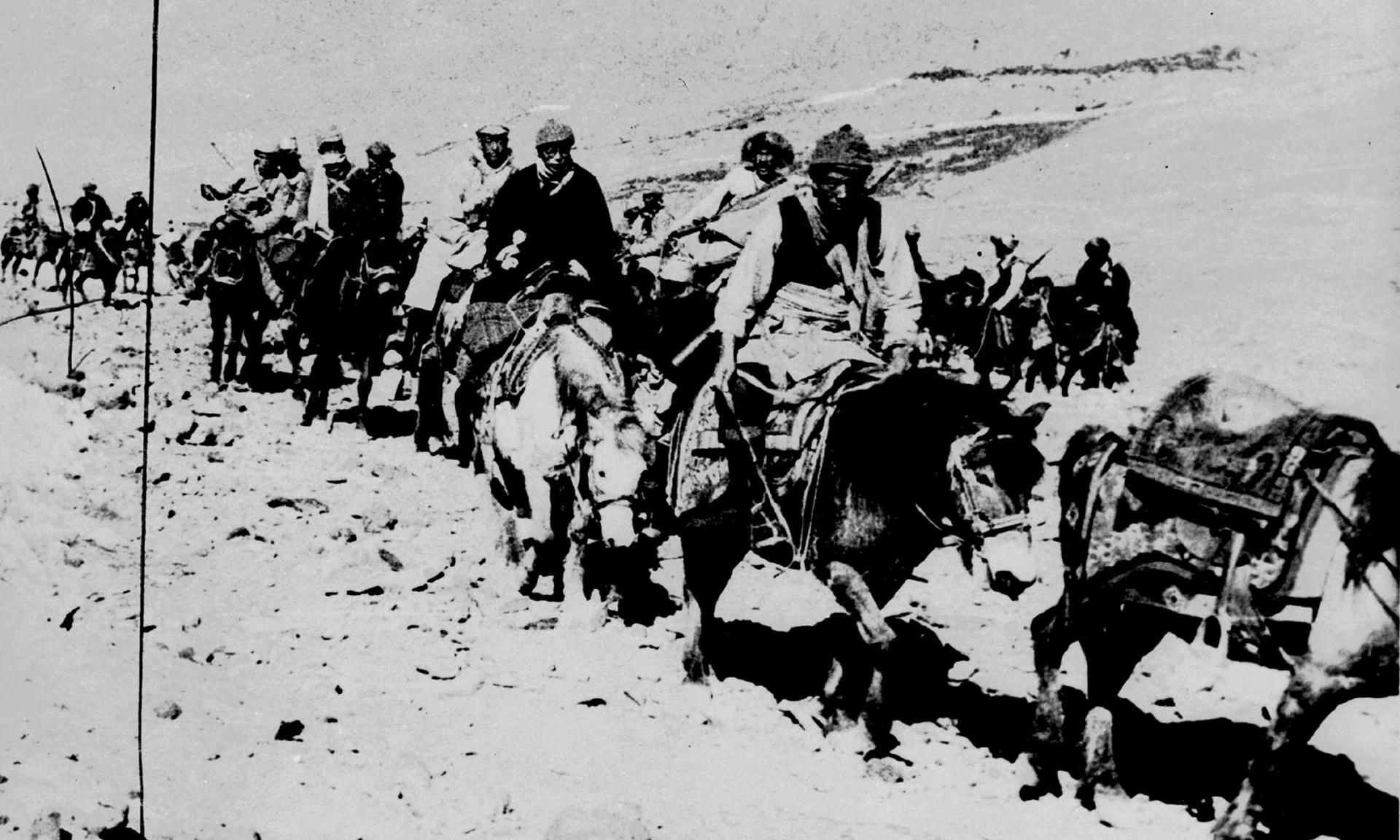
Tibet Awareness – Supreme Ruler of Tibet forced to live in exile. The 14th Dalai Lama fleeing from Tibet to India across the Himalayas, following a failed uprising against the Chinese occupation, in 1959. He is riding a white pony, third from the right (Getty Images)

Jayadeva Ranade| Updated: Apr 05, 2016 13:51 IST

A discernible shift in Beijing’s policy towards the Dalai Lama was seen at the 4th plenary session of the 12th National People’s Congress (NPC), China’s version of a parliament, which concluded on March 15, 2016. China utilised the Chinese People’s Consultative Conference (CPPCC) and NPC sessions – popularly called the ‘Big Two’ — to drive a wedge between the Dalai Lama and the various Tibetan Buddhist sects in a bid to undermine and isolate him.

An indication of the shift in the Chinese government’s stance towards the Dalai Lama was the remark by Padma Choling, deputy party secretary in the Tibet Autonomous Region. He told journalists during the NPC session that the Dalai Lama “was no longer a religious leader after he defected his country and betrayed its people. If the Dalai Lama wants to return to China, he must give up ‘Tibet independence,’ and must publicly acknowledge Tibet and Taiwan are inseparable parts of China and that the People’s Republic of China is the only legitimate government.” Choling’s remarks are significant as they show, in the words of an analyst, that “the legitimacy of the Dalai Lama’s status as a religious leader was no longer acknowledged by the central government as he has failed to fulfil his obligation to inherit and spread Buddhism and continued his separatist activities.”

The policy shift follows the declaration by the Politburo Standing Committee after a week-long closed-door conclave in 2015 that Beijing has the final say in recognition of the Dalai Lama. The official news agency, Xinhua, asserted that “all confirmations of the Dalai Lama have required approval by the central Chinese government, which has deemed the process an important issue concerning sovereignty and national security.” An anonymous source cited by AsiaNews quoted Xi Jinping as saying at the meeting that the Chinese Communist Party would pick “the next Dalai Lama, period! If things do not go well, we are ready to take corrective action.”

In recent deliberations there was a deliberate effort to to single out the Dalai Lama for criticism. For instance, three Chinese singers and actors had visited Bodh Gaya last month to commemorate the 92nd birth anniversary of the late predecessor of the 17th Gyalwang Karmapa. But the Deputy Party Secretary of TAR, Wu Yingjie, chose to raise the issue during the NPC session. Speaking to reporters, he criticised renowned Chinese singer Faye Wong, actor Tony Leung Chiu-wai and actor Hu Jun for attending the event. He said, “We hope the celebrities take the responsibility for their own deeds. We firmly oppose all celebrities, however influential they are, and whatever purpose they have, to make any contact with the 14th Dalai clique, or even help him spread his ideas.” Notably while the Dalai Lama and his “clique” were singled out for criticism and visitors warned to avoid contact with them, any critical reference to the Gyalwa Karmapa, who heads the Karma Kargyu sect of Tibetan Buddhism, was carefully avoided. Beijing is trying to undermine the Dalai Lama and draw a distinction between him and other Tibetan Buddhist religious leaders.

Jayadeva Ranade is president, Centre for China Analysis and Strategy.
The views expressed are personal

Trouble in Tibet – Red China’s Divide and Rule Policy. Dividing Tibetans on sectarian lines.
Trouble in Tibet – Red China’s Divide and Rule Policy is sowing divisions among Tibetans.
Trouble in Tibet – Red China’s Divide and Rule Policy aims to weaken Tibetan Resistance to Colonization.
Trouble in Tibet – Red China’s Divide and Rule Policy aims to neutralize Tibetan Resistance to military occupation.
Trouble in Tibet – Red China’s Divide and Rule Policy. Subjugate Tibetans to embrace Colonization.
Trouble in Tibet – Red China’s Divide and Rule Policy pitches Gyalwa Karmapa against Dalai Lama to neutralize Tibetan Resistance to Colonization.
Trouble in Tibet – Red China’s Divide and Rule Policy. I am asking for Tibetan Unity to sustain Tibetan Resistance to Colonization.
Trouble in Tibet – Red China’s Divide and Rule Policy. Prayers and Aspirations For Tibetan Unity to Resist Occupation.

SPECIAL FRONTIER FORCE JOINS PRAYERS FOR TIBETAN UNITY AND TIBETAN SOLIDARITY

SPECIAL FRONTIER FORCE JOINS PRAYERS FOR TIBETAN UNITY AND TIBETAN SOLIDARITY

SPECIAL FRONTIER FORCE JOINS PRAYERS FOR TIBETAN UNITY AND TIBETAN SOLIDARITY : TIBETAN SPIRITUAL LEADER HIS HOLINESS THE 14th DALAI LAMA CELEBRATED HIS 80th BIRTHDAY ON JUNE 21, 2015 AT MCLEOD GANJ, DHARAMSALA, INDIA. HE IS LIVING IN EXILE FOR 56 YEARS SINCE MARCH 31, 1959.

Special Frontier Force joins Tibetan Prayers for His Holiness the 14th Dalai Lama at his 80th Birthday Celebration held on June 21, 2015 at McLeod Ganj, Dharamsala, India.

SPECIAL FRONTIER FORCE JOINS PRAYERS FOR TIBETAN UNITY AND TIBETAN SOLIDARITY. ON HIS HOLINESS THE 14th DALAI LAMA'S 80th BIRTHDAY, SPECIAL FRONTIER FORCE EXTENDS ITS WARMEST GREETINGS TO ALL TIBETAN PEOPLE DEMANDING UNITY OF FRAGMENTED TIBETAN TERRITORY.
SPECIAL FRONTIER FORCE JOINS PRAYERS FOR TIBETAN UNITY AND TIBETAN SOLIDARITY. ON HIS HOLINESS THE 14th DALAI LAMA’S 80th BIRTHDAY, SPECIAL FRONTIER FORCE EXTENDS ITS WARMEST GREETINGS TO ALL TIBETAN PEOPLE DEMANDING UNITY OF FRAGMENTED TIBETAN TERRITORY.

On this happy occasion, on behalf of Special Frontier Force, I join Tibetan Prayers seeking Tibetan Unity and Tibetan Solidarity. Unity is the quality of being one in spirit, sentiment, purpose, and feelings. Unity brings the complete agreement of opinion, purpose, interest, and actions. Unity leads to perfect concord, harmony, and establishes fact of being a totality to make a group or body of people to work together with constancy, continuity, or fixity of purpose. Tibetan Solidarity demands combination or agreement of all citizens of Tibet; and it includes Tibetans residing in Occupied Tibet and Tibetan Exile community living in different parts of world.

Special Frontier Force Joins Tibetan Prayers for Unity and Solidarity. Tibetan Territory is fragmented by Red China -  Subjugator -  Occupation  of Tibet
Special Frontier Force Joins Tibetan Prayers for Unity and Solidarity. Tibetan Territory is fragmented by Red China – Subjugator – Occupation of Tibet

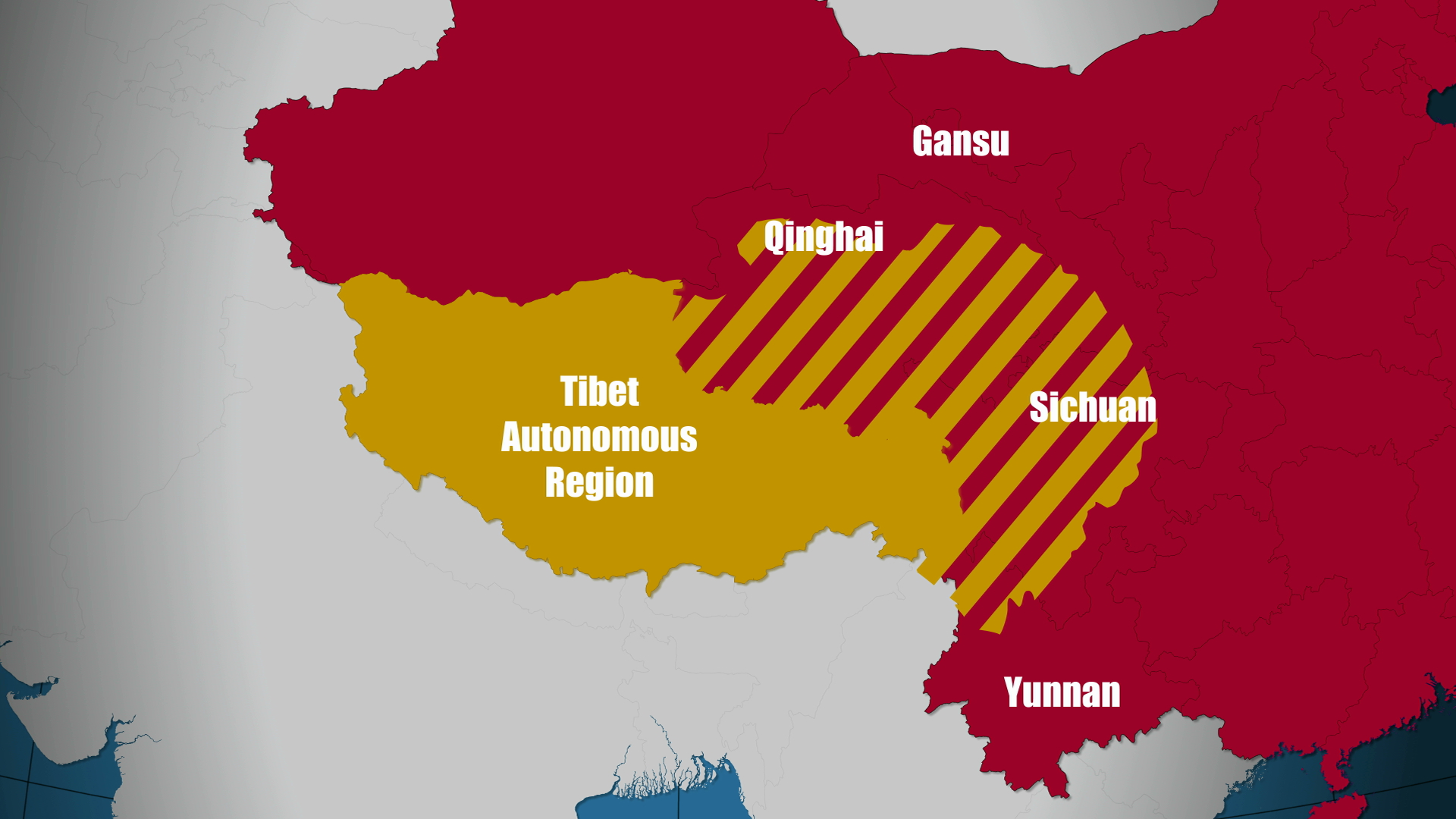
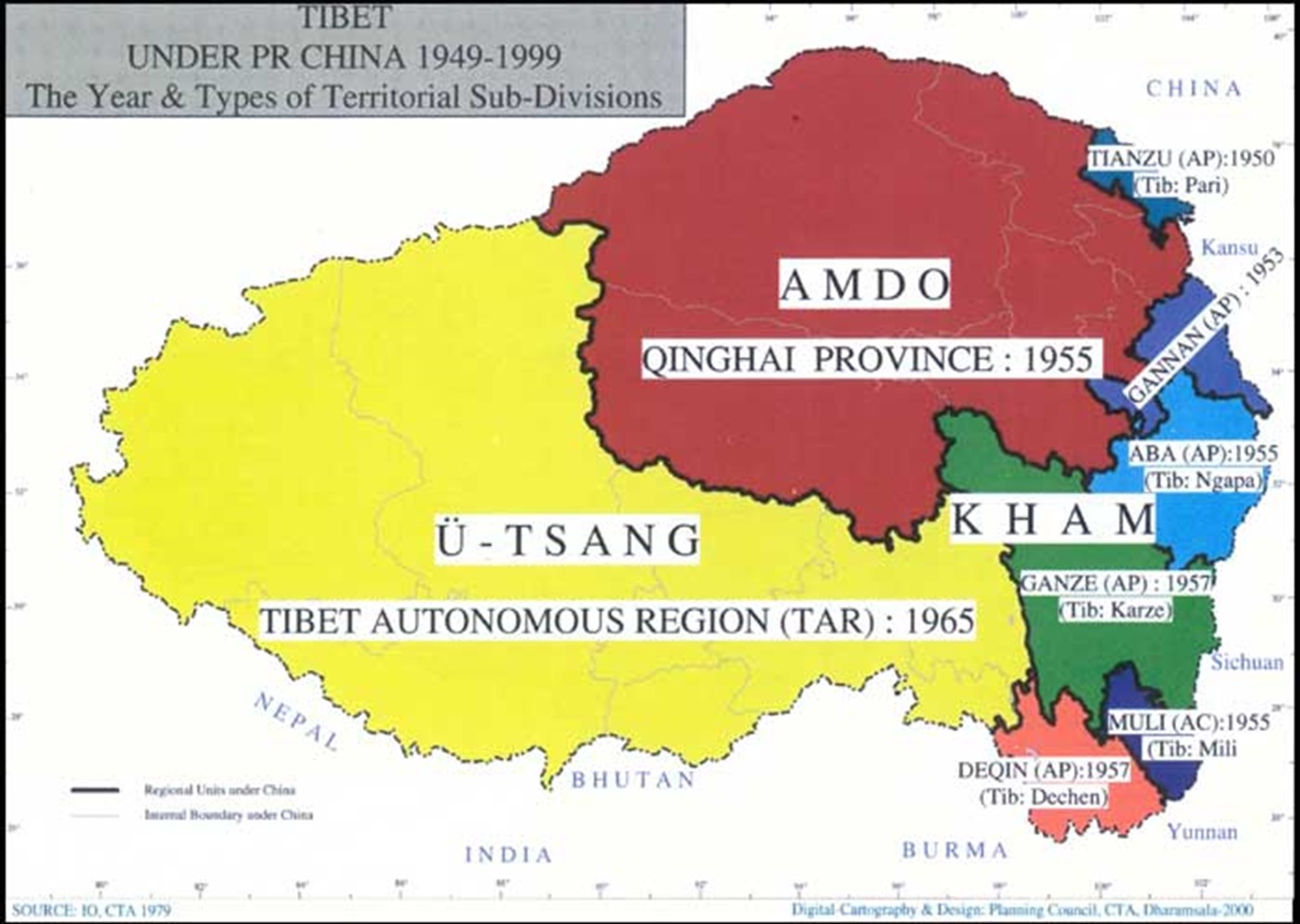
Tibetan Land is fragmented and my foremost concern is that of Unity of Place, Uniting broken Tibetan Territory and bring it together as a single Unit or Province, or Region while Tibet remains under military occupation. I ask my readers and the rest of global community to extend support for uniting Tibetan regions occupied by People’s Republic of China.

Rudranarasimham Rebbapragada
Ann Arbor, MI 48104-4162, USA
The Spirits of Special Frontier Force

 
  image          
The Spirits of Special Frontier ForceSpecial Frontier Force is a military organization of India, Tibet, United States to resist Red…
 
View on www.facebook.com Preview by Yahoo


TIBETANS PRAY FOR DALAI LAMA AT 80th BIRTHDAY CELEBRATION

AFP

BY LOBSANG WANGYAL WITH CLAIRE COZENS IN NEW DELHI.

The Dalai Lama said he hoped to live another 20 years as he turned 80

Dharamsala (India) (AFP) – The Dalai Lama marked his official 80th birthday on Sunday, with prayers and celebrations at his hometown in exile but little to show for decades of lobbying seeking greater Tibetan autonomy.

The Nobel laureate will be in the United States when he turns 80 on July 6, but Sunday is his official birthday according to the Tibetan lunar calendar, and he celebrated with his family, fans and followers in Dharamsala.

The jovial Tibetan spiritual leader told fellow exiles and Indian and foreign dignitaries that he expected to live another 20 years and would continue to work for the promotion of compassion and religious harmony.

“I hope you will join me again to celebrate my 90th birthday,” he said in a speech at the Tsuglakhang Temple in Dharamsala, the north Indian hill town where he has lived since fleeing Tibet in 1959 after a failed uprising against Chinese rule.

The leader of the government-in-exile wished the Dalai Lama a happy birthday on behalf of all Tibetans, thanking him for his lifelong commitment to safeguarding Tibet and its culture and for his teachings on “universal responsibility to foster religious harmony worldwide”.

“You have empowered us with democracy and hope… for the people around the world, you are the beacon of hope and light to all the people,” Lobsang Sangay told an 8,000-strong crowd.

tibetan unity tibetan solidarity tsuglagkhang temple mcleod ganj
SPECIAL FRONTIER FORCE JOINS TIBETAN PRAYERS FOR TIBETAN UNITY AND TIBETAN SOLIDARITY IN CELEBRATION OF HIS HOLINESS THE 14th DALAI LAMA’S 80th BIRTHDAY AT TSUGLAKHANG TEMPLE, McLEOD GANJ, DHARMSALA, INDIA ON JUNE 21, 2015.

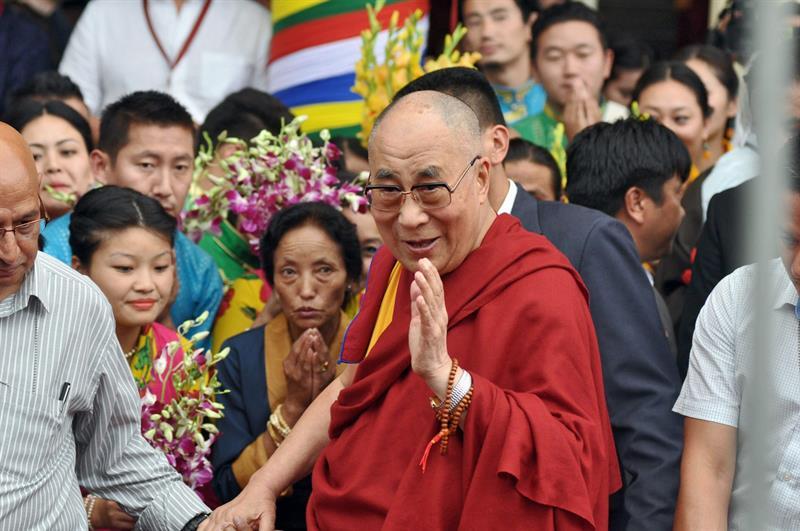
The Dalai Lama (R) greets thousands of his followers at his 80th birthday celebrations at Tsuglakhang Temple.

“For Tibetans, you are the life and the soul of Tibet.”

The event included traditional dancing and a special long-life prayer for the Buddhist spiritual leader, who shows no sign of slowing down.
Although he has officially given up his political role, the Dalai Lama maintains a hectic schedule of foreign travel and is due to visit Britain this month before travelling on to the United States.

But his retirement from politics in 2011 was a reminder to exiled Tibetans that the man who remains the universally recognised face of the movement will not be around forever.

“The two big questions are what will happen after he’s gone and whether Tibetans inside and outside China will look to his replacement in the same way,” said Jayadeva Ranade, president of the Centre for China Analysis and Strategy in New Delhi.

tibetan unity tibetan solidarity sing to the dalai lama
SPECIAL FRONTIER FORCE JOINS TIBETAN PRAYERS AND CELEBRATION OF HIS HOLINESS THE 14th DALAI LAMA’S 80th BIRTHDAY AT TSUGLAKHANG TEMPLE.

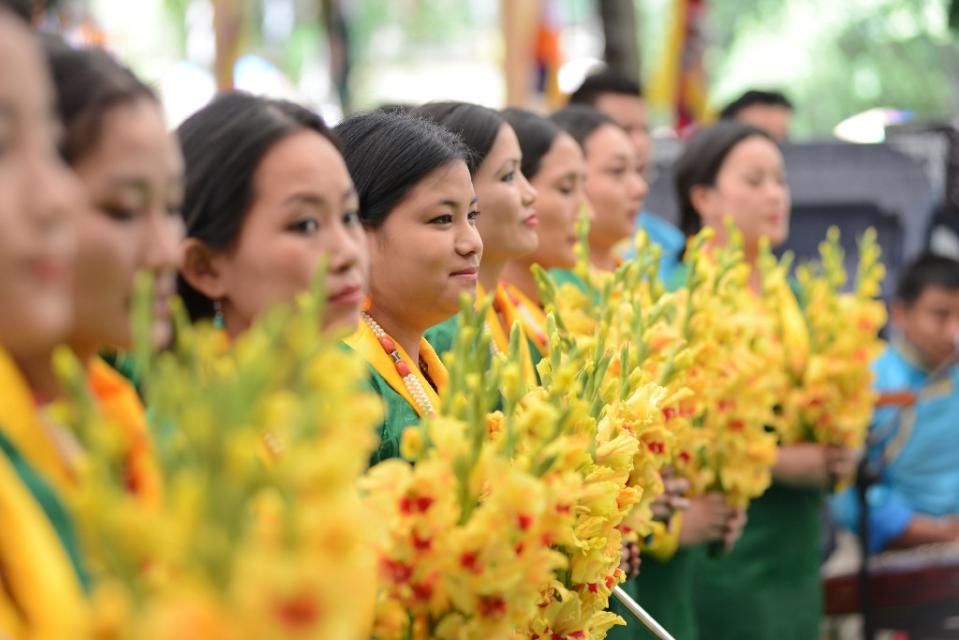
Exile Tibetans prepare to sing to the Dalai Lama at his 80th birthday celebrations at Tsuglakhang temple.

Sunday’s ceremony in Dharamsala — home to thousands of Tibetan refugees — is a time for celebration, but also for reflection on the Dalai Lama’s push for greater autonomy for Tibet under Chinese rule.

The elderly monk’s promotion of non-violence along with his ready laugh have made him a global peace icon and kept Tibet firmly in the global spotlight.
He has been a unifying force for Tibetans inside and outside the mountainous region, but has little to show for his decades of lobbying.

Formal negotiations with Beijing broke down in 2010 after making no headway, and many exiled Tibetans remain deeply sceptical about renewing them.

– Questions over succession –

tibetan unity tibetan solidarity a prayer
SPECIAL FRONTIER FORCE JOINS TIBETAN PRAYERS FOR UNITY AND SOLIDARITY WHILE ENDURING MILITARY OCCUPATION SINCE 1950.

The Dalai Lama, pictured in Copenhagen in February. The exiled Tibetan spiritual leader maintains a …

Beijing accuses the Dalai Lama of trying to split Tibet from the rest of China and has called him a “wolf in sheep’s clothing”.
In 2011 the Dalai Lama delegated his political responsibilities to a prime minister elected by Tibetan exiles in an attempt to lessen his own totemic status and secure the movement’s future after his death.

But he remains the most powerful rallying point for Tibetans, both in exile and in their homeland.
Last year he told German newspaper Welt am Sonntag that doctors had told him he could live to 100, adding, “in my dreams I will die at the age of 113 years.”

Nonetheless advancing years have raised succession questions.
The soul of a senior lama is believed to be reincarnated after death in the body of a child.

Traditionally the search for a new Dalai Lama is conducted by high lamas — senior monks who fan out across Tibet to look for the child who shows signs of being the reincarnation.
China however has indicated it will have the final say over the appointment of a new Tibetan spiritual leader — raising fears of two competing Dalai Lamas.
This happened in 1995 when Beijing rejected the Dalai Lama’s choice to be the next Panchen Lama, the second-highest ranking Tibetan Buddhist, and instead picked its own.

The 14th Dalai Lama has repeatedly said he may not be reincarnated — to the apparent frustration of Beijing.
“The Dalai Lama institution will cease one day,” he told the BBC in December.

“Much better that a centuries-old tradition cease at the time of a popular Dalai Lama.”

  • Budget, Tax & Economy
  • Dalai Lama
  • Tibet
  • 0c4e70807c1273c918ab8412de63e6aa.cf.jpg

© 2015 AFP

Yahoo – ABC News Network