The Supreme Ruler of Tibet celebrates his 89th birthday in exile
Whole Dude – Whole Day – World Tibet Day. The Supreme Ruler of Tibet celebrates his 89th birthday in exileWhole Dude – Whole Day – World Tibet Day. The Supreme Ruler of Tibet celebrates his 89th birthday in exile
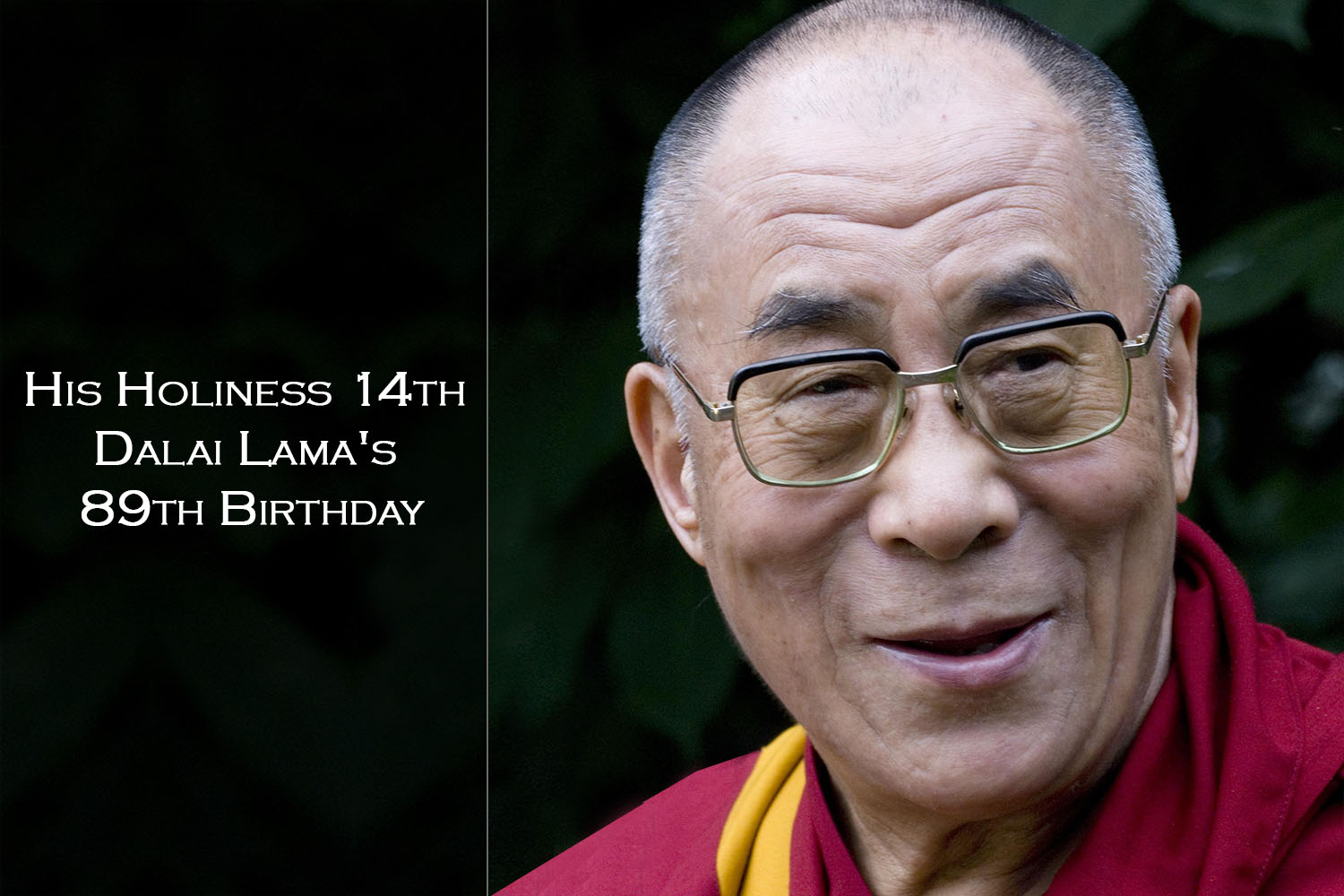
On Saturday, July 06, 2024, the Living Tibetan Spirits greet His Holiness the 14th Dalai Lama on his 89th birthday to acknowledge him as the Supreme Ruler of Tibet. For Tibetans, the title Dalai Lama is all about the Institution of the Dalai Lama that rules and governs Tibet. No other institution of government can replace Supreme Ruler of Tibet during his lifetime.
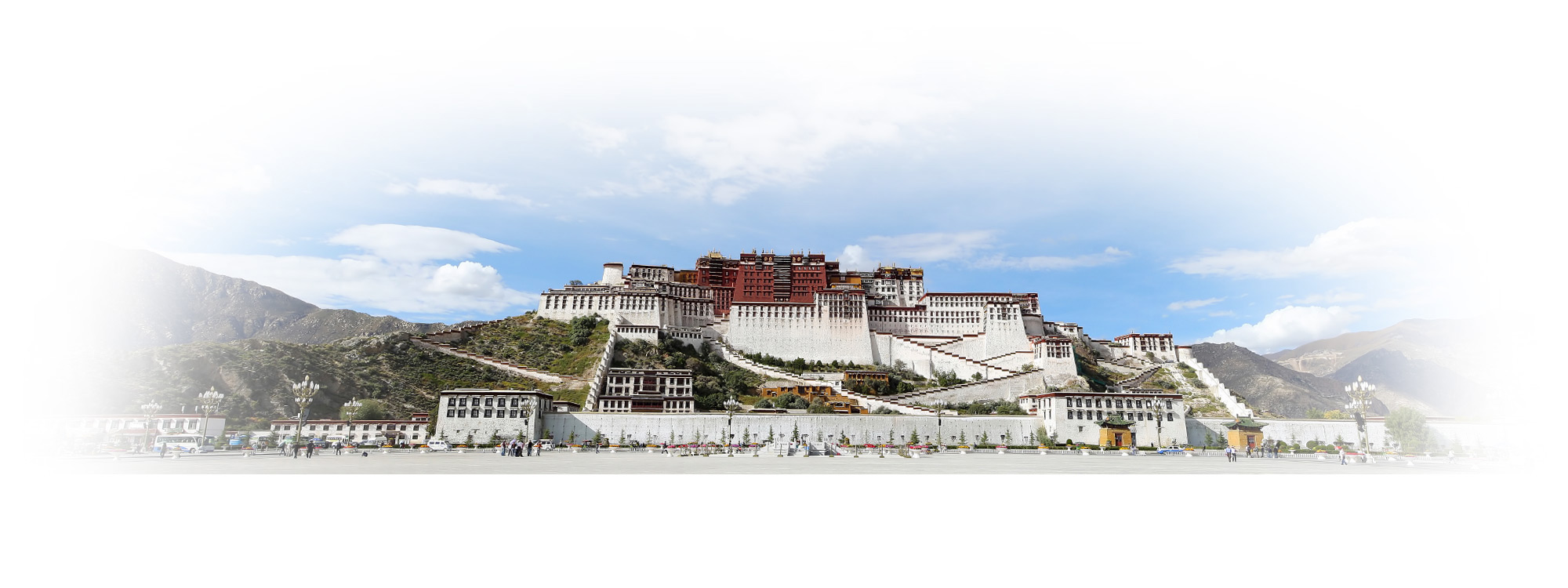
The Living Tibetan Spirits offer their prayers for a safe return of the Supreme Ruler of Tibet to the Potala Palace for a happy reunion with Tibetans living in his Land.
Whole Dude – Whole Day – World Tibet Day. The Supreme Ruler of Tibet celebrates his 89th birthday in exile
Celebrating His Holiness the Dalai Lama’s 88th Birthday
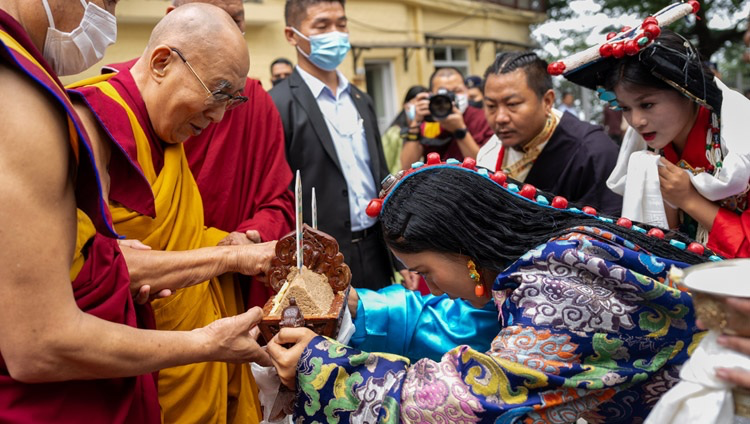
Whole Dude – Whole Day – World Tibet Day. The Supreme Ruler of Tibet celebrates his 88th birthday in exileHis Holiness the Dalai Lama being presented with the traditional ‘Chema Changphu’ on his arrival at the Main Tibetan Temple courtyard to attend celebrations to mark his 88th birthday in Dharamsala, HP, India on July 6, 2023. Photo by Tenzin Choejor
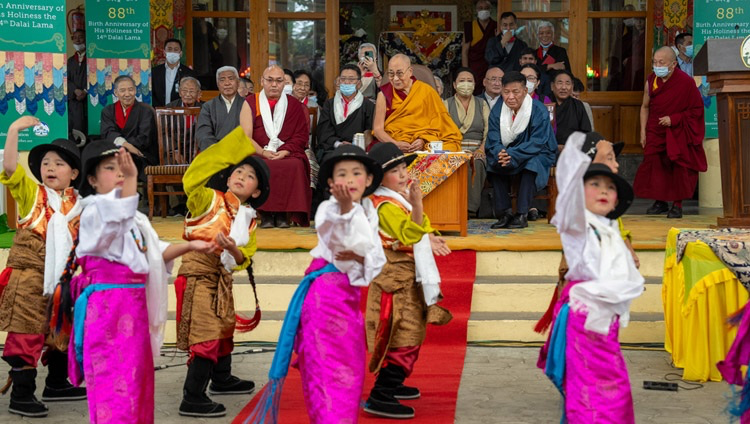
Thekchen Chöling, Dharamsala, India – This morning, His Holiness the Dalai Lama stepped into the temple courtyard adjacent to his residence, a radiant smile on his face. He was presented with the traditional ‘Chema Changphu’ as artistes from the Tibetan Institute of Performing Arts (TIPA) sang their welcome to him on his birthday. He took his seat below the temple at the head of the courtyard with members of his family sitting directly behind him and members of the Central Tibetan Administration (CTA), past and present, behind him on either side.
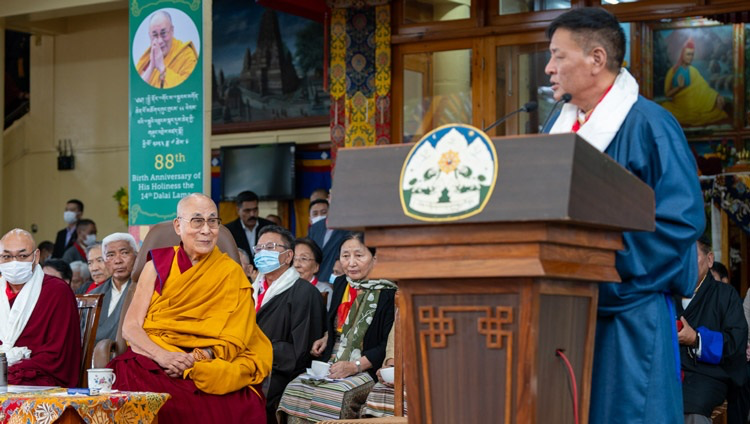
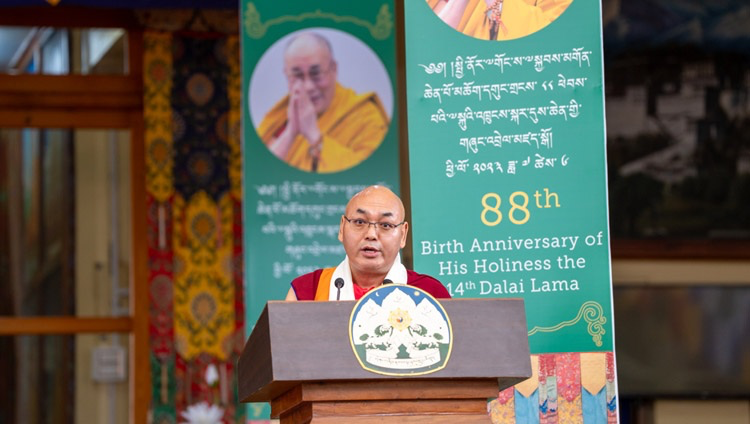
Sikyong Penpa Tsering speaking at the celebrations marking His Holiness the Dalai Lama’s 88th birthday at the Main Tibetan Temple courtyard in Dharamsala, HP, India on July 6, 2023. Photo by Tenzin ChoejorKhenpo Sonam Tenphel, Speaker of the Tibetan Parliament in Exile, addressing the crowd at the celebrations marking His Holiness the Dalai Lama’s 88th birthday at the Main Tibetan Temple courtyard in Dharamsala, HP, India on July 6, 2023. Photo by Tenzin ChoejorChildren from the TCV Day School in McLeod Ganj performing during the celebrations marking His Holiness the Dalai Lama’s 88th birthday at the Main Tibetan Temple courtyard in Dharamsala, HP, India on July 6, 2023. Photo by Tenzin Choejor
At this point the moderator invited His Holiness to address the gathering.
“Today,” he responded, “I’d like to tell all my friends that my daily prayer is as follows:
As long as space endures, And as long as sentient beings remain, Until then, may I too remain To help dispel the misery of the world.
“As long as there are living sentient beings who want happiness, I will come in life after life to help them.
“Due to karma and prayers I have made in the past, I was born in Amdo and since then I’ve done the best I could to help all sentient beings.
“Today, you are celebrating my 88th birthday, but when I look in the mirror, I feel I look as if I’m still in my 50s. My face doesn’t look old, it isn’t wrinkled with age. What’s more I still have all my teeth so there’s nothing I can’t eat or chew.
“I was born in Tibet and I bear this name Dalai Lama, but in addition to working for the cause of Tibet, I’ve been working for the welfare of all sentient beings. I’ve done whatever I could without losing hope or allowing my determination to flag. I’m angry with no one, not even those Chinese leaders who have adopted a harsh attitude towards Tibet. Indeed, China has historically been a Buddhist country as witnessed by the many temples and monasteries I saw when I visited that land.
“I believe there is knowledge within Tibetan culture and religion that can benefit the world at large. However, I also respect all other religious traditions because they encourage their followers to cultivate love and compassion.
“According to indications in my own dreams and other predictions, I expect to live to be more than 100 years old. I’ve served others until now and I’m determined to continue to do so. Please pray for my long life on that basis.
“At our last meeting Mao Zedong praised my scientific outlook but criticized religion as poison. I think the point of religion isn’t just to say prayers but to engage in helping and serving others. I believe there’s a resonance of this even in the communist way of thinking and I sometimes wonder if I met Mao today whether I couldn’t talk him round. Religion is about living a good life in the service of others.
“As I already mentioned, there are indications that I will live for another 15 or 20 years and in that time, there is hope for change in the world—for the elimination of weapons and the use of military force. May people learn to live in peace and friendship.
“The scriptures suggest that eventually the world may be consumed by fire, but until that happens, we must learn to live in a more peaceful, friendly way. If we practise well now while we can, in due course we will take our message to other world systems.
“I’m not very concerned with the name Dalai Lama, what interests me much more is being of service to others. Of course, I need food and drink to survive, but not much else. My prime concern is to serve other beings—thank you.”
The Supreme Ruler of Tibet celebrates his 89th birthday in exileWhole Dude – Whole Day – World Tibet Day. The Supreme Ruler of Tibet celebrates his 89th birthday in exile
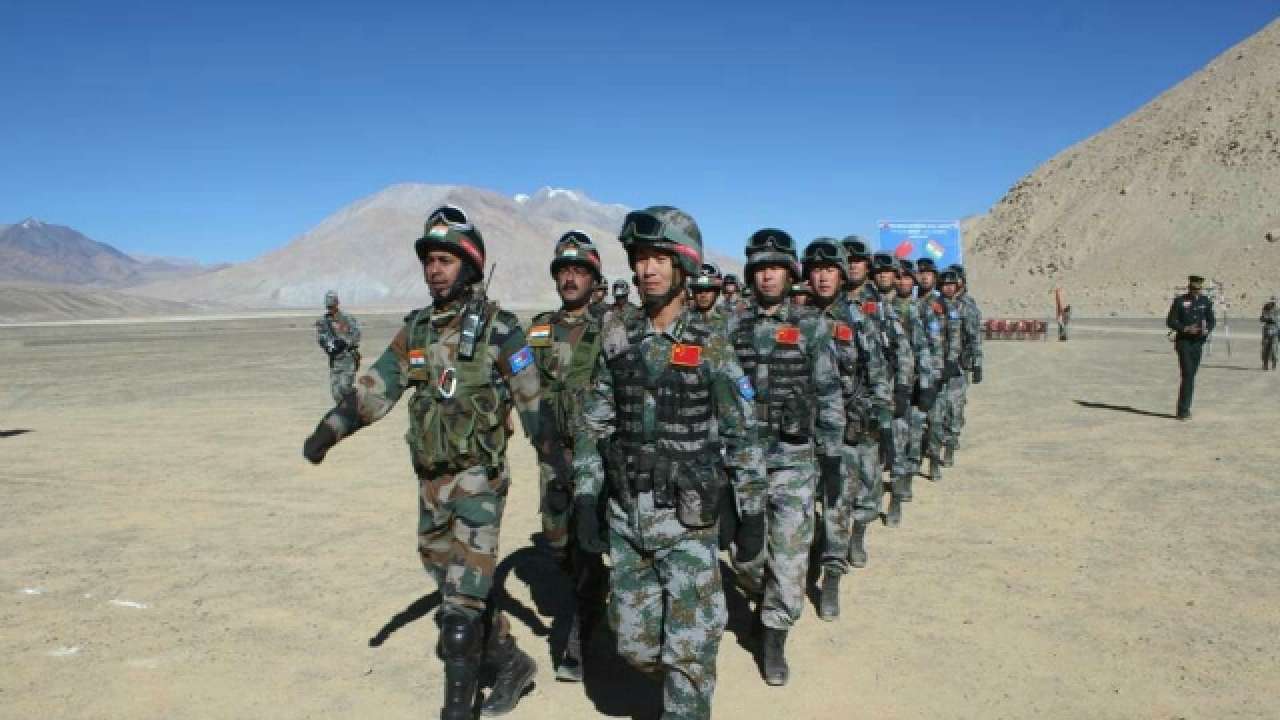
For the very first time since its inception, a fallen soldier of Special Frontier Force gets a public funeral
For the very first time since its inception, a fallen soldier of Vikas Regiment, Special Frontier Force gets a public funeral.
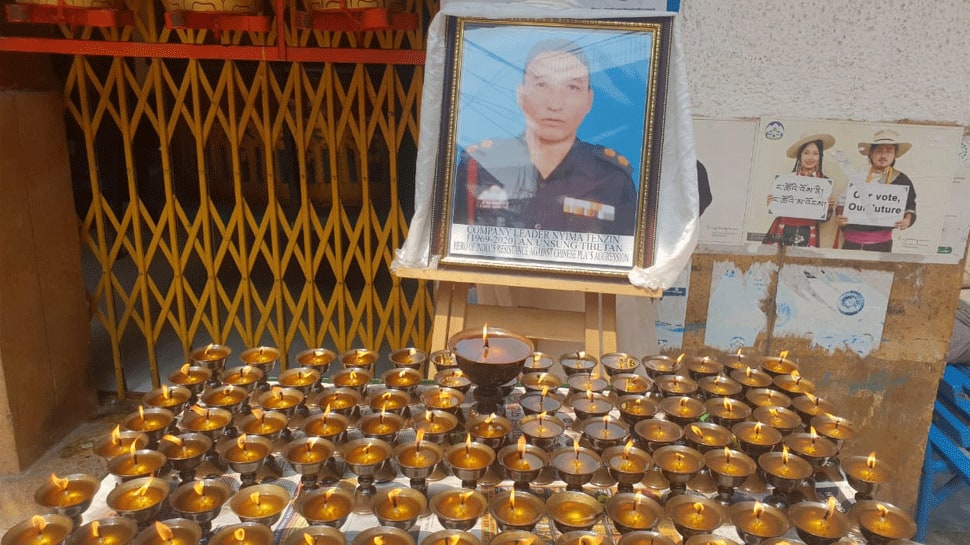
I have been demanding for a long time to give public recognition to the fallen soldiers of Special Frontier Force. Finally, on September 07, 2020, Company Leader Nyima Tenzin of Special Frontier Force has departed from us with due public honor.This is the first time a Tibetan’s sacrifice is known to all of India.
For the very first time since its inception, a fallen soldier of Vikas Regiment, Special Frontier Force gets a public funeral.
India’s Special frontier force’s Tibetan soldier Nyima Tenzin cremated with full public honor
This is the first time a Tibetan’s sacrifice is known to all of India. Army officials pay tribute to Vikas Regiment, Special Frontier Force (SFF) commando Nyima Tenzin during a wreath-laying ceremony in Devachan, Leh.(PTI)
With his body wrapped in Indian and Tibetan flags, Tenzin was cremated as the atmosphere reverberated with slogans like “Bharat Mata Ki Jai”, “We salute Indian army”. The Indian National anthem was also sung along with the anthem of Tibetan Government in Exile which is considered as the Tibetan National Anthem written in 1950.
Senior Bharatiya Janata Party (BJP) leader Ram Madhav’s presence at the official funeral of a Tibetan soldier from the secretive Special Frontier Force (SFF) on Monday created a flutter in diplomatic and political circles amid the border standoff with China.
The funeral of SFF Company Leader Nyima Tenzin, killed in a landmine blast in an operation along the Line of Actual Control (LAC) during August 29-30, was held at Leh in the union territory of Ladakh. The funeral cortege was joined by scores of cars and motorcycles and people waving the Indian and Tibetan flags.
Tenzin’s coffin, carried in an army truck, was draped in the Indian tricolor and Tibetan flag, which were handed over to his widow at the funeral. Experts noted this was probably the first time an SFF personnel who died in action was given a public funeral, complete with military honors and a volley of shots by a ceremonial guard.
Following the protocol for those killed in action, Indian Army troops folded the two flags and handed them over to Tenzin’s wife. Tenzin had 33 years of service in the SFF. He leaves behind his wife and three children. This is the first time a Tibetan’s sacrifice is known to all of India. Tenzin Yangkey, a student, said that they came to the funeral to pay tributes to a man who sacrificed his life for India. “We are all proud of him,” Yangkey said.
During the operation, another junior soldier Tenzin Loden, 24, was critically injured in the same explosion, and is currently undergoing treatment at the military hospital in Leh, Ladakh. The injured Tenzin Loden is from the same settlement.
BJP national general secretary Madhav posted photos of the funeral and paid tribute to Tenzin on Twitter but subsequently deleted the tweet. Screenshots of his tweet, which were widely shared, showed he had posted: “Attended [the] funeral of SFF Coy Ldr Nyima Tenzin, a Tibetan who laid down his life protecting our borders in Ladakh, and laid a wreath as a tribute. Let [the] sacrifices of such valiant soldiers bring peace along the Indo-Tibetan border. That will be [the] real tribute to all martyrs.”
People present at the funeral shouted slogans such as “Bharat Mata ki jai”, “Tibet desh ki jai”, “Vikas Regiment zindabad” and “We salute Tenzin”. SFF is also known as Establishment 22 and Vikas Regiment. Banners put up at the funeral site by SFF ex-servicemen described Tenzin as a soldier who “sacrificed his life to protect his second homeland India fighting common enemy China”.
Madhav spoke to the media at the funeral, saying in Hindi that he hoped Tenzin’s sacrifice “will bring peace to the border” and that “efforts are on to end the tension”. He added, “We hope peace will be restored soon.”
People familiar with developments said Madhav hadn’t attended the funeral as a representative of the government. On Sunday, Madhav began a two-day visit to Ladakh, a union territory that was carved out of the erstwhile state of Jammu and Kashmir, whose special status was scrapped in August 2019.
However, the move marks a shift from the government’s reported decision in early 2018 asking officials and leaders to skip events which were being organised at the time to mark the Dalai Lama’s 60 years in exile. As the government worked to improve ties with China, especially through the mechanism of informal summits, the Tibet issue was largely sidelined.
SFF was raised with former Tibetan guerrillas in 1962 and went on to see action during the 1971 war with Pakistan that led to the creation of Bangladesh and the 1999 Kargil conflict. It is led by army officers and most of its personnel are men of Tibetan origin.
Amitabh Mathur, a former special secretary in the Research and Analysis Wing (RAW) who advised the government on issues related to Tibet, said it made sense for India to use a force such as SFF in the current scenario because of the special skills of its personnel. “They are used to operating at high altitudes and it would be an enormous waste if they are kept away from the terrain where they are most useful,” he said.
However, he said the Indian side will have to ensure that their use is followed up with other messages that reach the overall Tibetan community and a consistent policy. “There has to be some sort of gesture, an overt sign and this message should reach the Tibetans in Tibet,” he added.
The funeral this morning of Company Leader Nyima Tenzin, the Tibetan-Indian soldier in the Special Frontier Force who laid down his life fighting for India against the Chinese PLA.
This is the first time a Tibetan’s sacrifice is known to all of India.
#WATCH People raise 'Bharat Mata ki Jai' chants at the funeral of Special Frontier Force Commando Nyima Tenzin in Devachan, Leh today. He had lost his life in an anti-personnel mine blast near the Line of Actual Control in the last week of August pic.twitter.com/K37bvawvdw
This is the first time a Tibetan’s sacrifice is known to all of India.
Right now in Leh, a final farewell to Vikas Regiment company leader Nyima Tenzin, who died during the August 29-30 mission to Kaala Top. pic.twitter.com/dgdY5bUWAu
This is the first time a Tibetan’s sacrifice is known to all of India.This is the first time a Tibetan’s sacrifice is known to all of India. This is the first time a Tibetan’s sacrifice is known to all of India. Indian soldiers pay their respects during the funeral of their comrade, Tibetan-origin India’s special forces soldier Nyima Tenzin in Leh on September 7, 2020. (Mohd Arhaan Archer/AFP/Getty Images)
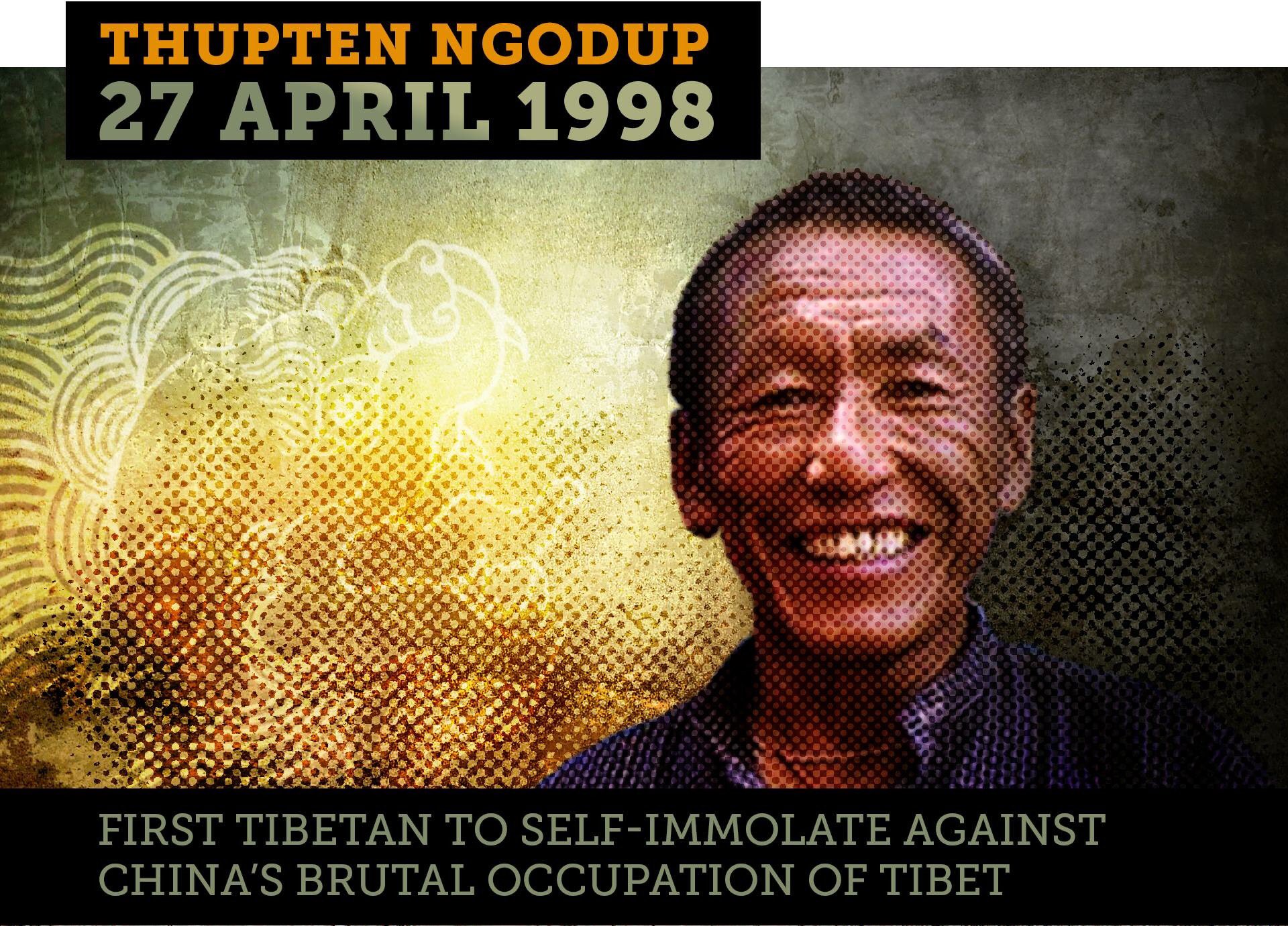
The term ‘Martyr’ is related to Greek word ‘martys’ which means a witness, Latin word ‘memor’ which means mindful, and Sanskrit word ‘smarati’ which means (he) remembers. Hence, ‘Martyr’ as a person has to be described by sharing as to what that person witnessed, as to what he(or she) is mindful, and as to what he remembers. Martyr is a person who dies as consequence of exposure to long-continued suffering, torment, or torture. Martyr is a person who remembers his experience or experience of others who suffer and suffered. Martyr is a person who chooses to suffer or die rather than give up his faith or principles. Martyr is a person who assumes an attitude of self-sacrifice or suffering in order to arouse feelings in others for his faith or belief.
TIBET AWARENESS – NGABA – TIBET’S ROAD TO MARTYRDOM: MARTYR IS A WITNESS, A PERSON WHO REMEMBERS AND IS MINDFUL, HE/SHE ADHERES TO FAITH AND PRINCIPLE AND USE SELF-SACRIFICE TO GET PUBLIC ATTENTION TO FAITH AND PRINCIPLE, OR THE MATTER OF BELIEF THAT NEEDS CAREFUL UNDERSTANDING.
TIBET AWARENESS – NGABA – TIBET’S ROAD TO MARTYRDOM: TIBETAN SELF-SACRIFICE IS RESISTANCE TO TIBET’S MILITARY OCCUPATION. MARTYRS DEMAND NATURAL RIGHTS TO FREEDOM, AND OPPOSE SUPPRESSION BY A FOREIGN RULER.
The news media often use the term “SELF-IMMOLATION” which usually means burning oneself in a public place, an act of suicide that attracts public attention. I understand ‘Martyrdom’ as principled resistance to injustice. Man is a Moral Being and by nature man cannot tolerate unfairness and unjust actions that he witnesses or experiences, or remembers. Tibetans are asking for fairness, justice and are opposing suppression, and oppression imposed by Red China’s prolonged or long-continued illegal, immoral military occupation of their Land. These Tibetan Martyrs arouse feelings in the hearts of others who come to know about their actions of Martyrdom. The feeling I experience is, Tibetan faith, belief in Freedom is their Natural Right, and no power on Earth can take away their Natural Right to be free in a Land where they are born with no shackles.
IMMOLATIONS ARE JUST ONE SIGN OF TENSIONS OVER COMMUNIST RULE
By BARBARA DEMICK
By the time Dongtuk arrived, the body was gone. A pack of matches lay on the ground, the only sign of the horror that had taken place. Dongtuk picked them up and fingered them. About an hour earlier, one of the teenager’s best friends had siphoned gasoline from a motorcycle, swallowed part of it and doused himself with the rest. Then he had set himself on fire. Standing at the scene near Kirti Monastery, where both had been apprentice monks, Dongtuk, then 17, considered the pack of remaining matches. “At that point, I felt no doubt at all,” he said. “I wanted to die myself.”
Dongtuk’s friend, Phuntsog, was among the first of more than 140 ethnic Tibetans who have taken their lives through self-immolation, an act designed to telegraph the desperation of a people so marginalized as to have nothing left to lose.
Six million Tibetans live in China, many chafing under the stifling rule of the Communist Party.
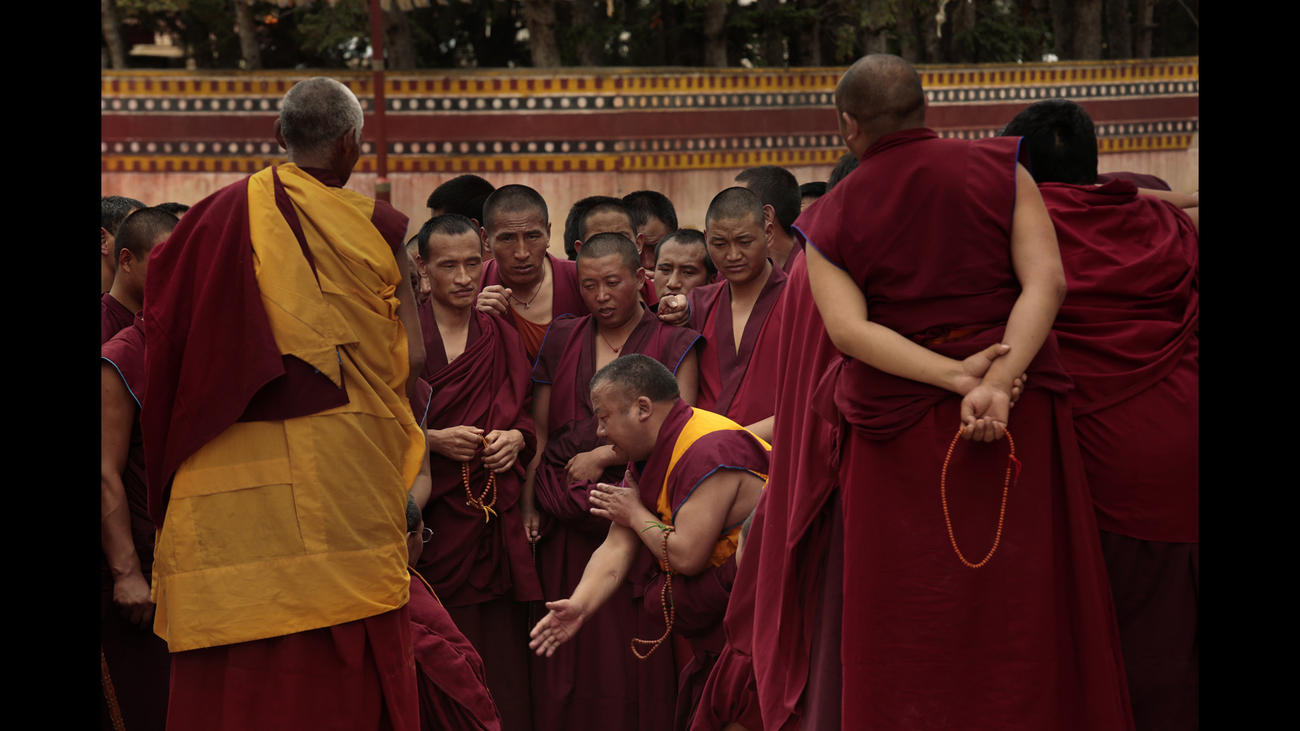
TIBET AWARENESS – NGABA – TIBET’S ROAD TO MARTYRDOM: Tibet Self- Immolations. Monks at Kirti Monastery, Aba, Sichuan Province.
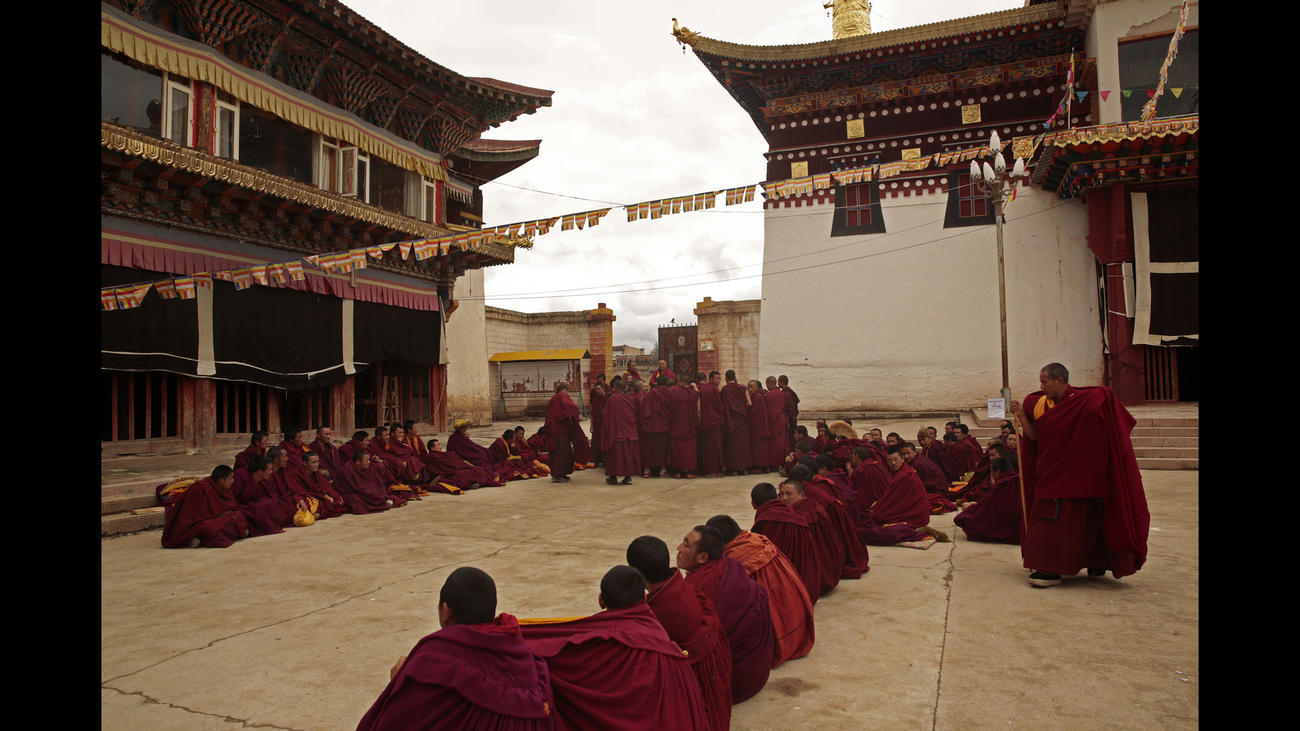
Caption Tibetan monks Carolyn Cole / Los Angeles Times Monks gather for debates in the courtyard at Kirti Monastery in Aba, in Sichuan province.
Tibet Awareness – Ngaba -Tibet’s Road to Martyrdom: Tibet Self-Immolations. Dongtuk, of Aba, Sichuan in Dharamsala, India.
Caption Tibetan monk Carolyn Cole / Los Angeles Times Dongtuk, a Tibetan monk now living in Dharamsala, India, considered self-immolation after his best friend committed suicide by that method, as many Buddhists have in acts of protest against the Chinese government.
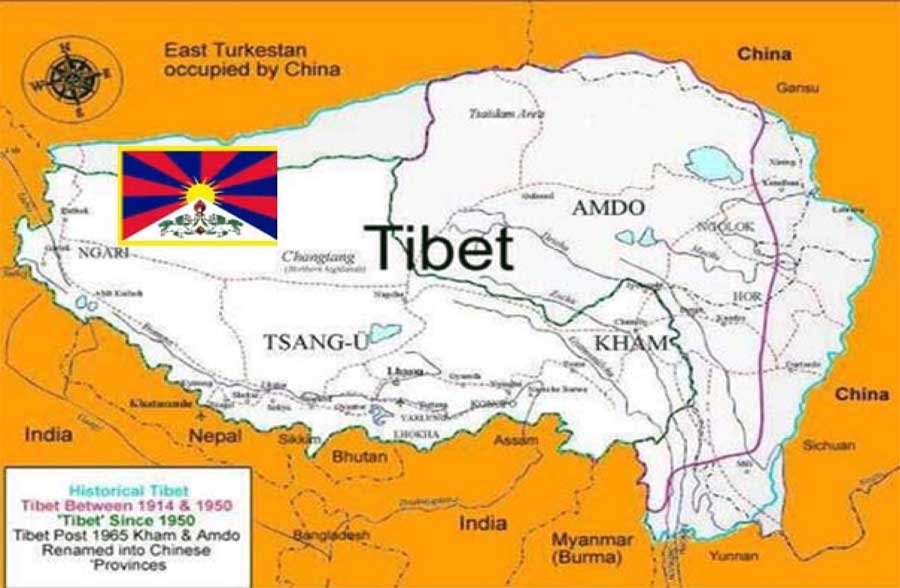
In few places are the tensions so palpable, or the resistance so stubborn, as in Aba, known as Ngaba in Tibetan. With only 65,000 people, Aba has been an outsized source of trouble for the Chinese Communist Party for almost as long as the party has been in existence.
To avoid outside scrutiny, Chinese authorities restrict visits by foreigners to Aba unless chaperoned by the government. Nevertheless, a reporter from the Los Angeles Times has visited several times in the last few years, trying to understand what made the outwardly tranquil town such an engine for unrest.
Tibetans complain that they live, essentially, as second-class citizens in their own land. Their language, culture and faith are all under pressure. They attend substandard schools and, if they manage to get an education, lack the same job opportunities as the Han, the Chinese majority enjoy.
“The town is now packed with Chinese — the vegetable sellers, the shopkeepers, the restaurant owners. They don’t speak Tibetan at all,” said Dolma, 18, whose parents are farmers and, who, like many Tibetans, uses only one name. “My parents can barely speak Chinese. When they go to town to buy things, they can barely communicate.” Aba is in China’s Sichuan province, outside what is known as the Tibet Autonomous Region but inextricably part of what Tibetans consider their homeland. The 10-hour drive from the provincial capital, Chengdu, follows winding canyons that eventually open up, at 12,000 feet, to grassland under a horizon-to-horizon stretch of Himalayan sky. Aba is a special place. Three generations have suffered from the excesses of the Chinese Communists, and their attitudes have been passed down from generation to generation. – Kirti Rinpoche, the head of the Kirti Monastery who lives in exile in India
The town is composed of one long road, officially Route 302, although Tibetans now call it the “Martyr Road.” It is lined on both sides with red-metal shuttered storefronts — tea shops, shoe stores, businesses selling cellphones. Tibetan men wear long cloaks over their jeans; the women favor ankle-length skirts and floppy hats, with glossy black braids that cascade down their backs, and an occasional flash of coral jewelry. Rising up like bookends on each side of Aba are gold-roofed Buddhist monasteries with white stupas, or prayer towers, that loom over the skyline. The largest, Kirti, is now known as the place people go to set themselves on fire.
After any self-immolation or protest, Aba is transformed into a military garrison. Checkpoints seal off travel in and out of town. Out come the security forces: the People’s Liberation Army and the Chinese paramilitary forces known as wujing in khaki uniforms, the SWAT teams in black and the regular police in blue. Along with the riot shields, guns and batons, they carry another essential tool: a fire extinguisher.
Huge new compounds girded by barbed wire house the police and courts. In a 2011 analysis, Human Rights Watch reported government spending on security in Aba had increased 619% between 2002 and 2009.
“You always feel like you’re being watched,” said Dawa, a widow in her 50s who lived in Aba near the Kirti Monastery until four years ago. “I was never interested in politics. I never get involved. But at the back of my mind, I never felt relaxed. I always thought I could be arrested any moment.”
Aba has a long history as a town of troublemakers. For centuries, it was ruled by tribal kings who reported neither to the Tibetan government in Lhasa nor to the Chinese. In the 1930s, Aba was the first place where Tibetans collided with Mao Tse-tung’s Red Army, which was fleeing Chiang Kai-shek’s Nationalists in what became known as the “Long March.”
Aba became a center of resistance in 1959, and nomads fanned out into the mountains, launching guerrilla raids on Chinese installations with ancient hunting rifles or spears fashioned by local blacksmiths. In 1966, Mao’s Cultural Revolution brought more violence. Monasteries were turned into warehouses or government buildings or demolished. Monks were forced to shed their robes and live lives for which they were ill-prepared.
The terror ended with Mao’s death in 1976. The Chinese government started rebuilding the monasteries. With the country’s economic opening, Tibetans saw their standard of living rise along with that of others in China.
Aba became famous in the 1980s for exporting entrepreneurs, who spread out across China and beyond, selling Tibetan products such as wool and medicinal herbs and introducing Tibetans to blue jeans, coffee and the Sony Walkman.
Even as they prospered, the Tibetans couldn’t help but notice the Chinese were getting even richer. And the divide grew as the government began denying travel permits to Tibetans.
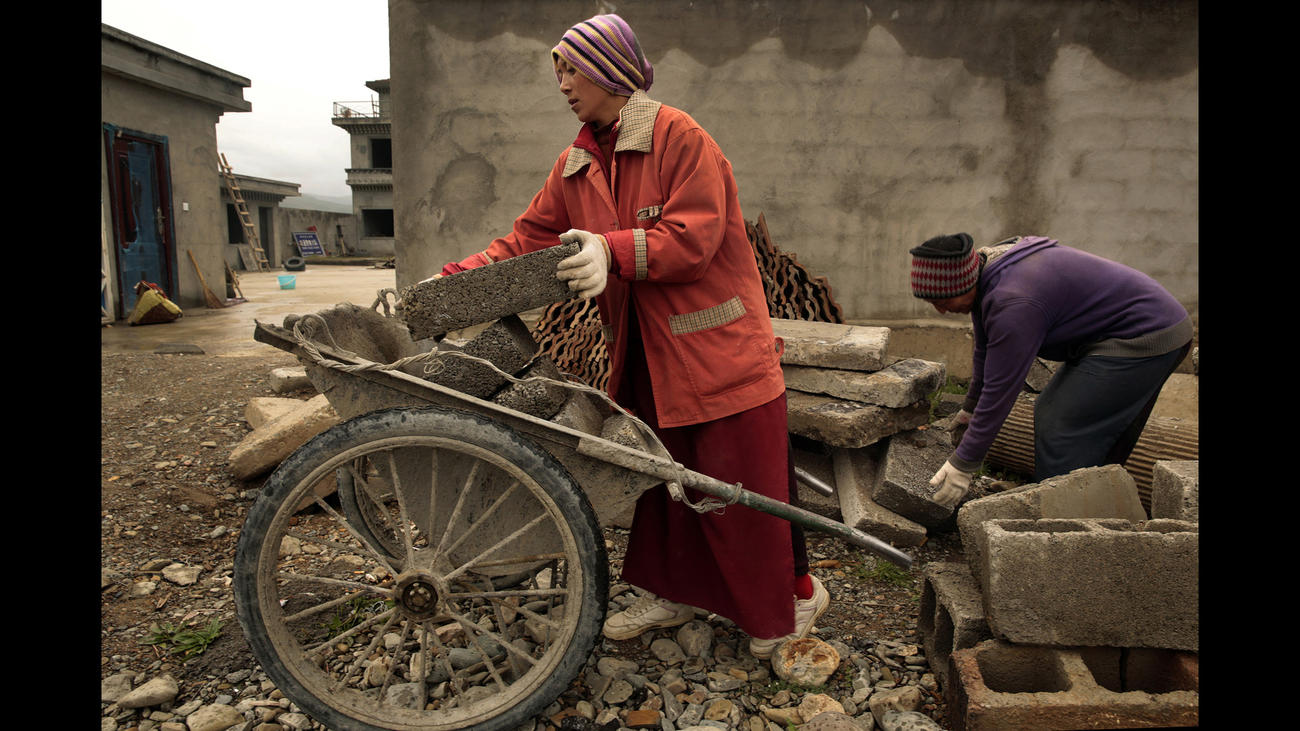
“The Han people have all the advantages. All the factories are located in Han areas. We don’t have passports so we can’t travel across borders,” complained one envious businessman. Yangchen, a rail-thin Tibetan woman in her early 30s pushing a wheelbarrow of concrete blocks up a staircase, said she was unable to find anything other than manual labor despite being able to speak excellent Chinese. Even with that, she said, the going rate for such work for Tibetans, about $16 a day, was half of what ethnic Chinese are paid. “Most of the businesses are owned by Han Chinese,” she added, “so they naturally prefer to hire other Chinese.”
The undercurrent of unhappiness with Chinese rule exploded on a Sunday morning in March 2008, in the courtyard in front of the Kirti Monastery, where monks were conducting prayers for the upcoming Tibetan New Year.
In the middle of the chants, one monk started speaking about independence. People shouted along, raising their fists in the air, ignoring the entreaties of older monks. It degenerated into a riot, with Tibetans hurling rocks at the police and trashing Chinese-owned shops, including the fanciest department store, which happened to be owned by a former People’s Liberation Army soldier.
Chinese troops used tear gas and smoke bombs, then switched to live ammunition. At least 18 Tibetans were killed, including a 16-year-old schoolgirl. It was a galvanizing moment for a small town in which almost everybody knew somebody who died. Dhukar, now 18, a slip of a teenager with a ponytail and chipped nail polish, was a student at a Chinese-language public school and so pro-Chinese that she could have been a poster child for the Communist Party. She spoke Chinese better than Tibetan, rarely wore traditional clothing and loved the war movies on television with the matinee idols playing Chinese soldiers. Watching the riot from a second-floor tea shop overlooking the main street, Dhukar was horrified to see Tibetans throwing rocks at the soldiers. “I thought: ‘These soldiers are here to protect us,'” she said.
But she found out later that three young people she knew had been shot, two fatally. That night the Chinese television news “talked only about Tibetans throwing rocks, nothing about Tibetans getting shot,” she said. “I knew it was lies and that I couldn’t believe Chinese television again.”
Dongtuk was a 14-year-old monk at Kirti at the time. After the protests, the monastery was placed under siege, with barracks built on the grounds. The school he had attended was closed. Police conducted regular inspections, searching for banned photos of the Dalai Lama, the exiled Tibetan spiritual leader. A closed-circuit camera was erected directly outside Dongtuk’s window. “It was really a period of crisis,” he recalled.
The first self-immolation took place in February 2009. Religious authorities were threatening to prohibit the monastery from observing a scheduled prayer ceremony, especially infuriating one monk in his late 20s who set himself on fire. That monk, named Tapey, didn’t die, but was left badly disabled and in police custody. There were no more self-immolations in Aba until 2011, when Dongtuk’s friend, Phuntsog, killed himself.
Dongtuk explained why he nearly followed suit. “I thought somehow if I self-immolated, the news would spread overseas and it would gain support for Tibetans, and in the end it would help people live happy and peaceful lives,” he said.
Although he ultimately held back, many others didn’t. Among them were Dongtuk’s half-brother and Phuntsog’s brother, both of whom later burned themselves to death. The most recent self-immolator in Aba was a 45-year-old barley farmer with seven children. He set himself on fire April 16 in the courtyard of his home so that firefighters would not be able to reach him before he perished.
Many of those who died were the descendants of Tibetans who had fought the Chinese in earlier generations. Phuntsog, 20, was the grandson of a resistance leader who fought the Chinese Communists in the late 1950s.
“Aba is a special place. Three generations have suffered from the excesses of the Chinese Communists, and their attitudes have been passed down from generation to generation,” said Kirti Rinpoche, the head of the Kirti Monastery, in an interview this year in India, where he lives in exile.
Out of 140 self-immolations in the last several years, more than a third took place in and around Aba. Hundreds of Aba residents have been arrested — and at least a dozen are still in prison — on homicide charges for helping self-immolators. These include shopkeepers who sold gasoline and people who helped with Buddhist funeral rites.
A 29-year-old homemaker, Dolmatso, was arrested in 2013 and held for more than 18 months on charges of being an accessory to murder, according to her brother. She had been on her way to pick up her daughter from school when a man burned himself.
“My sister didn’t know this man,” said Kunchok Gyatso, a Tibetan activist who works with an association of former political prisoners in Dharamsala, India. “Tibetans tried to load his corpse into a truck so that they could do a Buddhist funeral. She was helping.”
One result of the recent turmoil has been growing self-awareness of Tibetan identity. Unable to directly confront the Chinese, Tibetans have begun low-key initiatives to preserve their language, clothing and Buddhist traditions.
On June 21, when the Dalai Lama turned 80 on the Tibetan calendar, Aba residents dressed in Tibetan clothing to show their respect. Tibetans in Aba are trying to bolster their mother tongue by banishing Chinese from their vocabulary. A computer is now a tsekor instead of a diannao, and a cellphone is a kapor, not a shouji.
“We keep a jar around so that if you say a Chinese word by mistake, you pay a fine,” usually about 15 cents, said a cultural activist in his 30s who asked not to be quoted by name because he feared Chinese authorities. “Then we will take the money in the jar and go out and have a meal together.”
Tibetans say the Chinese government has been paying more attention to the needs of Tibetans since the immolations began. Photos of the Dalai Lama were put back last year inside Kirti Monastery and are gradually making a reappearance on shop walls.
A few weeks ago, the prefecture to which Aba belongs organized a trip for journalists to see government-built housing for Tibetan nomads. Reporters were brought to the spacious home of a former nomad who had been the Communist Party secretary for his village and shown a guesthouse displaying large photographs of Mao and the late paramount leader Deng Xiaoping.
Last summer, many nomads could be seen pitching white waterproof canvas tents distributed free by the local government, replacing the bulkier traditional tents made of black felt. The local government also gave out lumber to build pens for yaks and freed up grant money for Tibetans to make additions to their homes.
A 21-year-old college student, Roumo, visiting her nomadic parents during school break, showed off her brand-new iPhone 5, and a solar panel powering a new flat-screen television. “Life has changed so much. We have vehicles, phones, television, electricity,” said Roumo.
Said another Tibetan woman, Lhamo, a semi-literate homemaker in her 30s: “I don’t approve of self-immolation, but I have to admit we are getting more from the government. The self-immolators did make sacrifices to improve our lives.” Still, she said many of her neighbors remain desperately poor.
“In my village, people eat nothing but tsampa,” she said, referring to roasted barley, a Tibetan staple. “They plant barley and before it comes in, they don’t have much to eat.” And even among those who are doing well, resentments sometimes simmer. Tenzin is a middle-aged businessman who has a considerable real estate portfolio, drives an imported SUV and carries a recent model iPhone.
“I have everything,” he said. “Everything but my freedom.”
barbara.demick@latimes.com
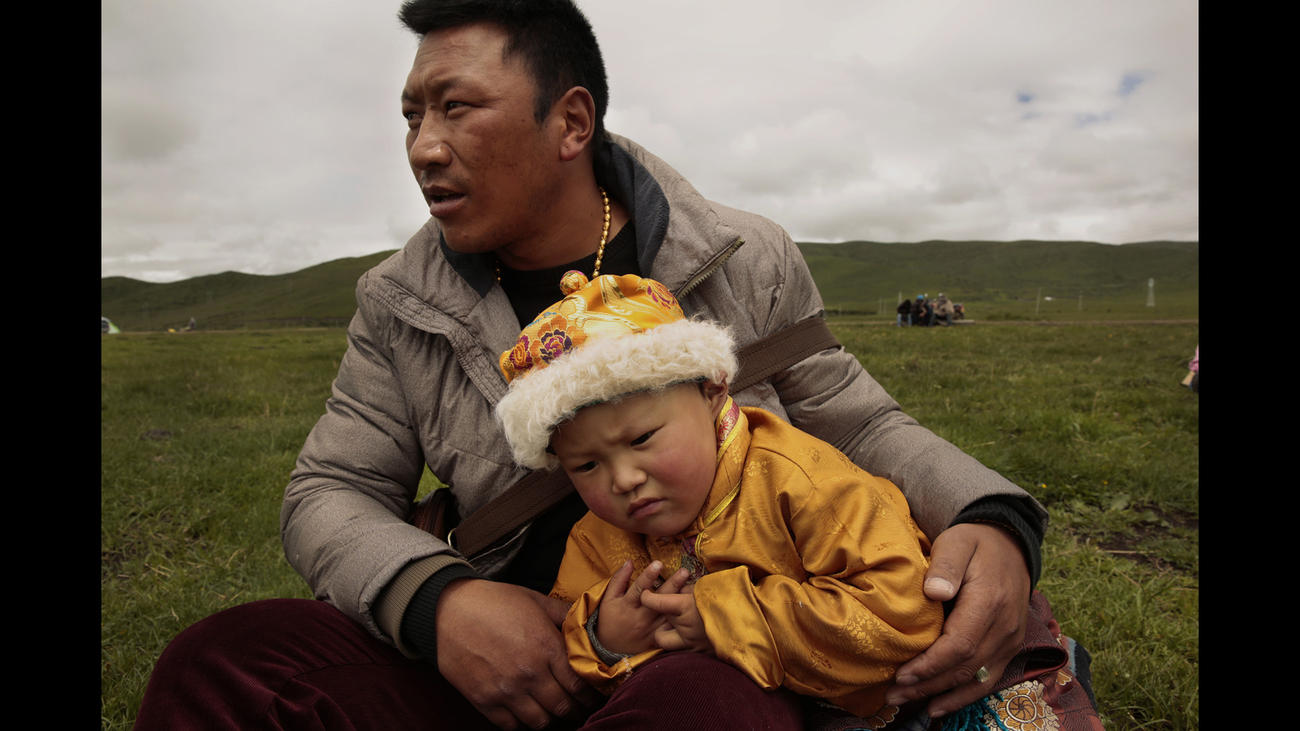
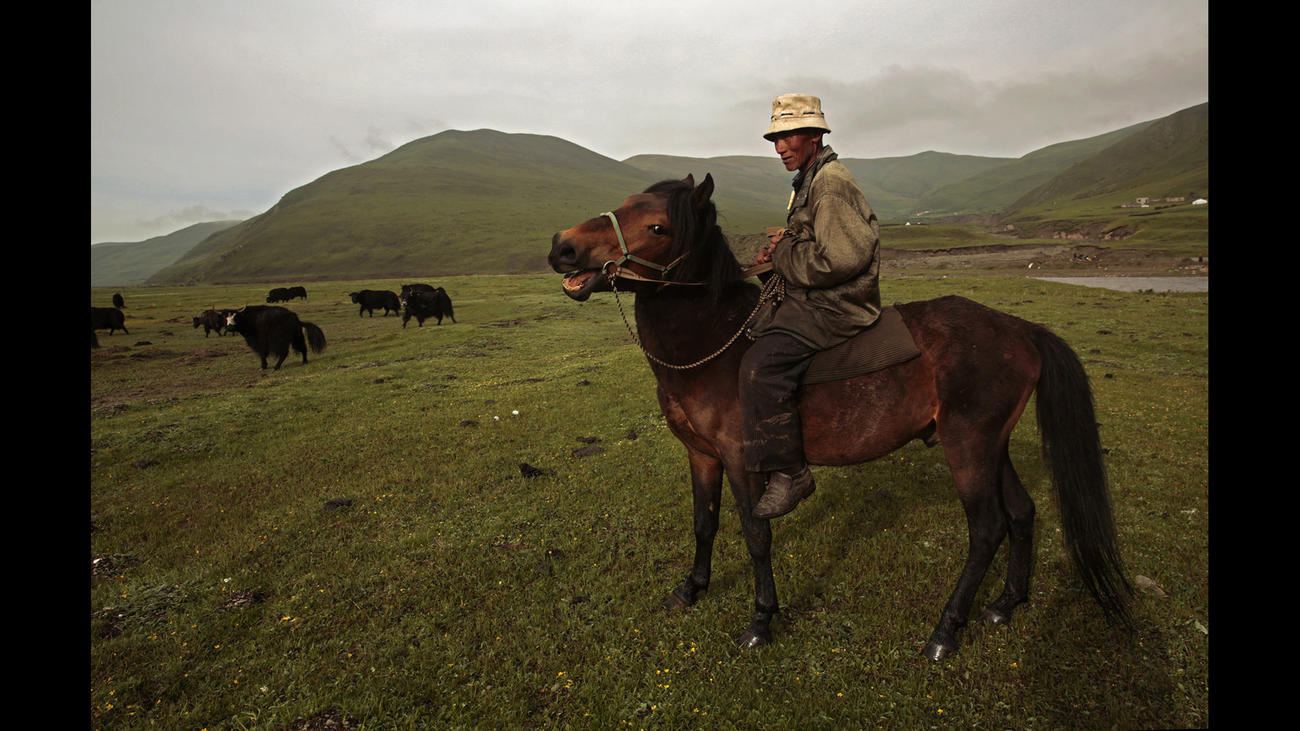
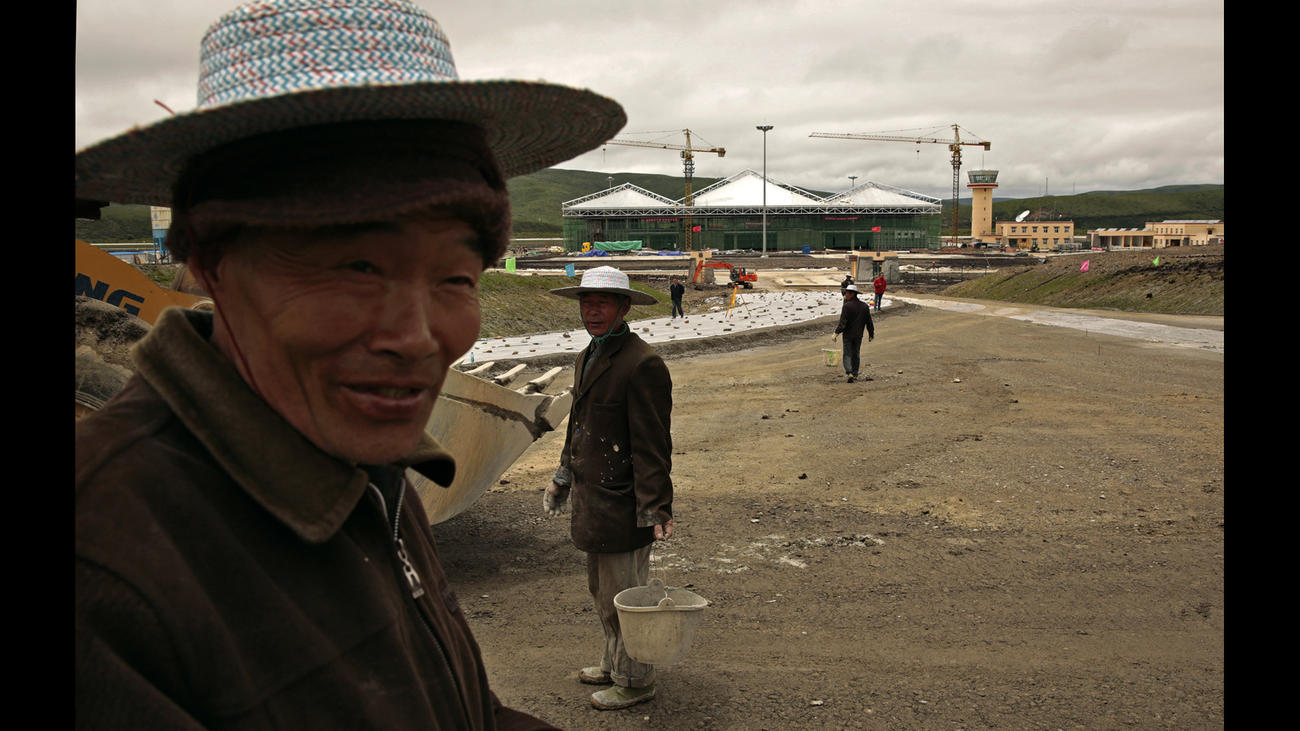
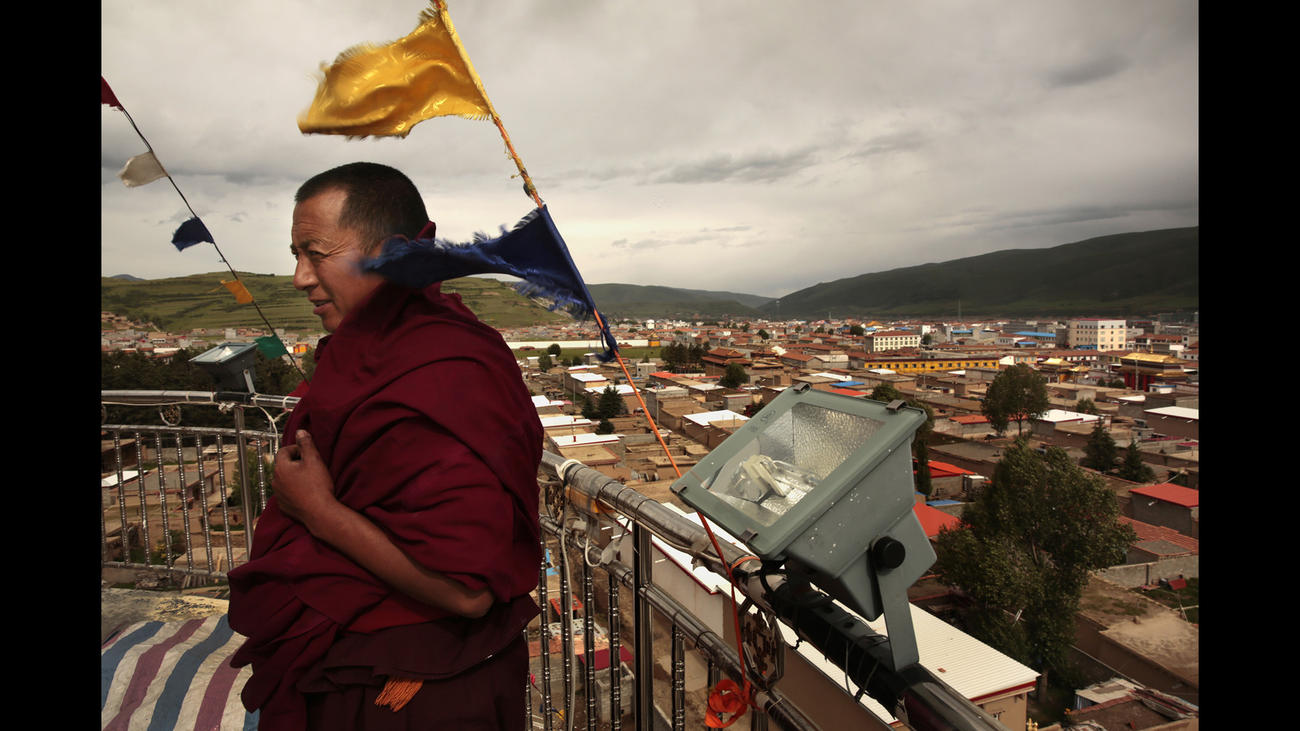
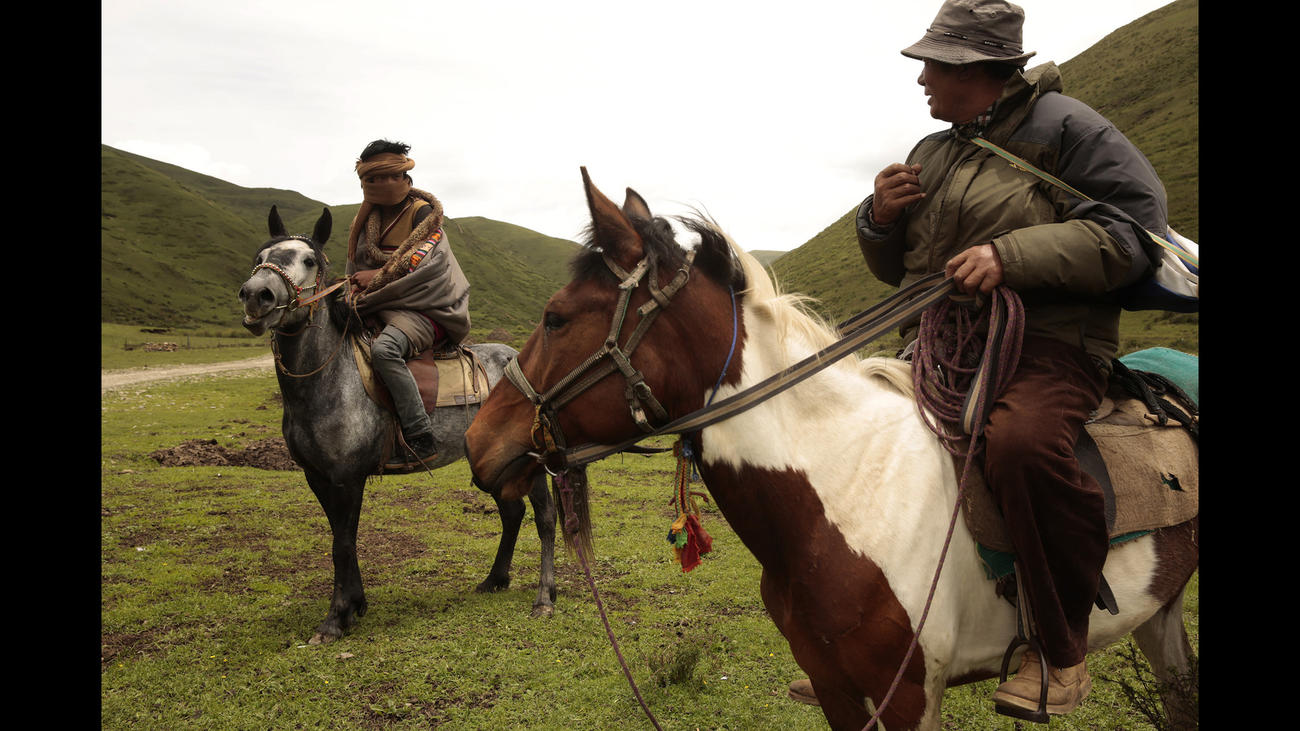
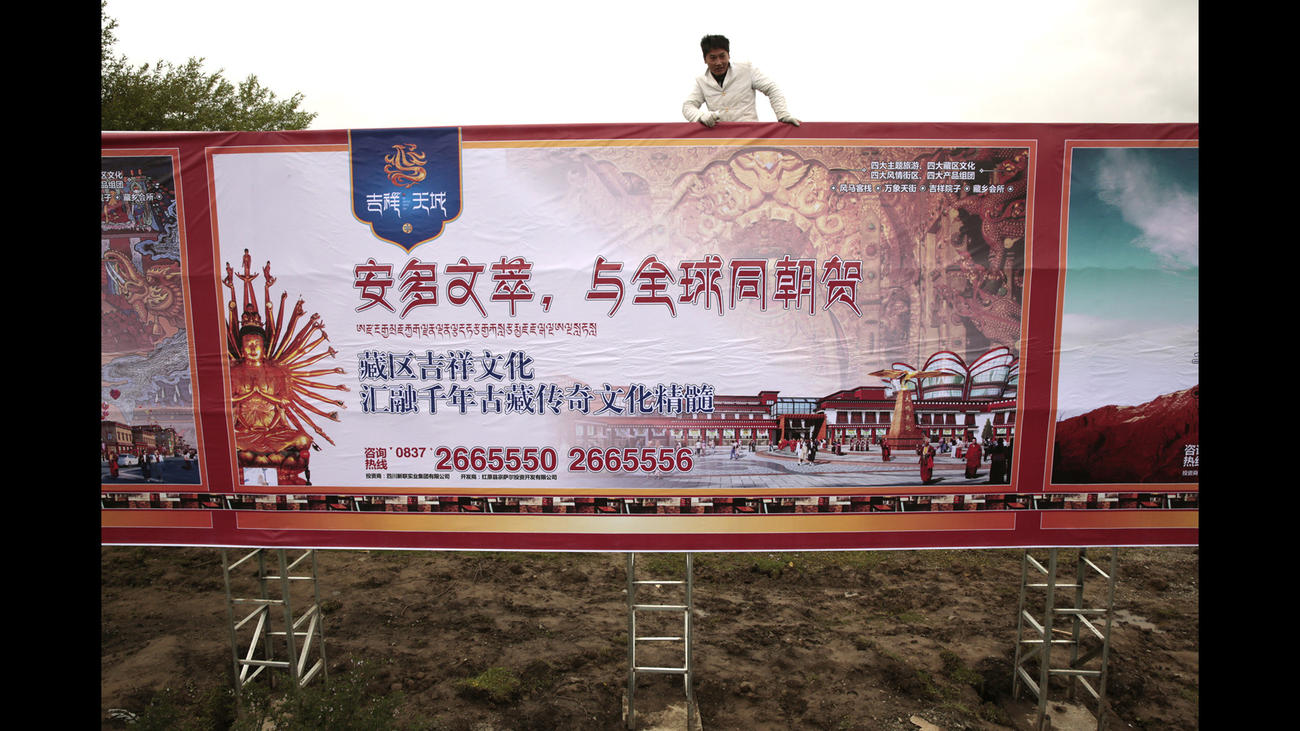
TIBET AWARENESS. TIBET’S ROAD TO MARTYRDOM. FATHER AND SON OF ANQU TOWN.TIBET AWARENESS – TIBET’S ROAD TO MARTYRDOM. FIELD WORKER NEAR ABA, SICHUAN.TIBET AWARENESS – TIBET’S ROAD TO MARTYRDOM. NATURAL LIFESTYLE . HERDING.TIBET AWARENESS – TIBET’S ROAD TO MARTYRDOM. HONGYUAN, NEW AIRPORT TO PROMOTE TOURISM WHILE TIBETANS LIVE IN PAIN AND MISERY.TIBET AWARENESS – TIBET’S ROAD TO MARTYRDOM. KIRTI GOMPA, SICHUAN.TIBET AWARENESS – TIBET’S ROAD TO MARTYRDOM. KIRTI MONASTERY, ABA, SICHUAN FOUNDED IN 1472.TIBET AWARENESS – TIBET’S ROAD TO MARTYRDOM: TIBETAN NOMADS OF MEIRUMA VILLAGE. TIBETANS LIVED FOR CENTURIES ENJOYING AN INDEPENDENT LIFESTYLE WITH NO OUTSIDE INTERVENTION.
TIBET AWARENESS – TIBET’S ROAD TO MARTYRDOM. ORDINARY TIBETANS LIVE THEIR LIVES WITH A SENSE OF DEEP FEAR AS RED CHINA WATCHES THEM ALL THE TIME WITH SUSPICION.
TIBET AWARENESS – TIBET’S ROAD TO MARTYRDOM. FORCED RESETTLEMENT OF TIBETANS TO KEEP THEM UNDER CONSTANT SURVEILLANCE.
TIBET AWARENESS – TIBET’S ROAD TO MARTYRDOM. TIBETANS SUBSIST LIVING ON MENIAL JOBS WHILE HAN CHINESE OWN MOST PLACES OF BUSINESS, TRADE, AND COMMERCE.
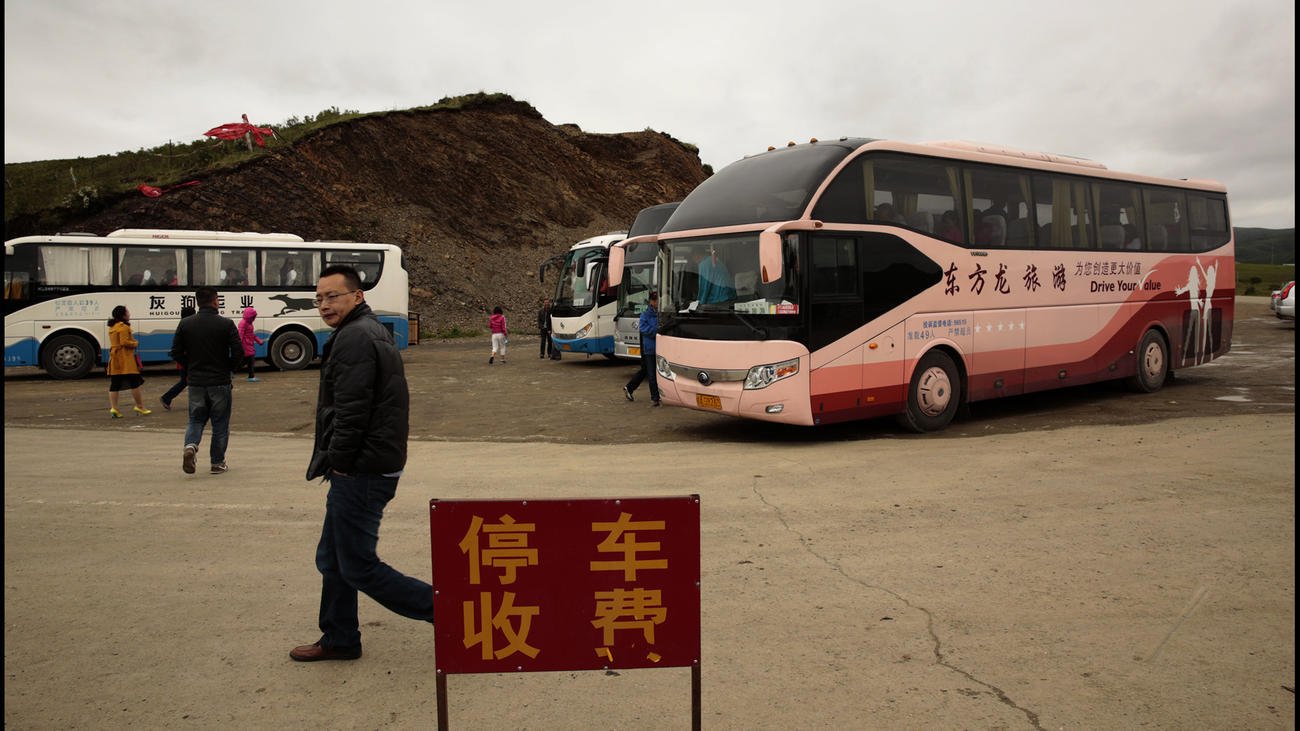
TIBET AWARENESS – TIBET’S ROAD TO MARTYRDOM. TIBET ATTRACTS MILLIONS OF CHINESE TOURISTS WHO REFUSE TO ACKNOWLEDGE TIBETAN SUFFERING.
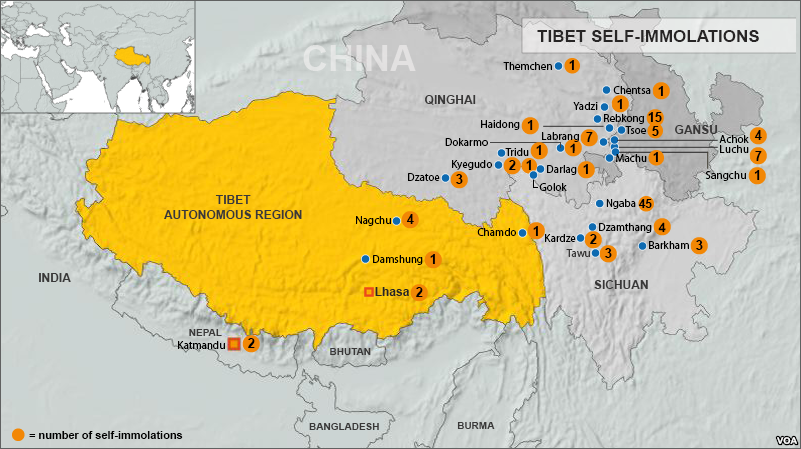
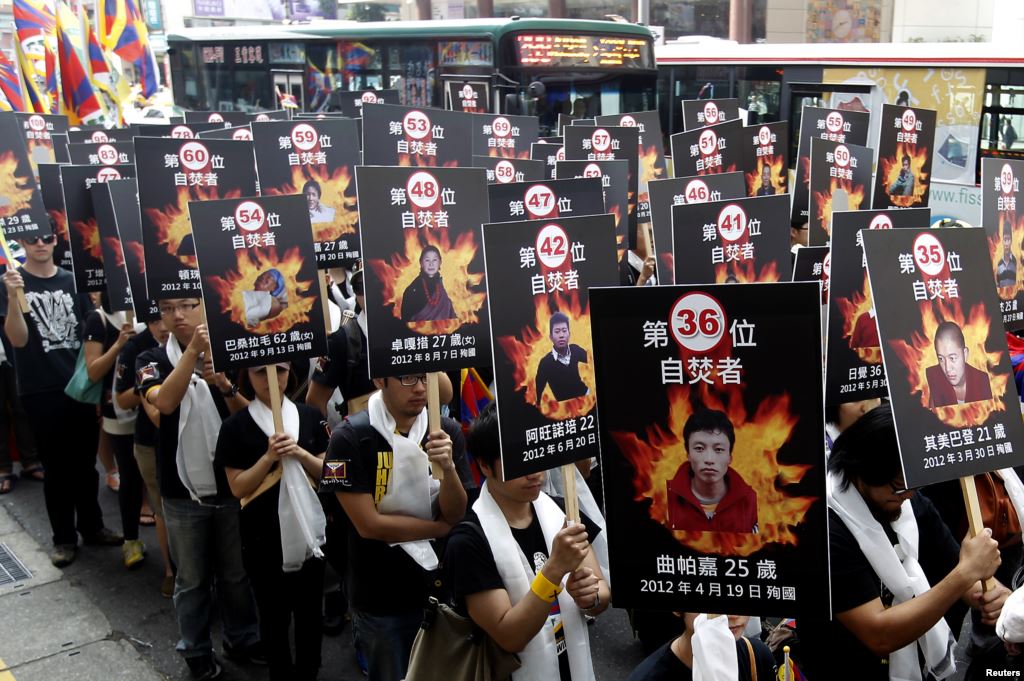
TIBET AWARENESS – TIBET’S ROAD TO MARTYRDOM. MAP OF TIBET SELF-IMMOLATIONS.
Tibet Awareness – Tibetan Self-Iimmolations. Tibet’s Road to Martyrdom.
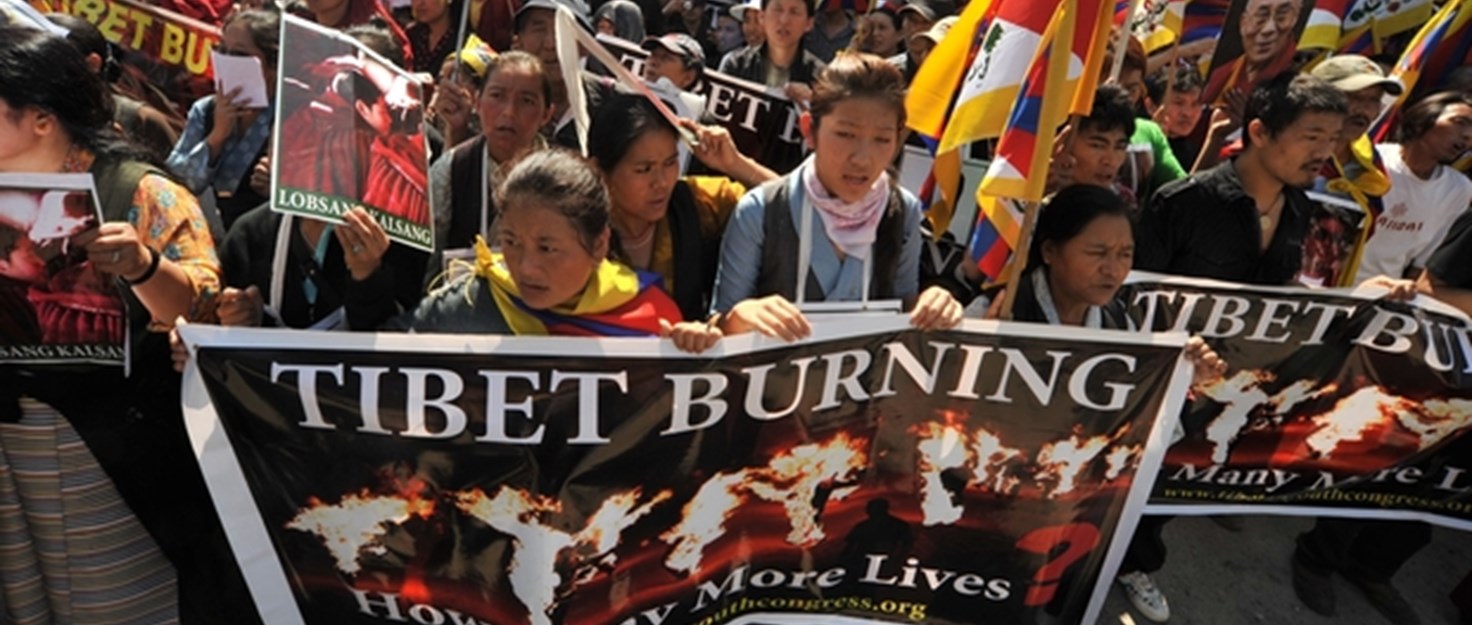
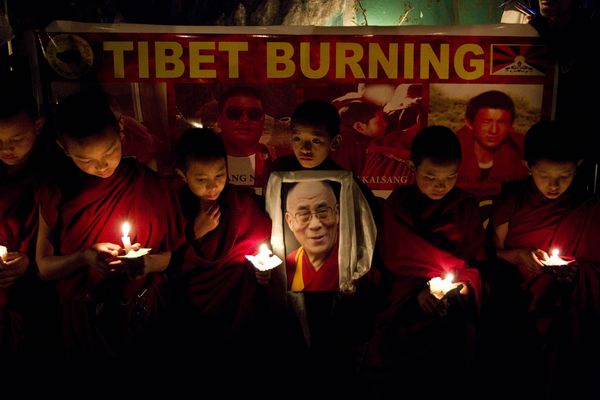
Tibet Awareness – Tibet Burning
TIBET AWARENESS – TIBET BURNING.
I want to share with my readers an article titled “Tibet Burns As The World Watches” by Meg Kneafsey published by Palatinate.
TIBET AWARENESS – TIBET BURNING
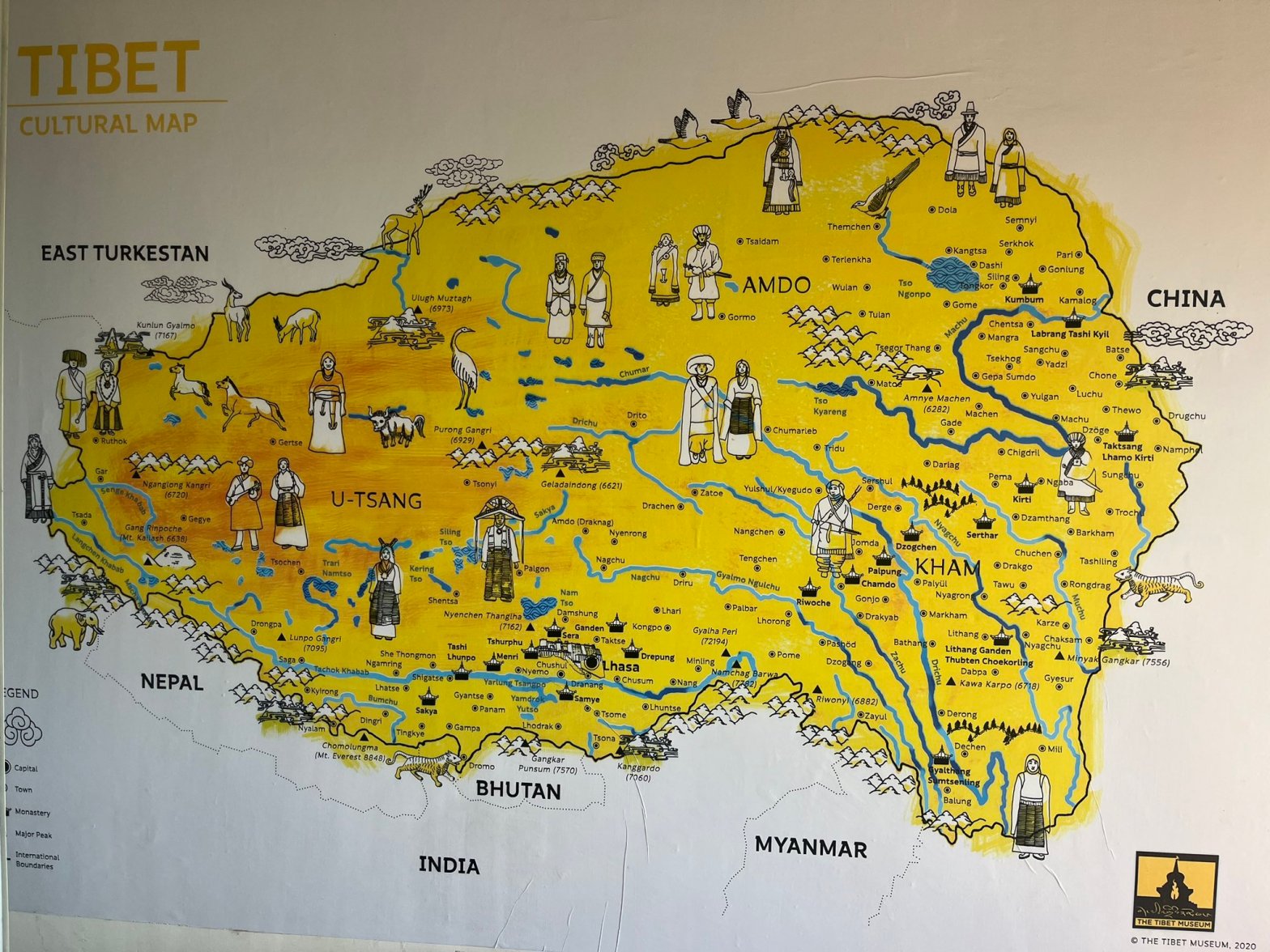
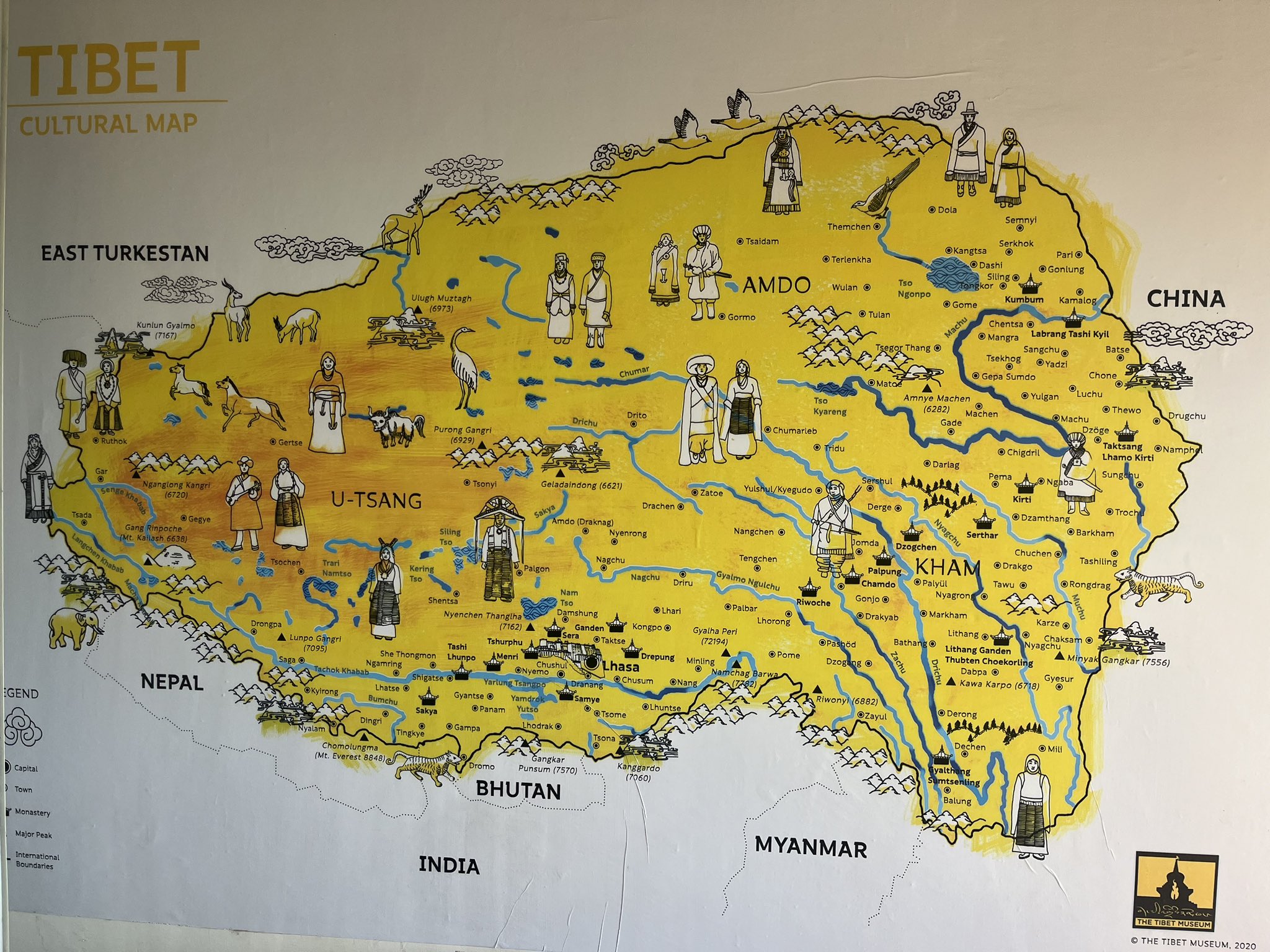
I describe myself as host of the ‘Living Tibetan Spirits’ and I promote Tibet Awareness. To understand the ‘Great Problem of Tibet’, people have to know Tibet as a Land, and Tibetans as People of that Land.
Tibet Burns As The World Watches
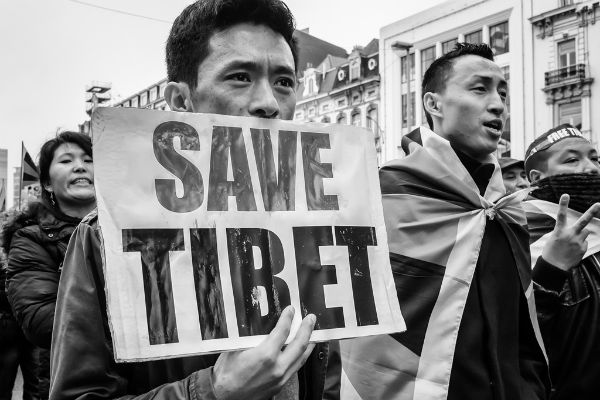
TIBET BURNING – SAVE TIBET.
Palatinate Online » Article » Tibet burns as the world watches 5 October 2015
By MEG KNEAFSEY
On the 27th August 2015, Tashi Kyi – a Tibetan mother of four in her mid-fifties – set herself on fire in protest of China’s policies on demolition and relocation of housing. Tashi was described as a “generous Buddhist” who was “devoted to her family”. Yet her protest was only part of a larger resistance against Chinese control of Tibet, a plight that appears forgotten by the international media.
Since 2009, there have been 138 reported cases of self-immolations in Tibet. Despite that, the 2008 Tibetan protests of Chinese rule in the area resulted in limited international attention and over 80 heads of states still attended the 2008 Beijing Olympic Opening Ceremony, despite calls for a boycott. Tibetans have subsequently begun to resort to more extreme methods of gaining attention.
By burning themselves alive, these Tibetans – often Buddhist monks and nuns, although many are teenagers – hope to attract international recognition. They are fighting against what the Dalai Lama has described as “cultural genocide” by Chinese occupants. The area formally known as ‘Tibetan Autonomous Region’ has been incorporated into the People’s Republic of China since 1950.
Whilst there are allegations of torture, for many it is the cultural and religious oppression that has truly affected Tibetans’ lives and spurred their drastic attempts of resistance. Free Tibet suggests that China has closed 99% of Tibetan monasteries, jailed thousands of monks and banned images of the Dalai Lama. Within schools, students are supposedly taught in Chinese and it is argued that many young people are losing the Tibetan ‘way of life’. While China has referred to the protesters as “terrorists”, human rights groups and the Free Tibet movement claim that there are considerable human rights violations throughout the area that legitimize their resistance. There is evidence of political, religious, and cultural oppression, as well as ethnic discrimination and environmental damage. There is little surprise, therefore, that in 2014 US think tank Freedom House named Tibet among the 12 worst countries in the world on the scale of the denial of freedom.
The facts of the situation are still disputed on both sides, with vocal resistance groups existing only outside Tibet itself. It is claimed that since Chinese occupation, over one million Tibetans have died.
After an unsuccessful uprising in 1959 – the first of four major uprisings over the course of Chinese control – the Dalai Lama has lived in exile in Dharamsala, India. However, many Tibetans see the Dalai Lama as not only their spiritual leader but true political leader.
The reasons for China’s occupation are widely disputed. Independence groups argue that the allure of Tibet’s natural resources, such as its large fresh water supply and abundance of oil and natural gases, brought in Chinese troops. Conversely, there is historical evidence of Chinese control of Tibet as far back as the 13th century, allowing China to make the argument that they are simply ‘reclaiming’ their right in the 1950s.
China also argues that there has been a positive impact on Tibetans’ lives due to Chinese control such as longer lifespans and a higher number of children in school. Furthermore, China maintains that Tibet is internally autonomous due to ethnic-Tibetan, Losang Jamcan, ruling as chairman of the region. The arguments surrounding Tibetan independence are long and complex. However, it is the lack of international dialogue and awareness of the situation that is alarming. Perhaps as the issue does not affect those outside Tibet, it is not deemed important enough for international discussion. Yet it is clear that there are a large number of individuals resorting to drastic actions. Surely this warrants the belief that there is still a conflict of interest? It is now up to the international community to judge for themselves which side they are on.
Photograph: Free Tibet Protest, Luca Sartoni via Flickr
On International Mother Language Day, I call for the Defense of Mother Languages of TibetOn International Mother Language Day, I call for the Defense of Mother Languages of Tibet
Tibet Awareness – On International Mother Language Day, I call for the Defense of Mother Languages of Tibet
International Mother Language Day is observed globally every year on February 21 to recognise and promote linguistic and cultural diversity and multilingualism. According to UNESCO, the idea to celebrate this day was the initiative of Bangladesh and was approved in 1999 at UNESCO General Conference. “UNESCO believes in the importance of cultural and linguistic diversity for sustainable societies. It is within its mandate for peace that it works to preserve the differences in cultures and languages that foster tolerance and respect for others,” the UN body said.
The theme for International Mother Language Day 2024 is “Multilingual education is a pillar of intergenerational learning”. A UN statement said, “Multilingual and multicultural societies thrive through the preservation of their languages, which serve as conduits for traditional knowledge and cultural heritage.
A huge number of languages are spoken in the world today – some 6,500 (!) — and every one of them is special. Each is someone’s mother tongue.
On February 21, International Mother Language Day will be celebrating that fact. The term “mother language” is a calque, literally a word-for-word translation of common terms such as the French langue maternelle or the Spanish lengua maternal. It also evokes three English near-synonyms: mother tongue, native language, and first language.
Often the first speech a baby ever hears, a mother tongue is the language in which an infant was mothered (or “parented,” to use a more inclusive term) … comforted, sung to, and loved. The mother tongue/native language/first language is not consciously learned. It tends to bring with it an increased level of comfort and recognition, and even affects how its speakers learn other languages.
“Currently, 40% of the global population lacks access to education in their native language, a figure that exceeds 90% in certain regions. Research underscores the benefits of using learners’ native languages in education, fostering better learning outcomes, self-esteem, and critical thinking skills. This approach also supports intergenerational learning and cultural preservation.” The UN agency also said that multilingual education not only promotes inclusive societies but also aids in preserving non-dominant, minority, and indigenous languages. “It is a cornerstone for achieving equitable access to education and lifelong learning opportunities for all individuals,” the statement said.
On International Mother Language Day, I call for the Defense of Mother Languages of Tibet
Tibetan Identity evolved over centuries in response to Natural Conditions that impact human life. Since 1950, Communist China’s occupation and colonization of Tibet is transforming Tibetan Identity in numerous manners endangering both Nature and its denizens.
On International Mother Language Day, I call for the Defense of Mother Languages of Tibet
The Incredible Linguistic Diversity of Tibet is Disappearing
Thanks to national schooling and the Internet, many of the plateau’s unique languages are in danger
On International Mother Language Day, I call for the Defense of Mother Languages of Tibet
In a recent presentation held at the National Museum of Natural History, University of Melbourne researcher Gerald Roche called attention to 21 minority languages spoken in villages across Tibet. (Wikimedia Commons)
Tibet may be best known for its bounty of ancient Buddhist monasteries and stark natural beauty—but it’s also blessed with a vast diversity of languages. The Tibetan Plateau is home to more than a dozen distinct local tongues, many of which come with their own elaborate character systems. Unfortunately, thanks to the growth of internet infrastructure and state-sponsored education, many of these lesser-spoken languages are now on the brink of extinction, says University of Melbourne anthropologist Gerald Roche.
As part of ongoing research conducted by the Smithsonian Center for Folk life and Cultural Heritage on issues of language diversity and cultural sustainability, Roche delivered a presentation last Monday on Tibetan language and his research on its decline. In a 2014 paper titled “The Vitality of Tibet’s Minority Languages in the 21st Century,” Roche notes that dozens of languages are spoken on the Plateau but that only “230,000 of the 6.2 million Tibetans in China do not speak Tibetan.” He finds that the minority languages in Tibet are generally spoken by very few people, while Tibetan is known to nearly everyone.
From a language preservationist’s perspective, this is a precarious situation. The findings Roche laid out, which synthesized the work of several linguists with expertise in disparate areas of the Plateau, reveal the vibrant tapestry of language in Tibet while also highlighting its fragility.
The danger of the minority languages of Tibet disappearing completely is not merely speculative. In 2014, the BBC reported that “over the past century alone, about 400 languages—one every three months—have gone extinct, and most linguists estimate that 50 percent of the world’s remaining 6,500 languages will be gone by the end of this century.” These languages are tied to the histories of peoples, and their loss serves to erase time-honored traditions , says Roche.
By the conservative assessment of the Chinese government, 14 languages beyond standardized Tibetan are spoken within Tibet—one language for each official ethnic minority region. A holistic survey of pertinent English-language academic literature, however, yields a much larger estimate. In a study published this May , Roche concludes that as many as 52 linguistically distinct languages may be spoken on the Plateau.
In general, a language can be thought of as encompassing both grammatical elements and a lexicon of words. It may be spoken or written, and in the modern world is almost always both (though a few of the Tibetan minority languages Roche has studied were historically spoken only). Yet Roche says there is a strong case to be made that even “Tibetan” itself is, in actuality, not a single language—its three major branches, which locals call “dialects,” are not mutually intelligible when spoken, despite relying on the same written character.
Even more striking are the differences between minority languages and Tibetan. Minority languages are also often dismissed within Tibet as bizarre “dialects,” but Roche notes that this is often tantamount to calling “Italian a dialect of Swedish.” These include what Roche terms “enclaved languages,” which are officially recognized by the Chinese government within narrow geographical limits in Tibet, “extraterritorial languages,” which are officially recognized only in locations outside of Tibet, and myriad “unrecognized languages,” whose existence is ignored by the Chinese establishment.
In his remarks, Roche homed in on a sample set of 21 languages spoken within Tibetan villages. A dozen of these are endangered, meaning they are steadily losing speakers. “The [speaker] population is declining,” Roche says, “and it’s declining because people are no longer speaking those languages to their children.” This is largely the result of pressures to rally behind standardized Tibetan as a source of Tibetan pride in response to the encroachment of Chinese beginning during the reign of Mao Zedong.
A handful of the languages in Roche’s dataset are “moribund”—very nearly forgotten, with no real hope for salvation. Roche notes that, in the case of one of these languages, “there is an argument between the two linguists studying it as to whether the language has nine or zero fluent speakers remaining. That’s what we’re talking about when we talk about moribund languages.”
On International Mother Language Day, I call for the Defense of Mother Languages of Tibet
A relief map of the Asian continent. The expanse of brown in China is the Tibetan Plateau, whose exceedingly high mean elevation has earned it the nickname “The Roof of the World.” (Wikimedia Commons)
Roche has personal experience with the Manikacha language, which is spoken by approximately 8,000 individuals across four villages in a valley on the northeastern Plateau. According to his unpublished survey data, roughly one third of are no longer transmitting the language to their children. He traces this back to the late 1950s, when Mao’s China began forcibly instructing the Manikacha speakers in standardized Tibetan. Even the Chairman’s famous Little Red Book was distributed in Tibetan.
In the subsequent years, Tibetan has further asserted itself in popular media and local state- sponsored schools. “Given that the Manikacha speakers consider themselves Tibetan,” Roche says, “now they are under a lot of pressure to prove that by speaking ‘good Tibetan’ like all the other Tibetans in their region.”
Andrew Frankel, a researcher at the University of Virginia’s Tibet Center who spent three years teaching English in the same general part of the Plateau, has firsthand experience with this sort of assimilation. Though several of his students were raised in homes that favored minority languages, in between classes the children would invariably speak Tibetan. The decision was a practical one: After all, most of their peers would not recognize Manikacha or the like.
“For the majority of their friends,” says Frankel, “Tibetan would have been the lingua franca they would have spoken together.”
State schools tend to smooth over differences between communities and encourage allegiance to a single mother tongue, says Frankel. “Schooling has become ever more pervasive,” he says, a shift that in its earlier stages caused significant alarm in households whose primary language was not Tibetan. Even among families where standard Tibetan was spoken at home, many were skeptical of the pressures at school to communicate in Chinese.
Ten years ago, it was common for parents to resist sending their children to school. “There was a widespread perception that state schools were problematic—you didn’t really learn your native language there,” says Frankel. A decade later, though, most have given in: “The amount of time kids spend in state schools has increased exponentially. And in those state institutions, they are not speaking their village languages with any regularity.”
This situation is unlikely to change, Frankel says, adding that “state schooling has become a gatekeeper for employment, especially in western areas of China.”
How, then, can we hope to preserve Tibet’s linguistic richness for future generations? For Roche, the answer lies in large part in the behavior of powerful international allies of the Tibetan people—including the United States. Our country’s stance towards Tibet emphasizes the preservation of standard Tibetan but fails to address the numerous other languages spoken on the Plateau, he says.
Tibet is not a land of a single language, or even of the 14 whose existence is acknowledged by China. The myriad minority languages of Tibet need help to have a fighting chance at survival. Roche believes it is incumbent on the United States and other friends of Tibet to “use whatever means possible to gain recognition for these languages: recognition of the fact they exist, that they have unique needs, that they have value, and that they deserve respect.”
On International Mother Language Day, I call for the Defense of Mother Languages of Tibet
Whole Dude – Whole Resistance: Resistance is inevitable, Resistance will endure and Resistance will prevail if there is no Natural Order in Tibet.
Excerpt: Special Frontier Force – The Doctrine of Tibetan Resistance: The Problem of War and Peace in Tibet. Can we order Peace for the sake of War, and not War for the sake of Peace? It may be argued that Peace is Inevitable or it may be stated that War is Inevitable. The problem is the absence of Natural Order, Natural Condition, Natural Power, and Natural Authority in the Land of Tibet and in the lives of Tibetans. I state that Resistance is Inevitable, Resistance will Endure, and Resistance will Prevail if there is no Natural Order in Tibet. Tibet can Resist, Tibet will Resist, and Tibetan Resistance will Prevail until the Natural Order is restored in Tibet.Tibetan Identity is a reflection of Tibetan Consciousness and Tibetan Resistance is the natural reaction to occupation.
Tibetan Consciousness and Tibetan Resistance:
Whole Dude – Whole Resistance: Dr. Lobsang Sangay assumed the Office of the Chief on the Tibetan Exile Cabinet on August 08, 2011. On his maiden visit to United States, he spoke to the press on Wednesday, November 02, at the National Press Club. He urged the Obama administration to take a stronger stance of Tibet as China’s repressive policy is pushing Tibetans to desperation.
I am not surprised to read that Tibetans are expressing their sense of resentment and frustration by acts of self-immolation.
Whole Dude – Whole Resistance: To defend her true nature, to preserve her essence, to resist the violation of her personal dignity and honor, Rani Padmini of Chittorgarh, India courageously responded to a difficult and challenging life situation by an act of self-immolation. Her physical being was destroyed by the fire which she had willingly embraced and yet her spirit has survived. She has declared Victory over Death and she lives as an immortal person in the hearts of Indians and gives them a sense of Pride and Identity. Indian Culture and Tradition glorify the act of giving life to resist the Enemy.
I grew up in India and I am proud to be an Indian because of the Courage displayed by Rani Padmini of Chittorgarh while she confronted her enemy. She preserved her Essence by ending her Existence. She acted as an Individual who faced a tough challenge posed by her enemy’s intention to violate her and dishonor her spiritual Essence.
Whole Dude – Whole Resistance: Resistance is inevitable, Resistance will endure and Resistance will prevail if there is no Natural Order in Tibet.
In Tibet, I describe the problem as that of foreign occupation. The foreign invader imposed his identity across the Land of Tibet. Historically, Tibetans witnessed foreign conquests, but the Land was never subjugated by the invading forces. The Tibetan Identity has survived and the foreign domination died its natural death. The occupation by Communist China not only disrupted the natural sense of freedom enjoyed by Tibetans, but also is wiping out the Identity of the Land of Tibet and all of its denizens. As long as Tibetans are conscious of their Identity, they would continue to resist foreign occupation. The international community must not remain as silent spectators. The global community of nations had responded in the past to help Jews and to stop Nazi persecution of Jews. Communist China must be contained and the Land known as Tibet must exist with its own Identity and we should not recognize occupation as a final event.
Whole Dude – Whole Resistance: Resistance is inevitable, Resistance will endure and Resistance will prevail if there is no Natural Order in Tibet. India’s perspective on Tibetan Resistance.
I am pleased to share an article written by BahukutumbiRaman. Mr. Raman served in Intelligence Bureau along with Mr. R. N. Kao who got appointed as Secretary (Research) of India’s Research and Analysis Wing from 1968 to 1977. Mr. Raman also served as Additional Secretary, Cabinet Secretariat, Government of India. If my recollection is correct, both Mr. R. N. Kao and Mr. B. Raman visited my Organization during 1971 while I served under the Command of Major General Sujan Singh Uban, the Inspector General of Special Frontier Force.
Tibetan Unrest shows Signs of Spreading from Sichuan to Tibet
By B. Raman 2/11/2011
The unrest of Tibetan monks, which has so far led to 10 attempts to commit self-immolation –seven of them successful resulting in deaths— in Western Sichuan, is now showing signs of spreading to Tibet. However, there are no reports so far of any attempted self-immolation in Tibet. 2. The unrest in Tibet is showing signs of taking a more violent form directed against Han targets instead of self-immolation. The Chinese authorities have banned all religious activities at the historic Karma monastery in Tibet’s Chamdo prefecture following a bomb explosion at a government building there on October 26, 2011. It has been reported that nearly all the monks at the monastery in the Dzagyu Karma township where the blast occurred have fled from the area, fearing that they might be arrested and detained in a military detention camp as the Chinese have done to a large number of monks of the Kirti monastery in Western Sichuan following the first incident of self-immolation of a young monk in March last. 3. For some week now, there have been reports of anger among the Tibetans in the Dzagyu Karma area over the re-settlement of a large number of Hans from other provinces in the rural areas under the pretext of undertaking development projects for the Tibetans. Before the blast, anonymous leaflets circulating in the area had warned as follows: “Anyone who settles in the rural area should speak Tibetan. Otherwise, we will not accept them. If this policy of settling Chinese in Tibetan rural areas is not stopped, we will protest and may be forced to resort to violence.” 4. After the blast, Chinese security forces surrounded the Karma monastery, on the eastern bank of the Dzachu River in Chamdo (in Chinese, Changdu) prefecture and founded in the 12th century. They allegedly suspected that monks in the monastery were behind the blast, which badly damaged the building but caused no casualties. The Chinese security forces claimed to have found in the area of the blast posters and leaflets calling for Tibetan independence. 5. Fearing that the Tibetan refugees in Nepal (about 20,000) may play a role in spreading the unrest to Tibet from Nepalese territory, the Chinese Embassy in Kathmandu is reported to have stepped up pressure on the Nepalese Government to arrest what the Embassy described as the splittist elements in the local Tibetan refugee community. Chinese concerns have increased following an attempt by some members of the Tibetan refugee community in Nepal to hold a prayer meeting in memory of those who committed self-immolation in Sichuan. Following pressure from the Chinese Embassy, the Nepalese authorities are reported to have arrested about 100 refugees who participated in the prayer meeting. 6.In the meanwhile, Lobsang Sangay, the newly elected head of the Tibetan Government-in-exile in Dharamshala, has arrived in Washington DC to testify before a Congressional Committee on the human rights situation in the Tibetan areas of China. While expressing his readiness for talks with the Chinese authorities, he blamed the Chinese refusal to accept the reality of the ground situation in the Tibetan areas for the continuing unrest. He added: “The actions of Tibetans who pour gasoline over themselves are clear indications of their desperation and frustration and of the urgency of the situation inside Tibet.”
Whole Dude – Whole Resistance: Resistance is inevitable, Resistance will endure and Resistance will prevail if there is no Natural Order in Tibet. India’s perspective on Tibetan Resistance.
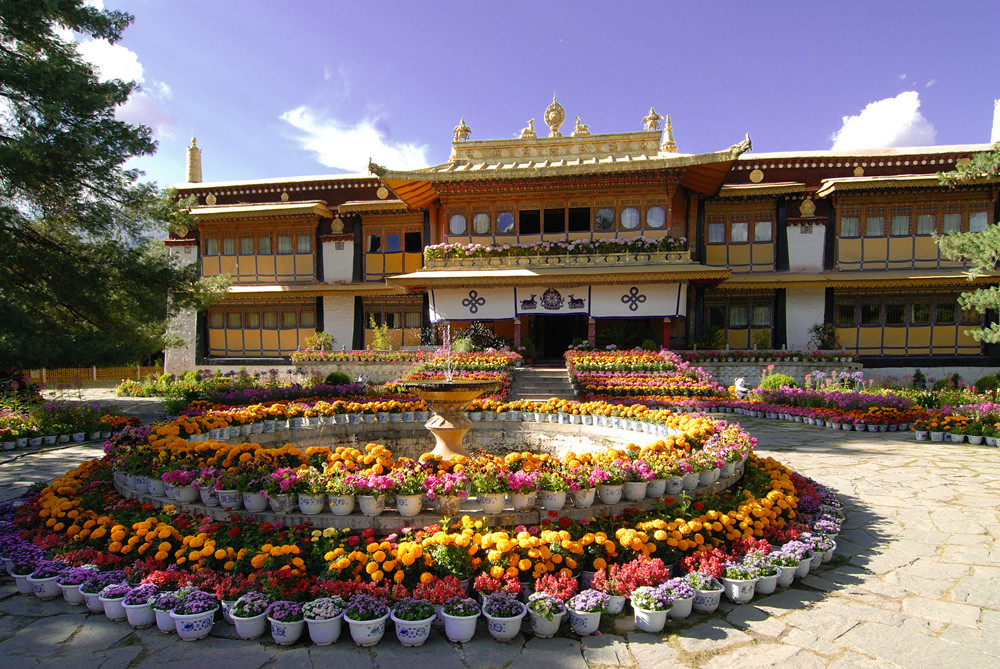
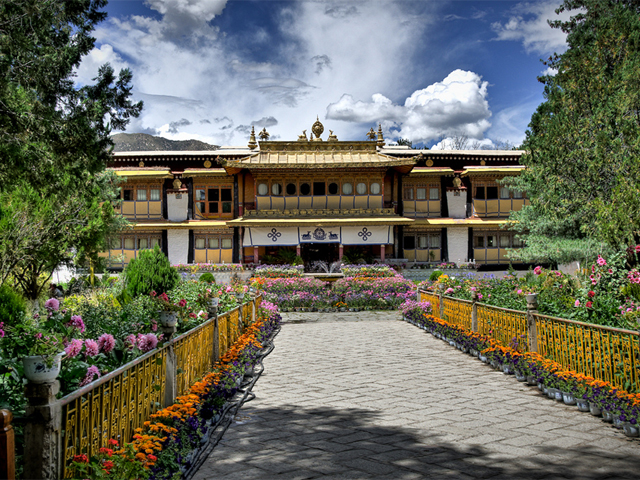
LIVING TIBETAN SPIRITS SHARE GLIMPSES OF NORBULINGKA THE SUMMER PALACE OF SUPREME RULER OF TIBET – 6
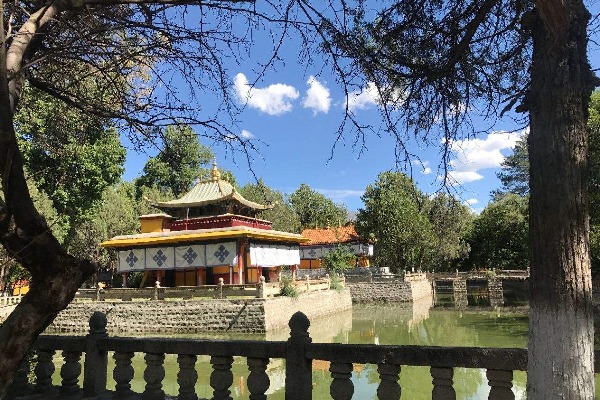
Whole Palace: Glimpses of Norbulingka, Summer Palace of the Dalai Lama
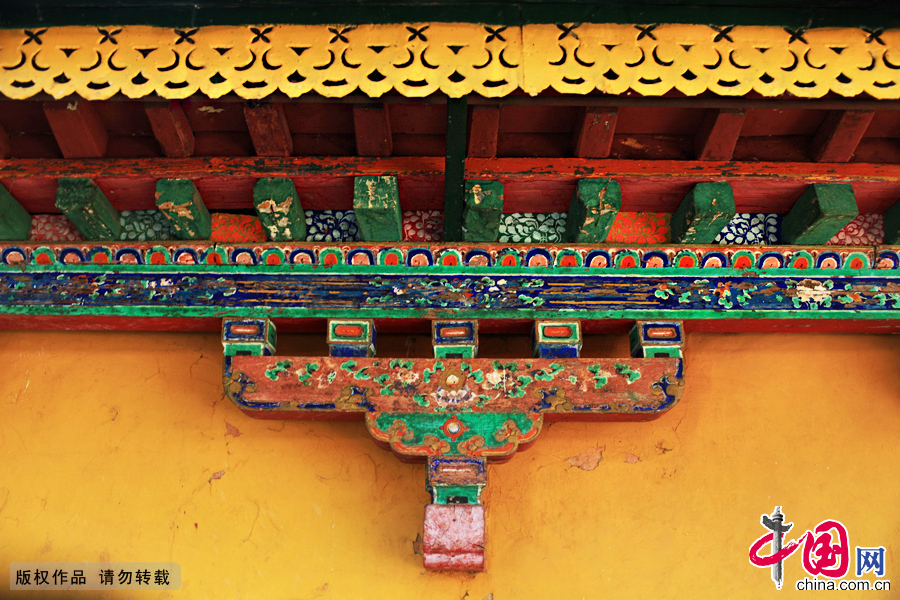
Norbulingka, literally the “Jeweled Garden,” is a palace and its surrounding parks located in a western suburb of Lhasa. It was constructed in the 1740s as a summer palace for the Dalai Lama and later served the whole governmental administration. The place boasts typical Tibetan palace architecture, as well as gentle streams, dense and lush forestry, birds and animals. Covering an area of around 36 hectares, it is considered to be the largest man-made garden in Tibet. Being part of the “Historic Ensemble of the Potala Palace,” Norbulingka is recognized as a UNESCO World Heritage Site, and was added as an extension to this Historic Ensemble in 2001.[China.org.cn]
Whole Palace: Glimpses of Norbulingka, Summer Palace of the Supreme Ruler of Tibet
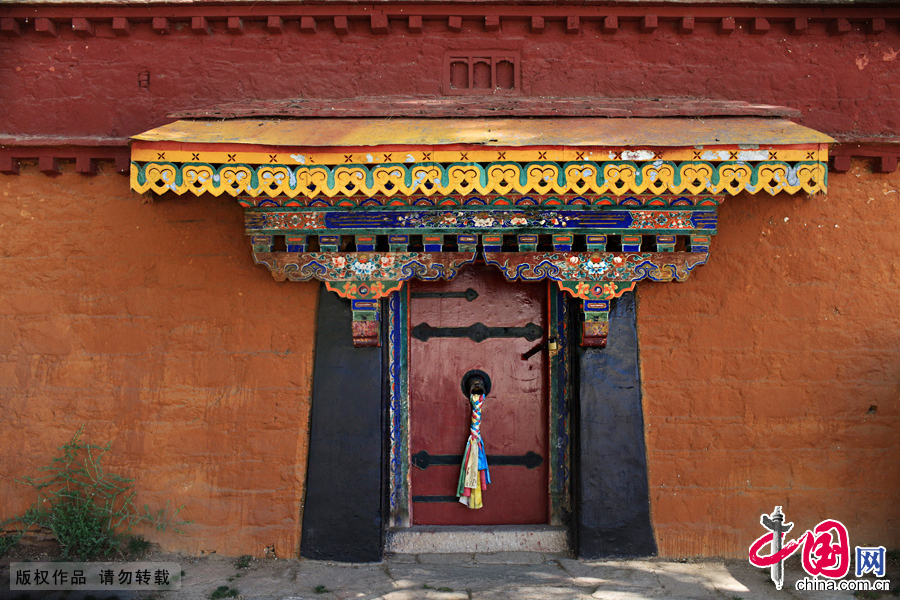
LIVING TIBETAN SPIRITS SHARE GLIMPSES OF NORBULINGKA THE SUMMER PALACE OF SUPREME RULER OF TIBET – 2
Whole Palace: Glimpses of Norbulingka, Summer Palace of the Supreme Ruler of Tibet.
Norbulingka, literally the “Jeweled Garden,” is a palace and its surrounding parks located in a western suburb of Lhasa. It was constructed in the 1740s as a summer palace for the Dalai Lama and later served the whole governmental administration. The place boasts typical Tibetan palace architecture, as well as gentle streams, dense and lush forestry, birds and animals. Covering an area of around 36 hectares, it is considered to be the largest man-made garden in Tibet. Being part of the “Historic Ensemble of the Potala Palace,” Norbulingka is recognized as a UNESCO World Heritage Site, and was added as an extension to this Historic Ensemble in 2001.[China.org.cn]
Whole Palace: Glimpses of Norbulingka, Summer Palace of the Supreme Ruler of Tibet
President Xi Jinping’s Plan for Tibet vs Nature’s Plan for Tibet
In my analysis, President Xi Jinping’s Plan for Tibet is not consistent with Mother Nature’s Plan for Tibet. Besides geographical isolation, Mother Nature nurtured a sense of Freedom giving the Tibetan people the experience of Peace, Harmony, and Tranquility in their daily lives. The military occupation of Tibet is fundamentally inconsistent with the Nature’s Plan for Tibet.
Sinicize Tibetan Buddhism, build fortress around Tibet, says Xi Jinping
Exiled Tibetan groups, led by exiled spiritual leader the Dalai Lama, and rights groups say Beijing’s rule amounts to “cultural genocide”.
Sutirtho Patranobis | Edited by Sohini Sarkar Hindustan Times, Beijing
President Xi Jinping’s Plan for Tibet vs Nature’s Plan for Tibet. Chinese President Xi Jinping was addressing the country’s top leadership at a two-day forum on future governance in Tibet in Beijing, which concluded on Saturday.(REUTERS PHOTO.)
It is important to promote the “sinicization” of Tibetan Buddhism and build an “impregnable fortress” to maintain stability in Tibet, President Xi Jinping said on Saturday.
Xi added it was necessary to strengthen border defense and frontier security of the Tibet Autonomous Region (TAR), which borders India and Bhutan, adding it was necessary to educate Tibetans to strengthen the struggle against separatism.
The Chinese President was addressing the country’s top leadership at a two-day forum on future governance in Tibet in Beijing, which concluded on Saturday.
Beijing seized control over Tibet in 1950, in what is described in the Chinese narrative as a “peaceful liberation”, which aided the high-altitude Himalayan region to throw off its “feudalistic” past.
Exiled Tibetan groups, led by exiled spiritual leader the Dalai Lama, and rights groups say Beijing’s rule amounts to “cultural genocide”.
Political and ideological education needed to be strengthened in Tibet’s schools in order to “plant the seeds of loving China in the depths of the hearts of every youth”, Xi said in remarks published by state news agency Xinhua.
Xi was quoted as calling for efforts to ensure national security and enduring peace and stability, steadily improve people’s lives, maintain a good environment, solidify border defense and ensure frontier security.
“It is necessary to strengthen the education and guidance of the masses, extensively mobilize the masses to participate in the struggle against separatism, and form a copper wall and iron wall (which translates as ‘impregnable fortress” in Mandarin) for maintaining stability,” he said.
“Efforts must be made to build a new modern socialist Tibet that is united, prosperous, culturally advanced, harmonious and beautiful,” Xi said.
“It is necessary to actively guide Tibetan Buddhism to adapt to the socialist society and promote the Sinicization of Tibetan Buddhism,” he said.
Sinicization of religion could be broadly defined as an effort to mold religious beliefs and doctrine to bring them in line with the Communist Party of China’s principles and objectives, and with the culture of the majority Han community. Xi in 2015 spoke about sinicising the five major religions practiced in China: Catholicism, Protestantism, Islam, Buddhism and Daoism.
In 2019, Chinese state media announced that China had drawn up an outline to sinicize Islam by 2022 in an effort to redefine the practice of the religion and align the beliefs of Muslims with the CPC.
China’s policies towards Tibet have come under the spotlight again this year amid Beijing’s deteriorating ties with Washington.
In July, US Secretary of State Mike Pompeo said the US would restrict visas for some Chinese officials involved in blocking diplomatic access to Tibet and engaging in “human rights abuses”, adding that Washington supported “meaningful autonomy” for Tibet.
In a retaliatory move, China said it would impose visa restrictions on US citizens who have engaged in what it called “egregious” behavior over Tibet.
President Xi Jinping’s Plan for Tibet vs Nature’s Plan for Tibet
Tibetans View Freedom as a Natural Condition, a Natural Law of their Land
Tibet Awareness. Military Power Seized Tibetan Freedom.
In my analysis, the Tibetan Resistance Movement can only be described as the Struggle for Natural Freedom. Tibetans resist military occupation of Tibet by a foreign invader for occupation totally undermines the Tibetan National Experience of Natural Freedom that defines the Land and its denizens. Freedom is not viewed as a Political Right. Tibetans cherish Freedom as a Nature’s Gift which no man has the power to trample upon.
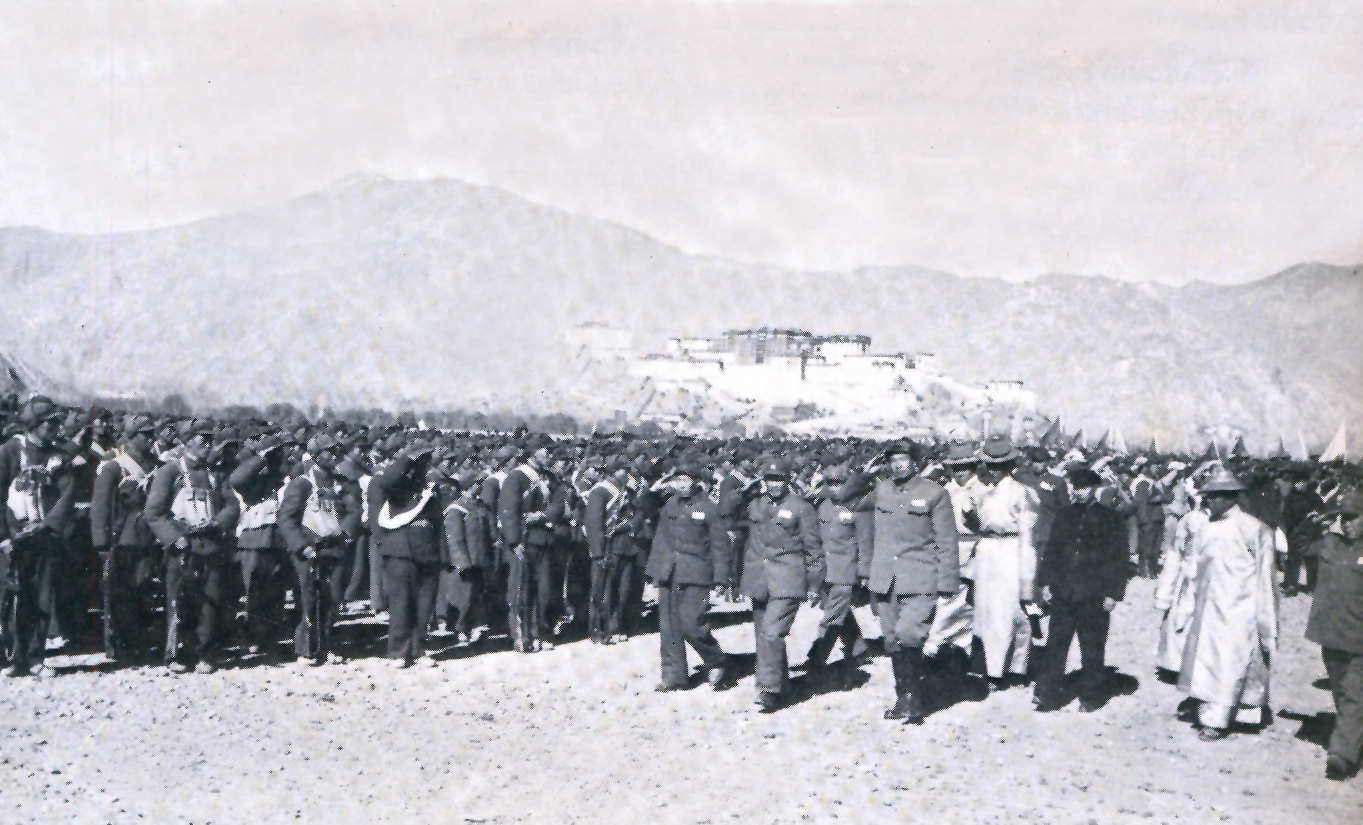
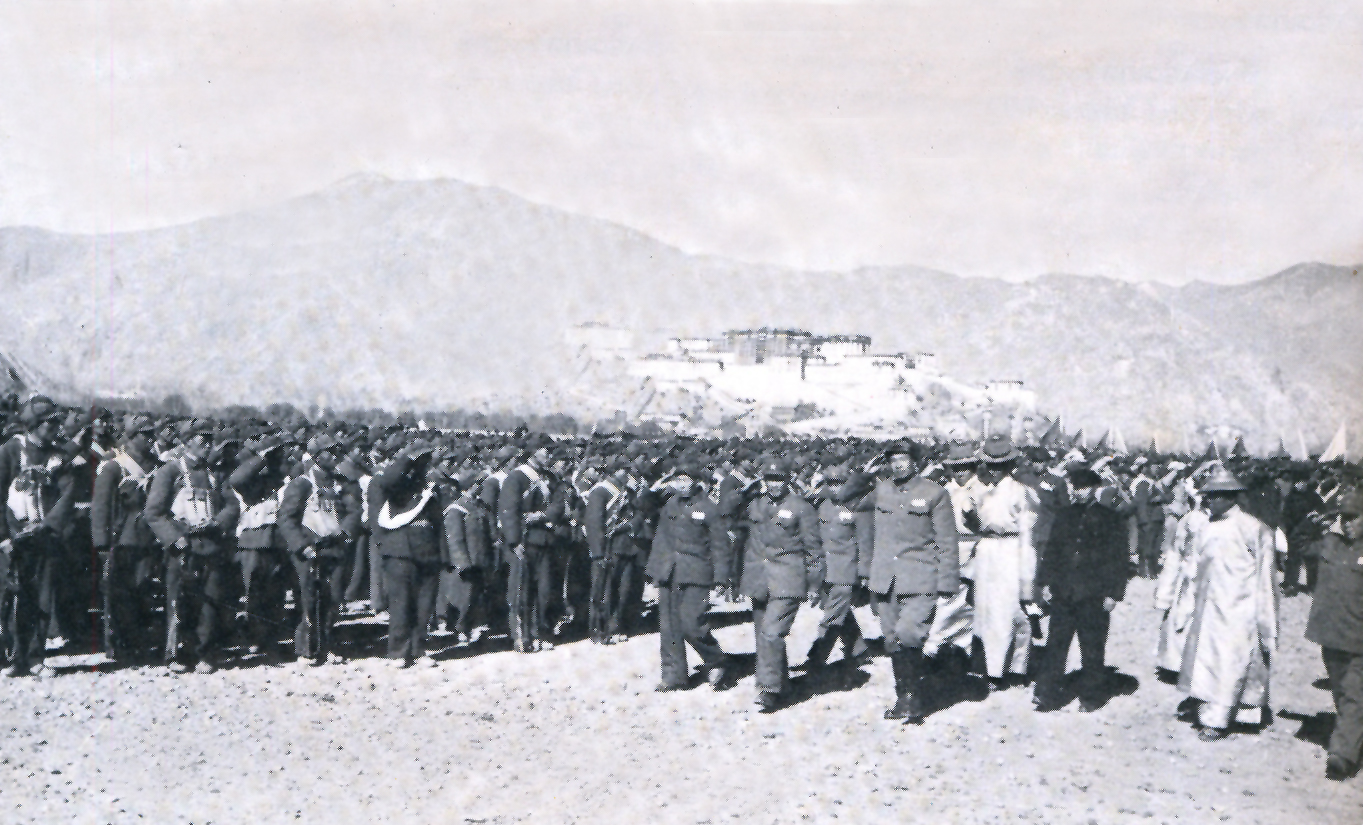
Tibet Awareness. Military Power Seized Tibetan Freedom. A PLA air defense unit of the Tibet Military Command has recently held a drill at an area, 4,500 meters above the sea level, in Occupied Tibet. The live-fire drill aimed to improve air defense preparedness in complex weather conditions. (Photo: China News Service/Zhu Jian)Tibet Awareness. Military Power Seized Tibetan Freedom. A PLA air defense unit of the Tibet Military Command has recently held a drill at an area, 4,500 meters above the sea level, in Occupied Tibet. The live-fire drill aimed to improve air defense preparedness in complex weather conditions. (Photo: China News Service/Zhu Jian)Tibet Awareness. Military Power Seized Tibetan Freedom. A PLA air defense unit of the Tibet Military Command has recently held a drill at an area, 4,500 meters above the sea level, in Occupied Tibet. The live-fire drill aimed to improve air defense preparedness in complex weather conditions. (Photo: China News Service/Zhu Jian)Tibet Awareness. Military Power Seized Tibetan Freedom. A PLA air defense unit of the Tibet Military Command has recently held a drill at an area, 4,500 meters above the sea level, in Occupied Tibet. The live-fire drill aimed to improve air defense preparedness in complex weather conditions. (Photo: China News Service/Zhu Jian)Tibet Awareness. Military Power Seized Tibetan Freedom. A PLA air defense unit of the Tibet Military Command has recently held a drill at an area, 4,500 meters above the sea level, in Occupied Tibet. The live-fire drill aimed to improve air defense preparedness in complex weather conditions. (Photo: China News Service/Zhu Jian)Tibet Awareness. Military Power Seized Tibetan Freedom. A PLA air defense unit of the Tibet Military Command has recently held a drill at an area, 4,500 meters above the sea level, in Occupied Tibet. The live-fire drill aimed to improve air defense preparedness in complex weather conditions. (Photo: China News Service/Zhu Jian)Tibet Awareness. Military Power Seized Tibetan Freedom. A PLA air defense unit of the Tibet Military Command has recently held a drill at an area, 4,500 meters above the sea level, in Occupied Tibet. The live-fire drill aimed to improve air defense preparedness in complex weather conditions. (Photo: China News Service/Zhu Jian)Tibet Awareness. Military Power Seized Tibetan Freedom. A PLA air defense unit of the Tibet Military Command has recently held a drill at an area, 4,500 meters above the sea level, in Occupied Tibet. The live-fire drill aimed to improve air defense preparedness in complex weather conditions. (Photo: China News Service/Zhu Jian)Tibet Awareness. Military Power Seized Tibetan Freedom. A PLA air defense unit of the Tibet Military Command has recently held a drill at an area, 4,500 meters above the sea level, in Occupied Tibet. The live-fire drill aimed to improve air defense preparedness in complex weather conditions. (Photo: China News Service/Zhu Jian)Tibet Awareness. Military Power Seized Tibetan Freedom in 1950-51.Tibetans Struggle for Natural Freedom.
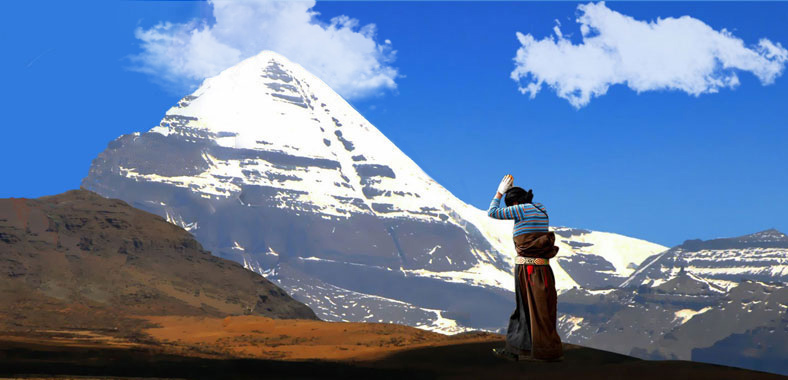
The journey to Mount Kailash is not for the faint-hearted, but it still draws thousands of pilgrims every year.
Every year, faith inspires thousands of Indians to undertake the grueling trek to Mount Kailash in Tibet. Those who choose the 24-day pilgrimage organized by the External Affairs Ministry enter Tibet either through the Lipulekh Pass in Uttarakhand or the Nathu La Pass in Sikkim.
At the snow-covered Lipulekh Pass on a chilly August morning, we watched one of the 18 batches of yatris (pilgrims) cross over to India after completing the pilgrimage. At the same time, the next batch entered Tibet. On a rainy afternoon, we spoke to some of the yatris (pilgrims)— a young baba, an officer from the armed forces, a doctor, a homemaker, and many retired men and women — at Yama Dwar, the gateway to the abode of Shiva. This is where the parikrama, or circumambulation, of Mount Kailash, begins. It is believed that the virtues and sins of all those who cross this territory are evaluated by Lord Shiva.
On another day, we found pilgrims resting near the north face of Mount Kailash. The wispy clouds covering the mountain had floated away as soon as we reached the spot, giving us a spectacular view of the sacred peak. We also sat with the yatris on the banks of the azure blue Manasarovar lake as they performed a havan.
The External Affairs Ministry’s yatra package, for those aged between 18 and 70, began on June 8 and ends on September 8. Private tour operators also organize the yatra. The pilgrimage involves trekking in inhospitable conditions at very high altitudes. “But it is worth it,” said a 70-year-old yatri (pilgrim) from Bengaluru.
























 Whole Dude - Whole Concept