Whole Dude – Whole Curse

Whole Dude – Whole Curse: The Repeal PRWORA Project

Excerpt: The “Repeal PRWORA Project” advocates for the repeal of Public Law 104-193, also known as the Personal Responsibility and Work Opportunity Reconciliation Act (PRWORA) signed by US President Bill Clinton in 1996. The organizers argue that this law reintroduced varieties of slavery, including involuntary servitude and forced labor, by unfairly denying retirement income benefits to non-citizen taxpayers who cannot provide proof of lawful residency. Critics claim this law infringes on the constitutional rights of these workers, violating principles of equal treatment, protection, and justice under law. They demand for a strict adherence to the natural law principles abolishing any form of slavery.

Whole Dude – Whole Curse: The Clinton Curse Knocks on American Hegemony.

In my analysis, the American Supremacy on the world stage is threatened by the COVID-19 pandemic. I want to provide a Biblical perspective on the economic fallout due to the new Coronavirus Disease. America cannot recover its place of pride in the world without healing described in the Bible. America is on a dangerous slippery slope for God has given the people a spirit of stupor, eyes that they should not see and ears that they should not hear, to this very day since the time the US President Bill Clinton transgressed the LORD’s Commandments.

Romans 11:8

Whole Dude – Whole Curse: The Clinton Curse Knocks on American Hegemony.

Just as it is written:

“God has given them a spirit of stupor,
Eyes that they should not see
And ears that they should not hear,
To this very day.”

Acts 28:27 

Whole Dude – Whole Curse: The Clinton Curse Knocks on American Hegemony.

27 For the hearts of this people have grown dull.
Their ears are hard of hearing,
And their eyes they have closed,
Lest they should see with their eyes and hear with their ears,
Lest they should understand with their hearts and turn,
So that I should heal them.” ’

Matthew 13:15

Whole Dude – Whole Curse: The Clinton Curse Knocks on American Hegemony.

15 For the hearts of this people have grown dull.
Their ears are hard of hearing,
And their eyes they have closed,
Lest they should see with their eyes and hear with their ears,
Lest they should understand with their hearts and turn,
So that I should heal them.’

Ezekiel 12:2

Whole Dude – Whole Curse: The Clinton Curse Knocks on American Hegemony.

“Son of man, you dwell in the midst of a rebellious house, which has eyes to see but does not see, and ears to hear but does not hear; for they are a rebellious house.

Jeremiah 5:21

Whole Dude – Whole Curse: The Clinton Curse Knocks on American Hegemony.

21 ‘Hear this now, O foolish people,
Without understanding,
Who have eyes and see not,
And who have ears and hear not:

Isaiah 6:10

Whole Dude – Whole Curse: The Clinton Curse Knocks on American Hegemony.

10 “Make the heart of this people dull,
And their ears heavy,
And shut their eyes;
Lest they see with their eyes,
And hear with their ears,
And understand with their heart,
And return and be healed.”

COVID-19 KNOCKS ON AMERICAN HEGEMONY

By Ashley J. Tellis

May 4, 2020

Whole Dude – Whole Curse: The Clinton Curse Knocks on American Hegemony.

Ashley J. Tellis holds the Tata Chair for Strategic Affairs and is a senior fellow at the Carnegie Endowment for International Peace, specializing in international security and U.S. foreign and defense policy with a special focus on Asia and the Indian subcontinent. He is also a counselor at the National Bureau of Asian Research and the research director of the Strategic Asia Program.

After almost two decades of conflicted hesitancy, the United States finally acknowledged that it is involved in a
long-term strategic competition with China. This rivalry, almost by definition, is not merely a wrangle between two major
states. Rather, it involves a struggle for dominance in the international system, even if China as the rising power disavows any such ambition. China’s very ascendancy—if sustained—could over time threaten the U.S. hegemony that has been in place
since the end of World War II. It is this reality of unequal growth—which has nourished China’s expanding influence and
military capabilities—that lies at the root of the evolving rivalry.

Although the term sometimes has unsettling connotations, the United States is a genuine hegemon, understood in the original Greek sense as a leader in the competitive international system. This hegemony derives from the fact that the United States is the world’s single most powerful state. First, it remains the largest economy in real terms, a foundation that underwrites its capacity to project military power globally in ways unmatched by any peers. Second, it possesses a sufficiently effective state that presides over a remarkably productive society. And, third, in partnership with strong allies in North America, Western Europe, East Asia, and Oceania, who share both values and interests, the United States has created an international order that buttresses its primacy materially, institutionally, and ideationally, thereby allowing it to advance diverse interests while economizing on its use of force. Although these foundations have been stressed in recent times, the Covid-19 pandemic now threatens them in deadly ways.

What is certain…is that the U.S. economy will face significant transitions in the aftermath of this pandemic in at least two directions that bear on the future of its national power.

But if the country is in fact now trapped in a period of low productivity growth and persistent weaknesses in aggregate demand…the net result may be a diminished capacity to sustain both the increasing domestic obligations and its extant international interests simultaneously.

While the damage caused to the U.S. economy and the human losses will make the task of preserving U.S. hegemony after the pandemic harder—at a time when most assessments suggest that countries like China are likely to recover faster than the United States—the reputational damage to Washington is just as serious.

Washington must double down on its alliances and partnerships. Only this U.S.-led confederation contains the preponderance of the global product that will durably immunize the liberal international order against any future challenges emanating from China or other rivals.

Preserving American hegemony over the long term
thus must begin with consolidating Washington’s
leadership within the largest single bloc of material power
in order that it may be effective beyond. Ensuring this
outcome requires the United States to take seriously—and
deepen meaningfully—the special geopolitical ties it has
nurtured throughout the postwar period, which would
among other things enable it to better shape the world’s
engagement with China to advance its own interests.
The management of the global pandemic thus far raises
doubts about the United States’ ability to sensibly expand
its power and to manage the evolving rivalry with China
intelligently and in league with the nations that will be
most needed for success. This is unfortunate given this
administration’s otherwise astute recognition of the
return of strategic competition.

Whole Dude – Whole Curse: The Clinton Curse Knocks on American Hegemony.

Whole Resistance – China’s military conquest of Tibet is not a done deal

Tibet Awareness – Military conquest of Tibet is not a done deal

Tibet Awareness – Annexation of Tibet by China. It’s Not a Done Deal. In fact, there is no deal between Tibet and China on the border issue.

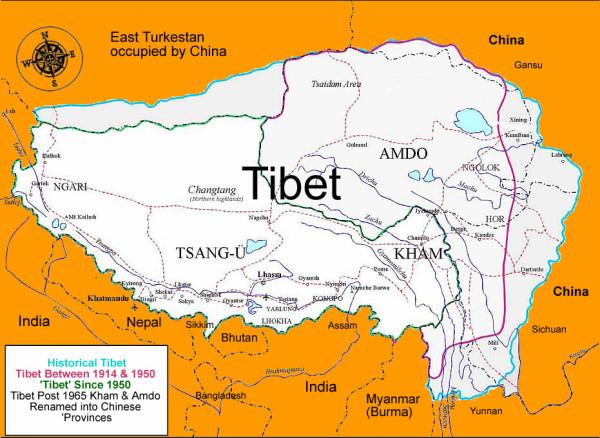
The Border called the McMahon Line between India and Tibet is not my primary concern. In 1913-14, Tibet and China had the opportunity to negotiate a deal to determine and demarcate the border between China and Tibet. They failed to do so. In fact, there is no deal between Tibet and China on the border issue.

Representatives of Tibet, Great Britain, and China at Simla Accord 1914. Front row, from left: an assistant to Ivan Chen; Sekyong Trulku, Prince of Sikkim; Ivan Chen, Chinese plenipotentiary; Sir Henry McMahon, British Plenipotentiary; Lonchen Shatra, Tibetan Plenipotentiary; Teji Trimon, assistant; Nedon Khanchung, Secretary.

I contest the occupation of Tibet by the People’s Republic of China since 1950. In my analysis, annexation of Tibet by China is not a done deal. Tibetans have never agreed to submit their territory to be ruled over by the Communist Party of China. Tibet is never a part of China. In fact, there is no deal between China and Tibet on the demarcation of their border.

Tibet Awareness – Annexation of Tibet by China. It’s Not a Done Deal. In fact, there is no deal between Tibet and China on the border issue.

BOOK EXCERPT

How the McMahon Line came to be the border between India and Tibet (and, later, China)

Tibet Awareness – Annexation of Tibet by China. It’s Not a Done Deal. In fact, there is no deal between Tibet and China on the border issue. Contested Lands: India, China and the Boundary Dispute, Maroof Raza, Westland Non-Fiction.

An excerpt from ‘Contested Lands: India, China and the Boundary Dispute’, by Maroof Raza.

Maroof Raza

Tibet Awareness – Annexation of Tibet by China. It’s Not a Done Deal. In fact, there is no deal between Tibet and China on the border issue. The original draft of the MacMohan Line in 1914: West (left) and East (right)

Lt Col Arthur Henry McMahon was formally nominated to represent the British government at the Simla Conference. With the rank of “secretary” in the foreign department of the British Government of India, McMahon was “empowered to sign any Convention, Agreement or Treaty, which may be concluded at the Conference”.

As a young captain, he had spent two years demarcating the Durand Line that separates Pakistan from Afghanistan today. He was moulded “in the furnace of responsibility and the anvil of self-reliance and relished the creation and laying down of boundaries.” His task at the Simla Conference, however, was neither enjoyable nor easy.

…China, wary of a Britain-Tibet deal, took a while to announce their representative or plenipotentiary for the Simla Conference. Eventually, when they did so, the Chinese first stated that Ivan Chen, an experienced diplomat, and Hu Hanmin would be their representatives. However, China decreed that they would be called pacificators, and would carry “no territorial powers.”

The British objected. It was only after threats and prodding that a Chinese presidential order was signed appointing Ivan Chen as their plenipotentiary and authorizing him “to sign articles that may be agreed upon in order that all difficulties which have existed in the past may be dissolved.” He just about made it in time for the opening convention of the conference.

In contrast, the Dalai Lama was decisive and swift in appointing Lonchen Shatra Paljor Dorje, his Prime Minister who later impressed everybody with his quiet dignity, as his choice for the tripartite talks. Shatra was described as “a man of great ability and patriotism.” Moreover, an official statement from the Grand Lama stated “the Chief Minister Shatra Paljor Dorje is hereby authorized to decide on all questions which may benefit Tibet and to seal all documents relating thereto.”

Both sides made their positions known in the very first meeting held at Simla on 13 October 1913. With the Chinese defeated and evicted from Tibet, Lhasa made it known that it had an “independent” status and placed a document to this effect. But the Chinese still insisted that Tibet formed an integral part of the Chinese territory and no attempts shall be made by Tibet or by Great Britain to interrupt the continuity of this territorial integrity.

For China, unlike the British Government of India, Tibet’s precise boundaries weren’t important. The British hosting the conference wanted a defined boundary for Tibet, not just with India, but also with China. This was the primary reason for the Simla Conference to have dragged on for over six months, with contestable results.

The Chinese also made a range of ridiculous claims over Tibet, most notably over its territories from the Kunlun Mountains, southeast and south of the River Tsangpo (Brahmaputra) on to the River N’Maikha in Burma (now Myanmar). Even though McMahon was prepared for some surprises, he didn’t expect this cartographic aggression based on inconsistent and vague historical assertions.

However, there were factors that restrained McMahon from defining the boundaries. For one, a draft prepared by officials at Britain’s India Office had only envisaged a two-party meeting between representatives of Peking and Delhi. With Tibet’s entry in the deliberations, McMahon had to put up appearances to hide his limitations.

In reality, in the absence of clarity about the southern limits of Tibet, McMahon was awaiting some survey reports from the expeditions along the Himalayas, particularly from India’s northeast and the tri-junction between India, Tibet and Bhutan. This region had many unsurveyed “grey areas” along a frontier of over 1,000 kilometres and was often covered with mist or clouds with many snow-covered mountains that couldn’t be easily accessed from the Indian side. This prevented McMahon from presenting a clear proposal to the conference plenipotentiaries on this part of the boundary.

Thus McMahon opened the “second meeting” of the conference on 18 November 1913 by sharing his dilemma with colleagues. He placed a skeleton map of what should be “Tibet”, admitting – after both sides had made widely divergent claims – that he was “at a loss as to what really was Tibet”.

Thereafter, he conveyed to both the Chinese and the Tibetans that without an agreement on the “limits of Tibet”, further progress was not possible. China’s Chen first said he’d have to refer the matter to Peking and then he took to bed after the meeting, claiming he was ill! Thus, with no hope of an immediate headway and with the winter in Simla bringing life to a virtual standstill, the conference venue was shifted to Delhi. It was over subsequent meetings in Delhi, both formal and informal, that there was some movement forward.

The Tibetans brought to these meetings more than ninety records and documents and backed their boundary claims with historical records in their original form, including fifty-six different registers, with numbers of monasteries and details of families, “where the writ of the Dalai Lama was unquestioned”. The Chinese, on the other hand, made historically refutable claims based on scanty evidence.

Moreover, the Tibetans’ statements were extremely critical of the “scorched earth” policies of the Chinese, especially its military commander Zhao Erfeng, who had destroyed many of their temples and villages and massacred hundreds of lamas and people. Erfeng was known to have made paper shoe soles from the leaves of Buddhist scriptures containing the teachings of Lord Buddha!

The Tibetans were thus unwilling to accept Chinese claims based on the ruthless military campaigns by Erfeng, stating that “Chao Erh-feng had been guilty of such glaring misdeeds and that even if he had a hundred lives he should forfeit every one of them to the law…”

Thus, the hotly contested territorial claims of the Chinese and Tibetans put McMahon in a spot in his attempts to find common ground, to end their “state of war” and to move the conference towards its conclusion. However, given his vast experience in map-making, McMahon proposed the division of Tibet into two zones – with the approval of Whitehall in London – by drawing lines on a map to mark: Inner (by a blue line) and Outer (by a red line) Tibet.

But the Chinese were unwilling to accept the concept of Inner or Outer Tibet. Even then, McMahon was hopeful of a settlement at the fifth conference in Delhi that was to be held on 11 March 1914. At the fifth conference, McMahon, apprehensive that China–Tibet hostilities would stall his best efforts, warned both parties that any attempts to change the ground realities to attain a favourable deal at the conference would have grave consequences. He demanded instead statesmanship from Ivan Chen and Lochen Shatra.

There was, however, a quiet spoiler lurking on the sidelines. Lu Hsing Chi was a Chinese spy at the conference, who set alarm bells ringing in China about a possible outcome that would put China at a disadvantage vis-à-vis Tibet, and thus, Peking virtually rejected the entire draft that McMahon and his team had painfully put together, demanding a better deal. Sensing that the conference might collapse, McMahon threatened to present proposals that were more stringent. This kept the Chinese team on board until the conference shifted back to Simla in April 1914, when McMahon had a private chat with Chen.

McMahon warned that if Chen failed to initial the documents in the final meetings, it would be withdrawn. Deep inside he was also prepared for the conference to end without any results even though McMahon had hoped that this was to be a decisive phase of the conference. Thus, he resorted to theatricals.

He began with a summary of earlier conference proceedings and when he ran into resistance by the Chinese and then by the Tibetans, his patience ran out. As a shocker to those in attendance, he ordered the withdrawal of the convention “with as much ceremony as possible”, as recorded by observers, to drive home his frustration with the negotiations.

This unnerved Ivan Chen, the Chinese plenipotentiary in Simla. However, in one last attempt, the conference was reconvened the next day, to give them a final chance to reconsider their positions. Facing the distinct possibility of China being left out of the border arrangements, Chen made up his mind to initial the draft and the map and, much to the relief of all, proceeded with the formalities.

However, Chen announced that he was still “bound to await definite authority from his government in Peking before the convention was formally signed and sealed.” Even as it appeared that matters had finally come to a successful conclusion, this was not to be. Chen informed McMahon’s office that his government had refused to accept – “repudiated” – his signing of the convention! McMahon was disappointed, given his multiple attempts to accept Chinese demands.

It soon became known that the man who influenced Peking to put the brakes was Lu Hsing, their Calcutta-based spy, who was elevated to an official position to negotiate with Lhasa. London was brought into these talks and soon Chinese officials suggested that Chen had been forced to agree to the terms of the convention, whereby its venue should be shifted to Peking or London. There is a view that this process reflects a conflict of interest as McMahon was both the arbitrator and the interested party here.

On the brighter side, however, the conference yielded another outcome. After Peking and Lhasa had presented enough documentation to back their conflicting territorial claims on the Sino-Tibetan frontiers, which had led to no agreement, the focus of the conference shifted to the Indo-Tibetan boundary. On this, the Chinese delegate opted to stay out, as he claimed he wasn’t authorised to discuss it.

Thus, McMahon and the Tibetan delegate agreed on an Indo-Tibet boundary on 24-25 March 1914. To that effect, McMahon drew a line on a small-scale map and this line came to be known as the McMahon Line. This boundary was marked in red ink along the crest of the Himalayas—the watershed that gave northeast India a defined boundary with Tibet. This was a major outcome after many months of negotiations, even though this was a secondary objective of the Simla Conference.

Tibet Awareness – Annexation of Tibet by China. It’s Not a Done Deal. In fact, there is no deal between Tibet and China on the border issue.

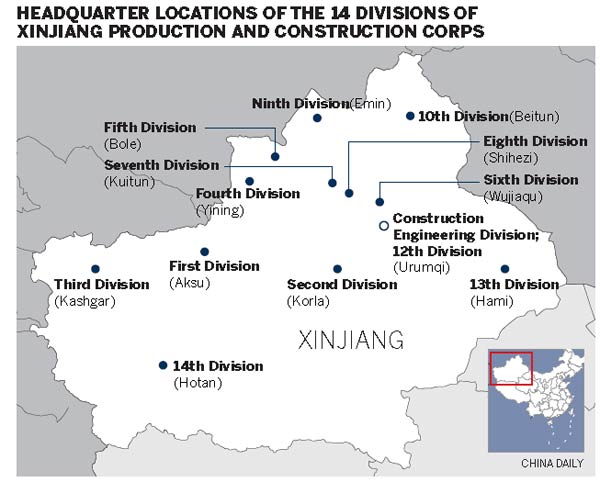
China’s Population Transfer Policy. The Chinese Settlers outnumber the Native Population of Tibet, Manchuria, Inner Mongolia, and East Turkestan (Xinjiang). The Sinicization of Occupied territories.

China’s Population Transfer Policy. The Chinese Settlers outnumber the Native Population of Tibet, Manchuria, Inner Mongolia, and East Turkestan. The Sinicization of Occupied territories.

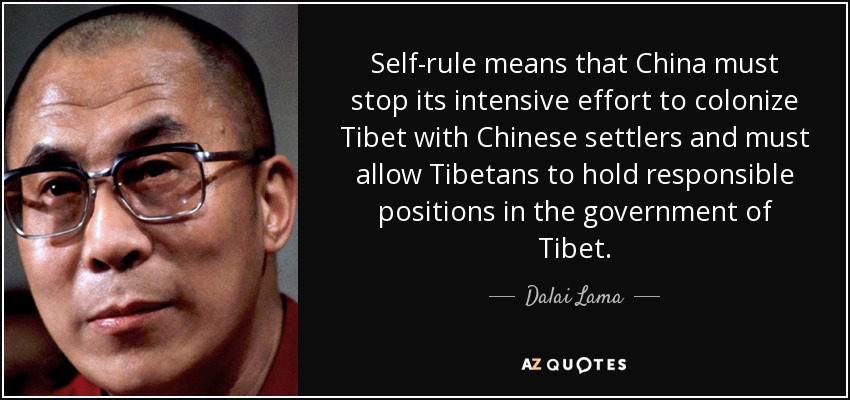
In his 5 point peace plan  the Dalai Lama called to stop Chinese colonization of Tibet and described the past and present situation.
When the newly formed People’s Republic of China invaded Tibet in 1949/50, it created a new source of conflict.  
 

TIBET NOT PART OF CHINA – INDIA SHARES NO BORDER WITH CHINA. China’s Population Transfer Policy. The Chinese Settlers outnumber the Native Population of Tibet, Manchuria, Inner Mongolia, and East Turkestan. The Sinicization of Occupied territories.

“When the newly formed People’s Republic of China invaded Tibet in 1949/50, it created a new source of conflict.  

“This was highlighted when, following the Tibetan national uprising against the Chinese and my flight to India in 1959, tensions between China and India escalated into the border war in 1962.  

“Today large numbers of troops are again massed on both sides of the Himalayan border and tension is once more dangerously high. 

“The real issue, of course, is not the Indo-Tibetan border demarcation.  

“It is China’s illegal occupation of Tibet, which has given it direct access to the Indian sub-continent.  

“The Chinese authorities have attempted to confuse the issue by claiming that Tibet has always been a part of China. 

“This is untrue.  Tibet was a fully independent state when the People’s Liberation Army invaded the country in 1949/50. 

 “Since Tibetan emperors unified Tibet, over a thousand years ago, our country was able to maintain its independence until the middle of this century.  

“At times Tibet extended its influence over neighbouring countries and peoples and, in other periods, came itself under the influence of powerful foreign rulers – the Mongol Khans, the Gorkhas of Nepal, the Manchu Emperors and the British in India. 

 “It is, of course, not uncommon for states to be subjected to foreign influence or interference. 

“Although so-called satellite relationships are perhaps the clearest examples of this, most major powers exert influence over less powerful allies or neighbours.  

“As the most authoritative legal studies have shown, in Tibet’s case, the country’s occasional subjection to foreign influence never entailed a loss of independence. 

” And there can be no doubt that when Peking’s communist armies entered Tibet, Tibet was in all respects an independent state…

“Human rights violations in Tibet are among the most serious in the world.  

“Discrimination is practiced in Tibet under a policy of ‘apartheid’ which the Chinese call ‘segregation and assimilation’.  

“Tibetans are, at best, second class citizens in their own country. 

“Deprived of all basic democratic rights and freedoms, they exist under a colonial administration in which all real power is wielded by Chinese officials of the Communist Party and the army. 

“Although the Chinese government allows Tibetans to rebuild some Buddhist monasteries and to worship in them, it still forbids serious study and teaching of religion.

“Only a small number of people, approved by the Communist Party, are permitted to join the monasteries. 

“While Tibetans in exile exercise their democratic rights under a constitution promulgated by me in 1963, thousands of our countrymen suffer in prisons and labour camps in Tibet for their religious or political convictions… 

“The massive transfer of Chinese civilians into Tibet in violation of the Fourth Geneva Convention (1949), threatens the very existence of the Tibetans as a distinct people.  

China’s Population Transfer Policy. The Chinese Settlers outnumber the Native Population of Tibet, Manchuria, Inner Mongolia, and East Turkestan. The Sinicization of Occupied territories.

“In the eastern parts of our country, the Chinese now greatly outnumber Tibetans.  

“In the Amdo province, for example, where I was born, there are, according to the Chinese statistics, 2.5 million Chinese and only 750,000 Tibetans.  Even in the so-called Tibet Autonomous Region (i.e., central and western Tibet), Chinese government sources now confirm that Chinese outnumber Tibetans. 

“The Chinese population transfer policy is not new.  It has been systematically applied to other areas before. 

“Earlier in this century, the Manchus were a distinct race with their own culture and traditions. 

“Today only two to three million Manchurians are left in Manchuria, where 75 million Chinese have settled. 

China’s Population Transfer Policy. The Chinese Settlers outnumber the Native Population of Tibet, Manchuria, Inner Mongolia, and East Turkestan (Xinjiang). The Sinicization of Occupied territories.

“In Eastern Turkestan, which the Chinese now call Sinkiang, the Chinese population has grown from 200,000 in 1949 to 7 million, more than half of the total population of 13 million.  In the wake of the Chinese colonization of Inner Mongolia, Chinese number 8.5 million, Mongols 2.5 million. 

“Today, in the whole of Tibet 7.5 million Chinese settlers have already been sent, outnumbering the Tibetan population of 6 million. 

“In central and western Tibet, now referred to by the Chinese as the “Tibet Autonomous Region”, Chinese sources admit the 1.9 million Tibetans already constitute a minority of the region’s population.  

“These numbers do not take the estimated 300,000-500,000 troops in Tibet into account – 250,000 of them in so-called Tibet Autonomous Region.

 “For the Tibetans to survive as a people, it is imperative that the population transfer is stopped and Chinese settlers return to China. 

“Otherwise, Tibetans will soon be no more than a tourist attraction and relic of a noble past. ” 

China’s Population Transfer Policy. The Chinese Settlers outnumber the Native Population of Tibet, Manchuria, Inner Mongolia, and East Turkestan. The Sinicization of Occupied territories.


Inside Tibet: The Growth and Development of Colonial Power

Inside Tibet: The Growth and Development of Colonial Power

Inside Tibet: A fast-Developing Colonial Power is set to obliterate the Identity of Tibet, the Land and, People.
Inside Tibet: A Fast-Developing Colonial Power is set to obliterate the Identity of Tibet, the Land, and People.

Inside Tibet, the Occupying Colonial Power is growing and expanding her influence obliterating the Identity of Tibet, the Land and, People.

Rudranarasimham Rebbapragada

SPECIAL FRONTIER FORCE

Inside Tibet: A Fast-Developing Colonial Power is set to obliterate the Identity of Tibet, the Land, and People.

Inside Tibet: foreign journalists meet local people

Inside Tibet: A Fast-Developing Colonial Power is set to obliterate the Identity of Tibet, the Land, and People.

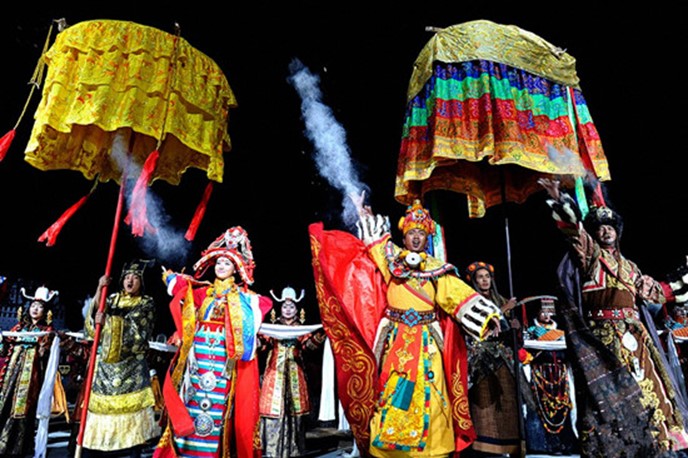
Princess Wencheng

Prince Wencheng is a Tang Dynasty (618-907AD) Chinese princess who travelled thousands of miles to ancient Tibet to marry the great Tibetan King Songtsen Gampo. It was an amicable political affiliation of two great regional powers at the time. The story later became an important component of Tibetan folklore.

World stage: a performance of Princess Wencheng entertains guests at the Forum on the Development of Tibet Credit: Wang Jing / China Daily

  • Liang Kaiyan, China Daily

18 July 2019 • 9:00am

Ahead of the 2019 Forum on the Development of Tibet, 69 foreign guests from 37 countries and regions were invited to visit the cities of Nyingchi and Lhasa and hold talks with citizens

Fast and dynamic development in the Tibet autonomous region has impressed a group of recent foreign visitors.

Ahead of the 2019 Forum on the Development of Tibet, which opened in mid-June in Lhasa, 69 foreign guests from 37 countries and regions including the United Kingdom, Italy and Argentina were invited by the State Council Information Office and the government of the Tibet autonomous region to visit the cities of Nyingchi and Lhasa and hold talks with people from various walks of life.

The four-day tour helped the reporters learn about Tibet’s development in fields including environmental protection, social development and culture.

Italian journalist Rita Fatiguso, of II Sole 24 Ore, has been to Tibet three times. A lot has happened in the nine years since she first came, she said.

Tibet is in a challenging geographical environment, but the Chinese government has invested heavily to make changes

People have become more affluent, not just in the abundance of food, but in their social lives as well, she said.

Tibet is in a challenging geographical environment, but the Chinese government has invested heavily to make changes. Great progress has been made as a result of huge input into infrastructure, she said.

In Nyingchi, a city in the Southeast part of Tibet, the delegation visited a local primary school and the villages of Xiga Monba and Tashigang. “I used to think Tibetan villages were all simple rural villages, but the villages we visited have more houses and facilities, and are totally different from what I had imagined,” said Zied Moumni, a French professor at Northwestern Polytechnical University in Xi’an, Shaanxi province.

“When I see the modern facilities and the local traditions, the word that comes to me is harmony,” Moumni said.

With the advantages of ecology — the city has the largest forest coverage in Tibet — Nyingchi has also developed its tourism industry with the Lunang International Tourism Town and the Lunang Maker Space, a platform also engaged in selling local specialties and creative cultural products.

Tourists coming from Europe want to see beautiful nature, said Liz McLeod, creative director of Meridian Line Films in the UK.

“I think that I understand that the local government is trying to make a very comprehensive plan to make sure tourism is developed in the way that is in harmony with nature and doesn’t damage the environment,” McLeod said.

“To me, that is incredibly important, not just because the natural environment is essential for human survival, but also because Tibet is one of the places in the world where the natural environment is still in a good condition.”

In Lhasa, the delegation visited the Hospital of Traditional Tibetan Medicine, the Potala Palace, the Jokhang Temple and Barkor Street, as well as other places.

Xinhua contributed to this story.

This article was originally produced and published by China Daily. View the original article at chinadaily.com.cn

Inside Tibet: The Fast-Developing Colonial Power is obliterating the Identity of Tibet, the Land, and People.


Whole Awareness -Blessings of Mount Chomolhari

Tibet Awareness – Blessings of Mount Chomolhari proclaim Tibet is Never a Part of China

Tibet Awareness – Blessings of Mount Chomolhari proclaim Tibet is Never a Part of China

Tibet Awareness – Blessings of Mount Chomolhari proclaim Tibet is Never a Part of China

Tibet Awareness – Blessings of Mount Chomolhari proclaim Tibet is Never a Part of China

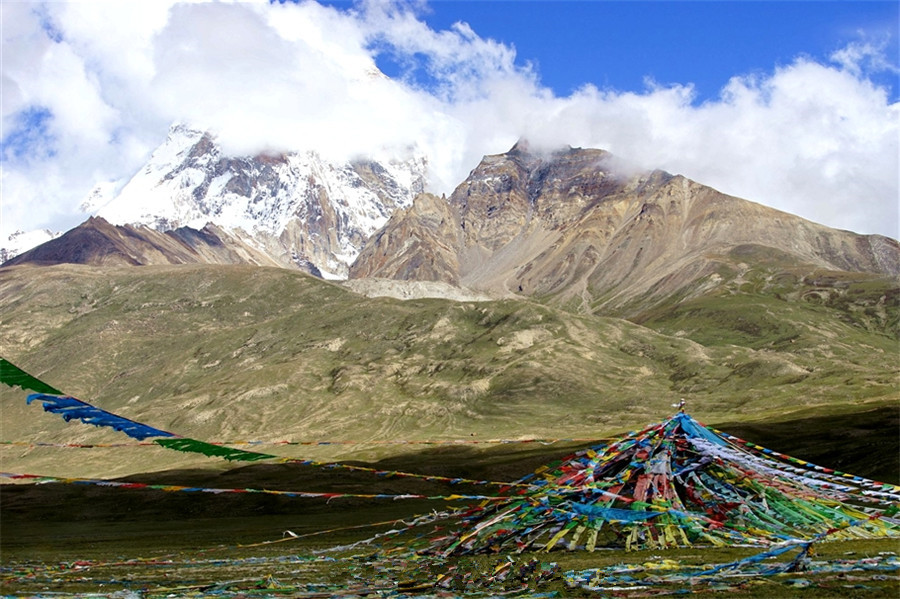
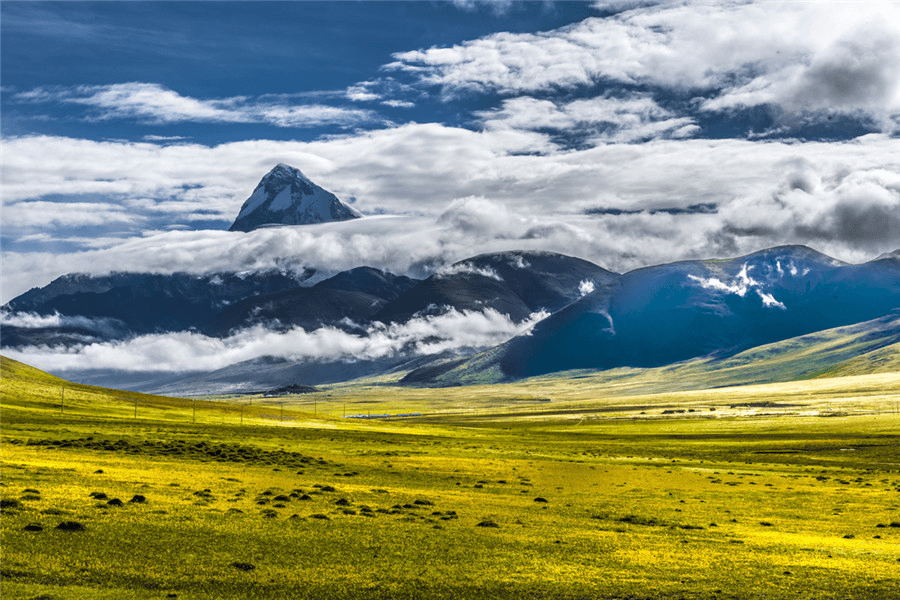
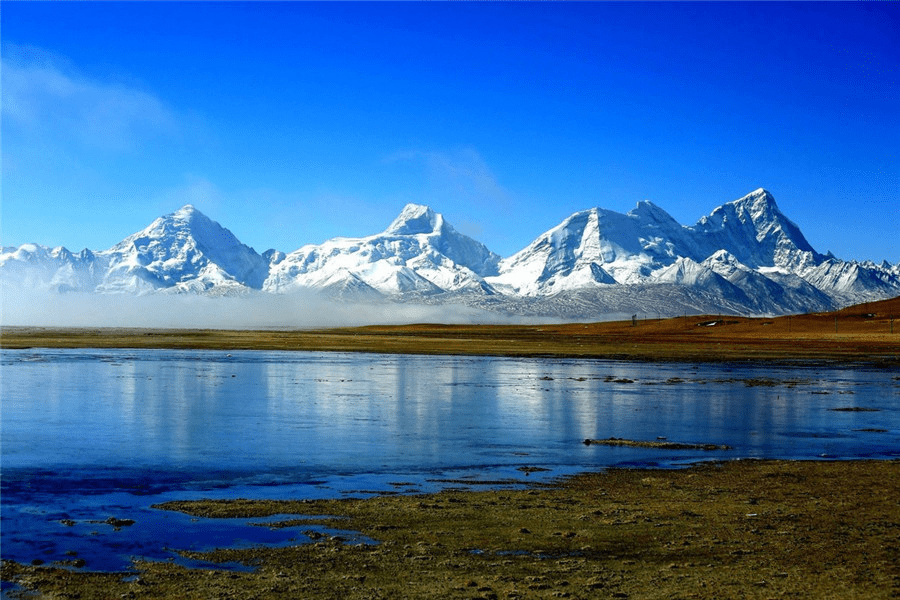
Wetland scenery near Mount Chomolhari in Shigatse, Tsang Province, Tibet

b1ab575a-20e1-425f-8f3b-7f947bb90bf1.jpeg
Tibet Awareness – Blessings of Mount Chomolhari proclaim Tibet is Never a Part of China

A local villager herds sheep at a wetland near Mount Chomolhari in Tsang Province, Dromo County of Shigatse City, Tibet, June 20, 2019. (Xinhua/Li Xin)

a5bb9ef4-65a1-454d-868c-0ac5b90fd576.jpeg
Tibet Awareness – Blessings of Mount Chomolhari proclaim Tibet is Never a Part of China

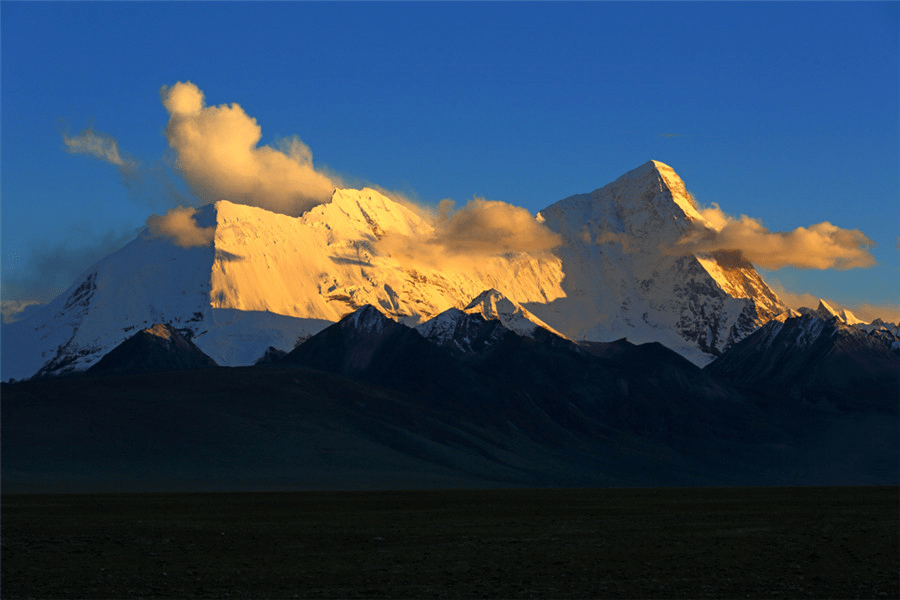
The photo was taken on June 20, 2019, shows the scenery of Mount Chomolhari and a village in Tsang Province, Dromo County of Shigatse City, Tibet. (Xinhua/Li Xin)

3c0da4ff-bf54-4d4a-a04b-66cb67b5fede.jpeg
Tibet Awareness – Blessings of Mount Chomolhari proclaim Tibet is Never a Part of China

The photo was taken on June 20, 2019, shows the scenery of Mount Chomolhari and wetland in Tsang Province, Dromo County of Shigatse City, Tibet. (Xinhua/Li Xin)

5851725e-1c0f-4443-afbd-eda055952df8.jpeg
Tibet Awareness – Blessings of Mount Chomolhari proclaim Tibet is Never a Part of China

Horses search for food at a wetland near Mount Chomolhari in Tsang Province, Dromo County of Shigatse City, Tibet. The photo was taken on June 20, 2019. (Xinhua/Li Xin)

70d4a60b-06ad-4771-9d4a-364abdc04775.jpeg
Tibet Awareness – Blessings of Mount Chomolhari proclaim Tibet is Never a Part of China

Herds of cattle walk across a wetland near Mount Chomolhari in Tsang Province, Dromo County of Shigatse City, Tibet. The photo was taken on June 20, 2019. (Xinhua/Li Xin)

Tibet Awareness – Blessings of Mount Chomolhari proclaim Tibet is Never a Part of China

Whole Evil – Red China’s Never Ending Saga of Cultural Genocide in Tibet

CULTURAL REVOLUTION: THE CRIMES AGAINST HUMANITY

The Government of China and it’s Communist Party committed numerous Crimes against Humanity in the name of the Cultural Revolution.

I ask the US citizens to demand the investigation of President Nixon’s Foreign Policy that initiated the US-China relations in 1971-72 without concern for the Crimes Against Humanity described by Communist China as ‘Cultural Revolution’. The Never Ending Saga of Cultural Genocide in Tibet remains as the most important threat to Tibetan National Identity and Tibetan Existence.

Whole Evil – Red China’s Never Ending Saga of Cultural Genocide in Tibet
Cultural Revolution was designed by Mao Zedong to preserve true Communist ideology by removing capitalist and traditional elements from society in China. Was a move to recover political power by Mao. The movement insisted that revisionists, people in China who promoted capitalism, had to be removed through violent class struggle. Red Guard was a movement of Chinese Youth to perpetuate these goals. Millions of people were persecuted, cultural icons were destroyed, religious sites were ransacked.

Cultural Revolution – HISTORY

Whole Evil: The Never Ending Saga of Cultural Genocide in Occupied Tibet.

Clipped from: https://www.history.com/topics/china/cultural-revolution

In 1966, China’s Communist leader Mao Zedong launched what became known as the Cultural Revolution in order to reassert his authority over the Chinese government. Believing that current Communist leaders were taking the party, and China itself, in the wrong direction, Mao called on the nation’s youth to purge the “impure” elements of Chinese society and revive the revolutionary spirit that had led to victory in the civil war 20 decades earlier and the formation of the People’s Republic of China. The Cultural Revolution continued in various phases until Mao’s death in 1976, and its tormented and violent legacy would resonate in Chinese politics and society for decades to come.

The Cultural Revolution Begins 

In the 1960s, Chinese Communist Party leader Mao Zedong came to feel that the current party leadership in China, as in the Soviet Union, was moving too far in a revisionist direction, with an emphasis on expertise rather than on ideological purity. Mao’s own position in government had weakened after the failure of his “Great Leap Forward” (1958-60) and the economic crisis that followed. Mao gathered a group of radicals, including his wife Jiang Qing and defense minister Lin Biao, to help him attack current party leadership and reassert his authority.

Mao launched the so-called Cultural Revolution (known in full as the Proletarian Cultural Revolution) in August 1966, at a meeting of the Plenum of the Central Committee. He shut down the nation’s schools, calling for a massive youth mobilization to take current party leaders to task for their embrace of bourgeois values and lack of revolutionary spirit. In the months that followed, the movement escalated quickly as the students formed paramilitary groups called the Red Guards and attacked and harassed members of China’s elderly and intellectual population. A personality cult quickly sprang up around Mao, similar to that which existed for Josef Stalin, with different factions of the movement claiming the true interpretation of Maoist thought.

Lin Biao’s Role in the Cultural Revolution

WHOLE VILLAIN: Defense Minister and Communist Party Vice Chairman, the successor of Chairman Mao Tsetung was apparently assassinated by Prime Minister Chou En-lai and Chairman Mao Tsetung on September 13, 1971, as he tried to escape from the country. After his killing, most of the People’s Liberation Army’s Generals of high command were purged. It totally amazes me to know that the US National Security Adviser Henry Kissinger would request Prime Minister Chou En-Lai to launch a military attack on India during that time to stop India from taking military action to resolve the humanitarian crisis in East Pakistan.

 During this early phase of the Cultural Revolution (1966-68), President Liu Shaoqi and other Communist leaders were removed from power. (Beaten and imprisoned, Liu died in prison in 1969.) With different factions of the Red Guard movement battling for dominance, many Chinese cities reached the brink of anarchy by September 1967, when Mao had Lin send army troops in to restore order. The army soon forced many urban members of the Red Guards into rural areas, where the movement declined. Amid the chaos, the Chinese economy plummeted, with industrial production for 1968 dropping 12 percent below that of 1966.

In 1969, Lin was officially designated Mao’s successor. He soon used the excuse of border clashes with Soviet troops to institute martial law. Disturbed by Lin’s premature power grab, Mao began to maneuver against him with the help of Zhou Enlai, China’s premier, splitting the ranks of power atop the Chinese government. In September 1971, Lin died in an airplane crash in Mongolia, apparently while attempting to escape to the Soviet Union. Members of his high military command were subsequently purged, and Zhou took over greater control of the government. Lin’s brutal end led many Chinese citizens to feel disillusioned over the course of Mao’s high-minded “revolution,” which seemed to have dissolved in favor of ordinary power struggles.

Cultural Revolution Comes to an End 

Tibet Consciousness – Undying Hope for Freedom. US President Richard M Nixon can be best described as Backstabber of Tibet.

Zhou acted to stabilize China by reviving the educational system and restoring numerous former officials to power. In 1972, however, Mao suffered a stroke; in the same year, Zhou learned he had cancer. The two leaders threw their support to Deng Xiaoping (who had been purged during the first phase of the Cultural Revolution), a development opposed by the more radical Jiang and her allies, who became known as the Gang of Four. In the next several years, Chinese politics teetered between the two sides. The radicals finally convinced Mao to purge Deng in April 1976, a few months after Zhou’s death, but after Mao died that September, a civil, police and military coalition pushed the Gang of Four out. Deng regained power in 1977 and would maintain control over the Chinese government for the next 20 years.

Some 1.5 million people were killed during the Cultural Revolution, and millions of others suffered imprisonment, seizure of property, torture or general humiliation. The Cultural Revolution’s short-term effects may have been felt mainly in China’s cities, but its long-term effects would impact the entire country for decades to come. Mao’s large-scale attack on the party and system he had created would eventually produce a result opposite to what he intended, leading many Chinese to lose faith in their government altogether.

Whole Villain – Original Sin: The mockery of the US Constitution. The US National Security Adviser, Dr. Henry A.Kissinger misused and abused his official position to meet foreign Heads of State to develop US foreign relations without the participation of the US Secretary of State. I call this villainous act as Original Sin. Both Chairman Mao Tsetung and Prime Minister Chou En-Lai were leaders of the “Cultural Revolution” during 1966-69 to unleash crimes against humanity.
Whole Evil – Red China’s Never Ending Saga of Cultural Genocide in Tibet. THE SUBJUGATION OF TIBET: RED CHINA’S ILLEGAL, AND UNJUST OCCUPATION OF TIBET IS A CRIME AGAINST HUMANITY.

Whole Liar -Red China a Liar

Tibet Awareness: Red China, a Liar

Tibet Awareness. Red China, a Liar. Red China has no justification for her Tyranny, Oppression, and Suppression of Tibetan Freedom.

Red China’s military invasion and occupation of Tibet is illegal, and it has nothing to do with the Tibetan Institution of Governance called the Dalai Lama. Red China has no justification for her Tyranny, Oppression, and Suppression of Tibetan Freedom.

Tibet Awareness. Red China, a Liar. Red China has no justification for her Tyranny, Oppression, and Suppression of Tibetan Freedom.

China denies Tibet support for Dalai Lama | Daily Mail Online

Clipped from: https://www.dailymail.co.uk/wires/afp/article-6777709/China-denies-Tibet-support-Dalai-Lama.html

Tibet Awareness. Red China, a Liar. Red China has no justification for her Tyranny, Oppression, and Suppression of Tibetan Freedom.

There is no widespread support for the Dalai Lama in Tibet and ordinary people are grateful to the Communist Party for “bringing them a happy life”, Chinese officials insisted Wednesday.

This week marks the 60th anniversary of a failed uprising which led to Tibet’s Buddhist spiritual leader, the Dalai Lama, fleeing into exile in India.

Beijing — which claims it “peacefully liberated” the Himalayan area — stands accused of political and religious repression in the region.

But China insists that Tibetans enjoy extensive freedoms and argues it has brought economic growth.

“Since defecting, the Dalai Lama has not done a single good thing for the Tibetan people,” Tibet party boss Wu Yingjie said during a meeting at the sidelines of China’s annual parliamentary meeting.

“Tibetan people have gratitude in their hearts. They are grateful to the Communist Party for bringing them a happy life.”

At least 150 Tibetans have set themselves on fire since 2009 to protest Beijing’s presence in Tibet, most of whom have died from their injuries.

Tibet Awareness. Red China, a Liar. Red China has no justification for her Tyranny, Oppression, and Suppression of Tibetan Freedom.

China had reached out to the Dalai Lama in 2002 to negotiate but after nine rounds of dialogue that lasted through till 2010, many believed that Beijing was intentionally dragging on pointless talks, hoping international pressure over Tibet would end with the passing of the Dalai Lama.

At 83, the Nobel Peace Prize winner enjoys rapturous crowds around the world.

Many Tibetan Buddhists fear Beijing may seek to impose their choice of spiritual leader after the Dalai Lama’s death.

It is unclear how, or even whether, his successor will be named — the centuries-old practice requires senior monks to interview sometimes hundreds of young boys to see whether they recognize items that belonged to the Dalai Lama and pick one as a reincarnation.

But the 14th Dalai Lama announced in 2011 that he may be the last, seeking to preempt any attempt by China to name its own successor.

China’s officially atheist Communist Party has repeatedly said it has the right to control the process of reincarnation.

Tibet Awareness. Red China, a Liar. Red China has no justification for her Tyranny, Oppression, and Suppression of Tibetan Freedom.


CHINA’S ECONOMIC EXPANSIONISM MUST BE BLUNTED BY TRADE AND DIPLOMATIC SANCTIONS

CHINA’S ECONOMIC EXPANSIONISM MUST BE BLUNTED BY TRADE AND DIPLOMATIC SANCTIONS

China's Economic Expansionism.
China’s economic expansionism must be blunted by trade and diplomatic sanctions.

China’s economic expansionism poses grave dangers as China routinely steals intellectual property of the US companies, provides illegal subsidies to Chinese companies, imposes regulations to hamper the trade activities of the US corporations. China and Chinese companies violate the US sanctions or export control laws to indulge in illegal trading practices.

The US response to China’s economic expansionism must include the imposition of diplomatic sanctions as trade sanctions will not be sufficient to blunt the attack of the expansionist regime.

Rudranarasimham Rebbapragada

SPECIAL FRONTIER FORCE

U.S. lawmakers introduce bipartisan bills targeting China’s Huawei and ZTE | Reuters

WASHINGTON (Reuters) – A bipartisan group of U.S. lawmakers introduced bills on Wednesday that would ban the sale of U.S. chips or other components to Huawei Technologies Co Ltd [HWT.UL], ZTE Corp (000063.SZ) or other Chinese telecommunications companies that violate U.S. sanctions or export control laws.

China’s Economic Expansionism must be blunted by trade and diplomatic sanctions.

FILE PHOTO: The Huawei logo is pictured outside their research facility in Ottawa, Ontario, Canada, December 6, 2018. REUTERS/Chris Wattie

The proposed law was introduced shortly before the Wall Street Journal reported federal prosecutors were investigating allegations that Huawei stole trade secrets from T-Mobile U.S. Inc (TMUS.O) and other U.S. businesses.

The Journal said that an indictment could be coming soon on allegations that Huawei stole T-Mobile technology, called Tappy, which mimicked human fingers and was used to test smartphones.

The action is the latest in a long list of actions taken to fight what some in the Trump administration call China’s cheating through intellectual property theft, illegal corporate subsidies and rules hampering U.S. corporations that want to sell their goods in China.

In November, the U.S. Department of Justice unveiled an initiative to investigate China’s trade practices with a goal of bringing trade secret theft cases.

At that time, Washington had announced an indictment against Chinese chipmaker Fujian Jinhua Integrated Circuit Co Ltd for stealing trade secrets from U.S. semiconductor company Micron Technology (MU.O) relating to research and development of memory storage devices.

Jinhua, which has denied any wrongdoing, was put on a list of entities that cannot buy goods from U.S. firms.

On Capitol Hill, Senator Tom Cotton and Representative Mike Gallagher, both Republicans, along with Senator Chris Van Hollen and Representative Ruben Gallego, both Democrats, introduced the bills which would require the president to ban the export of U.S. components to any Chinese telecommunications company that violates U.S. sanctions or export control laws.

The bills specifically cite ZTE and Huawei, both of which are viewed with suspicion in the United States because of fears that their switches and other gear could be used to spy on Americans. Both have also been accused of failing to respect U.S. sanctions on Iran.

“Huawei is effectively an intelligence-gathering arm of the Chinese Communist Party whose founder and CEO was an engineer for the People’s Liberation Army,” Cotton wrote in a statement. “If Chinese telecom companies like Huawei violate our sanctions or export control laws, they should receive nothing less than the death penalty – which this denial order would provide.”

The proposed law and investigation are two of several challenges that Huawei, the world’s biggest telecommunications equipment maker, faces in the U.S. market.

In addition to allegations of sanctions-busting and intellectual property theft, Washington has been pressing allies to refrain from buying Huawei’s switches and other gear because of fears they will be used by Beijing for espionage.

Huawei’s founder, Ren Zhengfei, denied this week that his company was used by the Chinese government to spy.

Huawei founder says firm does not spy for China

Canada detained Ren’s daughter, Meng Wanzhou, who is Huawei’s chief financial officer, in December at the request of U.S. authorities investigating an alleged scheme to use the global banking system to evade U.S. sanctions against Iran.

For its part, ZTE agreed last year to pay a $1 billion fine to the United States that had been imposed because the company breached a U.S. embargo on trade with Iran. As part of the agreement, the U.S. lifted a ban in place since April that prevented ZTE from buying the U.S. components it relies on heavily to make smartphones and other devices.

Reporting by Diane Bartz and Karen Freifeld; Editing by Steve Orlofsky and James Dalgleish.

China’s Economic Expansionism must be blunted by Trade and Diplomatic Sanctions.


Whole Evil – Red China’s Journey from Imperialism to Neocolonialism

Red China’s Journey from Imperialism to Neocolonialism

Red China’s Journey from Imperialism to Neocolonialism

Tibet escaped from the clutches of Qing Empire during 1911-12 to declare full independence on February 13, 1913. From the ashes of the Qing Empire, Red China emerged as the new Imperialistic Power on October 01, 1949 when the Communists took over mainland China defeating the Nationalists. For Tibet, the new era of political domination, cultural subjugation, and colonialist exploitation began with Red China’s military invasion in 1950.

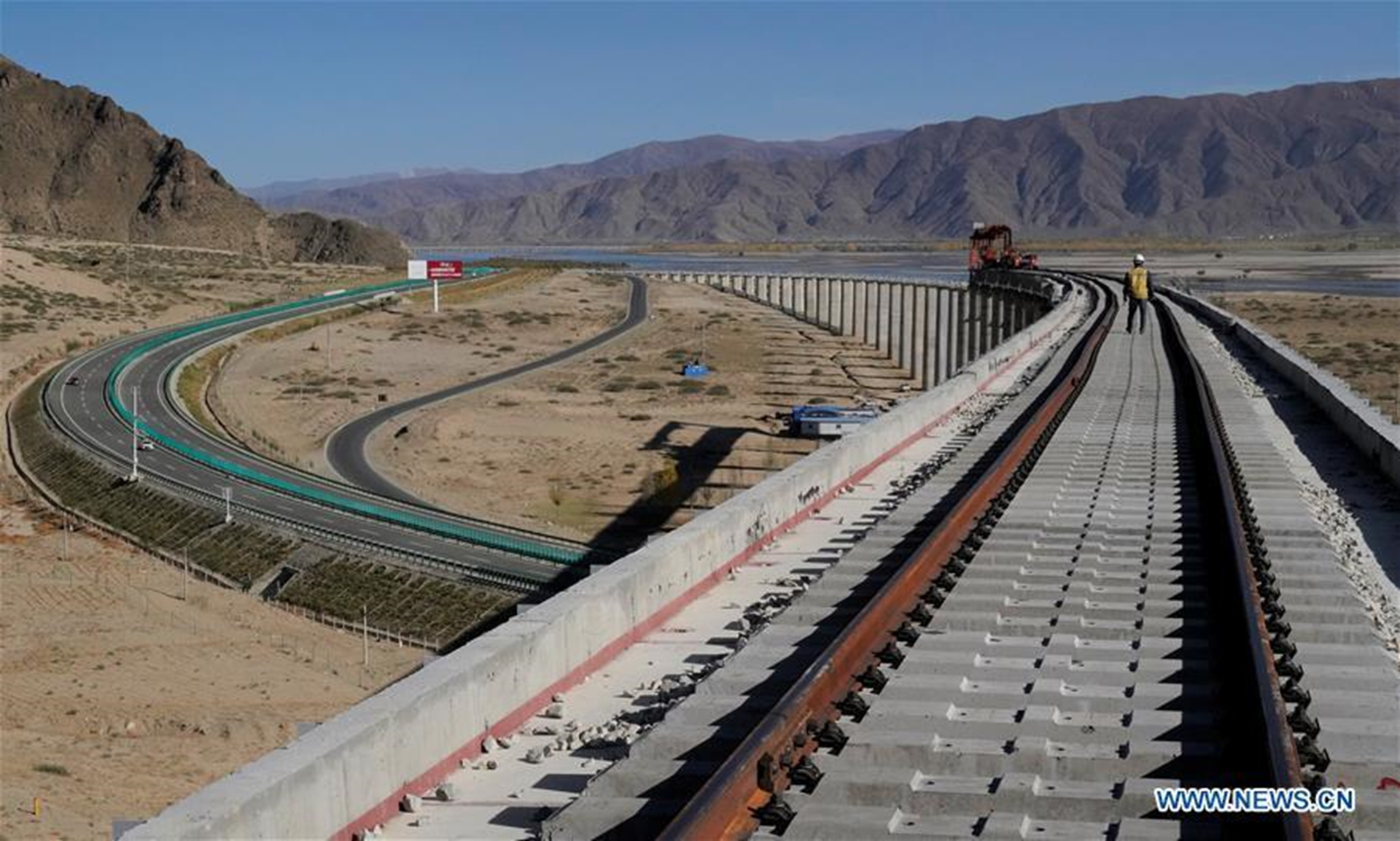
The railway construction projects across the Tibetan Plateau are mere symptoms of Neocolonialism, a facet of Red China’s Doctrine of Expansionism.

Red China’s Journey from Imperialism to Neocolonialism.

CHINA TO STRENGTHEN RAILWAY CONSTRUCTION IN OCCUPIED TIBET

Red China’s Journey from Imperialism to Neocolonialism.

Staff members work at the construction site of the Lhasa-Nyingchi section of the Sichuan-Tibet Railway in Occupied Tibet, on Nov. 26, 2018. In 2018, an investment of 4.2 billion yuan (623 million U.S. dollars) was made in railway construction in the region. (Xinhua/Purbu Zhaxi)

Red China’s Journey from Imperialism to Neocolonialism.

Staff members work at the construction site of the Lhasa-Nyingchi section of the Sichuan-Tibet Railway in Occupied Tibet, on Nov. 26, 2018. In 2018, an investment of 4.2 billion yuan (623 million U.S. dollars) was made in railway construction in the region. (Xinhua/Purbu Zhaxi)

Red China’s Journey from Imperialism to Neocolonialism.

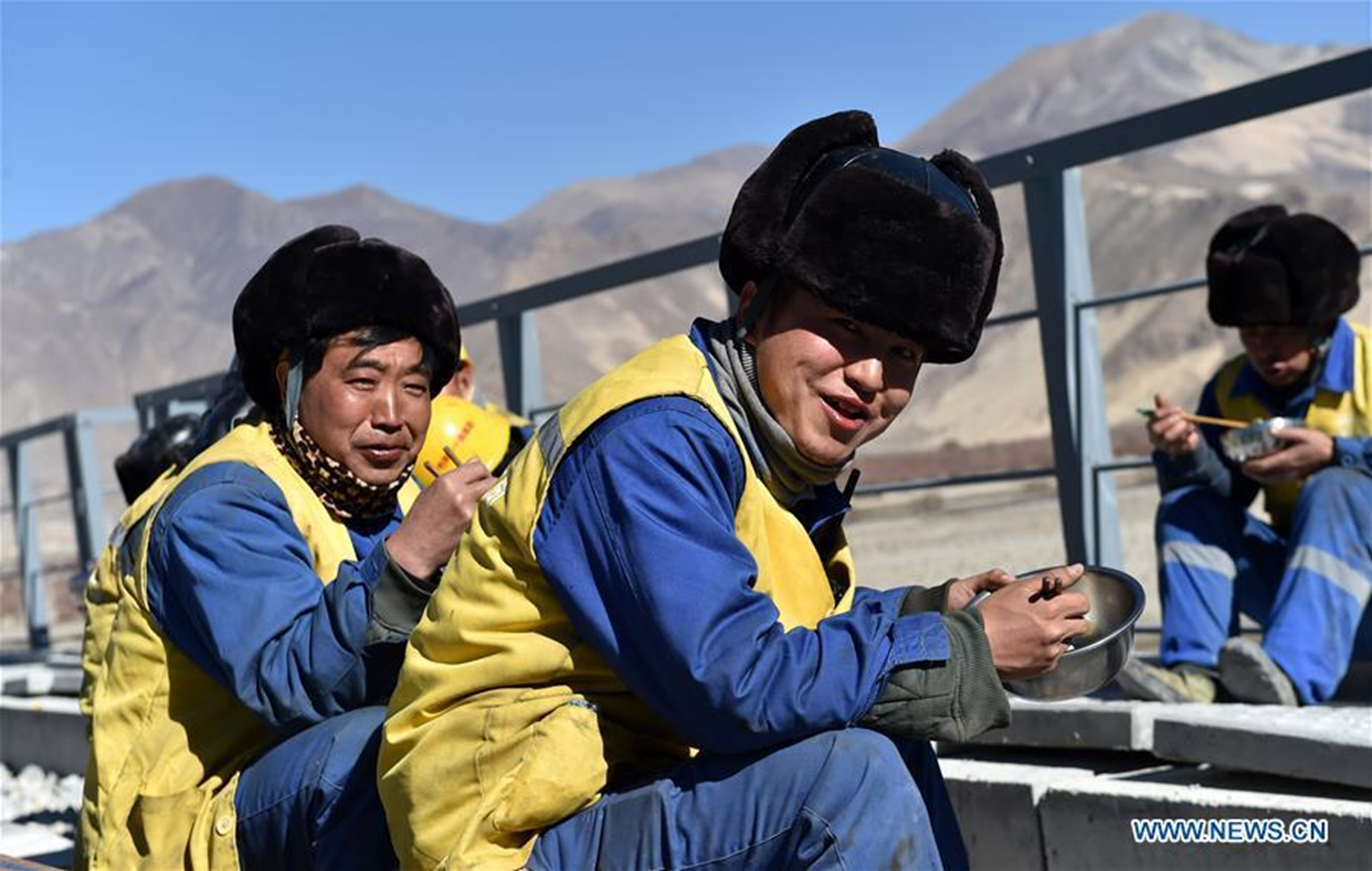
Workers have lunch at the construction site of the Lhasa-Nyingchi section of the Sichuan-Tibet Railway in Occupied Tibet, on Nov. 26, 2018. In 2018, an investment of 4.2 billion yuan (623 million U.S. dollars) was made in railway construction in the region. (Xinhua/Chogo)

Red China’s Journey from Imperialism to Neocolonialism.

Workers at the construction site of the Lhasa-Nyingchi section of the Sichuan-Tibet Railway in Occupied Tibet, on Nov. 26, 2018. In 2018, an investment of 4.2 billion yuan (623 million U.S. dollars) was made in railway construction in the region. (Xinhua/Chogo)

Red China’s Journey from Imperialism to Neocolonialism.

Photo taken on Dec. 23, 2018, shows the construction site of the Lhasa-Nyingchi section of the Sichuan-Tibet Railway in Occupied Tibet. In 2018, an investment of 4.2 billion yuan (623 million U.S. dollars) was made in railway construction in the region. (Xinhua/Purbu Zhaxi)

Red China’s Journey from Imperialism to Neocolonialism.


THE GREAT TIBET PROBLEM – BELT AND ROAD INITIATIVE vs MEANINGFUL AUTONOMY

THE GREAT TIBET PROBLEM – BELT AND ROAD INITIATIVE vs MEANINGFUL AUTONOMY

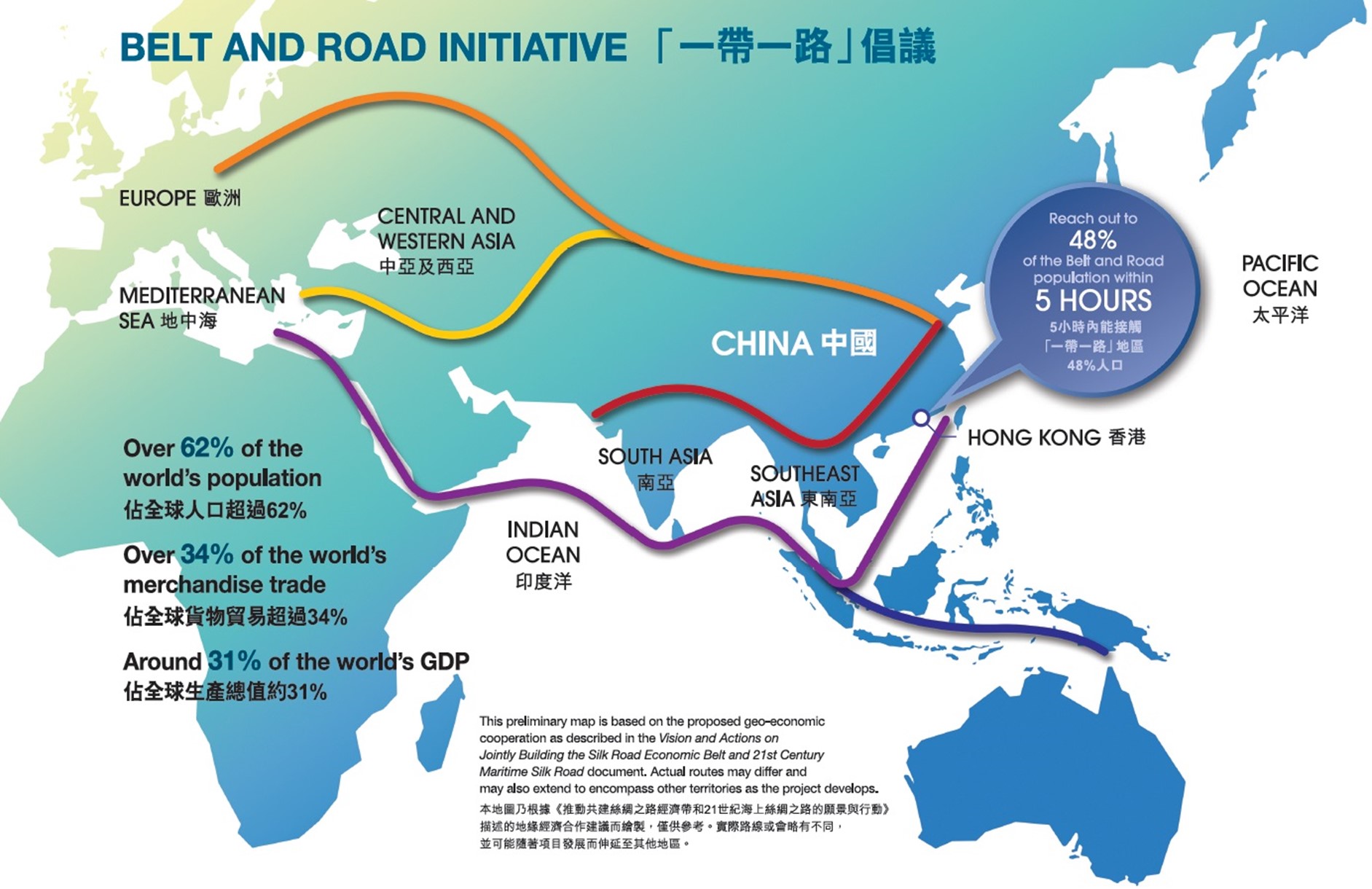
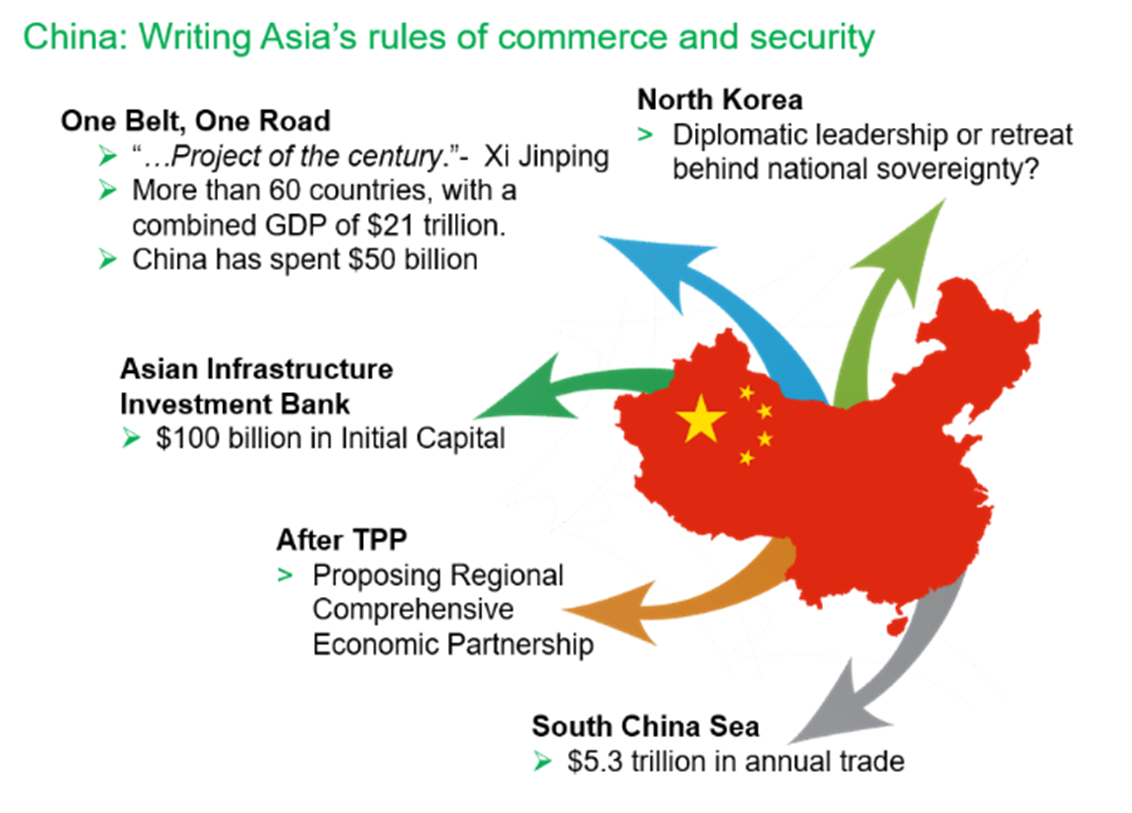
I am opposing China’s Belt and Road Initiative as it is not consistent with the plan to secure “Meaningful Autonomy” to resolve ‘The Great Tibet Problem.


Rudranarasimham Rebbapragada

SPECIAL FRONTIER FORCE


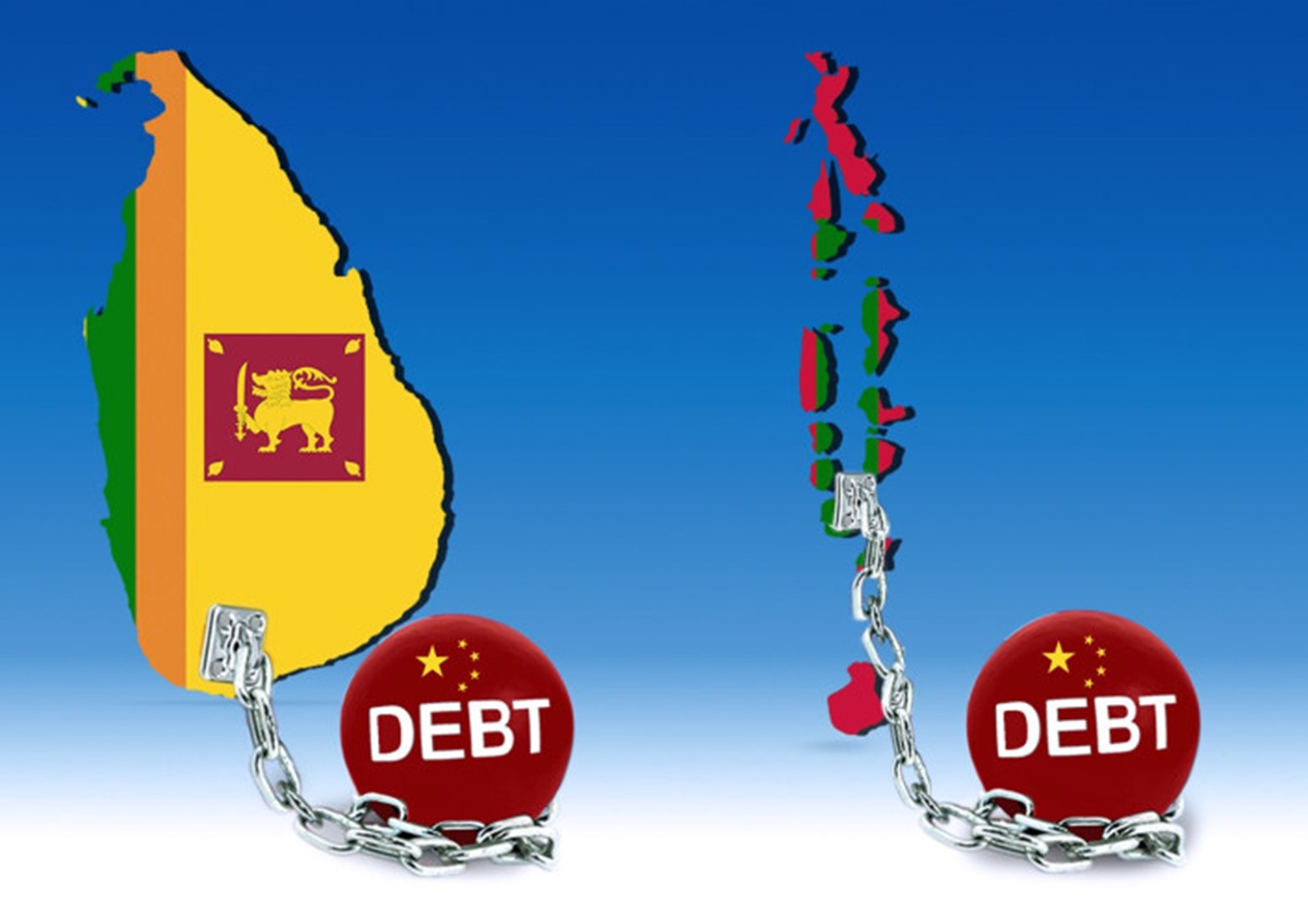
https://bhavanajagat.com/2018/02/04/chinas-string-of-pearls-noose-around-sri-lankan-neck/


China’s BRI will lead to subjugation of Tibet


Clipped from: https://www.oneindia.com/international/chinas-bri-will-lead-to-subjugation-of-tibet-2809421.html

Washington, Nov 18: China’s Belt and Road initiative will lead to colonization, subjugation of Tibet and exploitation of natural resources in the region, the head of the Tibetan Government in exile has said.

Touted as Chinese President Xi Jinping’s ambitious project, the Belt and Road Initiative (BRI) focuses on improving connectivity and cooperation among Asian countries, Africa, China and Europe.

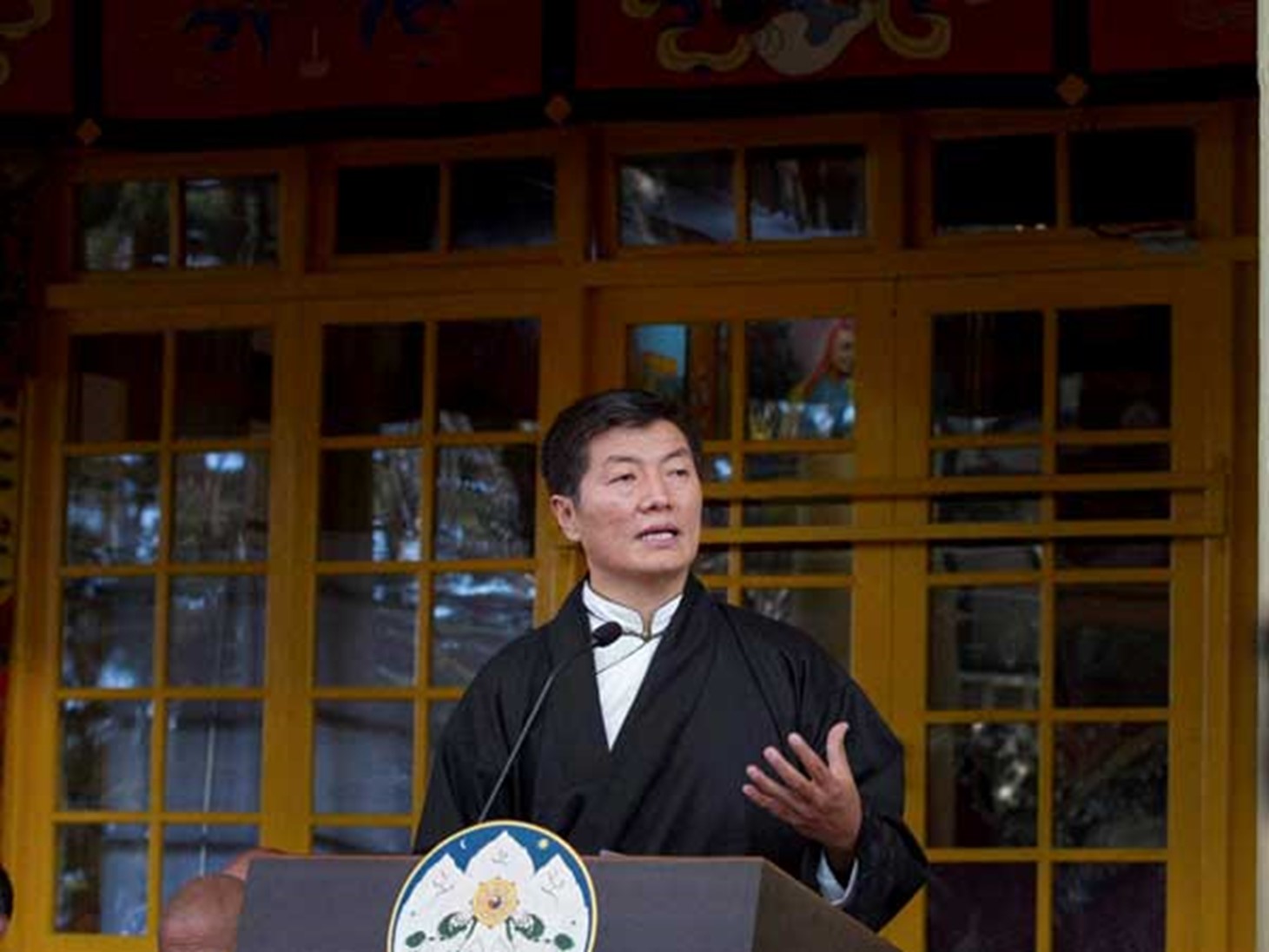
Lobsang Sangay

“Tibet is the blueprint of the BRI. Our experience with the road initiative connecting China with Tibet has not been good,” Lobsang Sangay, the president of the Central Tibetan Administration told PTI in an interview during his visit to Washington DC this week.

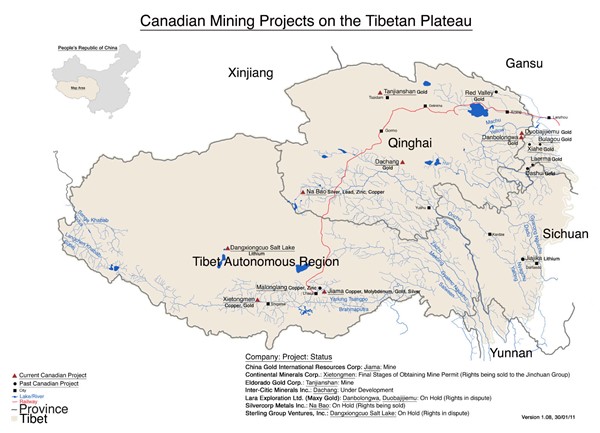
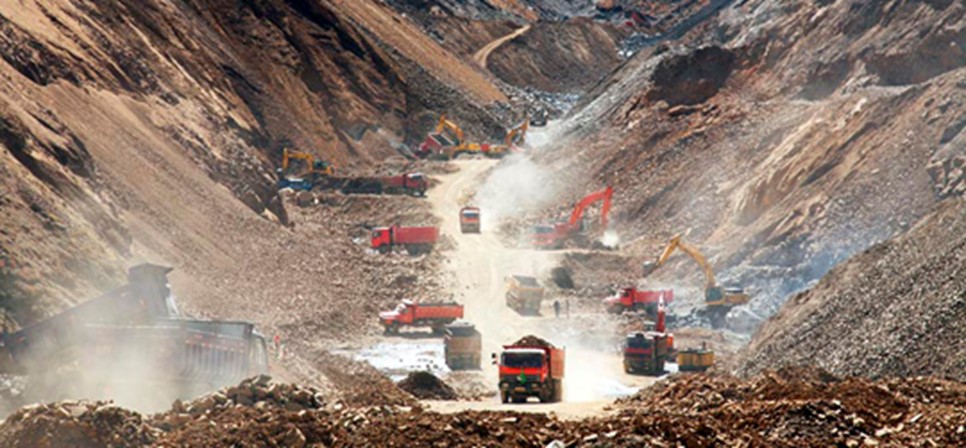
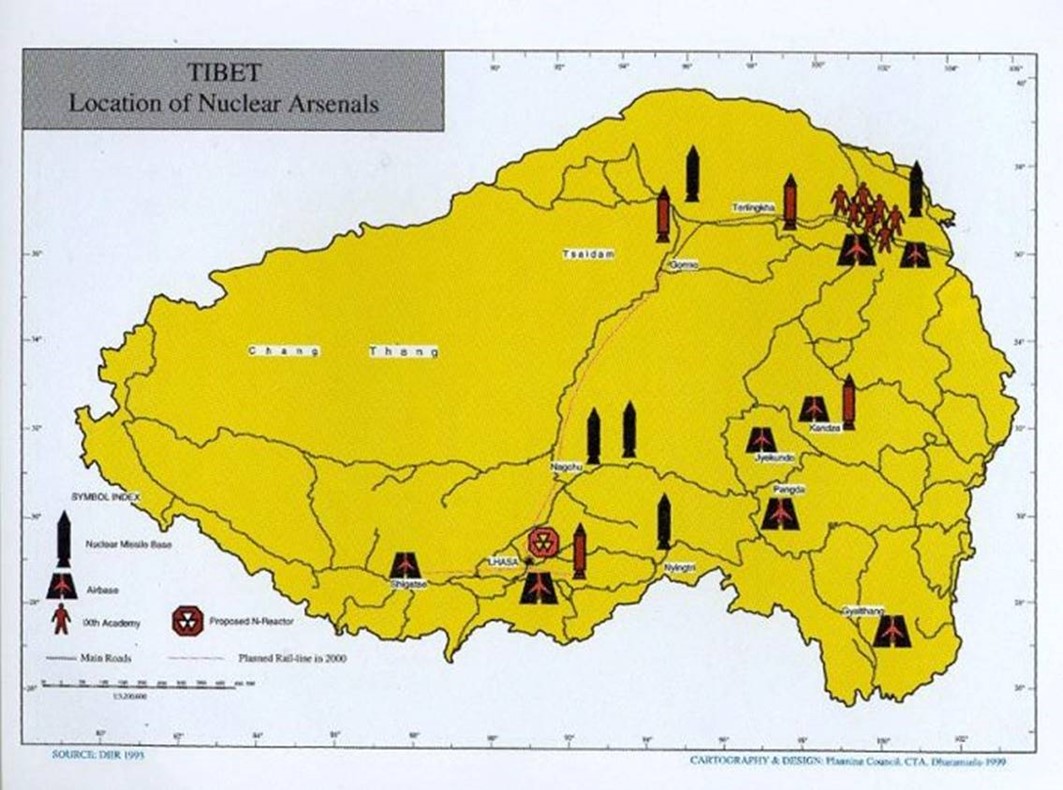
“One road lead to hundreds of roads in Tibet now, routes, and one railway is leading to three or four railways. One airport led to 30 airports six military airfields. Conveniently, all these roads, railways and airport are connected to haul out natural resources and minerals from Tibet,” he explained.

This, he said, is very damaging to water, air and land of Tibet.

“For us, one road leads to the colonization of the Tibet, one road leads to extraction of all kinds of minerals and natural resources. Hence, for us, the one road leads to net loss,” Sangay said in response to a question.

Making a strong case against China’s ambitions BRI initiatives, Sangay in his interaction with the American leadership told them they need to see what happened with Tibet due to the BRI. He told the American leadership that the world should learn from the Tibetan experience, so they can avoid it.
“That’s my advice,” he said.