Movie TE3N Reveals My lifetime affiliation with Vikas Regiment
TE3N Movie on Netflix.com reveals my lifetime affiliation with Vikas Regiment also known as Establishment No. 22, Special Frontier Force.: This badge depicting the Snow Lion represents a military alliance/pact between India, Tibet, and the United States of America. Its first combat mission was in the Chittagong Hill Tracts which unfolded during October 1971. It was named Operation Eagle. It accomplished its mission of securing peace in the region that is now known as Republic of Bangladesh.
I served in Special Frontier Force- Headquarters Establishment No. 22-Vikas Regiment from September 22, 1971, to December 10, 1974. My affiliation with Vikas Regiment survives to this date as I host ‘The Living Tibetan Spirits’ in my consciousness since 1971 Bangladesh Ops (India-Pakistan War of 1971 that lead to the Liberation of Bangladesh). Because of my affiliation with Vikas Regiment, my Indian Army Picture ID photo image of 1972 appears in a scene in the TE3N movie of 2016.
I have three reasons why I reside in the United States since July 1986.
TE3N Movie Review – Indian Army vs Special Frontier Force. Army Act 1950 did not govern my Military Conduct during 1971 Bangladesh Ops for the Act does not govern Special Frontier Force.
My first reason to reside in the United States is that of staying away from India, the country of my origin.
THE TE3N MOVIE OF 2016 ON NETFLIX.com REVEALS MY LIFETIME AFFILIATION WITH VIKAS REGIMENT SINCE 1971.
My second reason to reside in the United States is that of staying away from the military organization called Special Frontier Force which is also popularly known as Establishment No. 22 which is renamed as Vikas Regiment.
THE TE3N MOVIE OF 2016 ON NETFLIX.com REVEALS MY LIFETIME AFFILIATION WITH VIKAS REGIMENT SINCE 1971
The third reason for residing in the United States is that of my Enemy keeping me under surveillance while the Government of India denies me my right to Self-Defense.
TE3N MOVIE OF 2016. THE TE3N MOVIE DVD IS DISTRIBUTED BY RELIANCE ENTERTAINMENT AND NETFLIX.com. IT REVEALS MY LIFETIME AFFILIATION WITH VIKAS REGIMENT SINCE 1971
In the interests of promoting transparency and public accountability in governance by either Public or Private entities, I am sharing the contents of my electronic communication with Reliance Entertainment.
THE TE3N MOVIE OF 2016 REVEALS MY LIFETIME AFFILIATION WITH VIKAS REGIMENT SINCE 1971.
TE3N Pre-recorded DVD – Photo Images.
Dear Sir,
1. On behalf of Special Frontier Force, I am pleased to inform you that a few photo images included in the screenshot of Section.15 of TE3N Pre-recorded DVD, PKD: July/2016 belong to our military organization, people currently affiliated to the organization under terms and conditions established by Government of India.
2. The Movie TE3N is the remake of a South Korean film, and inclusion of the photo images of personnel affiliated to Special Frontier Force is of interest. My organization would like to mention that the Movie Production Team made the decision to use these images giving general public or viewers a mistaken notion about our identity. Special Frontier Force represents a military organization distinct from the Indian Army while it draws Indian Army personnel apart from other nationals.
3. I warmly appreciate artistic freedom exercised by Producer Sujoy Ghosh and Director Ribhu Dasgupta in producing Movie TE3N.
Thanking You,
Yours Sincerely,
Rudra Narasimham Rebbapragada Ann Arbor, MI 48104-4162 USA SPECIAL FRONTIERFORCE-ESTABLISHMENT No. 22-VIKAS REGIMENT
TE3N MOVIE OF 2016. THE TE3N MOVIE DVD DISTRIBUTED BY RELIANCE ENTERTAINMENT REVEALS MY AFFILIATION WITH VIKAS REGIMENT.TE3N MOVIE OF 2016. THE MOVIE IMAGE OF MS-8466 CAPTAIN R R NARASIMHAM, AMC REVEALS MY AFFILIATION WITH VIKAS REGIMENT.TE3N MOVIE OF 2016. INDIA-PAKISTAN WAR, THE BANGLADESH OPs, OPERATION EAGLE, 1971-72 REVEALS MY AFFILIATION WITH VIKAS REGIMENT SINCE 1971. TE3N MOVIE OF 2016. OPERATION EAGLE, 1971 INDIA – PAKISTAN WAR, BANGLADESH OPs REVEAL MY AFFILIATION WITH VIKAS REGIMENT. TE3N Movie of 2016 reveals my affiliation with Vikas Regiment. The1972 Indian Army Picture ID Image of MS-8466 Captain R R Narasimham, AMC TE3N MOVIE OF 2016 REVEALS MY AFFILIATION WITH VIKAS REGIMENT. SPECIAL FRONTIER FORCE CELEBRATES ITS PARTNERSHIP WITH INDIAN ARMED FORCES.
Special Frontier Force – The Problem of Espionage:
Special Frontier Force-The Problem of Espionage: The Chinese military philosopher in a military treatise known as PING-FA(The Art of War) written c. 400 BC mentions the use of secret agents and the importance of good intelligence.Special Frontier Force-The Problem of Espionage: Establishment No. 22 or Special Frontier Force represents a military alliance/pact between the United States, India, and Tibet to confront the military threat posed by the Communist Red Dragon’s occupation of Tibet since 1950. It is no surprise that at Special Frontier Force we have constantly experienced the problem of espionage orchestrated by the People’s Republic of China.
To obtain knowledge of the enemy’s intentions intelligence systems have been in use from ancient times. The concept of intelligence is not new. The military treatise “PING-FA”(The Art of War) written c. 400 BC by the Chinese philosopher Sun-Tzu mentions the use of secret agents and the importance of good intelligence. The intelligence service of the People’s Republic of China is known as the Social Affairs Department. The term espionage describes the process of obtaining information using spies, secret agents, and involves the use of illegal monitoring devices. At Establishment No. 22 or Special Frontier Force the evidence for espionage conducted by the People’s Republic of China is revealed by the photo images obtained by China’s spies and secret agents. After an investigation, the Department of Security of Central Tibetan Administration had dismissed from Service its top military leader/Political Leader/Dapon Radug (or Ratuk) Ngawang during 1976. Another Senior Political Leader Jamba Kalden had voluntarily retired from Service during 1977 after admitting that he had failed to stop or prevent the acts of espionage. It is very interesting to mention that Dapon Ratuk Ngawang had actually escorted His Holiness the 14th Dalai Lama on his way to India after the failed National Uprising Day (March 10, 1959 ) in Lhasa, Tibet. Ratuk Ngawang, is currently 85-years old (in 2013, the original date of this article), is not formally charged for any crime or illegal activity by the Government of India or Tibetan Government-in-Exile. After his retirement, he was permitted to live in India in the Capital City of New Delhi and he draws a modest amount of pension for the years he spent in Service. I had worked with him at Establishment No. 22/Special Frontier Force from September 1971 to December 1974. His wife was in charge of the camp where we trained the female paratroopers of SFF. She released some of the prohibited, illegal photo images captured by the enemy agents sheltered by Ratuk Ngawang. I am fully convinced that he supported espionage activity at my military organization.
Special Frontier Force – The Problem of Espionage.January 21 is Squirrel Appreciation Day. My reflections on “Chakrata Karma” with the help of a Squirrel Story. During January 1974, there was an attempt on my life at the Military Hospital Wing, Chakrata. This type of Charcoal burner was placed in my duty room in an attempt to poison me. I suspect the involvement of Political Leader Ratuk Ngawang and his wife who could have used a Tibetan female nurse to place this burner in the small duty room.Special Frontier Force-The Problem of Espionage: Chinese Intelligence correctly guessed that the 14th Dalai Lama had escaped from Lhasa to seek asylum in India after the failed Day of National Uprising in Tibet. Peking(Beijing) had announced that the 14th Dalai Lama had arrived in India, a day before New Delhi could make a formal announcement. Chinese intelligence always remained ahead of the United States, India, and Tibet.Special Frontier Force-The Problem of Espionage: 54 years ago, His Holiness the 14th Dalai Lama had arrived in India on March 31, 1959. A Guard of Honor was presented by the Assam Rifles after he crossed into India’s North East Frontier Agency(Arunachal Pradesh) at Chutangmu/Khenzimani in TAWANG sector. The Chinese intelligence pursued him constantly monitoring his movements and activities all these years.Special Frontier Force-The Problem of Espionage: Dapon/Political Leader Radug Ngawang served in Establishment No. 22 or Special Frontier Force after arriving in India along with His Holiness the 14th Dalai Lama. The Tibetan Government-in-Exile had simply dismissed him from Service and had spared him from punitive retaliatory action even after knowing that he had harbored Communist spy or spies. His Holiness treated him with mercy and compassion in due recognition of his past performance before falling prey to Chinese influence.Special Frontier Force-The Problem of Espionage: This is the photo image of Ratuk or Radug Ngawang at 84-years of age. While giving interviews to Indian news media and other writers, Ngawang had shared photo images that were illegally taken at Establishment No. 22 or Special Frontier Force where such photography is strictly forbidden. I have no hesitation to identify him as a Communist Agent who had supported espionage activity.
The term ‘intelligence’ is used to describe government operations that involve evaluation of information concerning the strength, activities, and probable course of action of its opponents. Espionage involves the gathering of ‘intelligence’ information which is further used in evaluation to design a political or a military course of action to deter the enemy. Radug Ngawang had exposed his participation in espionage by releasing the following photo images that were taken at Establishment No. 22/Special Frontier Force during 1971-1975 prior to his dismissal from Service in 1976. He clearly understands that the possession of these images is illegal and he is fully aware of the fact that the people shown in the images had no clue that they were being secretly photographed and did not know that the photo images will be released without official permission..
Special Frontier Force-The Problem of Espionage-Photo provided by Dapon/Political Leader Ratuk Ngawang. In this illegally taken photo image, Gyalo Thondup, the 14th Dalai Lama’s elder brother is seen addressing the Tibetan men who serve in Establishment No. 22/Special Frontier Force and had encouraged them to join the War of Liberation of Bangladesh 1971. From right to left the persons seated is 1. Brigadier T S Oberoi, Commandant Establishment No. 22, 2. Mr. R. N. Kao, the Secretary, Directorate General of Security and RAW(Research and Analysis Wing), and 3. Major General Sujan Singh Uban, the Inspector General Special Frontier Force. None of us were aware that this photo was taken. Photography was strictly forbidden.Special Frontier Force-The Problem of Espionage: This is an illegal photo image shared by Political Leader Ratuk Ngawang who is at far left. His Holiness the 14th Dalai Lama (right), Major General Sujan Singh Uban, the Inspector General Special Frontier Force (second from right), and Senior Political Leader Jamba Kalden (third from right). A Chinese spy (later discovered in the robes of a Buddhist monk) secretly took this photo on June 03, 1972 when His Holiness visited Establishment No. 22 for the very first time after its inception in November 1962. These Political Leaders lost their jobs because of the problem of espionage.Special Frontier Force-The Problem of Espionage: Political Leader Ratuk Ngawang is seen standing at right looking towards the photographer. This illegal photo image was shared by Ratuk Ngawang and it helps me to identify him as a Communist Agent who had harbored Chinese spy/spies at Establishment No. 22. Other people, Major General Sujan Singh Uban Inspector General Special Frontier Force (second from right), Mr. R. N. Kao Secretary Directorate General of Security-Research and Analysis Wing-RAW (third from right), and Brigadier T S Oberoi Commandant Establishment No. 22 (far left). I served with these people including Ratuk Ngawang from September 1971 to December 1974 and I can very easily confirm that this photo is the evidence of the problem of espionage.Special Frontier Force-The Problem of Espionage: For the first time in the history of our military pact and alliance with Tibet, His Holiness the 14th Dalai Lama, the Head of Tibetan Government-in-exile had accepted our invitation to visit Establishment No. 22. This was entirely a private visit and it was kept as a ‘top secret’. Photography during this visit on June 03, 1972 was strictly forbidden. However, Political Leader Ratuk Ngawang had a copy of this photo and he had shared the same with a news reporter who had interviewed him at his house in New Delhi several years after his dismissal from Service during 1976. Senior Political Leader Jamba Kalden had become a victim of this espionage and had to retire from Service for he had failed to prevent this crime.Special Frontier Force-Establishment No. 22 – The Problem of Espionage – Illegal photo image was taken on June 03, 1972. His Holiness the 14th Dalai Lama maintained a safe distance from the activities of Establishment No. 22/Special Frontier Force. However, during 1971-72 he had to make an exception as he had granted his permission to train his men by allowing their participation in the Liberation War of Bangladesh 1971. I participated in this military action known as ‘Operation Eagle’. In an attempt to stall this military operation, Dr. Henry Alfred Kissinger, the US Secretary of State had personally urged China’s Prime Minister Zhou Enlai to attack India across the Himalayan frontier(North East Frontier Agency-NEFA-Arunachal Pradesh). China did not comply with that request as China gave a high priority to secure the defeat of the US Army in Vietnam.Special Frontier Force – Establishment No. 22 – The Problem of Espionage – Illegal photo image was taken on June 03, 1972. This was a historical moment and yet it was not expected to be captured in a photo image. A Chinese spy dressed in the robes of a Buddhist monk was later arrested at Establishment No. 22. I was informed about the death of this spy on January 10, 1973. I do not know the exact date of death. The body was cremated according to Buddhist rites and the cause of death was not confirmed by an autopsy. Indian Intelligence Bureau official had expressed his sense of indignation and was totally dismayed by the attitude of Political Leader Ratuk Ngawang who had failed to deliver the spy to Indian Intelligence Bureau for their interrogation and investigation of the problem of espionage. The fact that this photo image exists is the clearest evidence of the Chinese espionage at Establishment No. 22-Special Frontier Force.Special Frontier Force – Establishment No. 22 – The Problem of Espionage – Illegal photo image was taken during Prime Minister Indira Gandhi’s visit to recognize the female paratroopers of SFF. This was a historical moment and yet it was not expected to release this photo image.Special Frontier Force – Establishment No. 22 – The Problem of Espionage – Illegal photo image was taken during Secretary R N Kao’s visit to recognize the female paratroopers of SFF. This was a historical moment and yet it was not expected to release this photo image.
While I served in Special Frontier Force-Establishment No. 22 from September 1971 to December 1974, I interacted with Political leader Ratuk Ngawang on numerous occasions during our routine training activities. I never had the opportunity to medically examine him or interview him at my Medical Inspection Room/Hospital Wing of Establishment No. 22. I am not surprised to know about his dismissal from Service during 1976 after the Tibetan Government-in-Exile had decided not to frame any charges against him. I have no doubt in my mind that he is not fit to be a member of the Tibetan Resistance Movement. He lost his desire to resist the Enemy.
Rudra N. Rebbapragada, Ann Arbor, Michigan, USA.,
Organization: The Spirits of Special Frontier Force.
Establishment No. 22 – Operation Eagle: This badge represents a military alliance/pact between India, Tibet, and the United States of America. Its first combat mission was in the Chittagong Hill Tracts which unfolded on 03 November 1971. It was named Operation Eagle. It accomplished its mission of securing peace in the region that is now knownas Republic of Bangladesh.
The Supreme Ruler of Tibet Marks 65 Years in Exile
Supreme Ruler of Tibet Marks 65th Milestone of Life’s Journey in Exile. On Sunday, March 31, 2024, the Supreme Ruler of Tibet Marks 65th Milestone of Life’s Journey in Exile.Supreme Ruler of Tibet Marks 65th Milestone of Life’s Journey in Exile.
From March 31, 1959 to March 31, 2024, the Living Tibetan Spirits record Sixty-Five Years of Life’s Journey in Exile. The Struggle is not over and yet it is time to take a deep breath and say Thank You India and Thank You America.
In the Indian Tradition, the number 60 is very significant for Indians recognize Sixty specific names to mark Years for purposes of timekeeping. The Cyclical Flow of Time continues in sets of Sixty Years.
Living Tibetan Spirits of Special Frontier Force – Establishment 22 – Vikas Regiment record Life in Exile
Supreme Ruler of Tibet Marks 65th Milestone of Life’s Journey in Exile. Supreme Ruler of Tibet Marks 65th Milestone of Life’s Journey in Exile. Supreme Ruler of Tibet Marks 65th Milestone of Life’s Journey in Exile. Supreme Ruler of Tibet Marks 65th Milestone of Life’s Journey in Exile. Supreme Ruler of Tibet Marks 65th Milestone of Life’s Journey in Exile. Supreme Ruler of Tibet Marks 65th Milestone of Life’s Journey in Exile. Supreme Ruler of Tibet Marks 65th Milestone of Life’s Journey in Exile.
DALAI LAMA: ‘DON’T KNOW HOW LONG STRUGGLE FOR TIBET WILL LAST’
Supreme Ruler of Tibet Marks 65th Milestone of Life’s Journey in Exile. “Thank You India” a cultural program organized in McLeod Ganj, Dharamshala, India on Saturday, March 31, 2018 to mark the 60th Anniversary of Life in Exile.
I do not know for how long the Tibetan struggle will go on. However, the struggle will remain alive till the spirit of Tibetans remains,” the spiritual leader of Tibetans The Dalai Lama said at the “Thank You India” program being held at McLeod Ganj on Saturday, March 31, 2018 to mark his arrival in India, exactly 60 years ago.
On March 14, 1959, the Dalai Lama was forced to flee Tibet following failed uprising against China. After he took shelter in India, Tibetan community across globe under his leadership launched struggle for free Tibet but till date have not succeeded. During last few years, the demand has changed into one for autonomous Tibet.
While interacted with media persons, the Dalai Lama, when questioned about the possibility of Tibetans returning to their homeland one day, replied that Tibetan issue is an issue of justice. While commenting on the equation between India and China, he said that both were most populated countries of the World and both have ability to destroy each other.
“Any sensible person would want ‘Hindi-Chini Bhai Bhai’ to live together. None of them can be disloyal to each other, so other things will go on by the side,” he said. “Confrontation does not yield any result and amicable solution of Tibet problem is the only way out,” the Nobel Peace Laureate said.
“The Chinese are following a socialist form of government, which means everybody should have equal rights. We are not demanding separation from China, but the Tibetan people should have the autonomy to preserve their culture, language, environment and religion,” he added.
Earlier, the Dalai Lama recalled his journey in exile. He said that no time was wasted in these years. “It is a matter of pride that Tibetans have preserved their tradition and culture, wherever they are living across the globe,” he said.
He said that as there was need to preserve Tibetan culture and language, a logical analysis was also the need of hour. “When everybody is praising Tibetans it becomes our responsibility too to check where we were lacking,” he said.
Glimpses of 65 Years Life in Exile
Supreme Ruler of Tibet Marks 65th Milestone of Life’s Journey in Exile. “Thank You India” a cultural program organized in McLeod Ganj, Dharamshala, India on Saturday, March 31, 2018 to mark the 60th Anniversary of Life in Exile. Supreme Ruler of Tibet Marks 65th Milestone of Life’s Journey in Exile. “Thank You India” Year 2018 Calendar marks the 60th Anniversary of Life in Exile. His Holiness the Dalai Lama with Indian Prime Minister Jawaharlal Nehru in Mussoorie, on April 04, 1959. Supreme Ruler of Tibet Marks 65th Milestone of Life’s Journey in Exile. “Thank You India” Year 2018 Calendar marks the 60th Anniversary of Life in Exile. His Holiness the Dalai Lama with Indian President Dr. Rajendra Prasad on April 17, 1961.Supreme Ruler of Tibet Marks 65th Milestone of Life’s Journey in Exile. “Thank You India” Year 2018 Calendar marks the 60th Anniversary of Life in Exile. His Holiness the Dalai Lama with Indian Prime Minister Lal Bahadur Shastri on October 27, 1965.Supreme Ruler of Tibet Marks 65th Milestone of Life’s Journey in Exile. “Thank You India” Year 2018 Calendar marks the 60th Anniversary of Life in Exile. His Holiness the Dalai Lama with Indian President Dr. Sarvepalli Radhakrishnan on May 08, 1964.Supreme Ruler of Tibet Marks 65th Milestone of Life’s Journey in Exile. “Thank You India” Year 2018 Calendar marks the 60th Anniversary of Life in Exile. His Holiness the Dalai Lama with Indian Prime Minister Indira Gandhi on August 06, 1966.Supreme Ruler of Tibet Marks 65th Milestone of Life’s Journey in Exile. “Thank You India” Year 2018 Calendar marks the 60th Anniversary of Life in Exile. His Holiness the Dalai Lama with Indian Prime Minister Morarji Desai on July 22, 1977.Supreme Ruler of Tibet Marks 65th Milestone of Life’s Journey in Exile. “Thank You India” Year 2018 Calendar marks the 60th Anniversary of Life in Exile. His Holiness the Dalai Lama with Indian Prime Minister Charan Singh in 1979.Supreme Ruler of Tibet Marks 65th Milestone of Life’s Journey in Exile. “Thank You India” Year 2018 Calendar marks the 60th Anniversary of Life in Exile. His Holiness the Dalai Lama with Gianni Zail Singh, President of India on August 05, 1985.Supreme Ruler of Tibet Marks 65th Milestone of Life’s Journey in Exile. “Thank You India” Year 2018 Calendar marks the 60th Anniversary of Life in Exile. His Holiness the Dalai Lama with Indian Prime Minister Atul Bihari Vajpayee on July 03, 2001.Supreme Ruler of Tibet Marks 65th Milestone of Life’s Journey in Exile. “Thank You India” Year 2018 Calendar marks the 60th Anniversary of Life in Exile. His Holiness the Dalai Lama with Dr. APJ Abdul Kalam, President of India on January 02, 2009. Supreme Ruler of Tibet Marks 65th Milestone of Life’s Journey in Exile. “Thank You India” Year 2018 Calendar marks the 60th Anniversary of Life in Exile. His Holiness the Dalai Lama with Indian Prime Minister Dr. Manmohan Singh on September 22, 2014.Supreme Ruler of Tibet Marks 65th Milestone of Life’s Journey in Exile. “Thank You India” Year 2018 Calendar marks the 60th Anniversary of Life in Exile. His Holiness the Dalai Lama with Pranab Mukherjee, President of India on December 10, 2016.
The Living Tibetan Spirits – What is my Final Destination?The Living Tibetan Spirits – What is my Final Destination?
In my Consciousness, I host ‘The Living Tibetan Spirits’, the Spirits of young Tibetan Soldiers who gave their precious lives in the Chittagong Hill Tracts during Bangladesh Ops of 1971.
The Living Tibetan Spirits – What is my Final Destination?
His Holiness the Dalai Lama expressed his desire to return to his home in Tibet. I admit that myself and ‘The Tibetan Living Spirits’ have no Home or Place that we may claim as our own.
The Living Tibetan Spirits – What is my Final Destination?
What is my Final Destination? I have no answer. If not His Holiness, I need Manjushree (Manjusri) Bodhisattva of Wisdom to give the Blessings of Compassion to complete my mortal journey with or without reaching a Final Destination.
The Living Tibetan Spirits – What is my Final Destination?
The Living Tibetan Spirits – What is my Final Destination?
It has been a lifetime wish for the Lama to visit Wutaishan, his native town. But he must follow his own saying: Look at situations from all angles. It is unwise for him to go on pilgrimage in China right now.
At the end of 2017, Prof Samdhong Rinpoche, former Chairman of the Central Tibetan Administration in Dharamshala and now, the Dalai Lama’s Special Envoy, went to China to ‘negotiate’ an eventual visit of the Tibetan leader to Wutaishan in Shanxi Province of northern China.
Mount Wutai is said to be one of the four sacred mountains in Buddhism. Each of the mountains is viewed as the abode of one of the four great bodhisattvas. Wutai is the home of Manjushree, the Bodhisattva of wisdom.
Since decades, the Dalai Lama has expressed the wish to visit Wutaishan in his lifetime. While in China, Samdhong Rinpoche is said to have met senior officials of the United Front Work Department in Kunming and Wutaishan to discuss the proposed visit, which would exclude Tibet, as Beijing does not want to see the Dalai Lama returning to his native land, where he is immensely popular.
Beijing believes that China could benefit from the visit by extracting a ‘statement’ from the Dalai Lama. But can the Tibetan leader ‘admit’ to Tibet always ‘belonging’ to China?
In his Five-Point Peace Plan speech in Washington DC in 1987, which heralded his Middle Way approach, the Dalai Lama stated: “The real issue …is China’s illegal occupation of Tibet, which has given it direct access to the Indian sub-continent. The Chinese authorities have attempted to confuse the issue by claiming that Tibet has always been a part of China. This is untrue. Tibet was a fully independent State when the People’s Liberation Army invaded the country in 1949/50.”
The Dalai Lama knows history can’t (and shouldn’t) be changed. In 1987, the Lama stated: “China’s aggression, condemned by virtually all nations of the free world, was a flagrant violation of international law. …China’s military occupation of Tibet continues.”
The recent secret, though formal, contacts between Beijing and Dharamshala, could make the public believe that there was a relaxation of the Chinese position. It is not the case.
On February 11, The Global Times reported: “The public security bureau (PSB) in Southwest China’s Tibet Autonomous Region has released details on how the public can provide tips on activities of criminal gangs connected to the separatist forces of the Dalai Lama.”
Practically, it means that the Tibetans, who worship, or even simply respect, the Dalai Lama could now be termed criminals?
The mouthpiece of the Party continued: “[the circular] warns local people to be on the lookout for the ‘evil forces’ of the Dalai Lama that might use local temples and religious control to confuse and incite people against the Party and Government.”
The circular asked people to report on the activities of ‘foreign hostile forces’. Interestingly, a few weeks ago, Beijing announced the nomination of three Han cadres in the 20-member Tibet delegation to the National People’s Congress (NPC).
One of the delegates is Zhao Kezhi, the Minister of Public Security, responsible for the dreaded PSBs; he will ‘represent’ Tibet at the NPC. Probably wanting to show the leadership his efficiency, Zhao acted fast; the PSB’s circular said: “Criminal gangs are cancers on the healthy economic and social development, and gangsters are a chronic disease that severely disgusts the public”.
It listed 22 illegal activities to be reported to the PSB; three of them mention the ‘Dalai’s clique’: “The Dalai Lama has been in exile for decades but still holds the ambition to split China’s Tibet from the Chinese territory.”
Dai, a professor at Public Security University of China told The Global Times: “Collusion with criminal gangs is a tactic the Dalai group uses to spreading its message of separatism. These kinds of gangsters were involved in the Lhasa rebellion in the 1950s and the violent incident in 2008 in Tibet.”
Dai added “the spread of separatist gangs in Tibet is rampant. Only a campaign against the ‘gangsters’ would deter secessionist activities by the Dalai.”
Wang Xiaobin, a Chinese scholar at the Beijing-based China Tibetology Research Center, explained that the primary task for Tibet is “to maintain national and ethnic unity”. He cited a few groups in China “closely connected with the Dalai group…The Dalai group always interferes in national affairs by controlling temples, including lamas and living Buddhas, and by spreading a kind of ‘middle way’ to the world.”
Xinhua had earlier reported that the campaign would involve targeting “protective umbrellas of gang crime — the officials who shelter the criminals.”
This explains another Han nomination in the NPC’s Tibet delegation, Jing Hanchao, who is currently Vice-President of the Supreme People’s Court. Jing will make sure that the ‘criminals’ caught in the nets of Zhao Kezhi are heavily sentenced.
All this comes at a time when Beijing has just introduced sophisticated facial recognition software on the plateau. The circular promised that the PSB informers’ identity and safety will be protected: “The targets are gangsters who threaten political stability and infiltrate politics, or encourage the public to go against the Party.”
Beijing has also taken the campaign against the Dalai Lama internationally; there too it has been ferocious.
On February 8, The People’s Daily Online titled: ‘Mercedes-Benz: Don’t dare challenge China’s core interest’ while announcing that the German car company had apologized for quoting the Dalai Lama ‘in an extremely wrong message’. What did Mercedes-Benz do so wrong?
Next to one of its luxury cars, the German firm had quoted the Dalai Lama: “Look at situations from all angles, and you will become more open.”
You may think that it is a nice quote, but Beijing is not amused: “The post not only hurt the feelings of the Chinese people, but also challenged their bottom line on national sovereignty.”
The challenge is clear: If the firm, which sold 600,000 new cars in China in 2017, wants to continue to do business in the Middle Kingdom, it has to follow the paranoid regime’s diktats. The same misadventure had recently happened to the US hotel chain Marriott, who had to profusely apologize for wrongly marking Tibet and Taiwan as independent countries.
President Xi Jinping would have said in 2015 that foreign interference in China’s domestic affairs is intolerable: “Country, enterprise, or individual should not challenge the core interests of China, and [have] any activity to split China.”
Even after due apology by Mercedes-Benz, the Chinese newspaper said that “the apology lacks sincerity and reflects the German carmaker’s lack of understanding of Chinese culture and values. China’s core interests cannot be challenged.”
The paper even compared the Dalai Lama to Hitler: “How will the German people react if a foreign enterprise speaks highly of Adolf Hitler.”
It seems definitely unwise for the Dalai Lama, considered by Beijing as the ‘head of the gangsters’, to go on pilgrimage in China right now. Let us hope that the spiritual leader will not accept the diktats of the bully regime in Beijing.
(The writer is an expert on India-China relations and an author)
The Living Tibetan Spirits – What is my Final Destination?
Whole Dude – Whole Emptiness: The Seal of The Ganden Phodrang Institution of the Dalai Lama, the Government of Tibet.Whole Dude – Whole Emptiness: THE LIVING TIBETAN SPIRITS WELCOME HIS HOLINESS THE DALAI LAMA TO ANN ARBOR, MICHIGAN.
His Holiness the 14th Dalai Lama spoke on “Engaging Wisdom and Compassion” on April 19-20, 2008 at Crisler Arena, the University of Michigan, Ann Arbor.
Whole Dude – Whole Emptiness: The Living Tibetan Spirits Welcome His Holiness the 14th Dalai Lama to Ann Arbor, MI, USA.
The concept of ‘Sunyata’ (Emptiness or Nothingness):
Whole Dude – Whole Emptiness: The Living Tibetan Spirits Welcome His Holiness the 14th Dalai Lama to Ann Arbor, MI, USA.
The emptying of the mind and the attainment of an undifferentiated unity is a theme of the ‘Sunyata’ doctrine developed by Acharya Nagarjuna. ‘Sunyata’ can be stated as a state of “pure consciousness” in which the mind has been emptied of all particular objects and images. The emptied mind reflects or manifests the undifferentiated reality in which the world appears without distinction and multiplicity.
H.H. Dalai Lama’s presentation:
Whole Dude – Whole Emptiness: The Living Tibetan Spirits Welcome His Holiness the 14th Dalai Lama to Ann Arbor, MI, USA.
“At the root of all our suffering lies a form of ignorance, a form of unknowing”. The origin of suffering is attachment. “Self-grasping (or self-focus) gives rise to suffering. It is the root of all afflictions.” “Self-grasping” leads to attachment to impermanent things or thoughts which gives rise to suffering. Emptiness is created by casting aside the attachment to everyday things and worries.
H.H. Dalai Lama advised practicing loving kindness to eliminate the afflictions caused by attachment. The goal, he said is,”Cultivating the Wisdom of no self,” a sense of grand emptiness that leaves behind everyday pollutants that can take both physical or emotional form.
THE SPIRITS OF SPECIAL FRONTIER FORCE:
Whole Dude – Whole Emptiness: The Living Tibetan Spirits Welcome His Holiness the 14th Dalai Lama to Ann Arbor, MI, USA.
Special Frontier Force is a multinational defense plan to defend freedom and democracy in the occupied Land of Tibet. I emptied my mind of all desires. The Spirits that inhabit my Consciousness seek Freedom in their Land of origin.
Old Flames Never Die: The year 2010 is the Year of the Male Iron Tiger (lcags-pho stag-lo). The first day falls on February 14, 2010, or Tibetan New Year 2137. Old Flames Never Die: The year 2010 is the Year of the Male Iron Tiger (lcags-pho stag-lo). The first day falls on February 14, 2010, or Tibetan New Year 2137.
My consciousness got exposed to the Spirits of some young Tibetan soldiers whose untimely deaths I had witnessed. I dedicate this blog post to those Living Tibetan Spirits that continue to live in my consciousness.
Who is my Valentine?
Old Flames Never Die: The year 2010 is the Year of the Male Iron Tiger (lcags-pho stag-lo). The first day falls on February 14, 2010, or Tibetan New Year 2137. Goddess Palden Lhamo (Sanskrit. Sri Devi), the Dharma Protector of Tibet.
The word Valentine as a noun describes a Sweetheart chosen on St. Valentine’s Day (February 14). A note or greeting card sent to Sweetheart on this Day containing a message of sentimental love is also described as a Valentine. This year’s Valentine’s Day is of special significance to the Tibetan people as they ushered the New Year of Iron Tiger Year 2137 of their Lunar Calendar. On this Valentine’s Day, I want to assure my Valentine that the burning passion aroused in me is alive and has not died.
After attending Kurnool Medical College, Kurnool, Andhra Pradesh, India, I joined the Indian Army on July 26, 1970. On July 26, 1971, I completed my military and professional training at Military Hospital, Ambala Cantonment, Haryana and was fully ready to serve the nation in my role as a Medical Officer of the Indian Army Medical Corps. I left Ambala on September 21, 1971 on my first posting. On September 22, 1971 after reaching my new Duty Station I met my Flame. The Flame kindled a fire in my heart. That fire still burns.
Old Flames Never Die – A Pledge to my Valentine. These Flames kindled a fire in my heart on September 22, 1971 and that fire still burns. I shall keep the Flame alive in my future.
As the saying goes, “Old Flames Never Die”. The Flame lives in my Consciousness. On this Valentine’s Day, I pledge that I will keep the Flame alive in my future. The message that I want to send to my Valentine is ; “My past, my present, and my future is a continuum.” I share the pain and grief that my Valentine has experienced in the past and is experiencing now. We both understand the Challenge, share a common hope and expectation of a better future. The Spirit of my Valentine languishes in Darkness. The darkness of military occupation has enveloped my Flame threatening her very existence. She needs a breath of fresh air to survive. I promise that I am the Breath of my Valentine’s life.
Old Flames Never Die: I seek the Compassion of Buddha to keep the Flame Alive and fulfil the Pledge made to my Valentine.
The Butter Lamps lit in my Unit’s Gonpa (Gompa) are still glowing. I seek the Compassion of Buddha to keep the Flames Alive.
Old Flames Never Die: I seek the Compassion of Buddha to keep the Flame Alive and fulfil the Pledge made to my Valentine.
Buddham Saranam Gacchami,
Dhammam Saranam Gachhami,
Sangham Saranam Gachhami.
I seek the Path of Triple Refuge to keep the Old Flames Alive. I seek the Refuge of Buddha. I seek the Refuge of ‘Dharma’. I seek the Refuge of ‘Sangha’.
Old Flames Never Die: I seek the Compassion of Buddha to keep the Flame Alive and fulfil the Pledge made to my Valentine. The Path of Triple Refuge to keep the Old Flames Alive.
Tibetan New Year -Losar – Iron Tiger Year 2137:
Tibetans celebrate their New Year in the traditions of their Lunar Calendar. The Valentine’s Day this year has coincided with their New Year – LOSAR celebration. In due recognition of the pain, suffering, and misery that is experienced by Tibetans inside Tibet, and to honor the memory of Tibetans who lost their lives during 2008 protests, the Tibetan Community has refused to celebrate LOSAR during 2009. I send my greetings of “TASHI DELEK” to all of my associates and people who defend Tibetan Identity.
His Holiness the Dalai Lama Attends Religious Ceremonies on Tibetan New Year
His Holiness the Dalai Lama leads an early morning prayer ceremony in Dharamsala on 14 February 2010. (Photo by Tenzin Choejor, OHHDL)
Dharamsala, HP, India, 14 February 2010 (tibet.net) – His Holiness the Dalai Lama presided over religious ceremonies at the main Buddhist temple in Dharamsala this morning, marking Losar or the “Year 2137 of the Iron-Tiger” of Tibetan calender.
Later, His Holiness the Dalai Lama delivered a brief address to thousands of Tibetans gathered for the ceremony.
His Holiness offered greetings to Tibetans living inside and outside Tibet and people of the Himalayan region who share same culture and religion as Tibetans. His Holiness extended his good wishes and gratitude to the international community for taking interest in and supporting the just cause of Tibetans.
“Despite facing great problems in Tibet for many years, the Tibetan people living inside have shown indomitable courage and sincerity in standing up to the situation,” said His Holiness the Dalai Lama.
His Holiness said “Tibetans in living in many parts of Tibet are marking the year as a year of remembrance of Tibetan people’s suffering,” adding that “they refrain from festivities during the Losar.” With such sentiments of our brethren in Tibet, His Holiness advised Tibetans to offer prayers by engaging in religious ceremonies and eschew festive celebrations.”
His Holiness the Dalai Lama spaaks to thousands of Tibetans after attending religious ceremonies in Dharamsala on 14 February 2010. (Photo by Tenzin Choejor, OHHDL)
His Holiness “reminds Tibetans living in the free world, not to forget the critical situation in Tibet”. “The Tibetans in exile must keep up their sincerity and courage like their brethren in Tibet,” His Holiness added.
Speaking of education, His Holiness “urged Tibetans, Mongolians and the people of Himalayan region to put more efforts in education, and to excel in the study of Tibetan Buddhism”. His Holiness “underlined the study of Tibet’s unique secular education, particularly the philosophy of religion”.
The day began at 7:00 am with an early morning ceremony of offering prayers and ceremonial cake(Tse-Tor) to goddess Palden Lhamo, the supreme hierarchy of Dharma protectors. The abbot of Namgyal Monastery offered Mendel Tensum, auspicious offerings to His Holiness the Dalai Lama. The officials of the Central Tibetan Administration, including the chief justice commissioner, justice commissioners, speaker and members of Tibetan Parliament, Kalon Tripa Prof Samdhong Rinpoche and members of the Kashag, were present.
This is was followed by another prayer service in the main shrine hall, during which the abbot of Namgyal Monastery, the chief justice commissioner, speaker of the Tibetan Parliament and Kalon Tripa, presented auspicious offerings to His Holiness the Dalai Lama. A group of monks participated in a religious debate.
Old Flames Never Die: The year 2010 is the Year of the Male Iron Tiger (lcags-pho stag-lo). The first day falls on February 14, 2010, or Tibetan New Year 2137. Goddess Palden Lhamo (Sanskrit. Sri Devi), the Dharma Protector of Tibet.
The Military Expeditions to Demagiri, Tlabung, Lushai, Mizo Hills. A Tribute to Tibetan Martyrs
Whole Dude – Whole Expedition: 1871 and 1971, One Hundred Years Apart, Southern Column vs South Column. The Military Expeditions to Demagiri, Tlabung,Lushai, Mizo Hills. This Memorial Stone was erected in Demagiri in honor of Captain Thomas Herbert Lewin, the Deputy Commissioner of the Chittagong Hill Tracts who built a fort in Demagiri to serve as the Force Headquarters of the British Indian Army First Lushai Expedition of 1871-72.
Excerpt: I am sharing this story about the British Indian Army First Lushai Expedition of 1871-72 to honor the memory of the Tibetan soldiers who arrived in Demagiri, Tlabung, Lushai or Mizo Hills in October 1971 and gave their precious lives during the military action in the Chittagong Hill Tracts initiating the Liberation of Bangladesh. On behalf of The Living Tibetan Spirits, I ask that a Memorial Stone be erected in Demagiri, Tlabung, the place which served as the Force Headquarters of The Fifth Army in Bangladesh under the command of Major General Sujan Singh Uban, the Inspector General of Special Frontier Force.
Whole Dude – Whole Expedition: 1871 and 1971, One Hundred Years Apart, Southern Column vs South Column. The Military Expeditions to Demagiri, Tablung, Lushai, Mizo Hills. Captain Lewin the founder of Demagiri Military Settlement lived in Demagiri for about nine years. Whole Dude – Whole Expedition: 1871 and 1971, One Hundred Years Apart, Southern Column vs South Column. The Military Expeditions to Demagiri, Tablung, Lushai, Mizo Hills. Captain Lewin befriended the native people by learning their language and their cultural traditions.
Captain Thomas Herbert Lewin was appointed as the Deputy Commissioner and Political Agent for the Chittagong Hill Tracts in March 1866. He held that post until 1875. In 1874, he was made an honorary Lieutenant Colonel.. He made his first camp at Chandraghona and later in Rangamati. He was the founder of a military camp and settlement at Demagiri ahead of the British Indian Army First Lushai Expedition of 1871-72.
Whole Dude – Whole Expedition: 1871 and 1971, One Hundred Years Apart, Southern Column vs South Column. The Military Expeditions to Demagiri, Mizo Hills. A view of Demagiri, Tlabung on the banks of the Khawthlang Tuipui or Karnaphuli River, the border between Mizo Hills and the Chittagong Hill Tracts.
The British Indian Army Lushai Expedition of 1871 to 1872 was a punitive incursion under the command of Generals Brownlow and Bourchier. General Charles Henry Brownlow commanded the Southern Column or the Chittagong Column for the Lushai Expedition and then served as Assistant Military Secretary for India for ten years. General George Bourchier commanded the East Frontier District, and in 1871 to 1872 he commanded the Cachar Column or the North Column in the Lushai Expedition.
In 1871, the British Indian Army military expedition named the Southern Column started from Kasalong in Rangamati and it followed the course of Karnaphuli River to reach Demagiri, Tlabung in Lushai, Mizo Hills. Whereas in 1971, the Special Frontier Force military expedition named the South Column started from Demagiri and initially it was an overland incursion followed by the use of passenger boat service to reach Rangamati and used captured vehicles to advance to Kaptai by road and launched a separate airborne operation to secure the Naval Base at Chittagong Sea Port. The South Column reached Chittagong by road taking advantage of the vehicles left behind by the enemy but camped in Kaptai and around the Kaptai Lake until the conclusion of the Campaign in the Chittagong Hill Tracts.
Whole Dude – Whole Expedition: 1871 and 1971, One Hundred Years Apart, Southern Column vs South Column. The Military Expeditions to Demagiri, Mizo Hills. A view of the Khawthlang Tuipui or Karnaphuli River near Demagiri, Tlabung, Lushai, Mizo Hills.
The objectives of the British Indian Army First Lushai Expedition were to rescue British subjects who had been captured by the Lushais (Mizos) in raids into Assam—including a six-year-old girl called Mary Winchester—and to convince the hill tribes of the region that they had nothing to gain and everything to lose by placing themselves in a hostile position towards the British Government. Mary Winchester, or Zolûti to Mizos, (1865–1955) was a Scottish girl who was captured and held hostage by the Lushai, Mizo tribes of Lushai Hills, Mizo Hills in 1871, and rescued by the British expedition in 1872.
Captain Thomas Herbert Lewin signed a Peace Treaty with Mizo Chief Rothangpuia of Thangluah clan following which he shifted his headquarters from Rangamati to Demagiri, Tlabung. The Mizos called him Thangliana or the Man of Great Fame. Captain Lewin returned to England due to ill health, was made an honorary Lieutenant Colonel and received a Colonel’s pension. He returned to India in 1875 to take up the post of Deputy Commissioner of Cooch Behar, and later became Deputy Commissioner of Darjeeling, where he remained until his retirement in 1879. In 1885, Thomas Herbert bought Parkhurst, a house in Abinger, near Dorking, Surrey where he lived until his death in 1916. Lewin was the author of several works on India and Indian languages.
The Story of South Column
Whole Dude – Whole Expedition: 1871 and 1971, One Hundred Years Apart, Southern Column vs South Column. The Military Expeditions to Demagiri, Tlabung, Lushai, Mizo Hills. On completion of my Medical Internship at Military Hospital, Ambala Cantonment, Haryana, I joined Establishment 22 (Two-Two) on September 22, 1971.Whole Dude – Whole Expedition: 1871 and 1971, One Hundred Years Apart, Southern Column vs South Column. The Military Expeditions to Demagiri, Mizo Hills. The Story of South Column begins in October 1971.Whole Dude – Whole Expedition: 1871 and 1971, One Hundred Years Apart, Southern Column vs South Column. The Military Expeditions to Demagiri, Tlabung, Lushai, Mizo Hills. During October 1971, I provided the medical support to Bangla Freedom Fighters training at a Camp on the eastern bank of the Yamuna River near Dakpathar Barrage.
I joined duty at the Military Hospital Wing of Establishment 22 (Two-Two) on September 22, 1971 and at the end of the month I was sent on temporary duty to provide medical support to Bangla Freedom Fighters training on the eastern banks of the Yamuna River between the Shivalik Hills and Dakpathar Barrage across the Yamuna River. This Training Camp was commanded by Lieutenant Colonel Prasanta Coomar Purkayastha, The Regiment of Garhwal Rifles. I did not take my service weapon to perform this duty while the men did receive weapon training. I returned to Chakrata during the third week of October 1971 and was not yet aware of any battle plan to take military action in support of the Bangla refugees in India.
On October 19, 1971, while serving in the Military Hospital Wing of Establishment 22 (Two-Two) in Chakrata, I was asked to provide medical support to the Mobile Reserve Force (MRF), Kailana Camp in Chakrata Cantonment. I was not briefed about the nature of my temporary duty and I moved to the MRF Kailana Camp with a steel trunk and a bedding, a heavy load of personal belongings.
Whole Dude – Whole Expedition: 1871 and 1971, One Hundred Years Apart, Southern Column vs South Column. The Military Expeditions to Demagiri, Tlabung, Lushai, Mizo Hills From the Military Hospital Wing, Chakrata Camp, I proceeded on temporary duty to the Mobile Reserve Force, Kailana Camp in Chakrata Cantonment without taking my service weapon, the 9 mm Sub Machine Gun, SMG (Carbine, Machine, Sten)..
As an Officer of the Indian Army, I received training in the use of a 9 mm Sub Machine Gun known as Sten Gun or SMG (Carbine, Machine, Sten) and had always passed in my weapon training tests. It is a devastating close-range weapon. It is a compact, lightweight automatic weapon firing pistol ammunition and it would fire without any lubrication. The personal weapon is held in the Unit Quarter Guard (Armory) and is generally taken out for range practice and weapon training during peacetime and is carried during the performance of active duty deployment either training or actual combat operations. I proceeded for this assignment at MRF, Kailana Camp without taking my personal weapon and ammunition as it was primarily a peacetime assignment. My Movement Order did not specify that I must draw the service weapon and ammunition prior to proceeding on this duty. However, the men were personally briefed to prepare for a wartime duty and I was in the Hospital and did not listen to the motivational speech given by Gyalo Thondup, the brother of His Holiness the 14th Dalai Lama.
Whole Dude – Whole Expedition: 1871 and 1971, One Hundred Years Apart, Southern Column vs South Column. The Military Expeditions to Demagiri, Tlabung, Lushai, Mizo Hills. THE PROBLEM OF ESPIONAGE. ILLEGAL PHOTO IMAGE TAKEN BY CHINESE SPY AT ESTABLISHMENT NO. 22. DAPON/POLITICAL LEADER RATUK NGAWANG HAD POSSESSION OF THIS IMAGE AND SUPPLIED IT TO A JOURNALIST. Gyalo Thondup, 14th Dalai Lama’s brother gave a motivational speech at the Mobile Reserve Force Kailana Camp in Chakrata during the third week of October 1971. Special Secretary Mr. R.N. Kao is flanked by Major General Sujan Singh Uban (Left) and Brigadier T S Oberoi (Right).Whole Dude – Whole Expedition: 1871 and 1971, One Hundred Years Apart, Southern Column vs South Column. The Military Expeditions to Demagiri, Tlabung, Lushai, Mizo Hills. The Key Players met in Chakrata. Brigadier T S Oberoi (extreme left) seen with Special Secretary Mr. R. N. Kao, and Major General Sujan Singh Uban, the Inspector General of Special Frontier Force, and Tibetan Political Leader at extreme right.Whole Dude – Whole Expedition: The Fifth Army in Bangladesh. Establishment No. 22 – Operation Eagle: This badge represents a military alliance/pact between India, Tibet, and the United States of America. Its first combat mission was in the Chittagong Hill Tracts which unfolded on Thursday, October 28, 1971 when South Column crossed the international boundary West of Borunasury Border Security Force Company Post. It was named Operation Eagle. It accomplished its mission of securing peace in the region that is now known as Republic of Bangladesh. The Badge is not worn on uniforms during active duty.Whole Dude – Whole Expedition: 1871 and 1971, One Hundred Years Apart, Southern Column vs South Column. The Military Expeditions to Demagiri, Tlabung, Lushai, Mizo Hills. I proceeded from Mobile Reserve Force Kailana Camp, Chakrata in Uttarakhand to the Aviation Research Centre Airbase in Sarsawa on October 20, 1971 without carrying my service weapon.Whole Dude – Whole Expedition: 1871 and 1971, One Hundred Years Apart, Southern Column vs South Column. The Military Expeditions to Demagiri, Tlabung, Lushai, Mizo Hills.My journey begins at Mobile Reserve Force Kailana Camp, Chakrata after I was attached to the Mobile Reserve Force on October 19, 1971.Whole Dude – Whole Expedition: 1871 and 1971, One Hundred Years Apart, Southern Column vs South Column. The Military Expeditions to Demagiri, Mizo Hills. The story of South Column begins at Mobile Reserve Force Kailana Camp, Chakrata. Apart from Chakrata, troops had also arrived in Demagiri from other locations.Whole Dude – Whole Expedition: 1871 and 1971, One Hundred Years Apart, Southern Column vs South Column. The Military Expeditions to Demagiri, Mizo Hills. On October 20, 1971, I moved from Kailana Camp, Chakrata to Sarsawa, near Saharanpur travelling by road in a military convoy.Whole Dude – Whole Expedition: 1871 and 1971, One Hundred Years Apart, Southern Column vs South Column. The Military Expeditions to Demagiri, Mizo Hills. On October 20, 1971, I moved from Chakrata to Sarsawa, near Saharanpur by road. A view of the bridge over the Tons River at Kalsi, near Dakpathar.Whole Dude – Whole Expedition: 1871 and 1971, One Hundred Years Apart, Southern Column vs South Column. The Military Expeditions to Demagiri, Mizo Hills. After arriving in Sarsawa on October 20, 1971, I was issued a Movement Order to proceed on duty described as Operation Eagle. I proceeded on this duty with a heavy load of my personal belongings and without my personal service weapon and ammunition. A view of Sarsawa Airfield. On October 21, 1971, for the early morning takeoff, the runway was lit by rows of flaming torches.Whole Dude – Whole Expedition: 1871 and 1971, One Hundred Years Apart, Southern Column vs South Column. The Military Expeditions to Demagiri, Mizo Hills. OPERATION EAGLE IS THE CODE NAME FOR MILITARY ACTION THAT INITIATED THE LIBERATION OF BANGLADESH DURING OCTOBER-NOVEMBER 1971 WITH STRIKES ON THE ENEMY MILITARY POSTS IN CHITTAGONG HILL TRACTS.Whole Dude – Whole Expedition: 1871 and 1971, One Hundred Years Apart, Southern Column vs South Column. The Military Expeditions to Demagiri, Mizo Hills. I took an early morning flight on October 21, 1971 from Sarsawa Air Force Station to Kumbhigram Air Force Station.Whole Dude – Whole Expedition: 1871 and 1971, One Hundred Years Apart, Southern Column vs South Column. The Military Expeditions to Demagiri, Mizo Hills. On October 20, 1971 I was deployed for the military action code-named Operation Eagle at Sarsawa, near Saharanpur. My Movement Order did not provide any details and there was no briefing to keep the battle plan as a secret.1871 and 1971, One Hundred Years Apart, Southern Column vs South Column. The Military Expeditions to Demagiri, Mizo Hills. The Antonov An-12 is a four-engined turboprop transport aircraft designed in the Soviet Union. The above photo image is used just for the illustrative purpose. We were not permitted to take any photographs in the conduct of the covert military mission code named Operation Eagle.
At Sarsawa Air Force Station, I boarded the Antonov An-12, Soviet designed transport aircraft in the early morning hours of October 21, 1971. The runway was illuminated by rows of flaming torches on either side. The Commandant of Establishment 22 (Two-Two) Brigadier T S Oberoi delayed the departure of the flight until a hot breakfast was served to all the men boarding the aircraft. The men were fully armed and were dressed in combat gear and I was the only exception proceeding on Operation Eagle mission without carrying a service weapon. I was permitted to carry the heavy load of my personal belongings as the nature of the mission was not formally disclosed. While we boarded the aircraft in a single file, Brigadier T S Oberoi warmly shook hands of each person. He wished me all the best and did not inquire about my service weapon as the mission remained a secret and its objectives were not disclosed in Sarsawa. I was just taking part in an unknown military mission and did not even know the destination of this morning flight from Sarsawa Airfield until the aircraft landed in Kumbhigram Airfield near Silchar City in Cachar District, Assam. However, I checked the Movement Order that was issued to me. The Commandant of Establishment 22 has the authority to sanction my move from the Military Hospital Wing to the Mobile Reserve Force Base, Kailana Camp in Chakrata and from there to Sarsawa airfield where we often go for parachuting or para jumping. The Inspector General of Special Frontier Force has the authority to sanction my move from Chakrata to any other location within India. The Inspector General does not have the sanctioning power to ask me to move across the boundaries of India. The Movement Order deploying me for Operation Eagle that I received in Sarsawa did not specify any particular location but the Move was sanctioned by the Cabinet Secretariat, the Prime Minister’s Office (PMO), the executive branch of the Government of India which has the sanctioning power to move me to any location in India as well as across the borders of India. Before boarding the Antonov An-12 transport aircraft in Sarsawa, I knew I may have to move across the borders of India but had no clue about its precise location. I was not briefed and I did not ask any questions as my mission was still under the wraps of operational security. On October 21, 1971, I was blissfully unaware of the existence of a place known as Demagiri in Lushai, Mizo Hills. On that date I am aware of the training imparted to Bangla Freedom Fighters but had no clue about an impending operation that follows the course of the British Indian Army’s First Lushai Expedition of 1871-72.
1871 and 1971, One Hundred Years Apart, Southern Column vs South Column. The Military Expeditions to Demagiri, Tlabung, Lushai, Mizo Hills. On October 21, 1971, I boarded the Antonov An-12 transport aircraft in Sarsawa without knowing the destination of my air flight.1871 and 1971, One Hundred Years Apart, Southern Column vs South Column. The Military Expeditions to Demagiri, Mizo Hills. On October 21, 1971, I arrived in Kumbhigram Air Force Station, Cachar District, Assam and camped near the runaway to begin the road journey to Lushai, Mizo Hills on October 22, 1971.1871 and 1971, One Hundred Years Apart, Southern Column vs South Column. The Military Expeditions to Demagiri, Mizo Hills. The 3-ton Lorry shown in this picture is used just for the illustrative purpose.. In 1971, the Indian Army was using TATA Mercedes Benz 3-ton Lorry for the transportation of men and supplies.1871 and 1971, One Hundred Years Apart, Southern Column vs South Column. The Military Expeditions to Demagiri, Mizo Hills. On October 22, 1971, I moved from Kumbhigram, Cachar District, Assam to Aizawl, Mizo Hills in a military convoy and halted there for the night at the Border Roads Task Force (BRTF), Project Pushpak, Officers Mess.1871 and 1971, One Hundred Years Apart, Southern Column vs South Column. The Military Expeditions to Demagiri, Mizo Hills. On October 22, 1971, I arrived in Aizawl and spent the night at the Officers Mess of the Border Roads Task Force (BRTF), Project Pushpak.1871 and 1971, One Hundred Years Apart. Southern Column vs South Column. The Military Expeditions to Demagiri, Tlabung, Lushai, Mizo Hills. On October 23, 1971, I moved from Aizawl to Lunglei, Mizoram for another night halt at Border Roads Task Force (BRTF), Project Pushpak Officers Mess in Lunglei. A view of Mizo Hills, Aizawl.1871 and 1971, One Hundred Years Apart, Southern Column vs South Column. The Military Expeditions to Demagiri, Mizo Hills. On October 24, 1971, I moved from Lunglei to Demagiri, Tlabung.1871 and 1971, One Hundred Years Apart, Southern Column vs South Column. The Military Expeditions to Demagiri, Mizo Hills. On October 24, 1971, the military convoy moved from Lunglei to arrive in Demagiri. 1871 and 1971, One Hundred Years Apart, Southern Column vs South Column. The Military Expeditions to Demagiri, Mizo Hills. I arrived in Demagiri on October 24, 1971. I walked up to the Khawthlang Tuipui, Karnaphuli River bank and looked for signs of activity across the border. Surprisingly, the area looked uninhabited while in Demagiri the streets were crowded with Bangla refugees.
October 1971, Operation Eagle Deployment at Demagiri, Tlabung
1871 and 1971, One Hundred Years Apart, Southern Column vs South Column. The Military Expeditions to Demagiri, Tlabung, Lushai, Mizo Hills. On Monday, October 25, 1971, I selected Vietnam War Era US Army Infantry Assault M14 Rifle as my service weapon.Operation Eagle. The military action to initiate the Liberation of Bangladesh involved the use of this US Marine Corps Service Rifle. 1871 and 1971, One Hundred Years Apart, Southern Column vs South Column. The Military Expeditions to Demagiri, Tlabung, Lushai, Mizo Hills. The M14 Rifle was issued to me on Monday, October 25, 1971. On Tuesday, October 26, 1971, I returned the Gun to the Armory at Force Headquarters, Operation Eagle, Demagiri (Tlabung).1871 and 1971, One Hundred Years Apart, Southern Column vs South Column. The Military Expeditions to Demagiri, Tlabung, Lushai, Mizo Hills. On Monday, October 25, 1971, I was offered Hungarian AK-47 Assault Rifle to use as my issued or authorized weapon. I selected the US Army M14 Infantry Assault Rifle recommended by the Company Commanders of South Column.
Friday, October 01, 1971 to Friday, October 15, 1971: I was at a Training Camp with Bangla Freedom Fighters near Dakpathar Barrage across the Yamuna River, Uttarakhand, India.
Tuesday, October 19, 1971: Moved from the Military Hospital Wing, Headquarters Establishment 22, Chakrata to the Mobile Reserve Force, Kailana Camp, Chakrata Cantonment.
Wednesday, October 20, 1971: Moved from Mobile Reserve Force, Kailana Camp, Chakrata to Sarsawa Airfield, near Saharanpur by road in a military convoy.
Thursday, October 21, 1971: Moved from Sarsawa Airfield to Kumbhigram Airfield, Cachar District, Assam in the Antonov An-12 transport aircraft. The air flight was provided by Aviation Research Centre. The Movement Order described the move as Operation Eagle deployment and did not specify the name of any location.
Friday, October 22, 1971: Moved from Kumbhigram Airfield, Assam, to Border Roads Task Force Camp, Project Pushpak, Aizawl, Mizoram by military convoy.
Saturday, October 23, 1971: Moved from Aizawl to Border Roads Task Force Camp, Project Pushpak, Lunglei, Mizoram by military convoy.
Sunday, October 24, 1971: Moved from Lunglei to the Force Headquarters, Operation Eagle Camp in Demagiri, Tlabung, Mizo Hills by road convoy. I viewed the Khawthlang Tuipui, Karnaphuli River. Found several Bangla refugees on the streets of Demagiri.
Monday, October 25, 1971: I was informed that I am posted as the Medical Officer of South Column under the Command of Lieutenant Colonel B K Narayan, the Regiment of Artillery. Attended the first briefing by Colonel Narayan. Briefed about the battle plan to operate on Manpack basis to assault the enemy posts in the Chittagong Hill Tracts. I reviewed the options for my service weapon. I viewed the Hungarian AK-47 Assault Rifle and the US Marine Corps M14 Rifle. On the recommendation of the Company Commanders of South Column, I selected the US Marine Corps M14 Rifle.
Tuesday, October 26, 1971: Attended the second briefing by South Column Commander B K Narayan. Discussed the options for my service weapon. Took permission to return the US Marine Corps M14 Rifle and to serve in the military mission without carrying any service weapon and ammunition. Deposited all the heavy personal belongings in the store of Quartermaster of Force Headquarters Camp in Demagiri. Collected all the field gear, rations, medical supplies required for the conduct of operational tasks on the manpack basis.
1871 and 1971, One Hundred Years Apart, Southern Column vs South Column. The Military Expeditions to Demagiri, Tlabung, Lushai, Mizo Hills. American made High-Explosive Fragmentation Mark II Hand Grenade. OPERATION EAGLE 1971. Pakistan’s Army uses this type of hand grenades. During Operation Eagle, the India-Pakistan War of 1971, I collected two such hand grenades at the enemy post that we captured. I removed the Detonator to safely handle the grenade. I took them home and presented them to my father as a piece of evidence of my participation in the War. My father was afraid to keep my evidence. The Grenades were buried in Alcot Gardens, Rajahmundry. 1871 and 1971, One Hundred Years Apart, Southern Column vs South Column. The Military Expeditions to Demagiri, Tlabung, Lushai, Mizo Hills.The General Purpose Machine Gun M60 was designed for use in the Vietnam War was equally useful for our Infantry Operation Eagle in the Chittagong Hill Tracts. 1871 and 1971, One Hundred Years Apart, Southern Column vs South Column. The Military Expeditions to Demagiri, Tlabung, Lushai, Mizo Hills. M1 Muzzle loading 81mm Mortar is a heavy piece of Infantry weapon which provides indirect fire support. During Operation Eagle, our men had carried them on their backs and used them to fire upon the enemy patrols whenever they had confronted us. 1871 and 1971, One Hundred Years Apart, Southern Column vs South Column. The Military Expeditions to Demagiri, Tlabung, Lushai, Mizo Hills. The most common weapon used by American Infantry Battalions in World War II, Korea, and Vietnam. Operation Eagle was fought on a manpack basis and this short-range, lightweight mortar was very useful. 1871 and 1971, One Hundred Years Apart, Southern Column vs South Column. The Military Expeditions to Demagiri, Tlabung, Lushai, Mizo Hills AN/PRC-77 Backpack radio set is similar to the AN/PRC-25 radio set. This has the additional ability to scramble voice communications while being transmitted. The US Army used the same radio sets in Vietnam. .1871 and 1971, One Hundred Years Apart, Southern Column vs South Column. The Military Expeditions to Demagiri, Tlabung, Lushai, Mizo HillsShort-range, manpack, portable, frequency modulated (FM) transceiver that provides two-way voice communication. Radio Set AN/PRC – 25 is used in the Vietnam War and I had used the same in Operation Eagle. .1871 and 1971, One Hundred Years Apart, Southern Column vs South Column. The Military Expeditions to Demagiri, Tlabung, Lushai, Mizo Hills Operation Eagle: Fifth Army in Bangladesh. We used the Collapsible, Tri-fold, Entrenching Tool used by the US Army in Vietnam. .1871 and 1971, One Hundred Years Apart, Southern Column vs South Column. The Military Expeditions to Demagiri, Tlabung, Lushai, Mizo Hills Infantry marches on its feet. Boots are the most important equipment apart from Guns. I had used Ankle Canvas Boots used by the US Army in Vietnam, during Operation Eagle and had marched on feet to fight and dislodge the enemy from the Chittagong Hill Tracts. .1871 and 1971, One Hundred Years Apart, Southern Column vs South Column. The Military Expeditions to Demagiri, Tlabung, Lushai, Mizo Hills. A Soldier needs his gun, boots, and clothing to protect himself. During Operation Eagle 1971, I had used this US Army Nylon Poncho with Hood (Olive) to sleep on the ground and as a coat to protect myself from intense fog and dew prevalent in the Chittagong Hill Tracts. 1871 and 1971, One Hundred Years Apart, Southern Column vs South Column. The Military Expeditions to Demagiri, Tlabung, Lushai, Mizo Hills.During Operation Eagle 1971 we were not allowed the use of cameras or photography. I would have looked like this man wearing Olive Green Coat Poncho. I had used US Army Cap-Jungle. 1871 and 1971, One Hundred Years Apart, Southern Column vs South Column. The Military Expeditions to Demagiri, Tlabung, Lushai, Mizo Hills. The US Army Lightweight, Olive Green, Field Patrol Cap or Cap Jungle was worn by me during the entire duration of the military expedition.1871 and 1971, One Hundred Years Apart, Southern Column vs South Column. The Military Expeditions to Demagiri, Tlabung, Lushai, Mizo Hills.U.S. Army uses a variety of Individual Field Medical Kits. The Kits issued to us during Operation Eagle 1971 were Olive Green Canvas pouches worn on the belts by each individual. The medical supplies included Water Purification Tablets for use in water bottles, anti-Malaria pills, Insect Repellent Solution (DBP), Insect Repellant Cream (DMP), Injectable Tubonic Morphine, Oxytetracycline tablets, Multivitamin tablets, Field dressings, bandages and others. The Kits were not stamped but the contents reveal the place of origin. 1871 and 1971, One Hundred Years Apart, Southern Column vs South Column. The Military Expeditions to Demagiri, Tlabung, Lushai, Mizo Hills.Operation Eagle. We used the same Water Purification Tablets and Water Canteens used by the US Army in Vietnam. 1871 and 1971, One Hundred Years Apart, Southern Column vs South Column. The Military Expeditions to Demagiri, Tlabung, Lushai, Mizo Hills. Field Rations supplied in Demagiri. Kraft processed Cheddar Cheese in Blue tins.1871 and 1971, One Hundred Years Apart, Southern Column vs South Column. The Military Expeditions to Demagiri, Tlabung, Lushai, Mizo Hills. Field Rations supplied in Demagiri. Nestle’s Condensed Milk. Image used for illustrative purpose.
In October 1971, the US Army in Vietnam was using the same items and supplies that I was supplied in Demagiri. After the Sunset, South Column began its tactical move to Borunasury, a Border Security Force Company Post located South of Demagiri. The South Column marched in single file along a narrow walking trail observing absolute silence and without the use of lights. The trail was not maintained and was broken at several places with steep trenches and we had to very slowly negotiate these obstacles maintaining the distance between the person ahead and the person behind. Sometimes, we were forced to stop the march as the advance elements checked the route for any possible threats. We were in an area known for Mizo rebel activity and took precautions to avoid getting ambushed. I still remember the moment when I watched a bunch of snakes crawling under my legs while I rested on the trail using my heavy backpack as my support. I just silently watched the snakes without making any move and they moved quickly without noticing my presence.
Wednesday, October 27, 1971: Camped at Borunasury Border Security Force Company Post preparing for the next tactical move to assault the enemy post at Jalanpara, the Chittagong Hill Tracts located across the international boundary West of Borunasury. Using binoculars, we could watch activity at Jalanpara Camp as the enemy prepared trenches around the Camp.
Thursday, October 28, 1971: Crossed the international boundary West of Borunasury under the cover of darkness wading through the waters of a narrow stream. After marching through the forest for several hours, wading through shallow streams, avoiding all known walking trails and beaten paths, the South Column decided to Camp in the forest near an abandoned Chakma hut. One Company of South Column moved to a location just East of Jalanpara enemy camp to keep the enemy engaged while the assault gets launched from North of Jalanpara enemy camp.
Friday, October 29, 1971: The march resumed in the morning to reach a place North of Jalanpara enemy post to secure the enemy’s supply chain. Wading through the forest streams posed its own problems like leeches and my feet got soaked for so long, the skin simply peeled off. After Sunset, the enemy patrol spotted our movement and fired upon our position. We remained calm taking cover in trench pits and kept the enemy patrol at bay by very restrained response with a very few men returning the fire. The enemy patrol went back and didn’t get the chance to estimate the size of our force.
Saturday night, October 30/early morning hours of Sunday, October 31, 1971: Two Companies of South Column with Company Commanders Major Savendra Singh Negi, the Grenadiers, Major (Honorary) G B Velankarmove South along the trail to assault the enemy post at Jalanpara.The enemy resisted the assault fiercely shooting the made in China machine guns and I was able to hear the bouts of coughing noise of the gunfire for several hours. Finally, the enemy was neutralized and the machine gun fire stopped.
Sunday, October 31, 1971: South Column Commander radioed me and spoke to me using my mother tongue Telugu. We knew the composition of the enemy troops and we knew that they would not be able to decipher the words spoken in Telugu. He asked me to come to the enemy post at Jalanpara. I moved there with four men providing me the escort. South Column lost nine Tibetan men in the action due to hostile fire and had 13 battlefield casualties. South Column cremated the bodies of the battlefield dead as per the Tibetan Customs. I was informed that an airlift of the battlefield casualties was not possible as the helicopter flight across the international boundary was not sanctioned. The men were utterly surprised and reacted with anger. I spoke to the men giving them the assurance that I can take care of the situation. I made a decision to evacuate the casualties to Borunasury Border Security Force Company Post in India by using improvised stretchers. South Column assembled a party of about sixty or sixty five men to lift the stretchers and to provide armed escort to the evacuation team. We marched to Borunasury Border Security Force Post on foot and had to halt the march after 4 hours due to night fall. During the night of Sunday, October 31, 1971, I continued to monitor the condition of the battle casualties providing nursing care and support. For this battlefield casualty evacuation, I performed the duties of the Army Medical Corps Medical Officer, Nursing Assistant, as well as Ambulance Assistant. The services of the AMC Nursing Assistants of the South Column could not be spared for this ground evacuation from Jalanpara as we had to be on alert for an enemy counterattack.
1871 and 1971, One Hundred Years Apart, Southern Column vs South Column. The Military Expeditions to Demagiri, Tlabung, Lushai, Mizo Hills. The Mi-4 was a Soviet design medium-lift helicopter designed to carry 1,600 kgs of weight or 16 troops and had a maximum range of 500 km at typical speeds of 140 kmph to 160 kmph.The helicopters could be loaded up to the maximum since the sortie durations were not more than an hour or so in duration and the missions could be flown with less fuel..
Monday, November 01, 1971: The ground evacuation of the battle casualties resumed before dawn and I reached Borunasury Border Security Force Company Post early in the morning and prepared the battle casualties for airlift to the Field Hospital in Lunglei, Mizoram. Flight Lieutenant Jadhav of Aviation Research Centre (ARC) arrived at the helipad in Mi-4 Helicopter. Operation Eagle was provided airlift support by two ARC Mi-4 Helicopters.
On Monday, November 01, 1971, myself and the battle casualty evacuation team marched back to Jalanpara and the foot journey took about eight hours. I had a very surprising encounter with a Chakma youth who stopped me asking for medical assistance.
The Slow and Tedious Military Campaign in the Forests of the Chittagong Hill Tracts
1871 and 1971, One Hundred Years Apart, Southern Column vs South Column. The Military Expeditions to Demagiri, Mizo Hills. THE FIFTH ARMY IN BANGLADESH – THE CHITTAGONG HILL TRACTS. I arrived in Demagiri on October 24, 1971 and I attended the first briefing by Lieutenant Colonel B K Narayan on October 25, 1971.THE FIFTH ARMY IN BANGLADESH – THE CHITTAGONG HILL TRACTS. THE DIFFERENCE BETWEEN THE INDIAN ARMY AND THE FIFTH ARMY IN BANGLADESH . WE USED THE SAME WEAPONS AND EQUIPMENT USED BY THE US ARMY IN VIETNAM.1871 and 1971, One Hundred Years Apart, Southern Column vs South Column. The Military Expeditions to Demagiri, Tlabung, Lushai, Mizo Hills. Special Frontier Force-Establishment No. 22-Operation Eagle:. In 1971, Special Frontier Force initiated Liberation of Bangladesh with military action in the Chittagong Hill Tracts with Battle Plan Code-named Operation Eagle. This Operation is not governed by Army Act 1950.1871 and 1971, One Hundred Years Apart, Southern Column vs South Column. The Military Expeditions to Demagiri, Mizo Hills.Whole Dude – Whole Expedition: In 1971, Special Frontier Force initiated Liberation of Bangladesh with military action in the Chittagong Hill Tracts with Battle Plan Code-named Operation Eagle. This Operation is not governed by Army Act 1950.
Tuesday, November 02, 1971: At Jalanpara, we expected the enemy to regroup and launch a counterattack the Company Post we captured. It did not happen. We used the beaten track to march towards Barkal which was our next target. As we marched out of Jalanpara in single file, an hour before the Sunset, we had an encounter with an enemy patrol. The advance party of the South Column exchanged fire with the enemy patrol keeping them at bay. The enemy patrol withdrew but left behind a booby trap using hand grenades and a trip wire. Several men marched over the trip wire without noticing it. Soon, the booby trap was discovered, but it was too late. A young Tibetan soldier had hit the trip wire setting off a loud explosion. I immediately rushed forward to see if I could provide some medical care and support. The blast force was too severe and hit him over the abdomen spilling his intestines. He died almost instantaneously. The South Column had decided to cremate him at that site on the forest trail. It taught us a bitter lesson about the use of the beaten tracks.
1871 and 1971, One Hundred Years Apart, Southern Column vs South Column. The Military Expeditions to Demagiri, Tlabung, Lushai, Mizo Hills. Made in China High-Explosive Fragmentation Hand Grenade found during Operation Eagle 1971. Chinese Army uses the same hand grenades. Pakistan receives arms and ammunition from Communist China apart from the massive military aid it receives from the United States of America. In the Indo-Pak War of 1971, we captured enemy posts and recovered arms and ammunition that were made in China. 1871 and 1971, One Hundred Years Apart, Southern Column vs South Column. The Military Expeditions to Demagiri, Tlabung, Lushai, Mizo Hills.
During the month of November 1971, our march towards Barkal was hampered by the enemy sending heavily armed patrols waiting for us on the tracks we tried to use to reach the Karnaphuli River at Barkal. At the least on two occasions, we had prolonged exchanges of gunfire and we had to use the 81mm Mortar Bombs to checkmate the enemy patrol parties. It took us a while to locate the enemy’s camp in the forest East of Barkal.
Friday, December 10, 1971: The South Column launched a decisive attack on the enemy camp on a hill feature East of Barkal. The assault started early in the morning before the Sunrise to take advantage of the very dense fog. But, it was not much of a surprise. The enemy was fully prepared and the resistance was fierce. The South Column experienced the worst loss of battle dead in this attack. I duly identified all the battle dead and prepared the documentation before the South Column prepared individual graves to bury them on the side of the forest trail near the hill post East of Barkal. The battle wounded were airlifted to the Field Hospital in Lunglei. I met Flight Lieutenant Parvez Rustom Jamsaji, the Mi-4 helicopter pilot for the first time on Friday, December 10, 1971 when he had arrived at that South Column location.
1871 and 1971, One Hundred Years Apart, Southern Column vs South Column. The Military Expeditions to Demagiri, Mizo Hills.1871 and 1971, One Hundred Years Apart, Southern Column vs South Column. The Military Expeditions to Demagiri, Mizo Hills.The Mi-4 was a Soviet design medium-lift helicopter designed to carry 1,600 kgs of weight or 16 troops and had a maximum range of 500 km at typical speeds of 140 kmph to 160 kmph.The helicopters could be loaded up to the maximum since the sortie durations were not more than an hour or so in duration and the missions could be flown with less fuel. On Friday, December 10, 1971, the Mi-4 helicopter was loaded up to the maximum capacity to provide airlift support to the battlefield casualties.
Friday, December 10, 1971: The Battle for Barkal was intense. The enemy withdrew from the hill post taking away the battle wounded and battle dead casualties. The South Column captured an enemy soldier who could not run away because of his ankle injury. I treated this prisoner of war and got him airlifted to the Field Hospital, Lunglei.
Monday, December 13, 1971: The Indian Air Force sent a sortie in support of the advance of the South Column to capture Barkal. The IAF pilots were in contact with the South Column as they targeted the enemy’s fortified bunkers on the hill ridge that overlooks the Karnaphuli River.
Monday, December 13, 1971: The South Column crossed the Karnaphuli River using very small fishing boats left behind my the local fishermen on the east bank of the River. It involved the making of several trips. The enemy and even the civilian population of Barkal had fully withdrawn and I could not find any person in this small village. I visited the enemy’s fortified bunkers on the top of the hill ridge. The bunker roofs were riddled with large gaping holes. Apparently, the enemy withdrew from the post on Sunday, December 12, 1971. I checked the Medical Clinic in Barkal. There were no signs of any casualties from the air raid by the Indian Air Force.
1871 and 1971, One Hundred Years Apart, Southern Column vs South Column. The Military Expeditions to Demagiri, Mizo Hills. The South Column crossed the Karnaphuli River on Monday, December 13, 1971 to capture Barkal.1871 and 1971, One Hundred Years Apart, Southern Column vs South Column. The Military Expeditions to Demagiri, Mizo Hills. The South Column advanced to Rangamati hiring a passenger boat service on Monday, December 13, 1971. The passenger boat came to Barkal from Rangamati.
Monday, December 13, 1971: The South Column advanced to Rangamati after the Sunset. A large crowd of Bangla citizens had gathered to greet us as we disembarked from the passenger boat. The crowd was cheering, wild with excitement and enthusiasm as the enemy withdrew from Rangamati prior to the arrival of the South Column.
Tuesday, December 14, 1971: The South Column advanced to Kaptai by road taking advantage of the vehicles abandoned by the enemy.
Friday, December 17, 1971: The South Column deployed itself in Kaptai and a few locations around the Kaptai Lake. Lieutenant Colonel B K Narayan, the South Column Commander officiated as the Imam of the Friday Morning Prayer Service held at the Kaptai Guest House where we camped. A very large number of Bangla citizens of Kaptai attended this Prayer Service and the large conference hall at the Guest House was fully packed.
Soon after capturing Kaptai, South Column Commander Colonel B K Narayan and myself along with our Bangla guide Mr. Siddique Ahmed went to Chandraghona using a captured enemy car. Mr. Siddique Ahmed worked as an engineer in the Chandraghona (Karnaphuli) Paper Mills before he joined the Bangla Freedom Movement.
1871 and 1971, One Hundred Years Apart, Southern Column vs South Column. The Military Expeditions to Demagiri, Mizo Hills. The Bangla Guide assigned to South Column, Mr. Siddique Ahmed worked as engineer at Chandraghona (Karnaphuli) Paper Mills, Chandraghona. We visited the Paper Mills soon after capturing Kaptai.1871 and 1971, One Hundred Years Apart, Southern Column vs South Column. The Military Expeditions to Demagiri, Mizo Hills. Soon after capturing Kaptai, South Column Commander Colonel B K Narayan, myself, and our Bangla guide Mr. Siddique Ahmed visited Chandraghona. A view of the Karnaphuli River at Chandraghona.
Tuesday, December 14, 1971 to Saturday, January 22, 1972: I camped in Kaptai and could fortunately enjoy the comforts of residing in the Guest House whose staff prepared and served hot meals using our military rations. I could purchase a few personal care items and some casual wear at the local market in Kaptai. I was visiting the Company locations deployed around the Kaptai Lake using the speedboats the enemy abandoned.
1871 and 1971, One Hundred Years Apart, Southern Column vs South Column. The Military Expeditions to Demagiri, Mizo Hills.1871 and 1971, One Hundred Years Apart, Southern Column vs South Column. The Military Expeditions to Demagiri, Mizo Hills.1871 and 1971, One Hundred Years Apart, Southern Column vs South Column. The Military Expeditions to Demagiri, Mizo Hills.1871 and 1971, One Hundred Years Apart, Southern Column vs South Column. The Military Expeditions to Demagiri, Mizo Hills.1871 and 1971, One Hundred Years Apart, Southern Column vs South Column. The Military Expeditions to Demagiri, Mizo Hills.1871 and 1971, One Hundred Years Apart, Southern Column vs South Column. The Military Expeditions to Demagiri, Mizo Hills.1871 and 1971, One Hundred Years Apart, Southern Column vs South Column. The Military Expeditions to Demagiri, Mizo Hills.1871 and 1971, One Hundred Years Apart, Southern Column vs South Column. The Military Expeditions to Demagiri, Mizo Hills1871 and 1971, One Hundred Years Apart, Southern Column vs South Column. The Military Expeditions to Demagiri, Mizo Hills.1871 and 1971, One Hundred Years Apart, Southern Column vs South Column. The Military Expeditions to Demagiri, Mizo Hills.1871 and 1971, One Hundred Years Apart, Southern Column vs South Column. The Military Expeditions to Demagiri, Mizo Hills1871 and 1971, One Hundred Years Apart, Southern Column vs South Column. The Military Expeditions to Demagiri, Mizo Hills.1871 and 1971, One Hundred Years Apart, Southern Column vs South Column. The Military Expeditions to Demagiri, Mizo Hills1871 and 1971, One Hundred Years Apart, Southern Column vs South Column. The Military Expeditions to Demagiri, Tlabung, Lushai, Mizo Hills. The South Column was camping in Kaptai on Monday, January 10, 1972, the Homecoming Day of Bangabandhu Sheikh Mujibur Rahman.1871 and 1971, One Hundred Years Apart, Southern Column vs South Column. The Military Expeditions to Demagiri, Mizo Hills.1871 and 1971, One Hundred Years Apart, Southern Column vs South Column. The Military Expeditions to Demagiri, Mizo Hills.1871 and 1971, One Hundred Years Apart, Southern Column vs South Column. The Military Expeditions to Demagiri, Mizo Hills.
The Return Trip From Chittagong to Amritdhara Bhavan, 97-A Rajpur Road, Dehradun
Whole Dude – Whole Expedition: 1871 and 1971, One Hundred Years Apart, Southern Column vs South Column. The Military Expeditions to Demagiri, Mizo Hills. On Saturday, January 22, 1972, the South Column departed from Chittagong Sea Port after their successful execution of the military expedition to the Chittagong Hill Tracts launched from Demagiri, Tlabung, Lushai, Mizo Hills.Whole Dude – Whole Expedition: 1871 and 1971, One Hundred Years Apart, Southern Column vs South Column. The Military Expeditions to Demagiri, Tlabung, Lushai, Mizo Hills. On Saturday, January 22, 1972, the South Column boarded a hired Indian Merchant Vessel to depart from Chittagong Sea Port.Whole Dude – Whole Expedition: The Expedition to Mizo Hills concluded by our return to Kolkata Port from Chittagong Port after 3-days Sea Voyage.Whole Dude – Whole Expedition: The Expedition to Mizo Hills concluded with a 3-Day Sea Voyage from Chittagong to Kolkata Sea Port. Military Trucks were waiting on the Dock and took us to Howrah Junction Railway Station for a Military Special Train Journey to Dehradun.Whole Dude – Whole Expedition: The Expedition to Mizo Hills concluded with a 3-Day Sea Voyage from Chittagong to Kolkata Sea Port. Military Trucks were waiting on the Dock and took us to Howrah Junction Railway Station for a Military Special Train Journey to Dehradun.Whole Dude – Whole Expedition: My Expedition started at Chakrata and it proceeded to Mizo Hills via Sarsawa Airfield and on the return trip, we took a ship to Kolkata Sea Port and from Howrah Railway Junction we returned to Dehradun in a Military Special Train. I did not immediately return to Chakrata as I was granted the Balanace of Annual Leave of 1971.Please read the story “Mavericks of Fifth Army” published by Colonel Satish Singh Lalotra who served as Company Commander, D Sector, Special Frontier Force during 1993-95.Whole Dude – Whole Expedition: 1871 and 1971, One Hundred Years Apart, Southern Column vs South Column. The Military Expeditions to Demagiri, Tlabung, Lushai, Mizo Hills. Just like this Camp Hale Memorial Plaque in Colorado, USA, I am asking for a Memorial Plate to be placed in Demagiri, Tlabung, Lushai, Mizo Hills, India.
Tibetan Consciousness Movement spreads in Occupied Tibet
Whole Dude – Whole Unrest. A Thanka painting inside the Namgyal Institute.
Excerpt: Special Frontier Force – The Doctrine of Tibetan Resistance: The Problem of War and Peace in Tibet. Can we order Peace for the sake of War, and not War for the sake of Peace? It may be argued that Peace is Inevitable or it may be stated that War is Inevitable. The problem is the absence of Natural Order, Natural Condition, Natural Power, and Natural Authority in the Land of Tibet and in the lives of Tibetans. I state that Resistance is Inevitable, Resistance will Endure, and Resistance will Prevail if there is no Natural Order in Tibet. Tibet can Resist, Tibet will Resist, and Tibetan Resistance will Prevail until the Natural Order is restored in Tibet.Tibetan Identity is a reflection of Tibetan Consciousness and Tibetan Resistance is the natural reaction to occupation.
Whole Dude – Whole Unrest: This Yak dressed up in Tibetan Costume symbolizes the Tibetan Consciousness Movement. The Consciousness of The Living Tibetan Spirits includes the Land, the People, the denizens of Tibet.
The Living Tibetan Spirits appreciate the following article published by Mr. Bahukutumbi.Raman, the former associate of Mr. R. N. Kao of the Intelligence Bureau, and the Secretary (Research) of the Research and Analysis Wing (R&AW) from 1968 to 1977. During 1971, Mr. R. N. Kao and Mr. B. Raman visited my Organization that was commanded by Major General Sujan Singh Uban, Inspector General Special Frontier Force. Mr. B. Raman also served as Additional Secretary, the Cabinet Secretariat, Government of India.
Whole Dude – Whole Unrest: For the purpose of working out a response to the current tragic situation in Tibet, a Special General Meeting of Tibetans was held at Dharamshala, India.
The Tibetan Spirits live in my consciousness and we recognize the Tibetan Consciousness Movement. The Tibetan Identity will survive in spite of illegal occupation of Tibet. We have set our minds free and freedom is the state of our minds and freedom is the condition of our Spirits.
WHOLE DUDE – WHOLE UNREST: OLD FLAMES NEVER DIE – TIBETAN CONSCIOUSNESS MOVEMENT
The unrest in the Tibetan areas of China —Tibet, Qinghai, Sichuan and Yunnan— continues in different forms. The unrest was triggered off in March last by unhappiness among the Tibetans of Sichuan over the continued suppression of their political, religious and ethnic rights by the Chinese authorities and over their attempts to punish anyone who proclaimed his or her loyalty to His Holiness the Dalai Lama. 2. The unrest in the Tibetan areas of Sichuan has taken the form of a chain of self-immolations by young Tibetan monks of the large Kirti monastery. The Chinese authorities have not been able to stop these acts or attempted acts of self-immolation despite their removing a large number of monks of the monastery to a military detention camp euphemistically called a re-education centre and punishing those present at the time of the self-immolations on charges of abetment to suicide. They have also been forcing senior monks to come out with statements condemning self-immolations as unBuddhist and have launched a campaign against His Holiness for not condemning self-immolations. 3. Despite these suppressive measures, acts or attempted acts of self-immolation continue with nine so far. In the latest incident reported on October 17, 2011, a nun is reported to have committed self-immolation. This is the first instance of a self-immolation by a nun in the history of Tibetan Buddhism. Wamgmo, the 20-year-old nun, was from the Mamo or Dechen Choekorling Nunnery, which has about 350 nuns in Ngaba. Nuns from here had also participated in the March 2008 protest movement, 4. The same day, the Chinese police opened fire on a group of protesting Tibetans, injuring two of them. There were no fatalities. The shooting followed a protest the previous day in the Khekor township of Serthar (in Chinese, Seda) county of the Kardze (in Chinese, Ganzi) prefecture. A group of seven Tibetans protested in front of the local police station and shouted slogans calling for freedom for Tibet, the return of His Holiness from exile and the release from jail of His Holiness the Panchen Lama, chosen by the Dalai Lama in accordance with Tibetan Buddhist traditions. The Chinese have jailed him and the Communist Party of China has nominated its own Panchen Lama who has not been accepted by the Tibetans. 5. The self-immolations in Sichuan have been accompanied by protests and commercial strikes by Tibetans in the towns and villages to which those committing self-immolation belonged. The Tibetan community of Sichuan observed a day of fasting and protest on October 19 to express solidarity with the families of those who committed self-immolation. The acts of self-immolation have not so far spread to other Tibetan areas outside Sichuan. 6. However, a Tibetan-consciousness movement has been spreading right across the Tibetan belt. The objective of the movement is to enhance the consciousness of the Tibetans–particularly the youth— about the distinct nature of the Tibetan culture as distinguished from the Han culture and to impress upon the youth the importance of preserving the Tibetan culture and maintaining their loyalty and devotion to His Holiness the Dalai Lama. The monasteries have been in the forefront of this movement. 7. As part of this Tibetan-consciousness movement, Tibetans are being encouraged to dress in typical Tibetan style, speak among themselves only in the Tibetan language, eat only Tibetan food and participate in joint prayer meetings. Reports received from Tibet and other Tibetan areas say that thousands of Tibetans–many of them youth—are participating in the peaceful gatherings organised by this movement. The Chinese authorities have till now refrained from disrupting this movement lest it led to any violence. 8.At the Sershul monastery in the Kardze (in Chinese, Ganzi) Tibetan Autonomous Prefecture of the Sichuan province, more than 20,000 Tibetan monks and others gathered from Oct. 6-13 to take part in discussions on Tibetan-consciousness. In an earlier Tibetan-consciousness gathering from Oct. 2-5 at the Dzogchen monastery, also in Kardze, a senior religious leader spoke to more than 10,000 Tibetans on the Tibetan identity. Pledges to struggle for Tibetan freedom through non-violent means were taken 9. Similar gatherings were held in eight other places during September and October, including one gathering of about 1,400 monks in Nangchen in the Yulshul (in Chinese, Yushu) Tibetan Autonomous Prefecture of Qinghai province. 10. The absence of acts of self-immolation, protest meetings and commercial strikes in Tibet itself should not be misconstrued to mean that the struggle for Tibetan rights, which led to a mass flare-up in 2008, is showing signs of subsiding. It has taken a different form. The presence of thousands of Tibetans–particularly Tibetan youth— in the Tibetan-consciousness gatherings in Tibet speaks of the continuing pride of the Tibetans in their Tibetan personality, culture and religious faith. 11. The Tibetan struggle for the protection and preservation of their self-identity and their loyalty and devotion to His Holiness remain as strong as ever. What should be encouraging is that a new generation Tibetan activists, different from those who were in the vanguard of the 2008 flare-up, has emerged and is now leading the Tibetan struggle. The new generation believes in a peaceful struggle. It feels that the violence of March 2008 played into the hands of the Chinese and enabled them to use brutal force to suppress the movement.
Whole Dude – Whole Unrest: Tibetan Consciousness Movement
LIVING TIBETAN SPIRITS SHARE GLIMPSES OF NORBULINGKA – SUMMER PALACE OF THE DALAI LAMA, SUPREME RULER OF TIBET
Whole Dude – Whole Palace: Glimpses of Norbulingka, Summer Palace of Supreme Ruler of Tibet Whole Dude – Whole Palace: Glimpses of Norbulingka, Summer Palace of Supreme Ruler of Tibet
Norbulingka, literally the “Jeweled Garden,” is a palace and its surrounding parks located in a western suburb of Lhasa. It was constructed in the 1740s as a summer palace for the Dalai Lama, Supreme Ruler of Tibet and later served the whole governmental administration. The place boasts typical Tibetan palace architecture, as well as gentle streams, dense and lush forestry, birds and animals. Covering an area of around 36 hectares, it is considered to be the largest man-made garden in Tibet.
Whole Dude – Whole Palace: Glimpses of Norbulingka, Summer Palace of Supreme Ruler of Tibet
Being part of the “Historic Ensemble of the Potala Palace,” Norbulingka is recognized as a UNESCO World Heritage Site, and was added as an extension to this Historic Ensemble in 2001.[China.org.cn]
Whole Dude – Whole Palace: Glimpses of Norbulingka, Summer Palace of Supreme Ruler of Tibet
LIVING TIBETAN SPIRITS SHARE GLIMPSES OF NORBULINGKA THE SUMMER PALACE OF SUPREME RULER OF TIBET – 7
Whole Palace: Glimpses of Norbulingka, Summer Palace of the Supreme Ruler of Tibet
Norbulingka, literally the “Jeweled Garden,” is a palace and its surrounding parks located in a western suburb of Lhasa. It was constructed in the 1740s as a summer palace for the Dalai Lama and later served the whole governmental administration. The place boasts typical Tibetan palace architecture, as well as gentle streams, dense and lush forestry, birds and animals. Covering an area of around 36 hectares, it is considered to be the largest man-made garden in Tibet. Being part of the “Historic Ensemble of the Potala Palace,” Norbulingka is recognized as a UNESCO World Heritage Site, and was added as an extension to this Historic Ensemble in 2001.[China.org.cn]
Whole Palace: Glimpses of Norbulingka, Summer Palace of the Supreme Ruler of Tibet
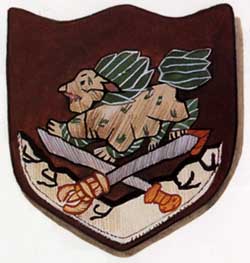





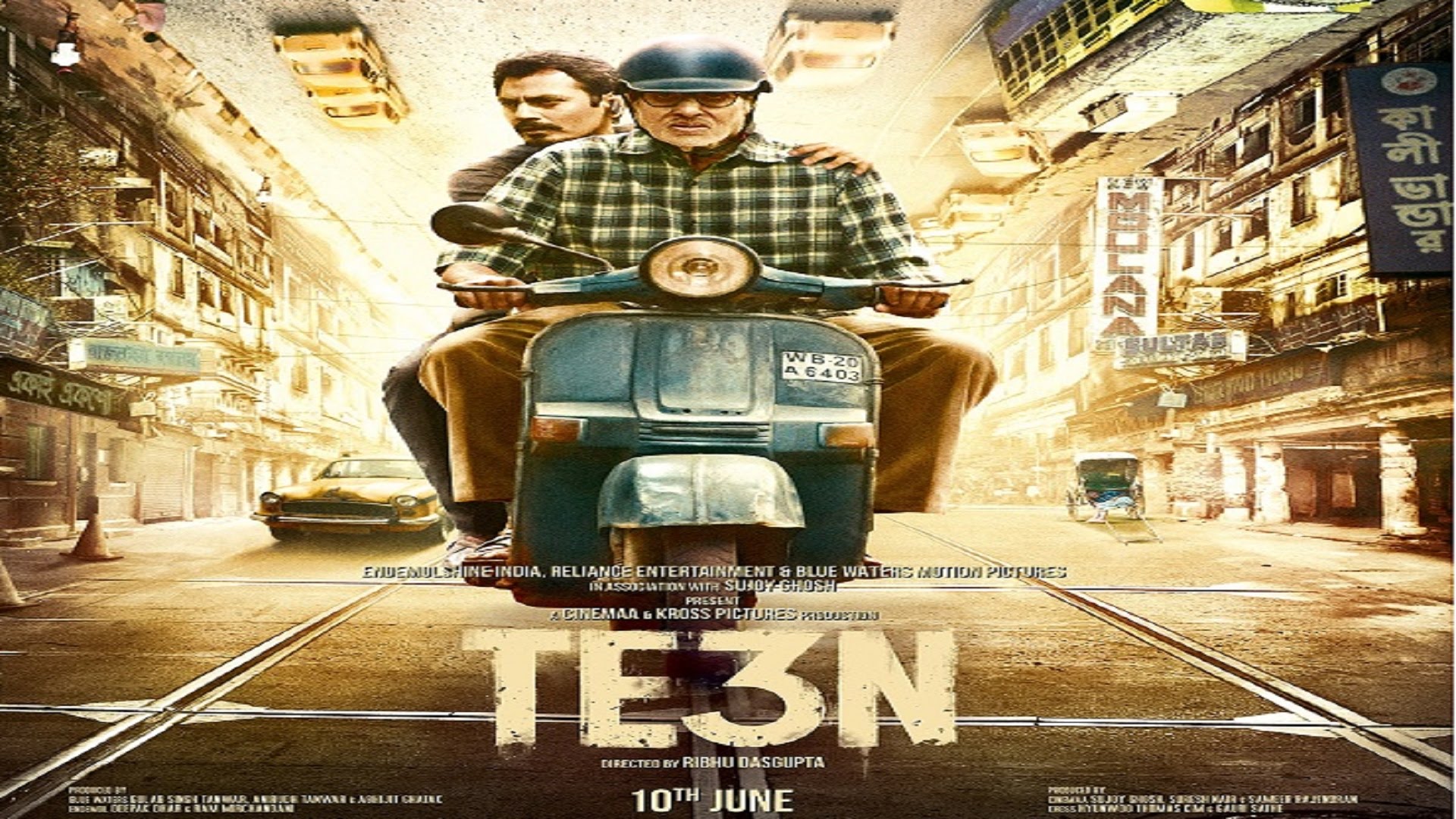


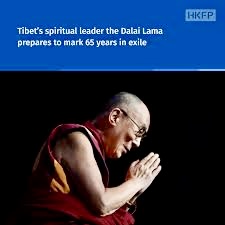


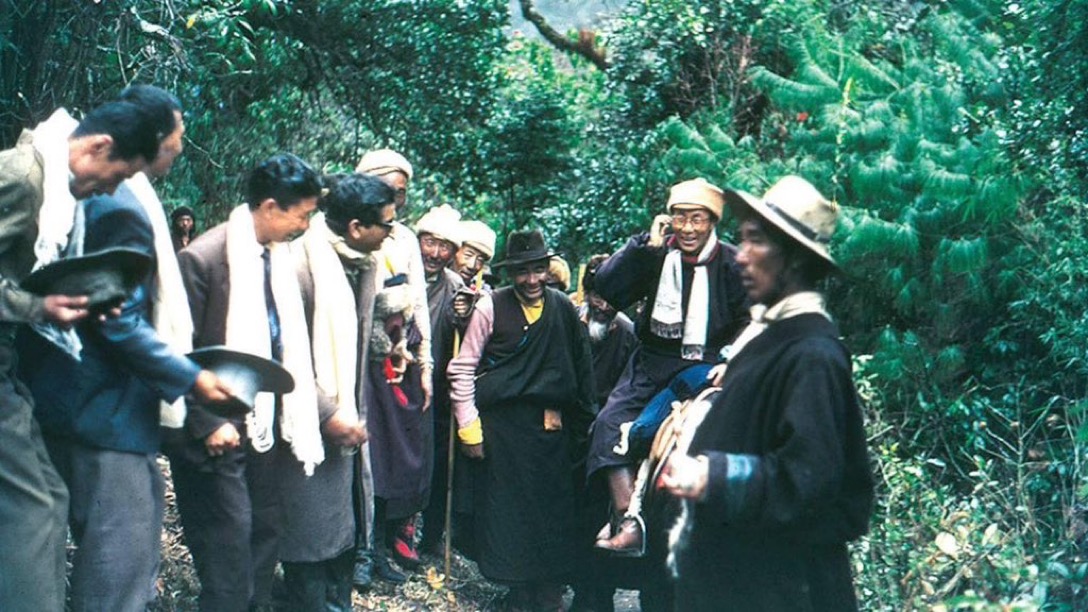


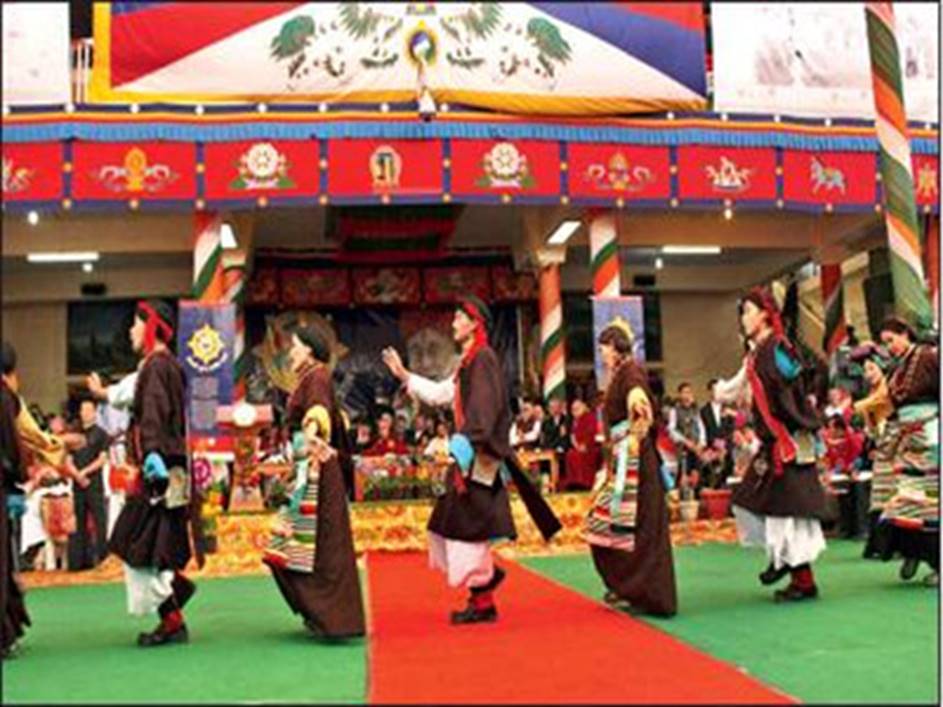


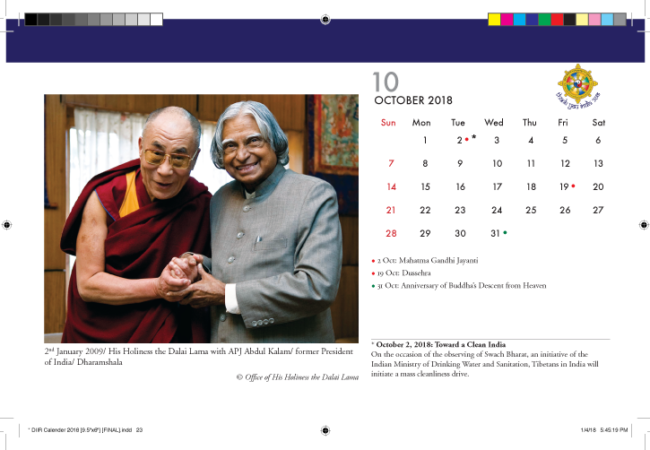


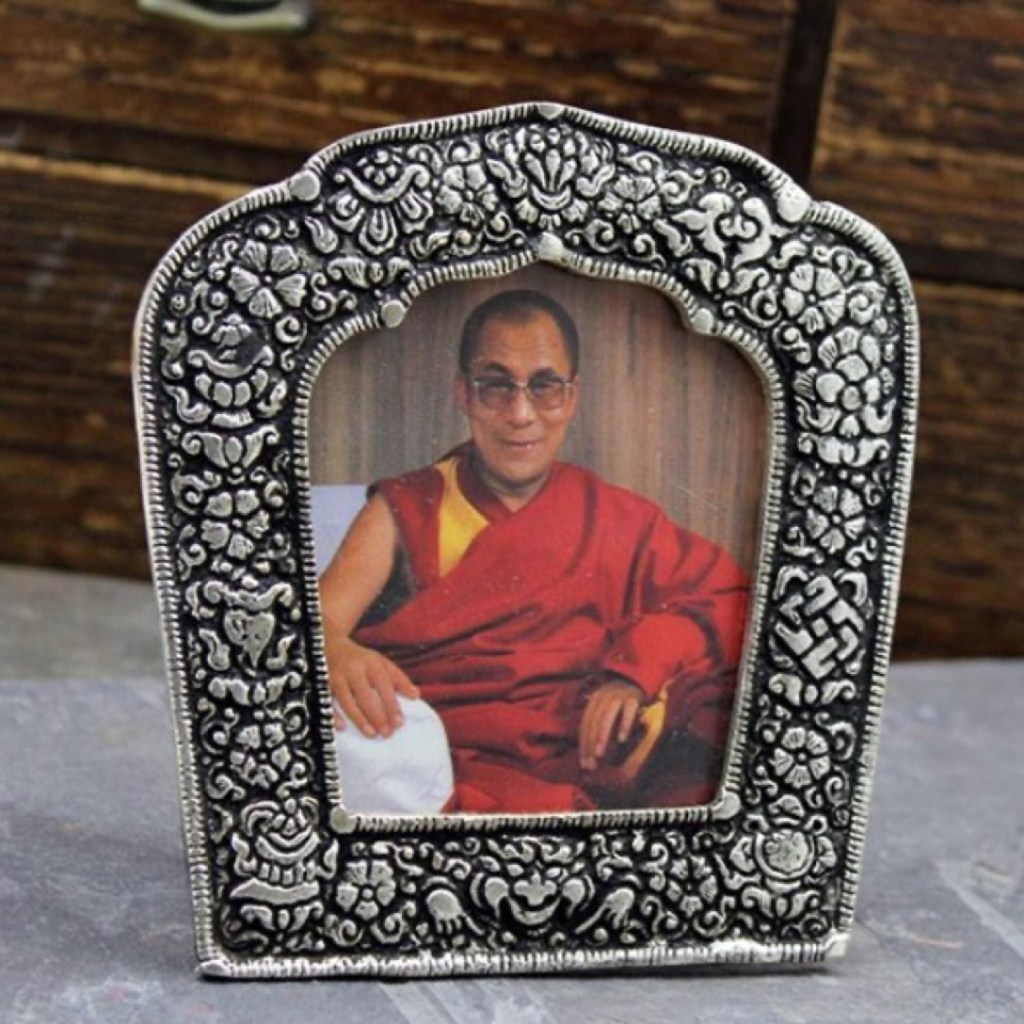



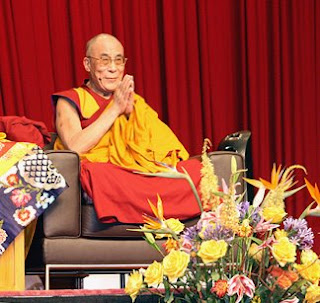

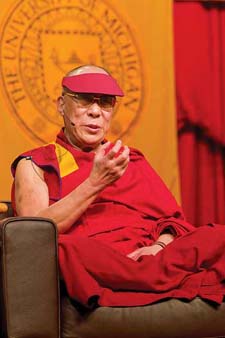

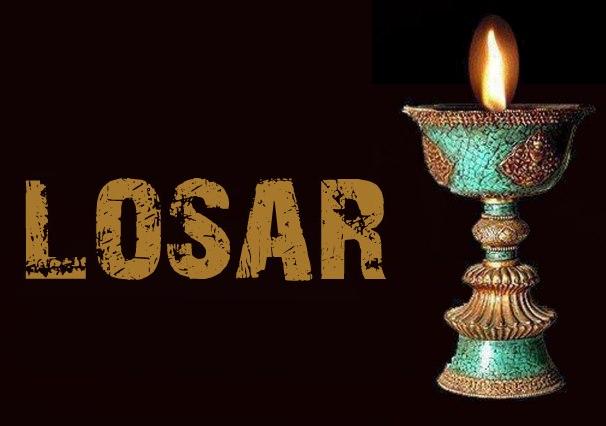


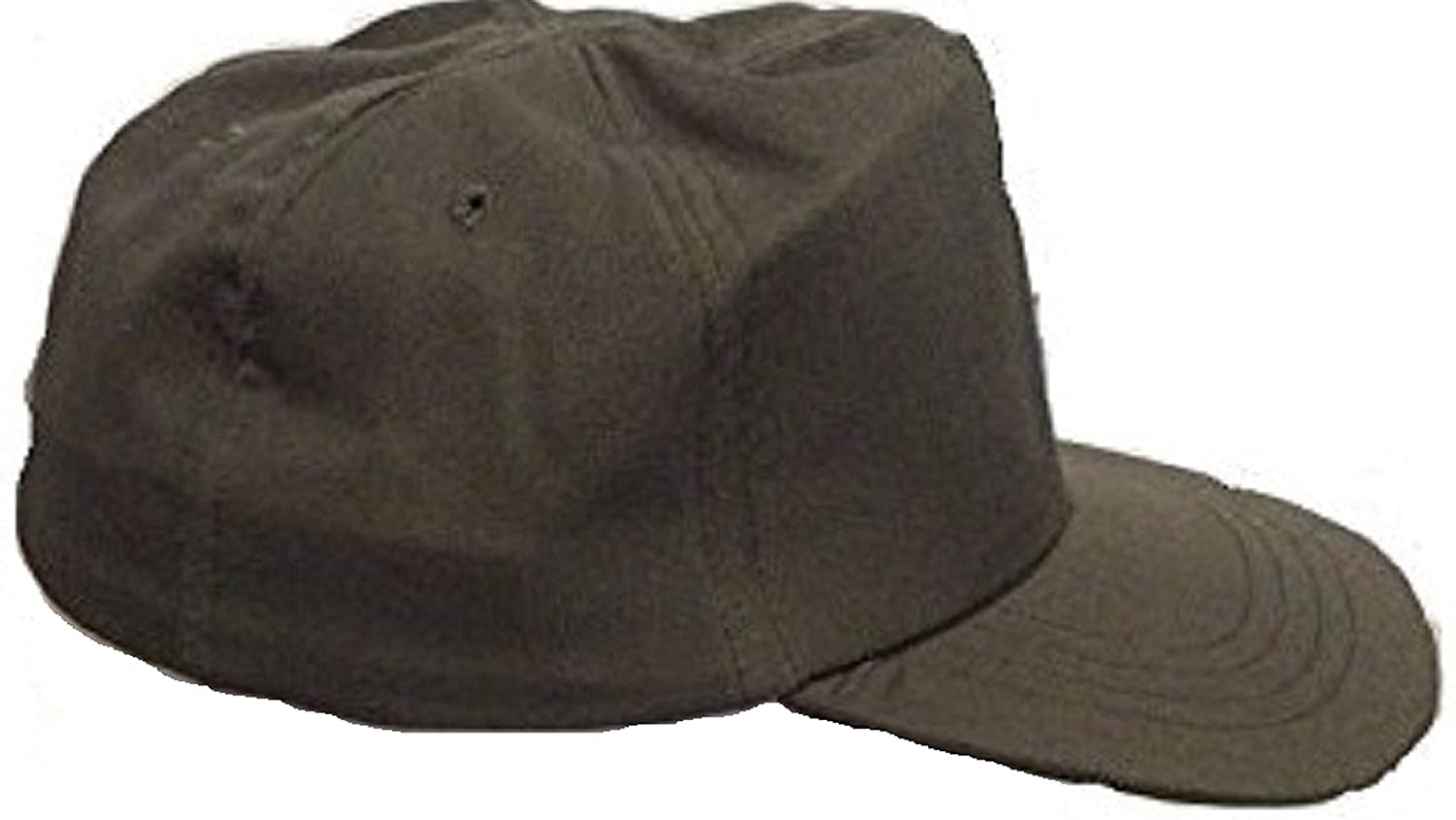




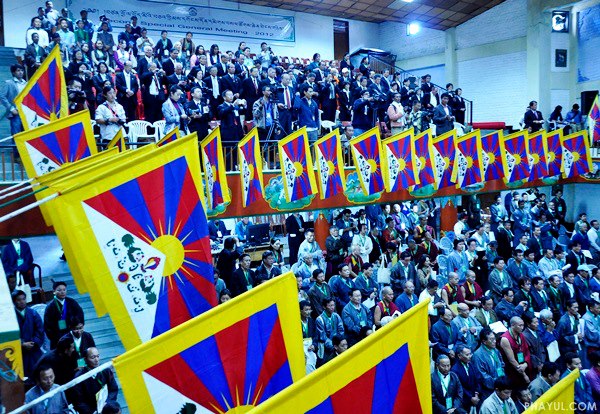


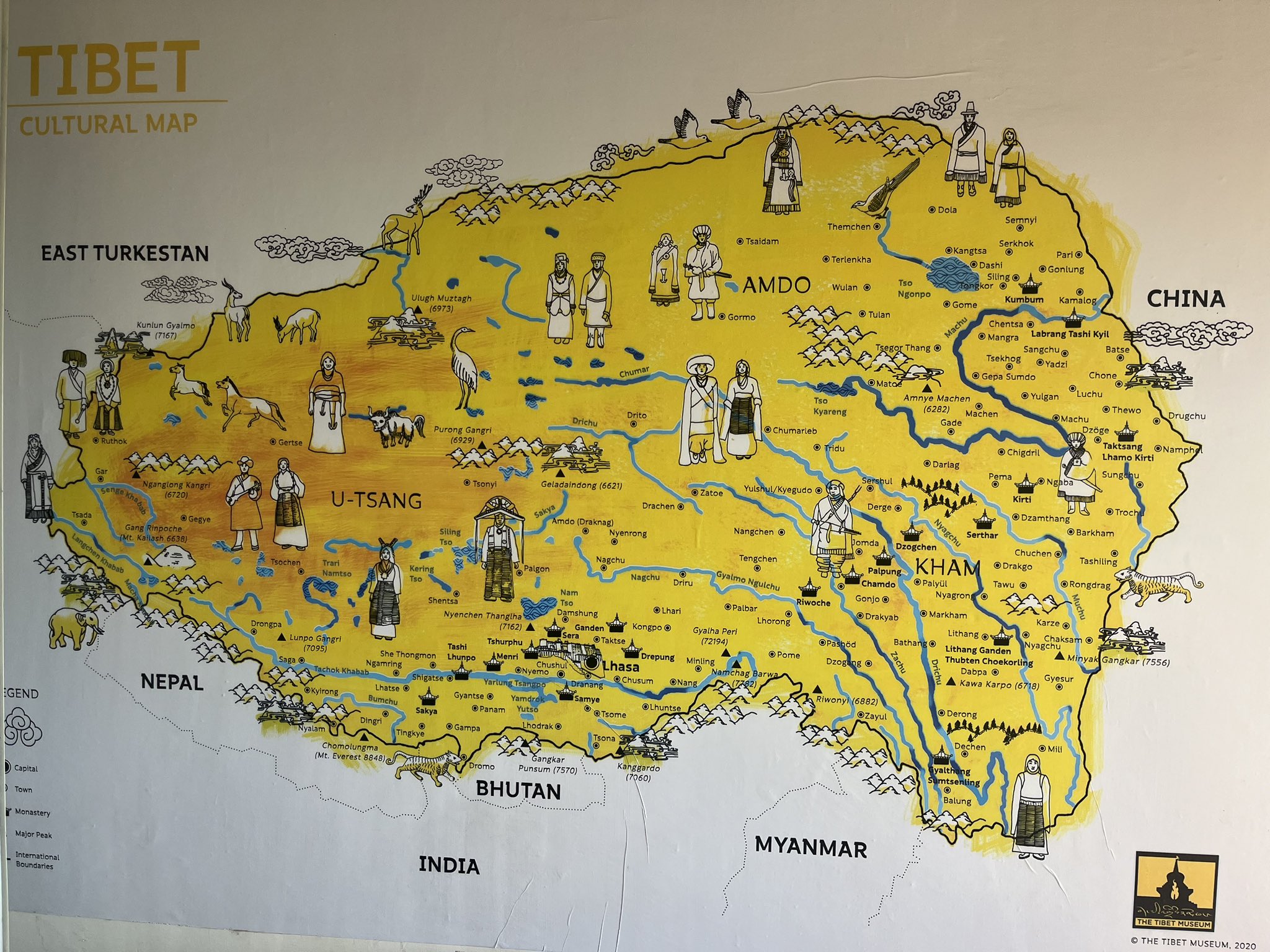

 Whole Dude - Whole Concept


