TIBET – JOURNEY FROM NATURAL FREEDOM TO LAOGAI PRISON SYSTEM

TIBET – JOURNEY FROM NATURAL FREEDOM TO LAOGAI PRISON SYSTEM

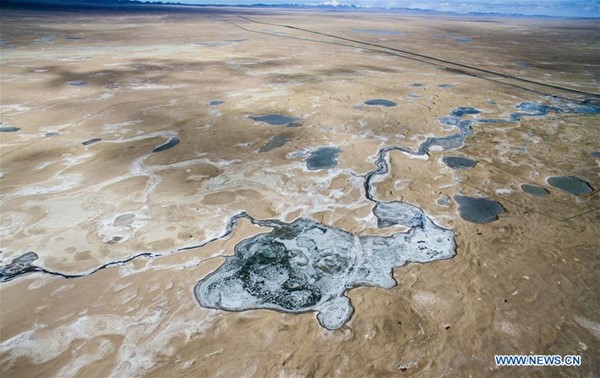
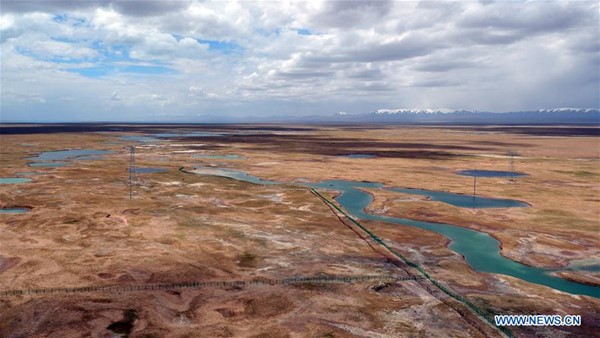
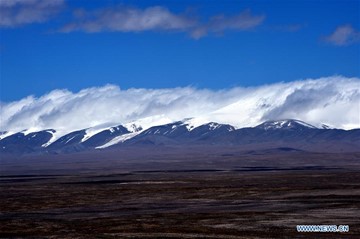
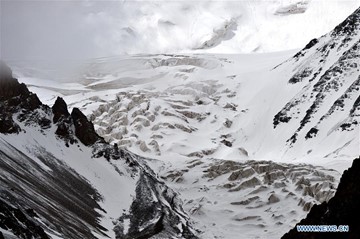
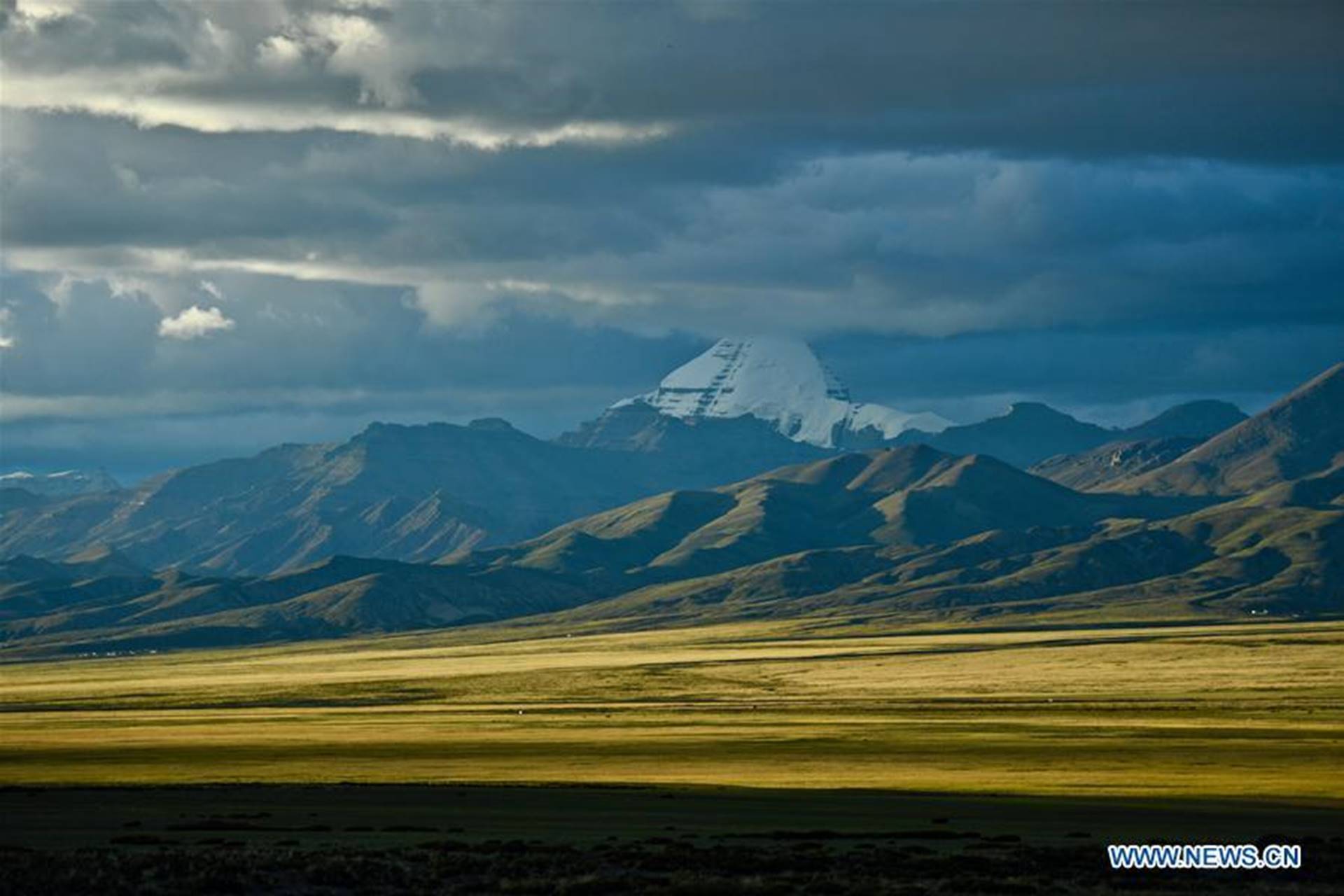
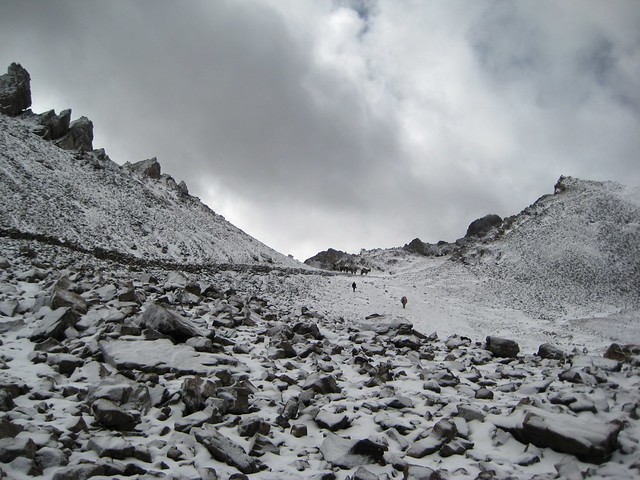
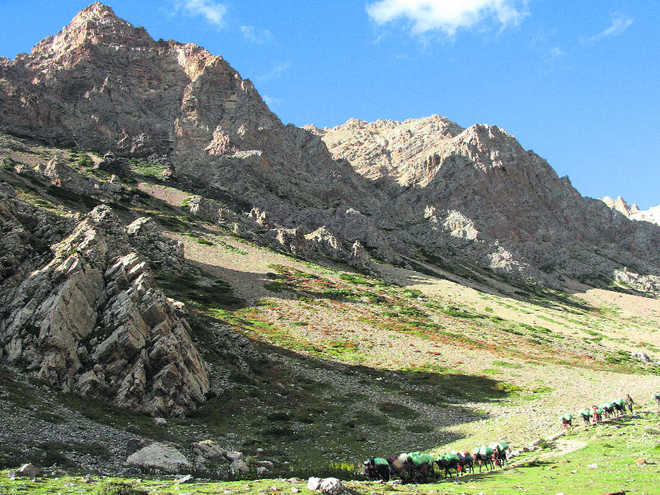
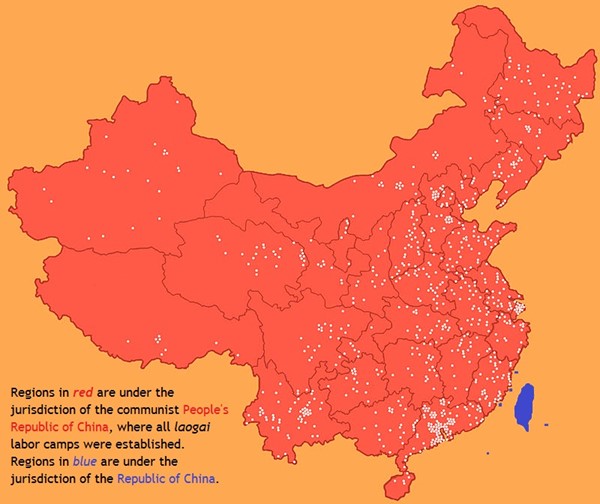
The uplift of Tibetan Plateau began about 45 million years ago. Natural Forces acting upon Tibet shaped Natural Tranquility of Tibetan Existence which defines Independent Lifestyles of Tibetans. Unfortunately, Red China’s Occupation shattered this Natural Balance, Natural Equilibrium, Natural Order, Natural Peace, and Natural Freedom of Tibetan Existence. The vastness, and empty spaces that characterize Tibetan Landscape transformed into Laogai Prison System used in Subjugation of Tibet.
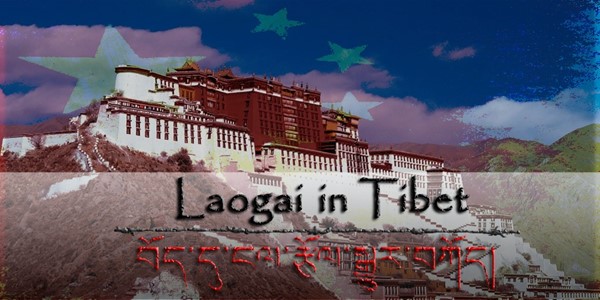
Tibet’s Occupation needs description that includes use of words like, detention, arrest, imprisonment, beating, cruelty, brutality, torture, execution, labor reform, reeducation, Gulag, Concentration Camp, starvation, hunger, thirst, death, hardship, pain, suffering, misery, repression, suppression, oppression, tyranny, and Laogai.


Rudranarasimham Rebbapragada

DOOM DOOMA DOOMSAYER


HOW THE WHOLE OF TIBET WAS TURNED INTO A HELLISH PRISON – CENTRAL TIBETAN ADMINISTRATION


Clipped from: http://tibet.net/2017/07/how-the-whole-of-tibet-was-turned-into-a-hellish-prison/


The DailyO, 10 July 2017

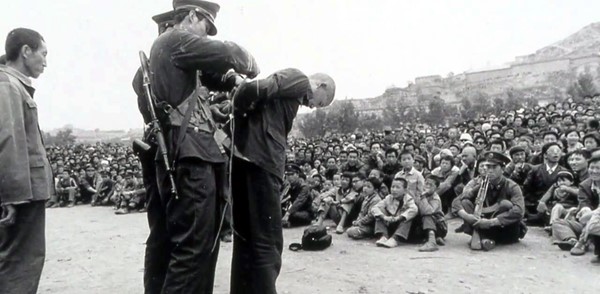
Thousands and thousands of people were driven into prisons like sheep, innocent people mown down like hay, rolled like paper, kneaded like hide, crammed into the dark recesses of dungeons; bound with steel wire when there were no handcuffs and leg irons left; their socks and belts confiscated; made to wear black hoods; subjected to wooden and iron clubs and mechanical and electrical punishment devices, a degree of torment possible only in the worst of hells. It was not a matter of just getting knocked about; with deliberate malice, they went for the genitals of those who father the next generation, the laymen, and for the vital organs of those who do not, the monks.

The henchmen of the lord of death made threats like spitting bile: “These guns of ours are made to kill you Tibetans. If you take a single step I will shoot you dead, and your corpse will be thrown on the rubbish heap” (the words of the Labrang monk Jigmé, as reported on the website of the Voice of America‘s Tibetan language service).

Destroying people’s dignity by hanging them upside down from the ceiling and stamping on their foreheads is something one might expect to see only in a film about Fascist or Nazi atrocities. Never mind that “Chinese prisoners are allowed to learn literacy, but Tibetans are not… Tibetan prisoners are only allowed to speak to each other in Chinese, not in Tibetan… not allowed to speak their own language or to express their own identity” (from Jamyang Kyi’s A Sequence of Tortures), even to describe being deprived of sleep during days and nights on end of interrogation to break the will, and the physical beating, hitting and lashing, these three, could barely match even a small fraction of the torment.

A ceremony marking the 50th anniversary of the founding of the “Tibet Autonomous Region’ is held at the square of the Potala Palace in Lhasa. Photo: Reuters (2015)

As we read in Te’urang’s Written in Blood, “The hardest thing to endure is not the physical torture but the invasion of one’s thoughts”; and in Jamyang Kyi’s A Sequence of Tortures, “One day during interrogation, the thought suddenly came to me that, rather than go through this, I would prefer to be shot dead with a single bullet. My family and relatives might be upset, but for me at least it would be over and done with”, this is the kind of torment one would rather die than endure, and under this constant, unthinkable torture, many brave Tibetan souls with the limitless courage of the imperial spirit were broken and maimed, and came to the end of their lives.

The torture of deprivation of food and water, designed to turn them all into hungry ghosts, drove people to the edge of life and death, and for those not finished by hunger, the torment of thirst led “more than 60 among us to drink their own urine” (from Gartsé Jigmé’s The Courage of the Emperors, vol 1).

This inhumane brutality of torturing people through hunger and thirst is no different from the past. Not only did innumerable people die of hunger, for the living too:

with the flames of the suffering of hunger blazing bright, even things like Bacha [the cake residue of pressed oil seeds] and Pukma [the chaff of harvested grain] which used to be given to horses, donkeys and cattle became like nutritious food and hard to obtain. To maximize the amount of food and relieve hunger, those running communal kitchens used to quite openly pick not just edible grasses but inedible tree bark and leaves, grass roots and grains, and after processing them, mix them with a little food grain and make a kind of slop like pigswill, which they fed to people. Eventually, when even this became limited, there was not enough of it for people to eat to satisfaction. (70,000 Character Petition)

Thus when the torments of hunger passed beyond all limits, those in prison were said to have “grown a tail” (that is, become like herbivorous cattle, a term taken from Tsering Dondrup’s Raging Red Wind). Even worse things happened, for example:

During the 1958 famine, since he was a “hatted” reactionary, he was given the job of carrying out corpses. One day, one of his friends who was about to die of starvation asked him to bring back some human flesh when he went to dispose of the corpses. He tried once or twice, but could not find any flesh to bring back, because the dead were people who had also died of starvation, and their bodies were just skin and bone, with no flesh at all. One day, he found a body with a little flesh on it and brought some back. Next day, that person told him “That meat you brought yesterday, I cooked it up with a piece of willow bark and drank the soup, and last night I slept very well.” (The Courage of the Emperors, vol. 1)

Or again: “The prisoners were driven by hunger to eat flesh taken from human corpses” (My Homeland and the Peaceful Liberation). So isn’t this just like revisiting the years when we were driven by starvation even beyond the refusal to eat the flesh of human corpses? Throughout the history of the Tibetan people, far from having to drink their own urine and eat human flesh, one cannot even find records of people starving to death. The incidence of such total horrors in recent history is the accomplishment of those who claim always to be “serving the people”.

The punishment ground in hell

Up to now, famous, knowledgeable, capable, courageous, brave and farsighted Tibetans have been falsely accused by the dictators and punished with deprivation of freedom. For example, the 10th Panchen Lama expressed limitless praise and flattery for them, saying things like: “In the case of our own Tibet region, we are on the point of transforming from the old society to the new, from darkness to bright light, from suffering to happiness, from exploitation to equality, and from poverty to progress, and have started on a new and brilliant era in our history” (70,000 Character Petition), but even he was locked away for almost a decade.

Likewise, no end of able individuals were unfairly sentenced and imprisoned, and in this year’s peaceful revolution too, more than 200 people have been sentenced so far, as can be seen from unofficial reports published on the internet.20 Since this was simply for breaking laws passed by the dictators with the sole intention of preserving their hold on power, it is only the continuation of their practice of legal prosecution in violation of morality and principle. From time to time, autocratic régimes pass various legal edicts designed to consolidate their hold on power that violate universal values, and these edicts that they hold to be vital are precisely edicts from hell for those who favor freedom, equality and democracy.
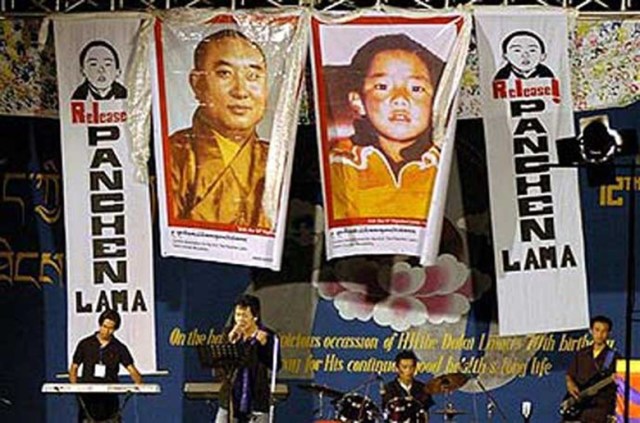
A few years ago, the five-year-old 11th Panchen Lama was put under house arrest. Photo: AP

While subjecting those detained in the course of the peaceful revolution to brutal discipline and terrifying intimidation, they were interrogated about which organization they belonged to, what was their plan, who supported them, who were their collaborators; and when these investigations proved fruitless, innocent people were and continue to be charged under whichever provisions from the relevant edicts from hell, and prosecuted in secret. From start to finish, their crimes were given as nothing other than: “Seeking to split the country”, “Seeking to overthrow state authority”, “Leaking state secrets” and so on. They are ever sensitive to anything concerning “the state” and “state authority”, regarding it as vital, and whoever they decide has jeopardized “the state” or “state authority” is punished with anything from several years in prison to execution.

This is supposed to be like the saying “If the head is tied down, the body will tremble” (with fear). The dictators always and in all respects conflate the particular interests of their faction with those of “the state” and “state authority”, and constantly use these terms to enforce their power over the people.

For them, this year’s peaceful revolution was “not about nationality issues or religious issues or human rights issues, but about the issue of state authority”. Anyone they charge with opposing a basic principle of their rule, such as “state authority”, becomes what we would call a “political prisoner”. The given charge of “endangering the state and state authority” really means that the accused is suspected of posing a threat to the power of the dictators.

In a totalitarian state, there are many examples of crimes that would never be considered as such in the rest of the world, like the political offences for which five-year-old children and 81-year-old seniors have been imprisoned. A few years ago, the five-year-old 11th Panchen Lama was put under house arrest, and during this year’s peaceful revolution, the 81-year-old printer of religious books, Peljor Norbu, was sentenced to seven years in prison.

Never mind robbing the youth, who have just begun to experience life’s joys and sorrows, of their liberty, where else would one see a judicial process so barbaric as to insist on prosecuting an 81-year-old, in violation of all moral, natural and humane norms, but under a totalitarian régime? The youngest political prisoner in the world is to be found in Tibet, and the oldest. It is because the Tibetan people are human cattle that they have to bear the burden of such imprisonment, and it is because Tibetan heads are made of stone that they must be labelled with false accusations.

The terrifying battlefield

Since the peaceful revolution broke out, central hubs and junctions have all been turned into firing ranges, guns and artillery put in place, an atmosphere to make your hair bristle. Towns and monasteries are patrolled by police and filled with informers; there is fear and terror, snipers lie concealed on rooftops and on street corners, spies lie in wait, enough to make your flesh crawl and your bones shiver.

Anyone going to town or visiting a monastery is searched, questioned and registered at gunpoint, enough to make you shake and tremble. Monks are mostly forced back to the villages, villagers mostly confined in their homes, telephone lines and internet, tea shops and eating houses are all watched and listened to, whether near or far, all have been reduced to paralysis and desperation. By day they prowl like jackals and wolves, by night they move stealthily like thieves, staging sudden raids on monasteries and households, searching them from top to bottom and bottom to top for photos of the Dalai Lama, for hidden weapons, and for cash and valuables while they are at it, throwing Lama photos on the floor and treading on them.

The Division of Heaven and Earth: On Tibet’s Peaceful Revolution; Shokdung; Translated by Matthew Akester

They call Him a “beast with a human face”, and a “wolf in monk’s robes”. They show the signs of both intoxication and planetary affliction (for Red Army soldiers with heads but no brains, tanked up on the firewater of “Motherland” and “Great China”, this is hardly surprising). When they see the implements of the Dharmapala in the protector chapels and get hold of them, they say it is evidence of hidden weapons. They show all the signs of idiocy and stupidity, even persisting with far-fetched allegations they know to be wrong. They take valuables and non-valuables too, even taking half-cooked Momos from the saucepan and eating them like a gang of bandits and thieves working together.

So it is that no Tibetan any longer has the right to take a hotel room in Chinese cities, and at airports they are greeted with the order to remove their hats and shoes. They are not given tickets and their money is not taken. Under the influence of deceptive propaganda, Tibetans are seen with a mixture of fear and loathing, and everyone is in a state of cautious suspicion. In short, Tibetans as a whole are seen as terrorists, and under such pressure, this includes even children too young to understand.

In fact, this is by no means the first time that Tibet was turned into a terrifying battlefield, for ever since coming under the rule of the dictatorship, the beatings, struggles, arrests, detentions, punishments and executions that accompanied each successive political campaign made people incapable of movement, speech or thought, and out of constant fear, everyone became like walking corpses. This is what happened fifty years ago, through the most inhumane means, as can be seen from the following accounts, like scenes from a film:

More than ten days later, the whole valley was covered with the corpses of men and horses killed in the fighting at Kyépur Nakdzup, and the orphaned children and elderly unable to move elsewhere, and there were many fearsome sights to be seen, the writhing of the wounded among the dead, the babes still sucking at the breasts of their dead mothers. (from Jamdo Rinsang’s My Homeland and the Peaceful Liberation)

Those labelled “rebels” being driven to hellish prisons were treated worse than animals, as related by Tibetans incapable of making such things up: “next day we were tied suspended from the high beams across the back of the truck, so our feet did not touch the ground, and taken like that as far as Chabcha”; and “We were taken through Trika. On the way to Trika, three people in our truck died. When the truck was moving fast, the corpses were thrown to the ground off the back of the truck” (from Jamdo Rinsang’s Listening to my Homeland).

Of the imprisoned, those driven to their deaths by abuse, beatings and starvation were innumerable, and the way they were tortured and terrorized can be seen from the following: “There were many prisoners whose limbs became paralyzed, their legs folded at the hips and arms folded on their chests. They were told that they had to straighten their limbs, the soldiers tied ropes around their arms and legs to pull them apart, and many died from the pain” (from Jamdo Rinsang’s My Homeland and the Peaceful Liberation).

One old woman said: “Shot in the right thigh [considered a center of vitality] am I, get up and go on I cannot, but though they carry me away on a stretcher, fight I did!” and that fight goes on until the “stench of the fallen” of Tséring Dondrup’s Raging Red Wind. “Aku Kalden-tsang wanted to take back the bones of his dead mother and asked for them. The Peoples [Liberation] Army soldiers told him ‘If we put your mother’s bones in Aku Tsang’s mouth, will you want to eat them? What do you want to keep them for?’, and beat him up.”

They showed an utterly inhumane and appalling cruelty, difficult to hear about, much less witness, such that the sky itself can barely encompass. In prison: the Lamas were made to carry the corpses of dead prisoners, which they dumped in a ravine a little way off. The way they dumped those bodies was like the way they compress garbage in big cities today. Then that ravine became almost completely filled. They were stacked one on top of another. An average of four people

the Lamas were made to carry the corpses of dead prisoners, which they dumped in a ravine a little way off. The way they dumped those bodies was like the way they compress garbage in big cities today. Then that ravine became almost completely filled. They were stacked one on top of another. An average of four people were dying in each work team every day. There were 20 work teams. One day when the ravine was almost full, a kind of bulldozer came and dug some earth, and completely buried the piles of corpses. The cavity left by the digging was also a kind of ravine, and they dumped corpses in there too, but it filled up after two or three days. Then they dug another, on the near side. That filled up too. I know for sure that there were 15 or more of those ravines. There must have been at least 250 bodies in each of them.

Nothing could be worse than this, but take the question of weapons: the international community has managed to ban, on humanitarian grounds, the use of certain kinds of weapons in warfare by treaty agreements, such as the Dum-dum bullet and chemical weapons.

Yet the national army of the autocratic régime has used and tested such weapons in Tibet, which it turned into a terrifying battlefield, as we see from this: [speaking of bullets fired at civilians] during the so-called “uprising” [1958], “if you pressed on the wound left by those bullets, there was nothing more than a slight depression, as they tore clean through the body and came out the other side”.

“One time, whether because of starvation, or because of a cloud of chemical vapor I am not sure, the senses and perceptions of men and cattle became dulled. Some said it was poison gas used in warfare.”

If they even used internationally banned bullets and toxic weapons, who will deny that they turned, and continue to turn, Tibet into a terrifying battlefield?

From the above, we can see that there is no greater terrorist than the totalitarian régime.

What is terrorism other than forcing and suppressing people, deluding and stupefying them, inflicting pain, contempt and torment with cruel and merciless intent, all the while keeping them in fear of their lives?

Whatever is there in totalitarianism is also there in terrorism. In particular, the terrorism of sealing down the bodies of the common Tibetan people, sealing up the mouths of the eminent ones, and sealing off the minds of the unthinking population, and the methods of state terrorism are something they have been practicing for the last half century, so who can deny that it is their basic character? If the despicable hypocrisy of handing out a brick of tea, a sack of flour and a few red Yuan [cash notes] to the poor as “Aid” for public display did not buy off the Tibetans’ incipient sense of warrior-like courage and rock-hard solidarity in the past, how will it do so now?

In brief, there are two reasons for my feeling sad: the first is that up to now the Tibetans have not developed universal conviction with respect to the universal values of freedom, equality, democracy and so on; and without the acculturated view, way of thinking, consciousness and practical application which are the roots, the foundation and the condition for such values, they will have only the view of the Buddhas and Bodhisattvas, not the view of living in this world; they will have only the thought of all sentient beings, not of one’s own people and lineage; they will have only the consciousness of the cosmic realm, not of one’s own land and territory; they will have only the practice of seeking refuge and prostrating themselves before the enlightened ones, not of achieving freedom and equality; they will have only the sense of royal authority, not the sense of rights and their value; they will have only inclination towards the divine and spirit worlds, and not for the human, secular realm. Having all of these haves has meant not having all the not-haves, and as these haves and not-haves came to exclude each other, so we had to suffer such consequences as these.

Second, the Karmic outcome of this was that the totalitarians turned Tibet into the lord of death’s slaughterhouse, a hellish prison, a punishment ground in hell and a terrifying battlefield following the principle of one-party rule, the way of suppressing the individual and civil society, the policy of restricting public expression and deluding the masses, the particularity of holding power by force, the extreme of eliminating distinct peoples and so forth, not just now but for over half a century.

What do I have left? Not even the right to live a simple life in freedom… Watching out for who they want to kill, who they want to arrest/Doing whatever they want with us, we who are without freedom… There is no way our lives will be spared… We who are without the slightest freedom or equality/That is how the Tibetans languishing in jail are called.

These are the words of the young poet Yung Lhundrup: “I consider myself a singer who puts the Tibetan peoples’ feelings into song”, who passed away, leaving behind many “laments of inestimable value” like “Freedom, oh freedom that is sought/You are watching over us, come what may…”, taken from his Tibetans Languishing in Jail.

The whole of Tibet turned into a prison, the brutality of massacres to eliminate whole populations; the torment of imprisonment survived by less than 10 per cent (“Of about 1,000 children and 600 elders, apart from a few children with parents and elders taken [by relatives], there were now 50 odd children left in the three work teams, and over ten elders. The rest had all died within half a year, or to be precise, within two or three months.” From Naktsang Nulo’s Fortunes of a Naktsang Kid); the yoke of an unjust and immoral legal system; the agony of hungry ghosts reduced to eating human waste and human flesh; the continuation of such hellish horrors into the present, are all a cause for terrible sadness.

(Excerpted with permission from Speaking Tiger Books.)

NATURAL TIBET – VASTNESS AND EMPTY AREAS OF TIBET SICKENED BY OCCUPATION

NATURAL TIBET – VASTNESS AND EMPTY AREAS OF TIBET SICKENED BY OCCUPATION


World must know about Real or Natural Tibet where Natural Forces, Natural Factors, and Natural Conditions shape Tibetan Identity. The vastness, and empty areas of Tibet sickened by Occupation bear testimony to burden, hardship, pain, suffering, and misery endured by Tibetans. The Blessings of Natural Freedom, and Independent Lifestyles enjoyed by Tibetans over centuries got compromised or abridged by Occupation since 1950s.


Rudranarasimham Rebbapragada

DOOM DOOMA DOOMSAYER


Buddhism now


Welcome to Buddhism Now an online Buddhist magazine, giving advice on how to practice Buddhism.

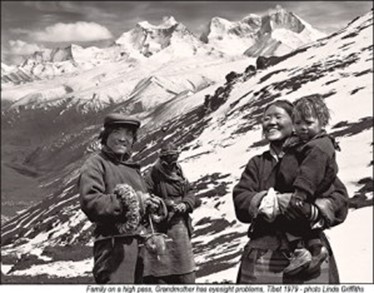
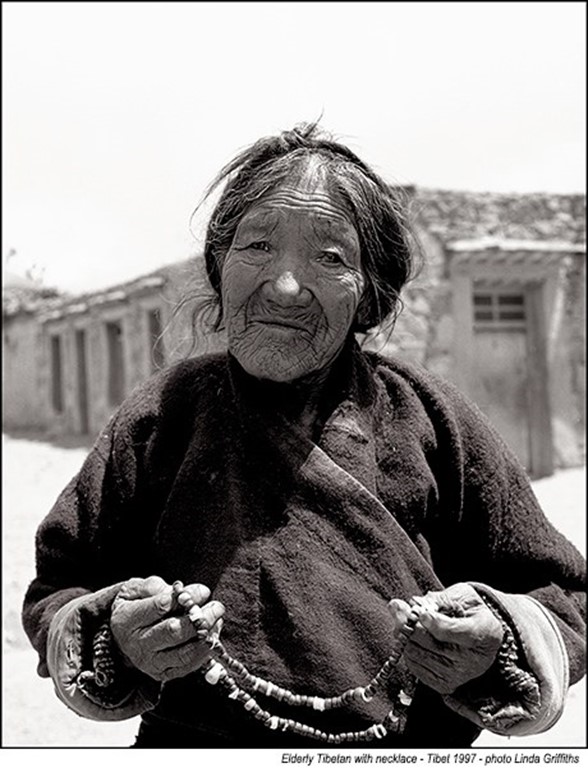
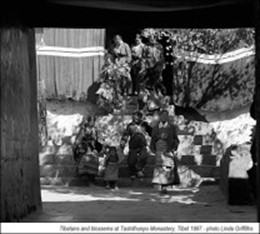
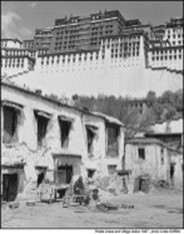
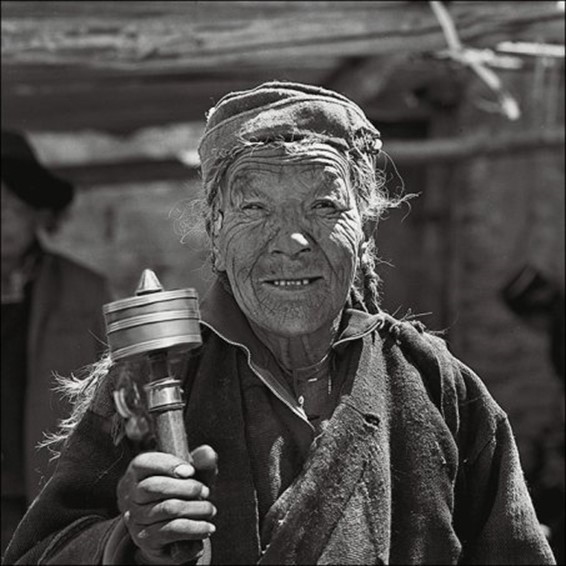
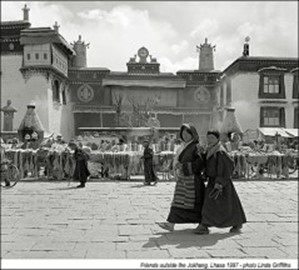
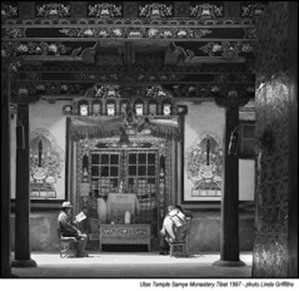
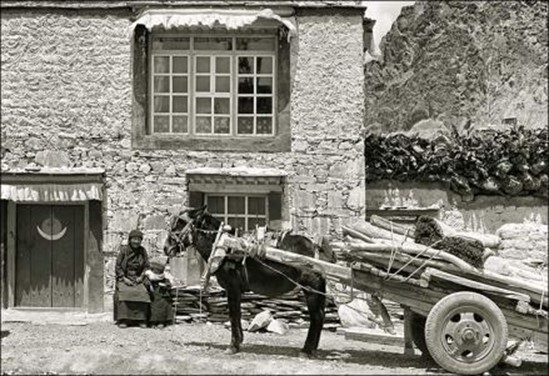
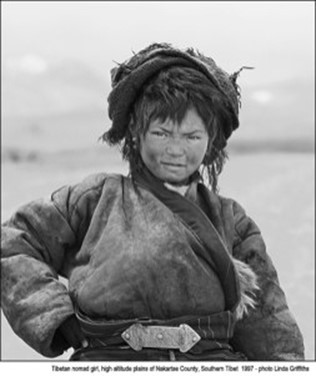
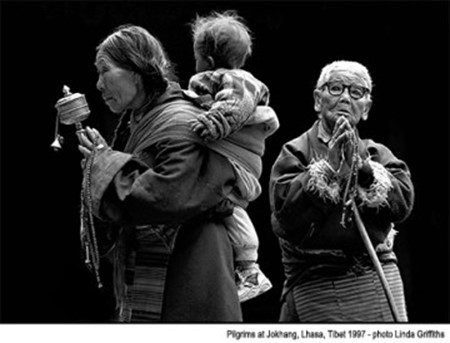
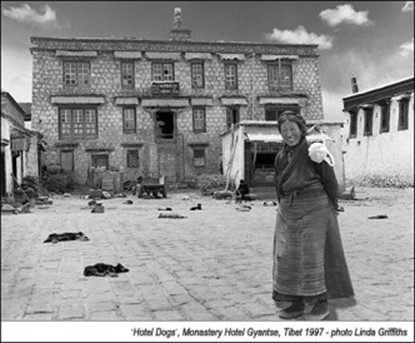
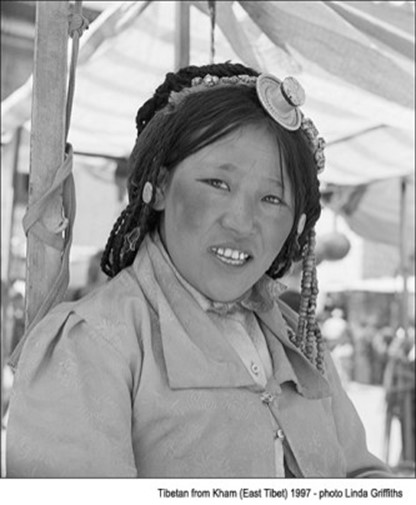
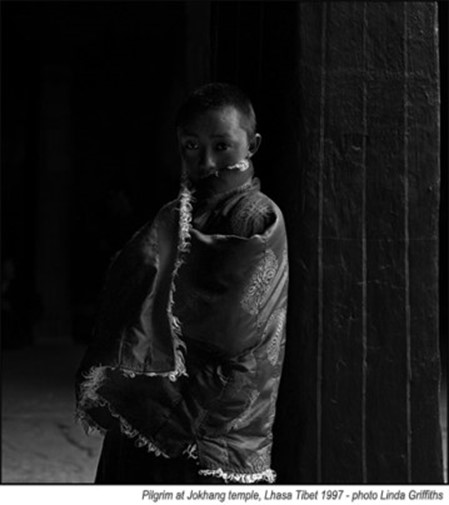
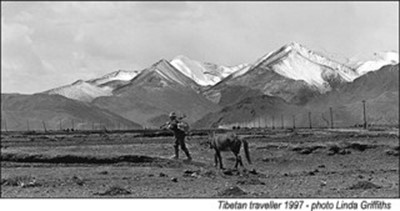
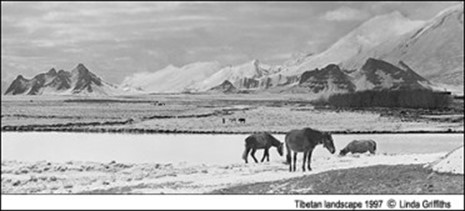
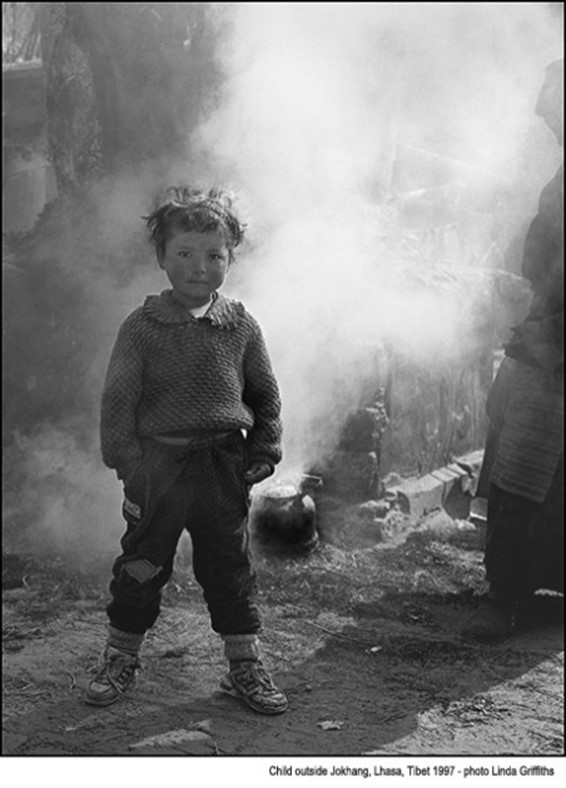
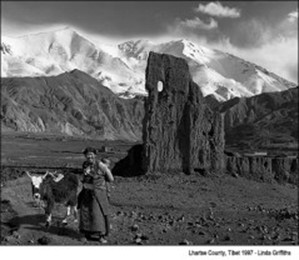
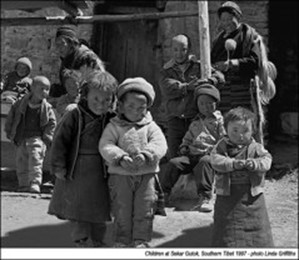
Photographs Taken During a Journey Around Tibet in 1997 by Linda Griffiths

on 14 July 2017

My old blue notebook is very rough, with scribbled notes of routes, ongoing costs and map marked up.  My daughter accompanied me.  We took a flight from Kathmandu into Lhasa on Saturday 5 April 1997.

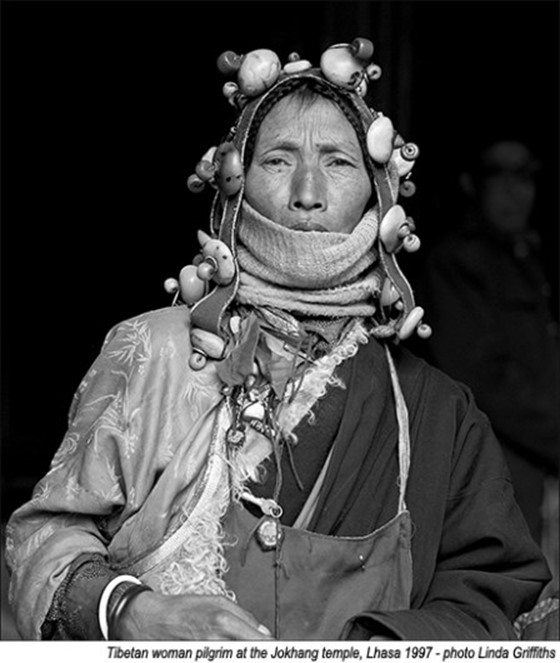
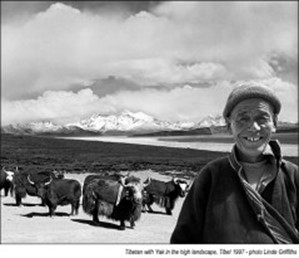
We received a warm welcome from the many Tibetans we met — a life-changing experience for me, a homecoming — the landscape, buildings and the people merging, and overnight stays with Tibetan families wherever possible. Initially I had altitude sickness, tight headaches and vomiting.  So tiring at first being at Lhasa altitude so suddenly — only 3,590 meters. We adjusted after a few days and crisscrossed many passes way higher than Lhasa.


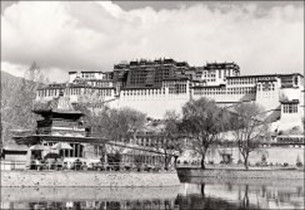
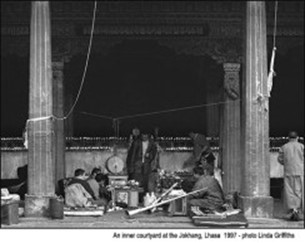
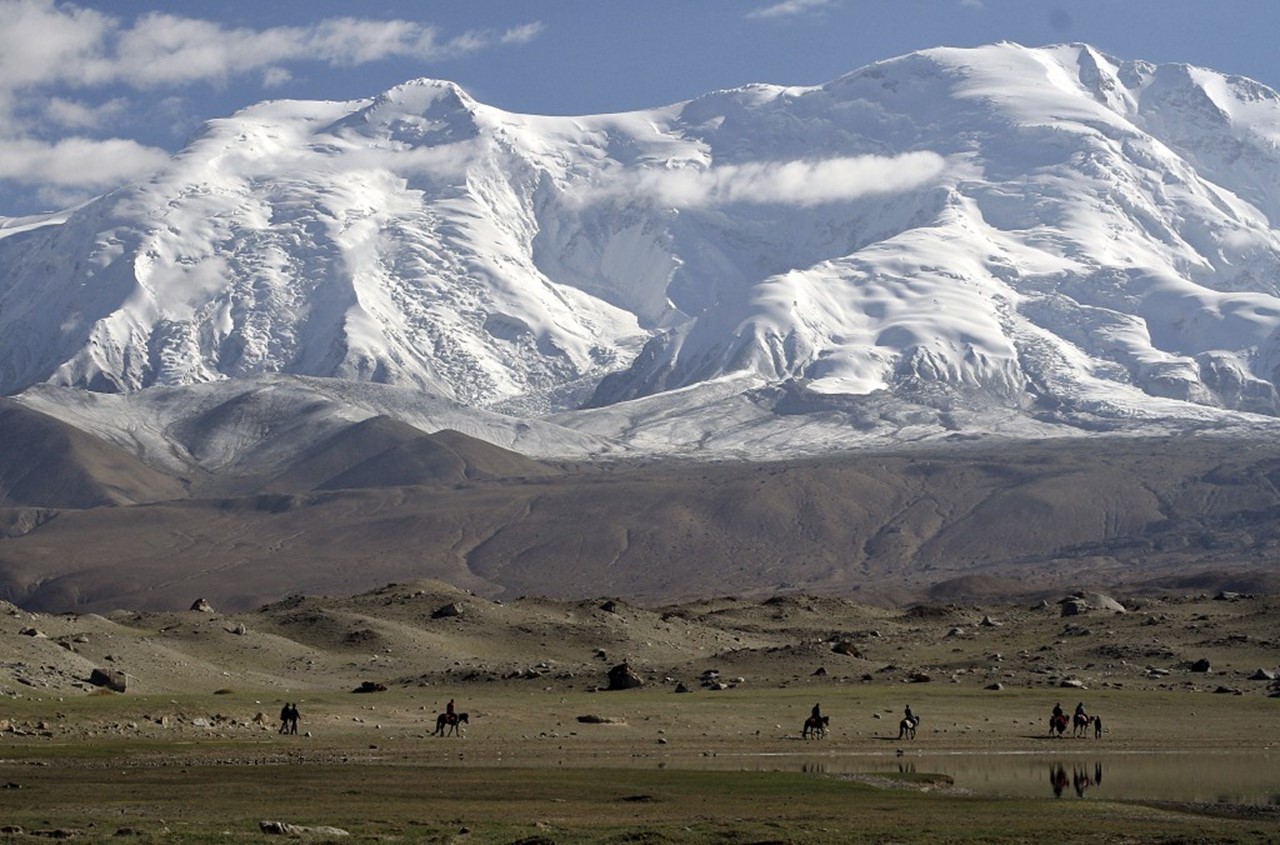
We stayed in Lhasa for 5 days visiting the Jokhang Temple many times and the Potala Palace once. In the streets and markets, meeting people, arranging the many visas required for each step of our journey, hiring a 4-wheel drive vehicle, with a Tibetan driver and a Tibetan guide. They made our journey a wonderful experience and kept us safe across the vast snowy high plains totally devoid of markings of any sort, not even tracks of other vehicles, no signs. Only Mountain peaks. We had to take everything with us, medicine, water, snacks, gifts and prayer flags.

On Thursday 10 April, we left Lhasa for Tsetang visiting Gonkar Chode monastery on the way, not far from the airport. We also visited Tradruk Monastery. Stayed in Tsetang — not a wonderful experience.


Friday 11 April, we took the Land rover on a ferry across the Brahmaputra — 90 terrifying minutes, then drove through desert to visit Samye Monastery for a day before returning to Tsetang for the night. Samye is amazing, wonderful.

On Saturday 12 April, we visited Chonge tombs and continued via the Luga La pass at 4,600 meters. Views of the nomadic grasslands and lakes. We stayed at Tanzik Gov. Guesthouse — best place so far. Many yaks, horses, great birds, sheep and rabbit like animals. Saw Mawochock monastery from afar hanging on a sheer cliff face.

Owing to us not being granted access to military areas we were forced to take several round about routes doubling our journey so we could visit important places. The many extra hours in the vehicle were hard but worth it.

On Monday 14 April, we arrived at Dowa Dzong capital of Lhodrak County. A drive up the winding pass of Gampa La at 4,794 meters. We looked down at the astoundingly turquoise Yamdrok Yutso Lake.  Finally, a tea stop in Nakartse.   High plains, vast and empty without sign of humanity, then small villages with very friendly people. Then the high pass, the Monda La at 5,266 meters. This is high altitude. Prayer flags on piles of carved rocks at the top.


On Tuesday 15 April with visited Sekar Gutok, a military town.  We continued to the 9-storied tower constructed by Milarepa. A place most difficult to reach — 32 km along a very deep sided gorge with rushing waters. We felt trapped in the gorge, perhaps the rushing waters would submerge us, we felt so small. This area with the famous tower is close to the Bhutan border. It feels like the end of the world. Finally, a small village with lovely people and lots of children. At the tower, itself we were well received. We hung prayer flags outside all around the building. Very special. This was our ultimate destination of the trip. We felt a sense of fulfilment, we felt blessed.

On Wednesday 16 April, we travelled to Gyantse, a very large town where time has stood still for centuries after retracing our steps via the Monda La pass and along the side of Phuma lake, frozen over today. We turned off to Nakartse. We had a day around Gyantse visiting the great Kumbum stupa and the monastery. Next, we went to Zhigatse where we visited the large and impressive monastery with many monks. A lively place. Nice place to stay.


We decided to make a 3-day detour on our road back to Kathmandu to visit Base Camp Mt. Everest on the Tibetan side. We also visited the nearby monastery. Main memory is of vastness, empty areas, only the wind breathing.

Photographs Taken During a Journey Around Tibet in 1997 © Linda Griffiths

From a showing at the Golden Buddha Centre, Totnes.

Tags: Buddhist Photographs of Tibet, Gonkar Chode monastery, Jokhang Temple, Lhasa, Milarepa


WholeDude

15 July 2017 • 2:46 am

Your comment is awaiting moderation.
Untold Story:
The vastness, empty areas of Tibet suffer from unnatural event called Occupation which imposes burden, hardship, pain, suffering, and misery for it compromises or abridges Natural Freedom and Independent Lifestyles of Tibetan people.


Welcome to Buddhism Now


Buddhism Now is an online Buddhist magazine, giving advice on how to practice Buddhism.


WHOLE ANGEL – WHOLE …wholeangel.com


WholeDude@bhavanajagat


Inserted from <https://buddhismnow.com/2017/07/14/photographs-taken-during-a-journey-around-tibet-in-1997-by-linda-griffiths/#comment-33483>


NATURE PLAYS TIBET CARD TO GENERATE TIBETAN FLAVOR OF NATURAL FREEDOM

NATURE PLAYS TIBET CARD TO GENERATE TIBETAN FLAVOR OF NATURAL FREEDOM


Man is Born Free and hence Man Claims Freedom as Natural Right. Natural Forces, Natural Mechanisms, and Natural Events created Tibetan Plateau over thousands of years imparting Natural Tibetan Flavor to Natural Freedom enjoyed by denizens of Tibet.


Occupation is Unnatural Event for it compromises Natural Freedom. Hence, Tibetans naturally respond to Forces of Occupation with Resistance Enduring Pain, Suffering, Hardship, and Misery.


Rudranarasimham Rebbapragada

DOOM DOOMA DOOMSAYER


Indian Defence News

India-China Standoff: Free-Tibet Movement In News Again, But Does New Generation Really Care?

  •  
  •  
     

    Thursday, July 13, 2017

    By: Outlook India


    “If New Delhi is pulling the strings of the Tibetan exiles’ political act of flag-hoisting, it will only have burned itself,” China’s state-run Global Times reacted in an editorial on July 9 after the Narendra Modi government reportedly allowed the Tibetan government in exile — on the eve of the Dalai Lama’s 82nd birthday — to perform rituals on the shores of Ladakh’s Pang Gong Lake along the disputed boundary with China.


    China also warned India to refrain from playing the “Dalai Lama card”. This came amid the ongoing border row between the two nations in the Sikkim sector. Whether India plays the Dalai Lama card or not, the latest standoff has once again shifted a little focus on the struggle of the thousands of Tibetan refugees in India who have been demanding free-Tibet for more than six decades now.


    Since 1959, when the Dalai Lama fled occupied Tibet to escape the Chinese regime, Tibetan refugees have been pouring into India. More than 100,000 Tibetans live in 39 formal settlements and dozens of informal communities across India. While the numbers have waxed and waned over the years the tide has never stemmed. The Indian government has funded schools to provide free education for Tibetans, and reserved seats in medical and engineering colleges.


    A majority of the Tibetans living in India have been born and brought up within the country.


    In a ruling last year, the Delhi High Court said nationality of Tibetans, born in India between 1950 and 1987, cannot be questioned under the Citizenship Act, and directed the government to issue passports to all Tibetans who meet the criteria of being Indian citizens by birth.


    But the important question is does this generation have ties to their homeland as strong as those of their parents and grandparents? Do they share the same fierce hope that one-day, soon, Tibet will be liberated and the entire exiled community can go home?


    Kunga Gyaltse, 43, a second-generation Tibetan refugee living with his family in Majnu ka Tila, a housing colony for Tibetans set up by the Indian government in north Delhi, is adamant that Tibetans in India have retained the purity of their culture. “Our ties with Tibet are just as strong,” he says.


    The colony is only a heartbeat away from the main road, but it seems like a wholly different world. A Buddhist temple and giant prayer wheel hem in the main square. Groups of Tibetans sit around the square sipping cups of tea while Buddhist monks in chougu robes are immersed in the counting of prayer beads. Tibetan culture seems alive and vibrant in the heart of old Delhi.


    Kunga places great value on housing colonies for refugees and the system of education controlled by the Tibetan government in exile. He believes that these have allowed Tibetans to flourish as a separate community with a distinct culture.


    “We teach our kids that it’s their duty to love Tibet. Their education is in Tibetan. If we’d mixed in with the Indian community we’d have lost our culture. But we stayed apart,” he adds.


    And what about the prospects of a Free-Tibet? Kunga and his friend, Dickyi, 48, are optimistic. “It will definitely be free in our lifetime,” Dickyi says.


    “The Dalai Lama is the reason our culture persists,” adds Dickyi’s friend Dolma, 45. All the Tibetans, varying in ages, are unanimous in their belief in the Dalai Lama and his central role in the freedom struggle.


    However, Jigme, 25, who lives in Dharamsala and works for the Tibetan government in exile, says a fully free-Tibet is unlikely to be realized any time soon.


    “I vouch for the middle path, I think that’s far more practical,” he says.


    This refers to a policy that advocates for Tibetan autonomy within the framework of Chinese rule. Jigme acknowledges that this is not something the older generation is likely to support.


    “My grandmother is purely Tibetan, she never adapted to Indian ways. She will only go back to a fully free Tibet,” he adds.


    Jigme is also in favor of Tibetans applying for Indian citizenship, an issue that has divided the Tibetan community in India in recent times. Citizenship provides security and permanence. It eases problems that refugees face with college admissions, where their foreign status leads to exorbitant fees. It makes it easier to apply for jobs in the public sector. Yet many Tibetans shun Indian citizenship.


    In 2015, the Election Commission, in a move aimed to ease the citizenship process for Tibetan refugees, allowed them to register for voter identity cards for the Delhi assembly elections. Many prominent activists and Tibetan leaders spoke out against the same. They argued that this move would dilute the cause for Tibetan freedom.


    Many younger Tibetans feel differently. Twenty-eight-year-old Tenzing wants the law governing citizenship to be expanded to include younger Tibetans.


    “I would like to apply for citizenship, it would help a lot,” she says ruefully.


    Angphurvasherpa, 57, a monk, disagrees. He sees applying for Indian citizenship as a selfish act.


    “In India, they give you documents to travel without having citizenship, so what is the need for it?” he says.


    According to him, the younger generation doesn’t understand the kind of hardships people in Tibet are facing.


    “They don’t value their own nation, they only care about themselves, they only value their own lives,” he says.


    The relationship of Tibetan refugees to their homeland has changed over time.


    Honey Oberoi Vahali, the author of Lives in Exile: Exploring the Inner World of Tibetan Refugees, describes how younger refugees view Tibet in a wholly different way from their ancestors.


    “Younger Tibetans have begun to feel that carrying the homeland forward is more symbolic than literal,” she says. “Since they’ve never seen Tibet it is viewed as part of an imagined past, inherited from their parents and grandparents.”


    Tenzing Sonam, 58, a writer, film director and essayist who is a long-standing advocate for Tibetan rights seems to agree.


    “Today’s youngsters are several generations removed from a direct connection with Tibet. So, although their sense of being Tibetan is still strong, their idea of Tibet is almost mythical,” he say


    He argues that Tibet has changed so drastically over the last 60 years that most exiled Tibetans would find it hard to adjust to life over there.


    Those who have come more recently from Tibet, see vast differences between Tibetans in India and those in Tibet. Lkhyi, 22, is one such refugee. She fled Tibet for India when she was 12. She observes that refugees born and brought up in India have adopted the local culture and customs to a far greater degree than they realize.


    “They are very different”, she says. “In terms of education, religion, the way they think everything. Even their taste in food is completely different.” She adds with a smile.


    For younger Tibetans, born and brought up in India, balancing their Indian identity with their Tibetan roots is a challenge. Moreover, India doesn’t always welcome them with open arms. The alienation that Tibetans still face within the nation, a place they see as home, often pushes younger refugees to join organizations such as the Students For Free Tibet (SFT), a global network of students and activists that work for the freedom of Tibet.


    Tenzin Tselha, SFT’s India branch director, recalls one such experience that prompted her to join the organization.


    “I had a lot of difficulties during my college admissions. People thought I was a foreigner, but I’ve been born and brought up in India, that’s when it really hit me,” she says. Tselha, 22, wanted to learn more about her culture and do something for her people so she moved to Dharamsala and joined the SFT.


    While some young Tibetans still echo the hopes and passions of their parents and grandparents, others are more focused on the present and creating a life of opportunity, than in the struggle to free Tibet.


    Thomas Kauffmann, author of The Agendas of Tibetan Refugees: Survival Strategies of a Government-in-Exile, argues that one of the main problems that Tibetans in India are facing is the dismantlement of settlements.


    “Many youngsters are indeed leaving the settlements because they don’t find jobs there and/or because they are attracted by other opportunities in cities or in other countries. There is nowadays a second migration from India to the West for the Tibetans.”


    “Many young Tibetans are moving to places like the US,” says Angphurvasherpa.


    He contends that since these countries don’t settle Tibetans into colonies, inevitably such relocation dilutes Tibetan culture. “But what can one do,” he says with a sad simile.


    Today, as the fourth and fifth generations of Tibetans are born within India, the differences among the community seem large. There are competing ideas regarding the best path to freedom, clashes over accepting Indian citizenship and discontent over the migration of youngsters.


    Despite this, until now the community has managed to preserve their culture. They have battled with yet stayed true to their identity.


  • Copyright © 2016
  • www.DefenceNews.in
  • All Rights Reserved


    Inserted from <http://defencenews.in/article/India-China-Standoff-Free-Tibet-Movement-In-News-Again,-But-Does-New-Generation-Really-Care-263158>


WORLD TIBET DAY – PRAYERS AT PANG GONG LAKE FOR TIBET EQUILIBRIUM

WORLD TIBET DAY – PRAYERS AT PANG GONG LAKE FOR TIBET EQUILIBRIUM

WORLD TIBET DAY – PRAYERS AT PANG GONG LAKE TO DELIVER BLESSINGS OF FREEDOM TO TIBETANS IN OCCUPIED TIBET.
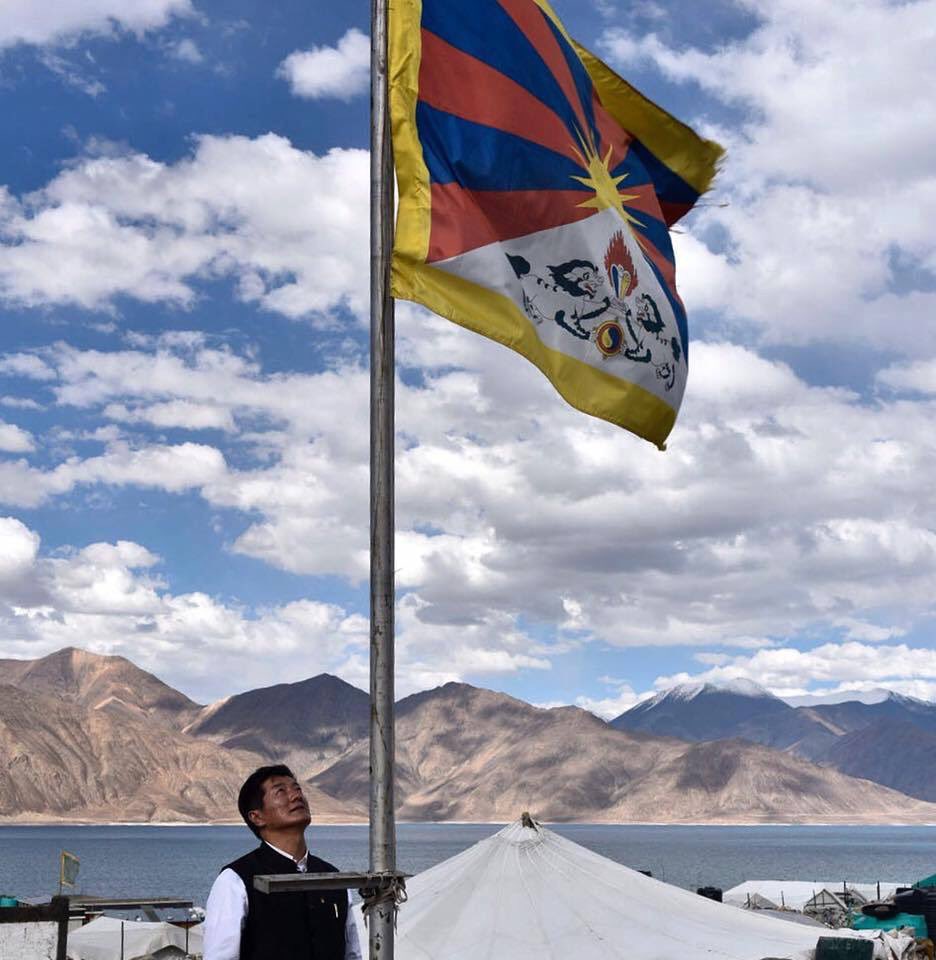
World Tibet Day – Prayers at Pang Gong Lake for Tibet Equilibrium. Tibetan President Dr. Lobsang Sangay at Pang Gong Lake on July 05, 2017.
World Tibet Day – Prayers at Pang Gong Lake for Tibet Equilibrium.

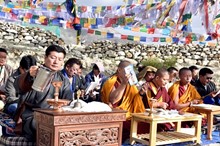
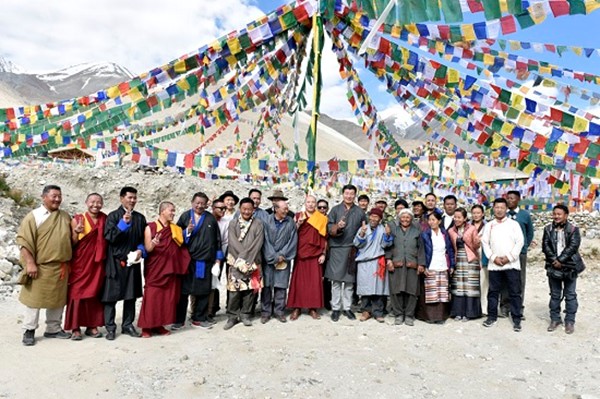
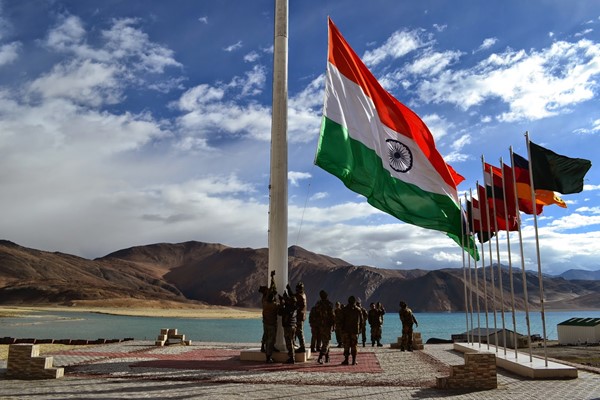
Tibetan President Dr. Lobsang Sangay hoisted Tibetan National Flag and held special Prayer Service on Wednesday, July 05, 2017 at Pang Gong Lake near India-Tibet Border in preparation for celebration of World Tibet Day on Thursday, July 06, 2017. The Prayer seeks blessings of Freedom for all Tibetans in Occupied Tibet.

World Tibet Day – Tibetan President, Dr. Lobsang Sangay at Pang Gong Lake.

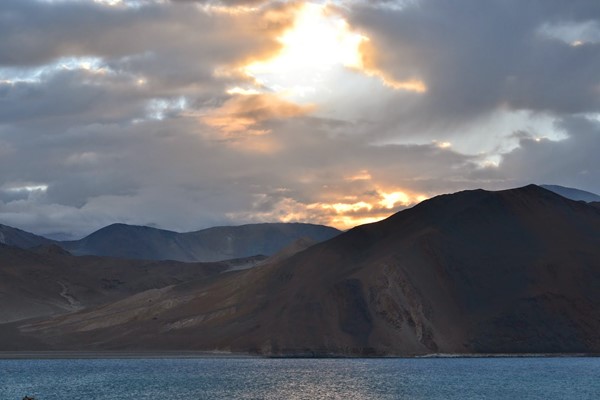
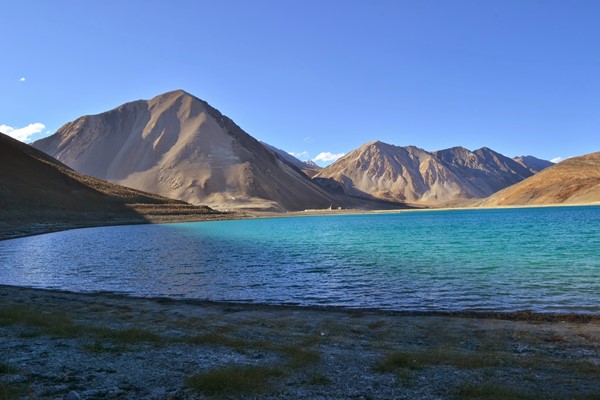
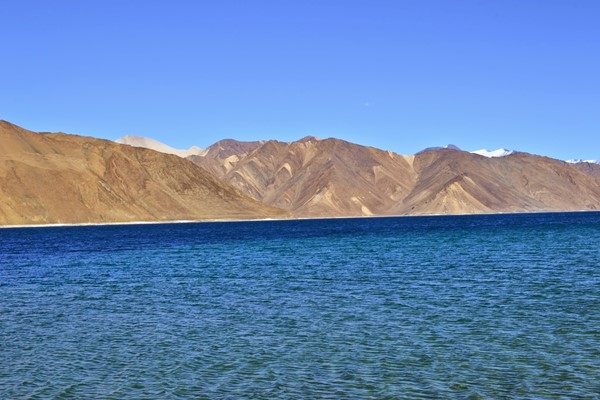
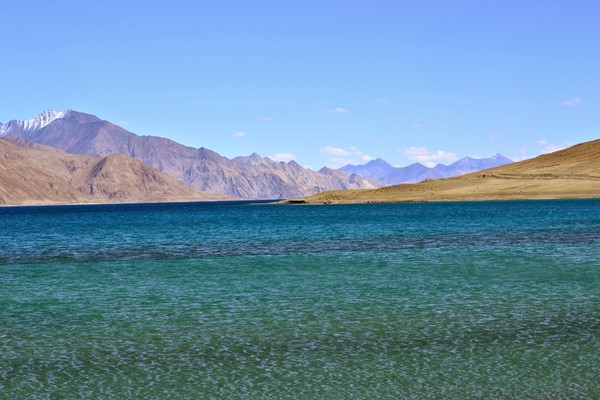
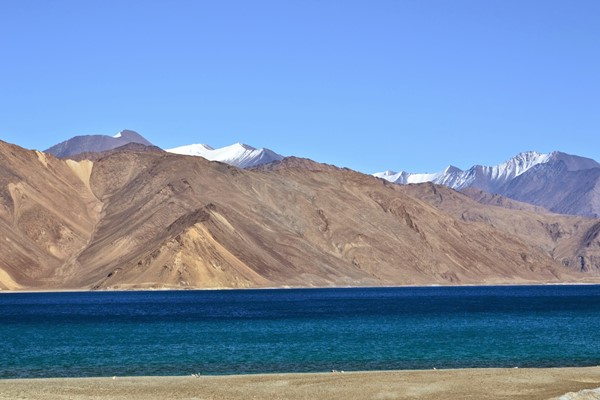
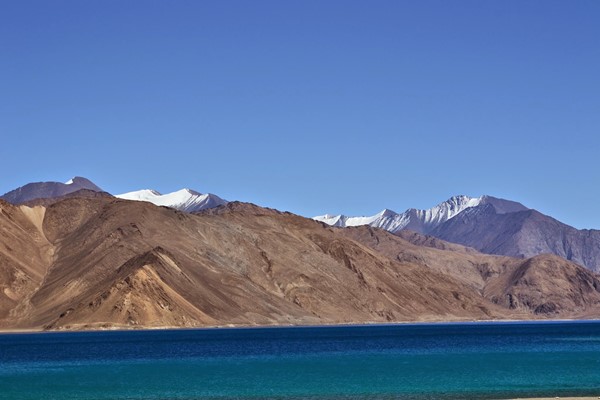
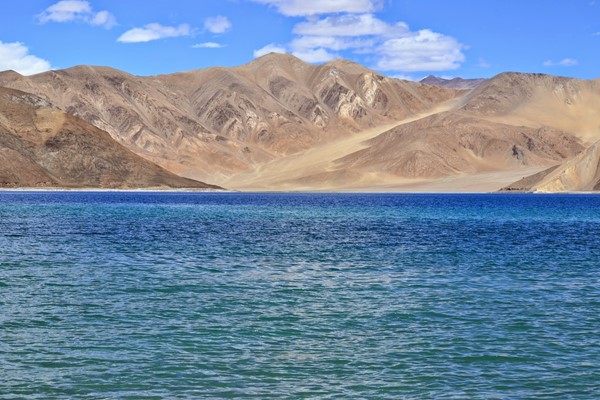
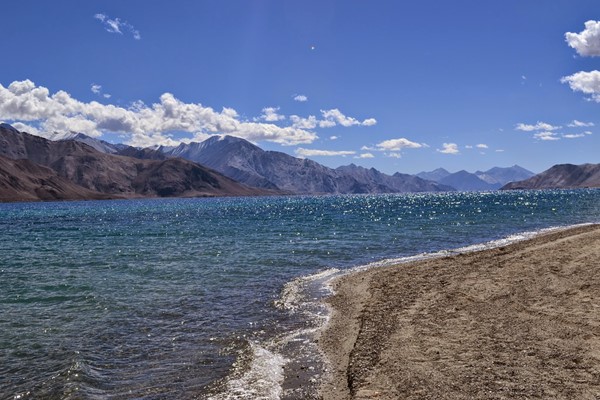
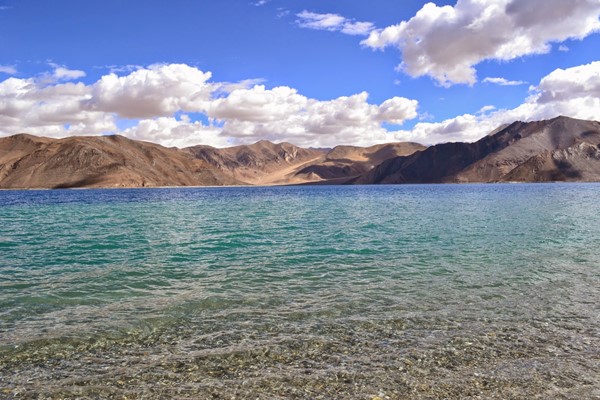
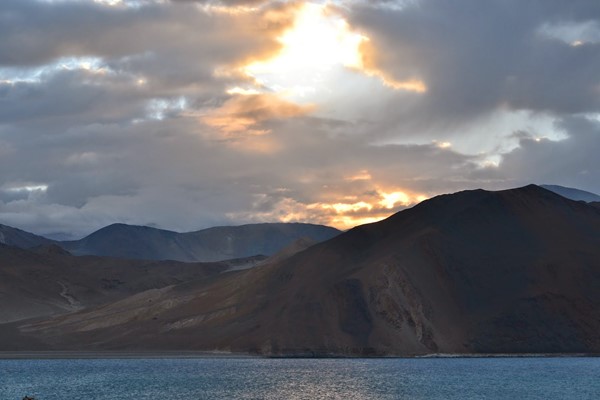
I invite my readers to view photo images to enjoy ‘Natural Beauty’ of Pang Gong Lake between India and Tibet.

World Tibet Day – Prayers at Pang Gong Lake for Tibet Equilibrium.

Rudranarasimham Rebbapragada

DOOM DOOMA DOOMSAYER

‘TIBET CARD’ ADDED TO INDIA-CHINA BORDER MIX AS TIBETAN FLAG IS HOISTED AT PANG GONG LAKE – INDIAN DEFENCE FORUM

World Tibet Day – Prayers at Pang Gong Lake for Tibet Equilibrium on July 05, 2017. Tibetan President Dr. Lobsang Sangay at Namgyal Monastery.

Clipped from: http://indiandefence.com/threads/tibet-card-added-to-india-china-border-mix-as-tibetan-flag-is-hoisted-at-pang-gong-lake.62429/

BY DEVIRUPA MITRA ON  JULY 08, 2017 • 

Coming amid the ongoing stand-off between India and China in Doklam, the hoisting of the Tibetan flag on Indian territory could be seen as political activity.

World Tibet Day – Prayers at Pang Gong Lake for Tibet Equilibrium. Tibetan President Dr. Lobsang Sangay hoisted Tibetan National Flag on July 05, 2017.

Lobsang Sangay, head of the Tibetan government-in-exile, seen after hoisting the Tibet flag on Pangong Lake. Courtesy: Central Tibetan Administration website

New Delhi: Even as the stand-off between Indian and Chinese soldiers continued in one part of the Himalayas, Lobsang Sangay, head of the Tibetan government-in-exile, unfurled the Tibetan national flag on the shores of Pang Gong lake in Ladakh.

The lake, located at over 14,000 feet, sits astride India and China, with the Line of Actual Control passing through it.

Speaking to The Wire, Sonam Norbu Dagpo, spokesperson of the Central Tibetan Administration (CTA), said that this was the first time that the independent Tibet flag had been unfurled by the head of the government-in-exile at that important location.

“This is the first visit by the CTA president to Ladakh and, therefore, the first time that the national flag has been unfurled near the lake,” he said.

Dagpo pointed out that the location has special meaning for the Tibetan community. “As you know, half the lake is in India, and half the Tibet,” he added. Consequently, he said that the hoisting of the national flag has “political and personal significance”.

When asked if any go-ahead signal was taken from authorities, Dagpo asserted, “I don’t think any permission is required to hoist the Tibetan national flag”.

Sangay was in Ladakh on the invitation of the Ladakhi community to celebrate the birthday of the Dalai Lama on July 6, Dagpo added.

According to a report on the lake shore ceremony published on the CTA website, Sangay had a brief audience with the Dalai Lama before leaving for the lake on the morning of July 5.

The report noted that Sangay poured “blessed grains” received from the Dalai Lama into the lake in the hope that “these grains will reach Tibet and bless Tibetans inside Tibet as well”.

“Physically, I may be standing just a few meters from Tibet today. However, in terms of political freedom and views, I am still far away from the situation inside Tibet,” Sangay said, according to the report.

Speaking to The Wire, a former MEA secretary, R.S. Kalha said, “The unfurling of the Tibetan flag is a political act, especially at this time”.

For the last 22 days, Indian and Chinese soldiers have been watching each other warily on a clearing called the ‘Turning Point’ in Doklam. Indian soldiers had stopped Chinese soldiers from constructing a road within Bhutanese territory, which would have serious security implications for the tri-junction and the ‘chicken neck’ Siliguri corridor.

China has been on a media blitzkrieg claiming that India violated a 1890 treaty and asserting that Indian soldiers were on Chinese territory. India and Bhutan have both said that China had changed the status-quo by building a road and asked it to return to the previous position.

Indian Prime Minister Narendra Modi and Chinese President Xi Jinping had a five-minute conversation on Friday on the sidelines of a meeting of BRICS leaders gathered in Hamburg for the G20 summit. However, no details were given of the “wide range of issues” discussed.

Meanwhile, even as the two leaders met in Hamburg, the Chinese embassy in India issued an advisory for its nationals to “pay close attention to personal safety”.

Observer Research Foundation’s Manoj Joshi agreed that the flag hoisting by Sangay “assumes importance due to the timing”. “This is a very significant gesture, given that it has happened for the first time at this location which has emotional and political symbolism.”

Both Kalha and Joshi pointed out that the flag was hoisted on Indian territory, which could be interpreted as political activity.

A former Indian diplomat, who has been a practitioner in India-China bilateral ties, claimed that it was unlikely that India would have “encouraged” Sangay to go to the lake. “So far, I do not see any signs of the Indian government interested in escalating the issue,” said the diplomat, who did not want to be named. He also pointed to the Indian statement on the Doklam stand-off, which he said was “very measured and sober”.

Joshi asserted that the NDA government has a history of trying to play up the Tibet issue. “Ever since this government took office, it has given more visibility to the Tibetan cause, right from swearing-in day. This has not gone unnoticed in Beijing,” he said.

When Modi was sworn in as prime minister, Sangay was among the special invitees in the audience, sitting right next to then Uttar Pradesh chief minister Akhilesh Yadav. Sangay’s presence led to speculation of new government policy on Tibet. Sangay’s presence didn’t go unnoticed, with China lodging a protest. A few months later, Modi and Xi were sitting together on a swing alongside the river Sabarmati – but that was probably the biggest high in India-China bilateral relations till now.

In April 2016, India allowed a US-based Chinese dissident organization to organize a seminar of pro-democracy activists in Dharamshala, but later cancelled the visa of an Uighur activist on the grounds that he gave wrong information in his visa application. The visas of three other participants to the conference were also cancelled. However, the seminar went ahead, but without the media being allowed in.

The permission for the conference had come in the wake of China putting on hold – yet again – the listing of Jaish-e-Mohammed chief Maulana Masood Azhar by the 1267 al-Qaeda and Taliban sanctions committee of the UN Security Council.

In December 2016, China warned India to respect Beijing’s “core interests” after Dalai Lama visited Rashtrapati Bhawan to attend a conference of Nobel laureates and shared the dais with the Indian president. This was the first contact between the Tibetan spiritual leader and the head of the Indian state in decades. India had played down the incident, stating that Dalai Lama had been invited for a “non-political event”.

A few months earlier in October 2016, Beijing had also protested the first ever visit by an US ambassador to India to Arunachal Pradesh.

This year, China was again upset by the visit of the Dalai Lama to Arunachal Pradesh. The language used by the Chinese foreign ministry on Dalai Lama’s visit was so sharp that India issued a list of previous trips of the Tibetan spiritual leader to the north-eastern state, which is claimed by China. The foreign ministry spokesperson also clarified that there was a “no change” in Indian government’s policy towards China’s Tibet or to the boundary question.

https://thewire.in/155657/lobsang-sangay-central-tibetan-administration-tibet-flag-india-china/

World Tibet Day – Prayers at Pang Gong Lake for Tibet Equilibrium.
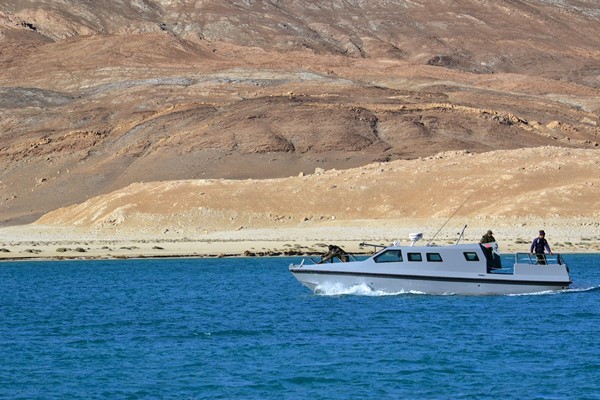
World Tibet Day – Prayers at Pang Gong Lake for Tibet Equilibrium. Indian Armed Forces keeping watch at India-Tibet Border.
World Tibet Day – Prayers at Pang Gong Lake for Tibet Equilibrium. The Lake is at India-Tibet Border.
WORLD TIBET DAY – PRAYERS AT PANG GONG LAKE FOR TIBET EQUILIBRIUM.

TIBET EQUILIBRIUM – MAN vs NATURE

TIBET EQUILIBRIUM – MAN vs NATURE

TIBET EQUILIBRIUM – MAN vs NATURE. NATURAL FORCE OR NATURE IN THE ROLE OF THE “BALANCER” OR “HOLDER OF THE BALANCE IN PHYSICAL WORLD.

Man has been shaping face of Earth by creating political boundaries to define the extent of territory under his domination. Man uses his physical power or military force to subdue his opponents while he expands his territory. Red China describes her military conquest of foreign territory as ‘Liberation’. In Man’s History, Empires have risen and fallen reshaping political boundaries.

Nature is also at work reshaping Earth from its beginning. Earth’s Natural History is full of remarkable events such as Continental Drift. Himalaya Mountain range came into existence due to force of collision generated by Indian Landmass thrusting against Asia. Apart from creating Himalaya Mountains, collision of Indian Plate caused uplift of Tibetan Plateau which began about 45 million years ago. This force is still acting slowly pushing Nepal towards Tibetan Plateau.

Tibet Equilibrium – Man vs Nature. Promoting global awareness of suppression, oppression, and repression in Occupied Tibet. How to reset Balance of Power?

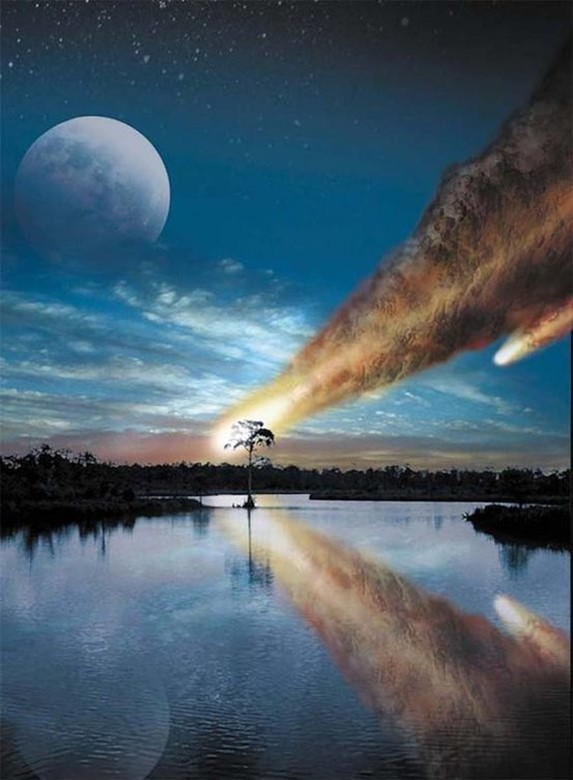
Nature causes Major and Minor ‘Extinction Events’ altering shape of Earth and the lifeforms that live on Earth. Natural History records several episodes of heavenly objects striking Earth with devastating consequences. Earth witnessed on June 30, 1908 an event called Tunguska Event caused by asteroid collision.’Asteroid Day’ promotes global awareness of such collision events.

In my analysis, such Heavenly Strike is natural remedy for Man’s Pride and Arrogance with which Man desires domination of planet Earth.

Tibet Equilibrium – Man vs Nature. Natural Balance of Power instituted by Nature.

I use the term or phrase ‘Tibet Equilibrium’ to describe Natural Balance of Power instituted by Natural Factors, Natural Mechanisms, Natural Conditions, Natural Forces that act together to restore Natural Freedom in Tibet, the Freedom that prevailed before Red China’s military conquest of Tibet.

Rudranarasimham Rebbapragada

DOOM DOOMA DOOMSAYER

DEFENCE NEWS: TIBET IS CHINA’S RIGHT HAND AND LADAKH, NEPAL, SIKKIM, BHUTAN AND ARUNACHAL ARE ITS FINGERS – MAO ZEDONG

Clipped from: http://defencenews.in/article/Tibet-is-Chinas-Right-Hand-and-Ladakh,-Nepal,-Sikkim,-Bhutan-and-Arunachal-are-its-Fingers—Mao-Zedong-262888

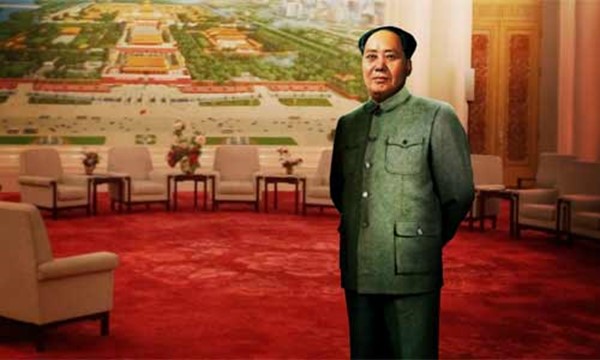
TIBET EQUILIBRIUM – MAN vs NATURE. MAO ZEDONG’S EXPANSIONIST DOCTRINE RESULTS IN POWER IMBALANCE IN ASIA.

China’s legendary revolutionary leader Mao Zedong, standing in front of Beijing’s Tiananmen Square in the 1950s, talked about Tibet and the Himalayas: “Xizang (Tibet) is China’s right hand’s palm, which is detached from its five fingers — of Ladakh, Nepal, Sikkim, Bhutan and Arunachal (formerly NEFA). As all of these five are either occupied by, or under the influence of India, it is China’s responsibility to ‘liberate’ the five to be rejoined with Xizang (Tibet).”
Beijing and New Delhi are two capitals of two of the most populated nations of the world, with the Himalayas forming the most formidable barrier to an extensive interaction between them. The Himalayas, however, have much more to do with Hindu history, culture and the traditions of South Asia than that of China owing to its remote distance from China. Beijing owes its glorious rice culture more to the Hwang Ho and Yangtze rivers than to the Himalayan rivers of the Sindhu, Ganga and Brahmaputra.

Just like Jerusalem is the cradle of both Christianity and Judaism, and Mecca and Medina the Centre of Islam, the Himalayas and its waters have played a seminal role in the rise, growth and development of Hinduism, Buddhism, Jainism and Sikhism. The Chinese owe the origin and development of their glorious civilization more to the twin non-Himalayan river valleys of the Hwang Ho and Yangtze than to the remote Himalayas, the abode of snow. The name originates from the combination of two Sanskrit words “him (snow)” and “alaya (abode)”.

Let’s study the distance of the Himalayan “five fingers” from the two capitals of New Delhi and Beijing. Leh (Ladakh) is 1,258 km by road from Delhi and 3,490 km from Beijing; Kathmandu (Nepal) is 1,160 km from Delhi and 3,160 km from Beijing; From Nathula (Sikkim) to Delhi is 1,636 km, while to Beijing it is 2,888 km; Thimphu (Bhutan) is 1,782 km from Delhi and 2,820 km from Beijing; and lastly, from Tawang (Arunachal) Delhi is 2,315 km, while Beijing is 2,640 km from there.
Indeed, the “five fingers” of Beijing are rather too far when compared to the distance thereof from Delhi. Nevertheless, let us see things from Beijing’s point of view as well, in the light of its BRI/CPEC and SCO objectives. Several of its “economic” projects have been given different names to keep the non-Chinese guessing. That is the Chinese way, which could be to look different without being different. Why? Because the goal is always fixed. It’s the way to the acquisition of land and money, in the old Chinese tradition of kowtowing by rivals. Even when things do not exist, there is a need to make them “exist”. Almost like that of Voltaire’s logic: “Even if God did not exist, it would be necessary to invent him”. The belief has to prevail. If not today, in the long term and in the long run. The Chinese can go on hammering. The wall is bound to crack and crumble inevitably one day.

Ladakh is still with India, forced Chinese part-occupation notwithstanding. Nepal is independent and pursues its policy with great élan, despite its abolition of the monarchy and the tag of being a Hindu state. Sikkim joined India on its own volition in 1975, and there doesn’t seem to be any sign of a reverse gear. Bhutan too can’t be penetrated, as it is too steadfast in its approach. The proposed Chinese embassy in Thimphu is still a long way off. Arunachal Pradesh is one of the 29 states of India, and there is little to suggest that it can be anything other than that.

Therefore, the direct approach to “liberate” the “five fingers” of Xizang needs to change to an indirect one. How? By the application of “economics”. Development, investment, people-to-people contacts, profit, infrastructure, connectivity and corridor are alluring words. The Chinese aim to entice them, cajole them, as they are all landlocked terrain. All are “helpless” at the mercy of others. They need “liberation” by or under someone. Dissatisfaction and resentment is the key to their changing sides.

To begin with, a country has to have proximity to sea outlets. Five landlocked fingers cannot operate from Gwadar Port on the Arabian Sea. It is remote and turbulent. It has to be the Bay of Bengal, with its six ports of Kolkata, Haldia, Khulna, Chalna, Cox’s Bazar and Chittagong. Nathu-La to Kolkata is 727 km, Dhaka 640 km, Chittagong 900 km.

No wonder China is anxious to open its embassy in Bhutan to balance New Delhi’s influence and to breach Siliguri’s “Chicken’s Neck” of less than 80 km to reach the shoreline of the Bay of Bengal. It does not matter what it takes to achieve the so-called economic goal. It matters little whether or not turbulence is created to breach the established polity of India and reach the beaches of West Bengal and Bangladesh. It is simply “economics”!

One of the priorities is the Sino-Bhutan border “issue”. The year 2017 has seen hectic Chinese activity in Bhutan — with very little effect though. They are trying hard in the Chumbi Valley tri-junction of Bhutan, Sikkim and Tibet. The Yadong railway will also reach Kathmandu via Gyirong (Tibet). The Chinese want a railway line through Bhutan, West Bengal and Bangladesh as well. Not too soon, it appears, as tension and turbulence go on increasing in the highly vulnerable Chicken’s Neck area of India, that in turn may well contaminate all four nations in the neighborhood — Bangladesh, Bhutan, India and Nepal. Paradoxically, however, the adverse effect on these four nations is likely to be advantageous to China.

The Chinese hopes still revolve around Mao Zedong’s unfulfilled dreams. Hence, the renewed Chinese keenness to go to the east as well as the Northeast in Indian territory. India is the gateway to all the five (landlocked) fingers. The gate must be prized open — the sooner the better. It is the all-embracing “Chinese economics”: which Beijing sees as the only way to “liberate the “five fingers”.

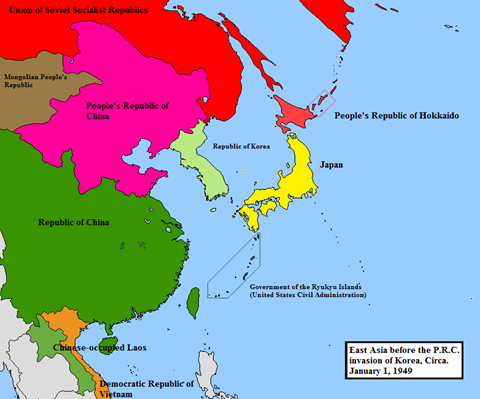
TIBET EQUILIBRIUM – MAN vs NATURE. ON FEBRUARY 13, 1913 TIBET DECLARED FULL INDEPENDENCE AFTER DOWNFALL OF CH’ING OR QING CHINESE DYNASTY.


CHINA’S TIBET POLICY – RECIPE FOR NATURAL DISASTER

CHINA’S TIBET POLICY – RECIPE FOR NATURAL DISASTER

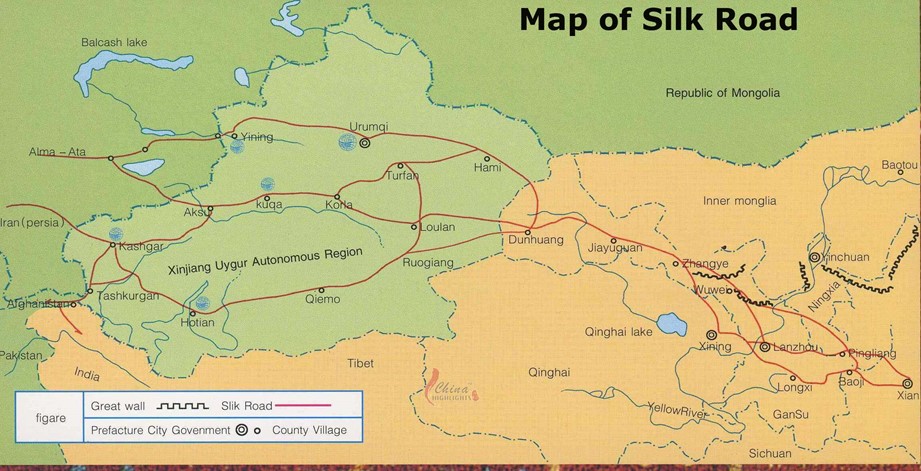
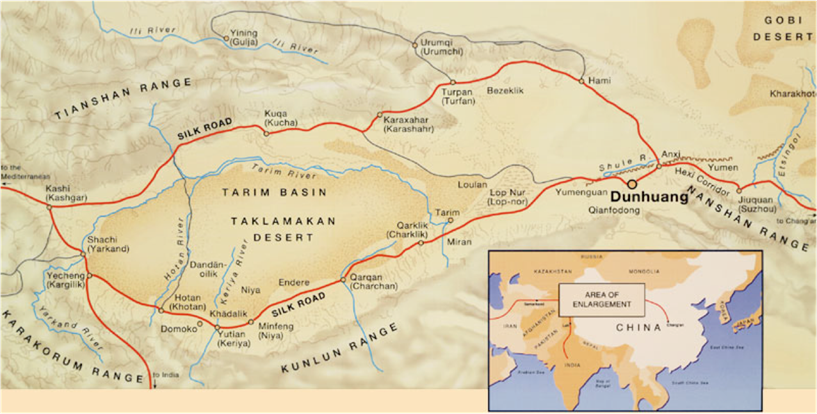
CHINA’S TIBET POLICY – RECIPE FOR NATURAL DISASTER. ONE BELT, ONE ROAD POLICY OF NEOCOLONIALISM. GEOGRAPHY OF SILK ROAD.

Red China’s Tibet Policy is driven by Expansionist Doctrine proclaimed by Communist Party Chairman Mao Zedong in 1949. China’s Neocolonialism includes Territorial Expansionism, Military Expansionism, Economic Expansionism, Political Expansionism, and Cultural Expansionism. Red China accomplishes her Mission using tools of Oppression, Repression, and Suppression to subjugate people in all occupied territories.

In my analysis, China’s Tibet Policy in Tibet and Xinjiang is Recipe for Natural Disaster. Nature designed its own plan for this geographical region and for thousands of years, the denizens of this region lived in harmony with Nature’s Plan. I claim, “Beijing Doomed,” for in my expectation, Nature has Plan for Change of Regime in Beijing.

Rudranarasimham Rebbapragada

DOOM DOOMA DOOMSAYER

CHINA’S TIBET POLICY IS RECIPE FOR NATURAL DISASTER. ONE BELT, ONE ROAD POLICY – NEOCOLONIALISM.

CHINA’S ‘TIBET RECIPE’ IN XINJIANG SHOULD PUT INDIA ON ALERT

Clipped from: http://www.dailyo.in/politics/china-tibet-xinjiang-uyghurs-belt-and-road-initiative-obor/story/1/17965.html

The stability of the Muslim region is vital for Beijing and its gigantic BRI project.

At the end of August 2016, Wu Yingjie takes over as party secretary of the Tibetan Autonomous Region (TAR) from Chen Quanguo who is sent to “pacify” the Xinjiang Uyghur Autonomous Region (XUAR). The Politburo of the Chinese Communist Party has taken this crucial decision during the annual closed-door meeting in the summer resort of Beidaihe.

Chen replaces Zhang Chunxian as XUAR party secretary. It is indeed a promotion for Chen, given the fact that Xinjiang’s party secretaries often serve in the politburo.

Infrastructure

His selection is linked to the “Tibet Recipe”, the way Chen managed to “pacify” the TAR. Once in Urumqi, Chen immediately started applying the formula that he used in Tibet to Xinjiang. But what is this recipe?

First, Chen transformed the Roof of the World into a vast Disneyland. In 2006, the arrival of the train on the plateau changed everything for Beijing and unfortunately for the Tibetans. Wave after wave of Chinese tourists could be poured into Tibet to experience the “Paradise on Earth” with its blue sky, pristine lakes and rivers, its luxuriant forests and deep canyons (the latter in Southern Tibet).

In 2016, 25 million tourists, mainly from the Mainland, are said to have visited the Land of Snows. For this, infrastructure needed to be developed, airports opened, four-way highways constructed, hotels and entertainment parks built; this was done in Tibet on a war-footing.

China’s Tibet Policy – Recipe for Natural Disaster. One Belt, One Road Policy – Neocolonialism.

Wave after wave of Chinese tourists poured into Tibet.

In passing, the Tibetan intangible heritage had to be preserved, often with Chinese characteristics. The same formula has now to be replicated in Xinjiang.

Second, in order to “stabilize” the plateau, Chen imposed restrictions on the local population like never before. Similar policies will be used in Xinjiang. Human Rights Watch (HRW), an organization based in the US, just released a “glossary” of special slogans or “formulations” (tifa) used by the Chinese officials and the media when referring to party policies on the plateau.

HRW explains: “China’s authorities place extraordinary emphasis on the importance of ‘propaganda’ in sustaining their rule. This phenomenon is particularly evident in Tibet, where there has been a long history of human rights violations, extreme hostility towards political rights, and heavy restrictions on the rights to freedom of expression and access to information.”

“Poetic” tifas such as Social Management, Comprehensive Rectification, Preventive Control, Eliminate-Unseen-Threats, Nets-in-the-Sky-Traps-on-the-Ground or Copper-Ramparts-Iron Walls, are recurrently used. The latter one for example, translates into “an impenetrable public security defense network consisting of citizen patrols, border security posts, police check posts, surveillance systems, internet controls, identity card monitoring, travel restrictions, informant networks, and other mechanisms.”

The implementation of these tifas, which originated during Chen’s tenure in Tibet, is often dreadful… but efficient for Beijing.

Rights

Chen has taken these tifas with him to Xinjiang and started making good use of them. The “stability” of the Western province is vital for China, as it is the geographical hub for the Belt and Road Initiative: it will connect the New Silk Road (Central Asia) to the China Pakistan Economic Corridor.

Chen now plans to bring millions of tourists to Xinjiang in order to “dilute” the Uyghur characteristics. In a “White Paper on Xinjiang” recently published by Beijing, the Communist Party hides its failure by saying: “Legitimate rights of religious organizations have been effectively safeguarded. Xinjiang has published translations of the religious classics of Islam, Buddhism, and Christianity in multiple languages,” adding 1.76 million copies of the Quran have been printed and distributed.

But on the ground the situation is different. To take just one example, Beijing has decided to collect DNA samples from all Xinjiang’s residents. This week, Xinhua reported China’s decision to dispatch 10,000 teachers to the restive XUAR and TAR “to support local education could help solve the educational problems.”

Stability

Beijing says that the main problem is the lack of eligible bilingual teachers in the regions, but will the teachers from the mainland teach the Turkish language of the Uyghurs or Mandarin? Not difficult to guess. Language, in Tibet or Xinjiang, is an instrument of assimilation.

Chen is also working hard to improve the infrastructure. Last week, Xinhua announced the construction of 10 new airports to be built in Xinjiang by 2020; further, six older airports will be renovated and expanded. It has implications for India. One of these airports will be built in Yutian (also known as Keriya), a county of Hotan Prefecture not far from the disputed Aksai Chin.

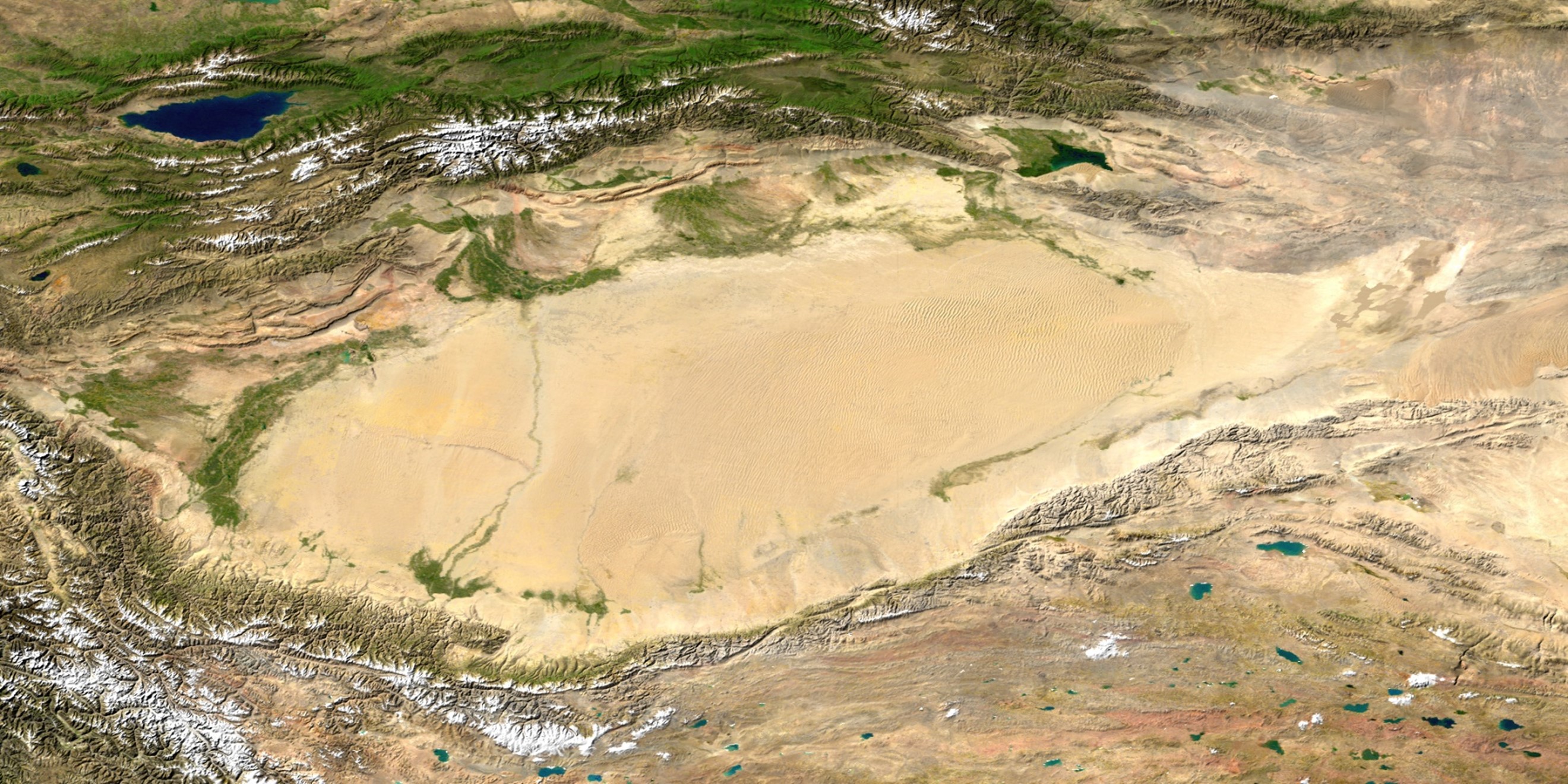
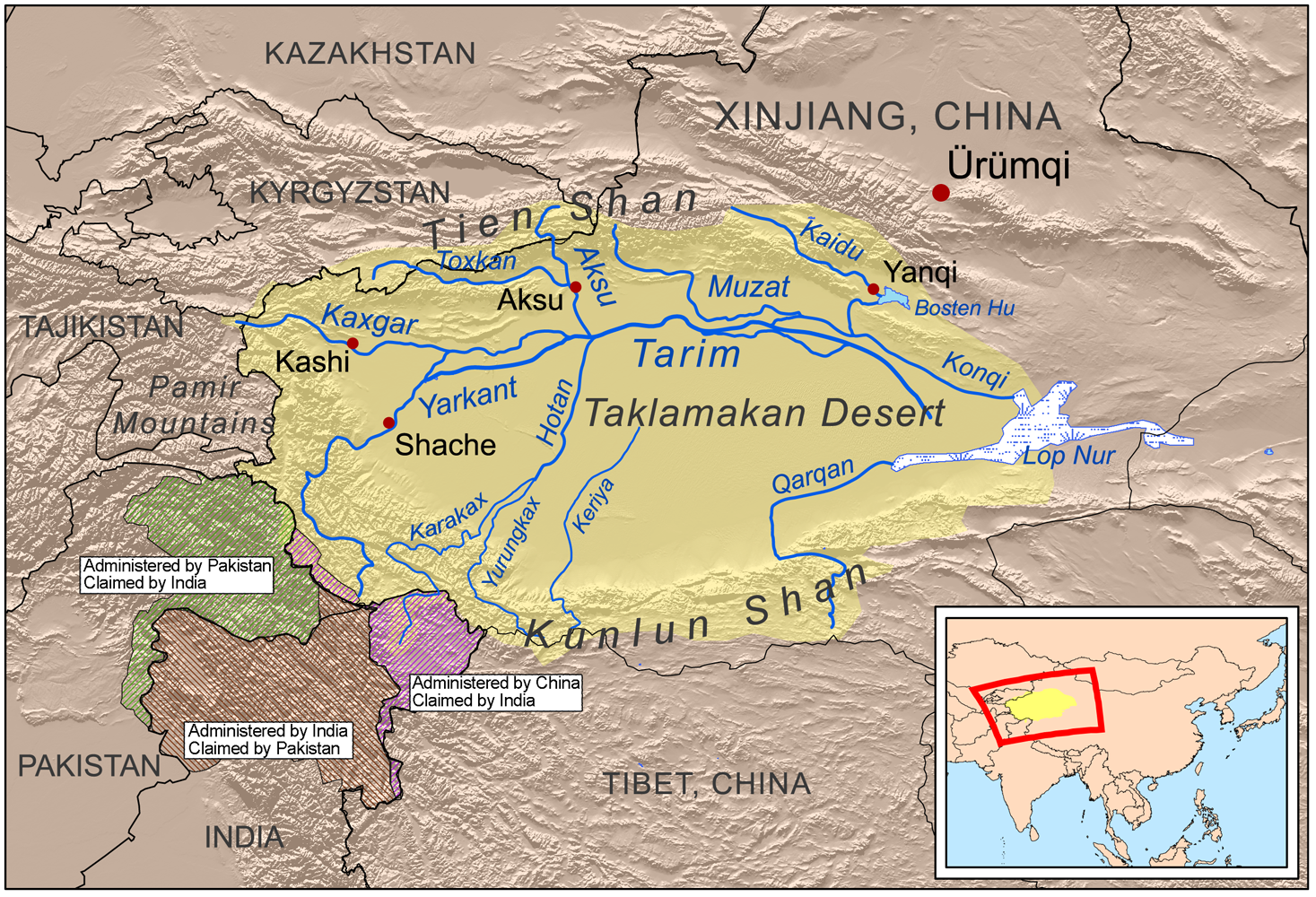
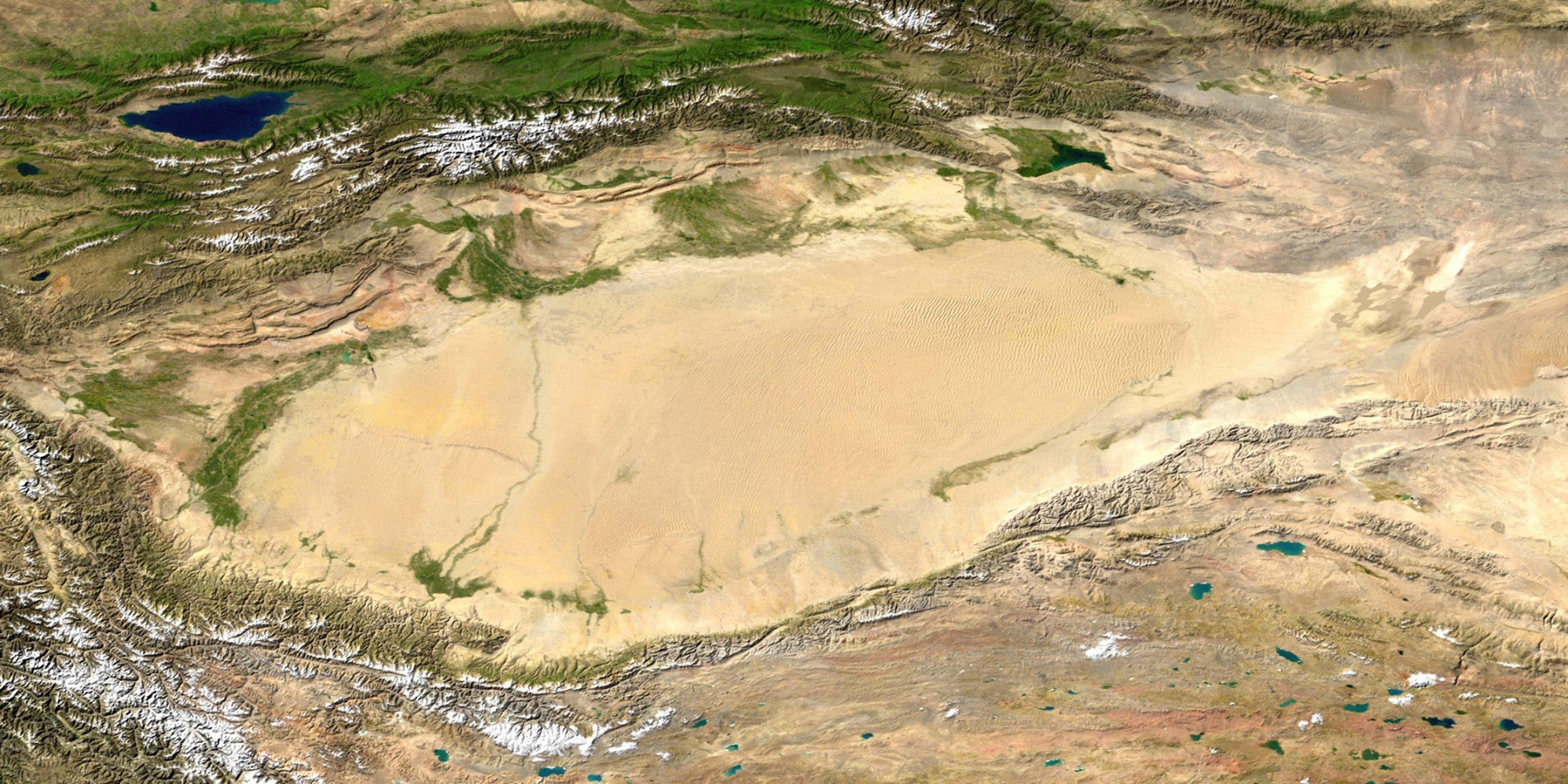
Located south of the Taklamakan desert and north of the Kunlun range, Keriya has always been a major stopover on the ancient Silk Road. In view of the proximity of the Indian border, it makes sense for China to have a new “civil” airport at Keriya, considering that there is no such thing as a “civil” airport in China, especially so close to the Indian border.

Keriya airport is designed to annually handle 1,80,000 passengers and 400 tons of cargo; it will have a 3,200-meter runway, a 3,000-square-meter terminal building and cost 104 million US dollars, says Xinhua. There is no doubt that Chen has been mandated to apply the “Tibet Recipe” in Xinjiang. Will he succeed is another question.

It is however certain that the stability of the Muslim region is vital for the Middle Kingdom and its gigantic BRI “linking” project; India needs to watch and be prepared.

(Courtesy: Mail Today)

China’s Tibet Policy – Recipe for Natural Disaster. One Belt, One Road Policy – Neocolonialism.
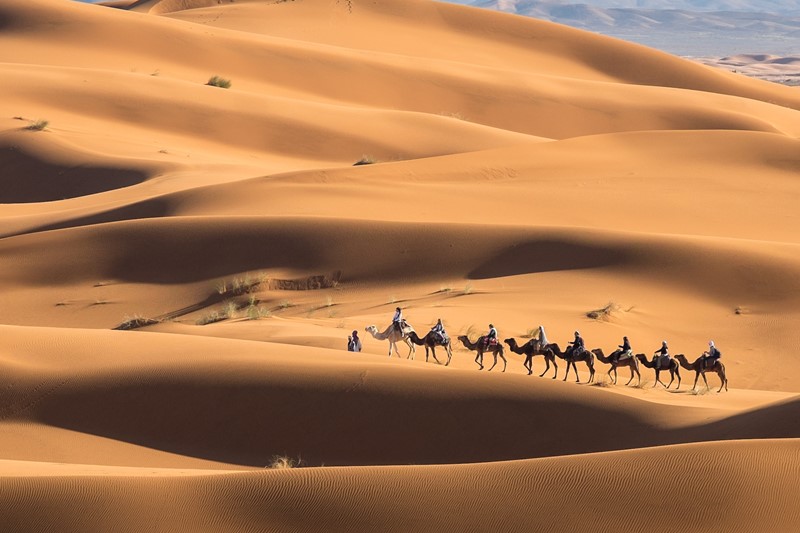
China’s Tibet Policy – Recipe for Natural Disaster. One Belt, One Road Policy – Neocolonialism. Taklamakan Desert, Silk Route.
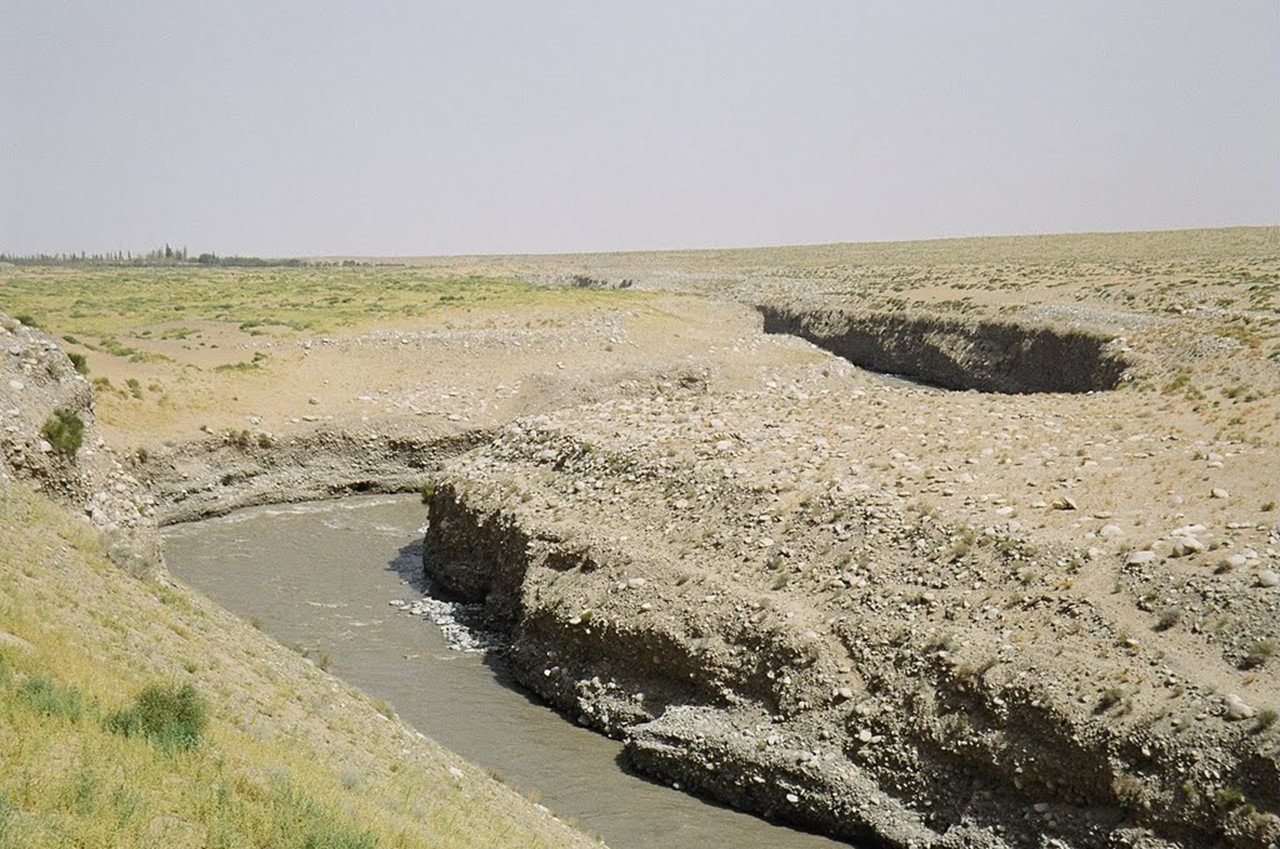
China’s Tibet Policy – Recipe for Natural Disaster. One Belt, One Road Policy – Neocolonialism. Satellite images of Keriya River changing courses.
China’s Tibet Policy – Recipe for Natural Disaster. One Belt, One Road Policy – Neocolonialism.
China’s Tibet Policy – Recipe for Natural Disaster. One Belt, One Road Policy – Neocolonialism. Keriya River.
China’s Tibet Policy – Recipe for Natural Disaster. One Belt, One Road Policy – Neocolonialism.
CHINA’S TIBET POLICY – RECIPE FOR NATURAL DISASTER. NATURE’S PLAN FOR REGIME CHANGE IN BEIJING.

ZERO FUNDING FOR TIBET – NATURAL MECHANISM FOR REGIME CHANGE IN BEIJING

ZERO FUNDING FOR NATURAL FREEDOM IN TIBET – NATURAL MECHANISM FOR REGIME CHANGE IN BEIJING. THE SWORD OF DAMOCLES HANGING OVER THE NECK OF BEIJING. 

ZERO FUNDING FOR TIBET – NATURAL MECHANISM FOR REGIME CHANGE IN BEIJING

President Trump’s 2018 Budget provides no funding in support of Natural Freedom in Tibet.

I am presenting view shared by Ms. Olivia Enos in which she appeals to President Trump not to forget Tibet. In her view, it appears that Natural Order is always determined by choices and actions performed by Man.

As student of Natural Science, I examine Natural Factors, Natural Conditions, Natural Mechanisms, and Natural Events that impact, or reset Natural Balance, Natural Order, and Natural Equilibrium that underlies human experience called Natural Freedom. For example, Natural Event called K-T Extinction Event totally wiped out ruling clan of Dinosaurs from face of planet Earth to introduce new clan of rulers called Anatomically Modern Man.

In Natural History of Man, powerful, mighty Empires have risen and fallen altering political boundaries imposed by Man over Natural Boundaries that define terrestrial life. Man brings about Regime Change using physical force using tools invented by Man. However, to expect Regime Change through Natural Event such as Bolide Collision cannot be dismissed as figment of human imagination.

In fact, Saint John describes, Book of REVELATION, Chapter 18, a mechanism for Regime Change in Evil Empire code-named Babylon. He visualizes heavenly strike such as Bolide Collision that destroys Evil Empire Babylon. Man may interpret sudden, unexpected Downfall of Babylon as Natural Disaster, Natural Calamity, Catastrophe, Cataclysm, Doom, or Apocalypse.

I am not concerned about President Trump’s Budget Plan with Zero Funding for Natural Freedom in Tibet. In my Natural Expectation, Evil Red Empire will experience Natural Downfall triggered by Natural Event called Bolide Collision. I seek Tibet Equilibrium to restore Balance of Power in South Asia that grants Natural Freedom to Tibetans. The Sword of Damocles is hanging over the neck of Beijing.

Rudranarasimham Rebbapragada

DOOM DOOMA DOOMSAYER

PRESIDENT TRUMP, DON’T FORGET ABOUT TIBET

Clipped from: https://www.forbes.com/sites/oliviaenos/2017/06/09/president-trump-dont-forget-about-tibet/#105138fd7f9a

Zero Funding in President Trump’s 2018 Budget in support of Natural Freedom in Tibet. Natural Mechanism may restore Tibet Equilibrium.

Olivia Enos ,  

Contributor

I write on international human rights and national security.

I am a researcher in the Asian Studies Center at The Heritage Foundation where I write on international human rights issues including human trafficking, transnational crime, religious freedom, and democratic freedoms, among other social issues in Asia. I also work on human rights challenges facing the Middle East including ISIS genocide and U.S. refugee policy. My work has been featured in The National Interest, RealClearWorld, Providence: A Journal of Christianity and Foreign Policy, and Georgetown Journal of International Affairs, among other publications. I received my BA from Patrick Henry College and am completing my MA in Asian Studies at Georgetown University. I live with my husband Zach on Capitol Hill in Washington, D.C.

The author is a Forbes contributor. The opinions expressed are those of the writer.

President Trump’s 2018 Budget provides Zero Funding in support of Natural Freedom in Tibet. Natural Mechanism for Regime Change in Beijing.

UNSPECIFIED, CHINA – APRIL 23: Tibetan Buddhist monks use the iPhone in the courtyard of the Kumbum Monastery on April 23, 2017 in Xining, Qinghai Province. Kumbum was founded in 1583 in a narrow valley close to the village of Lusar in the Tibetan cultural region of Amdo. (Photo by Wang He/Getty Images)

President Trump’s proposed 2018 budget would zero out funding critical to advancing freedom in Tibet. Proposed budget cuts would eliminate all USAID programming for Tibet and funding for the Ngawang Choephel Fellows program, which finances educational and cultural exchanges for Tibetan refugees. What might happen with efforts to protect Tibetan refugees in South Asia is unclear.

The State Department said that many “tough choices” were made during budget negotiations. Economic development programs in Tibet will take the most significant hit. In addition to the cuts outlined above, there is a question as to how much funding—if any—will be allocated for the Tibet Fund. Nor does the budget proposal outline how cuts to the National Endowment for Democracy (NED) will impact programs toward Tibet.

Defunding efforts to empower Tibetans sends the signal that the U.S. no longer cares about advancing liberty in places like Tibet and Xinjiang where China today uses human rights abuse to maintain control over these territories.

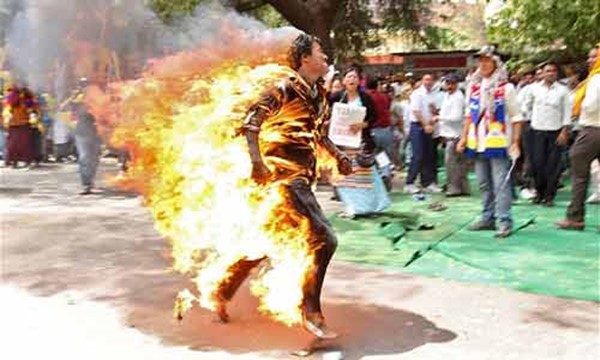
Just last year, the Chinese government began demolishing one of the world’s largest Tibetan Buddhist academies, the Larung Gar, reducing the population of monks and nuns from 12,000 to less than 5,000 after its partial destruction in 2016. Additionally, at least 150 Tibetans have self-immolated since February 2009.

At a recent event at The Heritage Foundation, Dr. Lobsang Sangay, president of the Central Tibetan Administration, reaffirmed Tibet’s commitment to the “Middle Way” approach. This policy approach seeks freedom for Tibetans within the framework of the Chinese constitution.

“The Middle Way approach” explained Sangay, “is in the middle of seeking separation or independence from China but at the same time ending the present repressive policies of the Chinese government.”

It is a peaceful initiative, one that embraces dialogue with the Chinese government. The last two U.S. administrations affirmed that policy, but it remains to be seen whether it will be supported by the Trump administration which has said little to nothing on Tibet.

U.S policy toward Tibet has historically been led by Congress and is enshrined in the 2002 law, the Tibetan Policy Act, which initiated or affirmed the programs the Trump administration plans to cut. If budget cuts are solidified, members of Congress should take steps to reaffirm U.S. support for Tibet.

One of the other ways Sangay suggests the U.S. can support Tibet is by meeting with the Dalai Lama. Sangay highlighted that on his first international trip, President Trump visited Saudi Arabia, Israel and the Vatican traveling to “all three major sacred places of three major traditions.” Sangay continued, “If he can meet with all leaders of major traditions, I think it’s just logical that he meet with the most prominent Buddhist leader”.

Advancing freedom in Asia – and around the world, for that matter – is in the interest of the U.S. China is not the only country to use human rights violations or the threat of abuse to keep the population in check and maintain their grip on power. These authoritarian tendencies are encouraged when actors like the U.S. refrain from supporting freedom where they can. The U.S. should not grant de facto impunity to China by abandoning the Tibetan people in their time of need. Secretary of State Rex Tillerson in a recent speech to the State Department said that human rights would factor into the Trump administration’s foreign policy paradigm. To make good on that promise, the Trump administration should consider ways to promote human rights and norms in China. The effort can begin with protecting rights and freedom in Tibet.

President Trump’s 2018 Budget provides Zero Funding in support of Natural Freedom in Tibet. Natural Mechanism for Regime Change in Beijing may restore Tibet Equilibrium. The Sword of Damocles hanging over the neck of Beijing.
Zero Funding in support of Natural Freedom in Tibet. Natural Mechanism for Regime Change in Beijing. The Sword of Damocles hanging over the neck of Beijing.
Zero Funding in support of Natural Freedom in Tibet. Natural Mechanism for Regime Change in Beijing. The Sword of Damocles hangs over the neck of Beijing.

Whole Trouble – Red China’s Repression Sealed Off Tibet

Trouble in Tibet – Chinese Repression Sealed Off Tibet

... and Crackdown Continue to Spread (Updated) - China Digital Times (CDT

I speak about the Political Rights of Tibetans who are opposed to Red China’s military occupation of Tibet. Tibetans are not allowed to exercise any Human Rights. Chinese Repression transformed Tibet into a vast Military Prison.

Trouble in Tibet – Chinese Repression Sealed Off Tibet

Has Chinese repression sealed off Tibet?

Exile arrivals in India have plummeted from 3,320 in 2005 to just six so far this year

By SARANSH SEHGAL

DHARAMSALA/INDIA, 22 June 2016

As Chinese border guards searched the cargo truck he was hiding in, Yonten’s heart began to race. If they discovered him among the boxes, his attempt to escape Tibet would be over and he would end up in prison instead of India.

“I’m lucky I made it,” he said in an interview in Dharamsala, in northern India, where he has been granted asylum. “There are hundreds thinking of fleeing every day, but they fear being caught and further tortured by the Chinese police.”

The Tibetan exile spoke under the assumed name of Yonten for fear of reprisals against his family back home. China’s repressive policies in Tibet have been well documented, and rights groups say that activists and those trying to flee are often detained and tortured.

Following a crackdown on civil unrest in 2008, China stepped up its surveillance of Tibetans, tightened border security, and leaned on neighbouring Nepal to restrict entrance and send refugees back. Data provided to IRIN by the Tibetan Reception Centre in Dharamsala shows that the measures appear to have worked.

The number of Tibetans arriving in India fell from 3,320 in 2005 to 608 in 2008. In 2014, the year Yonten made it across the border into Nepal and onward to India, he was one of only 93 arrivals. So far this year, just six Tibetan refugees have made it.

An official who answered the phone at China’s Foreign Ministry in Beijing declined to answer questions about Tibet, but past official statements have largely ignored allegations of human rights abuses. Instead, China tends to emphasize investment and economic development in Tibet.

For example, the state-owned Xinhua news agency reported that China has invested $4.9 billion in water infrastructure over the past two decades, irrigating 200,000 hectares and providing safe drinking water for 2.4 million people. Another Xinhua article emphasised Tibet’s double-digit economic growth over the same time period.

Bloody crackdown

Economic growth may be convincing some Tibetans to stay home, but it is unlikely to entirely account for the precipitous drop in refugee arrivals in India since 2008. And in the minds of many Tibetan refugees and activists, economic development does not make up for China’s sometimes brutal history in the region.

China annexed Tibet in 1950 and brutally repressed a rebellion in 1959, the year the Dalai Lama escaped with thousands of followers and settled in India. By 2001, at least 110,000 Tibetans had fled to India, according to the UN refugee agency, UNHCR.

But the flood of Tibetan refugees was reduced to a trickle after the unrest of March 2008, which began with protests by Buddhist monks, but turned into riots. Police battled protestors, while some Tibetans also attacked members of communities who had migrated to Tibet from the rest of China. Estimates of the number killed and injured range from scores to hundreds, but it’s difficult to say with any certainty since China strictly limits media access to Tibet.

A two-year investigation on the crackdown by Human Rights Watch found that “Chinese forces broke international law – including prohibitions against disproportionate use of force, torture and arbitrary detention, as well as the right to peaceful assembly”.

Travel restrictions

In addition to imposing measures to prevent Tibetans from leaving their homeland, China has exerted pressure on neighbouring Nepal. Although India and Tibet do share a border, much of the frontier is disputed and militarized, and the rugged territory high in the Himalayas makes it a difficult crossing. Nepal remains the main route from Tibet to India, although it has become more restricted over the past few years.

“As a result of a massive security presence in Tibetan areas of China and increased cooperation between Nepalese and Chinese security forces in recent years, China has been able to stem the flow of Tibetan refugees escaping to Nepal,” said HRW in a 2014 report.

Nepal’s apparent cooperation with China has coincided with a surge of Chinese investment in that country, suggesting that there may be economic factors at play.
Nepal’s Foreign Ministry said it would respond to questions from IRIN but did not reply before publication. When the HRW report was released, an official told the AFP news agency that Nepal was not deporting refugees, but was treating them humanely, and was not under pressure from China.
Other sources, however, said the allegations were true.

When approached for comment on the number and treatment of Tibetan refugees in Nepal, UNHCR referred IRIN to the Tibetan Refugee Reception Centre, which it works with in that country.

“The Chinese government puts a lot of pressure on the Nepalese government to act against Tibetans escaping across the border and, in that course, hundreds get deported and, thereafter, the Chinese army detains and tortures them,” said a spokesperson from the centre. “This has become a norm since the past five to seven years.”

Even as China has stepped up security along the border, Tibetans are now subject to severe travel restrictions even within Tibet, said Robert Barnett, director of the Modern Tibet Studies Programme at Columbia University.

“Controls have been increased not just at the border itself, but on the roads leading to the border areas, and special permits are required to enter those within about 30 kilometres of the border,” he told IRIN. “There have also been increased controls on travel throughout Tibet as well.”
ss/jf/ag

Trouble in Tibet – Which Type of Force Can Evict China? Dalai Lama Opens California Temple With Message of Compassion.

© All Rights Reserved 2016

China Sentences Two Tibetans in Eastern Tibet

Whole Awareness – Restore Tibet’s Serenity

Tibet Awareness – Restore Tibet’s Serenity

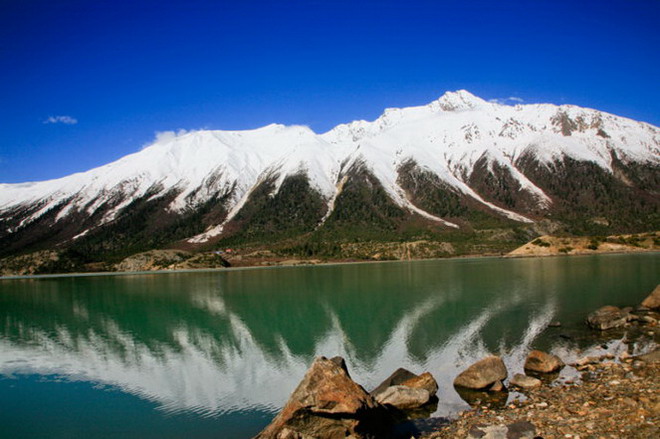
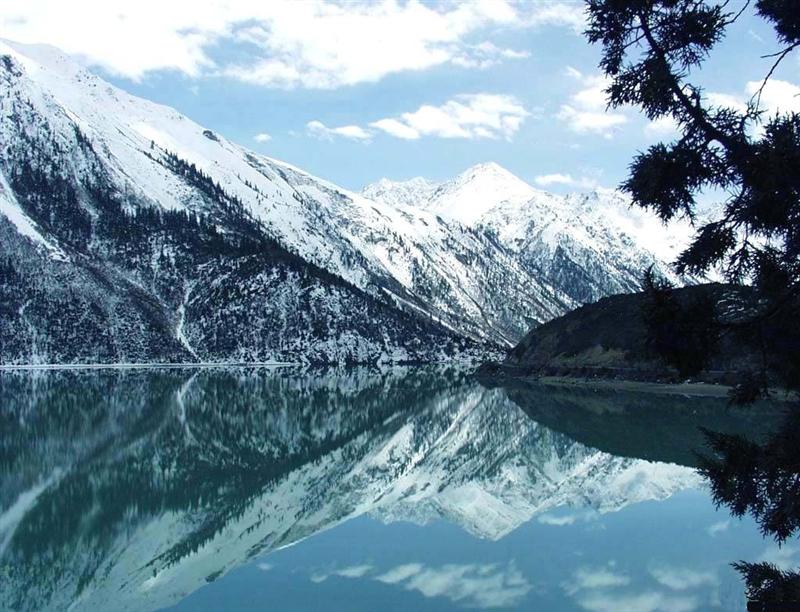
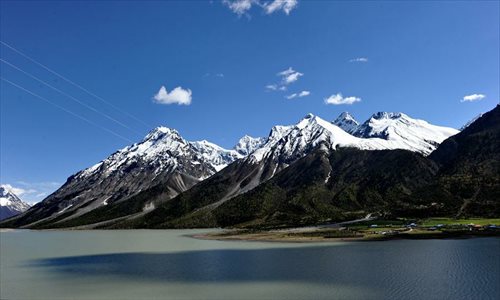
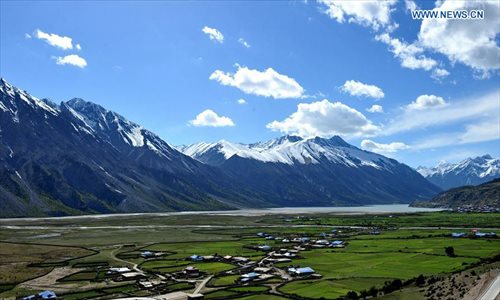
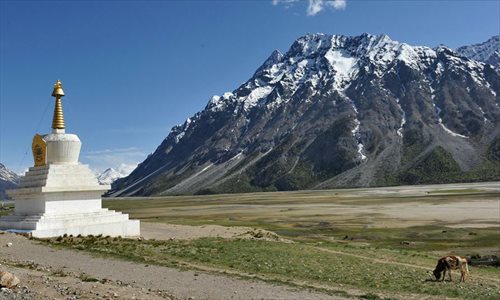
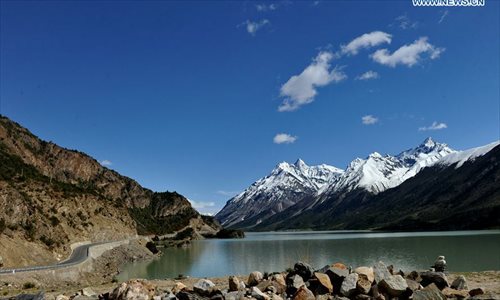
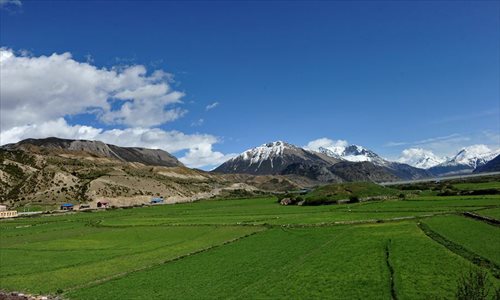
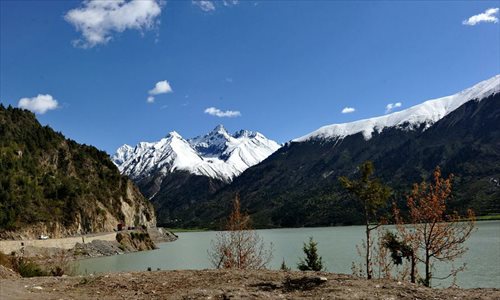
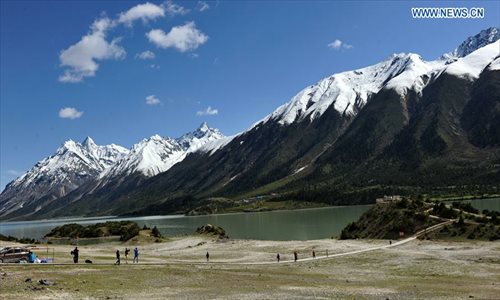
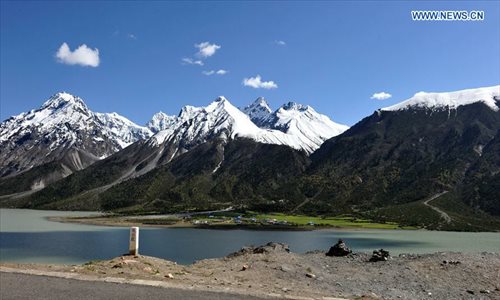
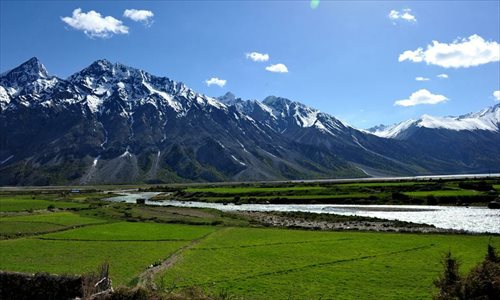
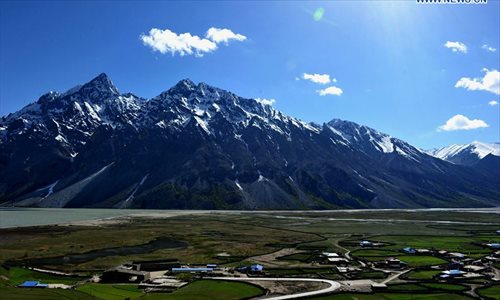
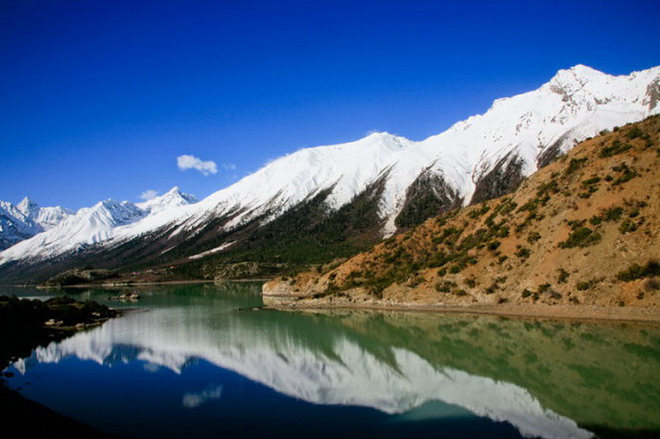
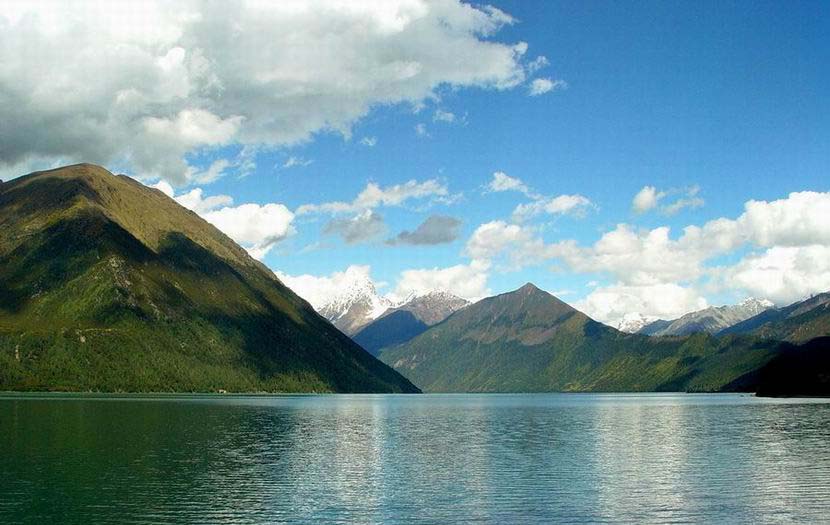
TIBET AWARENESS – RESTORE TIBET’S SERENITY. KEEPING TIBET CALM, PEACEFUL, UNDISTURBED BY OCCUPATION. RANWU LAKE, QAMDO, KHAM PROVINCE.

Prayers for restoration of Tibet’s Serenity; Calm, Peaceful, and Undisturbed by military Occupation.

SCENERY OF QAMDO CITY, KHAM PROVINCE, TIBET

Source:Xinhua Published: 2016-6-6 10:10:49

Tibet Awareness – Restore Tibet’s Serenity. Keep Tibet Calm, Peaceful, and Undisturbed by Occupation. Ranwu Lake, Qamdo, Kham Province.

Photo taken on June 4, 2016 shows the scenery of Ranwu Lake in Basu County of Qamdo City, Kham Province, Tibet. (Xinhua/Zhang Rufeng)

Tibet Awareness – Restore Tibet’s Serenity. Keep Tibet Calm, Peaceful, and Undisturbed by Occupation. Ranwu Lake, Qamdo, Kham Province.

Photo taken on June 4, 2016 shows the scenery of Ranwu Lake in Basu County of Qamdo City, Kham Province, Tibet. (Xinhua/Zhang Rufeng)

Tibet Awareness – Restore Tibet’s Serenity. Keep Tibet Calm, Peaceful, Undisturbed by Occupation. Ranwu Lake, Qamdo, Kham Province.

Photo taken on June 4, 2016 shows the scenery of Ranwu Lake in Basu County of Qamdo City, Kham Province, Tibet. (Xinhua/Zhang Rufeng)

Tibet Awareness – Restore Tibet’s Serenity. Keep Tibet Calm, Peaceful, Undisturbed by Occupation. Ranwu Lake, Qamdo, Kham Province.

Photo taken on June 4, 2016 shows the scenery of Ranwu Lake in Basu County of Qamdo City, Kham Province,Tibet. (Xinhua/Zhang Rufeng)

Tibet Awareness – Restore Tibet’s Serenity. Keep Tibet Calm, Peaceful, and Undisturbed by Occupation. Ranwu Lake, Qamdo, Kham Province.

Photo taken on June 4, 2016 shows the scenery of Ranwu Lake in Basu County of Qamdo City, Kham Province,Tibet. (Xinhua/Zhang Rufeng)

Tibet Awareness – Restore Tibet’s Serenity. Keep Tibet Calm, Peaceful, and Undisturbed by Occupation. Ranwu Lake, Qamdo, Kham Province.

Photo taken on June 4, 2016 shows the scenery of Ranwu Lake in Basu County of Qamdo City, Kham Province,Tibet. (Xinhua/Zhang Rufeng)

Tibet Awareness – Restore Tibet’s Serenity. Keep Tibet Calm, Peaceful, and Undisturbed by Occupation. Ranwu Lake, Qamdo, Kham Province.

Photo taken on June 4, 2016 shows the scenery of Ranwu Lake in Basu County of Qamdo City, Kham Province,Tibet. (Xinhua/Zhang Rufeng)

Tibet Awareness – Restore Tibet’s Serenity. Keep Tibet Calm, Peaceful, and Undisturbed by Occupation. Ranwu Lake, Qamdo, Kham Province.

Photo taken on June 4, 2016 shows the scenery of Ranwu Lake in Basu County of Qamdo City, Kham Province,Tibet. (Xinhua/Zhang Rufeng)

Tibet Awareness – Restore Tibet’s Serenity. Keep Tibet Calm, Peaceful, and Undisturbed by Occupation. Ranwu Lake, Qamdo, Kham Province.

Photo taken on June 4, 2016 shows the scenery of Ranwu Lake in Basu County of Qamdo City, Kham Province,Tibet. (Xinhua/Zhang Rufeng)

Tibet Awareness – Restore Tibet’s Serenity. Keep Tibet Calm, Peaceful, and Undisturbed by Occupation. Ranwu Lake, Qamdo, Kham Province.

Photo taken on June 4, 2016 shows the scenery of Ranwu Lake in Basu County of Qamdo City, Kham Province,Tibet. (Xinhua/Zhang Rufeng)

Tibet Awareness – Restore Tibet’s Serenity. Keep Tibet Calm, Peaceful, and Undisturbed by Occupation. Ranwu Lake, Qamdo, Kham Province.

Photo taken on June 4, 2016 shows the scenery of Ranwu Lake in Basu County of Qamdo City, Kham Province, Tibet. (Xinhua/Zhang Rufeng)

Tibet Awareness – Restore Tibet’s Serenity. Keep Tibet Calm, Peaceful, and Undisturbed by Occupation. Ranwu Lake, Qamdo, Kham Province.

Photo taken on June 4, 2016 shows the scenery of Ranwu Lake in Basu County of Qamdo City, Kham Province,Tibet. (Xinhua/Zhang Rufeng)

Tibet Awareness – Restore Tibet’s Serenity. Keep Tibet Calm, Peaceful, and Undisturbed by Occupation. Ranwu Lake, Qamdo, Kham Province.
Tibet Awareness – Restore Tibet’s Serenity. Keep Tibet Calm, Peaceful, and Undisturbed by Occupation.
Tibet Awareness – Restore Tibet’s Serenity. Keep Tibet Calm, Peaceful, and Undisturbed by Occupation. Qamdo City, Kham Province.
Tibet Awareness – Restore Tibet’s Serenity. Keep Tibet Calm, Peaceful, and Undisturbed by Occupation. Ranwu Lake, Qamdo, Kham Province.
Tibet Awareness – Restore Tibet’s Serenity. Qamdo Region, Kham Province.
Tibet Awareness – Restore Tibet’s Serenity. Keep Tibet Calm, Peaceful, and Undisturbed by Occupation. Draksum Tso Lake.

Whole Trade – India-Tibet Border Trade Relations Date Back to the Origin of Man

Tibet Awareness – India-Tibet Border Trade

The Story of Tibet relates to The Origin of Man. Mount Kailash in Tibet is associated with The Beginning of Anatomically Modern Man.

In 1973, I served in the Himalayan Frontier region of Garhwal and Kumaon Hills of Uttaranchal/Uttarkhand (then part of Uttar Pradesh), India, that shares border with Tibet and Nepal. As per Indian tradition, the origin of Human Family is associated with Mount Kailash in Tibet, the abode of Lord Shiva and His consort Goddess Parvati who are viewed as the Original Father and Mother of mankind. Tibet’s Identity is known to Indians for centuries and Tibet Awareness cannot be wiped out of India’s Consciousness.

Rudra Narasimham Rebbapragada
Ann Arbor, MI 48104-4162 USA
Special Frontier Force-Establishment 22-Vikas Regiment

THE TRIBUNE

Wednesday, May 25, 2016

Tibet border trade lifeline of tribal economy

Tibet Awareness. India – Tibet Border Trade reflects Indian Consciousness of Tibetan Nation that exists for centuries. Mana or Dungri La Pass.
Tibet Awareness. India – Tibet Border Trade reflects Indian Consciousness of Tibetan Nation that exists for centuries.

Tibet Awareness. India – Tibet Border Trade reflects Indian Consciousness of Tibetan Nation that exists for centuries.