MISSION IMPOSSIBLE – THE DANGERS OF COVERT OPERATIONS

MISSION IMPOSSIBLE – THE DANGERS OF COVERT OPERATIONS

A fundamental feature of Democratic Governance is that of Transparency and Public Accountability. Democratic nations need to conduct foreign relations in transparent manner with due public support for such relations of either friendship or adversity.

Peoples’ Republic of China adheres to the doctrine of Communism and may conduct her national affairs without Transparency and Public Accountability.

While I appreciate the need for gathering “Intelligence,” the United States must abide by the Principle of Transparency and Public Accountability. There should be no doubts in the minds of US citizens about the resolve of United States to oppose, contain, engage, and confront the doctrine of Communism.


Rudranarasimham Rebbapragada

DOOM DOOMA DOOMSAYER


MISSION IMPLAUSIBLE! CHINA MEDIA CLAIMS ‘VICTORY’ OVER US SPY KILLINGS, BUT RIDICULES REPORT
Clipped from: http://www.msn.com/en-gb/news/world/mission-implausible-china-media-claims-victory-over-us-spy-killings-but-ridicules-report/ar-BBBnInB#image=BBofhHi|17


© Jason Reed/Reuters. The logo of the US Central Intelligence Agency is shown in the lobby of the CIA headquarters in Langley An influential Chinese newspaper claimed a “sweeping victory” after a report that Beijing’s intelligence agencies had killed or jailed more than a dozen covert sources who supplied information for the CIA.

But the state-run Global Times also dismissed the dramatic account of China’s dismantling of US spying activities as a Mission Impossible-style fantasy.

The New York Times reported on Saturday that US intelligence agencies suffered their biggest setback in decades between late 2010 and the end of 2012 when China uncovered their spying network in the country.

Intelligence officials never discovered whether the US was betrayed by a mole within the CIA or whether the Chinese hacked a covert system used by the CIA to communicate with foreign sources, the report said.

“We would like to applaud China’s anti-espionage activities,” said the Global Times, which often publishes nationalist editorials.

“Not only was the CIA’s spy network dismantled, but Washington had no idea what happened and which part of the spy network had gone wrong.

“It can be taken as a sweeping victory. Perhaps it means even if the CIA makes efforts to rebuild its spy network in China, it could face the same result.”

The most chilling detail in the NYT report – which cited 10 anonymous current and former security officers – was that Chinese agents shot a CIA source in front of colleagues, in an apparent deterrent to others.

However, that detail was rejected by the Global Times, a newspaper which is published by the People’s Daily, the Communist Party’s official mouthpiece newspaper.

“That is a purely fabricated story,” the newspaper said. “Most likely a piece of American-style imagination based on ideology.”

The editorial, which appeared in both the Chinese and English-language editions, then goes on to ridicule the report, accusing the New York Times journalists of watching too many Hollywood spy-thrillers.

“The NYT report seems to be a white-knuckle beginning for a new version of Mission: Impossible: American spies who worked in China disappeared, and some of them died miserably,” it said.

“However, no one knew the reason for their deaths. The journalists who wrote the report must have been deeply addicted to the franchise.”

Hu Xijin, the Global Times’ editor, repeated the claim that the world of espionage was being over-dramatized by the New York Times in a video that was posted by the newspaper on Sina Weibo, China’s version of Twitter.

The video also included publicity pictures from Mission Impossible: Ghost Protocol, a 2011 blockbuster starring Tom Cruise and Simon Pegg.

Mr. Hu said: “The New York Times report depicted government buildings as places of executions, which is divorced from China’s reality.”

The New York Times’s website is blocked in China, but many people have posted comments about the report on Chinese social media.

“I will put my hands up and support the shooting of these spies,” said one Weibo comment.  “Anyone who has sold their souls should not only be executed, but their bodies should not be buried and instead fed to wild dogs.”

Other comments reminded the netizen that Chinese spies were also operating abroad.

Related: People you didn’t know were spies (Provided by Microsoft GES)

1/17 SLIDES © Rex Shutterstock; Getty Images; AP Photo/Joel Ryan

It is the 70th anniversary of the National Intelligence Authority on Jan. 22, 2016. The authority was a committee set up to monitor the Central Intelligence Group (CIG) which was later absorbed into the Central Intelligence Authority (CIA) in 1947. On this occasion, we take a look at some famous people you might not have known were spies at some point of their lives. 

2/17 SLIDES © AP Photo

Josephine Baker

The celebrated American-born French dancer-actress worked as a spy for the French Resistance during World War II. She leveraged her celebrity status to get close to high-ranking Japanese and Italian officials and extract information from them. She would sneak secret messages in invisible ink on her music sheets and help smuggle people to safety. She was awarded the Medal of the Resistance with Rosette and named a Chevalier of the Legion of Honor by the French government. At her death, Baker became the first American woman buried in France with military honors.

3/17 SLIDES © Everett/Rex Shutterstock

Cary Grant

During the Second World War, the United States government was suspicious of the presence of Axis sympathizers in the homeland, especially within the entertainment industry. This led the intelligence agencies reaching out to producers and actors to keep an ear to the ground and matinee idol Cary Grant was one of them. His most sensational reveal was that fellow actor Errol Flynn was allegedly a Nazi sympathizer and even wrote letters of support to Hitler. 

4/17 SLIDES © Nancy Palmieri/AP Images

Julia Child

Before she became a celebrated chef and cookbook author of French cuisine, Julia Child was employed at the Office of Strategic Services. Initially hired as a clerk, she later went on to work as a researcher assisting in the development of a shark repellent to keep undersea predators away from explosives. She was also posted to Sri Lanka and China, where her responsibilities included transcribing classified information from listening posts.

5/17 SLIDES © General Photographic Agency/Getty Images

Greta Garbo

The Swedish-born Hollywood actress was one of the greatest screen stars during the ’20s and ’30s. However, she suddenly quit films in 1941 and became famously reclusive. It was believed that she started working with MI6 during this time and was tasked with gathering information on one of the world’s richest men, Swedish millionaire industrialist Axel Wenner-Gren. She allegedly played a pivotal role in smuggling physicist Niels Bohr from Copenhagen to Britain; Bohr went onto develop the atomic bomb later.

6/17 SLIDES © Tony Evans/Getty Images

Roald Dahl

The author of “Charlie and the Chocolate Factory” was a Royal Air Force pilot during World War II before a near-fatal accident rendered him unfit for flying operations. He was next posted at the British embassy in Washington, D.C. at a desk job, using his flair for language to pen British propaganda for American newspapers. Dahl quickly established himself as a ladies’ man in the elite society and was tasked with developing friendships with influential women, or the wives of powerful men, to find out American secrets and information.

7/17 SLIDES © Express/Hulton Archive/Getty Images

Ian Fleming

The creator of secret service agent James Bond was a spy himself. Fleming worked as a British Naval intelligence officer during World War II, maintaining communications between the admiralty and the branch of intelligence tasked with sabotage behind enemy lines. Given his skills, he was involved in drawing up a detailed organizational chart for setting up the Office of Strategic Services — an early version of the CIA created during World War II by President Franklin Roosevelt. In 1942, he was put in charge of a commando group called the 30 Assault Unit that would accompany infantry advances to seize documents from enemy headquarters.

8/17 SLIDES © Rex Shutterstock

Noel Coward

The flamboyant playwright, composer, director, actor and singer of the ’40s was trained along with Ian Fleming in covert action at Bletchley Park. He was later appointed the head of the British Secret Service bureau in Paris to liaise with the French Ministry of Information. Talking about his wartime espionage work, Coward once said, “Celebrity was wonderful cover. My disguise would be my own reputation as a bit of an idiot…a merry playboy.”

9/17 SLIDES © Donaldson Collection/Michael Ochs Archives/Getty Images

Marlene Dietrich

One of the most glamorous leading ladies of the ’30s and ’40s, the German singer-actress was considered a spy in her adopted homeland of the United States, despite entertaining U.S. troops during the war and abandoning Nazi Germany. According to declassified FBI files, there was a formal espionage investigation against her from 1942 to 1944 at the order of then FBI boss J. Edgar Hoover. Dietrich attempted to win the trust of FBI officials by volunteering to spy for America instead. Her role involved “collecting observations about subversive activities in Europe” while on trips to the front to entertain the troops. 

10/17 SLIDES © AP Photo/Joel Ryan

Christopher Lee

The iconic Hollywood actor was recruited to the Special Operations Executive, a top-secret group organized to conduct sabotage and espionage actions in occupied Europe during World War II. The details of Lee’s missions during this time are still classified. “I was attached to the Special Air Service from time to time but we are forbidden — former, present, or future — to discuss any specific operations. Let’s just say I was in Special Forces and leave it at that. People can read in to that what they like,” he said in an interview in 2011.
 

11/17 SLIDES © Collection/Rex Shutterstock

Frank Sinatra

While many believe that the legendary singer had strong Mafia connections, his association with the CIA is a fact not many are aware of. According to his daughter, the secret service agency agreed to overlook Sinatra’s mafia ties in lieu of his working as a CIA courier — smuggling documents and even people in his private jet on cross-country or cross-Atlantic flights. 

12/17 SLIDES © FPG/Getty Images

Harry Houdini

The master escape artist assisted British and American intelligence agencies with information gathered during his traveling magic acts throughout Europe. He had a significant fan following in the German and Russian elite society who would unknowingly spill war details to the magician during after-parties which Houdini would pass on to the secret agencies. 

13/17 SLIDES © AP Photo, File

Arthur J. Goldberg

The former associate justice of the Supreme Court of the United States worked for the Office of Strategic Services during the Second World War. He took a break from practicing law during the war and started developing an information-gathering network behind enemy lines across Europe.

14/17 SLIDES © Everett/Rex Shutterstock

John Ford

The multiple Oscar-winning director was a naval reserve officer before making films. While working as a secret agent during WWII, he alerted the agency about a suspected Japanese presence near the coastal areas of Baja in northwestern Mexico. Later, Ford directed many U.S. wartime propaganda films. 

15/17 SLIDES © AP Photo/Remo

Charles Luciano

As the head of the powerful Genovese family, Charles “Lucky” Luciano was the undisputed boss of organized crime on the U.S. East Coast during the ’40s. However, he was sentenced for 50 years for promoting prostitution. Luciano offered to work as a conduit in the search for information about saboteurs who sank a French liner at the New York City dock in exchange for a commuted sentence. The association proved to be a success, and the mobster’s services were sought again ahead of the Allied invasion of Sicily. Luciano was subsequently released after serving just 10 years of his sentence and deported to Italy. 

16/17 SLIDES © AP Photo, File

Moe Berg

Graduating from Princeton University with a degree in modern languages and a law degree from Columbia University, the U.S.-born Major League Baseball catcher was often dubbed “the brainiest man in baseball.” During WWII, he became an officer at the Office of Strategic Services where one of his assignments was to assassinate Werner Heisenberg, the head of Nazi Germany’s atom-bomb project. The plan was eventually called off. 

17/17 SLIDES © Archive Photos/Getty Images

Sterling Hayden

The tall, handsome actor was dubbed “The Most Beautiful Man in the Movies” by Paramount Pictures. However, after appearing in two films, Hayden went on to join the U.S. Marine Corps under the name John Hamilton. He was subsequently commissioned as an undercover agent during WWII. His role during the period involved shipping supplies to Nazi-resistant groups in Yugoslavia and parachuting into Croatia. 

17/17 SLIDES
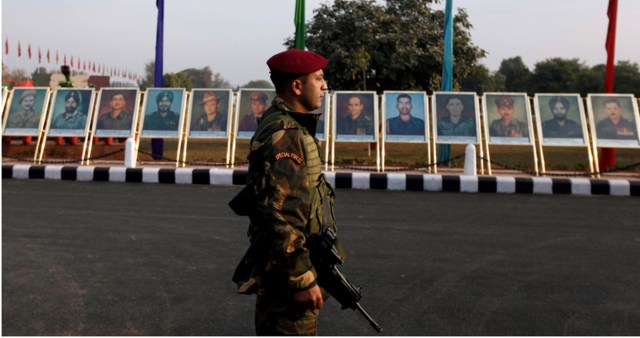
SPECIAL FRONTIER FORCE DEMANDS UPHOLDING OF DIGNITY OF INDIAN ARMED FORCES AND ALLIED SERVICES
SPECIAL FRONTIER FORCE DEMANDS UPHOLDING OF DIGNITY OF INDIAN ARMED FORCES AND ALLIED SERVICES

TRISHUL: Indian Army Day Parade Snapshots
On trishul-trident.blogspot.in

On behalf of Special Frontier Force, I demand upholding of dignity of Indian Armed Forces and Allied Services operating in Jammu and Kashmir to restore rule of law to defend Republic of India from attacks by Enemy. Service in Uniform is a matter of Valor, Pride, Honor, and Dignity for serving the purpose of Nation is Noble Duty.

Rudranarasimham Rebbapragada
Ann Arbor, MI 48104-4162 USA
SPECIAL FRONTIER FORCE

GIVE US FULL AFSPA COVER TO TACKLE J&K ISSUE: ARMY TELLS CENTRE

Thursday, May 18, 2017

By: One India

3_img118517205101.jpg

The Army has also called for strict action against those who have been damaging government property in the Valley.

Authority over the central armed police forces, a positive social media outreach program and full protective cover under the Armed Forces Special Powers Act or AFSPA is what the Indian Army has sought in a bid to restore normalcy in Jammu and Kashmir.

The Army which has put in place the counter-insurgency strategy said that a social media outreach program is the need of the hour. It could have a positive effect on the youth of the Valley. It would be an outreach programme, the Army has suggested. Further the Army has also said that the problem is not across the Valley. The focus would be on five districts in the state which are most trouble-hit.

While seeking authority over the CAPF, the Army has said that there is an urgent need to protect the force. Pictures of the personnel of the CAPF being targeted by the stone pelters and some youth of the Valley have been in circulation and this had a demoralizing effect on the force. This needs to stop at once the Army has also said.

The Army has also called for strict action against those who have been damaging government property in the Valley. Housing them in prisons alone would not be enough. They need to be booked under the appropriate laws, the Army has further suggested.

The Army says that it needs to work under the full cover of AFSPA. The debate on this law is unnecessary at this point of time. The Army at times would need to act strongly and for this the cover of a law is necessary, the Army has further said. In such situations, the Army cannot work under the fear of being summoned by the police for investigation which drags on for years. AFSPA is a necessity which would be used sparingly and in situations that mandate it, the Indian Army has further told the Centre.

Army Jawan Killed in Encounter With Terrorists in Handwara - News18
On www.news18.com

SPECIAL FRONTIER FORCE DEMANDS ACCOUNT OF THE MISSING 54, INDIAN ARMED FORCES PERSONNEL HELD CAPTIVE IN PAKISTAN

SPECIAL FRONTIER FORCE DEMANDS ACCOUNT OF THE MISSING 54, INDIAN ARMED FORCES PERSONNEL HELD CAPTIVE IN PAKISTAN

On behalf of Special Frontier Force, I demand Government of India to give account of the Missing 54, Indian Armed Forces Personnel (Prisoners of War) held captive in Pakistan.

Special Frontier Force Demands Account of the Missing 54, Indian Armed Forces Personnel Held Captive in Pakistan.

India cannot accept Pakistan’s unwillingness to provide information. I ask India to sever diplomatic and trade relations with Pakistan as the first step to obtain Pakistan’s cooperation.

Rudranarasimham Rebbapragada

SPECIAL FRONTIER FORCE

Special Frontier Force Demands Account of the Missing 54, Indian Armed Forces Missing Personnel Held Captive in Pakistan. The 1965 India-Pakistan Prisoners of War. Indian PoWs in Pakistan.

KULBUSHAN JADHAV IS ONE. HERE IS THE STORY ‘MISSING 54’ THE INDIAN SOLDIERS TAKEN AS PoWs BY PAK WHO NEVER RETURNED 

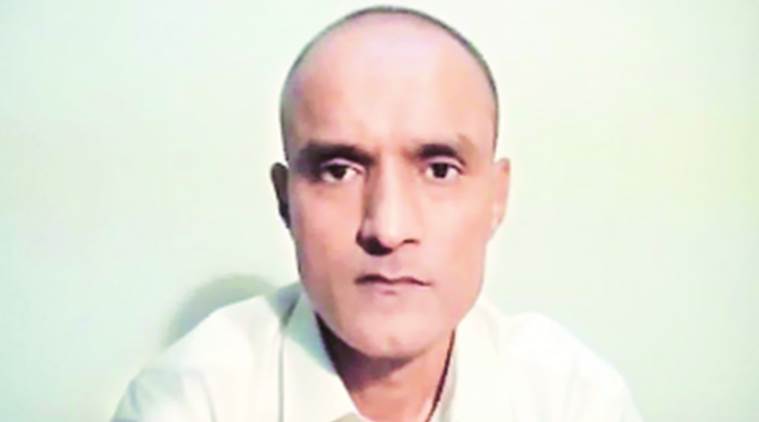
Special Frontier Force Demands Account of the Missing 54, Indian Armed Forces Personnel Held Captive in Pakistan. Commander Kulbushan Jadhav held captive on espionage charges.

Clipped from: http://www.indiatimes.com/news/kulbushan-jadhav-is-one-here-is-the-story-missing-54-the-indians-soldiers-taken-as-pows-by-pak-who-never-returned-275390.html

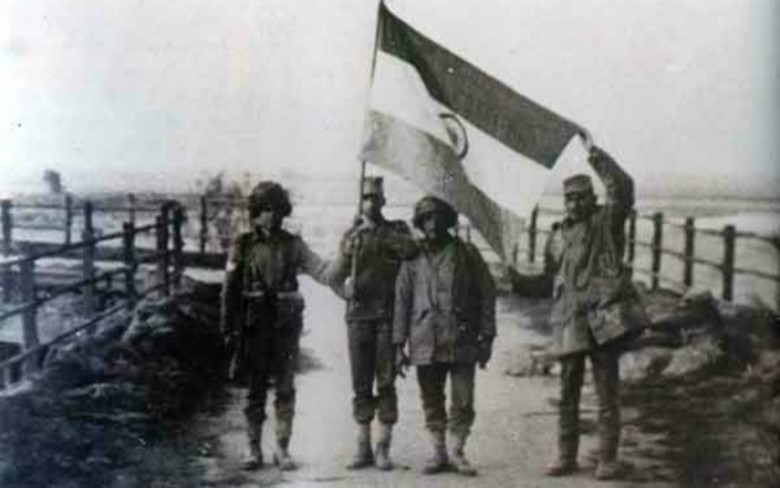
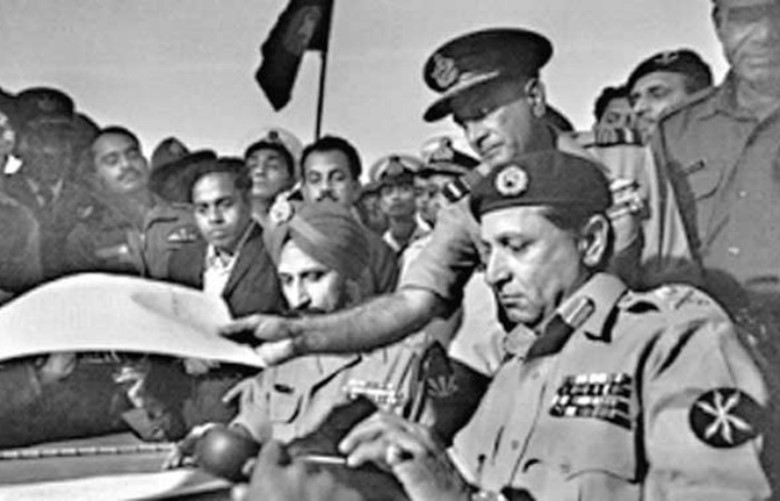
The 1971 war, when India gave a crushing defeat to Pakistan and split it into two and took 90,000 plus of its soldiers as Prisoners of War (PoWs), was indeed the greatest achievement of Indian armed forces. 

ARCHIVE.THEDAILYSTAR.NET

While India’s feat remains undisputed with Indians celebrating December 16 as ‘Vijay Divas’ every year, 54 families in India probably don’t get that ecstatic as one more year passes since they last spoke to their loved ones.

Special Frontier Force Demands Account of the Missing 54, Indian Armed Forces Personnel Held Captive in Pakistan. India defeated Pakistan in 1971 War.

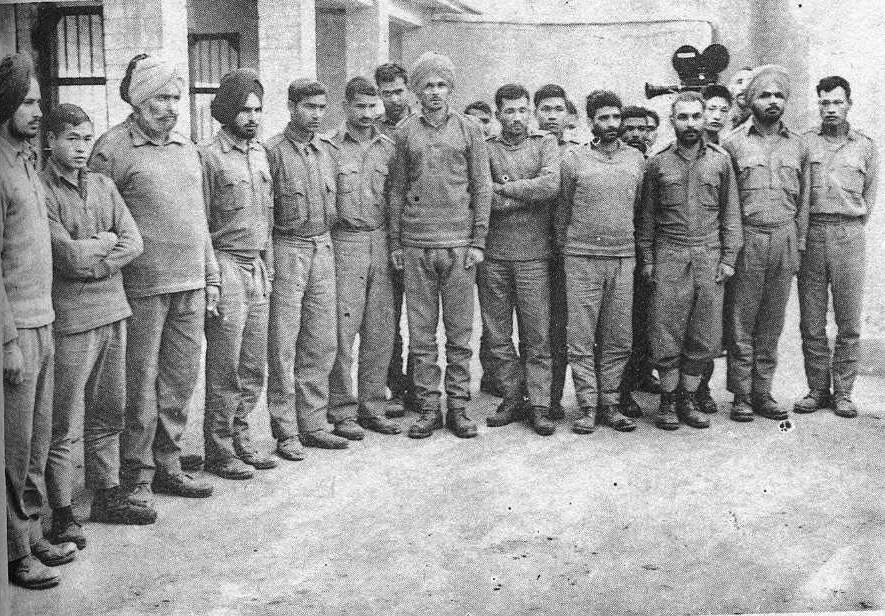
We all know that India took 90,000 soldiers of Pakistan as POWs, but not many know that after the two wars of 1965 and 1971, Pakistan held 54 of our valiant soldiers whose whereabouts are still unknown.

The Government of India in 2015 had given an affidavit in the Supreme Court that it has no details regarding 54 missing Defence personnel believed to be held captive as prisoners of wars (POWs) in Pakistan jails after 1965 and 1971 wars.

Submitting an affidavit on the status of 54 Defence personnel reportedly in Pakistan jails after the two Indo-Pak wars, the Ministry of Defense (MoD) expressed its inability to state anything affirmatively about their whereabouts and said it would continue making efforts for their release and repatriation.

“As such, the exact status of these 54 ‘missing defense personnel’, believed to be in Pakistan jails, is not known. Amongst 54 such personnel, no service details are available with respect to three personnel of the Indian Army,” stated the affidavit filed by the Ministry of Defence (MoD).

These 54 belong to all three wings of armed forces

Of 54 missing personnel, 27 were from the Army, 24 from the Air Force, two from the Navy and one personnel from the Border Security Force. While 48 out of the 54 were missing since the 1971 war, three went missing in the 1965 war.

Pakistan always denied their existence

Special Frontier Force Demands Account of the Missing 54, Indian Armed Forces Personnel Held Captive in Pakistan. India defeated Pakistan in 1971 War.

1971 Victory

Though India was kind to Pakistani POWs which accounted for roughly 30 per cent of its army, but when it came India’s PoWs, Pakistan never acknowledged that they exist.

But here Is Maj Suri’s story that says otherwise

“If the cause is just and mind is strong, no force is great, No distance long, If selfless souls with such a strength, Face hazards all, they win at length.”

This is a diary noting in Dr R.S. Suri’s diary, father of Major Ashok Suri, captured in the 1971 war. Though the army had declared Major Suri as “Killed in action”, the Suri senior never believed it despite the army sent him a helmet with a bullet hole in it (but with someone else’s name written on it).

Special Frontier Force Demands Account of the Missing 54, Indian Armed Forces Personnel Held Captive in Pakistan. India defeated Pakistan in 1971 War.

Dr Suri never bought any of the stories cooked or presented before him by the army or the government and his belief got cemented on 26 December 1974 when he received a handwritten note believed to be written by Major Suri himself. The note dated December 7, 1974, contained a slip.  “I am okay here.” 

These words filled Dr Suri with an energy one can only dream of. Though the letter had one only line, but the covering note helped further as it read, “Sahib, Valaikum Salam, I cannot meet you in person. Your son is alive and he is in Pakistan. I could only bring his slip, which I am sending you. Now going back to Pak.” Signed M. Abdul Hamid.

In 1975, Dr Suri received another letter, this time with more about his son

Another letter confirmed Dr Suri that his son, whom the army designated as ‘killed in action’ is alive. Dated June 14/15/16, 1975, Karachi.’

The letter said: “Dear Daddy, Ashok touches thy feet to get your benediction. I am quite ok here. Please try to contact the Indian Army or Government of India about us. We are 20 officers here. Don’t worry about me. Pay my regards to everybody at home, especially to mummy, grandfather – Indian government can contact Pakistan government for our freedom.”

Special Frontier Force Demands Account of the Missing 54, Indian Armed Forces Personnel Held Captive in Pakistan. India defeated Pakistan in 1971 War.

Great India

Dr Suri rushed to the Defence Ministry in South Block and the then Defence Secretary had the handwriting confirmed as Maj Ashok’s and changed the official statement from “killed in action” to “missing in action”! Ecstatic about the development Dr Suri and other members of families of other soldiers formed a the Missing Defence Personnel Relative’s organization and Dr Suri kept visiting South Block weekly till he breathed last in 1999.

General Zia ul Haq’s visit gave some hope

In 1982, Pakistan’s military dictator visited India and Dr Suri and several other families got hopeful that government of India will work out something to get their loved one back. And surprisingly, in 1983 what it looked like a breakthrough, Pakistan government invited Indian family members to Pakistan.

The then MEA, Narasimha Rao said that he would take up at the highest level the visit of the parents of missing Defence personnel to Pakistan, since India had allowed the visit of some Pakistani family members to India in 1972.

Dr Suri, on behalf of the missing Defence families, was assured that Rao would try to facilitate this visit.

Special Frontier Force Demands Account of the Missing 54, Indian Armed Forces Personnel Held Captive in Pakistan. Pakistan’s President, General Zia ul Haq visited India in 1982 after India defeated Pakistan in 1971 War.

Photo Credit.Tribune

A delegation of six next-of-kin was allowed to go. It was made very clear that this was a classified visit that the press should not get wind off. There was a feeling of some deal having been done. The families were told to “Get the men back. They may not be in good health but you can nurse them back to health.”

The families left on September 12, 1983, Monday for Lahore. This was the first time the Indians had got consular access after 1971.

Families went to Pakistan

The families left on September 12, 1983, Monday for Lahore. This was the first time the Indians had got consular access after 1971. The families later got to know that MEA officials will go with them to Multan jail where the majority of the prisoner were believed to be kept. On Sept 14th, they flew to Multan.

But politics again did what it does best

In those days, PM Indira Gandhi was quite critical about Zia-ul-Haq and was aggressive in her statements in favor of Khan Abdul Ghaffar Khan & the MQM movement which made Pakistan quite skeptical. It might be seen as a larger cause, but what could be called the immediate cause that on the 14th day India was supposed to grant Pak officials reciprocal access to 25 Pakistani prisoners at Patiala jail which did not happen.

The news came in Pakistani papers that “India goes back on its words”.

Thus, despite reaching Multan, they couldn’t meet anybody

On September 15, 1983, the families visited Multan jail. Dr Suri was unable to control himself and was laughing and crying in the same go. The jail official who was present commented when Mrs.Tambay was signing her name remarked: “Sorry Mrs.Tambay, Tambay is not here.”

They did not find any of the people they were looking for there. 200 odd prisoners were being offered repatriation by Pakistan, subject to verification during the consular access. The families including Dr Suri wondered when Pakistan had already offered to repatriate these people where was the need for the visit?

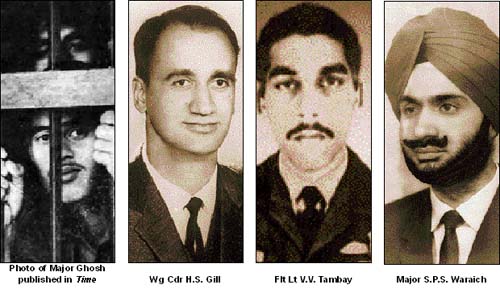
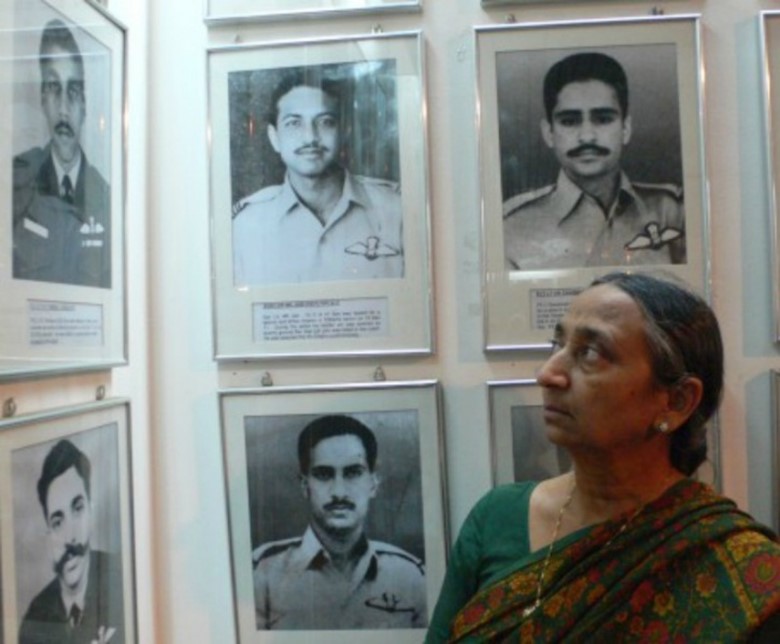
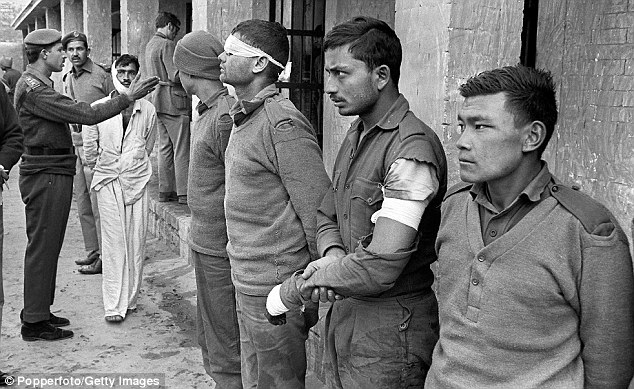
Special Frontier Force Demands Account of the Missing 54, Indian Armed Forces Personnel Held Captive in Pakistan. Photo images of Indian Prisoners of War not accounted by Pakistan.

India Together

The family members sat through the consular access process for about 6 people, after which they were asked to go out as their part was done. The jail officials told them that only Zia ul Haq could help us with this category of prisoners.

Dr Suri believed the government was doing all it could to get the men back. He never gave up hope. Finally, though his body gave up and he died in 1999 saying,” Perhaps I will finally find peace in the grave.”

There has been no clue of those brave 54 soldiers and government of India as their affidavit in the SC suggests too seems to have given up on those who fought for the nation.

Here are the names of those ‘Missing 54’.

1. Major SPS Waraich IC-12712 15 Punjab

2. Major Kanwaljit Singh Sandhu IC-14590 15 Punjab

3. 2/Lt Sudhir Mohan Sabharwal SS-23957 87 Lt Regiment

4. Captain Ravinder Kaura SS-20095 39 Med Regiment

5. Captain Giri Raj Singh IC-23283 5 Assam

6. Captain Om Prakash Dalal SS-22536 Grenadiers

7. Maj Suraj Singh IC-18790 15 Rajput

8. Maj AK Suri SS-19807 5 Assam

9. Captain Kalyan Singh Rathod IC-28148 5 Assam

10. Major Jaskiran Singh Malik IC-14457 8 Raj. Rifles

11. Major SC Guleri IC-20230 9 Jat

12. Lt Vijay Kumar Azad IC-58589 1/9 G R

13. Captain Kamal Bakshi IC-19294 5 Sikh

14. 2/ Lt Paras Ram Sharma SS-22490 5/8 G R

15. Captain Vashisht Nath

16. L/Havildar. Krishna Lal Sharma 13719585 1 JAK RIF

17. Subedar Assa Singh JC-41339 5 Sikh

18. Subedar Kalidas JC-59 8 JAKLI

19. Lance Naik Jagdish Raj 9208735 Mahar Regiment

20. Lance Naik Hazoora Singh 682211303

21. Gunner Sujan Singh 1146819 14 Field Regiment

22. Sepoy Daler Singh 2461830 15 Punjab

23. Gunner Pal Singh 1239603 181 Lt Regiment

24. Sepoy Jagir Singh 2459087 16 Punjab

25. Gunner Madan Mohan 1157419 94 Mountain Regiment

26. Gunner Gyan Chand; Gunner Shyam Singh

27. Lance Naik Balbir Singh S B S Chauhan

28. Captain DS Jamwal 81 Field Regiment

29. Captain Vashisht Nath Attock

30. Squadron Leader Mohinder Kumar Jain 5327-F(P) 27 Sqn

31. Flt Lt Sudhir Kumar Goswami 8956-F(P) 5 Sqn

32. Flying Officer Sudhir Tyagi 10871-F(P) 27 Sqn

33. Flt Lt Vijay Vasant Tambay 7662 –F(P) 32 Sqn

34. Flt Lt Nagaswami Shanker 9773-F(P) 32 Sqn

35. Flt Lt Ram Metharam Advani 7812-F(P) JBCU

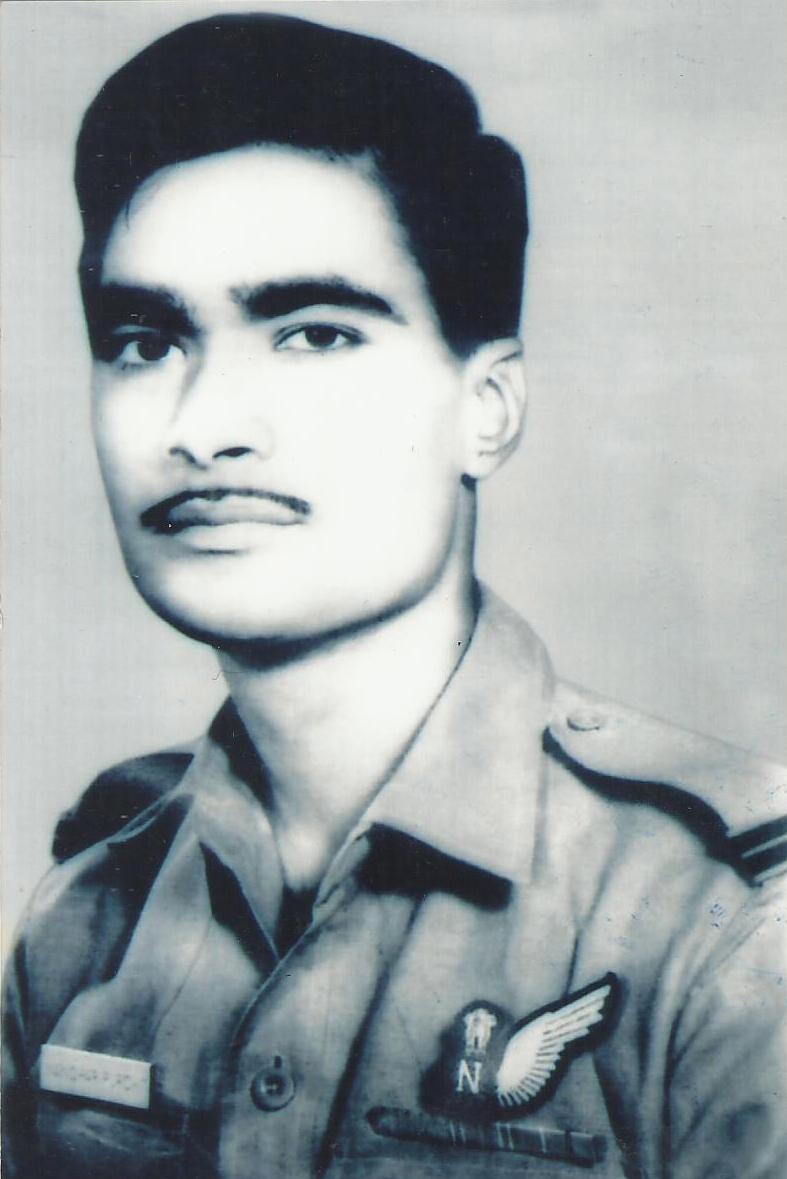
36. Flt Lt Manohar Purohit 10249(N) 5 Sqn

Special Frontier Force Demands Account of the Missing 54, Indian Armed Forces Personnel Held Captive in Pakistan. Flight Lieutenant Purohit of Indian Air Force.

37. Flt Lt Tanmaya Singh Dandoss 8160-F(P) 26 Sqn

38. Wing Commander Harcharan Singh Gill 4657-F(P) 47 Sqn

39. Flt Lt Babul Guha 5105-F(P)

40. Flt Lt Suresh Chander Sandal 8659-F(P) 35 Sqn

41. Squadron. Leader. Jal Manikshaw Mistry 5006-F(P)

42. Flt Lt Harvinder Singh 9441-F(P) 222 Sqn

43. Squadron Leader Jatinder Das Kumar 4896-F(P) 3 Sqn

44. Flt Lt LM Sassoon 7419-F(P) JBCU

45. Flt Lt Kushalpal Singh Nanda 7819-F(N) 35 Sqn

46. Flying Officer. Krishan L Malkani 10576-F(P) 27 Sqn

47. Flight Lieutenant Ashok Balwant Dhavale 9030-F(P) 1 Sqn

48. Flight Lieutenant Shrikant C Mahajan 10239-F(P) 5 Sqn

49. Flight Lieutenant Gurdev Singh Rai 9015-F(P) 27 Sqn

50. Flight Lieutenant Ramesh G Kadam 8404-F(P) TACDE

51. Flag Officer. KP Murlidharan 10575-F(P) 20 Sqn

52. Naval Pilot Lt. Commander Ashok Roy

53. Squadron Leader Deva Prasad Chatterjee

54. Pilot Officer Tejinder Singh Sethi

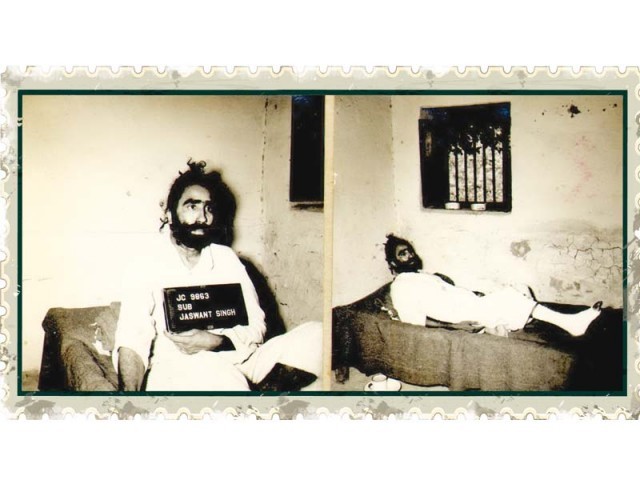
Special Frontier Force Demands Account for the Missing 54, Indian Armed Forces Personnel Held Captive in Pakistan. Subedar Jaswant Singh held captive in Pakistan since 1965 War.
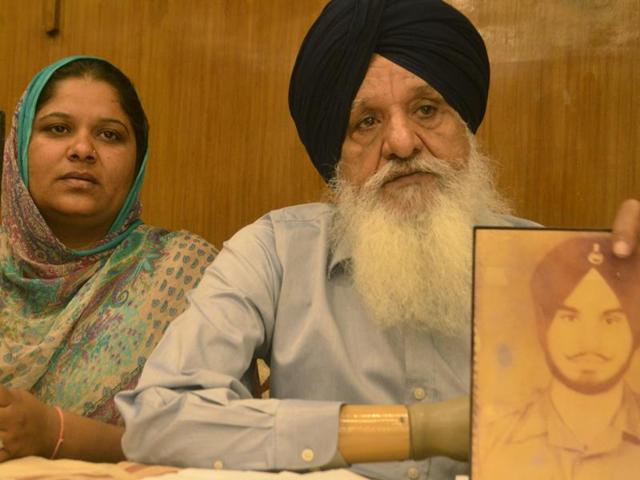
Special Frontier Force Demands Account of the Missing 54, Indian Armed Forces Personnel Held Captive in Pakistan. Sepoy Balwinder Singh of 10 Sikh Regiment Missing since 1971 War.
Special Frontier Force Demands Account of the Missing 54, Indian Armed Forces Personnel Held Captive in Pakistan.

SPECIAL PROSECUTOR TO INVESTIGATE NIXON-KISSINGER VIETNAM TREASON

SPECIAL PROSECUTOR TO INVESTIGATE NIXON-KISSINGER VIETNAM TREASON

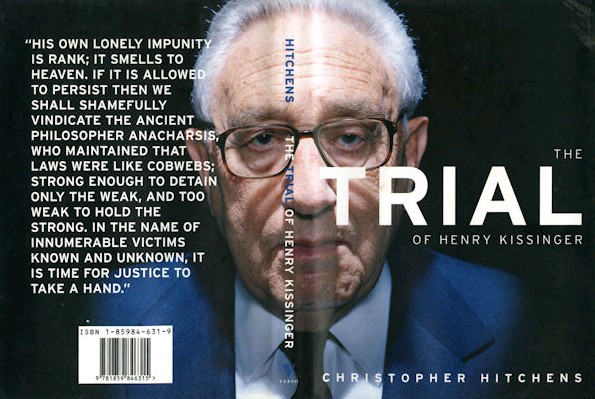
SPECIAL PROSECUTOR TO INVESTIGATE NIXON-KISSINGER VIETNAM TREASON. THE TRIAL OF HENRY KISSINGER.

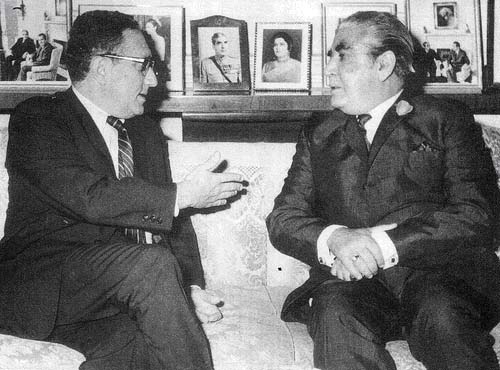
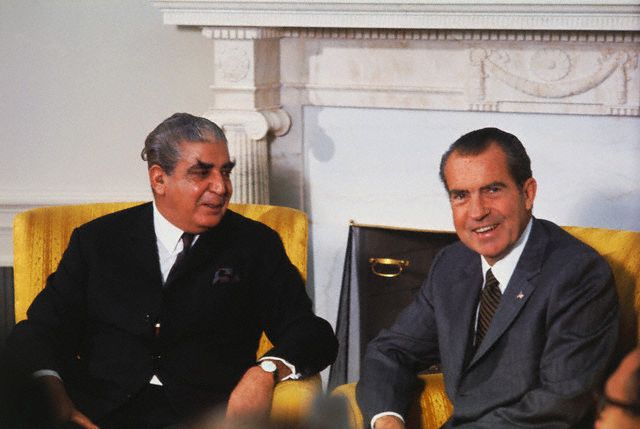
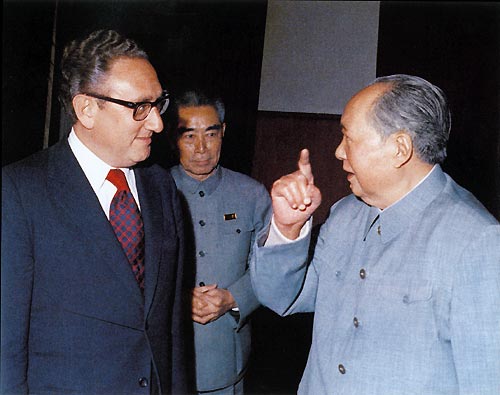
Better Late Than Never. Dr. Henry A. Kissinger usurped the powers granted to the US Secretary of State while he worked as National Security Adviser during 1970-73. He is the architect of Doomed American Fantasy that formulated US – China relations while Americans were bleeding and dying in Vietnam to contain the spread of Communism in Southeast Asia. USA needs to find Special Prosecutor to investigate Nixon-Kissinger Vietnam Treason. I am waiting for “The Trial of Henry Kissinger”.

Rudranarasimham Rebbapragada

DOOM DOOMA DOOMSAYER

PRESIDENT TRUMP, HENRY KISSINGER MEET IN OVAL OFFICE AMID WATERGATE COMPARISONS – WHITE HOUSE, US PATCH 

Clipped from: https://patch.com/us/white-house/president-trump-henry-kissinger-meet-oval-office

In a surprise meeting, Trump sat down with the former secretary of State and official in the Nixon and Ford White Houses.

SPECIAL PROSECUTOR TO INVESTIGATE NIXON-KISSINGER VIETNAM TREASON. THE TRIAL OF HENRY KISSINGER FOR WAR CRIMES.

WASHINGTON, DC — President Trump invited the press into the Oval Office Wednesday for photos and brief questions with a guest that shocked many of the reporters in attendance: Henry Kissinger, the controversial former secretary of State and official in the Nixon and Ford White Houses. Trump called the meeting “an honor.” Earlier in the morning, Trump met with Russian Foreign Minister Sergey Lavrov and Russian Ambassador Sergey Kislyak — a choice many found shocking in light of Tuesday night’s firing of FBI Director James Comey, whose bureau is investigating ties between the president’s campaign and Russia.

Asked in the Oval Office meeting with Kissinger about the Comey termination, Trump said, “He wasn’t doing a good job. Very simple. He was not doing a good job.” (For more information on this and other political stories, subscribe to the White House Patch for daily newsletters and breaking news alerts.)

“With all the comparisons the Nixon era, Trump brings the press into the Oval to see him sitting w/ a key member of the Nixon administration,” tweeted Bloomberg and pool reporter Jennifer Epstein who attended the meeting.

The meeting with Kissinger, 93, was not on the president’s public schedule, and reporters thought they would be entering the meeting with Lavrov when Trump invited them in the office.

“We’re talking about Syria, and I think that we’re going to do very well with respect to Syria and things are happening that are really, really, really positive,” Trump said, according to the pool report. “We’re going to stop the killing and the death.”

He added that his meeting with Lavrov was “very, very good.” Both sides, he said, want to end “the killing — the horrible, horrible killing in Syria as soon as possible, and everybody is working toward that end.”

Kissinger is a deeply embattled figure. Many advocates and journalists have characterized him as a war criminal; the late Christopher Hitchens wrote a scathing book, which was turned into a documentary film, called “The Trial of Henry Kissinger” condemning the former secretary of State for his actions. In a contentious decision, the Nobel Prize committee awarded Kissinger the Peace Prize for negotiating a (ultimately unsuccessful) ceasefire in Vietnam.

According to a Politico profile published in December 2016, Kissinger has had a long-running relationship with Russian President Vladimir Putin. The former secretary of State has been working to get closer to Trump, Politico reports, in an attempt to potentially broker a deal with Russia.

Trump said that he’s been friends with Kissinger for a long time. Hillary Clinton, too, spoke of her relationship with Kissinger during the presidential campaign.

The Russian Embassy in the United States Sent out a picture of Trump meeting with Kislyak:

Lavrov also met with Secretary of State Rex Tillerson, and they appeared briefly in front of the press. While Tillerson answered no questions, a reporter asked the pair if Trump’s firing of Comey cast a shadow over the

meeting, apparently unaware of the news, appeared shocked by the information. “Was he fired?” he said. But then his tone changed: “You are kidding, you are kidding.”

AP Photo/Evan Vucci

Special Prosecutor to investigate Nixon-Kissinger Vietnam Treason. The Trial of Henry Kissinger. Bring him to Justice.

TIBET NOT PART OF CHINA – ARUNACHAL PRADESH CHIEF MINISTER

TIBET NOT PART OF CHINA – ARUNACHAL PRADESH CHIEF MINISTER

Arunachal Pradesh Chief Minister Pema Khandu reveals the truth about Tibet’s military occupation. Red China’s military occupation of Tibet cannot wipe out reality of Tibetan nation.

Rudranarasimham Rebbapragada

Doom Dooma Doomsayer

Indian Defence News

Thursday, April 06, 2017

INDIA SHARES BOUNDARY WITH TIBET, NOT WITH CHINA: ARUNACHAL PRADESH CHIEF MINISTER

TIBET NOT PART OF CHINA – INDIA SHARES NO BORDER WITH RED CHINA.

ARUNACHAL PRADESH Chief Minister Pema Khandu today said China has no business telling India what to do regarding the Dalai Lama’s movement in the country.

“China has no business telling us what to do and what not to do (regarding the Dalai Lama’s movement). It is not our next-door neighbor. India shares boundary with Tibet, not with China,” he told reporters here.

“In reality, the McMahon Line demarcated the boundary between India and Tibet,” he said.

Khandu, who accompanied the Dalai Lama during an eight-hour-long drive from Guwahati to Bomdila yesterday, said it was a brave decision on the part of the Tibetan spiritual leader to undertake the arduous trip.

“He wanted to reach Tawang anyhow and the weather could not deter him. Let us hope that his followers here get satisfaction from his discourses,” he said.

The Nobel laureate, he said, was the country’s most respected guest since 1959 and Arunachal Pradesh deserves his visit more than any other place.

This is the Dalai Lama’s sixth visit to Arunachal Pradesh as a state guest since 1983 and he has been to Tawang every time except in December 1996.

His last visit in 2009 was planned exactly 50 years after he had crossed through Arunachal Pradesh, then North East Frontier Agency, after escaping from Lhasa.

TIBET NOT PART OF CHINA – INDIA SHARES NO BORDER WITH CHINA.

CHINA MINUS TIBET EQUALS TO POWER EQUILIBRIUM

CHINA MINUS TIBET EQUALS TO POWER EQUILIBRIUM

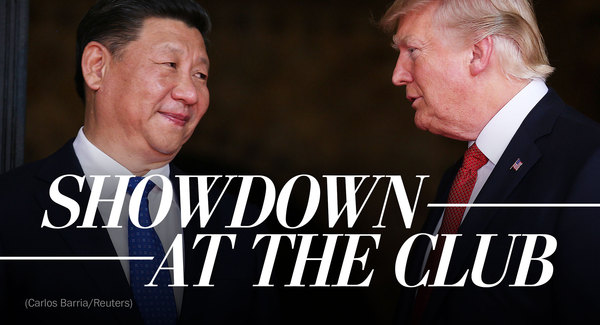
CHINA MINUS TIBET EQUALS TO POWER EQUILIBRIUM. PRESIDENT TRUMP WITH CHINESE PRESIDENT XI JINPING.

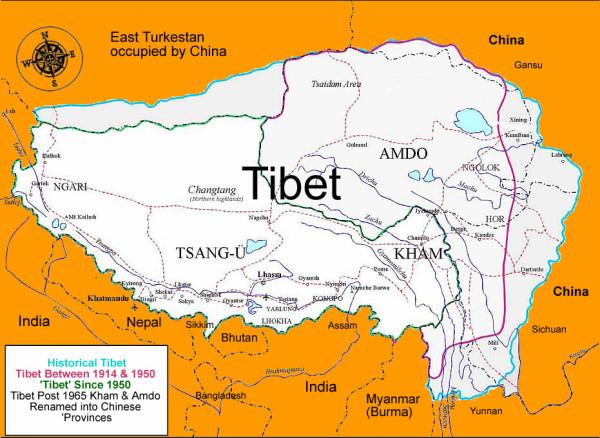
To deal with problems of Red China’s Economic, Political, Military, Maritime, and Nuclear Expansionism, I have to address the problem of Red China’s Territorial Expansionism. Red China gained 965, 000 square miles of Tibetan Territory through military occupation. In terms of size, Tibet is the second largest nation in Southern Asia, almost as large as Republic of India( over 1, 269, 221 square miles).

Evicting Tibet’s military occupier is the first step that will restore Balance of Power in Asia and I name this process as ‘TIBET EQUILIBRIUM’ for Tibetan Territory is the Key for Political, Economic, Military Imbalance that is undermining International Relations.

Rudranarasimham Rebbapragada
Ann Arbor, MI 48104-4162 USA
SPECIAL FRONTIER FORCE

CHINA MINUS TIBET EQUALS POWER EQUILIBRIUM. PRESIDENT TRUMP WITH CHINESE PRESIDENT XI JINPING.
CHINA MINUS TIBET EQUALS TO POWER EQUILIBRIUM. PRESIDENT TRUMP MEETS CHINESE PRESIDENT XI JINPING.
imp?s=135833&layout=marquee&li=todayworld&m=ee6bca8f378ecd0b471fc12c76ed04c4&p=58e71cdf71885051e1ce9582
imp?s=135834&sz=1x1&li=todayworld&m=ee6bca8f378ecd0b471fc12c76ed04c4&p=58e71cdf71885051e1ce9582 imp?s=135835&sz=1x1&li=todayworld&m=ee6bca8f378ecd0b471fc12c76ed04c4&p=58e71cdf71885051e1ce9582
imp?s=135836&sz=116x15&li=todayworld&m=ee6bca8f378ecd0b471fc12c76ed04c4&p=58e71cdf71885051e1ce9582 imp?s=135837&sz=69x15&li=todayworld&m=ee6bca8f378ecd0b471fc12c76ed04c4&p=58e71cdf71885051e1ce9582
wp-logo.png
Today's WorldView
BY ISHAAN THAROOR
BY ISHAAN THAROOR
8133dccd79bc42cfc9adc7f82c37147f-0-40-06facebook512.png 0dfb24e0a85978ee29df605d548a1664-0-40-twitter512.png
China Minus Tibet Equals to Power Equilibrium.

Chinese President Xi Jinping arrived in Palm Beach, Fla., on Thursday for an unorthodox meeting at President Trump’s Mar-a-Lago estate. The presidents and their wives are scheduled to spend about 24 hours together, including a Thursday night dinner and a working lunch the following day.
The first meaningful discussions between arguably the two most powerful people on the planet are, of course, hugely significant. Trump spent a large chunk of his election campaign attacking China’s supposedly unfair trade and fiscal practices, which he promised would be challenged by a more protectionist and nationalist Trump presidency. Xi, meanwhile, is meeting the erratic U.S. president at a time when his own political future at home is not as secure as some might think.

f4c1f20129dc6868f24a5c4c034ae3df-540-0-847573220417044480width540embedTypetwitter.jpg
China Minus Tibet Equals to Power Equilibrium.

Trump has already signaled this may be a tough encounter. But, as my colleague Simon Denyer wrote last week, it’s quite likely Xi has come bearing gifts — “a package of pledges designed to give the U.S. president some ‘tweetable’ promises to present as victories.” Whether this translates into long-term wins for either leader is less clear. Either way, here are the main storylines to watch:
The question of trade
“We can’t continue to allow China to rape our country,” declared Trump on the campaign trail last year. He was talking about the United States’ considerable trade deficit with China and Beijing’s history of currency manipulation. Part of Trump’s pledge to revive blue-collar American jobs explicitly involved punishing China on the world stage.
This was a major departure from previous U.S. administrations, both Republican and Democratic, which embraced the dogma of open markets and sought to make China a reliable partner within — not an opponent to — an American-led international order. Earlier this year, as the world readied for Trump’s inauguration, Xi cast himself as a custodian of that order, defending globalization, open borders and free trade — all things Trump campaigned against — at the World Economic Forum. Xi’s rhetoric received mixed reviews, but it underscored the strange new paradigm shaping global relations.
Ahead of Xi’s visit this week, China’s state media attempted to make the case for normal bilateral ties. “U.S. job losses are not China’s fault,” read a Xinhua commentary on Wednesday. The next day, another piece argued that China’s trade surplus “does not necessarily mean China benefits while the United States loses.” Xinhua went on: “About 40 percent of the trade surplus is actually generated by U.S. companies in China.”
Ironically, as economic experts note, Trump’s protectionist agenda is more in line with China’s own practices, including its boosting of mammoth Chinese state-run companies.
“Mr. Trump seems to want to move the U.S. toward China’s approach, rather than move China toward the U.S. approach of open trade and globalization,” said Eswar Prasad, a professor of trade at Cornell University, to my colleague Ana Swanson. “He seems to want the U.S. to be more like China than China to be more like the U.S. And I’m not sure that’s the best path for the U.S. to go down.”


A magazine featuring President Trump on display with Chinese military magazines at a newsstand in Beijing on April 4. (Mark Schiefelbein/Associated Press)
The question of security
There will be a Kim Jong Un-shaped elephant in the room in Mar-a-Lago. Amid a flurry of North Korean missile tests, the Trump administration is keen on getting China — Pyongyang’s only real friend — to bring the pariah state to heel. Trump and other senior administration officials have signaled their impatience with North Korea and threatened unilateral action in the past week.
“The clock is very, very quickly running out,” a senior White House official told reporters. “All options are on the table for us.”
This may all be bluster intended to pressure Beijing, which has cast itself as the honest broker between the North Koreans and the United States — much to American chagrin. Washington’s longstanding frustration with what it perceives as China’s unwillingness (or inability) to rein in North Korea will also run up against other geopolitical disagreements, including differences over China’s expansionist role in the South China Sea and the status of Taiwan.
On all these fronts, it’s likely the Xi-Trump meeting will yield polite sound bites — and few real changes to the tense status quo.
The question of strategy
In the short term, Trump may emerge from Mar-a-Lago having burnished his credentials as a budding statesman — a pleasant photo-op here, a nice headline there. Xi, who will return home as the Communist Party is preparing for a cabinet reshuffle, has to walk a difficult line and “lose face” in the eyes of the global media and the Chinese public.
But in the long term, Western observers see an alarming drift in the course of U.S.-China relations.

China Minus Tibet Equals to Power Equilibrium.

“The problem lies in Mr. Trump’s transactional view of the world. He prefers deals to something as necessarily ill-defined as global leadership,” wrote Financial Times columnist Philip Stephens. “Hence the decision to repudiate the Trans-Pacific Partnership, a trade agreement that would have checked Beijing’s advancing economic influence in the western Pacific and handed Washington important strategic leverage.”
“As recently as four years ago, Xi and other Chinese leaders fretted, publicly and explicitly, that their people were being seduced by the moral glamour of American democracy — by the open hearted confidence of the ‘shining city on a hill’ and by the ability of a nation founded on slavery to elect its first African-American President,” wrote the New Yorker’s Evan Osnos. “Xi worried that the American example of competence, generosity, and contempt for authoritarianism would, someday, drive his own people to challenge the rule of the Communist Party. Xi has less reason to worry about that today.”

UNITED STATES – CHINA RELATIONS DEMAND TIBET EQUILIBRIUM

UNITED STATES – CHINA RELATIONS DEMAND TIBET EQUILIBRIUM

US – CHINA RELATIONS DEMAND TIBET EQUILIBRIUM. PRESIDENT TRUMP MUST ACCEPT THE ROLE OF BALANCER.

In 1971, United States during Doomed Presidency of Nixon-Kissinger initiated a Policy that disregards the Doctrine of Balance of Power which formulates a system of international relations in which nations shift alliances to maintain an Equilibrium of Power and prevent dominance by any single state. For Balance of Power is the goal of Foreign Policy, nation can enter alliances to maintain stable power relations. Balance of Power describes the posture and policy of a nation or group of nations protecting itself against another nation or group of nations by matching its power against the power of the other side. States can pursue a policy of Balance of Power in two ways; 1. By increasing their own power, as when engaging in an armaments race or in the competitive acquisition of territory; or, 2. By adding to their power that of other states, as when embarking upon a policy of alliances. The role of “BALANCER” or “Holder of the Balance” is guided by one and only one consideration – the maintenance of “BALANCE” itself.

US – CHINA RELATIONS DEMAND TIBET EQUILIBRIUM. CHINA’S MILITARY BUDGET IS EXPANDING TAKING FULL ADVANTAGE OF US – CHINA TRADE DEFICIT.

In my analysis, with emergence of Red China as a major economic and military power of the world, Balance of Power is by necessary has become the focus of United States foreign relations. The geographical location and size of Tibet’s territory give it a predominant role in formulating US relations with all other nations of that region in Asia. For example, the size of China’s immediate neighbors is as follows:

1.Tibet – 965,000 square miles

2. Japan – 142, 811 square miles

3. North Korea – 46, 540 square miles

4. South Korea – 38, 321 square miles

5. Philippines – 115, 830 square miles

6. Taiwan – 13, 885 square miles

7. Malaysia – 128, 430 square miles

8. Indonesia – 741, 096 square miles

9. Brunei – 2, 228 square miles

United States has no choice other than that of upholding the principle of Balance of Power to defend vital, national security interests. US must perform the role of “BALANCER” or Holder of the Balance by restoring Tibet Equilibrium. Tibetan territory cannot remain under Red China’s military occupation.

Rudranarasimham Rebbapragada

DOOM DOOMA DOOMSAYER

TIBET SUPPORTERS CONVERGE ON CAPITOL HILL TO LOBBY CONGRESS

March 31, 2017 7:22 PM

  • VOA News

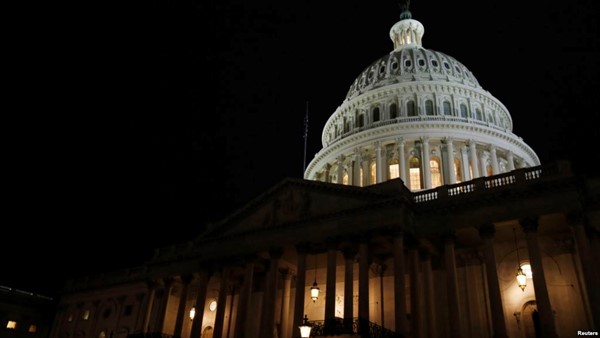
    FILE – The U.S. Capitol building is seen on Capitol Hill in Washington, Jan. 28, 2014.

    More than 130 people from 23 states converged on Capitol Hill to lobby for Tibet the week before Chinese President Xi Jinping is scheduled to meet with President Donald Trump at his Mar-a-Lago retreat in Florida on April 6.

    Although the leaders’ meeting is expected to focus on trade and the need for China to do more to rein in the nuclear and missile programs of its neighbor and ally North Korea, Tibet remains a contentious issue between the two nations.

    “Congress has shown a strong interest in Tibet since the 1980s, passing dozens of laws and resolutions related to Tibet, speaking out about conditions in Tibet, and welcoming visits by the Dalai Lama,” according to a 2014 report by the Congressional Research Service. “Such actions have long been a source of friction in the U.S.-China relationship. China charges that they amount to support for challenges to Chinese rule in Tibet.”

    US – CHINA RELATIONS DEMAND TIBET EQUILIBRIUM.

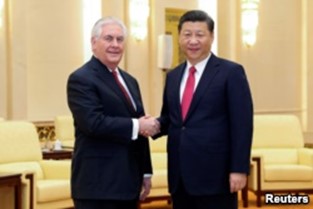
    FILE – Chinese President Xi Jinping shakes hands with U.S. Secretary of State Rex Tillerson before their meeting at the Great Hall of the People in Beijing, China, March 19, 2017.

    Bhuchung Tsering of the International Campaign for Tibet in Washington, which organized Tibet Lobby Day, said, “Looking at the meeting of President Xi of China and President Trump, we want to send a message to President Trump, through Congress and to Trump directly, that there is traditional bipartisan support for dialog with China on Tibet,” he said, adding “Secretary [of State Rex] Tillerson says he is committed to promoting dialogue on Tibet and receiving the Dalai Lama.”

    Tibet Lobby Day was held simultaneously in Washington, Brussels and Canberra, Australia, March 27-29.

    “U.S. policy has not changed,” Anna Richey-Allen, a spokeswoman for the State Department’s East Asia and Pacific Bureau, said Friday, adding that the U.S. recognizes the Tibetan Autonomous Region (TAR) and Tibetan autonomous prefectures to be a part of the People’s Republic of China.

    “We remain deeply concerned about human rights abuses and restrictions, including those imposed on religious freedom, in the TAR and elsewhere in China,” she said. “We remain committed to supporting meaningful autonomy for Tibetans and the preservation of their unique religious, cultural and linguistic traditions.

    “The United States encourages the People’s Republic of China to engage with the Dalai Lama and his representative without preconditions.”

    Ngawang Norbu of Boston, Massachusetts, was one of the Tibetan-Americans and Tibet supporters who spoke with more than 250 members of Congress and their staffs during Tibet Lobby Day.

    US – China Relations Demand Tibet Equilibrium. Tibet Lobby Day in Washington, March 2017.

    Ngawang Norbu, a Tibetan-American and Tibet supporter shown in this photo taken from video, attended Tibet Lobby Day on Capitol Hill in Washington, March 2017.

    The activists asked them to continue funding Tibet programs and to promote efforts to gain access to Tibetan areas for U.S. officials, citizens and journalists. They also want the Trump administration to implement the Tibetan Policy Act of 2002 (TPA), which has the stated purpose of supporting “the aspirations of the Tibetan people to safeguard their distinct identity.”

    “The important thing today is that there’s a new administration in America and, along with that, the exile Tibetan administration in India has declared 2017 to be a year of action for Tibet, and so that’s why I’m here,” Norbu told VOA on Wednesday. “It’s our responsibility and obligation to lobby for Tibet, and whether our requests are responded to or not is, of course, up to the leadership here, but in our mind we think our objectives and efforts will bear fruit.”

    Bhuchung expects to see the reintroduction of the proposed Reciprocal Access to Tibet Act by Representative Jim McGovern, a Democrat from Massachusetts; Representative Randy Hultgren, a Republican from Illinois; Senator Marco Rubio, a Florida Republican; and Senator Tammy Baldwin, a Wisconsin Democrat.

    US – China Relations Demand Tibet Equilibrium.Tibet Lobby Day in Washington, March 2017.

    Marah Litchford of North Carolina, shown in this photo taken from video, participated in Tibet Lobby Day in Washington, March 2017.

    North Carolinian Marah Litchford, who has expressed concern about religious freedom in Tibet, participated in the Washington movement. “They listen,” she said. “You just have to talk loudly.”

    Nike Ching and Steven Herman contributed to this report, which originated with reporting by Dondhon Namling of the VOA Tibetan service.

    US – CHINA RELATIONS DEMAND TIBET EQUILIBRIUM.


HIS HOLINESS THE DALAI LAMA LIVES IN EXILE TO DEFEND FREEDOM IN TIBET

HIS HOLINESS THE DALAI LAMA LIVES IN EXILE TO DEFEND FREEDOM IN TIBET

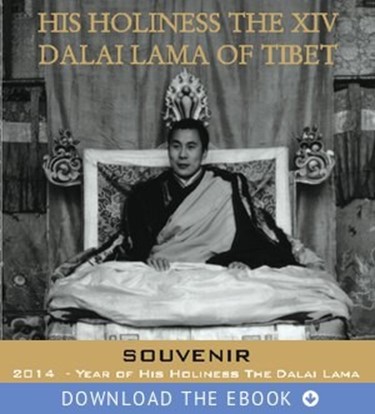
His Holiness the 14th Dalai Lama, Supreme Ruler of Tibet lives in exile to defend Freedom in Tibet. Potala Palace in Lhasa is witness to the long history of Tibetan Independence.

Since March 1959, His Holiness the 14th Dalai Lama, Supreme Ruler of Tibet is living in exile not to defend his own life but to defend Freedom in Occupied Tibet. After 58 years of life in exile, Tibetans hope to restore Freedom, Peace, Justice in Tibet. Tibet’s military occupation since 1950 cannot obliterate the reality of long history of Tibetan Independence.

Rudranarasimham Rebbapragada

DOOM DOOMA DOOMSAYER

His Holiness the Dalai Lama Arrives Safely in Tenzingang, Bomdila

April 4, 2017

By Staff Writer

His Holiness the 14th Dalai Lama, Supreme Ruler of Tibet lives in exile to defend Freedom in Tibet. He is on a visit to Tibetan Monasteries in Arunachal Pradesh, India.

His Holiness the Dalai Lama arrives in Tenzingang Tibetan settlement in Bomdila, Arunachal Pradesh, 4 April 2017. Photo/Yasmina K.

Bomdila: The most revered spiritual leader of Tibet, His Holiness the Dalai Lama arrived safely in Tenzingang Tibetan settlement, Bomdila, Arunachal Pradesh today on 4 April 2017.

His Holiness was received by Chief Minister of Arunachal Pradesh, Pema Khandu, MLA, Japu Deru and Phurpa Tsering, West Kameng District Commissioner Dr Sonal Swaroop and former minister and National Convener of Core group for Tibetan cause-India, Mr. R K Khrimey and other important dignitaries.

Members of Tibetan community in Bomdila gave a rousing welcome to His Holiness as he arrived in his motorcade this afternoon.

Tomorrow, His Holiness will give a teaching and confer a White Tara Long Life Empowerment (drolkar tsewang) in the morning at the Buddha Park, Teaching in Bomdila, Arunachal Pradesh.

On 6 April, His Holiness will give teachings in Dirang, Arunachal Pradesh. His Holiness will give teachings on Geshe Langri Thangpa’s Eight Verses of Training the Mind & Guru Yoga and confer the Avalokiteshvara Permission in the morning at Thupsung Dhargyeling Monastery.

From 8 – 10 April, His Holiness will confer teachings in Tawang, Arunachal Pradesh.

On April 8 & 9 mornings, His Holiness will give teachings on Kamalashila’s The Middling States of Meditation & Gyalsey Thokme Sangpo’s Thirty-Seven Practices of a Bodhisattva at Yiga Choezin.

On April 10 morning, His Holiness will confer the Rigzin Dongdup Initiation at Yiga Choezin.

His Holiness the 14th Dalai Lama, Supreme Ruler of Tibet lives in exile to defend Freedom in Tibet. He is on a visit to Tibetan Monasteries in Arunachal Pradesh, India.

Local Tibetans in Bomdila organize a traditional welcome for His Holiness the Dalai Lama, 4 April 2017.

His Holiness the 14th Dalai Lama, Supreme Ruler of Tibet lives in exile to defend Freedom in Tibet. He is on a visit to Tibetan Monasteries in Arunachal Pradesh, India.

Tibetans and ardent followers welcoming His Holiness the Dalai Lama at Tenzingang, Bomdila. Photo/Soulful tours

His Holiness the 14th Dalai Lama, Supreme Ruler of Tibet. Tibet’s military occupation cannot obliterate Tibet’s long history of Independence.

DOOMED US – CHINA FOREIGN POLICY POSES THREAT TO REPUBLIC OF INDIA

DOOMED US – CHINA FOREIGN POLICY POSES THREAT TO REPUBLIC OF INDIA

Republic of India since its birth got ensnared by Doomed US Foreign Policy. United States and UK support Pakistan to undermine India’s position and to balance the power and influence of Soviet Union/Russia. This poisonous policy has driven India to seek cooperation of Soviet Union/Russia as India is left with no alternative to neutralize Pakistan’s enhanced military power.

WholeDude - WholeVillain: Dr. Henry Kissinger is the Arch Villain in ...
On bhavanajagat.com

WHOLEDUDE - WHOLEVILLAIN: These two leaders, the US President, the ...
On bhavanajagat.com

WholeDude - WholeVillain: The role of General Yahya Khan, the military ...
On wholedude.com

WHOLEVILLAIN #WHOLEVILLAIN WHOLEVILLAIN WHOLE VILLAIN – HISTORY OF ...
On wholedude.com

WholeDude – WholeVillain: “The Cruel Birth of Bangladesh” by ...
On bhavanajagat.com

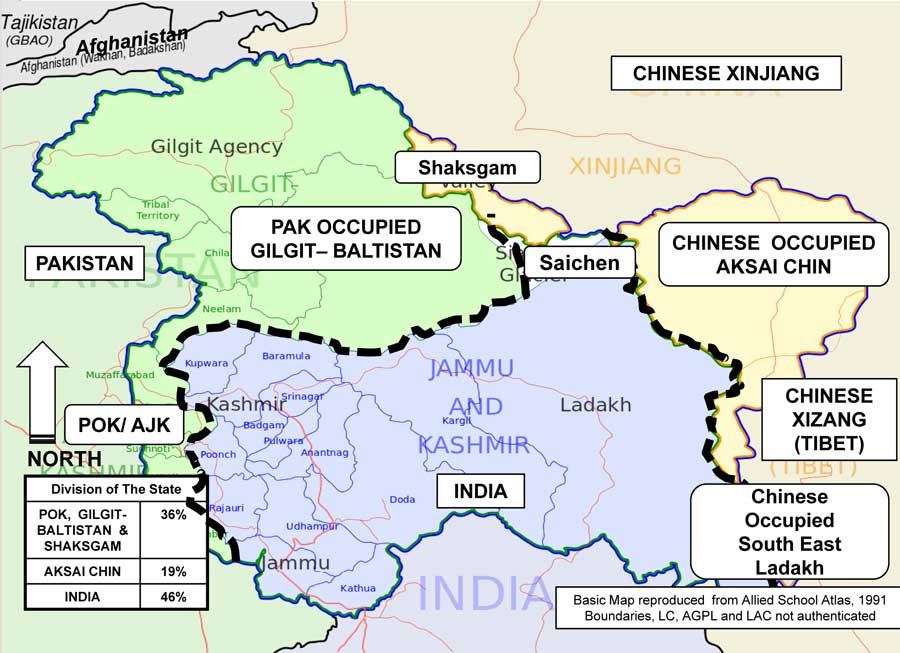
To add insult to India’s injury, US cultivated relationship with Communist China using Pakistan. Dr. Henry Kissinger launched that illicit relationship during 1971 flying to Peking from Pakistan. China took full advantage of Pakistan’s relationship and is able to fully manipulate Pakistan outplaying the US influence. On Kashmir front, as of today, India is facing threat posed by three enemies; 1. US, 2. China, and 3. Pakistan.

My concern is not about UN Support for China’s Project. The real danger comes from Doomed US Foreign Policy.

Rudranarasimham Rebbapragada
Ann Arbor, MI 48104-4162 USA
SPECIAL FRONTIER FORCE

UN support China’s CPEC project passing through PoK puts India’s claim in jeopardy

Sunday, March 19, 2017
By: Hindustan Times

Source Link: Click Here

  • 6_img119317092403.jpg
  • 6_img119317092403.jpg
  • 6_img119317092403.jpg

6_img119317092403.jpg

A UN Security Council resolution has for the first time incorporated China’s Belt and Road Initiative (BRI), a multi-billion inter-continental connectivity mission that has a flagship project passing through Pakistan occupied Kashmir (PoK).

The resolution, which extends an ongoing UN assistance mission to Afghanistan, says international efforts should be strengthened to implement the BRI, President Xi Jinping’s legacy project about which he first spoke in 2013.

Beijing claims it has rounded up at least 100 countries in BRI’s support, including Pakistan, Bangladesh and Sri Lanka.

India is yet to sign up for the initiative. Foreign secretary S Jaishankar spelt it out to the Chinese government in February that India has a “sovereignty” issue with the BRI because its flagship project, the China-Pakistan Economic Corridor (CPEC), passes through PoK. According to diplomats, India endorsing the BRI would mean giving up its claims on PoK.

The UN endorsing the BRI could complicate the situation as far as India’s claims are concerned.

The resolution in question renewed the mandate of the UN Assistance Mission in Afghanistan for one year. In it, the 15-nation UN body urged to promote security and stability in Afghanistan and the region “to create a community of shared future for mankind”.

“Also included in the newly adopted council resolution was China’s Belt and Road Initiative, which aims to build a trade and infrastructure network connecting Asia with Europe and Africa along the ancient trade routes,” official news agency Xinhua reported.

The resolution “welcomes and urges further efforts to strengthen the process of regional economic cooperation, including measures to facilitate regional connectivity, trade and transit, including through regional development initiatives such as the Silk Road Economic Belt and the 21st-Century Maritime Silk Road (the Belt and Road) Initiative”.

The council resolution urged “further international efforts to strengthen regional cooperation and implement the Belt and Road Initiative”.

Besides the BRI, the resolution also mentions other projects like “regional development projects, such as the Turkmenistan-Afghanistan-Pakistan-India gas pipeline project, the Central Asia South Asia Electricity Transmission and Trade Project, the Chabahar port project agreed between Afghanistan, India and the Islamic Republic of lran”.

China has taken the inclusion of BRI in a UN resolution as a diplomatic victory of sorts.

Liu Jieyi, the Chinese permanent representative to the UN, told reporters here that the “Chinese concept was put into a Security Council resolution for the first time on Friday, thus showing the consensus of the international community on embracing the concept, and manifesting huge Chinese contributions to the global governance”.

“The Chinese envoy said that latest council move is conducive to creating a favourable atmosphere for China to host a Belt and Road forum for international cooperation in Beijing this May in order to brainstorm on interconnected development,” Xinhua reported.

Liu also said he hoped that all “UN member states will take an active part in the joint efforts to carry out the Chinese initiative and the Chinese concept by implementing the new council resolution. Resolutions adopted by the Security Council are legally binding”.

ESTABLISHMENT NO.22 – SPECIAL FRONTIER FORCE

ESTABLISHMENT NO.22 – SPECIAL FRONTIER FORCE is not “SECRET” Army of India as their “ENEMY” is fully aware of its existence and of its military mission. This Video includes several photo images captured by Chinese agents who successfully infiltrated into this Organization with assistance from a Senior Tibetan Political Leader who was later disciplined.