Karma in Action – Beijing Will Taste The Fruits of Her Own Actions
As per my Theory of Karma, the Biblical prophecy of Isaiah will come true. In my analysis, Beijing’s Doom is inevitable. Beijing cannot ward off the ruin, the disaster, the calamity, the catastrophe that shall come upon her as she reaps the fruits of her own evil actions.
As per my Theory of Karma, the Biblical prophecy of Isaiah will come true. In my analysis, Beijing’s Doom is inevitable. Beijing cannot ward off the ruin, the disaster, the calamity, the catastrophe that shall come upon her as she reaps the fruits of her own evil actions.
As per my Theory of Karma, the Biblical prophecy of Isaiah will come true. In my analysis, Beijing’s Doom is inevitable. Beijing cannot ward off the ruin, the disaster, the calamity, the catastrophe that shall come upon her as she reaps the fruits of her own evil actions.
Rudra Narasimham Rebbapragada
Doom Dooma Doomsayer
As per my Theory of Karma, the Biblical prophecy of Isaiah will come true. In my analysis, Beijing’s Doom is inevitable. Beijing cannot ward off the ruin, the disaster, the calamity, the catastrophe that shall come upon her as she reaps the fruits of her own evil actions.
The Sydney Morning Herald
Tibet gets a warmer reception as the world wakes to Beijing’s methods
By Peter Hartcher
11 December 2018 — 12:05am
The leader of Tibet’s government-in-exile has been telling his story about Bob Carr around the world for years and always gets a laugh. Last week he recounted it during a visit to Parliament House in Canberra.
Ever since the Dalai Lama split his job into two some years ago, remaining spiritual leader of the Tibetans in exile and handing over the political leadership to be elected from among the free Tibetans, Lobsang Sangay has been their President.
As per my Theory of Karma, the Biblical prophecy of Isaiah will come true. In my analysis, Beijing’s Doom is inevitable. Beijing cannot ward off the ruin, the disaster, the calamity, the catastrophe that shall come upon her as she reaps the fruits of her own evil actions.
Lobsang Sangay, President of the Tibetan government-in-exile, right, smiles as he listens to the Dalai Lama in Dharamsala, India. Credit: AP
In 2013 Sangay visited Canberra and a reporter asked him whether Carr, Australia’s then foreign affairs minister, would be meeting him. It’s always a delicate matter.
A government that meets the Dalai Lama or Sangay risks the wrath of the Chinese Communist Party, which has claimed to be the sole representative of the Tibetan people ever since its army invaded Tibet in 1950.
“I said I’d love to, but I haven’t asked for a meeting”, not wanting to put Carr in a difficult position, he recalled last week. “I’m sure that, given the choice, Bob Carr would like to meet because that’s the Buddhist culture – we like to believe people are good.”
Later in his visit, the Tibetan leader was riding the lift from Parliament’s subterranean carpark into the building when the lift stopped. “The doors open and Bob Carr walks in,” the Harvard-educated legal scholar tells me. The Labor backbencher Michael Danby, Sangay’s escort for the visit, introduced the two men in the lift: “I had to decide at that moment whether to extend my hand or not. The Tibetan way is to not cause inconvenience, so I nodded and smiled. He kind of nodded – a little bit – then walked past.
“I like to say that we didn’t have a formal meeting but we had a karmic meeting. No matter how powerful the Chinese government may be, it can’t prevent the foreign minister of Australia from meeting me.”
As per my Theory of Karma, the Biblical prophecy of Isaiah will come true. In my analysis, Beijing’s Doom is inevitable. Beijing cannot ward off the ruin, the disaster, the calamity, the catastrophe that shall come upon her as she reaps the fruits of her own evil actions.
Illustration: Dionne Gain Credit:
Perhaps, but the Chinese Communist Party has certainly managed to hold things up successfully. Paul Keating as prime minister met the Dalai Lama in 1992. John Howard as prime minister met him in 1996 and 2007.
The last time that any Australian prime minister or government minister met either leader of the Tibetan government-in-exile was when Peter Garrett, then School’s education minister in the Gillard government, met the Dalai Lama in private in his hotel room in 2011. Karmic meetings with Carr aside.
Carr is now a cheerleader for the Beijing government as head of the Australia-China Relations Institute.
As per my Theory of Karma, the Biblical prophecy of Isaiah will come true. In my analysis, Beijing’s Doom is inevitable. Beijing cannot ward off the ruin, the disaster, the calamity, the catastrophe that shall come upon her as she reaps the fruits of her own evil actions.
Illustration: Andrew Dyson Credit:
So, for seven years Australian governments, Labor and Liberal, comprehensively shunned the Tibetans, an indicator of the rising power of the Chinese government to intimidate Australia.
Until last week. A minister in the Morrison government, Ken Wyatt, Minister for Aged Care and Minister for Indigenous Health, met Sangay in Parliament House. Not in a lift or in secret or hidden away in a hotel room but during a public ceremony in the main committee room.
“Minister Wyatt is not just principled and brave” for meeting the President of the free Tibetans, “but also a genuinely nice human being”, Sangay tells me after the meeting. “Normally people will meet you when they’re not in government and then when they are in government they say, ‘Understand that I’m in a difficult position’.”
Partly this was a personal commitment from Wyatt to the Tibetan cause. Wyatt, the first Indigenous minister in an Australian federal government, spoke at the ceremony last week of the “parallels between indigenous Australians and the Tibetans”.
But it’s also a marker of Australian relations with the Tibetans in exile and a marker in Australian relations with Beijing. Kyinzom Dhongdue is a member of the Tibetan parliament in exile, representing Tibetans in Australasia and East Asia, and she observes: “Even in the last year or so there’s a more balanced view of China not just as a trading partner but China is being seen as a threat, so Tibetan worries and experience are feeling more relevant. This year I’ve found it easier to get meetings – people are more interested in what we have to say.”
And it wasn’t just Wyatt at the ceremony with Sangay in Parliament House. There were 23 MPs and senators in total including Labor’s Michael Danby and Lisa Singh, Liberals Warren Entsch, Kevin Andrews, Concetta Fierravanti-Wells and Jason Falinski, Greens leader Richard Di Natale, Nationals MP George Christensen, Centre Alliance senator Rex Patrick plus Derryn Hinch, as well as former Labor foreign affairs minister Gareth Evans, now chancellor of ANU.
And how is the Tibetan experience more relevant today? The emerging stories of the shocking mass repression of another of China’s ethnic and religious minorities, the Uighur people of China’s Xinjiang Province, “means that it’s more than about one example”, says Sangay.
As per my Theory of Karma, the Biblical prophecy of Isaiah will come true. In my analysis, Beijing’s Doom is inevitable. Beijing cannot ward off the ruin, the disaster, the calamity, the catastrophe that shall come upon her as she reaps the fruits of her own evil actions.
Uighur residents in Australia holding up photos of relatives who are missing, in internment camps or have passed away. Credit: Alex Ellinghausen
“Now we have a million people in detention in Xinjiang” in what Beijing calls re-education camps. Uighur leader Rebiya Kadeer calls them “concentration camps” where Uighurs, including young children, are imprisoned without due process and held indefinitely.
And then there’s Beijing’s enormous One Belt, One Road international infrastructure program. “We lost our country because of one road,” says Sangay. “First the road came, then the trucks came, then the guns came, then the tanks came. It’s the exact blueprint” for domination now on offer to scores of countries under Belt and Road, he says.
Finally, there’s the experience of what Sangay calls “elite co-option”. “We have seen this for 60 years and now you see it around the world in one country after another”, and he has a litany of examples. Money, contracts, government access, favors are on offer in return for loyalty to Beijing and its agents.
If Tibet’s long-suffering under Chinese Communist Party repression is more relevant to the wider world, the wider world is also waking up to Beijing’s wide-ranging influence programs. The West’s gathering determination to exclude China’s telecoms gear manufacturer Huawei is an example. And Australia’s laws against foreign interference are another.
Those laws took effect on Monday. Anyone in Australia acting as an agent of a foreign power must register with the federal government. If suspected foreign agents fail to register, they can be issued a notice to show cause why they shouldn’t be considered to be working on behalf of a foreign power.
Do more karmic encounters lie ahead?
As per my Theory of Karma, the Biblical prophecy of Isaiah will come true. In my analysis, Beijing’s Doom is inevitable. Beijing cannot ward off the ruin, the disaster, the calamity, the catastrophe that shall come upon her as she reaps the fruits of her own evil actions.
Peter Hartcher is the political editor and international editor of The Sydney Morning Herald. He is a Gold Walkley award winner, a former foreign correspondent in Tokyo and Washington, and a visiting fellow at the Lowy Institute for International Policy.
As per my Theory of Karma, the Biblical prophecy of Isaiah will come true. In my analysis, Beijing’s Doom is inevitable. Beijing cannot ward off the ruin, the disaster, the calamity, the catastrophe that shall come upon her as she reaps the fruits of her own evil actions.
Time to Trust All-Powerful God – The Fall of Evil Red Empire
For I trust in All-powerful God, I can expect ‘The Fall of Evil Red Empire’ as per the prophecy shared by Isaiah, Chapter 47, and Revelation, Chapter 18.
US President Donald Trump and China’s President Xi Jinping could be among the ‘Most-Powerful’ men in the world. However, I will not recognize any mortal human being as “All-Powerful.”
For I trust in All-powerful God, I can expect ‘The Fall of Evil Red Empire’ as per the prophecy shared by Isaiah, Chapter 47, and Revelation, Chapter 18.
For I trust in All-powerful God, I can expect ‘The Fall of Evil Red Empire’ as per the prophecy shared by Isaiah, Chapter 47, and Revelation, Chapter 18.
Rudra Narasimham Rebbapragada
Doom Dooma Doomsayer
For I trust in All-powerful God, I can expect ‘The Fall of Evil Red Empire’ as per the prophecy shared by Isaiah, Chapter 47, and Revelation, Chapter 18.
TIME FOR TRUMP TO TEST THE ALL-POWERFUL XI JINPING
By Henry M. Paulson Jr., – OPINION, THE WASHINGTON POST
For I trust in All-powerful God, I can expect ‘The Fall of Evil Red Empire’ as per the prophecy shared by Isaiah, Chapter 47, and Revelation, Chapter 18.
President Trump and Chinese President Xi Jinping. (Alex Brandon/Associated Press)
Henry M. Paulson Jr., treasury secretary from 2006 to 2009, is chairman of the Paulson Institute and author of “Dealing With China: An Insider Unmasks the New Economic Superpower.”
Many have crowned Chinese President Xi Jinping the most powerful man in the world following the 19th Chinese National Congress of the Communist Party. And, indeed, Xi is a dynamic leader who is transforming China. He has swiftly consolidated his authority to drive an ambitious domestic and international effort to establish China as a modern superpower.
Our preoccupation with Xi’s grand ambitions, however, has led us to neglect the scope of the challenges he and his country face. Simply put, ambition and power are not a substitute for deep and enduring reform, and a leader is only as powerful as the country he leads. As Xi knows all too well, China has serious and growing vulnerabilities. When President Trump visits China next week, he may well find he can leverage these emerging dynamics to advance U.S. interests.
In recent years, Xi has moved to address these challenges with a bold strategy aimed at consolidating the tools he needs to govern. Although he has crafted ambitious economic reform policies, he could not assure that they were implemented on a consistent basis in the provinces. And some of his most important and difficult goals have not been attempted.
During his first term, Xi tightened and made sweeping reforms to the Chinese legal system; took control of, cleaned out and started professionalizing the military; and restructured, centralized and, through an anti-corruption campaign, moved to shore up the domestic credibility of the Communist Party as the country’s primary means of governance.
As the party and the central government take power from the provinces, he has begun strengthening the Beijing bureaucracy’s capacity to manage a nation of 1.4 billion people. At the same time, he has neutralized his opposition and positioned trusted advisers to help implement his agenda.
Thus, Xi enters his second term better able to govern, but serious challenges stand in his way. He faces four major economic risks: overreliance on debt to finance growth; a failing state-owned sector; excess capacity across a range of industries, particularly steel; and the real prospect that markets will be closed to China in the United States and elsewhere if the country does not move more quickly to open its economy to foreign competition.
Xi must address China’s unsustainable accumulation of sub-national debt — much of it created by hundreds of thousands of failed firms kept alive by the state to preserve jobs. China won’t be able to grow out of its debt problem.
If China is to avoid a hard landing, it will need to stem the flow of credit and accept slower growth. The government has indicated its intention to do that, but it will require significant political will. Importantly, it must subject failing firms to the discipline of the marketplace. The longer China waits to deal with these problems the riskier and costlier it will get.
Xi will be increasingly pressed by the United States and other major economies to demonstrate that his government intends to uphold its pledge to lift restrictions blocking foreign competition. And he drags his feet at his own peril because the United States and others are reexamining their open-door policies and demanding greater reciprocity in China. This new attitude will put pressure on China just as Xi most needs the world’s export and investment markets. But competition from the private sector is ultimately the best way for him to address the inefficiencies with China’s state-owned enterprises and its massive overcapacity in steel, which, when exported, will increasingly lead to trade disputes.
Xi, however, seems undaunted and remains confident he can manage all the challenges in front of him. Trump and Xi have developed a good personal relationship. Xi’s new consolidation of power — and ability to use it now to get difficult things done — means Trump may have a greater opportunity on his trip to achieve breakthroughs in the security and economic arenas.
Progress on the most important economic issues has potential to build the mutual trust that would make it easier to achieve what is by far our top priority: a denuclearized Korean Peninsula. But no nation should trade away its vital interests; North Korean and economic negotiations should proceed at their own pace.
Trump should be strategic and forceful in defense of America’s industries of the future. It is essential that he fight to open markets and achieve a level playing field in sectors where the United States is most competitive — technology, financial services, the Internet, agribusiness, health care, environmental goods and services, autos, and movies. This has the potential to benefit both countries, particularly in the financial services, where China’s underdeveloped financial markets would clearly benefit from some world-class participants.
The United States should also focus on expanding our economic relationship with China to include direct investment, which creates U.S. jobs and ties our economies together in enduring and positive ways. Without increased market access, the path we are on could lead to important parts of the global economy being walled off from competition and trade. This risks hurting both the United States and China, which are the biggest beneficiaries of a rules-based economic order.
Xi’s new platform presents risks for the United States in an era in which there will be increasing security and economic competition. But it also has the potential for further collaboration with a leader who now has greater ability to deliver. It has always been as big a risk to overestimate China’s power as it is to underestimate its potential. Now the same could be said of Xi. Trump should test Xi’s new position of power by pressing China hard for movement on U.S. priorities.
For I trust in All-powerful God, I can expect ‘The Fall of Evil Red Empire’ as per the prophecy shared by Isaiah, Chapter 47, and Revelation, Chapter 18.For I trust in All-powerful God, I can expect ‘The Fall of Evil Red Empire’ as per the prophecy shared by Isaiah, Chapter 47, and Revelation, Chapter 18.
Red China lives by the sword and shall perish by the sword
TIBET CONSCIOUSNESS – RED CHINA – LIVE BY THE SWORD – PERISH BY THE SWORD. THERE ARE NO EXCEPTIONS TO THIS GOLDEN RULE.
Red China conquered Tibet using the power of her Sword and she oppresses Tibet with her Sword’s Power. I have to share these words with Red China: “Put your sword in its place, for all who take the sword will perish by the sword.” If Red China Lives by the Sword, surely, She will Die by the Sword. No exceptions to this Golden Rule (Reference. Book of Matthew 26:52).
Rudra Narasimham Rebbapragada Ann Arbor, MI 48104-4162 USA Special FrontierForce-Establishment 22-Vikas Regiment
TIBET CONSCIOUSNESS – RED CHINA – LIVE BY THE SWORD – PERISH BY THE SWORD. NO EXCEPTIONS TO THIS GOLDEN RULE.Tibet Consciousness – Red China – Live by the Sword – Red China shall Die by the Sword.Tibet Consciousness – Red China Slain Tibet with the Sword – Red China Must be Killed with the Sword. No Exceptions to Golden Rule – The Book of Revelation 13:10Tibet Consciousness. Those who use the sword will die by the sword says LORD Jesus. No exceptions to this Golden Rule. Red China slain Tibet with Sword and hence will perish by the Sword.
NDTV
China has turned Tibetan Plateau into vast military zone, claims Core Group
PRESS TRUST OF INDIA Updated: November 05, 2015 01:13 IST
TIBET CONSCIOUSNESS – RED CHINA – LIVE BY THE SWORD – PERISH BY THE SWORD. CHINA TURNED TIBETAN PLATEAU INTO VAST MILITARY ZONE.
A Tibetan monk stands outside a temple near Mount Kailash in Ngari, Tibet Autonomous Region September 3, 2011. (Reuters)
Guwahati: China has turned the Tibetan Plateau into a “vast military zone” deploying a large number of troops with most of them along the Indian sub-continent, claimed the Core Group for Tibetan Cause (CGTC).
“China has turned the once peaceful and buffer state between India and China into a vast military zone. The militarisation of the Tibetan Plateau profoundly affects the geopolitical balance of the region, which causes serious international tension, particularly in the Indian sub-continent,” claimed the Core Group for Tibetan Cause, an apex coordinating body of Tibet Support Groups all over India.
In a publication distributed in the 5th All India Tibet Support Groups Conference that concluded here yesterday, it claimed that as part of its militarisation, China has “17 secret radar stations, 14 military airfields, eight missile bases with eight Intercontinental Ballistic Missiles and 20 intermediate range missiles.”
Referring to the China’s 1,118-km railway project in Tibet connecting Gormo to Lhasa, it claimed that “China’s determination to construct the rail link to Lhasa is of political and military need.”
The CGTC held its 5th All India Tibet Support Groups conference here on November 2 and 3 which was addressed by Tibetan Government in-exile in India Prime Minister Dr Lobsang Sangay and Information and International Relations Minister Dicki Chhoyang.
Story First Published: November 05, 2015 01:13 IST
TIBET CONSCIOUSNESS – RED CHINA – LIVE BY THE SWORD – PERISH BY THE SWORD. 5th ALL INDIA TIBET SUPPORT GROUPS CONFERENCE, GUWAHATI. TIBET IS TRANSFORMED INTO A VAST MILITARY ZONE.TIBET CONSCIOUSNESS – RED CHINA – LIVE BY THE SWORD – PERISH BY THE SWORD. RED CHINA RULES TIBET BY THE SWORD. TIBET ADVOCACY GROUPS 5th MEETING IN GUWAHATI.TIBET CONSCIOUSNESS – RED CHINA – LIVE BY THE SWORD – PERISH BY THE SWORD. CORE GROUP FOR TIBETAN CAUSE. 4th ALL INDIA TIBET SUPPORT GROUPS CONFERENCE JUNE 09, 2012, DHARAMSALA.TIBET CONSCIOUSNESS – RED CHINA – LIVE BY THE SWORD – PERISH BY THE SWORD. A LESSON FROM THE BOOK OF MATTHEW.TIBET CONSCIOUSNESS – RED CHINA – LIVE BY THE SWORD – PERISH BY THE SWORD. A LESSON FROM BIBLE.TIBET CONSCIOUSNESS – RED CHINA – LIVE BY THE SWORD – PERISH BY THE SWORD. RED CHINA KILLS WITH THE SWORD. SHE MUST BE KILLED BY THE SWORD. TIBET CONSCIOUSNESS – RED CHINA – LIVE BY THE SWORD – PERISH BY THE SWORD. FOR RED CHINA KILLED WITH THE SWORD, SHE MUST BE SLAIN WITH THE SWORD. JESUS IS LORD, SPOKE THE GOLDEN RULE.
Whole Hegemonist – The Future of Red China’s Expansionism – Beijing Doomed.
Hegemony refers to dominance of one nation over others. Hegemonism is the policy or practice of a nation in aggressively expanding its influence over other countries.
Hegemony refers to dominance of one nation over others. Hegemonism is the policy or practice of a nation in aggressively expanding its influence over other countries. The 17-Point Plan or Agreement of March 1953 sets the tone for Communist China’s Expansionist Doctrine
Red China heralded her hegemonistic policy in 1949 when she announced to the world that she would use military force to occupy Tibet which declared full independence on February 13, 1913. In October 1950, Red China attacked Tibet overcoming weak Tibetan resistance and occupied 965, 000 square miles of Tibetan territory which now represents one quarter of Red China’s landmass. This Tibetan territory includes entire Tibet Autonomous Region (TAR) and regions found in Qinghai, Gansu, Sichuan and Yunnan provinces. Red China’s policy of Hegemonism is nothing new. Red China will prevail with her military aggression in South China Sea if Red China is not evicted from Tibet.
Hegemony refers to dominance of one nation over others. Hegemonism is the policy or practice of a nation in aggressively expanding its influence over other countries. The 17-Point Plan or Agreement of March 1953 sets the tone for Communist China’s Expansionist Doctrine
I submit that we need not always Fight a War to Win a War. At Special Frontier Force, I am known as ‘Doomsayer of Doom Dooma’. I am claiming that we will Win our War against Tibet’s military occupation without fighting a War with Red China for I predict ‘Beijing Is Doomed’ and Red China set herself on irreversible path of Self-Destruction.
Hegemony refers to dominance of one nation over others. Hegemonism is the policy or practice of a nation in aggressively expanding its influence over other countries. The 17-Point Plan or Agreement of March 1953 sets the tone for Communist China’s Expansionist Doctrine
Rudra Narasimham Rebbapragada Ann Arbor, MI 48104-4162, USA Special Frontier Force-Establishment 22-Vikas Regiment
Hegemony refers to dominance of one nation over others. Hegemonism is the policy or practice of a nation in aggressively expanding its influence over other countries. The 17-Point Plan or Agreement of March 1953 sets the tone for Communist China’s Expansionist Doctrine
If you haven’t heard of “HEGEMON” and you’re a geostrategy enthusiast, you’re missing out on a very interesting experience. Developed by the Potomac Foundation, the multiplayer game allows users to take on the identities of different countries, complete with resources and political agendas.
Before you write it off as yet another game imitating life, consider this: Hegemon has quickly become a favorite with strategists and academicians who use the simulation to test different approaches and evaluate results.
Players can take on the roles of the United States, China and other countries in the Asia-Pacific region; from budgeting and strategizing to managing military and technological needs, the ‘game’ involves enacting real-world geopolitical relationships on-screen. Perhaps the most interesting implication of the game is that it allows users to test the waters, so as to speak, on the South China Sea issue. And the revelations are rather edifying.
China could gain a hegemony on the South China Sea
As per an article first published in the Lowy Interpreter, China could gain and sustain a hegemony on the South China Sea without every actually having to resort to armed conflict. The South China Sea issue has been in the news frequently over the past year owing to a rise in hostile disputes over territory between the various claimants. China, most noticeably, has ‘reclaimed’ several territories and undertaken construction operations on the same, much to the chagrin of other stakeholders. As of this past month, the state has halted its actions in the region in keeping with an international effort to resolve the dispute peacefully. However, as the game has revealed, there are other ways in which the state could monopolize the region. Here are some possible outcomes to mull over.
#1 You Don’t Need To Fight A War To Win A War
A very big part of war strategy is avoiding war altogether. You must prepare to excel at the worst, but still keep it from happening at any cost. In the game, only 50% of the region takes to violence across a span of two decades. Instead, the more probable outcome is that countries turn to brokering agreements. It’s interesting to note that the matter of who plays the game affects what the outcome is: military personnel are more likely to opt for confrontational tactics while academics are more prone to choosing the non-combative options.
#2 The Role Of Russia
While Russia isn’t a claimant in the South China Sea issue, or even a regional stakeholder, the state does exert a considerable amount of influence on the area’s security and stability. Alliances and enmities with Russia can go a long way towards affecting the regional balance of power. History has proven that power in geopolitical conflicts is best consolidated through a formidable military presence in the region in question, and the fact that Russia is a significant contributor to the international weapons market all but guarantees Moscow a say-so in the South China Sea issue.
#3 What Would Vietnam Do?
Vietnam makes for a very interesting entry point into the South China Sea dispute because the state is a claimant in the territorial conflict and clearly opposed to Chinese monopoly in the greater South Asian region, but it still continues to be something of a wild card. The country has a land border in common with Beijing, so it serves Vietnam’s security interests to maintain peaceful ties with China. One probable outcome, as we see played out in Hegemon only too often, is that Hanoi is likely to forsake a portion of its stakes in the South China Sea issue in exchange for a decreased Chinese military presence at its borders.
#4 Diplomacy & Perseverance
Many real-world experts have argued that China will seek to avoid open confrontation simply because the costs of war are too high and the state has identified another means to the same end: diplomatic channels. China currently enjoys a position of enviable influence in the region. The current geopolitical landscape of South Asia is marked by an eagerness to either ally with China or, at the very least, avoid an armed conflict with the state. Analysts argue that by simply waiting it out China stands to gain more. As such, if China were to solidify its identity as the dominant regional power it would serve a severe blow to the United States’ ‘pivot to Asia’ strategy.
#5 Deterrence or Destruction?
Yet others argue that even if China were to persevere at the long game, there is no guarantee that other Asian states will concede to its hegemony in the region. China has a historical rival in Japan, and if things were to come to a head, the latter is most likely to align with the United States in an effort to maintain the status quo in Asia. In this case, the arms race and support gathering may result in a more pronounced divide than ever before, and scholars warn that the world might soon be looking at another iteration of the Cold War.
Interesting though it is to see how closely the game imitates real life and vice-versa, theorists will argue against basing actual strategy on gameplay simply because two crucial elements- the stakes involved and the time in hand- do not represent real-time situations accurately. Defeat in a game and defeat on a battlefield are two very different experiences indeed. And while overnight developments are not completely unheard of in military history, most issues develop gradually and decision-makers have months, even years, to chart the most preferred course of action.
So, while geostrategy buffs can definitely learn a thing or two about the South China Sea issue from Hegemon, and maybe even test-drive a few theories, the real world is, as they say, a totally different ballgame.
,Hegemony refers to dominance of one nation over others. Hegemonism is the policy or practice of a nation in aggressively expanding its influence over other countries. The 17-Point Plan or Agreement of March 1953 sets the tone for Communist China’s Expansionist Doctrine
About the author
BRINDA BANERJEE
Brinda Banerjee is a researcher working on security, armed conflict and military policies. She holds a Bachelor’s in Journalism (with Honors), a Master’s in Peace and Conflict Studies and is currently pursuing her Ph.D. in state responses to internal conflict. Brinda writes extensively about current events, conflict resolution and geopolitical dynamics in the modern world.
Hegemony refers to dominance of one nation over others. Hegemonism is the policy or practice of a nation in aggressively expanding its influence over other countries. The 17-Point Plan or Agreement of March 1953 sets the tone for Communist China’s Expansionist DoctrineHegemony refers to dominance of one nation over others. Hegemonism is the policy or practice of a nation in aggressively expanding its influence over other countries. The 17-Point Plan or Agreement of March 1953 sets the tone for Communist China’s Expansionist Doctrine
Tibet Awareness – A New Model for US-China Relations
Whole Sin – The Model for Great Power Relations: Red China is on a slippery slope and marching towards her self-destruction which no other nation can stop or intervene to help her.
Red China is on a slippery slope and marching towards her self-destruction which no other nation can stop or intervene to help her.
Whole Sin – The Model for Great Power Relations: Red China is on a slippery slope and marching towards her self-destruction which no other nation can stop or intervene to help her.
Rudra Narasimham Rebbapragada Ann Arbor, MI 48104-4162, USA Special Frontier Force-Establishment 22-Vikas Regiment
Whole Sin – The Model for Great Power Relations: Red China is on a slippery slope and marching towards her self-destruction which no other nation can stop or intervene to help her.
China seeks ‘new model’ for relations with US
CARRIE GRACIE CHINA EDITOR 21 September 2015 From the section CHINA
Whole Sin – The Model for Great Power Relations: Red China is on a slippery slope and marching towards her self-destruction which no other nation can stop or intervene to help her.
Image copyright Getty Images
Do you have expectations of this week’s summit between President Obama and President Xi? If so, I suggest you lower them.
The sombre fact is that despite the enormous range and complexity of the US-China relationship, it is becoming ever harder to manage. The smiles and ceremony of a 21-gun salute and state dinner will conceal gritted teeth and crossed fingers.
A game of brinkmanship is afoot and on cyber-hacking and contested atolls, it would need a reclamation project bigger and swifter than the one under way in the South China Sea for guest and host to find a piece of common ground to stand on.
But spin it another way and there should be something to celebrate.
Four and a half decades, five Chinese communist leaders, eight American presidents, and a transition from a world in which China is isolated and marginal to one in which it is increasingly able to meet the United States on equal terms.
And through it all, the US-China relationship has broadly held to the course that President Nixon set out in 1972 as he prepared to travel to Beijing to end two decades of enmity:
“The government of the People’s Republic of China and the government of the United States have had great differences. We will have differences in the future. But what we must do is to find a way to see that we can have differences without being enemies in war.”
Whole Sin – The Model for Great Power Relations: Red China is on a slippery slope and marching towards her self-destruction which no other nation can stop or intervene to help her.
Image copyright Getty Images Image caption Richard Nixon shares a toast with Chinese PM Zhou Enlai in Beijing in 1972 during the first visit by a US president to the People’s Republic of China
Forty-three years later an ambitious Chinese leader is coming for his first state visit in the opposite direction and the challenge is still the same. But now the stakes are even higher for this relationship and it has all the advantages of experience and proven resilience. What makes it so hard then?
‘Properly manage differences‘
Only last week, President Obama issued a blunt warning to China on cyber-hacking: “There comes a point at which we consider this a core national security threat… we can choose to make this an area of competition, which I guarantee you we’ll win if we have to.”
Only a scrambled visit by China’s security chief for what the White House described as “candid, blunt discussions” seems to have averted American sanctions.
Meanwhile, in the South China Sea, the latest satellite imagery from this month suggests that even during a summit countdown, Beijing is ready to defy American warnings and possibly even renege on its own promises to continue reclamation work to turn contested atolls into military outposts.
Is President Xi about to waste a huge opportunity? Ahead of the state visit he said: “Both sides must accommodate each other’s core interests, avoid strategic miscalculation, and properly manage and control differences.”
TIBET AWARENESS – UNITED STATES – CHINA RELATIONS. PRESIDENTIAL CANDIDATE DONALD TRUMP CLAIMED THAT CHINA IS STEALING JOBS.
Image copyright Getty Images Image caption Donald Trump has spoken of China stealing American jobs.
But he needs a much, much better speech writer if he is to get heard amid the US media frenzy of a presidential campaign and a papal visit. Already Republican candidates led by DonaldTrump are lining up to complain that China is stealing American jobs and some have said President Xi’s visit should be cancelled or downgraded. US public opinion is increasingly negative on China. President Obama told the media China’s peaceful, orderly rise is in the US’s interest and good for the world.
But President Xi urgently needs to reach out to American politicians and public to explain how it is in the US’s interest. A mix of reassurance, vision and rigour are required, and a measure of charm would no doubt help.
But with a schedule focused on closed-door sessions with big business and tightly choreographed photo opportunities with tame members of the American public, it looks as if President Xi has opted for a risk-averse strategy with minimal substance and candour.
Return to form
Don’t forget this is the man with the Chinese Dream, a plan for what he calls “the great rejuvenation of the Chinese nation”. Implicit is the argument that a great China is not a novelty but a return to form.
For most of the past 2,000 years, China’s economy has accounted for between a quarter and a third of world output and after traumatic shocks delivered by outsiders in the 19th and 20th Centuries, China is on track to overtake the US within the decade and regain its status as the world’s biggest economy.
Whole Sin – The Model for Great Power Relations: Red China is on a slippery slope and marching towards her self-destruction which no other nation can stop or intervene to help her.
Image copyright Reuters Image caption China wants a foreign policy that reflects its economic rise.
What’s more, China is intent on building military force and diplomatic clout to match its economic might. The swiftest, surest and cheapest way to all three is through US co-operation, and, sound and fury notwithstanding, it has come to count on that co-operation, at least in the economic sphere.
Without American help, how could China have become the world’s largest manufacturing and trading nation in such breathtakingly short order? Without American help how can China confront the daunting economic challenges it faces today?
But expect no warm speeches on that score from President Xi in Washington.
Model v dream
Deaf to American concerns about market access or technology theft, the Chinese narrative of the relationship presents a version of itself as a much-maligned partner, uncomplainingly creating wealth and bankrolling spendthrift American consumers. China does not export its ideology or send troops abroad, it points out.
President Xi’s preferred slogan for the relationship involves not a dream but a model. He raised it again on the eve of the summit, “the new model of great power relations”. This is shorthand for a future in which the US assists China’s inexorable advance in order to avoid the wars and convulsions which have accompanied the rise of other great powers in world history.
Seen from inside his model, the US record is far from benign. Instead, the US threatens China’s political system by pushing democracy, undermines its territorial integrity by supplying arms to Taiwan and schemes to contain China by surrounding it with American alliances and military deployments.
Whole Sin – The Model for Great Power Relations: Red China is on a slippery slope and marching towards her self-destruction which no other nation can stop or intervene to help her.
Image copyright Reuters Image caption Activists want President Obama to call on President Xi to halt the crackdown on Tibetans and Uighurs, and civil society in China.
In fact, part of Mr Xi’s dream is that a rejuvenated China will no longer need to put up with an American security order in Asia at all. But Americans are famous dreamers too.
And especially since China’s opening up and integration into the world economy, many have hoped that in Beijing they might one day have a democratic partner and “responsible stakeholder in keeping the world safe”.
Hostilities
That American version of the Chinese dream is an affront to Mr Xi’s own and as he goes through the protocol motions on the American red carpet, it is no exaggeration to say that he sees his hosts as outright ideological enemies.
He is at least as hostile to their politics as Chairman Mao was in the days of Nixon’s visit, probably more so because of the close and present danger those politics present in a globalised world.
In his first three years in power, President Xi has used anti-corruption and ideological campaigns to stiffen the sinews of the Communist Party and buttress one-party rule. He has censored the discussion of universal values like democracy and freedom of speech, locking up academics, human rights lawyers, civil society activists, journalists, Christians and bloggers.
President Barack Obama meets with His Holiness the Dalai Lama in the Map Room of the White House, Feb. 18, 2010. (Official White House Photo by Pete Souza) This official White House photograph is being made available only for publication by news organizations and/or for personal use printing by the subject(s) of the photograph. The photograph may not be manipulated in any way and may not be used in commercial or political materials, advertisements, emails, products, promotions that in any way suggests approval or endorsement of the President, the First Family, or the White House.
Image copyright The White House Image caption Chinese media has been critical of President Obama’s meetings with the Dalai Lama
Chinese propaganda teaches that the US is just the latest in a long line of hostile foreign powers trying to keep China down with a range of ideological weapons including meddling in Hong Kong and befriending the Dalai Lama.
President Xi makes no apology for his politics. “Shoes do not have to be the same but simply to fit the wearer,” he says. He is an authoritarian by conviction who believes China needs discipline and a sense of shared mission to realize its “great rejuvenation.” All of this is admittedly a difficult message to articulate for an American public. But some truths should be attempted for the sake of candour and connection.
President Xi could say that China still has enormous challenges at home and will avoid clashes with the US where possible. But that at the same time he wants a foreign policy that reflects the reality of China’s rise. And that on a range of issues, including rules for investment and climate change, he will co-operate with the US to the advantage of both countries.
He would be wise to attempt a much more nuanced and persuasive case on areas of competition like cybersecurity and the South China Sea. And he needs to show that he can listen and respond to the concerns of Americans. If not always with agreement, at least with understanding.
Now that would truly be powerful and might even presage a “new model of great power relations”.
Whole Sin – The Model for Great Power Relations: Red China is on a slippery slope and marching towards her self-destruction which no other nation can stop or intervene to help her.
Whole Compassion – How to resolve the Great Problem of Tibet? Balloons are released during the celebration event at the Potala Palace marking the 50th anniversary of the founding of the Tibet Autonomous Region, in Lhasa on September 8, 2015. REUTERS/China Daily
His Holiness the Dalai Lama shares his view on solving world problems. Since 1950, Tibet is under military occupation. Over the years, Red China strengthened her military grip over Tibet. The Great Problem of Tibet may not be solved through warfare as it cost in terms of human lives and money appear to be prohibitive. While I contemplate on the futility of human effort, I recognize the role of Compassion in mitigating human pain and misery. In my analysis, Compassion is a Fundamental Force/Power/Energy and its application will have both physical and psychological consequences. I am seeking the application of Compassion as a Physical Force to uplift Tibetans from pain and suffering. This uplifting Force would also help Red China to get out of Tibet without the loss of human lives.
Tibet Equilibrium – The Balance of Power – The Future of Red China’s Evil Power. Beijing is Doomed for She is Evil. Prophecy revealed by Isaiah 47 :10 and 11.
Red China is marching towards her own self-destruction as a consequence of her own evil actions. As Doomsayer of Dooma, I predict Red China’s sudden downfall following a sudden, unexpected calamity, catastrophe, disaster, or cataclysmic event which drains Red China’s economic and military power and force her to withdraw People’s Liberation Army from Tibetan territory. As Compassion is the driving Force, Red China gets evicted from Tibet without experiencing pain and suffering that accompanies physical battle.
Rudra Narasimham Rebbapragada Ann Arbor, MI 48104-4162, USA Special Frontier Force-Establishment 22-Vikas Regiment
TIBET EQUILIBRIUM – BALANCE OF POWER IN OCCUPIED TIBET. THE GREAT TIBET PROBLEM WILL EXIST UNTIL THE BALANCE OF POWER IS RESTORED IN OCCUPIED TIBET.
Using force never solves world problems: Spiritual leader of Tibet
Tuesday, 15 September 2015 17:02 Yeshe Choesang, Tibet Post International
Whole Compassion – How to resolve the Great Problem of Tibet? As Compassion is the driving Force, Red China gets evicted from Tibet without experiencing pain and suffering that accompanies physical battle.
Oxford, UK — The spiritual leader of Tibet His Holiness the Dalai Lama has praised those countries’ plan to welcome thousands of refugees but warned that a long-term solution was needed, saying “generally using force never solves these problems.”
His remarks came at a meeting Oxford, where he inaugurated the “Dalai Lama Centre for Compassion” – which will specialise in the study of ethics – at the start of a 10-day visit to the UK which will include addressing thousands of people at the 02 arena on Saturday.
“I am a human being, just one among the 7 billion alive today. We all face problems, many of them of our own making. And because we made them, we surely have the ability to solve them. I sometimes wish that grown human beings were more like children, who are naturally open and accepting of others.”
“Instead, as we grow up, we fail to nurture our natural potential and our sense of fundamental human values. We get bogged down in secondary differences between us and tend to think in terms of ‘us’ and ‘them’. Prayer will not change this the way education and intelligence can. We need to learn to distinguish emotions like anger and attachment that are destructive from positive ones like compassion that are a source of happiness,” he said.
He went on to explain that as a Buddhist monk he tries to promote religious harmony, drawing inspiration from the example of India, where all major religions flourish side by side. He described the problems and violence that seem to arise from religious faith today as unthinkable since all religious traditions teach us to be compassionate, forgiving and contented. These are qualities relevant to day to day life. Warm-heartedness, for example, generates trust, which is the foundation of friendship.
His Holiness also explained that he is Tibetan with a responsibility towards the many Tibetans who place their trust and hope in him. He is concerned to preserve Tibet’s natural environment, as well as its compassionate, non-violent Buddhist culture.
Asking for his impressions on the European response to the refugee crisis, he said: “I think some, especially Germany, have given a very good response, and Austria. And then this country also now is showing serious consideration about that – wonderful.”
“But then you have to think, it is impossible for everyone outside Europe to come to Europe, impossible. They are taking care about these refugees, a small number, but ultimately we have to think how to reduce this killing in their own countries.
“And the way to reduce that is not using force … in certain cases maybe but generally using force never solves these problems. He said that only education, dialogue, and personal contact could resolve conflicts in the long-term.
Asked his response to the refugee crisis affecting Europe, he appreciated that their welfare is being taken seriously, but added: “Ultimately we have to stop the killing and fighting in these people’s countries that is forcing them to become refugees, but without the use of force. Military might never solves problems, but instead tends to produce unexpected results.”
“So taking care of several thousand refugees is wonderful, but in the mean time you have to think about long-term solutions, how to bring genuine peace and genuine development, mainly through education, for these Muslim countries,” he said.
He added: “Talk about a clash between Western civilization and Islam is mistaken. My Muslim friends tell me that a genuine Muslim should not spill blood, but should show respect to all the creatures of Allah.”
With regard to his hopes for the new Dalai Lama Centre for Compassion, he said he thought it was a commendable effort, but it would be better to see how it develops. As to whether material development had brought any benefit to Tibetans in Tibet, he expressed appreciation of such infrastructure as roads, airports and the railway.
He also observed that President Xi Jinping seems to be more realistic than some of his predecessors and has been courageous about tackling corruption. When pressed about the 60th anniversary of the declaration of the Tibet Autonomous Region he remarked that many Tibetans are deeply sad inside despite pretending to officials that they are happy.
When one journalist asked if His Holiness thought members of the media had a duty to be more positive about what they report, he commented that while they can’t change the world by themselves, they can make a positive contribution to doing so.
Unless otherwise indicated, all materials on these pages are copyrighted by The The Tibet Post International.
Whole Compassion – How to resolve the Great Problem of Tibet? As Compassion is the driving Force, Red China gets evicted from Tibet without experiencing pain and suffering that accompanies physical battle.Whole Compassion – How to resolve the Great Problem of Tibet? As Compassion is the driving Force, Red China gets evicted from Tibet without experiencing pain and suffering that accompanies physical battle.Whole Compassion – How to resolve the Great Problem of Tibet? As Compassion is the driving Force, Red China gets evicted from Tibet without experiencing pain and suffering that accompanies physical battle.Whole Compassion – How to resolve the Great Problem of Tibet? As Compassion is the driving Force, Red China gets evicted from Tibet without experiencing pain and suffering that accompanies physical battle.
Whole Dispatch – Peaceful Evacuation of the People’s Liberation Army from Tibet to the Buddhist Paradise on the Sea. Magic Kingdom in Shanghai – The Magic of Regime Change. Fall of Babylon in Pudong Dragon’s Field. Revelation 18: 1-24.
I describe ‘The Great Tibet Problem’ as its military occupation by People’s Liberation Army (PLA). The problem of occupation can be resolved by dispatching the PLA soldiers in Tibet to Shanghai Beach, the Buddhist Paradise on the Sea. Shanghai, on China’s central coast, is the country’s biggest and most-populous city and a global financial hub with world’s busiest seaport. Shanghai or its nickname “Mo Dou” is often translated as “Demon City”, “Sin City”, and “Magic City.”
Lake Manasarovar is among the world’s highest freshwater lakes. At an elevation of 4,583 meters, the lake covers 412 square kilometers. With the northern part broader than the southern end, the deepest point of the lake is over 70 meters. The lake is purer than a sapphire and one can see through dozens of meters into the lake. The lake is located in the Burang County, 20 km southeast of the Mount Kailash.
Covering more than 400 square kilometers of waters, Lake Manasarovar is the world’s highest freshwater lake with 4587 meters above the sea level and the average water depth of 46 meters. It is revered a sacred place in four religions: Bön, Buddhism, Hinduism and Jainism. In the Buddhist scriptures, this lake is called “the mother of the World Rivers.” It means “invincible lake” in the Tibetan words.
In Tibetan language, Manasarovar means “invincible lake”. In “Regions In Great Tang”, wrote by monk Xuanzang, Lake Manasarovar was regarded as the sacred Yaochi Lake of Nirvana. In the 11th century Buddhism won in the competition against the local Bon Religion and changed the lake’s name from “Machui Co” into “Manasarovar”, which means the “Invincible Lake”, in the hope of winning more believers in Tibet. In Tibetan Buddhism, it is believed that bathing with the water of Manasarovar will drive off avaricious desires, troubled thoughts and past sins; drinking the water will keep healthy and away from disease; while circling the lake will bring boundless beneficence to the pilgrims. Thus all the pilgrims to Tibet will come to Manasarovar and regard circling and drinking from the lake as their greatest fortune. Throughout the year, numerous pilgrims and visitors are attracted to the holy Mt. Kailash and the Lake Manasarovar. It is also 1 of 3 Holy Lakes in Tibet (the other 2 are Namtso Lake and Yamdrok Tso Lake).
According to legend, Lake Manasarovar is the lake in which a great Tibetan monk saw the letters “Aha”, ” Kha”, ” Mha”. These three initials helped the search team to locate the current 14th Dalai Lama of Tibet. The three initials stand for the province, the district, and the monastery in which the current Dalai Lama was born, i.e. Ahamdho, Khumbum, and Taktser respectively.
The Indian poet Kalidasa once wrote that the waters of Lake Manasarovar are “like pearls” and that to drink them erases the “sins of a hundred lifetimes.” How to dispatch the PLA soldiers from Lake Manasarovar to Shanghai beach, the Buddhist Paradise on the Sea?Lake Manasarovar, or Mapam Yumtso (Victorious Lake) in Tibetan, is the most venerated of Tibet’s many lakes and one of its most beautiful. How to dispatch the PLA soldiers from Lake Manasarovar to Shanghai beach, the Buddhist Paradise on the Sea?Lake Manasarovar, meaning “Invincible Jasper Lake” in Tibetan, is located in Burang County, Ngari, Tibet and 30 kilometers (10 miles) southeast of Mount Kailash. With an altitude of 4,588 meters (15,049 feet), it is one of the highest freshwater lakes in the world. How to dispatch the PLA soldiers from Lake Manasarovar to Shanghai beach, the Buddhist Paradise on the Sea?Soldiers patrol the border in snow in Tibet with the temperature dropping to minus thirty degrees Celsius on January 14, 2020. The sentry post, located near the Lake Manasarovar in Ngari prefecture has an average altitude of over 4,800 meters above sea level. (Photo: China News Service/ Liu Xiaodong/ Dang Hongbo) How to dispatch the PLA soldiers from Lake Manasarovar to Shanghai beach, the Buddhist Paradise on the Sea?Soldiers patrol the border in snow in Tibet with the temperature dropping to minus thirty degrees Celsius on January 14, 2020. The sentry post, located near the Lake Manasarovar in Ngari prefecture has an average altitude of over 4,800 meters above sea level. (Photo: China News Service/ Liu Xiaodong/ Dang Hongbo) How to dispatch the PLA soldiers from Lake Manasarovar to Shanghai beach, the Buddhist Paradise on the Sea?Soldiers patrol the border in snow in Tibet with the temperature dropping to minus thirty degrees Celsius on January 14, 2020. The sentry post, located near the Lake Manasarovar in Ngari prefecture has an average altitude of over 4,800 meters above sea level. (Photo: China News Service/ Liu Xiaodong/ Dang Hongbo) How to dispatch the PLA soldiers from Lake Manasarovar to Shanghai beach, the Buddhist Paradise on the Sea?Soldiers patrol the border in snow in Tibet with the temperature dropping to minus thirty degrees Celsius on January 14, 2020. The sentry post, located near the Lake Manasarovar in Ngari prefecture has an average altitude of over 4,800 meters above sea level. (Photo: China News Service/ Liu Xiaodong/ Dang Hongbo) How to dispatch the PLA soldiers from Lake Manasarovar to Shanghai beach, the Buddhist Paradise on the Sea?Soldiers patrol the border in snow in Tibet with the temperature dropping to minus thirty degrees Celsius on January 14, 2020. The sentry post, located near the Lake Manasarovar in Ngari prefecture has an average altitude of over 4,800 meters above sea level. (Photo: China News Service/ Liu Xiaodong/ Dang Hongbo) How to dispatch the PLA soldiers from Lake Manasarovar to Shanghai beach, the Buddhist Paradise on the Sea?How to dispatch the PLA soldiers from Lake Manasarovar to Shanghai beach, the Buddhist Paradise on the Sea?How to dispatch the PLA soldiers from Lake Manasarovar to Shanghai Beach, the Buddhist Paradise on the Sea?How to dispatch the PLA soldiers from Lake Manasarovar to Shanghai Beach, the Buddhist Paradise on the Sea?How to dispatch the PLA soldiers from Lake Manasarovar to Shanghai beach, the Buddhist Paradise on the Sea? Zhoushan is a well known beach and a tourist city. It is more famous as a “Buddhist Paradise on the Sea.” It offers some of the most beautiful scenery in Shanghai. Its blue water, golden sand, sparkling stones, islands and mountain peaks gives you a feeling of paradise.
In my analysis, Babylon mentioned in the New Testament Book Revelation, Chapters 17 and 18 is the code name for the Evil Empire represented by Beijing. The word “EVIL” means Calamity, Catastrophe, Disaster, Doom, or Apocalypse. A natural event will bring the sudden, unexpected downfall of the Evil Empire in one day forcing the retreat of all the military personnel from Occupied Tibet.
Revelation 18 is the eighteenth chapter of the Book of Revelation or the Apocalypse of John in the New Testament of the Bible. This chapter describes the Fall of Babylon the Great. In my view, Babylon is the code name for the Evil Empire represented by Beijing. How to dispatch the PLA soldiers from Lake Manasarovar to Shanghai beach, the Buddhist Paradise on the Sea? A natural calamity may force their retreat.
Reports indicate that Mighty Red China is hiding her male impotence problem. Red China has to admit that she is facing a serious health care issue and share information with scientific community to arrive at proper understanding of the connection between health and environment.
Reports indicate that Mighty Red China is hiding her male impotence problem.
Impotence is inability to engage in sexual intercourse and it may include inability to have an erection (male erectile dysfunction), and diminished libido, the sexual urge or instinct called sexual drive. There are several causes for male infertility and its associated problem called erectile dysfunction. Declines in male sexual performance are associated with problems of water pollution, air pollution, smoking, pesticides, chemotherapy, and radiation. Several chemicals have been identified as endocrine disruptors or hormone disrupting agents. Some chemicals with anti-androgenic properties inhibit normal male sexual functions. Testosterone is a male sex hormone responsible for male sexual characteristics. Apart from chemicals that block Testosterone, some chemical pollutants play a role by mimicking Estrogen or female sex hormones. Investing money on finding aphrodisiacs will not resolve this issue.
Red China has to admit that she is facing a serious health care issue and share information with scientific community to arrive at proper understanding of the connection between health and environment.
Rudra Narasimham Rebbapragada Ann Arbor, MI 48104-4162 USA Special Frontier Force-Establishment 22-Vikas Regiment
THE ECONOMIST
Caterpillar fungus – The emperor’s mighty brother
Demand for an aphrodisiac has brought unprecedented wealth to rural Tibet—and trouble in its wake
Dec 19th 2015 | YUSHU, QINGHAI PROVINCE
By the middle of May, the snowline in Yushu prefecture has retreated to the peaks of its steep valleys. Nomads who have spent the winter at the bottom of them have begun to herd their yaks and goats to higher pastures, where the first shoots of green have replaced the scorching white of winter. The landscape is still bleak and forbidding. Wolves prowl. Lightning strikes terrorise those caught exposed on the bare slopes. Yushu is a vast area of mountains and alpine pasture, larger than Syria but with a population of fewer than 400,000 people (see map below). About 95% are Tibetans, who call the area Yulshul. For those living in the countryside—more than half of them—this is the busiest time of year. Elsewhere, in China’s densely populated interior, children get a short break to celebrate Labour Day on May 1st. But in Yushu, as in many other rural settlements across the Tibetan plateau (a sparsely inhabited region the size of western Europe), schoolchildren are given an additional four weeks’ holiday in May and June. They have to make up for it with a shorter summer holiday. And it is not for the sake of fun. Children are at the front line of the armies of Tibetans (almost every able-bodied rural resident in Yushu) who will spend a frenzied month scouring the hills for what they call yartsa gunbu. In Chinese its name is dongchong xiacao, literally “winter-insect-summer-grass”, for that is what it resembles.
In summer the airborne spores of a fungus known as cordyceps (or ophiocordyceps) sinensis invade the caterpillars of various species of ghost moth, a large pale insect that flits over the pastures at dusk. After grubs thus infected bury themselves in the soil to hibernate, they die; when winter comes they freeze. The warmth of spring activates the fungus, which grows to fill the caterpillar’s entire body, leaving only the outer skin. A spindly brown shoot of it emerges from the caterpillar’s head and pushes its way through the soil into daylight: just four or five centimetres—so tiny and often so widely separated from others that the keenest of eyes are needed to spot it.
This is Tibet’s annual gold rush. Yartsa gunbu is so highly valued as a medicine that it often sells for more than its weight in the metal. It has many purported benefits, ranging from preventing cancer to curing back pain. But what makes it so prized is its supposed ability to improve sex lives. It is often described as a “Himalayan Viagra”, good for treating erectile dysfunction and (in women as well) low libido.
The children’s good eyesight and short stature make them the best spotters of the fungus among blades of grass and stalks of ground-hugging cinquefoil shrubs that soon, as the weather warms, will dot the slopes with bright yellow flowers. It is not a job for those unused to the plateau’s thin air. Caterpillar fungus, as yartsa gunbu is usually called in English, is generally found at altitudes above 4,000 metres (13,100 feet). That is higher than Lhasa, the capital of the Tibet Autonomous Region (TAR) which borders on Yushu and occupies about half of the plateau.
Flat out on the plateau
As your (ill-acclimatised) correspondent found, ascending the steep slopes of Yaseeda ridge in Yushu’s Chindu county requires nimble limbs as well as the genetic advantage Tibetans enjoy at such elevations, where there is 40% less oxygen than at sea level. His agile guides were sporting enough to let him rest as his heart pounded in a desperate quest for atmospheric sustenance.
Throughout the month of May each year, hundreds of villagers search through the scraggy vegetation looking for the precious fungus. Mayong Gasong Qiuding, a local guide, crawls on his hands and knees. At the start of the season, he says, he would spot one fungus every 15 minutes or so. By the end, it would be one every couple of hours.
Digging them up requires painstaking effort. A small pick is used, with great care taken not to break the sprout from the caterpillar’s body. There is little demand for separated pieces; yartsa gunbu is dried and consumed whole. Aficionados gauge the quality of a caterpillar fungus based partly on the relative lengths of body and sprout—impossible if there is no way of being sure whether they were once attached.
Fungus-hunters often camp out on the hills. Mr Mayong says a diet of dried yak-meat and instant noodles (a product of China’s spreading culinary influence: balls of roast barley flour, known as tsampa, are the cultural norm) keeps him going from dawn to dusk. Plastic sheeting provides makeshift shelter from rain. Dried yak dung (no shortage of that on the slopes) and the withered stalks of cinquefoil provide fuel for cooking.
On top of the world
Later, at his house in Xiewu township, Mr Mayong points out a man high up on a slope above his house—barely a speck, surrounded by other specks that are the man’s yaks. “That is probably my brother,” he says. Searching for caterpillar fungus may be tough and sometimes dangerous. (“If a bear comes, the best thing to do is run,” he suggests.) But it is much more lucrative than tending yaks, which provide a subsistence living at best. Rural incomes in Tibet are among the lowest in China. Herders live hand to mouth, or at least they did until the 1990s when the price of yartsa gunbu began to soar. Since then an explosion of demand, almost entirely from non-Tibetan parts of China, has transformed the economy of large swathes of the Tibetan plateau. Daniel Winkler, a fungus expert who runs Mushroaming, a Seattle-based travel agency, and who has done extensive research on this, says caterpillar fungus has entwined the plateau’s economy with that of the rest of China in a way that few other products have—there is little else made in Tibetan areas that is in such high demand elsewhere.
It is all the more remarkable for having remained largely a Tibetan preserve: despite much effort, no one has yet succeeded in producing commercially viable quantities of good-quality yartsa gunbu in artificial conditions. This means colossal dividends for Tibetans. In the TAR the retail value of the more than 50 tonnes of yartsa gunbu harvested there in 2013 was around 7.5 billion yuan ($1.2 billion), equivalent to nearly half its earnings from tourism. Total annual production on and around the plateau, most in China but also in Nepal and Bhutan, is worth several times more.
It is omnipresent: at the airport in Xining, the capital of Qinghai province, huge advertisements for the stuff fill the arrivals hall. The streets of tourist areas of towns and cities across the region are lined with shops selling it. A souvenir shop in Yushu sells freeze-dried yak meat; the price would seem ridiculous, were it not (perhaps) for the large characters on the box: “Fed on caterpillar fungus”. Over large areas of the Tibetan plateau, about 40% of rural residents’ annual cash incomes have been generated by the fungus in recent years. Tibetans’ income from farming (including fungus-gathering) has usually risen faster than the farming income of rural residents in other parts of China.
This windfall is the result of the rapid emergence of a middle class in other parts of China, and with it a big growth in spending power on health products—not least those that claim to help with erections. The Chinese often appear not to share Westerners’ embarrassment about such medicaments; a good sex life is seen as evidence of overall health. One high-class restaurant in Beijing specialises in animal penises, the eating of which is supposed to boost virility. Westerners visit for a titter, Chinese businessmen to impress their clients. (Yak penis, says the eatery’s website, is a “luxury gift for close friends”.) A book of “traditional, health-preserving” recipes on sale in one of Beijing’s biggest state-run bookshops includes the following remedy for impotence and premature ejaculation: “18 grams of caterpillar fungus; one fresh human placenta. Wash the caterpillar fungus and the placenta separately. Place in a saucepan, with water. Stew at high temperature until the placenta is cooked. (Drink the human placenta soup once a week for one or two weeks to see results.)”
Caterpillar fungus may even have been the salvation of Tibet’s pastoral way of life (or what remains of it after the forcible settlement of many nomads by the government). In the rest of China, less than half the population now works on farms. On the Tibetan plateau, which is home to around 6m people, the share raising animals or growing crops fell only slightly between 2000 and 2010, from 87% to 83%. Andreas Gruschke of the University of Leipzig says yartsa gunbu has provided some herders with enough extra income to make yak-rearing viable. It certainly helped in Yushu after an earthquake in 2010, which flattened much of the main town of Gyegu (or Yushu city) and killed more than 2,600 people. To aid the area’s battered economy, the government launched an annual “caterpillar-fungus culture festival”—a trade fair, in effect, attracting buyers from across the plateau (prices are often decided by a coded touch of hands under a cloth, to keep rivals in the dark).
But clouds hang over the industry, and are looking ever more ominous. Fakes, sometimes dangerous, are becoming increasingly ubiquitous, threatening consumer confidence. Your correspondent bought two caterpillar fungi from a Tibetan in Gyegu’s main square for what seemed a bargain price of 50 yuan. Later he accidentally dropped them on the floor of his hotel room; they snapped, revealing that they were made of plaster moulded onto tiny sticks. To boost demand for the fungus, some merchants adulterate products made of it with Viagra, or Weige (Mighty Brother), as it is more suggestively named in Chinese. Wholesalers—most of them in Qinghai are Hui, a Muslim ethnic group—were surprisingly candid in expressing doubt about how much the fungus by itself could really help to boost libido.
Even more troublesome to those in the business is President Xi Jinping’s campaign against corruption, which has been unusually fierce and protracted. This has curbed the once-common practice of bribing officials with expensive gifts, including caterpillar fungus. A glass jar containing 80-odd plump specimens neatly tied together still sells for 63,380 yuan—nearly $10,000—at a medicine shop in Beijing. But prices have fallen by as much as 20% in the past year, even as supply has remained level.
More worrying for the authorities, yartsa gunbu has fuelled unrest on a plateau already boiling with discontent over Chinese rule. Gyegu’s annual horse festival offers a clue to this. The three-day summer fair involves displays of horsemanship, singing and dancing—including, one year, by children dressed as caterpillar fungi (pictured, in 2007). It attracts thousands of Tibetans, many of whom camp on the surrounding grassland by a meandering river. The festival resumed in 2014 for the first time since the earthquake. At this year’s event your correspondent saw police deployed in large numbers, some equipped with fire-extinguishers. Two fire engines were parked by the main arena.
Everybody do the caterpillar fungus
Such precautions are common these days in areas where Tibetans gather, lest anyone attempt to set fire to themselves: a desperate form of protest against Chinese rule that has claimed at least 123 Tibetan lives since 2009. In the now lavishly rebuilt city of Gyegu, a 27-year-old Tibetan monk apparently tried to kill himself this way in the main square in early July, just a few days before the horse festival. Police extinguished the flames and hustled him away. Tibetans in exile say he died a few days later in hospital.
Fungus, a bogey man
Yartsu gunbu has, indirectly, heightened these tensions. It has contributed to a surge of visitors to the plateau in recent years, most of them members of China’s ethnic-Han majority. Uneasiness over this influx, and the fact that businesses catering to tourists are also dominated by Hans, were among the causes of an explosion of unrest across the plateau in March 2008, including anti-Han rioting in Lhasa that left several people dead.
Caterpillar fungus has also been a direct cause of violence among Tibetans, and between Tibetans and caterpillar-poaching Hans. In parts of the plateau, the annual rush for fungus is Klondike-like. In a report by the Communist Party committee of Nangqian county in Yushu, a village official says: “Caterpillar fungus has turned people bad. It has made them think only of money and caused them to lose their sense of family, friendship and humanity.” Complaints abound about Tibetans frittering away their caterpillar money on gambling and booze (there are few opportunities for Tibetans to find decent work in cities, where jobs usually go to Hans or Huis).
Mr Mayong, the guide, insists that in his experience, fellow villagers are courteous to each other in their collective scramble. That is not how it works between rival villages, however, or when caterpillar poachers invade a village’s territory. In 2013 two people were killed in another part of Qinghai when villagers shot at rivals. The Dalai Lama, Tibet’s exiled spiritual leader, said fungus-fuelled fighting had caused “disgrace to the Tibetan people” and a “crisis” on the plateau.
During this year’s harvest season, security forces in some parts of the plateau warned that the task of “stability preservation” was “grim”. In Shangri-La, a Tibetan town in Yunnan province (so named in 2002 in order to attract more tourists), police told residents to give up any hidden guns as the season approached. In one county of the TAR, villagers were told they would be banned from harvesting caterpillar fungus for a year if they used any outsiders to help—an attempt, partly, to curb the kind of violence that has sometimes broken out between Tibetans and Han fungus-gatherers.
The environmental fallout has been considerable, too. For a time before the earthquake in Yushu, the horse festival (which includes yak races—a perilous sport for the riders) offered a clue to one aspect of this. It was in the elaborate traditional costumes that rural Tibetans like to wear on special occasions. Enriched by caterpillar fungus, some took to augmenting their garb with the skins of leopards and tigers smuggled from India through Nepal.
Local officials in Tibet were of little help in stopping this. According to Emily Yeh of the University of Colorado at Boulder, they wanted to encourage festivals as way of attracting tourists from the rest of China; exotically dressed Tibetans were seen as crowd-pullers. Counties in some parts of the Tibetan plateau “competed to show off their wealth and development status through the hyperbolic display of jewellery and pelts on the bodies of their Tibetan participants [at festivals], often so much that participants had trouble walking under their weight”, she said in a paper published in 2013. Popular singers began sporting pelt trims on their music DVDs. This surprising—and tragic—side-effect of demand for a purported aphrodisiac came to an equally unexpected end. In 2006, at a prayer ceremony in India attended by thousands of Tibetan pilgrims, the Dalai Lama called on Tibetans to cease wearing animal furs. The impact was immediate. From across Tibet reports emerged of Tibetans piling up their furs and burning them: given the garments’ huge value, an extraordinary display of devotion to the Dalai Lama.
Anxious Chinese officials tried to ban such bonfires and arrested the organisers. In some places they even ordered Tibetans to wear their furs at festivals. But the Dalai Lama’s injunction held firm. Despite a stepped-up campaign by the government to vilify the exiled Tibetan leader since the unrest in 2008, Tibetans appear largely to have heeded him. India’s tiger population fell from 3,642 in 2002 to a low of 1,411 in 2006. Since then it has climbed back up to 2,226. Your correspondent did not spot any furs looking like those of rare animals at this year’s festival in Yushu. In the privacy of Tibetans’ homes, the Dalai Lama’s popularity is evident. One yak-herder, in her tent on the 4,500-metre pastures of Lanweilaha Mountain, gets out her box of recently harvested caterpillar fungi. She keeps it under a portrait of the Dalai Lama (banned in some parts of the plateau) which has a strip of yellow cloth draped over it as a symbol of respect.
Another worrying environmental impact, which has yet to be stopped, is on the grassland itself. Mr Mayong says villagersreplace any turf they dig up with their small hand-hoes (as local regulations require them to). But some Tibetan villages employ outsiders who are often less fastidious. Estimates of the damage this causes vary wildly, from a few square kilometres of grassland damaged every year to more than 65 square kilometres in Qinghai province alone. This compounds problems caused by global warming, mining, the spread of rodents and, officials insist, overgrazing, though herders and environmentalists accuse the government of exaggerating to justify settling nomads in places where officials can better control them. Yushu is the source of three of Asia’s greatest rivers: the Yellow river, the Yangzi and the Mekong; the grasslands play a vital role by regulating the flow of water into them.
Yartsa gunbu is so highly prized as an aphrodisiac that it is worth more than its weight in gold
In the rest of China, such concerns appear to weigh little on the minds of yartsa gunbu’s wealthy buyers. State-controlled media do not like to dwell on anything that portrays life on the Tibetan plateau in a negative light. Environmental activism—particularly related to Tibet and other areas inhabited by restless minorities—is kept on a very short leash. The authorities worry that eco-campaigning might provide cover for separatists.
Neither is there much questioning of whether yartsa gunbu is all it is cracked up to be. The Communist Party is a staunch defender of traditional Chinese medicine (often called TCM), despite a lack of scientific evidence for some of its claims. At its margins, TCM blends into mysticism—a belief in a force, known as qi, that regulates the body in ways unrecognised by modern science. But the party sees itself as a defender of Chinese nationalism; TCM is seen by many nationalists as a vital ingredient of Chineseness.
It is odd, however, that the fungus has become quite the TCM star that it is today. There is no known mention of it in Chinese medicinal works before the 17th century—by the standards of TCM, that is relatively recent. By the 19th century, however, the fungus had become linked with status. The Colonies, a British newspaper, told its readers in 1876: “[I]t is reputed to possess strengthening and renovating qualities; but on account of its scarcity it is only used in the palace of the Emperor or by the highest mandarins.”
Early foreign observers were no less astonished by yartsa gunbu’scost. “A Handbook of the Larger British Fungi”, published by the British Museum in 1923, said in a footnote: “Black, old and rotten specimens are said to be worth four times their weight in silver.” The Communist takeover in 1949, however, was a huge blow to business. Wealthy Chinese, the main consumers, fled abroad; under a Western-led trade embargo, trade slumped.
The fungus revival began in 1993, at the World Athletics Championships in Stuttgart, Germany. A team of little-known Chinese runners took the gold medals in the women’s 1,500-metre, 3,000-metre and 10,000-metre races. Then, a month later, the same team won these races at China’s national games in Beijing, setting world records in all categories. One of them, Wang Junxia, shaved an astonishing 42 seconds off the previous best for 10,000 metres. Only a year earlier, she had been ranked a mere 56th in the world.
The “secret weapon” of the team’s success, said their coach, Ma Junren, was a combination of intense high-altitude training on the Tibetan plateau, turtle blood, ginseng and a tonic made of caterpillar fungus. Yartsa gunbu’s fans prefer to leave the story at that, downplaying evidence that emerged several years later that other athletes trained by Mr Ma had been taking banned substances, including testosterone (he denies giving them any). Mr Ma is now reported to be engaged in a new business, breeding Tibetan mastiffs.
Mr Ma’s plug for the fungus came at an opportune moment. Grassroots health care in the countryside had disintegrated in the 1980s with the break-up of the “people’s communes” that Mao Zedong had established. Now in the cities many state-owned enterprises were teetering on the brink of collapse, and with them the basic medical services they had once provided. Citizens were being forced to pay cash for treatment; serious diseases could easily plunge families into dire poverty. Demand for TCM remedies, with their reputed prophylactic properties, was beginning to soar. Caterpillar fungus appealed to the better off, but TCM offered many medicines that were cheaper than imported Western ones. TCM-related mystical practices such as qigong—involving breathing exercises and meditation—could supposedly ward off major illness for no cost.
That there was no clear evidence of yartsa gunbu’s properties made little difference. Between 1998 and the global financial crisis in 2008, calculates Mr Winkler, the price rose more than 17-fold to nearly 70,000 yuan per kilogram. In 2003 an outbreak of SARS, an often deadly respiratory disease, gave the fungus a further publicity boost: TCM doctors claimed it had helped some patients to recover more rapidly than they would have with Western medicine alone. The People’s Daily, the Communist Party’s main mouthpiece, said that in the fight against SARS, TCM “once regarded as outdated or effective only against chronic diseases” had proven to be “one of the most powerful weapons”.
There are some sceptics, too. Last year an anti-TCM campaigner in Beijing offered a 50,000-yuan reward to any TCM doctor who could achieve a success rate of at least 80% in diagnosing pregnancy merely by checking a woman’s pulse (a critical diagnostic tool in TCM). His challenge aroused considerable media interest in China. There were a couple of well-publicised failed attempts, but nobody won the prize. Advocates, however, claimed a victory in October when a TCM doctor, Tu Youyou, was given a Nobel prize for the discovery of artemisinin, an anti-malaria drug. The prime minister, Li Keqiang, said the award demonstrated the “great contribution of traditional Chinese medicine to the cause of human health”.
Mercifully for the government’s budget, caterpillar fungus is not one of the medicines covered by state-funded health insurance. Your correspondent had only his own wallet when he went to the caterpillar-fungus department of a TCM clinic attached to an emporium in central Beijing run by one of China’s biggest retailers of TCM products, Tongrentang, a company founded in 1669.
Dr Li Zhenhua took the pulse of both wrists and looked in his patient’s mouth. He asked a few questions: “Do you feel thirsty?”, “How is your sex life?”. Then came a more animated discussion about what to prescribe (the only symptom proffered was poor sleep, though Dr Li said his examination revealed a lack of vigour in the kidneys). What quality of caterpillar fungus would the patient like? Would he like ginseng, too? The prescription thus negotiated involved three months of daily medication. At a cashier’s desk the bill was totted up. It came to more than $4,600—possibly the most expensive remedy for jet lag ever prescribed. Your correspondent muttered his excuses and left.
Caterpillar fungus – The emperor’s mighty brother. Demand for an aphrodisiac has brought unprecedented wealth to rural Tibet—and trouble in its wake. Reports indicate that Mighty Red China is hiding her male impotence problem. Red China has to admit that she is facing a serious health care issue and share information with scientific community to arrive at proper understanding of the connection between health and environment.
Love Counteracts the Violation of Natural Freedom in Tibet
LOVE COUNTERACTS THE VIOLATION OF NATURAL FREEDOM IN TIBET. LOVE IS THE BASIS FOR BALANCE IN LIFE.
Natural Science such as Physics and Chemistry describe Four Fundamental Forces and Four Fundamental Interactions. These are, 1. The Strong Nuclear Force, 2. The Weak Nuclear Force, 3. Electromagnetism, and 4. Gravitation.
I describe ‘LOVE’ as Fifth Fundamental Force to account for existence of Life on planet Earth. Love acts as a Force of Compassion to sustain Life. Love also acts as a Force to counteract the violation of Natural Order, Natural Balance, Natural Equilibrium, and Natural Freedom.
People’s Republic of China or Red China is governed by political doctrine called Communism which provides rule or governance by a One-Party political structure which lays emphasis on the requirements of State rather than on Individual Liberties. Communist State plans and controls all aspects of economy apart from social, cultural, and religious aspects of all Individual State Subjects. Communist State sponsors Violence to establish tyranny or totalitarian regime. Communist Policy or Doctrine demands use of power or authority by Party and State to oppose Natural Rights and Natural Freedom entitled to citizens.
Red China, in pursuit of its State Policy of Expansionism, made an unprovoked attack on Tibet in 1950. Red China uses her Military Power or Force to threaten, to harm, to cause pain, to give misery, to bring misfortune, and to create trouble in the lives of Tibetans to force them live under State-sponsored Occupation, Oppression, Repression, Suppression, and Subjugation.
Natural History of Tibet reveals that Nature uplifted Tibet using massive force of Collision generated by Indian landmass northwards thrust into Asian Continent. This Natural Event created a Natural Condition that sustains Natural Freedom experienced by denizens of Tibet. Red China’s military occupation of Tibet fundamentally opposes Nature’s Plan for Tibet.
Red China violated Natural Order that shapes Tibetan Existence. In my analysis, Love acting as Fundamental Force will counteract Red China’s Violation by using Force/Power/Energy that has been shaping and conditioning planet Earth over billions of years of its existence.
Rudra Narasimham Rebbapragada
DOOM DOOMA DOOMSAYER
LOVE COUNTERACTS THE VIOLATION OF NATURAL FREEDOM IN TIBET. THE OFFENDER OR VIOLATOR WILL BE DISCIPLINED BY PHYSICAL FORCE.
Pink Hearts Can’t Conceal Repression in Tibet – Human Rights Watch
New Campaign Aimed at Increasing Loyalty to Party, China
To many people’s ears the phrase “Four Loves” probably invokes images of a pop music act or a self-help philosophy – not an authoritarian regime’s latest campaign for political loyalty. But the Chinese Communist Party is once again deploying gentle terms to conceal its suppression of human rights.
LOVE COUNTERACTS THE VIOLATION OF NATURAL FREEDOM IN TIBET.
Tibet, a region known for systemic, state-sponsored human rights violations, is now awash with posters celebrating the “Four Emphases and Four Loves.” The campaign requires people to “Love the core by emphasizing the Party’s kindness/Love the motherland by emphasizing unity/Love your home by emphasizing what you can contribute/Love your life by emphasizing knowledge.”
Translation: don’t criticize policies or officials and do show gratitude and loyalty to “the core” – the CCP and its leader Xi Jinping. The only way to “love the motherland” is to oppose anything that threatens “unity,” which certainly includes substantive criticism of the Party or the state or any discussion of independence or increased autonomy. And to be a “good citizen” is to focus one’s efforts on what you can “contribute” – but implicitly it’s up to the Party to decide what can or cannot be contributed.
It’s also never too early to start indoctrinating people in this mindset: photos from primary schools in Lhasa, the capital of Tibet, show children “speaking [their] hearts to Grandpa [President] Xi.” One is captioned, “The words of the heart spelled out in…small notes.”
Campaigns for Tibetans’ hearts and minds seem almost tragic against the backdrop of repression there. In recent years authorities have reshaped the region’s economy in a manner that suits the central government and effectively excludes Tibetans from decision-making – and in the case of some nomadic communities leaves them demonstrably worse off.
Authorities remain suspicious of Tibetans’ loyalties, and have also radically expanded the security and surveillance apparatus, and methodically inserted state control into all aspects of religious practice. Meanwhile, Tibetans – and many others across China – have virtually no ability to help develop, change, or object to the policies that profoundly affect their lives.
Propaganda – no matter how treacly, and no matter how many pink hearts deployed – is unlikely to generate the kind of loyalty or respect Chinese authorities seem to want from Tibetans. Respect for Tibetans’ human rights, on the other hand, might go a long way towards that goal.
LOVE COUNTERACTS THE VIOLATION OF NATURAL FREEDOM IN TIBET. BEIJING DOOMED.
The Future of Tibet – Can Red China Save herself from the consequences of Evil plans?
The Future of Tibet – Can Red China Save herself from the consequences of Evil plans?
Doom Dooma Doomsayer understands the problems faced by Tibetans; the Great Trouble in Tibet following Tibet’s military conquest. I am not a monk, a priest, or a member of clergy. I am not a prophet. However, my rational analysis of events leads me to announce Beijing’s Doom. Without recourse to any kind of human intervention, Red China faces Eviction From Occupied Tibet.
The Future of Tibet – Can Red China Save herself from the consequences of Evil plans?
TIBET – THE PLATEAU, UNPACIFIED
Tibetans’ culture is changing, by their own will as well as by force
Sep 17th 2016 | YUSHU
Doom Dooma Doomsayer understands the problems faced by Tibetans; the Great Trouble in Tibet following Tibet’s military conquest. I am not a monk, a priest, or a member of clergy. I am not a prophet. However, my rational analysis of events leads me to announce Beijing’s Doom. Without recourse to any kind of human intervention, Red China faces Eviction From Occupied Tibet.
An elderly woman with long, grey plaits, wearing a traditional Tibetan apron of wool in colorful stripes, has spent her day weaving thread outside her home near the southern end of Qinghai Lake, high on the Tibetan plateau. She is among hundreds of thousands of Tibetan nomads who have been forced by the government in recent years to settle in newly built villages. She now lives in one of them with her extended family and two goats. Every few months one of her sons, a red-robed monk, visits from his monastery, a place so cut off from the world that he has never heard of Donald Trump. Her grandson, a 23-year-old with slick hair and a turquoise rain jacket, is more clued in. He is training to be a motorcycle mechanic in a nearby town. Theirs is a disorienting world of social transformation, sometimes resented, sometimes welcome.
Chinese and foreigners alike have long been fascinated by Tibet, romanticizing its impoverished vastness as a haven of spirituality and tranquility. Its brand of Buddhism is alluring to many Chinese—even, it is rumored, to Peng Liyuan, the wife of China’s president, Xi Jinping. Many Tibetans, however, see their world differently. It has been shattered by China’s campaign to crush separatism and eradicate support for the Dalai Lama, their spiritual leader who fled to India after an uprising in 1959. The economic transformation of the rest of China and its cities’ brash modernity are seductive, but frustratingly elusive.
The story of political repression in Tibet is a familiar one. The Dalai Lama accuses China’s government of “cultural genocide”, a fear echoed by a tour guide in Qinghai, one of five provinces across which most of the country’s 6m Tibetans are scattered (the others are Gansu, Sichuan, Yunnan and the Tibet Autonomous Region, or TAR—see map). “We know what happened to the Jews,” he says. “We are fighting for our existence.” Less commonly told is the despair felt by many young Tibetans who feel shut out of China’s boom. They are victims of Tibet’s remote and forbidding topography as well as of racial prejudice and the party’s anti-separatist zeal. They often cannot migrate to coastal factories, and few factories will come to them. Even fluent Mandarin speakers rarely find jobs outside their region.
Doom Dooma Doomsayer understands the problems faced by Tibetans; the Great Trouble in Tibet following Tibet’s military conquest. I am not a monk, a priest, or a member of clergy. I am not a prophet. However, my rational analysis of events leads me to announce Beijing’s Doom. Without recourse to any kind of human intervention, Red China faces Eviction From Occupied Tibet.
Yet Tibetans are not cut off from the rapidly evolving culture of the rest of China, where more than 90% of the population is ethnic Han. Mayong Gasong Qiuding, a 26-year-old hotel worker in Yushu in southern Qinghai, listens to Mandarin, Tibetan and Western pop music in tandem. He can rattle off official slogans but can recite only short Tibetan prayers. His greatest wish, he says, is to go to the Maldives to see the sea. Tibetan women in Qinghai use skin-whitening products, following a widespread fashion among their Han counterparts; a teenager roller-skates anticlockwise around a Buddhist stupa, ignoring a cultural taboo. Young nomads frustrate their elders by forsaking locally-made black, yak-hair tents for cheaper, lighter canvas ones produced in far-off factories.
Han migration, encouraged by a splurge of spending on infrastructure, is hastening such change. Although Tibetans still make up 90% of the permanent population of the TAR, its capital Lhasa is now 22% Han, compared with 17% in 2000. Many Tibetans resent the influx. Yet they are far more likely to marry Han Chinese than are members of some of China’s other ethnic groups. Around 10% of Tibetan households have at least one member who is non-Tibetan, according to a census in 2010. That compares with 1% of households among Uighurs, another ethnic minority whose members often chafe at rule by a Han-dominated government.
Core features of Tibetan culture are in flux. Monasteries, which long ago played a central role in Tibetan society, are losing whatever influence China has allowed them to retain. In recent years, some have been shut or ordered to reduce their populations (monks and nuns have often been at the forefront of separatist unrest). In July buildings at Larung Gar in Sichuan, a sprawling center of Tibetan Buddhist learning, were destroyed and thousands of monks and nuns evicted. Three nuns have reportedly committed suicide since. Of the more than 140 Tibetans who have set fire to themselves since 2011 in protest against Chinese rule, many were spurred to do so by repressive measures at their own monastery or nunnery.
Cloistered life is threatened by social change, too. Families often used to send their second son to a monastery, a good source of schooling. Now all children receive nine years of free education. “The young think there are better things to do,” says a monk at Rongwo monastery in Tongren, a town in Qinghai, who spends his days “praying, teaching [and] cleaning”. New recruits often come from poorly educated rural families.
Mind your language
In the TAR (which is closed to foreign journalists most of the time), the Tibetan language is under particular threat. Even nursery schools often teach entirely in Mandarin. A generation is now graduating from universities there who barely speak Tibetan. Some people have been arrested for continuing to teach in the language. In April last year Gonpo Tenzin, a singer, was sentenced to three-and-a-half years in prison for his album, “No New Year for Tibet”, encouraging Tibetans to preserve their language and culture.
In some areas outside the TAR, however, the government is less hostile to Tibetan. Since the early 2000s, in much of Qinghai, the number of secondary schools that teach in Tibetan has risen, according to research there by Adrian Zenz of the European School of Culture and Theology at Korntal, Germany. The range of degrees taught in Tibetan has expanded too. Unlike elsewhere, someone who has studied mainly in Tibetan can still get a good job in Qinghai. A third of all government roles advertised there between 2011 and 2015 required the language. Despite this, many parents and students chose to be taught in Mandarin anyway, Mr. Zenz found. They thought it would improve job prospects.
Doom Dooma Doomsayer understands the problems faced by Tibetans; the Great Trouble in Tibet following Tibet’s military conquest. I am not a monk, a priest, or a member of clergy. I am not a prophet. However, my rational analysis of events leads me to announce Beijing’s Doom. Without recourse to any kind of human intervention, Red China faces Eviction From Occupied Tibet.
But work can be difficult to get, despite years of huge government aid that has helped to boost growth. Government subsidies for the TAR amounted to 111% of GDP in 2014 (see chart), according to Andrew Fischer of Erasmus University Rotterdam. Eleven airports serve Qinghai and the TAR—they will have three more by 2020. A 156-mile train line from Lhasa (population 560,000) to Shigatse (population 120,000), which was completed in 2014, cost 13.3 billion yuan ($2.16 billion). A second track to Lhasa is being laid from Sichuan, priced at 105 billion yuan.
Better infrastructure has fueled a tourism boom—domestic visitors to the TAR increased fivefold between 2007 and 2015—but most income flows to travel agents elsewhere. Tourists stay in Han-run hotels and largely eat in non-Tibetan restaurants (KFC opened its first Lhasa branch in March). Tibetan resentment at exclusion from tourism- and construction-related jobs was a big cause of rioting in Lhasa in 2008 that sparked plateau-wide protests. Other big money-spinners—hydropower and the extraction of minerals and timber—are controlled by state-owned firms that employ relatively few Tibetans. The Chinese name for Tibet, Xizang, means “western treasure house”. But Tibetans have little share in its spoils. The rehousing of nomads has helped provide some with building jobs, but has also brought suffering: those relocated sometimes find it harder to make a living from herding.
In most other parts of China, villages have been rapidly emptying as people flock to work in cities. In the country as a whole, the agricultural population dropped from 65% to 48% as a share of the total between 2000 and 2010. On the plateau it fell only slightly, from 87% to 83%. It is hard for Tibetans to migrate to places where there are more opportunities. Police and employers treat them as potential troublemakers. In 2010 only about 1% of Tibetans had settled outside the plateau, says Ma Rong of Peking University. They cannot move abroad either. In 2012 Tibetans in the TAR had to surrender their passports (to prevent them joining the Dalai Lama); in parts of Qinghai officials went house-to-house confiscating them.
Doom Dooma Doomsayer understands the problems faced by Tibetans; the Great Trouble in Tibet following Tibet’s military conquest. I am not a monk, a priest, or a member of clergy. I am not a prophet. However, my rational analysis of events leads me to announce Beijing’s Doom. Without recourse to any kind of human intervention, Red China faces Eviction From Occupied Tibet.
For university graduates, the prospects are somewhat better. There are few prospects for secure work in private firms on the plateau. But to help them, the government has been on a hiring spree since 2011. Almost all educated Tibetans now work for the state. A government job is a pretty good one: salaries have been rising fast. Few Tibetans see such work as traitorous to their cause or culture. But the government may not be able to keep providing enough jobs for graduates, especially if a slowdown in China’s economy, which is crimping demand for commodities, has a knock-on effect on the plateau.
Many of the problems faced by Tibetans are common in traditional pastoral cultures as they modernize. But those of Tibetans are compounded by repression. They are only likely to increase when the Dalai Lama, now 81, dies. The central government will try to rig the selection of his successor, and no doubt persecute Tibetans who publicly object.
In private, officials say they are playing a waiting game: they expect the “Tibetan problem” to be more easily solved when he is gone. They are deluding themselves. They ignore his impact as a voice of moderation: he does not demand outright independence and he condemns violence. Tibetan culture may be under duress, but adoration of the Dalai Lama shows no sign of diminishing. Poverty, alienation and the loss of a beloved figurehead may prove an incendiary cocktail.
Doom Dooma Doomsayer understands the problems faced by Tibetans; the Great Trouble in Tibet following Tibet’s military conquest. I am not a monk, a priest, or a member of clergy. I am not a prophet. However, my rational analysis of events leads me to announce Beijing’s Doom. Without recourse to any kind of human intervention, Red China faces Eviction From Occupied Tibet.
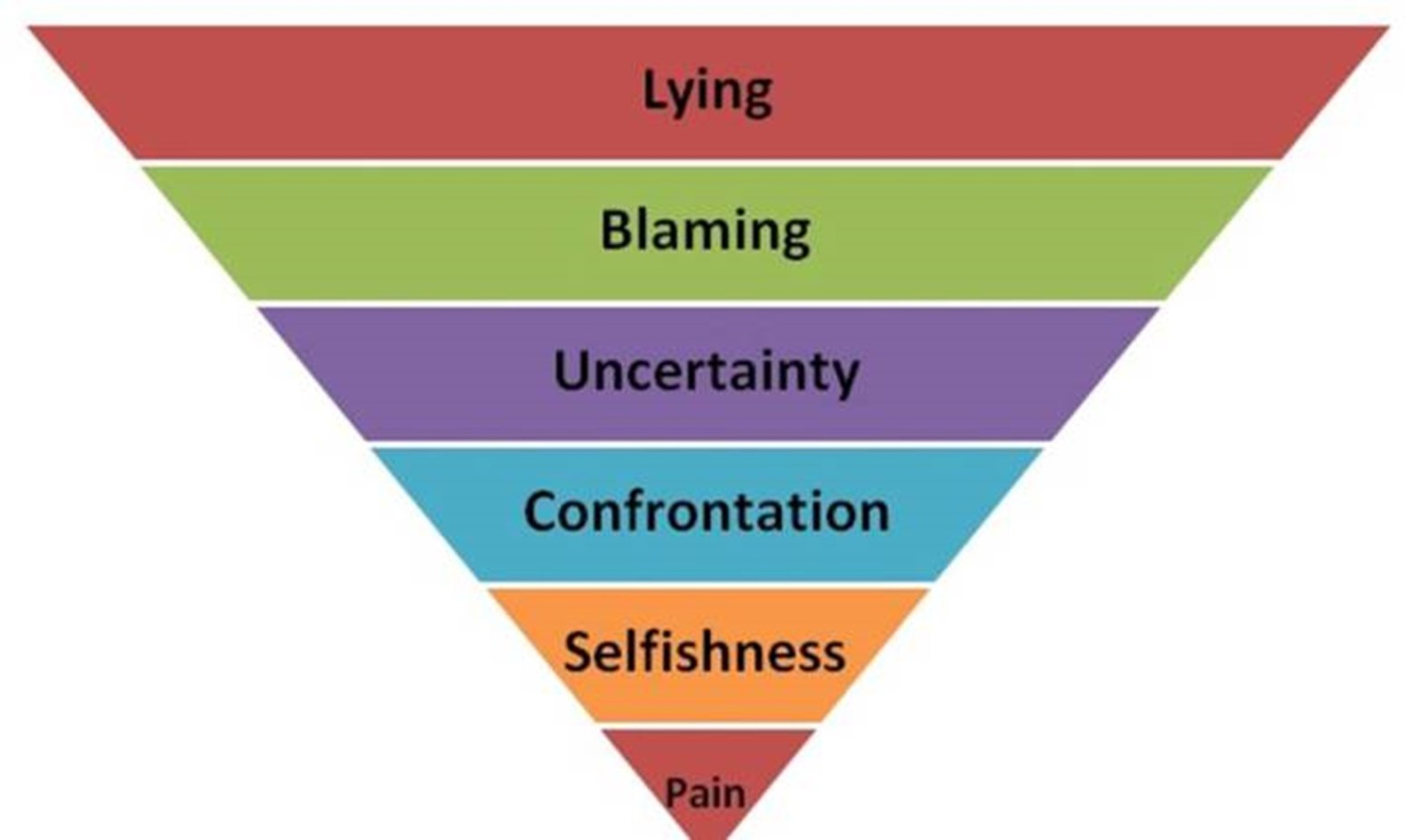
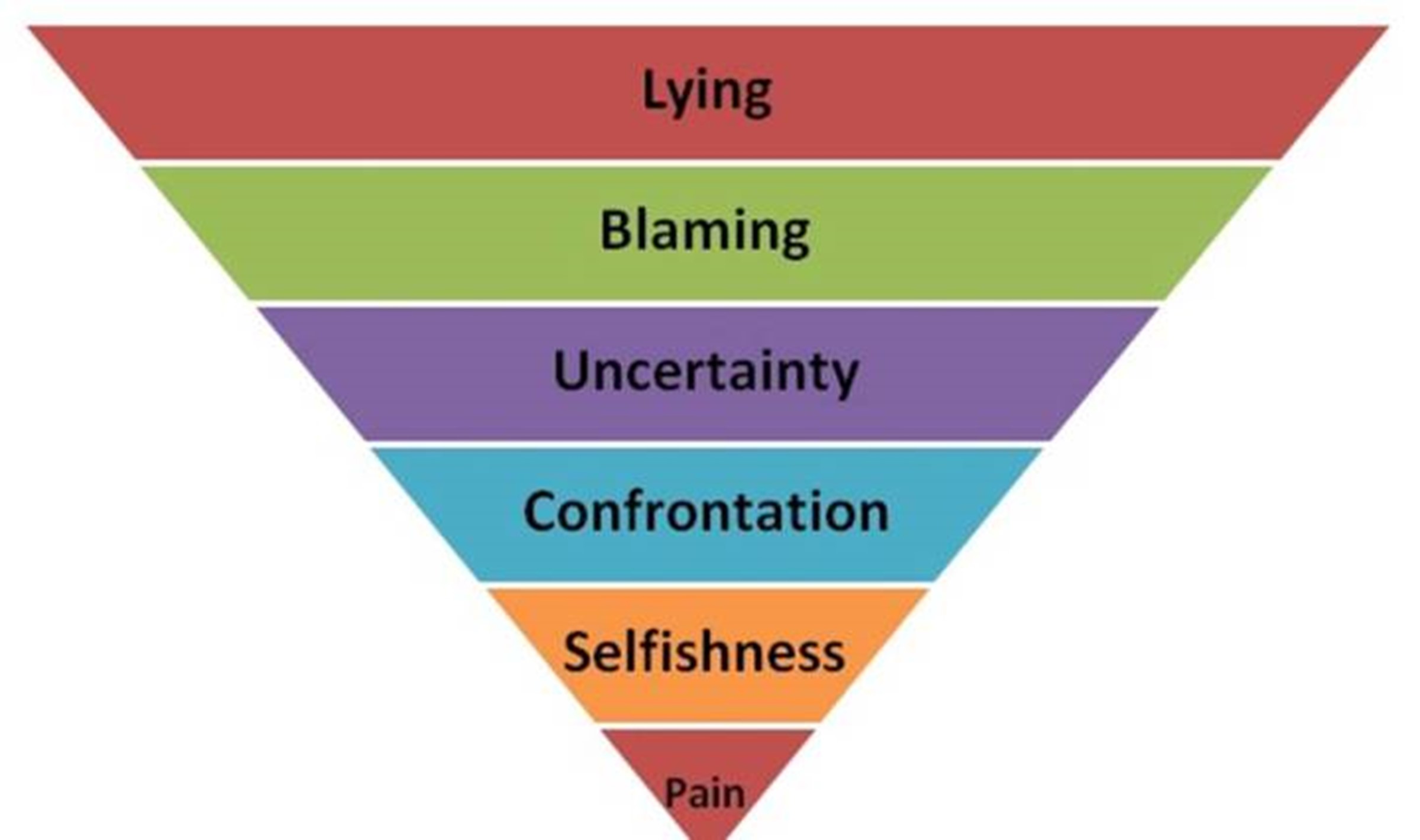


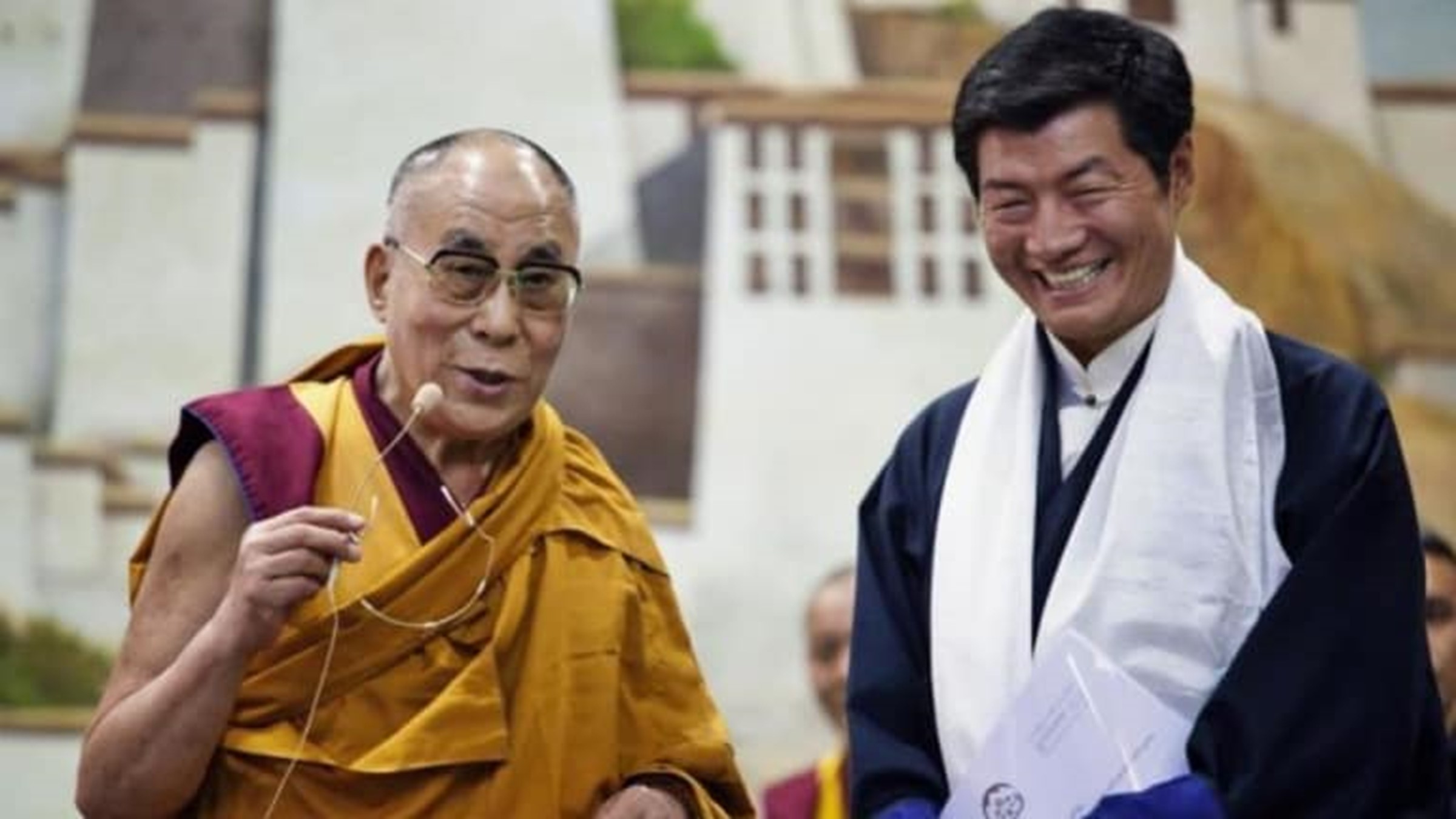
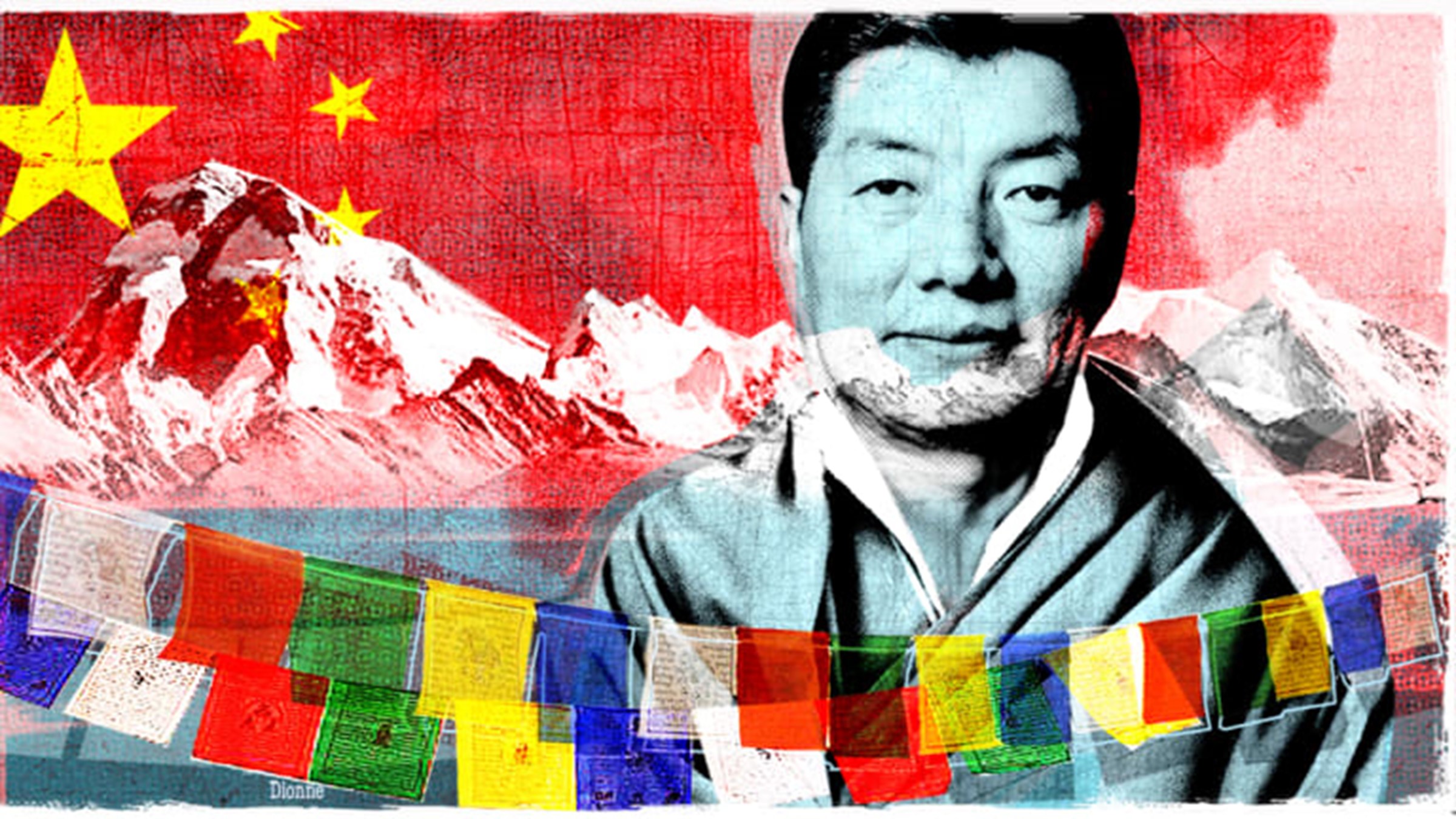







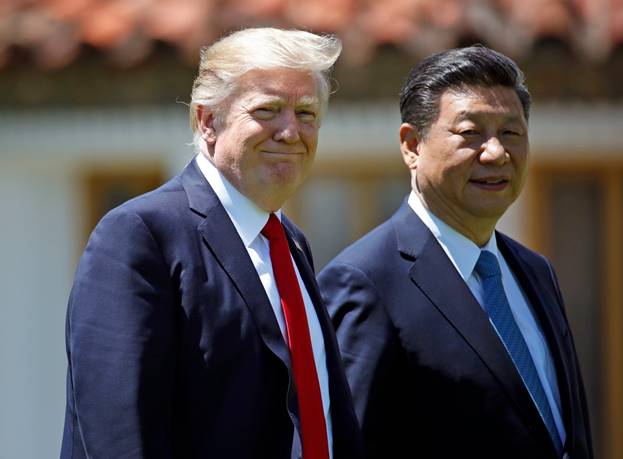



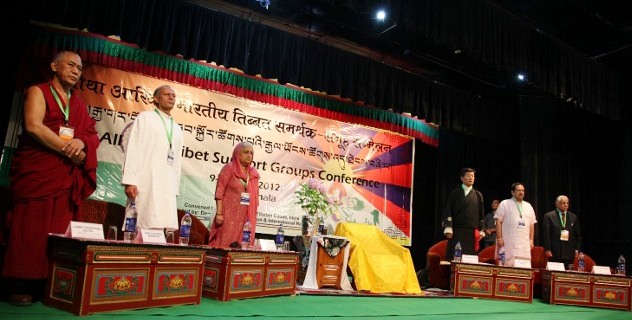



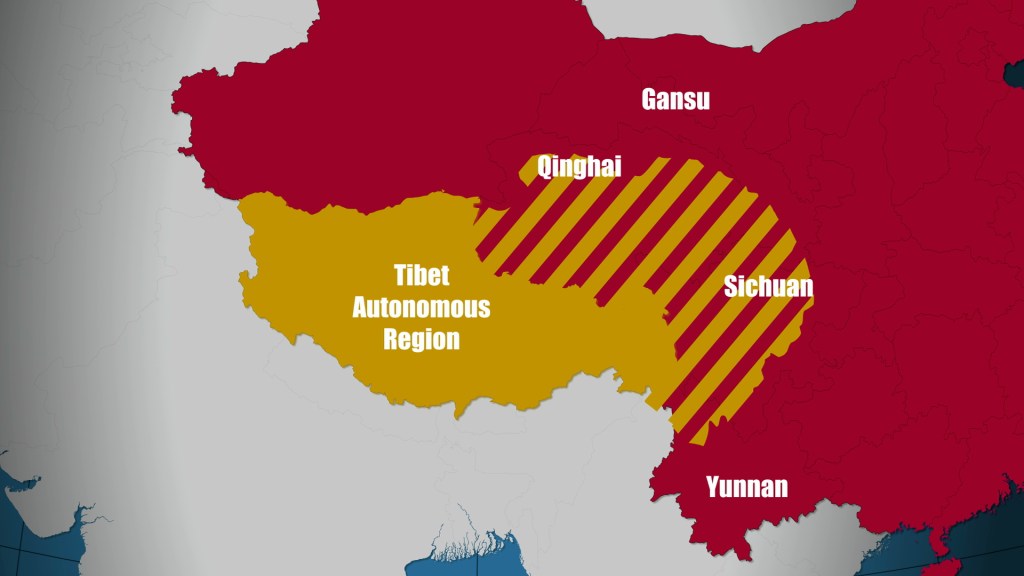


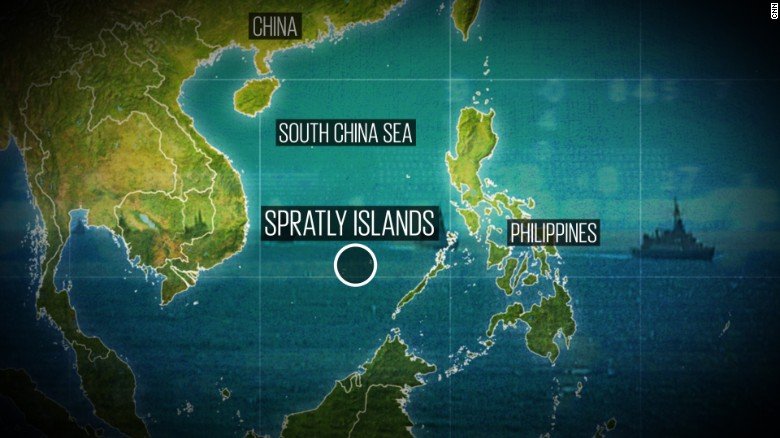


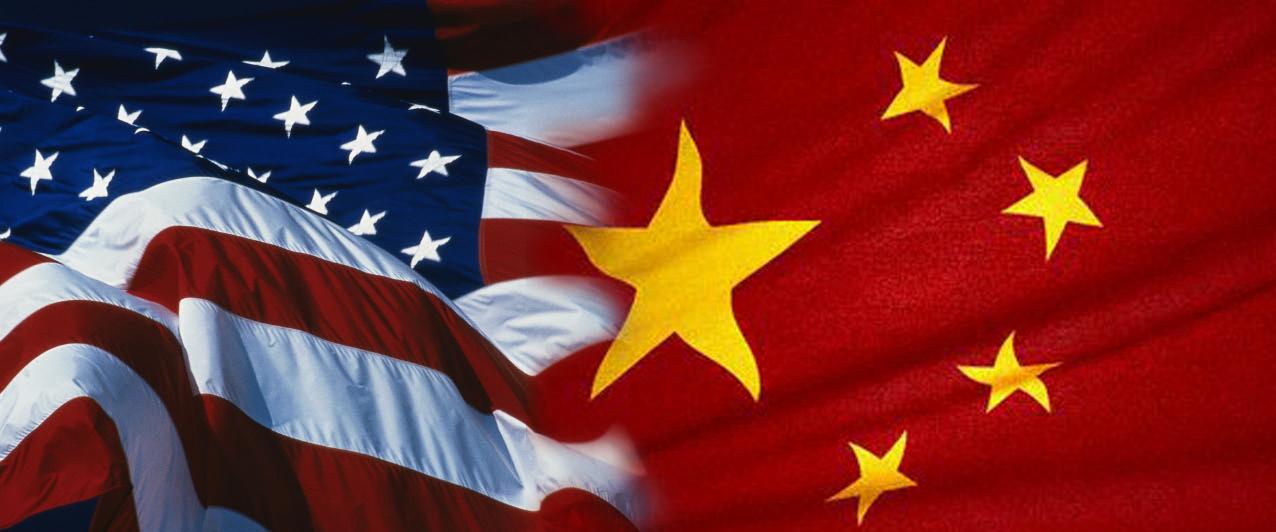

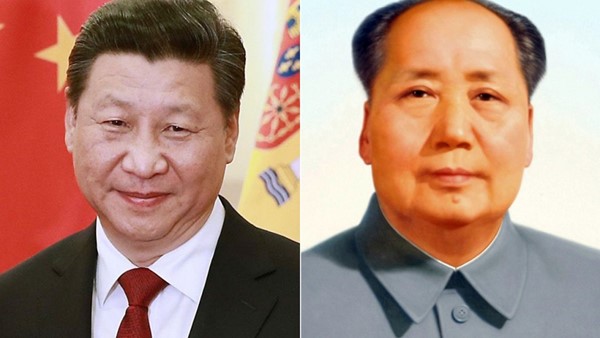


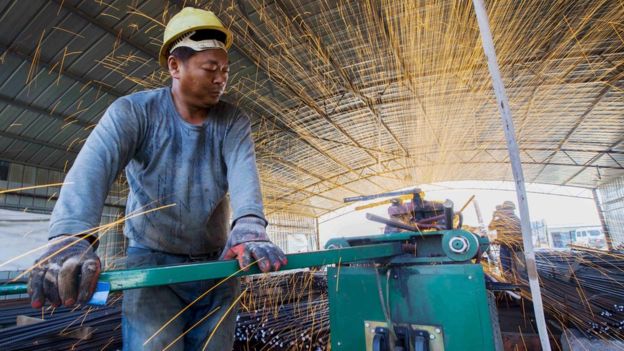

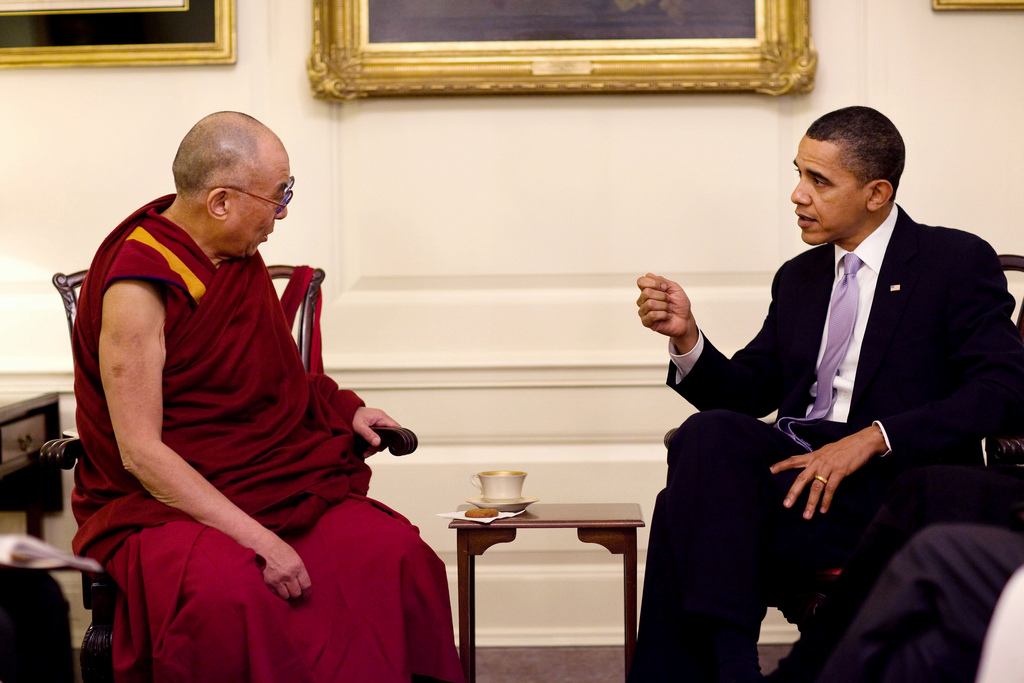
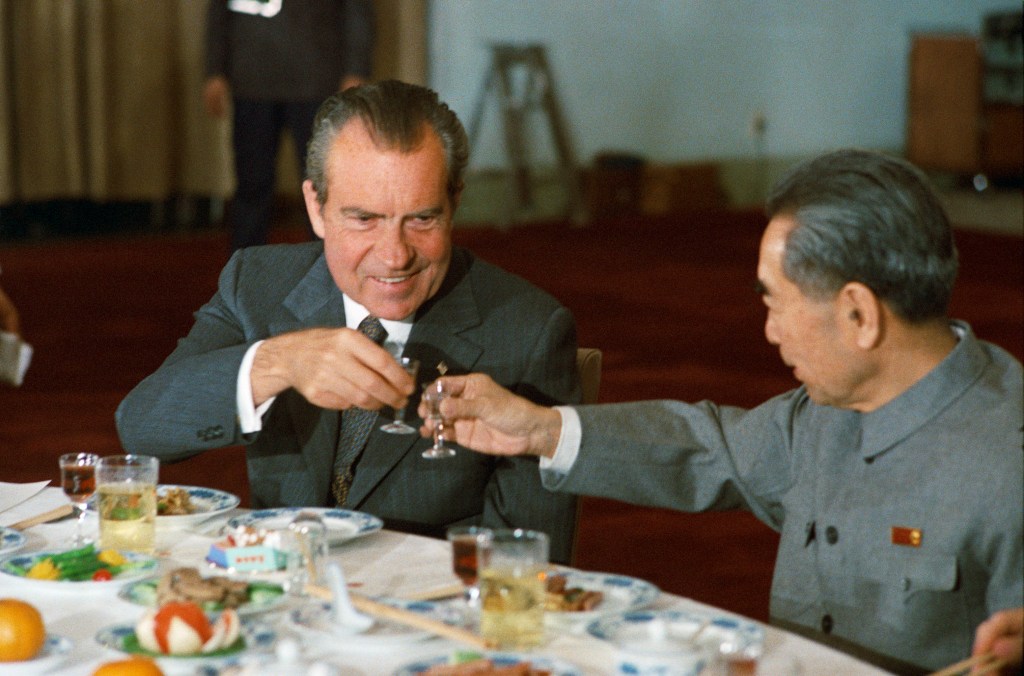
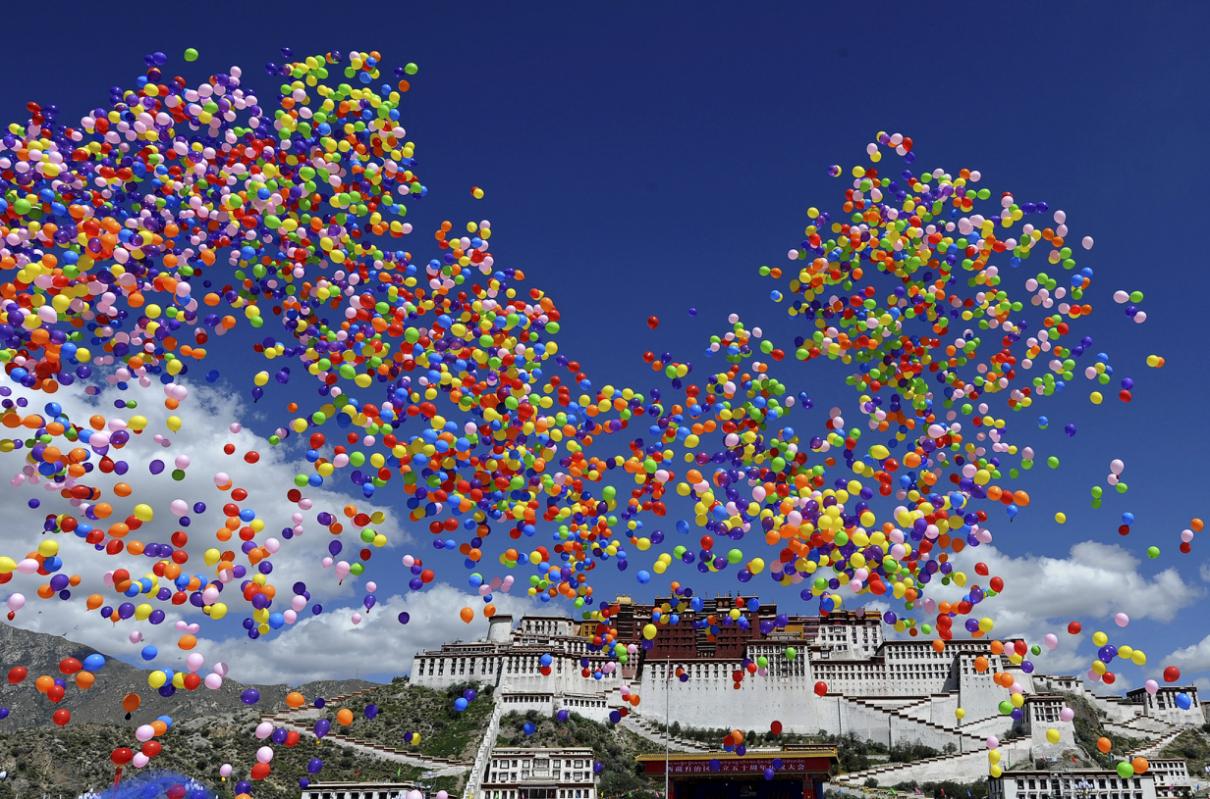



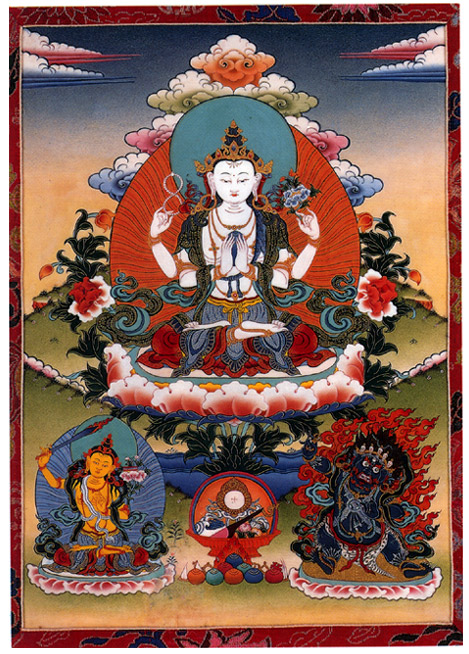
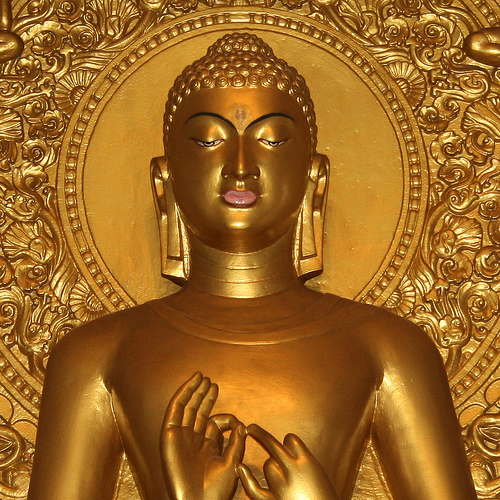





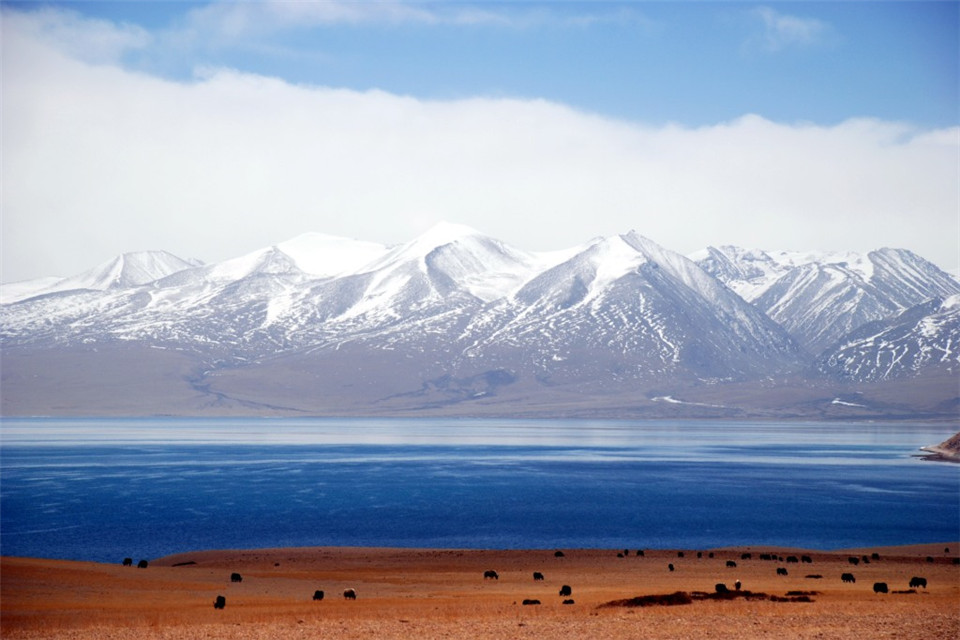
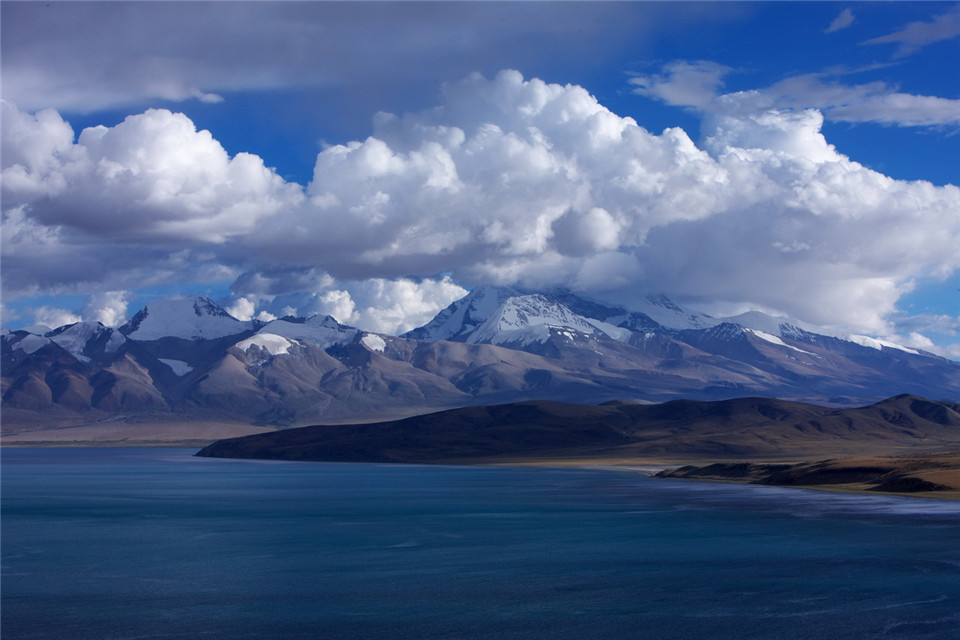
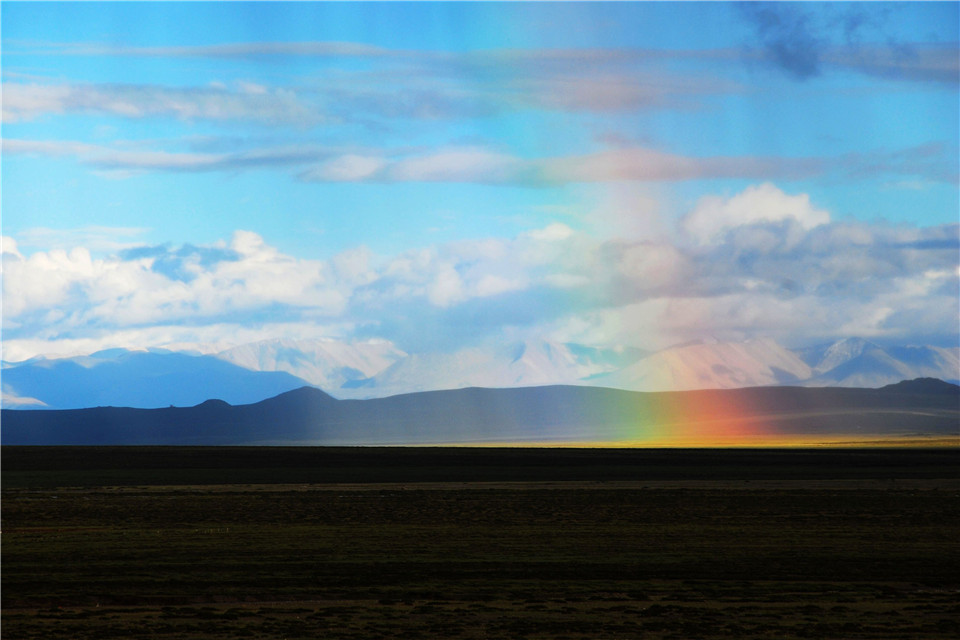




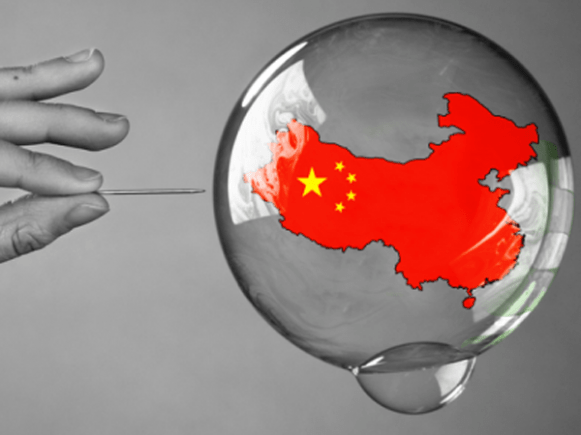

 Flat out on the plateau
 Everybody do the caterpillar fungus


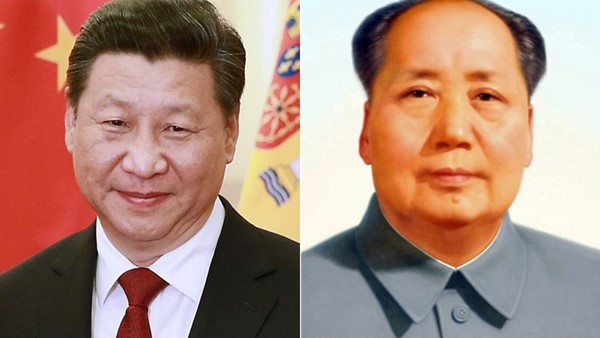

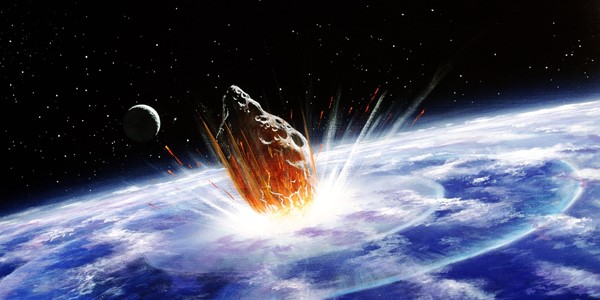
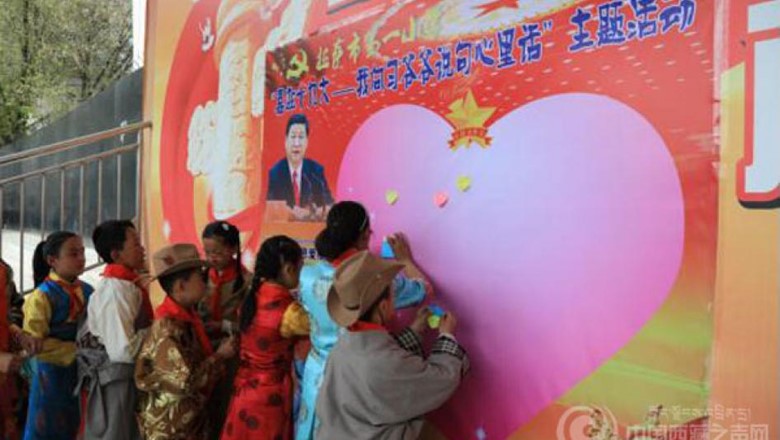
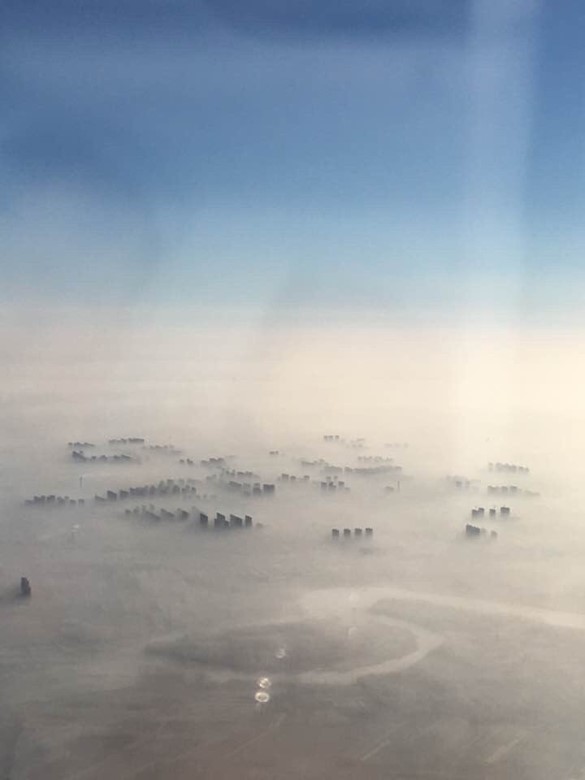
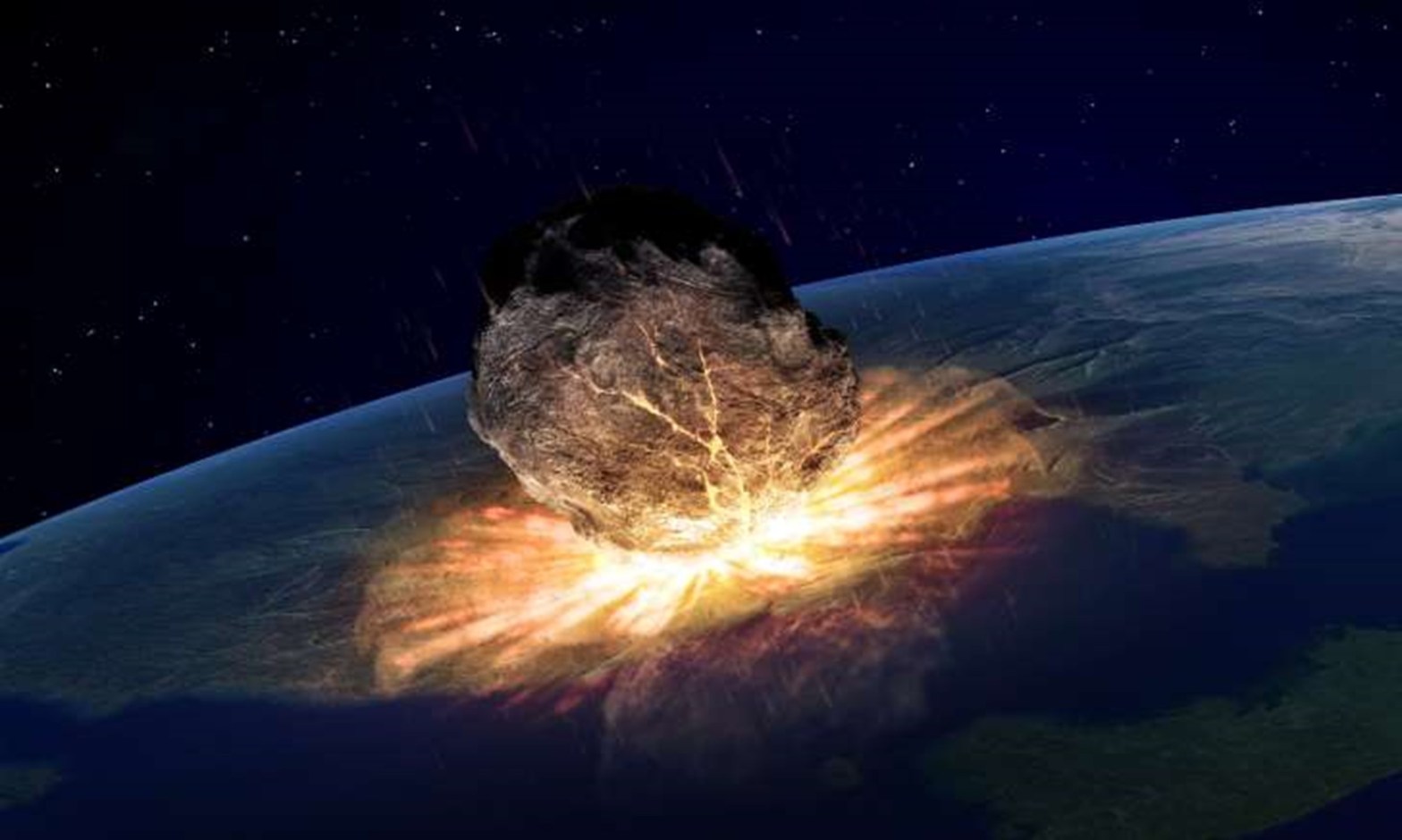
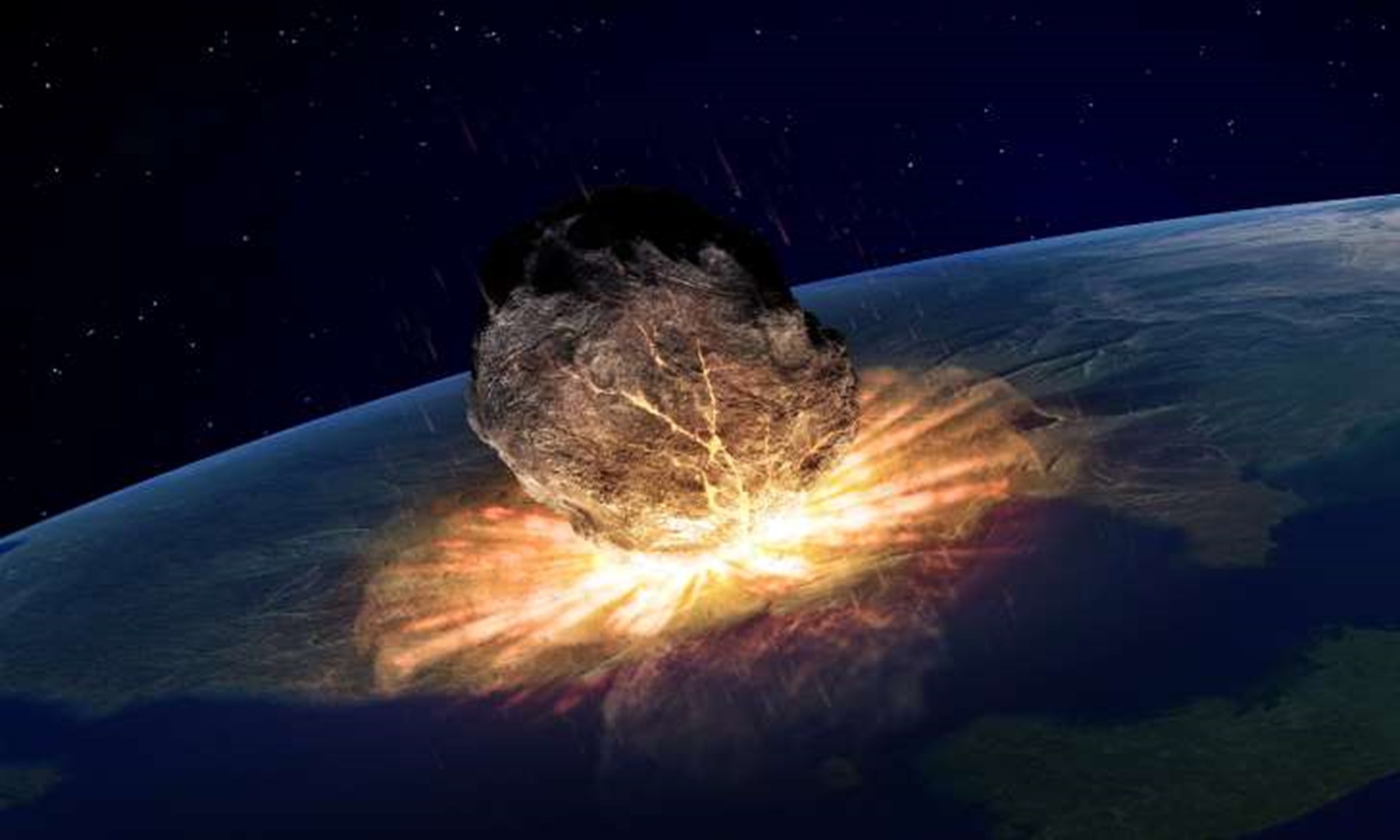
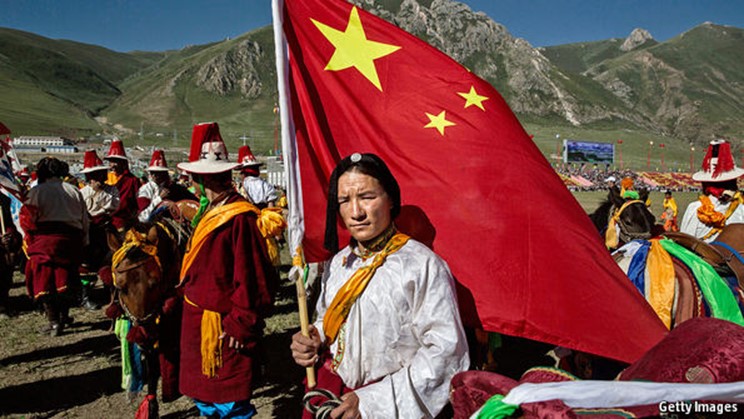


 Whole Dude - Whole Concept