Thursday, March 19, 2020. Welcome to Early Spring. I seek Blessings of Lord Madhava and Goddess Madhavi to renew my creative energy and to guide expression of my thoughts using sweet words and to promote the well-being of all my readers and become a source of Happiness to all people.
In the Indian tradition, the creative energy is personified as Goddess Madhavi, and Her consort Lord Madhava is the Controller of Creative Energy. Today, I seek Blessings of Lord Madhava and Goddess Madhavi to renew my creative energy and to guide expression of my thoughts using sweet words and to promote the well-being of all my readers and become a source of Happiness to all people.
LORD OF SEASONS – WELCOME TO EARLY SPRING. CELEBRATING THE FIRST DAY OF SPRING ON THURSDAY, MARCH 19, 2020.
I wish all my readers, ‘Happy First Day of Spring’. The exact moment of the equinox will occur Thursday night at 11:49 p.m. EDT (0349 GMT on March 20), according to the astronomy reference book “Astronomical Table of the Sun, Moon and Planets” (Willmann-Bell, 2016). At that time, the Earth will reach the point in its orbit where its axis isn’t tilted toward or away from the sun. Thus, the sun will then be directly over a specific point on the Earth’s equator moving northward. On the sky, it’s where the ecliptic and celestial equator cross each other. In fact, it will be a rather auspicious occurrence: the earliest that the equinox has occurred nationwide in 124 years.
Welcome to Early Spring Season 2020. I seek Blessings of Lord Madhava and Goddess Madhavi to renew my creative energy and to guide expression of my thoughts using sweet words and to promote the well-being of all my readers and become a source of Happiness to all people.
EVERY CHANGING PHENOMENON IN NATURE IS OPERATED BY UNCHANGING REALITY.
Welcome to Early Spring Season 2020. I seek Blessings of Lord Madhava and Goddess Madhavi to renew my creative energy and to guide expression of my thoughts using sweet words and to promote the well-being of all my readers and become a source of Happiness to all people.
Every changing phenomenon in nature is operated by Unchanging Reality. Spring Season brings a change, and this change is possible for it is governed by Unchanging Reality. In Indian tradition, Spring Season is glorified for it symbolizes Lord Madhava, Lord of Seasons.
Welcome to Early Spring Season 2020. Lord Madhava with His consort Goddess Madhavi. I seek Blessings of Lord Madhava and Goddess Madhavi to renew my creative energy and to guide expression of my thoughts using sweet words and to promote the well-being of all my readers and become a source of Happiness to all people.
The Divine Song called Bhagavad Gita, Chapter X, ‘The Infinite Glories of the Ultimate Truth’- ‘VIBHUTI VISTARA YOGA’, describes LORD God Creator’s Infinite Divine Attributes. In verse # 35, Lord Krishna describes Himself as The Lord of Spring Season – The Flowery Season: “Rtunam Kusumakarah.”
Welcome to Early Spring Season 2020. Lord Krishna as Madhava symbolizes the Season of Flowers, the Season of Joy. I seek Blessings of Lord Madhava and Goddess Madhavi to renew my creative energy and to guide expression of my thoughts using sweet words and to promote the well-being of all my readers and become a source of Happiness to all people.Welcome to Early Spring Season 2020. Lord Krishna as Madhava symbolizes the Season of Flowers, the Season of Joy. I seek Blessings of Lord Madhava and Goddess Madhavi to renew my creative energy and to guide expression of my thoughts using sweet words and to promote the well-being of all my readers and become a source of Happiness to all people.
The word ‘Spring’ describes the move upward or forward from the ground, it denotes resilience or bounce, and it means to grow or develop or come into existence quickly. Among the Seasons, the Spring Season is the time during which plants begin to grow after lying dormant all Winter. In the North Temperate Zone, the Spring Season includes the months of March, April, and May, the period between the Vernal Equinox and the Summer Solstice.
Welcome to Early Spring Season 2020. I seek Blessings of Lord Madhava and Goddess Madhavi to renew my creative energy and to guide expression of my thoughts using sweet words and to promote the well-being of all my readers and become a source of Happiness to all people.
A not-so-equal equinox
On the day of the equinox, the sun will appear to rise exactly east and set exactly west. Daytime and nighttime are often said to be equally long with the equinox, but this is a common misconception — the day can be up to 8 minutes longer, depending on your latitude.
The sun is above the horizon half the day and below for half — but that statement neglects the effect of the Earth’s atmosphere, which bends the rays of sunlight (called refraction) around the Earth’s curvature when the sun lies close to the horizon. But, because of this bending of the sun’s rays, the disk of the sun is always seen slightly higher above the horizon than it really is.
In fact, when you see the sun appearing to sit on the horizon, what you are looking at is an optical illusion; the sun at that moment is actually below the horizon. So, we get several extra minutes of daylight at the start of the day and several extra minutes more at the end.
Sun overhead from the Emerald of the Equator
Thursday, March 19, 2020. Welcome to Early Spring. I seek Blessings of Lord Madhava and Goddess Madhavi to renew my creative energy and to guide expression of my thoughts using sweet words and to promote the well-being of all my readers and become a source of Happiness to all people.
Astronomers can calculate the moment of the vernal equinox right down to the nearest second. This year it will occur on Thursday (March 19) at 11:49:28 p.m. EDT (0349 GMT on March 20). At that moment, the sun will appear directly overhead about 50 miles (80 kilometers) south of Gorontalo, a province of Indonesia — often referred to as the “Emerald of the Equator” — on the island of Sulawesi, on the equator in the Gulf of Tomini. In the days that follow, the direct rays of the sun migrate to the north of the equator and the length of daylight in the Northern Hemisphere will correspondingly appear to increase.
LORD MADHAVA–LORD OF THE SPRING SEASON:
Welcome to Early Spring Season 2020. I seek Blessings of Lord Madhava and Goddess Madhavi to renew my creative energy and to guide expression of my thoughts using sweet words and to promote the well-being of all my readers and become a source of Happiness to all people.
In the Indian tradition, Spring Season is called ‘BASANT’, ‘VASANT’,’KUSUMAKARA’ or ‘MADHAVAM’. A chief, alluring feature of this Season is the flowering of plants. Mangifera indica, MANGO plant, a native of India bears flowers and promises to deliver its sweet, and delicious fruits.
The Spring Season is a time for rebirth, regeneration, renewal, and regrowth after a period of dormancy. Man derives a sense of joy and happiness when the plants start their growing process and quickly bear attractive flowers. It gives the experience of ‘Sweetness’ which is called ‘Madhurya’ in the Sanskrit language. It is a manifestation of a creative process, or operation of creative energy that makes human existence possible giving the man the sensation associated with consuming nectar, honey, or sweet wine. In Indian tradition, this creative energy is personified as Goddess Madhavi, and Her consort Lord Madhava is the Controller of Creative Energy. Today, I seek Blessings of Lord Madhava and Goddess Madhavi to renew my creative energy and to guide expression of my thoughts using sweet words and to promote the well-being of all my readers and become a source of Happiness to all people.
Welcome to Early Spring Season 2020. I seek Blessings of Lord Madhava and Goddess Madhavi to renew my creative energy and to guide expression of my thoughts using sweet words and to promote the well-being of all my readers and become a source of Happiness to all people.Spring Season brings a sense of Joy, uplifts the mood of man. The Joy could be compared to the sweetness of nectar that is gathered by butterflies from various Spring Season flowers.
Presidents’ Day 2020. The Legacy of US National Debt.
The national debt stands at $22.72 trillion as of Sept. 30, 2019. This enormous bill didn’t come from nowhere, and it’s safe to say that the U.S. will likely continue borrowing money in the foreseeable future. So, how worried should Americans be about the national debt? There’s not a lot of agreement across the political spectrum on the answer to that question.
$20 bill from 1995. Presidents’ Day 2020. The Legacy of US National Debt. The 42nd US President (Presidential Term January 20, 1993 to January 20, 2001)made an Unjust and Unfair plan to reduce the US National Debt by denying the payment of Social Security and Medicare Benefits to tax paying alien hourly wage workers.
However, understanding why the U.S. borrows money and how different historical events shaped that process is important to any informed voter, especially with another election approaching in November. Knowing how much the federal government borrowed to deal with various issues and events throughout the last century can help you gauge whether each politician’s plans to address the national debt are feasible.
For example, you can note how 1933 saw a marked increase in debt as the new Roosevelt administration broke with the fiscal orthodoxy of the time by employing large deficits to combat the Great Depression. Each recession has correlated with a spike in borrowing, with tax revenues dropping when the needs of the American people were at their highest. All told, tracking the progress of the national debt is a valuable way to understand the U.S. government’s relationship to its people.
Using data from TreasuryDirect and the Bureau of Labor Statistics’ consumer price index inflation calculator, GOBankingRates analyzed the total U.S. national debt from 1900 to present in five-year increments and adjusted the outstanding debt for inflation to provide context in today’s dollars.
The US Treasury Building in 1900. Presidents’ Day 2020. The Legacy of US National Debt.
1900-1904
Outstanding debt in 1900: $2.14 billion
Debt adjusted for inflation: $65.37 billion
Outstanding debt in 1904: $2.26 billion
Debt adjusted for inflation: $65.37 billion
Change in debt between 1900-1904: 5.95% Change in debt adjusted for inflation: -$4.55 million
$20 U.S. gold certificate from 1905 Presidents’ Day 2020. The Legacy of US National Debt.
1905-1909
Outstanding debt in 1905: $2.27 billion
Debt adjusted for inflation: $66.42 billion
Outstanding debt in 1909: $2.64 billion
Debt adjusted for inflation: $74.54 billion
Change in debt between 1905-1909: 16.04% Change in debt adjusted for inflation: $8.12 billion
William Howard Taft, who was president from 1910-1913. Presidents’ Day 2020. The Legacy of US National Debt.
1910-1914
Outstanding debt in 1910: $2.65 billion
Debt adjusted for inflation: $71.75 billion
Outstanding debt in 1914: $2.91 billion
Debt adjusted for inflation: $74.84 billion
Change in debt between 1910-1914: 9.80% Change in debt adjusted for inflation: $3.09 billion
U.S. Treasury Building in 1915. Presidents’ Day 2020. The Legacy of US National Debt.
1915-1919
Outstanding debt in 1915: $3.06 billion
Debt adjusted for inflation: $77.81 billion
Outstanding debt in 1919: $27.39 billion
Debt adjusted for inflation: $406.87 billion
Change in debt between 1915-1919: 795.68% Change in debt adjusted for inflation: $329.06 billion
$5 U.S. silver certificate from 1923. Presidents’ Day 2020. The Legacy of US National Debt.
1920-1924
Outstanding debt in 1920: $25.95 billion
Debt adjusted for inflation: $333.46 billion
Outstanding debt in 1924: $21.25 billion
Debt adjusted for inflation: $319.35 billion
Change in debt between 1920-1924: -18.12% Change in debt adjusted for inflation: -$14.10 billion
Calvin Coolidge, who was president from 1925-1929. Presidents’ Day 2020. The Legacy of US National Debt.
1925-1929
Outstanding debt in 1925: $20.52 billion
Debt adjusted for inflation: $301.26 billion
Outstanding debt in 1929: $16.93 billion
Debt adjusted for inflation: $254.44 billion
Change in debt between 1925-1929: -17.47% Change in debt adjusted for inflation: -$46.83 billion
Pageant in front of the U.S. Treasury Building in 1930. Presidents’ Day 2020. The Legacy of US National Debt.
1930-1934
Outstanding debt in 1930: $16.19 billion
Debt adjusted for inflation: $249.05 billion
Outstanding debt in 1934: $27.05 billion
Debt adjusted for inflation: $518.80 billion
Change in debt between 1930-1934: 67.15% Change in debt adjusted for inflation: $269.75 billion
$1 U.S. silver certificate from 1935. Presidents’ Day 2020. The Legacy of US National Debt.
1935-1939
Outstanding debt in 1935: $28.70 billion
Debt adjusted for inflation: $538.35 billion
Outstanding debt in 1939: $40.44 billion
Debt adjusted for inflation: $747.62 billion
Change in debt between 1935-1939: 40.90% Change in debt adjusted for inflation: $209.27 billion
US Treasury Building in 1941. Presidents’ Day 2020. The Legacy of US National Debt.
1940-1944
Outstanding debt in 1940: $42.97 billion
Debt adjusted for inflation: $788.68 billion
Outstanding debt in 1944: $201.00 billion
Debt adjusted for inflation: $2.93 trillion
Change in debt between 1940-1944: 367.80% Change in debt adjusted for inflation: $2.15 trillion
Harry S. Truman, who was president from 1945-1949. Presidents’ Day 2020. The Legacy of US National Debt.
1945-1949
Outstanding debt in 1945: $258.68 billion
Debt adjusted for inflation: $3.69 trillion
Outstanding debt in 1949: $252.77 billion
Debt adjusted for inflation: $2.73 trillion
Change in debt between 1945-1949: -2.29% Change in debt adjusted for inflation: -$963.81 billion
$10 U.S. silver certificate from 1953. Presidents’ Day 2020.The Legacy of US National Debt.
1950-1954
Outstanding debt in 1950: $257.36 billion
Debt adjusted for inflation: $2.74 trillion
Outstanding debt in 1954: $271.26 billion
Debt adjusted for inflation: $2.59 trillion
Change in debt between 1950-1954: 5.40% Change in debt adjusted for inflation: -$152.83 billion
The increase in national debt from 1950-1954 was outpaced by inflation, so the value of the dollar decreased faster than the rate at which the national debt grew.
$1 U.S. silver certificate from 1957. Presidents’ Day 2020. The Legacy of US National Debt.
1955-1959
Outstanding debt in 1955: $274.37 billion
Debt adjusted for inflation: $2.63 trillion
Outstanding debt in 1959: $284.71 billion
Debt adjusted for inflation: $2.51 trillion
Change in debt between 1955-1959: 3.77% Change in debt adjusted for inflation: -$116.70 billion
The increase in national debt from 1955-1959 was outpaced by inflation, so the value of the dollar decreased faster than the rate at which the national debt grew.
John F. Kennedy, who was president from 1961-1963. Presidents’ Day 2020. The Legacy of US National Debt.
1960-1964
Outstanding debt in 1960: $286.33 billion
Debt adjusted for inflation: $2.49 trillion
Outstanding debt in 1964: $311.71 billion
Debt adjusted for inflation: $2.58 trillion
Change in debt between 1960-1964: 8.86% Change in debt adjusted for inflation: $98.14 billion
Lyndon B. Johnson, who was president from 1965-1969. Presidents’ Day 2020. The Legacy of US National Debt.
1965-1969
Outstanding debt in 1965: $317.27 billion
Debt adjusted for inflation: $2.59 trillion
Outstanding debt in 1969: $353.72 billion
Debt adjusted for inflation: $2.48 trillion
Change in debt between 1965-1969: 11.49% Change in debt adjusted for inflation: -$111.54 billion
The increase in national debt from 1965-1969 was outpaced by inflation, so the value of the dollar decreased faster than the rate at which the national debt grew.
Gas ration stamps being printed by the U.S. Bureau of Engraving and Printing as a result of the 1973 oil crisis. Presidents’ Day 2020. The Legacy of US National Debt.
1970-1974
Outstanding debt in 1970: $370.92 billion
Debt adjusted for inflation: $2.46 trillion
Outstanding debt in 1974: $475.06 billion
Debt adjusted for inflation: $2.48 trillion
Change in debt between 1970-1974: 28.08% Change in debt adjusted for inflation: $19.62 billion
Specially stamped bicentennial $2 bill from 1976. Presidents’ Day 2020. The Legacy of US National Debt.
1975-1979
Outstanding debt in 1975: $533.19 billion
Debt adjusted for inflation: $2.55 trillion
Outstanding debt in 1979: $826.52 billion
Debt adjusted for inflation: $2.93 trillion
Change in debt between 1975-1979: 55.01% Change in debt adjusted for inflation: $378.78 billion
US Treasury Building in 1980. Presidents’ Day 2020. The Legacy of US National Debt.
1980-1984
Outstanding debt in 1980: $907.70 billion
Debt adjusted for inflation: $2.83 trillion
Outstanding debt in 1984: $1.57 trillion
Debt adjusted for inflation: $3.89 trillion
Change in debt between 1980-1984: 73.21% Change in debt adjusted for inflation: $1.06 trillion
Senior citizens in a retirement home watching the 1987 stock market crash. Presidents’ Day 2020. The Legacy of US National Debt,
1985-1989
Outstanding debt in 1985: $1.82 trillion
Debt adjusted for inflation: $4.35 trillion
Outstanding debt in 1989: $2.86 trillion
Debt adjusted for inflation: $5.92 trillion
Change in debt between 1985-1989: 56.73% Change in debt adjusted for inflation: $1.57 trillion
George H.W. Bush, who was president from 1990-1993. Presidents’ Day 2020. The Legacy of US National Debt.
1990-1994
Outstanding debt in 1990: $3.23 trillion
Debt adjusted for inflation: $6.36 trillion
Outstanding debt in 1994: $4.69 trillion
Debt adjusted for inflation: $8.14 trillion
Change in debt between 1990-1994: 45.14% Change in debt adjusted for inflation: $1.78 trillion
William Jefferson Clinton was the US President from January 20, 1993 to January 20, 2001. Presidents’ Day 2020. The Legacy of US National Debt.
1995-1999
Outstanding debt in 1995: $4.97 trillion
Debt adjusted for inflation: $8.39 trillion
Outstanding debt in 1999: $5.66 trillion
Debt adjusted for inflation: $8.72 trillion
Change in debt between 1995-1999: 13.72% Change in debt adjusted for inflation: $337.54 billion
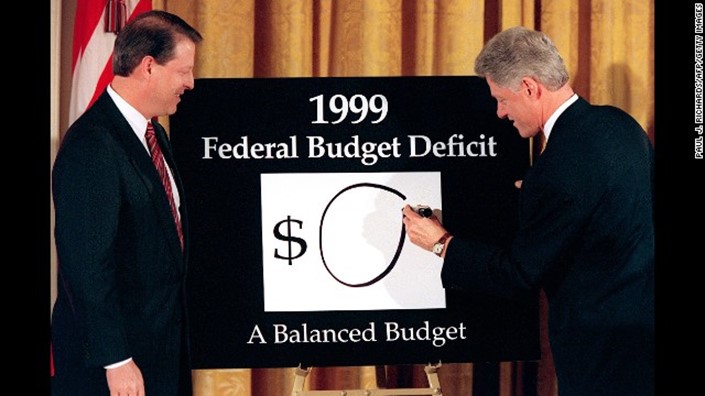
42nd US President ( Presidential term from January 1993 to January 2001. Bill Clinton did not Balance the US Budget. Presidents’ Day 2020. The Legacy of US National Debt.–
2000-2004
Outstanding debt in 2000: $5.67 trillion
Debt adjusted for inflation: $8.47 trillion
Outstanding debt in 2004: $7.38 trillion
Debt adjusted for inflation: $10.04 trillion
Change in debt between 2000-2004: 30.05% Change in debt adjusted for inflation: $1.57 trillion
Barack Obama, who was inaugurated as the 44th U.S. president in 2009. Presidents’ Day 2020. The Legacy of US National Debt.
2005-2009
Outstanding debt in 2005: $7.93 trillion
Debt adjusted for inflation: $10.44 trillion
Outstanding debt in 2009: $11.91 trillion
Debt adjusted for inflation: $14.27 trillion
Change in debt between 2005-2009: 50.14% Change in debt adjusted for inflation: $3.83 trillion
Occupy Wall Street protests in 2011. Presidents’ Day 2020. The Legacy of US National Debt.
2010-2014
Outstanding debt in 2010: $13.56 trillion
Debt adjusted for inflation: $15.98 trillion
Outstanding debt in 2014: $17.82 trillion
Debt adjusted for inflation: $19.35 trillion
Change in debt between 2010-2014: 31.43% Change in debt adjusted for inflation: $3.37 trillion
Current US Treasury Building. Presidents’ Day 2020. The Legacy of US National Debt.
2015-2019
Outstanding debt in 2015: $18.15 trillion
Debt adjusted for inflation: $19.68 trillion
Outstanding debt in 2019: $22.72 trillion
Debt adjusted for inflation: $22.84 trillion
Change in debt between 2015-2019: 25.17% Change in debt adjusted for inflation: $3.16 trillion
Presidents’ Day 2020. The Legacy of US National Debt.
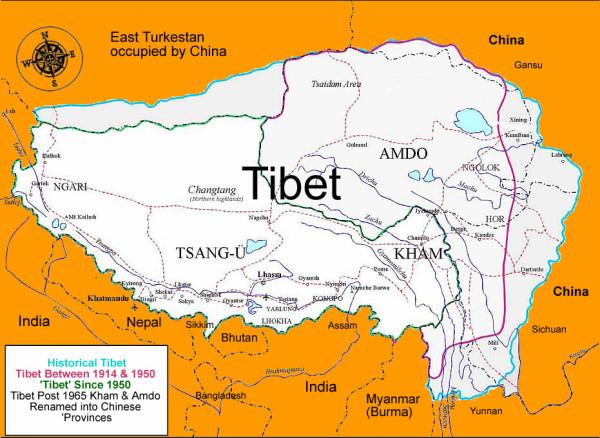
China’s Population Transfer Policy. The Chinese Settlers outnumber the Native Population of Tibet, Manchuria, Inner Mongolia, and East Turkestan. The Sinicization of Occupied territories.
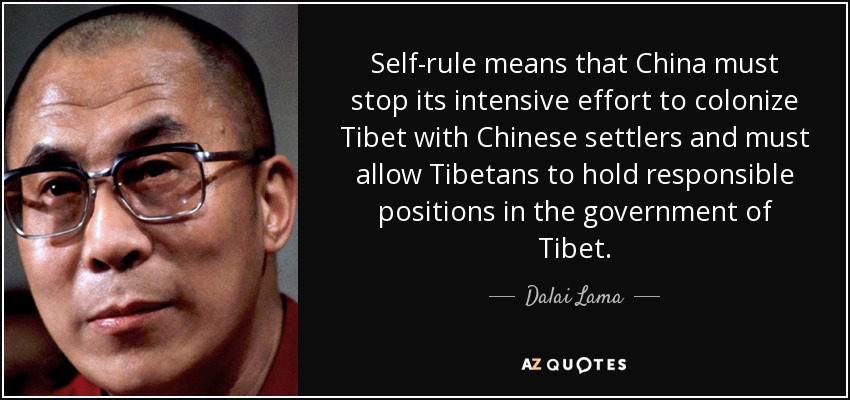
In his 5 point peace plan the Dalai Lama called to stop Chinese colonization of Tibet and described the past and present situation. When the newly formed People’s Republic of China invaded Tibet in 1949/50, it created a new source of conflict.
TIBET NOT PART OF CHINA – INDIA SHARES NO BORDER WITH CHINA. China’s Population Transfer Policy. The Chinese Settlers outnumber the Native Population of Tibet, Manchuria, Inner Mongolia, and East Turkestan. The Sinicization of Occupied territories.
“When the newly formed People’s Republic of China invaded Tibet in 1949/50, it created a new source of conflict.
“This was highlighted when, following the Tibetan national uprising against the Chinese and my flight to India in 1959, tensions between China and India escalated into the border war in 1962.
“Today large numbers of troops are again massed on both sides of the Himalayan border and tension is once more dangerously high.
“The real issue, of course, is not the Indo-Tibetan border demarcation.
“It is China’s illegal occupation of Tibet, which has given it direct access to the Indian sub-continent.
“The Chinese authorities have attempted to confuse the issue by claiming that Tibet has always been a part of China.
“This is untrue. Tibet was a fully independent state when the People’s Liberation Army invaded the country in 1949/50.
“Since Tibetan emperors unified Tibet, over a thousand years ago, our country was able to maintain its independence until the middle of this century.
“At times Tibet extended its influence over neighbouring countries and peoples and, in other periods, came itself under the influence of powerful foreign rulers – the Mongol Khans, the Gorkhas of Nepal, the Manchu Emperors and the British in India.
“It is, of course, not uncommon for states to be subjected to foreign influence or interference.
“Although so-called satellite relationships are perhaps the clearest examples of this, most major powers exert influence over less powerful allies or neighbours.
“As the most authoritative legal studies have shown, in Tibet’s case, the country’s occasional subjection to foreign influence never entailed a loss of independence.
” And there can be no doubt that when Peking’s communist armies entered Tibet, Tibet was in all respects an independent state…
“Human rights violations in Tibet are among the most serious in the world.
“Discrimination is practiced in Tibet under a policy of ‘apartheid’ which the Chinese call ‘segregation and assimilation’.
“Tibetans are, at best, second class citizens in their own country.
“Deprived of all basic democratic rights and freedoms, they exist under a colonial administration in which all real power is wielded by Chinese officials of the Communist Party and the army.
“Although the Chinese government allows Tibetans to rebuild some Buddhist monasteries and to worship in them, it still forbids serious study and teaching of religion.
“Only a small number of people, approved by the Communist Party, are permitted to join the monasteries.
“While Tibetans in exile exercise their democratic rights under a constitution promulgated by me in 1963, thousands of our countrymen suffer in prisons and labour camps in Tibet for their religious or political convictions…
“The massive transfer of Chinese civilians into Tibet in violation of the Fourth Geneva Convention (1949), threatens the very existence of the Tibetans as a distinct people.
China’s Population Transfer Policy. The Chinese Settlers outnumber the Native Population of Tibet, Manchuria, Inner Mongolia, and East Turkestan. The Sinicization of Occupied territories.
“In the eastern parts of our country, the Chinese now greatly outnumber Tibetans.
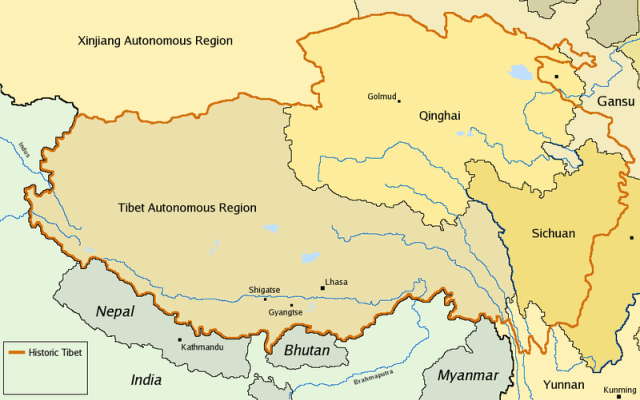
“In the Amdo province, for example, where I was born, there are, according to the Chinese statistics, 2.5 million Chinese and only 750,000 Tibetans. Even in the so-called Tibet Autonomous Region (i.e., central and western Tibet), Chinese government sources now confirm that Chinese outnumber Tibetans.
“The Chinese population transfer policy is not new. It has been systematically applied to other areas before.
“Earlier in this century, the Manchus were a distinct race with their own culture and traditions.
“Today only two to three million Manchurians are left in Manchuria, where 75 million Chinese have settled.
China’s Population Transfer Policy. The Chinese Settlers outnumber the Native Population of Tibet, Manchuria, Inner Mongolia, and East Turkestan (Xinjiang). The Sinicization of Occupied territories.
“In Eastern Turkestan, which the Chinese now call Sinkiang, the Chinese population has grown from 200,000 in 1949 to 7 million, more than half of the total population of 13 million. In the wake of the Chinese colonization of Inner Mongolia, Chinese number 8.5 million, Mongols 2.5 million.
“Today, in the whole of Tibet 7.5 million Chinese settlers have already been sent, outnumbering the Tibetan population of 6 million.
“In central and western Tibet, now referred to by the Chinese as the “Tibet Autonomous Region”, Chinese sources admit the 1.9 million Tibetans already constitute a minority of the region’s population.
“These numbers do not take the estimated 300,000-500,000 troops in Tibet into account – 250,000 of them in so-called Tibet Autonomous Region.
“For the Tibetans to survive as a people, it is imperative that the population transfer is stopped and Chinese settlers return to China.
“Otherwise, Tibetans will soon be no more than a tourist attraction and relic of a noble past. ”
China’s Population Transfer Policy. The Chinese Settlers outnumber the Native Population of Tibet, Manchuria, Inner Mongolia, and East Turkestan. The Sinicization of Occupied territories.
Whole Dude – Whole Gimmicks: In fact, the national debt went from $4.4 Trillion at the end of 1993 to almost $5.7 Trillion at the end of 2000, U.S. Treasury data shows, a 28 percent increase in the debt over this time when our nation supposedly was running a balanced budget.
1997 Balanced Budget and Taxpayer Relief Act
SUMMARY:
The Balanced Budget Act of 1997 (a spending bill) and the Taxpayer Relief Act of 1997 (a tax bill) legislated the elimination of the annual budget deficit by 2002. Both bills were passed by Congress by large bipartisan majorities and signed into law by President Clinton prior to the August 1997 congressional recess.
DESCRIPTION:
Following difficult and highly partisan budget negotiations in 1993 (for the FY 1994 budget) and 1995 (for the FY 1996 budget), the negotiations in 1997 for the FY 1998 were marked largely by bipartisanship, even as the legislators and the President sought to produce the first balanced federal budget since 1969.
The Clinton Curse. A Balanced Budget vs Foreign Debt. Slaying the Dragon of Debt.
In my analysis, President Clinton did not create a Balanced Budget in 1997 for the first time since 1969. In fact, President Clinton violated the preachings of the Bible about Fiscal Policy. This Nation failed to receive the Blessings promised by LORD God. President Clinton foolishly chose to disobey God’s Commandments and invited the Curses promised by LORD God.
The Clinton Curse: Slaying the Dragon of Debt.The Clinton Curse: Slaying the Dragon of Debt.
President Bill Clinton invoked the Curses promised by the LORD God for acts of disobedience of God in the formulation of the Fiscal Policy of the Nation.
The Clinton Curse: Slaying of the Dragon of Debt.
The United States has nothing to fall back in its fight to Slay the Dragon of Debt. The United States needs the promise of Prosperity to Slay the Dragon of Debt. I ask the US Congress to Repeal PRWORA, the Slavery Act of 1996 to correct the transgressions of President Bill Clinton’s Fiscal Policy.
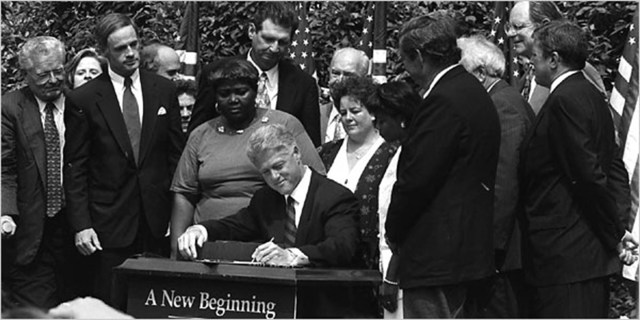
December 06. The Death of the 13th Amendment to the US Constitution. President Bill Clinton’s “A New Beginning” imposed the Death Sentence on the rights granted by the 13th Amendment.
U.S. deficit to eclipse $1 trillion in 2020, CBO says, as fiscal imbalance continues to widen
The Clinton Curse: Slaying of the Dragon of Debt. The U.S. Capitol seen through window reflections Jan. 27, 2020. (Patrick Semansky/AP)
By Jeff Stein
Jan. 28, 2020 at 3:23 p.m. EST
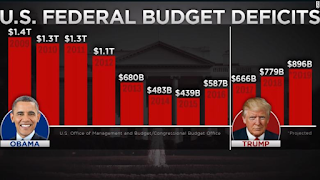
The U.S. government’s budget deficit is projected to reach $1.02 trillion in 2020, according to a report released Tuesday by the nonpartisan Congressional Budget Office, as the federal government continues to spend much more than it collects in tax revenue.
A combination of the 2017 tax cuts and a surge in new spending has pushed the deficit wider. This year would mark the first time since 2012 that the deficit breached $1 trillion, a threshold that has alarmed some budget experts because deficits typically contract — not expand — during periods of sustained economic growth.
Overall, the CBO projected that the federal government will spend $4.6 trillion in the fiscal year that ends Sept. 30 and bring in $3.6 trillion in tax revenue.
And some of the costliest government programs are projected to experience expansions in the next decade. Spending for Medicare, which provides health care for older Americans, will rise from $835 billion in 2020 to $1.7 trillion by 2030, while annual federal spending on Social Security will grow from roughly $1.1 trillion to $1.9 trillion over that span.
The CBO’s estimates assume that Congress will allow tax cuts for individuals passed in Republicans’ 2017 tax law to expire in 2025. GOP lawmakers in Congress will at least try to extend most if not all of these provisions.
This year’s deficit would be an increase from 2019, when the government deficit grew to $984 billion. The deficit in 2016, President Barack Obama’s last full year in office, was $585 billion. CBO now projects that the deficit will be at least $1 trillion each year in perpetuity unless policymakers make changes.
The CBO also projected the economy would grow by 2.2 percent in 2020, which represents a healthy clip but falls short of the 3 percent target set by the Trump administration. The projections were contained in the CBO’s annual budget and economic outlook.
With rising annual deficits, the total debt held by the government is also projected to grow dramatically, from about $18 trillion in 2020 to $31 trillion in 2030, according to the CBO’s projections. The U.S. government must pay interest on this debt to keep borrowing money.
“The U.S. economy is doing well, with low unemployment and rising wages that have drawn people off the sidelines and back into the labor force,” Phillip L. Swagel, the CBO’s director, said in a statement. “But our projections also suggest that over the long-term, changes in fiscal policy must be made to address the budget situation.”
The deficit outlook appears slightly worse than it did just a year ago. In 2019, bipartisan majorities in Congress approved new spending bills that added more than $500 billion to the deficit over the next decade. The most expensive new policies were the permanent repeal of taxes created under Obama’s Affordable Care Act, including one on expensive health plans.
These actions would have done more to drive up the deficit had they not been mitigated by lower-than-expected interest rates, which allow the government to borrow money more cheaply than the CBO had originally anticipated.
The CBO projection also appears to cast doubt on recent statements by President Trump and other administration officials that the 2017 Republican tax cut is creating enough revenue through new economic growth that it will offset all near-term losses. White House officials have defended the $1.5 trillion tax legislation, which slashed tax rates for businesses and many households.
Tax revenue has risen slowly since the tax cuts were passed, but many forecasters say the cuts led to a sizable drop-off in projected revenue collections. Combined with an increase in spending, the deficit has ballooned, forcing the Treasury Department to borrow more money to cover the balance.
Trump, asked about the rising deficit following the tax cuts, told CNBC last year: “We’ve taken in more revenue substantially than we did when the taxes were high. Nobody can even believe it.”AD
Treasury Secretary Steven Mnuchin also expressed confidence the tax cut would not add to the nation’s debt, saying: “We’ve tracked the numbers, and we’re right on track.”
Trump has told aides he will look for big spending cuts in his second term, a position echoed by Mnuchin, who said government spending must be slowed down. Trump aides have also previewed a potential second round of tax cuts.
The CBO report shows that tax collections are weaker than they would be without the 2017 Republican tax law, which permanently locked in lower rates for many corporations while creating temporary reductions for households. Tax revenue remained roughly flat the first year the law was in effect, despite economic growth of nearly 3 percent. It rose slightly in 2019 but not enough to compensate for flatlining the year before.AD
Asked about Mnuchin’s remarks on Tuesday, Swagel pointed to CBO’s April 2018 analysis finding the GOP tax law would increase the deficit by $1.9 trillion over 10 years. That number accounts for the impact of faster economic growth due to the tax law. Swagel served as a Treasury official in George W. Bush’s administration and worked at the American Enterprise Institute, a conservative think-tank.
In January 2017, before the tax law, the CBO projected corporate tax revenue would represent 1.8 percent of gross domestic product. Now, they are expected to represent only 1.1 percent of GDP.
Many Republicans in recent years have abandoned the calls to slash spending in part because Trump has supported big increases in the budget. During the Obama administration, many Republicans insisted on spending cuts as a way to shrink the deficit. About half of the current deficit can be attributed to spending increases and tax cuts put in place by Congress since 2015, according to the nonpartisan Committee for a Responsible Federal Budget.AD
“This is an important warning light,” Marc Goldwein, a budget expert with the group, said of the CBO’s report. “We know deficits as a share of GDP have never been this high when the economy is this strong.”
Other economic experts played down the danger posed by the rising deficit. They noted the country is still extremely unlikely to default because of the supremacy of the U.S. dollar among international creditors, and that inflation — one of the potential hazards of high deficits — remains low by historical standards.
“There is simply no threat of inflation on the horizon,” said Robert C. Hockett, a professor at Cornell University who has advised Sens. Bernie Sanders (I-Vt.) and Elizabeth Warren (D-Mass.) on economic policy matters.
Still, Hockett castigated the Trump administration for not putting the higher deficits to better use. Republicans have said the tax cuts have juiced economic growth and boosted wages for U.S. workers, while Democrats have characterized them as a giveaway to the rich.
“Trump is wasting these deficits. It’s fine to engage in deficit spending, but Trump has used them to give tax cuts to billionaires, which does nothing to increase the well-being of the vast majority of Americans or improve the nation’s productivity,” Hockett said.
Jeff Stein is a policy reporter for The Washington Post. He was a crime reporter for the Syracuse Post-Standard and, in 2014, founded the local news nonprofit the Ithaca Voice in Upstate New York. He was also a reporter for VoxTHE CLINTON CURSE: SLAYING THE DRAGON OF DEBT.
TIBET PROBLEM IS ON THE BACK BURNER WHILE TIBET IS WARMING UP. UNDER OCCUPATION.
The great problem of Tibet is on the Back Burner while Tibet is warming up due to progress and development contributed by Tibet’s Occupation and Subjugation by a Colonialist Power.
Rudra Narasimham Rebbapragada
Special Frontier Force-Establishment No. 22-Vikas Regiment
Tibet average temperature up 0.4 degrees Celsius every decade
The “roof of the world” has become warmer and wetter over the past 39 years, according to the climate center in Tibet.
Data from the Climate Bulletin of Tibet in 2019, released Thursday, shows that during the 1981-2019 period, the region’s annual average temperature rose 0.4 degrees Celsius every 10 years, while the annual precipitation was up 11.1 mm on average in a decade.
The average temperature of Tibet in 2019 was 5.2 degrees Celsius, 0.5 degrees higher than in normal years. The average precipitation was 468.4 mm last year, close to normal years’ 460.2 mm.
Ma Pengfei, an official with the climate center, said that in the context of global warming, the warming effect is more significant in the high-altitude Qinghai-Tibet Plateau than in other regions.
Coaches carrying herdsmen from Shuanghu County of Nagqu City run on a road while heading for relocation destinations in Tibet, Dec. 23, 2019. Tibet has built or renovated a total of 43,400 km of rural roads over the past five years, according to local authorities. The regional government has invested 95.7 billion yuan (around 13.7 billion U.S. dollars) over the period in paving modern roads to 2,276 villages, according to the regional transport department. (Xinhua/Chogo)
Photo taken on June 4, 2019 shows a road leading to the rural area in Qamdo City, Tibet. Tibet has built or renovated a total of 43,400 km of rural roads over the past five years, according to local authorities. The regional government has invested 95.7 billion yuan (around 13.7 billion U.S. dollars) over the period in paving modern roads to 2,276 villages, according to the regional transport department. (Xinhua/Jigme Dorje)
Aerial photo taken on Aug. 3, 2019 shows a road along the Pangong Tso lake in Ngari, Tibet. Tibet has built or renovated a total of 43,400 km of rural roads over the past five years, according to local authorities. The regional government has invested 95.7 billion yuan (around 13.7 billion U.S. dollars) over the period in paving modern roads to 2,276 villages, according to the regional transport department. (Xinhua/Jigme Dorje)
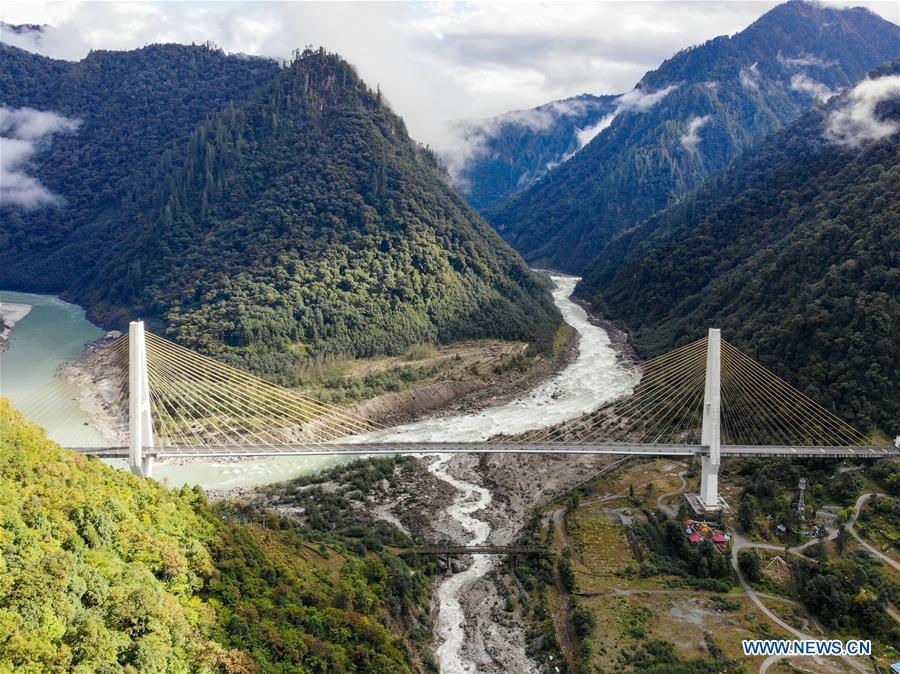
Aerial photo taken on Oct. 27, 2019 shows a long-span bridge on the Sichuan-Tibet Highway in Tangmai, Tibet. Tibet has built or renovated a total of 43,400 km of rural roads over the past five years, according to local authorities. The regional government has invested 95.7 billion yuan (around 13.7 billion U.S. dollars) over the period in paving modern roads to 2,276 villages, according to the regional transport department. (Xinhua/Sun Fei)
Tibet is warming up under Occupation. Electricians work on power transmission facilities in Nakarze county, Lhokha city in Tibet, Aug 27, 2019. [Photo/sipaphoto/com] TIBET CONSCIOUSNESS – TIBET PROBLEM ON THE BACK BURNER SINCE 1850s WHILE TIBET IS WARMING UP UNDER OCCUPATION.
Photo taken on Dec. 23, 2019 in the south bank of the Yarlung Zangbo River, shows new houses built for herders migrating from Shuanghu County, Nagchu City, Tibet. A total of 2,900 residents from three villages of Shuanghu County, have recently left their hometown with an average altitude of 5,000 meters above sea level and travelled nearly 1,000 kilometers to resettle in Konggar County, which, at a relatively low altitude, is located to the south bank of the Yarlung Zangbo River in southern Tibet. (Xinhua/Chogo)
Tibetans who practically enjoyed full independence in their living styles are getting regrouped using mass relocation and rehousing programs making the Tibetan herders to live in resettlement camps in occupied Tibet.
Since 2006, the Chinese government has implemented large-scale programs to “rehouse”—through renovation of existing houses or construction of new ones—a majority of the rural population of the Tibet Autonomous Region (TAR) under a policy called “Comfortable Housing.” In parallel, the government has accelerated the relocation and sedentarization of nomadic herders in the eastern part of the Tibetan plateau, mostly in Qinghai province, and laid the ground for similar policies in other parts of the plateau. Both policies are a component of the government’s effort to “Build a New Socialist Countryside” in Tibetan areas, which the government says is designed to rapidly increase the living standards of rural Tibetans and boost the local economy.
There are host of common issues associated with the New Socialist Villages policy. These common issues include:
The involuntary character of many relocation and rehousing programs;
The absence of genuine prior consultation with affected communities;
The lack of meaningful avenues for challenging or seeking remedies for wrongful eviction orders;
Inadequate and opaque compensation mechanisms;
Problems with the quality of houses in which communities are resettled or rehoused;
Increased financial burdens and indebtedness resulting from relocation and/or reconstruction of housing; and
The loss of tangible and intangible assets and dissolution of communities.
An 80-year-old herder (C) migrated from Shuanghu County, Nagchu City,Tibet, stands in front of her new home with relatives on Dec. 23, 2019. A total of 2,900 residents from three villages of Shuanghu County, have recently left their hometown with an average altitude of 5,000 meters above sea level and travelled nearly 1,000 kilometers to resettle in Konggar County, which, at a relatively low altitude, is located to the south bank of the Yarlung Zangbo River in southern Tibet. (Xinhua/Chogo)Photo taken on Dec. 23, 2019 shows a fleet of buses carrying herders migrating from Shuanghu County, Nagchu City, Tibet. A total of 2,900 residents from three villages of Shuanghu County, have recently left their hometown with an average altitude of 5,000 meters above sea level and travelled nearly 1,000 kilometers to resettle in Konggar County, which, at a relatively low altitude, is located to the south bank of the Yarlung Zangbo River in southern Tibet. (Xinhua/Chogo)Photo taken on Dec. 23, 2019 shows a fleet of trucks carrying belongings of herders migrating from Shuanghu County, Nagchu City, Tibet. A total of 2,900 residents from three villages of Shuanghu County, have recently left their hometown with an average altitude of 5,000 meters above sea level and travelled nearly 1,000 kilometers to resettle in Konggar County, which, at a relatively low altitude, is located to the south bank of the Yarlung Zangbo River in southern Tibet. (Xinhua/Chogo)Photo taken on Dec. 23, 2019 shows herders of Shuanghu County, Nagchu City, Tibet, on their migration trip. A total of 2,900 residents from three villages of Shuanghu County, have recently left their hometown with an average altitude of 5,000 meters above sea level and travelled nearly 1,000 kilometers to resettle in Konggar County, which, at a relatively low altitude, is located to the south bank of the Yarlung Zangbo River in southern Tibet. (Xinhua/Chogo)Photo taken on Dec. 23, 2019, shows a 7-month-old baby from Shuanghu County, Nagchu City,Tibet, on the migration trip. A total of 2,900 residents from three villages of Shuanghu County, have recently left their hometown with an average altitude of 5,000 meters above sea level and travelled nearly 1,000 kilometers to resettle in Konggar County, which, at a relatively low altitude, is located to the south bank of the Yarlung Zangbo River in southern Tibet. (Xinhua/Chogo)Photo taken on Dec. 23, 2019 shows a fleet of trucks carrying belongings of herders migrating from Shuanghu County, Nagchu City, Tibet. A total of 2,900 residents from three villages of Shuanghu County, have recently left their hometown with an average altitude of 5,000 meters above sea level and travelled nearly 1,000 kilometers to resettle in Konggar County, which, at a relatively low altitude, is located to the south bank of the Yarlung Zangbo River in southern Tibet. (Xinhua/Chogo)Photo taken on Dec. 23, 2019 shows a fleet of buses carrying herders migrating from Shuanghu County, Nagchu City, Tibet. A total of 2,900 residents from three villages of Shuanghu County, have recently left their hometown with an average altitude of 5,000 meters above sea level and travelled nearly 1,000 kilometers to resettle in Konggar County, which, at a relatively low altitude, is located to the south bank of the Yarlung Zangbo River in southern Tibet. (Xinhua/Chogo)Photo taken on Dec. 23, 2019 shows a fleet of buses carrying herders migrating from Shuanghu County, Nagchu City, Tibet. A total of 2,900 residents from three villages of Shuanghu County, have recently left their hometown with an average altitude of 5,000 meters above sea level and travelled nearly 1,000 kilometers to resettle in Konggar County, which, at a relatively low altitude, is located to the south bank of the Yarlung Zangbo River in southern Tibet. (Xinhua/Chogo)
The report by Human Rights Watch describes the Chinese government’s relocation of Tibetans as “forcible”, not because they have evidence that officials are using physical force to remove residents from their old homes, but because they are offering them no alternatives. Under international law, the term “forced eviction” does not require the physical removal of residents from their homes. It also applies to evictions that lack meaningful consultation and compensation, or in which no alternatives to relocation have been presented. Chinese government relocation and rehousing policies and practices effectively compel communities to follow government orders or—in the case of nomadic communities—to move into fixed settlements through policies that are presented as having the force of law.
Tibet Equilibrium – Balance of Power – Future of Red China’s Evil Power. Consequences for Evil actions. Beijing is Doomed by the Prophecy of Isaiah.
Tibetans enjoyed a sense of peace, harmony, and tranquility or of equilibrium for several centuries as a gift from Mother Nature. The geographical isolation, the inhospitable terrain, and climate protected Tibetans from attacks by hostile, foreign forces. However, about 70 years ago, the natural defenses of Tibet utterly failed to resist the onslaught of Communist China’s military expansionism.
TIBET EQUILIBRIUM – BALANCE OF POWER IN OCCUPIED TIBET. THE GREAT TIBET PROBLEM WILL EXIST UNTIL BALANCE OF POWER IS RESTORED IN OCCUPIED TIBET.
I characterize myself as an advocate of a Doomsday Event, a natural cataclysmic event that will restore the balance of power in the Land of Tibet without the need for the application of man’s physical power to counteract against the physical power of China.
Arrogant nation, pride and might of Evil Red Empire
In my analysis, a cataclysmic event will affect mainland China and as a consequence, China would cease its military occupation of Tibet fully restoring Tibet equilibrium which prevails as a natural event entirely shaped by Natural Factors, Natural Conditions, and Natural Mechanisms.
Cataclysmic events are strong stressors that occur suddenly and typically affect many people at the same time. For example plane crashes or tornadoes. Personal stressors include life events such as personal failure, the death of a parent or the loss of one’s job.
Something that’s cataclysmic is violently destructive. The word often refers to natural disasters, like a cataclysmic earthquake, but cataclysmic can describe other events
Cataclysm is derived from the Greek κατά kata, “down, against” and κλύζω klyzō, “wash over, surge.” It may refer to: Deluge (mythology); a hypothetical Doomsday event; any catastrophic geological phenomenon.
THE FUTURE OF RED CHINA’S EXPANSIONISM – BEIJING DOOMED.
I am reproducing an article describing 17 Cataclysmic Events that Changed the Earth forever.
17 Cataclysmic Events That Changed the Earth Forever
By Michael B. Sauter and Thomas C. Frohlich November 15, 2019, 1:37 pm Print Email Share
Since the Earth was formed roughly 4.5 billion years ago, it has gone through dozens of major cataclysmic events, including the eruption of supervolcanoes, impacts by comets and asteroids, major tectonic shifts, exposure to cosmic radiation, and more. Most of these took place long before homo sapiens ever walked the Earth.
Some of these events were so violent that they directly ushered in new geologic periods. These were often accompanied by ice ages, mass extinction events, or conversely warming and ecological flourishing. These periods left lasting, major changes to the planet’s species, continental structure, and atmospheric composition.
For those concerned about the looming threat of global climate change, these events, many of which are now millions of years old, bear grim relevance to today.
The major extinction events that occurred since life began on Earth, in the majority of cases, share a few attributes, including major changes in CO2 levels and other gases like methane and sulfur dioxide in the atmosphere and an increase in ocean acidification, which can result from higher CO2 levels.
Since the Industrial Revolution, both carbon concentration in the atmosphere and ocean acidification is increasing at far faster levels than can be explained by cyclical changes. Ocean acidity has increased by 30%, and CO2 levels have roughly doubled compared to preindustrial levels, and the result is the endangerment of tens of thousands of species.
Currently, the planet’s flora and fauna are dying at a much faster rate than is normal in nature. Scientists have warned we could be in the midst of a sixth major extinction event, which unlike previous extinction events is caused by human activity and could worsen if human-related greenhouse gas emissions continue unchecked.
To compile a list of the largest geological forces in Earth’s history, 24/7 Wall St. reviewed publications in scientific journals focusing on cataclysmic events in Earth’s history that resulted in sudden, abrupt, and massive environmental impacts. For each event where the date of occurrence can only be estimated, we list the rough number of years it is believed to have occurred before today, and for events where the exact year of the occurrence is known, the year is written out with A.D. notation.
Acataclysmic event is one that changes a situation or society in a very significant manner, especially in an unpleasant way.
1. Collision with Theia > Era: 4.5 billion years ago
According to the prevailing theory on the Moon’s origin, roughly 4.5 billion years ago, the relatively young Earth — just 100 million years old at that point — collided with a Mars-sized planet-like object called Theia. The head-on collision ejected tons of molten material into the Earth’s atmosphere, which for a time after is believed to have been made up of plasma-metal vapor. The debris eventually congealed and formed Earth’s moon.
2. The Great Oxidation Event > Era: 2.5 billion years ago
It is believed that between 2.5 billion and 2.3 billion years ago, life on Earth was largely confined to the oceans. Around that time, a massive bloom of an algae-like bacteria called cyanobacteria appeared, saturating the Earth in oxygen. Because most bacteria at the time did not metabolize oxygen, many bacteria species died out. The abundance of oxygen, in a chemical reaction, helped reduce the levels of methane in the atmosphere, cooling the Earth down significantly.
3. Vredefort impact > Era: 2 billion years ago
Source: Júlio Reis / NASA / Wikimedia Commons
3. Vredefort impact > Era: 2 billion years ago
Approximately 2 billion years ago, an asteroid somewhere between 3 miles and 6 miles in diameter struck the Earth in what is now South Africa at an estimated 12 miles per second. The resulting crater is 118 miles in diameter and was originally a magma lake formed from the energy of the collision. An impact of this size would certainly have caused major changes in the composition of the Earth’s atmosphere.
4. Sudbury Basin impact > Era: 1.8 billion years ago
Source: NASA World Wind / Wikimedia Commons
4. Sudbury Basin impact > Era: 1.8 billion years ago
The Sudbury Basin in Ontario, Canada, is one of the three largest impact craters on Earth, measuring 18 miles by 37 miles. Unlike some other major impacts, scientists believe the basin was formed by a comet rather than an asteroid. The impact was so intense that it formed a hole in the crust of the Earth, which subsequently filled with magma.
5. Acraman impact > Era: 580 million years ago
Source: NASA World Wind / Wikimedia Commons
5. Acraman impact > Era: 580 million years ago
Roughly 56 miles in diameter, the Acraman crater in South Australia is one of the largest on Earth. Approximately 580 million years ago, an asteroid with an estimated diameter of 2.9 miles hit the site. The effects of the impact on the atmosphere, coupled with a period of glaciation, may have had a substantial impact on the course of evolution at the time.
6. Events leading to Ordovician extinction > Era: 440 million years ago
The Ordovician period ended some 440 million years ago, coinciding with the beginning of an ice age. An estimated 85% of all animal species on Earth died out, making it a larger extinction event than the K-T extinction (the event known to result in the extinction of the dinosaurs). While the Ice Age is generally accepted as the primary cause for the mass die-out, one theory suggests that during this period the Earth was bathed in deadly gamma radiation, which would have directly killed many of earth’s inhabitants, and also filled the atmosphere with nitrogen dioxide and create conditions that might have been the catalyst for the ice age that occurred.
7. Eruption leading to the Permian extinction > Era: 252 million years ago
Approximately 252 million years ago, about 90% of life on Earth died out. This event often referred to as “The Great Dying” is the single largest extinction event in Earth’s history. The catalyst for the mass extinction is believed to be an explosion of volcanic activity in what is now Siberia. The explosion put over 700,000 cubic miles of ash into the atmosphere, which could have raised global temperatures by an average of approximately 18 F. The rise in temperatures and other atmospheric changes, including acid rain, devastated Earth’s species.
Underwater eruption leading to End-Triassic extinction > Era: 201 million years ago
8. Underwater eruption leading to End-Triassic extinction > Era: 201 million years ago
Around 200 million years ago, the supercontinent of Pangaea was breaking up. In what was the newly forming Atlantic Ocean, a range of undersea volcanoes were releasing tons of gases and lava into the ocean and atmosphere.. The massive volume of carbon and sulfur released into the atmosphere likely catalyzed a massive global extinction event in which 76% of all terrestrial and marine species were lost.
9. Chicxulub impact > Era: 65 million years ago
Source: Elenarts / Getty Images
9. Chicxulub impact > Era: 65 million years ago
In what may have been the largest meteorite collision in Earth’s history, a 186-mile-in-diameter asteroid strike is believed to have caused the extinction of the dinosaurs 65 million years ago.
The impact crater is located in the Yucatan Peninsula, Mexico. The environmental effects of the impact were likely immediate intense radiation, earthquakes, tsunamis, and mass burial under the ejected matter. Over the course of months, effects were likely massive wildfires and acid rain; years of ozone loss and cooling temperatures; and decades of greenhouse warming.
10. Paleocene-Eocene Thermal Maximum > Era: 56 million years ago
Source: Muni Yogeshwaran / Getty Images
10. Paleocene-Eocene Thermal Maximum > Era: 56 million years ago
The PETM is considered one of the best ancient examples of modern climate change. During this 15 thousand to 20 thousand-year period around 56 million years ago, the Earth warmed by about 5 C due to increase in CO2 concentrations in the atmosphere. At the peak of the PETM, the oceans are thought to have been as warm as nearly 70 F off the coast of what is now Antarctica.
11. Yellowstone eruptions > Era: 2.1 million years ago, 1.2 million years ago, 640,000 years ago
Yellowstone National Park, now a popular tourist destination, has been the source of three cataclysmic volcanic eruptions, occurring 2.1 million years ago, 1.2 million years ago, and 640,000 years ago. While the first of these was the most powerful, the most recent was still extremely strong, producing an estimated 1,000 cubic kilometers, or about 240 cubic miles of ash and magma, or about 4,000 times as much material as in the eruption of Mount St. Helens.
12. Toba eruption > Era: 74,000 years ago
Source: NASA / Wikimedia Commons
12. Toba eruption > Era: 74,000 years ago
Around 72,000 B.C., the Toba supervolcano in Sumatra, Indonesia, erupted. The eruption may have ejected over 670 cubic miles of material into the atmosphere, thousands of times more than the ash and magma released during the eruption of Mount St. Helens in 1980. The event likely plunged the Earth into cold and relative darkness for years afterward.
13. Mount Thera eruption > Era: 3,600 years ago
Source: Rolfsteinar / Wikimedia Commons
13. Mount Thera eruption > Era: 3,600 years ago
In what are now the Aegean Islands near the Greek Island of Santorini, Mount Thera erupted around 1610 B.C. The blast, which may have been equivalent to hundreds of atomic bombs, is one of the largest explosions witnessed by humans. The sulfur dioxide the explosion released into the atmosphere likely had a substantial impact on the world’s climate.
14. Huaynaputina eruption > Era: 1600 A.D.
Tree rings in Taxodium distich… (CC BY 2.0) by James St. John
14. Huaynaputina eruption > Era: 1600 A.D.
In a recent paper on the aftermath of the Huaynaputina eruption published in Nature, a team of geologists noted there were several climate discrepancies in the year 1601, indicating a possible much wider impact on the volcano eruption may have had. Tree-ring analysis suggested sulfur particles may have caused the Northern Hemisphere’s coldest year in 600 years. Other examples of volatile climate in 1601 include altered wind patterns demonstrated by unusual ship routes, record flooding, snowfall, poor harvests, and famine.
15. Tambora eruption > Era: 1815 A.D.
Source: Jialiang Gao / Wikimedia Commons
15. Tambora eruption > Era: 1815 A.D.
In 1815, Mt. Tambora on Sumbawa Island in Indonesia erupted in one of the most intense volcanic eruptions experienced in human history. The blast killed at least 70,000 people and was so powerful that the sound was heard over 1,200 miles away. The ejecta released by Tambora filled the atmosphere with ash, radically disrupting global weather patterns. Many referred to 1816 as “The Year Without a Summer.” It was during that summer that Mary Shelley, weathering the dreary conditions in Switzerland with other noted authors, including her husband Percy Shelley and Lord Byron, developed the story that would become “Frankenstein: or, the Modern Prometheus.”
16. Krakatoa eruption > Era: 1883 A.D.
While not as substantial as some of the other volcanic events to make this list, the famous explosion of the Indonesian island of Krakatoa on Aug. 26, 1883, was still a devastating global event, killing over 36,000 people and sending material 50 miles into the air with a blast 10,000 times that of the Hiroshima atomic bomb. Most of the deaths were caused by the massive tsunamis that resulted from the eruption, including one that was 120 feet high. The six cubic miles of debris sent into the atmosphere had widespread effects on global weather patterns.
17. Spike in CO2 from human activity > Era: 1900 to present
Nature no longer seems immune to the influence of human beings. In 1988, the scientific community revealed to the general public the problem of global warming from human-caused CO2 emissions that the oil company Exxon had detected as early as 1977. The warming caused by these emissions — from the burning of fossil fuels, cement production, deforestation practices, and so on — have contributed to about 37 billion metric tons of carbon dioxide emissions in 2018. This was the record to date for annual emissions, which will continue to increase as long as we continue on our current course.
Current global concentrations of three major greenhouse gases — CO2, CH4, and N2O — are well more than double pre-industrial levels (pre-1750). Since then, trillions of tons of CO2 have been added to the atmosphere by human activities, resulting in warming of slightly less than 1 C. The warming has caused large and relatively dramatic changes to the Earth, including sea-level rise and extreme weather events. Scientists pointed out in a recent report in the journal Nature Climate Change that human-caused effects on the planet will “extend longer than the entire history of human civilization thus far.”
By Michael B. Sauter and Thomas C. Frohlich
A Cataclysmic Event will bring the sudden downfall of an arrogant nation, Evil Red Empire. Isaiah 47
Special Frontier Force, the military alliance between Tibet, India, and the US is primarily concerned with the security challenges posed by China’s expansionist doctrine in South Asia.
In my analysis, the North Atlantic Treaty Organization or NATO will not be able to defend Europe without addressing the problem of China’s military expansionism.
Rudra Narasimham Rebbapragada Ann Arbor, MI 48104-4162 USA SPECIAL FRONTIER FORCE-ESTABLISHMENT No. 22-VIKAS REGIMENT
CHINA IS NATO’S NEW ADVERSARY.
BY ISHAAN THAROOR
Is China NATO’s new adversary?
CHINA IS NATO’S NEW ADVERSARY.
Chinese President Xi Jinping at the Oct. 1 military parade in Beijing celebrating the 70th anniversary of the founding of the People’s Republic of China. (Asahi Shimbun/Getty Images)
The West’s most venerable military alliance is marking its 70th birthday this week in Britain. And it’s going to be awkward. Leaders of the North Atlantic Treaty Organization, including President Trump, will gather at Buckingham Palace on Tuesday before a rushed single meeting at an 18th-century estate outside London on Wednesday. The proceedings have been choreographed to minimize friction in an increasingly fractious group, one in which Trump’s frustrations with the alliance are hardly the sole source of tension.
Still, a NATO diplomat confided in my colleague Michael Birnbaum, “There’s a 50-50 chance that this goes south.”
Perhaps the pessimism is unwarranted. Seven decades after NATO’s founding, its 29 member states account for about half of the world’s military spending and close to half of the world’s GDP. By any calculation, it’s a formidable alliance. But differences within the bloc are becoming pronounced. French President Emmanuel Macron, for one, wants to see NATO shift away from being a Cold War-era bulwark against Russia to a more nimble security organization geared to countering terrorism.
Since coming to power, Trump has also taken a different tack, calling into question the necessity of the alliance, raging over the inadequacy of European defense spending and scrapping a key nuclear treaty with Moscow that helped shield Europe. Yet, this week, he’s expected to emphasize the need for NATO to take on a new adversary and rising 21st-century superpower — China. In the run-up to the summit, U.S. officials pointed to China as a “very strong competitor” that needs to be effectively brought to heel.
CHINA IS NATO’S NEW ADVERSARY.
NATO officials are also getting more vocal about how China fits into the bloc’s strategic deliberations. In an interview with CNBC on Monday, NATO Secretary-General Jens Stoltenberg said China was “shifting the global balance of power” and presenting Western policymakers with “some opportunities but also some serious challenges.” He added that the alliance — a transatlantic pact — was not focused on engaging China in its own Pacific backyard but elsewhere in the world. European politicians have also recognized that the alliance has to reckon with Beijing. “China is set to become the subject of the 21st century on both sides of the Atlantic,” German Foreign Minister Heiko Maas said in a speech in Washington in April. “China is a challenge on almost every topic. It is important to gain a better understanding of what that implies for NATO.”
“There’s no way that NATO will move into the South China Sea, but we have to address the fact that China is coming closer to us, investing heavily in infrastructure,” Stoltenberg said. “We see them in Africa, we see them in the Arctic, we see them in cyberspace, and China now has the second-largest defense budget in the world.”
That may be music to the Trump administration’s ears, which sees itself at the start of a decades-long, high-tech contest with Beijing. With varying success, Secretary of State Mike Pompeo has clamored for European nations to resist Chinese investments in the continent’s digital infrastructure, particularly in the development of 5G wireless networks that will underlie a whole new world of advanced technologies, including artificial intelligence, autonomous vehicles, and smart grids.
“With so much on the line, it’s urgent that trustworthy companies build these 21st-century information arteries,” Pompeo wrote in an op-ed for Politico Europe. “Specifically, it’s critical that European countries not give control of their critical infrastructure to Chinese tech giants like Huawei, or ZTE.”
CHINA IS NATO’S NEW ADVERSARY.
The Chinese are predictably unimpressed by suggestions of a confrontation with NATO. “European nations are now faced with two options: blindly following the U.S. or cooperating with China despite U.S. preaching,” noted an editorial in Global Times, a strident English-language Chinese state mouthpiece. “Making this choice will only turn Europe … into a U.S. puppet. Is this a scenario the once strongest continent wants to see? And if European countries shut their door on China’s 5G technology, will they be able to bear the potential losses?”
Analysts in Washington aren’t reading too much into the current atmospherics. In a briefing call with reporters, Michael O’Hanlon of the Brookings Institution said that Trump has “acted so unilaterally” in his tariff showdowns with China and Europe that it’s “hard to imagine” any substantial strategic decisions being forged through a multilateral body such as NATO.
Then there is a range of internal disagreements on the continent, where a number of countries have already become beachheads for significant Chinese investment and influence. “I think the question isn’t so much whether or not NATO as an alliance has the internal coherence to face China with a united front, but if Europe as a whole has that coherence, and, what is NATO’s role here?” Rachel Rizzo, the adjunct fellow at the Center for New American Security, told Today’s WorldView. “Obviously, China is a growing challenge and so it’s wise for the alliance to discuss how it might play a role in Europe’s future strategy, but I think NATO leaders are cognizant of the fact that they shouldn’t go out in search of monsters to destroy.” China said Monday that it would sanction U.S.-based nonprofit organizations, including the National Endowment for Democracy and Human Rights Watch, in retaliation for new U.S. legislation that supports Hong Kong’s protesters. China also will suspend rest-and-recuperation visits to Hong Kong by U.S. military ships and aircraft, a Chinese foreign ministry spokeswoman said, adding that further moves are possible.
The Dalai Lama holds up his Congressional Gold Medal after being presented the award by (L-R) Speaker of the House Nancy Pelosi (D-CA), Sen. Robert Byrd (D-WV) and President George W. Bush in the U.S. Capitol Rotunda October 17, 2007, in Washington, DC. President Bush participated in the ceremony despite Beijing’s strong disapproval of the recognition for the 72-year-old exiled leader from Tibet.
US Congress Resolution Commends Dalai Lama For His Commitment To Global Peace
The resolution recognizes the cultural and religious significance of a genuinely autonomous Tibet and the deep bond between people of America and Tibet.
83-year-old Dalai Lama lives in exile in the hill town of Dharamsala WASHINGTON:
A group of four influential US lawmakers has introduced a resolution in Congress commending the Tibetan spiritual leader the Dalai Lama for his commitment to global peace and non-violence.
The resolution, introduced in the House of Representatives, came weeks after US ambassador-at-large for Religious Freedom Samuel D Brownback traveled to Dharamsala in India and met the Dalai Lama and discussed ways to advance religious freedom.
The 83-year-old Dalai Lama, a globally revered figure and recipient of the Nobel Peace Prize, lives in exile in the hill town of Dharamsala. He fled to India in early 1959 to escape from the Chinese occupation.
The House resolution — introduced by Congressman Ted Yoho and co-sponsored by Michael McCaul, Chris Smith, and George McGovern — recognizes the significance of the genuine autonomy of Tibet and the Tibetan people and the work the 14th Dalai Lama has done to promote global peace, harmony, and understanding.
The resolution recognizes the cultural and religious significance of a genuinely autonomous Tibet and the deep bond between the American and Tibetan people.
It commends the 14th Dalai Lama for his commitment to global peace and non-violence.
It would be beneficial to convene a bipartisan, bicameral forum, either through a joint meeting of Congress, a teleconference broadcast in the Auditorium at the Capitol Visitor Center, or roundtable between members of Congress and the Dalai Lama to discuss peaceful solutions to international conflicts, the resolution notes.
China, which firmly opposes any contact with the Dalai Lama by any foreign official, says the successor to the Dalai Lama must be chosen according to religious rituals and historical conventions as well as the backing from the ruling Communist Party.
His Holiness the Dalai Lama receiving the US Congressional Gold Medal from US President George W. Bush at Capitol Hill in Washington DC, the USA on October 17, 2007.
The Resurrection of American Values to reject the power of Evil.
On behalf of the Living Tibetan Spirits, I pray for the Resurrection of American Values, the foundational values that define America as a nation. My concern is not about the reincarnation of the Dalai Lama. The United States must overcome fear to expose evil actions of People’s Republic of China to occupy Tibet through acts of military aggression.
Rudra Narasimham Rebbapragada
Special Frontier Force-Establishment N0. 22-Vikas Regiment
Living Tibetan Spirits Pray for the Resurrection of American Values.
US Wants UN To Take Up Dalai Lama Succession: Envoy
The United States wants the United Nations to take up the Dalai Lama’s succession in an intensifying bid to stop China from trying to handpick his successor, an envoy said after meeting the Tibetan spiritual leader.
Sam Brownback, the US ambassador-at-large for international religious freedom, said he spoke at length about the succession issue with the 84-year-old Dalai Lama last week in the monk’s home-in-exile of Dharamsala, India.
Brownback said he told the Dalai Lama that the United States would seek to build global support for the principle that the choice of the next spiritual chief “belongs to the Tibetan Buddhists and not the Chinese government.”
Living Tibetan Spirits Pray for the Resurrection of American Values.
The Dalai Lama arrives for prayers wishing him a long life at the Tsuglagkhang temple in McLeod Ganj, India in September 2019 — the US wants the UN to look at the issue of who will succeed him Photo: AFP / Lobsang Wangyal
“I would hope that the UN would take the issue up,” Brownback told AFP after returning to Washington.
He acknowledged that China, with its veto power on the Security Council, would work strenuously to block any action, but he hoped countries could at least raise their voices at the United Nations.
“I think it’s really important to have an early global conversation because this is a global figure with a global impact,” he said.
“That’s the big thing that we’re really after now, to stir this before we’re right in the middle of it — if something happens to the Dalai Lama, that there has been this robust discussion globally about it ahead of time,” he said.
Living Tibetan Spirits Pray for the Resurrection of American Values.
US religious freedom envoy Sam Brownback, seen here at a July 2019 ministerial meeting in Washington, is raising pressure over the Dalai Lama’s succession Photo: AFP / MANDEL NGAN
“My estimation undoubtedly is that the (Chinese) communist party has thought a lot about this. So they’ve got a plan and I think we have to be equally aggressive with a plan.”
The Dalai Lama once traveled incessantly, drawing huge Western audiences with his good-humored lectures on compassion and happiness.
But the Nobel Peace Prize winner has slowed down and earlier this year suffered a chest infection, although he is not known to have serious health issues.
Brownback said he found the Dalai Lama “quite jovial” and that the monk had told him, “‘Look, I’m going to live another 15, 20 years; I’m going to outlast the Chinese government.'”
Living Tibetan Spirits Pray for the Resurrection of American Values.
A Tibetan-in-exile carries a photograph of the Dalai Lama during celebrations marking the Lunar New Year in Kathmandu in February 2018 Photo: AFP / PRAKASH MATHEMA
But Beijing has indicated it is waiting out the Dalai Lama, believing his campaign for greater Tibetan autonomy will end with him.
China, which argues that it has brought modernization and development to the Himalayan region, has increasingly hinted that it could name the next Dalai Lama, who would presumably be groomed to support Chinese rule.
In 1995, the officially atheist government selected its own Panchen Lama and detained a six-year-old identified for the influential Buddhist position — whom rights groups called the world’s youngest political prisoner.
Living Tibetan Spirits Pray for the Resurrection of American Values.
Indian police detain Tibetan students as they protest against the visit of China’s President Xi Jinping in Chennai in October 2019 Photo: AFP / STR
Mindful of Beijing’s plans, the 14th Dalai Lama has mused about breaking with the centuries-old tradition in which wandering monks look for signs that a young boy is a reincarnation.
He has said that he could pick his own successor, possibly a girl, or even declare himself the final Dalai Lama.
The US Congress has also stepped up efforts, including by mandating visa denials by the end of the year for Chinese officials unless Beijing eases restrictions on US diplomats, journalists and ordinary people seeking to visit Tibet.
Brownback said he would like access to Tibet, “but I want it unfettered.”
He said he similarly hoped to visit the western region of Xinjiang, which has drawn intense US scrutiny over the incarceration of one million Uighurs and other Turkic-speaking Muslims.
“It is part of the same war on faith,” Brownback said of Tibet and Xinjiang.
Brownback also visited Nepal, historically the gateway for Tibetans fleeing to India but which has increasingly clamped down under pressure from its giant northern neighbor.
Brownback said he raised fears for Tibetans with Nepal’s foreign minister, Pradeep Gyawali.
But he acknowledged Nepal’s difficult situation and said: “I would hate to be very harsh on the Nepalese because they’ve been so good over so many years to help the Tibetans.”
Brownback said that the burden was ultimately with China to allow freedom of movement — and not to interfere in Tibetan Buddhism.
“A government doesn’t own a religion,” he said. “A religion runs itself.”
“We hope we’ll get a number of other communities around the world to express similar positions and concerns.”
Living Tibetan Spirits Pray for the Resurrection of American Values.