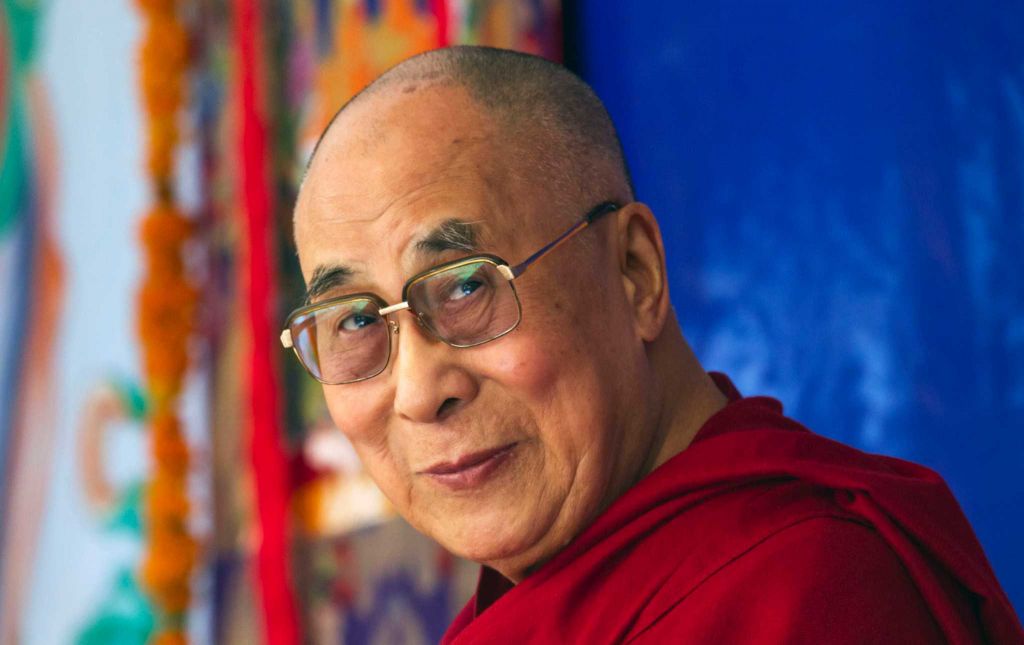
Whole Awareness – Red China Oppressor of Tibet

Tibet Consciousness – Red China’s actions in Tibet are illegal, unlawful, and despotic

US Congressional-Executive Committee on China (www.cecc.gov) released a 336-page report that describes Communist China’s oppressive, repressive, brutal rule over Tibet. Red China’s use of power is cruel and unjust. Red China uses authority to overpower, to subdue, to crush, and to trample down any sign of Tibetan resistance that may question the legality of Red China’s governance of Tibet. US Congress has to categorically acknowledge Red China as “Usurper” of power in Tibet. Red China has taken, has assumed, has seized, and is in possession of Tibet without right. Red China’s actions in Tibet are illegal, arbitrary, despotic, violent, and remain unlawful.

US CONGRESS: CHINA TODAY IS MORE REPRESSIVE AND MORE BRUTAL

Tibet post International

Monday, 12 October 2015 23:02 Yeshe Choesang, Tibet Post International

Washington, DC — An annual report released this week by the US Congressional-Executive Committee on China (CECC) criticised Beijing’s treatment of ethnic minorities, and noted deteriorating conditions in Xinjiang and Tibet.

The 336-page said it saw “a disturbing deterioration in human rights and rule of law conditions that pose a direct challenge to US national interests and US-China relations”.

The US commission said China was moving further away from a rule of law system and had increased pressure on civil society.

The Commission said that Beijing persists with its repressive policies in Tibet, denying adequate rights to Tibetans from protecting their culture, language, religion, and environment.

The annual report stated that “authorities continued to rein in media, opinion-makers, and Internet and social media users critical of government policies by shutting down popular chat site accounts, requiring real-name registration of accounts, and blocking services that allow Internet users to circumvent China’s “Great Firewall.” Foreign journalists continued to report harassment, surveillance, and restrictions on the free flow of news and information.”

The report recommends “greater public expression, including at the highest levels of the U.S. government, on the issue of press and Internet freedom; the expanded distribution of proven technologies to circumvent Internet restrictions in China; and the inclusion of the freedom of cross-border information as part of negotiations for the U.S.-China Bilateral Investment Treaty or future trade negotiations with China.”

The US report also noted deteriorating conditions in ethnic minority areas, from increased violence in the Xinjiang Uyghur Autonomous Region to harsher security measures and efforts to control Tibetan Buddhism in the so-called Tibet Autonomous Region. In addition, as Tibetan self-immolations continued, the Commission observed no sign of Chinese interest in resuming the long-stalled dialogue with the Dalai Lama’s representatives.

The report concluded that the Chinese government can best promote stability by respecting ethnic minorities’ right to maintain their language and culture and to practice freely their religion and urged Chinese administration to address these issues at bilateral security dialogues and exchanges with Chinese military or police officials.

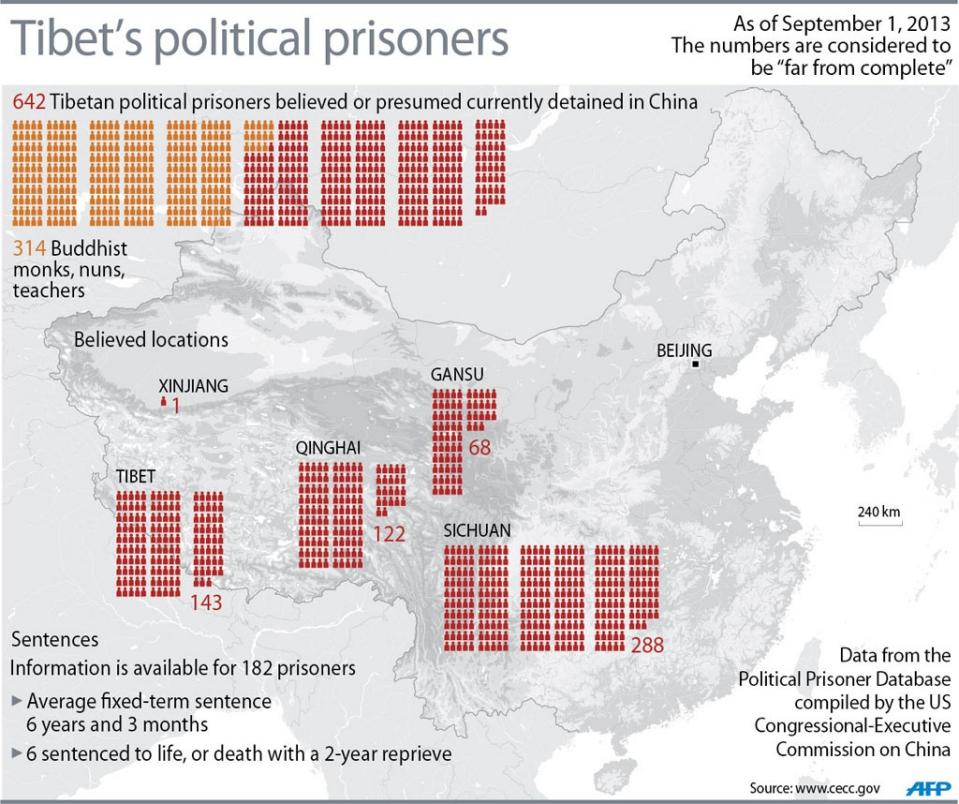
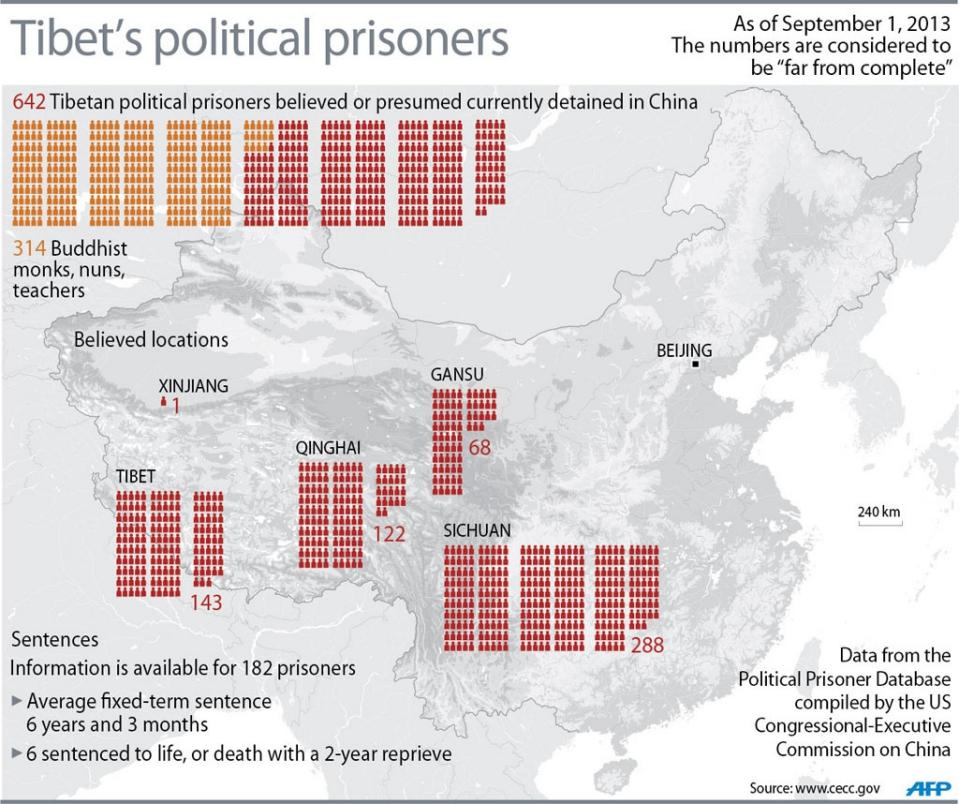
The report contains numerous other recommendations, including advocating the use of the Commission’s extensive Political Prisoner Database, with information on over 1,300 currently detained political and religious prisoners.

The report further recommended the US Congress and administration to urge the Chinese government to allow the free flow of information regarding incidents of violence in ethnic minority regions; allow journalists and international observers access to those areas in line with international standards; and ensure that U.S. counter-terrorism cooperation arrangements do not endorse the Chinese government’s suppression of its people.

Speaking at the release of the report, Representative Chris Smith, Chair of the Commission, said, “It has been another punishing year for human rights in China, as this report documents so well. President Xi has presided over an extraordinary assault on the rule of law and civil society using repressive and retrograde policies that threaten freedom advocates in China and challenge both U.S. interests and U.S.-China cooperation and goodwill.”

“U.S. leadership on human rights is needed now more than ever. We must not compromise on the need for fundamental freedoms or shy away from those who seek them. Clearly, our long-term strategic interests depend on the advance of human rights and the rule of law in China,” he added.

The report provides detailed analysis on 19 human rights and rule of law issues and offers specific recommendations on ways to make progress on these issues in the broader U.S.-China relationship. The full report can be accessed on the CECC’s website(www.cecc.gov).


Chinese Oppression

500 Internal Server Error

... UN to Pressure China over Human Rights Abuses in Tibet | Word Matters

What Is Tibet’s Cause About? | tibettruth

STOP Oppression ***World Wide*** | FREE Tibet | Pinterest

2008 file photo, a Tibetan woman in exile enacts a scene of oppression ...

My Free Tibet tribute to Ani Pachen Dolmo

TIBET CONSCIOUSNESS – SAVING TIBET’S CULTURE

TIBET CONSCIOUSNESS – SAVING TIBET’S CULTURE

TIBET CONSCIOUSNESS – SAVING TIBET’S CULTURE. HIS HOLINESS THE DALAI LAMA VISITS TIBETAN SCHOOL IN DHARAMSHALA ON SATURDAY, OCTOBER 10, 2015.

Tibet’s culture flourished for Tibet existed for centuries in serene, unperturbed condition and Tibetans enjoyed a sense of natural freedom and pursued an independent style of living. Red China’s military occupation since 1950s poses a huge challenge and Tibetans are coping with this problem with much patience and hope of finding a peaceful resolution with or without dialogue.

Rudranarasimham Rebbapragada
Ann Arbor, MI 48104-4162, USA
SPECIAL FRONTIER FORCE. ESTABLISHMENT 22


The Spirits of Special Frontier ForceThe Spirits of Special Frontier Force, Ann Arbor, MI. At Special Frontier Force, I host ‘The Living Tibetan Spirits’…
 
View on www.Facebook.com


The Dalai Lama says Buddhist culture most important to him

Ashwini Bhatia, Associated Press

Updated 5:46 am, Saturday, October 10, 2015
  • Tibetan spiritual leader the Dalai Lama is helped down a path upon arrival at a Tibetan school, his first public function after his return last week from Minnesota in the United States where he had a thorough medical checkup, in Dharmsala, India, Saturday, Oct. 10, 2015. The Dalai Lama says he considers it most important to preserve the Buddhist culture that has helped Tibetan people live together even in exile. Many Tibetans fear that their culture may not endure for long and may weaken after the Dalai Lama is gone. Photo: Ashwini Bhatia, AP / AP
    TIBET CONSCIOUSNESS – SAVING TIBET’S CULTURE. DALAI LAMA ARRIVES AT TIBETAN SCHOOL ON SATURDAY, OCTOBER 10, 2015.
  • Photo: Ashwini Bhatia, AP Tibetan spiritual leader the Dalai Lama is helped down a path upon arrival at a Tibetan school, his first public function after his return last week from Minnesota in the United States where he had a thorough medical checkup, in Dharmsala, India, Saturday, Oct. 10, 2015. The Dalai Lama says he considers it most important to preserve the Buddhist culture that has helped Tibetan people live together even in exile. Many Tibetans fear that their culture may not endure for long and may weaken after the Dalai Lama is gone.


TIBET CONSCIOUSNESS - SAVING TIBET'S CULTURE.
TIBET CONSCIOUSNESS – SAVING TIBET’S CULTURE.

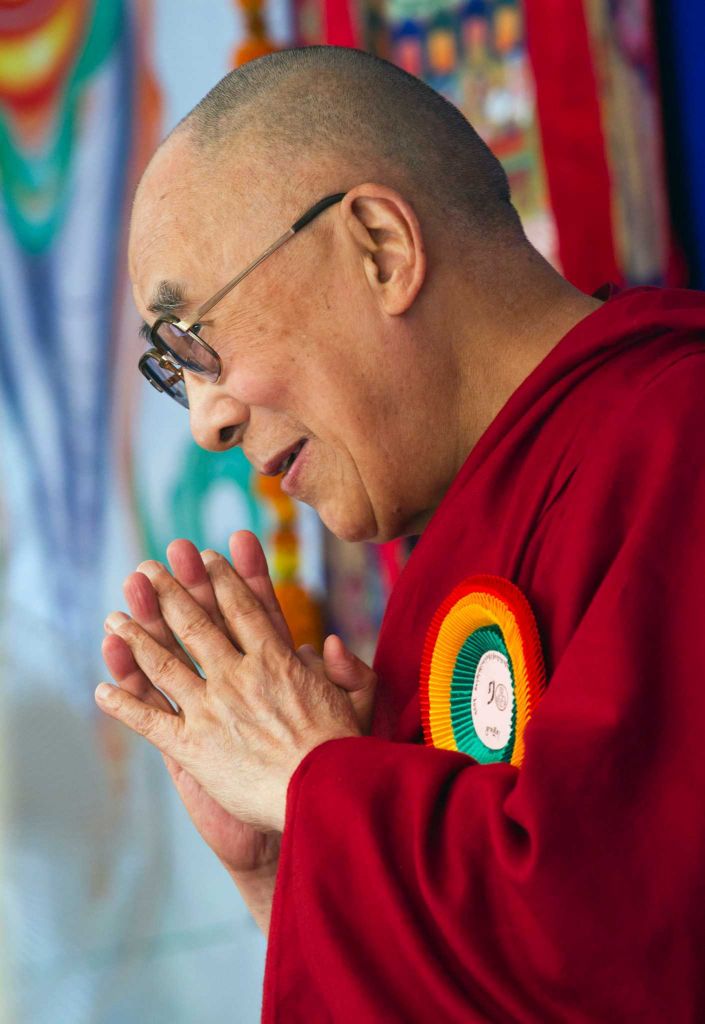
Tibetan spiritual leader the Dalai Lama arrives at a Tibetan school, his first public function after his return last week from Minnesota in the United States where he had a thorough medical checkup, in Dharmsala, India, Saturday, Oct. 10, 2015. The Dalai Lama says he considers it most important to preserve the Buddhist culture that has helped Tibetan people live together even in exile. Many Tibetans fear that their culture may not endure for long and may weaken after the Dalai Lama is gone.
Photo: Ashwini Bhatia, AP

TIBET CONSCIOUSNESS - SAVING TIBET'S CULTURE.
TIBET CONSCIOUSNESS – SAVING TIBET’S CULTURE.

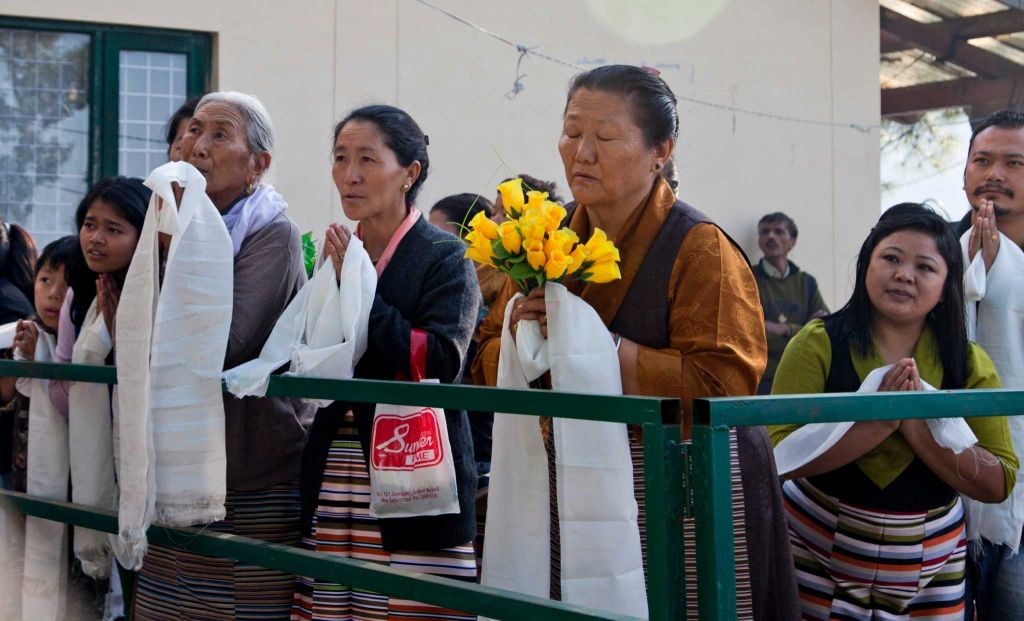
Exile Tibetans hold ceremonial scarves as they wait to greet their spiritual leader the Dalai Lama before his arrival at a Tibetan school in Dharmsala, India, Saturday, Oct. 10, 2015. The Dalai Lama says he considers it most important to preserve the Buddhist culture that has helped Tibetan people live together even in exile. Many Tibetans fear that their culture may not endure for long and may weaken after the Dalai Lama is gone.
Photo: Ashwini Bhatia, AP

TIBET CONSCIOUSNESS - SAVING TIBET'S CULTURE.
TIBET CONSCIOUSNESS – SAVING TIBET’S CULTURE.

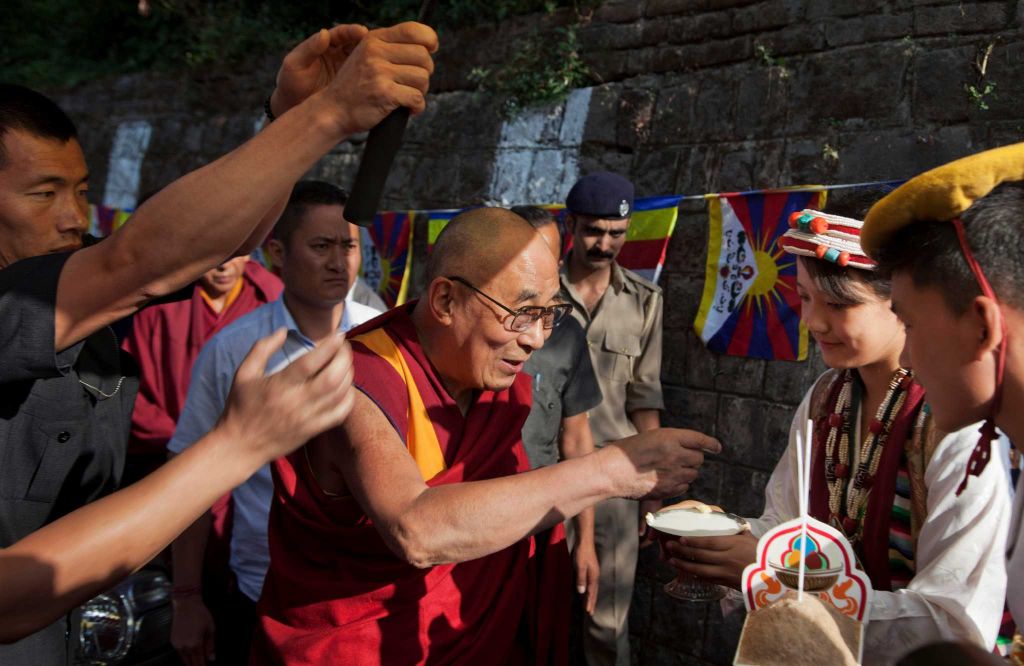
Tibetan spiritual leader the Dalai Lama greets children gathered to welcome him upon arrival at a Tibetan school, his first public function after his return last week from Minnesota in the United States where he had a thorough medical checkup, in Dharmsala, India, Saturday, Oct. 10, 2015. The Dalai Lama says he considers it most important to preserve the Buddhist culture that has helped Tibetan people live together even in exile. Many Tibetans fear that their culture may not endure for long and may weaken after the Dalai Lama is gone.
Photo: Ashwini Bhatia, AP

TIBET CONSCIOUSNESS - SAVING TIBET'S CULTURE.
TIBET CONSCIOUSNESS – SAVING TIBET’S CULTURE.

An exile Tibetan holds a ceremonial scarf as she waits to greet her spiritual leader the Dalai Lama at a Tibetan school in Dharmsala, India, Saturday, Oct. 10, 2015. The Dalai Lama says he considers it most important to preserve the Buddhist culture that has helped Tibetan people live together even in exile. Many Tibetans fear that their culture may not endure for long and may weaken after the Dalai Lama is gone.
Photo: Ashwini Bhatia, AP

TIBET CONSCIOUSNESS - SAVING TIBET'S CULTURE.
TIBET CONSCIOUSNESS – SAVING TIBET’S CULTURE.

Tibetan spiritual leader the Dalai Lama greets devotees on his arrival at a Tibetan school, his first public function after his return last week from Minnesota in the United States where he had a thorough medical checkup, in Dharmsala, India, Saturday, Oct. 10, 2015. The Dalai Lama says he considers it most important to preserve the Buddhist culture that has helped Tibetan people live together even in exile. Many Tibetans fear that their culture may not endure for long and may weaken after the Dalai Lama is gone.
Photo: Ashwini Bhatia, AP

DHARMSALA, India (AP) — The Dalai Lama said Saturday he considered it most important to preserve the Buddhist culture that has helped the Tibetan people live together even in exile.
“Our values have helped us Tibetans live together as a people,” the 80-year-old spiritual leader said at his first public event after returning last week from a medical check-up in the U.S. “So after coming into exile, I have considered it most important to preserve this rich and profound culture that we have.”

Many Tibetans fear that their culture may not endure for long and may weaken after the Dalai Lama is gone.
Carrying white silk scarves, dozens of school children in traditional Tibetan costumes welcomed the Dalai Lama to the event, the 10th anniversary of the opening of a Tibetan school in Dharmsala, the Tibetan government-in-exile’s headquarters in northern India.

He also said he regretted that some people were using religion to harm others and said he advocated education of secular values.

Last week, the Dalai Lama said he had a thorough medical checkup at the renowned Mayo Clinic in Minnesota, U.S.A., and was in “excellent condition.” Though advised rest by doctors, the Dalai Lama got out of his car and walked nearly 100 meters (yards) to the school.

His followers lined the path with incense sticks and flowers. The Dalai Lama sat on a chair on a raised platform while others settled on cushions on the floor in a show of respect to him.
The Dalai Lama fled across the Himalayas into India after a failed uprising in Tibet in 1959. Beijing accuses him of seeking to separate Tibet from China. But the Dalai Lama says he simply wants a high degree of autonomy under Chinese rule.

Hearst Newspapers Copyright Hearst Communications, Inc.

Whole Awareness – The Great Masters of Tibetan Buddhism

Tibet Awareness – The Great Masters of Nalanda Mahavihar

Tibet Awareness-17 Nalanda Masters
TIBET AWARENESS – THE GREAT MASTERS OF NALANDA.

I am pleased to share an article titled ‘The Seventeen Pandits of Nalanda Monastery’ by Professor James Blumenthal Ph.D. who gives a brief account of Nalanda University and its great influence upon Tibetan Buddhism. I pay my respectful tribute to Professor Blumenthal who passed away on October 09, 2015. May Lord God bless his soul.

THE GREAT MASTERS OF NALANDA – CENTER OF BUDDHIST LEARNING IN ANCIENT INDIA:

TIBET AWARENESS - THE GREAT MASTERS OF NALANDA.
TIBET AWARENESS – THE GREAT MASTERS OF NALANDA.
TIBET AWARENESS - THE GREAT MASTERS OF NALANDA. ACHARYA NAGARJUNA.
TIBET AWARENESS – THE GREAT MASTERS OF NALANDA. ACHARYA NAGARJUNA.
TIBET AWARENESS - THE GREAT MASTERS OF NALANDA. ACHARYA NAGARJUNA.
TIBET AWARENESS – THE GREAT MASTERS OF NALANDA. ACHARYA NAGARJUNA.
TIBET AWARENESS - THE GREAT MASTERS OF NALANDA. ARYADEVA.
TIBET AWARENESS – THE GREAT MASTERS OF NALANDA. ARYADEVA.
TIBET AWARENESS - THE GREAT MASTERS OF NALANDA. ASANGA.
TIBET AWARENESS – THE GREAT MASTERS OF NALANDA. ASANGA.
TIBET AWARENESS - THE GREAT MASTERS OF NALANDA. VASUBANDHU.
TIBET AWARENESS – THE GREAT MASTERS OF NALANDA. VASUBANDHU.
TIBET AWARENESS - THE GREAT MASTERS OF NALANDA. DIGNAGA.
TIBET AWARENESS – THE GREAT MASTERS OF NALANDA. DIGNAGA.
TIBET AWARENESS - THE GREAT MASTERS OF NALANDA - DHARMAKIRTI.
TIBET AWARENESS – THE GREAT MASTERS OF NALANDA – DHARMAKIRTI.
TIBET AWARENESS - THE GREAT MASTERS OF NALANDA. GUNA PRABHA AND HIS DISCIPLE SHAKYA PRABHA.
TIBET AWARENESS – THE GREAT MASTERS OF NALANDA. GUNA PRABHA AND HIS DISCIPLE SHAKYA PRABHA.
TIBET AWARENESS - THE GREAT MASTERS OF NALANDA. BUDDHAPALITA.
TIBET AWARENESS – THE GREAT MASTERS OF NALANDA. BUDDHAPALITA.
TIBET AWARENESS - THE GREAT TEACHERS OF NALANDA. BHAVAVIVEKA.
TIBET AWARENESS – THE GREAT TEACHERS OF NALANDA. BHAVAVIVEKA.
TIBET AWARENESS - THE GREAT MASTERS OF NALANDA. ACHARYA BHAVAVIVEKA.
TIBET AWARENESS – THE GREAT MASTERS OF NALANDA. ACHARYA BHAVAVIVEKA.
TIBET AWARENESS - THE GREAT MASTERS OF NALANDA. CHANDRAKIRTI.
TIBET AWARENESS – THE GREAT MASTERS OF NALANDA. CHANDRAKIRTI.
TIBET AWARENESS - THE GREAT MASTERS OF NALANDA. SHANTARAKSHITA.
TIBET AWARENESS – THE GREAT MASTERS OF NALANDA. SHANTARAKSHITA.
TIBET AWARENESS - THE GREAT MASTERS OF NALANDA. SHANTARAKSITA.
TIBET AWARENESS - THE GREAT MASTERS OF NALANDA. SHANTARAKSHITA.
TIBET AWARENESS - THE GREAT MASTERS OF NALANDA. KAMALASHILA.
TIBET AWARENESS – THE GREAT MASTERS OF NALANDA. KAMALASHILA.
TIBET AWARENESS - THE GREAT MASTERS OF NALANDA. KAMALASHILA. BHAVANAKRAMA - THREE STAGES OF MEDITATION.
TIBET AWARENESS – THE GREAT MASTERS OF NALANDA. KAMALASHILA. BHAVANAKRAMA – THREE STAGES OF MEDITATION.
TIBET AWARENESS - THE GREAT MASTERS OF NALANDA. HARIBHADRA.
TIBET AWARENESS – THE GREAT MASTERS OF NALANDA. HARIBHADRA.
TIBET AWARENESS - THE GREAT MASTERS OF NALANDA. VIMUKTISENA.
TIBET AWARENESS – THE GREAT MASTERS OF NALANDA. VIMUKTISENA.
TIBET AWARENESS - THE GREAT MASTERS OF NALANDA. SHANTIDEVA.
TIBET AWARENESS – THE GREAT MASTERS OF NALANDA. SHANTIDEVA.
TIBET AWARENESS - THE GREAT MASTERS OF NALANDA. ATISHA.
TIBET AWARENESS – THE GREAT MASTERS OF NALANDA. ATISHA.
TIBET AWARENESS - THE GREAT TEACHERS OF NALANDA. ATISHA.
TIBET AWARENESS – THE GREAT TEACHERS OF NALANDA. ATISHA.
TIBET AWARENESS - GREAT MASTERS OF NALANDA. LAMA ATISHA.
TIBET AWARENESS – GREAT MASTERS OF NALANDA. LAMA ATISHA.
TIBET AWARENESS - GREAT MASTERS OF NALANDA. ATISHA.
TIBET AWARENESS – GREAT MASTERS OF NALANDA. ATISHA.
TIBET AWARENESS - GREAT MASTERS OF NALANDA. ATISHA.
TIBET AWARENESS – GREAT MASTERS OF NALANDA. ATISHA.
TIBET AWARENESS - GREAT TEACHERS OF NALANDA. ATISHA.
TIBET AWARENESS – GREAT TEACHERS OF NALANDA. ATISHA.
TIBET AWARENESS - GREAT MASTERS OF NALANDA. ATISHA.
TIBET AWARENESS – GREAT MASTERS OF NALANDA. ATISHA.

THE SEVENTEEN PANDITS OF NALANDA MONASTERY

BY JAMES BLUMENTHAL, INFO-BUDDHISM.COM
Posted on October 8th, 2015

Oregon, USA — Nalanda Monastic University was the greatest center of Buddhist learning in India’s glorious past. With upwards of 30,000 monks and nuns including 2,000 teachers living, studying and practicing there during its heyday, Nalanda was unmatched.

Established during the Gupta Dynasty in the late 5th to early 6th century C.E. under the patronage of the Gupta king Shakraditra, the institution survived for six hundred years, through the Pala Dynasty, until ultimately being destroyed in 1203 by Turkish Muslim invaders. In 1204 the last throne-holder (abbot) of Nalanda, Shakyashribhadra, fled to Tibet. In the intervening centuries, however, many of India’s greatest Buddhist masters trained and taught at Nalanda.

Nalanda’s renown as a center for higher learning spread far. It attracted students from as far away as Greece, Persia, China, and Tibet. Although Buddhism was naturally the central focus of study, other subjects including astronomy, medicine (Ayurveda), grammar, metaphysics, logic, philosophy of language, classical Hindu philosophy, non-Indian philosophy and so forth were all regularly studied. Chinese pilgrims who visited Nalanda in the 7th century C.E. give detailed accounts of the physical premises and activities in their travelogues. For example, they describe three nine-story buildings comprising the library that housed millions of titles in hundreds of thousands of volumes on a vast variety of topics!

Much like the large Gelug monasteries of Sera, Drepung, and Ganden, living quarters were divided according to regions of the world from which the monks and nuns came. There are clear records of a well-populated Tibet Vihara at Nalanda during the later period. In fact, history reveals that at one point there was a Tibetan gatekeeper at Nalanda. The gatekeepers were traditionally the top scholars/debaters at the institution. Their job was to stand “guard” at the gate and defeat in debate any non-Buddhist who proposed to challenge the scholarship and ideas of the institution. If they could not defeat the gatekeeper in the debate, they would not be allowed further into the monastery.

The Seventeen Pandits of Nalanda Monastery refers to a grouping of seventeen of the most important and influential Mahayana Buddhist masters from India’s past. His Holiness the Dalai Lama frequently refers to himself as a follower of the lineage of the seventeen Nalanda masters today. He even wrote an exquisite poem in praise of the seventeen.
So who were they? Historically speaking, this particular grouping of Indian masters seems to have become prominent quite recently and to be based on attributions of lam-rim (stages of the path) lineages in Tibet. A likely predecessor to this grouping is an Indian reference to the Six Ornaments of the Southern Continent (i.e., India) and the Two Excellent Ones. These eight form the core of the seventeen.

The Six Ornaments first include Nagarjuna (c. 2nd century C.E.), the revealer of the Perfection of Wisdom Sutras and the systematizer and founder of the Middle Way (Madhyamaka) school of Buddhist philosophy. The most famous treatise of his six texts of reasoning is The Fundamental Wisdom of the Middle Way, probably the single most analyzed, commented upon and discussed philosophical treatise in Buddhism’s history.

The second of the six ornaments is Aryadeva (c. 3rd century C.E.) who is sometimes referred to as Nagarjuna’s heart disciple and sometimes simply as his first authoritative commentator. Like Nagarjuna, Aryadeva is universally revered as an authoritative voice for all subsequent Middle Way commentators and is most well-known for his treatise The Four Hundred Stanzas.
Aryadeva was born as the son of a Sinhalese king and is considered the co-founder of Mahayana philosophy

In addition to the two Middle Way schoolmasters, included among the six ornaments are the two earliest masters from the Mind-Only school (Yogachara/Chittamatra): Asanga (300–390 C.E.), the founder, and his disciple and half-brother, Vasubandhu (c. 4th century C.E.) one of the system’s earliest and most authoritative commentators. In addition to his own treatises, Asanga is also famous, according to tradition, for retrieving the five Maitreya Buddha texts¹ directly from Maitreya in his pure land, Tushita. With regards to Vasubandhu, before becoming a leading exponent of the Mind-Only school, he wrote a famous treatise from the perspective of the Great Exposition school (Vaibhashika) entitled The Treasure of Knowledge (Abhidharmakosha) which is utilized extensively in Tibetan scholastic studies. Traditionally, seven years is dedicated to the study of this text in the Gelug geshe curriculum.

Two additional Mind-Only school proponents round out the six ornaments: Dignaga (6th century C.E.) and Dharmakirti (600–660 C.E.). The two are most famous as the groundbreakers in Buddhist logic and epistemology. Specifically, they wrote philosophical treatises on the contents and means of accruing valid knowledge. They argued that from the Buddhist perspective there were two sources of valid knowledge: logical inference and direct perception. Much of their writings were detailed elaborations on these topics.

The Two Excellent Ones refers to the two great Vinaya masters: Gunaprabha (c. 9th century C.E.) andShakyaprabha. Gunaprabha was a disciple of Vasubandhu’s and is most famous for his treatise, the Vinayasutra. Shakyaprabha was a disciple of Shantarakshita’s (also among the seventeen) and the other major teacher of Vinaya among the seventeen. He is particularly associated Mulasarvastivada-Vinaya line which has been followed in Tibet since the time of the early Dharma King, Ralpachen (born c. 806 C.E.). His teacher Shantarakshita began this ordination lineage in Tibet when he ordained the first seven Tibetan monks and founded Samye Monastery.

Beyond the Six Ornaments and Two Excellent Ones, are nine additional Indian Buddhist masters, each of whom profoundly impacted the shapes of Indian and/or Tibetan Buddhism for centuries.

Buddhapalita (470–550 C.E.) was one of the great commentators on Nagarjuna’s Madhyamaka thought. He is the earliest Indian Madhyamaka specifically identified as a proponent of the sub-school of Madhyamaka known in Tibet as the Middle Way Consequence School (Prasangika-Madhyamaka). He received this designation in Tibet due to his use of a form of reasoning that drew out the absurd logical consequences of the philosophical rivals of Madhyamakas when he commented on Nagarjuna’s root text on wisdom.

Buddhapalita was subsequently criticized by another Madhyamaka master, Bhavaviveka (500–578 C.E.). He argued that a proper Madhyamaka commentator ought to do more than show the absurdities of other’s views; they also have a responsibility to establish the view of emptiness and to do so with autonomous inferences (svatantranumana). He subsequently became known in Tibet as the “founder” and primary proponent of a sub-school of Madhyamaka known as the Middle Way Autonomy school (Svatantrika-Madhyamaka).

Chandrakirti (600–650 C.E.) is revered by many in Tibet as the founder of the Middle Way Consequence school, often regarded as the highest Buddhist philosophical explanation of reality. He famously came to the defense of Buddhapalita’s use of consequentialist reasoning contra Bhavaviveka’s criticism. In a line of thinking further developed by Je Tsongkhapa (1357–1419 CE), they argued that a Madhyamaka philosopher ought not to utilize autonomous inferences because the very use of that sort of reasoning entailed the acceptance of an inherent nature in the subject of the argument. Since the existence of an inherent nature in anything was precisely what Nagarjuna was refuting, the use of autonomous inference seemed like a fatal flaw for a Madhyamaka. Though historical evidence suggests that Chandrakirti’s views likely did not have extensive support in India until the late period there, by the 13th century in Tibet, his views on a proper understanding of Madhyamaka began to dominate the philosophical landscape and continue to today.

Shantarakshita (725–788 C.E.) was a towering figure in late Indian Buddhist philosophy and immensely influential in Tibet. Philosophically, he is famous for integrating the three major lines of Mahayana philosophy into an integrated coherent system. These were the Madhyamaka, the Yogachara and the logico-epistemological thought of Dharmakirti. Beyond India, he spent the last seventeen years of his life in Tibet, ordaining its first monks and serving as abbot of it first monastery. Moreover, probably nobody has exerted a greater influence on Tibetan Buddhism in terms of the way in which Tibetans approach philosophy. Shantarakshita virtually taught Tibetans how to do philosophy during the early dissemination of the Dharma there.
Two of Shantarakshita’s disciples (in addition to Shakyabhadra mentioned above) are also included in the list of seventeen. Kamalashila (c. 8th century C.E.) likewise was an immensely important figure in India and Tibet. Like his teacher, Kamalashila wrote extensively on Madhyamaka and pramana (logic and epistemology) as well as on meditation theory and practice.
His three Stages of Meditation (Bhavanakrama) texts are among the most cited in traditional Tibet expositions on the topics. Moreover, also like his teacher, he spent extensive time in Tibet during the early dissemination. He famously and successfully defended the Indian gradual approach to enlightenment at the Great Debate at Samye (also called the Council of Lhasa) against the instantaneous approach advocated by Hvashang Mohoyen, the Chinese master. Tibetan histories often recount that since that time Tibetan have followed the Indian method.

Haribhadra (700–770 C.E.), the last of Shantarakshita’s disciples included in the group of seventeen, wrote the most famous and commonly utilized of the 21 Indian commentaries on The Ornament of Clear Realizations by Maitreya and the Mahayana path system in general. The other major commentator on The Ornament of Clear Realizations to be included among the seventeen is Vimuktisena (c. 6th century C.E.) whose text Illuminating the Twenty Thousand: A Commentary on the Ornament is likewise extensively cited by subsequent Tibetan authors.

Shantideva (c. 8th century C.E.) composed what is perhaps the most important and influential classic on how to practice in the Mahayana tradition: A Guide to the Bodhisattva’s Way of Life (Bodhisattvacaryavatara) while a monk at Nalanda. His text on the development of bodhicitta and the practice of the six perfections is revered and studied extensively by all Tibetan traditions. His Holiness the Dalai Lama often refers to his favorite passage in Buddhist literature as coming from the dedication section of this text: “As long as space endures, as long as sentient being remain, may I too remain, to dispel the miseries of the world.”

The final master included among the seventeen was the Bengali scholar-adept Atisha (980–1054 C.E.), who was a critical figure in the later dissemination of Buddhism in Tibet. Like many of the others on this list, Atisha’s impact on the shape of Tibetan Buddhism was immense. His classic, The Lamp for the Path to Enlightenment (Bodhipathpradipa) is widely regarded as the root text on the graduated stages of the path presentation found in Tibetan classics like Je Tsongkhapa’s The Great Treatise on the Stages of the Path to Enlightenment (also commonly referred to by the abbreviated Tibetan name, Lamrim Chenmo), Gampopa’s Jeweled Ornament of Liberation and Patrul Rinpoche’s The Words of My Perfect Teacher among others. In addition to the stages of the path teachings, Atisha also introduced the lojong, or mind training, the tradition of Mahayana practice in Tibet. Lojong teachings are quintessential Mahayana teachings in that their aim is to eliminate both the self-cherishing attitude and self-grasping by teaching means to cultivate the altruistic compassion of bodhicitta and the direct realization of emptiness. Like the stages of the path teachings, the mind training tradition is one that is embraced by all Tibetan lineages.

Together the seventeen great masters of Nalanda monastery represent the real high points of Indian Mahayana. The inspiration and teachings of these great masters continue to bless practitioners of the Mahayana to the present day.

Notes

¹ The five Maitreya texts are The Ornament of Clear Realization (Abhisamayalamkara), The Ornament of Mahayana Sutras (Mahayanasutralamkara), Distinguishing the Middle from the Extremes (Madhyantavibhaga), Distinguishing Phenomena and the Nature of Phenomena (Dharma-dharmata-vibhaga), and The Sublime Continuum (Uttaratantra).

http://buddhistchannel.tv/index.php?id=70,12493,0,0,1,0#.VhaCC_mqqko

JAMES BLUMENTHAL, Ph.D. is an associate professor of Buddhist philosophy at Oregon State University and professor of Buddhist Studies at Maitripa College. He is the author of The Ornament of The Middle Way: A Study of the Madhyamika Thought of Shantarakshita along with more than 40 articles in scholarly journals and popular periodicals on various aspects of Buddhist thought and practice. He recently finished work with Geshe Lhundup Sopa on Steps on the Path: Vol. IV, a commentary on the ‘ Shamatha’ chapter of Lamrim Chanmo of Tsongkhapa which is due for publication in the fall.

Copyright © 2015 LankaWeb.com. All Rights Reserved.

TIBET AWARENESS – GREAT MASTERS OF NALANDA. BUDDHIST CENTER OF LEARNING WHICH FLOURISHED FROM 427 TO 1197 CE. AT NALANDA, BIHAR, INDIA.
TIBET AWARENESS – GREAT MASTERS OF NALANDA UNIVERSITY. NALANDA TRADITION OF MAHAYANA BUDDHISM.
TIBET AWARENESS – SEVENTEEN GREAT MASTERS OF MIDDLE WAY BUDDHIST TRADITION OF NALANDA MAHAVIHAR. THE FOUNDATIONS OF TIBETAN BUDDHISM.
TIBET AWARENESS – SEVENTEEN GREAT MASTERS OF NALANDA MONASTIC UNIVERSITY.
TIBET AWARENESS – SEVENTEEN MASTERS OF NALANDA MONASTIC UNIVERSITY. THIS CENTER OF BUDDHIST LEARNING FLOURISHED FOR 600 YEARS. THE CAMPUS COMMUNITY OF 30,000 MONKS, NUNS INCLUDED 2,000 TEACHERS.
TIBET AWARENESS – SEVENTEEN GREAT MASTERS OF NALANDA MONASTIC UNIVERSITY.
TIBET AWARENESS – SEVENTEEN GREAT MASTERS OF NALANDA BUDDHIST TRADITION OF MADHYAMAKA OR MIDDLE WAY.On www.photodharma.net
TIBET AWARENESS – SEVENTEEN GREAT MASTERS OF NALANDA BUDDHIST TRADITION. INDIA REOPENED NALANDA UNIVERSITY 800 YEARS AFTER ITS DESTRUCTION IN 1203 CE.
TIBET AWARENESS – GREAT MASTERS OF NALANDA UNIVERSITY. THE GREAT CENTER OF BUDDHIST LEARNING WAS DESTROYED BY ISLAMIC CONQUESTS OF INDIA.On hlaoo1980.blogspot.com
TIBET AWARENESS – SEVENTEEN GREAT MASTERS OF NALANDA MADHYAMAKA MIDDLE WAY BUDDHIST TRADITION.On www.photodharma.net
TIBET AWARENESS – SEVENTEEN GREAT MASTERS OF MIDDLE WAY BUDDHIST TRADITION OF NALANDA MAHAVIHAR.
TIBET AWARENESS – SEVENTEEN GREAT MASTERS OF MIDDLE WAY BUDDHIST TRADITION OF NALANDA MAHAVIHAR.On www.photodharma.net
TIBET AWARENESS – SEVENTEEN GREAT MASTERS OF MIDDLE WAY BUDDHIST TRADITION OF NALANDA MAHAVIHAR.
TIBET AWARENESS – SEVENTEEN GREAT MASTERS OF MIDDLE WAY BUDDHIST TRADITION OF NALANDA MAHAVIHAR.On www.photodharma.net

Whole Awareness – Tibet’s Natural Freedom

Tibet Awareness – Freedom is the Natural Condition of Tibetan Plateau

Orion rising over Tibet. Gyirong Valley, Tibet, China. As you know ...
On earthsky.org

I am pleased to share a photo image published by Jeff Dai that captured constellation Orion seen in Tibetan sky and its reflection simultaneously seen in waters of Tibet’s lake in Gyirong Valley. Freedom is a natural condition on Earth as it is in Sky. Occupation is a lie.

Tibet Awareness – Freedom is the Natural Condition of Tibetan Plateau

ORION OVER AND UNDER TIBET

Published by KLAUS SCHMIDT on Mon Oct 5, 2015 7:31 am via: NASA

This night was so serene you could see Orion rise downwards. The unusual spectacle was captured in this single-exposure image, featuring a deep sky around the famous constellation of Orion that appeared both above — and reflected in — a peaceful lake in the Gyirong Valley of Tibet, China. Taken last year at this time, the three belt stars of Orion can be seen lined up almost vertically above and below the Himalayan Mountains.

The complex Orion Nebula can be seen to the belt stars’ right, while the red-glowing circular structure surrounding Orion is Barnard’s Loop. Also, the bright red star Betelgeuse is doubly visible on the image left, while bright blue Rigel appears twice on the image right. Familiar Orion is becoming increasingly visible as Winter (Summer) descends on the Northern (Southern) hemisphere.

Image Credit & Copyright: Jeff Dai

© 2015 The International Space Fellowship, developed by Gabitasoft Interactive. All Rights Reserved.

Tibet Awareness – Freedom is the Natural Condition of Tibetan Plateau

... Asterisk* • View topic - What did you see in the sky tonight

... Asterisk* • View topic - What did you see in the sky tonight
On asterisk.apod.

Recent Photos The Commons Galleries World Map App Garden Camera Finder ...

Tibet Awareness – Freedom is the Natural Condition of Tibetan Plateau

TIBET IS NOT IN CHINA – CHINA IS IN TIBET

TIBET IS NOT IN CHINA – CHINA IS IN TIBET

 I welcome my readers to ‘Tibet Consciousness’. I want our global community to recognize that Tibet is not in China. To our misfortune, China is in Tibet as she seized Tibet through act of aggression. “Photographer Eric Laignel Sees Tibet Through Different Lens” says a story published by Interior Design. I am sharing those photo images and confirm that Tibet is never a part of China even if China is in Tibet as result of military conquest. I ask my readers to join me to See Tibet in Tibet.

Interior Design Staff | October 02, 2015
TIBET IS NOT IN CHINA. SEE TIBET IN TIBET. WELCOME TO TIBET CONSCIOUSNESS.On m.interiordesign.net

Tibetan Living Room Editorial Stock Image - Image: 20851829
TIBET IS NOT IN CHINA. SEE TIBET IN TIBET. TIBET CONSCIOUSNESS.On www.dreamstime.com

Vector > Tibetan Boy With Kite High Definition Wallpaper Hd Picture
TIBET IS NOT IN CHINA – TIBET CONSCIOUSNESSOn www.picstopin.com

view of the temple's interior. In another room an exhibition shows a ...
TIBET IS NOT IN CHINA – SEE TIBET IN TIBET . TIBET CONSCIOUSNESS.On www.reocities.com

Recent Photos The Commons Getty Collection Galleries World Map App ...
TIBET IS NOT IN CHINA – SEE TIBET IN TIBET. TIBET CONSCIOUSNESS.On www.flickr.com

Tibetan Style Hotels
TIBET IS NOT IN CHINA. SEE TIBET IN TIBET. TIBET CONSCIOUSNESS.On www.tibettravel.org

Related Pictures tibet restaurant interior 2
TIBET IS NOT IN CHINA – SEE TIBET IN TIBET – TIBET CONSCIOUSNESS.On background-pictures.feedio.net

Tibet---Nature photography, Size 12x18", Autumn,Rustic,mountain ...
TIBET IS NOT IN CHINA. SEE TIBET IN TIBET. TIBET CONSCIOUSNESS.On etsy.com

TIBET IS NOT IN CHINA. SEE TIBET IN TIBET.On 3design.in

background you can see Cho Oyu , the world's 6th highest mountain
TIBET IS NOT IN CHINA. SEE TIBET IN TIBET. CHO OYU, WORLD’S 6th HIGHEST MOUNTAIN.On background-pictures.fbistan.com

Buddhist Tour in India- Explore the hidden treasures of Buddhism
TIBET IS NOT IN CHINA – BUDDHA IS IN TIBET.On buddhisttraintour.blogspot.com

Why not decorate a home with inner peace?
TIBET IS NOT IN CHINA. SEE TIBET IS IN TIBETOn ripplesblog.org

Elaine Ling - Tibet Revisited: Interiors
TIBET IS NOT IN CHINA . SEE TIBET IN TIBET. CHINA IS IN TIBET BY MILITARY CONQUEST.On www.elaineling.com

Added: December 21, 2012 | Image size: 494x500px | Source: flickr.com
TIBET IS NOT IN CHINA. SEE TIBET IN TIBET. CHINA IS IN TIBET BECAUSE OF MILITARY AGGRESSION.On favimages.com

Rudranarasimham Rebbapragada
Ann Arbor, MI 48104-4162, USA
SPECIAL FRONTIER FORCE. ESTABLISHMENT 22


The Spirits of Special Frontier ForceThe Spirits of Special Frontier Force, Ann Arbor, MI. At Special Frontier Force, I host ‘The Living Tibetan Spirits’…
 
View on www.Facebook.com


PHOTOGRAPHER ERIC LAIGNEL SEES TIBET THROUGH DIFFERENT LENS

Photographer Eric Laignel Sees Tibet Through Different Lense | People | Interior Design

Whole Tyrant – Red China Micromanages Tibet

Tibet Awareness – Red China Micromanages Tibet

TIBET AWARENESS - RED CHINA - NEOCOLONIALIST - MICROMANAGES TIBET. TIBET WILL SURVIVE. TIBET WILL ENDURE. TIBET WILL REEMERGE.
TIBET AWARENESS – RED CHINA – NEOCOLONIALIST – MICROMANAGES TIBET. TIBET WILL SURVIVE. TIBET WILL ENDURE. TIBET WILL REEMERGE FROM THE SHADOWS OF OCCUPATION.

Red China after invading Tibet in 1950, systematically consolidated its occupation controlling every aspect of Tibetan life, economy, and governance. I predict Beijing’s sudden downfall due to a catastrophic event in her own territory. Tibet will survive. Tibet will endure. Tibet will reemerge from dark shadows of occupation.

China micromanages Tibet, floods it with money to woo locals

By Aritz Parra, Associated Press | Posted Sep 30th, 2015 @ 2:31am

LHASA, China (AP) — Ji Yunpeng misses hot-pot dinners with his wife and daughter back in Beijing and fights insomnia caused by the high altitude in the Tibetan capital by playing computer games, and, occasionally, studying Tibetan Buddhism.

“It’s just out of pure intellectual curiosity,” he said, aware that genuine religious interest would be a breach of discipline in China’s nominally atheist Communist Party.

Ji is in Lhasa on a three-year loan from the Beijing municipal government to oversee the school curriculum in Tibetan classrooms. In return, he gets a double salary and a shortcut up the party ladder. Nearly 6,500 civil servants like him have been dispatched to manage hefty budgets and shape Tibet’s modernization.

They are the human face of top-down development that has poured more than $100 billion dollars into the region since 1952. Critics say that Beijing’s obsession with social stability also has led to widespread human right abuses. But as incomes finally begin to increase across the Tibetan countryside, Chinese authorities are hopeful they can dispel international criticism over their rule in Tibet while winning the hearts of Tibetans and pulling some of their loyalty away from the exiled Dalai Lama.

“The strategy for Tibet is now shifting from the overall kind of repression that we have seen in the past to actually moving toward luring sections of the community and trying to work with those who cooperate with the authorities,” Tibet researcher Tsering Shakya said in an interview from University of British Columbia in Vancouver.

For most Tibetans in exile, the region has been unlawfully occupied by China since it was overrun by the People’s Liberation Army in 1951, and no material gains justify Beijing’s repression. But even skeptics like Shakya acknowledge that “without its intervention, the disparities between the development in Tibet and in China would be even greater.”

In a sign of new confidence, authorities this month invited a handful of foreign media organizations, including The Associated Press, on a tightly scripted visit to showcase Tibet’s development, timed to the 50th anniversary of the creation of the Tibet Autonomous Region.

STRINGS-ATTACHED DEVELOPMENT

Ji oversees the $40 million dollar Lhasa-Beijing Experimental Middle School, where many of the 2,500 students are from rural Tibet. Acting as deputy to the head of Lhasa’s education bureau, Ji explains how the pupils are entitled to nine years of free schooling.

As government minders watched, a Tibetan teacher wrote in Tibetan on a chalkboard crowned by the national flag, the Communist Party emblem and a portrait of President Xi Jinping. School officials explained that all subjects are taught in Mandarin, China’s official language, but that the curriculum includes mandatory Tibetan language.

In Lhasa, Beijing has also paid for housing projects, hospitals, an amusement park, an $80 million stadium and the Tibet Yak Museum, honoring the “hairy cow” of the grasslands.
“Beijing and Lhasa are still like two worlds apart,” Ji says. “But in a place like this, where things are still backward, there is a sense of achievement in every step forward.”

Robert Barnett, leading academic of Tibetan studies at Columbia University in New York, questions whether the two-decade-old policy is truly benefiting Tibetans. Economic gains of the development have for decades gone largely to migrants from China’s ethnic Han minority, who make up only 8 percent of the Tibet’s 3.2 million inhabitants. Only recently, he said, have they started to trickle down to the countryside.

“If you pour in money in that amount to an area that is fragile in its ecosystem and social composition and you just remove barriers for migration, you attract income seekers, with a huge negative effect and a domination of the economy,” Barnett said.

MOVING IN FROM GRASSLANDS

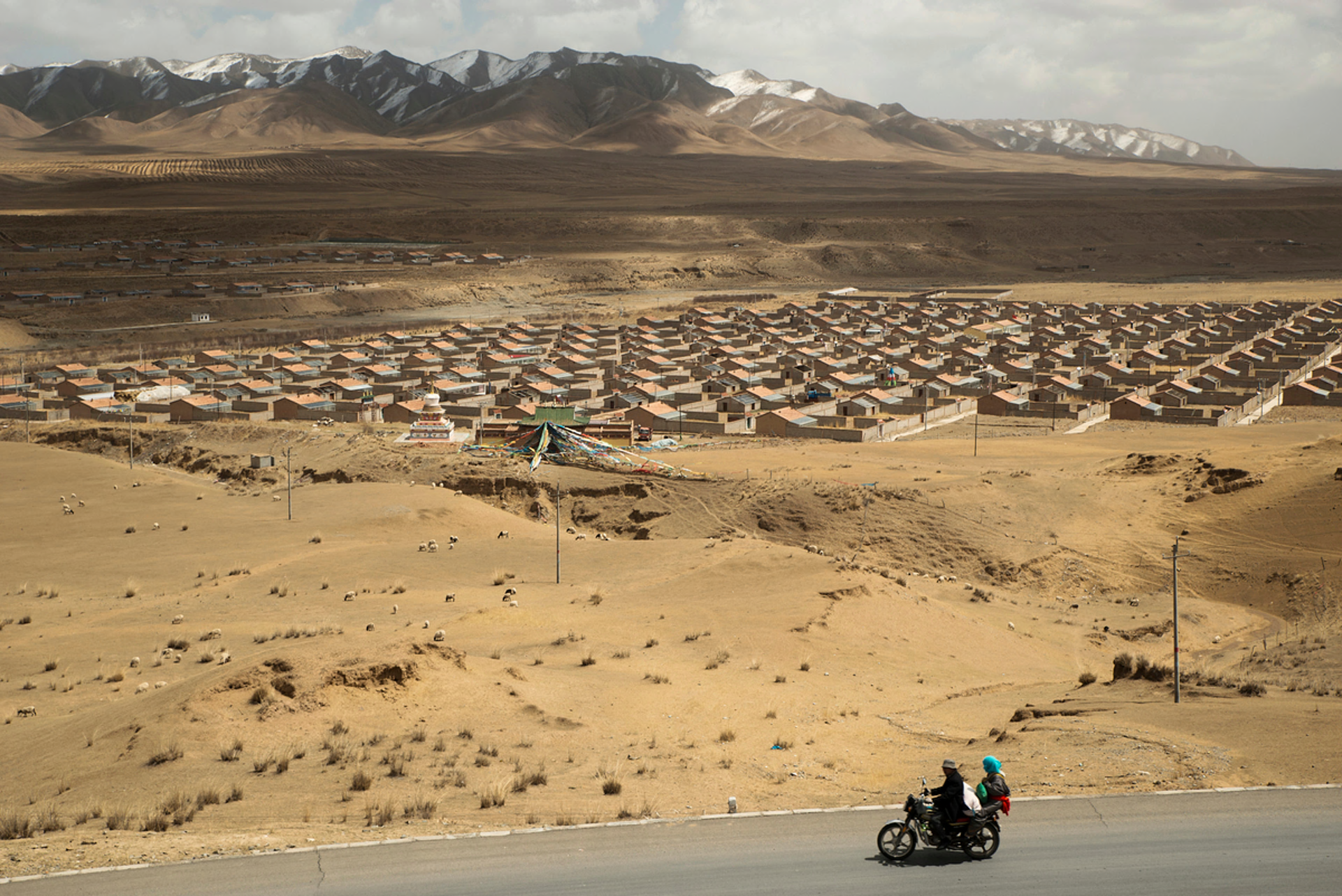
Perfectly identical “new socialist villages” have sprouted in the countryside of the Tibetan plateau during the past decade, compelling former nomads to take on a sedentary lifestyle, but also giving them immaculate two-floor villas with running water, latrines and biogas cookers.

Dawa, a 55 year-old herder resettled in Lhoka prefecture’s Gongkar county, proudly showed visiting officials and journalists how each member of the family now has a separate room. “Even in my dreams I never thought of having a house like this,” he said.

When repeatedly prompted about what he misses from his old life, Dawa paused and stared at the officials seated in his living room before answering.
“We have become selfish,” he said finally. “Now that living standards have improved, eating a piece of meat doesn’t make me as happy as eating a potato once did.”

THE INFLUX OF TOURISTS

Looking ahead, the government hopes to develop the mineral water industry, wool garment weaving workshops and factories of byproducts of traditional Tibetan medicine that will directly benefit the locals. Tourism development is, however, the biggest priority.

With plans to go from 15.5 million tourists in 2014 — five times Tibet’s population and most of them Chinese — to 20 million in the next five years, the industry already is transforming Lhasa’s landscape. Four huge pyramids of concrete and glass, the skeleton of a 2,000 room five-star resort, are joining new shopping malls, karaoke parlors and theme parks.
Visitors sweep through chambers of the labyrinthine Potala palace and compete for space with local pilgrims at the iconic Jokhang temple.

“There is a great deal of unhappiness and resentment among Tibetans over the way their culture and religion is being exploited,” said spokesman Alistair Currie of the London-based activist group Free Tibet, which is campaigning against foreign hotel chains in the autonomous region.

STABILITY ON THE PLATEAU

More than 140 Tibetans, men and women, lay people and monks, have died since 2009 protesting Beijing’s rule and demanding the return of the Dalai Lama, who fled to exile in 1959 following an aborted uprising by Tibet’s elites against the Communist Party.

Tibet’s security budget increased by 28 percent annually from 2007 to 2012, a similar pace as in Xinjiang, home to the Turkic-speaking and Islam-practicing Uighurs. The per capita spending in Tibet was 3.6 times the national average in 2012, said the Center for Human Rights and Democracy in Tibet.

Penpa Tashi, an ethnic Tibetan party member who is the region’s vice chairman, blames the tight security on unrest linked to the Dalai Lama, the spiritual leader of Tibetans, many of whom revere him as a demigod. “Only by remaining stable can we achieve development and improve people’s livelihood,” he said.

The paramilitary police who were ubiquitous following deadly riots in 2008 have retreated from the spotlight, leaving the streets in the hands of lightly armed patrols and police stations on every block. More subtle forms of surveillance — from CCTV cameras to plainclothes agents and monitored communications —have taken the lead.

COMMUNISTS IN THE MONASTERY

The party in the past installed “special working groups” at Tibet’s county levels to ensure patriotism. Those groups now have been extended to every village and every monastery, exercising an unprecedented level of control while also funneling money and resources to groups who cooperate.

In Lhoka’s Tradruk monastery, the secular management office has obtained funds for the latest renovation of this 12-century-old institution, one of the earliest Buddhist constructions in Tibet. As Han Chinese workers placed the last slate slabs in a courtyard, congregation head Migmar Tsering explained how the monastery can get electricity, televisions and libraries in exchange for displaying the Communist leaders’ portraits and topping the complex with the red flag of China.

In addition, monks meet once a week with the monastery’s Communist Party branch to receive legal and patriotic education.

“We now enjoy complete freedom of religion,” Migmar Tsering, 43, said in an interview arranged by the county propaganda office.
Shakya said the new system is actually helping to revive Buddhism throughout Tibet, although under the controlling eyes of the party.

However, other experts dispute that there has been any revival, especially given that the government has been providing the same figure of nearly 1,800 religious sites and more than 46,000 monks and nuns in the autonomous region since the early 90’s.

“You can have television sets, roads and flags in monasteries but you are not allowing the number of people to grow,” said Barnett, the Columbia University professor. “It’s hard to have monastic life thrive if you have a cadre team overseeing them.”

DALAI LAMA’S LONG SHADOW

The current, 14th Dalai Lama, who is now 80, remains the nemesis of China’s interests in Tibet. Despite an obsessive vilification of the man by Chinese government and party officials, he remains immensely popular and influential among Tibetan Buddhists.

He has said he may not reincarnate, to undercut Beijing’s plans to pick his successor. This has forced the atheist Communist Party to embrace a practice introduced seven centuries ago by a Qing dynasty emperor to control the selection by having names drawn from a government-controlled golden urn.

The region’s vice governor, Penpa Tashi, told reporters over a dinner of yak meat that, without doubt, the 15th Dalai Lama will be approved by the Chinese government and that the 14th has been an “anomaly” who made no contribution to Tibet’s development and sought only to split the region away from China.

“His attempt to split and destroy will never be realized,” he said. “The 14th Dalai is just like a pustule or a weed. A pustule must be squeezed to make the body healthier, the same way that a weed must be uprooted.”

Copyright © The Associated Press. All rights reserved. This material may not be published, broadcast, rewritten or redistributed.

© 2015 KSL.com | KSL Broadcasting Salt Lake City UT

TIBET AWARENESS – RED CHINA – NEOCOLONIALIST – MICROMANAGES TIBET. TIBET WILL SURVIVE. TIBET WILL ENDURE. TIBET WILL REEMERGE FROM SHADOWS OF OCCUPATION.
China micromanages Tibet, floods it with money to woo locals ...
TIBET AWARENESS – RED CHINA – NEOCOLONIALIST – MICROMANAGES TIBET. TIBET WILL SURVIVE. TIBET WILL ENDURE. TIBET WILL REEMERGE FROM SHADOWS OF OCCUPATION.
Glimpses of Tibet: Plateaus, people and faith
TIBET AWARENESS – RED CHINA – NEOCOLONIALIST – MICROMANAGES TIBET. TIBET WILL SURVIVE. TIBET WILL ENDURE. TIBET WILL REEMERGE.
Glimpses of Tibet: Plateaus, people and faith
TIBET AWARENESS – RED CHINA – NEOCOLONIALIST – MICROMANAGES TIBET. TIBET WILL SURVIVE. TIBET WILL ENDURE.
Tibetan women weed the highland barley field with hand in Neymo, Tibet ...
TIBET AWARENESS – RED CHINA – NEOCOLONIALIST – MICROMANAGES TIBET. TIBET WILL SURVIVE. TIBET WILL ENDURE. BARLEY FIELD, NEYMO, TIBET.
Glimpses of Tibet: Plateaus, people and faith
TIBET AWARENESS – RED CHINA – NEOCOLONIALIST. TIBET WILL SURVIVE. TIBET WILL ENDURE.
Glimpses of Tibet: Plateaus, people and faith
TIBET AWARENESS – RED CHINA – NEOCOLONIALIST – MICROMANAGES TIBET. TIBET WILL SURVIVE. TIBET WILL ENDURE.
Photo exhibition: Glimpses of Tibet, 1914-2010
TIBET AWARENESS – RED CHINA – NEOCOLONIALIST – MICROMANAGES TIBET. TIBET WILL SURVIVE. TIBET WILL ENDURE.
Glimpse of Tibet
TIBET AWARENESS – RED CHINA – NEOCOLONIALIST – MICROMANAGES TIBET. TIBET WILL SURVIVE. TIBET WILL ENDURE.
Glimpses of Tibet: Plateaus, people and faith
TIBET AWARENESS – RED CHINA – NEOCOLONIALIST – MICROMANAGES TIBET. TIBET WILL SURVIVE. TIBET WILL ENDURE.
Amazing colors of Tibet
TIBET AWARENESS – RED CHINA – NEOCOLONIALIST – MICROMANAGES TIBET. TIBET WILL SURVIVE. TIBET WILL ENDURE.
TIBET AWARENESS – RED CHINA – NEOCOLONIALIST – MICROMANAGES TIBET. TIBET WILL SURVIVE. TIBET WILL ENDURE. TIBET WILL REEMERGE.

Whole Awareness – Tibet is the first victim of Red China’s Hegemonism

Tibet Awareness – Red China – Hegemonist

Deng Xiaoping General Assembly Speech
TIBET AWARENESS – RED CHINA – HEGEMONIST – CHINESE PREMIER DENG XIAOPING IN HIS SPEECH AT UN GENERAL ASSEMBLY DELIBERATELY, PURPOSEFULLY LIED ABOUT RED CHINA’S HEGEMONIST POLICY.

Chinese Premier Deng Xiaoping in 1974 during his maiden appearance at United Nations General Assembly assured UN members that China is not and never will be a superpower or seek dominance over others. Deng Xiaoping carefully avoided using the term “Hegemon” while describing Communist China’s state policy. Hegemonism is the policy or practice of a nation in aggressively expanding its influence over other countries. Hegemony refers to dominance of one nation over others. Tibet is the first victim of Red China’s Hegemonist Policy.

Tracing China’s long, convoluted relationship with the UN

BEIJING (AP) — China’s President Xi Jinping is poised to address the U.N. General Assembly for the first time on Monday. Here are some milestones in China’s long, convoluted relationship with the world body:

1945 — The Republic of China, led by Chiang Kai-shek, becomes the first nation to sign the U.N. charter. As one of the victors in World War II, China assumes one of five permanent seats on the U.N. Security Council over the objections of some world leaders, including Britain’s Winston Churchill. Chinese representatives also help draft and sign the Universal Declaration of Human Rights.

1949 — Chiang’s Nationalists lose the Chinese civil war to Mao Zedong’s Communists and retreat from the Chinese mainland to the island of Taiwan. The Republic of China, however, retains China’s Security Council seat with the key backing of the U.S. in order to restrain Mao’s ally, the Soviet Union, as the Cold War unfolds.

1950 — The Korean War breaks out. With Soviet encouragement, Chinese forces are sent to bolster North Korea’s military. The Security Council recognizes North Korea’s attack on the South as an invasion and dispatches a 21-nation force led by the U.S. to repulse the aggression. U.N. forces frequently fight against Chinese troops until the signing of an armistice in 1953.

1950s and 1960s — Mao’s People’s Republic of China attempts repeatedly to replace the ROC as the legitimate representative of China at the U.N. However, with Washington’s strong support, the Republic of China manages to hang on even as support in the General Assembly steadily erodes.

1971 — Amid a thaw in relations between Beijing and Washington, the People’s Republic of China secures the votes of 26 newly independent African nations and finally prevails in its campaign to win the China seat. Passed on the 21st attempt, U.N. Resolution 2758 expels the representatives of Chiang Kai-shek from the body, effectively casting Taiwan into the diplomatic wilderness.

1974 — Soon-to-be paramount leader Deng Xiaoping becomes the first major Chinese politician to address the General Assembly. In his speech, Deng assures the body that China is not and never will be a superpower or seek dominance over others (replacing “hegemon”), assertions increasingly at odds with China’s rising global influence in the 21st century.

1991 — The Republic of China applies to join the U.N. separately from mainland China as the representative of Taiwan and its related islands, saying that Resolution 2758 was irrelevant to Taipei’s status. The move is fiercely condemned by China and is never included in the General Assembly’s agenda or put to a formal vote.

1992 — Having dropped its objections to U.N. peacekeeping on grounds of non-intervention, China sends its first contribution in the form of an engineering company to join in a mission in Cambodia. In subsequent years, China becomes far and away the biggest contributor of personnel to peacekeeping operations among the five permanent Security Council, with more than 3,000 troops and police committed as of this year.

2013 — China is granted a seat on the U.N. human rights council despite frequent criticisms of its authoritarian political system and heavy restrictions on civil liberties. Opponents say that move not only provides cover for China’s detention of political opponents and other abuses, but also allows it to suppress all U.N. human rights initiatives and attempts to hold rights violators accountable.

Copyright 2015 The Associated Press. All rights reserved. This material may not be published, broadcast, rewritten or redistributed.

Yahoo – ABC News Network

Tibet is the first victim of Red China’s Hegemonist Policy.

1973: Deng Xiaoping Came Back to Power (邓小平复出)

President Gerald Ford meets with Chairman Mao Tse-tung in Peking

!The year of the Sheep (or Goat or Ram) begins today. President Ford ...

... Sin-April 26-1984-President Li Xiannian-President Ronald Reagan-Peking

FILE In this May 2, 1949 file photo, a column of Chinese Communist light tanks enter the streets of Peking, which are filled with people watching the conquerors pass. In 1949, Chiang Kai shek’s Nationalists lost the Chinese civil war to Mao Zedong’s Communists and retreat from the Chinese mainland to the island of Taiwan. The Republic of China, however, retained China’s Security Council seat with the key backing of the U.S. in order to restrain Mao’s ally, the Soviet Union, as the Cold War unfolds. (AP Photo, File)
FILE In this Dec. 22, 1945 file photo, Gen. George C. Marshall, left, special envoy of U.S. President Harry Truman to China with rank of ambassador, poses with Generalissimo Chiang Kai Shek, right, and Madame Chiang at Chiang’s Nanking home shortly after his arrival in Nanjing. In 1945 the Republic of China, led by Chiang Kai shek, became the first nation to sign the U.N. charter. As one of the victors in World War II, China assumed one of five permanent seats on the U.N. Security Council over the objections of some world leaders, including Britain’s Winston Churchill. Chinese representatives also helped draft and sign the Universal Declaration of Human Rights. (AP Photo, File)
FILE In this Nov. 27, 1974 file photo, Chinese Premier Deng Xiaoping, right, listens to U.S. Secretary of State Henry Kissinger, left, during their meeting in Beijing. In 1974, soon to be paramount leader Deng became the first major Chinese politician to address the General Assembly. In his speech, Deng assured the body that China is not and never will be a superpower or seek dominance over others (replacing “hegemon”), assertions increasingly at odds with China’s rising global influence in the 21st century. (AP Photo, File)
FILE In this May 19, 2014 file photo, Chinese President Xi Jinping, right, shakes hands with United Nations Secretary General Ban Ki moon, left, as they pose for photos on the eve of the fourth Conference on Interaction and Confidence Building Measures in Asia (CICA) summit at the Xijiao State Guesthouse in Shanghai, China. China’s President Xi is poised to address the U.N. General Assembly for the first time on Monday, Sept. 28, 2015. (Mark Ralston/Pool Photo via AP, File)

Tibet is the first victim of Red China’s Hegemonist Policy.

Whole Awareness – Tibet under the Yoke of Occupation

Tibet Awareness – Yoke of Occupation

Tibet Awareness: Tibet under the Yoke of Occupation. While Tibet is nominally in charge of its own affairs, its top officials are appointed by Beijing and expected to rule with an iron fist. The region incorporates only about half of Tibet’s traditional territory and has been smothered in multiple layers of security ever since deadly anti-government riots in 2008.

Tibet is not part of Red China. However it will be correct to claim that Tibet is under the Yoke, under control, is subdued, and has become subservient to Red China. This ‘Yoking’ speaks of Tibet’s subjection, bondage, servitude, enslavement imposed by the burden of military occupation. The Yoke clamped over necks of Tibetans causes hardship, pain, suffering, and sorrow. Tibetans resist this restriction on their natural freedom.

AP PHOTOS: Glimpse of life in Tibet after China celebrates anniversary of autonomous region

Tibet Awareness: Chinese officials have taken foreign journalists on a visit to the region, normally off-limits to them, weeks after Communist Party officials commemorated the 50th anniversary of the establishment of the Tibet Autonomous Region. (AP Photo/Aritz Parra)

In this Friday, Sept. 18, 2015 photo, a Tibetan family walks across Jokhang Square in the center of Lhasa, capital of the Tibet Autonomous Region in China. Chinese officials have taken foreign journalists on a visit to the region, normally off-limits to them, weeks after Communist Party officials commemorated the 50th anniversary of the establishment of the Tibet Autonomous Region. (AP Photo/Aritz Parra)

Associated Press Sept. 19, 2015 | 3:40 a.m.

Tibet Awareness: Chinese officials have taken foreign journalists on a visit to the region, normally off-limits to them, weeks after Communist Party officials commemorated the 50th anniversary of the establishment of the Tibet Autonomous Region. (AP Photo/Aritz Parra)

LHASA, China (AP) — Tibet is usually off-limits to the foreign media, but Chinese officials this week took foreign journalists on a visit to the region, almost two weeks after Beijing celebrated half-century control over the Himalayan territory.

Tibet Awareness: Chinese officials have taken foreign journalists on a visit to the region, normally off-limits to them, weeks after Communist Party officials commemorated the 50th anniversary of the establishment of the Tibet Autonomous Region. (AP Photo/Aritz Parra)

China sent troops to occupy Tibet following the 1949 communist revolution. The government says the region has been part of Chinese territory for centuries, while many Tibetans say it has a long history of independence under a series of Buddhist leaders.

The region’s traditional Buddhist ruler, the Dalai Lama, fled in 1959 amid an abortive uprising against Chinese rule, and continues to advocate for a meaningful level of autonomy under Chinese rule.

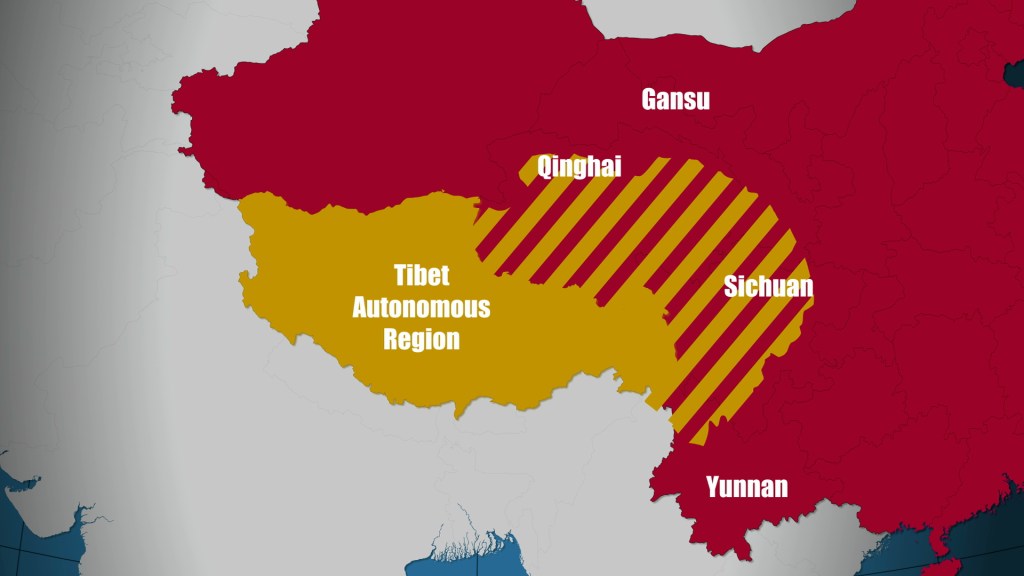
China established the Tibetan autonomous region in 1965, one of five ethnic regions in the country today. While Tibet is nominally in charge of its own affairs, its top officials are appointed by Beijing and expected to rule with an iron fist. The region incorporates only about half of Tibet’s traditional territory and has been smothered in multiple layers of security ever since deadly anti-government riots in 2008.

Copyright 2015 The ASSOCIATED PRESS. All rights reserved.


Tibet Awareness: While Tibet is nominally in charge of its own affairs, its top officials are appointed by Beijing and expected to rule with an iron fist. The region incorporates only about half of Tibet’s traditional territory and has been smothered in multiple layers of security ever since deadly anti-government riots in 2008.

Whole Awareness – Tibet is not a part of China

Tibet Awareness – Tibet is not a part of China

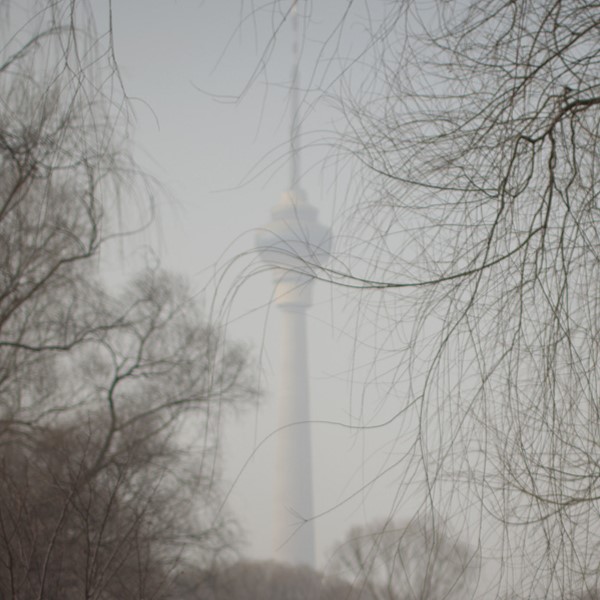
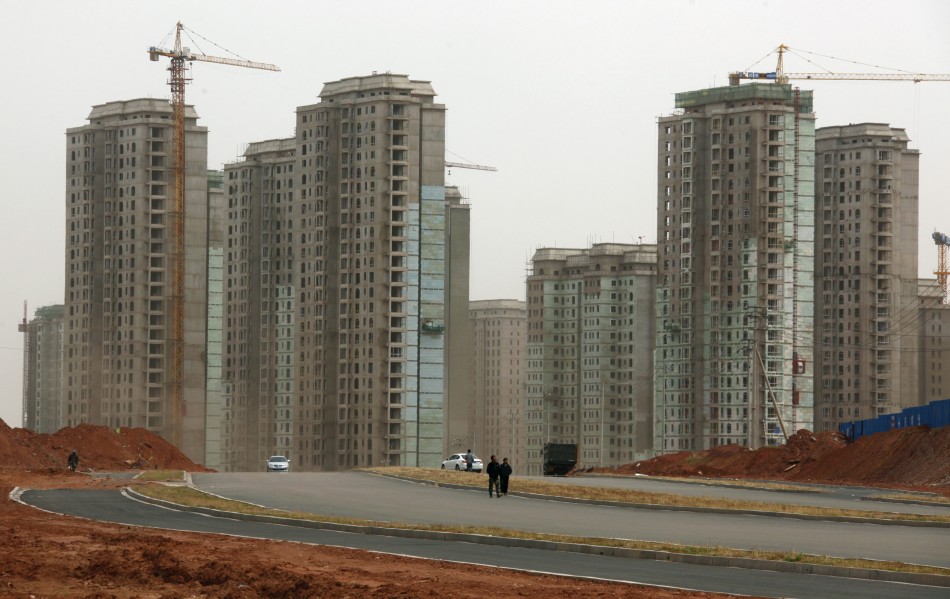
TIBET AWARENESS - TIBET IS NOT PART OF CHINA . URBAN SMOG AND AIR POLLUTION MASK OR CONCEAL REALITY OF A PLACE. OCCUPATION CONCEALS REALITY OF TIBET. TIBET IS FREE AND FREEDOM IS A NATURAL CONDITION.
TIBET AWARENESS – TIBET IS NOT PART OF CHINA . URBAN SMOG AND AIR POLLUTION MASK OR CONCEAL REALITY OF A PLACE. OCCUPATION CONCEALS REALITY OF TIBET. TIBET IS FREE AND FREEDOM IS A NATURAL CONDITION.
TIBET AWARENESS - TIBET IS NOT PART OF CHINA. OCCUPATION IS LIKE POLLUTION AND URBAN SMOG. THE REALITY OF BEIJING IS REVEALED BY BANNING CARS. THE REALITY OF TIBET WILL BE REVEALED BY REMOVING OCCUPATION.
TIBET AWARENESS – TIBET IS NOT PART OF CHINA. OCCUPATION IS LIKE POLLUTION AND URBAN SMOG. THE REALITY OF BEIJING IS REVEALED BY BANNING CARS. THE REALITY OF TIBET WILL BE REVEALED BY REMOVING OCCUPATION.

I am sharing photo images of Beijing that demonstrate Red China has awareness and has ability to find solutions to problems of urban smog, and atmospheric pollution. Occupation is like pollution and urban smog. The reality of Beijing is revealed by banning cars. I am asking Red China to use the same awareness to know Tibet and its reality. Tibet is not a part of China. The reality of Tibet will be revealed by removing occupation. Tibet in reality is Free and Tibet’s Freedom is its Natural State or Natural Condition.

2.5 Million Banned Cars Show Blue Skies For First Time

On August 20th, Beijing put restrictions on factory production and car use. Five million cars were forced to drive on alternating days leading up to the 70th anniversary of Japan’s WWII defeat on September 3rd so that the city’s usually smoggy skies would be a picture-perfect blue.

The day after the parade, with the restrictions lifted, Beijing’s air quality index hit 160, a level at which “everyone may begin to experience some adverse health effects,” according to the U.S. Environmental Protection Agency.

“Military Parade Blue is gone; in its place is our ‘Normal Status Gray’” wrote one user online. While the LA Times cites several examples of such commentary on Chinese social media, CNN speculates that Chinese censors have actively removed similar posts from sites like Weibo.

5 million cars were forced to drive on alternating days in Beijing.

Tibet is not a part of China. The reality of Tibet will be revealed by removing occupation. Tibet in reality is Free and Tibet’s Freedom is its Natural State or Natural Condition.


The result is surprising – people could finally see buildings in the distance where there was usually thick smog

Tibet is not a part of China. The reality of Tibet will be revealed by removing occupation. Tibet in reality is Free and Tibet’s Freedom is its Natural State or Natural Condition.

During the ban, Beijing’s average levels of PM (particulate matter) dropped by 73.2% compared to the last year.

Tibet is not a part of China. The reality of Tibet will be revealed by removing occupation. Tibet in reality is Free and Tibet’s Freedom is its Natural State or Natural Condition.

40,000 construction sites in and around Beijing were also shut down for the duration.

Tibet is not a part of China. The reality of Tibet will be revealed by removing occupation. Tibet in reality is Free and Tibet’s Freedom is its Natural State or Natural Condition.

An international standard for measuring the severity of air pollution dipped to a pristine 17 out of 500, signifying very healthy air.

Tibet is not a part of China. The reality of Tibet will be revealed by removing occupation. Tibet in reality is Free and Tibet’s Freedom is its Natural State or Natural Condition.

This is how the Great Wall should look every day!

Tibet is not a part of China. The reality of Tibet will be revealed by removing occupation. Tibet in reality is Free and Tibet’s Freedom is its Natural State or Natural Condition.

Whole Dream – Starbucks Coffee Tastes Better if there is Freedom in the Air

Tibet Awareness – Starbucks Opens Up Shops on the Tibetan Plateau

Whole Dream – Starbucks Coffee Tastes Better if there is Freedom in the Air. I would be happy to sip a cup of hot, freshly brewed Starbucks coffee to begin my day in Lhasa on a bright note. The Coffee is going to taste better when there is Freedom in the thin air of Tibetan Plateau.

Any mountain climber will be able to describe the shortness of breath that normally comes with altitude. It’s not that the air has a lower percentage of oxygen – it’s around 21% wherever you stand in the world. But air pressure decreases the further you walk or fly from the sea’s surface, allowing the gas molecules to spread out in all directions, and a lung can only stretch so far to compensate. The Tibetan plateau is one of the highest regions on Earth. It has an average elevation of ∼4,000 m, a barometric pressure of <500 mmHg, and an ambient partial pressure of oxygen (Po2) of 80 mmHg. At more than 4,000m (13,000ft) above Sea Level, each breath contains around a third less oxygen than the same breath far below. At this altitude, the oxygen level in the air is roughly 60% of what is found at sea level, meaning people breathe in considerably less oxygen with each breath. Low oxygen levels can cause various health issues including nausea, dizziness, headaches, fatigue, and in severe cases, altitude sickness.
I am sharing this story published by Brandchannel with the hope generated by my prediction of Red China’s sudden downfall. There is a chance that I may be attending festivities in Lhasa to celebrate Tibet’s Liberation from Communist occupation. I would be happy to sip a cup of hot, freshly brewed Starbucks coffee to begin my day in Lhasa on a bright note. The Coffee is going to taste better when there is Freedom in the thin air of Tibetan Plateau.

BRANDCHANNEL:

Starbucks Opens Up Shops on the Tibetan Plateau

Posted September 15, 2015 by MARK J. MILLER

A trip to Tibet has long been considered a journey one takes when seeking internal peace. Escaping Western creature comforts can help an individual reprioritize what life is all about.

That image may still be true, but Starbucks is inching closer to getting its caffeine and sugar into the country. On Friday, it opened two locations on the Tibetan Plateau over the border in the northern Chinese city of Xining.

The locations are strangely only 300 meters away from each other in a city of 2.2 million people. “Young people are very excited by the Starbucks,” student Padma Yangkyi told the Xinhua News Agency. “The fondness for traditional buttered tea and Tibetan opera doesn’t weaken our love for coffee and pop songs.”

China now has about 1,700 Starbucks, passing Canada as the country with the second-most locations outside the US, according to Quartz. The plan is to double that number in the next five years.

It isn’t clear when Starbucks will get to Tibet proper but it seems inevitable. The Australian reports that new Sinopec gas stations have popped up, there’s a shiny new Tibet Tiandi Green Barley brewery, and China is pumping “capital into the area, funding new infrastructure and providing subsidies and assistance, including free education, to many of its population.”

A railway opened in 2006 that brings travelers from Qinghai, Tibet, saw 15 million tourists last year, up 20 percent from 2013. Where the people go, Starbucks will surely follow.

I would be happy to sip a cup of hot, freshly brewed Starbucks coffee to begin my day in Lhasa on a bright note. The Coffee is going to taste better when there is Freedom in the thin air of Tibetan Plateau.